Apicultures Now

There’s a noisy bee inside Matsumoto Station, buzzing against the sun that filters through the gaps in the roof. Outside Shinonoi Station, there are Christmas trees up in April. Leaving Shigeno Station, I walk through an underpass and out into underbrush. Here, I am deep in the Nagano countryside. I have to walk for 20 minutes on the road, but luckily it’s not very busy. Eventually, I find what I’m looking for: a big wasp.
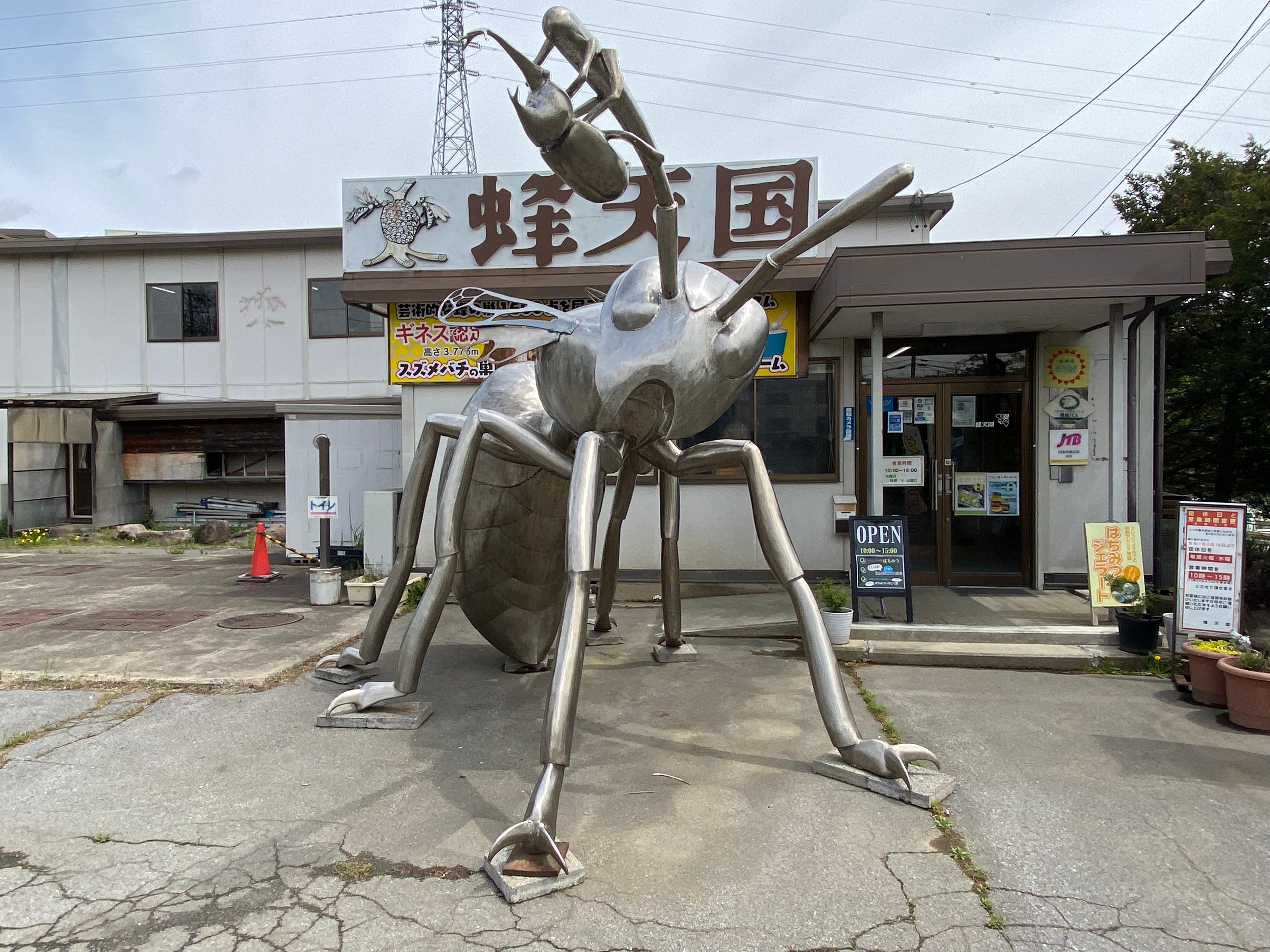
Today I’m at Bee Heaven, which is not a place where bees go after they die; that would be absurd, but it is a place where hives go after they die. The building itself looks, from the outside, like it’s about ready to collapse. It also claims to house the best bee art museum in the world.

Inside, a young woman seems extremely happy to see me. She asks me what I am doing here, as though I may have made a mistake. I tell her I’m here to look at the beehives. She mimes a pair of binoculars with her hands and places them over her eyes. I nod, and she takes my ¥300 and hands me a ticket.
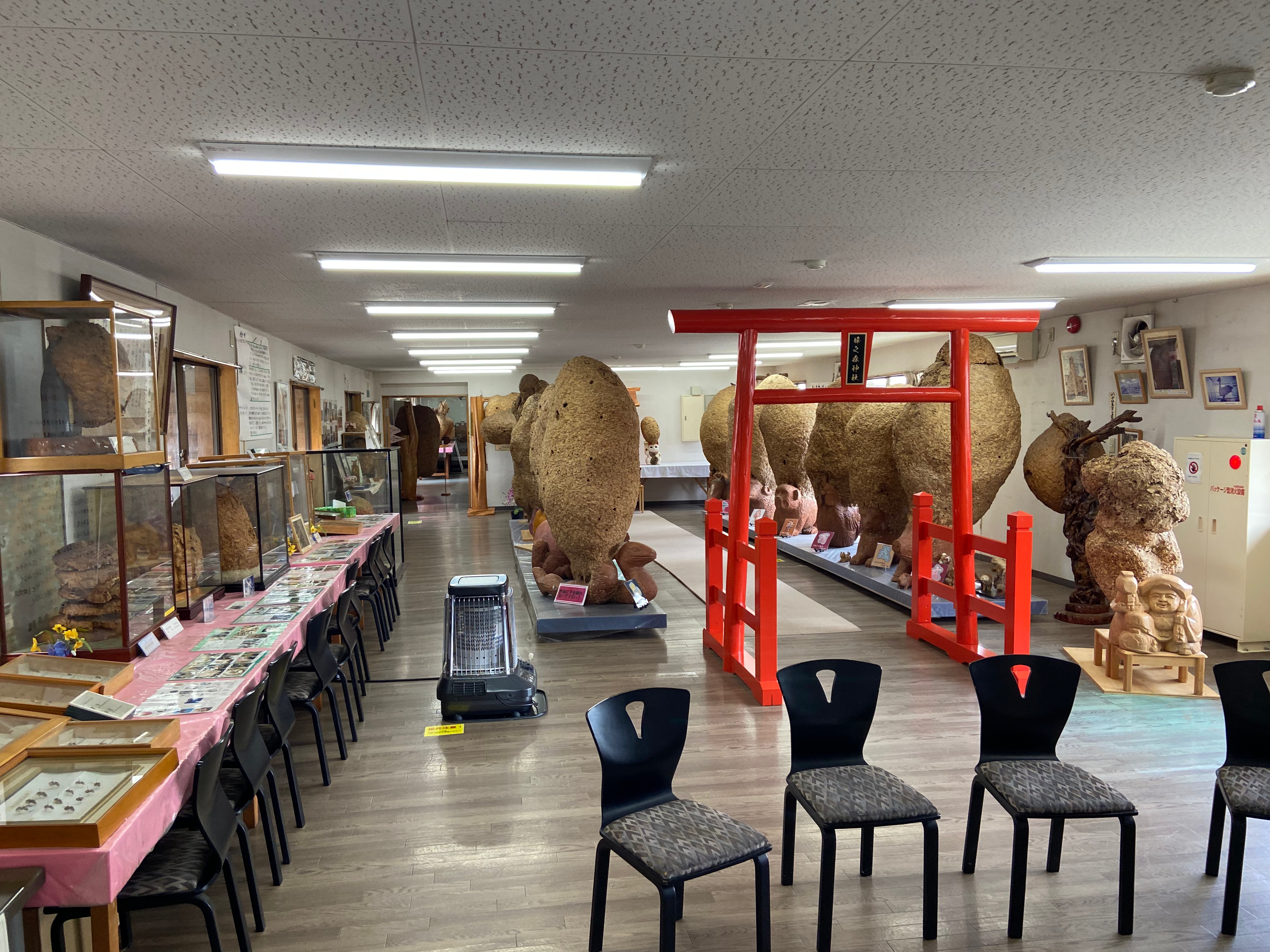
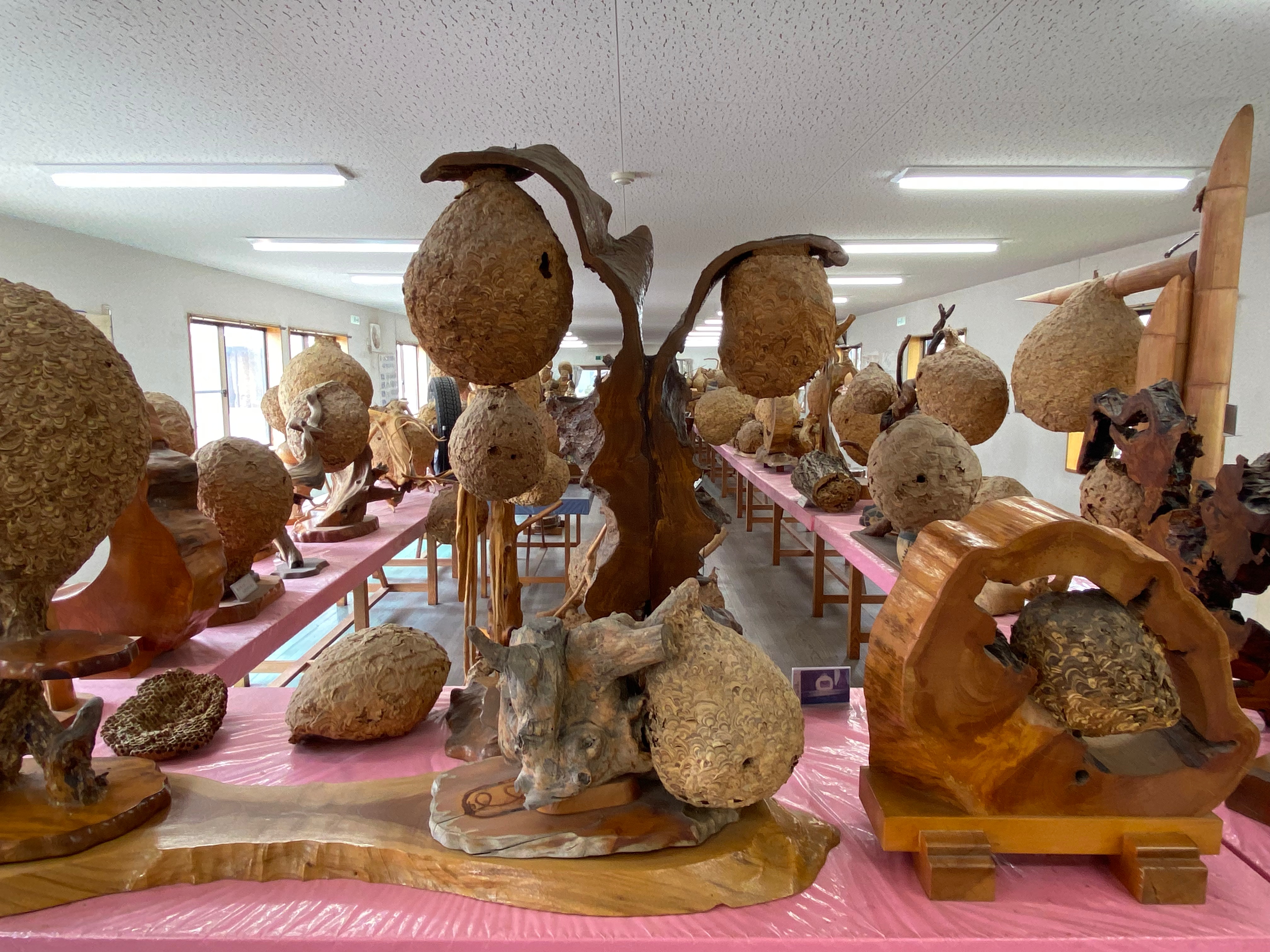
The exhibition features its own shrine to bees, Hachinomori, in honour of a very loyal bee; it is here that we pray for a good life. 1,600 artistic beehives are on display across a maze of interlocking rooms and floors. And if that’s not enough, I discover that it is the collection of just one man and craftsman, Yoshikuni Shiozawa.

There are photographs of Shiozawa shirtless and covered with bees, a grimacing smile across his face. He teaches us the benefits worker bees have on our ordinary lives, and that human society would absolutely collapse without their extraordinary colonies.
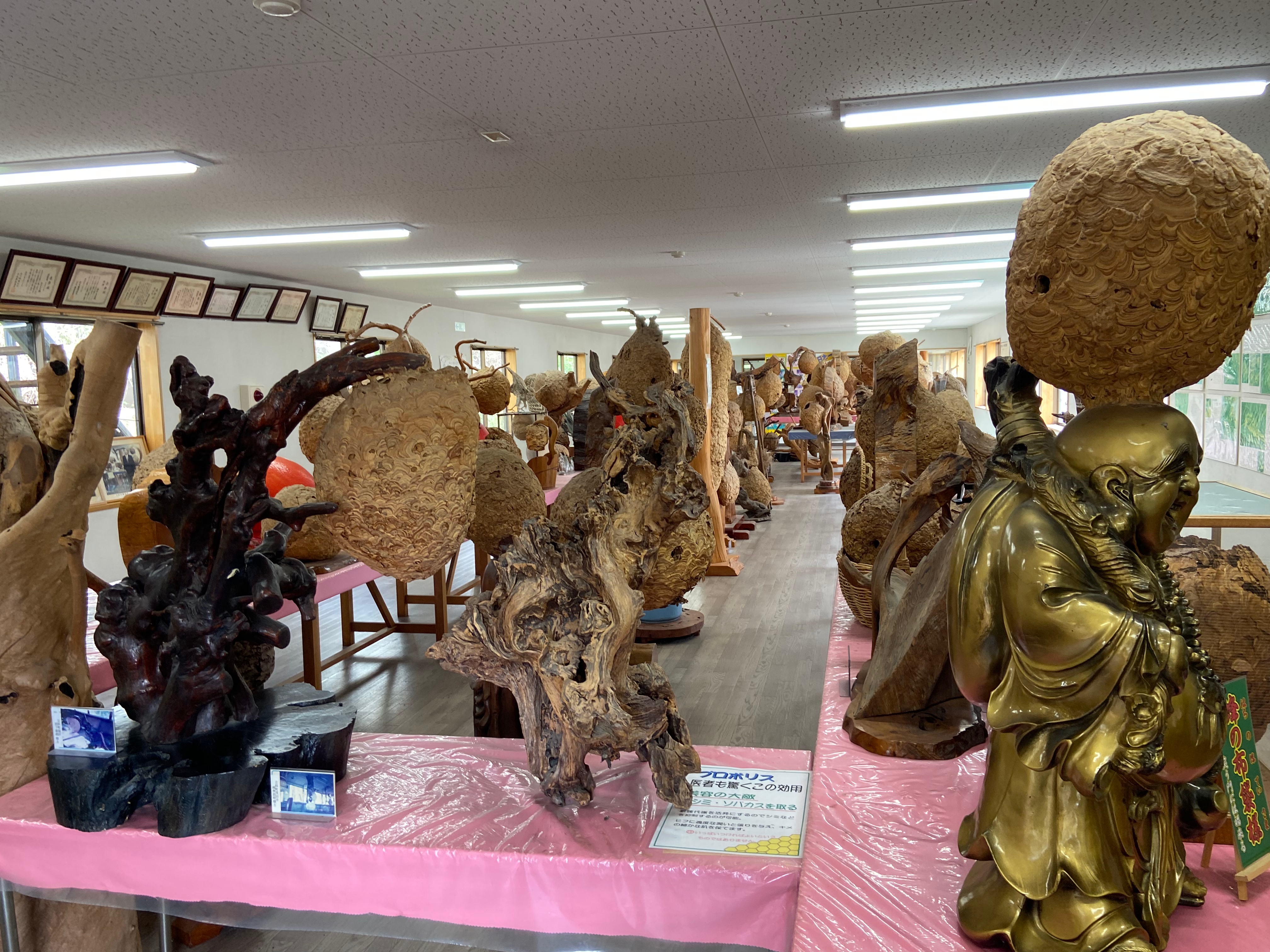
There is a sign in here saying, “Don’t open the window.” And even though there are a few stray bees buzzing and bimbling around between the hive art, I’m not sure whether the sign is to keep bees out or keep bees in. Regardless, the dull, musky smell of the hives could do with an air change.

There are preserved bees in cases, cross-sections and anatomies of wasps, evolutionary charts, and rows and rows of hornets. Artwork, including paintings of bees, drawings, and anything else bee-related you can imagine, is here, nestled amongst hive after hive after hive.
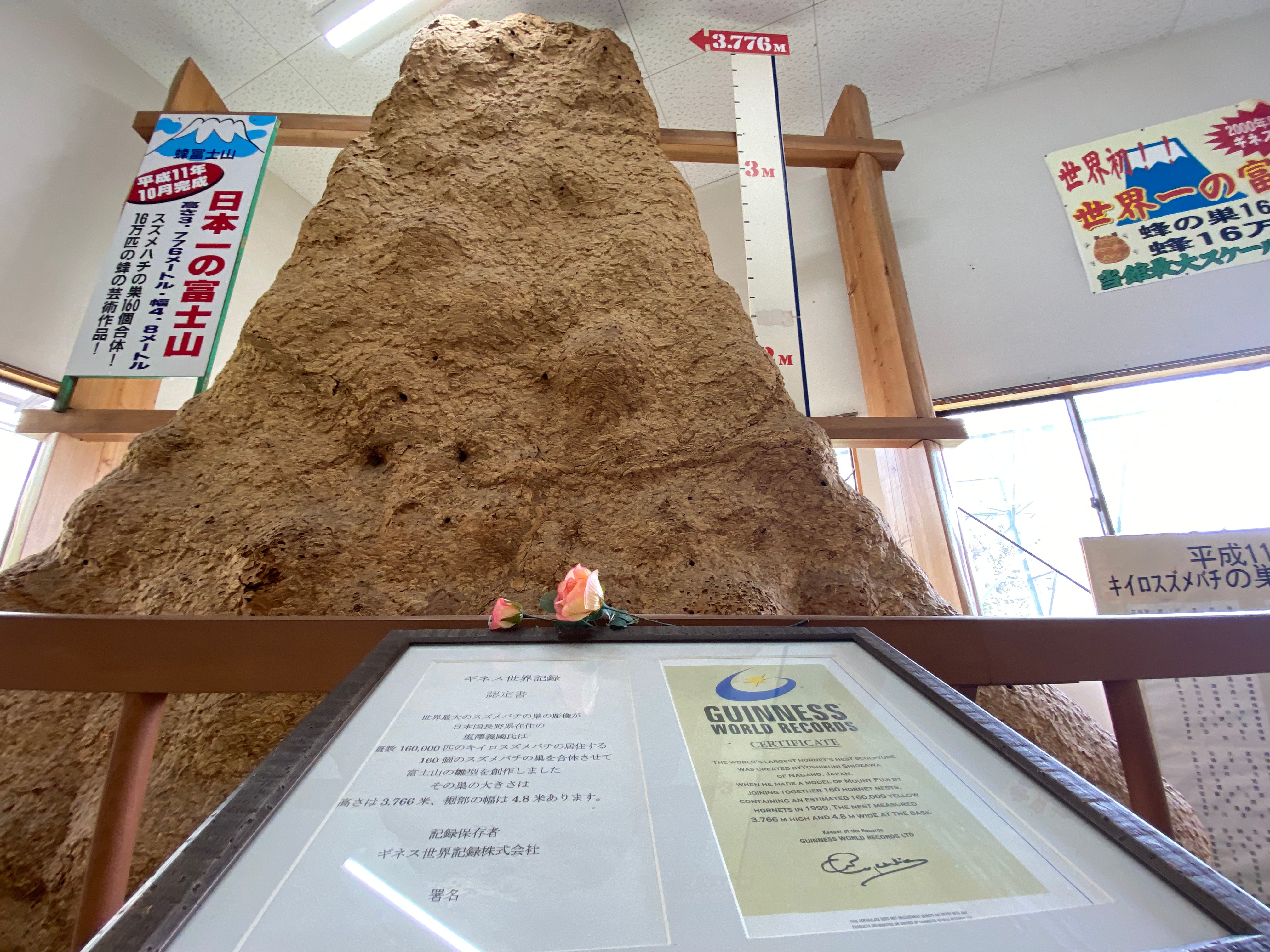
I pass through several more rooms and up a flight of stairs to what I think deserves to be acknowledged as the centrepiece. A Guinness World Record for the world’s largest hornet’s nest sculpture was created by Shiozawa. In 1999, while we were all panicking about the Millennium Bug, he decided to do something else with bugs. He made a model of Mount Fuji by joining together 160 hornet nests, containing an estimated 160,000 yellow hornets. The nest now measures 3.776 metres in height and 4.8 metres wide at the base.

Mount Fuji is 3,776 metres high, so by converting a comma into a decimal point, he cleverly crafted a perfectly scaled version of Japan’s iconic mountain. It’s a very niche award. I don’t see it being toppled any time soon, unless somebody has 160 hornet nests lying around.
At the gift shop, I buy some honey as a souvenir for a friend, the real stuff, made by bees. They also sell bee larvae, made from bees, but I don’t think she would like that as much.

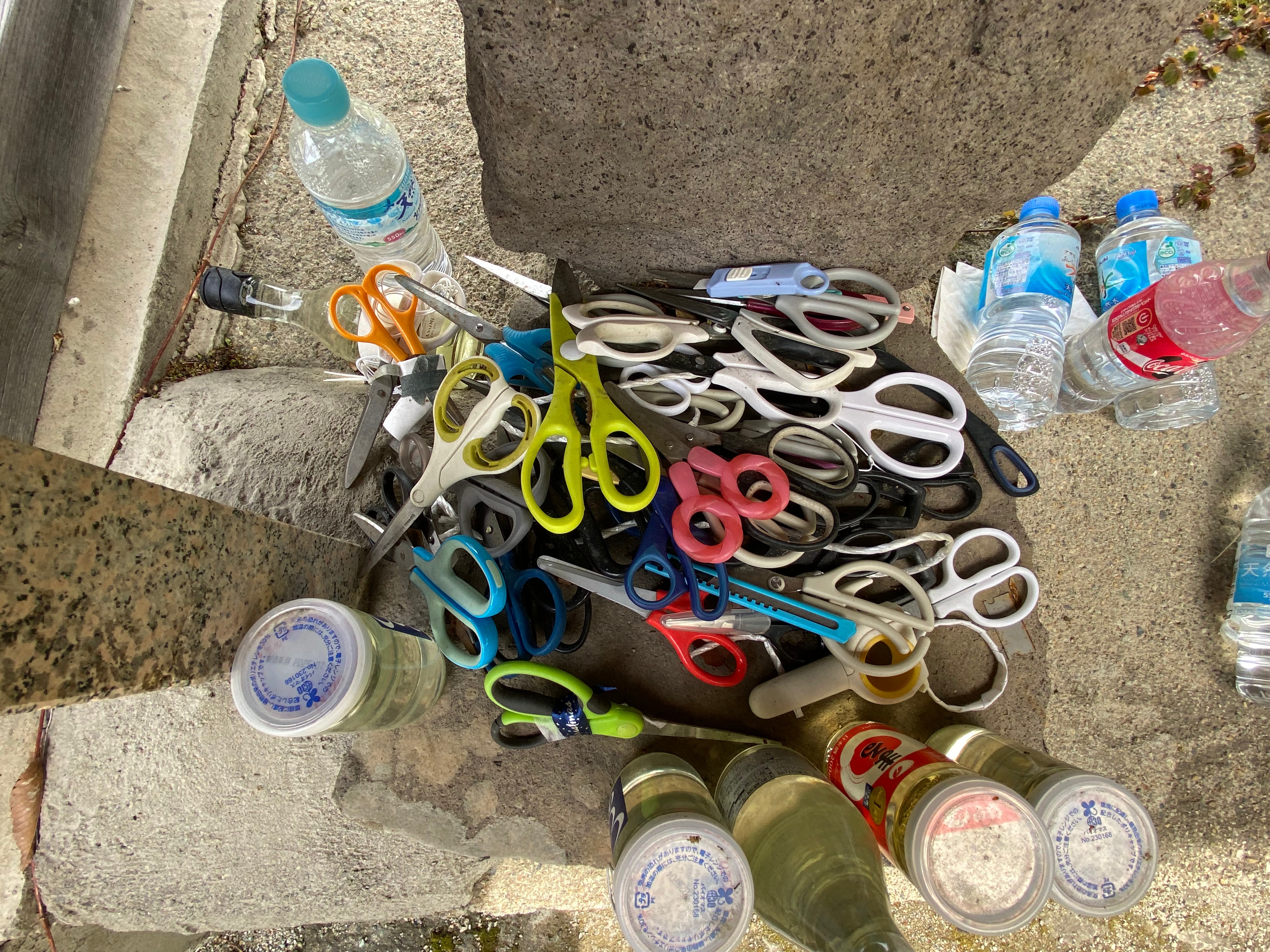
Just below Bee Heaven, there is Enkiri Jizo, a shrine where people pile up their scissors to represent the severing of a bad relationship. The original knot made needs to be cut, and it is said that if it is a wedding, you go out of your way to come here so your wishes to end the relationship are heard by the Jizo. Otherwise the divorce doesn’t really count. It really makes you wonder. I make a few photographic cuts and then leave for the station.
Back at the platform, there’s no timetable, no staff. Luckily, as of the 10th of this month, the Shinano-Tetsudo Line has started accepting IC cards. I scan my Suica and wait by the tracks. A train shows up eventually after about twenty minutes, unannounced, I rightly assume it’s bound for Shinonoi.

At Shinonoi Station, I once again admire the Christmas trees before changing trains. I have one last stop today: Obasute Station, halfway on the way back to Matsumoto. This station offers a stunning view, and even has a sightseeing restaurant train that uses this track. The platform itself has a dedicated section for enjoying that view. The word Obasute can mean abandoning an old woman on a mountain to die, and my knowing that long in advance somewhat spoils the impressive view, just a bit.
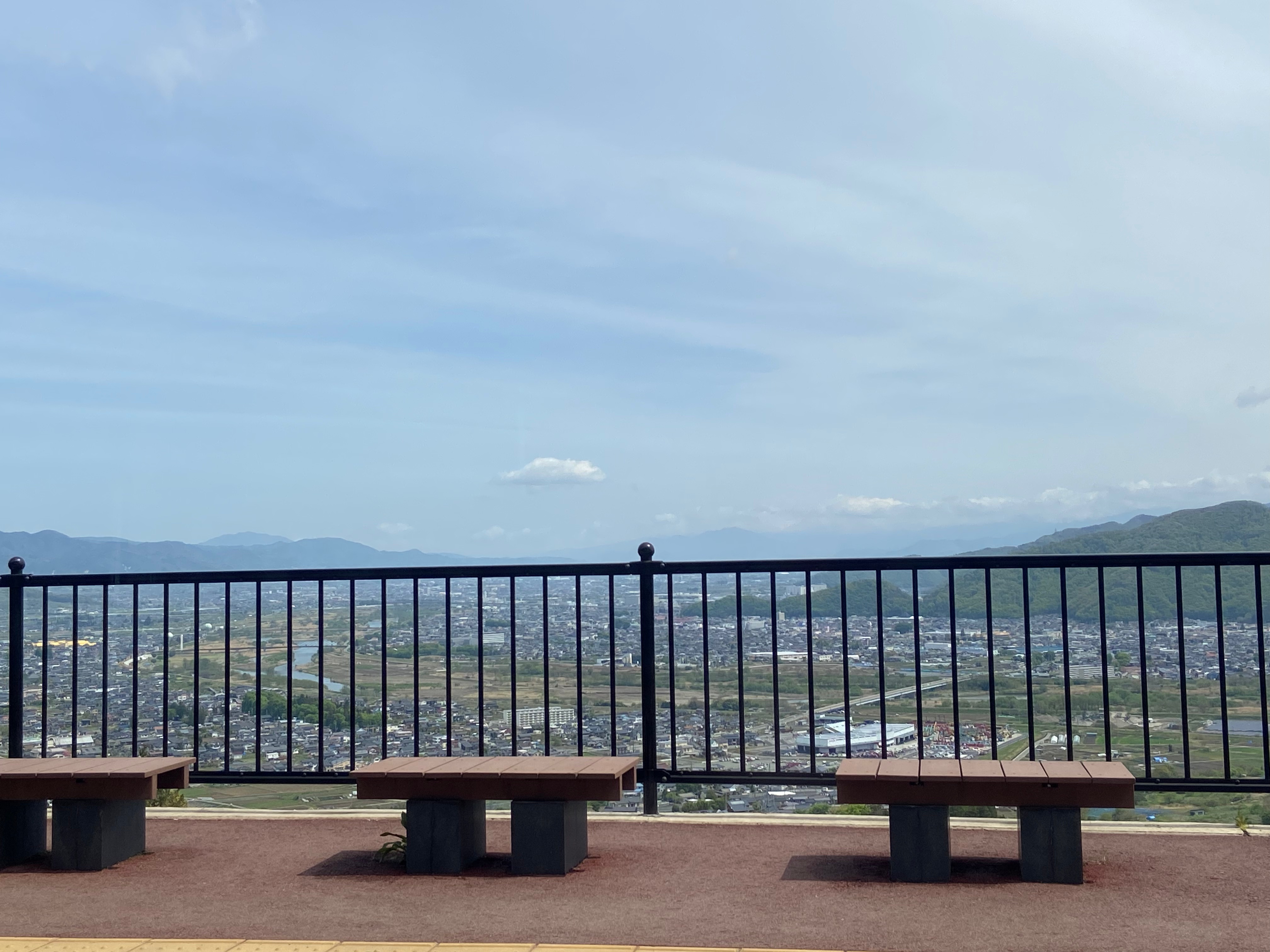
I sit for a while, just looking outward. A muzzle of bees stirs above a nearby flowerbed. I watch them continue their work, indifferent to the human desire to untangle ourselves from one another.
One Rainy Day in April

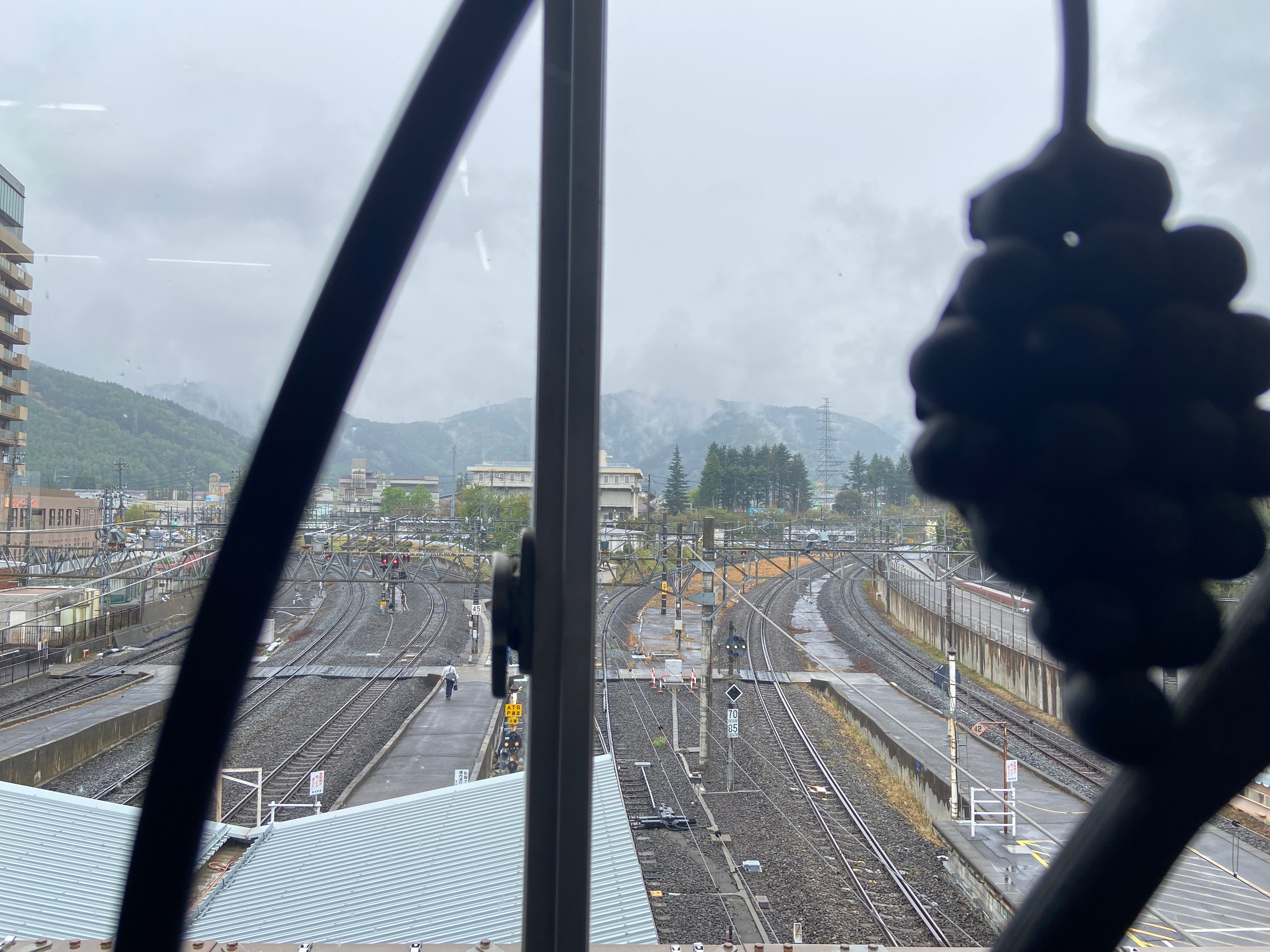
Today I decide to travel towards Matsumoto, into the middle of the Japanese Alps. At Kanazawa Station, I pay the premium ticket price of ¥8970 to travel just one hour on the Shinkansen to Nagano. There, I change to a local train, for local people. After a couple of hours of sitting around on trains, I finally step out into the clean, fresh mountain air. And it’s raining.

The mountains are gone, washed out in a white, ghostly fog, completely invisible today. But with better weather expected tomorrow, I tell myself this won’t have been a wasted trip. I put on a bright green poncho. It doesn’t suit me. I probably look like a large frog. Still better than an umbrella. I always forget those anyway.

Reservoir Frogs

I start exploring, and despite the rain hammering down, I’m drawn straight in. Matsumoto has a quiet, charming vibe. Flower beds and streams line the roads. Bars and restaurants that feel quietly inviting look to be from another time. The Metoba River snakes between buildings that look like they’ve been here for hundreds of years. It reminds me of a less crowded version of Asakusa. Not empty, though, as groups of tourists do drift past, tethered together by guides holding small flags like they’re leading expeditions.

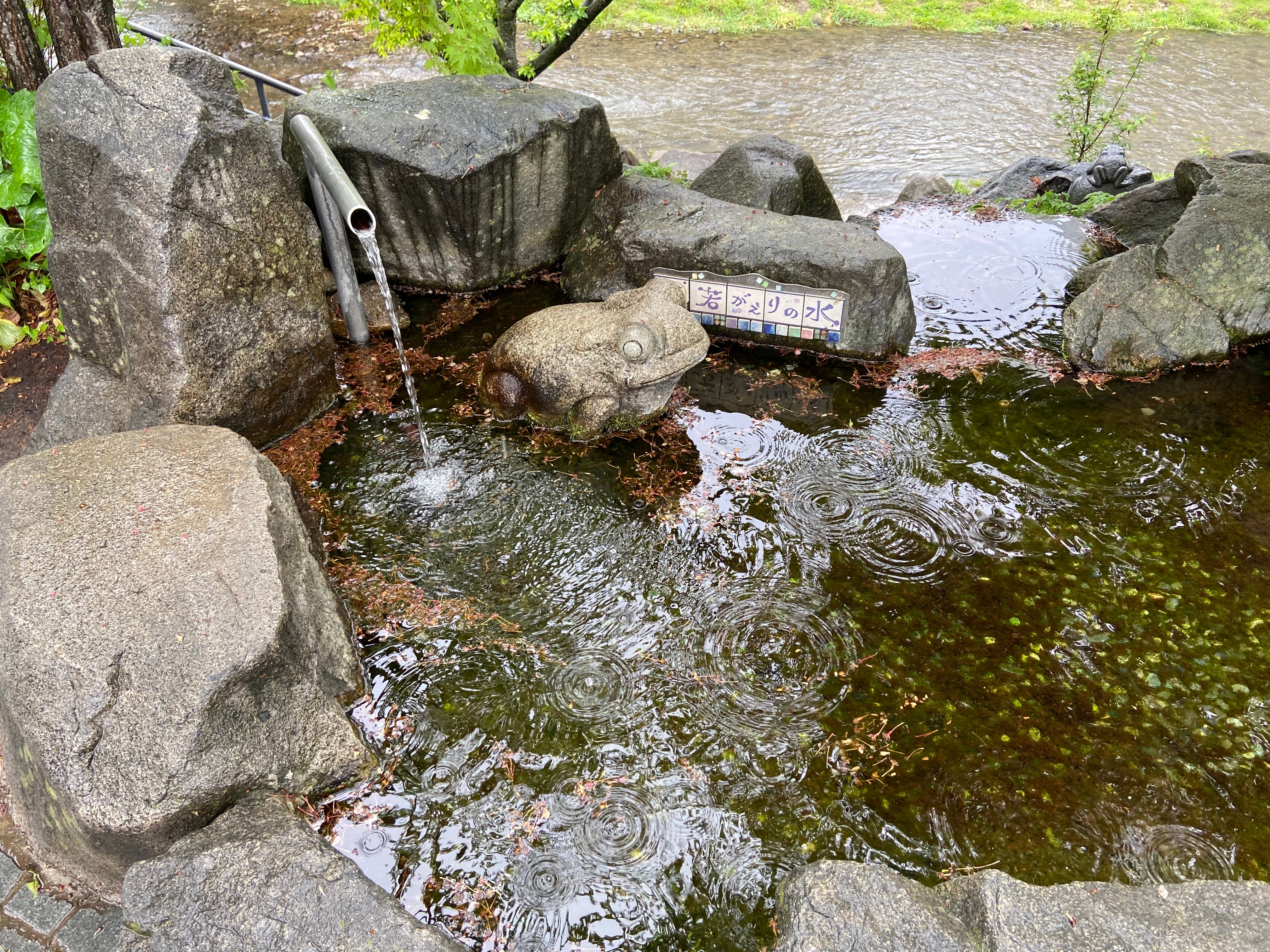
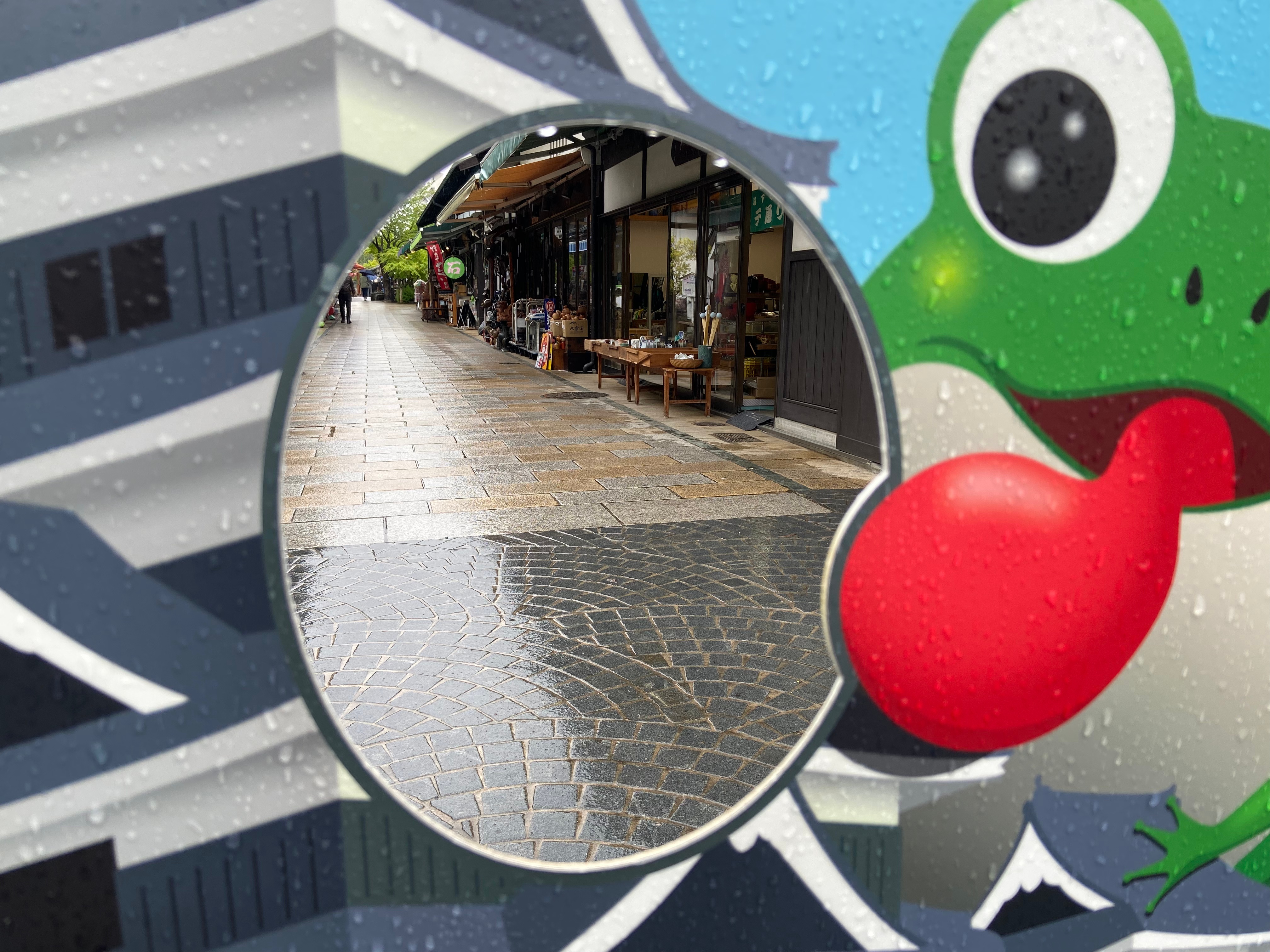
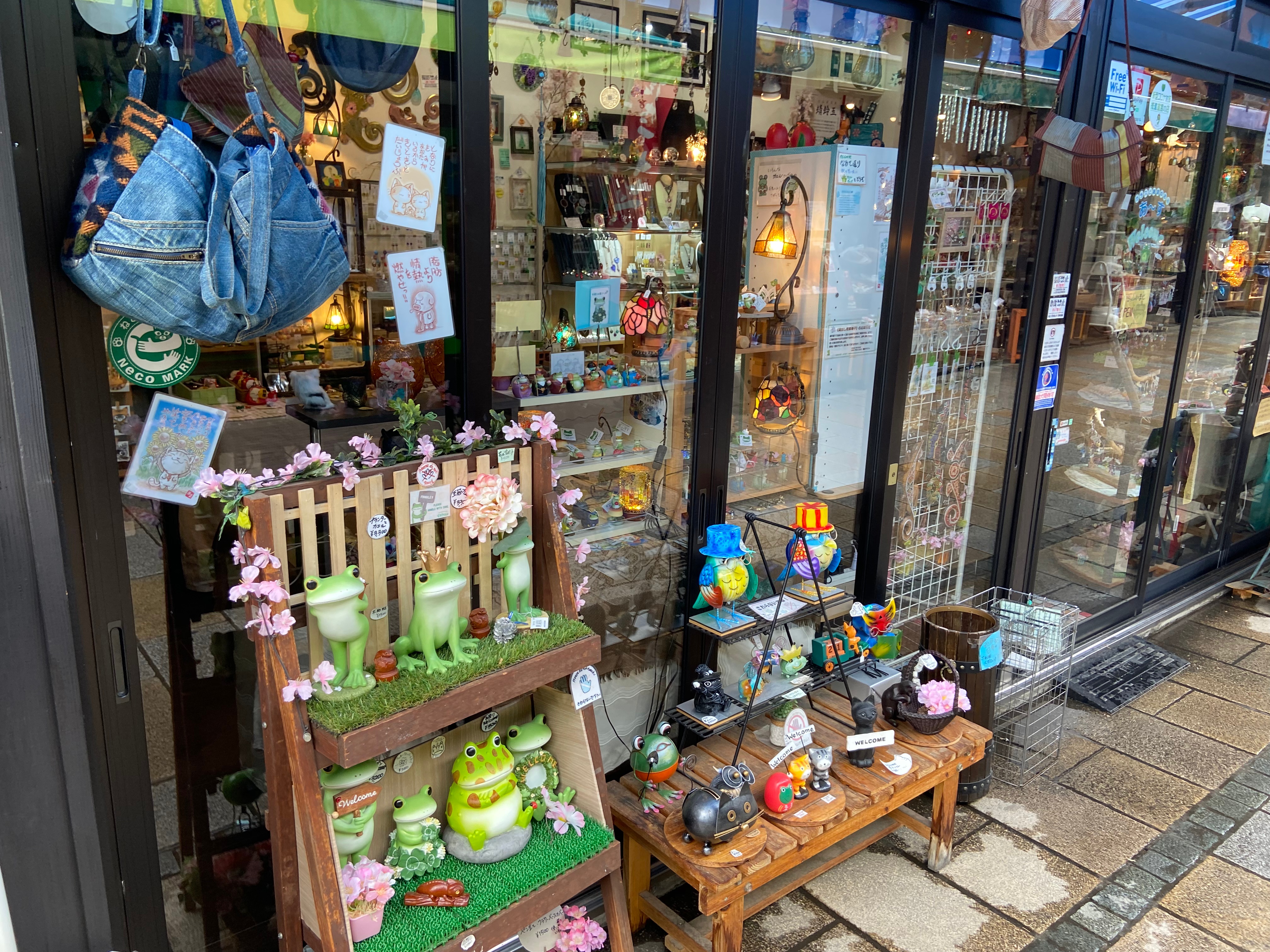
The main tourist street is Nawate Street, also known as Frog Street. It’s a pun I’ve mentioned before, tied to the Japanese word for frog, but essentially it means you’ll return home safely. The frogs will see to that. And there are frogs everywhere.

Decorations, statues, souvenirs, offerings. A shrine dedicated to a guardian frog. Amongst the frogs are about twenty freshwater wells, each one slightly different but æsthetically pleasing. They offer clear cold water for free, but I’ve had enough water today; it’s raining so hard I’m essentially covered in water.

There’s a story written at the shrine which I’ll try to translate: Once, this narrow river was lined with festival stalls, and a dear river frog made a beautiful sound. There were unique emotions, such as the playing of the drums or the smell of acetylene lamps, the voices of stallholders, and fireworks, and the scooping of goldfish.

Then the river became dirty and the frog was pushed upstream. This caused the streets here to lose their vitality, and in 1972 the dear river frog was enshrined, in an attempt to make the river clean again. It worked, and the streets came back to life. Now it is a frog town. A place where mountains and city meet. A place where visitors can relax.

Keep Calm and Waffle On

I decide to walk now in the direction of a local National Treasure: Matsumoto Castle. On the way I pass more art shops, craft shops, storehouses dotted around between the many small shrines and folk art stores. Plenty of town maps here too make it easy to keep track of where I am.

And if kimono rental shops are your thing, well forget that! Here you can rent a panoply of samurai armour for the day for the low price of ¥11,000. Not in this weather though, I’d look ridiculous as a samurai in a green poncho.

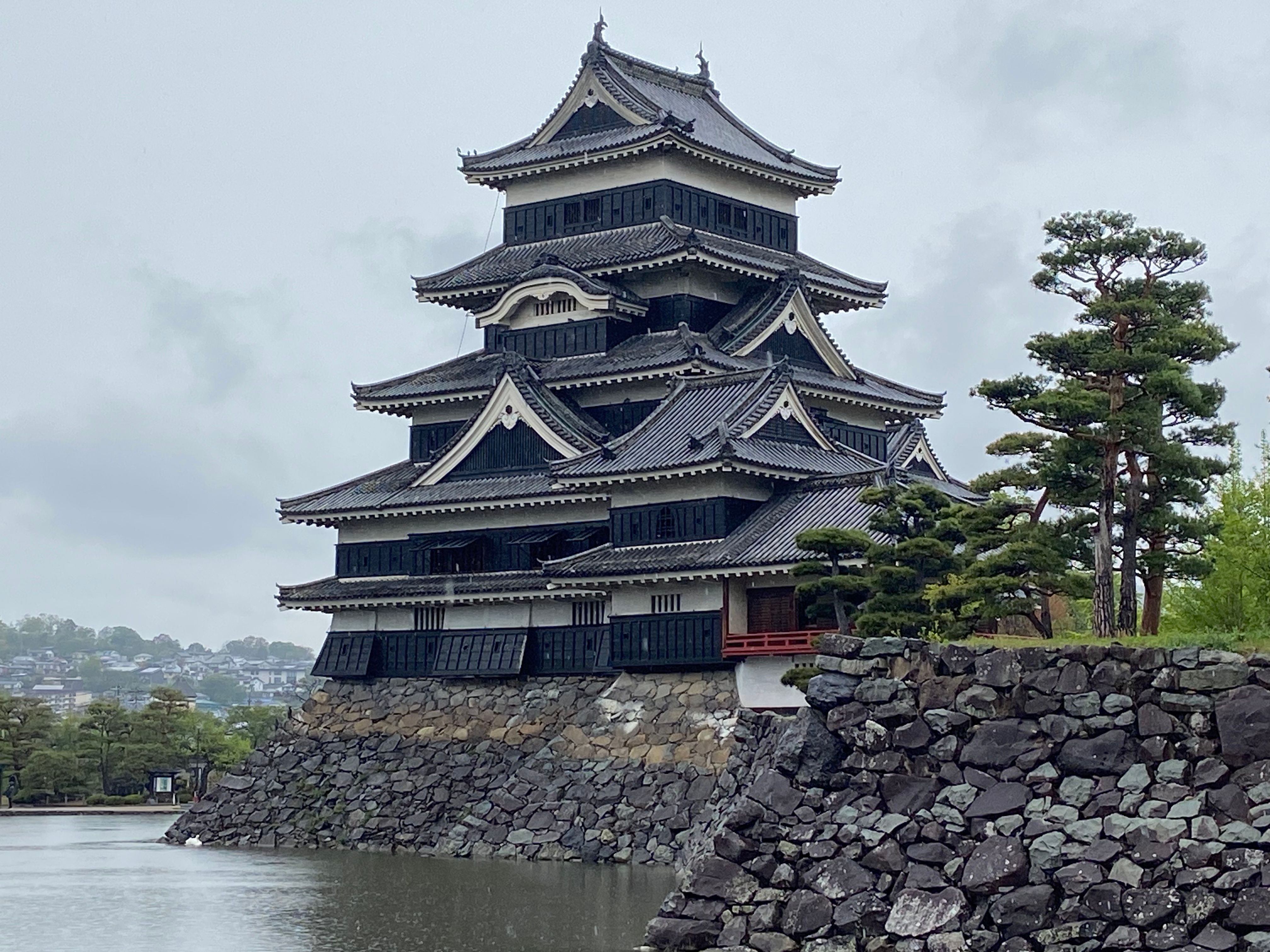
It’s not long before I arrive at the castle. Inside, the keep is so incredibly calm; there’s not a tourist in sight, probably put off by the weather. The castle is the oldest five-storey six-floor castle in Japan. A very specific metric, if you ask me. But it’s all because of a completely secret hidden floor. A castle bigger on the inside than on the outside. The castle is stunning to look at. The Northern Alps sit shrouded behind it, blending into the clouds, while the swamp-like stillness of the moat settles the scene.

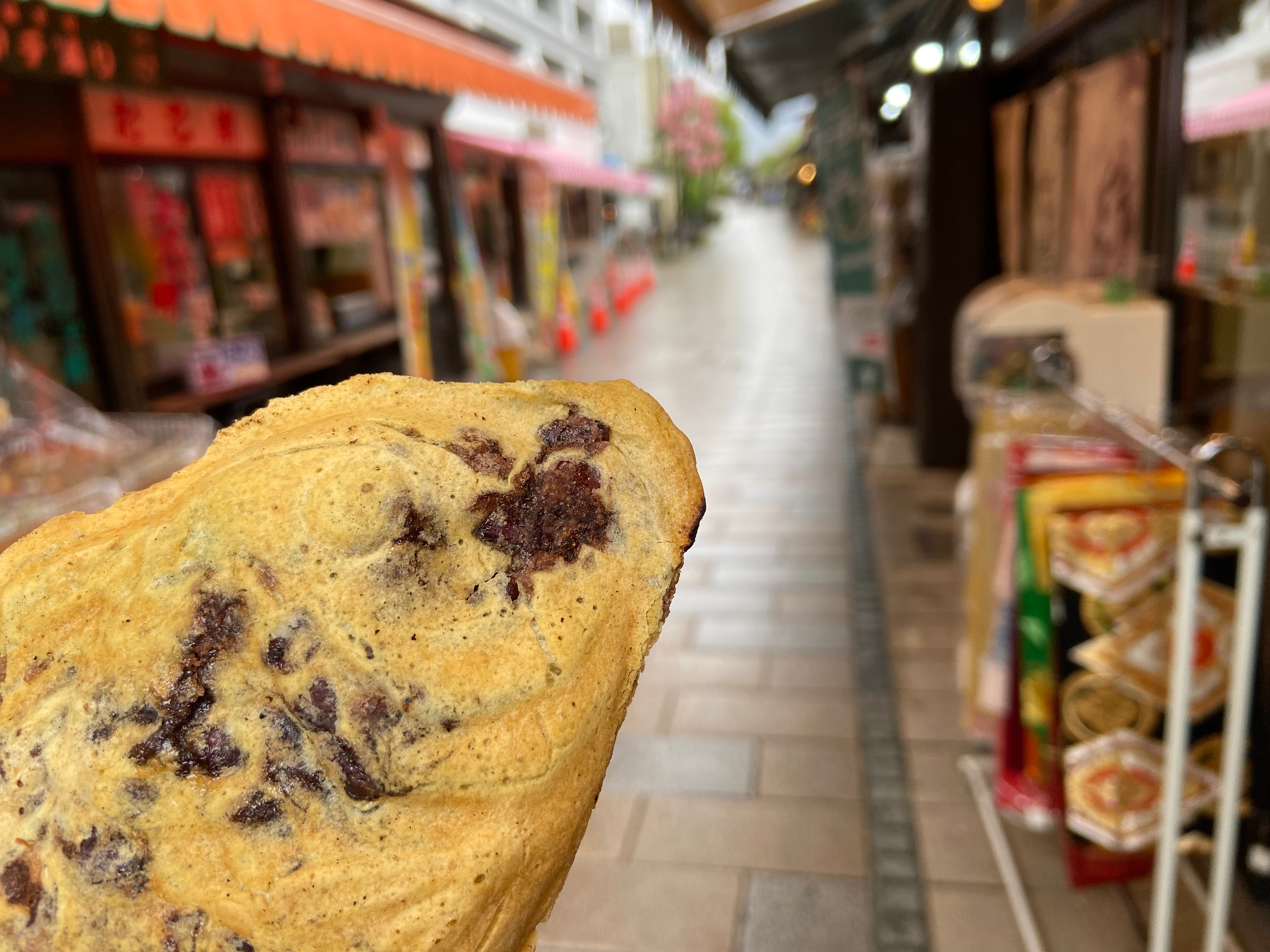
Leaving the castle, it’s almost time to check into my hotel, but I’m feeling a little hungry so head back in the direction of Frog Street to see what’s on offer. I pass a shop selling traditional taiyaki, fish-shaped waffles. This store offers three normal flavoured fillings and one odd flavour. Sweet red bean, chocolate, custard cream, and sausage.

Obviously I go for sweet red bean paste as it’s my favourite. It’s cheap too. Only ¥250 and surprisingly massive. As I am handed the packet, I find the waffle to be red hot, and it smells so good. The batter sweet and soft and delicious. But the tail is the best part, a little crunchy and a little crispy. Luckily for me I’m staying near Frog Street for the next three nights, so I’ll be sure to return here frequently for more fish-shaped waffles; one of the best Japanese snacks.

The Grape Train Vinery

I head to my hotel to check in and dry my shoes with a hairdryer. I don’t need the poncho anymore, as the hotel is one minute from the train station, so I’ll be indoors the whole way. I hop on the train bound for Shiojiri Station, the journey takes 8 minutes. The under seat heating makes a mockery of my freshly dried shoes.

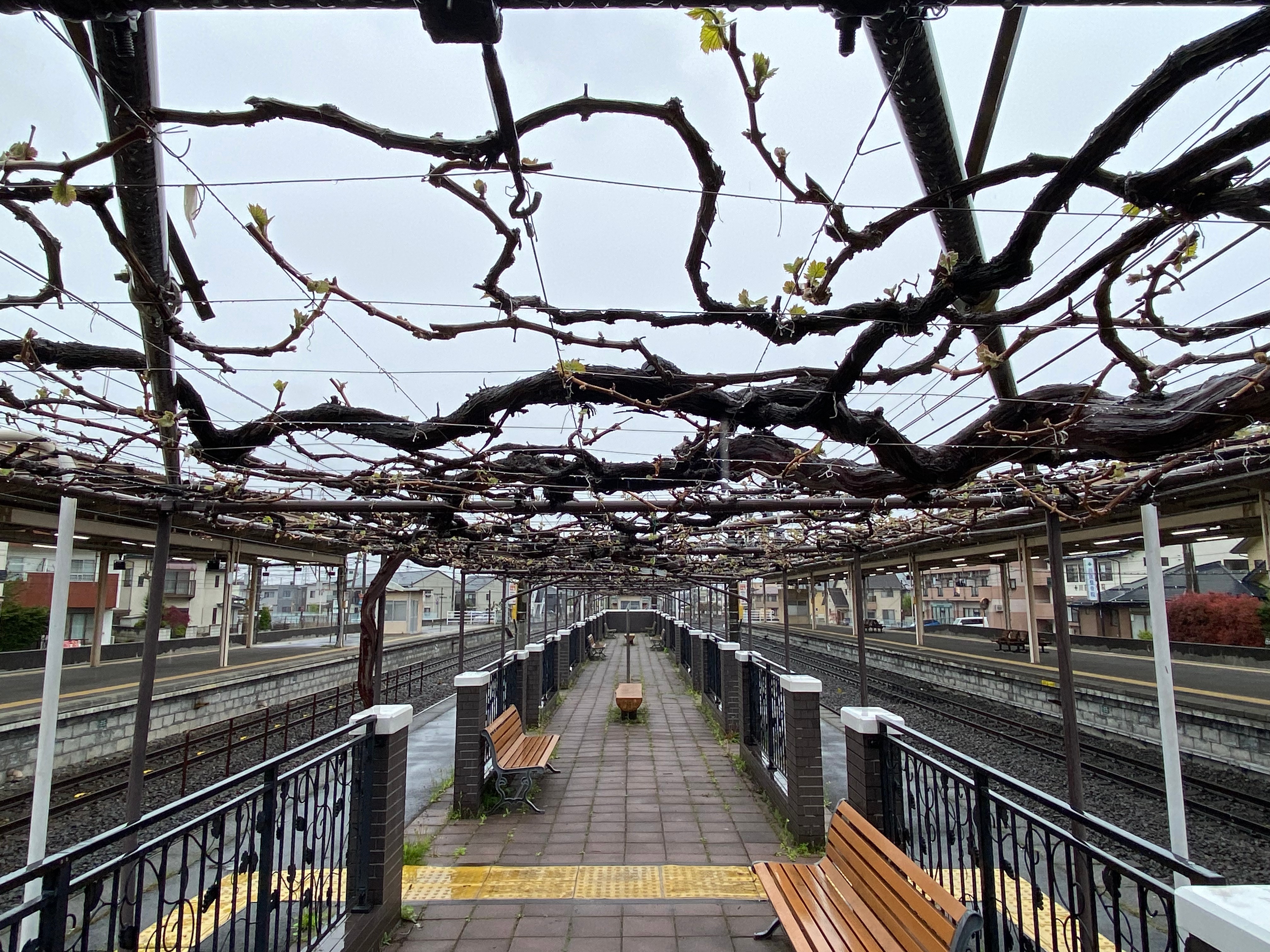
I exit the train into my destination. It’s actually the train platform I’m here to visit, as it has its own vineyard. That’s right, the grapes used to make Shiojiri Wine are grown right here on the train platform. The vines stretch along the platform, growing patiently beside passing trains. Obviously the grapes won’t be fully grown until the autumn, right now they are just small leaves on vines. I do notice that they have hung some plastic dragonflies around the vines, which I assume is to deter predators from eating the grapes.

Inside the station, there’s a small gift shop. I purchase a bottle of Black Queen red wine, made from platform grapes. Then it’s back on the train 8 minutes to Matsumoto Station.

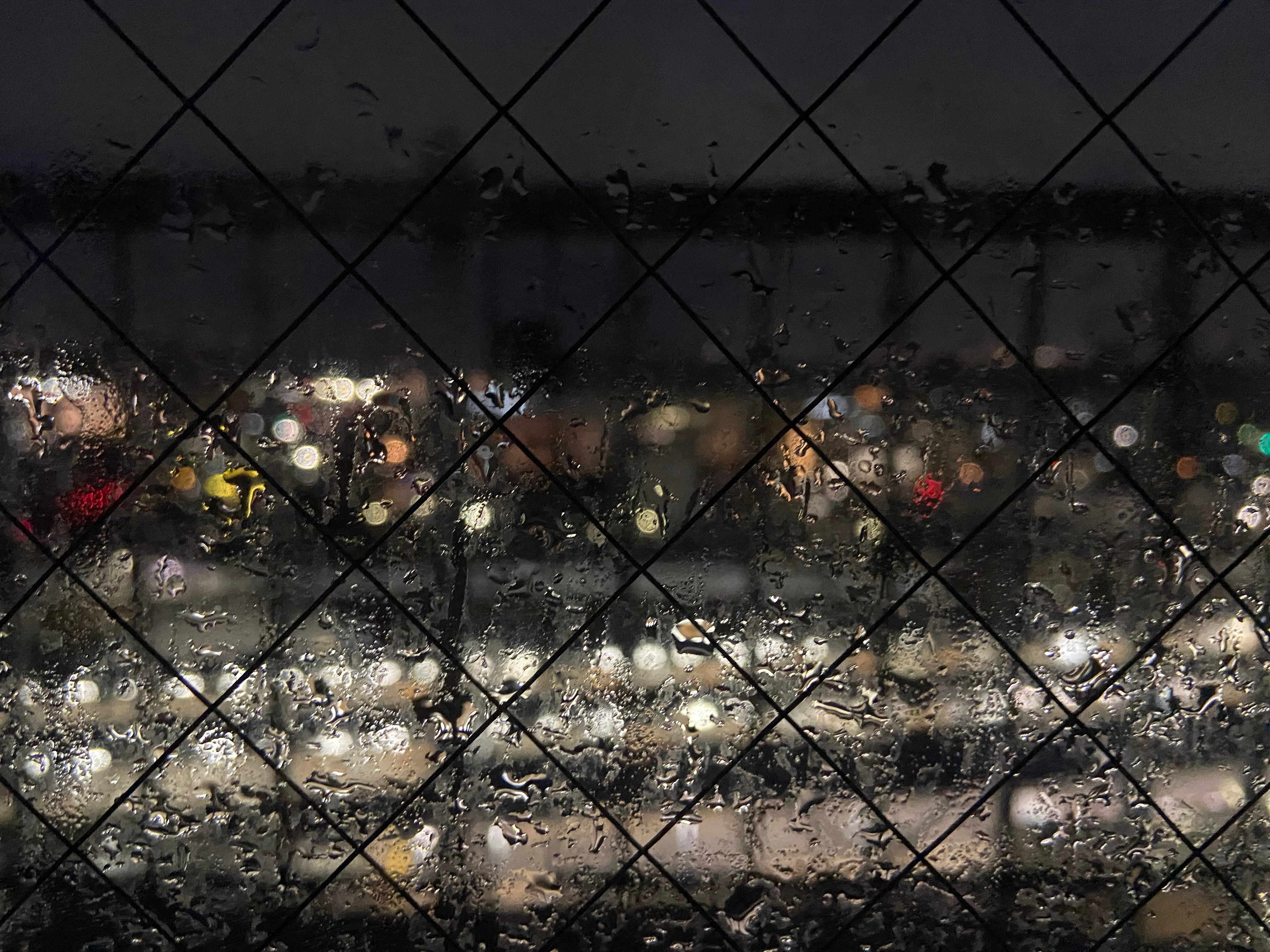
In my hotel room, I sit on the edge of the bed with a plastic cup of wine, its notes of cassis a little overpowering. I enjoy the sound of the rain as it taps softly against the window. The wine is bold, a little too certain of itself. And somewhere beyond the fog, the mountains are still there. Waiting for tomorrow.

The Unbearable Lightness of Being in Orbit

An announcement tells me that my train is significantly delayed by one minute as I wait patiently at Kanazawa Station. Today I’m travelling to a place in the remote countryside of Ishikawa; a seaside town said to have had the most UFO sightings in Japan.

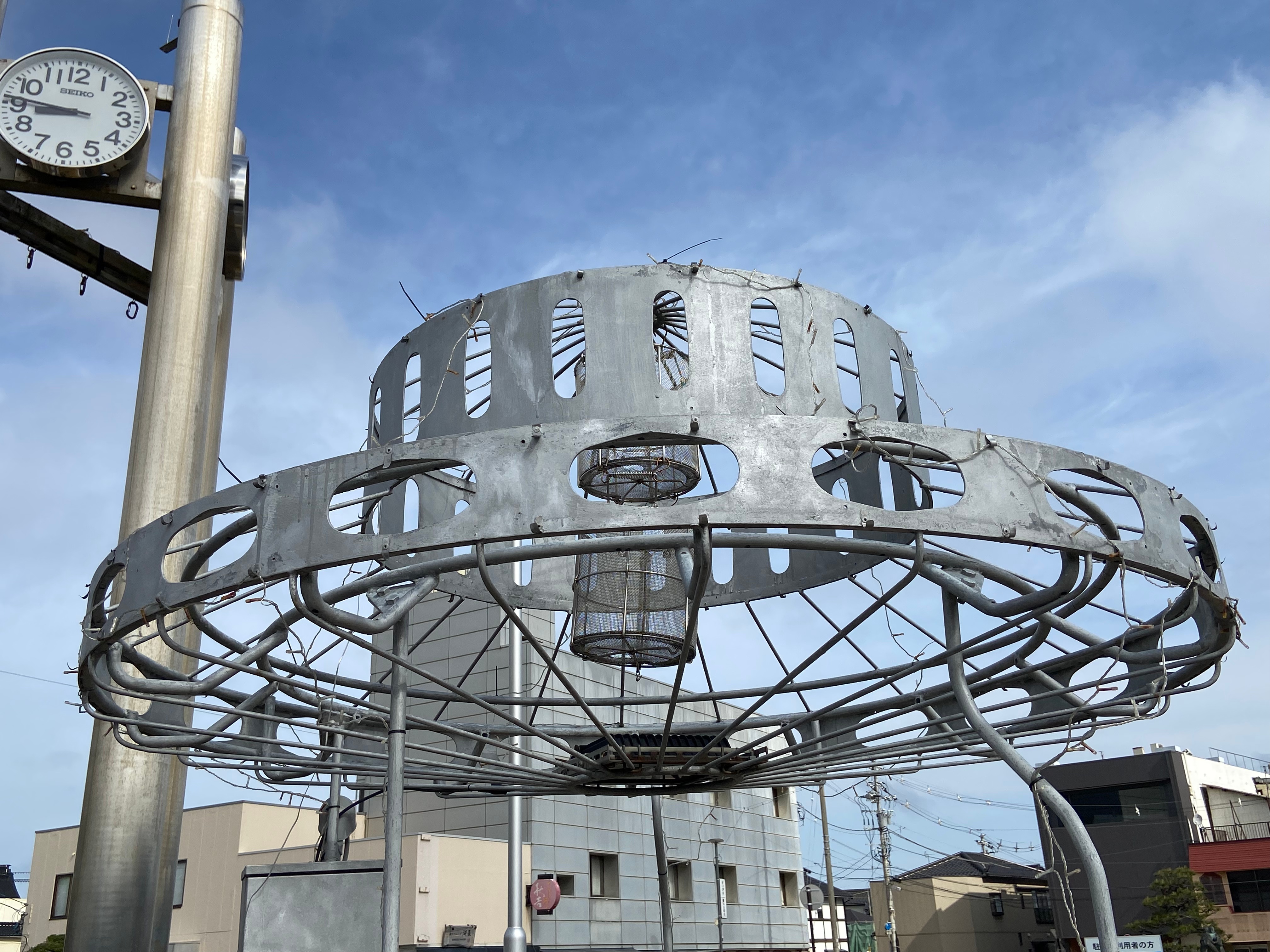
Outside Hakui Station, the morning sun is blazing. I immediately notice UFO-themed public artwork, spaceship sculptures, and a sign for the oddly named UFO Museum. Since the sightings, Hakui has fully embraced this alien identity, becoming a UFO hotspot, and now hosts the largest space collection in Japan.

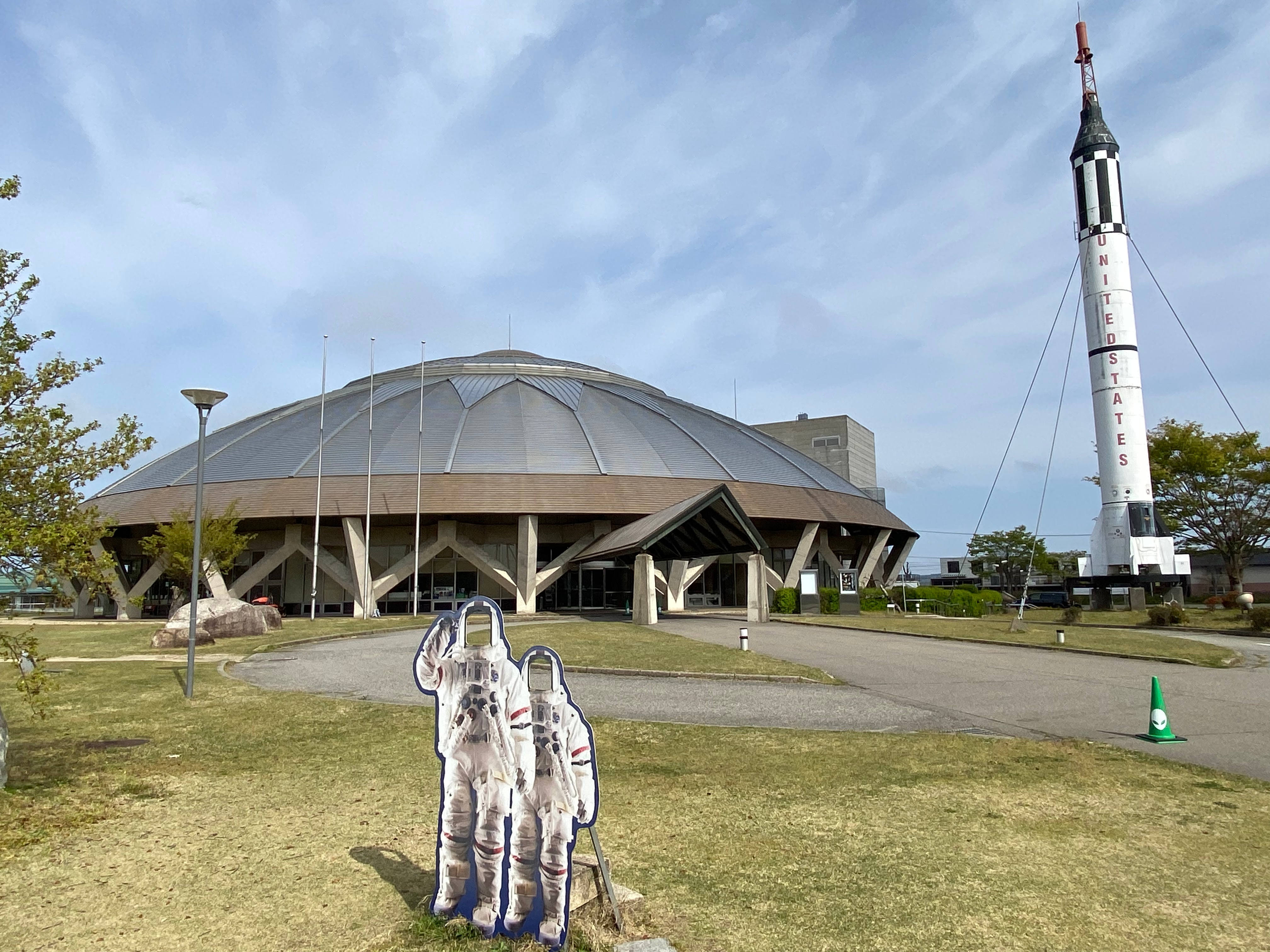
As I wander in the vague direction of the museum, I see a massive flying saucer-shaped building with a large American rocket beside it, and two Carnival Cutouts in spacesuits. I’m not entirely sure this is the museum, as there isn’t a single car in the car park; I do worry, briefly, that if it is, it might be closed today. Much like our deeper understanding of space, there are no signs of life anywhere.

My instinct was partially correct; it is the museum, but it isn’t closed, confirmed when I’m greeted by a woman in an alien mask. I purchase a ticket and hover past a replica Lunar Rover, which looks like it was assembled from spare shopping trolleys, then over to the lift and up to the exhibition floor. The lift features an illuminated planetarium and some faintly sepulchral music, which is nice.

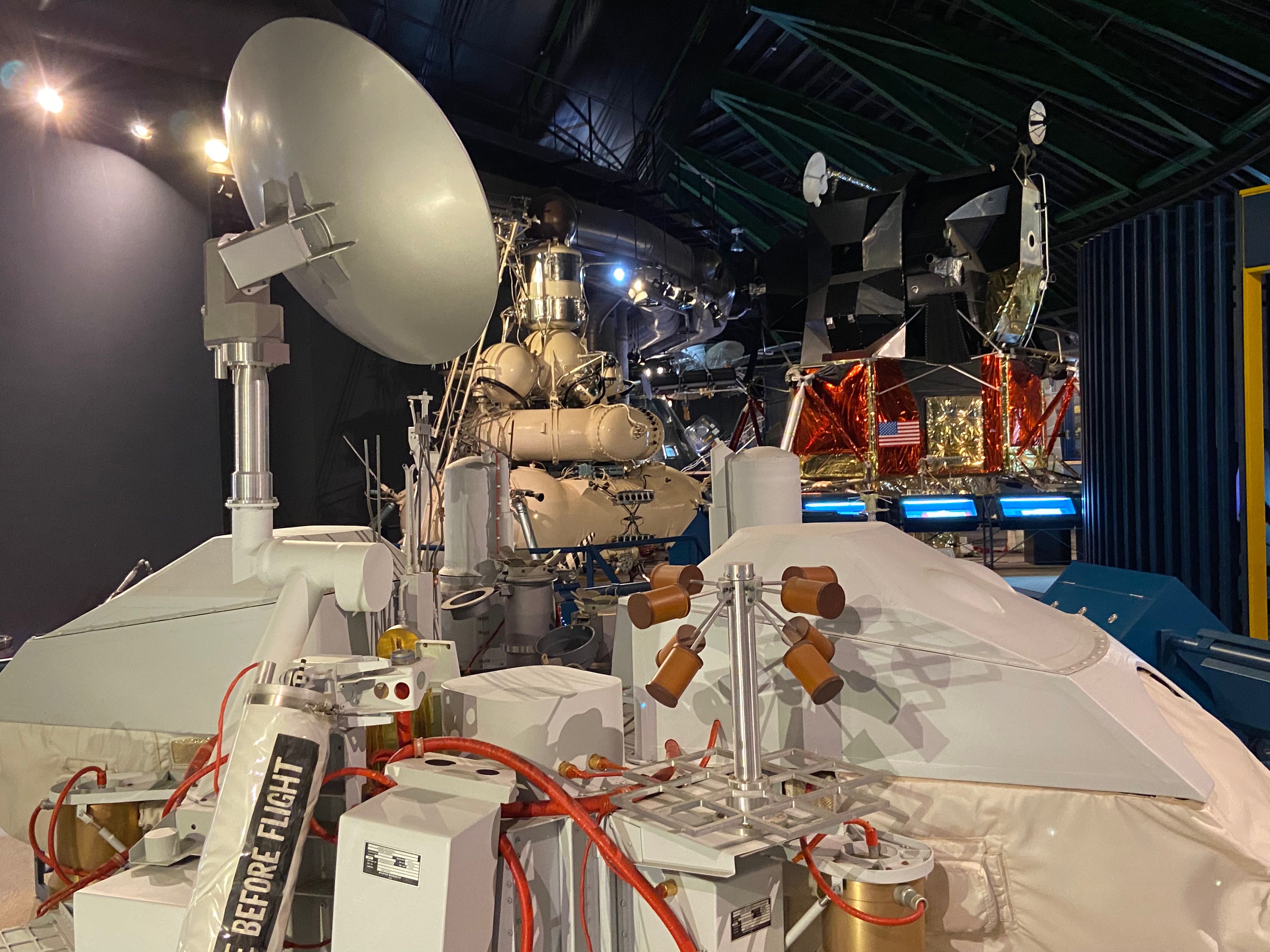
I’m giddy as I enter the exhibition, but somehow, as I see all these space relics, I wonder how most of these things even made it up there. The Vostok capsule, a scorched metal sphere, looks less like something that carried a human and more like something that returned one. I can amazingly take a single photograph capturing the Apollo Lunar Module, the Viking lander, and Luna 24; it makes me wonder how we actually did any of this.

I explore. There are Moon rocks that I can touch. Ripped clothing and Snoopy caps. There’s space food; macadamia, cauliflower cheese, smoked turkey, and tea with sugar, all purchasable at the end from the museum’s impressive gift shop.

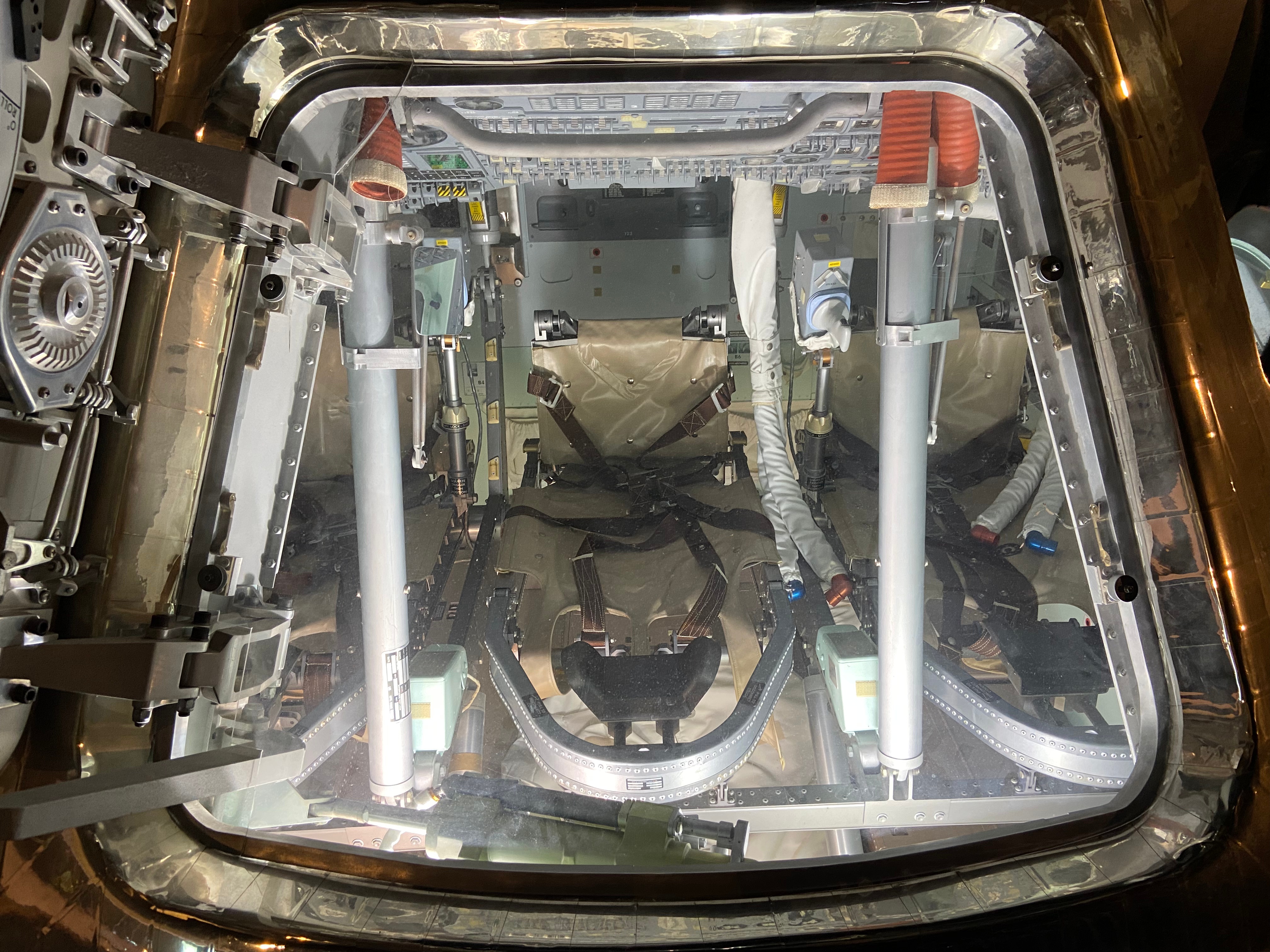
The very watch worn by Neil Armstrong as he pranced across the surface of the Moon back in 1969, an Omega Speedmaster, is on display. I suspect his was accurate to the microsecond, unlike my train this morning. I assess every detail of the Mars Rover, enjoy reading about SETI and the search for extra-terrestrial life, and peer deeper into the Apollo Command Module.

The one part of the exhibition that strikes me is Voyager. I move through the music and photographs we sent into space; solar system parameters, chemical definitions, DNA structure, nursing mothers, continental drift, Earth’s structure, diagrams of evolution, demonstrations of licking and eating, women in rush hour, telescopes and violins alongside music scores. A quiet catalogue of ourselves, cast outward. I can even play sounds recorded by Voyager. Real sounds taken in space; eerily empty and cold. Desolate. Something that feels like abandonment, drifting into the vastness of the void.

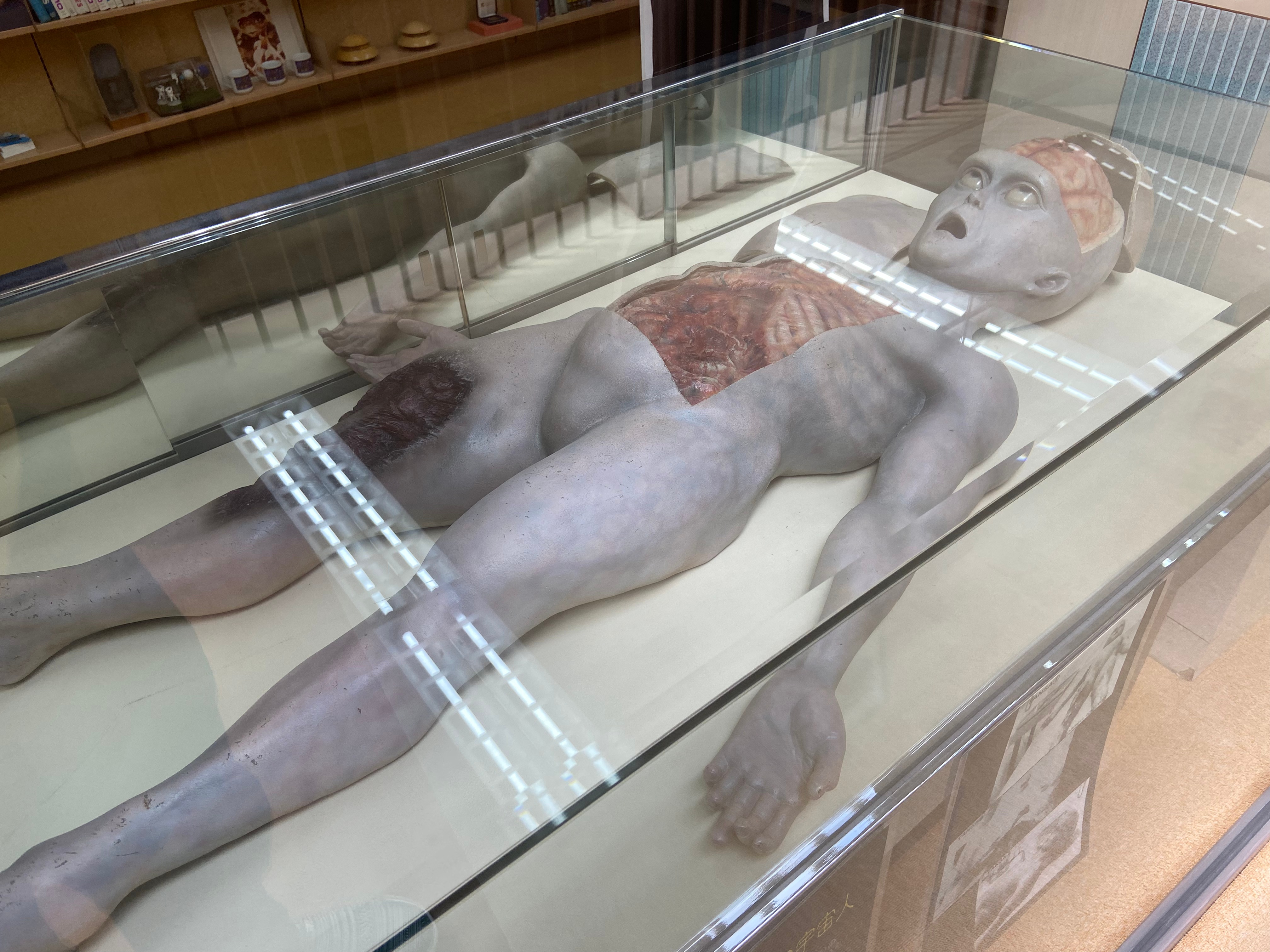
There is one final room filled with UFO paraphernalia, including photographs from Roswell depicting a dissected alien. However, this public library and exhibition hall appears to be closed today; as does the restaurant serving UFO-themed food, probably due to a staffing shortage.

Back at the station, I discover the trains back are just as infrequent, and that I’ve missed mine by one minute. So, with bad planning and two hours to kill, I head back through the Hakui heatwave. I’m not used to any form of pleasant weather in April, being from England, and so I haven’t even thought about bringing anything to protect my skin.

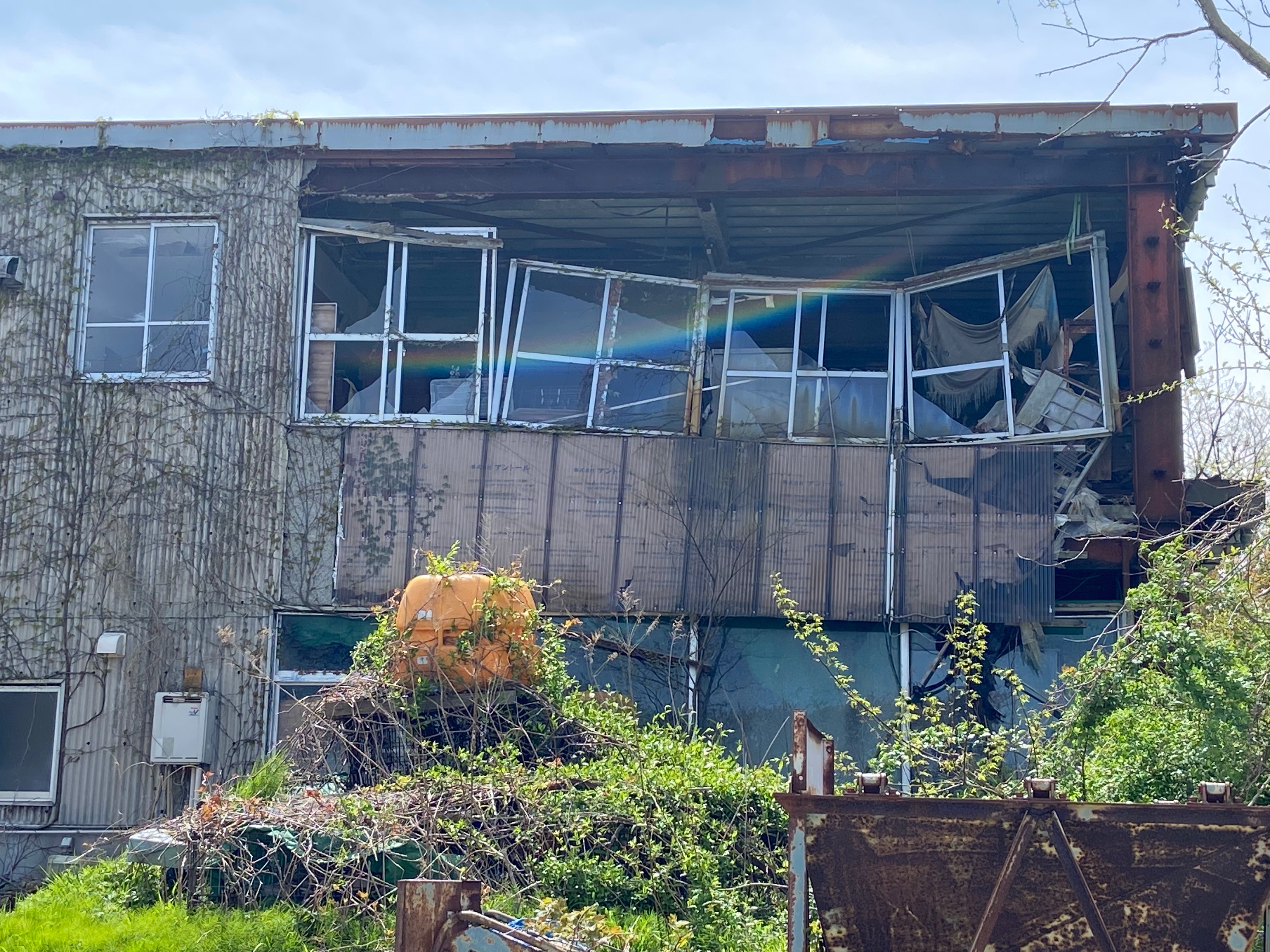
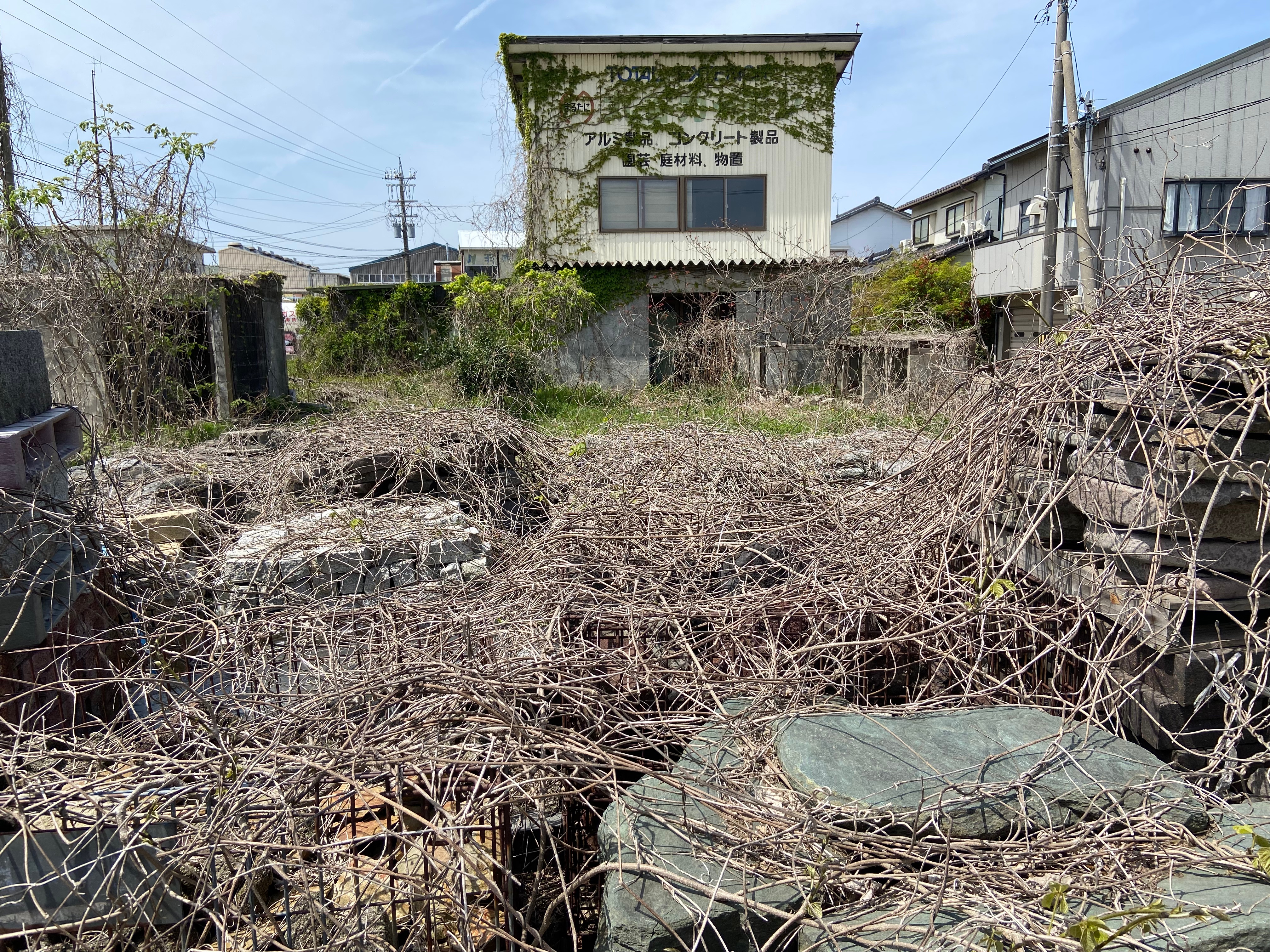
As I make my way toward the only other point of interest in the area, a nearby beach, I search desperately for a Family Mart or Seven Eleven. The only real building of note I do pass, however, is what looks to be an abandoned house.

As I wander, I’m surprised by just how completely empty the town is. I don’t find a convenience store. I don’t see another human on the entire walk. It’s as though they’ve been removed; abducted, lifted clean out of the day. Maybe they have. I pass empty galleries and closed bakeries, abandoned supermarkets and buildings in complete disrepair.

I was going to leave that point there, but as I get further from Hakui Station and closer to the beach, it becomes clear just how severe it is. I’ve remarked on abandoned villages before, but this is by far the worst I’ve seen; this feels like an entire abandoned city.

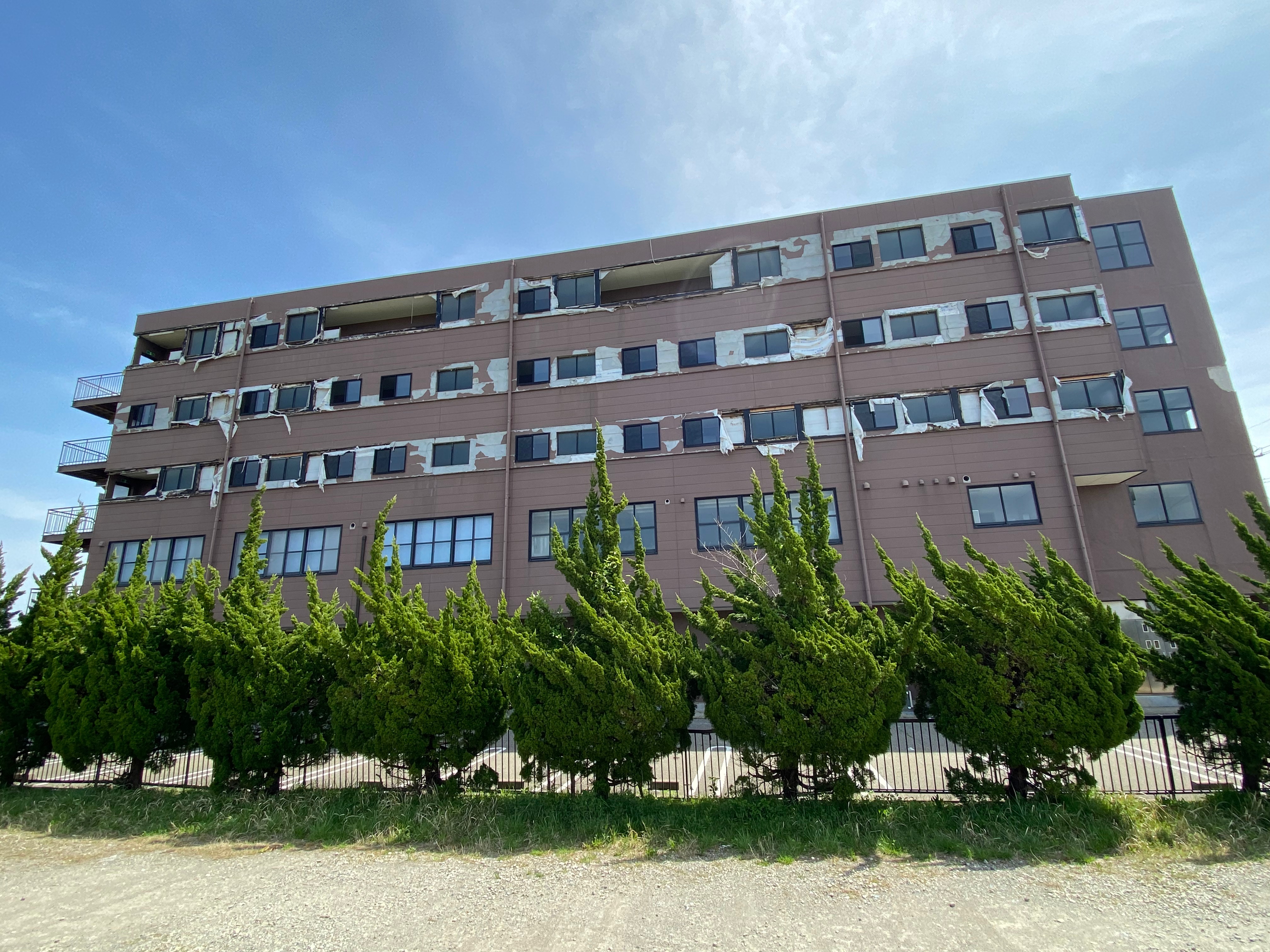
I pass a crumbling car wash, a house that seems to have collapsed mid-sigh, and a whole hotel on the main road just five hundred metres from the beach entrance, abandoned.

A sports centre sits empty. There is a closed-down supermarket crawling with vines. A crumbling old school. And a massive apartment block with collapsed balconies and rusted gates. Where are the people, I wonder. Some have died; some have moved on. A few, perhaps, simply vanished into quieter lives elsewhere. When they were here, at least they got to live near a beach.

The only upside I’ll add is that, as lonely and quiet as it is, at least it’s peaceful. Perhaps the same can be said about death; lonely and peaceful. No cars on the road. No chatter. Voids and emptiness. If there ever were to be an alien invasion, I doubt anyone around here would notice the aftermath.

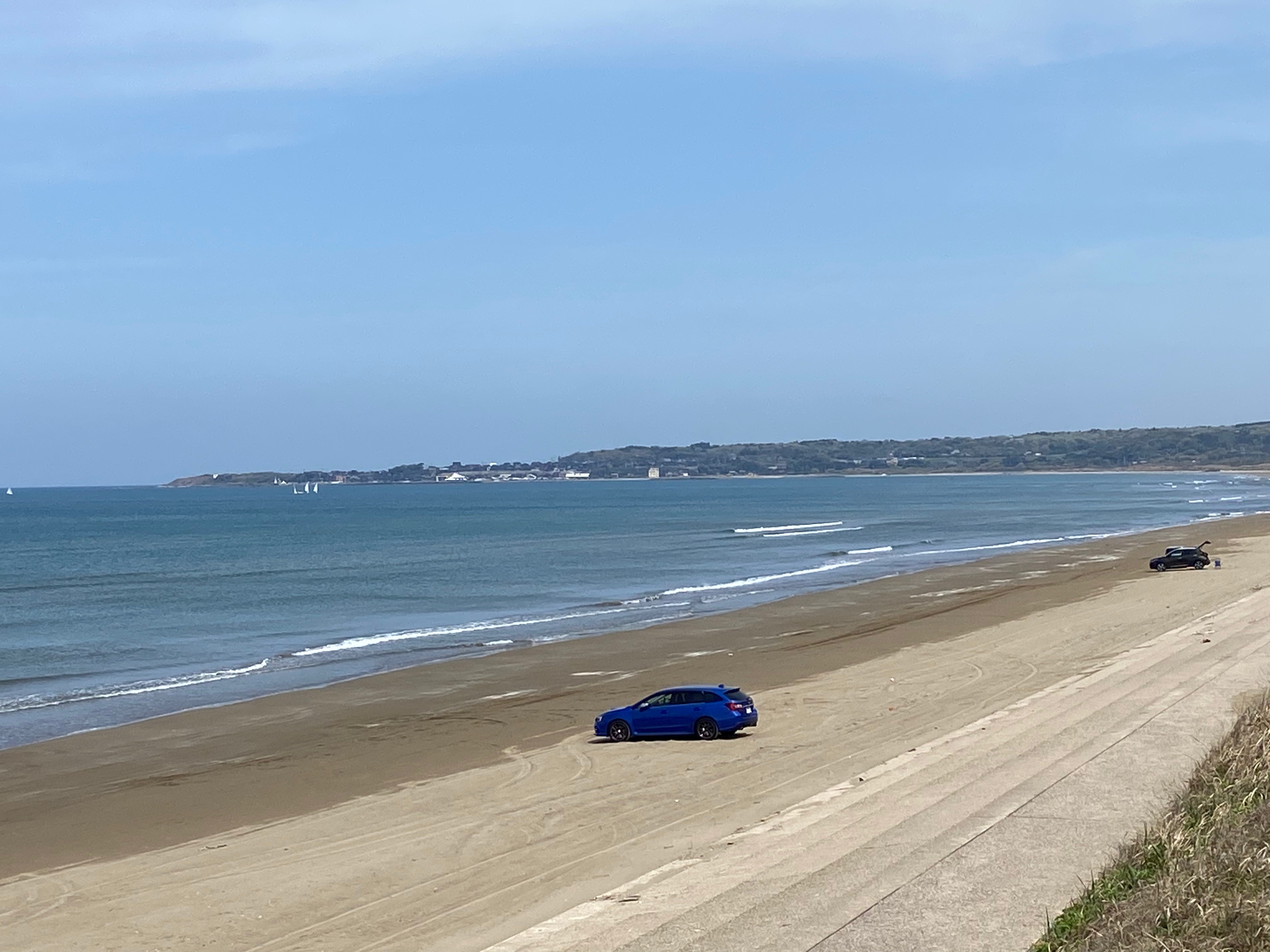
I do eventually arrive at Chirihama Beach. It’s nice. Beaches often are. This one is slightly different, though, as it allows motor vehicles to drive on the sand. Glancing over the horizon, I notice quite a few cars parked there. Hopefully, for the owners, the tide isn’t on its way.

As I walk along, enjoying the sound of the waves, hoping not to get any sand in my shoes, I can’t stop thinking about the abandonment; it really was a shock to see. I also think about the cosmological impact my sixty-second delay this morning has had on the causality of the day. I wouldn’t be on this beach thinking about this had everything aligned just slightly differently.

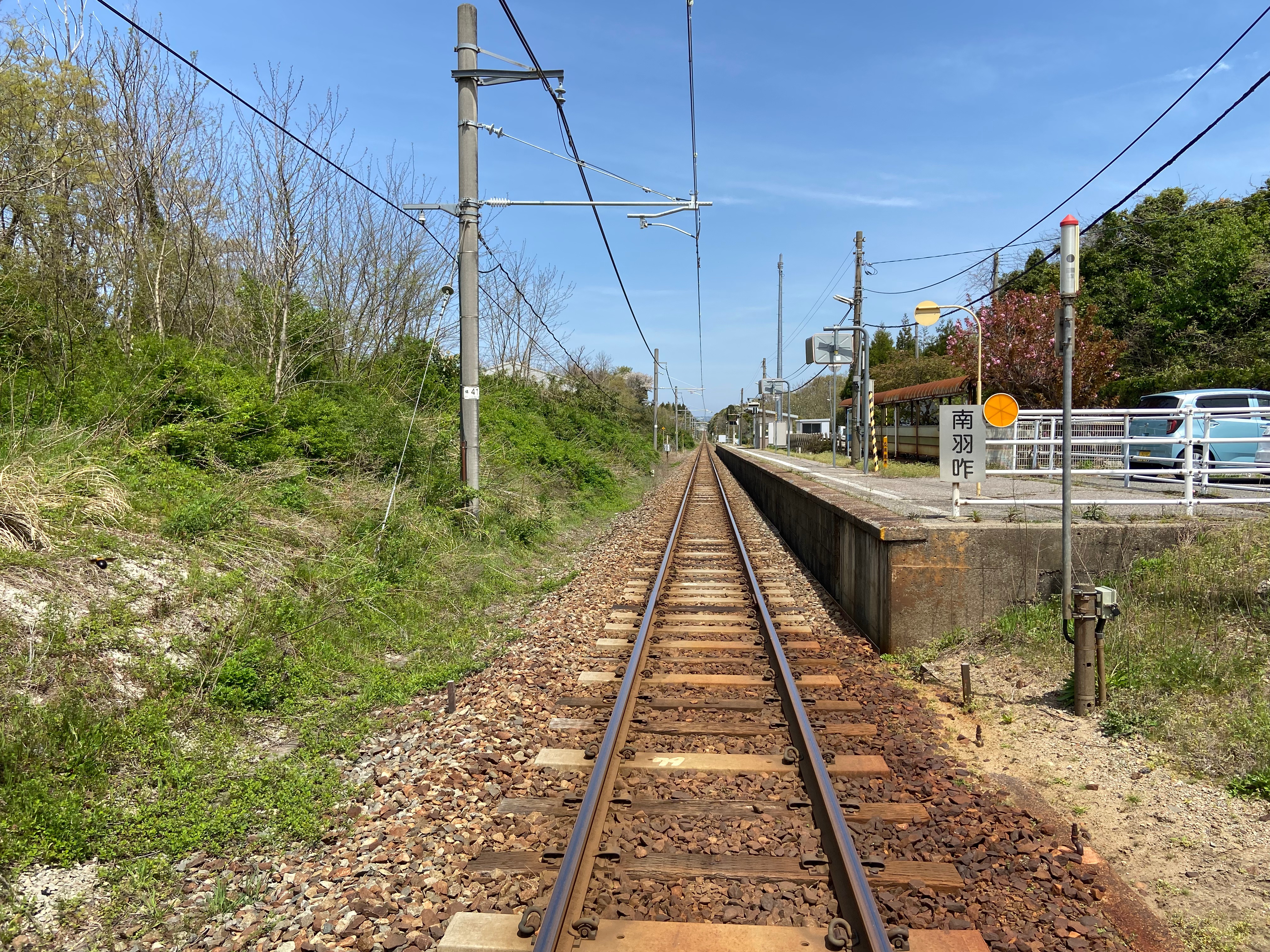
At Minami-Hakui Station, I’m burning from the lack of sunscreen. I was at least expecting a small shop and a toilet; instead there are no staff, no toilets, no ticket machines, no shops, just a single platform and a single track. A sign tells me not to litter or leave cleaning tools around, as this might attract bees and bears.

In the end, I didn’t see any real UFOs; not that I ever thought I would. I also didn’t see any bees or bears, and if I don’t include the woman in the alien mask from the museum, I didn’t see another human being all day.

Once Upon a Timeline

Today, I’m in Yoro, a town in Gifu Prefecture. I’m here to change my destiny.

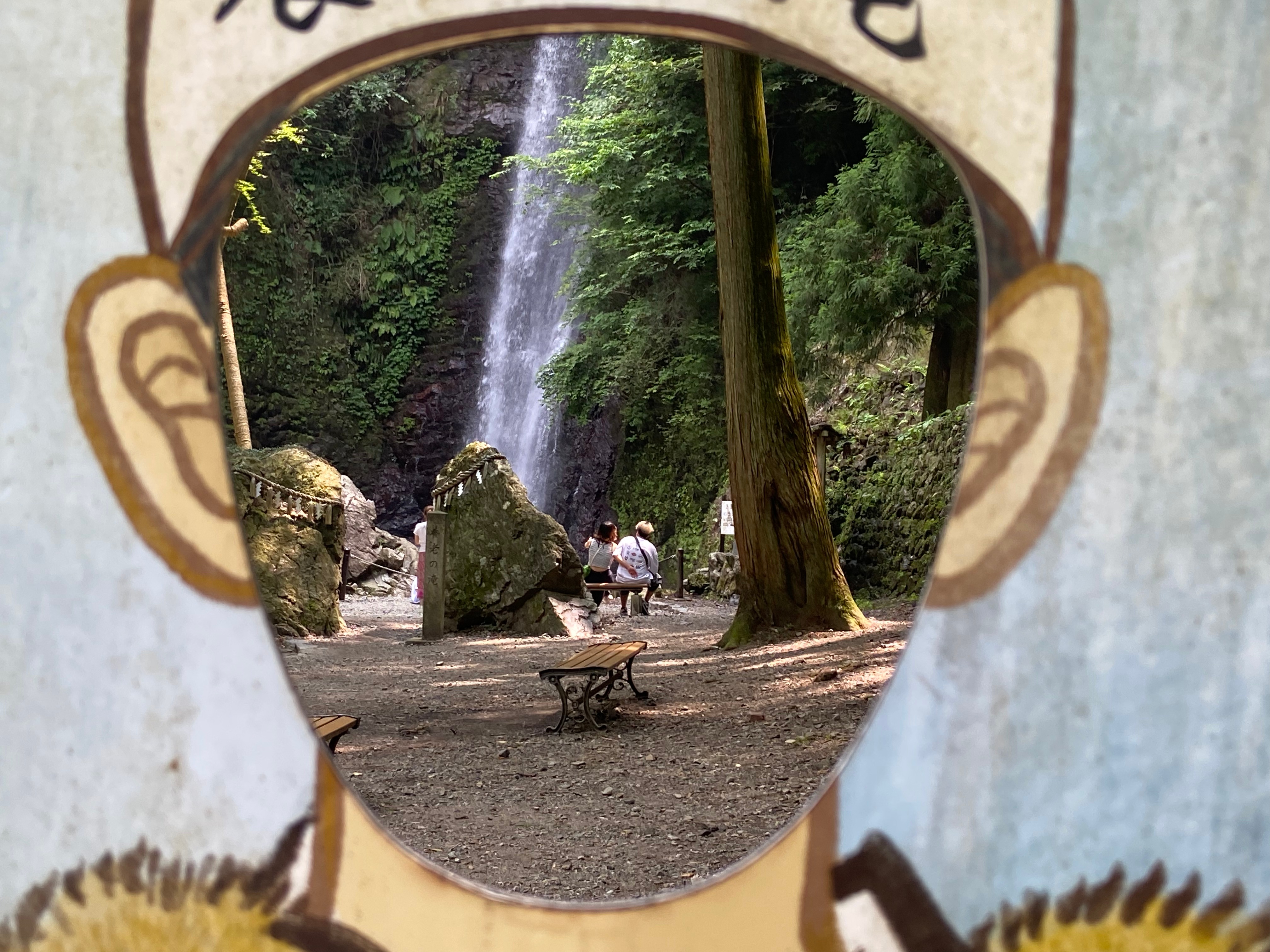
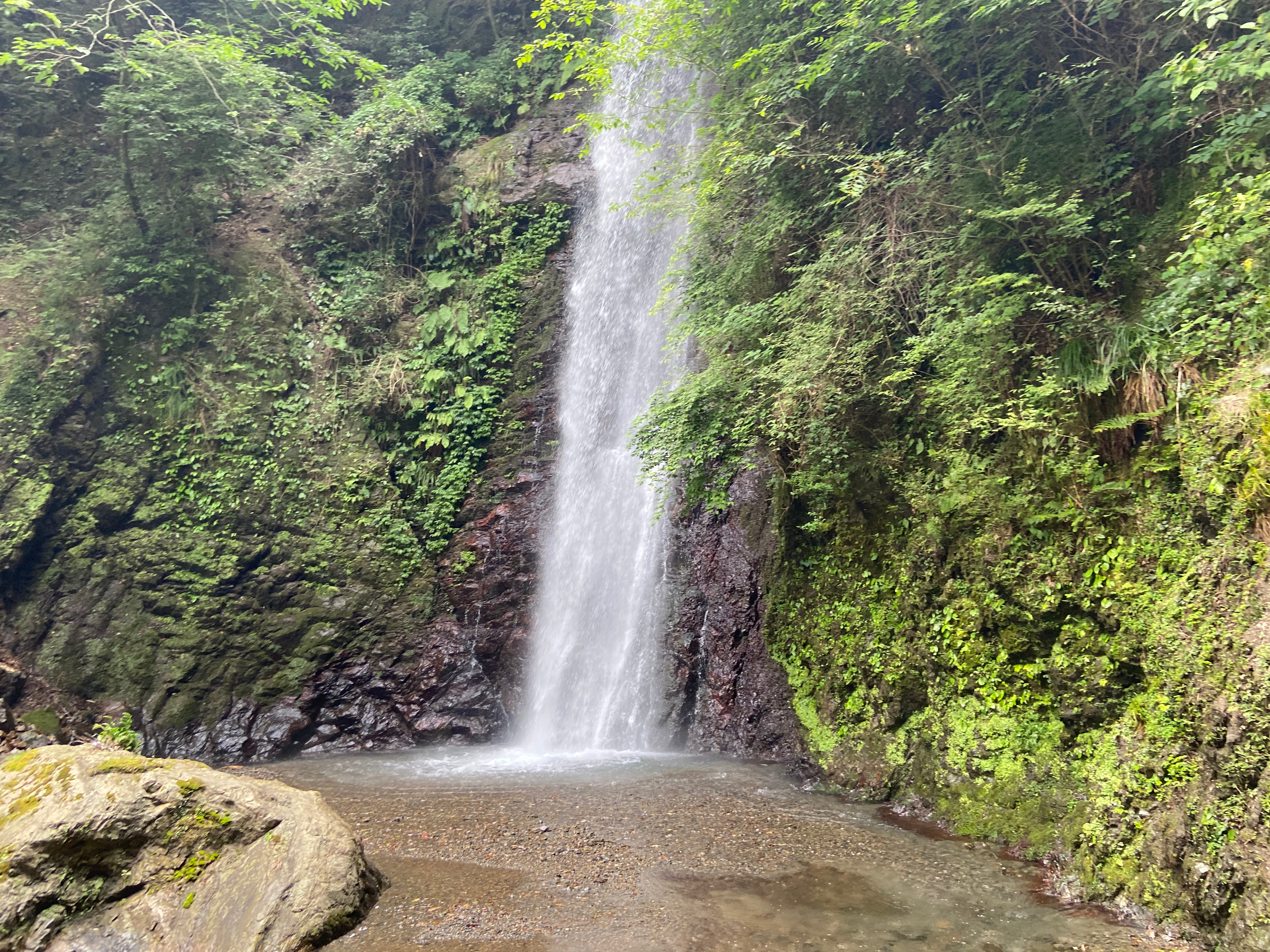
First, I decide to take a thirty-minute stroll along the edge of a cliff to visit a famous waterfall. This waterfall is said to be made entirely of flowing alcohol, specifically Japanese sake.

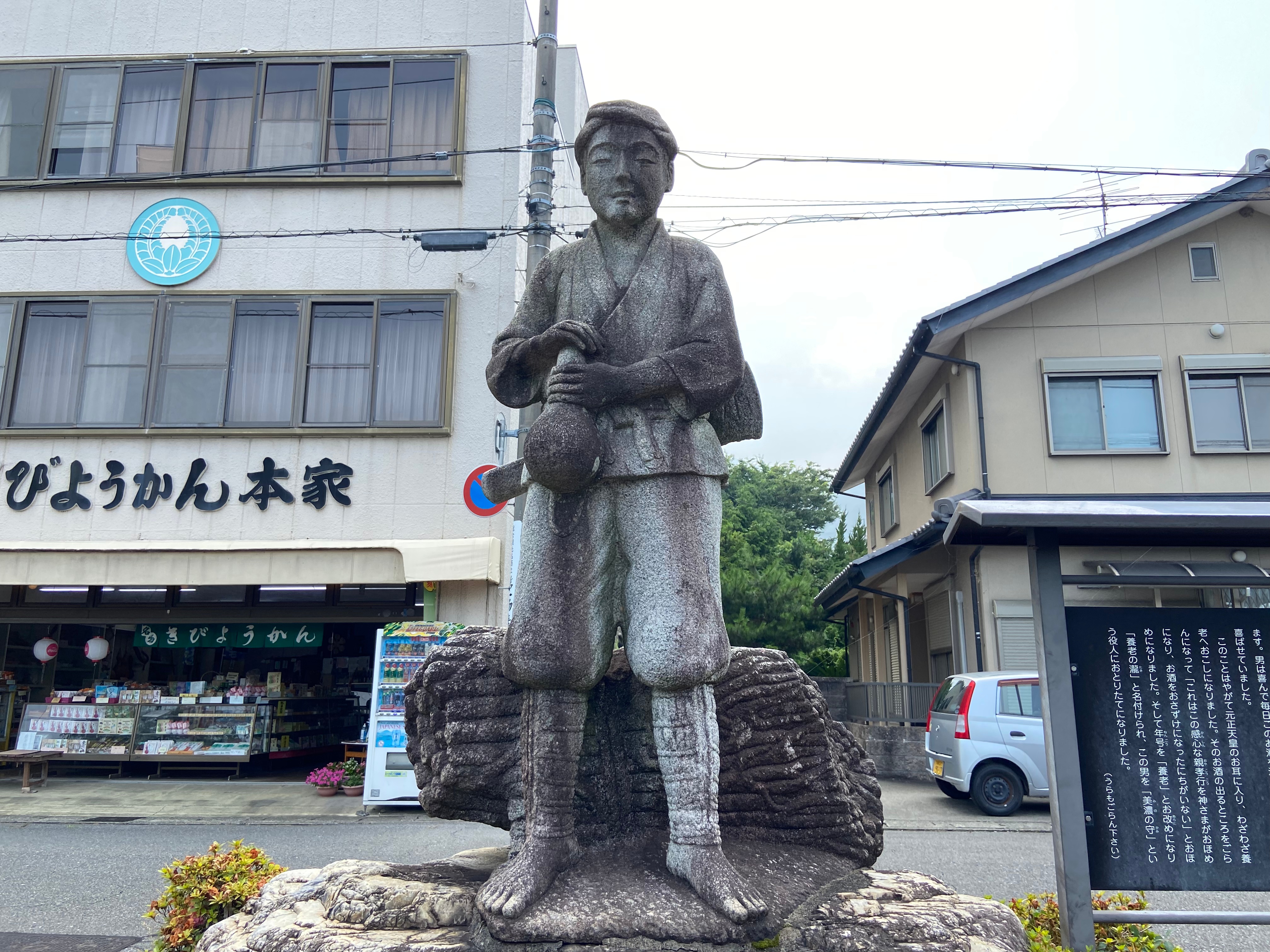
The story goes that there was once a poor lumberjack with a very old, ill father. On his deathbed, the father requested his favourite Japanese sake, but the lumberjack couldn’t afford it on his meagre income. One day, the son walked the treacherous path near the waterfall.

Some say he was out looking for wood for a fire, but he was a woodcutter, so any tree would have sufficed. Others say he was simply thirsty. Regardless, he fell in the woods and definitely made a sound, and after falling and lying on the dirty ground, the poor lumberjack could smell the sweet scent of sake.

It was here that he discovered the water from the waterfall was not water at all.

He returned home with a gourd full of sake, and his father drank it. The transformation was instant, and he miraculously became younger and healthier.

News of this reached the ancient capital of Nara, and Empress Gensho visited the waterfall herself. She was so impressed by the beauty of the area and the magical water that she declared it a sacred site and renamed the area Yoro, meaning elderly care.

It takes me about an hour to reach the waterfall despite it being advertised as a thirty-minute stroll. It’s a tough hike too, up a mountain. It’s humid; it feels like 40 degrees. I’ve probably sweated more water than I’ve seen flow down the falls. I can only imagine how hard it must have been for the lumberjack, carrying that gourd and heavy axe to the top.

Next to the waterfall, a faded poem engraved on stone in Japanese reads:

“Listening to the flow of Yoro Falls,
One’s heart is healed and refreshed,
Like the pure sake that rejuvenated the old man,
Flowing eternally, blessing those who visit.”

I stand looking at the waterfall for a time, enveloped in tranquillity. I think about water flowing down a river, following a predestined path. It cascades over the falls, flows further south, and meets a tributary, where its path diverges and its destination shifts, a choice not made but followed.

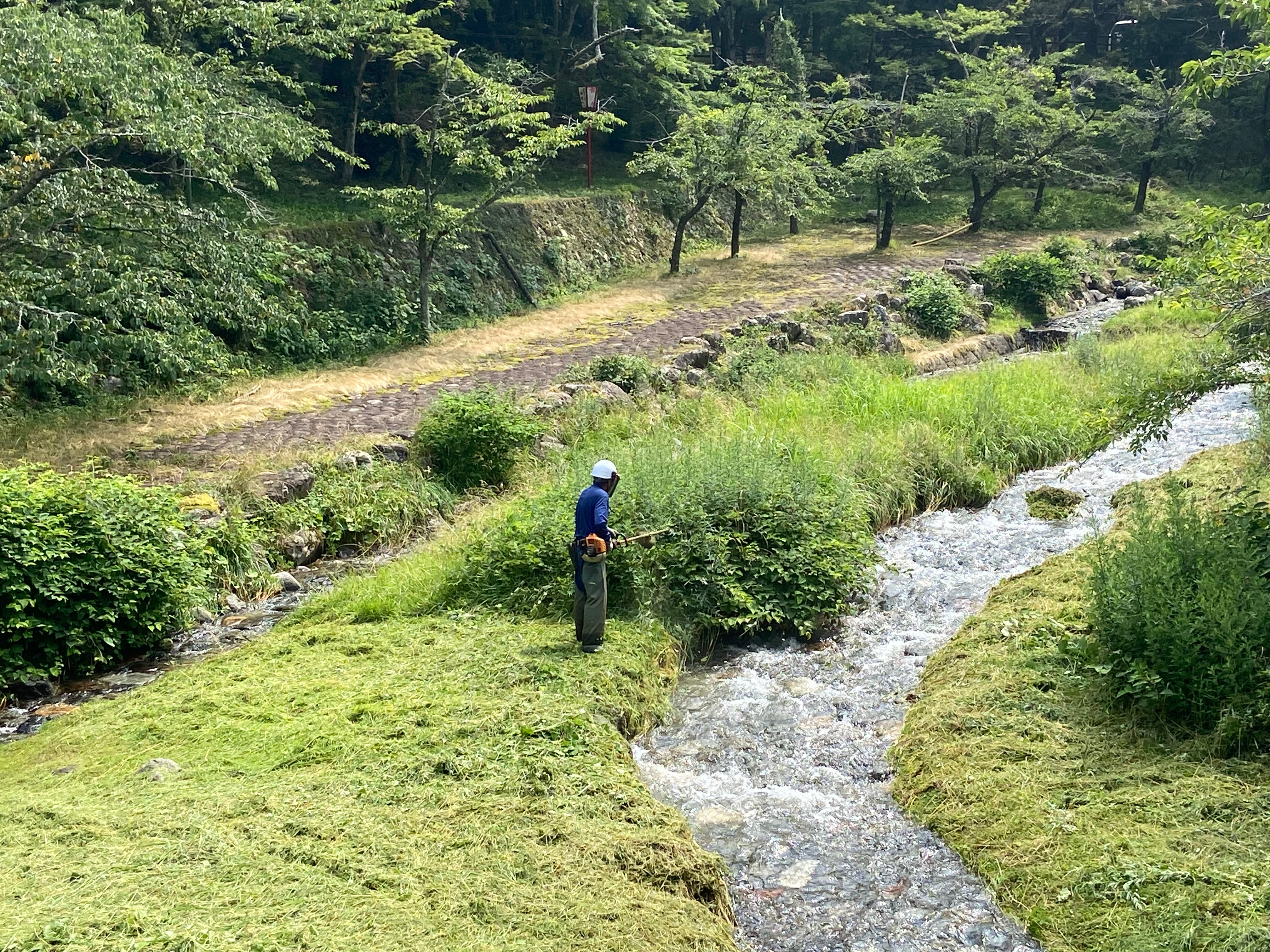
Somewhere, after leaving Yoro Falls, a butterfly shivers against the wind. At the bottom of the waterfall, the tranquillity ends and is swamped by the sound of a man with a grass strimmer.

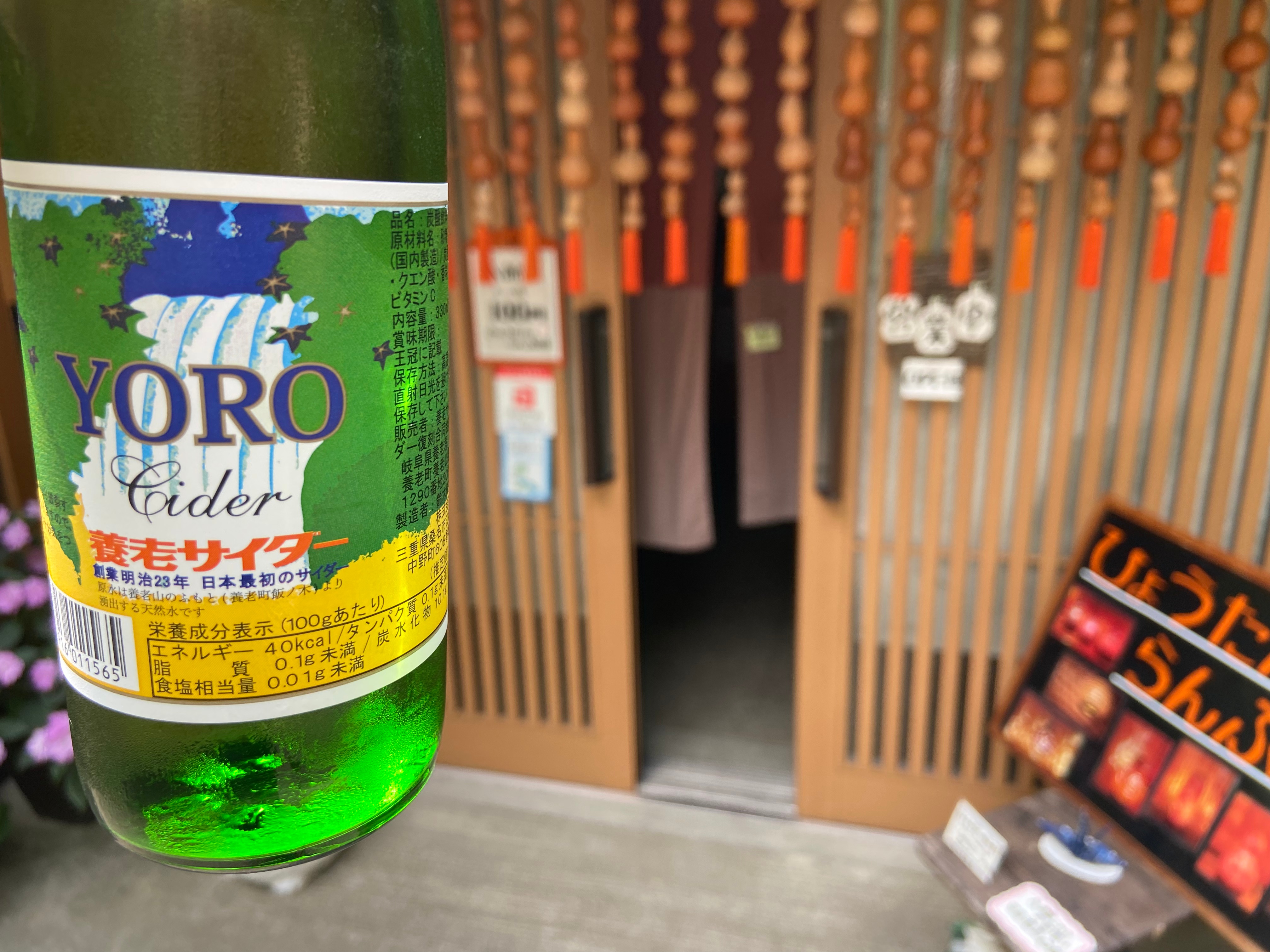
I stumble upon a small souvenir shop selling bottles of carbonated cider made with the magical sake water. The cider tastes delicious. Unlike in England, cider in Japan is a soft drink, so despite the falls apparently being made of alcohol, this drink somehow contains none.

I leave with a healed heart, feeling blessed. Eternally refreshed. Next to the small shop is the Yoro Gourd Museum. I look at a few gourds made into artwork and lamps before moving on.

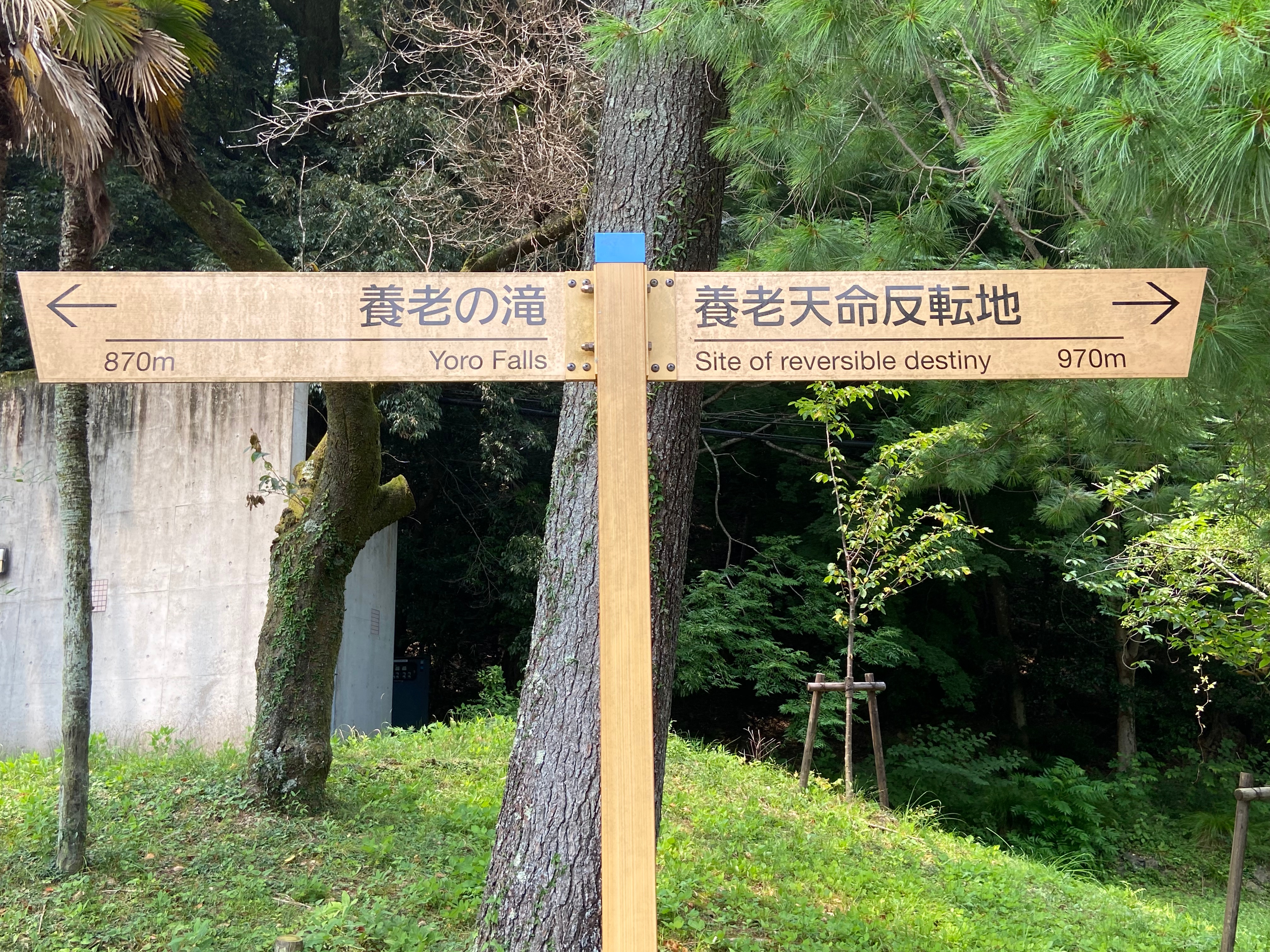
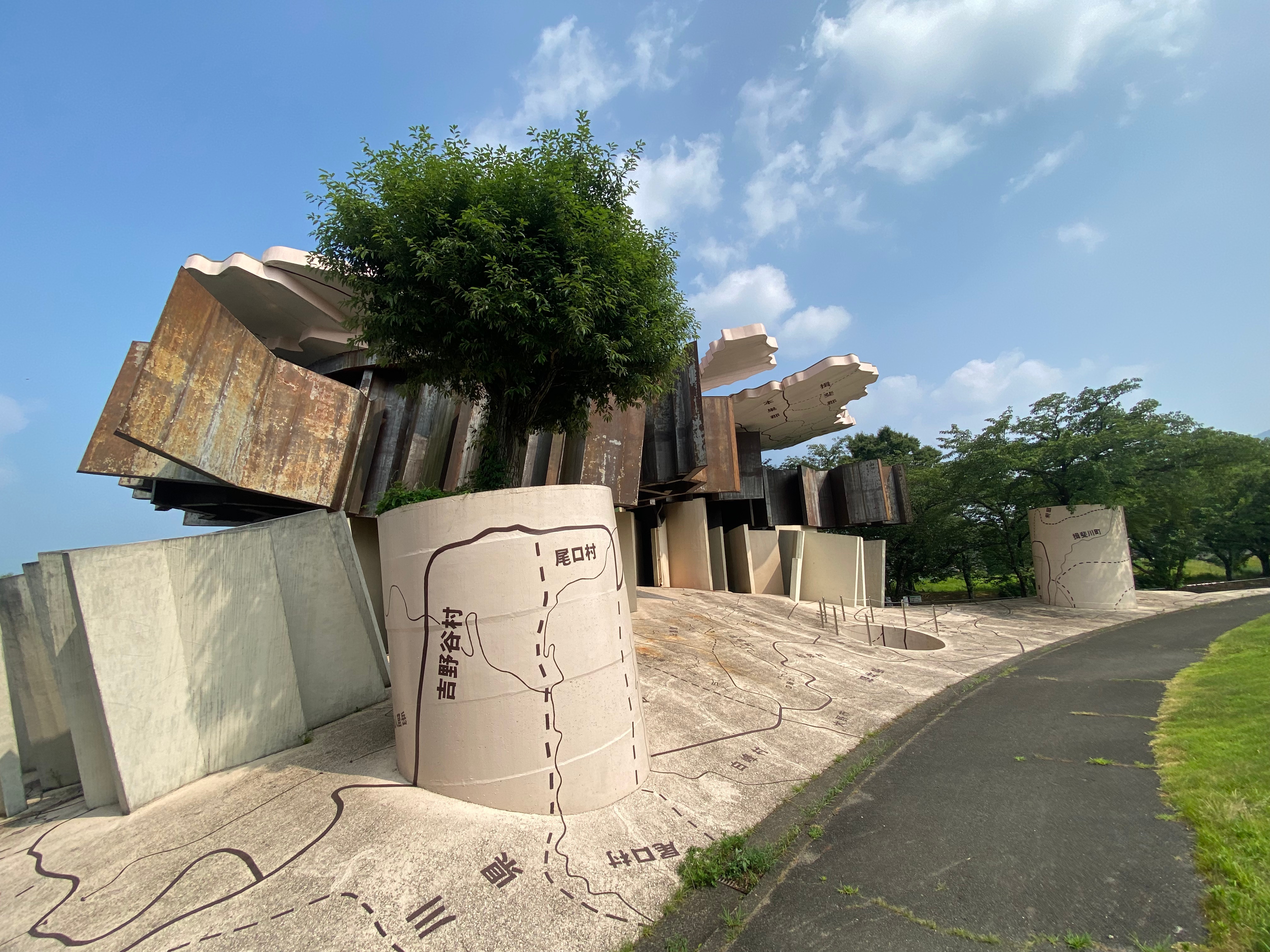
My final stop today is within Yoro Park, a place known as the Site of Reversible Destiny. A massive outdoor interactive art park dreamed up by Shusaku Arakawa.

It’s quite bizarre, funny, and downright unusual. There’s a house that is a road and a road that is a house. There’s a nostalgia generator, a few mazes, and some piles of things that I don’t even understand.

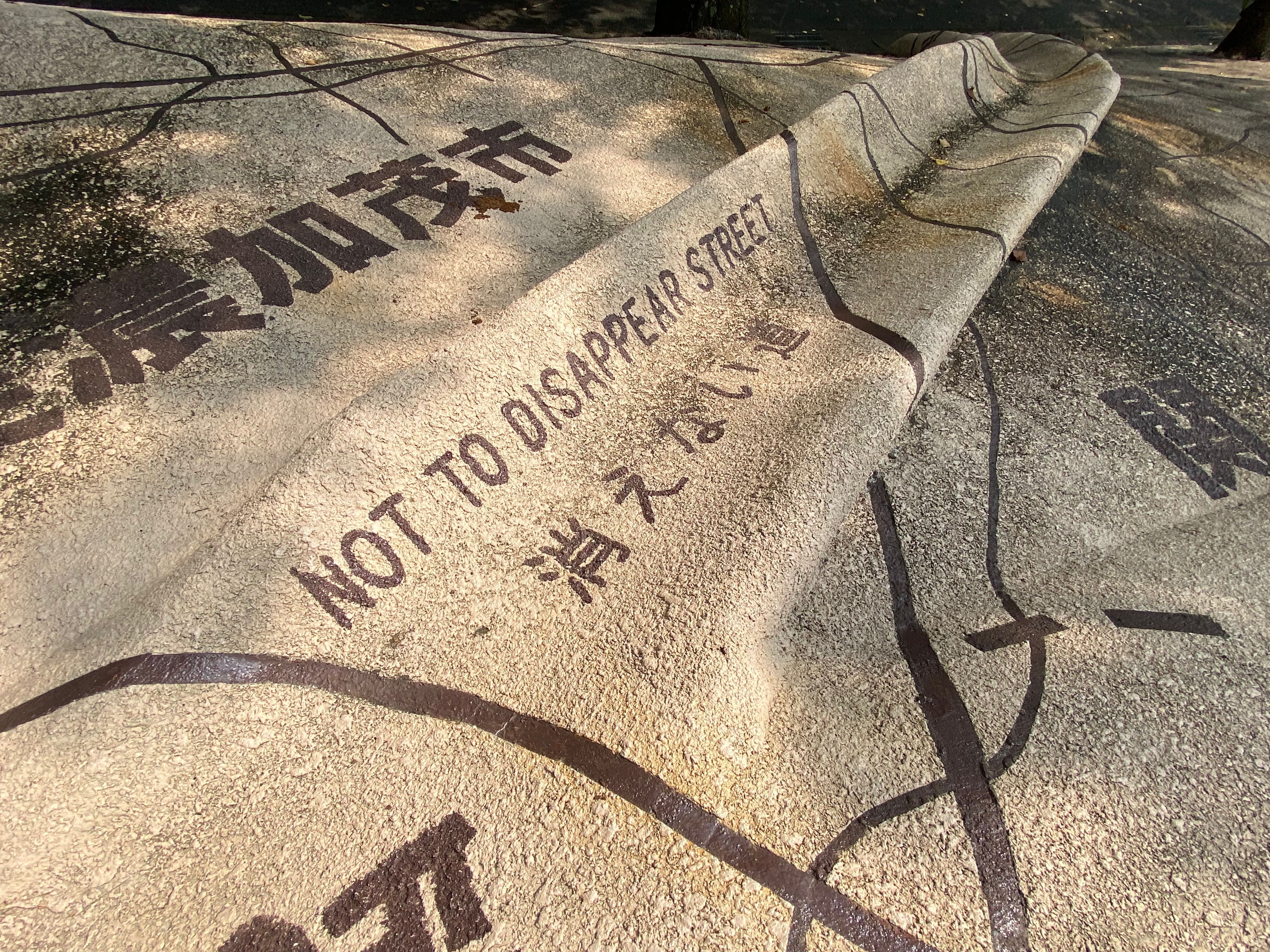
I pass Not To Disappear Street, the Gate of Non-Dying, and an area known as Geographic Ghost. I climb over the Zone of Clearest Confusion, leave through the Trajectory Membrane Gate, before getting lost in the multicolour of Destiny House.

Shusaku Arakawa was obsessed with the idea of death and destiny. He built this site with his wife, Madeline Gins, as a challenge to mortality itself. That’s the point of the Site of Reversible Destiny: to confuse your soul and reroute your path. When Arakawa died in 2010, his wife said, “This mortality thing is bad news.”

With fate as mutable as the weather, or the seeds of a dandelion, you blow away, only to take root in unexpected soil. My destiny begins to unravel. The sun still rises in the morning and sets in the west, but the days no longer feel the same. Each moment becomes a whispered echo of a choice that altered everything, carried on a timeless breeze.

The concept of a multiverse unfolds like a kaleidoscope of infinite reflections, where certainty and uncertainty intertwine like vines in an ancient forest, tangling into something that resembles fate.

Yet, if every possible outcome and path exists, there must also be a universe where the notion of such multiverses is impossible. It is here that we find ourselves staring into the paradoxical abyss.

Sweeping aside the contradiction of parallel worlds, it is on the train that I ponder the existence of a universe where I do not exist. As the train changes track to a branching line, the landscape blurs past, indifferent to my absence. My reflection in the window shimmers, quantum-thin.

For a moment, I am here and not here, observed and unobserved, a wave function waiting to collapse. I step off the train. I step into the world. And the world, impossibly, steps into me.

Where I End And You Begin

I decide to do some sightseeing for the final time in a while. After taking three different trains, I arrive at Mitsumineguchi Station, the last stop. It’s almost three hours from Tokyo, and at times I wonder why I have made this journey into the middle of nowhere. Stepping off the empty train, I find the station is completely unmanned, so I place my ticket into a wooden box. I notice that the ticket machine doesn’t appear to be working either, so there is no way for me to purchase a ticket for the way back. I wonder if that’s to stop anyone else from leaving.

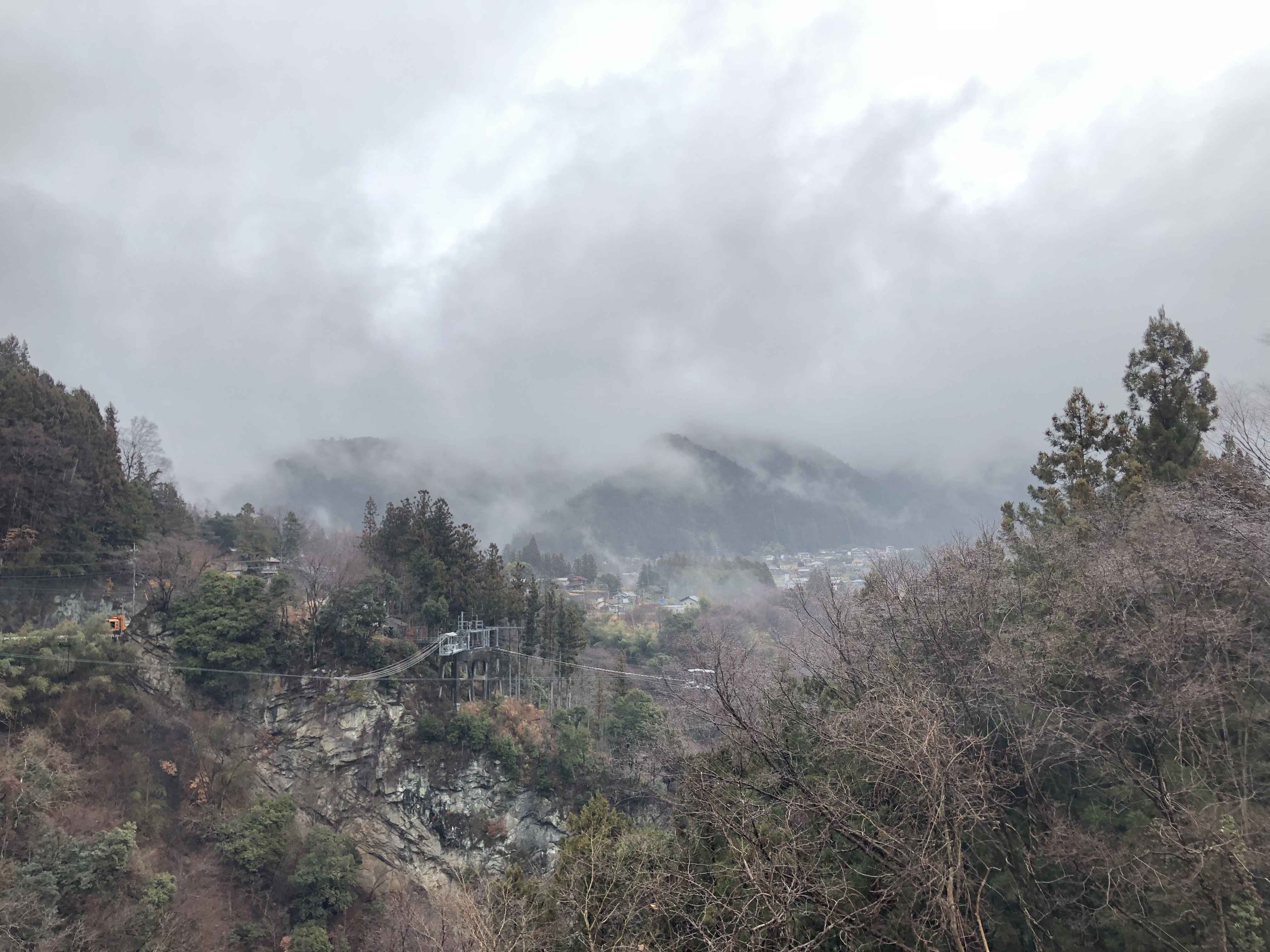
Stepping out into the cold, the fog casts a haunting shadow over the hills and village below, a thick, dense mist that seems to swallow everything in its path. The kind of ghostly white fog you would expect to find in a horror movie; a sign of things to come. As I wander across a bridge, I stop for a moment to take in the breathtaking yet unsettling scenery.

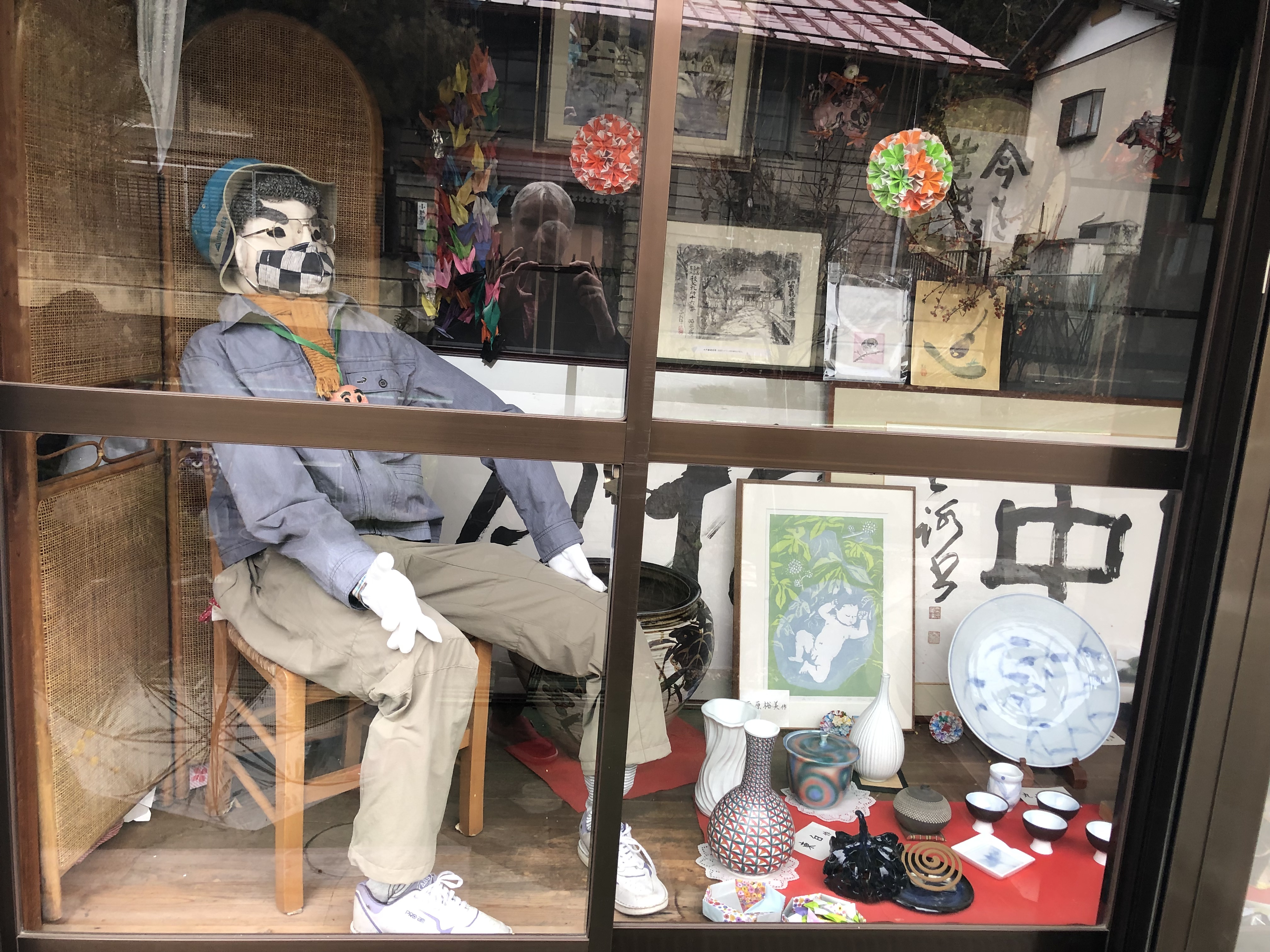
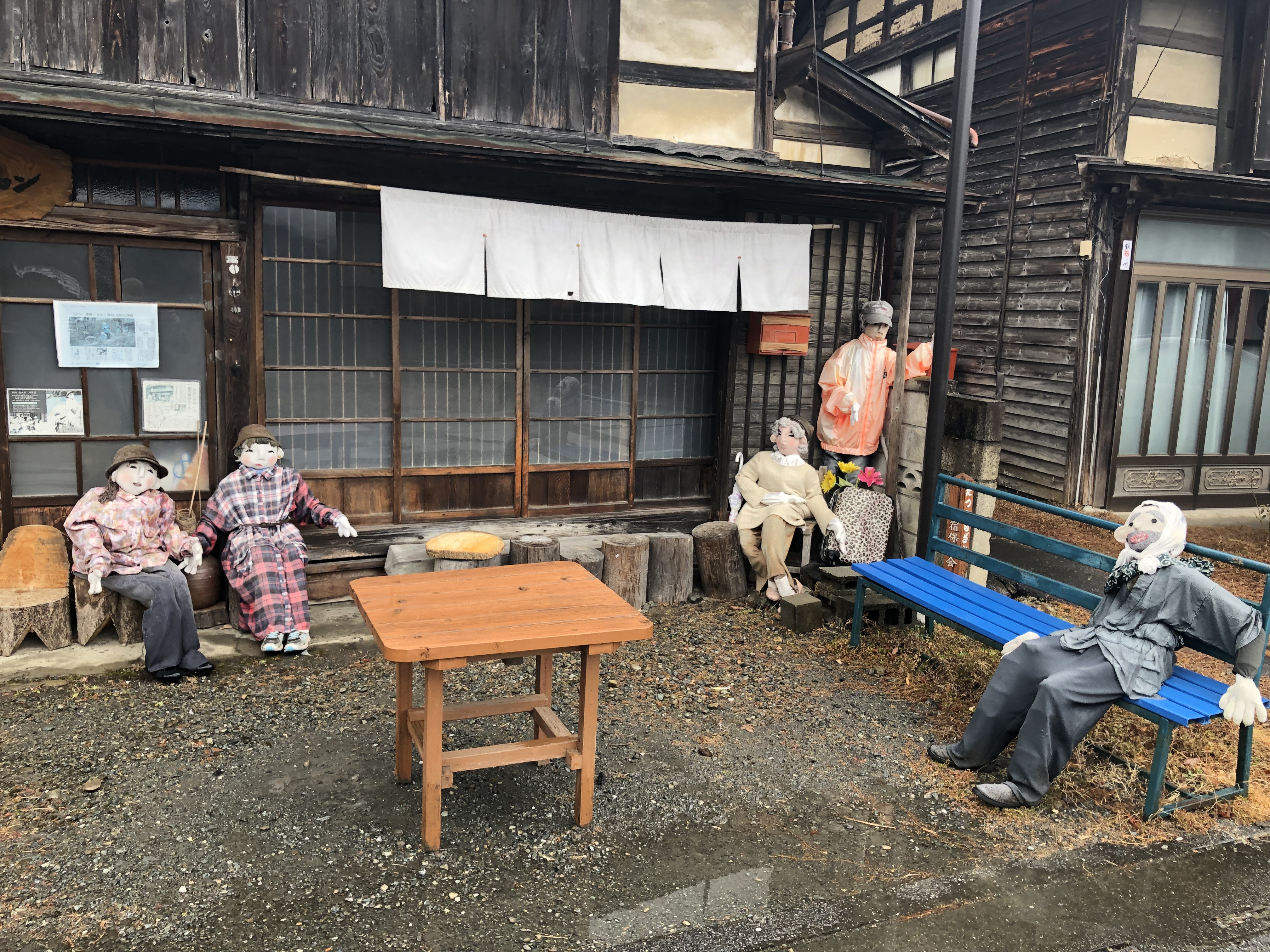
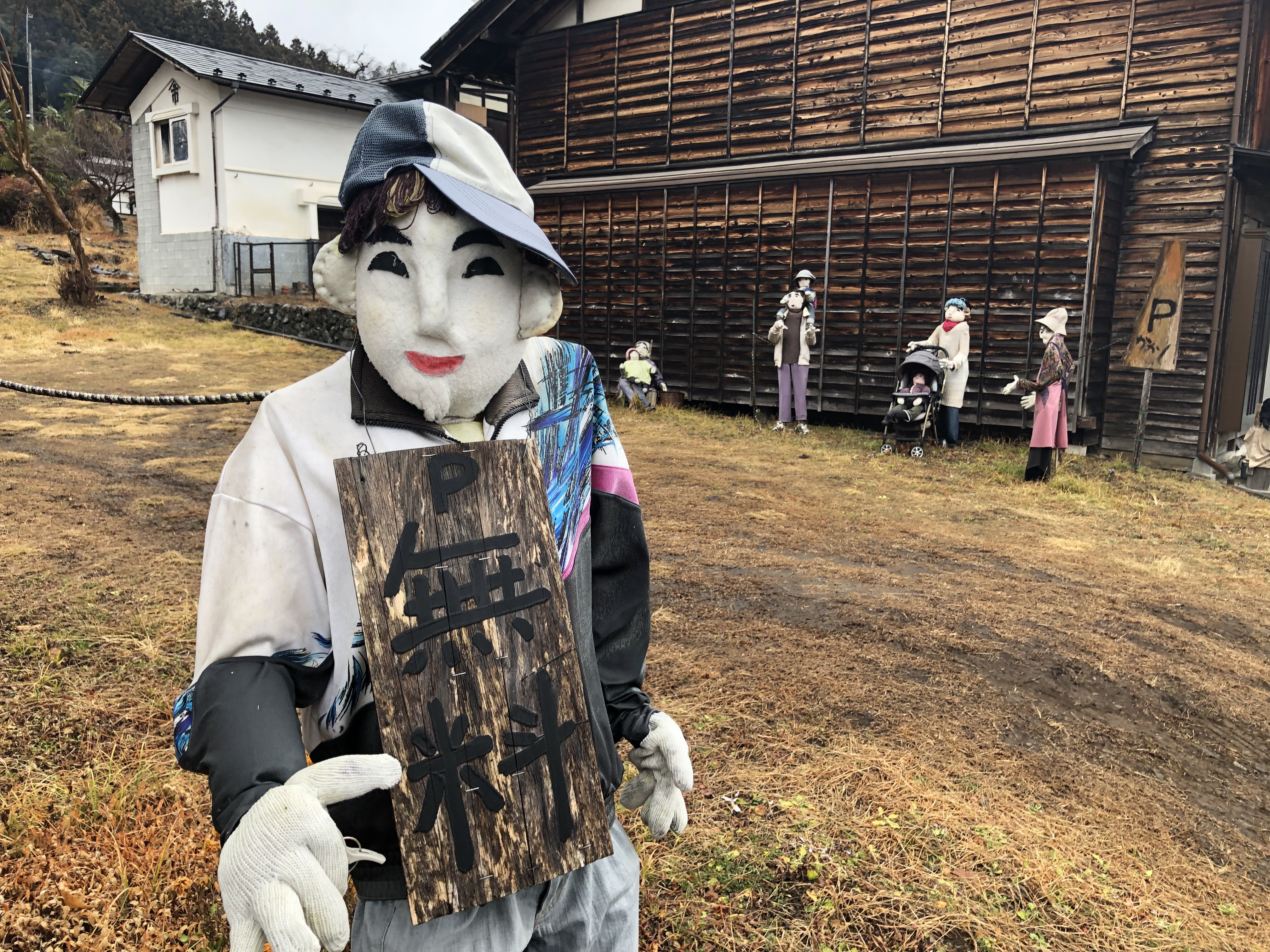
As I continue my stroll from the bridge, I am enveloped by an eerie silence. The only thing that breaks the stillness is the soft whisper of the wind blowing through the fields. A village stretches out before me, a ghost town. Scarecrows line the streets, their lifeless eyes following my every move. They stand outside almost every house, yet the village is deserted, there’s not a soul in sight.

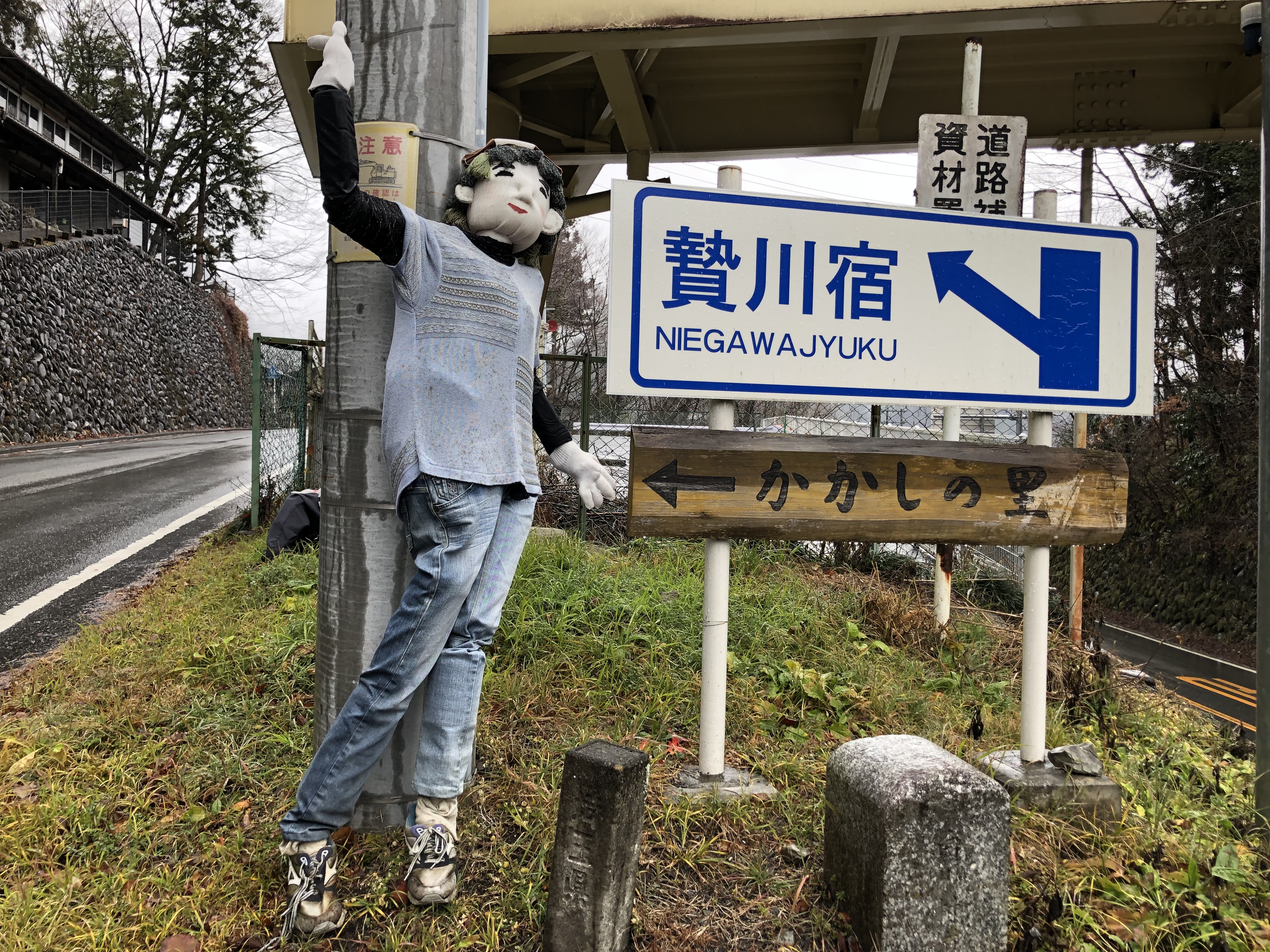
I feel a shiver run down my spine as I realise that I haven’t seen a single person since five stops ago on the train. I can’t shake off the feeling that I am being watched, that these scarecrows are somehow alive. I wonder what kind of village I have stumbled upon. As I wander deeper into the village, I eventually find a sign with a scarecrow standing proudly beside it, ‘Niegawajuku.’

Scarecrow villages are rural communities in Japan that create mannequins in the likeness of their residents as a form of folk art. These scarecrows are often dressed in traditional clothing and placed throughout the village. Specifically, the population of Niegawajuku Scarecrow Village has been decreasing over the years, as many residents have moved to Tokyo and other urban areas in search of better job opportunities and a higher standard of living.

To address this problem, a group of local farmers came up with the idea of creating scarecrows in the likeness of the villagers who had left, in order to remember and honour them, and to attract tourists like me to the village. Niegawajuku Scarecrow Village, once a lively and bustling community, now stands like a twisted fairy tale, where the villagers have been replaced by their eerie replicas. The scarecrows, with their lifeless eyes and frozen grins, seem like twisted versions of the villagers they represent.

Once teeming with the laughter of children and the chatter of adults, the village now stands abandoned. The only sounds are the soft rustling of leaves and the creaking of the scarecrows. The place feels like a forgotten graveyard, lost to the passage of time. The village is a mere relic of a bygone era, and the scarecrows, with their blank, lifeless eyes, serve only to emphasise the emptiness of this place.

I inspect the scarecrows, their faces weathered and their garments tattered. At times, they are grouped together, yet they remain so alone, like guardians of a lost world, preserving the memories of the village and its people, frozen in time. As I continue to wander through the streets of Niegawajuku, I feel as though I am traversing a dreamlike realm. The village is a labyrinth of memories, where each scarecrow holds a piece of the past, and each step I take draws me deeper into the mystery.

The only thing left here is the echo of bittersweet memories, of what once was and what will never be again. Time passes, and the sun begins to sink behind the skyline, painting the sky in hues of orange, pink, and purple, casting an eerie glow over the village. In the dying light, the scarecrows seem to come alive, their shadows stretching out, reaching toward me.

I leave the village with a sense of longing and loss, the memories of Niegawajuku etched in my mind like a faded photograph.

As I board the train, I ponder whether my transient form will one day be forever immortalised as a scarecrow, or fade into the annals of time like the villagers before me.