The Oolong Goodbye

I wake to the sound of the first train. I pull open the curtains of my hotel room window to see if the mountains are visible today; they haven’t been the past two. The light floods in, a white glare clears, and I’m pleased to see there are no clouds. It’s a good start to my last day in Matsumoto.
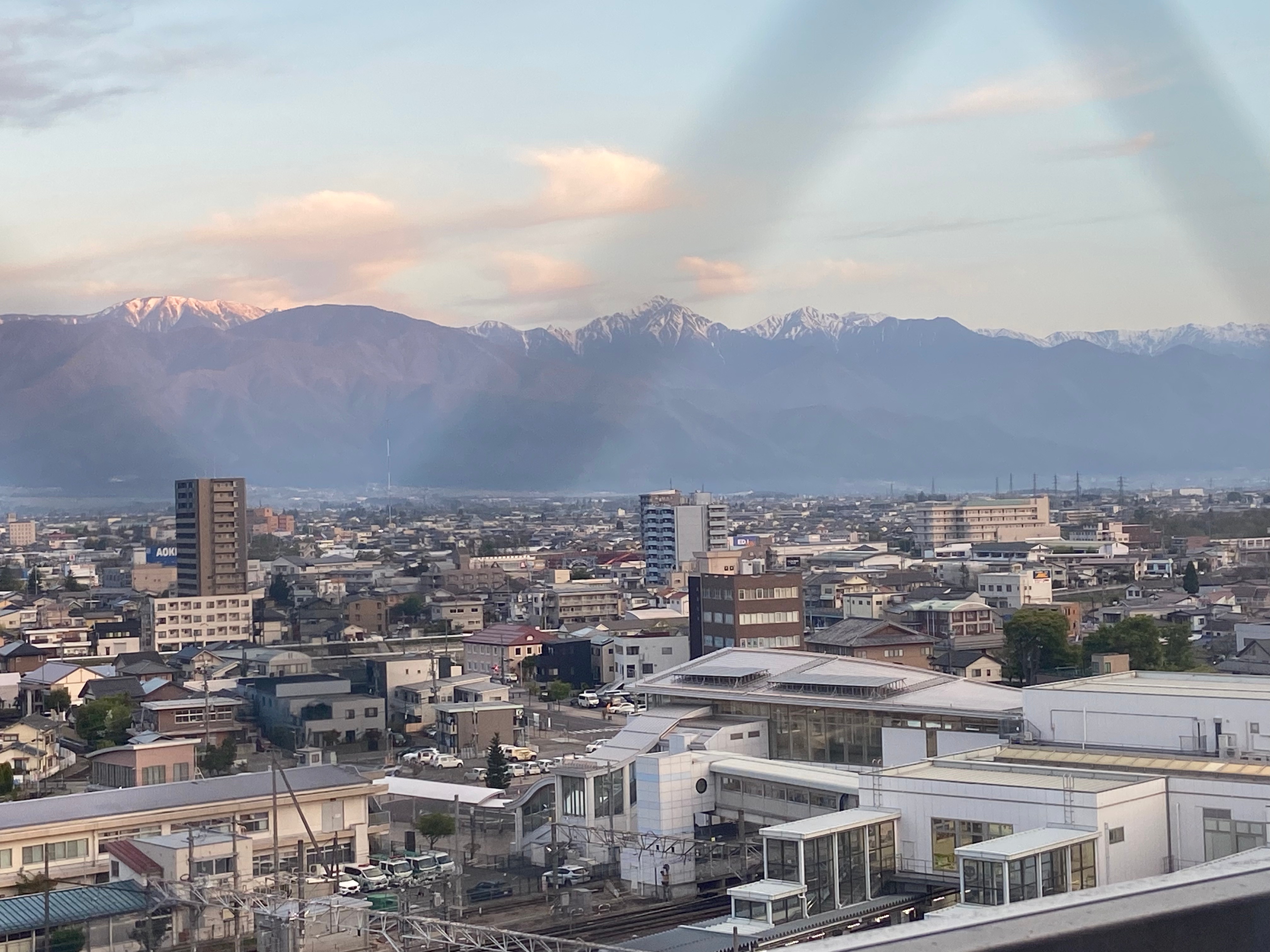
I take a shower and head downstairs for breakfast. The lift is already waiting on my floor and everything feels just a little too convenient. Well, that’s until I step out into a massive queue for breakfast. With so much to see and no time to waste, I head over to Seven Eleven for an electrolyte jelly drink, then take a train over to Narai Station.

Outside, the sun is shining brightly but there’s a light chill in the air. I buy a can of drink from a nearby vending machine, before taking a stroll through the charming streets of Narai-juku.
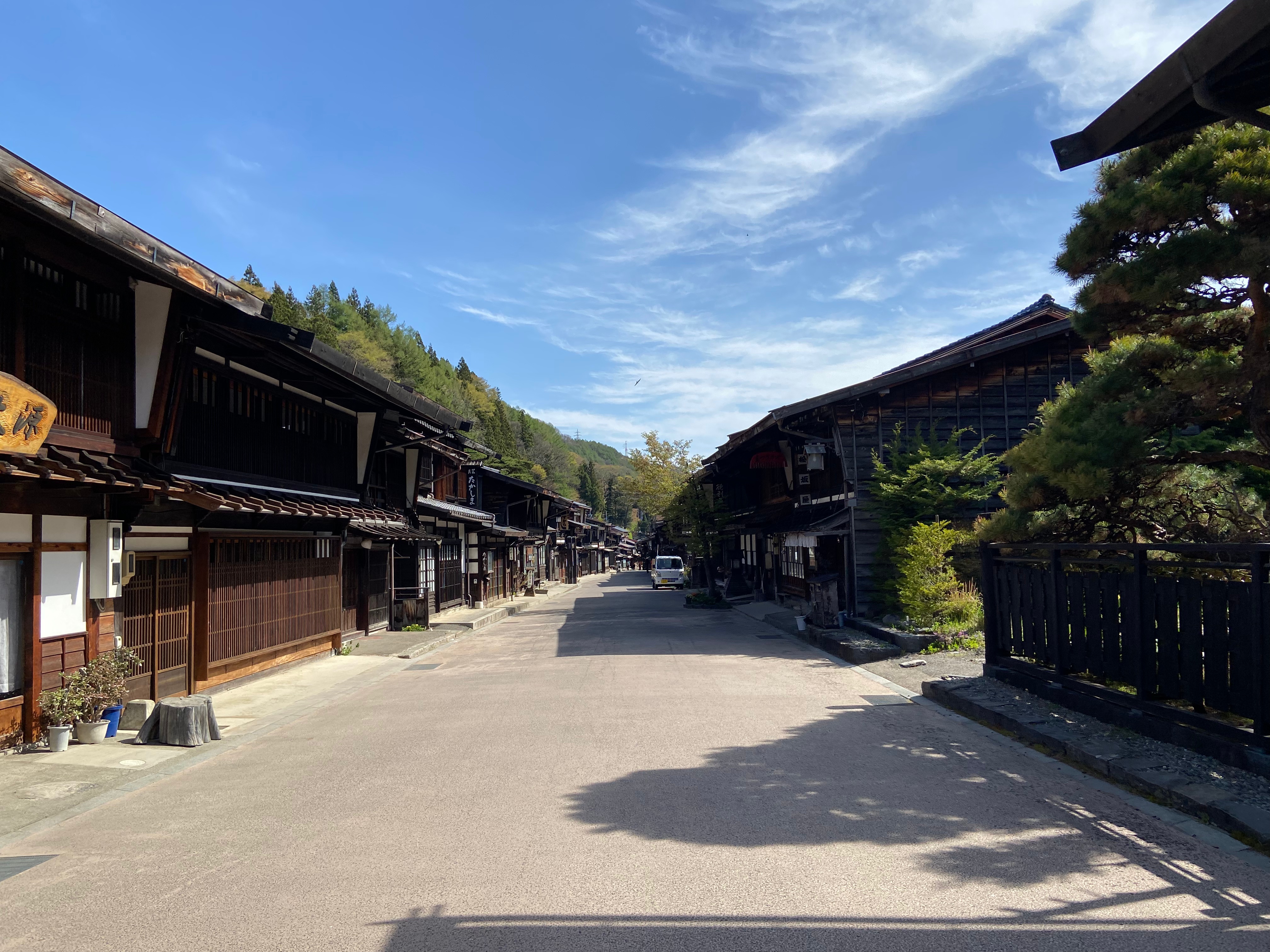
Narai looks like a town built entirely from tea houses and old wood. It stretches for about a kilometre, making it the longest preserved post town along the historical Nakasendo Trail, an old walking route between Edo (now Tokyo) and Kyoto. There were 69 post towns along the way, places to rest your head, find a meal, and perhaps a little entertainment after a day’s walk. Pilgrims, porters, perfumed courtiers, whose sandals dissolved into this very soil, passed through here 400 years ago. It almost perfectly evokes the Edo period.

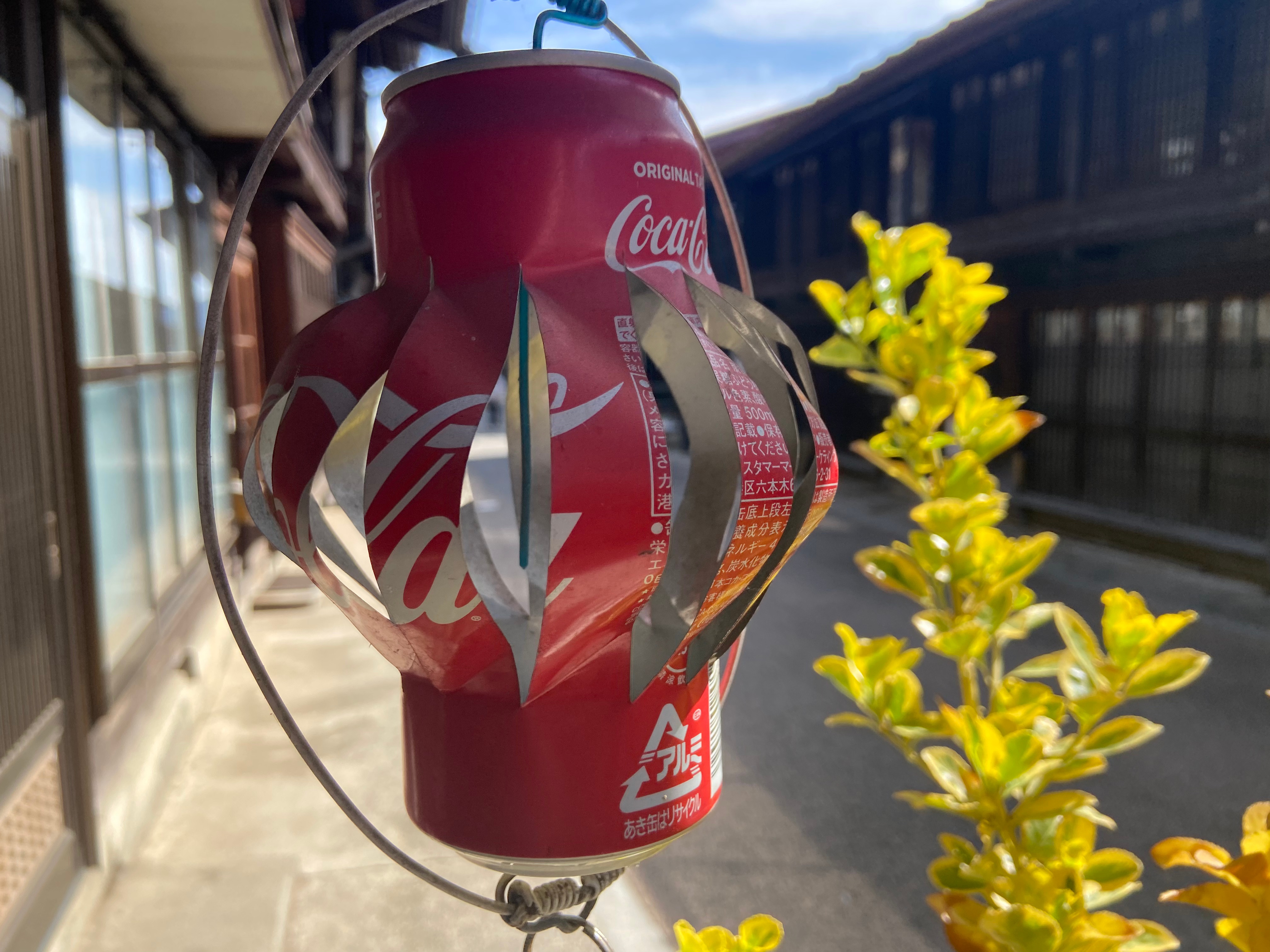
Well, almost. Unfortunately, the road is open to motor vehicles, and some of the shops have decided it might also be a good idea to make lanterns out of Heineken and Coca-Cola cans. For each passing car or aluminium lantern, I’m pulled out of the moment.
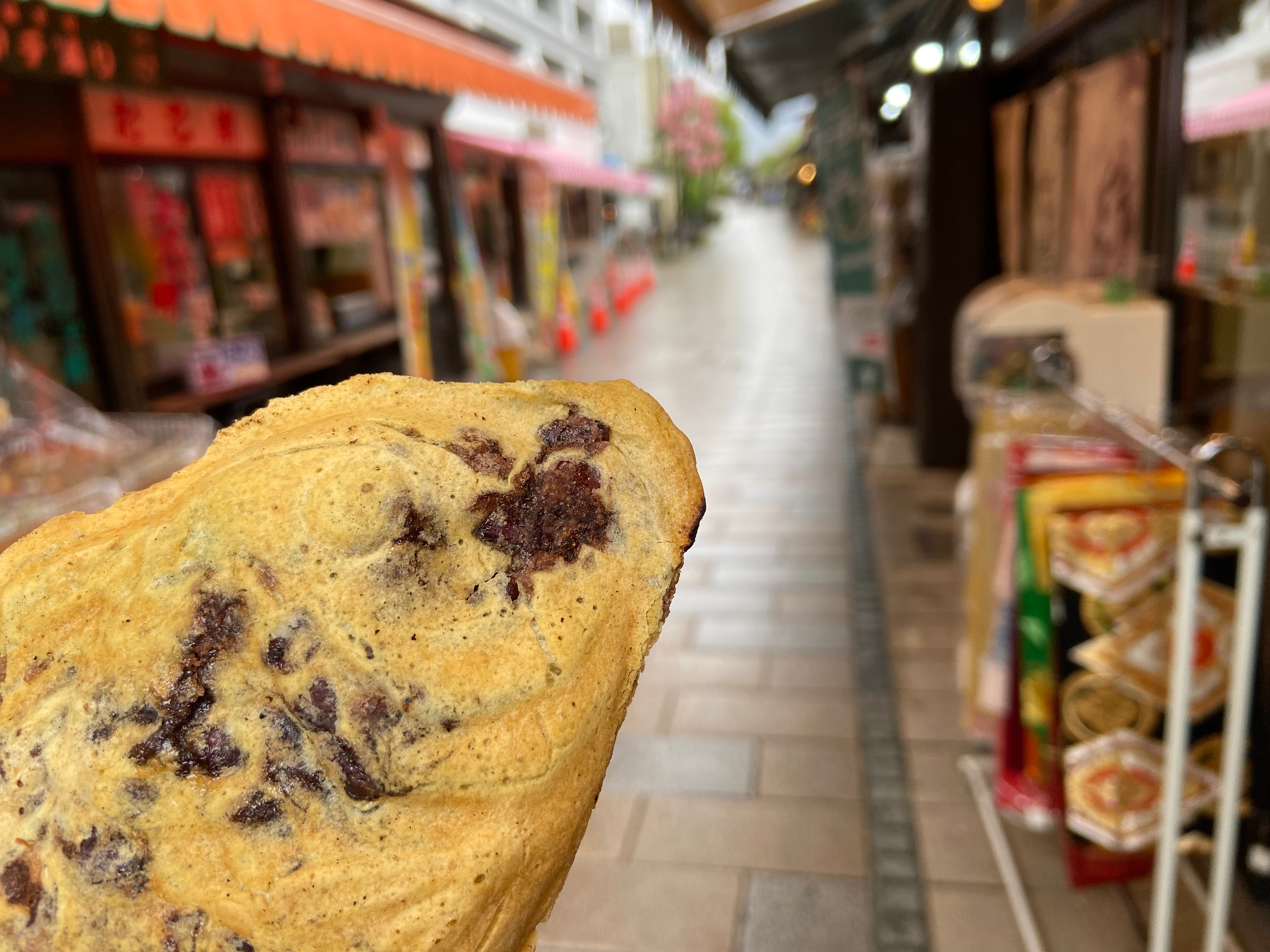
Most of the shops are closed. A little further along, though, breakfast course-corrects itself when I see a man turning batter into carp. I buy a fish-shaped waffle to go with my can of Coke.

I leave and take a train to Chino Station. From here, I’ve got about a thirty-minute walk. I’m on my way to visit a different kind of teahouse now, one that seems to actively defy all health and safety rules.
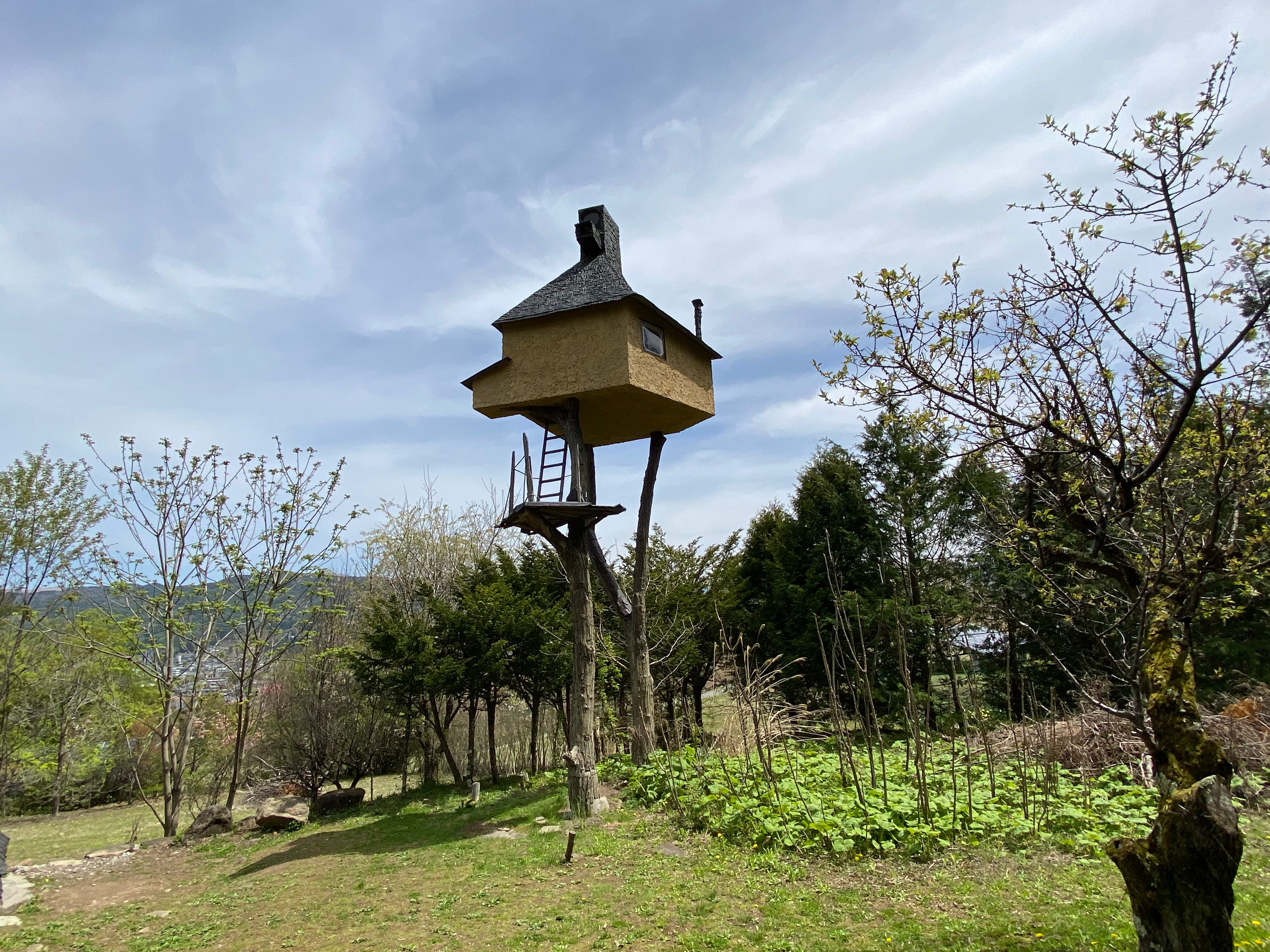
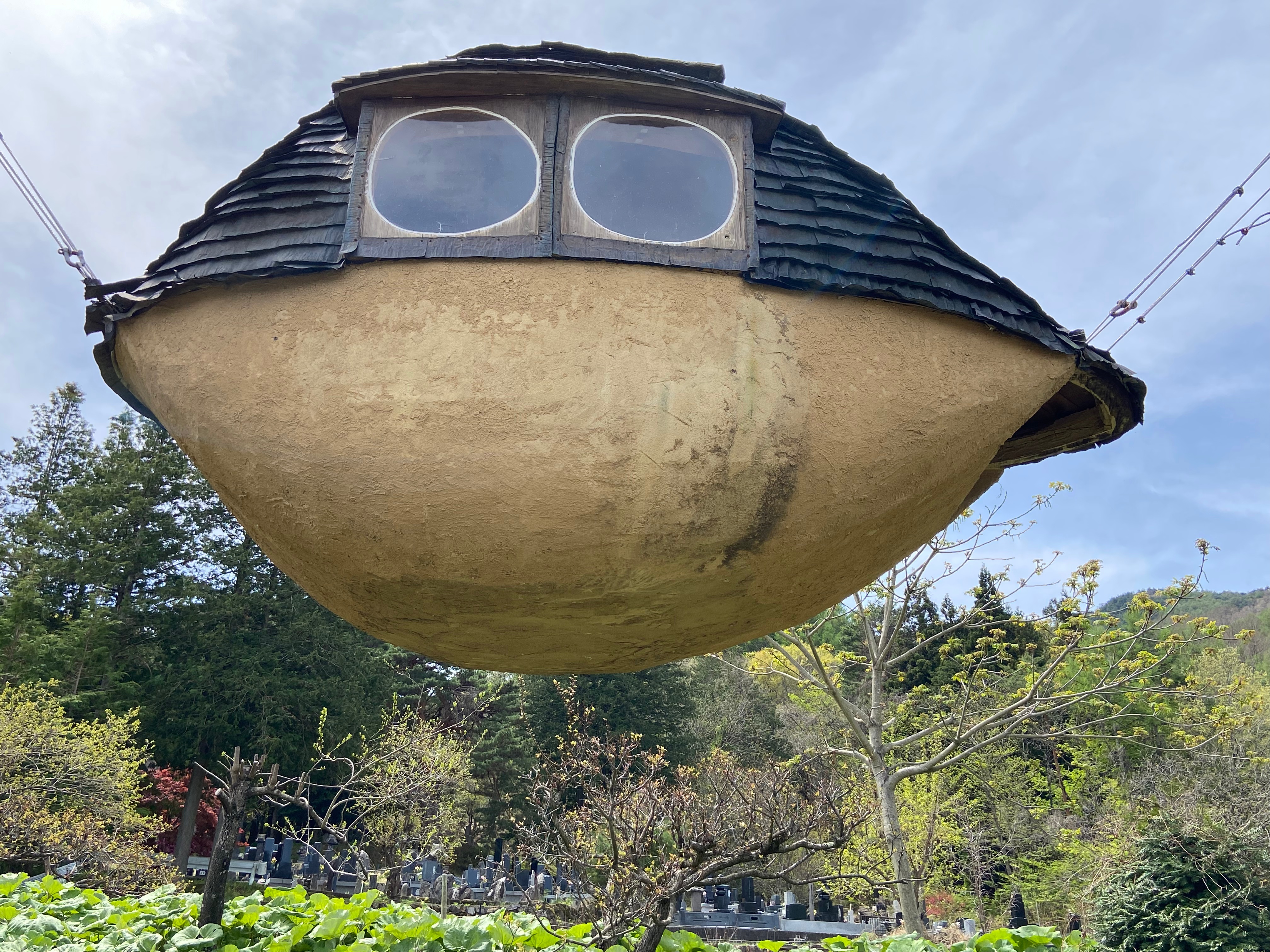
Created by the architect Terunobu Fujimori, using natural materials that blend into the surrounding landscape, he has built three marvellous teahouses: the Too Tall Tea House, the Too Short Tea House, and the Flying Mud Hut.

The Flying Mud Hut stands between two tree trunks and sways lightly in the wind. Despite their appearances, you can actually enter these teahouses and perform a tea ceremony with a guide. Sadly, and for all those involved, the backdrop to these structures is a cemetery.
I use one of the surrounding mountains to guide me back, focusing on a single ominous peak.

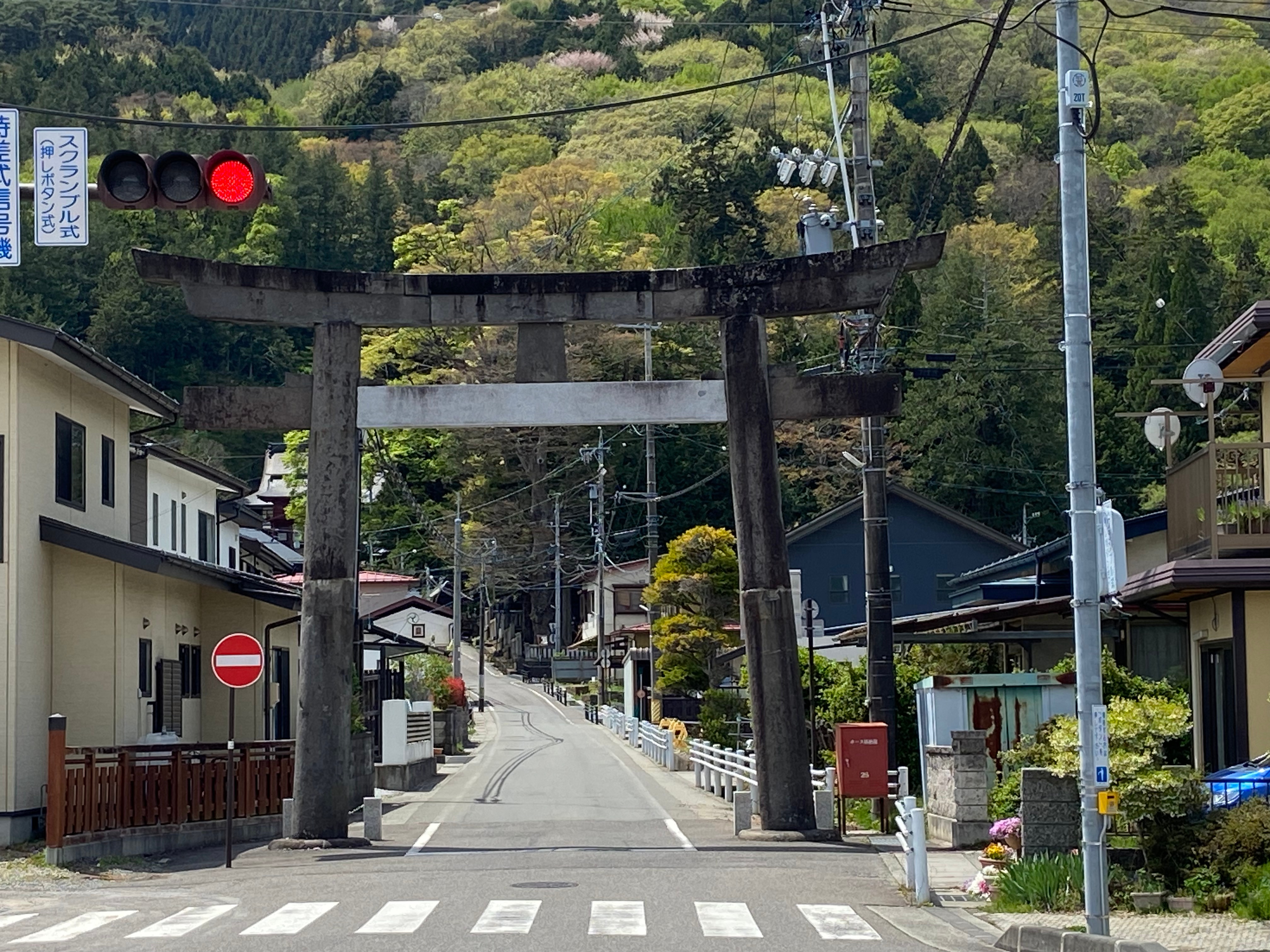
I pass yet another shrine. This one is Suwa Taisha Kamisha Honmiya, nestled in an ancient forest. From the road, a torii gate frames the scene. I like the way it sits between the pedestrian crossing and the wall of trees, as if it’s allowing the modern world to pass through it.
At exactly 12:00, music plays from speakers around me. I instantly know I recognise the tune, without being able to place it. Bloom and grow, bloom and grow… it goes something like that. It’s familiar. It means something, but my mind can’t quite stretch far enough to catch it.

I later find out it’s Edelweiss from The Sound of Music. I know it from the Philip K Dick adapted television show The Man in the High Castle. Why it plays here at noon is beyond me. I’m also surprised it’s only lunchtime, as it feels like I’ve been wandering for hours. Time seems to move differently here. I have walked a lot, so decide to rest by a lake.
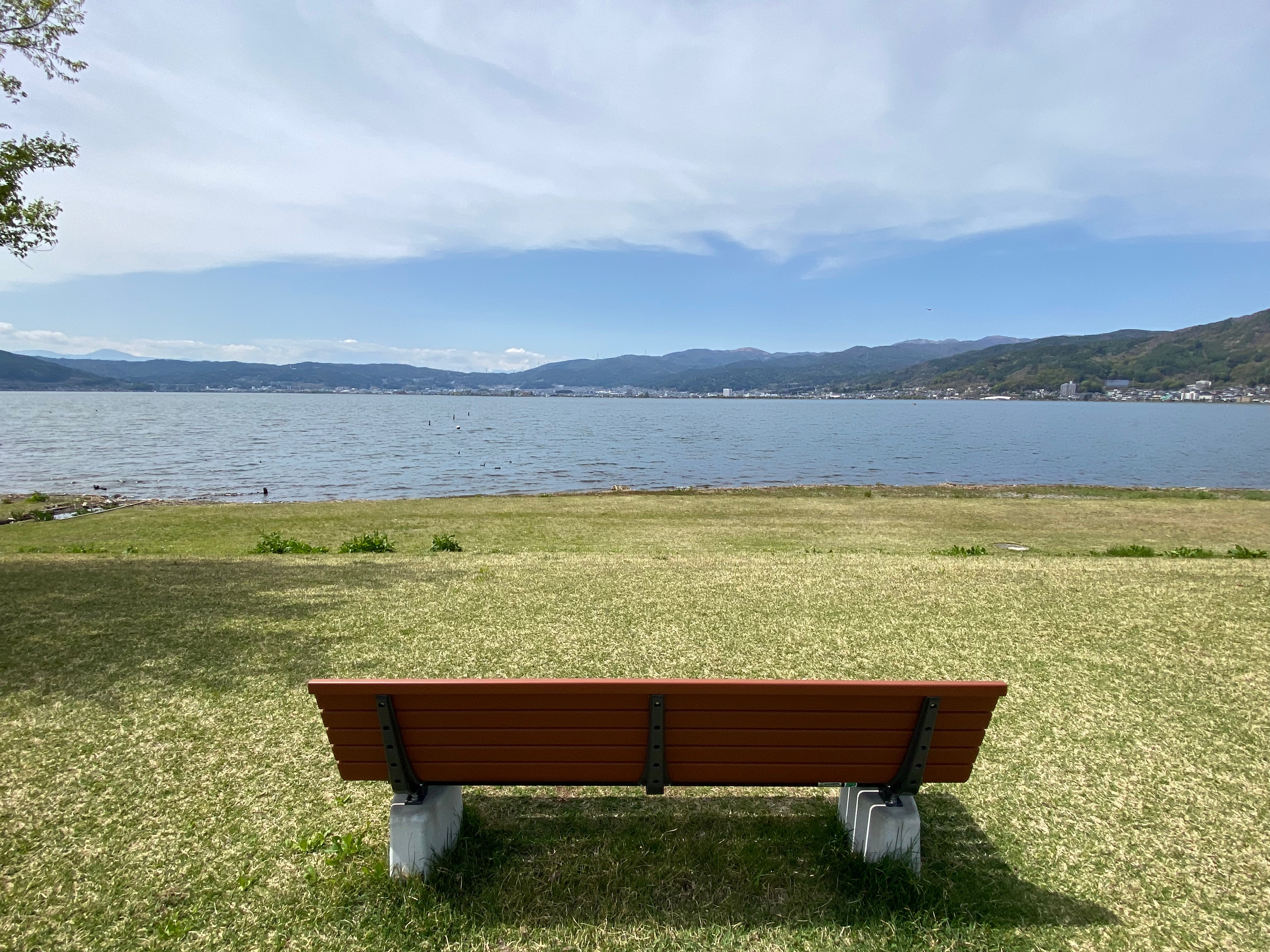
Lake Suwa is remarkably beautiful. It’s the oldest lake in Nagano and is also known as “God’s Crossing”. In winter, when the surface freezes overnight, jagged ridges appear by morning, said to be the footprints of the god Takeminakata. I sit for a while, watching boats drift and birds negotiate the air, before deciding to head back to Matsumoto.

With nothing else planned, I wander the streets until dark. I randomly come across illuminated artwork outside an art museum, the sort of place you would expect to find art. I recognise the style immediately: Visionary Flowers by Yayoi Kusama, unmistakable in her obsession with polka dots.
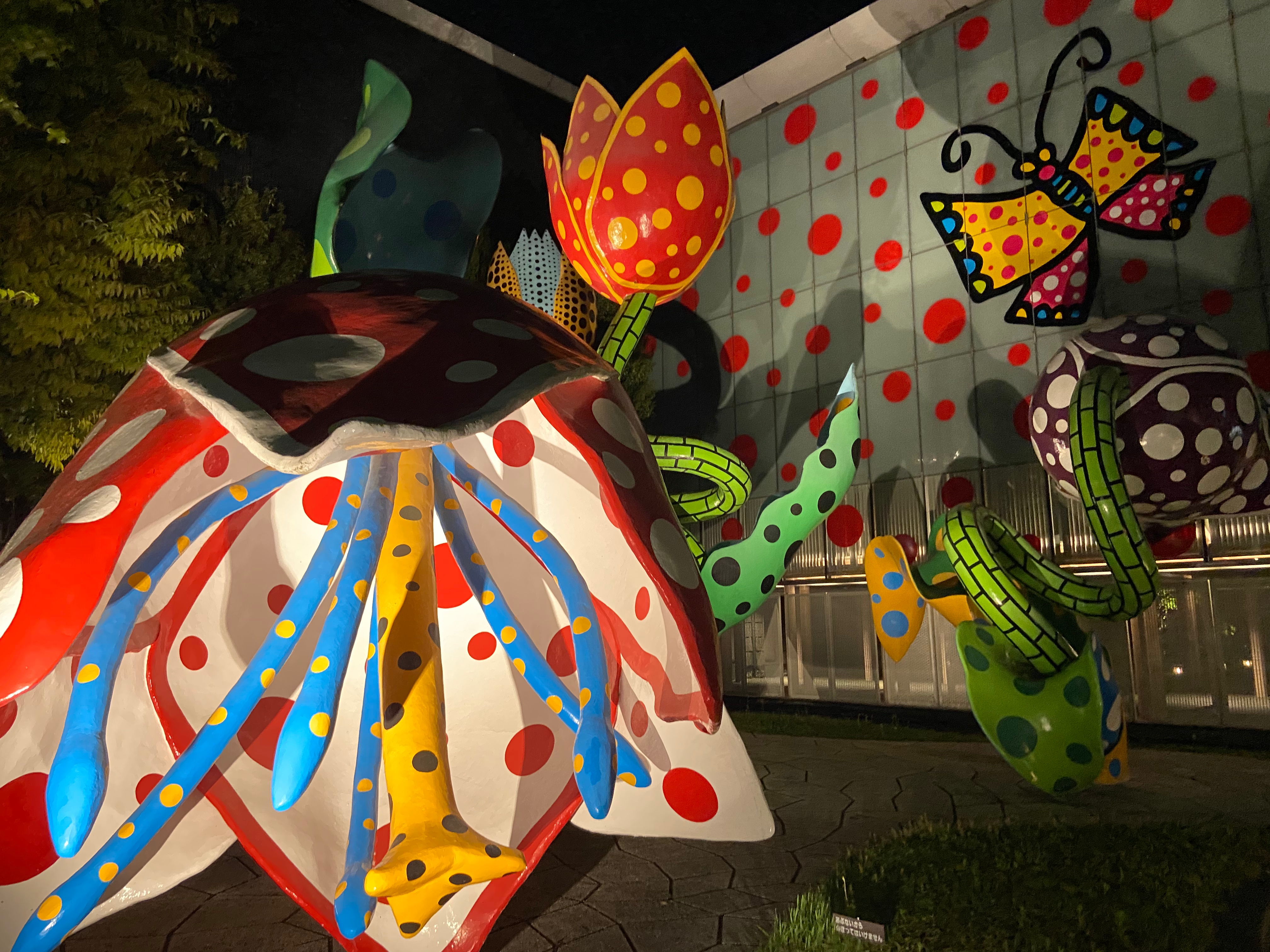
I head down Frog Street and into a bar, The Elbow Room. I order a cocktail of oolong tea and shochu, enjoy the music, chat with a few locals, and carefully check my ice cubes for footprints.
Apicultures Now

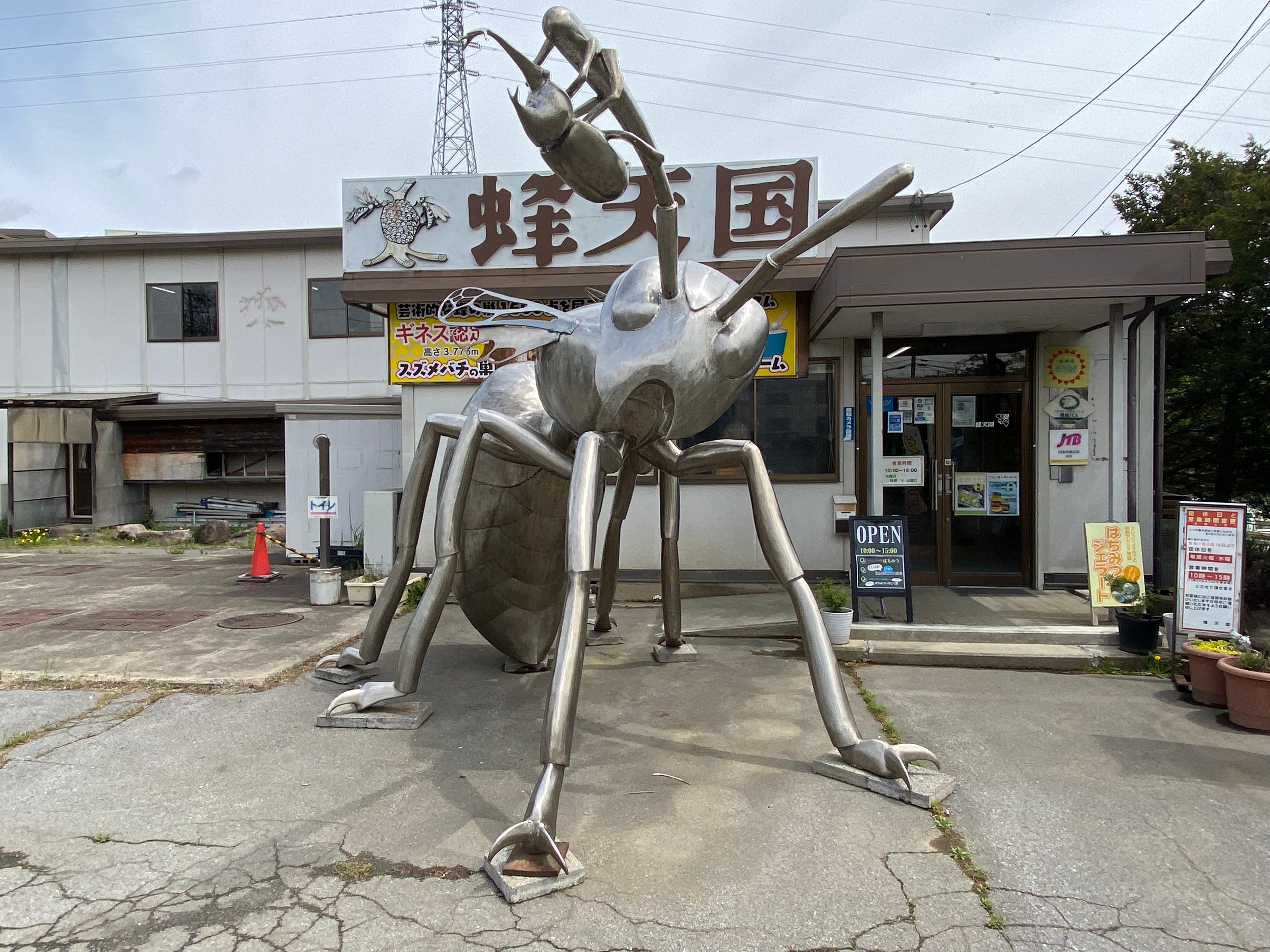
There’s a noisy bee inside Matsumoto Station, buzzing against the sun that filters through the gaps in the roof. Outside Shinonoi Station, there are Christmas trees up in April. Leaving Shigeno Station, I walk through an underpass and out into underbrush. Here, I am deep in the Nagano countryside. I have to walk for 20 minutes on the road, but luckily it’s not very busy. Eventually, I find what I’m looking for: a big wasp.

Today I’m at Bee Heaven, which is not a place where bees go after they die; that would be absurd, but it is a place where hives go after they die. The building itself looks, from the outside, like it’s about ready to collapse. It also claims to house the best bee art museum in the world.

Inside, a young woman seems extremely happy to see me. She asks me what I am doing here, as though I may have made a mistake. I tell her I’m here to look at the beehives. She mimes a pair of binoculars with her hands and places them over her eyes. I nod, and she takes my ¥300 and hands me a ticket.

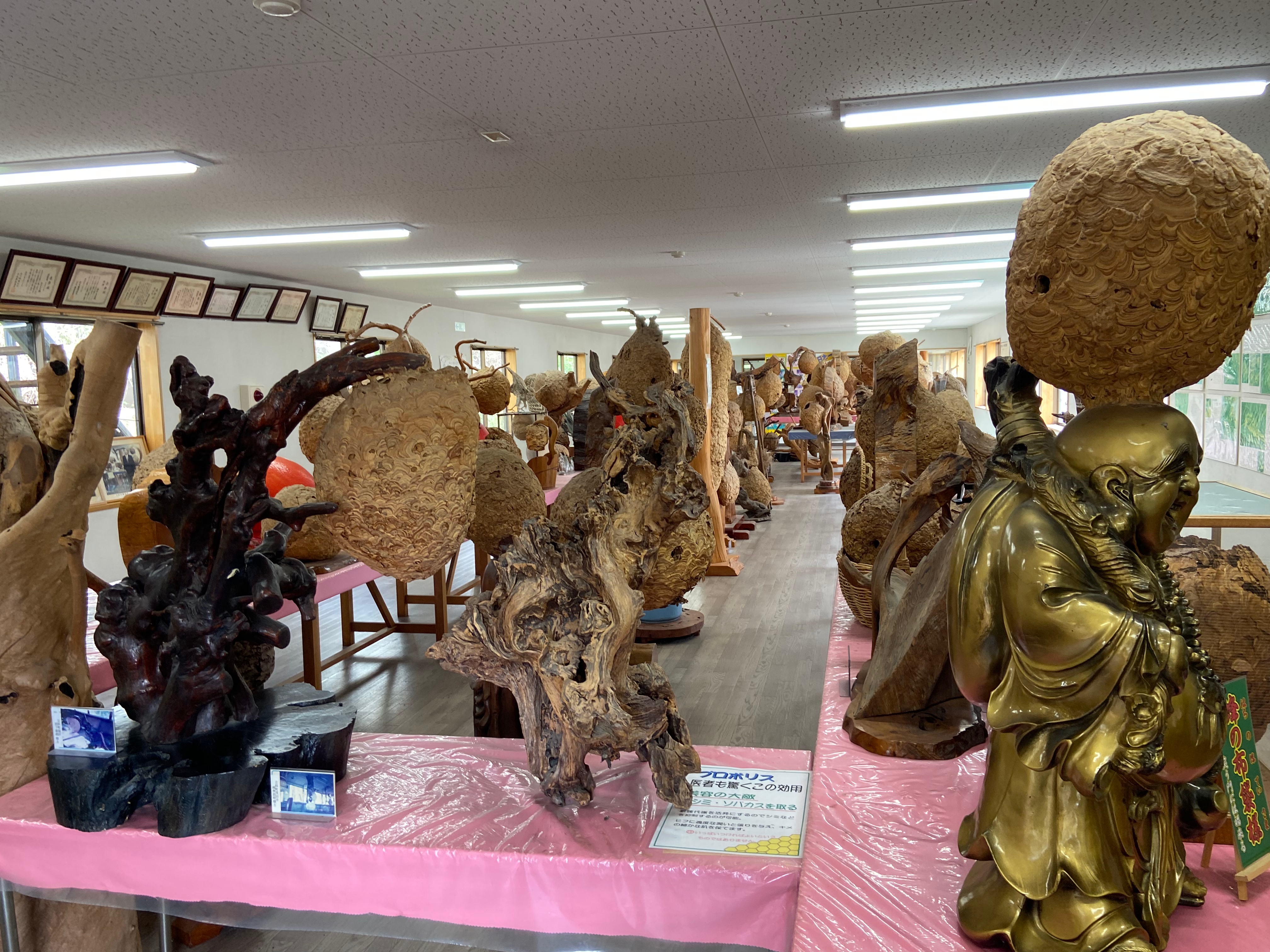
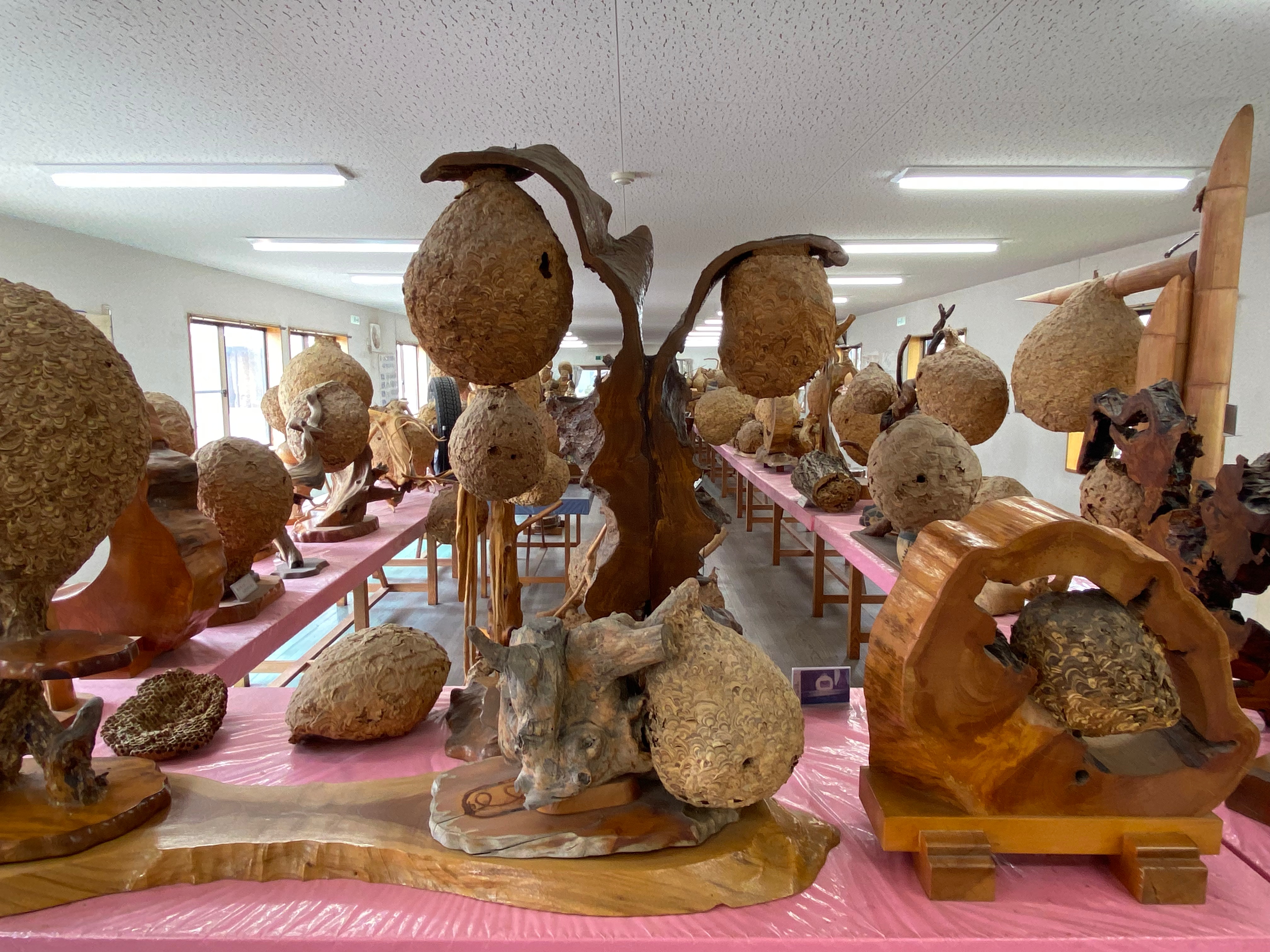
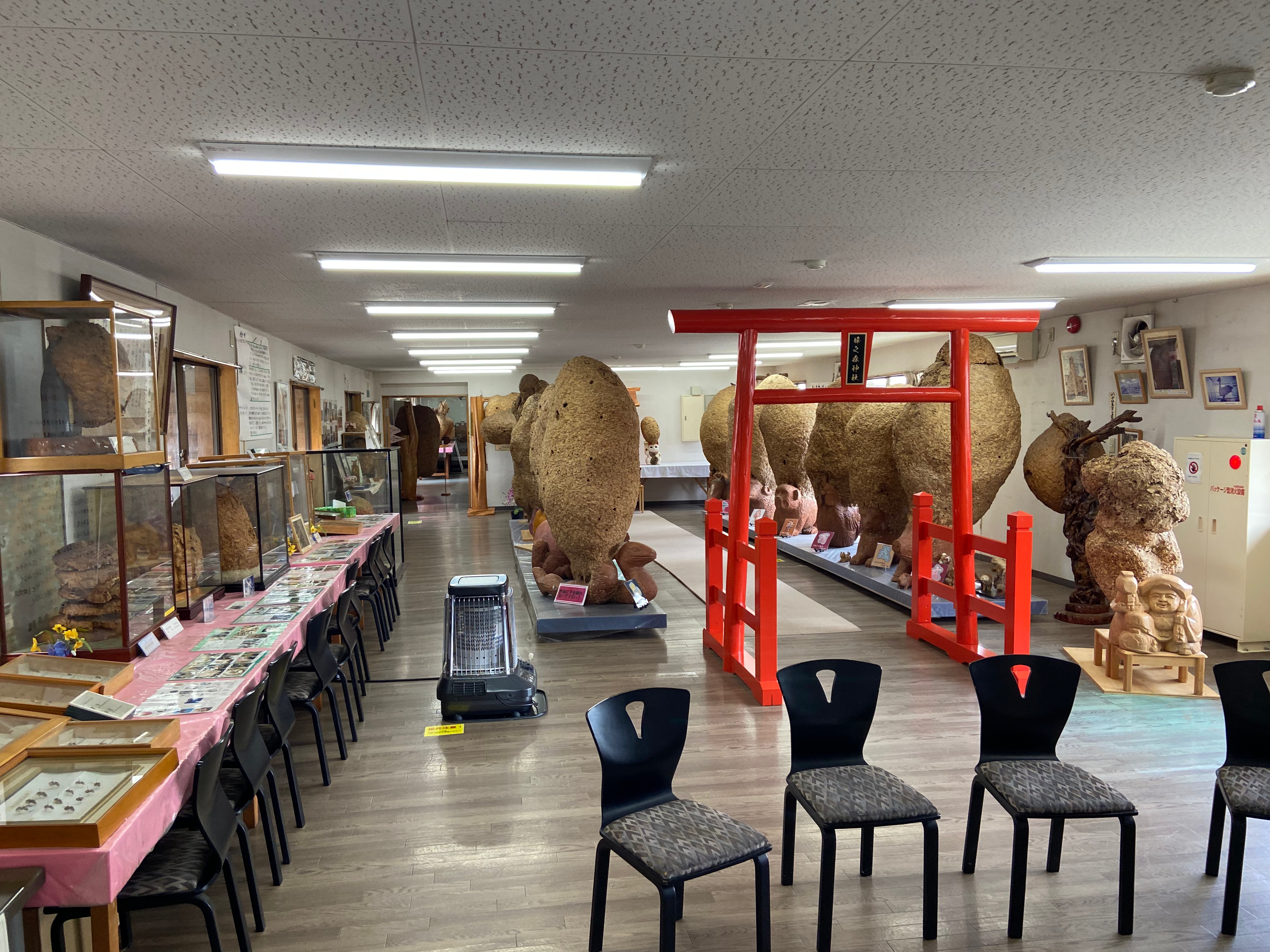
The exhibition features its own shrine to bees, Hachinomori, in honour of a very loyal bee; it is here that we pray for a good life. 1,600 artistic beehives are on display across a maze of interlocking rooms and floors. And if that’s not enough, I discover that it is the collection of just one man and craftsman, Yoshikuni Shiozawa.

There are photographs of Shiozawa shirtless and covered with bees, a grimacing smile across his face. He teaches us the benefits worker bees have on our ordinary lives, and that human society would absolutely collapse without their extraordinary colonies.

There is a sign in here saying, “Don’t open the window.” And even though there are a few stray bees buzzing and bimbling around between the hive art, I’m not sure whether the sign is to keep bees out or keep bees in. Regardless, the dull, musky smell of the hives could do with an air change.

There are preserved bees in cases, cross-sections and anatomies of wasps, evolutionary charts, and rows and rows of hornets. Artwork, including paintings of bees, drawings, and anything else bee-related you can imagine, is here, nestled amongst hive after hive after hive.

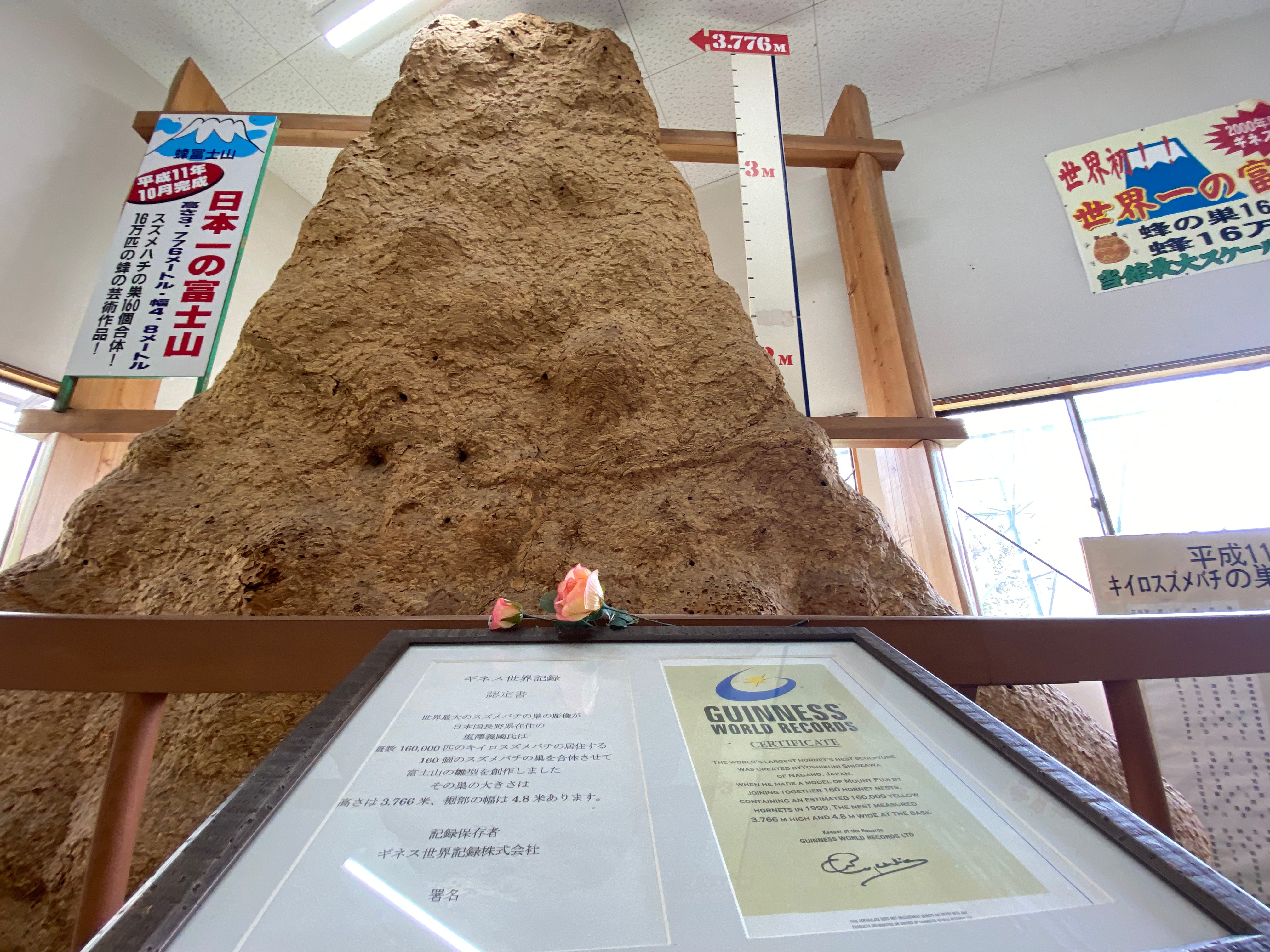
I pass through several more rooms and up a flight of stairs to what I think deserves to be acknowledged as the centrepiece. A Guinness World Record for the world’s largest hornet’s nest sculpture was created by Shiozawa. In 1999, while we were all panicking about the Millennium Bug, he decided to do something else with bugs. He made a model of Mount Fuji by joining together 160 hornet nests, containing an estimated 160,000 yellow hornets. The nest now measures 3.776 metres in height and 4.8 metres wide at the base.

Mount Fuji is 3,776 metres high, so by converting a comma into a decimal point, he cleverly crafted a perfectly scaled version of Japan’s iconic mountain. It’s a very niche award. I don’t see it being toppled any time soon, unless somebody has 160 hornet nests lying around.

At the gift shop, I buy some honey as a souvenir for a friend, the real stuff, made by bees. They also sell bee larvae, made from bees, but I don’t think she would like that as much.

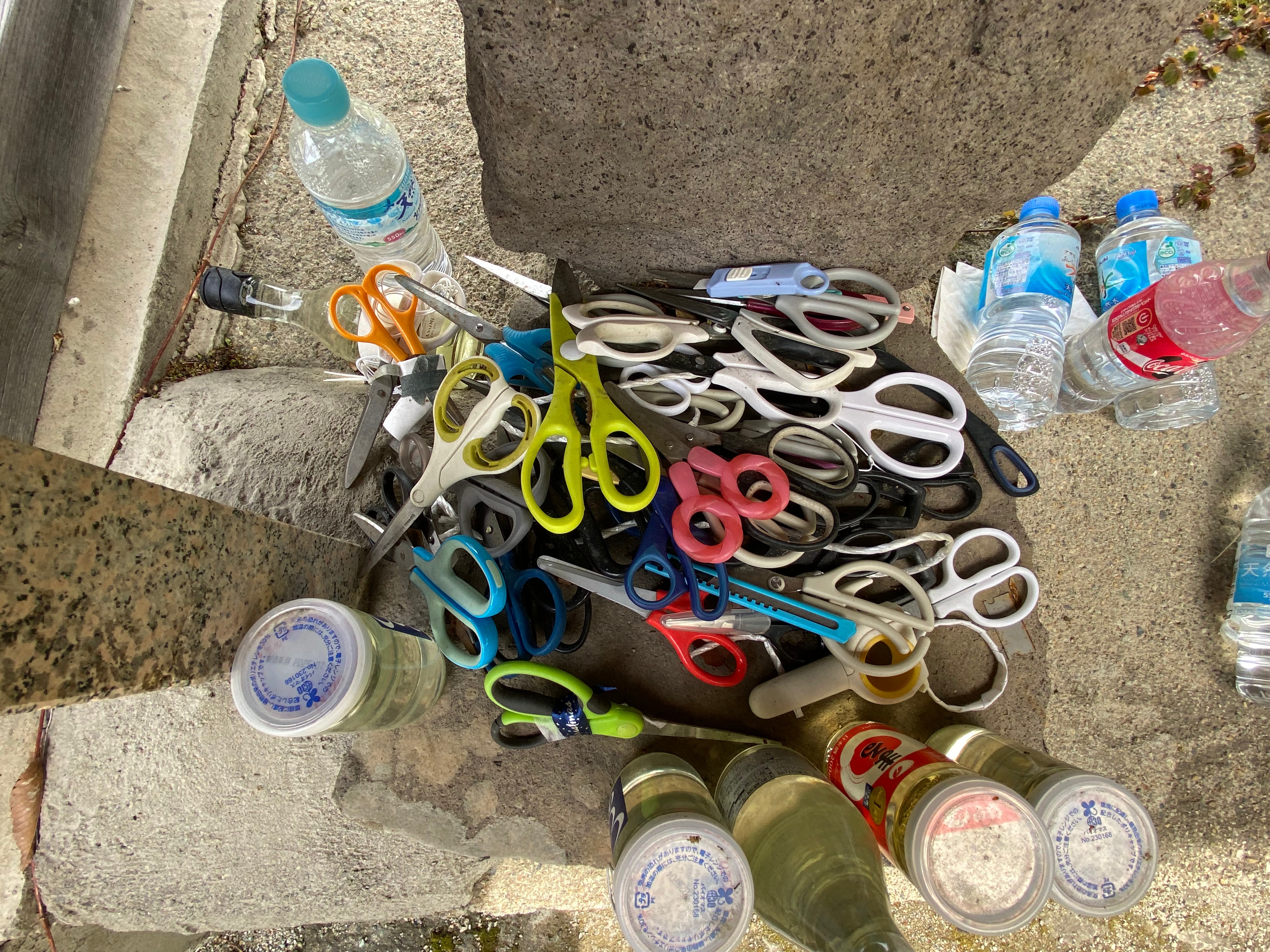
Just below Bee Heaven, there is Enkiri Jizo, a shrine where people pile up their scissors to represent the severing of a bad relationship. The original knot made needs to be cut, and it is said that if it is a wedding, you go out of your way to come here so your wishes to end the relationship are heard by the Jizo. Otherwise the divorce doesn’t really count. It really makes you wonder. I make a few photographic cuts and then leave for the station.

Back at the platform, there’s no timetable, no staff. Luckily, as of the 10th of this month, the Shinano-Tetsudo Line has started accepting IC cards. I scan my Suica and wait by the tracks. A train shows up eventually after about twenty minutes, unannounced, I rightly assume it’s bound for Shinonoi.

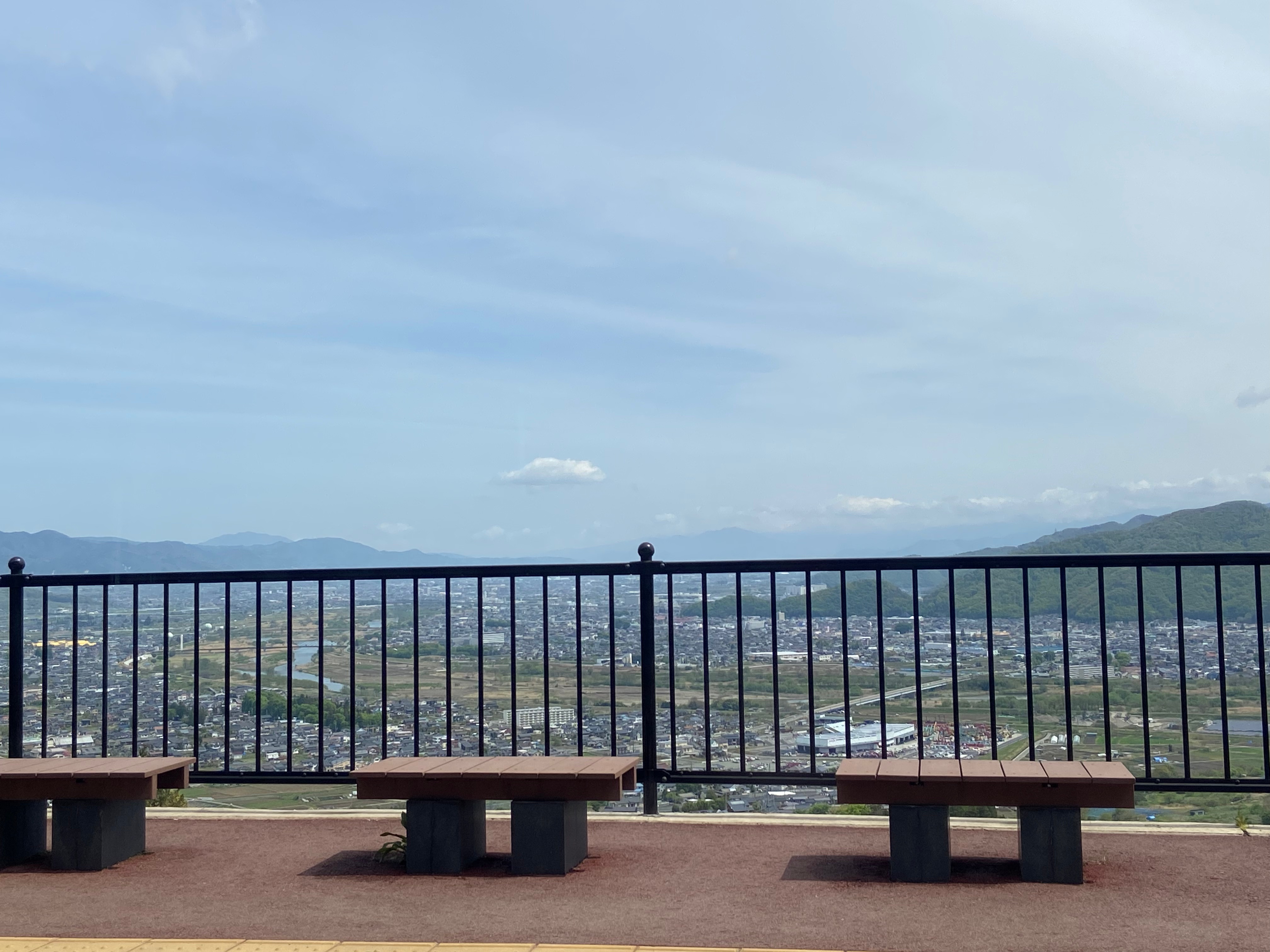
At Shinonoi Station, I once again admire the Christmas trees before changing trains. I have one last stop today: Obasute Station, halfway on the way back to Matsumoto. This station offers a stunning view, and even has a sightseeing restaurant train that uses this track. The platform itself has a dedicated section for enjoying that view. The word Obasute can mean abandoning an old woman on a mountain to die, and my knowing that long in advance somewhat spoils the impressive view, just a bit.

I sit for a while, just looking outward. A muzzle of bees stirs above a nearby flowerbed. I watch them continue their work, indifferent to the human desire to untangle ourselves from one another.

One Rainy Day in April

Today I decide to travel towards Matsumoto, into the middle of the Japanese Alps. At Kanazawa Station, I pay the premium ticket price of ¥8970 to travel just one hour on the Shinkansen to Nagano. There, I change to a local train, for local people. After a couple of hours of sitting around on trains, I finally step out into the clean, fresh mountain air. And it’s raining.

The mountains are gone, washed out in a white, ghostly fog, completely invisible today. But with better weather expected tomorrow, I tell myself this won’t have been a wasted trip. I put on a bright green poncho. It doesn’t suit me. I probably look like a large frog. Still better than an umbrella. I always forget those anyway.

Reservoir Frogs

I start exploring, and despite the rain hammering down, I’m drawn straight in. Matsumoto has a quiet, charming vibe. Flower beds and streams line the roads. Bars and restaurants that feel quietly inviting look to be from another time. The Metoba River snakes between buildings that look like they’ve been here for hundreds of years. It reminds me of a less crowded version of Asakusa. Not empty, though, as groups of tourists do drift past, tethered together by guides holding small flags like they’re leading expeditions.

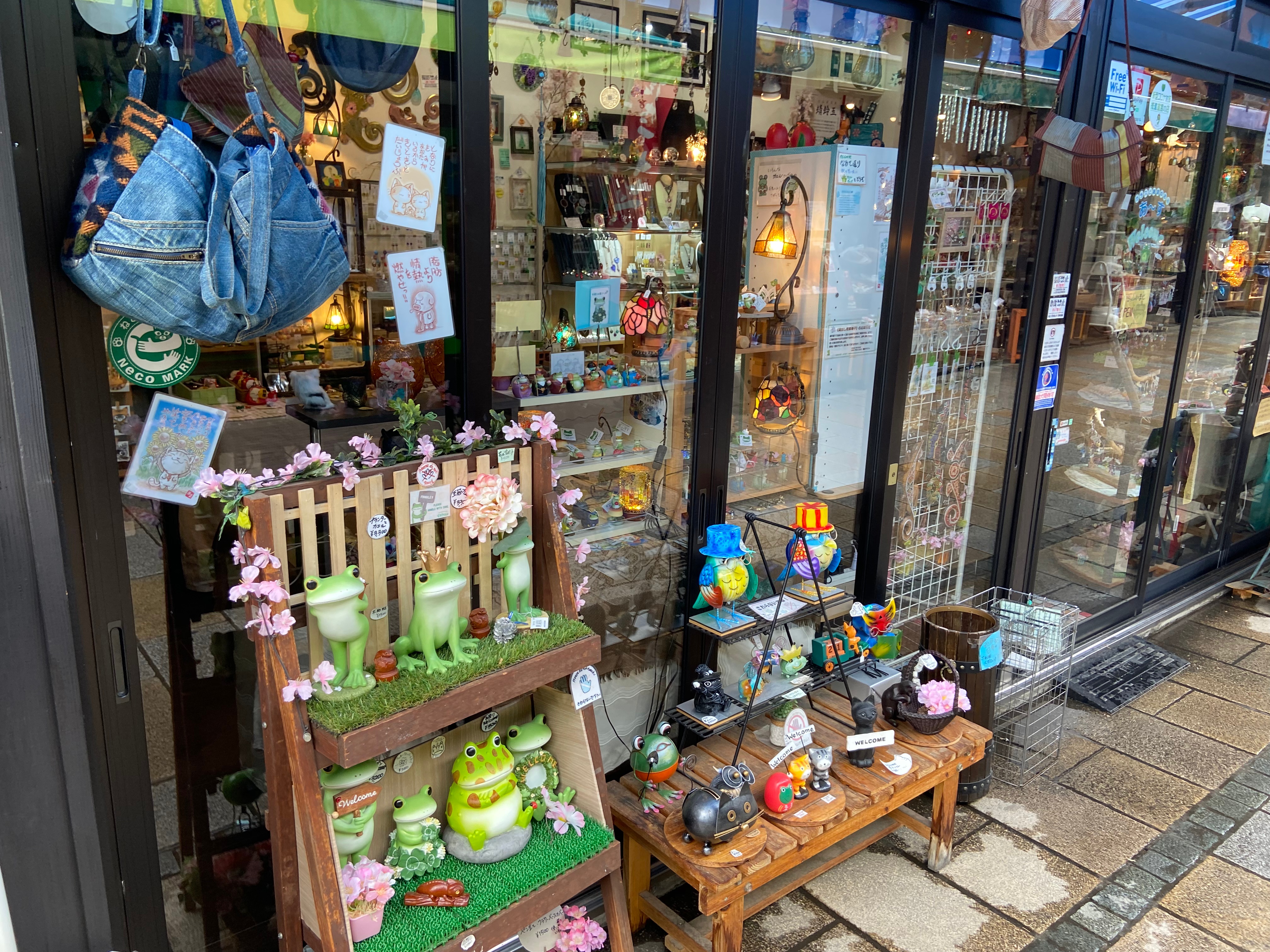
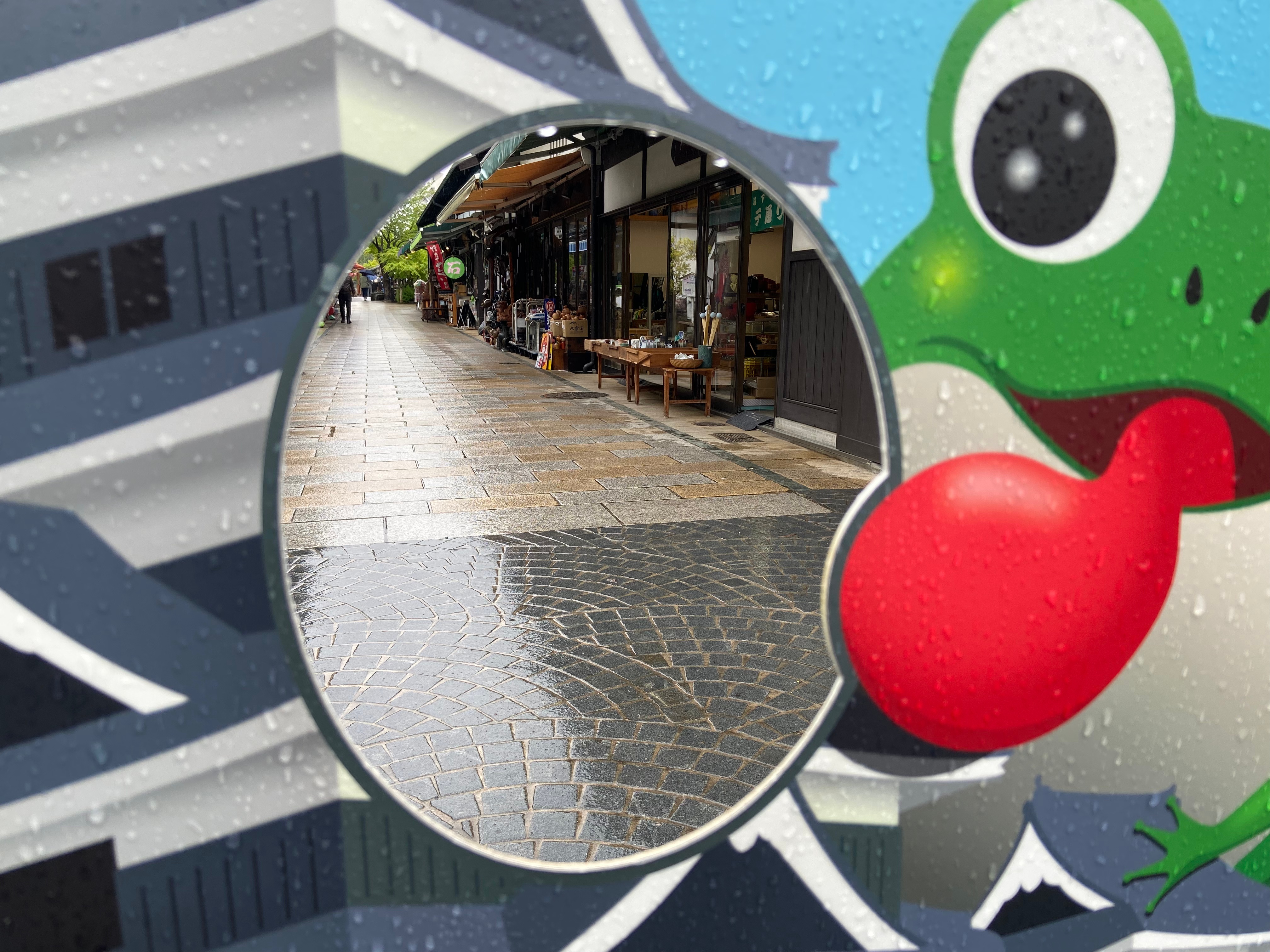
The main tourist street is Nawate Street, also known as Frog Street. It’s a pun I’ve mentioned before, tied to the Japanese word for frog, but essentially it means you’ll return home safely. The frogs will see to that. And there are frogs everywhere.

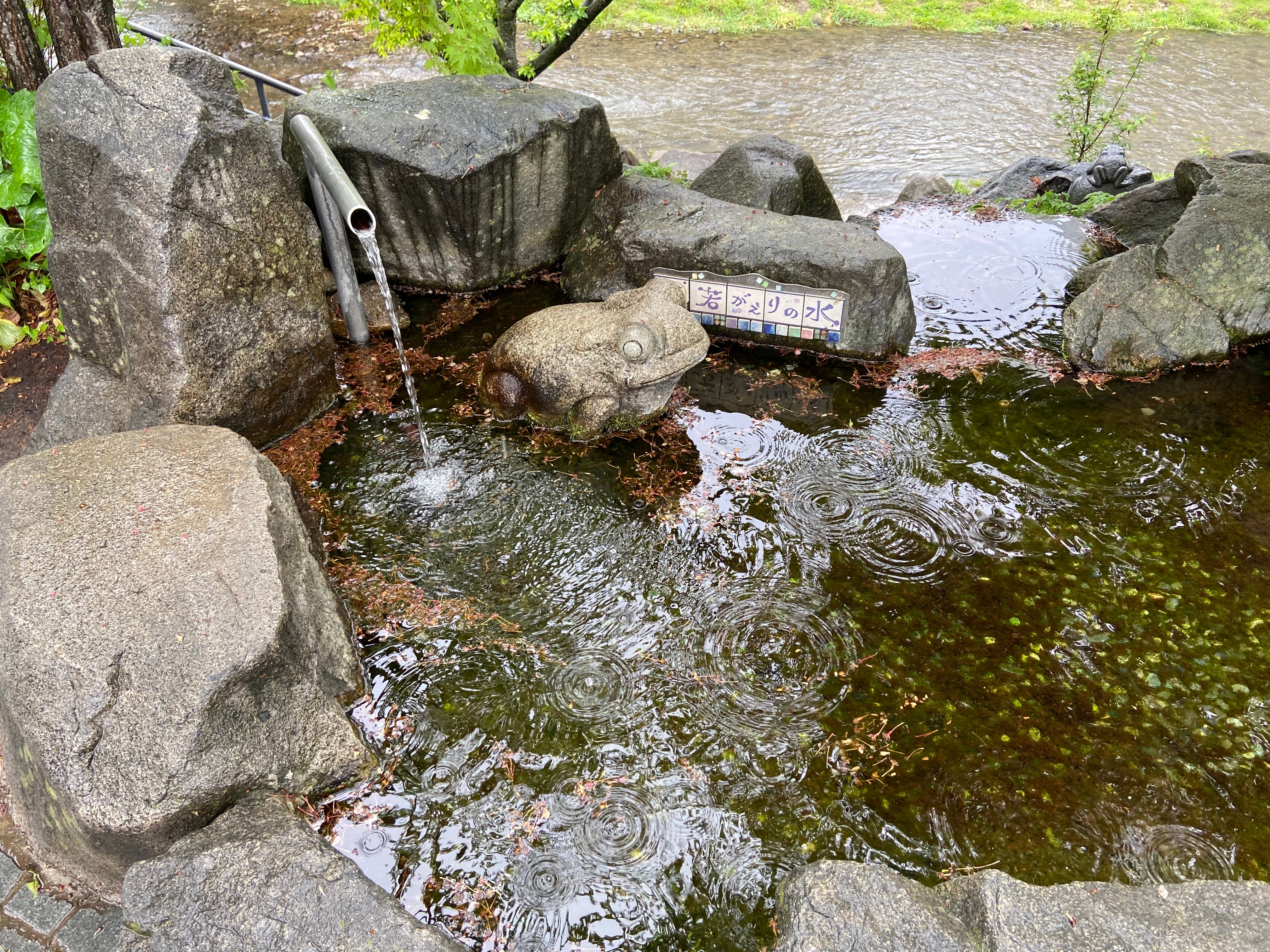
Decorations, statues, souvenirs, offerings. A shrine dedicated to a guardian frog. Amongst the frogs are about twenty freshwater wells, each one slightly different but æsthetically pleasing. They offer clear cold water for free, but I’ve had enough water today; it’s raining so hard I’m essentially covered in water.

There’s a story written at the shrine which I’ll try to translate: Once, this narrow river was lined with festival stalls, and a dear river frog made a beautiful sound. There were unique emotions, such as the playing of the drums or the smell of acetylene lamps, the voices of stallholders, and fireworks, and the scooping of goldfish.

Then the river became dirty and the frog was pushed upstream. This caused the streets here to lose their vitality, and in 1972 the dear river frog was enshrined, in an attempt to make the river clean again. It worked, and the streets came back to life. Now it is a frog town. A place where mountains and city meet. A place where visitors can relax.

Keep Calm and Waffle On

I decide to walk now in the direction of a local National Treasure: Matsumoto Castle. On the way I pass more art shops, craft shops, storehouses dotted around between the many small shrines and folk art stores. Plenty of town maps here too make it easy to keep track of where I am.

And if kimono rental shops are your thing, well forget that! Here you can rent a panoply of samurai armour for the day for the low price of ¥11,000. Not in this weather though, I’d look ridiculous as a samurai in a green poncho.

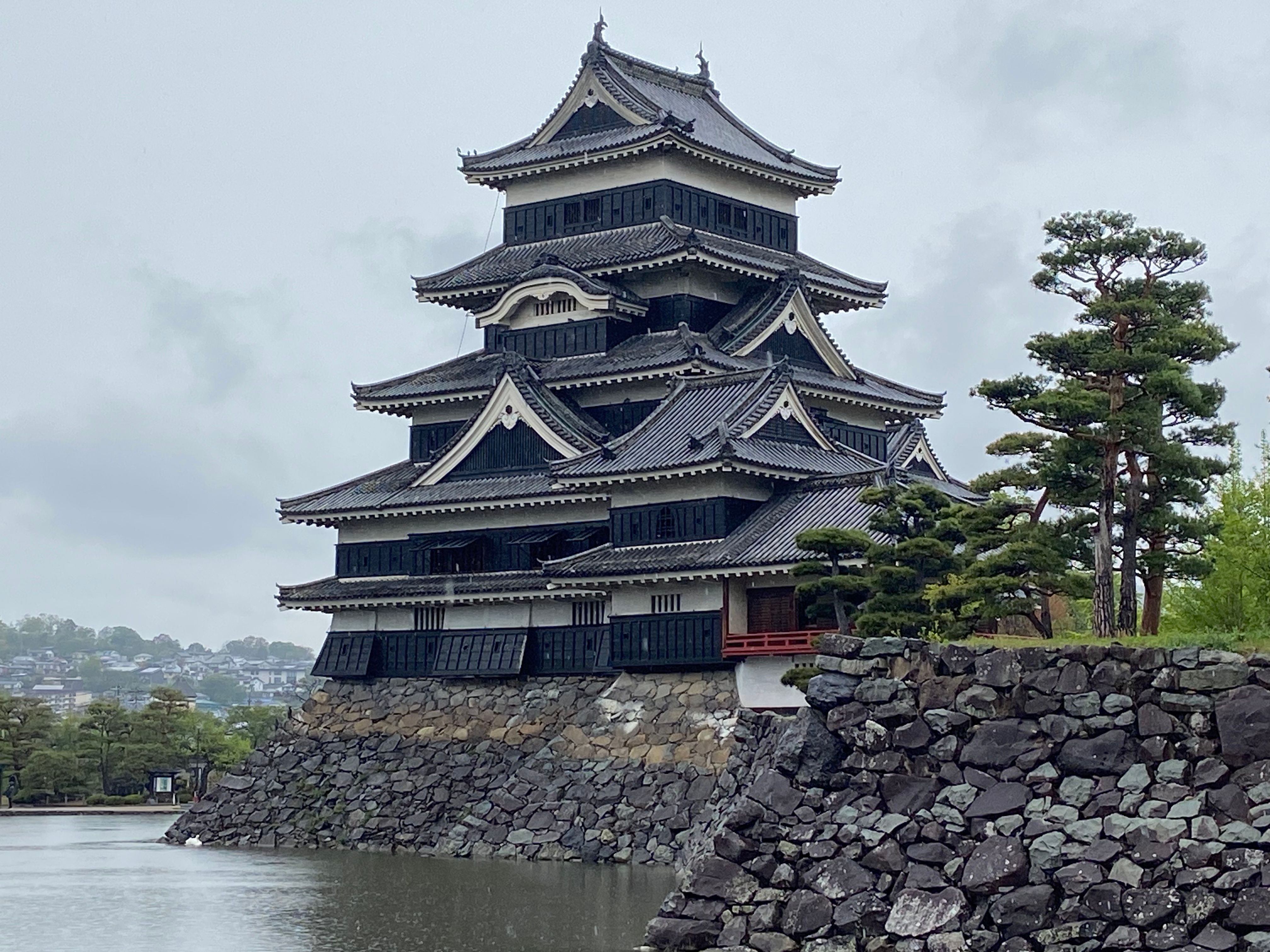
It’s not long before I arrive at the castle. Inside, the keep is so incredibly calm; there’s not a tourist in sight, probably put off by the weather. The castle is the oldest five-storey six-floor castle in Japan. A very specific metric, if you ask me. But it’s all because of a completely secret hidden floor. A castle bigger on the inside than on the outside. The castle is stunning to look at. The Northern Alps sit shrouded behind it, blending into the clouds, while the swamp-like stillness of the moat settles the scene.

Leaving the castle, it’s almost time to check into my hotel, but I’m feeling a little hungry so head back in the direction of Frog Street to see what’s on offer. I pass a shop selling traditional taiyaki, fish-shaped waffles. This store offers three normal flavoured fillings and one odd flavour. Sweet red bean, chocolate, custard cream, and sausage.

Obviously I go for sweet red bean paste as it’s my favourite. It’s cheap too. Only ¥250 and surprisingly massive. As I am handed the packet, I find the waffle to be red hot, and it smells so good. The batter sweet and soft and delicious. But the tail is the best part, a little crunchy and a little crispy. Luckily for me I’m staying near Frog Street for the next three nights, so I’ll be sure to return here frequently for more fish-shaped waffles; one of the best Japanese snacks.

The Grape Train Vinery

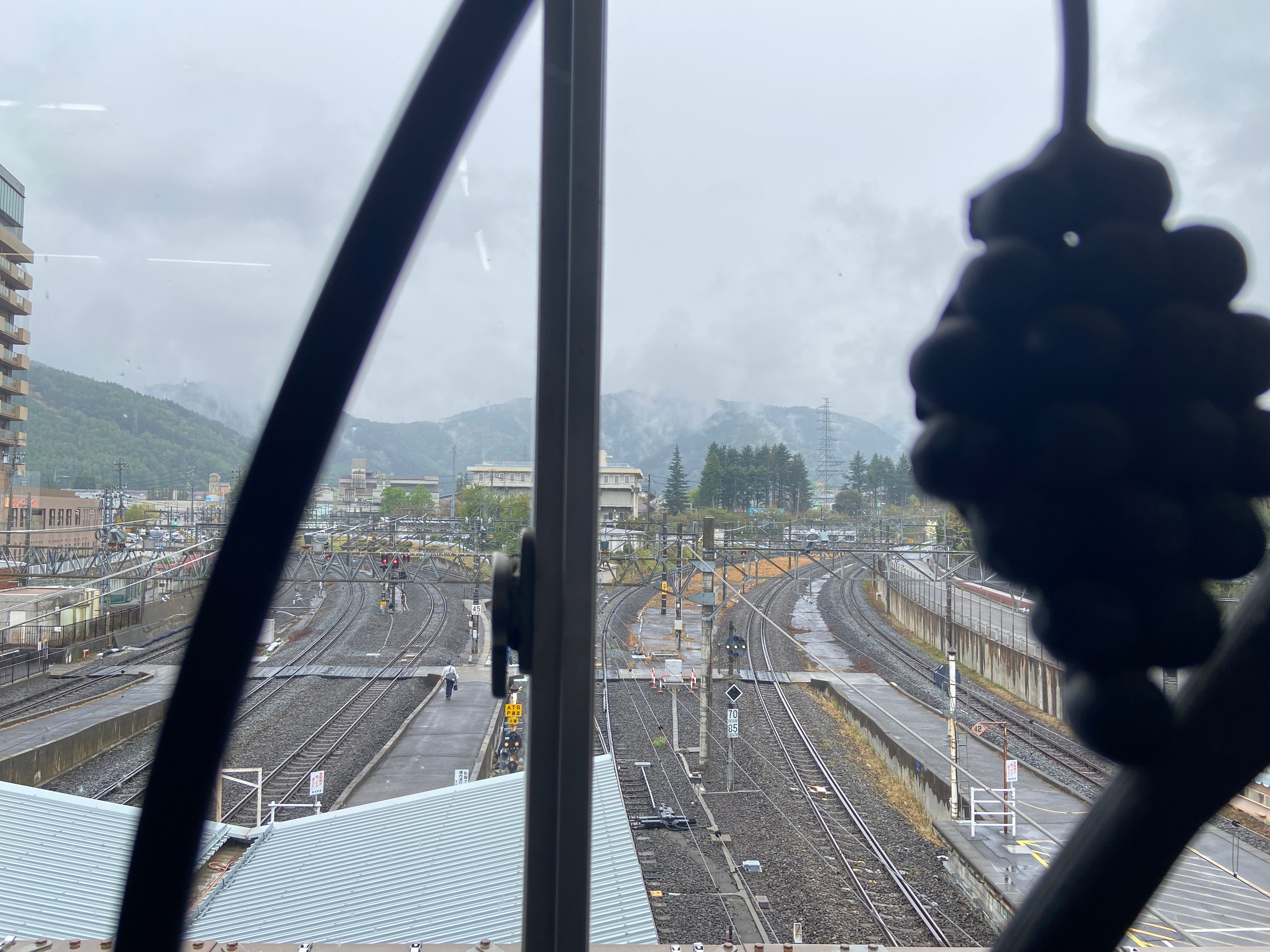
I head to my hotel to check in and dry my shoes with a hairdryer. I don’t need the poncho anymore, as the hotel is one minute from the train station, so I’ll be indoors the whole way. I hop on the train bound for Shiojiri Station, the journey takes 8 minutes. The under seat heating makes a mockery of my freshly dried shoes.

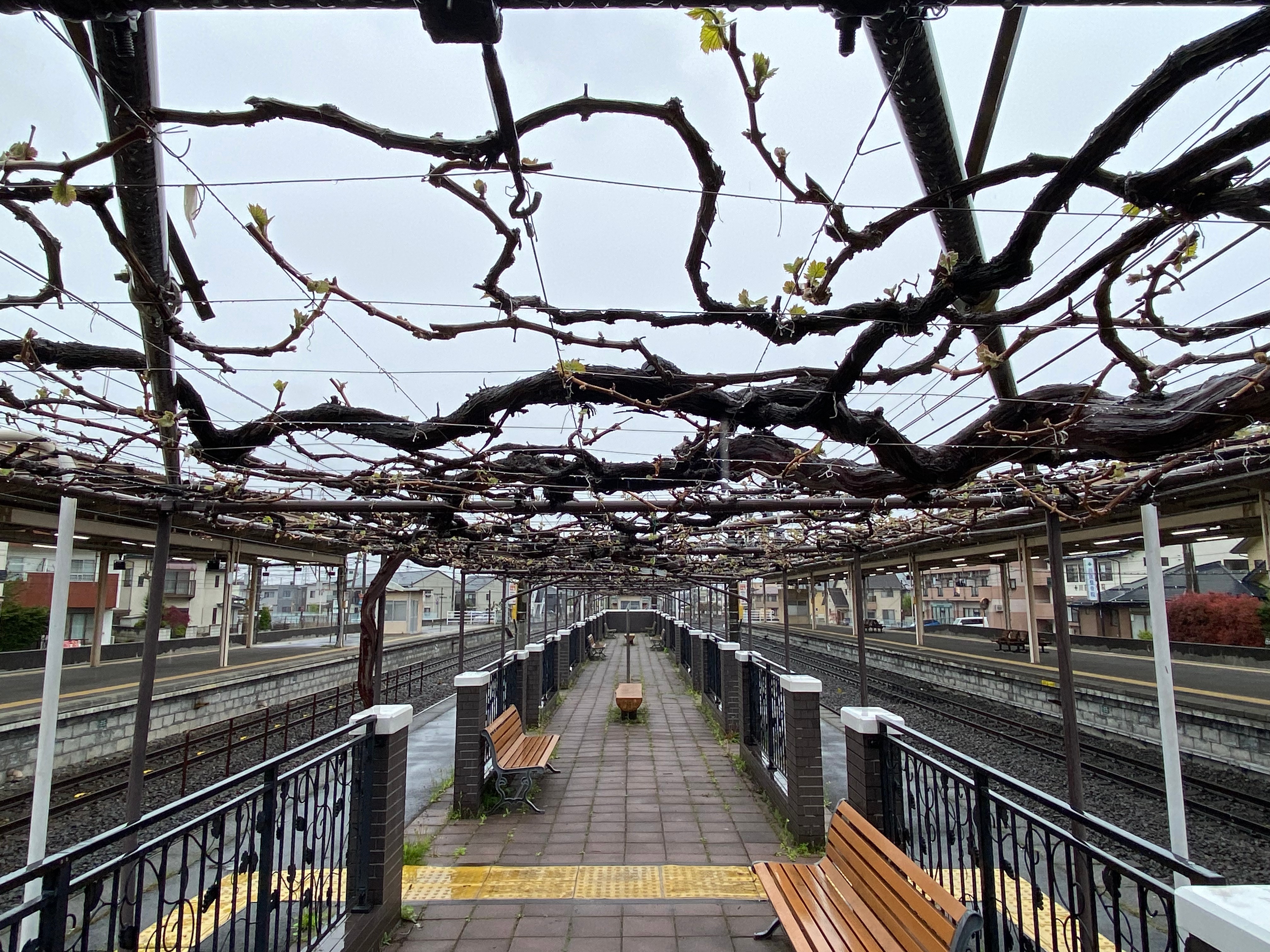
I exit the train into my destination. It’s actually the train platform I’m here to visit, as it has its own vineyard. That’s right, the grapes used to make Shiojiri Wine are grown right here on the train platform. The vines stretch along the platform, growing patiently beside passing trains. Obviously the grapes won’t be fully grown until the autumn, right now they are just small leaves on vines. I do notice that they have hung some plastic dragonflies around the vines, which I assume is to deter predators from eating the grapes.

Inside the station, there’s a small gift shop. I purchase a bottle of Black Queen red wine, made from platform grapes. Then it’s back on the train 8 minutes to Matsumoto Station.

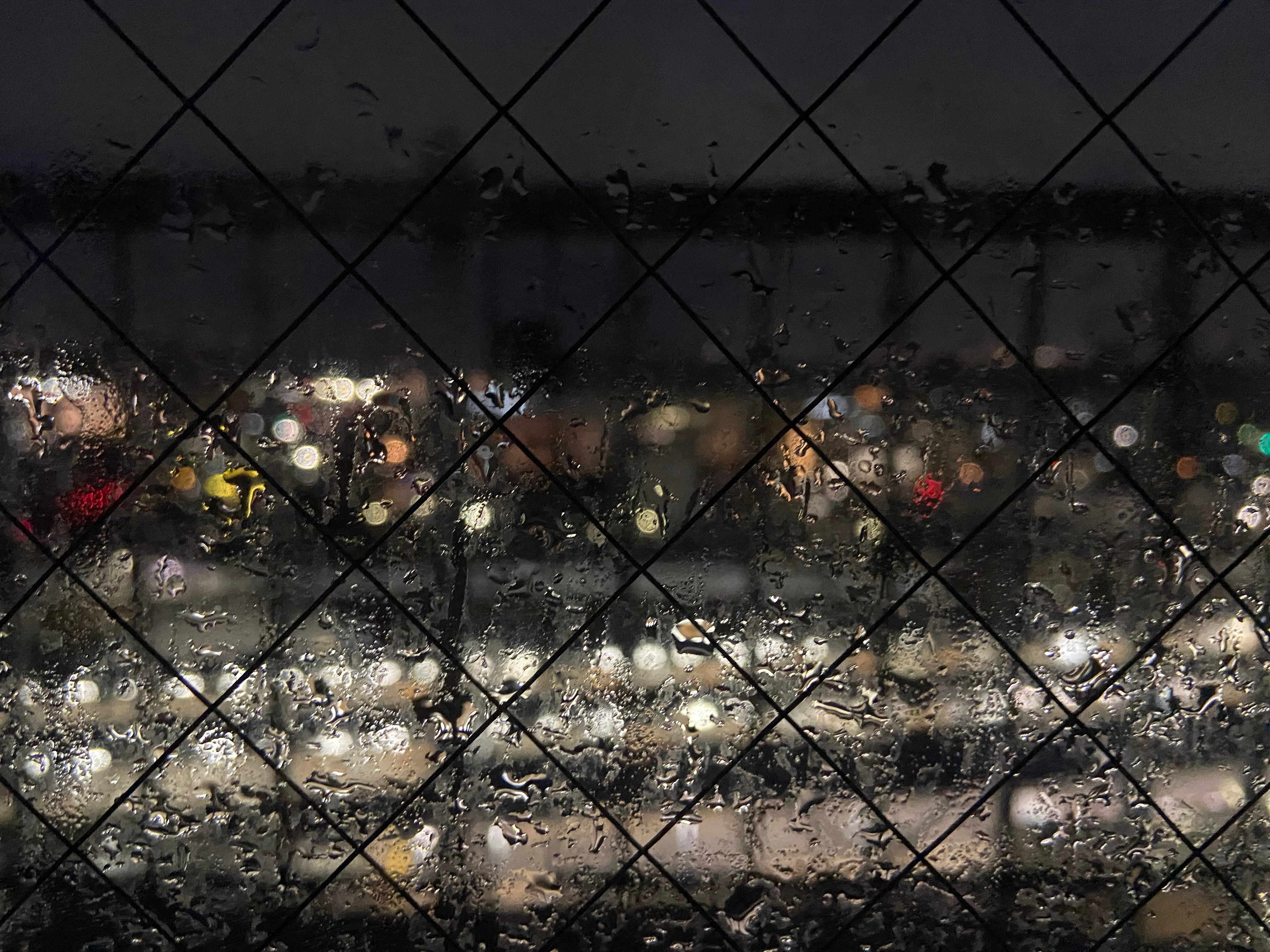
In my hotel room, I sit on the edge of the bed with a plastic cup of wine, its notes of cassis a little overpowering. I enjoy the sound of the rain as it taps softly against the window. The wine is bold, a little too certain of itself. And somewhere beyond the fog, the mountains are still there. Waiting for tomorrow.