One Fine Day in Spring

I’ve taken a train to Fukui Prefecture, to the city of Katsuyama. Just as my train arrives at the station, the hourly bus pulls away. Outside, the weather is clement, the mountains lurk in the distance, so I decide to go for a peaceful stroll with no real direction in mind.

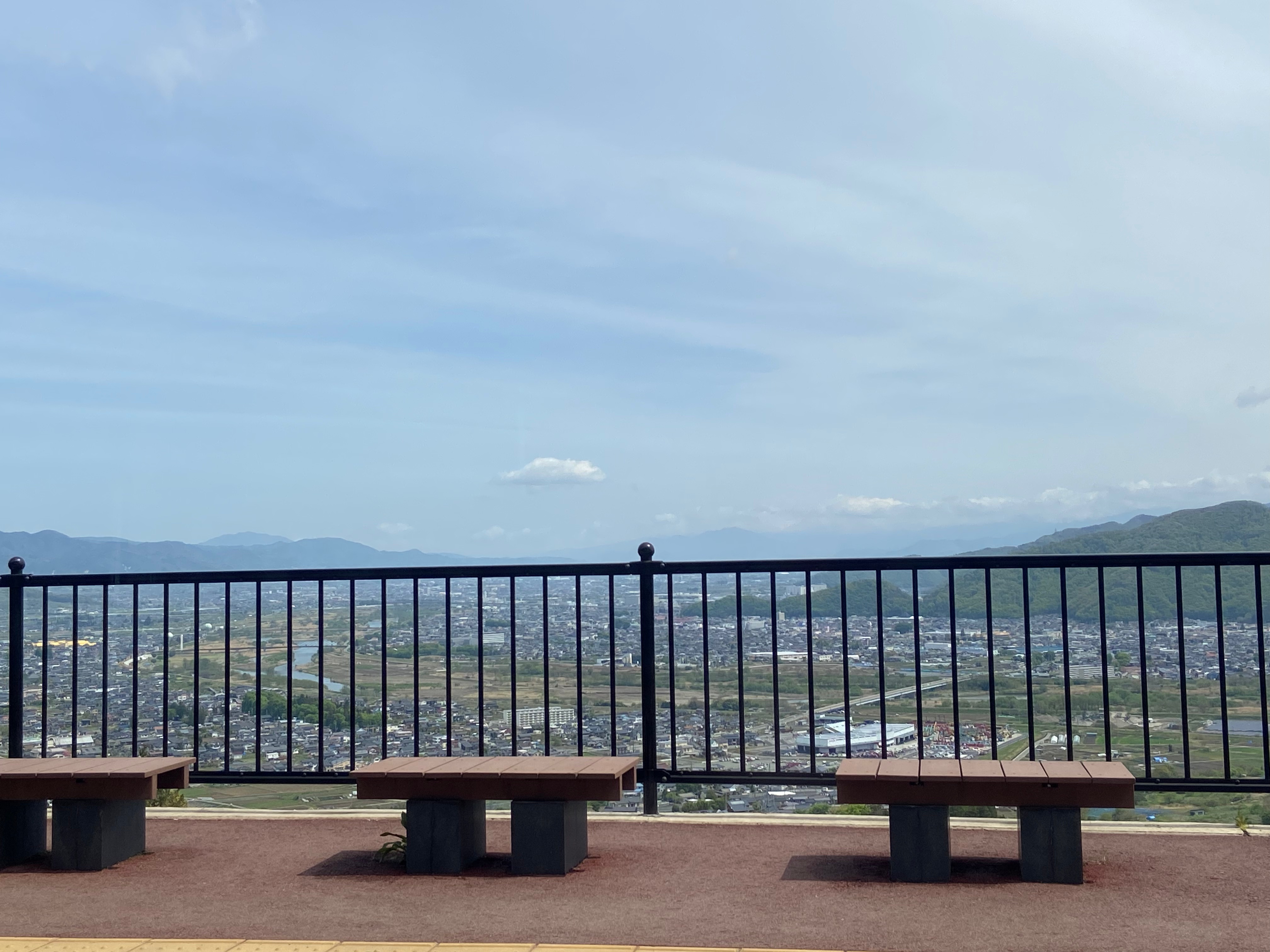
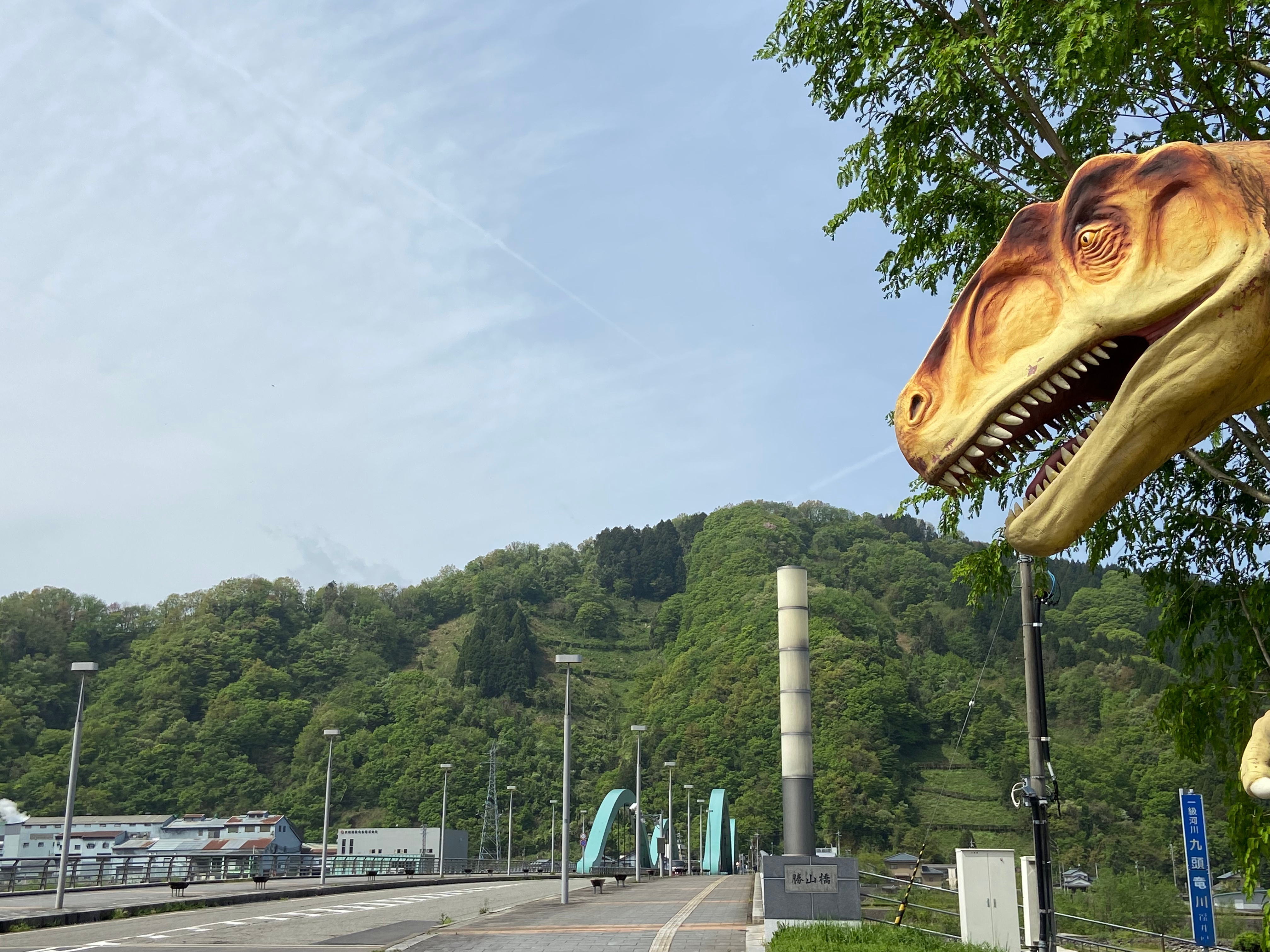
I have to cross the Kuzuryu River. The scenic gorge is stunning, the attractive spring foliage worth the train fare alone. It’s cooler up here too. I look around. The hills line up like vertebrae along the horizon. It feels like a soft world, padded by mountains. The cliff face is folded like a paused wave. Bands of green and grey stack into centuries you can touch. Whatever once passed through here is gone now.

Katsuyama is very much made of layers. Pavement over river. River over time. The shops sit obediently between eras. The remains of it once being a castle town shine through, with old houses with deep eaves and complex, steeply sloped roofs, former samurai residences, and the best part, there’s no people around.

The thing I don’t like about being here is the time it takes for the green man to appear when crossing a road. There’s no traffic or urgency, but I still have to wait. I don’t want to be a person who ignores instructions. Out here, it would feel like a faux pas. So I stand there, alone at empty crossings, waiting. My walk becomes stop-and-start, dictated by signals that don’t really need to exist.

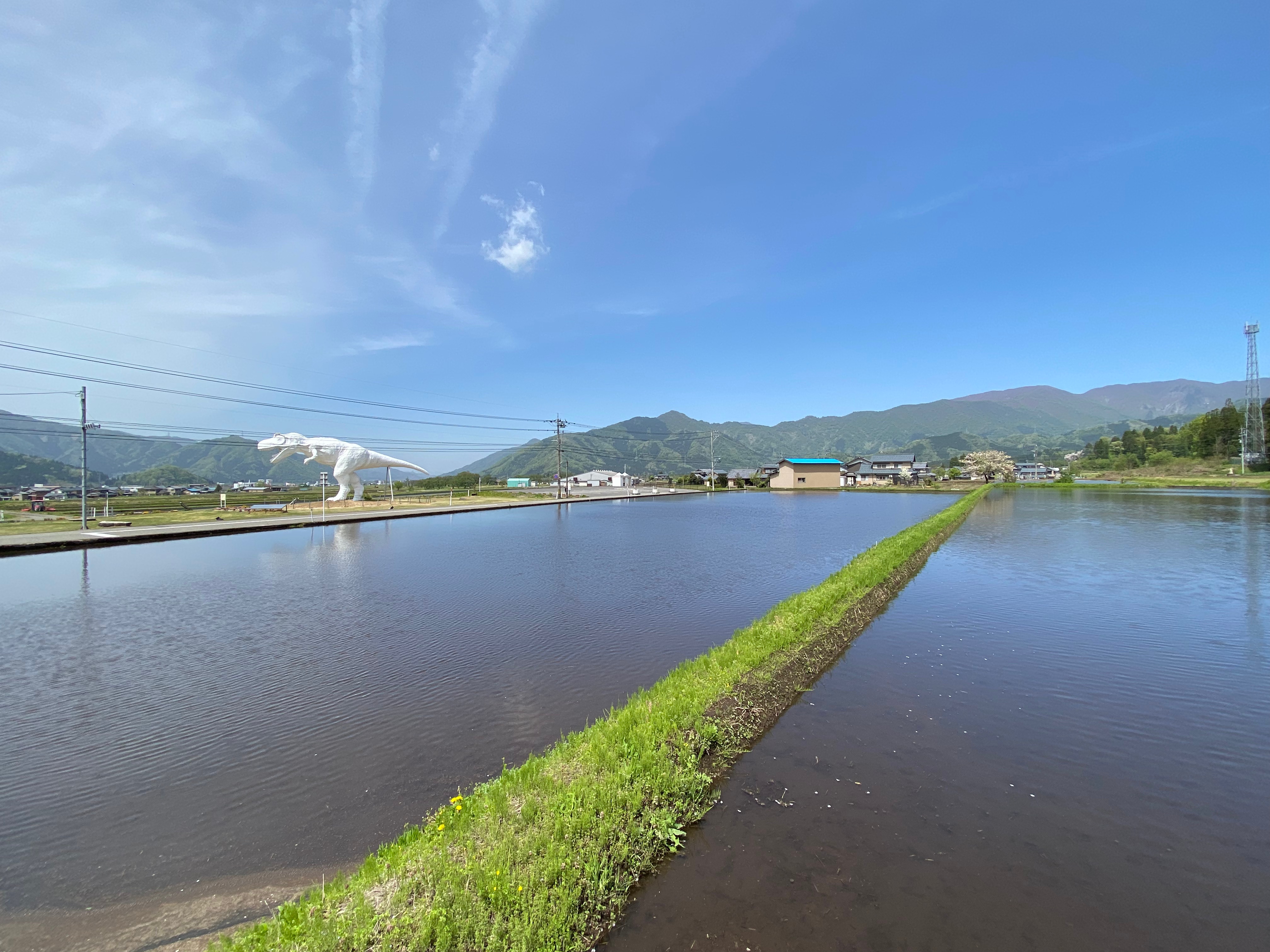
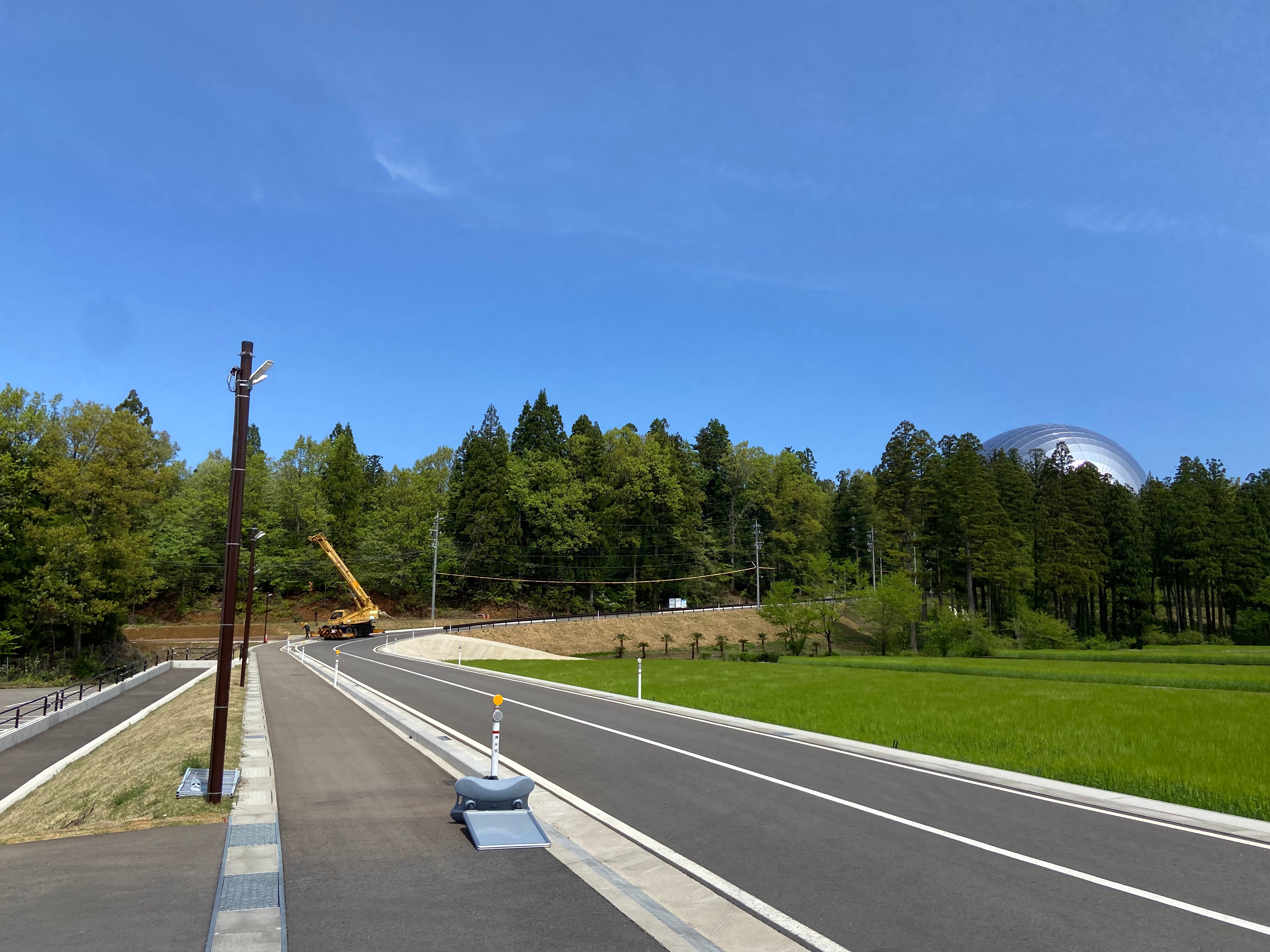
The further out of Katsuyama I get, the flatter everything becomes. I pass rows and rows of rice fields. The flooded type. I’ve always enjoyed the calmness evoked by such a simple sight. Beyond the fields across the horizon, a large silver building sits in the shape of a massive ball. So I head that way. It seems like it might house something historic. About 600 metres out, I can hear something, a thunderous roar. It sounds mechanical, though not entirely.

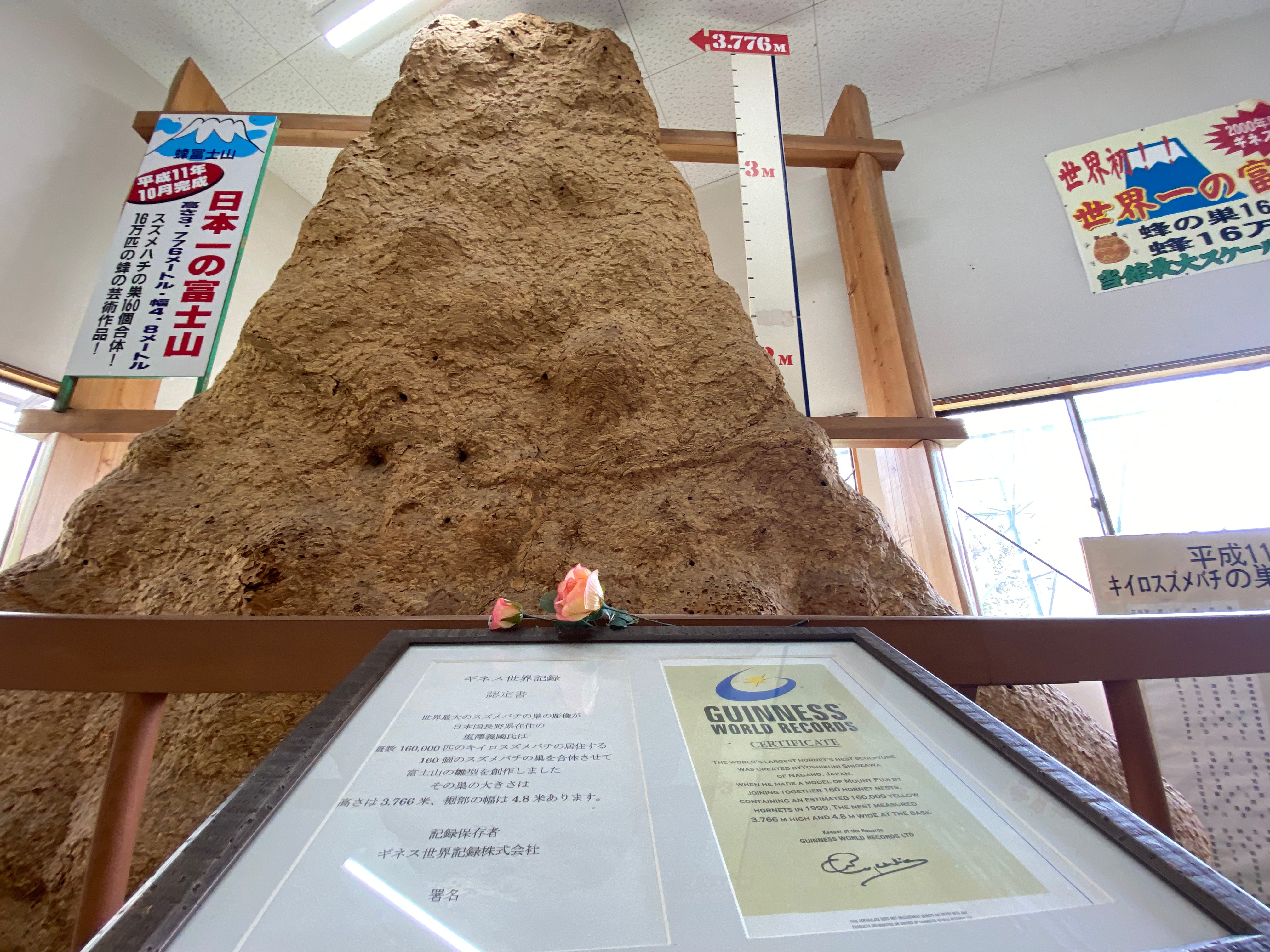
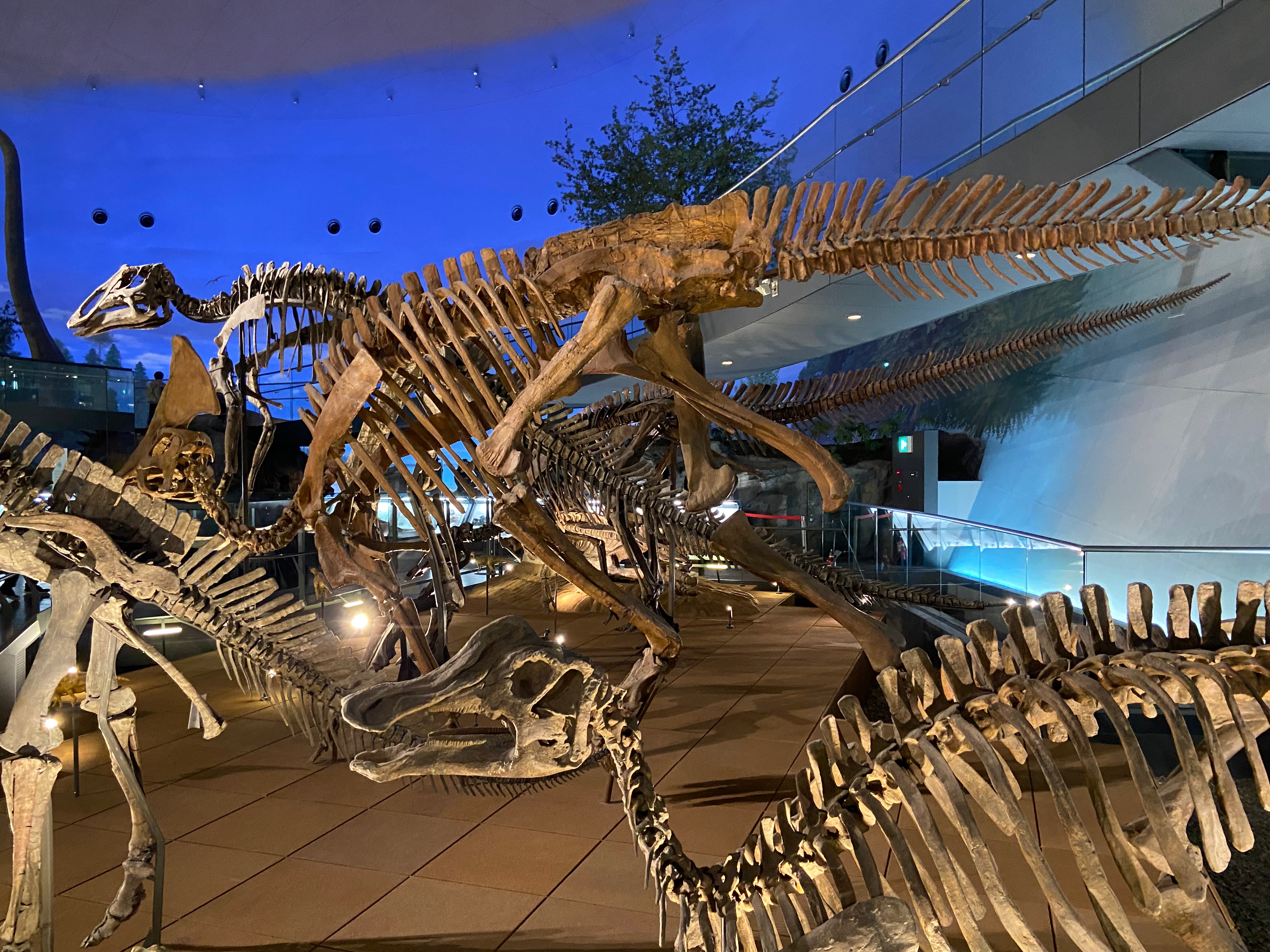
The car park is busy. Painted lines fade in and out beneath the tyres. A few large structures stand at the edges, sun-bleached and unmoving. Inside, I have to head underground, down a massive escalator, before the space opens up into something cavernous. Displays line the walls, fragments, impressions, reconstructed forms. Some are incomplete. Others feel too complete. An animatronic figure pivots, pneumatics sighing like a dying star. As if rehearsing extinction again.

Fukui is famous for fossils. They’ve been discovering them here since 1989, and this museum is a collection of what they’ve found. There are four floors housing exhibition halls, laboratories, seminar rooms, a lecture hall, a children’s area, a video library, and sections on earth sciences and the history of life. It’s all very interesting.

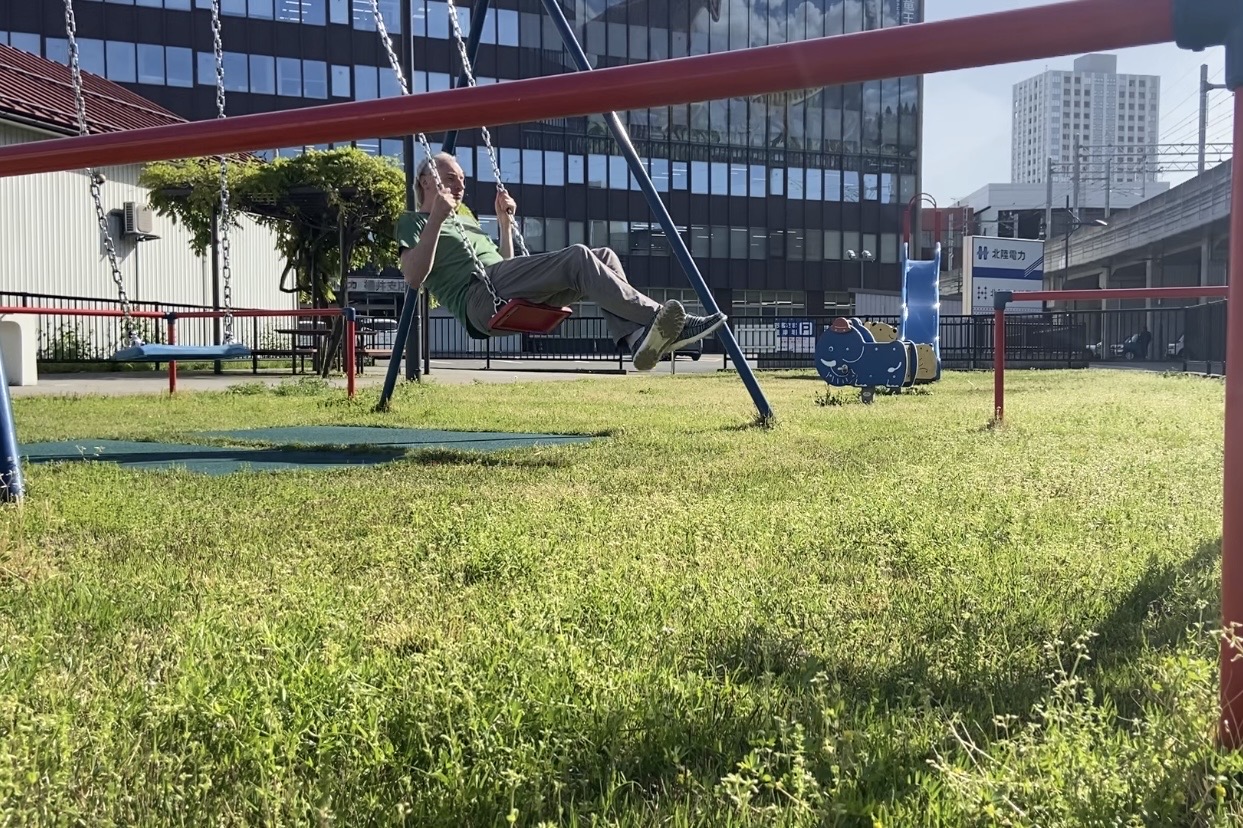
I head back to the station. Here, a single timetable flaps gently in the breeze, listing hourly destinations. Inside, a dragonfly mocks flies fluttering in the artificial air. I have time to kill before my train, so I go and sit in the park, on the swings. I wander just this park before eventually leaving on the train, to Fukui Station. The attendant walks down the train after every stop, before she bows at each person individually; there are twenty-two stops.

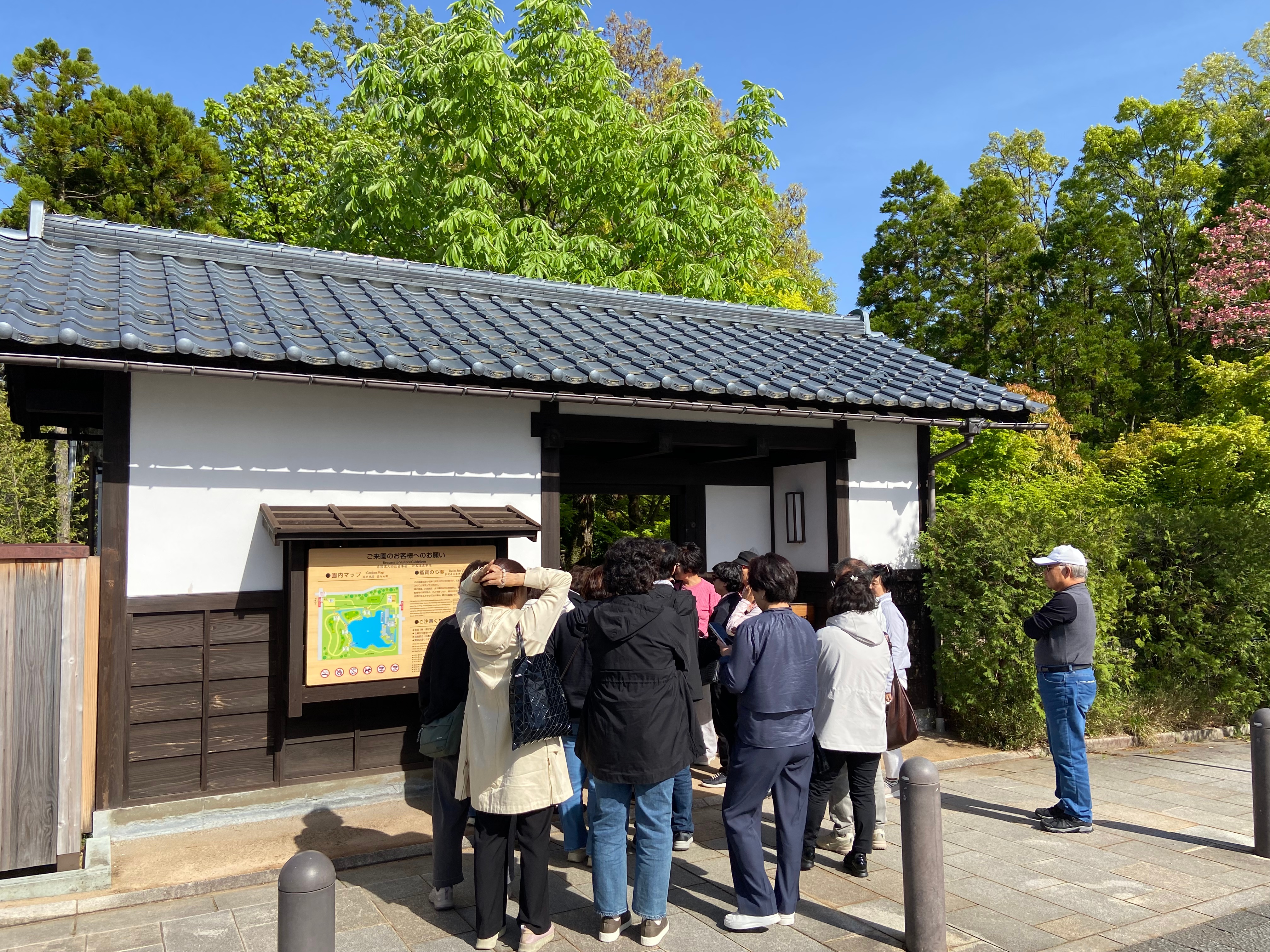
At Fukui Station I’m at a loss for things to do. I check out the Fukui Castle ruins, but these now house government buildings. I see a sign for a zen garden, but doubt I can get any peace from there as there is construction right beside it. Also, when I do arrive, there’s actually a queue of people waiting to enter, all talking loudly.

There’s a large shopping mall, but everything seems closed. A sign next to a man drilling in the road asks people to keep the noise down. In fact, the noise is really starting to annoy me. Since Fukui started finding fossils, there’s been a small boost in tourism. A Shinkansen station was added a couple of years ago, and now the area is in a constant state of development.

I wander through random side streets, passing bespoke shops that are also closed. In the end, I feel Fukui has defeated me; there isn’t much here for me, and the only place I do find with some semblance of peace is a little park out of the way of everything.

And for the second time today, I find myself sitting on a swing.

A Light for Attracting Attention

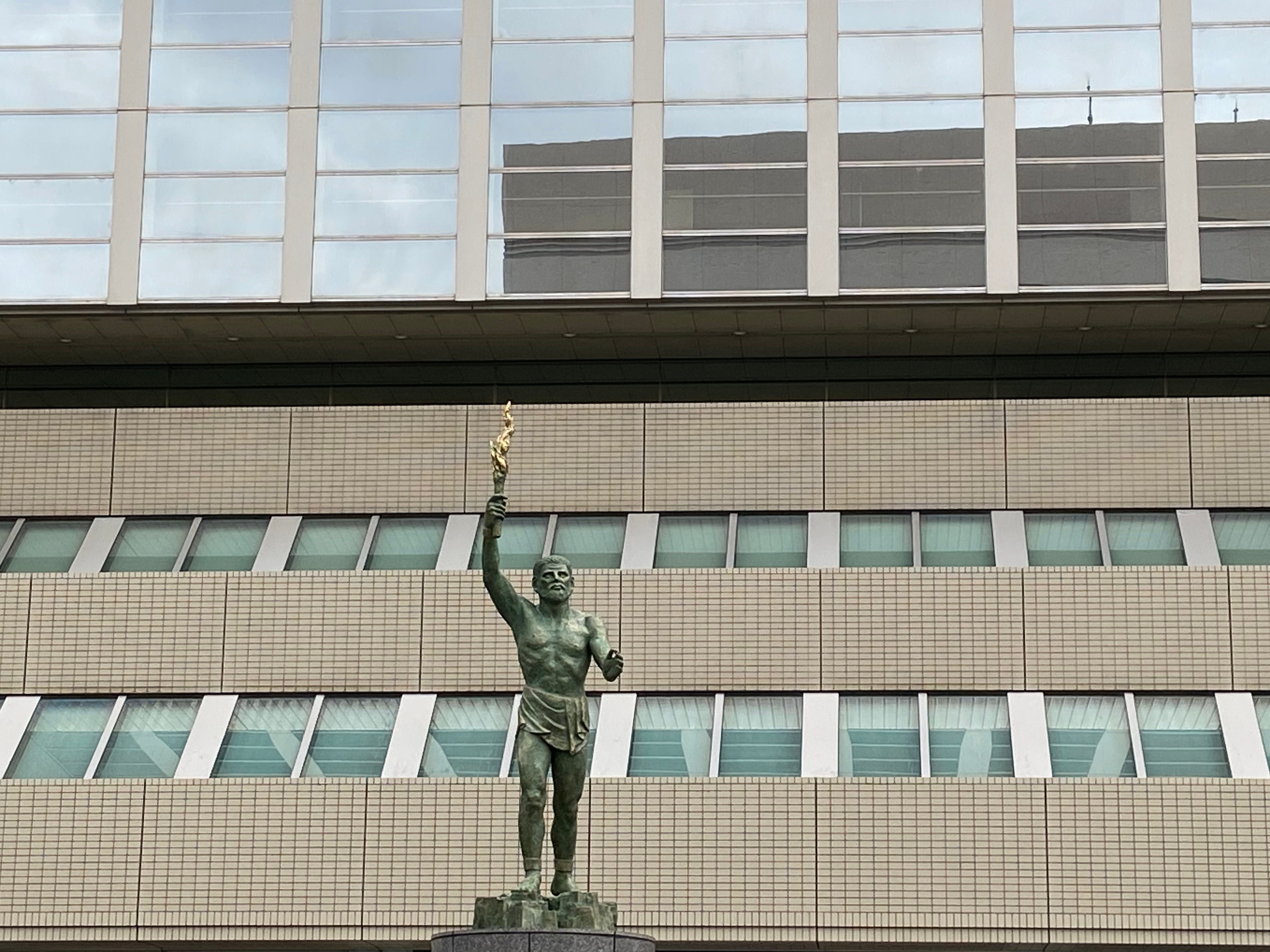
Outside Toyama Station, in front of the Hokuriku Electric Power Company headquarters, there is, for no apparent reason, a statue of Prometheus. I briefly consider shooing away an imaginary eagle pecking at the statue’s liver. Prometheus is carrying a flaming torch whilst posing above a water fountain.

I’m in Toyama Prefecture today for two activities. The first is a special exhibition taking place at the Toyama Glass Art Museum. As I wander the streets, crossing tramlines and dodging potholes, every now and again, through cracks or gaps between high-rise buildings, I catch glimpses of the snow-capped Tateyama Mountain Range in the distance. I’ll be slightly closer to these mountains for my second activity later on, so I’m hoping to get a decent view and a couple of nice photographs.

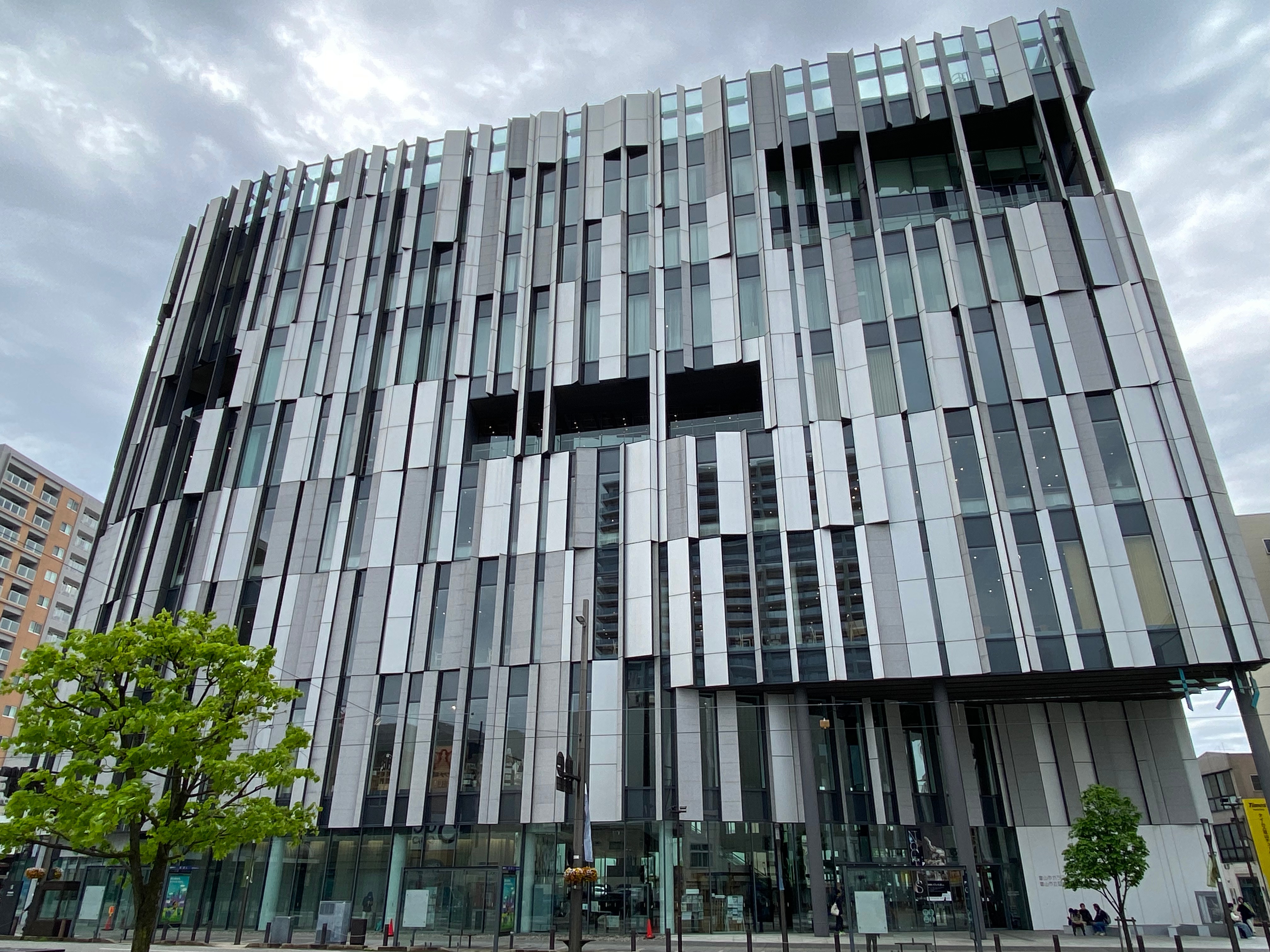
The Toyama Glass Art Museum is not difficult to find. The building housing it is a unique structure. Designed by Kengo Kuma, it features a dramatic diagonal void that acts as a light funnel, channelling sunlight through the interior and reflecting it off cedar beams and mirrored walls.

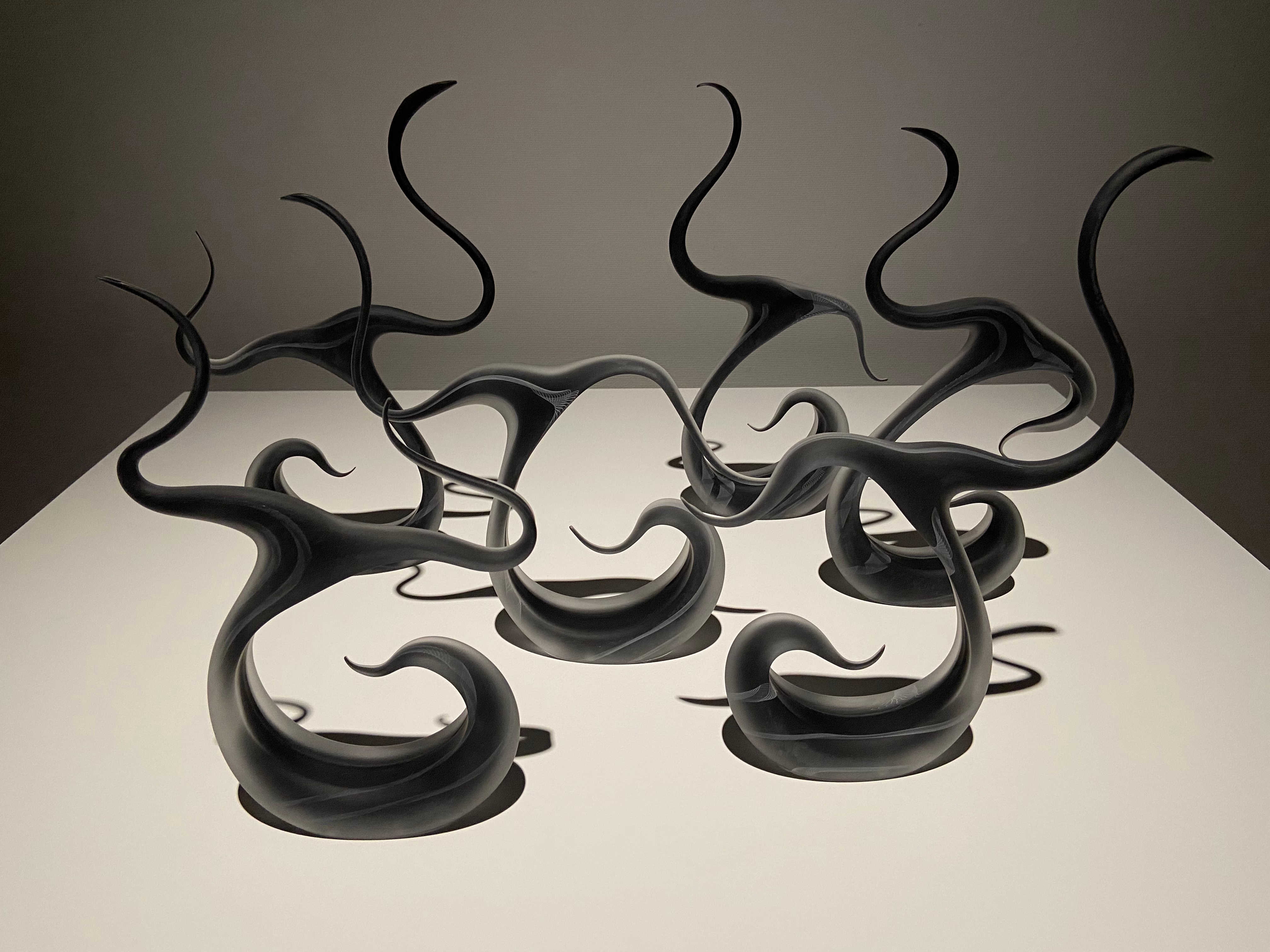
Inside the museum, there is a massive queue of people, which is a good sign. The tagline reads Glass Art of Shadow and Light, while the exhibition itself is titled Noctis, Latin for “of the night.” Amidst the darkness, inspiration can be drawn from the mysteries that hide there, illuminated by the glow of the moon, a star, or a small flame.

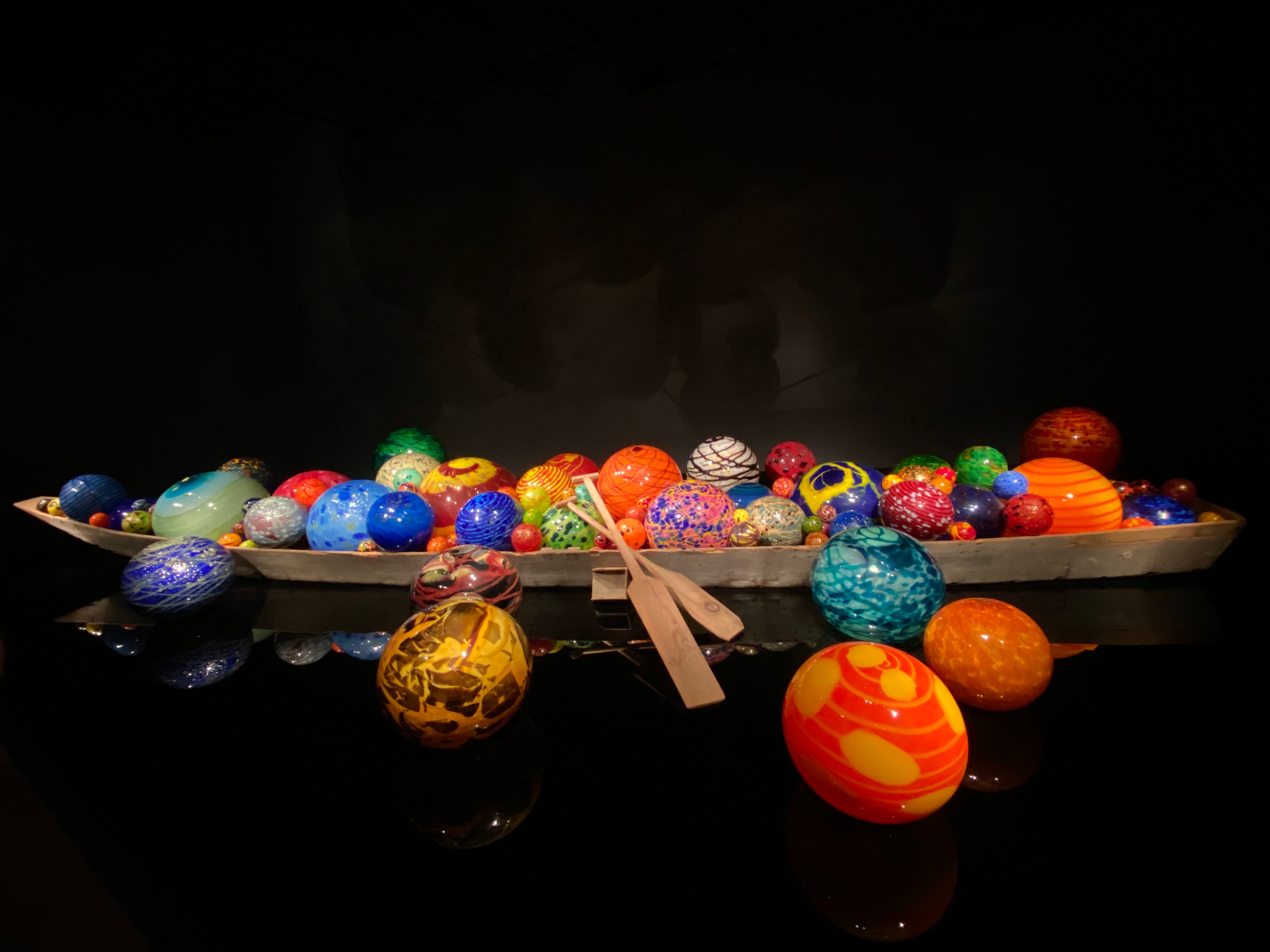
The ticket price also includes entry to the regular glass art floor, which I visit first. Among the collection are instructions on how this type of art is made, where it originates from, a timeline of its history, and a large boat filled with giant multi-coloured marbles.

On the floor below, the entrance to Noctis begins in the section titled The Twilit Forest, the suspension between night and day. The very first room is filled with lamps and the shadows they create. Then there are vases, and their shadows. I feel like my shadow is being watched by the many all-female seated staff. Should I be photographing this? Have I been standing around long enough? Did I look at all the lamps?

As twilight fades, the next section opens into Gathering Dusk, where familiar shapes are swallowed by darkness. Some of the contemporary work featured here includes Kozumi Masao’s special prize-winning Black Symmetry Vase, depicting the awakening of both fear and curiosity. It’s at this point in the exhibition that the artwork starts to become more unsettling, with encounters with creatures that might or might not be real.

Further along, the museum descends into madness, and everything becomes far less about light and far more about darkness. Encounters with unfamiliar forms and the macabre follow. The depths of our inner world emerge through death, dreams, and nightmares. Kinoshita Yui’s Permeation is my favourite piece of them all. The dense clusters of harshly coloured glass represent the dreadful force of proliferating life forms that slowly destroy us, ignoring everything else around them. It’s absolutely terrifying.

The final section moves into moonlight and the absolute unknown. Pieces here depict not just dreams, but terrors, as we sink into sleep and confront the depths of our boundless imagination. I hadn’t planned to spend quite so long here, and as two hours pass in an instant, I decide to head off to my next destination, an hour away.

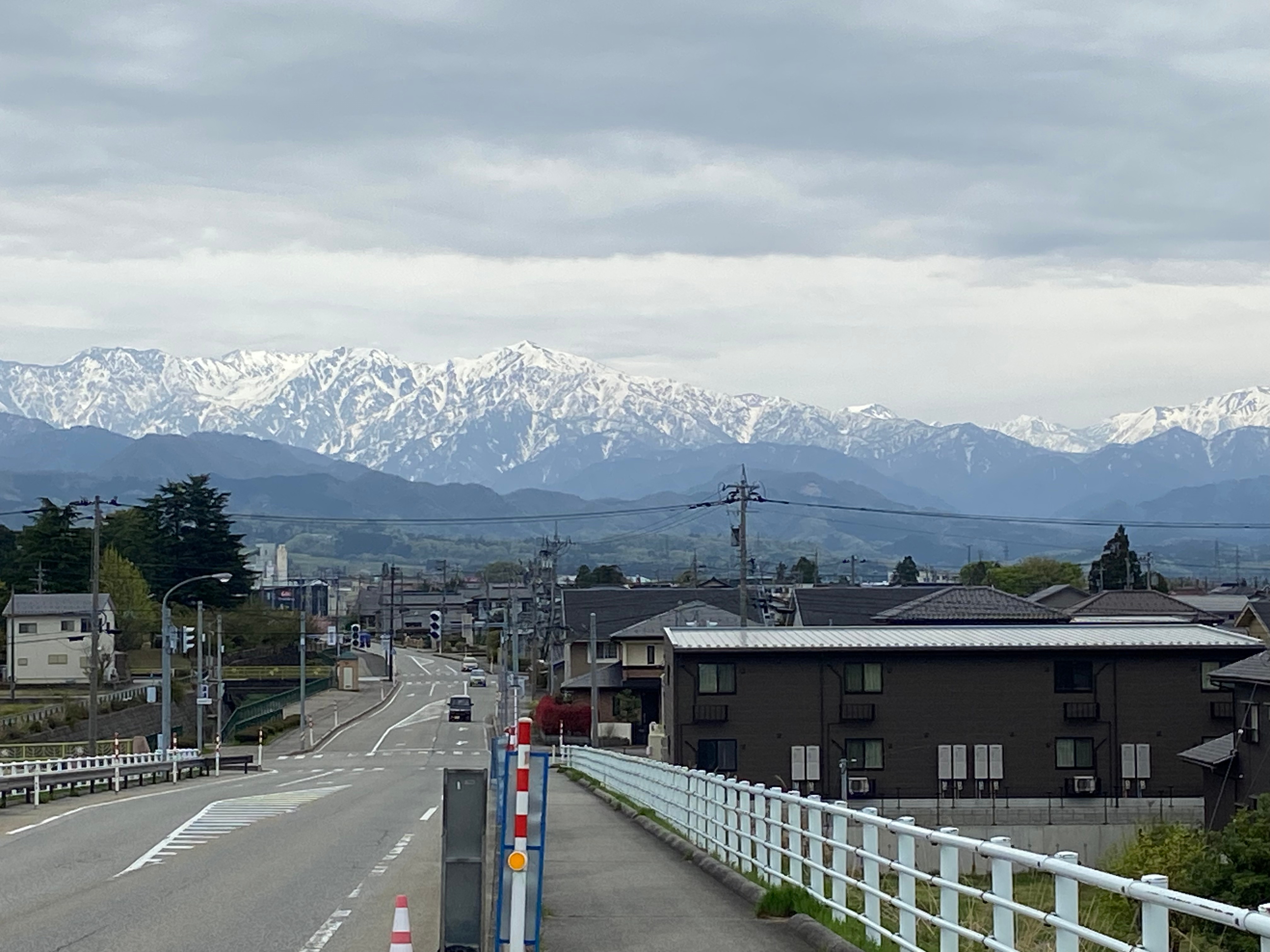
Arriving at Namerikawa Station, I finally manage to photograph the snow-capped Tateyama Mountain Range.

The mountains are stunning. They loom over this place as if their presence alone is enough to surround it, despite me being on the coast with the sea behind me. And it is the sea that’s brought me here, to see the world’s only firefly squid museum.

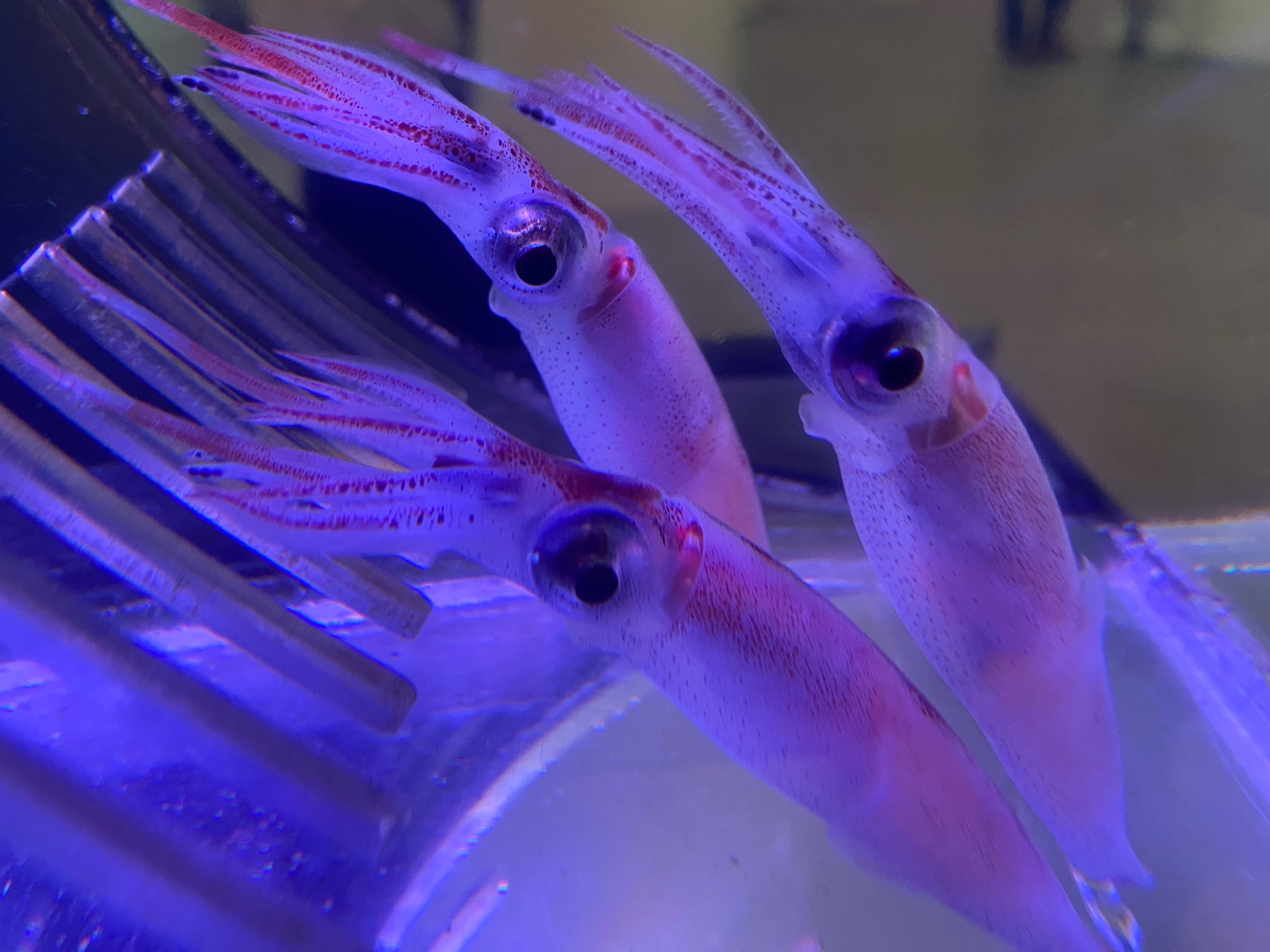
These squid are unique in that they are tiny, deep-sea creatures that light up the ocean in blue luminescence. Each squid is covered in thousands of light organs known as “photophores,” and use this light to match the surface glow, hiding their silhouette as they lure in their prey. They also use controlled blinking lights to trick and lure much smaller fish. I’ve managed to lure in three myself, in a tiny glowing tank.

The museum is pretty interesting; however, almost all of the information is in Japanese. The only parts I understand are that it smells like fish around here, and that no smartphones are allowed in the theatre. I don’t bother with the theatre anyway, as there is a two-hour wait, which is a shame, because apparently the firefly squid put on a dazzling light show.

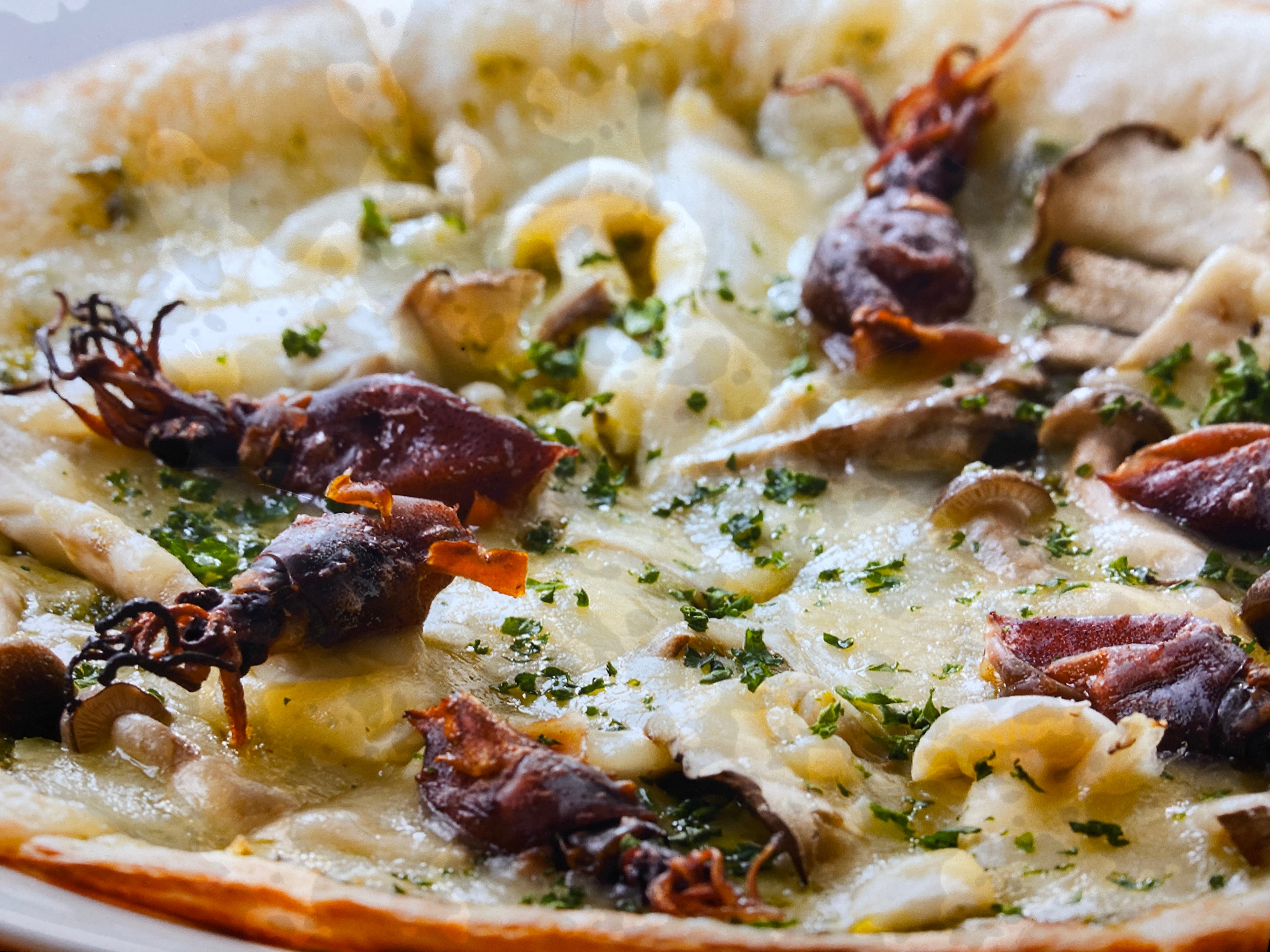
The gift shop sells glow-in-the-dark squid keyrings and squid-adorned cravat-style neckties. The restaurant sells firefly squid pizza, squid burgers, and squid pasta, but it too has a two-hour wait. I wanted to come here and order the pizza just to add a bitter irony, seeing such beauty, marvelling at it, only to consume it after it’s performed a dance for me. Instead, I take a photograph of the pizza from the menu, just to show how unbelievably unappetising it looks. Had I not had to wait, I would probably have changed my mind about eating here anyway.

I head back toward the mountains, to the station, and decide that the only thing I’ll be consuming today is the view.

A Flood Day to Dry Hard

The news tells me that today there is an excessive heat warning in place in Wakayama. My oh-so-reliable weather application tells me that it will be cloudy all day. The gods split the difference. As I exit the bus unprepared for anything other than heat or cloud, the heavens split open in a thunderous rage of fury.

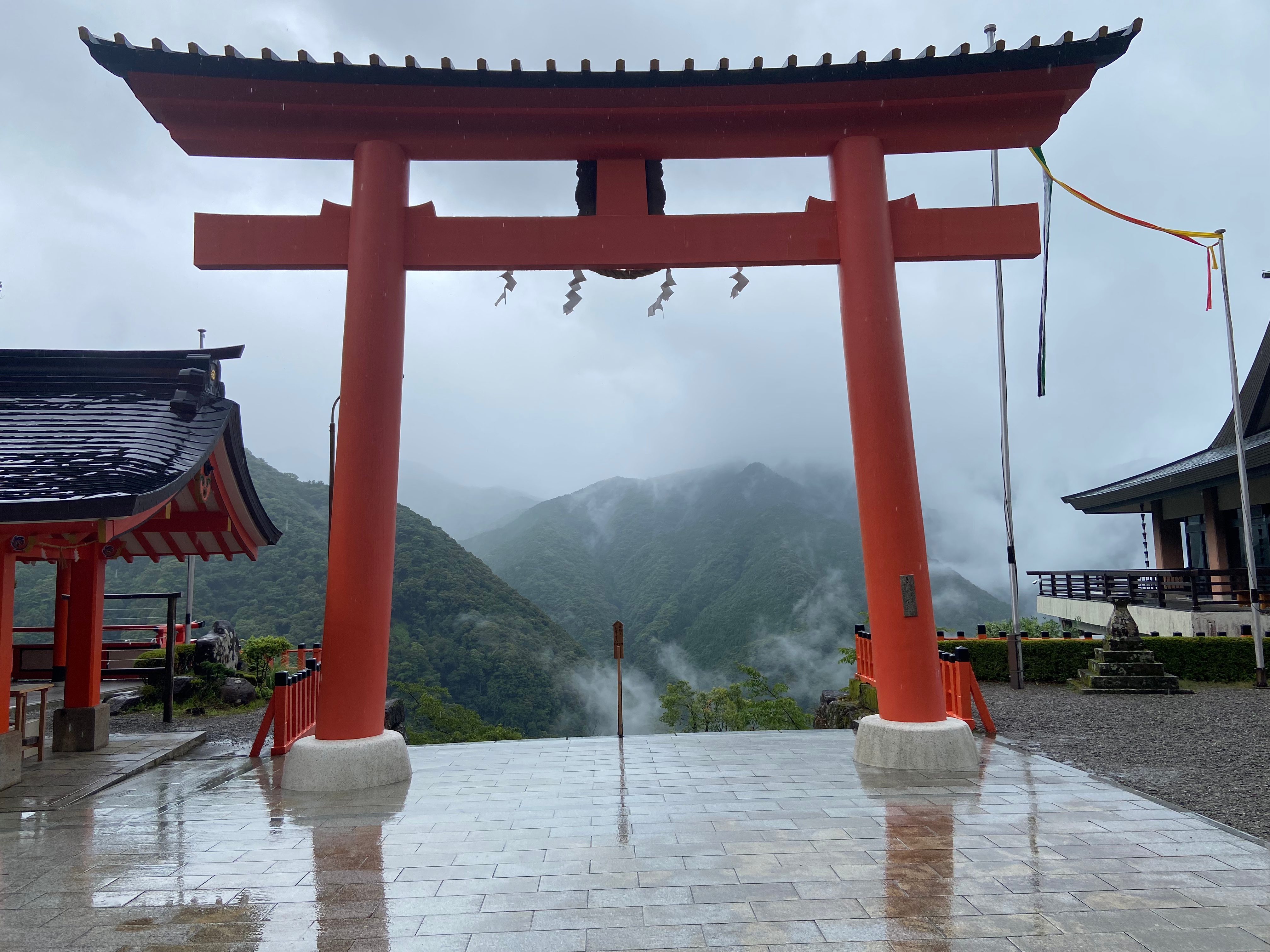
I am at Kumano-Nachi Taisha. As the thunder rolls over the sky I manage to take just one photograph of a torii gate and the mountains beyond, right then, before the rain catches up with the thunder. Luckily for me, there is a shop, so I enter, purchase, then poncho up.

I duck inside the Treasure Hall. No photos allowed, but I explore freely. I wrote about the Nachi Pilgrimage Mandala yesterday, but seeing the real thing up close is something else. I enjoy the other art, artefacts, simple objects from a time lost in the past. Most of the treasures here were discovered in 1918, but are from around the 10th century, with the shrine itself being 1,700 years old.

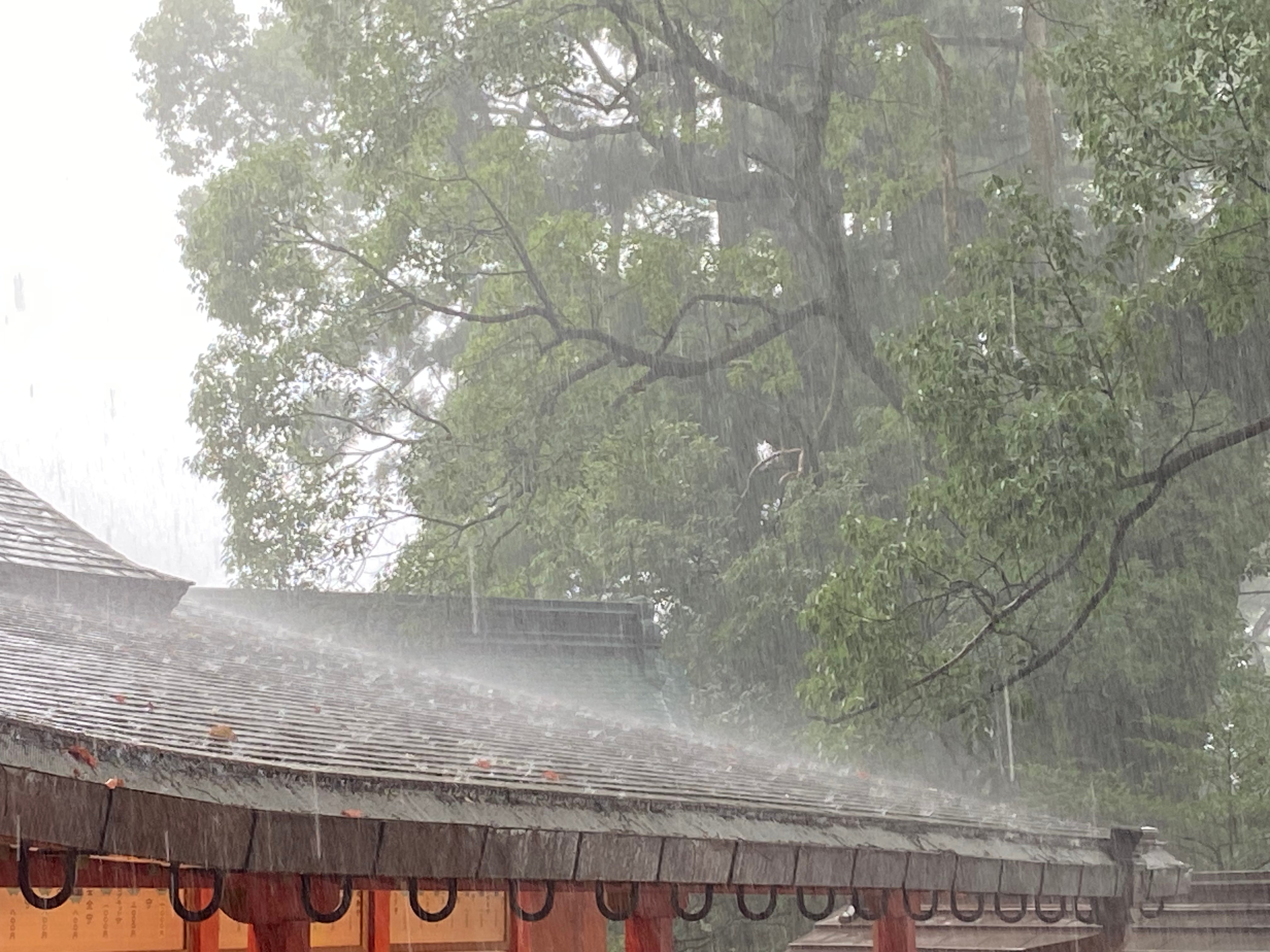
Stepping out of the Treasure Hall, the rain has intensified fivefold, and some of the ground has already flooded. People cower with umbrellas.

The rainwater crashes down and smashes into the roof of the shrine like a torrent of broken glass, slicing through the air with a merciless, unyielding force. I have never experienced rain like it. The raindrops actually hurt.

I came for the waterfall. Or so I believed. Right now, I feel like I’m inside one. I struggle to see where the waterfall could even be in comparison to the falling water. A monk passes me, dressed in dark blue. He carries an umbrella and seamlessly manoeuvres the flooding and the puddles, calm as you like.

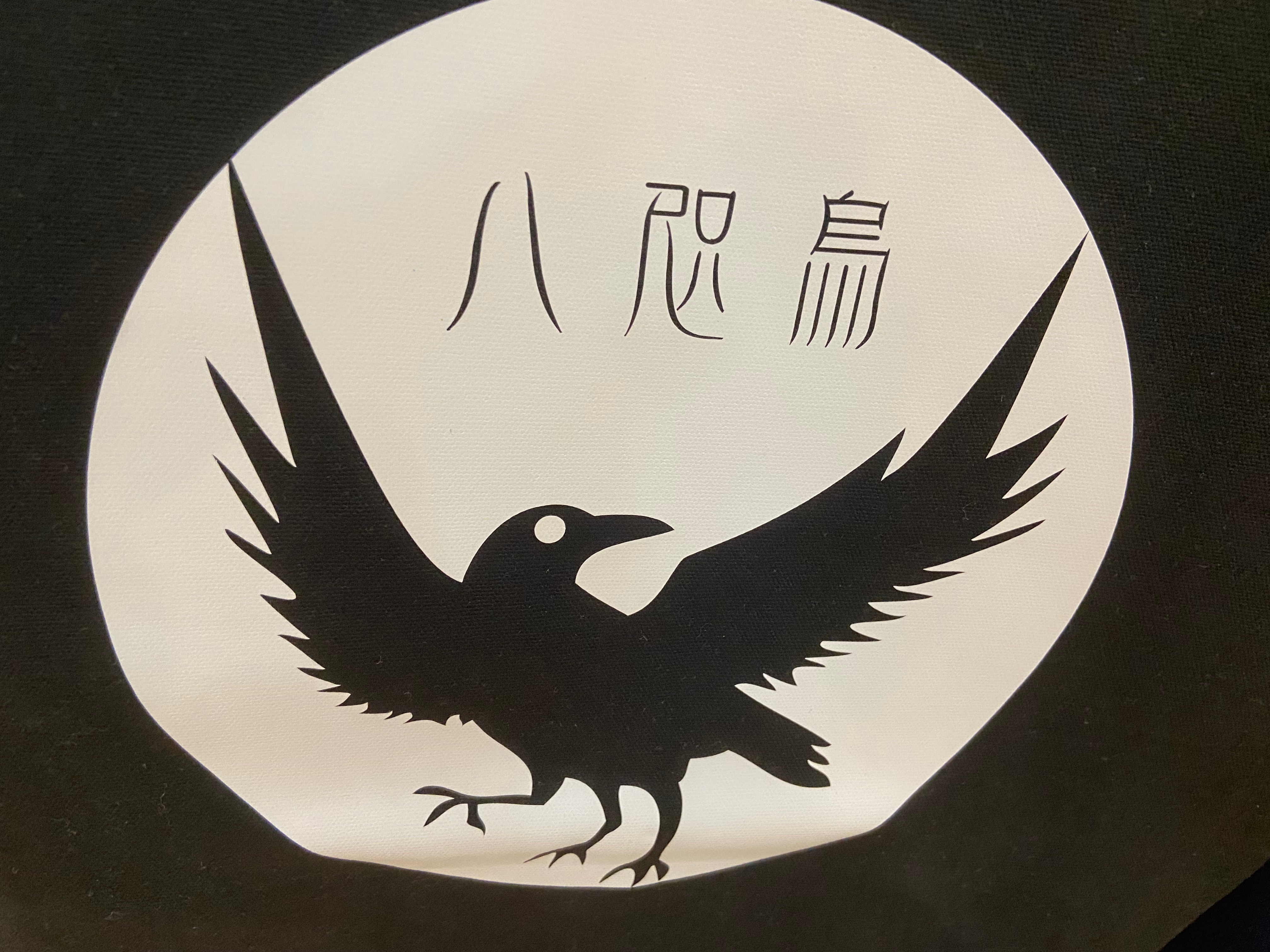
Legend has it that the first emperor of Japan, Emperor Jinmu, found the waterfalls when his boat landed on the Kii Peninsula and he saw something shining in the mountains. At the time, he had been following a Yatagarasu (a mythical three-legged crow sent by the gods as a guide).

I follow the path down the mountain toward Nachi Falls. The sky bellows with more thunder, the road is full of water. Am I walking in the rain? Or am I swimming in a river? At points the water is knee-high. The drains can’t handle it. I can barely handle it, but I persevere.

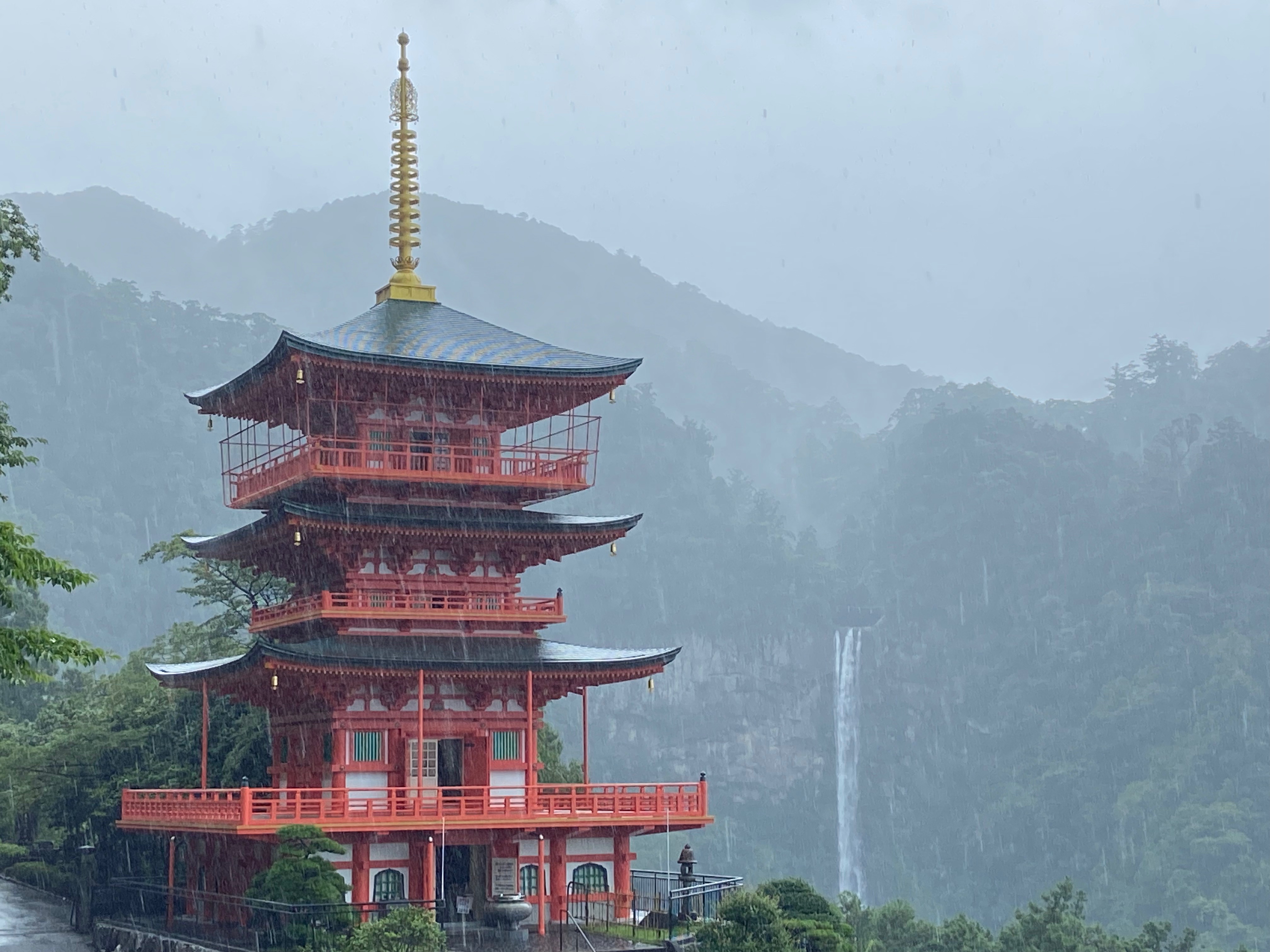
I make it to the pagoda view, the one that’s often featured on the cover of a largely poorly written guidebook. They’ve never featured it in the rain. I enjoy my photograph very much.

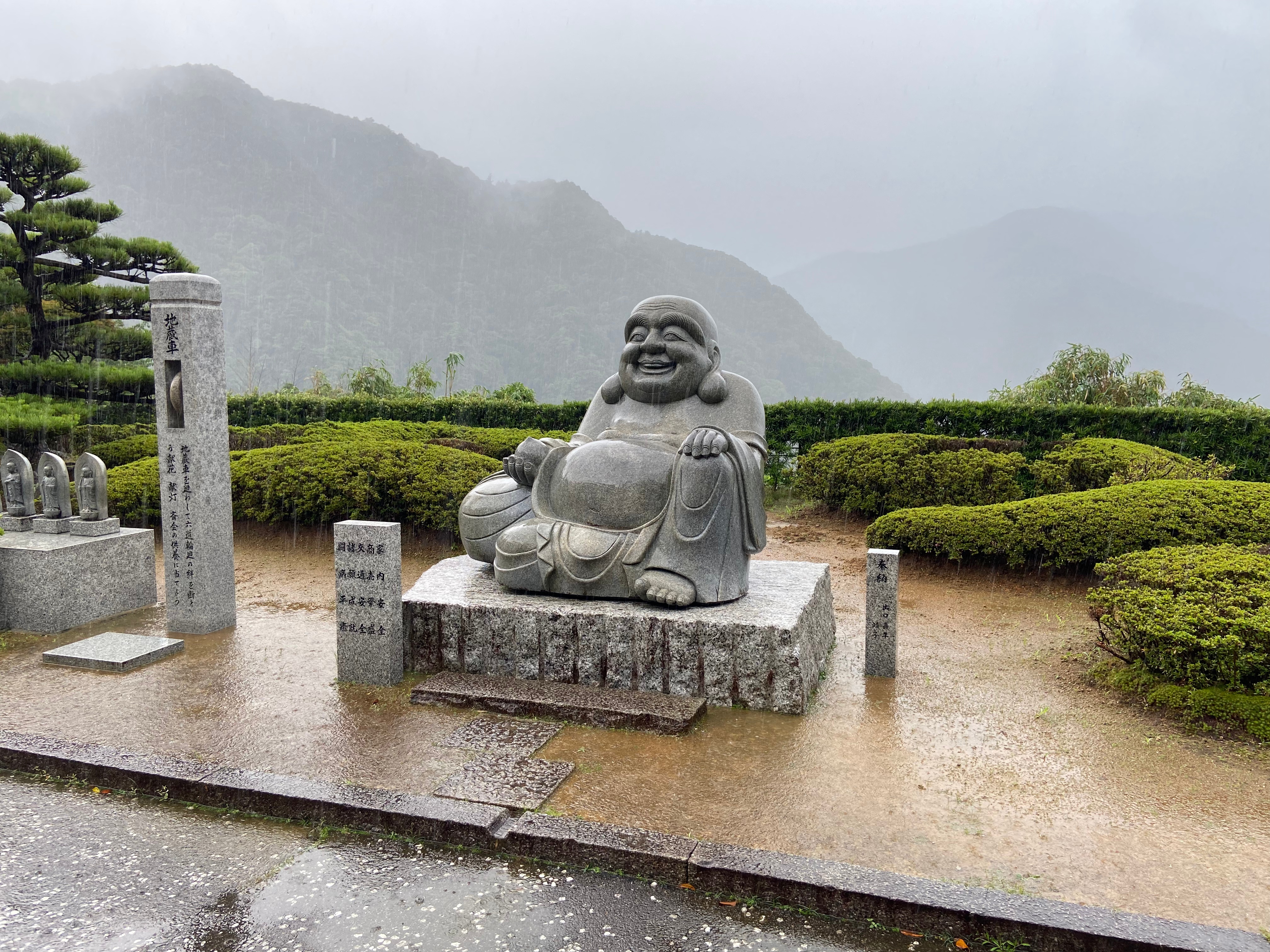
Beside the pagoda sits a big statue of Hotei. God of fortune. The Laughing Buddha. Naturally, despite my soaking wet legs and shoes and inability to understand the point of it all, I rub his massive belly. Good luck and prosperity coming my way, again.

I venture on, down flooded sloped paths and dangerous steps, and eventually, I do arrive at Nachi Falls. The heavier rain drowns out the sound of the waterfall. There’s a story of some star-crossed lovers that leapt from the top of the waterfall in the belief that they would be reborn into Kannon’s paradise. I also know that this is one of the Top Three Waterfalls in Japan, a UNESCO World Heritage Site, and also plummets 133 metres, making it the tallest in Japan.

I head down some slippery steps, careful to hold the handrail. Below, the waterfall itself. Having already taken a spectacular photograph of the rain-soaked pagoda pavilion with Nachi Falls as a backdrop, I find it to be immensely difficult to capture the waterfall from up close, due to the intense rain and heavy flooding.

I stumble back up stone steps to a bus stop. Typically, upon arriving back at Kii-Katsuura Station, the rain suddenly stops. At the Turtle Boat back to my hotel, I stand at the dock. A Japanese salaryman stands beside me, perfectly dry. He glances at my poncho and then at the sky.

From the boat, I see a crow in the air. It looks as though it has three legs, but it’s just the tail feathers, fanned out in silhouette against the sky. Something that could easily be mistaken for three legs.

Back at the hotel, I hairdryer my shoes for two hours whilst waiting for my laundry to wash and dry, before heading out in search of a crow to photograph. In the end, all I find is this lousy t-shirt.

A Spiral, a Darkness, a Fever, and a Staircase

I wake up in pain. Cramp. My leg screams. I’m in Fukushima Prefecture, Aizu-Wakamatsu, an old samurai town with a historical past. I’ve been here for a few days. I feel oddly connected to this place in a way I’m really not sure how to describe. Aizu is famous for its samurai and a red cow named Akabeko (translated to mean red cow).

I leave my hotel. The sun is so bright that the sky isn’t blue, but white, yet there are no clouds. It’s like walking through a thick fog of heat. Imagine you’re a little tiny person the size of an ant, walking through an oven set to 180 degrees. That’s what it feels like. I walk across the sheet pan in the direction of the mountains, vaguely knowing that I will arrive somewhere spirally important.

In Aizu, the legendary red Akabeko cow can be rubbed and is said to heal illness or sickness. The thing I like about Akabeko is that they have bobbing heads, so every time I walk past one I push its head down and smile as it nods up and down.

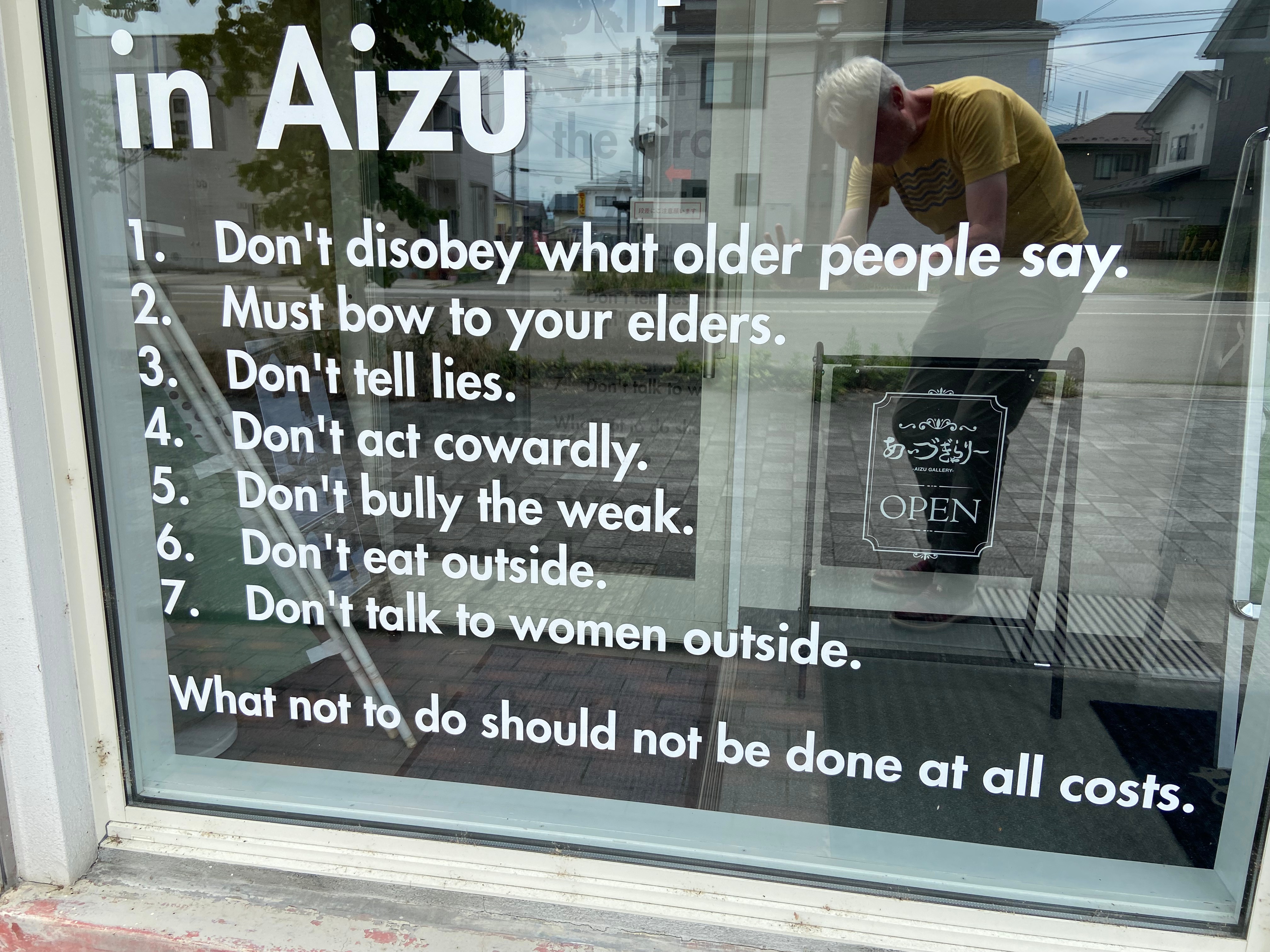
A little further up the road, Aizu-Wakamatsu is offering politeness lessons:

Don’t talk to women outside. Must bow to your elders. The two conflicting lines bother me, because as I photograph the sign, an elderly Japanese woman starts speaking to me in Japanese. Obeying the rules, I just bow my head and walk away.

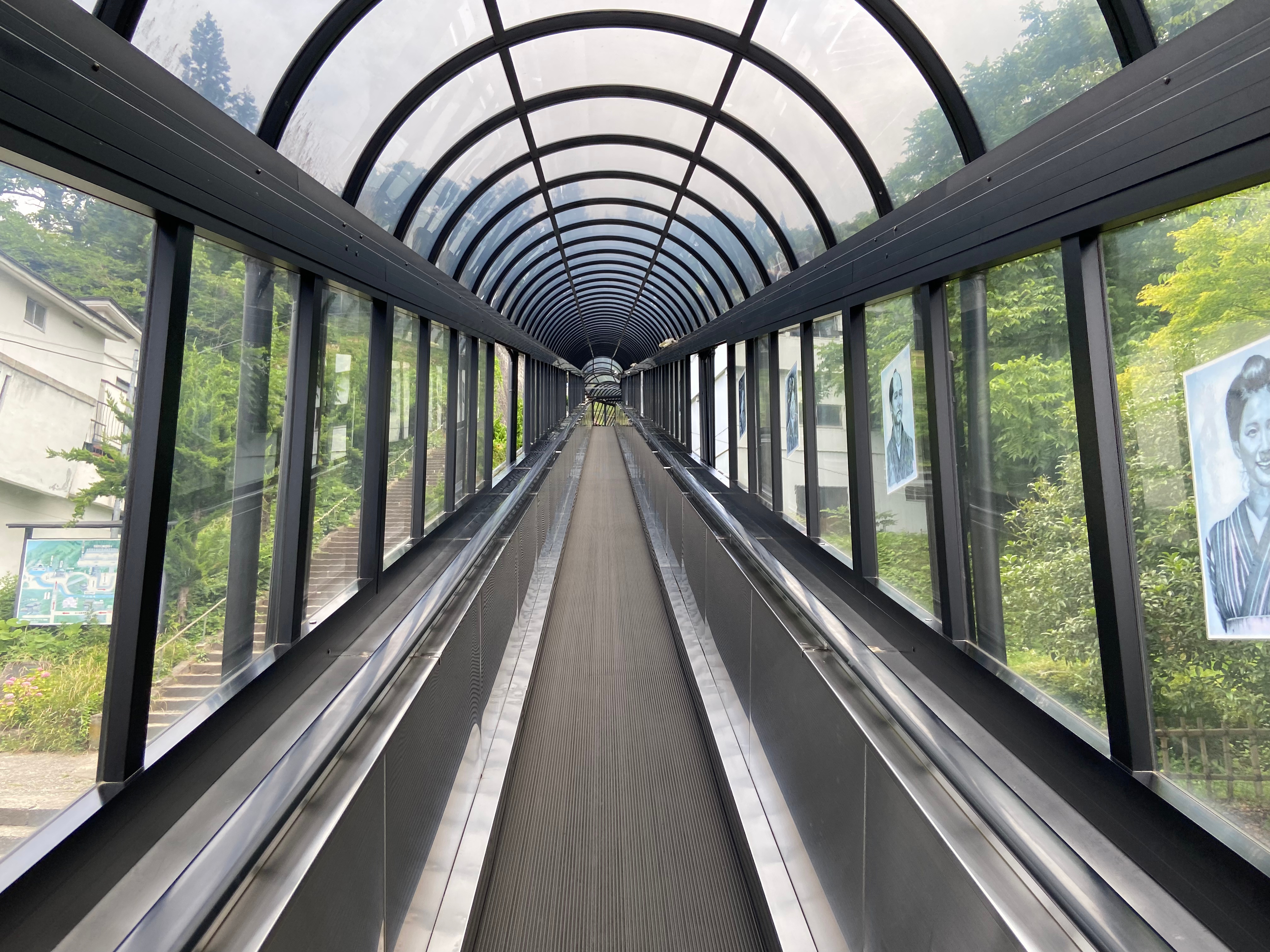
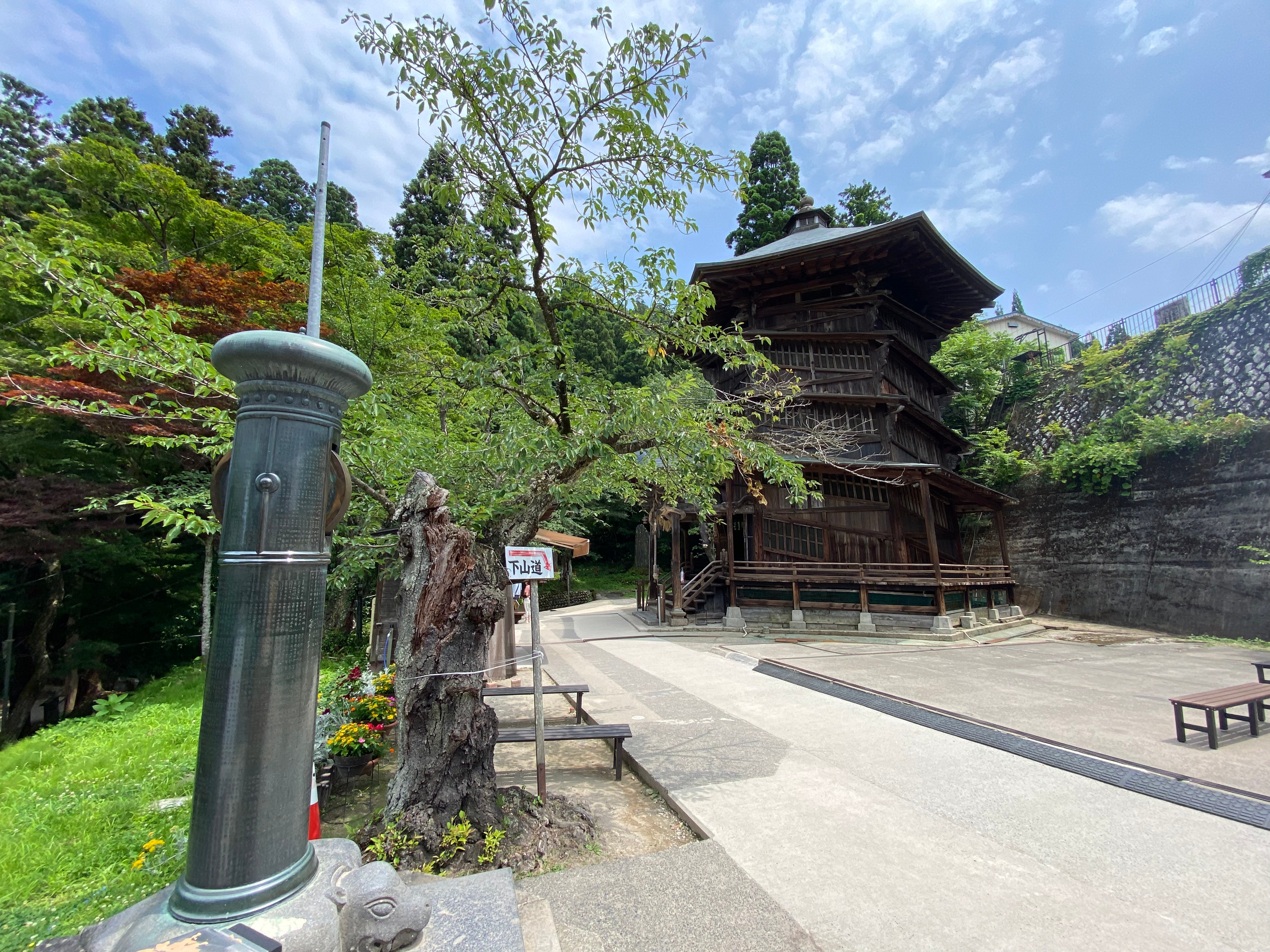
A black Seven Eleven with none of the usual green and red stripes greets me funereally; I’ll soon find out why it’s black. The cascading sunshine and the black stripes make me feel as though my eyes are glitching. Outside the entrance to Sazae-do Temple, there are sweeping steps that twist all the way up, but someone has placed an escalator to one side. You have to pay 250 yen to ride it, but the cramp is threatening to return.

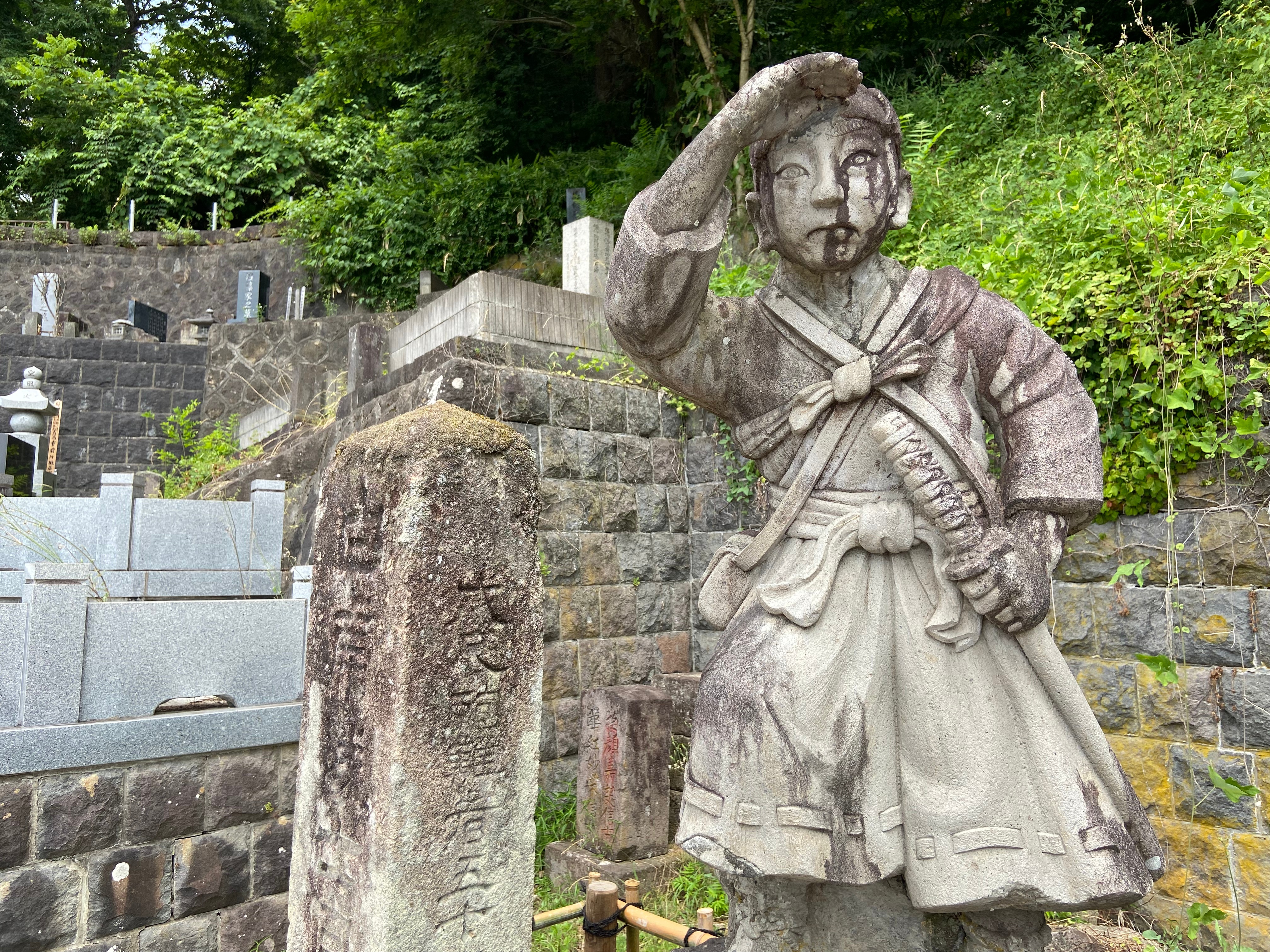
I don’t know what it is about today, but as soon as I step off the escalator and into an open area of monuments, the suddenness of place hits me, catching me off guard. To summarise what happened: on October 30, 1868, during the Battle of Aizu, the Byakkotai, a group of teenage samurai thought they had lost the civil war. They saw smoke in the distance, thought the castle had been sieged, so they killed themselves, not far from where I stand. Learning this, I become swallowed by sadness.

Their bodies were left outside for days, until a man, Isoji Yoshida, decided to take it upon himself to move the bodies of the dead children and bury them. For this, he was arrested. Katamori Matsudaira, the 9th lord of Aizu, wrote a poem in their honour. It goes:

“People will visit, and their tears will fall upon your graves. You will not be forgotten.”

There are monuments here for everyone involved. For the dead children, for all who died. The tomb of sixty-two fourteen- to seventeen-year-old samurai. It’s devastating. I try not to bring myself too much into these stories. But this place, these dead children, their story found its way in. I think what gets me is they don’t mention the word suicide, they explicitly state every time that they killed themselves.

I weep my way around a cemetery before turning toward the temple I originally came up this hill to see. There is a prayer wheel that, when you turn it, creates a mournful sound said to be heard in the underworld, comforting the spirits of the Byakkotai warriors. “Please turn it quietly with your heart.”

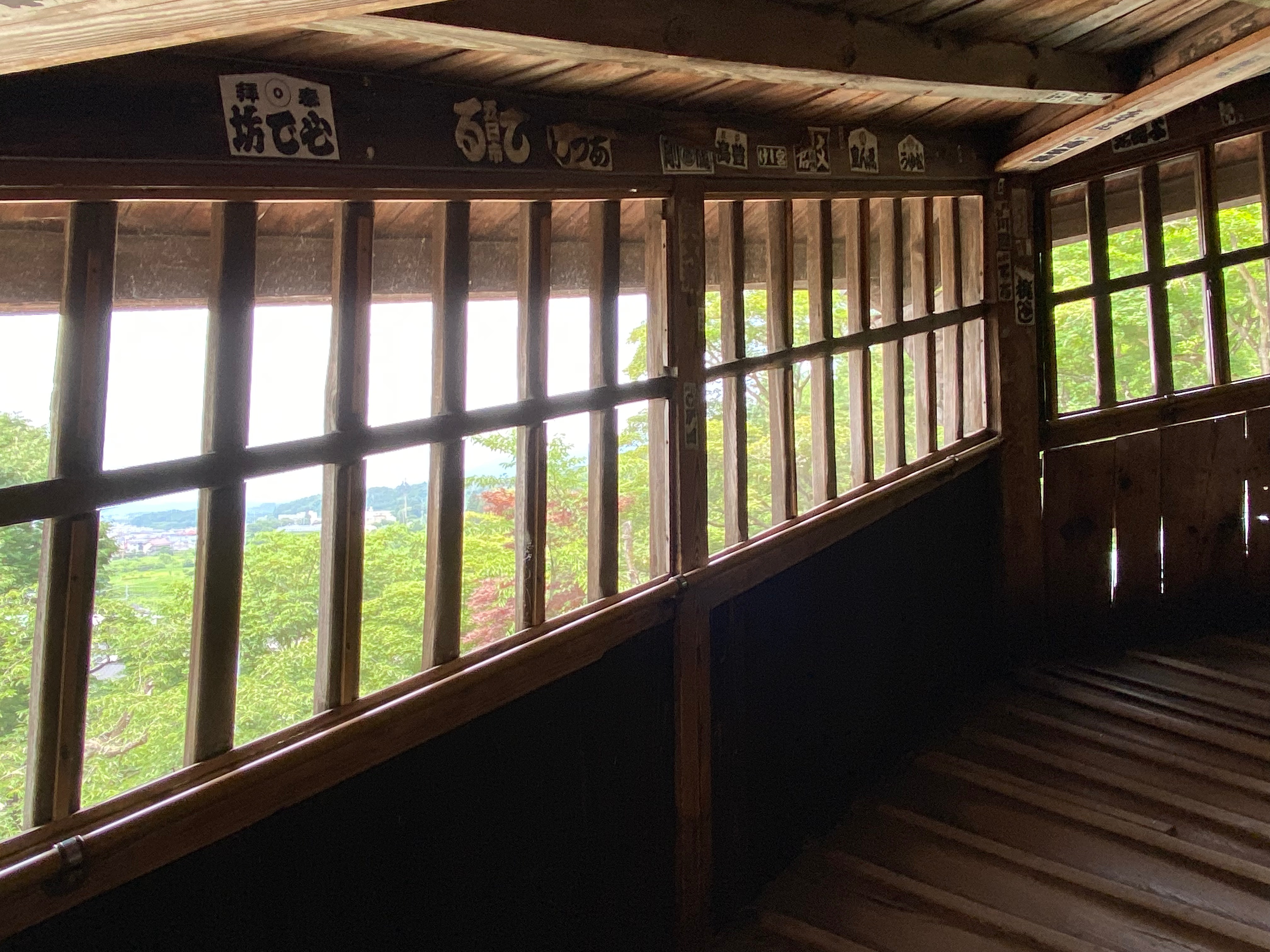
Sazae-do, a wooden Buddhist temple constructed in 1796, is famed for its distinctive spiral staircase that ascends and descends in an intricate, intertwining path. Encircling the ramp are 33 Kannon statues, each believed to grant the same spiritual merit as completing the entire Aizu Pilgrimage route to anyone who passes by them.

At 16.5 metres tall, three storeys, and shaped like a hexagon, you enter from the right side, climb the spiral staircase, and exit back down another way. You never see another soul. This valuable structure is the only wooden building of its kind from the mid-Edo period still standing in the world. It’s also the only known double-helix-shaped wooden structure in existence.

I breathe a heavy sigh before exiting through the gift shop and buying a shirt featuring Akabeko. I think about people, those loved and lost, on days when we exist together, and days when we don’t. At five o’clock, Yuyake Koyake starts playing, the song that tells the children to go back home. It elevates my sadness.

I head to a steak restaurant for dinner. I eat the red cow’s bleeding heart.

Boatman Begins

Somewhere between October 23, 1868 and July 30, 1912, a discovery was made. What had previously been regarded as dangerous wilderness turned out to be one of the most beautiful places on Earth: Geibikei Gorge.

In Japan, they love a good top three. Night views, bridges, and today, gorges. Nobody explicitly states which of the top three is actually the best. Politeness says: make a top three list, and leave it at that. Geibikei Gorge is one of the top three gorges in Japan.

As well as being one of the top three gorges in Japan, Geibikei has also been designated a National Place of Scenic Beauty, a Natural Monument, and one of the 100 Landscapes of Japan. It certainly is one of the landscapes.

Geibikei Gorge (not to be confused with the similarly named Genbikei Gorge) is a 2-kilometre stretch surrounded by limestone cliffs. A river runs through it, so boats are required to fully explore it. The Satetsu River is a liminal, stillwater river. It flows neither up nor down. It just sits there like an ancient swamp. The only thing that interrupts the water is a boatman’s pole, or such nature as a falling leaf, the lapping of summer sweetfish, or the arrival of snakes.

We buy some fish food in a little plastic bag, then sit on the boat, all 44 of us. The boatman introduces himself.
“Hello, I am Sato. Nice to meet you.”
Everyone applauds. Sato-san notices me.
“Hey foreigner, where you from?”
I tell him England. He just laughs and begins rowing, merrily. The snake swims away, frightened by the ripples of the boat. I realise that, after all the years living in Japan, I’d never seen a snake. This is now the second day in a row I’ve seen one, and I actually manage to photograph it.

I sit, gazing out. Sato-san interrupts the serenity.
“Hey foreigner, if you have a hat, glasses, camera …” he pauses for comedic effect, then mimes dropping the items overboard. “Oh no!” he exclaims.
He then repeats the same actions in Japanese before pointing and shouting, “The next rock!” Which is of course Kyomei-Gan (Mirror Rock), reflecting the sparkle of water off its surface like a giant mirror.

There’s a phrase I can’t quite remember. Something about the memory of a fish. I remember seeing fish, so that’s probably it. They’re clever and know we have food, and they gnaw at the side of the boat, almost jumping from the water. They follow us as we disturb the stagnant river.

It’s said the sweetfish leap in early summer, and the carp in autumn. One of the carp didn’t get the memo and shows up the moment I throw my stash of food into the river. The carp makes one giant leap, eats it all, and swims away. The sight of the fish is reminiscent of the Chinese legend, known in Japan as toryumon, in which carp become dragons after successfully leaping up a waterfall.

We carry on along the river. Sato-san is very enthusiastic. He slowly pushes the boat along with the wooden pole, but does so effortlessly. We aren’t rowing. We aren’t sailing. He just pushes the pole into the riverbed, presses ever so slightly, and propels us forward. The boat drifts for a moment, carried by the newly made current, then slows to a stop. He pushes again.

He points out various rocks along the gorge, makes jokes in both Japanese and English, and treats the 44 of us as an audience in his comedy routine. His confidence shines through, lightly heckling us, answering questions, entertaining us. The entertainment is so good that I almost forget about the view.

Further in, the sun splits open the sky directly above and the heat becomes immense. Some ducks appear, looking for food, and the fish still follow. We pass a small shrine in a cave dedicated to Bishamonten, the god of treasure. Everyone stands and throws their coins across the water to the shrine. Thousands of coins surround it. More gleam beneath the surface. It must be pretty easy being the god of treasure when people just hurl money at you.

We pass a man in a watchtower holding a Nikon camera. He shouts for us to say “cheese” before taking our photo. We pass another boat heading in the opposite direction and everyone waves at everyone else, like we’re in this together. I guess we are. So we continue on. It really is indescribably beautiful.

I take a moment to think, to contemplate, to evoke. Then I take some boatographs.

Thirty minutes into the boat ride, it’s time to make land and take a break. We glide over to a pebbled beach. Sato-san says something in Japanese, then turns to me.
“Hey foreigner, twenty minutes walking come back.”
I reply that I understand, in Japanese. The other 43 people laugh.

I see somewhere on the map labelled “Ninja Rock ??” but realise, when I can’t find it, that it’s a clever joke. I pass a rock shaped like a horse’s head, and at the very end of the expanse is Senryutan (Lurking Dragon Depths). A dragon is lying in wait for its chance to rise from being a Geibi carp, apparently. If you manage to throw an undama (pebble) into the hole, you’ll be rewarded with good luck. Apparently.

I walk around for a while before boarding the boat again. Eventually, everyone returns and sits in their original seat. There’s one seat empty that wasn’t on the way down. Someone has gone missing, but Sato-san makes light of it, then pushes the boat out once more. This time, instead of taking photographs, we just take it in. And instead of narrating or pointing at rocks, Sato-san begins to sing.
“Song time,” he says. “Very old time song. I do five or six minutes… maybe.”
He sings for twenty.

His voice transforms into something ancient, filling the gorge, lingering among the cliffs:

As I pole my boat,
on the clear waters of the Satetsu River,
the clouds,
that dull my heavy heart,
are dispelled,
by the Lion’s Snout.

His voice echoes long after the last note fades.

After singing, he looks exhausted, yet continues to carry us through the gorge in reflective silence. Nobody speaks. Even the water has quietened. I’m glad that of the multiple boatmen working today, that we were lucky enough to have Sato-san as our guide. His personality and comedic timing were a highlight, one of the most memorable experiences I’ve had in Japan.

After the boat ride ends, we drift back into the real world. The gift shop waits patiently. A vending machine hums to the tune of overpriced green tea. I leave and take a train back to Morioka, walking the quiet streets until I reach Hoonji Temple. I take off my shoes and enter the silence. Inside the main hall, 499 rakan statues sit frozen in time.

They were hand-carved three centuries ago by nine monks. Each statue is lacquered, lifelike, and unmistakably human. Some laugh. Some grimace. A few seem lost in conversation. It’s almost as though I can hear them talking to one another. One of them is definitely Tom Waits. Others are said to resemble Marco Polo or Genghis Khan. There’s an expression to match everyone.

My eyes, for whatever reason, are drawn to a rakan sitting quietly in the corner, with a face I know well. It’s not me. It’s Sato-san the boatman. He has the same smile and humour behind the eyes. I blink, but he’s still there.


I never did find the one that looked like me. Maybe I’m still being carved.