As Above, So Below

I’ve decided to, as usual, travel out into the middle of nowhere and explore some off-the-beaten-track sights pertaining to death, stored inside a massive Buddha. The news of another 7.9 magnitude earthquake and a subsequent megaquake warning drifts across the speakers at Kanazawa Station. The warning now in place for the coming week just reminds me of how fragile everything is.
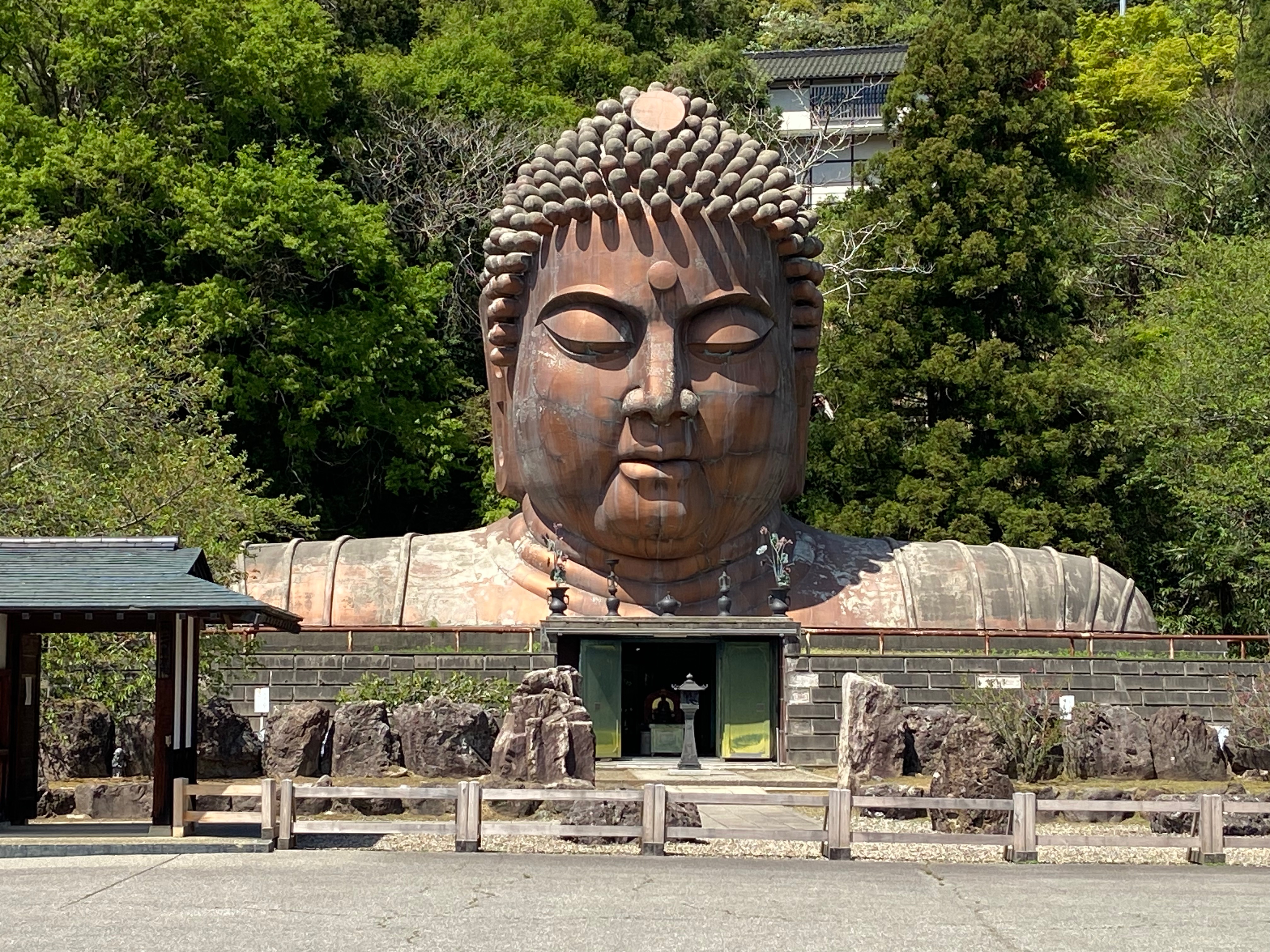
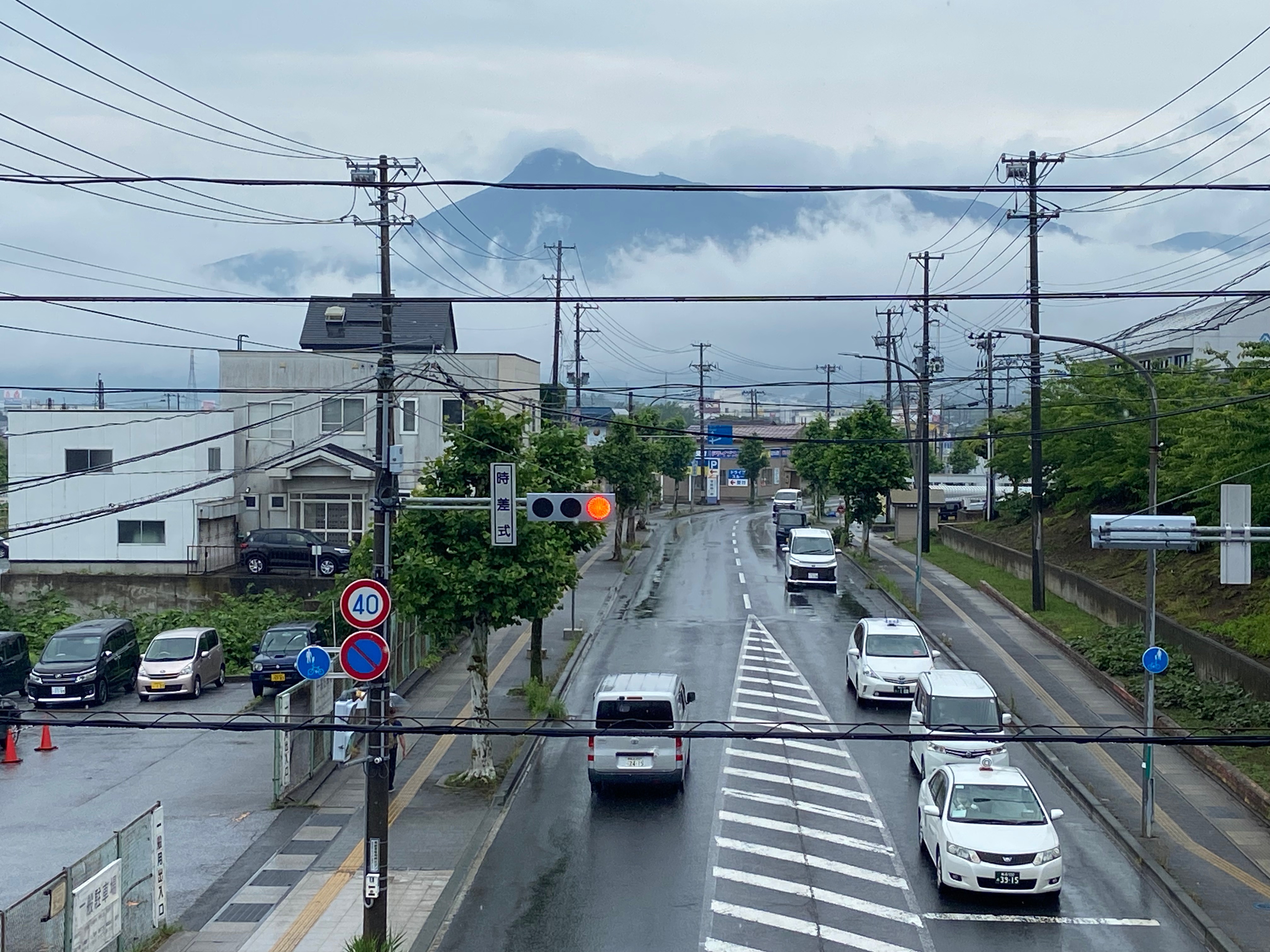
After a lengthy train journey, I leave Komatsu Station on foot. The mid-April sun burns at a scorching 30 degrees. I do understand that we orbit a giant fireball, but in April it shouldn’t be this hot, and my skin actually feels like it’s going to melt. It’s as hot as hell. I’m walking in the direction of Mount Hakusan, its 2702 metre peak hovering above the skyline, the snow from two days ago now gone. It’s a ninety-minute walk to my destination, and every time I pass a tree, I slow, hovering in the shade for the briefest of moments. I eventually arrive at the Buddha, which marks the entrance to the Hanibe Caves.

But first, I need to pay for a ticket. There is nobody at the little booth, so I head inside to the gift shop to find a member of staff. I get the feeling this gift shop also doubles as somebody’s house. I find an old lady watching earthquake footage on the television, disturb her, and after she apologises about fifty times, she walks me out to the booth, takes my money, and hands me a ticket.
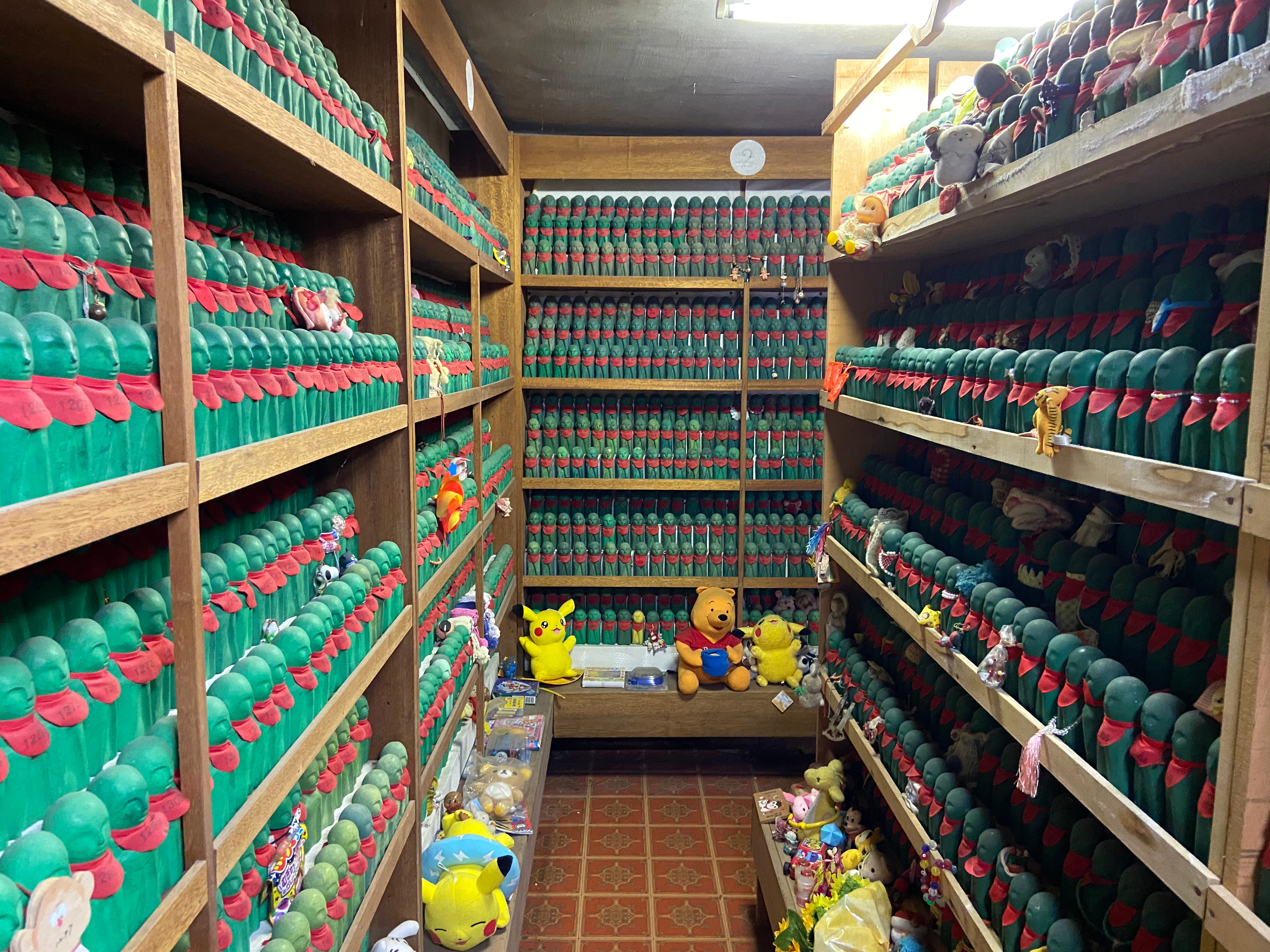
Inside, a shrine for dead children. Thousands of small green statues, each one representing the soul of a deceased child. I suppose it’s meant to offer comfort to a grieving parent, the souls of the children they never had, protected here, preserved, placed on a shelf forever, so they won’t have to stack stones for eternity in the afterlife.

Some of the statues have been recently decorated with ribbons or cloth, others have flowers, stuffed toys, or figurines beside them, and others are long forgotten. The place feels endless. Shelf after shelf, through corridors and doorways, rooms upon rooms. There are even a couple of empty shelves remaining, slowly filling up.
I head back outside and up the mountain path. Mossy stone steps that don’t look to have been stepped on in years. It’s here that I see my first snake, slithering in front of me before disappearing into the trees. I quicken my pace, reach the top of the steps, which turn into a forest, and now every snap of a twig or rustling of leaves sets me on edge.

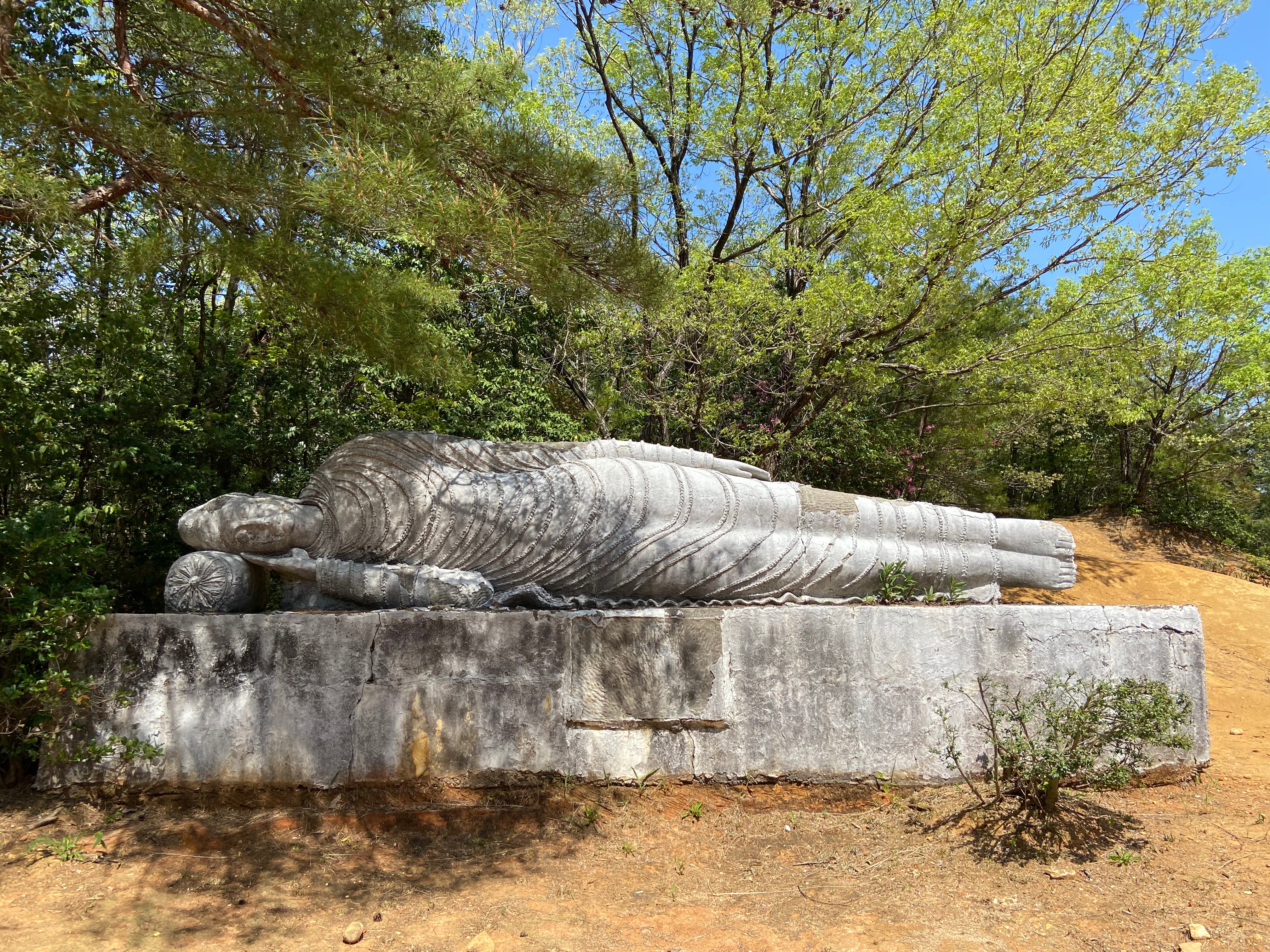
Eventually, the forest opens into a clearing. There is a reclining Buddha statue here. I notice there is no route map or signs in any language, so trying to figure out where to go next is challenging, as everywhere appears to close in on itself.
I head back toward where I encountered the snake and notice some steps heading down in the other direction. I follow them and finally come to an unmarked cave entrance.

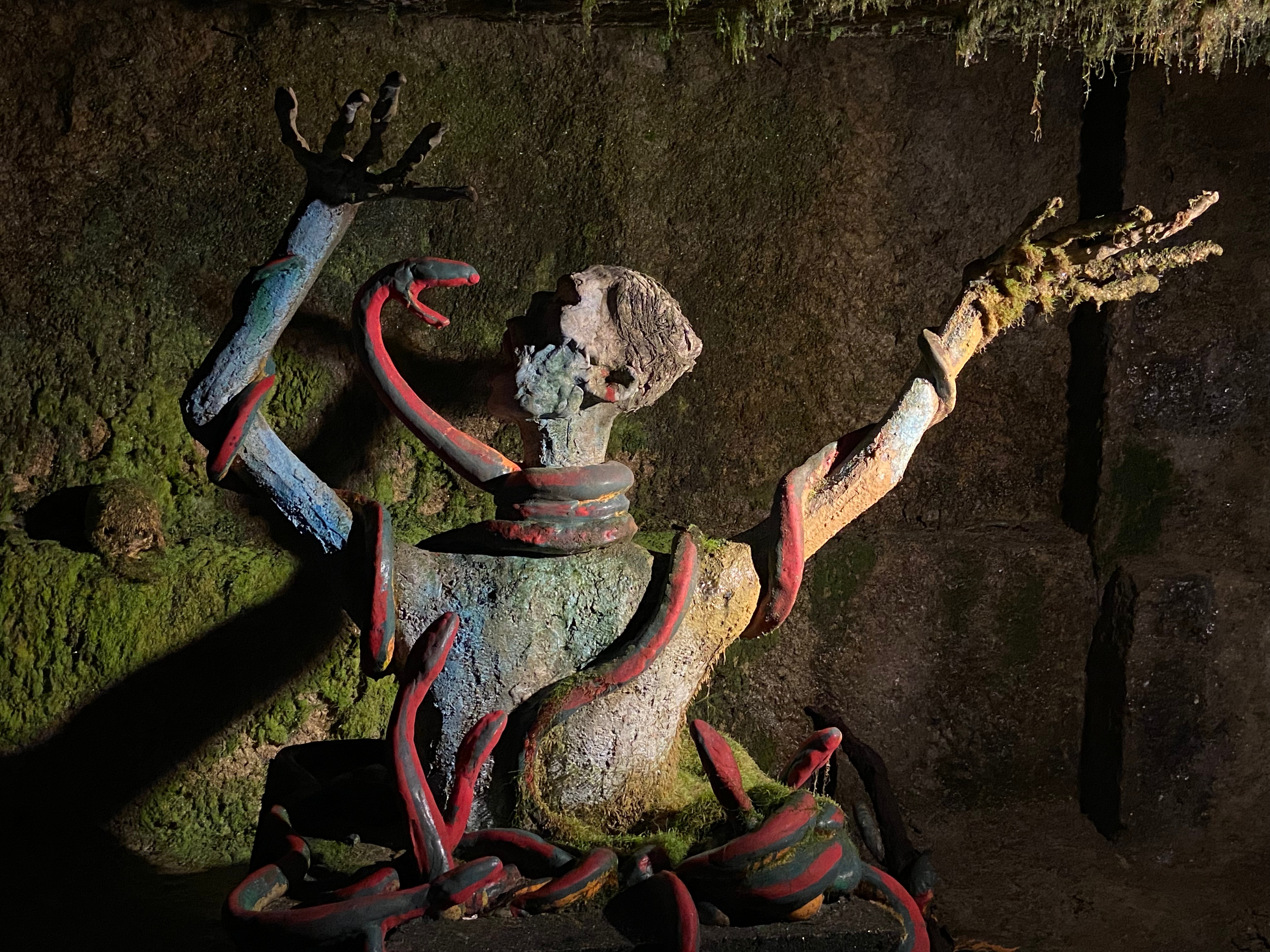
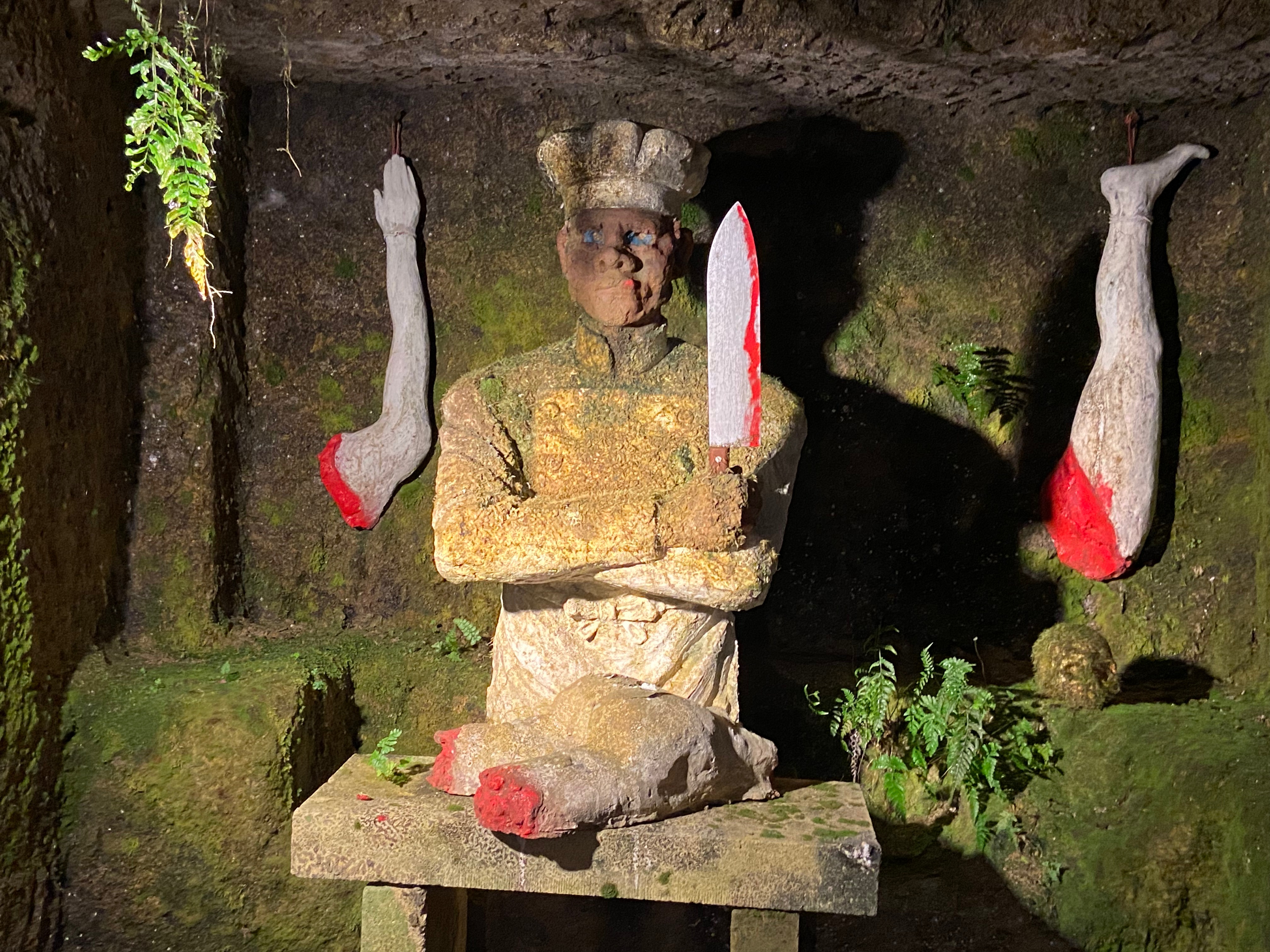
Inside, it is freezing cold. I follow the sound of dripping water through dimly lit corridors, deeper underground. There are hundreds of sculptures in here, most depicting some form of death. If this place were conscious, it would probably describe itself as a theme park for damnation.
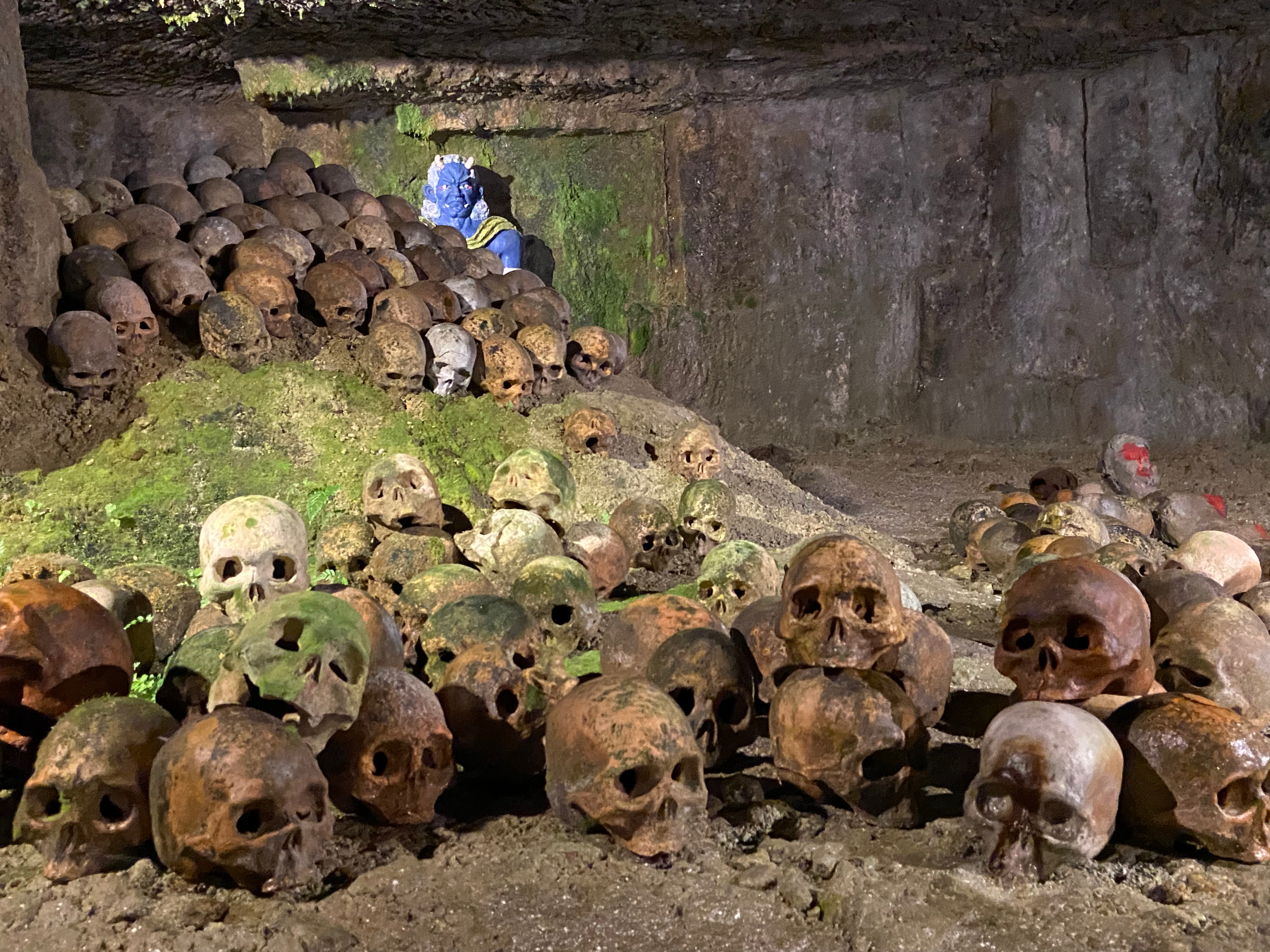
I pass devils and tortured beings, giant spiders, a pile of what look like human skulls. People with menacing grins carry knives, surrounded by dismembered limbs. It’s a juxtaposition of surreality, physical beauty and violent death. A woman is missing an eyeball. A man has come up against the great King Enma Raja and is missing his tongue. A monster is covered in snakes.

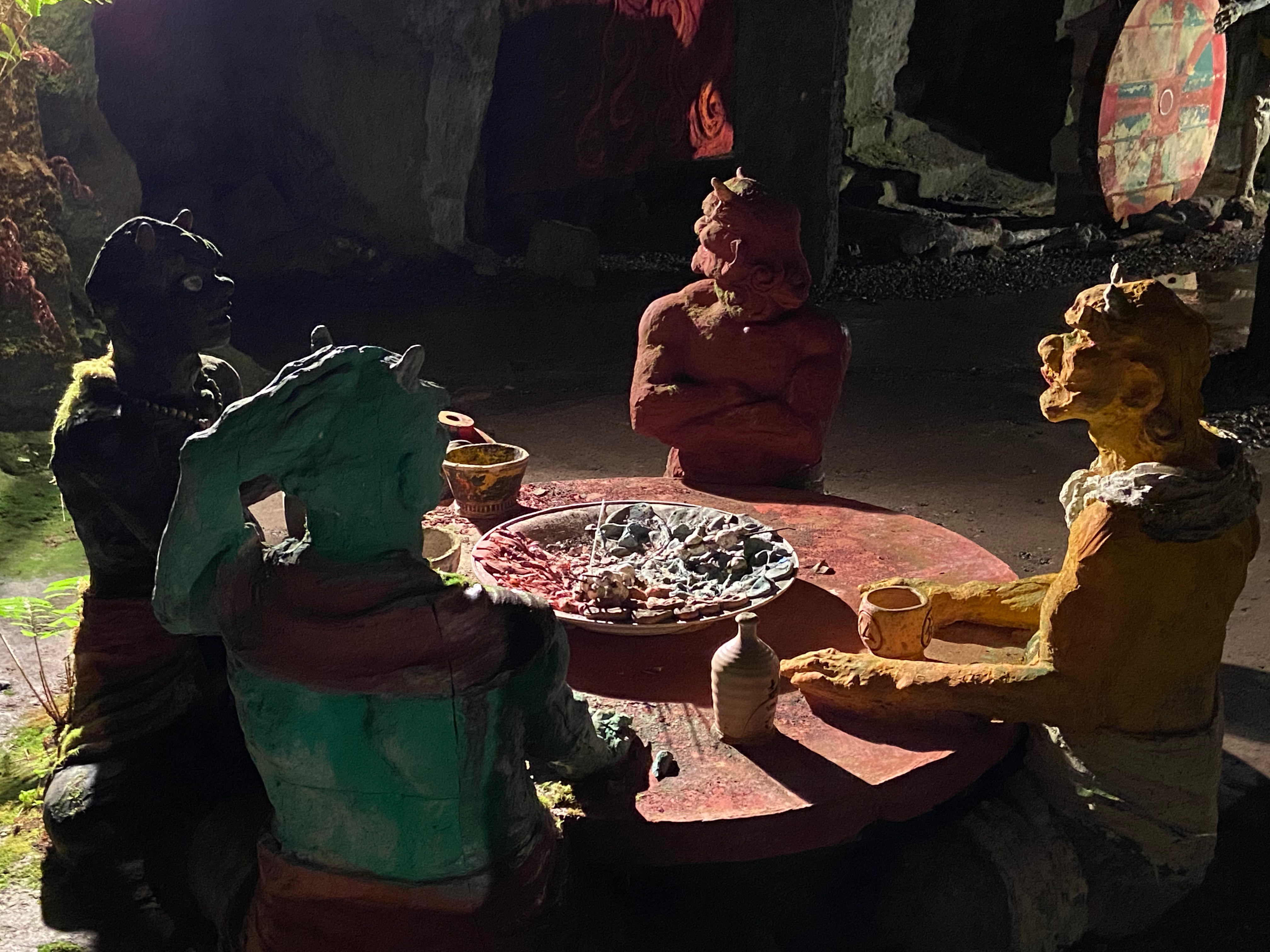
I find four demons sitting around a dinner table. There is a sign: “Doesn’t this seem like fun? The feast has reached its climax, stained with blood. Those who have fallen here at the end of debauchery and madness are filling the stomachs of the demons. Another guest has arrived. Very well, come and sit on this table.”
It is unnerving being here. The cold, the dark, and knowing that I’m not only lost in a forest somewhere in the middle of nowhere, with nobody around, I’m also lost in a maze carved through an underground cave network, which is also trying to be a haunted house.

If I died in here, nobody would likely find me for days. I want to be alive. I want to feel alive. This place does that. Despite the death around every turn, threading through the darkness of the tunnels, I do enjoy places like this. Not just the unknown, either. The depictions of what the Buddhist interpretation of the Gates of Hell looks like, and the overly enthusiastic marketing of calling it that. As I try to figure out where I am, occasional noises echo around. A click. Something tapping in the distance. Someone else is here. Something else.
I leave the same way I came in, or so I thought. I exit into a small town. I’m lost and completely disoriented. Somehow, I have left the Hanibe Caves, but it doesn’t feel like I found the way out.
Strange Tales of the Crescent Moon

The morning sky gave me a look as I stepped out onto the platform at Yabuzuka Station. It’s a small platform with just two tracks and no one around to ask for directions. I’m certain I’ve arrived somewhere between Gunma Prefecture and the Edo period.

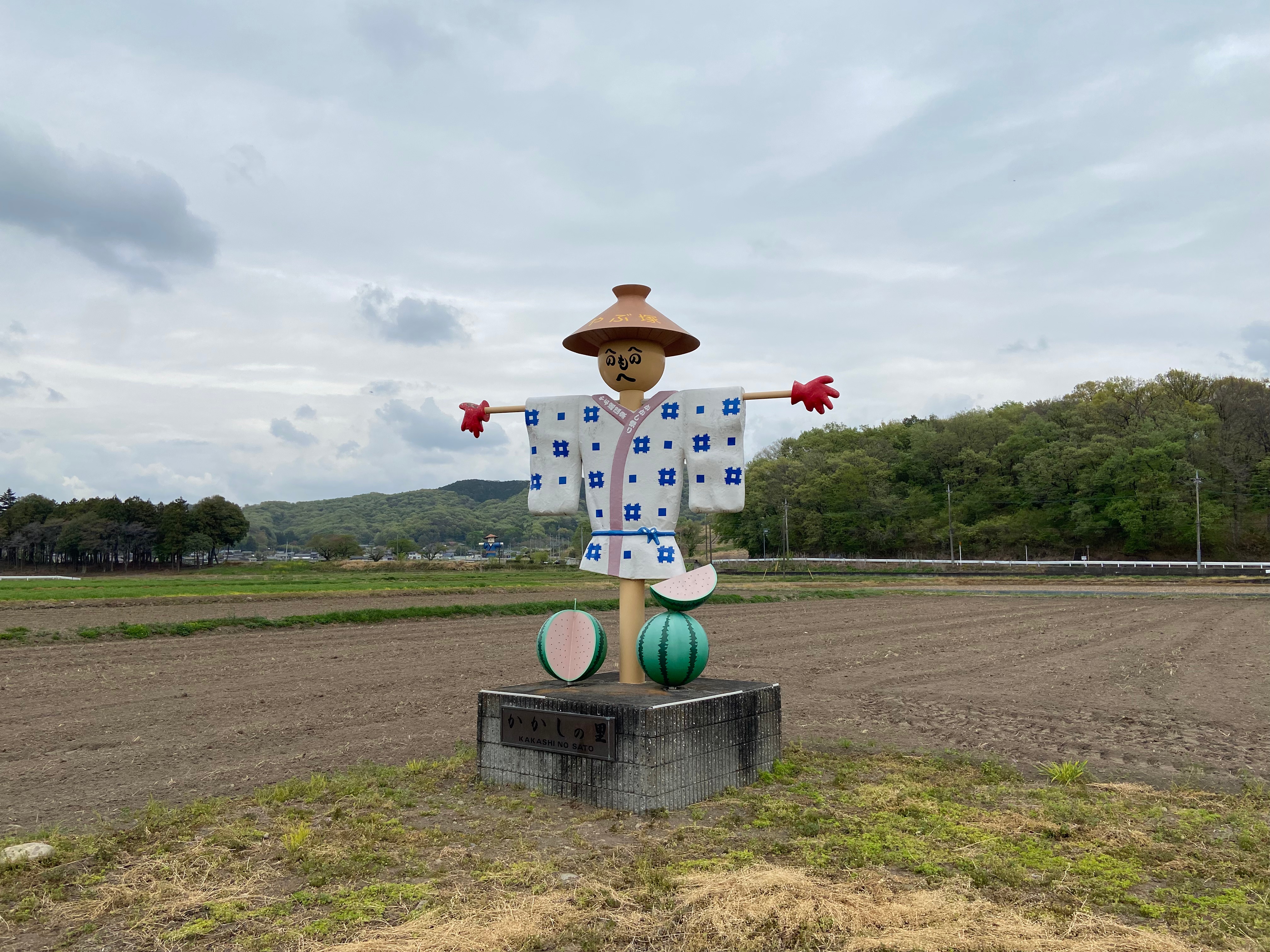
The station exhales me into a residential area of a few low houses, a solitary vending machine, and fields stretching across every distance. Staked into each field, a Japanese scarecrow stands alone.

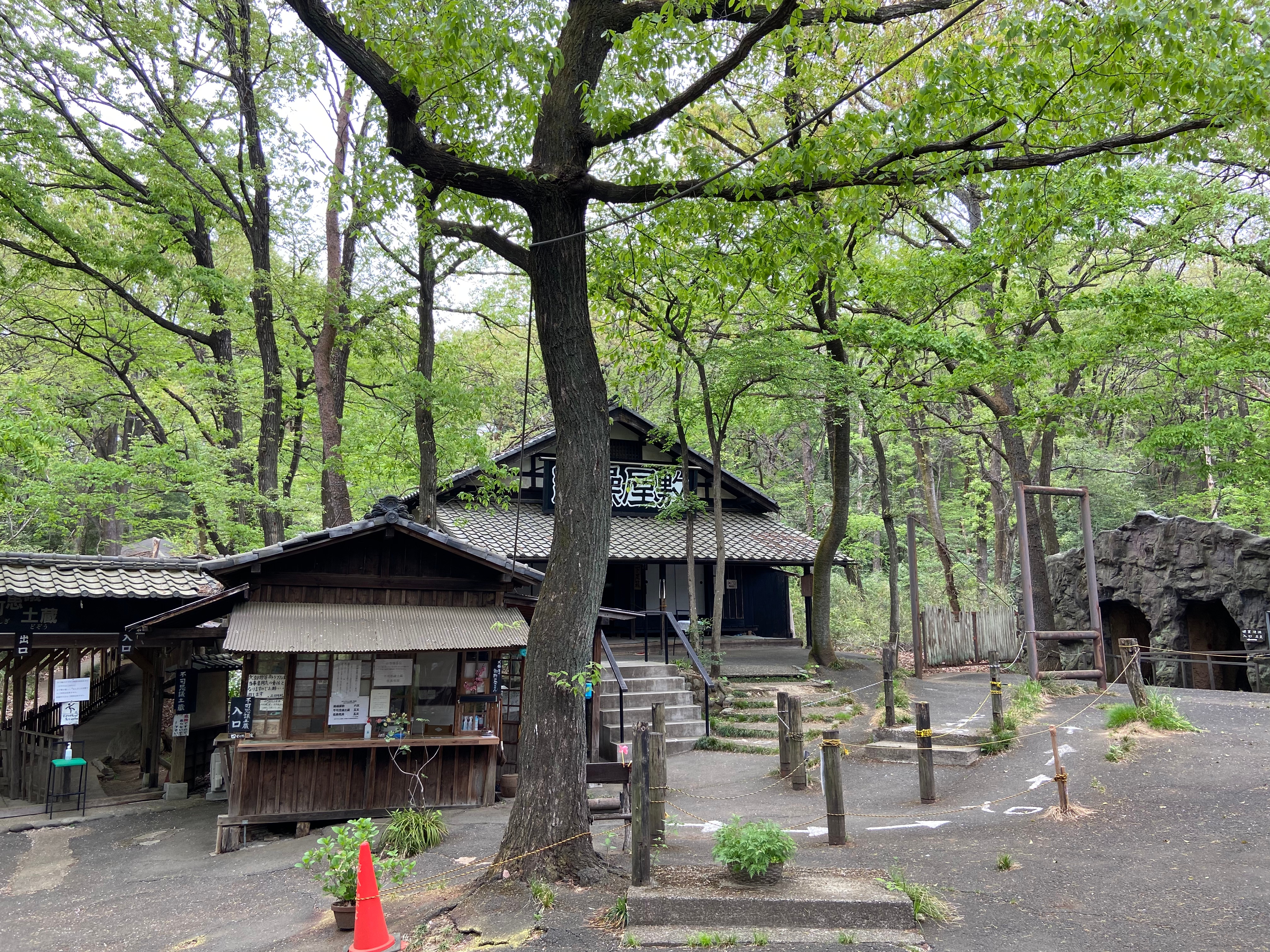
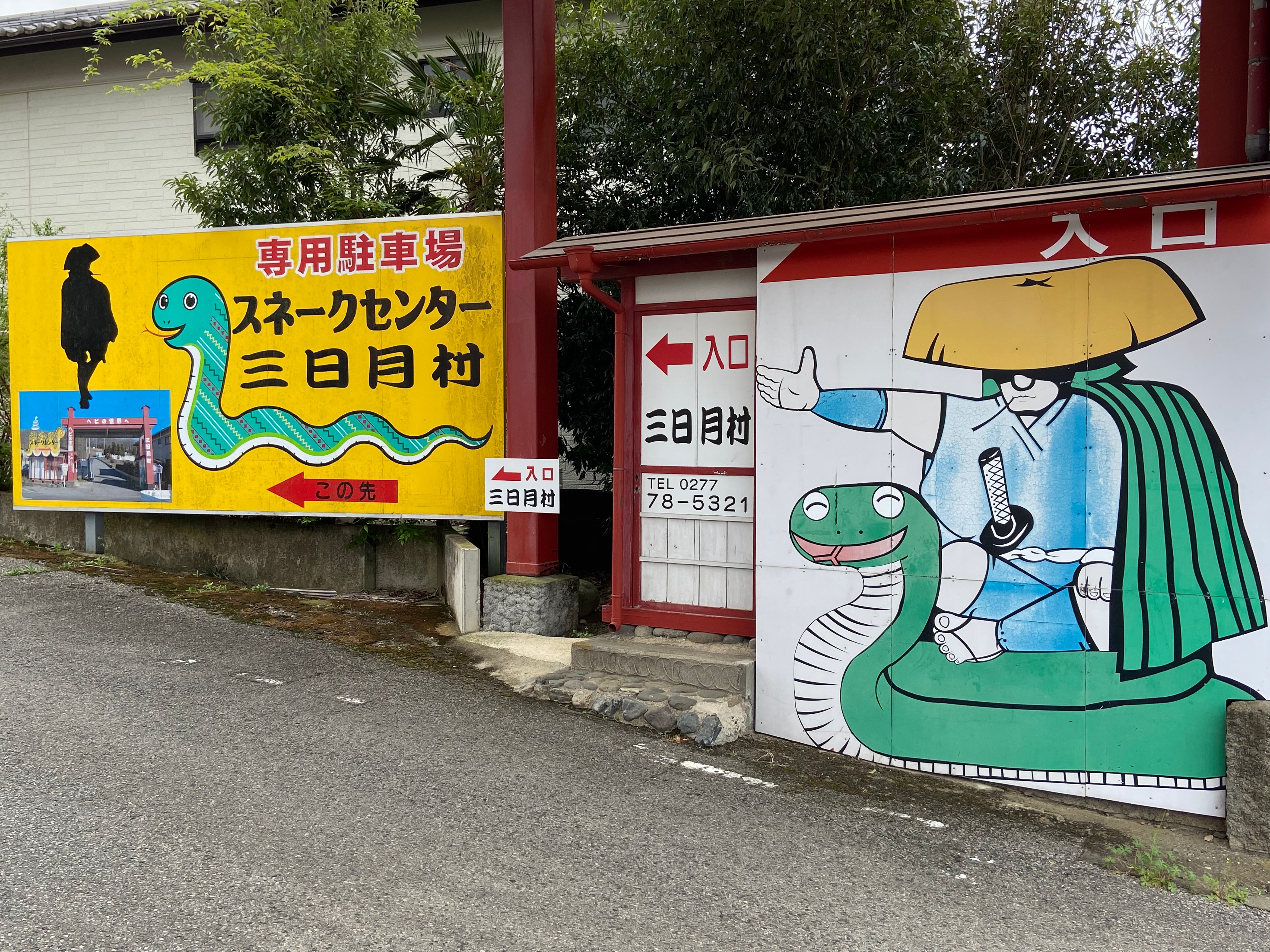
I walk further. My destination today is below the clouds, along a humid forest mountain path. The cicadas hum with an almost animatronic precision, their vitality echoing across the fields and back from the mountains. As I wander, I see an entrance marked by a billboard that features a samurai riding a snake.

Mikazukimura, which roughly translates to Crescent Moon Village, is a historical theme park that faithfully reproduces a village from Edo times (1603–1868). It aims to capture the nostalgia of the era, but I wonder, is it ever really nostalgia if you were never there? I don’t ever recall the Tokugawa shogunate popping round for a cup of tea.

Anyway, at the entrance I buy a ticket. I also have to exchange some Japanese yen for replica Edo coins. These coins are used to buy fish-shaped waffles, crafts, or souvenirs in the park. The unusual time dislocation here means I’m literally buying the past with the present using fake plastic coins. I don’t mind it though. It adds another dimension to everything.

Inside, thatched tea houses make up the backdrop, layered with tempera paint shops, tempura food stalls, temple buildings, and three main attractions. It’s like looking into a painting of a time long gone, just without any people in it. In fact, the dirt streets of the village are so quiet that it almost feels like the sort of place where a ghost story might have begun… or ended.

The first attraction is Kaiigendo, a mysterious trick-filled cave activity. The sign says, “This attraction is caving,” but I certainly hope it isn’t. To enter, I have to buy a ticket with my special coins. The lady here stamps my attraction card, before rather quickly explaining, in Japanese, what feels like a lot of safety instructions I probably should understand, much to my own confusion.

She then hands me a torch, says, “No ghost. No scary,” and wanders off.

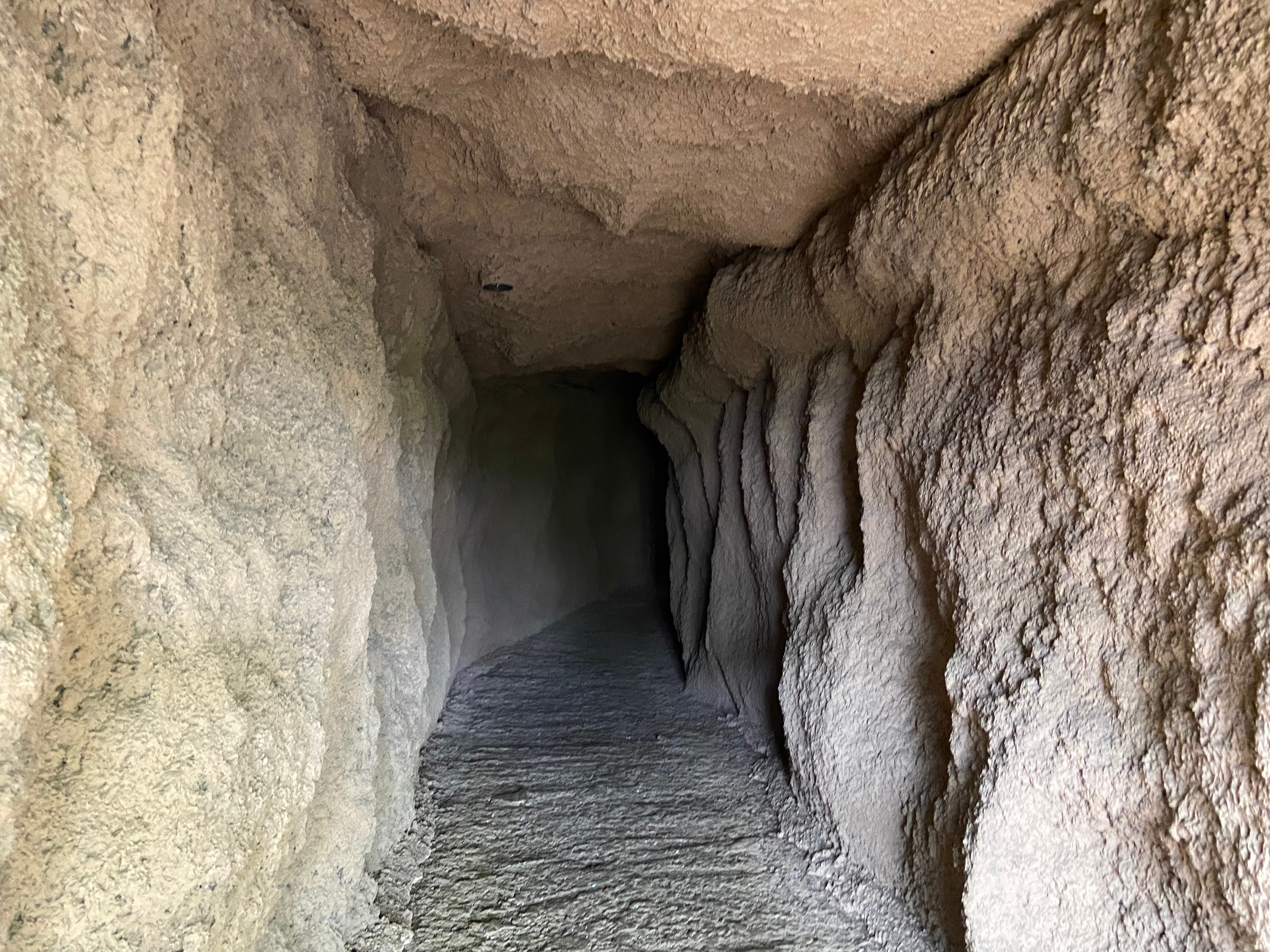
The cave describes itself as an underground tunnel filled with traps and hidden entrances. There are sliding doors, and there are secret doors. There are doors that creak, and doors that open. There aren’t really any instructions, so I turn on my torch and wander through the darkness.

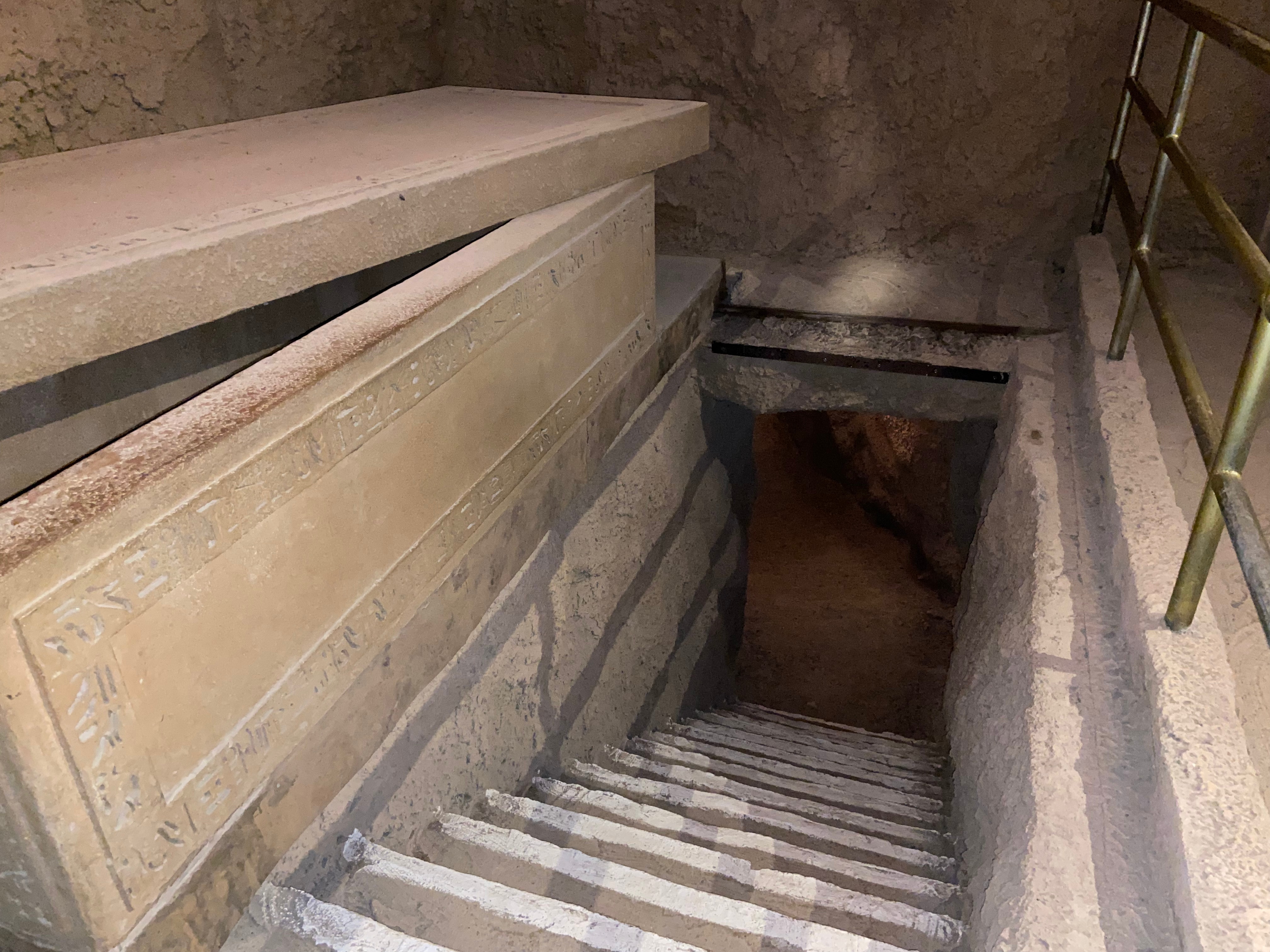
It’s actually pretty scary. I get a bit lost in the maze-like caverns until I reach what I think is a dead end. Eventually I discover a secret tunnel that I have to activate simply by standing next to it. A huge stone tablet mysteriously shifts to the side, revealing a staircase leading deeper underground.

As I pass the stairs, the tablet slides back across, trapping me inside. I follow the rooms, secret doors, narrow passageways, across a bridge, to a room with a waterfall, to another with booming music, mirrors, and red lighting. It takes me far too many attempts to figure out how to escape this claustrophobic panic attack. Eventually I find the exit behind a bookcase that only slides aside if I clap my hands; again not explained at all.

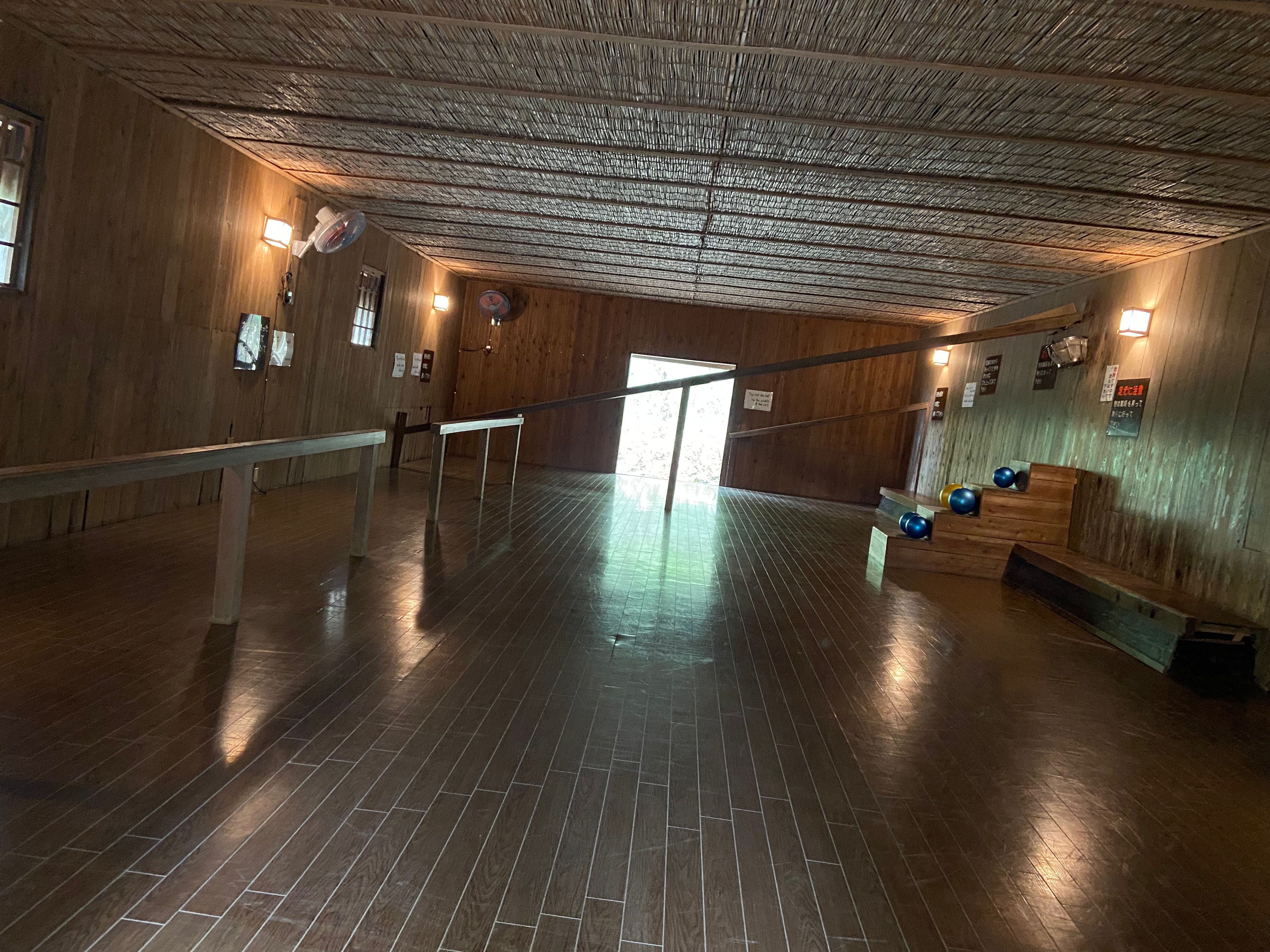
My next attraction is Fukashigidozo, a sloping house. A sign lying on the ground next to the sloping house says, “Don’t fall over,” having itself ignored its only instruction. The purpose of the house is to challenge my sense of balance. The building has been constructed at an angle, on a slope, and confuses me in a way that makes me feel dizzy, like I’m falling over, even though I am standing perfectly still.

I want to sit down. I want to not be standing up beside the house that feels like it’s falling down. It messes with my brain, despite understanding exactly what’s happening. The house is so profound that I am at complete unease as I wander back toward the main village.

Here, the staff stay fully in character, even when no one is watching. I stay fully myself, which requires significantly less effort, yet still somehow wears me out. In the end, Mikazukimura doesn’t quite manage to hold the illusion together, and instead echoes something slightly decayed, enveloped in a careful silence. I head next door to the Japan Snake Centre.

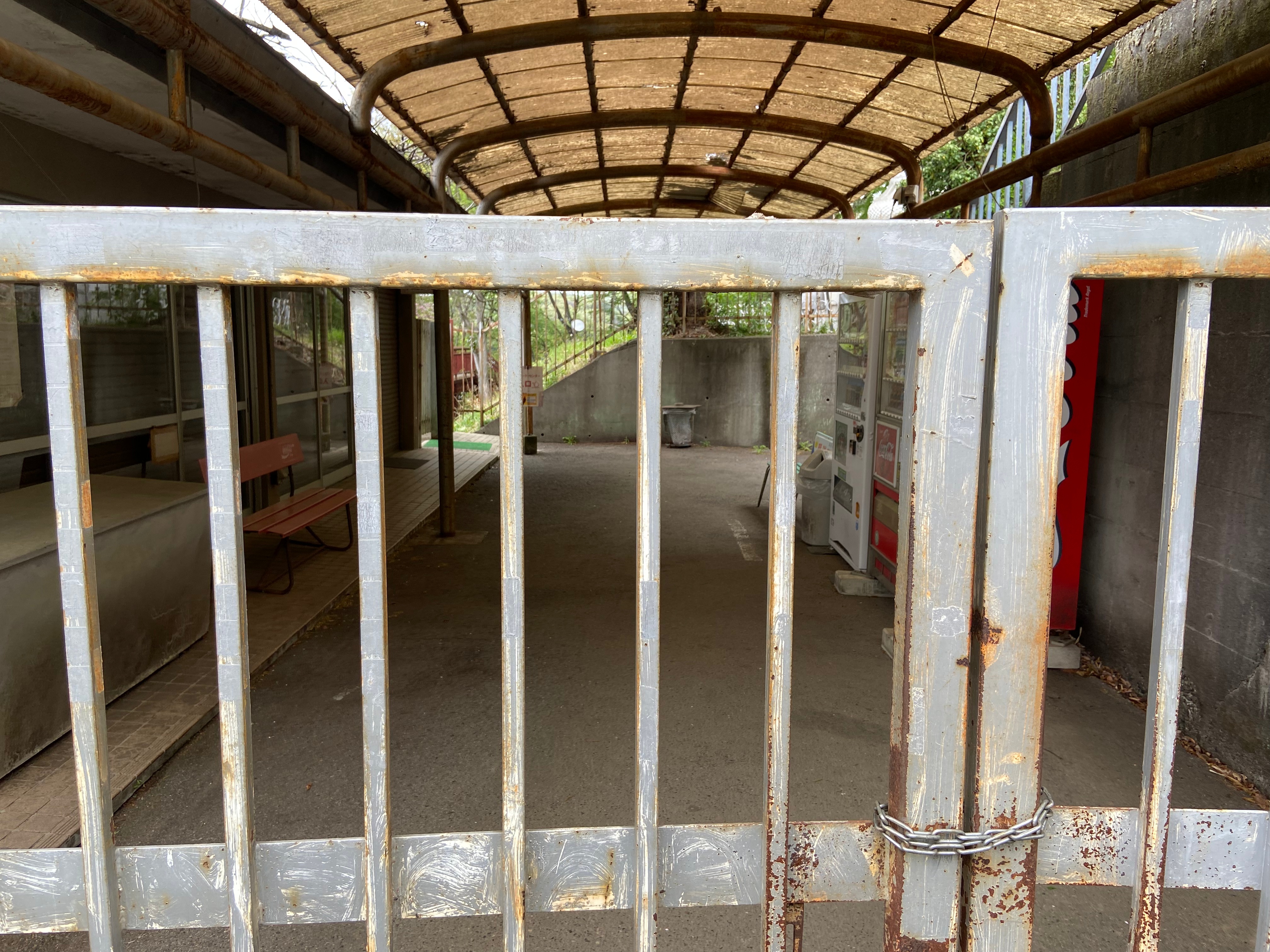
The door here is chained shut despite a sign saying, “Open.” I was hoping to look at some creatures that predated the Edo period by millions of years, but it looks like I’ve outlived them. The Snake Centre is permanently closed. I head back across the fields of crops, scaring away a few crows on my way, and return to Yabuzuka Station, but with no train for two hours, I decide to walk to Isesaki.

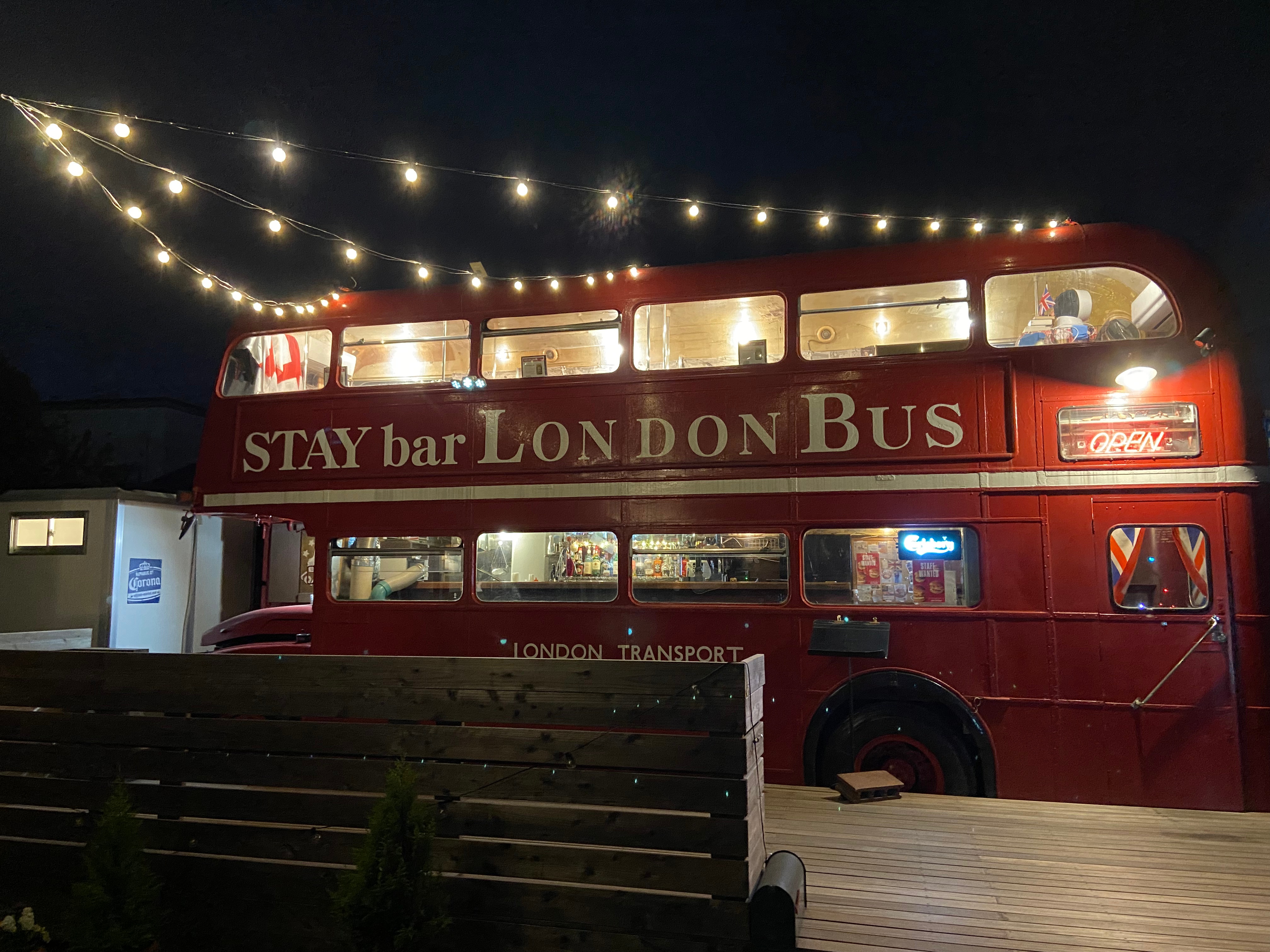
On the walk, I spend some time on my phone researching azimuths and lunar illumination percentages. I walk on, mostly in silence. The occasional passing car. The odd cawing crow. There’s no footpath most of the way; and as the sky darkens I don’t particularly enjoy being constrained to walking on unlit country roads. Somewhere along the way, my eyes catch something that looks so out of place that I stop to investigate. A big red London bus parked on a side street.

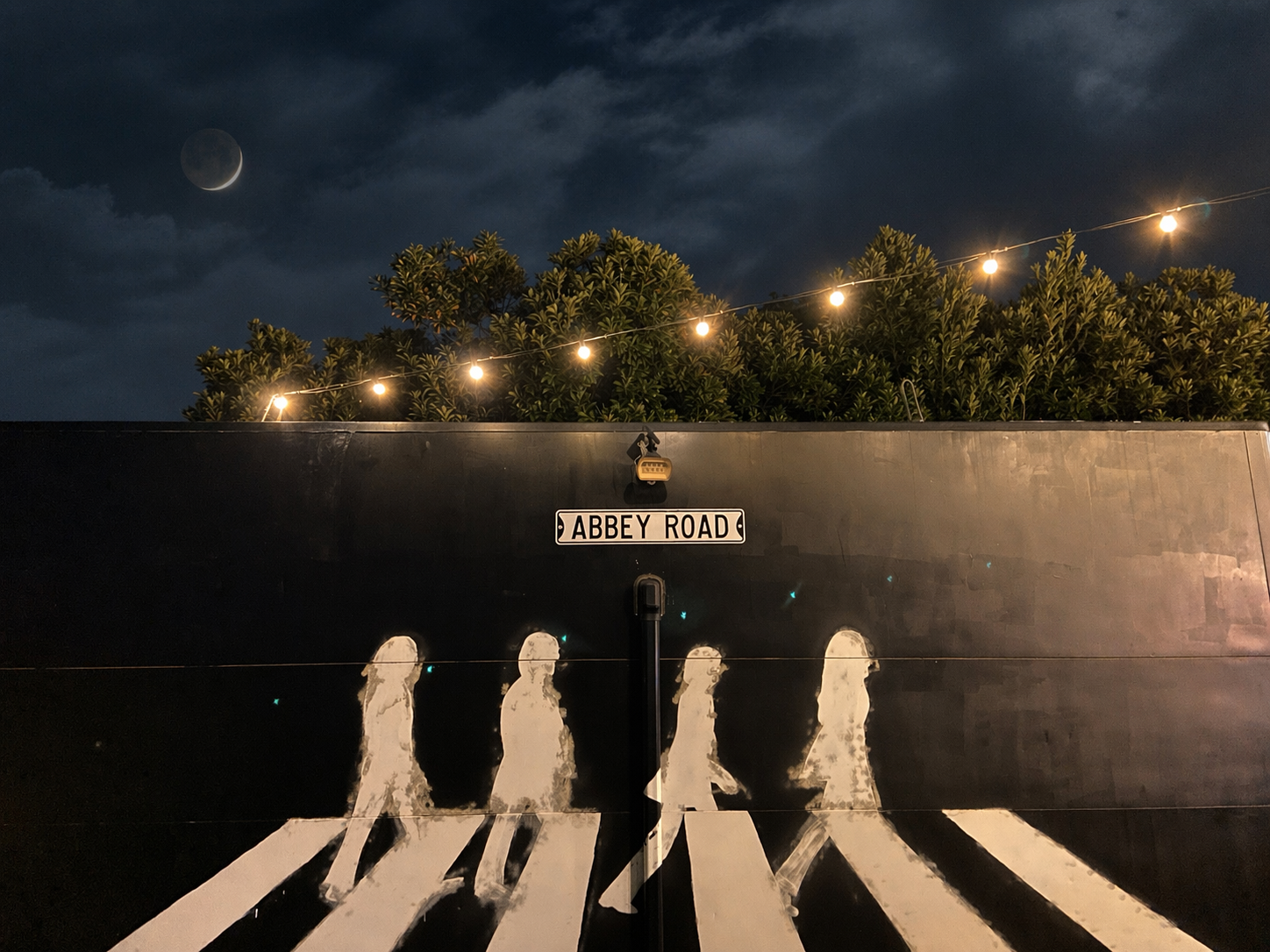
Inside, a bar. I order a drink and chat with the owner. He tells me that the couple that used to run the bar are no longer here, and that he took over. They used to really like London which is how this place came about. The new owner here can barely speak English, which is a shame, because I wanted to ask him about the ghost children crossing Abbey Road.

Our conversation breaks apart. Neither of us really has anything to say. Eventually he goes out into the back room to cook himself some food. So I sit, sipping on my Suntory Highball in silence. Out here, there’s no one to sit beside.

I finish my drink and leave. The red London bus glows under the Gunma sky. Above, a waning crescent moon hangs like a chipped Edo coin, its dark edge faintly visible in earthshine.

The Men Who Scare At Boats

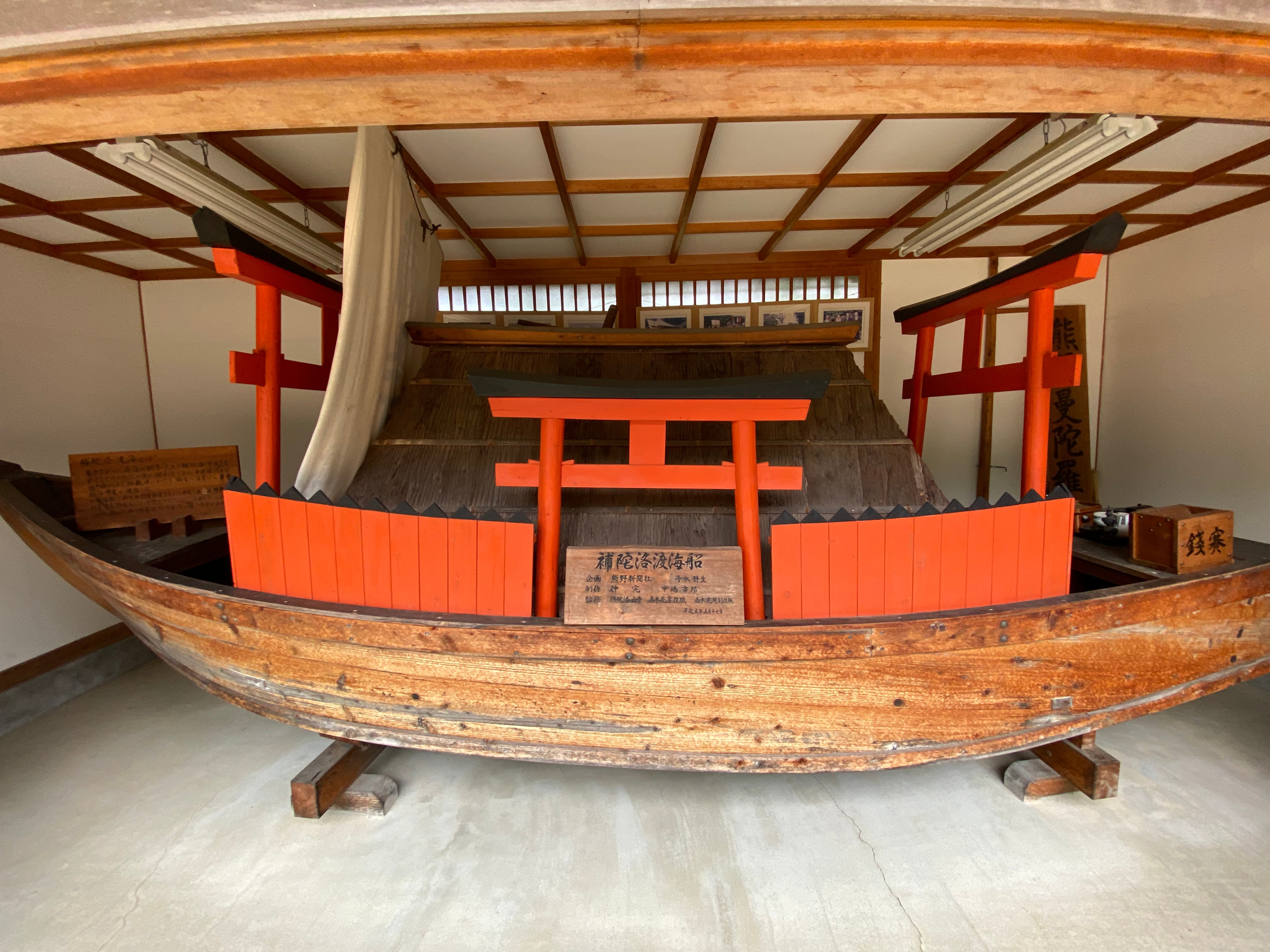
There’s a massive clock outside Kii-Katsuura Station. Each tick sounds like a nail being hammered into a coffin. About a twenty-minute walk from the station, between the mountains and sea of Wakayama Prefecture sits Fudarakusan-ji, a small, unassuming Buddhist temple with a wooden boat outside.

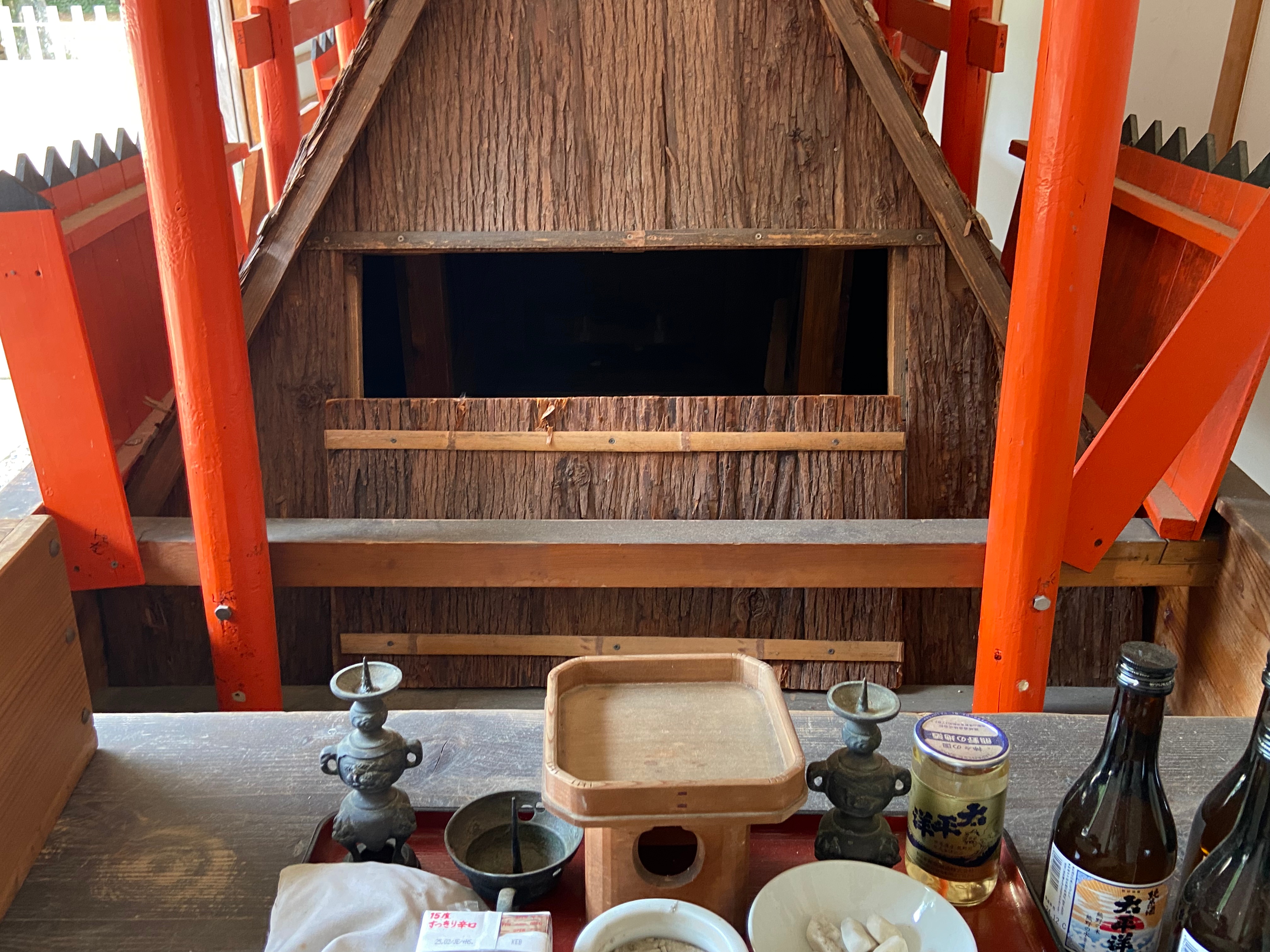
The temple was built to face the Pacific Ocean because that is the perfect location for casting boats out to sea. The only problem with these boats was the reason they were cast out; the priests inside them were trying to reach Fudaraku, the Pure Land.

The boats were designed with a sealed cabin, no windows or doors; a claustrophobics nightmare. Ever had a dream about being buried alive? The priests here lived it. They’d climb inside, and the boats would be nailed shut from the outside. The orange wood and torii gates surrounding all four sides of the boat are a nice touch.

Water, a small supply of food, and a fuel lamp were placed inside before the priest’s departure. The lamp was there so the priest could keep reciting sutras and appeals to Kannon until they found the Pure Land, until they reached the end of their journey, or their life.

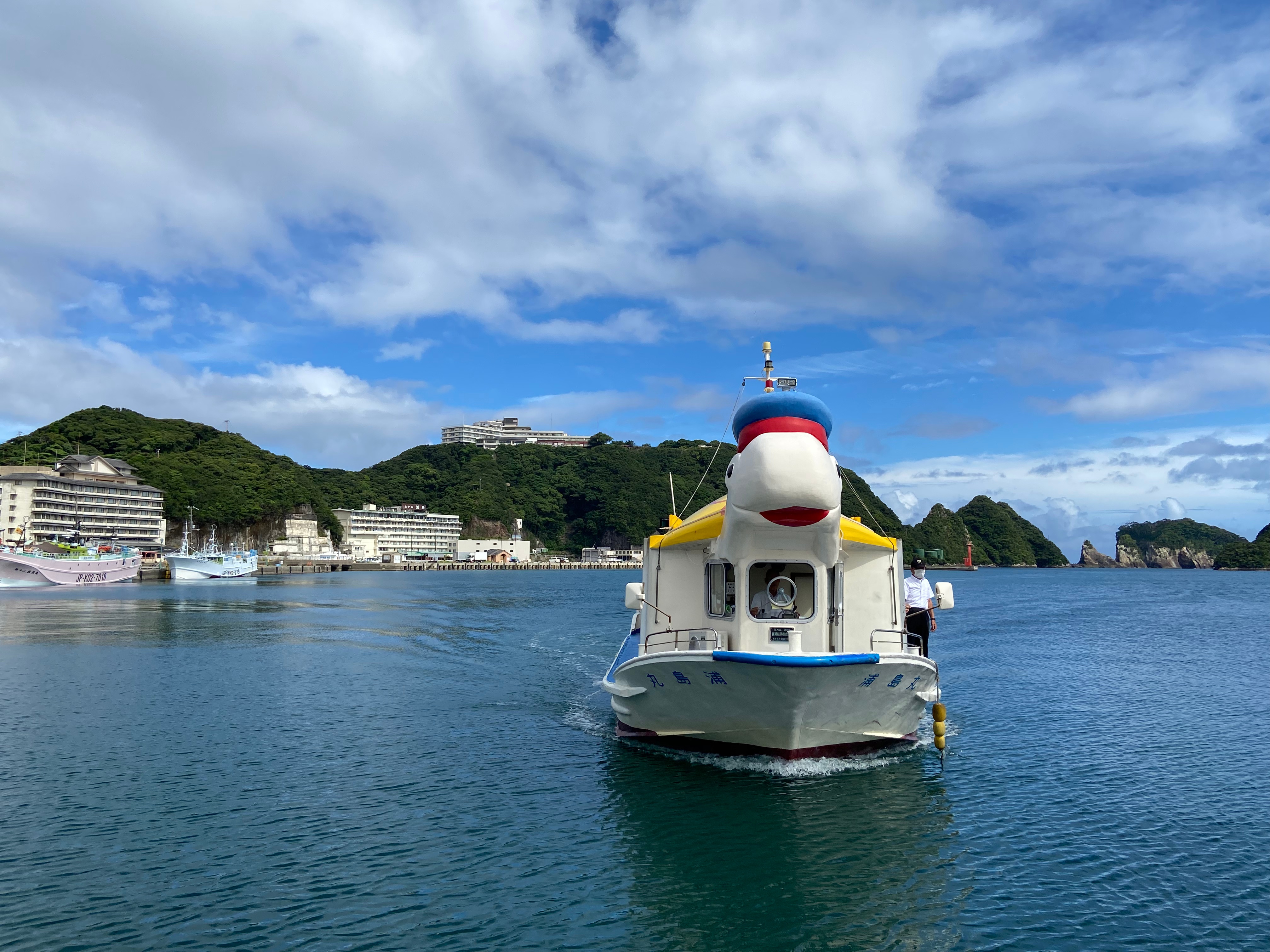
Some of the boats washed up in Kii-Katsuura Bay. A few priests escaped. Most died of starvation, drowning, or dehydration. To stay on theme, I book a night in Urashima. To get there, I have to board a boat myself. This one features no death, just a turtle mascot. The four huge buildings making up the backdrop are all part of my hotel: one on top of a mountain with an observation platform, one at the side of the mountain connected through a network of tunnels, one at the base of the mountain by the dock, and one that isn’t shown on any maps but is there, accessed through the labyrinth.

Checking into my accommodation I’m provided a map. The hotel is so large it features a multitude of interconnected buildings attached through tunnels and cave systems carved into a mountain. The place describes itself as a resort and spa. It has everything: five onsen baths, a games centre, karaoke rooms, a Lawson Stores, shopping streets, massage parlours, restaurants for eating, ballrooms for dancing, ball rooms for ball games, conference rooms, well you get the idea.

There’s one area where I have to take multiple escalators rising the length of 154 metres that take about five minutes. There’s rest areas between each escalator with sofas and tables, just in case the standing becomes too much. I exit onto the 32nd floor and admire the view.

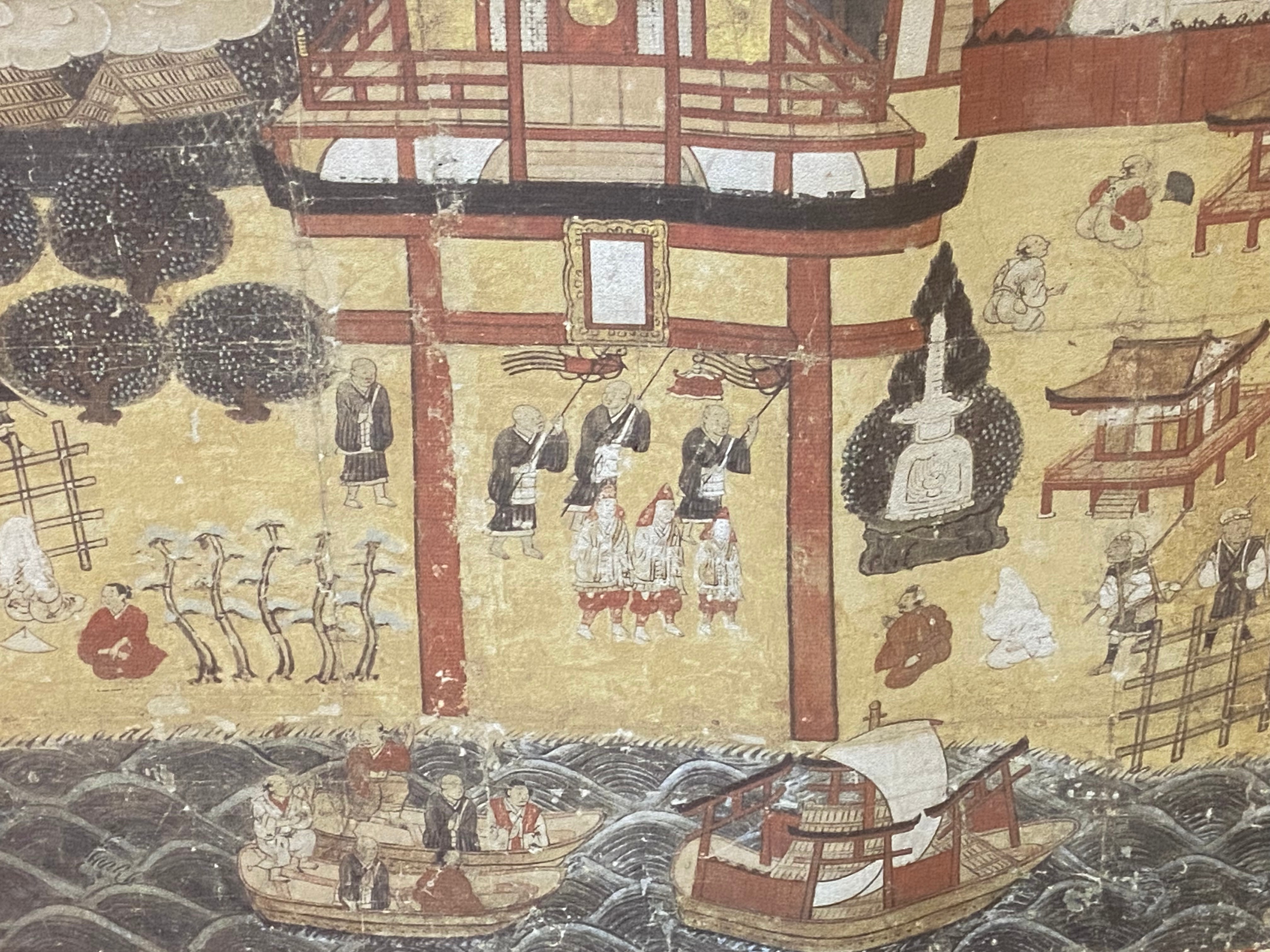
On one of the random floors, I find a replica of an original painted tapestry held in the Treasure Hall at Kumano-Nachi Taisha Grand Shrine. I’ll visit there tomorrow, weather permitting. The full tapestry features the Nachi Pilgrimage Mandala, which displays all the details of this area, from the top of the waterfalls down to Fudarakusan-ji. Here, at the bottom, one of the boats is being cast away into the Pacific Ocean.

Walking through the hotel, I feel as though I’m in some cult dystopian movie. Everyone is walking around in matching yukata. Some of the tourists are not Japanese and wear their yukata crossed the wrong way, for funerals. Everyone goes for breakfast at the same time, for dinner at the same time.

The hotel feels almost haunted, some entire areas are abandoned. It would be the perfect setting for a horror movie. It makes me feel like a rat in a maze or a character in Severance as I navigate the hotel’s endless, echoing corridors.

Having just about explored every length of the hotel, I decide to end the day by soaking in the healing power of a hot spring bath. Of the five to choose from, I opt for the one carved into a cave that looks out onto the Pacific Ocean.

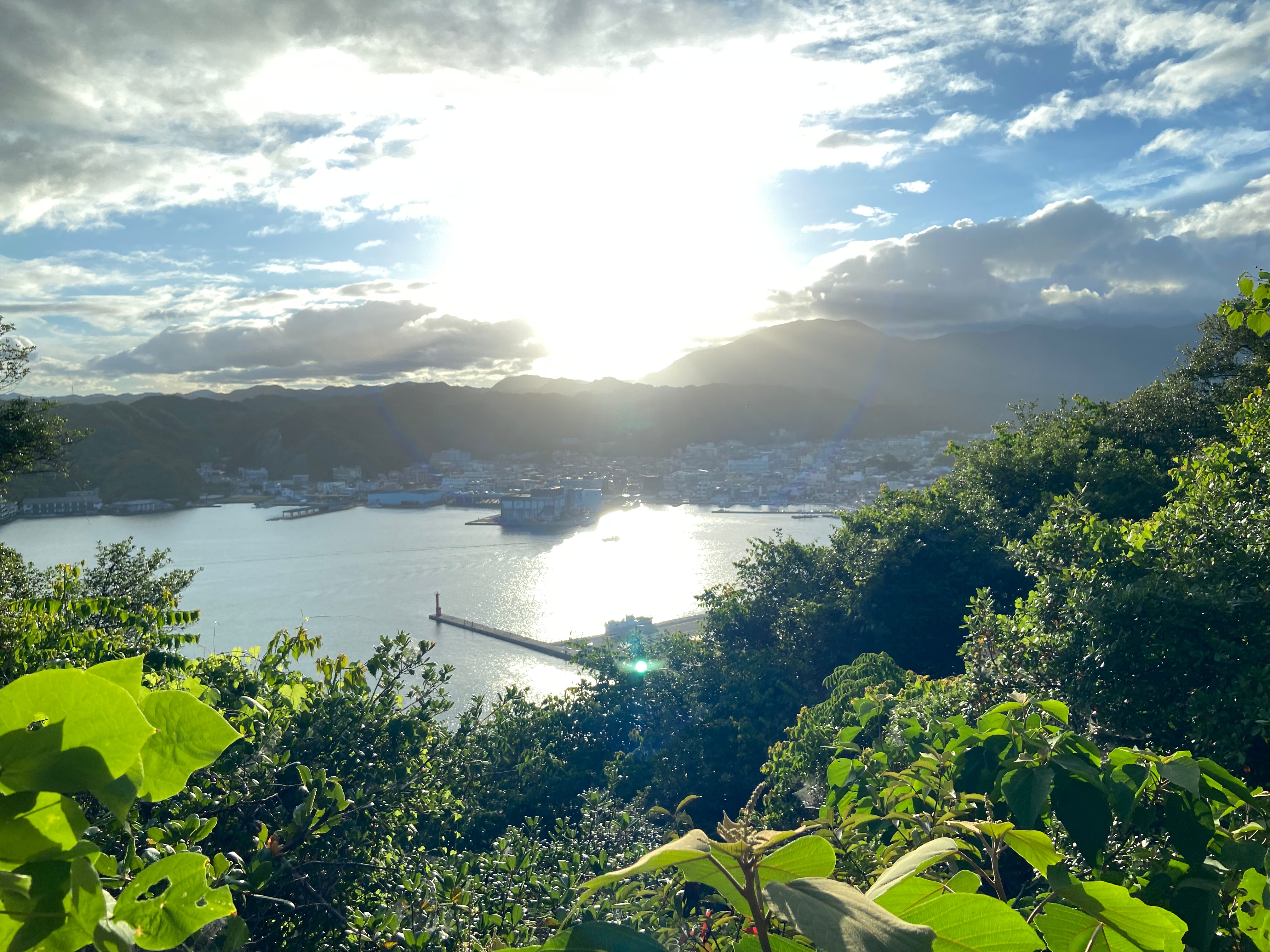
The onsen is so peaceful that I no longer feel as though I’m in a hotel. Sadly, I’m not allowed to take photographs in the onsen, for obvious reasons, so instead, here is the view from the 32nd floor looking out into the bay, the 40 degree sky, and the town of Nachi-Katsuura.

I sit, submerged in hot water, staring past the cave and out to sea. I think of the lost souls who once set off from this shore, sealed inside a boat, nailed shut.

A Spiral, a Darkness, a Fever, and a Staircase

I wake up in pain. Cramp. My leg screams. I’m in Fukushima Prefecture, Aizu-Wakamatsu, an old samurai town with a historical past. I’ve been here for a few days. I feel oddly connected to this place in a way I’m really not sure how to describe. Aizu is famous for its samurai and a red cow named Akabeko (translated to mean red cow).

I leave my hotel. The sun is so bright that the sky isn’t blue, but white, yet there are no clouds. It’s like walking through a thick fog of heat. Imagine you’re a little tiny person the size of an ant, walking through an oven set to 180 degrees. That’s what it feels like. I walk across the sheet pan in the direction of the mountains, vaguely knowing that I will arrive somewhere spirally important.

In Aizu, the legendary red Akabeko cow can be rubbed and is said to heal illness or sickness. The thing I like about Akabeko is that they have bobbing heads, so every time I walk past one I push its head down and smile as it nods up and down.

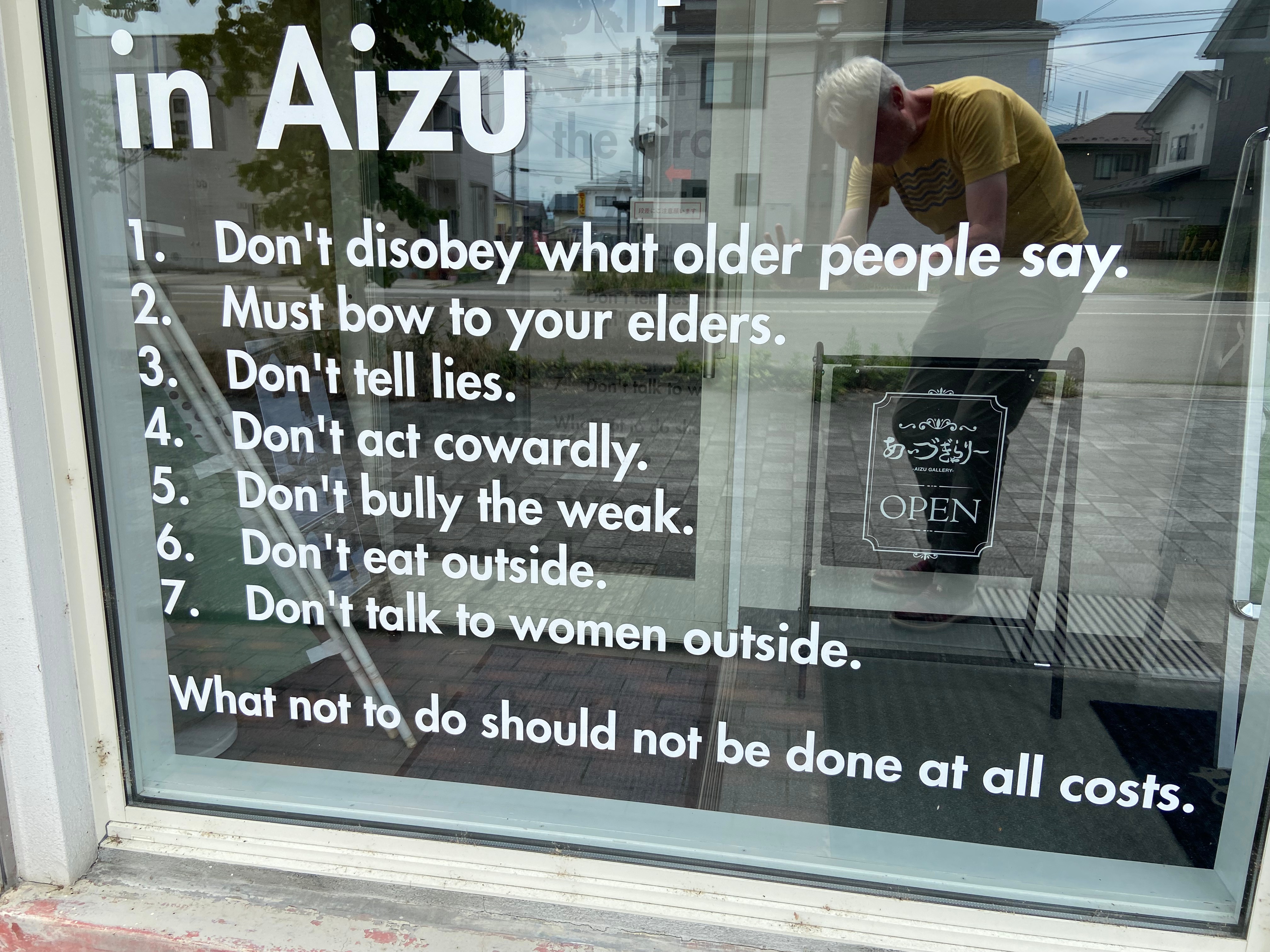
A little further up the road, Aizu-Wakamatsu is offering politeness lessons:

Don’t talk to women outside. Must bow to your elders. The two conflicting lines bother me, because as I photograph the sign, an elderly Japanese woman starts speaking to me in Japanese. Obeying the rules, I just bow my head and walk away.

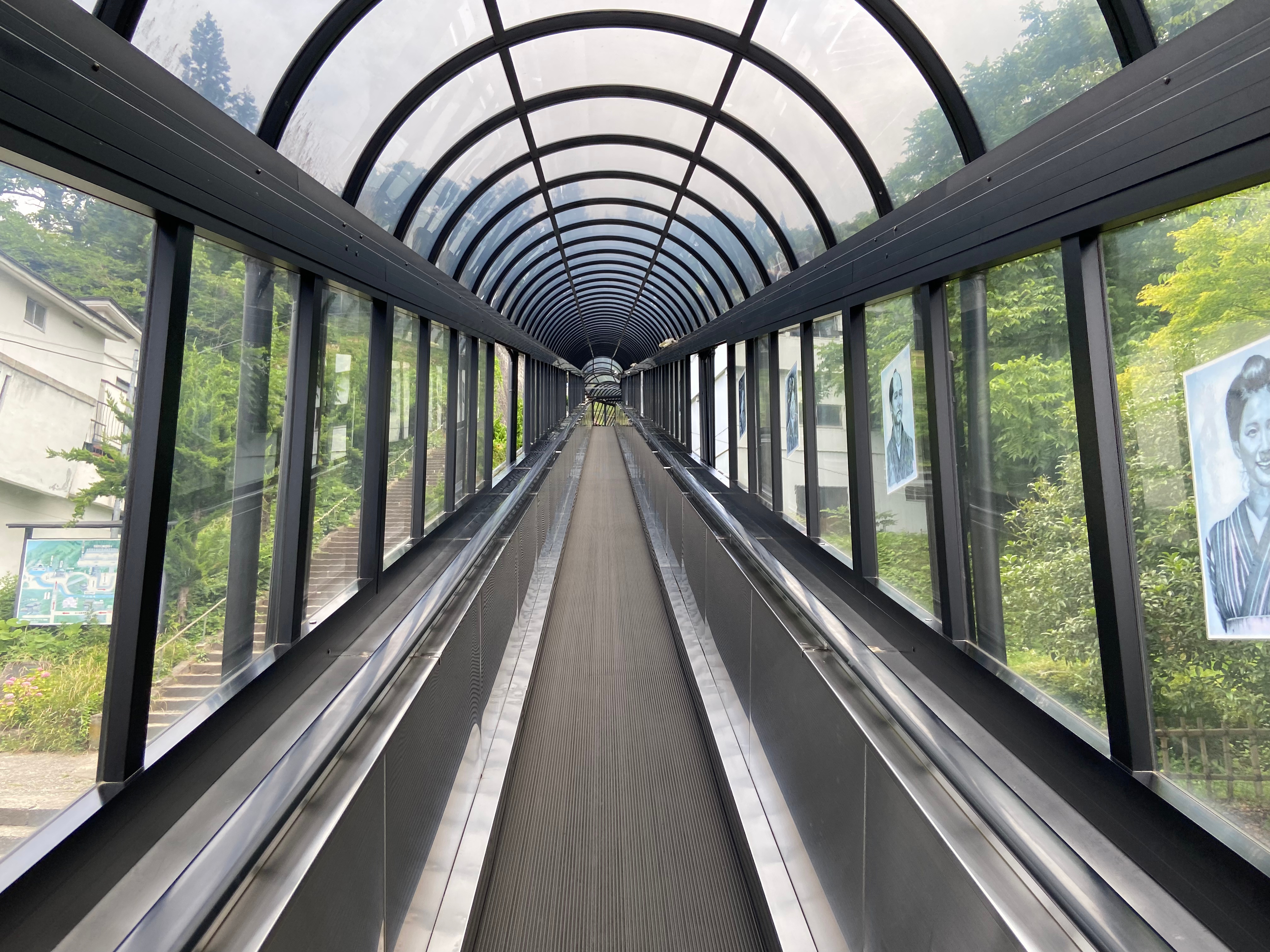
A black Seven Eleven with none of the usual green and red stripes greets me funereally; I’ll soon find out why it’s black. The cascading sunshine and the black stripes make me feel as though my eyes are glitching. Outside the entrance to Sazae-do Temple, there are sweeping steps that twist all the way up, but someone has placed an escalator to one side. You have to pay 250 yen to ride it, but the cramp is threatening to return.

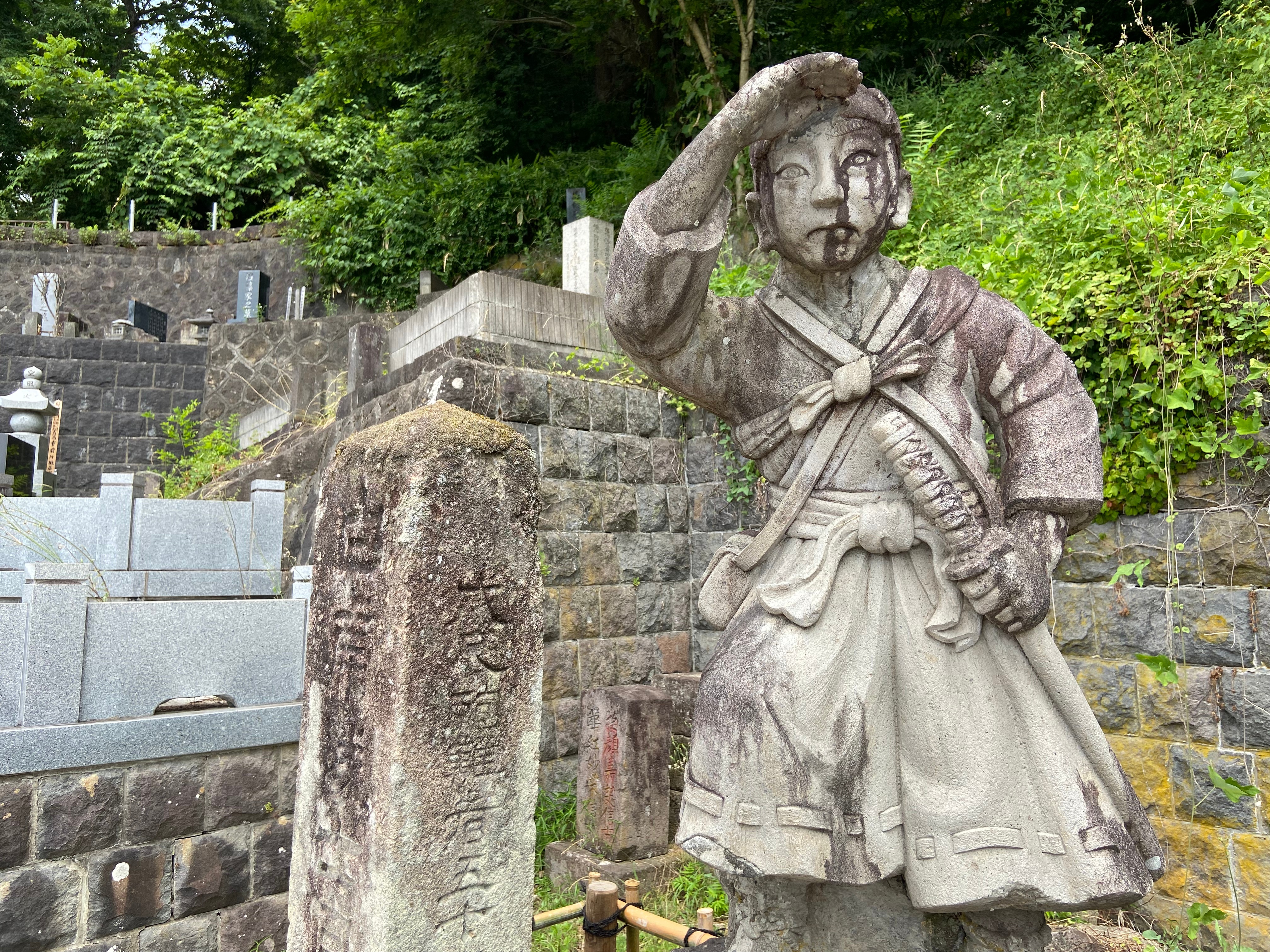
I don’t know what it is about today, but as soon as I step off the escalator and into an open area of monuments, the suddenness of place hits me, catching me off guard. To summarise what happened: on October 30, 1868, during the Battle of Aizu, the Byakkotai, a group of teenage samurai thought they had lost the civil war. They saw smoke in the distance, thought the castle had been sieged, so they killed themselves, not far from where I stand. Learning this, I become swallowed by sadness.

Their bodies were left outside for days, until a man, Isoji Yoshida, decided to take it upon himself to move the bodies of the dead children and bury them. For this, he was arrested. Katamori Matsudaira, the 9th lord of Aizu, wrote a poem in their honour. It goes:

“People will visit, and their tears will fall upon your graves. You will not be forgotten.”

There are monuments here for everyone involved. For the dead children, for all who died. The tomb of sixty-two fourteen- to seventeen-year-old samurai. It’s devastating. I try not to bring myself too much into these stories. But this place, these dead children, their story found its way in. I think what gets me is they don’t mention the word suicide, they explicitly state every time that they killed themselves.

I weep my way around a cemetery before turning toward the temple I originally came up this hill to see. There is a prayer wheel that, when you turn it, creates a mournful sound said to be heard in the underworld, comforting the spirits of the Byakkotai warriors. “Please turn it quietly with your heart.”

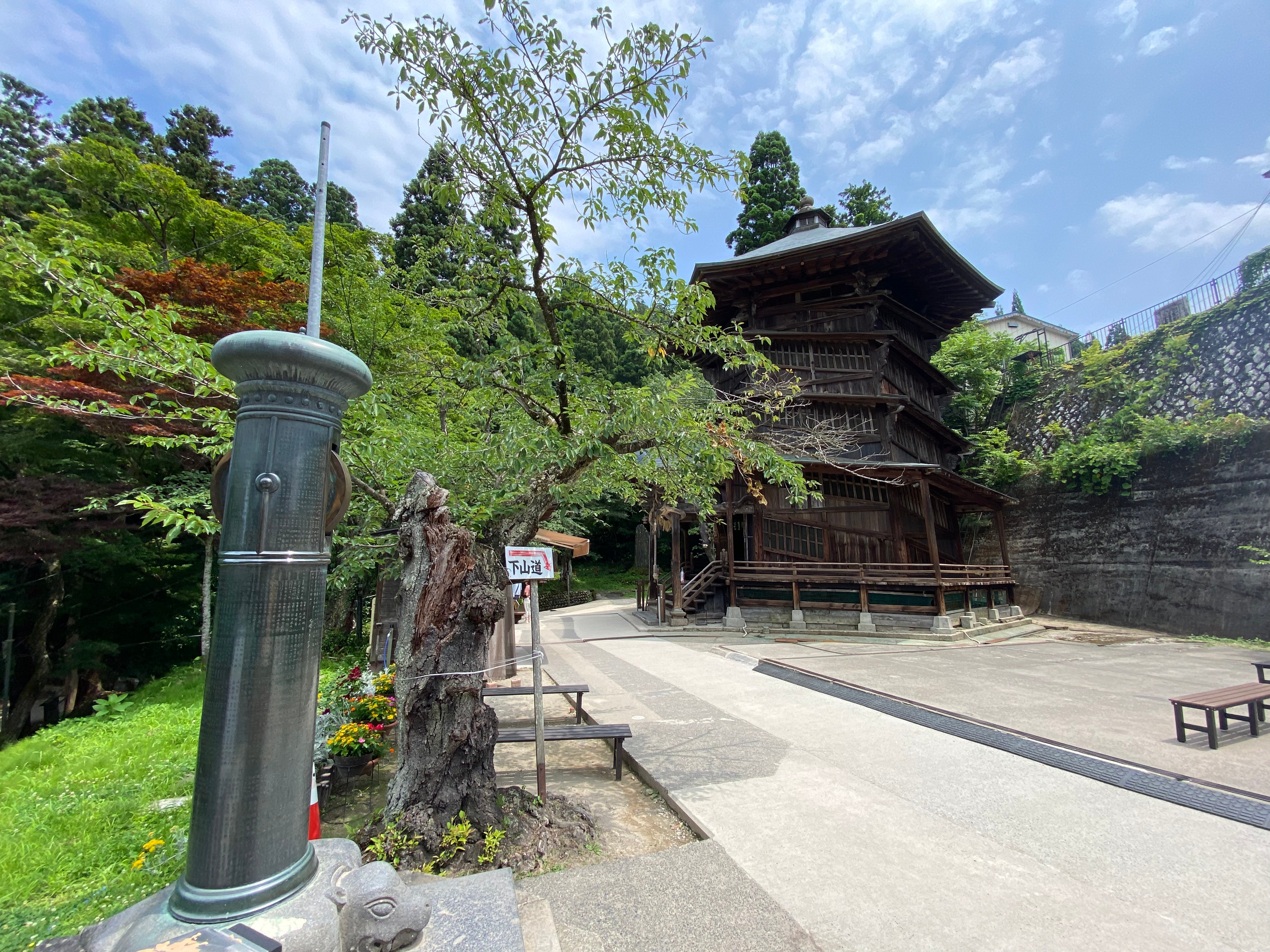
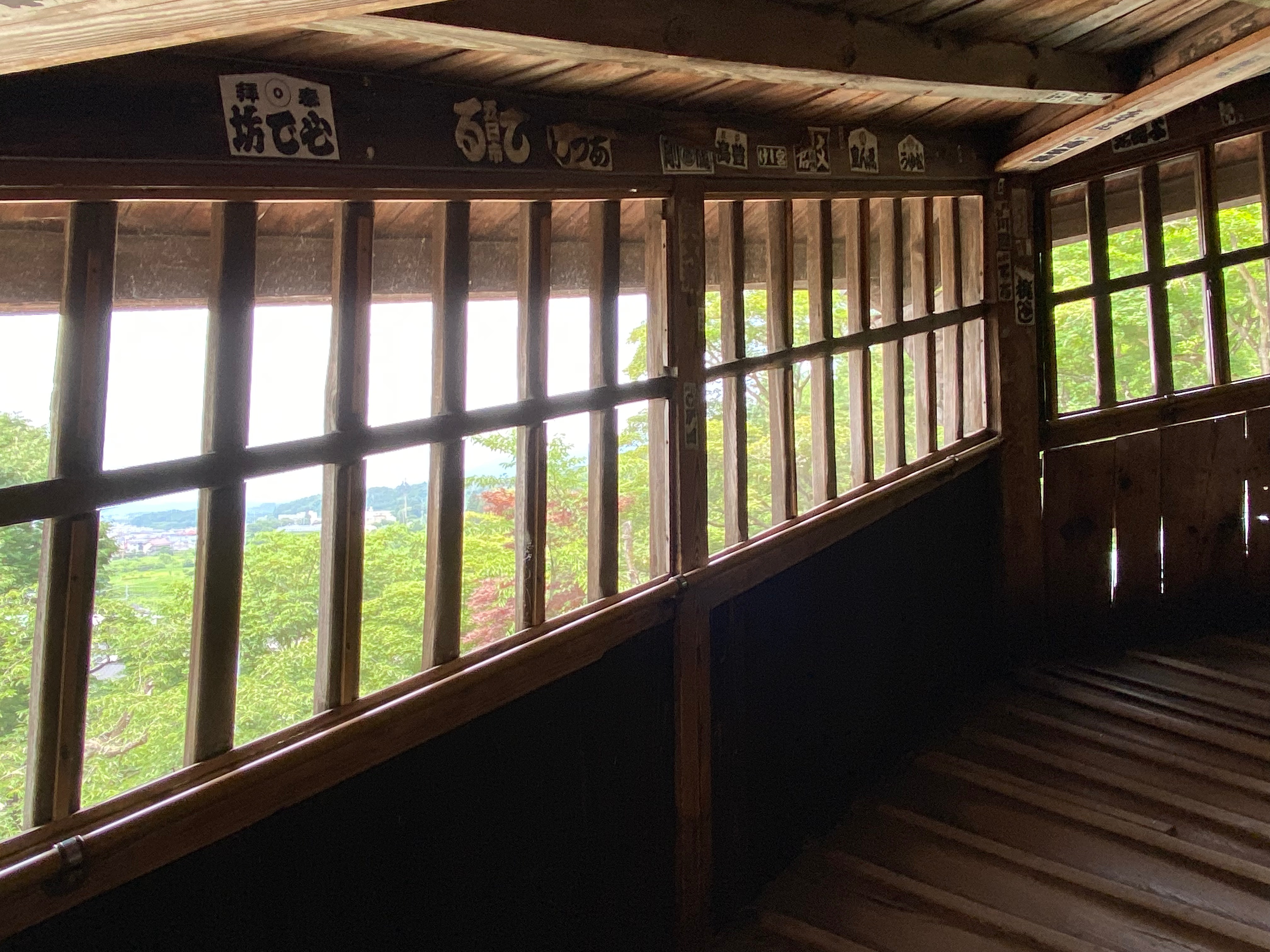
Sazae-do, a wooden Buddhist temple constructed in 1796, is famed for its distinctive spiral staircase that ascends and descends in an intricate, intertwining path. Encircling the ramp are 33 Kannon statues, each believed to grant the same spiritual merit as completing the entire Aizu Pilgrimage route to anyone who passes by them.

At 16.5 metres tall, three storeys, and shaped like a hexagon, you enter from the right side, climb the spiral staircase, and exit back down another way. You never see another soul. This valuable structure is the only wooden building of its kind from the mid-Edo period still standing in the world. It’s also the only known double-helix-shaped wooden structure in existence.

I breathe a heavy sigh before exiting through the gift shop and buying a shirt featuring Akabeko. I think about people, those loved and lost, on days when we exist together, and days when we don’t. At five o’clock, Yuyake Koyake starts playing, the song that tells the children to go back home. It elevates my sadness.

I head to a steak restaurant for dinner. I eat the red cow’s bleeding heart.

Good News About Hell

In the far north of Japan, where the land is as silent as the dead, there is a mountain where nothing grows. A place where souls hesitate. Osorezan, one of the three most sacred sites in Japan, is known by another name: the Jaws of Hell.

I often find myself drawn to stories of mortality and the afterworld. Today, I will glimpse into the hellscape of a Buddhist afterlife.

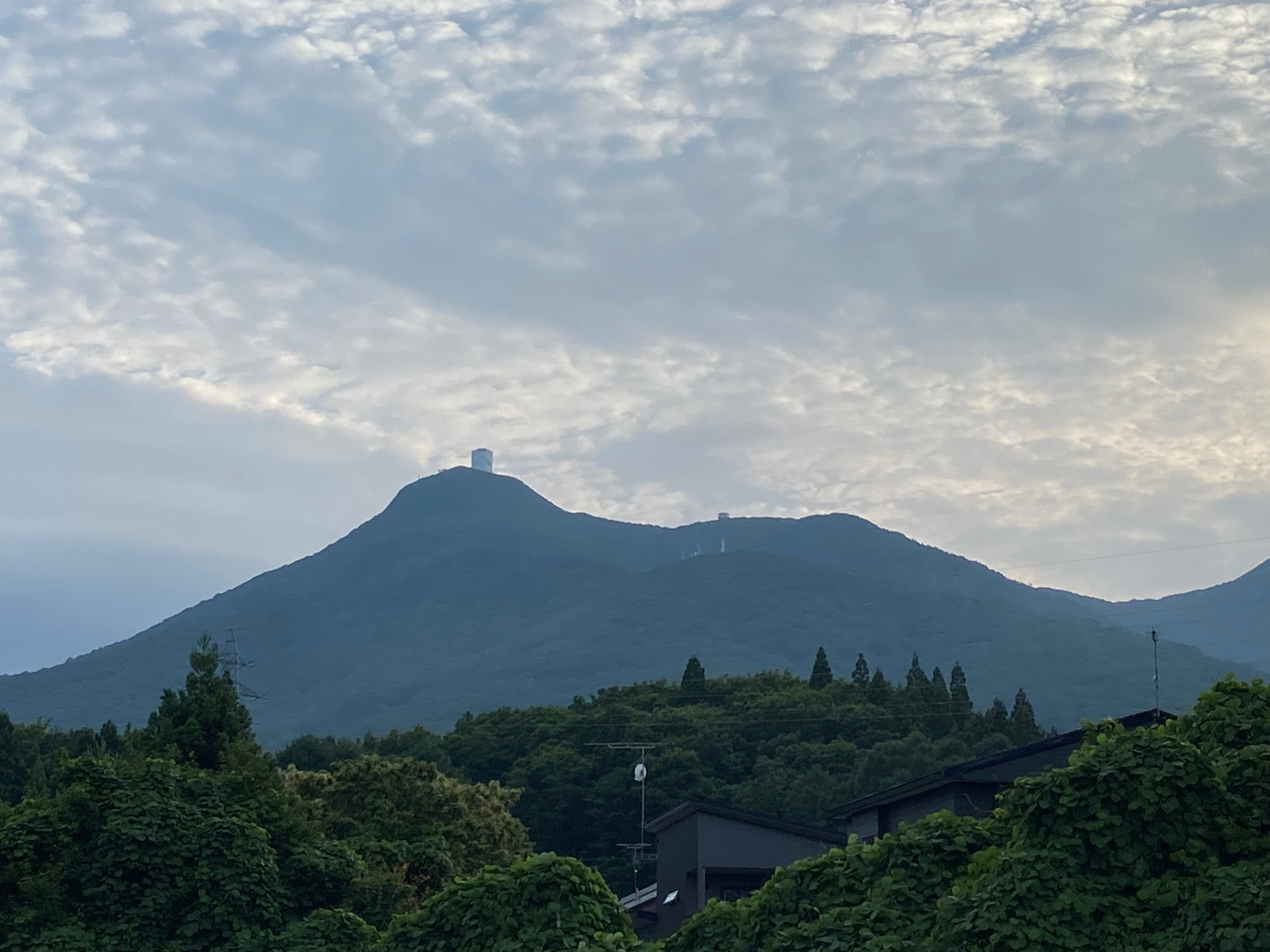
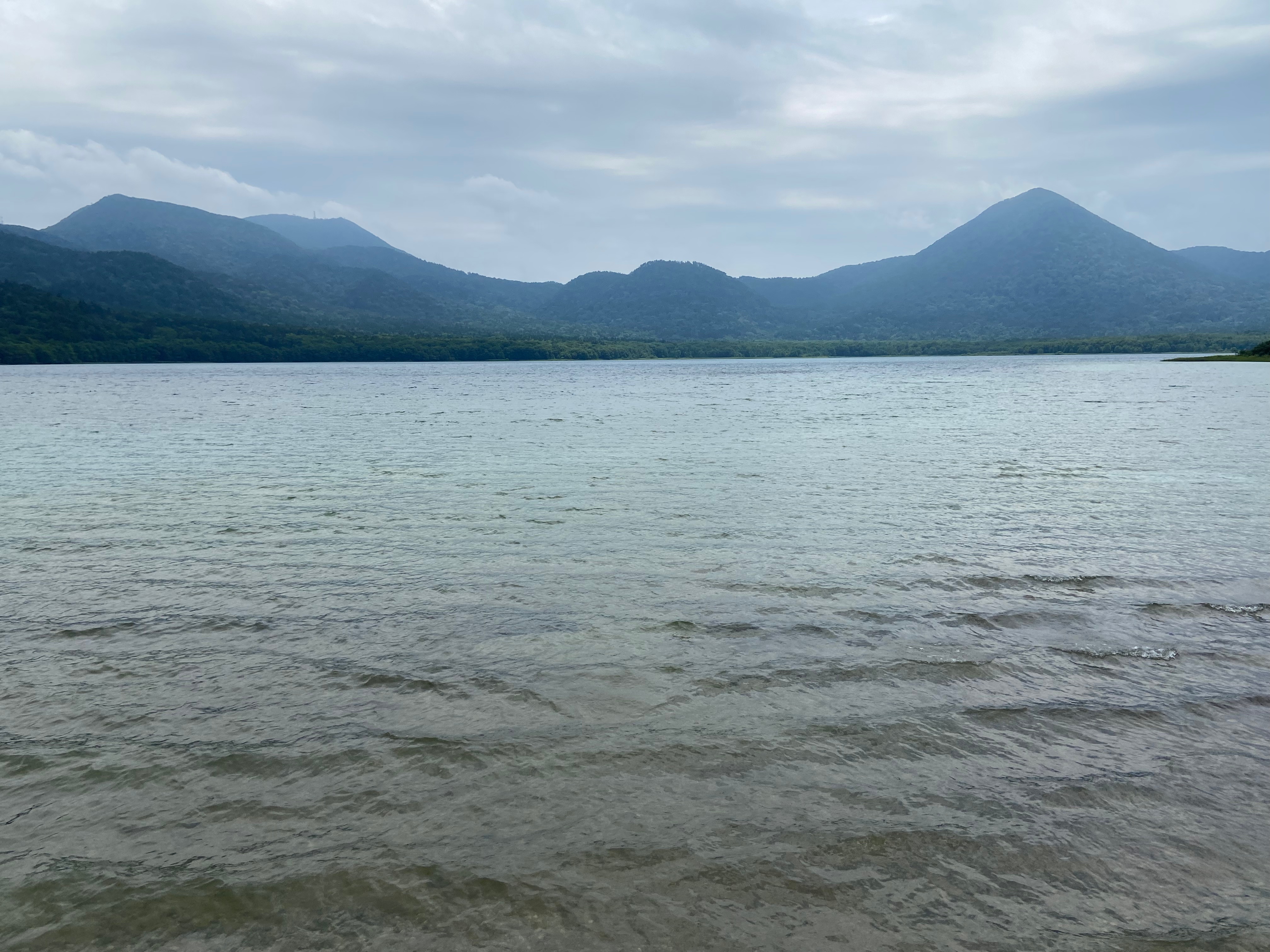
Sacred Mount Osorezan seen from the base, shrouded in cloud and myth, believed to be a path to the underworld.

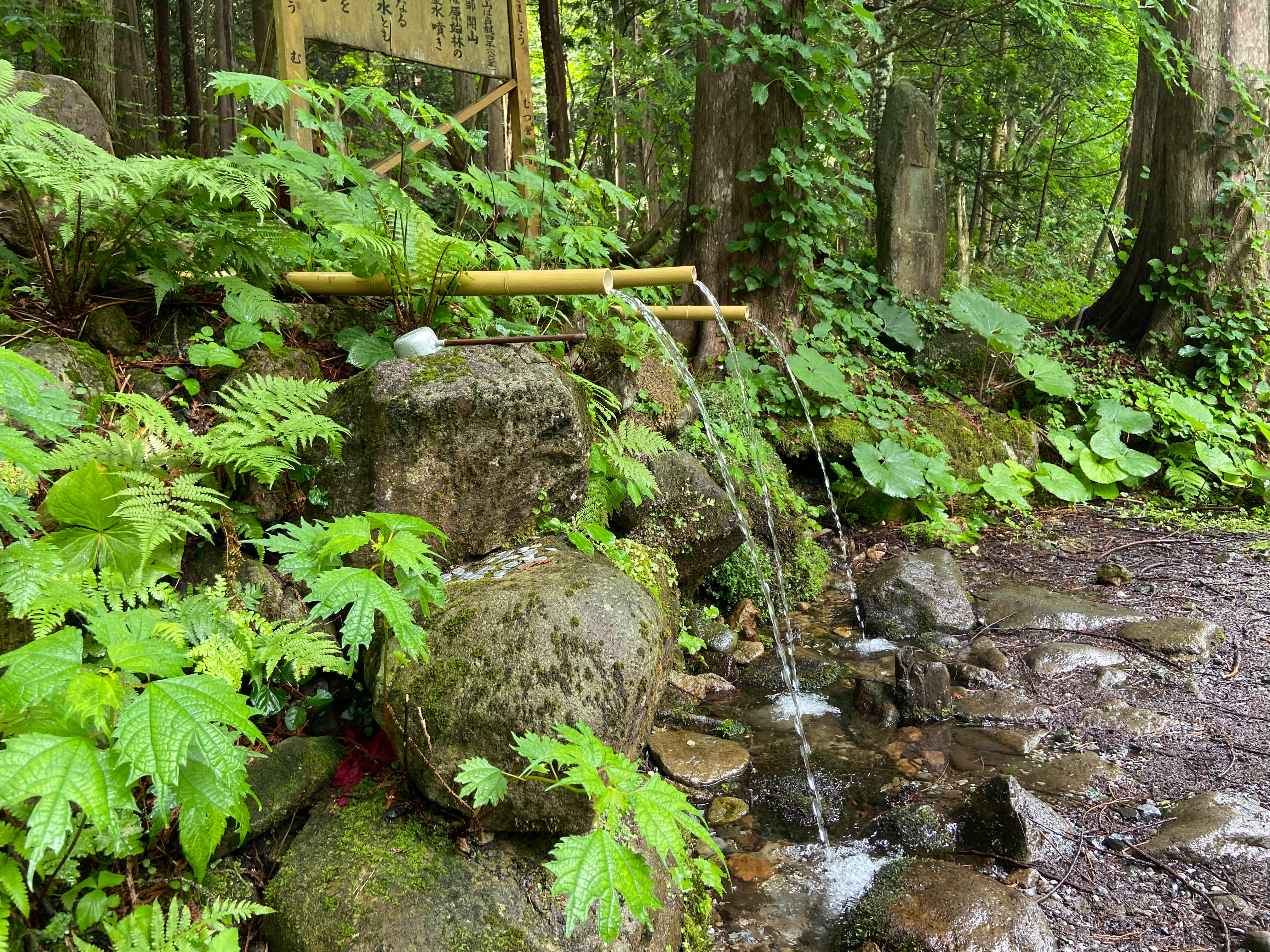
Before I reach the summit, I come across Osorezan Reisui, a fountain flowing with cold, clear water. It looks like a typical purification site, but legend has it that drinking the water from this spring will make you ten years younger.

Desperate to claw back lost time, I reach for the water, drink from its flow, and fill up my water bottle before continuing the climb.

Lush spring of Osorezan Reisui, legendary fountain said to make visitors ten years younger with a single sip.

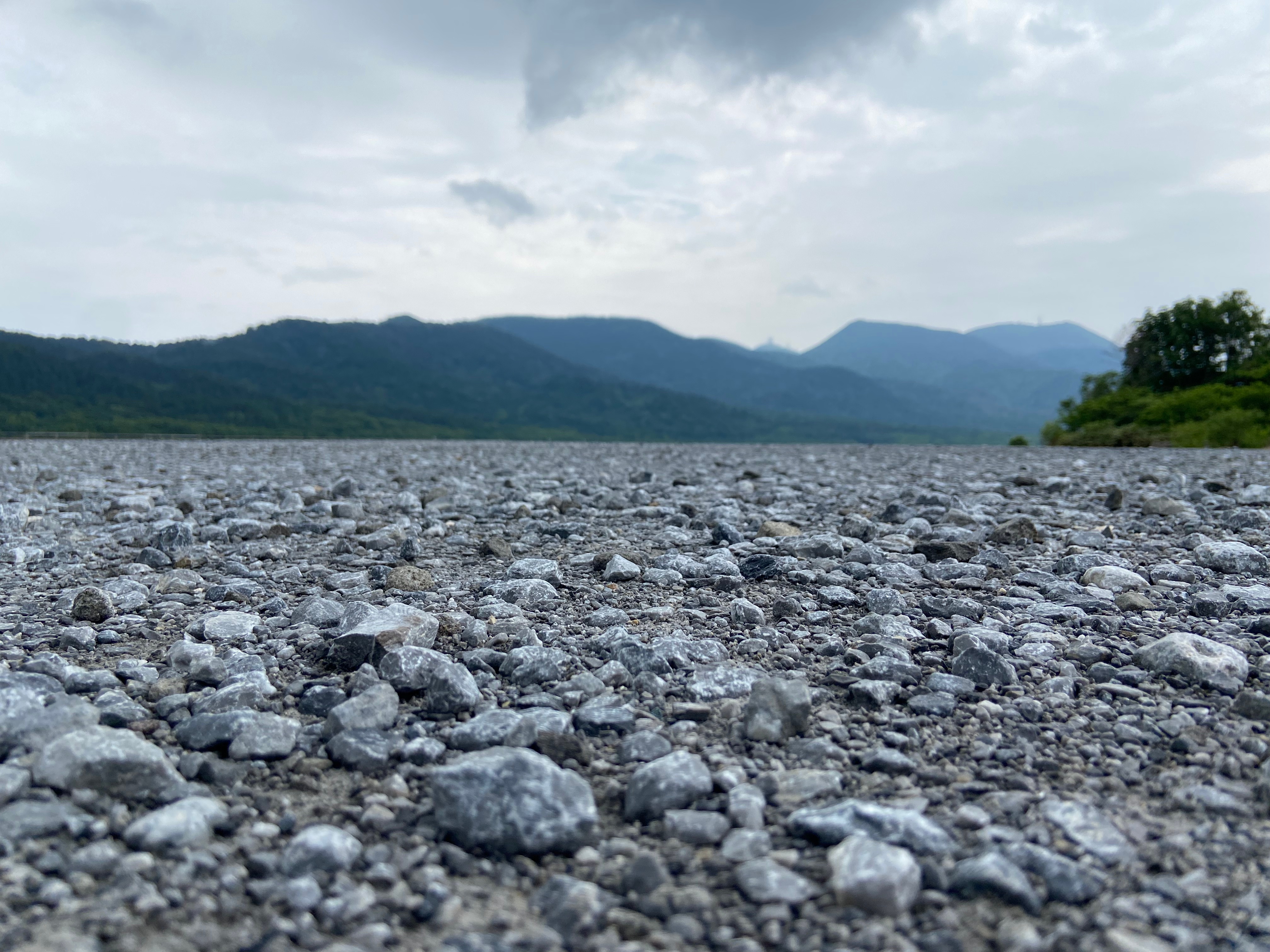
Further up, the trees and grass make way for shale and volcanic glass, and it is dry. There has been no rain of late to keep the dust down, so with every step the sulphurous ash creates clouds under my feet. Some gets into my mouth, and I choke. Luckily, I still have water from the fountain of youth, so I wash away the bitterness and the years before carrying on.

Higher up, the mountain opens its mouth wide. Nothing moves. There are no roots. There are no birds. Just the crunch of my footsteps echoes through the wasteland. Everything else is… still.

Desolate volcanic wasteland of Mount Osorezan in northern Japan, sacred Buddhist site known as the gateway to hell.

In the distance, Lake Usori lies in eerie repose, a lake of poison. The acidity is so high that nothing can live here. Even the wind seems unwilling to touch the surface, but I am.

Kneeling, I dip my hand into the water. A freezing chill shoots up my arm. For a moment, the water feels alive, tightening impossibly around my fingers. Not liquid, but something with intent. I wrench my hand away, breath unsteady, as if something almost followed me out.

Eerie, acidic waters of Lake Usori in Aomori Prefecture, Japan—still and lifeless, at the heart of Osorezan.

I remain kneeling a while longer, lost terribly in thought. I watch as the ripples in the lake distort my own reflection. I see not just my face, but the faces of every version of myself I’ve left behind. I watch them shifting, like a shimmer of sorts. I take a deep breath, stand up, and walk away, before something walks away with me.

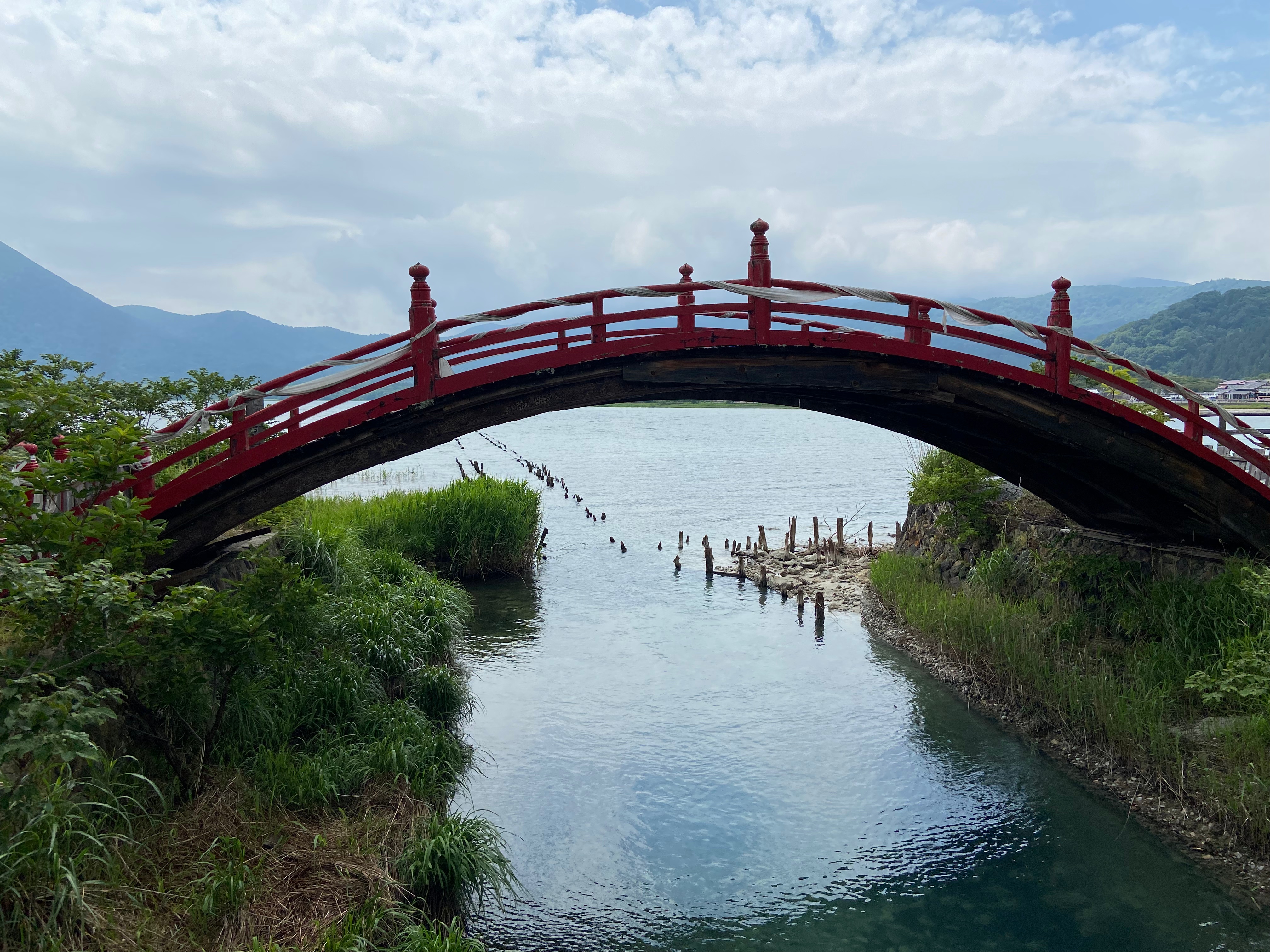
Draining from Lake Usori is the Sanzu River; its waters flowing silently, black and sluggish, like blood oozing from a wound that will never heal. It is at this river the dead must cross to move into the next world. The journey across this river reflects the life one has led: the good cross by bridge, the average wade through the shallows, and the bad must swim amongst the river’s monsters.

Red bridge over the Sanzu River at Osorezan, symbolising the soul’s crossing into the afterlife in Japanese Buddhist lore.

I watch the river for a time, wondering which path I would take. I approach the bridge, its red painted wood the only colour I’ve seen up on this mountain. I take a step toward it, but something inside me pulls back. Not fear or superstition; just a quiet, sinking knowledge that maybe I was here before, and I don’t think I should be here again.

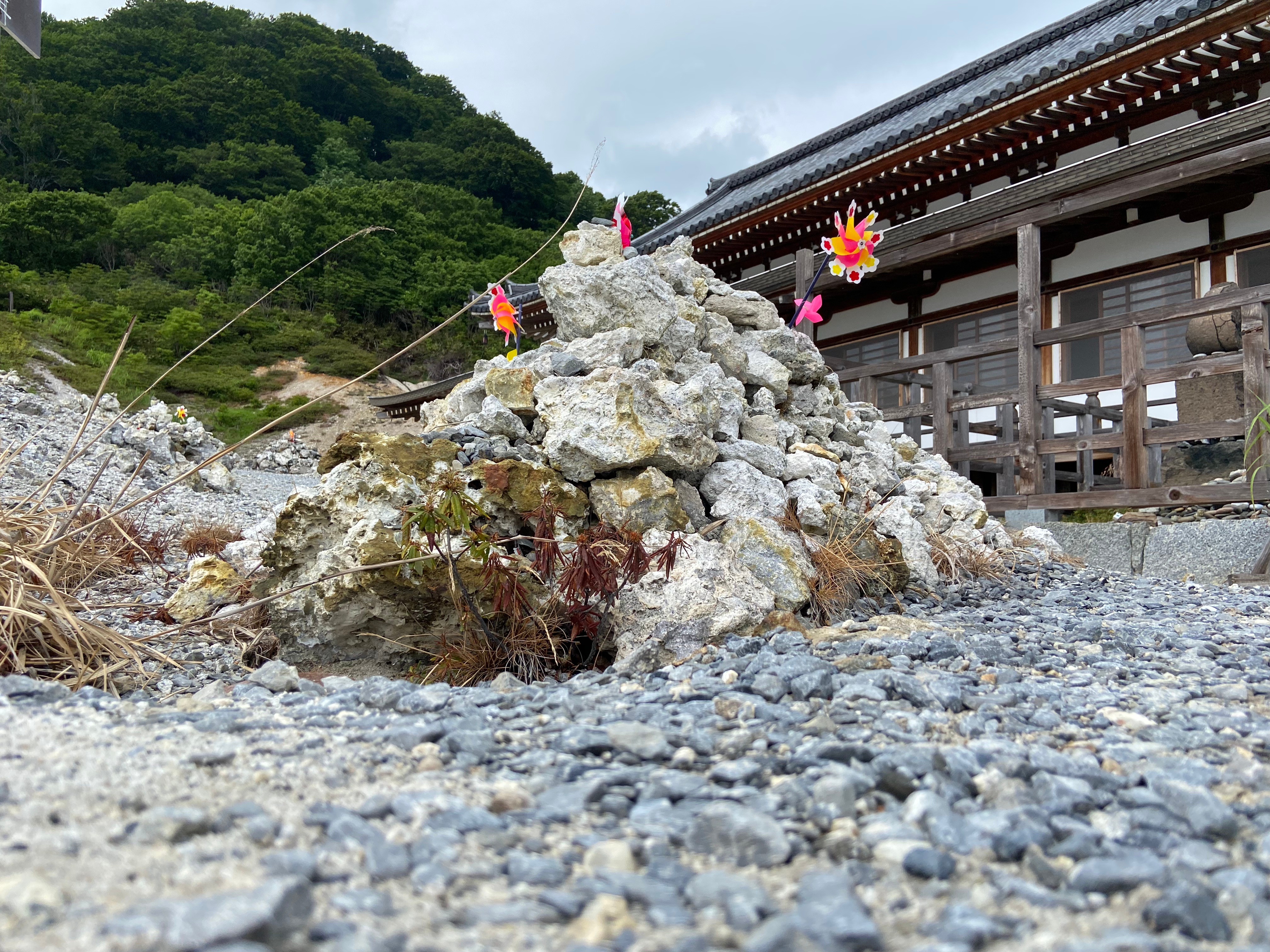
Along the riverbed, piles of pebbles litter the landscape, said to have been stacked by the spirits of unborn children or those who died young. These children build piles of rocks as an offering to Buddha, only to have demons knock them down, condemning the children to rebuild over and over, for eternity; forever trapped in the netherworld, unable to transcend.

Gravel mound with windmills at Osorezan, symbolizing unborn children stacking stones in the Buddhist afterlife.

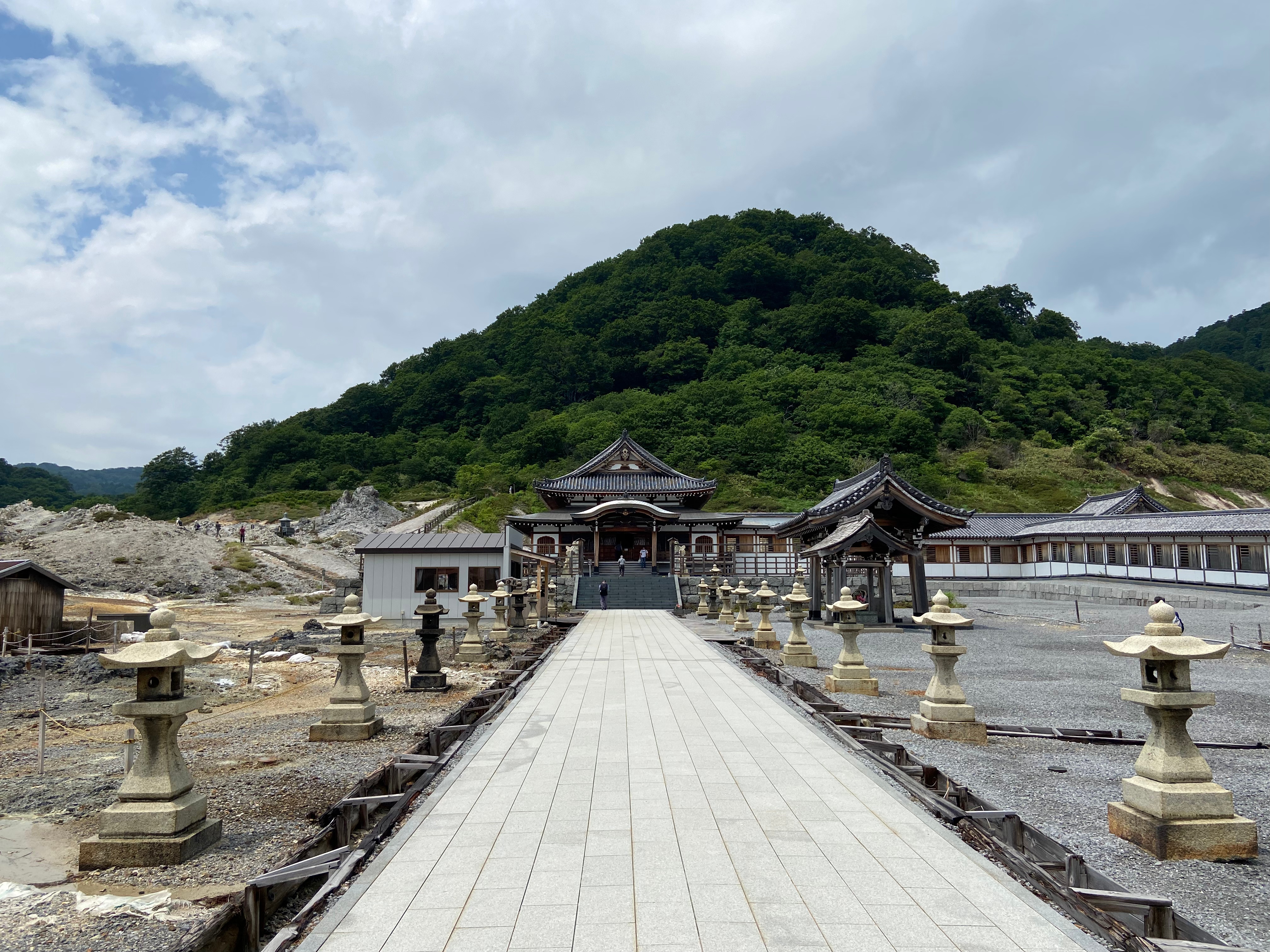
Not far from the river stands Bodaiji Temple, where monks pray for the lost souls who wander Osorezan. After all the stories of sorrow, the temple stands as the only promise of mercy.

Inside, the air hums with low chants. The scent of incense curls through the dim light, thick as fog, as if the prayers themselves are rising. The monks recite sutras; their voices steady. For all the suffering that lingers in the air, this place feels… still.

Entrance to Bodaiji Temple at Osorezan, where monks pray for lost souls in Japan’s most haunted Buddhist sanctuary.

As the sky darkens, bruised and swollen with the weight of a coming storm, I take one last look at Osorezan. The myths here aren’t just stories. They are things we carry. Things we live. The demons at the river are the silent battles fought in hospital beds. The pebbles are the burdens we carry and rebuild, again and again. And the river, the slow, black current, is the harrowing divide between despair and hope; a crossing that everyone must face.

I turn away and begin my descent.

Dark storm clouds gather over Mount Osorezan—an ominous sky reflecting Japan’s Buddhist land of the dead.

Back at my hotel, an old building stitched together with crumbling wallpaper and tired walls, I try to relax, but the lights buzz like a wasp in a lampshade, and the floorboards creak even when I’m not moving, as if something beneath them is shifting.

I turn on the television. The screen blinks to life; the world rushes back in, bright, absurd, relentless. A puppet show flickers on, but the puppets are just human hands wearing tiny masks. They bow, expressionless. The audience laughs. I change the channel. Static hums for a second too long. An old woman in a blindfold stumbles through a collapsing obstacle course. Laughter again, louder this time. The world keeps moving. Always moving. And I am here… still.

I change one last time. A man in a bear costume is balancing ramen bowls on his head whilst a studio audience screams. I turn the TV off. Hell can wait.

Outside my window, the mountain holds its breath. Somewhere, beneath the floorboards, the dead keep stacking stones.