The morning sky gave me a look as I stepped out onto the platform at Yabuzuka Station. It’s a small platform with just two tracks and no one around to ask for directions. I’m certain I’ve arrived somewhere between Gunma Prefecture and the Edo period.
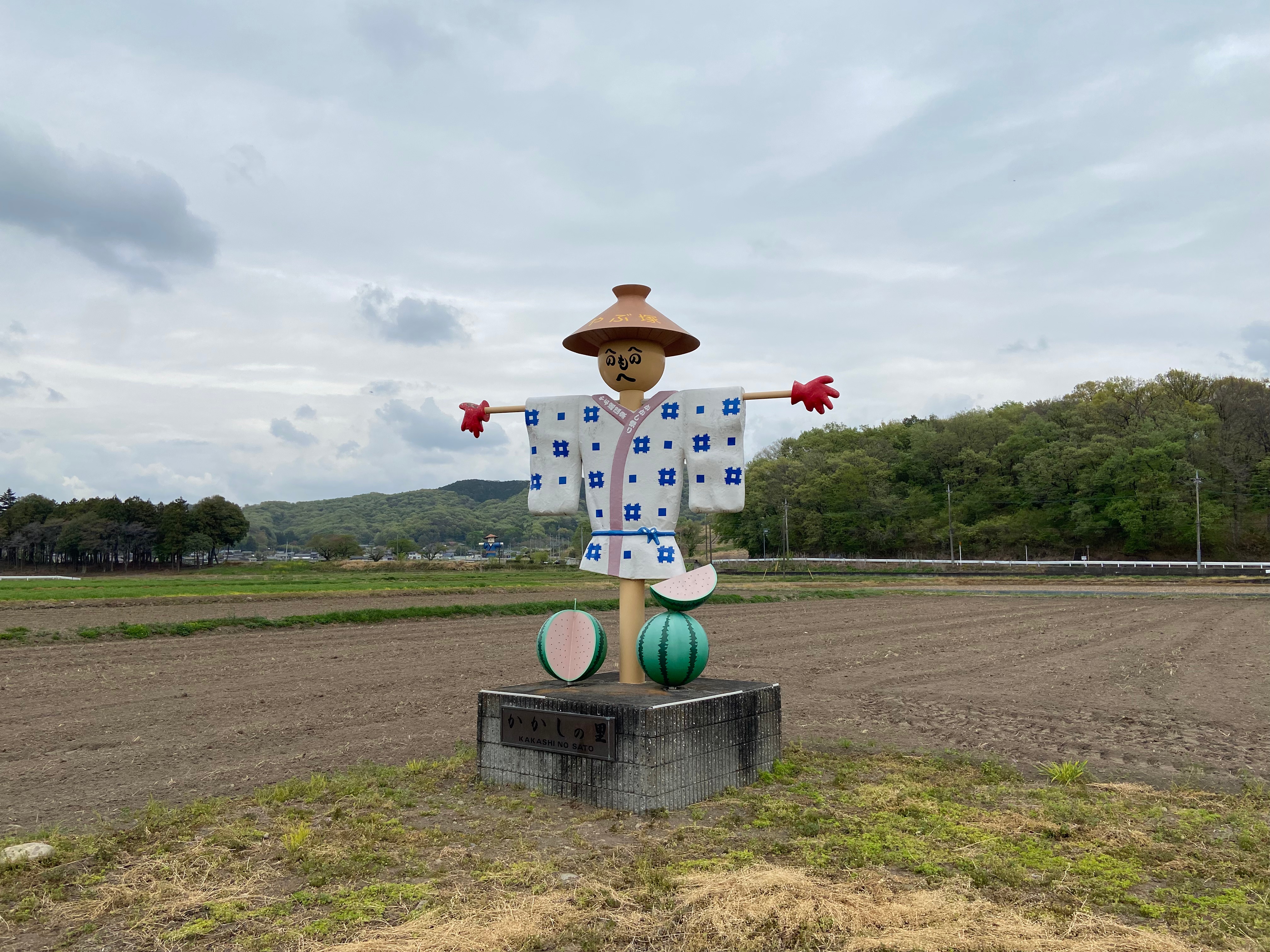
The station exhales me into a residential area of a few low houses, a solitary vending machine, and fields stretching across every distance. Staked into each field, a Japanese scarecrow stands alone.
I walk further. My destination today is below the clouds, along a humid forest mountain path. The cicadas hum with an almost animatronic precision, their vitality echoing across the fields and back from the mountains. As I wander, I see an entrance marked by a billboard that features a samurai riding a snake.
Mikazukimura, which roughly translates to Crescent Moon Village, is a historical theme park that faithfully reproduces a village from Edo times (1603–1868). It aims to capture the nostalgia of the era, but I wonder, is it ever really nostalgia if you were never there? I don’t ever recall the Tokugawa shogunate popping round for a cup of tea.
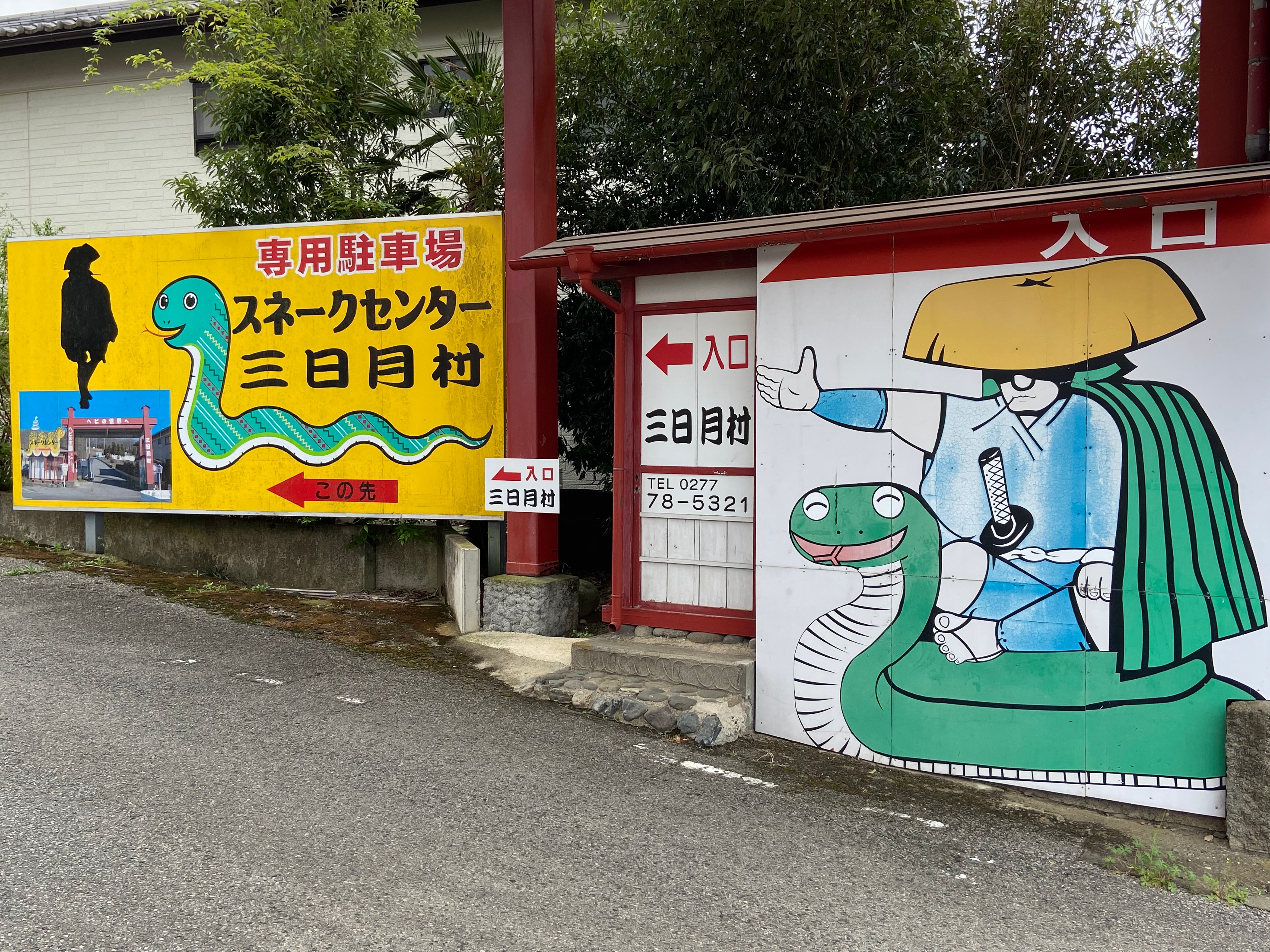
Anyway, at the entrance I buy a ticket. I also have to exchange some Japanese yen for replica Edo coins. These coins are used to buy fish-shaped waffles, crafts, or souvenirs in the park. The unusual time dislocation here means I’m literally buying the past with the present using fake plastic coins. I don’t mind it though. It adds another dimension to everything.
Inside, thatched tea houses make up the backdrop, layered with tempera paint shops, tempura food stalls, temple buildings, and three main attractions. It’s like looking into a painting of a time long gone, just without any people in it. In fact, the dirt streets of the village are so quiet that it almost feels like the sort of place where a ghost story might have begun… or ended.
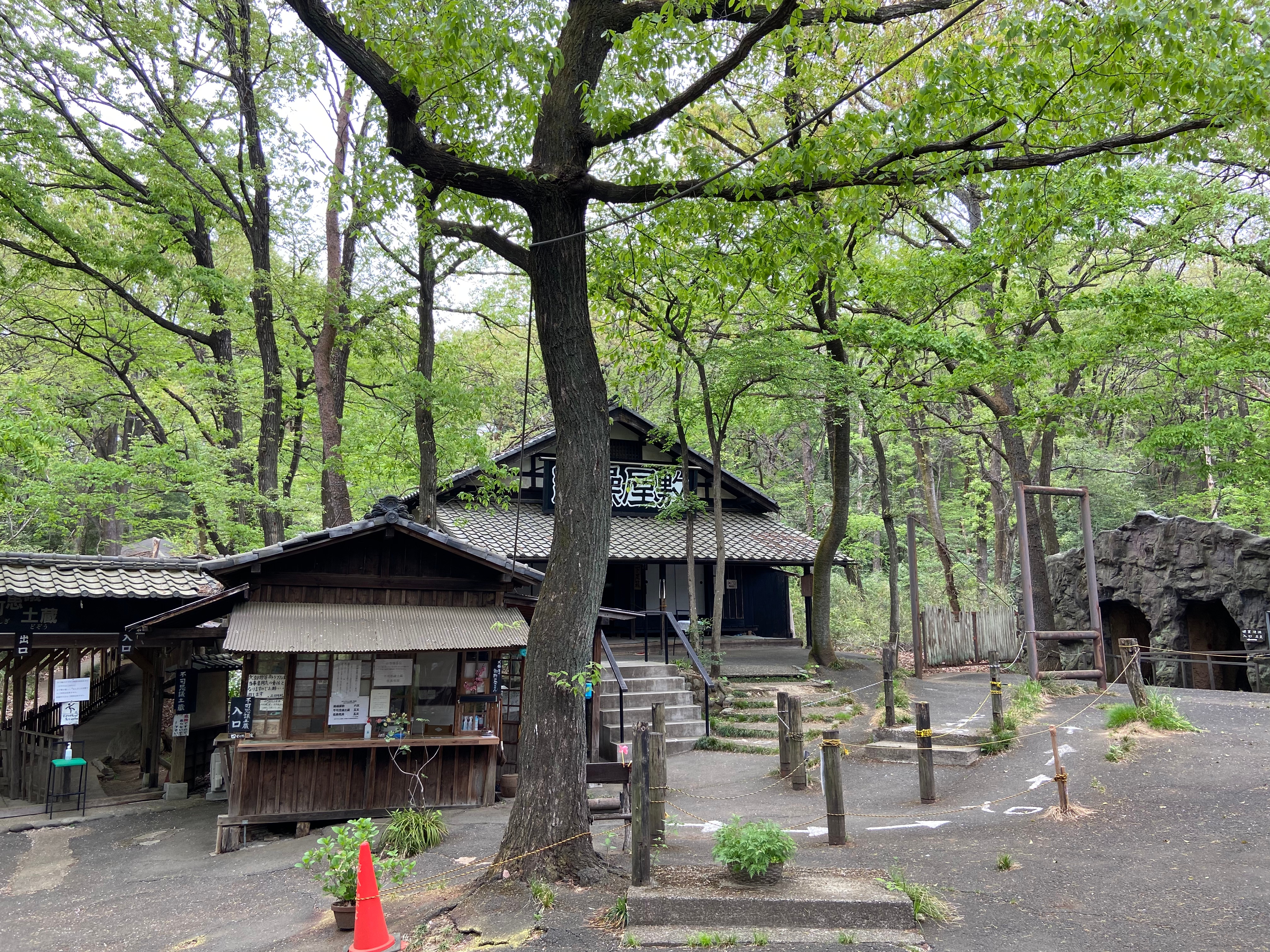
The first attraction is Kaiigendo, a mysterious trick-filled cave activity. The sign says, “This attraction is caving,” but I certainly hope it isn’t. To enter, I have to buy a ticket with my special coins. The lady here stamps my attraction card, before rather quickly explaining, in Japanese, what feels like a lot of safety instructions I probably should understand, much to my own confusion.
She then hands me a torch, says, “No ghost. No scary,” and wanders off.
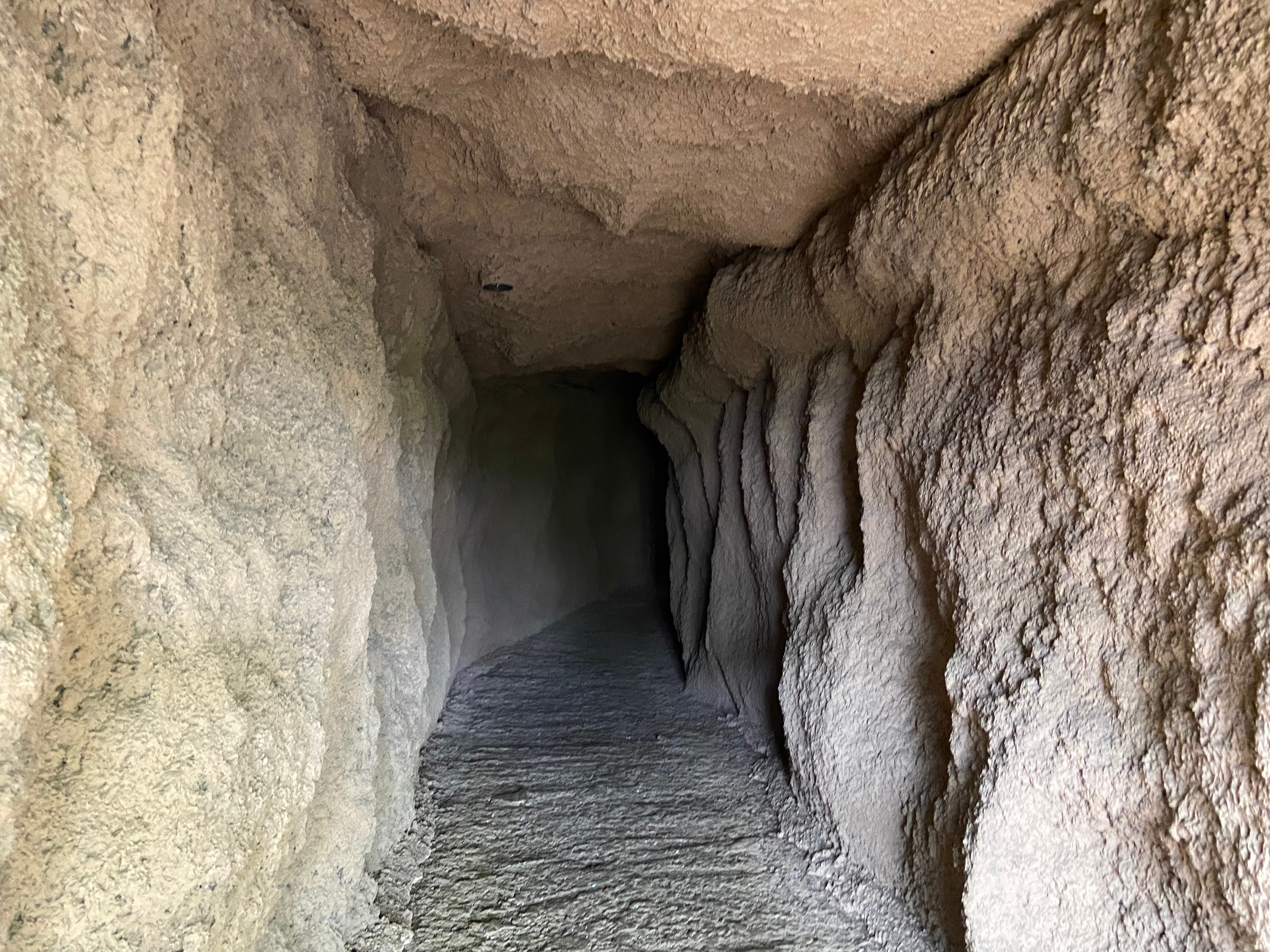
The cave describes itself as an underground tunnel filled with traps and hidden entrances. There are sliding doors, and there are secret doors. There are doors that creak, and doors that open. There aren’t really any instructions, so I turn on my torch and wander through the darkness.
It’s actually pretty scary. I get a bit lost in the maze-like caverns until I reach what I think is a dead end. Eventually I discover a secret tunnel that I have to activate simply by standing next to it. A huge stone tablet mysteriously shifts to the side, revealing a staircase leading deeper underground.
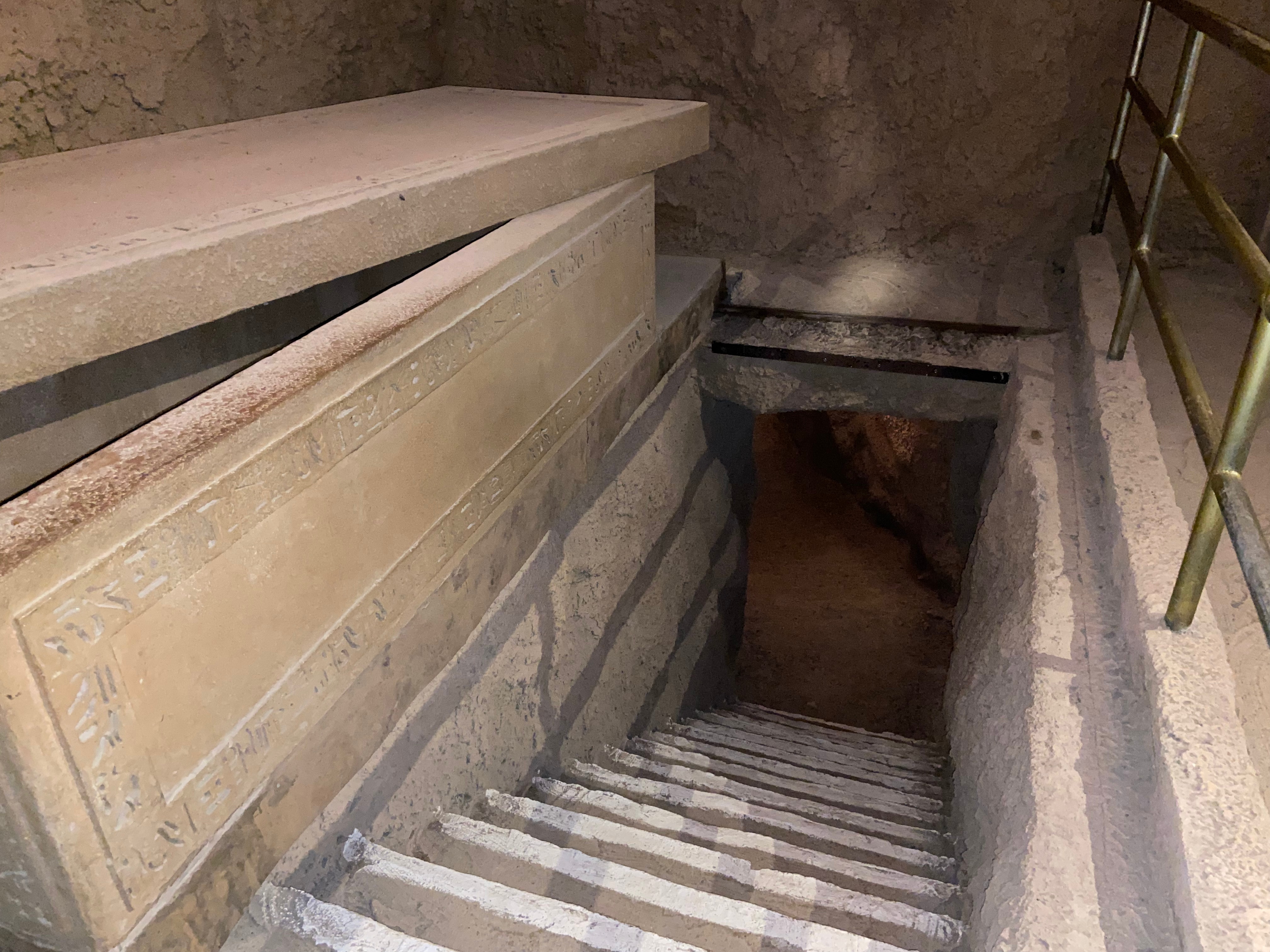
As I pass the stairs, the tablet slides back across, trapping me inside. I follow the rooms, secret doors, narrow passageways, across a bridge, to a room with a waterfall, to another with booming music, mirrors, and red lighting. It takes me far too many attempts to figure out how to escape this claustrophobic panic attack. Eventually I find the exit behind a bookcase that only slides aside if I clap my hands; again not explained at all.
My next attraction is Fukashigidozo, a sloping house. A sign lying on the ground next to the sloping house says, “Don’t fall over,” having itself ignored its only instruction. The purpose of the house is to challenge my sense of balance. The building has been constructed at an angle, on a slope, and confuses me in a way that makes me feel dizzy, like I’m falling over, even though I am standing perfectly still.
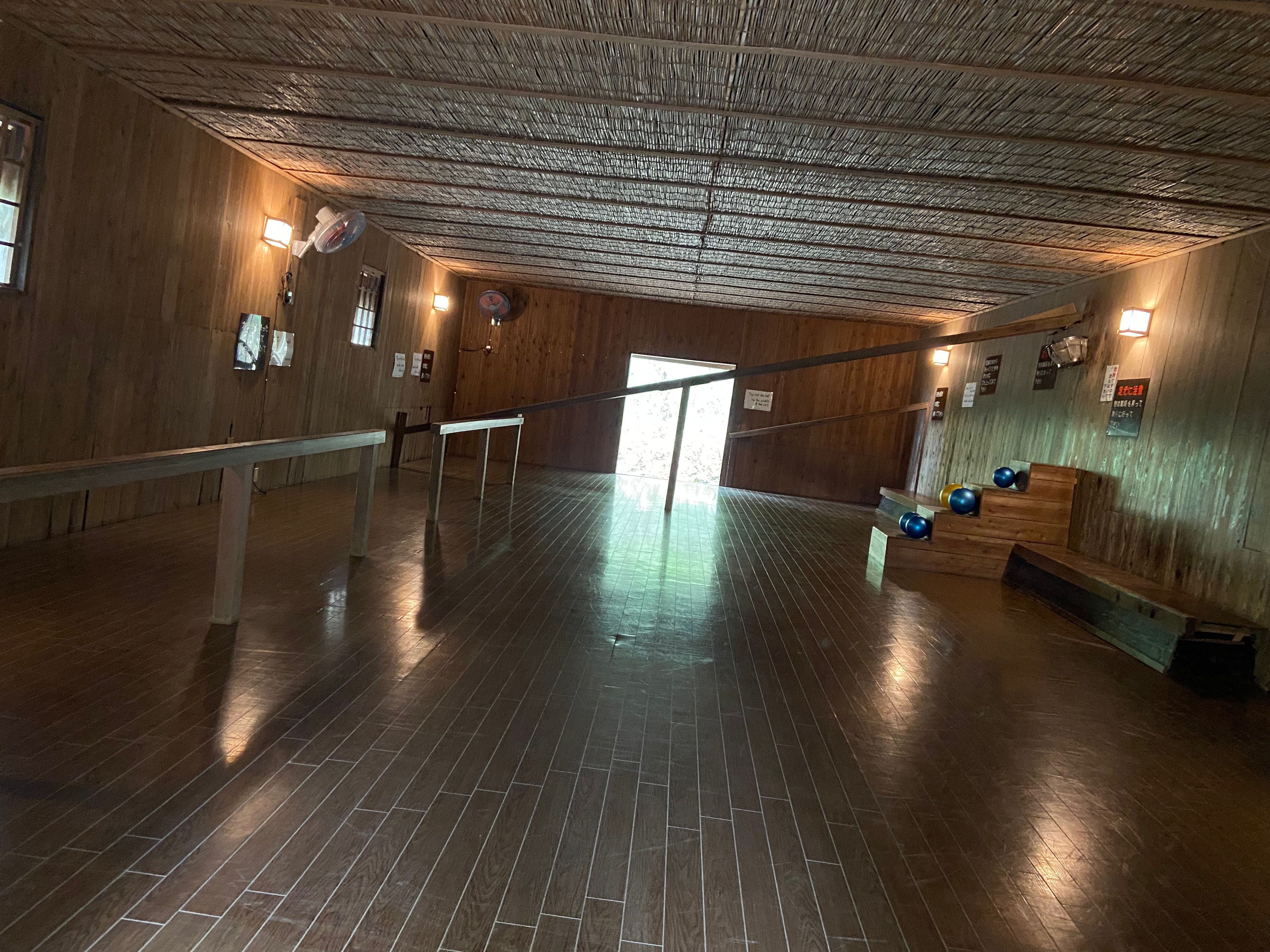
I want to sit down. I want to not be standing up beside the house that feels like it’s falling down. It messes with my brain, despite understanding exactly what’s happening. The house is so profound that I am at complete unease as I wander back toward the main village.
Here, the staff stay fully in character, even when no one is watching. I stay fully myself, which requires significantly less effort, yet still somehow wears me out. In the end, Mikazukimura doesn’t quite manage to hold the illusion together, and instead echoes something slightly decayed, enveloped in a careful silence. I head next door to the Japan Snake Centre.
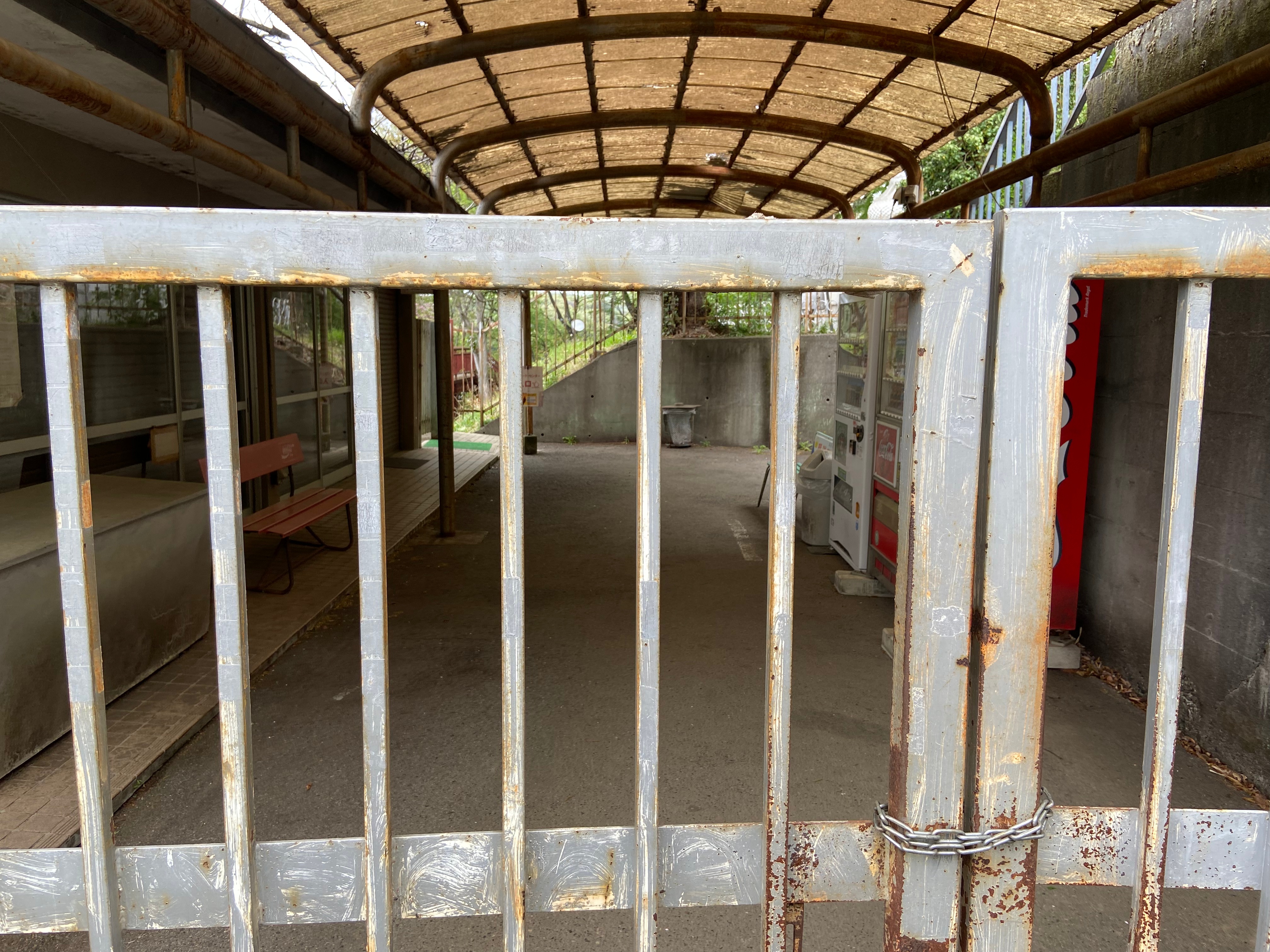
The door here is chained shut despite a sign saying, “Open.” I was hoping to look at some creatures that predated the Edo period by millions of years, but it looks like I’ve outlived them. The Snake Centre is permanently closed. I head back across the fields of crops, scaring away a few crows on my way, and return to Yabuzuka Station, but with no train for two hours, I decide to walk to Isesaki.
On the walk, I spend some time on my phone researching azimuths and lunar illumination percentages. I walk on, mostly in silence. The occasional passing car. The odd cawing crow. There’s no footpath most of the way; and as the sky darkens I don’t particularly enjoy being constrained to walking on unlit country roads. Somewhere along the way, my eyes catch something that looks so out of place that I stop to investigate. A big red London bus parked on a side street.
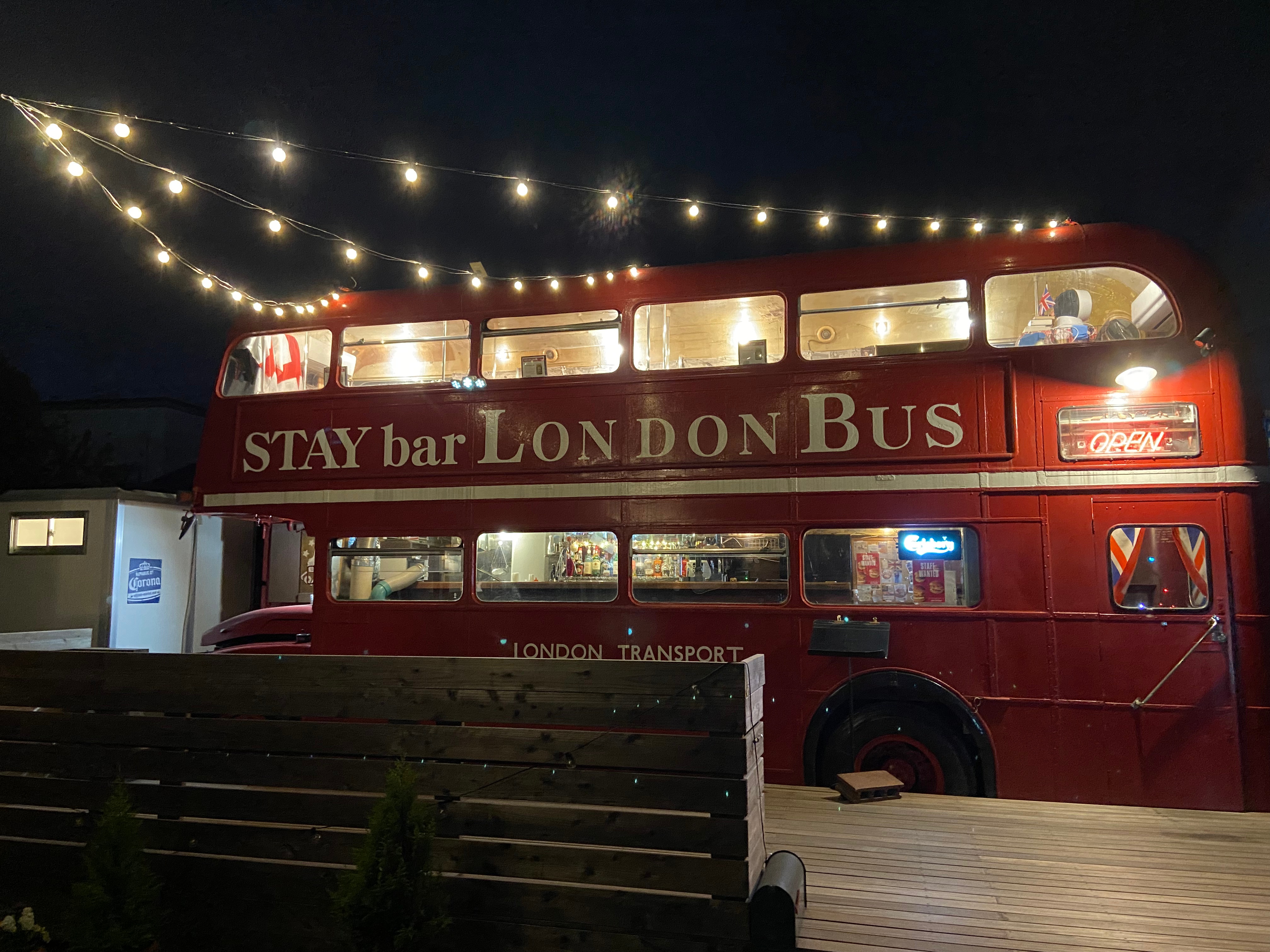
Inside, a bar. I order a drink and chat with the owner. He tells me that the couple that used to run the bar are no longer here, and that he took over. They used to really like London which is how this place came about. The new owner here can barely speak English, which is a shame, because I wanted to ask him about the ghost children crossing Abbey Road.
Our conversation breaks apart. Neither of us really has anything to say. Eventually he goes out into the back room to cook himself some food. So I sit, sipping on my Suntory Highball in silence. Out here, there’s no one to sit beside.
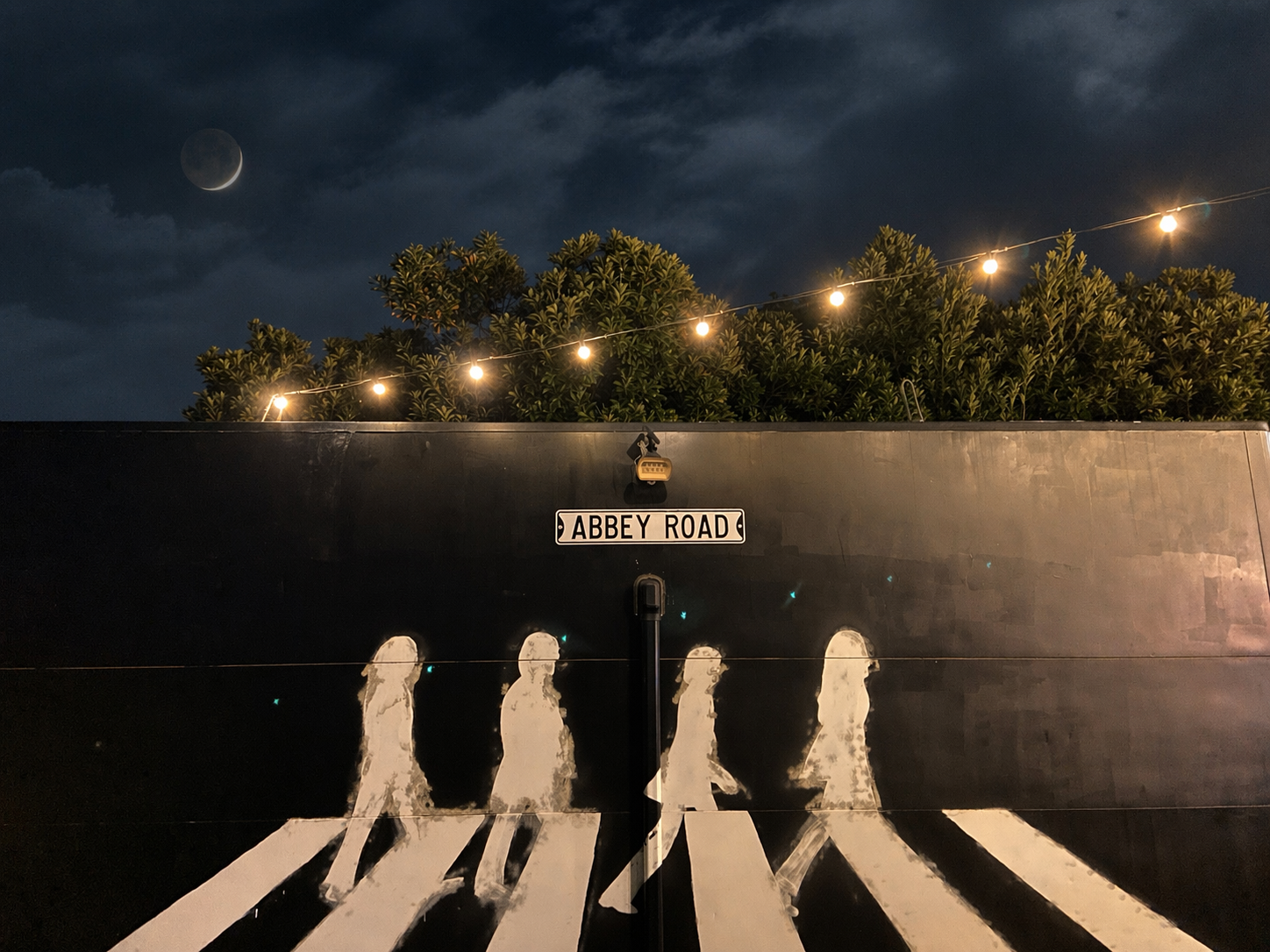
I finish my drink and leave. The red London bus glows under the Gunma sky. Above, a waning crescent moon hangs like a chipped Edo coin, its dark edge faintly visible in earthshine.


You must be logged in to post a comment.