One Rainy Day in April

Today I decide to travel towards Matsumoto, into the middle of the Japanese Alps. At Kanazawa Station, I pay the premium ticket price of ¥8970 to travel just one hour on the Shinkansen to Nagano. There, I change to a local train, for local people. After a couple of hours of sitting around on trains, I finally step out into the clean, fresh mountain air. And it’s raining.

The mountains are gone, washed out in a white, ghostly fog, completely invisible today. But with better weather expected tomorrow, I tell myself this won’t have been a wasted trip. I put on a bright green poncho. It doesn’t suit me. I probably look like a large frog. Still better than an umbrella. I always forget those anyway.

Reservoir Frogs

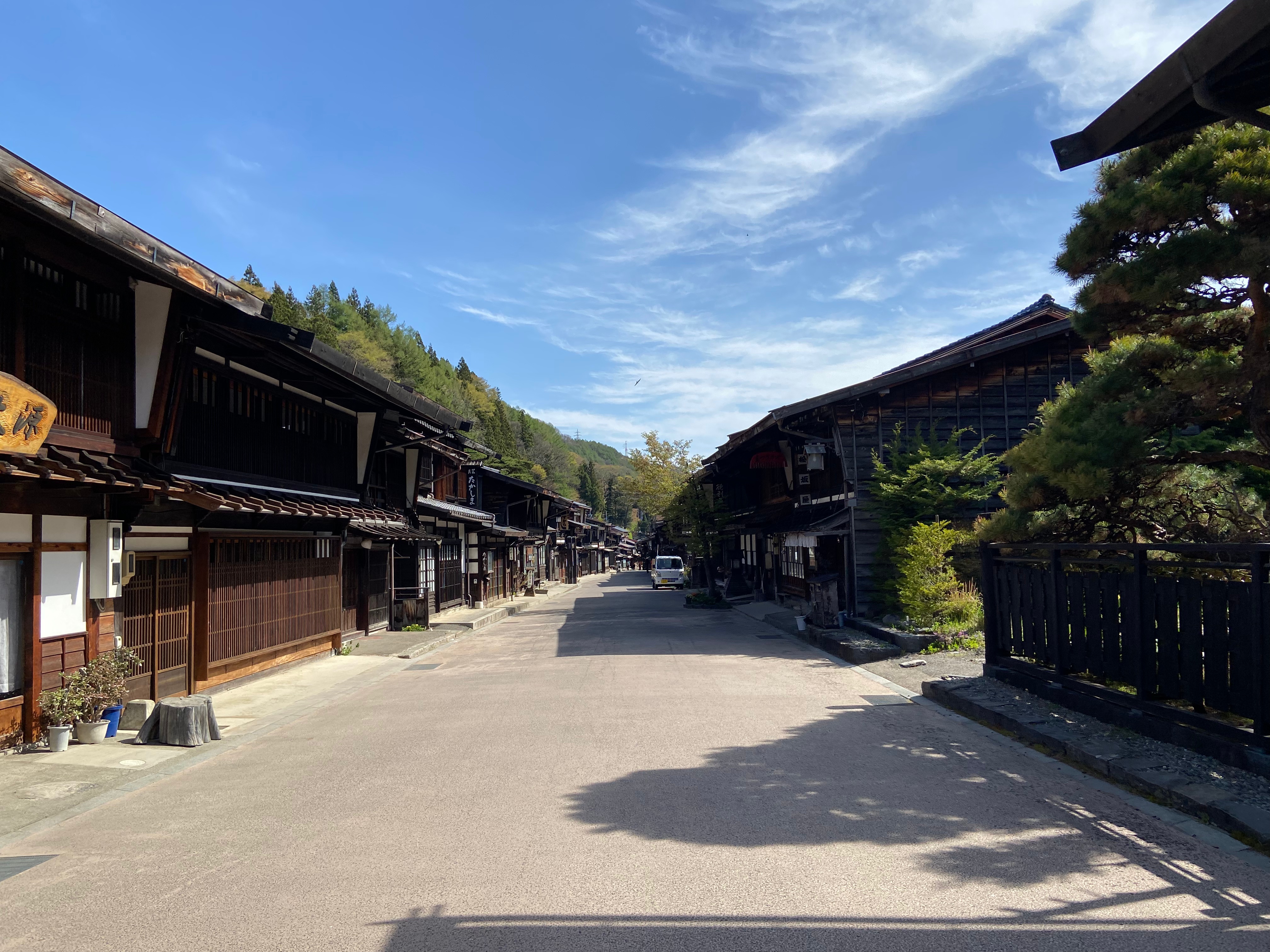
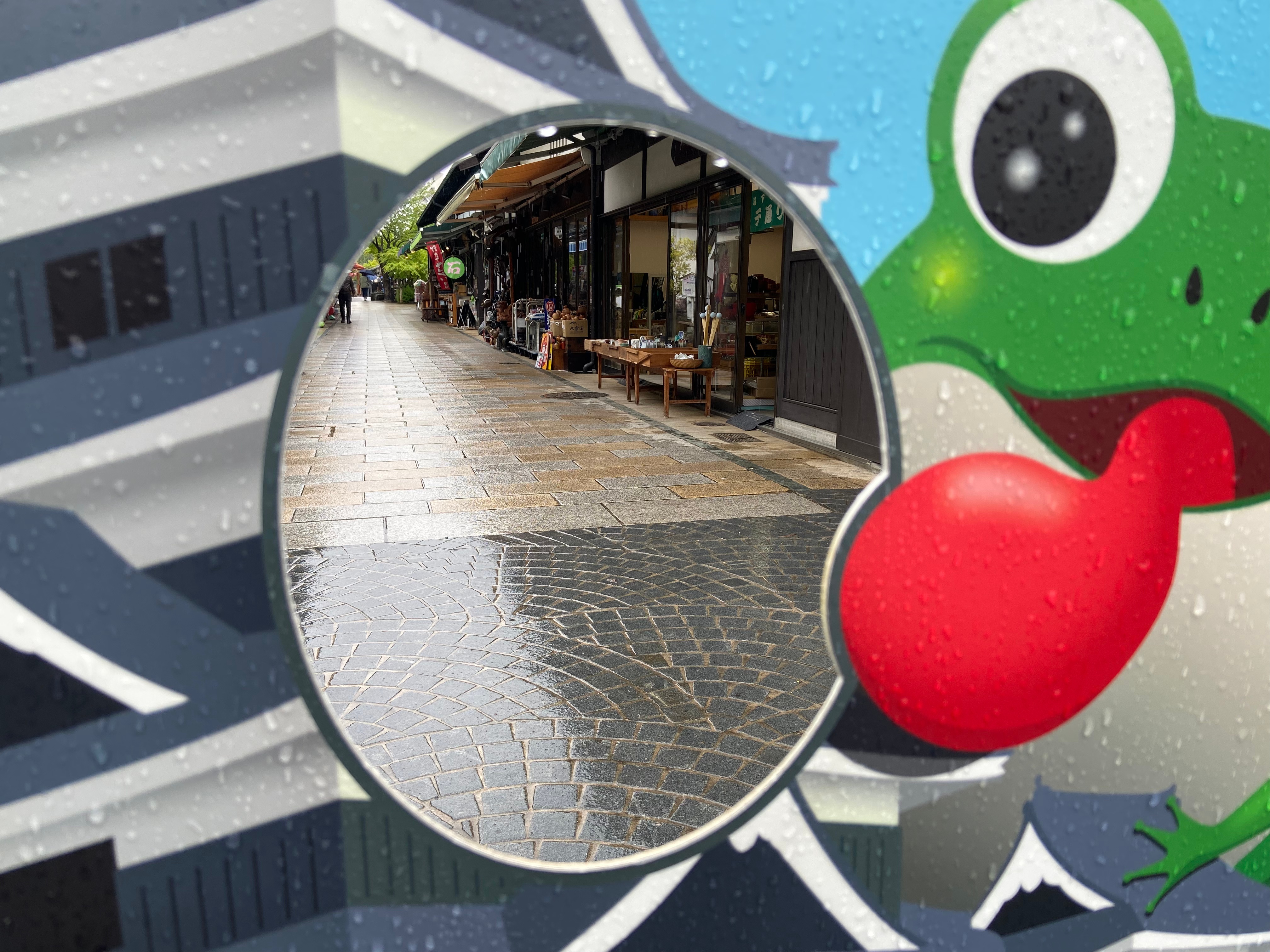
I start exploring, and despite the rain hammering down, I’m drawn straight in. Matsumoto has a quiet, charming vibe. Flower beds and streams line the roads. Bars and restaurants that feel quietly inviting look to be from another time. The Metoba River snakes between buildings that look like they’ve been here for hundreds of years. It reminds me of a less crowded version of Asakusa. Not empty, though, as groups of tourists do drift past, tethered together by guides holding small flags like they’re leading expeditions.

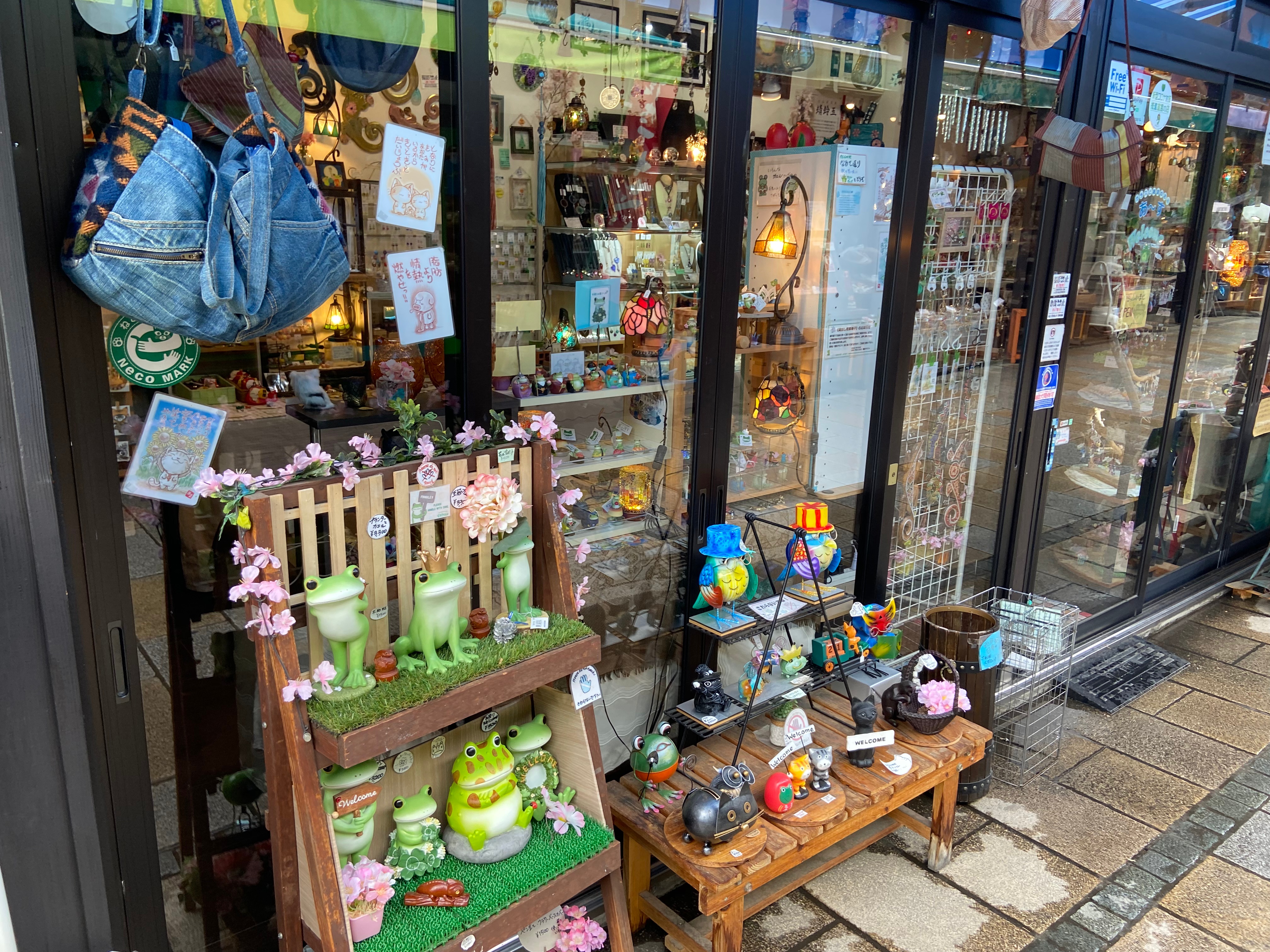
The main tourist street is Nawate Street, also known as Frog Street. It’s a pun I’ve mentioned before, tied to the Japanese word for frog, but essentially it means you’ll return home safely. The frogs will see to that. And there are frogs everywhere.

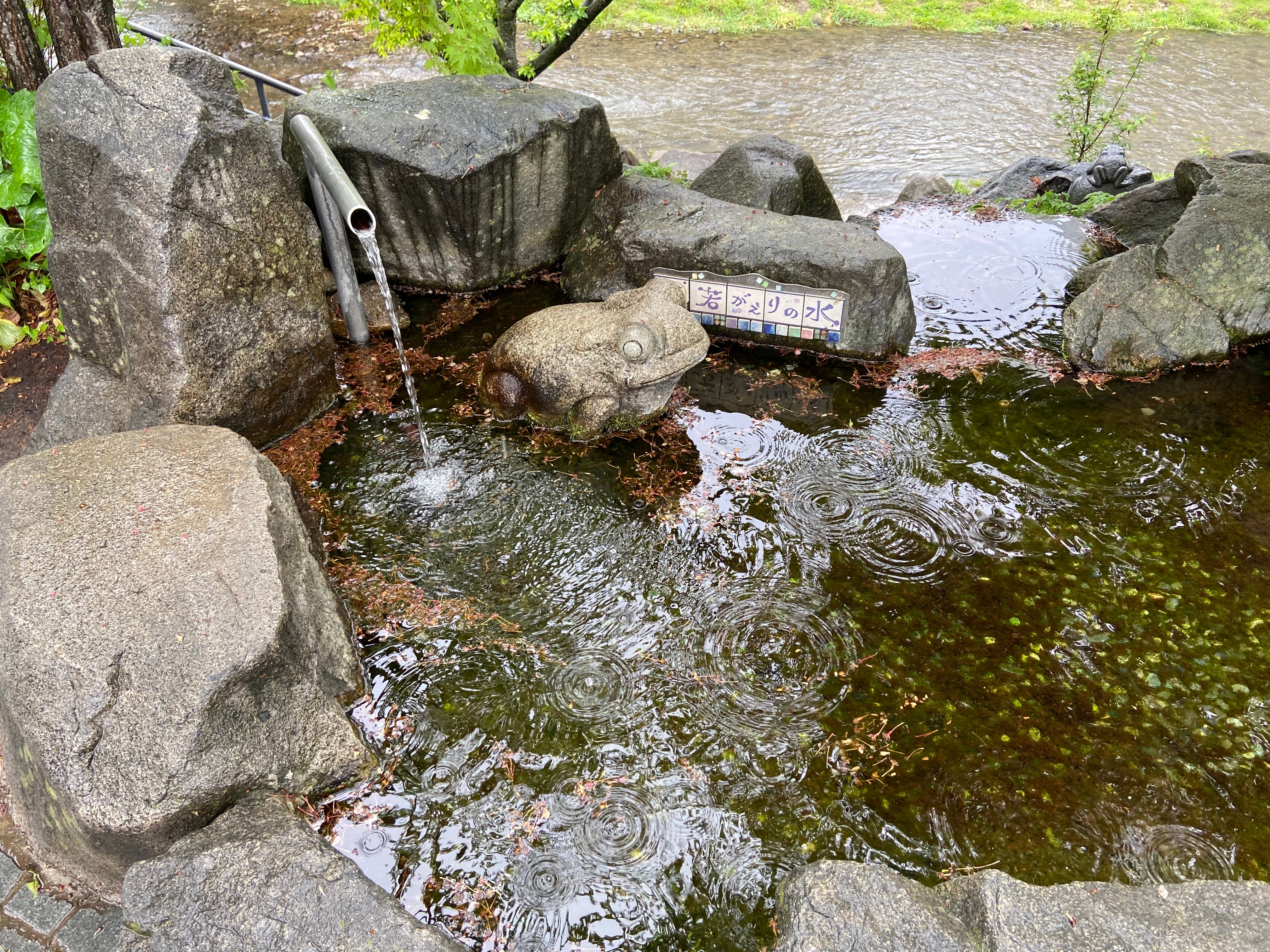
Decorations, statues, souvenirs, offerings. A shrine dedicated to a guardian frog. Amongst the frogs are about twenty freshwater wells, each one slightly different but æsthetically pleasing. They offer clear cold water for free, but I’ve had enough water today; it’s raining so hard I’m essentially covered in water.

There’s a story written at the shrine which I’ll try to translate: Once, this narrow river was lined with festival stalls, and a dear river frog made a beautiful sound. There were unique emotions, such as the playing of the drums or the smell of acetylene lamps, the voices of stallholders, and fireworks, and the scooping of goldfish.

Then the river became dirty and the frog was pushed upstream. This caused the streets here to lose their vitality, and in 1972 the dear river frog was enshrined, in an attempt to make the river clean again. It worked, and the streets came back to life. Now it is a frog town. A place where mountains and city meet. A place where visitors can relax.

Keep Calm and Waffle On

I decide to walk now in the direction of a local National Treasure: Matsumoto Castle. On the way I pass more art shops, craft shops, storehouses dotted around between the many small shrines and folk art stores. Plenty of town maps here too make it easy to keep track of where I am.

And if kimono rental shops are your thing, well forget that! Here you can rent a panoply of samurai armour for the day for the low price of ¥11,000. Not in this weather though, I’d look ridiculous as a samurai in a green poncho.

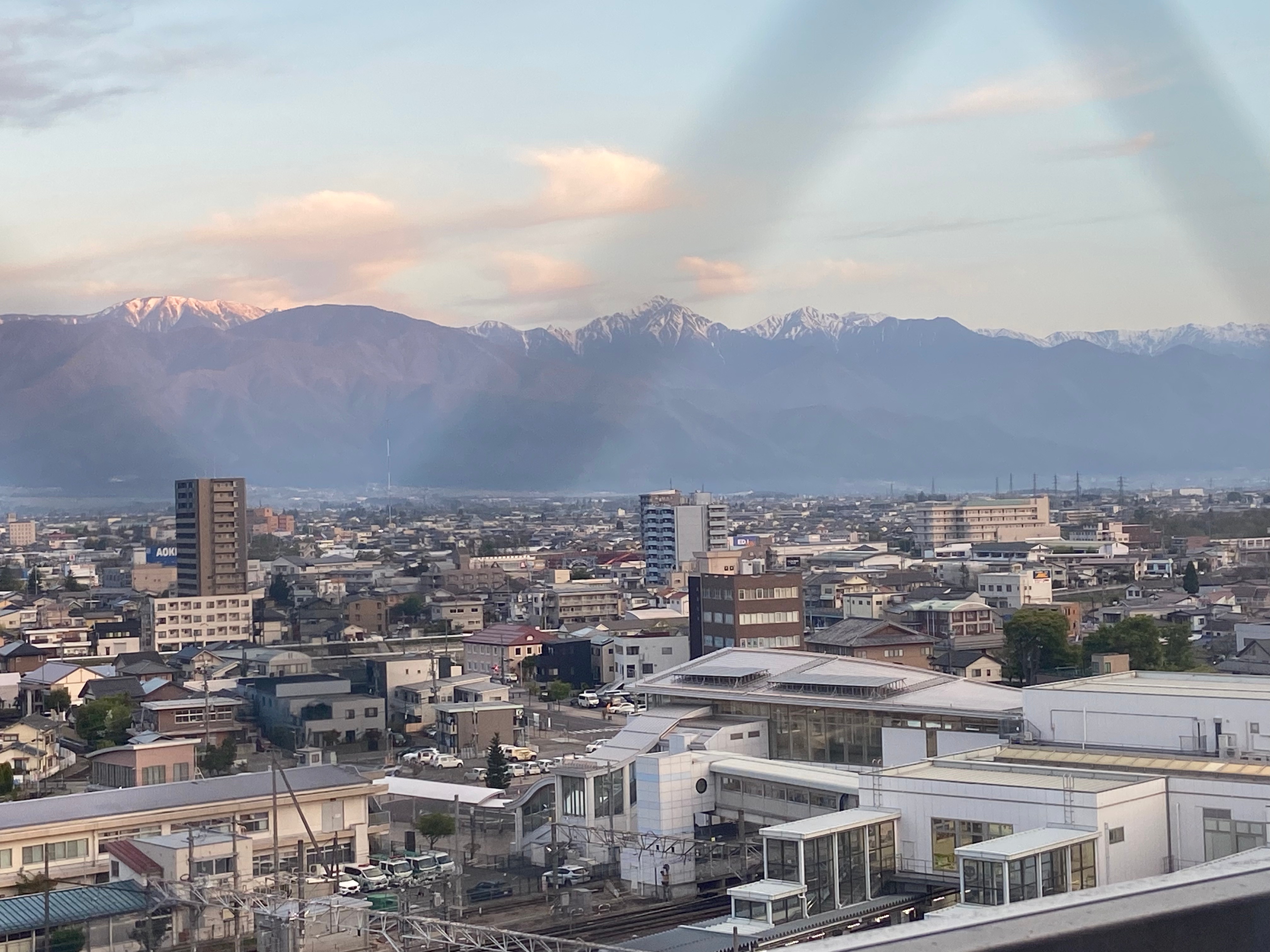
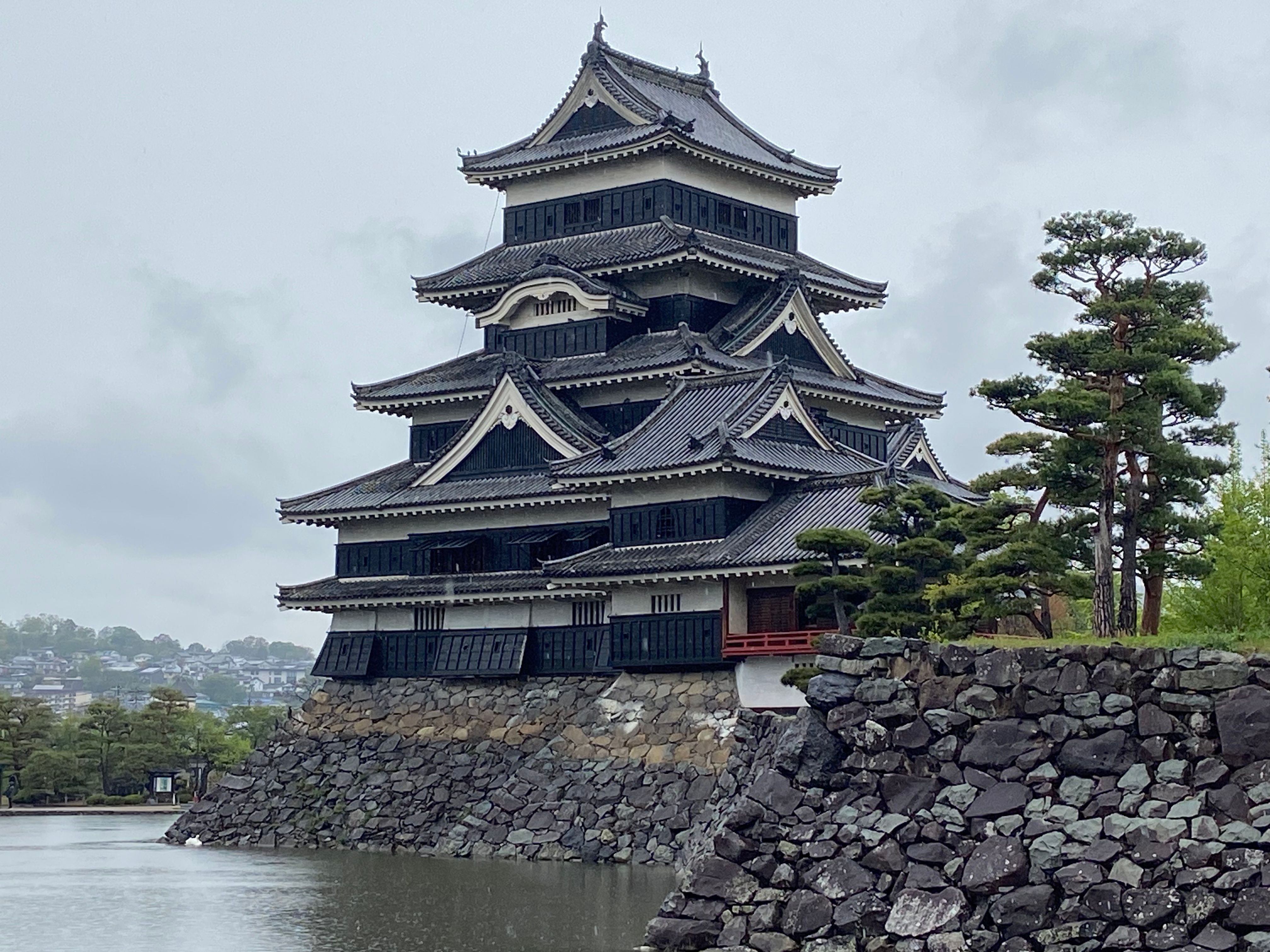
It’s not long before I arrive at the castle. Inside, the keep is so incredibly calm; there’s not a tourist in sight, probably put off by the weather. The castle is the oldest five-storey six-floor castle in Japan. A very specific metric, if you ask me. But it’s all because of a completely secret hidden floor. A castle bigger on the inside than on the outside. The castle is stunning to look at. The Northern Alps sit shrouded behind it, blending into the clouds, while the swamp-like stillness of the moat settles the scene.

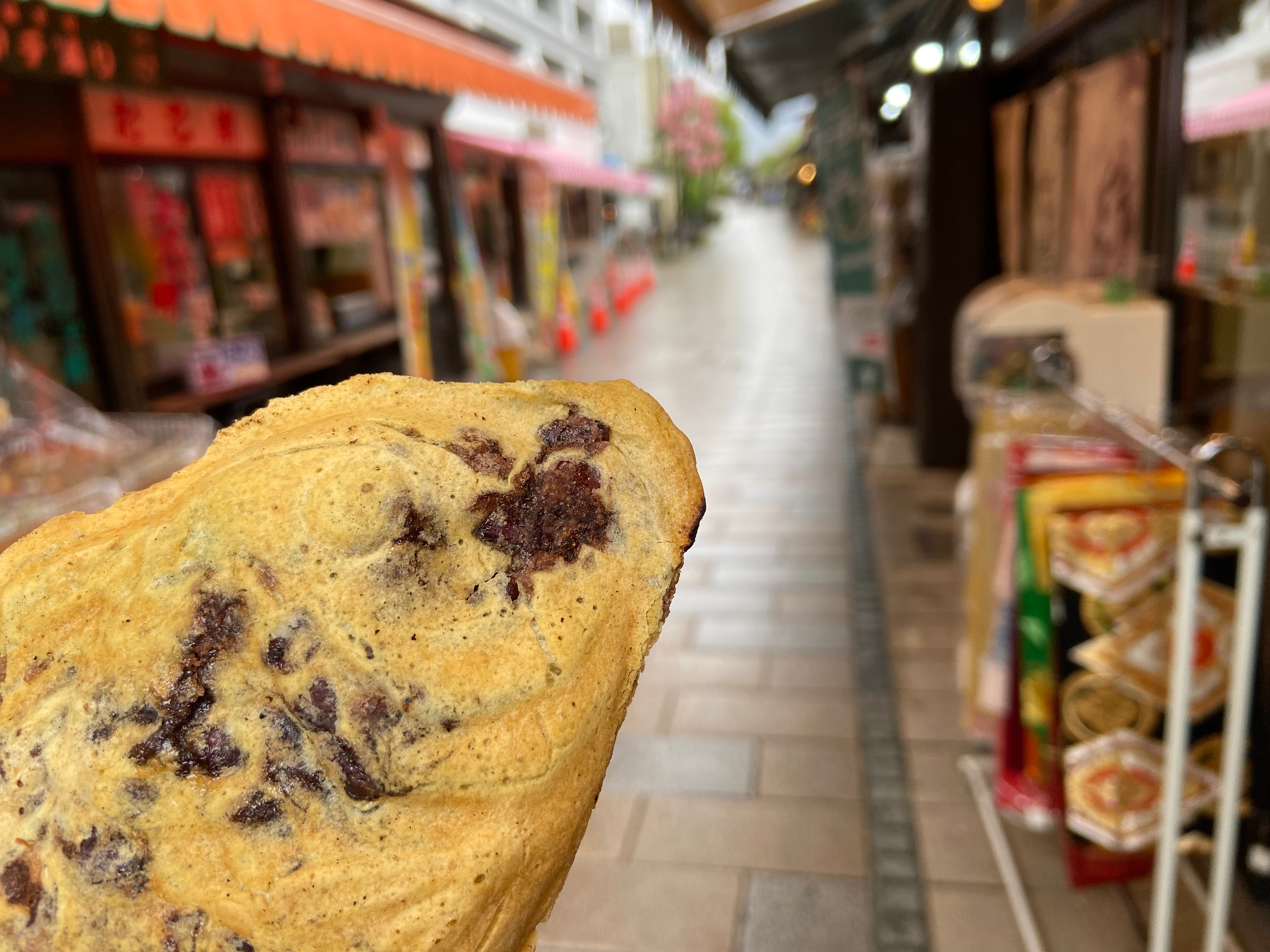
Leaving the castle, it’s almost time to check into my hotel, but I’m feeling a little hungry so head back in the direction of Frog Street to see what’s on offer. I pass a shop selling traditional taiyaki, fish-shaped waffles. This store offers three normal flavoured fillings and one odd flavour. Sweet red bean, chocolate, custard cream, and sausage.

Obviously I go for sweet red bean paste as it’s my favourite. It’s cheap too. Only ¥250 and surprisingly massive. As I am handed the packet, I find the waffle to be red hot, and it smells so good. The batter sweet and soft and delicious. But the tail is the best part, a little crunchy and a little crispy. Luckily for me I’m staying near Frog Street for the next three nights, so I’ll be sure to return here frequently for more fish-shaped waffles; one of the best Japanese snacks.

The Grape Train Vinery

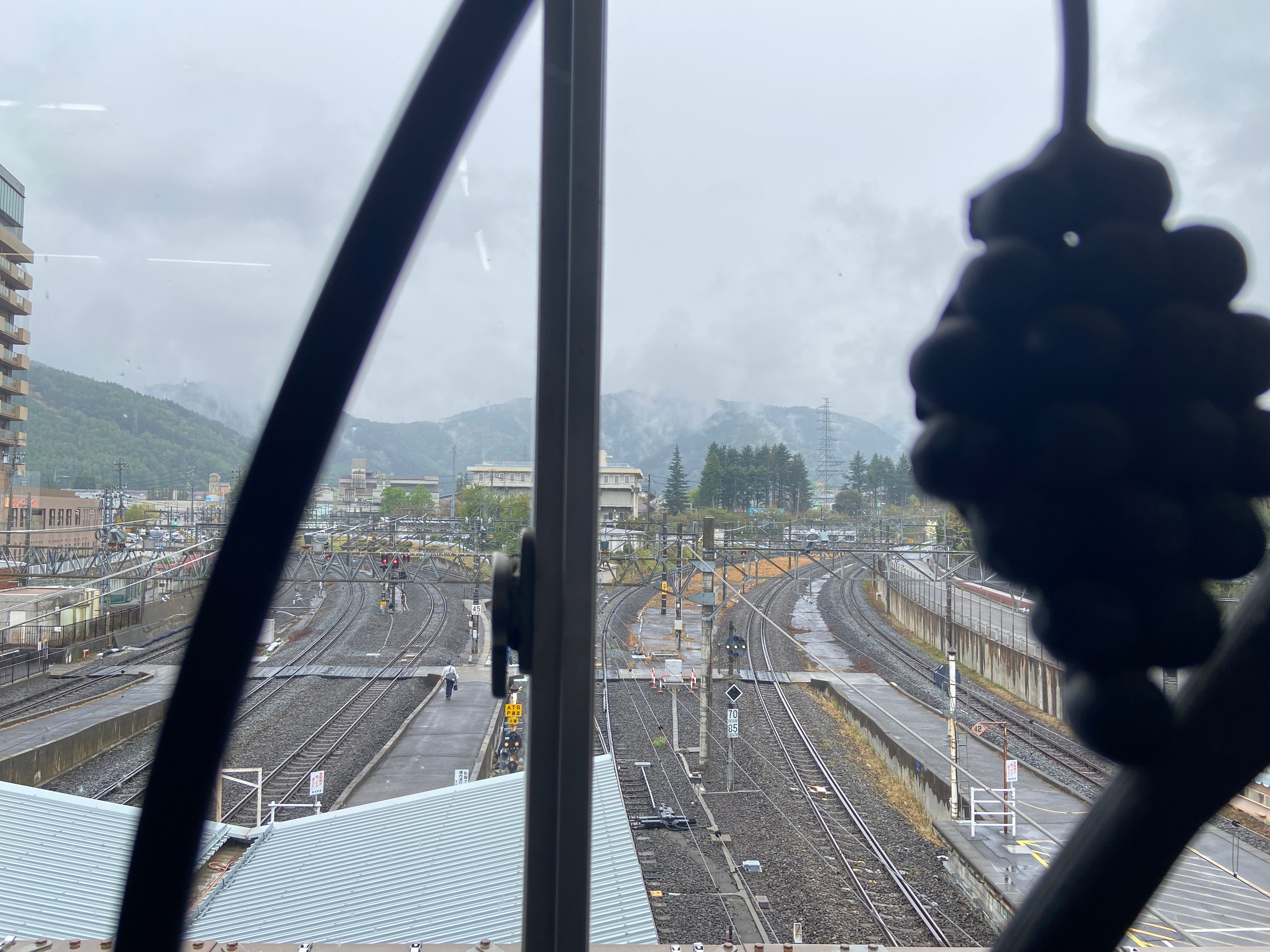
I head to my hotel to check in and dry my shoes with a hairdryer. I don’t need the poncho anymore, as the hotel is one minute from the train station, so I’ll be indoors the whole way. I hop on the train bound for Shiojiri Station, the journey takes 8 minutes. The under seat heating makes a mockery of my freshly dried shoes.

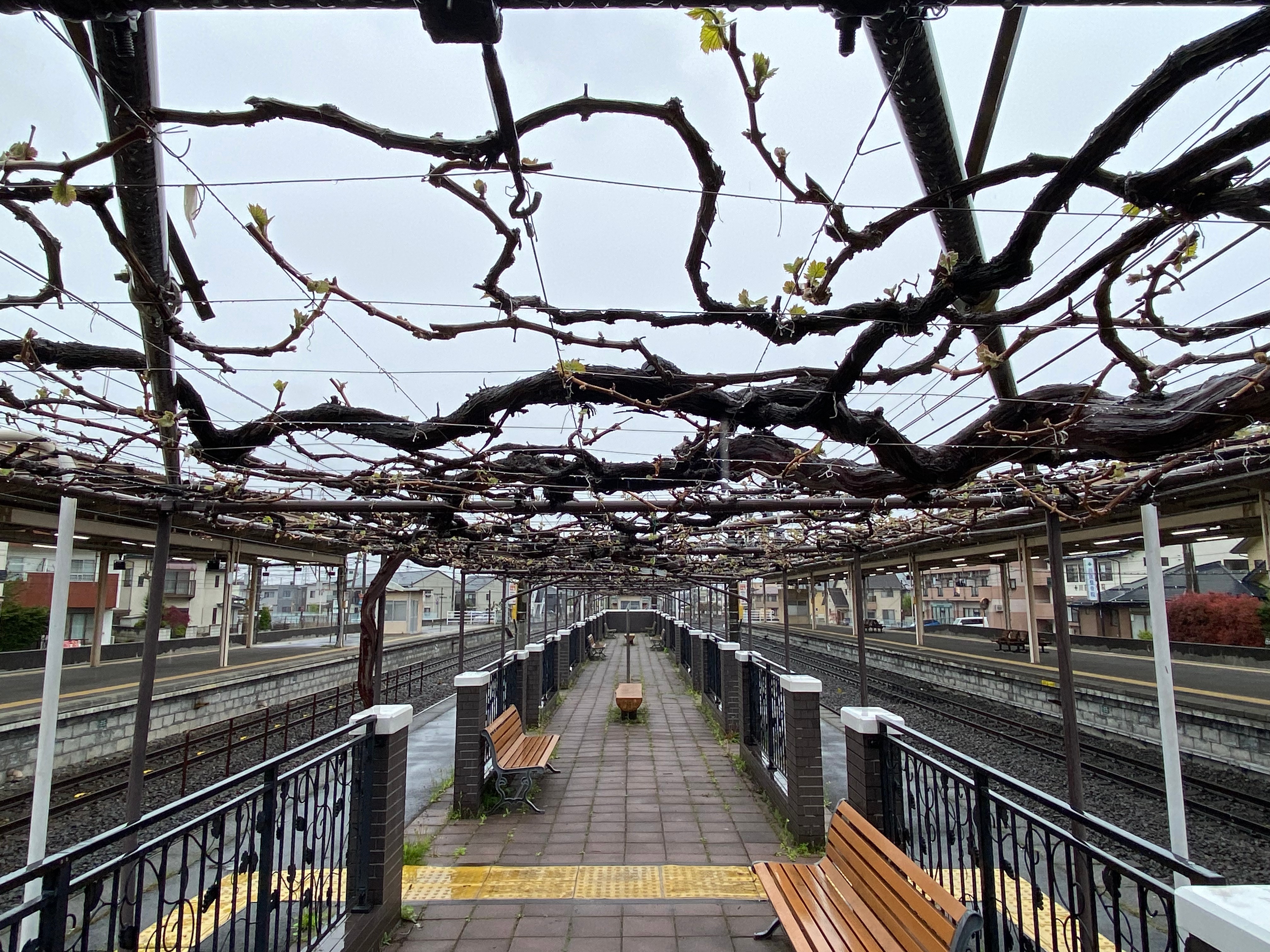
I exit the train into my destination. It’s actually the train platform I’m here to visit, as it has its own vineyard. That’s right, the grapes used to make Shiojiri Wine are grown right here on the train platform. The vines stretch along the platform, growing patiently beside passing trains. Obviously the grapes won’t be fully grown until the autumn, right now they are just small leaves on vines. I do notice that they have hung some plastic dragonflies around the vines, which I assume is to deter predators from eating the grapes.

Inside the station, there’s a small gift shop. I purchase a bottle of Black Queen red wine, made from platform grapes. Then it’s back on the train 8 minutes to Matsumoto Station.

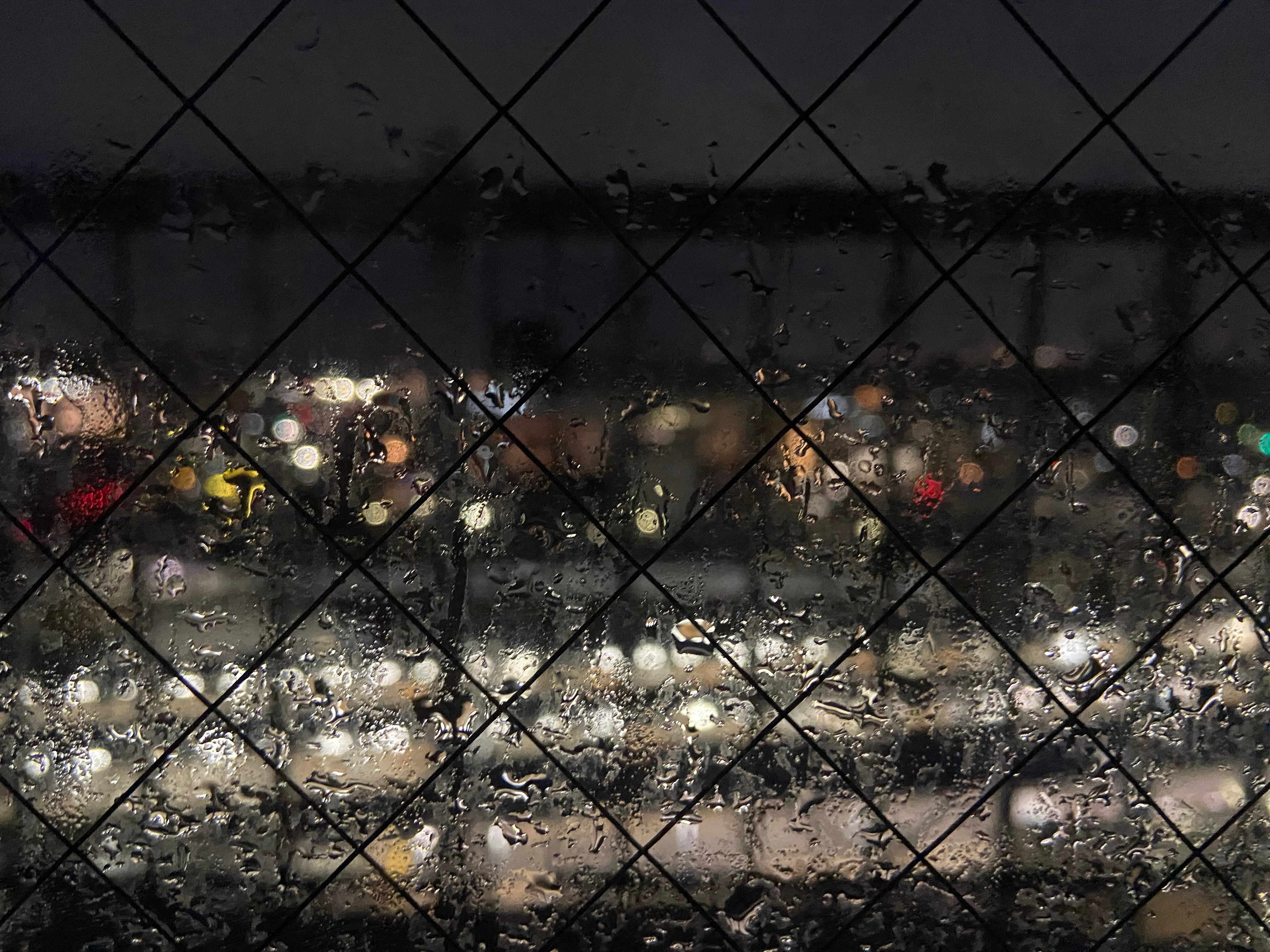
In my hotel room, I sit on the edge of the bed with a plastic cup of wine, its notes of cassis a little overpowering. I enjoy the sound of the rain as it taps softly against the window. The wine is bold, a little too certain of itself. And somewhere beyond the fog, the mountains are still there. Waiting for tomorrow.

One Fine Day in Spring

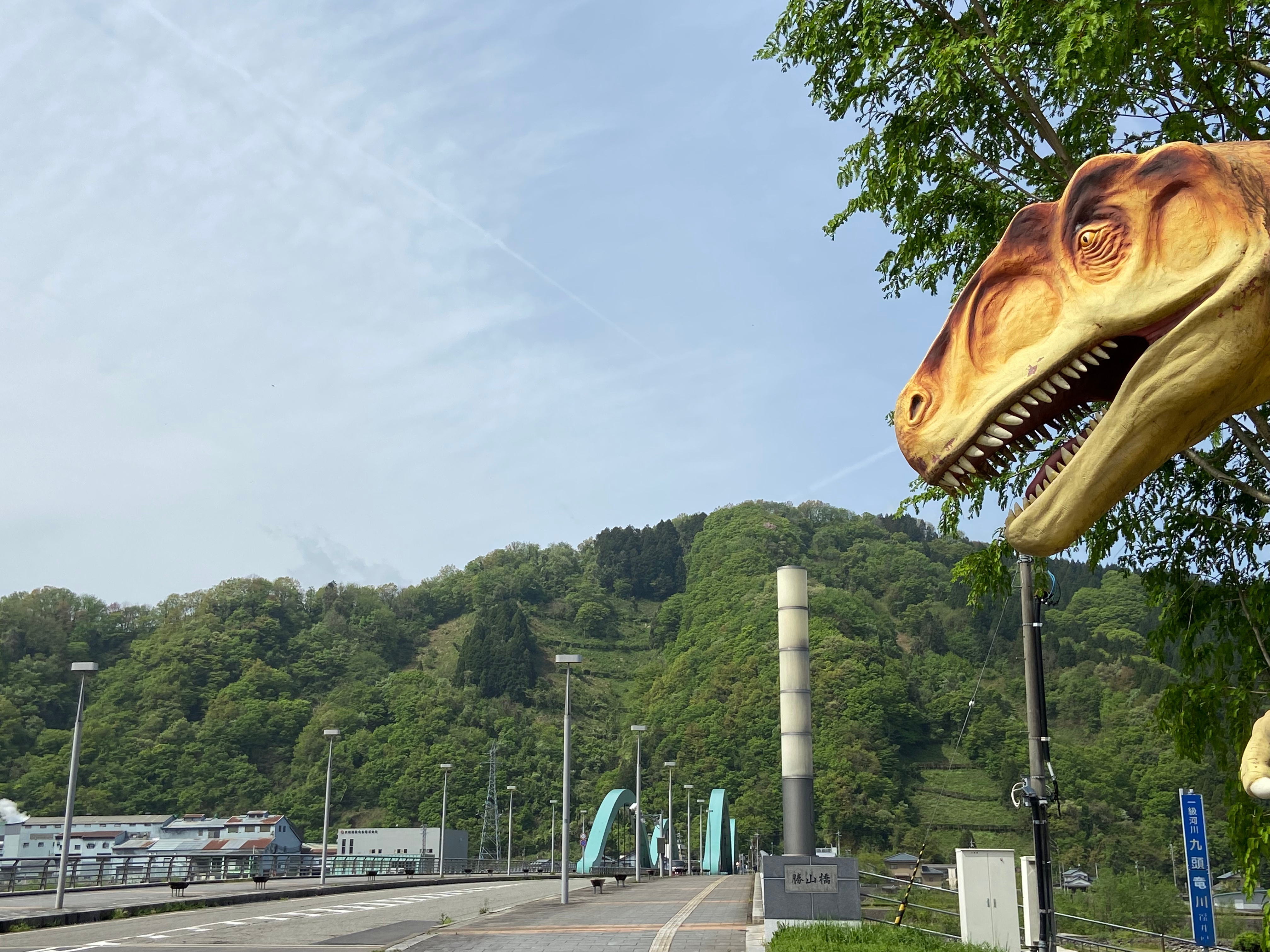
I’ve taken a train to Fukui Prefecture, to the city of Katsuyama. Just as my train arrives at the station, the hourly bus pulls away. Outside, the weather is clement, the mountains lurk in the distance, so I decide to go for a peaceful stroll with no real direction in mind.

I have to cross the Kuzuryu River. The scenic gorge is stunning, the attractive spring foliage worth the train fare alone. It’s cooler up here too. I look around. The hills line up like vertebrae along the horizon. It feels like a soft world, padded by mountains. The cliff face is folded like a paused wave. Bands of green and grey stack into centuries you can touch. Whatever once passed through here is gone now.

Katsuyama is very much made of layers. Pavement over river. River over time. The shops sit obediently between eras. The remains of it once being a castle town shine through, with old houses with deep eaves and complex, steeply sloped roofs, former samurai residences, and the best part, there’s no people around.

The thing I don’t like about being here is the time it takes for the green man to appear when crossing a road. There’s no traffic or urgency, but I still have to wait. I don’t want to be a person who ignores instructions. Out here, it would feel like a faux pas. So I stand there, alone at empty crossings, waiting. My walk becomes stop-and-start, dictated by signals that don’t really need to exist.

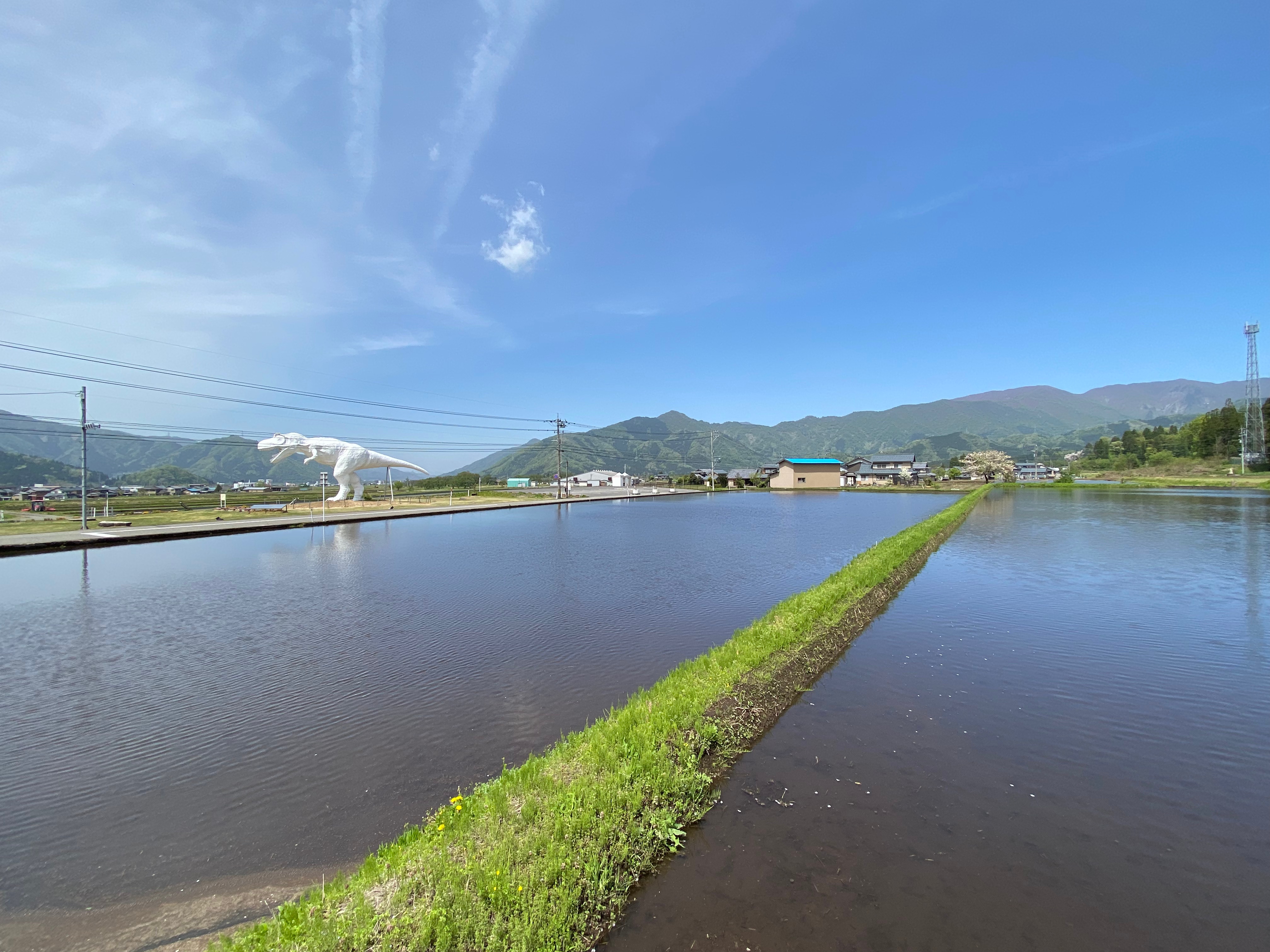
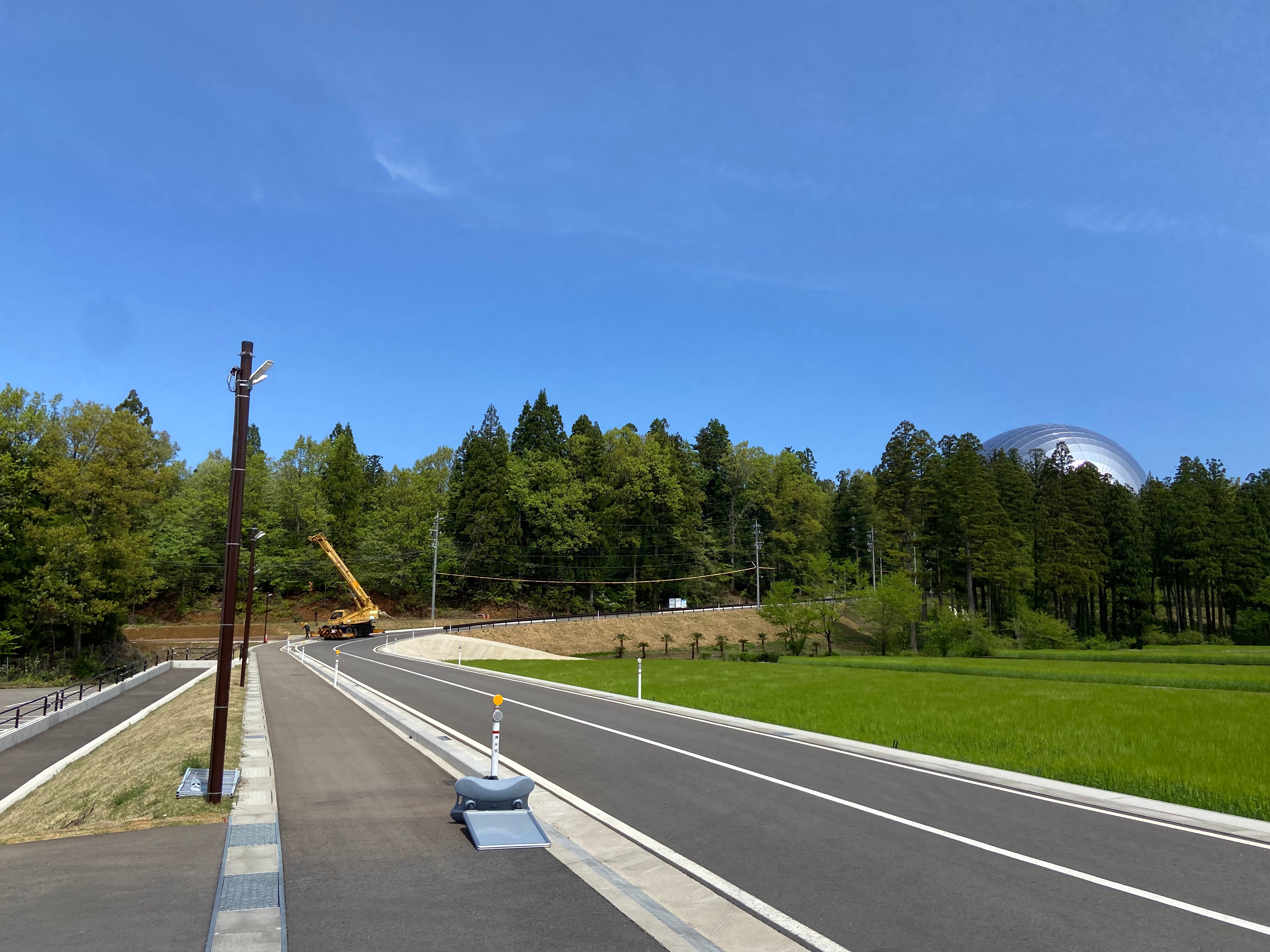
The further out of Katsuyama I get, the flatter everything becomes. I pass rows and rows of rice fields. The flooded type. I’ve always enjoyed the calmness evoked by such a simple sight. Beyond the fields across the horizon, a large silver building sits in the shape of a massive ball. So I head that way. It seems like it might house something historic. About 600 metres out, I can hear something, a thunderous roar. It sounds mechanical, though not entirely.

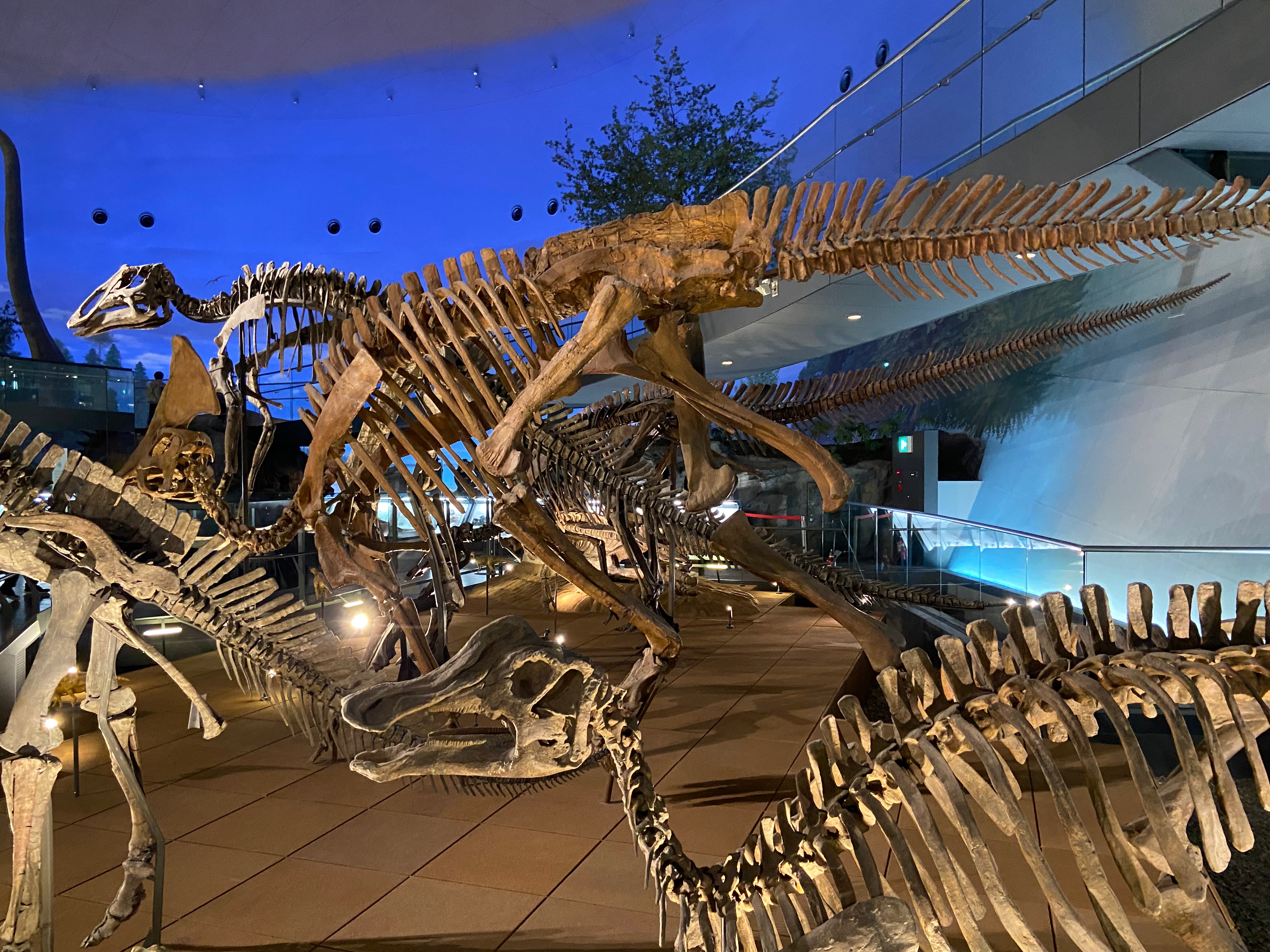
The car park is busy. Painted lines fade in and out beneath the tyres. A few large structures stand at the edges, sun-bleached and unmoving. Inside, I have to head underground, down a massive escalator, before the space opens up into something cavernous. Displays line the walls, fragments, impressions, reconstructed forms. Some are incomplete. Others feel too complete. An animatronic figure pivots, pneumatics sighing like a dying star. As if rehearsing extinction again.

Fukui is famous for fossils. They’ve been discovering them here since 1989, and this museum is a collection of what they’ve found. There are four floors housing exhibition halls, laboratories, seminar rooms, a lecture hall, a children’s area, a video library, and sections on earth sciences and the history of life. It’s all very interesting.

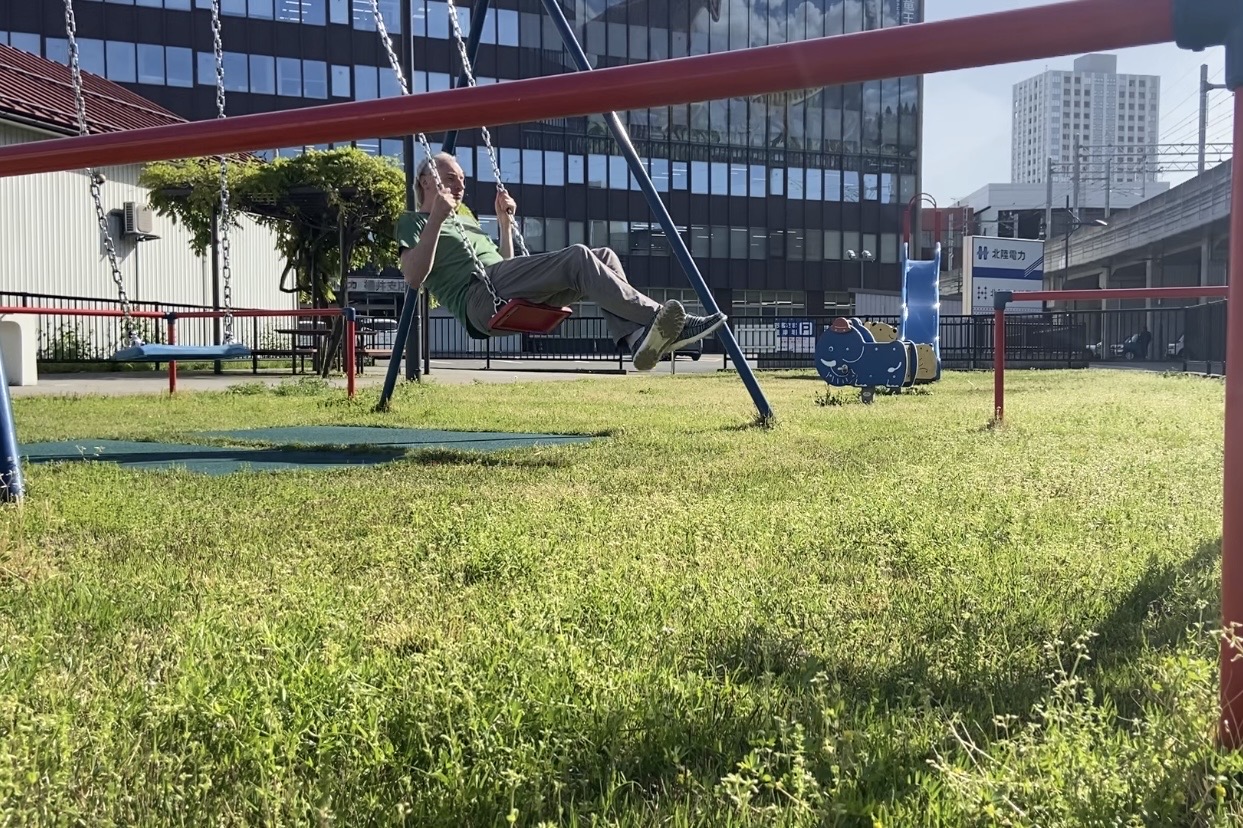
I head back to the station. Here, a single timetable flaps gently in the breeze, listing hourly destinations. Inside, a dragonfly mocks flies fluttering in the artificial air. I have time to kill before my train, so I go and sit in the park, on the swings. I wander just this park before eventually leaving on the train, to Fukui Station. The attendant walks down the train after every stop, before she bows at each person individually; there are twenty-two stops.

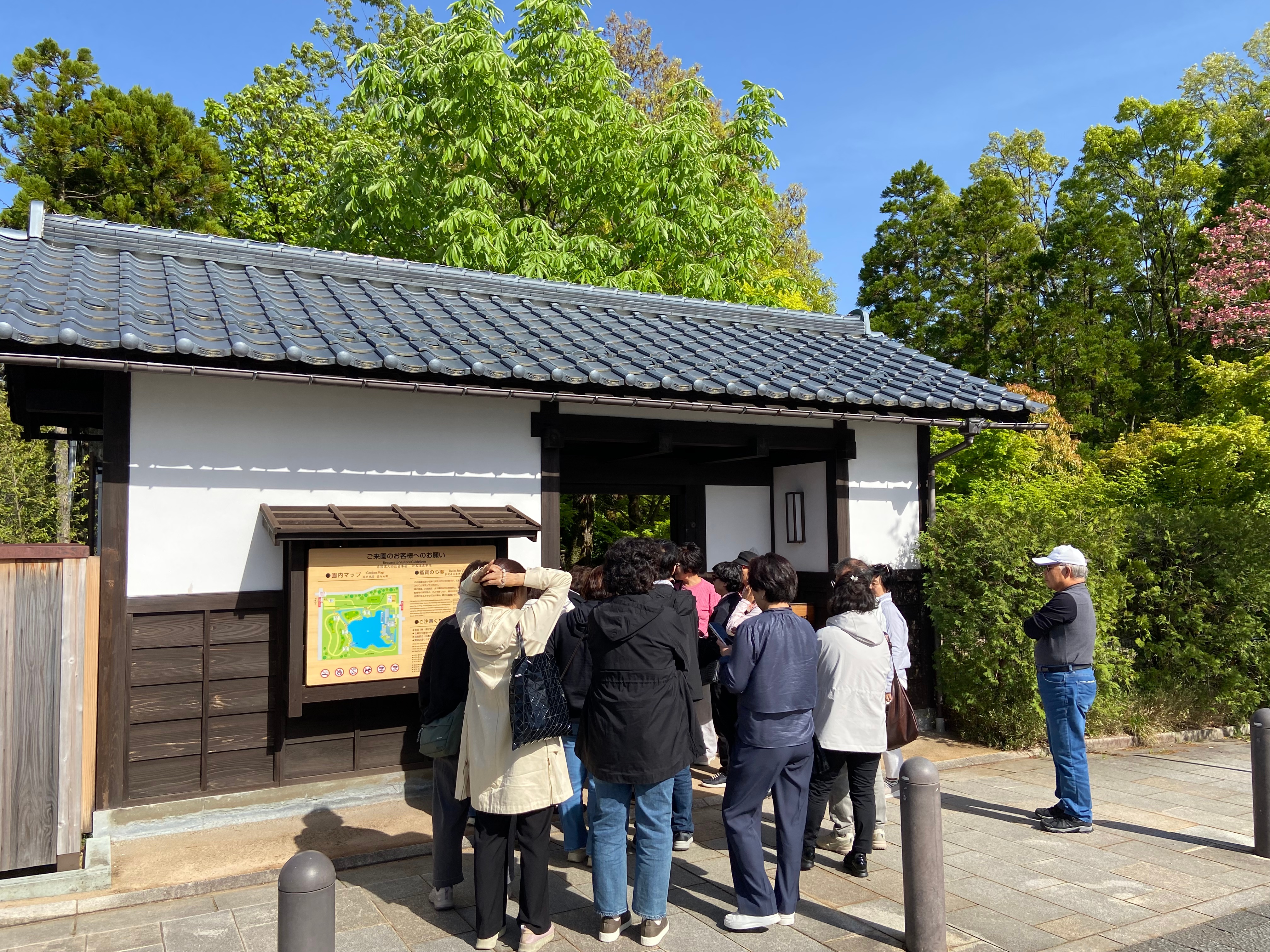
At Fukui Station I’m at a loss for things to do. I check out the Fukui Castle ruins, but these now house government buildings. I see a sign for a zen garden, but doubt I can get any peace from there as there is construction right beside it. Also, when I do arrive, there’s actually a queue of people waiting to enter, all talking loudly.

There’s a large shopping mall, but everything seems closed. A sign next to a man drilling in the road asks people to keep the noise down. In fact, the noise is really starting to annoy me. Since Fukui started finding fossils, there’s been a small boost in tourism. A Shinkansen station was added a couple of years ago, and now the area is in a constant state of development.

I wander through random side streets, passing bespoke shops that are also closed. In the end, I feel Fukui has defeated me; there isn’t much here for me, and the only place I do find with some semblance of peace is a little park out of the way of everything.

And for the second time today, I find myself sitting on a swing.

Zen and the Art of Samsara Cycle Abeyance

A woman on the train loudly tells her tourist friends and the entire carriage that Kanazawa might be the most Instagrammable place in Japan.

Leaving the station I see a map showing thirty-seven points of interest, and for someone who enjoys walking as much as I do, and with my long legs, it appears everywhere today will be within walking distance. Following a gaggle of eager tourists, I end up at Omicho Market.

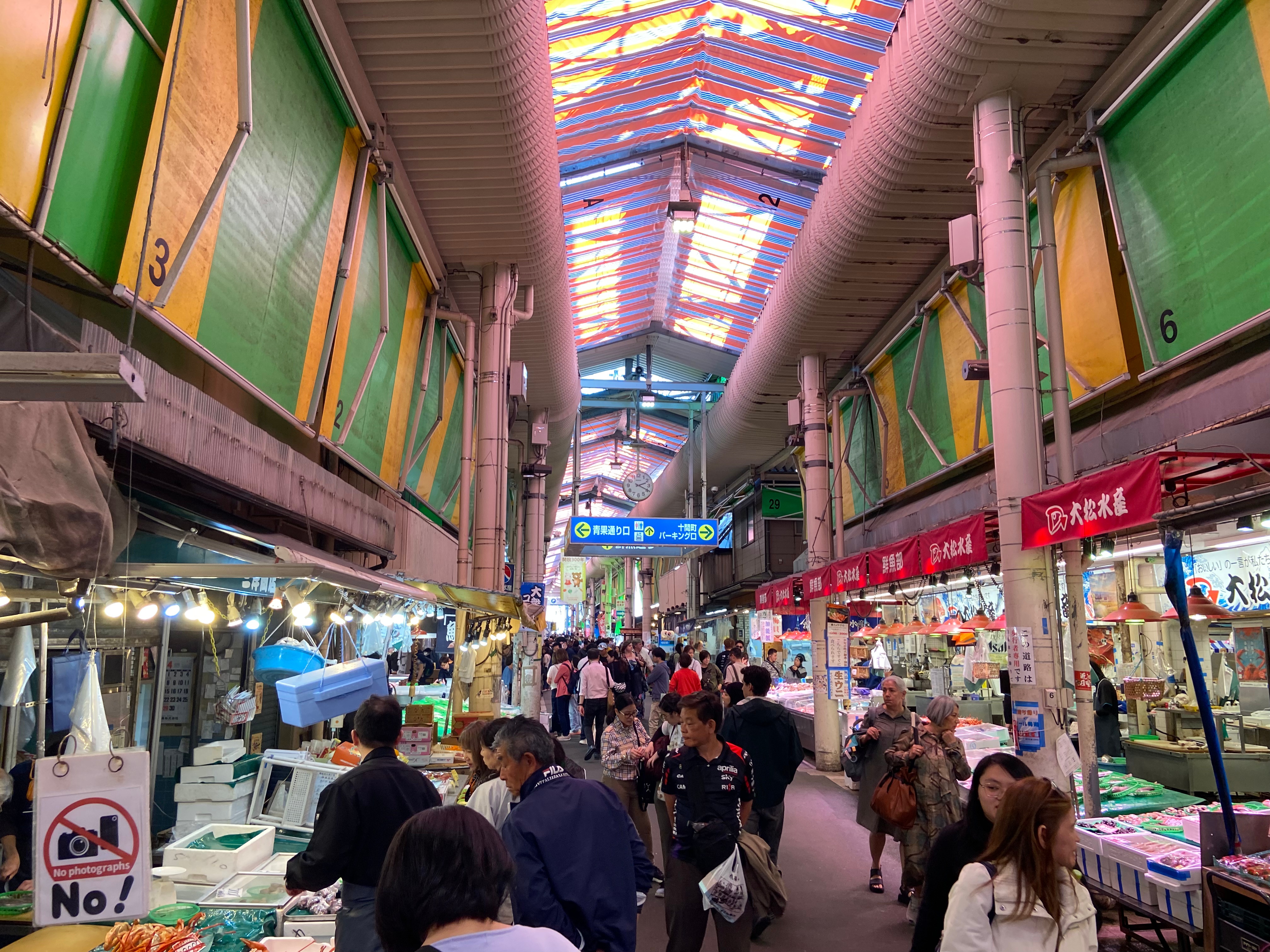
This massive indoor fresh food market has been operating since the early 1600s, and the tourists are here for it. The smell of freshly caught fish fills the morning air. A sign at one stall says, “All the firefly squids are sold out,” which is a shame, as they’re something I’ve always wanted to try. As I move through the haze of cacophonous chatter, a multitude of languages echoes from stall to stall, and staff shouting welcomes from every direction feels somewhat overwhelming. So much so that I begin to suffer from a not-so-Instagrammable headache.

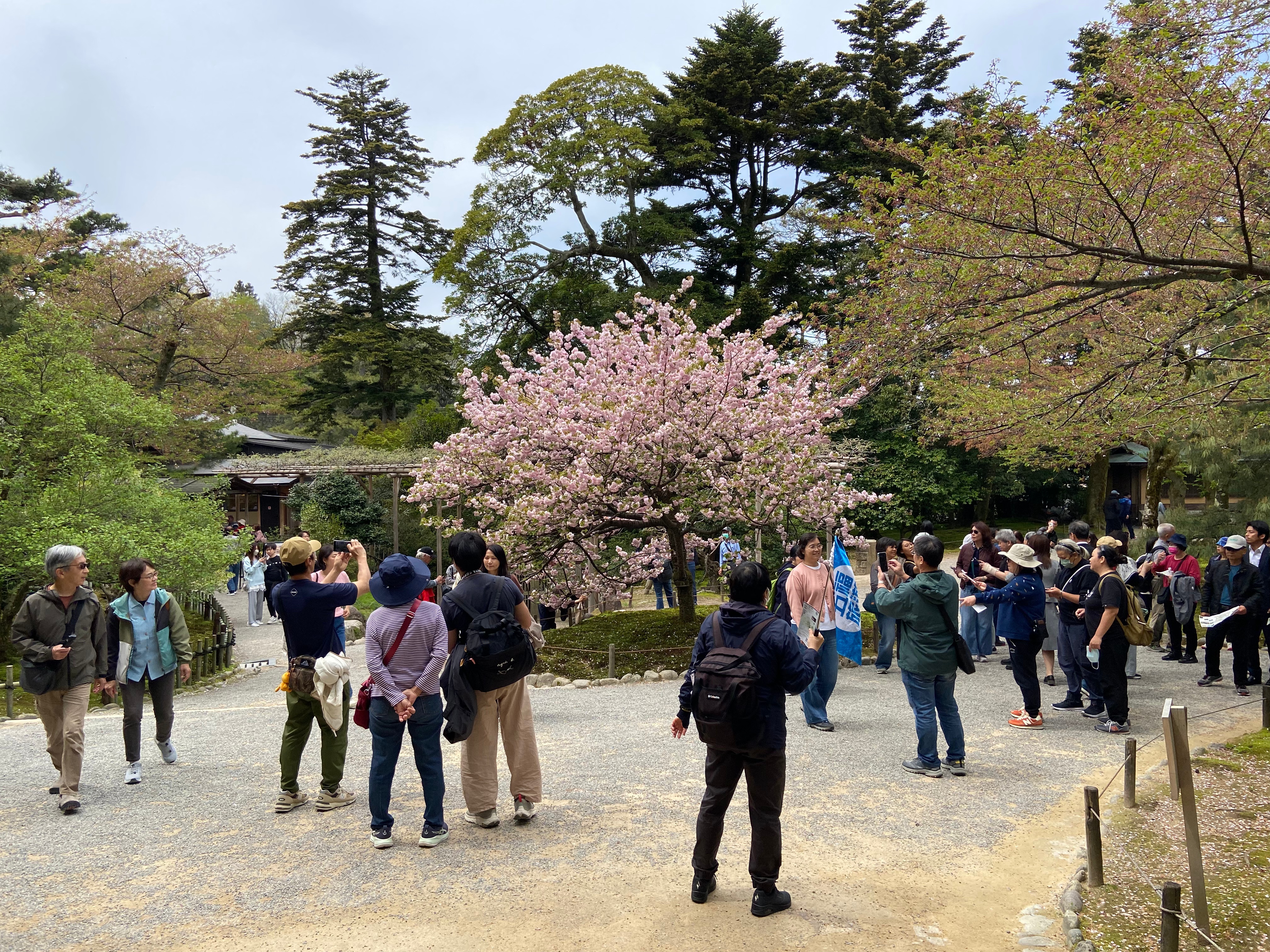
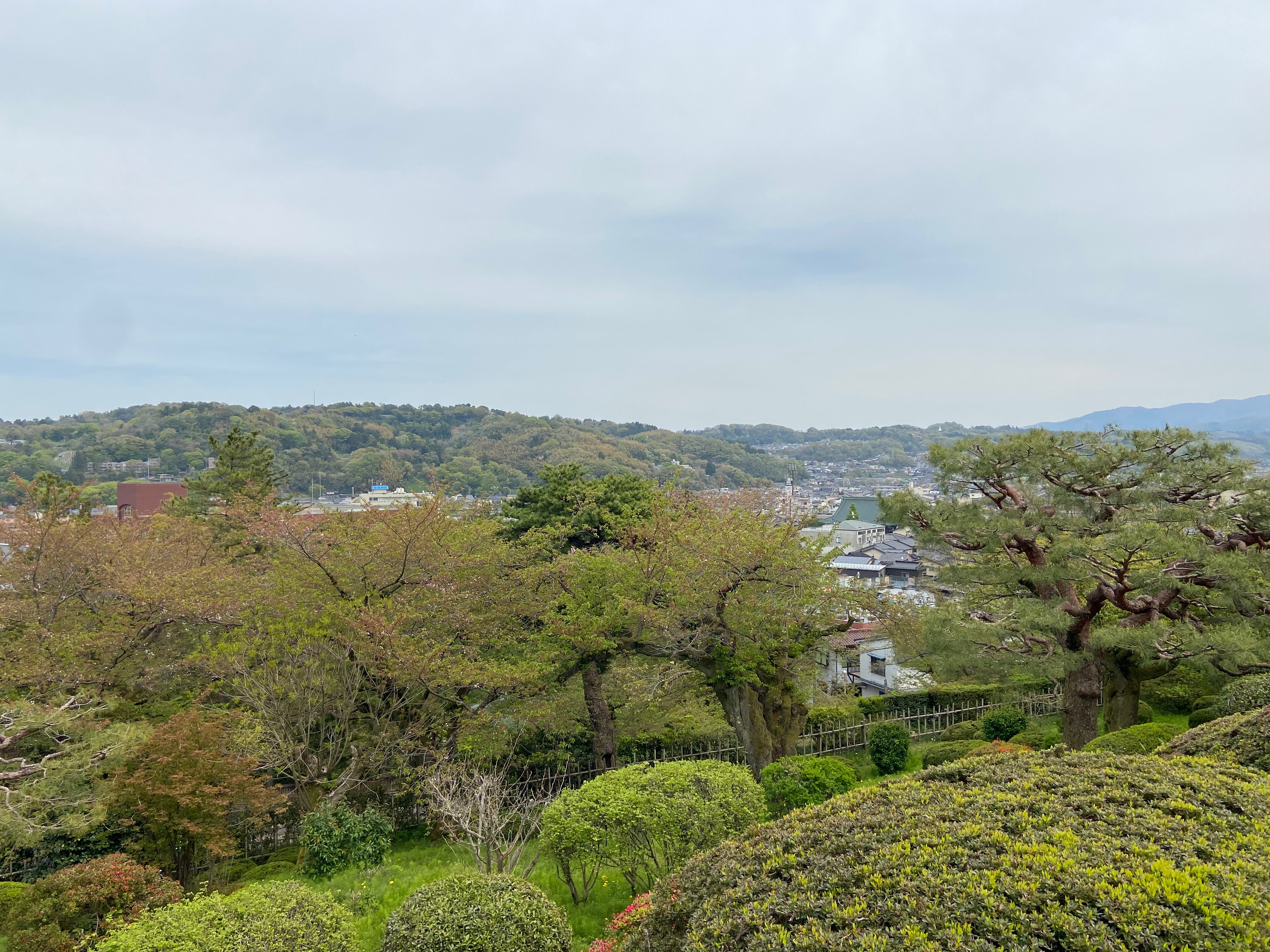
I fall out of the market and seamlessly into a garden, specifically Kenrokuen. Ponds, streams, famous trees, mountain views: the garden has everything. With seven individual entrances and two huge car parks, it also boasts a sixty-minute standard walking course. Unfortunately, the popularity of such a place is again a massive draw for tourism. They gather around the only cherry blossom tree whose petals have avoided abscission, blocking views of the ponds, and the paths themselves. And worst of all, the silence.

I honestly thought being in a garden would be a tranquil experience, but my head thumps as a tour guide with a megaphone ushers along a group of ten or so tourists. People shout, crunch food loudly, and whatever calm I had disappears. Even here, surrounded by what should be peace, I can still hear the beeping of a distant pedestrian crossing.

Trying to leave also becomes a challenge. Despite there being seven exits, I can’t seem to find any of them. I imagine this place is better early in the morning, because despite my complaining, it is still quite a good garden, and the views of the city can be pretty nice from up here too.

Outside, I find another map and a name I recognise: Daisetz Suzuki, a famous Buddhist philosopher, religious scholar, and authority on Zen. He has a museum here in his hometown of Kanazawa; well, it probably used to be his museum, he died in 1966. I do almost miss the entrance though as I become distracted by a massive bee hovering at my eye level, buzzing rather loudly.

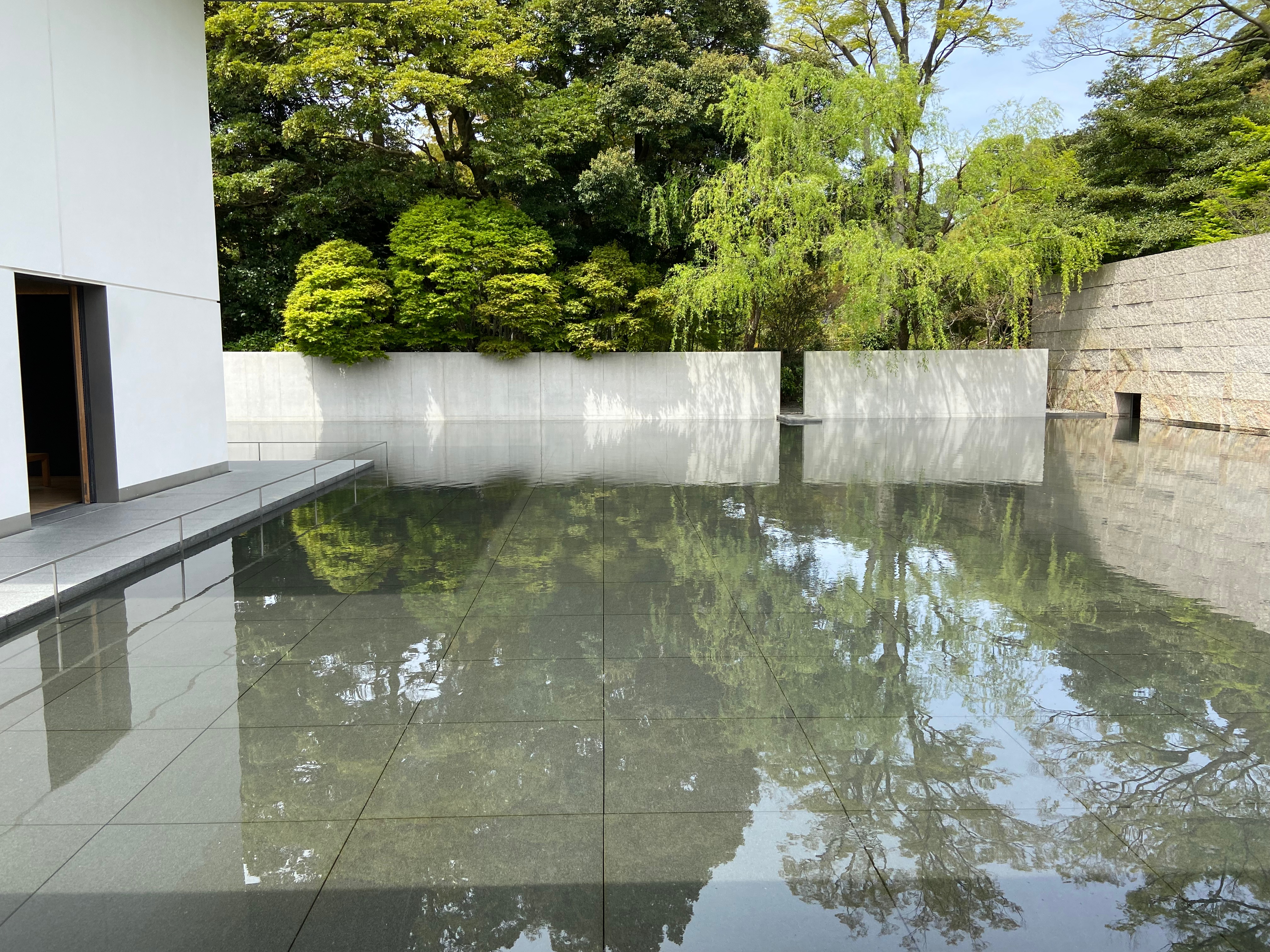
An information booklet that comes with the ticket price opens up to reveal just a blank white page, and nothing else. I do love minimalism, it’s part of this blog’s identity, so I fully appreciate this. I decide to stand by the Water Mirror Garden for a time, listening to the soft sound of distant running water, the stillness, finally achieving perfect silence.

Over at the Contemplative Space, a white room by a window where the sun comes through, I sit thinking. Looking at the suspended water mirror’s reflection, I try not to think. I quickly realise that I can’t not stop thinking, and then try to work out which part of that sentence was the double negative, which only makes me think even more. That’s the problem with meditation or mindfulness; silence becomes a game of Russian roulette, only the gun’s loaded with your own thoughts.

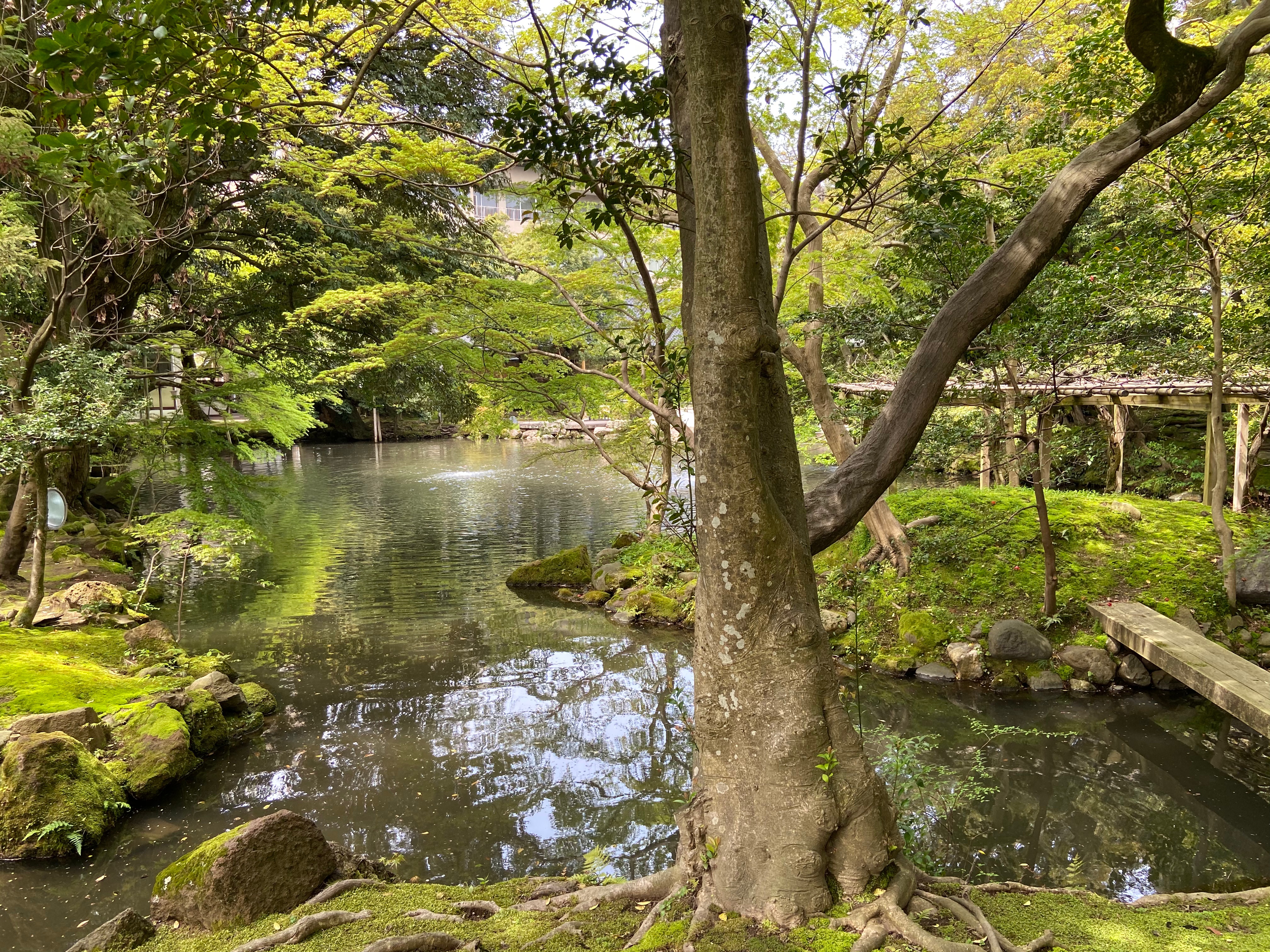
I continue further on, into Shofukaku Garden, a stroll garden around a pond. A Designated Place of Scenic Beauty, and free to enter, I’m quite surprised to find I have this garden completely to myself. I wander around my own secret space, take it all in, watch the carp, absorb the spring colours, before being chased off by that angry bee from earlier.

I next head up some moss-covered steps into a forest. It’s so incredibly silent here, just the twigs crunching underfoot and the occasional bird, there’s nothing else, and I don’t need anything else. So I pause and stay, for a while, just here, just being, before eventually forcing myself back into the cycle of the noisy world I had briefly escaped. That fleeting moment, now gone.

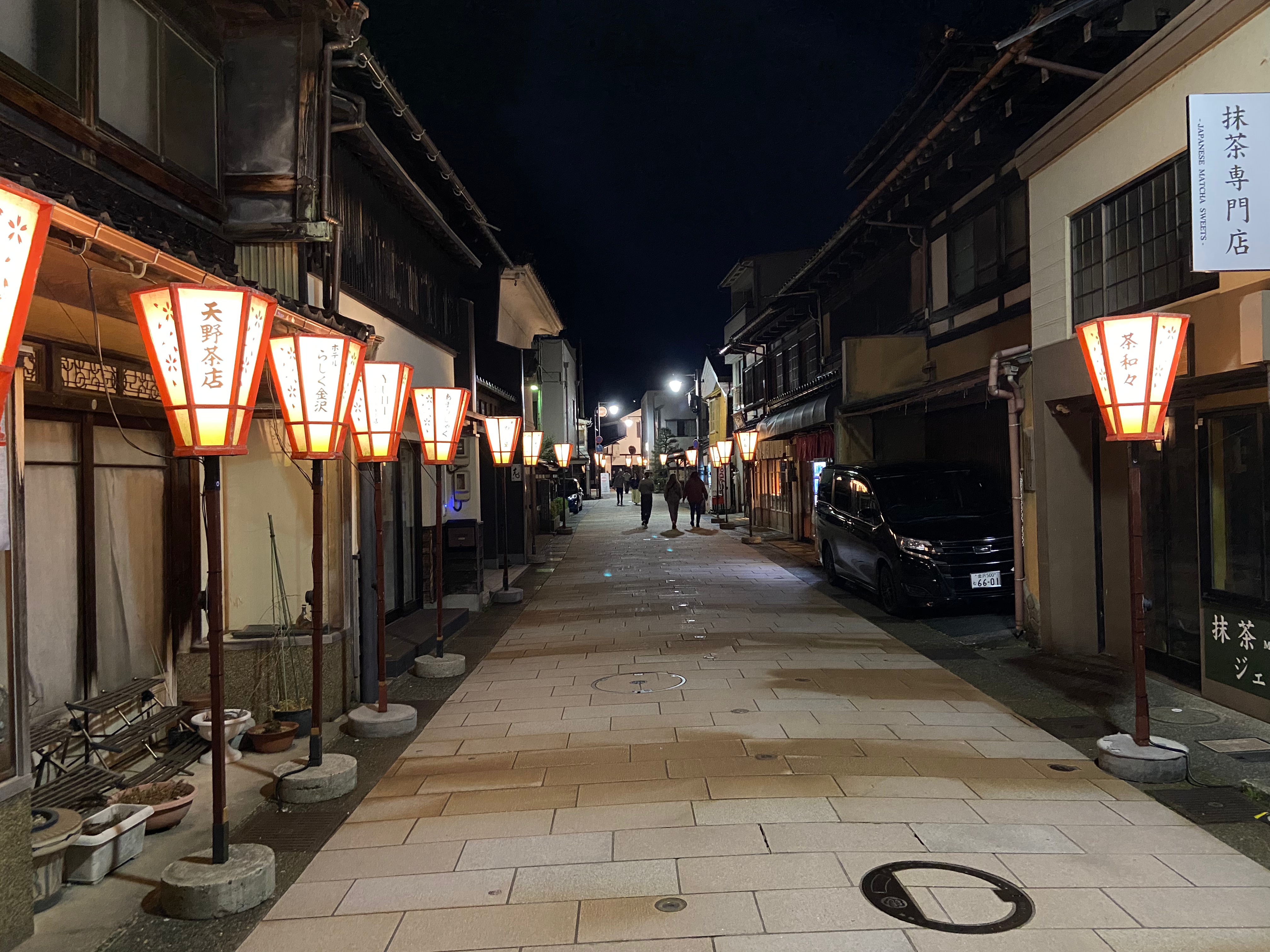
I walk in the direction of the Higashi Chaya Tea District, which apparently looks a lot better at night. Again, tourists bumble noisily. Regardless, it does still feel like a step backwards in time, with rickshaws, tea ceremonies, pairs of women in kimono, evening geisha performances, so much so that I plan to come back later to take a couple of night shots.

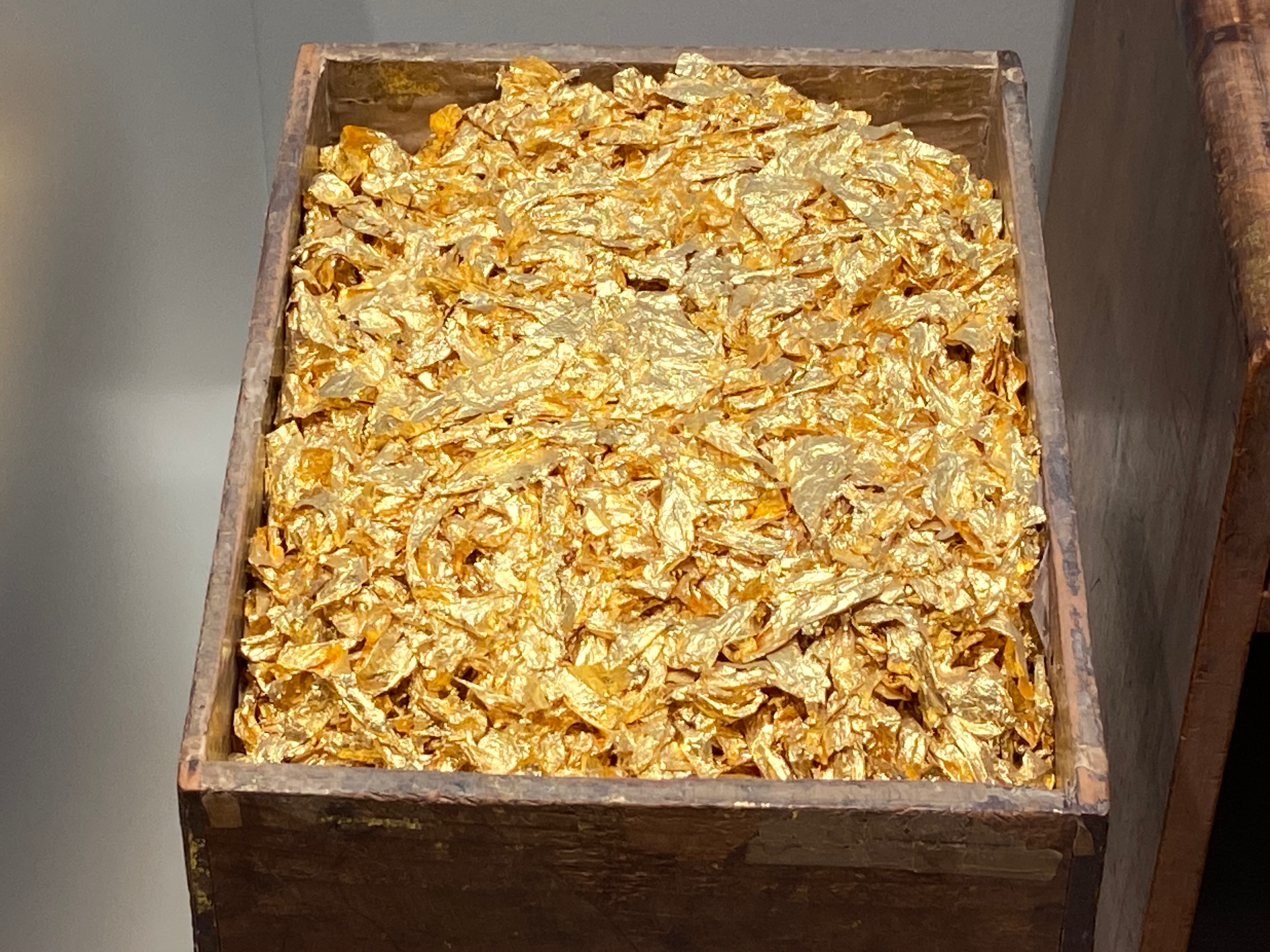
The shops here sell the usual fish-shaped waffles but this time laced with edible gold leaf. Kanazawa is the biggest producer of gold leaf in Japan. In fact, gold leaf here is everywhere. There are gold leaf cosmetics, face lotion and hand cream. One shop is trying to get in on that action and is offering gold beer. But most beer is already gold. There are people queueing to buy gold leaf soft serve vanilla ice cream. I even see one lady come out of the shop holding her ice cream, pose with it for an Instagrammable selfie, before casually tossing it into a bin. She might well just cancel her trip and get AI to generate her holiday for her.

Amongst the tea shops and cafes there is also the Kanazawa Yasue Gold Leaf Museum, so I decide to take a look and learn about this 1/10,000th of a millimetre thick foil that requires extreme focus, almost Zen in its precision. There was supposed to be a hands-on workshop so I could try to apply gold leaf myself, but sadly it’s been cancelled, so instead I admire some art adorned in flecks of gold, before checking to see if there’s a golden toilet on the way out. There isn’t.

By the time the gloaming arrives, my gold leaf soft serve vanilla ice cream has all but melted. I sit in the evening light, sipping a golden beer. I realise now that my headache too has almost faded. You can sort of tell these things.

Strange Tales of the Crescent Moon

The morning sky gave me a look as I stepped out onto the platform at Yabuzuka Station. It’s a small platform with just two tracks and no one around to ask for directions. I’m certain I’ve arrived somewhere between Gunma Prefecture and the Edo period.

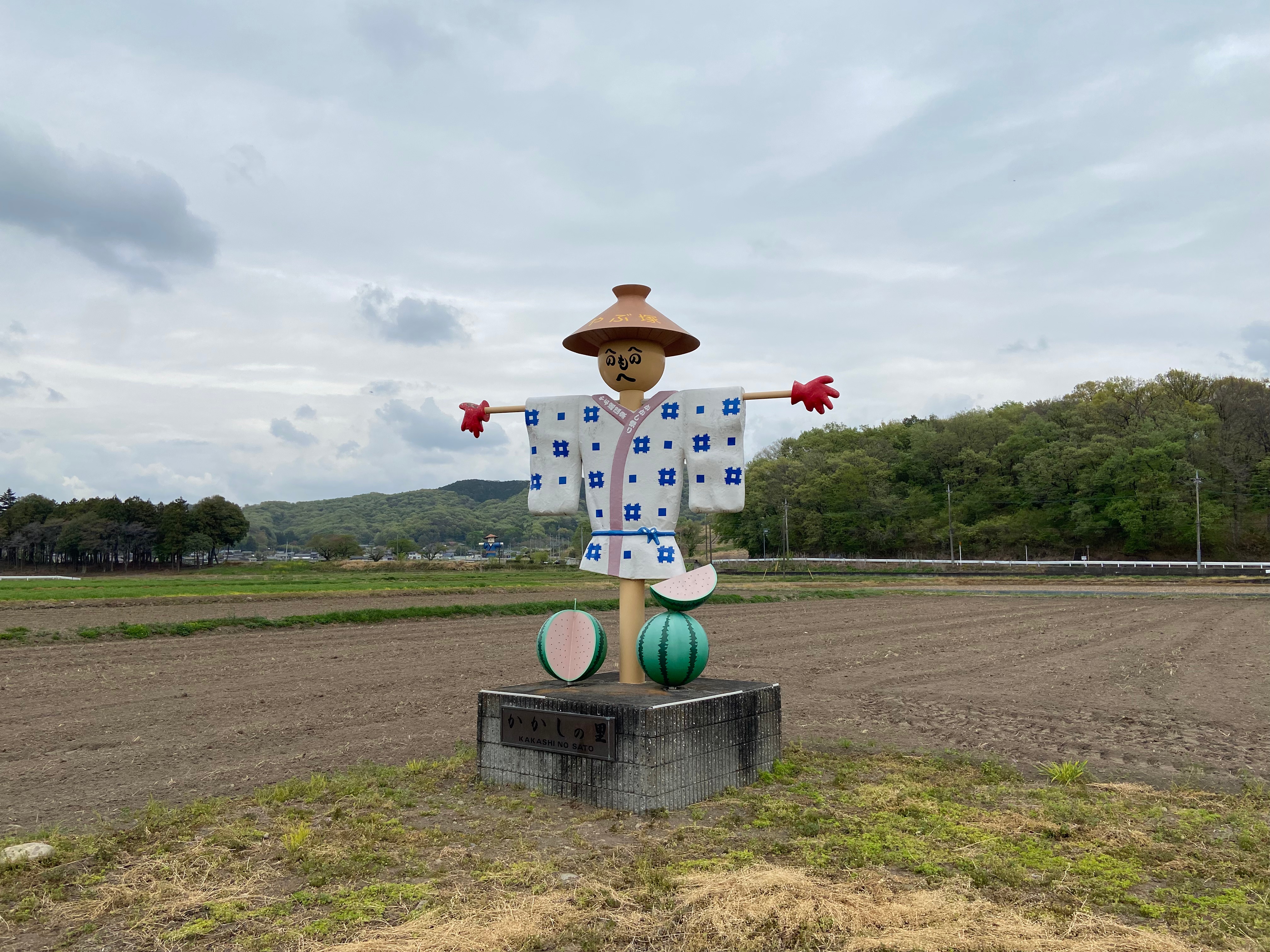
The station exhales me into a residential area of a few low houses, a solitary vending machine, and fields stretching across every distance. Staked into each field, a Japanese scarecrow stands alone.

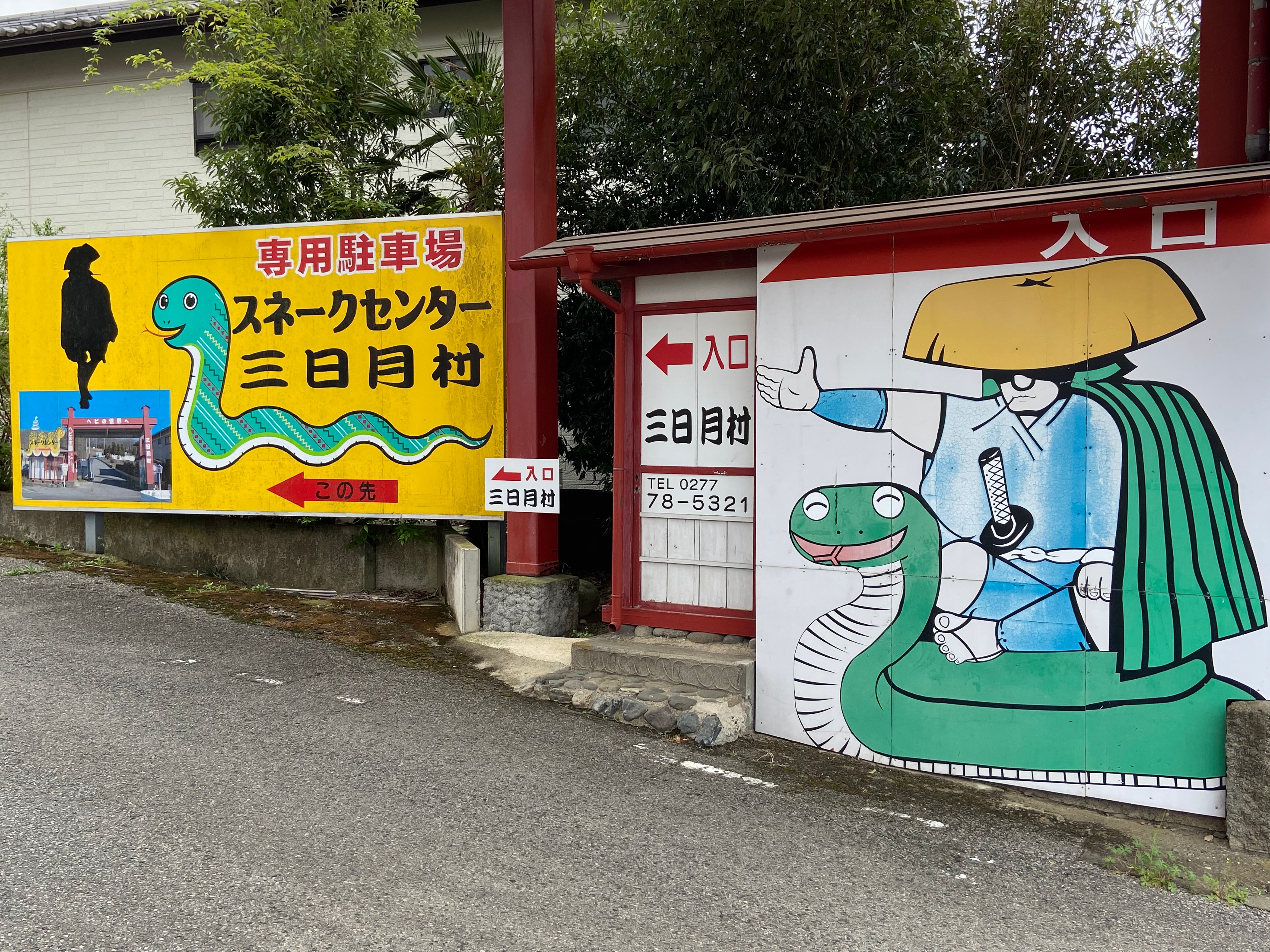
I walk further. My destination today is below the clouds, along a humid forest mountain path. The cicadas hum with an almost animatronic precision, their vitality echoing across the fields and back from the mountains. As I wander, I see an entrance marked by a billboard that features a samurai riding a snake.

Mikazukimura, which roughly translates to Crescent Moon Village, is a historical theme park that faithfully reproduces a village from Edo times (1603–1868). It aims to capture the nostalgia of the era, but I wonder, is it ever really nostalgia if you were never there? I don’t ever recall the Tokugawa shogunate popping round for a cup of tea.

Anyway, at the entrance I buy a ticket. I also have to exchange some Japanese yen for replica Edo coins. These coins are used to buy fish-shaped waffles, crafts, or souvenirs in the park. The unusual time dislocation here means I’m literally buying the past with the present using fake plastic coins. I don’t mind it though. It adds another dimension to everything.

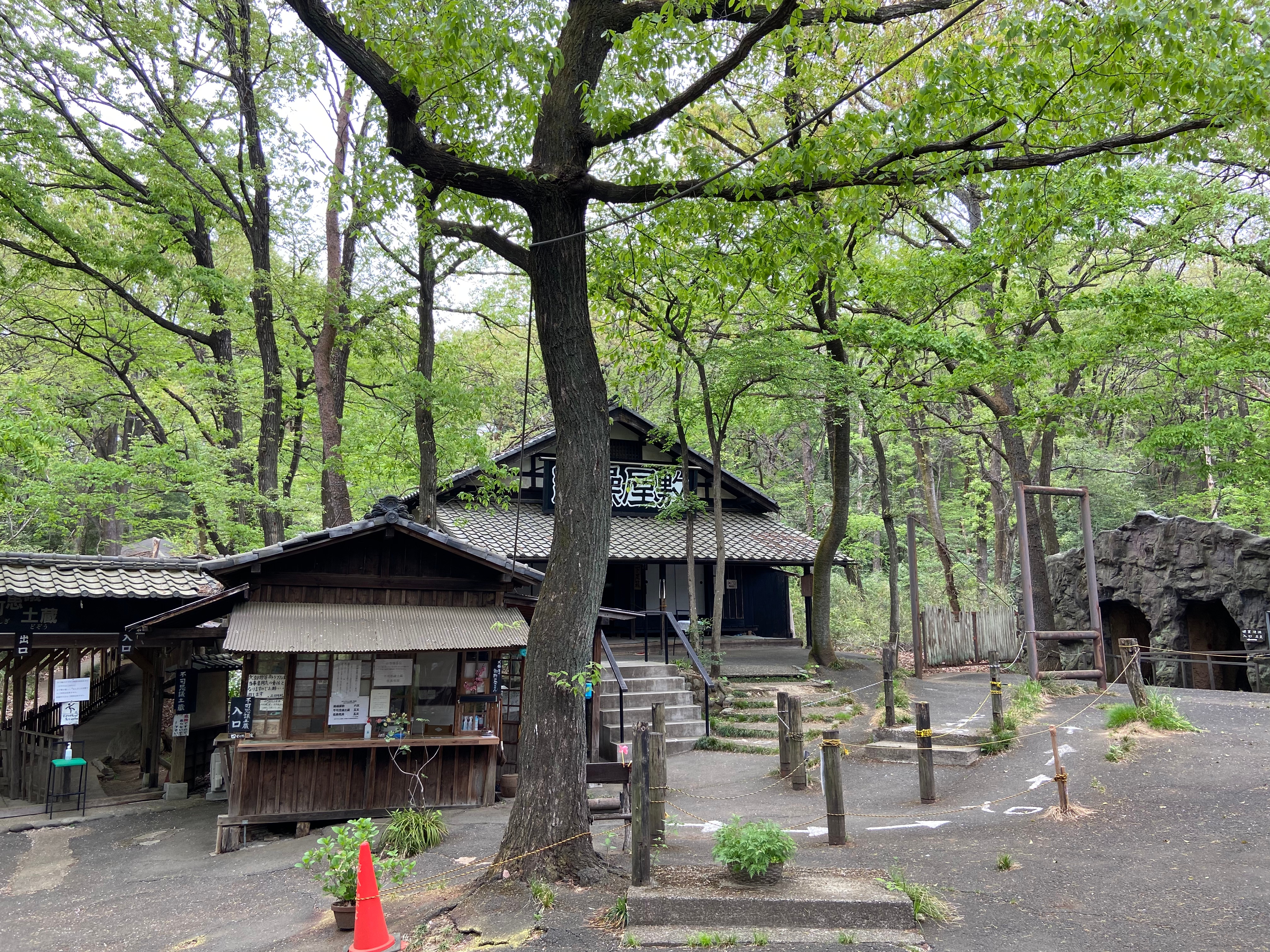
Inside, thatched tea houses make up the backdrop, layered with tempera paint shops, tempura food stalls, temple buildings, and three main attractions. It’s like looking into a painting of a time long gone, just without any people in it. In fact, the dirt streets of the village are so quiet that it almost feels like the sort of place where a ghost story might have begun… or ended.

The first attraction is Kaiigendo, a mysterious trick-filled cave activity. The sign says, “This attraction is caving,” but I certainly hope it isn’t. To enter, I have to buy a ticket with my special coins. The lady here stamps my attraction card, before rather quickly explaining, in Japanese, what feels like a lot of safety instructions I probably should understand, much to my own confusion.

She then hands me a torch, says, “No ghost. No scary,” and wanders off.

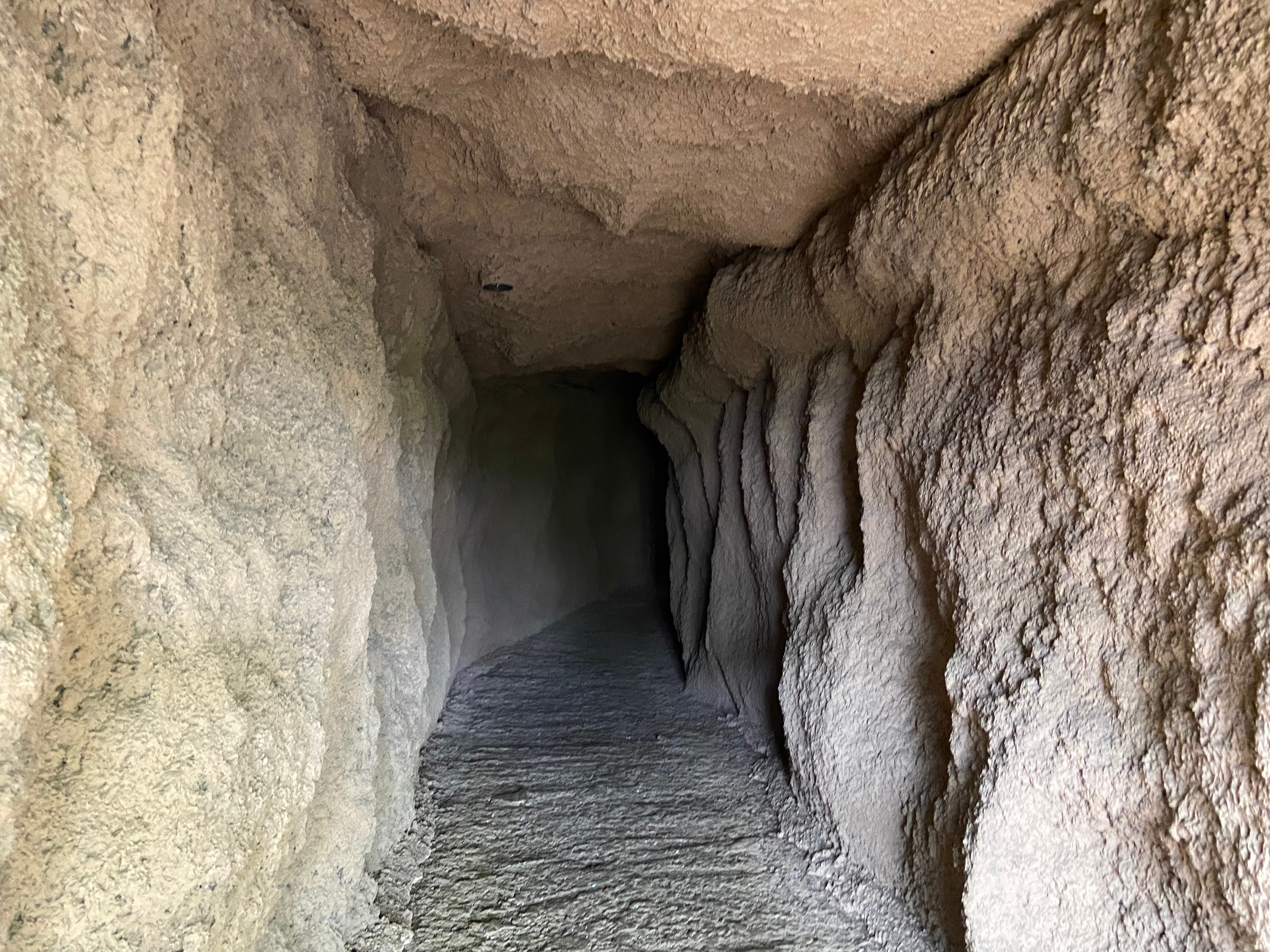
The cave describes itself as an underground tunnel filled with traps and hidden entrances. There are sliding doors, and there are secret doors. There are doors that creak, and doors that open. There aren’t really any instructions, so I turn on my torch and wander through the darkness.

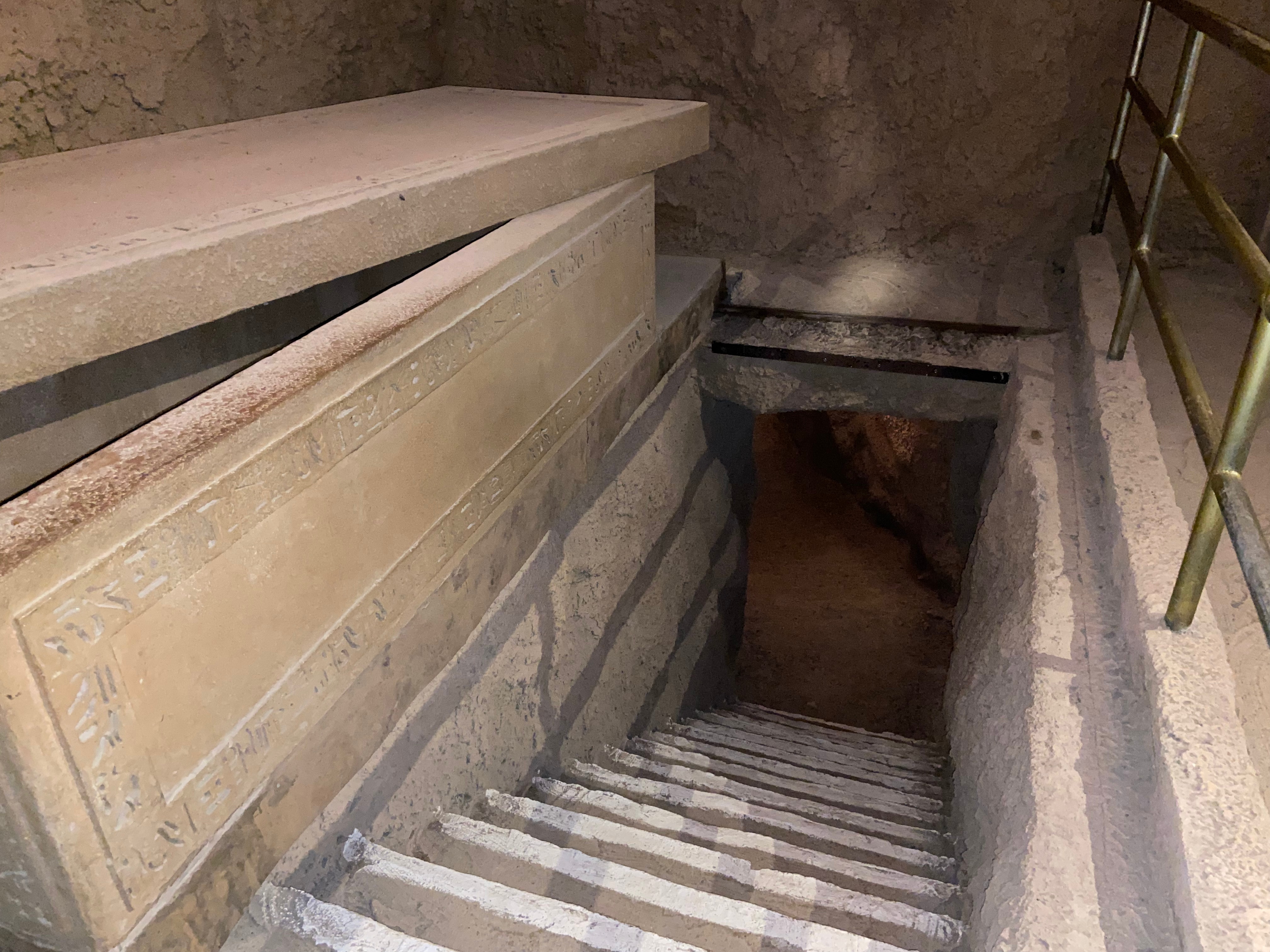
It’s actually pretty scary. I get a bit lost in the maze-like caverns until I reach what I think is a dead end. Eventually I discover a secret tunnel that I have to activate simply by standing next to it. A huge stone tablet mysteriously shifts to the side, revealing a staircase leading deeper underground.

As I pass the stairs, the tablet slides back across, trapping me inside. I follow the rooms, secret doors, narrow passageways, across a bridge, to a room with a waterfall, to another with booming music, mirrors, and red lighting. It takes me far too many attempts to figure out how to escape this claustrophobic panic attack. Eventually I find the exit behind a bookcase that only slides aside if I clap my hands; again not explained at all.

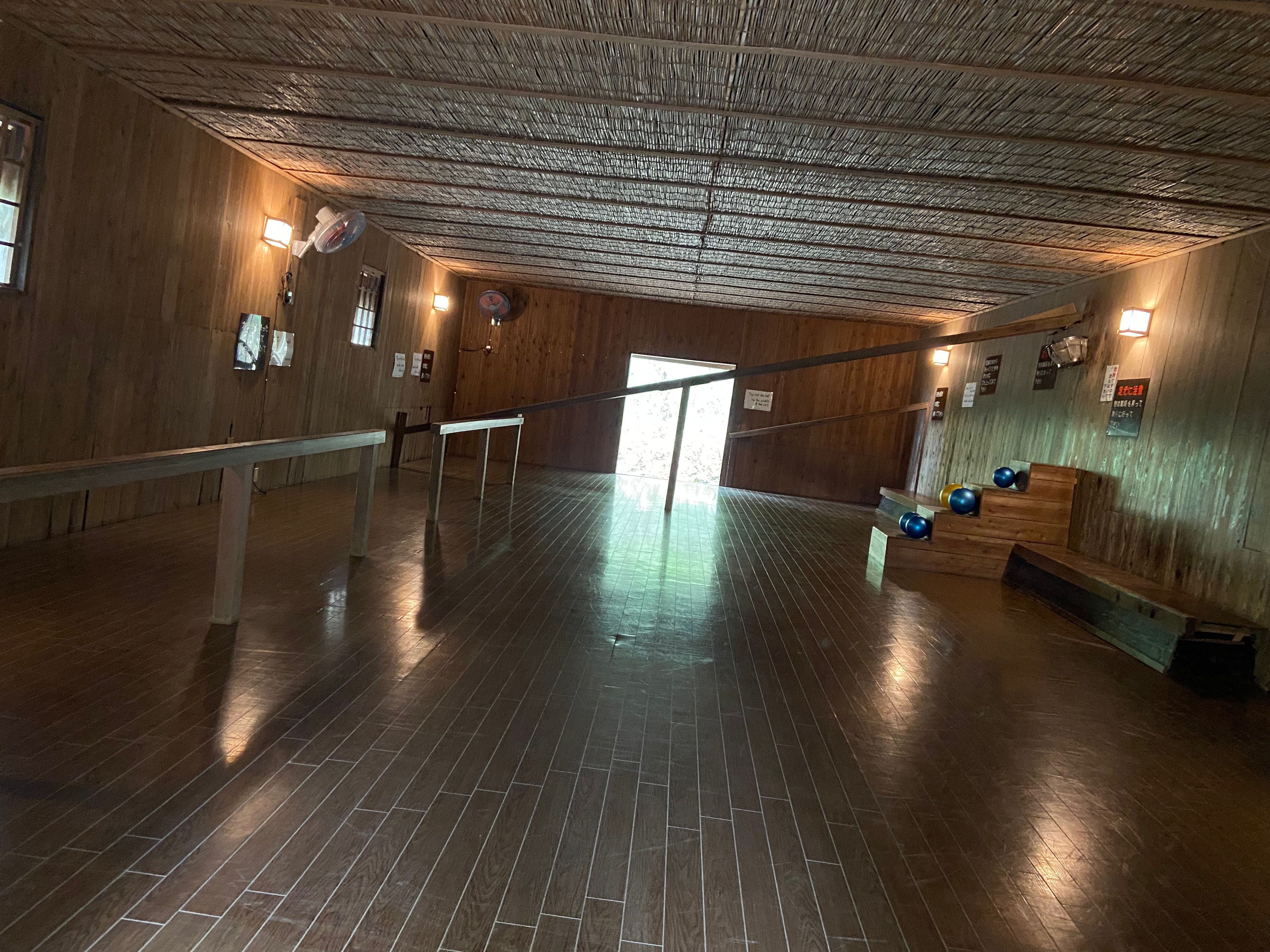
My next attraction is Fukashigidozo, a sloping house. A sign lying on the ground next to the sloping house says, “Don’t fall over,” having itself ignored its only instruction. The purpose of the house is to challenge my sense of balance. The building has been constructed at an angle, on a slope, and confuses me in a way that makes me feel dizzy, like I’m falling over, even though I am standing perfectly still.

I want to sit down. I want to not be standing up beside the house that feels like it’s falling down. It messes with my brain, despite understanding exactly what’s happening. The house is so profound that I am at complete unease as I wander back toward the main village.

Here, the staff stay fully in character, even when no one is watching. I stay fully myself, which requires significantly less effort, yet still somehow wears me out. In the end, Mikazukimura doesn’t quite manage to hold the illusion together, and instead echoes something slightly decayed, enveloped in a careful silence. I head next door to the Japan Snake Centre.

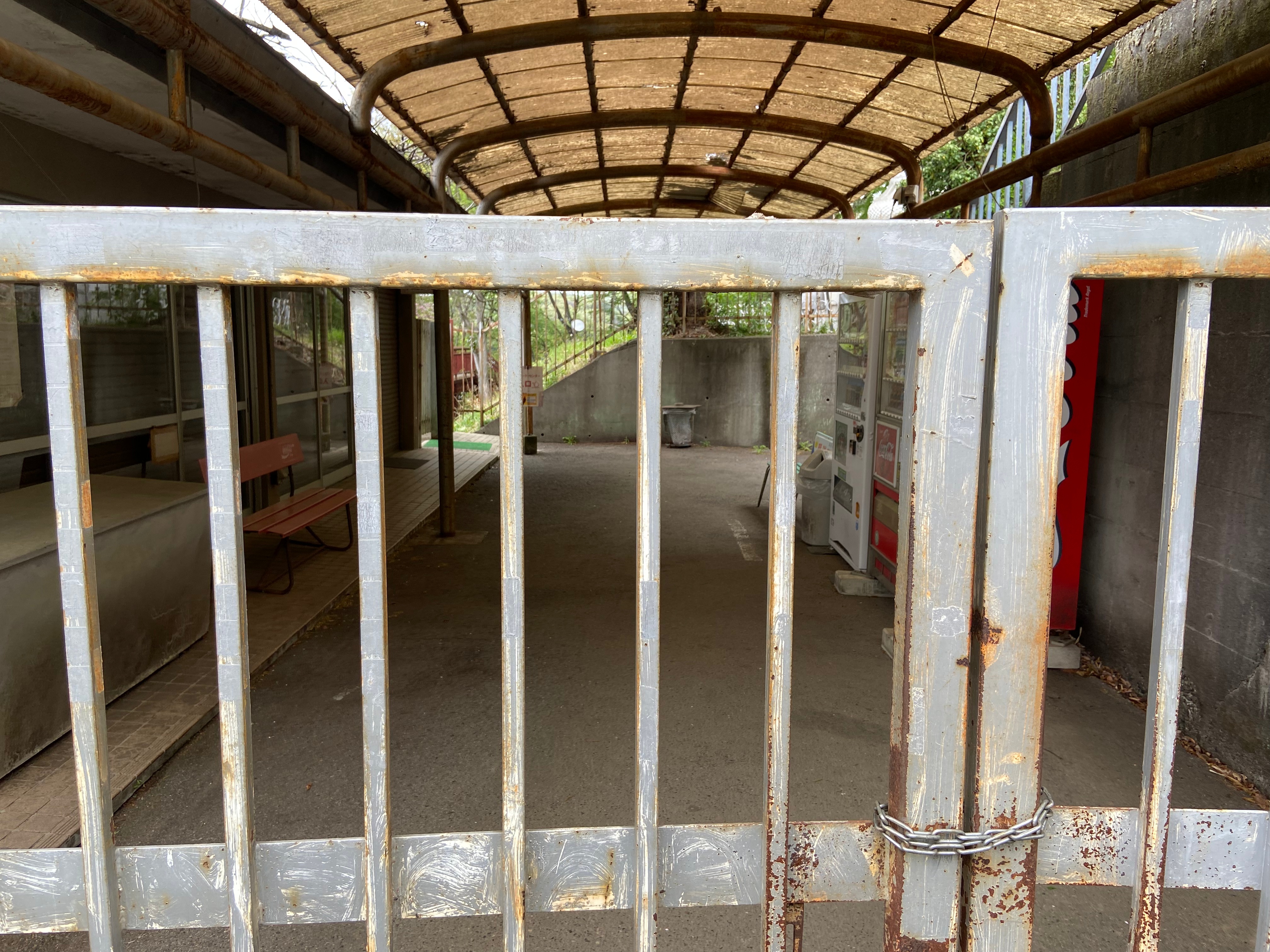
The door here is chained shut despite a sign saying, “Open.” I was hoping to look at some creatures that predated the Edo period by millions of years, but it looks like I’ve outlived them. The Snake Centre is permanently closed. I head back across the fields of crops, scaring away a few crows on my way, and return to Yabuzuka Station, but with no train for two hours, I decide to walk to Isesaki.

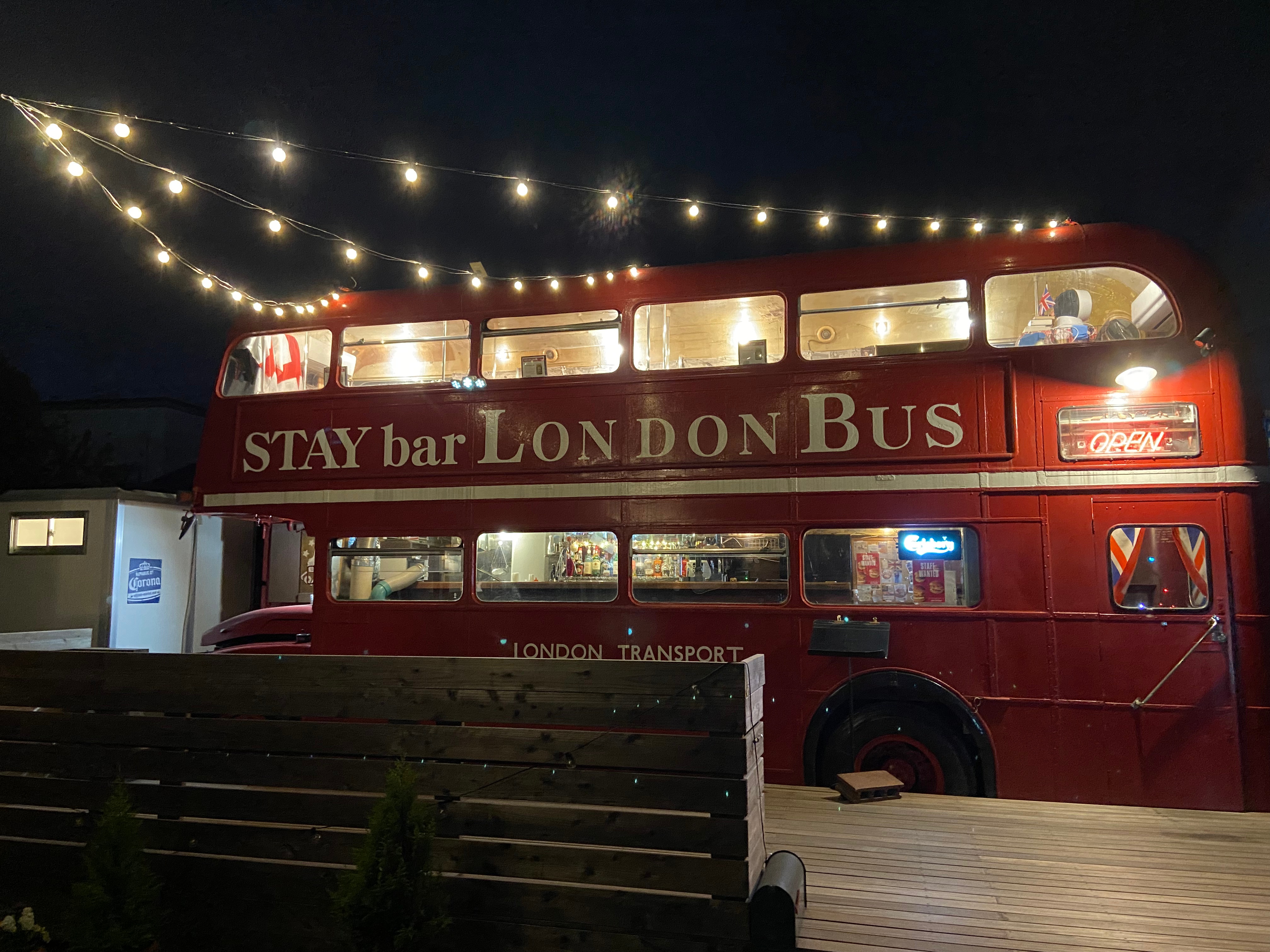
On the walk, I spend some time on my phone researching azimuths and lunar illumination percentages. I walk on, mostly in silence. The occasional passing car. The odd cawing crow. There’s no footpath most of the way; and as the sky darkens I don’t particularly enjoy being constrained to walking on unlit country roads. Somewhere along the way, my eyes catch something that looks so out of place that I stop to investigate. A big red London bus parked on a side street.

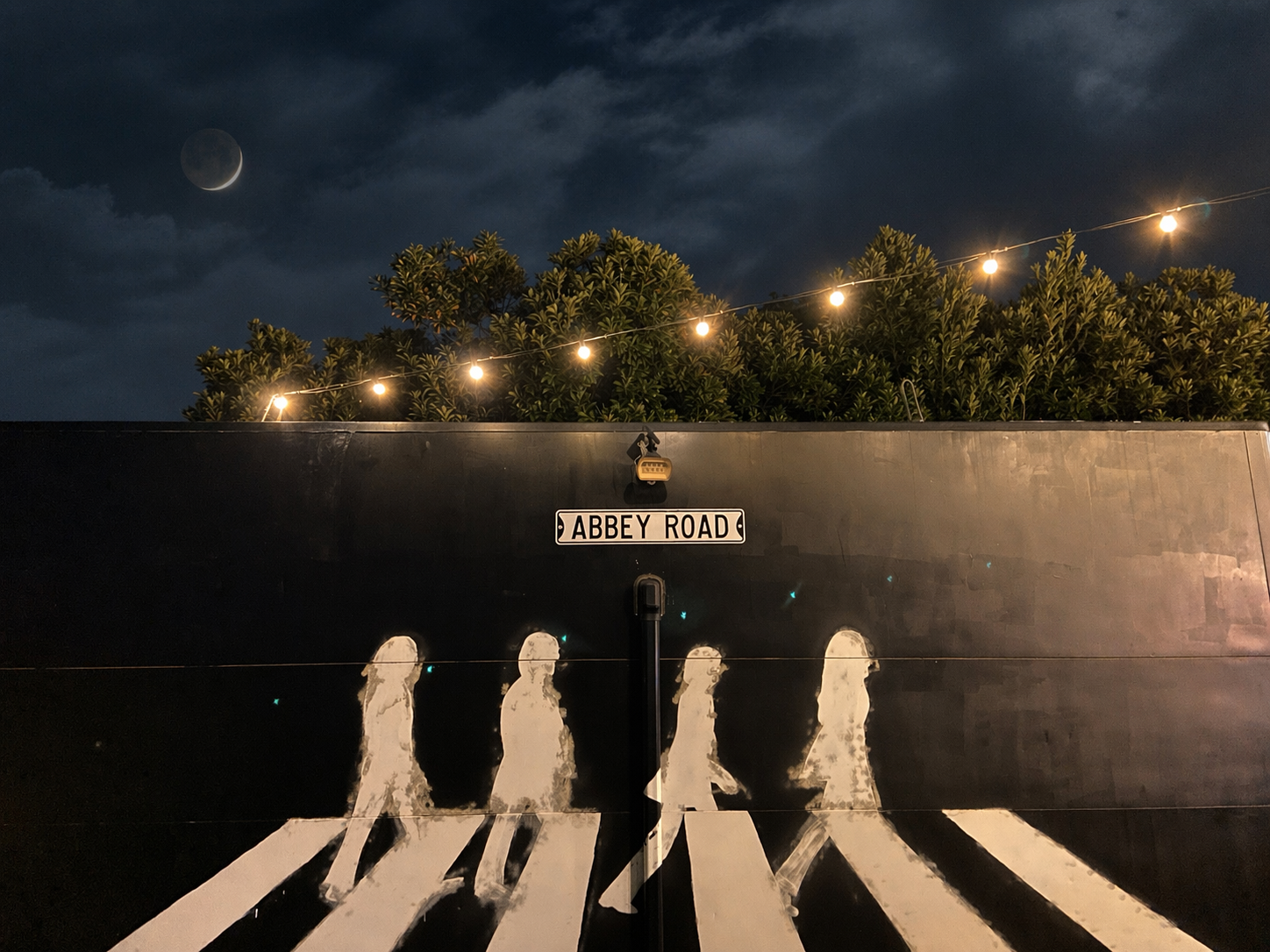
Inside, a bar. I order a drink and chat with the owner. He tells me that the couple that used to run the bar are no longer here, and that he took over. They used to really like London which is how this place came about. The new owner here can barely speak English, which is a shame, because I wanted to ask him about the ghost children crossing Abbey Road.

Our conversation breaks apart. Neither of us really has anything to say. Eventually he goes out into the back room to cook himself some food. So I sit, sipping on my Suntory Highball in silence. Out here, there’s no one to sit beside.

I finish my drink and leave. The red London bus glows under the Gunma sky. Above, a waning crescent moon hangs like a chipped Edo coin, its dark edge faintly visible in earthshine.

A Flood Day to Dry Hard

The news tells me that today there is an excessive heat warning in place in Wakayama. My oh-so-reliable weather application tells me that it will be cloudy all day. The gods split the difference. As I exit the bus unprepared for anything other than heat or cloud, the heavens split open in a thunderous rage of fury.

I am at Kumano-Nachi Taisha. As the thunder rolls over the sky I manage to take just one photograph of a torii gate and the mountains beyond, right then, before the rain catches up with the thunder. Luckily for me, there is a shop, so I enter, purchase, then poncho up.

I duck inside the Treasure Hall. No photos allowed, but I explore freely. I wrote about the Nachi Pilgrimage Mandala yesterday, but seeing the real thing up close is something else. I enjoy the other art, artefacts, simple objects from a time lost in the past. Most of the treasures here were discovered in 1918, but are from around the 10th century, with the shrine itself being 1,700 years old.

Stepping out of the Treasure Hall, the rain has intensified fivefold, and some of the ground has already flooded. People cower with umbrellas.

The rainwater crashes down and smashes into the roof of the shrine like a torrent of broken glass, slicing through the air with a merciless, unyielding force. I have never experienced rain like it. The raindrops actually hurt.

I came for the waterfall. Or so I believed. Right now, I feel like I’m inside one. I struggle to see where the waterfall could even be in comparison to the falling water. A monk passes me, dressed in dark blue. He carries an umbrella and seamlessly manoeuvres the flooding and the puddles, calm as you like.

Legend has it that the first emperor of Japan, Emperor Jinmu, found the waterfalls when his boat landed on the Kii Peninsula and he saw something shining in the mountains. At the time, he had been following a Yatagarasu (a mythical three-legged crow sent by the gods as a guide).

I follow the path down the mountain toward Nachi Falls. The sky bellows with more thunder, the road is full of water. Am I walking in the rain? Or am I swimming in a river? At points the water is knee-high. The drains can’t handle it. I can barely handle it, but I persevere.

I make it to the pagoda view, the one that’s often featured on the cover of a largely poorly written guidebook. They’ve never featured it in the rain. I enjoy my photograph very much.

Beside the pagoda sits a big statue of Hotei. God of fortune. The Laughing Buddha. Naturally, despite my soaking wet legs and shoes and inability to understand the point of it all, I rub his massive belly. Good luck and prosperity coming my way, again.

I venture on, down flooded sloped paths and dangerous steps, and eventually, I do arrive at Nachi Falls. The heavier rain drowns out the sound of the waterfall. There’s a story of some star-crossed lovers that leapt from the top of the waterfall in the belief that they would be reborn into Kannon’s paradise. I also know that this is one of the Top Three Waterfalls in Japan, a UNESCO World Heritage Site, and also plummets 133 metres, making it the tallest in Japan.

I head down some slippery steps, careful to hold the handrail. Below, the waterfall itself. Having already taken a spectacular photograph of the rain-soaked pagoda pavilion with Nachi Falls as a backdrop, I find it to be immensely difficult to capture the waterfall from up close, due to the intense rain and heavy flooding.

I stumble back up stone steps to a bus stop. Typically, upon arriving back at Kii-Katsuura Station, the rain suddenly stops. At the Turtle Boat back to my hotel, I stand at the dock. A Japanese salaryman stands beside me, perfectly dry. He glances at my poncho and then at the sky.

From the boat, I see a crow in the air. It looks as though it has three legs, but it’s just the tail feathers, fanned out in silhouette against the sky. Something that could easily be mistaken for three legs.

Back at the hotel, I hairdryer my shoes for two hours whilst waiting for my laundry to wash and dry, before heading out in search of a crow to photograph. In the end, all I find is this lousy t-shirt.