The Oolong Goodbye

I wake to the sound of the first train. I pull open the curtains of my hotel room window to see if the mountains are visible today; they haven’t been the past two. The light floods in, a white glare clears, and I’m pleased to see there are no clouds. It’s a good start to my last day in Matsumoto.
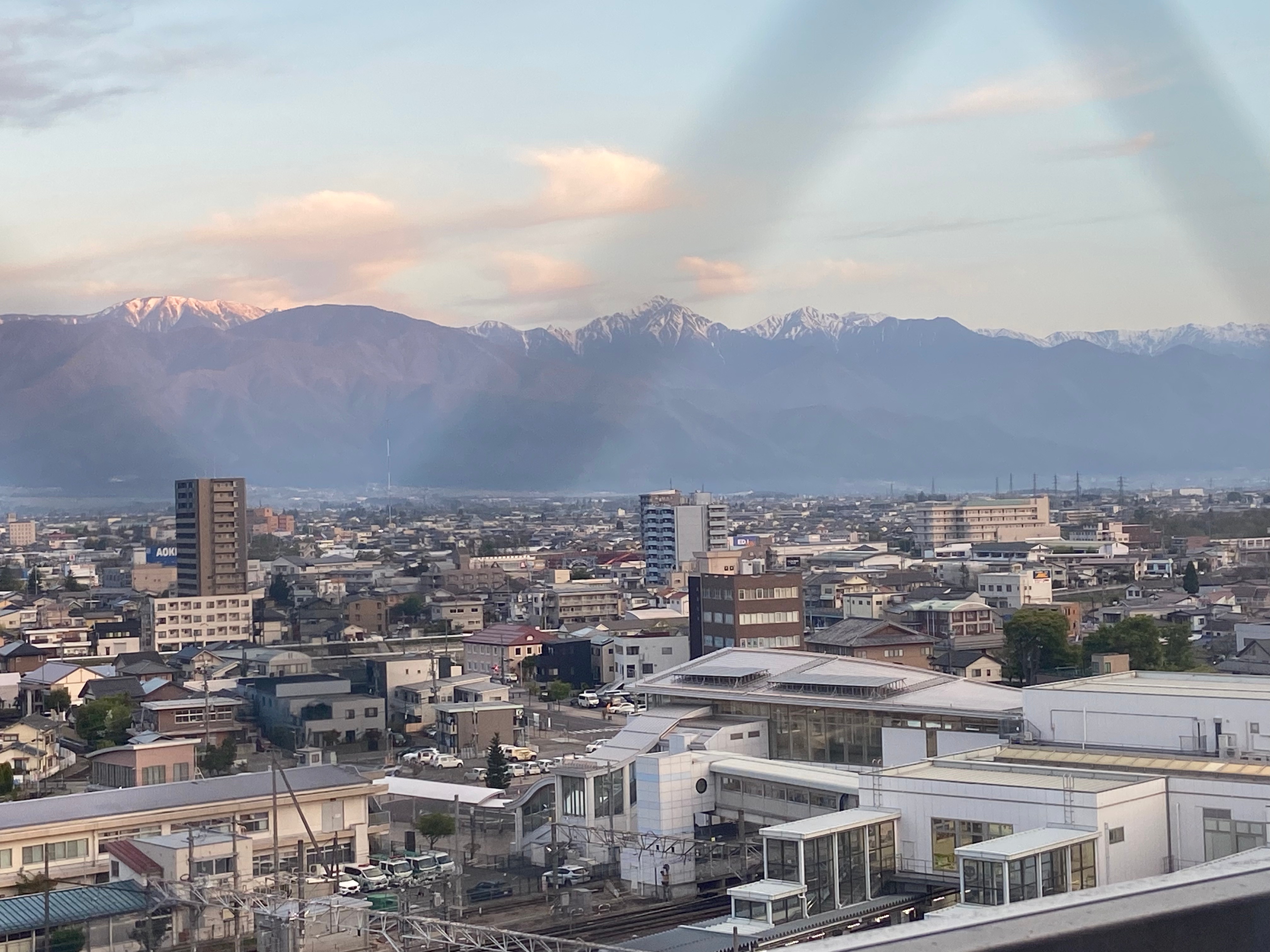
I take a shower and head downstairs for breakfast. The lift is already waiting on my floor and everything feels just a little too convenient. Well, that’s until I step out into a massive queue for breakfast. With so much to see and no time to waste, I head over to Seven Eleven for an electrolyte jelly drink before getting the train.

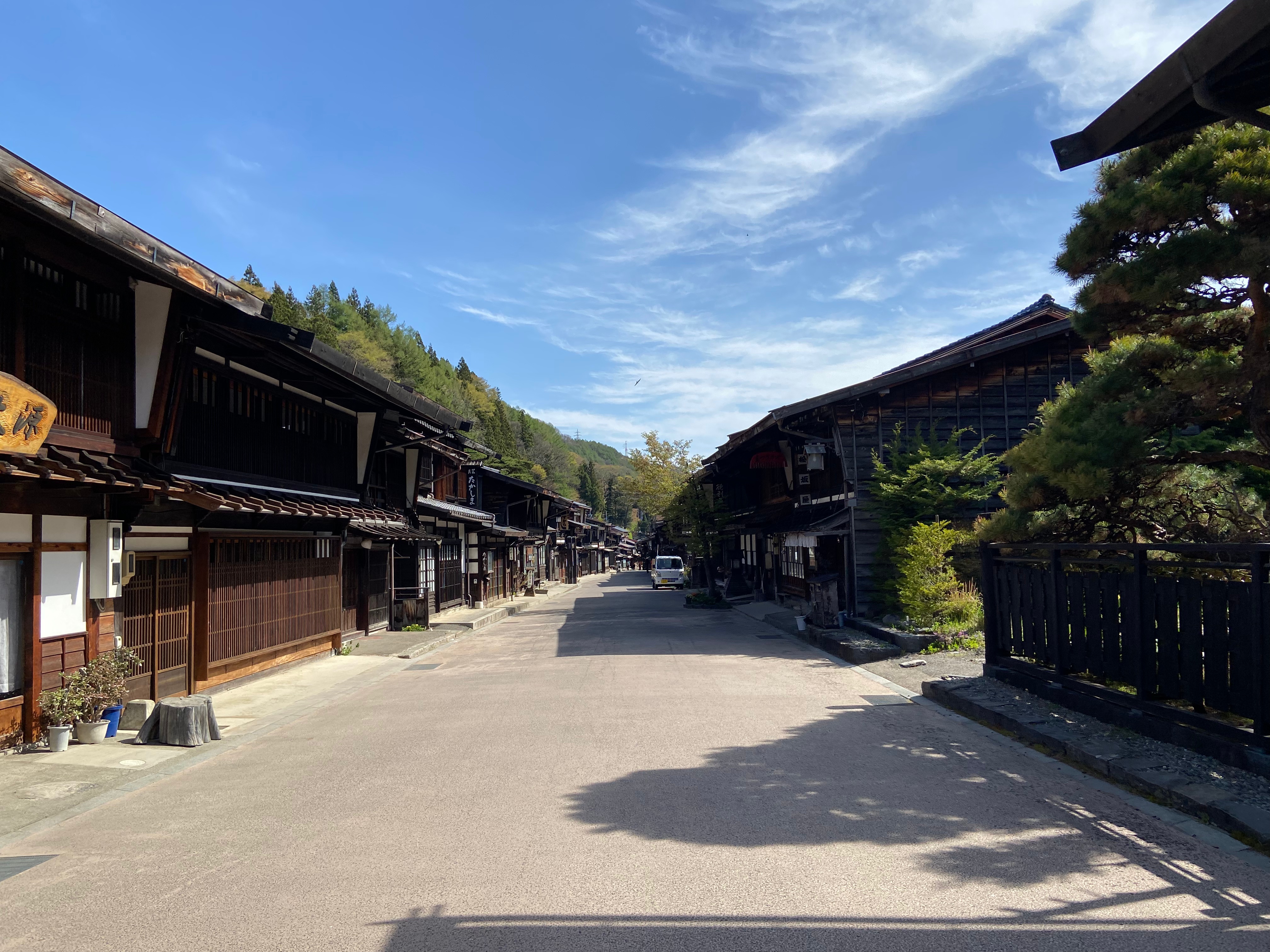
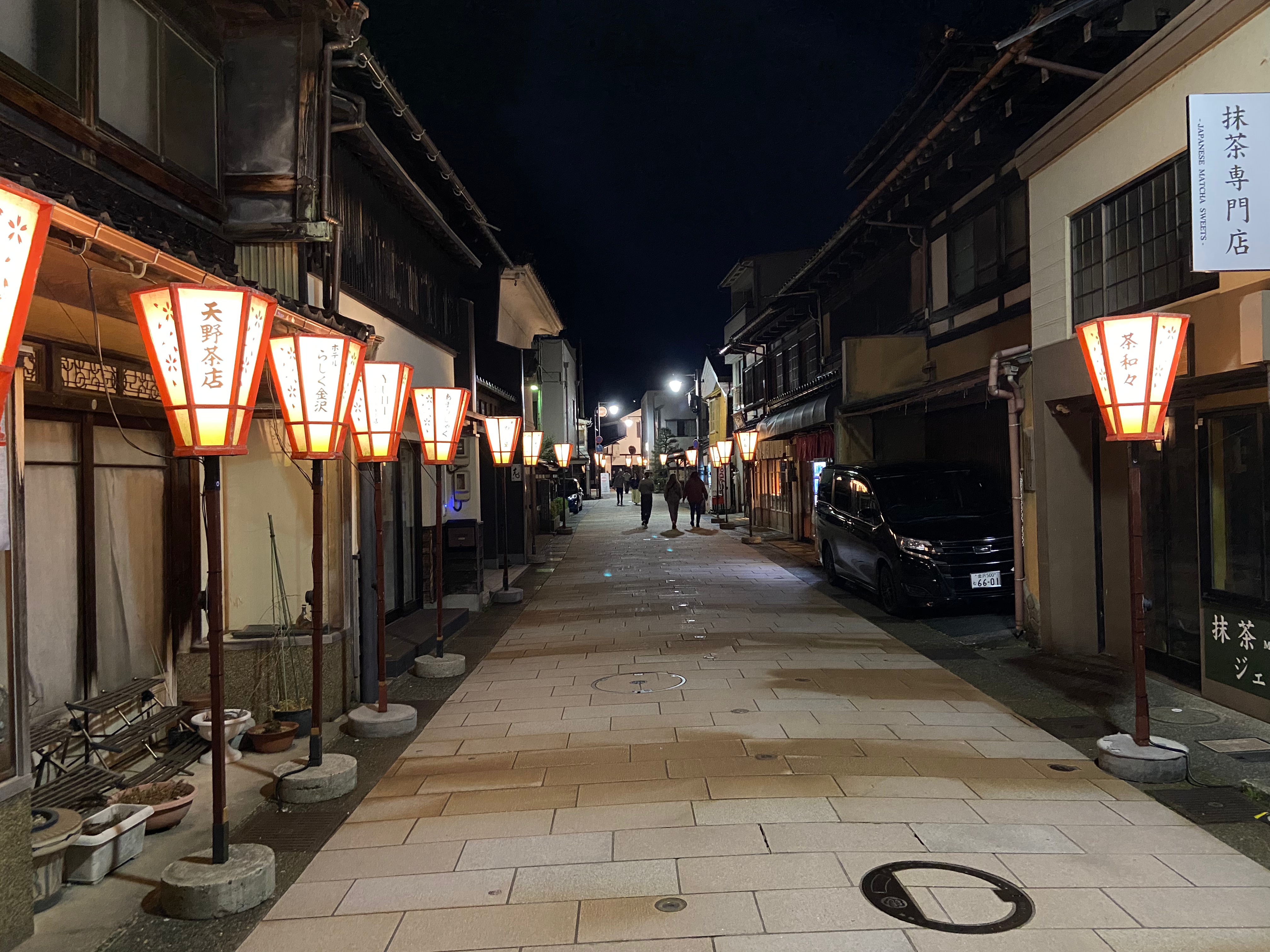
Over to Narai Station. The sun is out but there’s a light chill in the air. I begin with a stroll. Narai-juku.

Also known as Narai of a thousand tea houses, it stretches for about a kilometre, making it the longest preserved post town along the historical Nakasendo Trail, an old walking route between Edo (now Tokyo) and Kyoto. There were 69 post towns along the way, places to rest your head, find a meal, and perhaps a little entertainment after a day’s walk. Pilgrims, porters, perfumed courtiers, whose sandals have dissolved into this very soil, passed through here 400 years ago. It almost perfectly evokes the Edo period.

Well, almost. Unfortunately, the road is open to motor vehicles, and some of the shops have decided it might also be a good idea to make lanterns out of Heineken and Coca-Cola cans. For each passing car or aluminium lantern, I’m pulled out of the moment.
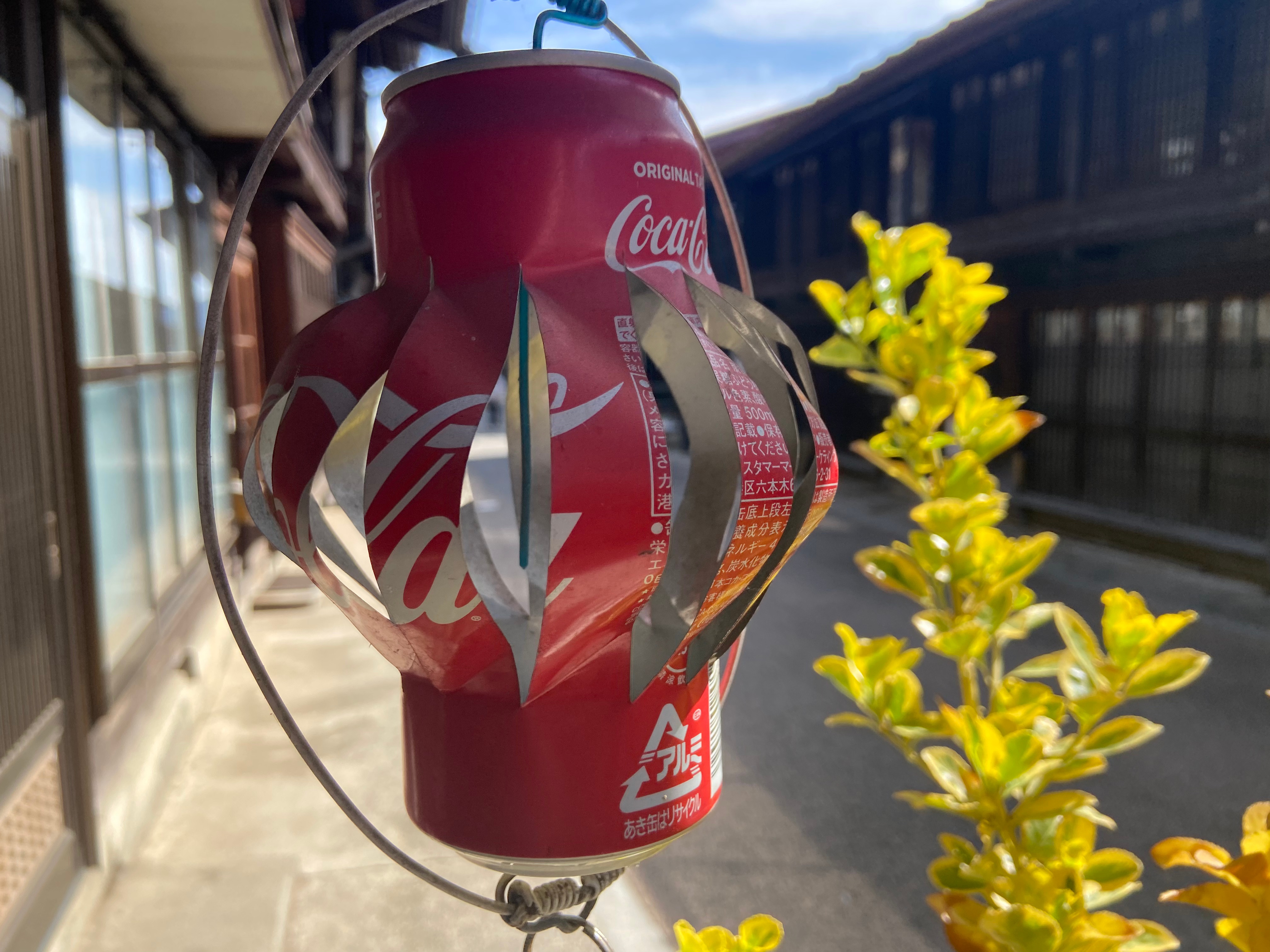
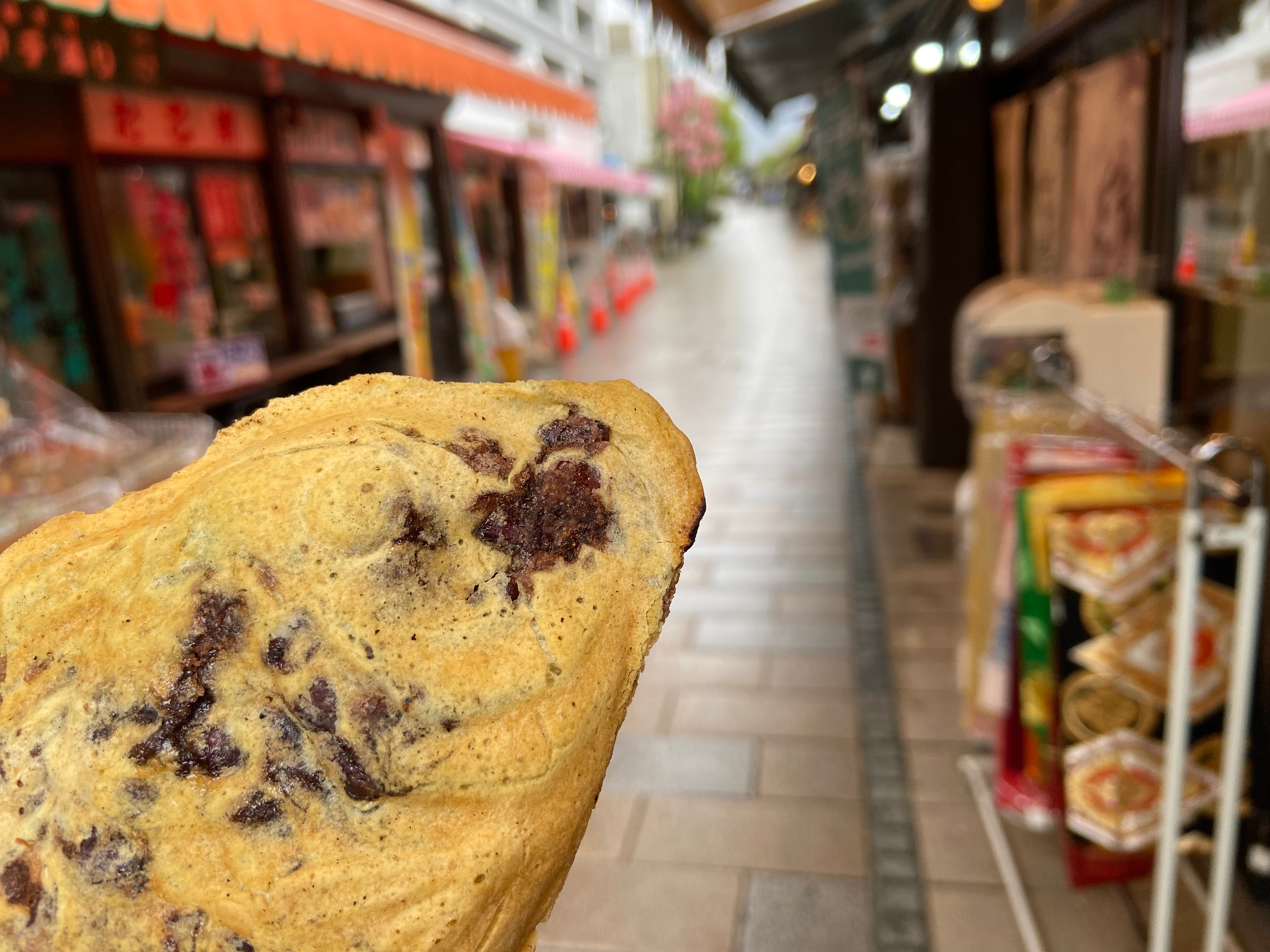
Most of the shops are closed. A little further along, though, breakfast course-corrects itself when I see a man turning batter into carp. I buy a fish-shaped waffle to go with my can of Coke.

I leave and take a train to Chino Station. From here, I’ve got about a thirty-minute walk. I’m on my way to visit a different kind of teahouse now, one that seems to actively defy all health and safety rules.
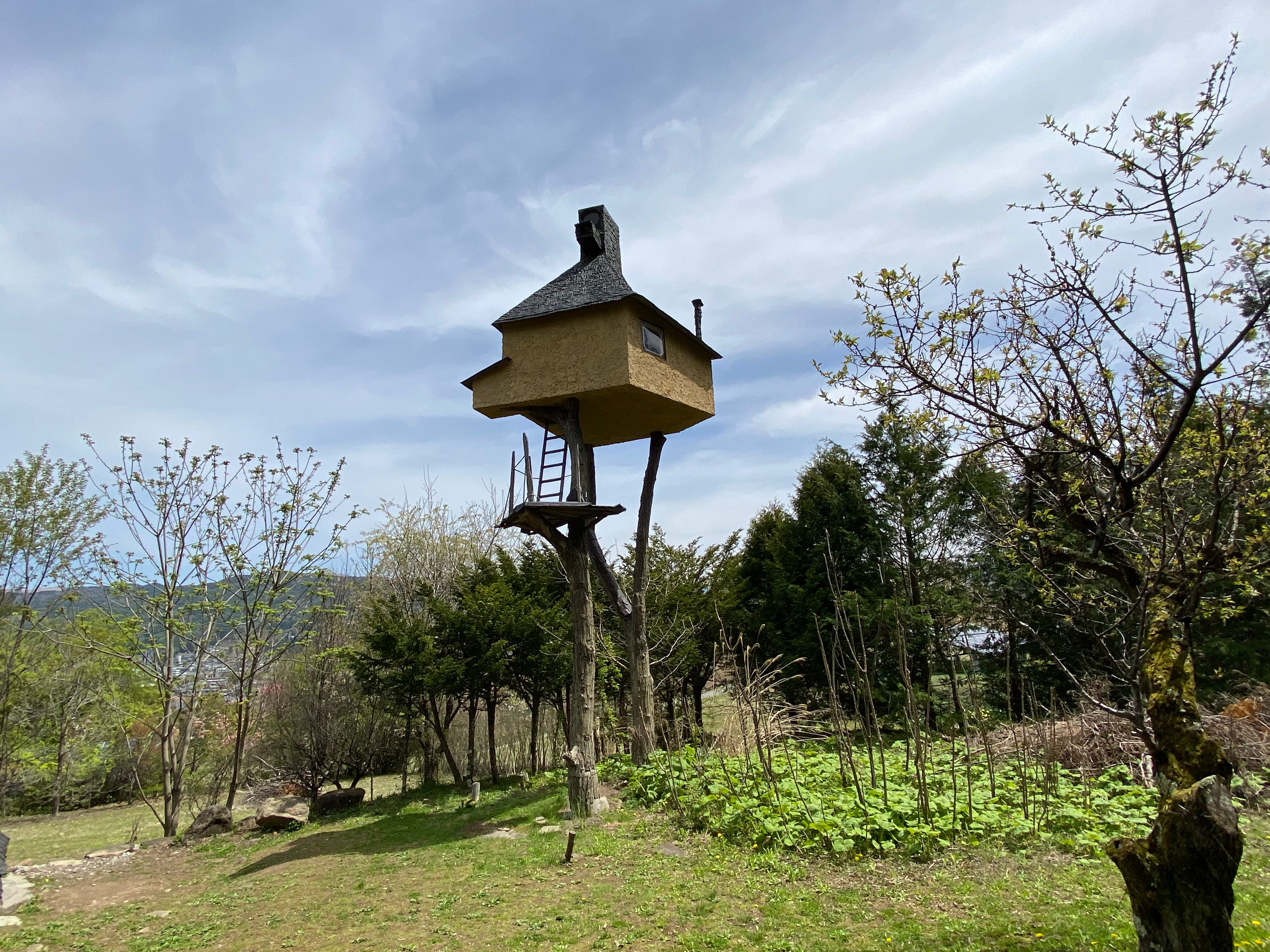
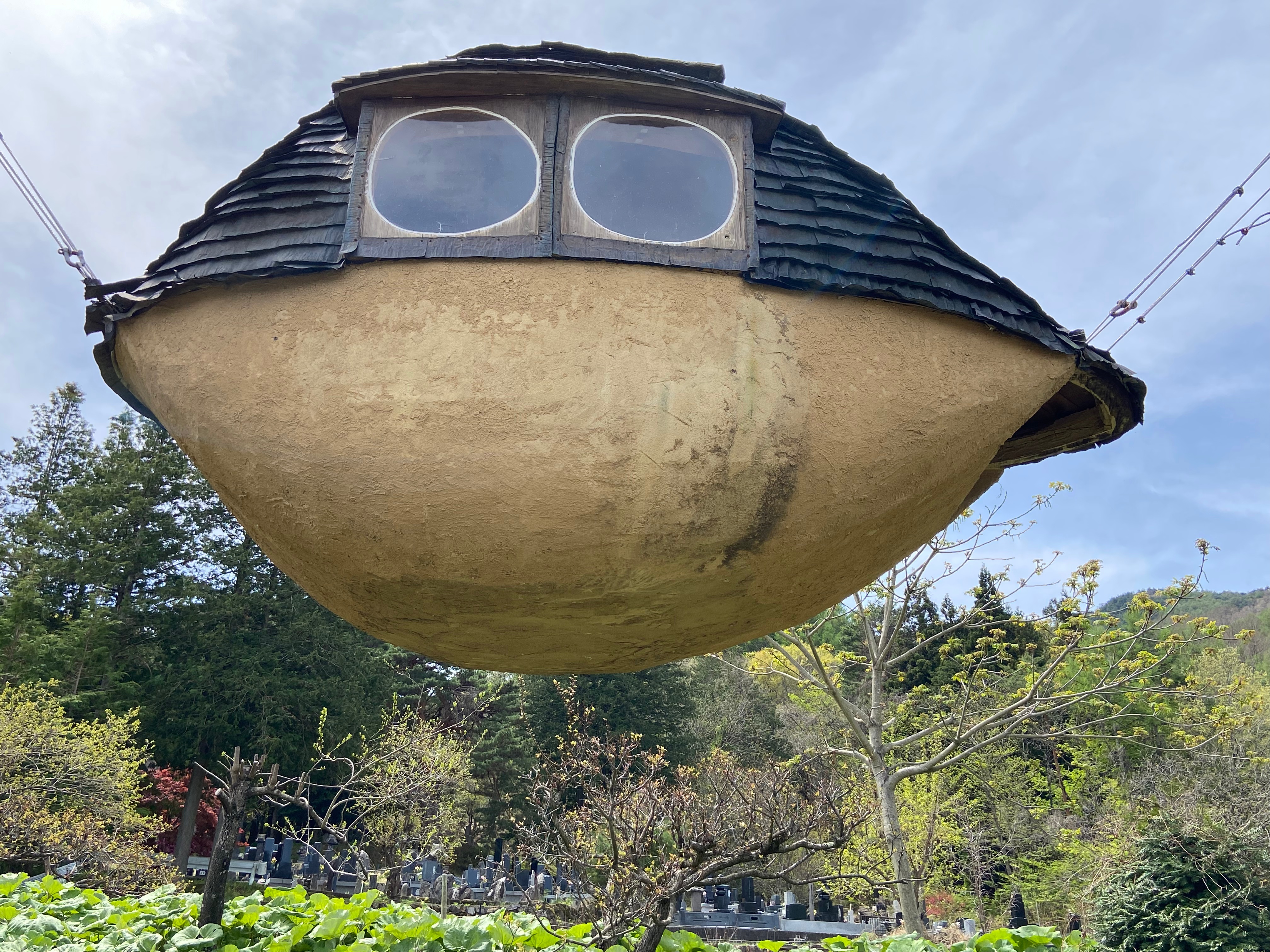
Created by the architect Terunobu Fujimori, using natural materials that blend into the surrounding landscape, he has built three marvellous teahouses: the Too Tall Tea House, the Too Short Tea House, and the Flying Mud Hut.

The Flying Mud Hut stands between two tree trunks and sways lightly in the wind. Despite their appearances, you can actually enter these teahouses and perform a tea ceremony with a guide. Sadly, and for all those involved, the backdrop to these structures is a cemetery.
I use one of the surrounding mountains to guide me back, focusing on a single ominous peak.

I pass yet another shrine. This one is Suwa Taisha Kamisha Honmiya, nestled in an ancient forest. From the road, a torii gate frames the scene. I like the way it sits between the pedestrian crossing and the wall of trees, as if it’s allowing the modern world to pass through it.
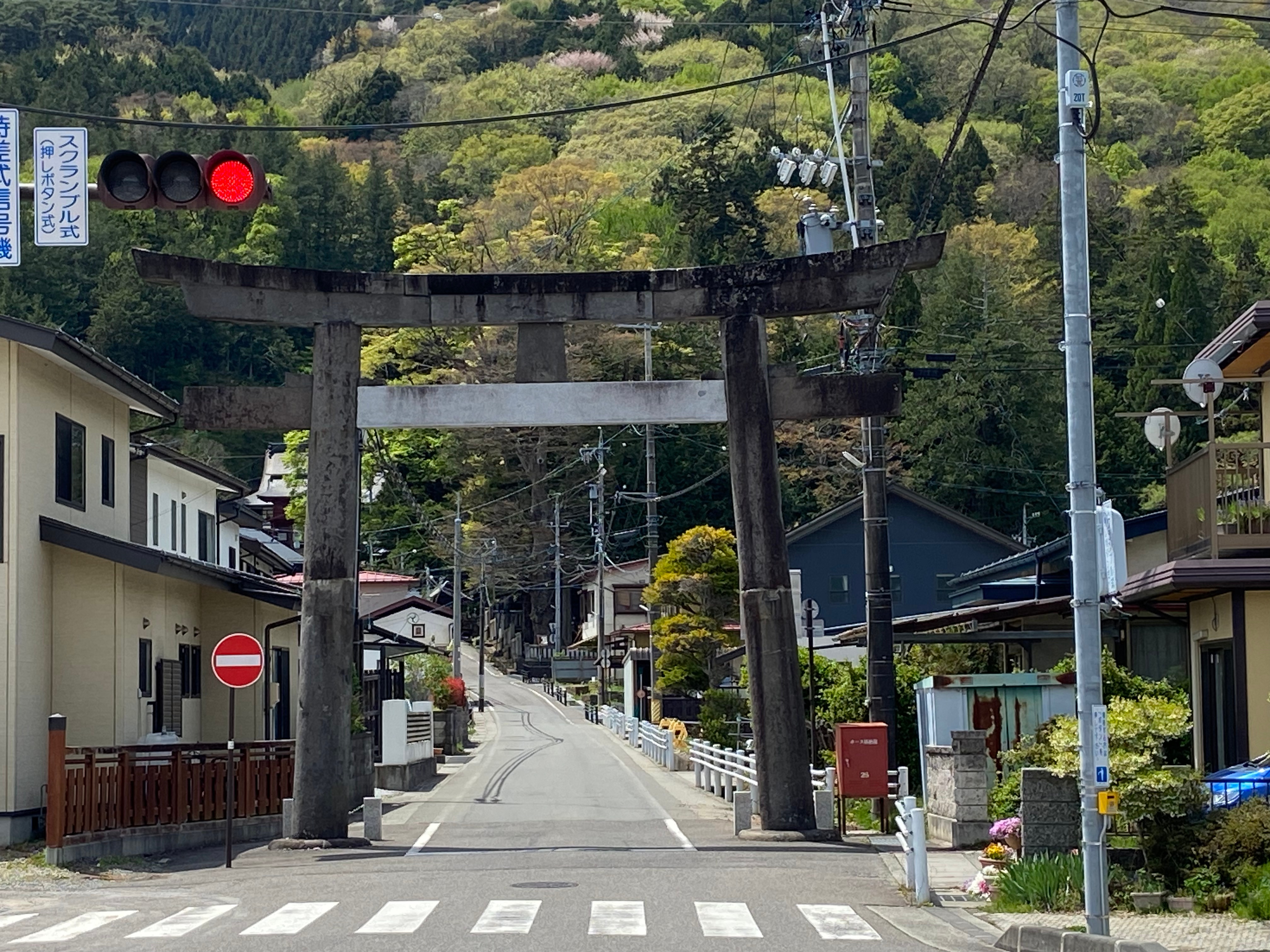
At exactly 12:00, music plays from speakers around me. I instantly recognise that I know the tune, without actually recognising it. Bloom and grow, bloom and grow… it goes something like that. It’s familiar. It means something, but my mind can’t quite stretch far enough to catch it.

I later find out it’s Edelweiss from The Sound of Music. I know it from the Philip K Dick adapted television show The Man in the High Castle. Why it plays here at noon is beyond me. I’m also surprised it’s only lunchtime, as it feels like I’ve been wandering for hours. Time seems to move differently here. I have walked a lot, so decide to rest by a lake.
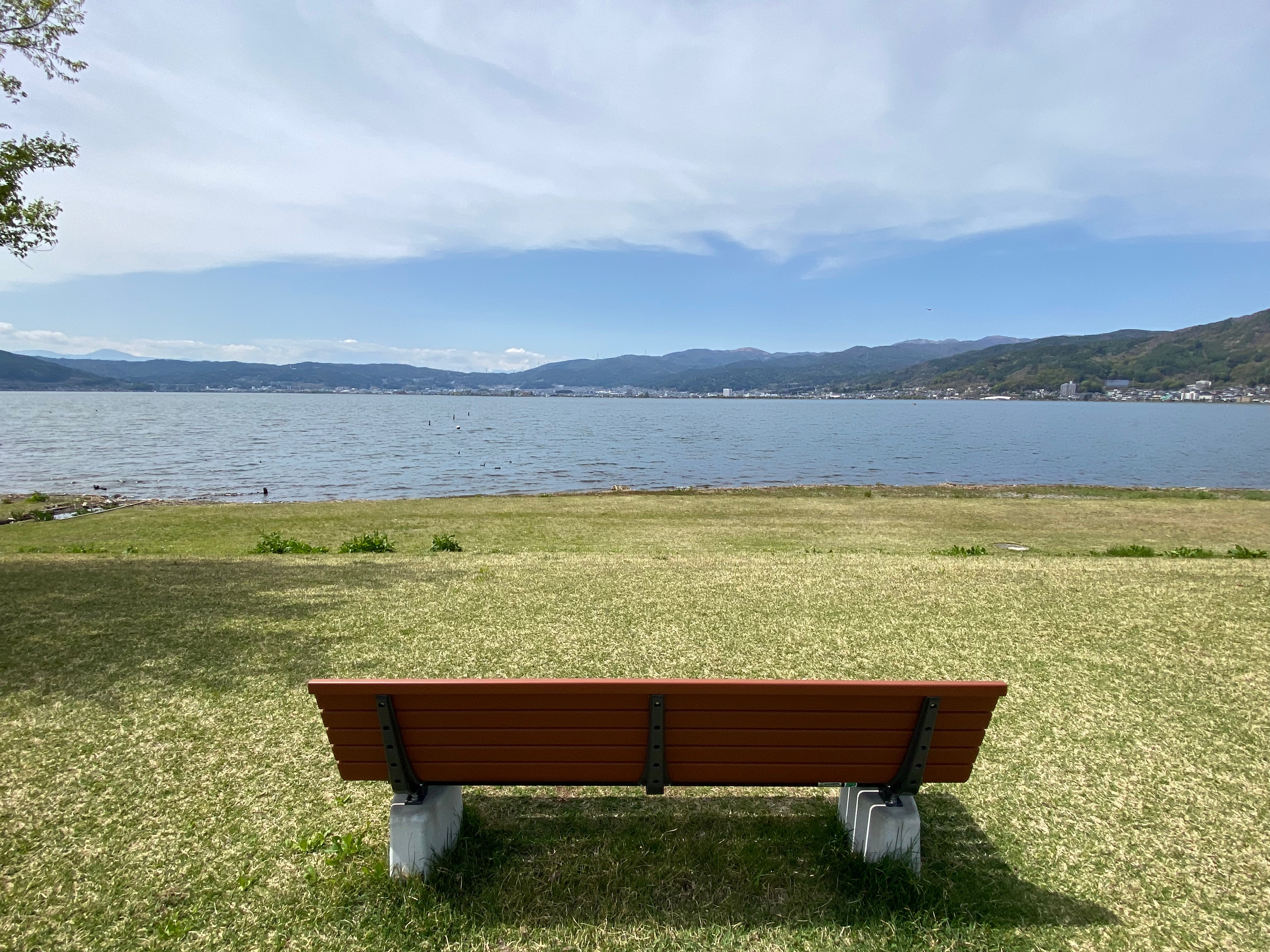
Lake Suwa is remarkably beautiful. It’s the oldest lake in Nagano and is also known as “God’s Crossing”. In winter, when the surface freezes overnight, jagged ridges appear by morning, said to be the footprints of the god Takeminakata. I sit for a while, watching boats drift and birds negotiate the air, before deciding to head back to Matsumoto.

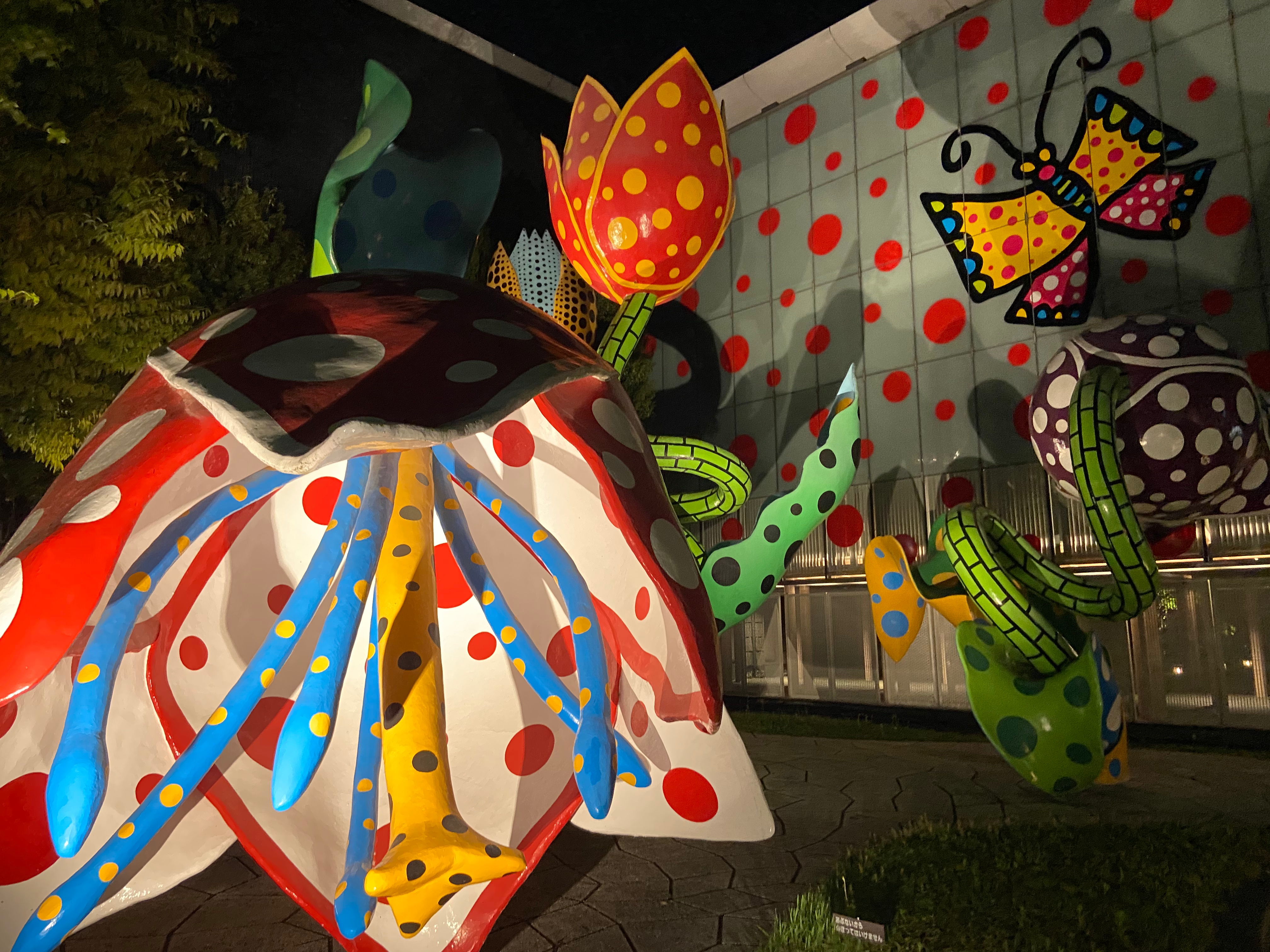
With nothing else planned, I wander the streets until dark. I randomly come across illuminated artwork outside an art museum, the sort of place you would expect to find art. I recognise the style immediately: Visionary Flowers by Yayoi Kusama, unmistakable in her obsession with polka dots.
I head down Frog Street and into a bar, The Elbow Room. I order a cocktail of oolong tea and shochu, enjoy the music, chat with a few locals, and carefully check my ice cubes for footprints.
One Rainy Day in April

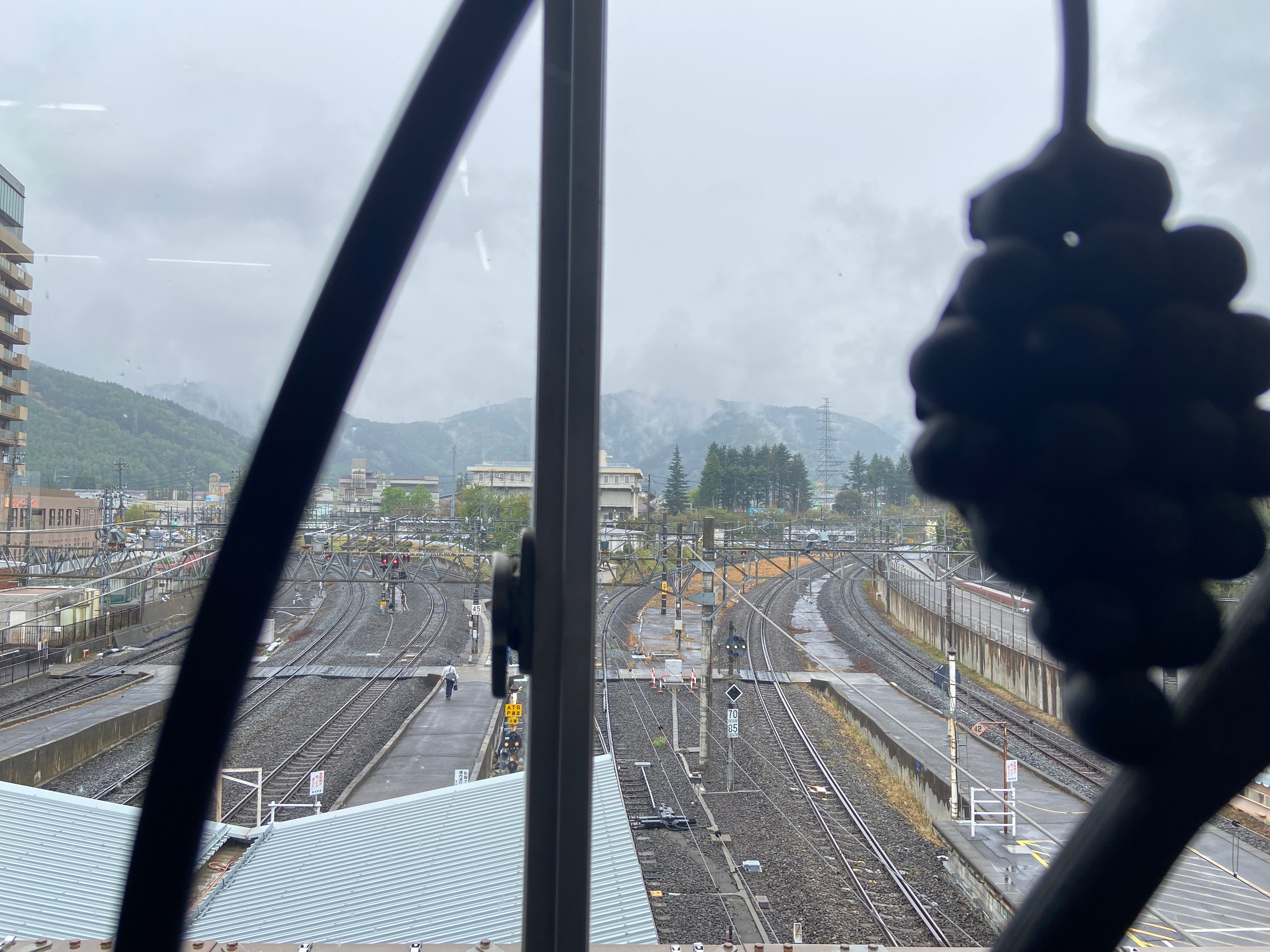
Today I decide to travel towards Matsumoto, into the middle of the Japanese Alps. At Kanazawa Station, I pay the premium ticket price of ¥8970 to travel just one hour on the Shinkansen to Nagano. There, I change to a local train, for local people. After a couple of hours of sitting around on trains, I finally step out into the clean, fresh mountain air. And it’s raining.

The mountains are gone, washed out in a white, ghostly fog, completely invisible today. But with better weather expected tomorrow, I tell myself this won’t have been a wasted trip. I put on a bright green poncho. It doesn’t suit me. I probably look like a large frog. Still better than an umbrella. I always forget those anyway.

Reservoir Frogs

I start exploring, and despite the rain hammering down, I’m drawn straight in. Matsumoto has a quiet, charming vibe. Flower beds and streams line the roads. Bars and restaurants that feel quietly inviting look to be from another time. The Metoba River snakes between buildings that look like they’ve been here for hundreds of years. It reminds me of a less crowded version of Asakusa. Not empty, though, as groups of tourists do drift past, tethered together by guides holding small flags like they’re leading expeditions.

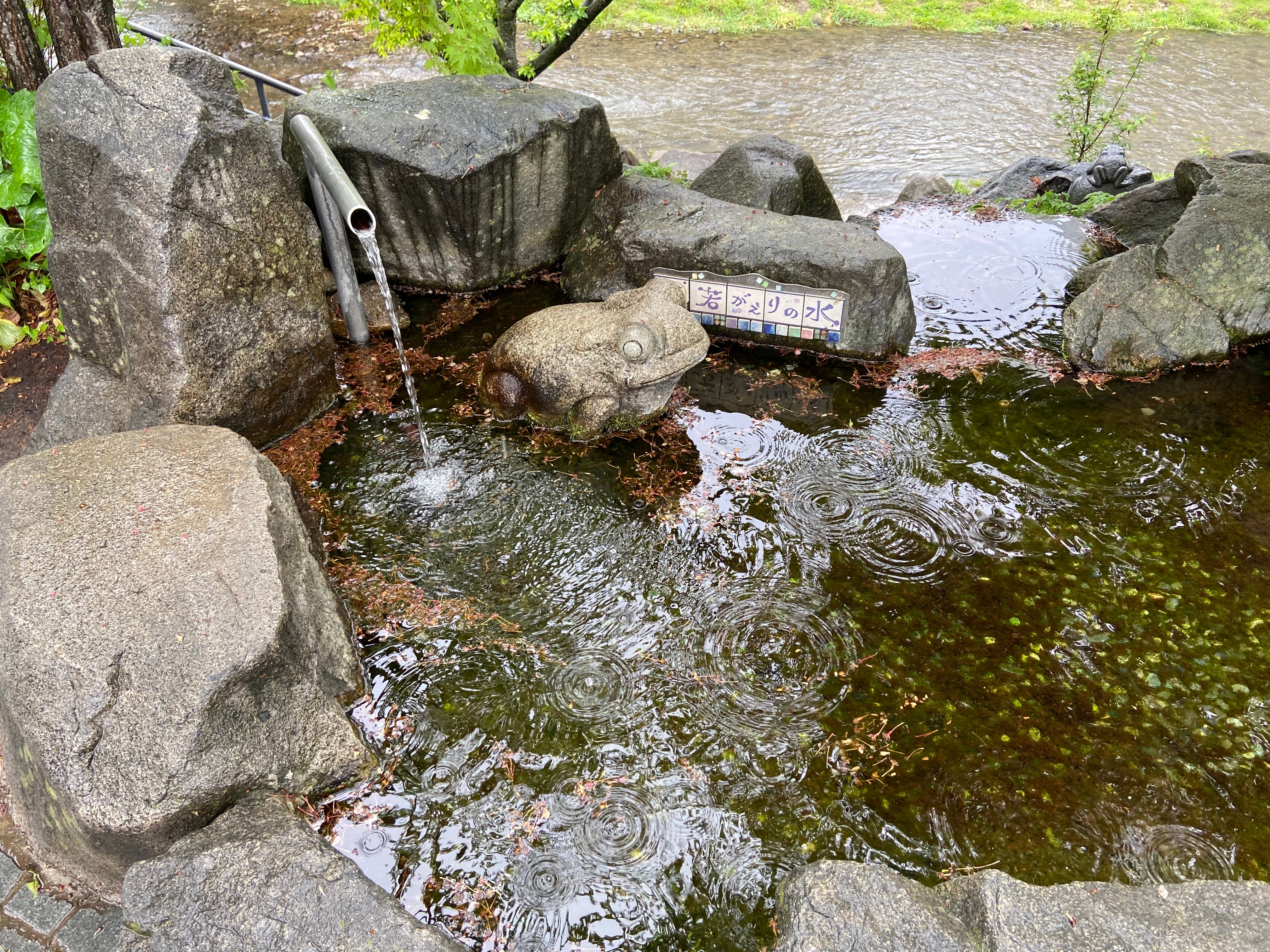
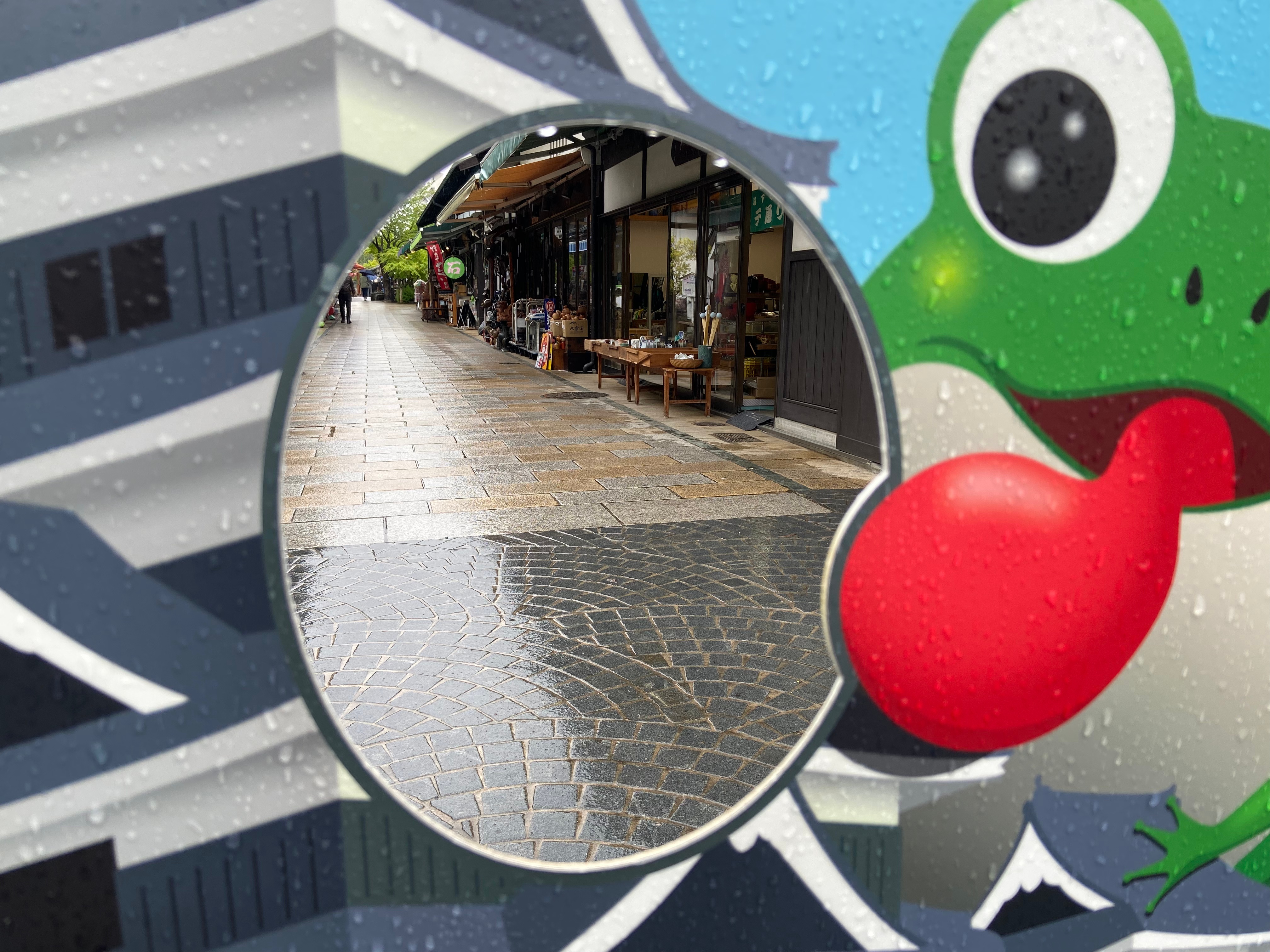
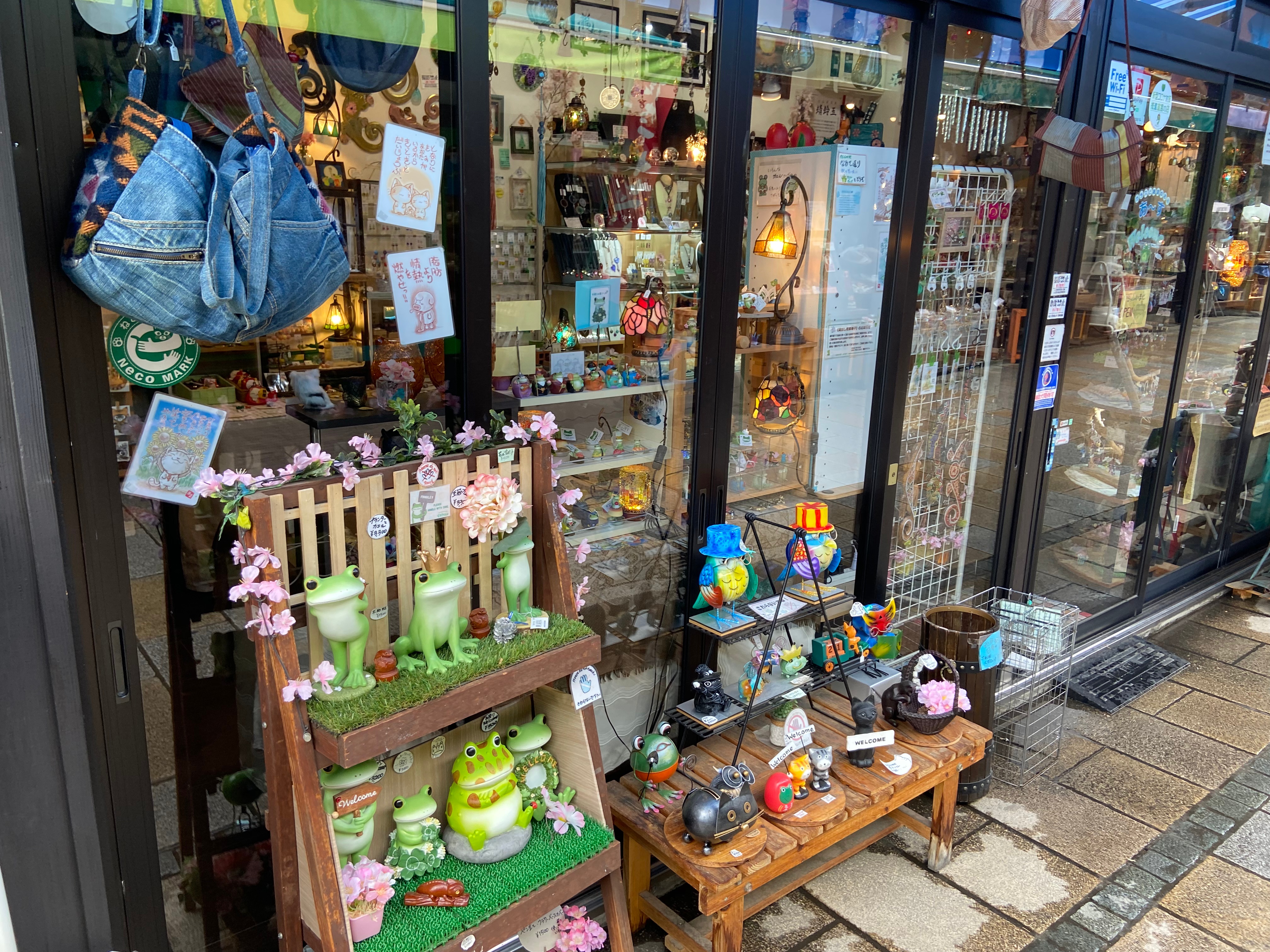
The main tourist street is Nawate Street, also known as Frog Street. It’s a pun I’ve mentioned before, tied to the Japanese word for frog, but essentially it means you’ll return home safely. The frogs will see to that. And there are frogs everywhere.

Decorations, statues, souvenirs, offerings. A shrine dedicated to a guardian frog. Amongst the frogs are about twenty freshwater wells, each one slightly different but æsthetically pleasing. They offer clear cold water for free, but I’ve had enough water today; it’s raining so hard I’m essentially covered in water.

There’s a story written at the shrine which I’ll try to translate: Once, this narrow river was lined with festival stalls, and a dear river frog made a beautiful sound. There were unique emotions, such as the playing of the drums or the smell of acetylene lamps, the voices of stallholders, and fireworks, and the scooping of goldfish.

Then the river became dirty and the frog was pushed upstream. This caused the streets here to lose their vitality, and in 1972 the dear river frog was enshrined, in an attempt to make the river clean again. It worked, and the streets came back to life. Now it is a frog town. A place where mountains and city meet. A place where visitors can relax.

Keep Calm and Waffle On

I decide to walk now in the direction of a local National Treasure: Matsumoto Castle. On the way I pass more art shops, craft shops, storehouses dotted around between the many small shrines and folk art stores. Plenty of town maps here too make it easy to keep track of where I am.

And if kimono rental shops are your thing, well forget that! Here you can rent a panoply of samurai armour for the day for the low price of ¥11,000. Not in this weather though, I’d look ridiculous as a samurai in a green poncho.

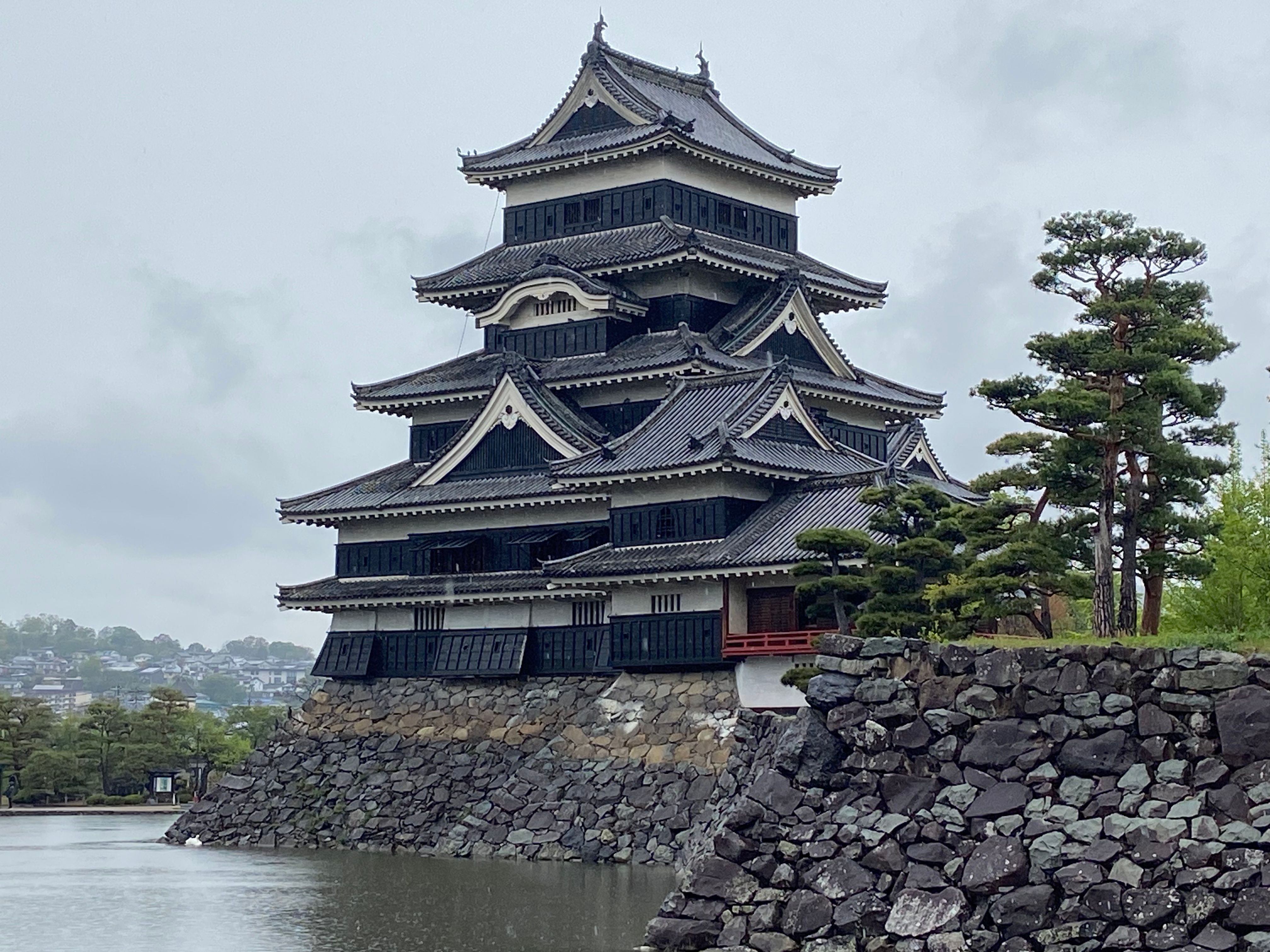
It’s not long before I arrive at the castle. Inside, the keep is so incredibly calm; there’s not a tourist in sight, probably put off by the weather. The castle is the oldest five-storey six-floor castle in Japan. A very specific metric, if you ask me. But it’s all because of a completely secret hidden floor. A castle bigger on the inside than on the outside. The castle is stunning to look at. The Northern Alps sit shrouded behind it, blending into the clouds, while the swamp-like stillness of the moat settles the scene.

Leaving the castle, it’s almost time to check into my hotel, but I’m feeling a little hungry so head back in the direction of Frog Street to see what’s on offer. I pass a shop selling traditional taiyaki, fish-shaped waffles. This store offers three normal flavoured fillings and one odd flavour. Sweet red bean, chocolate, custard cream, and sausage.

Obviously I go for sweet red bean paste as it’s my favourite. It’s cheap too. Only ¥250 and surprisingly massive. As I am handed the packet, I find the waffle to be red hot, and it smells so good. The batter sweet and soft and delicious. But the tail is the best part, a little crunchy and a little crispy. Luckily for me I’m staying near Frog Street for the next three nights, so I’ll be sure to return here frequently for more fish-shaped waffles; one of the best Japanese snacks.

The Grape Train Vinery

I head to my hotel to check in and dry my shoes with a hairdryer. I don’t need the poncho anymore, as the hotel is one minute from the train station, so I’ll be indoors the whole way. I hop on the train bound for Shiojiri Station, the journey takes 8 minutes. The under seat heating makes a mockery of my freshly dried shoes.

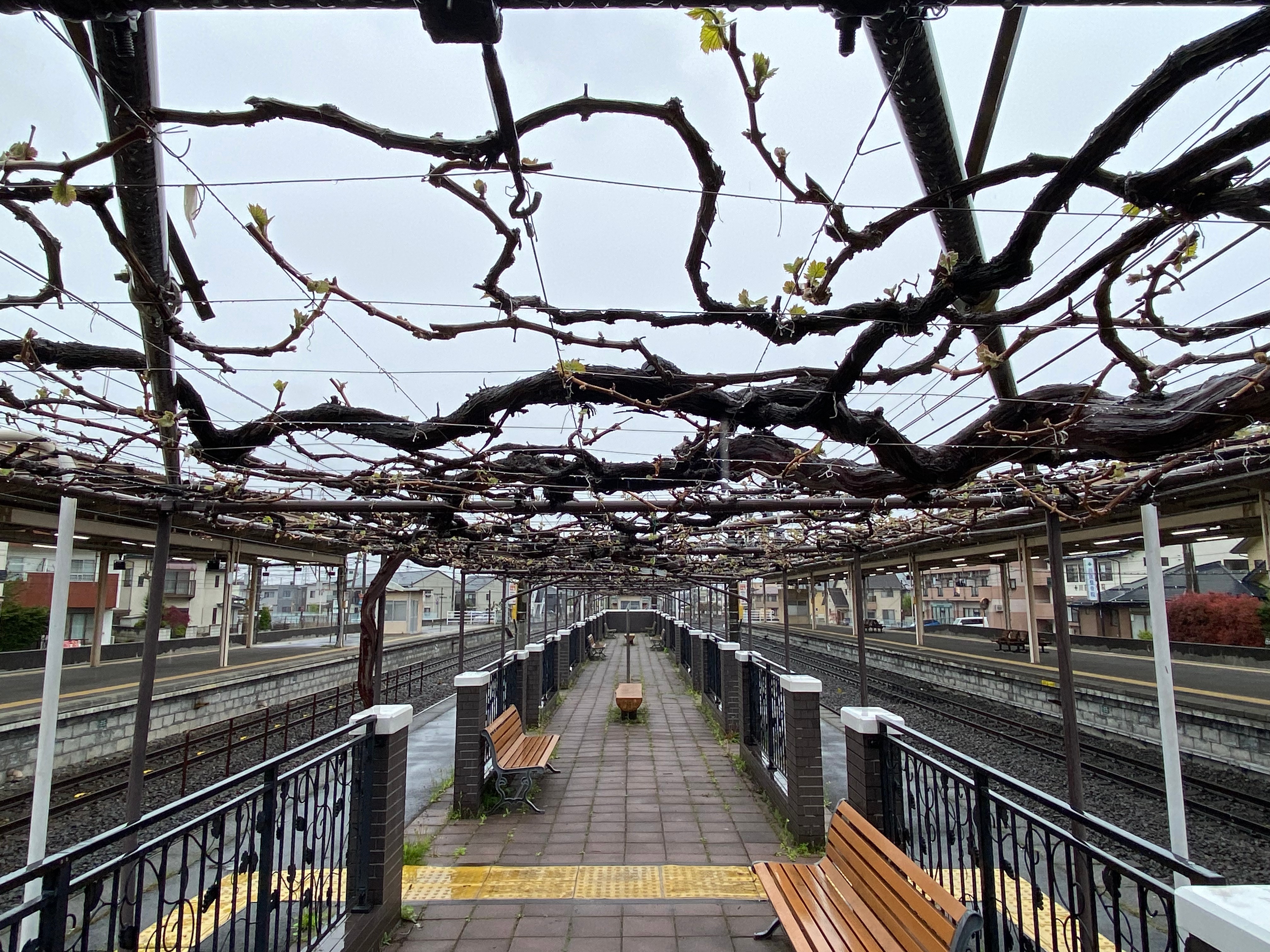
I exit the train into my destination. It’s actually the train platform I’m here to visit, as it has its own vineyard. That’s right, the grapes used to make Shiojiri Wine are grown right here on the train platform. The vines stretch along the platform, growing patiently beside passing trains. Obviously the grapes won’t be fully grown until the autumn, right now they are just small leaves on vines. I do notice that they have hung some plastic dragonflies around the vines, which I assume is to deter predators from eating the grapes.

Inside the station, there’s a small gift shop. I purchase a bottle of Black Queen red wine, made from platform grapes. Then it’s back on the train 8 minutes to Matsumoto Station.

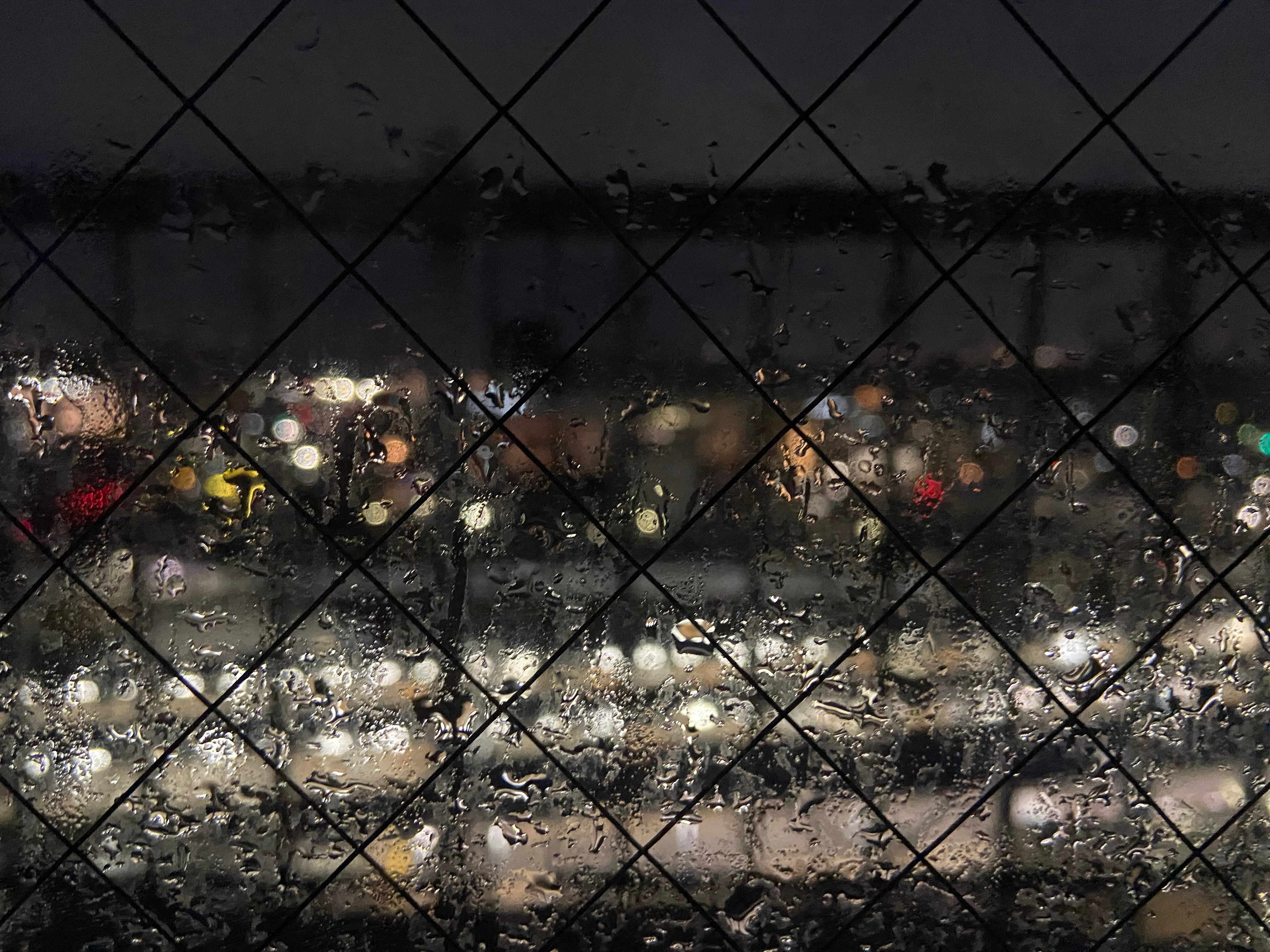
In my hotel room, I sit on the edge of the bed with a plastic cup of wine, its notes of cassis a little overpowering. I enjoy the sound of the rain as it taps softly against the window. The wine is bold, a little too certain of itself. And somewhere beyond the fog, the mountains are still there. Waiting for tomorrow.

Zen and the Art of Samsara Cycle Abeyance

A woman on the train loudly tells her tourist friends and the entire carriage that Kanazawa might be the most Instagrammable place in Japan.

Leaving the station I see a map showing thirty-seven points of interest, and for someone who enjoys walking as much as I do, and with my long legs, it appears everywhere today will be within walking distance. Following a gaggle of eager tourists, I end up at Omicho Market.

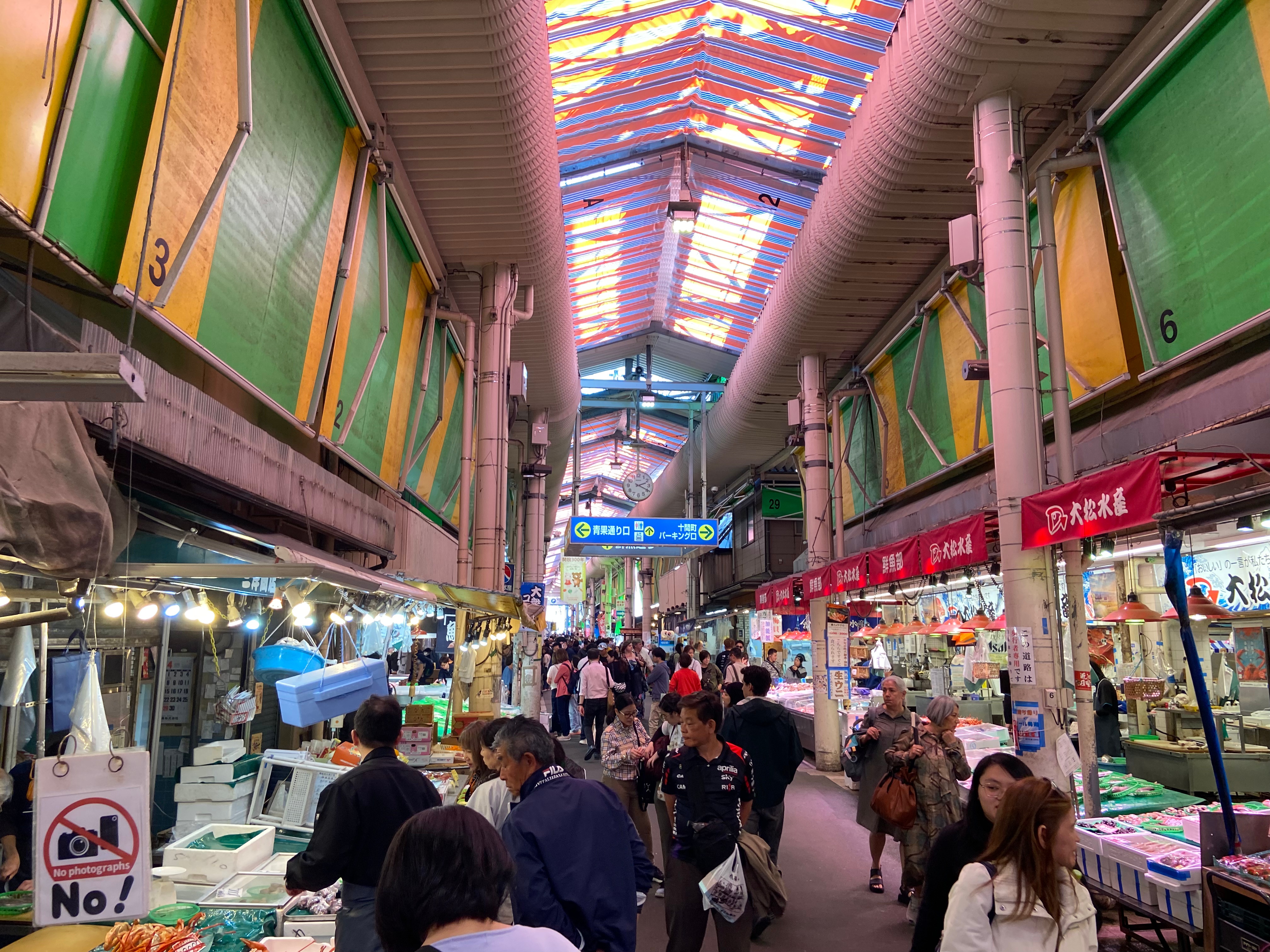
This massive indoor fresh food market has been operating since the early 1600s, and the tourists are here for it. The smell of freshly caught fish fills the morning air. A sign at one stall says, “All the firefly squids are sold out,” which is a shame, as they’re something I’ve always wanted to try. As I move through the haze of cacophonous chatter, a multitude of languages echoes from stall to stall, and staff shouting welcomes from every direction feels somewhat overwhelming. So much so that I begin to suffer from a not-so-Instagrammable headache.

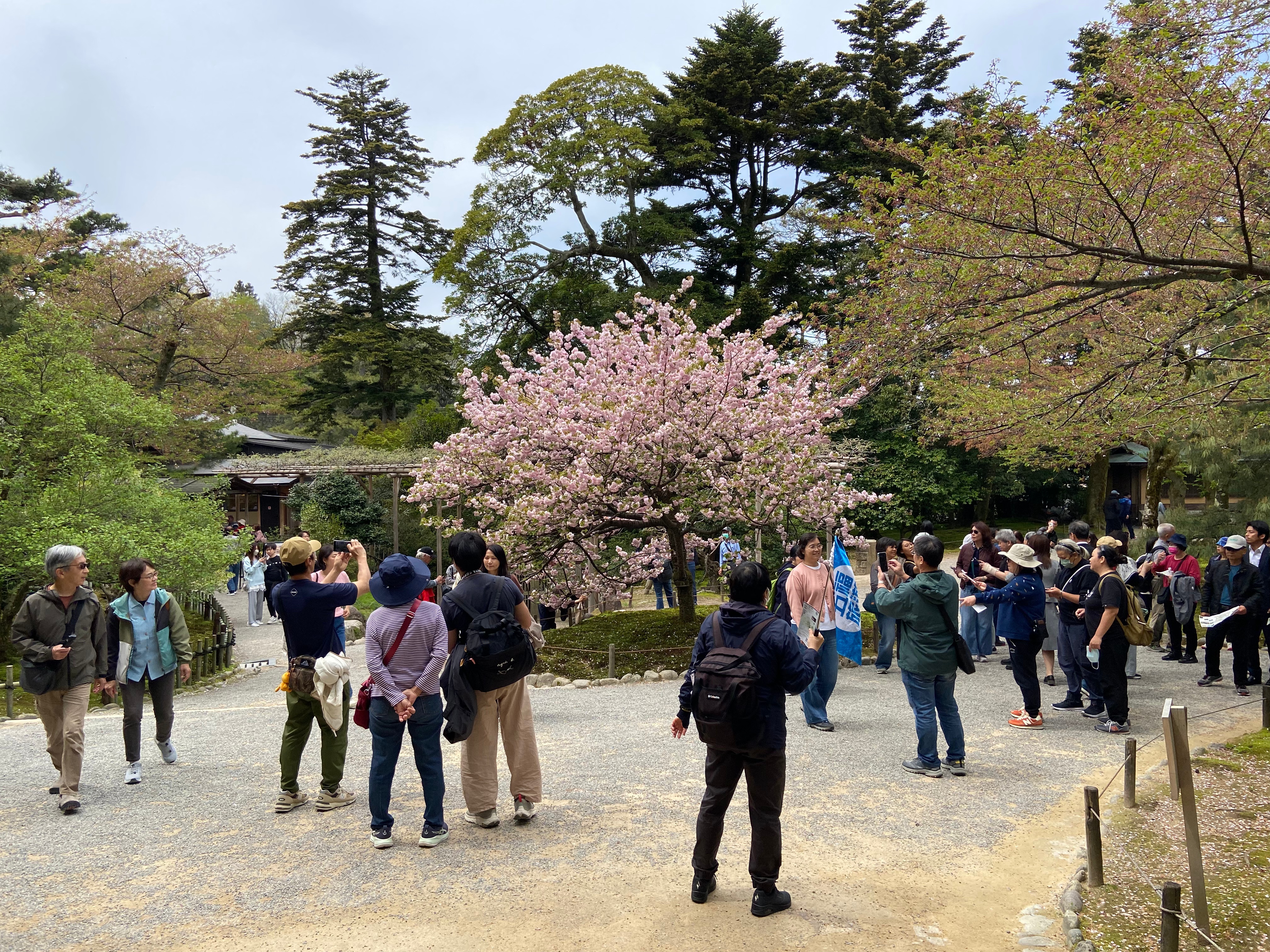
I fall out of the market and seamlessly into a garden, specifically Kenrokuen. Ponds, streams, famous trees, mountain views: the garden has everything. With seven individual entrances and two huge car parks, it also boasts a sixty-minute standard walking course. Unfortunately, the popularity of such a place is again a massive draw for tourism. They gather around the only cherry blossom tree whose petals have avoided abscission, blocking views of the ponds, and the paths themselves. And worst of all, the silence.

I honestly thought being in a garden would be a tranquil experience, but my head thumps as a tour guide with a megaphone ushers along a group of ten or so tourists. People shout, crunch food loudly, and whatever calm I had disappears. Even here, surrounded by what should be peace, I can still hear the beeping of a distant pedestrian crossing.

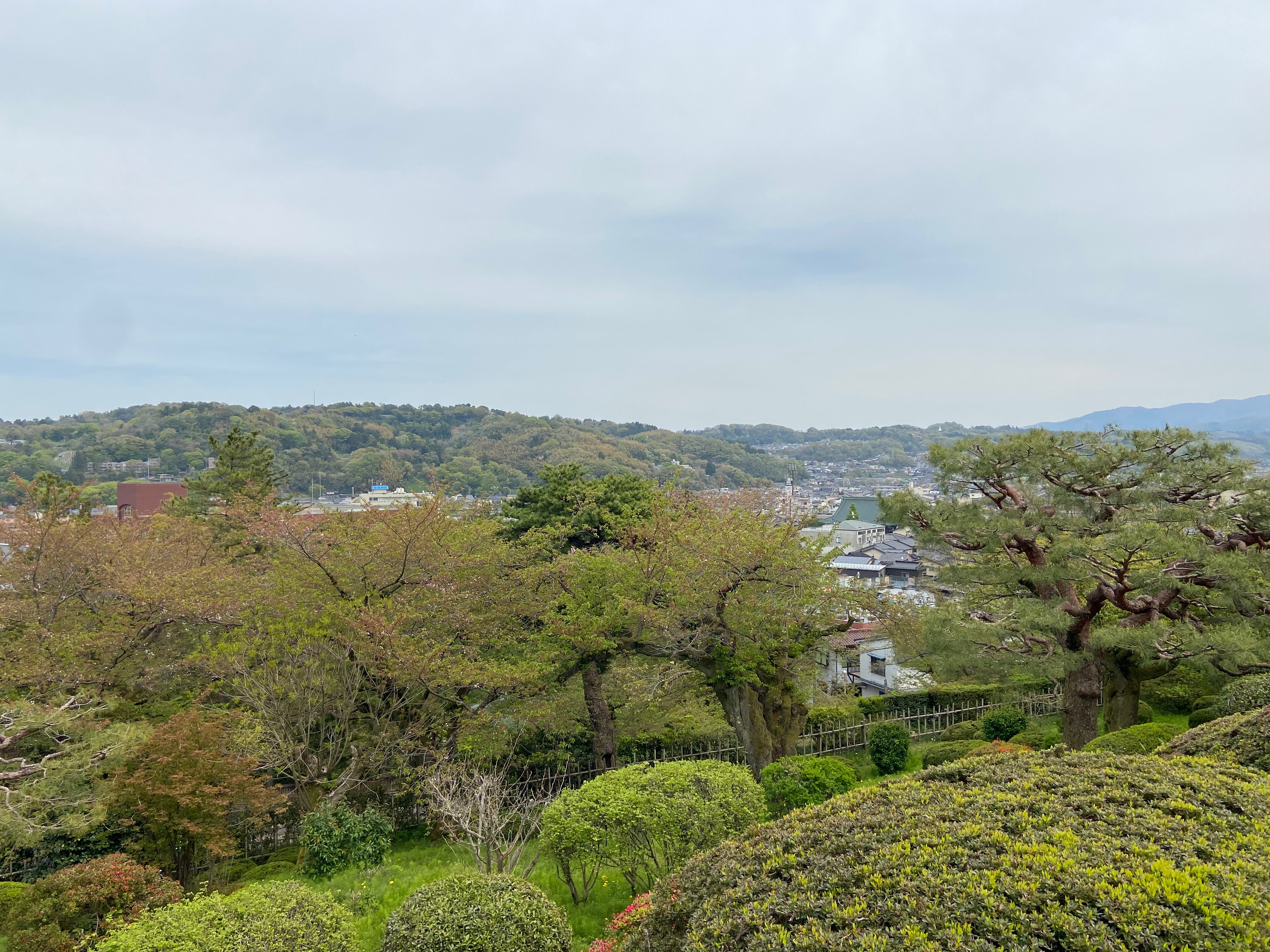
Trying to leave also becomes a challenge. Despite there being seven exits, I can’t seem to find any of them. I imagine this place is better early in the morning, because despite my complaining, it is still quite a good garden, and the views of the city can be pretty nice from up here too.

Outside, I find another map and a name I recognise: Daisetz Suzuki, a famous Buddhist philosopher, religious scholar, and authority on Zen. He has a museum here in his hometown of Kanazawa; well, it probably used to be his museum, he died in 1966. I do almost miss the entrance though as I become distracted by a massive bee hovering at my eye level, buzzing rather loudly.

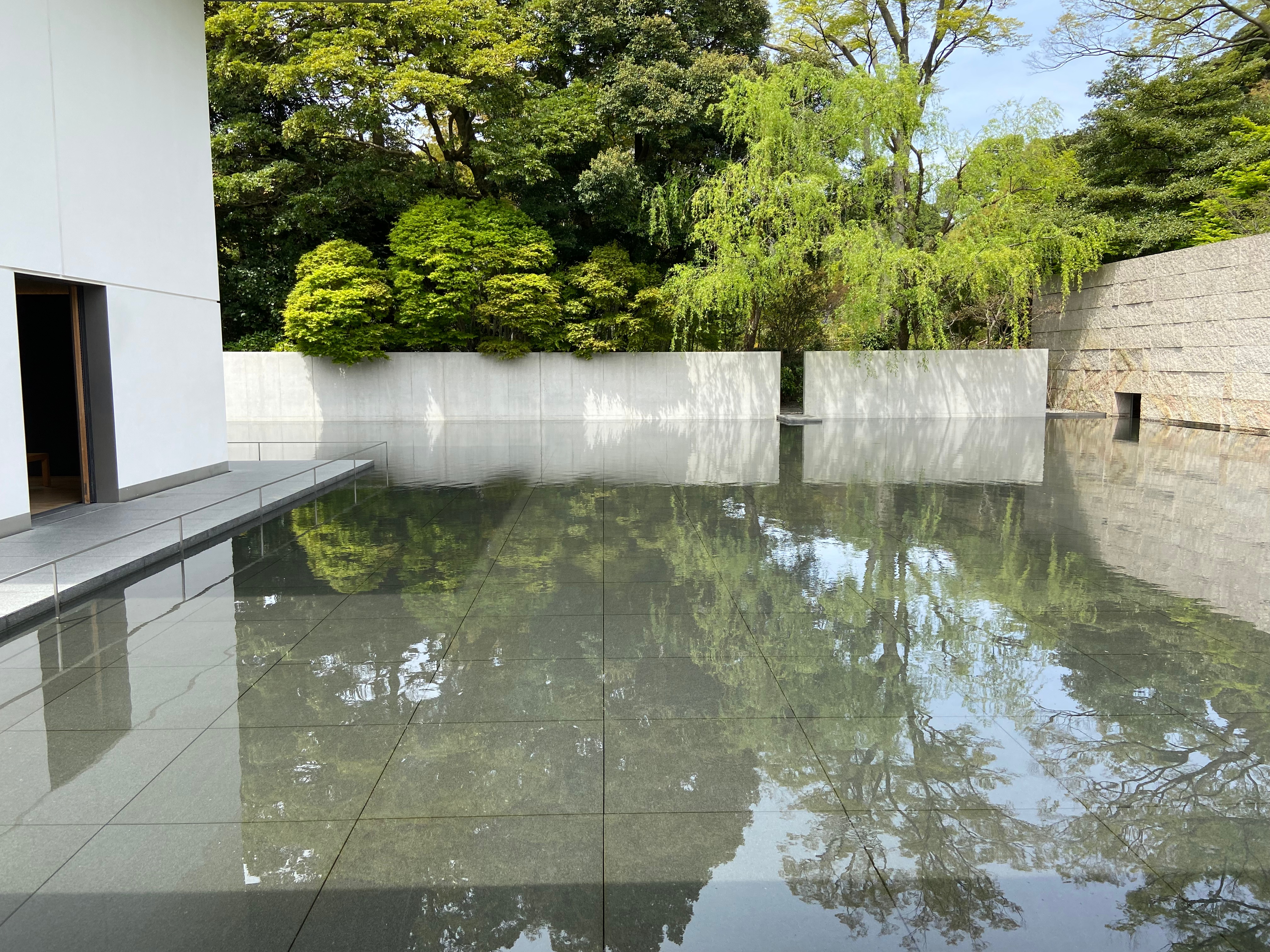
An information booklet that comes with the ticket price opens up to reveal just a blank white page, and nothing else. I do love minimalism, it’s part of this blog’s identity, so I fully appreciate this. I decide to stand by the Water Mirror Garden for a time, listening to the soft sound of distant running water, the stillness, finally achieving perfect silence.

Over at the Contemplative Space, a white room by a window where the sun comes through, I sit thinking. Looking at the suspended water mirror’s reflection, I try not to think. I quickly realise that I can’t not stop thinking, and then try to work out which part of that sentence was the double negative, which only makes me think even more. That’s the problem with meditation or mindfulness; silence becomes a game of Russian roulette, only the gun’s loaded with your own thoughts.

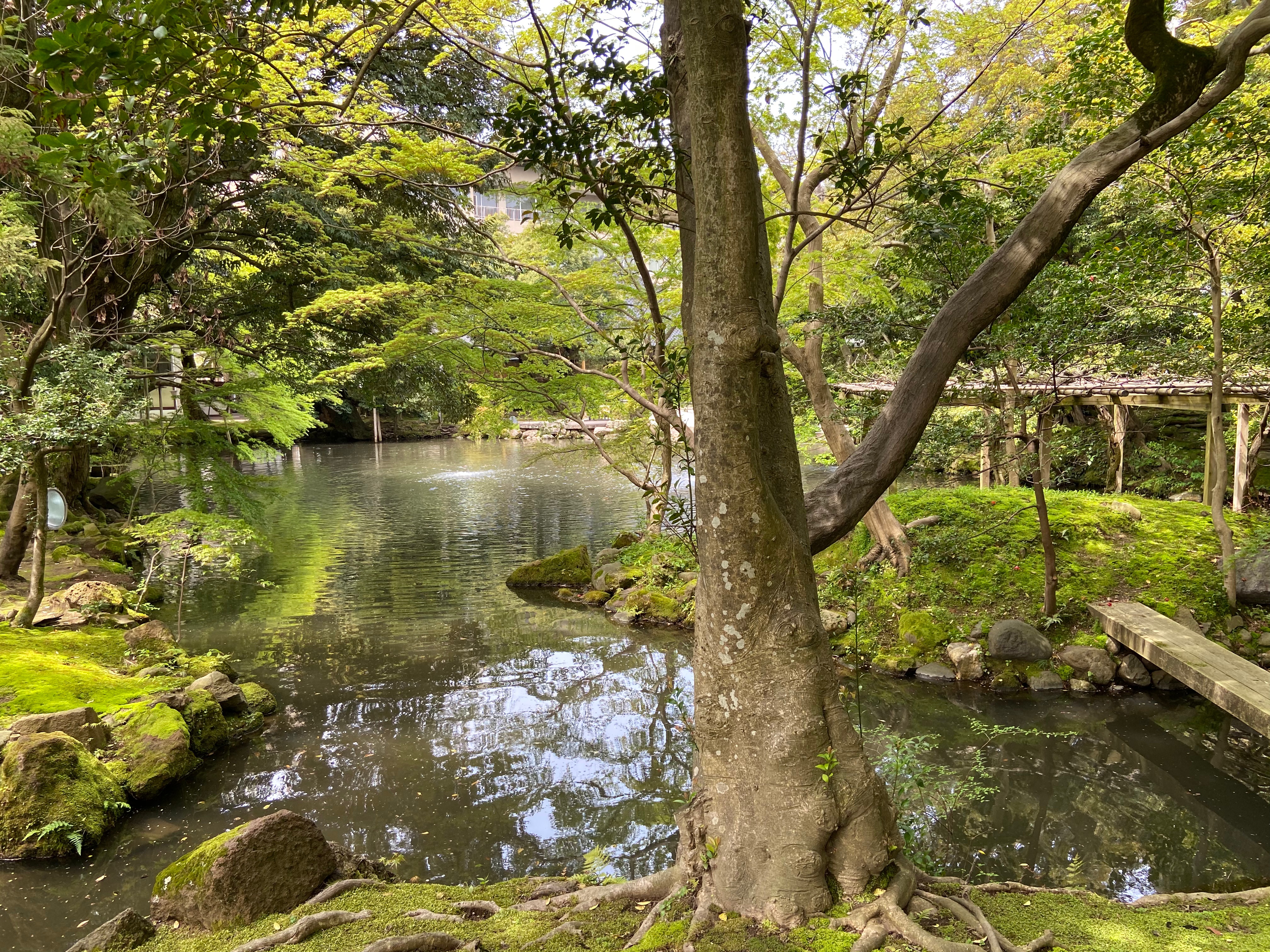
I continue further on, into Shofukaku Garden, a stroll garden around a pond. A Designated Place of Scenic Beauty, and free to enter, I’m quite surprised to find I have this garden completely to myself. I wander around my own secret space, take it all in, watch the carp, absorb the spring colours, before being chased off by that angry bee from earlier.

I next head up some moss-covered steps into a forest. It’s so incredibly silent here, just the twigs crunching underfoot and the occasional bird, there’s nothing else, and I don’t need anything else. So I pause and stay, for a while, just here, just being, before eventually forcing myself back into the cycle of the noisy world I had briefly escaped. That fleeting moment, now gone.

I walk in the direction of the Higashi Chaya Tea District, which apparently looks a lot better at night. Again, tourists bumble noisily. Regardless, it does still feel like a step backwards in time, with rickshaws, tea ceremonies, pairs of women in kimono, evening geisha performances, so much so that I plan to come back later to take a couple of night shots.

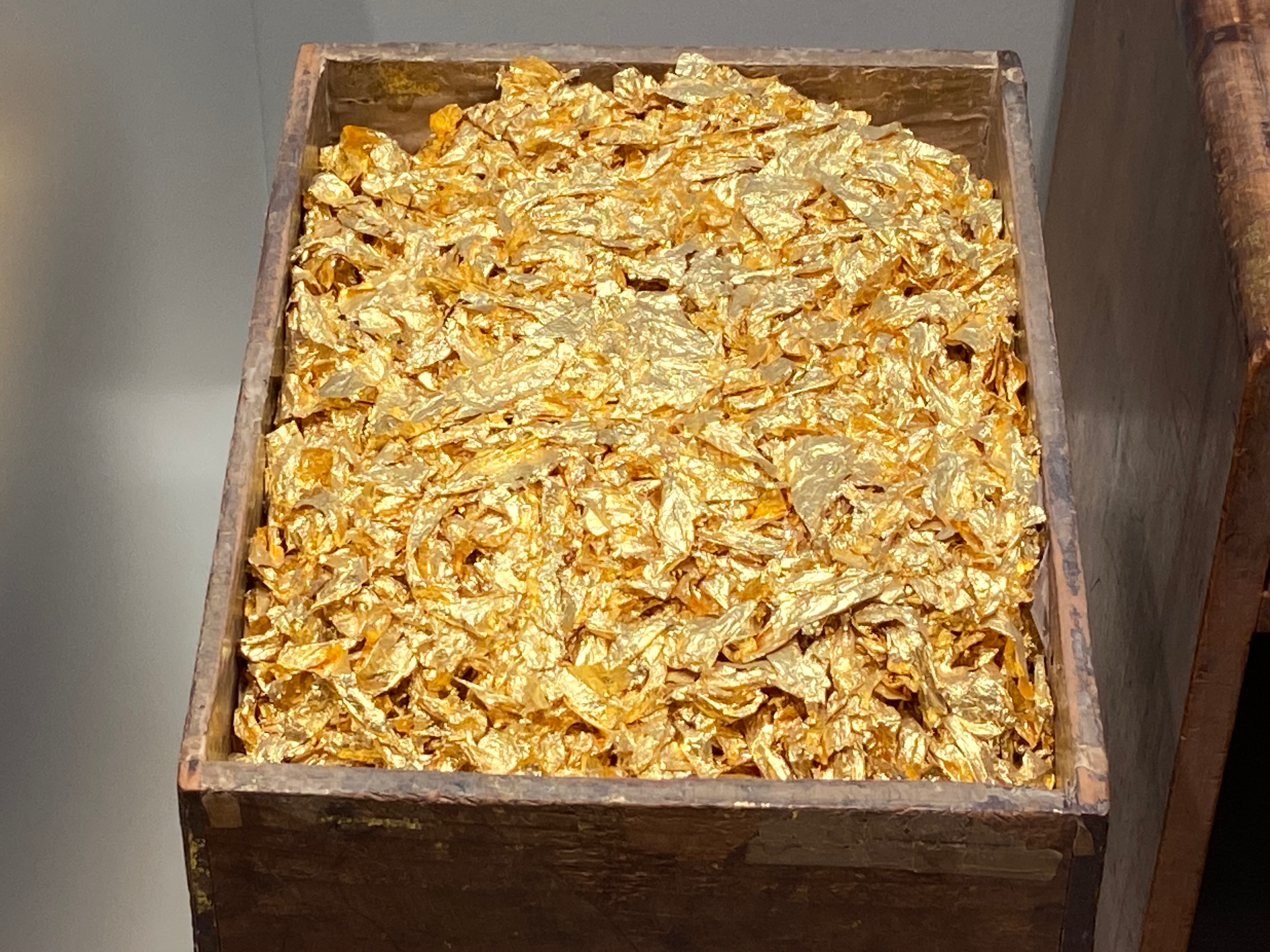
The shops here sell the usual fish-shaped waffles but this time laced with edible gold leaf. Kanazawa is the biggest producer of gold leaf in Japan. In fact, gold leaf here is everywhere. There are gold leaf cosmetics, face lotion and hand cream. One shop is trying to get in on that action and is offering gold beer. But most beer is already gold. There are people queueing to buy gold leaf soft serve vanilla ice cream. I even see one lady come out of the shop holding her ice cream, pose with it for an Instagrammable selfie, before casually tossing it into a bin. She might well just cancel her trip and get AI to generate her holiday for her.

Amongst the tea shops and cafes there is also the Kanazawa Yasue Gold Leaf Museum, so I decide to take a look and learn about this 1/10,000th of a millimetre thick foil that requires extreme focus, almost Zen in its precision. There was supposed to be a hands-on workshop so I could try to apply gold leaf myself, but sadly it’s been cancelled, so instead I admire some art adorned in flecks of gold, before checking to see if there’s a golden toilet on the way out. There isn’t.

By the time the gloaming arrives, my gold leaf soft serve vanilla ice cream has all but melted. I sit in the evening light, sipping a golden beer. I realise now that my headache too has almost faded. You can sort of tell these things.

Dead Children Playing

Halfway into my eight-hour train journey to the northern region of west Japan, I decide to take a break from sitting and get off at Kurashiki, a quaint coastal town in Okayama Prefecture. Famous for its strategic location during the Edo period, which made it a popular place to store rice, Kurashiki, literally meaning “storehouse,” is also conveniently located halfway between Tokyo and my final destination. Upon arriving at the train station, I am greeted by a sign that reads, “Welcome to Okayama, the Land of Sunshine.”

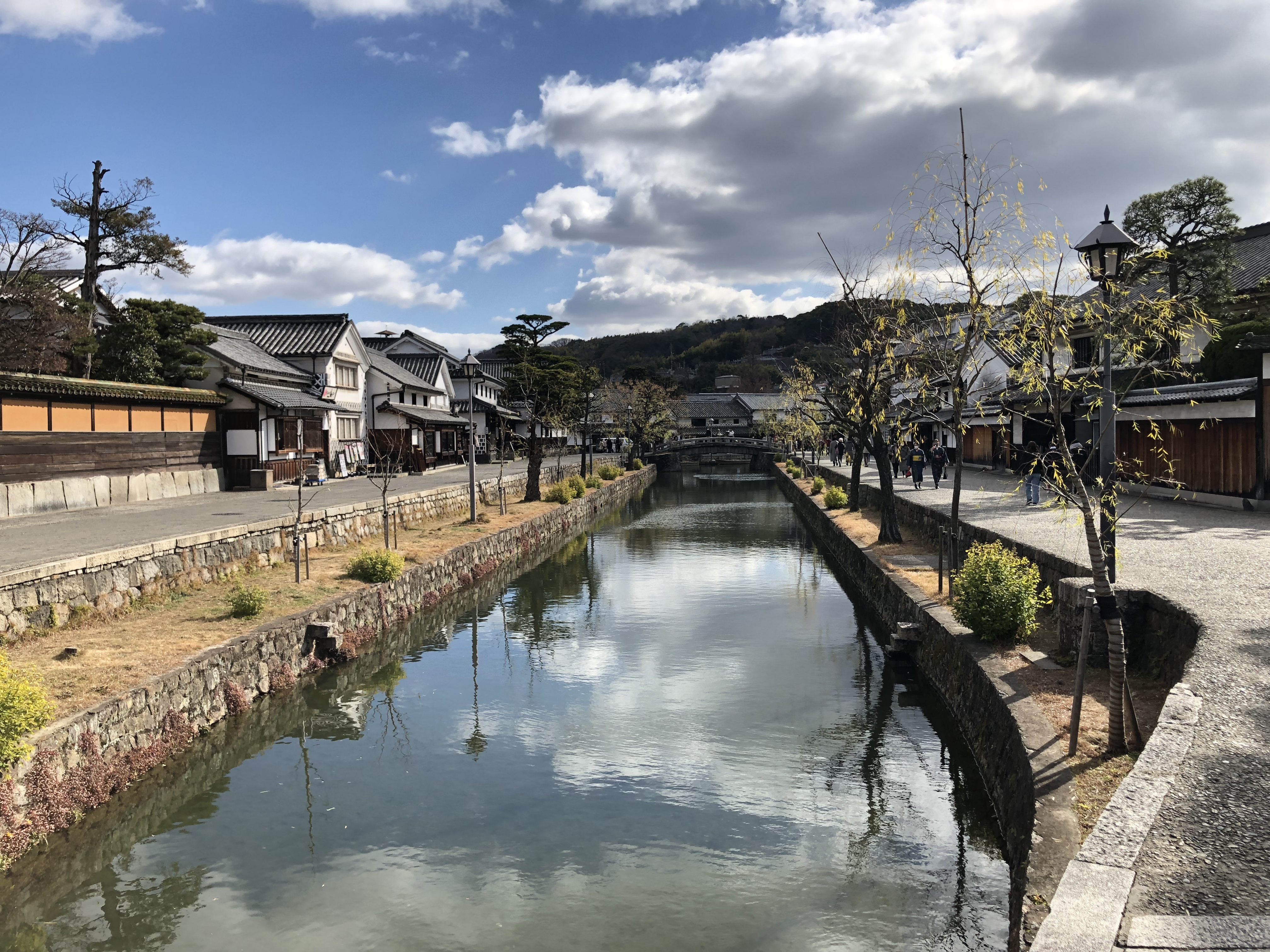
As I step out of the station, I find that the weather is not quite as sunny as the sign had promised. The sky is cloudy and grey, but that does not dampen my spirits as I begin to explore the winding streets of the Bikan Historical Quarter. Here, the buildings are old and charming, with weeping willow trees, historic godowns and canals that interconnect throughout the area. Touts eagerly await me, offering rides in their rickshaws. Just as I begin to further complain about the weather, the sun breaks through the clouds, illuminating the streets and bringing a warmth to the air.

I come across a shop called Gangukan, which has an annexed building featuring a toy museum. Intrigued, I pay the lady at the cashier, who shows me a sign in English that reads, “I will take you to the entrance.” She guides me through a maze of small alleyways to the entrance of one of the museum buildings. The door creaks as it opens, and the woman mutters something in Japanese before swanning off, leaving me to explore the museum alone.

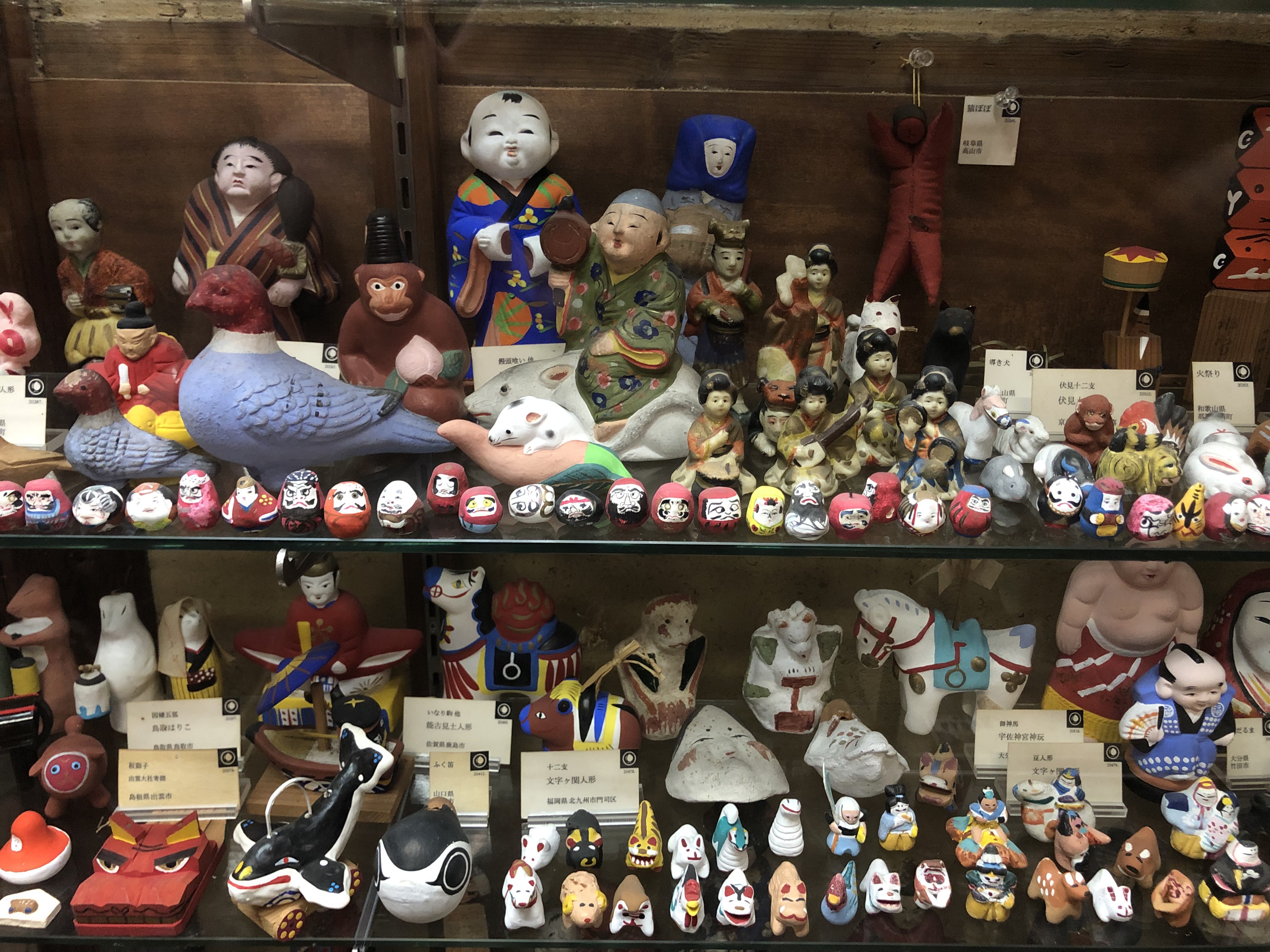
The Japan Rural Toy Museum is one-of-a-kind, housed in a beautifully renovated old rice storehouse, the museum features toys from 1600 to the 1980s. Inside the first room, I am greeted by a collection of folk-craft toys from every prefecture in Japan. In the second gallery, Daruma dolls are displayed alongside clay figures, ceramic bells, dove flutes, and wood wishing plaques.

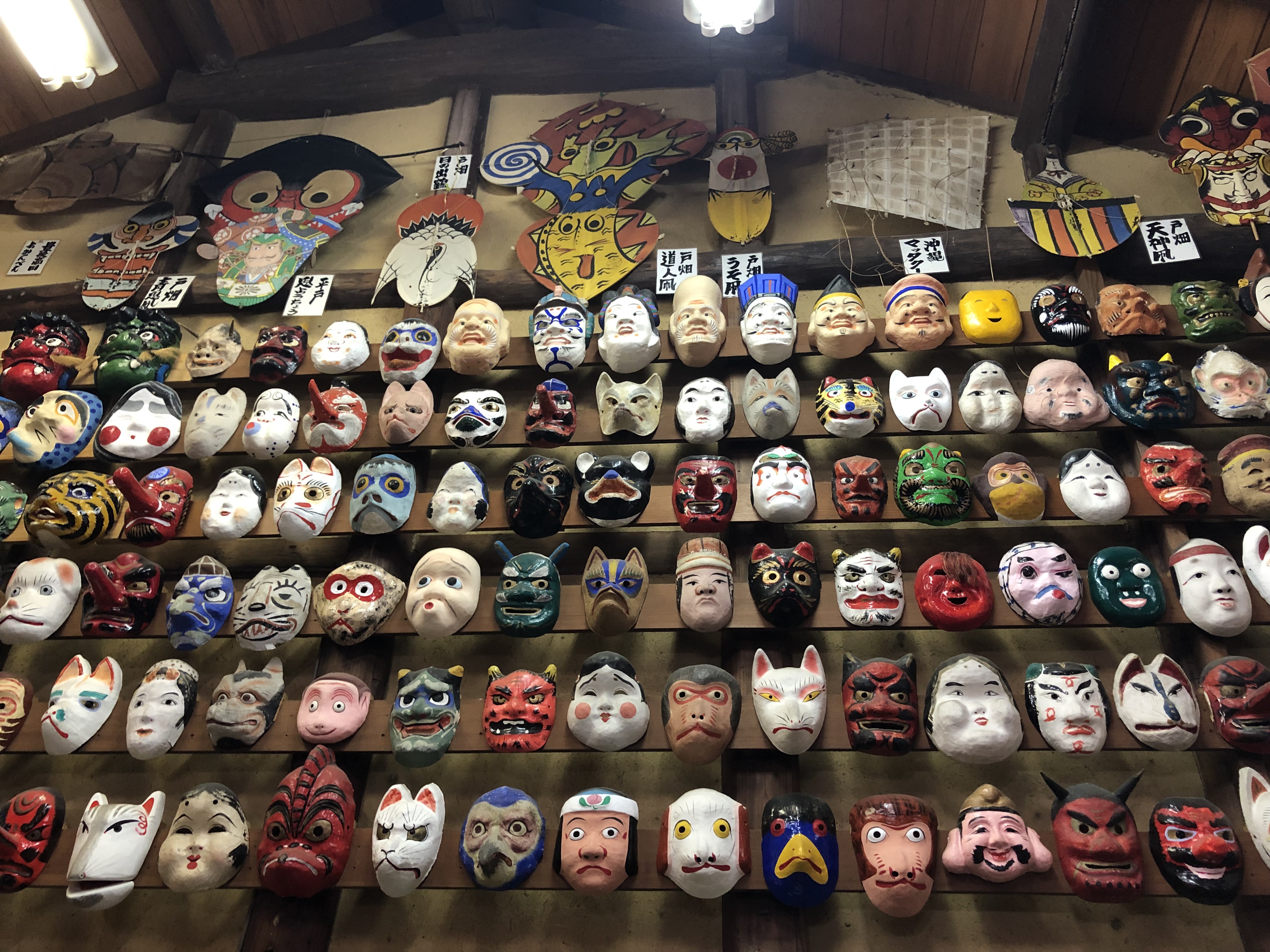
As I move to the third gallery, I am greeted by old wooden toys and spinning tops, and displays of annual New Years postage stamps from 1954 to present. In the fourth and final gallery, I see masks, a lot of masks. I’ve always wondered if masks can be classified as toys, but then again, I suppose the same question can be asked about postage stamps too. The gallery also features decorated shells, porcelain dolls, papier-mache dolls, and a large collection of old dusty books and badminton rackets.

As I step out of the museum, I find myself facing a small shrine. I can only assume that it is a tribute to the god of toys. As I think about the ancient toys, especially those dating back to the 1600s, I am struck by the enduring legacy of these simple objects of play. The children who once laughed and played with these toys, now long gone, reduced to mere memories and dust. But the toys remain, locked behind the glass walls of the museum. It’s a poignant reminder of the tragedy of death, and the beauty of the small things that outlast us. The toys, once a source of joy and laughter, now stand as silent witnesses to the fragility of existence.

As I continue my stroll through Kurashiki, I come across Denim Street, an entire street lined with shops selling the same thing. Along the way, I also pass small shops selling watercolour paintings and origami paper. The area, with its stunning canals and old shops, feels like a cross between Kyoto’s Gion district and Tokyo’s Asakusa district, but with less commercialisation. The area boasts a number of museums as well, including art, archæology, natural history, and folk-craft.

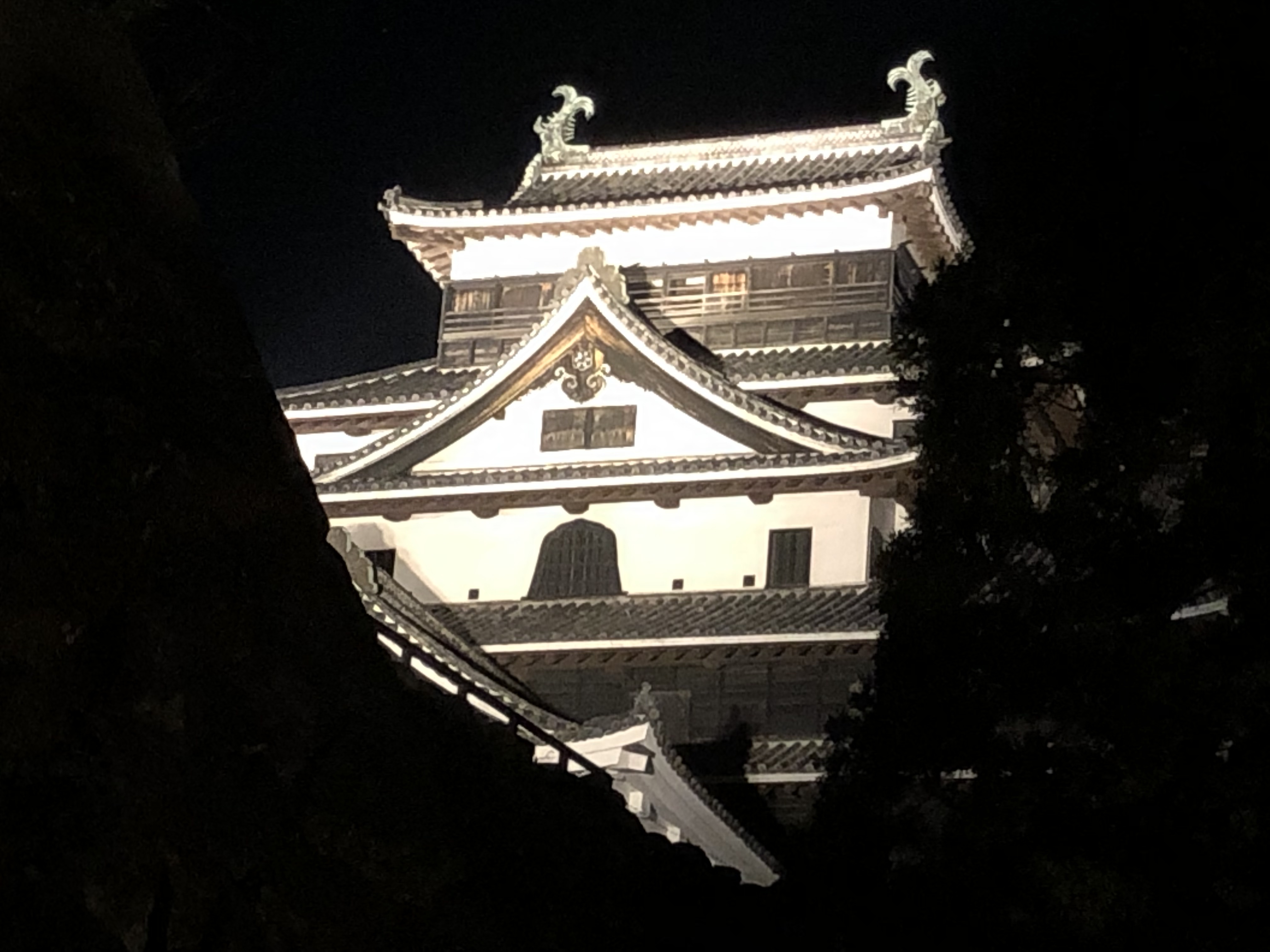
After a few hours of exploring, I leave the Land of Sunshine and embark on another four-hour train journey to the city of Matsue in Shimane Prefecture. As I arrive at dusk, I navigate the streets and make my way to Matsue Castle. Nicknamed the “black castle,” it is one of only 12 castles in Japan that have been perfectly preserved in their original state. It stands out in the darkness of the night, seeming to effortlessly float suspended in the sky. The grandeur of the castle illuminated by the moonlight, casting a mysterious and ethereal aura, making it an enchanting sight to behold.

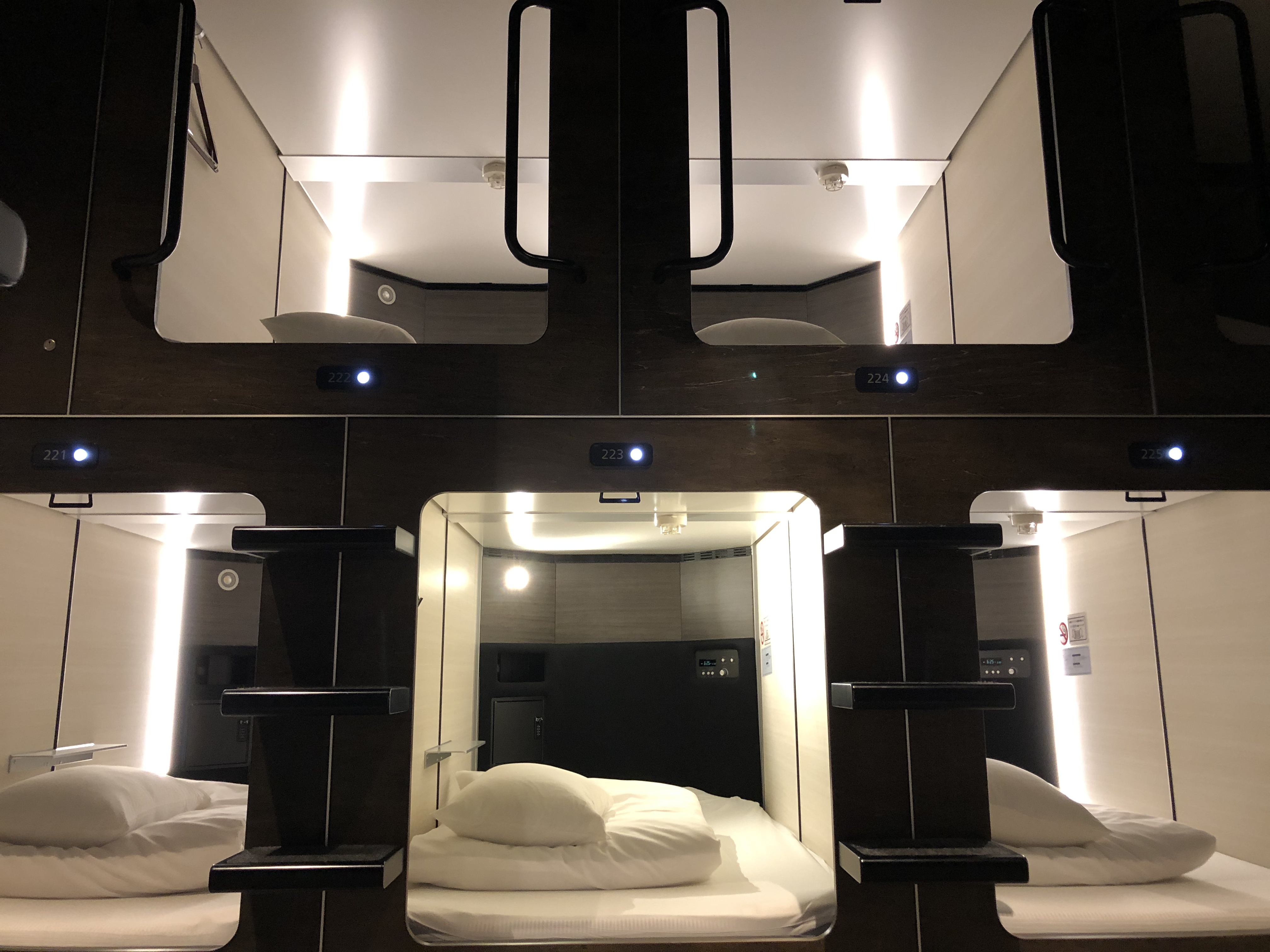
Leaving the castle, I decide to check into an iconic capsule hotel, something I’ve been meaning to do in Japan for years. After finding my “coffin” for the night, I realise that my room, if I can even call it that, is contained within a larger room with 39 other boxes stacked on top of one another. Thankfully, none of the other capsules are occupied. The hotel offers a reasonable amount of amenities, such as towels, toothbrushes, razors, earplugs, bathrobes, and nightwear. It’s also impeccably clean.

I grab some food from a nearby supermarket and head back to my hotel. Due to the limited space, it’s not possible to eat inside the room where the capsules are located. However, the hotel does offer a large common area with comfortable seating. The common area also features its own jaunty, catchy music that plays on a loop ad infinitum. It’s like being in a 1980s video game where the composer was hired on a budget. After eating my deep-fried tofu with rice and listening to the same piece of music for the twenty-third time, I retire for the evening, and crawl into bed.

As I lay in my coffin, the jaunty music swirling around my head like a relentless earworm, I think back to the toys, and thoughts on life, how we too are on a never-ending loop, chasing after fleeting moments of joy before inevitably succumbing to the silence of death.

Saving Primate Ryan

I aimlessly wander through Tokyo’s Adachi Ward on a cold, grey day, feeling a little bored. As I walk through a park I notice a small building that seems out of place amongst the trees and grass. As I walk up to the building, I can’t help but notice its bleak appearance. The grey concrete seems to blend in with the overcast sky, giving the place a depressing vibe. But despite my lack of enthusiasm, I decide to check it out.

As I walk through what turns out to be an animal exhibit, I can’t help but notice the perceived lack of space and variety in some of the enclosures. The Sulcata Tortoise appears to be trying to escape, possibly because it seemingly lacks access to direct sunlight, a necessity for this type of animal. It repeatedly smashes its face against the glass enclosure in frustration.

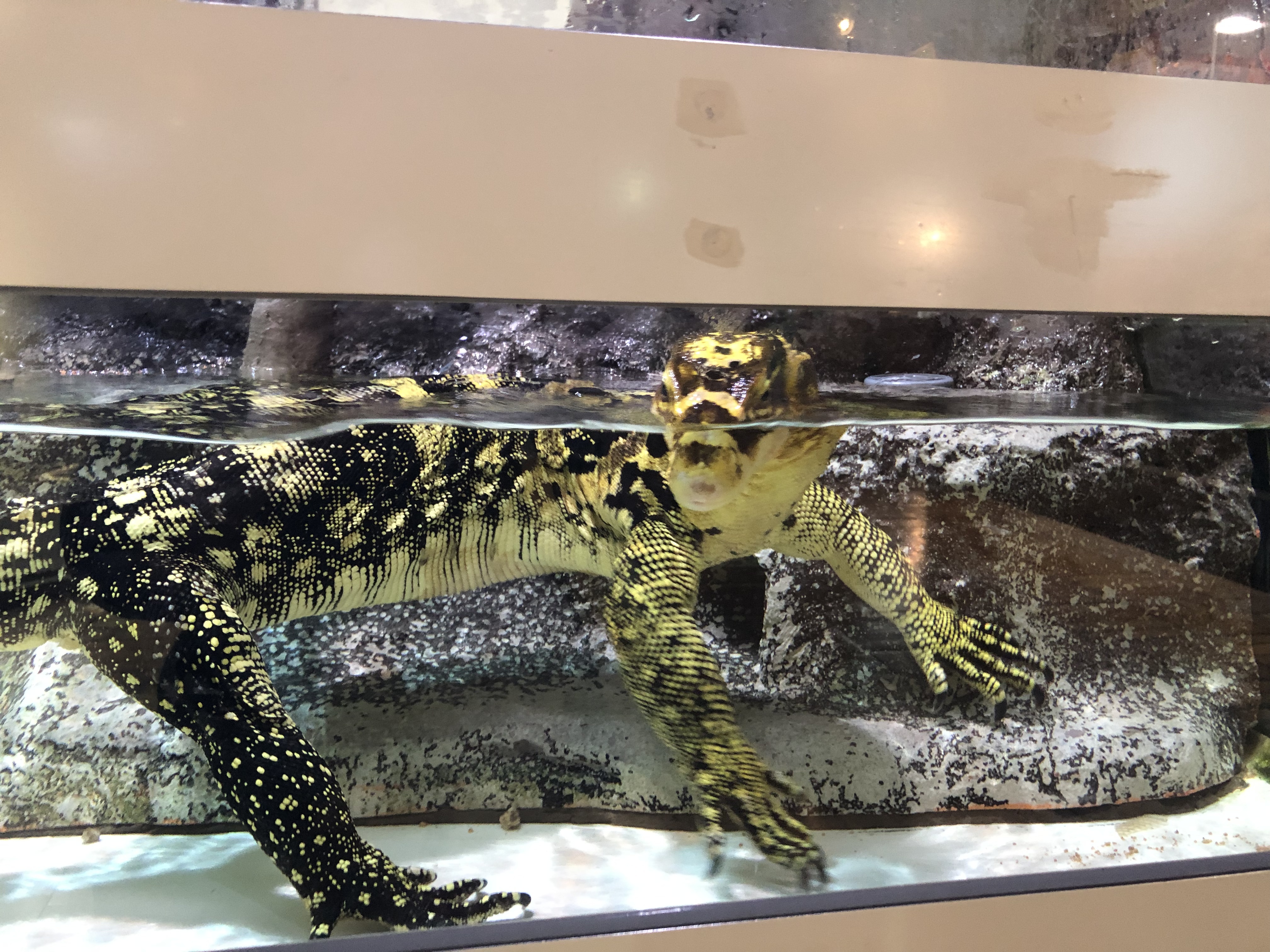
The Yellow-headed Water Monitor is a large, semi-aquatic reptile native to Africa. In my view, in this enclosure, it swims absently in a small tank that also offers a section of land. These animals are known for their powerful legs and sharp claws, which they use to climb trees and dig burrows in the wild. However, in this relatively confined space, the Yellow-headed Water Monitor seems unable to fully utilise its natural abilities, as far as I can tell.

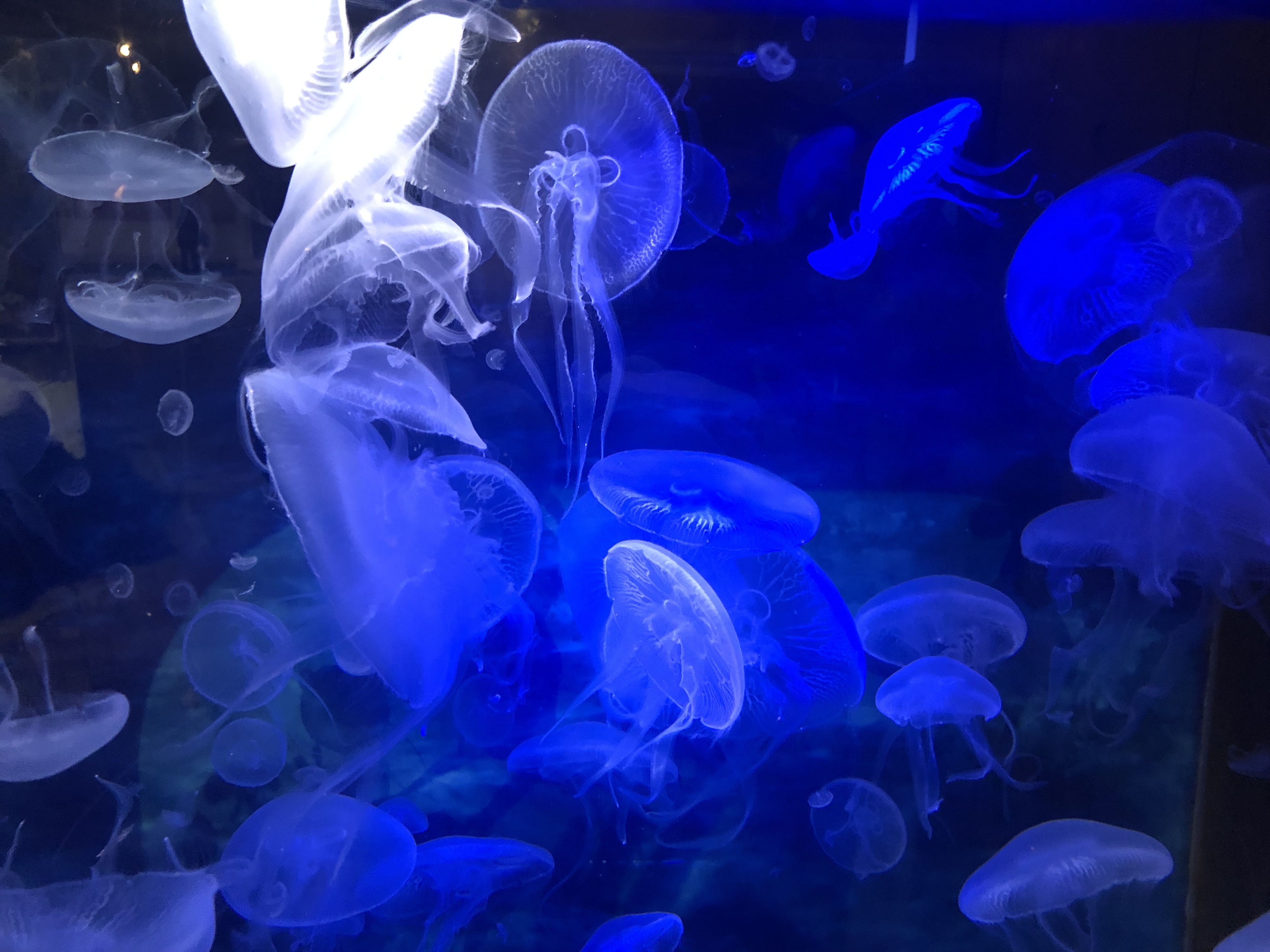
I also observe some Clownfish and Moon Jellyfish, but they seem to be lacking the vibrancy and liveliness that I would expect from these species. Clownfish, also known as anemonefish, are typically colourful and active, but these individuals seem dull and listless. Moon Jellyfish, with their translucent bells and delicate tentacles, are usually mesmerising, but in this small and crowded tank, their movement looks slow and somewhat lifeless.

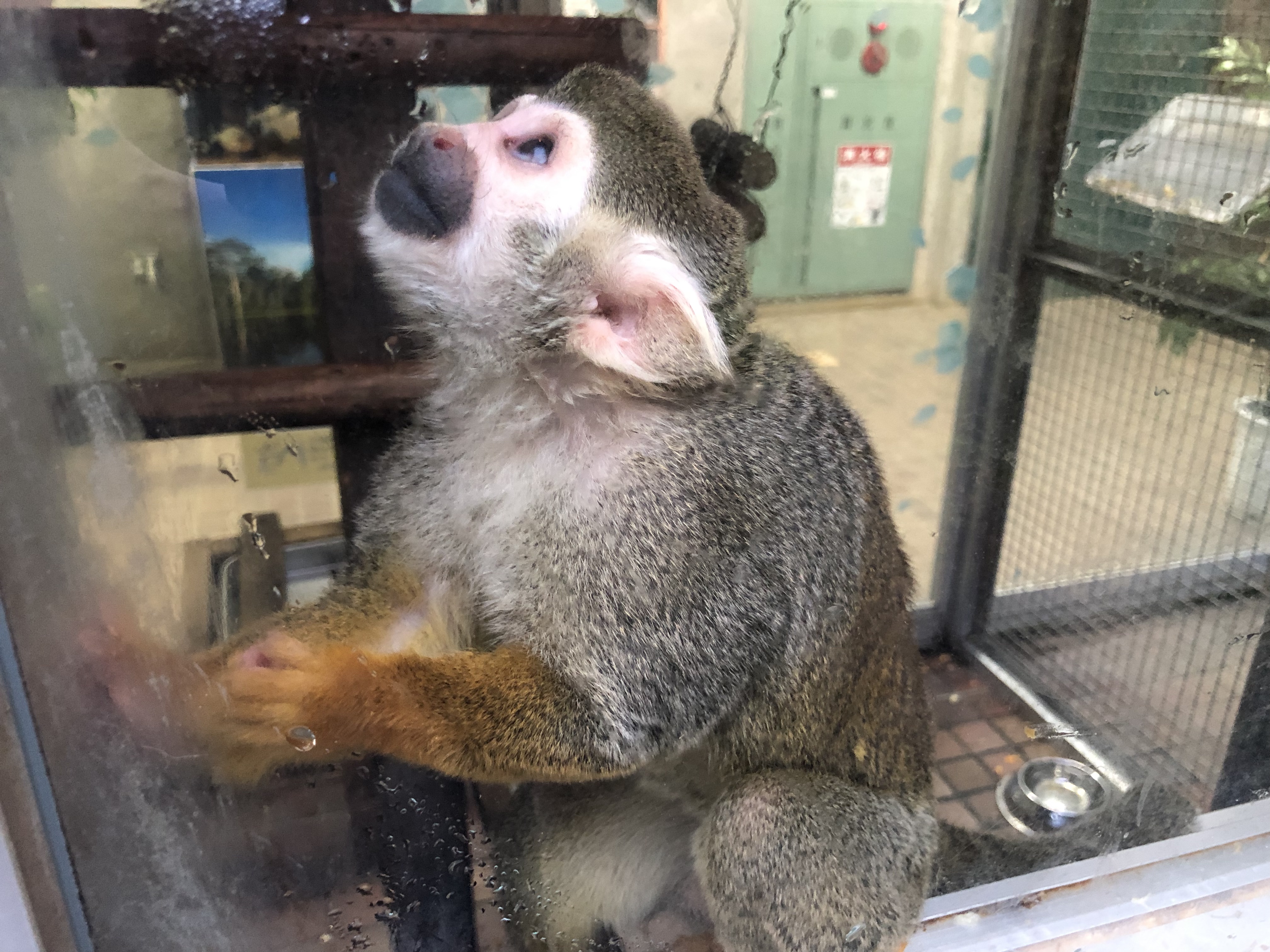
As I walk through the animal exhibit, I am startled by a group of common squirrel monkeys in cages. Seeing these animals in such small enclosures fills me with a surge of sadness, and I feel empathy for all of the animals here, even the fish, who seem to be exhibiting signs of depression.

Squirrel monkeys are social animals that live in large groups in the wild, and they are adapted to living in the rainforests of Central and South America. Because of their natural climbing abilities and long tails, squirrel monkeys are well-equipped to move through the trees in their rainforest habitat. However, one common squirrel monkey, oddly named Ryan, seems particularly drawn to me, pleading with me through its body language to let it out.

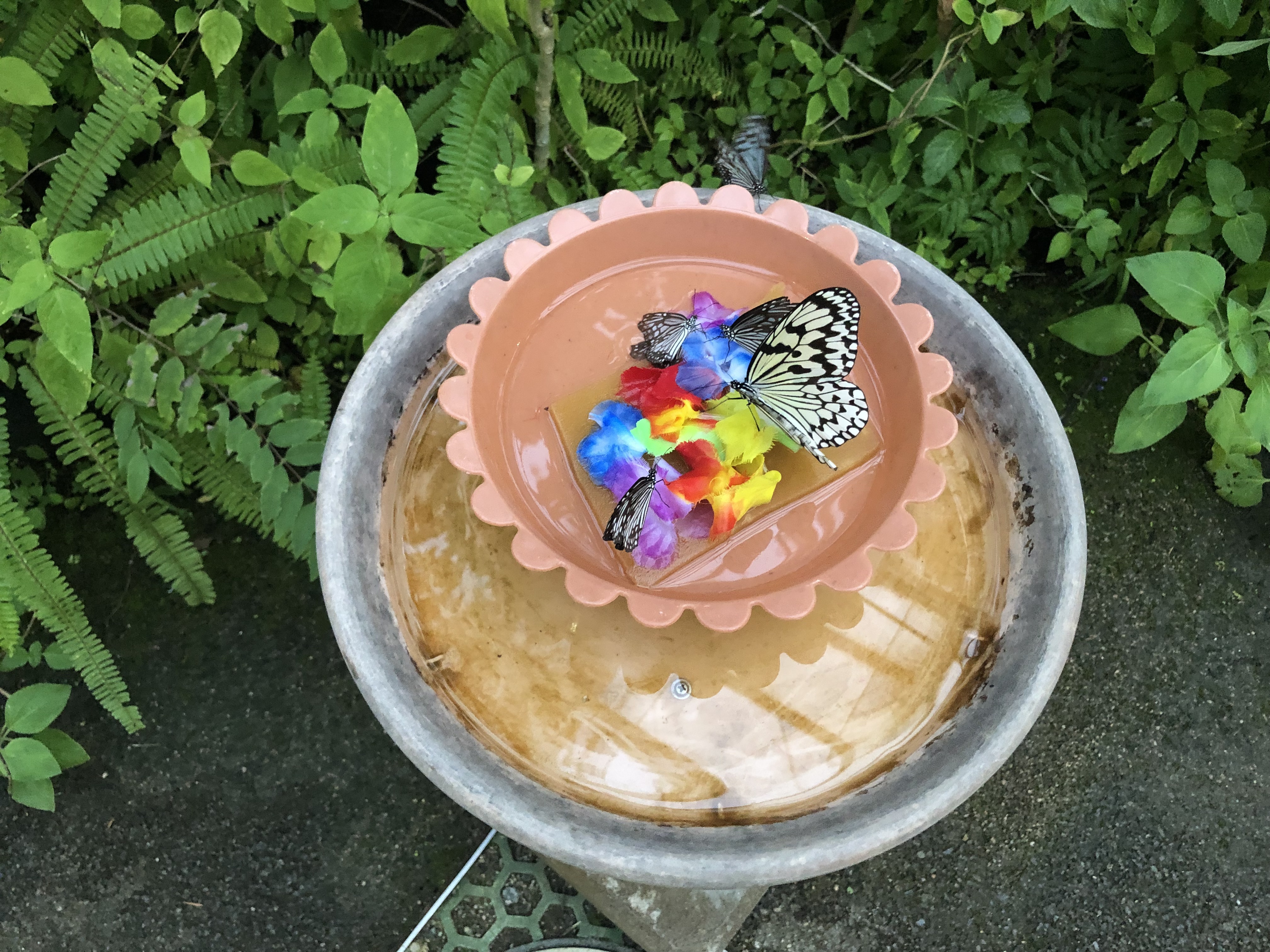
As I make my way into the butterfly enclosure, I am immediately struck by the contrast in conditions compared to the rest of the animal exhibit. Here, a lush, indoor paradise filled with plants and foliage greets me, and I am awed by the sight of Monarch butterflies, swallowtail butterflies, and red admiral butterflies fluttering freely about, their beauty on full display.

The beauty and vitality of the butterflies serves as a poignant reminder of what can be achieved when animals are given the proper care and space to thrive, in their spacious and well-maintained enclosure.

A sign reminds me to be careful not to step on any of the butterflies as I move through the space, and small dishes of honey, adorned with multi-coloured cloth, are scattered throughout the enclosure, serving as a natural attractant for the butterflies and allowing me to get a close-up view of these graceful creatures.

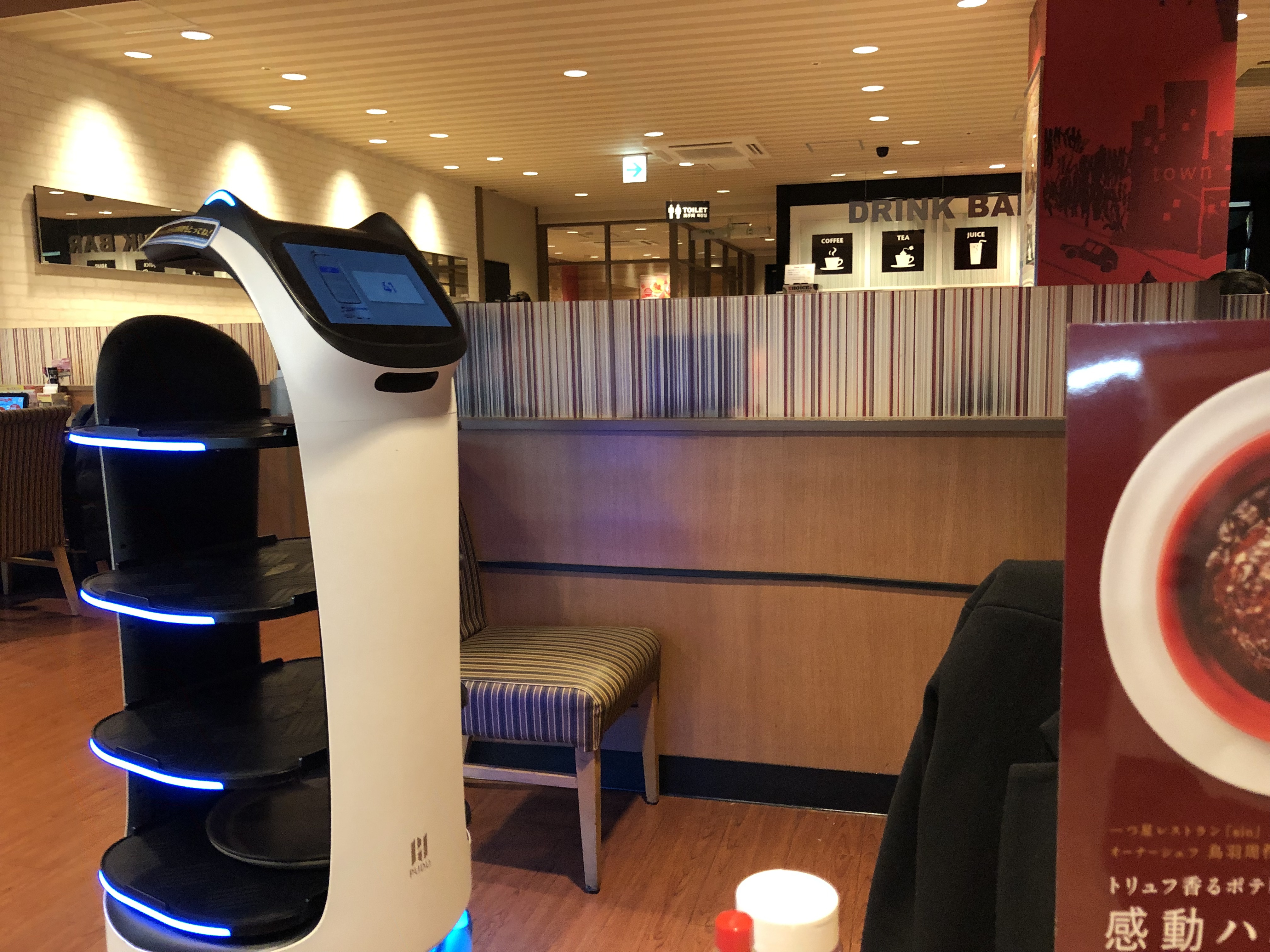
As I leave the park, a gnawing hunger overtakes me, one that I haven’t felt in a while. I head to the nearest train station in search of a restaurant. Inside, I am surprised to see that there are no waiting staff in sight, so I take a seat at a table and peruse the touchpad menu, eventually settling on a hearty gratin dish. As I wait for my order to arrive, I am intrigued by the sight of a robot with a digital cat face advancing towards me, carrying my steaming plate of gratin. I take the meal from the robot, which makes a beeping sound before gliding away with nonchalance back to the kitchen.

I briefly wonder about the impact of technology on the service industry. Despite my curiosity, I am too ravenous to dwell on these thoughts for long, and I dive into my meal with relish.