Apicultures Now

There’s a noisy bee inside Matsumoto Station, buzzing against the sun that filters through the gaps in the roof. Outside Shinonoi Station, there are Christmas trees up in April. Leaving Shigeno Station, I walk through an underpass and out into underbrush. Here, I am deep in the Nagano countryside. I have to walk for 20 minutes on the road, but luckily it’s not very busy. Eventually, I find what I’m looking for: a big wasp.
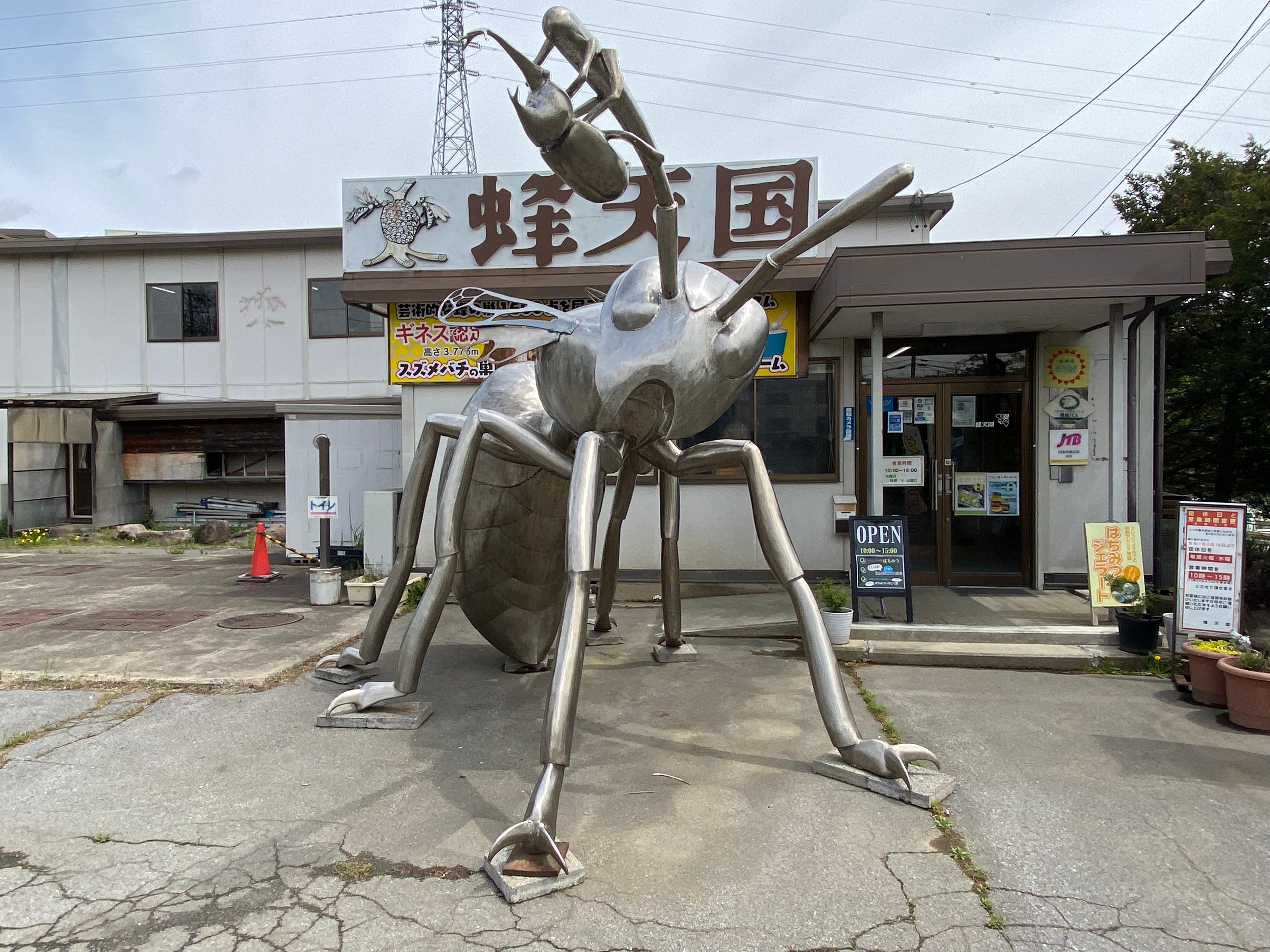
Today I’m at Bee Heaven, which is not a place where bees go after they die; that would be absurd, but it is a place where hives go after they die. The building itself looks, from the outside, like it’s about ready to collapse. It also claims to house the best bee art museum in the world.

Inside, a young woman seems extremely happy to see me. She asks me what I am doing here, as though I may have made a mistake. I tell her I’m here to look at the beehives. She mimes a pair of binoculars with her hands and places them over her eyes. I nod, and she takes my ¥300 and hands me a ticket.
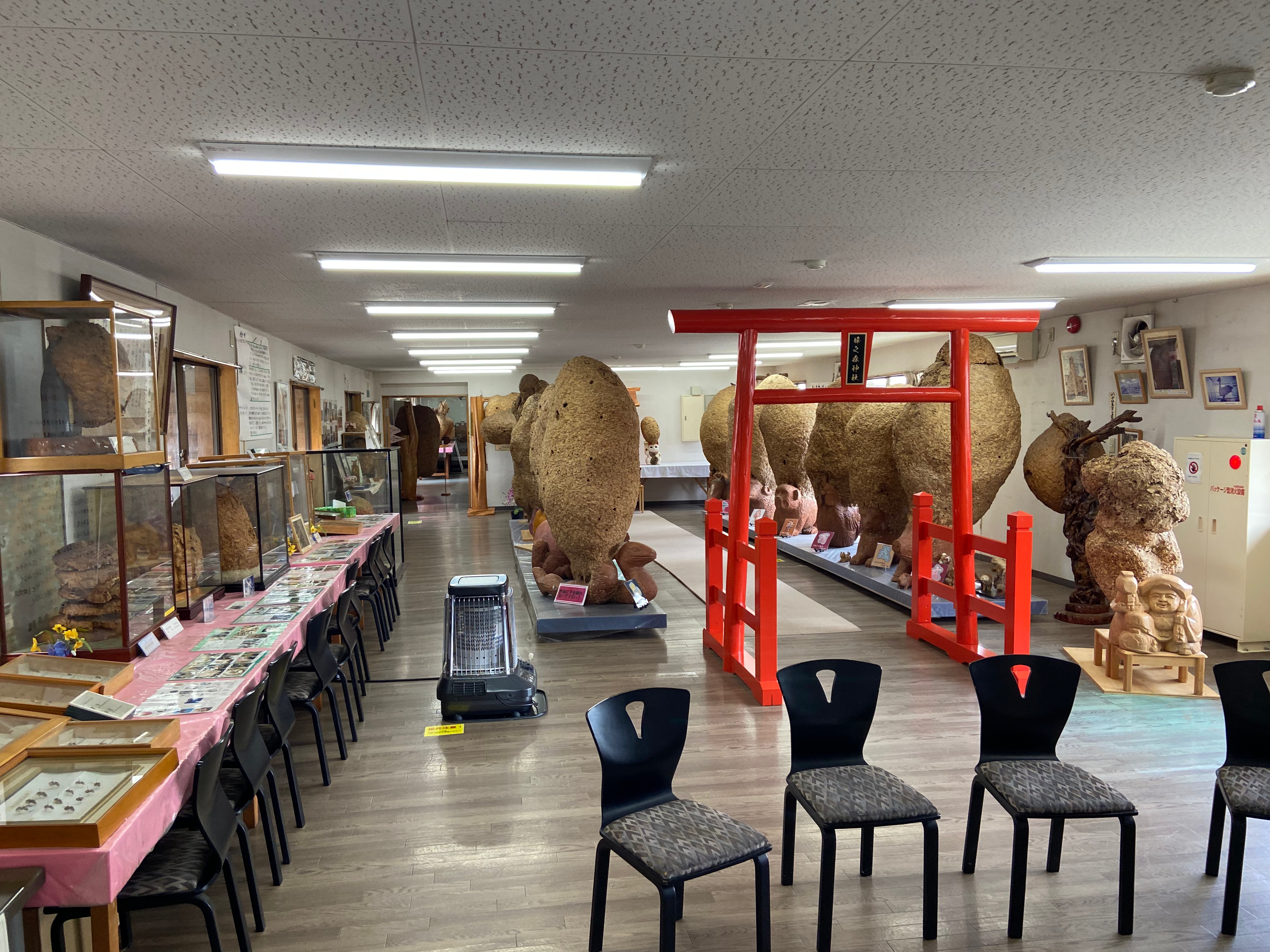
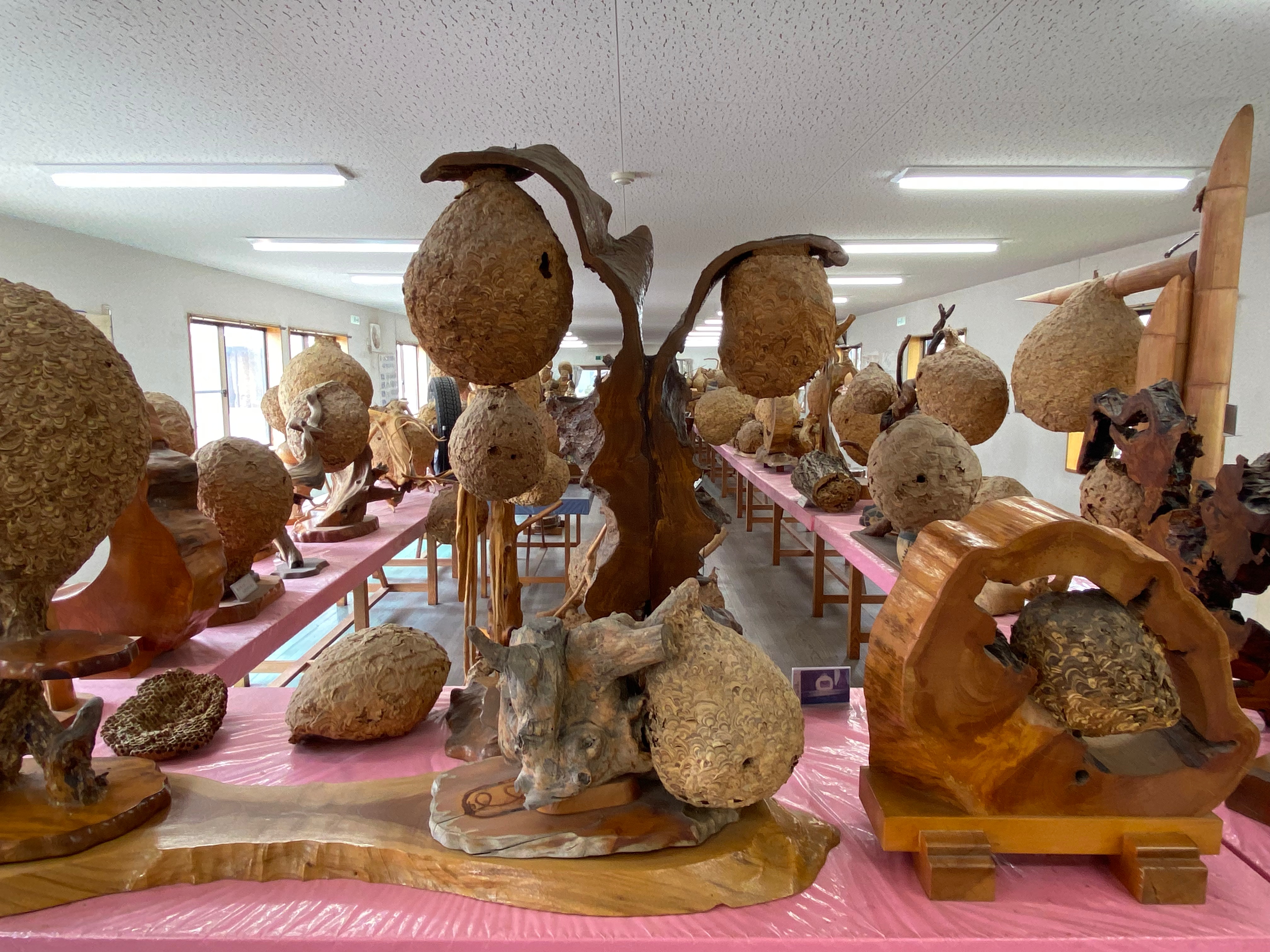
The exhibition features its own shrine to bees, Hachinomori, in honour of a very loyal bee; it is here that we pray for a good life. 1,600 artistic beehives are on display across a maze of interlocking rooms and floors. And if that’s not enough, I discover that it is the collection of just one man and craftsman, Yoshikuni Shiozawa.

There are photographs of Shiozawa shirtless and covered with bees, a grimacing smile across his face. He teaches us the benefits worker bees have on our ordinary lives, and that human society would absolutely collapse without their extraordinary colonies.
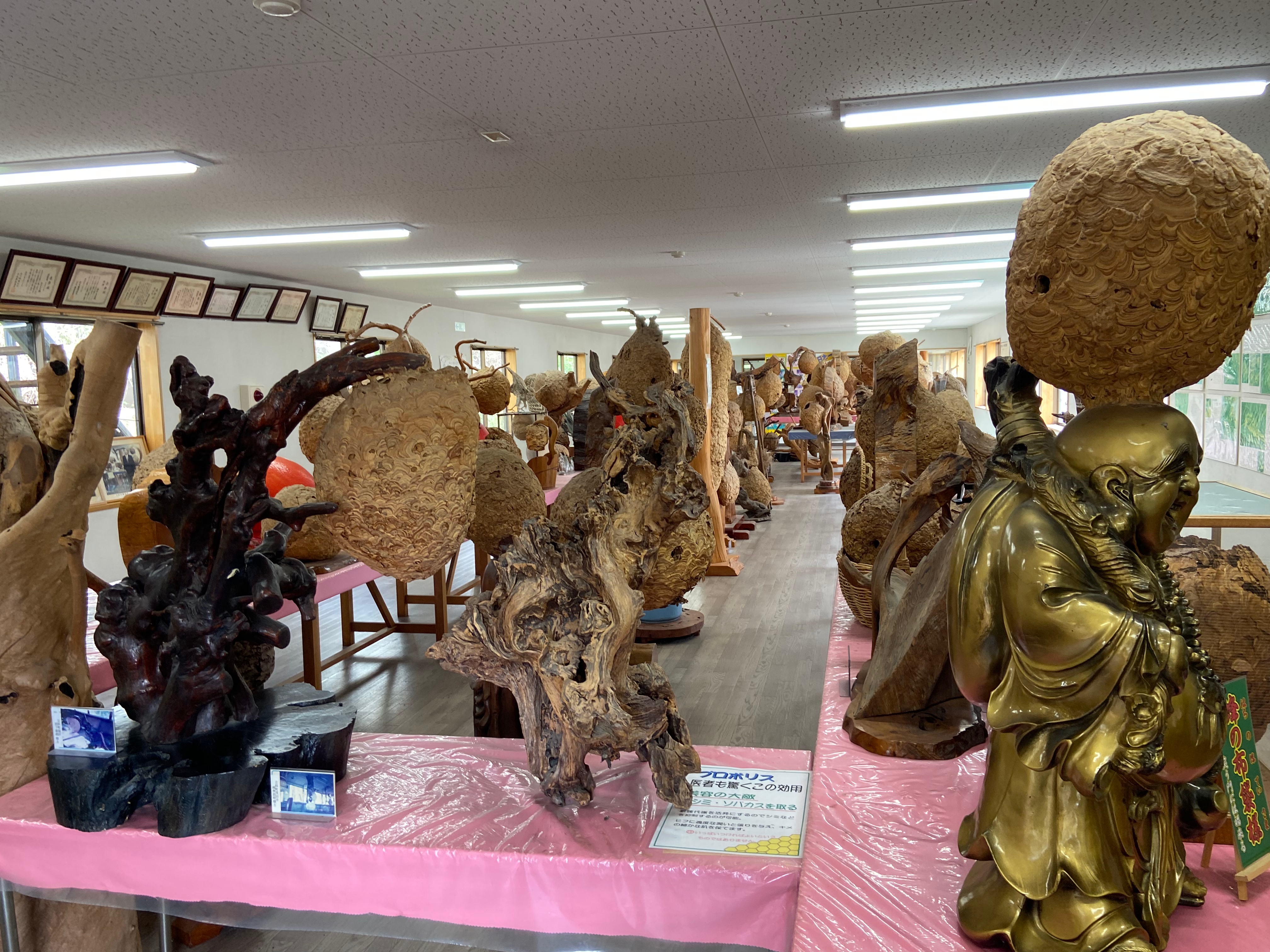
There is a sign in here saying, “Don’t open the window.” And even though there are a few stray bees buzzing and bimbling around between the hive art, I’m not sure whether the sign is to keep bees out or keep bees in. Regardless, the dull, musky smell of the hives could do with an air change.

There are preserved bees in cases, cross-sections and anatomies of wasps, evolutionary charts, and rows and rows of hornets. Artwork, including paintings of bees, drawings, and anything else bee-related you can imagine, is here, nestled amongst hive after hive after hive.
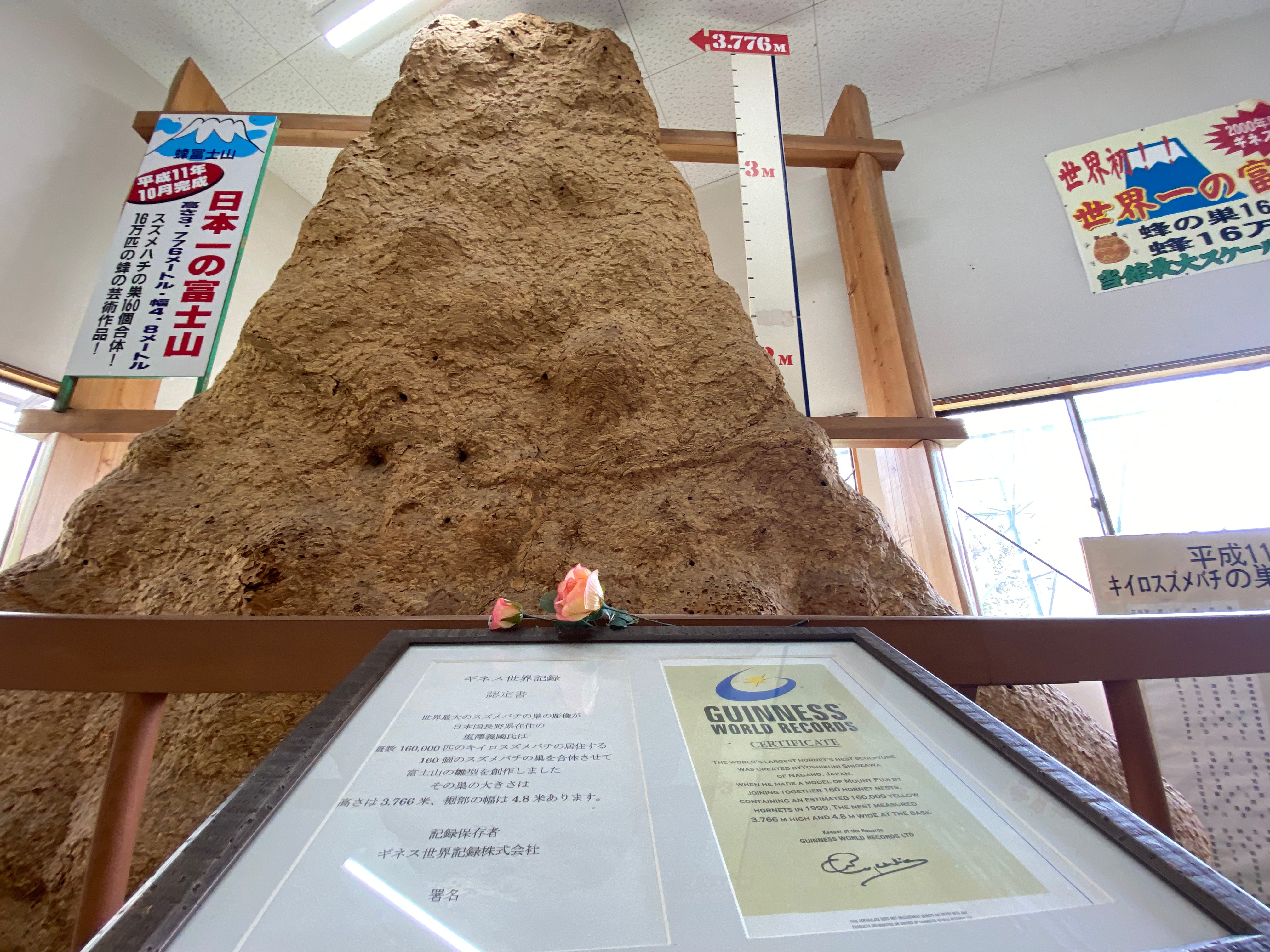
I pass through several more rooms and up a flight of stairs to what I think deserves to be acknowledged as the centrepiece. A Guinness World Record for the world’s largest hornet’s nest sculpture was created by Shiozawa. In 1999, while we were all panicking about the Millennium Bug, he decided to do something else with bugs. He made a model of Mount Fuji by joining together 160 hornet nests, containing an estimated 160,000 yellow hornets. The nest now measures 3.776 metres in height and 4.8 metres wide at the base.

Mount Fuji is 3,776 metres high, so by converting a comma into a decimal point, he cleverly crafted a perfectly scaled version of Japan’s iconic mountain. It’s a very niche award. I don’t see it being toppled any time soon, unless somebody has 160 hornet nests lying around.
At the gift shop, I buy some honey as a souvenir for a friend, the real stuff, made by bees. They also sell bee larvae, made from bees, but I don’t think she would like that as much.

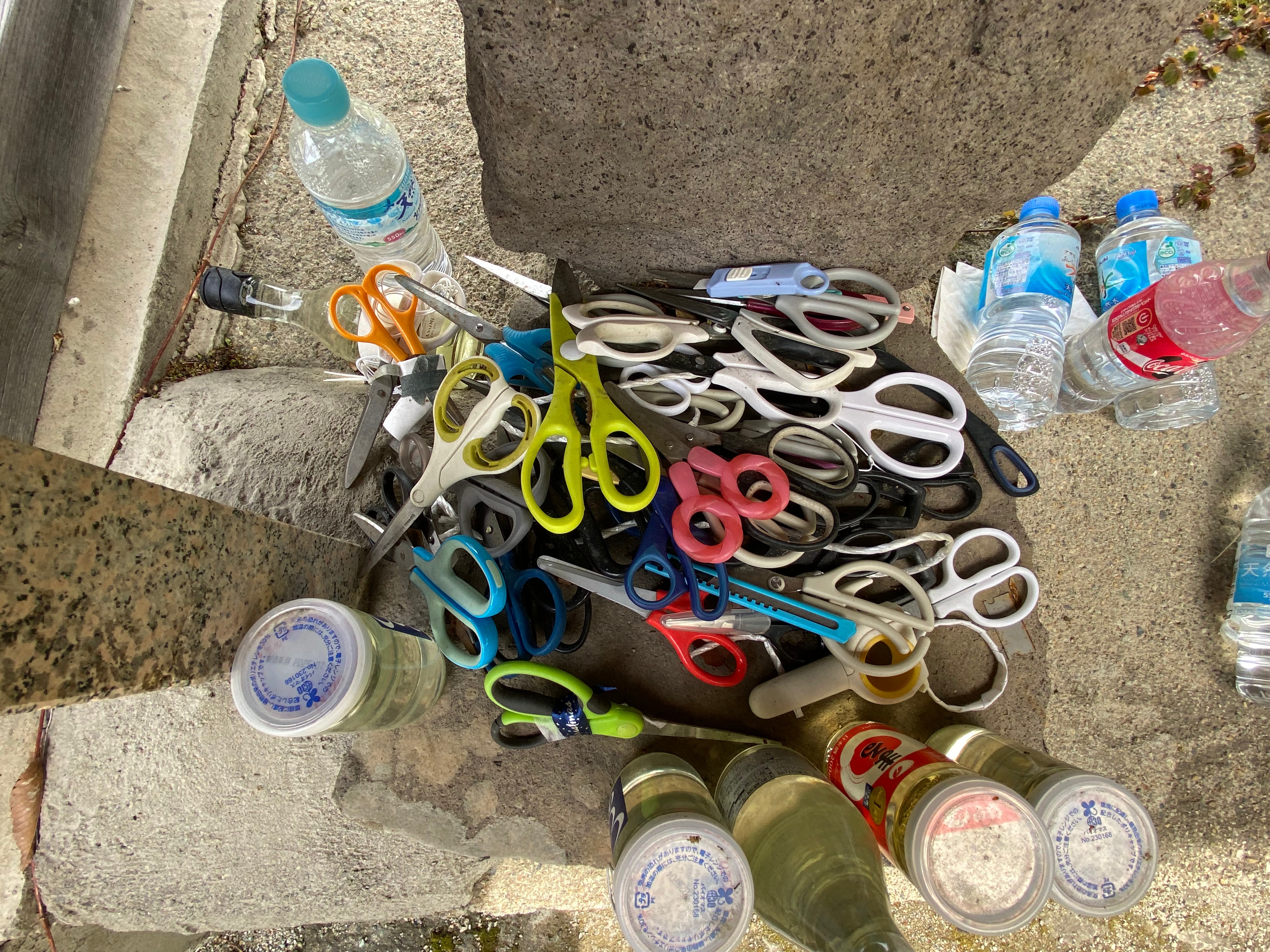
Just below Bee Heaven, there is Enkiri Jizo, a shrine where people pile up their scissors to represent the severing of a bad relationship. The original knot made needs to be cut, and it is said that if it is a wedding, you go out of your way to come here so your wishes to end the relationship are heard by the Jizo. Otherwise the divorce doesn’t really count. It really makes you wonder. I make a few photographic cuts and then leave for the station.
Back at the platform, there’s no timetable, no staff. Luckily, as of the 10th of this month, the Shinano-Tetsudo Line has started accepting IC cards. I scan my Suica and wait by the tracks. A train shows up eventually after about twenty minutes, unannounced, I rightly assume it’s bound for Shinonoi.

At Shinonoi Station, I once again admire the Christmas trees before changing trains. I have one last stop today: Obasute Station, halfway on the way back to Matsumoto. This station offers a stunning view, and even has a sightseeing restaurant train that uses this track. The platform itself has a dedicated section for enjoying that view. The word Obasute can mean abandoning an old woman on a mountain to die, and my knowing that long in advance somewhat spoils the impressive view, just a bit.
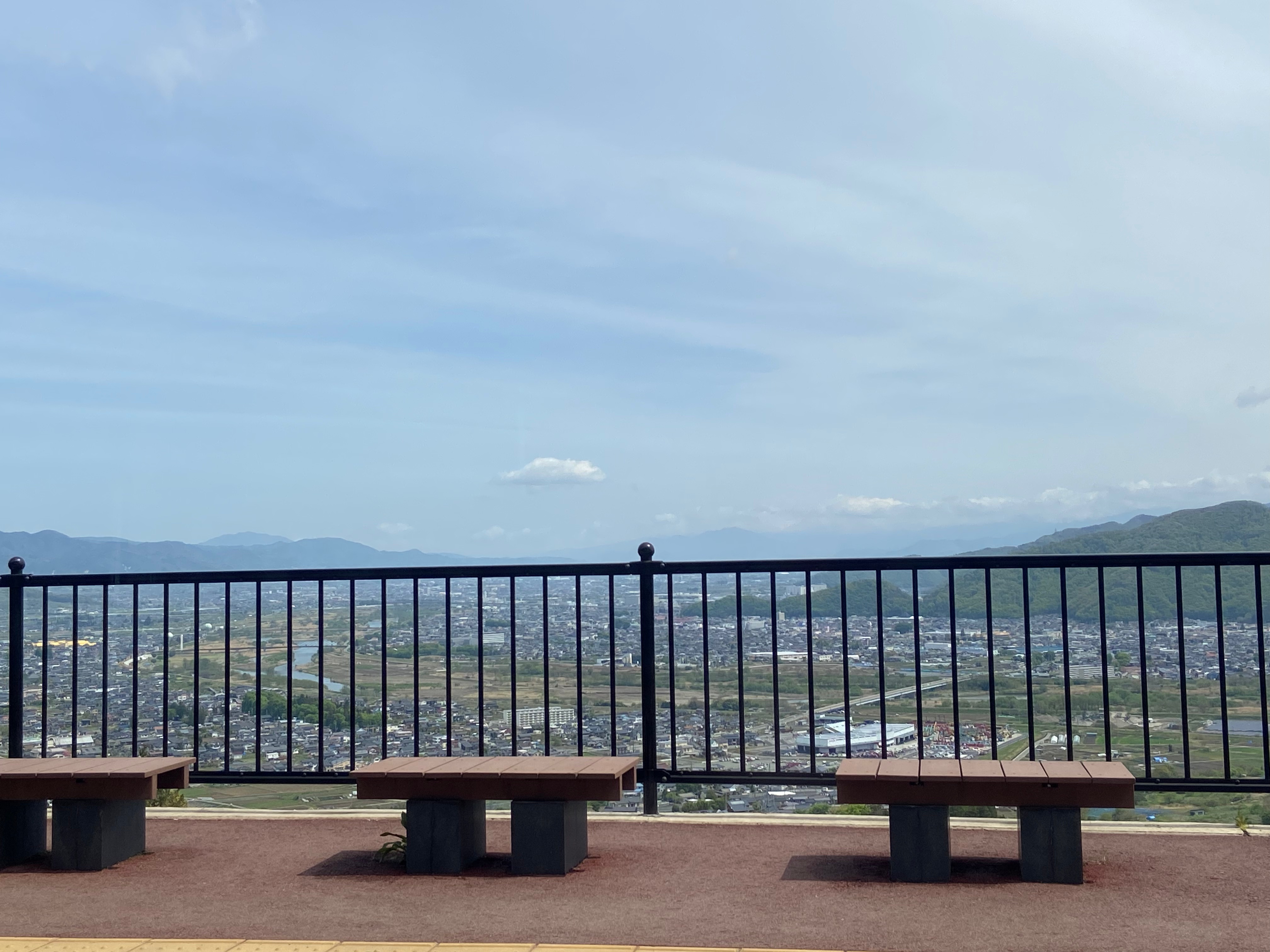
I sit for a while, just looking outward. A muzzle of bees stirs above a nearby flowerbed. I watch them continue their work, indifferent to the human desire to untangle ourselves from one another.
One Fine Day in Spring

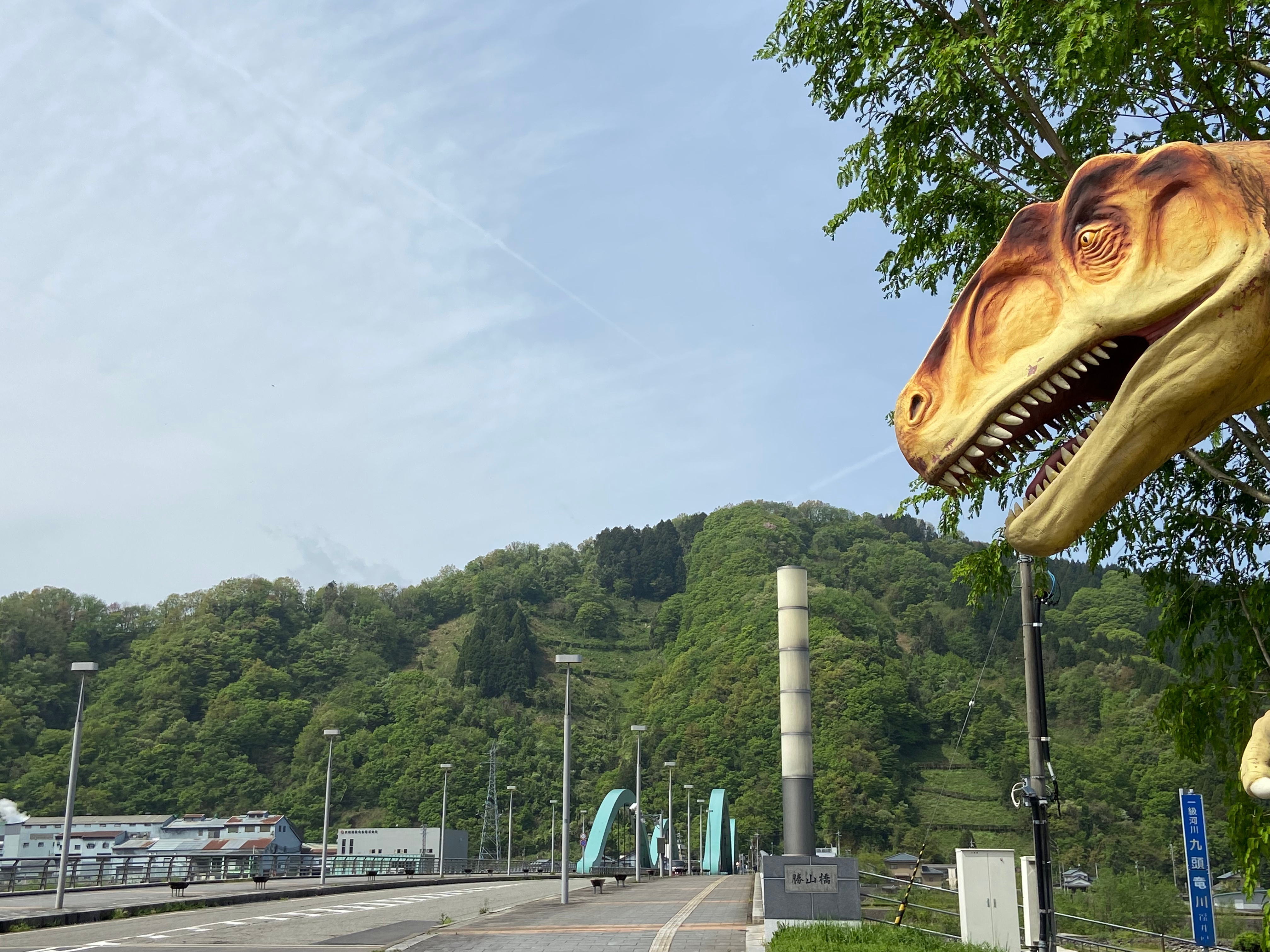
I’ve taken a train to Fukui Prefecture, to the city of Katsuyama. Just as my train arrives at the station, the hourly bus pulls away. Outside, the weather is clement, the mountains lurk in the distance, so I decide to go for a peaceful stroll with no real direction in mind.

I have to cross the Kuzuryu River. The scenic gorge is stunning, the attractive spring foliage worth the train fare alone. It’s cooler up here too. I look around. The hills line up like vertebrae along the horizon. It feels like a soft world, padded by mountains. The cliff face is folded like a paused wave. Bands of green and grey stack into centuries you can touch. Whatever once passed through here is gone now.

Katsuyama is very much made of layers. Pavement over river. River over time. The shops sit obediently between eras. The remains of it once being a castle town shine through, with old houses with deep eaves and complex, steeply sloped roofs, former samurai residences, and the best part, there’s no people around.

The thing I don’t like about being here is the time it takes for the green man to appear when crossing a road. There’s no traffic or urgency, but I still have to wait. I don’t want to be a person who ignores instructions. Out here, it would feel like a faux pas. So I stand there, alone at empty crossings, waiting. My walk becomes stop-and-start, dictated by signals that don’t really need to exist.

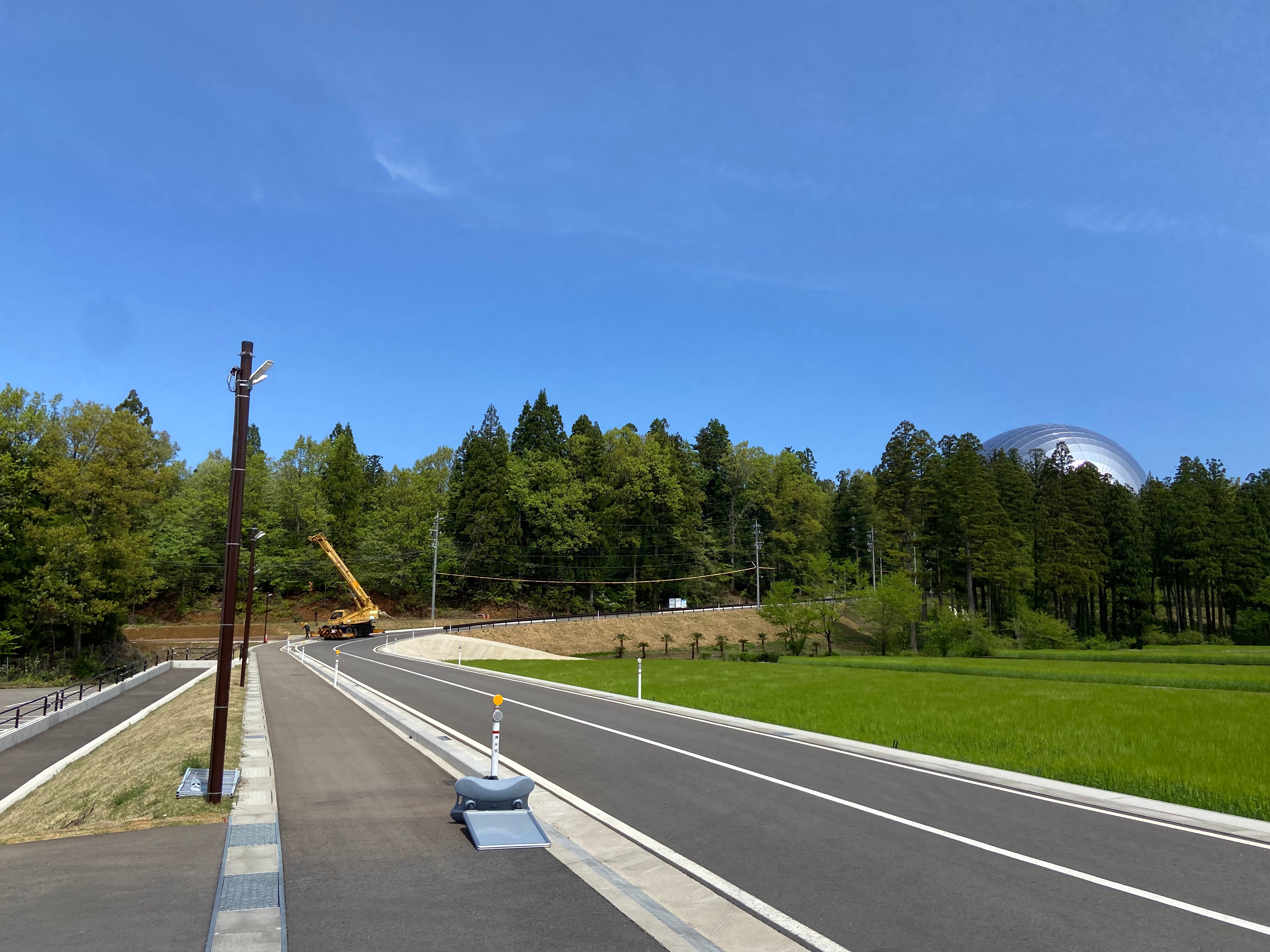
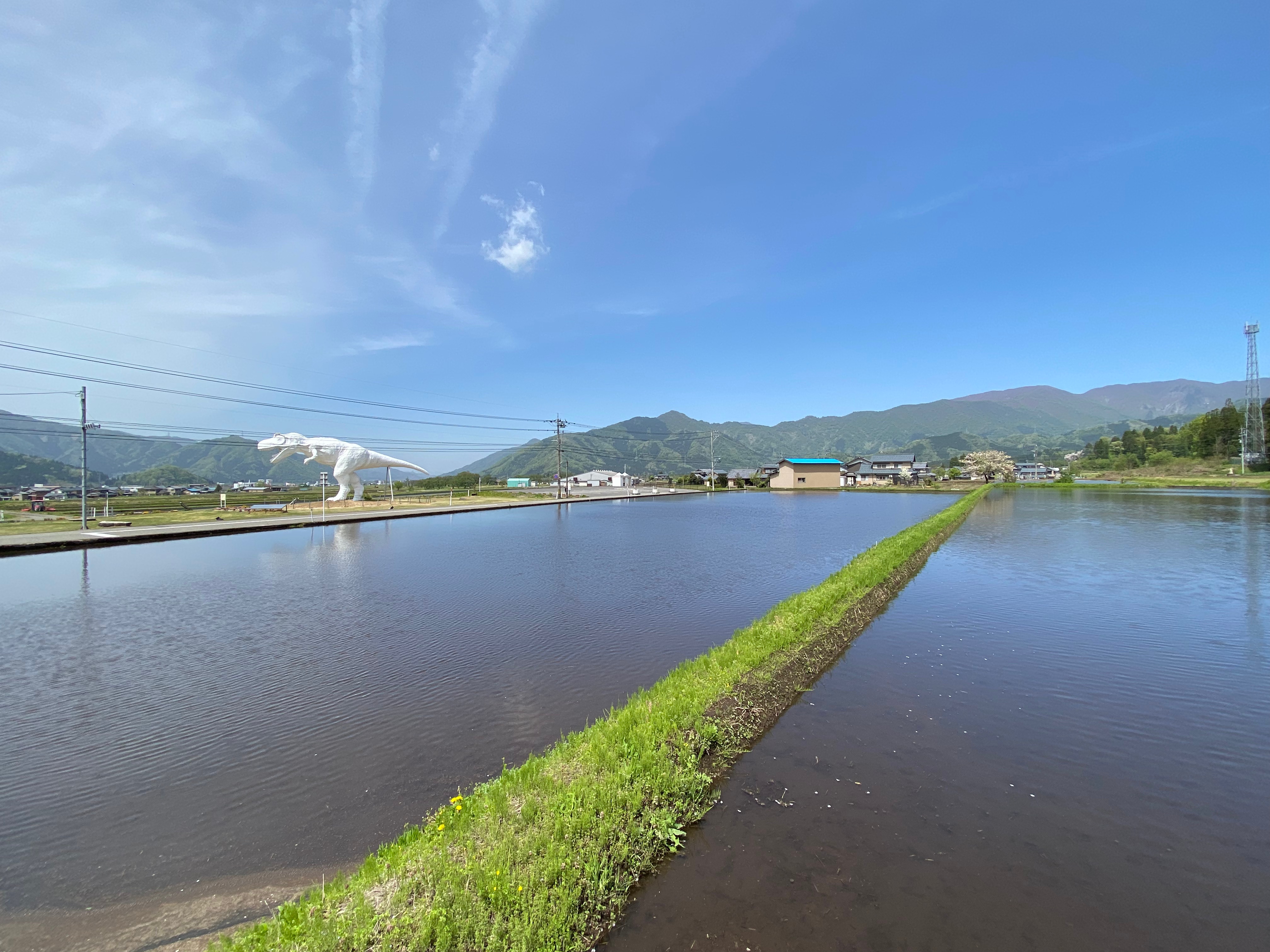
The further out of Katsuyama I get, the flatter everything becomes. I pass rows and rows of rice fields. The flooded type. I’ve always enjoyed the calmness evoked by such a simple sight. Beyond the fields across the horizon, a large silver building sits in the shape of a massive ball. So I head that way. It seems like it might house something historic. About 600 metres out, I can hear something, a thunderous roar. It sounds mechanical, though not entirely.

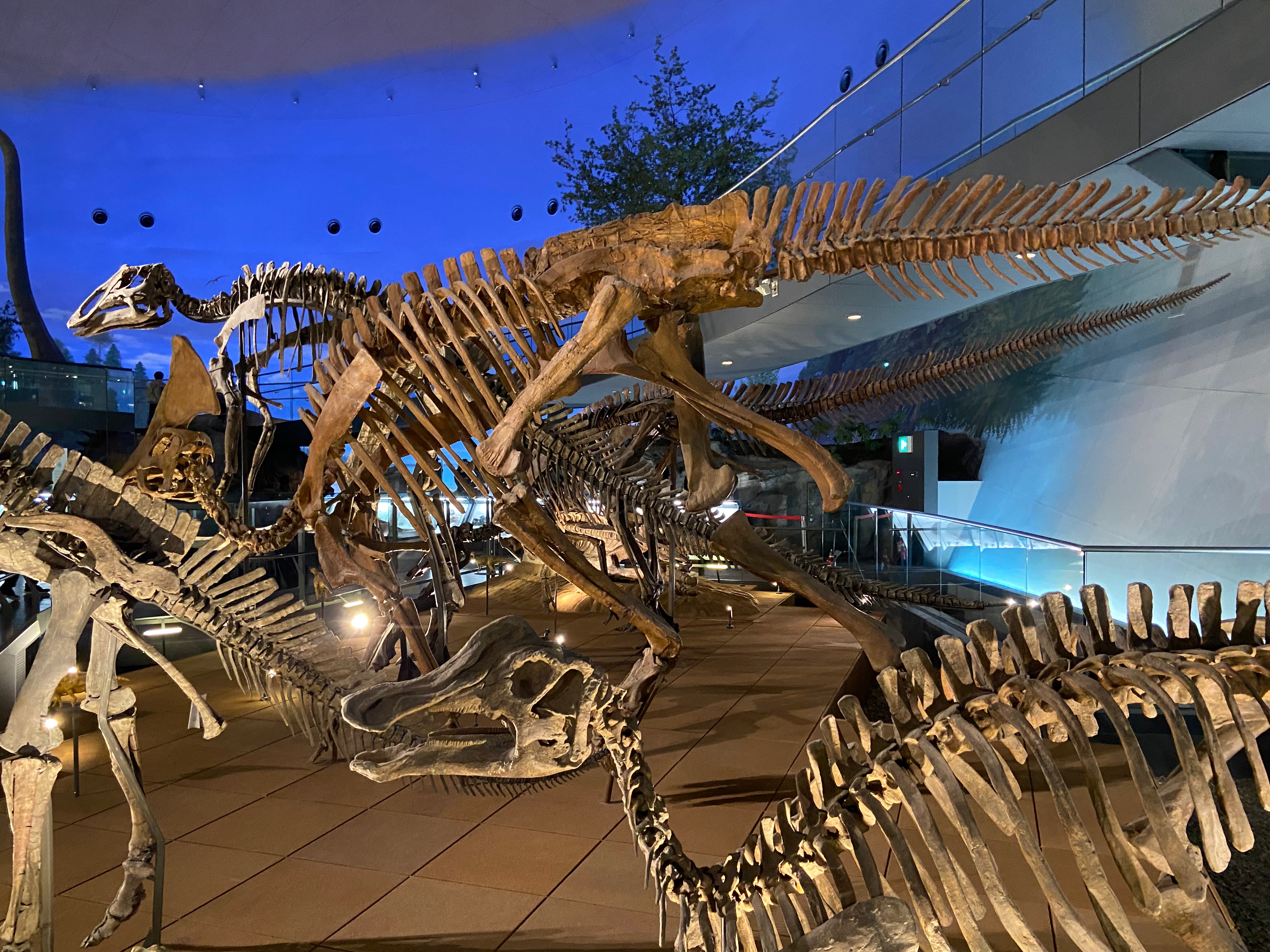
The car park is busy. Painted lines fade in and out beneath the tyres. A few large structures stand at the edges, sun-bleached and unmoving. Inside, I have to head underground, down a massive escalator, before the space opens up into something cavernous. Displays line the walls, fragments, impressions, reconstructed forms. Some are incomplete. Others feel too complete. An animatronic figure pivots, pneumatics sighing like a dying star. As if rehearsing extinction again.

Fukui is famous for fossils. They’ve been discovering them here since 1989, and this museum is a collection of what they’ve found. There are four floors housing exhibition halls, laboratories, seminar rooms, a lecture hall, a children’s area, a video library, and sections on earth sciences and the history of life. It’s all very interesting.

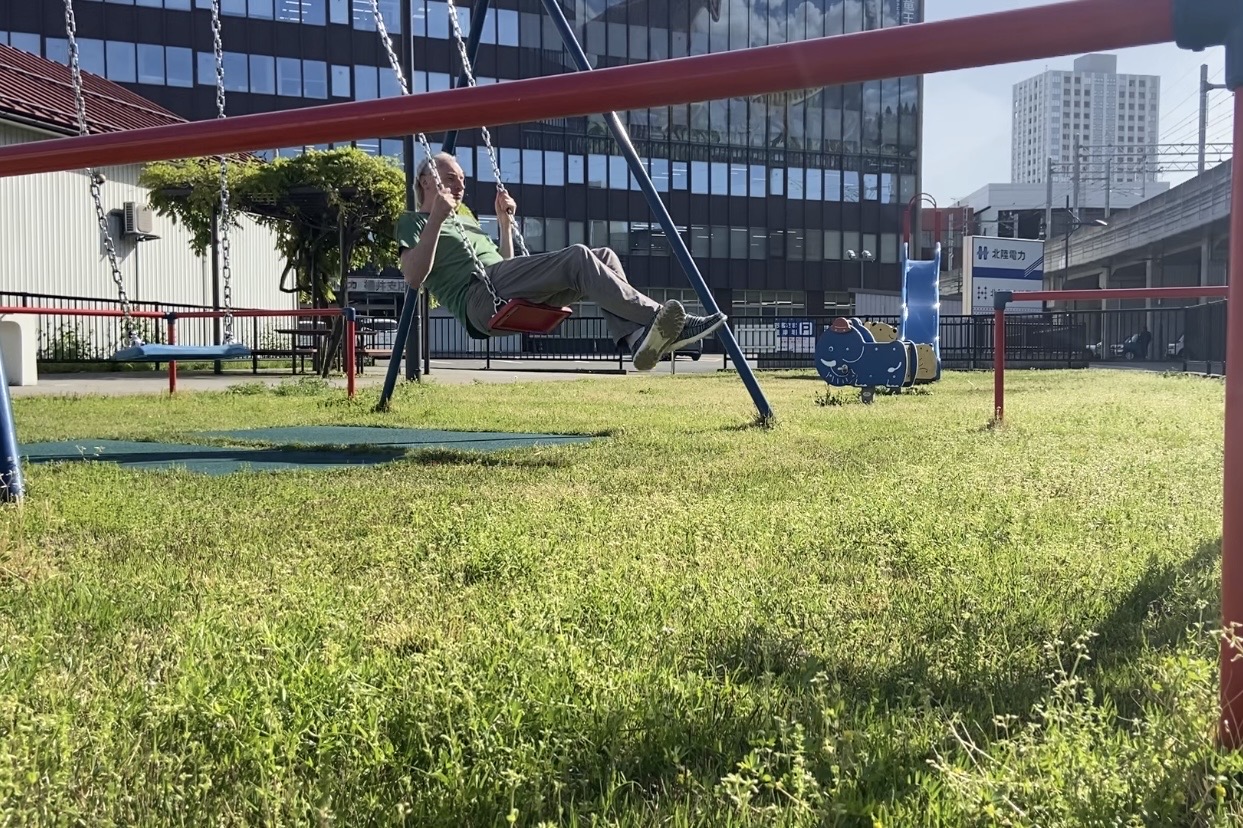
I head back to the station. Here, a single timetable flaps gently in the breeze, listing hourly destinations. Inside, a dragonfly mocks flies fluttering in the artificial air. I have time to kill before my train, so I go and sit in the park, on the swings. I wander just this park before eventually leaving on the train, to Fukui Station. The attendant walks down the train after every stop, before she bows at each person individually; there are twenty-two stops.

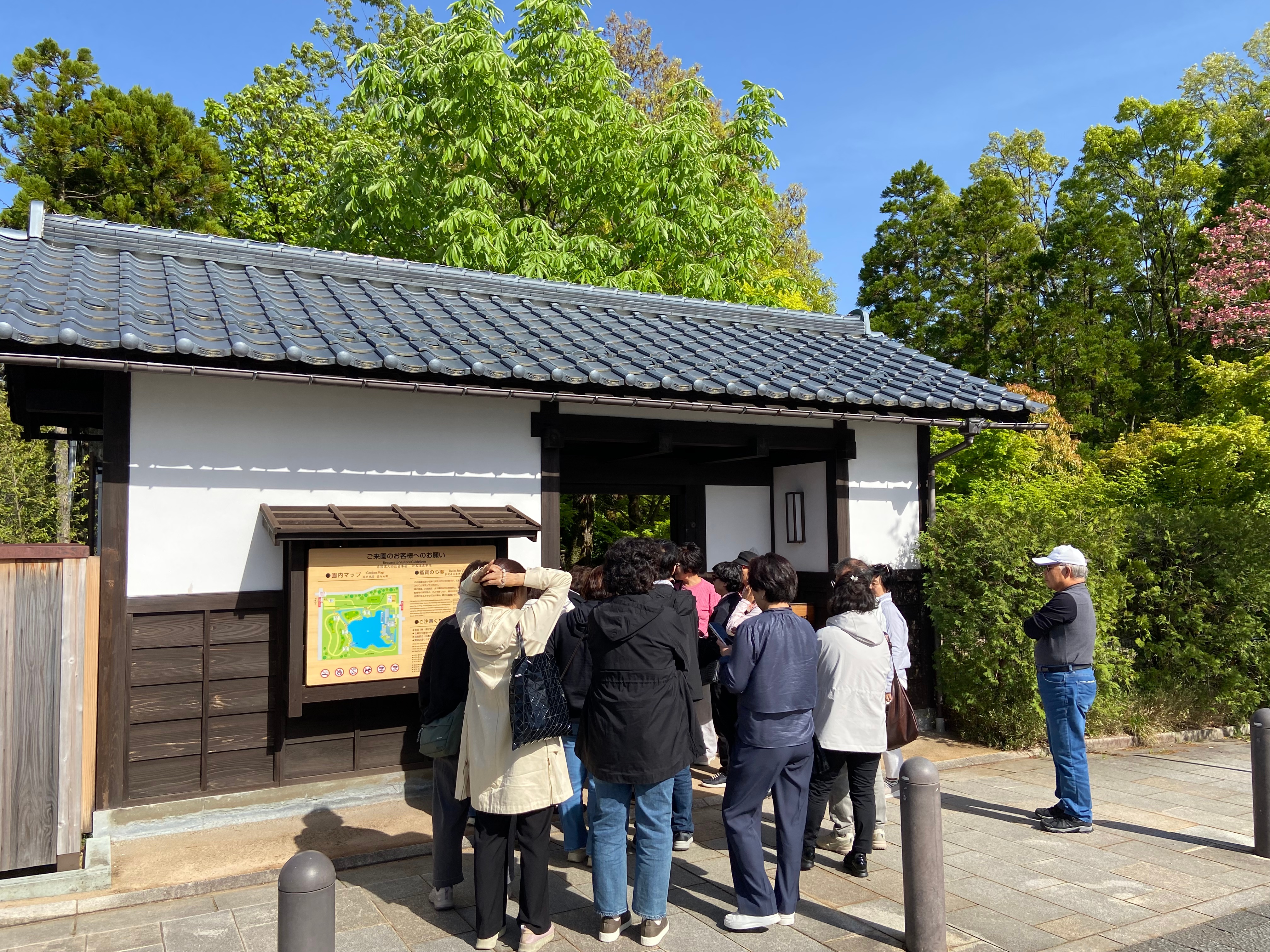
At Fukui Station I’m at a loss for things to do. I check out the Fukui Castle ruins, but these now house government buildings. I see a sign for a zen garden, but doubt I can get any peace from there as there is construction right beside it. Also, when I do arrive, there’s actually a queue of people waiting to enter, all talking loudly.

There’s a large shopping mall, but everything seems closed. A sign next to a man drilling in the road asks people to keep the noise down. In fact, the noise is really starting to annoy me. Since Fukui started finding fossils, there’s been a small boost in tourism. A Shinkansen station was added a couple of years ago, and now the area is in a constant state of development.

I wander through random side streets, passing bespoke shops that are also closed. In the end, I feel Fukui has defeated me; there isn’t much here for me, and the only place I do find with some semblance of peace is a little park out of the way of everything.

And for the second time today, I find myself sitting on a swing.

A Light for Attracting Attention

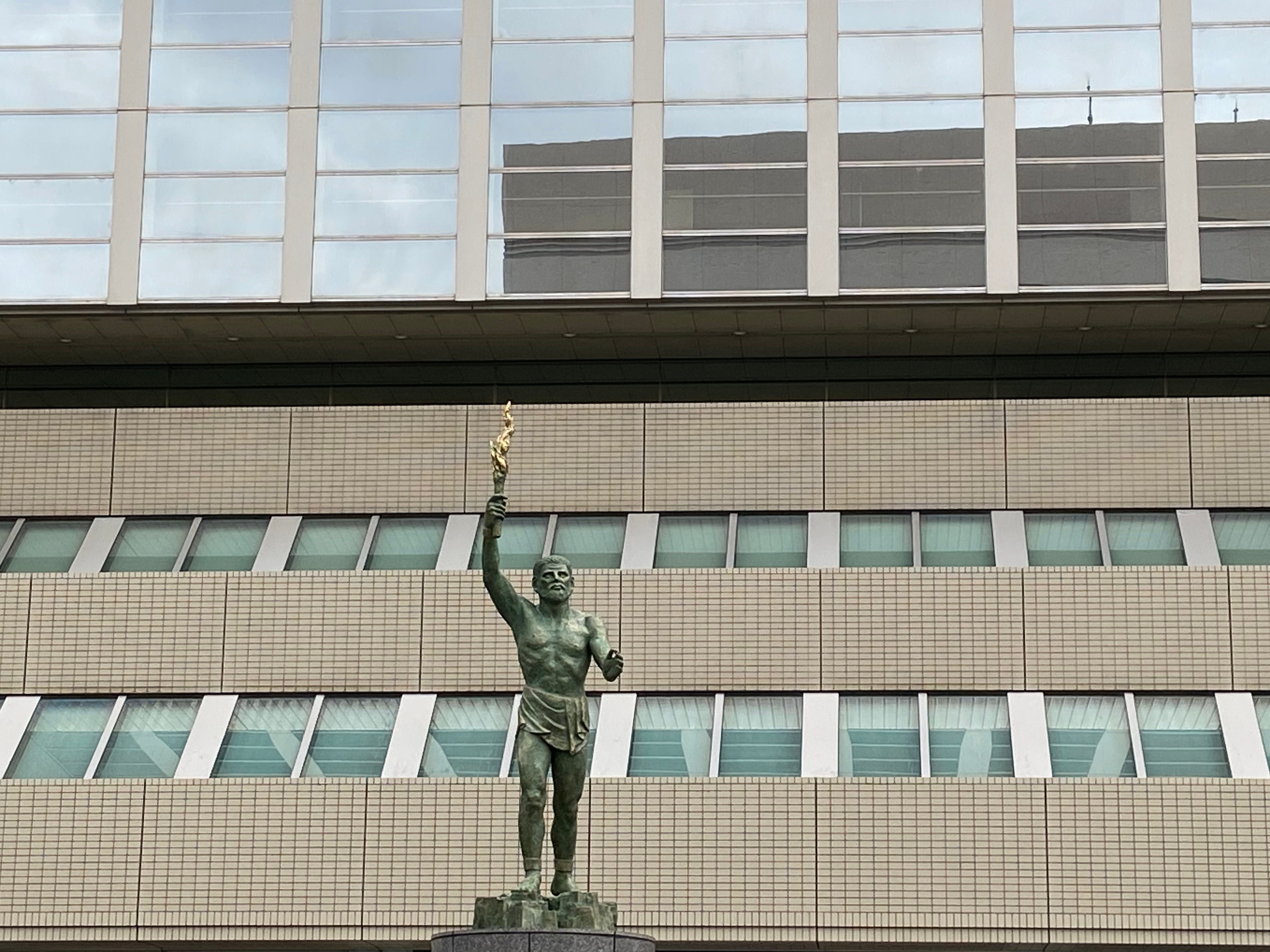
Outside Toyama Station, in front of the Hokuriku Electric Power Company headquarters, there is, for no apparent reason, a statue of Prometheus. I briefly consider shooing away an imaginary eagle pecking at the statue’s liver. Prometheus is carrying a flaming torch whilst posing above a water fountain.

I’m in Toyama Prefecture today for two activities. The first is a special exhibition taking place at the Toyama Glass Art Museum. As I wander the streets, crossing tramlines and dodging potholes, every now and again, through cracks or gaps between high-rise buildings, I catch glimpses of the snow-capped Tateyama Mountain Range in the distance. I’ll be slightly closer to these mountains for my second activity later on, so I’m hoping to get a decent view and a couple of nice photographs.

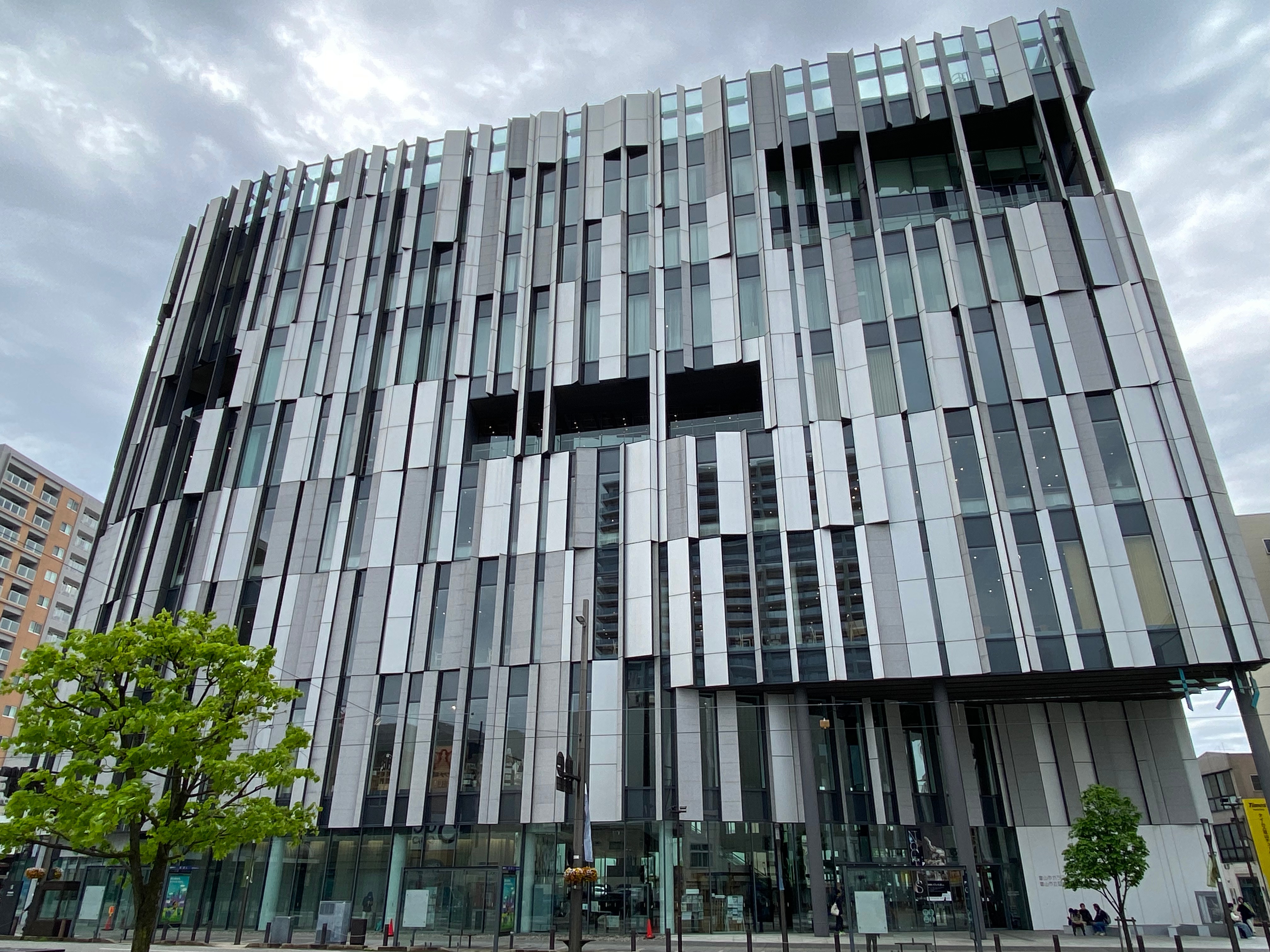
The Toyama Glass Art Museum is not difficult to find. The building housing it is a unique structure. Designed by Kengo Kuma, it features a dramatic diagonal void that acts as a light funnel, channelling sunlight through the interior and reflecting it off cedar beams and mirrored walls.

Inside the museum, there is a massive queue of people, which is a good sign. The tagline reads Glass Art of Shadow and Light, while the exhibition itself is titled Noctis, Latin for “of the night.” Amidst the darkness, inspiration can be drawn from the mysteries that hide there, illuminated by the glow of the moon, a star, or a small flame.

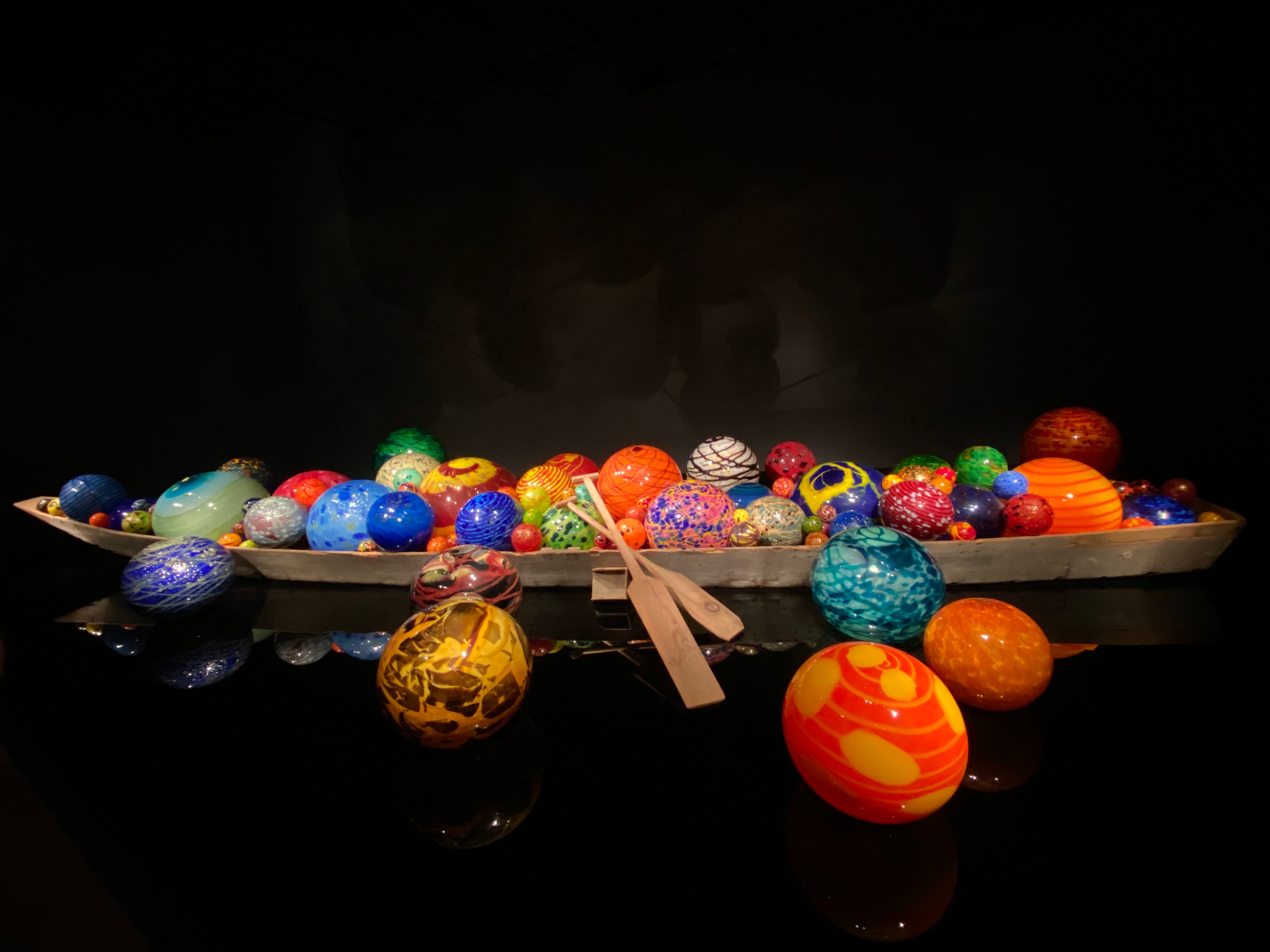
The ticket price also includes entry to the regular glass art floor, which I visit first. Among the collection are instructions on how this type of art is made, where it originates from, a timeline of its history, and a large boat filled with giant multi-coloured marbles.

On the floor below, the entrance to Noctis begins in the section titled The Twilit Forest, the suspension between night and day. The very first room is filled with lamps and the shadows they create. Then there are vases, and their shadows. I feel like my shadow is being watched by the many all-female seated staff. Should I be photographing this? Have I been standing around long enough? Did I look at all the lamps?

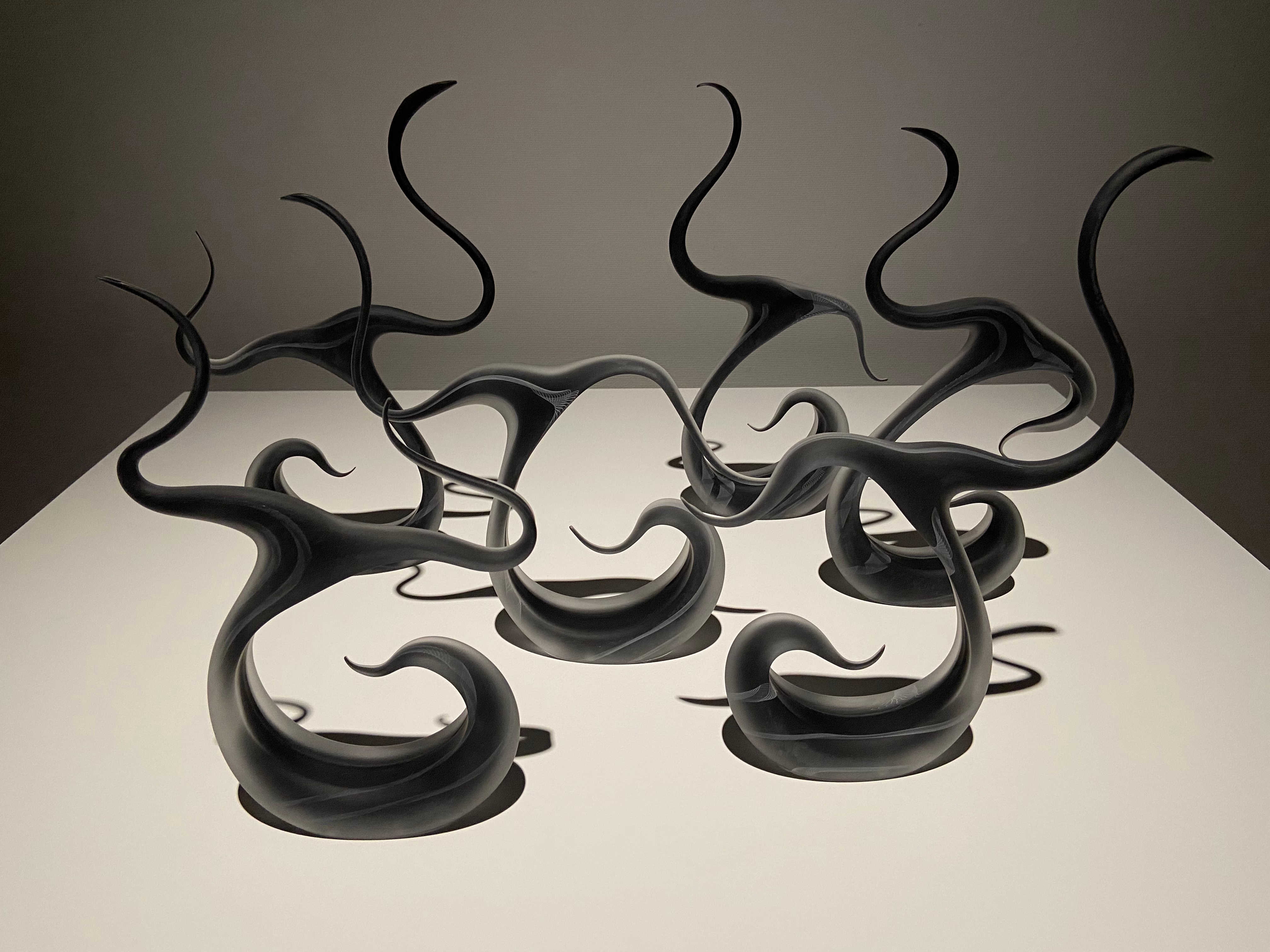
As twilight fades, the next section opens into Gathering Dusk, where familiar shapes are swallowed by darkness. Some of the contemporary work featured here includes Kozumi Masao’s special prize-winning Black Symmetry Vase, depicting the awakening of both fear and curiosity. It’s at this point in the exhibition that the artwork starts to become more unsettling, with encounters with creatures that might or might not be real.

Further along, the museum descends into madness, and everything becomes far less about light and far more about darkness. Encounters with unfamiliar forms and the macabre follow. The depths of our inner world emerge through death, dreams, and nightmares. Kinoshita Yui’s Permeation is my favourite piece of them all. The dense clusters of harshly coloured glass represent the dreadful force of proliferating life forms that slowly destroy us, ignoring everything else around them. It’s absolutely terrifying.

The final section moves into moonlight and the absolute unknown. Pieces here depict not just dreams, but terrors, as we sink into sleep and confront the depths of our boundless imagination. I hadn’t planned to spend quite so long here, and as two hours pass in an instant, I decide to head off to my next destination, an hour away.

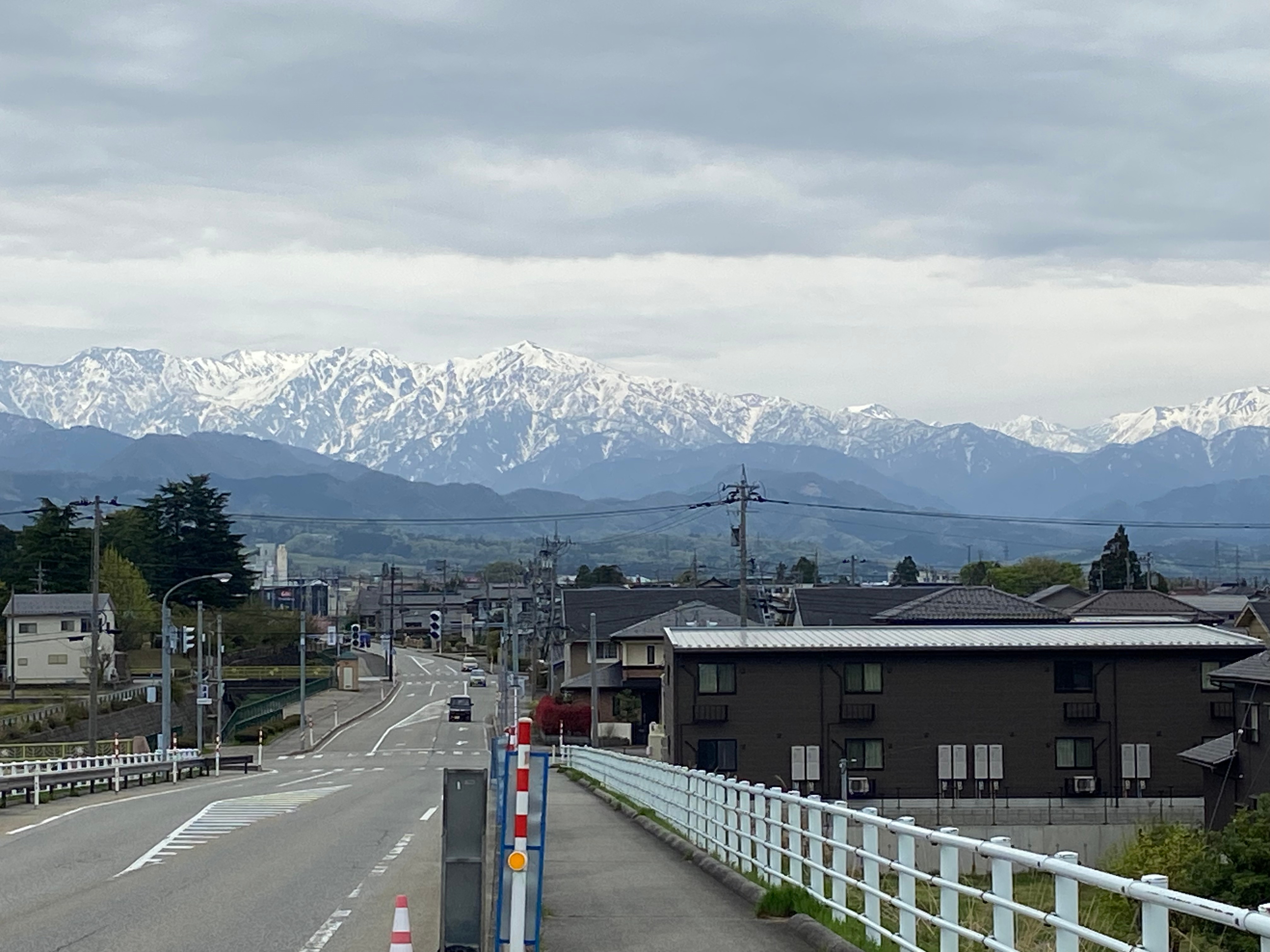
Arriving at Namerikawa Station, I finally manage to photograph the snow-capped Tateyama Mountain Range.

The mountains are stunning. They loom over this place as if their presence alone is enough to surround it, despite me being on the coast with the sea behind me. And it is the sea that’s brought me here, to see the world’s only firefly squid museum.

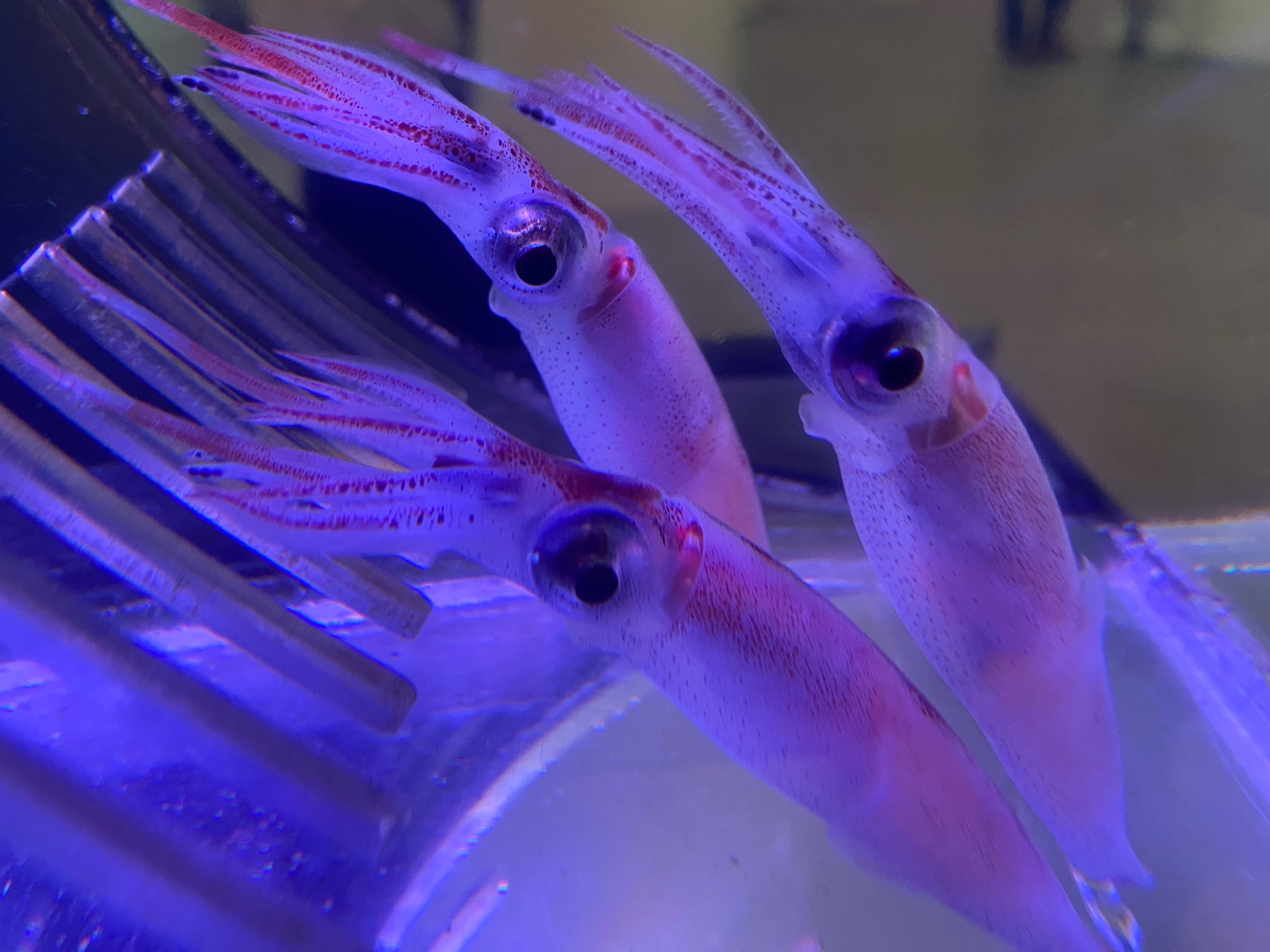
These squid are unique in that they are tiny, deep-sea creatures that light up the ocean in blue luminescence. Each squid is covered in thousands of light organs known as “photophores,” and use this light to match the surface glow, hiding their silhouette as they lure in their prey. They also use controlled blinking lights to trick and lure much smaller fish. I’ve managed to lure in three myself, in a tiny glowing tank.

The museum is pretty interesting; however, almost all of the information is in Japanese. The only parts I understand are that it smells like fish around here, and that no smartphones are allowed in the theatre. I don’t bother with the theatre anyway, as there is a two-hour wait, which is a shame, because apparently the firefly squid put on a dazzling light show.

The gift shop sells glow-in-the-dark squid keyrings and squid-adorned cravat-style neckties. The restaurant sells firefly squid pizza, squid burgers, and squid pasta, but it too has a two-hour wait. I wanted to come here and order the pizza just to add a bitter irony, seeing such beauty, marvelling at it, only to consume it after it’s performed a dance for me. Instead, I take a photograph of the pizza from the menu, just to show how unbelievably unappetising it looks. Had I not had to wait, I would probably have changed my mind about eating here anyway.

I head back toward the mountains, to the station, and decide that the only thing I’ll be consuming today is the view.

Zen and the Art of Samsara Cycle Abeyance

A woman on the train loudly tells her tourist friends and the entire carriage that Kanazawa might be the most Instagrammable place in Japan.

Leaving the station I see a map showing thirty-seven points of interest, and for someone who enjoys walking as much as I do, and with my long legs, it appears everywhere today will be within walking distance. Following a gaggle of eager tourists, I end up at Omicho Market.

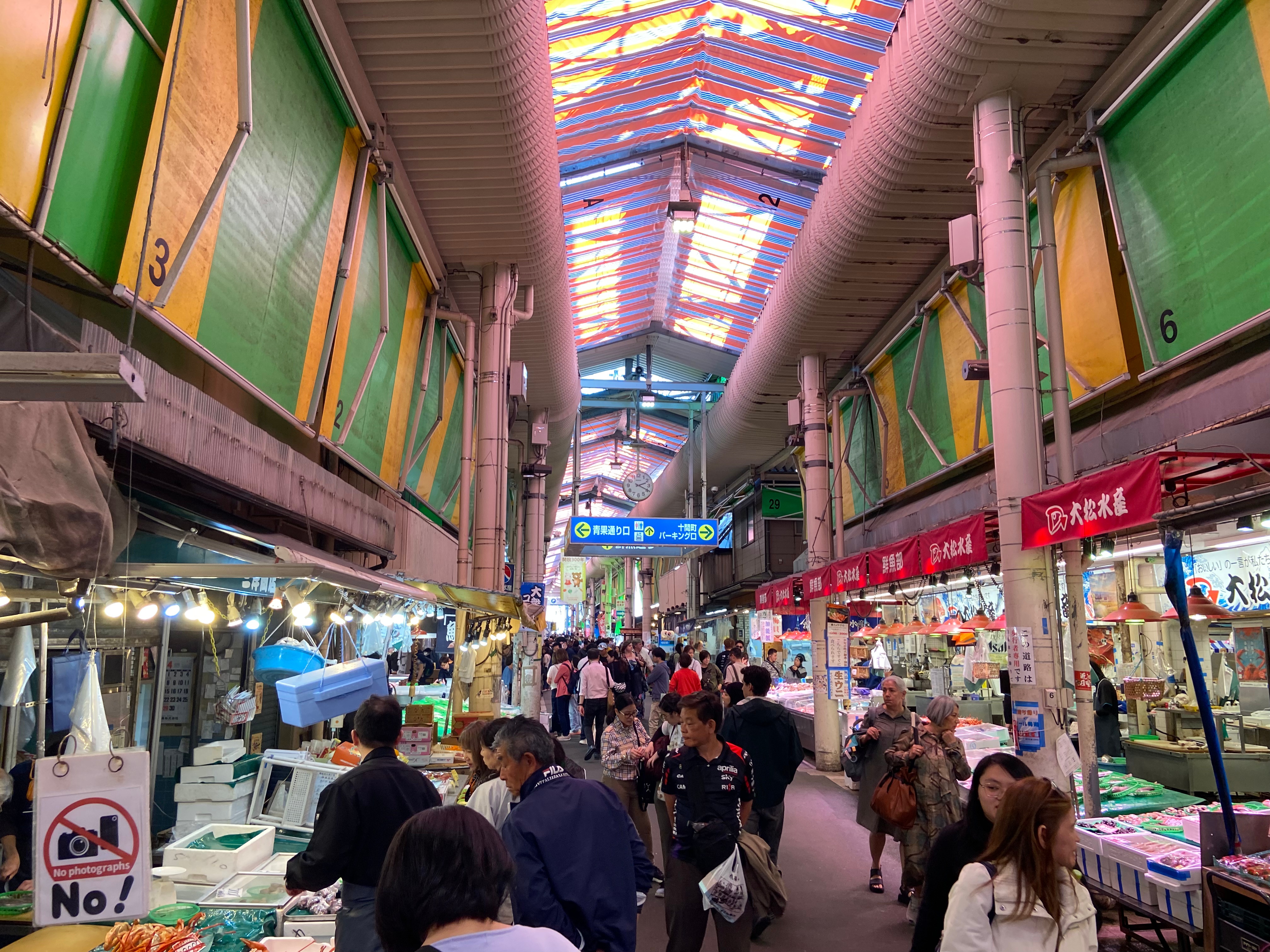
This massive indoor fresh food market has been operating since the early 1600s, and the tourists are here for it. The smell of freshly caught fish fills the morning air. A sign at one stall says, “All the firefly squids are sold out,” which is a shame, as they’re something I’ve always wanted to try. As I move through the haze of cacophonous chatter, a multitude of languages echoes from stall to stall, and staff shouting welcomes from every direction feels somewhat overwhelming. So much so that I begin to suffer from a not-so-Instagrammable headache.

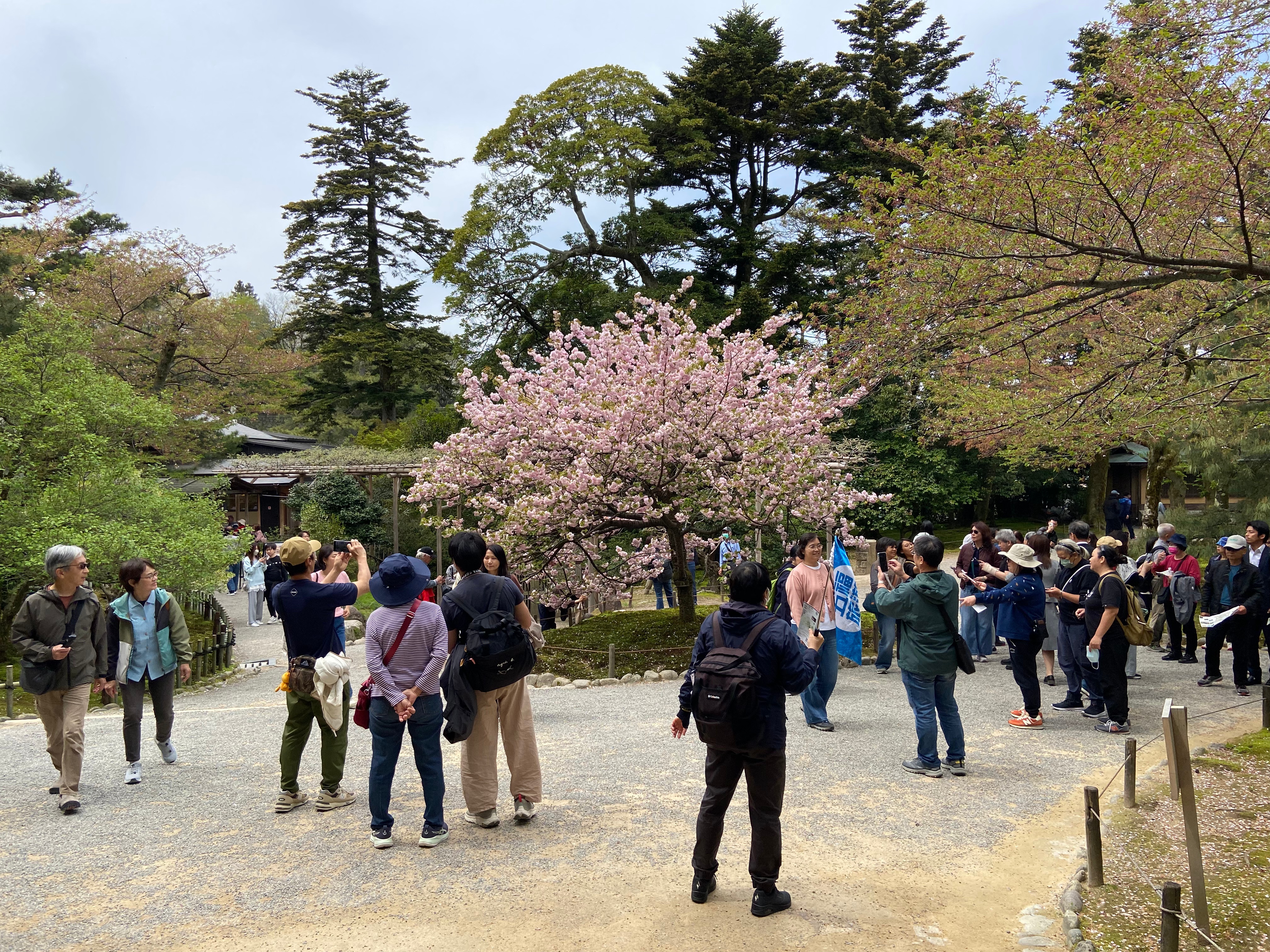
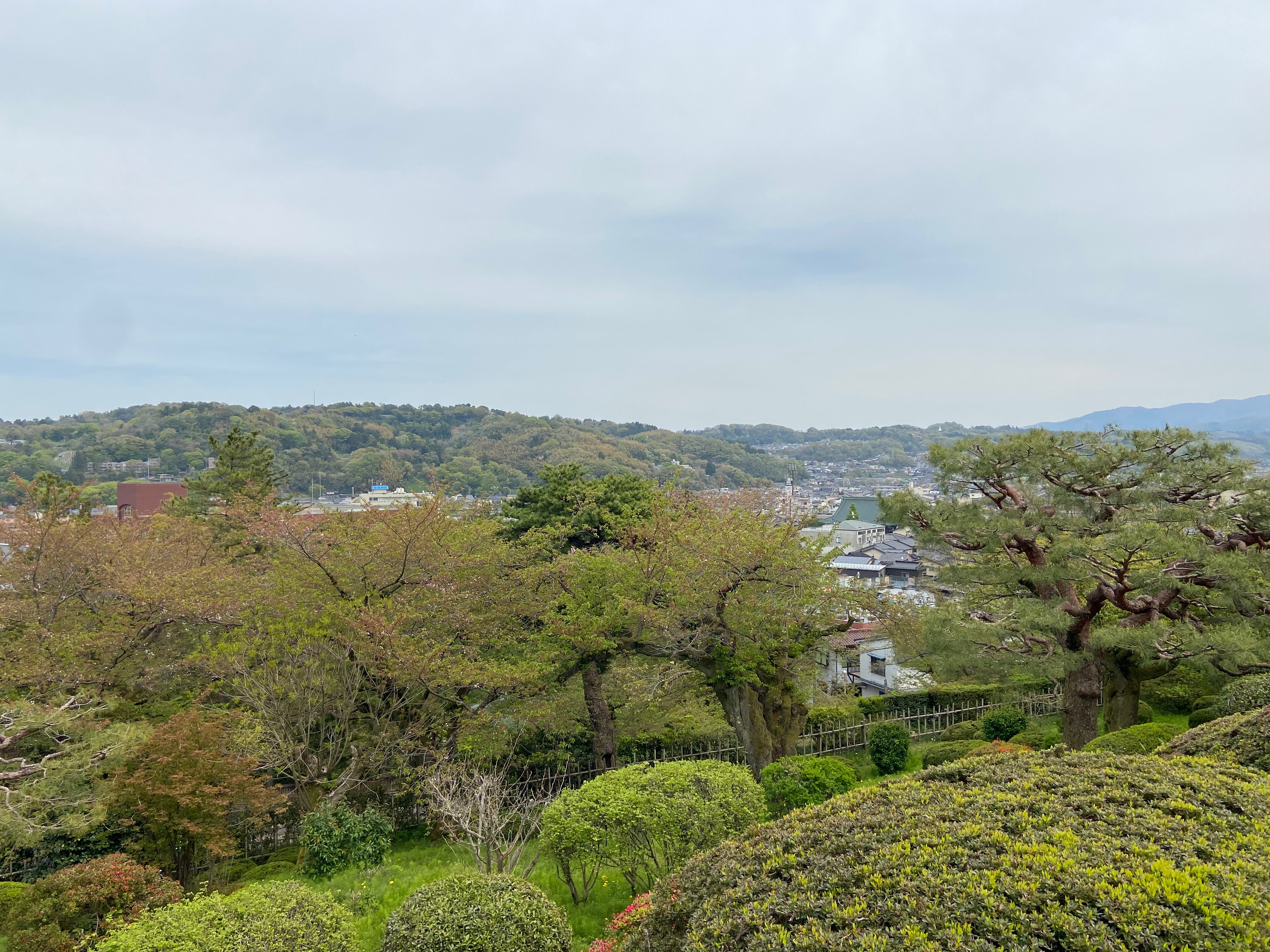
I fall out of the market and seamlessly into a garden, specifically Kenrokuen. Ponds, streams, famous trees, mountain views: the garden has everything. With seven individual entrances and two huge car parks, it also boasts a sixty-minute standard walking course. Unfortunately, the popularity of such a place is again a massive draw for tourism. They gather around the only cherry blossom tree whose petals have avoided abscission, blocking views of the ponds, and the paths themselves. And worst of all, the silence.

I honestly thought being in a garden would be a tranquil experience, but my head thumps as a tour guide with a megaphone ushers along a group of ten or so tourists. People shout, crunch food loudly, and whatever calm I had disappears. Even here, surrounded by what should be peace, I can still hear the beeping of a distant pedestrian crossing.

Trying to leave also becomes a challenge. Despite there being seven exits, I can’t seem to find any of them. I imagine this place is better early in the morning, because despite my complaining, it is still quite a good garden, and the views of the city can be pretty nice from up here too.

Outside, I find another map and a name I recognise: Daisetz Suzuki, a famous Buddhist philosopher, religious scholar, and authority on Zen. He has a museum here in his hometown of Kanazawa; well, it probably used to be his museum, he died in 1966. I do almost miss the entrance though as I become distracted by a massive bee hovering at my eye level, buzzing rather loudly.

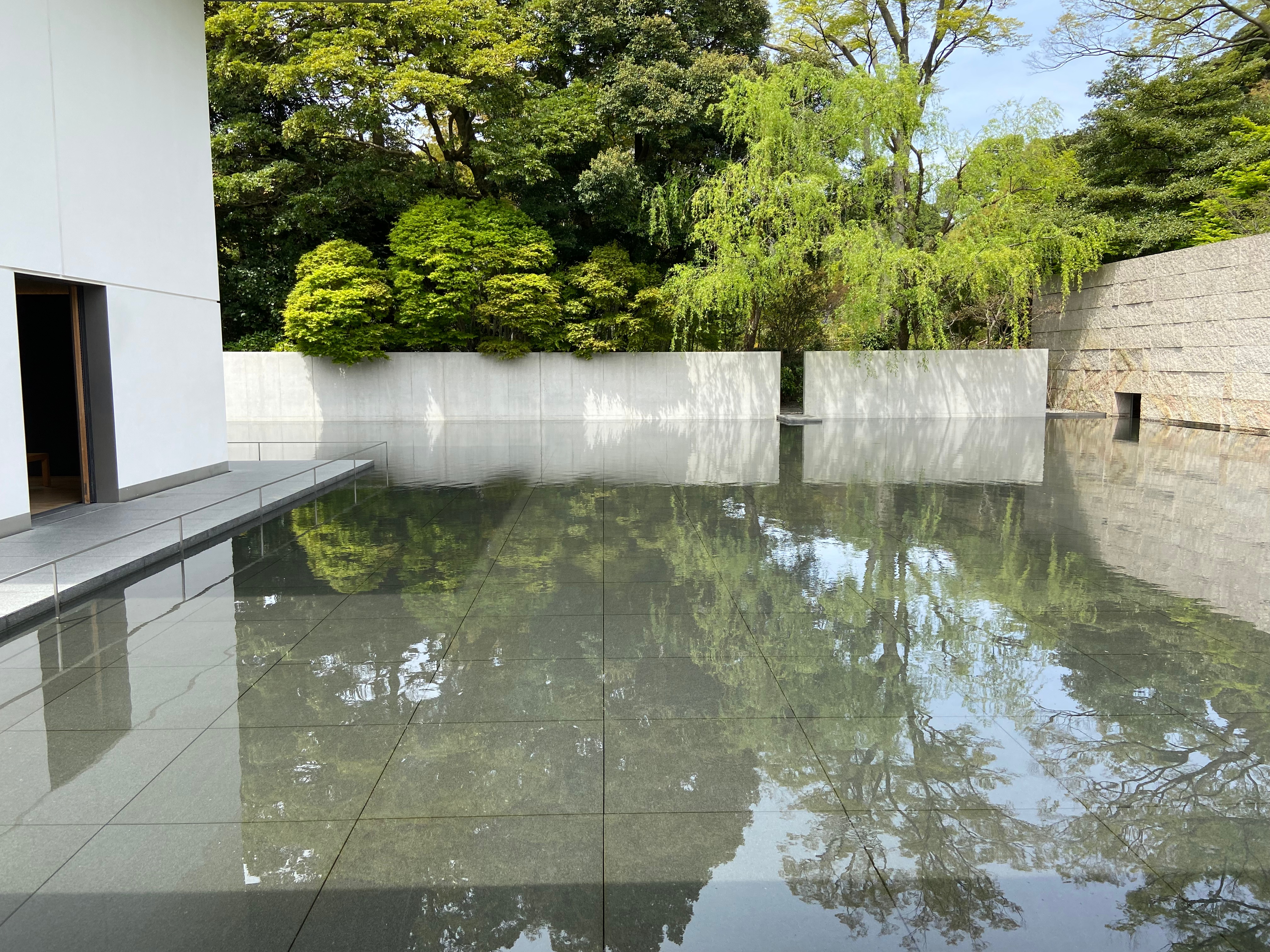
An information booklet that comes with the ticket price opens up to reveal just a blank white page, and nothing else. I do love minimalism, it’s part of this blog’s identity, so I fully appreciate this. I decide to stand by the Water Mirror Garden for a time, listening to the soft sound of distant running water, the stillness, finally achieving perfect silence.

Over at the Contemplative Space, a white room by a window where the sun comes through, I sit thinking. Looking at the suspended water mirror’s reflection, I try not to think. I quickly realise that I can’t not stop thinking, and then try to work out which part of that sentence was the double negative, which only makes me think even more. That’s the problem with meditation or mindfulness; silence becomes a game of Russian roulette, only the gun’s loaded with your own thoughts.

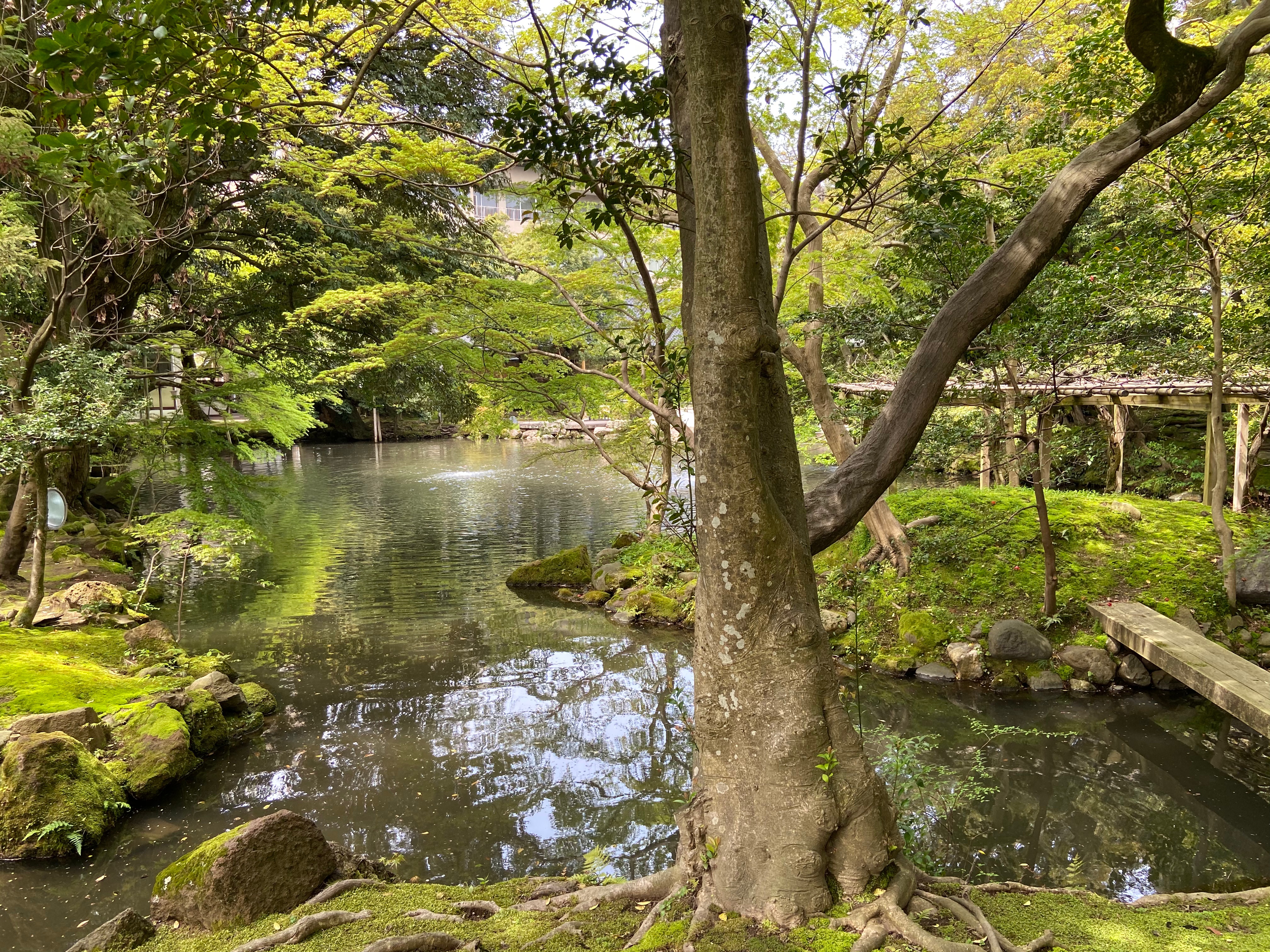
I continue further on, into Shofukaku Garden, a stroll garden around a pond. A Designated Place of Scenic Beauty, and free to enter, I’m quite surprised to find I have this garden completely to myself. I wander around my own secret space, take it all in, watch the carp, absorb the spring colours, before being chased off by that angry bee from earlier.

I next head up some moss-covered steps into a forest. It’s so incredibly silent here, just the twigs crunching underfoot and the occasional bird, there’s nothing else, and I don’t need anything else. So I pause and stay, for a while, just here, just being, before eventually forcing myself back into the cycle of the noisy world I had briefly escaped. That fleeting moment, now gone.

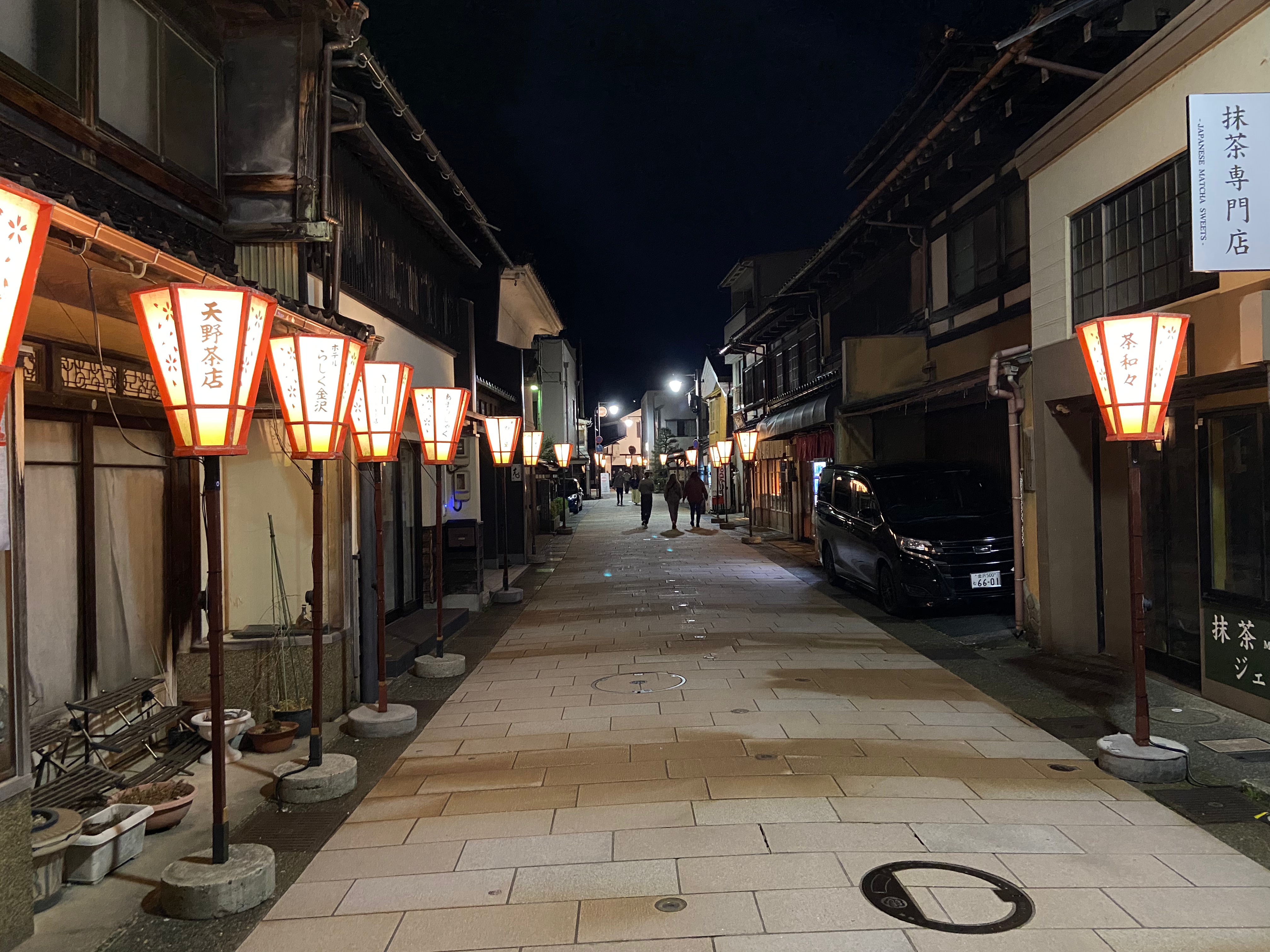
I walk in the direction of the Higashi Chaya Tea District, which apparently looks a lot better at night. Again, tourists bumble noisily. Regardless, it does still feel like a step backwards in time, with rickshaws, tea ceremonies, pairs of women in kimono, evening geisha performances, so much so that I plan to come back later to take a couple of night shots.

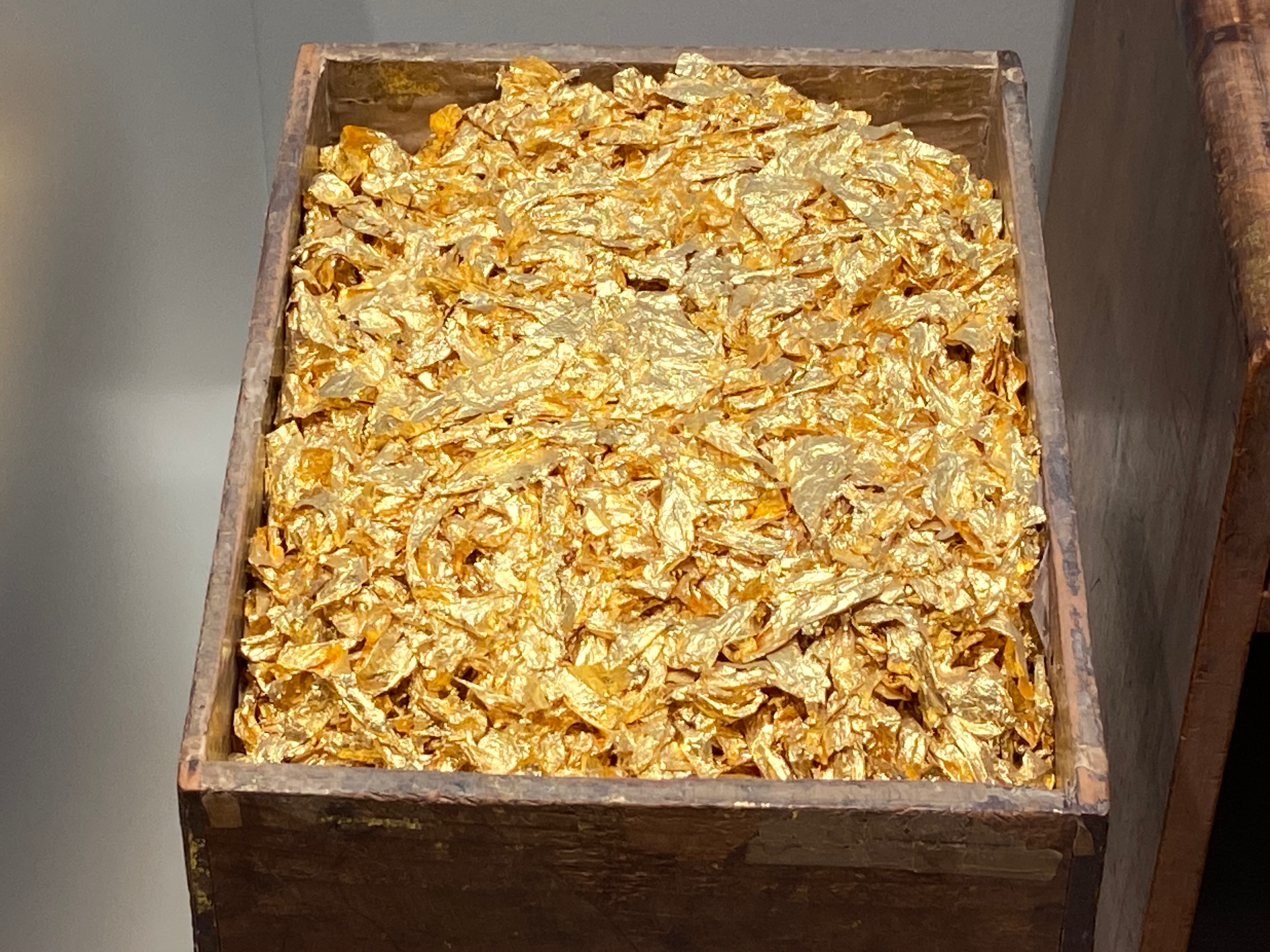
The shops here sell the usual fish-shaped waffles but this time laced with edible gold leaf. Kanazawa is the biggest producer of gold leaf in Japan. In fact, gold leaf here is everywhere. There are gold leaf cosmetics, face lotion and hand cream. One shop is trying to get in on that action and is offering gold beer. But most beer is already gold. There are people queueing to buy gold leaf soft serve vanilla ice cream. I even see one lady come out of the shop holding her ice cream, pose with it for an Instagrammable selfie, before casually tossing it into a bin. She might well just cancel her trip and get AI to generate her holiday for her.

Amongst the tea shops and cafes there is also the Kanazawa Yasue Gold Leaf Museum, so I decide to take a look and learn about this 1/10,000th of a millimetre thick foil that requires extreme focus, almost Zen in its precision. There was supposed to be a hands-on workshop so I could try to apply gold leaf myself, but sadly it’s been cancelled, so instead I admire some art adorned in flecks of gold, before checking to see if there’s a golden toilet on the way out. There isn’t.

By the time the gloaming arrives, my gold leaf soft serve vanilla ice cream has all but melted. I sit in the evening light, sipping a golden beer. I realise now that my headache too has almost faded. You can sort of tell these things.

Once Upon a Timeline

Today, I’m in Yoro, a town in Gifu Prefecture. I’m here to change my destiny.

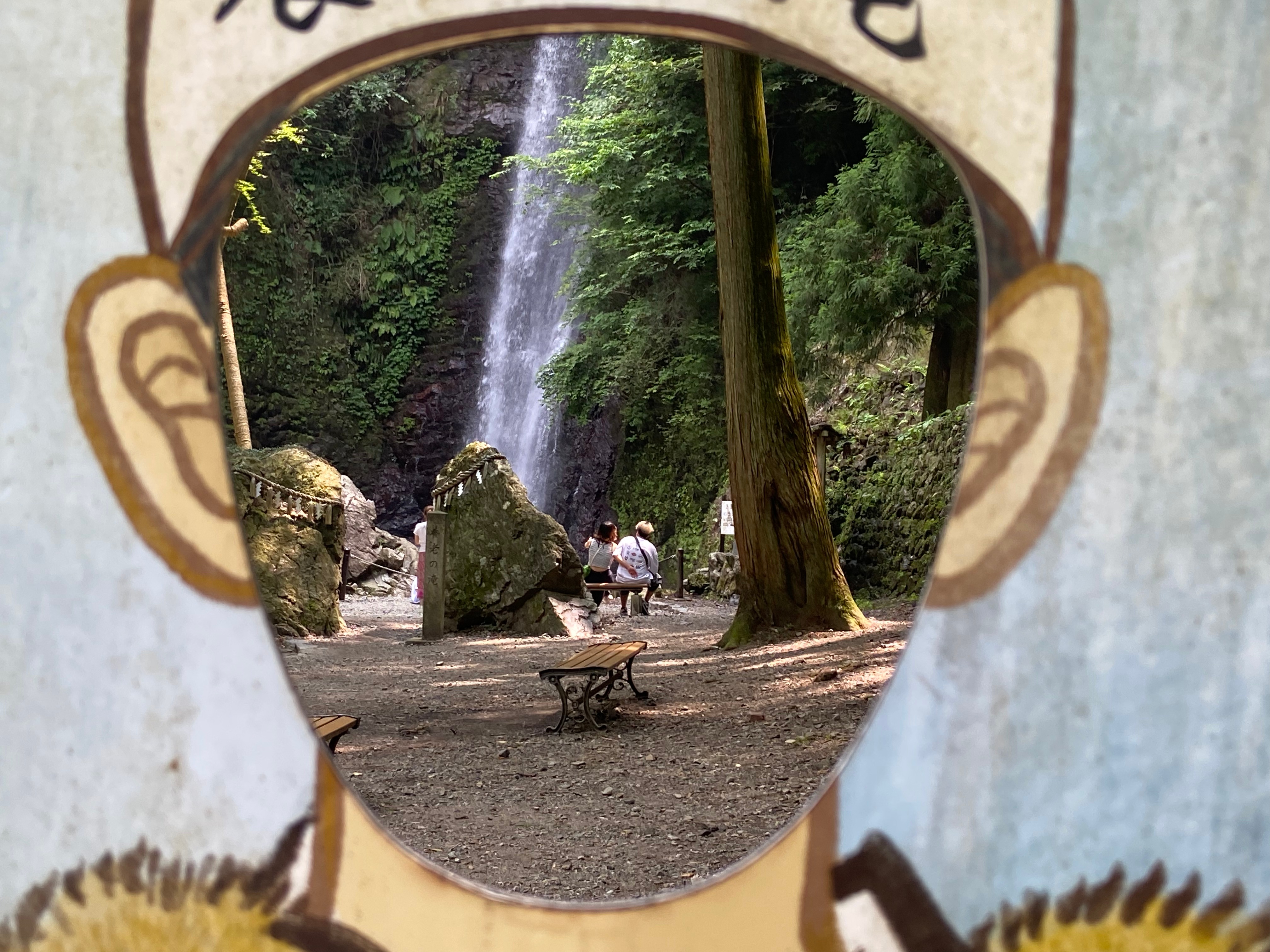
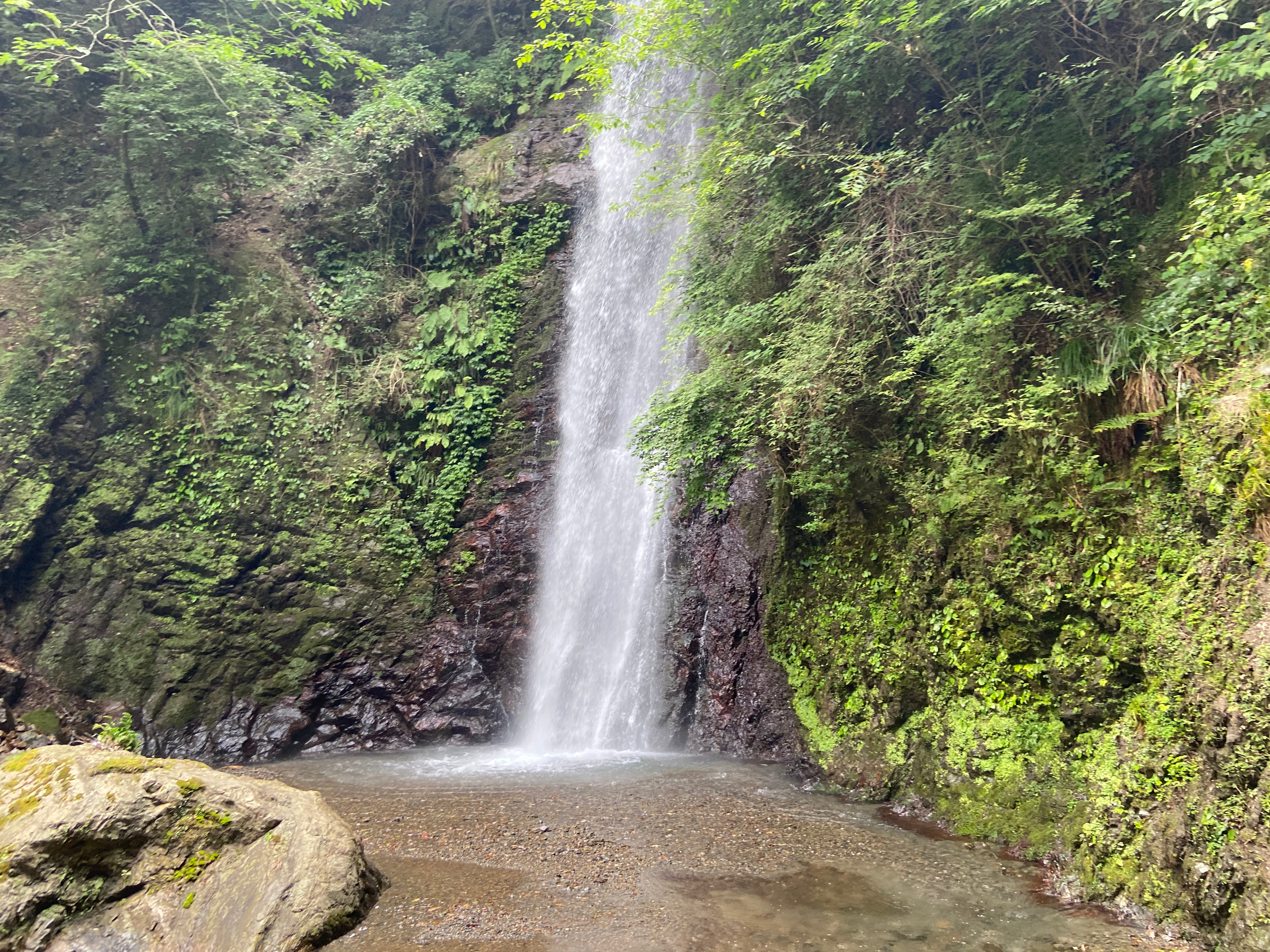
First, I decide to take a thirty-minute stroll along the edge of a cliff to visit a famous waterfall. This waterfall is said to be made entirely of flowing alcohol, specifically Japanese sake.

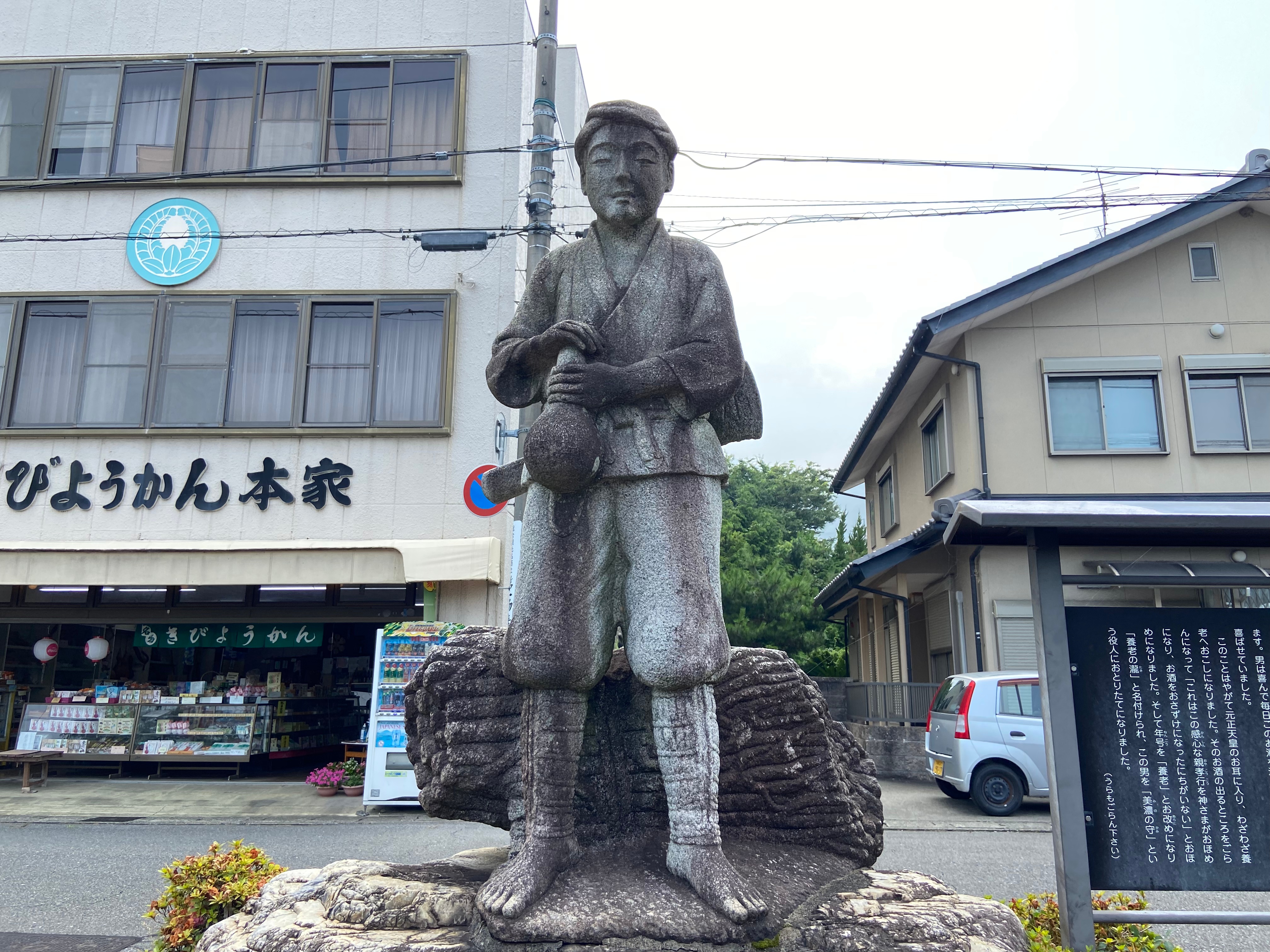
The story goes that there was once a poor lumberjack with a very old, ill father. On his deathbed, the father requested his favourite Japanese sake, but the lumberjack couldn’t afford it on his meagre income. One day, the son walked the treacherous path near the waterfall.

Some say he was out looking for wood for a fire, but he was a woodcutter, so any tree would have sufficed. Others say he was simply thirsty. Regardless, he fell in the woods and definitely made a sound, and after falling and lying on the dirty ground, the poor lumberjack could smell the sweet scent of sake.

It was here that he discovered the water from the waterfall was not water at all.

He returned home with a gourd full of sake, and his father drank it. The transformation was instant, and he miraculously became younger and healthier.

News of this reached the ancient capital of Nara, and Empress Gensho visited the waterfall herself. She was so impressed by the beauty of the area and the magical water that she declared it a sacred site and renamed the area Yoro, meaning elderly care.

It takes me about an hour to reach the waterfall despite it being advertised as a thirty-minute stroll. It’s a tough hike too, up a mountain. It’s humid; it feels like 40 degrees. I’ve probably sweated more water than I’ve seen flow down the falls. I can only imagine how hard it must have been for the lumberjack, carrying that gourd and heavy axe to the top.

Next to the waterfall, a faded poem engraved on stone in Japanese reads:

“Listening to the flow of Yoro Falls,
One’s heart is healed and refreshed,
Like the pure sake that rejuvenated the old man,
Flowing eternally, blessing those who visit.”

I stand looking at the waterfall for a time, enveloped in tranquillity. I think about water flowing down a river, following a predestined path. It cascades over the falls, flows further south, and meets a tributary, where its path diverges and its destination shifts, a choice not made but followed.

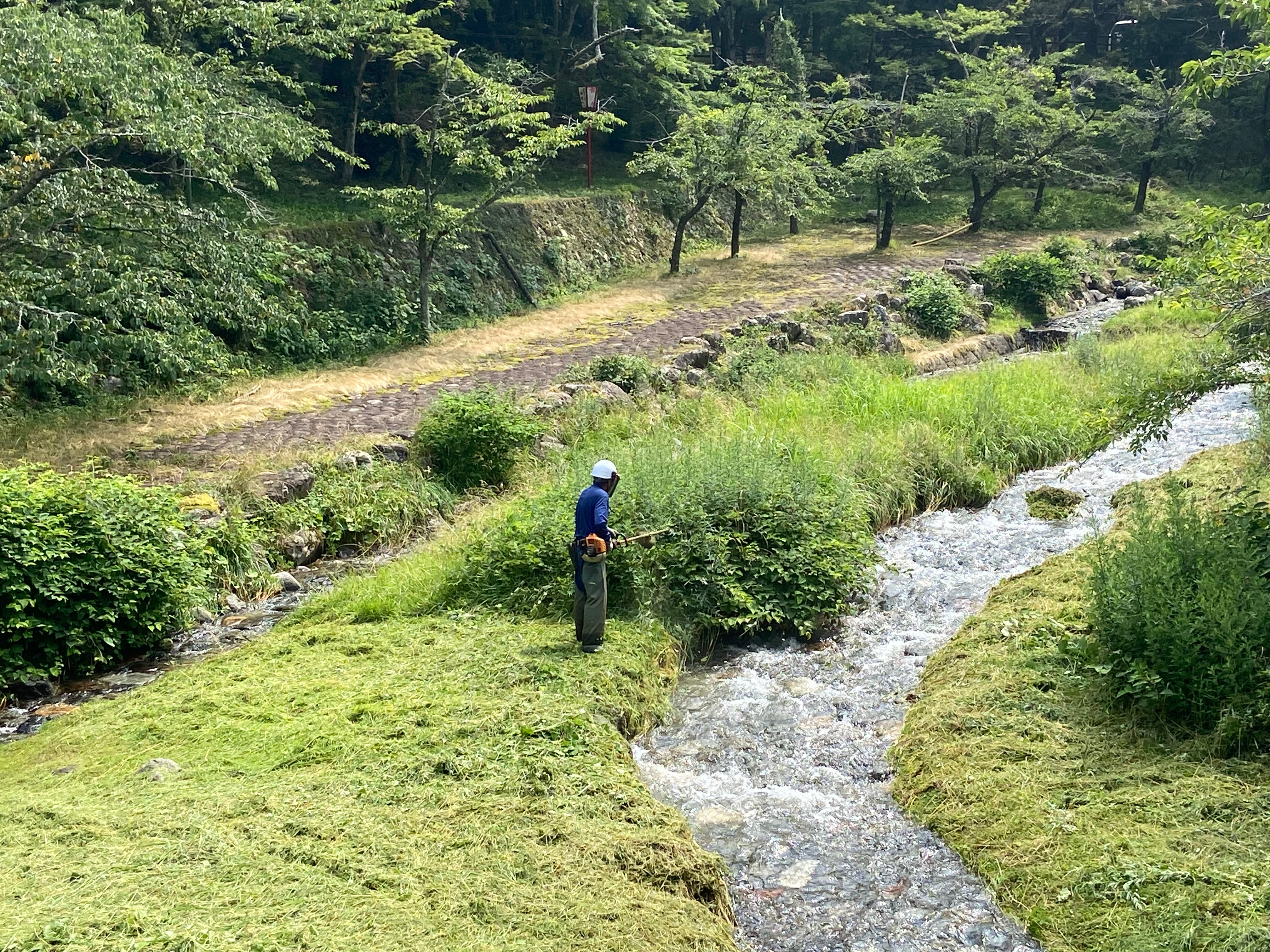
Somewhere, after leaving Yoro Falls, a butterfly shivers against the wind. At the bottom of the waterfall, the tranquillity ends and is swamped by the sound of a man with a grass strimmer.

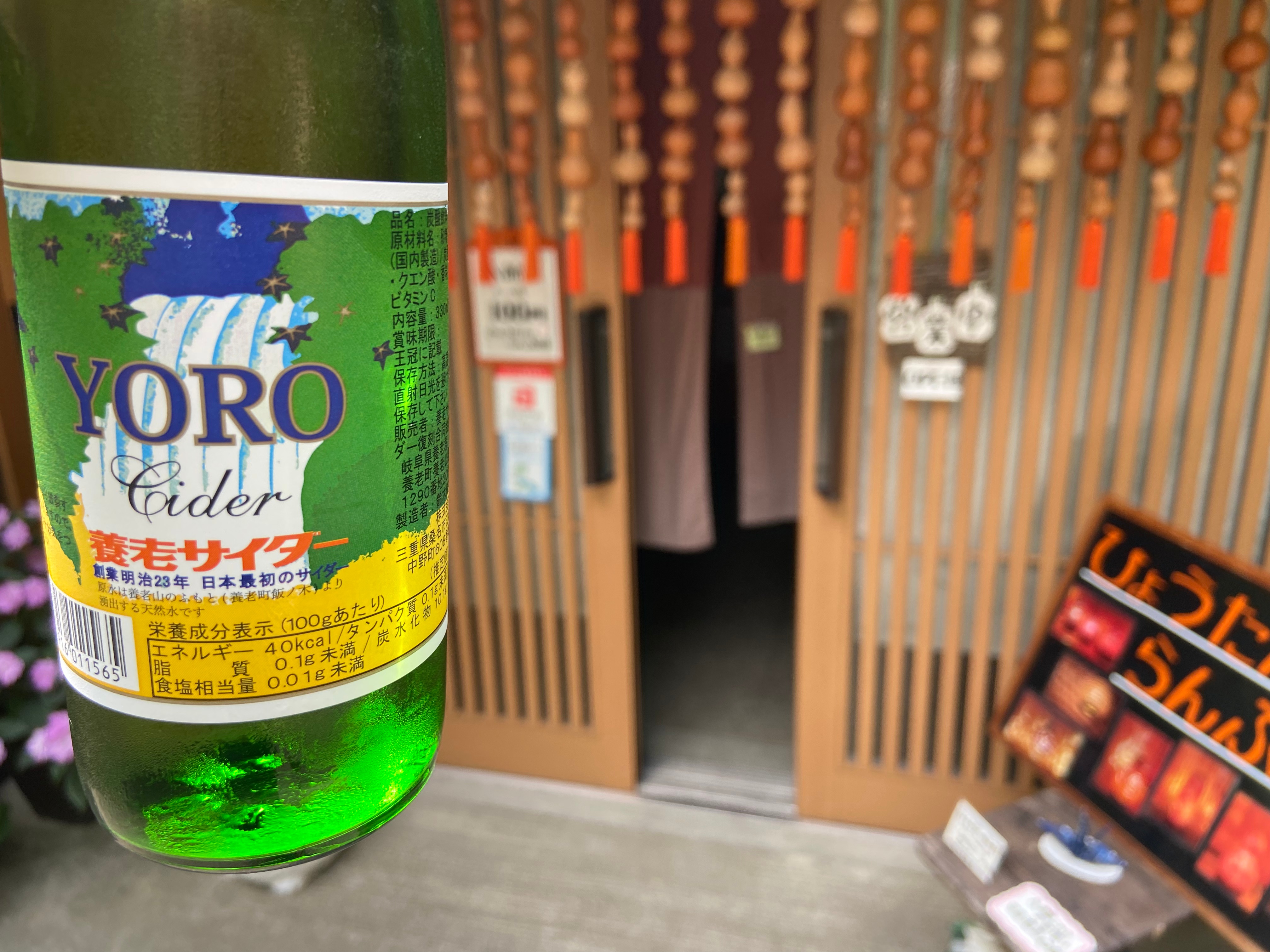
I stumble upon a small souvenir shop selling bottles of carbonated cider made with the magical sake water. The cider tastes delicious. Unlike in England, cider in Japan is a soft drink, so despite the falls apparently being made of alcohol, this drink somehow contains none.

I leave with a healed heart, feeling blessed. Eternally refreshed. Next to the small shop is the Yoro Gourd Museum. I look at a few gourds made into artwork and lamps before moving on.

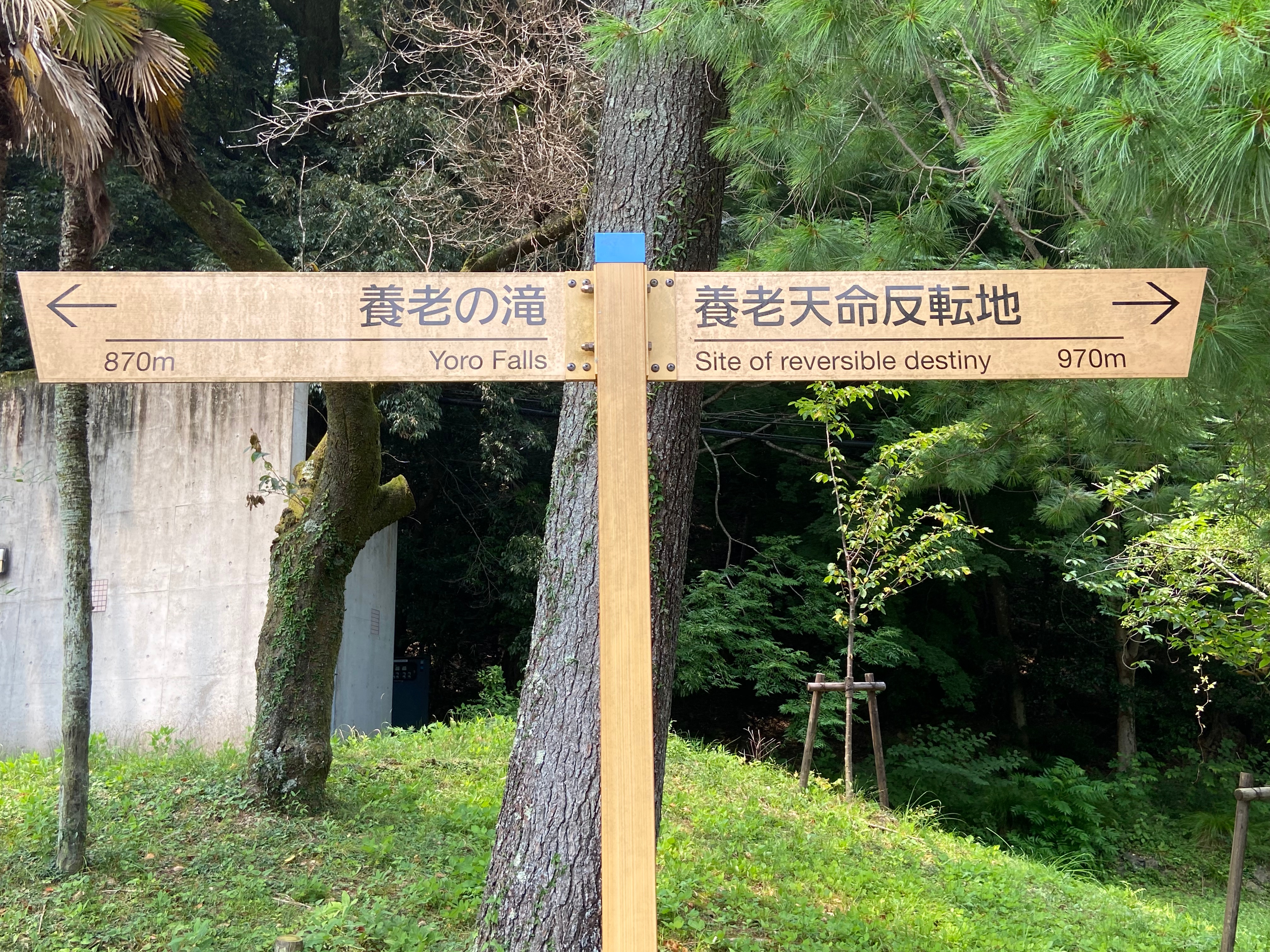
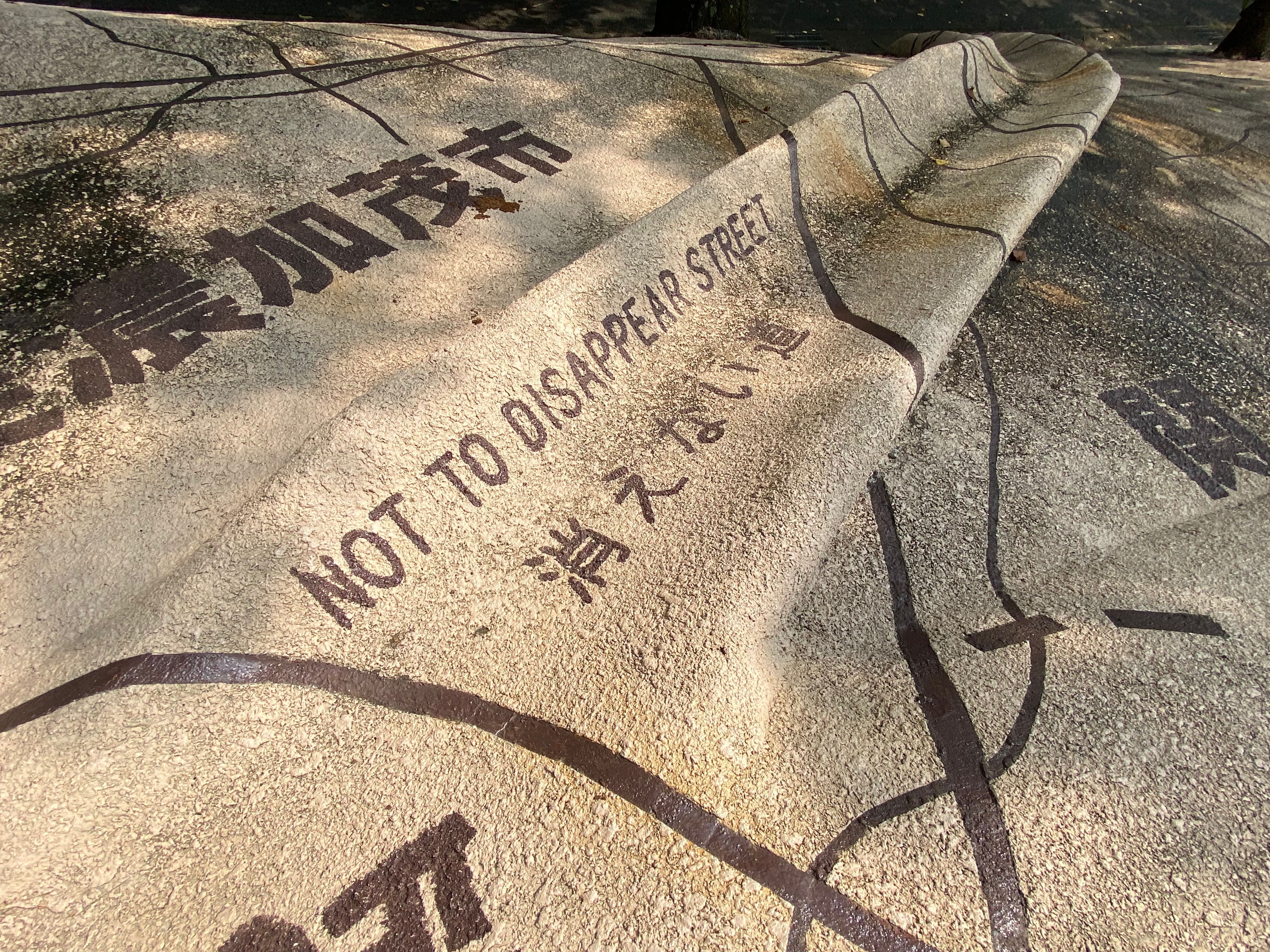
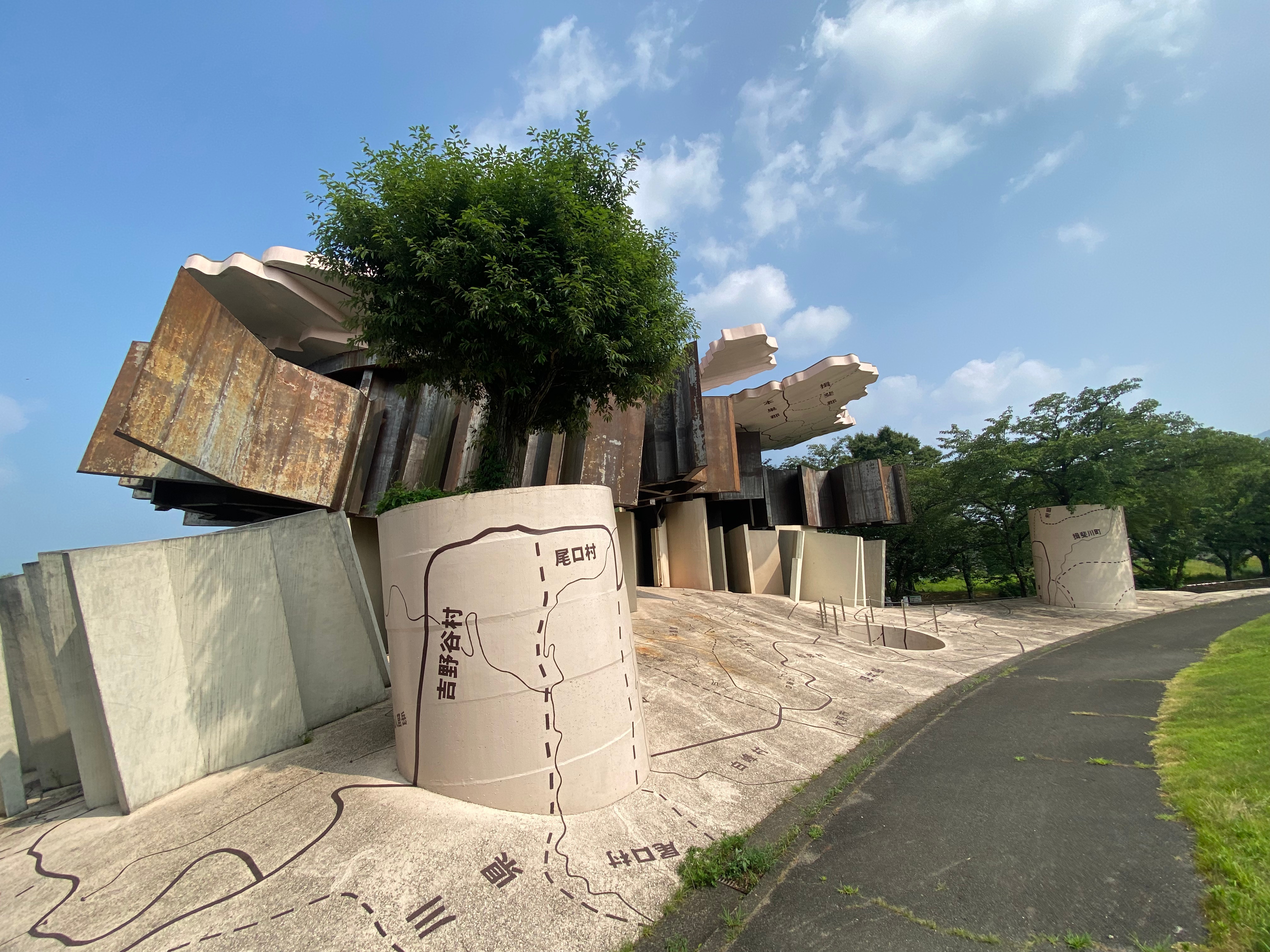
My final stop today is within Yoro Park, a place known as the Site of Reversible Destiny. A massive outdoor interactive art park dreamed up by Shusaku Arakawa.

It’s quite bizarre, funny, and downright unusual. There’s a house that is a road and a road that is a house. There’s a nostalgia generator, a few mazes, and some piles of things that I don’t even understand.

I pass Not To Disappear Street, the Gate of Non-Dying, and an area known as Geographic Ghost. I climb over the Zone of Clearest Confusion, leave through the Trajectory Membrane Gate, before getting lost in the multicolour of Destiny House.

Shusaku Arakawa was obsessed with the idea of death and destiny. He built this site with his wife, Madeline Gins, as a challenge to mortality itself. That’s the point of the Site of Reversible Destiny: to confuse your soul and reroute your path. When Arakawa died in 2010, his wife said, “This mortality thing is bad news.”

With fate as mutable as the weather, or the seeds of a dandelion, you blow away, only to take root in unexpected soil. My destiny begins to unravel. The sun still rises in the morning and sets in the west, but the days no longer feel the same. Each moment becomes a whispered echo of a choice that altered everything, carried on a timeless breeze.

The concept of a multiverse unfolds like a kaleidoscope of infinite reflections, where certainty and uncertainty intertwine like vines in an ancient forest, tangling into something that resembles fate.

Yet, if every possible outcome and path exists, there must also be a universe where the notion of such multiverses is impossible. It is here that we find ourselves staring into the paradoxical abyss.

Sweeping aside the contradiction of parallel worlds, it is on the train that I ponder the existence of a universe where I do not exist. As the train changes track to a branching line, the landscape blurs past, indifferent to my absence. My reflection in the window shimmers, quantum-thin.

For a moment, I am here and not here, observed and unobserved, a wave function waiting to collapse. I step off the train. I step into the world. And the world, impossibly, steps into me.