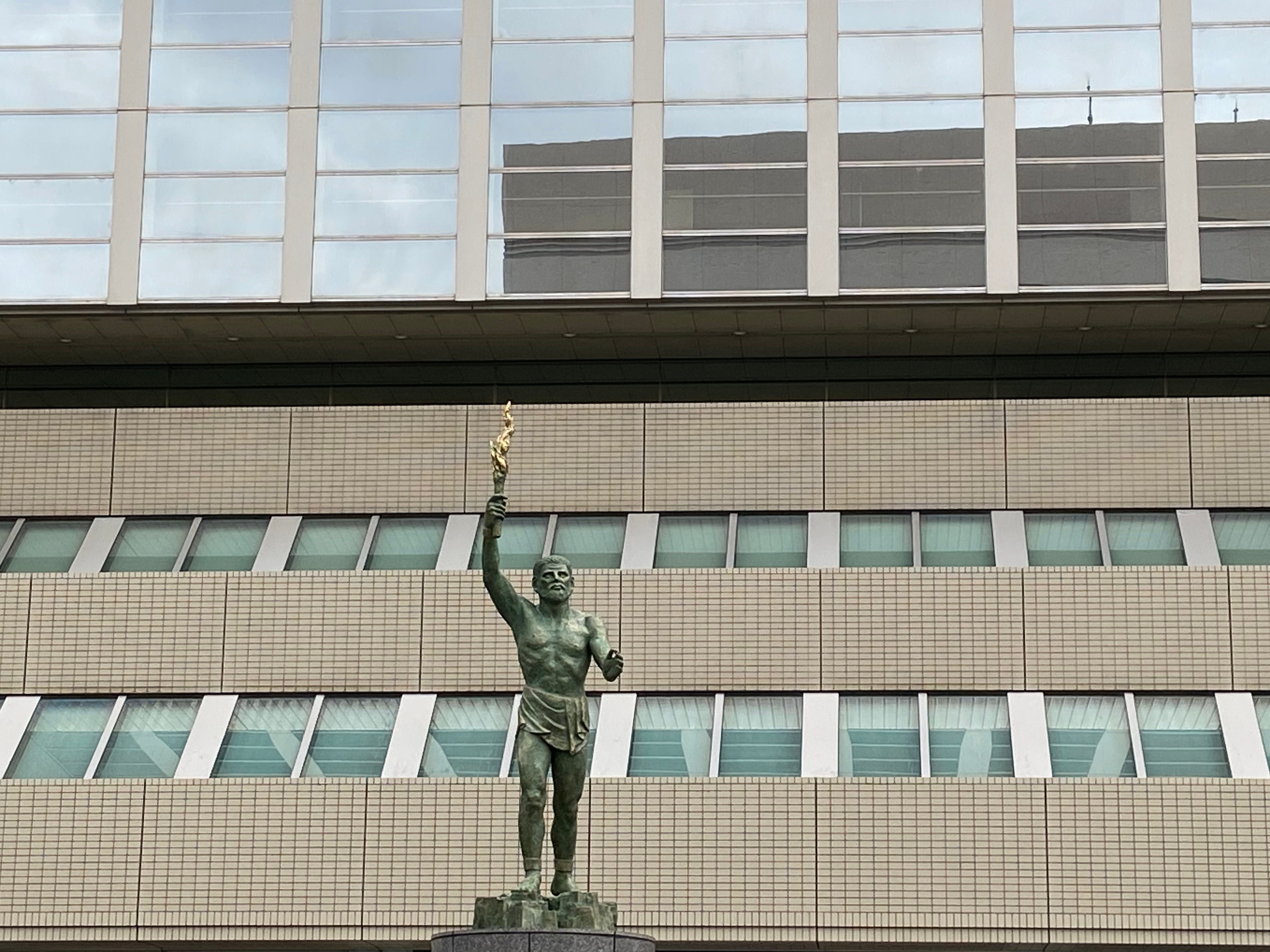
Outside Toyama Station, in front of the Hokuriku Electric Power Company headquarters, there is, for no apparent reason, a statue of Prometheus. I briefly consider shooing away an imaginary eagle pecking at the statue’s liver. Prometheus is carrying a flaming torch whilst posing above a water fountain.
I’m in Toyama Prefecture today for two activities. The first is a special exhibition taking place at the Toyama Glass Art Museum. As I wander the streets, crossing tramlines and dodging potholes, every now and again, through cracks or gaps between high-rise buildings, I catch glimpses of the snow-capped Tateyama Mountain Range in the distance. I’ll be slightly closer to these mountains for my second activity later on, so I’m hoping to get a decent view and a couple of nice photographs.
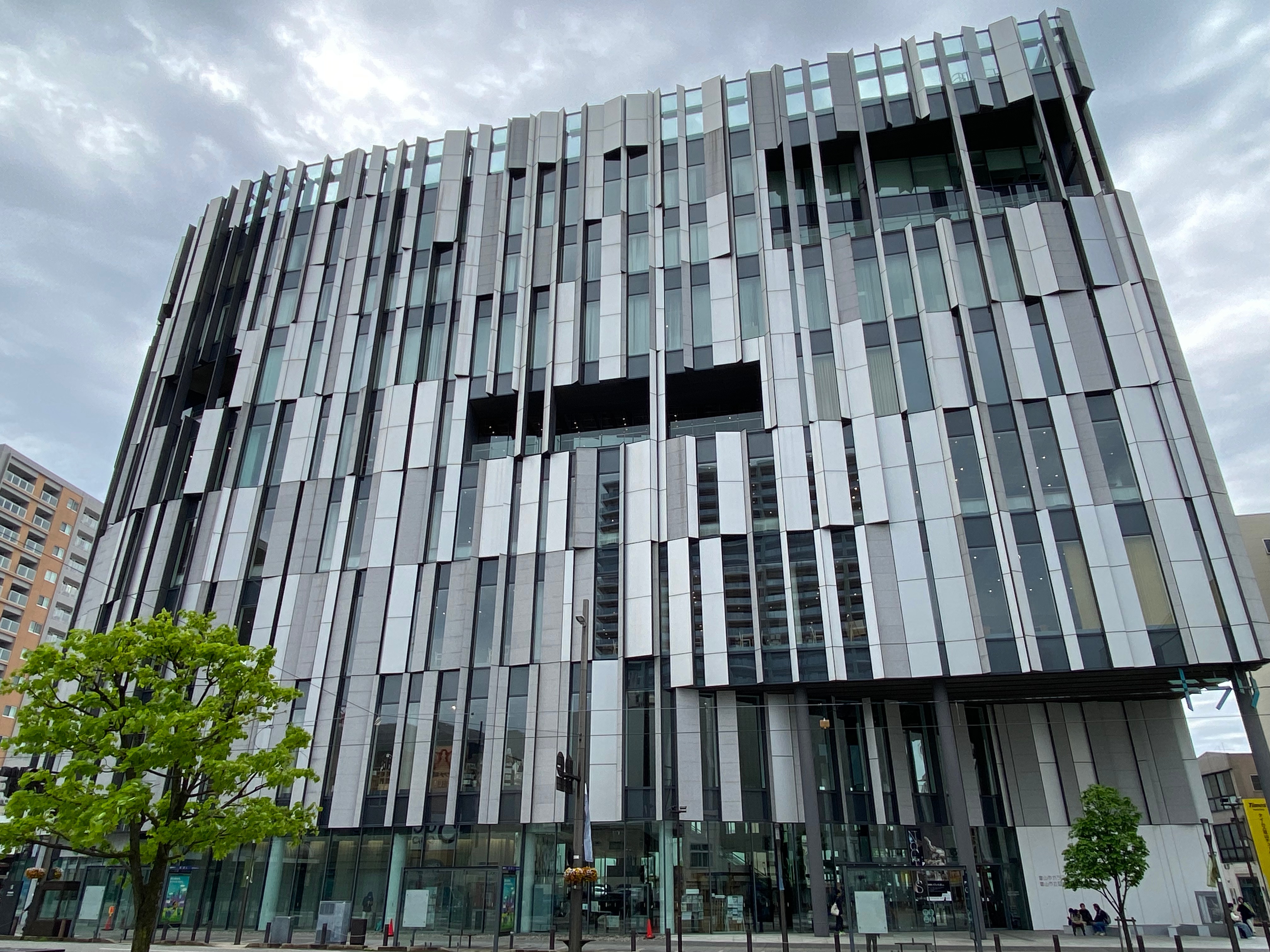
The Toyama Glass Art Museum is not difficult to find. The building housing it is a unique structure. Designed by Kengo Kuma, it features a dramatic diagonal void that acts as a light funnel, channelling sunlight through the interior and reflecting it off cedar beams and mirrored walls.
Inside the museum, there is a massive queue of people, which is a good sign. The tagline reads Glass Art of Shadow and Light, while the exhibition itself is titled Noctis, Latin for “of the night.” Amidst the darkness, inspiration can be drawn from the mysteries that hide there, illuminated by the glow of the moon, a star, or a small flame.
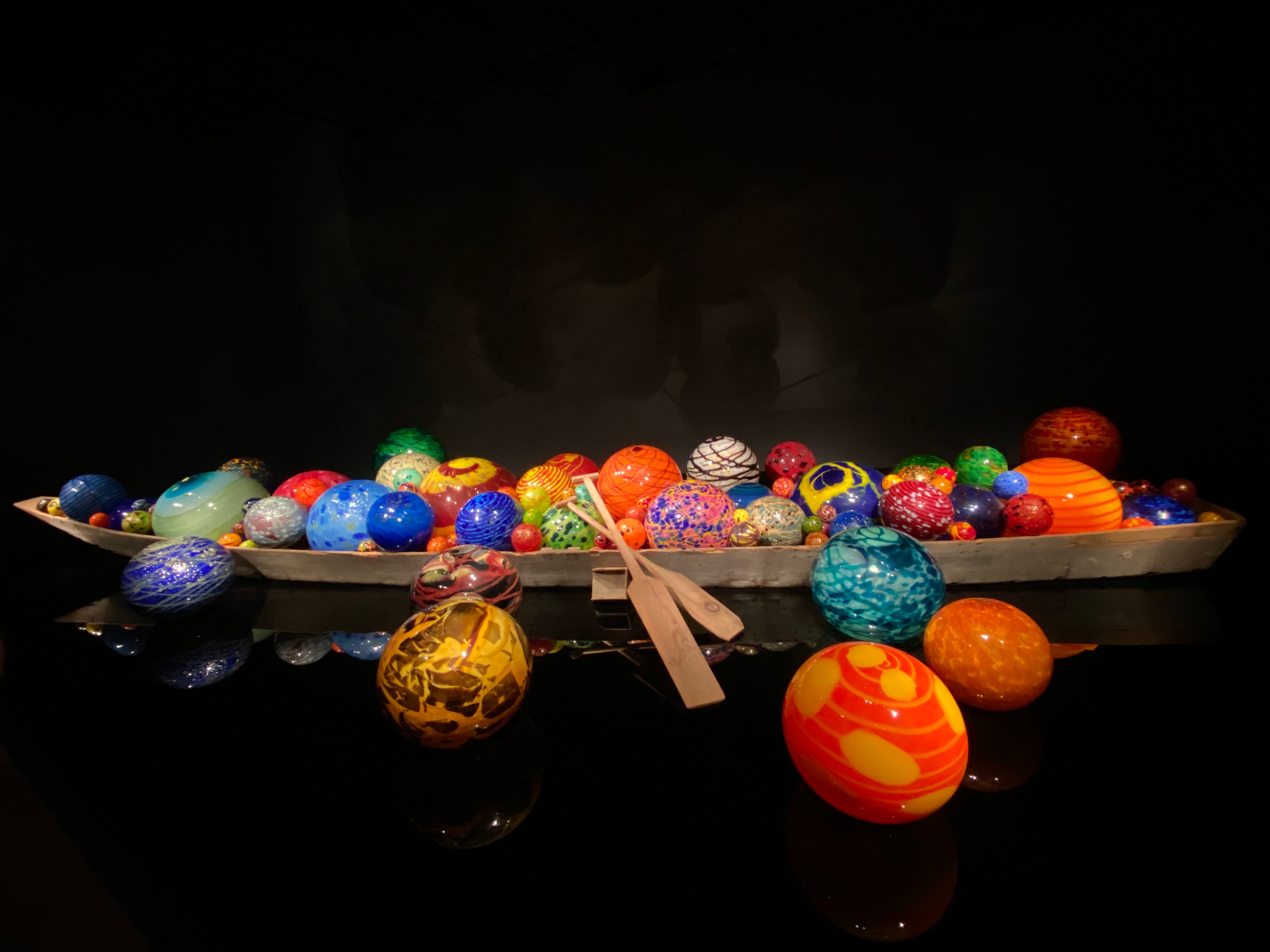
The ticket price also includes entry to the regular glass art floor, which I visit first. Among the collection are instructions on how this type of art is made, where it originates from, a timeline of its history, and a large boat filled with giant multi-coloured marbles.
On the floor below, the entrance to Noctis begins in the section titled The Twilit Forest, the suspension between night and day. The very first room is filled with lamps and the shadows they create. Then there are vases, and their shadows. I feel like my shadow is being watched by the many all-female seated staff. Should I be photographing this? Have I been standing around long enough? Did I look at all the lamps?
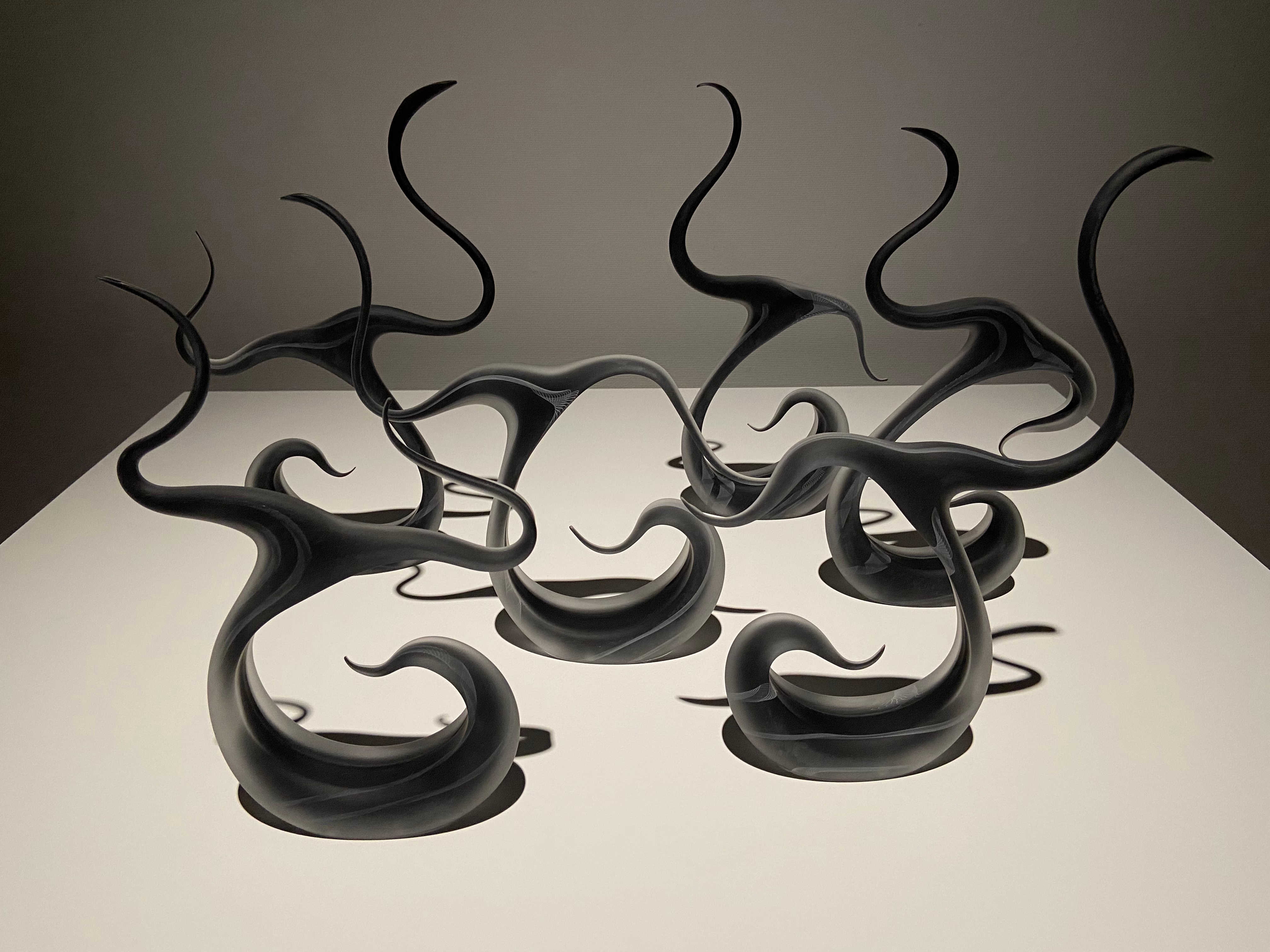
As twilight fades, the next section opens into Gathering Dusk, where familiar shapes are swallowed by darkness. Some of the contemporary work featured here includes Kozumi Masao’s special prize-winning Black Symmetry Vase, depicting the awakening of both fear and curiosity. It’s at this point in the exhibition that the artwork starts to become more unsettling, with encounters with creatures that might or might not be real.
Further along, the museum descends into madness, and everything becomes far less about light and far more about darkness. Encounters with unfamiliar forms and the macabre follow. The depths of our inner world emerge through death, dreams, and nightmares. Kinoshita Yui’s Permeation is my favourite piece of them all. The dense clusters of harshly coloured glass represent the dreadful force of proliferating life forms that slowly destroy us, ignoring everything else around them. It’s absolutely terrifying.
The final section moves into moonlight and the absolute unknown. Pieces here depict not just dreams, but terrors, as we sink into sleep and confront the depths of our boundless imagination. I hadn’t planned to spend quite so long here, and as two hours pass in an instant, I decide to head off to my next destination, an hour away.
Arriving at Namerikawa Station, I finally manage to photograph the snow-capped Tateyama Mountain Range.
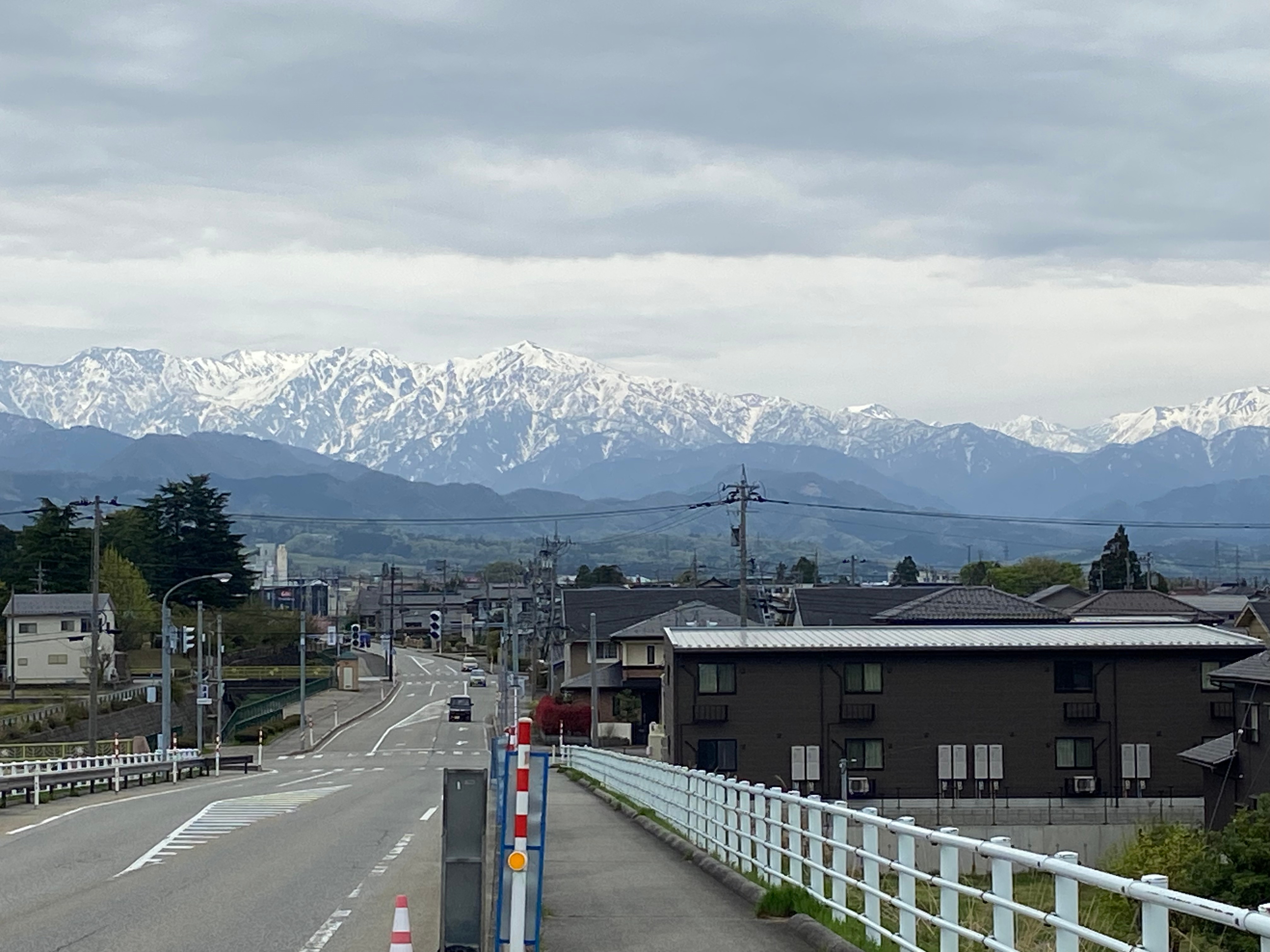
The mountains are stunning. They loom over this place as if their presence alone is enough to surround it, despite me being on the coast with the sea behind me. And it is the sea that’s brought me here, to see the world’s only firefly squid museum.
These squid are unique in that they are tiny, deep-sea creatures that light up the ocean in blue luminescence. Each squid is covered in thousands of light organs known as “photophores,” and use this light to match the surface glow, hiding their silhouette as they lure in their prey. They also use controlled blinking lights to trick and lure much smaller fish. I’ve managed to lure in three myself, in a tiny glowing tank.
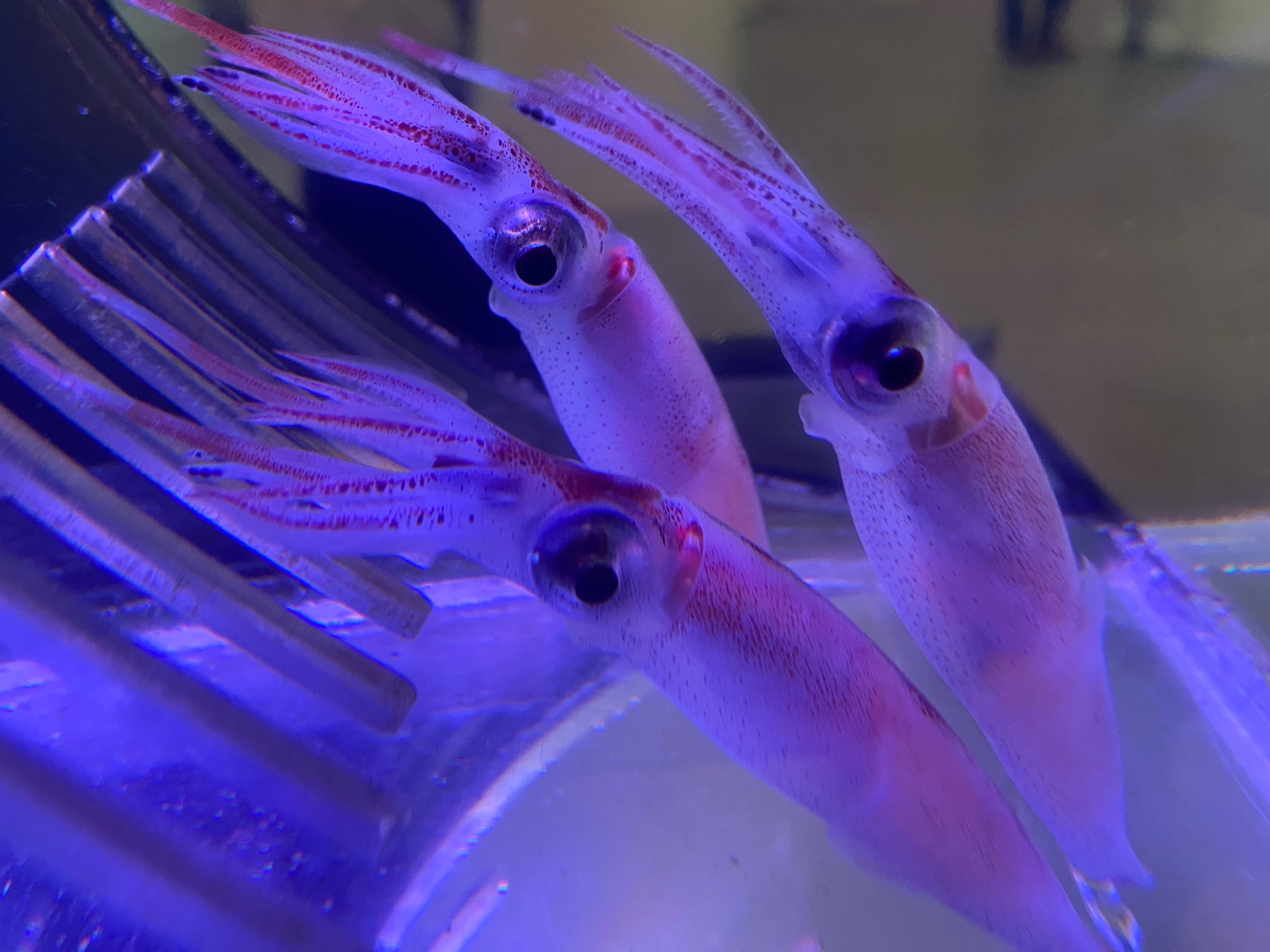
The museum is pretty interesting; however, almost all of the information is in Japanese. The only parts I understand are that it smells like fish around here, and that no smartphones are allowed in the theatre. I don’t bother with the theatre anyway, as there is a two-hour wait, which is a shame, because apparently the firefly squid put on a dazzling light show.
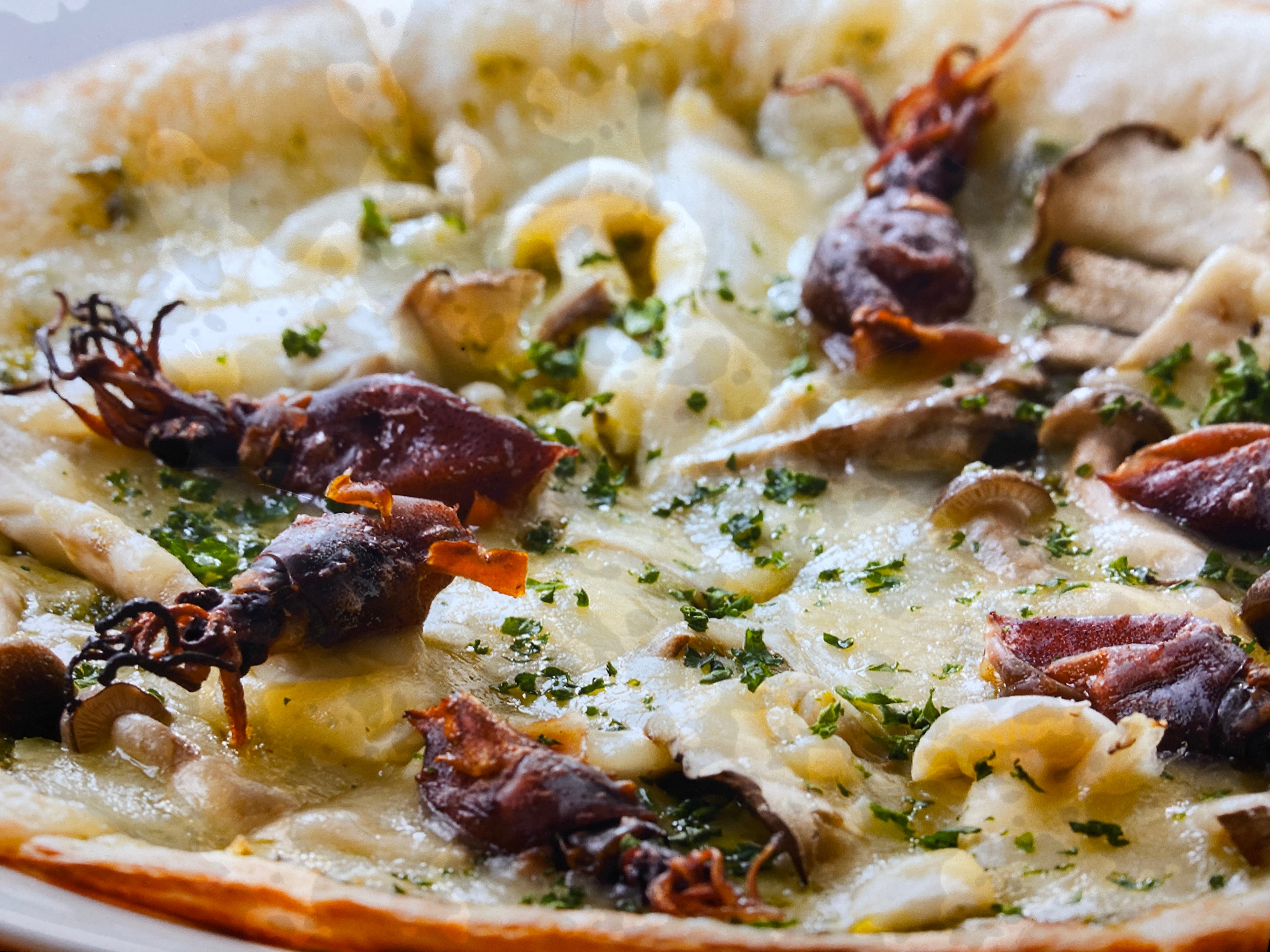
The gift shop sells glow-in-the-dark squid keyrings and squid-adorned cravat-style neckties. The restaurant sells firefly squid pizza, squid burgers, and squid pasta, but it too has a two-hour wait. I wanted to come here and order the pizza just to add a bitter irony, seeing such beauty, marvelling at it, only to consume it after it’s performed a dance for me. Instead, I take a photograph of the pizza from the menu, just to show how unbelievably unappetising it looks. Had I not had to wait, I would probably have changed my mind about eating here anyway.
I head back toward the mountains, to the station, and decide that the only thing I’ll be consuming today is the view.
 Japanising.com
You must be logged in to post a comment.