Twenty Thousand Leaves Under the Trees

I have come to Itabashi today to visit the Great Buddha of Tokyo, also known as the Tokyo Daibutsu. Upon exiting the train station, I realise that there are no maps in sight, so I decide to climb up onto a bridge that crosses over the road for a better view. Even though I am still within the city limits of Tokyo, I am surprised to see mountains in the distance. For some reason, the Great Buddha remains hidden from view.

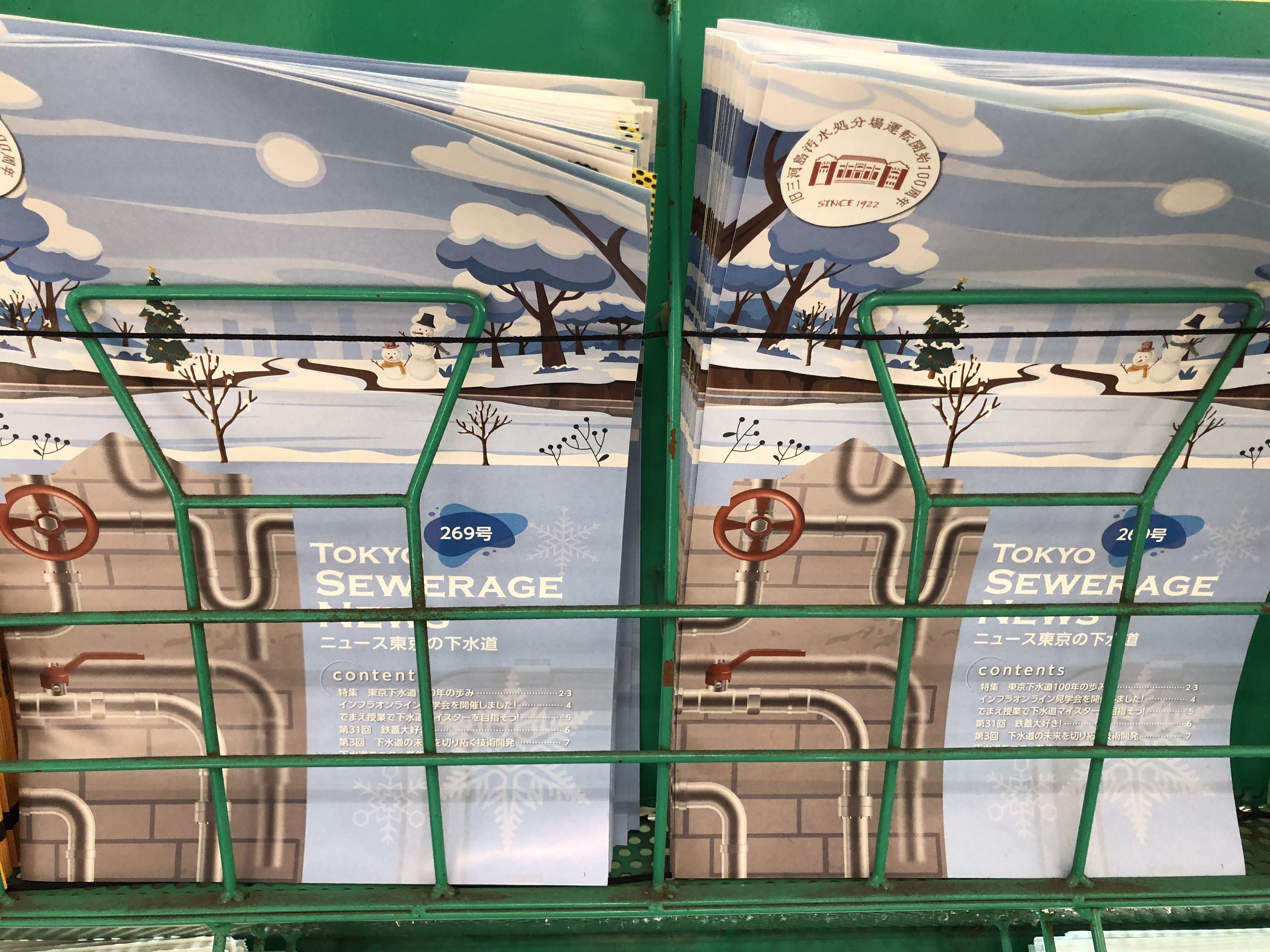
I return to the train station in search of a map. In Japan, all train stations have a stand with free leaflets, pamphlets, and sometimes magazines. This particular train station has an odd selection of magazines, including one that has been published since 1922 and is entirely about sewage.
After finding a map, I set off towards Akatsuka Park. Inside the park, I find an art museum (which is closed today), a folklore museum (also closed today), some water fountains adorning a pond lined with old men fishing, and on the other side of the park, a dried-up dragonfly pond.

As I wander through the park, I am struck by the peaceful sounds of nature. The plum grove stands out to me, its branches now bare and skeleton-like after shedding their leaves, stripped of their colourful cloaks. The leaves, once vibrant and alive, now lie dormant on the ground, a reminder of the cycle of life and death. I follow the trail of leaves, before eventually coming across some rather steep steps.
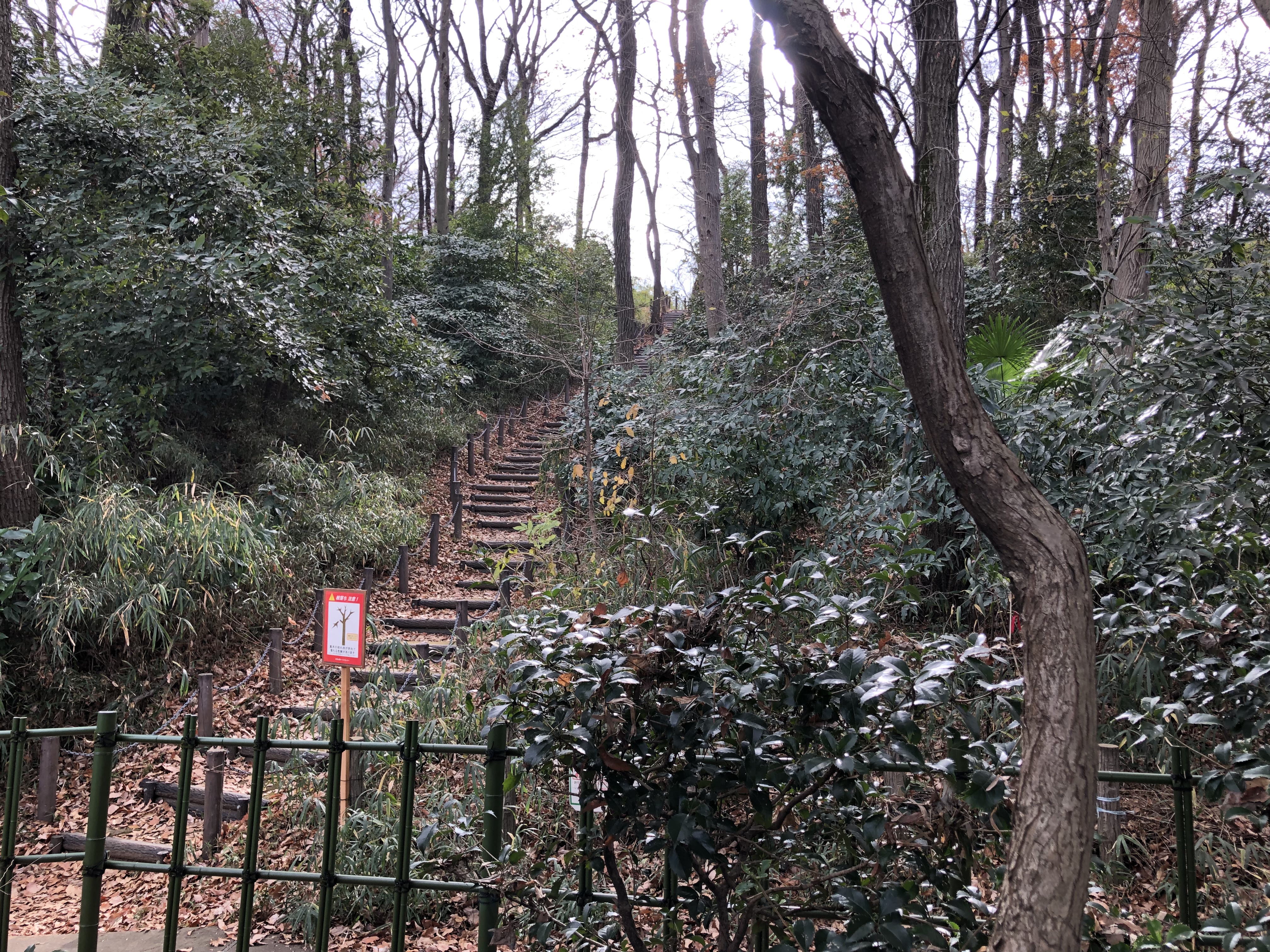
Signs placed intermittently along the steps warn me of the risk of falling branches, but as I climb their steepness, it’s the slippery fallen leaves that prove to be more problematic. I am careful with each step I take, not to slip, not to trip, and not to be hit by a branch hurtling towards me from above. Eventually, I reach the top, where I find the Akatsuka Joshi Park Castle Ruins, the former site of a castle.

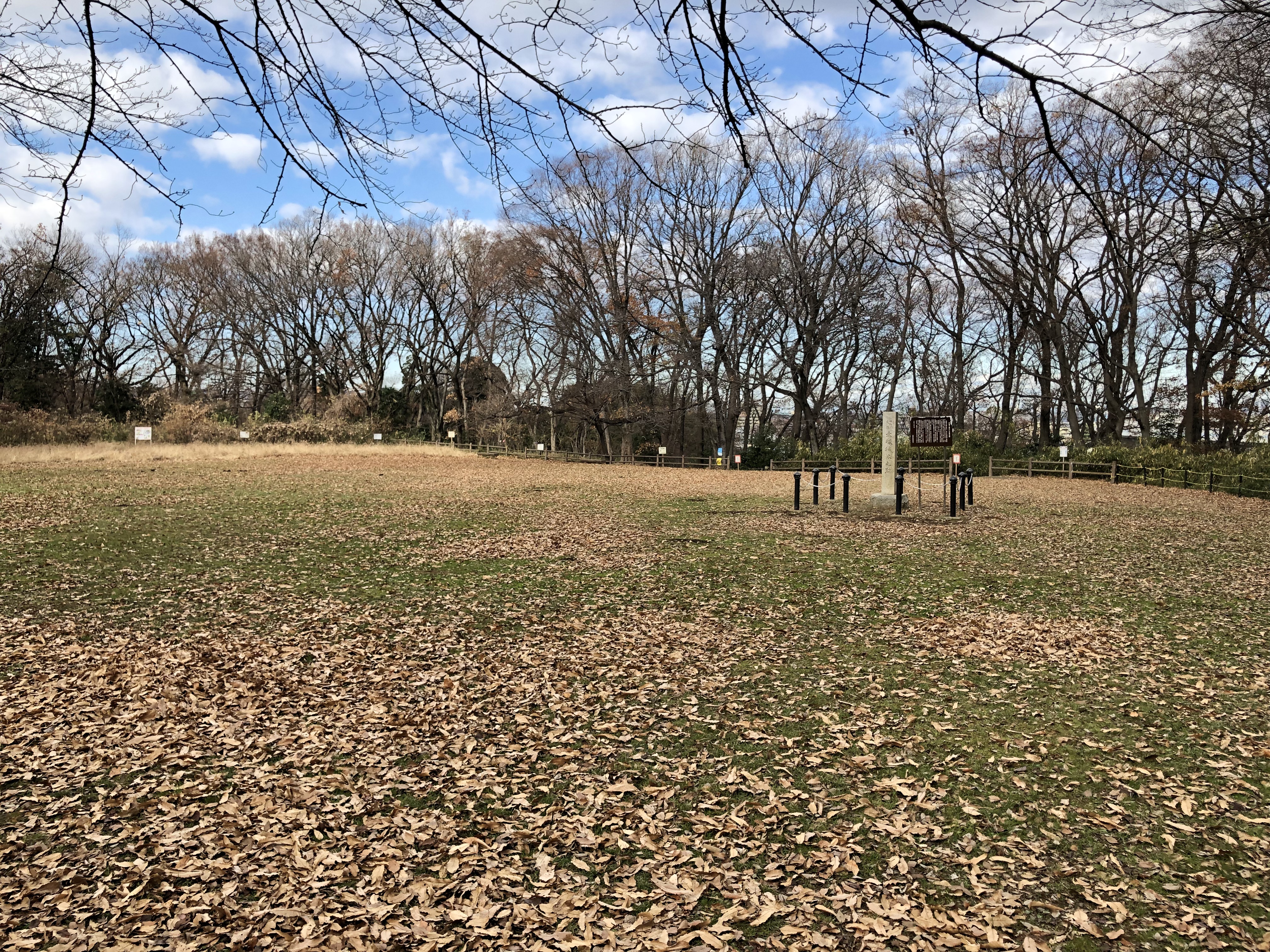
The open space where the beautiful castle once stood feels otherworldly. A single stone pillar serves as a testament to the castle’s former grandeur, the only remnant left in its wake. The bare trees surrounding the area add to the ethereal atmosphere, their stripped branches reaching towards the sky like ghostly fingers.
Yoritane Chiba was a prominent figure in Japanese history and played a significant role in the political and military affairs of the time. The Battle of Sekigahara, in which he played a leading role, was a decisive battle fought in 1600 that marked the end of the Sengoku period and the beginning of the Edo period in Japan. After the battle, he returned to Tokyo where he built this castle to be his home.

As I walk through the Akatsuka Castle Ruins, the empty space awash with fallen leaves, I sense a feeling of melancholy at the thought of Yoritane Chiba’s former greatness, now reduced to nothing but ruins. The castle was dismantled in the late 19th century, and once an important centre of power and cultural significance, now all its former grandeur is lost to the passage of time.
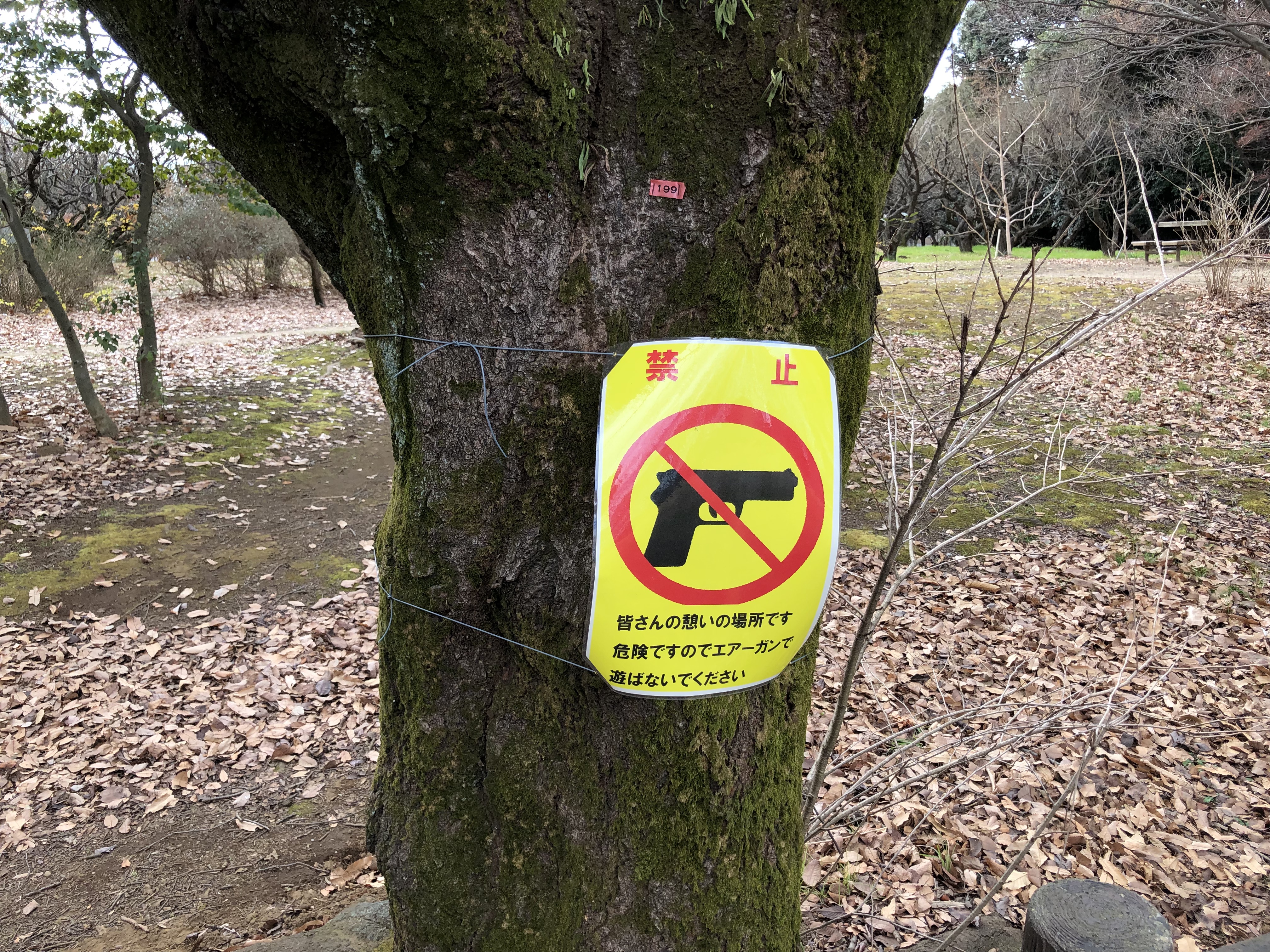
I continue my search for the Great Buddha, envisioning it to be a towering presence in the sky. As I look around, my eyes are drawn to a yellow sign in the distance, reminding me that this is a place for all to enjoy, free from harm, and to not go around shooting anyone.

Descending the steep steps, I notice that one of the signs cautioning against falling branches has itself fallen to the ground. Perhaps they should add a secondary sign as a reminder to watch out for falling signs.
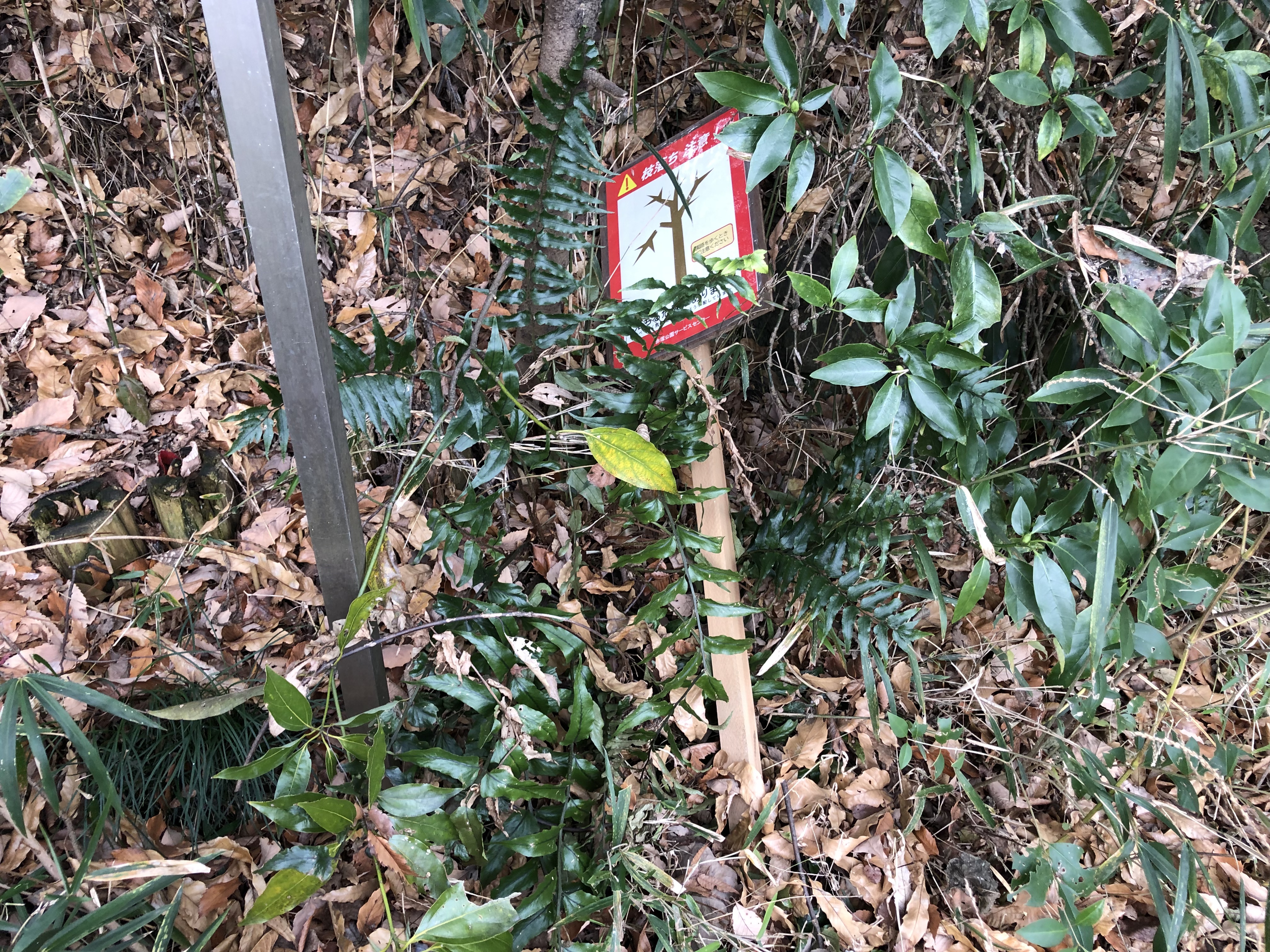
I wander over to Akatsuka Botanical Gardens (also closed today). It seems that, if anything was actually open, this area in Itabashi would have a lot to offer. As I turn to depart, my gaze is captured by the sublime sight of the Buddha’s head rising above the walls of a temple, perched atop a hill like a beacon of tranquillity.

Jorenji Temple is a beautifully landscaped sanctuary that houses Japan’s third largest bronze Buddha, sitting tall at 12.5 metres. Within its walls, I encounter the fearsome King of Hell, also known as Enma-raja, along with the ten Judges of Hell, and Datsue-ba, the old woman who strips the clothing off the dead.
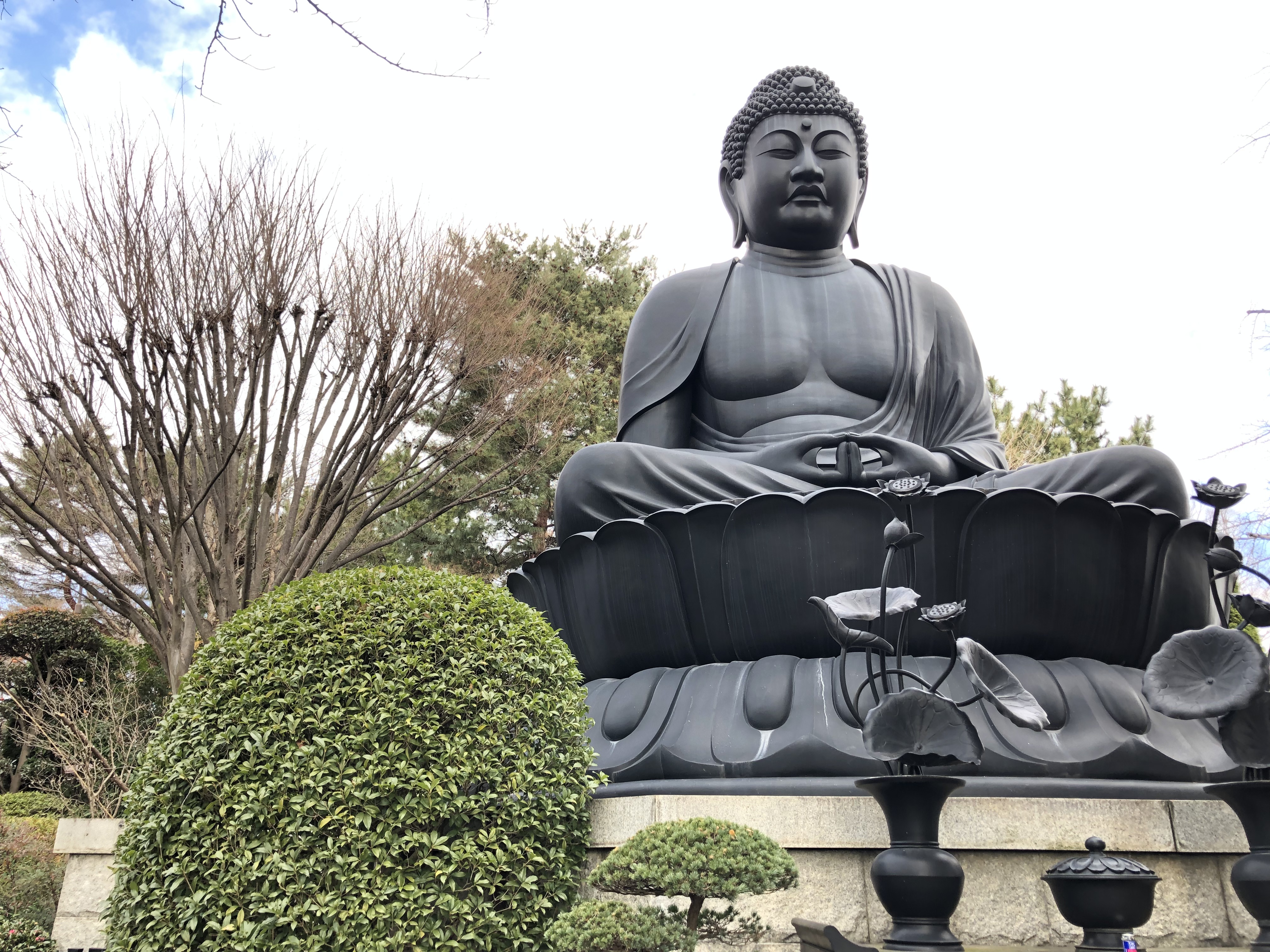
As I stand before the Great Buddha of Tokyo, I am struck by its powerful presence. Looking up at the Buddha’s face, I feel a sense of calm wash over me, and the placement of its head, tilted slightly forward, allows me to feel a deep connection with the statue as I meditate. In this moment, I am enveloped in the Buddha’s freedom from distracting thoughts, and I am filled with a sense of peace and enlightenment.

As I make my way back to the train station, passing Akatsuka Park along the way, I board the Mita Line train bound for Sugamo. The train is eerily quiet, its emptiness amplifying the sense of solitude.
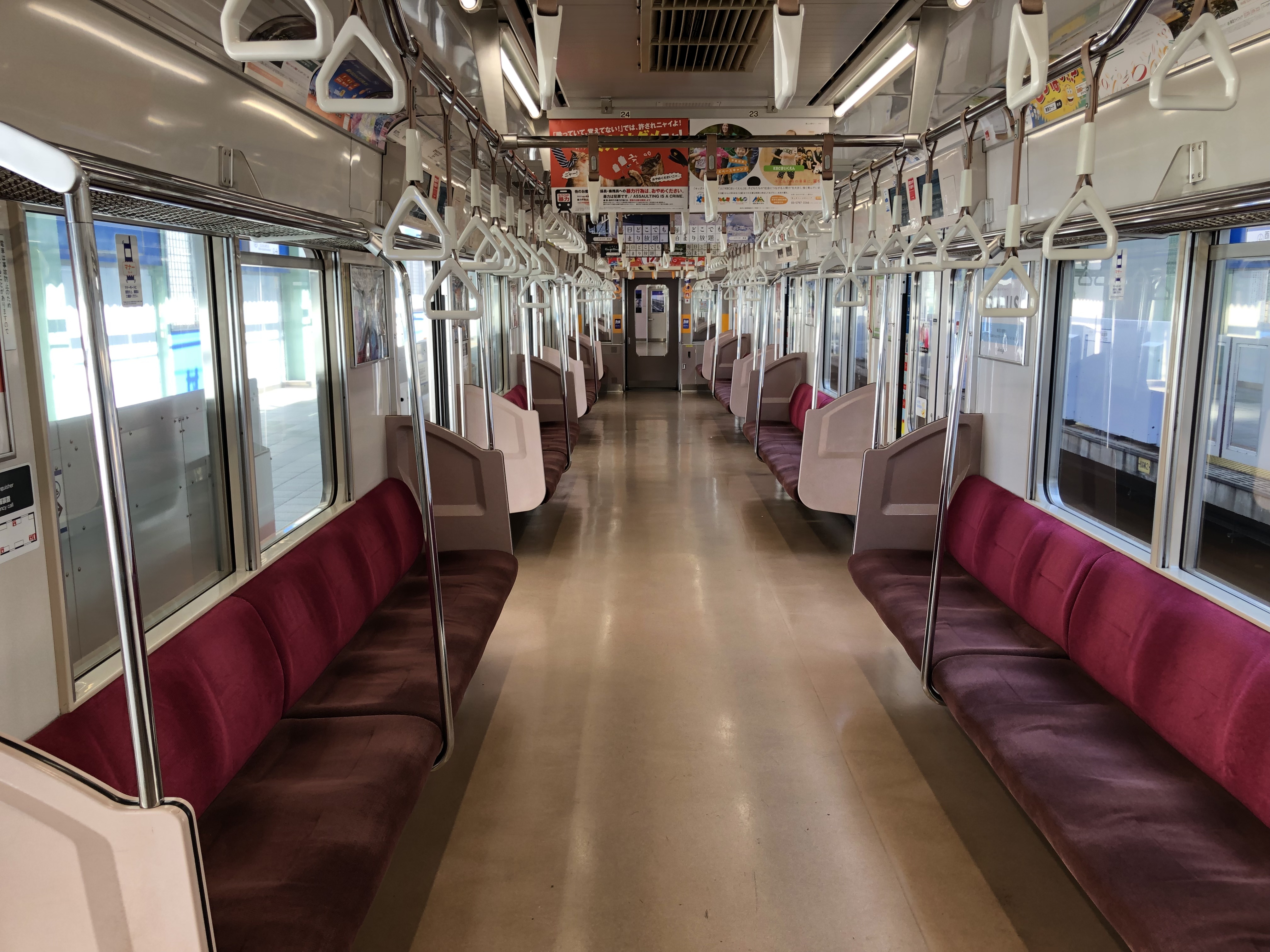
As I sit on the train, surrounded by nothing but empty seats and silence, I attempt to pass the time by flipping through the pages of my copy of Tokyo Sewerage News.
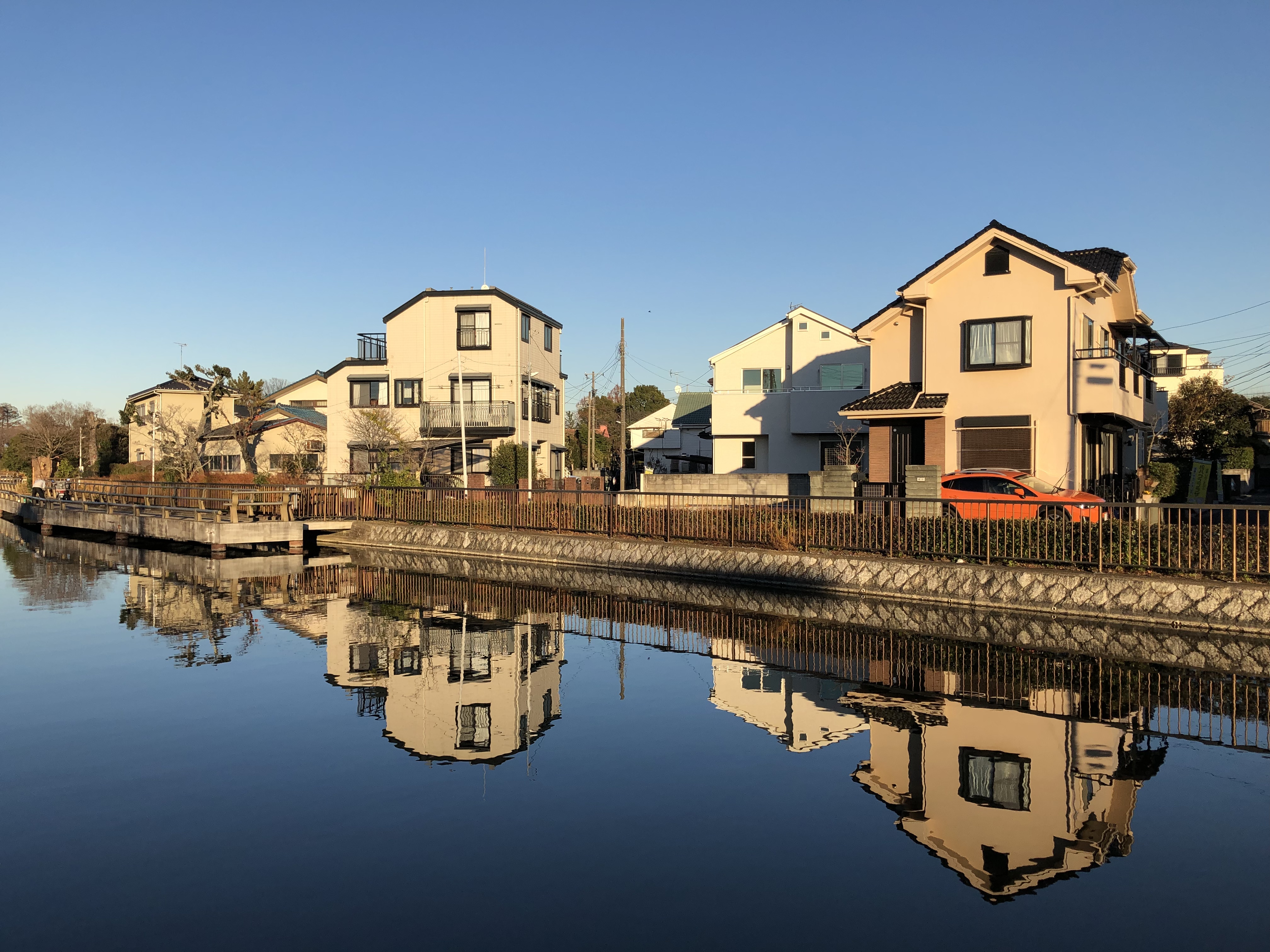
Reflections on a Winter’s Day

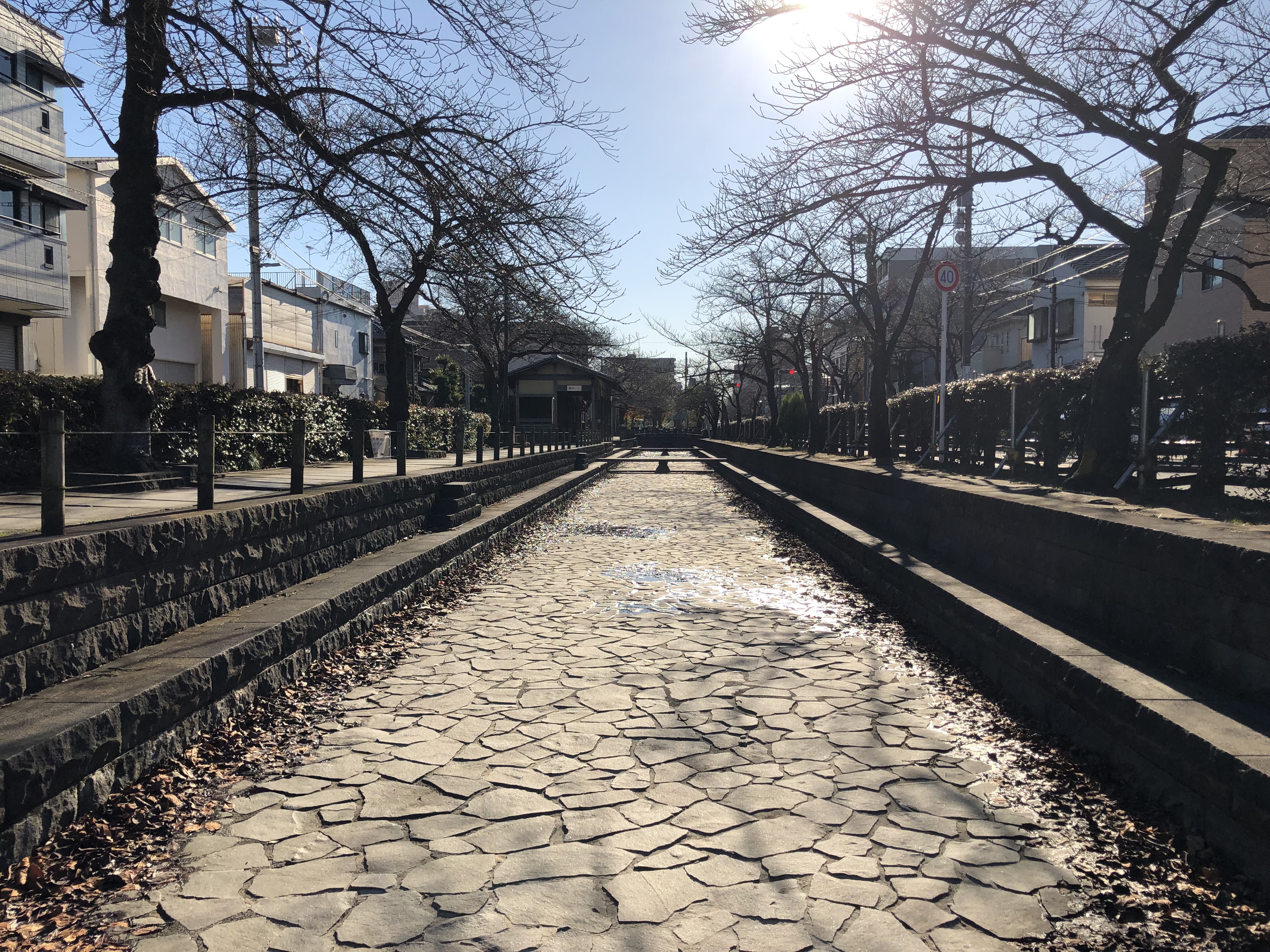
As I walk along Hikifune Water Park Street, a sense of nostalgia washes over me. It’s been five years since I lived in Katsushika Ward, Tokyo, and revisiting my old neighbourhood brings back a flood of memories. The winter morning air is crisp and chill, and my breath turns to white wisps of fog that swirl and still as I make my way to my first destination.

The street itself is unremarkable. It used to be a train line, but now it has been transformed into a park that stretches from the Arakawa River all the way to Ohanajaya. As I begin to walk its length, I can’t help but enjoy the sense of familiarity.

As I wander down the street, memories of my past come flooding back. On a late night walk home with a friend, we had stopped to rest on one of the park’s benches, halfway through our journey. My friend was convinced he heard the sound of a train echoing down the length of the park. It’s said that at night, a ghost train can be heard thundering down where the old train tracks once were, and I’ve heard similar accounts from others. It’s a story that has stuck with me, and one that has been corroborated by others who have experienced it.

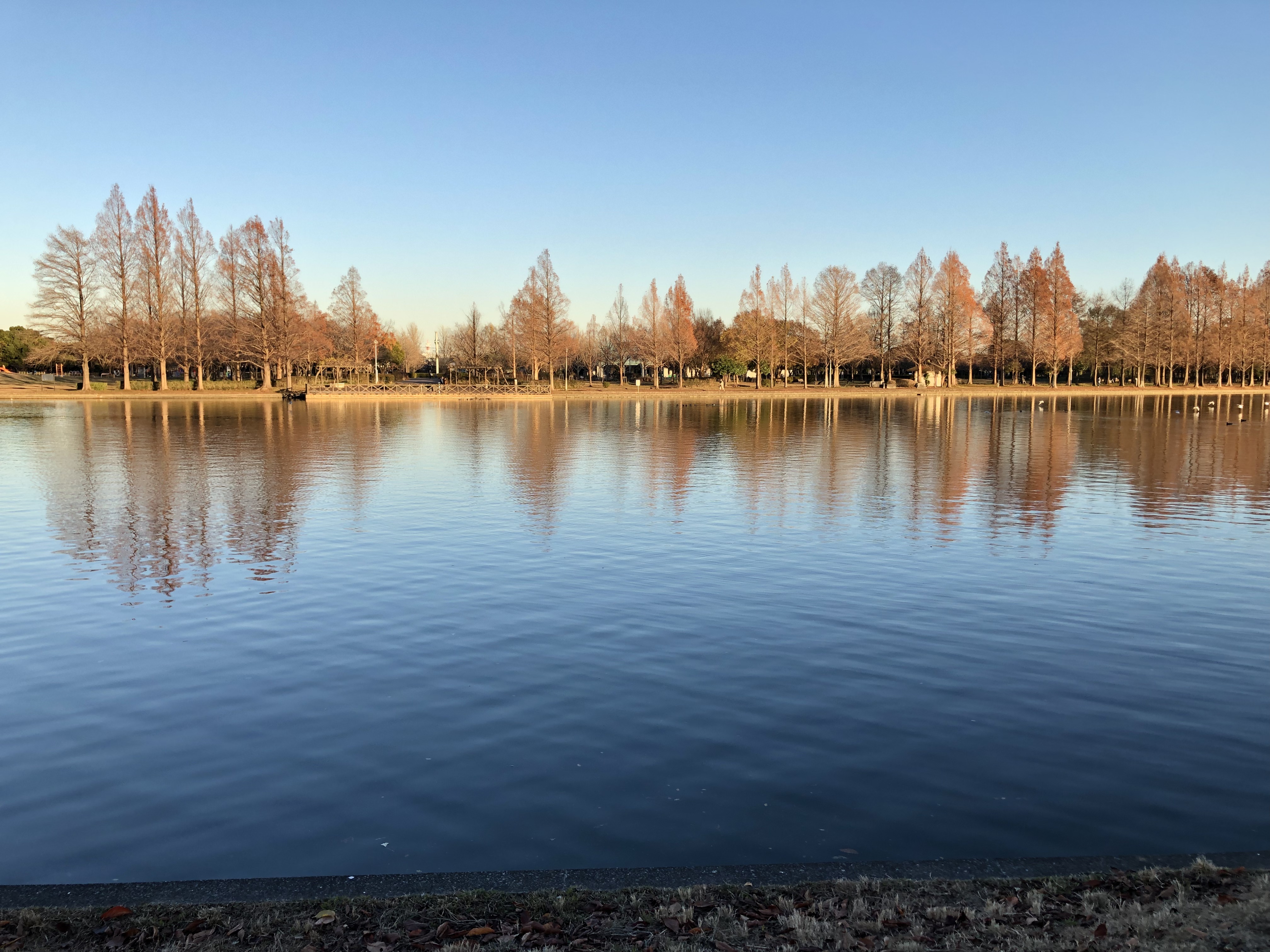
As I continue my leisurely walk, I pass Ohanajaya Station, its name, meaning “Tea and Flowers,” imparting a sense of charm. However, every time I pass by, the song “Govinda” by Kula Shaker runs through my head, as I rhyme its catchy refrain of “Ohana Jaya Jaya.” Eventually, I arrive at the picturesque inner reservoir of Mizumoto Park, my gaze drinking in the peaceful surroundings and the stunning reflection on the water’s surface.

Mizumoto Park is the largest park in Tokyo. Bursting with lush gardens and natural beauty, with a large pond at its centre. The park boasts an aquatic plant garden, a bird sanctuary, a babbling stream field, and three car parks. In early spring the park becomes awash with the gentle pink hue of the cherry blossoms.

I make my way over to one of the ponds and sit upon a bench for a time. I watch as a turtle gracefully swims through the water, its movements causing ripples to spread across the surface. The reflections of the surrounding trees dance and shimmer upon the water, creating a mesmerising visual display. The soothing sounds of chirping insects and rustling leaves add to the peaceful atmosphere, and I am content to sit and take it all in.

As I sit on this bench, surrounded by the tranquil beauty of the pond and the trees, a sense of melancholy envelops me. I reflect, thinking back on the year that has passed, and the ephemeral nature of time. I realise that I don’t have any plans or dreams for the future, and the thought fills me with a sense of sadness. All I know is that for now, I want to keep exploring the hidden corners of Japan and sharing my adventures through my words. But in this moment, the weight of my own insignificance and the impermanence of everything feels almost overwhelming.

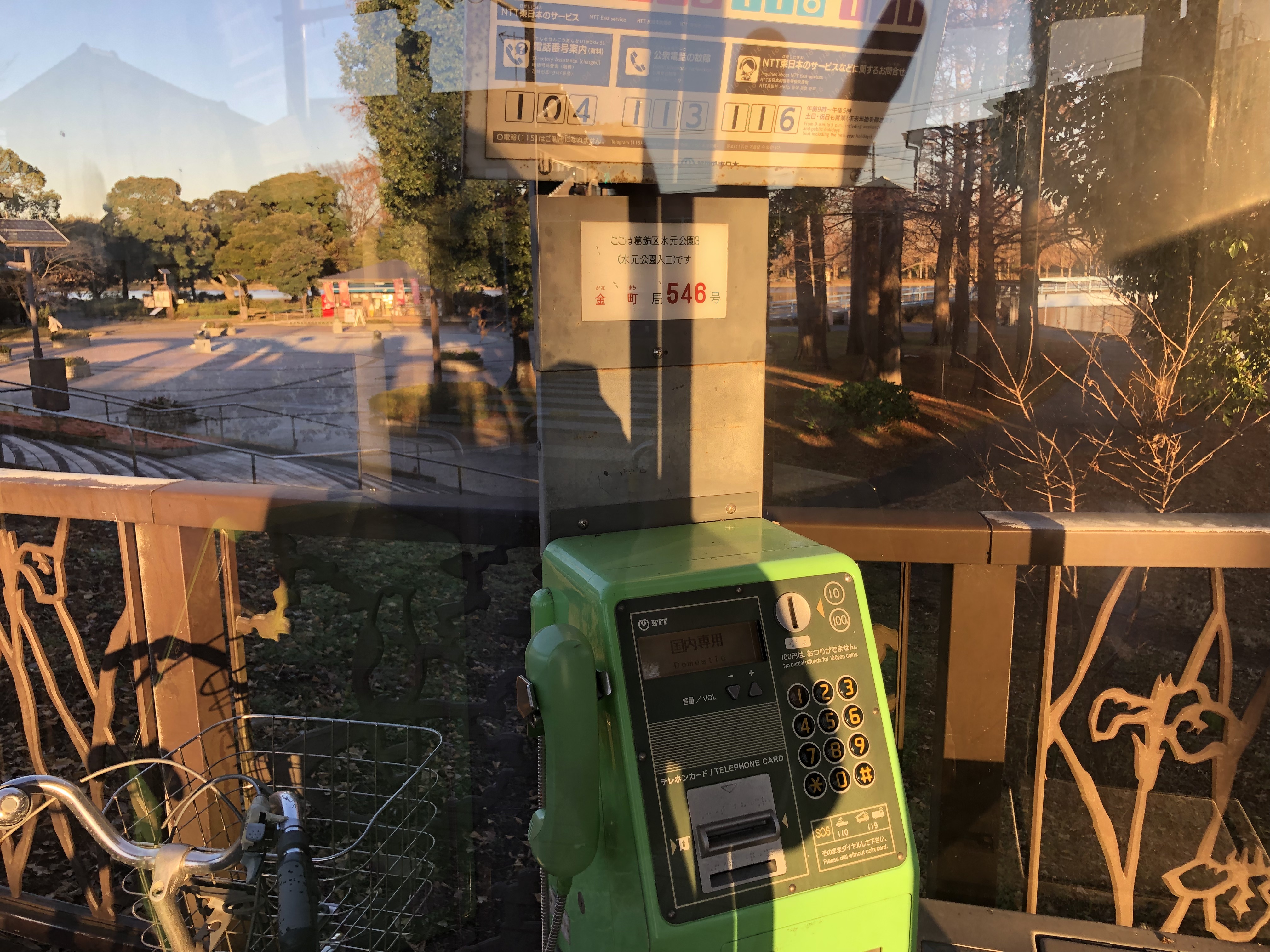
As I continue my peaceful walk through the park, I come across a telephone box nestled amongst the flowers. Legend has it that this particular telephone box is also haunted, and that at dusk a ghostly figure can be seen lurking inside. However, as I peer closer, the only ghost I find here is the reflection of Mount Fuji in the glass. It’s a breathtaking sight, and I stand for a moment, mesmerised by the beauty of it all. For some reason, the mountain is not visible to the naked eye here; it exists only in the glass of this haunted phone box.

As I wait for the sun to set and darkness to envelop the park, I am treated to a daily ritual at 5 o’clock. The speakers throughout Katsushika emit a creepy, slowed-down song accompanied by an eerie chime. The song echoes throughout the park, reminding me that the day is coming to a close and it’s time to return home. The pealing bell of the mountain temple beckons me, promising the sight of a bright, round moon shining down and illuminating the sky in twilight, filled with the brightest stars as the birds begin to dream.

Drive My Car

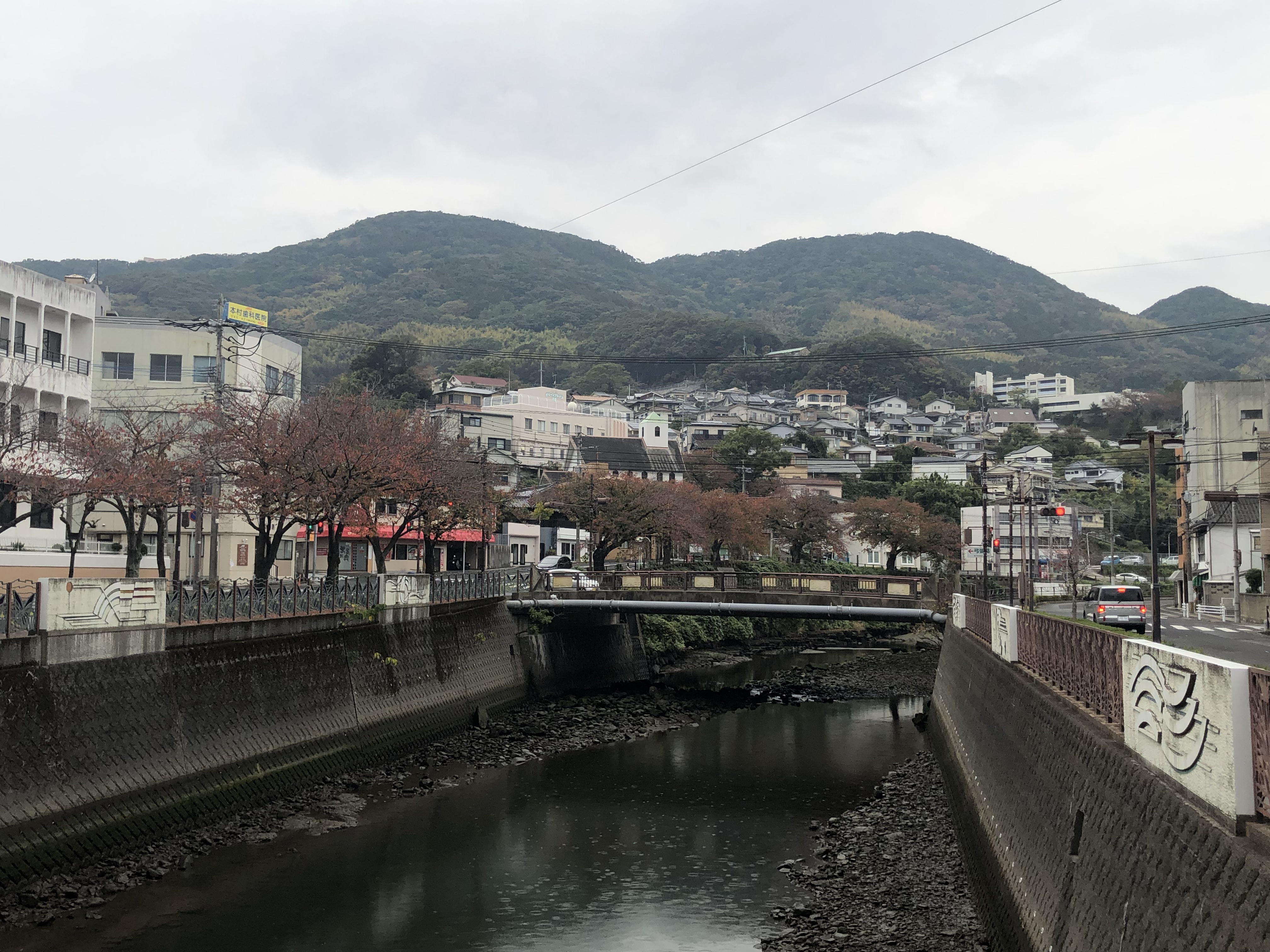
Today I’m in Sasebo, Nagasaki Prefecture, and there are mountains everywhere. I walk vaguely in the direction of Sasebo Yonkacho Shotengai, a shopping arcade so big that its kilometre-long length spans across seven different towns. It is actually the longest straight and continuous shopping arcade in Japan. Sasebo Tourist Information states: “The arcade is always crowded with shoppers. Some stores accept US dollars.”

As I begin to wander through the retro shopping arcade, I notice a complete lack of not just shoppers, but shops that are open. Everything here aside from stores like Seven Eleven and Family Mart are all but closed. The arcade boasts over 160 shops, including a multitude of restaurants, souvenir shops, clothing shops, as well as daily goods stores. This morning, however, shuttered down shops with no identity fill the margins of this shopping stretch. The shopping arcade does however offer free wireless Internet, and also offers a nice break from the low winter sun on what is a relatively warm winter morning.

At the other end of the arcade, Mount Yumiharidake hovers on the distant horizon.

As I further approach the mountain, a sign tells me that the summit is 3.4 kilometres away. Having just walked one kilometre through a shopping street with relative ease, I decide that this could be an enjoyable hike to the top. There is said to be an observation deck at the peak which offers some of the best views of Sasebo and its surrounding nature, so, off I go.

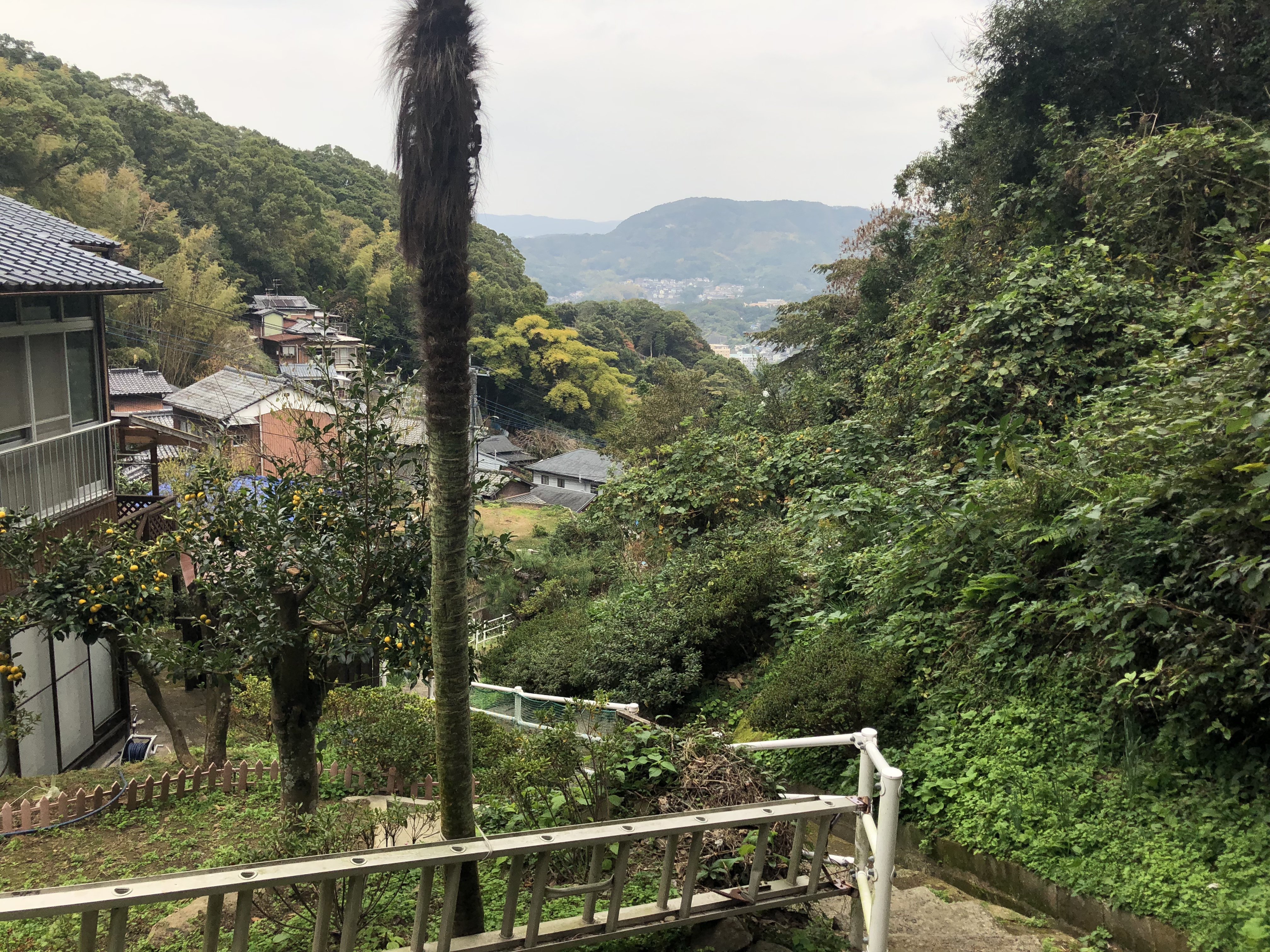
It seems there are multiple ways up the mountain. The boring option is to hike the entire route by simply following the main road, or as I do, take some of the more interesting routes up steep steps and rocky intervals. As more and more of the paths begin to fracture and split into narrow lanes that scale upwards from the base of the mountain, interwoven homes across narrow streets littered with cats make up the first twenty minutes of the climb.

As I continue on with my ascent, the route begins to snake more and more, and light rain begins to fall. Hot from the day and the steepness of the climb I find the rain to be a welcome refreshment and decide to rest for a moment, allowing the rain to cool me down, and my heart rate to climb back down to a steady crawl.

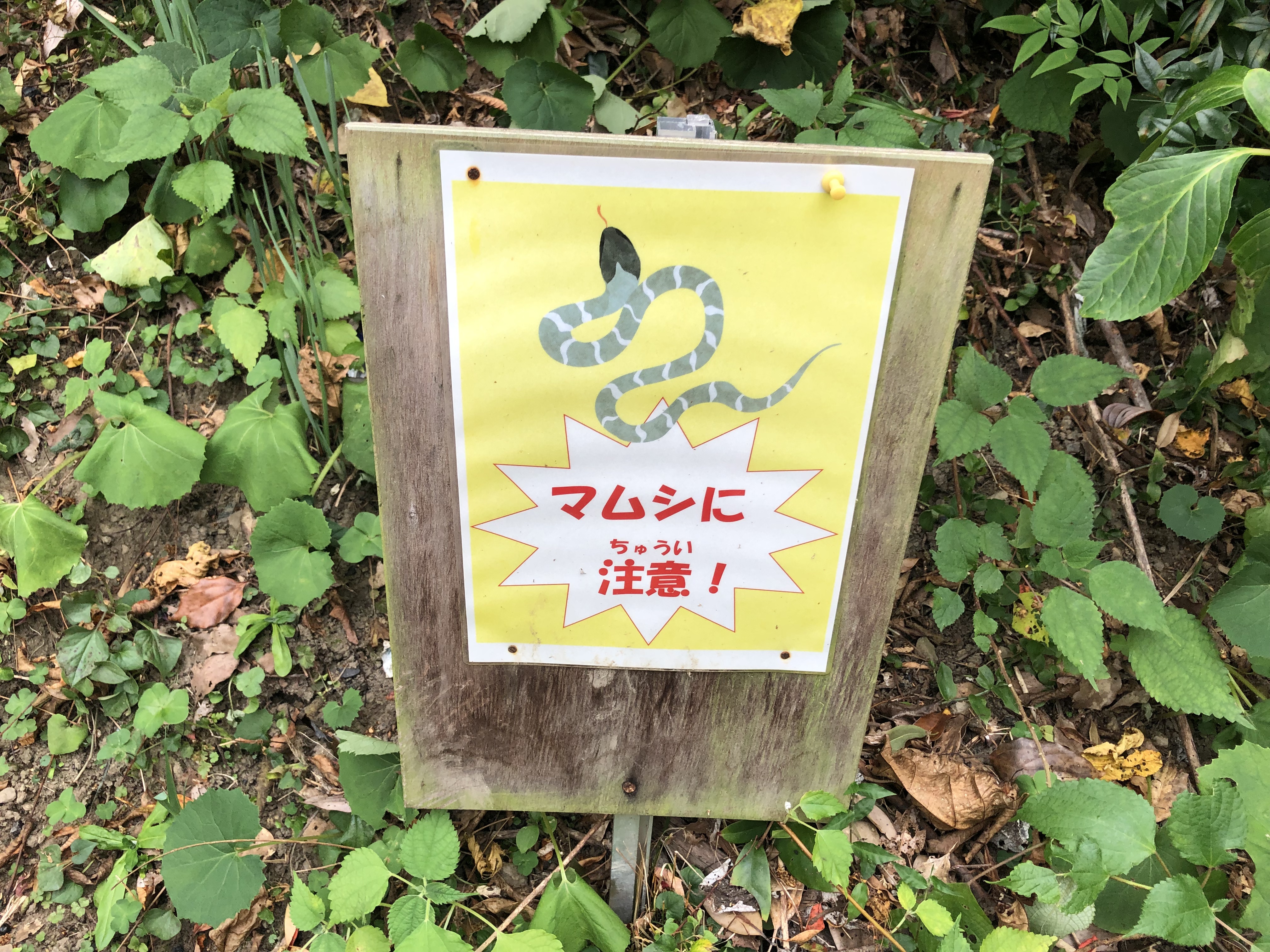
I stop suddenly when I notice a sign telling me to watch out for snakes, but not just any snakes, mamushi, the most venomous snakes in Japan.

As I watch out for snakes, I pass under low hanging cobwebs that drift between trees across the many muddy paths. I don’t see any other people, and other than the cats, I don’t expect that I ever will. The track spirals around and into a clearing through the woods for a time, before becoming a path again.

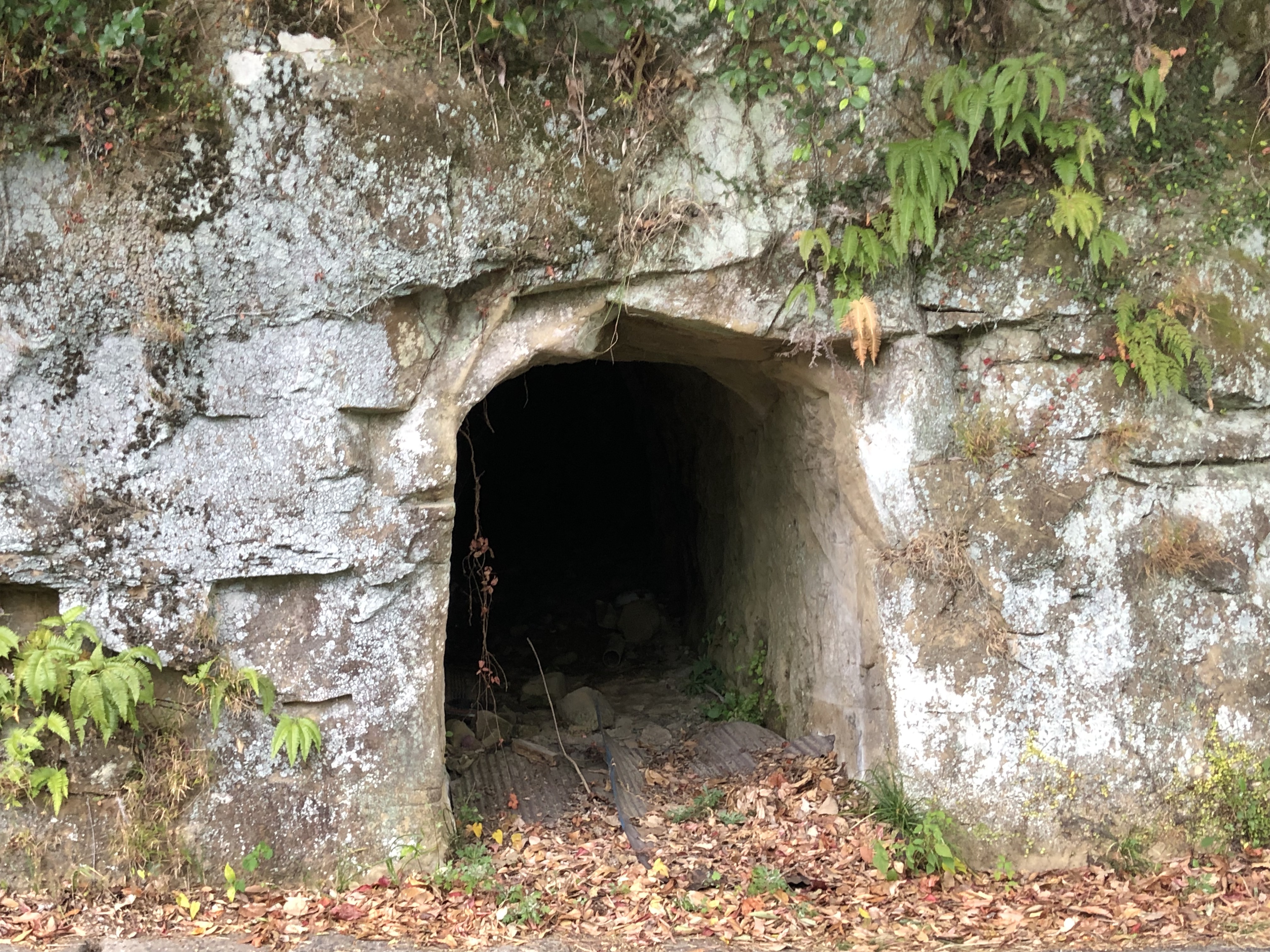
A little later, I pass a rather small cave carved into the rocks, I’m not sure if this is part of the climb or not, but it looks ominous, as if some unnamed horror is lurking inside. I take out my phone to capture the cave, before turning on my torch. As I bring the light to the entrance, I hear something inside begin to rustle around, perhaps a snake, and my heart begins to race; its beats increasing and repeating, an octave at a time, like an endlessly rising Bach canon fit for a king.

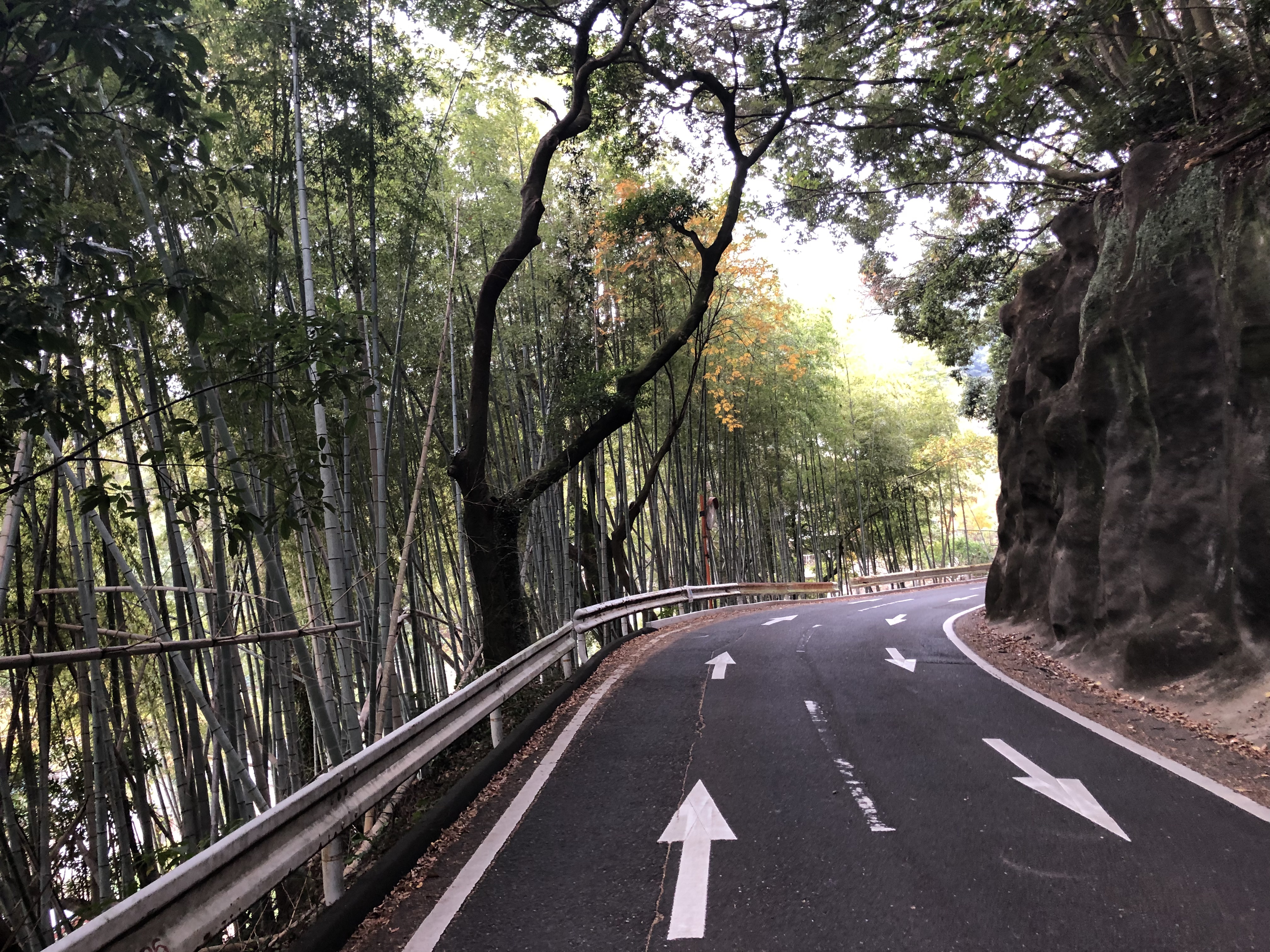
After taking an alternative route, I eventually reach a road where bamboo stretches off to the side, bamboo so tall that it descends deep below the road, stretching off into a distant obscurity.

Further along the road I see a sign telling me to, “Keep Out!” and below the sign is a huge drop, and I wonder who this sign is even for. Eventually, I see another sign for a car park, 300 metres away, and breathe a sigh of relief in knowing that I’m almost at the top. A third sign explains that gun hunting is prohibited in this area, perhaps the reason for the abundance of snakes.

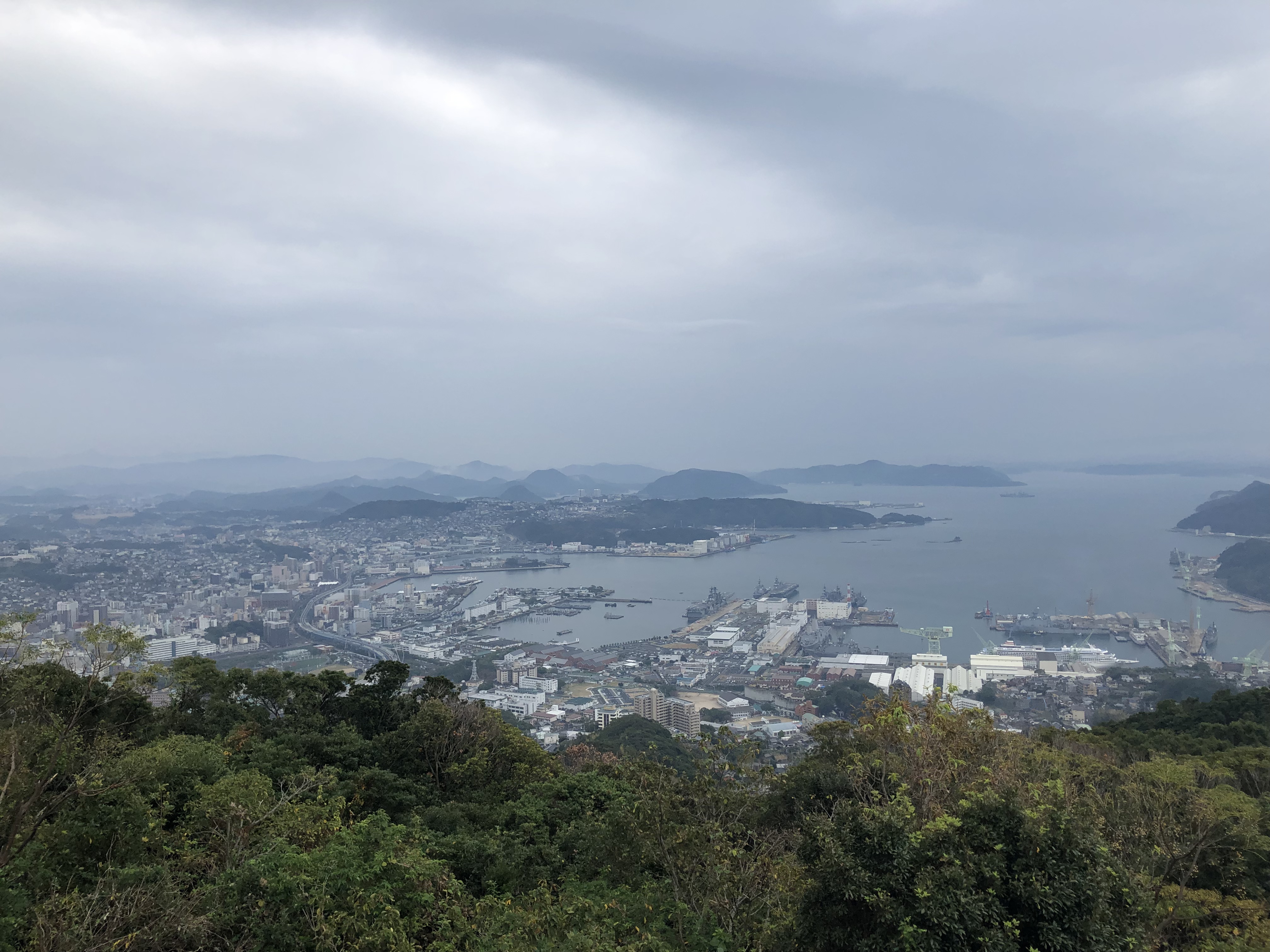
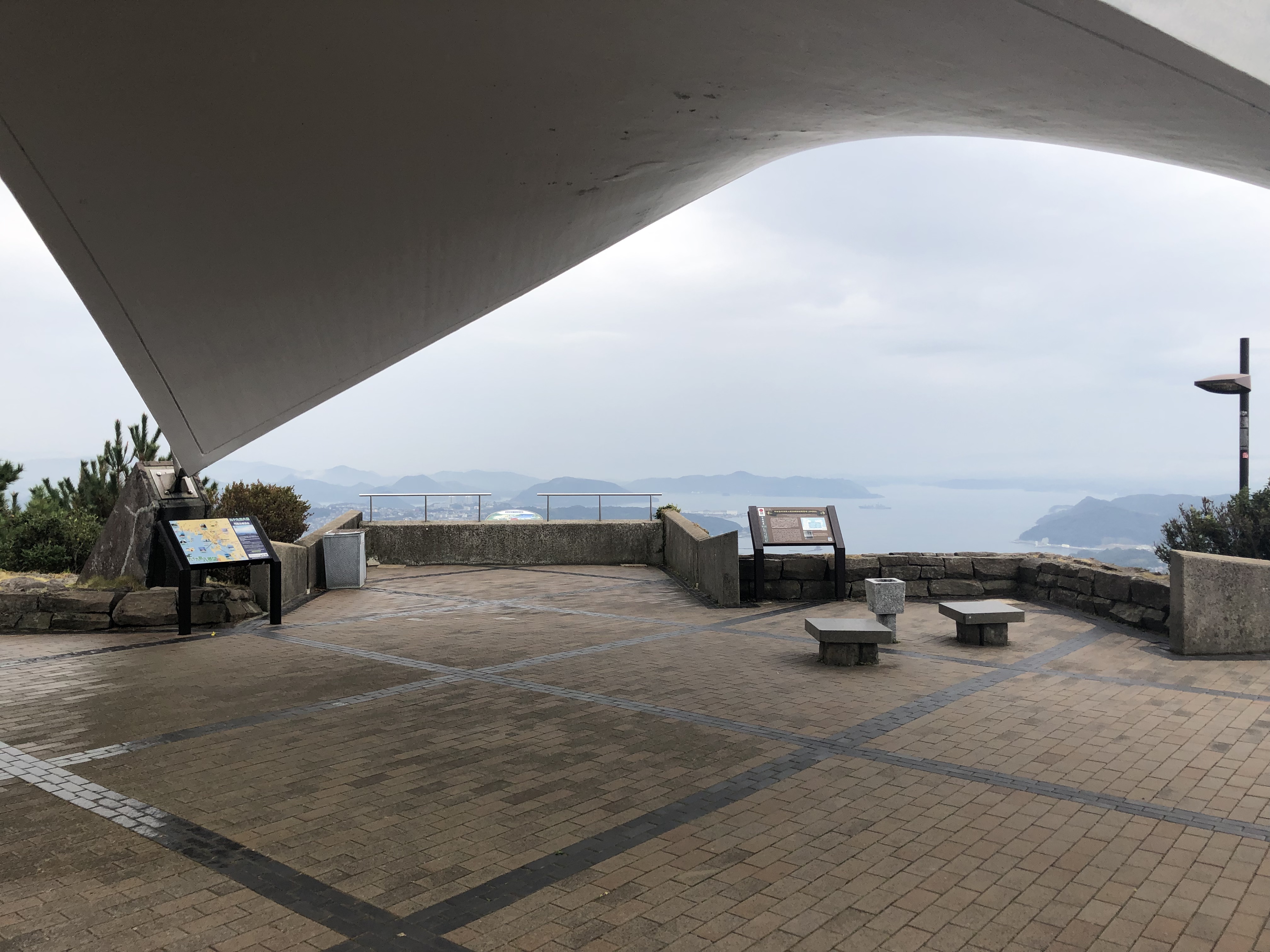
Finally the mountain path opens up, to reveal a stunning view of the city and landscapes beyond. Its US navy base below with its massive boats. Other mountains bulge up over the horizon, the view somewhat washed white by the falling rain. Over to the west, a large labyrinth of small islands, the Kujukushima Islands, its name meaning 99 islands, but also meaning too many islands to count (there are exactly 208).

A short stroll up some stone steps, and over a small bridge, and I arrive at the Yumiharidake Observation Deck. The deck offers a nice panoramic view from atop this 364-metre tall mountain. I stand for a while, taking in the view.

A sign tells me that I can enjoy the scenery during the day as well as at night, however, I would be more fearful of climbing at night, just because it would make it especially harder to detect the snakes. The night view though is apparently amazing, and really brings out the lights of the city. There is also a free shuttle bus to the top of the mountain at regular intervals throughout the day.

I head over to the bus stop and wait. After about ten minutes, I do finally see another human being, a Japanese man pulls up beside me in his car. “No bus today,” he says. I ask him whether that’s because today is Sunday, however, he just repeats himself and says, “No bus today,” for a second time. I feel a little disappointed but before I can reply, the man points to himself and says, “Drive my car.” I tell him that I can’t drive, but this is of course not what he meant.

I sit in the back, and luckily he drives. The open window offers a refreshing breeze. After a very brief conversation in English about whether or not I know King Charles, our chat abruptly ends, so I take out my book. Men Without Women, a collection of short stories by Haruki Murakami. As we slowly descend, crawling down the mountain path, the free shuttle bus to Sasebo Station overtakes us from behind.

Heart-Shaped Rocks

The jaunty jingle on the bullet train signals my arrival in Nagasaki. It’s freezing cold as I leave the station. I enter a world of chaos and construction, maze-like fences guiding people around roadworks and frameworks for what looks like a development for a new plaza and station building. It takes me about ten minutes to escape the labyrinth and get out onto a main road.

My first stop is along the Nakashima River, a river that runs through the middle of Nagasaki and divides the city into two. This river also features an abundance of historical stone bridges, including Fukuro Bridge. “It is unknown when it was built or who built it. It is said to be the second oldest stone arch bridge right after Meganebashi, but there is no evidence.”

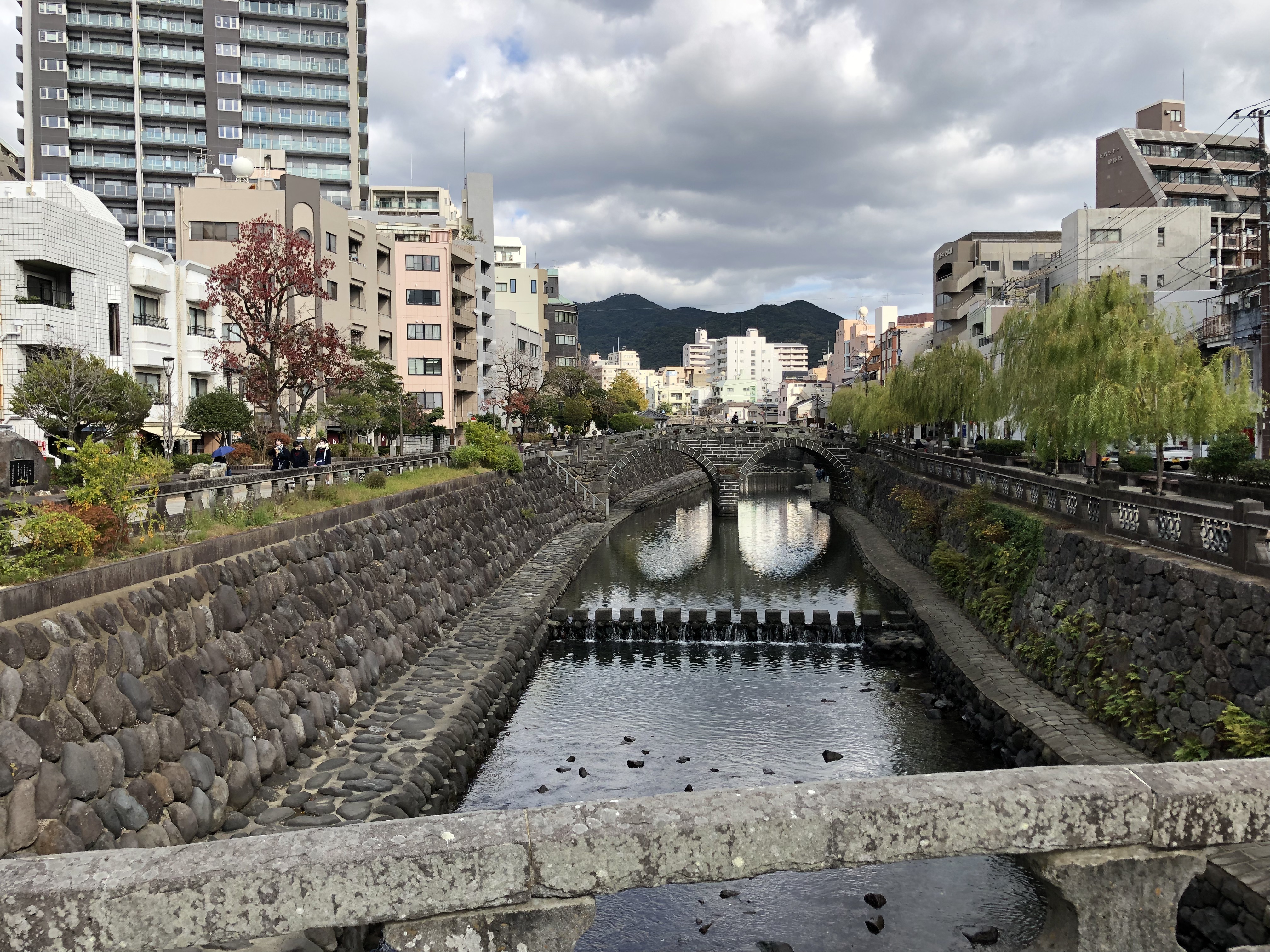
Luckily for me, these two bridges are next to each other, so I photograph Meganebashi from Fukuro Bridge.

Built in 1634, Meganebashi Bridge is not only unique because it’s the oldest stone bridge in Japan, but also, because the reflection of the bridge on the river below makes it looks like a pair of glasses. Along with Nihonbashi Bridge in Tokyo and Kintai Bridge in Iwakuni, Yamaguchi Prefecture, this bridge is regarded as one of the three most famous bridges in Japan. It’s quite the spectacle.

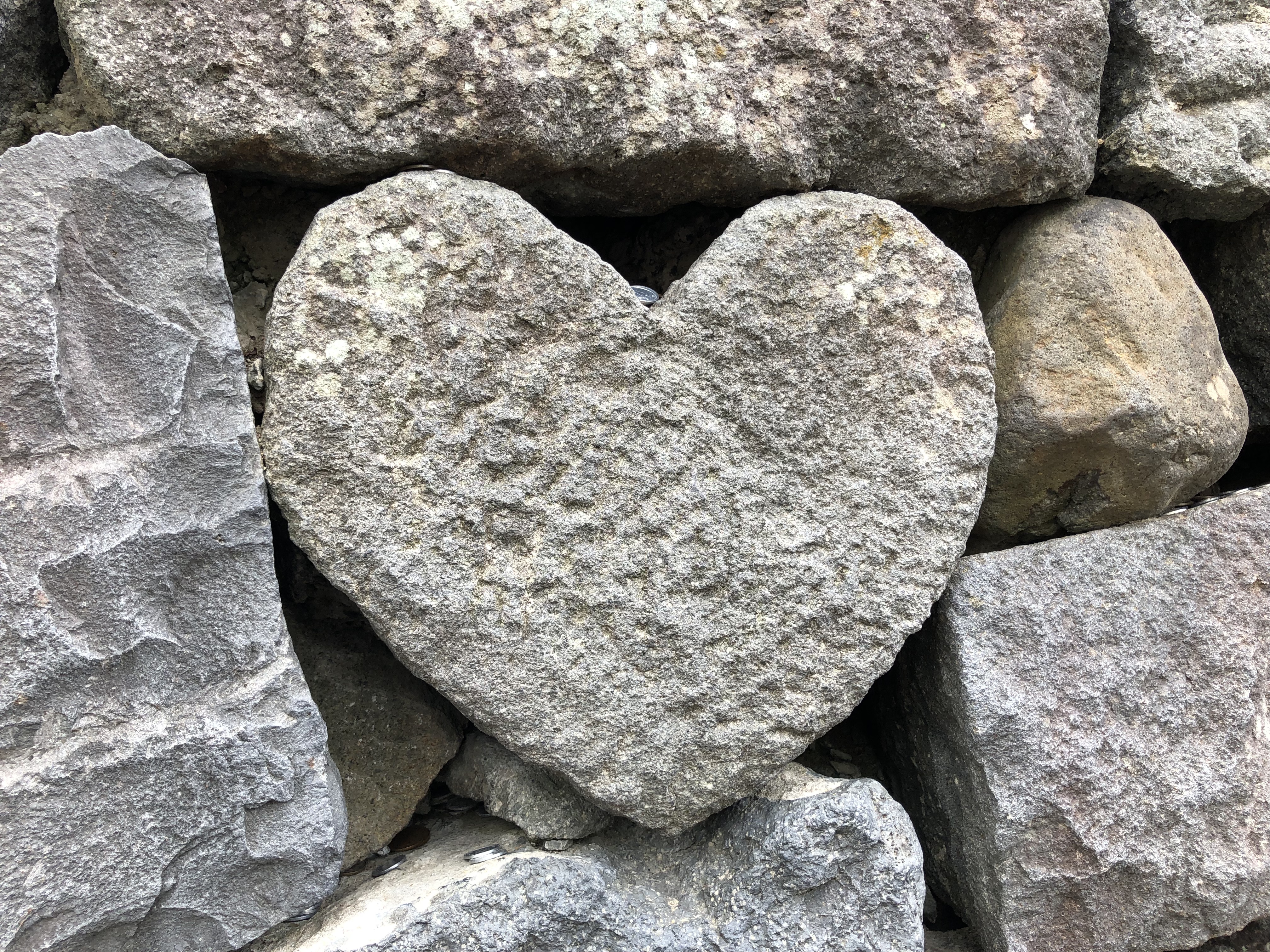
I wander further along the river and down some stone steps. Here I find four teenage girls posing in front of a wall, so I decide to see what all the fuss is about. It turns out they are making peace signs and taking photographs in front of a chunk of rock which is shaped like a heart.

I ask the girls to step aside so I can take a photograph. One of the girls says in Japanese, “That’s so cute!” Presumably because I, a man, am taking a photograph of a stone shaped like a heart, but I can’t be too sure. I find very little information on the origin of this stone, except that it’s just one of many hidden around Nagasaki.

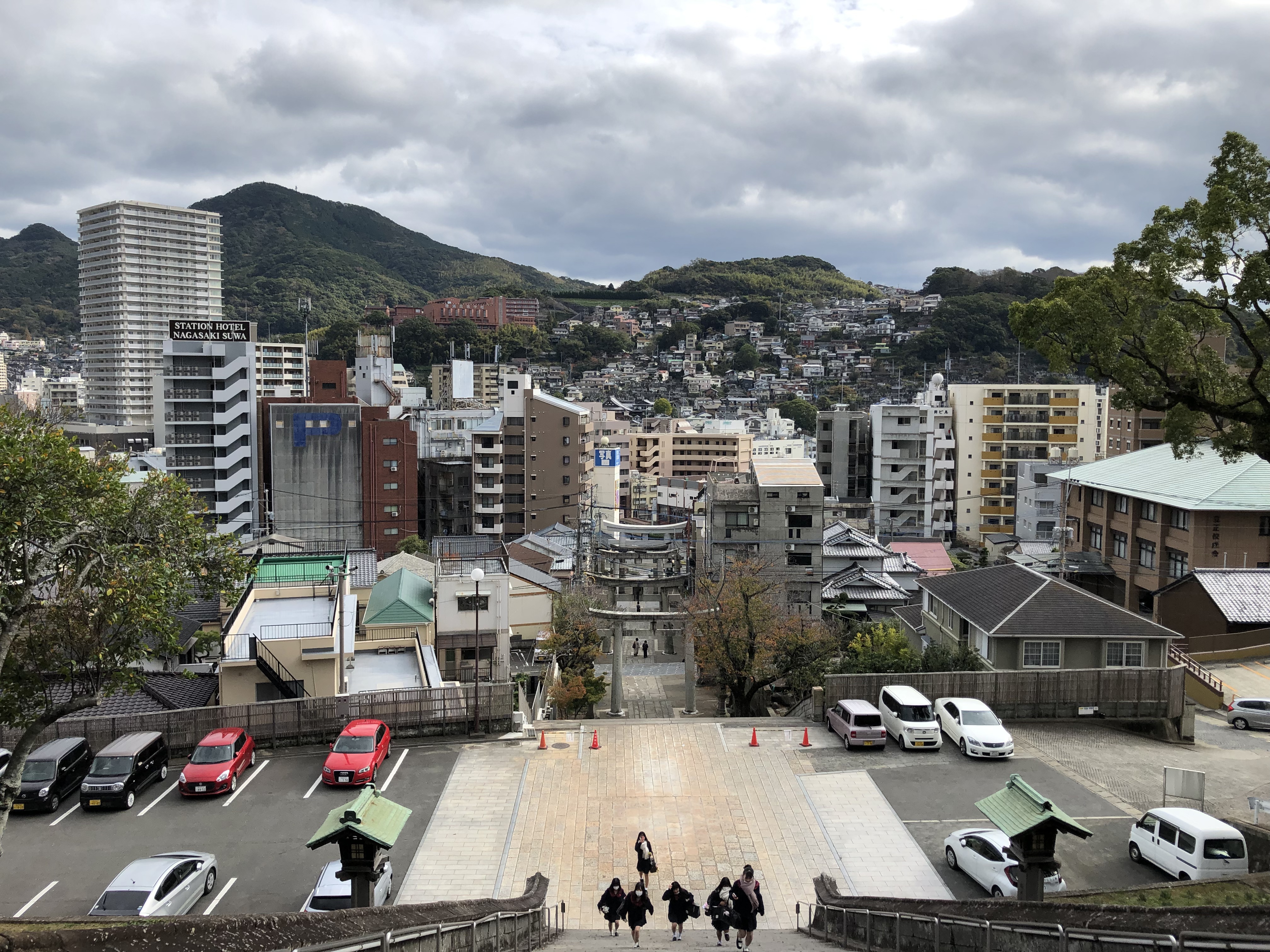
I walk back up the river to the entrance to Suwa Shrine. This shrine is one of the three most famous shrines in Nagasaki, and boasts a total of 277 steps that pass through four massive stone torii gates to reach the shrine complex. As I run up the 277 steps, in my head Bill Conti’s song ‘Gonna Fly Now’ spins around on my mind’s turntable.

Suwa Shrine doesn’t really have much to offer me, except for a one-hundred-year-old tea house, a nice little water feature, more steps, and a stunning view of the city and mountains beyond. The shrine was constructed in 1614 as a way to stop the spread of Christianity that was happening in Nagasaki at that time.

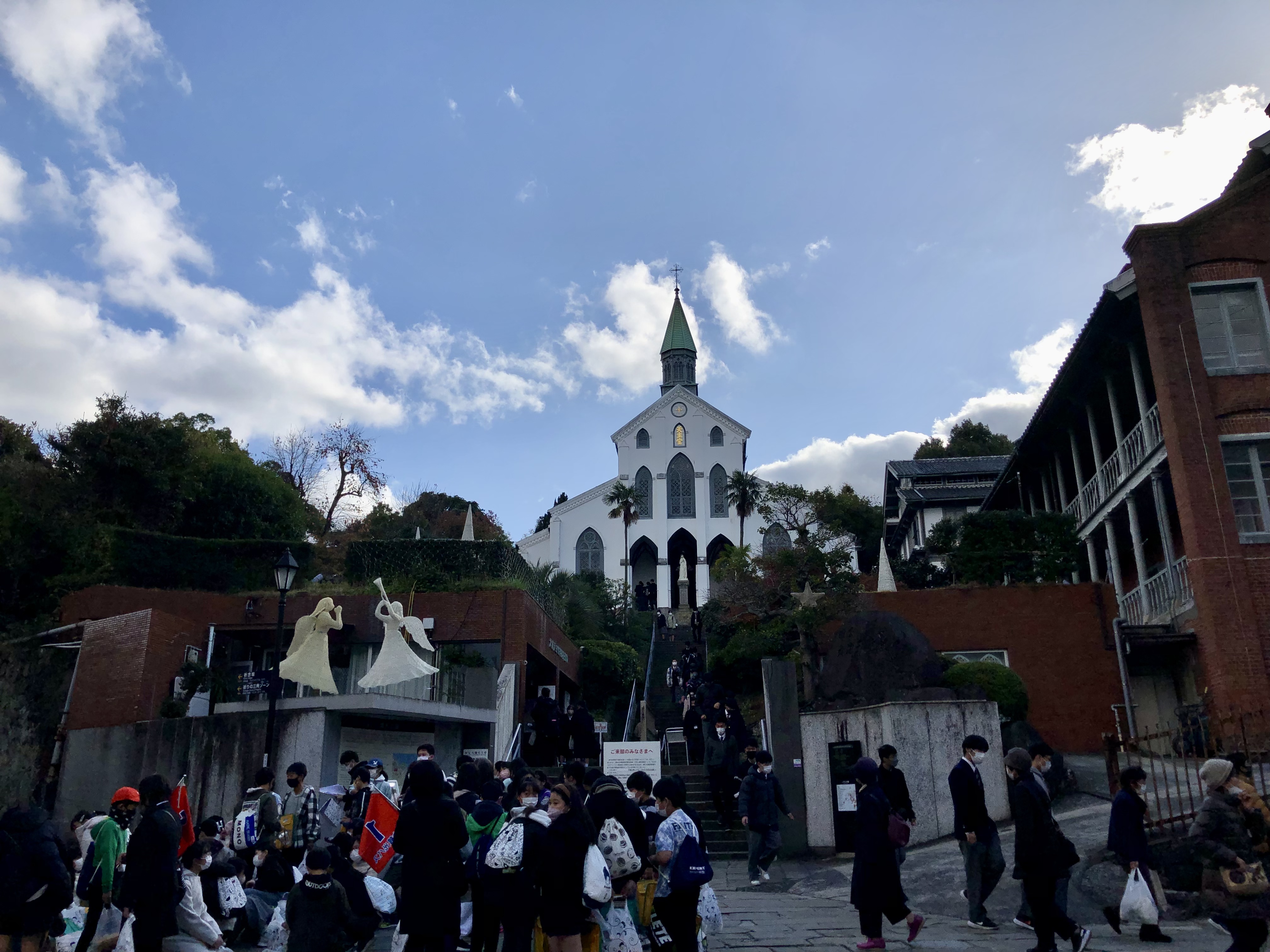
I leave the shrine down the stone steps, and wander four kilometres in the direction of Oura Catholic Church. A gothic-style church on a hill, overlooking Nagasaki Bay. I pay the steep ¥1000 entrance fee only to be greeted by signs saying no photographs. There’s a small museum, again no photographs. For whatever reason the area outside the church is extremely crowded. An extensive 28-page brochure written entirely in English is included in the ticket price, which does, in a way, make the ¥1000 cost somewhat tolerable.

Christianity first arrived on Japanese shores in 1549, but after learning that a Christian, Okamoto Daihachi, one of the trusted advisors to Shogun leader Tokugawa Ieyasu, had been secretly keeping his Christian faith hidden, Ieyasu ordered Okamoto to death by fire. This event also led to Nagasaki being the first place in Japan to ban all Christianity in 1612. Tokugawa Ieyasu later banned all Christianity across Japan two years later in 1614, the same year that Suwa Shrine was completed.

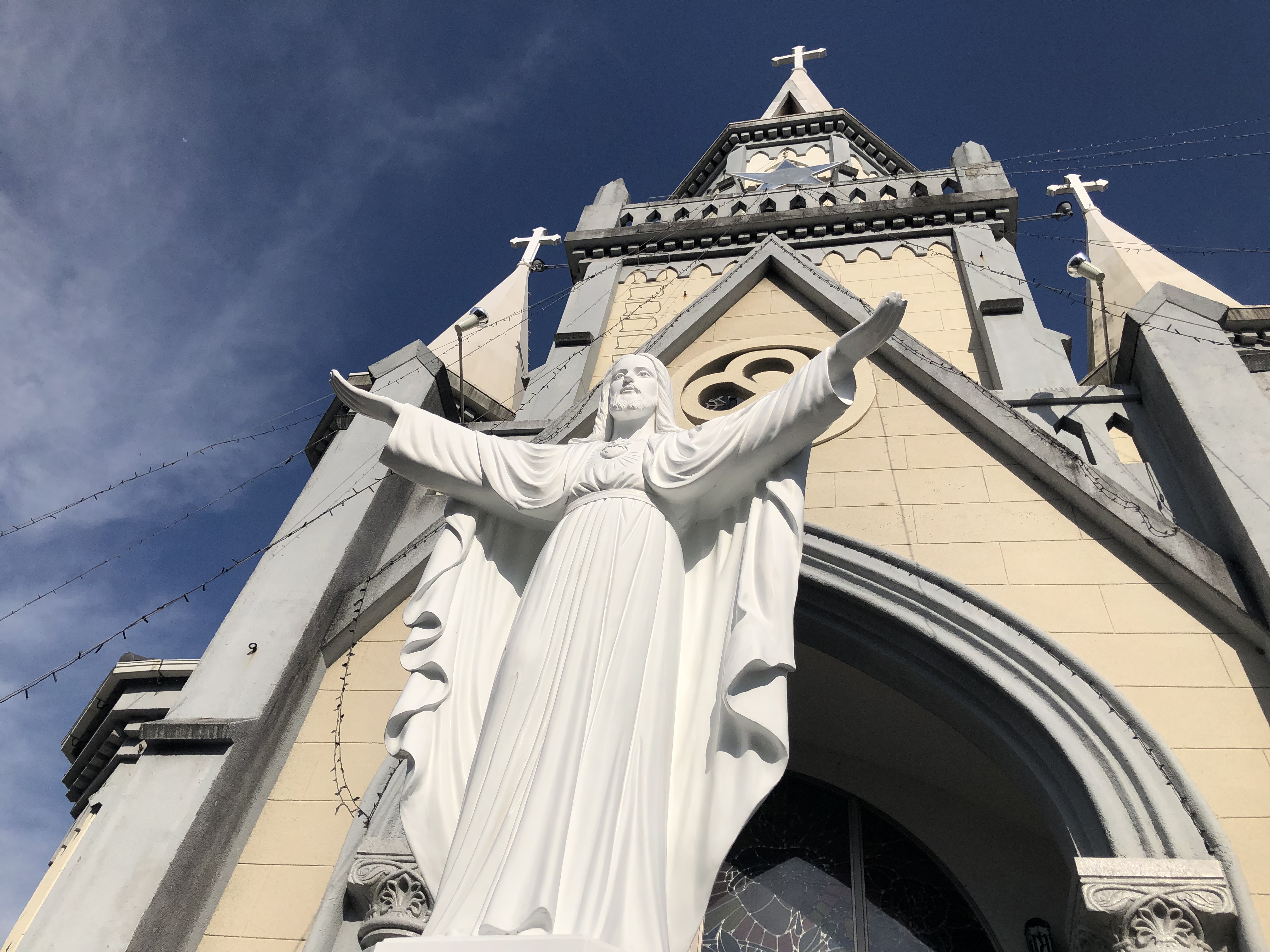
This led to an array of hidden Christians, especially in Nagasaki. Statues of the Virgin Mary were disguised as Kannon, the Goddess of Mercy; Christians posing as Buddhists to avoid execution. In 1853, Japan ended its policy of isolationism, and the borders opened for those from overseas. Foreigners residing in Japan were, at the time of this church’s construction, allowed to be Christian, but for the Japanese it remained to be illegal. Oura Catholic Church was built for those foreigners in 1864 and is the oldest surviving Catholic church in Japan.

The Japanese government finally lifted the ban on Christianity in 1873.

Hell and High Slaughter

My plan today was a visit to Ukiha Inari Shrine, a remote shrine with a hillside vista over the Chikogu Plains that offer stunning views of red torii gates and the meadows beyond. However, as I finally arrive at Tosu Station to switch trains, I find that my next train, the Yufu 3 Limited Express bound for Beppu, doesn’t depart for another six hours, so in desperate need of a plan, and a sudden change of itinerary, I rush onto a random train bound for Kurume.

Kurume is a small city in Fukuoka Prefecture. I flip a coin to let fate decide my direction, but woefully fail to catch the coin and it lands in the gutter of a drain. Today isn’t going very well and it’s still morning. I choose to go south. It doesn’t take long for my optimism to return though, for in the distance standing tall and proud, a mysterious white statue captures my attention, and essentially my destination decides on itself.

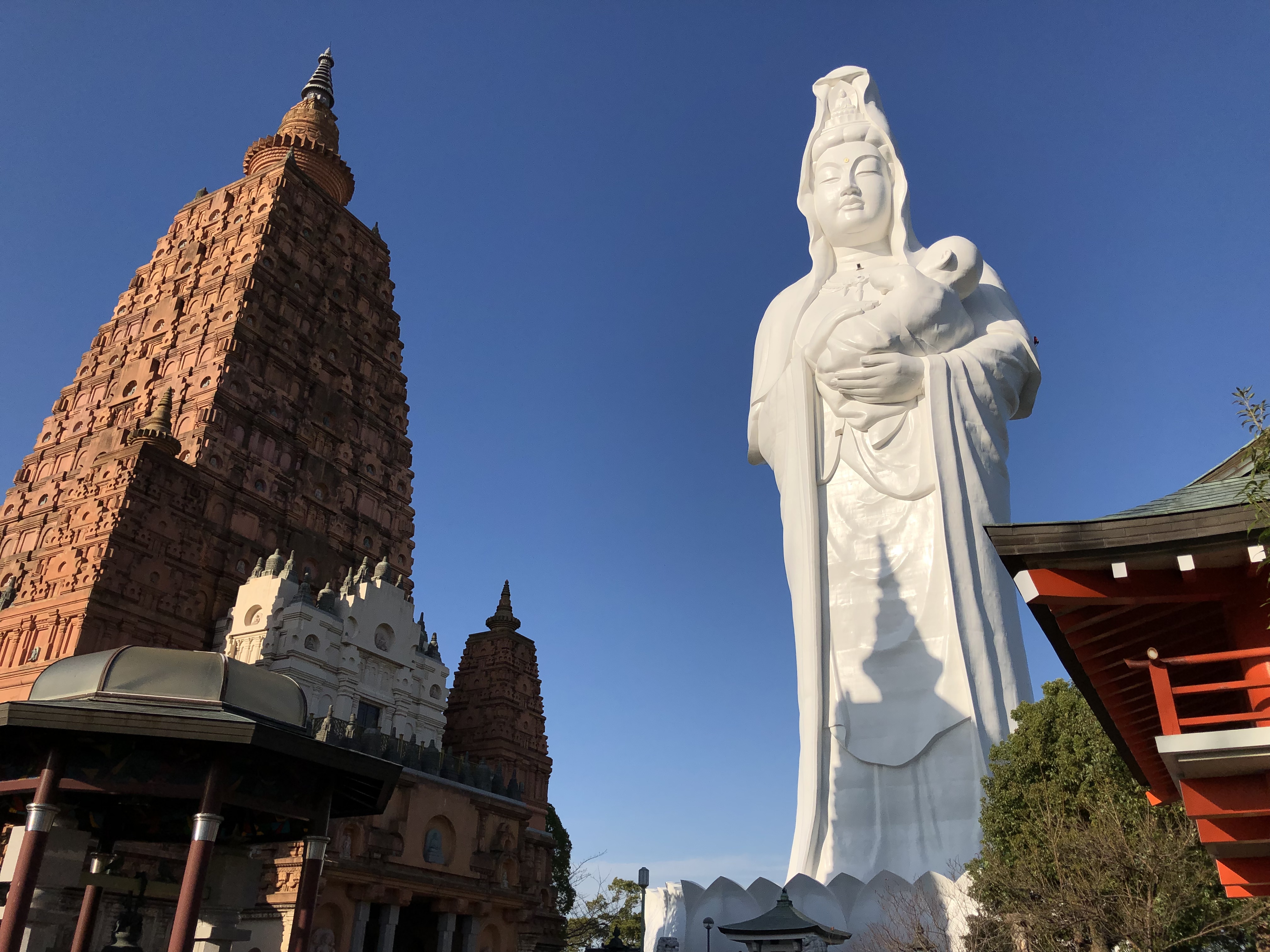
The statue can be seen from far and wide, and as I finally get close enough, it turns out to not be what I first thought, but instead a 62-metre tall statue of Kannon, the Goddess of Mercy. I always enjoy a good Kannon statue, not only does she save the souls of the suffering, but there’s often something rather unexpected to see.

The first thing that’s a little unusual is the 38-metre tall structure next to the Goddess. This replica of India’s Mahabodhi Temple, the Great Awakening Temple, is the first of its kind in Japan, and is based on the story that Buddha sat under a tree in India for seven days to meditate, became awakened, and then the original temple was built to honour that event. Why there is such a replica here in Kurume I have no idea. Also, and it may be a matter of perspective, but the Mahabodhi Temple is 24-metres shorter than Kannon, however, at every angle, the temple seems to tower over the Goddess.

As I approach the ticket office to enter Daihonzan Naritasan Kurume Temple, I inadvertently wake up a young Japanese woman; obviously this place doesn’t get a lot of visitors despite its massive car park that boasts space for 700 vehicles.

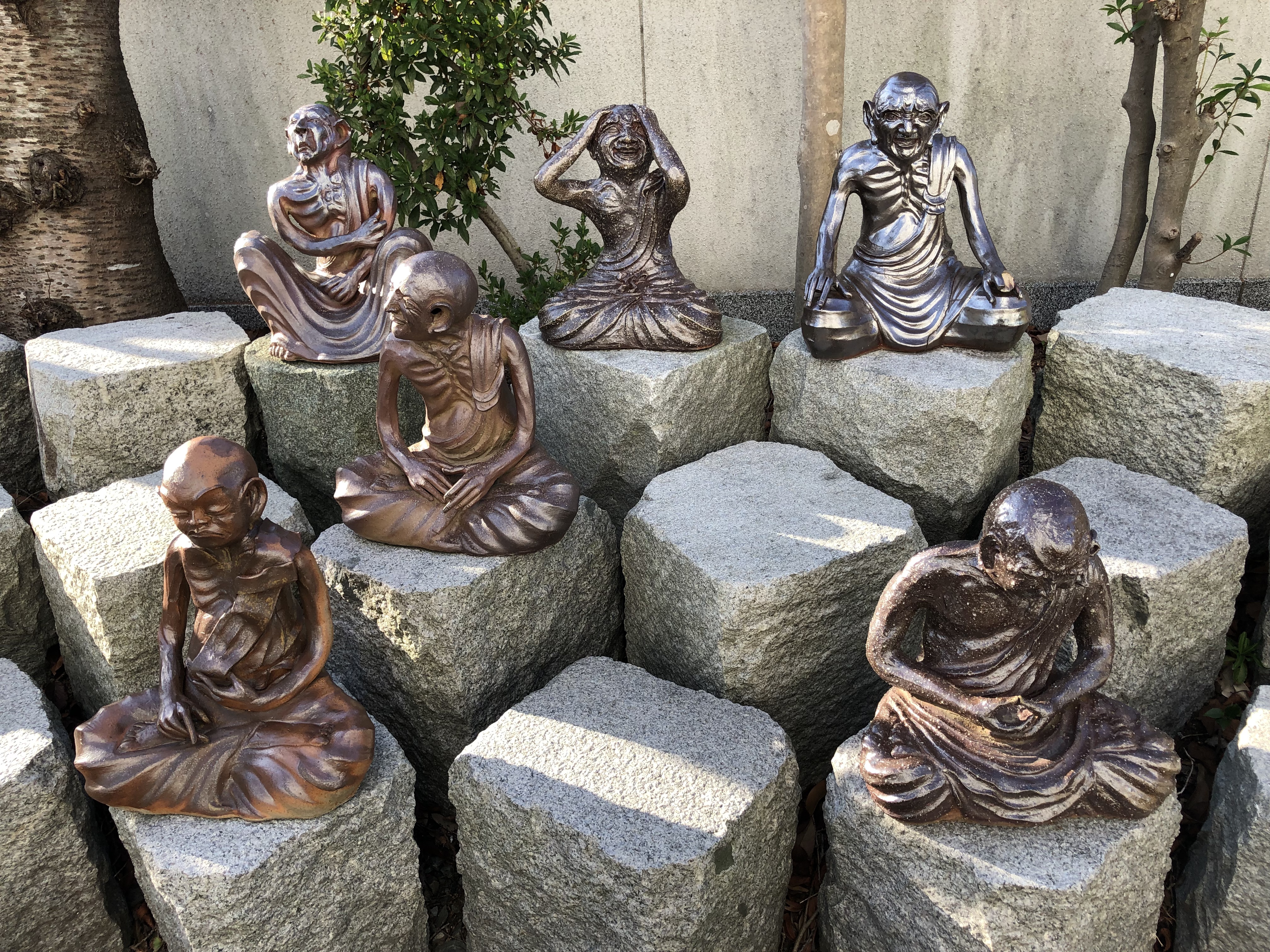
I take a seat on a small stone bench for a time, admiring the statue and contemplating, just like Buddha had once done. A statue of Ebisu disturbs my thinking, purely because he’s sitting on a cow next to a big pile of money. Distracted, I walk around the temple grounds, here there are numerous smaller statues depicting twisted souls in anguish.

I notice a shaft in the side of the Kannon statue, and decide to enter. Endless corridors greet me. Random artwork lines the walls, steep steps twist and turn through the statue, there is no elevator, and the climb to the top takes an age. From the top there are tiny windows that offer a nice view of the city below.

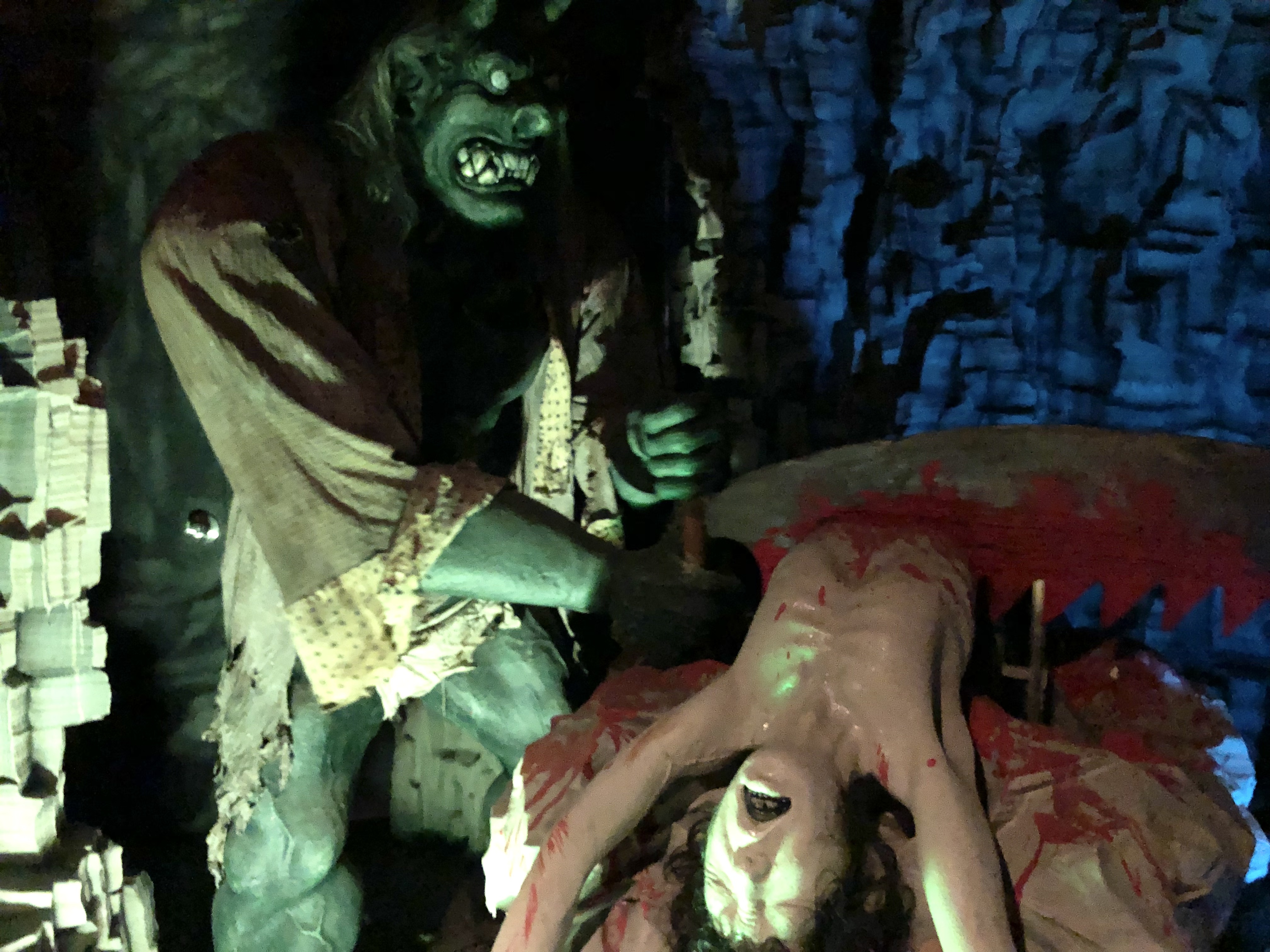
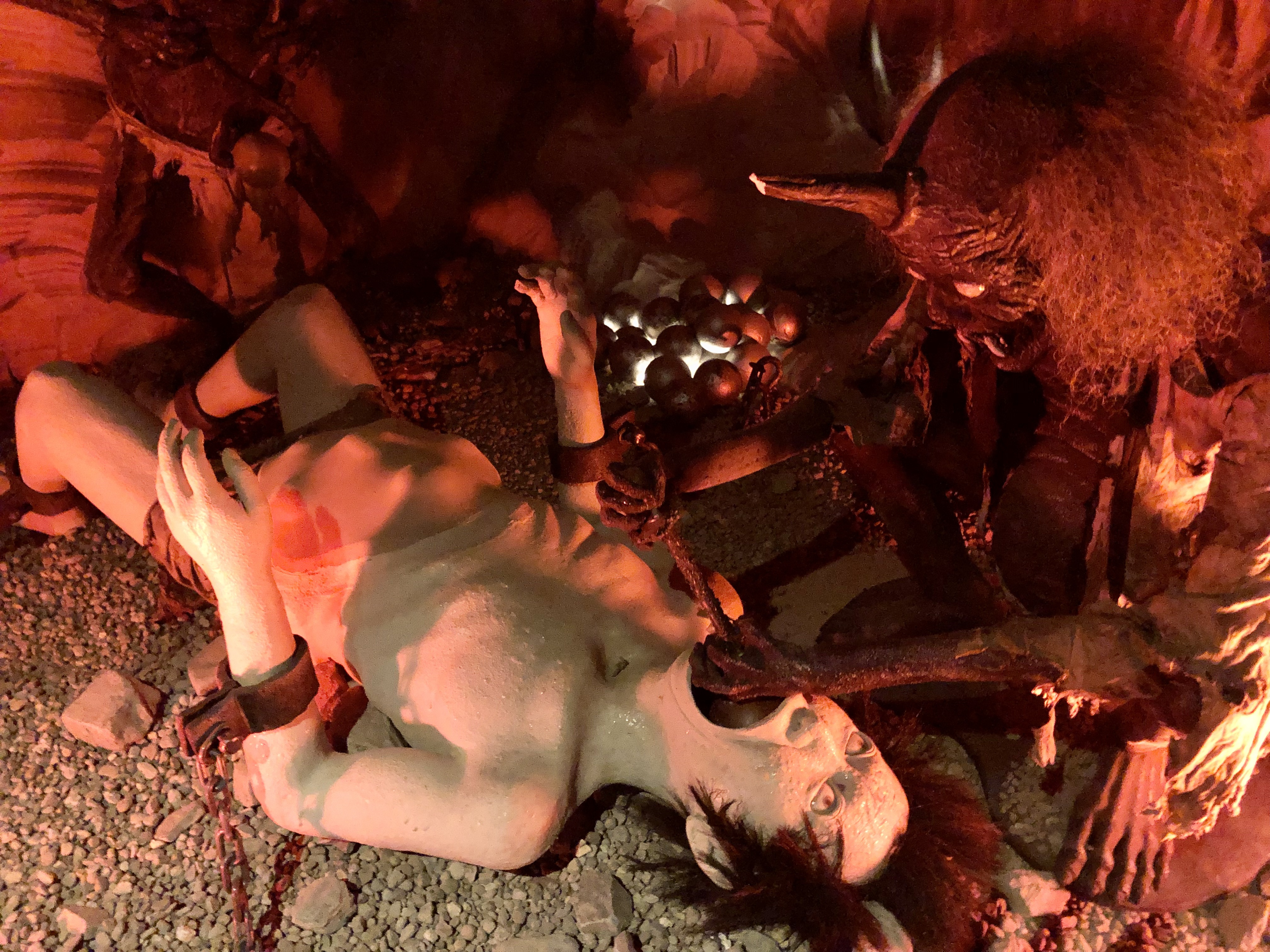
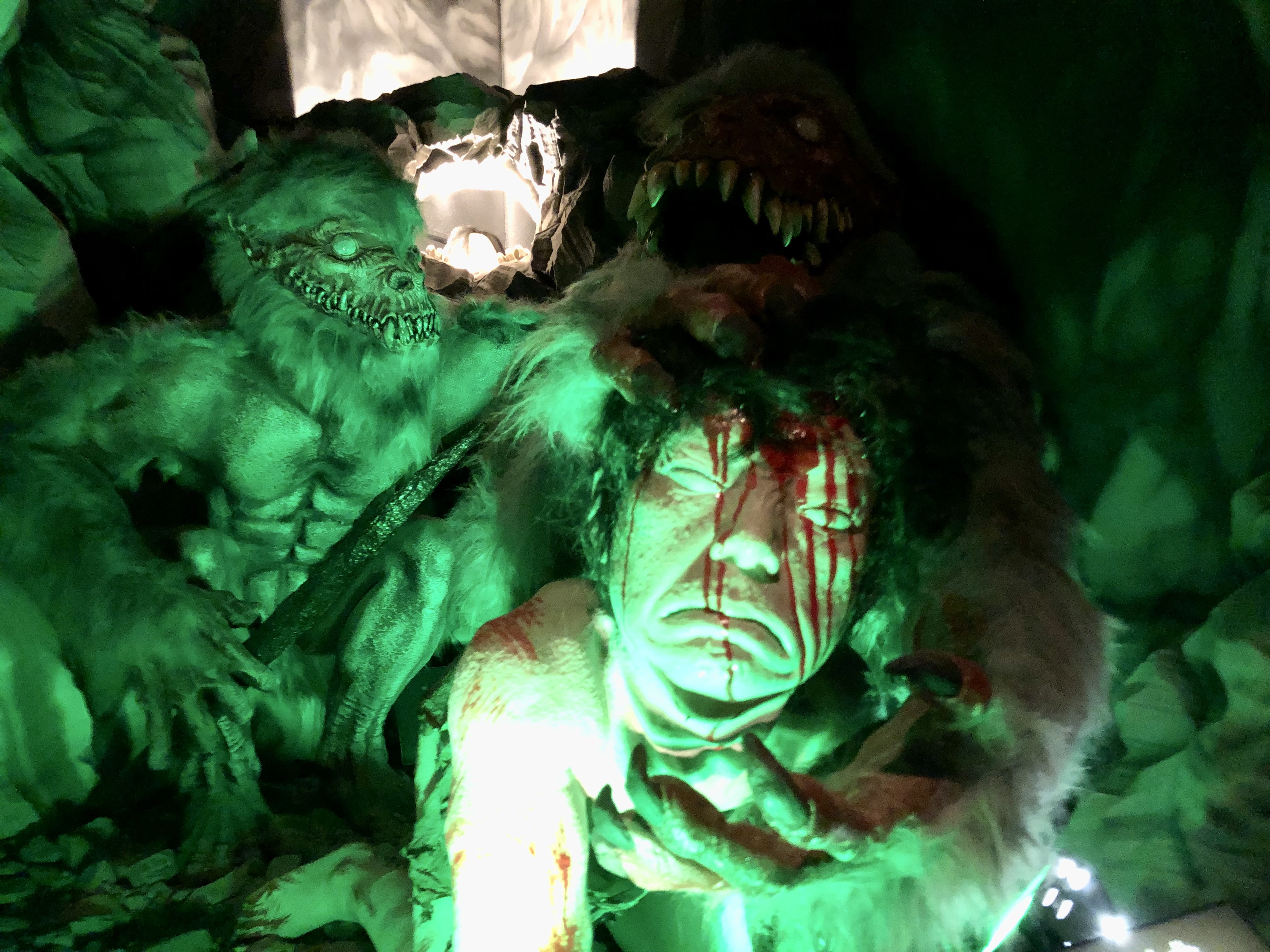
After admiring the landscape, I decide it’s probably time to leave now, and as I climb back down to the ground floor, I notice steps leading deeper down into a basement. As I further approach, I hear the creaky voices of evil spirits echoing down the lonely hall. A room here is marked either side by a pillar of skull heads. Inside are some lifeless effigies, but as I approach, I activate a sensor of sorts, and the first model begins to move.

This animatronic demon is sawing a naked man in half; the saw slides back and forth for as long as I watch. The man, despite his obvious injury is still alive, his screams are piercing and chilling, the sound effects of the saw all adding to the macabre scene. An absolute show of horror.

I move through the exhibits. A woman surrounded by spike traps gives me a jump scare as she screams into life. Two children covered in bruises and blood rotate on a platform as a demon with a sinister grin watches on. A man holding a huge boulder is about to smash in the head of a woman whilst a giant towers above. A chained up man is having a red-hot poker stuffed into his mouth.

I decide that this is one of the most harrowing things I’ve seen in my whole life. The passable realism of the statues blending with the authentic yet disturbing sound effects really adds to the eeriness evoked by this imagery. It seems that hidden beneath this innocent looking statue of the Goddess Kannon holding a baby, is a secret haunted house.

I take one last walk through what I learn to be the Hell Museum, before leaving the basement, the statue, and stepping quietly past the ticket gate as to not wake up the sleeping woman.

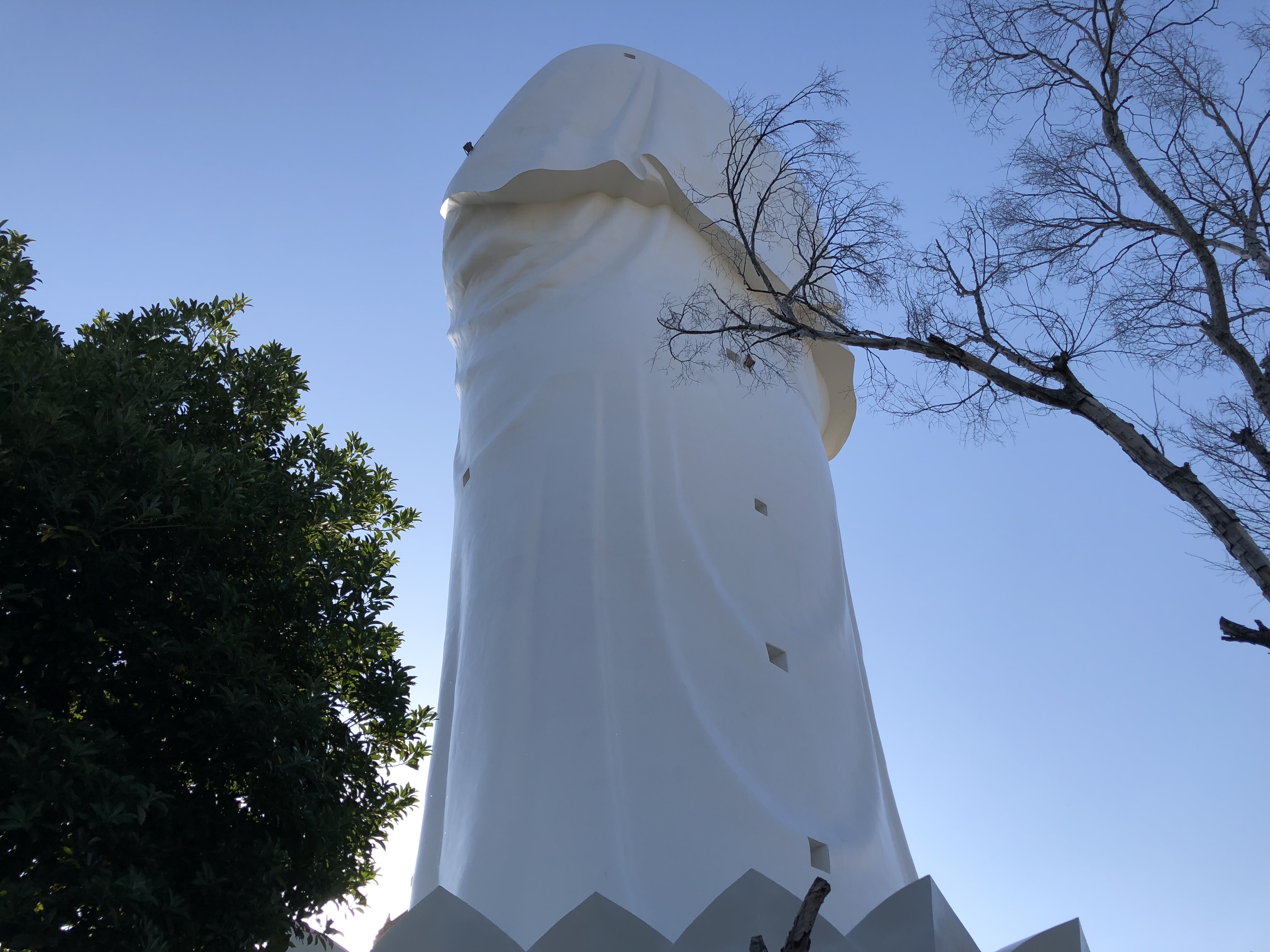
As I walk away, I look back at the statue, its phallic shape from behind visible for miles and miles, it makes me wonder if it was indeed designed that way, or just a misshaped mishap. I guess I’ll never know.