Today I decide to travel towards Matsumoto, into the middle of the Japanese Alps. At Kanazawa Station, I pay the premium ticket price of ¥8970 to travel just one hour on the Shinkansen to Nagano. There, I change to a local train, for local people. After a couple of hours of sitting around on trains, I finally step out into the clean, fresh mountain air. And it’s raining.
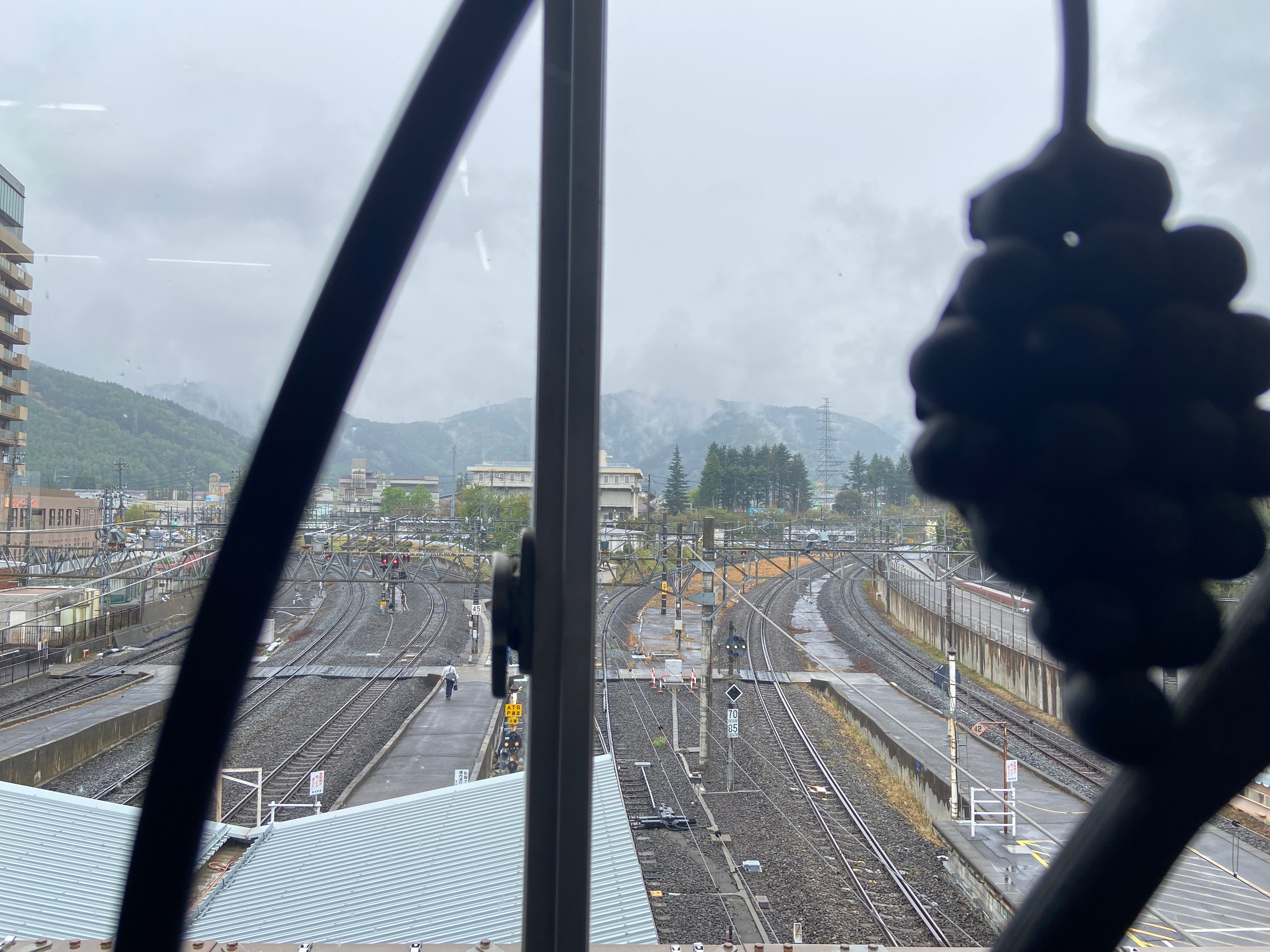
The mountains are gone, washed out in a white, ghostly fog, completely invisible today. But with better weather expected tomorrow, I tell myself this won’t have been a wasted trip. I put on a bright green poncho. It doesn’t suit me. I probably look like a large frog. Still better than an umbrella. I always forget those anyway.
Reservoir Frogs
I start exploring, and despite the rain hammering down, I’m drawn straight in. Matsumoto has a quiet, charming vibe. Flower beds and streams line the roads. Bars and restaurants that feel quietly inviting look to be from another time. The Metoba River snakes between buildings that look like they’ve been here for hundreds of years. It reminds me of a less crowded version of Asakusa. Not empty, though, as groups of tourists do drift past, tethered together by guides holding small flags like they’re leading expeditions.
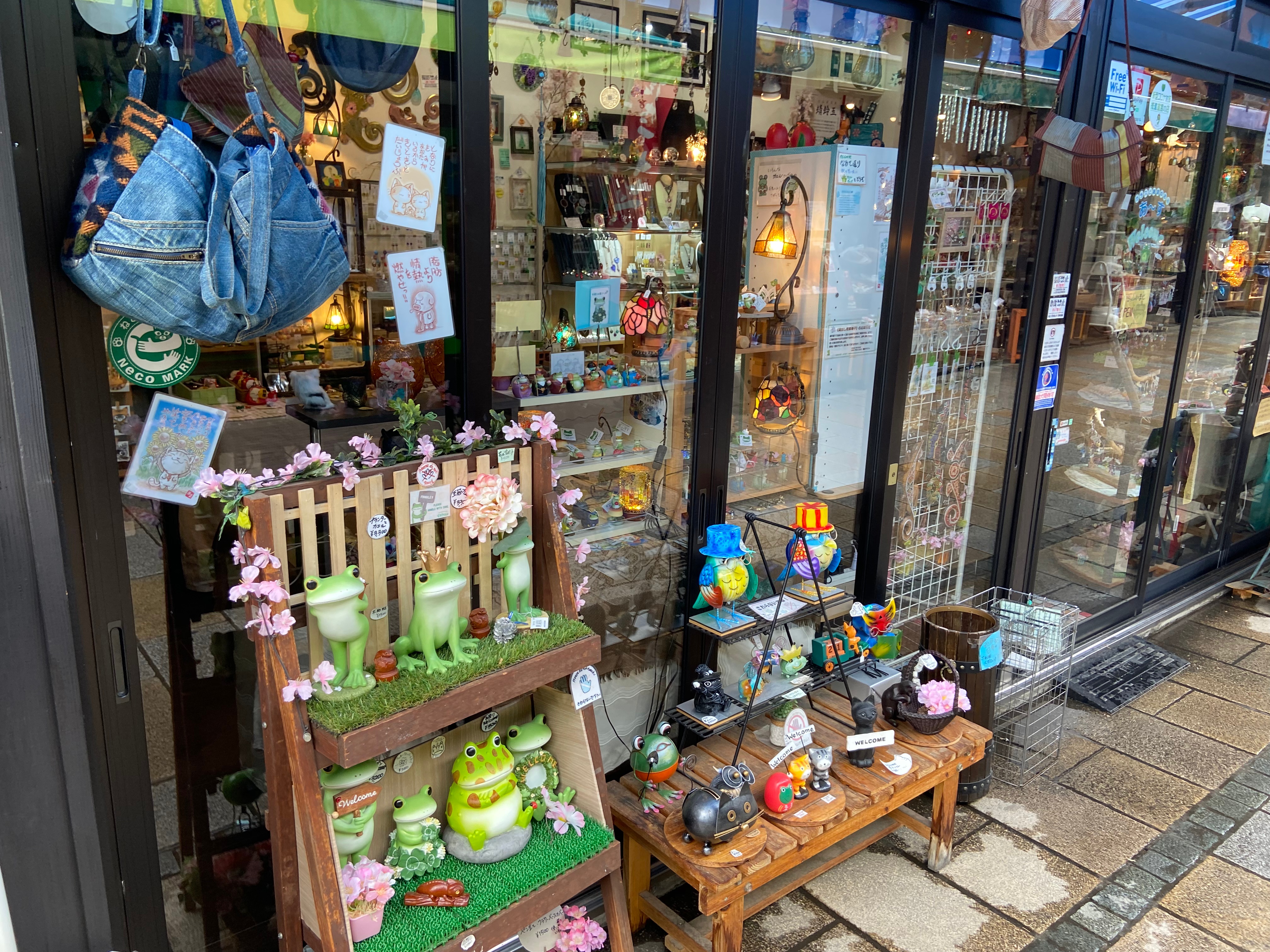
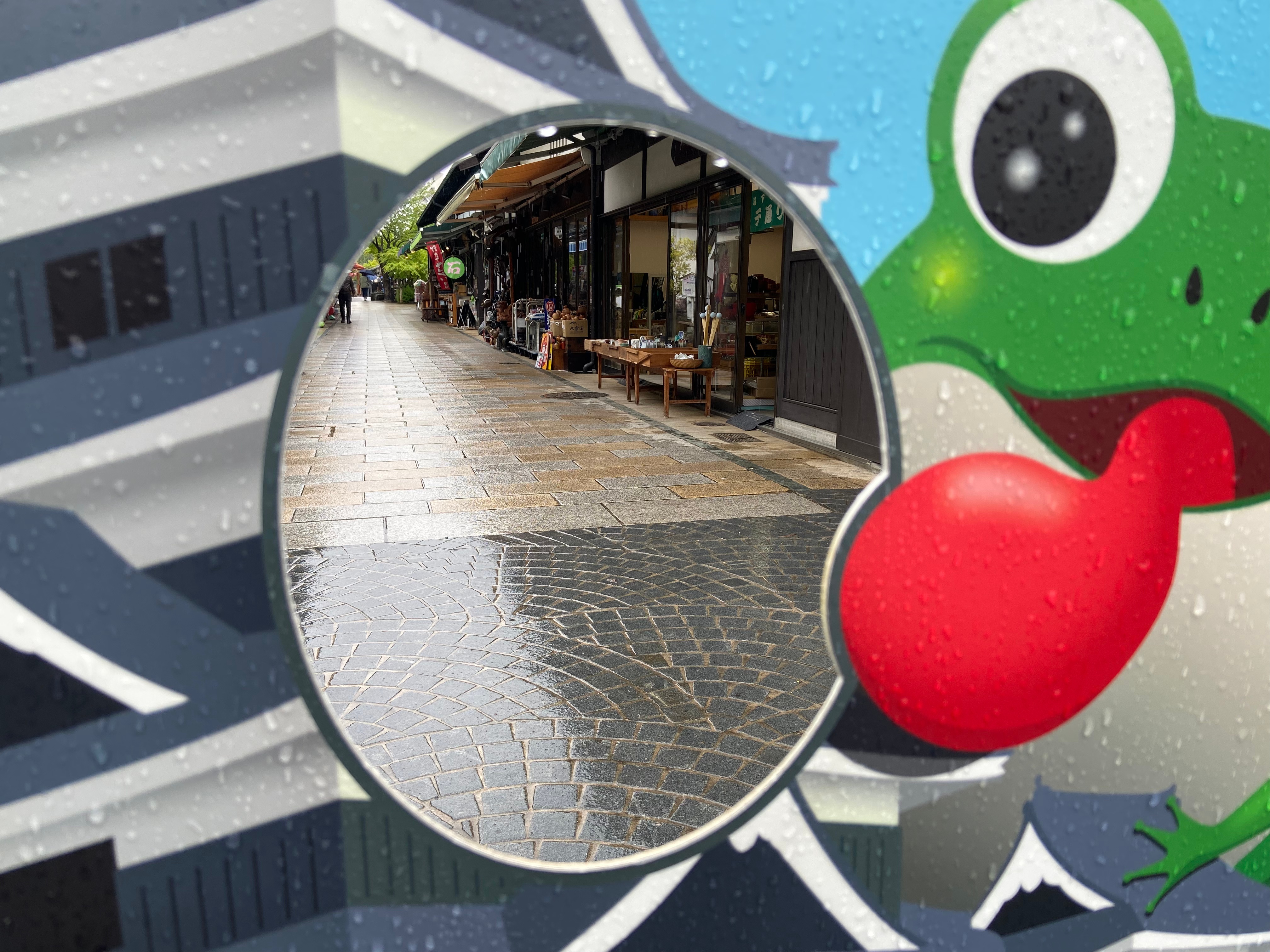
The main tourist street is Nawate Street, also known as Frog Street. It’s a pun I’ve mentioned before, tied to the Japanese word for frog, but essentially it means you’ll return home safely. The frogs will see to that. And there are frogs everywhere.
Decorations, statues, souvenirs, offerings. A shrine dedicated to a guardian frog. Amongst the frogs are about twenty freshwater wells, each one slightly different but æsthetically pleasing. They offer clear cold water for free, but I’ve had enough water today; it’s raining so hard I’m essentially covered in water.
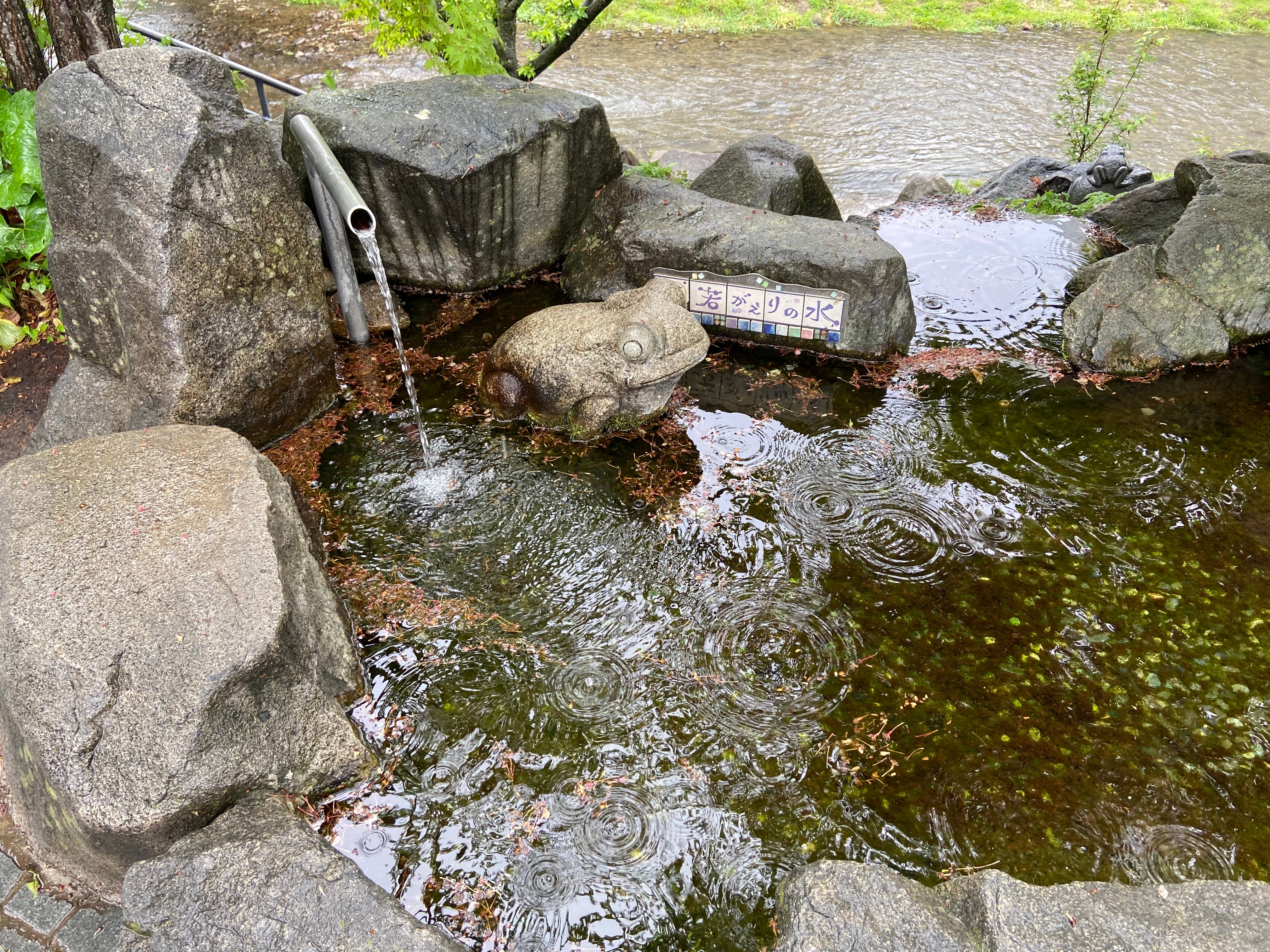
There’s a story written at the shrine which I’ll try to translate: Once, this narrow river was lined with festival stalls, and a dear river frog made a beautiful sound. There were unique emotions, such as the playing of the drums or the smell of acetylene lamps, the voices of stallholders, and fireworks, and the scooping of goldfish.
Then the river became dirty and the frog was pushed upstream. This caused the streets here to lose their vitality, and in 1972 the dear river frog was enshrined, in an attempt to make the river clean again. It worked, and the streets came back to life. Now it is a frog town. A place where mountains and city meet. A place where visitors can relax.
Keep Calm and Waffle On
I decide to walk now in the direction of a local National Treasure: Matsumoto Castle. On the way I pass more art shops, craft shops, storehouses dotted around between the many small shrines and folk art stores. Plenty of town maps here too make it easy to keep track of where I am.
And if kimono rental shops are your thing, well forget that! Here you can rent a panoply of samurai armour for the day for the low price of ¥11,000. Not in this weather though, I’d look ridiculous as a samurai in a green poncho.
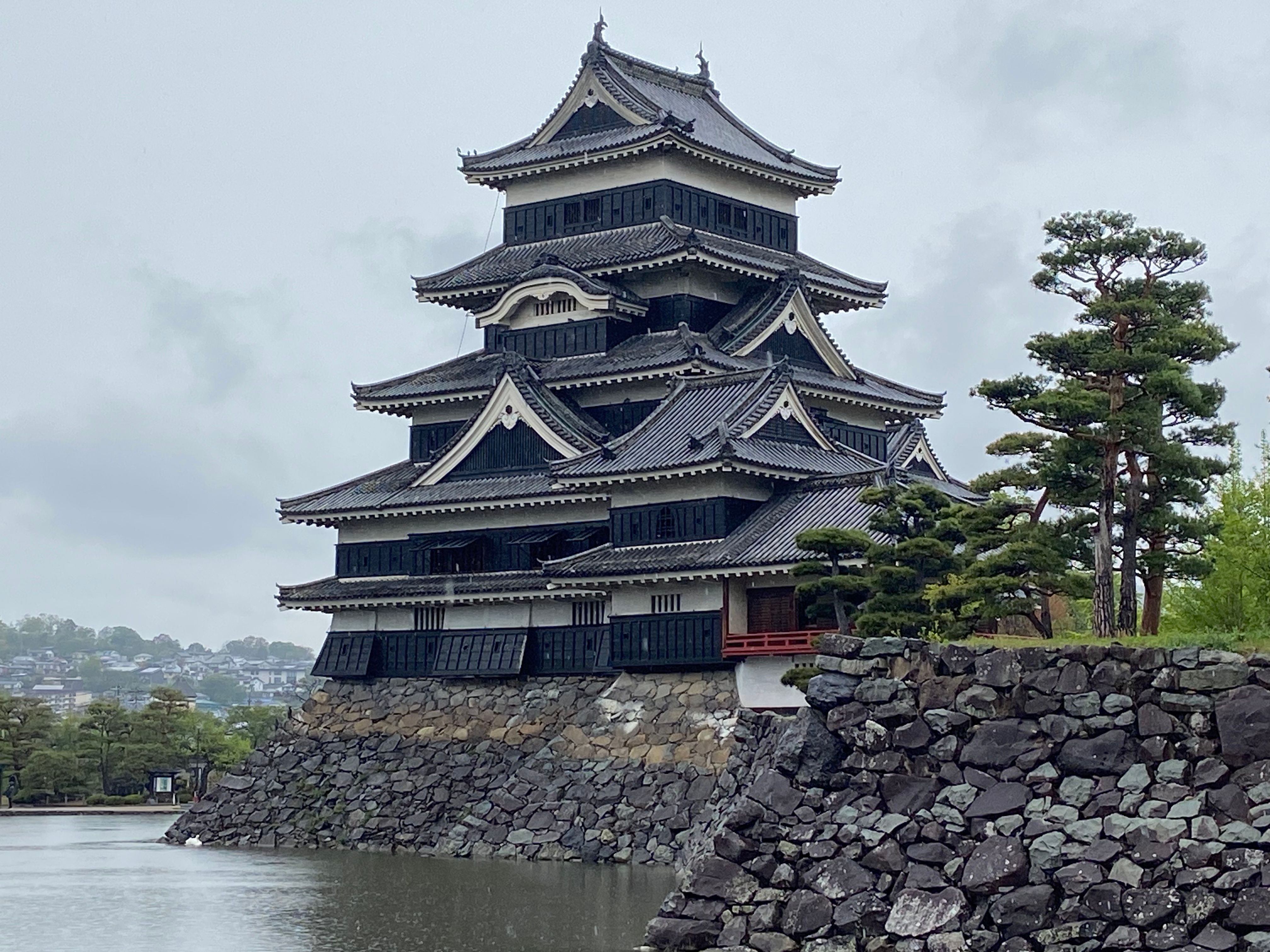
It’s not long before I arrive at the castle. Inside, the keep is so incredibly calm; there’s not a tourist in sight, probably put off by the weather. The castle is the oldest five-storey six-floor castle in Japan. A very specific metric, if you ask me. But it’s all because of a completely secret hidden floor. A castle bigger on the inside than on the outside. The castle is stunning to look at. The Northern Alps sit shrouded behind it, blending into the clouds, while the swamp-like stillness of the moat settles the scene.
Leaving the castle, it’s almost time to check into my hotel, but I’m feeling a little hungry so head back in the direction of Frog Street to see what’s on offer. I pass a shop selling traditional taiyaki, fish-shaped waffles. This store offers three normal flavoured fillings and one odd flavour. Sweet red bean, chocolate, custard cream, and sausage.
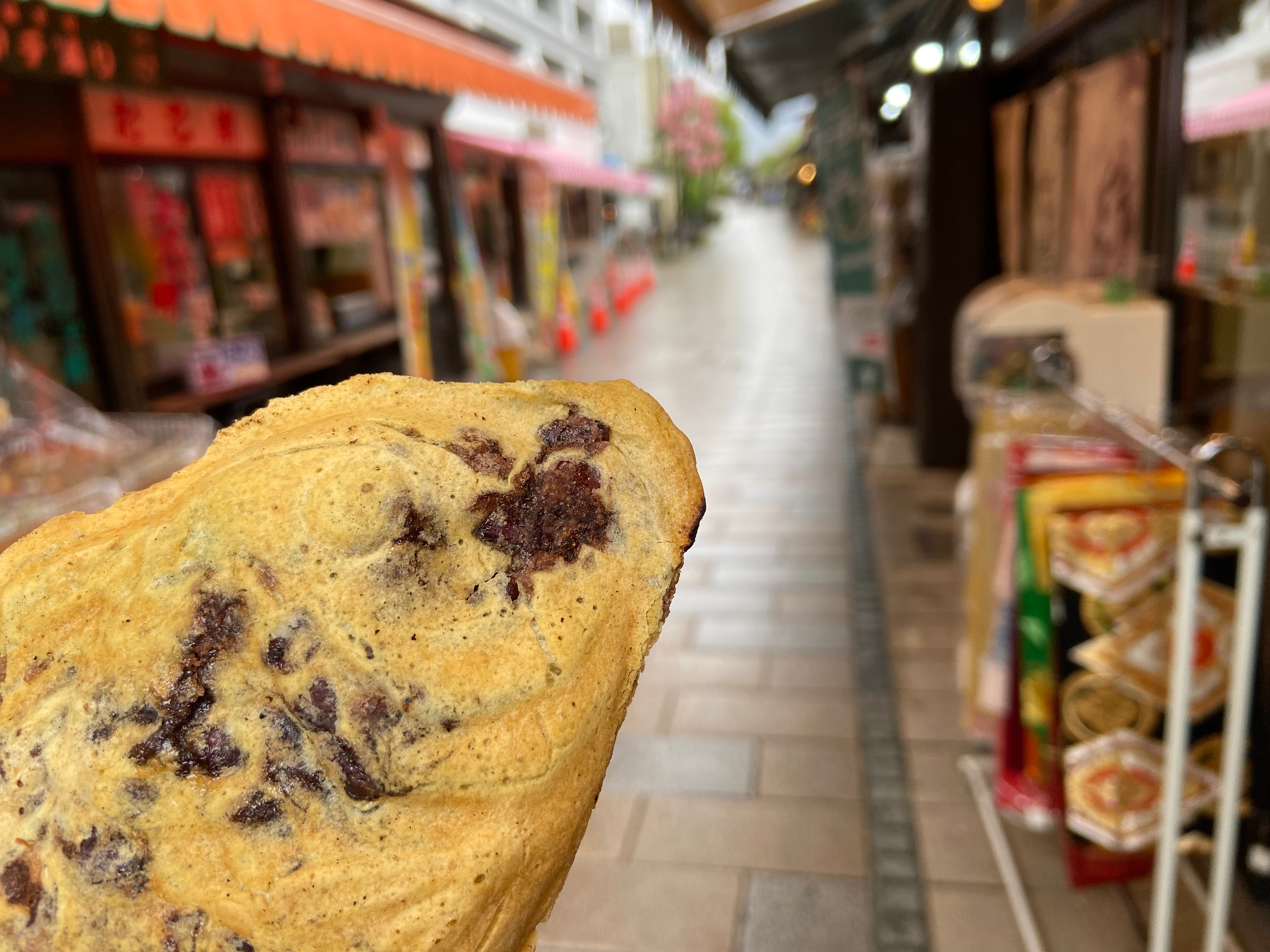
Obviously I go for sweet red bean paste as it’s my favourite. It’s cheap too. Only ¥250 and surprisingly massive. As I am handed the packet, I find the waffle to be red hot, and it smells so good. The batter sweet and soft and delicious. But the tail is the best part, a little crunchy and a little crispy. Luckily for me I’m staying near Frog Street for the next three nights, so I’ll be sure to return here frequently for more fish-shaped waffles; one of the best Japanese snacks.
The Grape Train Vinery
I head to my hotel to check in and dry my shoes with a hairdryer. I don’t need the poncho anymore, as the hotel is one minute from the train station, so I’ll be indoors the whole way. I hop on the train bound for Shiojiri Station, the journey takes 8 minutes. The under seat heating makes a mockery of my freshly dried shoes.
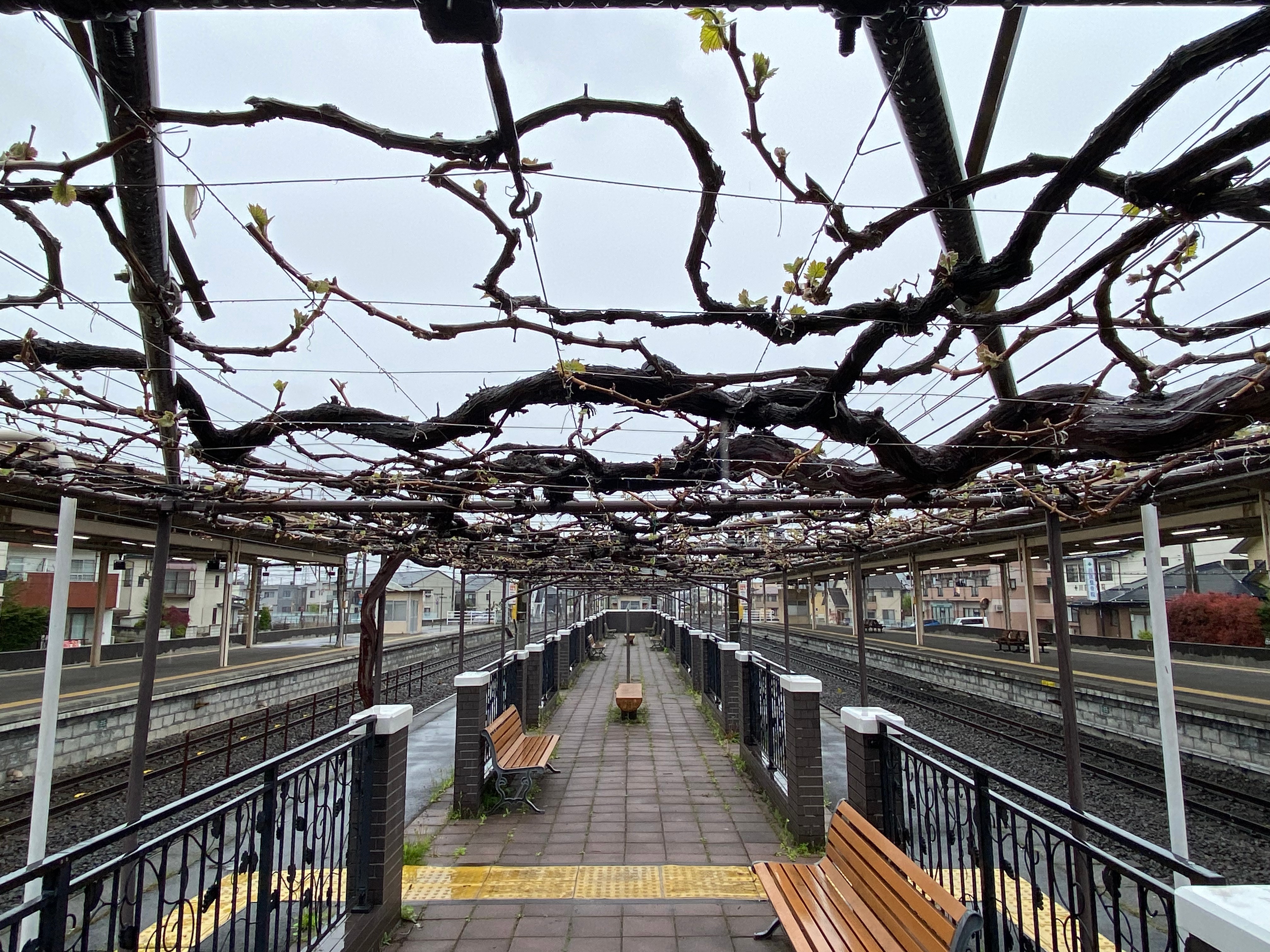
I exit the train into my destination. It’s actually the train platform I’m here to visit, as it has its own vineyard. That’s right, the grapes used to make Shiojiri Wine are grown right here on the train platform. The vines stretch along the platform, growing patiently beside passing trains. Obviously the grapes won’t be fully grown until the autumn, right now they are just small leaves on vines. I do notice that they have hung some plastic dragonflies around the vines, which I assume is to deter predators from eating the grapes.
Inside the station, there’s a small gift shop. I purchase a bottle of Black Queen red wine, made from platform grapes. Then it’s back on the train 8 minutes to Matsumoto Station.
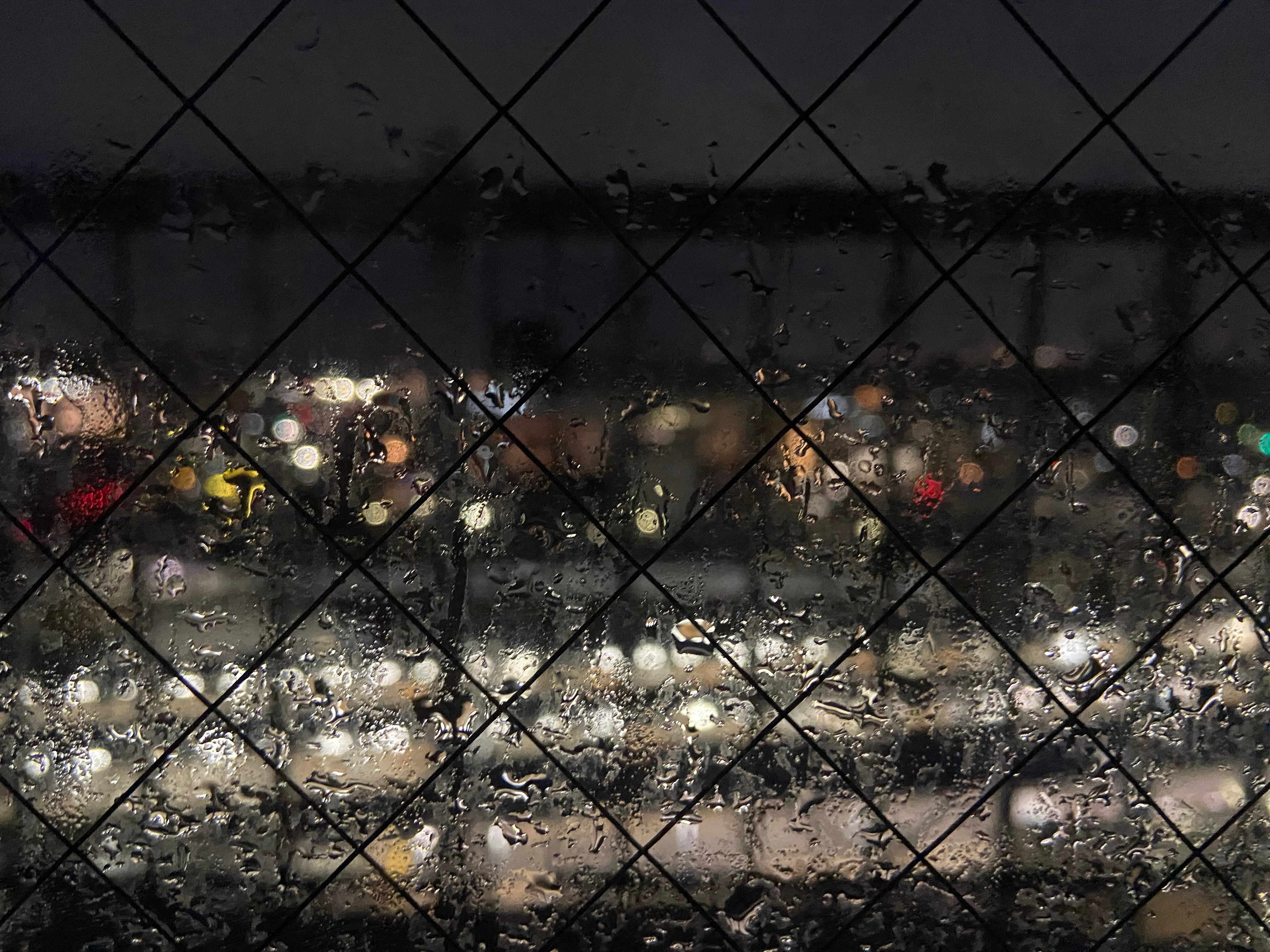
In my hotel room, I sit on the edge of the bed with a plastic cup of wine, its notes of cassis a little overpowering. I enjoy the sound of the rain as it taps softly against the window. The wine is bold, a little too certain of itself. And somewhere beyond the fog, the mountains are still there. Waiting for tomorrow.


You must be logged in to post a comment.