Where I End And You Begin

I decide to do some sightseeing for the final time in a while. After taking three different trains, I arrive at Mitsumineguchi Station, the last stop. It’s almost three hours from Tokyo, and at times I wonder why I have made this journey into the middle of nowhere. Stepping off the empty train, I find the station is completely unmanned, so I place my ticket into a wooden box. I notice that the ticket machine doesn’t appear to be working either, so there is no way for me to purchase a ticket for the way back. I wonder if that’s to stop anyone else from leaving.

Stepping out into the cold, the fog casts a haunting shadow over the hills and village below, a thick, dense mist that seems to swallow everything in its path. The kind of ghostly white fog you would expect to find in a horror movie; a sign of things to come. As I wander across a bridge, I stop for a moment to take in the breathtaking yet unsettling scenery.
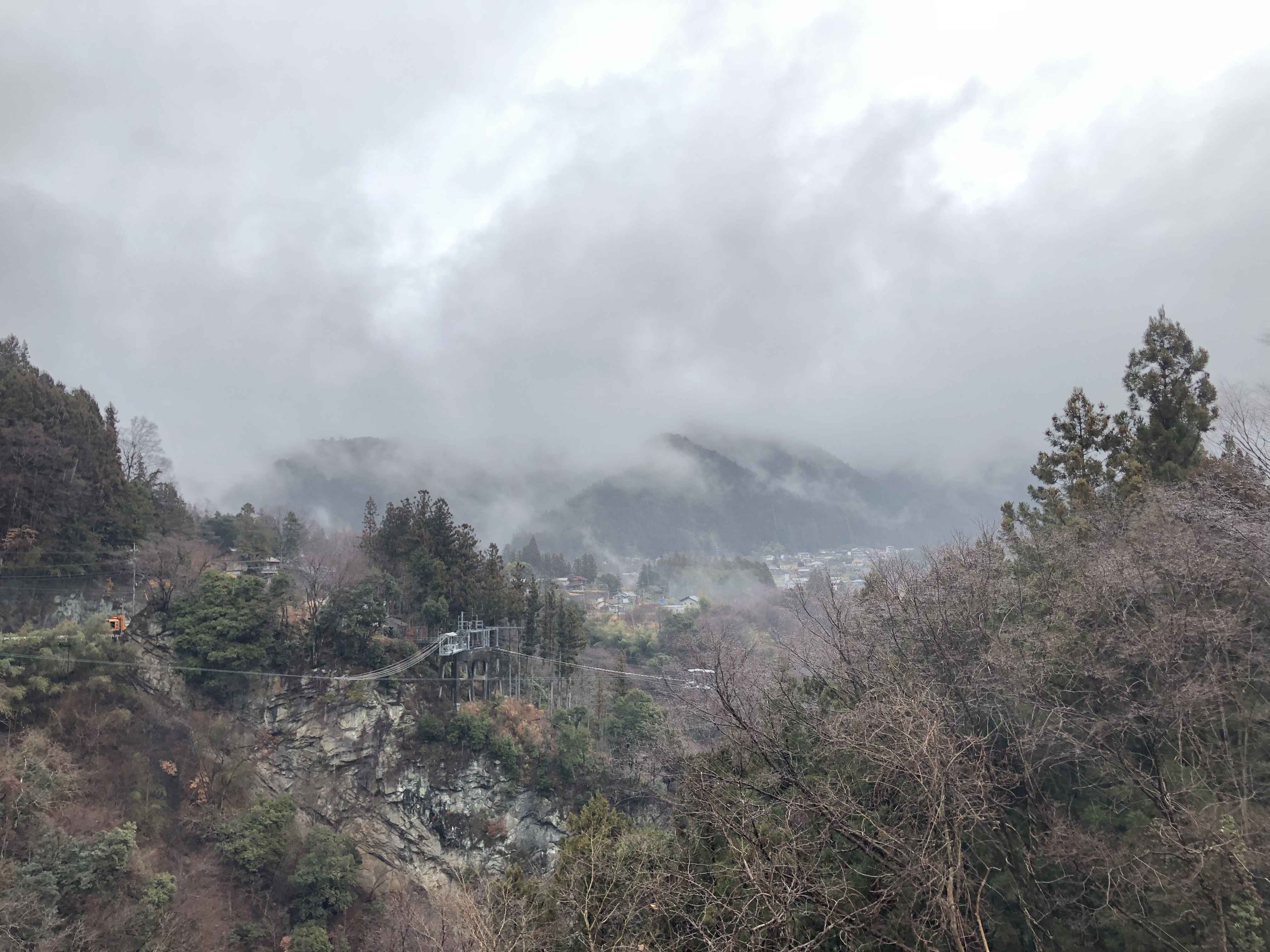
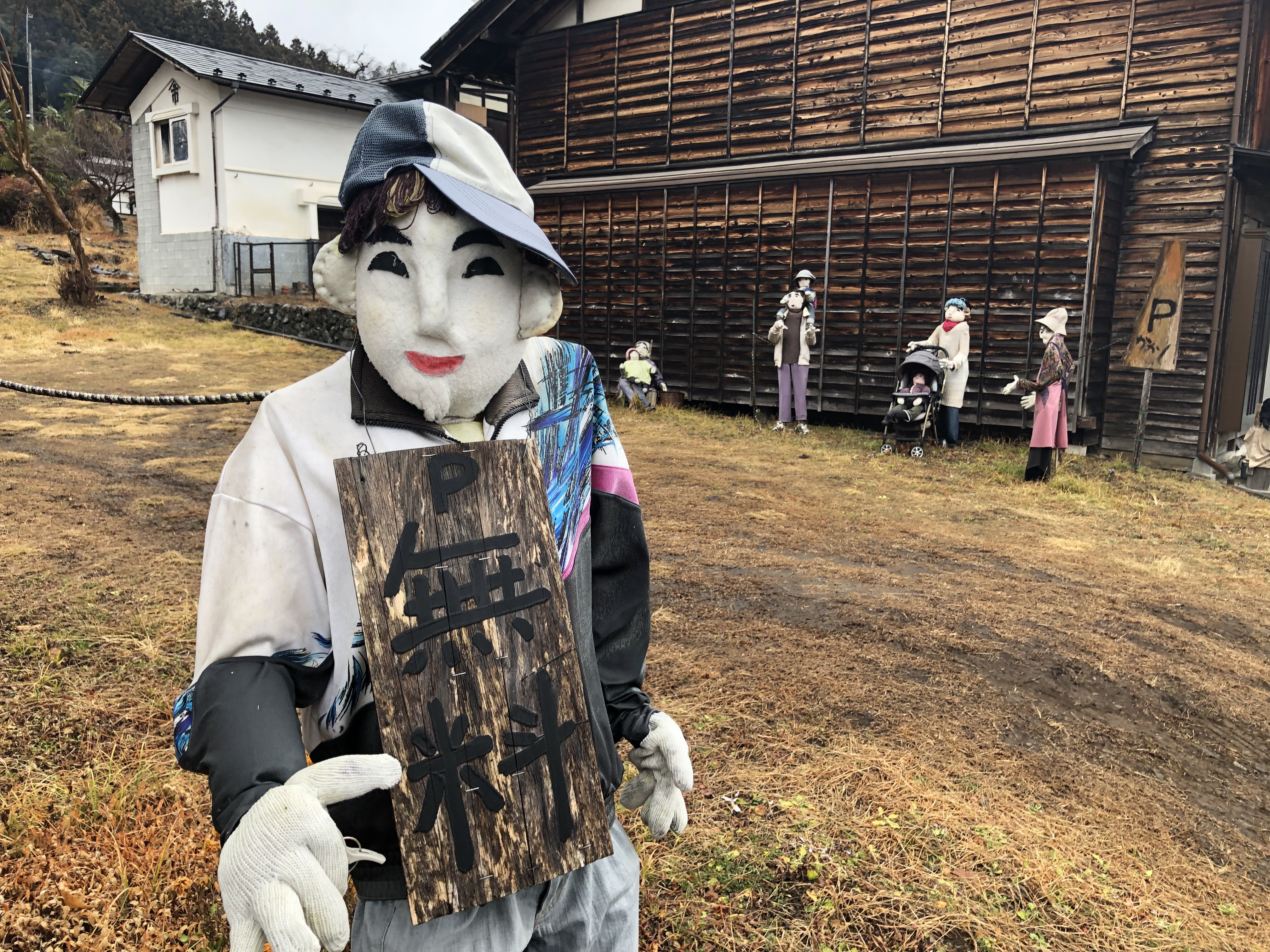
As I continue my stroll from the bridge, I am enveloped by an eerie silence. The only thing that breaks the stillness is the soft whisper of the wind blowing through the fields. A village stretches out before me, a ghost town. Scarecrows line the streets, their lifeless eyes following my every move. They stand outside almost every house, yet the village is deserted, there’s not a soul in sight.

I feel a shiver run down my spine as I realise that I haven’t seen a single person since five stops ago on the train. I can’t shake off the feeling that I am being watched, that these scarecrows are somehow alive. I wonder what kind of village I have stumbled upon. As I wander deeper into the village, I eventually find a sign with a scarecrow standing proudly beside it, ‘Niegawajuku.’
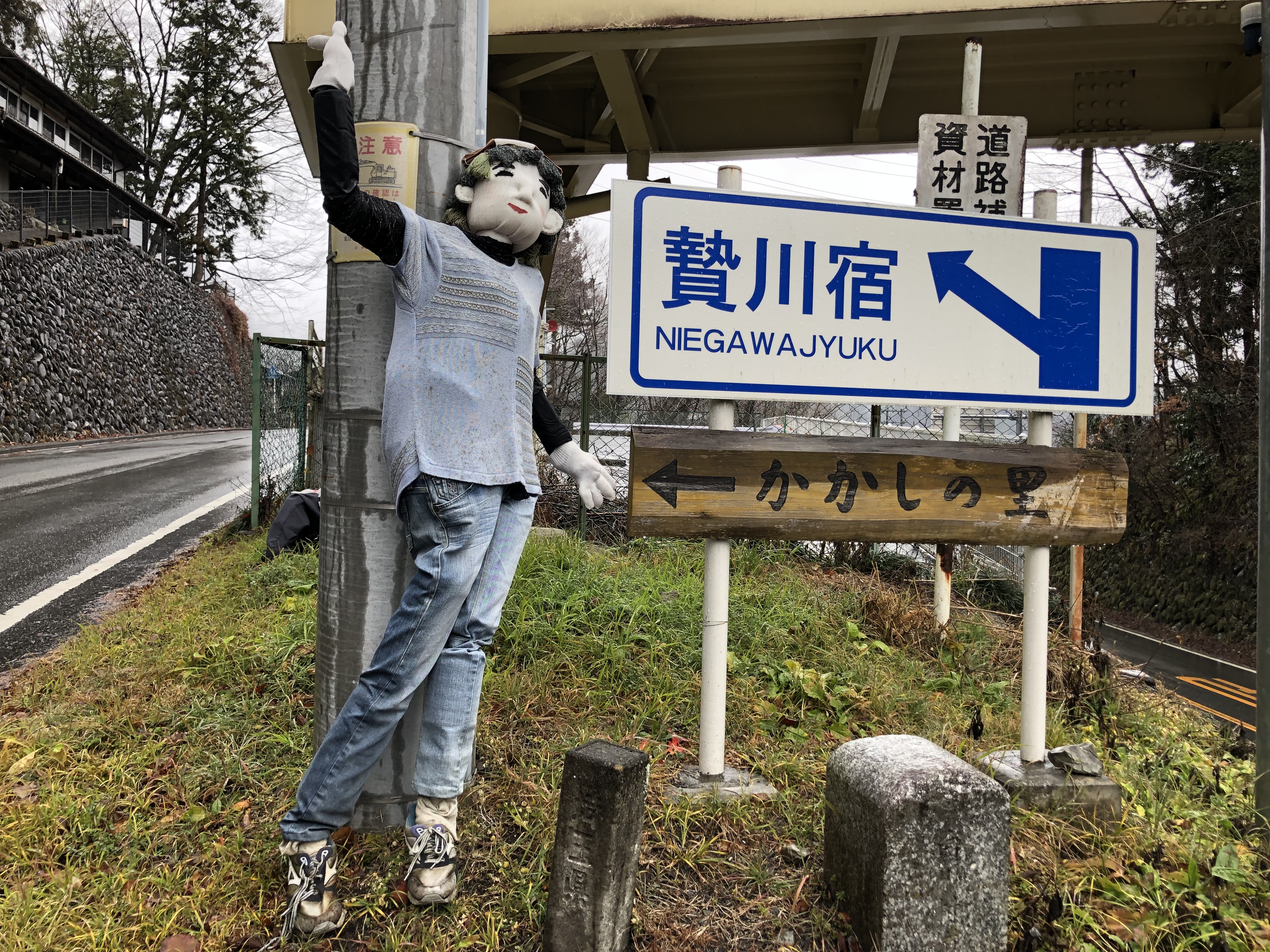
Scarecrow villages are rural communities in Japan that create mannequins in the likeness of their residents as a form of folk art. These scarecrows are often dressed in traditional clothing and placed throughout the village. Specifically, the population of Niegawajuku Scarecrow Village has been decreasing over the years, as many residents have moved to Tokyo and other urban areas in search of better job opportunities and a higher standard of living.

To address this problem, a group of local farmers came up with the idea of creating scarecrows in the likeness of the villagers who had left, in order to remember and honour them, and to attract tourists like me to the village. Niegawajuku Scarecrow Village, once a lively and bustling community, now stands like a twisted fairy tale, where the villagers have been replaced by their eerie replicas. The scarecrows, with their lifeless eyes and frozen grins, seem like twisted versions of the villagers they represent.
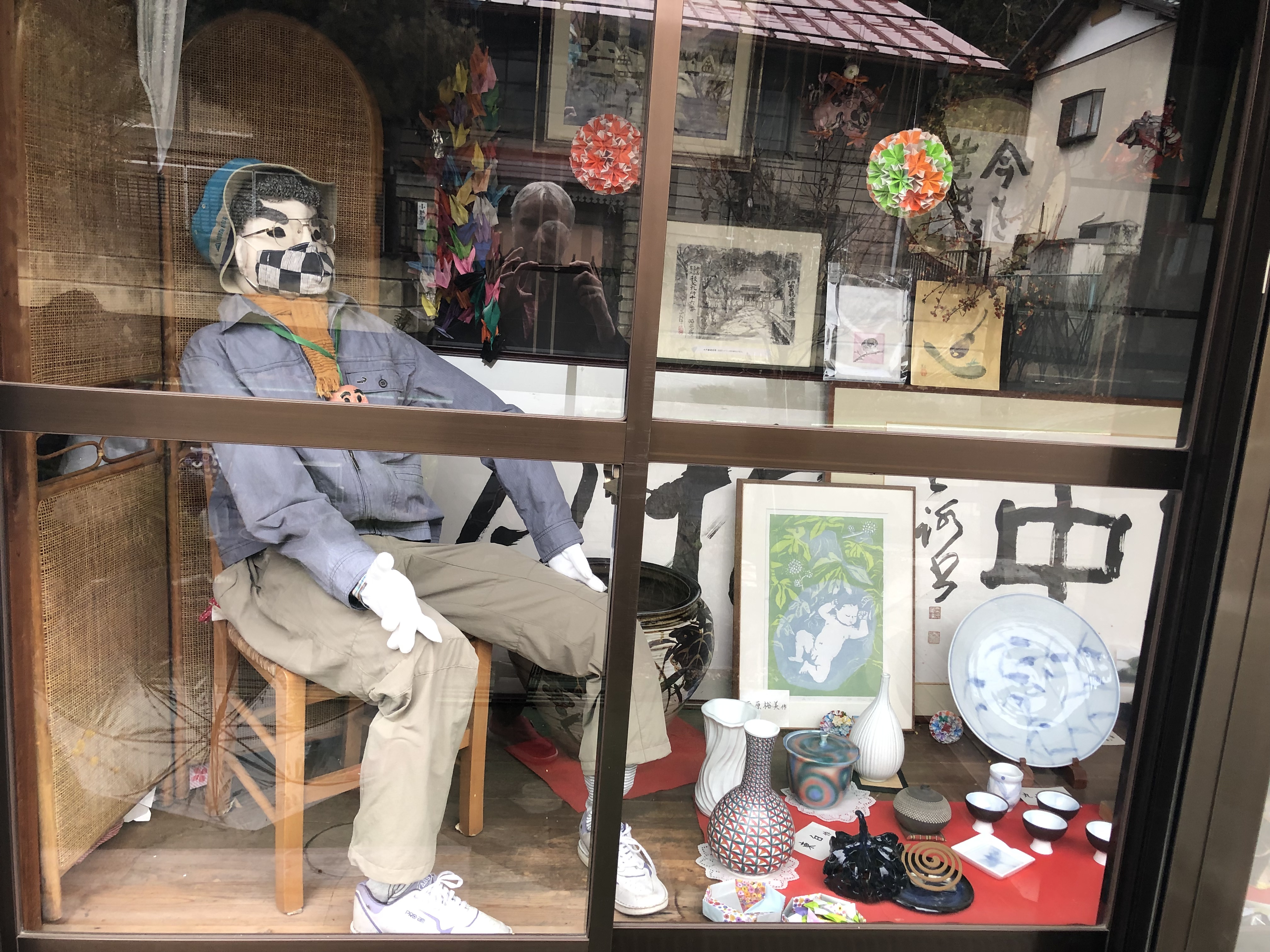
Once teeming with the laughter of children and the chatter of adults, the village now stands abandoned. The only sounds are the soft rustling of leaves and the creaking of the scarecrows. The place feels like a forgotten graveyard, lost to the passage of time. The village is a mere relic of a bygone era, and the scarecrows, with their blank, lifeless eyes, serve only to emphasise the emptiness of this place.

I inspect the scarecrows, their faces weathered and their garments tattered. At times, they are grouped together, yet they remain so alone, like guardians of a lost world, preserving the memories of the village and its people, frozen in time. As I continue to wander through the streets of Niegawajuku, I feel as though I am traversing a dreamlike realm. The village is a labyrinth of memories, where each scarecrow holds a piece of the past, and each step I take draws me deeper into the mystery.
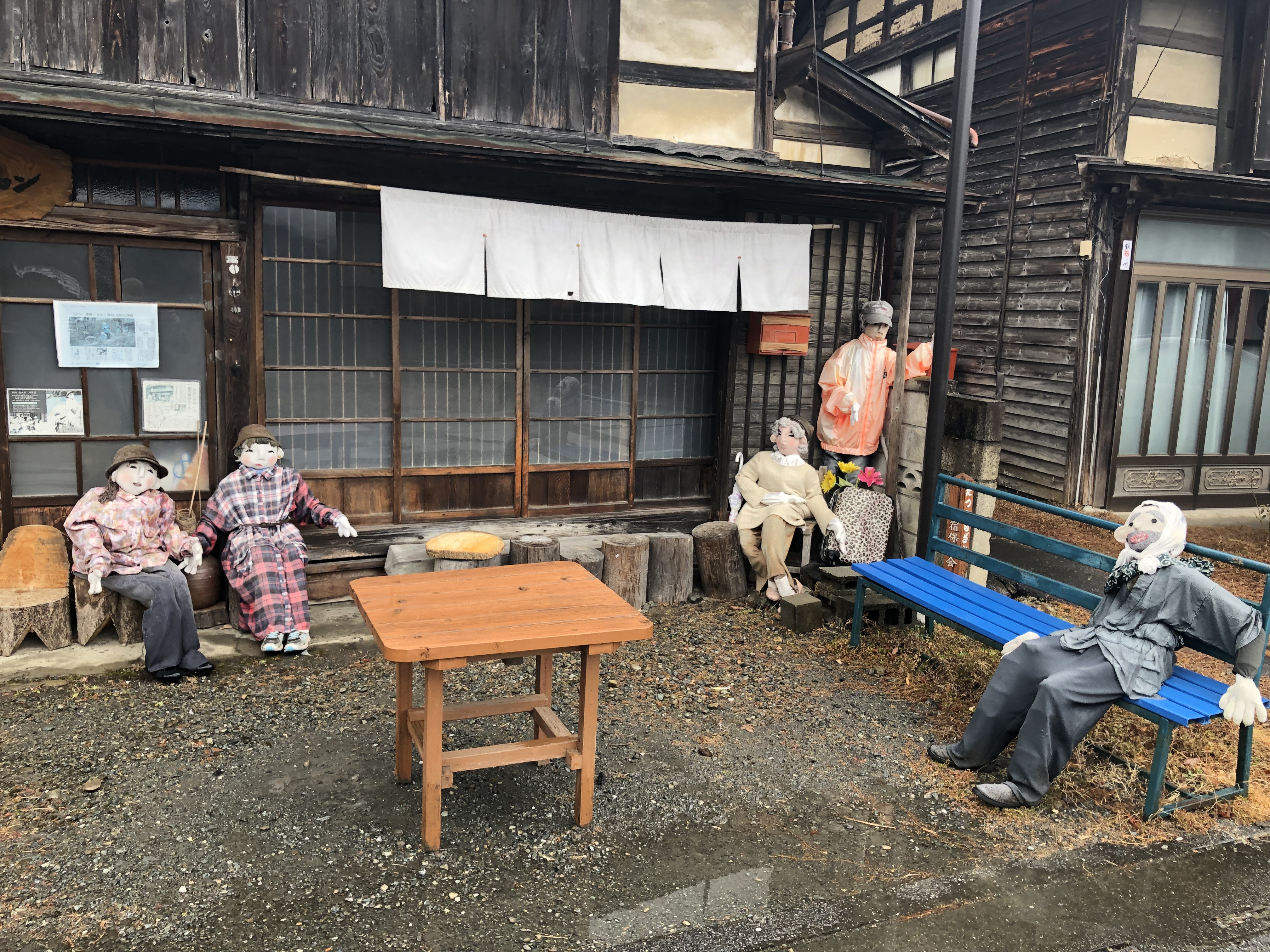
The only thing left here is the echo of bittersweet memories, of what once was and what will never be again. Time passes, and the sun begins to sink behind the skyline, painting the sky in hues of orange, pink, and purple, casting an eerie glow over the village. In the dying light, the scarecrows seem to come alive, their shadows stretching out, reaching toward me.

I leave the village with a sense of longing and loss, the memories of Niegawajuku etched in my mind like a faded photograph.
As I board the train, I ponder whether my transient form will one day be forever immortalised as a scarecrow, or fade into the annals of time like the villagers before me.
Welcome to the World of Mizuki Shigeru

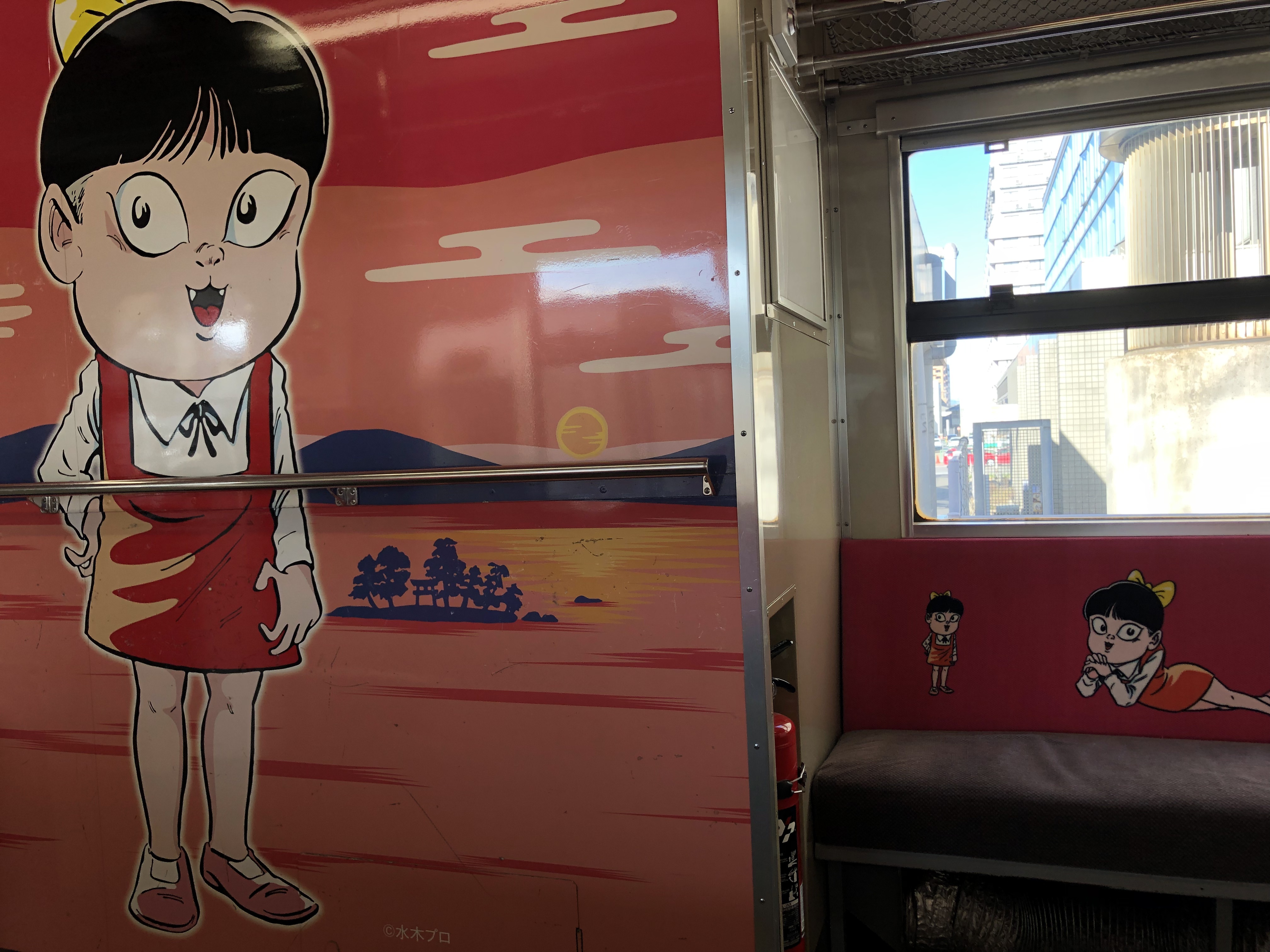
I stand at Yonago Station, my eyes fixed on the tracks as I await the arrival of my train from Track 0. This station, also known as Ratman Station, is located in Tottori Prefecture near the border of Shimane. The stations on the Sakai Line all have an alternative name, and this one is no exception. As my train arrives, I can’t help but notice the lively characters from the popular anime, GeGeGe no Kitaro, decorating its exterior. The walls are adorned with illustrations of Nekomusume, a supernatural cat known as “Cat Girl,” who, to my surprise, also serves as one of the train’s announcers.

As the train chugs along, it gently rocks back and forth, the sensation akin to being on a ship at sea. Nekomusume is normally a reserved yokai girl, however she is known to shapeshift into a fearsome catlike monster with razor-sharp fangs and piercing eyes, particularly when she is angry or hungry for fish.

Finally, I arrive at the port town of Sakaiminato and get off the train at Babasakicho Station, nicknamed ‘Kijimuna’ meaning Okinawan wood spirits. As I exit the station, I feel lost and consider whether I have made a mistake. But after a short walk, I see a sign pointing me to my destination: “Welcome to the World of Mizuki Shigeru.”

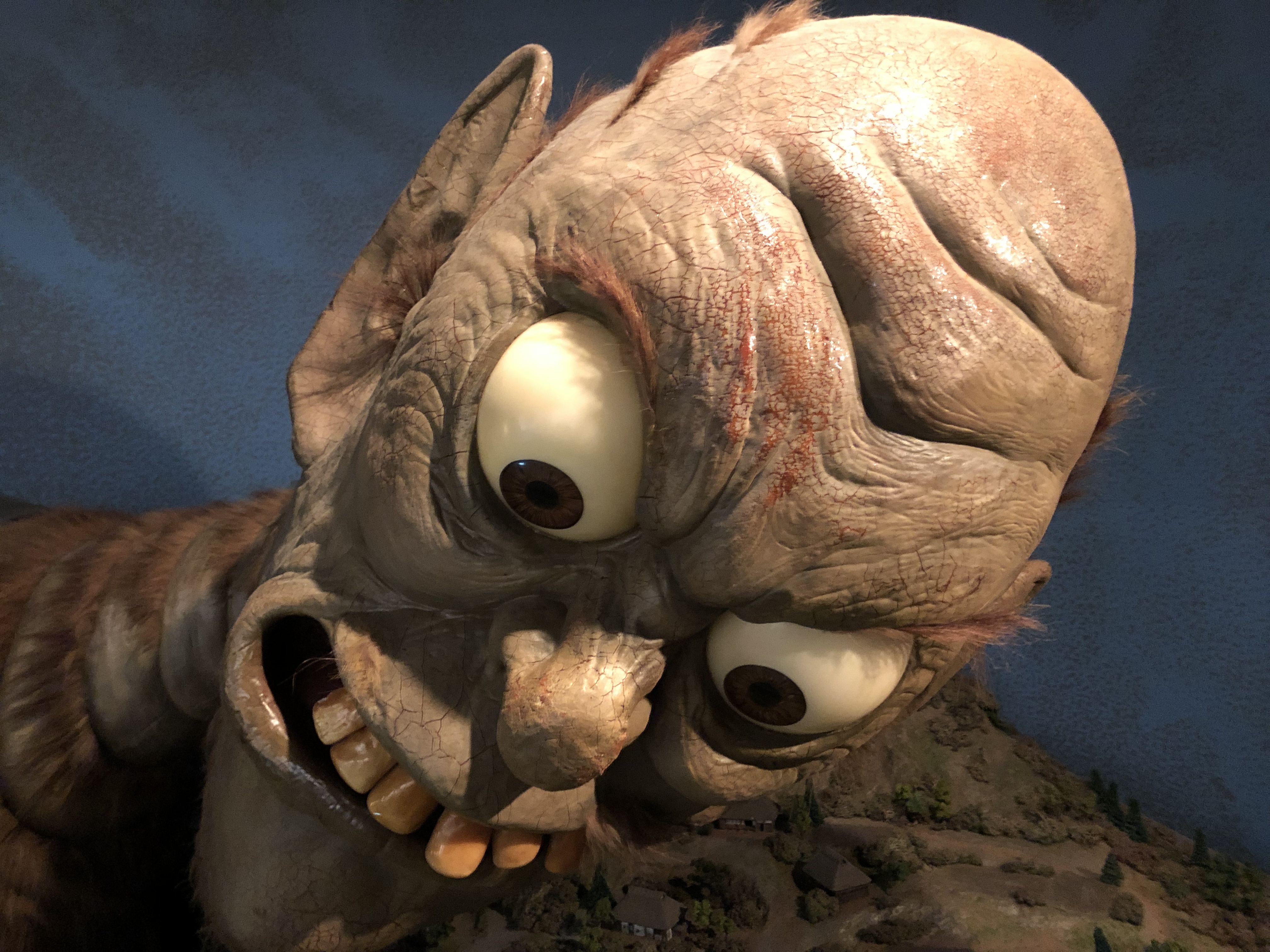
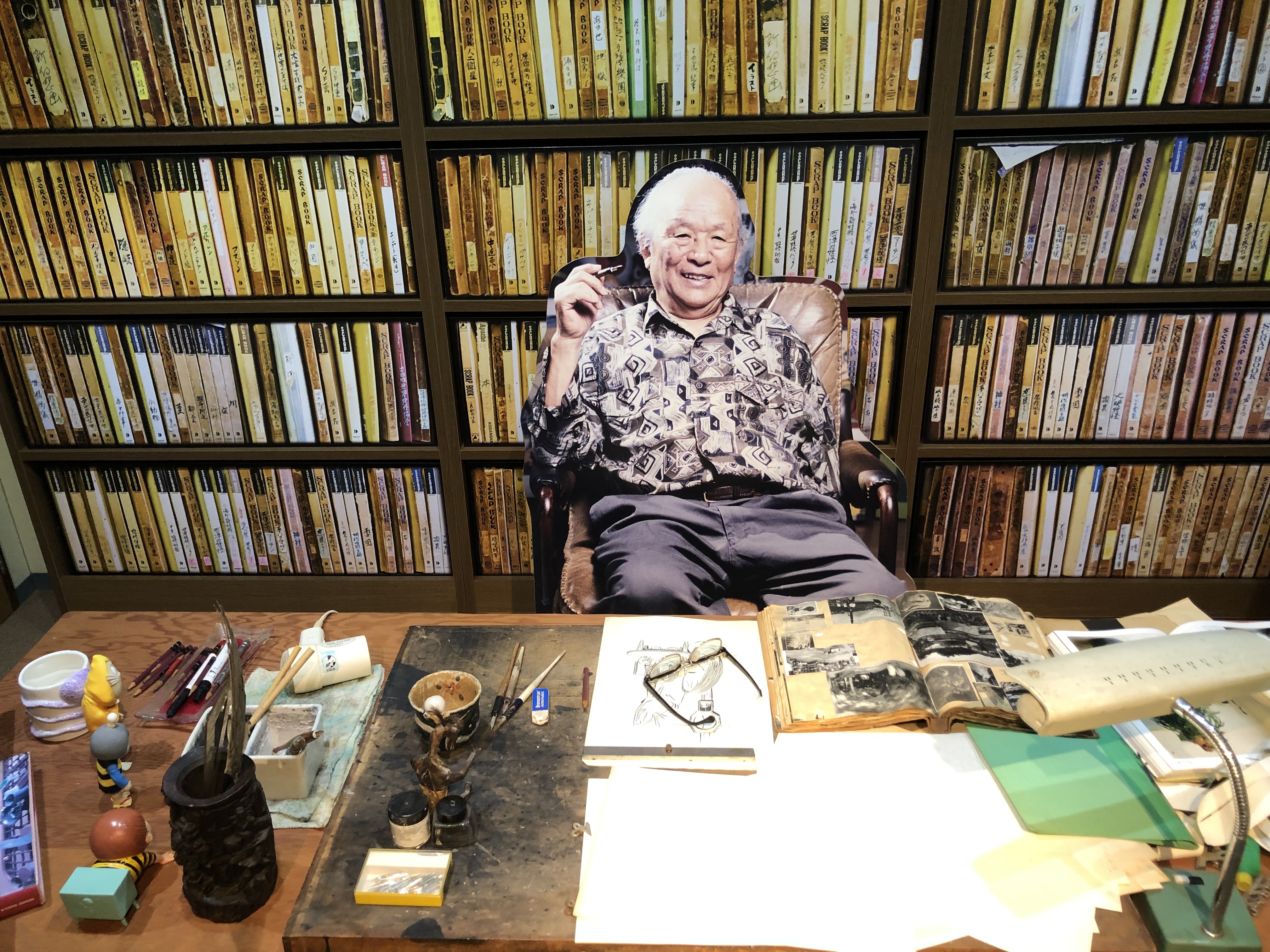
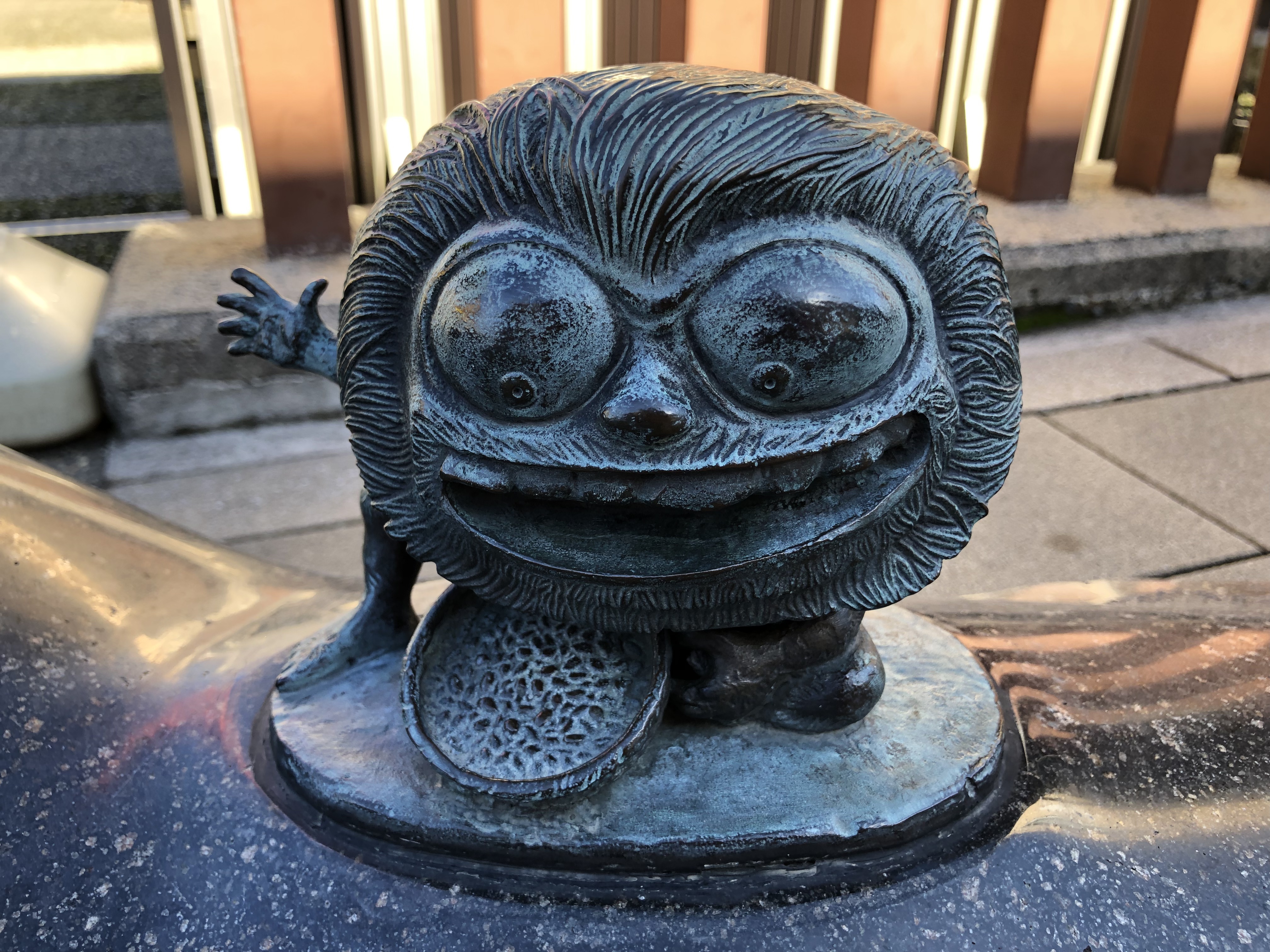
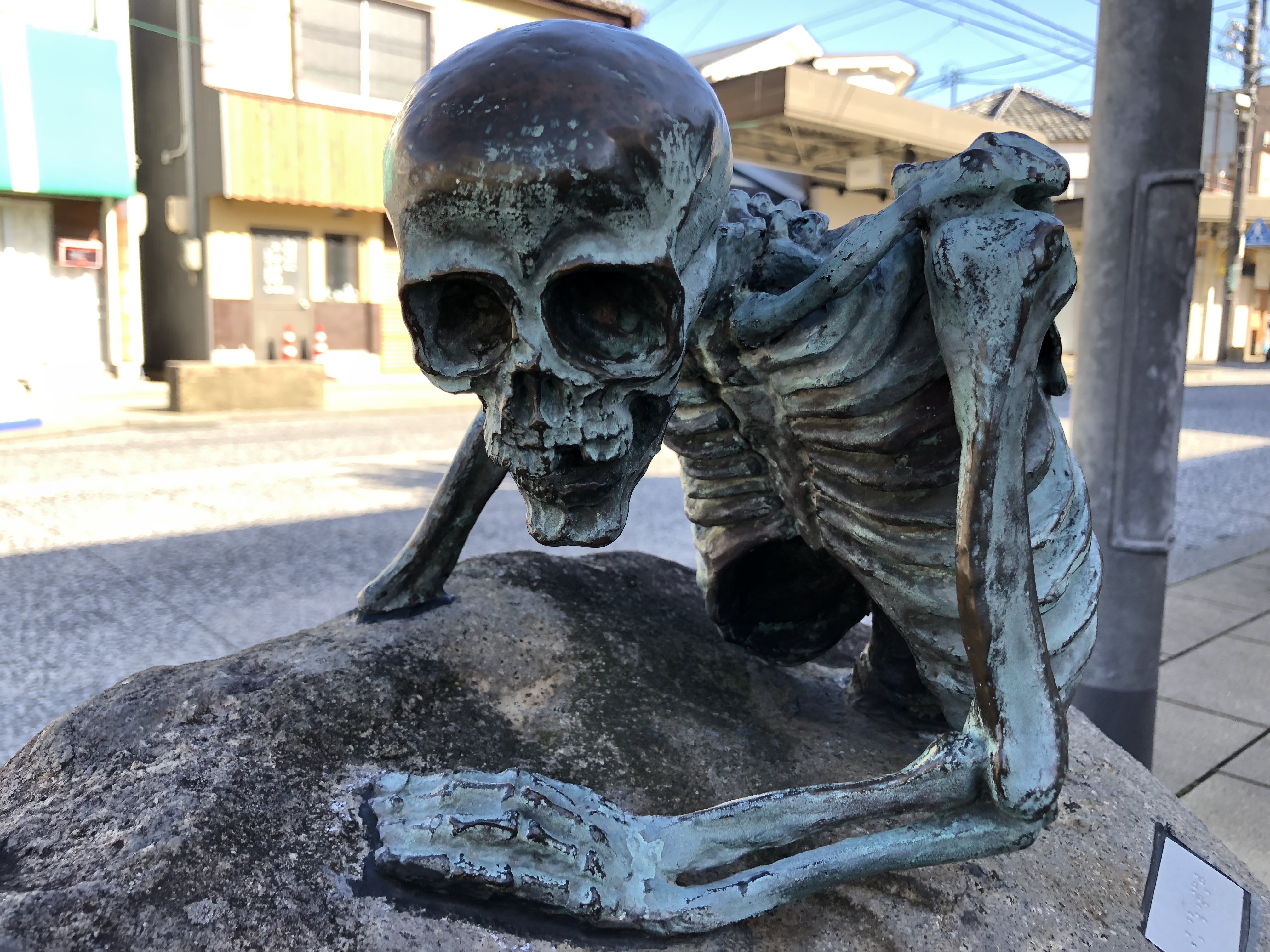
Mizuki Shigeru was a Japanese manga artist, born in 1922 and raised in the town of Sakaiminato. Upon arriving at Mizuki Shigeru Street, I am immediately struck by the abundance of weird statues that line the road. A total of 177 bronze yokai statues, each depicting a different supernatural entity from Japanese folklore, have been placed along the 800-metre street. Mizuki Shigeru made his name by portraying such entities in his work and the area here is dedicated to his legacy.

The street is filled with souvenir shops selling official Mizuki Shigeru goods, and the entire road is dedicated to the artist. It’s clear that even in death, Mizuki Shigeru has become immortalised with not only a statue, but an entire street and a train line. The vending machines are adorned with illustrations of monsters, there are photo booths where you can take a picture with yokai, there is a large museum, and even a place called Yokai Shrine.

The renowned Mizuki Shigeru Museum showcases many of Mizuki’s works, including manga books from his “only-for-rent-manga-period” and other masterpieces about yokai. The museum also displays numerous photographs and materials about the writer’s trips and his research of the yokai world. Visitors can even find yokai that lived in ancient times in Japanese households. The museum truly immerses visitors in the world of yokai and the brilliance and wonder of Mizuki Shigeru’s work.

The museum’s flyer sums it up best, “You will meet a lot of yokai. Hope you will become friends with them.”

Continuing my exploration of the museum, I pass books and board games, and a lot of comics, most of which feature imagery that depicts death. The museum spans a massive ten rooms and includes original cells, drawings, a bronze engraving of Mizuki’s palm print, his passport, and a complete timeline of his life.

Weird, creepy music plays as I pass through a haunted house. I learn in the museum of an interesting temple over in Matsue Prefecture, three hours from here by train. The temple is very much related to the story of Mizuki Shigeru’s life. As I leave the museum I pass a terrifying wall of heads in the Yokai Cave, and finally outside I discover a traditional Japanese garden littered with macabre images.

After a few hours on the train, I arrive at Ichibata-Guchi Station. The train station features a small statue of yokai. As I exit the station, a really old woman approaches me and starts chatting in Japanese. She is surprised to hear that I am planning to walk to the temple, as it is about five kilometres away and up a mountain. The walk is quite difficult, she warns me.

As I begin my hike, I walk down a conveniently straight stretch of road. The first car I see since leaving the station is driven by a Japanese man who, for no apparent reason, smiles and bows his head at me. A short distance later, I come across two stone lanterns that mark the beginning of the route, which will start to incline steeply. From this point, the footpath vanishes leaving two lanes of an empty road devoid of traffic or vehicles. As the path becomes steeper still, it meanders and curves up the mountain and I find that the further and higher I climb, the better the view becomes. At one point I can make out Lake Shinji in the distance.

As I near the top, I realise how hot it is, and it doesn’t help that I am wearing a thick winter coat. It must be 20 degrees. The breath of winter now a fiery gasp, as the planet scorches in its rage.

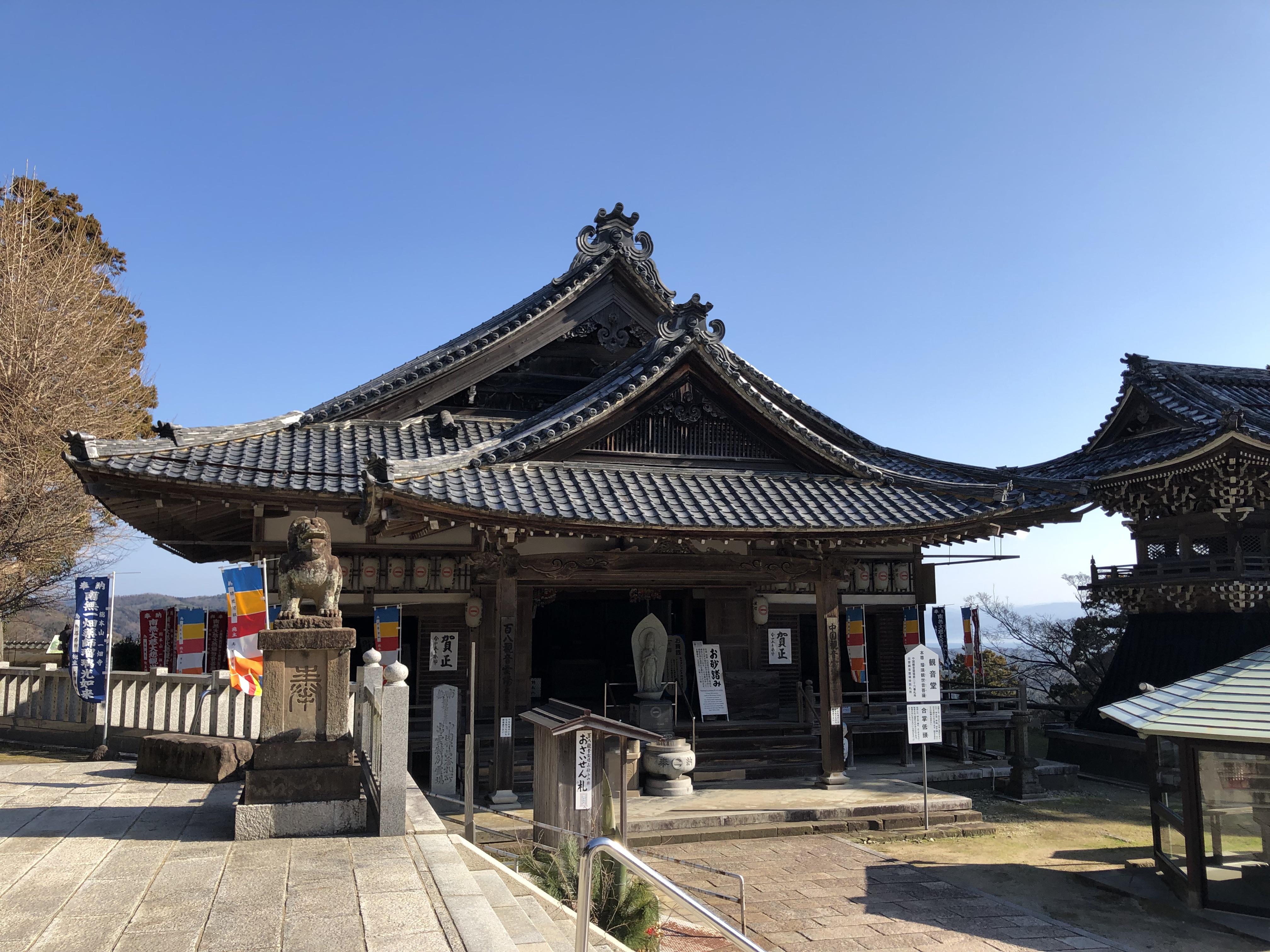
After a challenging hike I reach Ichibata Yakushi, a Zen Buddhist temple, and part of multiple pilgrimages, one of which includes visiting 108 Kannon temples in Japan. The temple was said to be founded after a monk named Yoishi followed three white foxes up this mountain, and decided to build a temple at the site where the foxes led him.

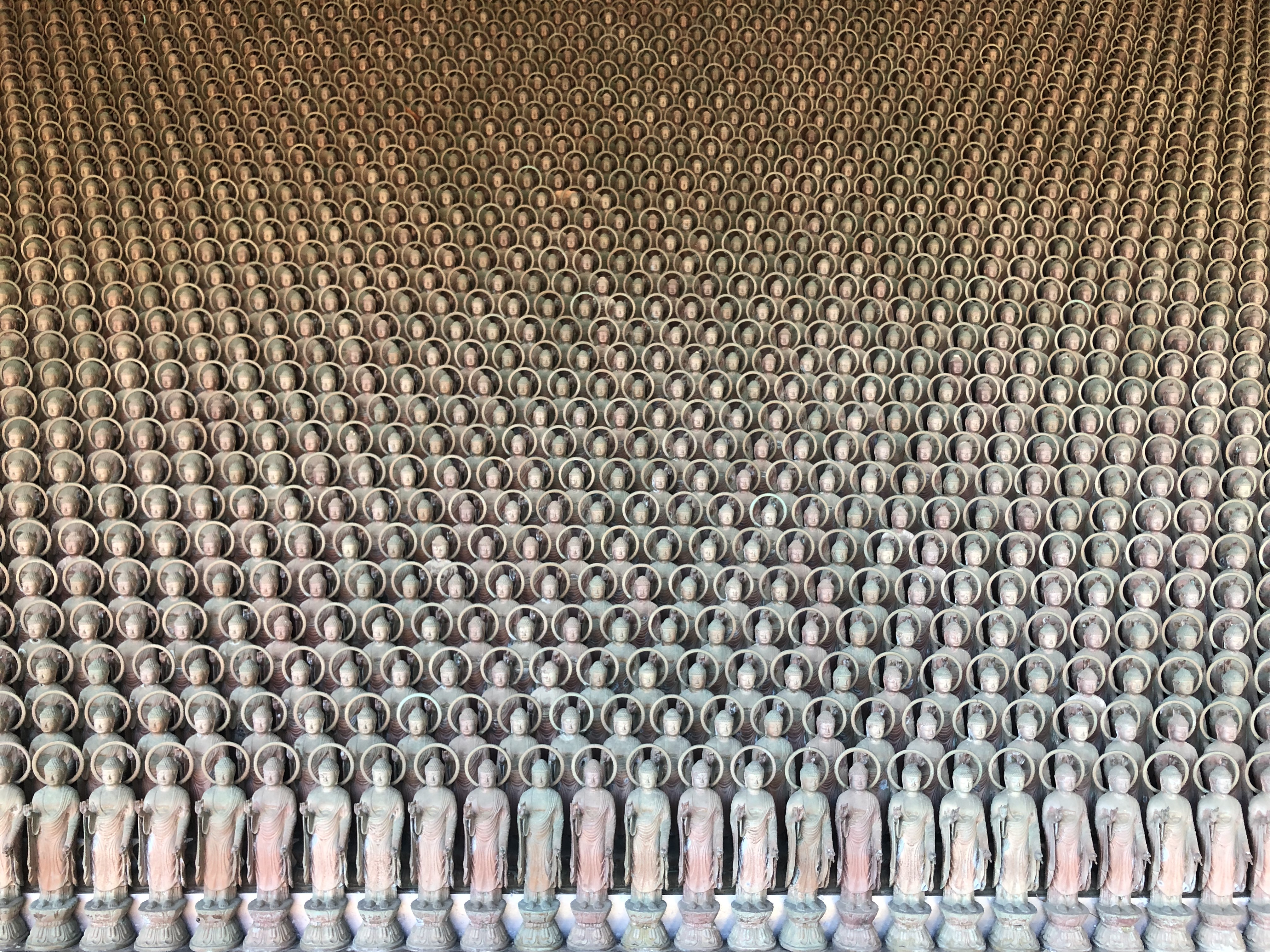
The reason for visiting this temple today is that the story goes that Shigeru Mizuki used to visit here a lot, and that a ghost of a really old woman would meet him here, whispering to him all the legends and stories he used in his creations. I explore the temple grounds, and get a feeling that someone ordered a few too many statues. It is said that there are 84,000 statues here, however, I count just 30,780.

As I continue to explore, I decide that it’s really quite beautiful up here. The area also features mountain cottages to rent for a night for as little as ¥10,000, offers stunning views of the landscape below, and for some reason, appears to be really popular with dog owners, as I count five dogs within the temple grounds.

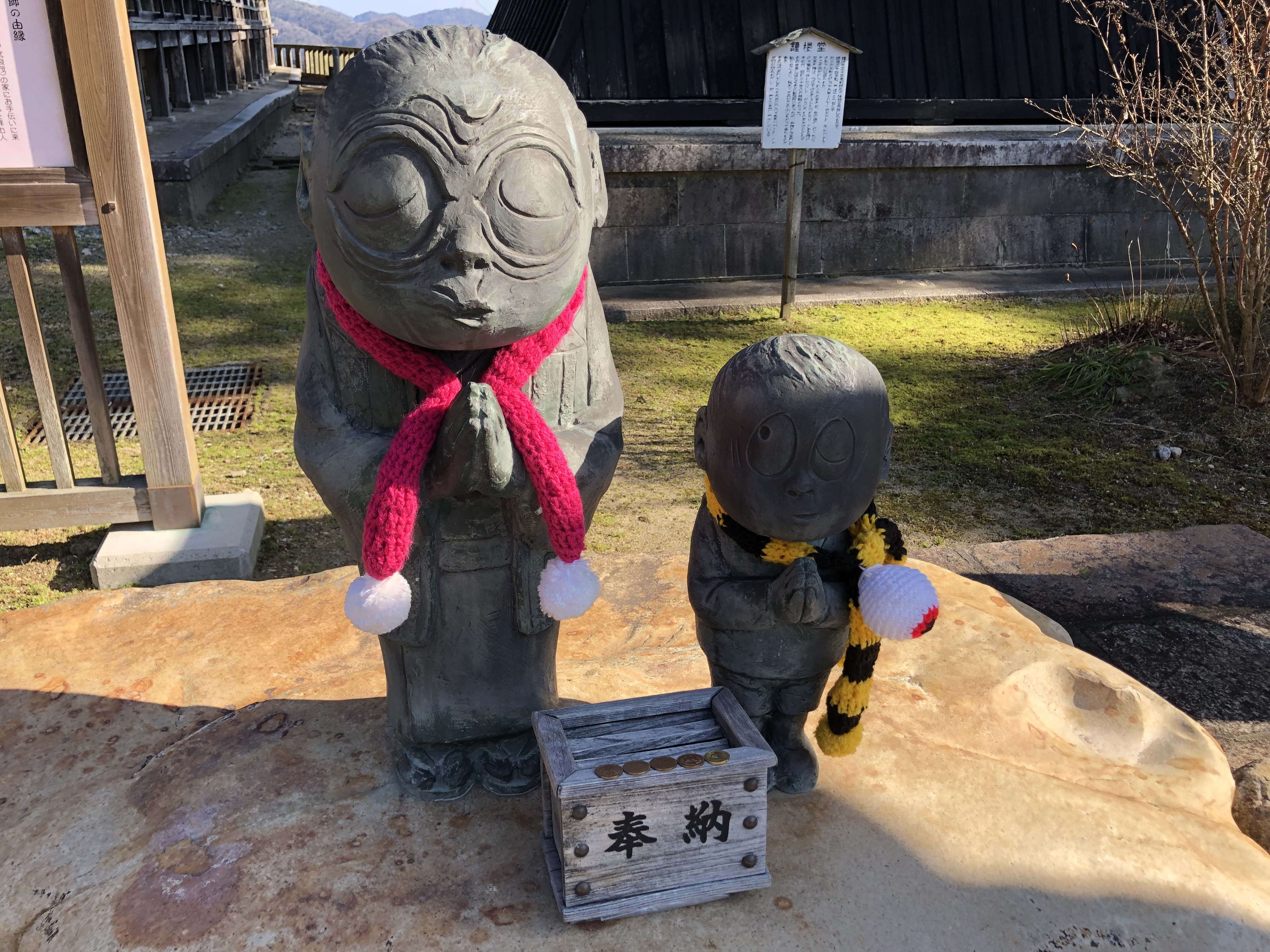
I place some coins in the box next to some statues of yokai, and decide that this is the nicest temple I’ve visited. In the future, I wouldn’t mind visiting more temples on a pilgrimage trail, but for today, I decide it’s getting late, and I head back down the mountain passing a small mountain village, before stumbling across another yokai statute, sitting unassumingly at the bottom of some stone steps.

After climbing up the 1,270 moss covered steps, I arrive back at my favourite temple, exhausted and realising this was just an alternate route. I carefully climb back down the steps to leave. The really old woman I saw at Ichibata-Guchi Station smiles at me as I pass her on the steps, and I can’t help but wonder if she might be Shigeru Mizuki’s whispering ghost.

Reflections on a Winter’s Day

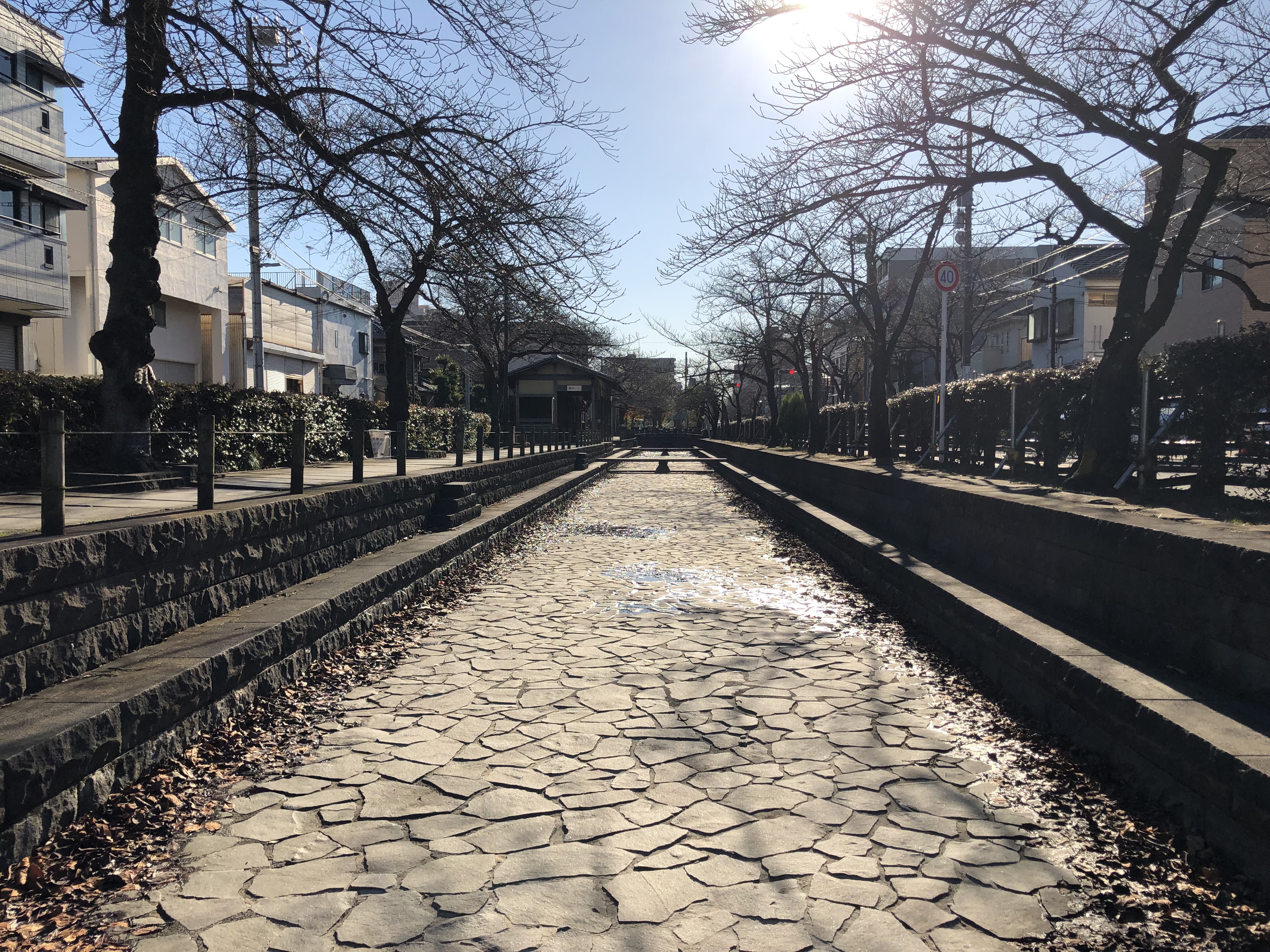
As I walk along Hikifune Water Park Street, a sense of nostalgia washes over me. It’s been five years since I lived in Katsushika Ward, Tokyo, and revisiting my old neighbourhood brings back a flood of memories. The winter morning air is crisp and chill, and my breath turns to white wisps of fog that swirl and still as I make my way to my first destination.

The street itself is unremarkable. It used to be a train line, but now it has been transformed into a park that stretches from the Arakawa River all the way to Ohanajaya. As I begin to walk its length, I can’t help but enjoy the sense of familiarity.

As I wander down the street, memories of my past come flooding back. On a late night walk home with a friend, we had stopped to rest on one of the park’s benches, halfway through our journey. My friend was convinced he heard the sound of a train echoing down the length of the park. It’s said that at night, a ghost train can be heard thundering down where the old train tracks once were, and I’ve heard similar accounts from others. It’s a story that has stuck with me, and one that has been corroborated by others who have experienced it.

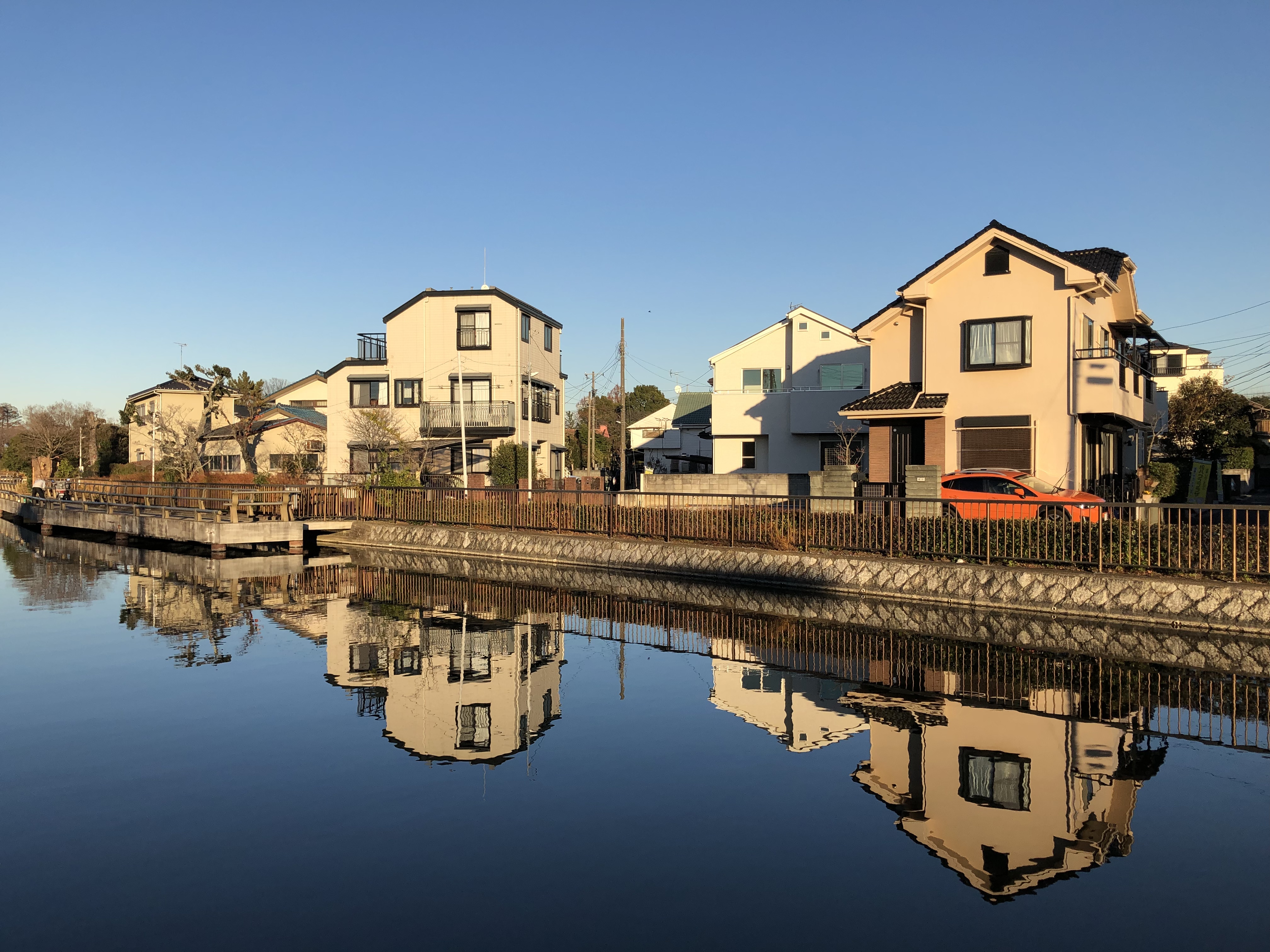
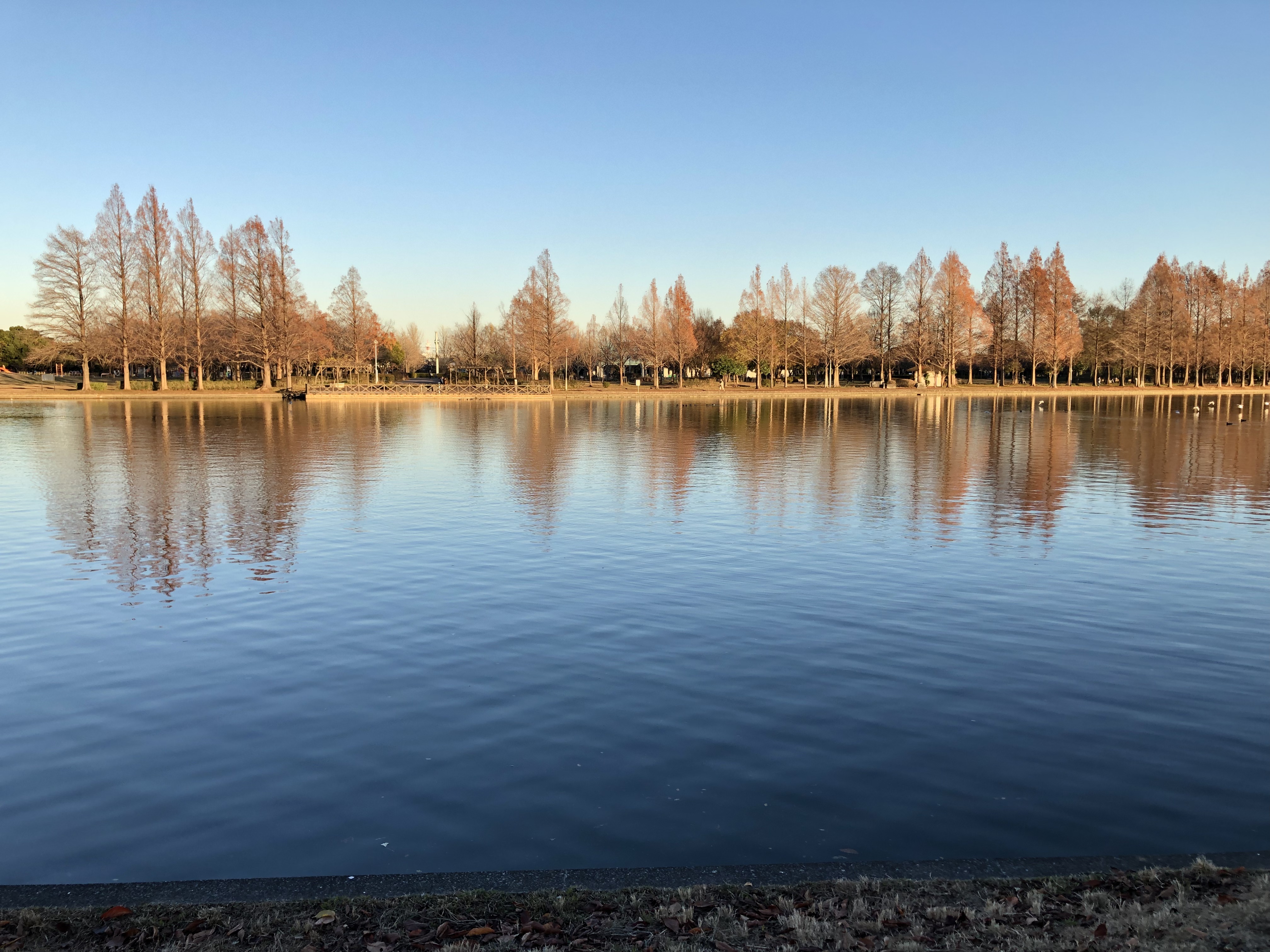
As I continue my leisurely walk, I pass Ohanajaya Station, its name, meaning “Tea and Flowers,” imparting a sense of charm. However, every time I pass by, the song “Govinda” by Kula Shaker runs through my head, as I rhyme its catchy refrain of “Ohana Jaya Jaya.” Eventually, I arrive at the picturesque inner reservoir of Mizumoto Park, my gaze drinking in the peaceful surroundings and the stunning reflection on the water’s surface.

Mizumoto Park is the largest park in Tokyo. Bursting with lush gardens and natural beauty, with a large pond at its centre. The park boasts an aquatic plant garden, a bird sanctuary, a babbling stream field, and three car parks. In early spring the park becomes awash with the gentle pink hue of the cherry blossoms.

I make my way over to one of the ponds and sit upon a bench for a time. I watch as a turtle gracefully swims through the water, its movements causing ripples to spread across the surface. The reflections of the surrounding trees dance and shimmer upon the water, creating a mesmerising visual display. The soothing sounds of chirping insects and rustling leaves add to the peaceful atmosphere, and I am content to sit and take it all in.

As I sit on this bench, surrounded by the tranquil beauty of the pond and the trees, a sense of melancholy envelops me. I reflect, thinking back on the year that has passed, and the ephemeral nature of time. I realise that I don’t have any plans or dreams for the future, and the thought fills me with a sense of sadness. All I know is that for now, I want to keep exploring the hidden corners of Japan and sharing my adventures through my words. But in this moment, the weight of my own insignificance and the impermanence of everything feels almost overwhelming.

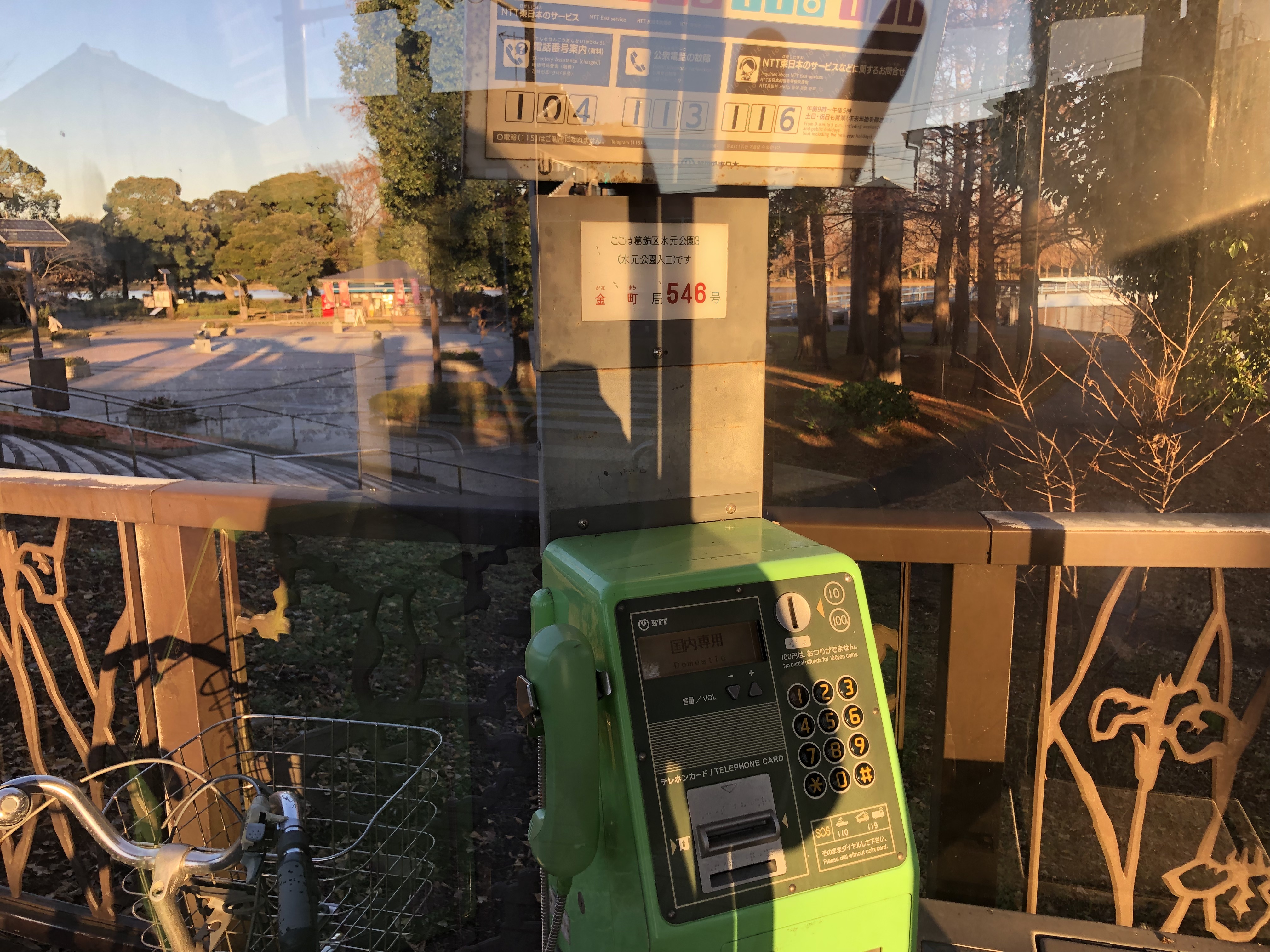
As I continue my peaceful walk through the park, I come across a telephone box nestled amongst the flowers. Legend has it that this particular telephone box is also haunted, and that at dusk a ghostly figure can be seen lurking inside. However, as I peer closer, the only ghost I find here is the reflection of Mount Fuji in the glass. It’s a breathtaking sight, and I stand for a moment, mesmerised by the beauty of it all. For some reason, the mountain is not visible to the naked eye here; it exists only in the glass of this haunted phone box.

As I wait for the sun to set and darkness to envelop the park, I am treated to a daily ritual at 5 o’clock. The speakers throughout Katsushika emit a creepy, slowed-down song accompanied by an eerie chime. The song echoes throughout the park, reminding me that the day is coming to a close and it’s time to return home. The pealing bell of the mountain temple beckons me, promising the sight of a bright, round moon shining down and illuminating the sky in twilight, filled with the brightest stars as the birds begin to dream.

Welcome to the Lunar Industries

Another intrusive start to the day in Japan. The ground rattles like teeth on an icy morning, the skyscrapers singing a chorus of concrete scraping together, pulled apart in directions against their will. It’s another earthquake, the strongest one I’ve felt so far. Suddenly, everything stops. Just as I begin to drift away, hoping to return to whatever fleeting memory lingers in my dream-filled head, the shaking resumes. This time, it lasts only a few seconds, but it’s enough to shatter whatever it was in my imagination that I desperately sought to remember.

I head outside to grab a can of Boss Coffee before taking a seat on the steps leading up to my front door. A homeless man, who resides in a cardboard castle outside the entrance to my apartment, stirs in his sleep. He coughs and groans before looking around and noticing me, perhaps awakened by the early morning shaking of the earth. The man speaks broken English and asks me the usual stagnant questions. It turns out he was once in a famous rock band, a drummer. Aged sixty-five but looking perhaps twice that, I can’t help but feel a little sorry for him. Without knowing his circumstances, I decide it would be rude to judge him any further. I want to ask him why he keeps sleeping where I would normally park my bicycle, but I think my English words might be lost on him. He tells me something is happening on Sunday in the arcade that runs close to my house. With its worn-out shops and shutters, it might well be the first activity this area has seen for months.

tissueboxbed[1]

After becoming fully awake, I can’t help but notice that the moon is still up. Although crescent, the moon’s light casts a shadow, revealing the clear roundness of its form, something I have never noticed before. I begin to wonder if I am still dreaming.

I cycle into Asakusa to find the streets littered with Australian tourists. It seems they have chosen to leave behind the glorious summer weather of their home country for the winter of Japan. Today is Australia Day, a celebration of the first British ships landing on Australian shores. I weave my bicycle between drunk people shouting and fighting on the street. I thought it was the English who didn’t know how to behave. Drunk before lunchtime, not even Mr. Sixty-Five-year-old homeless man can achieve that.

I head across the city for some exploring. Despite spending a lot of time in Asakusa, I’m continually surprised to discover new things every day. Today, I visit what was once a beautiful pond, now home to ghostly apparitions.

oldhagpond[1]

Ubagaike Pond is now enveloped in what looks like a construction site. The pond is completely dried up; only the old stone outline that makes up its shape remains. Many years ago, an old woman lived in a house close to the pond. She lived with her beautiful young daughter. The mother would send her daughter out into the streets to lure in gentlemen, hoping that they would spend the night in her daughter’s embrace. The unsuspecting gentlemen would join the daughter, and after lovemaking, when the pair were both sound asleep, the old woman would creep into the room. With a huge piece of stone, the mother would bash the man’s skull in before taking all of his possessions. This weapon was known then as a ‘stone pillow.’ One day, the old woman threw herself into the pond, an act that was out of character and has no bearing on the rest of the story. These days, at night, you can hear the quiet sobs of her daughter, or so the legend goes.

Back in the slums of Tokyo, I sit in my house, editing some writing that I have been working on, my mind rinsed clear by the haunting melody of Clint Mansell’s ‘Moon’ soundtrack. The drifting peace only lasts momentarily, though. At 5 p.m., the familiar sound of music penetrates my window. It seems that, despite the winter and occasional snowflake, ice cream is sold all year round in Japan.

aisukuriimu[1]

“Aisukuriimu, Aisukuriimu, Aisukuriimayoou.” Typically, the song occupies the space in my head usually reserved for contemplation and creative thinking. Every evening in Japan, I sit suffering in silence, with the ice cream song playing over and over in my mind, like a broken merry-go-round.

I leave the house after an hour of silent anger toward frozen milk and cream, and cycle as usual in the direction of Asakusa. For no reason, I decide not to cycle through the red-light district (my usual route) but take a different path. It leads me to the sound of live reggae music and a smattering of distant applause seemingly from nowhere. I decide to leave my bicycle and head down a narrow side street to locate the source of the music.

Moments later, I arrive at a small outdoor festival. The grounds of the festival seem to combine a swing park and a school playground.

fukushimafest[1]

The festival is here to raise awareness for the area of Fukushima, devastated in 2011 by the Tohoku Earthquake and tsunami. The area continues to struggle, with people living without homes, families not receiving proper support from the government, and rice grown in the area seldom purchased. This festival is described as a ‘Nation’s rallying call for the Fukushima area,’ and in my opinion, it’s a worthy cause.

Inside the swing park, small stalls sell hot food. Inside the school playground, ice is being fashioned into a snow house. Children play within the igloo, while others pose before it for photographs. Reggae music continues to play from the stage, a song about everything being ‘fine fine fine.’ It warms my heart to see this. Something about today has contained a subtle misery — earthquakes and homeless people. A community rallying together to help those in desperate need. Certain people getting drunk without a care in the world, blissfully unaware of the problems faced by others, lost to the oblivion of alcohol.

livereggae[1]

As I head back to the main road, my mind distracted by ice cream and lost in thoughts of others, I realise that I have completely forgotten where I left my bicycle.

Japanese New Year’s Eve

New Year’s Eve in Japan differs significantly from the celebrations and lively scenes I’m accustomed to in England. We kick off the evening at our favourite izakaya, where the owner, in his broken English, warmly greets us with, “Good morning this evening.” The atmosphere is festive, with people enjoying drinks and exchanging smiles all around. Among the options on the extensive Japanese menu is ‘Smile, ¥10, limited to ten per day.’ Fortunately, the stocks are plentiful, so I toss the owner a ten-yen coin in exchange for his wonderfully elaborate smile.

The television set above the bar is broadcasting the 65th annual Kohaku Uta Gassen.

NYtelevision[1]

Kohaku is a live talent battle between two teams of musical acts that have had a successful year in Japan. The white team consists of all male artists, while the red team is composed of all female artists. This exclusive, invitation-only event happens to be the most-watched show on NHK every year. Audience members cast their votes, and the only prize is pride for the winning team.

I was thoroughly enjoying a band of male vocalists singing, “La lalalala lalalala,” when out of nowhere, the owner of the izakaya switches channels to watch the latest episode of the popular pirate anime, One Piece. Food is then served to each of us in tiny bowls—traditional Japanese soba noodles, known as toshikoshi soba.

NYfood[1]

Soba noodles are notably thin and long, with the belief that their length symbolises a long life. It is also said that consuming these noodles helps ward off any lingering ghosts as the New Year arrives. The seasoning for the meal is served from a salt shaker crafted from a light bulb. While I’m unsure if this is part of the traditional way to eat Japanese soba, I find it quite appealing.

One Piece comes to an end, and the owner channel-hops, briefly settling on boxing before switching back to Kohaku. On the television, Idina Menzel graces the stage, singing ‘Let It Go.’ It’s quite rare for a non-native Japanese artist to be invited to perform at the event, but given the immense success of the movie Frozen in Japan, her appearance comes as no surprise. It’s at this moment that I’m hit with my first Tokyo Disneyland flashback.

We continue to enjoy our drinks, with people singing along to ‘Let It Go.’ Suddenly, the owner begins handing out gifts in small white envelopes.

NYsheep[1]

Next year marks the Chinese zodiac year of the Ram, or ‘sheep’ as my Japanese friend corrects me. I suppose interpretations vary across countries. The pendant I receive, if I’m completely honest, looks more like a goat. Regardless, I appreciate the gesture and the unexpected gift.

As midnight rapidly approaches, we finish our drinks and take a wander over to Senso-ji for Joyanokane. At the stroke of midnight, a priest will ring the bell 108 times, symbolising the 108 sins of Buddhism. Unfortunately for me, sarcasm is one of those sins. By merely staying and listening to the tolls of the bell, your body and mind are believed to be cleansed—an excellent way to start the year, if only we could get close enough to hear them.

nysenso[1]

It’s incredibly crowded here. People are queueing up to make their first prayer of the New Year. Others are here to shop at the many little food stores lining the route to the temple, while some are here to count down to the New Year. Our purpose is simpler—we are here to listen to the bells. Eventually, as the clock approaches midnight, we manage to get close enough to the temple, arriving at about two minutes to midnight.

The first bell chimes, and we cheer. Suddenly, as if a switch has been flicked, the plastic sheeting over the market stalls starts to shake. A ferocious wind appears out of nowhere, and the temperature drops to the lowest it has been since I arrived in Japan. It’s as if the gods are angry or trying to sleep, with the millions of people here disturbing their slumber.

It will probably take over two hours to queue and make our first prayer of the year, and the cold is too much to bear. We decide to postpone this ritual until tomorrow. Instead, we opt to get our fortunes for ¥100 each. Surprisingly, none of our group receives a bad fortune. I, personally, receive a ‘Good Fortune’ that says, ‘The linen robe turns into a green one.’ I’m not entirely sure what this means, but I presume it implies that I will turn into a kappa.

After receiving our fortunes, we go our separate ways. As I cycle home, the wind almost blows me off my bike.