A Light for Attracting Attention

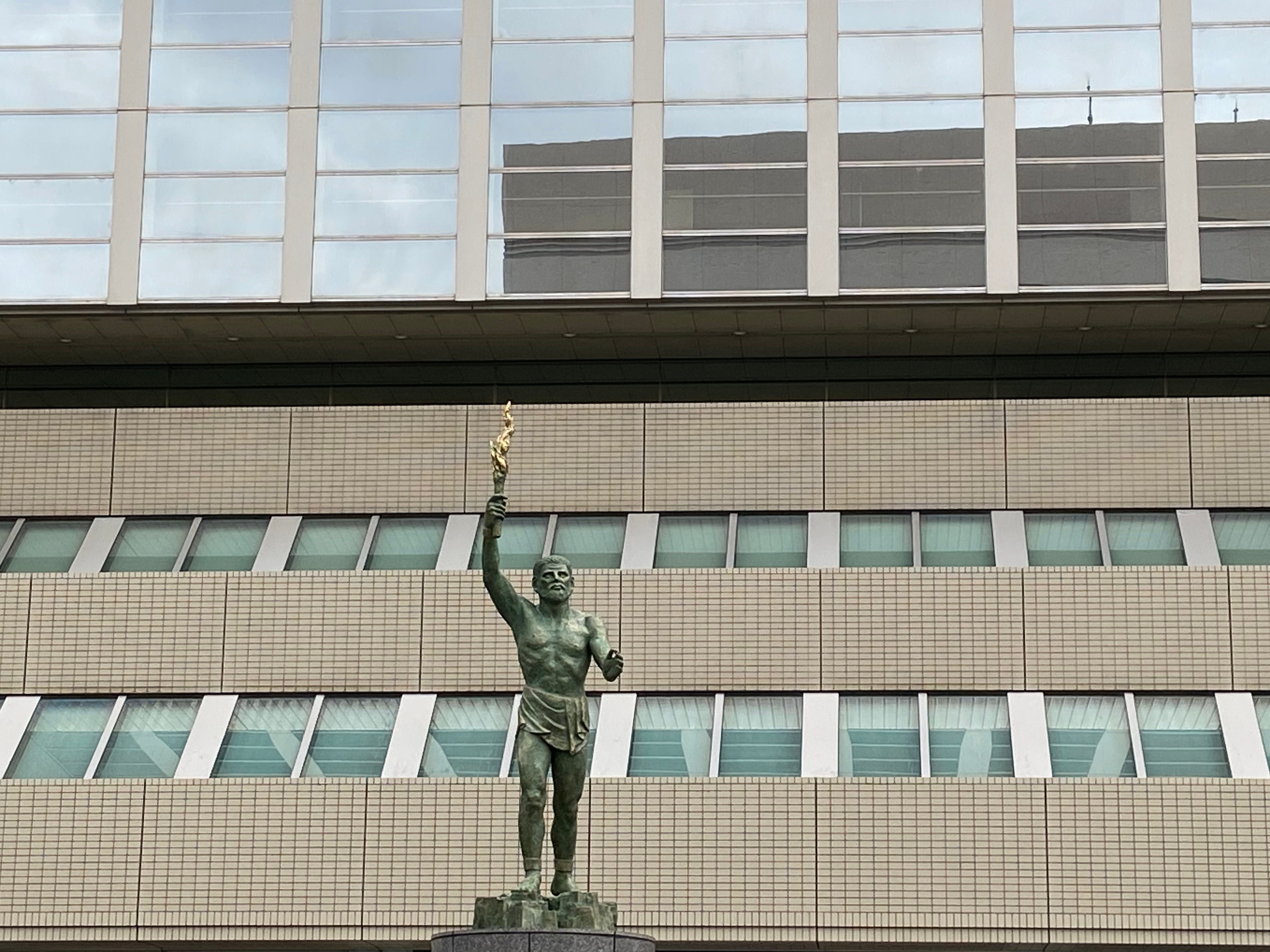
Outside Toyama Station, in front of the Hokuriku Electric Power Company headquarters, there is, for no apparent reason, a statue of Prometheus. I briefly consider shooing away an imaginary eagle pecking at the statue’s liver. Prometheus is carrying a flaming torch whilst posing above a water fountain.
I’m in Toyama Prefecture today for two activities. The first is a special exhibition taking place at the Toyama Glass Art Museum. As I wander the streets, crossing tramlines and dodging potholes, every now and again, through cracks or gaps between high-rise buildings, I catch glimpses of the snow-capped Tateyama Mountain Range in the distance. I’ll be slightly closer to these mountains for my second activity later on, so I’m hoping to get a decent view and a couple of nice photographs.

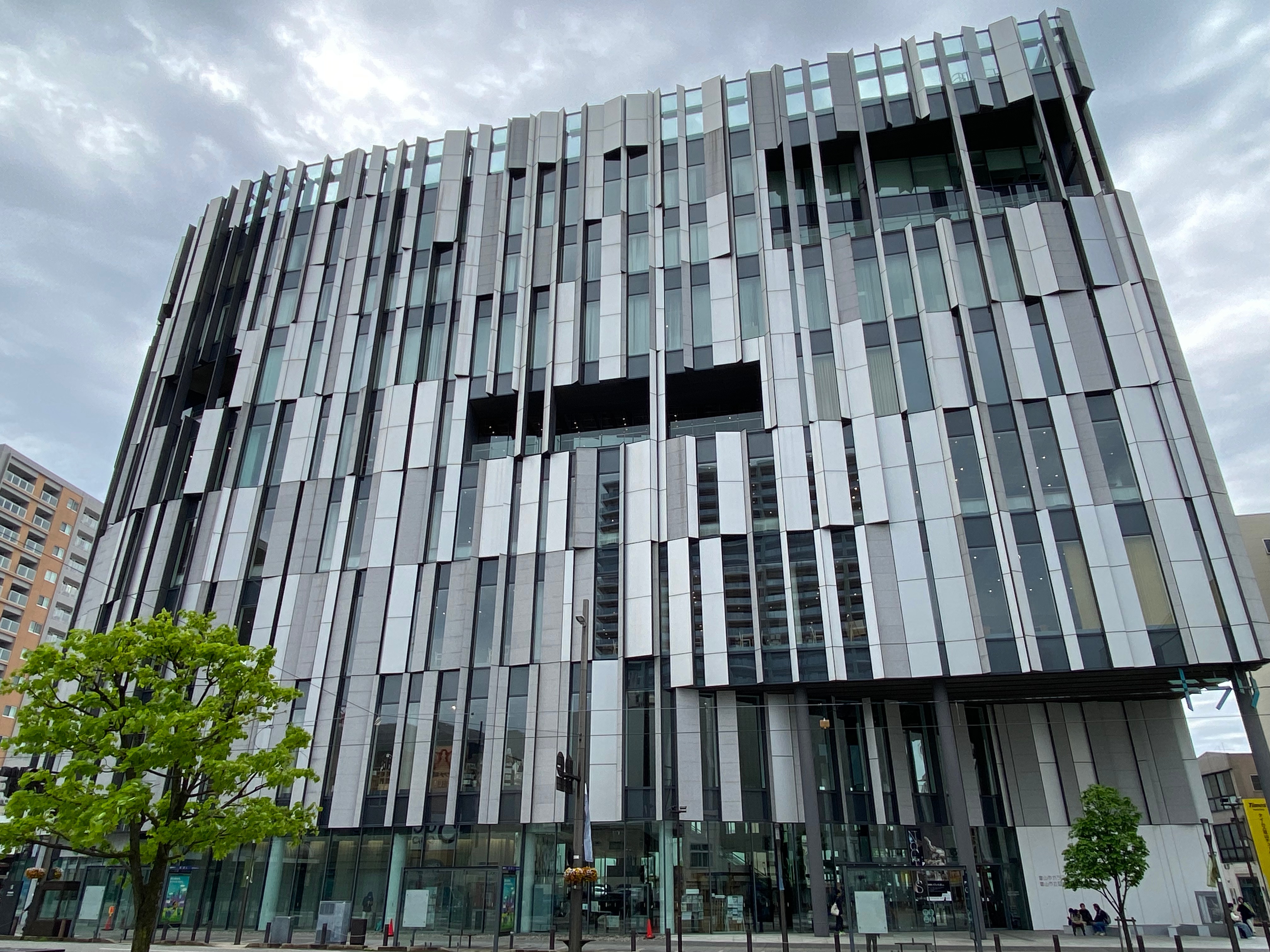
The Toyama Glass Art Museum is not difficult to find. The building housing it is a unique structure. Designed by Kengo Kuma, it features a dramatic diagonal void that acts as a light funnel, channelling sunlight through the interior and reflecting it off cedar beams and mirrored walls.
Inside the museum, there is a massive queue of people, which is a good sign. The tagline reads Glass Art of Shadow and Light, while the exhibition itself is titled Noctis, Latin for “of the night.” Amidst the darkness, inspiration can be drawn from the mysteries that hide there, illuminated by the glow of the moon, a star, or a small flame.

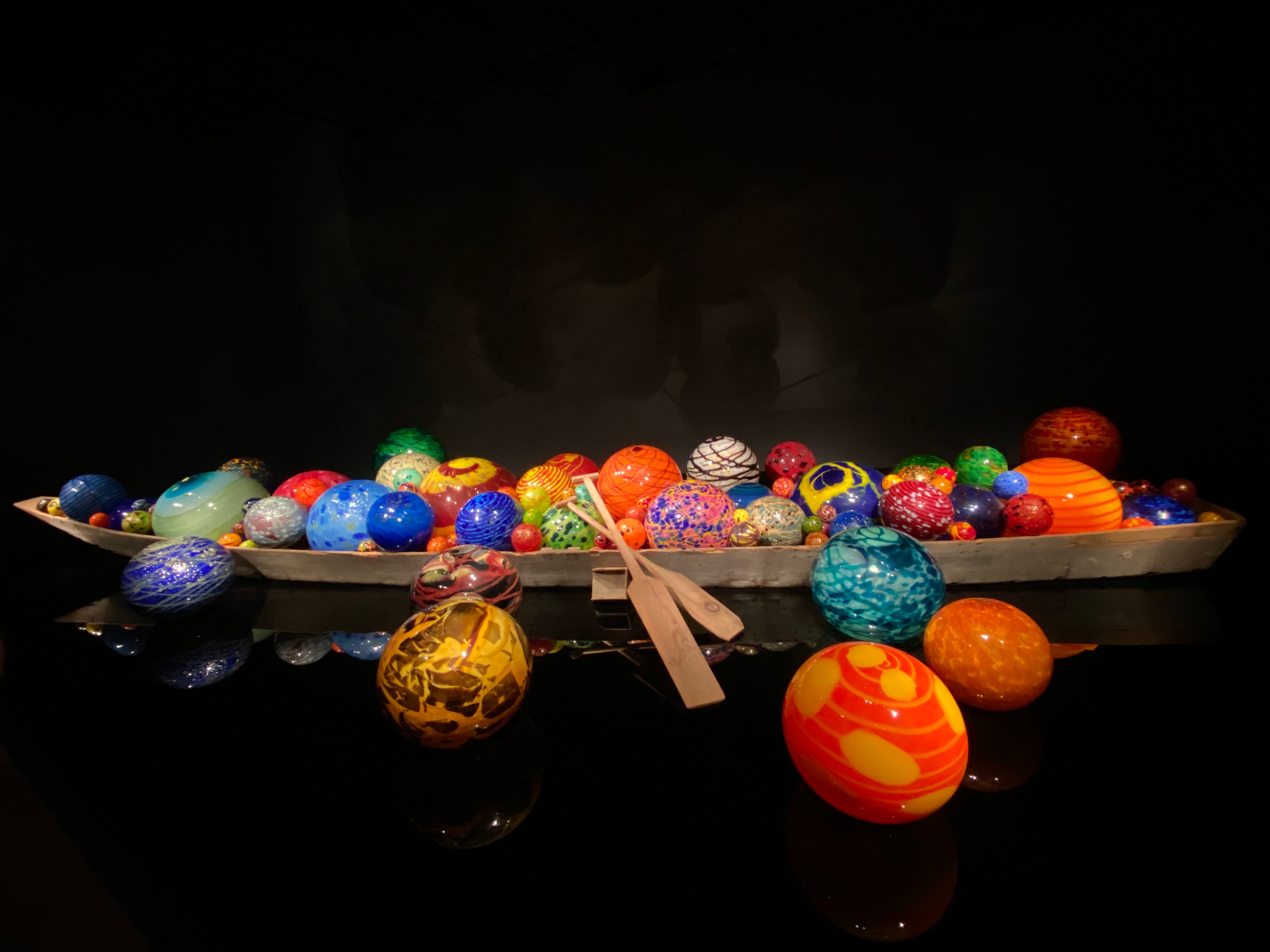
The ticket price also includes entry to the regular glass art floor, which I visit first. Among the collection are instructions on how this type of art is made, where it originates from, a timeline of its history, and a large boat filled with giant multi-coloured marbles.
On the floor below, the entrance to Noctis begins in the section titled The Twilit Forest, the suspension between night and day. The very first room is filled with lamps and the shadows they create. Then there are vases, and their shadows. I feel like my shadow is being watched by the many all-female seated staff. Should I be photographing this? Have I been standing around long enough? Did I look at all the lamps?

As twilight fades, the next section opens into Gathering Dusk, where familiar shapes are swallowed by darkness. Some of the contemporary work featured here includes Kozumi Masao’s special prize-winning Black Symmetry Vase, depicting the awakening of both fear and curiosity. It’s at this point in the exhibition that the artwork starts to become more unsettling, with encounters with creatures that might or might not be real.
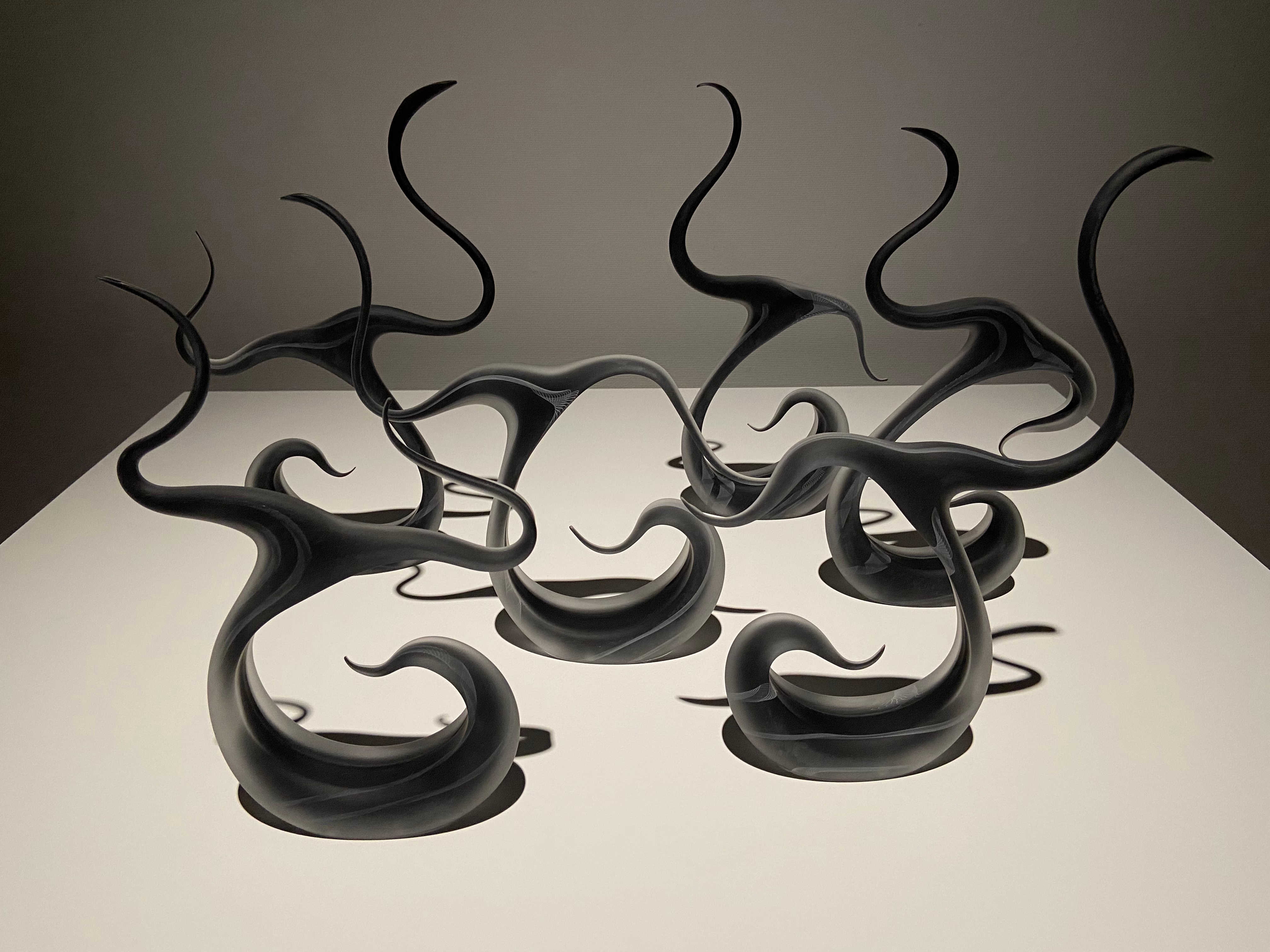
Further along, the museum descends into madness, and everything becomes far less about light and far more about darkness. Encounters with unfamiliar forms and the macabre follow. The depths of our inner world emerge through death, dreams, and nightmares. Kinoshita Yui’s Permeation is my favourite piece of them all. The dense clusters of harshly coloured glass represent the dreadful force of proliferating life forms that slowly destroy us, ignoring everything else around them. It’s absolutely terrifying.

The final section moves into moonlight and the absolute unknown. Pieces here depict not just dreams, but terrors, as we sink into sleep and confront the depths of our boundless imagination. I hadn’t planned to spend quite so long here, and as two hours pass in an instant, I decide to head off to my next destination, an hour away.

Arriving at Namerikawa Station, I finally manage to photograph the snow-capped Tateyama Mountain Range.
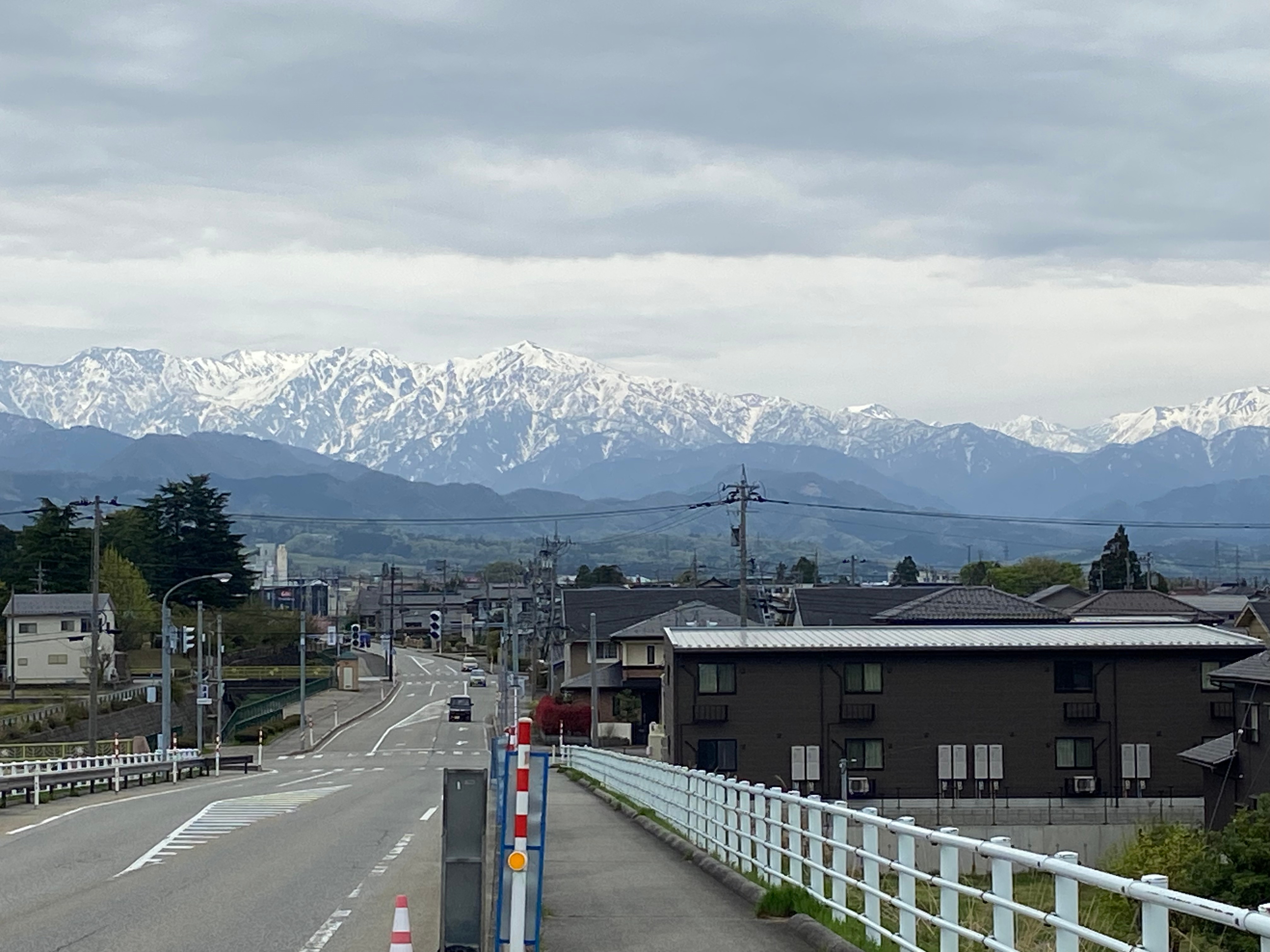
The mountains are stunning. They loom over this place as if their presence alone is enough to surround it, despite me being on the coast with the sea behind me. And it is the sea that’s brought me here, to see the world’s only firefly squid museum.

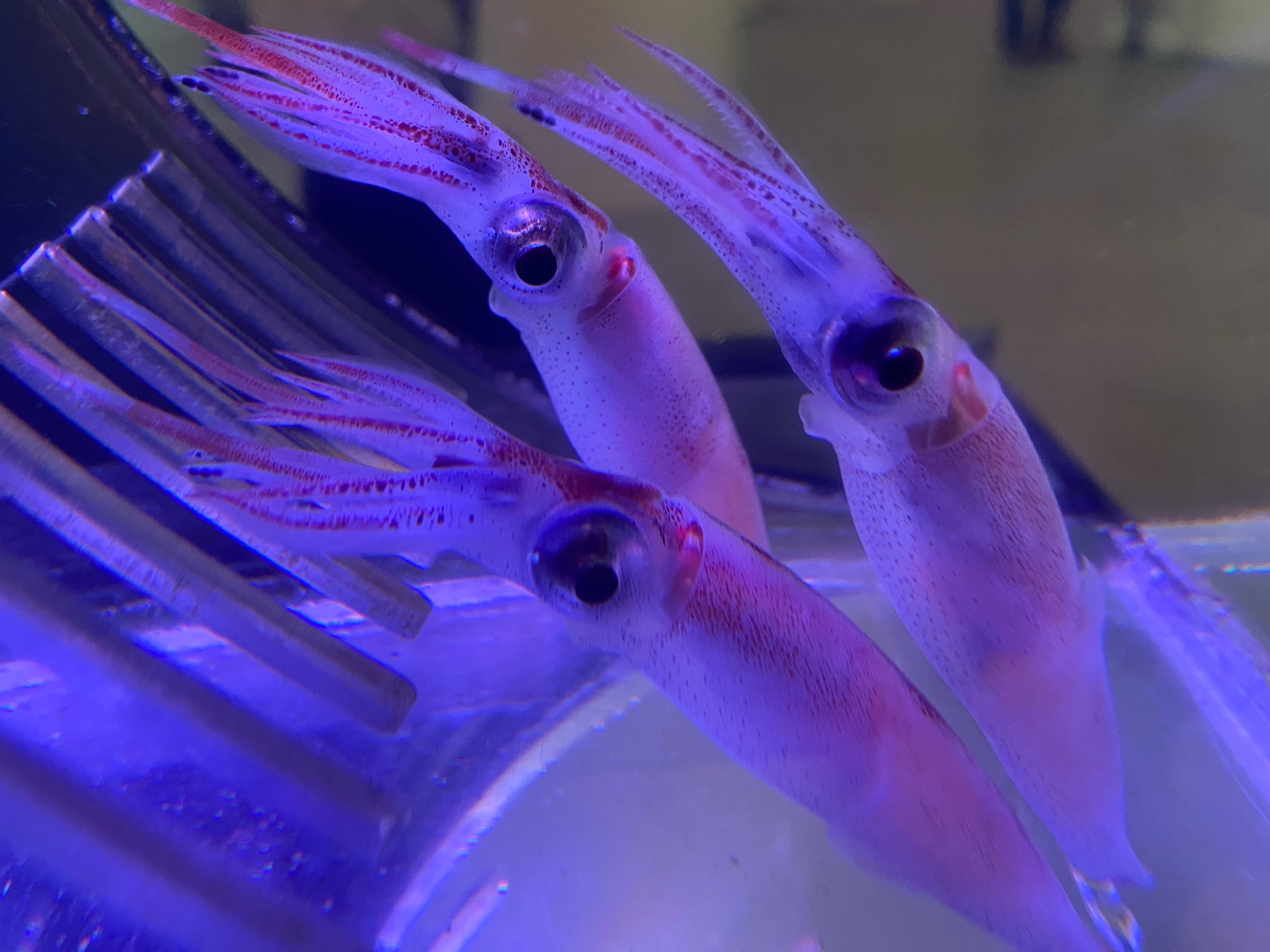
These squid are unique in that they are tiny, deep-sea creatures that light up the ocean in blue luminescence. Each squid is covered in thousands of light organs known as “photophores,” and use this light to match the surface glow, hiding their silhouette as they lure in their prey. They also use controlled blinking lights to trick and lure much smaller fish. I’ve managed to lure in three myself, in a tiny glowing tank.
The museum is pretty interesting; however, almost all of the information is in Japanese. The only parts I understand are that it smells like fish around here, and that no smartphones are allowed in the theatre. I don’t bother with the theatre anyway, as there is a two-hour wait, which is a shame, because apparently the firefly squid put on a dazzling light show.

The gift shop sells glow-in-the-dark squid keyrings and squid-adorned cravat-style neckties. The restaurant sells firefly squid pizza, squid burgers, and squid pasta, but it too has a two-hour wait. I wanted to come here and order the pizza just to add a bitter irony, seeing such beauty, marvelling at it, only to consume it after it’s performed a dance for me. Instead, I take a photograph of the pizza from the menu, just to show how unbelievably unappetising it looks. Had I not had to wait, I would probably have changed my mind about eating here anyway.

I head back toward the mountains, to the station, and decide that the only thing I’ll be consuming today is the view.
Strange Tales of the Crescent Moon

The morning sky gave me a look as I stepped out onto the platform at Yabuzuka Station. It’s a small platform with just two tracks and no one around to ask for directions. I’m certain I’ve arrived somewhere between Gunma Prefecture and the Edo period.

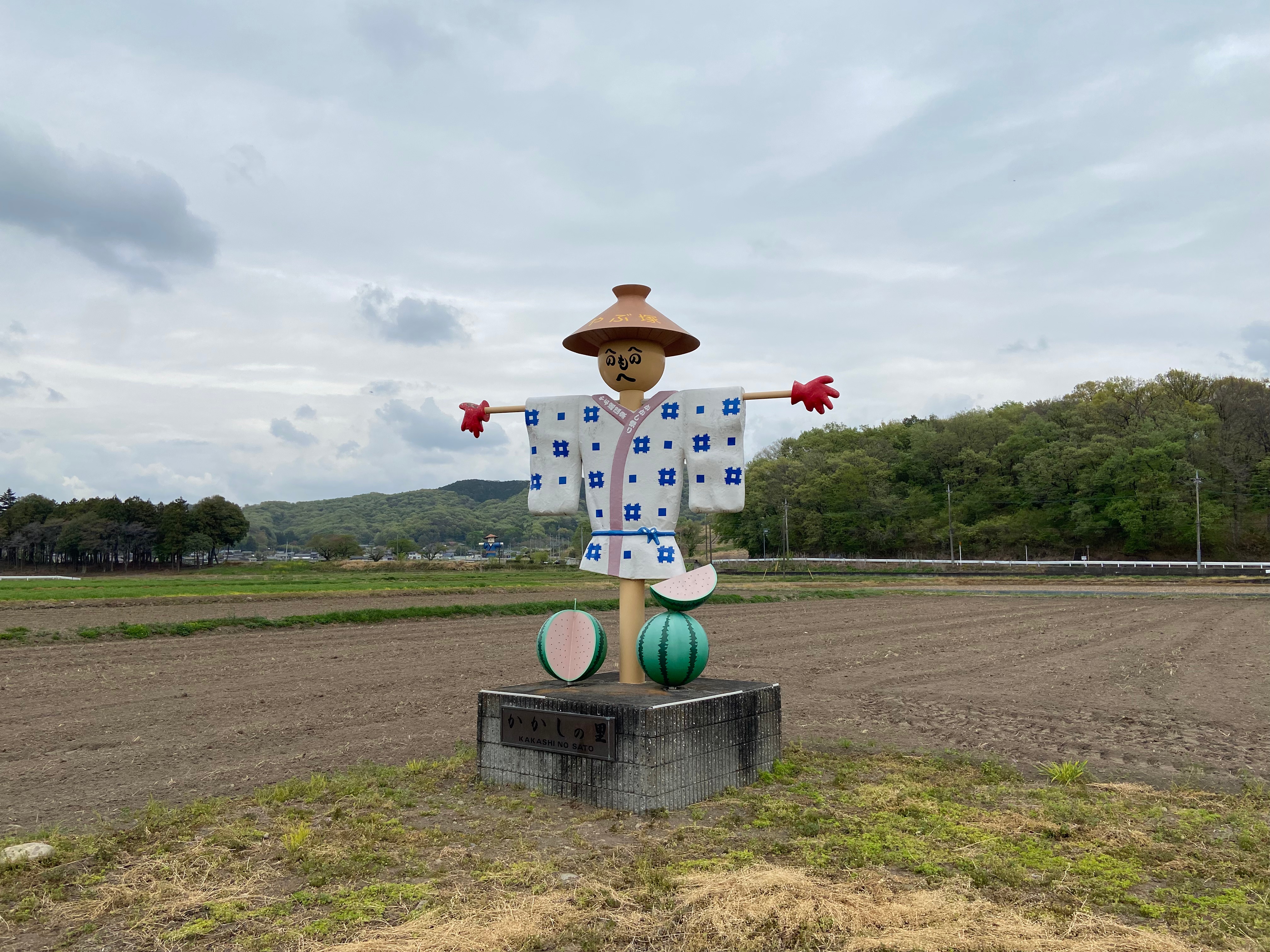
The station exhales me into a residential area of a few low houses, a solitary vending machine, and fields stretching across every distance. Staked into each field, a Japanese scarecrow stands alone.

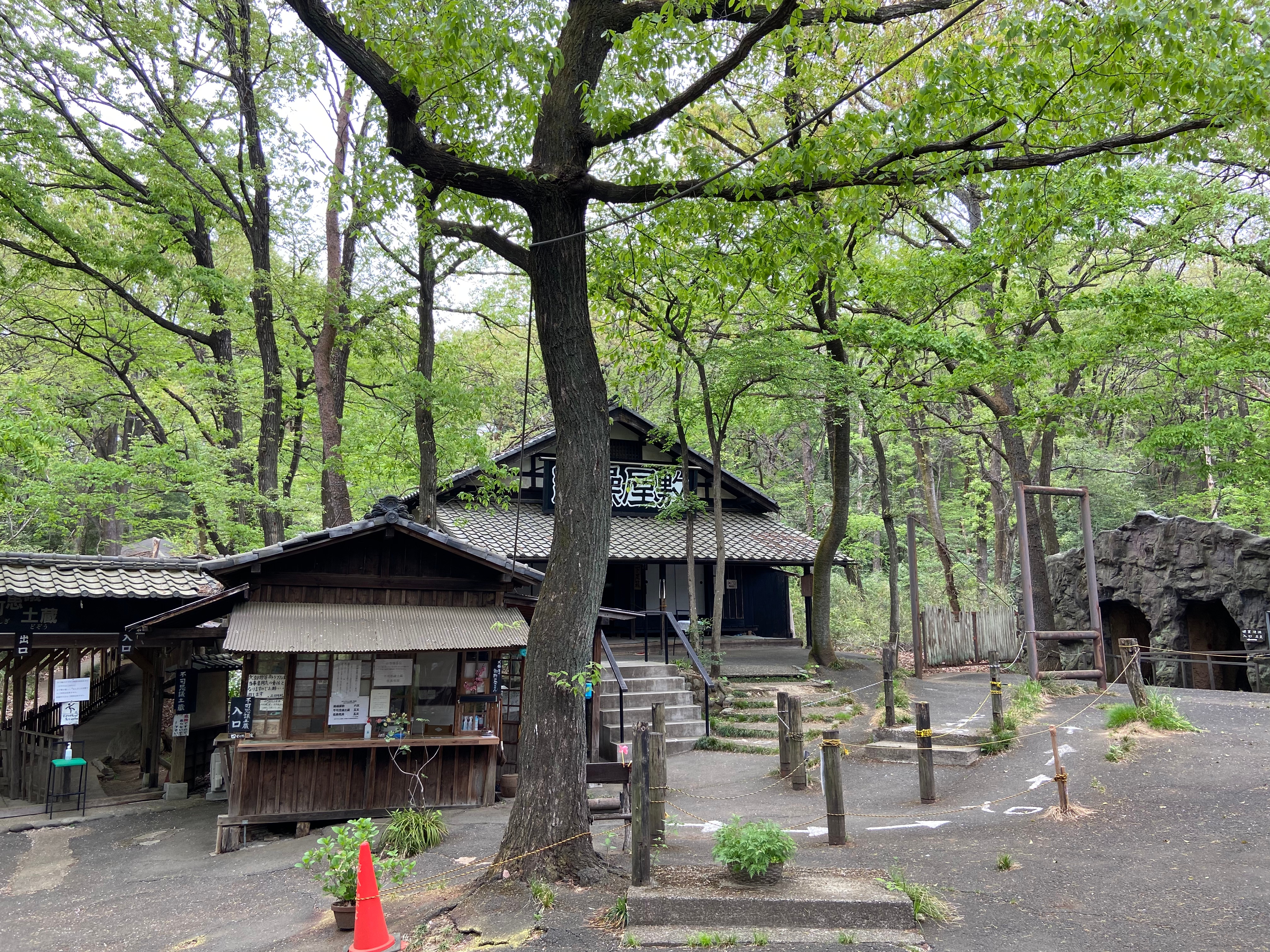
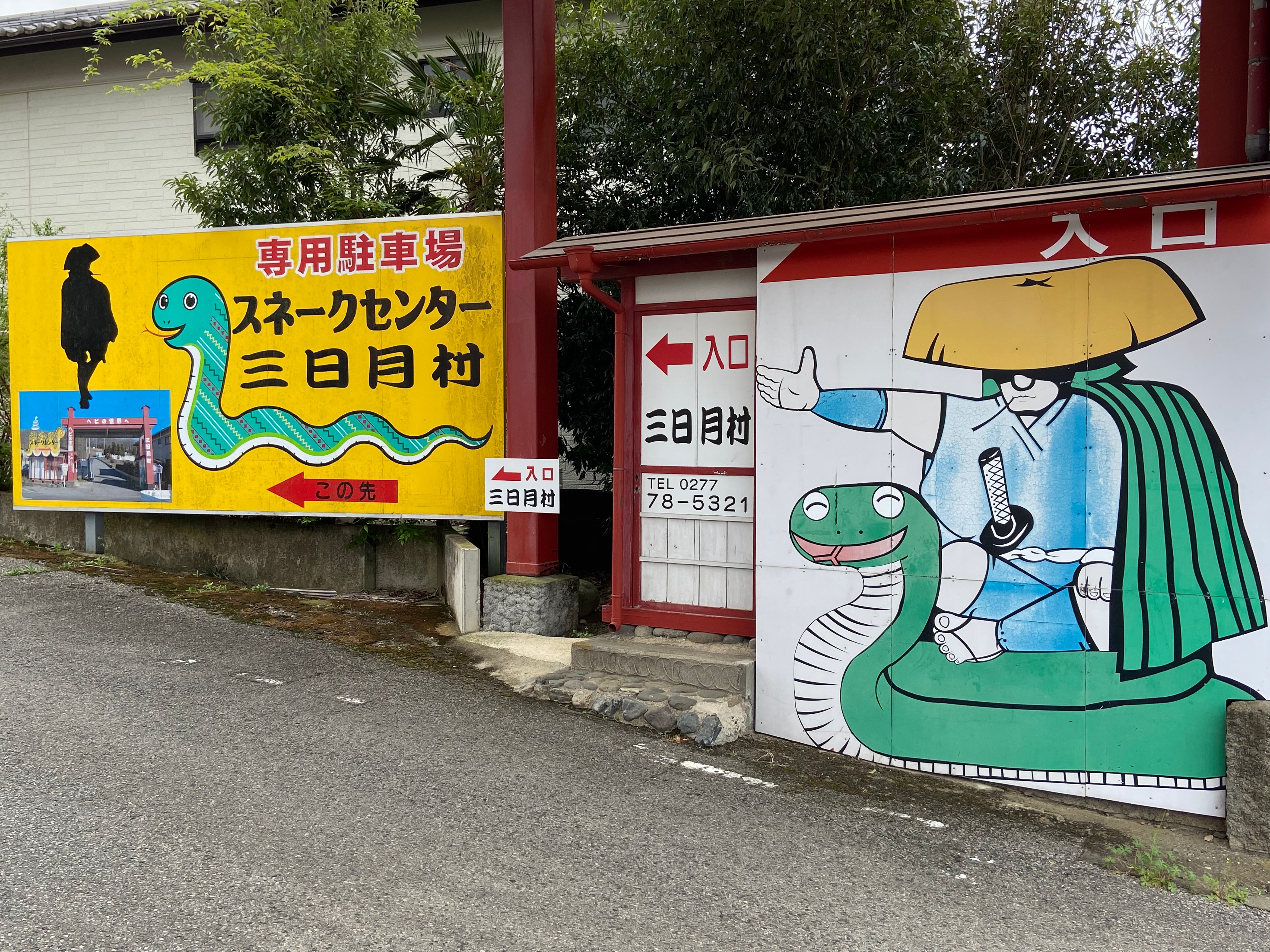
I walk further. My destination today is below the clouds, along a humid forest mountain path. The cicadas hum with an almost animatronic precision, their vitality echoing across the fields and back from the mountains. As I wander, I see an entrance marked by a billboard that features a samurai riding a snake.

Mikazukimura, which roughly translates to Crescent Moon Village, is a historical theme park that faithfully reproduces a village from Edo times (1603–1868). It aims to capture the nostalgia of the era, but I wonder, is it ever really nostalgia if you were never there? I don’t ever recall the Tokugawa shogunate popping round for a cup of tea.

Anyway, at the entrance I buy a ticket. I also have to exchange some Japanese yen for replica Edo coins. These coins are used to buy fish-shaped waffles, crafts, or souvenirs in the park. The unusual time dislocation here means I’m literally buying the past with the present using fake plastic coins. I don’t mind it though. It adds another dimension to everything.

Inside, thatched tea houses make up the backdrop, layered with tempera paint shops, tempura food stalls, temple buildings, and three main attractions. It’s like looking into a painting of a time long gone, just without any people in it. In fact, the dirt streets of the village are so quiet that it almost feels like the sort of place where a ghost story might have begun… or ended.

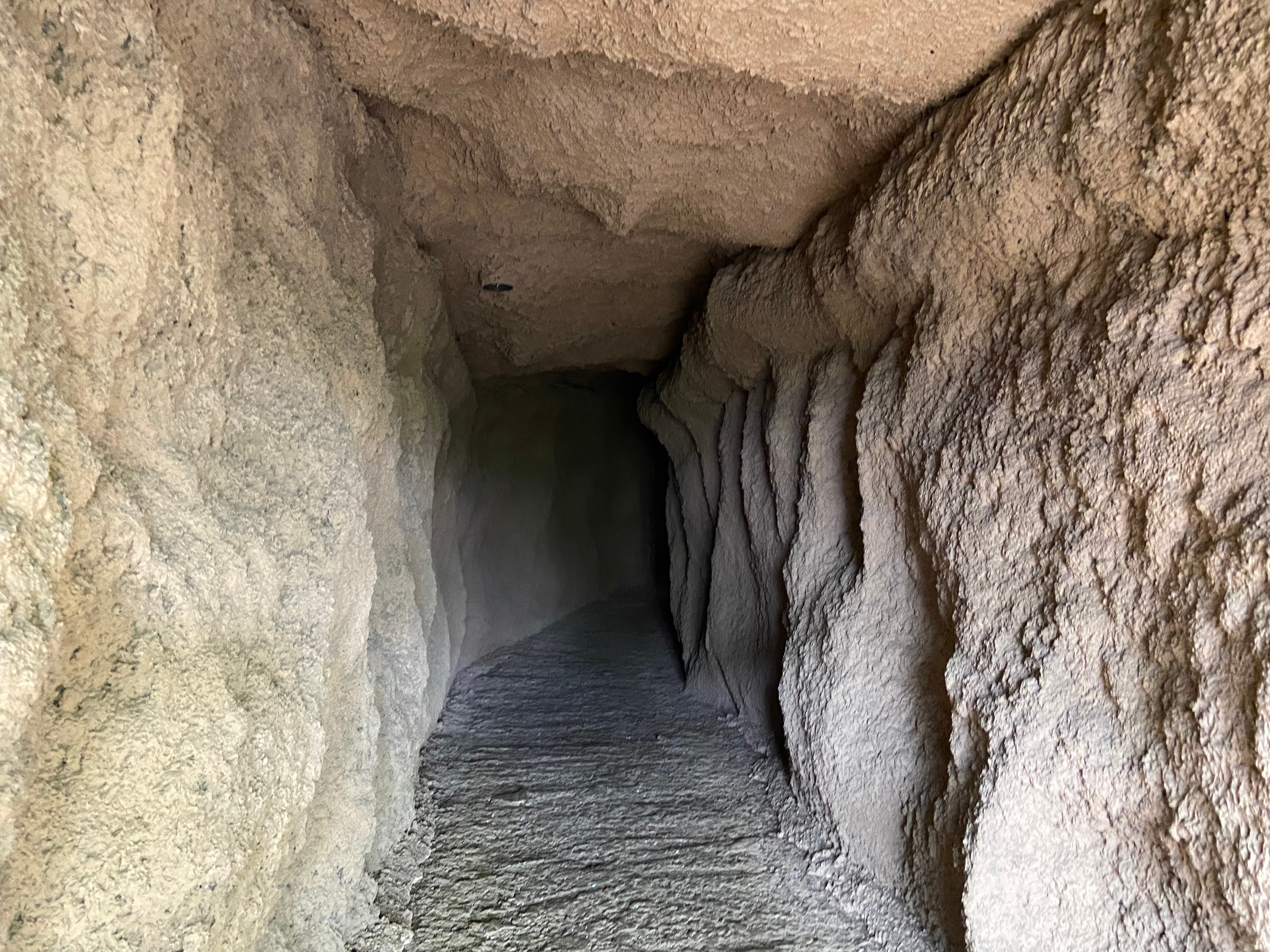
The first attraction is Kaiigendo, a mysterious trick-filled cave activity. The sign says, “This attraction is caving,” but I certainly hope it isn’t. To enter, I have to buy a ticket with my special coins. The lady here stamps my attraction card, before rather quickly explaining, in Japanese, what feels like a lot of safety instructions I probably should understand, much to my own confusion.

She then hands me a torch, says, “No ghost. No scary,” and wanders off.

The cave describes itself as an underground tunnel filled with traps and hidden entrances. There are sliding doors, and there are secret doors. There are doors that creak, and doors that open. There aren’t really any instructions, so I turn on my torch and wander through the darkness.

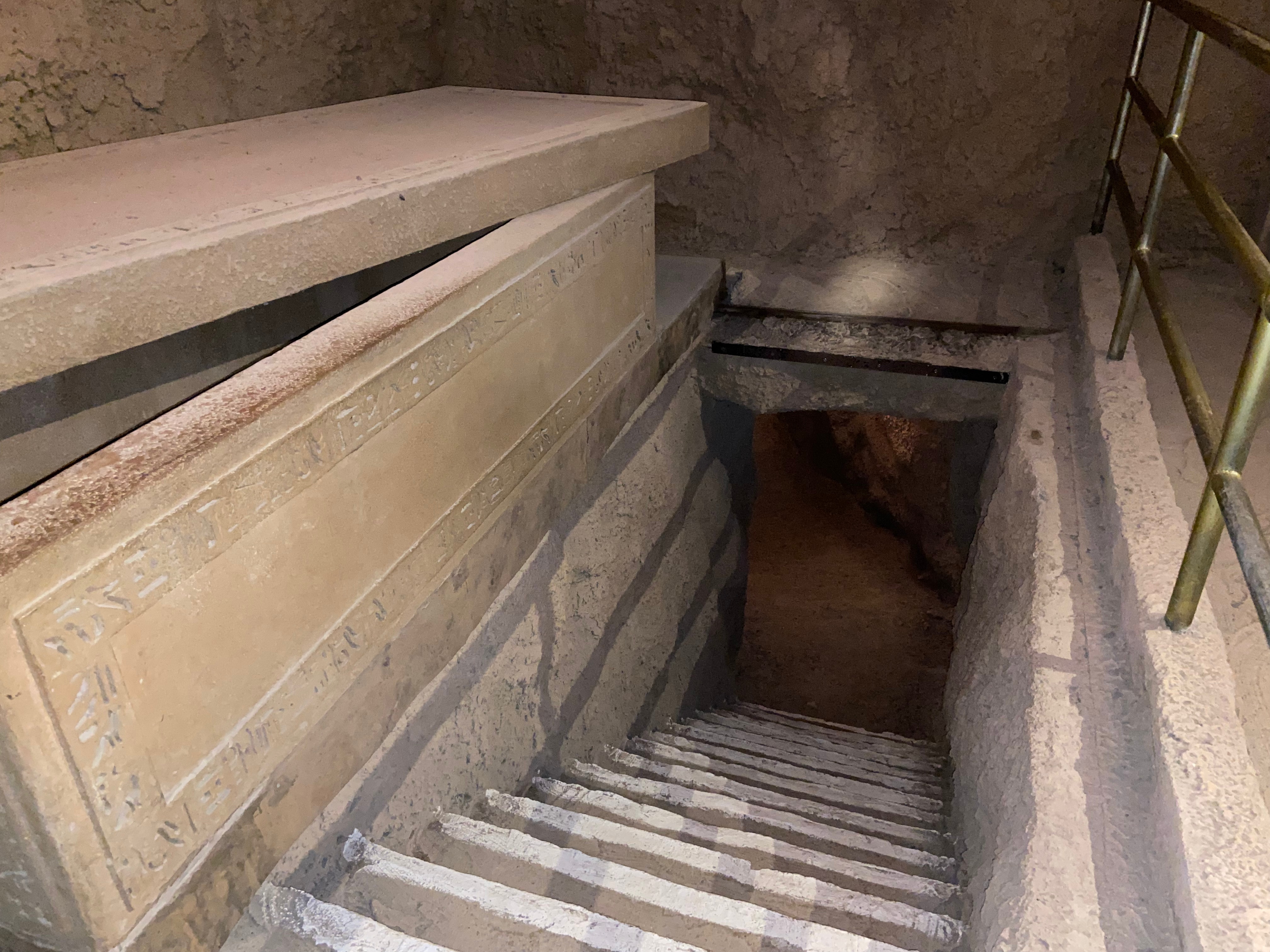
It’s actually pretty scary. I get a bit lost in the maze-like caverns until I reach what I think is a dead end. Eventually I discover a secret tunnel that I have to activate simply by standing next to it. A huge stone tablet mysteriously shifts to the side, revealing a staircase leading deeper underground.

As I pass the stairs, the tablet slides back across, trapping me inside. I follow the rooms, secret doors, narrow passageways, across a bridge, to a room with a waterfall, to another with booming music, mirrors, and red lighting. It takes me far too many attempts to figure out how to escape this claustrophobic panic attack. Eventually I find the exit behind a bookcase that only slides aside if I clap my hands; again not explained at all.

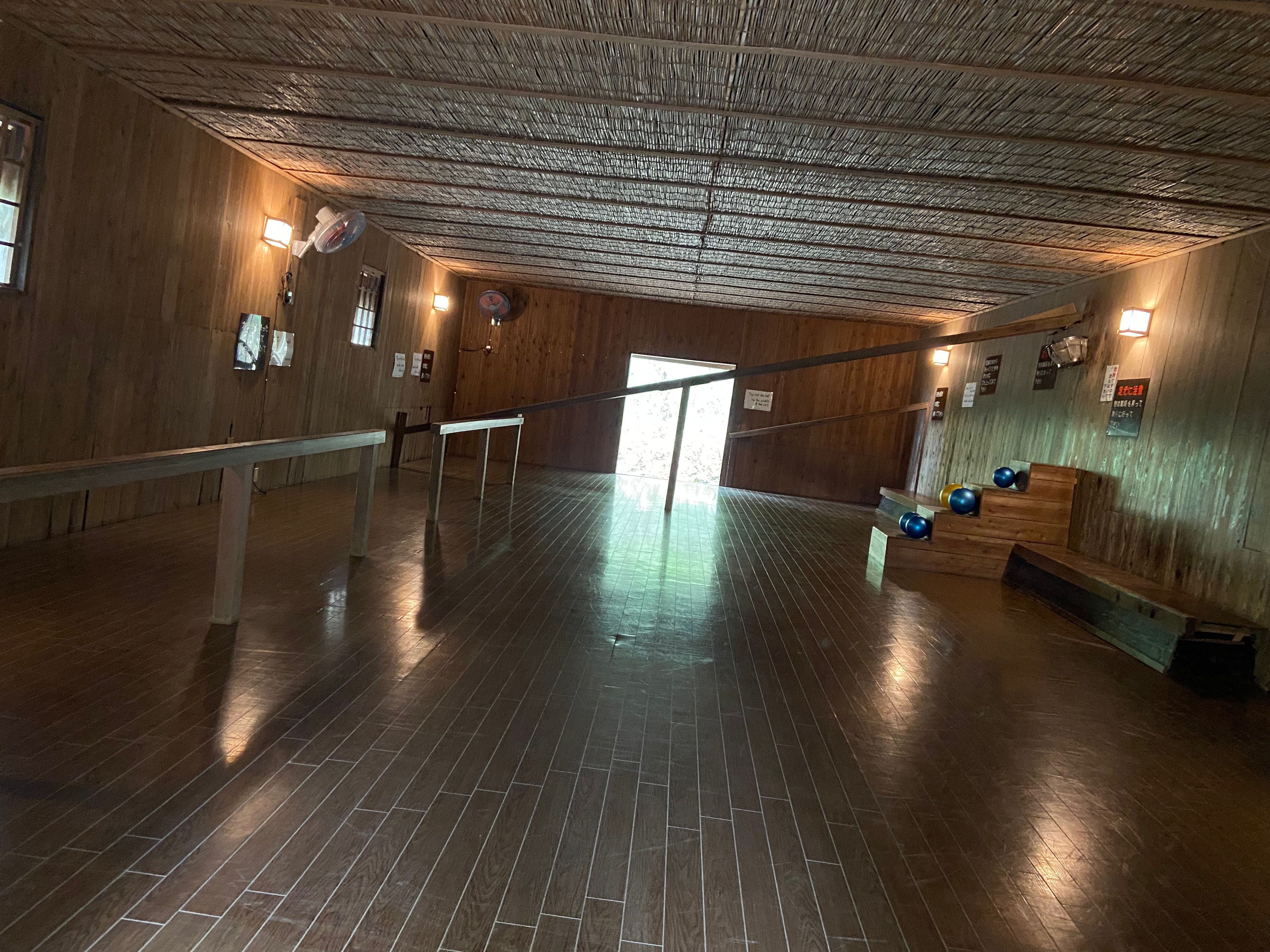
My next attraction is Fukashigidozo, a sloping house. A sign lying on the ground next to the sloping house says, “Don’t fall over,” having itself ignored its only instruction. The purpose of the house is to challenge my sense of balance. The building has been constructed at an angle, on a slope, and confuses me in a way that makes me feel dizzy, like I’m falling over, even though I am standing perfectly still.

I want to sit down. I want to not be standing up beside the house that feels like it’s falling down. It messes with my brain, despite understanding exactly what’s happening. The house is so profound that I am at complete unease as I wander back toward the main village.

Here, the staff stay fully in character, even when no one is watching. I stay fully myself, which requires significantly less effort, yet still somehow wears me out. In the end, Mikazukimura doesn’t quite manage to hold the illusion together, and instead echoes something slightly decayed, enveloped in a careful silence. I head next door to the Japan Snake Centre.

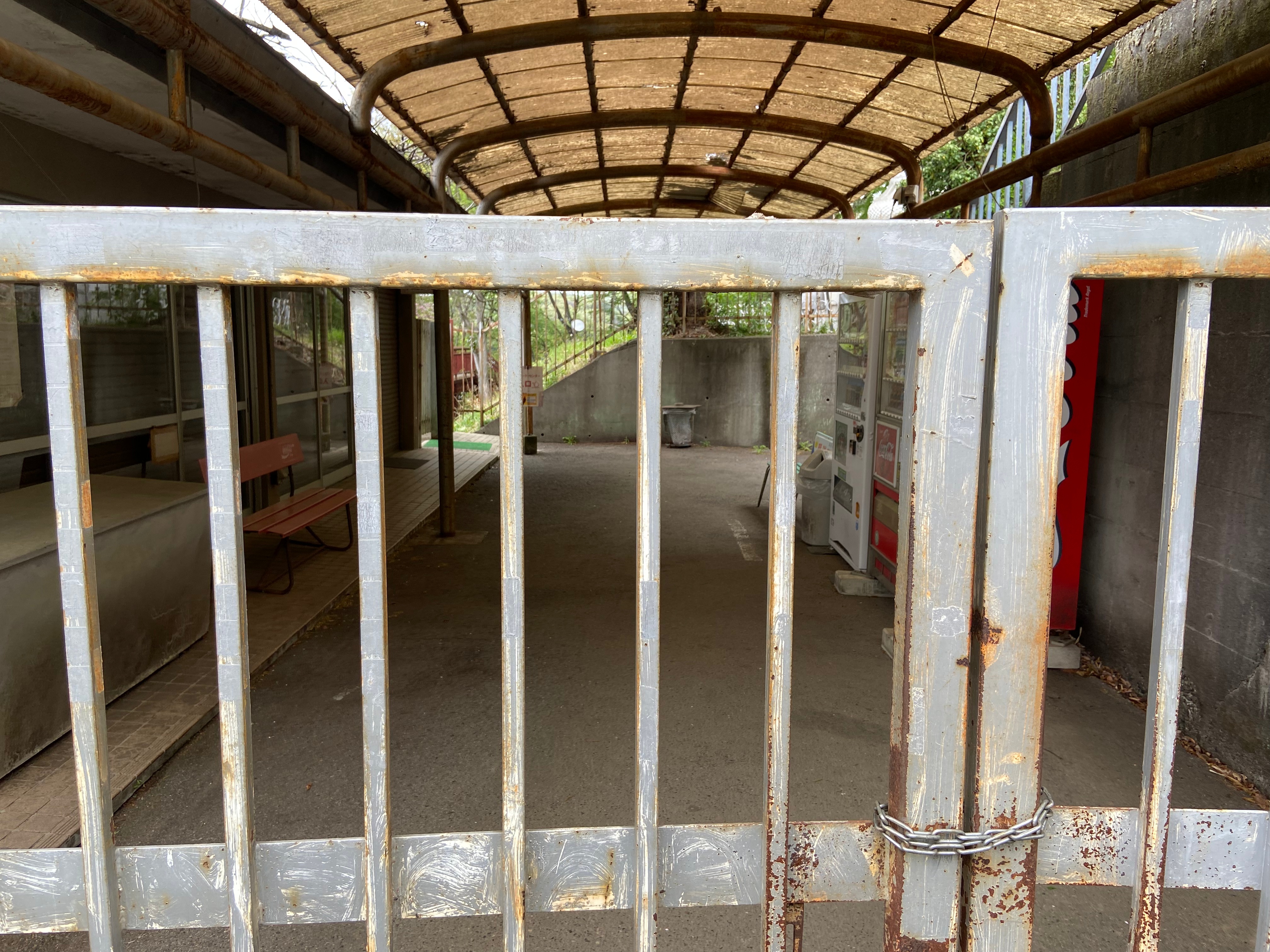
The door here is chained shut despite a sign saying, “Open.” I was hoping to look at some creatures that predated the Edo period by millions of years, but it looks like I’ve outlived them. The Snake Centre is permanently closed. I head back across the fields of crops, scaring away a few crows on my way, and return to Yabuzuka Station, but with no train for two hours, I decide to walk to Isesaki.

On the walk, I spend some time on my phone researching azimuths and lunar illumination percentages. I walk on, mostly in silence. The occasional passing car. The odd cawing crow. There’s no footpath most of the way; and as the sky darkens I don’t particularly enjoy being constrained to walking on unlit country roads. Somewhere along the way, my eyes catch something that looks so out of place that I stop to investigate. A big red London bus parked on a side street.

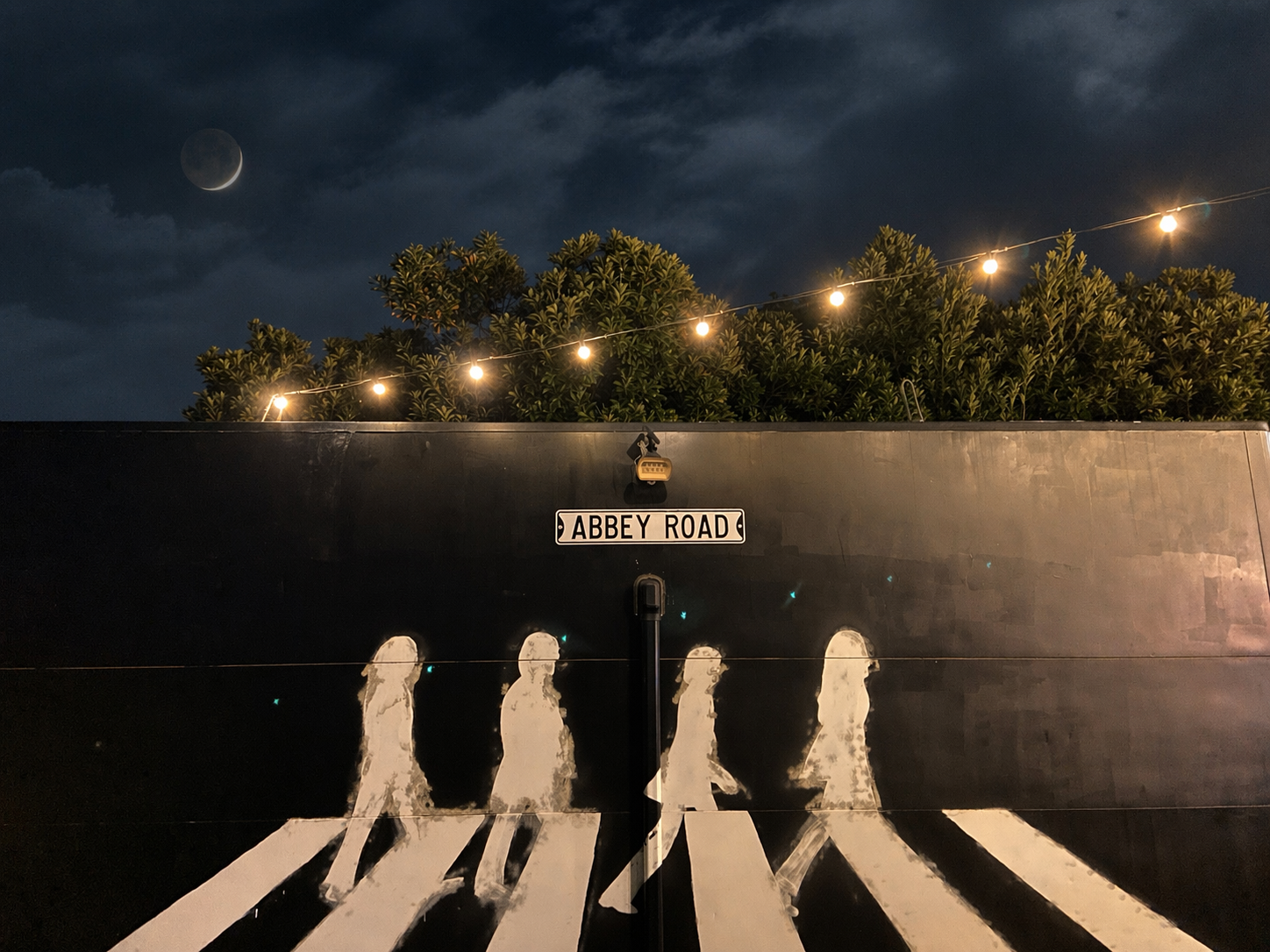
Inside, a bar. I order a drink and chat with the owner. He tells me that the couple that used to run the bar are no longer here, and that he took over. They used to really like London which is how this place came about. The new owner here can barely speak English, which is a shame, because I wanted to ask him about the ghost children crossing Abbey Road.

Our conversation breaks apart. Neither of us really has anything to say. Eventually he goes out into the back room to cook himself some food. So I sit, sipping on my Suntory Highball in silence. Out here, there’s no one to sit beside.

I finish my drink and leave. The red London bus glows under the Gunma sky. Above, a waning crescent moon hangs like a chipped Edo coin, its dark edge faintly visible in earthshine.

Once Upon a Timeline

Today, I’m in Yoro, a town in Gifu Prefecture. I’m here to change my destiny.

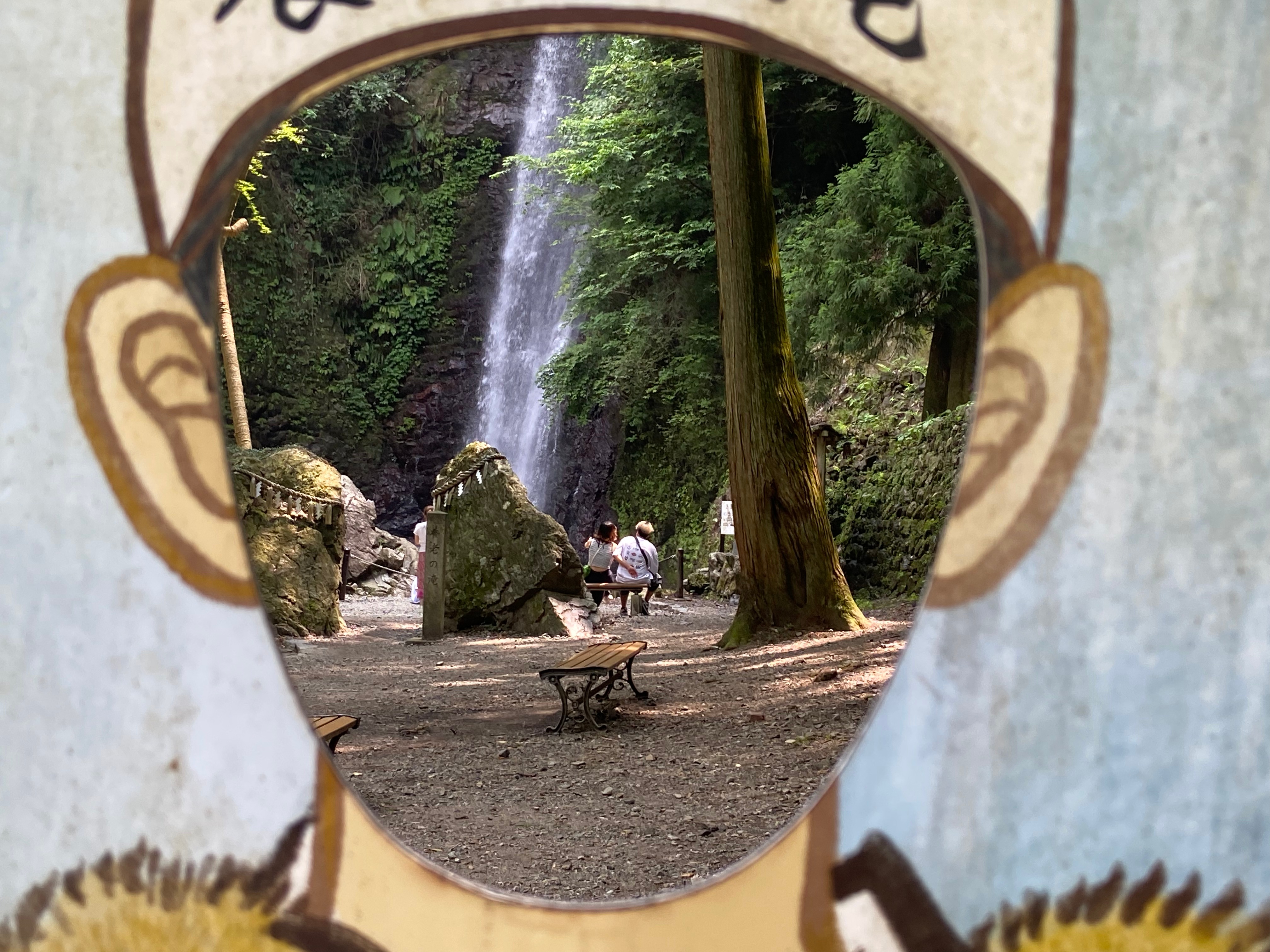
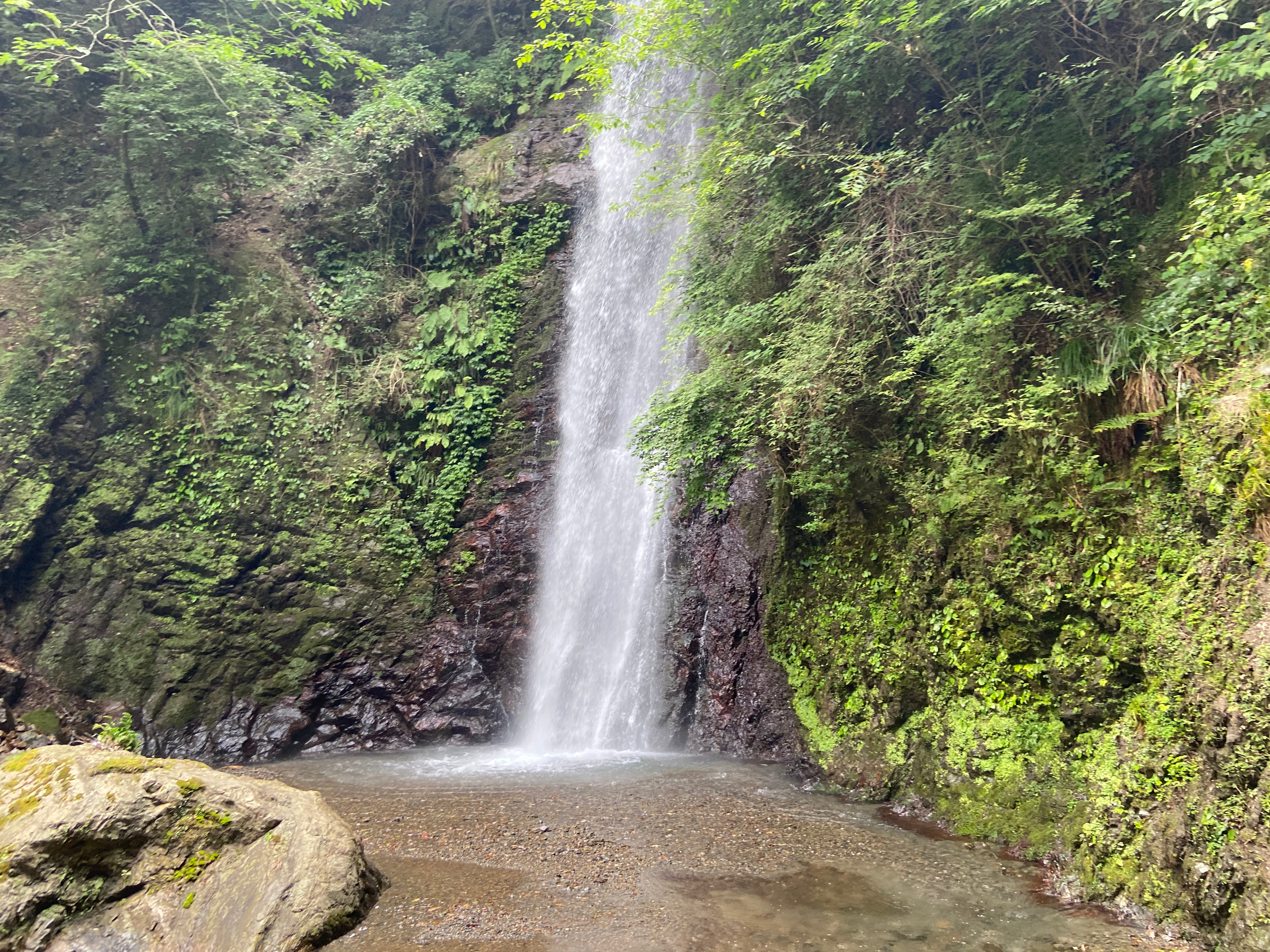
First, I decide to take a thirty-minute stroll along the edge of a cliff to visit a famous waterfall. This waterfall is said to be made entirely of flowing alcohol, specifically Japanese sake.

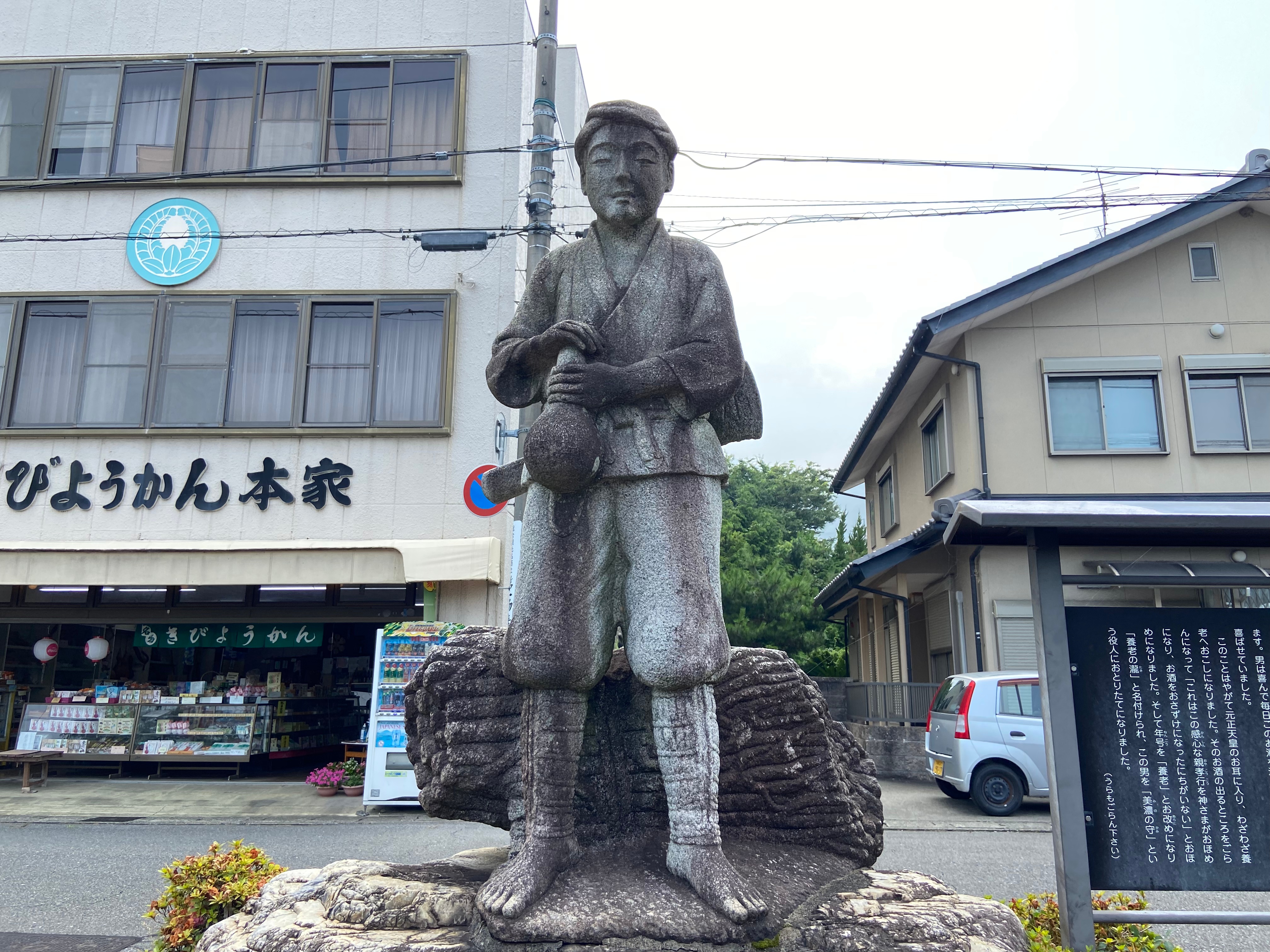
The story goes that there was once a poor lumberjack with a very old, ill father. On his deathbed, the father requested his favourite Japanese sake, but the lumberjack couldn’t afford it on his meagre income. One day, the son walked the treacherous path near the waterfall.

Some say he was out looking for wood for a fire, but he was a woodcutter, so any tree would have sufficed. Others say he was simply thirsty. Regardless, he fell in the woods and definitely made a sound, and after falling and lying on the dirty ground, the poor lumberjack could smell the sweet scent of sake.

It was here that he discovered the water from the waterfall was not water at all.

He returned home with a gourd full of sake, and his father drank it. The transformation was instant, and he miraculously became younger and healthier.

News of this reached the ancient capital of Nara, and Empress Gensho visited the waterfall herself. She was so impressed by the beauty of the area and the magical water that she declared it a sacred site and renamed the area Yoro, meaning elderly care.

It takes me about an hour to reach the waterfall despite it being advertised as a thirty-minute stroll. It’s a tough hike too, up a mountain. It’s humid; it feels like 40 degrees. I’ve probably sweated more water than I’ve seen flow down the falls. I can only imagine how hard it must have been for the lumberjack, carrying that gourd and heavy axe to the top.

Next to the waterfall, a faded poem engraved on stone in Japanese reads:

“Listening to the flow of Yoro Falls,
One’s heart is healed and refreshed,
Like the pure sake that rejuvenated the old man,
Flowing eternally, blessing those who visit.”

I stand looking at the waterfall for a time, enveloped in tranquillity. I think about water flowing down a river, following a predestined path. It cascades over the falls, flows further south, and meets a tributary, where its path diverges and its destination shifts, a choice not made but followed.

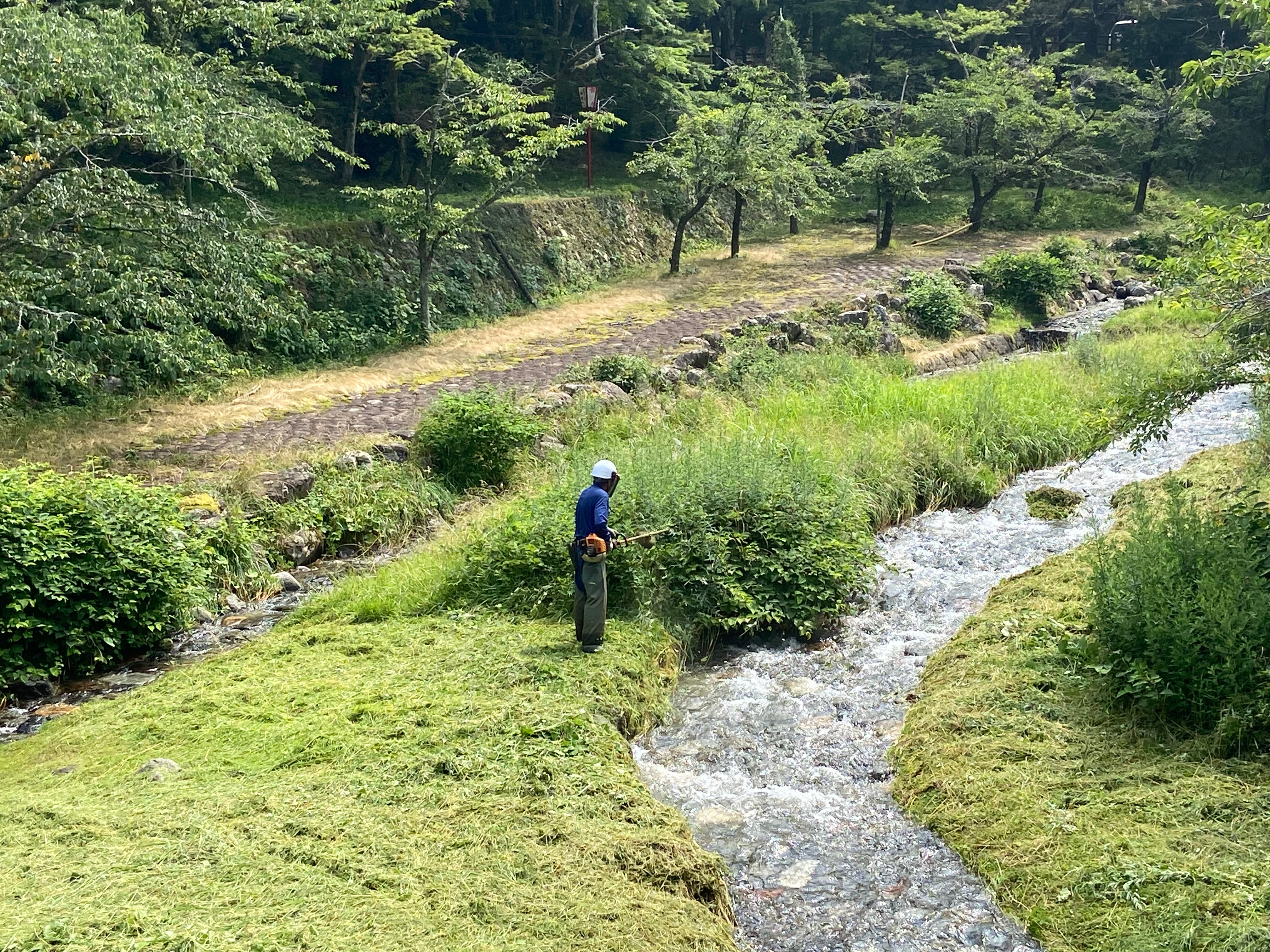
Somewhere, after leaving Yoro Falls, a butterfly shivers against the wind. At the bottom of the waterfall, the tranquillity ends and is swamped by the sound of a man with a grass strimmer.

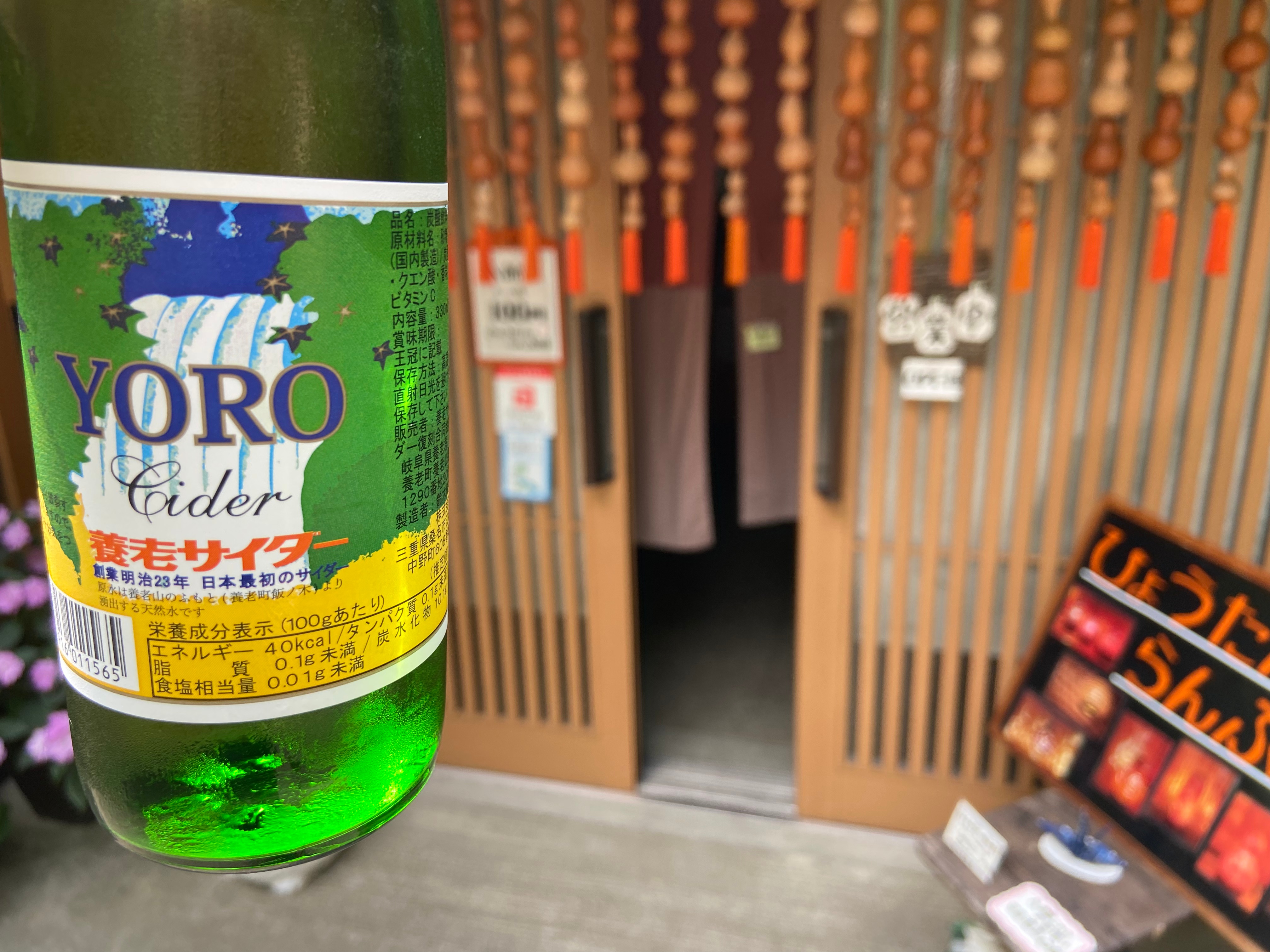
I stumble upon a small souvenir shop selling bottles of carbonated cider made with the magical sake water. The cider tastes delicious. Unlike in England, cider in Japan is a soft drink, so despite the falls apparently being made of alcohol, this drink somehow contains none.

I leave with a healed heart, feeling blessed. Eternally refreshed. Next to the small shop is the Yoro Gourd Museum. I look at a few gourds made into artwork and lamps before moving on.

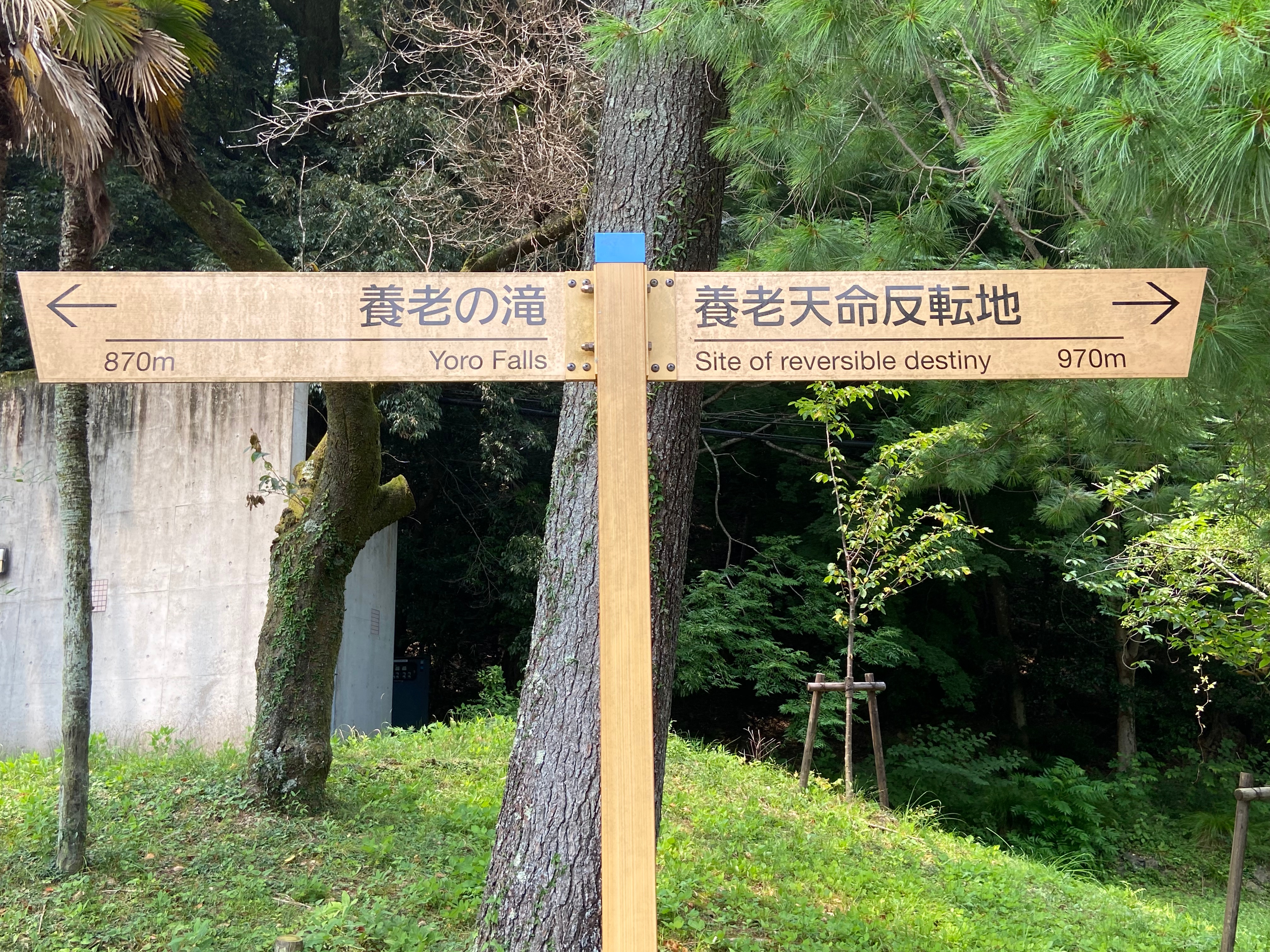
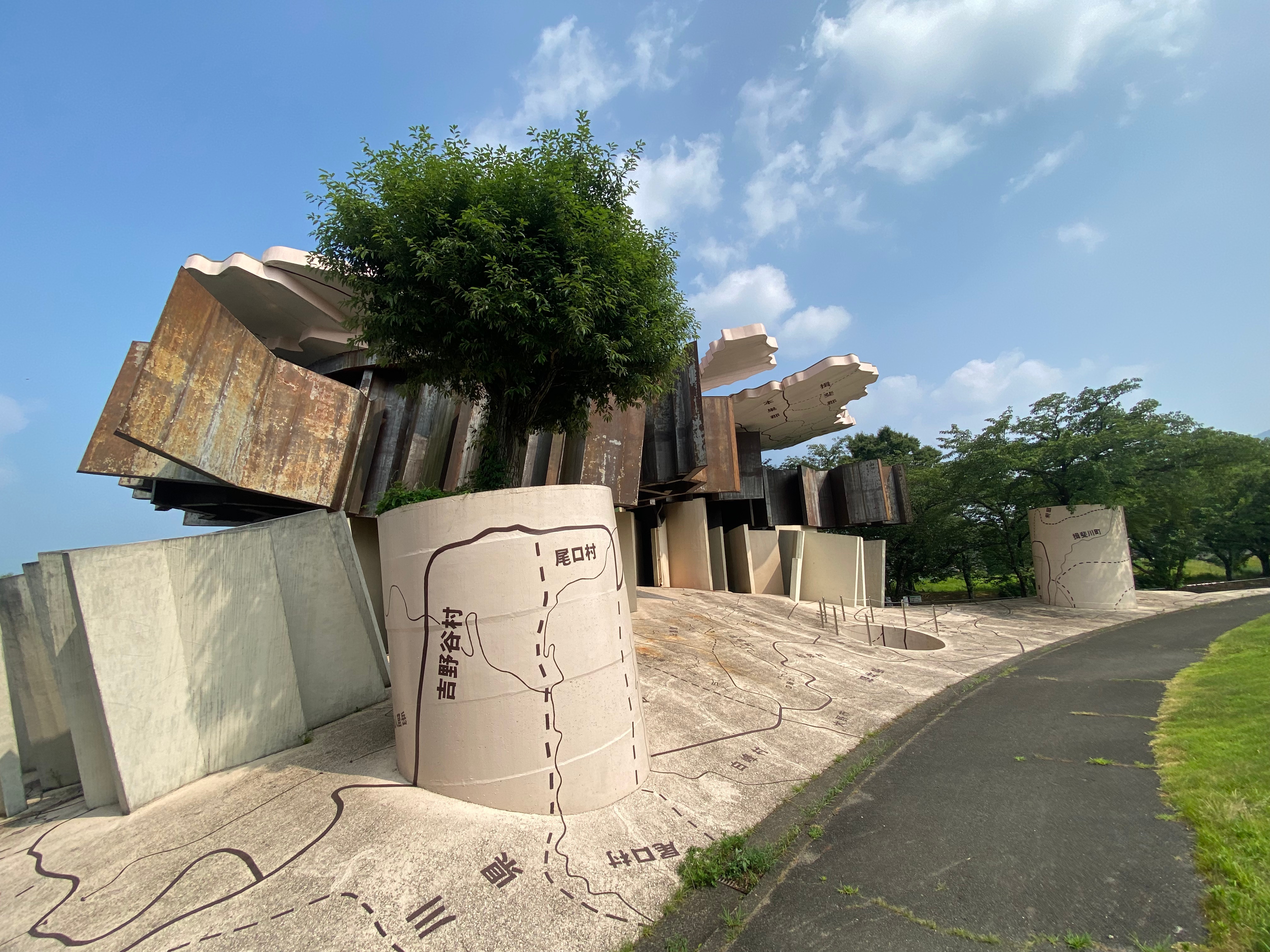
My final stop today is within Yoro Park, a place known as the Site of Reversible Destiny. A massive outdoor interactive art park dreamed up by Shusaku Arakawa.

It’s quite bizarre, funny, and downright unusual. There’s a house that is a road and a road that is a house. There’s a nostalgia generator, a few mazes, and some piles of things that I don’t even understand.

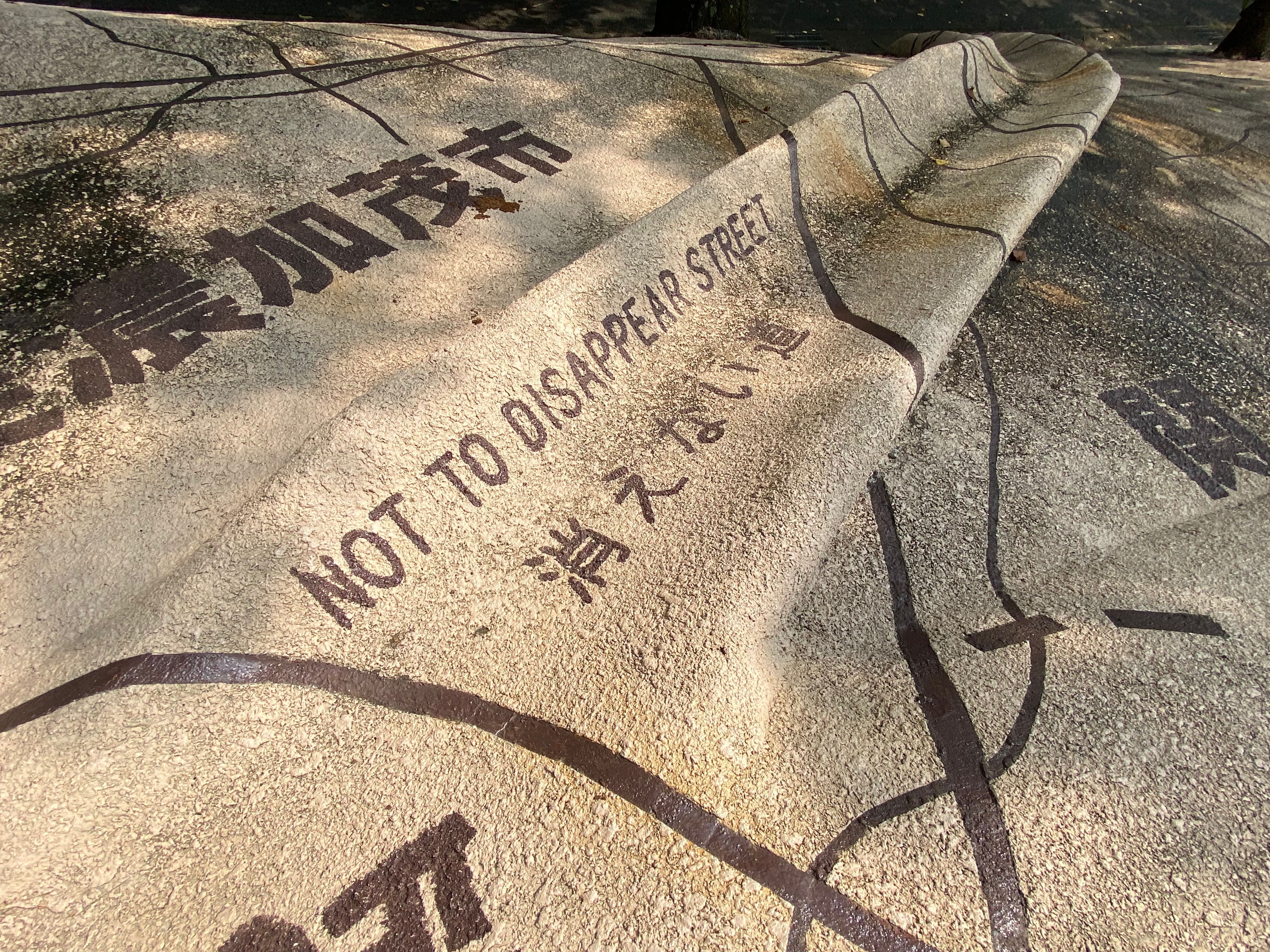
I pass Not To Disappear Street, the Gate of Non-Dying, and an area known as Geographic Ghost. I climb over the Zone of Clearest Confusion, leave through the Trajectory Membrane Gate, before getting lost in the multicolour of Destiny House.

Shusaku Arakawa was obsessed with the idea of death and destiny. He built this site with his wife, Madeline Gins, as a challenge to mortality itself. That’s the point of the Site of Reversible Destiny: to confuse your soul and reroute your path. When Arakawa died in 2010, his wife said, “This mortality thing is bad news.”

With fate as mutable as the weather, or the seeds of a dandelion, you blow away, only to take root in unexpected soil. My destiny begins to unravel. The sun still rises in the morning and sets in the west, but the days no longer feel the same. Each moment becomes a whispered echo of a choice that altered everything, carried on a timeless breeze.

The concept of a multiverse unfolds like a kaleidoscope of infinite reflections, where certainty and uncertainty intertwine like vines in an ancient forest, tangling into something that resembles fate.

Yet, if every possible outcome and path exists, there must also be a universe where the notion of such multiverses is impossible. It is here that we find ourselves staring into the paradoxical abyss.

Sweeping aside the contradiction of parallel worlds, it is on the train that I ponder the existence of a universe where I do not exist. As the train changes track to a branching line, the landscape blurs past, indifferent to my absence. My reflection in the window shimmers, quantum-thin.

For a moment, I am here and not here, observed and unobserved, a wave function waiting to collapse. I step off the train. I step into the world. And the world, impossibly, steps into me.

Before the Wind Blows It All Away

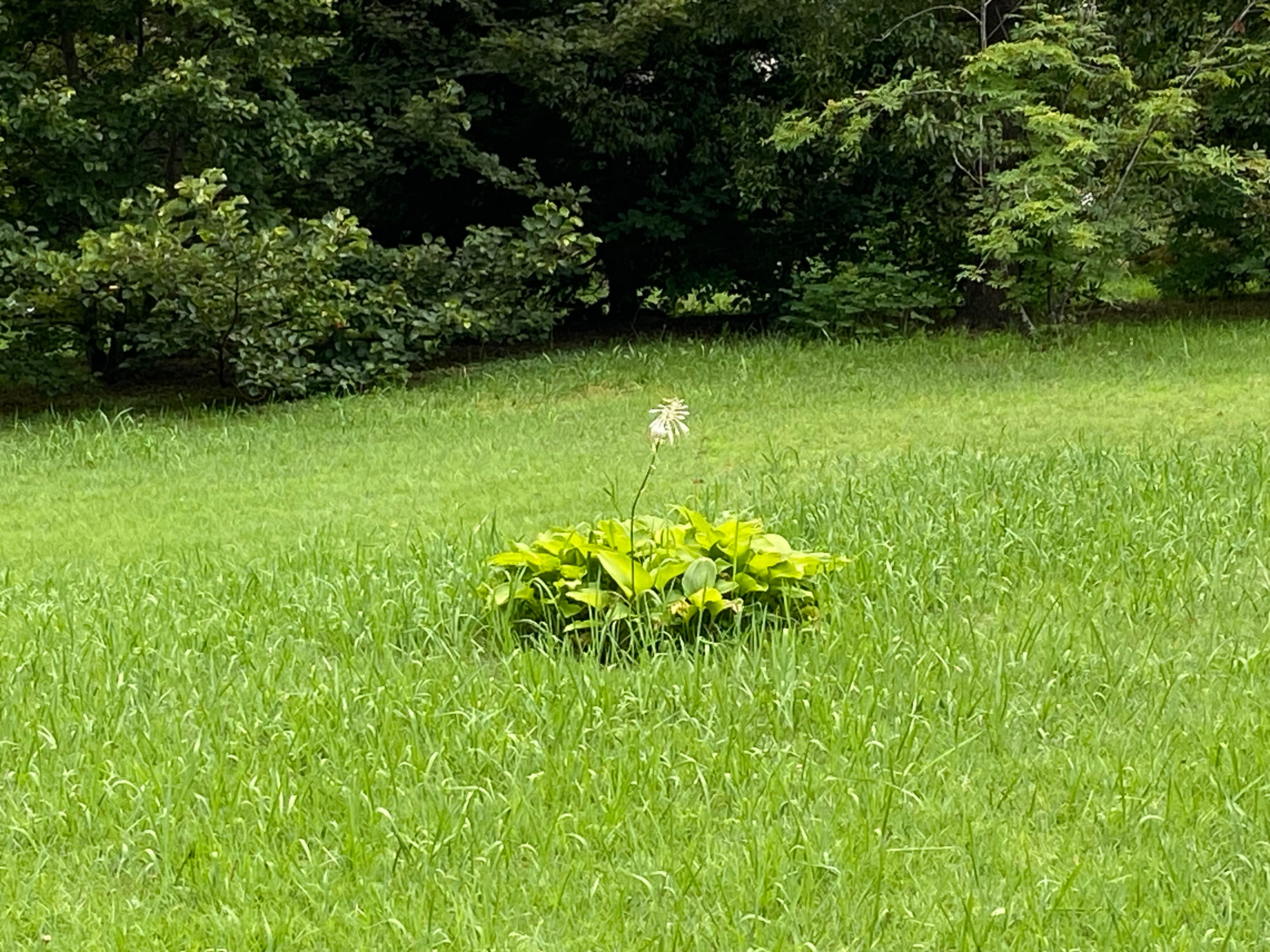
Today I’m travelling back in time, specifically, 20,000 years in time. I’m in Miyagi Prefecture to see the Museum of the Forest of Depths of the Earth. I don’t really know what to expect. When I arrive, there’s a small outdoor garden of evergreens and summergreens. There’s a single flower in the middle of the lawn, with a sign before it stating: Be careful not to step on the flowers. The sign uses the plural form flowers, and it bothers me slightly.

I believe the single flower is a panicled hydrangea. The garden has been recreated. “Let’s go into the grass and observe,” says another sign. The whole point of the place is to compare the vegetation of the Ice Age with that of present-day Sendai.

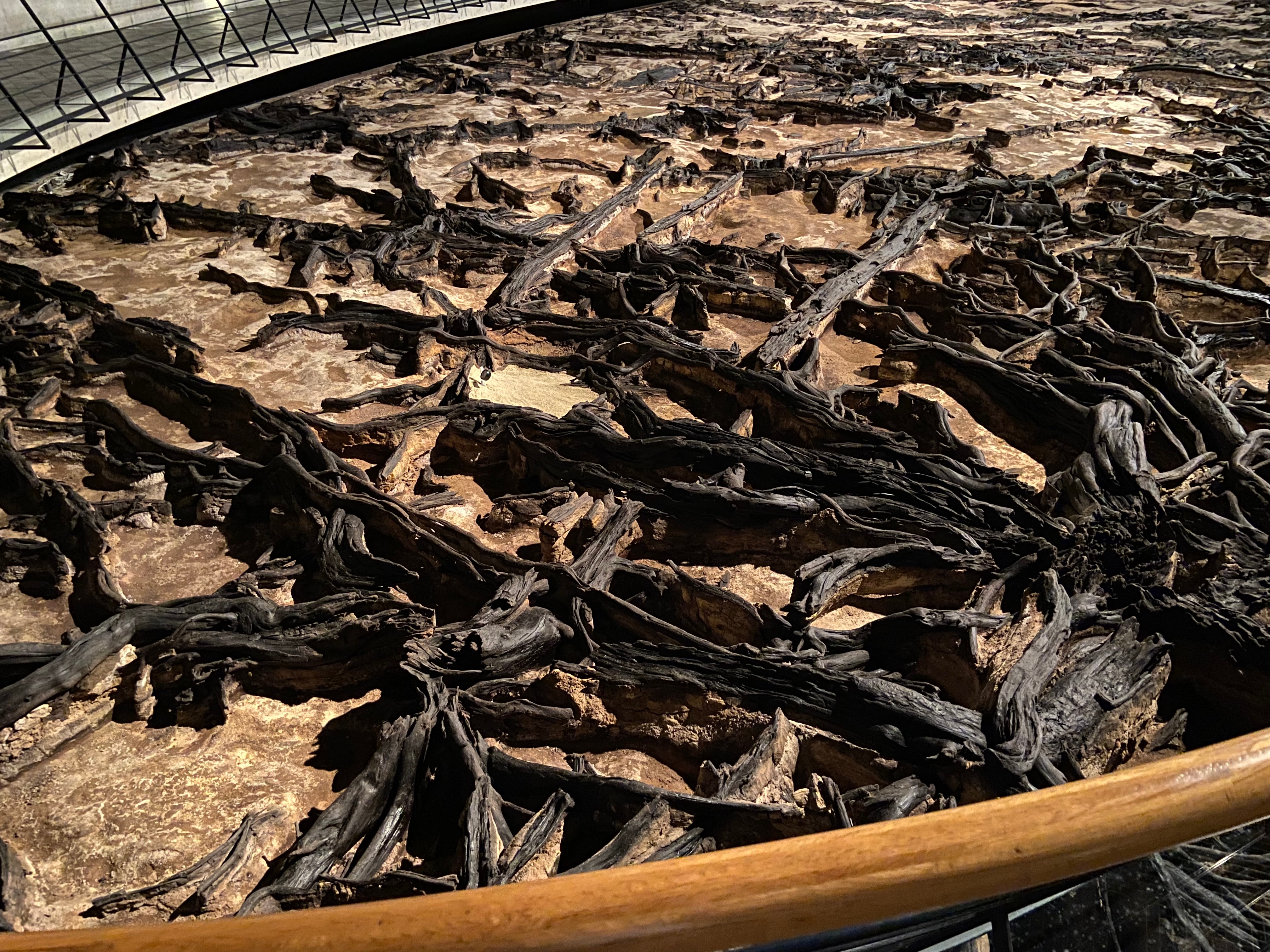
There’s an architecturally stunning structure in the gardens. It’s the only one of its kind in the world. Inside are the 20,000-year-old remains of a wetland coniferous forest. It might not sound very impressive, but when I walk through the doors of the museum and see the sheer size of the trees, it causes me to stagger.

The museum is fascinating. In 1987, an archæological dig found, just five metres below the ground, the preserved remains of fossilised trees, along with artefacts from the same era. There’s a separate tree root I’m encouraged to touch and smell, and it carries some weight.

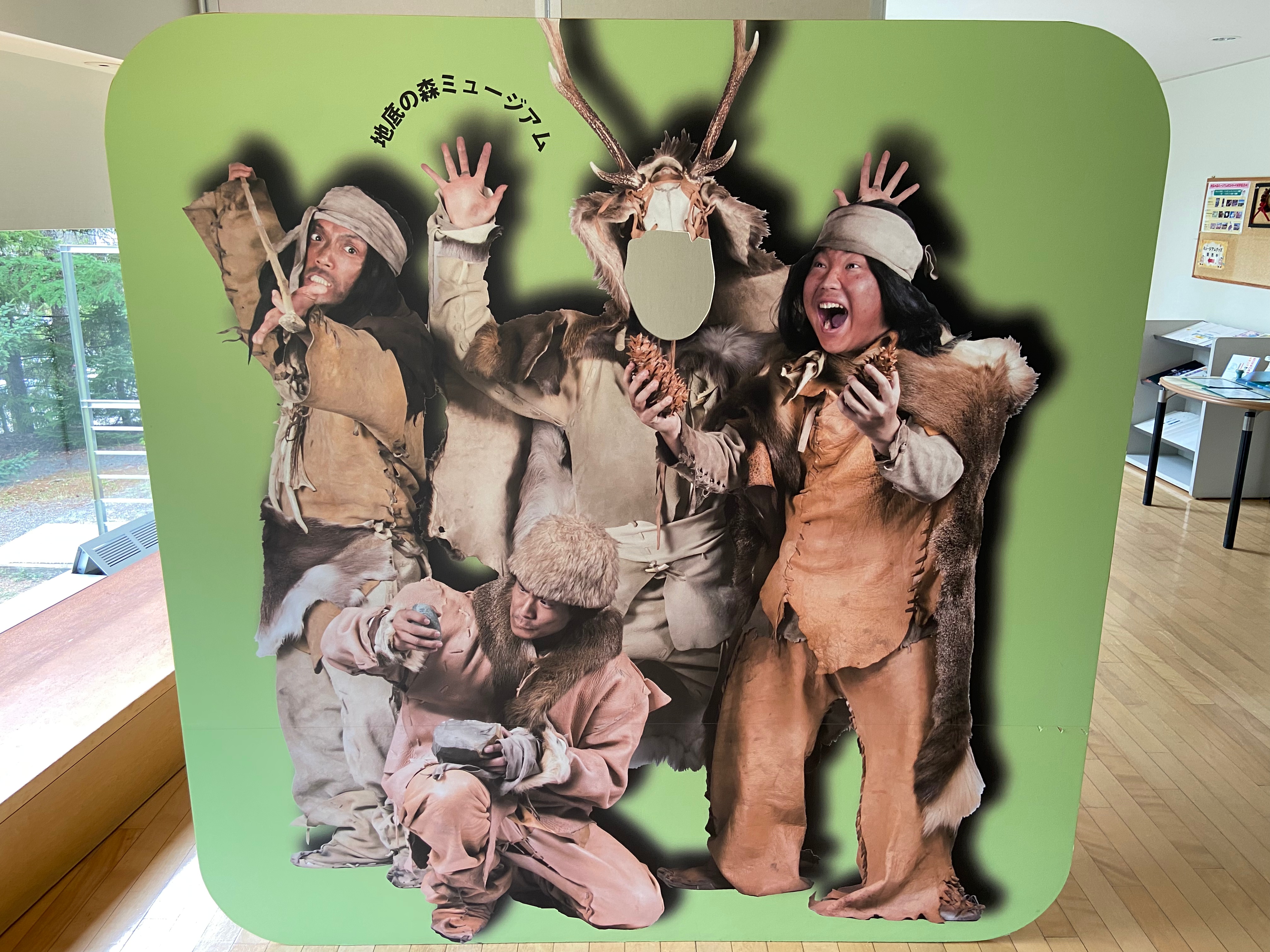
Aside from the trees, I can also learn about the Paleolithic Age. There are the remains of a campfire that was excavated here. Bits of broken pottery. Deer fæces. Arrowheads. Glass boxes of skulls. Carnival Cutouts: the breath of ancient times.

Having touched a 20,000-year-old tree root, the only thing left to do later is visit a mountain, so I decide to walk to the coastline. Along the way, I pass a tsunami evacuation tower made from steel. It can safely evacuate 300 people to a height of at least six metres.

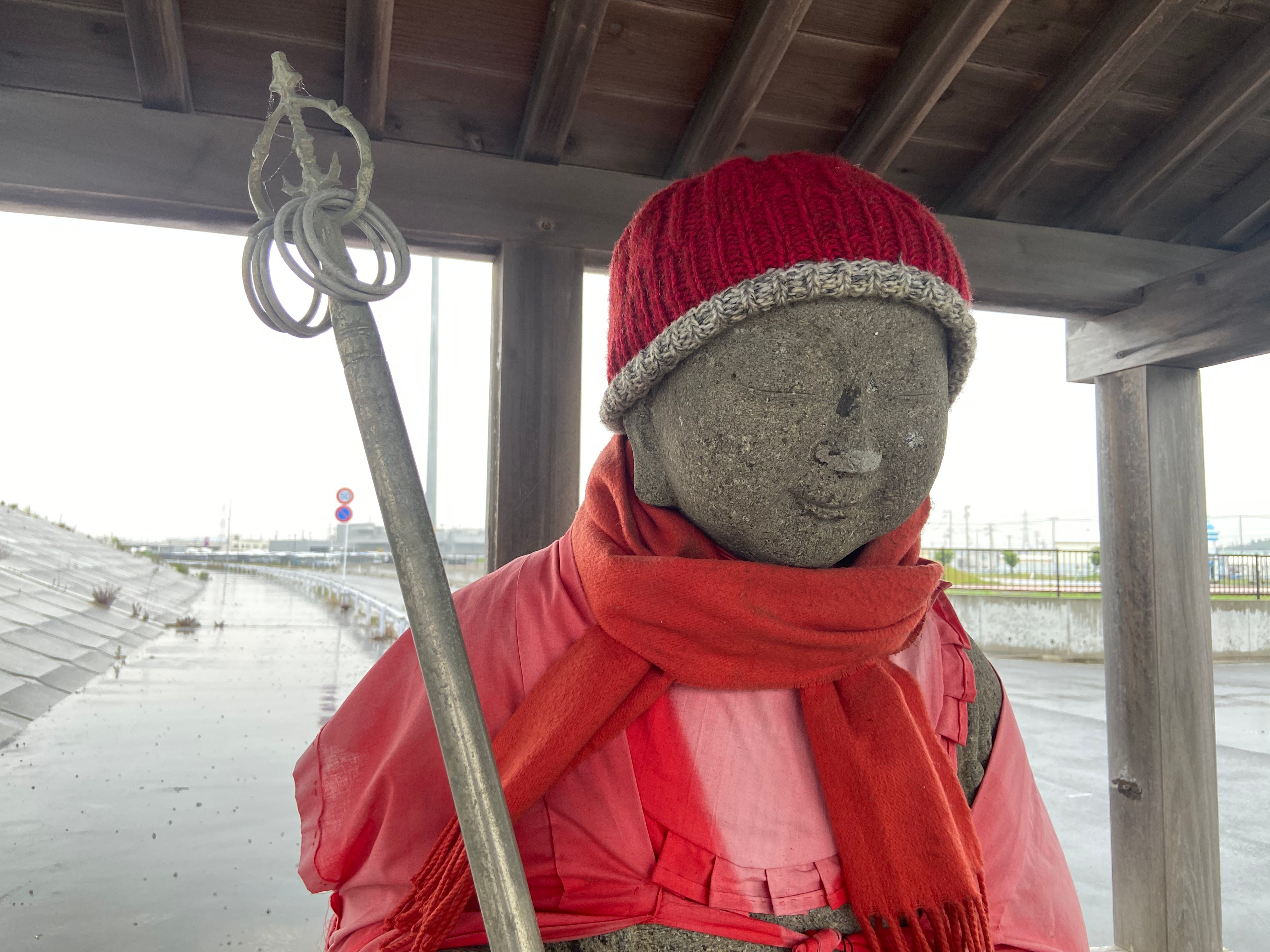
As I stare at the tower, the sky suddenly fills with grey cloud, and it begins to pour. I run into a nearby park but find nowhere to hide, eventually sheltering beneath a small Jizo statue. The smug Jizo is smiling and holding a rain wand.

Behind the statue is an embankment highway that runs along the Nanakita River and Sendai Bay, designed to help prevent tsunami waves. The tides must get pretty high here anyway, as on my side of the barrier are dozens of dead crabs, seemingly washed over the wall and cracked open on the concrete below. The Jizo shares his little shelter with the stench from the Sendai Gamo Biomass Power Plant. It stinks.

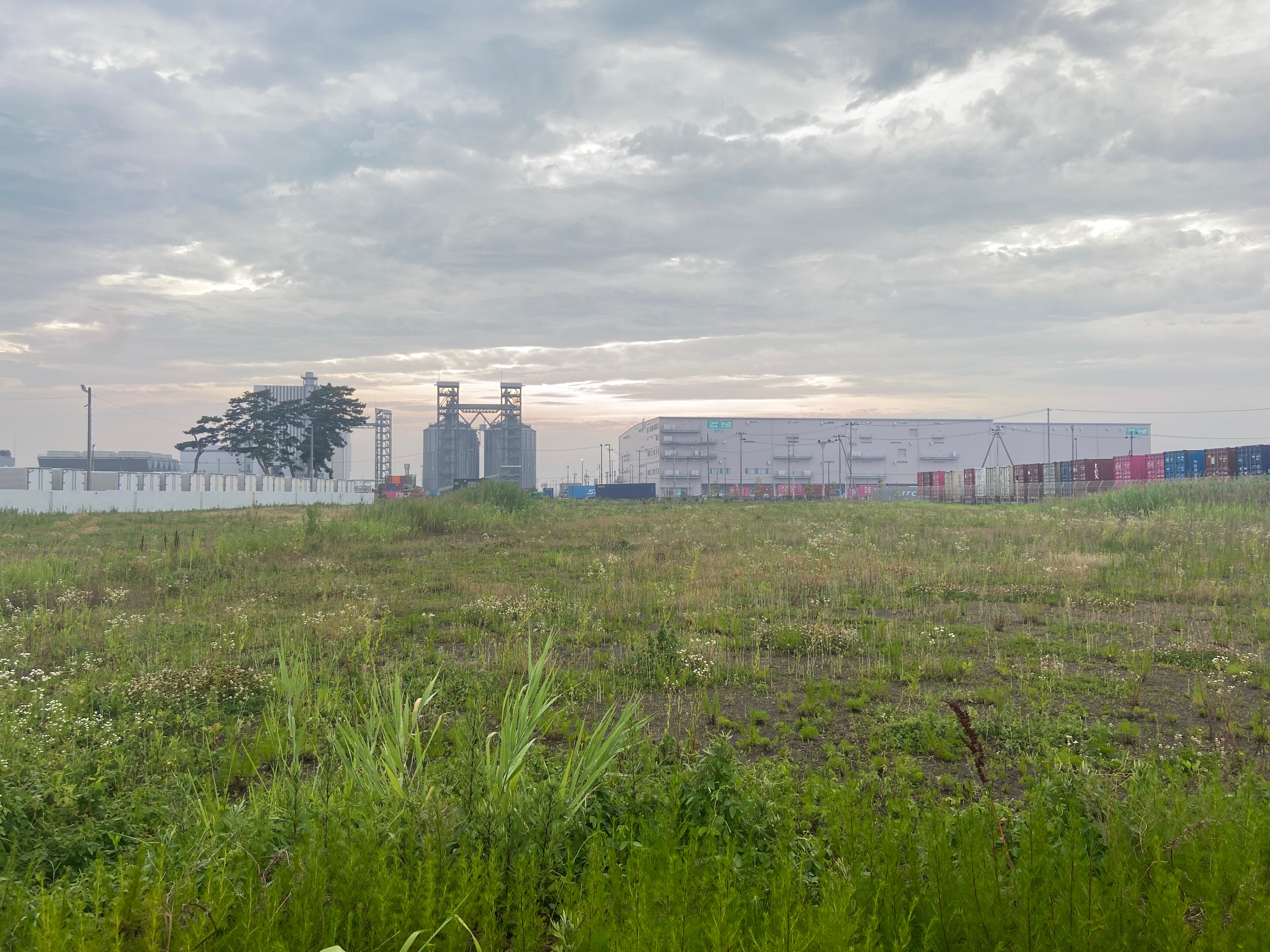
A little further up the coastline, I try to find what I’m really looking for. Usually, it’s pretty easy to find a mountain. But when you’re searching for what’s recognised as the smallest mountain in Japan, it gets trickier. I eventually do find it, half-hidden behind a factory car park.

I climb Mount Hiyori, Japan’s smallest mountain. Well, I don’t actually climb it. I just stand next to it. It looms at three metres now. Smaller than it once was. The 2011 Tohoku earthquake and tsunami took most of it. But still, someone left a summit marker. Still, it has a name. And I’m glad for that.

Around me, the wind starts to rise. I think about the ancient forest floor, perfectly preserved in silence. The looming shadow of a tree long gone. I think about how we keep naming things, even after they’ve almost disappeared. I think about how some things vanish slowly, and some things vanish all at once.

I walk away, back into the storm, careful not to step on the mountains.

Quivering Heights

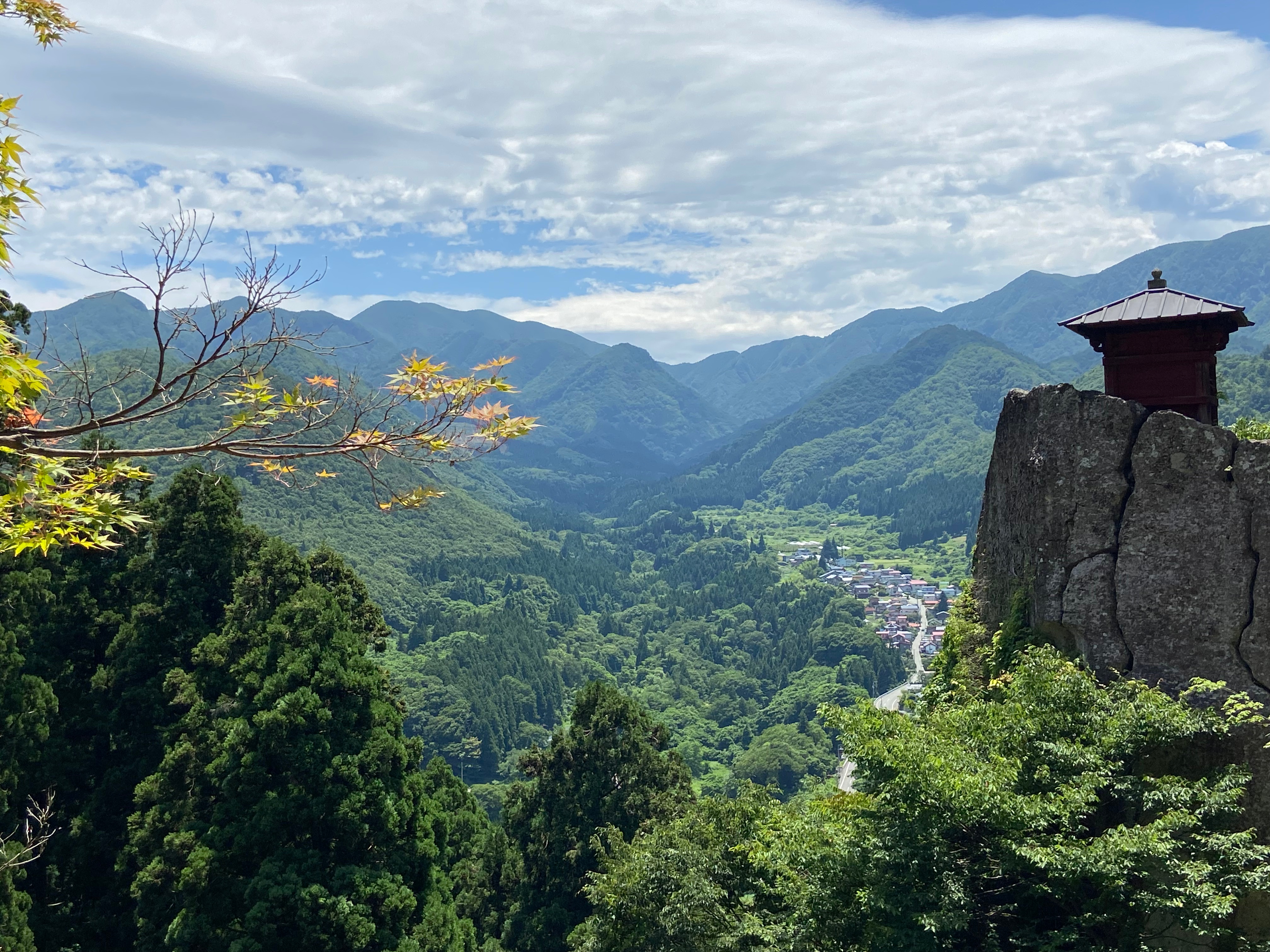
I’ve come to Mount Hoju in Yamagata Prefecture to experience one of the best views in Japan. At the base of the mountain is the usual buzzing of tourist-targeted shops selling shaved ice, overpriced noodles, and fish-shaped waffles. Beyond that is the oldest beech wood building in Japan, home to a massive wooden statue of Buddha.

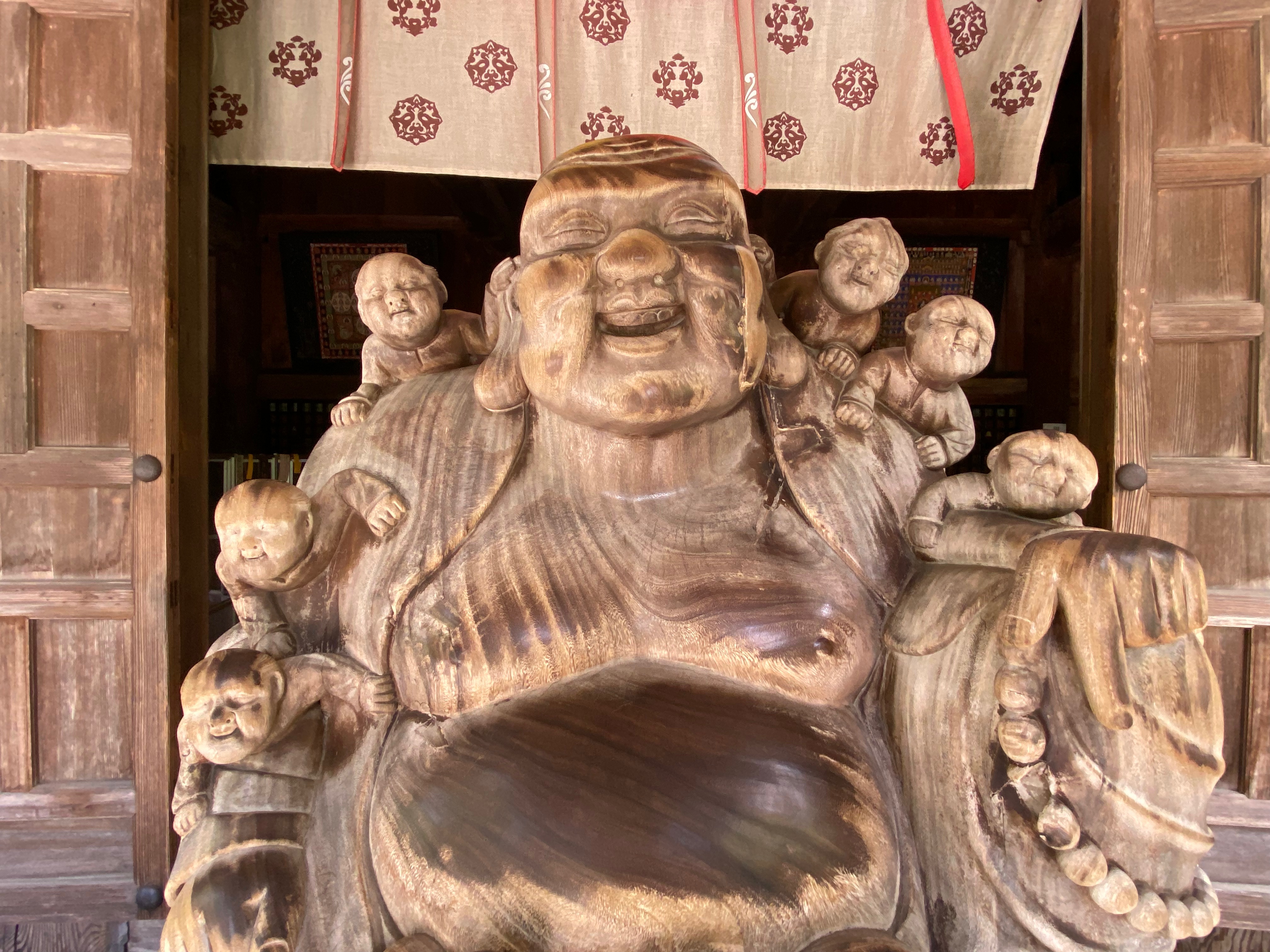
The statue is Yakushi Nyorai, the Buddha of healing. They say that if you have an illness or ailment, something you want cured, you rub that part of the Buddha, then climb to the top of the mountain and you will be miraculously healed. Naturally, I rub the Buddha on the neck and hope my scars fade.

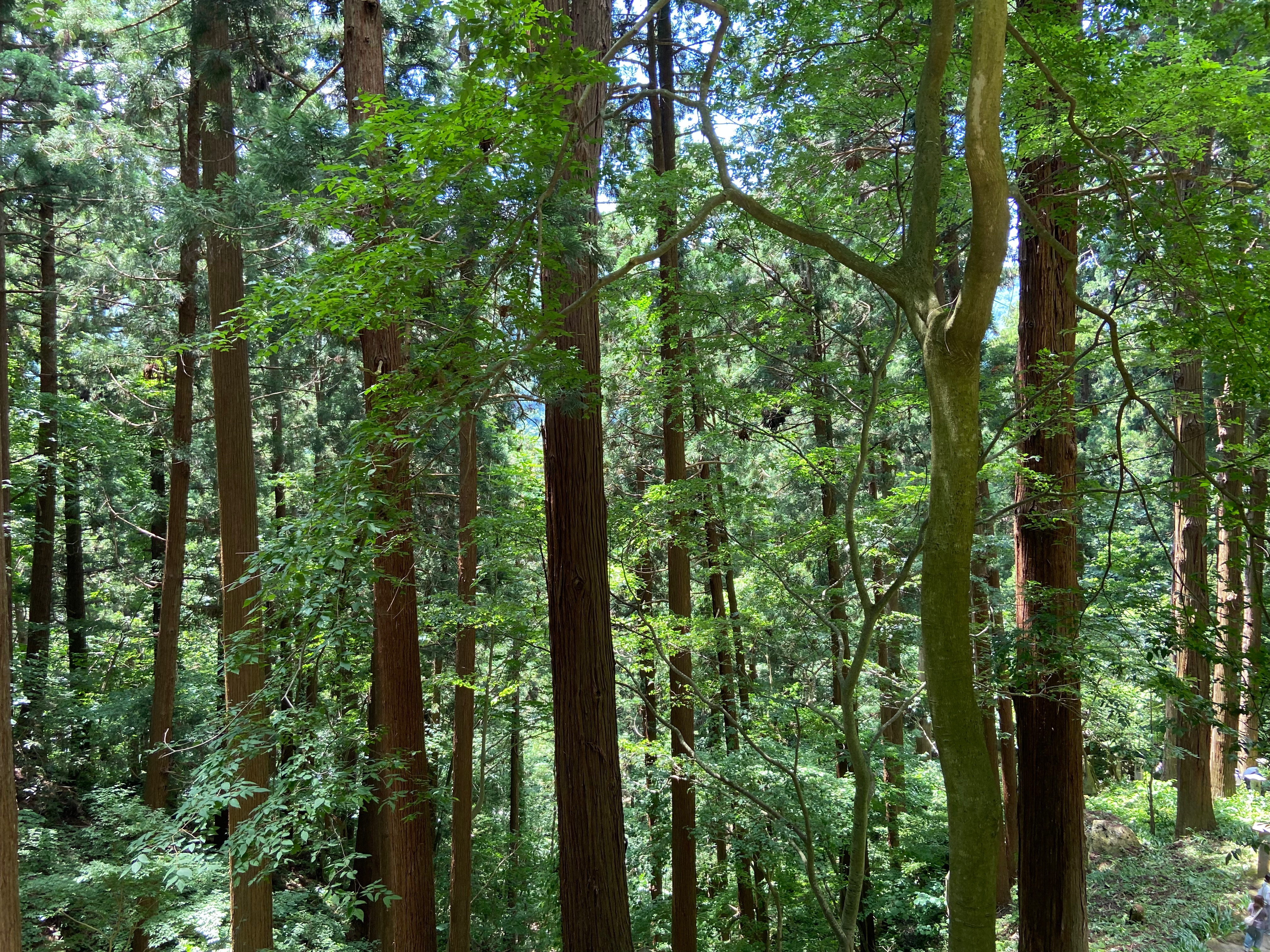
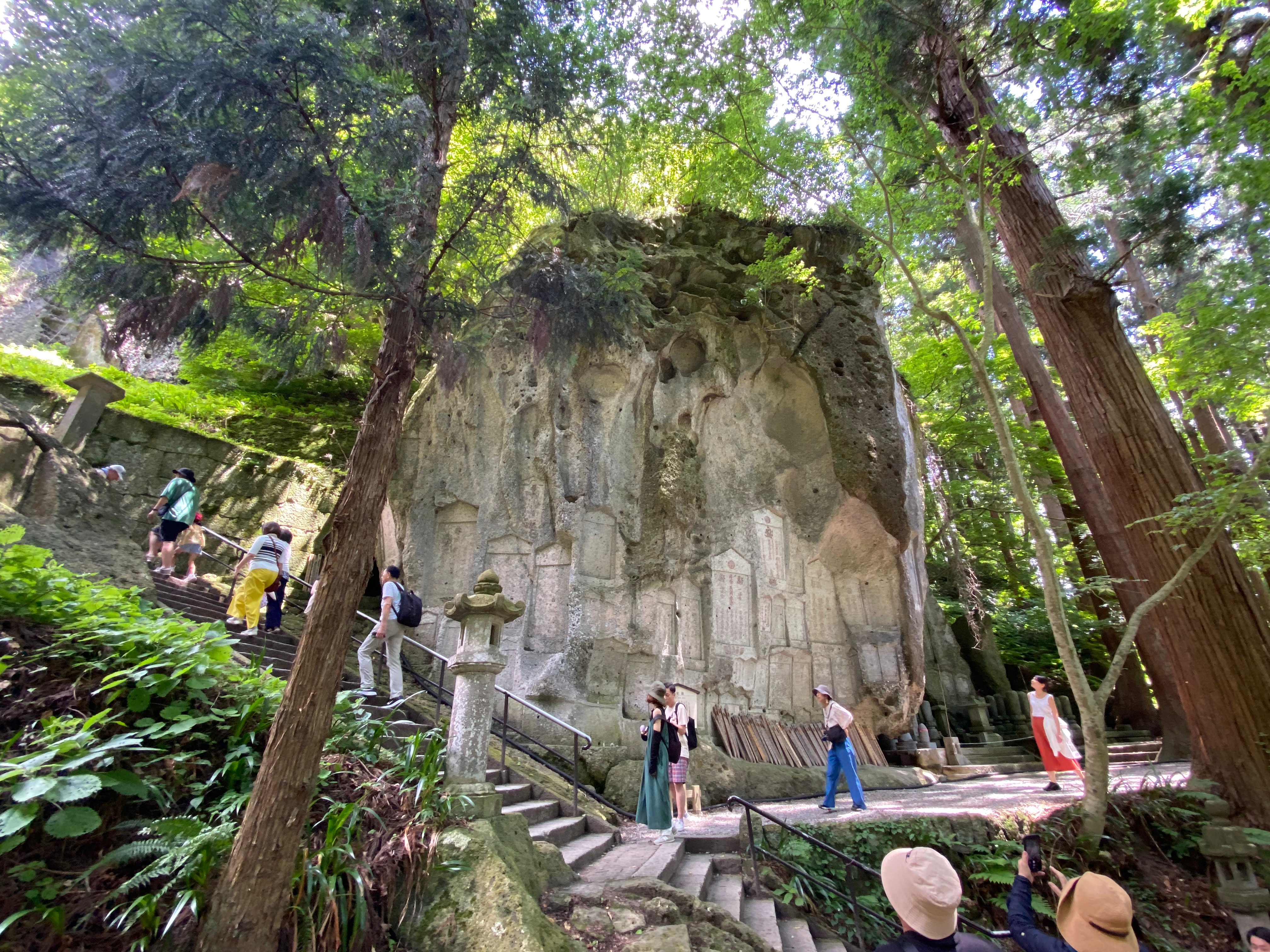
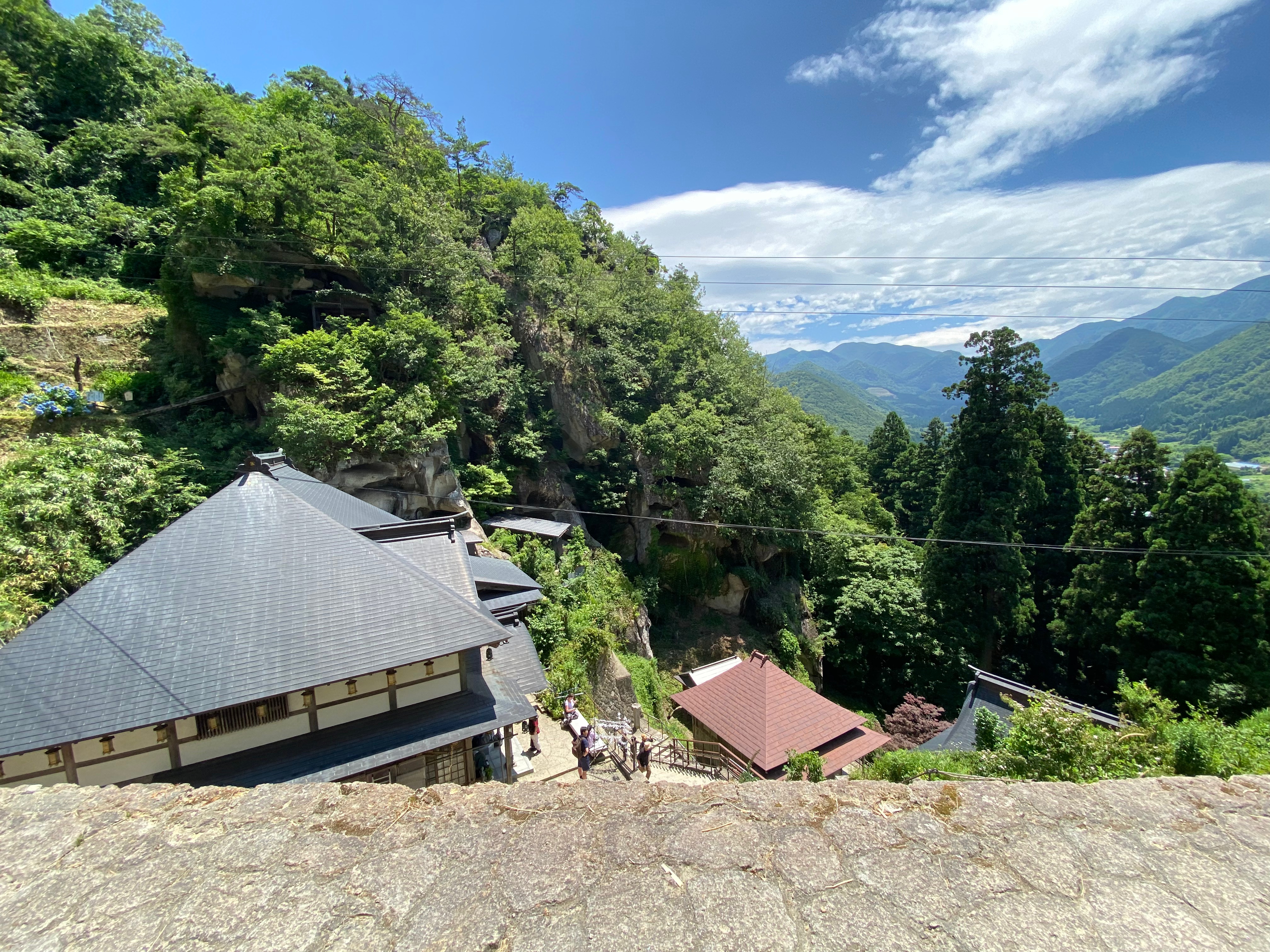
Next, it’s time to climb the mountain. The road to the temple is 1,015 stone steps surrounded by thick woods and strangely shaped rocks. Cedar trees make up the mountain forest. The Risshakuji Temple at the top of the mountain means “Mountain Temple,” which is the perfect name for it, considering it is atop a mountain.

Some of the steps are in sections of 108, to represent the 108 Buddhist sins. There are Jizo statues scattered throughout the ascent adorned with coins. There’s a monument engraved with another poem by Basho, and it’s a famous one:

Such stillness,
the cicadas’ cries,
sink into the rocks.

After the second set of 108 steps I’m already worn out. Half a million steps last month, I now find myself humbled by a mere 216. I’m already close to spiritual defeat. The day is hot, the air quality poor, and it’s very humid. It has a way of wearing me out, I suppose.

It’s so hot that every now and again there will be an ever-so-slight breeze, and every time there is, I notice it. A lot of the Japanese people are carrying these little portable electric handheld fans. A country famous for fans, so it makes sense. At about 550 steps there’s a massive rock that everyone is photographing.

Further up, there’s Risshakuji, founded in 860 AD, a small temple of minimalist qualities. From here I realise just how high up I am, that I can make out the city below. The thing that’s unusual is there is no barrier here. I could fall off the mountain in an earthquake, and that’s exactly what almost happens.

The mountain shakes, ever so slightly. A shift. Nobody else seems to react or notice. It’s just the subtle shift. The whole thing took a tiny step to the side. The mountain itself… adjusts. It’s not dramatic. Nothing tumbles. There’s no sound. But I feel it. And for a moment I am filled with dread. Then it stops. I wonder if being on a mountain is the worst place to be during an earthquake.

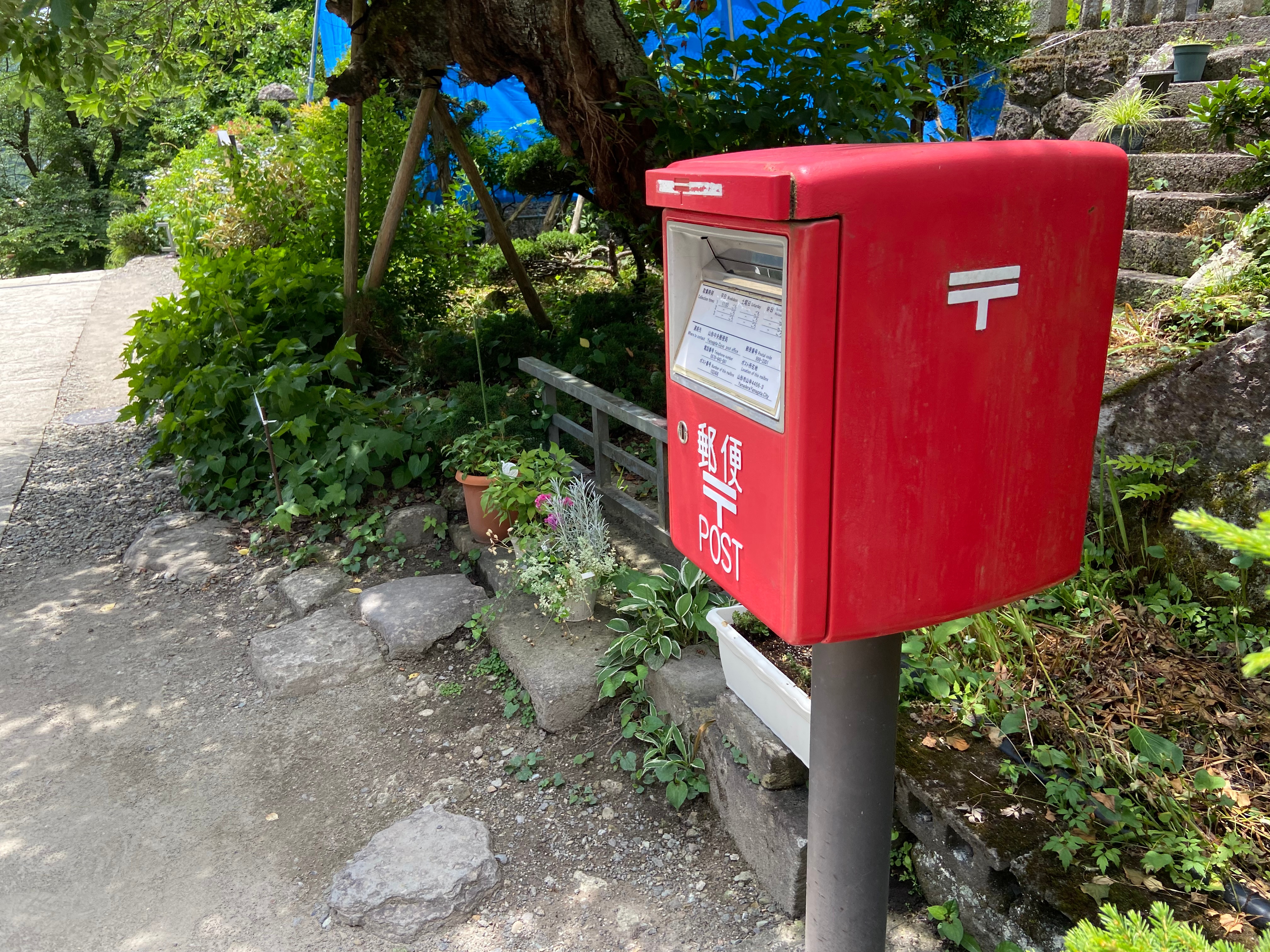
Very close to the top of the mountain is a post box. At the bottom of the mountain there is a post office, a mere 940 steps away. I naturally feel sorry for the postman whose job it is to walk up and down a mountain every day to collect what is likely just the odd piece of mail.

1,015 steps. I reach the top. The cicadas’ song fills the humid afternoon here, sharp and piercing, like needles being driven into a heart. Their cries echo, sinking into the ancient rock.

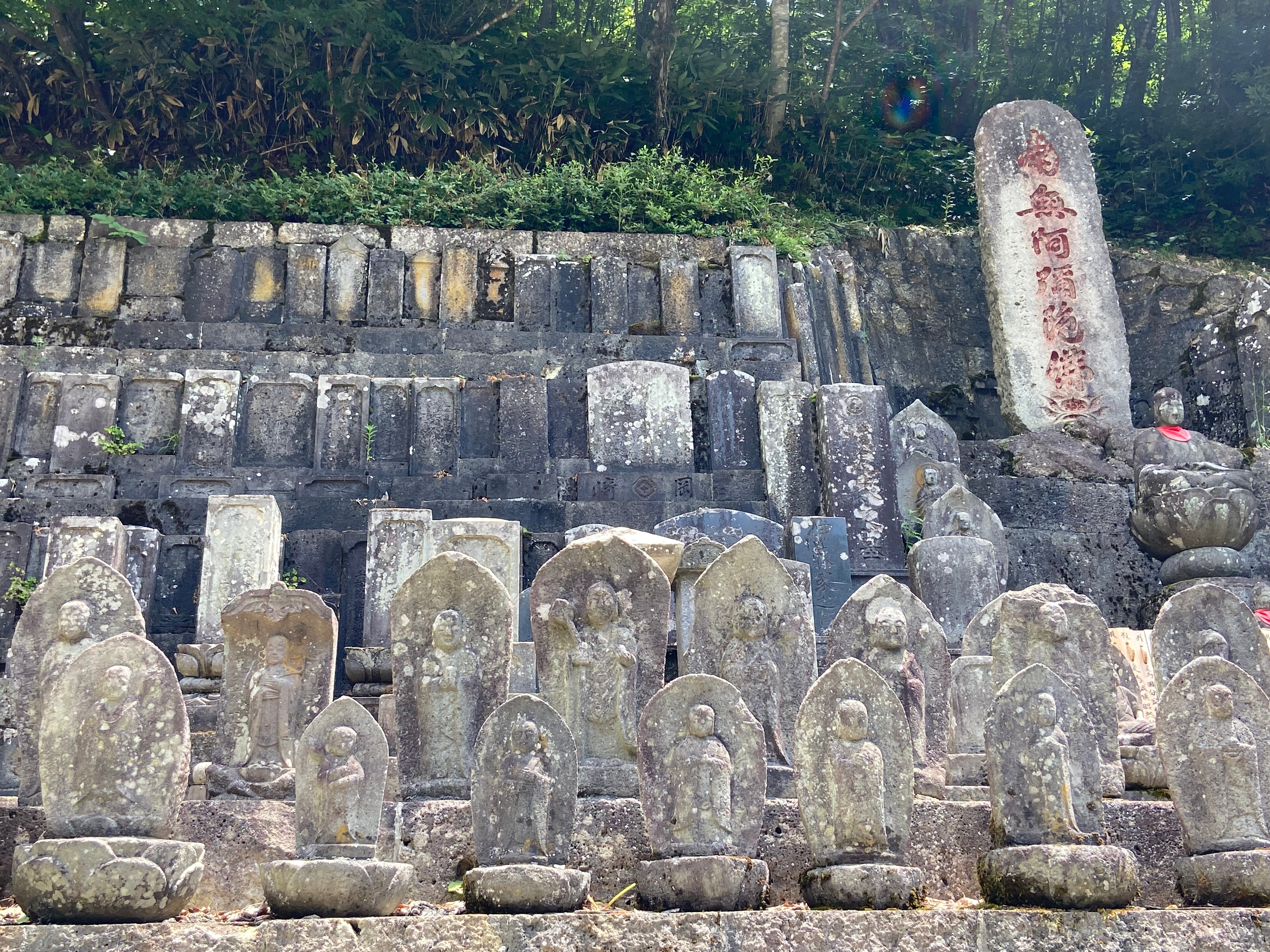
A cemetery at the top concludes the climb. Crooked gravestones pushing through moss. Everything here is slanted, aged, dignified in its entropy. I sit beside the tombs, trying not to melt into them. The mountain temple echoes these themes of death, decay, and transcendence as it climbs through cemetery terraces and silence.

I stand to rest, to catch my breath, to take it in. My shirt clinging to me like skin, thirst calling me to a vending machine back at the base of the mountain. But I linger. Amongst the graves, everything feels tilted. Stones, time, even thought.

Walking down is the reward as I can see it all. All the views, all the way down. There’s something about a good vista. I say goodbye to the top of the mountain, and goodbye to the vista. Hasta la vista. Until I see the view again, opening like lungs exhaling. I can see the whole valley now, softened by haze.

Back at my capsule hotel, I voluntarily entomb myself in a plastic drawer like a very polite corpse.