Life of Pipes

I’ve finally decided to visit Hokkaido Prefecture, specifically Sapporo, the capital of northern Japan. The area I’m staying in over the next few days is seemingly charming. The first thing I notice about it is the open spaces. Then the neat symmetry of the streets. Then the pipes.
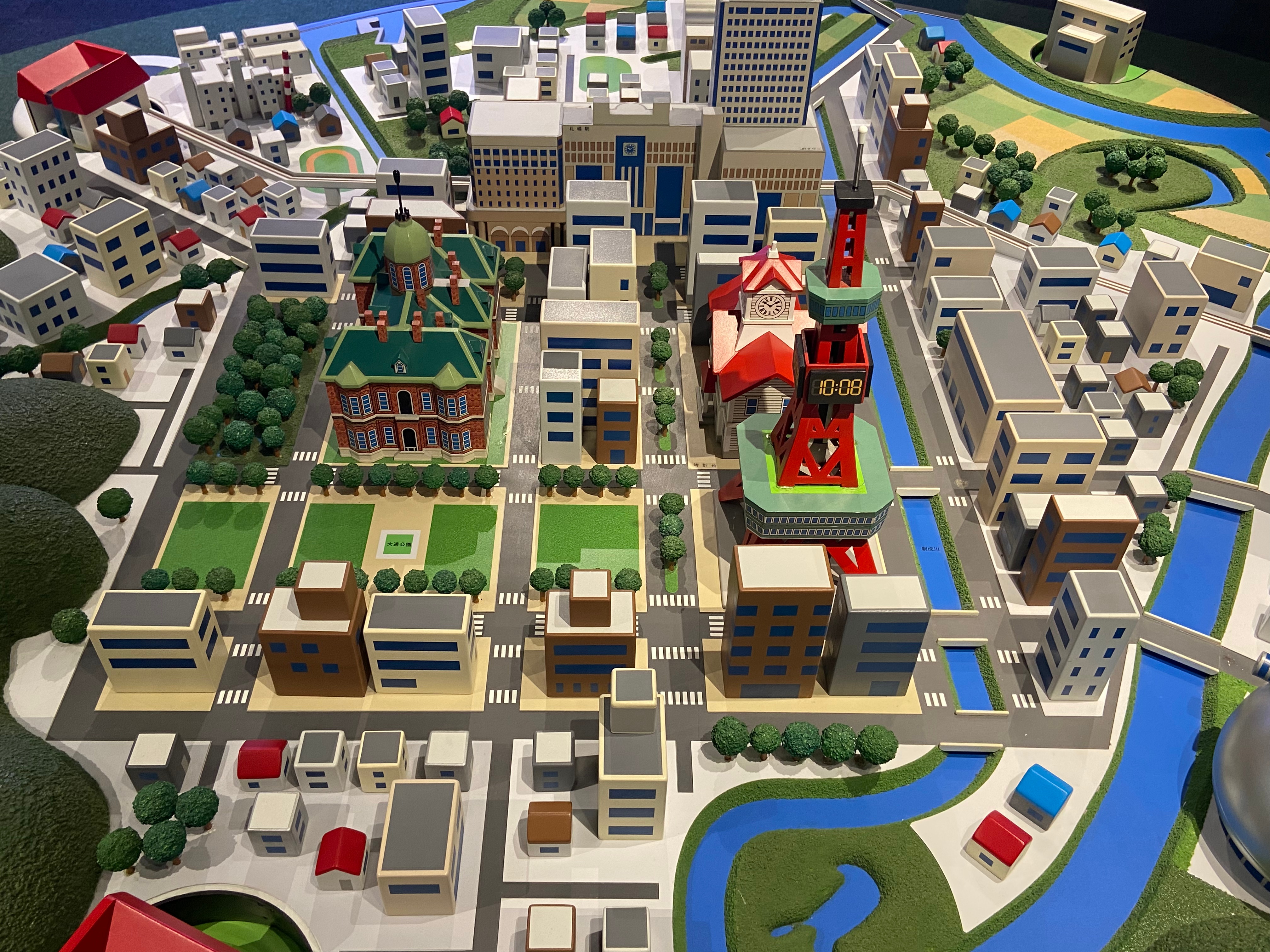
The nearby Odori Park slices across twelve neatly gridded blocks. There’s a river, a large red-brick mansion, and an illuminated TV Tower looming at exactly 147.2 metres in height: Sapporo’s artificial Polaris.

My first destination today is a bit of a hidden gem. So hidden in fact that the building itself is only identifiable by a single blue water droplet painted on its side. A grey concrete block of a structure in the middle of nowhere on the edge of the city. To find it, I am told to just follow the Soseigawa River. If you haven’t guessed it yet, the place I’m looking for is the Sapporo Sewerage Science Museum.
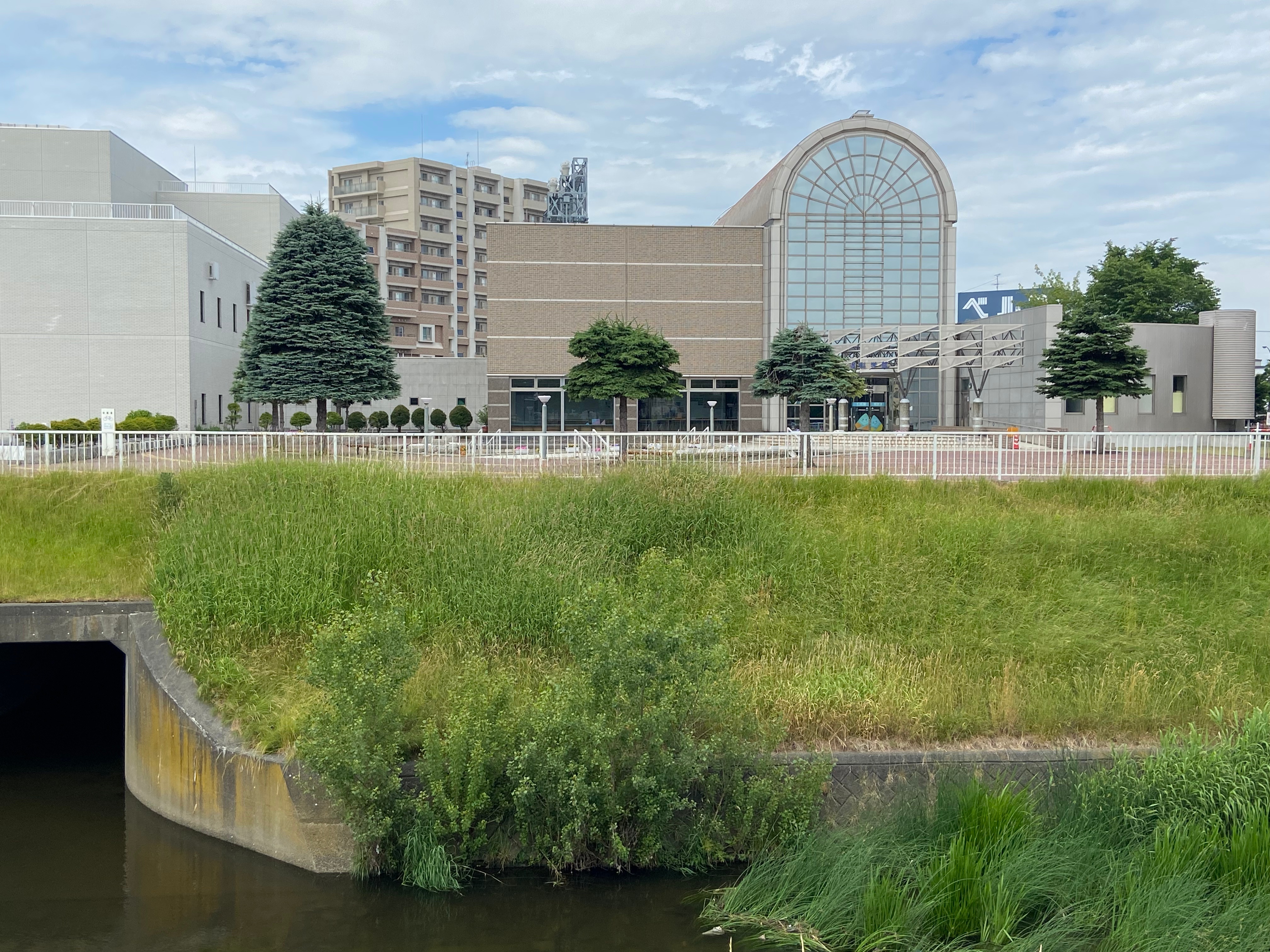
I don’t notice the single blue water droplet painted on the side of the building. What I notice instead is the stench; the kind that makes you immediately try to locate the source. Which, in this case, is the Soseigawa Wastewater Treatment Plant: right next door.

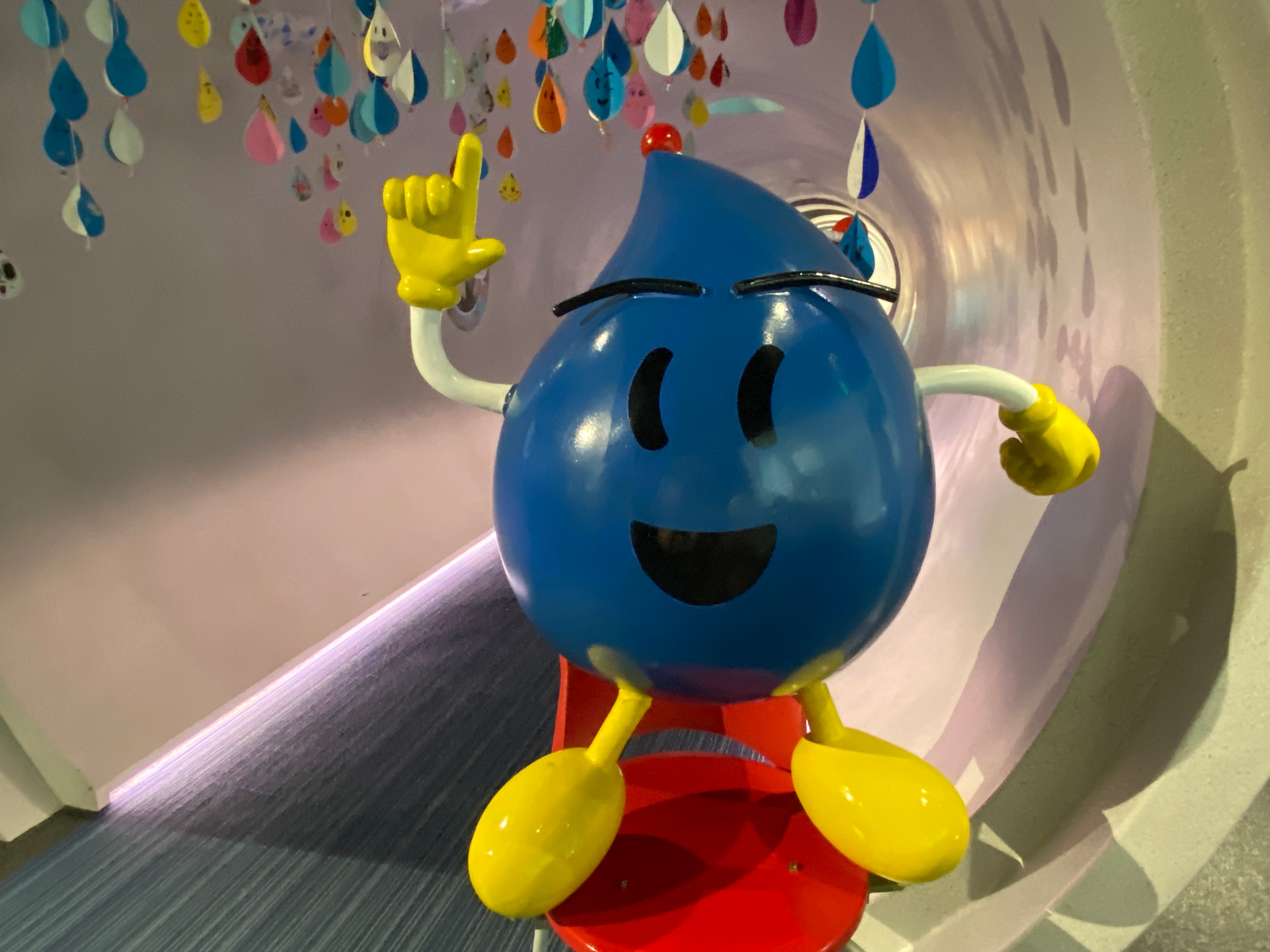
Inside the museum, there is nobody around. It’s actually free admission so I freely explore some of the exhibits. I quickly discover that there are mascots everywhere. There is a bacteria mascot, a sludge mascot, an activated sludge mascot, and a pipe-shaped mascot sporting sunglasses named Dr. Pipe. The water droplet is the star of the show and its name is Kurin-chan. There are no further details or backstories for any of the mascots.
The museum features a huge panorama theatre with empty seats, the movie they are showing today is called “Where Sewage Goes” and is an animated educational video. There’s a detailed diorama of the seemingly charming Odori area of Sapporo. Underneath the model of the city are drawers that can be pulled out to reveal the fascinating inner workings of Sapporo’s sewerage system.

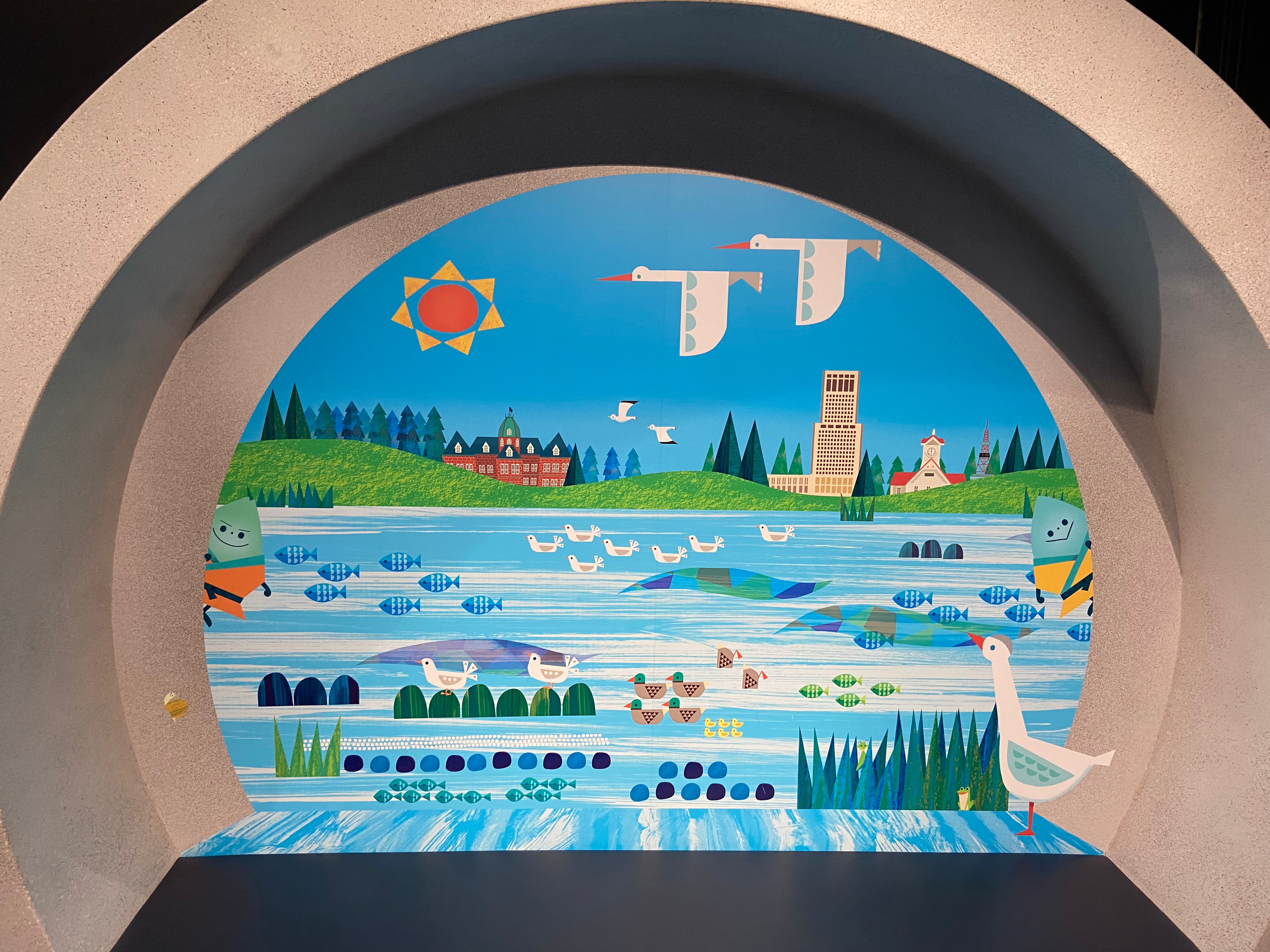
I imagine children would love this place and its various petri dishes of animal fæces and eleven interactive games (some genuinely quite fun) where you can train to be an Operations and Maintenance Master, a Sewage Pipe Cleaning Master, or even a Sludge Treatment Master. There’s also a massive decorated pipe with artwork seemingly unrelated to the other parts of the museum.
Speaking of hands-on activities and pipes, the museum also features an 800-year old decommissioned sewer pipe that you can touch anywhere you like. I decide to only touch the outside of the pipe. I sanitise my hands and wave goodbye to Kurin-chan as I leave for the station.

In a city called Sapporo, it’s almost impossible to avoid seeing signs, sponsorships, and advertisements for a beer company that shares the city’s name: Sapporo. So, moving from one thing that comes out of pipes to another, I just hope this one tastes markedly better.
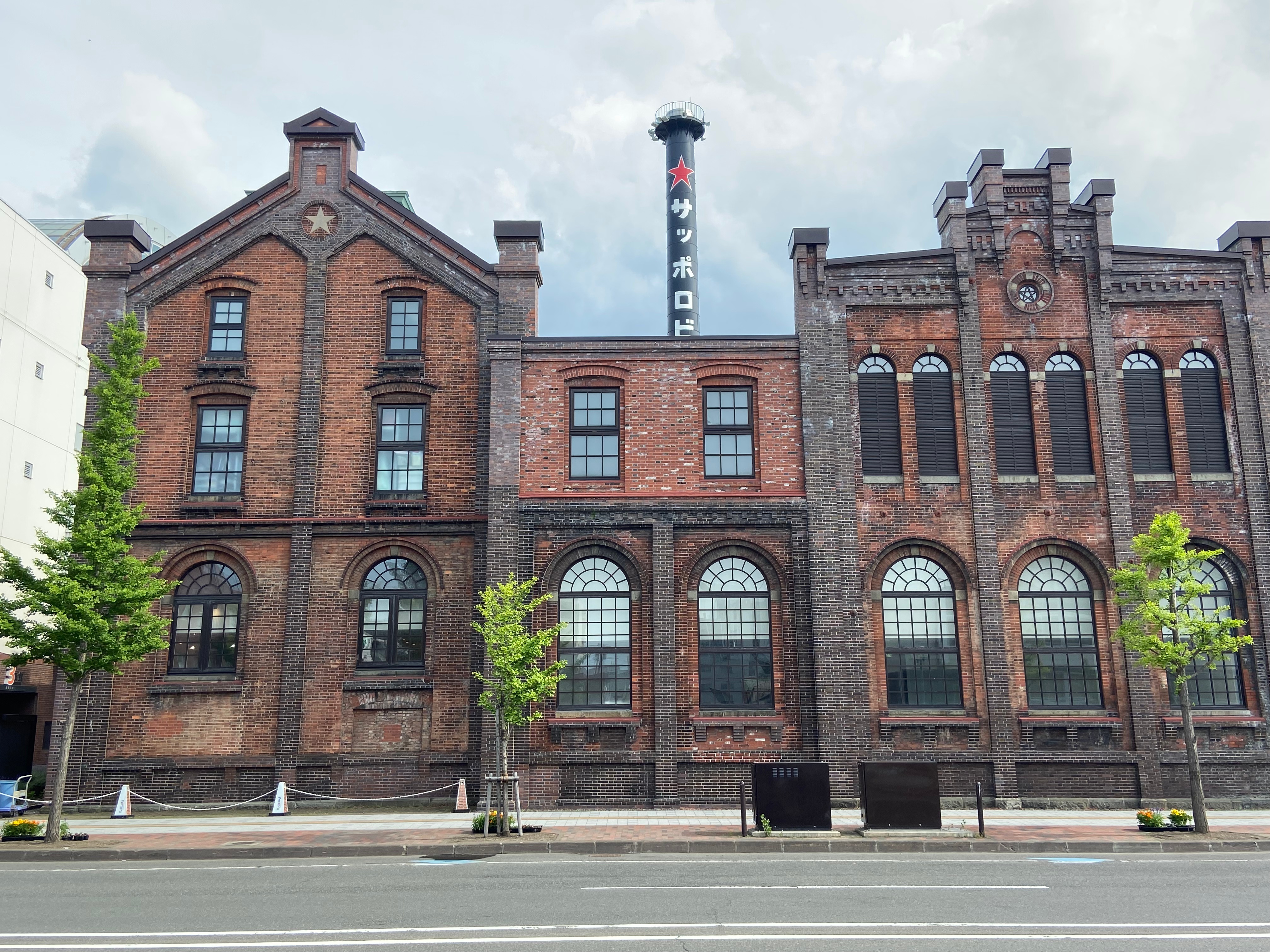
Founded in 1876 by German-trained brewers, Sapporo Beer survived relocation, stereotypes, and wartime censorship. The Tokyo facility was shut down for reasons that may or may not involve pipes. A year later, the first beer was delivered in boxes of ice back to Tokyo, and the years that followed saw Sapporo Beer’s popularity begin to soar across Japan.

As I enter the Sapporo Beer Museum I am instantly struck by the size of the massive gold Walt Pan. Used from 1965 to 2003, this historic steel sphere is capable of brewing 280,000 cans of beer at once. For context, that’s 280,000 cans of beer. A sign at the bottom of the ramp politely asks: “Please do not climb on the Walt Pan.”
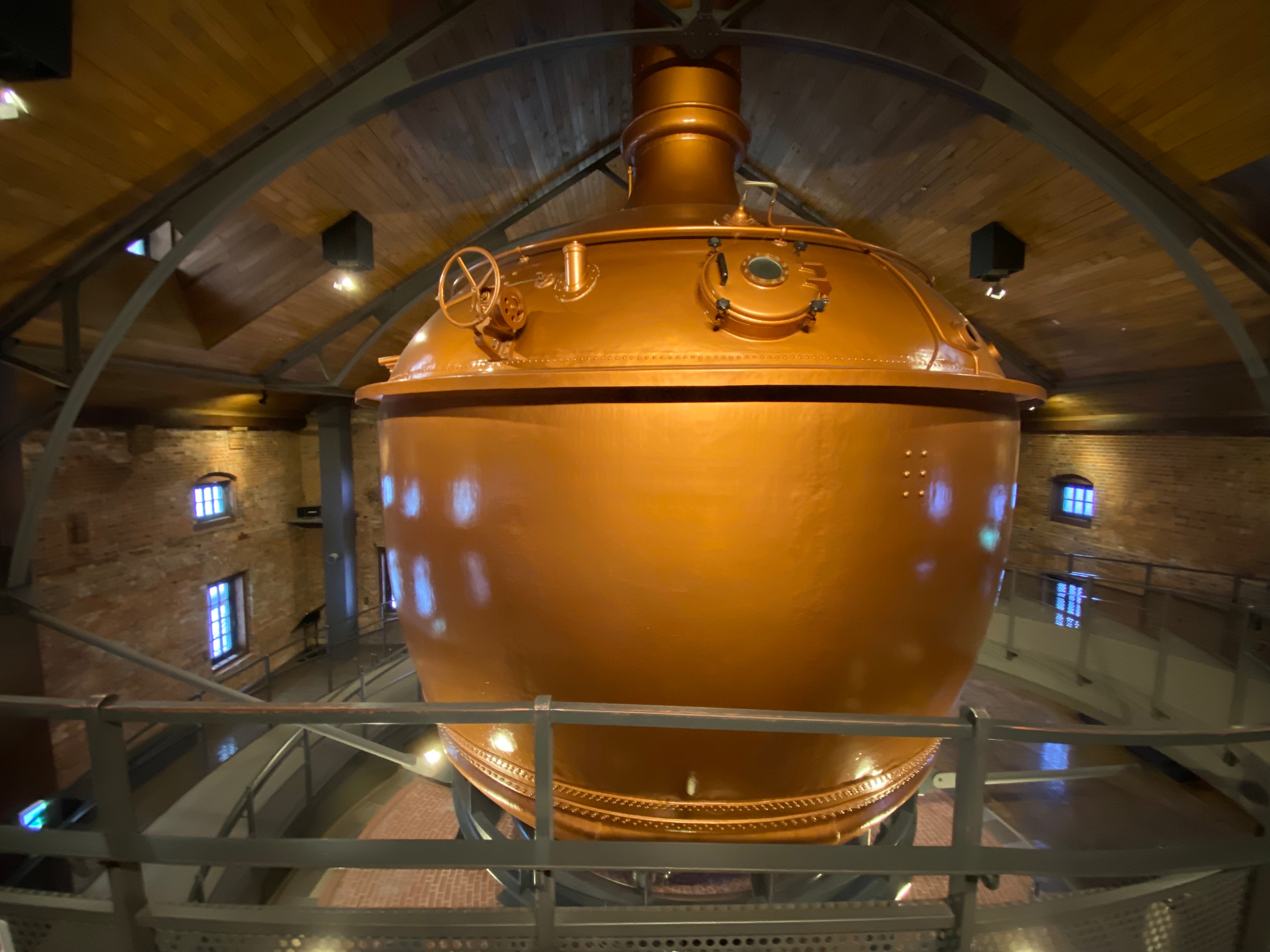
In 1908, Sapporo Beer began using geisha in its advertisements, an image later viewed as stereotypical. All advertising ceased in the late 1930s for unclear reasons. When it resumed in the mid-1940s, the geisha were gone, replaced by more glamorous and recognisable stars.

As I leave the museum I exit into a roped-off line of people queueing to buy tickets for beer at a vending machine. I pay ¥450 for a ticket that I then exchange for a small 240ml glass of beer. I don’t mind though, it tastes very good and makes for a great photograph.
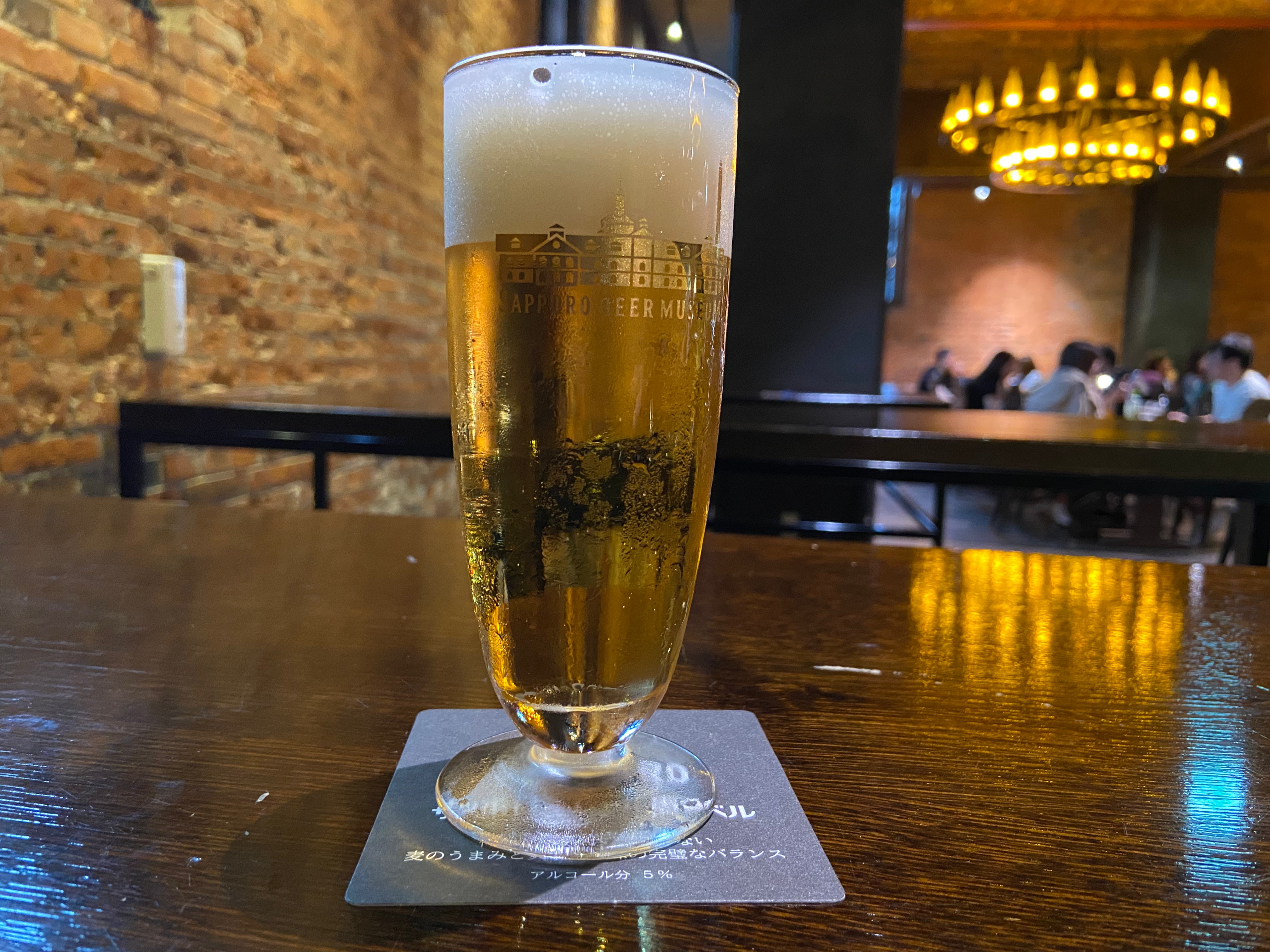
In Japan, there’s a concept called wabi-sabi. It’s hard to explain, but that photograph of my small 240ml beer does a decent job. The lighting is perfect, the glass pristine, the faded backdrop of a crowd of people in the beer hall, but something is out of place: a bubble, or the absence of a bubble. One missing pixel at the top of the glass. An imperfection. But for wabi-sabi, that bubble is a missing thing of beauty.

I take two sips of beer and realise my glass is empty, so decide to move on to my final stop of the day: the Mount Moiwa Ropeway. Unironically, right next to the ropeway is the Sapporo Waterworks Memorial Museum (more pipes). Luckily, it’s long closed today, so I admire the exterior and move on.
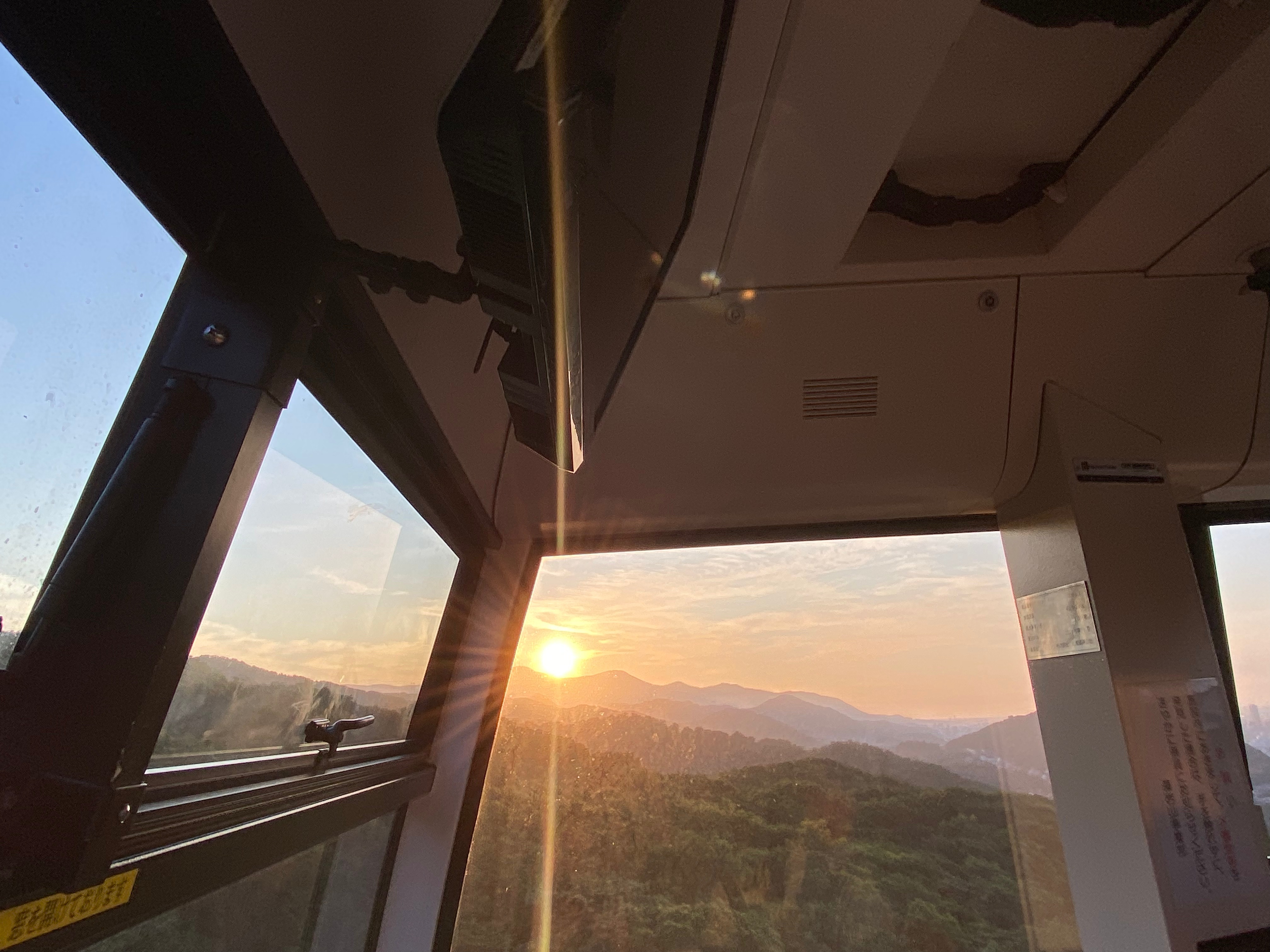
I pay ¥1900 and enter the ropeway. I am carried alone, lifted above the city, above the pipes, and past the skyline’s edges. The sun to the west sets behind the Shokanbetsu mountain range. I read a sign stating that Mount Moiwa has one of the three best night views in all Japan; at sunset, the view from the gondola is already stunning.

At the top, I await the gloaming. As the darkness of night blankets the city below, Sapporo shrinks and becomes less of a grid, and more of a circuit board of blinking lights. What makes the view even more satisfying is drinking my 500ml can of Sapporo Beer, whilst relaxing, staring down at the connected lights of my day below me, as I enjoy the moment.
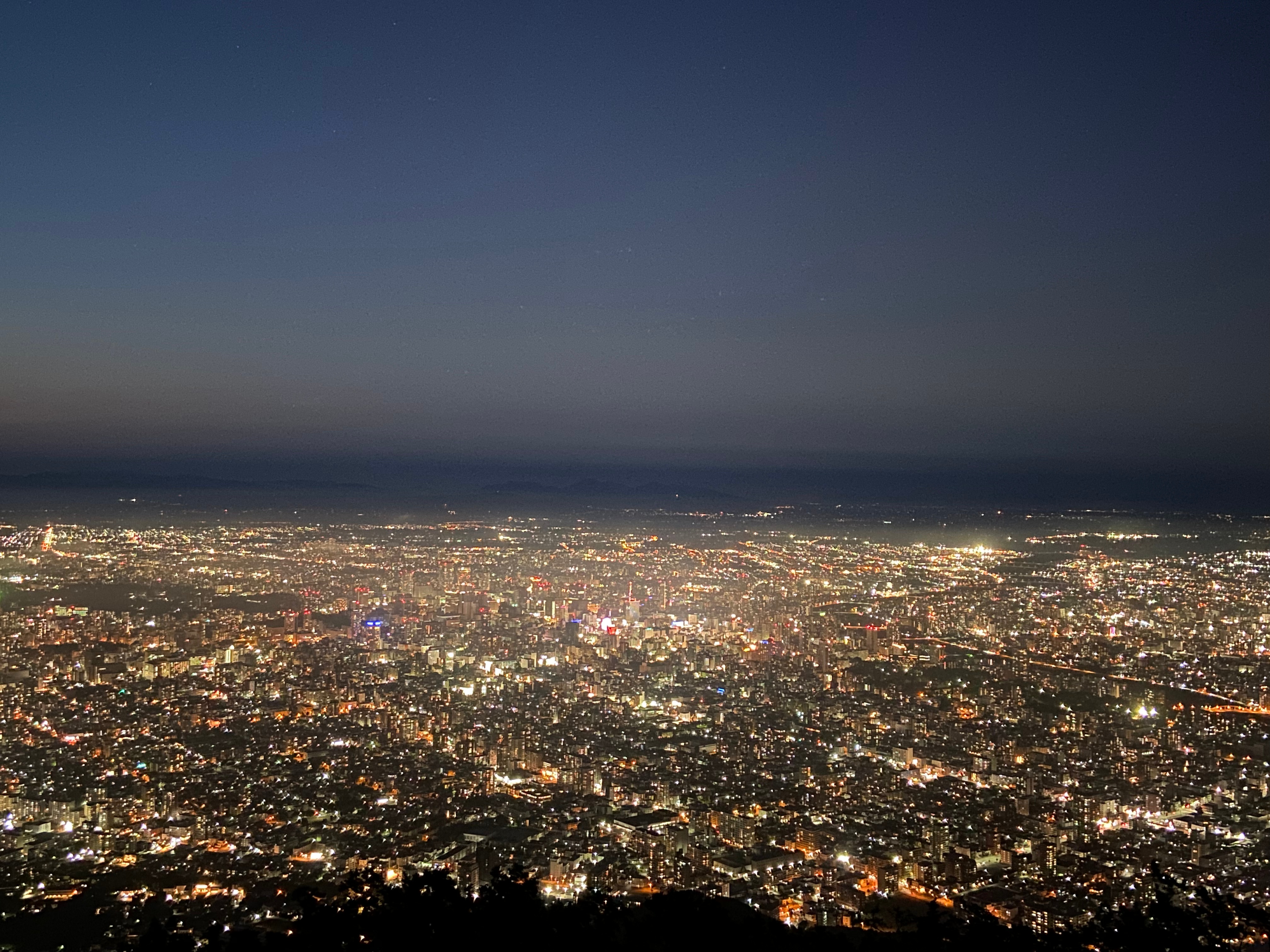
Earlier today, I touched an 800-year-old sewer pipe that once carried the waste of people who don’t exist. I watched beer pour from a golden pipe into a glass, and now, I’m looking out at a city of interconnected lights.

I take in the view. Breathtaking. Yet all I can think about is that pipe. The one with the sunglasses.
Welcome to the World of Mizuki Shigeru

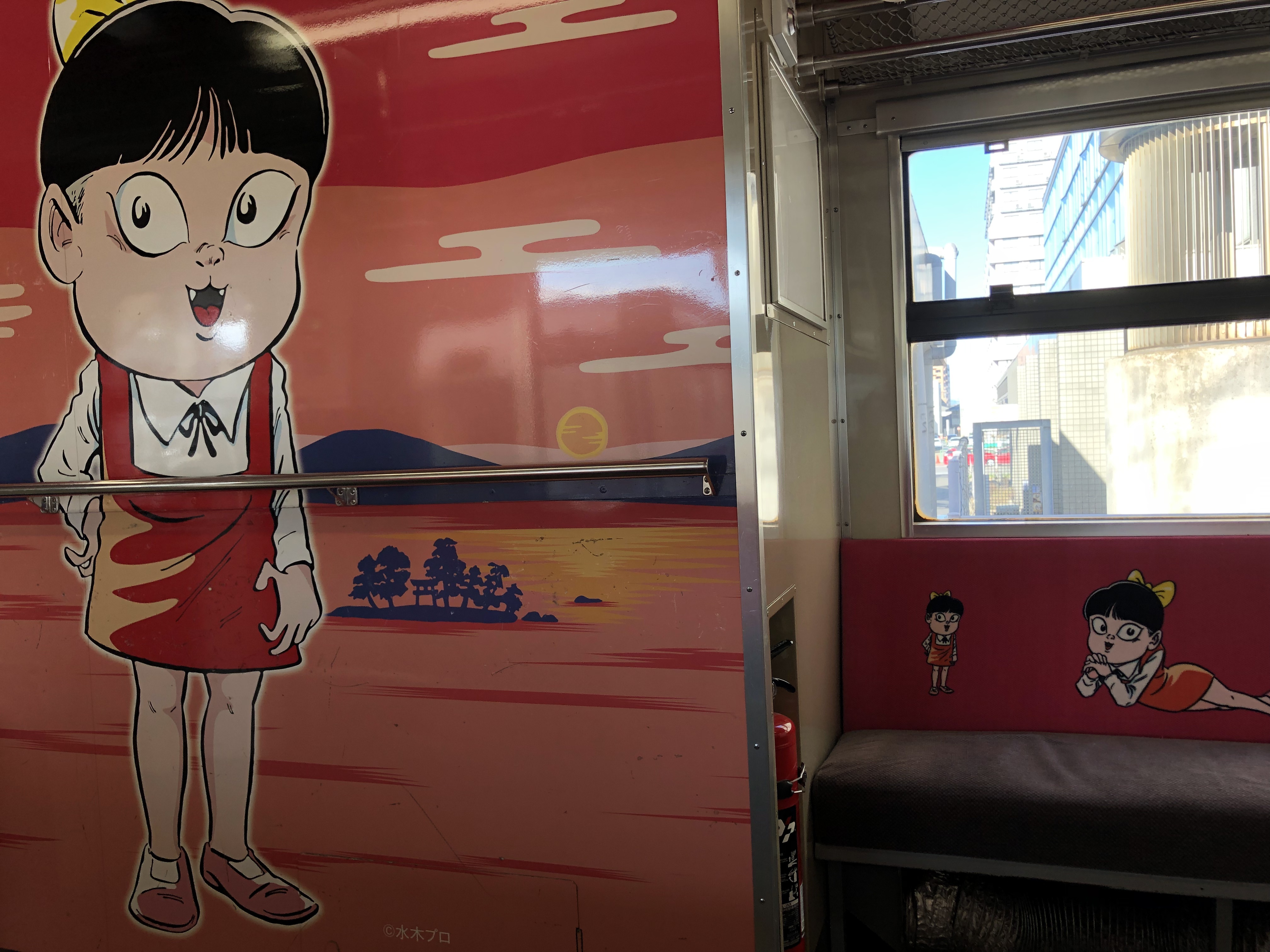
I stand at Yonago Station, my eyes fixed on the tracks as I await the arrival of my train from Track 0. This station, also known as Ratman Station, is located in Tottori Prefecture near the border of Shimane. The stations on the Sakai Line all have an alternative name, and this one is no exception. As my train arrives, I can’t help but notice the lively characters from the popular anime, GeGeGe no Kitaro, decorating its exterior. The walls are adorned with illustrations of Nekomusume, a supernatural cat known as “Cat Girl,” who, to my surprise, also serves as one of the train’s announcers.

As the train chugs along, it gently rocks back and forth, the sensation akin to being on a ship at sea. Nekomusume is normally a reserved yokai girl, however she is known to shapeshift into a fearsome catlike monster with razor-sharp fangs and piercing eyes, particularly when she is angry or hungry for fish.

Finally, I arrive at the port town of Sakaiminato and get off the train at Babasakicho Station, nicknamed ‘Kijimuna’ meaning Okinawan wood spirits. As I exit the station, I feel lost and consider whether I have made a mistake. But after a short walk, I see a sign pointing me to my destination: “Welcome to the World of Mizuki Shigeru.”

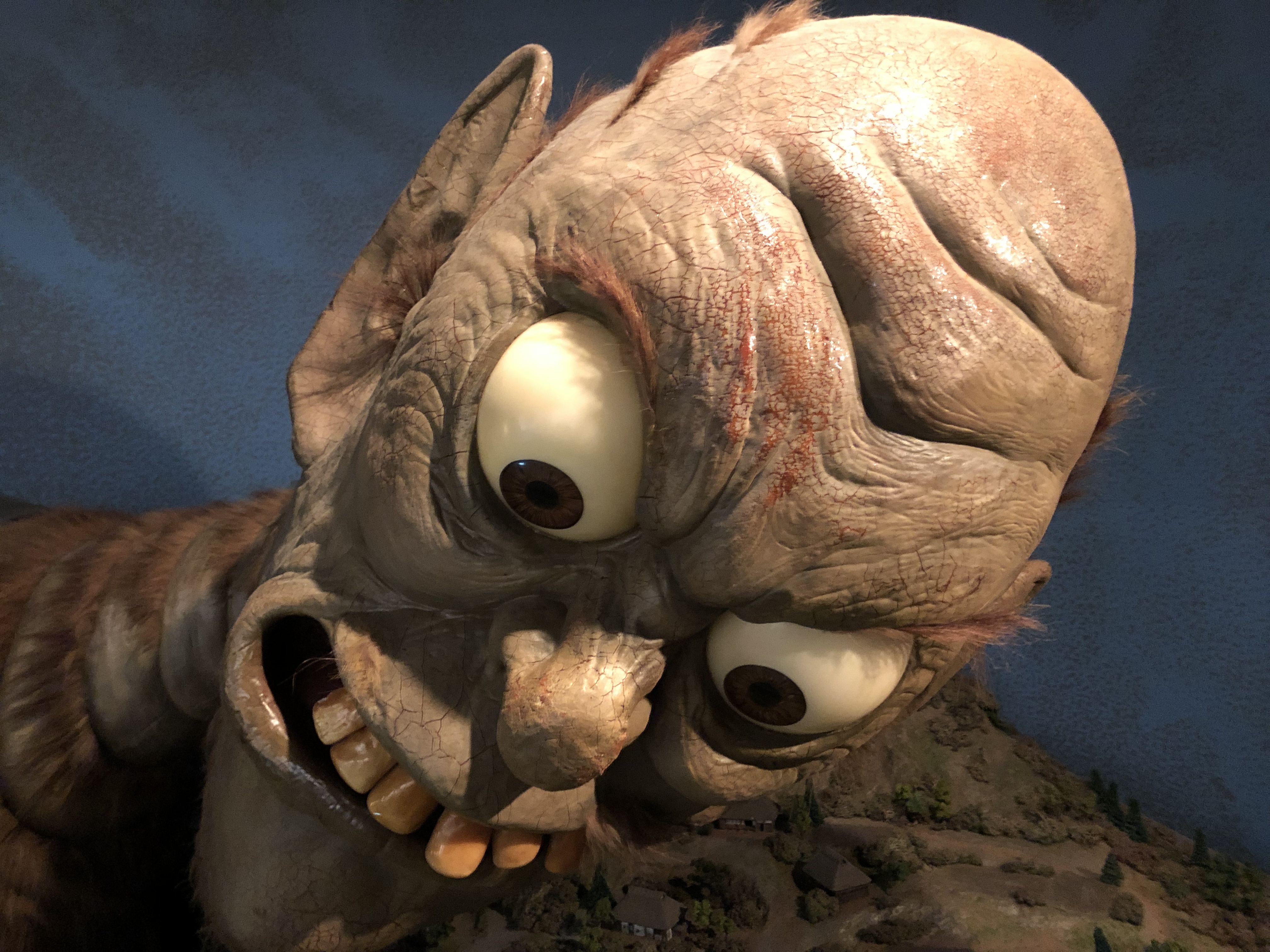
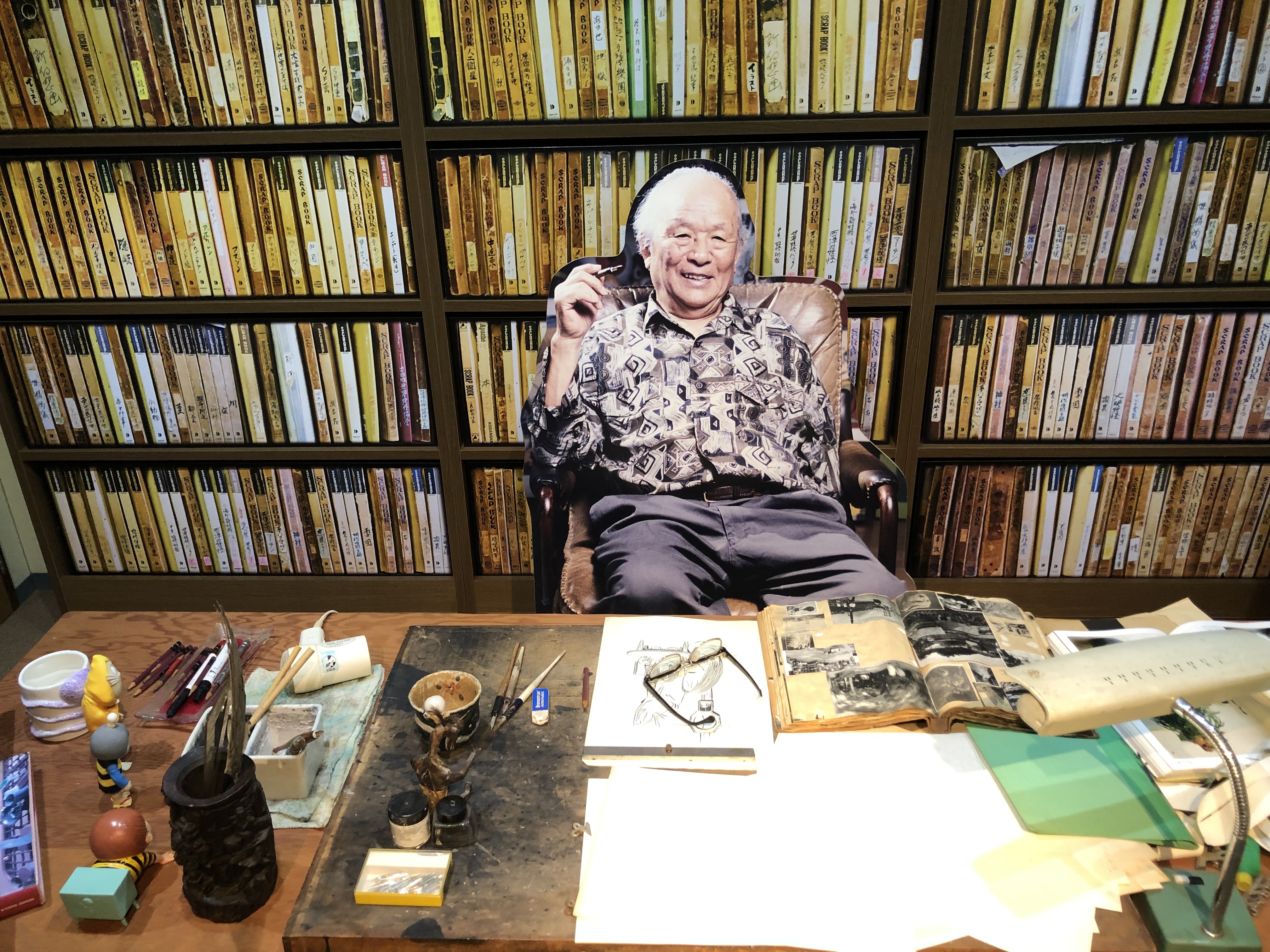
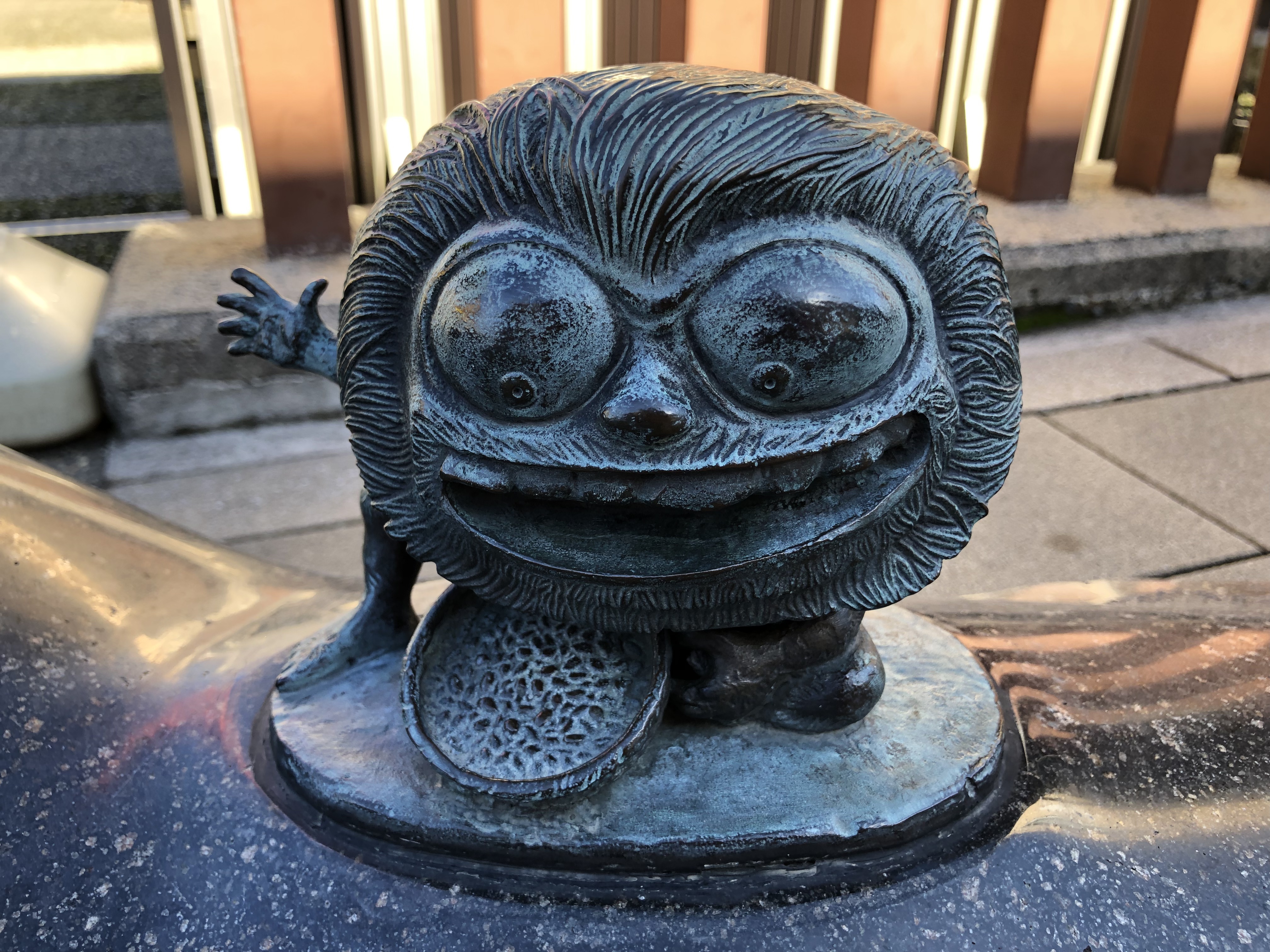
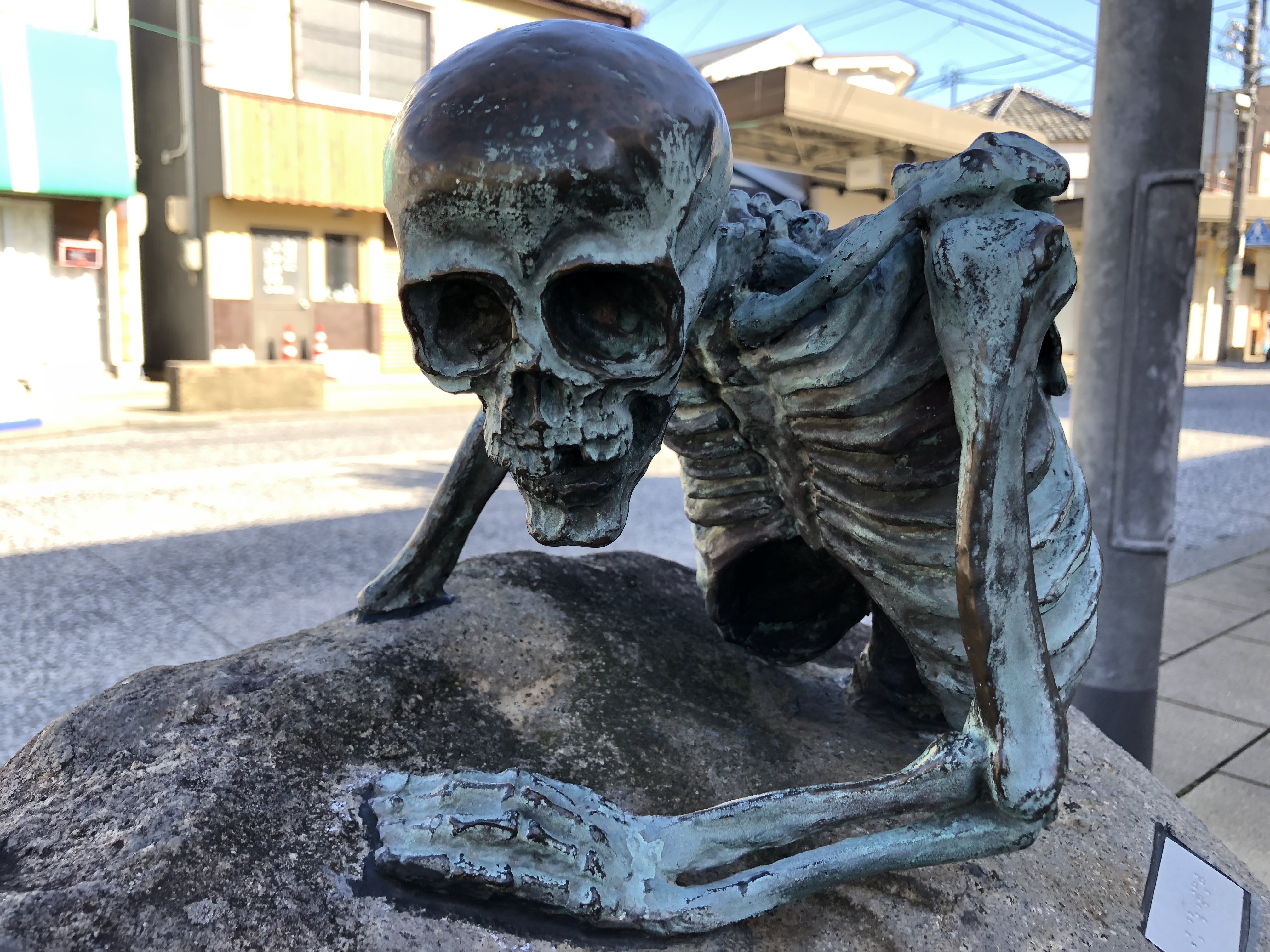
Mizuki Shigeru was a Japanese manga artist, born in 1922 and raised in the town of Sakaiminato. Upon arriving at Mizuki Shigeru Street, I am immediately struck by the abundance of weird statues that line the road. A total of 177 bronze yokai statues, each depicting a different supernatural entity from Japanese folklore, have been placed along the 800-metre street. Mizuki Shigeru made his name by portraying such entities in his work and the area here is dedicated to his legacy.

The street is filled with souvenir shops selling official Mizuki Shigeru goods, and the entire road is dedicated to the artist. It’s clear that even in death, Mizuki Shigeru has become immortalised with not only a statue, but an entire street and a train line. The vending machines are adorned with illustrations of monsters, there are photo booths where you can take a picture with yokai, there is a large museum, and even a place called Yokai Shrine.

The renowned Mizuki Shigeru Museum showcases many of Mizuki’s works, including manga books from his “only-for-rent-manga-period” and other masterpieces about yokai. The museum also displays numerous photographs and materials about the writer’s trips and his research of the yokai world. Visitors can even find yokai that lived in ancient times in Japanese households. The museum truly immerses visitors in the world of yokai and the brilliance and wonder of Mizuki Shigeru’s work.

The museum’s flyer sums it up best, “You will meet a lot of yokai. Hope you will become friends with them.”

Continuing my exploration of the museum, I pass books and board games, and a lot of comics, most of which feature imagery that depicts death. The museum spans a massive ten rooms and includes original cells, drawings, a bronze engraving of Mizuki’s palm print, his passport, and a complete timeline of his life.

Weird, creepy music plays as I pass through a haunted house. I learn in the museum of an interesting temple over in Matsue Prefecture, three hours from here by train. The temple is very much related to the story of Mizuki Shigeru’s life. As I leave the museum I pass a terrifying wall of heads in the Yokai Cave, and finally outside I discover a traditional Japanese garden littered with macabre images.

After a few hours on the train, I arrive at Ichibata-Guchi Station. The train station features a small statue of yokai. As I exit the station, a really old woman approaches me and starts chatting in Japanese. She is surprised to hear that I am planning to walk to the temple, as it is about five kilometres away and up a mountain. The walk is quite difficult, she warns me.

As I begin my hike, I walk down a conveniently straight stretch of road. The first car I see since leaving the station is driven by a Japanese man who, for no apparent reason, smiles and bows his head at me. A short distance later, I come across two stone lanterns that mark the beginning of the route, which will start to incline steeply. From this point, the footpath vanishes leaving two lanes of an empty road devoid of traffic or vehicles. As the path becomes steeper still, it meanders and curves up the mountain and I find that the further and higher I climb, the better the view becomes. At one point I can make out Lake Shinji in the distance.

As I near the top, I realise how hot it is, and it doesn’t help that I am wearing a thick winter coat. It must be 20 degrees. The breath of winter now a fiery gasp, as the planet scorches in its rage.

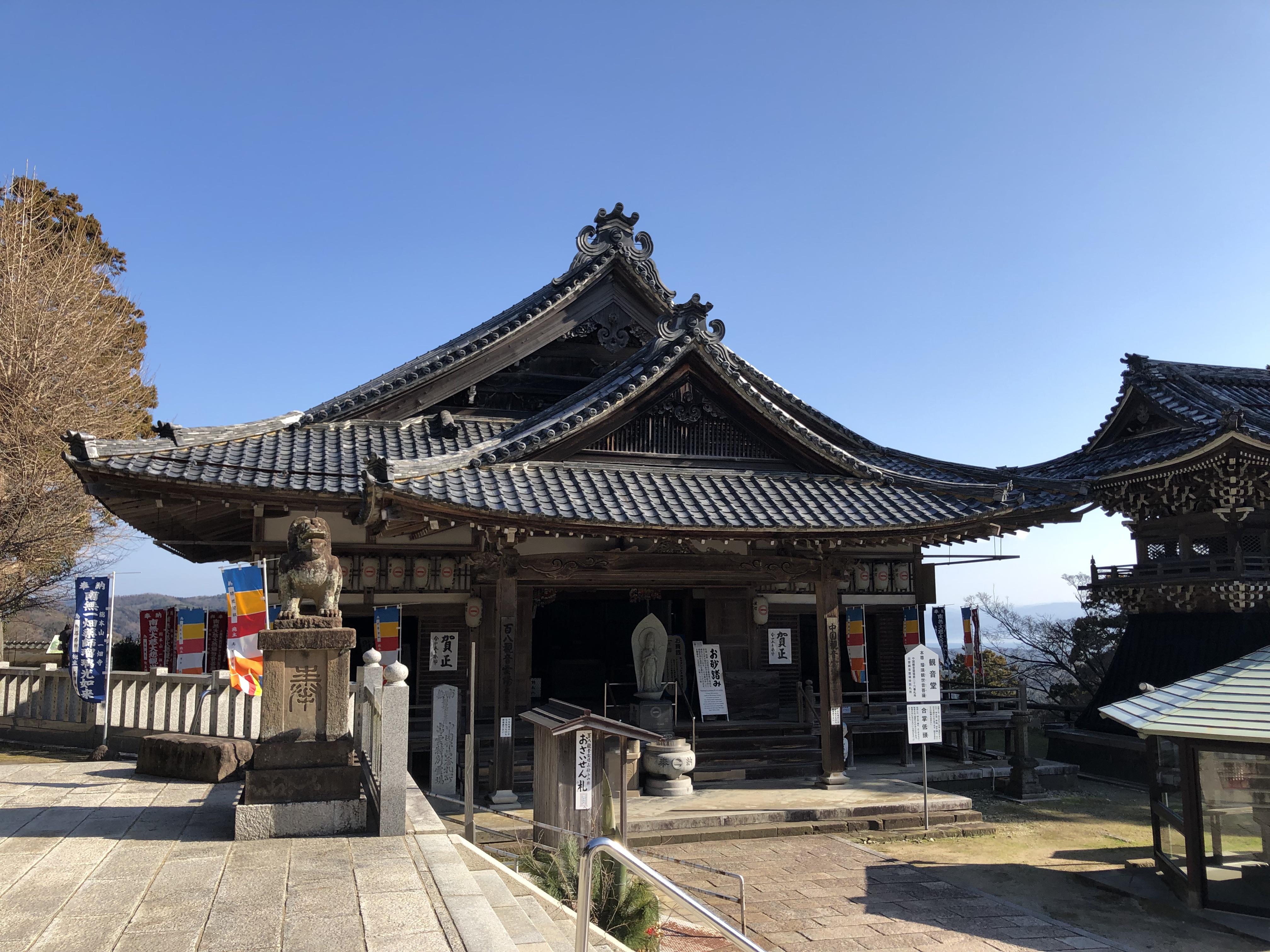
After a challenging hike I reach Ichibata Yakushi, a Zen Buddhist temple, and part of multiple pilgrimages, one of which includes visiting 108 Kannon temples in Japan. The temple was said to be founded after a monk named Yoishi followed three white foxes up this mountain, and decided to build a temple at the site where the foxes led him.

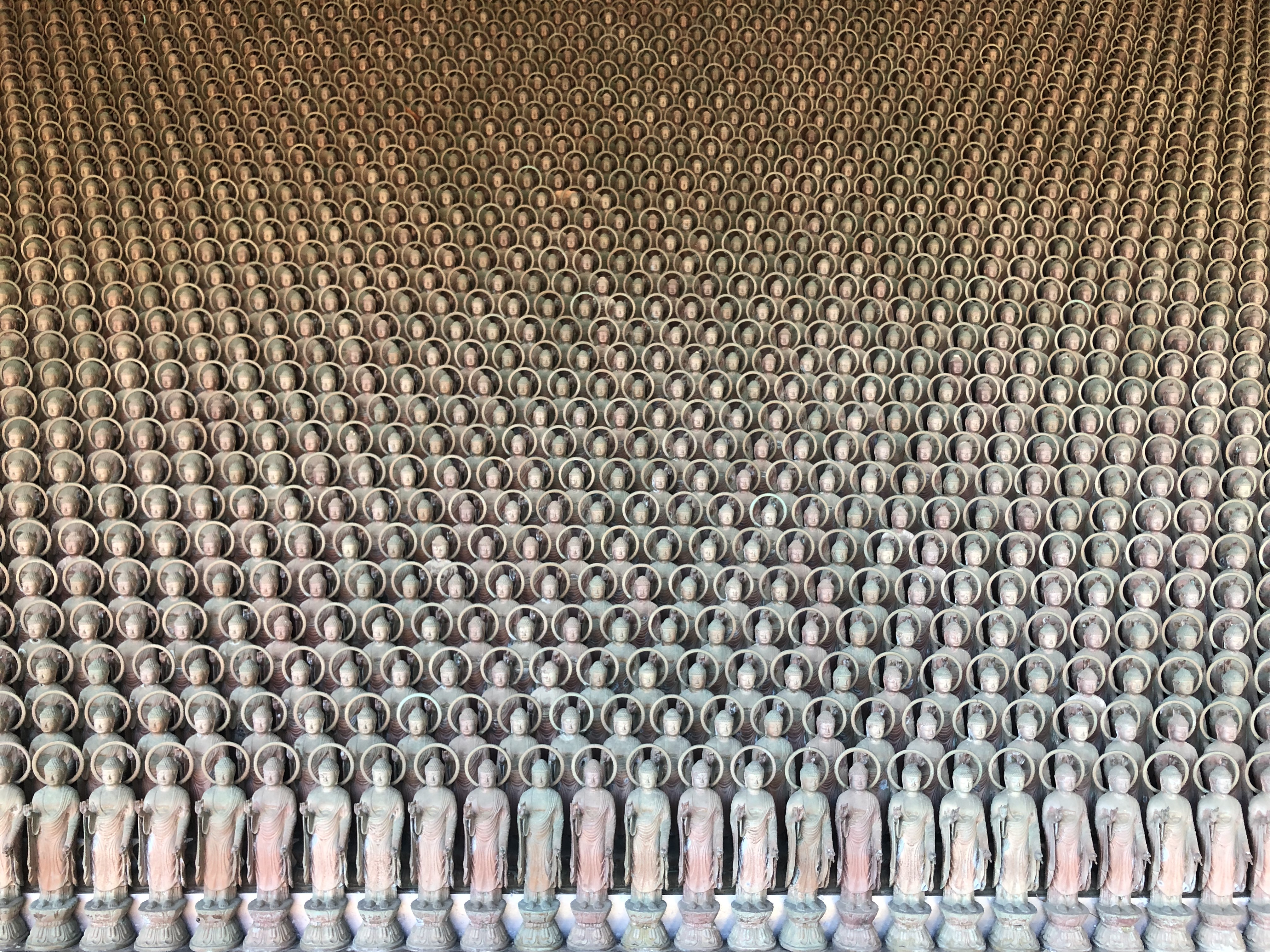
The reason for visiting this temple today is that the story goes that Shigeru Mizuki used to visit here a lot, and that a ghost of a really old woman would meet him here, whispering to him all the legends and stories he used in his creations. I explore the temple grounds, and get a feeling that someone ordered a few too many statues. It is said that there are 84,000 statues here, however, I count just 30,780.

As I continue to explore, I decide that it’s really quite beautiful up here. The area also features mountain cottages to rent for a night for as little as ¥10,000, offers stunning views of the landscape below, and for some reason, appears to be really popular with dog owners, as I count five dogs within the temple grounds.

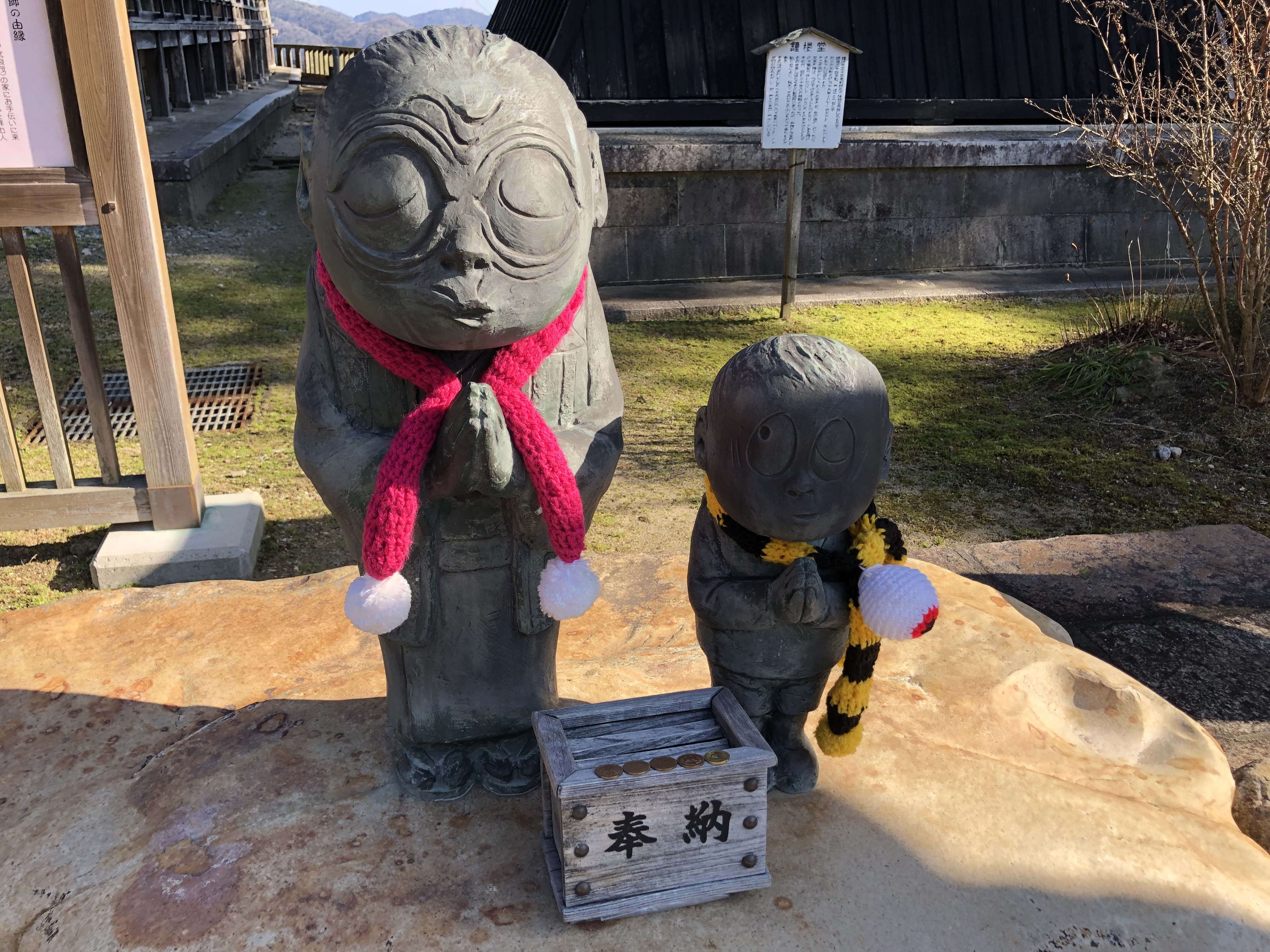
I place some coins in the box next to some statues of yokai, and decide that this is the nicest temple I’ve visited. In the future, I wouldn’t mind visiting more temples on a pilgrimage trail, but for today, I decide it’s getting late, and I head back down the mountain passing a small mountain village, before stumbling across another yokai statute, sitting unassumingly at the bottom of some stone steps.

After climbing up the 1,270 moss covered steps, I arrive back at my favourite temple, exhausted and realising this was just an alternate route. I carefully climb back down the steps to leave. The really old woman I saw at Ichibata-Guchi Station smiles at me as I pass her on the steps, and I can’t help but wonder if she might be Shigeru Mizuki’s whispering ghost.

Dead Children Playing

Halfway into my eight-hour train journey to the northern region of west Japan, I decide to take a break from sitting and get off at Kurashiki, a quaint coastal town in Okayama Prefecture. Famous for its strategic location during the Edo period, which made it a popular place to store rice, Kurashiki, literally meaning “storehouse,” is also conveniently located halfway between Tokyo and my final destination. Upon arriving at the train station, I am greeted by a sign that reads, “Welcome to Okayama, the Land of Sunshine.”

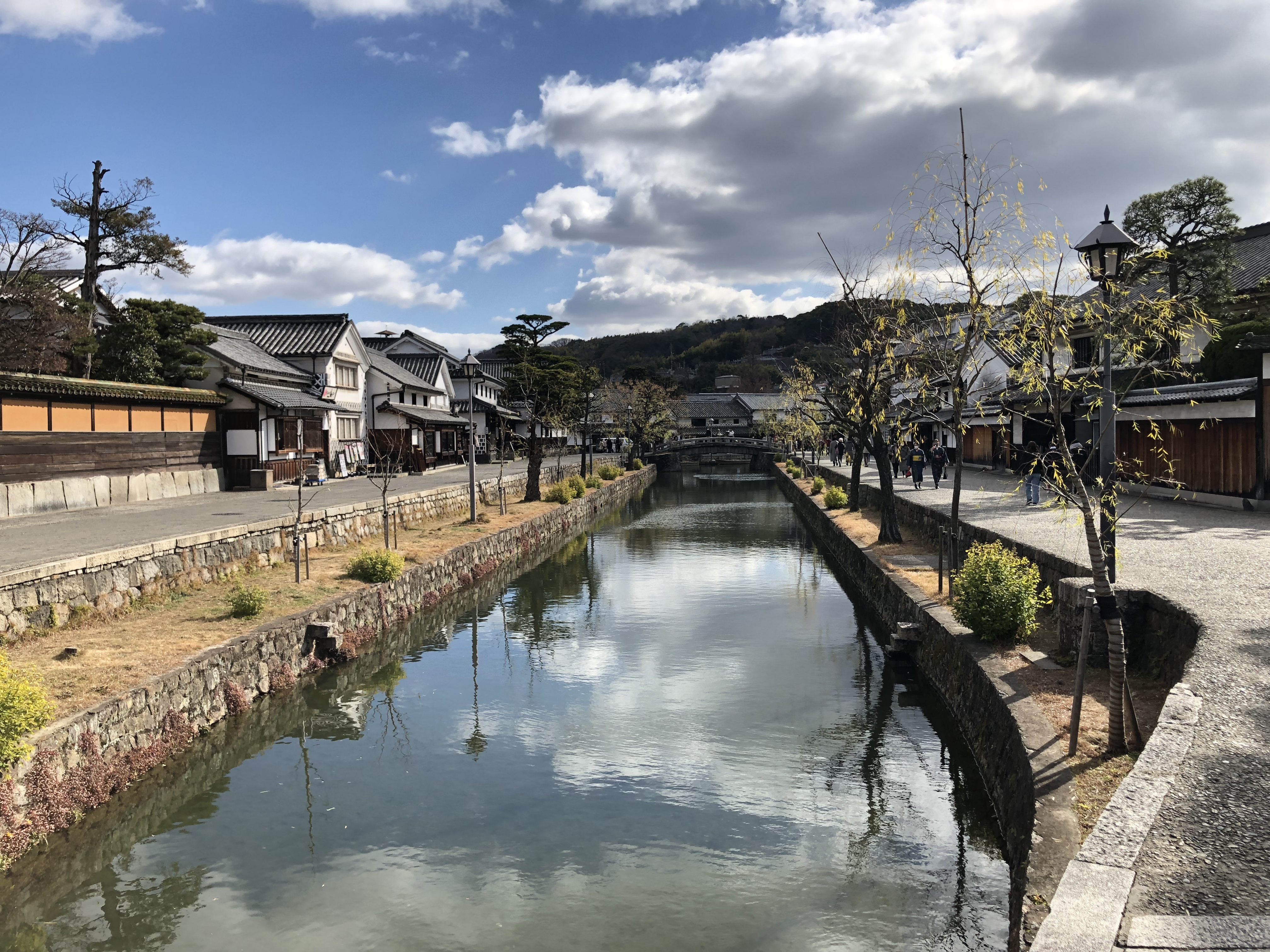
As I step out of the station, I find that the weather is not quite as sunny as the sign had promised. The sky is cloudy and grey, but that does not dampen my spirits as I begin to explore the winding streets of the Bikan Historical Quarter. Here, the buildings are old and charming, with weeping willow trees, historic godowns and canals that interconnect throughout the area. Touts eagerly await me, offering rides in their rickshaws. Just as I begin to further complain about the weather, the sun breaks through the clouds, illuminating the streets and bringing a warmth to the air.

I come across a shop called Gangukan, which has an annexed building featuring a toy museum. Intrigued, I pay the lady at the cashier, who shows me a sign in English that reads, “I will take you to the entrance.” She guides me through a maze of small alleyways to the entrance of one of the museum buildings. The door creaks as it opens, and the woman mutters something in Japanese before swanning off, leaving me to explore the museum alone.

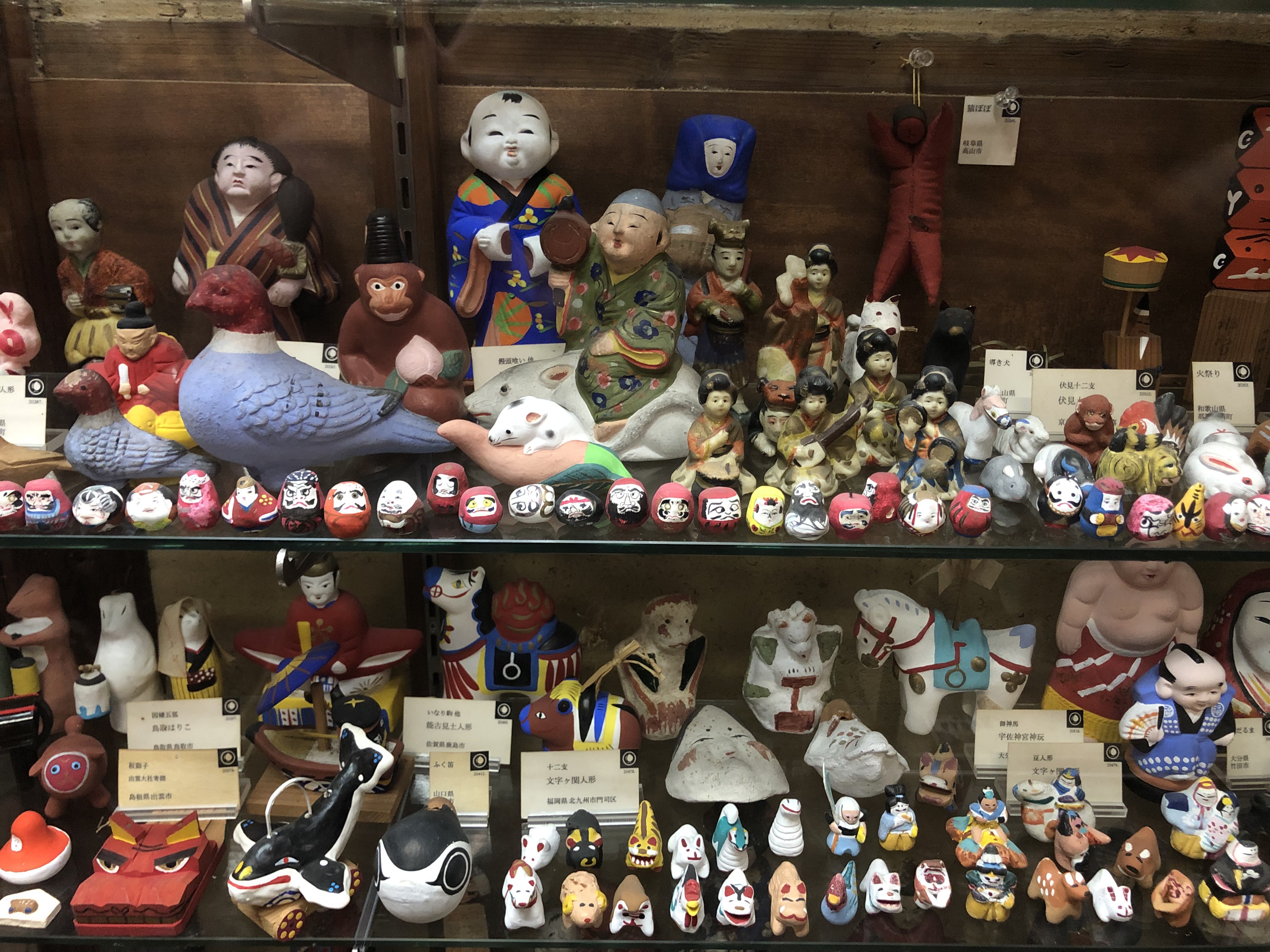
The Japan Rural Toy Museum is one-of-a-kind, housed in a beautifully renovated old rice storehouse, the museum features toys from 1600 to the 1980s. Inside the first room, I am greeted by a collection of folk-craft toys from every prefecture in Japan. In the second gallery, Daruma dolls are displayed alongside clay figures, ceramic bells, dove flutes, and wood wishing plaques.

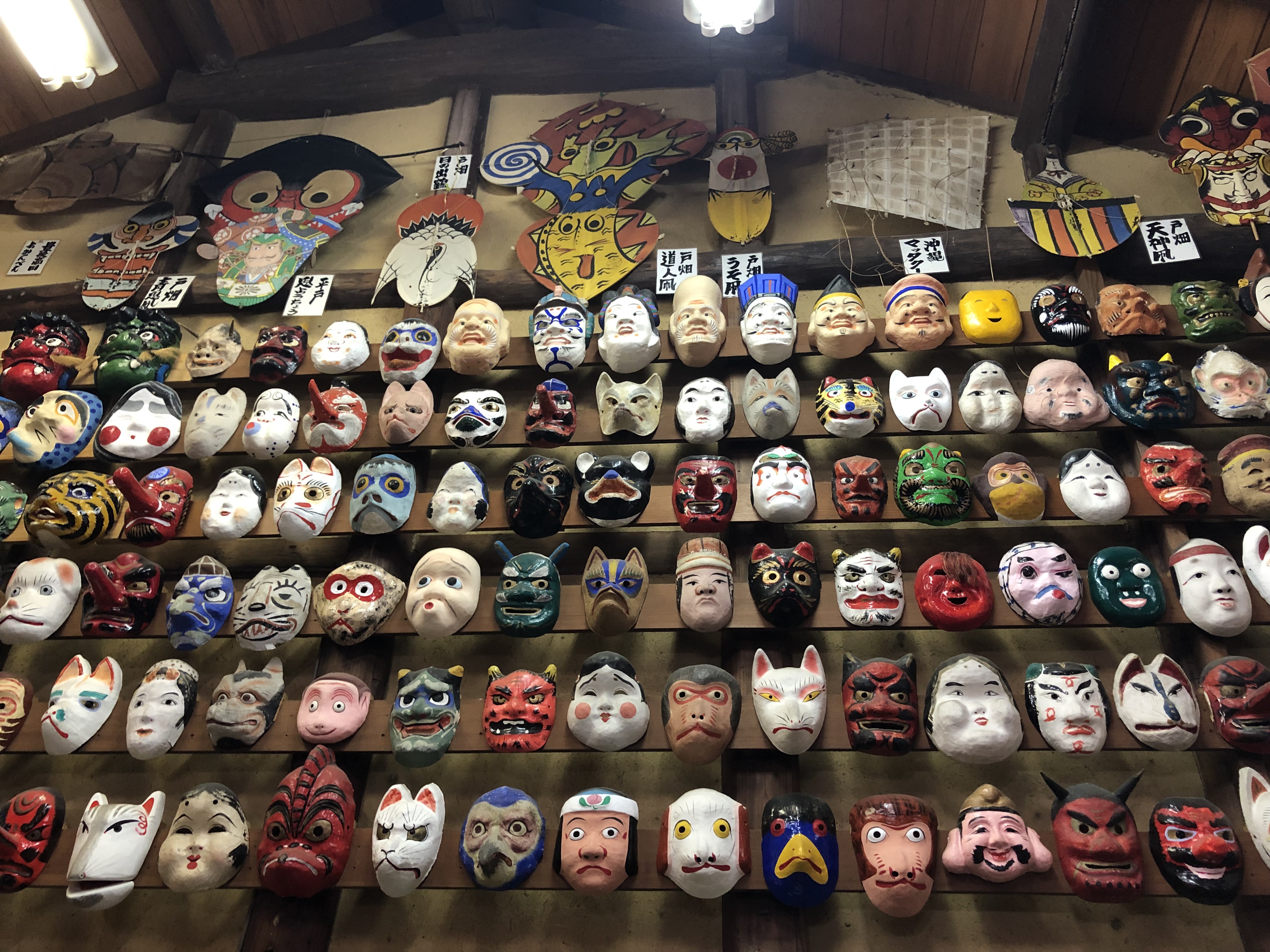
As I move to the third gallery, I am greeted by old wooden toys and spinning tops, and displays of annual New Years postage stamps from 1954 to present. In the fourth and final gallery, I see masks, a lot of masks. I’ve always wondered if masks can be classified as toys, but then again, I suppose the same question can be asked about postage stamps too. The gallery also features decorated shells, porcelain dolls, papier-mache dolls, and a large collection of old dusty books and badminton rackets.

As I step out of the museum, I find myself facing a small shrine. I can only assume that it is a tribute to the god of toys. As I think about the ancient toys, especially those dating back to the 1600s, I am struck by the enduring legacy of these simple objects of play. The children who once laughed and played with these toys, now long gone, reduced to mere memories and dust. But the toys remain, locked behind the glass walls of the museum. It’s a poignant reminder of the tragedy of death, and the beauty of the small things that outlast us. The toys, once a source of joy and laughter, now stand as silent witnesses to the fragility of existence.

As I continue my stroll through Kurashiki, I come across Denim Street, an entire street lined with shops selling the same thing. Along the way, I also pass small shops selling watercolour paintings and origami paper. The area, with its stunning canals and old shops, feels like a cross between Kyoto’s Gion district and Tokyo’s Asakusa district, but with less commercialisation. The area boasts a number of museums as well, including art, archæology, natural history, and folk-craft.

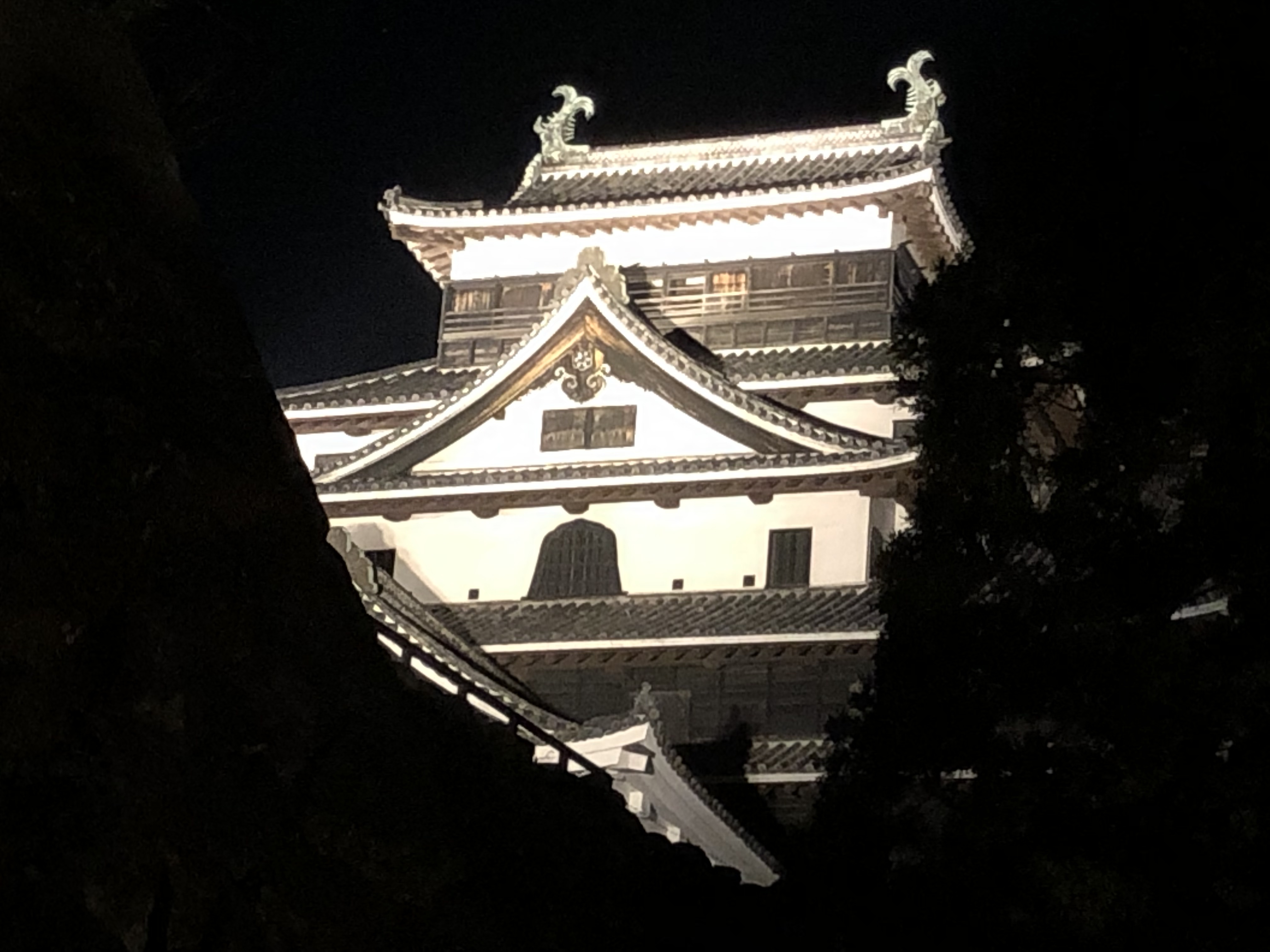
After a few hours of exploring, I leave the Land of Sunshine and embark on another four-hour train journey to the city of Matsue in Shimane Prefecture. As I arrive at dusk, I navigate the streets and make my way to Matsue Castle. Nicknamed the “black castle,” it is one of only 12 castles in Japan that have been perfectly preserved in their original state. It stands out in the darkness of the night, seeming to effortlessly float suspended in the sky. The grandeur of the castle illuminated by the moonlight, casting a mysterious and ethereal aura, making it an enchanting sight to behold.

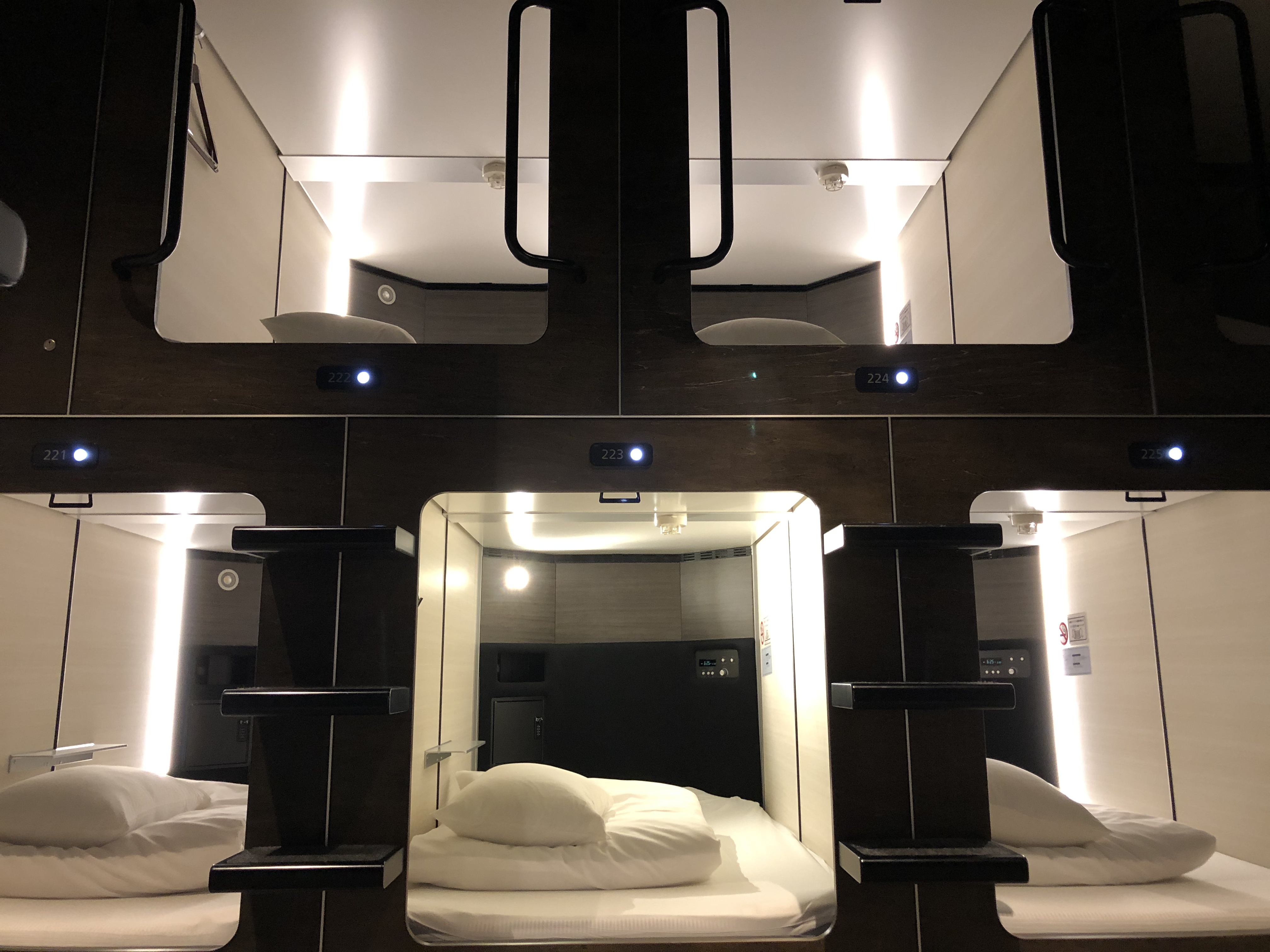
Leaving the castle, I decide to check into an iconic capsule hotel, something I’ve been meaning to do in Japan for years. After finding my “coffin” for the night, I realise that my room, if I can even call it that, is contained within a larger room with 39 other boxes stacked on top of one another. Thankfully, none of the other capsules are occupied. The hotel offers a reasonable amount of amenities, such as towels, toothbrushes, razors, earplugs, bathrobes, and nightwear. It’s also impeccably clean.

I grab some food from a nearby supermarket and head back to my hotel. Due to the limited space, it’s not possible to eat inside the room where the capsules are located. However, the hotel does offer a large common area with comfortable seating. The common area also features its own jaunty, catchy music that plays on a loop ad infinitum. It’s like being in a 1980s video game where the composer was hired on a budget. After eating my deep-fried tofu with rice and listening to the same piece of music for the twenty-third time, I retire for the evening, and crawl into bed.

As I lay in my coffin, the jaunty music swirling around my head like a relentless earworm, I think back to the toys, and thoughts on life, how we too are on a never-ending loop, chasing after fleeting moments of joy before inevitably succumbing to the silence of death.

Thoughtful Rain, Equal Moisture

As part of Hatsumode, it is a longstanding tradition in Japan to visit a temple or shrine during the first three days of the New Year. This involves returning and cremating old amulets, purchasing new ones, having a fortune taken, and making the first prayer of the year. To avoid the crowds, I have chosen to visit a peaceful temple in Shibamata, located in Katsushika Ward. I awake early, the air still cool and filled with the moisture of the early morning dew, and make my way to the temple to begin the new year with a sense of serenity and reverence.

As I approach the temple, I am welcomed by Taishakuten-Sando, a row of traditional Japanese shops flanking a narrow street that leads to the temple. This street and temple survived the bombing of World War II, offering a glimpse into Japan’s history. As I stroll along the 200-metre stretch, the aroma of simmering oden fills the air and I pass shops selling mochi, pancakes, and rice crackers. Taishakuten-Sando serves as the main shopping street for the quaint town of Shibamata.

Upon arriving at Shibamata Taishakuten, I join the short queue of people making their first wish of the New Year. To make a play on words, I have carefully prepared four ten-yen coins and one five-yen coin (totalling ¥45, which is pronounced Shiju-Goen in Japanese, meaning “always lucky”). As I reach the front of the line, I throw in my coins, ring one of the large bells, and follow the customary ritual of bowing twice, clapping twice, and bowing again before praying for nothing at all.

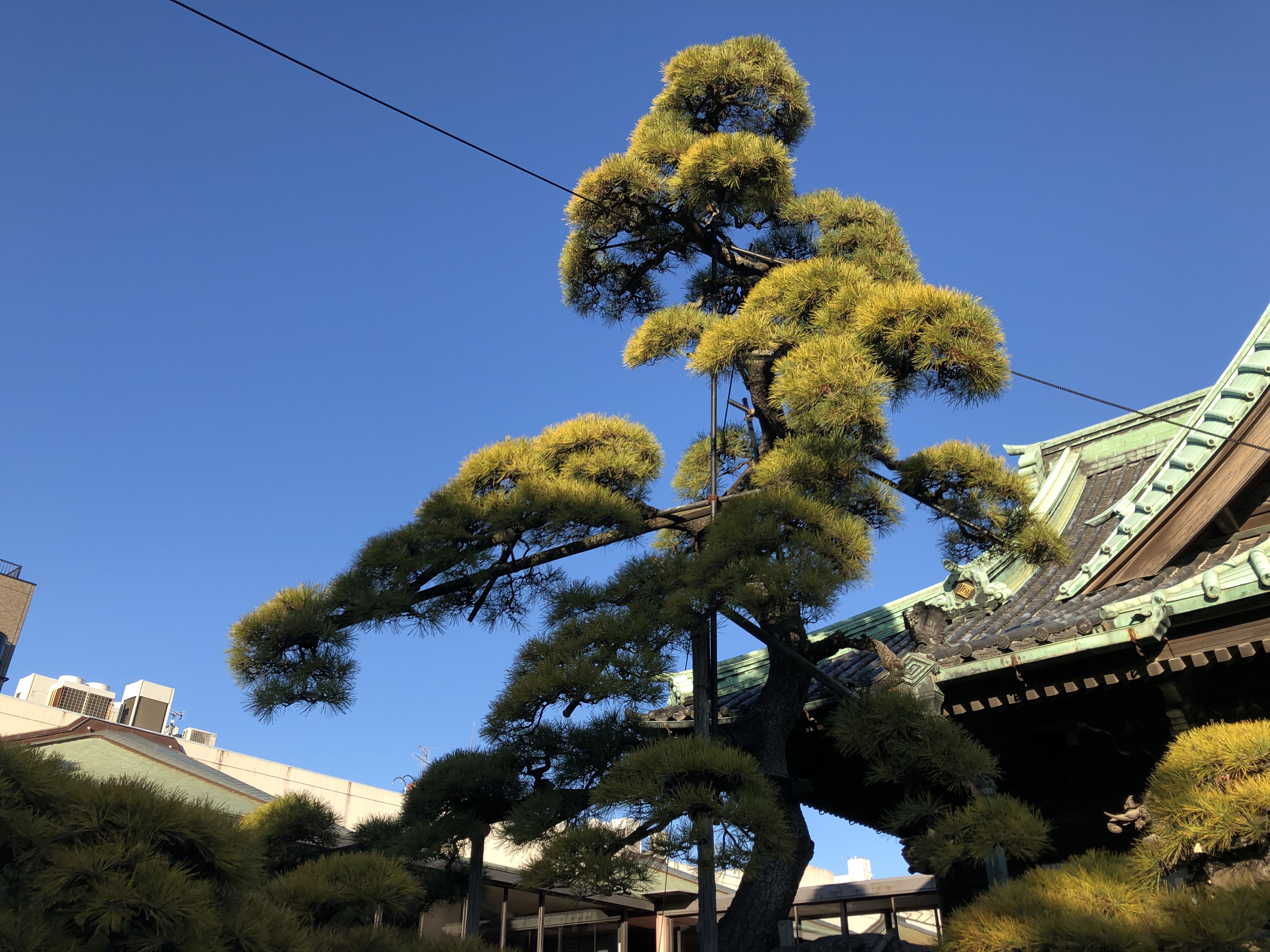
At the temple, there is a large pine tree called Zuiryu-no-Matsu, meaning “dragon of fortune pines.” It towers in front of the main hall and is shaped like a dragon. Its trunk grows straight towards the sky, and its long branches extend north, south, and west. The west branch extends as if the dragon is crawling on its belly on the stone pavement, while the north and south branches spread as if guarding the Taishaku-do Hall. The tree seems to come alive, appearing as a dragon taking flight towards the sky.

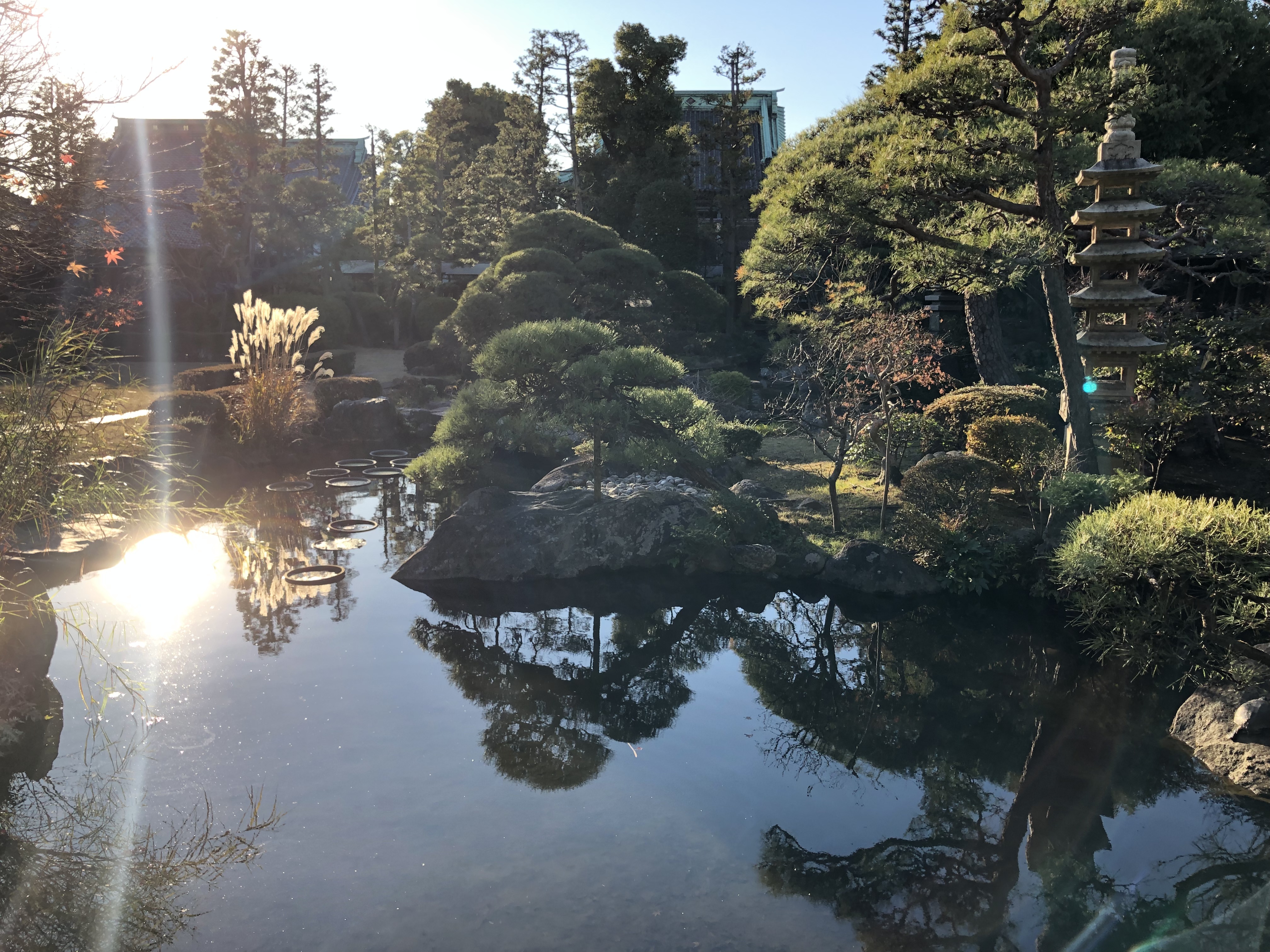
The temple was founded in 1629 by a Buddhist monk named Nichiei Shonin, who stopped in Shibamata and, upon discovering a sacred fountain under the grand pine tree, decided to build a hermitage there. The dragon of fortune pines is said to be over 500 years old, stands tall and proud. The Japanese gardens, a later addition in 1926, provide a peaceful and serene atmosphere.

As I leave the tree behind and make my way to the rear of the temple, I come upon the opportunity to purchase a ticket for ¥400, granting access to both the museum and the picturesque Suikei-en Garden. The entrance to the garden is adorned with intricate wood carvings above each tatami mat room, inviting me to step into a peaceful outdoor paradise. The garden boasts stone bridges, flowers glistening with the hanging moisture of the early morning, a charming pagoda statue, a breathtaking lake as its centrepiece, and even a tranquil waterfall.

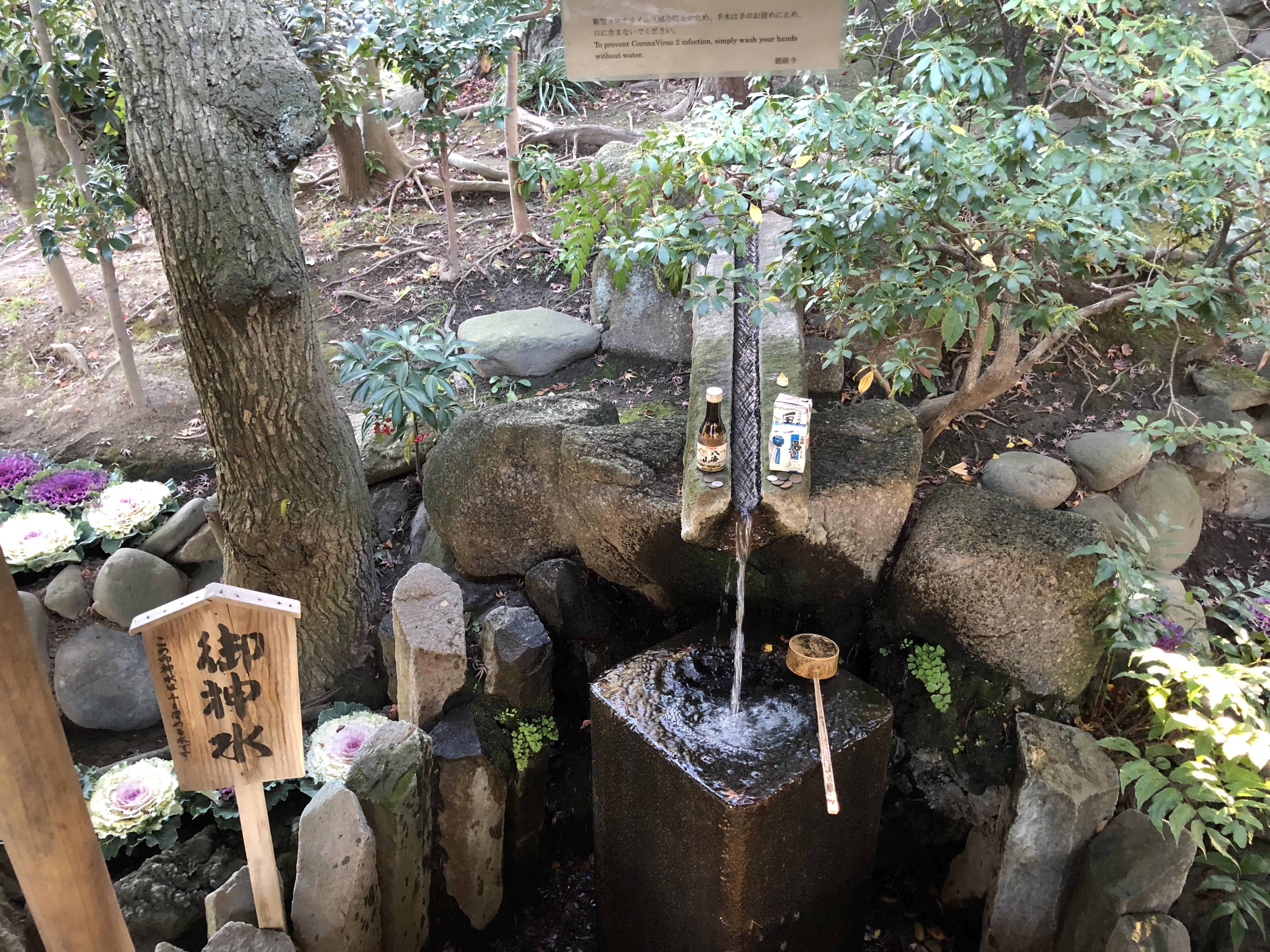
As I stand before the waterfall, I find myself trying to pinpoint the source of my unease. Could it be the way the water flows so slowly, as if in mimicry of rain? The offerings and coins at the base of the waterfall appear unremarkable, yet something about them feels off. And then I see it – the poorly translated notice above, urging me to “simply wash my hands without water” to prevent infection from the ominous Coronavirus. The absurdity of the statement only adds to the disquietude that lingers in the air.

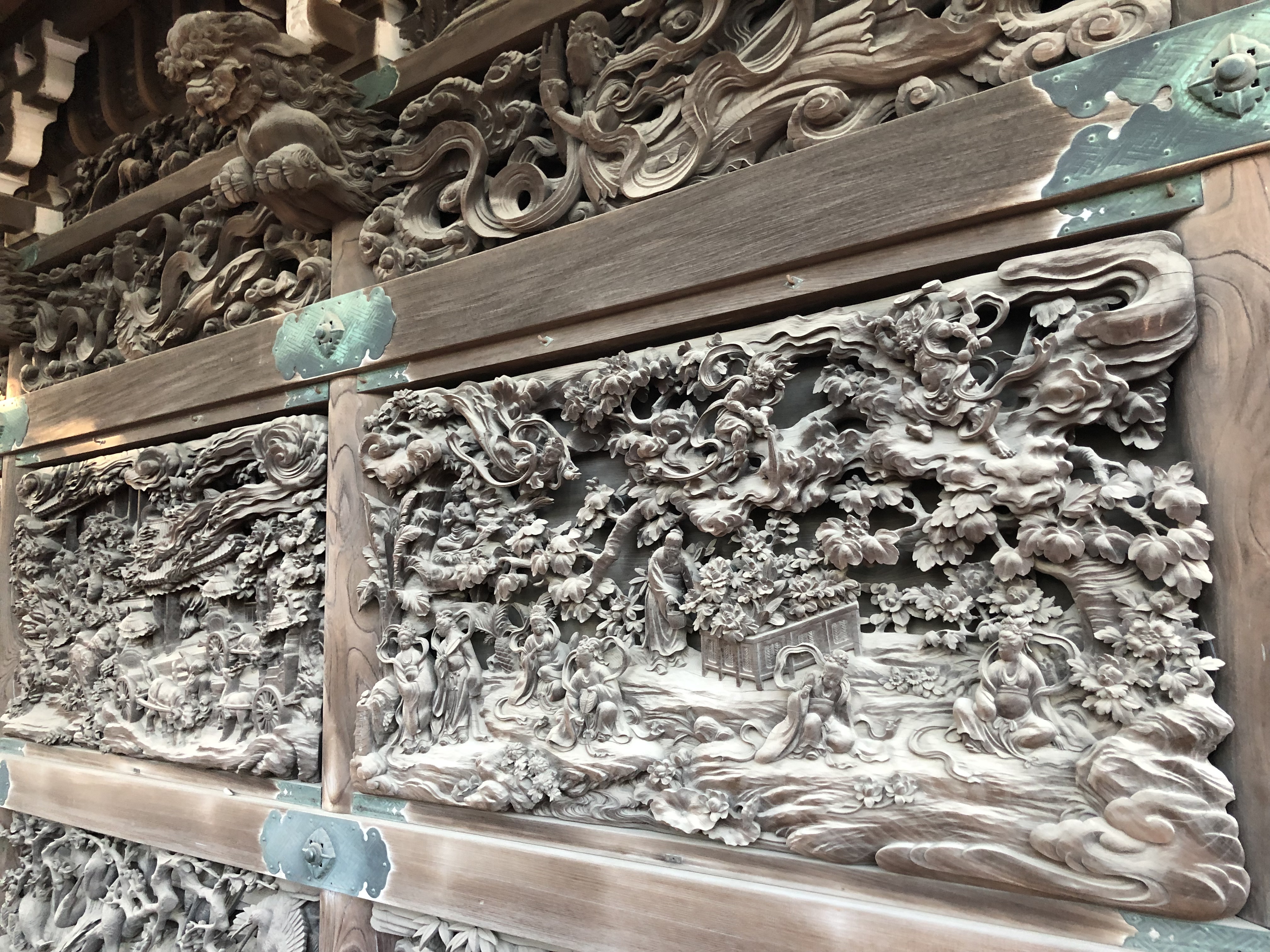
As I enter the museum, my eyes are immediately drawn to the stunning wood carvings that adorn the walls. Each one tells a part of the tale of the Lotus Sutra, with two chapters represented in each intricate, three-dimensional carving. The language used to describe the carvings is nicely written, and one line stands out to me in particular: “We people are like children busily playing in what is a burning house, without any fears.” The artistry and wisdom captured in these carvings leaves me in awe.

Chapter five, entitled “Thoughtful Rain, Equal Moisture,” was carved by Shinko Ishikawa and depicts the following: “The deeply benevolent teaching of the Buddha is similar to the gentle rain that everywhere dampens the soil. Here, the God of lightning and the God of wind appear, and together they let it rain. The great earth is then embraced with a blanket of foliage in which varieties of flowers proudly bloom. With this, the heavenly beings also joyfully dance down to the paradise below.”

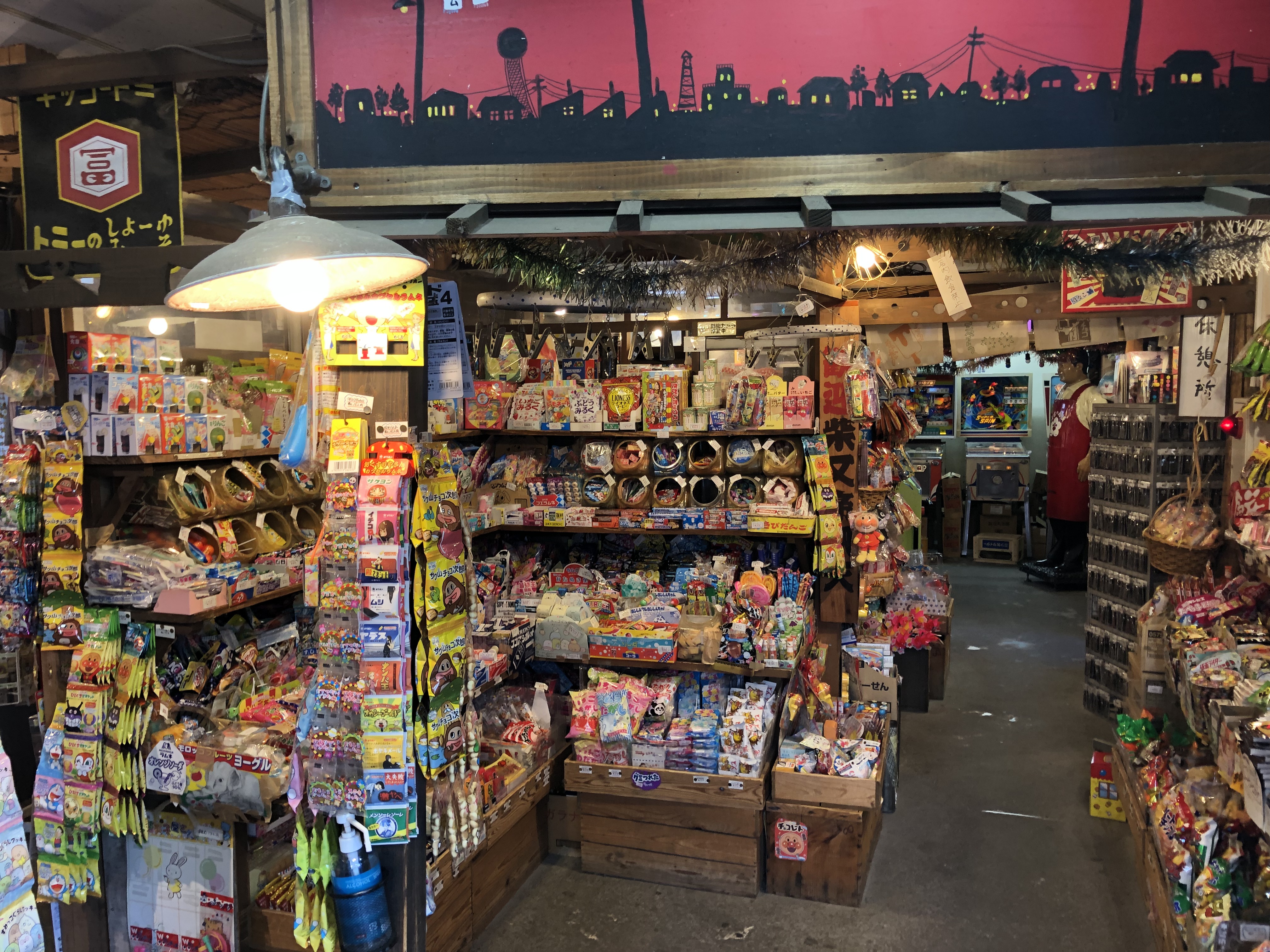
As I leave Shibamata Taishakuten, I step into a large retro sweet shop filled with rows of colourful candy in glass jars. The air is thick with the scent of sugar, and there are every type of sugary treat imaginable. I wander up and down the aisles, passing old arcade machines and pinball tables. On the second floor is the Shibamata Toy Museum, featuring games from the Showa-era. I explore the museum, including a room with a display of dolls depicting the tale of “Momotaro,” or Peach Boy. I eventually head back downstairs to purchase a bag of gummy worms at the counter, before leaving the shop.

The gummy worms turn out to be a lot stickier than I had anticipated, but I have a solution: I’ll just wash my hands without water.

Snake Placid

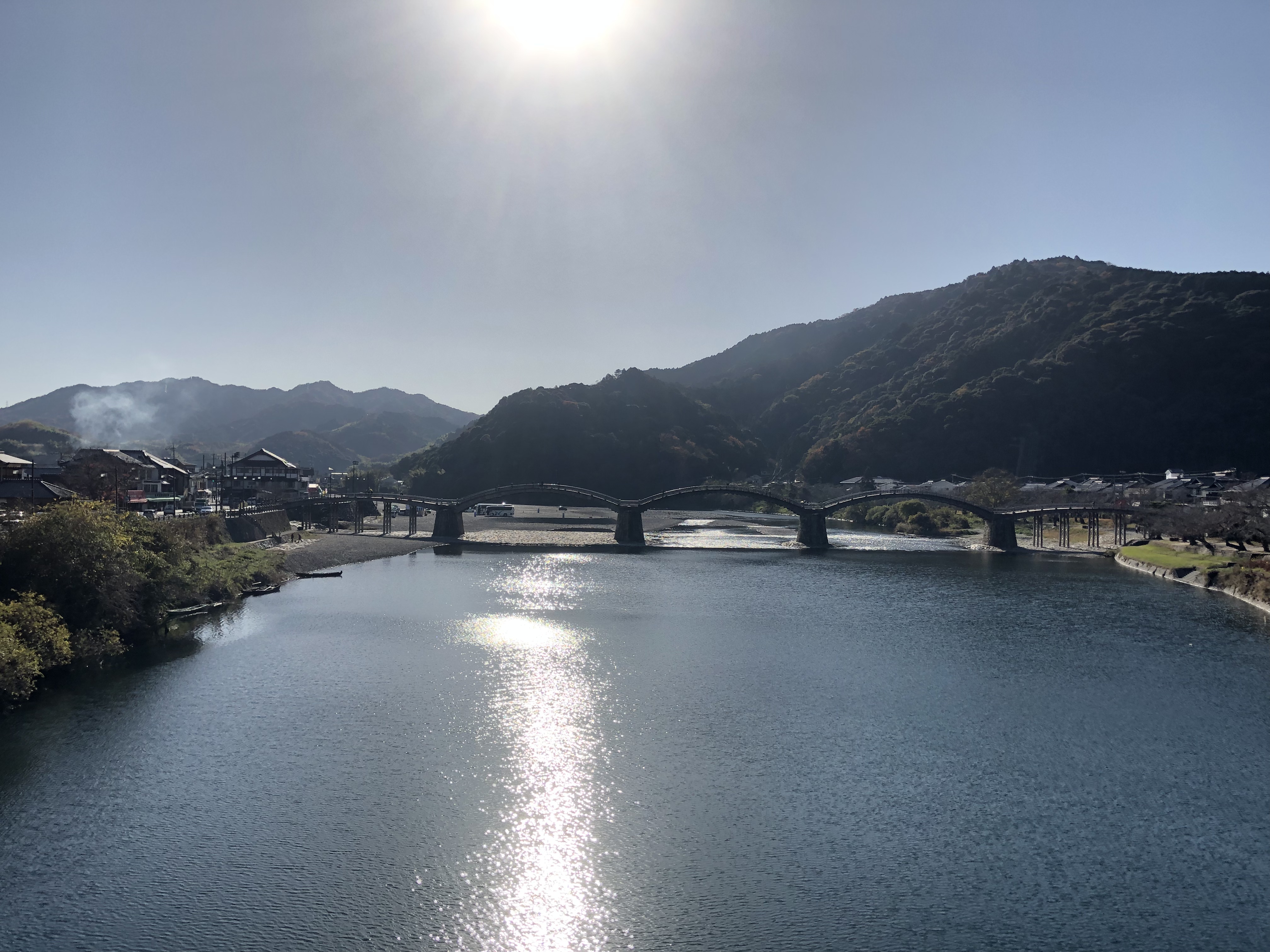
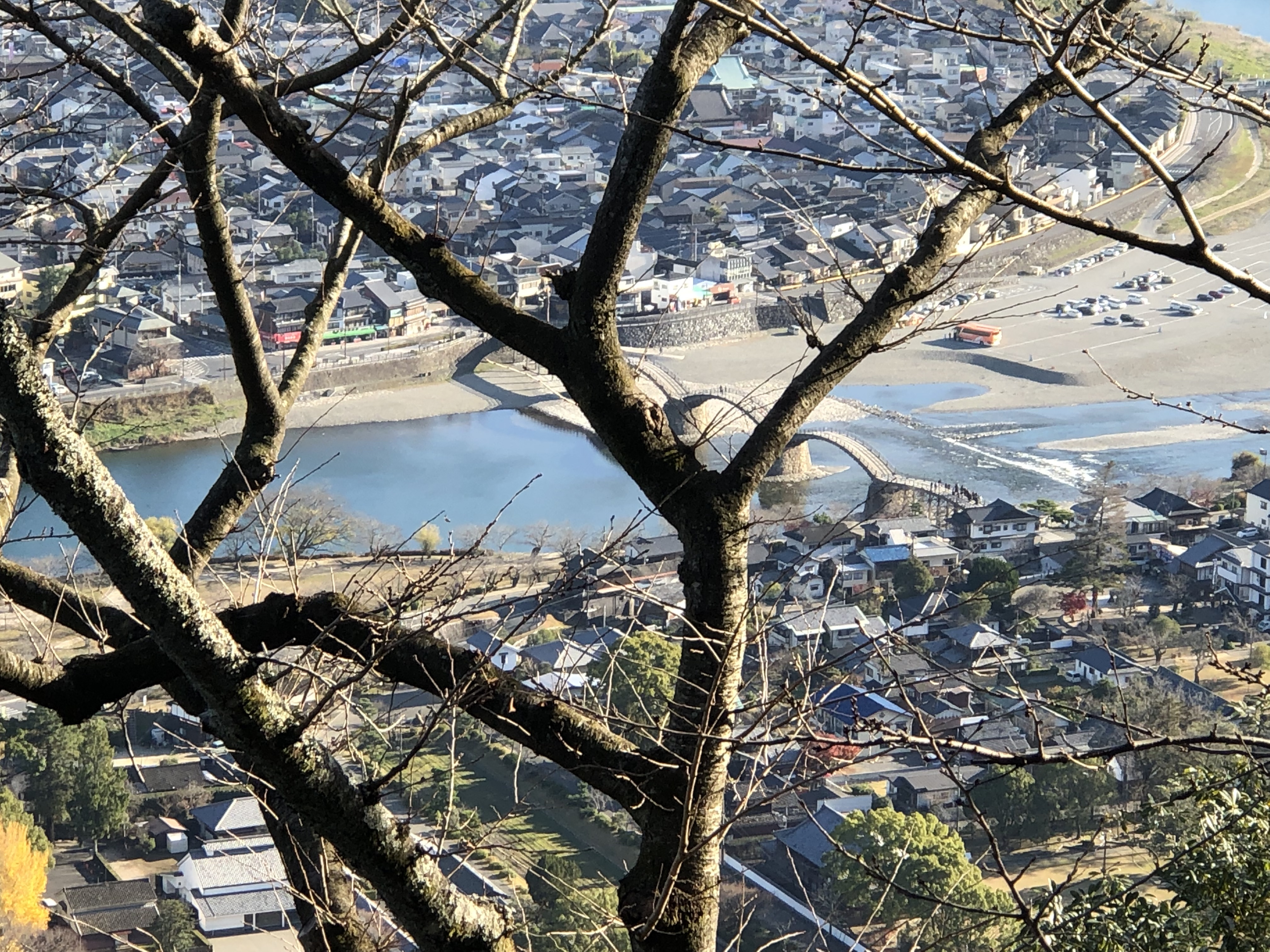
My bus drops me off on a remote mountain path, the lush green foliage surrounds me as I walk. Luckily, getting off at the completely wrong stop presents me with a great view of the Kintai Bridge, an expansive wooden bridge with five arches. Located in Iwakuni, Yamaguchi Prefecture, the Kintai Bridge is regarded as one of three best bridges in Japan, with its ornate timberwork dating back to 1673.

I stare at the bridge for a while and consider its unusual shape. I eventually come to the conclusion that it looks a bit like a snake. I glance down below at the tranquil blue water of the Nishiki River, before continuing on toward the entrance to Kintai Bridge. Here a woman in a ticket booth waves at me, distracted from the present situation, I wave back and begin to cross the bridge.

This renowned bridge is dreadful to walk across, its wooden steps curving up and down. The bright winter sun reflects off the polished woodwork and I have to focus on not toppling over. Kintai Bridge has been designated as a National Site of Scenic Beauty, the reason for this is hidden in its sophisticated construction. From the perspective of modern bridge engineering, the construction of the wooden arches are said to be so impeccable, despite their age. I think these modern engineers should try walking across the bridge in the blazing sunshine and then decide how sophisticated it is.

When I reach the other side of this 210 metre long bridge and see another ticket office, I realise the woman that waved at me was signalling for me to buy a ticket to cross the bridge. I apologise at this side and retroactively pay the ¥310 crossing fee. Slightly embarrassed, I continue on, and enter a nice looking park.

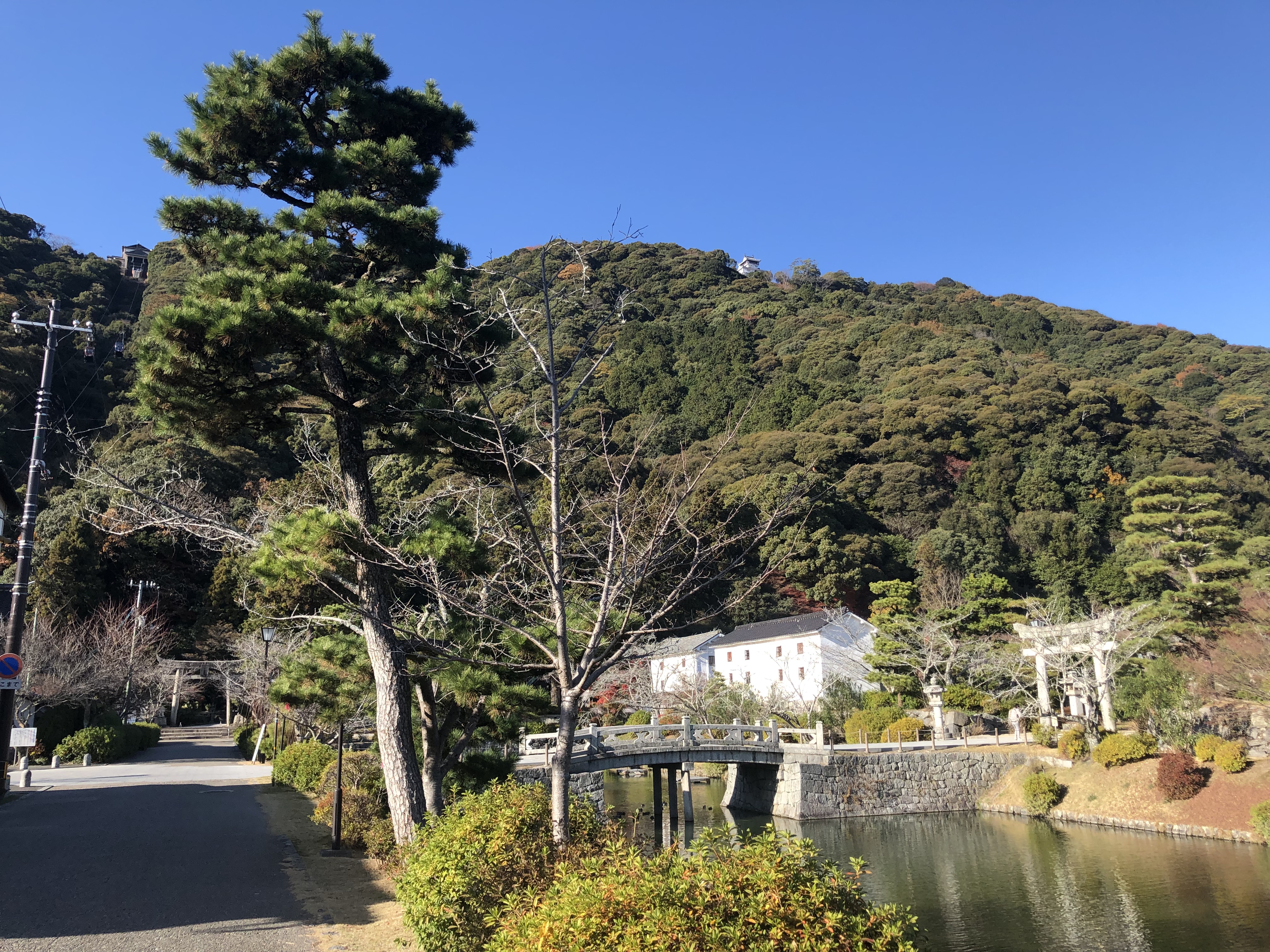
Kikko Park is a very charming leafy landscaped park. The area contains a few tasteful clothing stores, small coffee shops, and nice little restaurants. All of this is set to the backdrop of a mountain, a shrine with some nice bridges, and a few small canals. Atop the mountain, I can just make out the miniature outline of what looks to be a castle. There’s also a snake museum here.

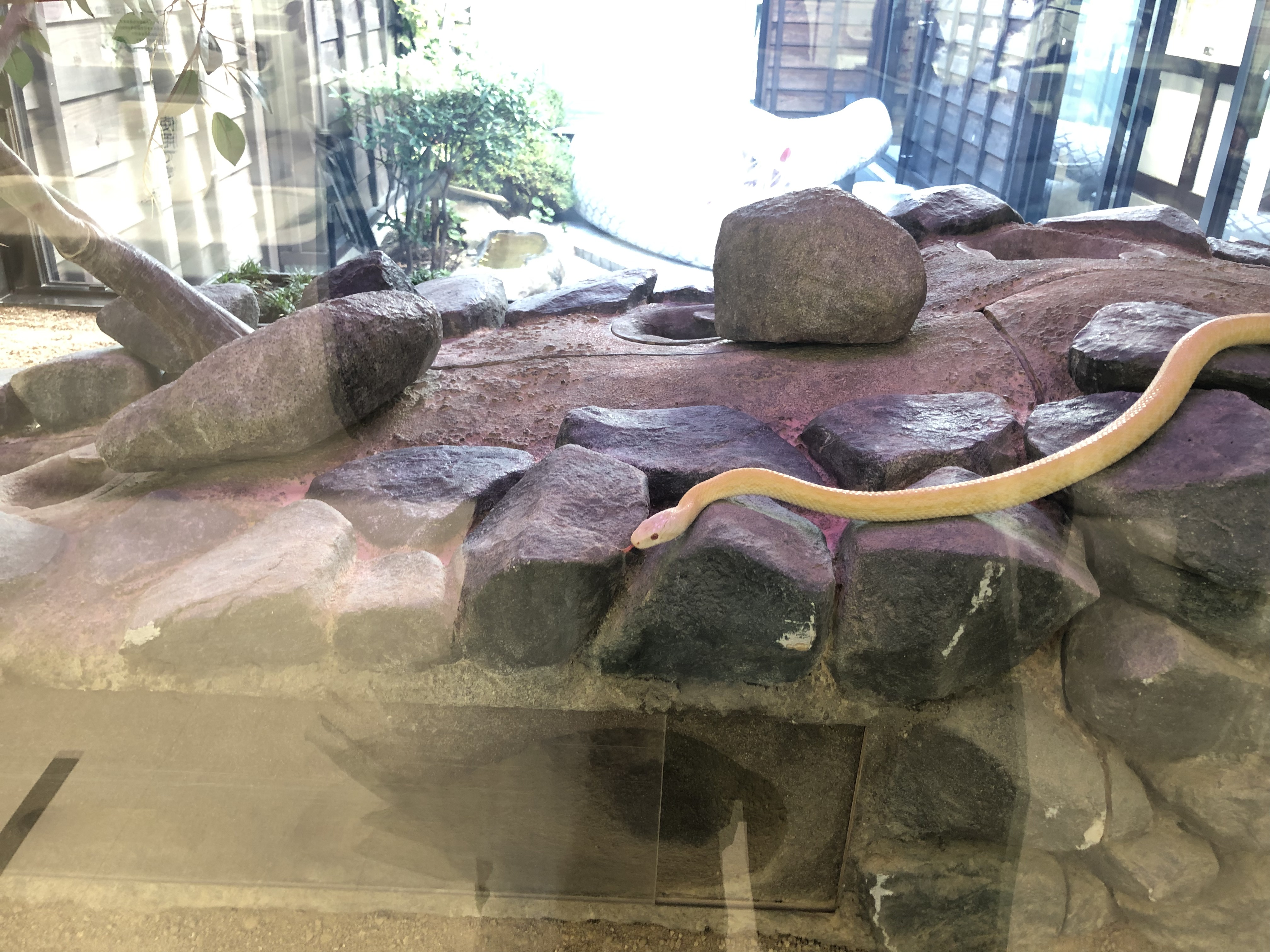
After having my temperature checked and my hands sanitised, I enter the Iwakuni White Snake Museum. Here can be found everything there is to know about this special type of snake; a breakdown of its anatomy, snake skeletons, and real samples of its shed skin are on display here. There are even live snakes that I initially mistook to be made from plastic; it wasn’t until one of these enchanting snakes began to hiss and move its tongue that I realised it was real.

This albino mutation of the Japanese rat snake is glossy white with red eyes, and has been designated as a National Treasure by the Japanese government. It is said that stories about incidents involving these white snakes have been passed down through the ages. The interesting thing about the Iwakuni white snake is that it has a mild temperament, and does not harm human beings. I stare at the snake, regard its shape. I consider that it looks a bit like the bridge I crossed earlier.

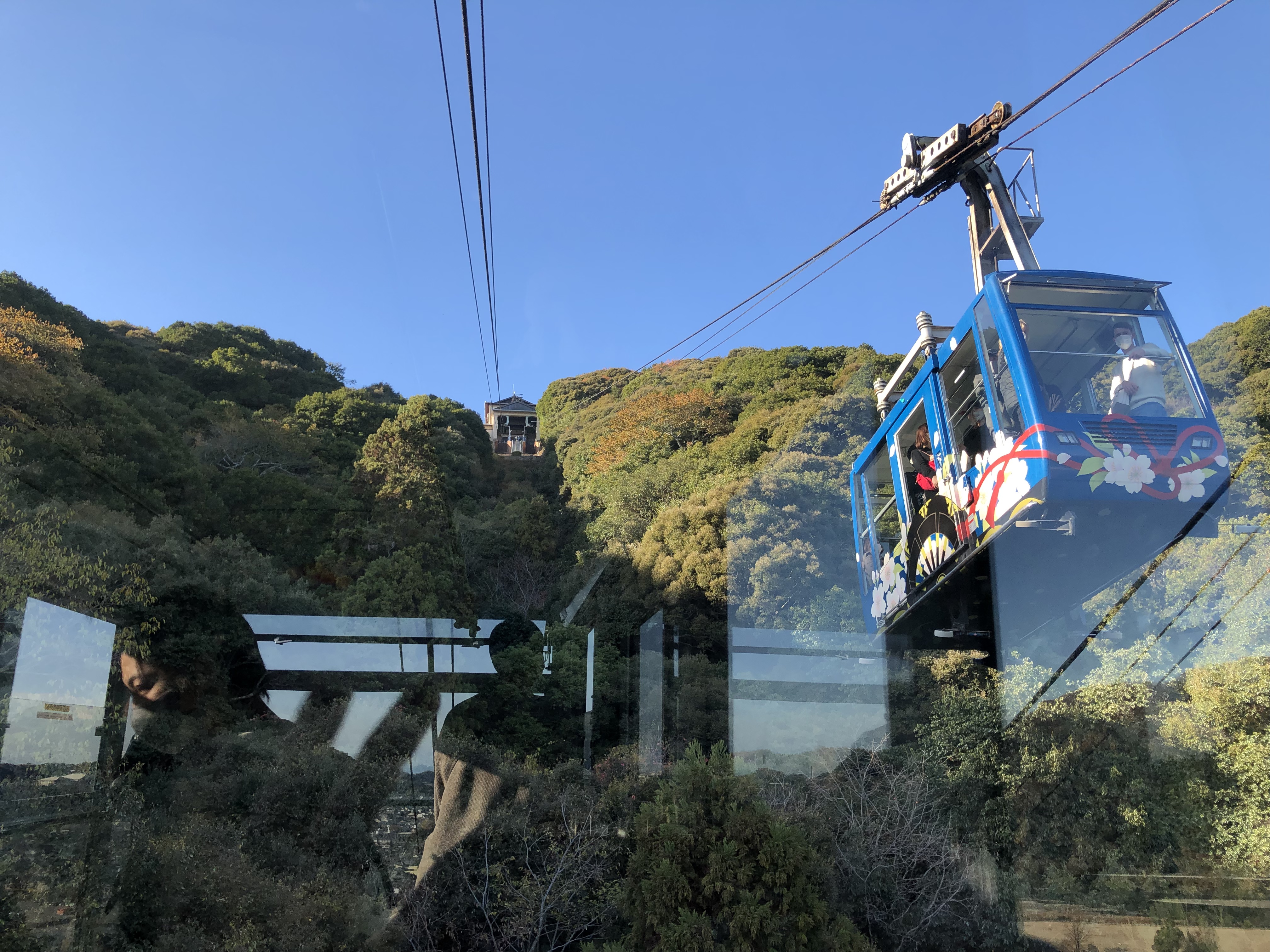
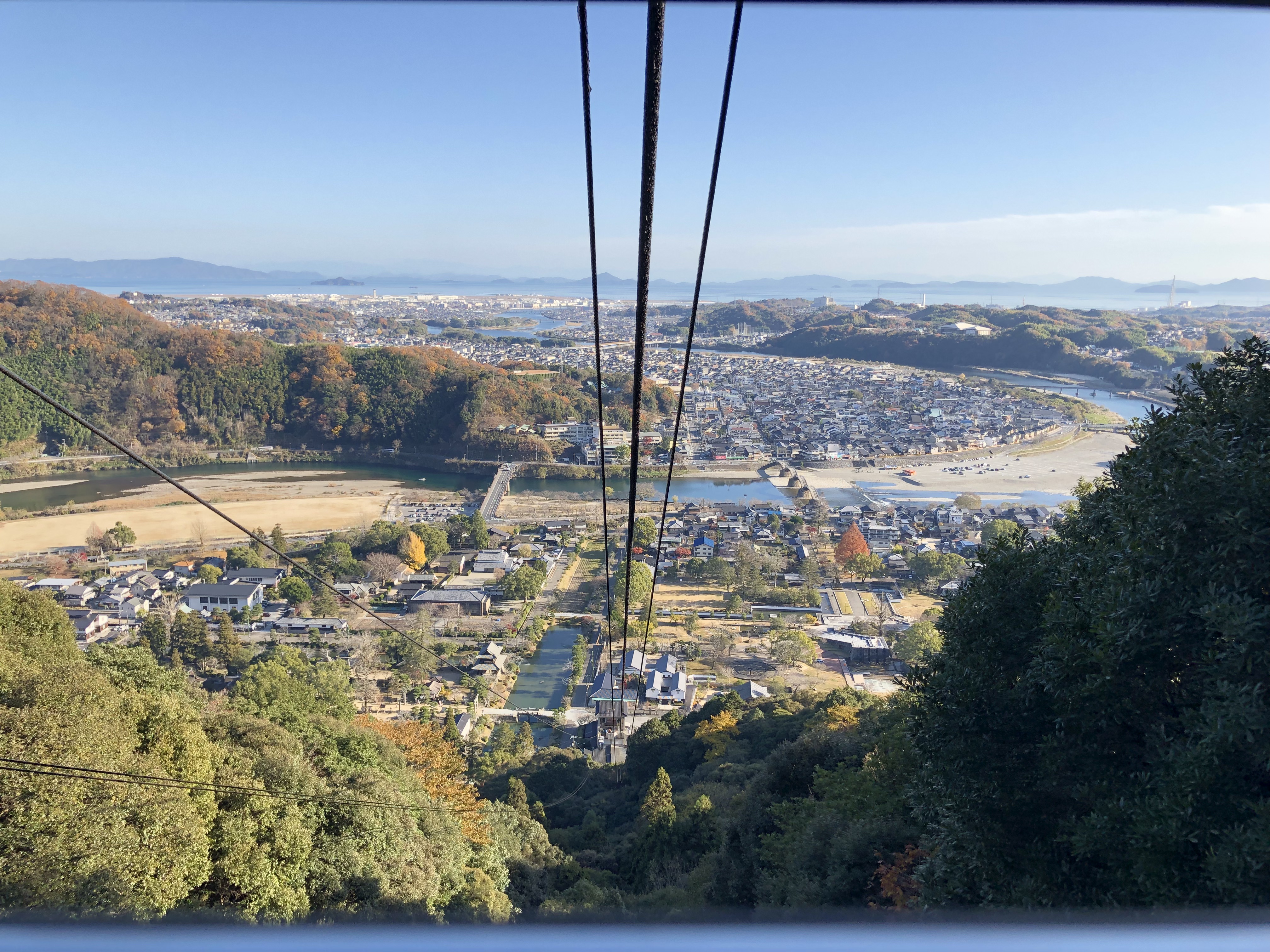
Leaving the museum, I decide to check out the castle. It’s quite high up the mountain but luckily there is a ropeway that runs every fifteen minutes. I’ve never been on a ropeway before, but having previously conquered my fear of heights, I’m prepared to give it a go. A few moments later, I arrive at the Iwakuni Castle Ropeway Mountain Foot Station.

I buy a return ticket for ¥540 then instantly regret my decision once I see the ropeway; it doesn’t look safe at all. As I wait to ride, I become anxious when I watch the man who performs the safety checks simply put his head into our carriage, take a swift look around for less than a second, before telling us we are okay to enter. The ropeway fights its way up 200 metres of cable as it climbs to the top. There is a clock here, the Shiroyama Mechanical Clock, it plays a lively melody as the cable car pulls into the station; I recognise the tune but can’t quite place it.

The view from the top is stunning. I stand here for about ten minutes, enjoying the warm weather and admiring the wonderful view. The wind periodically pushes with gentle nonchalance; the occasional hovering of a zephyr adding a cooling breeze to an afternoon encased beneath the vibrant sky. In the distance, I can see the Seto Inland Sea and even the islands of Shikoku beyond.

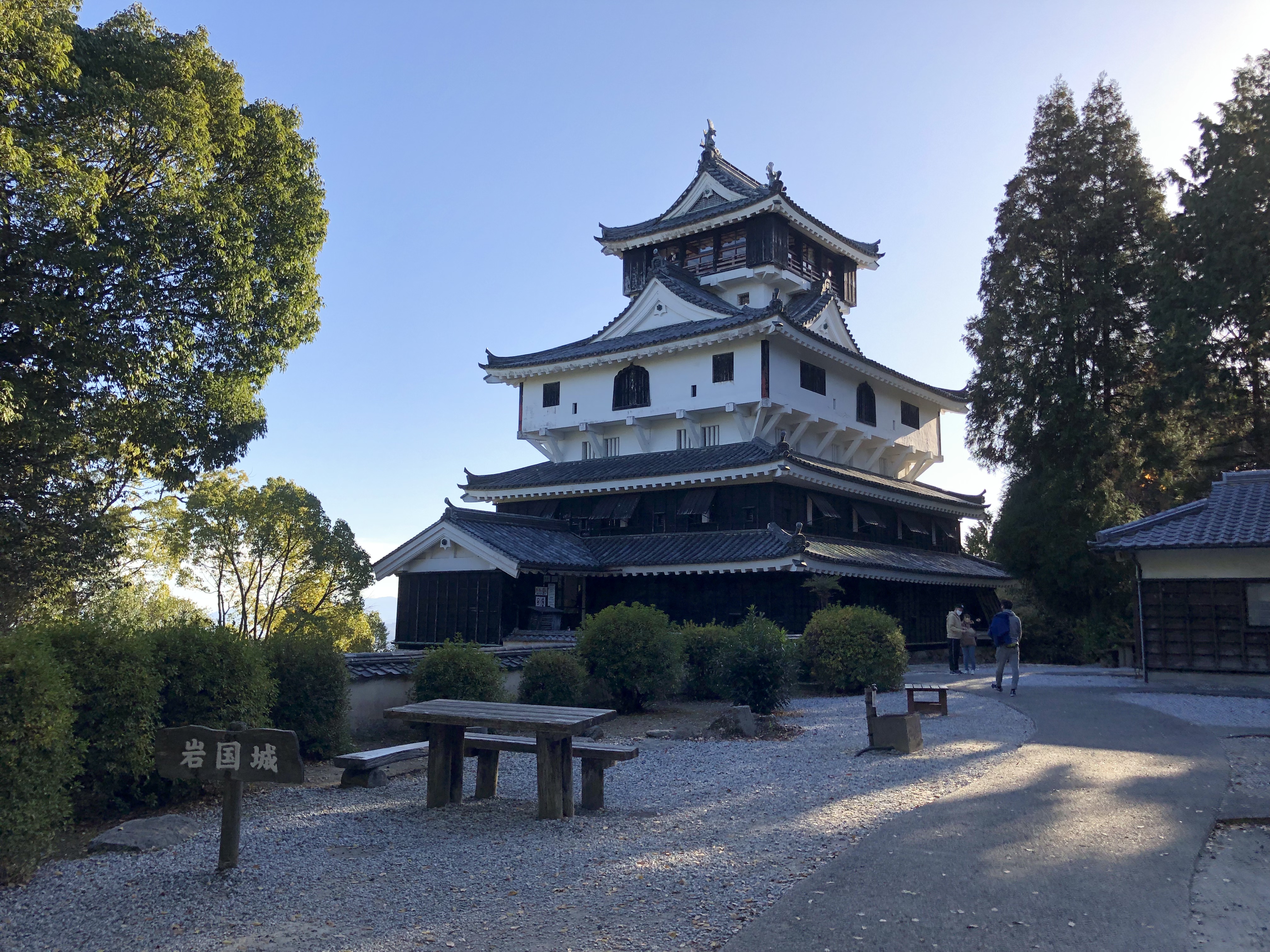
A sign says the castle is an eight minute walk away. The area is awash with vibrant colours, the maple and ginkgo leaves turning various shades of red and yellow. I pass a rather disconcerting sign telling me to, “Beware of pit viper!” — so much for the friendly snakes. I continue on, passing the largest dry moat in Japan, before after a steady twenty minute hike, I arrive at the castle.

The castle is extremely crowded with elderly Japanese people travelling with their tour groups. This particular castle is know as ‘Yamajiro’ which is a word to describe any castle built on a mountain and at least 150 metres high. I once again admire the view from this mountain castle, before turning around and heading back to the ropeway.

As I make my way back down the mountain, the forest whispers to me with the snapping of twigs beneath my feet. The sound captures my attention, and for the first time I truly take in the vast expanse of the forest surrounding Iwakuni Castle. I also realise, with a start, that there is no protective fence separating me from the dizzying drop to the valley below.

Back at the ropeway entrance, I arrive a little early. Eventually, the Japanese tour group begins to arrive in droves, and before long, a line of over thirty people snakes behind me. As we are set to depart, we manage to squeeze in twenty three of us into the tiny cable car; social distancing out of the window completely. As we slowly begin to descend the mountain, the weight of us makes the ropeway creak, squeak, and screech as we swing unnaturally from side to side.

The cable car crashes into an overgrown tree branch on the way down, the sound and shaking startles me, and much like a snake, I jump out of my skin.