Internet Cafes, Bullet Trains, Irish Bars

Grilled fish of the day is salmon for the third day in a row. After breakfast, I return to my room and return my room to a state that looks exactly as it did before I arrived, a hotel habit of mine. After that, I check out and head to Popeye Media Cafe to write things up.

The Internet cafe doesn’t only provide Internet access. The following items are offered at no cost (¥0): bath towel, body soap, shampoo, conditioner, hair dryer, hair iron, toothbrush, skin toner, shaving equipment (razor and shaving foam), drinks from three vending machines (offering ‘over 50 kinds of drinks!’), mobile phone charging, two plugs per person (‘you can plug in a device!’), wireless Internet, showers, and a sunbed. All of these amenities are complimentary.

They also have a ¥360 hot food vending machine, but that seems to be the only thing you need to pay for, other than time. The cafe also offers a library of comic books, better known as manga. The amount of manga on offer is insane, with bookshelves spread endlessly in every direction. Where there isn’t a private booth with a computer, there is a bookshelf. The cafe boasts an impressive 179 computers.

internetandmanga[1]

“I paid ¥980 for five hours, the day rate. I’ve actually been here twice before. Those times, I foolishly came during the evening and paid ¥805 for two hours and ¥1330 for three hours.

Today, I am assigned booth twenty-two. My computer runs Windows XP, and Google Chrome has already been downloaded. Next to my monitor is a menu for Domino’s Pizza. If I want, I can select a pizza from the menu, and the front desk will order it for me, handle the payment upon its arrival, and deliver it to my desk. The pizza will be added to my ‘check’ and paid for at the end.

I lounge in my reclining chair and write for five hours, all the while sipping on my free drinks. Today, I’m heading to Nagoya and can’t check into my hotel until 2 p.m. Might as well kill time by writing, that’s what I say.
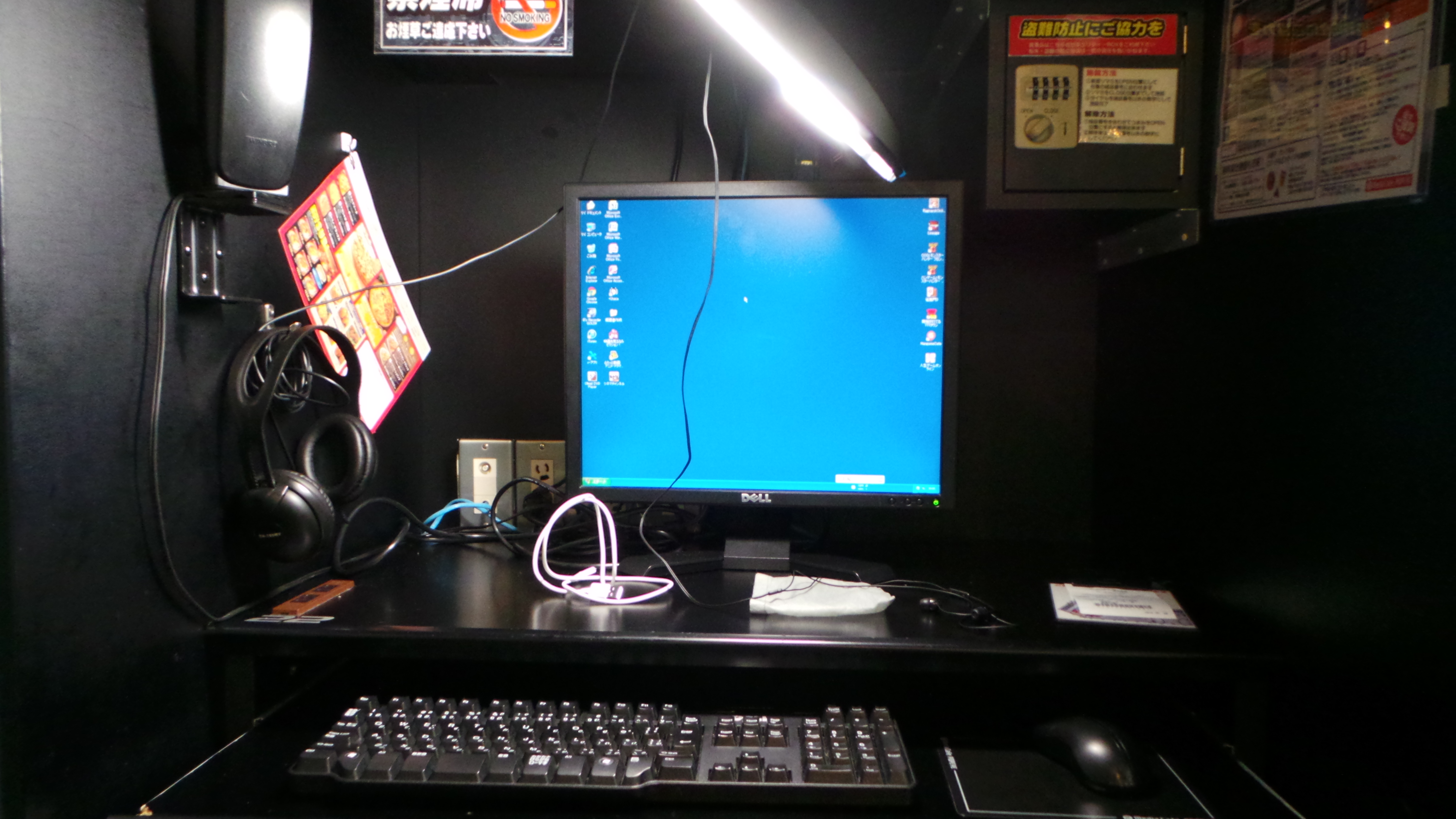
20140804_200337

I like it here; dingy, comfortable chair, feels good. I can see how people can end up spending a whole night here. People actually do just that. Because of the free amenities on offer and the availability of private booths to rent for a special ‘all night’ rate, people actually sleep here. It works out cheaper than a hotel, and you can read all the comic books you desire.

When I’m done, I settle my bill and leave. Outside, the sun is far too bright, especially after sitting in the dark for five hours. At 3 p.m., I take the bullet train to Nagoya. It costs ¥6760 for a 52-minute journey. It’s twice as expensive as the local trains, but they take three times as long, and I can’t deal with that. I reserve a window seat to make use of the ‘free’ plug socket. I realise that this might well be my last ride on the bullet train for a while. It’s quite saddening, actually; the bullet train really is a treat.

I arrive in Nagoya at 4:02 p.m., precisely as stated on my ticket—efficient as always.

nagoyastation[1]

The station exits out into the heart of the city, and a beautiful city it is. Thunder sounds in the distance, threatening rain, with a few flashes of lightning in the sky, but I only have to walk for five minutes. It starts to rain ever so slightly just as I arrive at my hotel. The lift doors open as I approach, “Welcome in,” they say in a robotic female voice.

In my room, I find that I am given loads of free stuff: a comb, toothbrush, toothpaste, slippers to keep, a shower cap, razor, bottled water, cotton buds, tea, coffee, and my own individual wireless network. It feels like I am back at the Internet cafe. The complimentary toothbrush says, “Thank you for using me. Please relax slowly.”

Outside, Nagoya feels right, especially after Osaka and its indecipherable road layouts. Sometimes a place grabs you, giving an instant good feeling; Nagoya has just that. Some might think Nagoya is like everywhere else—tall buildings, concrete, and neon. They would be right. But something about the place, about my initial impression, draws me into the neon of the night.

neonnagoya[1]

I walk around for a good few hours. One of the things I enjoy about visiting a new place is thoroughly exploring the backstreets and restaurants—reconnoitering. I notice small rectangular holes cut into a wall, just the right size for a hand. On the other side of the hole is an anonymous person: a hand wrapped in a white glove, a small tray for exchanging objects or money. Worthless pachinko parlour prizes are discreetly swapped here for cash, with no one seeing anyone else’s face.

It’s 8 p.m. but feels like eleven. I step into an ‘Irish’ bar where American punk is playing, and ‘J Sports 2’ is showing a Japanese baseball game. Quite the Irish experience, indeed. I order half a Guinness and a Glenlivet 12 on the rocks; they each cost ¥600. The Guinness tastes poor at best, far from the standard I am used to from the pubs back home.

I am asked to pay up front, which is unusual here.

irishpub[1]

The music changes to the Libertines. I can’t complain. I consider the instructions on my receipt, ‘enjoy and enjoy and get dead drunk.’ After finishing my drinks, I stand up to leave. As I do, one of the barmen stops me. “It’s our eight-year anniversary. Please choose a colour,” he says.
“Okay …” I ponder the question for a moment. “Green,” I reply. The barman reaches into a box under the desk and pulls out a bright green t-shirt.
“This is free for you,” he tells me as he hands me the t-shirt. Amazing, even more free stuff. I thank him and leave.

Nagoya, the capital of Aichi Prefecture, is distinctly a business-centric hub. Everywhere I look, there are men in white shirts, black trousers, and black shoes—salarymen abound. The horizon is engulfed by a mix of black, white, and neon. Notably, Nagoya’s GDP accounts for 1% of the global economy. Toyota, too, began its journey here, in a town called Toyota, within a city, also named Toyota. It might seem like a kind gesture that the car manufacturer adopted the town’s name, but in reality, the city was initially called Koromo, only changing its name to Toyota in 1959. The town followed suit, renaming itself Toyota. Capitalism in Japan—a fascinating phenomenon.

With the Domino’s Pizza menu from earlier today lingering in my mind, I opt for another unconventional yet healthy choice for a traditional Japanese meal: Italian food. The menu is entirely in Japanese, but the waiter promptly prints off a fresh, crisp, English menu for me. I decide on a tuna pizza, which arrives with a lovely bowl of minestrone soup.

nagoyapizza[1]

As far as pizza goes, this is probably one of the greasiest I’ve ever had. But it’s good. Very good. I pay what seems like a lot and sneak a couple of the ‘free’ complimentary pieces of nutty caramel flapjack—very Italian. The bill comes to ¥2667, and I receive a delightful ¥333 in change.

Back at the hotel I fall asleep watching ‘Back to the Future’.
O Browser, Where Art Thou?

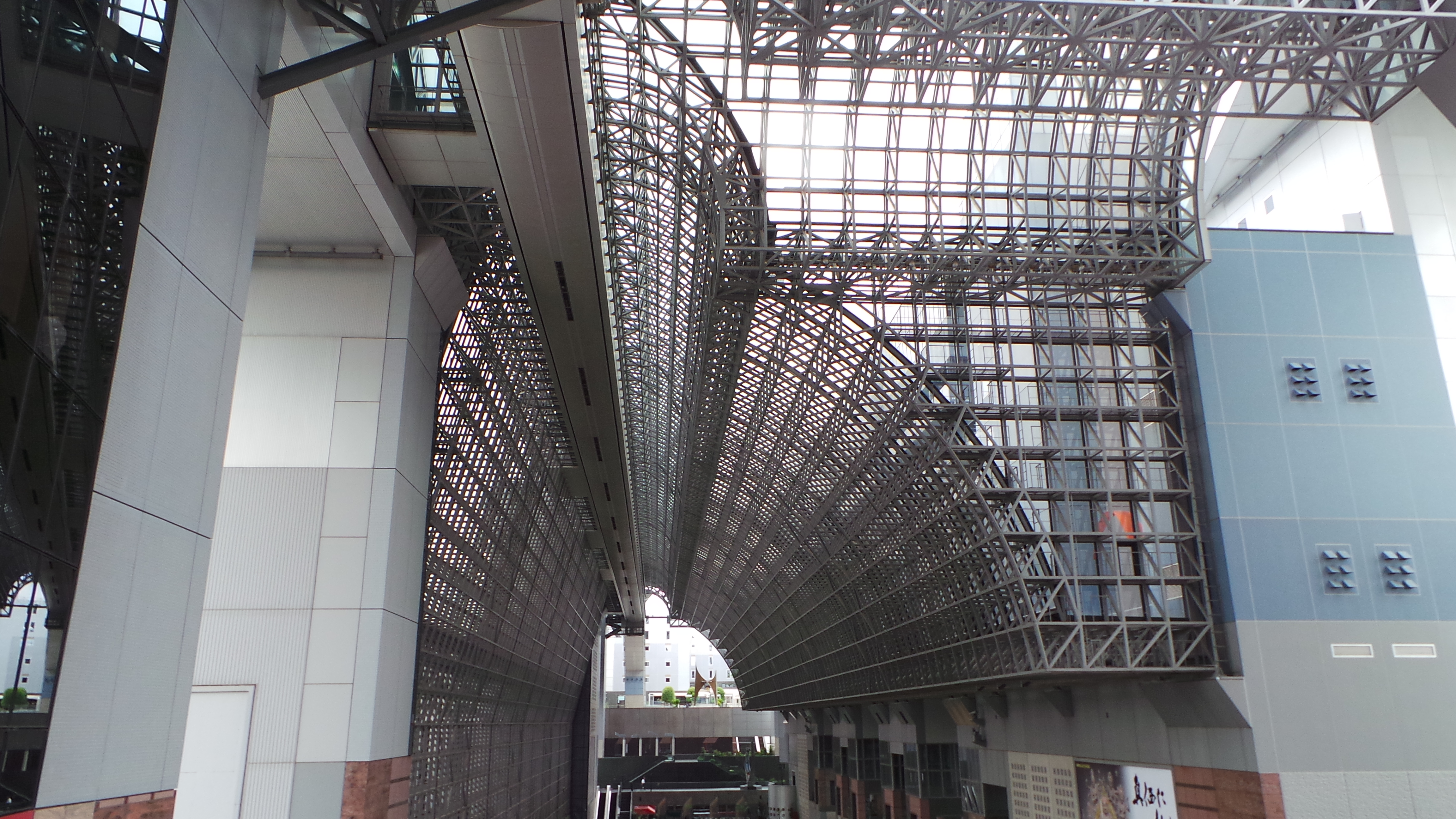
Today, I am leaving Kyoto. However, before I depart, I decide to visit the roof of Kyoto Station, specifically the sky garden known as ‘Happy Terrace.’ It requires ascending nine consecutive escalators to reach the top, where I can admire the breathtaking views of Kyoto for free. As I descend back on the endless escalators towards the train platform, I take a moment to appreciate the roof.

KyotoStnroof

At the platform, a helpful staff member asks if I need any help. I tell him I’m okay and thank him. “Where are you going? Osaka?” he inquires. I nod. He points at the train I’m waiting for, saying, “This one is faster,” seemingly checking off his good deed for the day in his mind. I thank him again and resume waiting for my train. This has happened four times this week in Kyoto—staff members or strangers offering help. I guess I should be more grateful.

At 12 p.m., I board the JR Kyoto Line to Shin-Osaka. The 23-minute train ride costs ¥560. Osaka, the capital of Osaka Prefecture, is Japan’s second-largest metropolitan area. Over one-seventh of the Japanese population lives here, ranking it as the third largest city in Japan by population. I wander around the Osaka area for a while, passing time before I can check into my hotel.

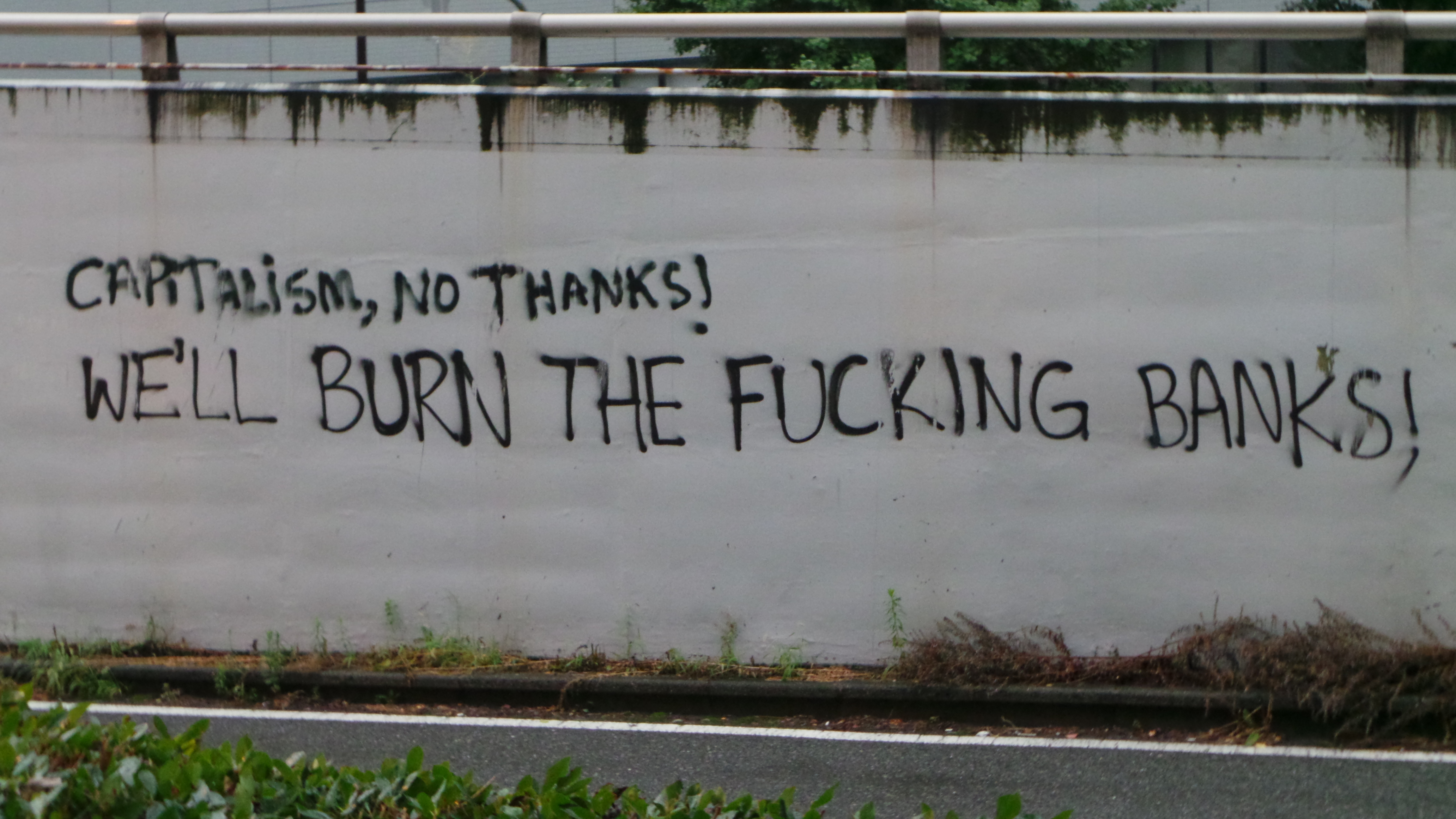
Outside Shin-Osaka Station, I see my first real piece of graffiti:

burnthebanks

At 2 p.m., I check in. I’ll be staying in Osaka for three nights. I selected this hotel based on a quote from their website: ‘For warm smiles, fastidious service, and first-class hospitality.’ Interestingly, the hotel also boasts another blatantly inauthentic motto: ‘The happiness of our guests is our happiness.’ The person checking me in hands me a breakfast ticket for a Japanese breakfast tomorrow morning. It’s odd because I don’t recall paying for any breakfast.

I am staying in Shin-Osaka, which Google says is a one-hour walk from Osaka Station. I opt to take the train to Osaka Station and walk back to my hotel, thinking it will be a pleasant way to explore the city. I stayed in Shin-Osaka two years ago, so I am familiar with the area around this station. In Osaka, people walk on the left and stand on the right side of the escalator, unlike almost everywhere else in Japan.

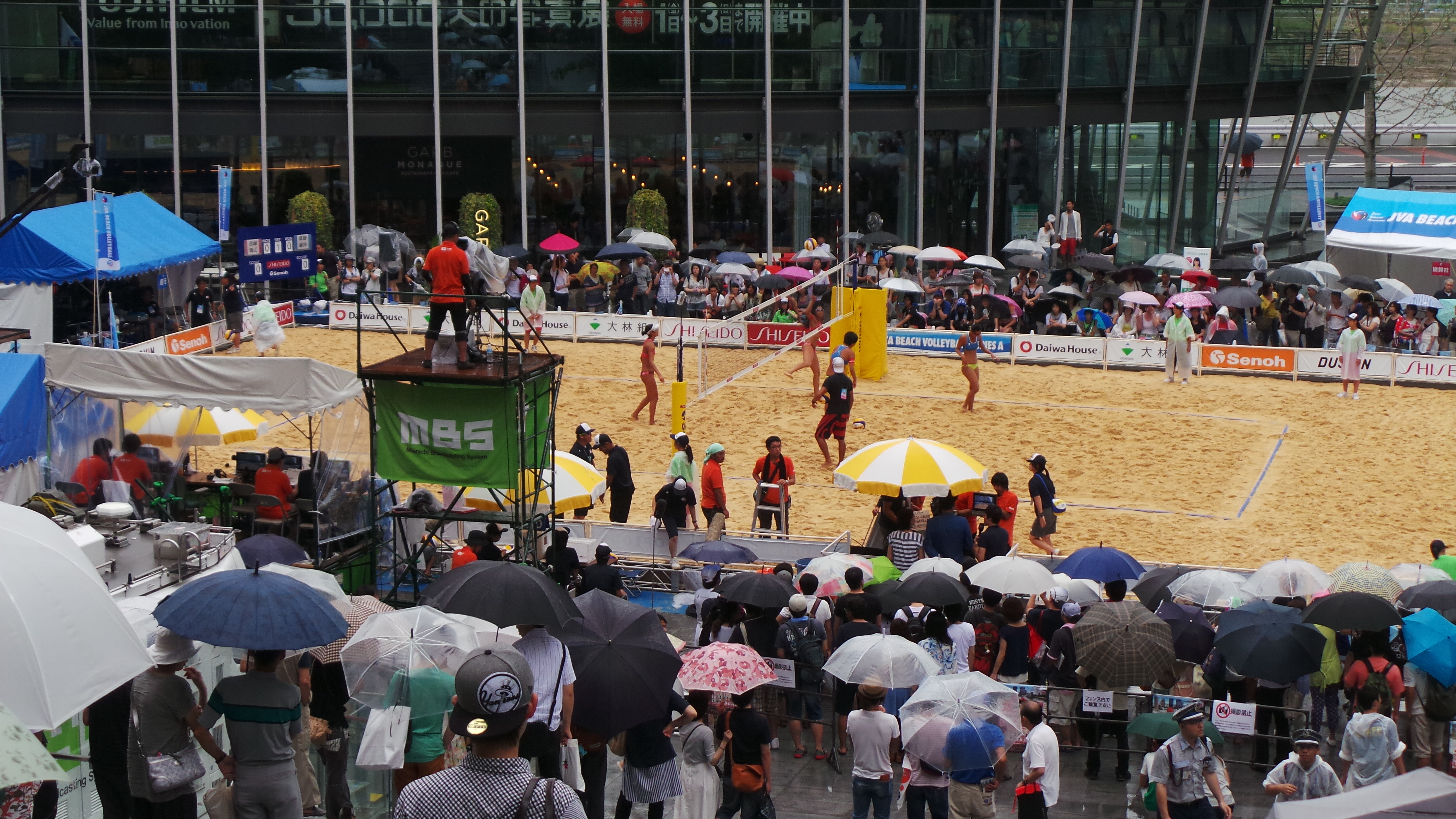
The train ride takes just six minutes with no other stops, and it costs ¥160. Exiting the station, I notice a sign indicating that cycling on the pavement is prohibited. Outside, the temperature is cool, hovering around 25°C, with a gentle rain falling—nothing to worry about, no need for an umbrella. At the foot of the station steps, there’s an outdoor beach volleyball game underway. It’s a Japan Volleyball Association match, likely being filmed, possibly for live television broadcast.

beechvolleyball

I continue my walk away from the station. To the left, there’s a massive construction site that seems to stretch for several kilometres. On the right, ‘Grand Front Osaka’ stands—a colossal building self-described as a ‘New town in a natural environment.’ Essentially a skyscraper housing numerous shops and restaurants. Adjacent to it, there’s an artificial river that spans the length of the building; it’s not exactly what I’d label a natural environment. However, concrete stepping-stones along the river add a touch of excitement.

I continue my walk through the chaotic Osaka roads. I’m accustomed to cities where streets form a grid-like pattern, always straight and easy to navigate. However, Osaka seems like someone picked it up and gave it a good shake—the city and its streets have turned into a tangled mass of concrete. The roads are chaotic, and the pavements strangely devoid of people. Suddenly, it starts raining hard—nothing to worry about, no need for an umbrella.

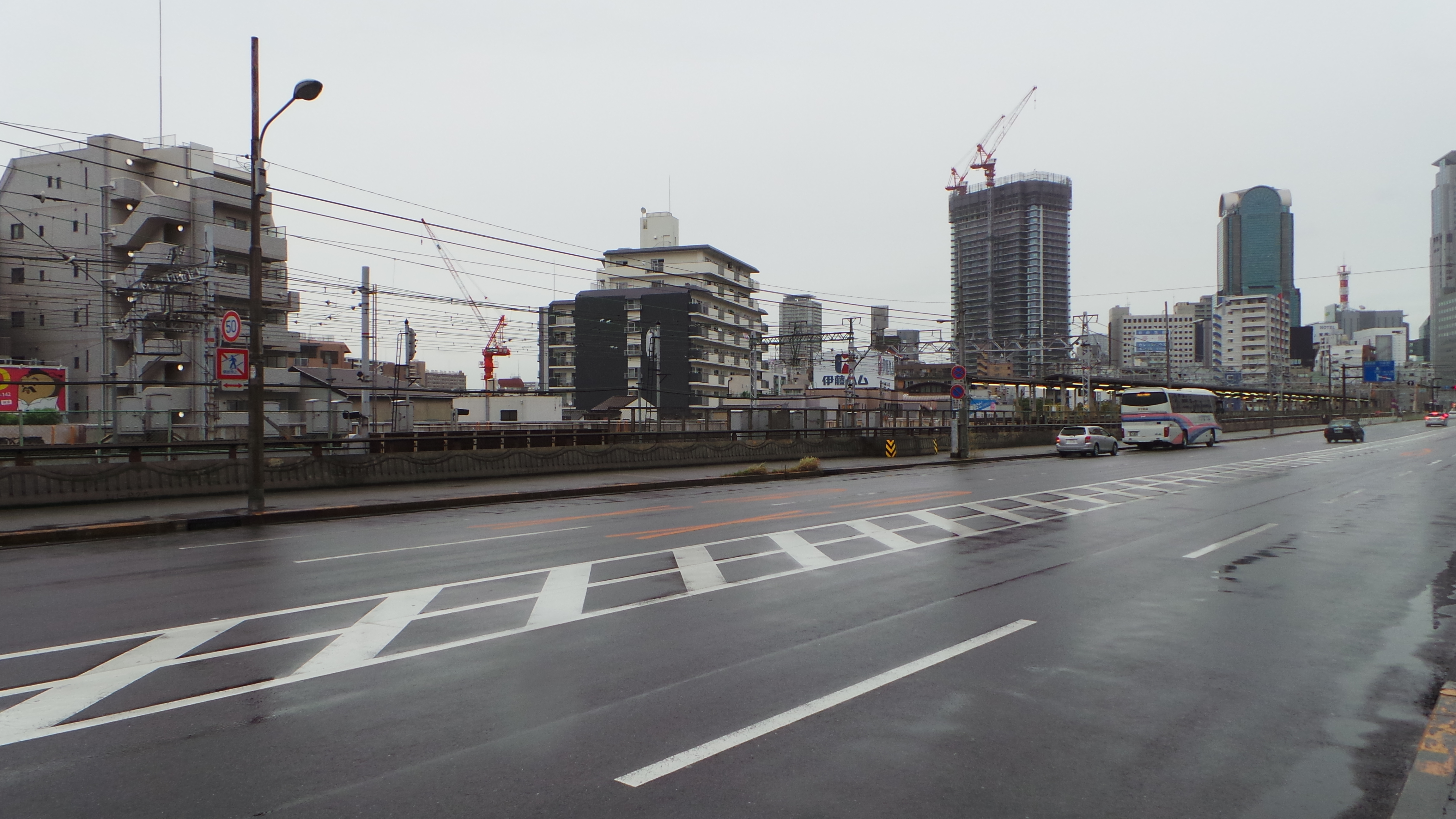
Since leaving Osaka Station, I haven’t come across a single convenience store, and I’m in desperate need of buying an umbrella. At this point, a considerable amount of time passes. I spend a good fifteen minutes attempting to reach the bridge that crosses the Yodo River, but inexplicably, an endless train platform obstructs any access. There’s no tunnel beneath it, no bridge over it.

endlessplatform

Completely soaked and frustrated, I eventually find the way to the bridge. The rain appears to be intensifying with every step, my shoes now full of water. It takes me another ten minutes to cross the Yodo River. I realise that all I’ve done since this morning is kill time. I have days like this every now and then—nothing happens at all.

As I wander along with my wet clothes and my thoughts, I start to wonder if I’ll even have anything to write about today. Osaka Day One: Nothing Happens. I can already see the title. It’s 5 p.m. when I finally cross the bridge into Juso. A heavy sigh of relief escapes me as I spot, in the distance, the green and white lights of a Family Mart. A second sigh of relief follows at the sight of some neon. However, the path is somewhat spoiled by a single piece of rubbish on the ground.

litterandneon

I purchase an umbrella from Family Mart along with a single banana. Convenience stores appear scarce in this area, but at least I can buy just one banana. Osaka feels like a different country—people here act differently, there’s more litter on the streets, fewer bicycles around, and the locals also speak differently, using their own special dialect.

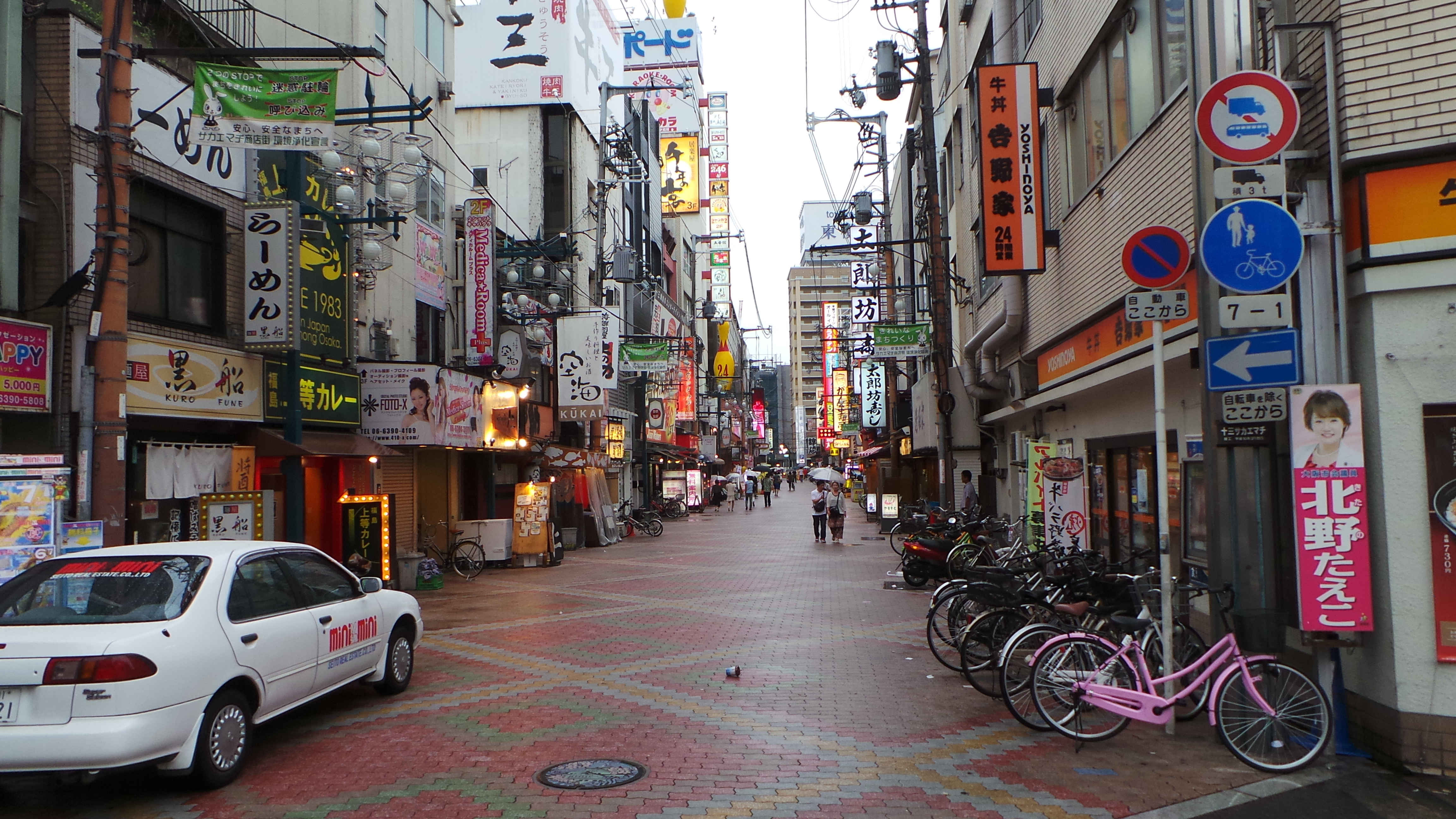
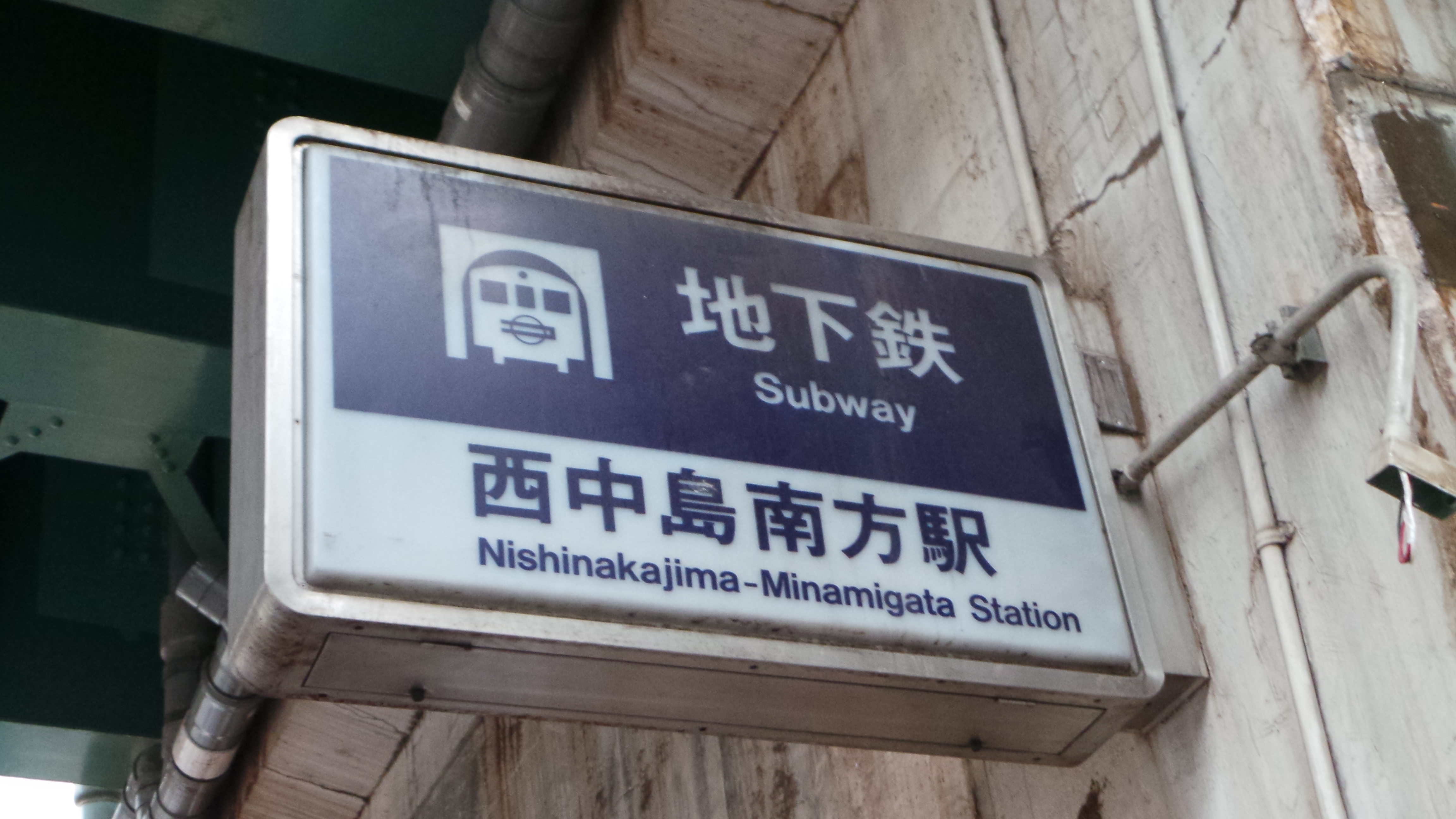
Drenched from the rain, I stroll down a street named ‘Happy Street,’ feeling as though the sign mocks me as I pass. After making a few turns, I decide to take a rest on a bus stop bench. I estimate that I’ve been walking for about two hours. Consulting the GPS on my camera, I realise I’m close to Nishinakajimaminamigata Station. It’s just one stop away from Shin-Osaka Station, so not much farther to go.

nishinakajimaminamigata

Near the station, the nightlife scene comes alive. Memories flood back as I navigate the interlocking streets filled with restaurants, bars, and neon signs. I decide to check if a bar I fondly remember, called ‘Meets,’ still exists. Finding it easily, I’m disappointed to see it closed today, or perhaps permanently shut down—I can’t discern which. It’s still early, though. Disheartened, I spot a Seven Eleven and opt to purchase a can of 5% Suntory whisky highball. Seven Eleven is the only convenience store I know that sells the 5% can; the other shops only offer the stronger 7% and 9% cans.

Upon returning to the hotel, intending to write about my day, I find that the two computers available in the hotel lobby are relics of the past. One of the machines operates on the Windows 98 operating system with an outdated Internet Explorer as the default browser, bombarding me with messages to update. It prompts for a password whenever I attempt to do anything. I try to download Google Chrome but face the same password requirement. Attempting to write becomes an exercise in patience as the machine’s slowness causes each typed letter to lag about five seconds before appearing on-screen. Frustrated, I abandon the effort and retreat to my room.

Exhausted, I fall asleep before 8 p.m.

Gion with the Finned

Today is my last day in Kyoto. Tomorrow I will go to Osaka for three days, before heading off to Nagoya. I still have one temple I want to see, a temple with a difference. I head through the arcade, the same French song is playing that I’ve heard about four other times this week. I know the song but can’t recall the name. There is a pachinko parlour with a picture of Rowan Atkinson on the advertising board. There is also a strange mascot wandering around the arcade, promoting a festival here this evening.

I start by walking through a district called Gion. Gion is the most famous place in Japan for spotting geisha, although here they use the local term ‘Geiko,’ which translates to mean a ‘person of the arts.’ Gion is filled with numerous traditional old streets lined with even older houses, alongside a mix of theatres and other traditional entertainment.

old_style_houses[1]

I head up the mountainside to my last Kyoto temple, Otowa-san Kiyomizu-dera, a UNESCO World Heritage Site and one of the seventeen Historical Monuments of Ancient Kyoto. There are some very interesting things to do here. One of them is walking from one sacred stone to the other with your eyes closed. If you succeed, you will supposedly be lucky in love. Another, which is actually prohibited now, is the chance to jump from a 13-metre-high stage. Surviving would mean your wish would be granted. This tradition dates back to the Edo period, where the survival rate was 85.4%.

The main reason I came here, though, was to experience the ‘womb’ of Daizuigu Bosatsu. This occurs not in the main temple building but in the smaller Tainai-meguri Hall. It costs me ¥100 to enter. I take off my shoes and walk down a few steps, all the while holding onto the handrail made of prayer beads. Beyond the steps, I take a right turn and enter a room of complete darkness.

wombtemple[1]

Daizuigu Bosatsu, a female Bodhisattva, possesses the mystical ability to fulfill any human wish. Alone, I navigate through a labyrinth of corridors shrouded in an abyss of blackness so consuming that it swallows all semblance of light. Oddly, it is somewhat peaceful, yet simultaneously horrifying. After an eternity of carefully navigating through the darkness, a distant glimmer pierces through the shadows—a radiant stone. It is at this stone that I make a wish.

Once outside, I continue to wander through this vast temple complex. Here, there’s a natural water spring available for ¥200, but I opt not to drink from it. After sufficient exploration, I decide it’s time to head back; the heat becomes a bit too overwhelming for me. As I descend the mountain, I catch sight of an incredible, bright red shrine: Yasaka Shrine.

lego[1]

My next destination today is along the Takase River, at The Birthplace of the Japanese Motion Pictures Industry. Inabata Katsutaro showcased the first experimental film in Japan. Following his visit to Paris in 1896 to attend the Paris Exposition, he returned to Japan with a cinematograph he acquired from the French inventor Auguste Lumière. In 1897, he screened the film in the garden of the building.

Unfortunately, the building is closed today.

I feel a little hungry and decide that today I’ll try grilled eel for the first time. After wandering for a while, I finally find the place and take a seat in the restaurant. There are probably eight or nine other people eating here. The restaurant plays no music, and there is absolutely no ambiance. Nobody talks either; everyone just sits in silence with their grilled eel, as if waiting for the end of the world.

eels[1]

The menu is a little pricey, so I opt for the small grilled eel on rice with pickles. It arrives with a teapot full of hot green tea. Had I known, I wouldn’t have ordered a beer. The dish, called ‘Unadon,’ is delicious. It’s not what I was expecting; the texture is somewhere between meat and fish, and the soy-based glaze is delicious. Even the rice is good; I savour every grain. In total, it costs me ¥2800, an expensive treat.

I head back to the hostel for a short while to write before heading out again for the Kyoto Tanabata Festival, which starts at 6 p.m.

The festival stretches all along the Kamo River, hosting around one hundred small stalls selling various Japanese snacks, little gifts, and the usual souvenirs. Dubbed the ‘Star Festival,’ it’s said that writing your wish on a special piece of paper here will magically make it come true. One side of the festival is adorned with paper lanterns, while the other side is lined with lanterns made of reflective coloured paper.

tanabatafest[1]

At the entrance to the festival, a female performer is essentially doing karaoke, while at the other end, people dance to music on a stage. For no apparent reason, one guy is dressed as a polar bear. As nothing particularly interests me about the festival, I walk its length and then leave.

I head back to the hostel, up to the roof terrace, to read my book.

The evening sky looks like the end of the world.

endoftheworld[1]

Towering Above the Rest

The day began with a ¥1000 haircut, which is actually quite cheap for a haircut. I was a little worried about communicating in Japanese, but the barber understood what I wanted and did a very good job. After finishing the haircut, he surprised me by vacuuming my head. I wasn’t expecting that!

With my nice new haircut, I decide to check out some boat racing. At the Kyotei Boat Racing Stadium, security is very tight. The entire perimeter of the 1,397-capacity atrium is littered with security guards. Today happens to be the 28th Ladies Championship Boat Race. I pay my ¥100 entry fee and take a seat on the steps outside that overlook the racecourse.

boat_race[1]

This is one of 24 boat racing stadiums in Japan, a sport that is unique to the country. As the race starts, I pull out my camera. Instantly, one of the security guards taps me on the shoulder. “No photography is allowed here,” he says. The above photograph of no race happening was the only one I could manage to steal.

The six boats complete three laps of the 1,800-metre-long course. The red boat, numbered five, gets bumped by another racer and ends up stalling. It reminds me a lot of greyhound racing. Strangely, there’s betting involved here too. Boat number one emerges as the winner. A 1-4-2 tricast yields ¥1590 from a ¥100 bet.

After the boat racing I swing by Fukuoka Yafuoku! Dome.

fukuokahawks[1]

The dome serves as the official baseball stadium for the Fukuoka SoftBank Hawks. It holds the distinction of being Japan’s first stadium equipped with a retractable roof. With a capacity of 38,561 spectators, seat prices range from ¥1000 to ¥14,000. Baseball enjoys immense popularity in Japan, and based on the games I’ve caught on TV in bars, it seems the Hawks are a pretty good team.

Beyond the dome in the distance is Fukuoka Tower. I park my bicycle near the tower and take a closer look.

fukutower[1]

Fukuoka Tower kicks Beppu Tower to the dirt. Upon entering, I’m pleasantly surprised to learn that as a foreigner, I receive a twenty percent discount; I pay ¥640 in total. Stepping into the tower’s main area, I’m instructed to look up. Following the instruction, I gaze upward to see a 108-metre shaft above me.

“The lift takes seventy seconds. The tower is 234 metres tall. The viewing platform stands at 123 metres,” the attendant states mechanically. “The tower has been built to withstand magnitude 7 earthquakes.”

On the fifth floor of Fukuoka Tower, the view of Fukuoka City is wonderful. In the distance I can see Hakata Bay, in the opposite direction I can see the Sefuri Mountains.

fukinsidetower[1]

I take the stairs down to the third floor, then ride the lift down. At night, the tower will be illuminated in ‘Milky Way’ colours—whatever that’s supposed to mean. The illuminations change for each season.

My next stop is in the building opposite the tower. On the second floor, I visit Robosquare. This is absolutely the place to be in Fukuoka if you like robots, want to learn about robots, or take part in robot workshops.

robosquare[1]

It is free to enter. Inside, there’s a robot museum and a little shop selling robots and other kits. Some robots are for playing, while others are for interacting through conversation. Sadly, I arrived twenty minutes late for the 2 p.m. performance. Me and my bad timing.

After Robosquare, I head five minutes to the Fukuoka Disaster Prevention Centre. It’s a facility that realistically simulates various disasters for visitors, serving as an excellent way to promote citizen safety in case of emergencies. Additionally, it houses a museum dedicated to firefighting and earthquakes.

firefighter[1]

Entry is again free, and so is the one-hour tour. During the tour, you can watch a video about safety before learning how to react in a number of simulations: handling strong winds, extinguishing fires, navigating through rooms filled with smoke, and escaping safely. There are doors simulating water pressure: a car door submerged underwater that visitors can try to push to test their ability to escape. Photographs depicting earthquake disasters adorn the walls. It all feels rather macabre.

Finally, there’s an earthquake simulator where you have the chance to hide under a table with a pillow on your head and experience the impact of a magnitude 7 earthquake on the Richter scale. Unfortunately, I arrive late for the tour and miss out on the simulations. I contemplate waiting for the next tour, but it won’t start for almost an hour.

I return to my bicycle, only to discover it’s about to be clamped. The security guard has already fastened seat clamps to other bicycles nearby and is currently inspecting the bicycle two from mine. Casually, I walk toward my bicycle, adrenaline pumping through my body, and swiftly unlock it as fast as I can.

I shoot off in the direction of Ohori Park. Me and my impeccable timing.

ohoripark[1]

Ohori Park is lovely, offering cycling, jogging, and walking paths—all flat concrete, my favourite surface. Distances are marked along each path, making it an ideal spot for athletes to train. The route circles a vast lake at the park’s centre. I cycle the route several times before deciding to head back to the hostel for some food.

Down a random side street near Tenjin Station, something incredible happens—I spot the YouTube personality Micaela Braithwaite pleasantly strolling along. As we pass, I greet her with a rather coy “Hello.” She replies with a slightly hesitant “Hi.” I glance back for a second look, but she’s already gone.

The very reason these two weeks in Fukuoka even made it onto my itinerary is because of her. Before returning to Japan, I spent a fair amount of free time scouring through YouTube videos about the country. Micaela’s videos always towered above the rest. Based in Fukuoka, her captivating videos about the area were the reason I felt compelled to visit. Without her videos, Fukuoka would never have crossed my mind.

As I continue cycling, somewhat starstruck, I find myself unable to stop thinking about the day’s events. My mind conjures endless possibilities. If I had stayed for the disaster tour, I would have undoubtedly ended up with my bicycle clamped. The remainder of the day would’ve been miserable—I’d have had to explain it all to the hostel staff, pay a fine, waste the entire day sorting it out. It’s astonishing how two minutes made such a significant difference. Lost in these thoughts, I realise I’ve been cycling instinctively for ten minutes without noticing. I have no idea where I am or how I got here.

Back at the hostel, Ged shows up—an Englishman I met back in Beppu. He’s staying here tonight but leaving Japan tomorrow. He hands me his Seishun 18 Ticket, having used three of the five days on it. I offer to pay for the ticket, but he refuses my money. This ticket grants me unlimited travel for any two days on any Japan Rail local line. It’s amazing—I can essentially travel from Kyoto to Tokyo for free with this ticket. Thank you, Ged.

18ticket[1]

I head out for some food and a couple of Suntory whisky highballs at my favourite bar. Attempting to read my book, I feel a little troubled. I can’t shake off thoughts of the alternative version of me—standing there, trying to explain myself to the bicycle traffic warden. Nothing has felt real to me since that moment.

I leave the bar after only two drinks. Gazing at the sky, I see a star, for the first time in eight weeks.

Ainoshima Cat Island

With muscles loosened after a wonderful massage, I decide to truly test my body. My destination today is Shima Ferry Port. “You’re cycling to Shima?” asks a confused staff member. “Please make sure the bike is back before 9 p.m., okay? It has to be back before nine.” The time is now 11 a.m., and I have no intention of taking ten hours on this excursion. Little do I know.

I cycle for an hour in the direction Google suggested before realising I have no idea where I am. I spend a good half-hour navigating around an industrial estate, reaching a dead end, then turning around to eventually get back on track. None of the road signs are in my language, and there’s nobody around to ask for directions.

Ninety minutes into my journey and I arrive at a beach.

beach[1]

The beach offers a welcome rest, prompting me to park my bicycle and go for a short stroll. I stumble upon the only map in Fukuoka Prefecture and compare it to my photographed route; everything matches up. There’s still a long way to go, but at least now I know where I am. Thank you, ‘Mishima Water Area Circumference Route Map’.

At the end of the beach is what appears to be a closed amusement park called ‘Motown’

mowtown[1]

I continue cycling until the beach ends and the houses begin. I start uphill, hoping it’s the right direction toward Shima. Eventually, I find myself atop a mountain. It doesn’t seem right. Up here, I discover a stunning, random shrine and some very old houses, but not much else.

sshrine[1]

I eventually reach the downhill part of this frustrating journey, only to encounter a dead end overlooking the ocean. I have to push my bicycle back up the incredibly steep mountain roads, and it’s exhausting. Today is scorching at 35°C, and I’ve already used up a full bottle of Sun Aqua by now.

uphillstruggle[1]

At the top of the mountain, I spot a human being. I ask him in Japanese for directions to Shima. He responds in Japanese, and though I’m not entirely certain, I follow his directions. To my relief, I discover a small train station where one of the stops on the route is Shima.

I opt to follow the railway tracks, at times finding them disappear or being forced to detour due to a lack of pavement or road. After a challenging navigation, I finally spot a sign for Shima. I adhere to the instructions on the sign, and miraculously, after two hours and forty-five minutes of cycling, I arrive at Shingu Port.

“I’ve a feeling we’re not in Fukuoka anymore.” I pay ¥460 to a vending machine for a one-way ticket. After a forty-minute wait, the ferry finally arrives.

On the ferry, a television airs footage of a dirty factory in Shanghai. Staff members, their faces blurred out, are seen relabelling one-year-old rotten meat with new expiry dates. The screen shows a pile of processed meat spilling onto the floor while rats crawl below. The gloop is scooped up and pressed into another machine, which churns it into the shape of nuggets. I have no idea what this advertisement is for.

catisle1[1]

Ainoshima Island is just off the coast, a twenty-minute journey away. It boasts more cats than human inhabitants. In Japanese, the word for cat is ‘neko’, and its pronunciation rhymes with ‘echo’.

I arrive on the island to find a cluster of traditional old Japanese houses against a backdrop of mountainous terrain covered in deep forests. Despite its small size, the island takes a considerable amount of time to traverse completely. In the shade between each house, cats are scattered, peacefully asleep.

catisle2[1]

I wander around the island where the small Japanese houses provide little shade from the scorching summer sun. Today marks the hottest day of the year. I spot numerous cats, more than I care to photograph. Here are a few more:

catisle4[1]

There’s one cat that takes a shine to me. He follows me around the island as I walk, meowing or crying—I’m not sure which. I offer him some of my water, but he responds with ‘Nyaa nyaa’ (the typical cat noise here). Perhaps he’s just hungry. I assume tourists visit this island to come and feed the cats, but it’s merely a presumption.

catisle3[1]

I take the 4 p.m. ferry off the island. There are only three other people on the ferry and thirty-two empty seats. It seems like somewhat a waste of fuel, in my opinion. Sumo Wrestling is playing on the television.

There’s one last thing about Ainoshima Island not mentioned in any guidebooks: giant wasps that chase you. I managed to take a photograph of one that was idling, smaller in comparison to others. I’ll admit, though, most of my time on the island was spent either admiring the cats or running away from the wasps like a frightened rabbit.

bpwasp[1]

As the ferry pulls away, Ainoshima Island becomes nothing more than a blur.

I leave Shima at twenty past four, sticking to main roads and following the signs for Fukuoka. As I depart, a bus marked Tenjin Station mocks me as it cruises by.