Bring Me the Head of Kubikiri Jizo

Today, I’m sitting at the bar of a small cafe having breakfast when a man named Yoshio notices I’m not Japanese and strikes up a conversation while I chomp on my vegetarian Eggs Benedict. “I just got back from America,” he tells me, “I got back yesterday.” His English is pretty good, and I stay for a second cup of coffee, chatting with him for about thirty minutes before he has to leave. After he departs, the cafe owner shares Yoshio’s full name with me. A quick Google search reveals his Wikipedia page, and I discover that the man I had breakfast with is a famous Japanese comedian.

After coffee, I head out to meet Luis, the Chilean guy I met during the World Cup. He is back in Asakusa for the final leg of his trip, so we arrange to meet up for 1 p.m. We take the Ginza Line to Akasaka-mitsuke Station. Akasaka is known for being quite a posh area, so we wanted to get a feel for what a rich neighbourhood looks like. No different from anywhere else, it turns out.

From Akasaka, we walk to Roppongi and head for Tokyo Midtown. Here, there is a giant 1:7 scale statue of Godzilla.

godzilla[1]

After Godzilla, Luis and I head back to Asakusa and eat at my favourite Indian restaurant. Luis has only ever had curry before one other time in his life, madness. After food, we head our separate ways.

Whilst I was exploring accommodation options for October, it was suggested to me by a 71-year-old Japanese man that I try the area known as San’ya; apparently, the apartments there are relatively cheap. San’ya is still in Taito Ward, and a forty-five minute walk from Asakusa. I head in the vague directions I am given and discover that San’ya no longer exists. All signs mentioning the word San’ya no longer exist. Every mention of the area has been removed, like a Japanese history book; all traces have been erased from memory.

The only sign that has any mention of a San’ya past is the sign for Namidabashi. The sign literally translates as ‘Tears Bridge’ and was where people came to say goodbye to loved ones before they were taken to be killed at the Kozukappara execution grounds, hence the tears. These days, the bridge has been buried under the concrete of an intersection, the execution ground painted over by a bus station.

busgrounds[1]

All that really remains, other than human remains, is Enmeiji Temple. It was this statue of Kubikiri Jizo, the decapitation Buddha, who watched over the nearby execution grounds. For those who were executed, the last image they would have seen is the Buddha. Its name literally translates to ‘neck cutting Buddha’. An estimated two hundred thousand prisoners were killed here. Ironically, during the March 2011 Tohoku earthquake, the Buddha was damaged and its head broke off. A sign details the step-by-step process of how the head was repaired.

There is also a sign here that says, ‘Nam-Myoho-Renge-Kyo,’ the all-too-familiar chant of the Nichiren Buddhist. Gravestones without names make up the backdrop.

kubikirijizo[1]

The main street here translates as ‘Bone Street’. It was on this street that the decapitated heads of the executed were put on display. The executions stopped in 1873, and after that point, the area suffered further misery. Somehow, San’ya became Japan’s biggest leather-producing area. The problem with leather is that it comes from cows, and cows in Buddhism are not to be used for leather production; this being a Buddhist country doesn’t help matters. The people here became complete outcasts, and leather production work was considered the lowest of careers. A certain stigma became attached to the already stigmatic San’ya area, and it fell into decline. It was around this time that the name San’ya was abolished. These days, the shops are all boarded up, the streets are empty, and the dead stay dead.

Today, if you live in the old San’ya area, you are still looked upon as different. You are judged for living here. The accommodation is cheap; however, I wouldn’t like to stay here. The people aren’t liked, the energy is wrong, and then there are the souls of murdered cows and headless criminals. I leave the macabre of San’ya and head to the somewhat less chilling ‘Flying God Temple’.

flyinggod[1]

The Legend of Tobi-Fudo comes from the Shobo-in Temple. It was first built in 1530. “Once upon a time, the chief priest of this temple went to the Omine Mountain in Nara Prefecture to pursue his learning; he took the principal image of Buddha with him to the mountain from his temple, but the principal image flew back to this place in Edo within one night and gave diving favours to the people.” I am not sure what ‘diving favours’ are, but this is what it said at the temple entrance. I think it is supposed to say divine.

In recent years, people visit the temple to pray for safety in air travel, praying their plane doesn’t crash. I suppose ‘diving’ is probably the wrong word to be using when talking about air accidents. There is also a sign saying a festival takes place in October on the temple grounds. I add it to my calendar and leave.

Siliconan the Ovarian

The previous three days drifted along to the tune of uneventfulness. I met old friends, went out for dinners, and had drinks. I didn’t even leave Asakusa once. Today, a sign in my hostel says, “Soba party today, come and enjoy Japanese noodles!” There is also a list of local artists that will be here to teach various arts and crafts. Free food and free crafts, excellent.

Outside, it is a blistering 36°C. I take the Tokyo Metro Ginza Line to Ginza. Ginza is a massive shopping district and fashion area. The kind of place you only drive through if you have an Aston Martin or a Bentley. If there is a Tokyo edition of the board game Monopoly, Ginza would be Mayfair. There is an array of well-dressed people, expensive fashion boutiques, and all the high-priced big brand stores.

My first stop in Ginza is the rather difficult-to-find Vanilla Gallery. Hidden away in a basement floor of a rather uninteresting building, it plays host to the Fourth Artificial Otome Expo: a Love Dolls exhibition. I shyly pay my ¥1000 entry fee to a young woman and shuffle through the gallery, trying to avoid eye contact with the other customers and the dolls. The dolls are made of silicone, are hauntingly childlike, and can be customised to the finest detail; every part of a doll can be ‘made to order’. Also in the exhibition is the mould that creates these dolls; a sign says, ‘Crystal craftsmanship to build the doll up to perfection.’

The Vanilla Gallery is small, and the exhibition is in just two little rooms. Orient Industry has been making these luxury Love Dolls for thirty-seven years, or so a video of the production process tells me. They also claim to make the most luxurious and expensive dolls; probably why they chose Ginza to showcase their creations. There is one doll that you can touch, ‘Feel her soft realistic skin,’ a sign says. I pass on the touching. I can only show the photograph of the sign, as there was a strict no-photography policy in place.

lovedolls[1]

I once saw a television interview with a Japanese man who said that he doesn’t want his wife to know about his collection of Love Dolls, so he rents a second apartment just for his dolls. I stay for no longer than five minutes. The life-size, realistic-looking dolls scare me. Their stillness makes me think of the dead.

Next in Ginza, I head to the nearby ‘Hello Kitty Toy Park.’ Here, there are so many toys, games, keyrings, plates, umbrellas—everything you can imagine featuring Hello Kitty. Five floors of toys, two floors of restaurants, a theatre, and a small theme park. I have never seen so many Hello Kitty items in one place. I don’t know which is more embarrassing, going to a Love Doll exhibition or entering a Hello Kitty store. Inside the store, I see a policeman on his break, inspecting the Hello Kitty toys.

kittytwo[1]

Next, I head in the direction of the Police Museum. On the way, I see a huge Yamaha store and decide to play on some very expensive-looking pianos for a while. I also spot the Pachinko Museum. A sign outside says, ‘We can teach you the basics about pachinko.’ It is adults only, but free. I head inside to find that they have forgotten the museum aspect. It’s just a regular pachinko parlour. ‘More enjoy more happy,’ a sign outside tells me as I leave.

The Police Museum doesn’t seem to exist. The building that houses it is under heavy construction and gated off. A shame, I was looking forward to doing something normal today. I see a sign for the nearby Kyobashi Station; lucky for me, I know this station is on the Ginza Line, so I take the train back to Asakusa.

Back at the hostel, I watch the news. A company called Shin-shin Foods has decided to stop its one-hundred-year-long pickle production and has converted its headquarters into a capsule hotel. I learn about a process called muon tomography, cosmic rays that detect radiation. Twenty-nine cats have mysteriously been found dead in Ota Ward; police think it was poison. The usual nonsense. I do some writing before heading out for a Shiatsu massage.

messageboard[1]

The place I go to was recommended to me by the owner of Cafe Byron Bay and is owned by her friend. When I enter the building, the woman at reception looks shocked to see me. I don’t think the place gets too many overseas visitors. I mention that I know her friend, and the tension in the room instantly fades away. After my thirty-minute massage, the tension in my shoulders also fades away. The man who performed the massage offers me a fifty percent discount, just ¥1500. I actually don’t think this is fair to him; the massage was good. I compromise and tell him to keep the ¥500 change, which he does. So much for not tipping in Japan. He thanks me and gives me a points card; I am nine more massages away from a free one-hour session.

Back at the hostel, the soba party is just starting. Soba are Japanese noodles made from buckwheat flour. This is actually my favourite type of noodle. There are stalls selling badges made from Instagram photographs. You can send them six of your photographs, and they’ll make them into high-quality badges or magnets. There is also a store where you can rent a kimono or a yukata. The word kimono inventively translates as ‘thing to wear’.

soba[1]

There is, of course, plenty of free food. Plates piled high with ice-cold soba noodles. Tiny plastic bowls are filled with sauce, and a selection of toppings is available. I eat my noodles with spring onion and seaweed. Delicious. There is also free rice wine to drink. When all the free sake has been consumed, I head to the hostel bar for more free drinks. The night crawls along. I eat soba noodles in the lounge and get considerably less sober at the bar. The night ends, and I crawl to my room.

Last Stop: This Town

Wednesday

Never have I been so happy to hear the monotonous drone from the speakers at Tawaramachi Station. Today I am back in Tokyo, back in Asakusa; my days of exploring are over for now. I have three nights in a hotel, before another long stay at the very first hostel I started at; the best hostel in the world. I don’t begin my stay there until Saturday, but I am eager to get back there as soon as possible.

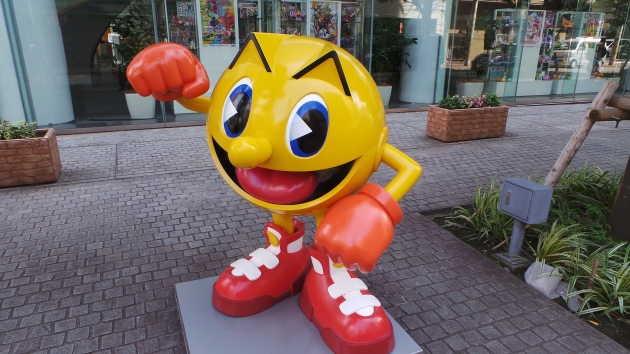
My hotel is in a previously undiscovered part of Asakusa, away from the temple and tourists. Next door is an Indian restaurant. After checking into my hotel I decide Indian food would be a good choice. My hotel, unlike in Hamamatsu, has wireless Internet. I can access the Internet from the Indian restaurant, which is a nice bonus. The food is actually very good. Like Pacman eating those little dots, I devour every little grain of rice.

pacman

After dinner I head out to the hostel. Today is Wednesday, the bar is open for guests, and I have nowhere else to go. My friend Hiro is the barman tonight, jazz musician and comedian. I say hello to people I know, and meet a few people I don’t. It would be fair to say that since leaving Kyoto I haven’t really seen many people, or had many conversations in English. Having a chance to speak to people tonight is just great.

I get a little drunk, and leave at midnight.

Thursday

Today I have made plans to meet Paul, a Scotsman I met in Fukuoka. I go for breakfast at my favourite cafe, Byron Bay. Still number one in Taito on TripAdvisor. I drink one of the ‘as seen on TV’ green tea lattes, and eat happy eggs on local bread. The owner tells me that since being featured on Moshimo Tours, she has been really busy every night. After breakfast and a nice catch up, I meet with Paul and we grab a train to Akihabara.

Paul and I head to a department store called Yodobashi Camera, an electronics chain store. This place is huge, has nine floors, and sells just about everything. Paul is shopping for headphones and this shop has thousands to choose from; the headphone display is set up in a way that you can plug them into your device and try them out. While Paul does this, I sit and play an electric piano. A homeless man sits down at the piano next to me and bursts into an amazing classical piece. He plays well, really well. It is a shame to see someone with so much talent going to waste. A real shame.

After our headphone expedition, we take a quick trip on the Yamanote Line to Yurakucho Station. Outside the station, we venture into another massive electronics chain store, Bic Camera. Our quest here is for the fabled Casio CA53W-1, the classic Casio watch with a built-in calculator. At midnight on December 31st, 1999, this Casio calculator watch was the only electronic device in the world challenged by the famous Millennium Bug. Widespread panic ensued when everyone with this watch seemingly travelled back in time to the year one-thousand. Unfortunately, our search for the watch ends in failure. Disheartened, we give up and head back to Akihabara by train.

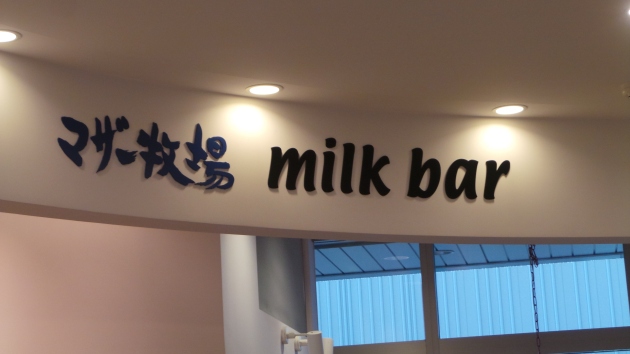
There was me, that is Luke, and my droog, that is Paul, and we sat in the Akihabara Milkbar trying to make up our rassoodocks what to do with the evening.

milk bar

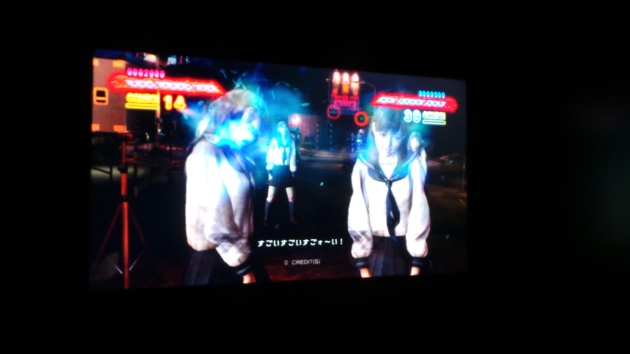
We decide to visit a video game arcade. Paul manages to win a t-shirt on a crane claw machine and kindly gives it to me as a present. After spending a few thousand yen, we head over to play some of the classic shooting games. The game we choose is a hybrid, blending the traditional shooting-monsters-with-a-gun style with a dance game where you hit buttons according to the rhythm. Surprisingly, this game also boasts a very in-depth storyline.

The game is of course the amazing, ‘Sailor Zombie: AKB48’.

The members of the girl idol band AKB48 have been turned into zombies, and our task is to defeat them. The most amusing part is when the zombies abruptly halt their attacks and break into song and dance, triggering the rhythm game. We play through our 15 continues, maybe an hour passes, before we finally give up.

AKBzombie

After the arcade, we opt for some Japanese Italian food at a Saizeriya restaurant. Then, around half past six, it’s back to Byron Bay for a quick Laphroaig before we head to the jazz night at the hostel. There, to my surprise, I bump into Yojiro, my friend and table tennis rival from Beppu.

After the jazz session, I share a few more drinks with Paul. Soon, our group expands with the arrival of an Australian named Sam, a Japanese gentleman, an Argentine girl, and Dagmar, a German girl I met just last night. Dagmar and I engage in a delightful hour-long conversation about The Curse of Monkey Island—I boast about having the courage and skill of a master swordsman! We spend a considerable amount of time amusing ourselves with pirate insults and banter, while everyone else around us remains clueless about the ‘code’ we’re speaking.

At midnight the six of us head out to A.S.A.B. and drink there until five in the morning.

Friday

My morning kicks off as usual, starting with a strong cup of coffee at Cafe Byron Bay, followed by not much else. The entire day unfolds without any noteworthy events. I meander through the streets of Asakusa, as if searching for something inexplicable. Eventually, I station myself outside Seven Eleven to tap into their wireless Internet. Unexpectedly, one of the comedians from the Moshimo Tours television show, Udo Suzuki, strolls by with a film crew in tow. Quick to grab my camera, I encounter the familiar scenario: a man materialises seemingly out of nowhere. “No photographs!” he insists, arms forming a cross to obstruct my lens.

After a day spent doing absolutely nothing, I return to Cafe Byron Bay for the fourth time in two days to meet Klaus, my German friend from Fukuoka, along with his girlfriend, Desi. We enjoy a few drinks there before deciding to venture across town to Nui, known as the finest bar in Asakusa. Nui truly lives up to its reputation. While I’ve been here several times before, I find myself repeatedly drawn back by its impressive interior design and reasonable menu. A Suntory whisky highball costs ¥500, and any cocktail is also ¥500—a great deal.

The three of us sit and talk until half past eleven before parting ways. A certain sadness sweeps over me as I bid farewell to Klaus and Desi—a feeling of melancholy I haven’t experienced in quite some time.

skytreeasak[1]

On the walk back to my hotel, I pass the illuminated Tokyo Skytree, “May the light connect the past and future, and reach the hearts of people.”

The Other Side of the Tracks

I say goodbye to Nagoya after spending five days there, realising that I could have used my time better, particularly during three of those days. The travel costs me ¥1950 and takes two hours. During the train ride, I manage to read over half of my new book, ‘South of the Border, West of the Sun.’ Interestingly, it is around the time I change trains at Toyohashi Station that a scene in the book unfolds in Toyohashi itself. I’ve nearly given up trying to attribute too much thought or meaning to these coincidences.

I arrive at Hamamatsu just before two. I would have arrived a bit earlier if two of my trains hadn’t been running late – not very Japanese-like. It’s unexpectedly warm outside. Sitting on a dull, air-conditioned train is quite deceptive, especially after the frankly terrible weather in Nagoya for the last few days. I immediately notice the distinct lack of tall buildings here.

I find my hotel on the map, it is probably a five minute walk. I take an unnecessary shortcut through a small shopping arcade. There are no voodoo dolls hanging here, but there might as well be. Every shop is closed or abandoned, and there’s no music playing. “Welcome to Hamamatsu,” I mutter to myself.

hama2

I notice that a significant number of signs here are in Portuguese. “Você está aqui,” says the map. Perhaps Hamamatsu has a large Portuguese-speaking population. My suspicions are somewhat confirmed as I pass a Brazilian imported goods store and a small boarded-up Portuguese restaurant.

Opposite the front door of my hotel is a construction site. However, it seems to be a day off because there are no workmen with flashing red sticks. Inside the hotel lobby, there’s a cream grand piano. It serves as a nice centrepiece for the room, but it also appears slightly lonely and seldom used.

I can’t check in for another twenty minutes, so I leave my bag and take a quick walk around the block. Behind the hotel, there are some incredibly old-looking Japanese houses. I can’t quite tell if they’re still inhabited or not; they seem to have weathered quite a bit, as if the Big Bad Wolf has paid them a visit.

brokenhomes

On this side of the train tracks, I count two Seven Elevens and one Family Mart. Every now and then, the pavement bears etchings of musical instruments; they look old and worn, as if they were made many years ago.

At 3 p.m., I check in. This is the second hotel in Japan where I’ve stayed without any wireless Internet. I can’t believe it. The building itself resembles more of a block of apartments than a hotel. I decide to rent the hotel’s laptop for both nights at ¥500 per night, which is actually not that bad.

My room provides only the basic amenities, but the hotel does have ¥180 cans of beer on the vending machine floor, although it’s only Kirin Beer. The hotel information seems quite standard, except for one exciting detail: “We offer free curry and rice from 17:00 to 20:00.” There is a neat, hand-drawn ink line through this particular piece of information. Not available today, it seems.

The laptop itself loads sluggishly, which is a common issue I’ve encountered in Japan. It’s so old that it doesn’t recognise my camera, preventing me from uploading any photographs. I search for the nearest Internet cafe and after a considerable effort, it finally locates a Popeye Media Cafe. Perfect.

I head toward the Internet cafe, taking the underpass beneath the train tracks. On the other side, I’m greeted by shrubbery and flowers; it’s like entering a different world.

hama1

The area here is bustling with shops, restaurants, and people—a lively hub of human life. I navigate using a photograph of the map and the GPS on my camera. In Japan, pedestrian crossings typically emit a loud drone or a repetitive beep-beep, beep-beep, or one of two tunes, all permanently etched into my memory. However, not in Hamamatsu. Here, classical music resonates from the loudspeakers. I cross the road to the tune of Chopin’s Nocturne in E-flat Major, Op. 9, No. 2.

After some time, I finally arrive at my destination, thanks to Google. Looking around, I realise I’m in the middle of the woods. Insects buzz loudly and mechanically around me. Surprisingly, there’s not a media cafe in sight.

I walk through the woods for a while and stumble upon a castle. There’s always a castle, it seems.

hamcastle

It’s half past five, yet the castle gate stands wide open, tempting me to wander inside. This is one of the smallest castles I’ve come across—deserted, with only the castle tower and gates standing tall.

Right next door to the castle sits the Hamamatsu Municipal Museum of Art. They’re hosting a special exhibition for the next two weeks: ‘The Genesis of Ultraman 1966-1980.’ How interesting.

To return to the main roads, I need to trek through the Sakusa Woods. Roughly five minutes into the woods, a Suntory Boss vending machine appears, offering either a welcome reward or a disruption to the tranquillity, depending on one’s perspective.

bossofthewoods

After ten more minutes, I might be lost in the woods. Endless loops of footpaths and stone stairways wind back and forth. Occasionally, I catch glimpses of the city through the trees. However, every turn I take towards it seems to carry me further away.

After twenty minutes, I find myself back at Hamamatsu Castle. From there, I retrace my initial steps and eventually discover an exit. It’s no wonder this small castle has survived for so many years. None of the advancing armies could locate it amidst the tangle of woods.

Abandoning my search for the media cafe, I make my way back to the train station. Along the way, I pass by a massive Yamaha store, the Watanabe Music Company, a shop named Viola, and three guitar shops. There’s an unmistakable musical vibe to this city.

At the station, I make my way towards what appears to be the tallest building in Hamamatsu, known as ‘Act City.’ It turns out to be a vast concert hall, but the next performance isn’t until Friday. I ascend the steps to an area named ‘Chopin Hill’.

actcity

Standing proudly atop the steps is a statue of the Polish composer Frédéric Chopin—a 1:1 scale replica of the famous bronze statue crafted by Wacław Szymanowski. Interestingly, the original statue resides in Warsaw, which happens to be Hamamatsu’s sister city.

I stroll to the open terrace and enjoy a splendid view of the train station below. The city appears lively from this side of the tracks, even quite beautiful.theothersideofthestation

I head to Seven Eleven for some food and decide to sit outside the shop for thirty minutes, making use of their free wireless Internet to upload my photographs.

Just after 7 p.m., I leave the land of the living and return to the side of the train station that contains my hotel. The atmosphere is eerily silent. On my way back to the hotel, I encounter only one other person—a young woman who, amidst the desolation, could easily be mistaken for a ghost.

There is one positive thing though, the pavement this side seems to be fairly new, and very flat. The perfect surface for running on, or for running away from ghosts.

Robot Women, Fast Cars, Voodoo Dolls, and Dinosaurs

The queue for the Nagoya City Science Museum spills from the door. Inside, there is a snaked queue that runs eight rows deep. A screen on the wall tells me that every time slot for the world’s largest Planetarium has sold out, and it isn’t even 11 a.m. A shame, this was probably my best chance of seeing stars in Japan. The museum also has a special exhibit on at the moment, the Dragon Ball Science Event, and this is most likely the reason for all of the queueing chaos I am witnessing today.

nagoyascience[1]

To avoid wasting a day in a queue, I decide to take a look at the Electricity Museum, some two blocks away. I follow the signs and even find a map listing the museum, but for some reason, I can’t find it. I swing by the nearest Seven Eleven and connect to their free wireless Internet. Google Maps directs me to where I had just been walking, but nope. It doesn’t appear to be here. Perhaps closed down, who knows.

I swing by the Nagoya Musical Theatre to see what’s showing: the 5,000th performance of Beauty and the Beast. One thing I notice on my walk back toward Nagoya Station is that on nearly every street, there’s a building called ‘Toyota’. They seem to have infiltrated even the darkest Nagoya alleyways. Continuing my walk, it takes a somewhat dark turn. I wander into a lonely shopping arcade. All of the shops are closed or boarded up. Everywhere is silent. It’s as if this arcade is part of some other world. There hangs some incredibly macabre imagery.

voodoo[1]

A giant voodoo doll hangs from part of the roof, its belly split open, multi-coloured intestines bursting out, its mouth sewn up, and a giant needle stabbing into its neck. I have no idea what it begins to represent. The voodoo doll isn’t the only horrific image on this street. There’s also a giant multi-coloured face with a top hat and a satanic grin, a sinister-looking golden unicorn with eyes that seem to watch my every movement, and plenty of vampiric bats scattered around. As I pass through the arcade, my footsteps leave behind an echoed creak.

My next stop is a place called ‘Midland Square’. Inside there are many shops and restaurants. The official name for this skyscraper is the Toyota-Mainichi Building. This building is tall. The elevators take an alarmingly quick forty seconds to rise all the way to the top of this 247 metre structure. It also boasts the highest open-air observation deck in Japan.

Inside, there are posh restaurants, two car showrooms, a cinema, and sixty big brand stores such as Louis Vuitton and Vulcanize. These are all places where I’d never shop. Instead, I go and look at some cars. Displayed are a Toyota TS010 and a Toyota TS030 Hybrid.

toyota[1]

There’s an attractive young woman in a light brown suit wearing a mouthpiece. She speaks in Japanese, presumably about the vehicles. Something about her strikes me as odd—her voice doesn’t match her appearance, and her movements are very rigid. It’s entirely possible that she isn’t a human being but a very cleverly designed or disguised robot.

Next, I decide to visit the local gardens near my hotel—Noritake Gardens, to be precise. A sign at the entrance informs me that all animals must be kept in a cage; who exactly brings their caged dog to a public garden? This place is very famous as it’s the birthplace of modern pottery in Japan. There’s a spot marked on the map called ‘Chimney Gardens,’ so I head there and find six tall chimneys shrouded in foliage—the remnants of the pottery plant. The view of these historic chimneys is unexpectedly spoilt by a dinosaur.

chimneys[1]

For no reason that I can see, on the old grounds of this historic and award-winning site, stand three robotic dinosaurs. They move around, opening and closing their mouths, roaring at the children. This site holds industrial heritage significance, showcasing the conservation of a 110-year-old kiln that was used to develop the first Noritake plate. The company continues to trade today, and Noritake tableware remains a household name throughout Japan.

The remains of the factory wall can also be seen, reconstructed from the bricks of old kilns. Bricks were imported into Japan at the end of the Edo period, and the remnants of the red brick plant hold significant value as industrial heritage. However, this time, the remains of the wall are obstructed by a Tyrannosaurus Rex and Carnival Cutouts. Unbelievable.

brickwalls[1]

Also, for reasons I can’t explain, there are thousands of dragonflies here too. I’m not sure what it is about bricks that dragonflies like, but there are so many that everywhere I walk, I have to avoid being hit by one of these stray insects as they dart about without a care. No cages for the dragonflies.

My final stop today is Nagoya Castle. Every city I visit seems to have its own tower and castle. Nagoya Castle is probably a twenty-minute walk from Noritake Gardens. By the time I arrive, it’s 5 p.m., and the Genkan closed thirty minutes ago, bolted shut. The sign on the stone walls tells me not to climb, so it looks like I’m out of options. At least I can see the entire castle from a walkway over a busy intersection.

Nagoyacastle[1]

After visiting the castle, I return to the hotel and rent a laptop for three days for ¥3000. I spend three or four hours writing, and time drifts by. I’ve arranged to meet Nick at half past ten, a Canadian guy I met back in Asakusa who lives in Nagoya.

A guy in the Irish bar last night suggested I try Nagoya-style udon noodles. So, I decide to give them a second chance. I order a simple bowl of noodles with an egg mixed in for good measure. It’s a very cheap meal, ¥400 with a glass of water. On reflection, I still prefer every other type of noodle over udon.

I meet Nick outside Nagoya Station, and we walk half an hour across town to an international bar called ‘Shooters’. We drink and chat until last orders are called at half-past twelve, before walking back to Nagoya Station.

Nagoya is a huge city, yet I discover that Nick’s apartment is in the building directly across the road from my hotel.