The Men Who Scare At Boats

There’s a massive clock outside Kii-Katsuura Station. Each tick sounds like a nail being hammered into a coffin. About a twenty-minute walk from the station, between the mountains and sea of Wakayama Prefecture sits Fudarakusan-ji, a small, unassuming Buddhist temple with a wooden boat outside.
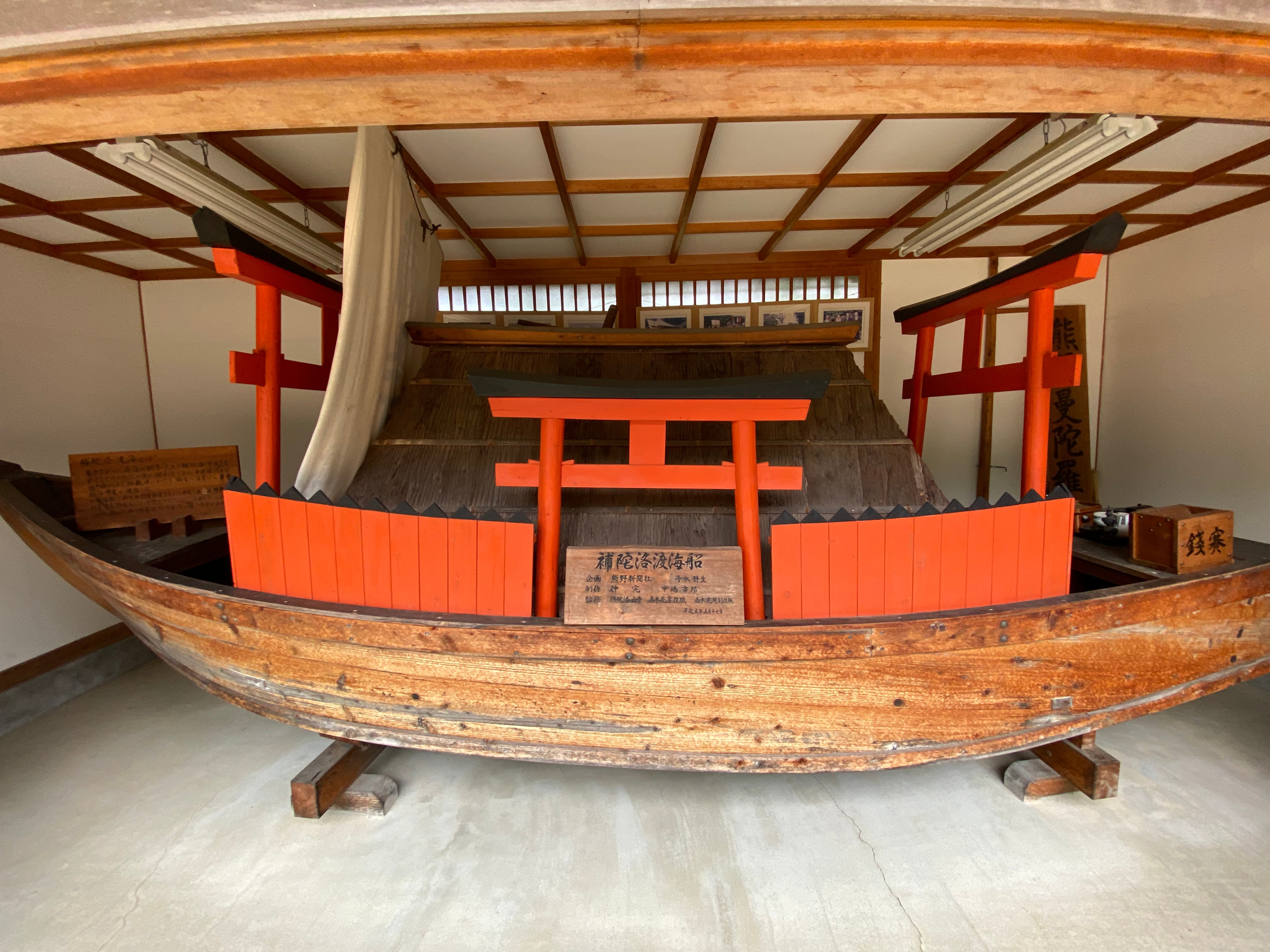
The temple was built to face the Pacific Ocean because that is the perfect location for casting boats out to sea. The only problem with these boats was the reason they were cast out; the priests inside them were trying to reach Fudaraku, the Pure Land.

The boats were designed with a sealed cabin, no windows or doors; a claustrophobics nightmare. Ever had a dream about being buried alive? The priests here lived it. They’d climb inside, and the boats would be nailed shut from the outside. The orange wood and torii gates surrounding all four sides of the boat are a nice touch.
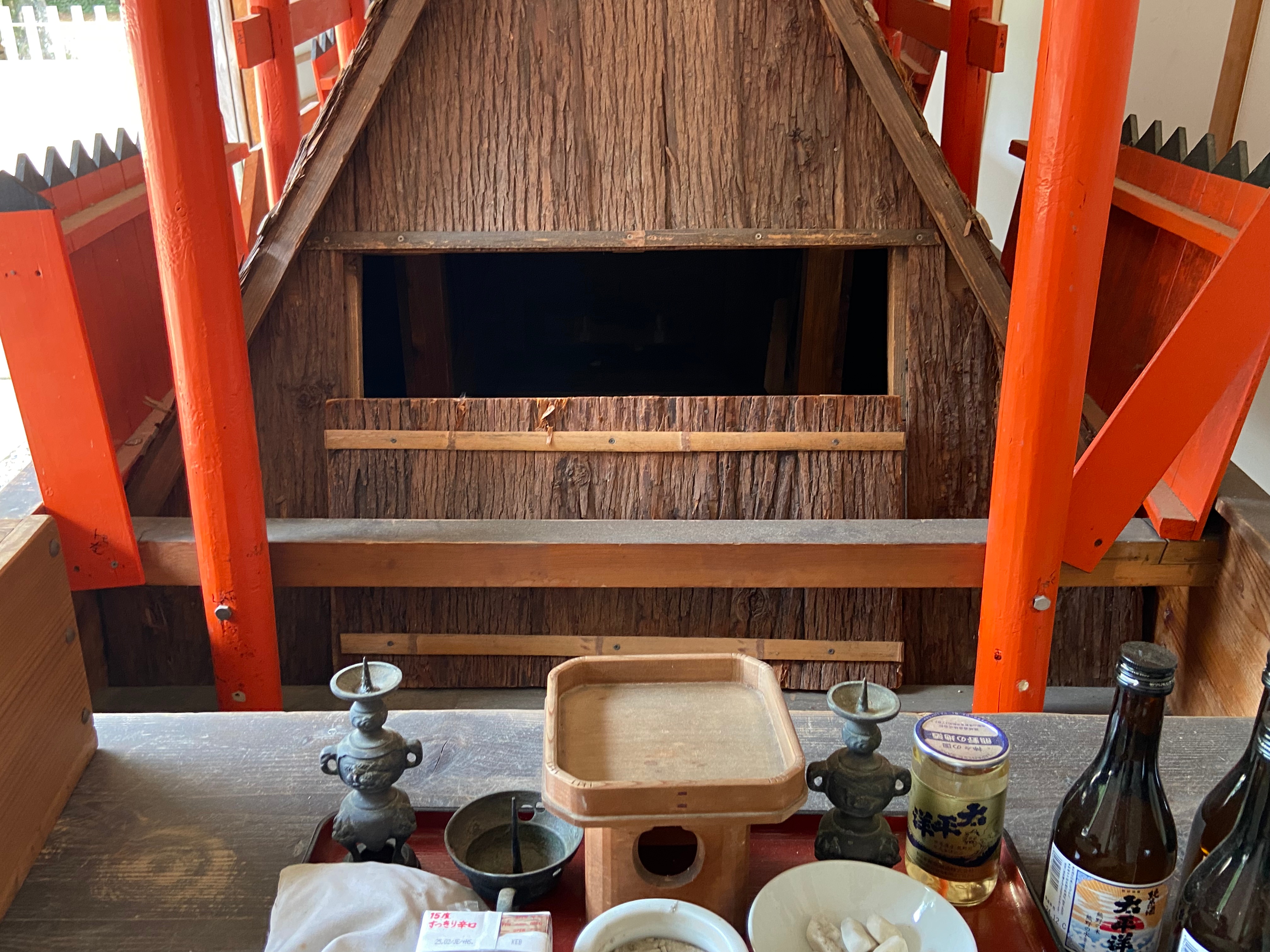
Water, a small supply of food, and a fuel lamp were placed inside before the priest’s departure. The lamp was there so the priest could keep reciting sutras and appeals to Kannon until they found the Pure Land, until they reached the end of their journey, or their life.

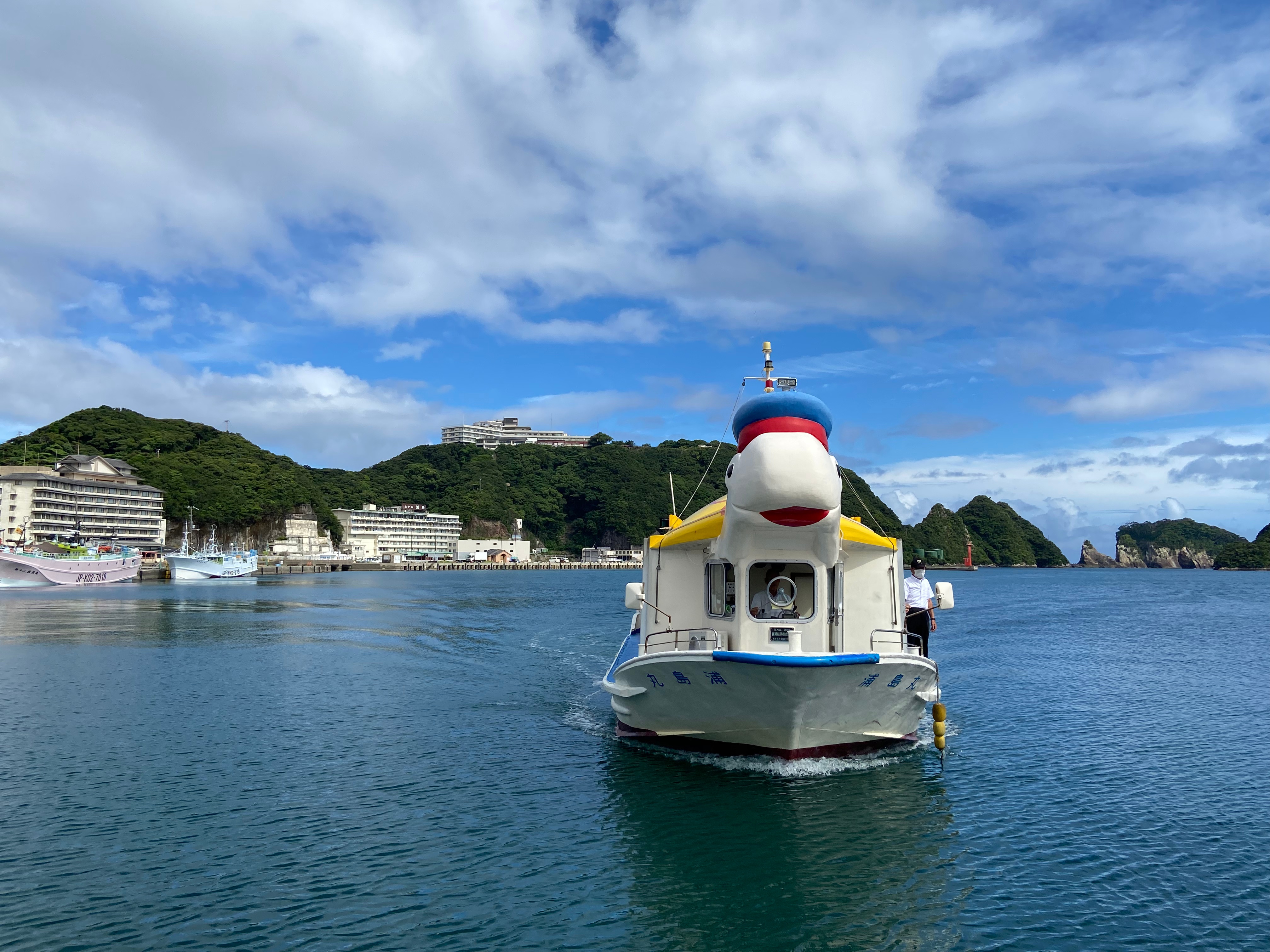
Some of the boats washed up in Kii-Katsuura Bay. A few priests escaped. Most died of starvation, drowning, or dehydration. To stay on theme, I book a night in Urashima. To get there, I have to board a boat myself. This one features no death, just a turtle mascot. The four huge buildings making up the backdrop are all part of my hotel: one on top of a mountain with an observation platform, one at the side of the mountain connected through a network of tunnels, one at the base of the mountain by the dock, and one that isn’t shown on any maps but is there, accessed through the labyrinth.
Checking into my accommodation I’m provided a map. The hotel is so large it features a multitude of interconnected buildings attached through tunnels and cave systems carved into a mountain. The place describes itself as a resort and spa. It has everything: five onsen baths, a games centre, karaoke rooms, a Lawson Stores, shopping streets, massage parlours, restaurants for eating, ballrooms for dancing, ball rooms for ball games, conference rooms, well you get the idea.

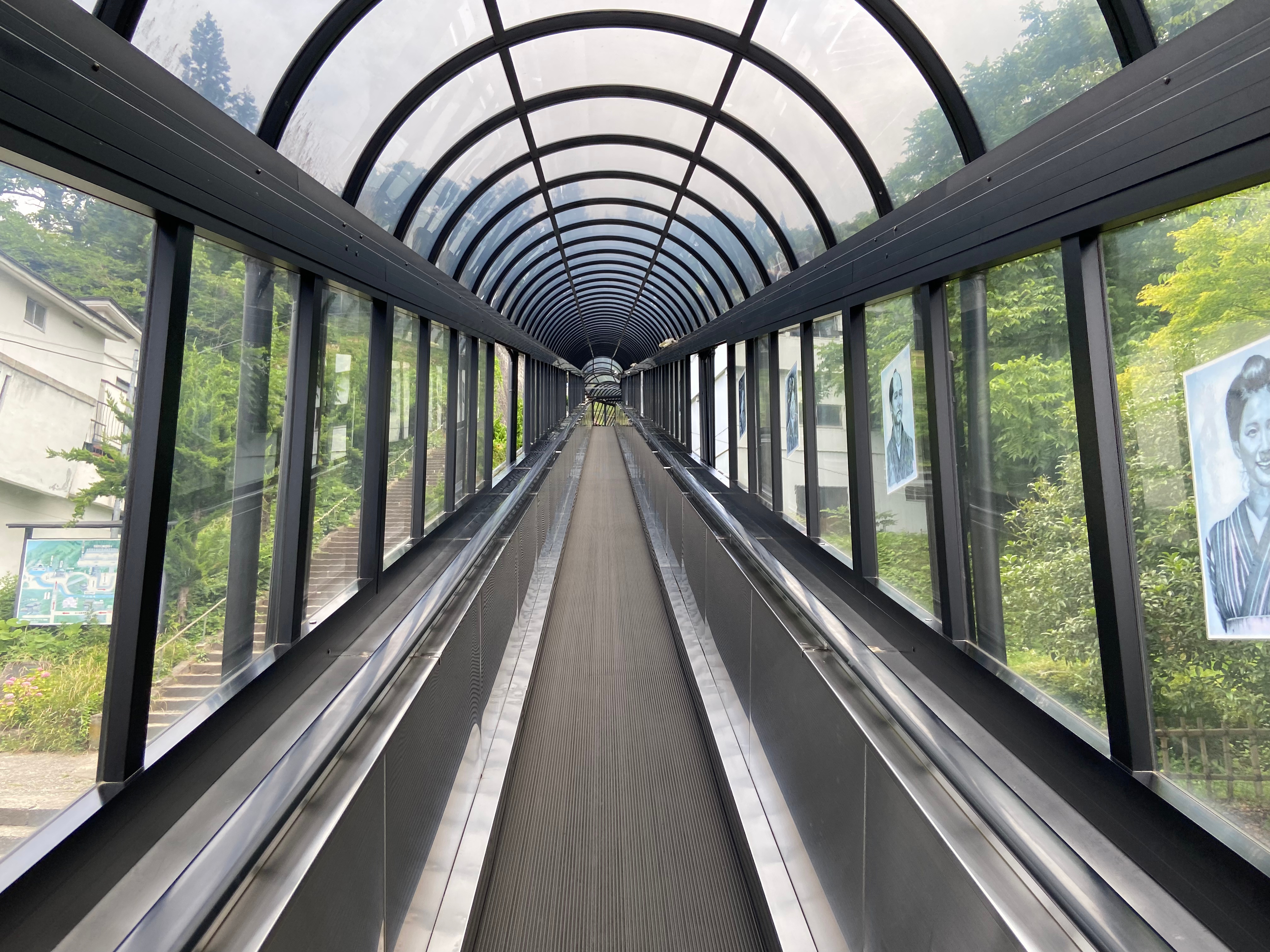
There’s one area where I have to take multiple escalators rising the length of 154 metres that take about five minutes. There’s rest areas between each escalator with sofas and tables, just in case the standing becomes too much. I exit onto the 32nd floor and admire the view.

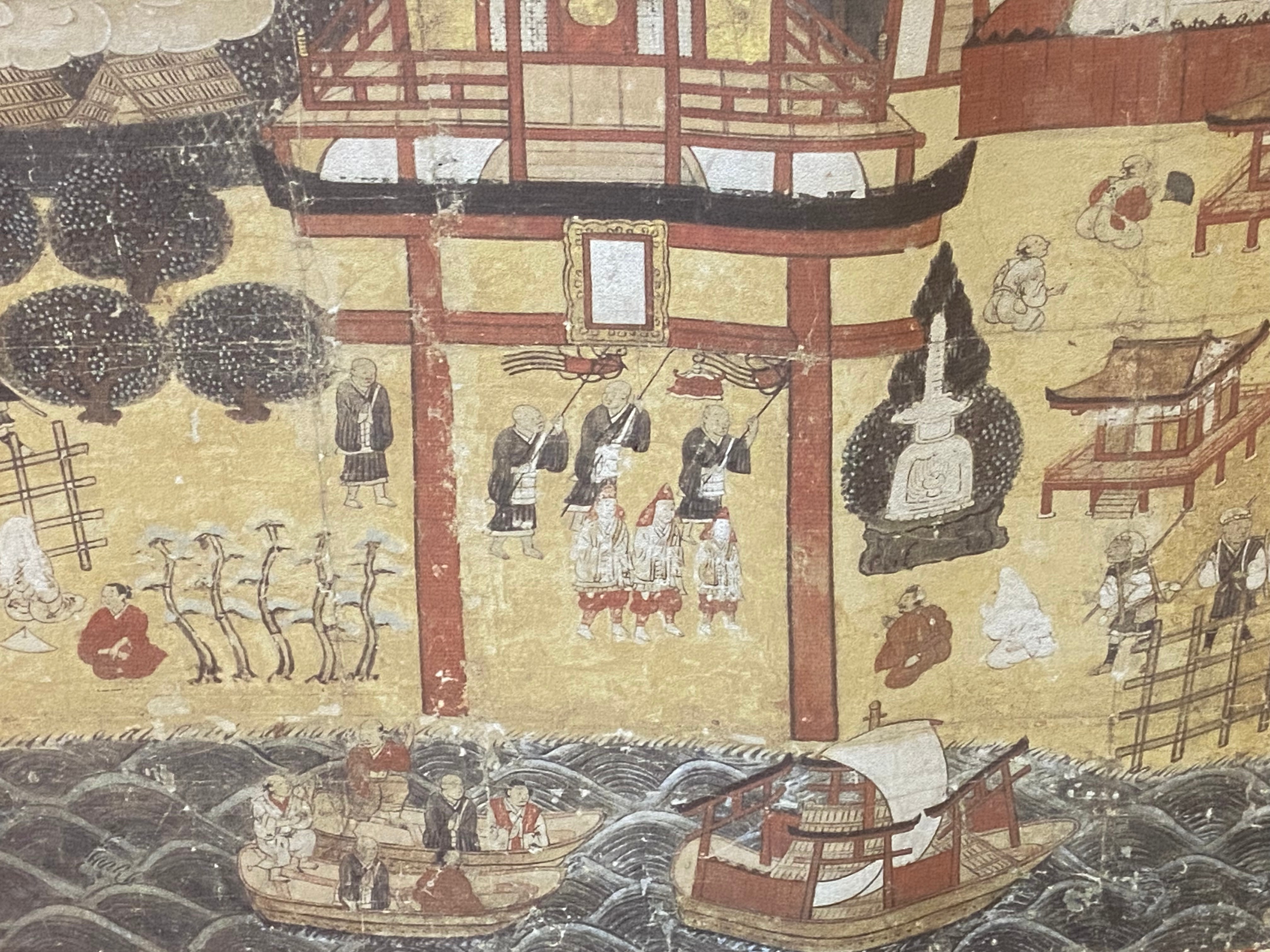
On one of the random floors, I find a replica of an original painted tapestry held in the Treasure Hall at Kumano-Nachi Taisha Grand Shrine. I’ll visit there tomorrow, weather permitting. The full tapestry features the Nachi Pilgrimage Mandala, which displays all the details of this area, from the top of the waterfalls down to Fudarakusan-ji. Here, at the bottom, one of the boats is being cast away into the Pacific Ocean.
Walking through the hotel, I feel as though I’m in some cult dystopian movie. Everyone is walking around in matching yukata. Some of the tourists are not Japanese and wear their yukata crossed the wrong way, for funerals. Everyone goes for breakfast at the same time, for dinner at the same time.

The hotel feels almost haunted, some entire areas are abandoned. It would be the perfect setting for a horror movie. It makes me feel like a rat in a maze or a character in Severance as I navigate the hotel’s endless, echoing corridors.

Having just about explored every length of the hotel, I decide to end the day by soaking in the healing power of a hot spring bath. Of the five to choose from, I opt for the one carved into a cave that looks out onto the Pacific Ocean.

The onsen is so peaceful that I no longer feel as though I’m in a hotel. Sadly, I’m not allowed to take photographs in the onsen, for obvious reasons, so instead, here is the view from the 32nd floor looking out into the bay, the 40 degree sky, and the town of Nachi-Katsuura.
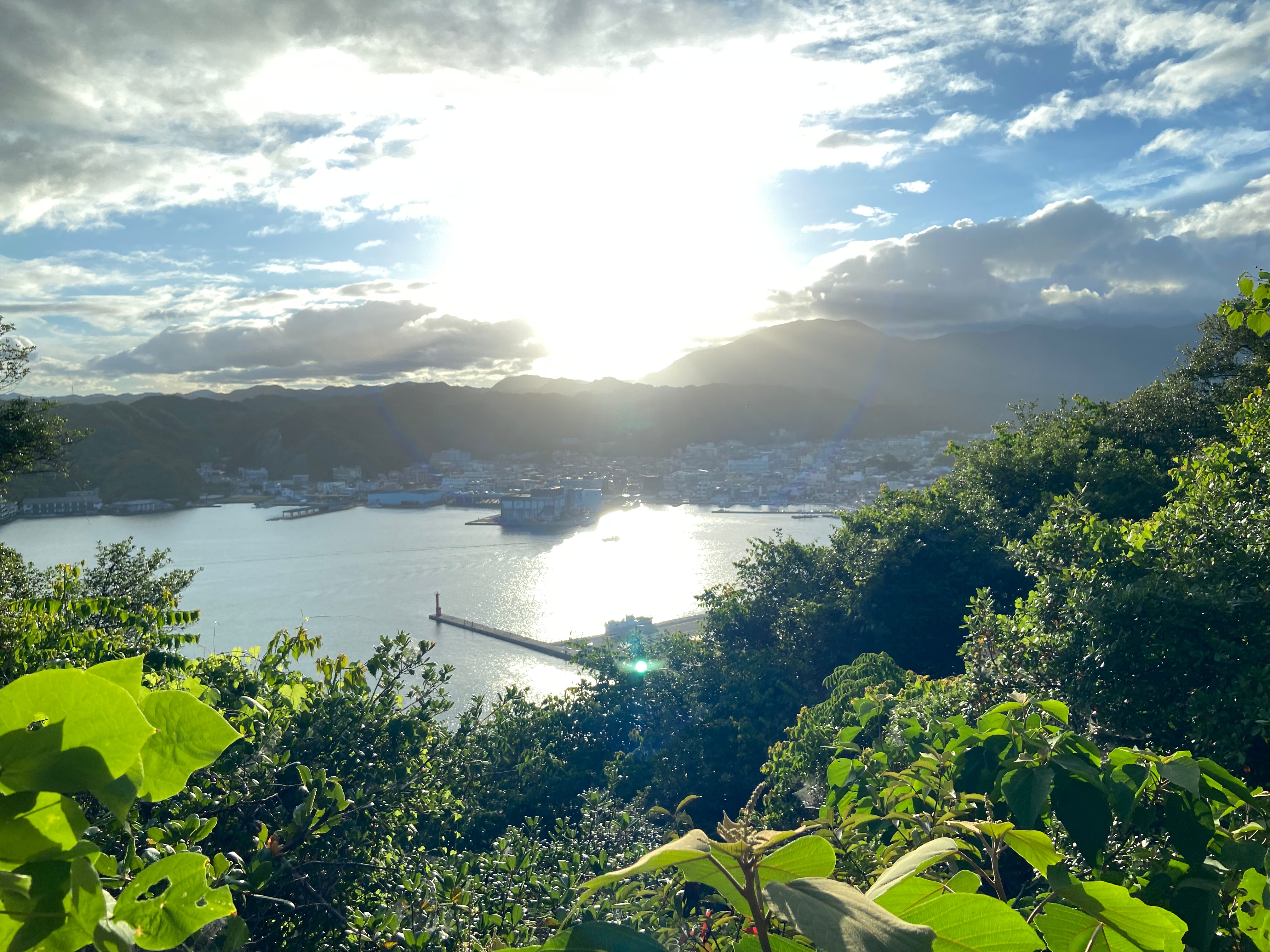
I sit, submerged in hot water, staring past the cave and out to sea. I think of the lost souls who once set off from this shore, sealed inside a boat, nailed shut.

A Spiral, a Darkness, a Fever, and a Staircase

I wake up in pain. Cramp. My leg screams. I’m in Fukushima Prefecture, Aizu-Wakamatsu, an old samurai town with a historical past. I’ve been here for a few days. I feel oddly connected to this place in a way I’m really not sure how to describe. Aizu is famous for its samurai and a red cow named Akabeko (translated to mean red cow).

I leave my hotel. The sun is so bright that the sky isn’t blue, but white, yet there are no clouds. It’s like walking through a thick fog of heat. Imagine you’re a little tiny person the size of an ant, walking through an oven set to 180 degrees. That’s what it feels like. I walk across the sheet pan in the direction of the mountains, vaguely knowing that I will arrive somewhere spirally important.

In Aizu, the legendary red Akabeko cow can be rubbed and is said to heal illness or sickness. The thing I like about Akabeko is that they have bobbing heads, so every time I walk past one I push its head down and smile as it nods up and down.

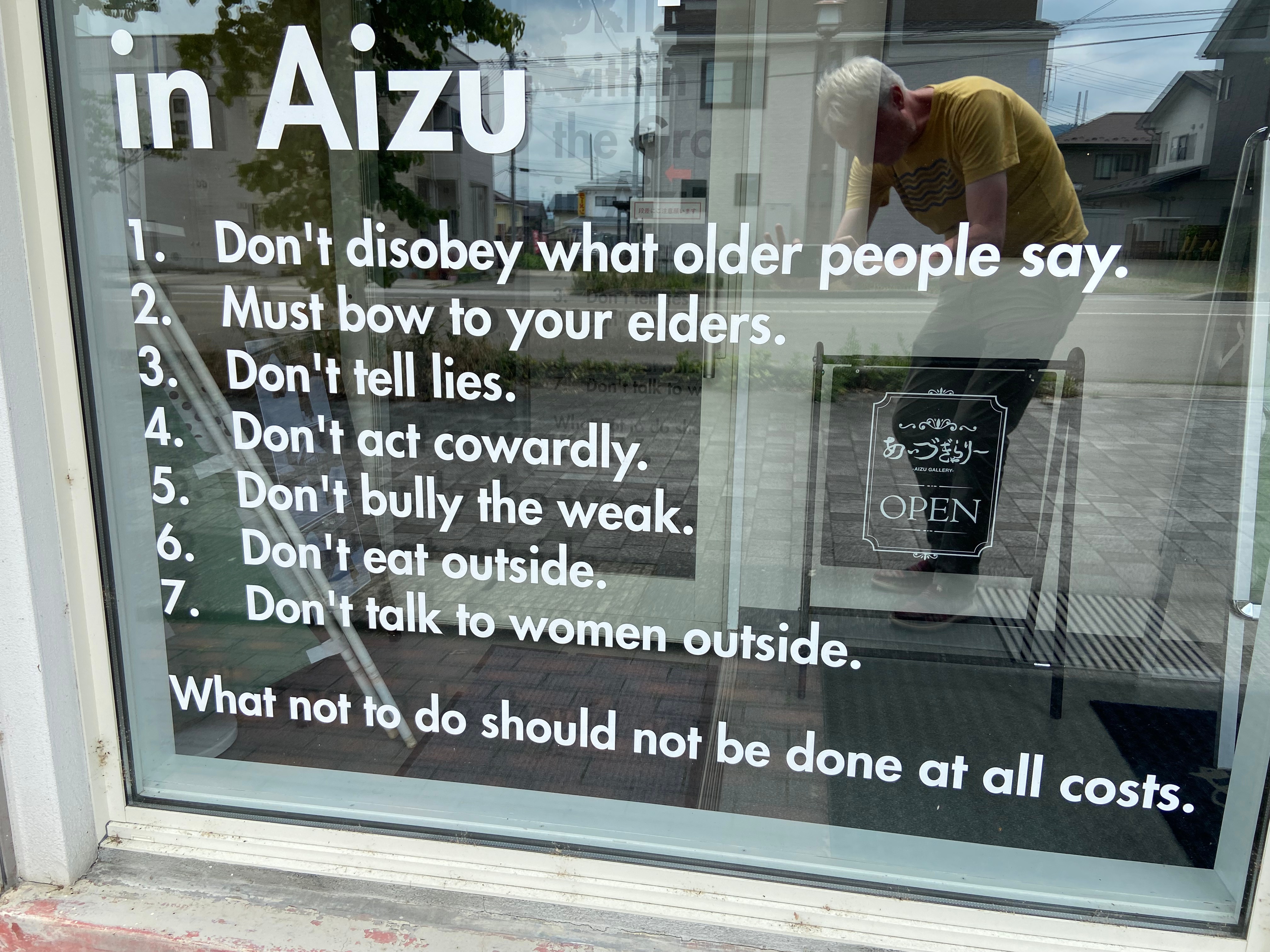
A little further up the road, Aizu-Wakamatsu is offering politeness lessons:

Don’t talk to women outside. Must bow to your elders. The two conflicting lines bother me, because as I photograph the sign, an elderly Japanese woman starts speaking to me in Japanese. Obeying the rules, I just bow my head and walk away.

A black Seven Eleven with none of the usual green and red stripes greets me funereally; I’ll soon find out why it’s black. The cascading sunshine and the black stripes make me feel as though my eyes are glitching. Outside the entrance to Sazae-do Temple, there are sweeping steps that twist all the way up, but someone has placed an escalator to one side. You have to pay 250 yen to ride it, but the cramp is threatening to return.

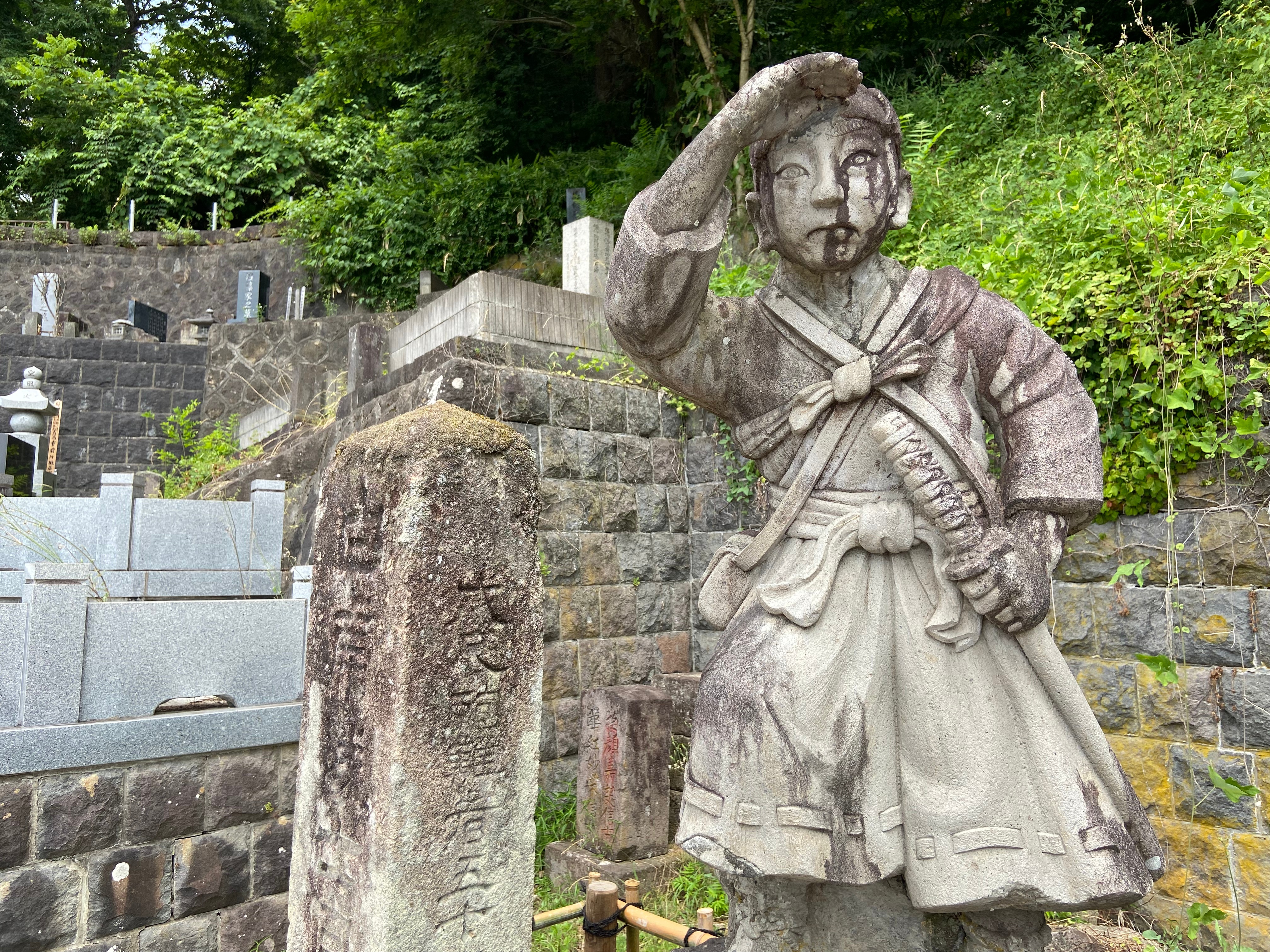
I don’t know what it is about today, but as soon as I step off the escalator and into an open area of monuments, the suddenness of place hits me, catching me off guard. To summarise what happened: on October 30, 1868, during the Battle of Aizu, the Byakkotai, a group of teenage samurai thought they had lost the civil war. They saw smoke in the distance, thought the castle had been sieged, so they killed themselves, not far from where I stand. Learning this, I become swallowed by sadness.

Their bodies were left outside for days, until a man, Isoji Yoshida, decided to take it upon himself to move the bodies of the dead children and bury them. For this, he was arrested. Katamori Matsudaira, the 9th lord of Aizu, wrote a poem in their honour. It goes:

“People will visit, and their tears will fall upon your graves. You will not be forgotten.”

There are monuments here for everyone involved. For the dead children, for all who died. The tomb of sixty-two fourteen- to seventeen-year-old samurai. It’s devastating. I try not to bring myself too much into these stories. But this place, these dead children, their story found its way in. I think what gets me is they don’t mention the word suicide, they explicitly state every time that they killed themselves.

I weep my way around a cemetery before turning toward the temple I originally came up this hill to see. There is a prayer wheel that, when you turn it, creates a mournful sound said to be heard in the underworld, comforting the spirits of the Byakkotai warriors. “Please turn it quietly with your heart.”

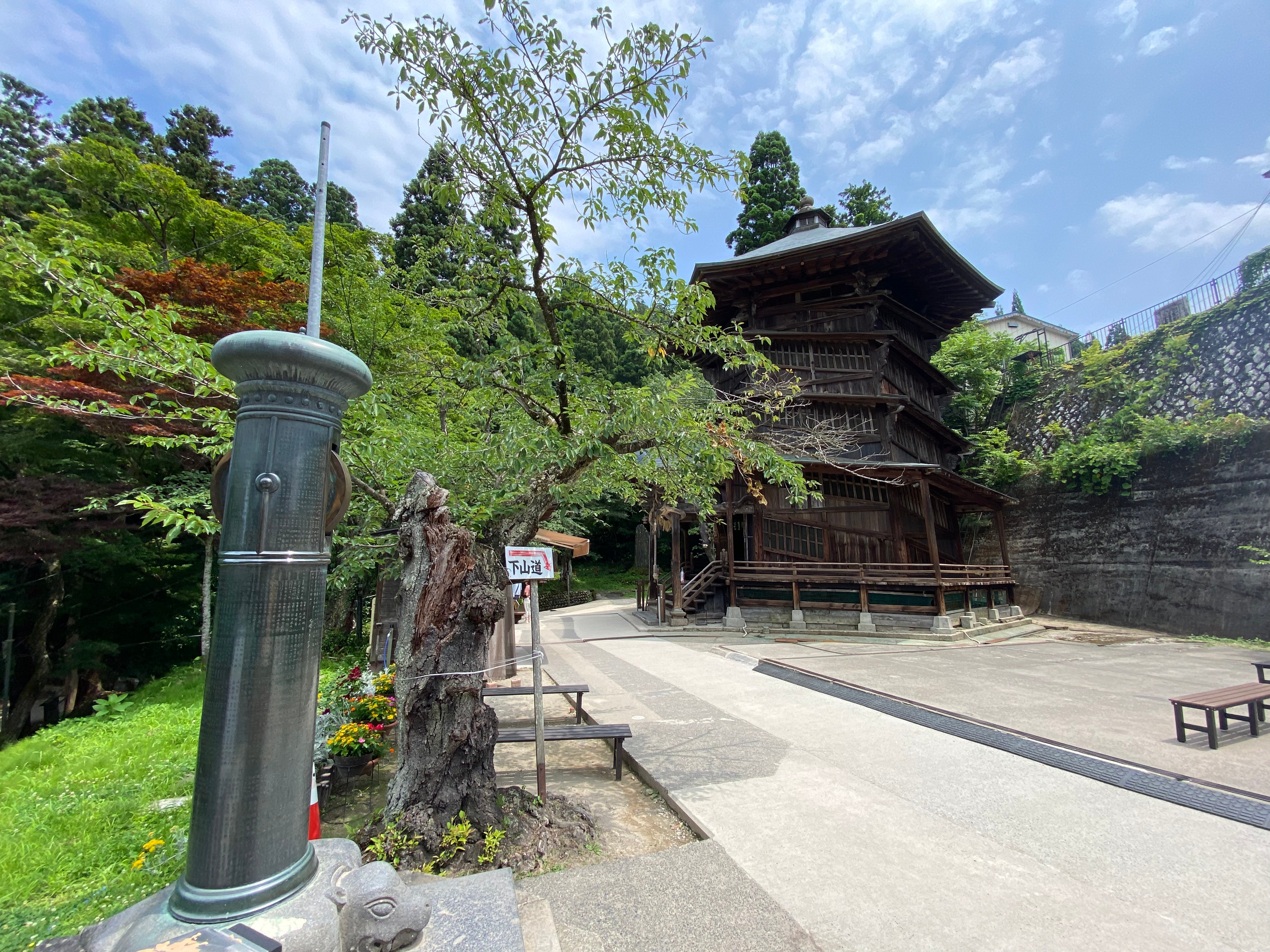
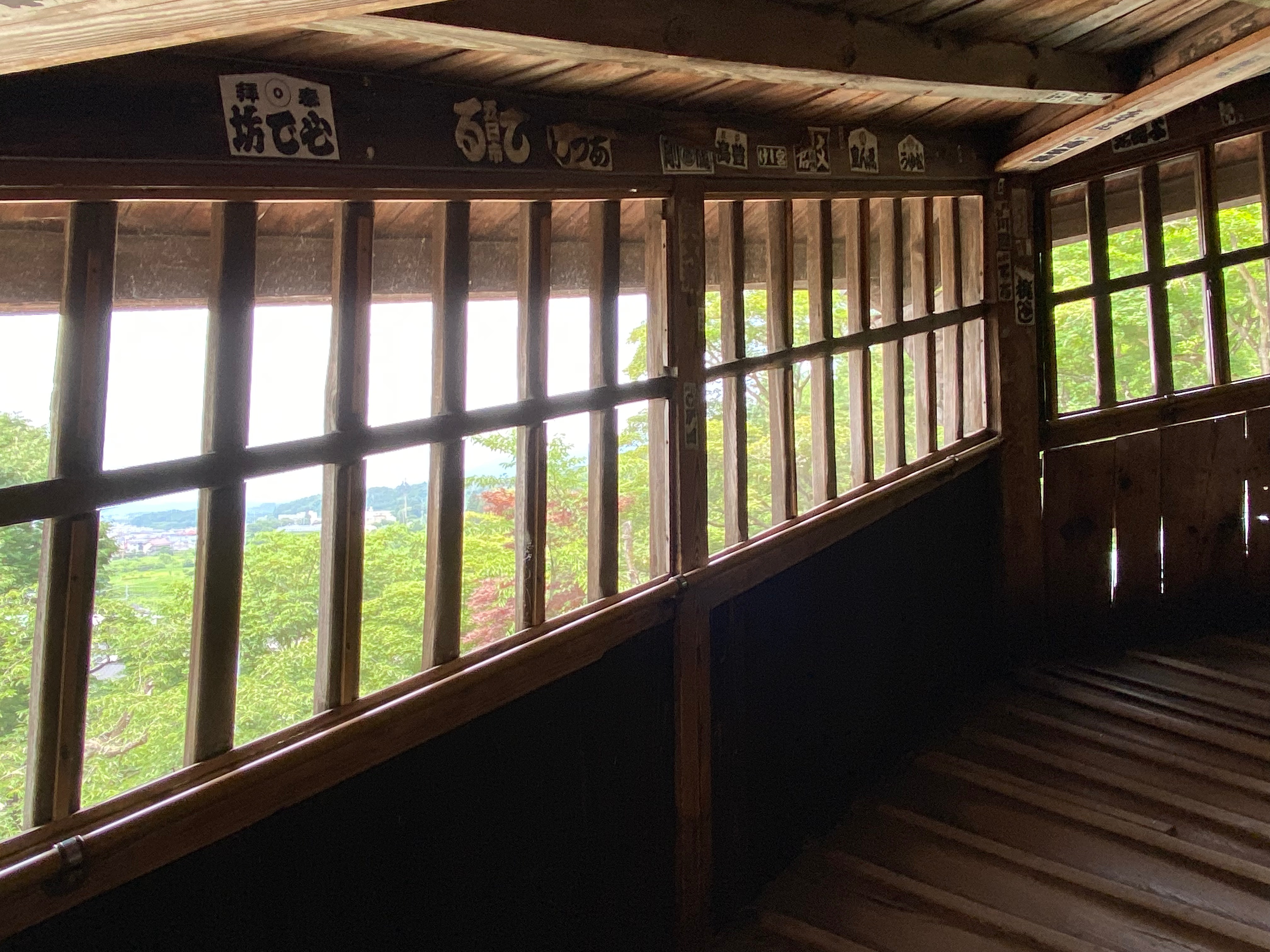
Sazae-do, a wooden Buddhist temple constructed in 1796, is famed for its distinctive spiral staircase that ascends and descends in an intricate, intertwining path. Encircling the ramp are 33 Kannon statues, each believed to grant the same spiritual merit as completing the entire Aizu Pilgrimage route to anyone who passes by them.

At 16.5 metres tall, three storeys, and shaped like a hexagon, you enter from the right side, climb the spiral staircase, and exit back down another way. You never see another soul. This valuable structure is the only wooden building of its kind from the mid-Edo period still standing in the world. It’s also the only known double-helix-shaped wooden structure in existence.

I breathe a heavy sigh before exiting through the gift shop and buying a shirt featuring Akabeko. I think about people, those loved and lost, on days when we exist together, and days when we don’t. At five o’clock, Yuyake Koyake starts playing, the song that tells the children to go back home. It elevates my sadness.

I head to a steak restaurant for dinner. I eat the red cow’s bleeding heart.

Quivering Heights

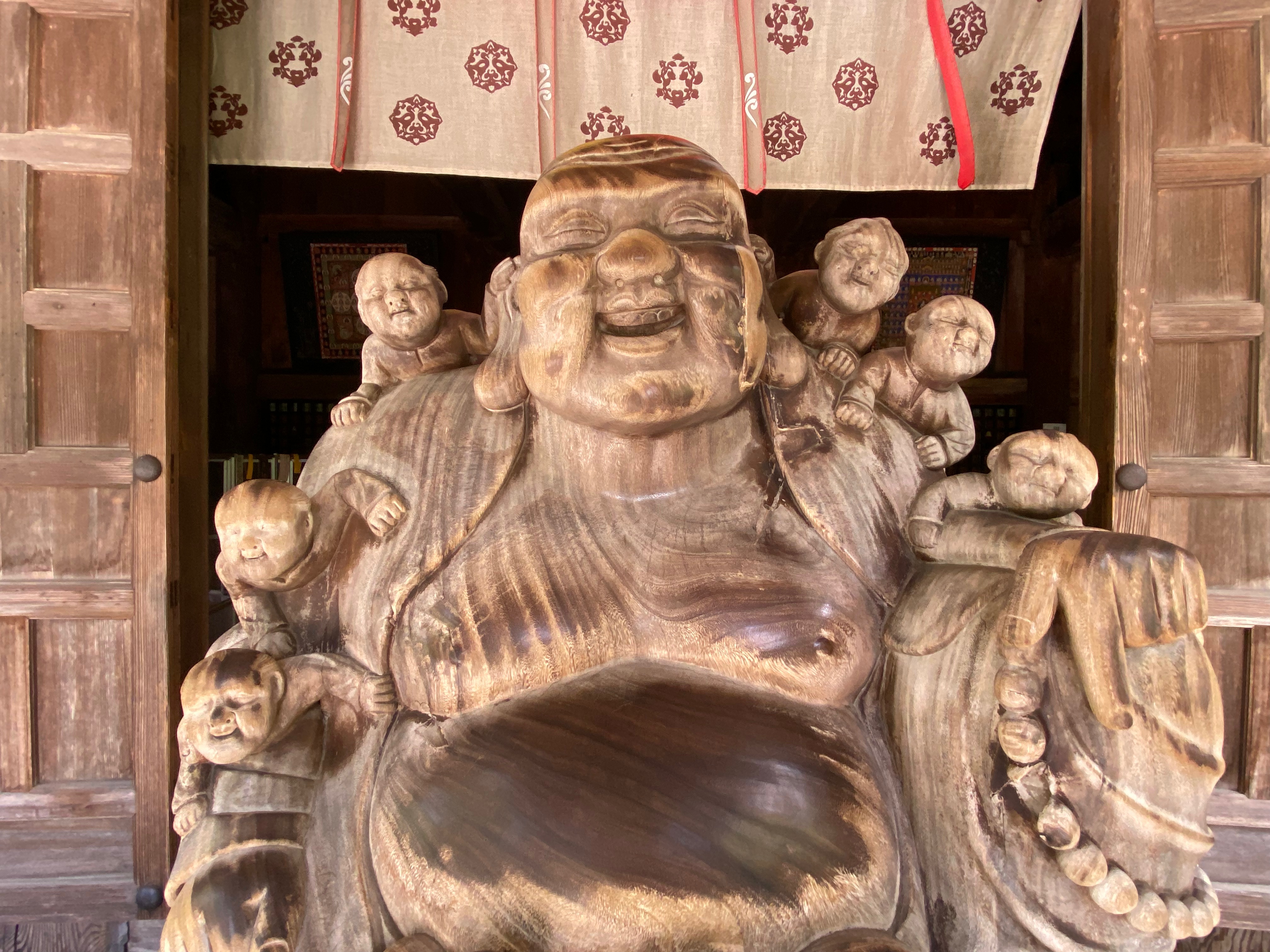
I’ve come to Mount Hoju in Yamagata Prefecture to experience one of the best views in Japan. At the base of the mountain is the usual buzzing of tourist-targeted shops selling shaved ice, overpriced noodles, and fish-shaped waffles. Beyond that is the oldest beech wood building in Japan, home to a massive wooden statue of Buddha.

The statue is Yakushi Nyorai, the Buddha of healing. They say that if you have an illness or ailment, something you want cured, you rub that part of the Buddha, then climb to the top of the mountain and you will be miraculously healed. Naturally, I rub the Buddha on the neck and hope my scars fade.

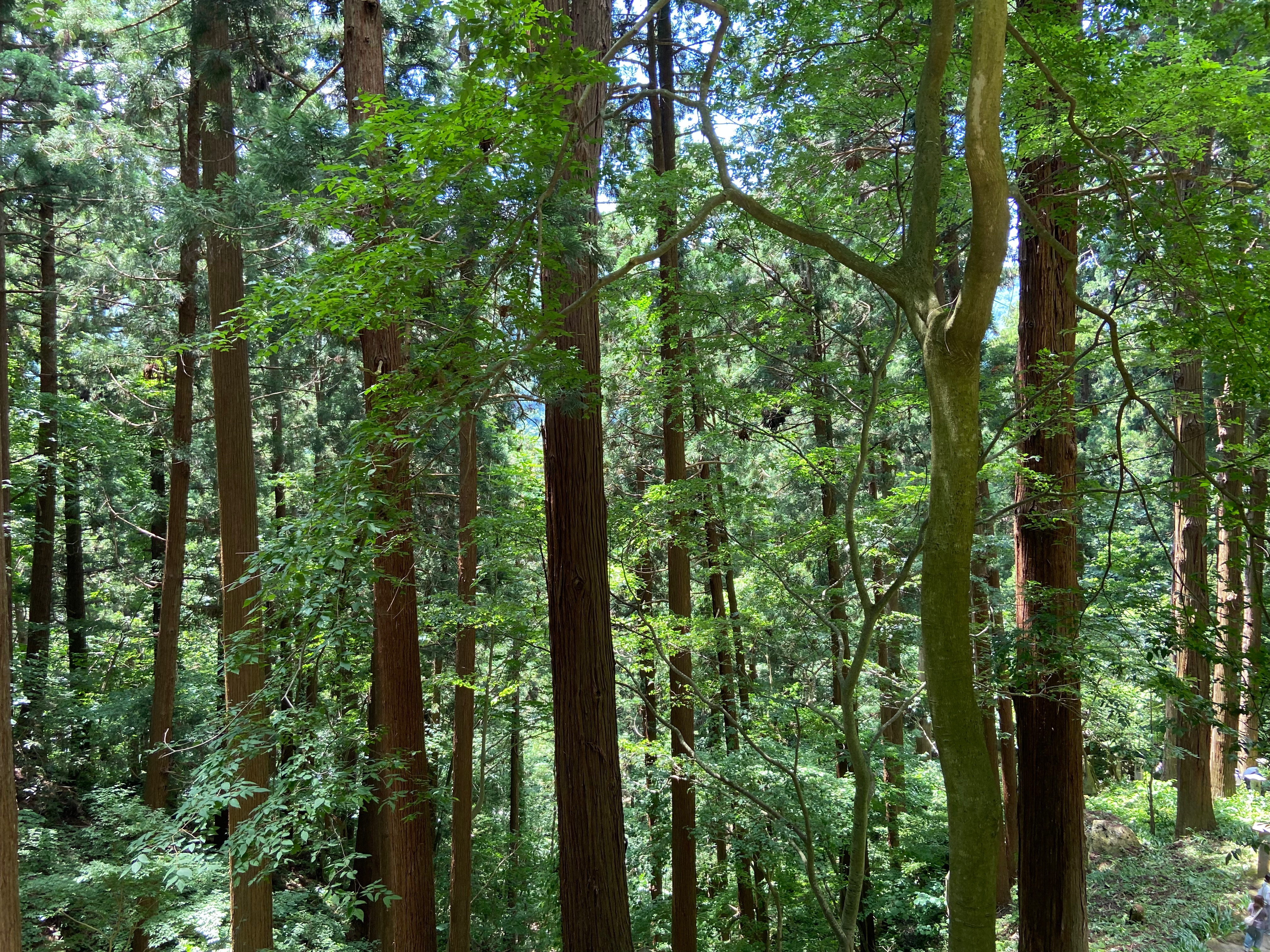
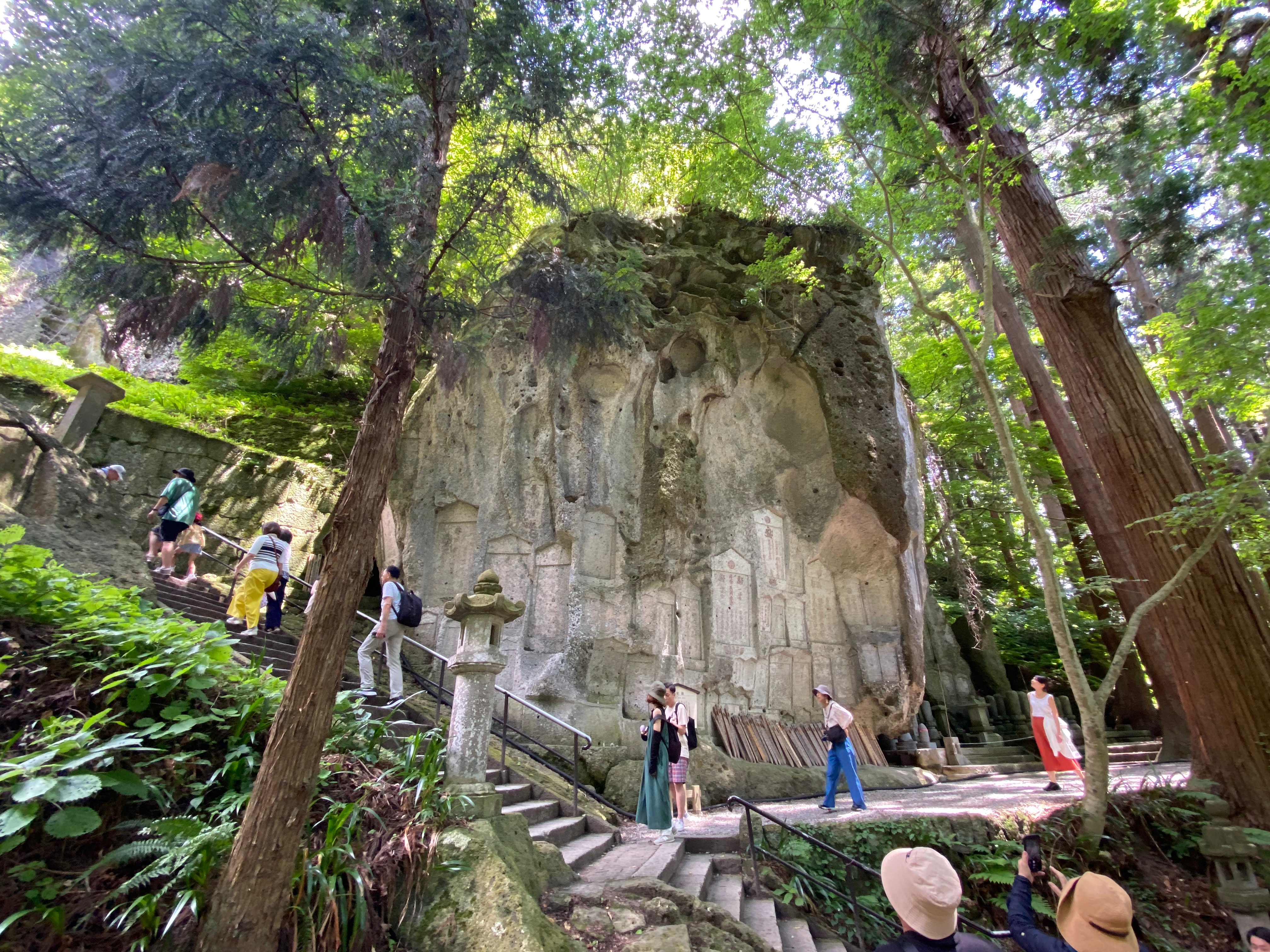
Next, it’s time to climb the mountain. The road to the temple is 1,015 stone steps surrounded by thick woods and strangely shaped rocks. Cedar trees make up the mountain forest. The Risshakuji Temple at the top of the mountain means “Mountain Temple,” which is the perfect name for it, considering it is atop a mountain.

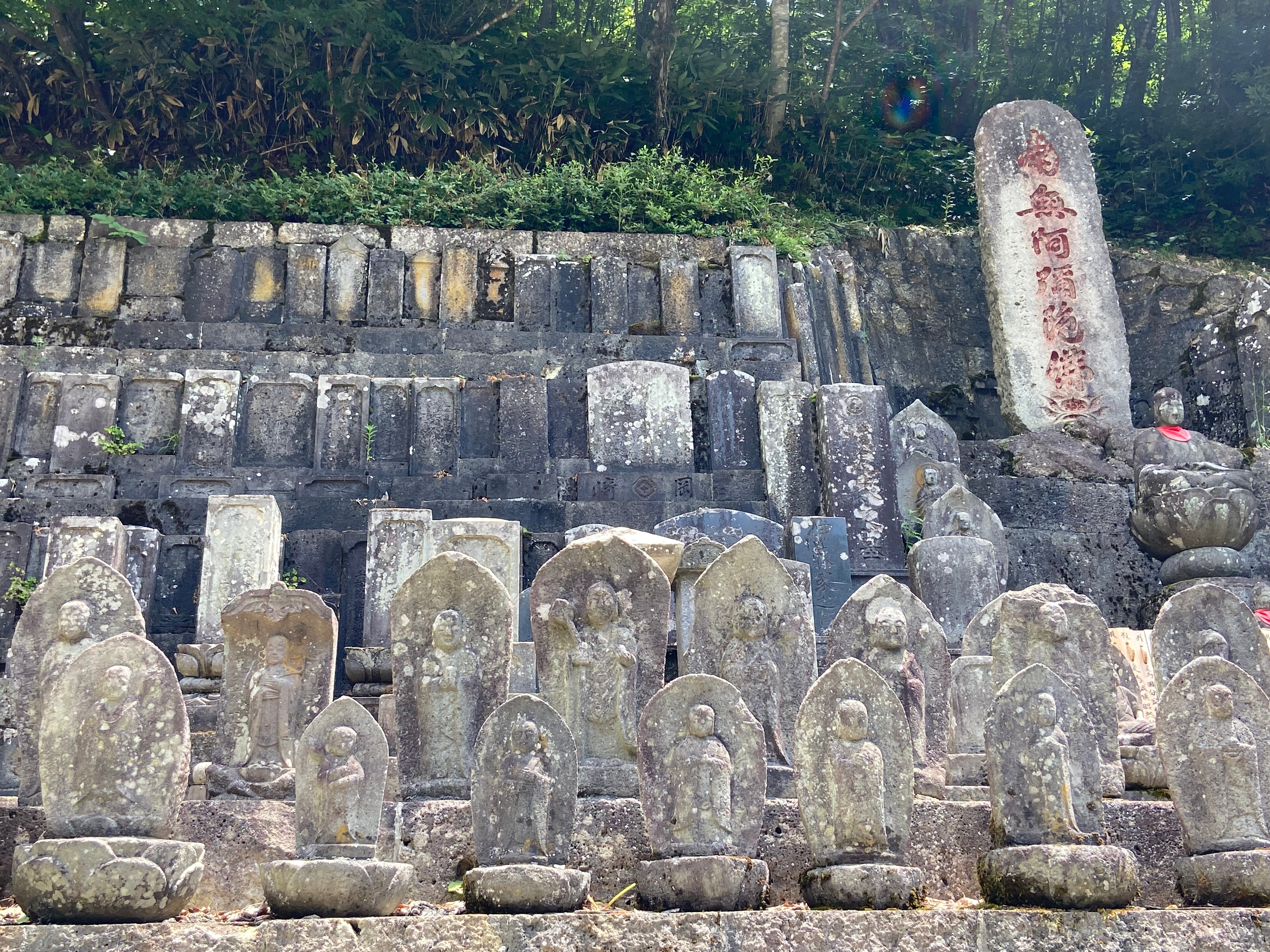
Some of the steps are in sections of 108, to represent the 108 Buddhist sins. There are Jizo statues scattered throughout the ascent adorned with coins. There’s a monument engraved with another poem by Basho, and it’s a famous one:

Such stillness,
the cicadas’ cries,
sink into the rocks.

After the second set of 108 steps I’m already worn out. Half a million steps last month, I now find myself humbled by a mere 216. I’m already close to spiritual defeat. The day is hot, the air quality poor, and it’s very humid. It has a way of wearing me out, I suppose.

It’s so hot that every now and again there will be an ever-so-slight breeze, and every time there is, I notice it. A lot of the Japanese people are carrying these little portable electric handheld fans. A country famous for fans, so it makes sense. At about 550 steps there’s a massive rock that everyone is photographing.

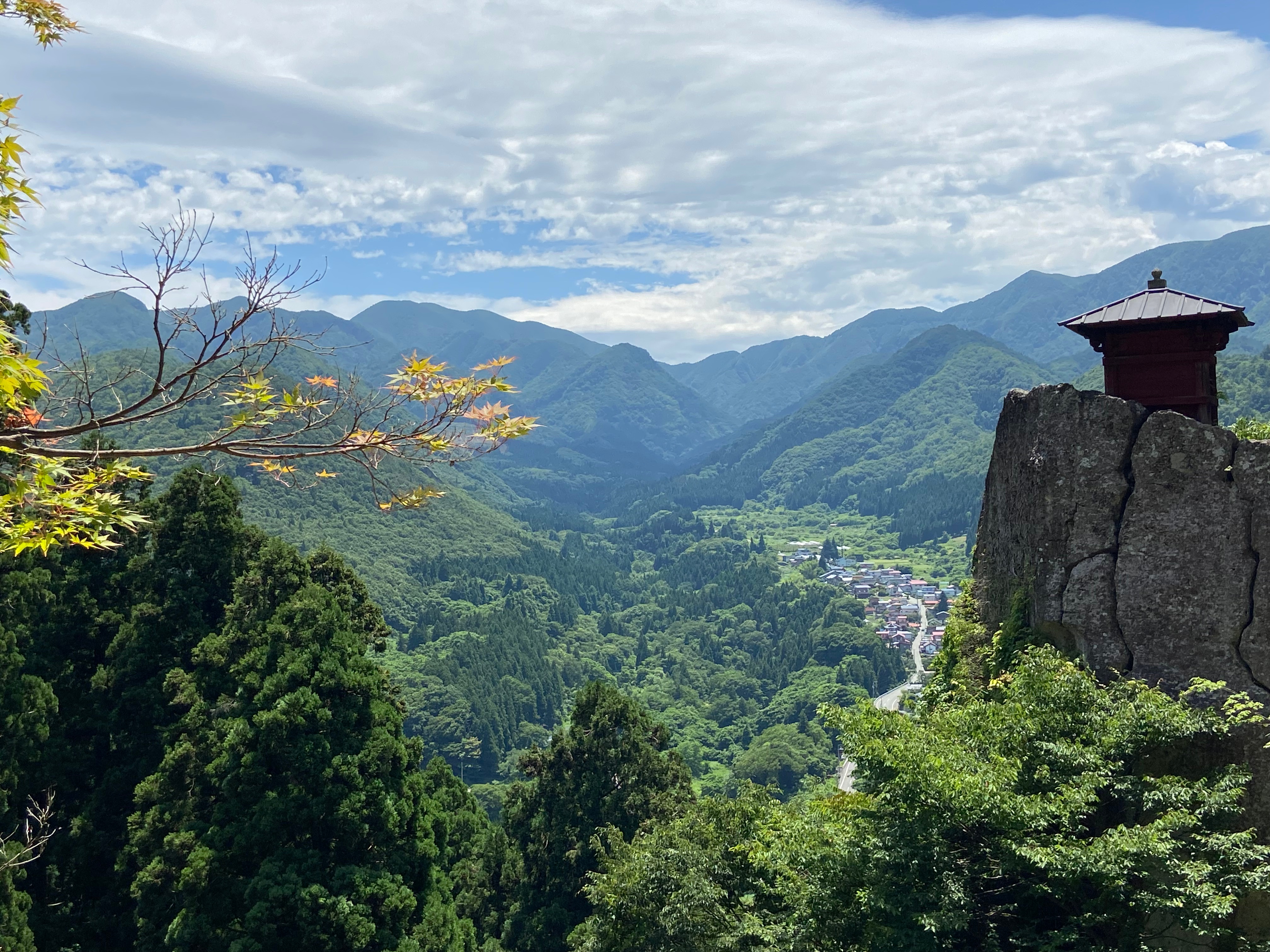
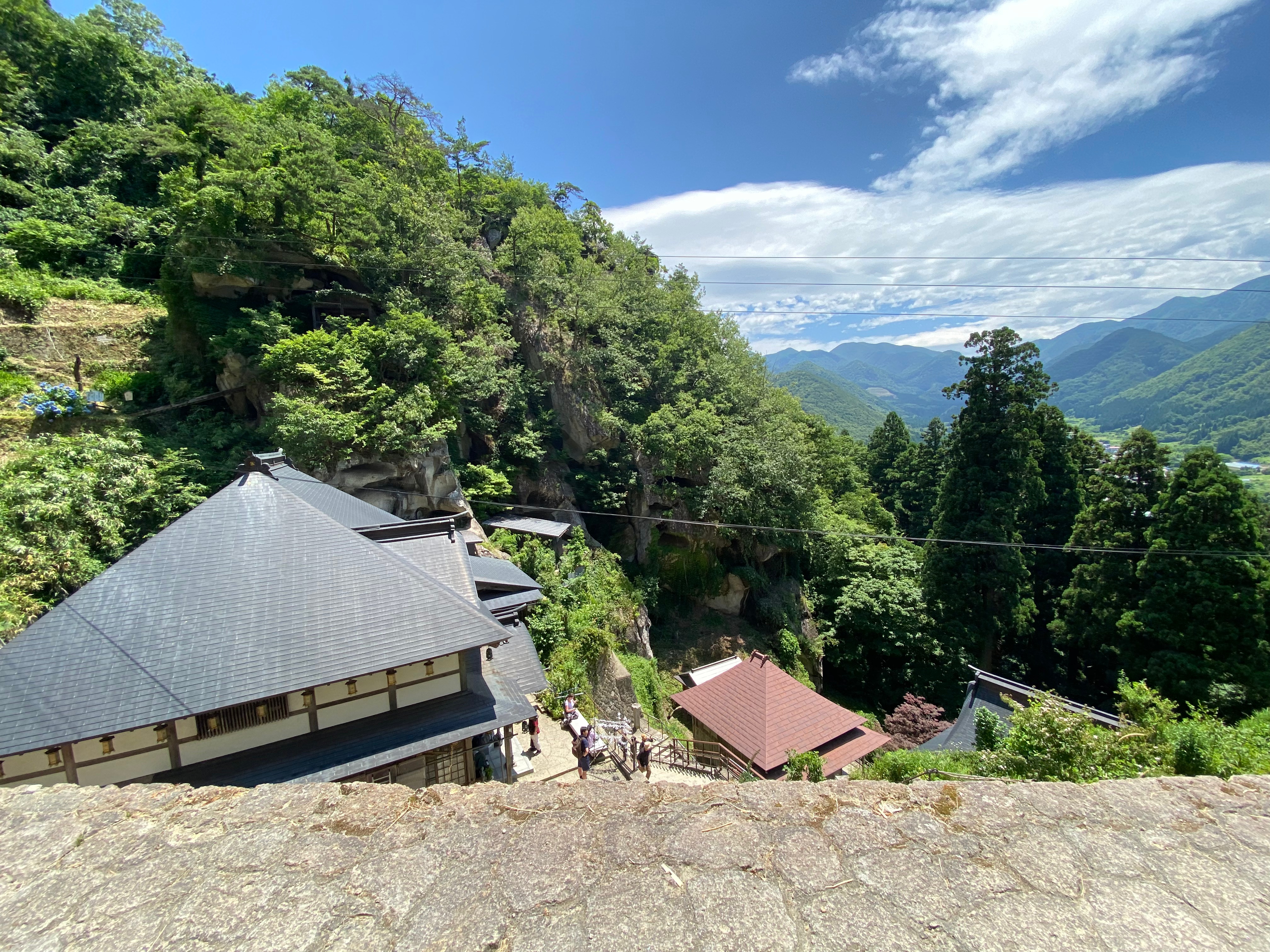
Further up, there’s Risshakuji, founded in 860 AD, a small temple of minimalist qualities. From here I realise just how high up I am, that I can make out the city below. The thing that’s unusual is there is no barrier here. I could fall off the mountain in an earthquake, and that’s exactly what almost happens.

The mountain shakes, ever so slightly. A shift. Nobody else seems to react or notice. It’s just the subtle shift. The whole thing took a tiny step to the side. The mountain itself… adjusts. It’s not dramatic. Nothing tumbles. There’s no sound. But I feel it. And for a moment I am filled with dread. Then it stops. I wonder if being on a mountain is the worst place to be during an earthquake.

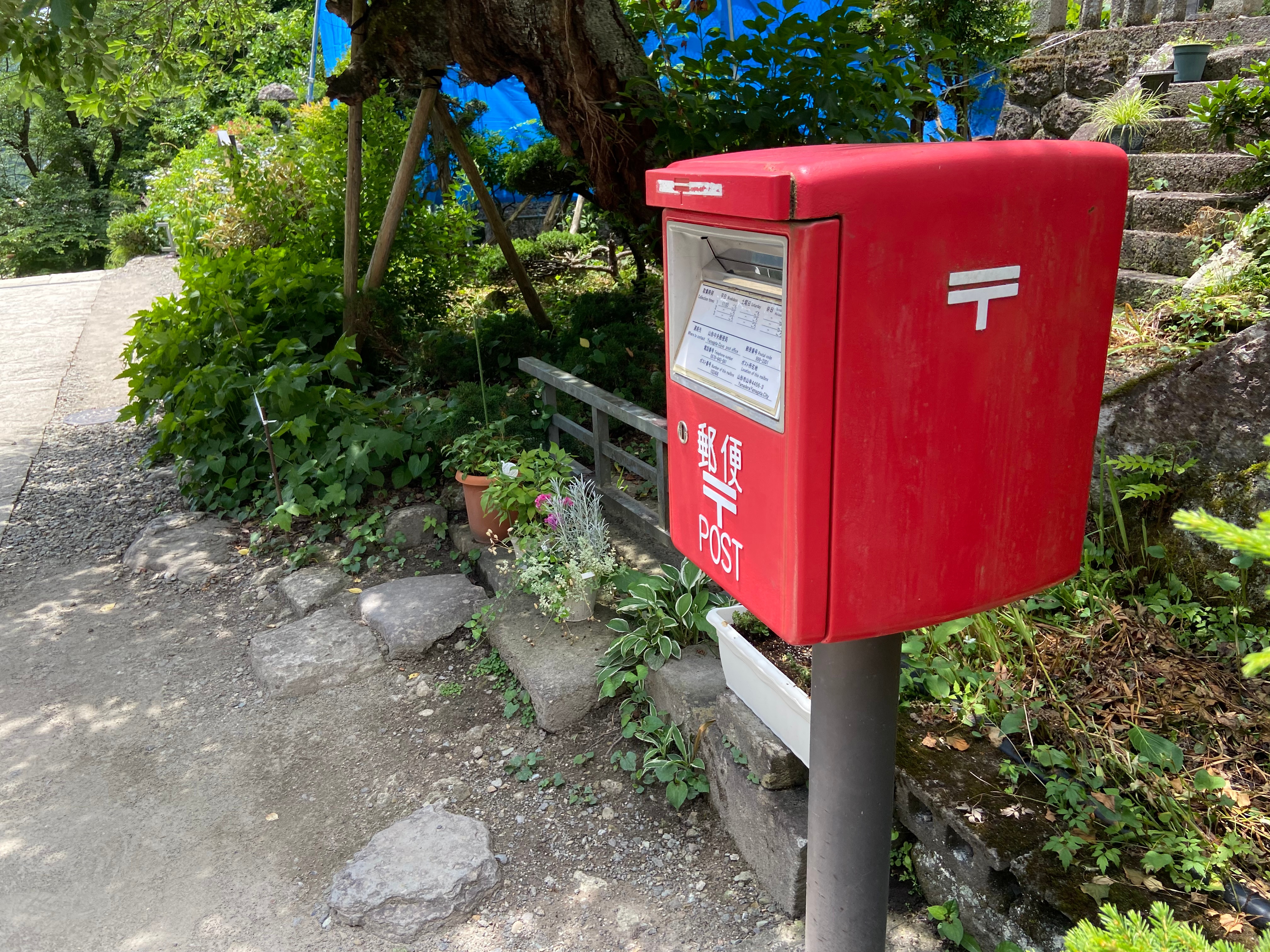
Very close to the top of the mountain is a post box. At the bottom of the mountain there is a post office, a mere 940 steps away. I naturally feel sorry for the postman whose job it is to walk up and down a mountain every day to collect what is likely just the odd piece of mail.

1,015 steps. I reach the top. The cicadas’ song fills the humid afternoon here, sharp and piercing, like needles being driven into a heart. Their cries echo, sinking into the ancient rock.

A cemetery at the top concludes the climb. Crooked gravestones pushing through moss. Everything here is slanted, aged, dignified in its entropy. I sit beside the tombs, trying not to melt into them. The mountain temple echoes these themes of death, decay, and transcendence as it climbs through cemetery terraces and silence.

I stand to rest, to catch my breath, to take it in. My shirt clinging to me like skin, thirst calling me to a vending machine back at the base of the mountain. But I linger. Amongst the graves, everything feels tilted. Stones, time, even thought.

Walking down is the reward as I can see it all. All the views, all the way down. There’s something about a good vista. I say goodbye to the top of the mountain, and goodbye to the vista. Hasta la vista. Until I see the view again, opening like lungs exhaling. I can see the whole valley now, softened by haze.

Back at my capsule hotel, I voluntarily entomb myself in a plastic drawer like a very polite corpse.

We Are Nowhere and It’s Now

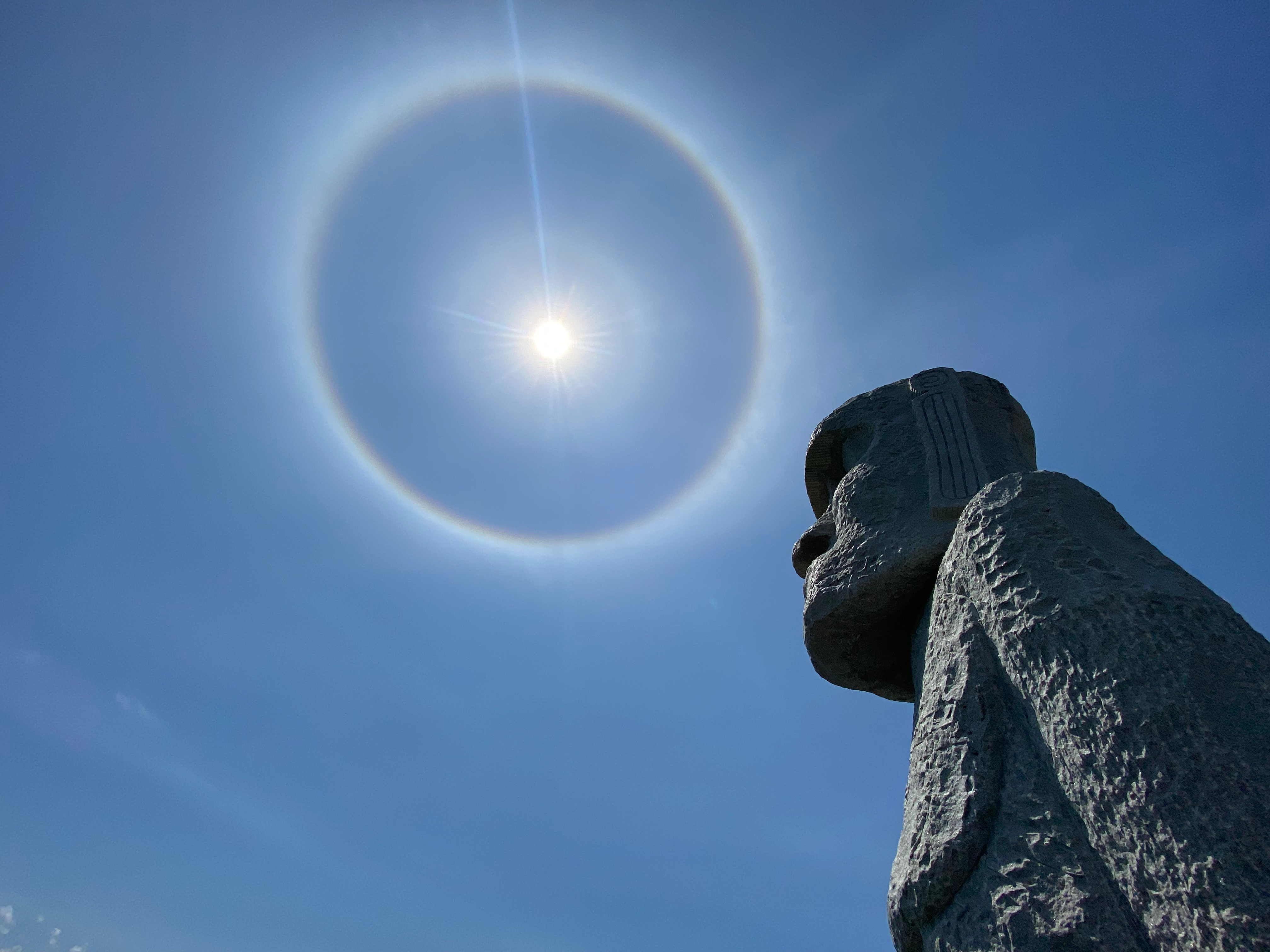
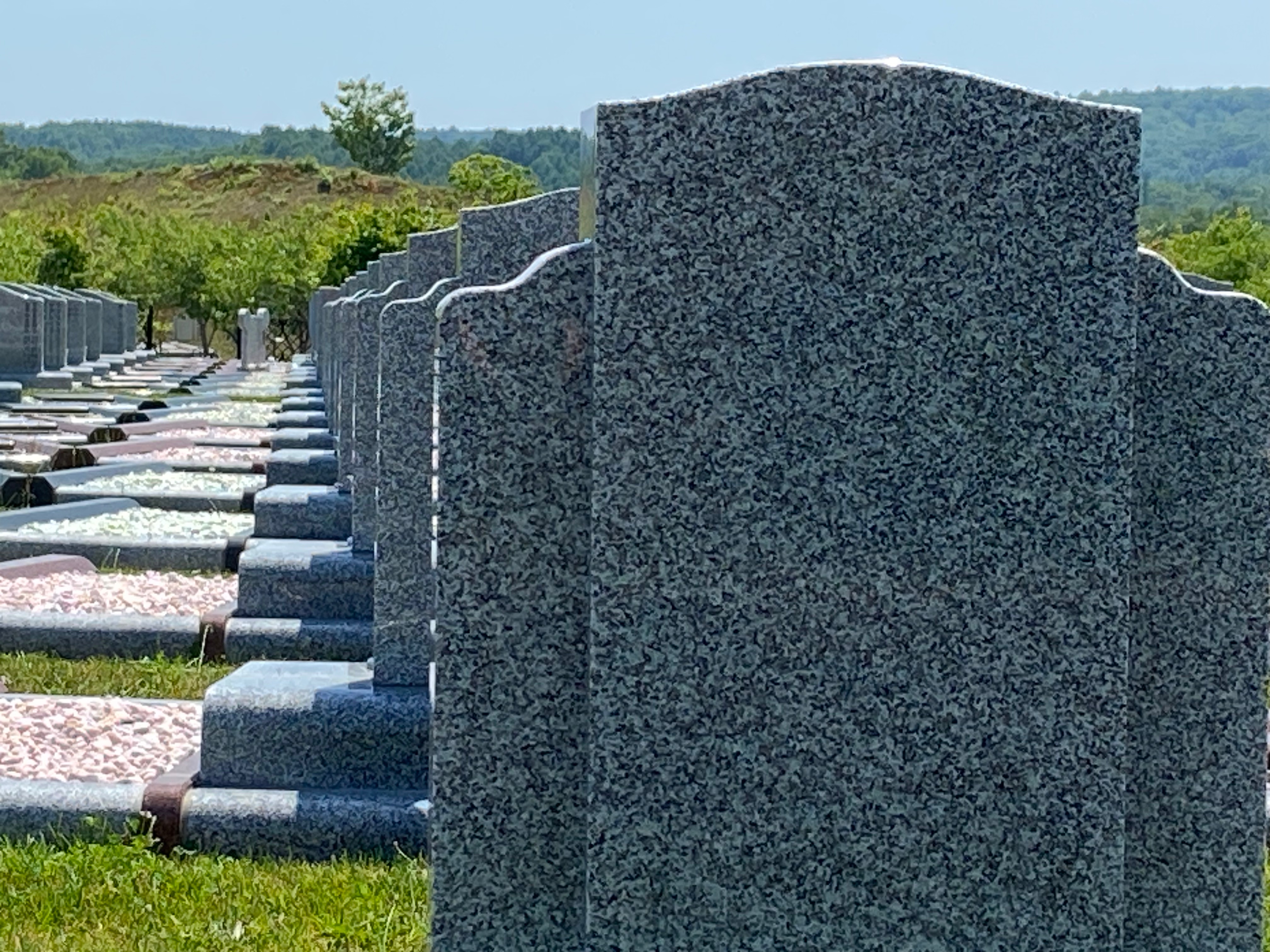
I arrive at Makomanai Takino Cemetery at the exact moment a halo appears around the sun; a 22-degree circle of refracted light caused by ice crystals high in the stratosphere.

A solemn Moai statue gazes skyward beneath a 22-degree halo—Makomanai Takino Cemetery, Sapporo, Japan.

A Moai, still and solemn, gazes upward as the ring completes itself overhead; an accidental alignment of atmosphere and awe. I stare with it for a while. Both of us do. Neither of us understands.

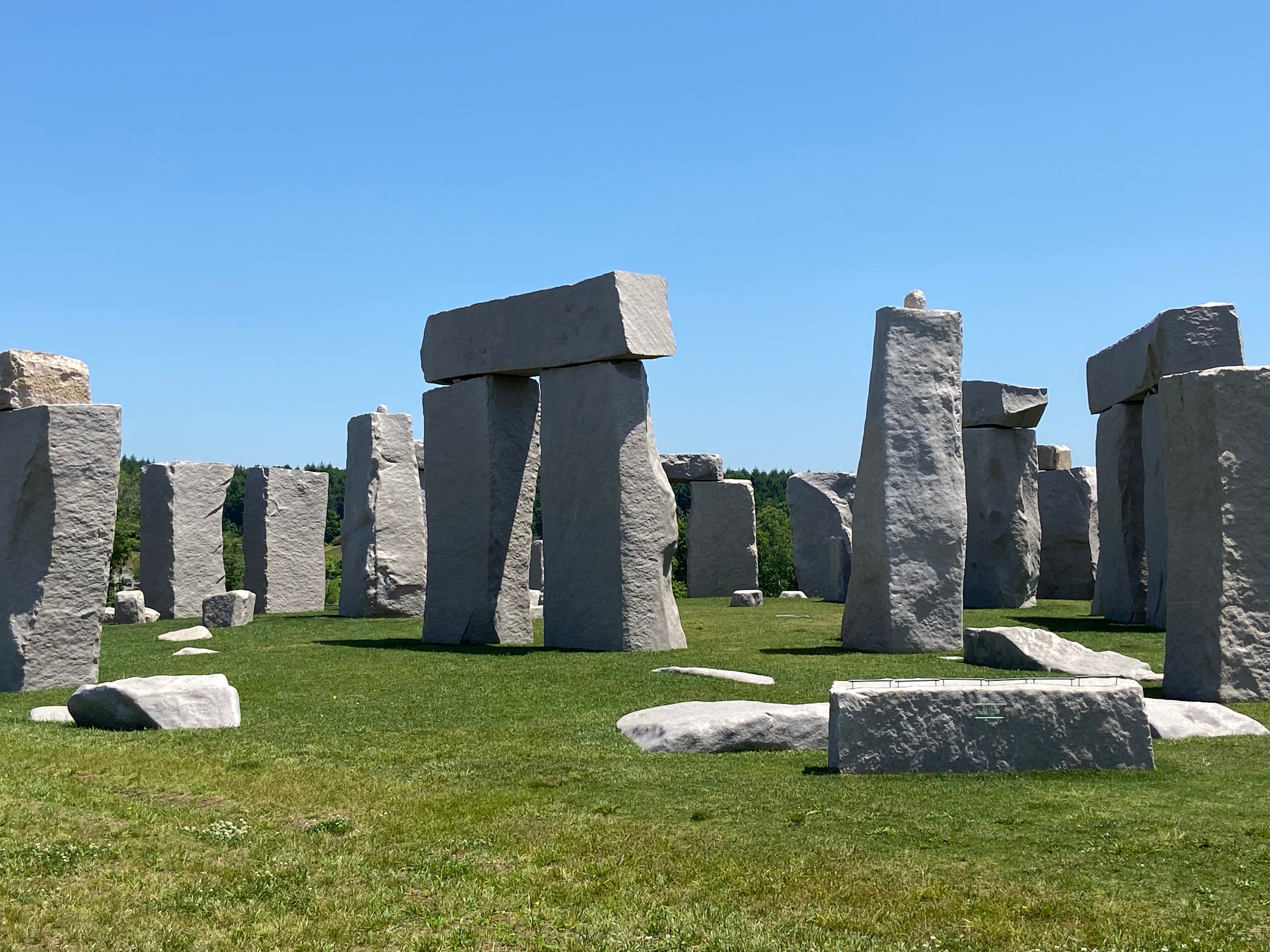
Makomanai Takino Cemetery features a skateboard park, a row of Easter Island Moai, a lavender vending machine, and a full-size replica of Stonehenge, which also contains a secret underground mausoleum. But I’m not actually here for any of that.

A full-size replica of Stonehenge stands solemnly within the cemetery grounds—Makomanai Takino’s surreal side.

“If you’re going to see the Buddha, go directly there.” That’s what the sign says. That’s what the “tourist information” office tells me. Back outside, I can just about make out the head of the Buddha poking out above a hill of lavender, so I go directly there.

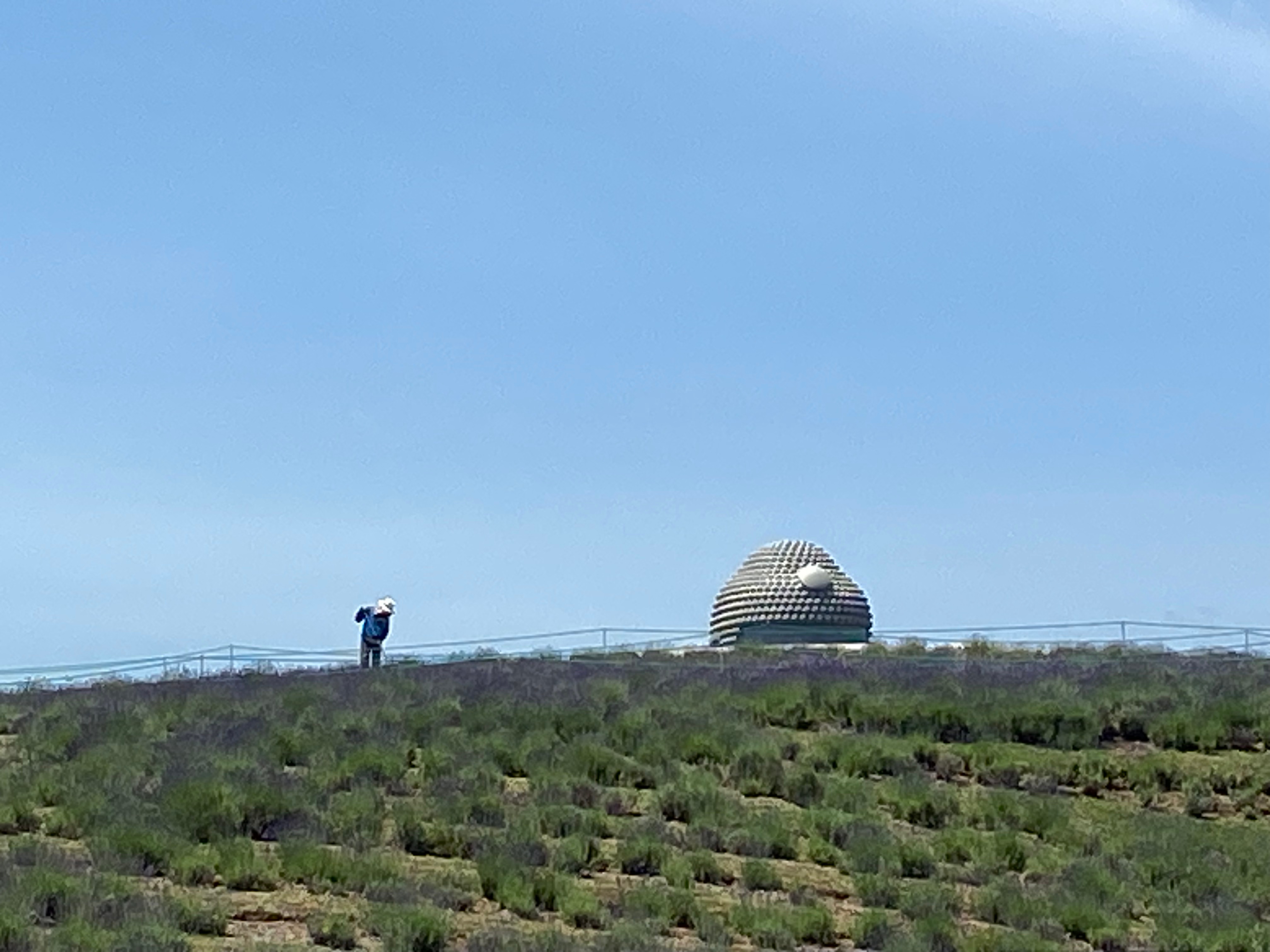
July in Japan is lavender season. Tens of thousands of lavender plants surround the “Hill of the Buddha”, designed by world-renowned architect Tadao Ando. They’re so magnificent I have to remind myself that I’m in a cemetery.

The Hill of the Buddha peeks above blooming lavender as a lone gardener tends the flowers—Tadao Ando’s design in midsummer.

One sole member of staff has been given the arduous task of tending to the tens of thousands of lavender plants, whilst the Buddha looks on, watching over a world in slow collapse.

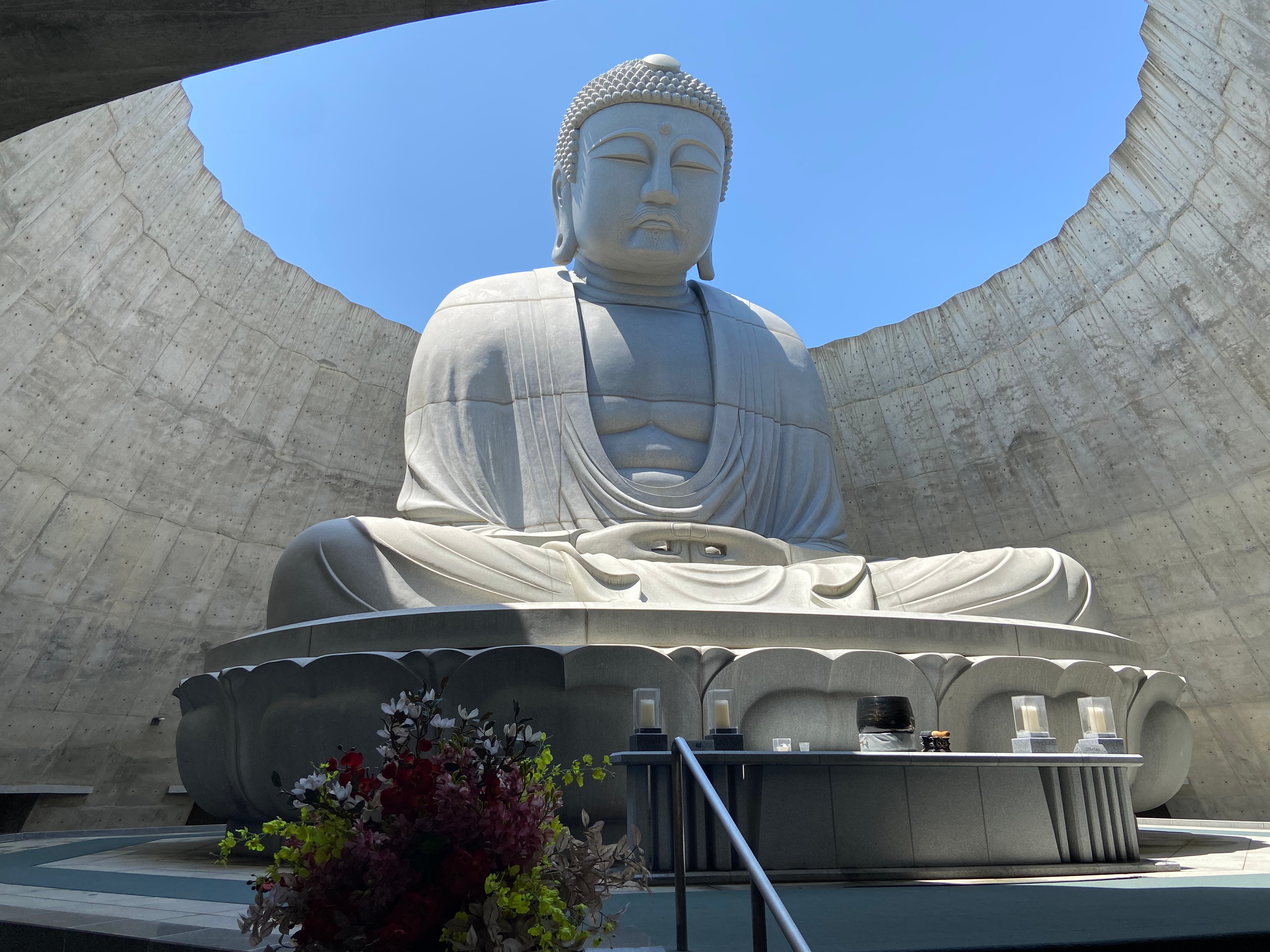
I enter the chamber that houses the Buddha and instantly notice the silence. The closest thing to silence I’ve experienced in a while. I just stand there, motionless, staring at the Buddha. It’s the kind of place that wants you to contemplate something. I’m never quite sure what. The permanence of stone. The impermanence of memory?

Inside the lavender-covered hill, a seated stone Buddha rests in quiet contemplation—Makomanai Takino’s hidden sanctuary.

I pull an oracle fortune slip from a basket by the prayer wall. It says: Very Good Luck. With success anything can be accomplished. It also says that my lucky item is dried flowers. I consider making a bouquet from the ones outside but decide against it.

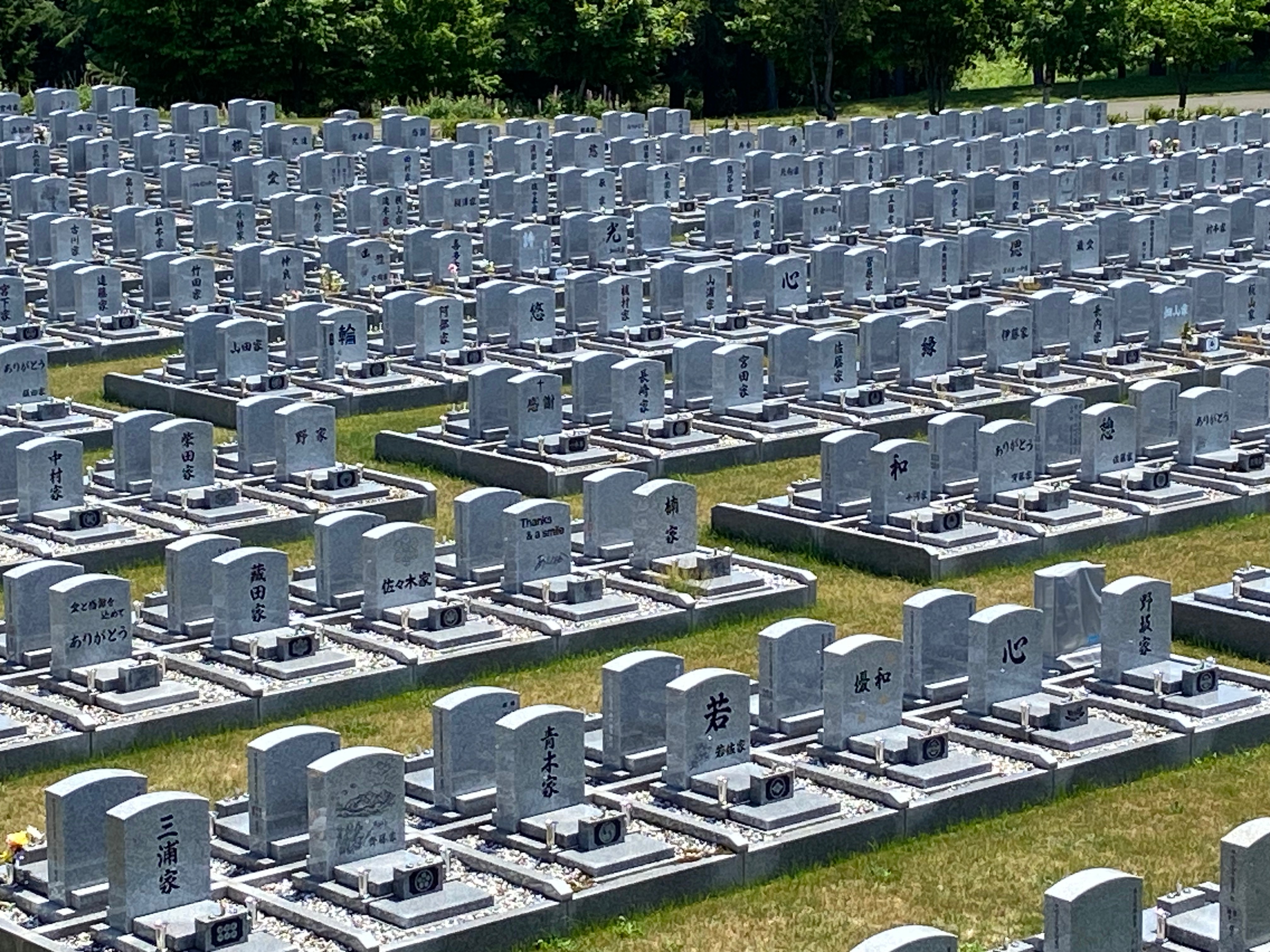
Makomanai Takino Cemetery is one of the largest in the country; 180 hectares of death and flowers. As I stroll through the many interconnected burial areas, I pass by multiple funeral processions in progress, and my thoughts turn to death.

Endless rows of gravestones stretch across Makomanai Takino Cemetery—flowers, silence, and summer wind.

I pass a row of graves with the kanji worn away, lost to time, like everything else. I begin to wonder what memory becomes when the last person who remembers it is gone. When even the names are unreadable.

And for a while,
there is no past.
No next.
Only this.

The moment stretches, fragile and full of forgetting.

A weathered gravestone with no visible name—time and memory eroded in Makomanai Takino Cemetery.

Then a memory.
Then not even that.
Then a stone.
Then not even that.

The Curious Case of Chocolate Button

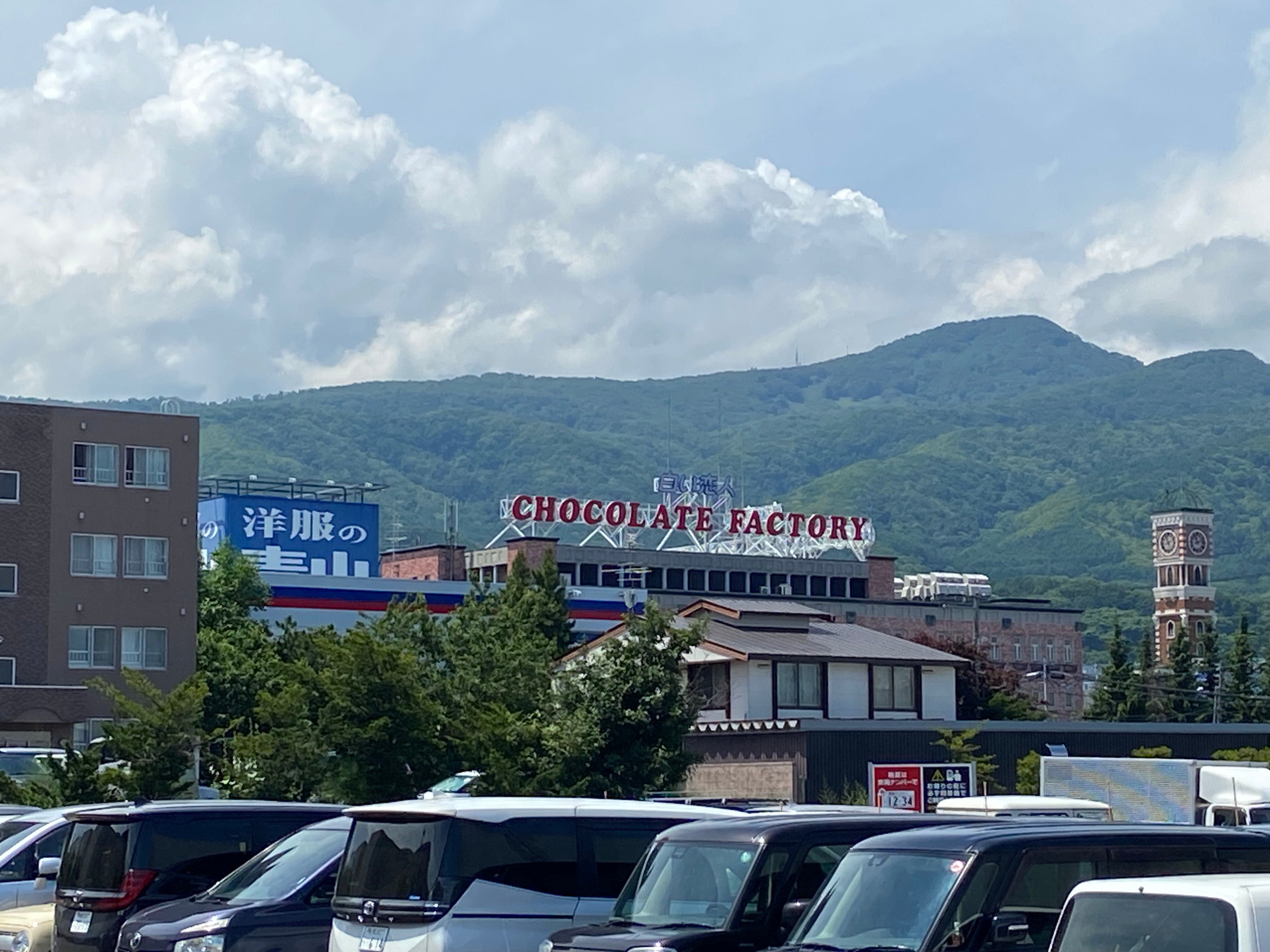
My day begins with a visit to a chocolate factory. Luckily, this chocolate factory is more a museum of chocolate facts than a factory made of chocolate, which, in 30-degree heat, would be somewhat messy. I’m still in Hokkaido, so while it’s hot, the humidity is reasonably low.

Today marks the 30th anniversary of Shiroi Koibito Park, a chocolate-themed factory with gardens. The translation of the name is unusual and means White Lover Park. However, the word for dwarf is the similarly spelt kobito, meaning little person, and has been named that way as a cheap pun which we’ll see later.

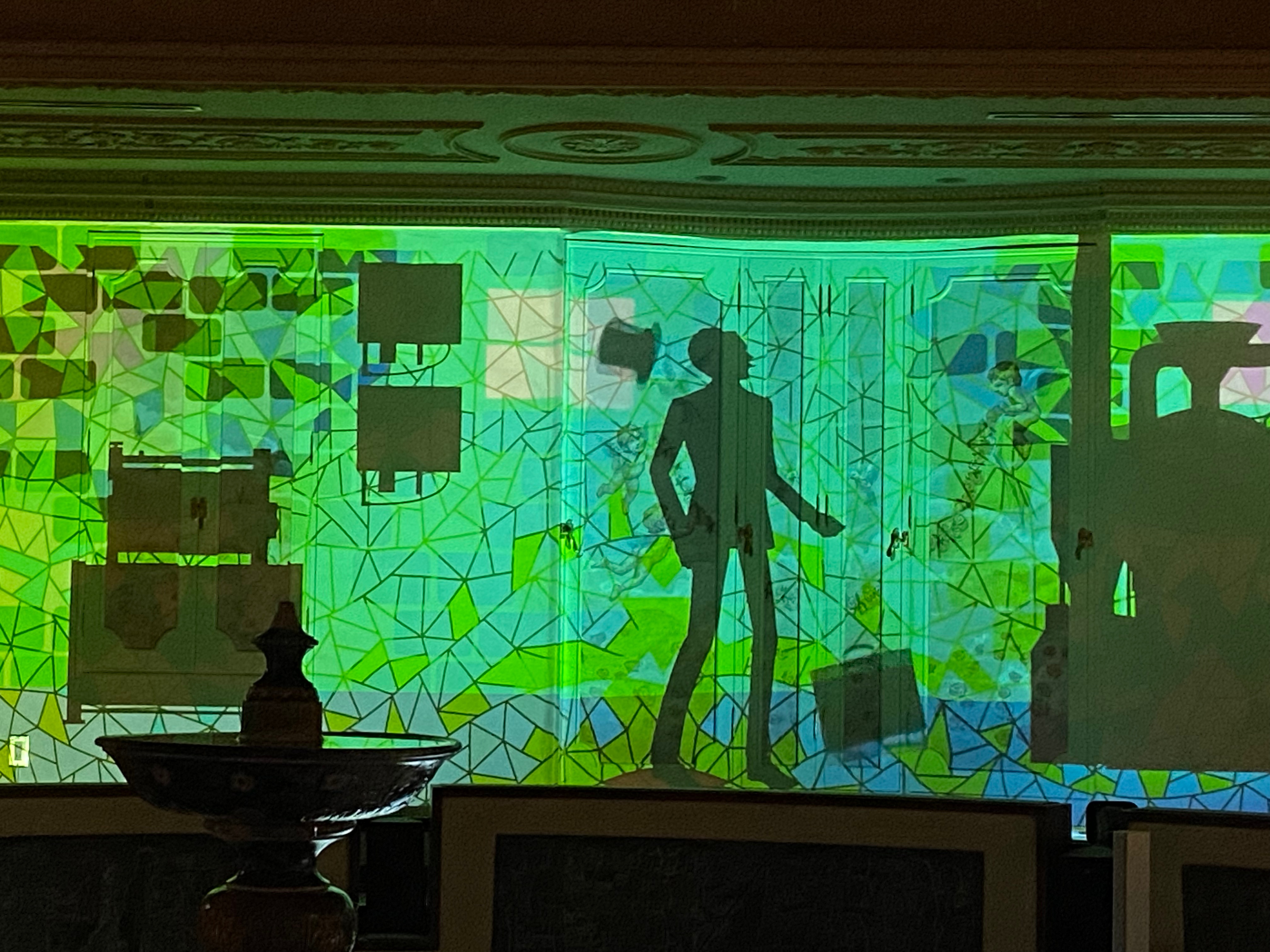
Entering the park, I buy a ticket (not golden), and receive a small wrapped square containing the exact chocolate that this factory makes; a bit of a spoiler, giving me the final product at the entrance. Inside, everything smells faintly of white chocolate and mild concern. There are a lot of stairs, the sound of cats meowing through speakers, and a room full of video screens telling the story of the factory.

In the quirkily named Time Travel Room, we learn about how this chocolate came about. One of the screens checks to make sure we’ve all been paying attention by offering up a quiz question answered by show of hands. The question is: What is added to chocolate to make it sweet? a) Powdered Milk, b) Powdered Cheese, or c) Powdered Snow?

“Hands up if you said powdered cheese?” says the woman running the tour, as she looks around rather confused. “Nobody said cheese??? How about snow?” It turns out I wasn’t paying attention, but still managed to correctly guess that chocolate can be sweetened by adding powdered milk. Next, we follow some cat prints on the floor up some more steps to the factory.

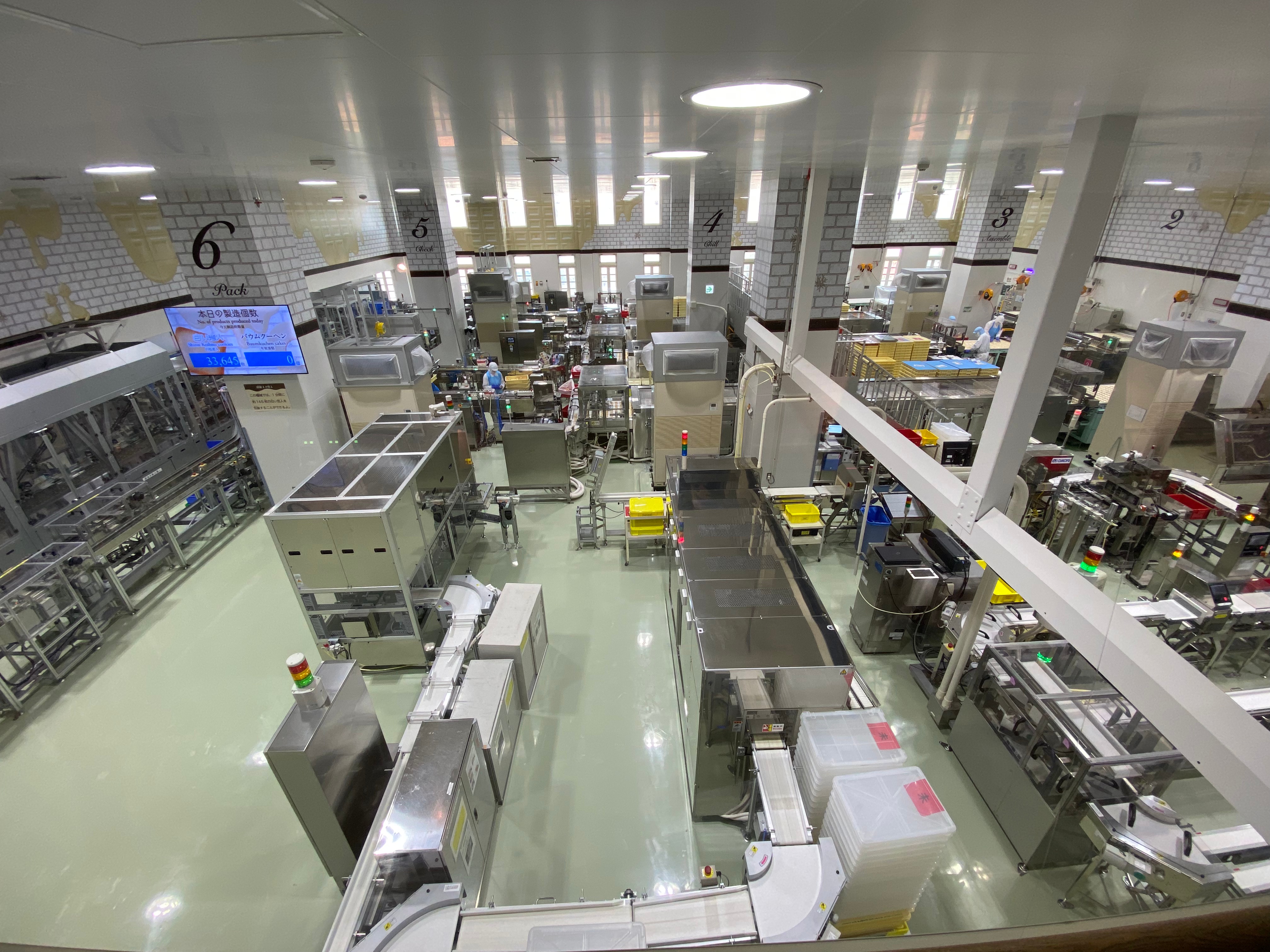
The factory floor is impressive, fully operational, and producing just one product: cookies. There is a counter that displays how many of each product has been produced today: 33,645 Shiroi Koibito cookies; 0 Baumkuchen cakes. I suppose they are using the lack of cakes as a comparison.

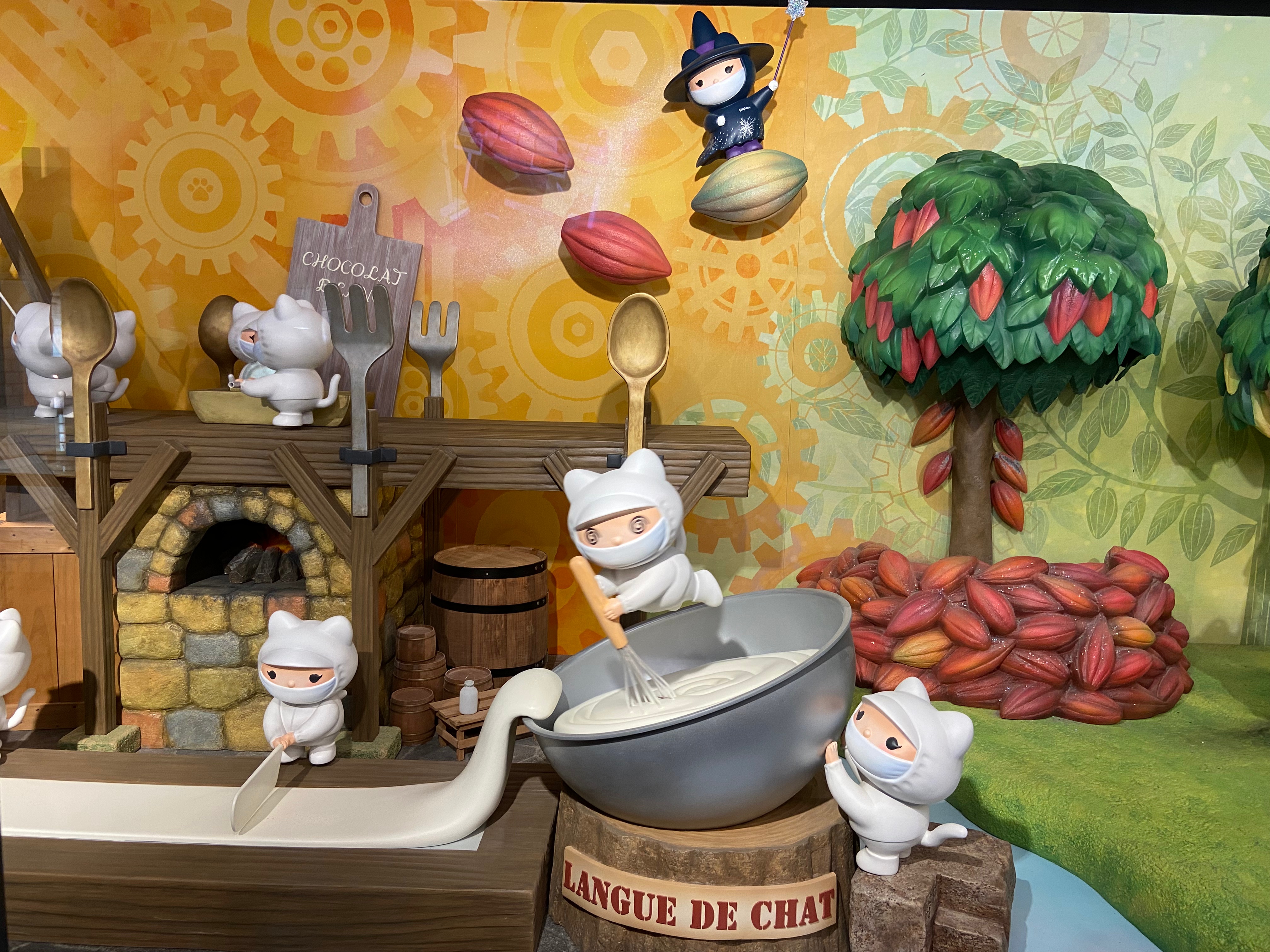
Remember that pun I mentioned? Well, in the next room it is on full display. All good factories have their slaves. Oompa Loompas, Wonkidoodles; but here at Shiroi Koibito Park we have White Dwarfs. They perform all of the tasks here, including milking the cows and creating white chocolate.

After yet more stairs, the sound of cats meowing, and multiple rooms of chocolate-related trinkets, we reach the end. I realise that we never did get an explanation for the cats. I exit through the gift shop and use the restroom. I notice someone has left some chocolate in one of the toilets.

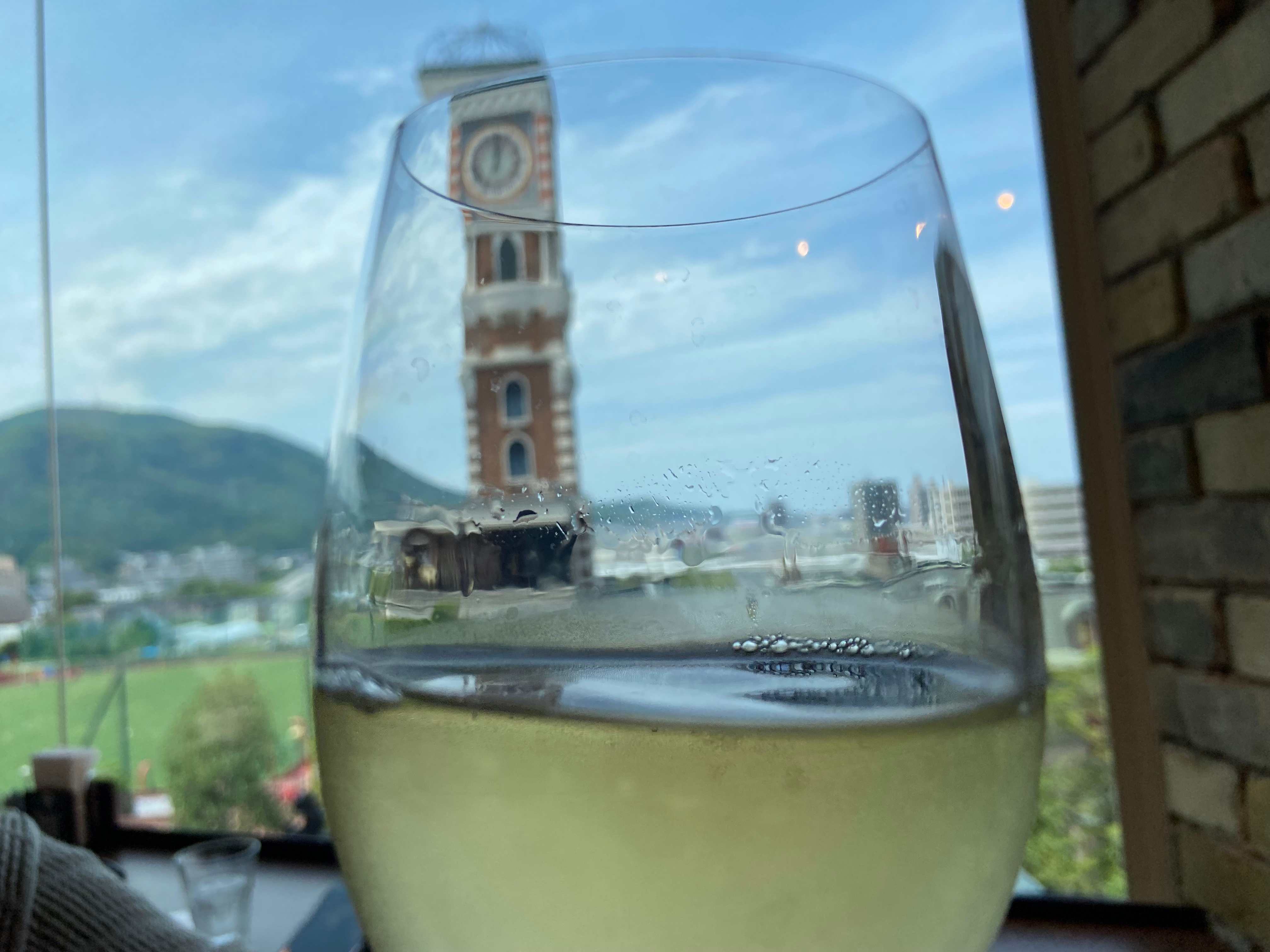
I take the stairs up and into the café, where I decide to take a rest from all the walking and climbing. The factory really needs to invest in an elevator; preferably one made of glass. Speaking of glass, I order a glass of Shiroi Koibito Wine, not sure exactly what to expect.

It doesn’t taste like chocolate. It tastes like regret. Perhaps one of the worst wines I’ve ever had the displeasure to drink. I was expecting notes of white chocolate; however, this wine is unfortunately made from Niagara grapes, which are more commonly used for grape juice than wine.

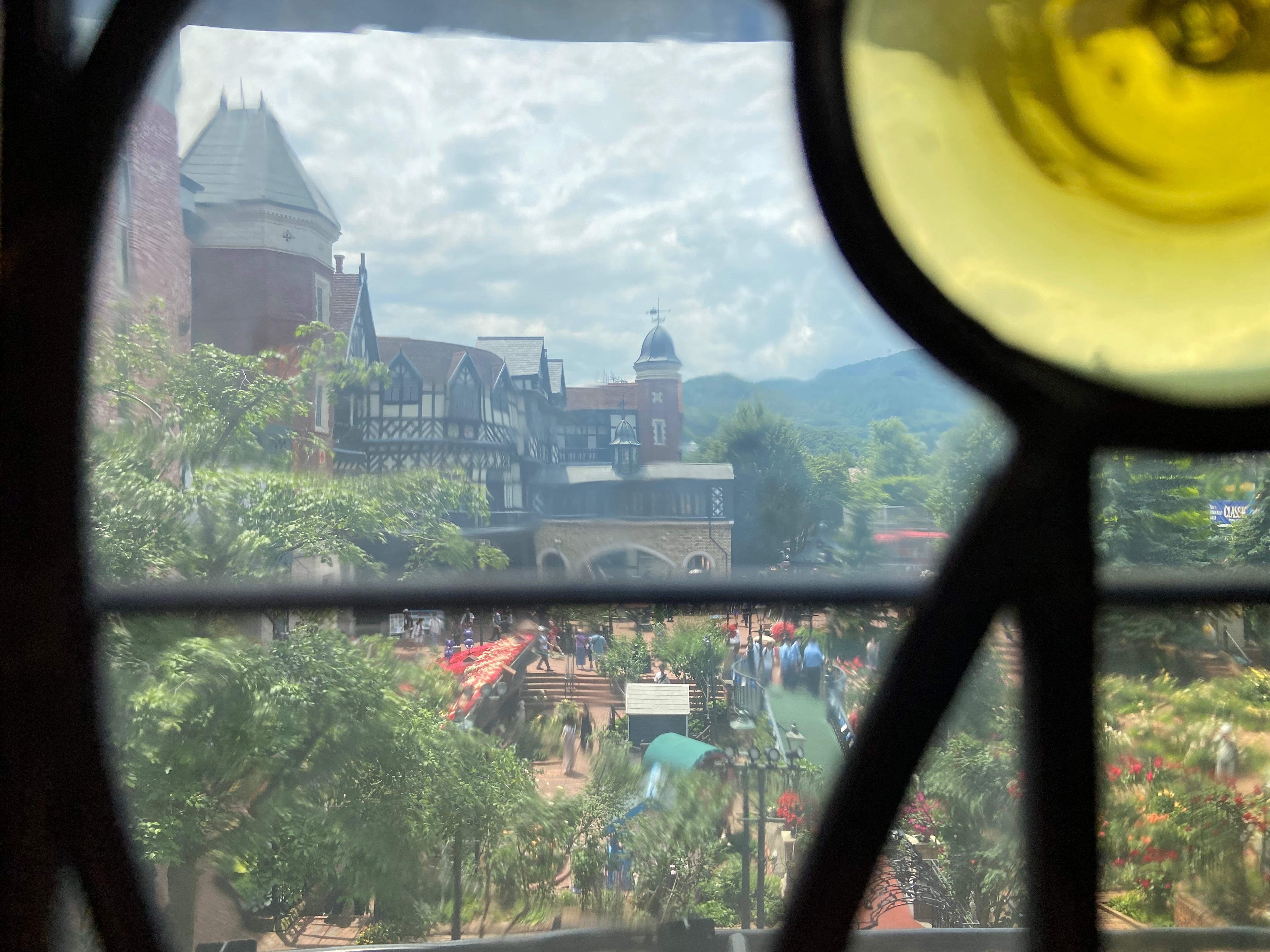
At exactly 12 o’clock, the distant clock tower chimes and opens up, and there’s a little animatronic parade. I slowly sip on my wine, trying not to wince. I watch the White Dwarfs trapped in a loop of mechanised merriment. I finish my glass before finally taking a stroll out through the gardens.

Taking the train back to Sapporo, I get off at Odori Station. The train station is connected to a huge underground shopping complex called Aurora Plaza. I decide to take a stroll through, passing shops selling clothes and souvenir-fit cakes. I also see some T-shirts with terribly translated English: Fun up necessary!

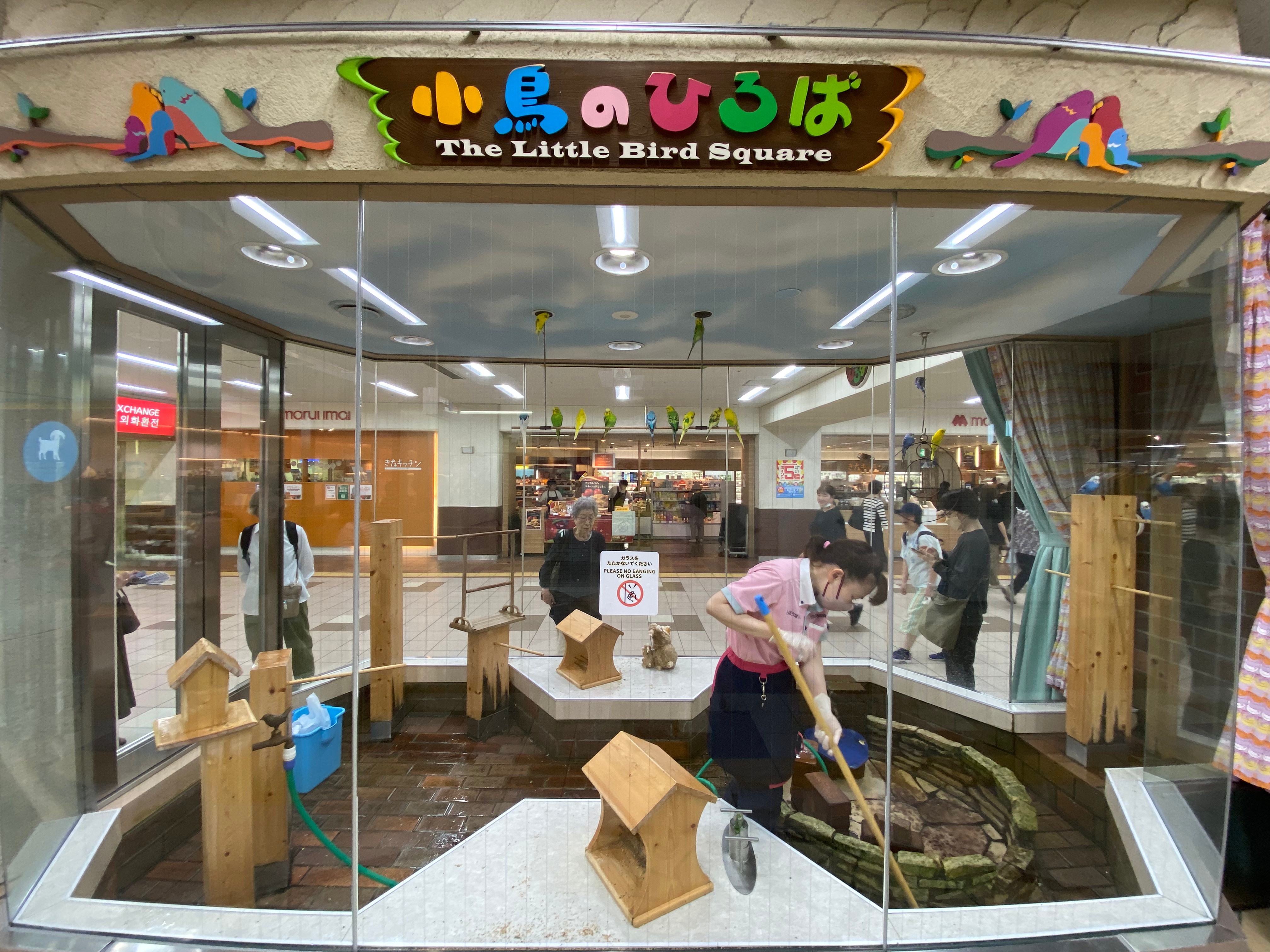
As I continue my stroll, in the distance I hear what sounds like birds chirping excitedly. I then see a sign for ‘Bird Corner’ and decide to see what all the chattering is about. It turns out to be a glasshouse full of parakeets called The Little Bird Square.

There are a couple of blue birds, multiple green birds, and that’s about as good as my knowledge of birds goes, I’m afraid. Although I’m pretty sure keeping them down here in an underground plaza means they will most likely die before they ever see natural light. Credit though, as it does seem that someone at least cleans out the enclosure, and I’m certain that one of the birds did smile at me.

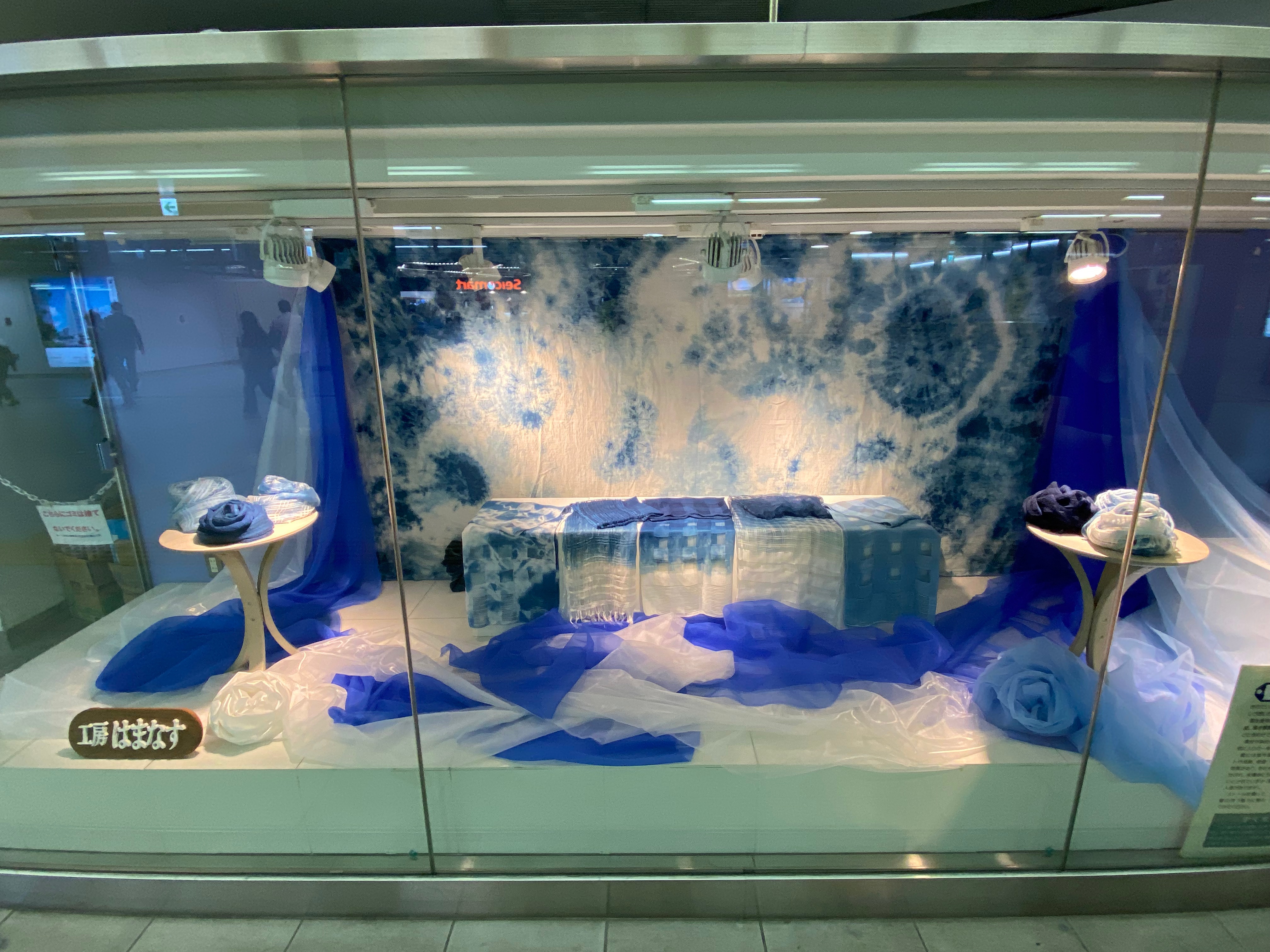
Further along the shopping complex, I stumble once again on a glass enclosure. This one, however, unusually contains scarves. The cloth appears to be well tended to, not the least bit ruffled. I think it’s supposed to look like a sea of clouds, but I can’t be sure. I do know that the scarves aren’t harmed in any way, and none of them seem likely to die anytime soon. They’ve already been dyed indigo!

My final stop for the day is a place called Retro Space Saka Hall. It’s a strange little museum that’s only open for a few hours a day, a couple of days a week, and houses the personal collection of curiosities owned by Kazutaka Saka, an 82-year-old Japanese man.

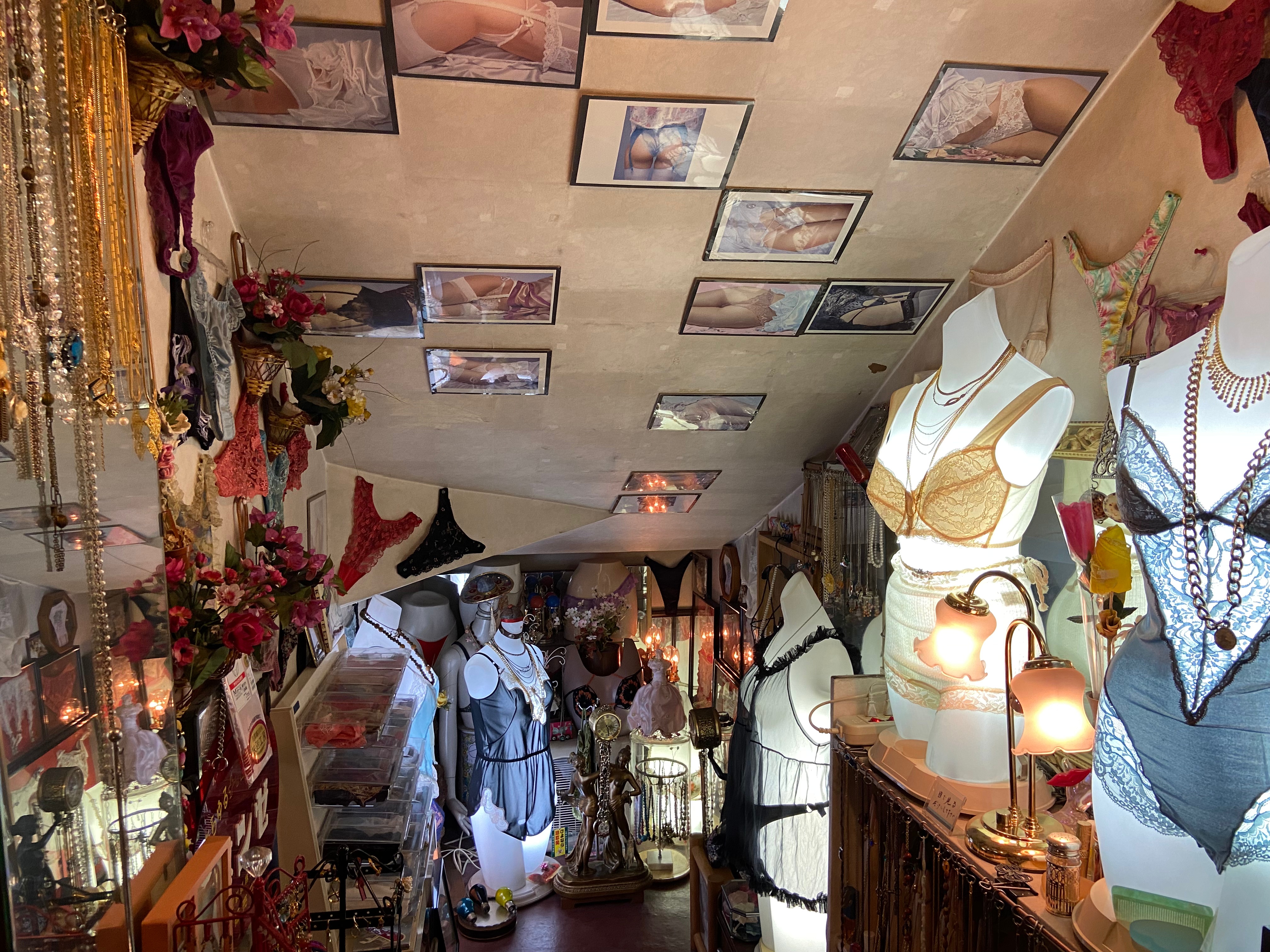
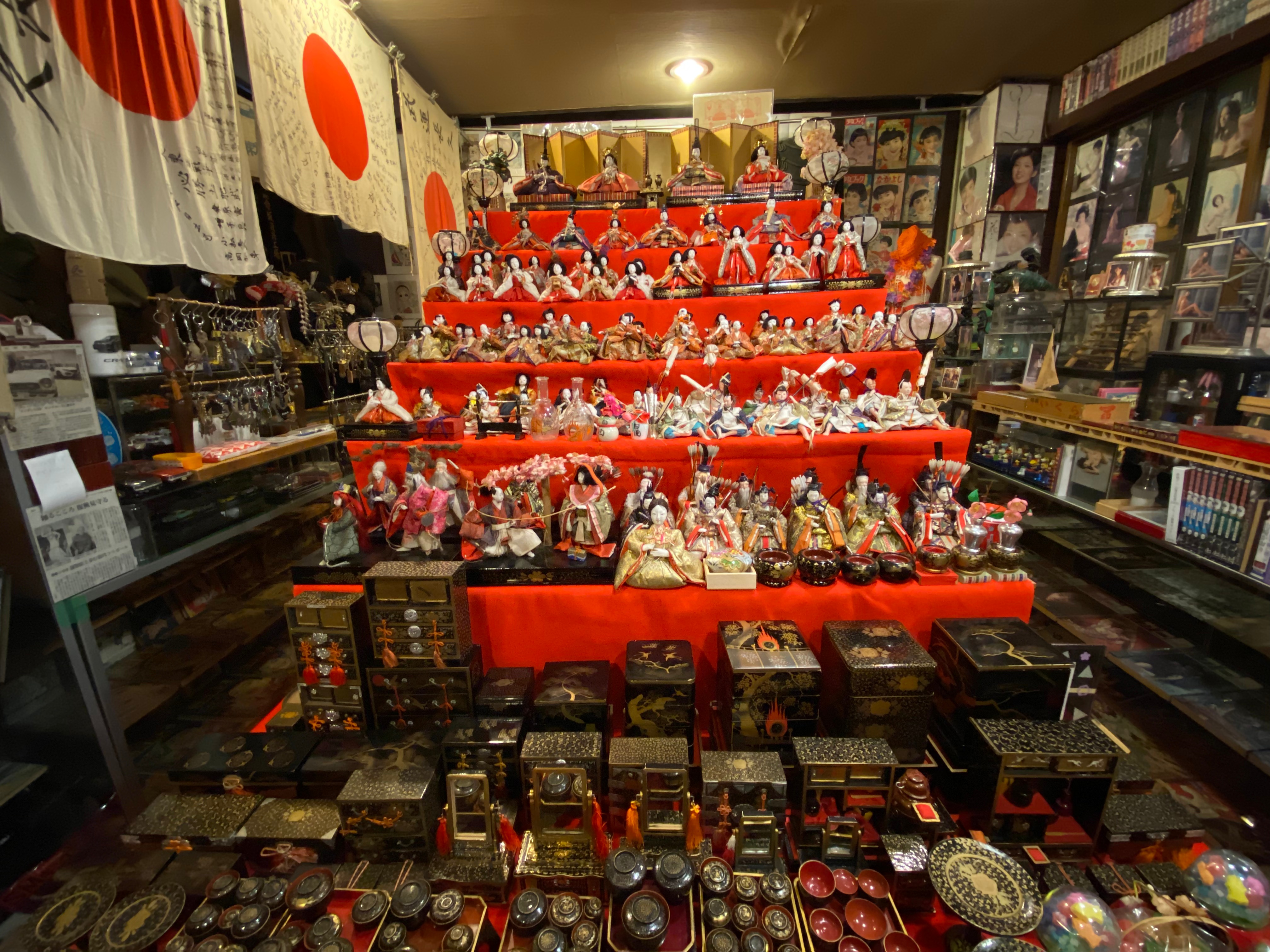
The museum is full of tightly packed shelves in every direction, arranged in sections and side rooms; a very well-organised collection of… well, of things. I don’t know where to look. There are things everywhere. If you can imagine it, Mr. Saka has probably collected it: Showa-era relics, gas masks, a large collection of syringes, musical instruments, a whole section dedicated to Eiffel Tower-shaped whiskey bottles, toys, figurines, bottle caps, buttons, stamps, cigarettes, women’s underwear, and photographs of women wearing underwear…

I begin to wonder whether Mr. Saka started out by collecting pornography and then, over time, began adding other random items like glass beakers and rocking horses to distract from all the images of naked women. Eventually it grew into this sprawling collection of almost one million objects. I don’t mind saying, I wouldn’t fancy having the job of dusting.

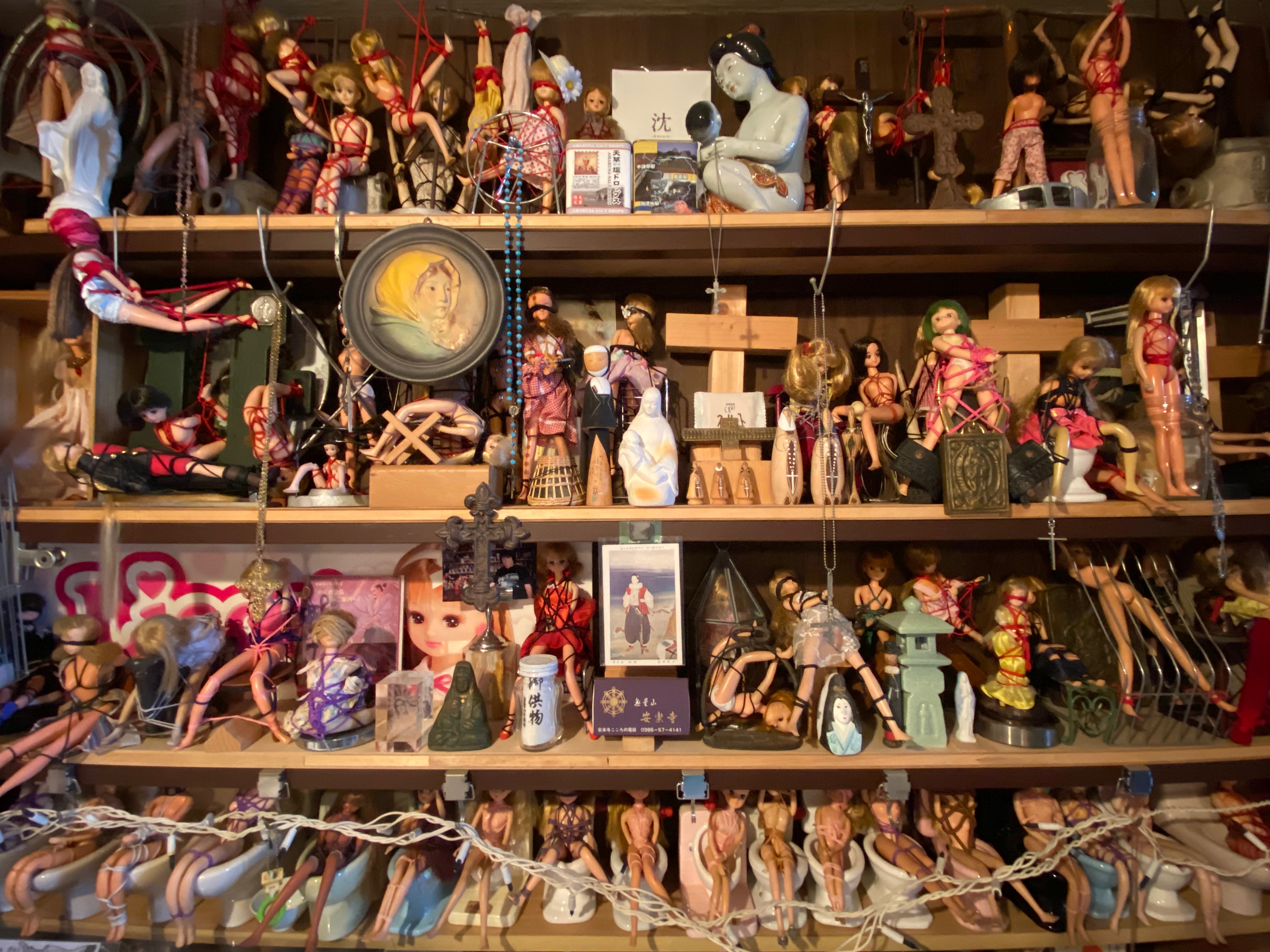
I have another thought as I pass by a wall of photographs of pin-up girls and a big pile of dolls: do other people just come here with stuff they no longer need and leave it behind? I can’t imagine anyone would actually notice the odd addition to the collection.

Just looking at the photograph of the pile of dolls, there’s so much going on in just that one area. Now imagine multiplying that by a hundred; you’ll get a good idea of just how overwhelming Retro Space Saka Hall really is.

I’m about to leave, heading toward the exit, but decide to take one last look at a shelf to my left. I must have missed it on the way in, overwhelmed on arrival by the treasure trove of everything mixed in with that odd smell of bygone. The shelf I’m standing before features a lot of dolls, tied up with string. The tied-up dolls on the bottom row are neatly arranged, all sitting on plastic toilets.

As I walk back to the train station, I decide that something about Mr. Saka is not quite right. Anyone with an entire shelf dedicated to Eiffel Tower-shaped whiskey bottles has a serious problem.