Robot Women, Fast Cars, Voodoo Dolls, and Dinosaurs

The queue for the Nagoya City Science Museum spills from the door. Inside, there is a snaked queue that runs eight rows deep. A screen on the wall tells me that every time slot for the world’s largest Planetarium has sold out, and it isn’t even 11 a.m. A shame, this was probably my best chance of seeing stars in Japan. The museum also has a special exhibit on at the moment, the Dragon Ball Science Event, and this is most likely the reason for all of the queueing chaos I am witnessing today.

nagoyascience[1]

To avoid wasting a day in a queue, I decide to take a look at the Electricity Museum, some two blocks away. I follow the signs and even find a map listing the museum, but for some reason, I can’t find it. I swing by the nearest Seven Eleven and connect to their free wireless Internet. Google Maps directs me to where I had just been walking, but nope. It doesn’t appear to be here. Perhaps closed down, who knows.

I swing by the Nagoya Musical Theatre to see what’s showing: the 5,000th performance of Beauty and the Beast. One thing I notice on my walk back toward Nagoya Station is that on nearly every street, there’s a building called ‘Toyota’. They seem to have infiltrated even the darkest Nagoya alleyways. Continuing my walk, it takes a somewhat dark turn. I wander into a lonely shopping arcade. All of the shops are closed or boarded up. Everywhere is silent. It’s as if this arcade is part of some other world. There hangs some incredibly macabre imagery.

voodoo[1]

A giant voodoo doll hangs from part of the roof, its belly split open, multi-coloured intestines bursting out, its mouth sewn up, and a giant needle stabbing into its neck. I have no idea what it begins to represent. The voodoo doll isn’t the only horrific image on this street. There’s also a giant multi-coloured face with a top hat and a satanic grin, a sinister-looking golden unicorn with eyes that seem to watch my every movement, and plenty of vampiric bats scattered around. As I pass through the arcade, my footsteps leave behind an echoed creak.

My next stop is a place called ‘Midland Square’. Inside there are many shops and restaurants. The official name for this skyscraper is the Toyota-Mainichi Building. This building is tall. The elevators take an alarmingly quick forty seconds to rise all the way to the top of this 247 metre structure. It also boasts the highest open-air observation deck in Japan.

Inside, there are posh restaurants, two car showrooms, a cinema, and sixty big brand stores such as Louis Vuitton and Vulcanize. These are all places where I’d never shop. Instead, I go and look at some cars. Displayed are a Toyota TS010 and a Toyota TS030 Hybrid.

toyota[1]

There’s an attractive young woman in a light brown suit wearing a mouthpiece. She speaks in Japanese, presumably about the vehicles. Something about her strikes me as odd—her voice doesn’t match her appearance, and her movements are very rigid. It’s entirely possible that she isn’t a human being but a very cleverly designed or disguised robot.

Next, I decide to visit the local gardens near my hotel—Noritake Gardens, to be precise. A sign at the entrance informs me that all animals must be kept in a cage; who exactly brings their caged dog to a public garden? This place is very famous as it’s the birthplace of modern pottery in Japan. There’s a spot marked on the map called ‘Chimney Gardens,’ so I head there and find six tall chimneys shrouded in foliage—the remnants of the pottery plant. The view of these historic chimneys is unexpectedly spoilt by a dinosaur.

chimneys[1]

For no reason that I can see, on the old grounds of this historic and award-winning site, stand three robotic dinosaurs. They move around, opening and closing their mouths, roaring at the children. This site holds industrial heritage significance, showcasing the conservation of a 110-year-old kiln that was used to develop the first Noritake plate. The company continues to trade today, and Noritake tableware remains a household name throughout Japan.

The remains of the factory wall can also be seen, reconstructed from the bricks of old kilns. Bricks were imported into Japan at the end of the Edo period, and the remnants of the red brick plant hold significant value as industrial heritage. However, this time, the remains of the wall are obstructed by a Tyrannosaurus Rex and Carnival Cutouts. Unbelievable.

brickwalls[1]

Also, for reasons I can’t explain, there are thousands of dragonflies here too. I’m not sure what it is about bricks that dragonflies like, but there are so many that everywhere I walk, I have to avoid being hit by one of these stray insects as they dart about without a care. No cages for the dragonflies.

My final stop today is Nagoya Castle. Every city I visit seems to have its own tower and castle. Nagoya Castle is probably a twenty-minute walk from Noritake Gardens. By the time I arrive, it’s 5 p.m., and the Genkan closed thirty minutes ago, bolted shut. The sign on the stone walls tells me not to climb, so it looks like I’m out of options. At least I can see the entire castle from a walkway over a busy intersection.

Nagoyacastle[1]

After visiting the castle, I return to the hotel and rent a laptop for three days for ¥3000. I spend three or four hours writing, and time drifts by. I’ve arranged to meet Nick at half past ten, a Canadian guy I met back in Asakusa who lives in Nagoya.

A guy in the Irish bar last night suggested I try Nagoya-style udon noodles. So, I decide to give them a second chance. I order a simple bowl of noodles with an egg mixed in for good measure. It’s a very cheap meal, ¥400 with a glass of water. On reflection, I still prefer every other type of noodle over udon.

I meet Nick outside Nagoya Station, and we walk half an hour across town to an international bar called ‘Shooters’. We drink and chat until last orders are called at half-past twelve, before walking back to Nagoya Station.

Nagoya is a huge city, yet I discover that Nick’s apartment is in the building directly across the road from my hotel.
When Haricot Met Celery

I wake up at 9 a.m. and head down to the lobby for my Japanese-style breakfast. The food is almost identical to yesterday. The grilled fish of the day is once again salmon. The only change is that my cooked seasonal vegetables today are haricot beans and peppers, mixed in with natto. My side salad includes corn on the cob, celery, and red onion. I gaze out of the window whilst I struggle with my breakfast, a meal I am not used to eating.

After breakfast, I take the subway from Shin-Osaka Station to Namba Station. Getting off the train, I head toward the famous Namba Grand Kagetsu Theatre, hoping to catch some manzai comedy. Osaka actually produces most of the comedians in Japan. Manzai is a type of stand-up comedy where two comedians perform a routine together. Even if in Japanese, good manzai can be very funny to watch because a big part of the show is the timings and actions on stage. Sadly, there is no performance happening at the moment.

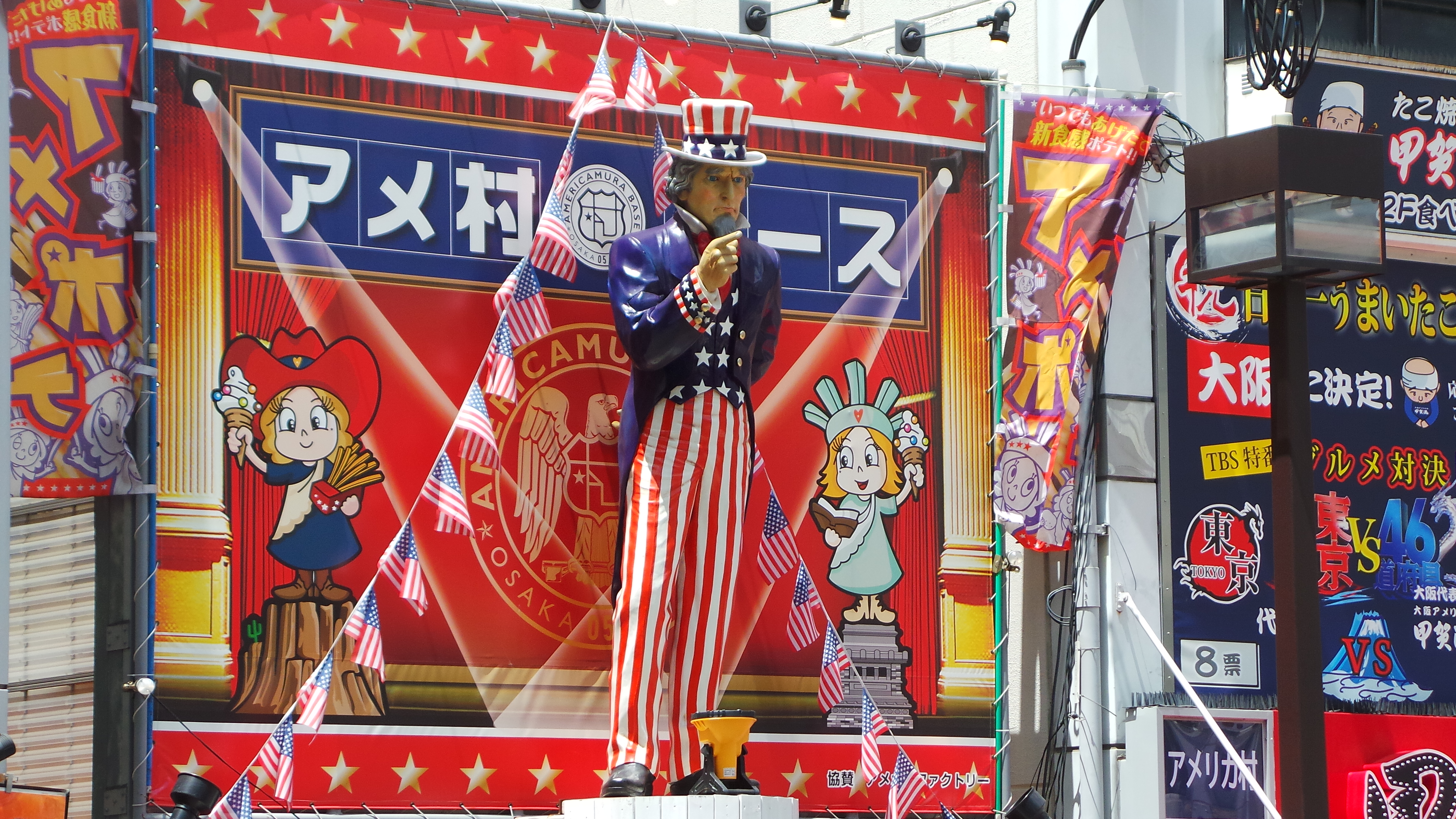
I check my map and decide to head to a place called ‘Americamura.’ I wonder what I will find there.

america

Shops here sell American clothing, some entirely dedicated to selling baseball hats or soccer jerseys. Mixed in with this madness are shops selling skate, punk, and retro clothing. I enter a bookshop that sells herbal teas, skateboards, and, of course, books.

All of the big brands have their own ‘flagship’ stores here. Mixed in with the clothing are some really cheap-looking bars selling inexpensive drinks. Surprisingly, all the tourists and shoppers here are Japanese; there isn’t an American in sight. I’m not quite sure how this place came to be. After a few blocks, I see a Tokyu Hands; the store marks for me where America ends and Japan begins again.

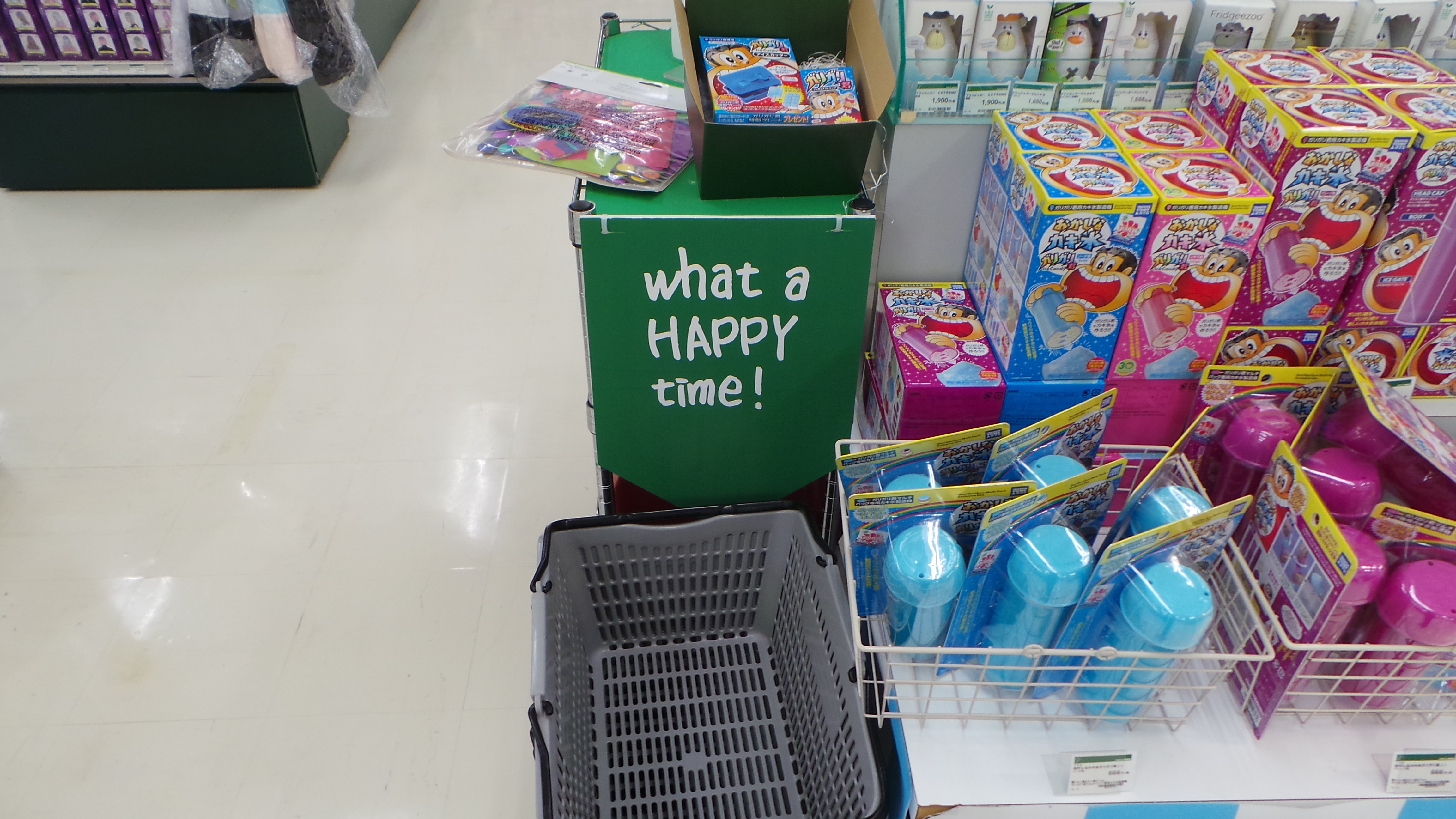
I decide to take a break from the heat and head to the fifth floor using the Tokyu Hands elevator. The shop describes itself as a ‘Creative Life Store’, offering a vast array of products. On this floor, they have party supplies, a variety of items, magician supplies, and bicycles. A song from the film ‘Frozen’ is playing, the Japanese version. I check out some of the cool gadgets, then glance at the prices of bicycles; they’re quite expensive here.

happytime

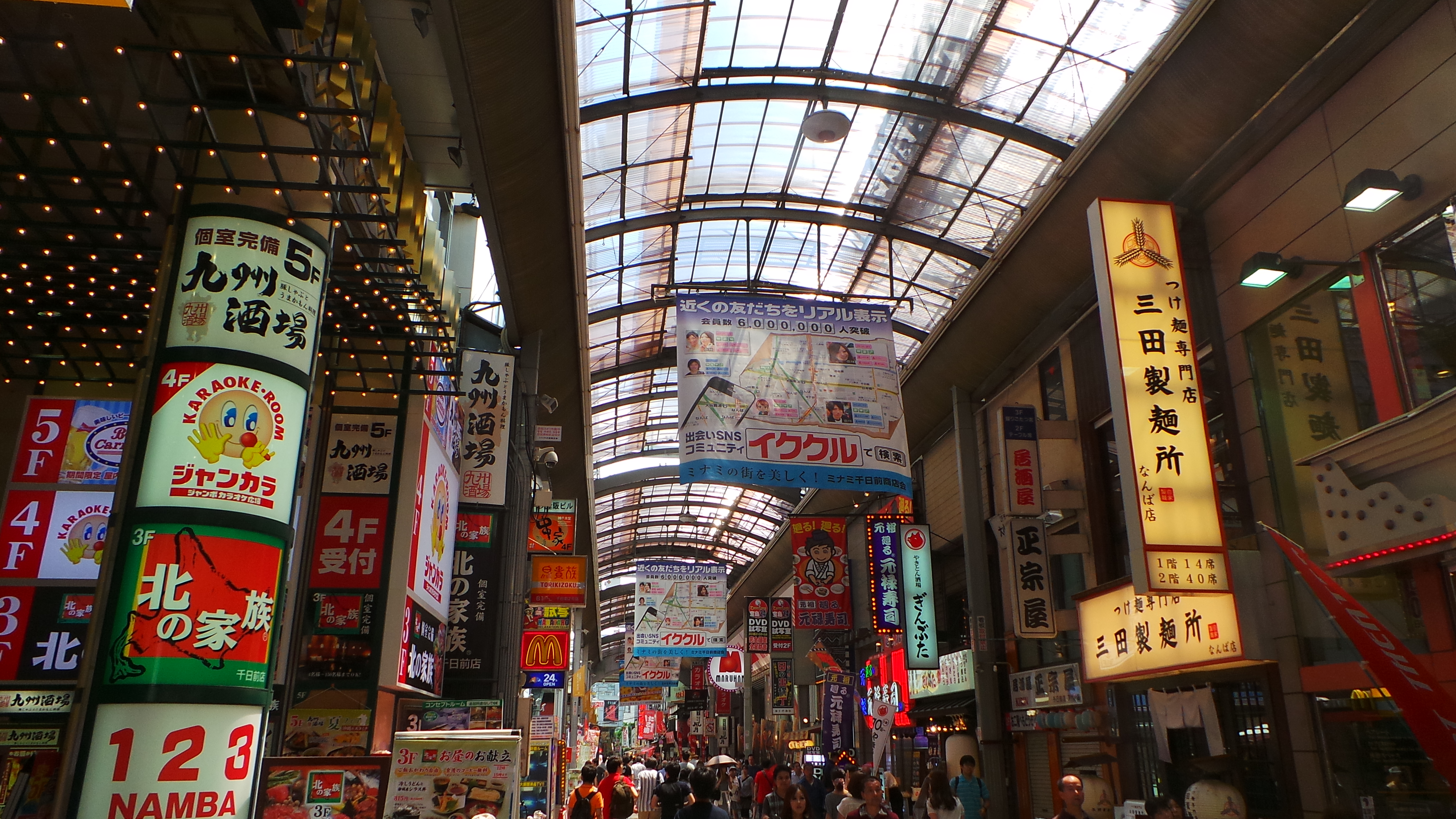
If you’re not particularly interested in shopping, today probably isn’t for you—or for me. I head into the Shin-sai-bashi shopping arcade. This is one of Osaka’s oldest and busiest shopping areas, stretching for approximately 600 metres. Everything you ever wanted is in this arcade.

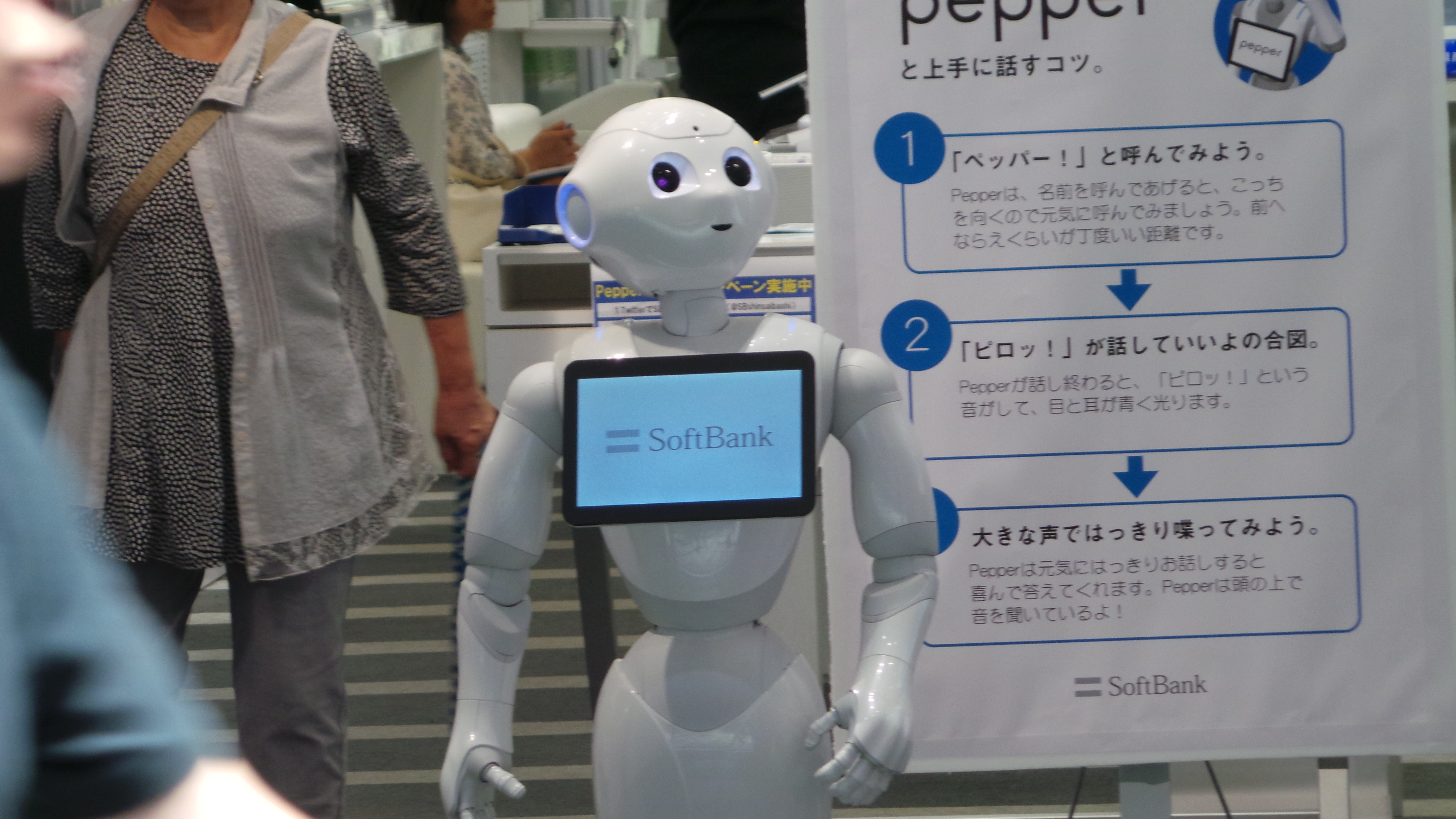
There is a shop that only sells ‘Hello Kitty’ goods, and another named ‘Pancakes, Teas, Coffee, and Happy.’ I’ve noticed that in Osaka, the word happy is used an awful lot. SoftBank, a Japanese telecommunications company, has its own robot. It moves around and engages in a conversation with me about their new products. His name is Pepper.

softbank

Also in the shopping arcade are the usual clothes shops, restaurants, and souvenir shops. I head into my second bookshop of the day, Junkudo. I’m searching for two specific books. I find one of them, ‘Pinball 1973,’ but it’s only available in the Japanese version. I’m trying to get hold of the English version printed for Japanese people to practice their English skills.

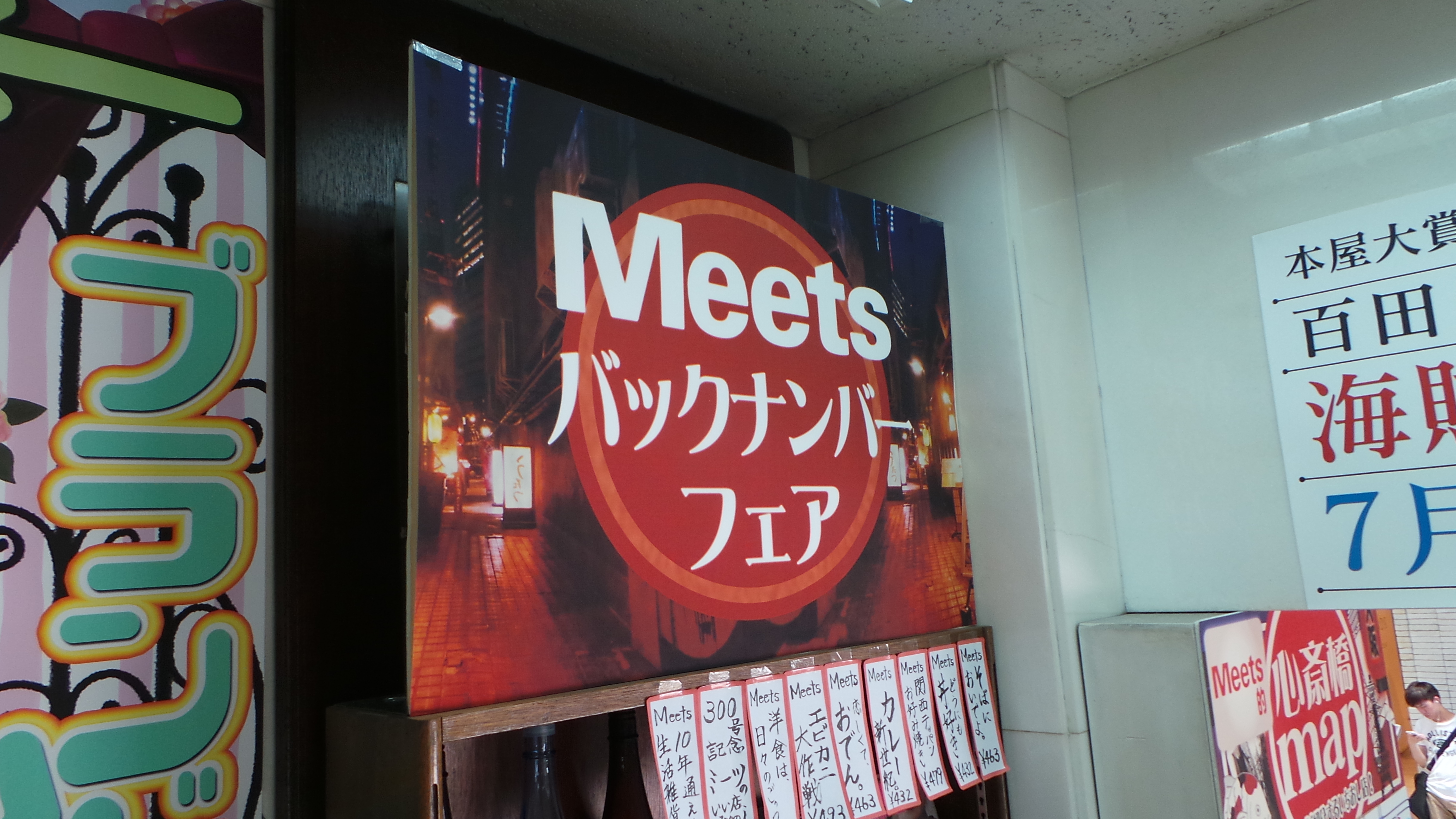
As I leave the bookshop, I’m taken slightly aback by a sign. At the bottom of the escalator, there’s an advertisement for ‘Meets,’ the bar I mentioned a few days ago. It displays a price list along with some other Japanese text. I take a photograph and add it to my folder of coincidences. Back in the arcade, that same song from the film ‘Frozen’ is playing.

arcade

Next, I visit a place called Dotonbori. The pavement here is littered with small restaurants and pachinko parlours. Each restaurant is stacked high, adorned with brightly coloured signage that becomes illuminated in the evenings. It’s the sort of street that I imagine looks just like a scene from Blade Runner at dusk, especially when it’s raining.

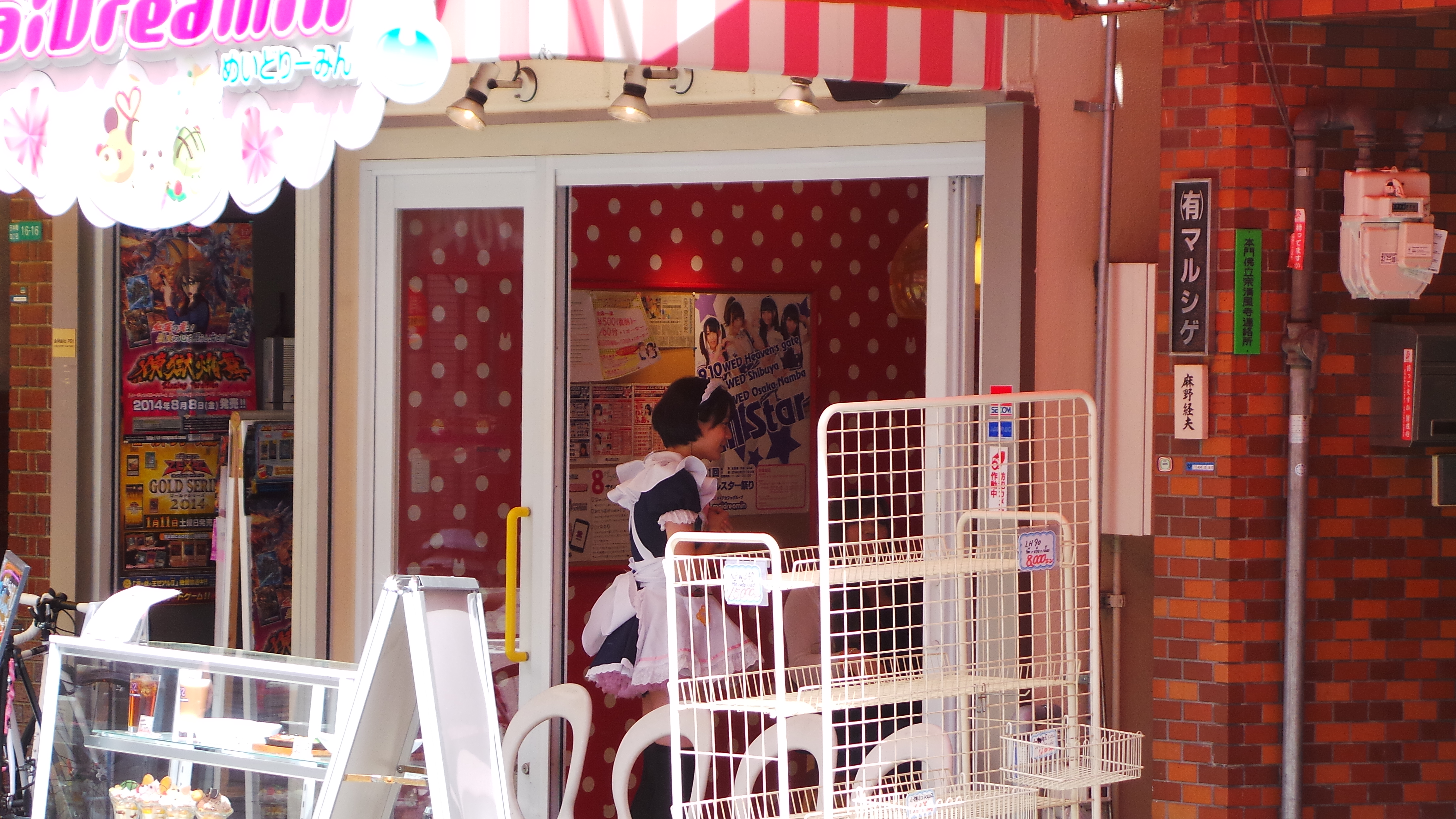
On the other side of Namba Station are shops selling manga and anime in an area known as Den Den Town. I spot two or three shops exclusively dedicated to selling Magic: The Gathering playing cards. Other shops offer model figurines and electronics. It reminds me of Akihabara, but on a much smaller scale. Girls dressed as maids stand on street corners, attempting to lure people into the many maid cafes.

maidcafe

I waste a quick ¥500 in a Sega video game arcade before heading back to the train station. At the station, I have to walk through even more shops to reach the platform. I take the Koya Line just one stop to Shin-imamiya Station. I decide to check out a place called Spa World, but it seems luck isn’t on my side as there’s a fence around it, and it appears to be closed for construction.

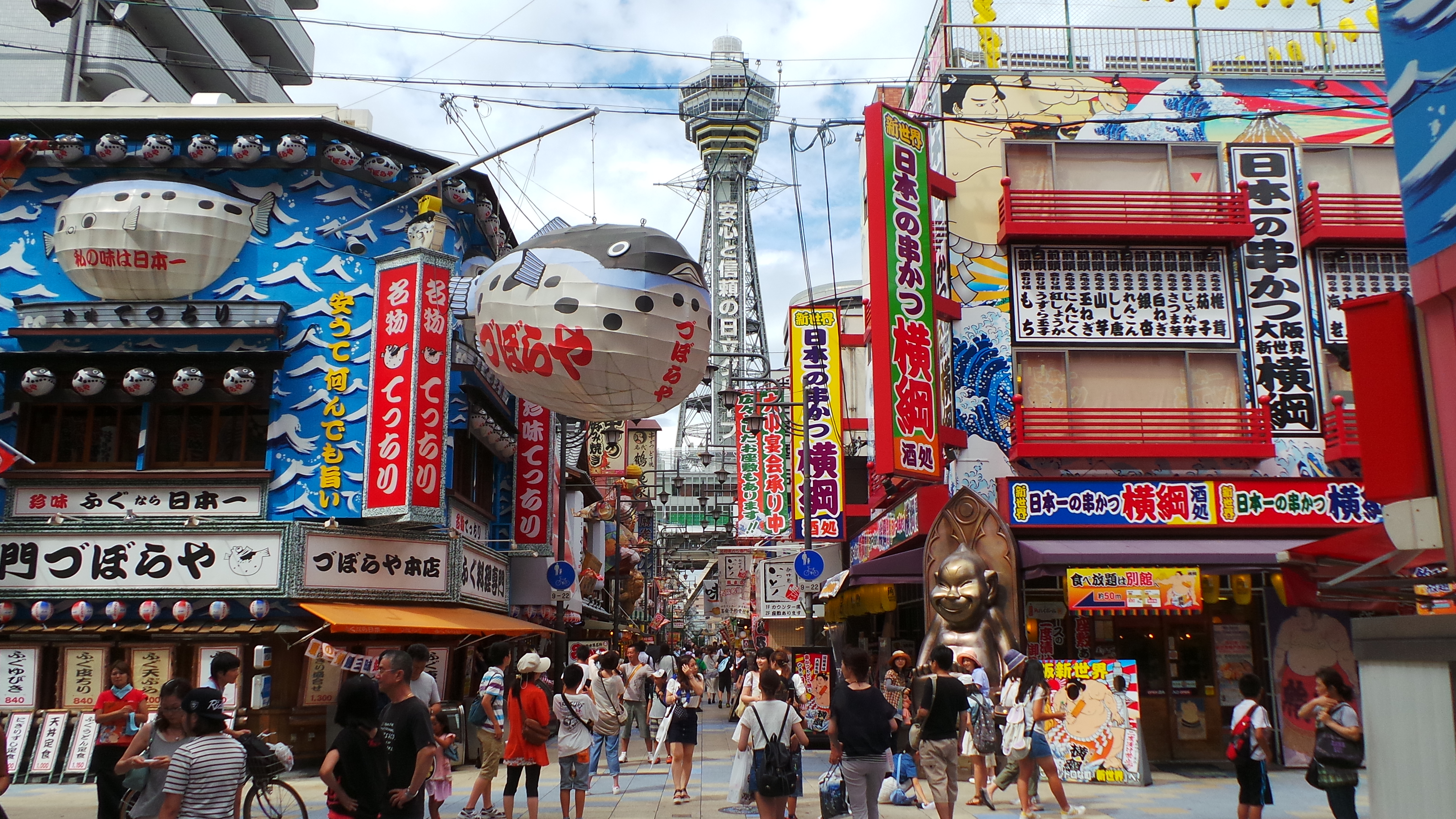
Instead, I head toward a tower in the distance. To reach the tower, I have to walk down yet another shopping street.

towerstreet

Unlike the other shopping streets, this one boasts a 103.3-metre-tall tower right in the middle—Tsutenkaku Tower, meaning ‘Tower reaching heaven.’ I also admire the Carnival Cutouts; one depicts what seems to be a sumo wrestler devouring a skewer of meat or wielding a rolling pin. It’s a bit ambiguous, but my guess would be a skewer, considering that’s all the restaurants in this area seem to be selling.

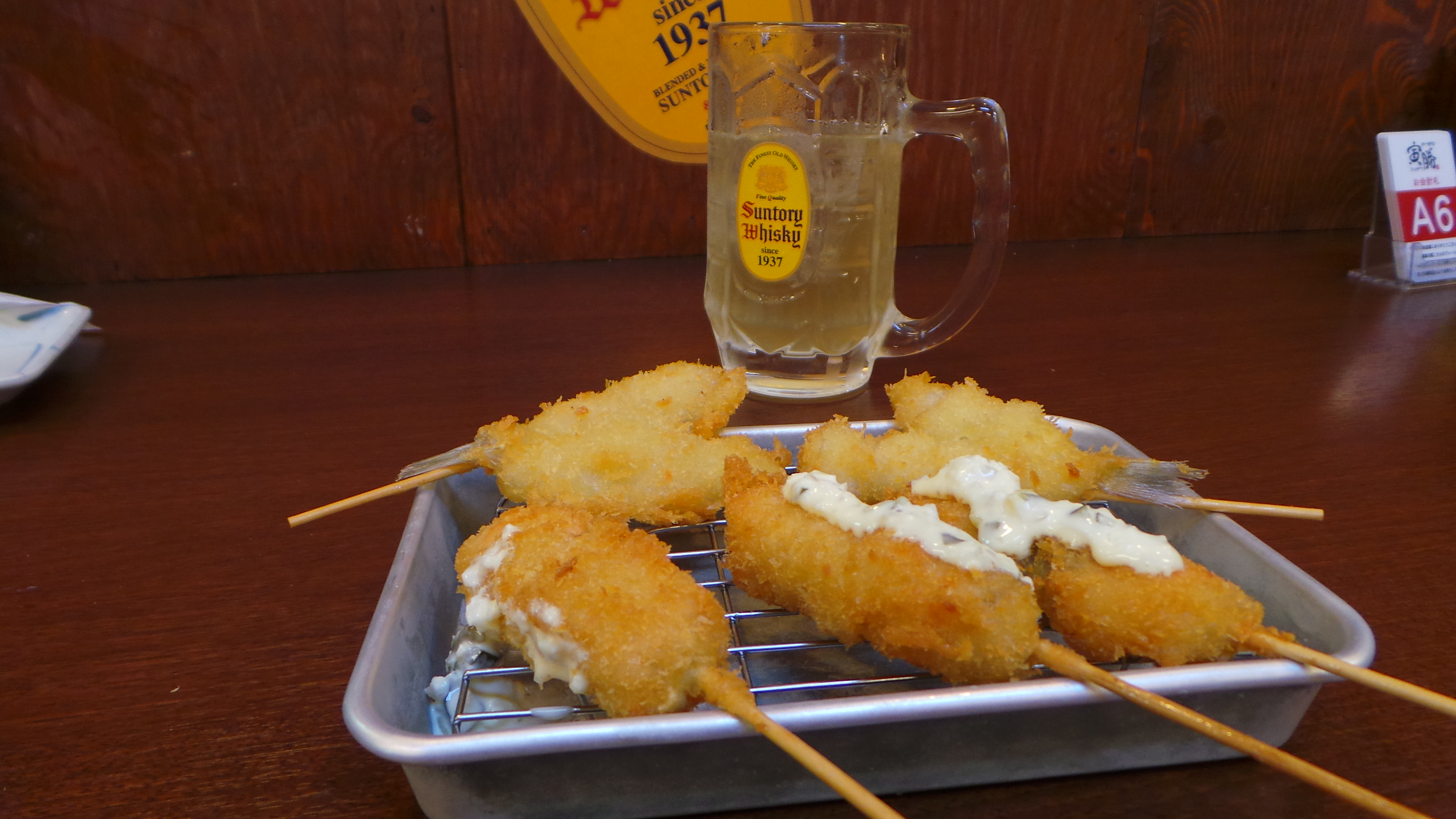
I choose a completely empty restaurant, taking a seat wherever I want, and order a Suntory whisky highball with lemon. With the number of times I’ve mentioned their whisky and coffee, I should probably get some commission money from Suntory. I opt for three salmon skewers and three white fish skewers. While I wait, I snack on the complimentary fresh lettuce and sip my highball.

skewers

The white fish turns out to be haddock, while the salmon is fresh, served with a light tartare sauce dressing. The skewered meat is already prepared on the counter; all the chef needs to do is cover each fish with flour, egg, and breadcrumbs before deep frying each stick in oil. This restaurant has all sorts of crazy ideas, but the ones that stand out are cheesecake skewers, ice cream skewers, and banana skewers. I’d eat fried fish on sticks every day if it weren’t for the fact that it would probably kill me. At ¥1050, not bad with a drink.

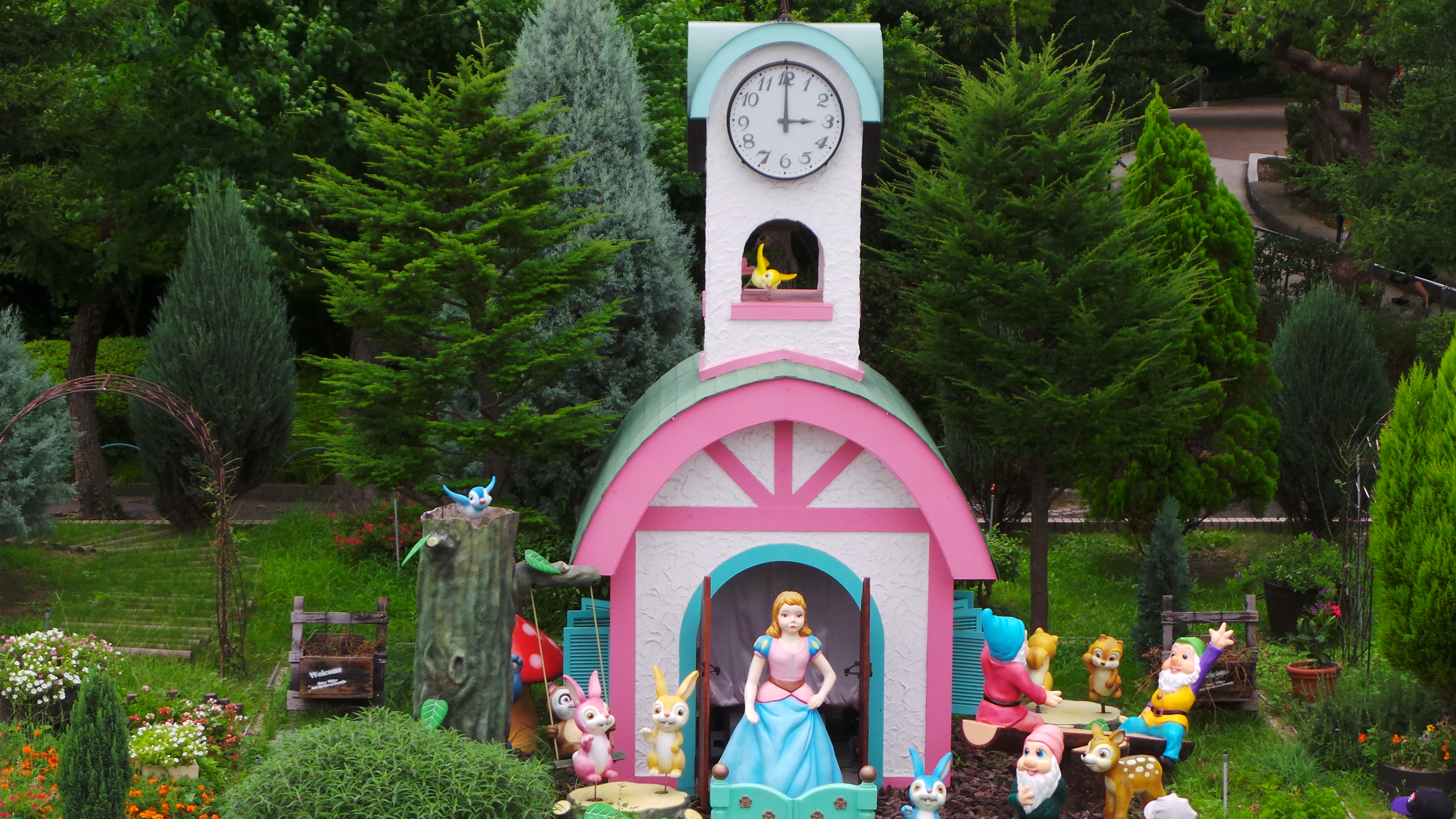
I head back out into the scorching sunshine. At the end of the shopping street is a zoo, complete with a Snow White Clock Tower. The time is now ten to three in the afternoon, so I decide to wait and see if anything happens on the hour. My life is that exciting. Sure enough, at three, everything starts moving, singing, and dancing, and then Snow White emerges from the clock. Not to be missed—the Tennoji Zoo.

snowwhite

At Tennoji Station, I board what I believe is the Osaka Loop Line. As it turns out, it isn’t. After three stops, everyone disembarks. I find myself disoriented; there are no signs indicating my location. I board the train across the platform, which indicates it’s the Rapid Service bound for Nara. Fortunately, it stops back at Tennoji Station. Returning to where I started, I board the Osaka Loop Line to Osaka. From there, I transfer trains to Shin-Osaka, before deciding that six trains in a day are plenty.

Back at the hotel, I read for a while before sorting through my photographs of the day. I stare at the sign I saw in the bookshop, advertising that same bar. I decide to head out and see if it is open tonight. I walk ten minutes to the bar and am pleased to see its shutters up.

meets2

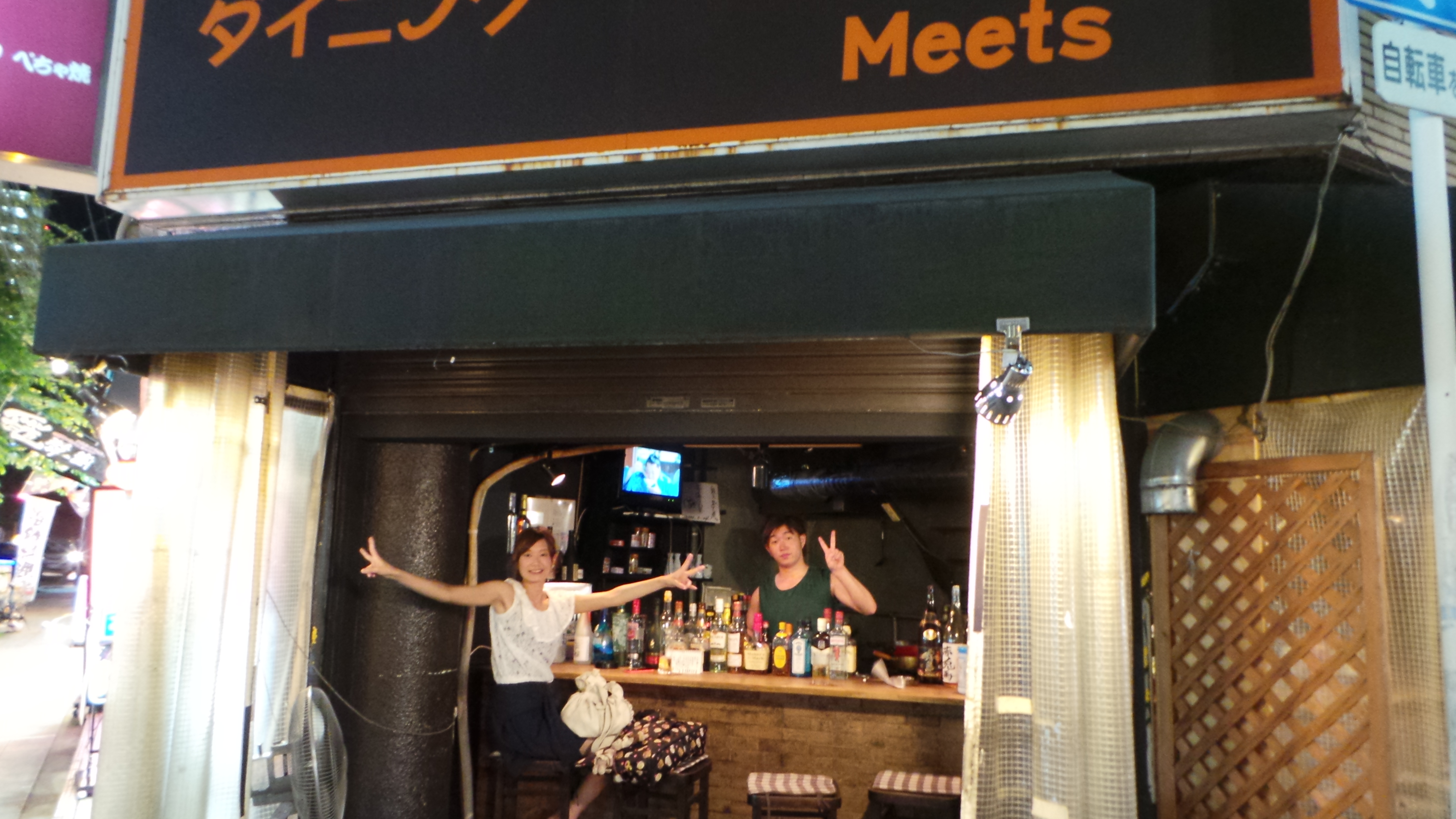
I first visited Meets when I was in Osaka in July 2012. The bar is L-shaped and has a total of seven seats. That night two years ago remains my favourite nightlife experience in Japan. Despite its small size, there were two members of staff working there: a man, and a young woman who bore a striking resemblance to Jennifer Aniston. I spent the whole evening talking to her. However, she didn’t speak a word of English, so we conversed in turns using her smartphone translation application. She would speak in Japanese, I would read the text, and then reply in English, and so on.

Anyway, back to today. Only one member of staff is working, a Japanese man called Ken. He’s the same guy who was working that night two years ago. I order a Suntory whisky highball and take a seat. I’m the only customer; a baseball game is playing on the television. At 8:50 p.m., Ken switches the television channel from baseball to the ending credits of a random show whose name I might never know. On-screen for no longer than three seconds appears Micaela Braithwaite, the woman I greeted in Fukuoka. I can’t snap a photograph fast enough.

The bar I saw advertised in a bookshop today, and he changes the channel at that exact moment. Ten seconds later, the credits stop and the adverts begin. What are the chances? Sometimes, it feels like I’m living inside my own memories. “I’ve worked here for three years now,” Ken tells me, chipping in with small talk.

Next, a girl named Mana enters the scene. She is from Taito, the same ward in Tokyo as Asakusa; we are practically neighbours, though a million miles away from home. We drink. Ken writes all of our names in kanji, while I write them in hiragana and katakana. We continue drinking. Mana and I talk about Asakusa, although our conversation is limited to basic English and basic Japanese. Unfortunately, there’s never a smartphone translation application around when you need one.

meets3

At 10 p.m., I finish my final highball, bid goodbye to Mana, and say farewell to Ken. My bill comes to ¥2500 for four singles and a double. “See you in two years,” I tell Ken, jokingly.

After Meets, I attempt to find some food; I haven’t eaten anything since the fish on sticks. The area around Nishinakajimaminamigata Station is littered with touts, neon lights, and shady massage parlours. I’ve been craving curry for perhaps a week. The first restaurant, simply named ‘Indian Restaurant,’ displays ‘Last Orders at 11:30 p.m.’ As I approach, the Japanese chef who’s taking in the sign informs me that they are closed.

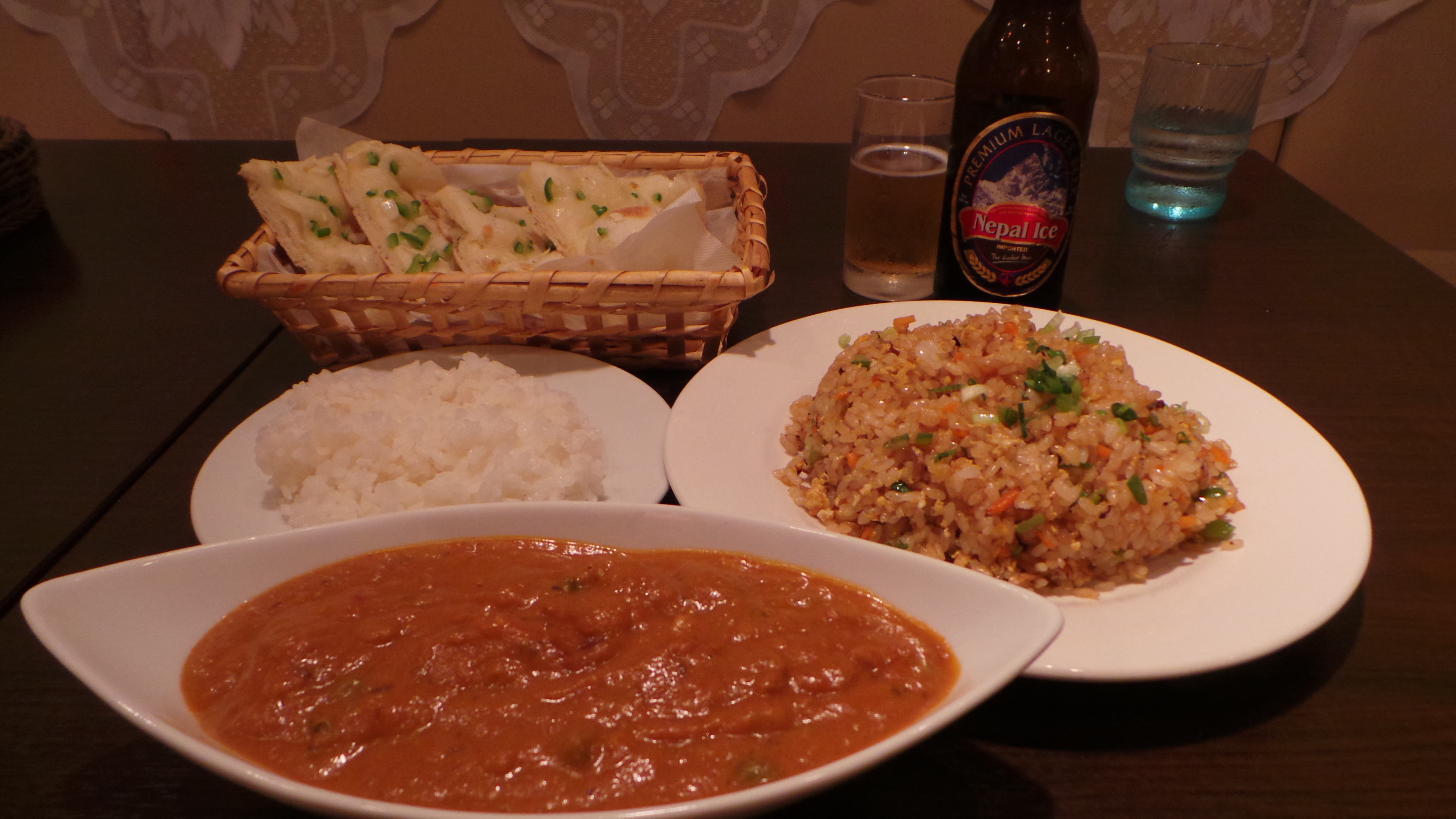
The second restaurant is owned by a Nepalese family and is open. Inside, I order a bottle of ‘Nepal Ice,’ having never tried it before; do as the Nepalese do, and all that. The beer boldly claims to be the ‘coolest beer.’ It’s pale with a slight bitterness, just like me.

I order the classic vegetable curry, egg rice, and garlic naan. The Nepalese waiter speaks English but habitually addresses me in Japanese. “Poppadom,” he says as he hands me a spicy poppadom.
“Arigatou gozaimasu,” I reply in Japanese, out of habit. The poppadom is a little stale but spicy; it will do. Hopefully, it isn’t a taste of things to come. The muskiness is slightly drowned out by the spice, and the spice itself is drowned out by the Nepal Ice.

nepalcurry

My food arrives, and I order a second bottle of beer. The spice level is almost perfect—perhaps it could be a tiny bit hotter, but I don’t mind much. I pay ¥2350 for two drinks and a really good curry.

Bike to the Fuchsia

A cloudy yet hot day, with a cool breeze—a perfect setting for cycling. Today, I’m filled with motivation. My first stop is a small park along the way to yesterday’s failed destination, Dazaifu.

Inside this lovely park, three old ladies play bowls on a synthetic lawn while beautiful fuchsias wave in the wind near a natural stream. Japan currently recognises almost 110 species of fuchsia. These particular flowers boast the classic blend of purple and red hues.

As I arrive at Dazaifu around 3 p.m., the first thing catching my eye is a hill crowned with ruins. Parking my bicycle, I decide to climb it. From the hilltop, I’m greeted with a view of traditional Japanese houses in the distance. At the bottom of the hill lies Gakugyouin Temple.

shrine1[1]

I cycle around, admiring the greenery and scenery. In Tokyo, the greenery was often overshadowed by the buildings, but here, the mountains seem adorned with temples. A swarm of dragonflies gracefully drifts above an open allotment. This place exudes tranquillity, likely absent from any guidebooks. This is precisely the Japan I’ve yearned for since my arrival—a serene experience I hadn’t yet encountered.

Kanzeon-ji is a seventh-century temple, once the chief Buddhist temple in Kyushu. It houses a multitude of historical, artistic, and religious treasures. Beside it lies the ruins of the once-marvellous seven-story high pagoda.

kanzotemple[1]

Dazaifu is starting to remind me a lot of Kyoto. In eight days, I’ll be heading to Kyoto for one week. Then, I have two weeks without plans before I head back to Tokyo. The thought has crossed my mind to cycle back to Tokyo from Kyoto, stopping off at interesting places along the way. The two cities are only 367 kilometres apart.

The sign next to the temple mentions that the pagoda was restored in 741 A.D. at a scale of 1/10. Conveniently, that’s available to see outside the Dazaifu City Fureai Cultural Hall. That’s my next stop.

pagado[1]

I enter the cultural hall, and the woman at the desk seems startled by my presence. Politely, I ask if I can look around, and she agrees—it’s also free. Inside, there are various objects encased in glass, mostly old roof tiles. After a brief tour of the building, I take my leave.

Next, I cycle to Komyoten-ji Garden to see the Government Ruins—the remnants of the medieval Dazaifu Administrative Buildings. They rest within a vast public park at the foot of Mount Ono. As I arrive, I notice some boys playing football, using jumpers for goalposts. The goalkeeper rushes forward, expertly dribbling the ball past six players before scoring an excellent goal. Applause erupts from everyone watching.

govruins[1]

All the children in Dazaifu say ‘Hello’ to me. Surprisingly, there’s a distinct lack of tourists for such a historic place. Maybe I’m the first Westerner they’ve ever seen. With a wry smile, I reply to them, ‘Konnichiwa.’

As I cycle by, insects chirp loudly near one of the men employed to direct traffic. However, there’s no traffic on this road; I don’t sense a car has come this way for hours. He smiles warmly at me, signalling with a wave of his hand and a deep nod for me to continue.

As I pass Kaidan-in Temple, I see a sign for an Exhibition Hall. Carnival Cutouts wait for me outside. Inside, there’s no one present—no tourists, no staff members, no one to take my money. It’s just more objects enclosed in glass. A sign prohibits photography, but I snap a cheeky shot; no one will ever know.

pagodo2[1]

My final stop in Dazaifu is the Kyushu National Museum, seemingly tucked away in the woods. I leave my bike; I really should lock it up, but I don’t bother. There are more temples around here too.

A sign simply saying ‘Museum’ points up a mountain path. I follow the path for a good ten minutes before encountering a new sign, indicating that the museum is 2.1 kilometres away. Quite odd. I retrace my steps to my bicycle and head off in the new direction.

museumsign[1]

I cycle up into the mountain and reach the museum car park; a sign indicates ‘last entry 4:30 p.m., exhibitions open until five.’ Glancing at my watch, it reads 4:28 p.m. Swiftly, I park my bicycle in one of the bays intended for cars and start running up the many steps to the museum.

A man with a red lightsaber appears out of nowhere. He insists that I must cycle all the way to the top and park my bike in the designated parking area. I protest, saying, “But the museum closes in two minutes, and I came all the way from Hakata!”

He makes a phone call and speaks in Japanese for a few minutes. Afterward, he tells me they can still let me in. Lucky me. As I make the final approach to the Kyushu National Museum, its sheer size almost knocks me off my bike.

kyushunationalmuseum[1]

Opened in 2005, it stands as the first new National Museum to open in Japan in over 108 years. It’s also the first to emphasise history over art and boasts an on-site conservation centre, the largest in Kyushu. The museum primarily focuses on prehistory to the Meiji era.

Once inside, I ride the escalator to the 4th floor and pay a ¥420 entry fee. The rooms are impeccably clean; the glass seems polished on the hour. The museum is enormous. Separate rooms display various collections of historic artwork or fossilised ruins. Photography isn’t allowed here—not even an opportunity for a quick shot; two staff members stand guard in every section. With just twenty-five minutes to look around, I leave dead on closing time.

After the museum, I cycle 18.2 kilometres back to the hostel. It takes me an hour, stopping once for a bottle of Pocari Sweat, and a second time to photograph this building:

chesterhouse[1]

At the hostel, I realise that I’m starving. I decide to keep my stomach empty and write up some of the day’s events. At 8 p.m., I head back outside and run on my empty stomach, finding the red lights of traffic intersections providing nice little rest stops from time to time.

I run for almost fifty minutes, passing packed restaurants offering any choice of cuisine imaginable. Even though it’s been twenty-three hours since I had any food, nothing really draws me in; my appetite is oddly missing.

I see a random square:

randomsquare[1]

As I run, I notice some red lights in the sky that resemble a tower. Intrigued, I head in that direction. As I get closer, I spot planes floating by in the distance. A sinking feeling hits me; I might have circled back to Fukuoka Airport, recognising the tower used for Air Traffic Control. Oddly, I didn’t see any signs indicating the airport, though.

To my relief, my assumptions were false. I arrive at Hakata Pier, realising that the tower I saw was Hakata Port Tower. Calculating the distance, I note I ran for 5.7 kilometres to get here. Earlier today, I cycled at least forty kilometres. It’s surprising—I’ve never had so much energy.

hakatatower[1]

Fishermen line up along the pier, and finally, my appetite for food returns, specifically for fish. However, the only fish I find here are sandwiched between glass in another small, free aquarium. I scout out the area and stumble upon another temple—I seem to have come across quite a few of these today.

The pier looks picturesque at night, adorned with its myriad of lights. Entering the food court, I find that the only place with any appeal is a French restaurant. However, as I approach, the lights suddenly go out. Closed at nine o’clock sharp.

piershot[1]

I head back to Hakata and unexpectedly stumble upon the all too familiar Reisen Park. Spotting other runners doing laps around the park, I decide to join them for a while. When I finally locate the camera shop, I get my bearings.

The area around the park is bustling at night, with outdoor izakayas lining the streets. The enticing aroma of barbecued meats fills the air. I’m rather fond of the monument in the park, so I try to take a photograph, but unfortunately, it doesn’t turn out so well. Quickly, I make my way back to Hakata Station.

parkstatue[1]

I undo all the hard work of the day and opt for McDonald’s. It feels like I’m a death-row inmate having his last meal, as I’ve decided this will be my final indulgence in junk food for a while. It costs me ¥986, effectively for fish and chips.

As I walk back from the station to the hostel, it unexpectedly starts to rain—for a grand total of exactly five seconds. Umbrellas shoot up, and just as quickly, they come down. Since I don’t usually carry an umbrella on hot days, I get ever so slightly wet.

Back at the hostel, I find I still have an abundance of energy. It’s been a remarkably productive day. I spend a few more hours writing, followed by some reading. Then, I head to bed—stone cold sober.

Much Beppu About Nothing

I haven’t really done any touristy things during my last two days in Beppu. Instead, I have listened to far too much Blind Pilot and filled the rest of my days reading Haruki Murakami. In the evenings I have visited bars. On Friday night I got to the semi-finals of a Table Tennis tournament, only to be beaten by Yojiro. Today I will write about general things in Japan.

Vending machines. There are far too many Coca Cola vending machines for my liking. One is too many if I am completely honest. As a non-consumer of this particular brand of misery (reasons: child labour, worker rights, pollution, murder), I often find myself cycling around looking for a machine with the Suntory Boss brand. The best vending machines offer Coffee Boss Rainbow Blend, and if I am really lucky, Boss Ice Creamy Latte.

Vendingboss[1]

Vending machine coffee in the summer is mostly cold. I have always enjoyed cold coffee anyway. In the winter, the machine changes and the can of coffee is hot. In the vending machine above, Coffee Boss Rainbow Blend is on a Price Down!

In Japan, there are far too many silly notices and signs in English; most have terrible grammar and bad spelling. Presumably these signs are mistranslated when they are put through Yahoo! BableFish. Google is surprisingly unpopular amongst the Japanese people. For news, emails, and searches, almost everyone here uses Yahoo! Here is an example of a bad sign:

Umbrellastand[1]

I like umbrellas.

Yesterday I met a vegetarian couple. They decided before coming to Japan that being a vegetarian here would be ‘too difficult’, so they have chosen to eat meat while they are here. I don’t quite understand this logic. Admittedly, vegetarianism is somewhat uncommon here. I find that simply learning to explain that you don’t eat certain foods will get you by. I have even seen people with printouts in Japanese explaining their dietary requirements. There are ways, and there are also plenty of amazing vegetarian dishes here too.

I think I have mentioned it before, but the streets here are littered with cats. Here are some cats:

Catseverywhere[1]

There are a lot of things I miss about England. Eating cheese. Crust on my sandwiches. Coleslaw. Sometimes I really wish I could sit playing the guitar for a few hours, but I don’t have a guitar here, maybe I can rent one. I also mentioned the stars before. Never visible. So strange. Maybe it is just because of the weather. When I finally see the stars I will probably write a huge post about it.

I went for a late-night walk in the ocean last night. The ocean here appears clear or blue, depending on the time of day. Sitting on the beach at midnight with a few beers, followed by a walk in the warm ocean — even at midnight, the air here stays warm. Even during heavy rain, the air remains warm. I’m uncertain about the winter; time will tell.

Here is the ocean in the day time. Very blue:

Bluebird[1]

Walking around at night with a beer and not breaking the law is also amazing. Convenience stores are everywhere, so if you cant find any nightlife, you can buy a beer from Seven Eleven, finish it by the time you get to Family Mart, buy a beer, finish it by the time you get to Lawson Stores, et cætera. Basically if you walked to every 24-hour convenience store in one area buying one beer at a time, you would get nicely drunk. I count eight stores within ten minute walking distance from my hostel.

I enjoy the lampposts and traffic lights playing happy tunes. I like being in Japan and being from England. When most Japanese people ask me where I am from, their attitude changes when I say England. It is as though I have uttered some code word that makes people more friendly. “Ah, from England! You know Sherlock Holmes?” The other night a Japanese salaryman bought me a drink in a bar, he said it was because he, “Likes England so much.”

Random things are placed on the streets here. This is inside Beppu shopping arcade. Spot the Carnival Cutouts:

Bignose[1]

There are things I don’t like. I dislike being tall. The number of times I’ve smashed my head into the top of a doorframe surprises me; I’m amazed I haven’t suffered a mild traumatic brain injury. Although, maybe I will ten years from now. I often forget the occasional English word. Whilst talking to someone, I might suddenly draw a blank on a word I should know. It’s like there’s a void in my head where the word used to reside. At other times, I unconsciously substitute a Japanese word for an English one without even realising.

I hate inconsideration, but who doesn’t. I am in a four bedroom dormitory room trying to sleep. Someone comes in, sits down on his bed and starts to eat from a bento box (a lunchbox style Japanese meal; commonly with sections for rice, pickled or cooked vegetables, and a type of meat or fish). He is eating chicken, but I don’t eat chicken. Now, my room smells of chicken, and amidst this olfactory assault, all I can hear is him chomping loudly on his food. The hostel has a dining area and a lounge area, so please refrain from eating chicken in the dormitory room. Additionally, some people insist on loudly packing their suitcase for about an hour at 7 o’clock in the morning. It shouldn’t take that long and can be done the night before.

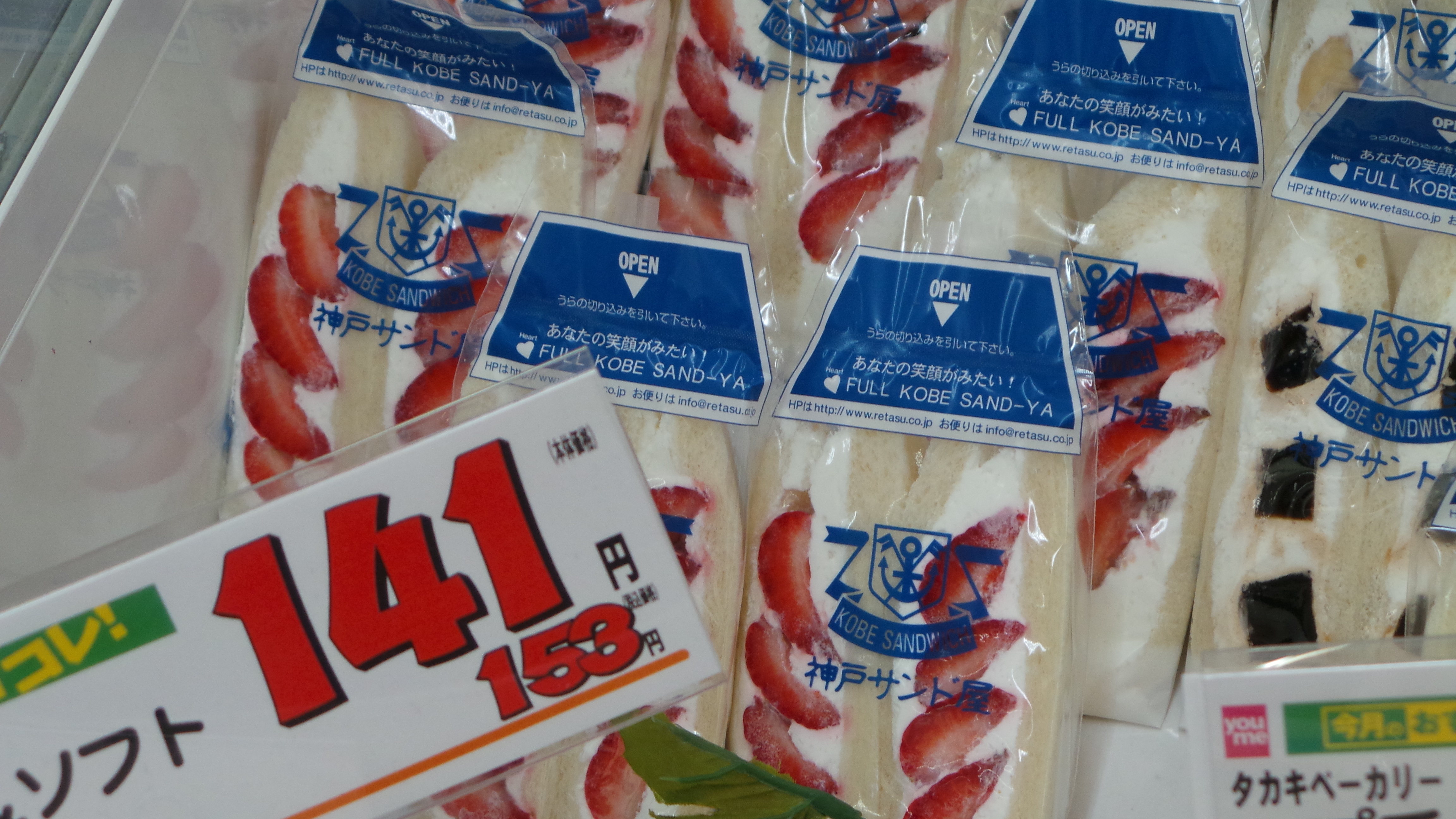
I went to the supermarket to photograph a bento box, but they had completely sold out. So instead, here is a photograph of some strawberry and cream sandwiches:

20140713_115654

Anyway, I have a bus to catch. Next stop: Fukuoka.

Birds Thrown Around, Bullets For Hail

The largest storm on the planet passed through Beppu last night. The storm had drifted a little south of its predicted trajectory, but we still got hit by the strong winds; they sounded like a bullet train as they rattled the windows and the walls. I read somewhere that three months of rainfall will fall over Japan in just two days. This morning I take a walk to the beach to see how high the sea level is. I am surprised to see so many boats on the fierce waters.

Boats[1]

Further down the beach I see houses with their windows boarded up. Thankfully, I see very little damage to anything. Beppu has survived the Super Typhoon and everyone is safe. Life goes on as normal here. Across the road the 24-hour pachinko parlour is packed full of people and cigarette smoke. The light rain all but stops so I wander back to the hostel to grab a bicycle.

I cycle the ten minutes to the Rakutenchi Cable Railway Station. The train here only goes up the mountain to Rakutenchi Amusement Park. The park is closed today because of the typhoon. Oddly, the rest of the trains and buses in Beppu carry on as normal, except at Rakutenchi Cable Railway Station. With the park closed, I decide to go back to Kanawa Hells to finish what I started last week.

Rakutenchi[1]

On my way to the Hells, I see a road sign for ‘Beppu Univercity’. I find it unbelievable that major road signs can contain such errors. At the Hells of Beppu the sun is shining; not the weather you would expect the day of a Super Typoon. The Foreign Tourist Information Office is closed today; I am not sure if this place offers information to foreign tourists, or information about foreign tourists.

Shiraike Jigoku, White Pond Hell, is the first Hell I visit. I am pleased to find that it is open. I pay my ¥400 entry fee and admire the white pond. The water apparently is, “Transparent but as time passes it turns a blue-white colour.” I have no idea why the sign says this, the pond water is clearly green. Also at White Pond Hell, there is a really old aquarium with just three fish.

Greenbluewhite[1]

Opposite Shiraike Jigoku is a closed red door. The sign next to the door says Hinryu Jigoku, Golden Dragon Hell. Inside this Hell is a, “Dragon statue with steam coming through its mouth that seems to be flying when water spouts out at sunrise.” This is actually the 9th Hell of Beppu; I’m not sure if it’s still open to the public as it’s not on any map. Anyway, I mention it only because I really enjoy the impressibs description on the sign:

Dragonhell[1]

The next two Hells I plan to visit today are halfway down the mountain and about ten minutes away. I get back on my bicycle and take a very fun bike ride down the winding mountain path, through the many forests and tunnels carved into the mountainside.

Chinoike Jigoku translates to the amusing, ‘Bloody Hell’. Here there is a massive pool of red hot mud estimated to have been here for over 1,300 years. This is Japan’s oldest natural hot spring. It takes its name from the image of hell found in Buddhism. There is also a nice waterfall here. Some colourful Koi Carp fish swim in the pool below.

Bloodyhell[1]

Carnival Cutouts are found everywhere in Japan. Wooden life-size cutouts you can put your face through are commonly found at every tourist attraction and randomly placed on the streets for no apparent reason. I can cycle around Beppu for ten minutes with my camera and will easily find ten Carnival Cutouts. Everywhere. After Bloody Hell, I head next door to Tatsumaki Jigoku. It is closed today. I see a sign saying Beppu Station 7.5 kilometres and decide to head back to the hostel for my new favourite food, natto.

Back at the hostel enjoying my natto, a member of staff finds it hilarious that I wrap my fermented soy beans around potato chips. Whatever. After food I head to Beppu Tower. It is one minute from my hostel and I still haven’t been. Beppu Tower was probably once a marvel, but now it is used as an advertising billboard for the brewery Asahi. There are eight neon Asahi signs on the Tower; four in Japanese and four in English. The Tower stands at a Herculean 100 metres tall.

Asahidaytower[1]

I pay my ¥200 and ride the silent lift to the seventeenth floor. It’s one of those lifts that doesn’t display the current floor number and doesn’t really feel like it’s moving. After about thirty seconds, the doors open, and a Japanese lady at a desk greets me as I hand her my ticket. I begin to wander around.

Inside the Tower there are black and white photographs of crowds of people standing not too far from where I am standing right now. There are photographs of Japanese celebrities. There are pictures of the Tower through the ages. It used to look quite nice when it was first constructed in 1957. Today though, far from the bustling crowds, I am the only person here.

Bepputower[1]

The view from the Tower is good. A full 360 degree panoramic view. The only problems here are that the glass in some of the windows is cracked and broken. Other windows are filthy on the outside and are in desperate need of a clean. Some of the photographs I take just don’t turn out at all; my camera unable to penetrate the thick layers of dirt.

Back at the hostel I book a ¥2100 bus ticket for Sunday to my next stop, Fukuoka. Just when Beppu was starting to grow on me too. I speak to a Korean guy (and fellow avid bicycle enthusiast), he tells me about something amazing that he saw today. It’s only 6 p.m. so I decide to check it out before the sunset. As I cycle down the ocean, I quite like the look of the sky.

The_sky[1]

My destination is beyond the Monkey Park, some 5.7 kilometres each way. As I cycle, I realise that I haven’t seen any stars yet in the six weeks I have been in Japan. Very odd. Anyway, I finally reach my destination; an old landlocked boat converted into a play park. There are slides, tunnels, ladders, and a climbing frame. There is also a weird rope ladder that leads into the hull below. I am very tempted to go on the slide, but there is a couple on the ship too, seemingly on a romantic date.

Randomship[1]

After exploring the abandoned ship, I abandon ship and cycle back to the hostel for the last time tonight. At the hostel, the excitement in Beppu never ends; Justin, a staff member here, has found a crab in the male onsen. Everyone is going crazy about the crab. They finally catch it and take it back to the ocean, where it most likely belongs.