When Haricot Met Celery

I wake up at 9 a.m. and head down to the lobby for my Japanese-style breakfast. The food is almost identical to yesterday. The grilled fish of the day is once again salmon. The only change is that my cooked seasonal vegetables today are haricot beans and peppers, mixed in with natto. My side salad includes corn on the cob, celery, and red onion. I gaze out of the window whilst I struggle with my breakfast, a meal I am not used to eating.

After breakfast, I take the subway from Shin-Osaka Station to Namba Station. Getting off the train, I head toward the famous Namba Grand Kagetsu Theatre, hoping to catch some manzai comedy. Osaka actually produces most of the comedians in Japan. Manzai is a type of stand-up comedy where two comedians perform a routine together. Even if in Japanese, good manzai can be very funny to watch because a big part of the show is the timings and actions on stage. Sadly, there is no performance happening at the moment.

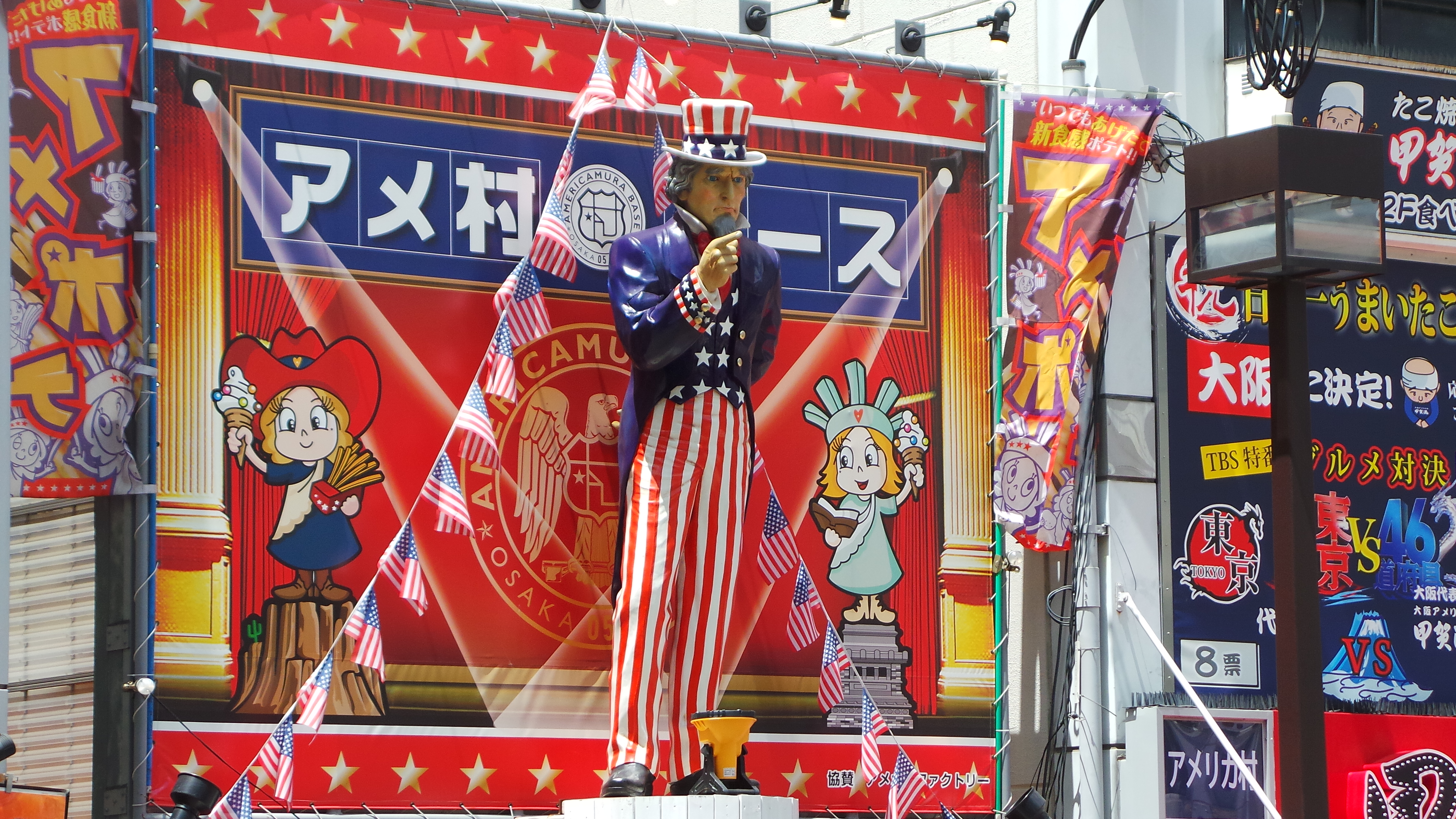
I check my map and decide to head to a place called ‘Americamura.’ I wonder what I will find there.
america

Shops here sell American clothing, some entirely dedicated to selling baseball hats or soccer jerseys. Mixed in with this madness are shops selling skate, punk, and retro clothing. I enter a bookshop that sells herbal teas, skateboards, and, of course, books.

All of the big brands have their own ‘flagship’ stores here. Mixed in with the clothing are some really cheap-looking bars selling inexpensive drinks. Surprisingly, all the tourists and shoppers here are Japanese; there isn’t an American in sight. I’m not quite sure how this place came to be. After a few blocks, I see a Tokyu Hands; the store marks for me where America ends and Japan begins again.

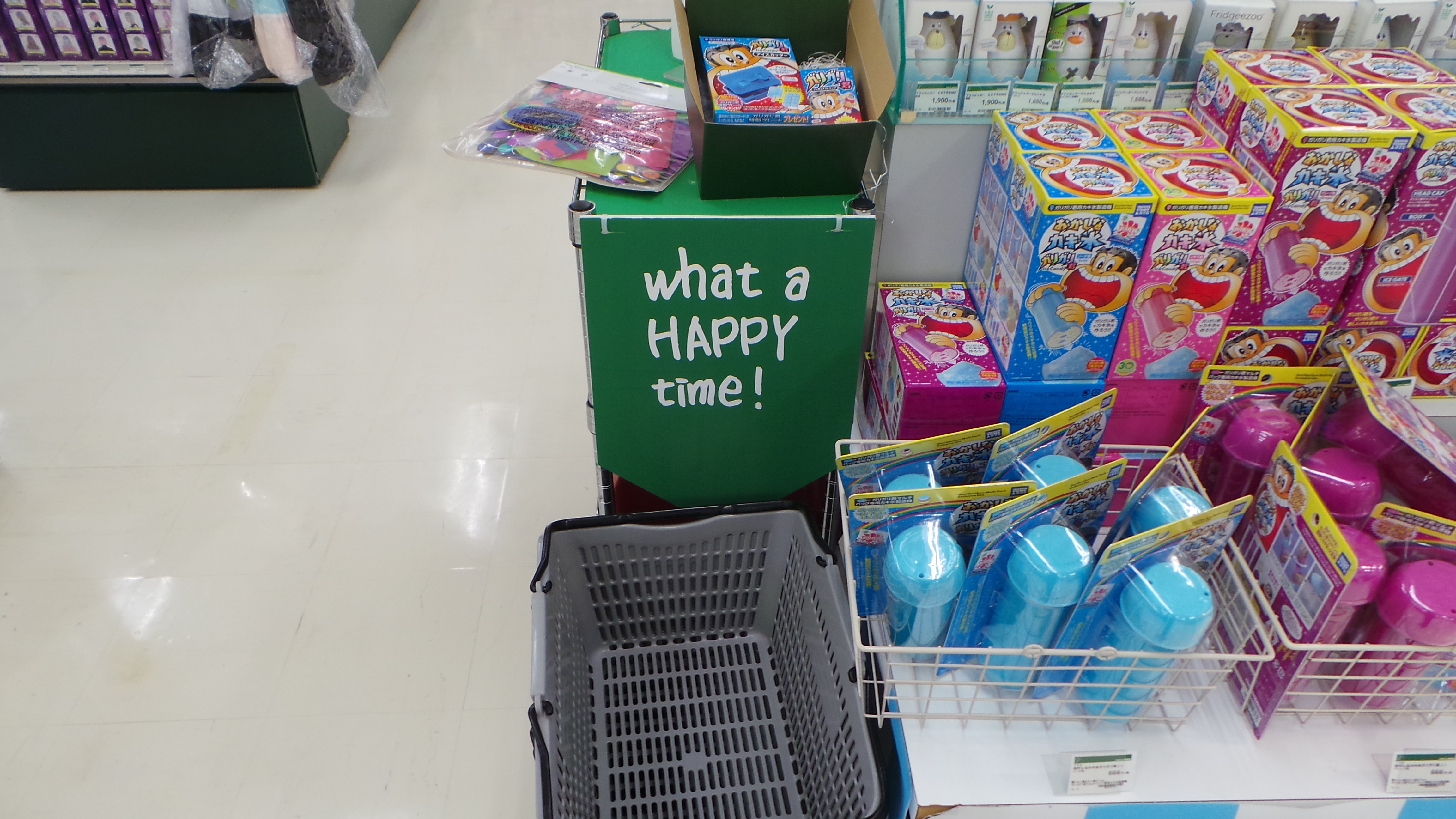
I decide to take a break from the heat and head to the fifth floor using the Tokyu Hands elevator. The shop describes itself as a ‘Creative Life Store’, offering a vast array of products. On this floor, they have party supplies, a variety of items, magician supplies, and bicycles. A song from the film ‘Frozen’ is playing, the Japanese version. I check out some of the cool gadgets, then glance at the prices of bicycles; they’re quite expensive here.
happytime

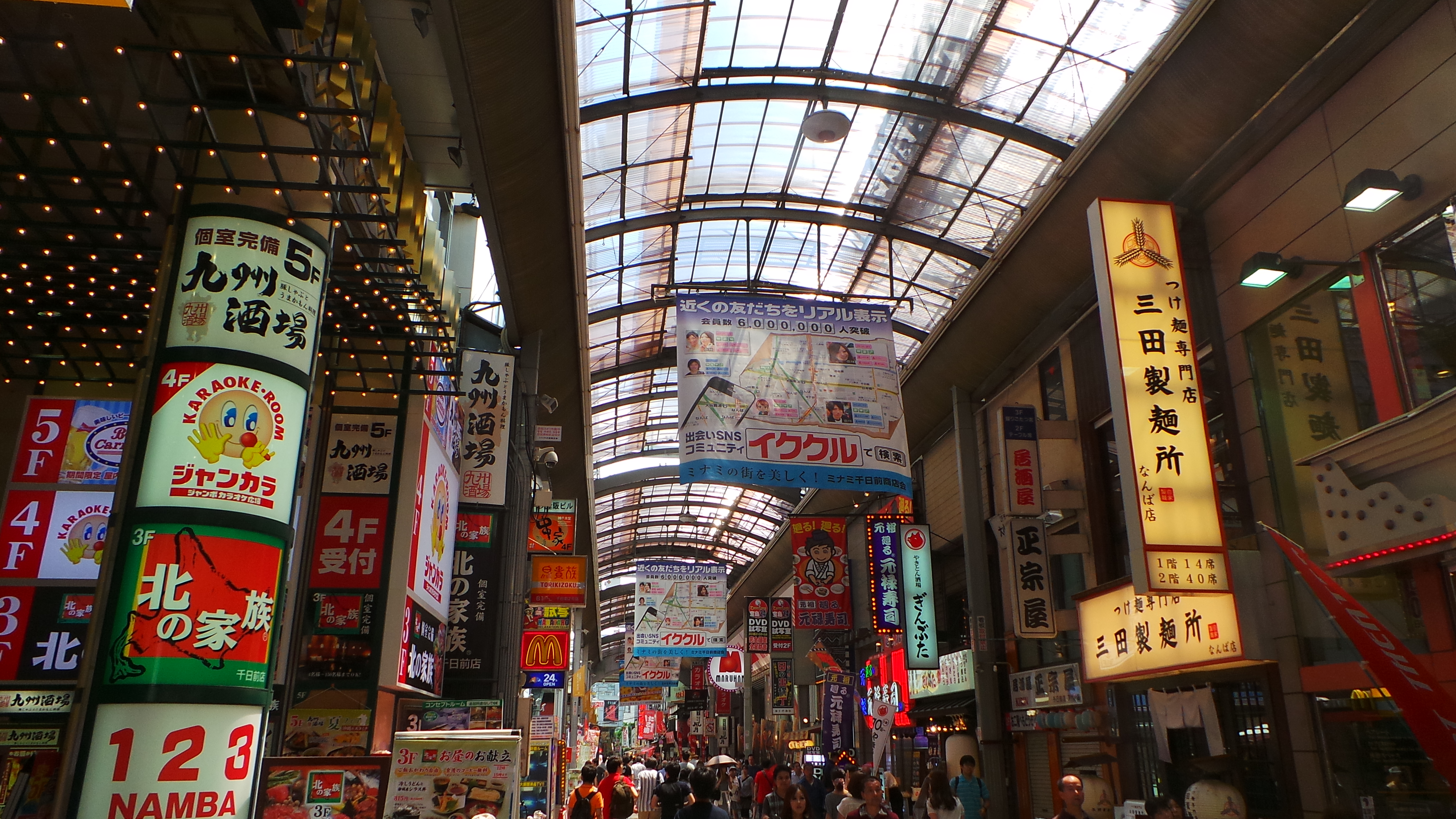
If you’re not particularly interested in shopping, today probably isn’t for you—or for me. I head into the Shin-sai-bashi shopping arcade. This is one of Osaka’s oldest and busiest shopping areas, stretching for approximately 600 metres. Everything you ever wanted is in this arcade.

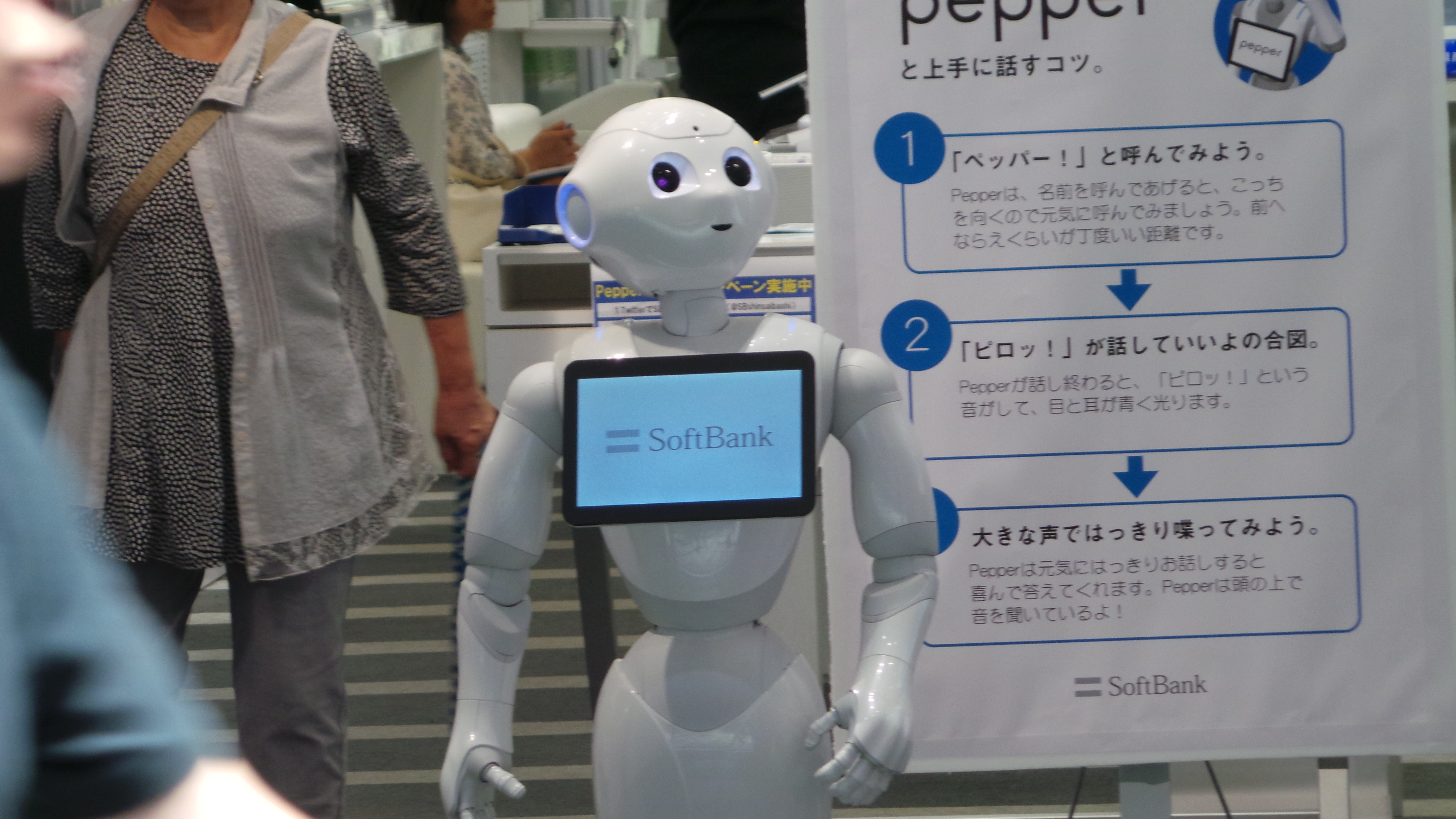
There is a shop that only sells ‘Hello Kitty’ goods, and another named ‘Pancakes, Teas, Coffee, and Happy.’ I’ve noticed that in Osaka, the word happy is used an awful lot. SoftBank, a Japanese telecommunications company, has its own robot. It moves around and engages in a conversation with me about their new products. His name is Pepper.
softbank

Also in the shopping arcade are the usual clothes shops, restaurants, and souvenir shops. I head into my second bookshop of the day, Junkudo. I’m searching for two specific books. I find one of them, ‘Pinball 1973,’ but it’s only available in the Japanese version. I’m trying to get hold of the English version printed for Japanese people to practice their English skills.

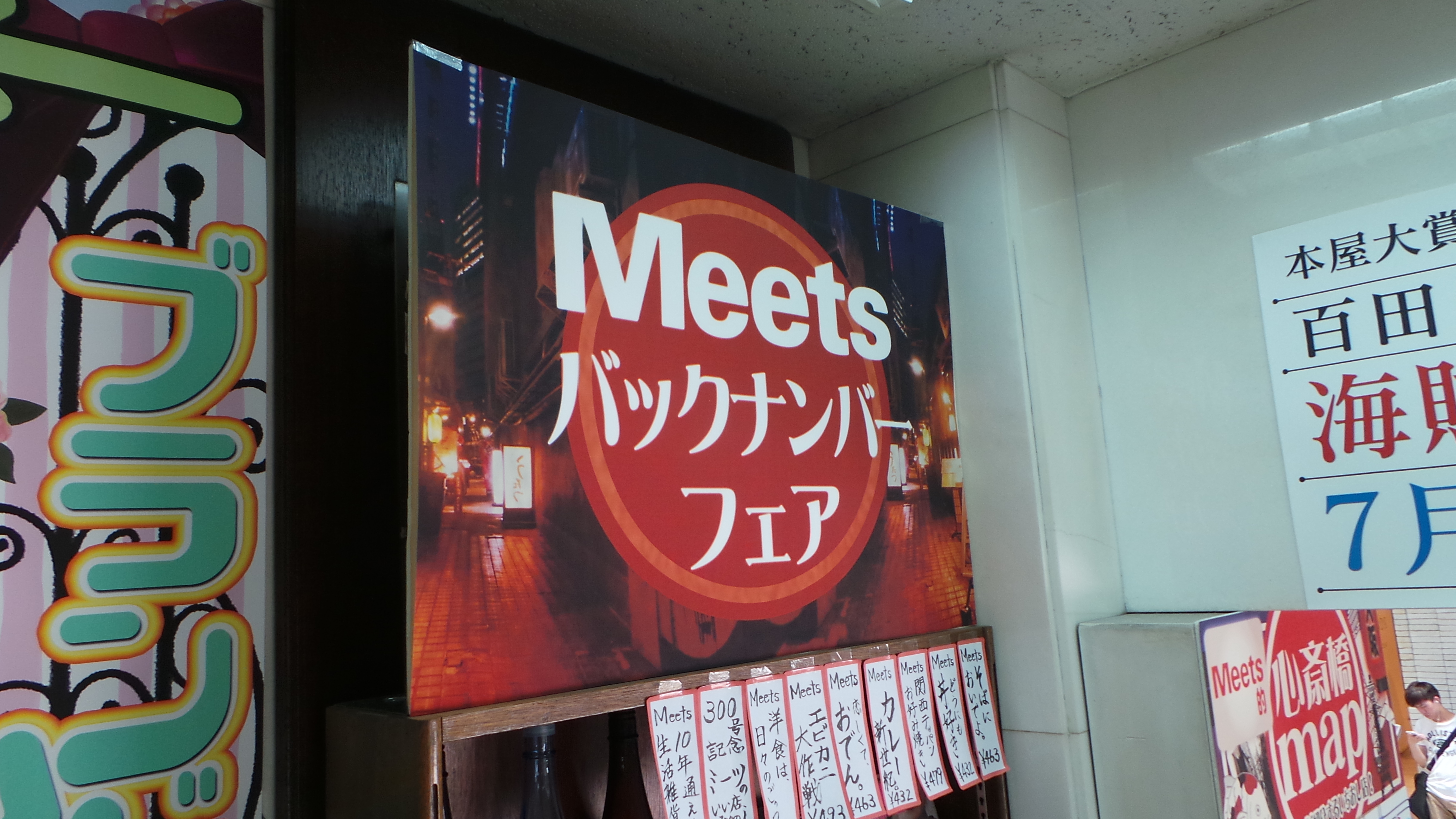
As I leave the bookshop, I’m taken slightly aback by a sign. At the bottom of the escalator, there’s an advertisement for ‘Meets,’ the bar I mentioned a few days ago. It displays a price list along with some other Japanese text. I take a photograph and add it to my folder of coincidences. Back in the arcade, that same song from the film ‘Frozen’ is playing.
arcade

Next, I visit a place called Dotonbori. The pavement here is littered with small restaurants and pachinko parlours. Each restaurant is stacked high, adorned with brightly coloured signage that becomes illuminated in the evenings. It’s the sort of street that I imagine looks just like a scene from Blade Runner at dusk, especially when it’s raining.

On the other side of Namba Station are shops selling manga and anime in an area known as Den Den Town. I spot two or three shops exclusively dedicated to selling Magic: The Gathering playing cards. Other shops offer model figurines and electronics. It reminds me of Akihabara, but on a much smaller scale. Girls dressed as maids stand on street corners, attempting to lure people into the many maid cafes.
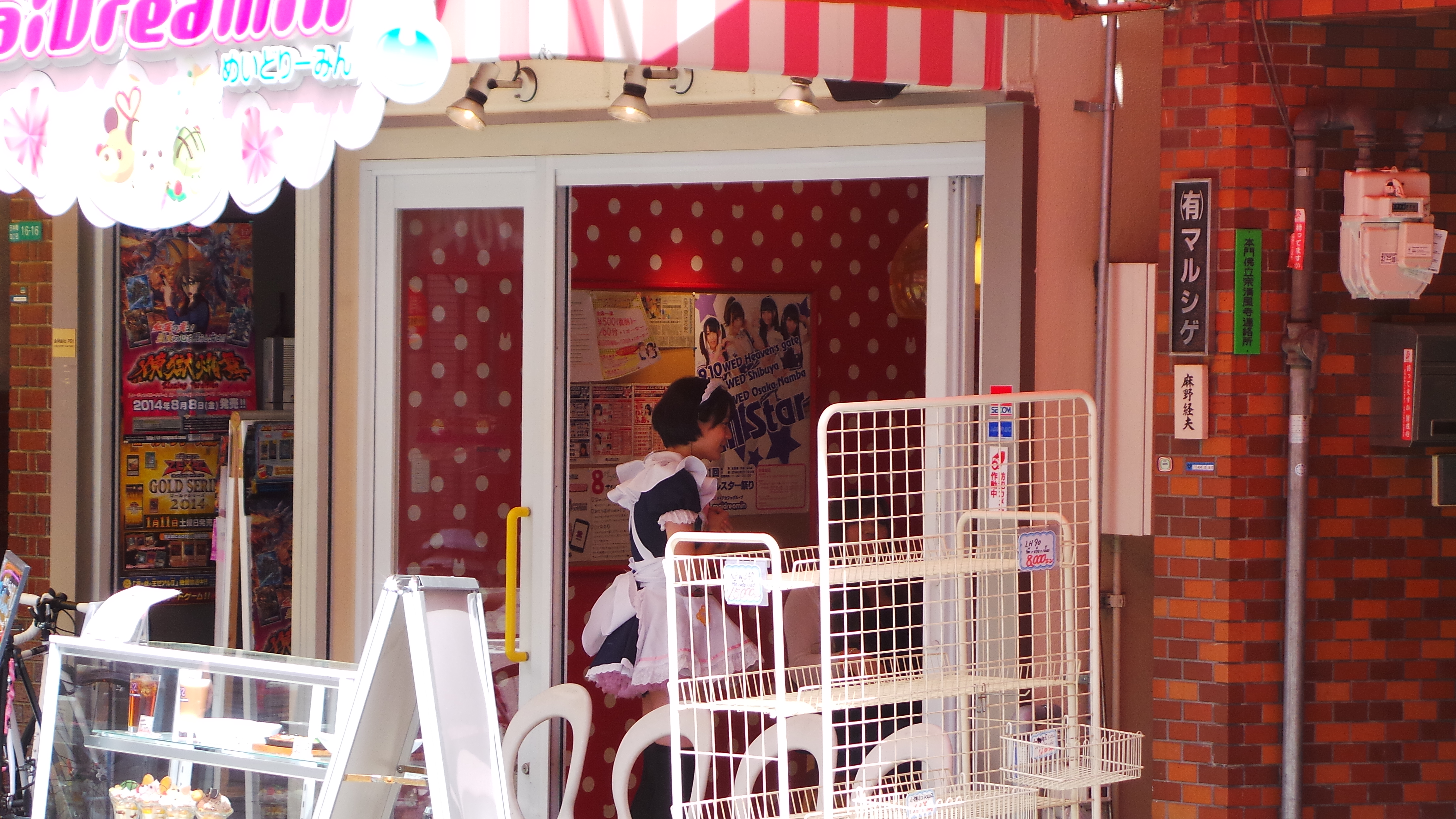
maidcafe

I waste a quick ¥500 in a Sega video game arcade before heading back to the train station. At the station, I have to walk through even more shops to reach the platform. I take the Koya Line just one stop to Shin-imamiya Station. I decide to check out a place called Spa World, but it seems luck isn’t on my side as there’s a fence around it, and it appears to be closed for construction.

Instead, I head toward a tower in the distance. To reach the tower, I have to walk down yet another shopping street.
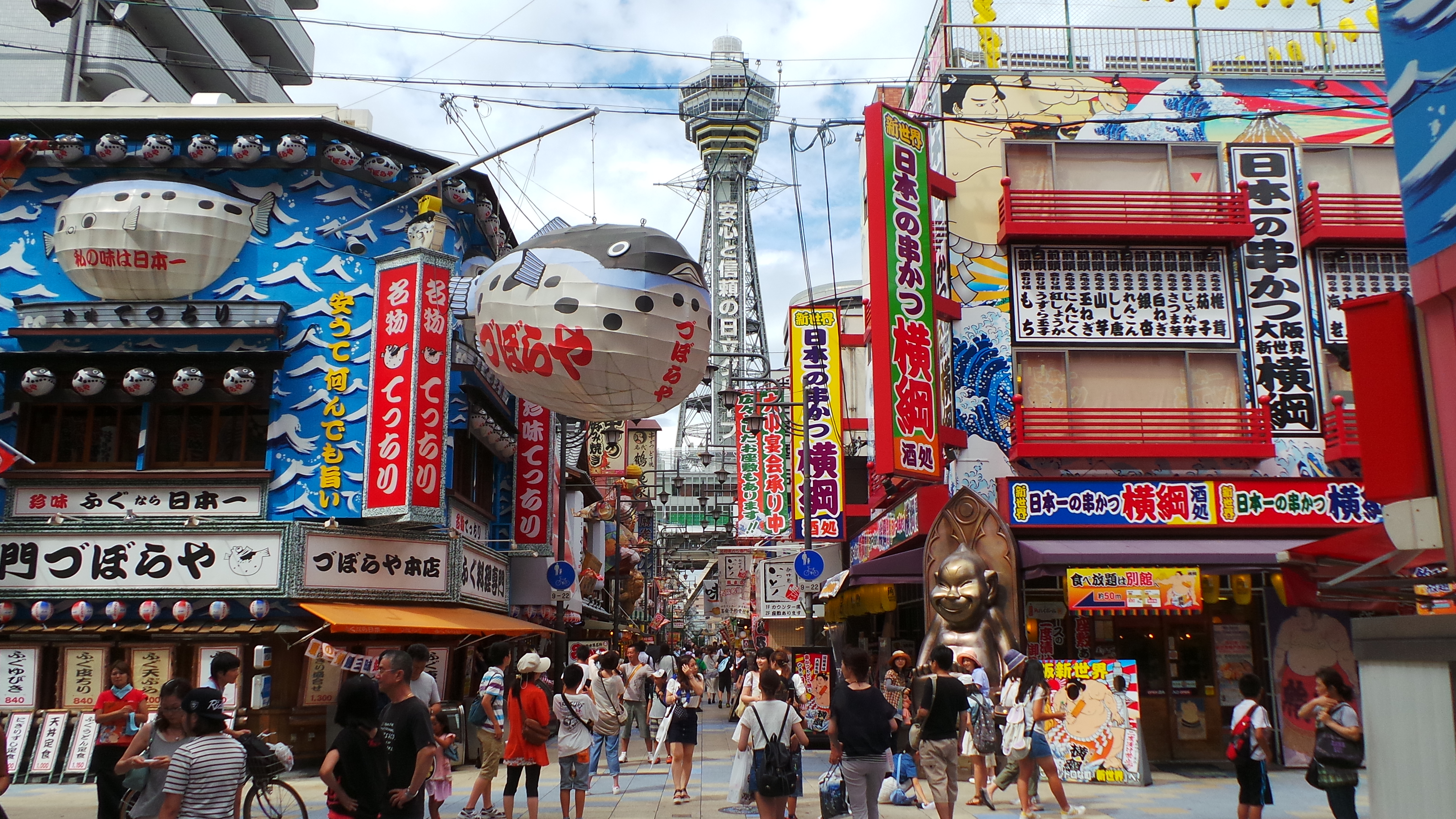
towerstreet

Unlike the other shopping streets, this one boasts a 103.3-metre-tall tower right in the middle—Tsutenkaku Tower, meaning ‘Tower reaching heaven.’ I also admire the Carnival Cutouts; one depicts what seems to be a sumo wrestler devouring a skewer of meat or wielding a rolling pin. It’s a bit ambiguous, but my guess would be a skewer, considering that’s all the restaurants in this area seem to be selling.

I choose a completely empty restaurant, taking a seat wherever I want, and order a Suntory whisky highball with lemon. With the number of times I’ve mentioned their whisky and coffee, I should probably get some commission money from Suntory. I opt for three salmon skewers and three white fish skewers. While I wait, I snack on the complimentary fresh lettuce and sip my highball.
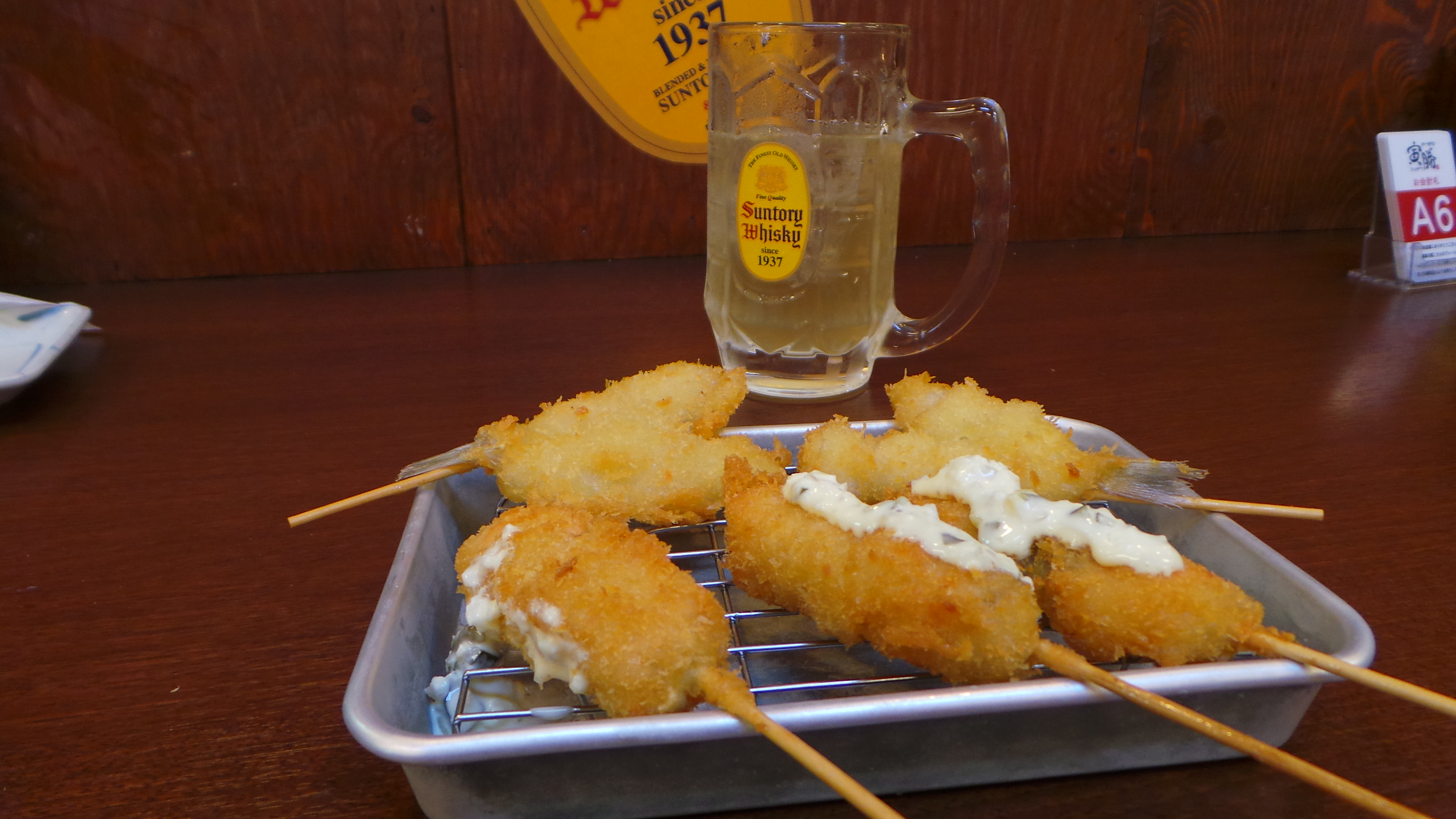
skewers

The white fish turns out to be haddock, while the salmon is fresh, served with a light tartare sauce dressing. The skewered meat is already prepared on the counter; all the chef needs to do is cover each fish with flour, egg, and breadcrumbs before deep frying each stick in oil. This restaurant has all sorts of crazy ideas, but the ones that stand out are cheesecake skewers, ice cream skewers, and banana skewers. I’d eat fried fish on sticks every day if it weren’t for the fact that it would probably kill me. At ¥1050, not bad with a drink.

I head back out into the scorching sunshine. At the end of the shopping street is a zoo, complete with a Snow White Clock Tower. The time is now ten to three in the afternoon, so I decide to wait and see if anything happens on the hour. My life is that exciting. Sure enough, at three, everything starts moving, singing, and dancing, and then Snow White emerges from the clock. Not to be missed—the Tennoji Zoo.
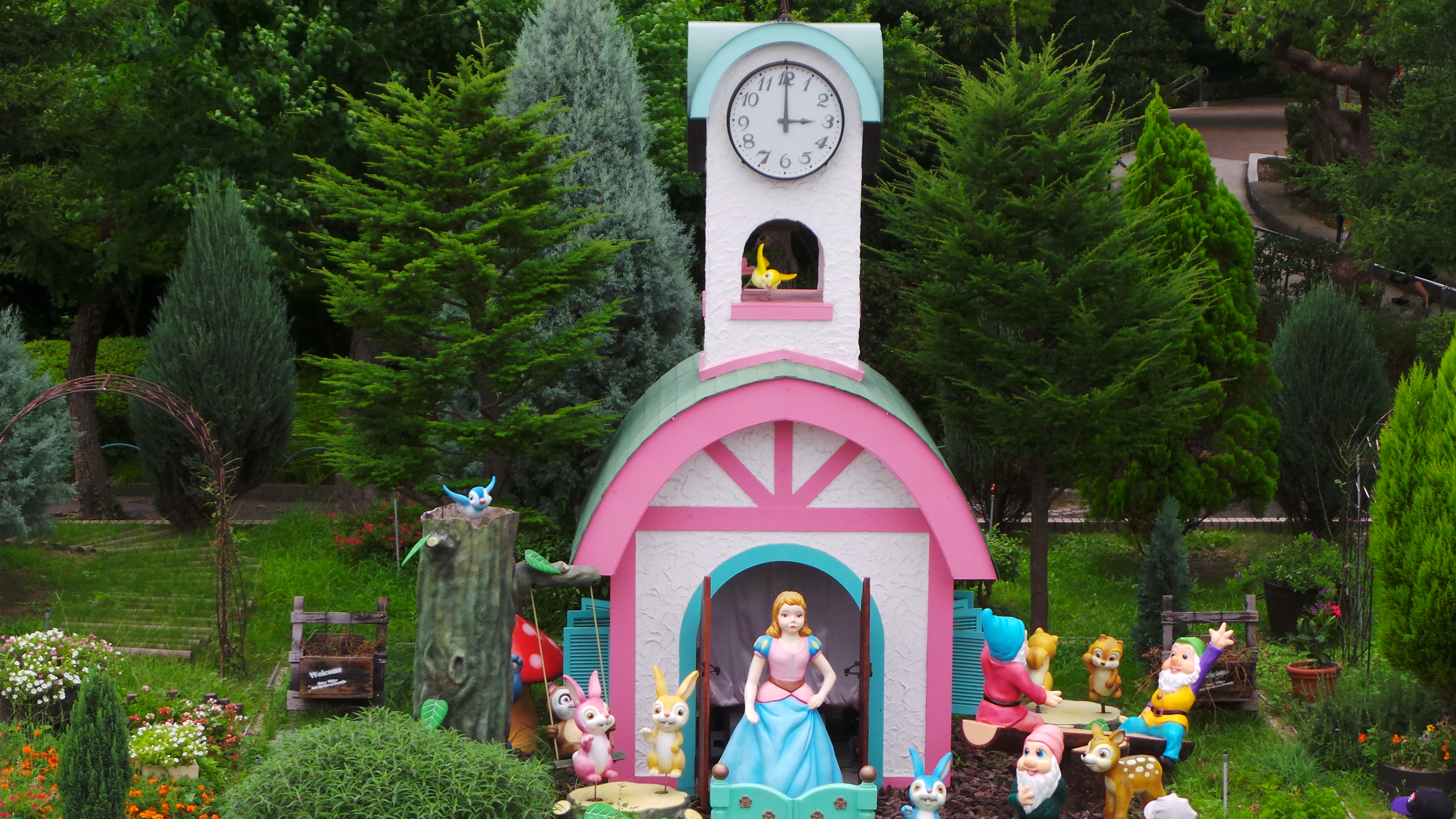
snowwhite

At Tennoji Station, I board what I believe is the Osaka Loop Line. As it turns out, it isn’t. After three stops, everyone disembarks. I find myself disoriented; there are no signs indicating my location. I board the train across the platform, which indicates it’s the Rapid Service bound for Nara. Fortunately, it stops back at Tennoji Station. Returning to where I started, I board the Osaka Loop Line to Osaka. From there, I transfer trains to Shin-Osaka, before deciding that six trains in a day are plenty.

Back at the hotel, I read for a while before sorting through my photographs of the day. I stare at the sign I saw in the bookshop, advertising that same bar. I decide to head out and see if it is open tonight. I walk ten minutes to the bar and am pleased to see its shutters up.
meets2

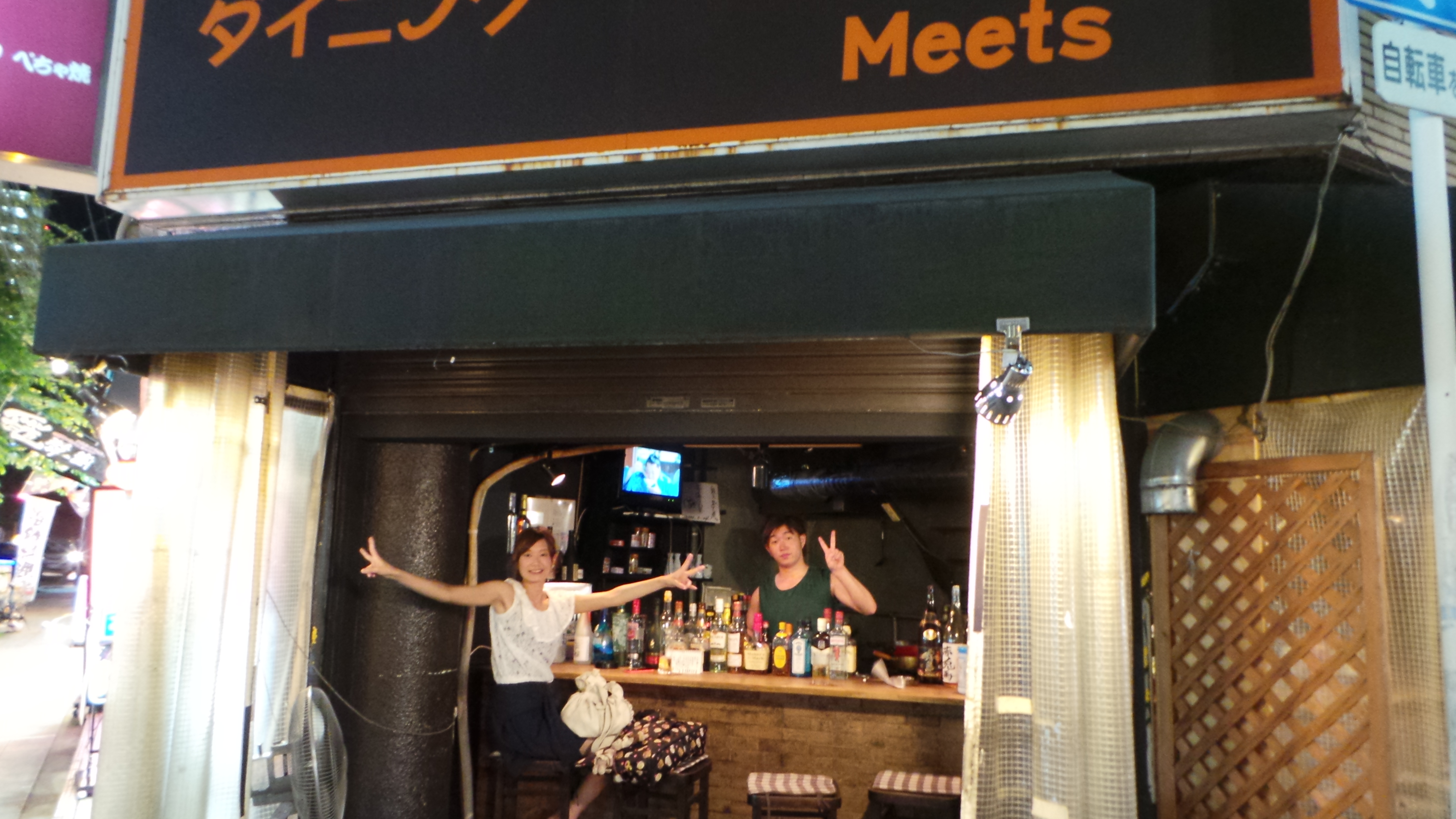
I first visited Meets when I was in Osaka in July 2012. The bar is L-shaped and has a total of seven seats. That night two years ago remains my favourite nightlife experience in Japan. Despite its small size, there were two members of staff working there: a man, and a young woman who bore a striking resemblance to Jennifer Aniston. I spent the whole evening talking to her. However, she didn’t speak a word of English, so we conversed in turns using her smartphone translation application. She would speak in Japanese, I would read the text, and then reply in English, and so on.

Anyway, back to today. Only one member of staff is working, a Japanese man called Ken. He’s the same guy who was working that night two years ago. I order a Suntory whisky highball and take a seat. I’m the only customer; a baseball game is playing on the television. At 8:50 p.m., Ken switches the television channel from baseball to the ending credits of a random show whose name I might never know. On-screen for no longer than three seconds appears Micaela Braithwaite, the woman I greeted in Fukuoka. I can’t snap a photograph fast enough.

The bar I saw advertised in a bookshop today, and he changes the channel at that exact moment. Ten seconds later, the credits stop and the adverts begin. What are the chances? Sometimes, it feels like I’m living inside my own memories. “I’ve worked here for three years now,” Ken tells me, chipping in with small talk.

Next, a girl named Mana enters the scene. She is from Taito, the same ward in Tokyo as Asakusa; we are practically neighbours, though a million miles away from home. We drink. Ken writes all of our names in kanji, while I write them in hiragana and katakana. We continue drinking. Mana and I talk about Asakusa, although our conversation is limited to basic English and basic Japanese. Unfortunately, there’s never a smartphone translation application around when you need one.
meets3

At 10 p.m., I finish my final highball, bid goodbye to Mana, and say farewell to Ken. My bill comes to ¥2500 for four singles and a double. “See you in two years,” I tell Ken, jokingly.

After Meets, I attempt to find some food; I haven’t eaten anything since the fish on sticks. The area around Nishinakajimaminamigata Station is littered with touts, neon lights, and shady massage parlours. I’ve been craving curry for perhaps a week. The first restaurant, simply named ‘Indian Restaurant,’ displays ‘Last Orders at 11:30 p.m.’ As I approach, the Japanese chef who’s taking in the sign informs me that they are closed.

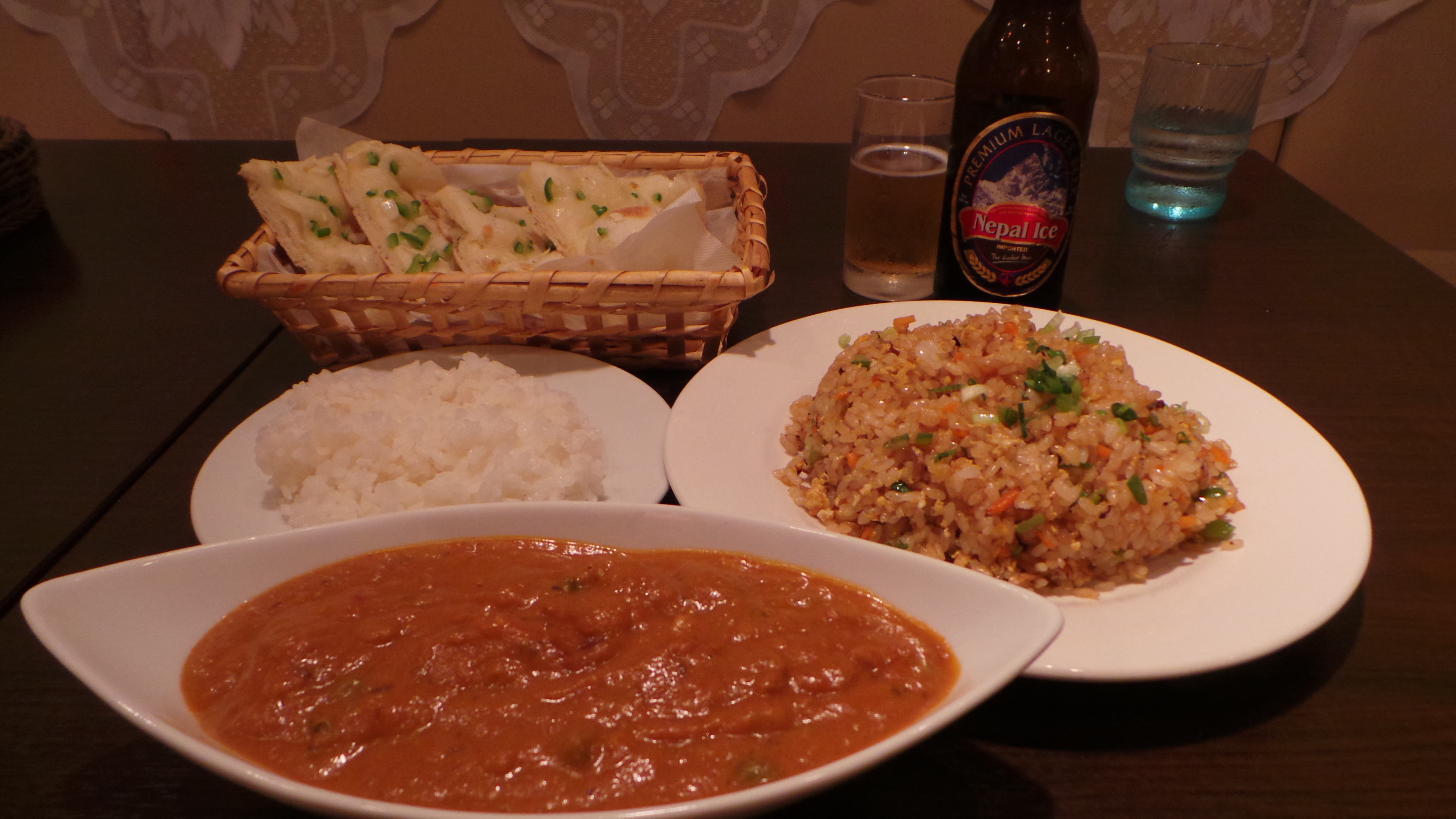
The second restaurant is owned by a Nepalese family and is open. Inside, I order a bottle of ‘Nepal Ice,’ having never tried it before; do as the Nepalese do, and all that. The beer boldly claims to be the ‘coolest beer.’ It’s pale with a slight bitterness, just like me.

I order the classic vegetable curry, egg rice, and garlic naan. The Nepalese waiter speaks English but habitually addresses me in Japanese. “Poppadom,” he says as he hands me a spicy poppadom.
“Arigatou gozaimasu,” I reply in Japanese, out of habit. The poppadom is a little stale but spicy; it will do. Hopefully, it isn’t a taste of things to come. The muskiness is slightly drowned out by the spice, and the spice itself is drowned out by the Nepal Ice.
nepalcurry

My food arrives, and I order a second bottle of beer. The spice level is almost perfect—perhaps it could be a tiny bit hotter, but I don’t mind much. I pay ¥2350 for two drinks and a really good curry.
O Browser, Where Art Thou?

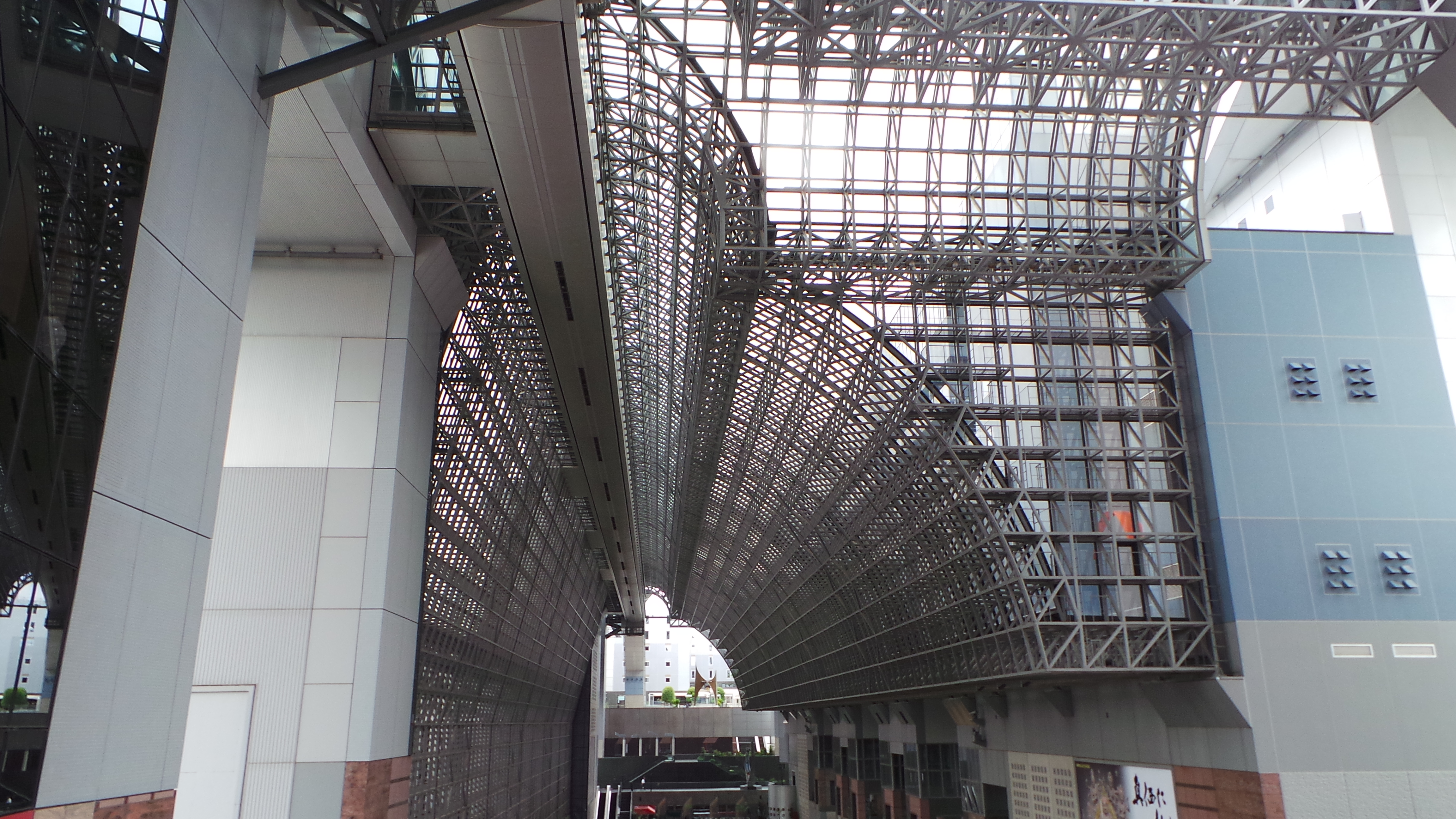
Today, I am leaving Kyoto. However, before I depart, I decide to visit the roof of Kyoto Station, specifically the sky garden known as ‘Happy Terrace.’ It requires ascending nine consecutive escalators to reach the top, where I can admire the breathtaking views of Kyoto for free. As I descend back on the endless escalators towards the train platform, I take a moment to appreciate the roof.

KyotoStnroof

At the platform, a helpful staff member asks if I need any help. I tell him I’m okay and thank him. “Where are you going? Osaka?” he inquires. I nod. He points at the train I’m waiting for, saying, “This one is faster,” seemingly checking off his good deed for the day in his mind. I thank him again and resume waiting for my train. This has happened four times this week in Kyoto—staff members or strangers offering help. I guess I should be more grateful.

At 12 p.m., I board the JR Kyoto Line to Shin-Osaka. The 23-minute train ride costs ¥560. Osaka, the capital of Osaka Prefecture, is Japan’s second-largest metropolitan area. Over one-seventh of the Japanese population lives here, ranking it as the third largest city in Japan by population. I wander around the Osaka area for a while, passing time before I can check into my hotel.

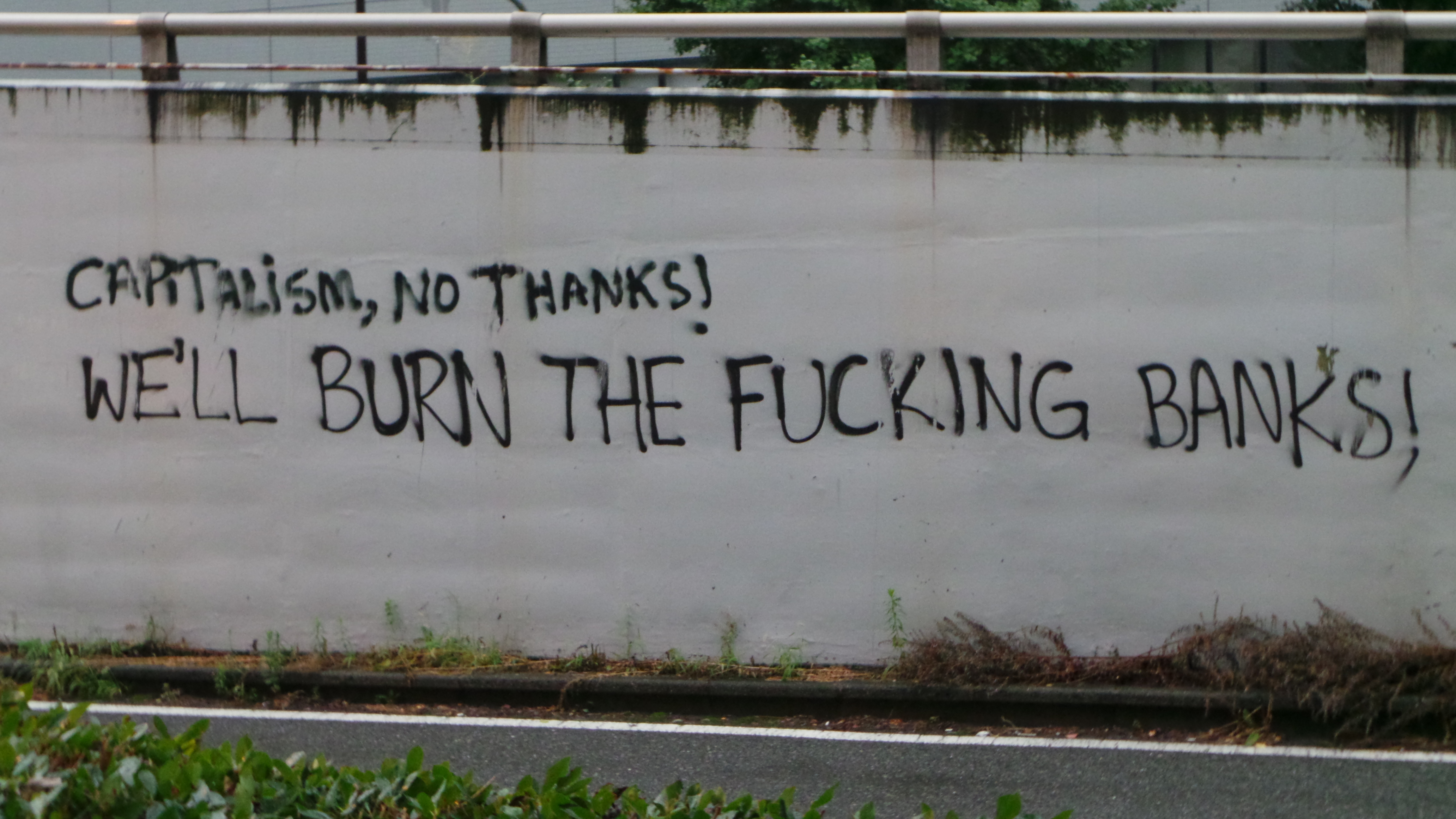
Outside Shin-Osaka Station, I see my first real piece of graffiti:

burnthebanks

At 2 p.m., I check in. I’ll be staying in Osaka for three nights. I selected this hotel based on a quote from their website: ‘For warm smiles, fastidious service, and first-class hospitality.’ Interestingly, the hotel also boasts another blatantly inauthentic motto: ‘The happiness of our guests is our happiness.’ The person checking me in hands me a breakfast ticket for a Japanese breakfast tomorrow morning. It’s odd because I don’t recall paying for any breakfast.

I am staying in Shin-Osaka, which Google says is a one-hour walk from Osaka Station. I opt to take the train to Osaka Station and walk back to my hotel, thinking it will be a pleasant way to explore the city. I stayed in Shin-Osaka two years ago, so I am familiar with the area around this station. In Osaka, people walk on the left and stand on the right side of the escalator, unlike almost everywhere else in Japan.

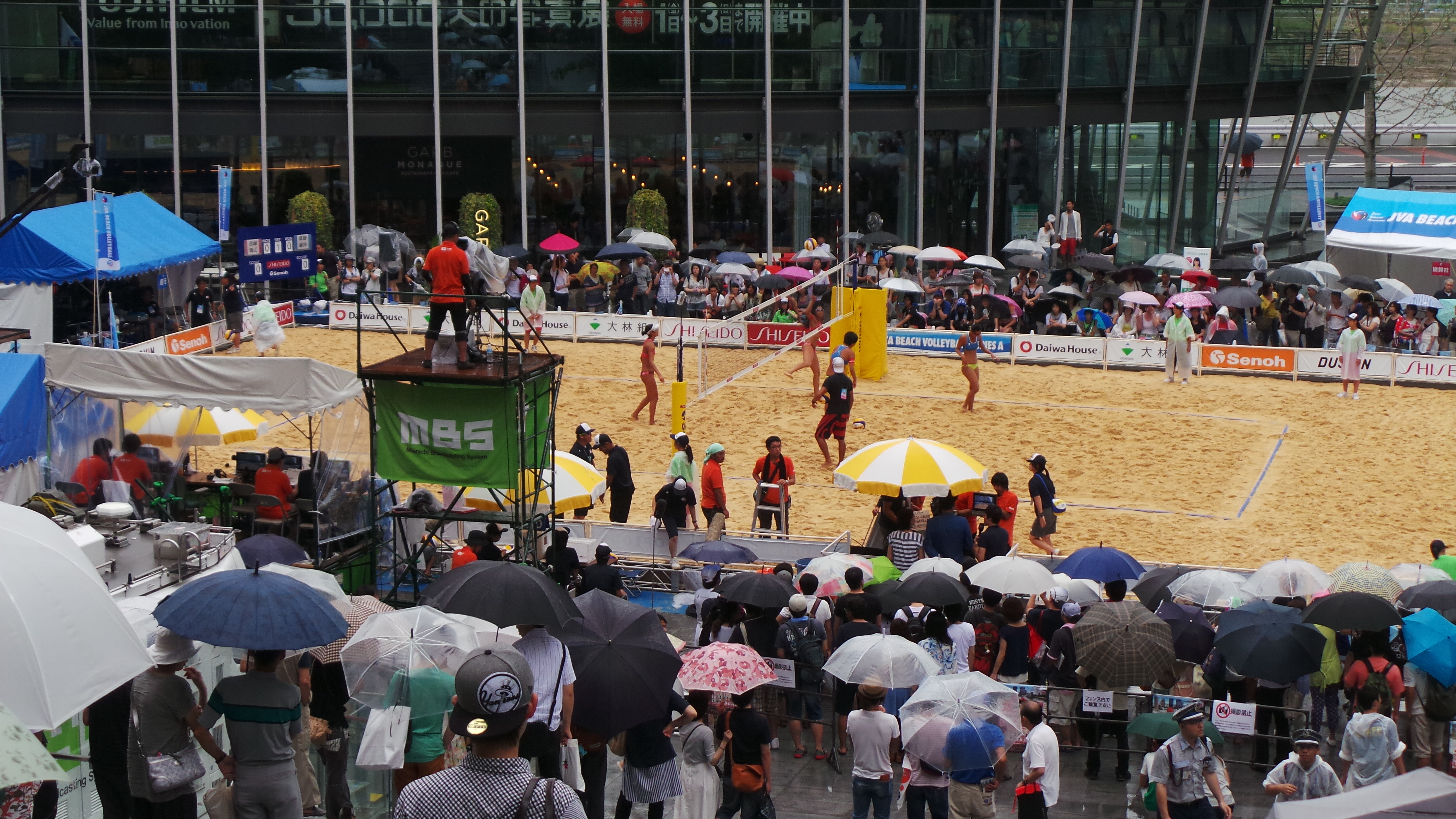
The train ride takes just six minutes with no other stops, and it costs ¥160. Exiting the station, I notice a sign indicating that cycling on the pavement is prohibited. Outside, the temperature is cool, hovering around 25°C, with a gentle rain falling—nothing to worry about, no need for an umbrella. At the foot of the station steps, there’s an outdoor beach volleyball game underway. It’s a Japan Volleyball Association match, likely being filmed, possibly for live television broadcast.

beechvolleyball

I continue my walk away from the station. To the left, there’s a massive construction site that seems to stretch for several kilometres. On the right, ‘Grand Front Osaka’ stands—a colossal building self-described as a ‘New town in a natural environment.’ Essentially a skyscraper housing numerous shops and restaurants. Adjacent to it, there’s an artificial river that spans the length of the building; it’s not exactly what I’d label a natural environment. However, concrete stepping-stones along the river add a touch of excitement.

I continue my walk through the chaotic Osaka roads. I’m accustomed to cities where streets form a grid-like pattern, always straight and easy to navigate. However, Osaka seems like someone picked it up and gave it a good shake—the city and its streets have turned into a tangled mass of concrete. The roads are chaotic, and the pavements strangely devoid of people. Suddenly, it starts raining hard—nothing to worry about, no need for an umbrella.

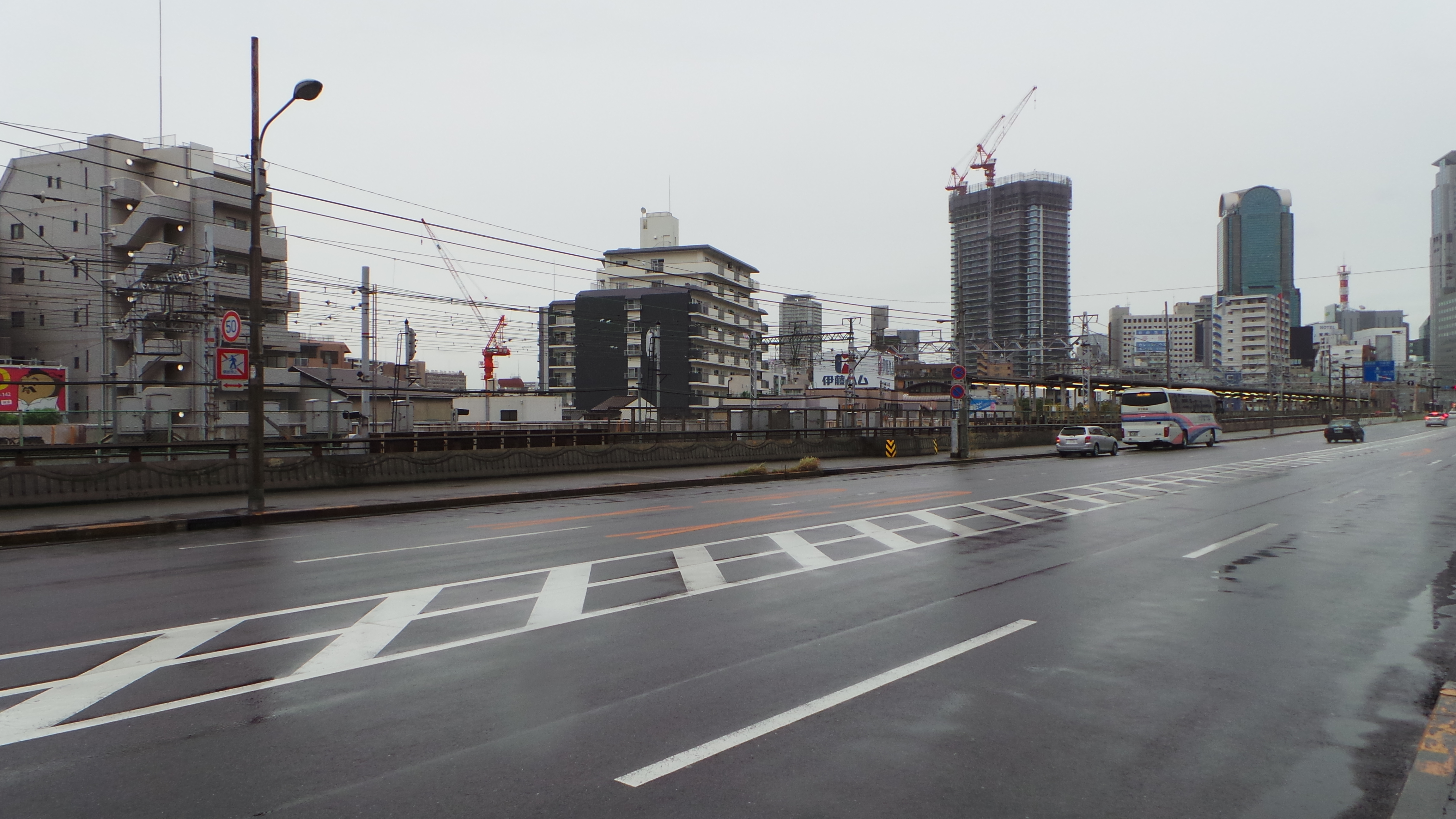
Since leaving Osaka Station, I haven’t come across a single convenience store, and I’m in desperate need of buying an umbrella. At this point, a considerable amount of time passes. I spend a good fifteen minutes attempting to reach the bridge that crosses the Yodo River, but inexplicably, an endless train platform obstructs any access. There’s no tunnel beneath it, no bridge over it.

endlessplatform

Completely soaked and frustrated, I eventually find the way to the bridge. The rain appears to be intensifying with every step, my shoes now full of water. It takes me another ten minutes to cross the Yodo River. I realise that all I’ve done since this morning is kill time. I have days like this every now and then—nothing happens at all.

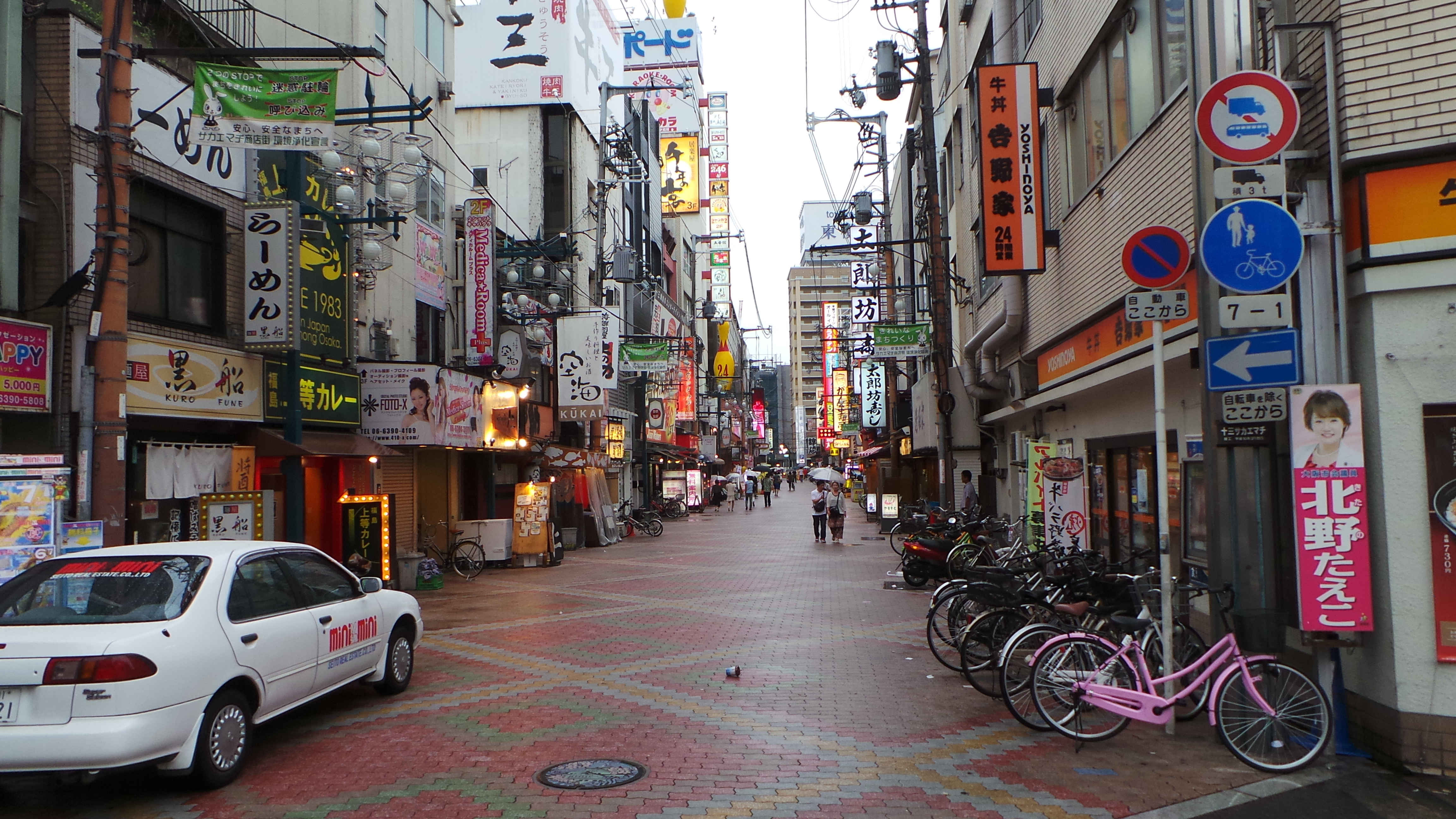
As I wander along with my wet clothes and my thoughts, I start to wonder if I’ll even have anything to write about today. Osaka Day One: Nothing Happens. I can already see the title. It’s 5 p.m. when I finally cross the bridge into Juso. A heavy sigh of relief escapes me as I spot, in the distance, the green and white lights of a Family Mart. A second sigh of relief follows at the sight of some neon. However, the path is somewhat spoiled by a single piece of rubbish on the ground.

litterandneon

I purchase an umbrella from Family Mart along with a single banana. Convenience stores appear scarce in this area, but at least I can buy just one banana. Osaka feels like a different country—people here act differently, there’s more litter on the streets, fewer bicycles around, and the locals also speak differently, using their own special dialect.

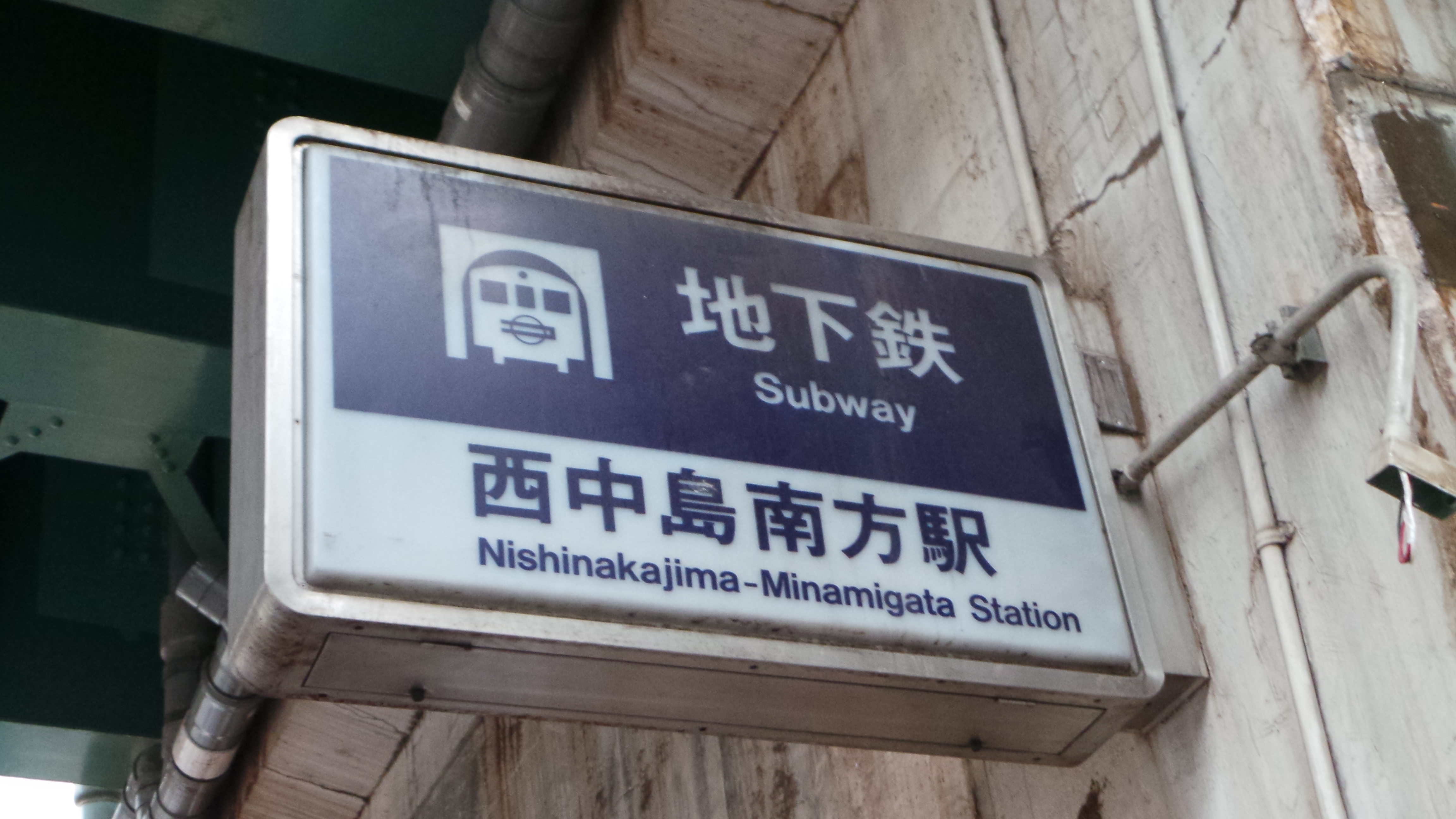
Drenched from the rain, I stroll down a street named ‘Happy Street,’ feeling as though the sign mocks me as I pass. After making a few turns, I decide to take a rest on a bus stop bench. I estimate that I’ve been walking for about two hours. Consulting the GPS on my camera, I realise I’m close to Nishinakajimaminamigata Station. It’s just one stop away from Shin-Osaka Station, so not much farther to go.

nishinakajimaminamigata

Near the station, the nightlife scene comes alive. Memories flood back as I navigate the interlocking streets filled with restaurants, bars, and neon signs. I decide to check if a bar I fondly remember, called ‘Meets,’ still exists. Finding it easily, I’m disappointed to see it closed today, or perhaps permanently shut down—I can’t discern which. It’s still early, though. Disheartened, I spot a Seven Eleven and opt to purchase a can of 5% Suntory whisky highball. Seven Eleven is the only convenience store I know that sells the 5% can; the other shops only offer the stronger 7% and 9% cans.

Upon returning to the hotel, intending to write about my day, I find that the two computers available in the hotel lobby are relics of the past. One of the machines operates on the Windows 98 operating system with an outdated Internet Explorer as the default browser, bombarding me with messages to update. It prompts for a password whenever I attempt to do anything. I try to download Google Chrome but face the same password requirement. Attempting to write becomes an exercise in patience as the machine’s slowness causes each typed letter to lag about five seconds before appearing on-screen. Frustrated, I abandon the effort and retreat to my room.

Exhausted, I fall asleep before 8 p.m.

Withdrawal & I

Today, I have a rough plan: a day trip to Nara with a stop in Uji. Last night, I arranged to meet my friend Slavek at noon. He’s planning on going to Nara anyway, so we decided to travel together. I wake up at 11 a.m. with a hangover; I shouldn’t have stayed up until 4 a.m. drinking whisky and teaching people magic tricks.

Slavek and I walk to Kyoto Station. I’m pleased to find that he is a fellow fast walker, and his pace matches mine perfectly. It takes us ten minutes at a brisk stride. On the way, I stop off at Seven Eleven to withdraw a ¥10,000 note. Seven Eleven cash machines are the only ones that accept my card in Japan, and the minimum withdrawal here is ten thousand yen. We pay ¥240 and head to Uji by train. Slavek is a very clever guy with great English skills, a keen eye for both nutrition and politics, and he’s an avid Haruki Murakami reader. We have decent conversations. In Uji, we’re off to see the temple that is depicted on every ten-yen coin.

coins[1]

I’m fond of Japanese coins. The 100% aluminium ¥1 coin floats on water and sticks to any part of your face without falling off. The copper ¥10 coin brought us to Uji to see the temple. The ¥500 coin is the most valuable everyday coin globally, and it’s also the most interesting. When tilted at a certain angle, you can spot the kanji for ‘five-hundred-yen’ hidden in the grooved lines. Additionally, the word ‘Japan’ is discreetly engraved in 0.2mm across the coin’s face.

Amidst my blathering about coinage, we end up missing the stop for Uji. Getting off the train, we cross the platform and board another train bound for Kyoto Station. It’s an easy mistake, one forgiven by the Japanese train ticketing system. Finally arriving at Uji Station, we head to Byodoin Temple, the one featured on the ten-yen coin.

Byodin[1]

Byodoin is a UNESCO World Heritage Site, marking another off my list. It’s one of the few remaining examples of Heian temple architecture in Japan, dating back to its original construction in 998 AD. Surprisingly, it doesn’t seem to attract many tourists; in fact, most of the visitors I see here are Japanese. The temple features Japan’s most beautiful Pure Land Gardens among the few that remain, alongside a small museum, both covered by the entry fee.

The museum has won four architecture awards. Inside, it houses 52 wooden Bodhisattvas, the temple bell, the south-end Phoenix, and other historically noteworthy items. Additionally, the temple bell here is recognised as a national treasure. I discover that the golden phoenix here is the same one depicted on the rear side of the ¥10,000 note. More money musings. After exploring the museum, we hop onto a packed train filled with tourists heading to Nara:

emptytrain[1]

We arrive in Nara just after 3 p.m. It’s a warm afternoon, thankfully quite cloudy. Heading to Todaiji Temple, we pass a lovely pond with turtles swimming around. We also visit a few smaller temples and a five-storey pagoda. Kohfukuji Temple, part of the Historic Monuments of Ancient Nara, is sadly closed for reconstruction. Surprisingly, it closed in October 2010 and won’t be ready until 2018. Eight years to reconstruct a temple. Just nuts.

And then there are the deer. Sika Deer roam freely through the town, with an estimated 1,200 of them in Nara. You can purchase deer snacks and feed them to these creatures. I’ve been told that the deer bow when you feed them. We witness a herd waiting patiently at a red crossing light, only crossing when the light turns green. They’re remarkably tame.

deercrossing[1]

Todaiji Temple is the second-largest wooden structure on the planet. It was built during the Nara period on the instruction of Emperor Shomu. We pay our ¥600 entry fee and stroll through the gardens toward the temple. On the temple grounds, there used to be two 100-metre-tall pagodas, but they were destroyed during an earthquake. In 751 AD, these pagodas would have been the second tallest structures in the world, after the Egyptian Pyramids.

Some interesting facts about the temple: Emperor Shomu issued a law in Japan stating that the people should directly participate in the creation of new Buddhist temples across the country. Thanks to this law, 2,600,000 people were involved in the construction of the Great Buddha Hall and the statue inside.

bigwoodentemple[1]

Another interesting fact: the Great Buddha Hall is 1/3 smaller than the original, as it burnt down in 1180 AD and again in 1567 AD. That’s what you get when you build it entirely out of wood. I’ve noticed that nearly every temple I’ve visited in Kyoto has suffered the same fate of burning down and being rebuilt. Inside the hall stands the statue of the Vairocana Buddha, also known as the ‘Buddha that shines throughout the world like a sun.’

This is the world’s largest bronze image of the Buddha, towering at 14.98 metres. The construction of this Buddha nearly bankrupted the Japanese economy at the time, as it consumed all of the available bronze in the country. Sadly, behind the statue, there are many small gift shops that seem out of place and frankly spoil the ambiance of the scene.

bigbuddha[1]

It’s just after 5 p.m., so Slavek and I decide to grab some food in Nara. We end up eating far too much sushi, spending a total of ¥6436 at the restaurant. Later, we hop on the express train back to Kyoto, mistakenly using our tickets intended for the local train. During the journey, the conductor asks us to pay an additional ¥510 as a surplus charge for the express train. The express train takes about twenty minutes, half the time of the local train. Finally, we walk back to the hostel from Kyoto Station.

In the hostel bar, I enjoy ¥500 glasses of Suntory whisky highball. It’s not until my third drink that I inquire about the price of a double, as the standard highball is a bit weak for my taste. “It’s ¥500,” explains Daiki, the barman. So, after being here for five nights, I discover that a double whisky and soda costs the same as a single. If this holds true in all Japanese bars, I’m in luck. I also order some bar snacks—¥100 for mixed nuts. Daiki places a small bowl on a tiny set of scales, pouring nuts into the bowl until they reach the specified weight. Just nuts.

Grandiose Encounters of the Third Class

I went without any Internet connection for a few days, so I couldn’t post anything. Here’s a summary of the last three days:

Friday – Fukuoka

Today, I met a German guy named Klaus. It’s his first day in Japan after spending a month in South Korea. He wants to stay here tomorrow night as well, but there are no available rooms in the hostel. I cancel my reservation for tomorrow night, and he takes my room. I wanted to start traveling early tomorrow anyway, as I have a fourteen-hour train journey to endure.

Klaus and I take a stroll around Hakata Station. I show him the sights, starting with the roof terrace. We then wander through the enormous indoor shopping complex, exploring various random gifts. I spot some excellent souvenir ideas. Later, we head for food—a classic dish of mixed vegetable and prawn tempura on rice, accompanied by a pint of Kirin Beer. Kirin isn’t my first choice for Japanese beer, but I don’t complain.

tenpura3[1]

Afterward, we head over to Tenjin Station because Klaus is really keen on seeing the giant cardboard train. I don’t mind showing him around as I have nothing else planned in Fukuoka. Klaus is quite funny, and his English is good, so I don’t have to speak slowly or anything. We enter the building where I thought the cardboard train was, but we can’t seem to find it. Unfortunately, I deleted the photograph, so I can’t prove to him that it was real. He starts doubting its existence altogether, and I begin to question it myself, still feeling a bit off-kilter from yesterday. We hesitate to ask anyone else about the train because it might sound absurd. “Excuse me, miss, could you point us in the direction of the giant cardboard stream locomotive, please?”

After an hour of searching, we eventually find it in a completely different building from the one I had sworn it was in.

Next, we head to an izakaya by the river. It’s the first time I’ve visited an outdoor izakaya of this style. We choose the most welcoming one. “Please, you are welcome,” the owner says with an honest smile. This place serves skewers of meat and noodle soup. Klaus and I do what Germans and Britons do best: drink.

klaus[1]

We meet a couple of Japanese people: two guys, one of whom had visited Berlin last year, so he and Klaus engage in conversation. Two girls, one of whom had spent six months studying English in Leeds, so she and I chat. As the night progresses, Klaus teaches me about South Korea, and I share my knowledge about Japan with him. We drink, joke, and before we know it, the night disappears.

Saturday – Okayama

I board my third and final train for the day at Shimionoseki Station, taking the JR Sanyo Line. The train is old, with uncomfortable seats, no toilet, and no vending machine. I wish I had more than one bottle of water. The train announcements are exclusively in Japanese. Am I even on the right train? How would I even know?

This ‘local’ train makes an astonishing 83 stops, taking a total of eight hours. Finally, at 9 p.m., I arrive in Okayama. I decided to break up my travel to Kyoto with a nice stopover in a pleasant-looking business hotel. I enjoy staying in a hotel once a month; it offers a refreshing change from the noise of a dormitory room. By using my Seishun 18 ticket, I save myself the ¥16,060 that the bullet train would have cost me. In exchange, I sacrifice 569 minutes of my life.

As I step off the train, the speakers are bellowing out the tune, ‘I’ve Been Working on the Railroad’. In fact, they play the tune every time a train pulls up here. You might go insane if you were a member of the station staff. Leaving the station, I realise just how exhausted I am from doing absolutely nothing but sitting on trains. It wears me out.

There is a really lovely fountain just outside the entrance. I believe it’s shaped to look like a dandelion.

dandy[1]

One thing I notice immediately about Okayama is the maps—they are everywhere, massive, and in English. My hotel is on the same road as the station, about halfway between here and Okayama Castle. I grab a well-deserved can of Suntory whisky highball for the walk.

The main road through Okayama is wide, with trams drifting through the middle of the lanes. Neatly pollarded trees, lit up by lamps, line both sides of the pavement, adding to the city’s charm. Finding my hotel, I notice it’s slightly more upmarket than I’m used to. The room is of average size, with a laid-out yukata on the bed and all the usual hotel amenities. Unfortunately, my view isn’t of the castle but of the train station. Oddly, the hotel exists in a time before the World Wide Web and does not offer Internet access.

After settling into the hotel, I decide to take a walk. I head into the park, passing a group of people exercising to music from a stereo in the street. The park is pitch black, but I can vaguely make out a lake in the middle. In the distance, I see the castle, illuminated by bright green lights.

okcastle[1]

Similar to the park, the castle exterior is pitch black, earning it the nickname ‘Crow Castle’. After visiting the castle, I step out of the park and into the light. Following the neon signs, I navigate interlocking side streets filled with restaurants. People stand outside, attempting to usher customers into their establishments. As I walk around with an empty can of highball, a trick I discovered, I notice that nobody wants someone with an open can of drink in their restaurant. Consequently, I am almost completely ignored by the touts.

I decide to dine at a small family-run restaurant. Surprisingly, they have Basashi (raw horse meat) curry on the menu, alongside natto curry. Opting for a fish curry, I’m asked by the owner, ‘Medium heat, medium curry, okay?’ I request it to be hot. He brings out the familiar chart with the five chili symbols. His chart looks like this:

One: For children.
Two: Mild curry.
Three: Extremely hot!
Four: Daredevil!
Five:

Five is left blank, presumably because no one orders a five. I ask for a three. ‘Three!!!’ he exclaims. His response makes me start laughing. When my curry arrives, the smell is enticing, and the heat level is just right. It costs ¥1019, including a small can of Kirin Beer. It’s a good meal, albeit with a substandard beer.

Sunday – Kyoto

After traveling for four hours on trains, I finally arrive in Kyoto. I switch to the subway line headed to Kawaramachi Station, and surprisingly, the subway train happens to be the nicest I’ve ridden all week. Remembering my station name won’t be an issue either. During my month in Tokyo, my local station was Tawaramachi Station—here, just a letter’s difference. Leaving the station, I walk directly into a massive shopping arcade that sprawls out in every direction.

I pass by a huge market where everything is produced and sourced locally. There are numerous vegan and organic restaurants here as well—my kind of place. Additionally, within the arcade, there are random temples dotted about. Seishinin Temple is sandwiched between a small shop selling calligraphy on wooden blocks and a shop selling human caricatures.

arcadetemple[1]

It is only 2 p.m. and I have one hour before I can officially check-in. I find the hostel and fill out all the necessary paperwork and pay. The hostel offers to look after my bags for an hour. As I hand over my one bag, the staff member gives me a bewildered look. “That’s it?!” He asks me with surprise in his voice.
“Yep, that’s it,” I tell him.
“Not very heavy,” he says, struggling to grasp the concept of my luggage.
“I like to travel light,” I offer as an explanation. His expression retains a sense of disbelief.

I have an hour to kill, so I decide to find some lunch. I head to a small restaurant across the road that offers natural organic food. Like most restaurants here, it has an English menu, probably due to the sheer volume of tourists. They offer free wireless Internet, and Björk’s music is coming out of the speakers. I order a salmon, mushroom, and cheese omelette over rice, served with a big salad, along with a green tea latte. Although the food doesn’t look too pretty, it tastes and smells amazing. The meal costs ¥1944. No complaints here—good food, good music, free Internet.

nomelette[1]

Kyoto was formerly the imperial capital of Japan for over a thousand years. Now, it serves as the capital of Kyoto Prefecture. It’s often referred to as the ‘City of Ten Thousand Shrines.’ I’m not certain if it actually has ten thousand shrines, but it wouldn’t surprise me one bit if it did. I’ve counted eleven already today, and they were all within the indoor shopping arcade.

I return to the hostel to retrieve my room key. The hostel is modern, featuring five floors and a roof terrace. I decide to explore the public areas. The lounge is adorned with small wooden boxes housing growing plants, adding a touch of nature. A huge glass bay window floods the dining area with natural light. The outdoor roof terrace is neatly arranged, complete with beer and cup noodle vending machines. It seems someone in the hostel has organised a weekly late-night running group, with a clear emphasis on ‘going for a beer afterwards.’ I have a feeling I’m going to enjoy my one-week stay here.

terrace[1]

The hostel also features a library, and unlike Fukuoka and Beppu, it has a lift. While I’m writing up my weekend, a Japanese guy who works here comes over and introduces himself. He seems quite a character and turns out to be one of the barmen at the hostel’s bar, which is located in the basement and stays open until midnight every evening. They also offer ¥400 beer on tap. Tonight, the hostel is hosting a monthly party, which is fantastic—another stroke of lucky timing. At the party, I discover that the other barman is my friend Shonosuke. I had no idea he was here. Brilliant!

Udon in (three-hundred and) Sixty Seconds

With the sun directly above me, there’s nowhere to hide from the heat. I anticipated the scorching conditions; the seat on my bright yellow bicycle was already burning when I first set off. I had to pour a bottle of water over it to cool it down; the water began to boil on the pavement. The tarmac here blisters and broils.

As I head toward Tenjin, I realise I’ve inadvertently chosen to wear a bright yellow shirt. I must look rather peculiar: a foreigner on a yellow bike, clad in yellow. Fortunately, I find a nice cycle path with newly laid tarmac, and my destination seems to have chosen itself.

yellowbicycle[1]

Inconsiderate pedestrians often walk on the cycle path, obstructing me without a care. I make a stop to let a taxi pass, as I usually do, and the driver nods in acknowledgement, as they typically do. Interestingly, here, even when the crossing light is on a pedestrian green, motorists can still turn left, but they must yield to pedestrians first. I’ve made it a habit to let taxis turn before me, especially when they have a passenger. I like to think I’m doing everyone a favour.

I cycle for what feels like an eternity until I reach a place called Ohahsi. Not much happening in Ohashi, so I spot a sign for Hakata Station and decide to head back. On my way, I come across a woman holding a sign that says, ‘Time Sale.’ I humorously decide to ‘buy’ five minutes. Additionally, I encounter an army of crossing guards—three people directing one vehicle. Absolutely insane.

triplesaber[1]

Attempting to find some eccentric Japanese electronics to write about, I discover that everything seems rather ordinary. Instead, I end up in a music shop on the seventh floor of Hakata Station. I spend about ten minutes practicing the piano, drifting away as I try to recall how to play the only song I can fully remember: ‘To Zanarkand’ by Nobuo Uematsu. It eventually comes back to me, but it was mentally challenging. The thought crosses my mind that I might have forgotten how to play the guitar by now.

I spend a while restaurant window shopping, stopping to admire the models of plastic food. A sign outside a Chinese restaurant catches my eye.

delicious[1]

Instead of dining in Hakata, I opt for Tenjin, thinking it would be a better choice. With tired legs, I decide to hop on a subway train for the first time in nearly a month. I’m surprised by how soft and springy the seats on the train are, probably because the bicycle seat is hard and uncomfortable.

I disembark at the last stop, Fukuoka Airport, realising I’ve taken the wrong train. Not to worry, it was just a two-stop ride, and I won’t be charged for my mistake. As everyone exits the train, I wait a moment while it’s cleaned, and then I board the same train heading back to Tenjin. Surprisingly, many others do the same, presumably having made the same mistake as me. One of the things I enjoy about subway trains here is that since the tracks are separate from the ticket gates, you can effectively ride the train all day, getting on and off as many times as you like. There’s not much purpose in doing so except to rectify errors.

Ultimately, I spend a full thirty minutes on the train, the same amount of time it would have taken me to walk. The fare for this brief trip amounts to ¥200.

In Tenjin Station, there is a train made out of cardboard. The detail incredible. The photograph doesn’t do the quality of this cardboard art justice though:

cardboardtrai[1]

I explore the thirteen floors of the train station, the overwhelming feeling I experienced on my first day in Fukuoka now just a fleeting thought.

I leave the train station and make my way to an indoor shopping arcade near the much-loved Reisen Park. There, I spot an udon restaurant—a Japanese dish I’ve yet to try. I opt for a mix of healthy and slightly indulgent choices by ordering a big set meal of udon served with vegetable and seafood tempura, on rice.

After placing my order, I notice I’m not offered a towel, something I’ve grown accustomed to in Japan. Typically, when dining at a restaurant, you’re almost always handed an ‘o-shibori,’ a wet hand towel to clean your hands before eating. Surprisingly, I’m also not given any water, and I sit waiting, feeling quite thirsty.

The drink I order takes five minutes to arrive, the food takes six.

udon[1]

The food turns out to be a bit of a puzzle; I have to assemble it myself. I pour the jug of sauce onto the tempura and then crack the egg on top, just for good measure. As I start sprinkling sesame seeds over the lightly battered vegetables and seafood, a Japanese man eating nearby tells me to stop.

He lifts the tray of sesame and wasabi to reveal a dip hidden underneath. ‘This,’ he points out, ‘is for udon.’ I express my gratitude for his guidance. Hopefully, I managed the tempura correctly. Once I finish my cold tempura served on warm rice, I move on to the ice-cold udon. Interestingly, the dip meant for the udon is warm, making everything seem quite backwards.

I find these thick wheat flour noodles a bit dull. I dip them, slurping and chewing at the seemingly endless strands. As I eat, my reflection stares back at me from the sauce. Hoping for a change, I mix some wasabi into the dipping sauce for a kick, but it doesn’t seem to make much difference to the dullness.

The food didn’t quite meet the usual standards I’ve come to expect in Japan. Perhaps my expectations were too high. The total cost of ¥1060, including a drink, offers good value for what was an average meal.

As I step outside the shopping arcade, the evening has settled in, casting a dark, starless sky. Walking along the river, I’m surrounded by crowds and vibrant bars. I pause to admire the numerous izakayas lining the riverbanks, each offering its own specialty food. It seems like an ideal place to unwind after a hectic workday or a leisurely Sunday afternoon spent in the sun.

izakayas[1]

Returning to Hakata Station to retrieve my bicycle, I encounter the same busker for the third consecutive day, stationed along my familiar path. Today, we exchange pleasantries. Judging by his accent, he’s a fellow Englishman. Our interaction has been evolving: yesterday, we greeted each other with a ‘hello,’ and the day before, it was a mere nod.

Back at the hostel, I make new friends. An Australian guy tells me that he went for a walk on the beach today and the sand was so hot that it burnt the soles of his feet. Blisters and broils.