Dead Children Playing

Halfway into my eight-hour train journey to the northern region of west Japan, I decide to take a break from sitting and get off at Kurashiki, a quaint coastal town in Okayama Prefecture. Famous for its strategic location during the Edo period, which made it a popular place to store rice, Kurashiki, literally meaning “storehouse,” is also conveniently located halfway between Tokyo and my final destination. Upon arriving at the train station, I am greeted by a sign that reads, “Welcome to Okayama, the Land of Sunshine.”

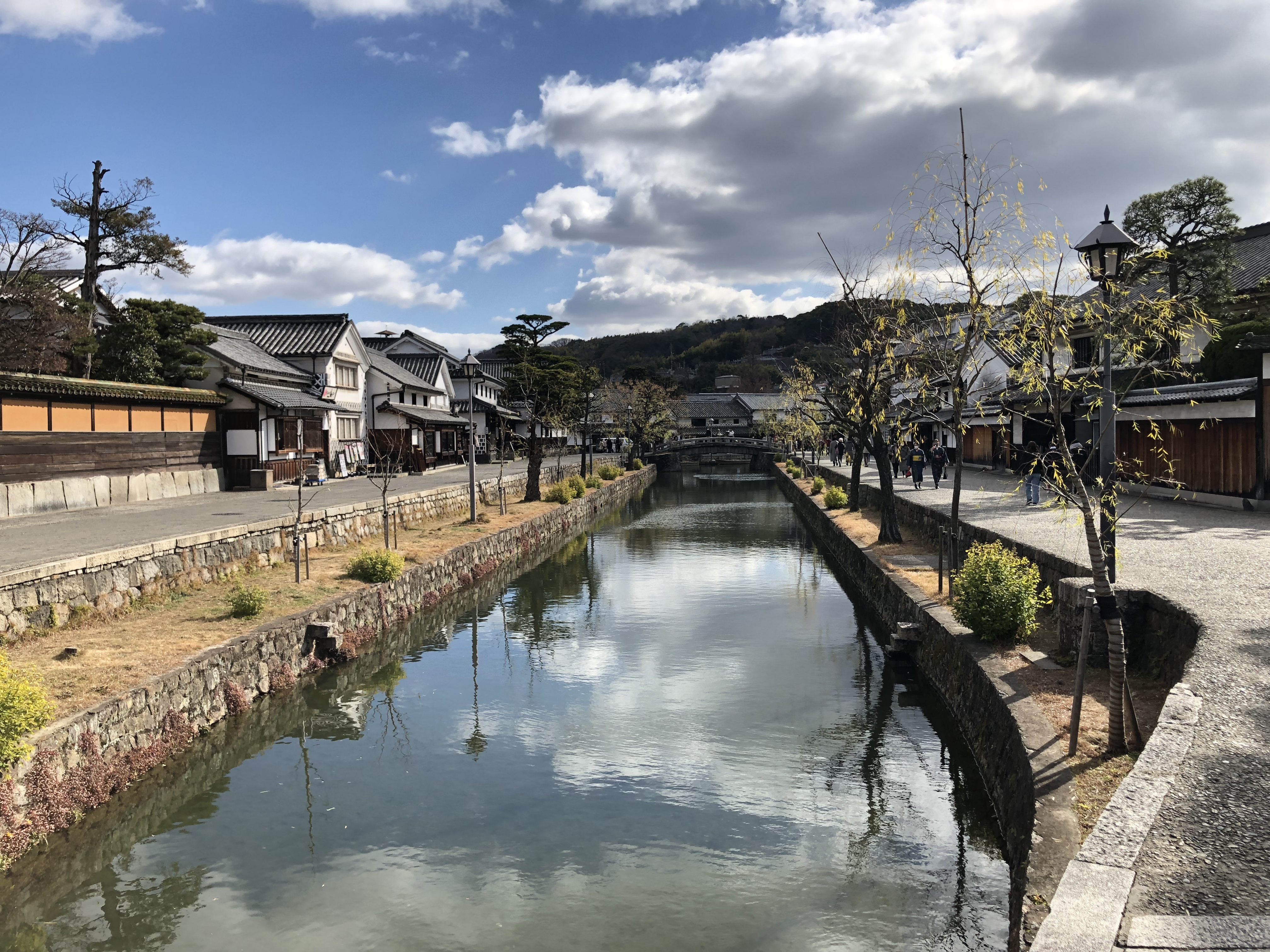
As I step out of the station, I find that the weather is not quite as sunny as the sign had promised. The sky is cloudy and grey, but that does not dampen my spirits as I begin to explore the winding streets of the Bikan Historical Quarter. Here, the buildings are old and charming, with weeping willow trees, historic godowns and canals that interconnect throughout the area. Touts eagerly await me, offering rides in their rickshaws. Just as I begin to further complain about the weather, the sun breaks through the clouds, illuminating the streets and bringing a warmth to the air.
I come across a shop called Gangukan, which has an annexed building featuring a toy museum. Intrigued, I pay the lady at the cashier, who shows me a sign in English that reads, “I will take you to the entrance.” She guides me through a maze of small alleyways to the entrance of one of the museum buildings. The door creaks as it opens, and the woman mutters something in Japanese before swanning off, leaving me to explore the museum alone.

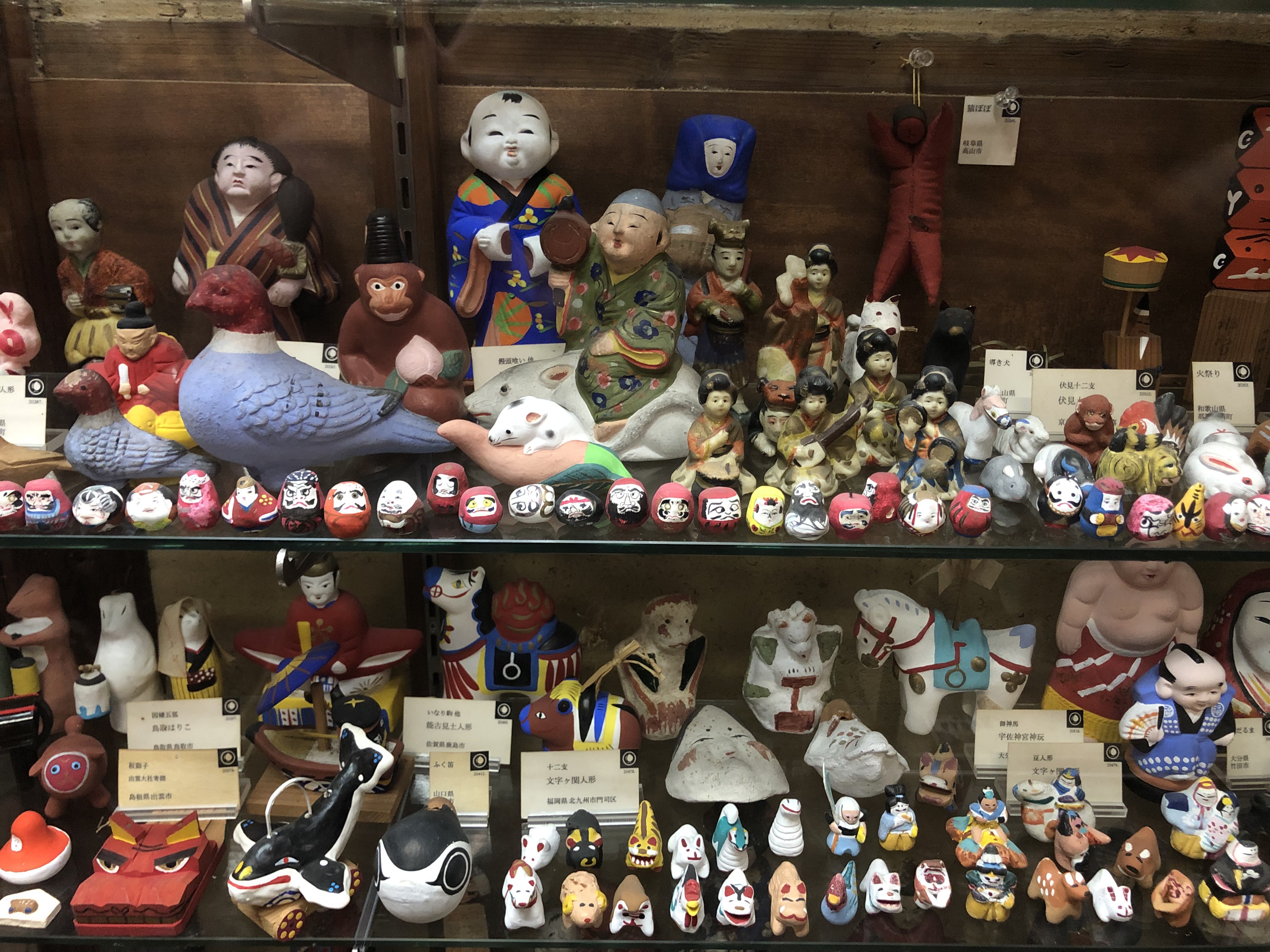
The Japan Rural Toy Museum is one-of-a-kind, housed in a beautifully renovated old rice storehouse, the museum features toys from 1600 to the 1980s. Inside the first room, I am greeted by a collection of folk-craft toys from every prefecture in Japan. In the second gallery, Daruma dolls are displayed alongside clay figures, ceramic bells, dove flutes, and wood wishing plaques.
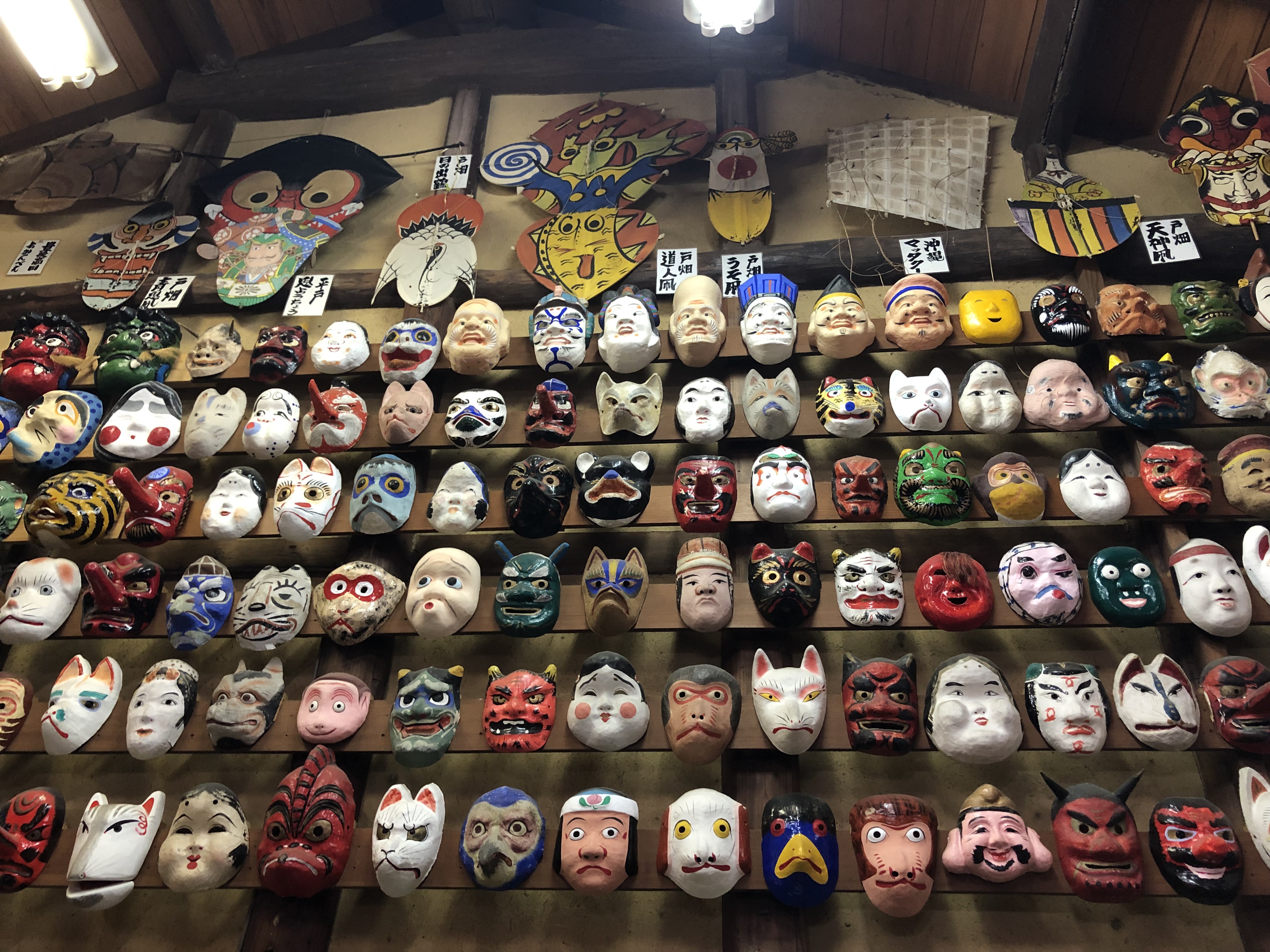
As I move to the third gallery, I am greeted by old wooden toys and spinning tops, and displays of annual New Years postage stamps from 1954 to present. In the fourth and final gallery, I see masks, a lot of masks. I’ve always wondered if masks can be classified as toys, but then again, I suppose the same question can be asked about postage stamps too. The gallery also features decorated shells, porcelain dolls, papier-mache dolls, and a large collection of old dusty books and badminton rackets.

As I step out of the museum, I find myself facing a small shrine. I can only assume that it is a tribute to the god of toys. As I think about the ancient toys, especially those dating back to the 1600s, I am struck by the enduring legacy of these simple objects of play. The children who once laughed and played with these toys, now long gone, reduced to mere memories and dust. But the toys remain, locked behind the glass walls of the museum. It’s a poignant reminder of the tragedy of death, and the beauty of the small things that outlast us. The toys, once a source of joy and laughter, now stand as silent witnesses to the fragility of existence.
As I continue my stroll through Kurashiki, I come across Denim Street, an entire street lined with shops selling the same thing. Along the way, I also pass small shops selling watercolour paintings and origami paper. The area, with its stunning canals and old shops, feels like a cross between Kyoto’s Gion district and Tokyo’s Asakusa district, but with less commercialisation. The area boasts a number of museums as well, including art, archæology, natural history, and folk-craft.

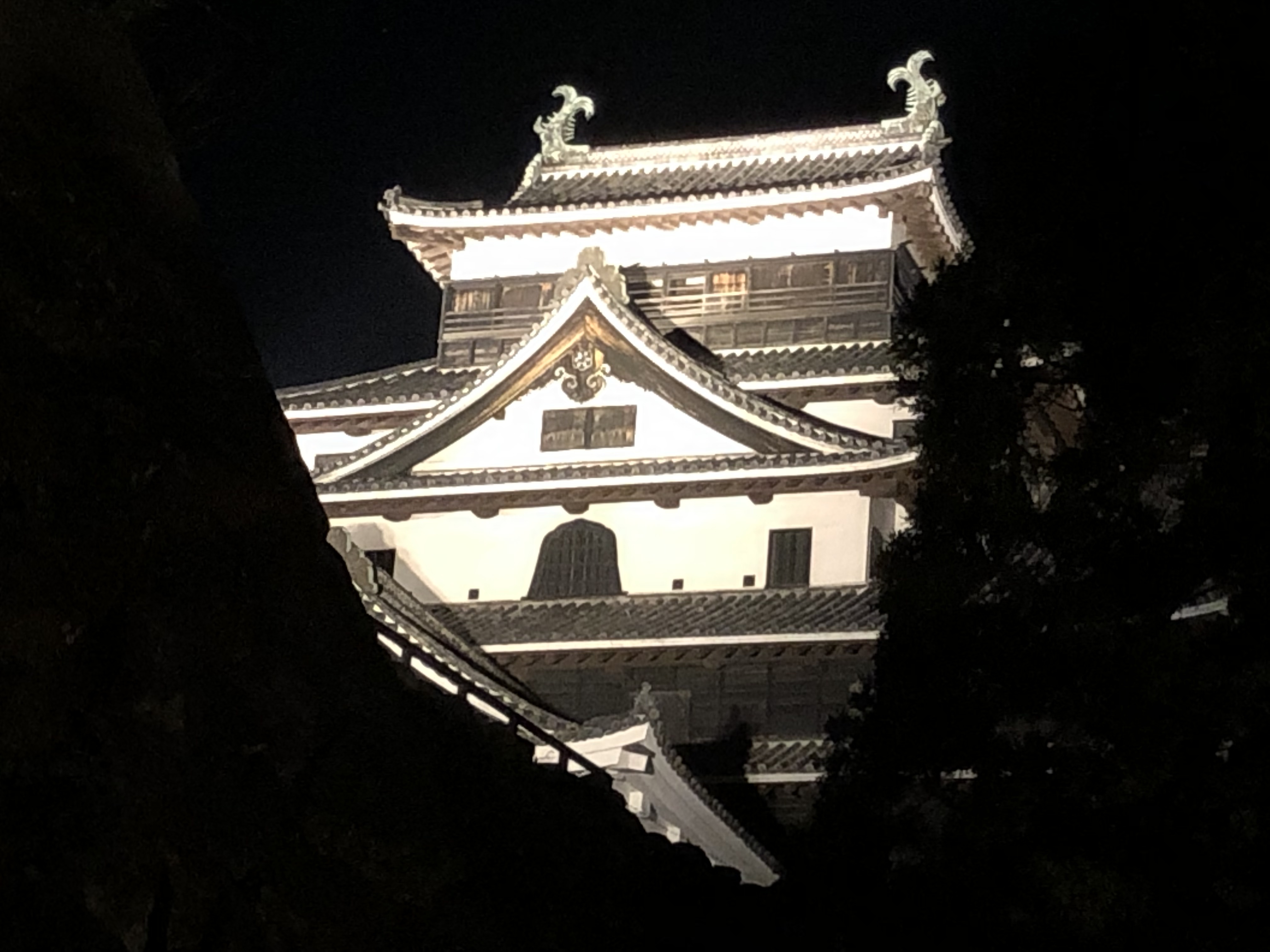
After a few hours of exploring, I leave the Land of Sunshine and embark on another four-hour train journey to the city of Matsue in Shimane Prefecture. As I arrive at dusk, I navigate the streets and make my way to Matsue Castle. Nicknamed the “black castle,” it is one of only 12 castles in Japan that have been perfectly preserved in their original state. It stands out in the darkness of the night, seeming to effortlessly float suspended in the sky. The grandeur of the castle illuminated by the moonlight, casting a mysterious and ethereal aura, making it an enchanting sight to behold.
Leaving the castle, I decide to check into an iconic capsule hotel, something I’ve been meaning to do in Japan for years. After finding my “coffin” for the night, I realise that my room, if I can even call it that, is contained within a larger room with 39 other boxes stacked on top of one another. Thankfully, none of the other capsules are occupied. The hotel offers a reasonable amount of amenities, such as towels, toothbrushes, razors, earplugs, bathrobes, and nightwear. It’s also impeccably clean.

I grab some food from a nearby supermarket and head back to my hotel. Due to the limited space, it’s not possible to eat inside the room where the capsules are located. However, the hotel does offer a large common area with comfortable seating. The common area also features its own jaunty, catchy music that plays on a loop ad infinitum. It’s like being in a 1980s video game where the composer was hired on a budget. After eating my deep-fried tofu with rice and listening to the same piece of music for the twenty-third time, I retire for the evening, and crawl into bed.
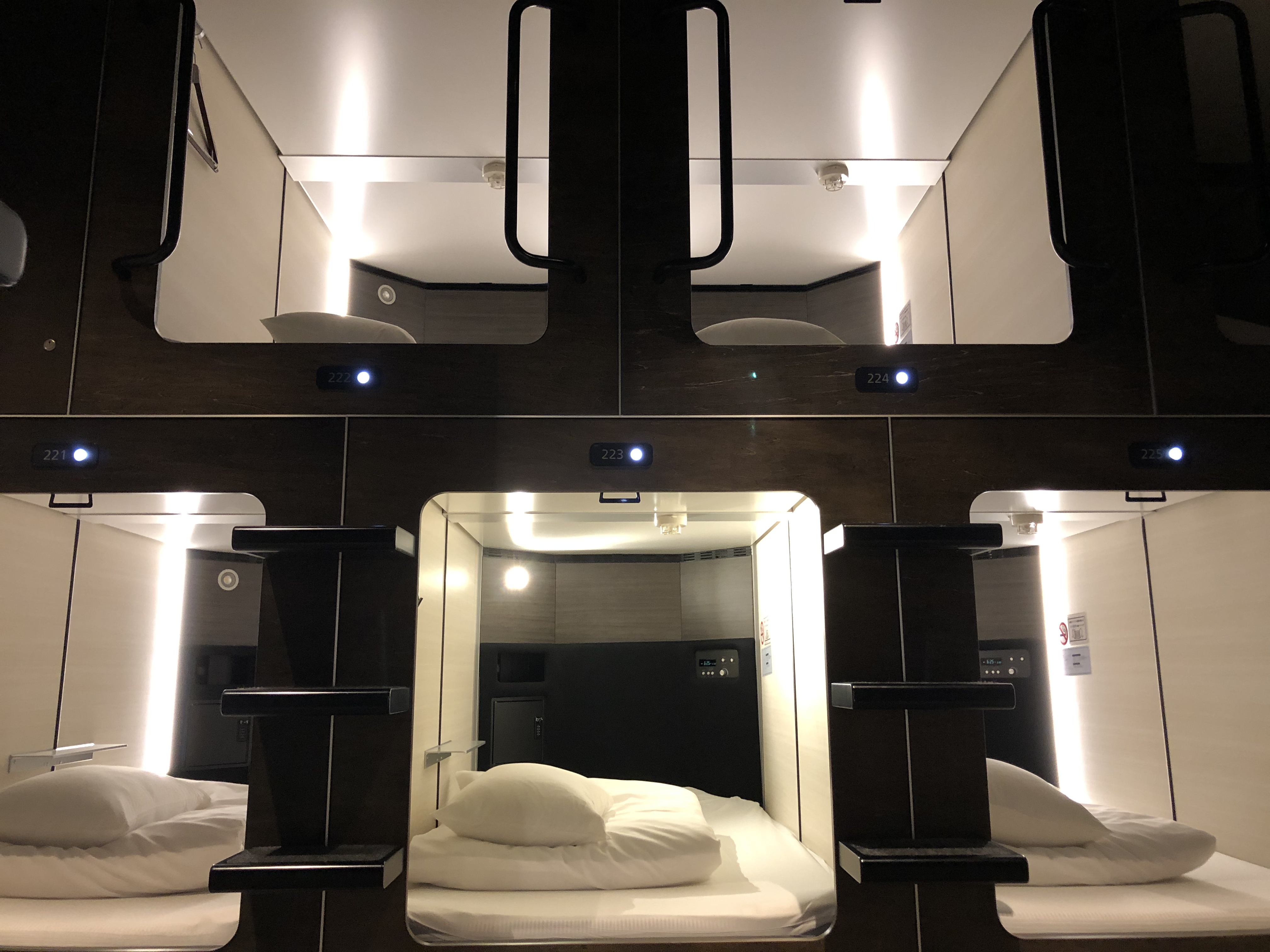
As I lay in my coffin, the jaunty music swirling around my head like a relentless earworm, I think back to the toys, and thoughts on life, how we too are on a never-ending loop, chasing after fleeting moments of joy before inevitably succumbing to the silence of death.
Saving Primate Ryan

I aimlessly wander through Tokyo’s Adachi Ward on a cold, grey day, feeling a little bored. As I walk through a park I notice a small building that seems out of place amongst the trees and grass. As I walk up to the building, I can’t help but notice its bleak appearance. The grey concrete seems to blend in with the overcast sky, giving the place a depressing vibe. But despite my lack of enthusiasm, I decide to check it out.

As I walk through what turns out to be an animal exhibit, I can’t help but notice the perceived lack of space and variety in some of the enclosures. The Sulcata Tortoise appears to be trying to escape, possibly because it seemingly lacks access to direct sunlight, a necessity for this type of animal. It repeatedly smashes its face against the glass enclosure in frustration.

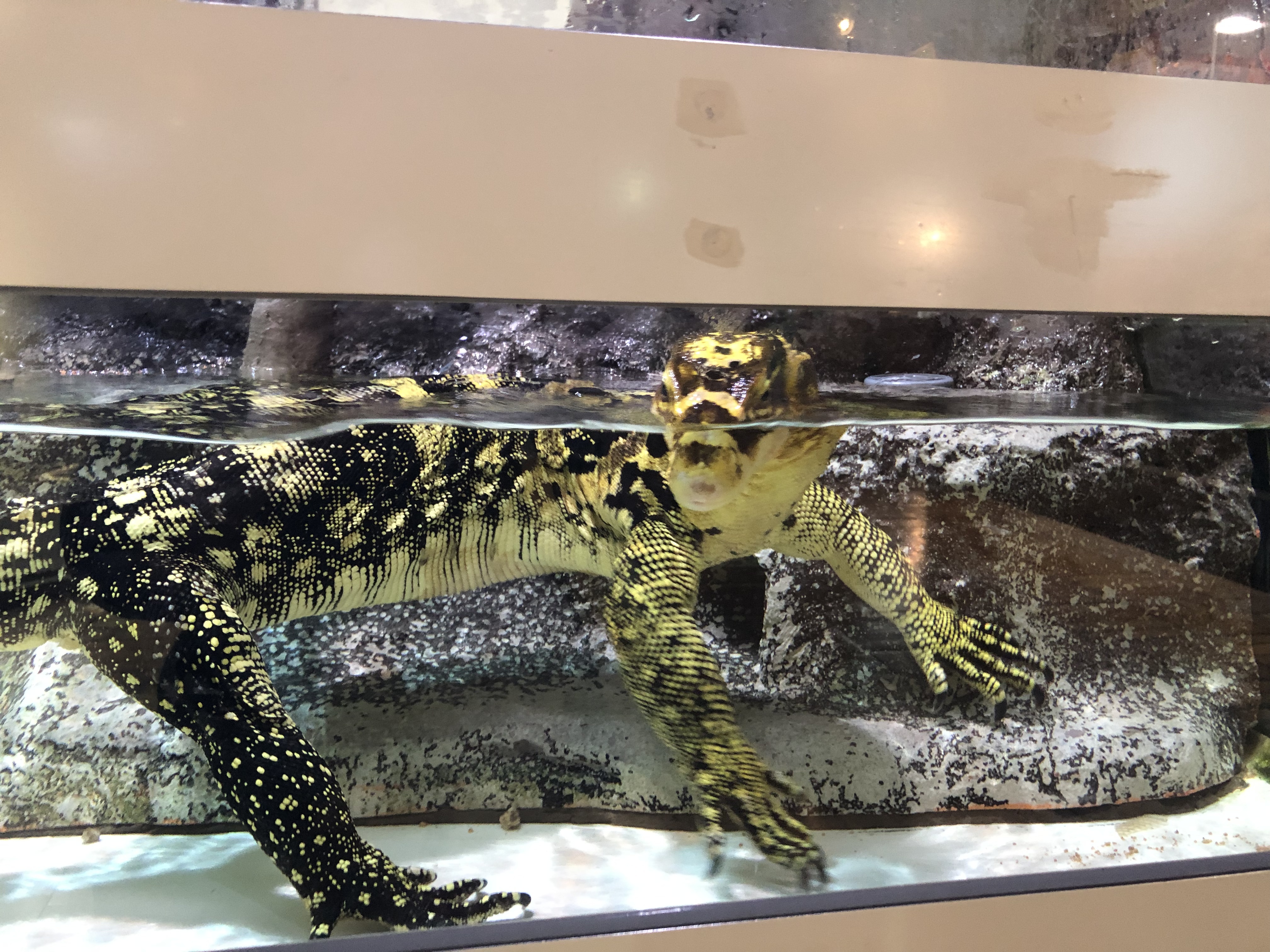
The Yellow-headed Water Monitor is a large, semi-aquatic reptile native to Africa. In my view, in this enclosure, it swims absently in a small tank that also offers a section of land. These animals are known for their powerful legs and sharp claws, which they use to climb trees and dig burrows in the wild. However, in this relatively confined space, the Yellow-headed Water Monitor seems unable to fully utilise its natural abilities, as far as I can tell.

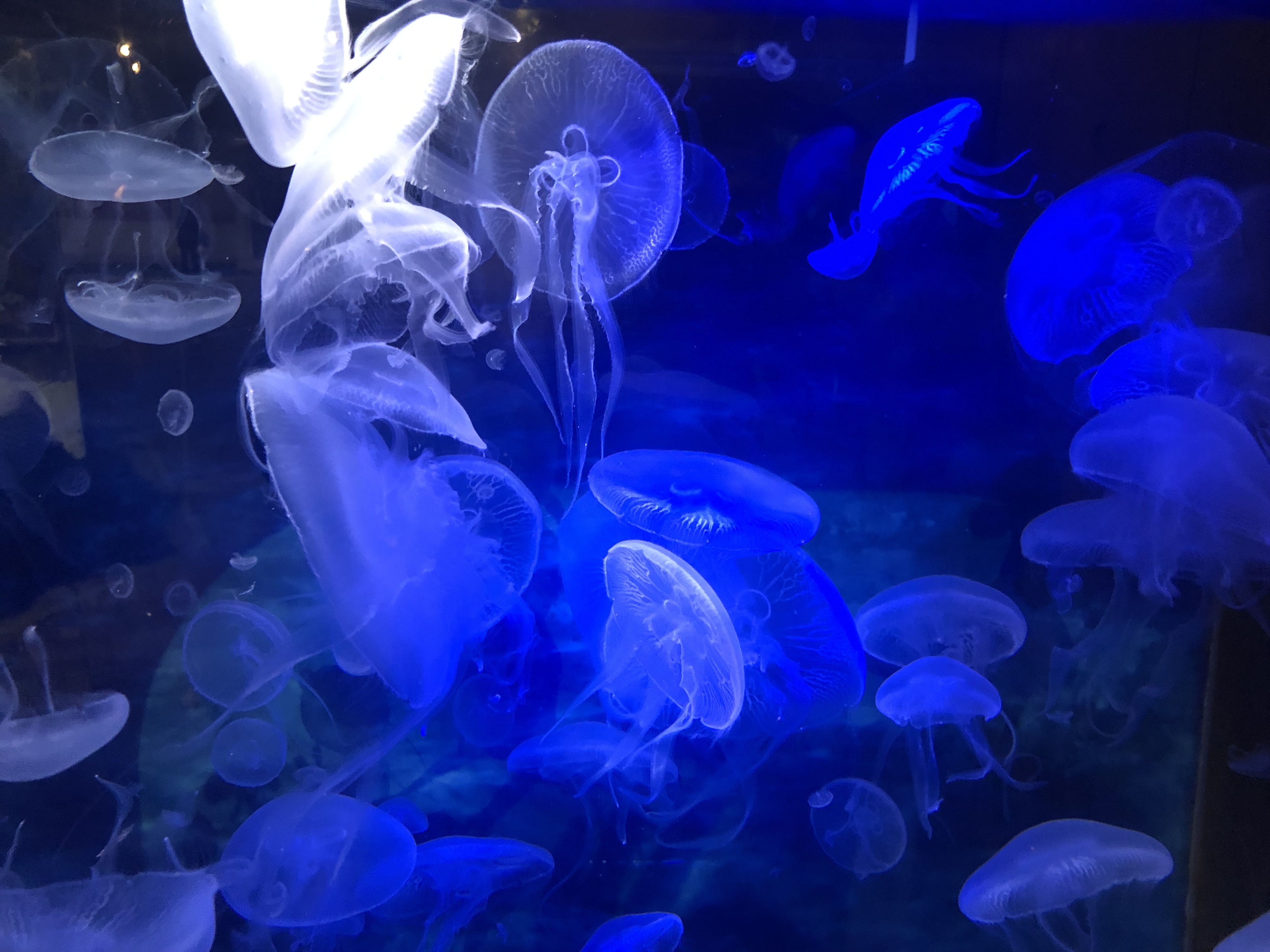
I also observe some Clownfish and Moon Jellyfish, but they seem to be lacking the vibrancy and liveliness that I would expect from these species. Clownfish, also known as anemonefish, are typically colourful and active, but these individuals seem dull and listless. Moon Jellyfish, with their translucent bells and delicate tentacles, are usually mesmerising, but in this small and crowded tank, their movement looks slow and somewhat lifeless.

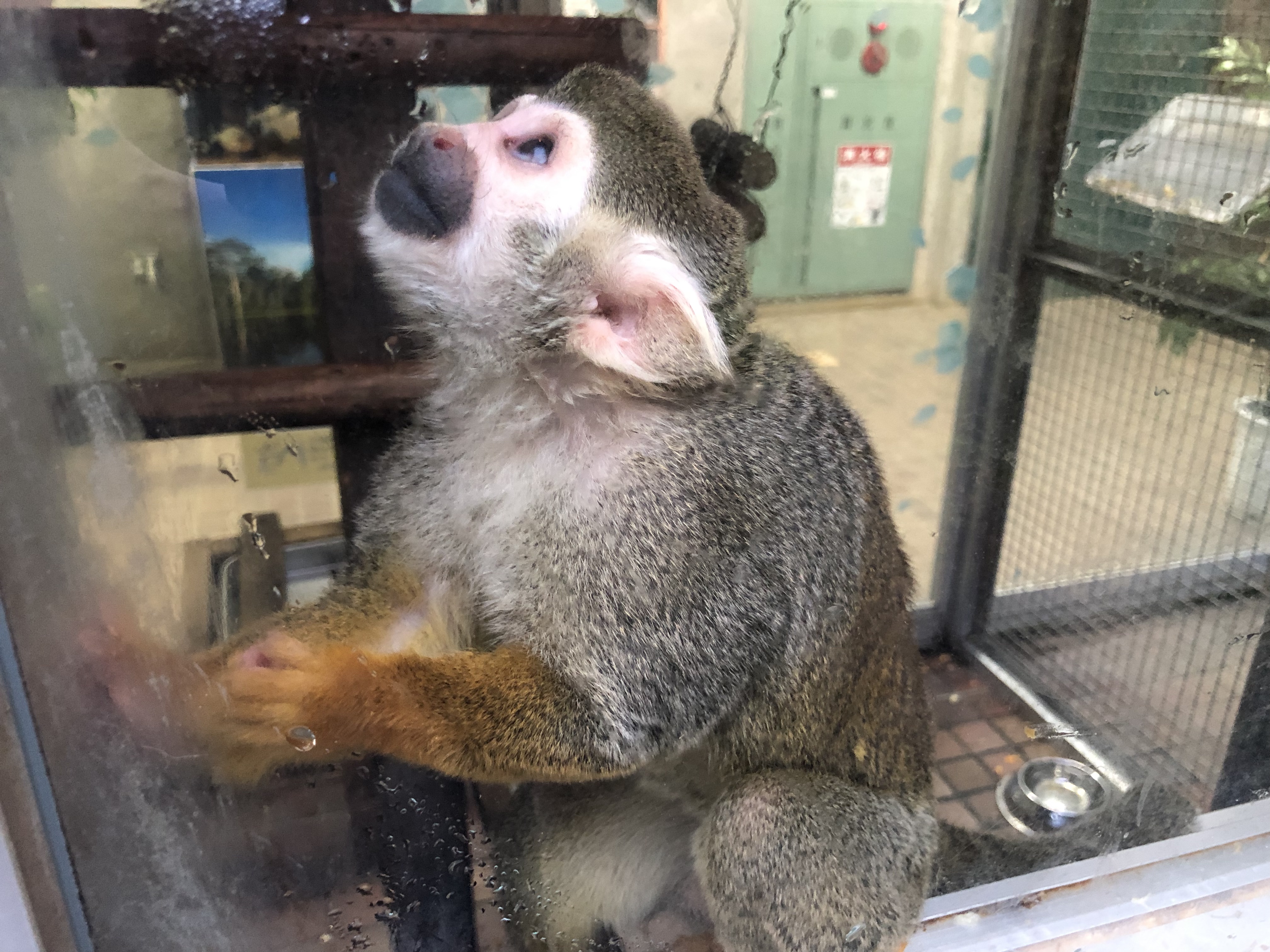
As I walk through the animal exhibit, I am startled by a group of common squirrel monkeys in cages. Seeing these animals in such small enclosures fills me with a surge of sadness, and I feel empathy for all of the animals here, even the fish, who seem to be exhibiting signs of depression.

Squirrel monkeys are social animals that live in large groups in the wild, and they are adapted to living in the rainforests of Central and South America. Because of their natural climbing abilities and long tails, squirrel monkeys are well-equipped to move through the trees in their rainforest habitat. However, one common squirrel monkey, oddly named Ryan, seems particularly drawn to me, pleading with me through its body language to let it out.

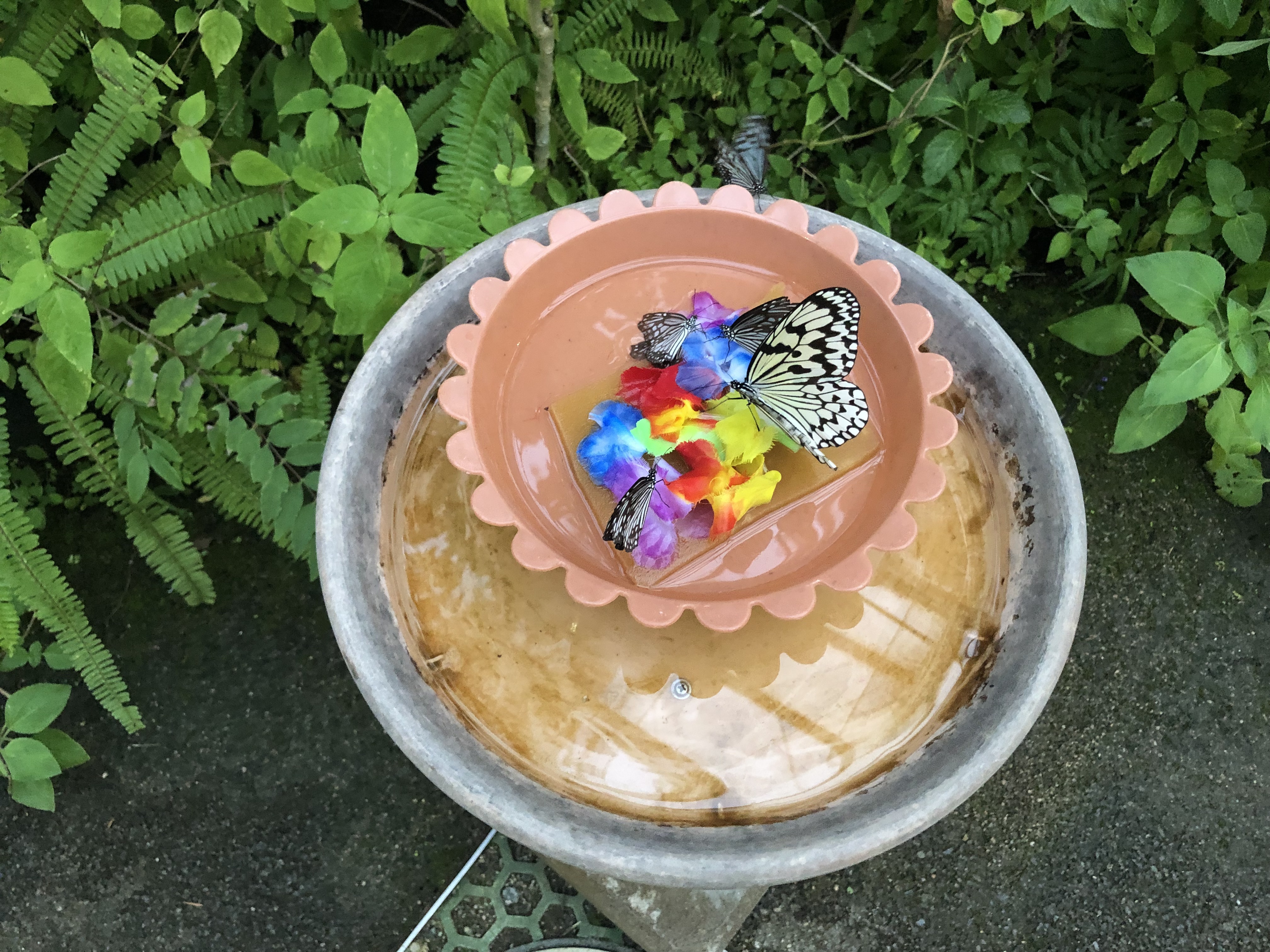
As I make my way into the butterfly enclosure, I am immediately struck by the contrast in conditions compared to the rest of the animal exhibit. Here, a lush, indoor paradise filled with plants and foliage greets me, and I am awed by the sight of Monarch butterflies, swallowtail butterflies, and red admiral butterflies fluttering freely about, their beauty on full display.

The beauty and vitality of the butterflies serves as a poignant reminder of what can be achieved when animals are given the proper care and space to thrive, in their spacious and well-maintained enclosure.

A sign reminds me to be careful not to step on any of the butterflies as I move through the space, and small dishes of honey, adorned with multi-coloured cloth, are scattered throughout the enclosure, serving as a natural attractant for the butterflies and allowing me to get a close-up view of these graceful creatures.

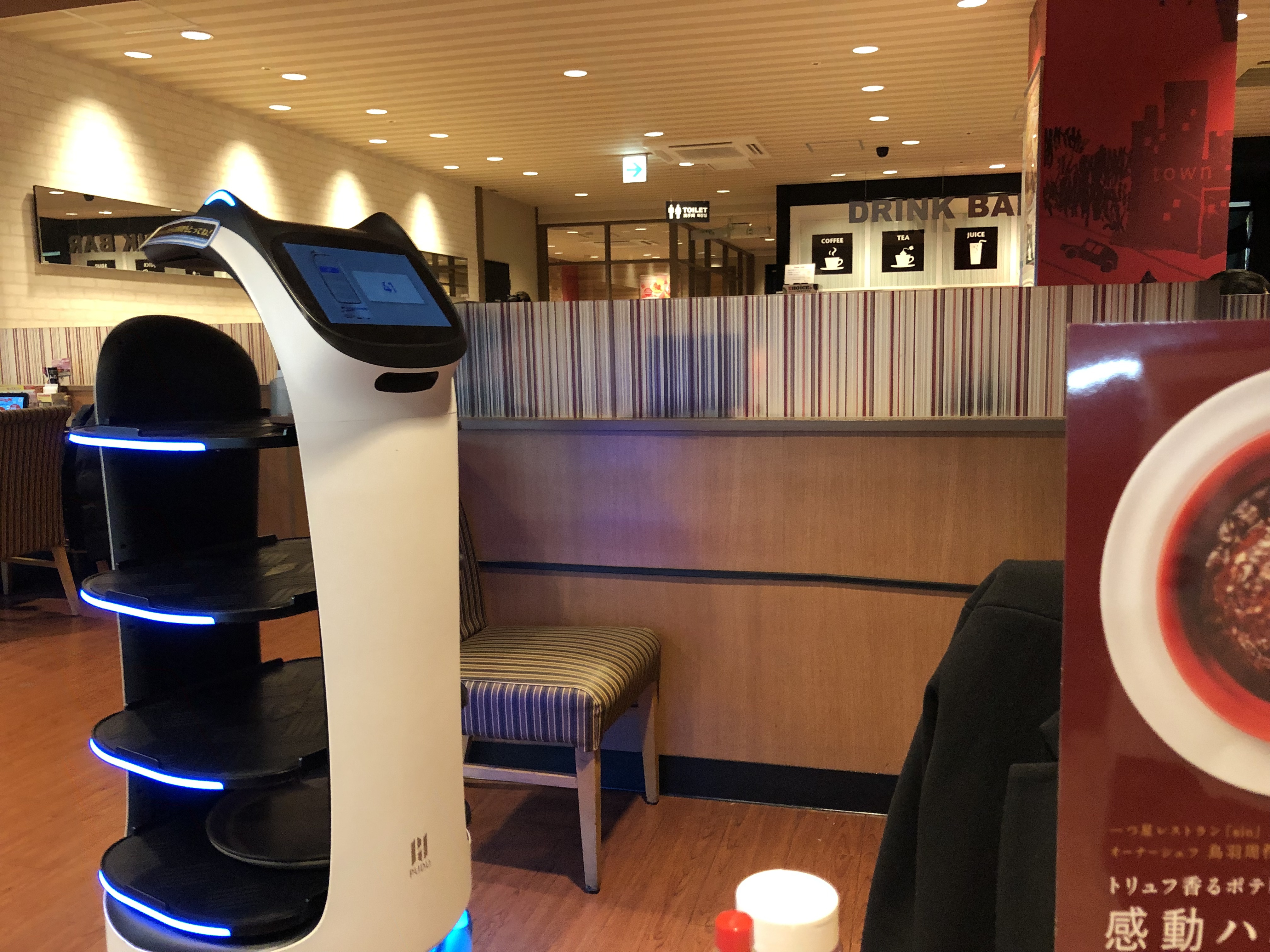
As I leave the park, a gnawing hunger overtakes me, one that I haven’t felt in a while. I head to the nearest train station in search of a restaurant. Inside, I am surprised to see that there are no waiting staff in sight, so I take a seat at a table and peruse the touchpad menu, eventually settling on a hearty gratin dish. As I wait for my order to arrive, I am intrigued by the sight of a robot with a digital cat face advancing towards me, carrying my steaming plate of gratin. I take the meal from the robot, which makes a beeping sound before gliding away with nonchalance back to the kitchen.

I briefly wonder about the impact of technology on the service industry. Despite my curiosity, I am too ravenous to dwell on these thoughts for long, and I dive into my meal with relish.

Twenty Thousand Leaves Under the Trees

I have come to Itabashi today to visit the Great Buddha of Tokyo, also known as the Tokyo Daibutsu. Upon exiting the train station, I realise that there are no maps in sight, so I decide to climb up onto a bridge that crosses over the road for a better view. Even though I am still within the city limits of Tokyo, I am surprised to see mountains in the distance. For some reason, the Great Buddha remains hidden from view.

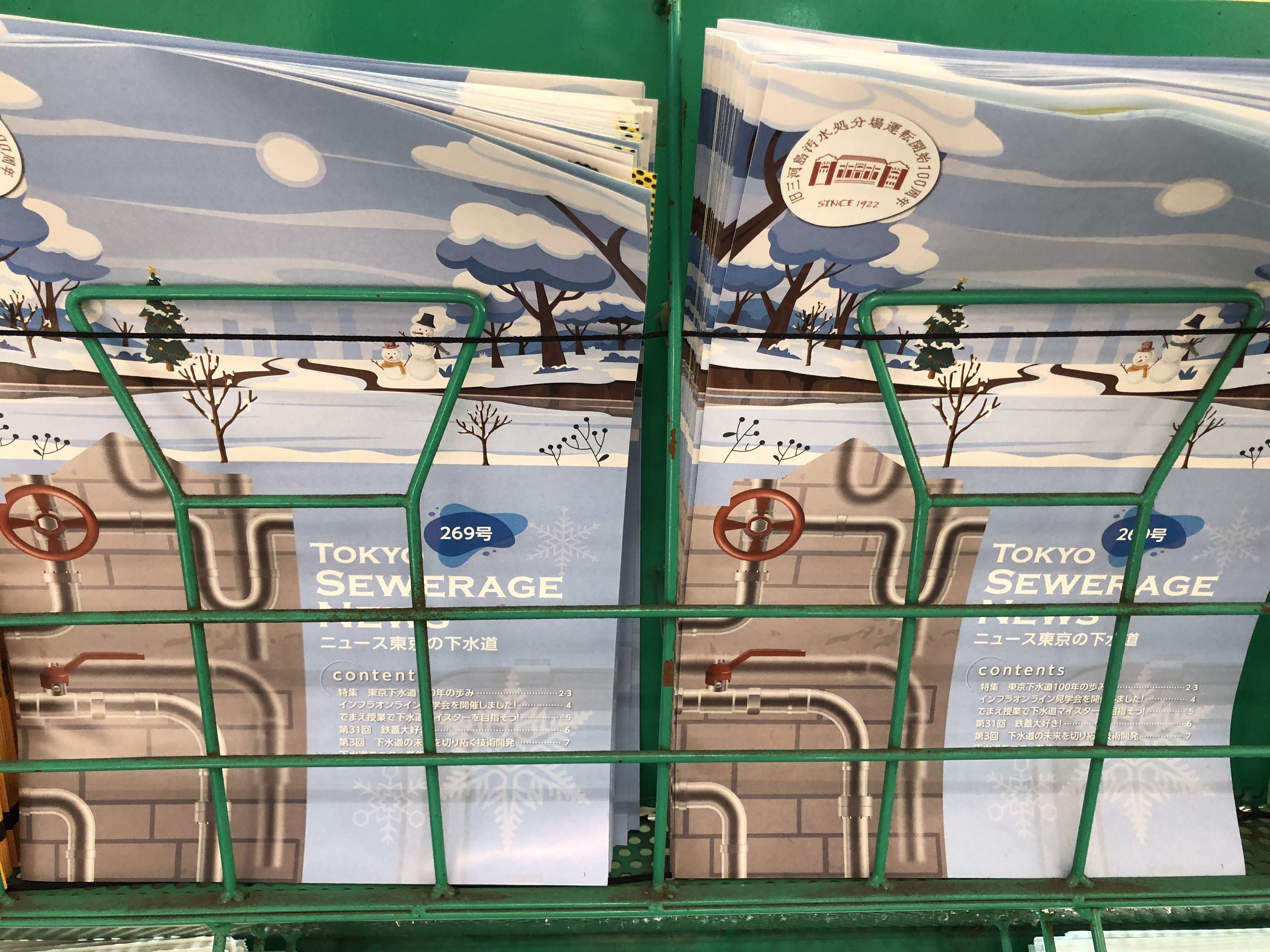
I return to the train station in search of a map. In Japan, all train stations have a stand with free leaflets, pamphlets, and sometimes magazines. This particular train station has an odd selection of magazines, including one that has been published since 1922 and is entirely about sewage.

After finding a map, I set off towards Akatsuka Park. Inside the park, I find an art museum (which is closed today), a folklore museum (also closed today), some water fountains adorning a pond lined with old men fishing, and on the other side of the park, a dried-up dragonfly pond.

As I wander through the park, I am struck by the peaceful sounds of nature. The plum grove stands out to me, its branches now bare and skeleton-like after shedding their leaves, stripped of their colourful cloaks. The leaves, once vibrant and alive, now lie dormant on the ground, a reminder of the cycle of life and death. I follow the trail of leaves, before eventually coming across some rather steep steps.

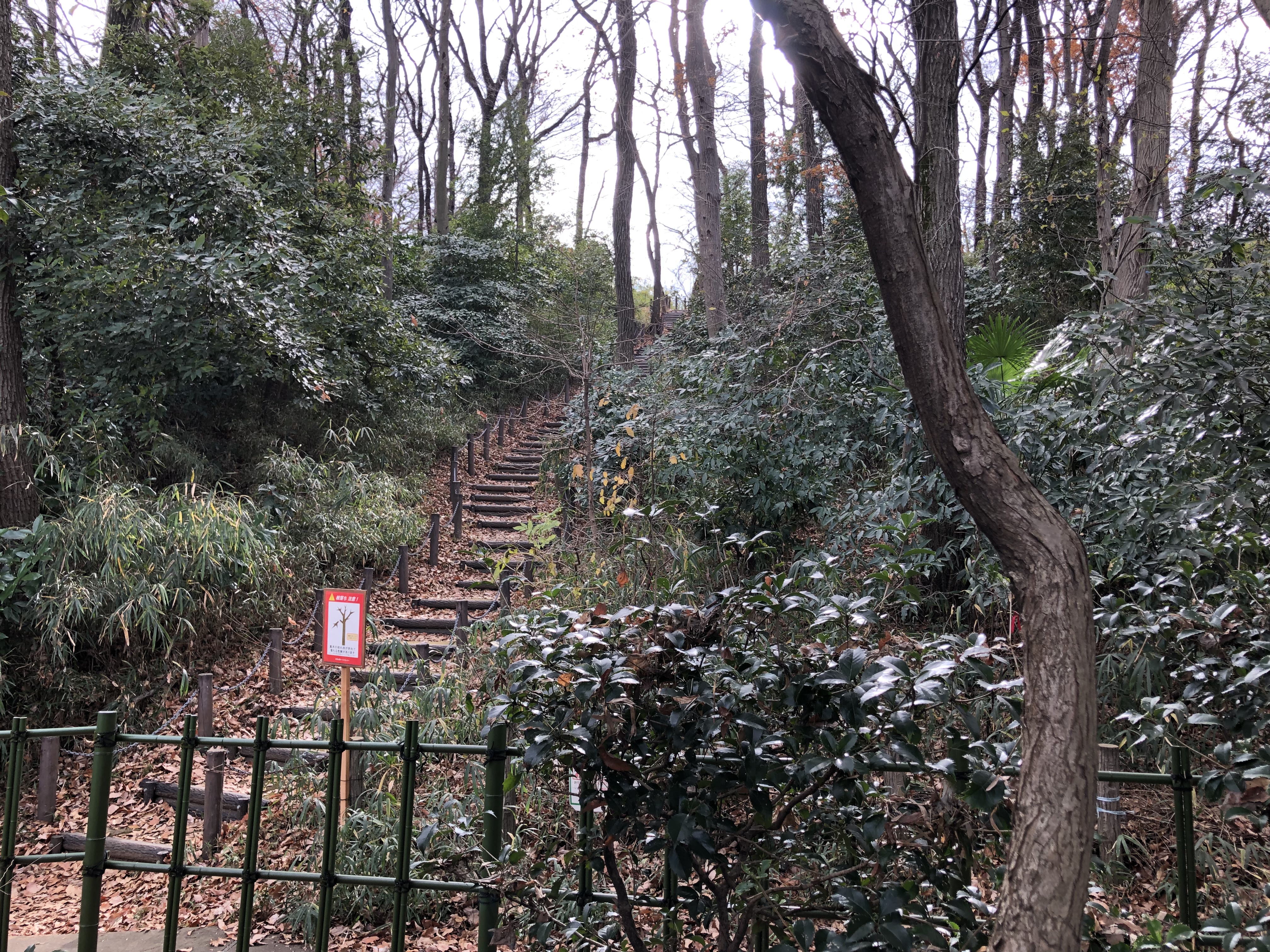
Signs placed intermittently along the steps warn me of the risk of falling branches, but as I climb their steepness, it’s the slippery fallen leaves that prove to be more problematic. I am careful with each step I take, not to slip, not to trip, and not to be hit by a branch hurtling towards me from above. Eventually, I reach the top, where I find the Akatsuka Joshi Park Castle Ruins, the former site of a castle.

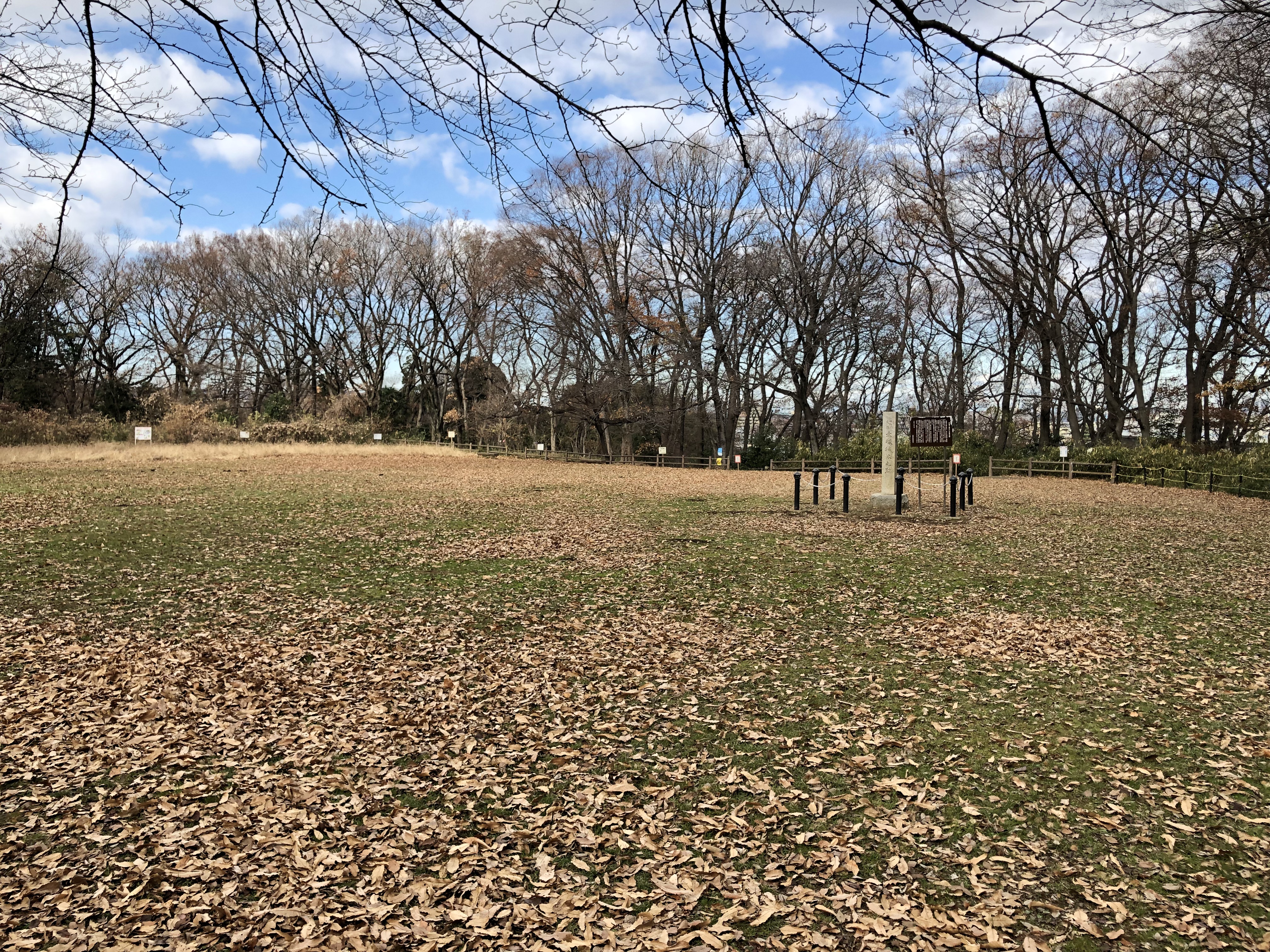
The open space where the beautiful castle once stood feels otherworldly. A single stone pillar serves as a testament to the castle’s former grandeur, the only remnant left in its wake. The bare trees surrounding the area add to the ethereal atmosphere, their stripped branches reaching towards the sky like ghostly fingers.

Yoritane Chiba was a prominent figure in Japanese history and played a significant role in the political and military affairs of the time. The Battle of Sekigahara, in which he played a leading role, was a decisive battle fought in 1600 that marked the end of the Sengoku period and the beginning of the Edo period in Japan. After the battle, he returned to Tokyo where he built this castle to be his home.

As I walk through the Akatsuka Castle Ruins, the empty space awash with fallen leaves, I sense a feeling of melancholy at the thought of Yoritane Chiba’s former greatness, now reduced to nothing but ruins. The castle was dismantled in the late 19th century, and once an important centre of power and cultural significance, now all its former grandeur is lost to the passage of time.

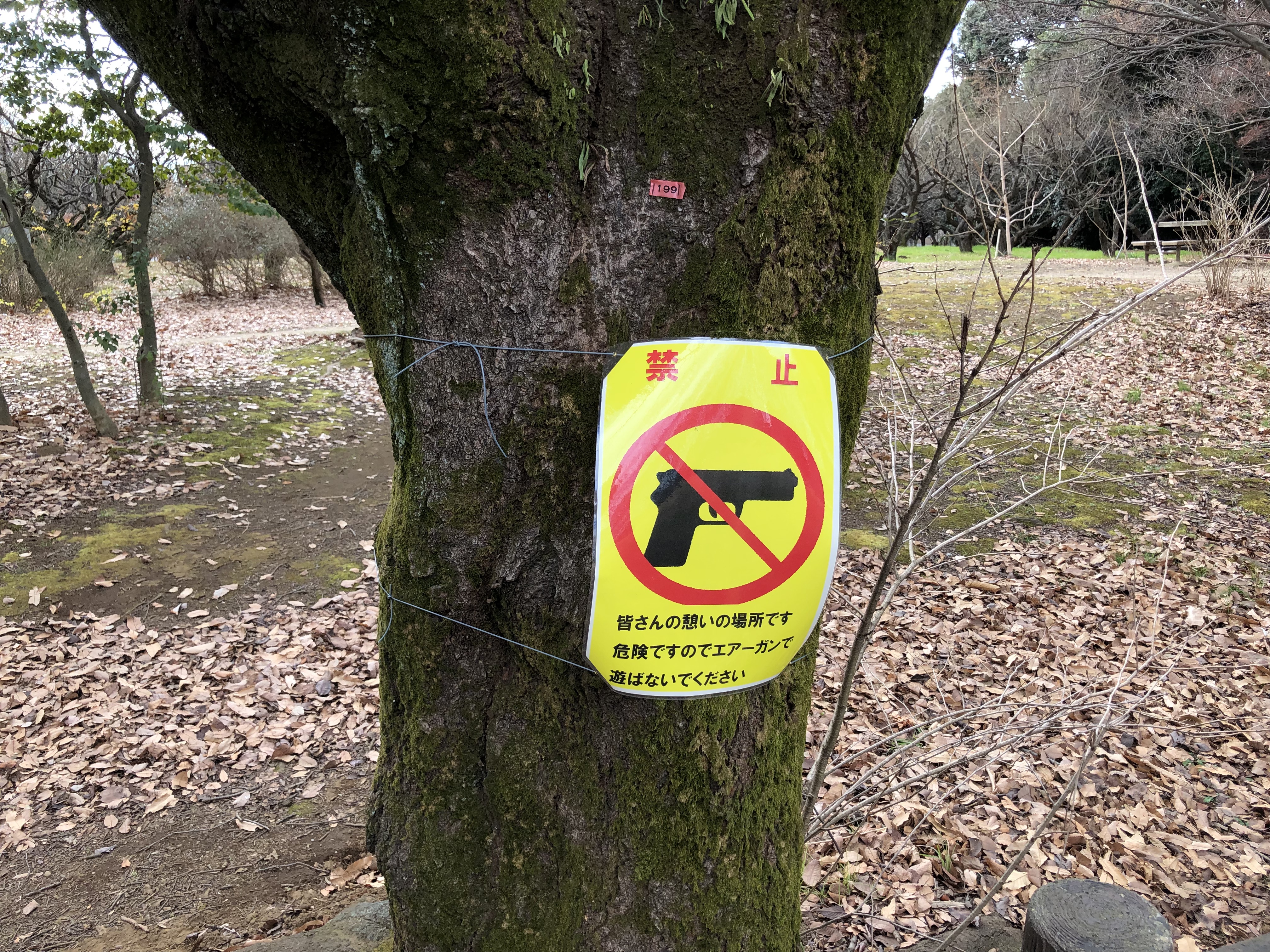
I continue my search for the Great Buddha, envisioning it to be a towering presence in the sky. As I look around, my eyes are drawn to a yellow sign in the distance, reminding me that this is a place for all to enjoy, free from harm, and to not go around shooting anyone.

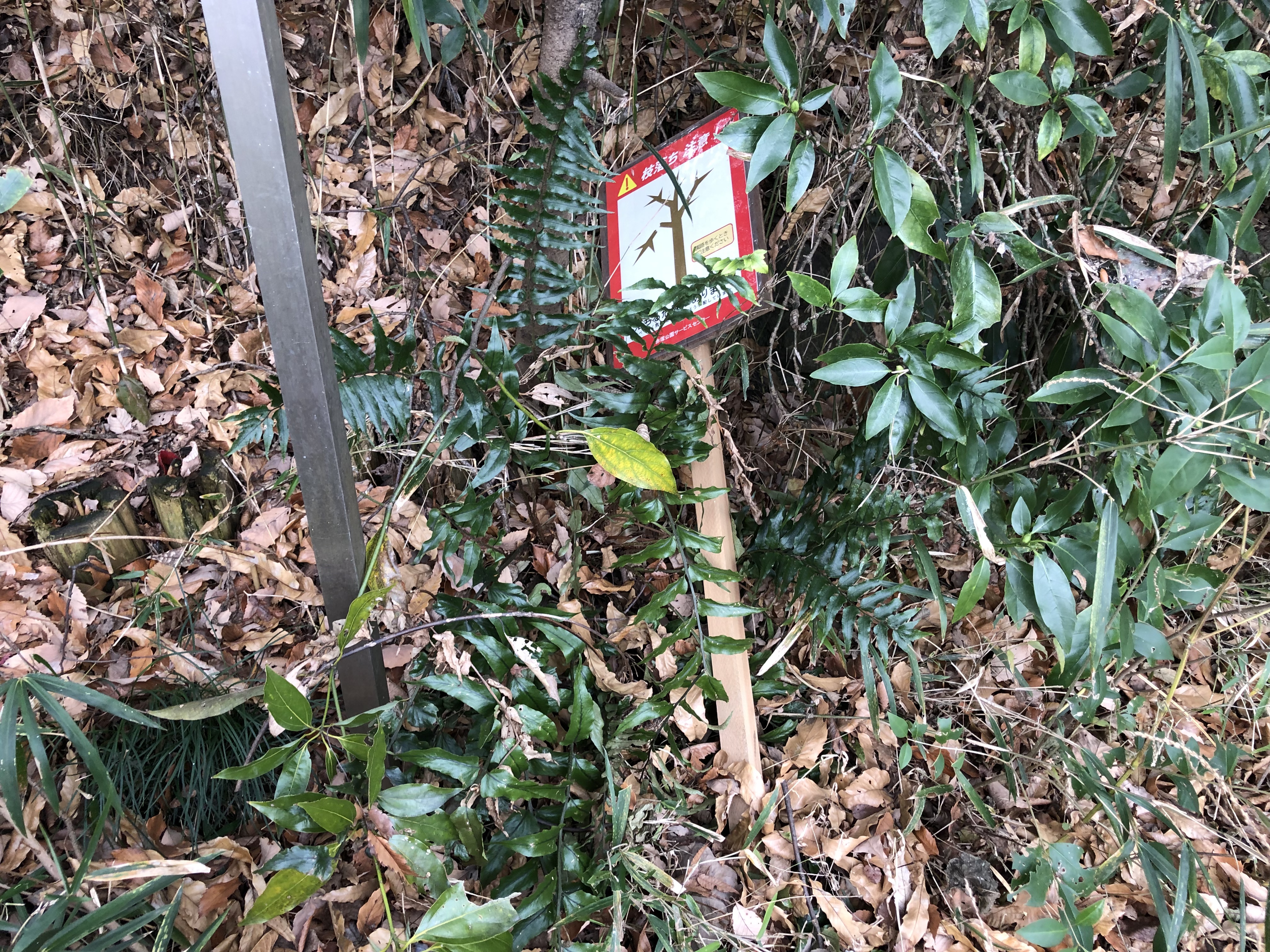
Descending the steep steps, I notice that one of the signs cautioning against falling branches has itself fallen to the ground. Perhaps they should add a secondary sign as a reminder to watch out for falling signs.

I wander over to Akatsuka Botanical Gardens (also closed today). It seems that, if anything was actually open, this area in Itabashi would have a lot to offer. As I turn to depart, my gaze is captured by the sublime sight of the Buddha’s head rising above the walls of a temple, perched atop a hill like a beacon of tranquillity.

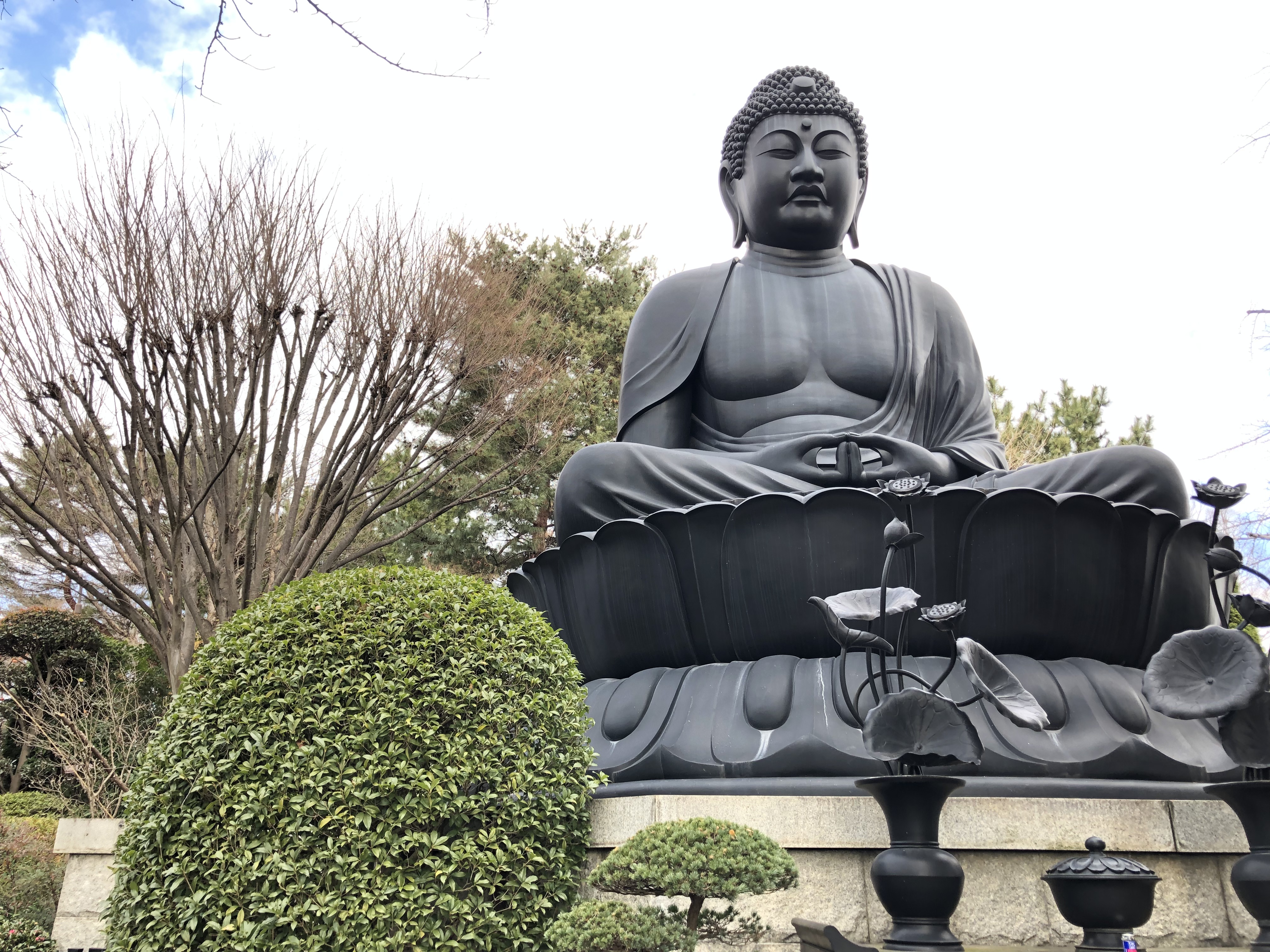
Jorenji Temple is a beautifully landscaped sanctuary that houses Japan’s third largest bronze Buddha, sitting tall at 12.5 metres. Within its walls, I encounter the fearsome King of Hell, also known as Enma-raja, along with the ten Judges of Hell, and Datsue-ba, the old woman who strips the clothing off the dead.

As I stand before the Great Buddha of Tokyo, I am struck by its powerful presence. Looking up at the Buddha’s face, I feel a sense of calm wash over me, and the placement of its head, tilted slightly forward, allows me to feel a deep connection with the statue as I meditate. In this moment, I am enveloped in the Buddha’s freedom from distracting thoughts, and I am filled with a sense of peace and enlightenment.

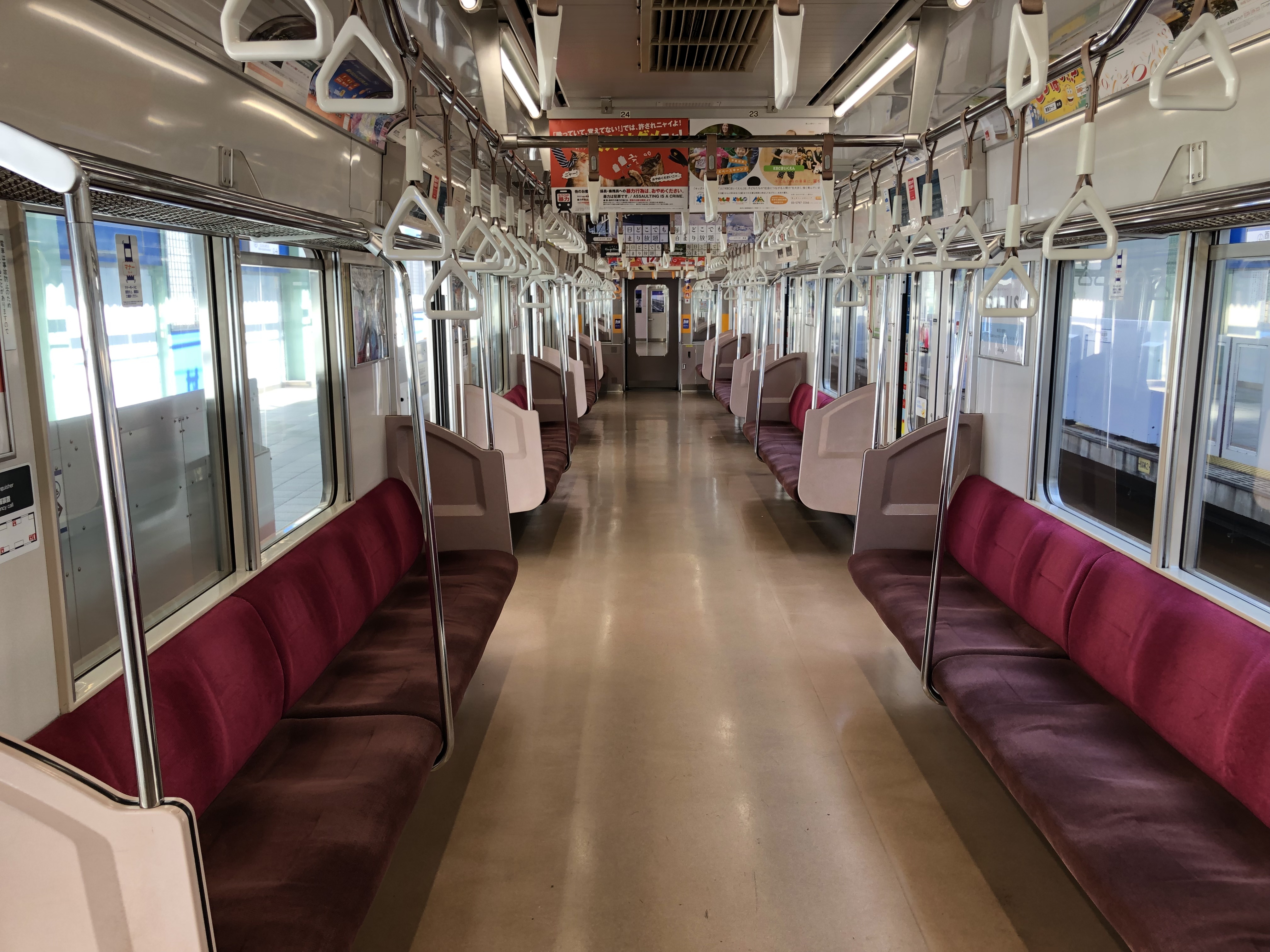
As I make my way back to the train station, passing Akatsuka Park along the way, I board the Mita Line train bound for Sugamo. The train is eerily quiet, its emptiness amplifying the sense of solitude.

As I sit on the train, surrounded by nothing but empty seats and silence, I attempt to pass the time by flipping through the pages of my copy of Tokyo Sewerage News.

Reflections on a Winter’s Day

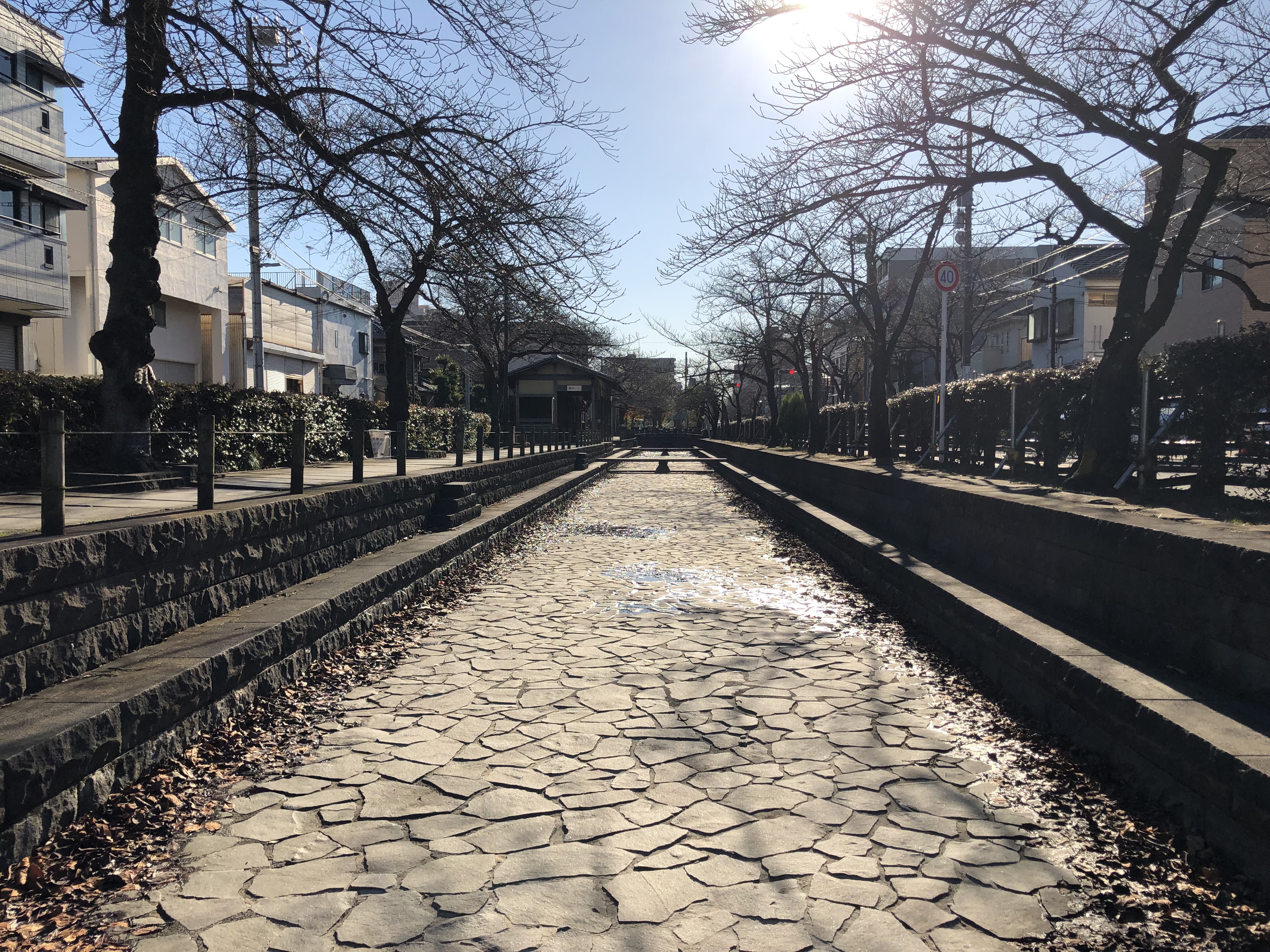
As I walk along Hikifune Water Park Street, a sense of nostalgia washes over me. It’s been five years since I lived in Katsushika Ward, Tokyo, and revisiting my old neighbourhood brings back a flood of memories. The winter morning air is crisp and chill, and my breath turns to white wisps of fog that swirl and still as I make my way to my first destination.

The street itself is unremarkable. It used to be a train line, but now it has been transformed into a park that stretches from the Arakawa River all the way to Ohanajaya. As I begin to walk its length, I can’t help but enjoy the sense of familiarity.

As I wander down the street, memories of my past come flooding back. On a late night walk home with a friend, we had stopped to rest on one of the park’s benches, halfway through our journey. My friend was convinced he heard the sound of a train echoing down the length of the park. It’s said that at night, a ghost train can be heard thundering down where the old train tracks once were, and I’ve heard similar accounts from others. It’s a story that has stuck with me, and one that has been corroborated by others who have experienced it.

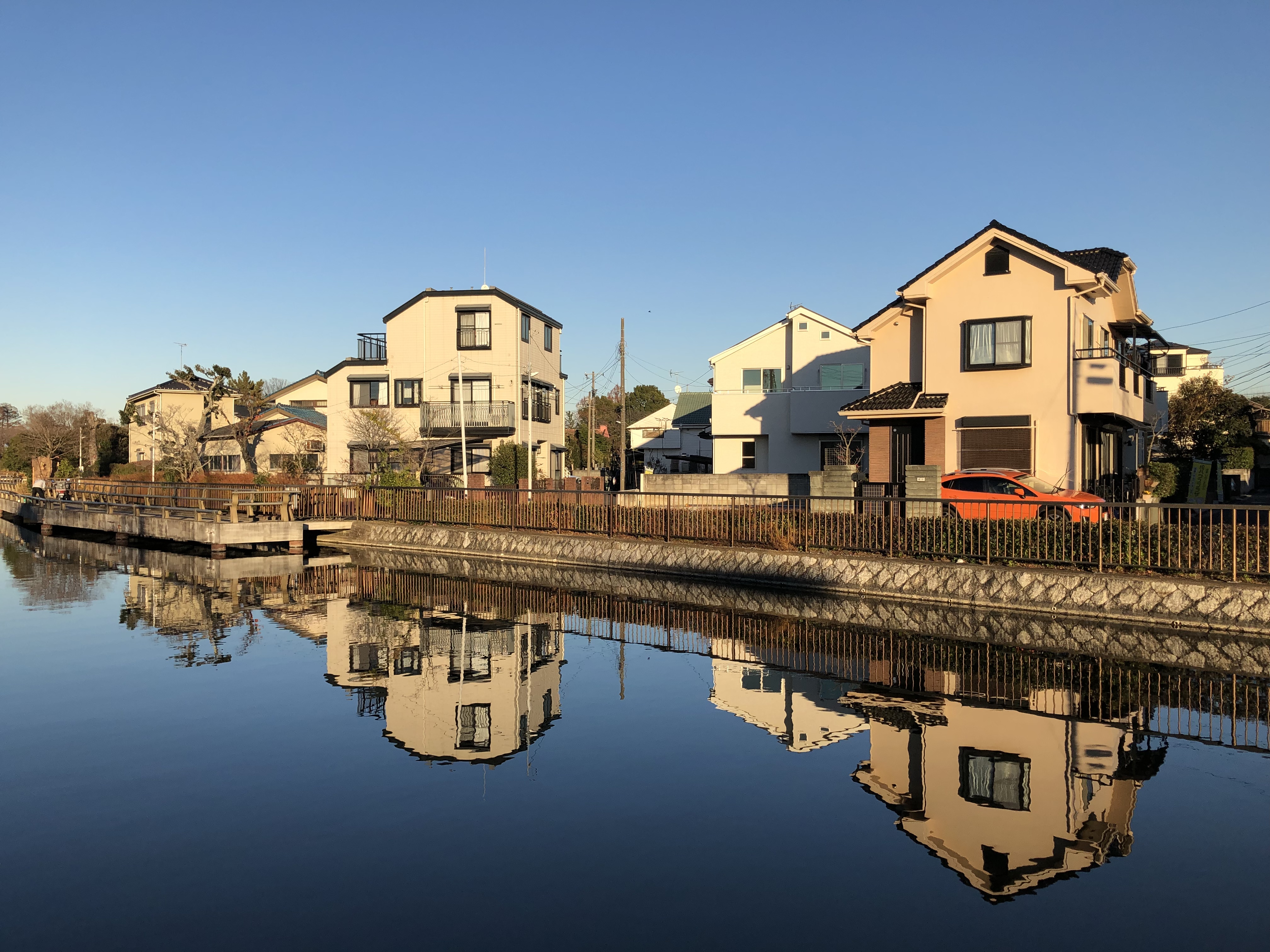
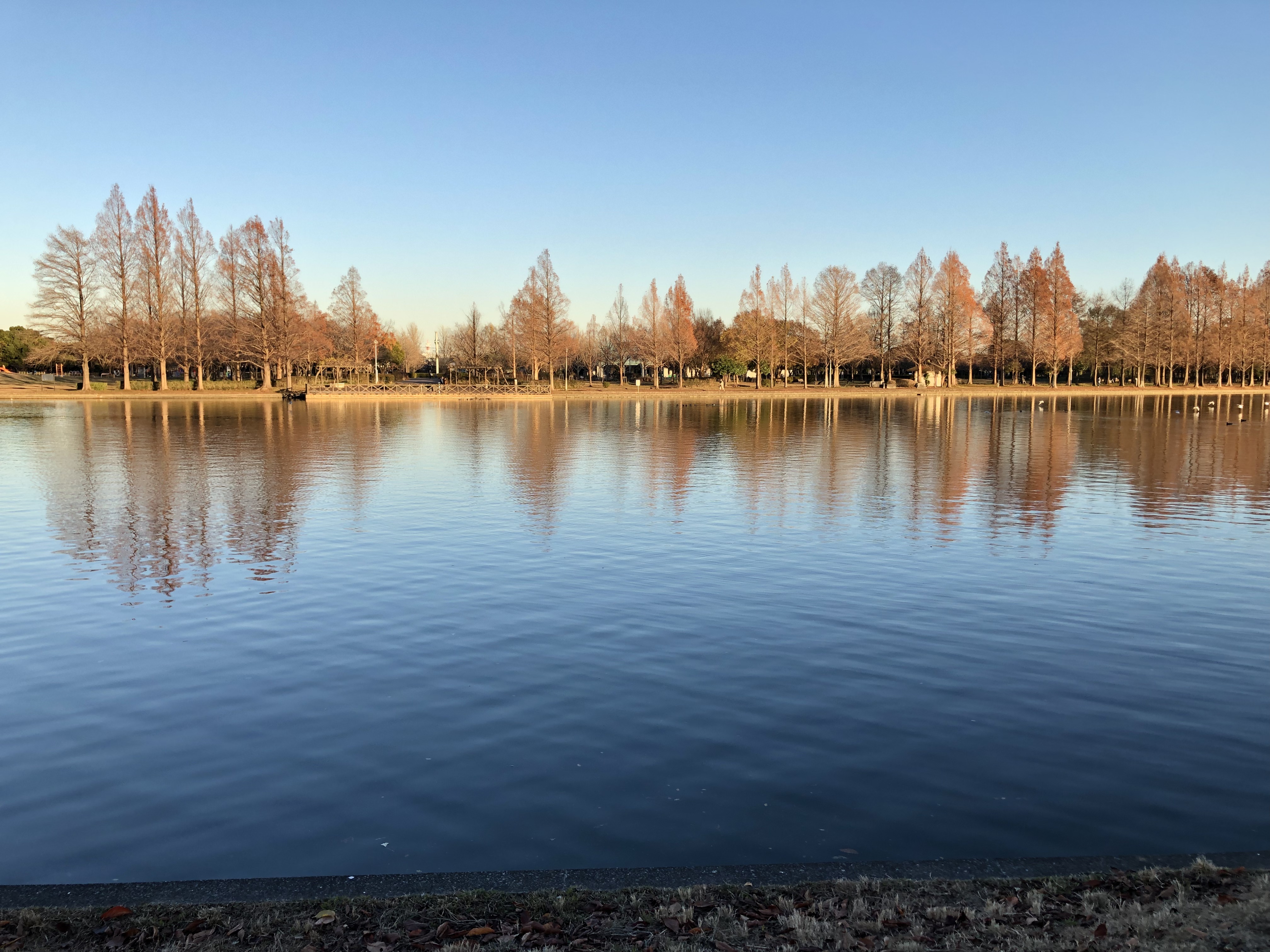
As I continue my leisurely walk, I pass Ohanajaya Station, its name, meaning “Tea and Flowers,” imparting a sense of charm. However, every time I pass by, the song “Govinda” by Kula Shaker runs through my head, as I rhyme its catchy refrain of “Ohana Jaya Jaya.” Eventually, I arrive at the picturesque inner reservoir of Mizumoto Park, my gaze drinking in the peaceful surroundings and the stunning reflection on the water’s surface.

Mizumoto Park is the largest park in Tokyo. Bursting with lush gardens and natural beauty, with a large pond at its centre. The park boasts an aquatic plant garden, a bird sanctuary, a babbling stream field, and three car parks. In early spring the park becomes awash with the gentle pink hue of the cherry blossoms.

I make my way over to one of the ponds and sit upon a bench for a time. I watch as a turtle gracefully swims through the water, its movements causing ripples to spread across the surface. The reflections of the surrounding trees dance and shimmer upon the water, creating a mesmerising visual display. The soothing sounds of chirping insects and rustling leaves add to the peaceful atmosphere, and I am content to sit and take it all in.

As I sit on this bench, surrounded by the tranquil beauty of the pond and the trees, a sense of melancholy envelops me. I reflect, thinking back on the year that has passed, and the ephemeral nature of time. I realise that I don’t have any plans or dreams for the future, and the thought fills me with a sense of sadness. All I know is that for now, I want to keep exploring the hidden corners of Japan and sharing my adventures through my words. But in this moment, the weight of my own insignificance and the impermanence of everything feels almost overwhelming.

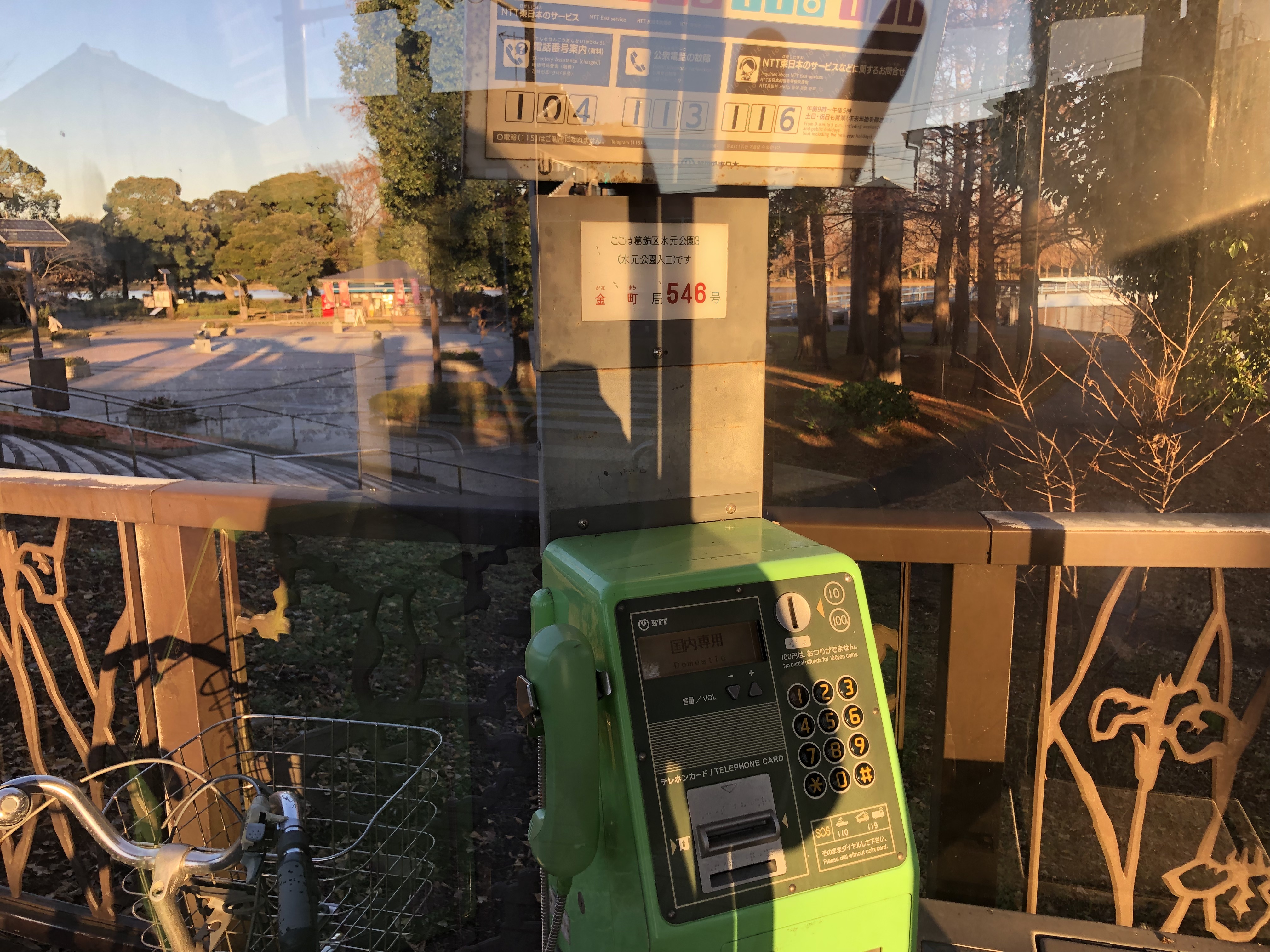
As I continue my peaceful walk through the park, I come across a telephone box nestled amongst the flowers. Legend has it that this particular telephone box is also haunted, and that at dusk a ghostly figure can be seen lurking inside. However, as I peer closer, the only ghost I find here is the reflection of Mount Fuji in the glass. It’s a breathtaking sight, and I stand for a moment, mesmerised by the beauty of it all. For some reason, the mountain is not visible to the naked eye here; it exists only in the glass of this haunted phone box.

As I wait for the sun to set and darkness to envelop the park, I am treated to a daily ritual at 5 o’clock. The speakers throughout Katsushika emit a creepy, slowed-down song accompanied by an eerie chime. The song echoes throughout the park, reminding me that the day is coming to a close and it’s time to return home. The pealing bell of the mountain temple beckons me, promising the sight of a bright, round moon shining down and illuminating the sky in twilight, filled with the brightest stars as the birds begin to dream.

Drive My Car

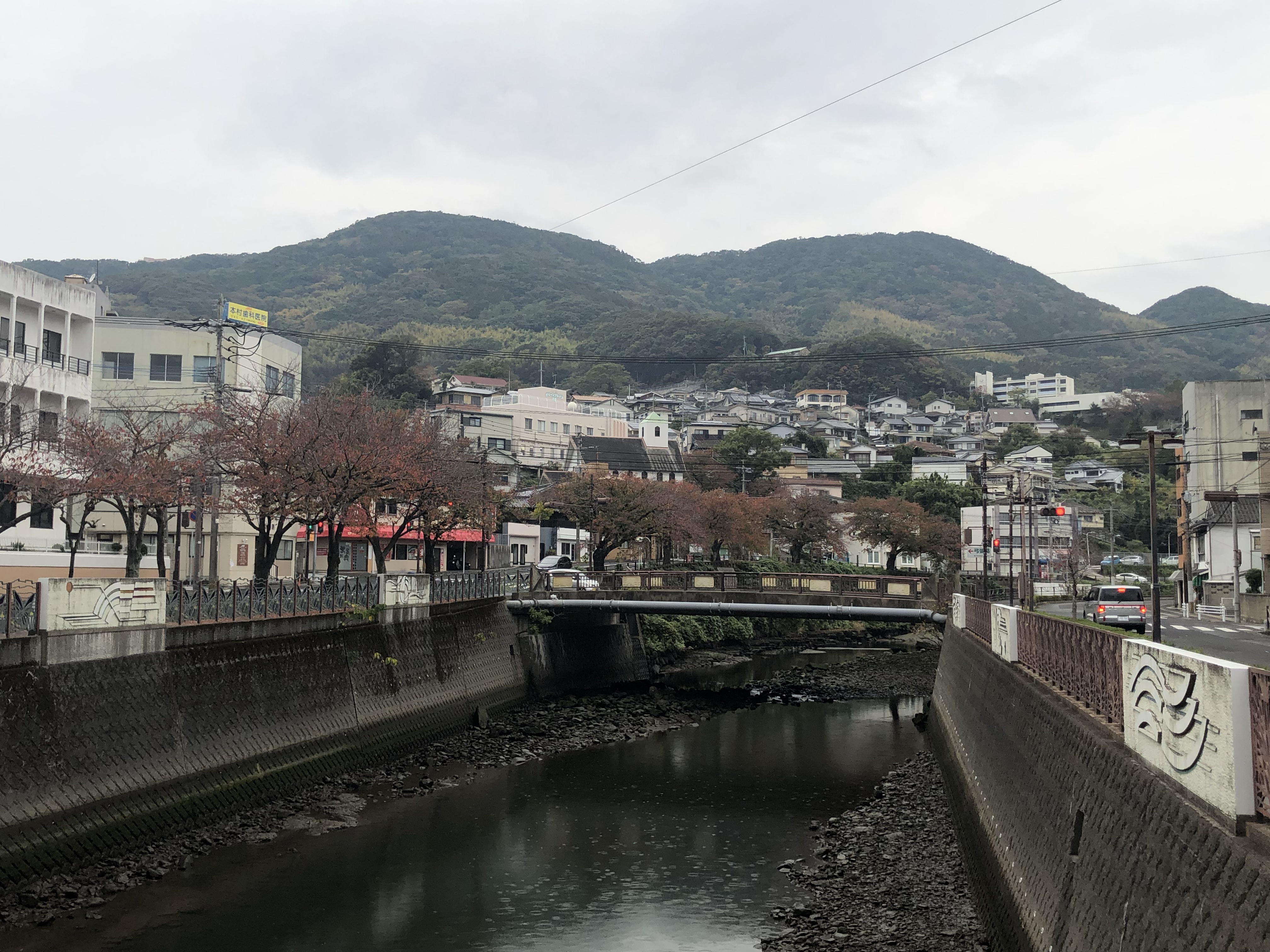
Today I’m in Sasebo, Nagasaki Prefecture, and there are mountains everywhere. I walk vaguely in the direction of Sasebo Yonkacho Shotengai, a shopping arcade so big that its kilometre-long length spans across seven different towns. It is actually the longest straight and continuous shopping arcade in Japan. Sasebo Tourist Information states: “The arcade is always crowded with shoppers. Some stores accept US dollars.”

As I begin to wander through the retro shopping arcade, I notice a complete lack of not just shoppers, but shops that are open. Everything here aside from stores like Seven Eleven and Family Mart are all but closed. The arcade boasts over 160 shops, including a multitude of restaurants, souvenir shops, clothing shops, as well as daily goods stores. This morning, however, shuttered down shops with no identity fill the margins of this shopping stretch. The shopping arcade does however offer free wireless Internet, and also offers a nice break from the low winter sun on what is a relatively warm winter morning.

At the other end of the arcade, Mount Yumiharidake hovers on the distant horizon.

As I further approach the mountain, a sign tells me that the summit is 3.4 kilometres away. Having just walked one kilometre through a shopping street with relative ease, I decide that this could be an enjoyable hike to the top. There is said to be an observation deck at the peak which offers some of the best views of Sasebo and its surrounding nature, so, off I go.

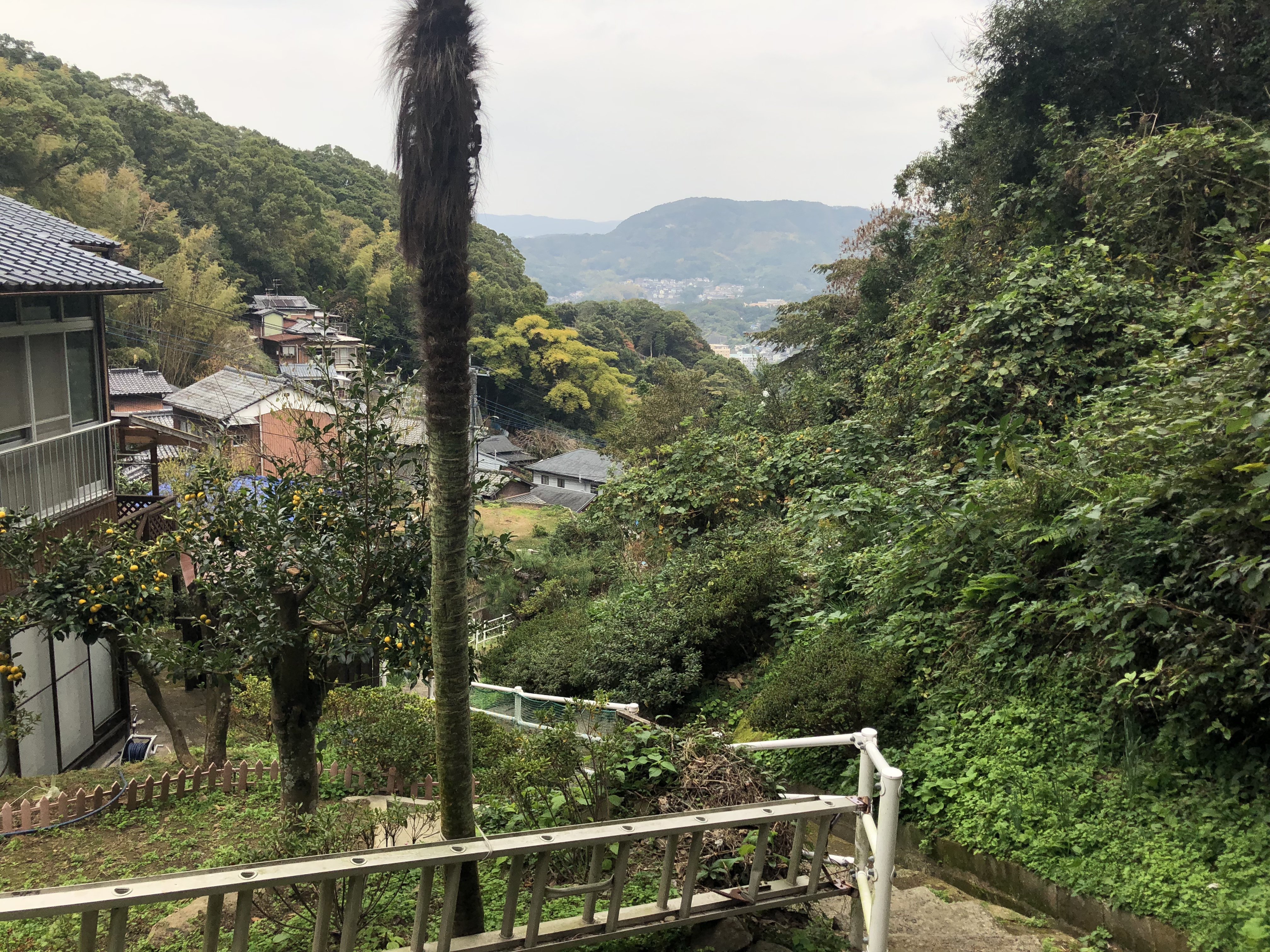
It seems there are multiple ways up the mountain. The boring option is to hike the entire route by simply following the main road, or as I do, take some of the more interesting routes up steep steps and rocky intervals. As more and more of the paths begin to fracture and split into narrow lanes that scale upwards from the base of the mountain, interwoven homes across narrow streets littered with cats make up the first twenty minutes of the climb.

As I continue on with my ascent, the route begins to snake more and more, and light rain begins to fall. Hot from the day and the steepness of the climb I find the rain to be a welcome refreshment and decide to rest for a moment, allowing the rain to cool me down, and my heart rate to climb back down to a steady crawl.

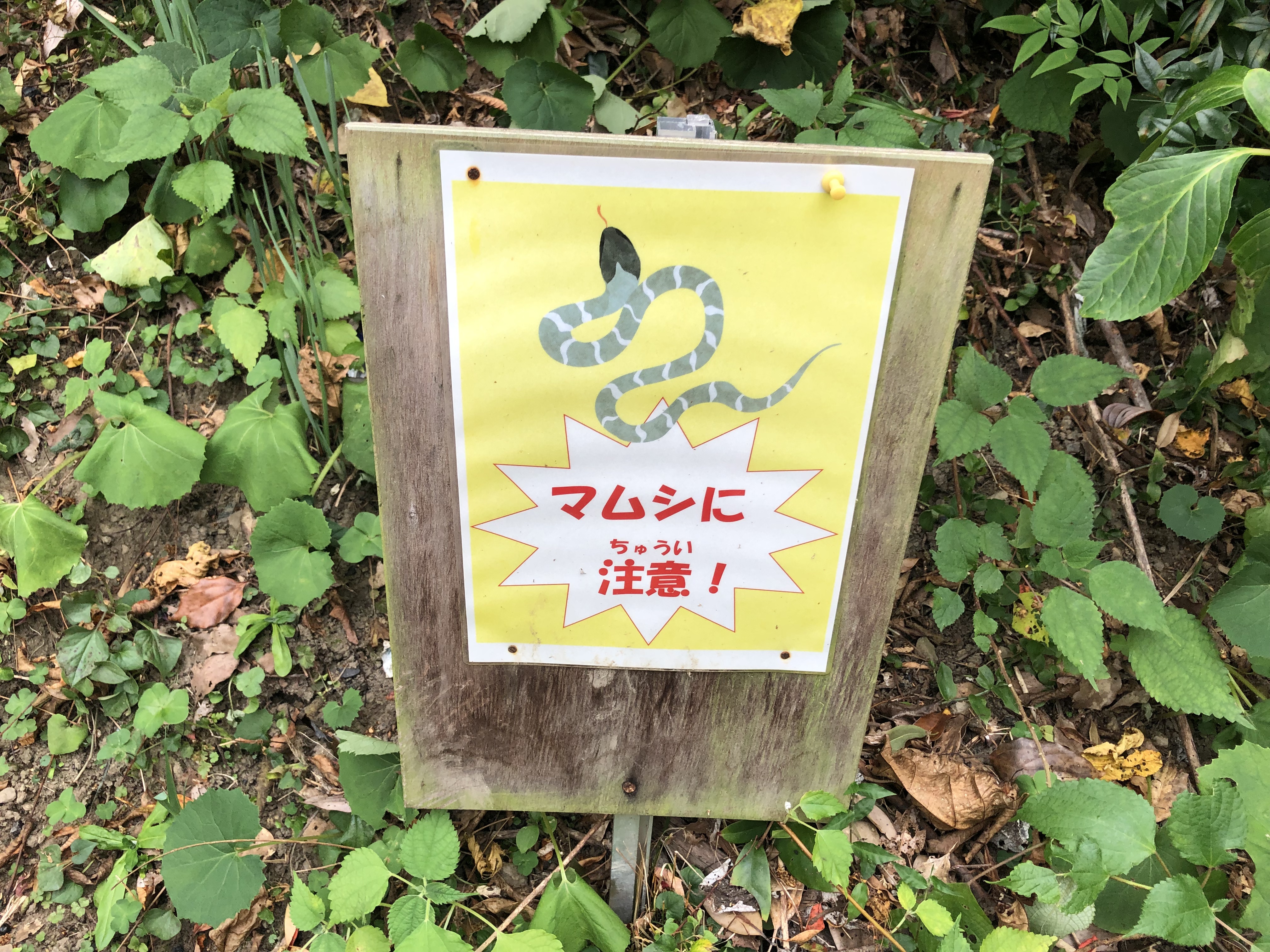
I stop suddenly when I notice a sign telling me to watch out for snakes, but not just any snakes, mamushi, the most venomous snakes in Japan.

As I watch out for snakes, I pass under low hanging cobwebs that drift between trees across the many muddy paths. I don’t see any other people, and other than the cats, I don’t expect that I ever will. The track spirals around and into a clearing through the woods for a time, before becoming a path again.

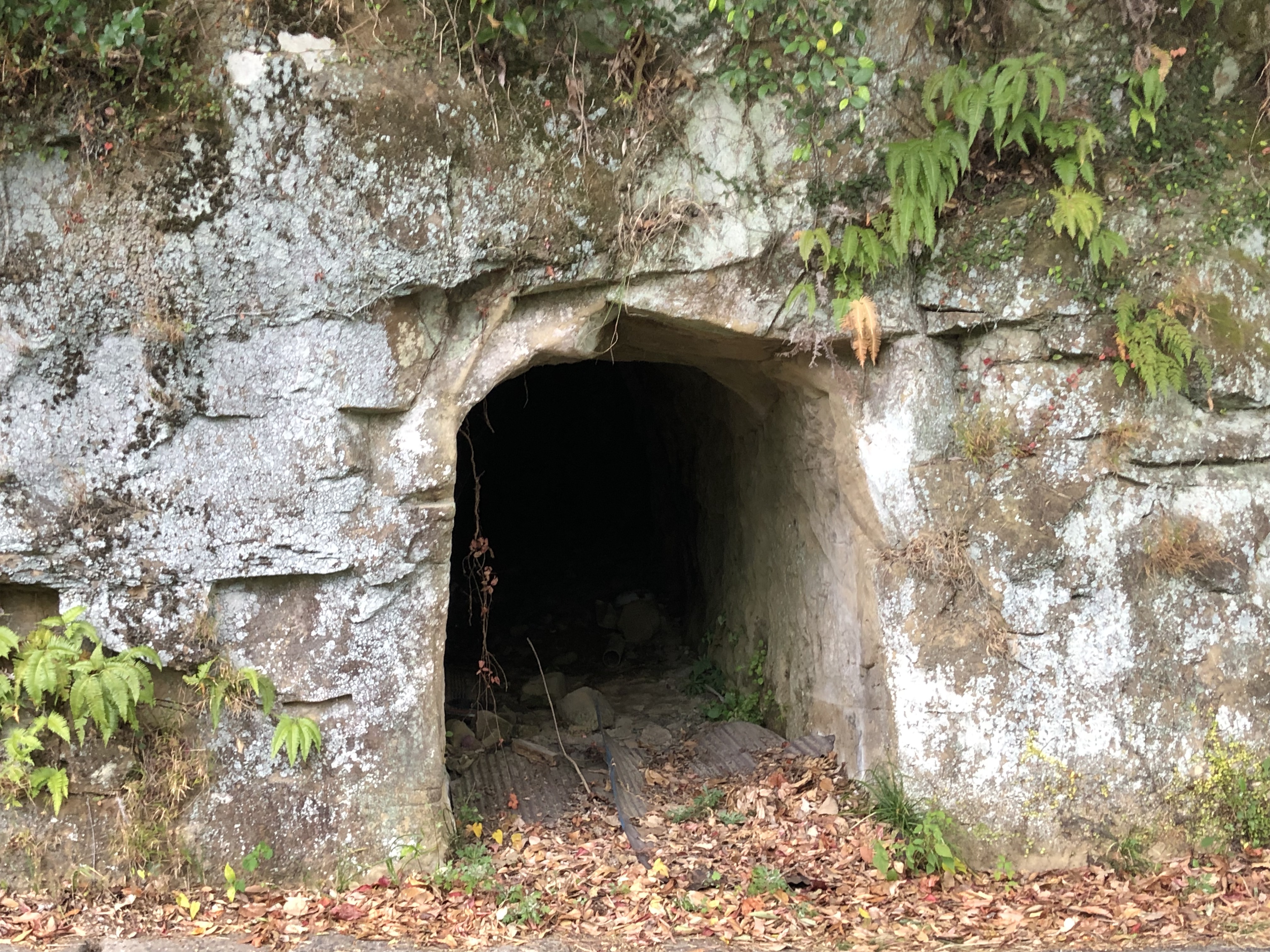
A little later, I pass a rather small cave carved into the rocks, I’m not sure if this is part of the climb or not, but it looks ominous, as if some unnamed horror is lurking inside. I take out my phone to capture the cave, before turning on my torch. As I bring the light to the entrance, I hear something inside begin to rustle around, perhaps a snake, and my heart begins to race; its beats increasing and repeating, an octave at a time, like an endlessly rising Bach canon fit for a king.

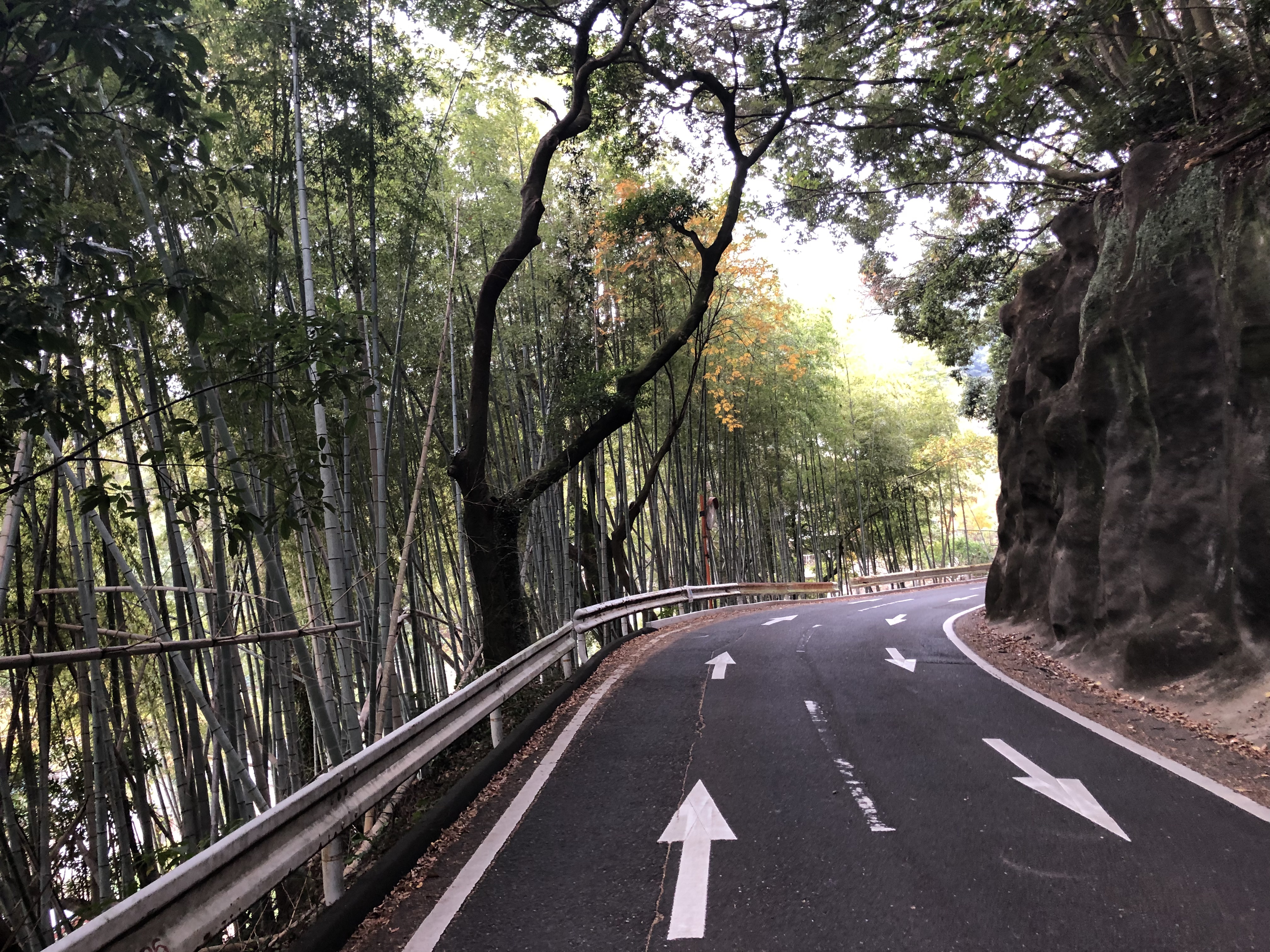
After taking an alternative route, I eventually reach a road where bamboo stretches off to the side, bamboo so tall that it descends deep below the road, stretching off into a distant obscurity.

Further along the road I see a sign telling me to, “Keep Out!” and below the sign is a huge drop, and I wonder who this sign is even for. Eventually, I see another sign for a car park, 300 metres away, and breathe a sigh of relief in knowing that I’m almost at the top. A third sign explains that gun hunting is prohibited in this area, perhaps the reason for the abundance of snakes.

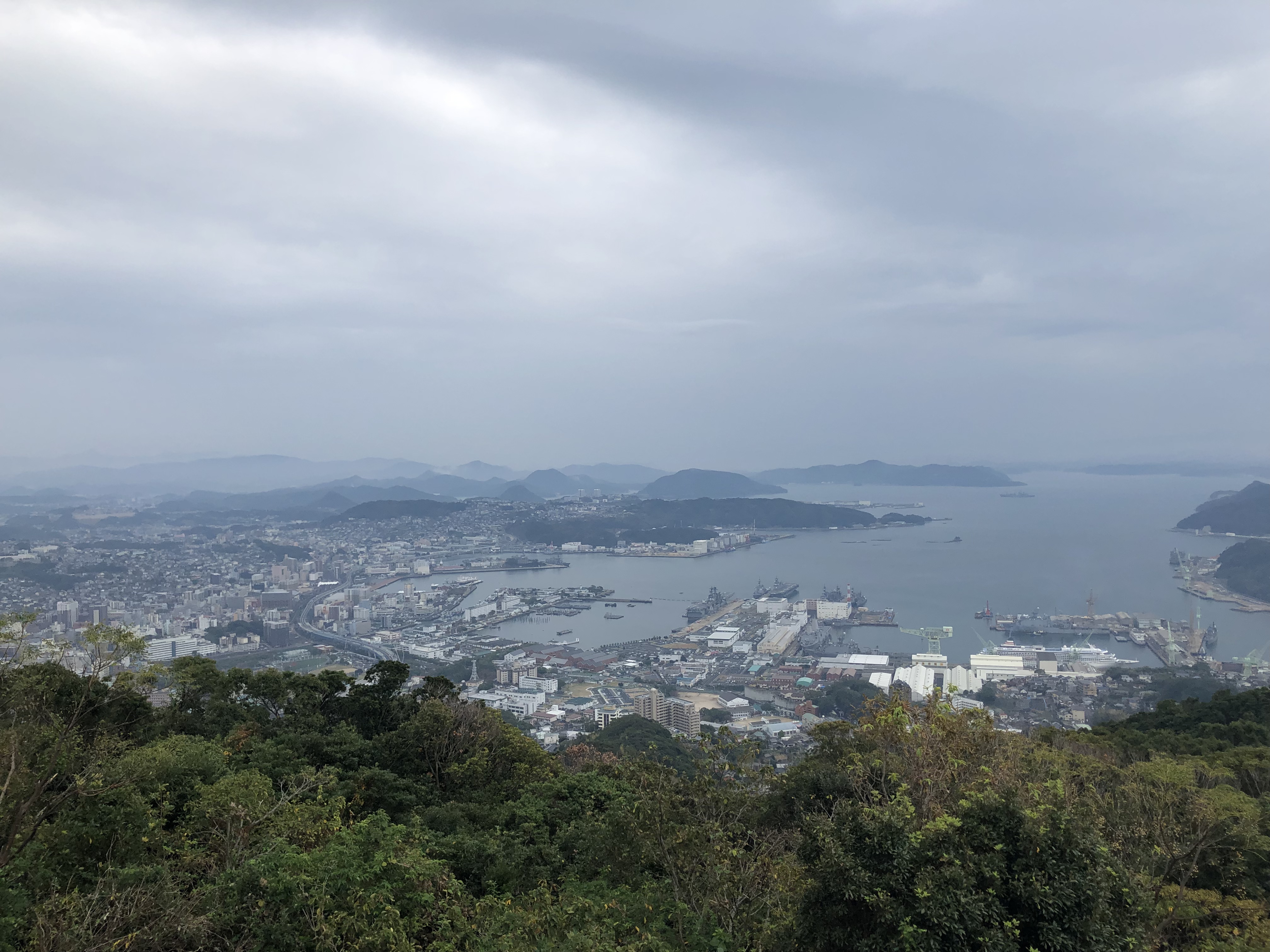
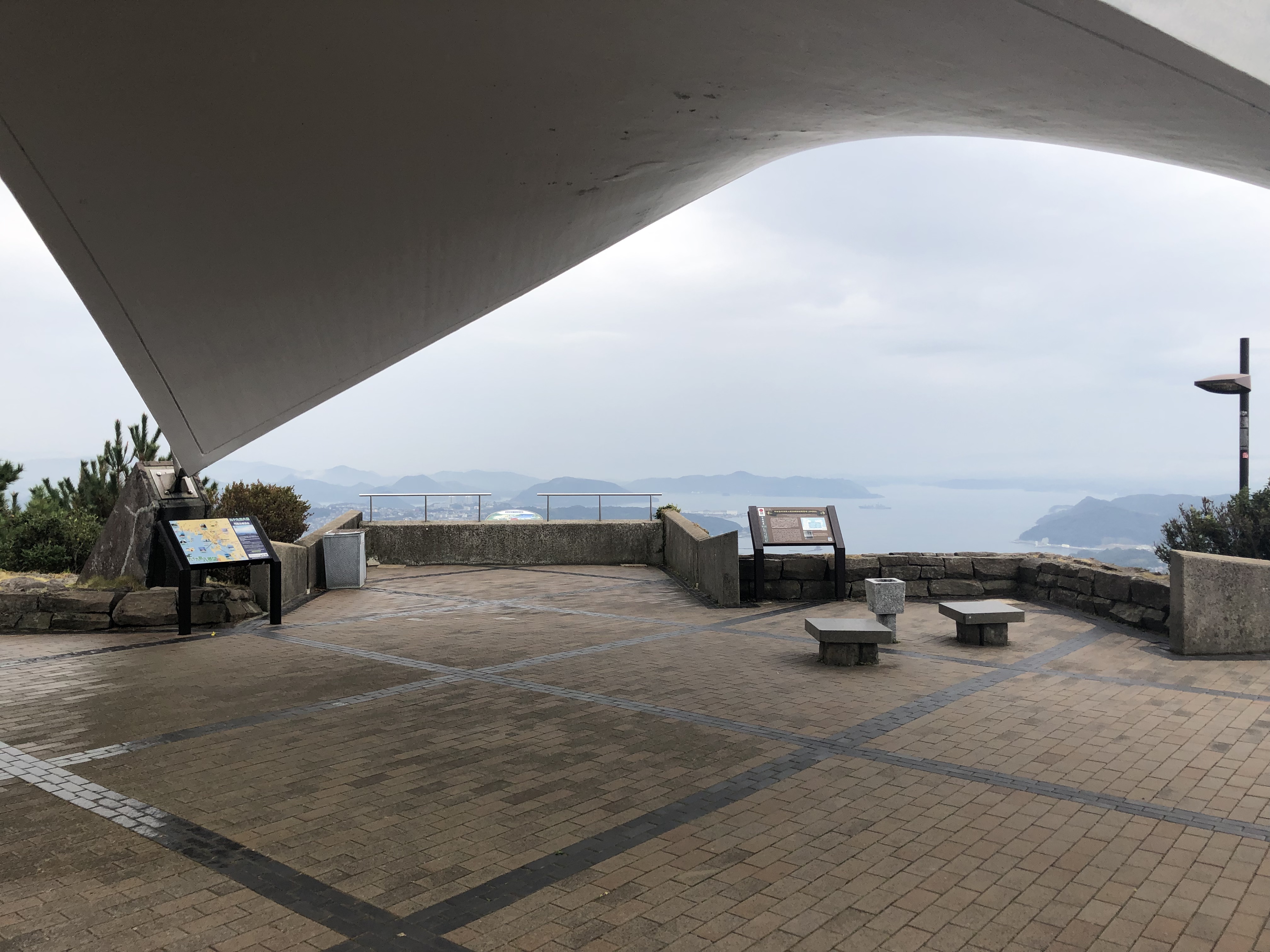
Finally the mountain path opens up, to reveal a stunning view of the city and landscapes beyond. Its US navy base below with its massive boats. Other mountains bulge up over the horizon, the view somewhat washed white by the falling rain. Over to the west, a large labyrinth of small islands, the Kujukushima Islands, its name meaning 99 islands, but also meaning too many islands to count (there are exactly 208).

A short stroll up some stone steps, and over a small bridge, and I arrive at the Yumiharidake Observation Deck. The deck offers a nice panoramic view from atop this 364-metre tall mountain. I stand for a while, taking in the view.

A sign tells me that I can enjoy the scenery during the day as well as at night, however, I would be more fearful of climbing at night, just because it would make it especially harder to detect the snakes. The night view though is apparently amazing, and really brings out the lights of the city. There is also a free shuttle bus to the top of the mountain at regular intervals throughout the day.

I head over to the bus stop and wait. After about ten minutes, I do finally see another human being, a Japanese man pulls up beside me in his car. “No bus today,” he says. I ask him whether that’s because today is Sunday, however, he just repeats himself and says, “No bus today,” for a second time. I feel a little disappointed but before I can reply, the man points to himself and says, “Drive my car.” I tell him that I can’t drive, but this is of course not what he meant.

I sit in the back, and luckily he drives. The open window offers a refreshing breeze. After a very brief conversation in English about whether or not I know King Charles, our chat abruptly ends, so I take out my book. Men Without Women, a collection of short stories by Haruki Murakami. As we slowly descend, crawling down the mountain path, the free shuttle bus to Sasebo Station overtakes us from behind.