Befall Upon The Watchtower

For whatever reason, someone has suggested to me that I check out the area where the Arakawa River and the Sumida River flow into one. As I head out into what feels like a spring afternoon, I realise that my destination today might offer little excitement to anyone, including myself. Somehow, I feel drawn in the direction of Arakawa, the shackles of free will severed from my legs. Part of me feels like there is a demon possessing my very soul, controlling my destiny as I cycle at rapid speeds in the direction of Arakawa.

I see the remnants of a temple or shrine, but it looks as though perhaps it is trapped within the confines of an industrial site. Not letting that stop me for one moment, I park my bicycle and wander in. Seconds later, I am cornered by a security guard. He shouts angrily in Japanese as he waves his hand in the direction of the street. A strong urge to not give up consumes me, and I quickly find myself on the other side of the complex.

sewertemple[1]

It is a strange sight. I am standing along the Sumida River, and there is nothing but tall yellow grass stretching off in every direction. No cars pass along the road in front of the shrine. No people are walking. It is silent, yet only ten minutes away are the tall residential buildings that make up my neighbourhood. Looming over the Shinto shrine are three huge green balls, presumably part of a sewerage station. Perhaps the god of water treatment resides here.

I carry on my journey, not wanting to disturb the sewer gods, and eventually find a map. Sure enough, the place I had just visited is marked as ‘Sewer Station Shirahige Nishi Pump Place.’ However, there is no mention of any temple or shrine on the map. There is, however, one other interesting point of interest labelled as ‘Ballpark for boy Ground of using combinedly.’ I excuse the terrible English and carry on along the river.

Ten minutes later, my fanciful difficulty fades away, offering me some karmic resolve.

thewatchtower[1]

A watchtower. The best thing that has happened to me all week. It somehow feels like I am stumbling through an episode of the television drama ‘Lost’. For no apparent reason, there is a massive wooden watchtower sitting guard at the entrance to one of the bridges that traverses the Sumida River. What is it doing here? Who built it? Is this real? My mind floods with questions and possibilities, as if somehow collecting fragmented pieces of information and forming them into ideas in my head.

I park my bicycle, and ignoring the sign that tells me to stay away, I enter the wooden doorway. My body filled with an emotion that is yet to be given a name. As I climb the watchtower, I begin to wonder if all of this is just some giant metaphor for something else, something that can’t be explained with words. Each step toward the top tests me, as if life is testing me at this very moment. Eventually, as I near the top, the cracks in the surface become wider, making way for sunbeams.

insidetower[1]

The view from the top is of nothing of note. Tokyo Skytree hangs in the distance, slightly masked by concrete surroundings. In the direction I came from, I can see the water treatment plant and the barren riverbed. I stand at the top of the tower in silence for a while, watching the blue hue of the river for a time, before the sound of footsteps echo from below. A man appears. He looks devious, something very odd about him; like he means to cause trouble. He stands atop the watchtower with me, blissfully staring out into a void. The man doesn’t speak to me, and something about him makes me incredibly uneasy. I decide that I can’t stand here any longer, so I head back down the steps to my bicycle below.

I cross the river as fast as I can, somewhat unnerved. On the other side of the river, I take a right, following its path back toward what looks like civilisation. After twenty minutes of cycling, I realise I am slightly at a loss. I don’t really know where I am, and I’m not sure if the river I crossed was the Arakawa River or the Sumida River. Perhaps I have already cycled beyond the confluence.

deserted[1]

I try to check the map on my camera, but nothing appears to work. I stop for a moment, take a deep breath, and take in my surroundings. Desolate. Empty. Nothing. Everything here looks abandoned, and it begins to reflect on me. Right now, even I feel completely abandoned; which is the strangest feeling I have suffered in a while. As I stand here, lost in the middle of something that might or might not be nothingness, a certain fear destroys my usual calm demeanour, and I begin to panic.

Everything will be fine, though. As if saved, I can just make out the silhouette of Tokyo Skytree on the horizon; so I point my bicycle in the direction of the structure. After what seems like an hour of following the river, I reach a bridge and am finally free to cross. This bridge takes me over the Arakawa River, so it appears that I never reached my destination, never found what I sought out to find. Regardless, I am finally back within familiar territory, heading back toward life. I stop to photograph a sign that probably has no relevance here, but perhaps it does. The sign appears to have been written by Yoda from Star Wars.

closedsorryweare[1]

As the day continues to distract me, I inadvertently end up in Akihabara. Tired from three or four hours of intemperate exploration, I decide to leave my bicycle at the train station. Inside, I stand at the platform, waiting for the train to take me back to Minowa. It is here that I see yet another strange vending machine.

The machine offers four shelves of items, two of which are toys for children: two sets from the Nature in Japan series. Small models of various different animals native to the country. It is what is contained within the other two shelves that I find strange. At a bargain price of ¥200 per purchase, I can buy office ladies that sit on the edge of my coffee cup; legs open, underwear exposed.

noupskirting[1]

Akihabara Station famously has signs at each escalator, warning women to watch out for ‘upskirting.’ Apparently, it is a law in Japan that all cameras must make a sound when a photograph is taken. With Akihabara being the home of electronics and comic books, lonely men have often been known to pry on women as they ride the escalator, sneakily taking photographs from below.

This vending machine perhaps tries to solve that problem. These coffee cup women are clearly exposing their undergarments, with no shame. The only shame is possibly when your co-workers see you with a decorated coffee cup featuring this type of imagery. ‘Make your office fun!’ ‘Happiness in your cup!’ are just some of the explanations on offer, scrawled in Japanese across the machine.

There are certain times in my life when my mind is simply not capable of understanding something, and this is certainly one of them.

Journey to the Centre of the Buddha

It has gotten very cold as of late, but today offers rare blue skies and a warm winter sun. Today might be the last day hot enough to do anything practical before spring, so I decide to make the most of it with a day trip out of Tokyo. My destination is a little over two hours away by train: the city of Kamakura.

Outside Kamakura Station, I am approached by a poorly dressed Japanese man speaking in English with an American accent. He is banging on about Buddhism, or something. When I mention that I have things to do, he looks a little disappointed before wandering off to talk to some new people just off the train.

I wander through the city, its streets lined with souvenir shops, gift shops, and stores selling various mementos. At this point, I realise I haven’t taken a single photograph in Kamakura, so I decide to walk up to the first temple I see.

genjitemple[1]

Shu Genji Temple doesn’t exude much happiness. It was once the residence of Shijo Kingo, a renowned Nichiren Buddhist skilled in medicine. Following Nichiren’s death, Shijo Kingo attended the funeral but ultimately chose to end his own life to demonstrate his unwavering faith in the religion.

A little further from the temple, I spot a strange machine covered in stickers. The ‘Happy Capsule’ machine costs ¥100, and each capsule contains at least three prizes. I try to resist, but as if possessed by some demon from another world, I find that I have already inserted a coin.

nogarbage[1]

My capsule contains a small glass fish statue with fried eggs randomly painted on each side, a colourful ankle bracelet with a small relic in the shape of an ice cream, and a teddy bear with the word ‘Love’ written on it. I also receive a ‘Lucky Sticker,’ which I am free to add to all the other lucky stickers that litter the machine. Noting the sign for ‘No Garbage,’ I take another look at my happy prizes and stand for a moment, enjoying the irony.

Eventually, I arrive at the place I came here to visit, Kotoku-in Temple. It is home to a giant Buddha, the same Buddha featured in Rudyard Kipling’s poem ‘The Five Nations.

A tourist-show, a legend told,
A rusting bulk of bronze and gold,
So much, and scarce so much, ye hold,
The meaning of Kamakura?

kamabud[1]

I pay ¥200 to enter the grounds of the temple and stand for a while in awe. The Great Buddha of Kamakura was housed within a wooden temple three times. It was destroyed by strong winds twice but rebuilt on both occasions. Eventually, in 1498, it was destroyed for a third time by a tsunami and was never rebuilt. The Buddha survived and now sits outside in the cold of winter, patiently waiting for the seasons to change.

As I walk around the statue, I notice two windows located in its back. There is a sign in Japanese emphasising the importance of showing deep respect when walking around inside the Great Buddha. A man sits half asleep at a small booth, and a sign above displays a price of ¥20. For such a low price, I would be a fool not to enter. I squeeze my way into a small hole in Buddha’s side and take the steps up into his massive belly.

innerbuddha[1]

Inside the Great Buddha of Kamakura, the acoustics are fantastic. I speak softly to myself and find that my words are thrown around by the bronze interior, echoing off into infinity. However, a bit of graffiti inside slightly spoils the experience — a complete lack of reverence by some.

I exit the Buddha and leave the temple. On the way out, I spot a sign warning about a particular type of bird in the area that likes to steal food from tourists. I start heading back toward the train station, stopping off at a small food shop to enjoy a sweet potato croquette. All the while, I keep my eye out for the hungry birds. Unfortunately, the birds don’t materialise, which is a shame.

I decide to take a different route for variety, and eventually, I spot some steps that sweep up a mountain. Intrigued, I take a little detour to see where they might lead.

anothertemple[1]

I find myself standing in front of Amanawa Shinmei Shrine. The place is deserted, seemingly untouched for years, presenting a stark contrast to the other places I have seen in Kamakura. This shrine, founded in 710 AD, is the oldest Shinto shrine in the city and is dedicated to Amaterasu, the goddess of the sun and the universe.

The view from the shrine is stunning, offering a different perspective of the area. In the distance, I see mountains, old houses, and multiple temples and shrines. From the top of the steps, I can also glimpse the sea. As I am about to leave, I spot a small path carved into the side of the mountain above, and with nobody else around, I decide to investigate.

upthemountain[1]

As I climb, the path is relatively easy to follow, twisting around the mountain and becoming less obvious. I have to brush away cobwebs from my face as I follow the steep approach. With every step, I am careful not to lose my footing as the mud gets wetter and the path becomes steeper. After about five minutes of climbing, the overgrowth becomes too much, and I can’t continue. I stop and take a look around, taking in my surroundings, and realise that this was probably not a good idea.

I struggle to get back down, having to crawl a little to ease my way down from the path that has clearly not been used for years. I use my hands on the rocks as I work my way back to safety. I am slightly disappointed that I couldn’t find where it leads, perhaps to the sun goddess, or maybe just an escape route lost over time. There’s nothing for me to see, though, and eventually, I am back at the shrine, taking the steps back toward the main road.

I wander down deserted side streets that are full of old houses, some with massive gardens, others with disproportionately small ones.

mygarden[1]

Back at Kamakura Station, I get ready to endure another two hours sitting on trains. Day trips are fun but rather exhausting at the same time. It’s nice to escape, though, and see places that offer a difference. I think about climbing up that mountain path, feeling completely free for a short time—free from anything but my own eagerness to explore, or perhaps to escape altogether. I decide that my next day trip will be to a mountain of sorts, a place unlike those I have been discovering of late. Somewhere new and exciting, where I can rekindle my sense of adventure. A place flowing with natural beauty.

As I arrive back in Tokyo, a chill consumes the air. Above, thick clouds made of snow hover over the skyscrapers, lying in wait—almost ready to unleash their flakes of misery over the city.

A Wild Frog Chase

My morning starts with an unexpected knock at my bedroom door. Upon opening it, I find one of the Japanese men who live in my house standing there with a white carrier bag full of bread. Normally, I would find this unusual – a man at my door, giving me bread at 10 a.m. when I should be sound asleep. However, nothing is usual in my apartment. This same man, two weeks ago, gave me a box of laundry powder for no particular reason. Moreover, he believes I am fluent in Japanese. Not once has he engaged in a conversation with me in English. I simply nod, mutter some of my limited Japanese in his direction, and accept the loaf of bread.

With the thought of the donated bread weighing on my mind, I decide to hop on my bicycle and head to the nearby Arakawa Park, a place I haven’t visited before.

Arakawapark

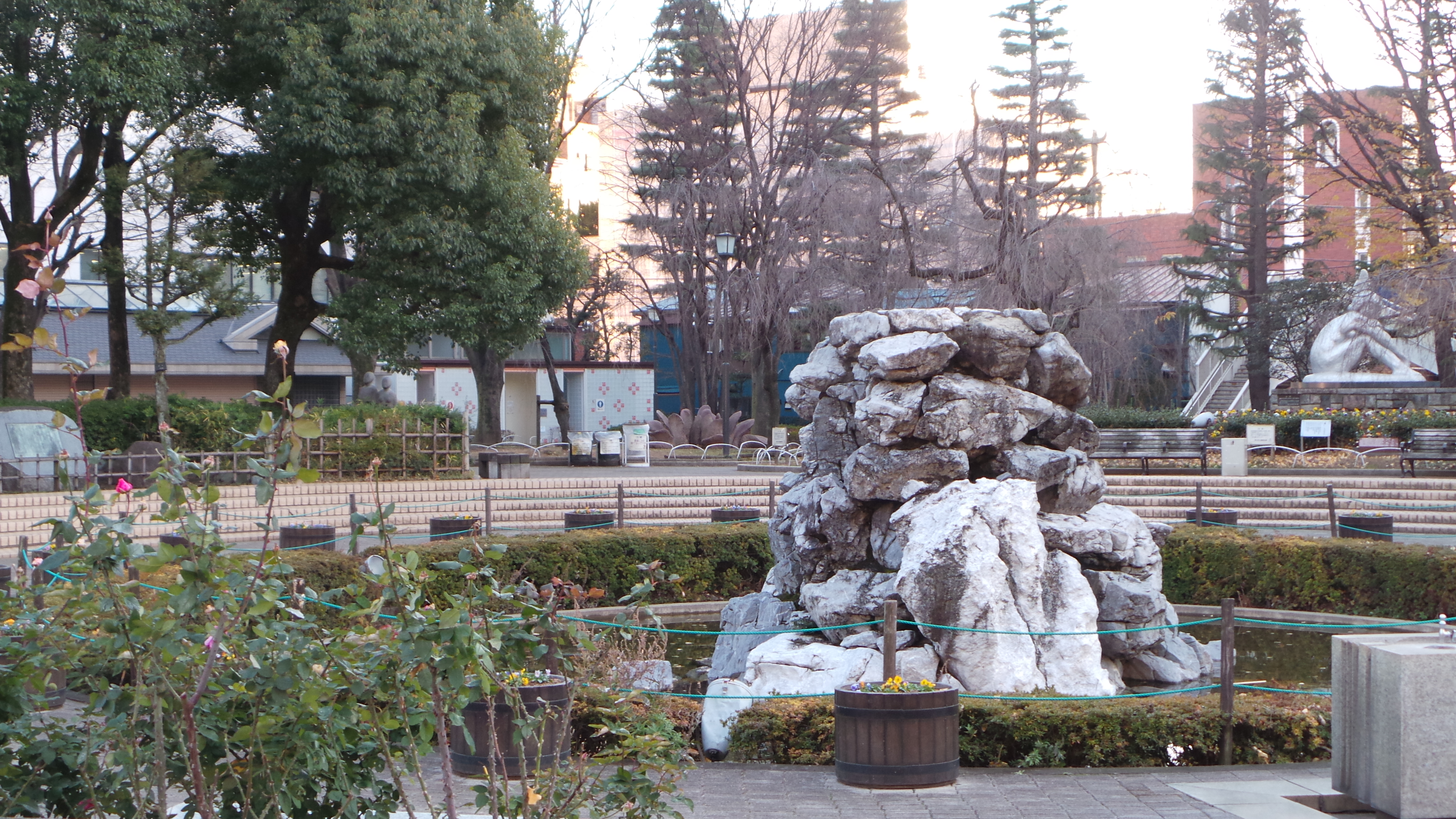
This park seems to have somehow partially escaped the shedding of its leaves. On one side, it is skeletally bare; on the other side, it flourishes with nature. Laundry powder and bread. It is no secret that since being in Japan, I have lost an extreme amount of weight. Week by week, I find myself becoming skinnier, although previously, I didn’t think such a possibility could even exist. Perhaps that offers an explanation for the bread. However, my clothes are in no way dirty and in need of additional laundry powder.

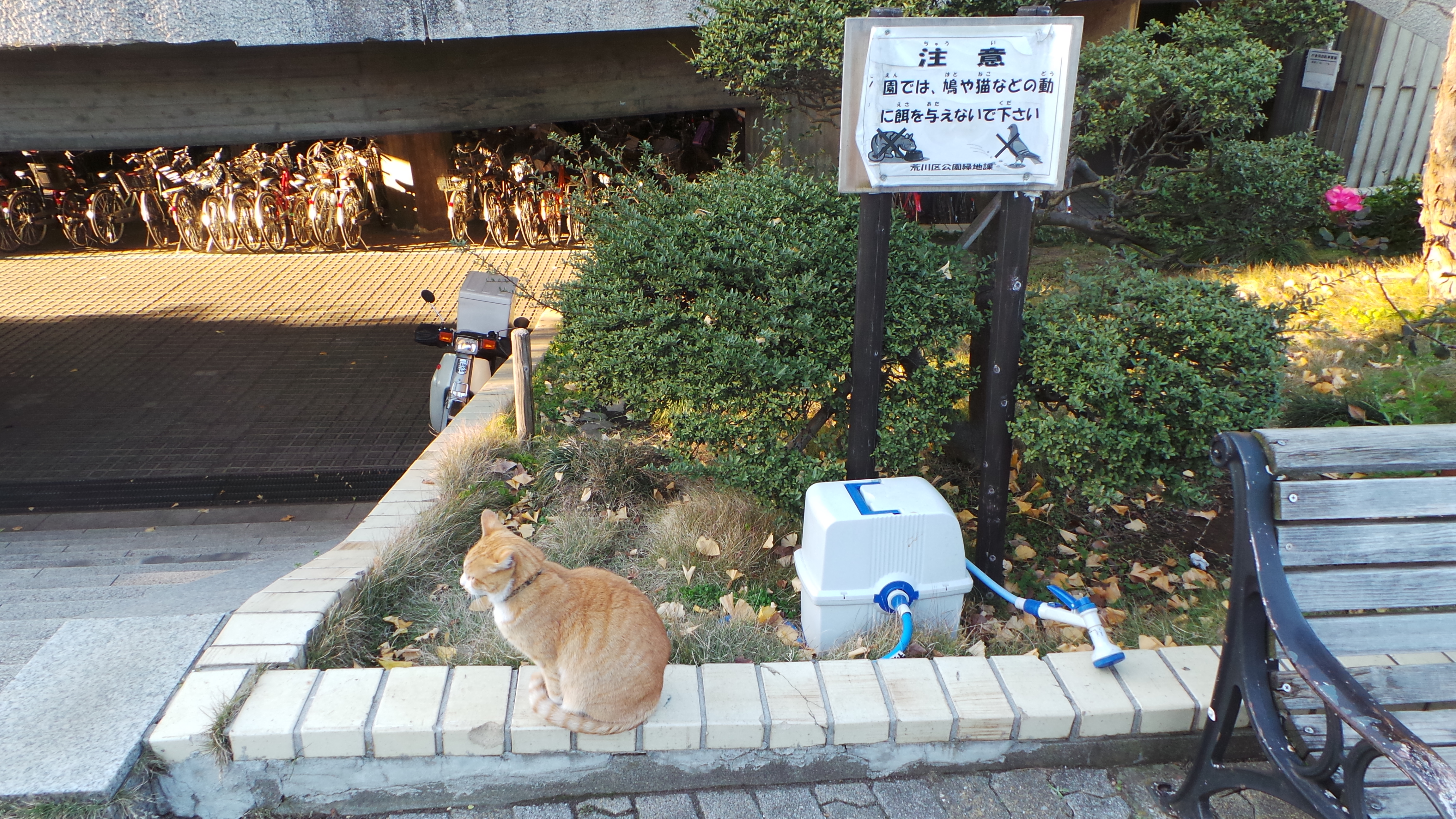
I park my bicycle and take a seat on a bench to read my book: Murakami’s ‘Super-Frog Saves Tokyo.’ After consuming the book from start to finish, I take a little wander around the park. I come across a sign that says, ‘Do not feed the cats or pigeons.’ Oddly enough, I’ve seen multiple signs about feeding pigeons, often adorned with amusing text in speech bubbles, such as, ‘Don’t feed me; I can get my own foods.’ However, this is the first time I’ve seen a sign specifically addressing not feeding felines. With perfect timing, a cat appears from nowhere and takes a seat directly in front of the sign.

dontfeedthecat

The ginger cat decides to follow me around the park, meowing at me for food. Cats of this colour seem to have a habit of trailing behind me. I wander amongst the threadbare trees and reach a stone gazebo. Beneath the shelter, the homeless roam – about ten in total, walking around seemingly without purpose, wearing threadbare clothing to match the trees. They resemble characters in the starting area of an online role-playing game: lost, confused, and not knowing where they’re supposed to go. It strikes me that these people, much like the poor cat, actually don’t have anywhere to go.

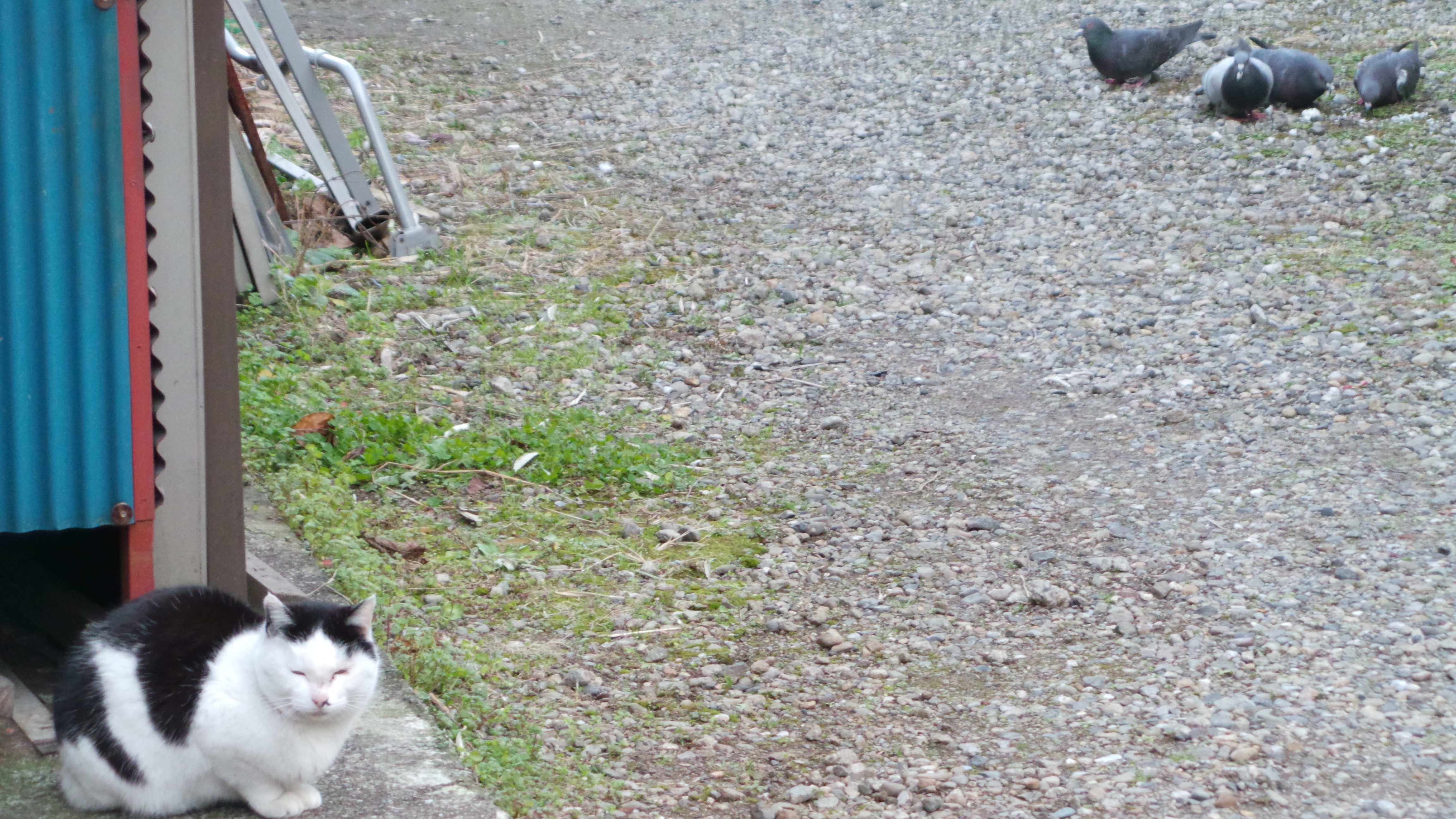
I leave the park and stop off at a nearby shrine, only to be chased away by two massive guard dogs on leashes. Clearly, this shrine doesn’t welcome tourists. A little further up the road, I realise that as this day becomes more about animals, a better choice of reading material today would have been Agatha Christie’s ‘Cat Among the Pigeons’ because, for a second time in an hour, that’s exactly what I see.

catsandpigeons

Leaving the stray cats behind, I cycle toward Nippori. One of my favourite things to do to keep myself occupied in Tokyo is cycling on warm days and exploring new areas. Without any real destination, I often pedal along, discovering random things that interest me. Today, the low winter sun provides the heat, and the opportunity to explore is seized.

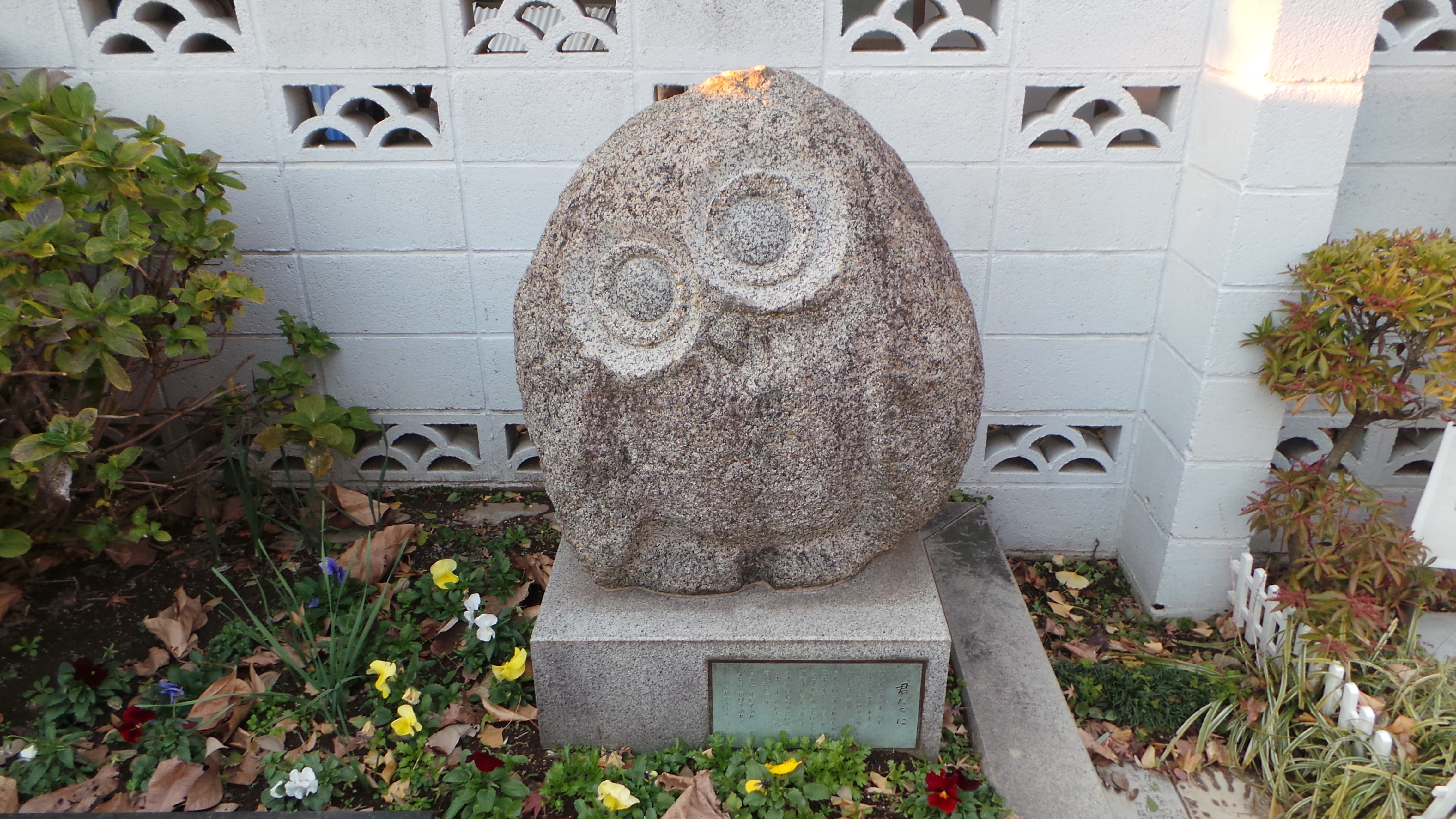
I cycle through Fabric Town, passing a couple of interesting shops along the way. Highlights include a leather shop called ‘Touch of Fleather,’ a shoe store named ‘And Shoes,’ and a textile shop simply called ‘Tomato.’ After arriving at Nippori Station, I carry my bicycle up some steps and over the tracks. On the other side of the tracks, I am greeted by another bird in the form of a giant stone owl.

owlmonument

The owl describes itself as a ‘Memorial Monument for Takamura Kotaro,’ a famous Japanese poet and sculptor. Why they chose to honour his life with a statue of an owl is beyond me, but it looks nice, so I thought I would include it. The owl sits on Suwadai Street, a peculiar street that is at an elevation higher than the skyscrapers beyond. Additionally, the street boasts fifteen different temples and shrines.

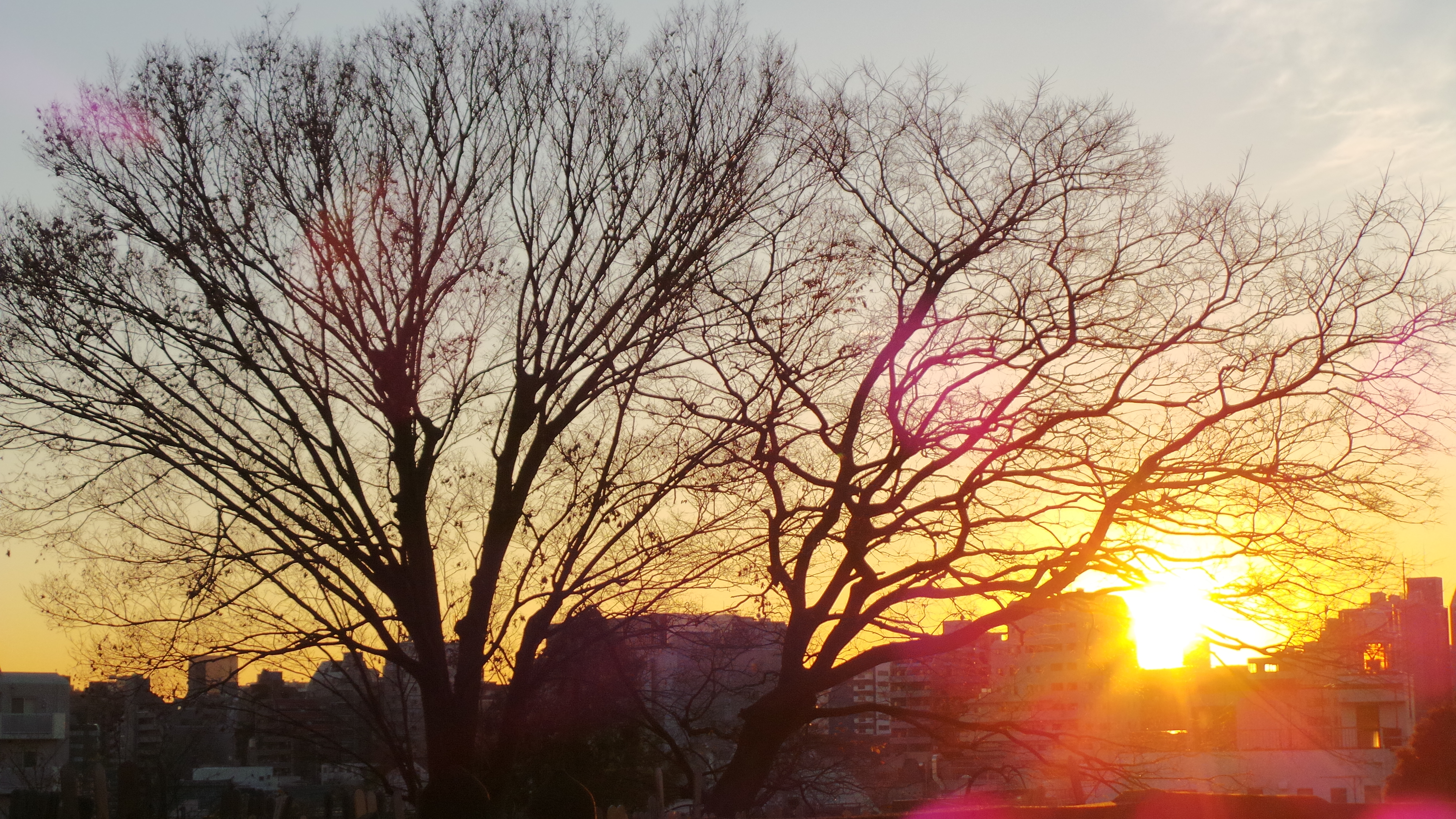
I check the GPS on my camera to make sure that I’m still in Tokyo. Up here, even though I am just twenty minutes from my house, it feels like I am in the middle of the countryside. The nature in this area is simply stunning. I see a few signs with directions to a viewing point. On a clear day, I can witness the spectacle of a Mount Fuji sunset, where the sun and the mountain share the horizon. Unfortunately, I can’t see Mount Fuji — the story of my life. Nevertheless, I do get to witness the setting sun over a distant Tokyo skyline.

Nipporisunset

I cycle away from the temples, shrines, and stunning views, heading into Yanaka. The area is still uphill and features many old houses surrounded by leafless trees. I end up at a small market along some narrow streets: Yanaka Ginza Street. Conveniently downhill, the opportunity to cruise along, engaging in window shopping, controlling the flow of bicycle wheels with intermittent braking, is an enjoyment in itself. Navigating between the crowds of people, I narrowly miss shoppers who are presumably there to buy things they don’t need to impress people they don’t care about. As I try to remember a quote from Palahniuk’s ‘Fight Club,’ I get distracted and almost crash into a woman carrying a baby. Naturally, the baby starts screaming in fits of hysteria, so naturally, I cycle away as fast as I can.

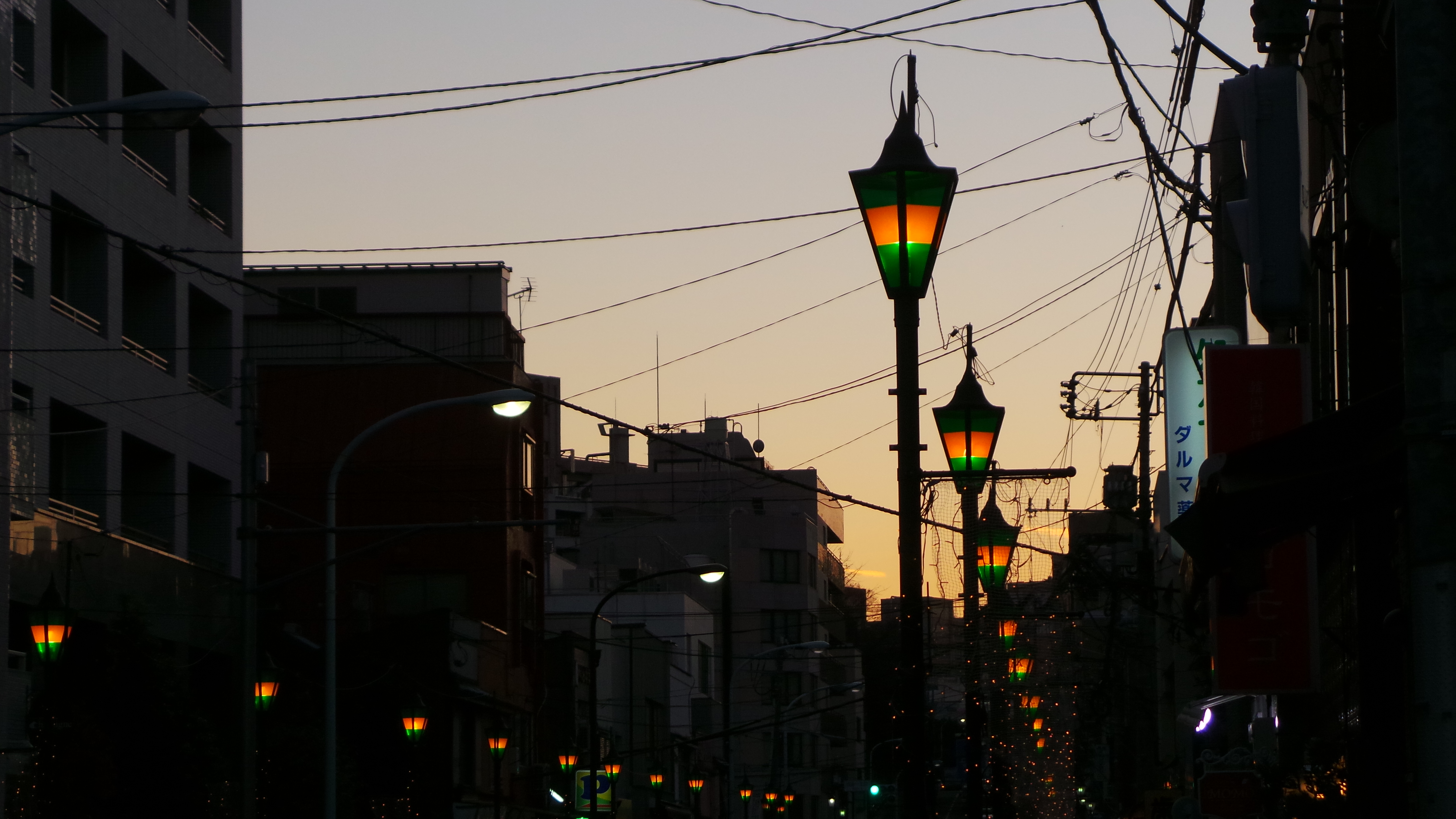
I continue cycling until I arrive at another new place, Nezu. The streets here are adorned with beautifully crafted old lampposts and festive Christmas lanterns.

Nezu

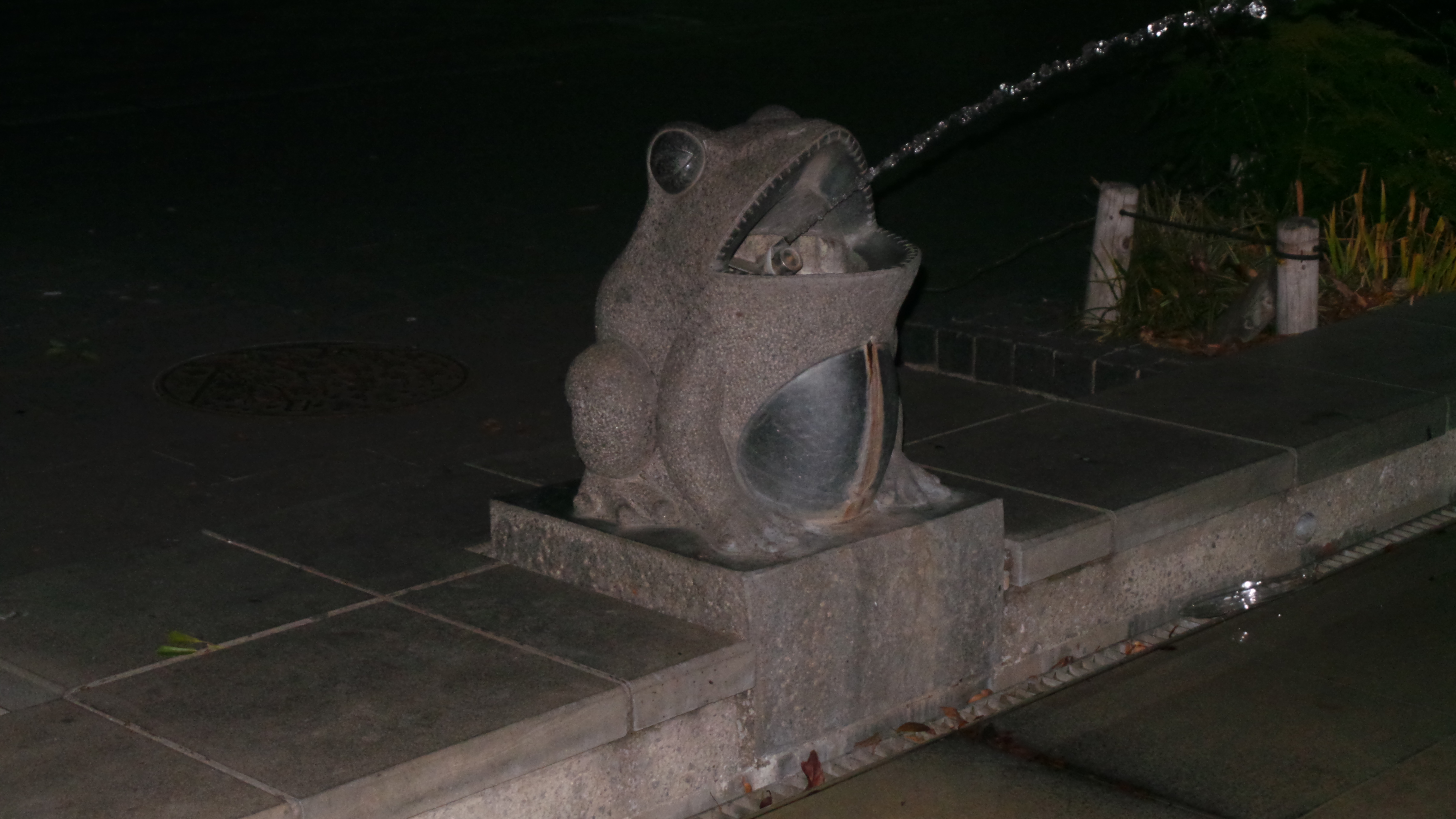
Apart from a full-size train carriage parked randomly on the footpath, there isn’t much else to see in Nezu, so I head back toward familiarity. Outside Ueno Park, I study the map, desperately looking for something of interest. Four museums, but all presumably closed today; that’s how these things usually go. Then, something on the sign catches my eye. Perhaps it’s because I read about a character called ‘Frog’ today, or maybe some other intuition takes over, but the moment I spot a tiny dot on the huge map of Ueno Park below a caption saying ‘Fountain of Frog,’ I know that this will be my final destination today.

I search the park, passing dying crops and concrete views. After thirty minutes, the sun has completely set, and the weather has turned cold. Fierce winds chill the air but aren’t strong enough to dissuade my search. I cycle around the park, and each time I spot a map, I stop to double-check the location of the fountain. I often find that the fountain has changed its location from one map to the next, and on other maps, it has disappeared completely. Not one to give up on a personal challenge, I persist in my search for the elusive Fountain of Frog. Eventually, after forty-five minutes of cycling around Ueno Park, I find what I’ve been looking for.

frog

As it turns out, the Fountain of Frog is exactly what it sounds like: a small statue of a frog spitting water into an even smaller fountain. I head home, my mind filled with a sense of disenchantment. It’s a rather disappointing end to the day, but at least I have bread.

The Fat Sumo Halloween Special

My day begins with me being completely lost in Shinjuku, searching for an event called ‘Shinjuku Magic of Halloween.’ I was under the impression that the event starts with a massive street parade of people dressed in spooky costumes, but nothing of the sort appears to be happening. I give up searching and head back to the train station.

Outside Shinjuku Station, a television crew and a few people dressed up are standing in front of a big stage. With over two hundred entrances to the station, I have inadvertently stumbled upon the event I was here to see in the first place; and by the looks of it, the show is just about to start. Excellent timing as always. The lights come up, white smoke bellows from machines on either side of the stage, and the band comes out, much to the delight of the ghosts, witches, and Iron Man.

annabegins[1]

Today, I get the pleasure of seeing Anna Tsuchiya singing live. The former Kamikaze Girls actress-turned-model-turned-singer is simply amazing. I am about six rows from the front of the stage and have a great view. The music is great. The atmosphere is great. The weather is great. Anna sings two songs about Halloween in English before contractually mentioning the video game Psycho Break, the sponsor for the event.

For the third and final song, we get a little bit more from the smoke machines, and Anna sings her third single and first top-ten hit, ‘Rose’.

annasings[1]

After singing, she thanks the crowd, and the band leaves the stage. One minute later, the entire crowd has dispersed, and I am the only one standing at the stage. So much for the Halloween parade. I follow the rest of the crowd into the train station and head back to Minowa.

The day is still warm, so I decide on a mid-afternoon bicycle ride. I cycle over the Sumida River in a straight line for ninety minutes, stopping off at the odd shrine or temple along the way. Eventually, I arrive at the Arakawa River and cross over into Edogawa. I haven’t been here before today, and I can’t find anything to do. I cycle around for a while until the sun begins to set.

edogawasun[1]

After watching the sun from the bridge, it starts to cool down, so I race back to Asakusa.

Tonight, I have been invited to a party celebrating the one-year anniversary of a sumo restaurant. I have things to do first, though, so I arrive rather late; everyone is already drunk. Blind drunk. A few of my friends from the boat party are here too, and they are struggling to stand. A never-ending supply of glasses filled with a suspicious green liquid seem to be appearing from nowhere, and the familiar drinking chant of, “Yoi yoi yoisho,” makes its rounds. A sumo wrestler consumes a giant bottle of tequila in one go.

sumodrinking[1]

My masseur is here too; he tells me that my shoulders were the hardest he has ever had to massage in his entire career. Or at least I think that’s what he said; his slurs are somewhat difficult to decipher. I join in with the proceedings, enjoying the all-you-can-drink spread put on by the owner. Karaoke ends just as quickly as it starts, and bottles of spirits are passed around. I stay, drinking until I am dizzy, before deciding it is time to go home. As I leave, I am handed a gift bag filled with lovely souvenirs to go with my memories.

A Tale of Sorrow and Sadness

I spend my morning shaking off a karaoke gin hangover, arguably the worst kind. At 1 p.m., Dagmar and I take the train to Ginza to meet our friend Aram. The plan is a visit to the Vanilla Gallery; the number one gallery in Tokyo for eroticism, fetishism, and sadism.

Despite having visited the Vanilla Gallery before, it remains difficult to locate. We get a little lost but eventually find it hidden away on an inconspicuous street. This month, the theme showcases artwork that tells the tale of time and sorrow—’An exhibit of illustrated stories and dolls pertaining to madness and sadness.’ The entry fee is a pleasing ¥500.

dertilgung[1]

The exhibition is called Der Tilgung. Dagmar tells me that this is German for ‘The Repayment.’ Nowhere else in Tokyo can you experience such a vortex of phenomenal imagination.

Room-A features a collection of artwork and imagery from MoriKaoru. I’m surprised to find that most of the paintings have sold out. The work focuses on desolate women surrounded by monsters depicted as men. There’s an uneasy emphasis on slavery and torture. One exhibit displays iron shackles laid to rest on a leather sofa. Another portrays a drawing of a young woman bound at the wrists, sitting in a cell surrounded by decapitated limbs, while a male figure with a menacing grin watches her through the bars.

Room-B is slightly less horrific but disturbing in other ways. Suna-mura Hiroaki is the artist. The display features half-naked corpses of women—dolls. A child lies still in a coffin, and two dolls hang from chains with beautiful flowers blossoming from their dead faces. A doll resembling a nurse has her chest cut open, held by wire, and inside reside many small, menacing demons. Trees grow from faces, and dolls scream in anguish. Some dolls are made from the skulls of unnamed animals. Despite the theme, the craftsmanship here is incredible. My favourite piece is a naked woman, half her body covered by flesh, the other completely skeletal; half her face a picture of harrowing decay.

vanilla5[1]

Most of the exhibits are for sale, with prices ranging from ¥50,000 to ¥300,000 per piece. Haunting music floods the gallery. Sadly, the Vanilla Gallery forbids photography, so my only photographs are from the entrance and the flyer. I’ll probably have nightmares for a week thanks to what I’ve seen here. We stay for maybe twenty minutes before heading to the station.

Back at the hostel, there’s yet another party. Tonight’s theme is a ‘Sake Fair.’ Here, we can witness the process of making Japanese sake, sample ‘free’ sake, and indulge in the many complimentary snacks available. A PowerPoint presentation is set up on a projector—classic. The concept behind the free sake is to promote a brewery tour scheduled for tomorrow. For tonight, there are five different bottles of sake for hostel guests to try.

sakefair[1]

Suginishiki Yamahai Junmai is my favourite; it takes twice as long to make as your regular sake and is full-bodied with plenty of flavour. Shosetsu Daiginjo is also very nice—light, mild, and clear, with a banana scent and a subtle hint of fruit. I don’t usually like sake, but the drinks on offer here are actually very nice, perhaps a bit more expensive than I’m used to.

I decide to sign up for the tour tomorrow. It will be interesting to learn about the process, and I’m pleased to find out that the tour takes place at a brewery at the base of Mount Hakone. The tour costs ¥8500, including transportation, and it’s a great opportunity for me to discover more about this traditional Japanese drink.