Death Becomes Here

Today is warm again, and I have arranged to go on a bicycle tour with three very close friends. We meet up at half-past one and cycle in the direction of Yanaka Cemetery. It might sound a little morbid, heading once again to this huge cemetery, but the reason we have settled on this location is that it is quiet, out of the way, and not packed full of tourists. Today might well be the last day we can view sakura, and I can’t think of a better way to enjoy the flowers than with my friends in an area that is free from the usual crowds.

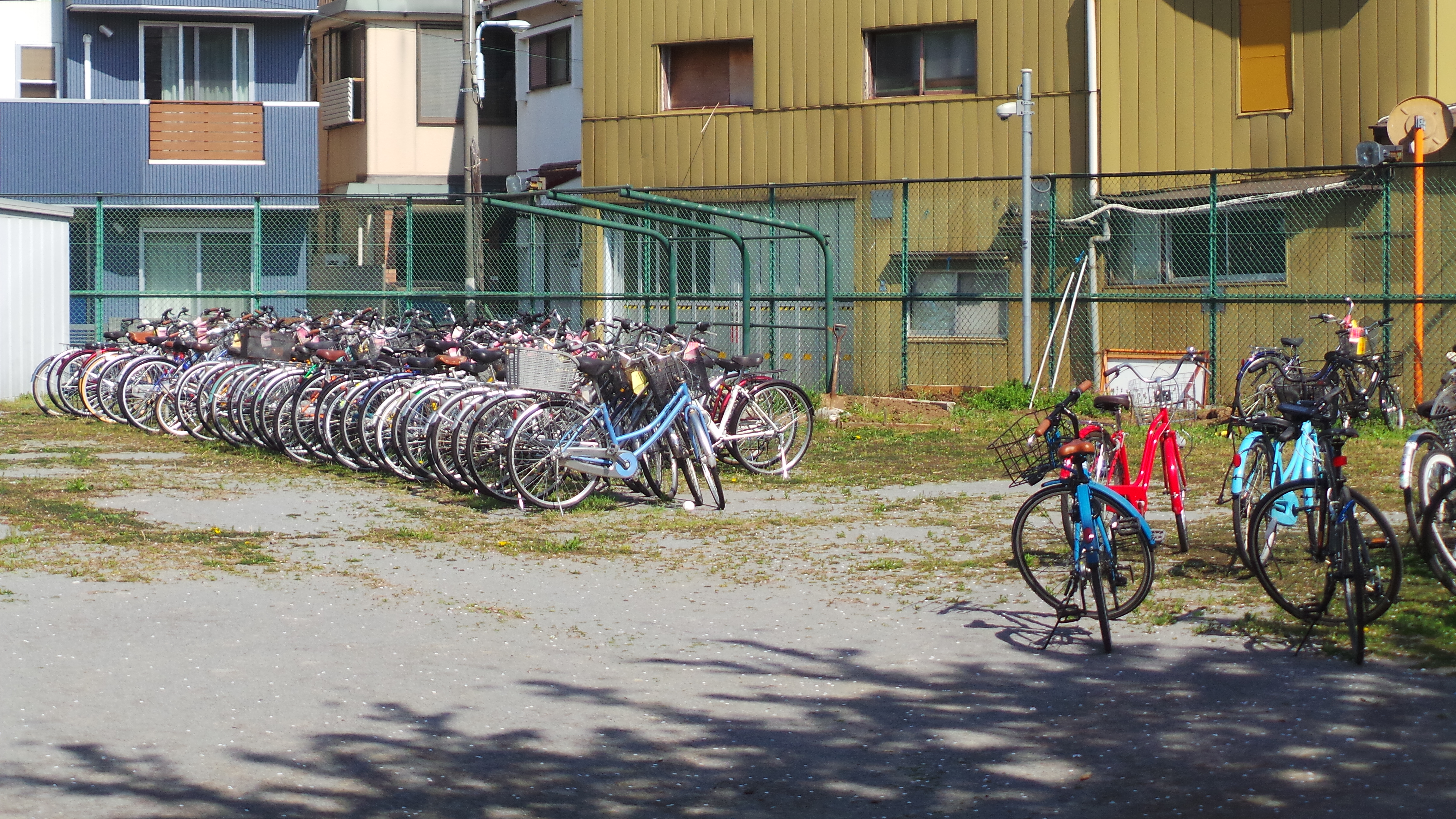
We decide, for whatever reason, to park our bikes in a zone where abandoned bicycles are collected and locked away. This fenced-off area charges a fine of ¥5000 to people who have left their bicycles illegally parked. After impounding our own bicycles, I worry that something might go wrong, and we too will have to pay the hefty fine when we return here later this afternoon. “Don’t worry about it,” says one of my friends, “we can just pretend that we don’t speak any Japanese, it’s no problem.”

illegalparking

We head through the cemetery, getting very lost in the process. The interesting thing about Yanaka Cemetery is that there are no bodies in the ground. Every grave here features a cremated corpse in an urn. Something about the blend of cherry blossom trees mixed in with the gravestones soothes me in a way that I can’t really describe. I really like this cemetery, and today is perhaps my tenth visit to this area since arriving in Japan.

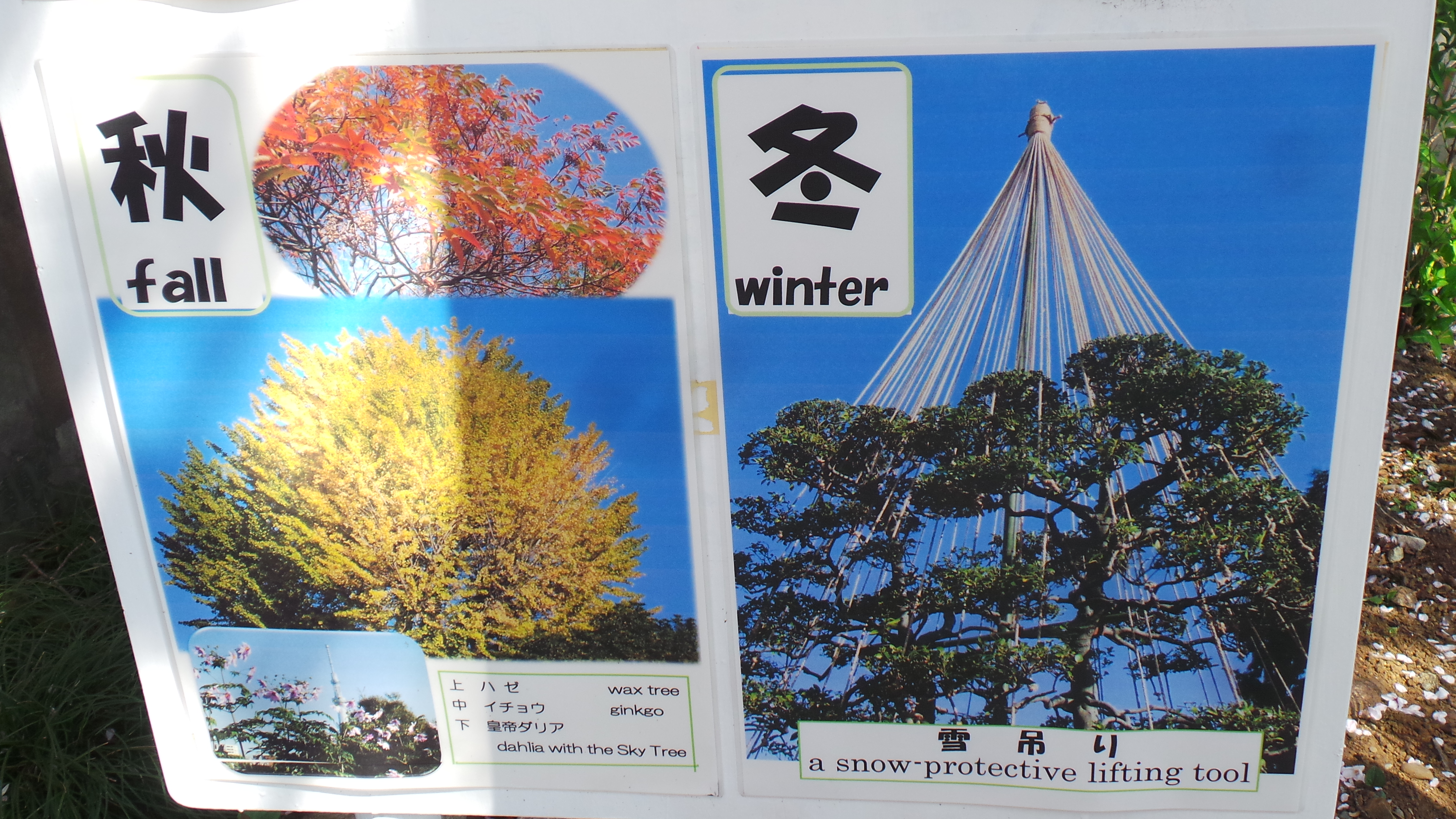
On the other side of the dead, there are some old houses and a street known as Cherry-blossom Avenue. I noticed a sign here a few months ago that displayed the four seasons of Yanaka Cemetery and various flowers. The section for winter was incomplete, but now, finding the sign, I can see that whoever is in charge here has finally updated the winter information, and it was worth the wait: a snow-protective lifting tool.

signcompleted

The photograph shows nothing resembling winter, and the sign is meant to depict the different flowers of each season (it doesn’t). I’m not certain if a snow-protective lifting tool is a genus of flowering plants or perhaps something more obscure; nevertheless, I am intrigued enough to make plans to return here next winter and investigate this peculiar seasonal tool.

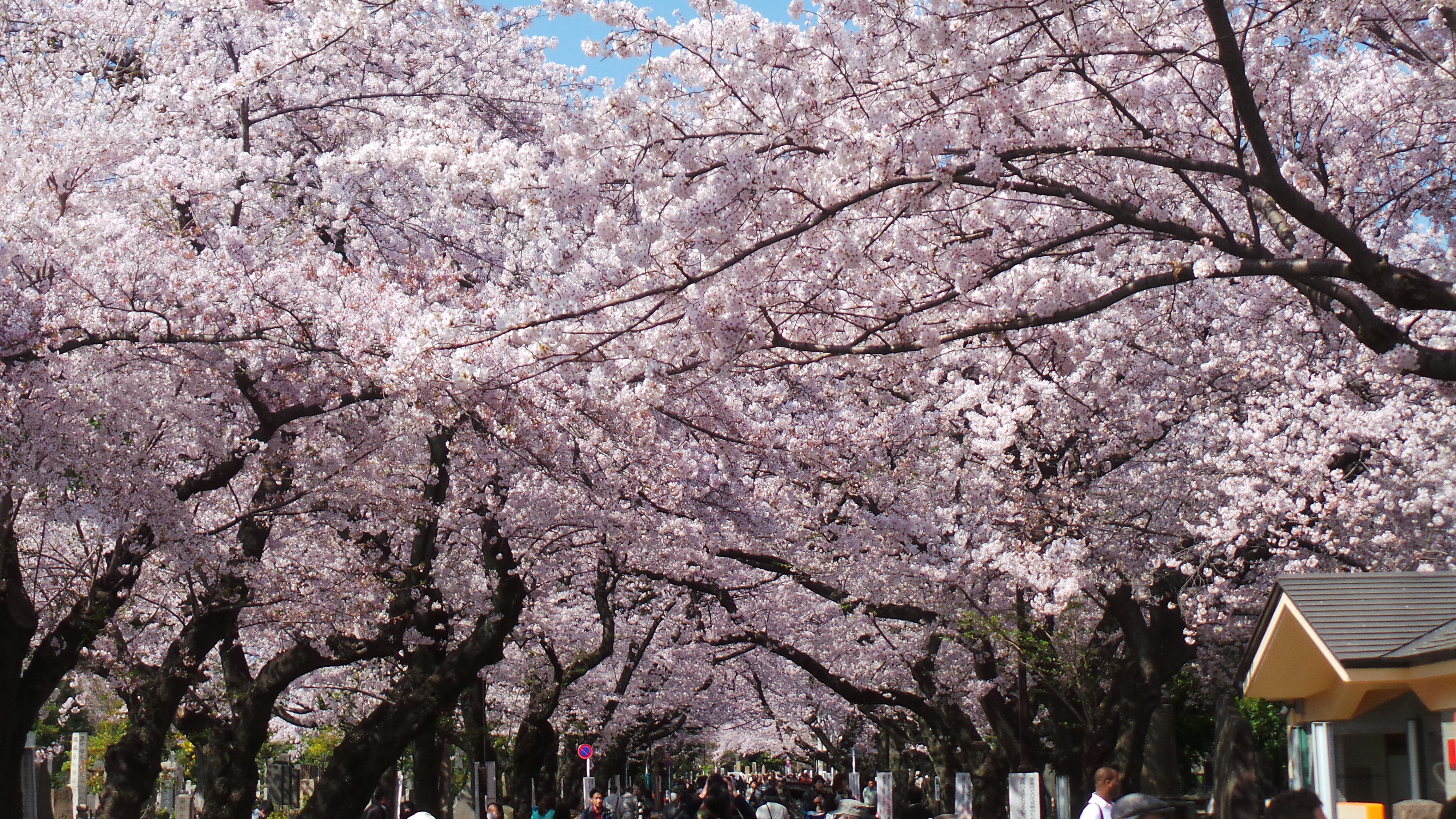
On Cherry-blossom Avenue, it is slightly more crowded than we had anticipated. Dozens of people meander the street, each side adorned with a wall of pink flowers arching over the tunnel-like path, creating an incredible sight. It’s unquestionably worth the visit, offering the most serene view of sakura I have seen so far. We continue our stroll on this lovely spring afternoon, relishing views under the canopy of blossoms.

sakuratunnel

On the other side of the street, we enter a very large temple. Tennoji Temple boasts a massive statue of Buddha and an ancient well that still functions today. One of my friends appears excessively excited about the well and immediately starts pumping water from the ground below. Apparently, the water has a metallic taste.

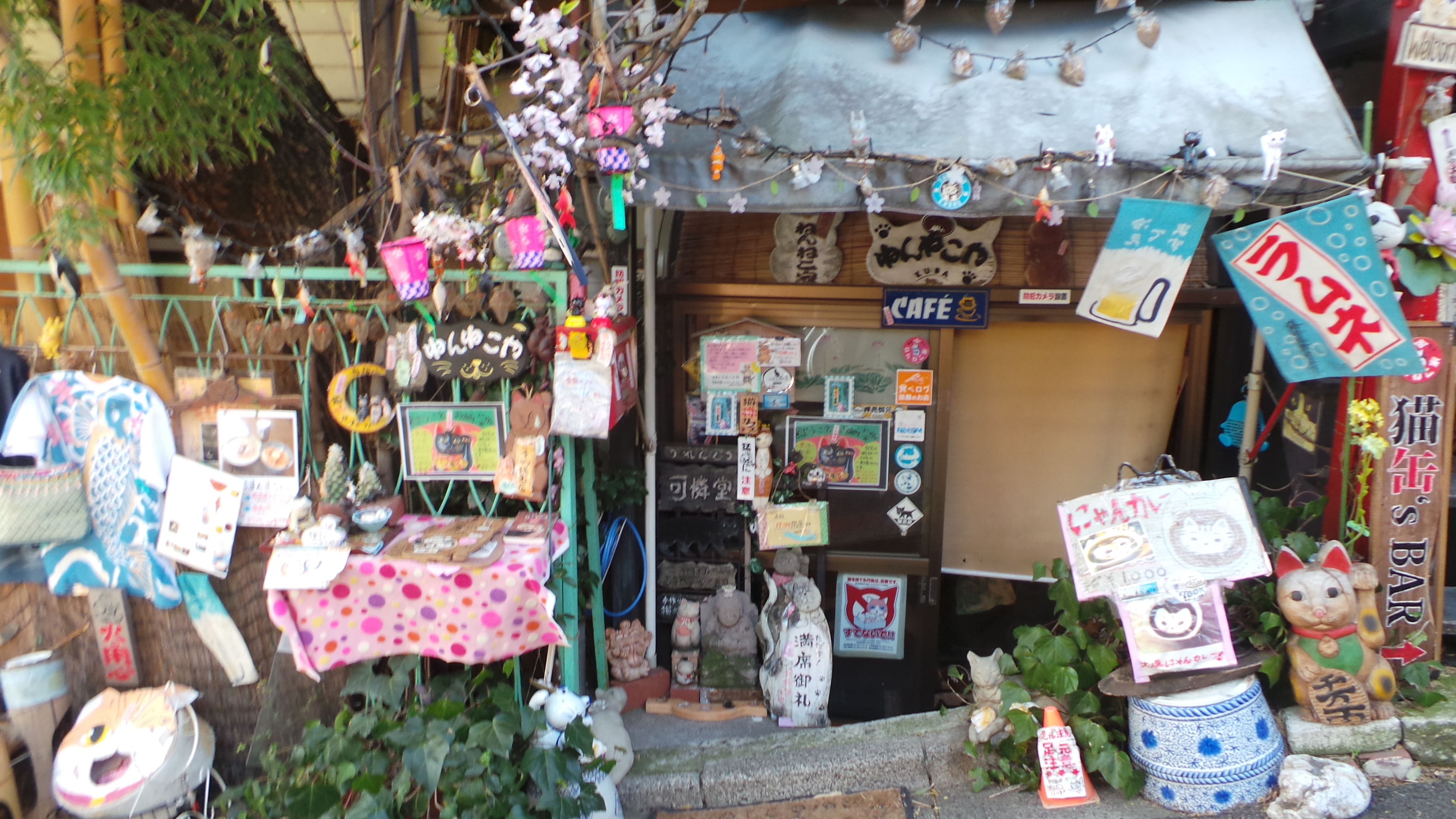
We leave the temple and the cherry blossoms behind us, heading down Yanaka Ginza Street. The market is an unusual bustle of crowds and tourists, drawn to the area for flower viewing and now wandering along this ancient street. Although tea houses, locally sourced products, and hand-made items are on sale, none of them capture our interest. In our quest for food, we stumble upon the knowledge that there’s a cat cafe nearby, and given our shared love for cats, we eagerly turn a corner and walk for ten minutes in a vague direction before finding a cafe adorned with cat paraphernalia. “Maybe this is the place?” I am told, with transparent obviousness.

catcafeagain

We wander into the deceptively small cafe and take a seat on the floor around a small table. Unlike the other cat cafe I have visited, this one doesn’t require us to pay any additional fee to eat with the cats. It feels more like someone’s living room than an actual cafe. Although the place is slightly pricey, perhaps the extra charge is used to subsidise the cost of cat food, care, and maintenance.

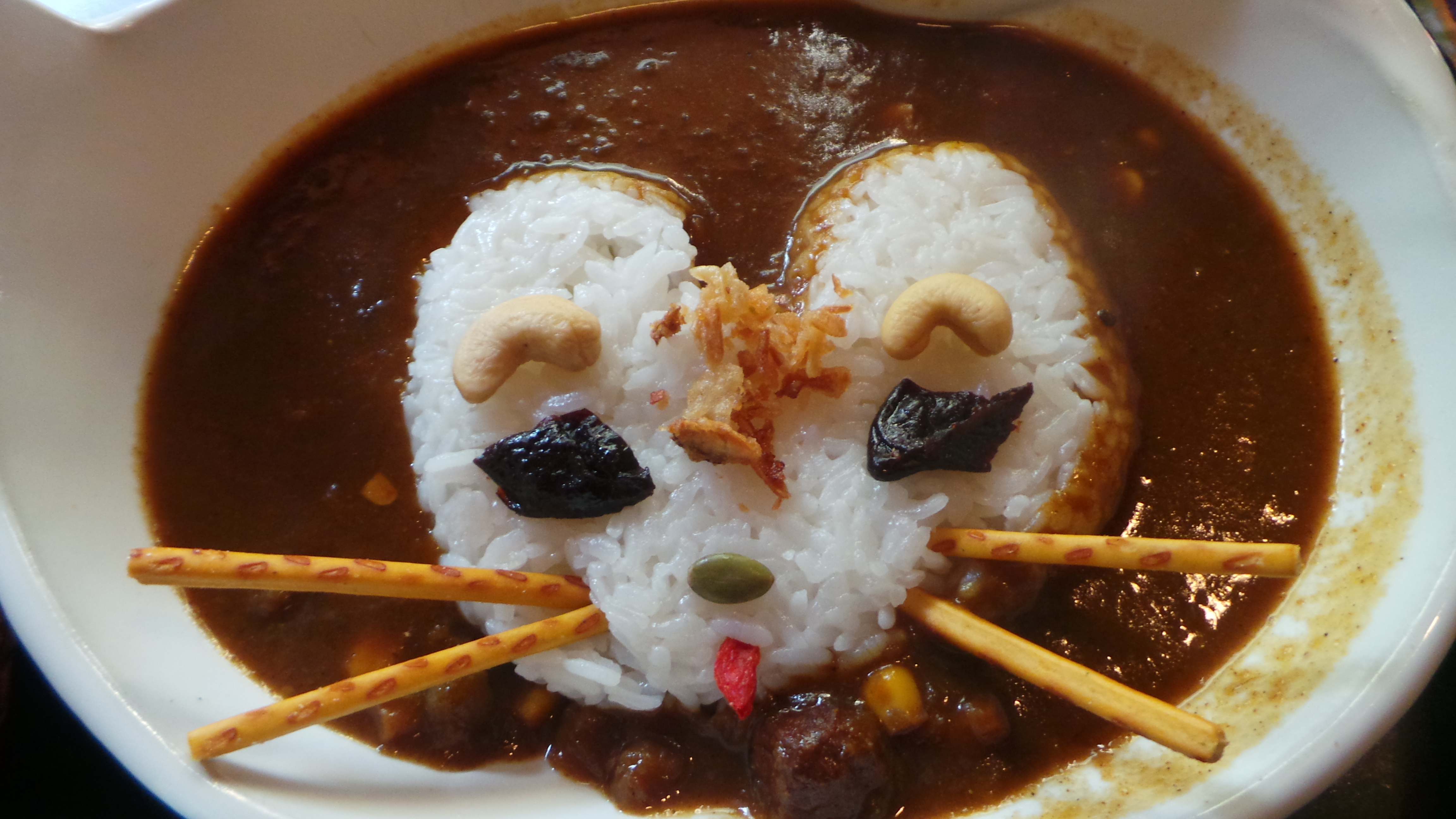
I order a vegetarian curry and wait. My friends, seemingly uninterested in real food, opt for a selection of cakes and sweets. As we sit and talk for a while, I completely forget that I am in the company of cats; perhaps the reason for this is that there is just a single cat here. Only one. Sleeping quietly under a heated table. Eventually, my food arrives, and a second cat appears from seemingly nowhere. Much to my surprise, my food looks nothing like any curry I have had before. Something is very different about it, and it takes me a while to realise exactly what it is.

catfoxcurry

As I dine on curry and rice shaped like a feline, or perhaps a fox, I begin to wonder if this is okay. Eating food in the shape of a cat, while surrounded by two actual cats, makes me feel very strange indeed. What would a cat think if it saw me eating one of its friends? Perhaps it would get angry, maybe even scratch at me. After finishing my curry, I attempt to pet the awake cat, but it runs away in fear, confirming my suspicions about eating cat-shaped food. The owner informs us that the manager of the cafe is, in fact, the sleeping cat. It makes me wonder if the cat even knows how to operate the antiquated till system (it doesn’t).

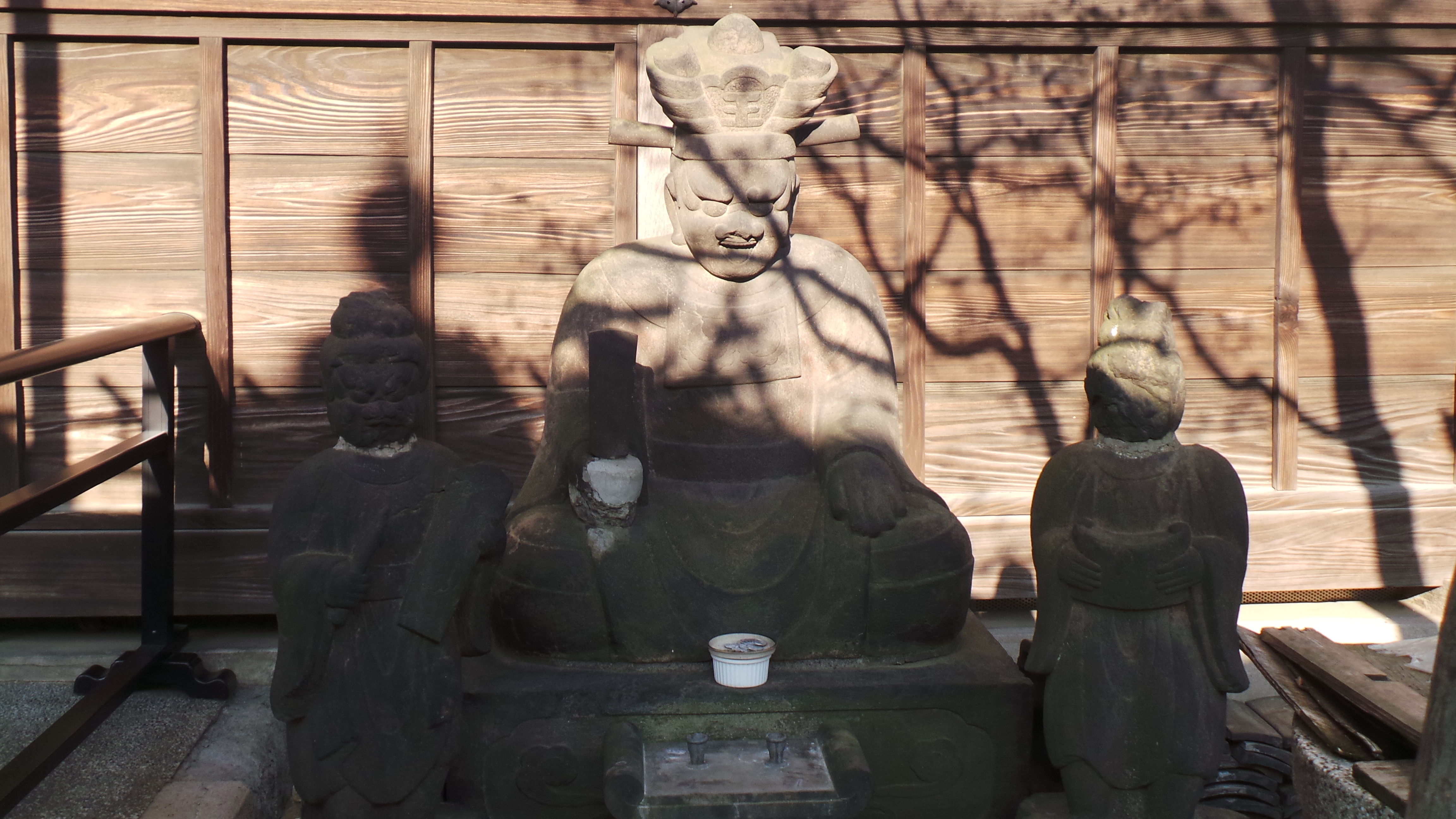
We set off in the direction of our bicycles, and along the way, we once again inadvertently stumble upon a temple. This particular temple houses the King of Hell, Enma-raja. The statue, carved from stone, depicts him with his servants sitting on either side. His servants are Shimyo and Shiroku, tasked with delivering the King’s judgment and recording it, respectively.

enma

It is believed that Enma-raja judges the conduct of the living and determines their destination after death. Rumour has it that if you tell a lie in front of the statue, the King of Hell will remove your tongue. Intrigued, I decide to test this out with a paradoxical statement, “You will cut out my tongue.” Nothing happens, indicating that I have told a lie, meaning the statue should cut out my tongue. But if it does, then I can’t have told a lie, and this creates a paradoxical loop. The logical conundrum continues endlessly. Eventually, the statue disintegrates in a quarrel of logic (it doesn’t).

It is quite fitting to find such a statue here, as the area of Yanaka is in the direction of the Ox Tiger, depicted with horns, sharp claws, and an evil demeanour. Because of this, it is considered an unlucky direction, and Yanaka shares the unfortunate possibility that it contains a demon gate—an invisible gate that leads directly to hell, known as a Kimon. Often, temples in Japan face the same direction as this Chinese zodiac symbol. This might explain why there are over thirty temples and shrines here, helping to purify the area and prevent an oni demon from showing up and killing everyone.

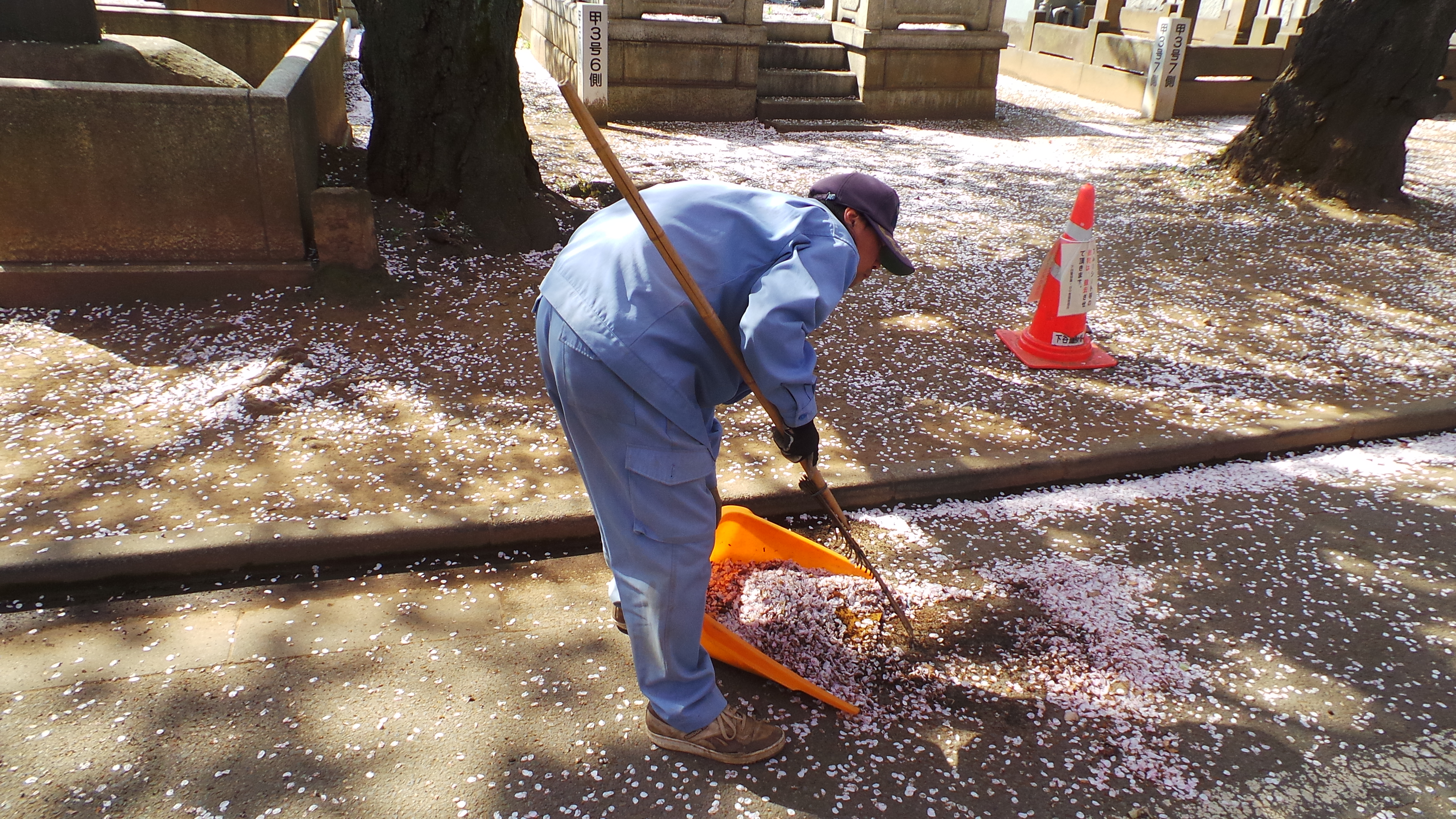
With death surrounding us, it is a pleasure to encounter something that brings a wry smile to my face. A man quietly sweeps up the fallen, dead petals of cherry blossom flowers that litter the floor. I watch eagerly as he sweeps. The area he cleans is instantly covered with petals within a minute of him finishing, and I fear for him; his job might be unavailing and endless.

foreversweeping

We eventually return to our bicycles, relieved to find them unharmed. However, a man looks confused as we stroll into the compound, unlock our bikes, and race toward the exit. Speaking in Japanese to one of my friends, he seems suspicious about our actions. “Next time, you should kindly ask for permission first,” is all he says. Fortunately, he doesn’t impose any penalties or cause any problems. As we cycle away from the cemetery towards Asakusa, it appears I had nothing to worry about, except perhaps for the sudden sharp pain that starts to shoot through my tongue.

A Wild Frog Chase

My morning starts with an unexpected knock at my bedroom door. Upon opening it, I find one of the Japanese men who live in my house standing there with a white carrier bag full of bread. Normally, I would find this unusual – a man at my door, giving me bread at 10 a.m. when I should be sound asleep. However, nothing is usual in my apartment. This same man, two weeks ago, gave me a box of laundry powder for no particular reason. Moreover, he believes I am fluent in Japanese. Not once has he engaged in a conversation with me in English. I simply nod, mutter some of my limited Japanese in his direction, and accept the loaf of bread.

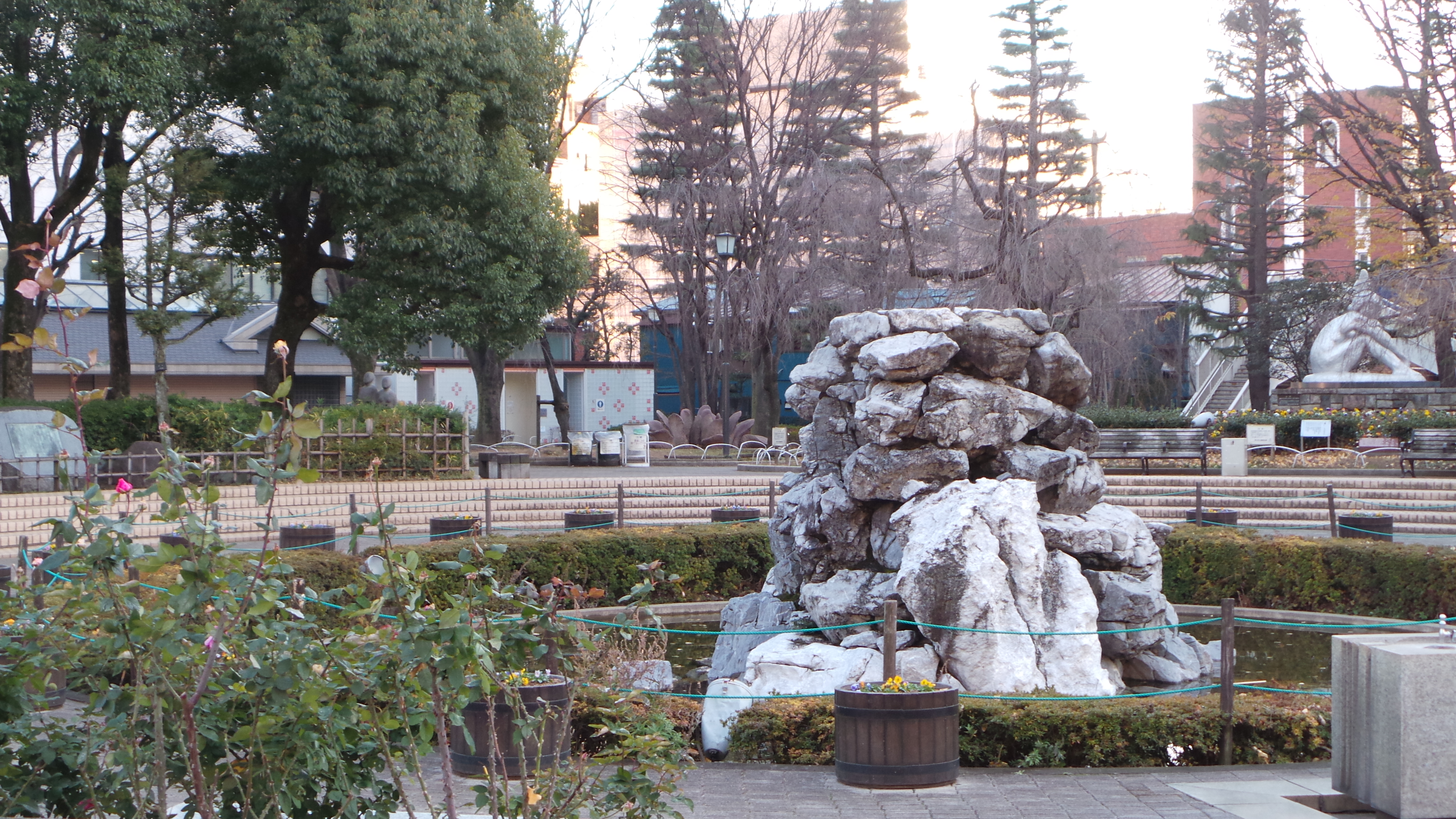
With the thought of the donated bread weighing on my mind, I decide to hop on my bicycle and head to the nearby Arakawa Park, a place I haven’t visited before.

Arakawapark

This park seems to have somehow partially escaped the shedding of its leaves. On one side, it is skeletally bare; on the other side, it flourishes with nature. Laundry powder and bread. It is no secret that since being in Japan, I have lost an extreme amount of weight. Week by week, I find myself becoming skinnier, although previously, I didn’t think such a possibility could even exist. Perhaps that offers an explanation for the bread. However, my clothes are in no way dirty and in need of additional laundry powder.

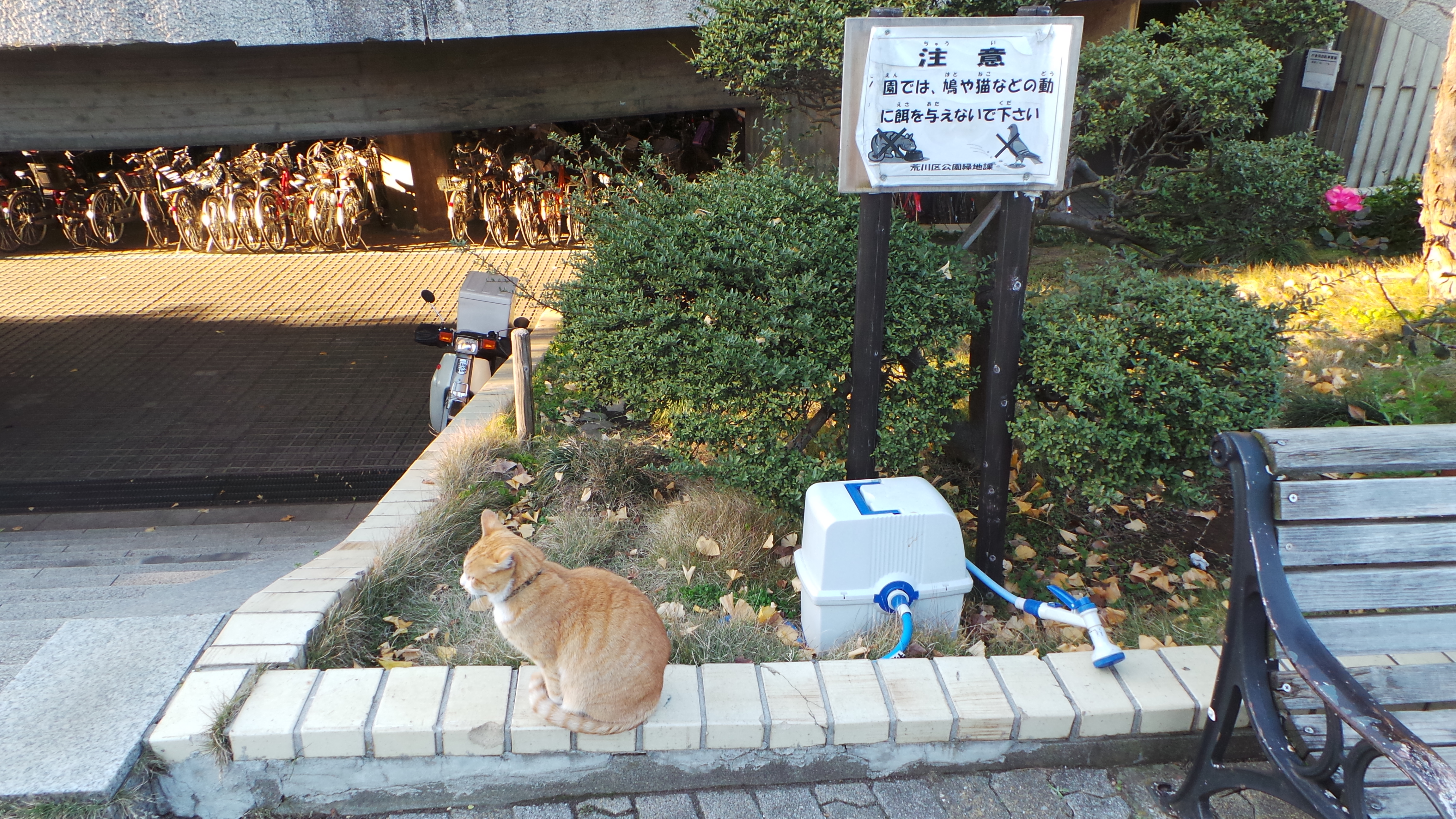
I park my bicycle and take a seat on a bench to read my book: Murakami’s ‘Super-Frog Saves Tokyo.’ After consuming the book from start to finish, I take a little wander around the park. I come across a sign that says, ‘Do not feed the cats or pigeons.’ Oddly enough, I’ve seen multiple signs about feeding pigeons, often adorned with amusing text in speech bubbles, such as, ‘Don’t feed me; I can get my own foods.’ However, this is the first time I’ve seen a sign specifically addressing not feeding felines. With perfect timing, a cat appears from nowhere and takes a seat directly in front of the sign.

dontfeedthecat

The ginger cat decides to follow me around the park, meowing at me for food. Cats of this colour seem to have a habit of trailing behind me. I wander amongst the threadbare trees and reach a stone gazebo. Beneath the shelter, the homeless roam – about ten in total, walking around seemingly without purpose, wearing threadbare clothing to match the trees. They resemble characters in the starting area of an online role-playing game: lost, confused, and not knowing where they’re supposed to go. It strikes me that these people, much like the poor cat, actually don’t have anywhere to go.

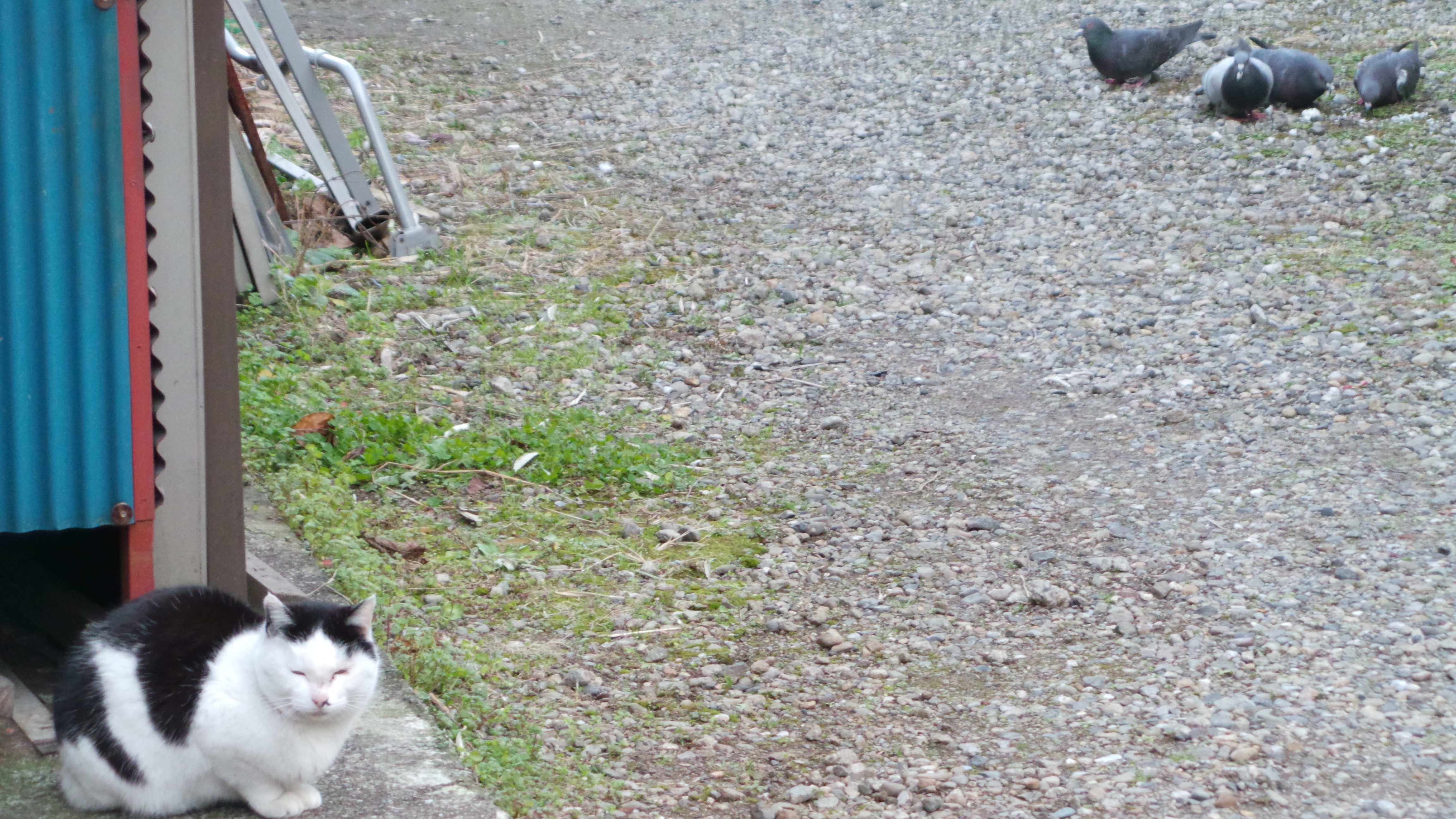
I leave the park and stop off at a nearby shrine, only to be chased away by two massive guard dogs on leashes. Clearly, this shrine doesn’t welcome tourists. A little further up the road, I realise that as this day becomes more about animals, a better choice of reading material today would have been Agatha Christie’s ‘Cat Among the Pigeons’ because, for a second time in an hour, that’s exactly what I see.

catsandpigeons

Leaving the stray cats behind, I cycle toward Nippori. One of my favourite things to do to keep myself occupied in Tokyo is cycling on warm days and exploring new areas. Without any real destination, I often pedal along, discovering random things that interest me. Today, the low winter sun provides the heat, and the opportunity to explore is seized.

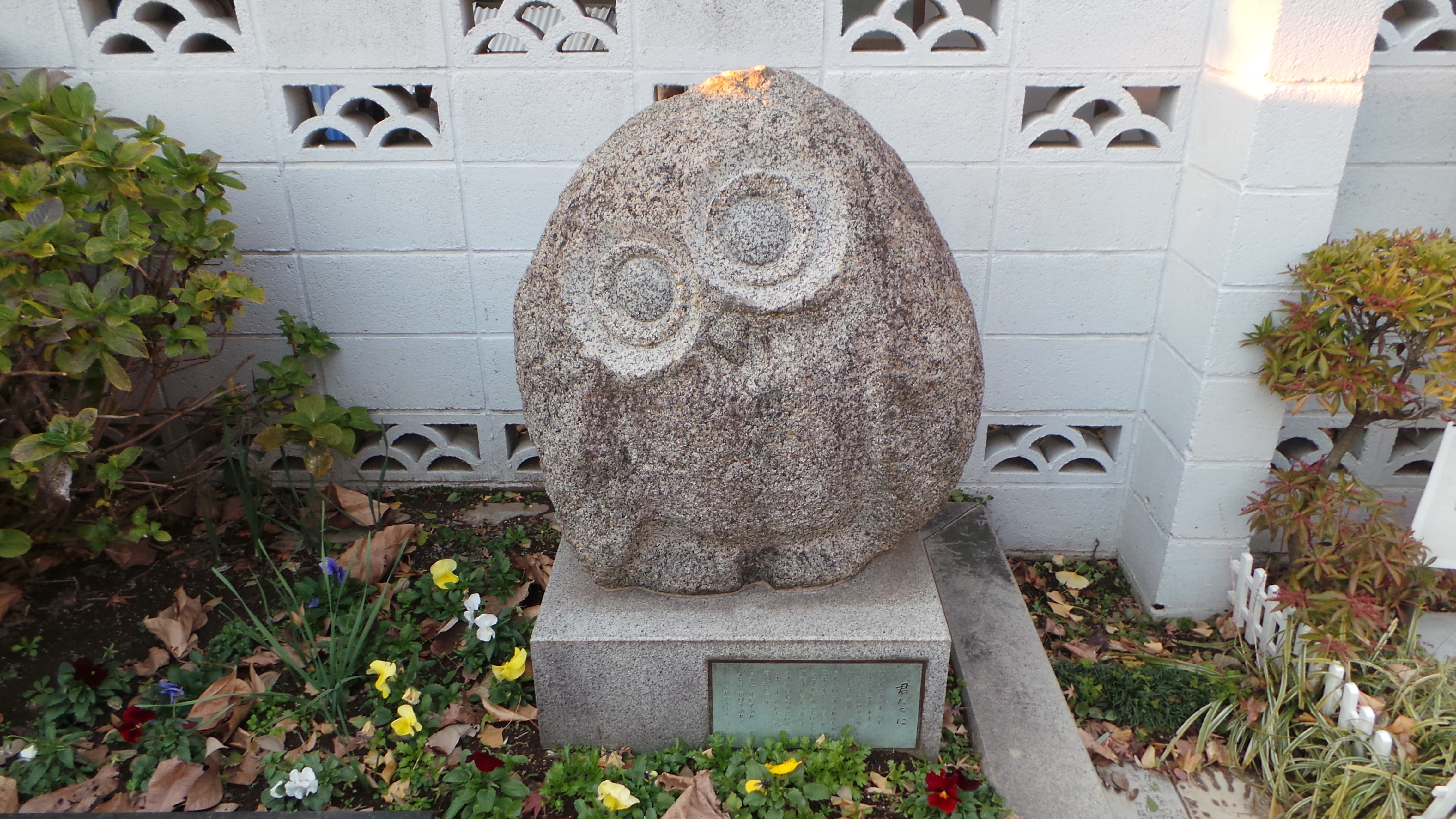
I cycle through Fabric Town, passing a couple of interesting shops along the way. Highlights include a leather shop called ‘Touch of Fleather,’ a shoe store named ‘And Shoes,’ and a textile shop simply called ‘Tomato.’ After arriving at Nippori Station, I carry my bicycle up some steps and over the tracks. On the other side of the tracks, I am greeted by another bird in the form of a giant stone owl.

owlmonument

The owl describes itself as a ‘Memorial Monument for Takamura Kotaro,’ a famous Japanese poet and sculptor. Why they chose to honour his life with a statue of an owl is beyond me, but it looks nice, so I thought I would include it. The owl sits on Suwadai Street, a peculiar street that is at an elevation higher than the skyscrapers beyond. Additionally, the street boasts fifteen different temples and shrines.

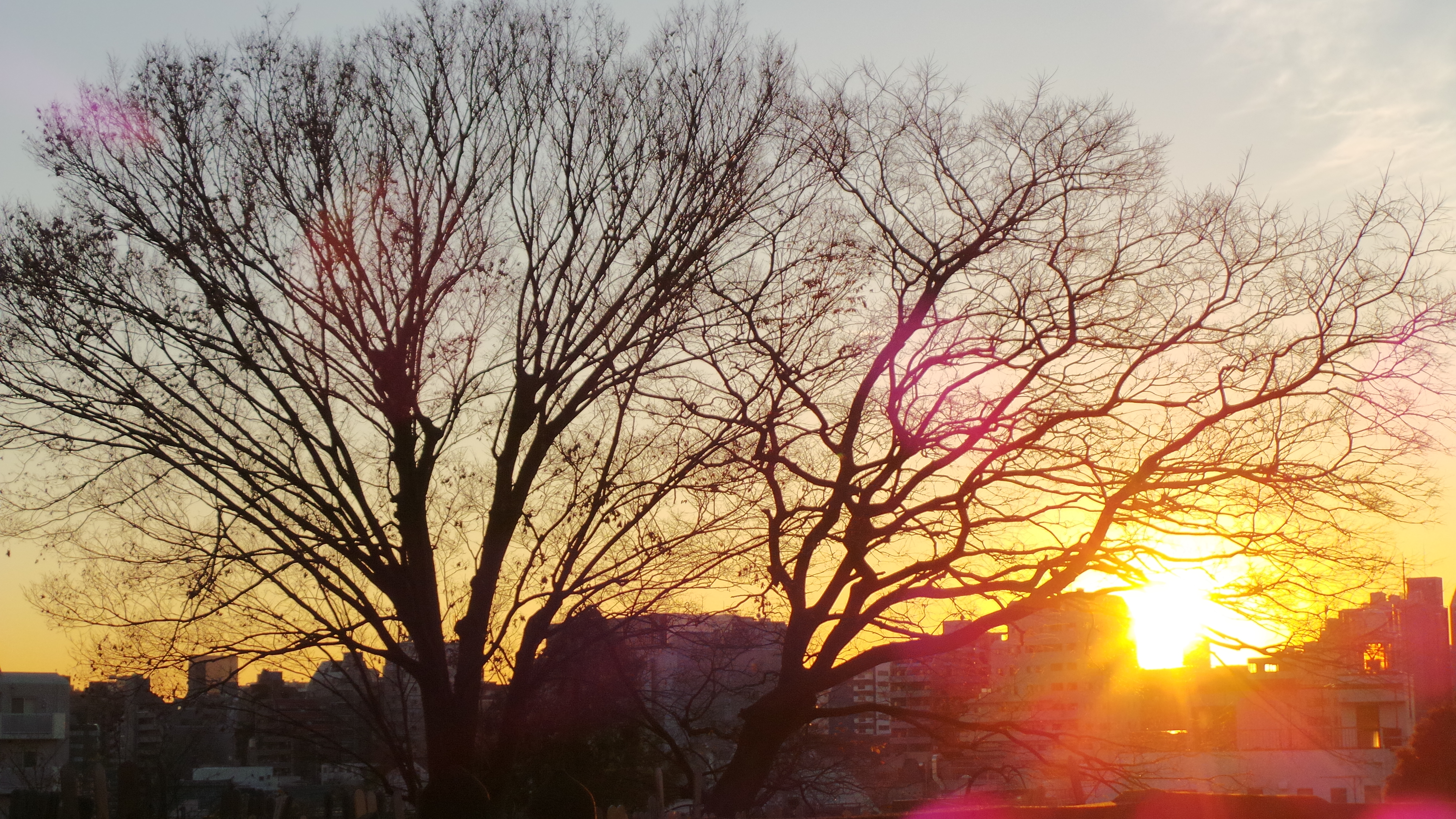
I check the GPS on my camera to make sure that I’m still in Tokyo. Up here, even though I am just twenty minutes from my house, it feels like I am in the middle of the countryside. The nature in this area is simply stunning. I see a few signs with directions to a viewing point. On a clear day, I can witness the spectacle of a Mount Fuji sunset, where the sun and the mountain share the horizon. Unfortunately, I can’t see Mount Fuji — the story of my life. Nevertheless, I do get to witness the setting sun over a distant Tokyo skyline.

Nipporisunset

I cycle away from the temples, shrines, and stunning views, heading into Yanaka. The area is still uphill and features many old houses surrounded by leafless trees. I end up at a small market along some narrow streets: Yanaka Ginza Street. Conveniently downhill, the opportunity to cruise along, engaging in window shopping, controlling the flow of bicycle wheels with intermittent braking, is an enjoyment in itself. Navigating between the crowds of people, I narrowly miss shoppers who are presumably there to buy things they don’t need to impress people they don’t care about. As I try to remember a quote from Palahniuk’s ‘Fight Club,’ I get distracted and almost crash into a woman carrying a baby. Naturally, the baby starts screaming in fits of hysteria, so naturally, I cycle away as fast as I can.

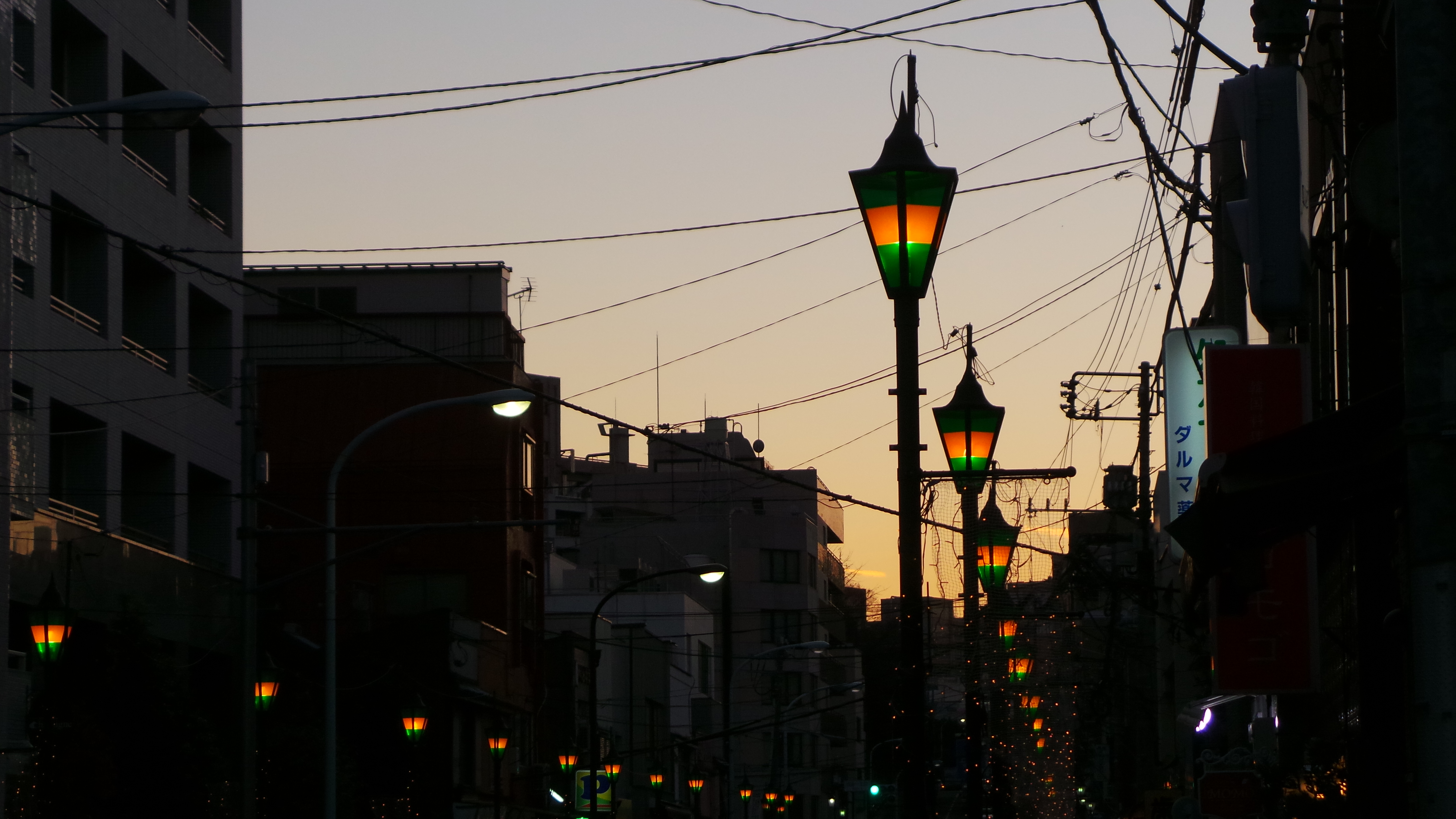
I continue cycling until I arrive at another new place, Nezu. The streets here are adorned with beautifully crafted old lampposts and festive Christmas lanterns.

Nezu

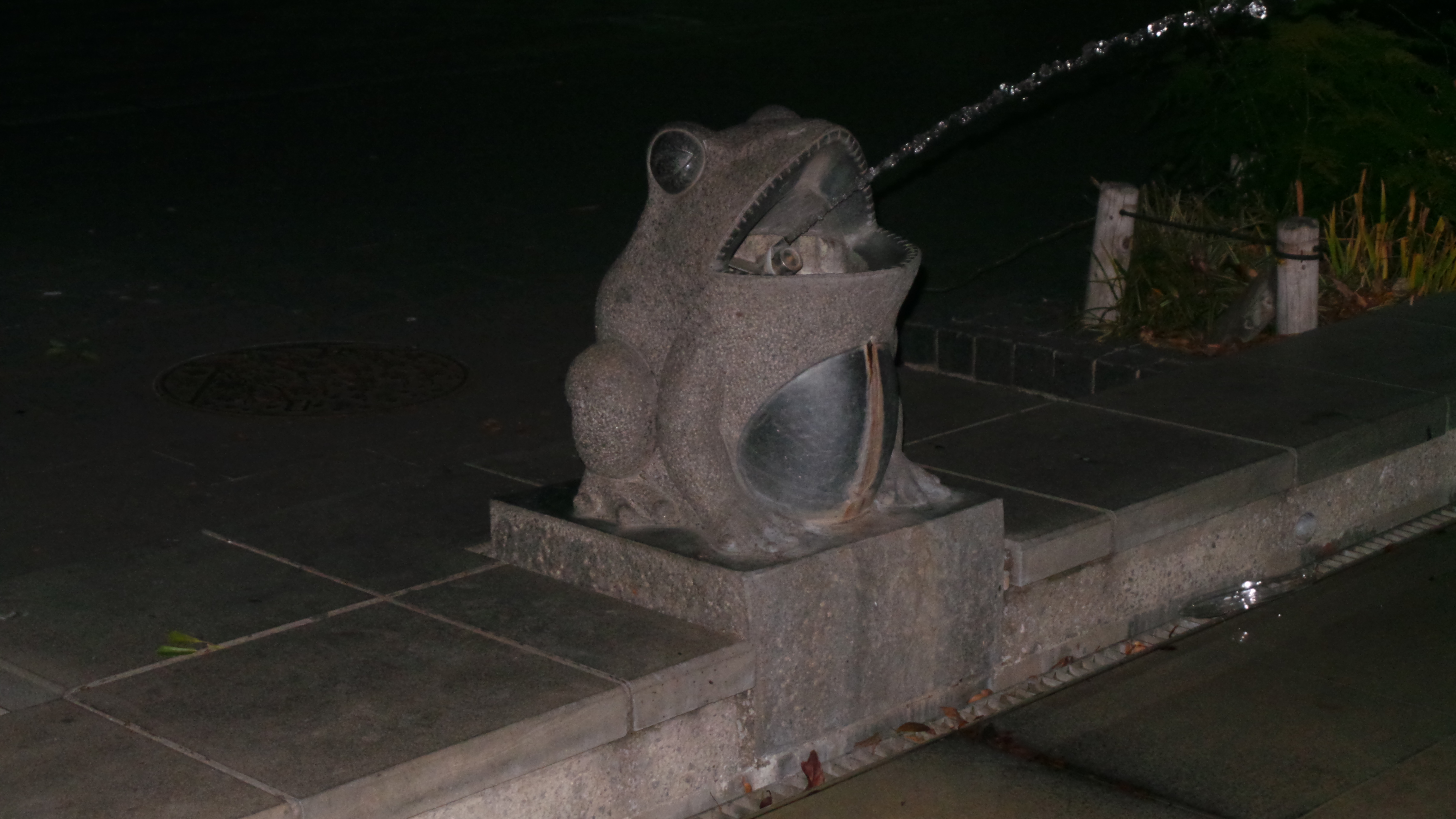
Apart from a full-size train carriage parked randomly on the footpath, there isn’t much else to see in Nezu, so I head back toward familiarity. Outside Ueno Park, I study the map, desperately looking for something of interest. Four museums, but all presumably closed today; that’s how these things usually go. Then, something on the sign catches my eye. Perhaps it’s because I read about a character called ‘Frog’ today, or maybe some other intuition takes over, but the moment I spot a tiny dot on the huge map of Ueno Park below a caption saying ‘Fountain of Frog,’ I know that this will be my final destination today.

I search the park, passing dying crops and concrete views. After thirty minutes, the sun has completely set, and the weather has turned cold. Fierce winds chill the air but aren’t strong enough to dissuade my search. I cycle around the park, and each time I spot a map, I stop to double-check the location of the fountain. I often find that the fountain has changed its location from one map to the next, and on other maps, it has disappeared completely. Not one to give up on a personal challenge, I persist in my search for the elusive Fountain of Frog. Eventually, after forty-five minutes of cycling around Ueno Park, I find what I’ve been looking for.

frog

As it turns out, the Fountain of Frog is exactly what it sounds like: a small statue of a frog spitting water into an even smaller fountain. I head home, my mind filled with a sense of disenchantment. It’s a rather disappointing end to the day, but at least I have bread.

Necks, Lights, and Video Ape

Culture Day is held on the 3rd of November every year. It is an event to promote the arts and Japanese culture. Introduced in 1948, Culture Day is a public holiday. On this day, the people of Japan have a day off from work, and events will take place throughout Tokyo. An interesting fact I have learned is that it never rains on Culture Day; statistically, it is the clearest day of the year.

Outside, it is raining. I decide to head to Seven Eleven to buy a coffee. At the checkout, I am asked to place my hand in a box. I pull out a small piece of paper with a picture of a banana on it. Great! I’ve won a banana. This is quite possibly the best thing that will happen to me all day. I take my bicycle and head over to Asakusa, to Senso-ji. Today, I am here to satisfy my heron addiction. At the temple, the rain has all but stopped, and the crowds are slightly larger than usual. People on holiday have flocked to the temple to see the festival.

sensocrowds[1]

Today marks the White Heron Dance festival, a one-thousand-year-old tradition. The event features eight women dressed as herons, gracefully making their way through Kaminarimon Gate toward the main temple. Following closely behind them is a small wooden cart, accompanied by drummers, a man carrying a huge umbrella, three percussionists, and another man with a baton. Additionally, a woman carries a box full of confetti.

The procession sets up just beside the temple, and a huge crowd of people forms a circle, watching attentively. The music starts, and the heron dance begins. The women move with elegance, their dance slow and precise. Wings expand and contract, and heron heads bob gracefully. The woman with the confetti tosses it to the birds, and they pretend to be fed. As the dance draws to a close, its cleansing ability purifies the souls of the deceased.

dancingbirds[1]

After the event, I decide to explore a little. At the small nearby Awashi-do Temple, a monk sits chanting and hitting a drum every second. He maintains a steady, practiced rhythm and doesn’t appear to blink. Just outside, at a market stall, a man sits in a chair, waving his hands from side to side and singing, “Nice to meet you, where are you from?” I tell him England. “Aaaaah, Englandooo, Englandooo!” he joyfully sings.

As I wander around to see if any other Culture Day events are taking place, I stumble upon a small stage hidden away in one corner of the temple grounds—and a monkey.

stiltmonkey[1]

As I explore further, I discover not just one, but two monkeys. The first, accompanied by a man, showcases its natural ability to dive through hoops. The second monkey, with a woman, possesses impressive skills — it can jump really far, leap over hurdles whilst wearing stilts, and even walk on its hands. I applaud the performance, though I can’t help but question the potential cruelty involved. In an attempt to pay it forward, I give away the banana I won earlier.

I leave Asakusa and head over to Ueno Park to enjoy some light art. Today, the park is adorned with illuminations created by Ishii Motoko, the woman behind the lighting designs for Tokyo Tower, the Rainbow Bridge to Odaiba, and many other projects throughout Japan.

waterlighting[1]

The water fountains are lit up, and the sky is filled with colours from lasers projected from a small lighting booth. The Tokyo National Museum has transformed into a whiteboard for projected images; arts, antiques, and artefacts housed in the museum are displayed in full colour across one of its walls. Lanterns line the paths, and small stalls are set up, selling meat, sweets, fruits, and assorted Japanese snacks.

Similar to the other events today, this festival also showcases animals. Scattered throughout the park are many animals from Ueno Zoo, adorned with fairy lights. A significant effort has been put into this, making the festival a lot of fun. However, at times, it does feel like I am at a premature Christmas market.

christmasanimals[1]

I learn that in the past, this day was a public holiday celebrating the birthday of the Meiji Emperor, who was the first person to eat meat in Japan back in 1872. After his death in 1912, the day ceased to be a public holiday until it was reinstated in 1948 as Culture Day. Interestingly, a significant aspect of Japanese culture today involves the consumption of animals, which might explain why every event I have visited today has some sort of animal theme.

I head back toward the water fountains, where a stage has been erected. It’s only quarter to six, and the park is bustling with parents and young children. On stage, a woman is dancing with a pole. The pole dancing eventually concludes, and a drum kit is set up. The band is scheduled to perform at 6 p.m., but at five minutes past, there is still no sign of a performance.

wishuponastar[1]

Ten minutes pass, making the performance fifteen minutes late. Finally, the flowers begin to light up, water fountains dance once more, and a band takes the stage. Comprising a saxophonist, a hornist, two trumpet players, and a drummer, they kick off with a musical rendition of ‘When You Wish Upon a Star.’ As they consider playing their second piece, I notice some tempting lights in the distance.

The wall of the National Museum of Nature and Science is also lit up, featuring a dazzling light show depicting the story of evolution. The lights showcase the earliest eukaryotes to the animals of today. Volcanoes erupt, and monkeys transform into men. I stay for the entire show, enthusiastically applauding with the rest of the crowd at the end.

volcanolight[1]

After the illuminations, I meet my friend Khin, and we head to one of my favourite bars, Nui. At the bar, we join a group of Australians. One of the women, Claudia, grew up in Perth, the same place as Khin — quite the coincidence, maybe. When I mention where I’m from in England, I’m surprised to find that she has heard of it; most people haven’t. My surprise deepens when she takes out her passport and shows me the section displaying her birthplace. Oddly, it is my hometown — the same city, the same hospital, but more remarkably, we were born on the very same day. Such a small world. Our paths crossing in a Tokyo bar, woven together by the cosmic dance of a shared day.

“But Sir, it’s Only a Model”

Today is the third and final day of a street performing arts festival in Asakusa. Outside, it’s a clear day and a wonderful 28°C. I spend the best part of the morning wandering between the many different stages. I see a magician, a group of jugglers, a yo-yo master, people dressed in Halloween costumes, and a guy who specialises in tricks using crystal balls. Every performer seems to draw a strong but silent crowd.

crystalballs[1]

At lunch, I head back to Koto, to Tokyo Big Sight. Today, the venue hosts The 54th All Japan Model and Hobby Show. Alongside this event, there are many other exhibitions at Tokyo Big Sight, including the Trend Fashion EXPO and a free show about female auto racing drivers. I head to West Hall Two where the entrance fee is ¥1000.

The event today is organised by the Japan Radio-Controlled Model Manufacturers Association and the Japan Plastic Model Manufacturers Association. Inside, there are almost ninety different stalls representing various branches of the hobby and model industry. Upon entering, I’m greeted by a display of scaled-down model warships.

iseenoships[1]

All the major model companies are present. Kyosho proudly claims to produce ‘The Finest Remote Control Models.’ Nippon Remote Control showcases their latest flying helicopters, while Tamiya demonstrates their new remote control car. Besides remote control products, the exhibition features model trains, warships, cars, toys, hobby crafts, painting supplies, and character figures.

A woman in cosplay is signing various publications, while other individuals in cosplay attire are attempting to attract visitors to their stalls; women pose for photographs and entice men to buy tanks. Thousands of items are on display, including models of famous historic sites in Japan. Among them is a to-scale model of Kaminarimon Gate at Senso-ji Temple, priced at ¥38,000. Additionally, various figurines featuring characters from famous Japanese anime make an appearance

attacktitan[1]

As I mentioned, there’s a substantial section dedicated to remote control flying machines. While some machines are more impressive than others, the skill level of the operators varies. I observed a guy attempting to elegantly guide a helicopter through a hoop, but instead, he spectacularly crashed it, causing one of the wings to snap off. This unfortunate incident promptly led to the closure of the exhibition. However, amidst these mishaps, some machines stand out for their superior performance. I watched another person skilfully manoeuvre a large drone vertically, achieving somewhat impressive speeds.

flyingmachines[1]

I visit a shooting range where individuals are aiming at targets with fake plastic guns. Several talks are ongoing throughout the venue. A woman delivers a speech on a large stage, captivating the attention of many eager attendees. However, as is customary in Japan, I notice the restriction against taking photographs of people on stages, a common practice here.

Bandai’s presence here is immense. A massive crowd gathers to watch a special viewing of a new episode of Gundam or something similar. They’ve set up a stall showcasing figurines aligned with the upcoming release of their new film, Space Battleship Yamato 2199. Additionally, serving as the representative for Star Wars in Japan, Bandai offers an extensive array of merchandise. A giant screen plays footage from one of the Star Wars movies, drawing people to photograph models of Darth Vader and the Millennium Falcon. It’s a bit overwhelming with the sheer volume of offerings.

starwars[1]

I decide to leave and head to the train station, taking the Yurikamome Line to Shinbashi before transferring to the Ginza Line. However, I get distracted and end up missing the Tawaramachi stop. Instead, I disembark one stop later at Asakusa Station, which happens to be the last stop.

I decide to stroll through Senso-ji on my way home while the sun is still shining. Amidst my walk, I come across a shrine I’ve never seen before—Hikan Inari Shrine. It’s notably small but carries a profound symbolism of recovery. What strikes me as unusual, though, is the presence of over three hundred small statues of foxes inside the shrine. I notice an important-looking sign in Japanese and decide to photograph it.

foxtemple[1]

Back at the hostel, I ask my friend Hiro to translate the sign. It reads, ‘Please don’t ring the bell at night, as our neighbours in the area are trying to sleep. Be careful not to wander around too much in the evening because you might be possessed by a fox.’ The concept of being possessed by a fox is quite intriguing. Apparently, there’s a traditional folktale in Japan about a condition called ‘Kitsunetsuki,’ which refers to a form of madness caused by fox possession.

I decide to explore this superstition further. I spend the evening wandering around the temples and shrines of Asakusa, until I turn into a fox.

Dog Day, Afternoon

Saturday 

For the past three days, the Obon festival has been taking place in Japan. This 500-year-old Buddhist festival emphasises honouring the deceased. Today marks the final day of Obon, coinciding with the Asakusa Summer Night Festival. The event originated in 1946, shortly after the end of World War II, serving as a way for people to bid farewell to those who perished. As I arrive before the opening ceremony, the bridge is already overflowing with tourists.

skytreebridge[1]

The Japanese name for this event is Toro Nagashi, which translates literally to ‘flow of lanterns’. Here, you can purchase a small paper lantern for ¥1500. Each lantern symbolises the soul of a deceased relative. Visitors have the opportunity to write a message on the lantern, queue up, and then release it into the water. I find the entire process quite abstruse.

As the lanterns float down the Sumida River, carrying the souls of the departed to the other world, a certain solemnity lingers in the air.

lanternsontheriver[1]

After the festival, the atmosphere becomes somewhat lighter. I meet up with Robin, a German I befriended in Kyoto, who happens to be staying in Asakusa. We decide to unwind over drinks and perhaps get a bit less sober. We head to Nui and indulge until just after ten, then make our way to a Family Mart to play a few rounds of the Konbini Hop drinking game.

Outside our third convenience store, we come across a poster featuring numerous Japanese individuals with sunflowers encircling their heads. Despite our attempts to decipher its meaning, we’re left utterly baffled. It remains an enigma, leaving us without a single clue.

flowers[1]

We head to a Japanese bar nestled behind Senso-ji. This area houses around ten small bars, each with only two to three bar stools. I’ve long desired to experience a drink in one of these hidden spots since my visit in June, yet I never found the courage to venture in alone. Describing the way to this area would probably confound you; it’s remarkably concealed, and my directions are truly abysmal.

We settle in a small bar called Tom². This bar, with only four bar stools, feels quite spacious compared to the others nearby. ‘I Was Made for Lovin’ You’ by Kiss fills the air from the speakers. Two Japanese men occupy two stools, and we take the remaining two. The bartender seems a bit tipsy. We order a Suntory whisky highball and a beer for ¥500 each, and enjoy complimentary peanuts.

Then a dog appears.

inu[1]

The dog, incredibly friendly, joins us and settles in. We discover that Tsutomo, the owner, resides above the bar. We linger for some time—I manage to outlast Robin in drinks, and eventually, he departs. I remain for two more. The two Japanese gentlemen present speak minimal English, and the dog, unsurprisingly, doesn’t contribute much to the conversation. So, I sit there, mostly in silence, sipping my drink and exchanging glances with the dog. An atypical end to the evening.

Sunday

I rent a ¥300 bicycle for the day and cycle thirty minutes to Nihonbashi, making a stop to see my friend Daisuke along the way. It’s a shame to find out he no longer works at the hostel where I’m staying. Today, Nihonbashi hosts the annual Fukagawa Hachiman Matsuri festival. It’s considered one of the three major Shinto festivals in Tokyo and is likely the largest.

The festival is celebrated in its entirety once every three years, and today happens to be that day. With one hundred and twenty portable shrines, three hundred thousand participants, and half a million spectators, it’s definitely not an ideal day for cycling.

shrinesandshrines[1]

Amidst the crowds, people throw buckets of water over those carrying the shrines, a ritual to cool them down, earning the festival its nickname, the ‘Water Fight Festival’. It’s undoubtedly challenging to bear these enormous shrines in such sweltering heat, particularly under today’s scorching summer sky. I opt to step away from the bustling crowds and take a stroll through Nihonbashi. While I visit the renowned Nihonbashi Bridge, it fails to captivate me. I decide to return to Asakusa in search of some food.

I head to my favorite Japanese restaurant, Mizuguchi. I indulge in breaded salmon and salmon teriyaki, served with a side of greens, potato salad, pickles, and rice. Absolutely delicious. The total comes to ¥1810, including a Suntory whisky highball.

As I leave the restaurant I hear applause. It turns out there is a street performer just outside. Never a dull moment in Asakusa on a Sunday.

coneman[1]

The street performer does a balancing act whilst juggling a traffic cone between two sticks. He has drawn in a huge crowd. He is also a comedian. Throughout his routine he speaks intermittently on a microphone, telling jokes in Japanese, everyone laughs. When he is finished he cheekily places three bowler hats on the floor, upturned for tips. I give him ¥1000. He was really good.

Back at my hostel, The Strokes are playing from the speakers. ‘Is This It?’ I write for a while before heading back out to meet fellow Englishman, Richard. We meet at 8 p.m. and drink until 4 a.m. A typical end to the evening.