The Girl with the Dragon Taboo

As I exit the train into Akita Prefecture, my arrival is announced by the lonely trill of a traditional Japanese flute. Inside the station, a taxidermied Asian black bear greets me. I remember that Akita has the largest bear population in all of Japan. Outside, the mountains are lush with greenery and the sky is an æstival blue.
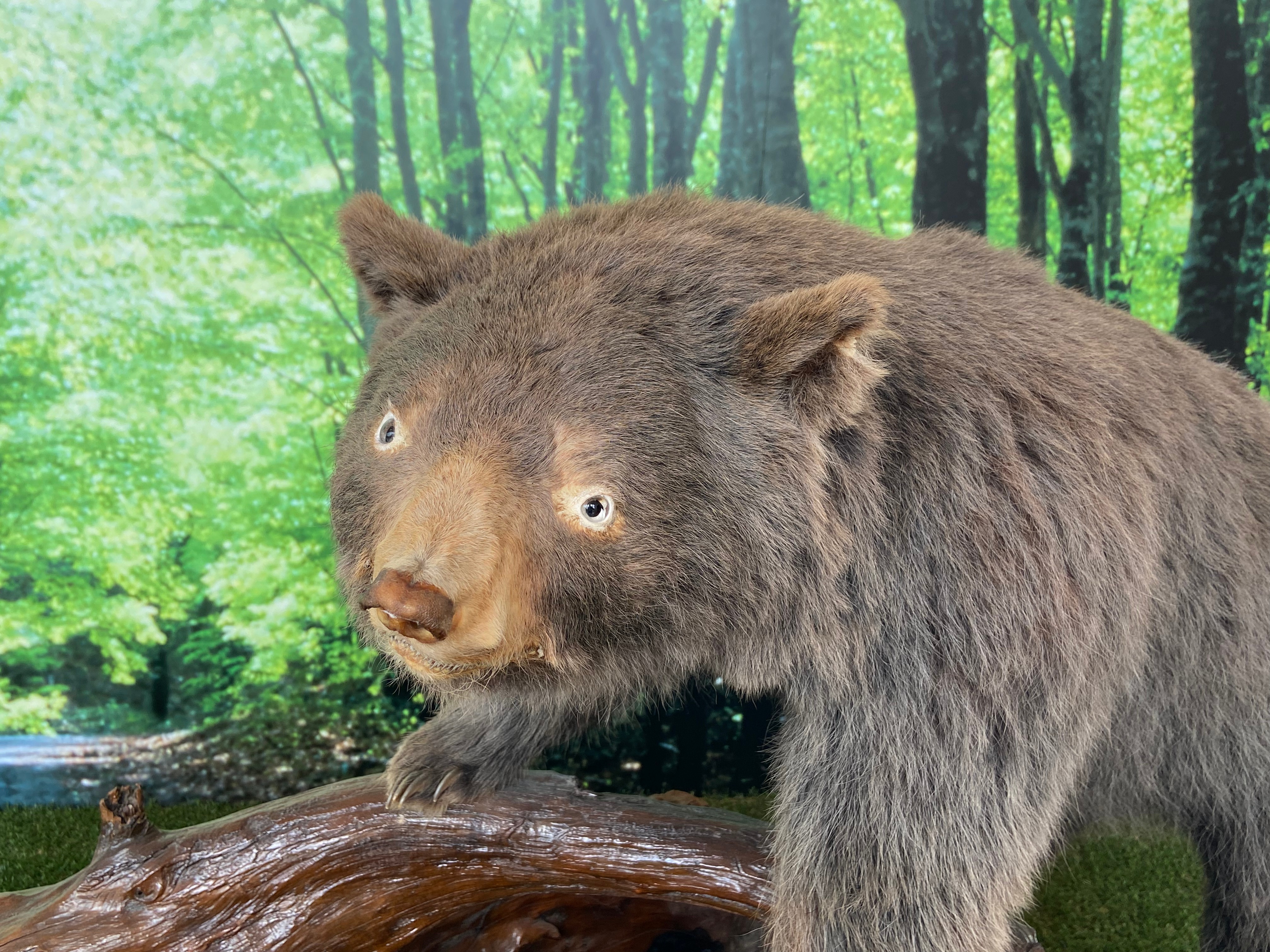
Asian black bear taxidermy display inside Tazawako Station, Akita — a reminder of Japan’s largest bear population.

Today I’m up in the hills of Semboku because I heard a story about a girl, Tatsuko; a beautiful young woman who once glimpsed her own reflection in a mirror-like rock. Fearing her beauty was fleeting, she prayed night after night to Kannon, the goddess of mercy, for eternal youth. One day, she was told her wish would be granted if she simply drank from a sacred spring hidden in the mountains.

Tatsuko found the spring with relative ease, drank from it eagerly, and couldn’t stop. The more she drank, the thirstier she became, until finally she emptied the spring and, in the process, emptied her humanity. She had turned into a dragon. Horrified by her transformation, Tatsuko threw herself into the lake, where she remains as its guardian spirit. I don’t know too much about dragons, but I’m pretty sure they can’t breathe underwater. So sadly, I think whether in human form or dragon form, Tatsuko may have simply drowned.
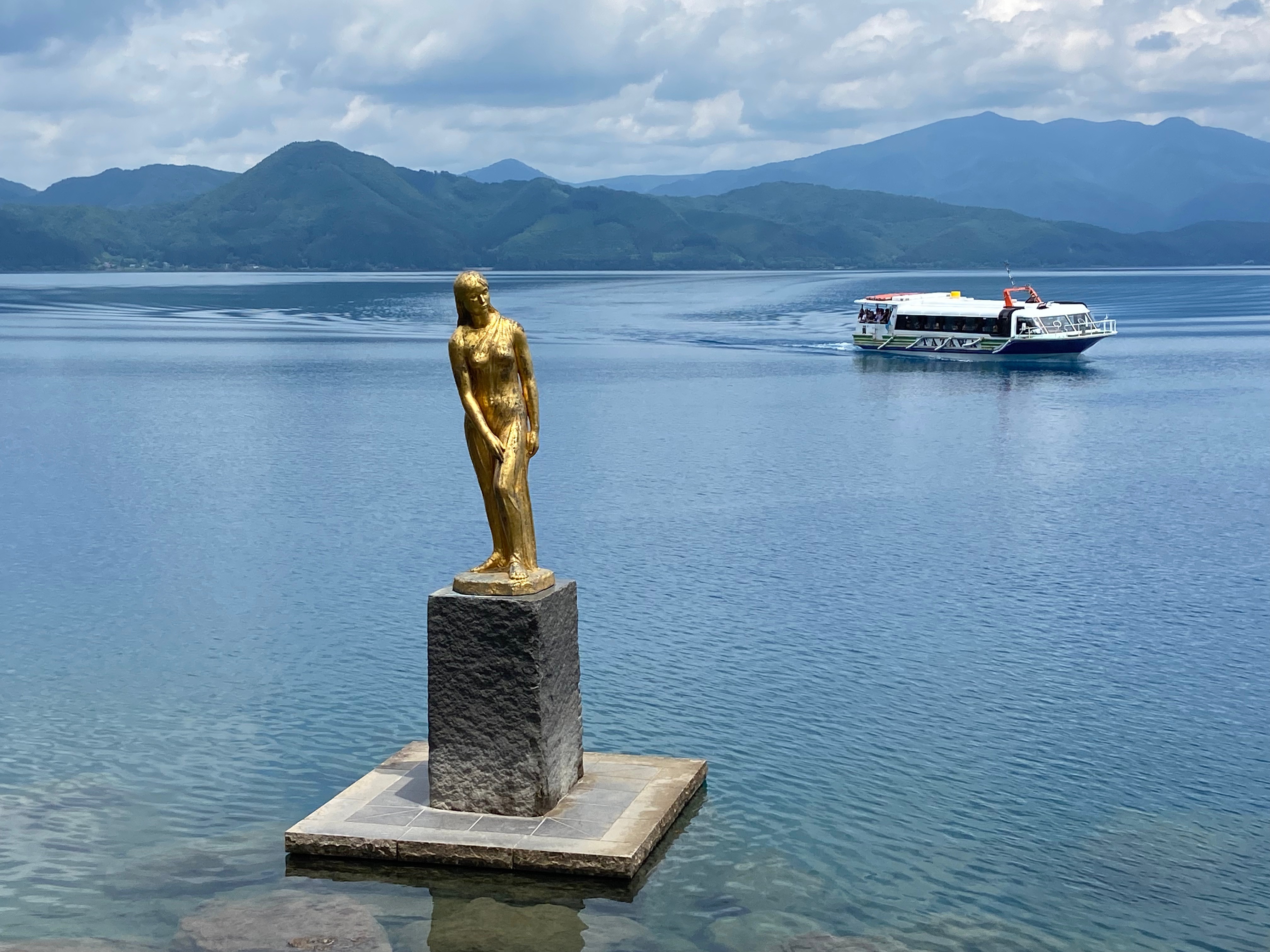
The tale doesn’t end there though. Tatsuko’s mother apparently searched the hills for days, calling her name until her voice broke. Eventually, in despair, she hurled the burnt remains of her wooden torch into the lake, which, for reasons only folklore and grief can explain, turned into a fish. Specifically, the first black kokanee salmon. Sadly, they became extinct in the 1940s after a hydroelectric plant acidified the lake.

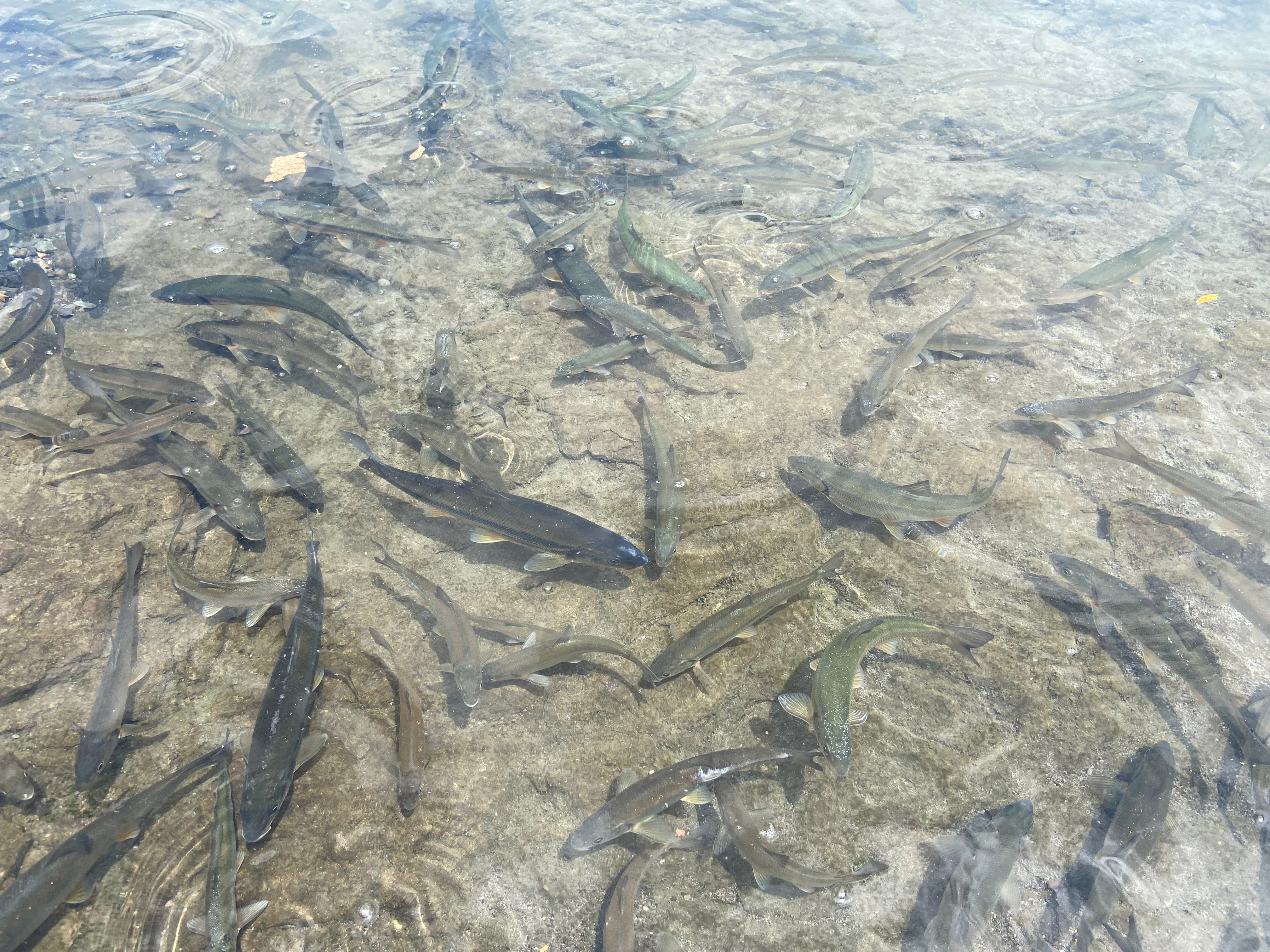
Lake Tazawako is the deepest lake in Japan, which makes it an excellent place to hide a dragon. These days, Japanese trout live here instead of the kokanee salmon, and the waters are thick with them. I’ve never been fishing, but I’m quite confident I could catch one of these with my bare hands. They’re basically queuing at the shoreline.
I check Google Maps to see if there’s anything else nearby, but my GPS insists I’m floating somewhere in the middle of the lake, which feels a little prophetic. I take the hint and wander into the forest instead, all the while being careful to avoid the many bears. Eventually the quiet path leads me to Gozanoishi Shrine.

I stand for a while beneath the torii gate of the shrine, looking out on the lake, looking for any sign of a dragon. The shrine itself is dedicated to Tatsuko and also features a stone statue of her. I wander up the shrine’s steps and pray that her beauty remains.
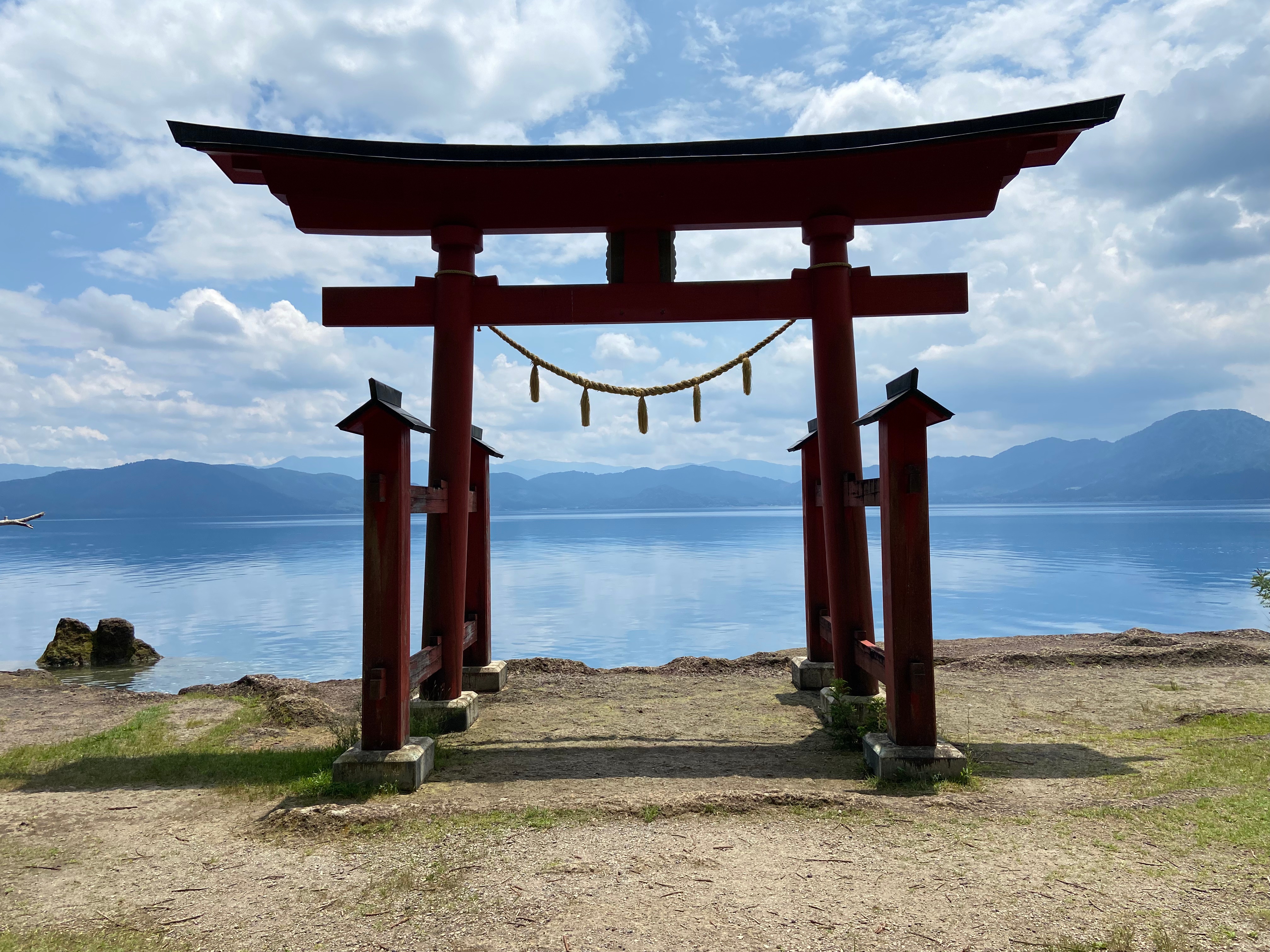
Torii gate of Gozanoishi Shrine overlooking the deep blue waters of Lake Tazawa in Semboku, Akita Prefecture.

Back at the station, I find an old Kawai piano and sit playing for a while. A Japanese woman keeps glancing over as I play. I’m either performing surprisingly well on a badly out-of-tune piano, or badly out-of-tune on a perfectly tuned piano.

As I step onto the train, I notice a massive dragon across the tracks. When the train begins to move, I sit staring at my water bottle, trying to translate the label. A wave of panicked horror hits me when I realise it says: “Bottled at source: Lake Tazawako Spring.”
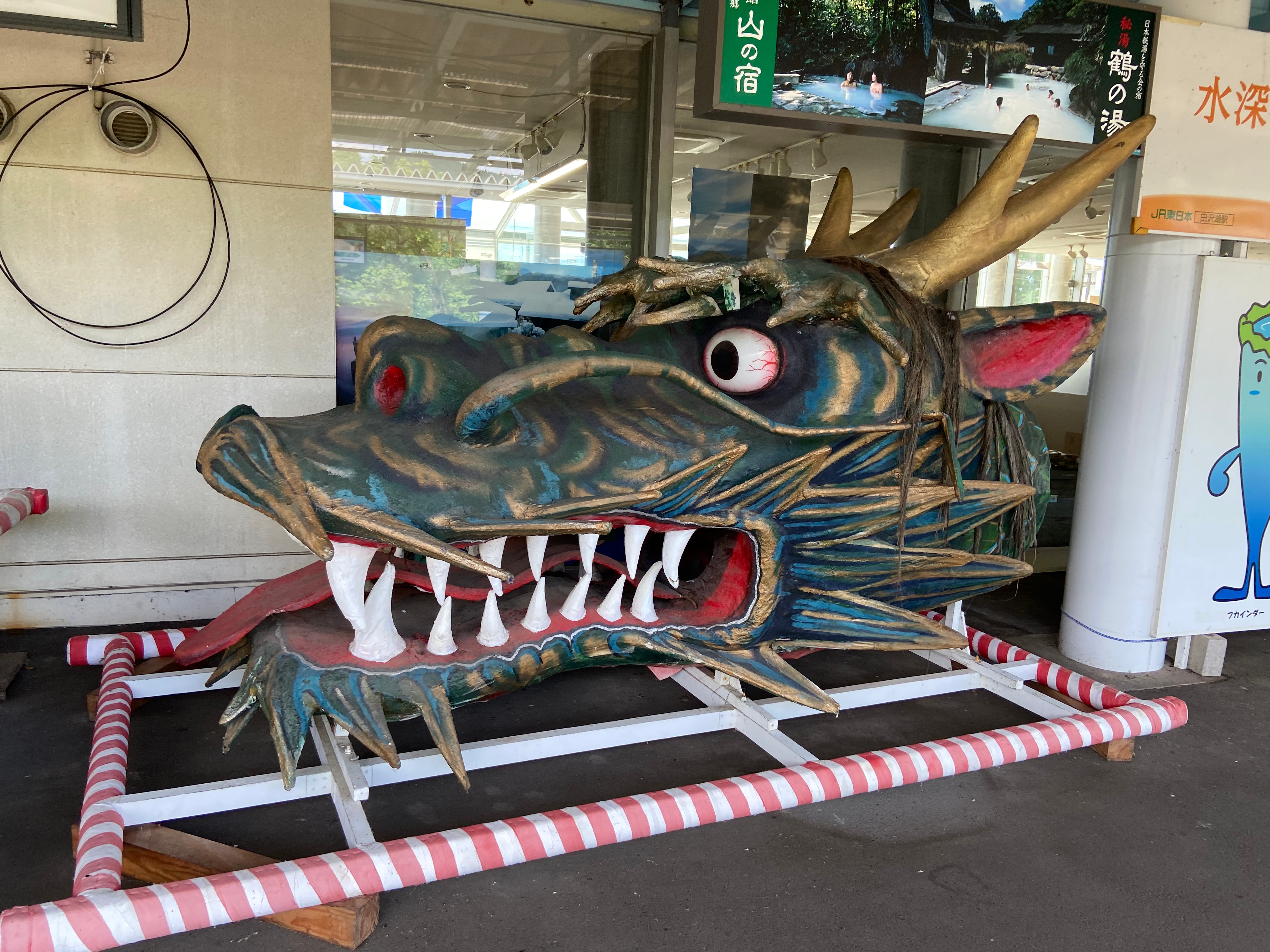
Vibrant festival-style dragon float on display at Tazawako Station, echoing the local legend of Tatsuko’s transformation.

I wonder just how long it will be before I transform into a dragon.
Good News About Hell

In the far north of Japan, where the land is as silent as the dead, there is a mountain where nothing grows. A place where souls hesitate. Osorezan, one of the three most sacred sites in Japan, is known by another name: the Jaws of Hell.

I often find myself drawn to stories of mortality and the afterworld. Today, I will glimpse into the hellscape of a Buddhist afterlife.

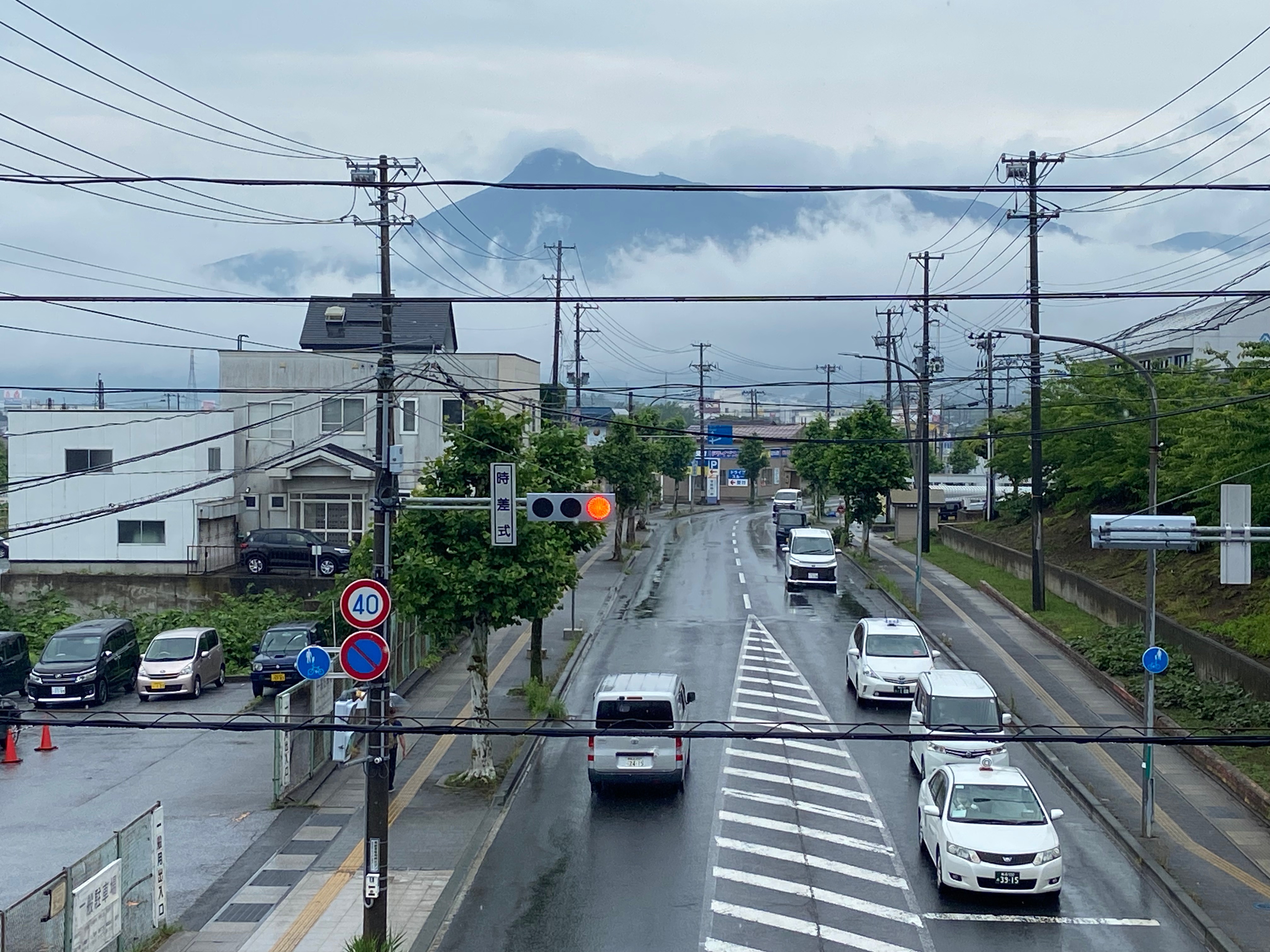
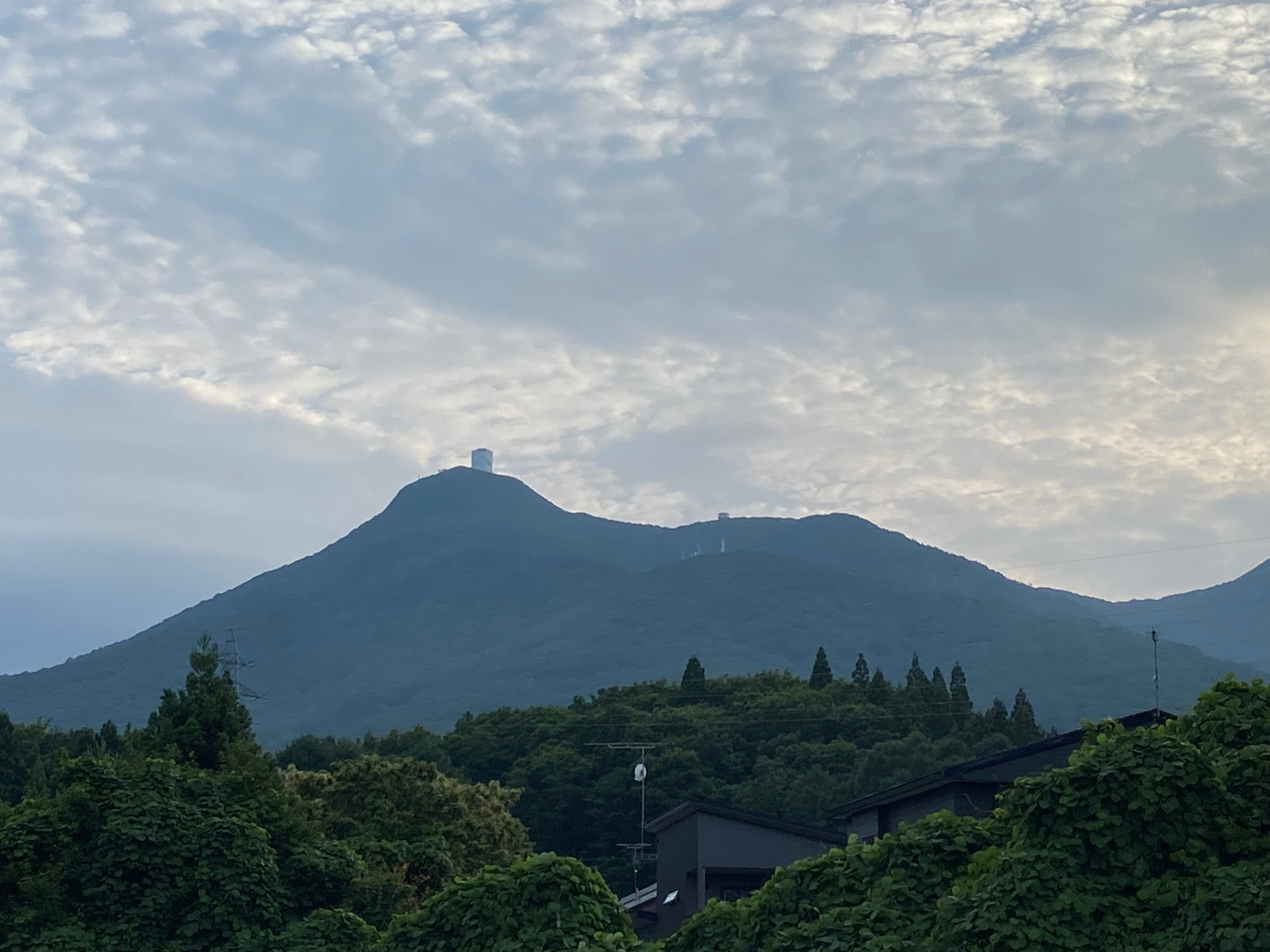
Sacred Mount Osorezan seen from the base, shrouded in cloud and myth, believed to be a path to the underworld.

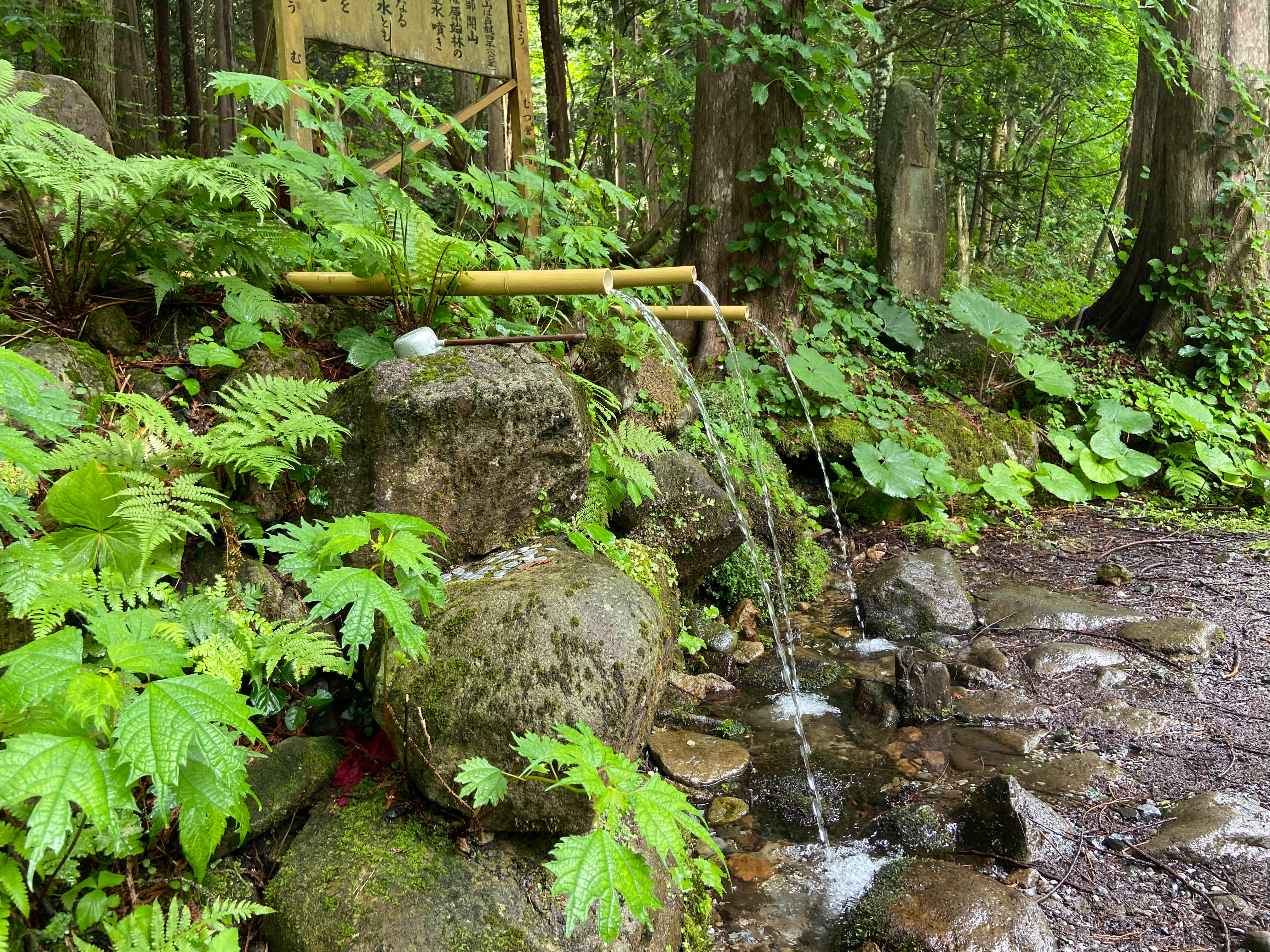
Before I reach the summit, I come across Osorezan Reisui, a fountain flowing with cold, clear water. It looks like a typical purification site, but legend has it that drinking the water from this spring will make you ten years younger.

Desperate to claw back lost time, I reach for the water, drink from its flow, and fill up my water bottle before continuing the climb.

Lush spring of Osorezan Reisui, legendary fountain said to make visitors ten years younger with a single sip.

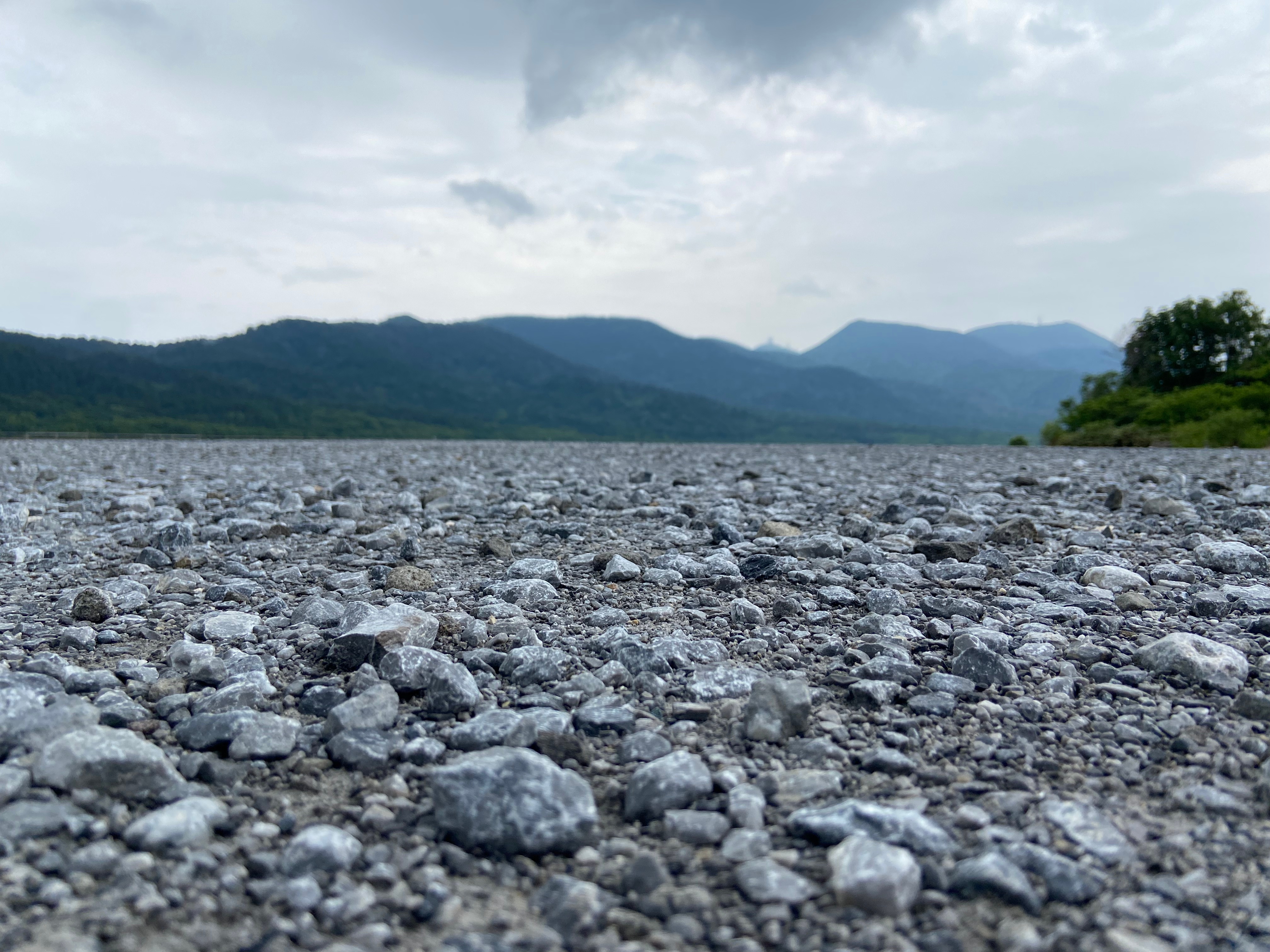
Further up, the trees and grass make way for shale and volcanic glass, and it is dry. There has been no rain of late to keep the dust down, so with every step the sulphurous ash creates clouds under my feet. Some gets into my mouth, and I choke. Luckily, I still have water from the fountain of youth, so I wash away the bitterness and the years before carrying on.

Higher up, the mountain opens its mouth wide. Nothing moves. There are no roots. There are no birds. Just the crunch of my footsteps echoes through the wasteland. Everything else is… still.

Desolate volcanic wasteland of Mount Osorezan in northern Japan, sacred Buddhist site known as the gateway to hell.

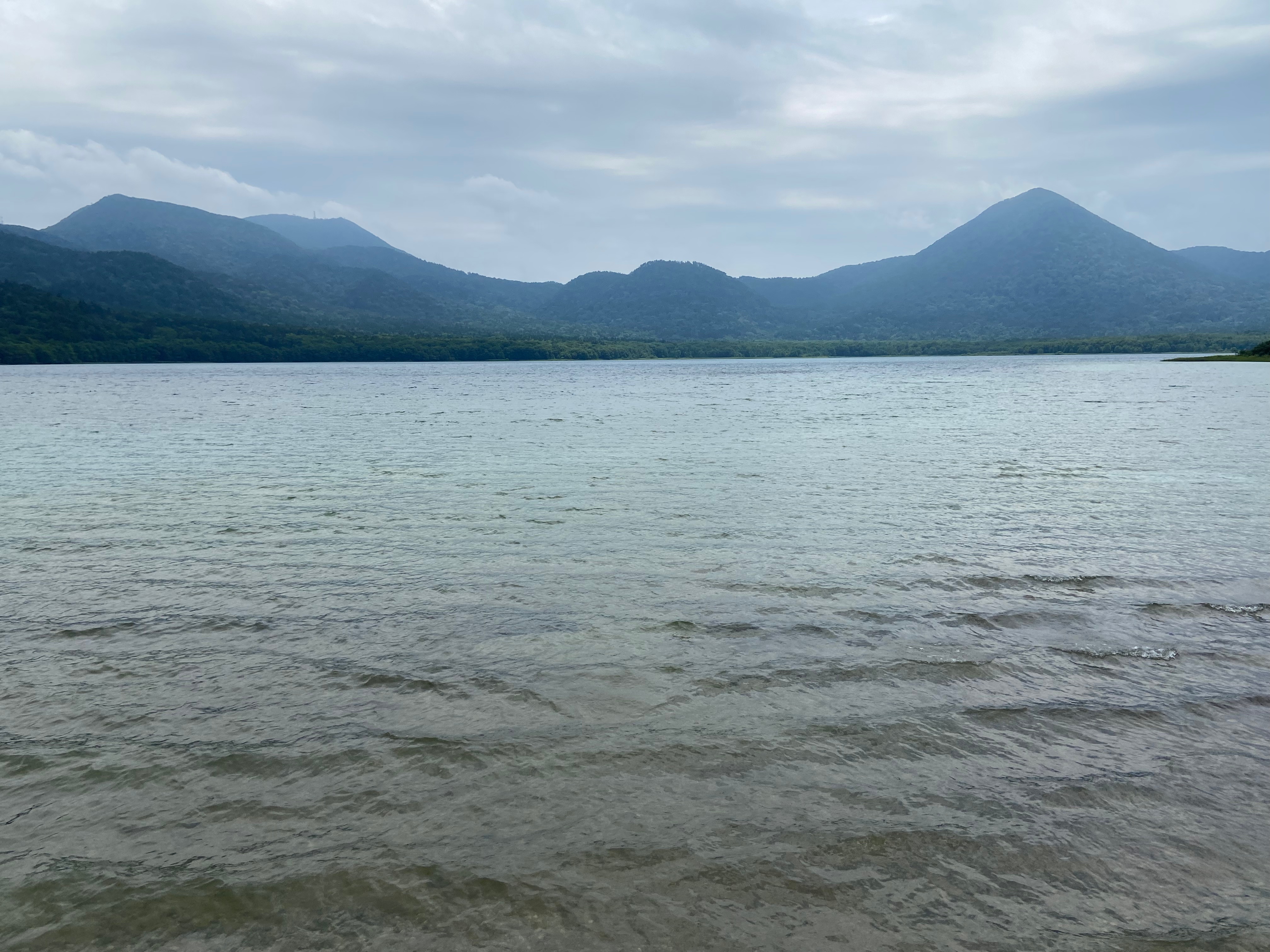
In the distance, Lake Usori lies in eerie repose, a lake of poison. The acidity is so high that nothing can live here. Even the wind seems unwilling to touch the surface, but I am.

Kneeling, I dip my hand into the water. A freezing chill shoots up my arm. For a moment, the water feels alive, tightening impossibly around my fingers. Not liquid, but something with intent. I wrench my hand away, breath unsteady, as if something almost followed me out.

Eerie, acidic waters of Lake Usori in Aomori Prefecture, Japan—still and lifeless, at the heart of Osorezan.

I remain kneeling a while longer, lost terribly in thought. I watch as the ripples in the lake distort my own reflection. I see not just my face, but the faces of every version of myself I’ve left behind. I watch them shifting, like a shimmer of sorts. I take a deep breath, stand up, and walk away, before something walks away with me.

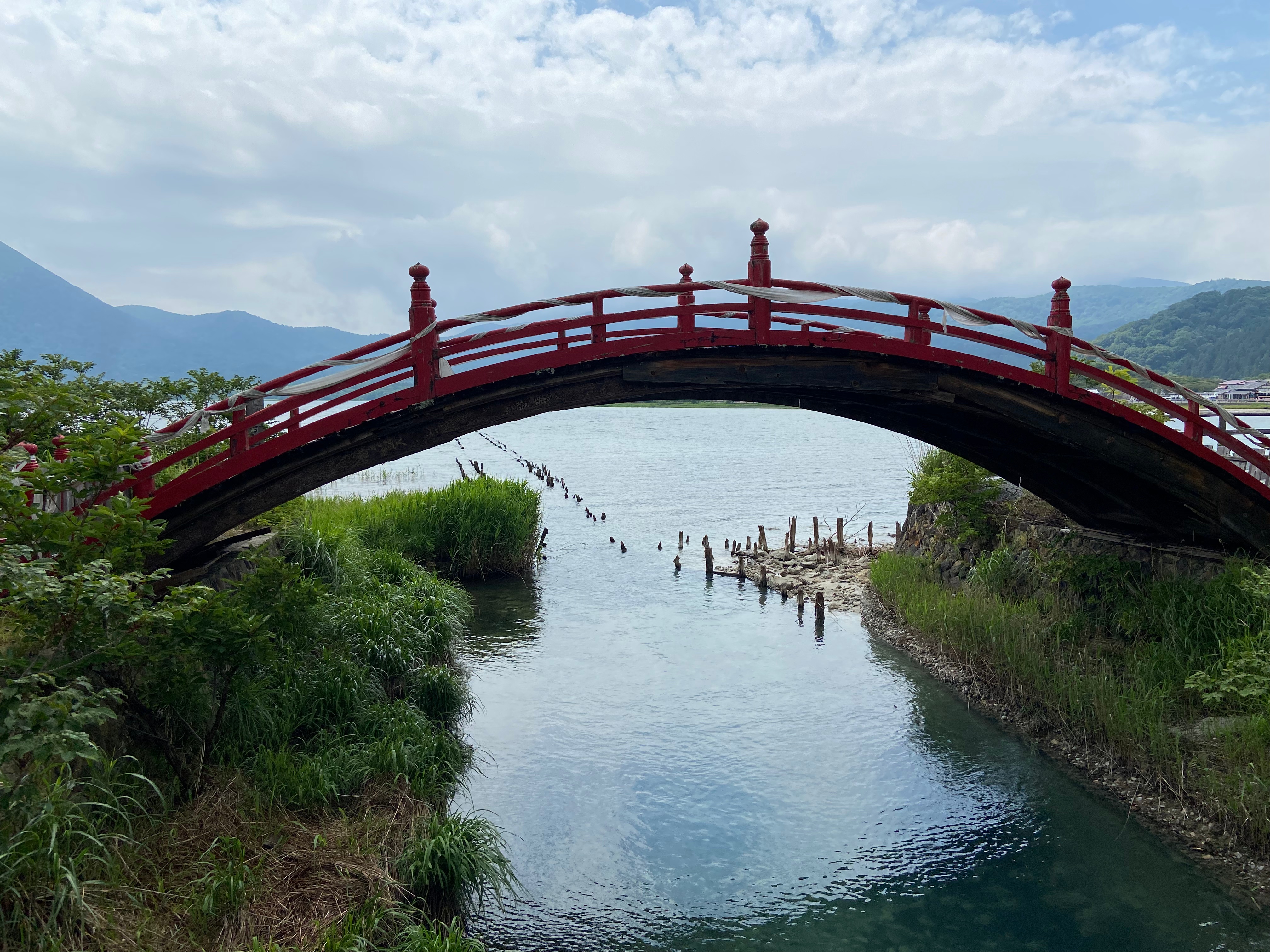
Draining from Lake Usori is the Sanzu River; its waters flowing silently, black and sluggish, like blood oozing from a wound that will never heal. It is at this river the dead must cross to move into the next world. The journey across this river reflects the life one has led: the good cross by bridge, the average wade through the shallows, and the bad must swim amongst the river’s monsters.

Red bridge over the Sanzu River at Osorezan, symbolising the soul’s crossing into the afterlife in Japanese Buddhist lore.

I watch the river for a time, wondering which path I would take. I approach the bridge, its red painted wood the only colour I’ve seen up on this mountain. I take a step toward it, but something inside me pulls back. Not fear or superstition; just a quiet, sinking knowledge that maybe I was here before, and I don’t think I should be here again.

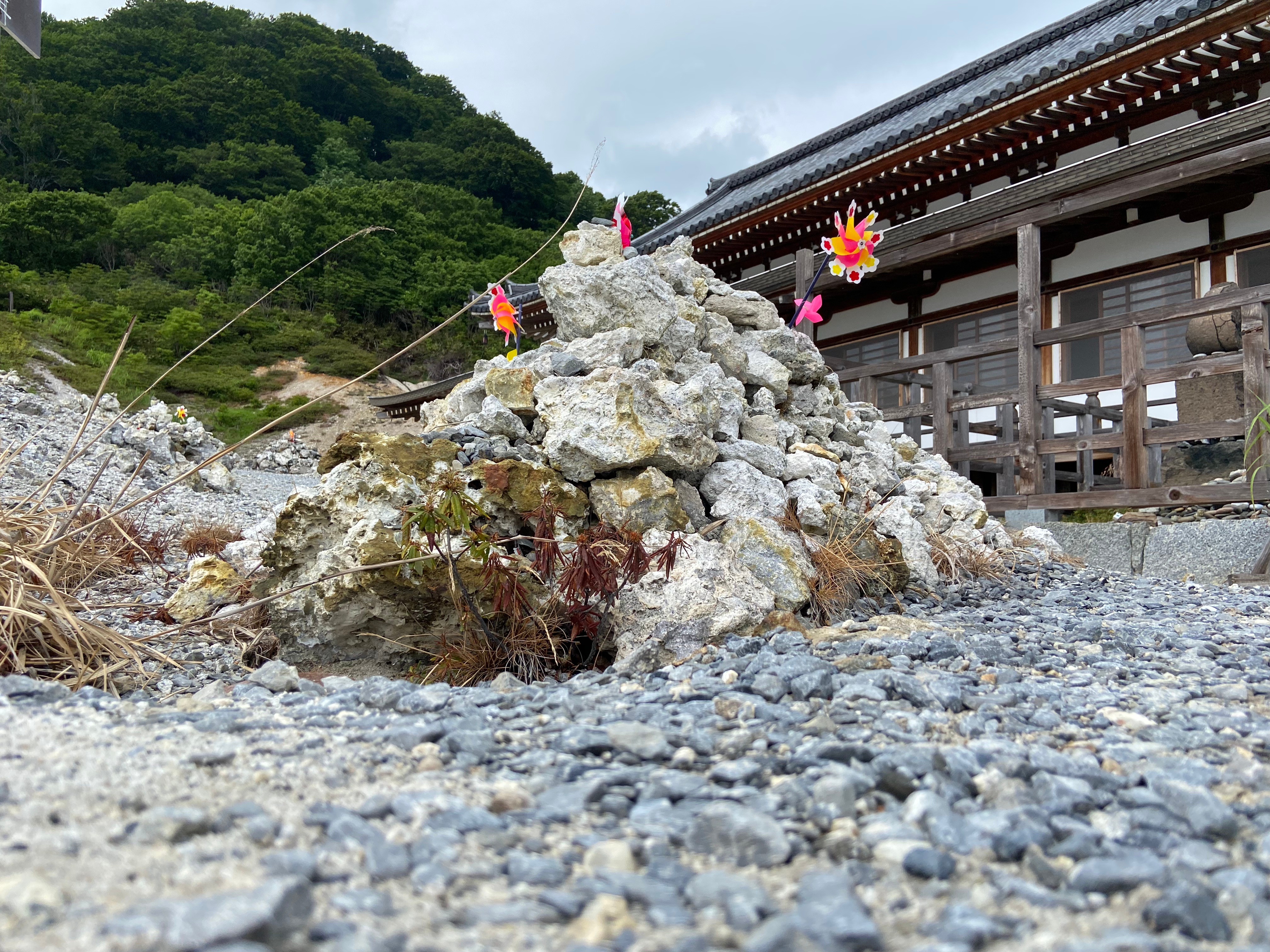
Along the riverbed, piles of pebbles litter the landscape, said to have been stacked by the spirits of unborn children or those who died young. These children build piles of rocks as an offering to Buddha, only to have demons knock them down, condemning the children to rebuild over and over, for eternity; forever trapped in the netherworld, unable to transcend.

Gravel mound with windmills at Osorezan, symbolizing unborn children stacking stones in the Buddhist afterlife.

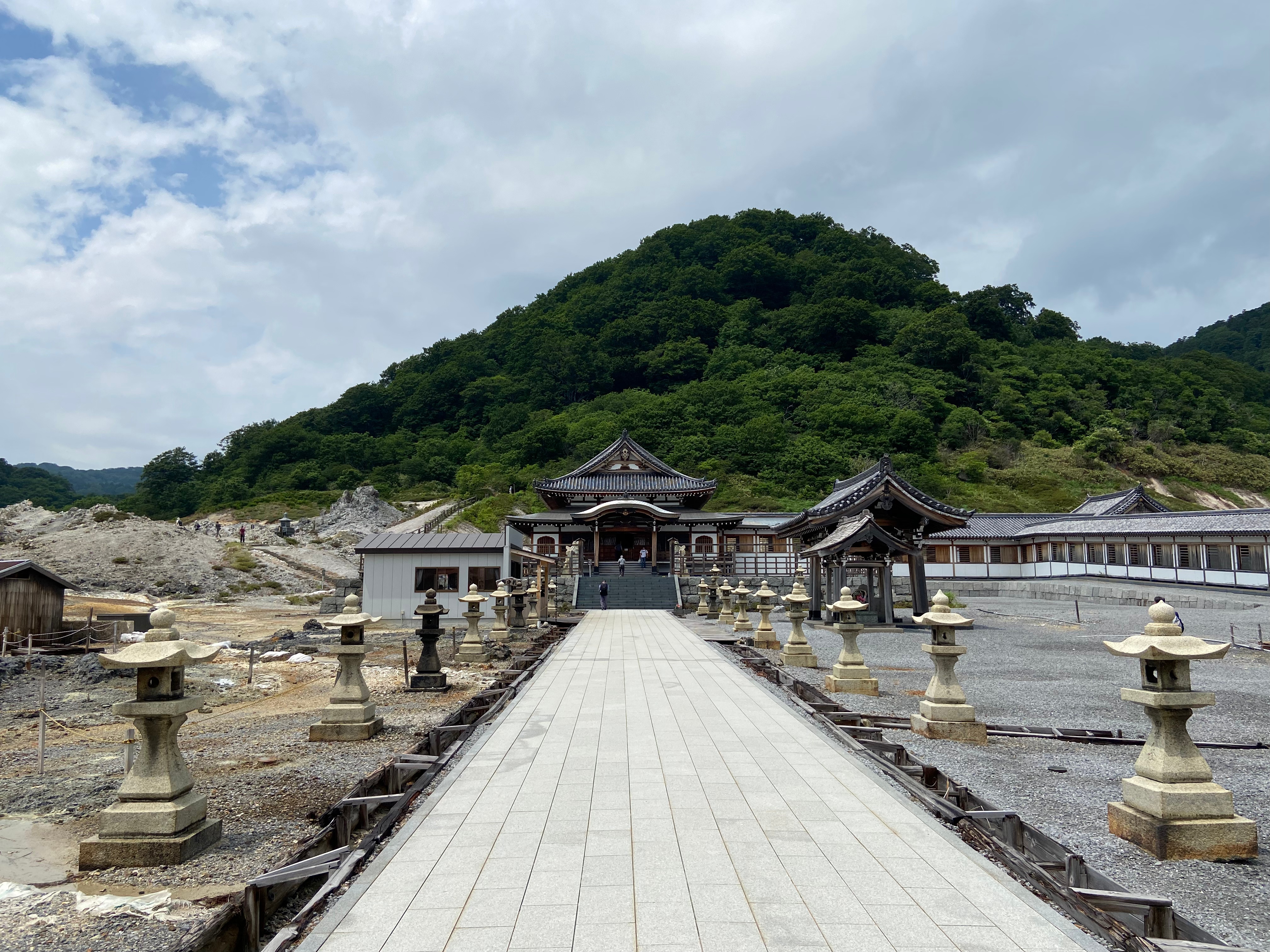
Not far from the river stands Bodaiji Temple, where monks pray for the lost souls who wander Osorezan. After all the stories of sorrow, the temple stands as the only promise of mercy.

Inside, the air hums with low chants. The scent of incense curls through the dim light, thick as fog, as if the prayers themselves are rising. The monks recite sutras; their voices steady. For all the suffering that lingers in the air, this place feels… still.

Entrance to Bodaiji Temple at Osorezan, where monks pray for lost souls in Japan’s most haunted Buddhist sanctuary.

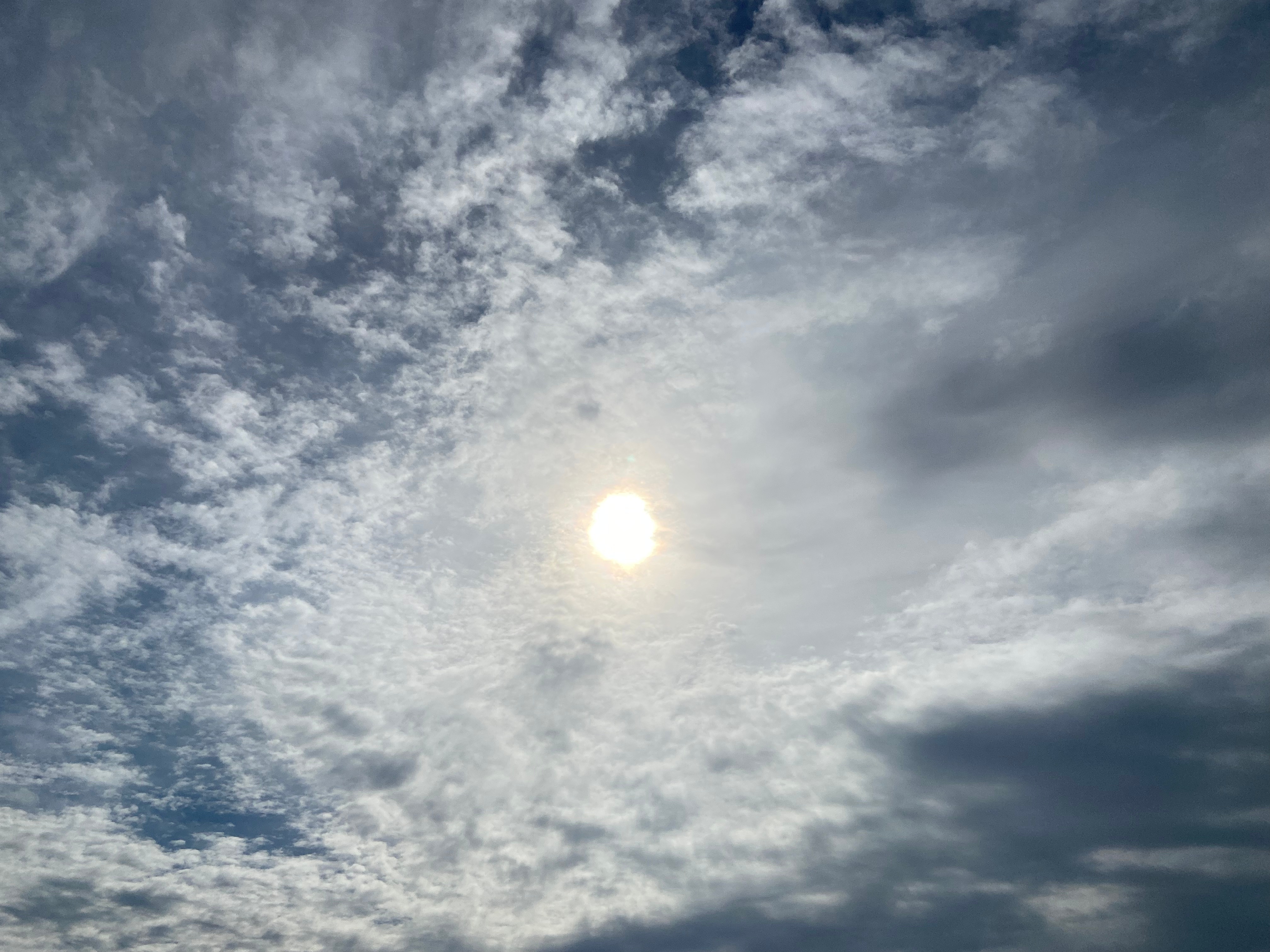
As the sky darkens, bruised and swollen with the weight of a coming storm, I take one last look at Osorezan. The myths here aren’t just stories. They are things we carry. Things we live. The demons at the river are the silent battles fought in hospital beds. The pebbles are the burdens we carry and rebuild, again and again. And the river, the slow, black current, is the harrowing divide between despair and hope; a crossing that everyone must face.

I turn away and begin my descent.

Dark storm clouds gather over Mount Osorezan—an ominous sky reflecting Japan’s Buddhist land of the dead.

Back at my hotel, an old building stitched together with crumbling wallpaper and tired walls, I try to relax, but the lights buzz like a wasp in a lampshade, and the floorboards creak even when I’m not moving, as if something beneath them is shifting.

I turn on the television. The screen blinks to life; the world rushes back in, bright, absurd, relentless. A puppet show flickers on, but the puppets are just human hands wearing tiny masks. They bow, expressionless. The audience laughs. I change the channel. Static hums for a second too long. An old woman in a blindfold stumbles through a collapsing obstacle course. Laughter again, louder this time. The world keeps moving. Always moving. And I am here… still.

I change one last time. A man in a bear costume is balancing ramen bowls on his head whilst a studio audience screams. I turn the TV off. Hell can wait.

Outside my window, the mountain holds its breath. Somewhere, beneath the floorboards, the dead keep stacking stones.

Where I End And You Begin

I decide to do some sightseeing for the final time in a while. After taking three different trains, I arrive at Mitsumineguchi Station, the last stop. It’s almost three hours from Tokyo, and at times I wonder why I have made this journey into the middle of nowhere. Stepping off the empty train, I find the station is completely unmanned, so I place my ticket into a wooden box. I notice that the ticket machine doesn’t appear to be working either, so there is no way for me to purchase a ticket for the way back. I wonder if that’s to stop anyone else from leaving.

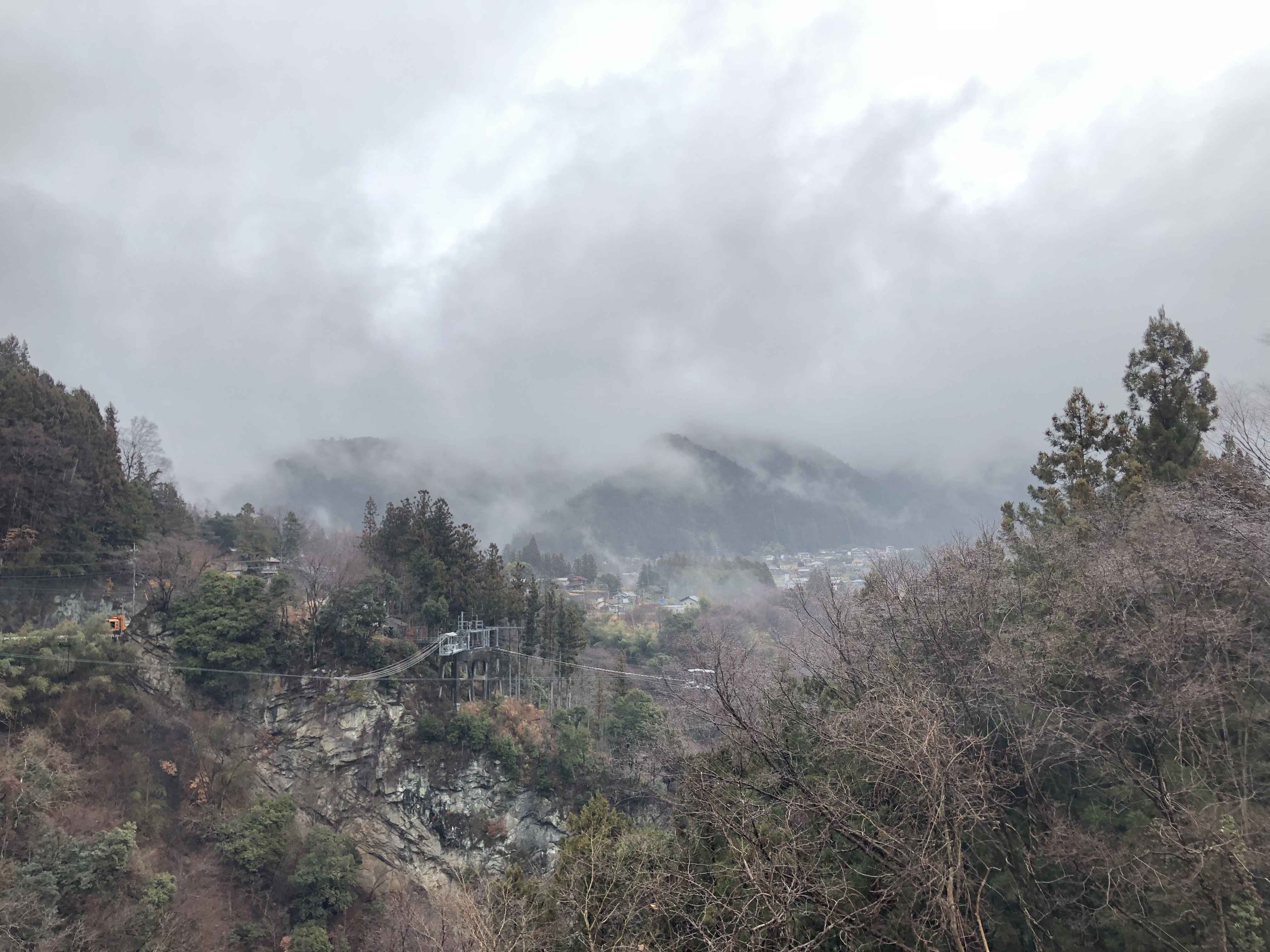
Stepping out into the cold, the fog casts a haunting shadow over the hills and village below, a thick, dense mist that seems to swallow everything in its path. The kind of ghostly white fog you would expect to find in a horror movie; a sign of things to come. As I wander across a bridge, I stop for a moment to take in the breathtaking yet unsettling scenery.

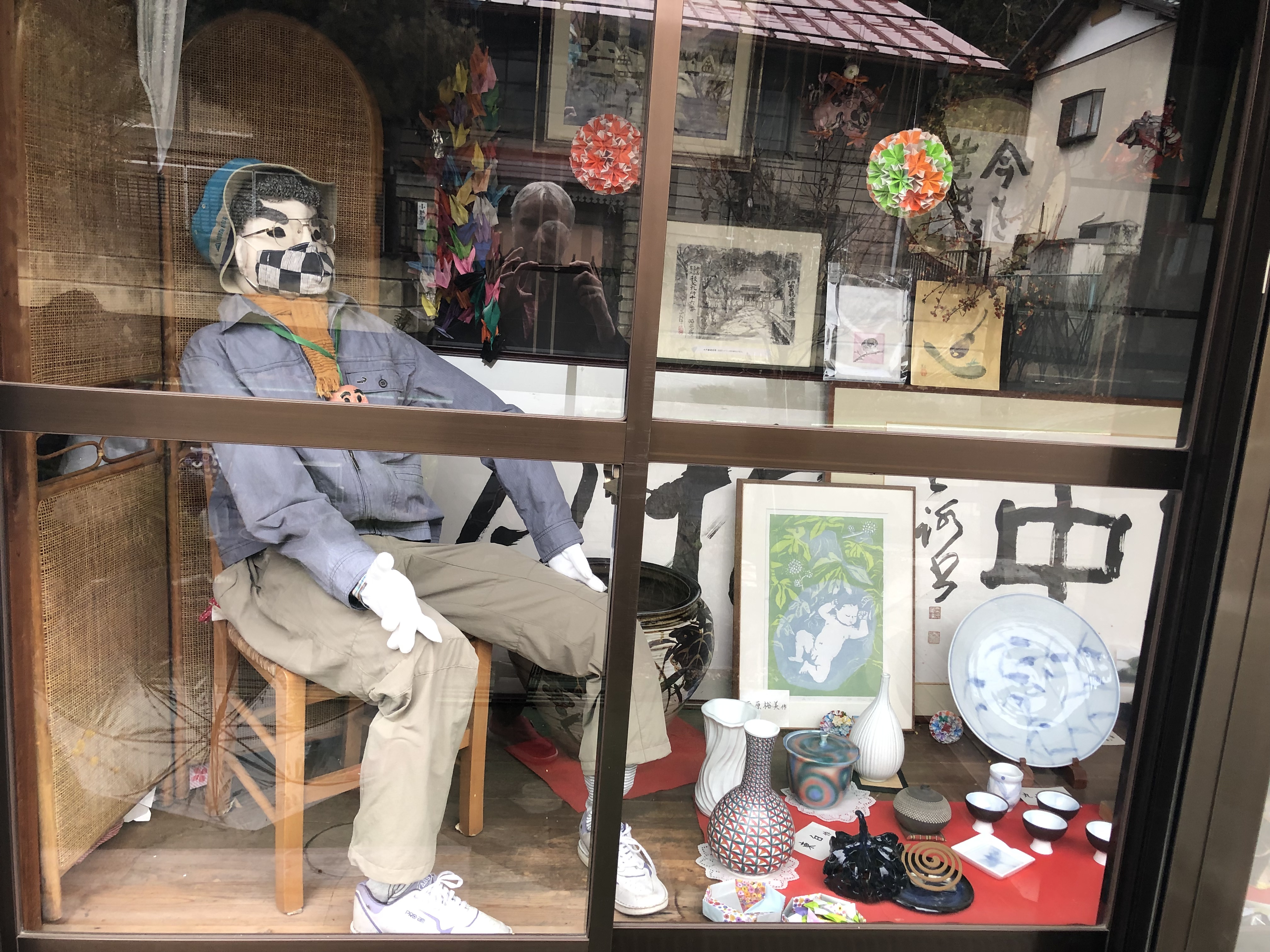
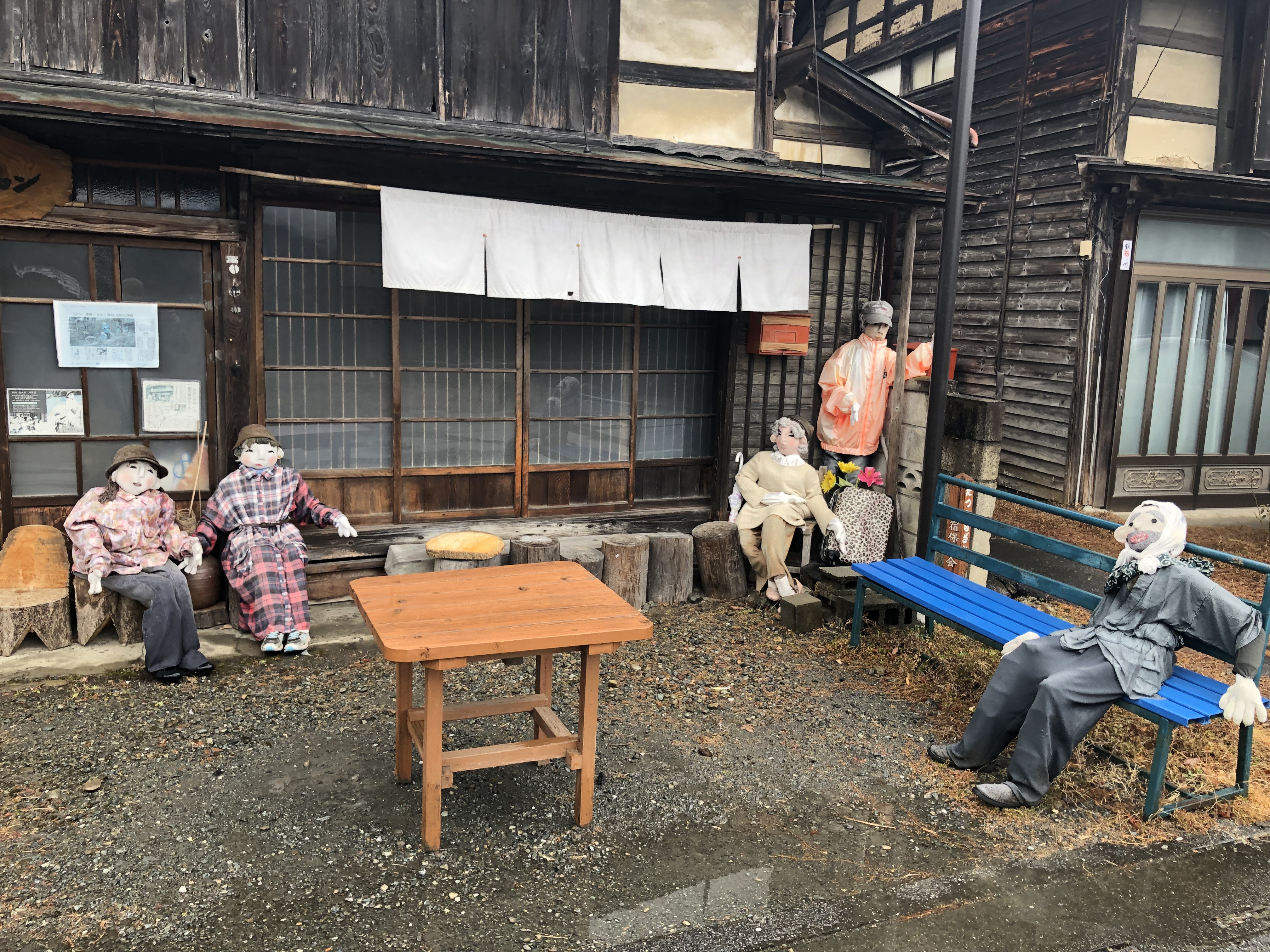
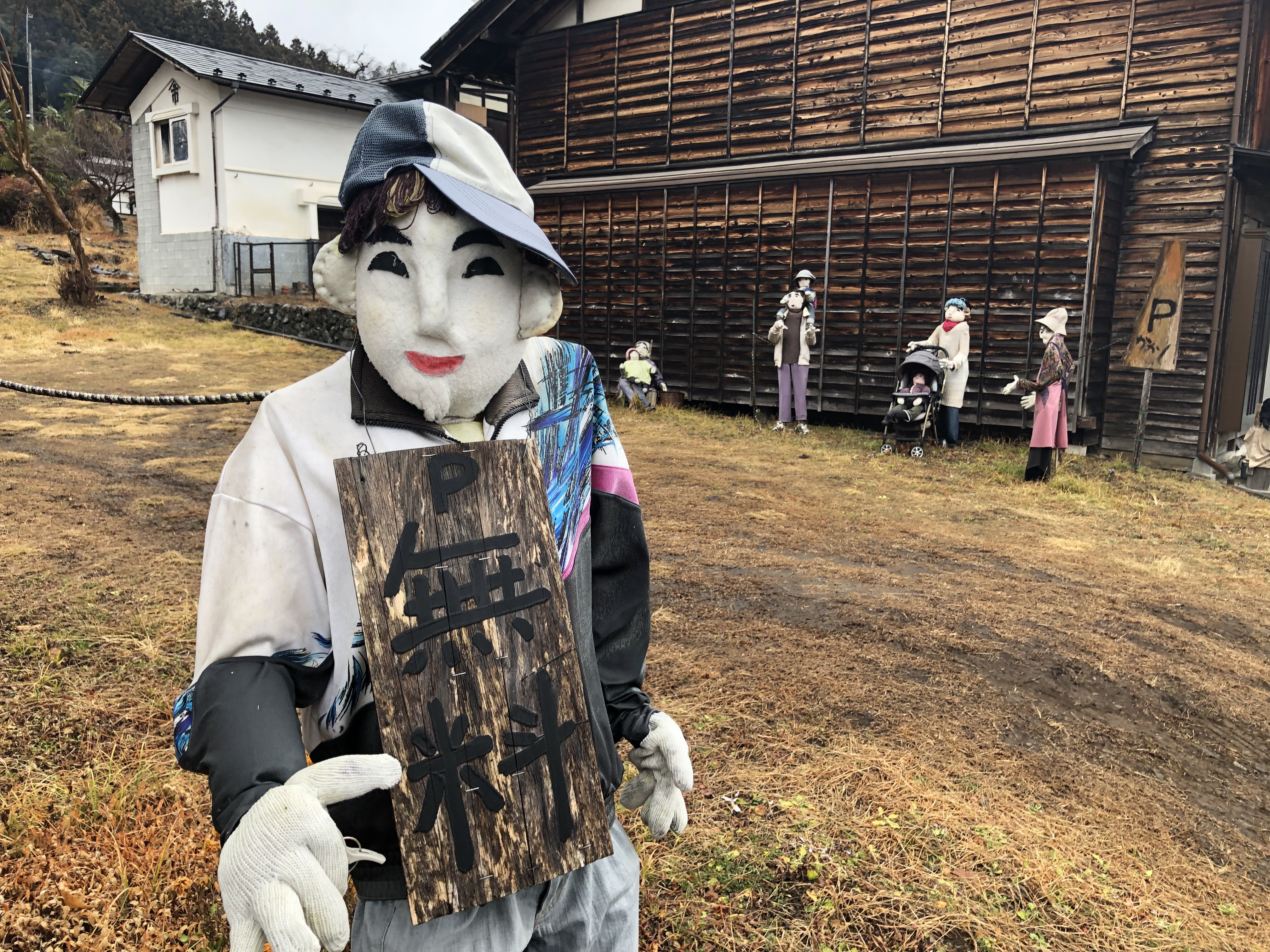
As I continue my stroll from the bridge, I am enveloped by an eerie silence. The only thing that breaks the stillness is the soft whisper of the wind blowing through the fields. A village stretches out before me, a ghost town. Scarecrows line the streets, their lifeless eyes following my every move. They stand outside almost every house, yet the village is deserted, there’s not a soul in sight.

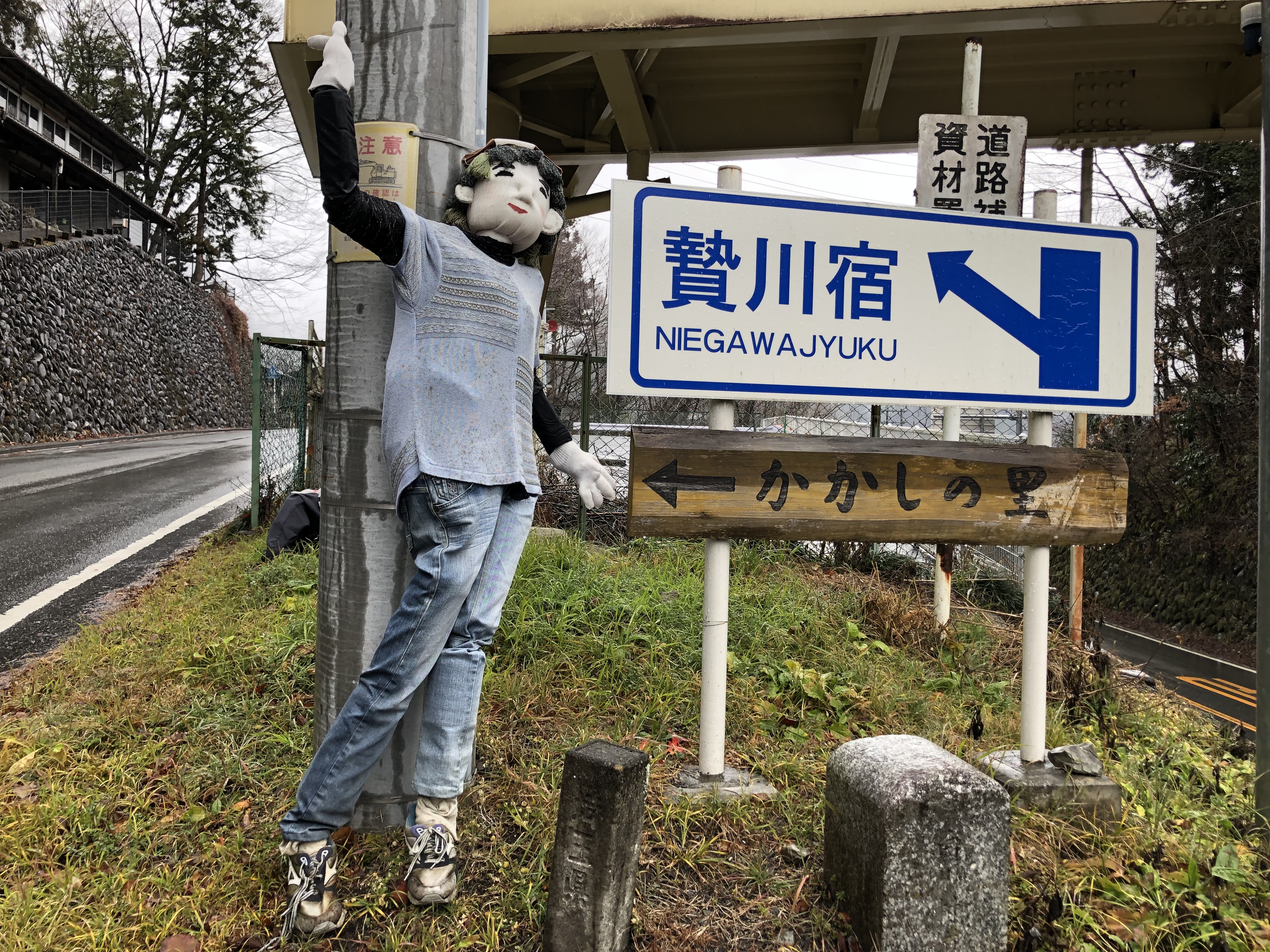
I feel a shiver run down my spine as I realise that I haven’t seen a single person since five stops ago on the train. I can’t shake off the feeling that I am being watched, that these scarecrows are somehow alive. I wonder what kind of village I have stumbled upon. As I wander deeper into the village, I eventually find a sign with a scarecrow standing proudly beside it, ‘Niegawajuku.’

Scarecrow villages are rural communities in Japan that create mannequins in the likeness of their residents as a form of folk art. These scarecrows are often dressed in traditional clothing and placed throughout the village. Specifically, the population of Niegawajuku Scarecrow Village has been decreasing over the years, as many residents have moved to Tokyo and other urban areas in search of better job opportunities and a higher standard of living.

To address this problem, a group of local farmers came up with the idea of creating scarecrows in the likeness of the villagers who had left, in order to remember and honour them, and to attract tourists like me to the village. Niegawajuku Scarecrow Village, once a lively and bustling community, now stands like a twisted fairy tale, where the villagers have been replaced by their eerie replicas. The scarecrows, with their lifeless eyes and frozen grins, seem like twisted versions of the villagers they represent.

Once teeming with the laughter of children and the chatter of adults, the village now stands abandoned. The only sounds are the soft rustling of leaves and the creaking of the scarecrows. The place feels like a forgotten graveyard, lost to the passage of time. The village is a mere relic of a bygone era, and the scarecrows, with their blank, lifeless eyes, serve only to emphasise the emptiness of this place.

I inspect the scarecrows, their faces weathered and their garments tattered. At times, they are grouped together, yet they remain so alone, like guardians of a lost world, preserving the memories of the village and its people, frozen in time. As I continue to wander through the streets of Niegawajuku, I feel as though I am traversing a dreamlike realm. The village is a labyrinth of memories, where each scarecrow holds a piece of the past, and each step I take draws me deeper into the mystery.

The only thing left here is the echo of bittersweet memories, of what once was and what will never be again. Time passes, and the sun begins to sink behind the skyline, painting the sky in hues of orange, pink, and purple, casting an eerie glow over the village. In the dying light, the scarecrows seem to come alive, their shadows stretching out, reaching toward me.

I leave the village with a sense of longing and loss, the memories of Niegawajuku etched in my mind like a faded photograph.

As I board the train, I ponder whether my transient form will one day be forever immortalised as a scarecrow, or fade into the annals of time like the villagers before me.

Murder on the Tsukuba Express

Today, the weather is very warm, so I decide to take a train to Ibaraki Prefecture, to a little place called Tsukuba. At Tsukuba Station, I take a ¥720 bus that crawls for thirty minutes toward Tsukuba Mountain. Eventually, I get off the bus. The only tourists here are old Japanese women who have made the journey to this mountain to look at flowers.

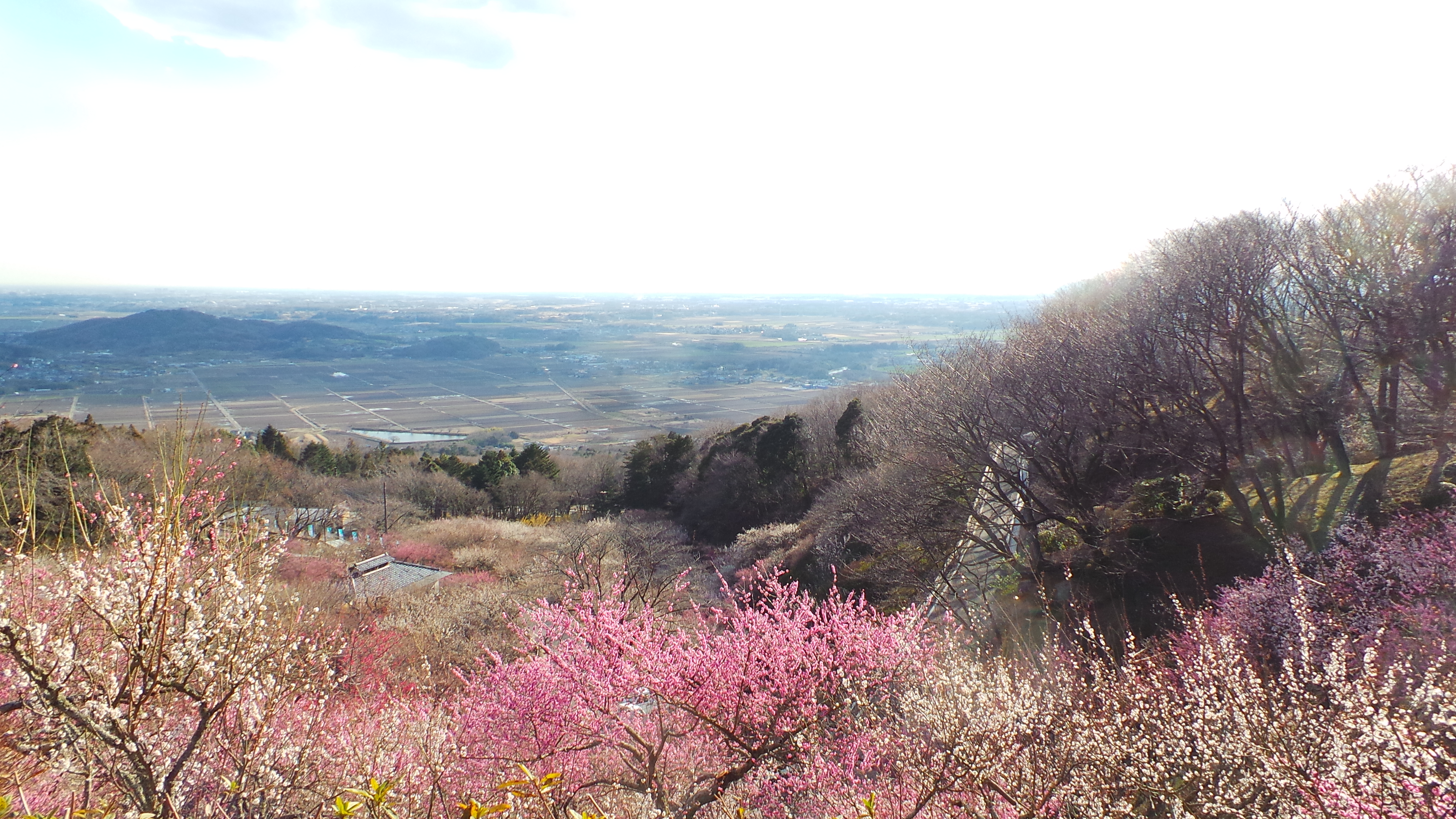
The first thing that strikes me as I stroll off the bus is the view. The day is relatively clear, and the distance is a sea of fields and countryside that seemingly spread forever before eventually blending into the whiteness of bright, sunlit clouds. One of the reasons I am here today, like the old women, is to look at flowers—flowers of beautiful pink and white. The other reason is that this steep mountain is steeped in history.

tsukuba5

In March 1864, an army was raised on this very mountain, led by a samurai named Fujita Koshiro. The army, known as Tsukubazei, opposed plans to close Yokohama Port and exclude foreign ships from entering Japan. Even the law to stop foreigners from entering Japan was considered barbaric; it was called the ‘Order to Expel Barbarians’.

The twenty-three-year-old leader led his army of samurai and farmers in what became a war against Emperor Komei. The battle was lost, and the entire army was beheaded. This event contributed to the ending of the Edo Period and the start of the Meiji Restoration.

tsukuba1

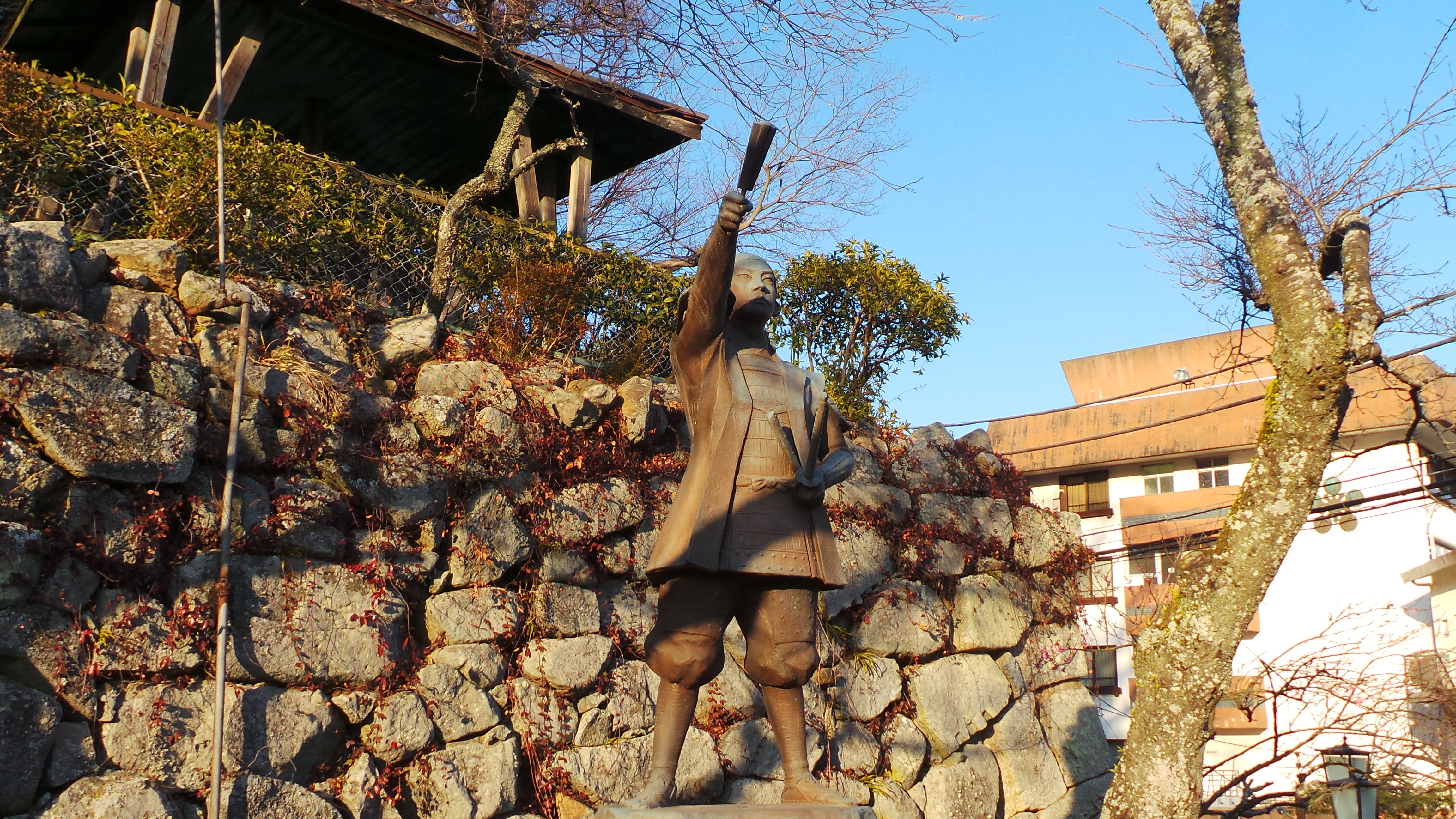
Still considered a terrorist, a statue of Fujita Koshiro stands proudly at the entrance to Tsukuba Shrine, a shrine said to house the god and goddess that protect from evil and illness. The shrine has been a place of worship for over 3000 years. I continue my walk through the mountain paths, passing a random telephone box with a huge statue of a frog on its roof, Omido Temple with its massive bell, the cable car service that isn’t running today (as usual), and a statue seemingly standing guard in a small car park.

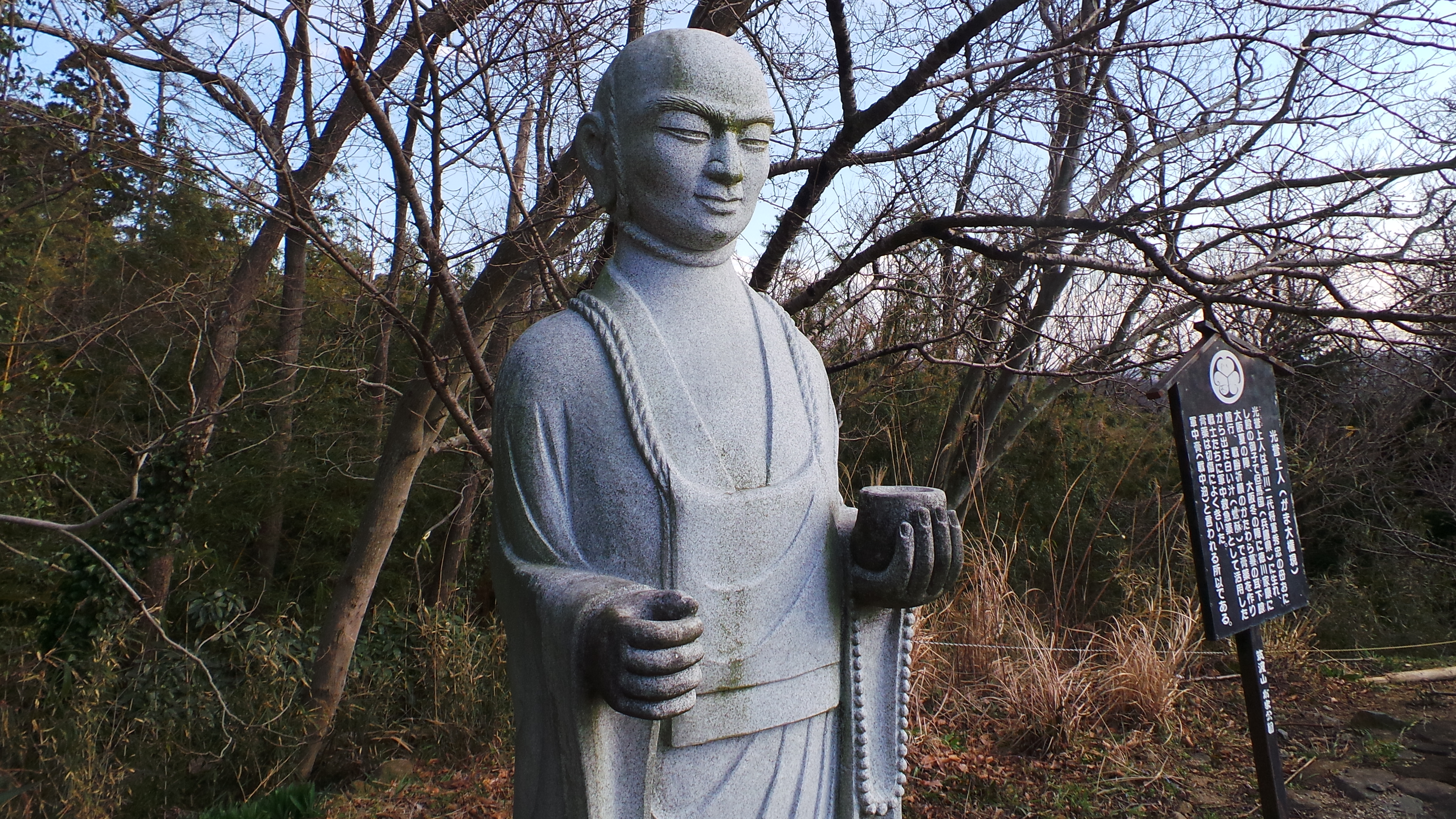
The statue is of a man carrying a cup of medicine. Using my amateur translation skills, the medicine is made from gamagairu, a giant frog said to live in this area; hence the telephone box. The medicine is taken from the ear of the frog and is said to have magical healing properties. That’s right, magical.

tsukuba9

People in England or America will be familiar with the expression ‘snake oil,’ a term used to describe health products that don’t actually work; a swindle of sorts. In Japan, a similar expression exists, and that is frog oil. Salesmen use a special sword that contains fake blood in its tip, pretend to cut their arm revealing a huge gash, then proceed to rub the frog oil on their skin. The wound disappears in an instant, and fools buy.

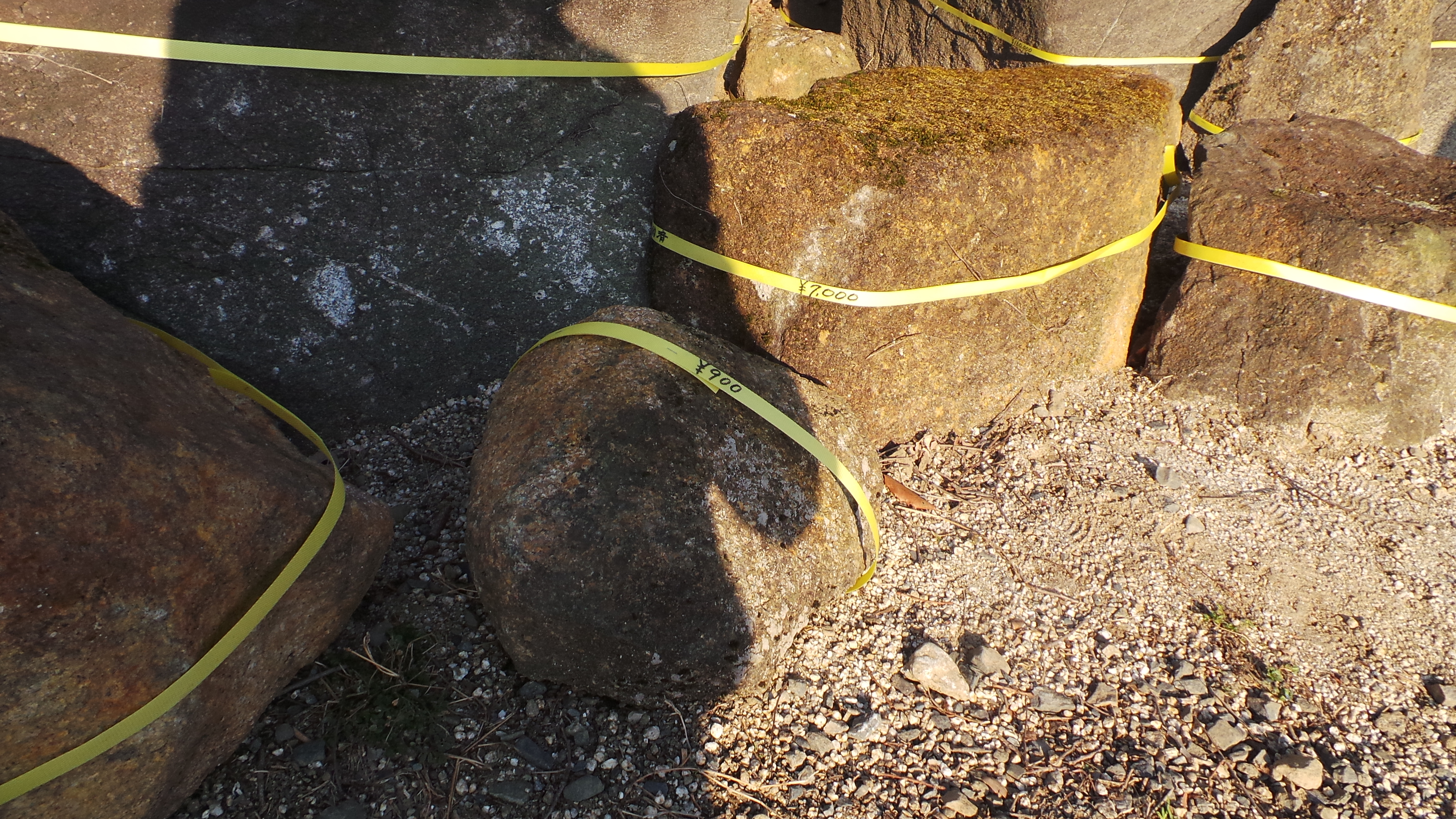
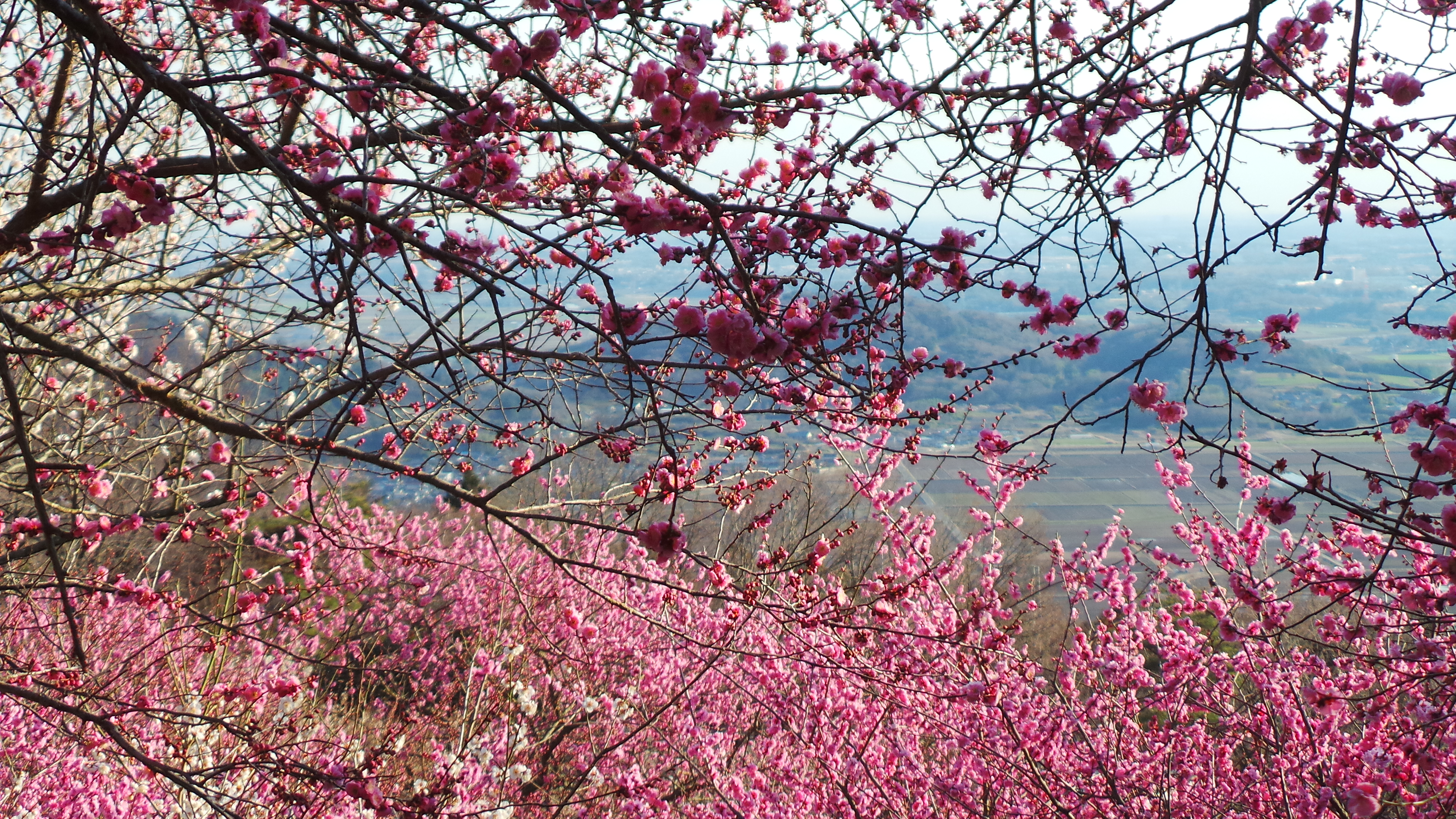
I continue my stroll and head in the direction of Mount Tsukuba Plum Blossom Gardens. These gardens are free to enter and feature over 1000 trees. Thirty kinds of flowers blossom in this area, and mixed in with the flowers are the famous rocks of Tsukuba. Rocks, I might add, that are for sale.

tsukuba2

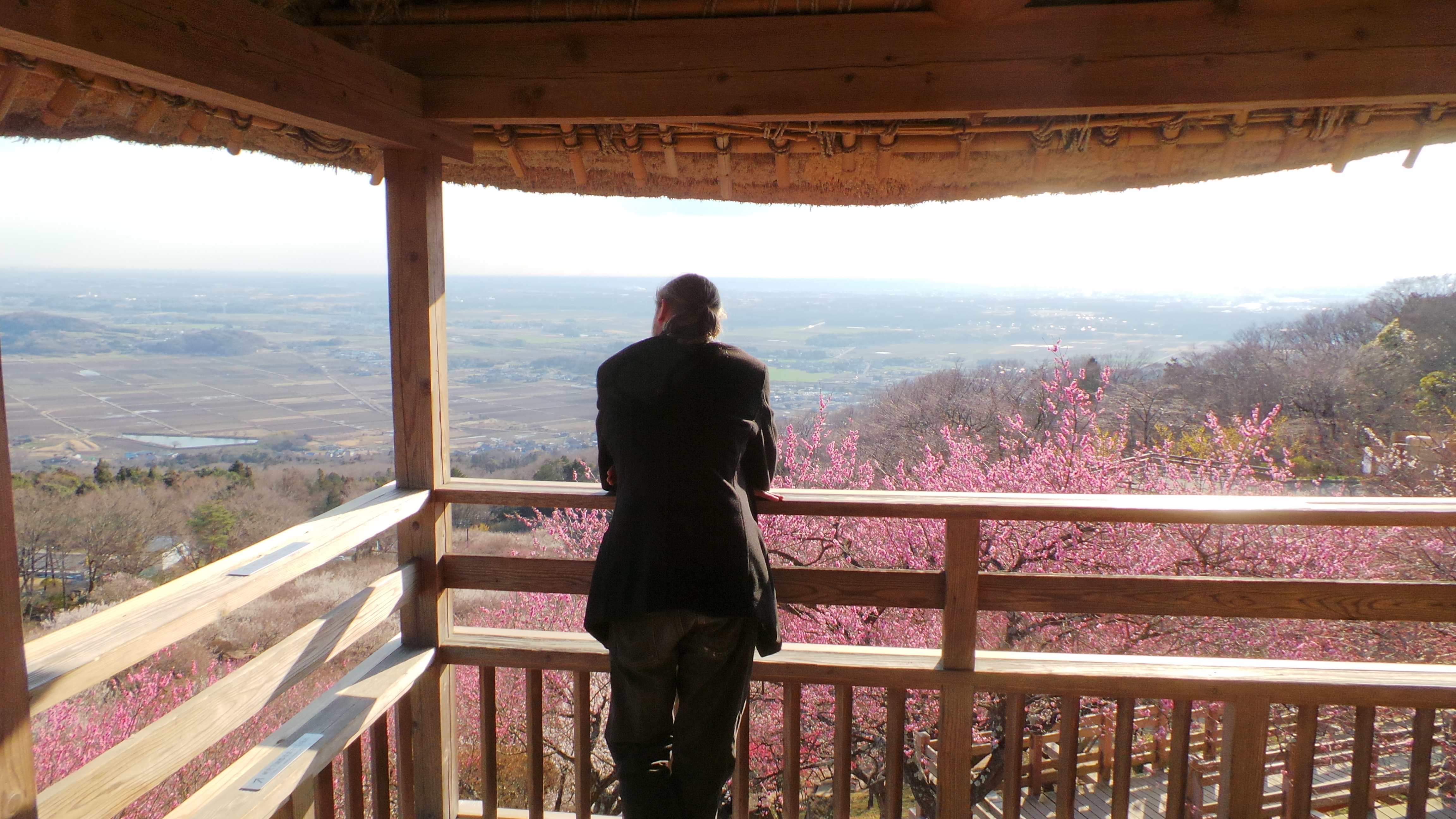
I lug my rock up the mountain path and realise that I should have probably bought it on the way down. The flowers in the mountain are beautiful to see. Red plum is in full bloom this time of year, and white plum is apparently in half bloom. I walk through sweet plum groves and fresh-smelling flowers before arriving at Lookout Point Arumaya, a small mountain hut that looks as though it was stolen from a children’s fairy tale.

I stand, gazing in the direction of Mount Fuji, 155.6 km away and visible on a clear day. Today is such a day, but for whatever reason, the mountain remains invisible, as always; forever shrouded by the white layer of clouds that blend into the distant horizon.

tsukuba4

I stand in quiet contemplation in the small hut at the top of the mountain, admiring the beauty of the flowers and the endless nature. Staring out into the distance, I begin to wonder where it all went wrong. Before the thought connects, a Japanese man taps me on the shoulder, disturbing my moment.
“We made it from bamboo and straw, squashed real hard.”
“I’m sorry?” I say, confused.
“We made it from bamboo and straw, squashed real hard,” he repeats.
“I heard you, but what are you talking about?
“The walls, here,” he points at the walls of the hut, “We made it from bamboo and straw.”
“A bit of a fire hazard,” I tell him, but he doesn’t understand. The man remains fated to repeat his set phrase, the only phrase he knows in English. Time to go, I decide.

As I walk back down the mountain, I recall a story that a friend once told me.

tsukuba3

Many years ago in Japan, people were very poor. Many families lived in one house, grandparents, parents, and children together. When times became tough, and the families couldn’t afford to feed the young children, a sacrifice was made. Children were the priority, so what happened was that the parents would carry their grandparents to Tsukuba Mountain, abandon them, and go home to their children. The grandparents would starve to death on the mountain, so that the family could continue to feed the children. A sad tale of Tsukuba Mountain, and the many poor old people that perished in its lonely grip.

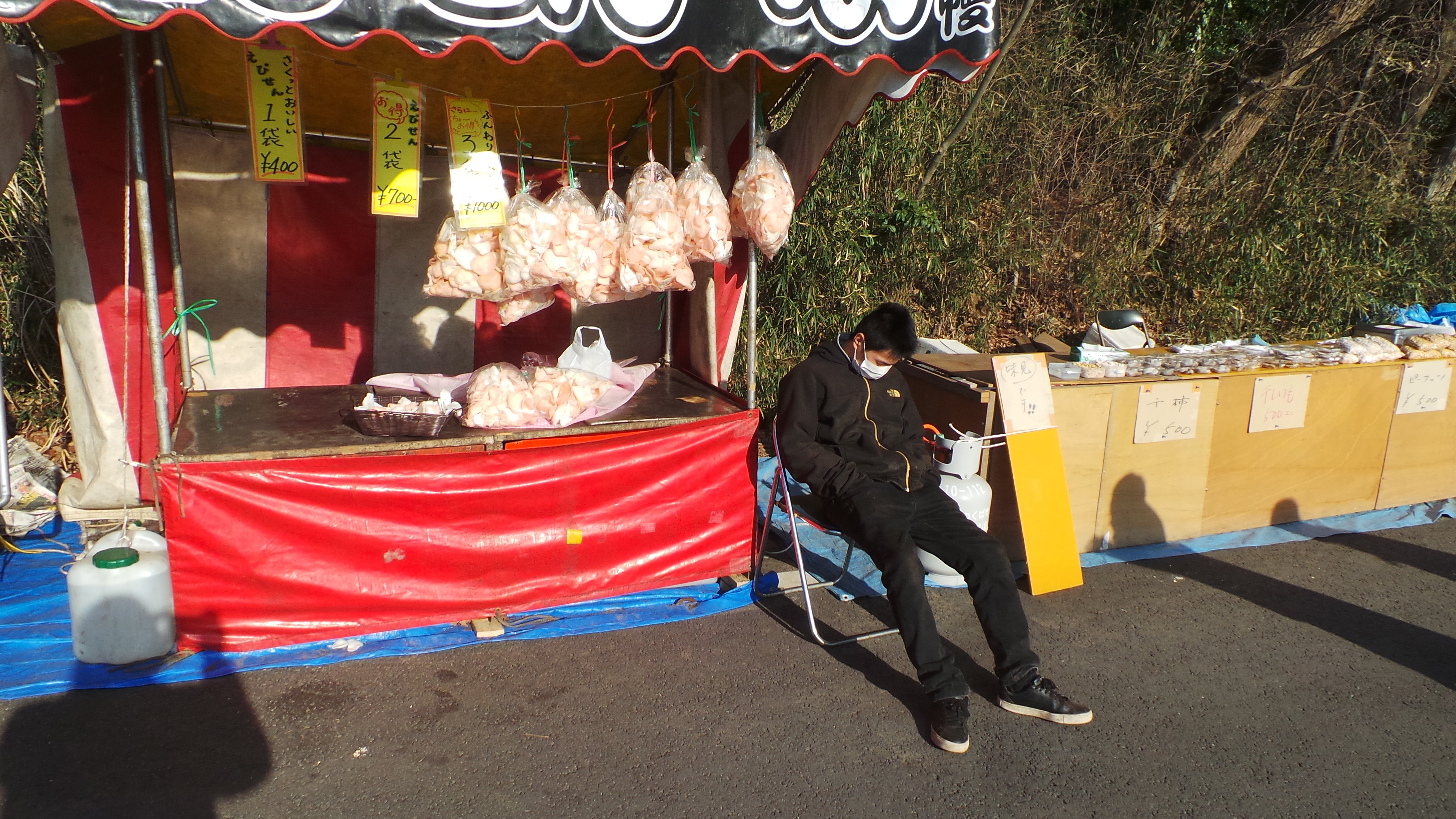
At the bottom of the mountain, most stores are closed. The men are sleeping from a hard day of selling snacks and frog oil; the only shop still selling anything is the Tsukuba Rock Shop.

tsukuba6

There are so many more sights to see on this 877-metre-tall mountain. The place is littered with things to do. Unfortunately, I wasted far too much of my limited time in the mountain hut and end up running back, rock in hand, toward the bus stop. I make the last bus with seconds to spare and head back toward Tsukuba Station.

On the Tsukuba Express train home, I read ‘The Hanging Stranger’ by Philip K. Dick and realise that this information has no relevance here, and perhaps never will.

Welcome to the Lunar Industries

Another intrusive start to the day in Japan. The ground rattles like teeth on an icy morning, the skyscrapers singing a chorus of concrete scraping together, pulled apart in directions against their will. It’s another earthquake, the strongest one I’ve felt so far. Suddenly, everything stops. Just as I begin to drift away, hoping to return to whatever fleeting memory lingers in my dream-filled head, the shaking resumes. This time, it lasts only a few seconds, but it’s enough to shatter whatever it was in my imagination that I desperately sought to remember.

I head outside to grab a can of Boss Coffee before taking a seat on the steps leading up to my front door. A homeless man, who resides in a cardboard castle outside the entrance to my apartment, stirs in his sleep. He coughs and groans before looking around and noticing me, perhaps awakened by the early morning shaking of the earth. The man speaks broken English and asks me the usual stagnant questions. It turns out he was once in a famous rock band, a drummer. Aged sixty-five but looking perhaps twice that, I can’t help but feel a little sorry for him. Without knowing his circumstances, I decide it would be rude to judge him any further. I want to ask him why he keeps sleeping where I would normally park my bicycle, but I think my English words might be lost on him. He tells me something is happening on Sunday in the arcade that runs close to my house. With its worn-out shops and shutters, it might well be the first activity this area has seen for months.

tissueboxbed[1]

After becoming fully awake, I can’t help but notice that the moon is still up. Although crescent, the moon’s light casts a shadow, revealing the clear roundness of its form, something I have never noticed before. I begin to wonder if I am still dreaming.

I cycle into Asakusa to find the streets littered with Australian tourists. It seems they have chosen to leave behind the glorious summer weather of their home country for the winter of Japan. Today is Australia Day, a celebration of the first British ships landing on Australian shores. I weave my bicycle between drunk people shouting and fighting on the street. I thought it was the English who didn’t know how to behave. Drunk before lunchtime, not even Mr. Sixty-Five-year-old homeless man can achieve that.

I head across the city for some exploring. Despite spending a lot of time in Asakusa, I’m continually surprised to discover new things every day. Today, I visit what was once a beautiful pond, now home to ghostly apparitions.

oldhagpond[1]

Ubagaike Pond is now enveloped in what looks like a construction site. The pond is completely dried up; only the old stone outline that makes up its shape remains. Many years ago, an old woman lived in a house close to the pond. She lived with her beautiful young daughter. The mother would send her daughter out into the streets to lure in gentlemen, hoping that they would spend the night in her daughter’s embrace. The unsuspecting gentlemen would join the daughter, and after lovemaking, when the pair were both sound asleep, the old woman would creep into the room. With a huge piece of stone, the mother would bash the man’s skull in before taking all of his possessions. This weapon was known then as a ‘stone pillow.’ One day, the old woman threw herself into the pond, an act that was out of character and has no bearing on the rest of the story. These days, at night, you can hear the quiet sobs of her daughter, or so the legend goes.

Back in the slums of Tokyo, I sit in my house, editing some writing that I have been working on, my mind rinsed clear by the haunting melody of Clint Mansell’s ‘Moon’ soundtrack. The drifting peace only lasts momentarily, though. At 5 p.m., the familiar sound of music penetrates my window. It seems that, despite the winter and occasional snowflake, ice cream is sold all year round in Japan.

aisukuriimu[1]

“Aisukuriimu, Aisukuriimu, Aisukuriimayoou.” Typically, the song occupies the space in my head usually reserved for contemplation and creative thinking. Every evening in Japan, I sit suffering in silence, with the ice cream song playing over and over in my mind, like a broken merry-go-round.

I leave the house after an hour of silent anger toward frozen milk and cream, and cycle as usual in the direction of Asakusa. For no reason, I decide not to cycle through the red-light district (my usual route) but take a different path. It leads me to the sound of live reggae music and a smattering of distant applause seemingly from nowhere. I decide to leave my bicycle and head down a narrow side street to locate the source of the music.

Moments later, I arrive at a small outdoor festival. The grounds of the festival seem to combine a swing park and a school playground.

fukushimafest[1]

The festival is here to raise awareness for the area of Fukushima, devastated in 2011 by the Tohoku Earthquake and tsunami. The area continues to struggle, with people living without homes, families not receiving proper support from the government, and rice grown in the area seldom purchased. This festival is described as a ‘Nation’s rallying call for the Fukushima area,’ and in my opinion, it’s a worthy cause.

Inside the swing park, small stalls sell hot food. Inside the school playground, ice is being fashioned into a snow house. Children play within the igloo, while others pose before it for photographs. Reggae music continues to play from the stage, a song about everything being ‘fine fine fine.’ It warms my heart to see this. Something about today has contained a subtle misery — earthquakes and homeless people. A community rallying together to help those in desperate need. Certain people getting drunk without a care in the world, blissfully unaware of the problems faced by others, lost to the oblivion of alcohol.

livereggae[1]

As I head back to the main road, my mind distracted by ice cream and lost in thoughts of others, I realise that I have completely forgotten where I left my bicycle.