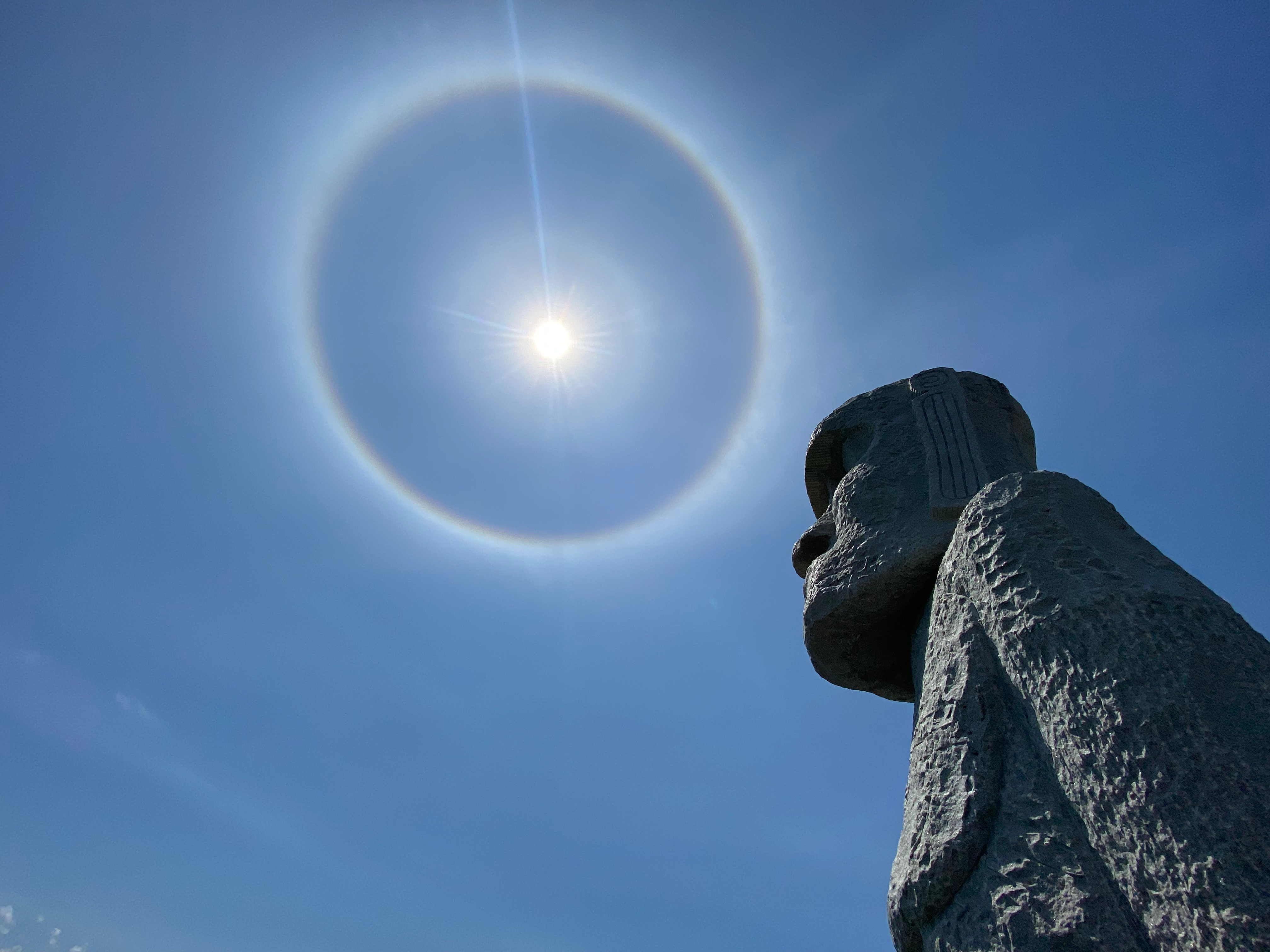
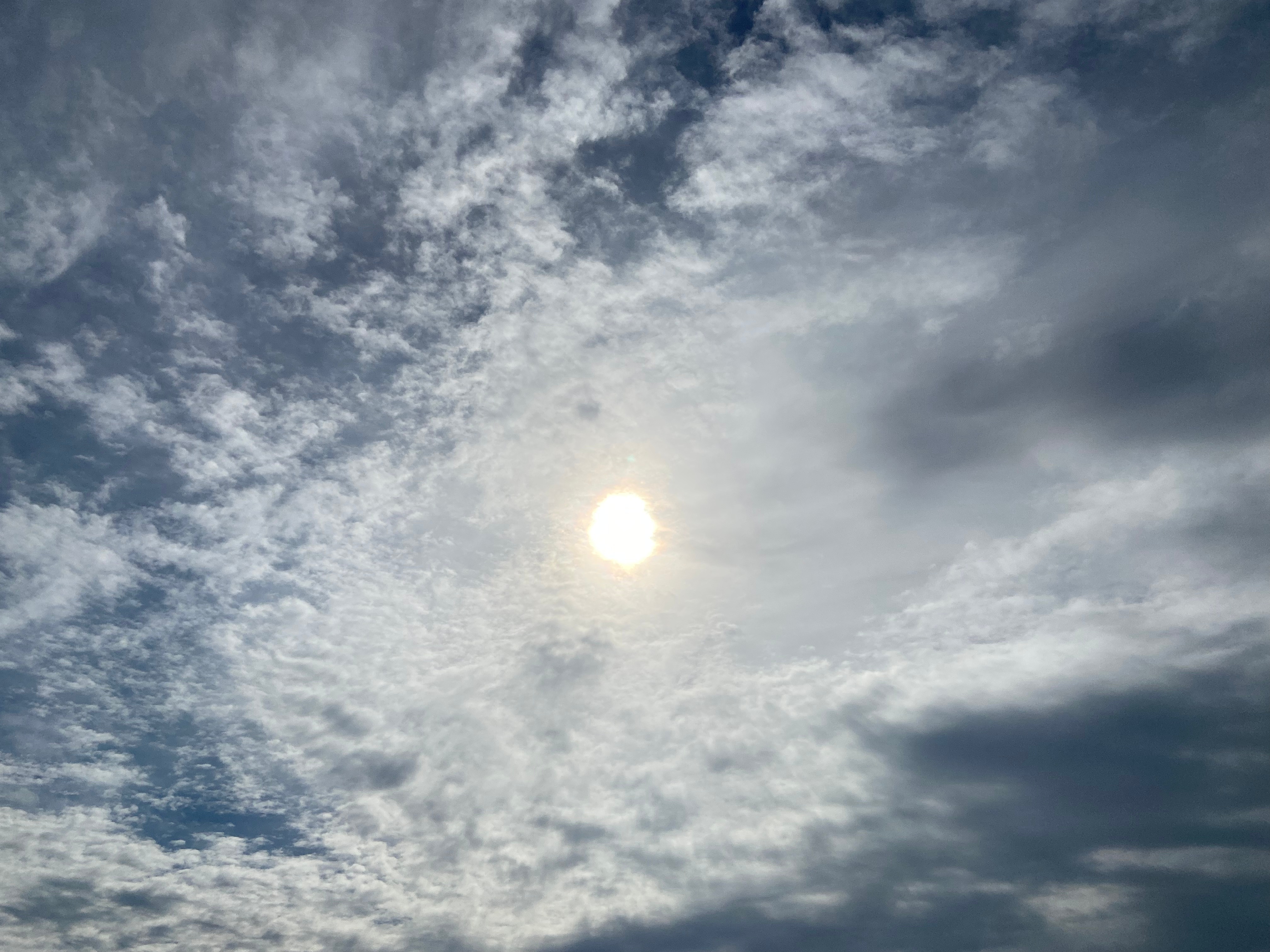
I arrive at Makomanai Takino Cemetery at the exact moment a halo appears around the sun; a 22-degree circle of refracted light caused by ice crystals high in the stratosphere.
A Moai, still and solemn, gazes upward as the ring completes itself overhead; an accidental alignment of atmosphere and awe. I stare with it for a while. Both of us do. Neither of us understands.
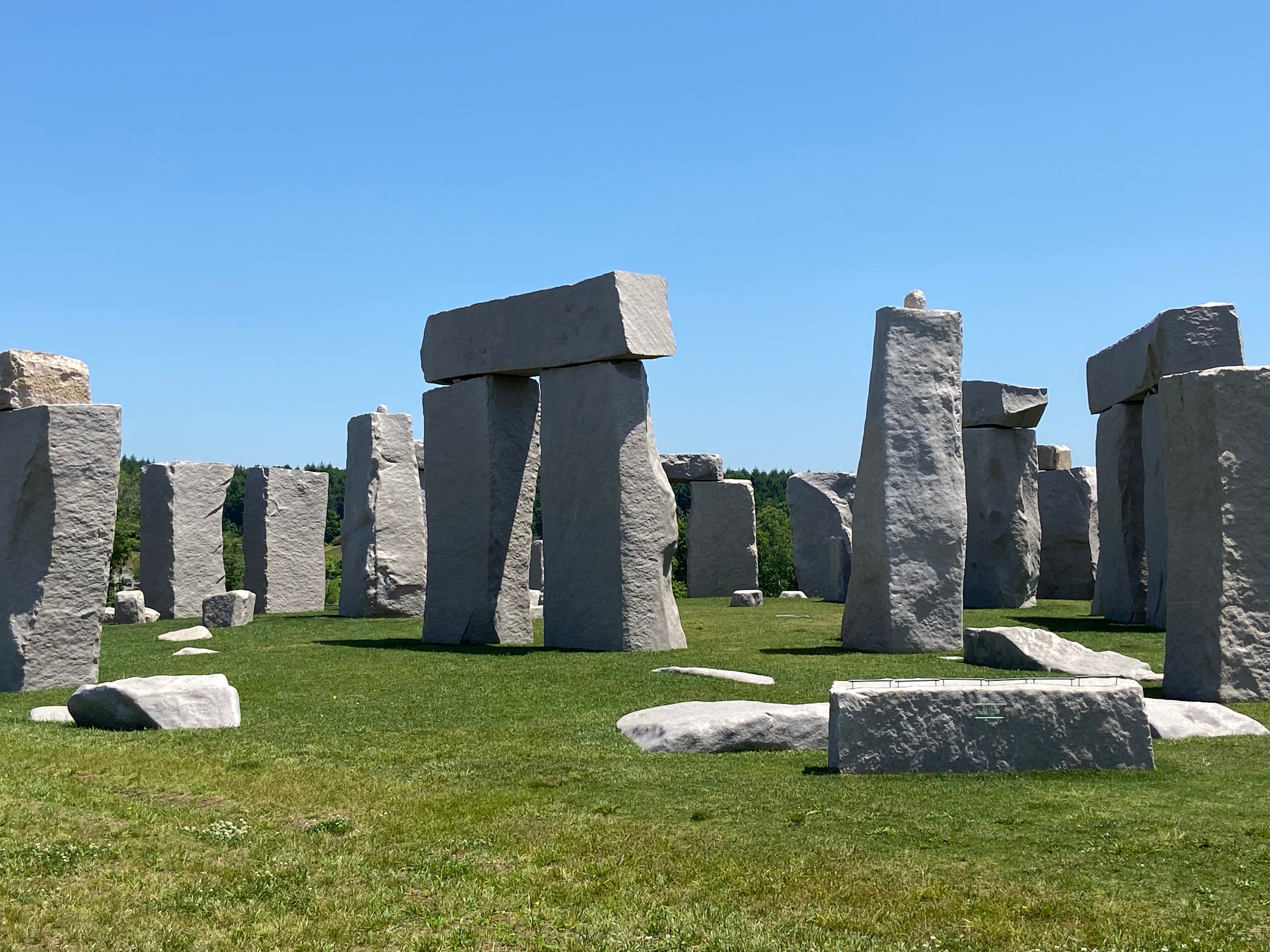
Makomanai Takino Cemetery features a skateboard park, a row of Easter Island Moai, a lavender vending machine, and a full-size replica of Stonehenge, which also contains a secret underground mausoleum. But I’m not actually here for any of that.
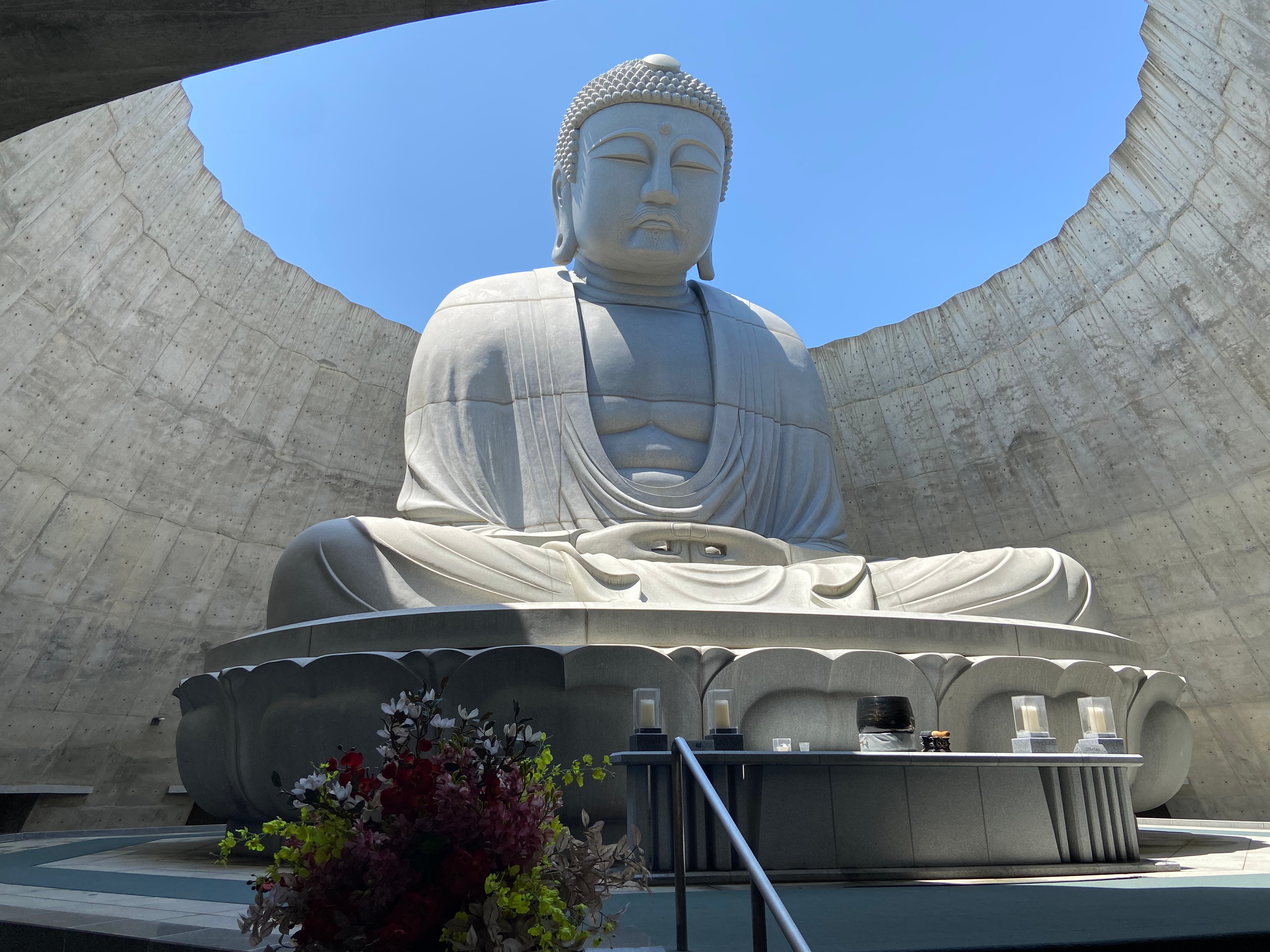
“If you’re going to see the Buddha, go directly there.” That’s what the sign says. That’s what the “tourist information” office tells me. Back outside, I can just about make out the head of the Buddha poking out above a hill of lavender, so I go directly there.
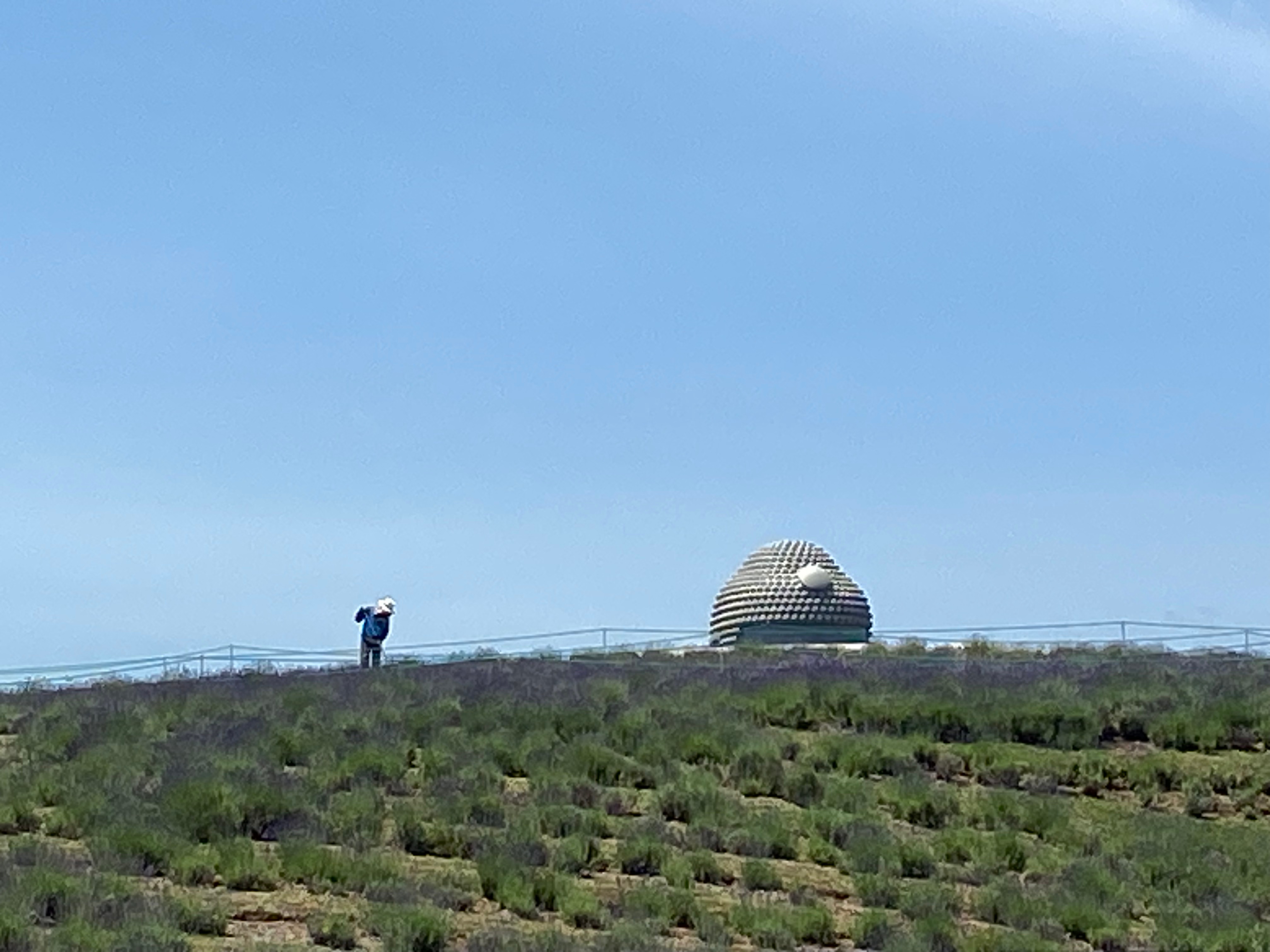
July in Japan is lavender season. Tens of thousands of lavender plants surround the “Hill of the Buddha”, designed by world-renowned architect Tadao Ando. They’re so magnificent I have to remind myself that I’m in a cemetery.
One sole member of staff has been given the arduous task of tending to the tens of thousands of lavender plants, whilst the Buddha looks on, watching over a world in slow collapse.
I enter the chamber that houses the Buddha and instantly notice the silence. The closest thing to silence I’ve experienced in a while. I just stand there, motionless, staring at the Buddha. It’s the kind of place that wants you to contemplate something. I’m never quite sure what. The permanence of stone. The impermanence of memory?
I pull an oracle fortune slip from a basket by the prayer wall. It says: Very Good Luck. With success anything can be accomplished. It also says that my lucky item is dried flowers. I consider making a bouquet from the ones outside but decide against it.
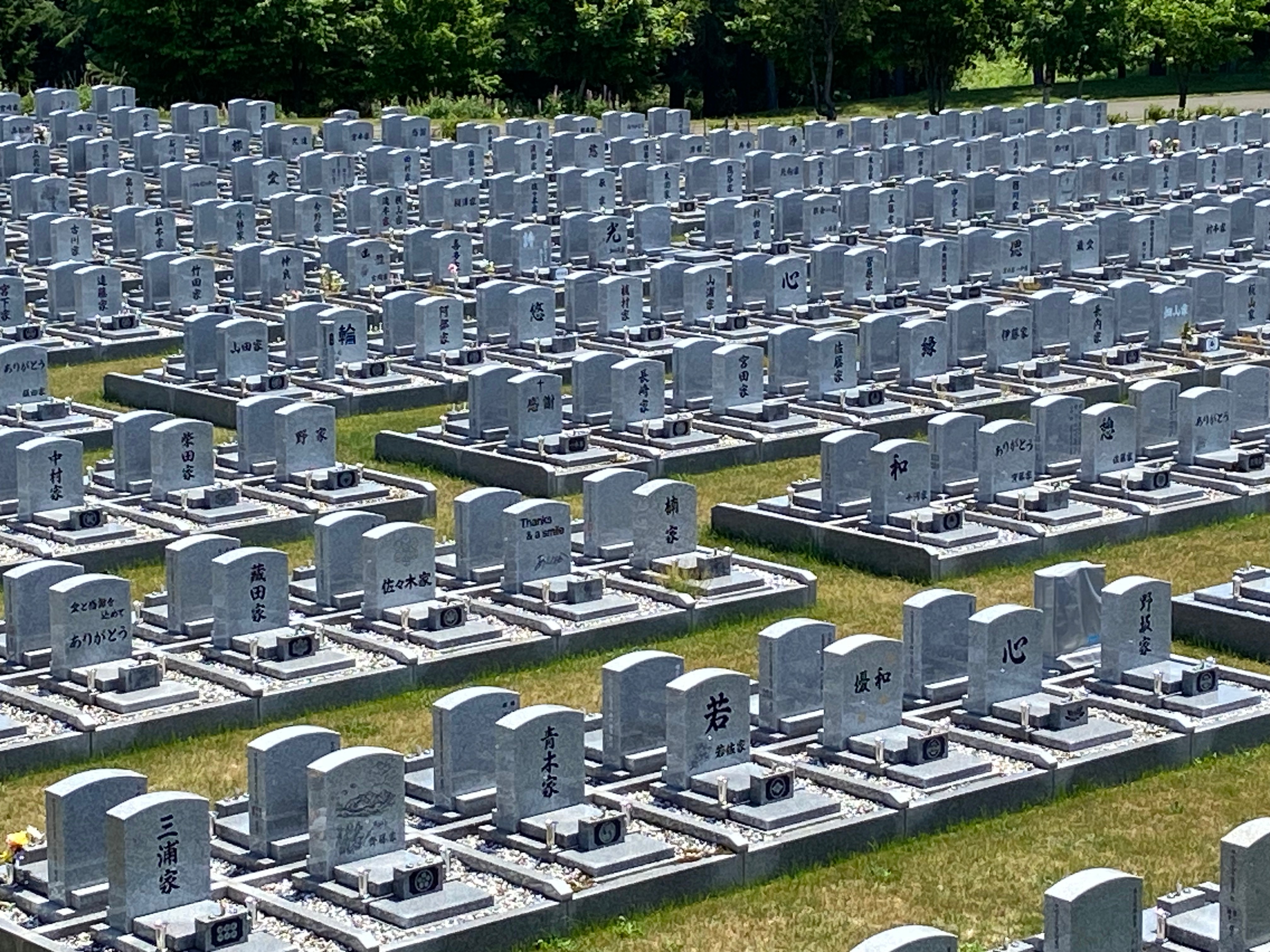
Makomanai Takino Cemetery is one of the largest in the country; 180 hectares of death and flowers. As I stroll through the many interconnected burial areas, I pass by multiple funeral processions in progress, and my thoughts turn to death.
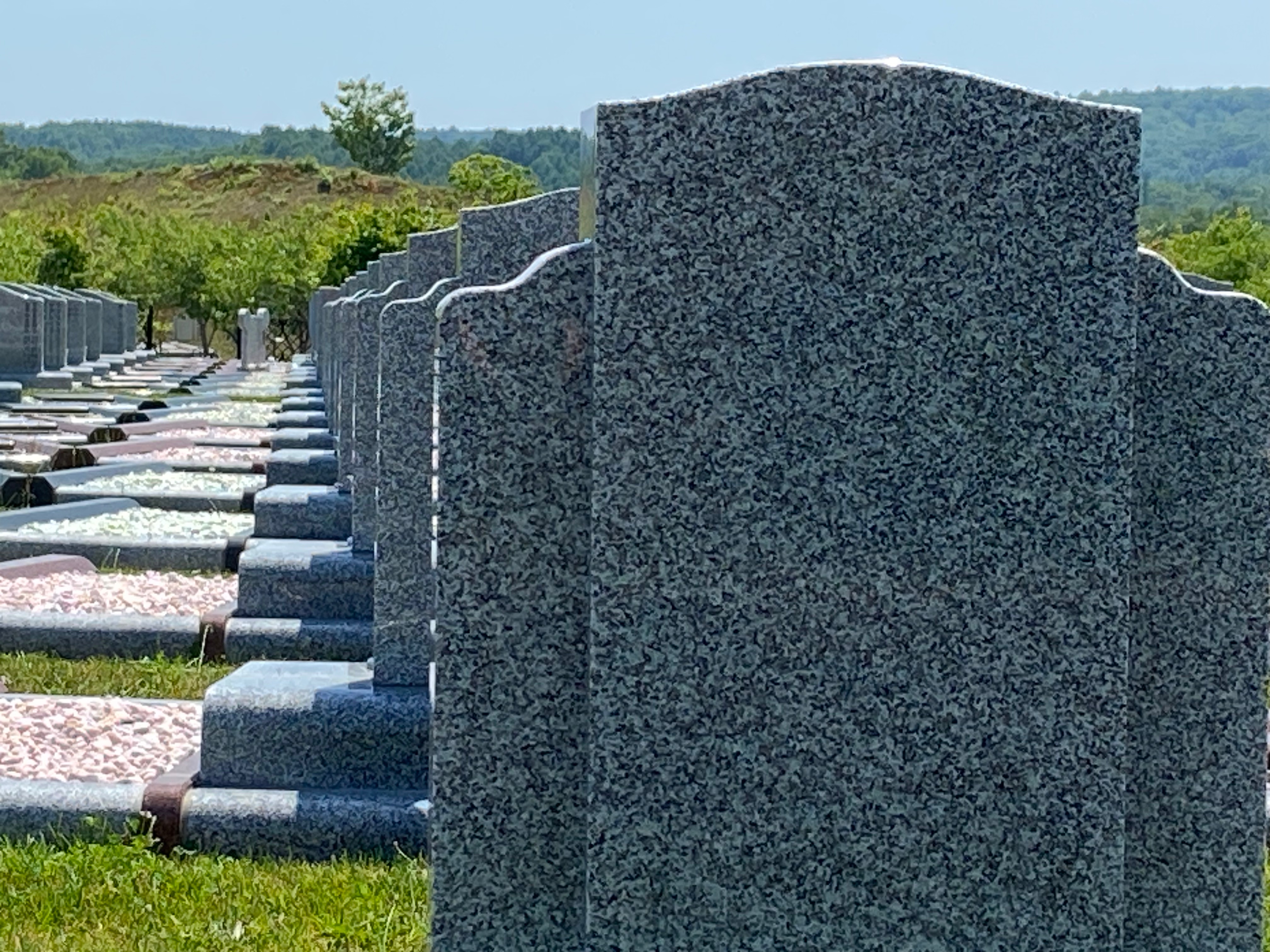
I pass a row of graves with the kanji worn away, lost to time, like everything else. I begin to wonder what memory becomes when the last person who remembers it is gone. When even the names are unreadable.
And for a while, there is no past. No next. Only this.
The moment stretches, fragile and full of forgetting.
Then a memory. Then not even that. Then a stone. Then not even that.
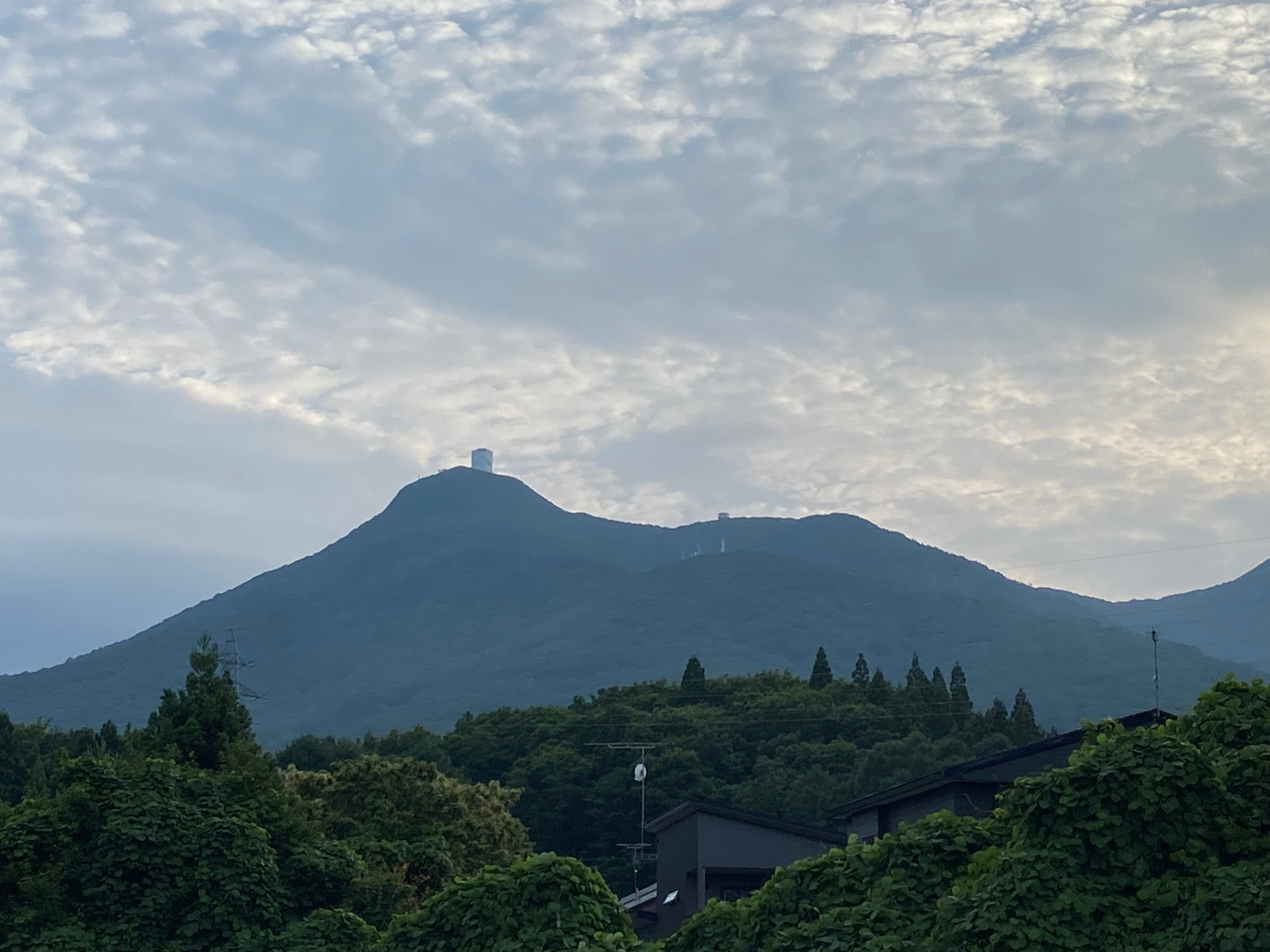
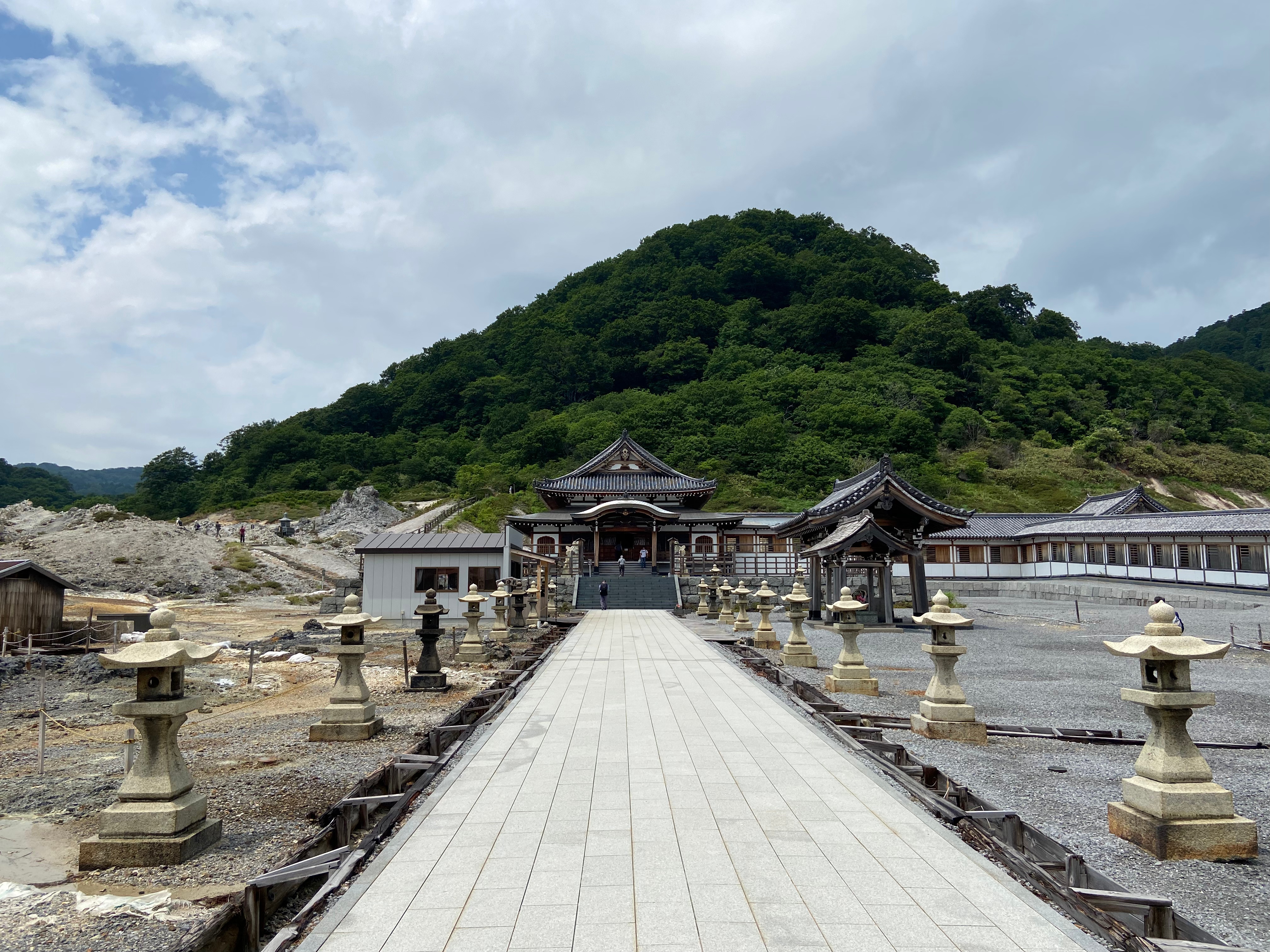
In the far north of Japan, where the land is as silent as the dead, there is a mountain where nothing grows. A place where souls hesitate. Osorezan, one of the three most sacred sites in Japan, is known by another name: the Jaws of Hell.
I often find myself drawn to stories of mortality and the afterworld. Today, I will glimpse into the hellscape of a Buddhist afterlife.
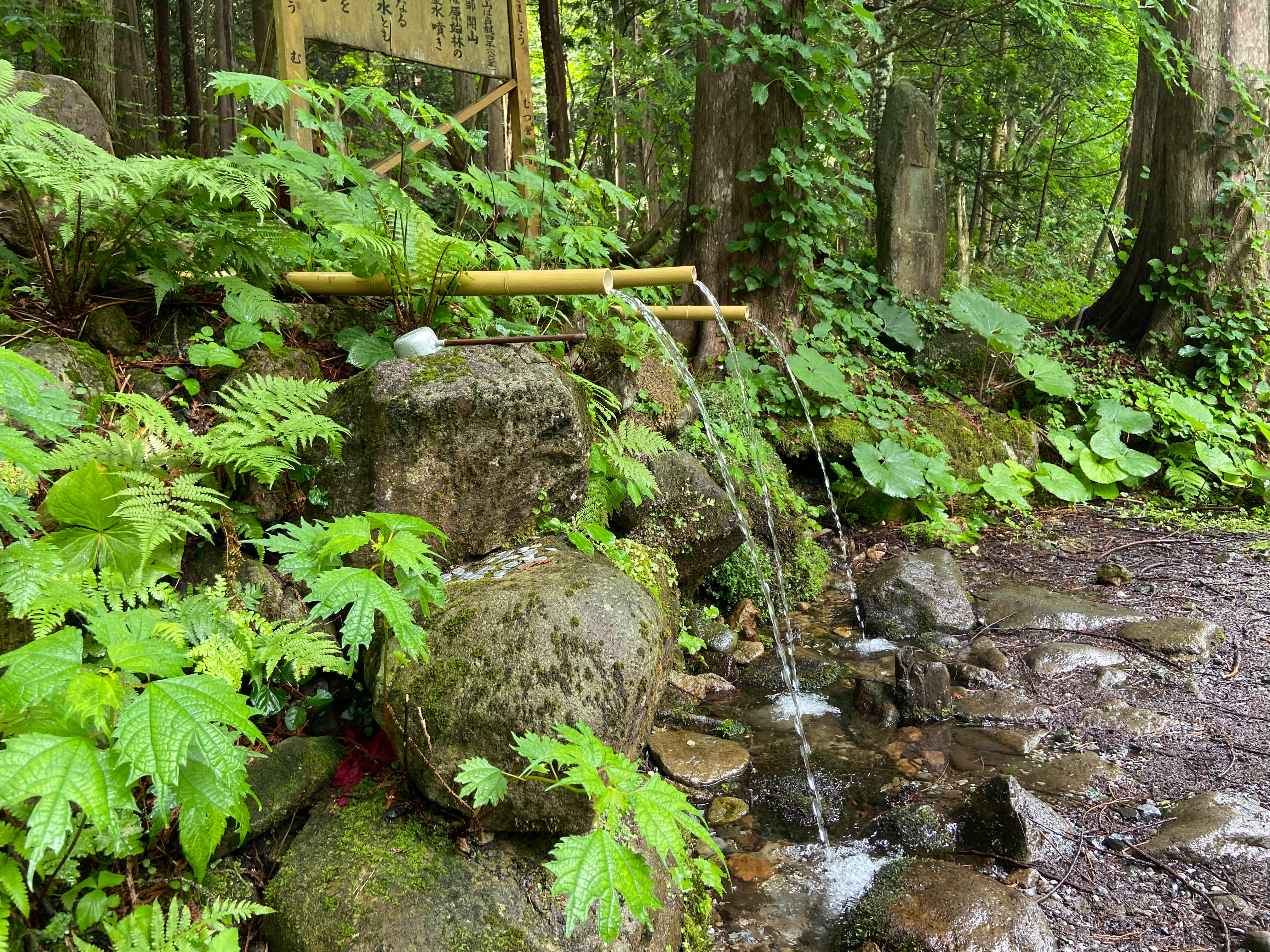
Before I reach the summit, I come across Osorezan Reisui, a fountain flowing with cold, clear water. It looks like a typical purification site, but legend has it that drinking the water from this spring will make you ten years younger.
Desperate to claw back lost time, I reach for the water, drink from its flow, and fill up my water bottle before continuing the climb.
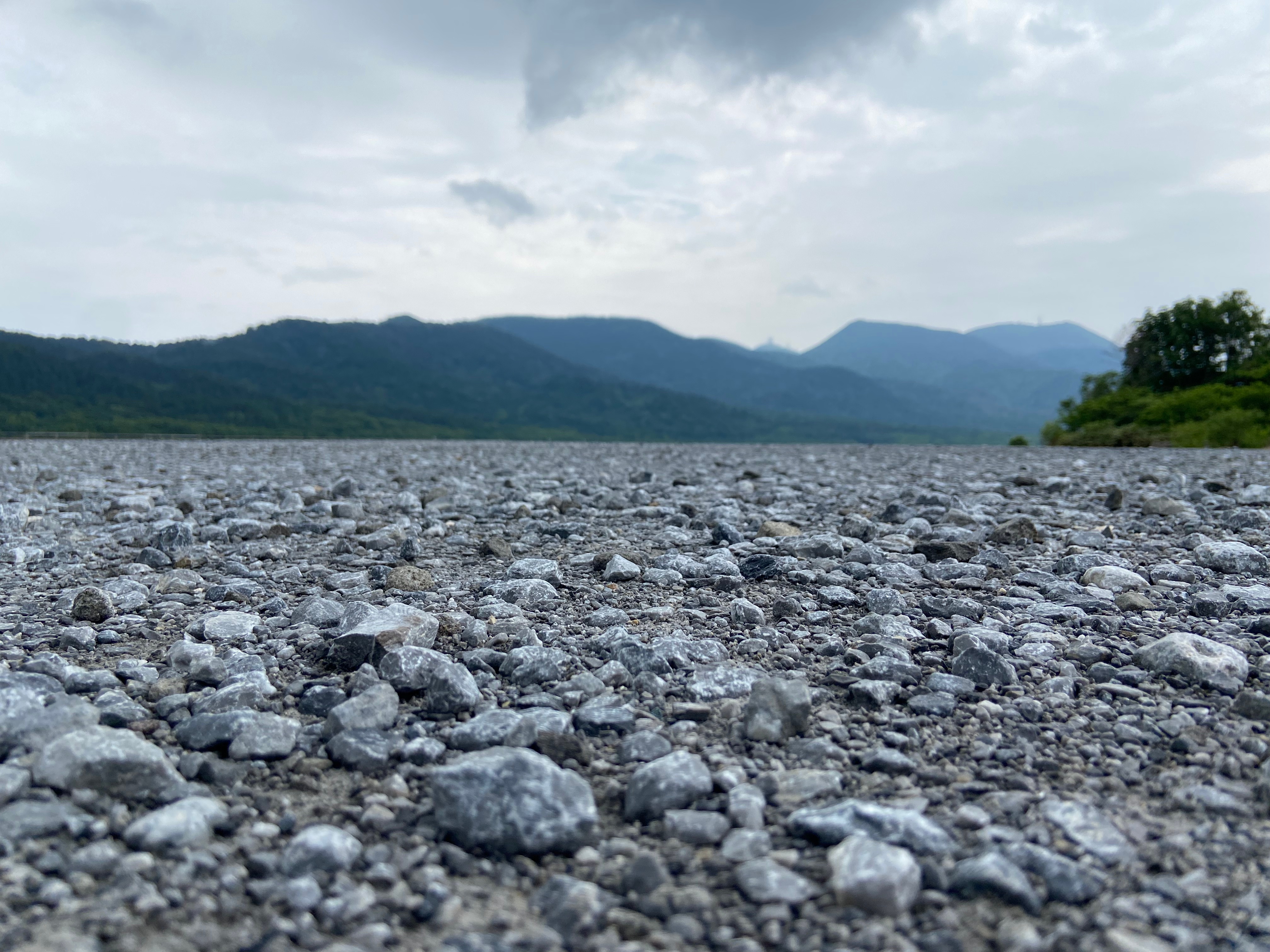
Further up, the trees and grass make way for shale and volcanic glass, and it is dry. There has been no rain of late to keep the dust down, so with every step the sulphurous ash creates clouds under my feet. Some gets into my mouth, and I choke. Luckily, I still have water from the fountain of youth, so I wash away the bitterness and the years before carrying on.
Higher up, the mountain opens its mouth wide. Nothing moves. There are no roots. There are no birds. Just the crunch of my footsteps echoes through the wasteland. Everything else is… still.
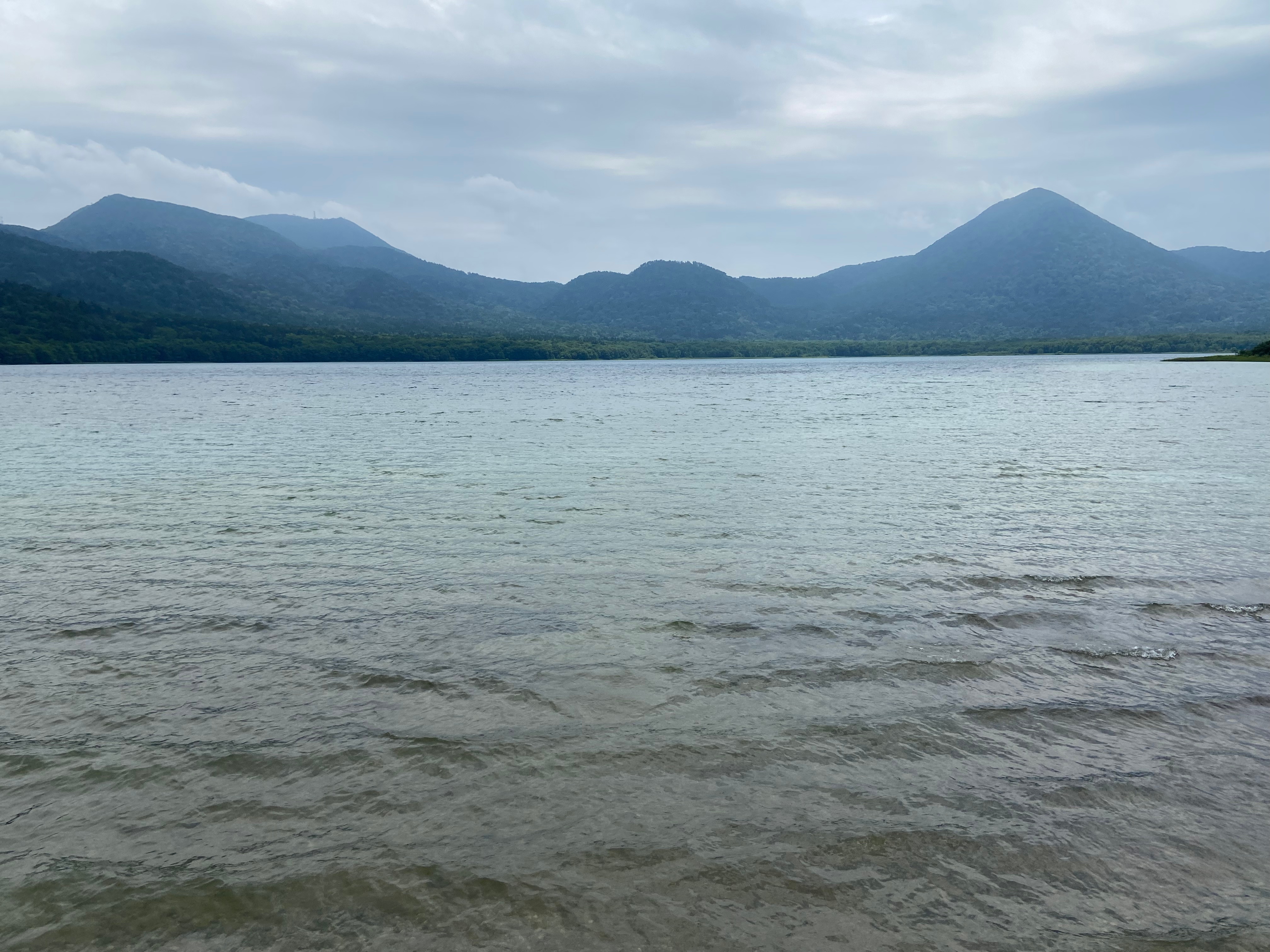
In the distance, Lake Usori lies in eerie repose, a lake of poison. The acidity is so high that nothing can live here. Even the wind seems unwilling to touch the surface, but I am.
Kneeling, I dip my hand into the water. A freezing chill shoots up my arm. For a moment, the water feels alive, tightening impossibly around my fingers. Not liquid, but something with intent. I wrench my hand away, breath unsteady, as if something almost followed me out.
I remain kneeling a while longer, lost terribly in thought. I watch as the ripples in the lake distort my own reflection. I see not just my face, but the faces of every version of myself I’ve left behind. I watch them shifting, like a shimmer of sorts. I take a deep breath, stand up, and walk away, before something walks away with me.
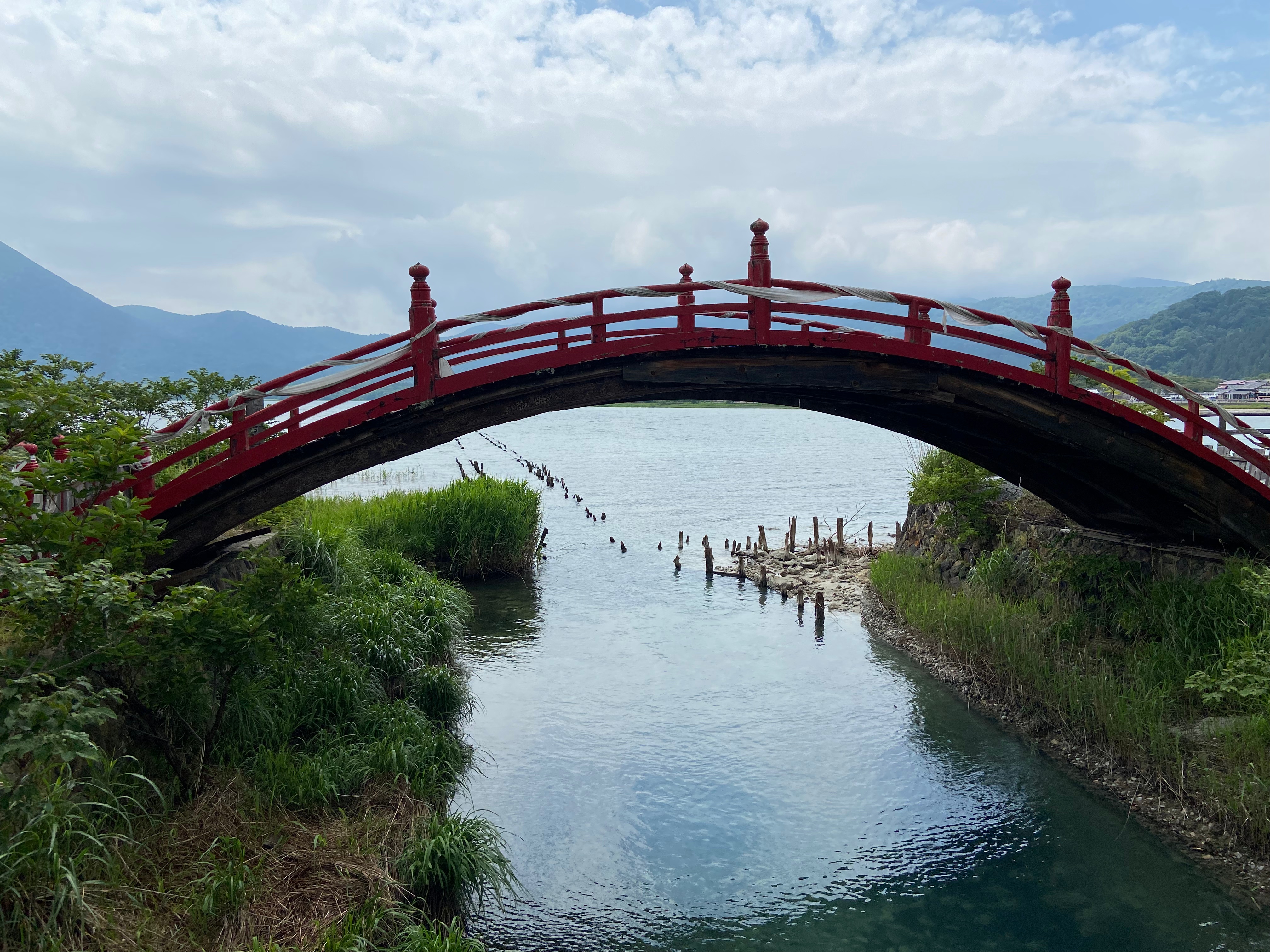
Draining from Lake Usori is the Sanzu River; its waters flowing silently, black and sluggish, like blood oozing from a wound that will never heal. It is at this river the dead must cross to move into the next world. The journey across this river reflects the life one has led: the good cross by bridge, the average wade through the shallows, and the bad must swim amongst the river’s monsters.
I watch the river for a time, wondering which path I would take. I approach the bridge, its red painted wood the only colour I’ve seen up on this mountain. I take a step toward it, but something inside me pulls back. Not fear or superstition; just a quiet, sinking knowledge that maybe I was here before, and I don’t think I should be here again.
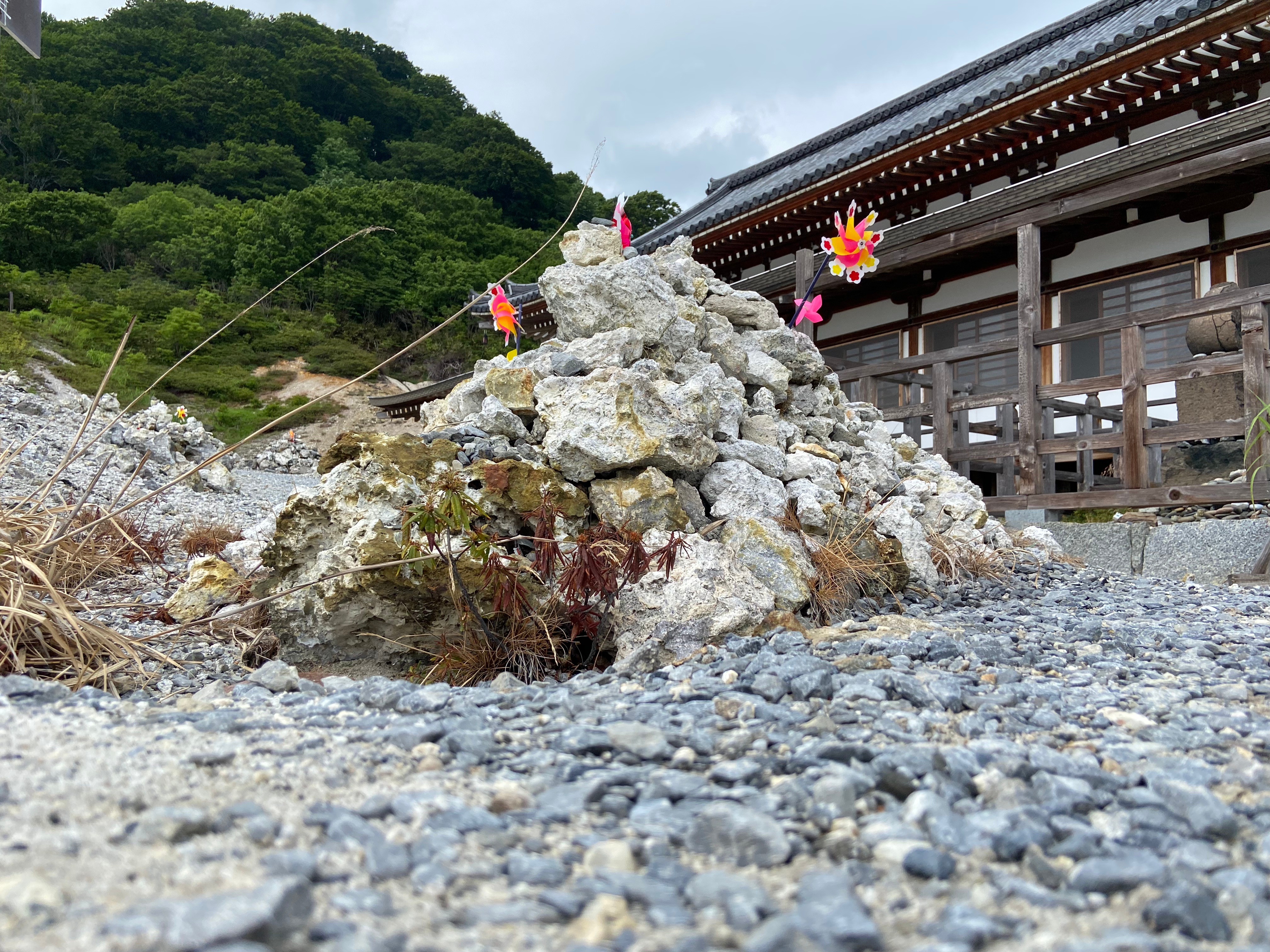
Along the riverbed, piles of pebbles litter the landscape, said to have been stacked by the spirits of unborn children or those who died young. These children build piles of rocks as an offering to Buddha, only to have demons knock them down, condemning the children to rebuild over and over, for eternity; forever trapped in the netherworld, unable to transcend.
Not far from the river stands Bodaiji Temple, where monks pray for the lost souls who wander Osorezan. After all the stories of sorrow, the temple stands as the only promise of mercy.
Inside, the air hums with low chants. The scent of incense curls through the dim light, thick as fog, as if the prayers themselves are rising. The monks recite sutras; their voices steady. For all the suffering that lingers in the air, this place feels… still.
As the sky darkens, bruised and swollen with the weight of a coming storm, I take one last look at Osorezan. The myths here aren’t just stories. They are things we carry. Things we live. The demons at the river are the silent battles fought in hospital beds. The pebbles are the burdens we carry and rebuild, again and again. And the river, the slow, black current, is the harrowing divide between despair and hope; a crossing that everyone must face.
I turn away and begin my descent.
Back at my hotel, an old building stitched together with crumbling wallpaper and tired walls, I try to relax, but the lights buzz like a wasp in a lampshade, and the floorboards creak even when I’m not moving, as if something beneath them is shifting.
I turn on the television. The screen blinks to life; the world rushes back in, bright, absurd, relentless. A puppet show flickers on, but the puppets are just human hands wearing tiny masks. They bow, expressionless. The audience laughs. I change the channel. Static hums for a second too long. An old woman in a blindfold stumbles through a collapsing obstacle course. Laughter again, louder this time. The world keeps moving. Always moving. And I am here… still.
I change one last time. A man in a bear costume is balancing ramen bowls on his head whilst a studio audience screams. I turn the TV off. Hell can wait.
Outside my window, the mountain holds its breath. Somewhere, beneath the floorboards, the dead keep stacking stones.
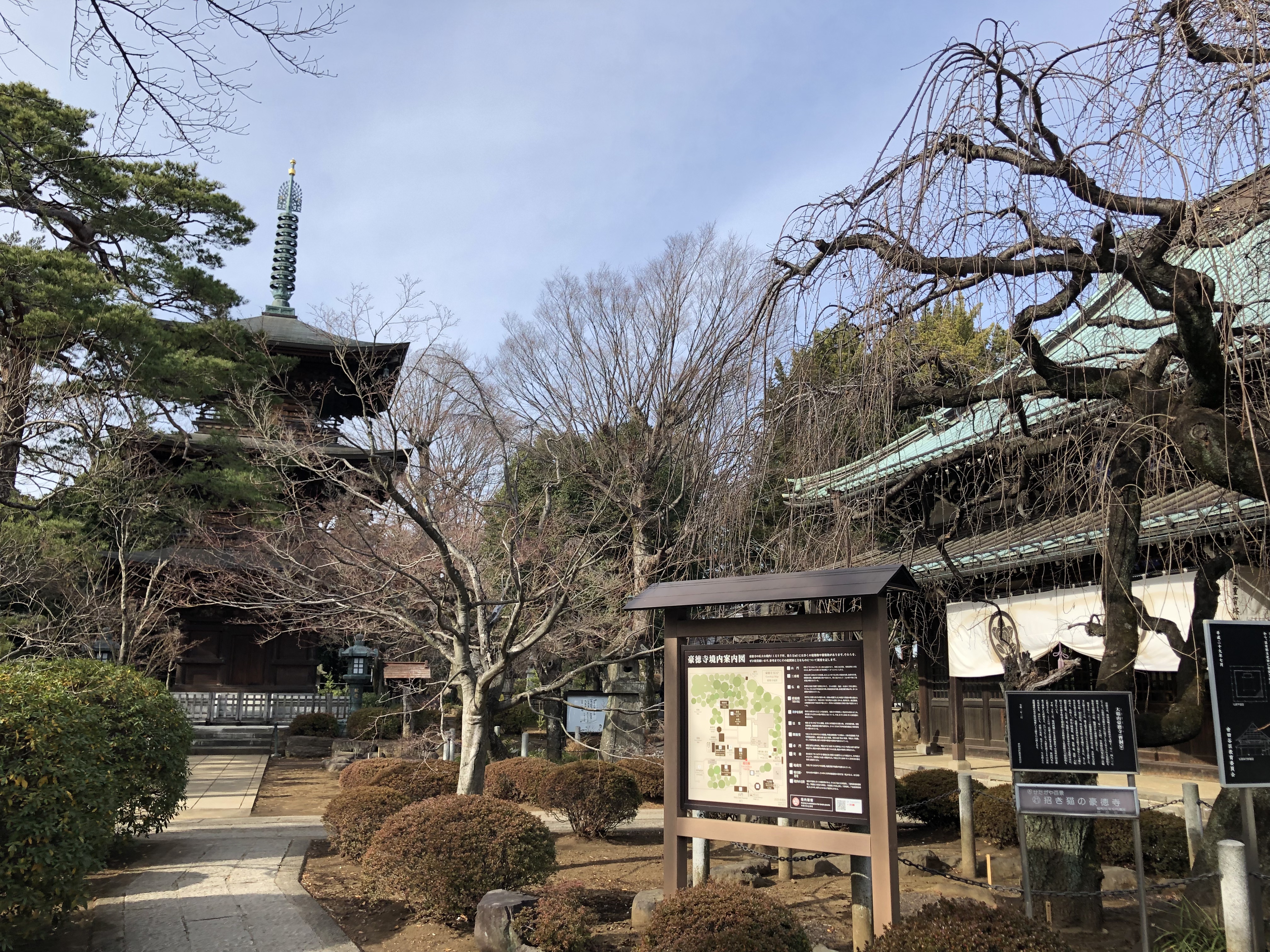
My day begins at Miyanosaka Station in Setagaya Ward, where I take a short walk to Gotokuji Temple. This temple, which covers an impressive 50,000 square metres, is home to a three-storey wooden pagoda, Shugetsuen Gardens, Jizo Hall, a Main Hall, stone lanterns, a Bell Tower, and the tomb of the Ii Naotaka family.
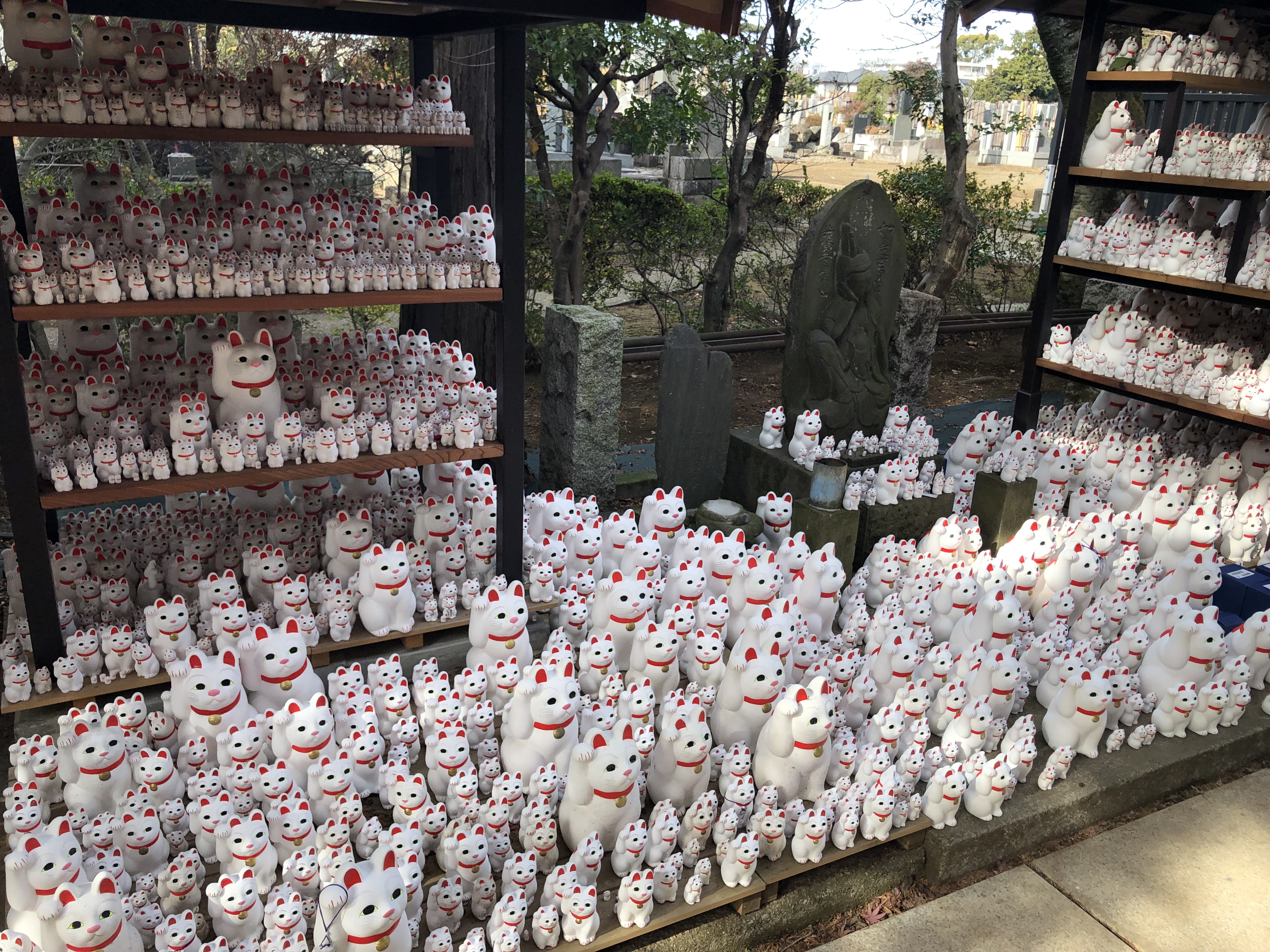
As I wander around the temple grounds, I am surprised to discover a collection of one-thousand maneki-neko statues (also known as “beckoning cats”) scattered throughout the temple. Every time I think I’ve seen them all, I turn a corner and find even more on the other side of the temple. They are truly everywhere.
According to legend, the daimyo Ii Naotaka was out hunting with falcons when he was saved from a lightning bolt by a cat named Tama. Naotaka had taken a seat on a wooden bench outside this very temple when Tama beckoned him inside. Moments later, a lightning bolt struck the wooden bench where he had been sitting. This act of kindness saved Naotaka from certain death, and in gratitude, Naotaka is said to have placed one-thousand lucky cat statues throughout Gotokuji Temple.
Maneki-neko statues are popular as charms for good fortune and are believed to bring luck in areas such as business success, home safety, and the fulfilment of prayers, and protection from lightning bolts.
I leave Gotokuji Temple and take the train over to Shimokitazawa, a neighbourhood known for its bohemian atmosphere and abundance of vintage and retro shops. As I stroll through the streets, I am surrounded by a sea of trendy fashion stores, coffee shops, and gastro pubs offering craft beers and flat whites. Even the local Seven Eleven here is enveloped in the rich, heady scent of coffee.
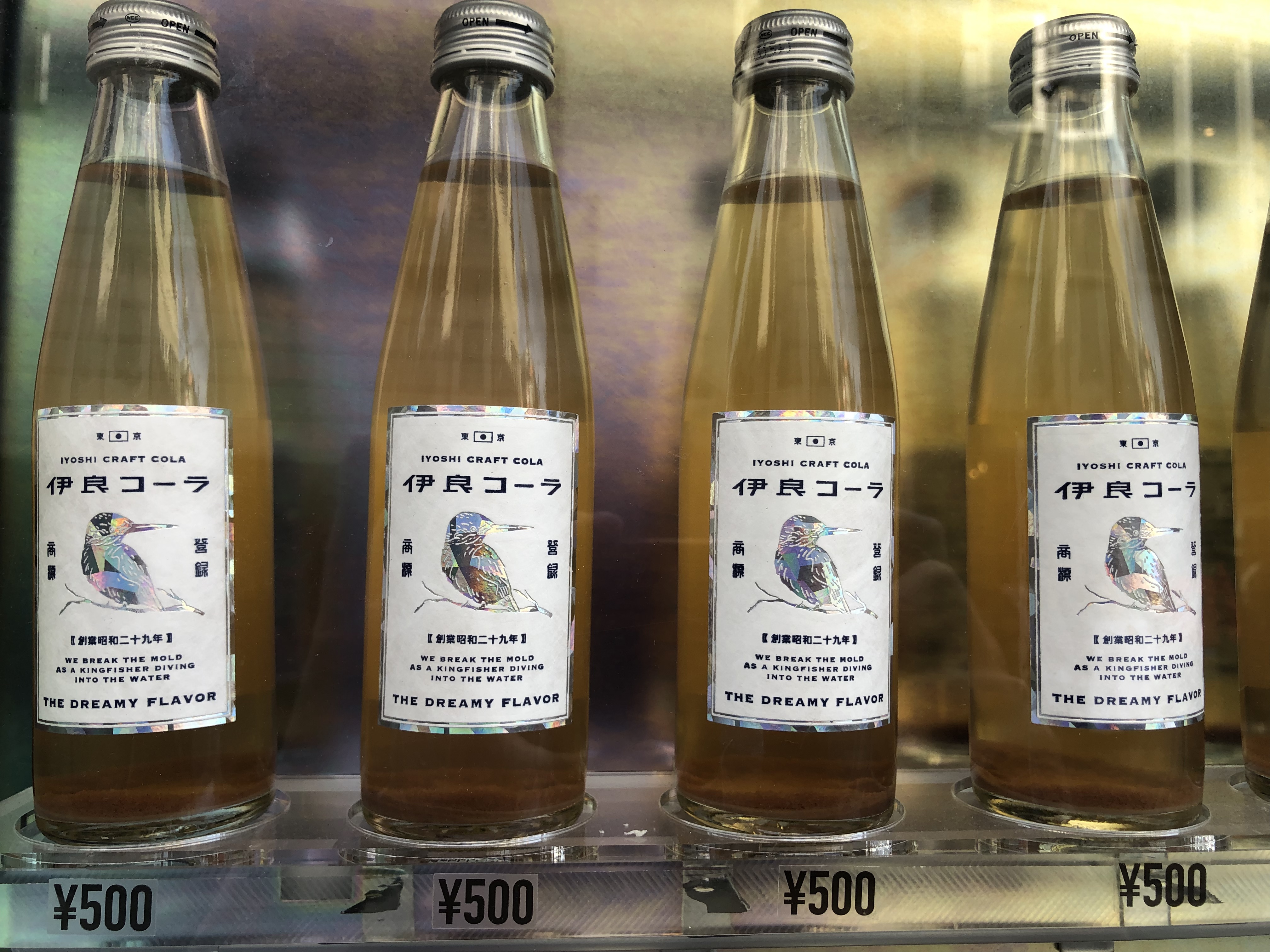
The area is also home to a vibrant music scene, with rock music blaring from every retro used clothing store. As I walk, I pass fellow foreigners who eye me up with pretentious looks. Distasteful graffiti adorns some of the vending machines, and I notice another vending machine selling what appears to be overpriced Craft Cola. The label says it is made from “natural water,” whatever that means.
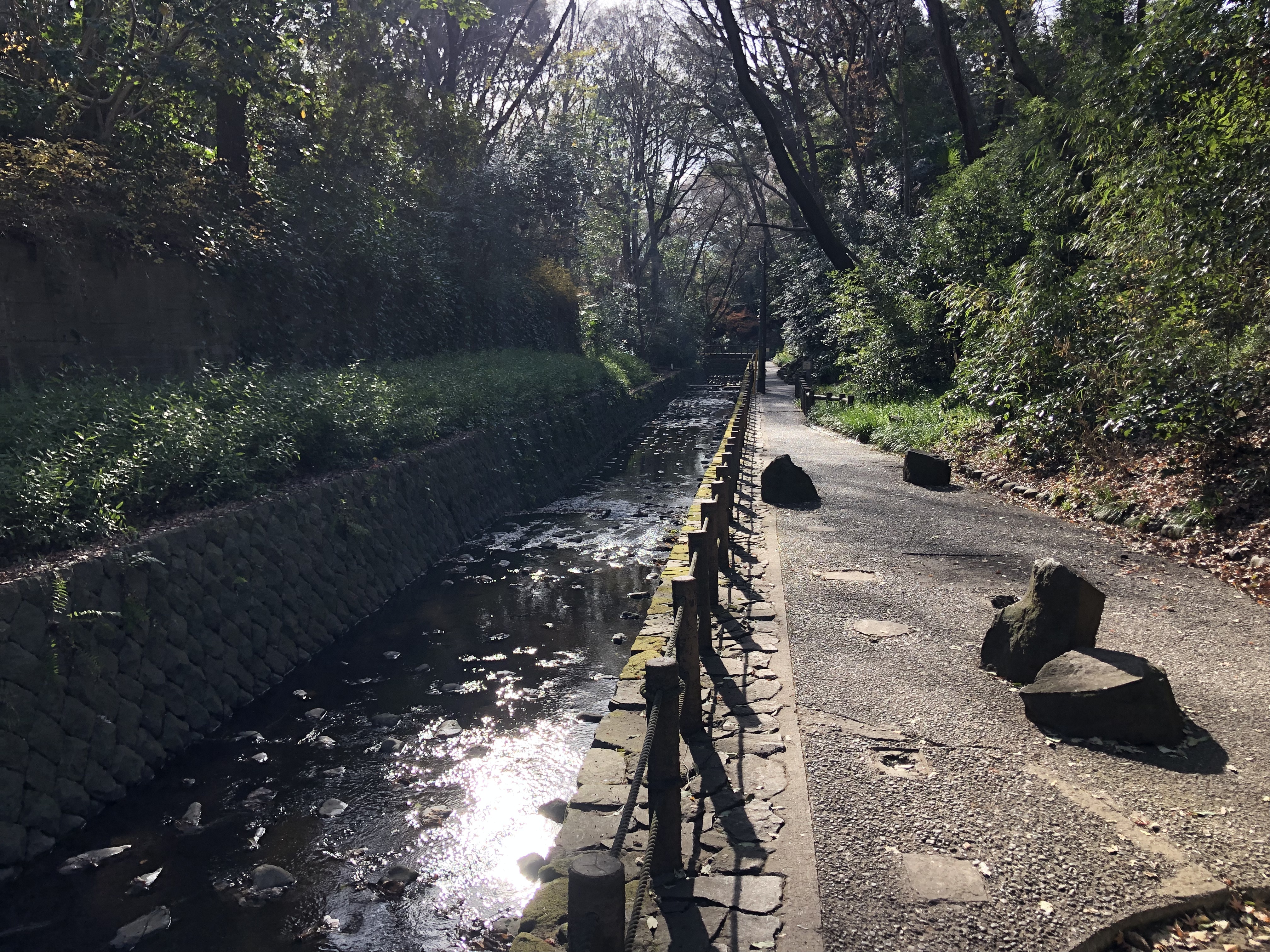
I decide to leave the bustle of Shimokitazawa behind and take a break exploring some nature. Luckily for me, Setagaya Ward also contains the only valley within the 23 wards of Tokyo: Todoroki Ravine Park. Along the Yazawa River sits the Golf-bashi Bridge, a striking red steel arch bridge named for a golf course on the other side of the river.
As I begin to wander downstream, I notice a sign warning against going near the river during heavy rain. Remarkably, I’ve been in Japan for two months and it has only rained twice. The sign states that during rainfall the valley can easily flood.
I pass trees of zelkova, bamboo-leaf oak, konara oak, and Japanese mountain cherry that line up on either side of the river, creating a scenic gorge. The air is crisp and refreshing, the water is still and calm, a peaceful contrast to the bustling city. As I walk further downstream, nature embraces me, enveloping me in its tranquillity.
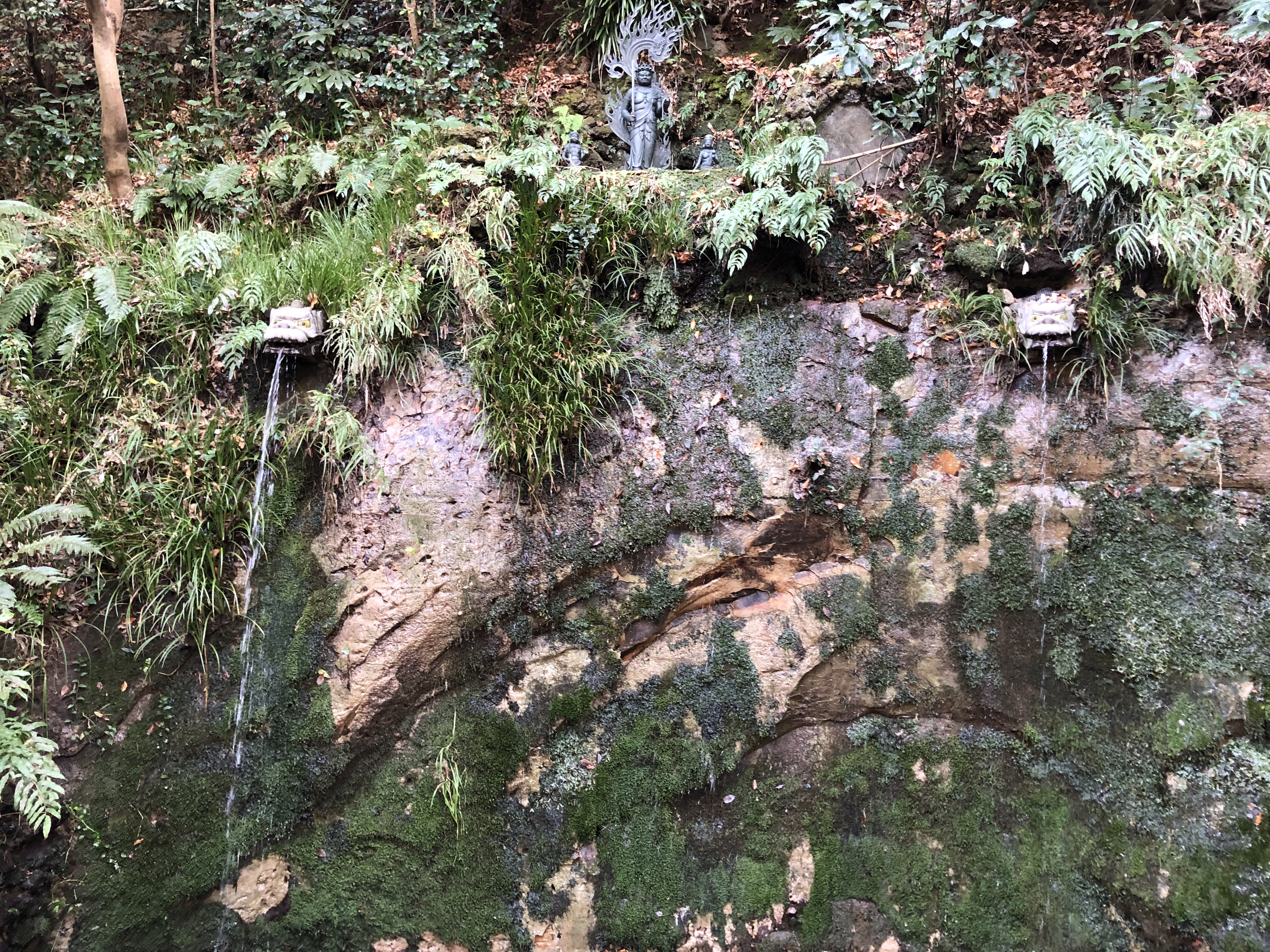
I come across Todoroki Fudo Temple, founded in the 7th century by the monk Gyoki and dedicated to Aryacalanatha. Below sits the twin waterfalls of Fudo-no-Taki, with the water spilling from the faces of yellow-eyed statues. The waterfalls are believed to have miraculous powers. Legend has it that the waterfalls at Todoroki Valley sprang up when the temple was founded, and it was once said that the water would roar like thunder when it hit the rocks, giving the valley its name. The waterfalls are a charming sight, and the old shrine adds to the peaceful atmosphere of the valley.
There are over thirty springs within Todoroki Valley, and the spring water here was designated as one of “Tokyo’s 57 Best Waters” in 2003. I presume the water from the springs is of the “natural water” variety.
As I make my way back to the train station, the sky suddenly opens up with a thunderous applause. Rain spills down into the gorge and valley, and lightning splits the sky, illuminating the landscape in a brilliant flash. Instinctively, I go in search of a cat.
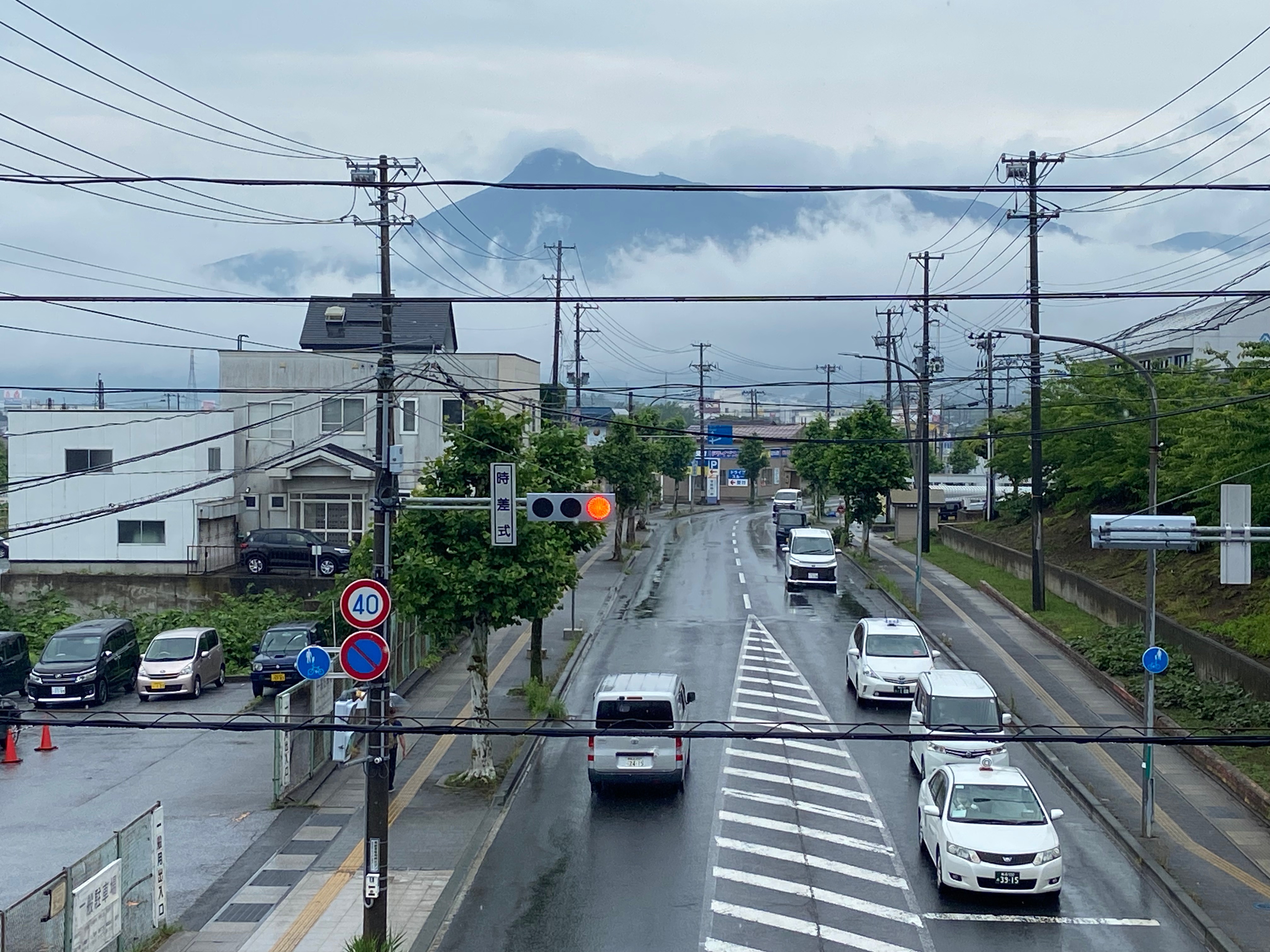
I have come to Itabashi today to visit the Great Buddha of Tokyo, also known as the Tokyo Daibutsu. Upon exiting the train station, I realise that there are no maps in sight, so I decide to climb up onto a bridge that crosses over the road for a better view. Even though I am still within the city limits of Tokyo, I am surprised to see mountains in the distance. For some reason, the Great Buddha remains hidden from view.
I return to the train station in search of a map. In Japan, all train stations have a stand with free leaflets, pamphlets, and sometimes magazines. This particular train station has an odd selection of magazines, including one that has been published since 1922 and is entirely about sewage.
After finding a map, I set off towards Akatsuka Park. Inside the park, I find an art museum (which is closed today), a folklore museum (also closed today), some water fountains adorning a pond lined with old men fishing, and on the other side of the park, a dried-up dragonfly pond.
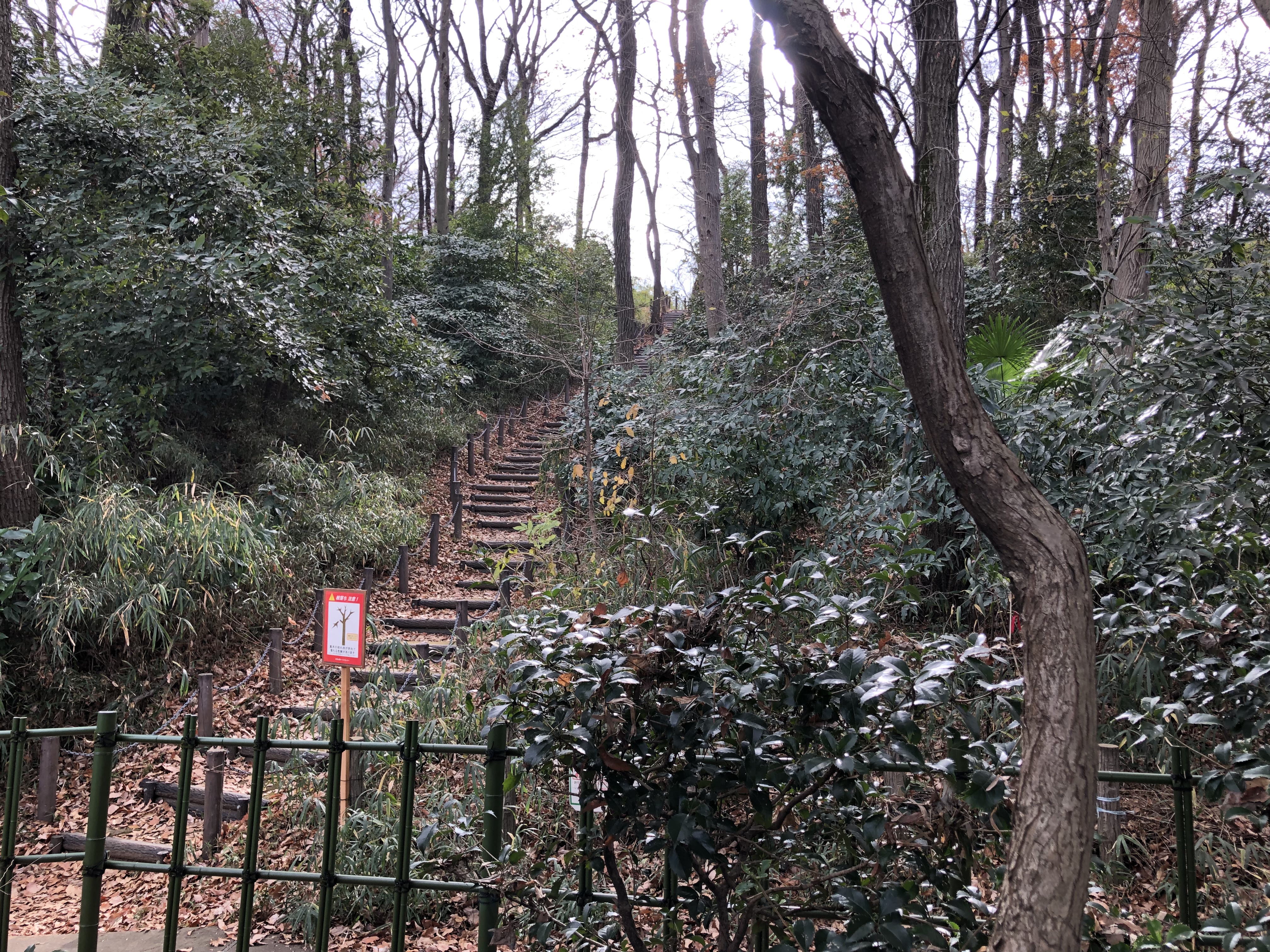
As I wander through the park, I am struck by the peaceful sounds of nature. The plum grove stands out to me, its branches now bare and skeleton-like after shedding their leaves, stripped of their colourful cloaks. The leaves, once vibrant and alive, now lie dormant on the ground, a reminder of the cycle of life and death. I follow the trail of leaves, before eventually coming across some rather steep steps.
Signs placed intermittently along the steps warn me of the risk of falling branches, but as I climb their steepness, it’s the slippery fallen leaves that prove to be more problematic. I am careful with each step I take, not to slip, not to trip, and not to be hit by a branch hurtling towards me from above. Eventually, I reach the top, where I find the Akatsuka Joshi Park Castle Ruins, the former site of a castle.
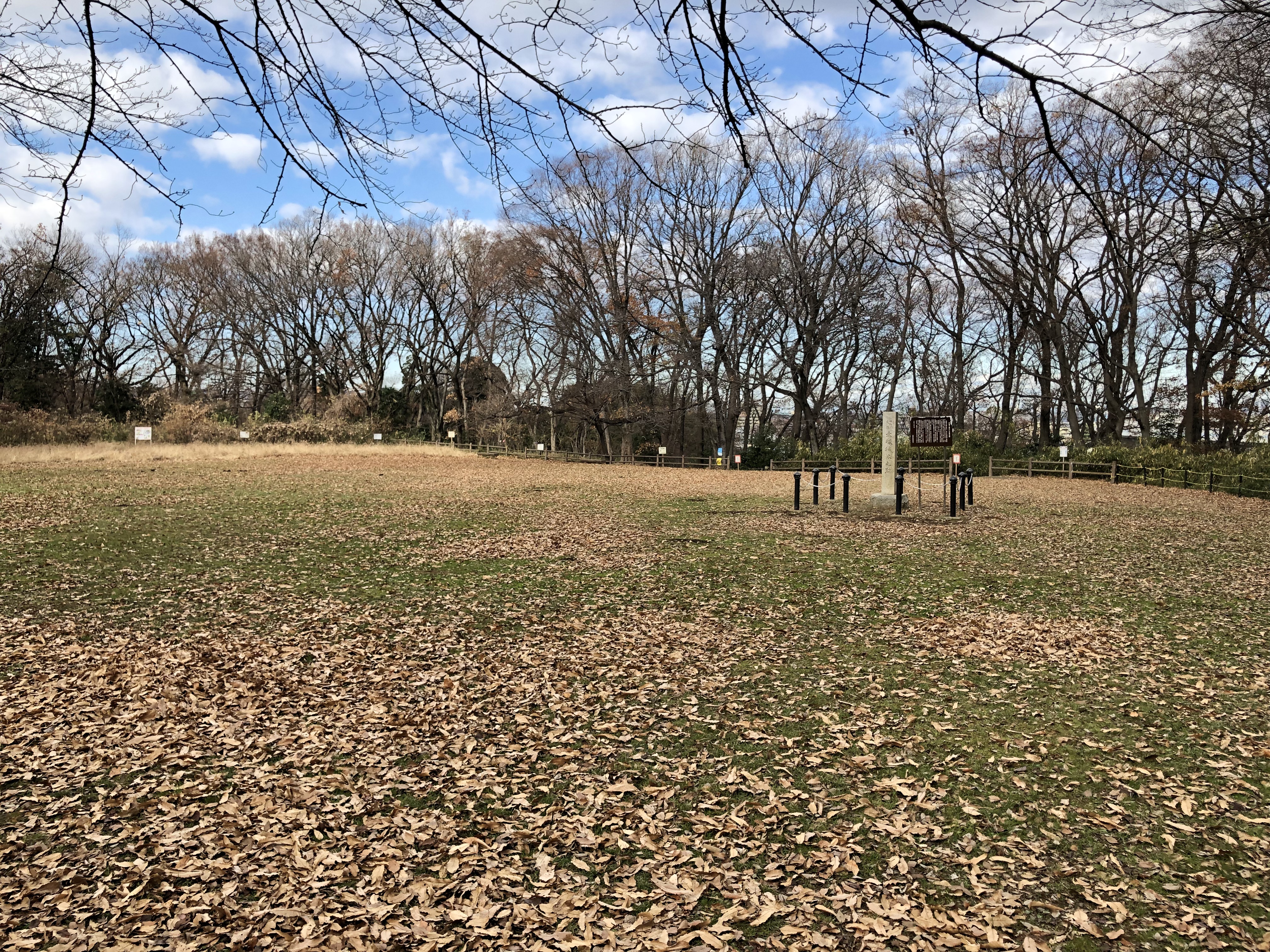
The open space where the beautiful castle once stood feels otherworldly. A single stone pillar serves as a testament to the castle’s former grandeur, the only remnant left in its wake. The bare trees surrounding the area add to the ethereal atmosphere, their stripped branches reaching towards the sky like ghostly fingers.
Yoritane Chiba was a prominent figure in Japanese history and played a significant role in the political and military affairs of the time. The Battle of Sekigahara, in which he played a leading role, was a decisive battle fought in 1600 that marked the end of the Sengoku period and the beginning of the Edo period in Japan. After the battle, he returned to Tokyo where he built this castle to be his home.
As I walk through the Akatsuka Castle Ruins, the empty space awash with fallen leaves, I sense a feeling of melancholy at the thought of Yoritane Chiba’s former greatness, now reduced to nothing but ruins. The castle was dismantled in the late 19th century, and once an important centre of power and cultural significance, now all its former grandeur is lost to the passage of time.
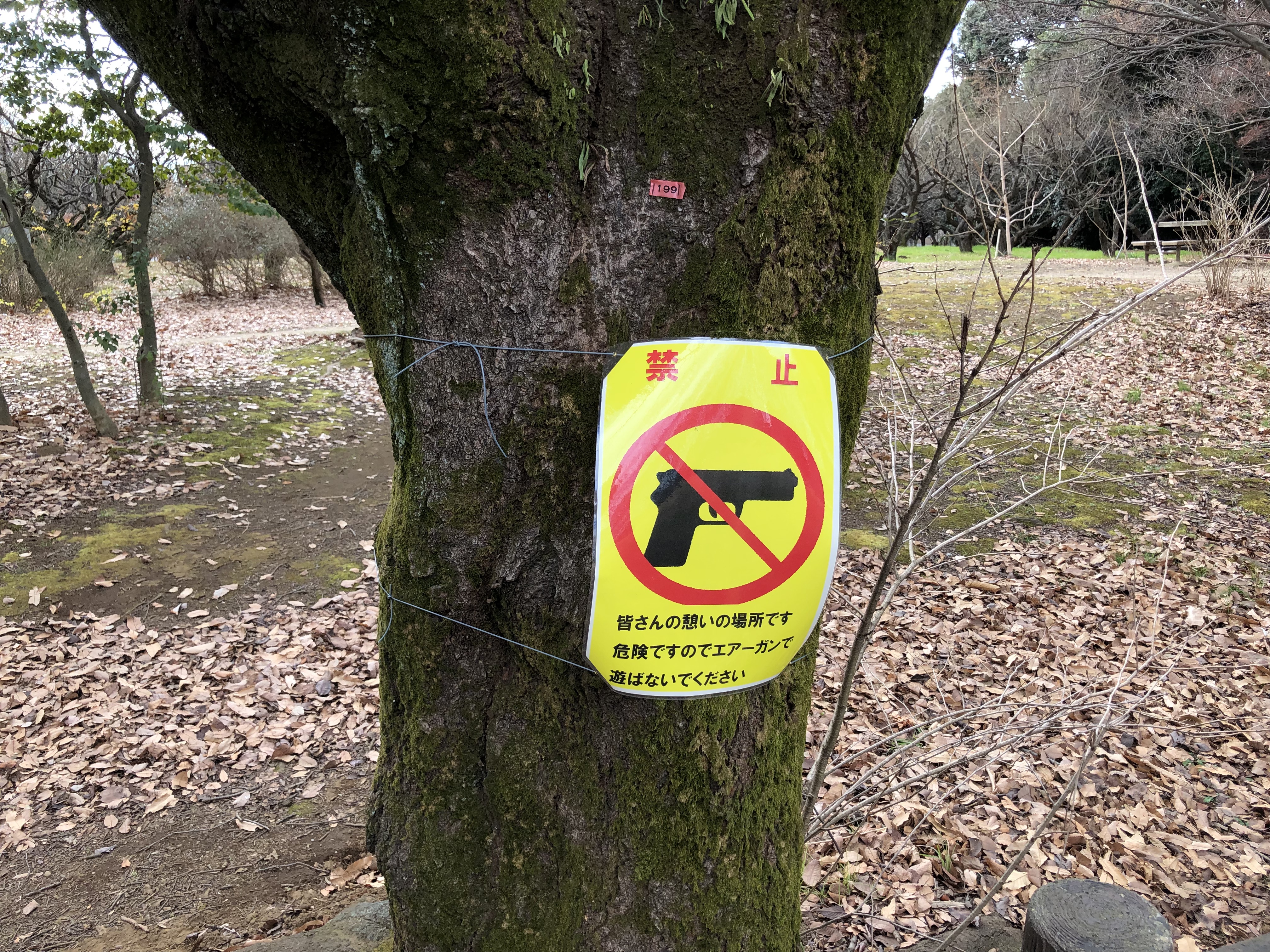
I continue my search for the Great Buddha, envisioning it to be a towering presence in the sky. As I look around, my eyes are drawn to a yellow sign in the distance, reminding me that this is a place for all to enjoy, free from harm, and to not go around shooting anyone.
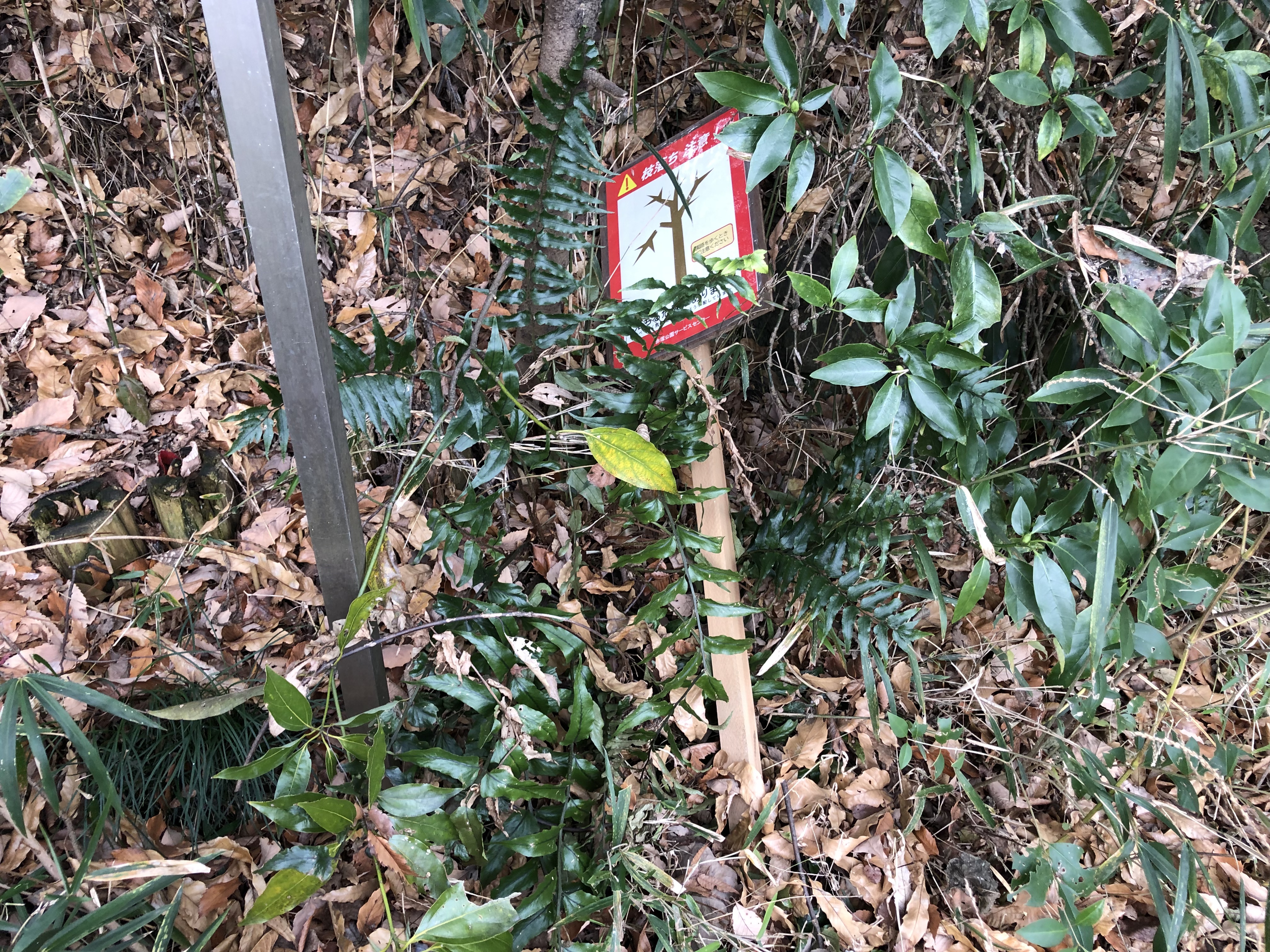
Descending the steep steps, I notice that one of the signs cautioning against falling branches has itself fallen to the ground. Perhaps they should add a secondary sign as a reminder to watch out for falling signs.
I wander over to Akatsuka Botanical Gardens (also closed today). It seems that, if anything was actually open, this area in Itabashi would have a lot to offer. As I turn to depart, my gaze is captured by the sublime sight of the Buddha’s head rising above the walls of a temple, perched atop a hill like a beacon of tranquillity.
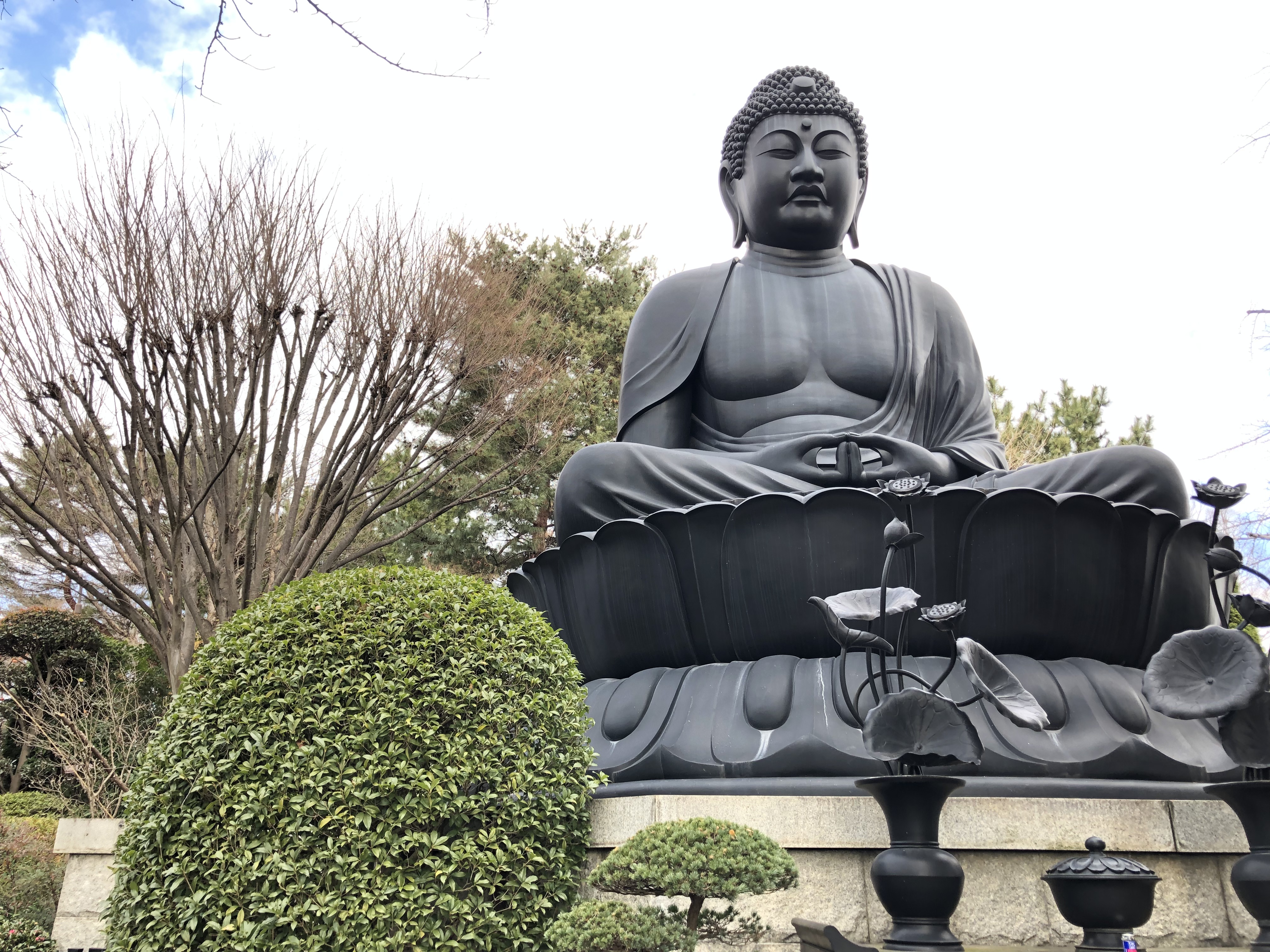
Jorenji Temple is a beautifully landscaped sanctuary that houses Japan’s third largest bronze Buddha, sitting tall at 12.5 metres. Within its walls, I encounter the fearsome King of Hell, also known as Enma-raja, along with the ten Judges of Hell, and Datsue-ba, the old woman who strips the clothing off the dead.
As I stand before the Great Buddha of Tokyo, I am struck by its powerful presence. Looking up at the Buddha’s face, I feel a sense of calm wash over me, and the placement of its head, tilted slightly forward, allows me to feel a deep connection with the statue as I meditate. In this moment, I am enveloped in the Buddha’s freedom from distracting thoughts, and I am filled with a sense of peace and enlightenment.
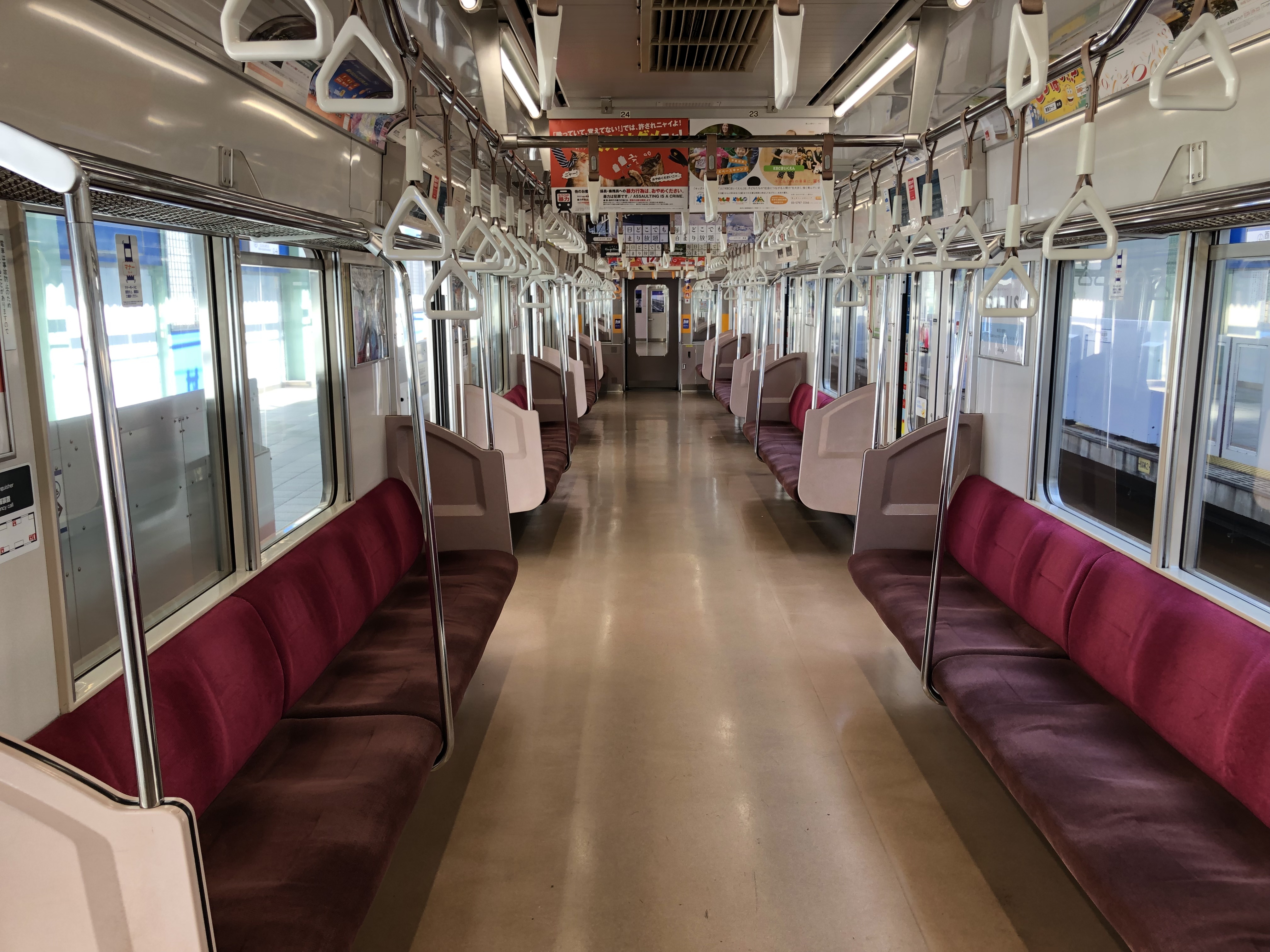
As I make my way back to the train station, passing Akatsuka Park along the way, I board the Mita Line train bound for Sugamo. The train is eerily quiet, its emptiness amplifying the sense of solitude.
As I sit on the train, surrounded by nothing but empty seats and silence, I attempt to pass the time by flipping through the pages of my copy of Tokyo Sewerage News.
During the reign of Tokugawa Tsunayoshi, the fifth shogun of the Tokugawa shogunate, a ban on the eating of meat and the killing of animals was enacted in Japan. This ban was part of a series of laws and regulations related to animal welfare that were put in place during Tsunayoshi’s reign. Tsunayoshi was known for his strong interest in animals, particularly dogs, and is often referred to as the “Dog Shogun” due to his efforts to protect and care for dogs during his time as shogun.
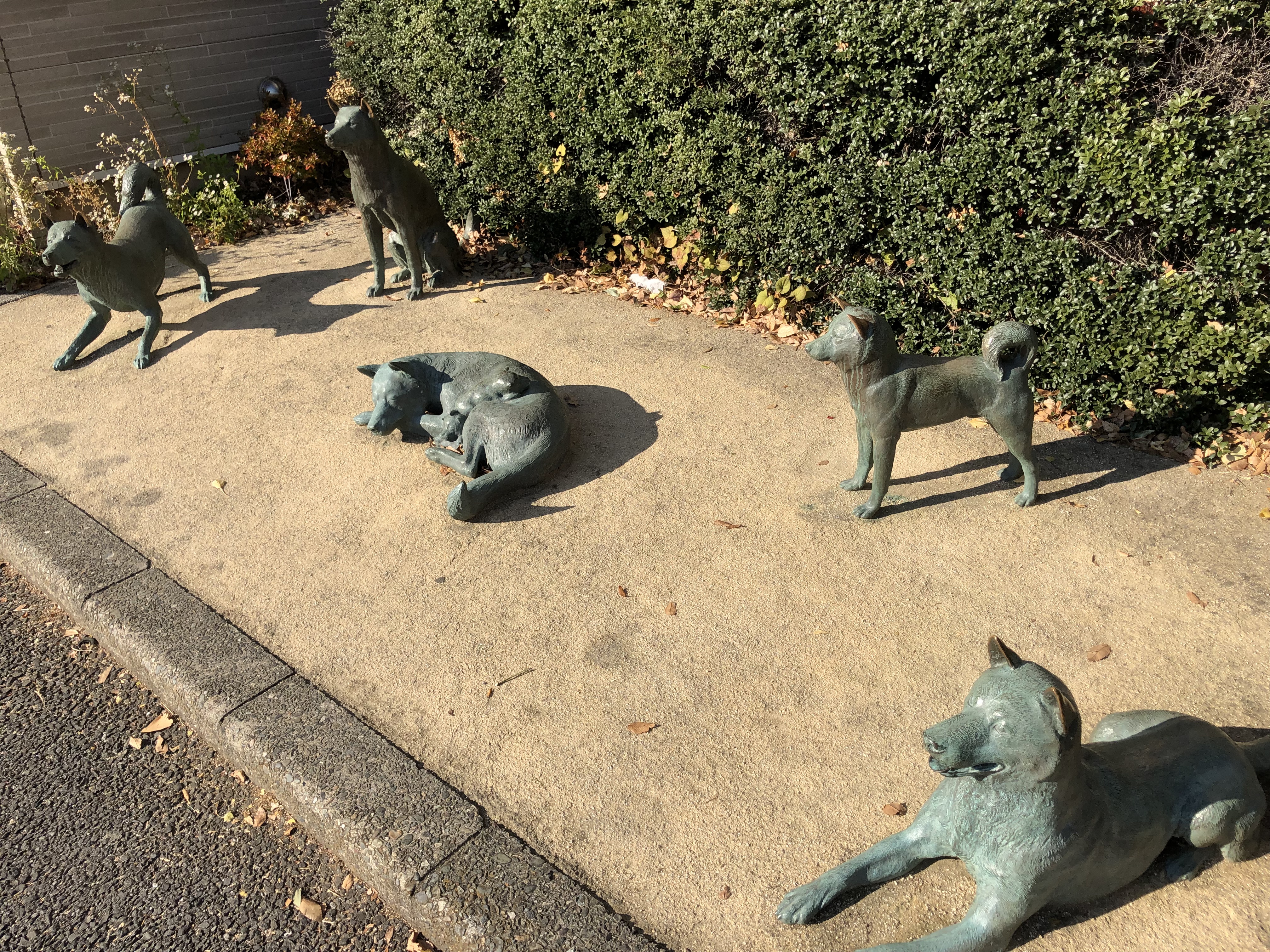
One aspect of Tsunayoshi’s efforts to protect dogs was the creation of a large sanctuary for them in the area where Nakano Station now stands. It is here that I find many statues of dogs. The ban on eating meat and killing animals was likely intended to protect and care for dogs specifically, as they were considered sacred animals in Japan at the time. Strangely, the ban did not apply to birds.
This interpretation of the ban led Buddhists in Japan to argue that rabbits, which are not birds, should be considered a type of flightless bird and therefore be eligible for consumption. This argument was granted, much to the delight of the Buddhists. This is why the system for counting rabbits and birds in Japanese is the same, and is only used for these animals.
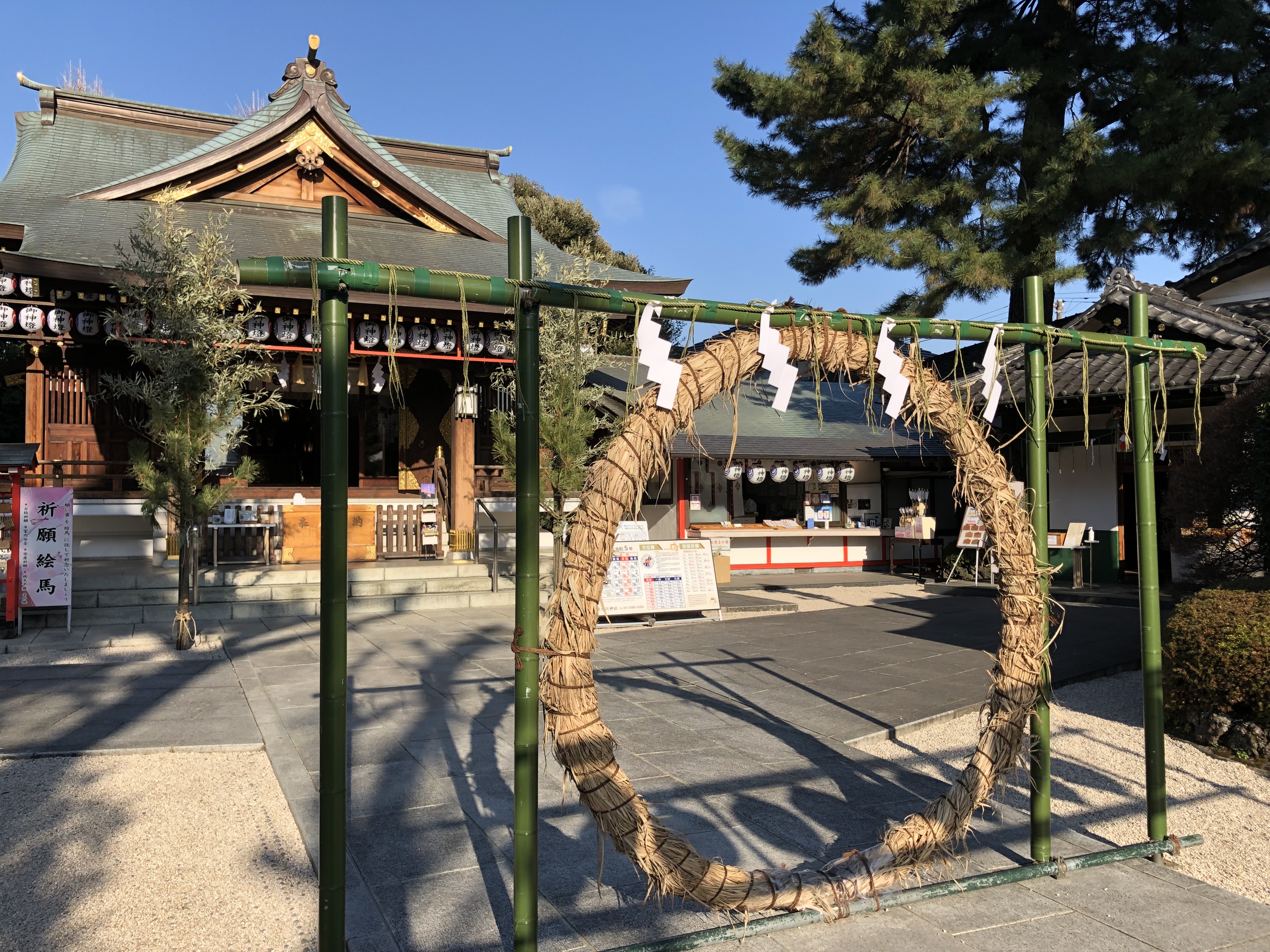
As I continue on my journey, I walk through the bustling shopping and entertainment district of Nakano Broadway. My next destination proves to be a bit more challenging to find, as it is allegedly located somewhere between the Kirin Lemon Sports Centre and Heiwanomori Park. Despite my best efforts, I am unable to locate the Nakano Prison Main Gate “Peace Gate.” It seems that it is either hidden behind a construction site or has been erased from history and replaced by a grassy meadow and a running track. After my search for the old prison proves unsuccessful, I am drawn towards the melodic sounds of a shamisen. As I follow the music, I come upon a peaceful-looking shrine.
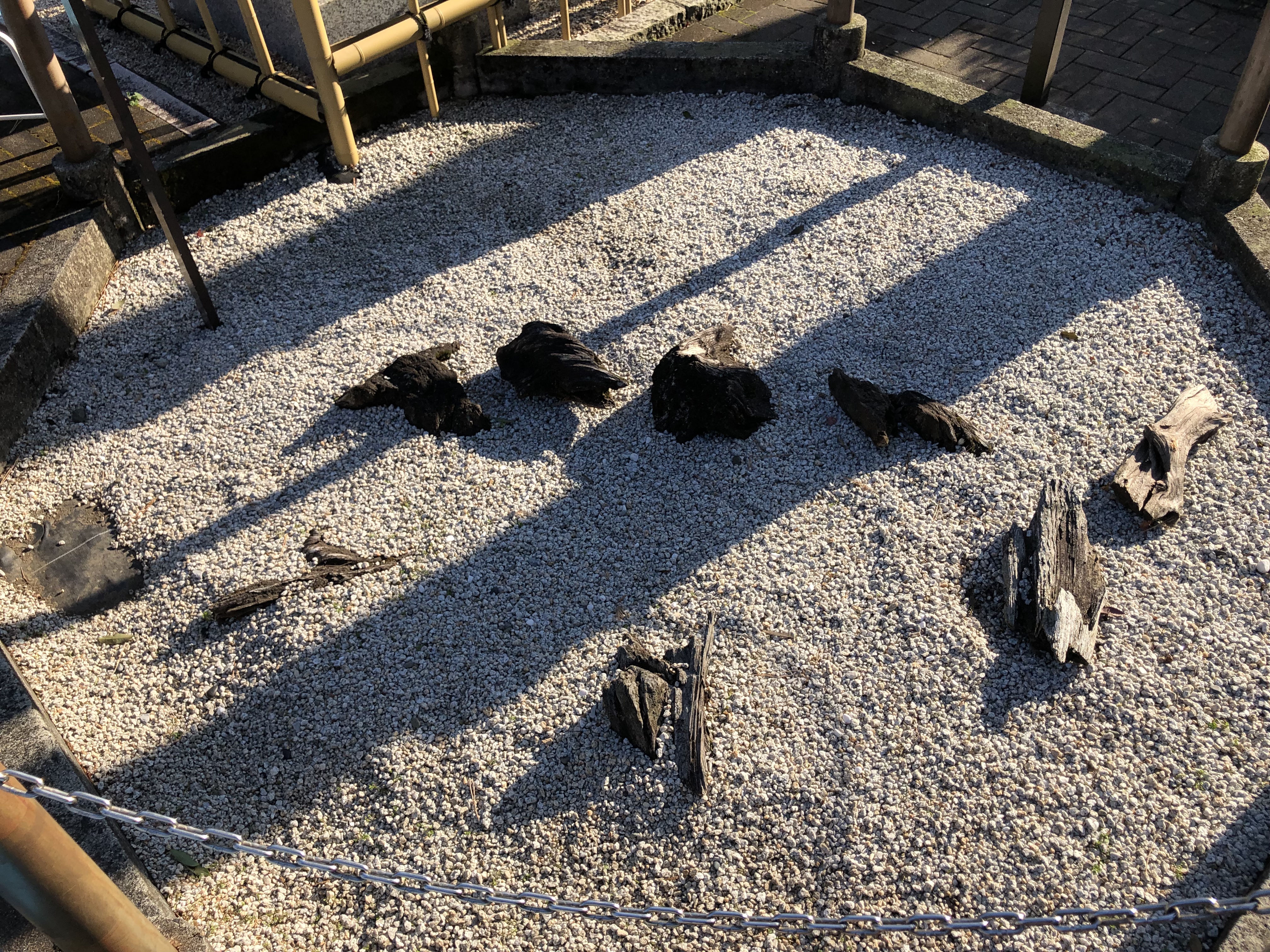
The Numabukuro Hikawa Shrine in Nakano is home to the remains of the Dokan Cedar tree, which once stood tall at a height of 30 metres. This tree passed away in 1944 due to old age, but it was a significant and beloved part of the community for centuries. The Dokan Cedar tree, also known as the Dokanzakura, was named after its owner, Dokan Ota, who planted it in the late 16th century. It was considered a natural monument and was protected by the city of Nakano.
The Dokan Cedar tree was known for its impressive size, with a circumference of approximately 14 metres. It was believed to be over 400 years old, making it one of the oldest trees in the city.
The tree was also believed to have spiritual and supernatural powers and was often visited by people seeking good fortune and blessings. Even though the tree is no longer alive, its remains serve as a poignant reminder of my own mortality and the impermanence of life. The Dokan Cedar tree stood tall for centuries, weathering the passage of time, but eventually, even it could not escape the inevitability of death. The tree’s remains remind me of the fragile and fleeting nature of life, and the profound sorrow that comes with the end of all things.
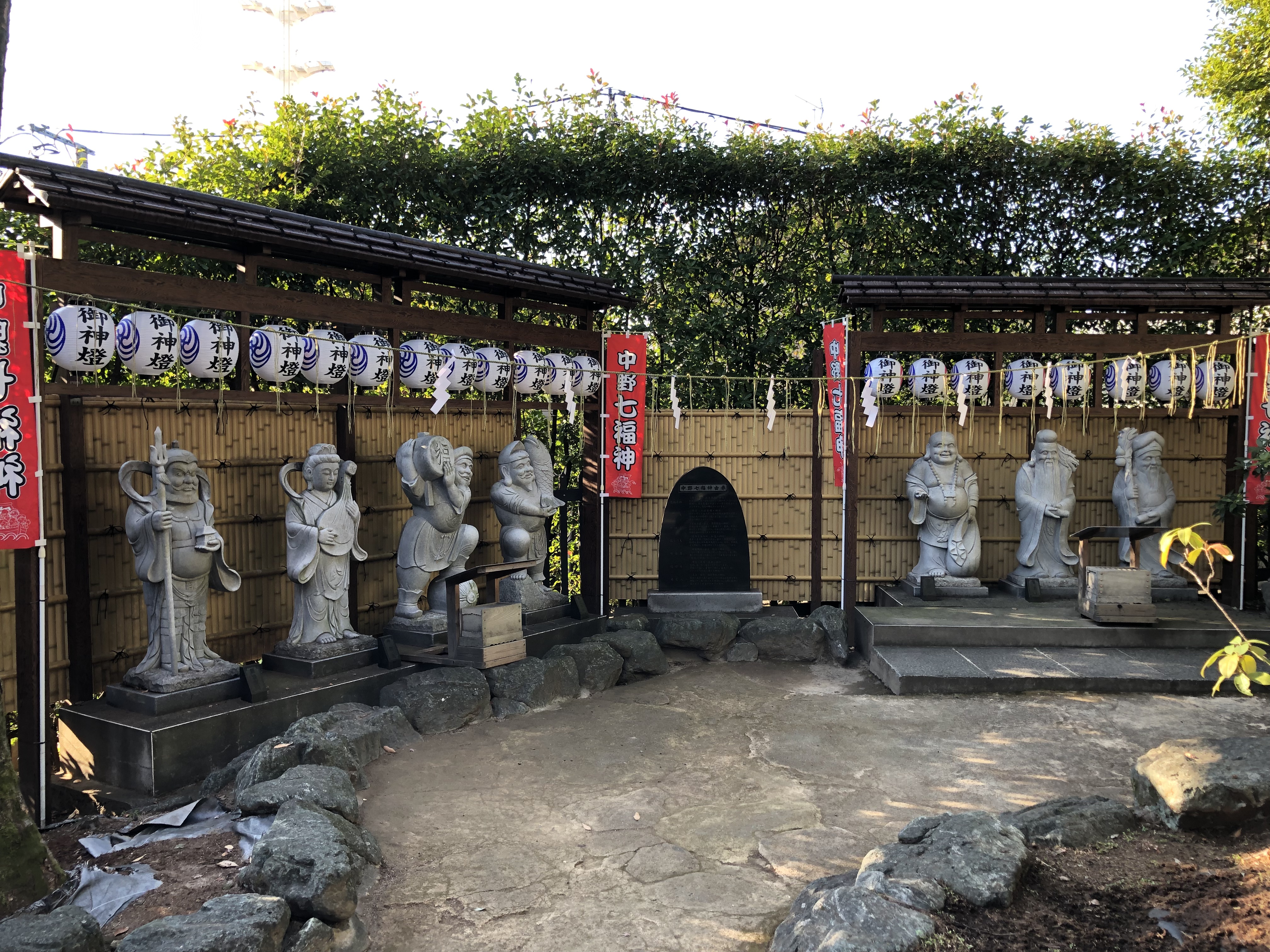
As I continue to explore the peaceful grounds of the shrine, my attention is captured by a group of statues. It is here that I discover all seven of the lucky gods of fortune
For anyone looking to complete the Pilgrimage of the Seven Lucky Gods of Fortune, a traditional cultural practice that involves visiting a series of shrines or temples dedicated to the seven lucky gods in Japan, this shrine offers a convenient shortcut. All seven of the lucky gods, who are revered as bringers of good fortune and prosperity, stand proudly on the shrine’s grounds, making it possible to pay respects to all of them in one place.
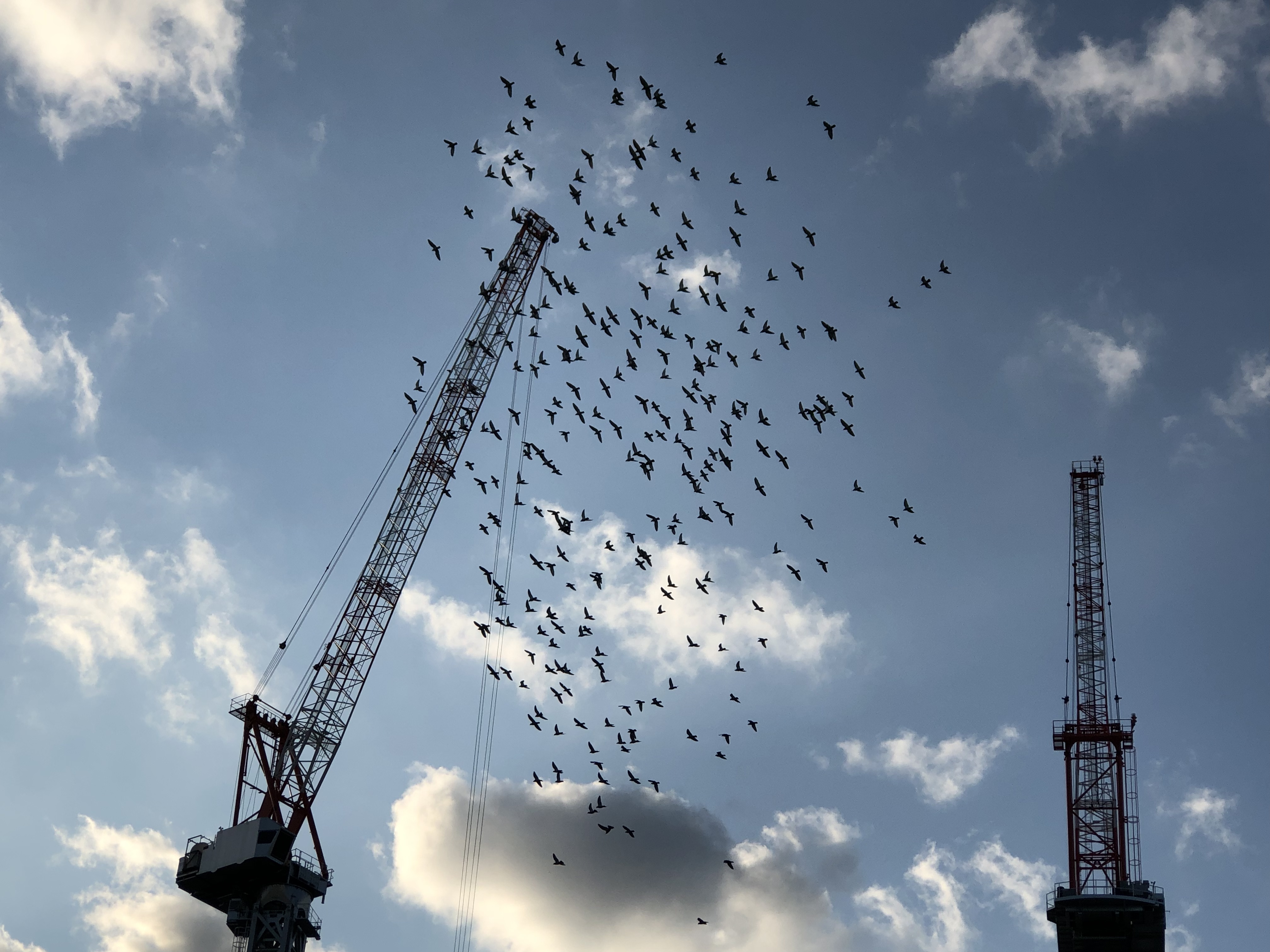
As I make my way back towards the station after a long day of sightseeing, I am pleasantly surprised by the sight of three small groups of birds soaring through the air. They fly in a seemingly chaotic but coordinated manner, their movements fluid and graceful as they weave through the sky. This phenomenon, known as murmuration, is a truly amazing and mesmerising sight. The birds dance and swirl in the air, creating intricate patterns and formations that shift and change suddenly. It’s as if they are performing a beautiful, otherworldly ballet, their wings beating in perfect unison as they move through the air.
I stand in awe, mesmerised by the beauty and grace of this natural spectacle, before considering that they might not be birds at all, but rabbits.

 Japanising.com
You must be logged in to post a comment.