Once Upon a Timeline

Today, I’m in Yoro, a town in Gifu Prefecture.
I’m here to change my destiny.
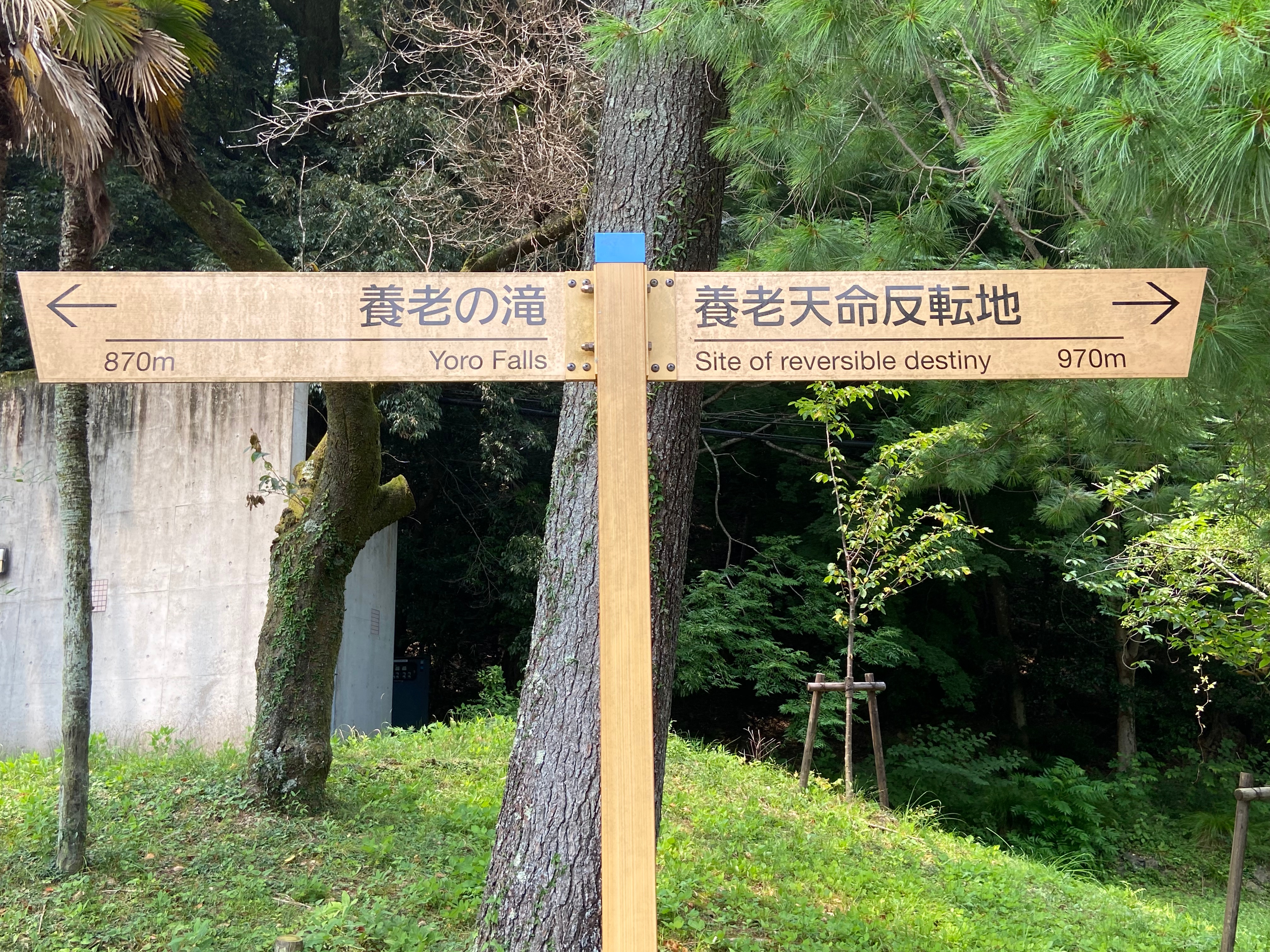
First, I decide to take a thirty-minute stroll along the edge of a cliff to visit a famous waterfall. This waterfall is said to be made entirely of flowing alcohol, specifically Japanese sake.

The story goes that there was once a poor lumberjack with a very old, ill father. On his deathbed, the father requested his favourite Japanese sake, but the lumberjack couldn’t afford it on his meagre income. One day, the son walked the treacherous path near the waterfall.
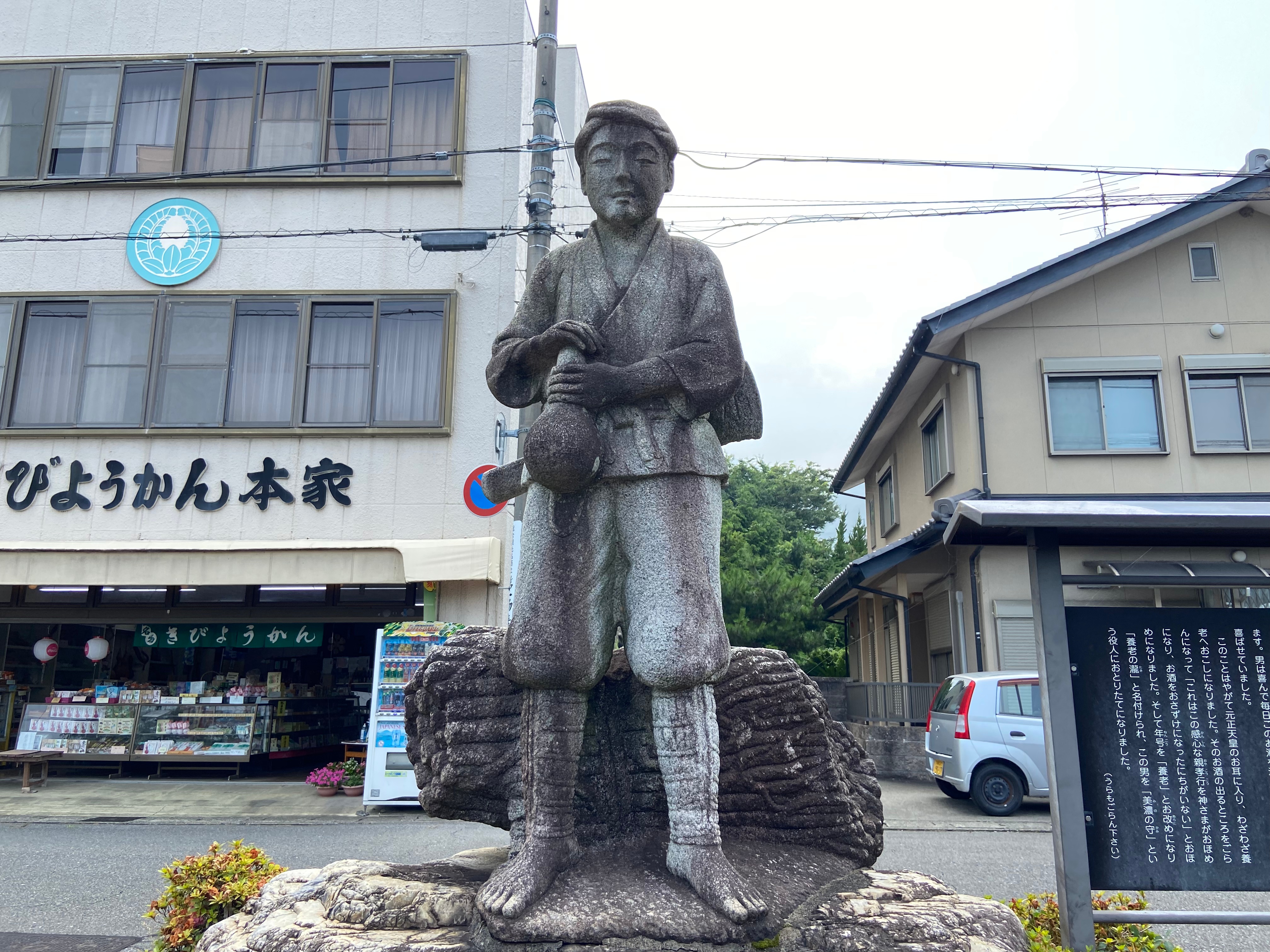
Some say he was out looking for wood for a fire, but he was a woodcutter, so any tree would have sufficed. Others say he was simply thirsty. Regardless, he fell in the woods and definitely made a sound, and after falling and lying on the dirty ground, the poor lumberjack could smell the sweet scent of sake.

It was here that he discovered the water from the waterfall was not water at all.

He returned home with a gourd full of sake, and his father drank it. The transformation was instant, and he miraculously became younger and healthier.

News of this reached the ancient capital of Nara, and Empress Gensho visited the waterfall herself. She was so impressed by the beauty of the area and the magical water that she declared it a sacred site and renamed the area Yoro, meaning elderly care.
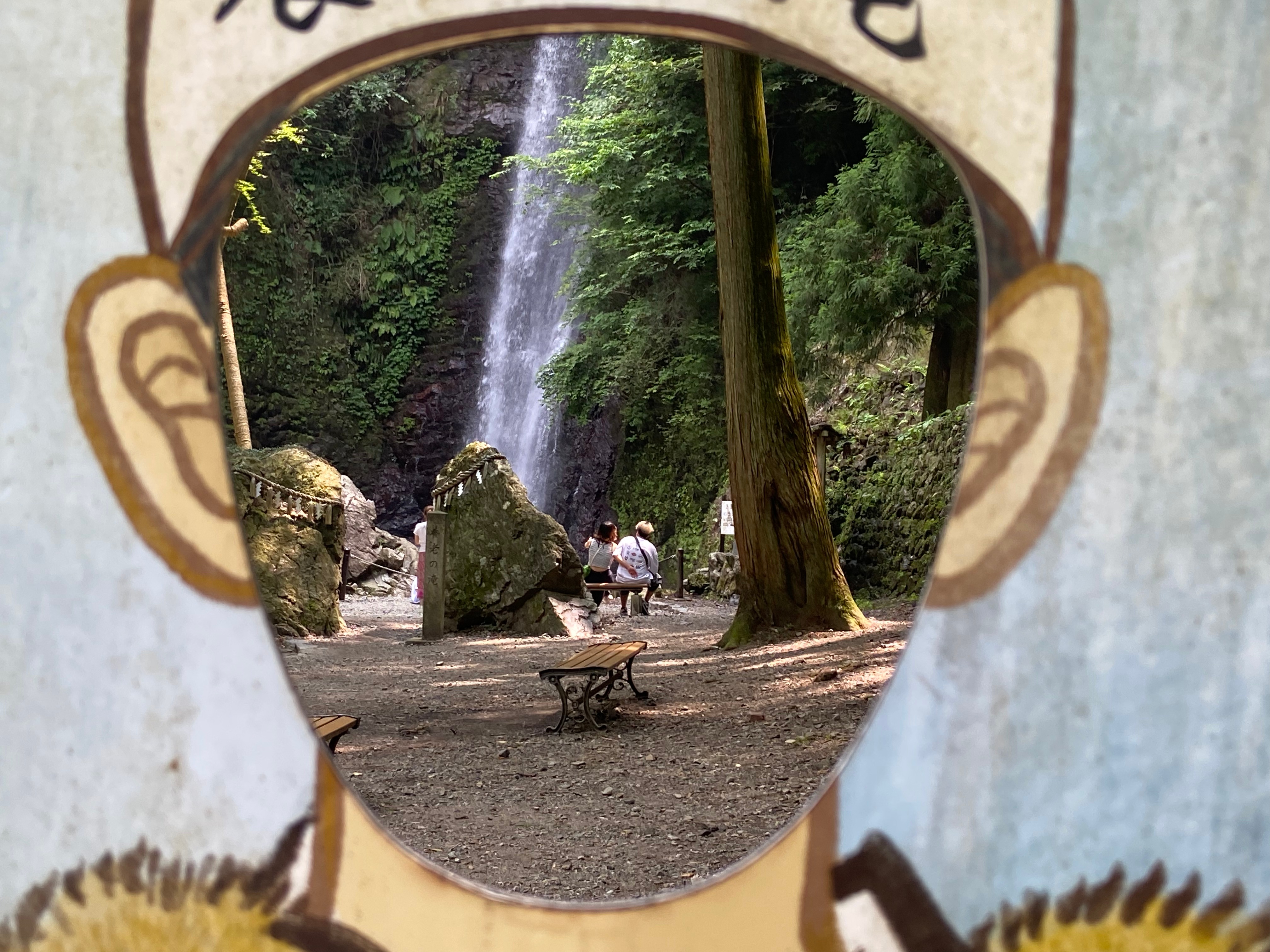
It takes me about an hour to reach the waterfall despite it being advertised as a thirty-minute stroll. It’s a tough hike too, up a mountain. It’s humid; it feels like 40 degrees. I’ve probably sweated more water than I’ve seen flow down the falls. I can only imagine how hard it must have been for the lumberjack, carrying that gourd and heavy axe to the top.

Next to the waterfall, a faded poem engraved on stone in Japanese reads:

“Listening to the flow of Yoro Falls,
One’s heart is healed and refreshed,
Like the pure sake that rejuvenated the old man,
Flowing eternally, blessing those who visit.”
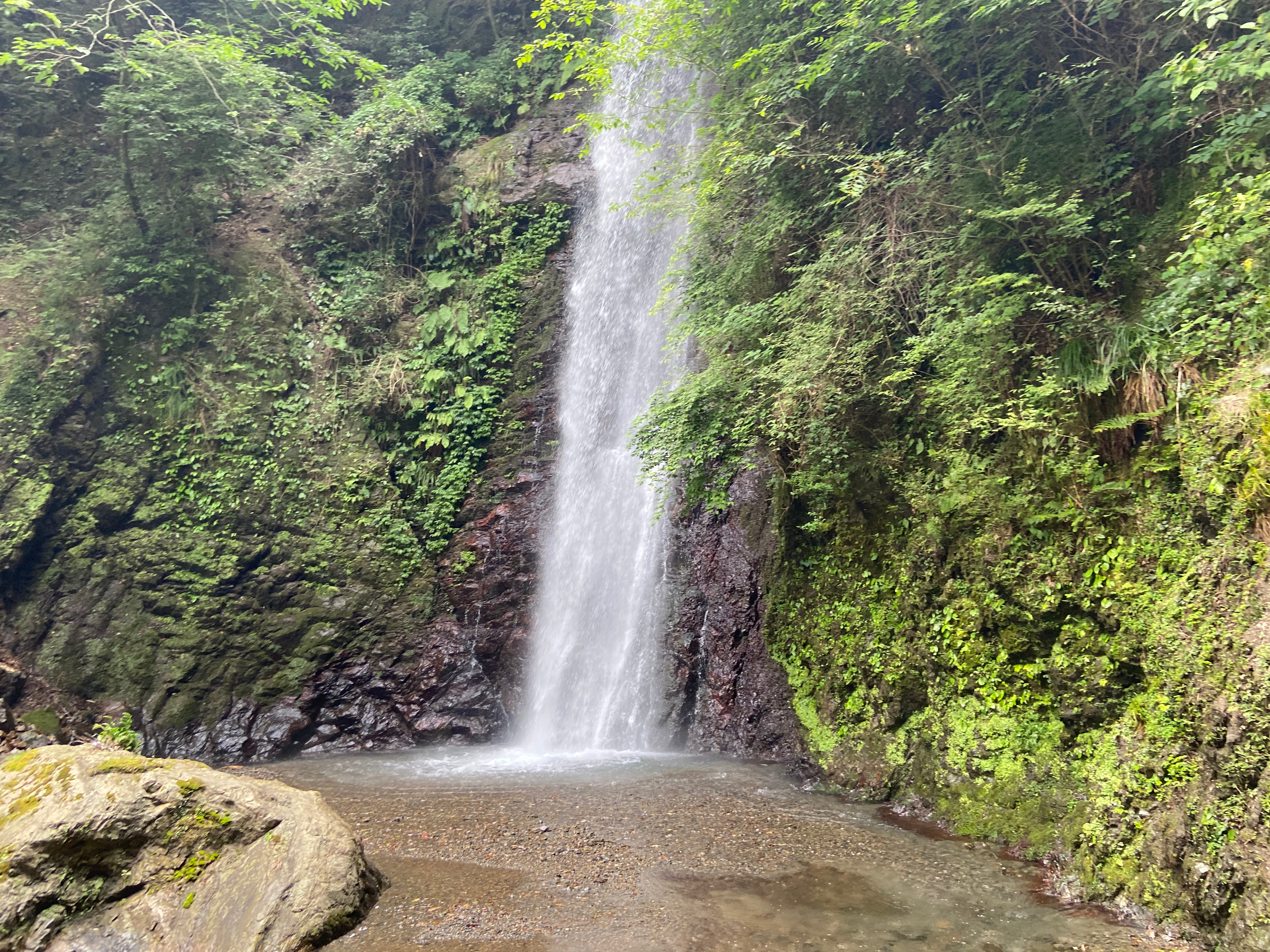
I stand looking at the waterfall for a time, enveloped in tranquillity. I think about water flowing down a river, following a predestined path. It cascades over the falls, flows further south, and meets a tributary, where its path diverges and its destination shifts, a choice not made but followed.

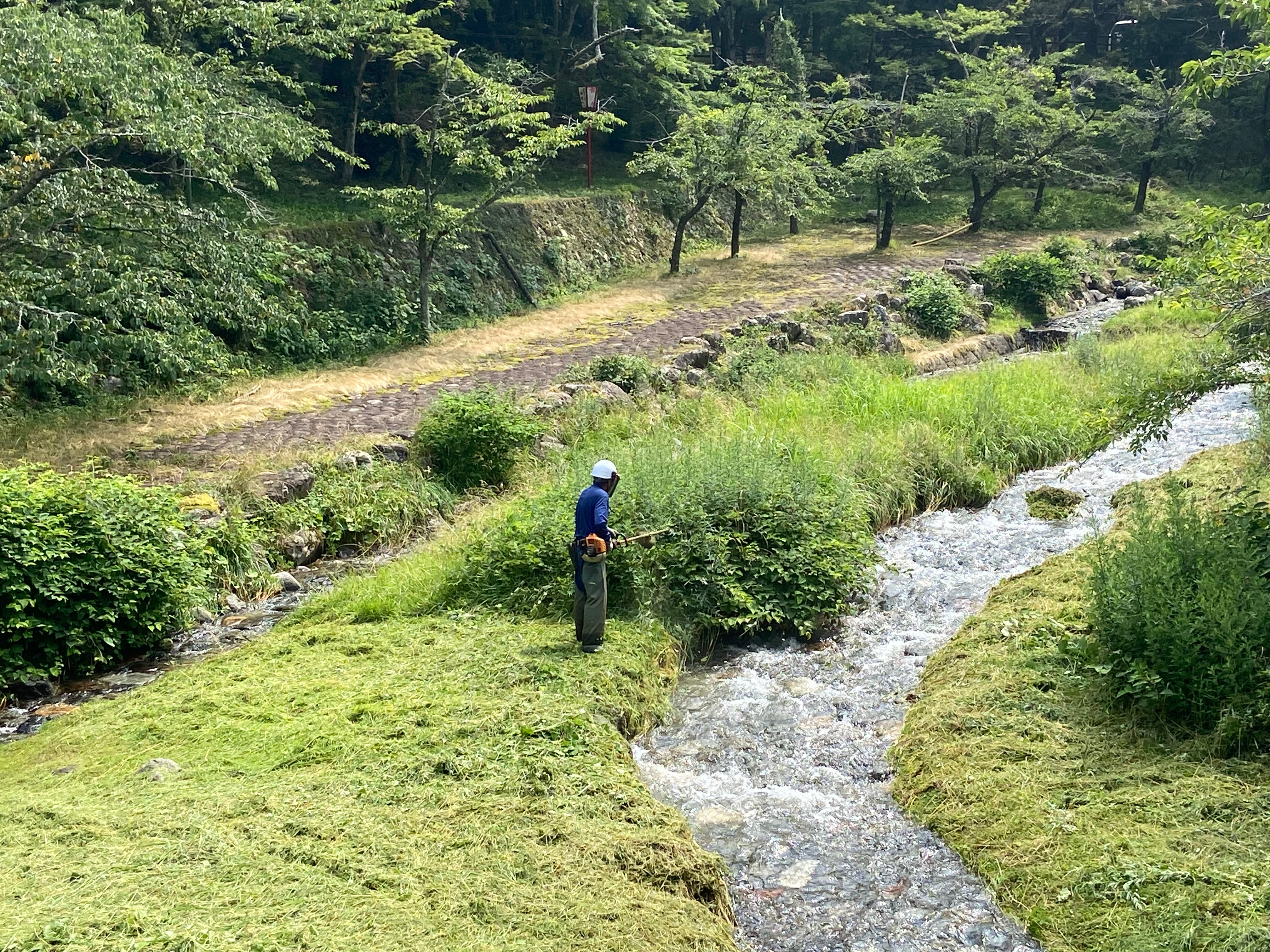
Somewhere, after leaving Yoro Falls, a butterfly shivers against the wind. At the bottom of the waterfall, the tranquillity ends and is swamped by the sound of a man with a grass strimmer.
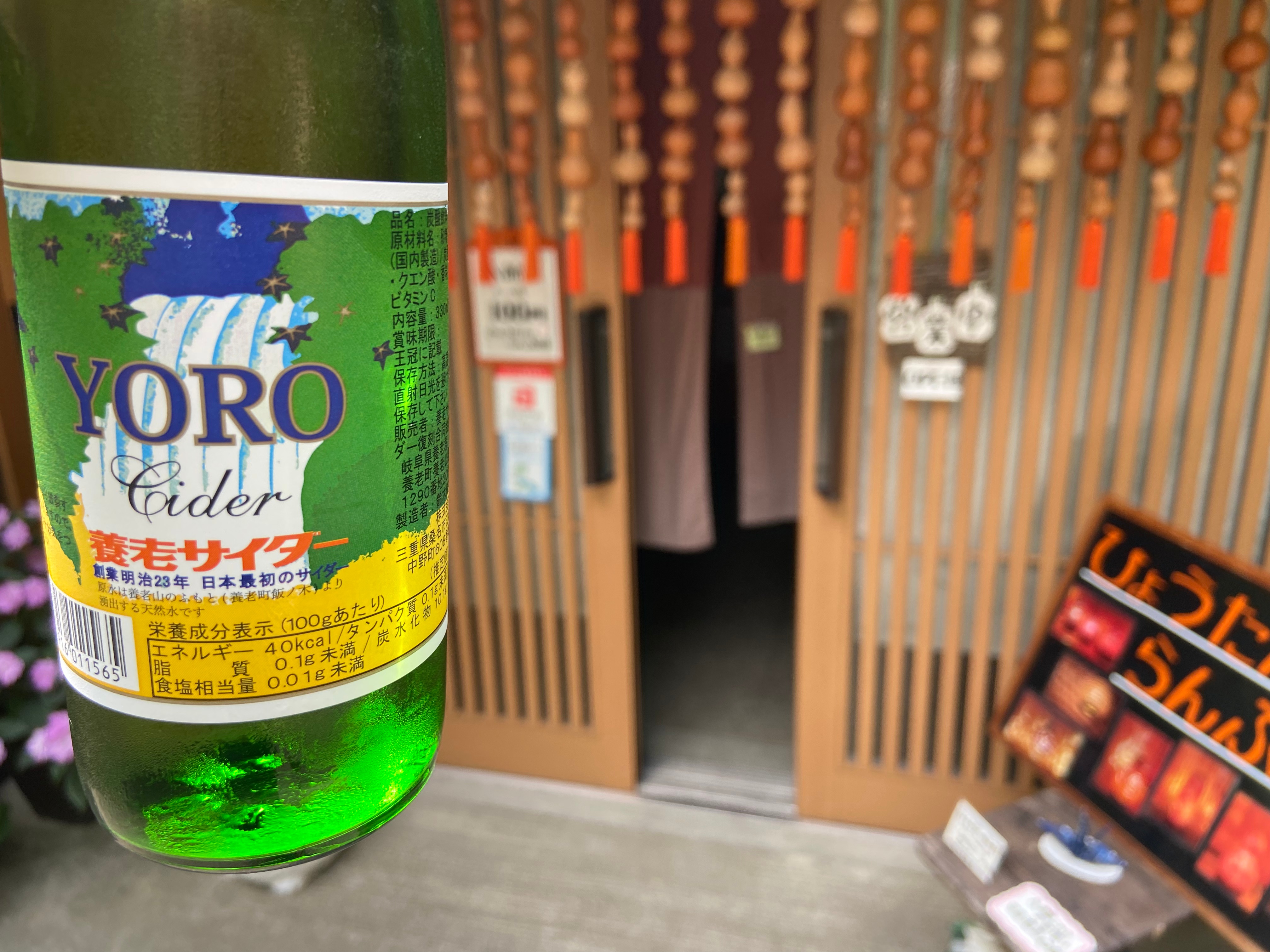
I stumble upon a small souvenir shop selling bottles of carbonated cider made with the magical sake water. The cider tastes delicious. Unlike in England, cider in Japan is a soft drink, so despite the falls apparently being made of alcohol, this drink somehow contains none.

I leave with a healed heart, feeling blessed. Eternally refreshed. Next to the small shop is the Yoro Gourd Museum. I look at a few gourds made into artwork and lamps before moving on.
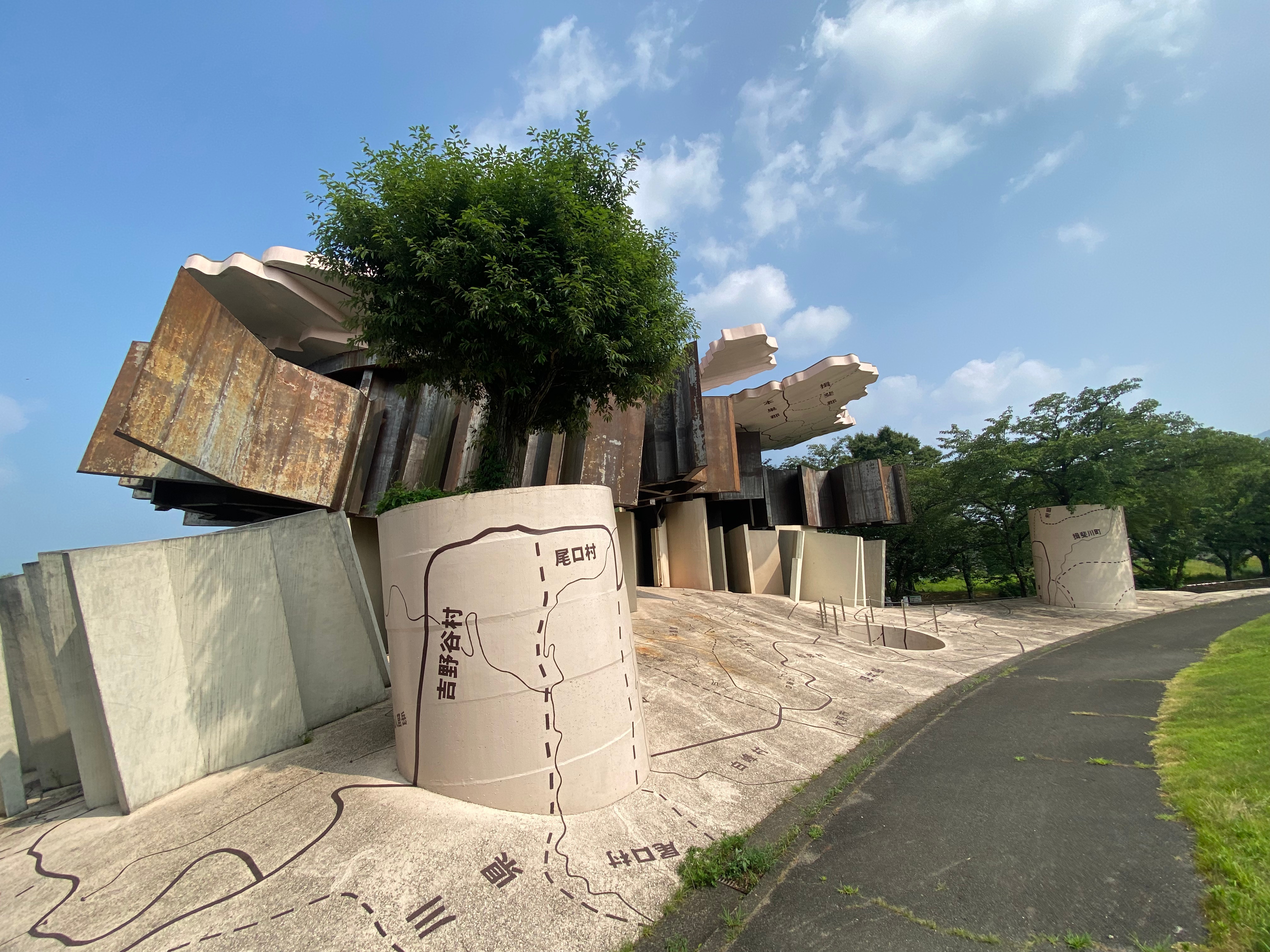
My final stop today is within Yoro Park, a place known as the Site of Reversible Destiny. A massive outdoor interactive art park dreamed up by Shusaku Arakawa.

It’s quite bizarre, funny, and downright unusual. There’s a house that is a road and a road that is a house. There’s a nostalgia generator, a few mazes, and some piles of things that I don’t even understand.
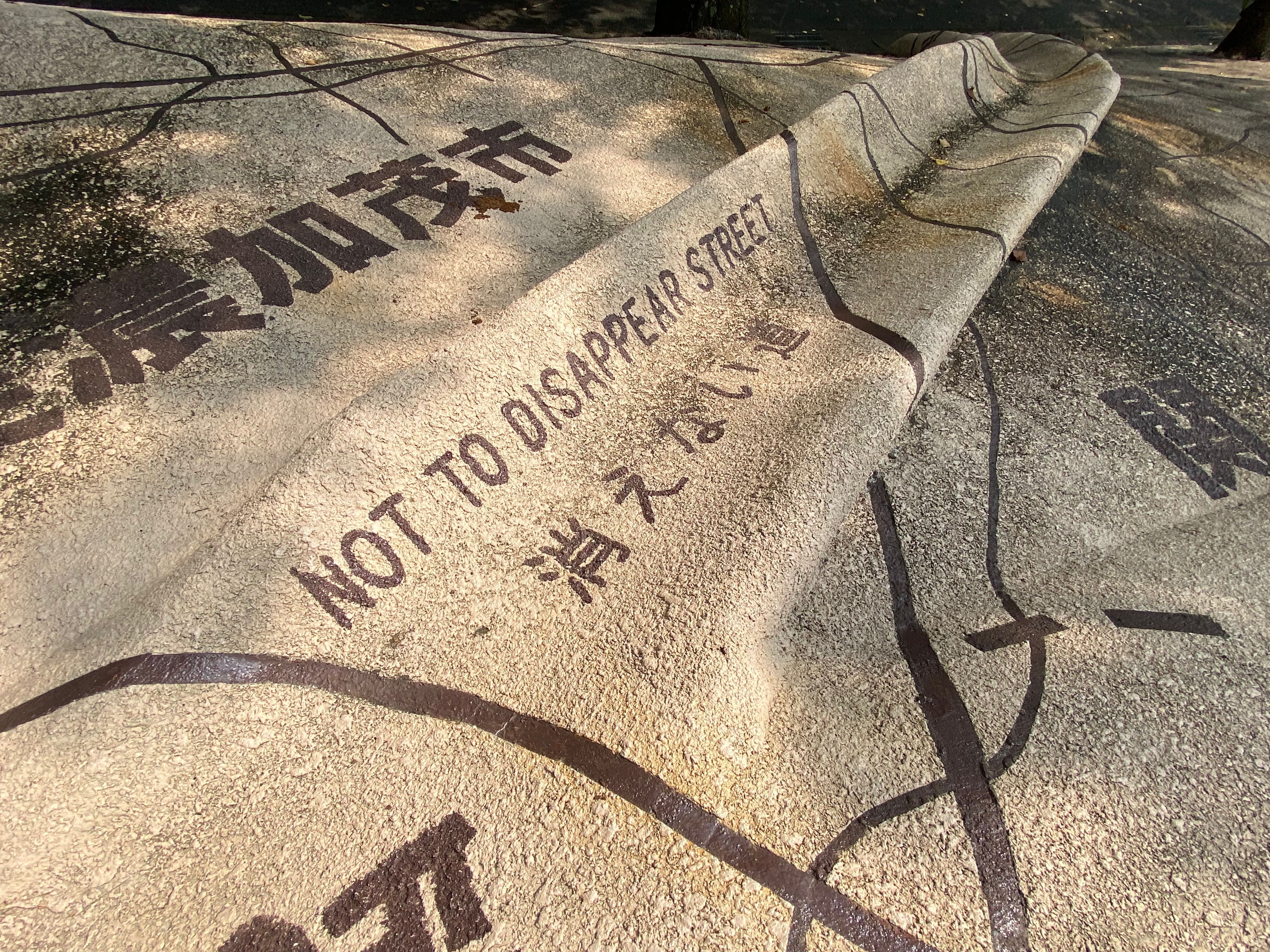
I pass Not To Disappear Street, the Gate of Non-Dying, and an area known as Geographic Ghost. I climb over the Zone of Clearest Confusion, leave through the Trajectory Membrane Gate, before getting lost in the multicolour of Destiny House.

Shusaku Arakawa was obsessed with the idea of death and destiny. He built this site with his wife, Madeline Gins, as a challenge to mortality itself. That’s the point of the Site of Reversible Destiny: to confuse your soul and reroute your path. When Arakawa died in 2010, his wife said, “This mortality thing is bad news.”
With fate as mutable as the weather, or the seeds of a dandelion, you blow away, only to take root in unexpected soil. My destiny begins to unravel. The sun still rises in the morning and sets in the west, but the days no longer feel the same. Each moment becomes a whispered echo of a choice that altered everything, carried on a timeless breeze.

The concept of a multiverse unfolds like a kaleidoscope of infinite reflections, where certainty and uncertainty intertwine like vines in an ancient forest, tangling into something that resembles fate.

Yet, if every possible outcome and path exists, there must also be a universe where the notion of such multiverses is impossible. It is here that we find ourselves staring into the paradoxical abyss.

Sweeping aside the contradiction of parallel worlds, it is on the train that I ponder the existence of a universe where I do not exist. As the train changes track to a branching line, the landscape blurs past, indifferent to my absence. My reflection in the window shimmers, quantum-thin.

For a moment, I am here and not here, observed and unobserved, a wave function waiting to collapse. I step off the train. I step into the world. And the world, impossibly, steps into me.
The Curious Case of Chocolate Button

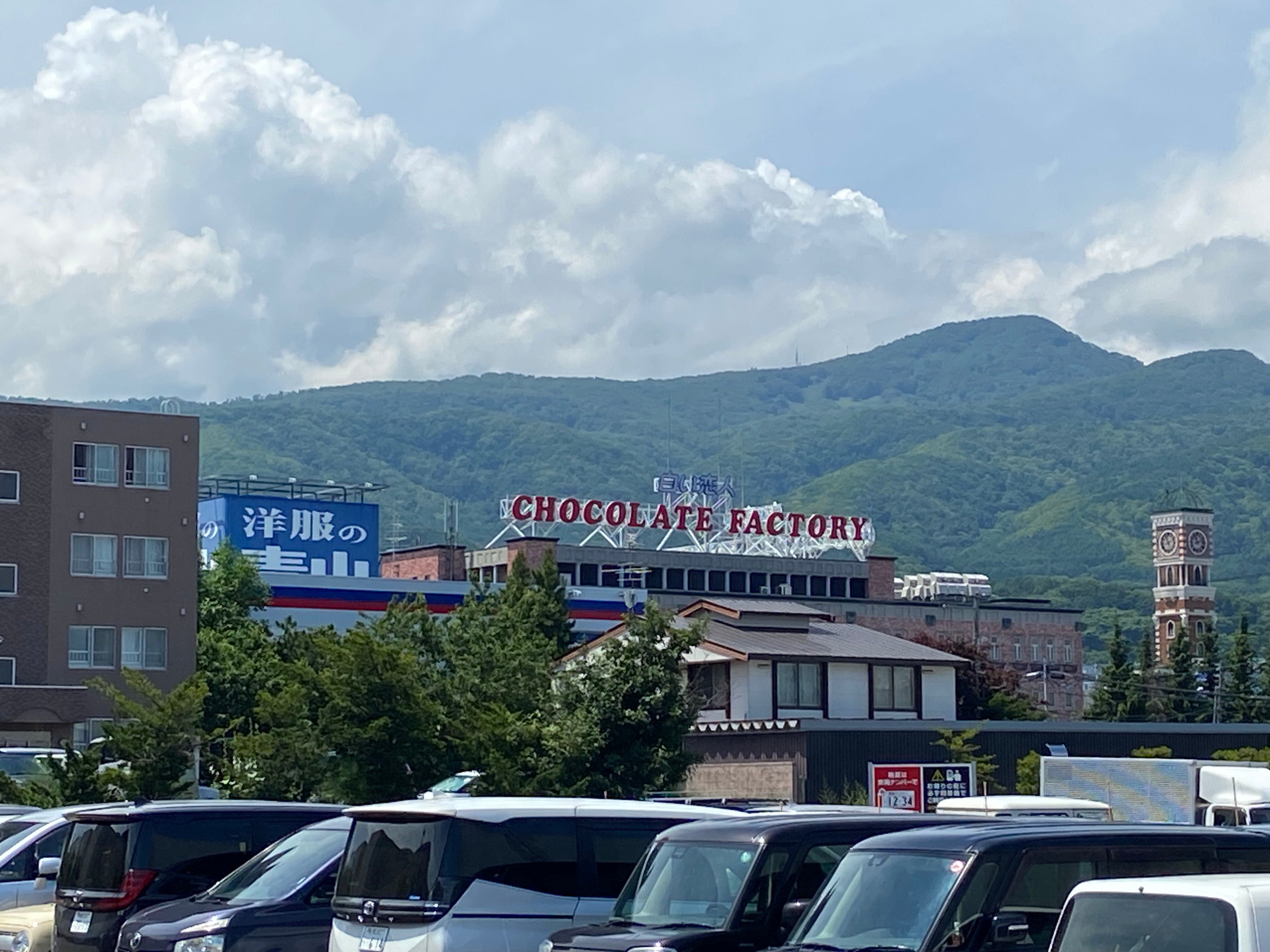
My day begins with a visit to a chocolate factory. Luckily, this chocolate factory is more a museum of chocolate facts than a factory made of chocolate, which, in 30-degree heat, would be somewhat messy. I’m still in Hokkaido, so while it’s hot, the humidity is reasonably low.

Today marks the 30th anniversary of Shiroi Koibito Park, a chocolate-themed factory with gardens. The translation of the name is unusual and means White Lover Park. However, the word for dwarf is the similarly spelt kobito, meaning little person, and has been named that way as a cheap pun which we’ll see later.

Entering the park, I buy a ticket (not golden), and receive a small wrapped square containing the exact chocolate that this factory makes; a bit of a spoiler, giving me the final product at the entrance. Inside, everything smells faintly of white chocolate and mild concern. There are a lot of stairs, the sound of cats meowing through speakers, and a room full of video screens telling the story of the factory.

In the quirkily named Time Travel Room, we learn about how this chocolate came about. One of the screens checks to make sure we’ve all been paying attention by offering up a quiz question answered by show of hands. The question is: What is added to chocolate to make it sweet? a) Powdered Milk, b) Powdered Cheese, or c) Powdered Snow?

“Hands up if you said powdered cheese?” says the woman running the tour, as she looks around rather confused. “Nobody said cheese??? How about snow?” It turns out I wasn’t paying attention, but still managed to correctly guess that chocolate can be sweetened by adding powdered milk. Next, we follow some cat prints on the floor up some more steps to the factory.

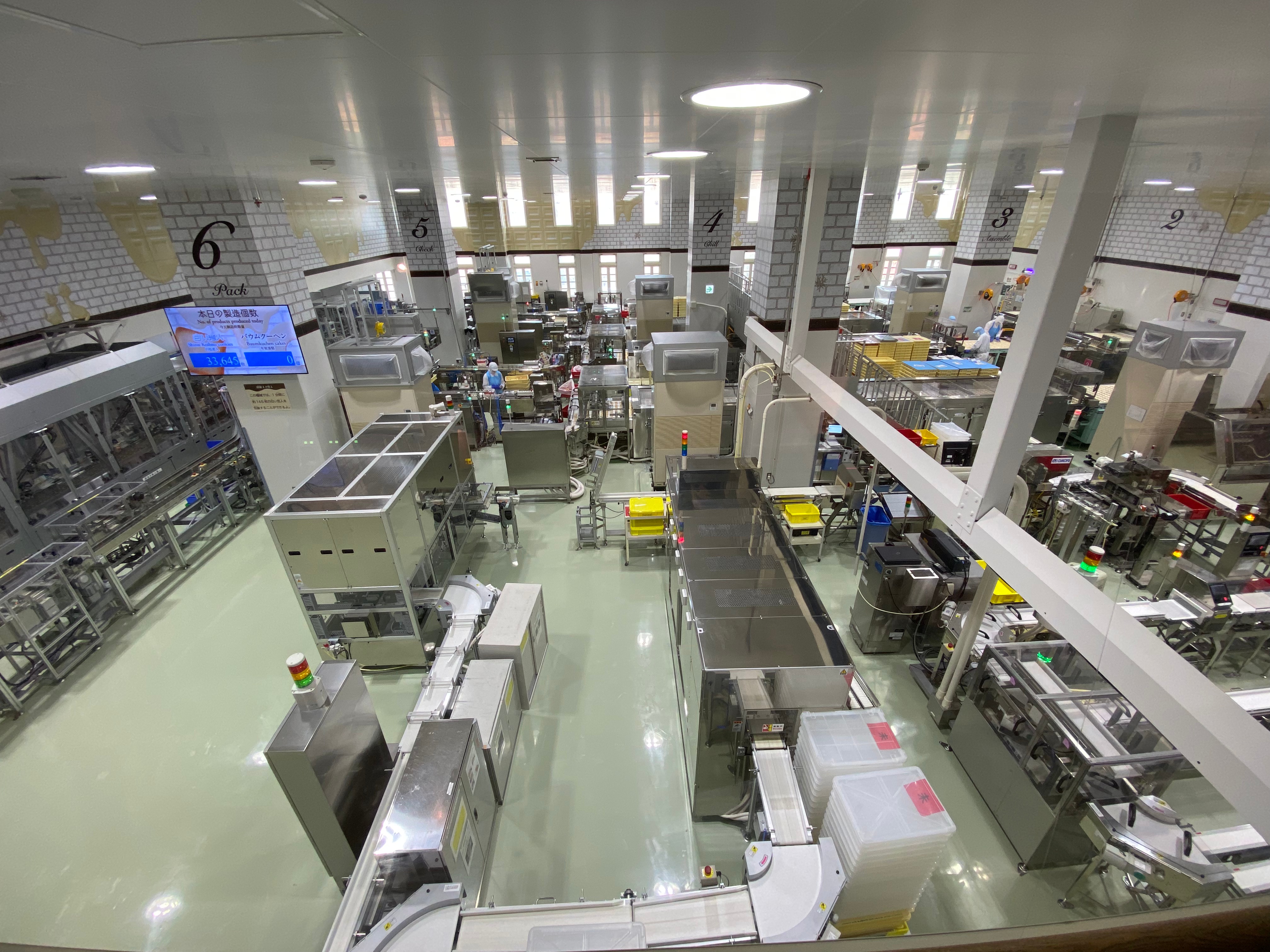
The factory floor is impressive, fully operational, and producing just one product: cookies. There is a counter that displays how many of each product has been produced today: 33,645 Shiroi Koibito cookies; 0 Baumkuchen cakes. I suppose they are using the lack of cakes as a comparison.

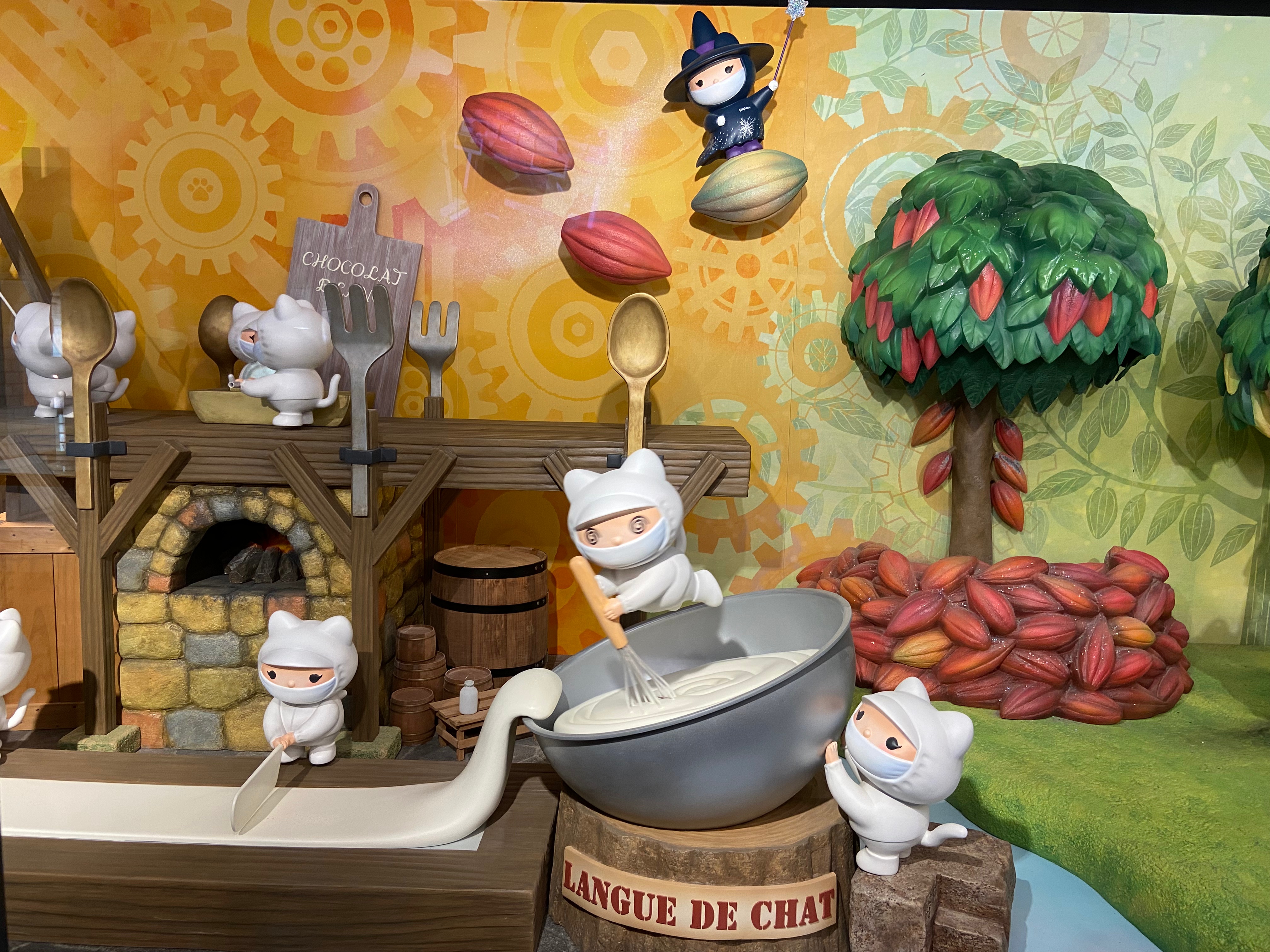
Remember that pun I mentioned? Well, in the next room it is on full display. All good factories have their slaves. Oompa Loompas, Wonkidoodles; but here at Shiroi Koibito Park we have White Dwarfs. They perform all of the tasks here, including milking the cows and creating white chocolate.

After yet more stairs, the sound of cats meowing, and multiple rooms of chocolate-related trinkets, we reach the end. I realise that we never did get an explanation for the cats. I exit through the gift shop and use the restroom. I notice someone has left some chocolate in one of the toilets.

I take the stairs up and into the café, where I decide to take a rest from all the walking and climbing. The factory really needs to invest in an elevator; preferably one made of glass. Speaking of glass, I order a glass of Shiroi Koibito Wine, not sure exactly what to expect.

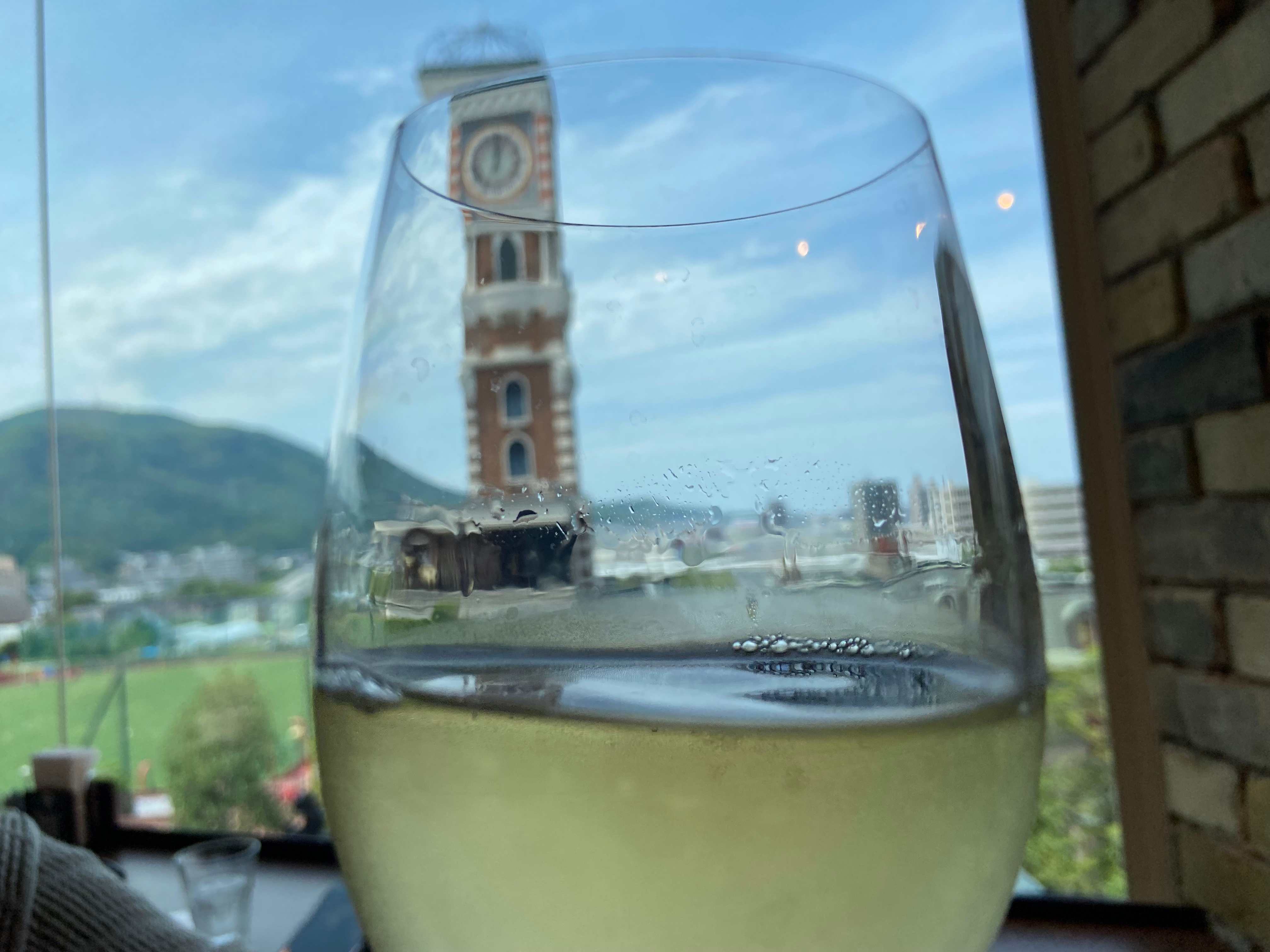
It doesn’t taste like chocolate. It tastes like regret. Perhaps one of the worst wines I’ve ever had the displeasure to drink. I was expecting notes of white chocolate; however, this wine is unfortunately made from Niagara grapes, which are more commonly used for grape juice than wine.

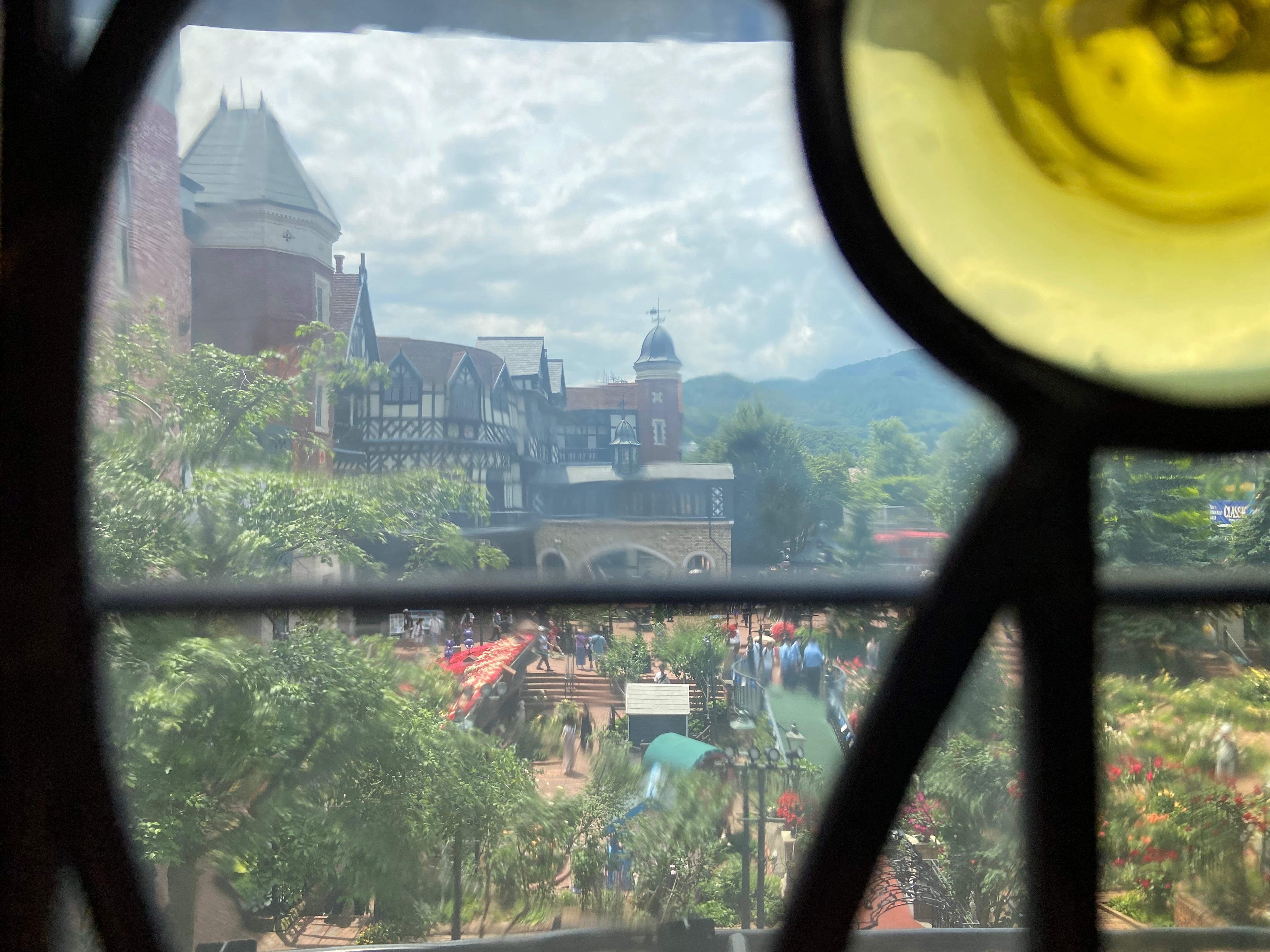
At exactly 12 o’clock, the distant clock tower chimes and opens up, and there’s a little animatronic parade. I slowly sip on my wine, trying not to wince. I watch the White Dwarfs trapped in a loop of mechanised merriment. I finish my glass before finally taking a stroll out through the gardens.

Taking the train back to Sapporo, I get off at Odori Station. The train station is connected to a huge underground shopping complex called Aurora Plaza. I decide to take a stroll through, passing shops selling clothes and souvenir-fit cakes. I also see some T-shirts with terribly translated English: Fun up necessary!

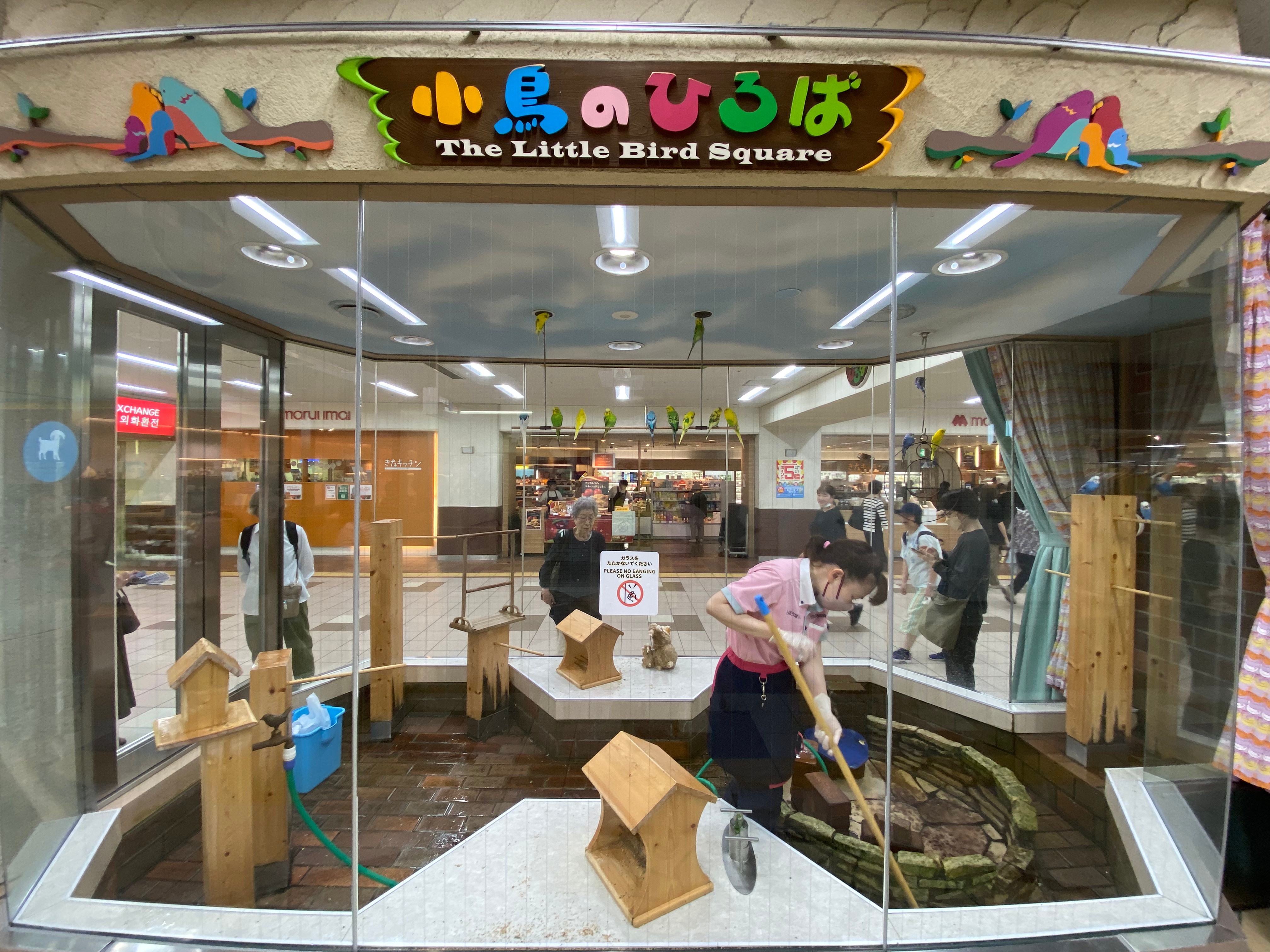
As I continue my stroll, in the distance I hear what sounds like birds chirping excitedly. I then see a sign for ‘Bird Corner’ and decide to see what all the chattering is about. It turns out to be a glasshouse full of parakeets called The Little Bird Square.

There are a couple of blue birds, multiple green birds, and that’s about as good as my knowledge of birds goes, I’m afraid. Although I’m pretty sure keeping them down here in an underground plaza means they will most likely die before they ever see natural light. Credit though, as it does seem that someone at least cleans out the enclosure, and I’m certain that one of the birds did smile at me.

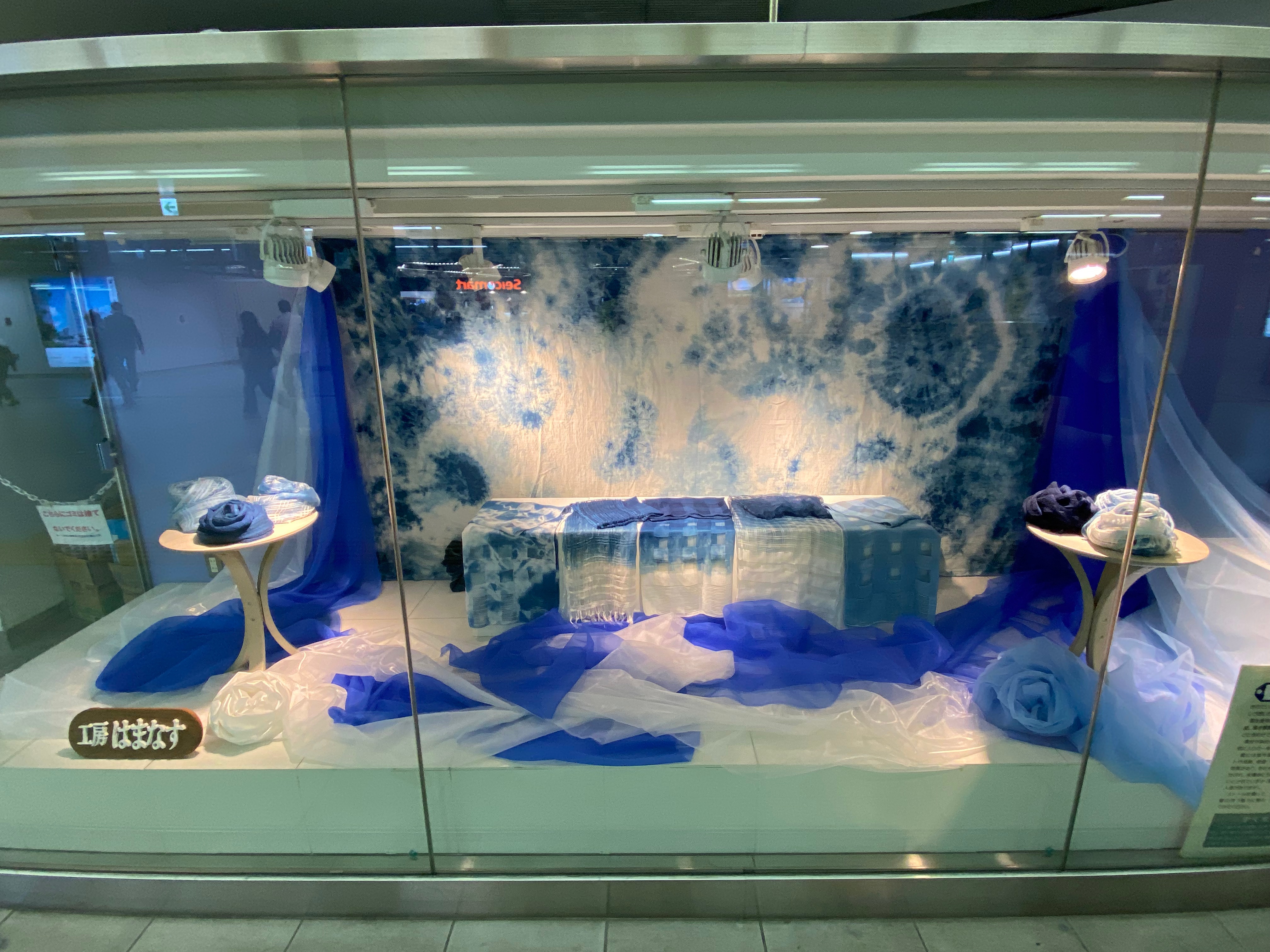
Further along the shopping complex, I stumble once again on a glass enclosure. This one, however, unusually contains scarves. The cloth appears to be well tended to, not the least bit ruffled. I think it’s supposed to look like a sea of clouds, but I can’t be sure. I do know that the scarves aren’t harmed in any way, and none of them seem likely to die anytime soon. They’ve already been dyed indigo!

My final stop for the day is a place called Retro Space Saka Hall. It’s a strange little museum that’s only open for a few hours a day, a couple of days a week, and houses the personal collection of curiosities owned by Kazutaka Saka, an 82-year-old Japanese man.

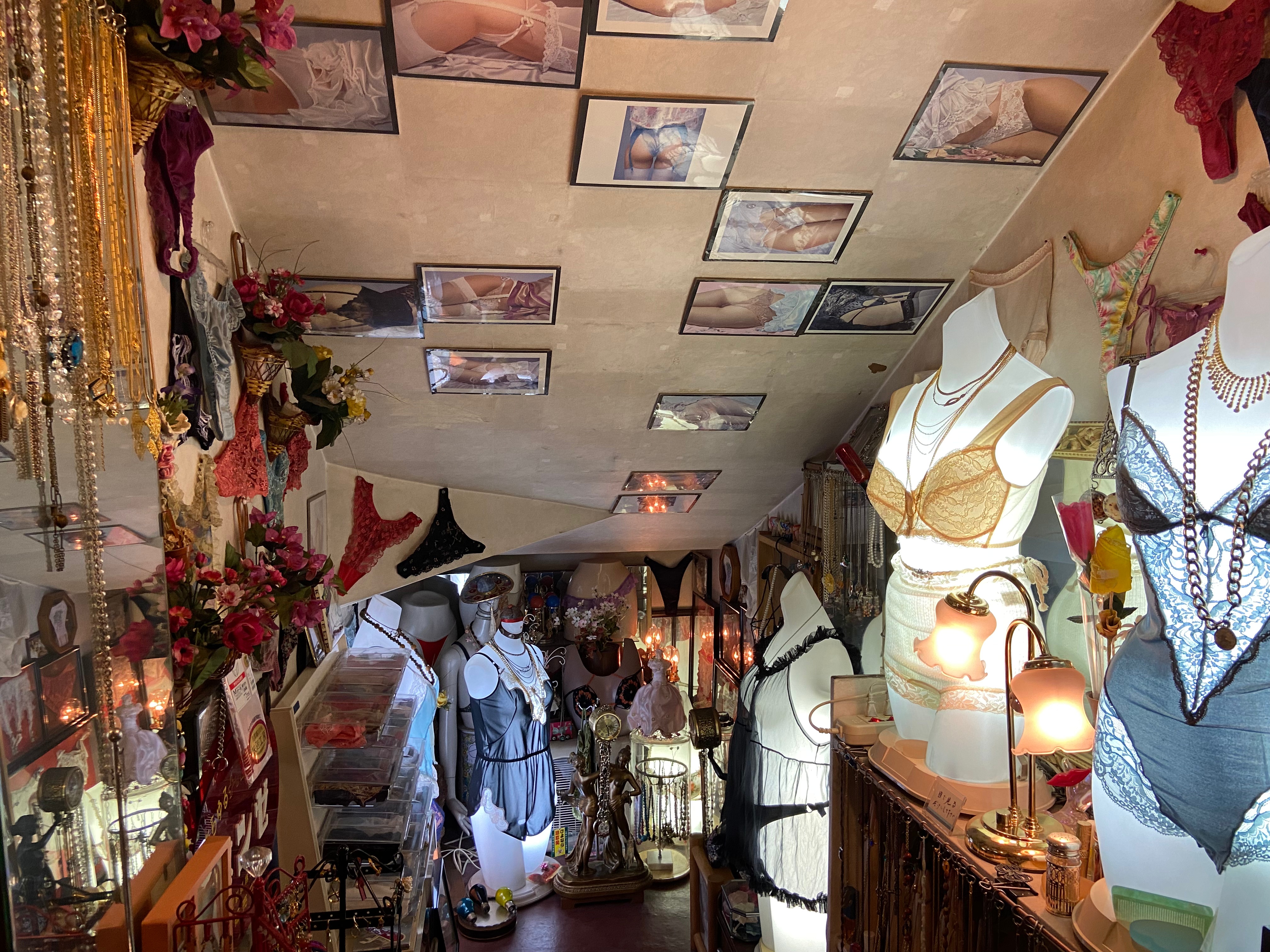
The museum is full of tightly packed shelves in every direction, arranged in sections and side rooms; a very well-organised collection of… well, of things. I don’t know where to look. There are things everywhere. If you can imagine it, Mr. Saka has probably collected it: Showa-era relics, gas masks, a large collection of syringes, musical instruments, a whole section dedicated to Eiffel Tower-shaped whiskey bottles, toys, figurines, bottle caps, buttons, stamps, cigarettes, women’s underwear, and photographs of women wearing underwear…

I begin to wonder whether Mr. Saka started out by collecting pornography and then, over time, began adding other random items like glass beakers and rocking horses to distract from all the images of naked women. Eventually it grew into this sprawling collection of almost one million objects. I don’t mind saying, I wouldn’t fancy having the job of dusting.

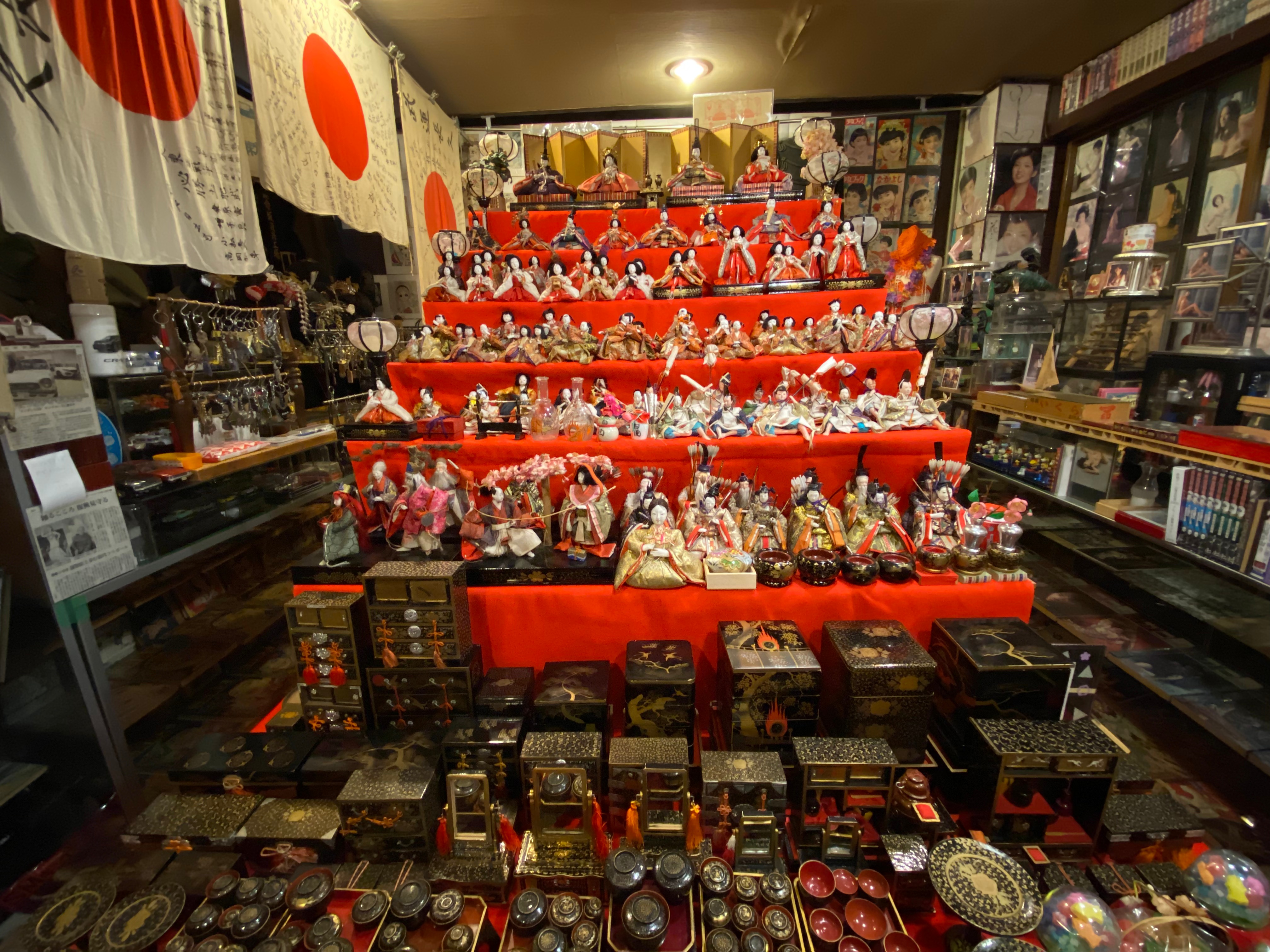
I have another thought as I pass by a wall of photographs of pin-up girls and a big pile of dolls: do other people just come here with stuff they no longer need and leave it behind? I can’t imagine anyone would actually notice the odd addition to the collection.

Just looking at the photograph of the pile of dolls, there’s so much going on in just that one area. Now imagine multiplying that by a hundred; you’ll get a good idea of just how overwhelming Retro Space Saka Hall really is.

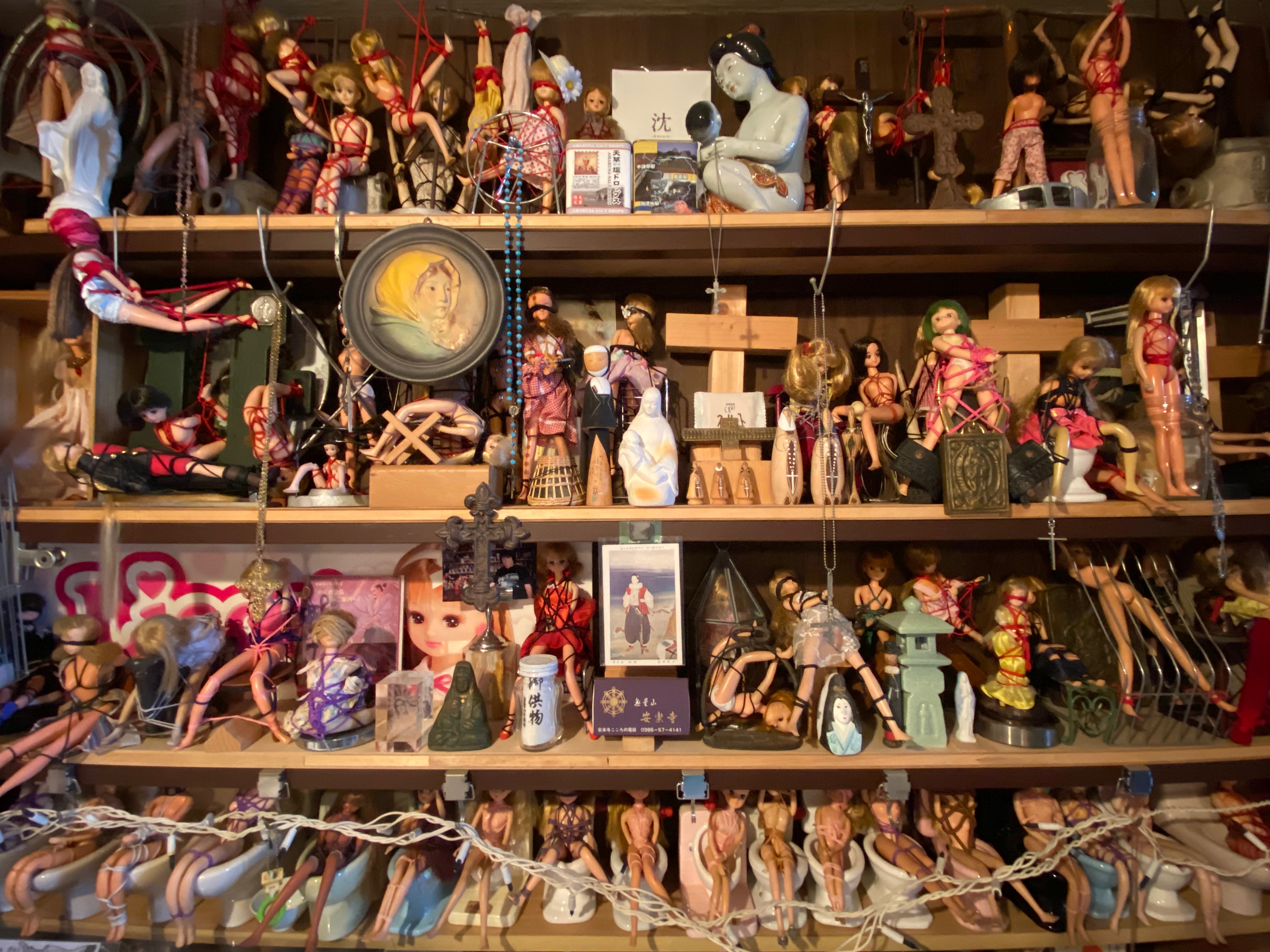
I’m about to leave, heading toward the exit, but decide to take one last look at a shelf to my left. I must have missed it on the way in, overwhelmed on arrival by the treasure trove of everything mixed in with that odd smell of bygone. The shelf I’m standing before features a lot of dolls, tied up with string. The tied-up dolls on the bottom row are neatly arranged, all sitting on plastic toilets.

As I walk back to the train station, I decide that something about Mr. Saka is not quite right. Anyone with an entire shelf dedicated to Eiffel Tower-shaped whiskey bottles has a serious problem.

Thoughtful Rain, Equal Moisture

As part of Hatsumode, it is a longstanding tradition in Japan to visit a temple or shrine during the first three days of the New Year. This involves returning and cremating old amulets, purchasing new ones, having a fortune taken, and making the first prayer of the year. To avoid the crowds, I have chosen to visit a peaceful temple in Shibamata, located in Katsushika Ward. I awake early, the air still cool and filled with the moisture of the early morning dew, and make my way to the temple to begin the new year with a sense of serenity and reverence.

As I approach the temple, I am welcomed by Taishakuten-Sando, a row of traditional Japanese shops flanking a narrow street that leads to the temple. This street and temple survived the bombing of World War II, offering a glimpse into Japan’s history. As I stroll along the 200-metre stretch, the aroma of simmering oden fills the air and I pass shops selling mochi, pancakes, and rice crackers. Taishakuten-Sando serves as the main shopping street for the quaint town of Shibamata.

Upon arriving at Shibamata Taishakuten, I join the short queue of people making their first wish of the New Year. To make a play on words, I have carefully prepared four ten-yen coins and one five-yen coin (totalling ¥45, which is pronounced Shiju-Goen in Japanese, meaning “always lucky”). As I reach the front of the line, I throw in my coins, ring one of the large bells, and follow the customary ritual of bowing twice, clapping twice, and bowing again before praying for nothing at all.

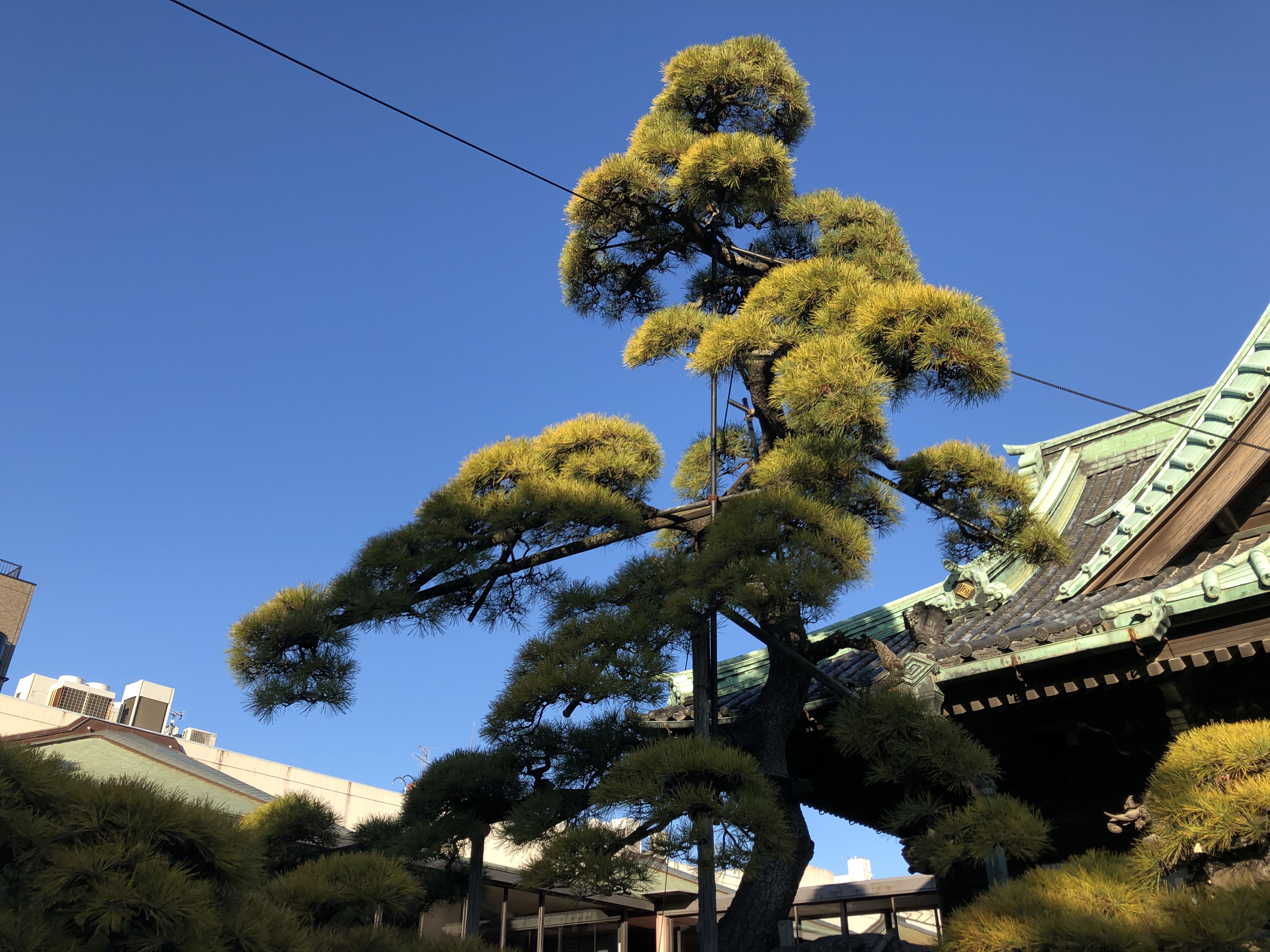
At the temple, there is a large pine tree called Zuiryu-no-Matsu, meaning “dragon of fortune pines.” It towers in front of the main hall and is shaped like a dragon. Its trunk grows straight towards the sky, and its long branches extend north, south, and west. The west branch extends as if the dragon is crawling on its belly on the stone pavement, while the north and south branches spread as if guarding the Taishaku-do Hall. The tree seems to come alive, appearing as a dragon taking flight towards the sky.

The temple was founded in 1629 by a Buddhist monk named Nichiei Shonin, who stopped in Shibamata and, upon discovering a sacred fountain under the grand pine tree, decided to build a hermitage there. The dragon of fortune pines is said to be over 500 years old, stands tall and proud. The Japanese gardens, a later addition in 1926, provide a peaceful and serene atmosphere.

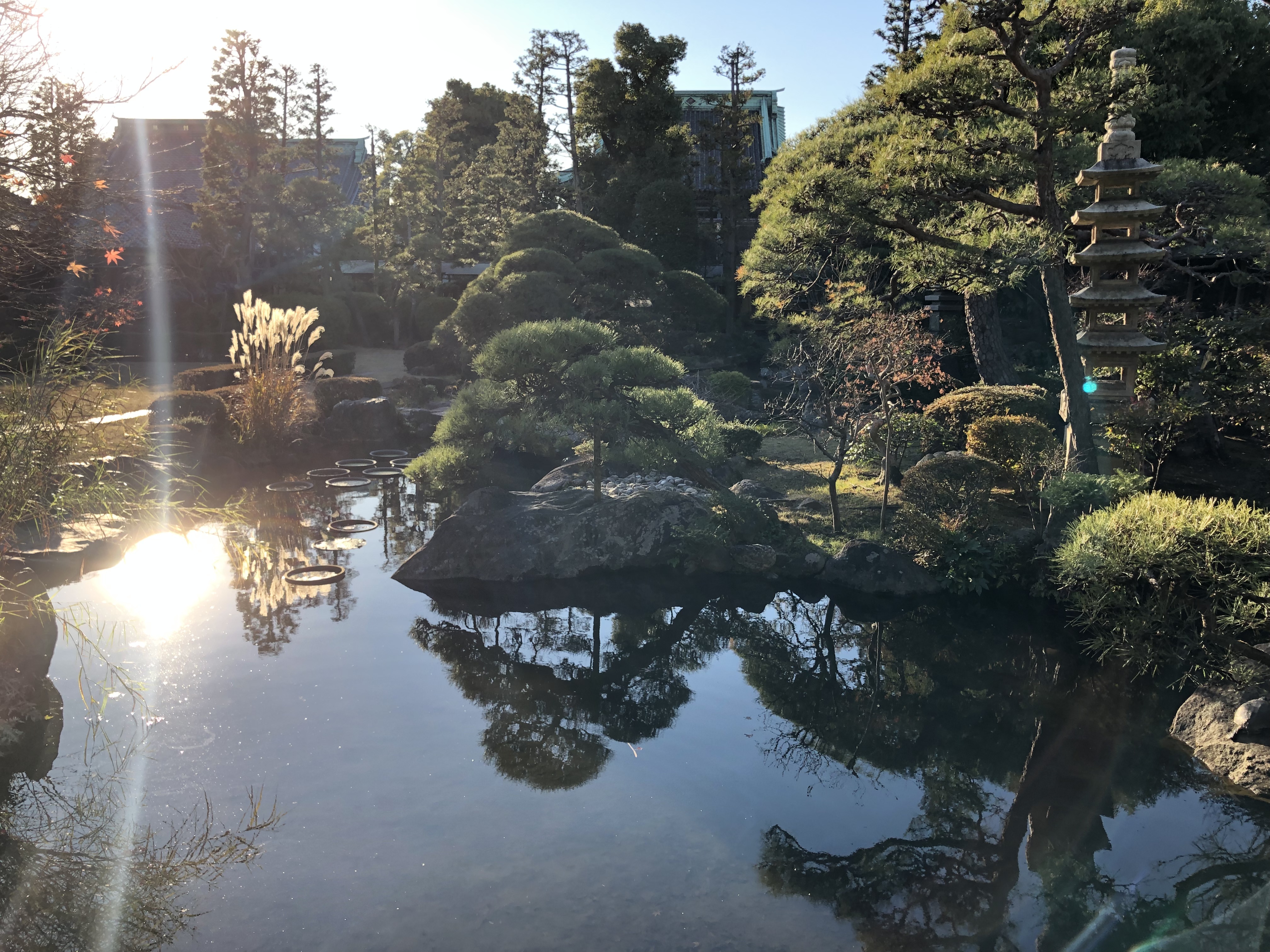
As I leave the tree behind and make my way to the rear of the temple, I come upon the opportunity to purchase a ticket for ¥400, granting access to both the museum and the picturesque Suikei-en Garden. The entrance to the garden is adorned with intricate wood carvings above each tatami mat room, inviting me to step into a peaceful outdoor paradise. The garden boasts stone bridges, flowers glistening with the hanging moisture of the early morning, a charming pagoda statue, a breathtaking lake as its centrepiece, and even a tranquil waterfall.

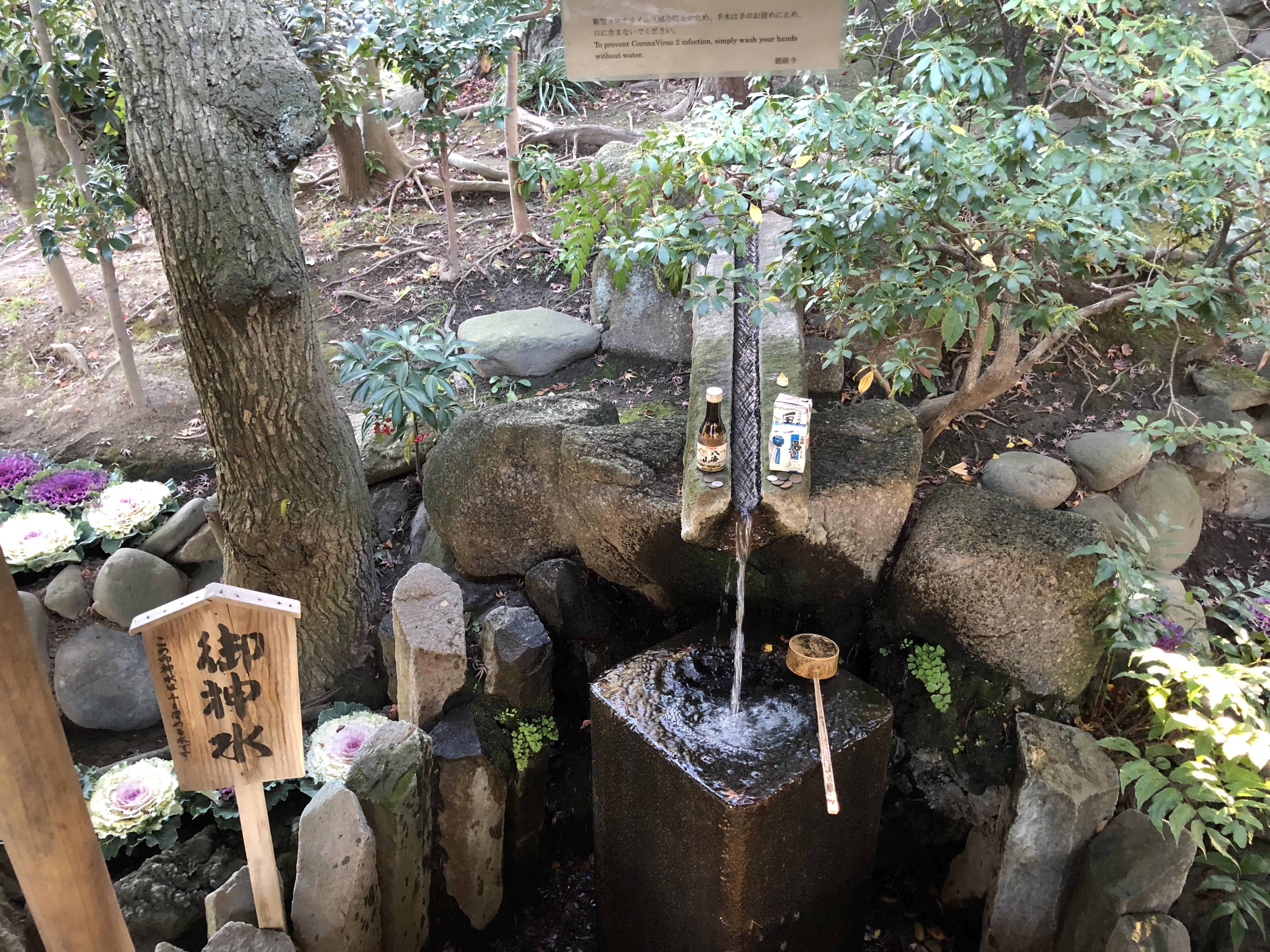
As I stand before the waterfall, I find myself trying to pinpoint the source of my unease. Could it be the way the water flows so slowly, as if in mimicry of rain? The offerings and coins at the base of the waterfall appear unremarkable, yet something about them feels off. And then I see it – the poorly translated notice above, urging me to “simply wash my hands without water” to prevent infection from the ominous Coronavirus. The absurdity of the statement only adds to the disquietude that lingers in the air.

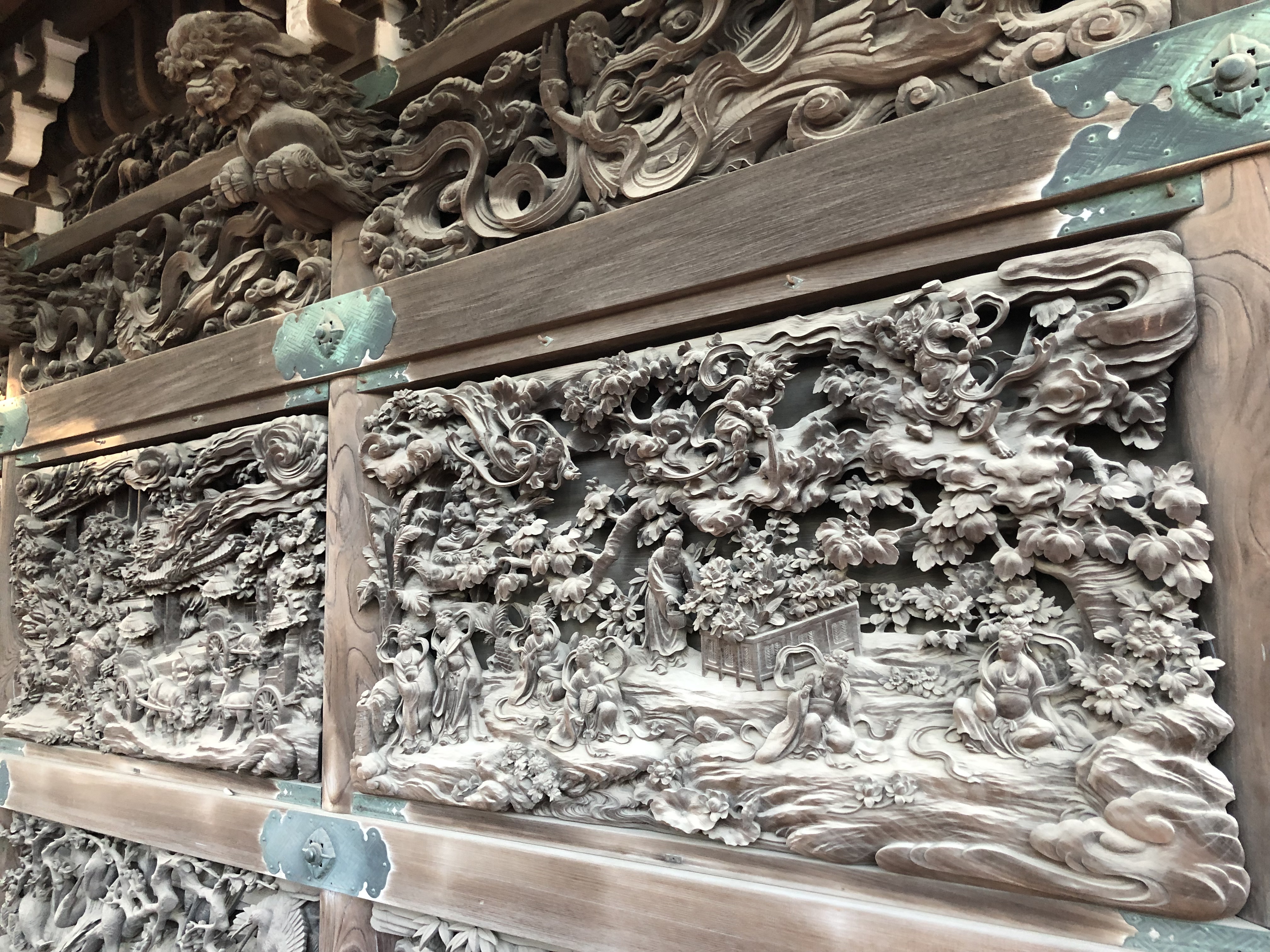
As I enter the museum, my eyes are immediately drawn to the stunning wood carvings that adorn the walls. Each one tells a part of the tale of the Lotus Sutra, with two chapters represented in each intricate, three-dimensional carving. The language used to describe the carvings is nicely written, and one line stands out to me in particular: “We people are like children busily playing in what is a burning house, without any fears.” The artistry and wisdom captured in these carvings leaves me in awe.

Chapter five, entitled “Thoughtful Rain, Equal Moisture,” was carved by Shinko Ishikawa and depicts the following: “The deeply benevolent teaching of the Buddha is similar to the gentle rain that everywhere dampens the soil. Here, the God of lightning and the God of wind appear, and together they let it rain. The great earth is then embraced with a blanket of foliage in which varieties of flowers proudly bloom. With this, the heavenly beings also joyfully dance down to the paradise below.”

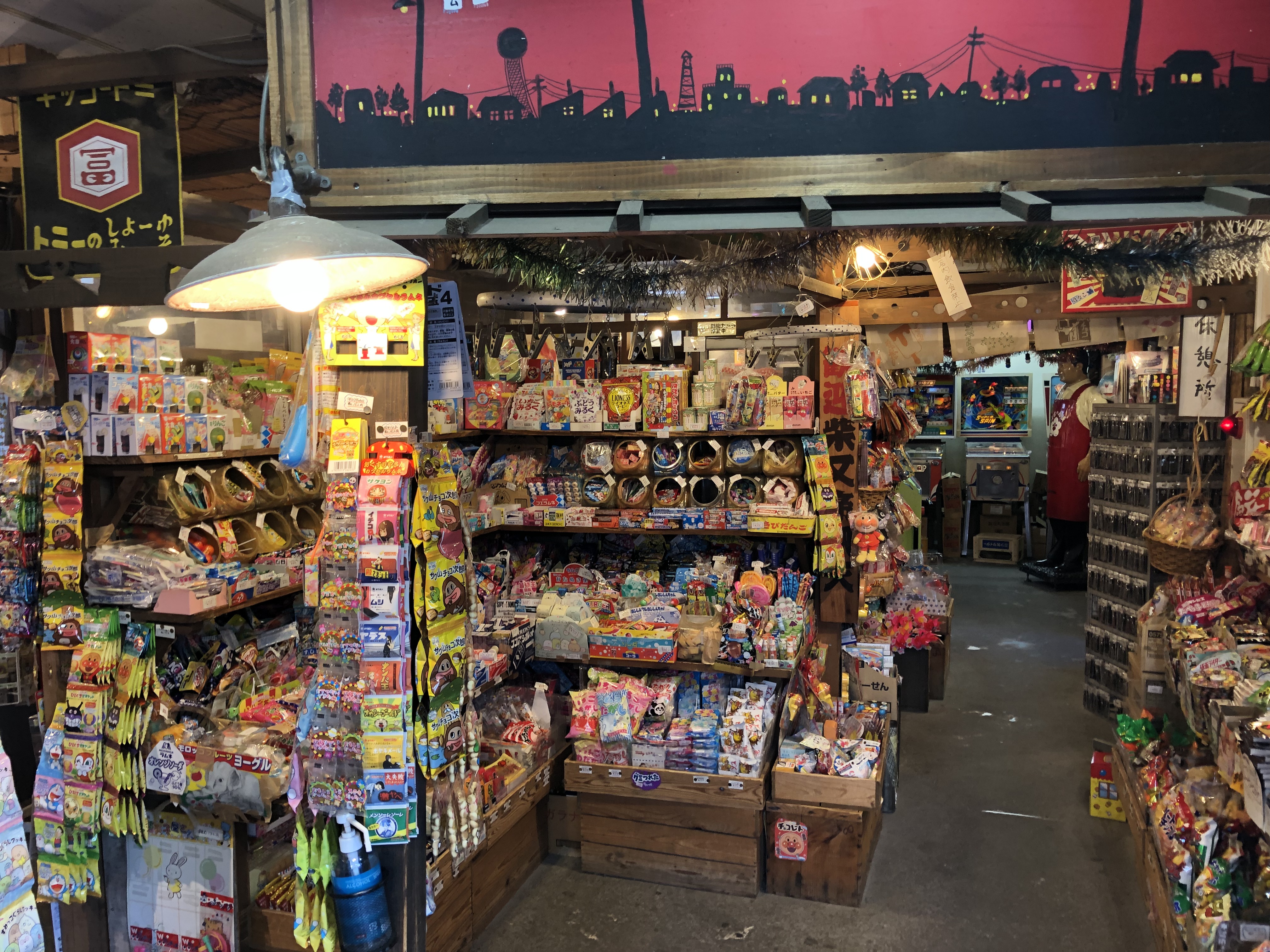
As I leave Shibamata Taishakuten, I step into a large retro sweet shop filled with rows of colourful candy in glass jars. The air is thick with the scent of sugar, and there are every type of sugary treat imaginable. I wander up and down the aisles, passing old arcade machines and pinball tables. On the second floor is the Shibamata Toy Museum, featuring games from the Showa-era. I explore the museum, including a room with a display of dolls depicting the tale of “Momotaro,” or Peach Boy. I eventually head back downstairs to purchase a bag of gummy worms at the counter, before leaving the shop.

The gummy worms turn out to be a lot stickier than I had anticipated, but I have a solution: I’ll just wash my hands without water.

Virtual Insanity

Today I’m still in Huis Ten Bosch, at a place called Fantasia City of Lights. The sign here says that this otherworldly experience features the latest and greatest in digital sound technology. Once again, and a pattern I’ve found within this theme park, is that this City of Lights has absolutely nothing to do with the Netherlands.

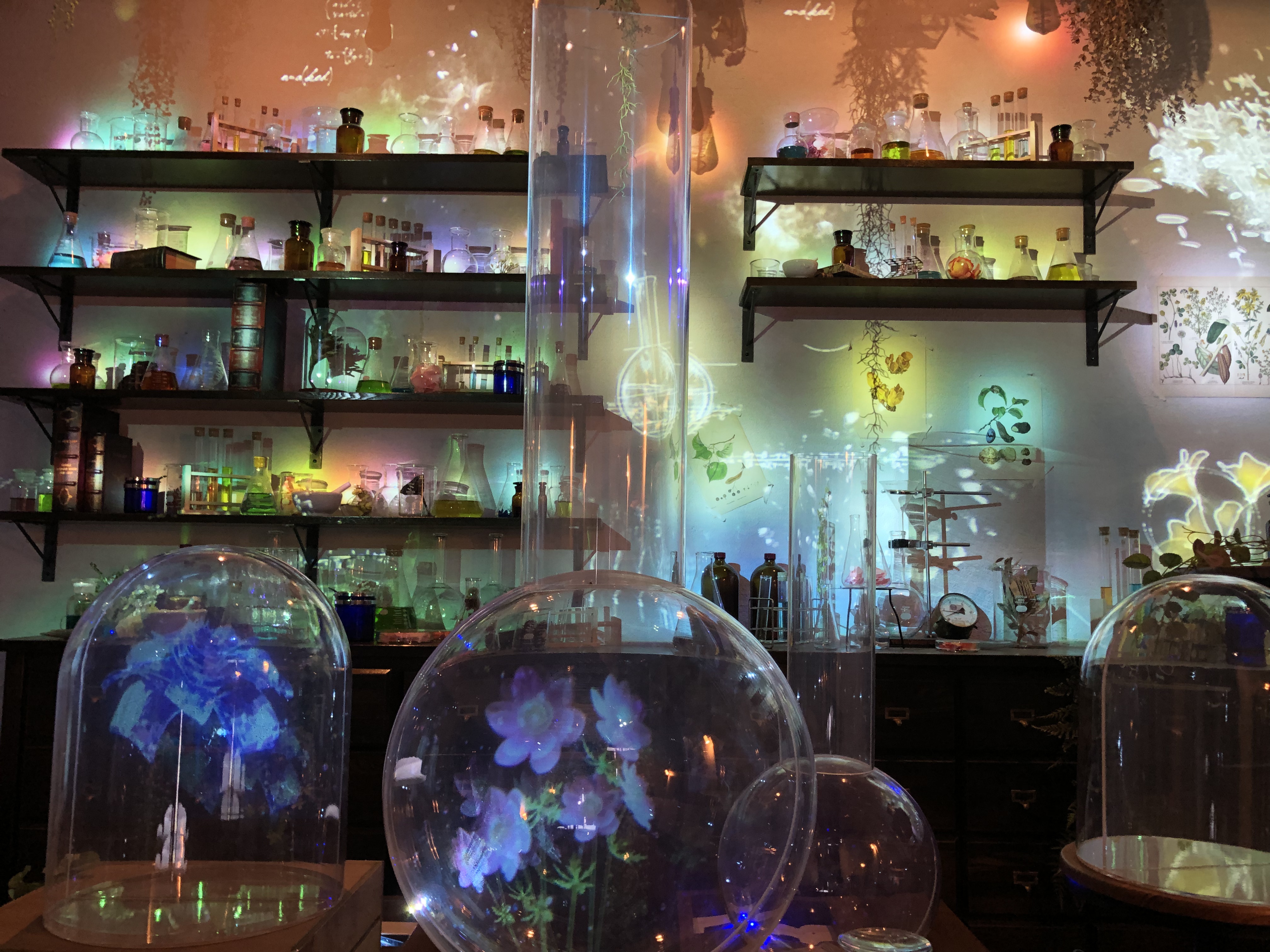
My first stop today is Flower Fantasia, a soothing space with the theme of a secret laboratory that makes flowers from lights. The laboratory is the first thing I see when I enter so isn’t that much of a secret. Holographic flowers shimmer with iridescence as they dance around in vials, test tubes, and flasks. A screen on the opposite wall projects visuals of mathematical equations and flowers, it doesn’t really make any sense.

The next section is where I can discover fragrances of lavenders, chamomiles, geraniums, calendulas, and roses. A sign instructs me to gently open the Petri dishes to uncover a digital flower. The fragrances, however, don’t come close to infiltrating my mask. There’s a pathway of blooming flowers that follow my footsteps and decorate the floor below, and some interactive artwork on a wall where flowers blossom before my eyes.

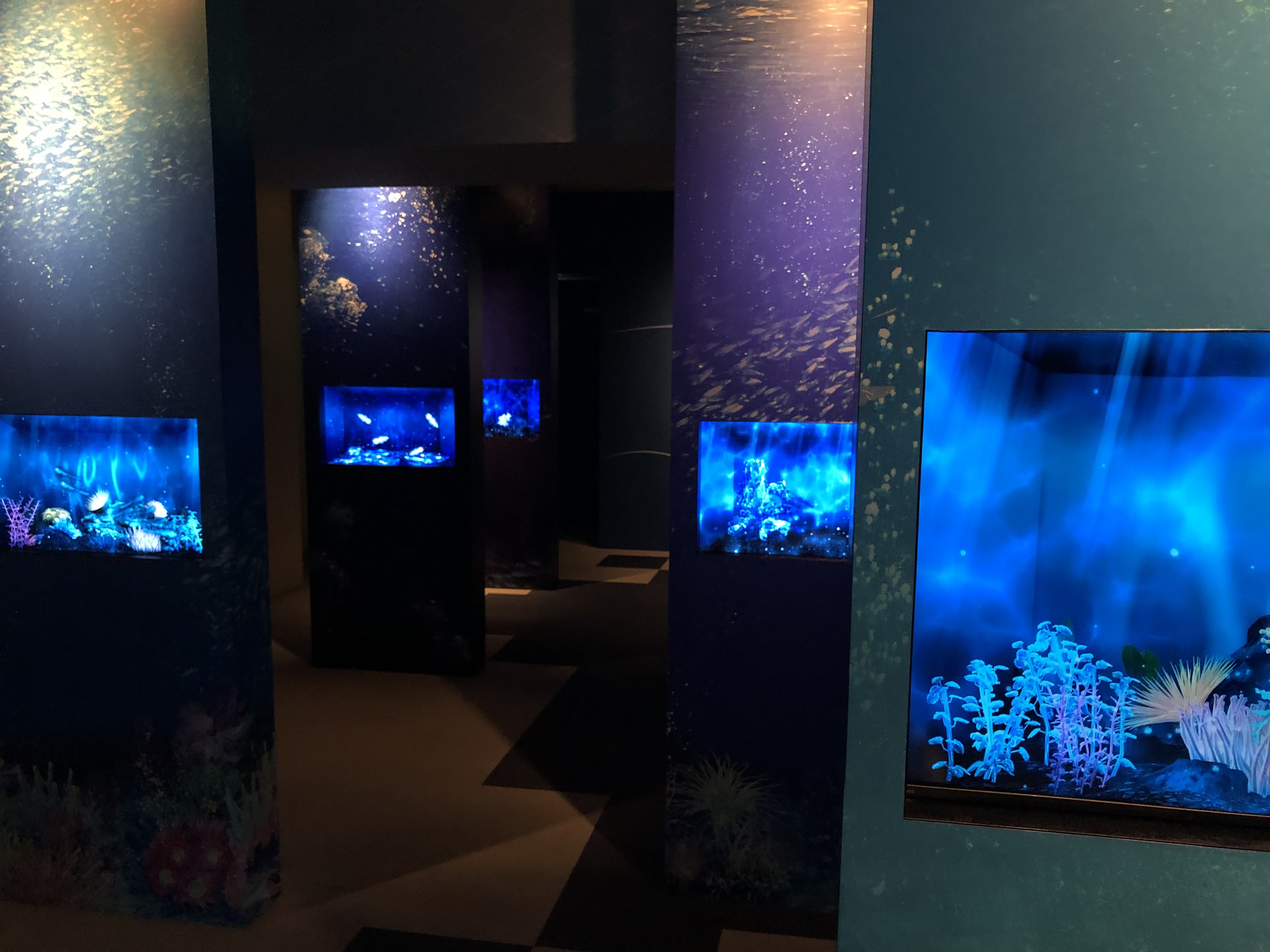
I leave the blooming flowers and head towards the next exhibit. Aquarium Fantasia is a thrilling space to experience the colourful world of the deep sea. A lady dressed in a traditional Dutch klederdracht tells me to, “Please Enjoy!” The first thing on show here is a digital aquarium. The fish in the many tanks have been replaced by holographic images; at least in this aquarium, it’s impossible to forget to feed the fish.

There’s rather a lot of information in the next few sections, facts about the ocean, about it being the origin of all lifeforms. “Even when recreated and enhanced digitally, this underwater world hints at possibilities for vitality.” I pass through a huge shark tunnel, an ‘underwater’ tunnel that passes through the aquarium. Digitally enhanced sharks swim around. A sign at the other end asks me to deliberate the fact that the ocean is an ephemeral world that can’t last forever. I contemplate that one day this may not be an aquarium, but instead a digital museum for absent oceans and forgotten aquatic habitats.

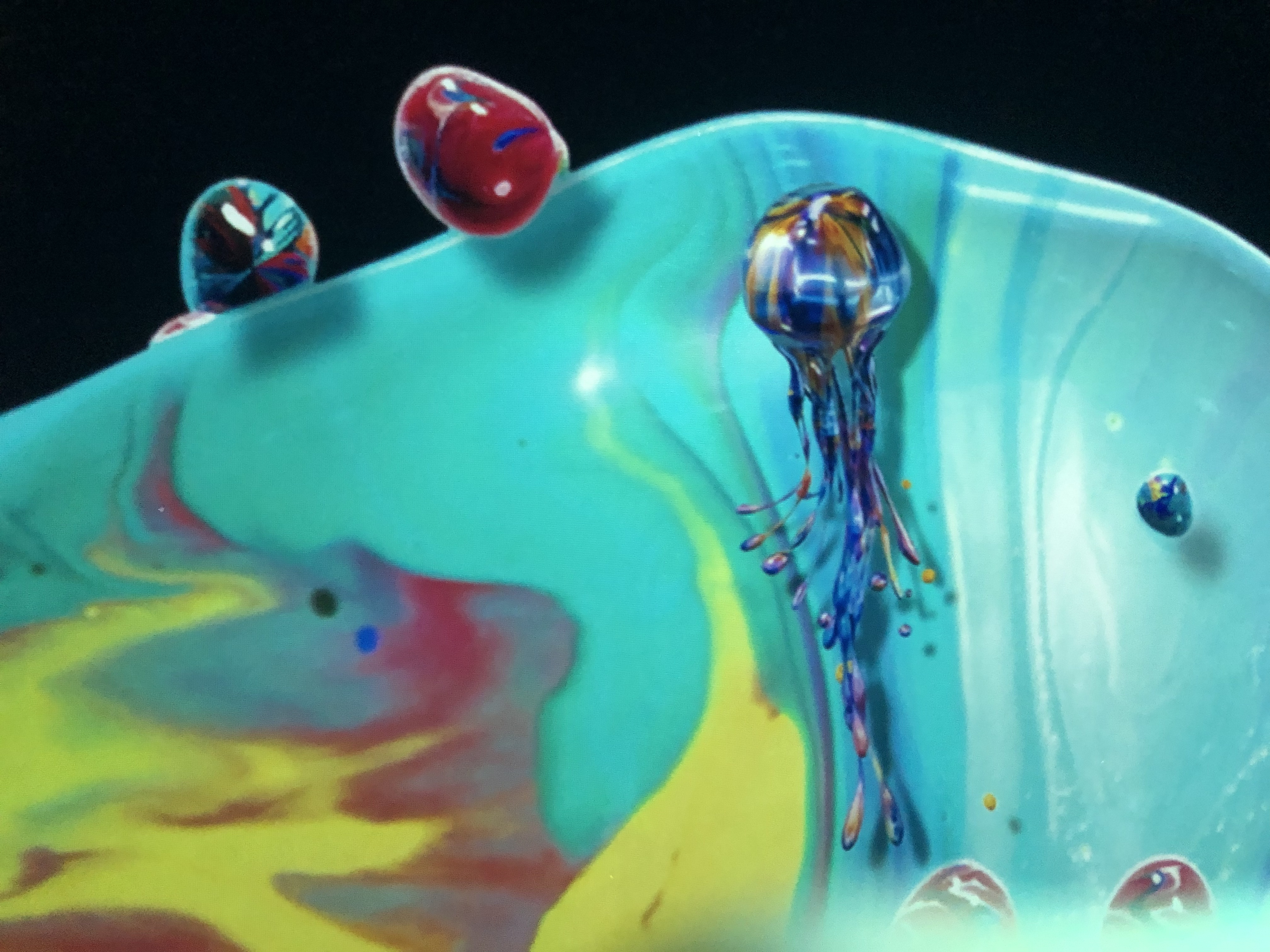
In the next room there is a hands-on interactive activity, and I instantly forget about the fleeting impermanence of the ocean. The instructions are very simple. “How to play: Stir the fluids to create a jellyfish.”

I can swipe my fingers around on the walls and what looks like paint mixes together and eventually creates a jellyfish. Each time I try the activity, a jellyfish of variable size and colour is formed, before gliding away into the mystical underwater world, where its body dissolves back into the currents of time.

After enjoying the fluidity of this transient expression of art for far too long, I move onto the next interactive exhibition, and my favourite of the day. The instructions are once again short and easy to follow. “How to play: Become a fish.”

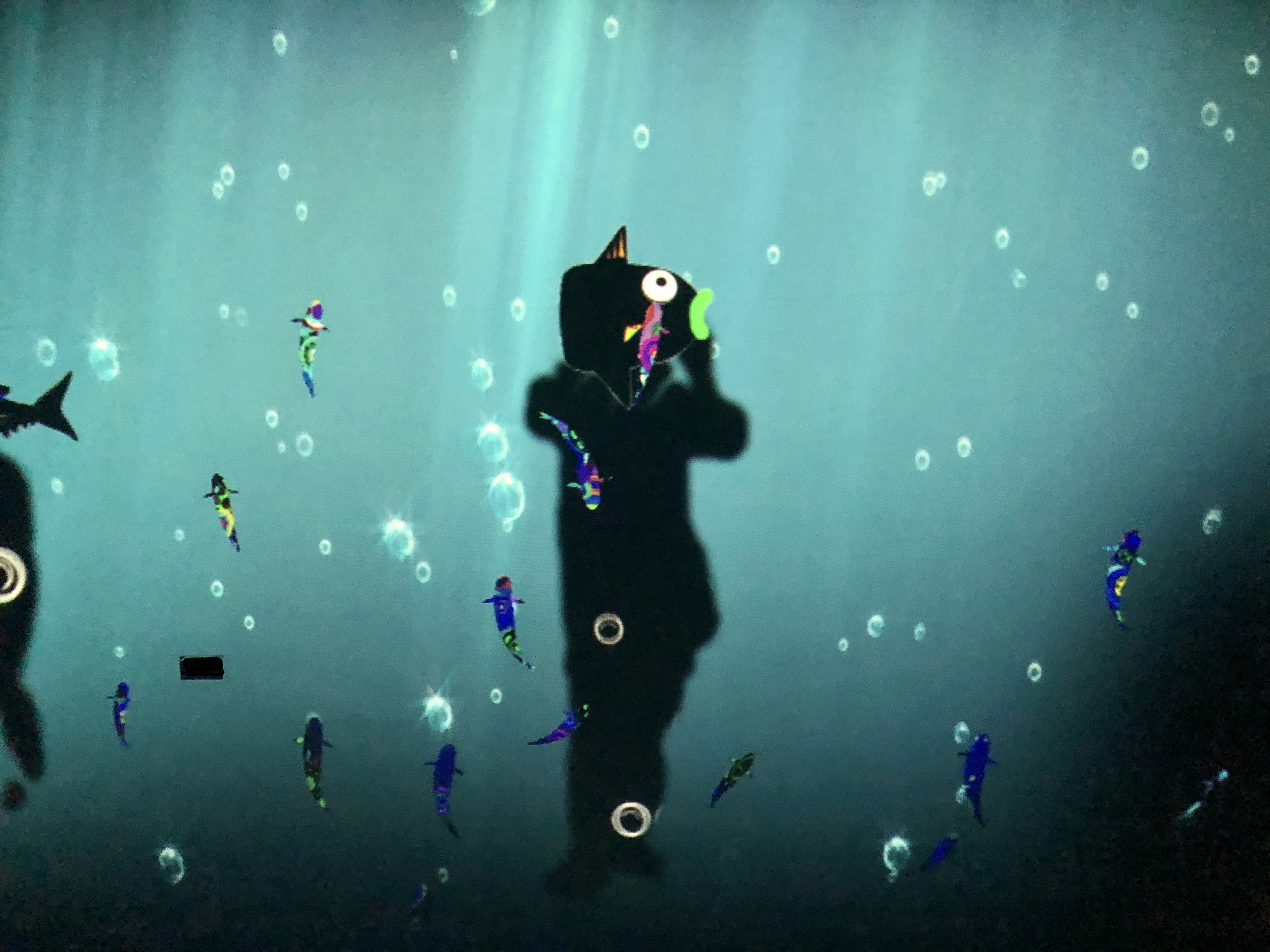
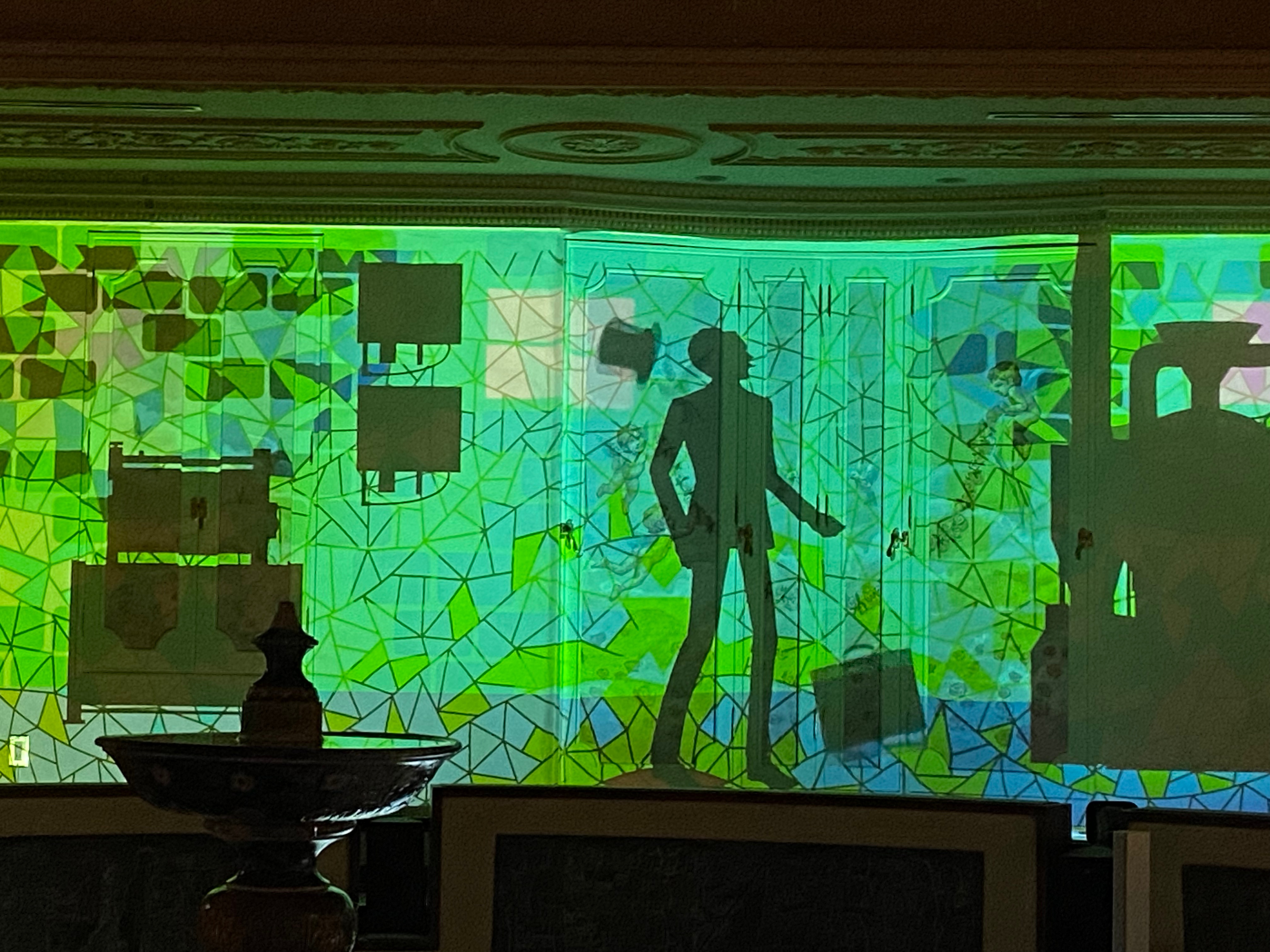
As I enter a dimly lit room, my silhouette is cast onto the wall. I become a fish, without much effort at all. Fish swim around on the floor and walls, I can step on their shadows and watch them swim away, or move my head to chase off the ones that swim on the walls. Every three minutes a large shoal of colourful sardines travels around the entire room, illuminating the area in a swirling digital aquarelle of glistening fish.

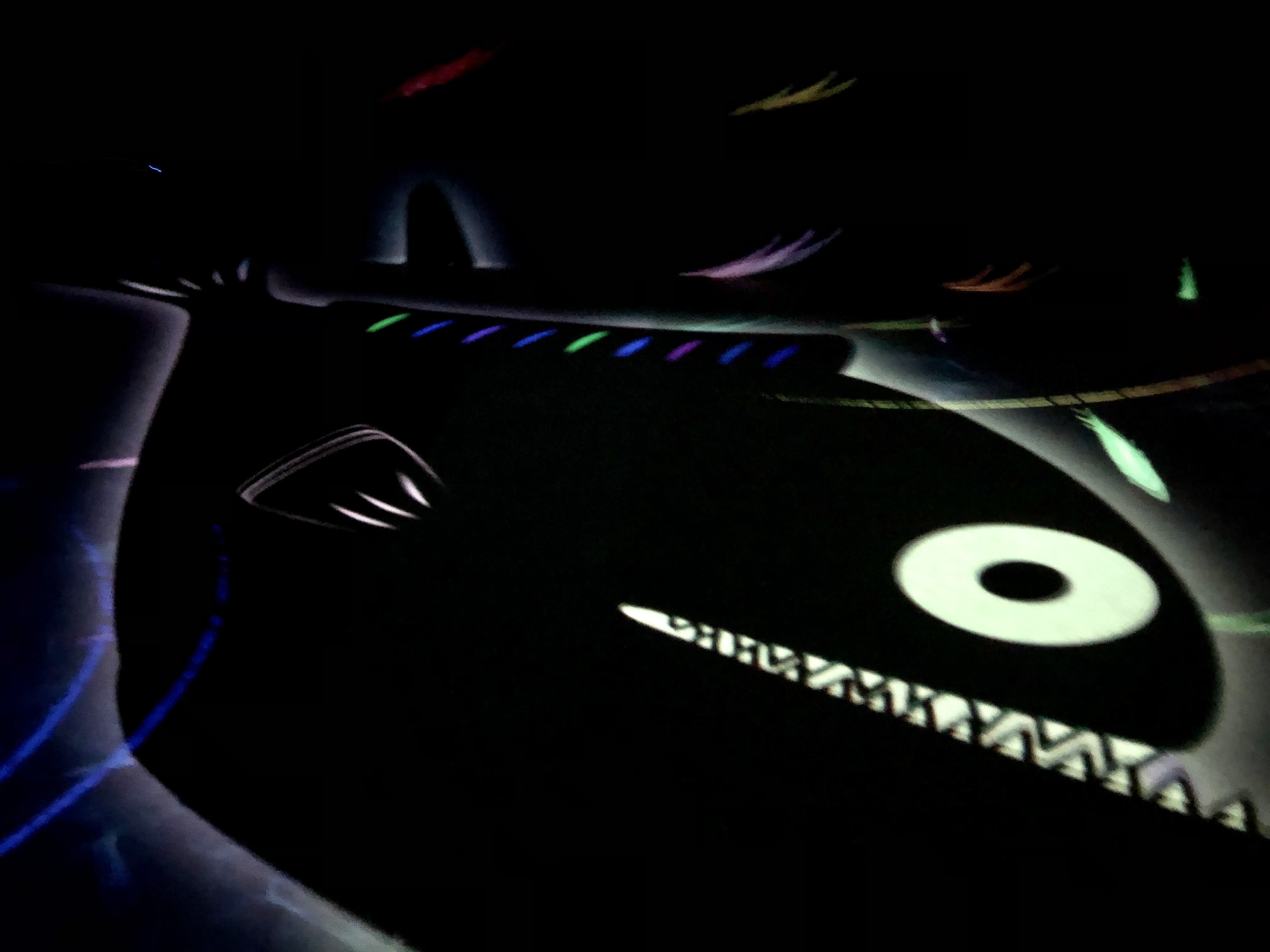
As the shoal of fish weave together like an underwater miracle, they come together to form the shape of one giant fish. This is when the exhibition takes a somewhat dark turn. Where once was a kaleidoscopic multitude of multicoloured sardines, now becomes a sinister black shark that chases me around the room.

After being devoured by the shark, I move onward through the aquarium. There are reminders here that all life originated from the ocean. How life and the ocean have coexisted through time. Once sign asks, “What is life? What does it mean to exist?” Questions that are teased but left unanswered. A section on technology, about how the lines between real and virtual begin to blur as the actual world adapts to real-life qualities. “How will we go on to define our existence?”

The final section opens up into a large theatre. As I take my seat alongside the darkness, I contemplate my own reality, before reminding myself that I am sitting in a virtual aquarium, inside a slightly Dutch theme park, in Nagasaki, Japan.

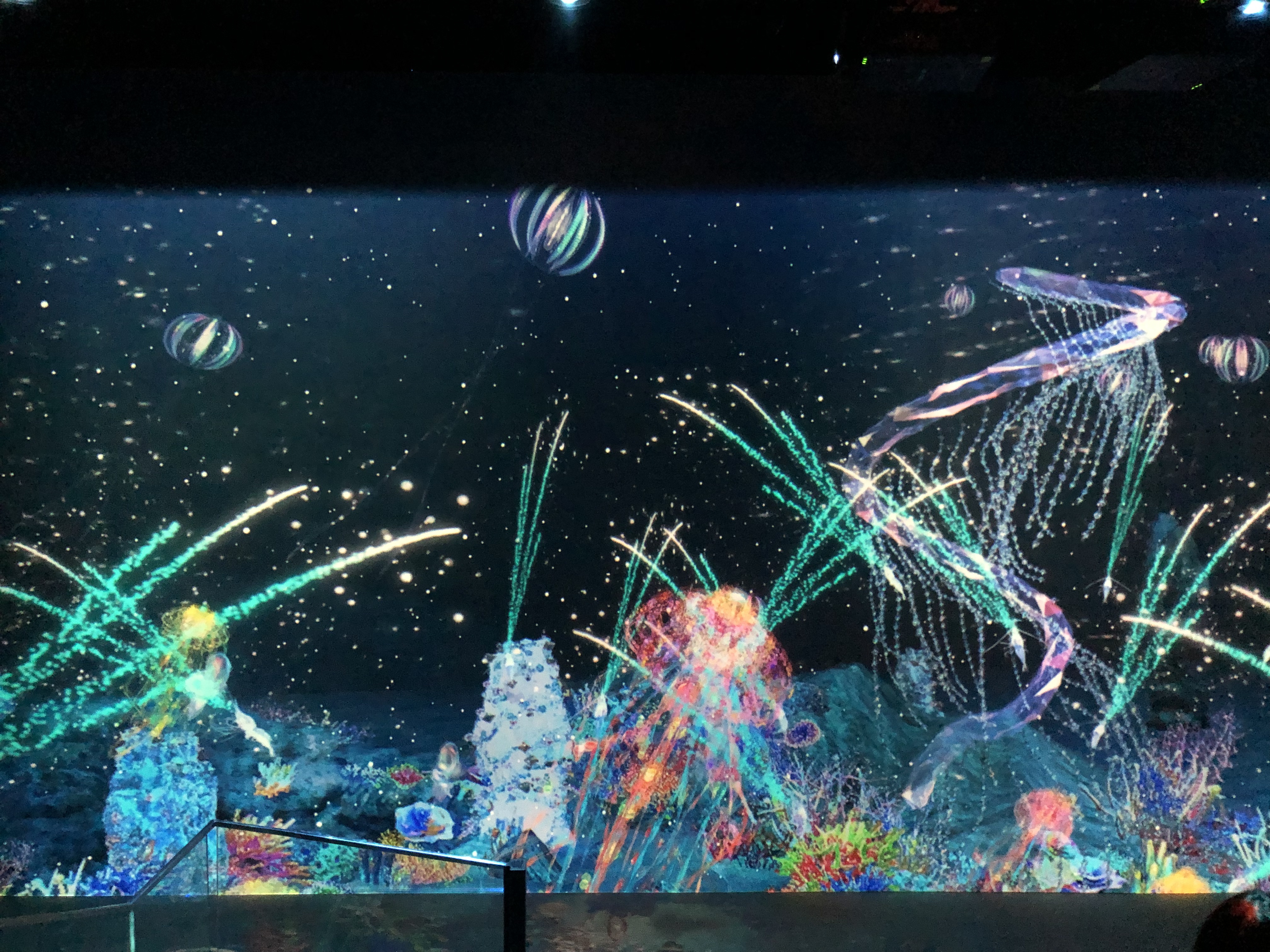
After a while, a short film about the unexplored deeper reaches of the ocean begins. The deeper we dive, the more sunlight is absorbed. The last to dissipate is blue light, which gives the underwater world its colour. This film explores what the bottom of the ocean could look like, if only we were able to see it. The film simulates forward motion, as though I am swimming under the sea. The large surround sound system bellows out noises of the ocean. There’s some weird crystal thing that comes to life, some flowery patterns give birth to various new lifeforms that become tangled and interwoven like the fabric of a false euphoria, and the entire film suddenly becomes a psychedelic three-dimensional underwater nightmare.

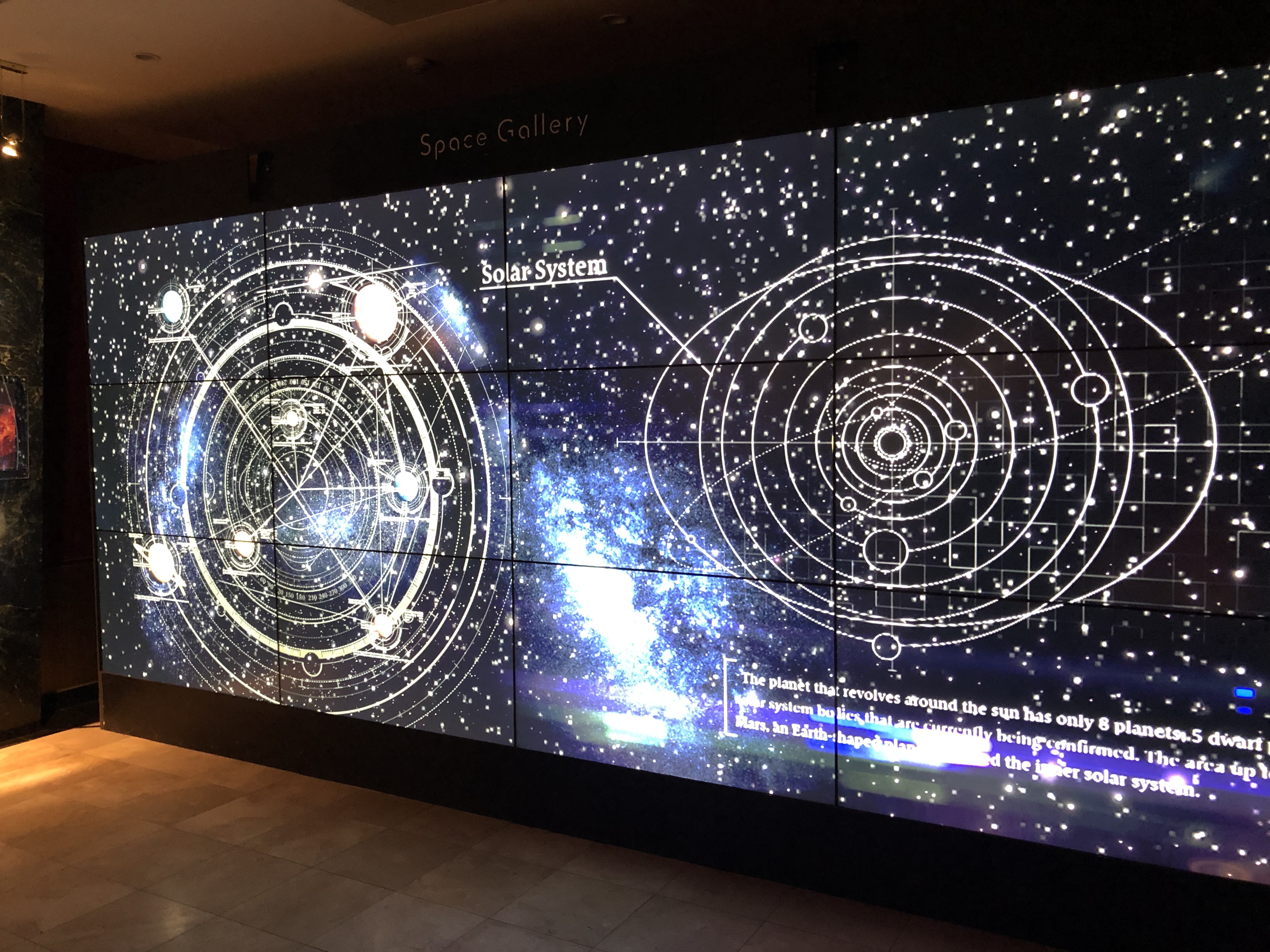
My third and final stop in Fantasia City of Lights is the one I am most anticipating, Space Fantasia. Our solar system and planetary information is displayed on a giant screen for a while. Next, a show titled ‘2101: Galaxy Odyssey’ starts, and what claims to be a self aware artificial intelligence guides us into the next room.

There is some sort of stage and we are asked to volunteer to play a game. Only two of the ten here raise their hands. We then have to wait and watch whilst they struggle to complete the challenge. I glance at my flyer, it states that the duration of this wacky space adventure is twenty-five minutes in length, and specifically states that, “You can’t leave halfway.”

Stars form on the ground to form constellations, and the lines where astrology and astronomy meet begin to blur, as the only constellations relevant to this game are not Cassiopeia, Orion, or Ursa Major, but are the twelve of the zodiac. As the two volunteers jump around, every time they match stars to form a constellation, everyone applauds. They score seven out of twelve. “Superb!” someone shouts.

We then move onto the third and final room, another theatre.

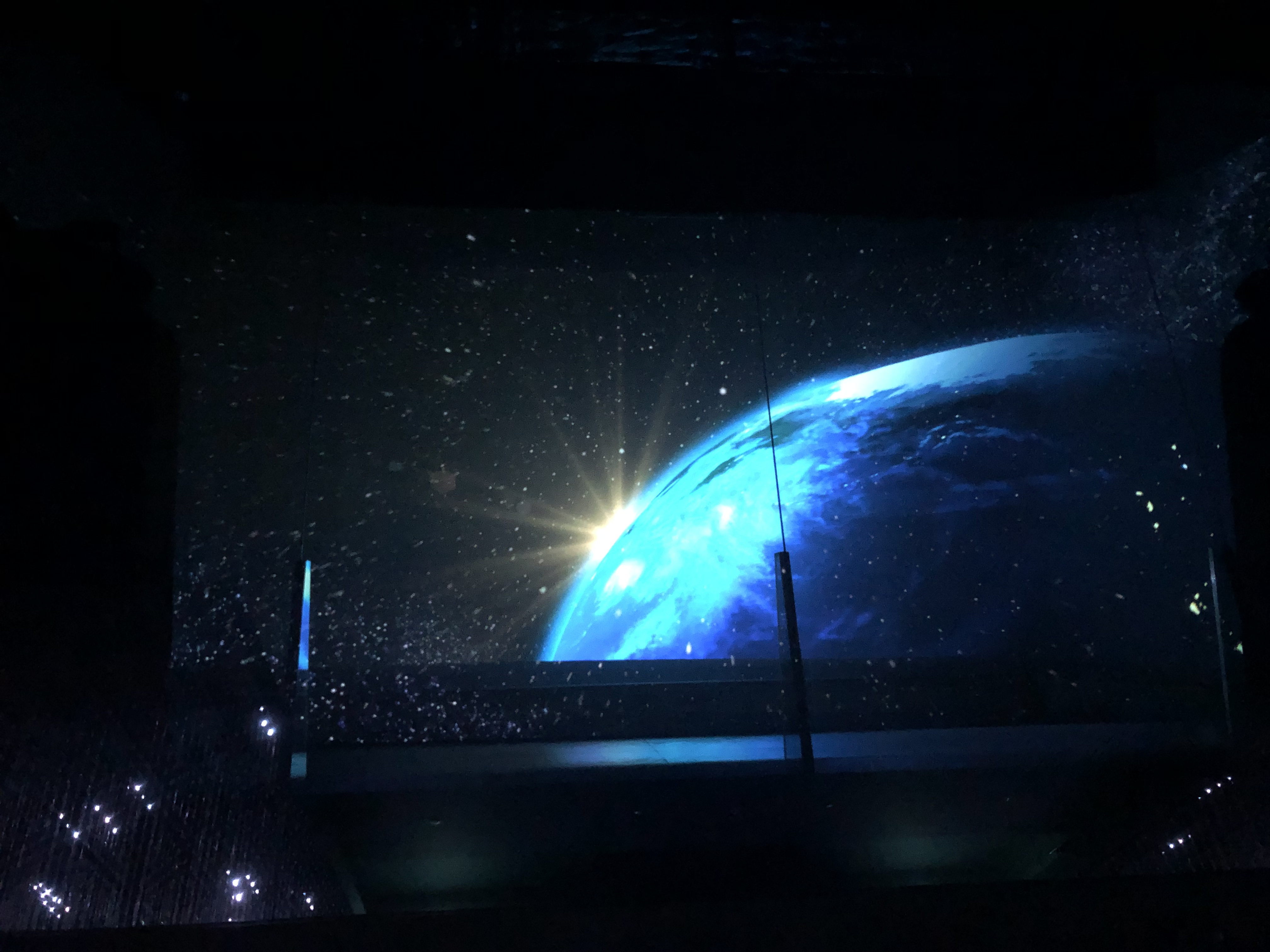
We fly through space and learn about various clouds of dust and gas. The Butterfly Nebula appears on the screen, turns into a butterfly, then flies away. The Swan Nebula appears on screen, turns into a swan, then flies away. The Bubble Nebula appears on screen, and I see where this is going. After the bubble floats away we sit through a firework display in space, some Galactic Cherry Blossoms, the Engraved Hour Glass Nebula, before finally returning to Earth.

The Fashion of the Crystal Wax

I am in Shinjuku to meet a friend. I instantly regret choosing to meet her at the West Exit of the busiest train station in the world. After ten minutes of searching, we eventually find each other before heading outside to take a free shuttle bus bound for Shinjuku Park Tower. Inside this building are many high-priced restaurants, financial institutes, and the Park Hyatt Hotel; perhaps the most expensive night’s sleep in Japan. We are not here for any of that nonsense though, as in the basement of this building, we have exclusive invitations to an event hosted by French cosmetic giant, L’Oréal.

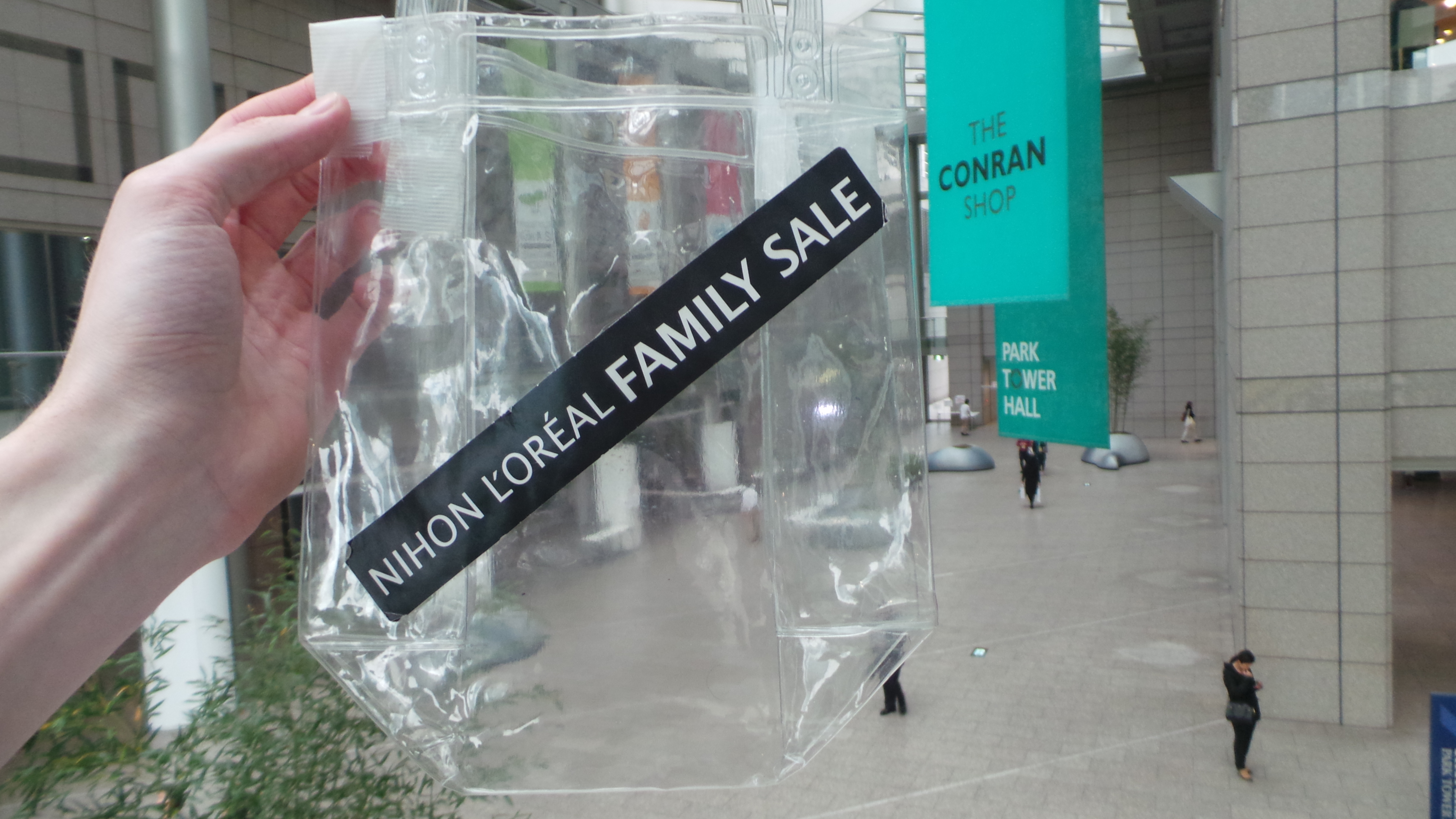
In the basement, our cards are checked, our identities confirmed, our Quick Response Codes are scanned, our identities are reconfirmed, before we are finally allowed to pass through the first checkpoint. At the second checkpoint, we are searched, our coats and bags are taken, and we are asked to place the possessions we intend to take into the event into a clear plastic bag. For a moment, I get confused and think I am at the airport.

loreal2

The reason we are here is for a Family Sale; a place to go to buy very cheap products from big-name brands. I am a little confused as to the motivation for such an event, as today, only L’Oréal and affiliated products are on sale, each with ridiculous discounts of up to ninety percent. In the past, whenever I have visited a sale offering such high discounted prices, usually only a select few products hold the high percentage of reduction, but here at the L’Oréal Family Sale, every product is perhaps seventy to ninety percent off. Price down!

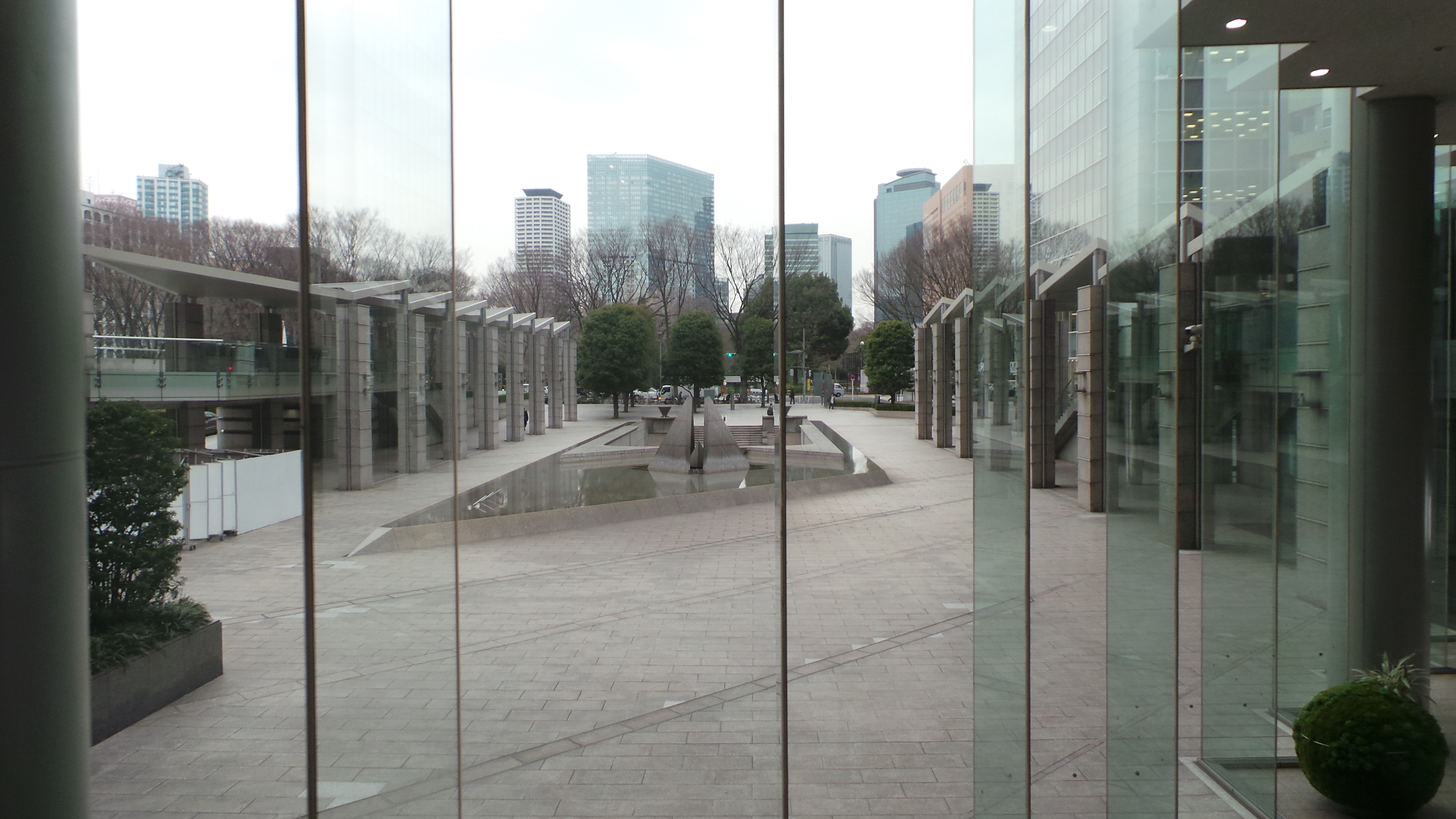
We enter the main room, somewhat smaller than I was expecting; a room populated entirely by women. No free samples are on offer, much to my dismay. Somehow, I find myself sucked in by the offers, and take some wax that has been knocked down from ¥3400 to a crazy ¥700; I don’t even use wax. I find it somewhat ironic that one of the most expensive buildings in Tokyo is the venue for discounted goods. I ask to photograph the room, but am told that strictly no photography is allowed. It makes me wonder if L’Oréal is here to promote their company brand or to just offer the rich an exclusive ‘invitation-only’ way to buy cosmetics and save large amounts of money, thus making them richer. With a lack of photography, I instead take a nice photograph from the inside of Shinjuku Park Tower.

loreal1

As I leave with my wax and head to the cashier, I am told that I can only pay with a credit card. I always thought Japan was very much a cash society, where plastic is seldom used, so this strikes me as odd. I don’t even own a credit card. Luckily, my friend assists me and away we go, back through the checkpoints and out into the chaos of Shinjuku.

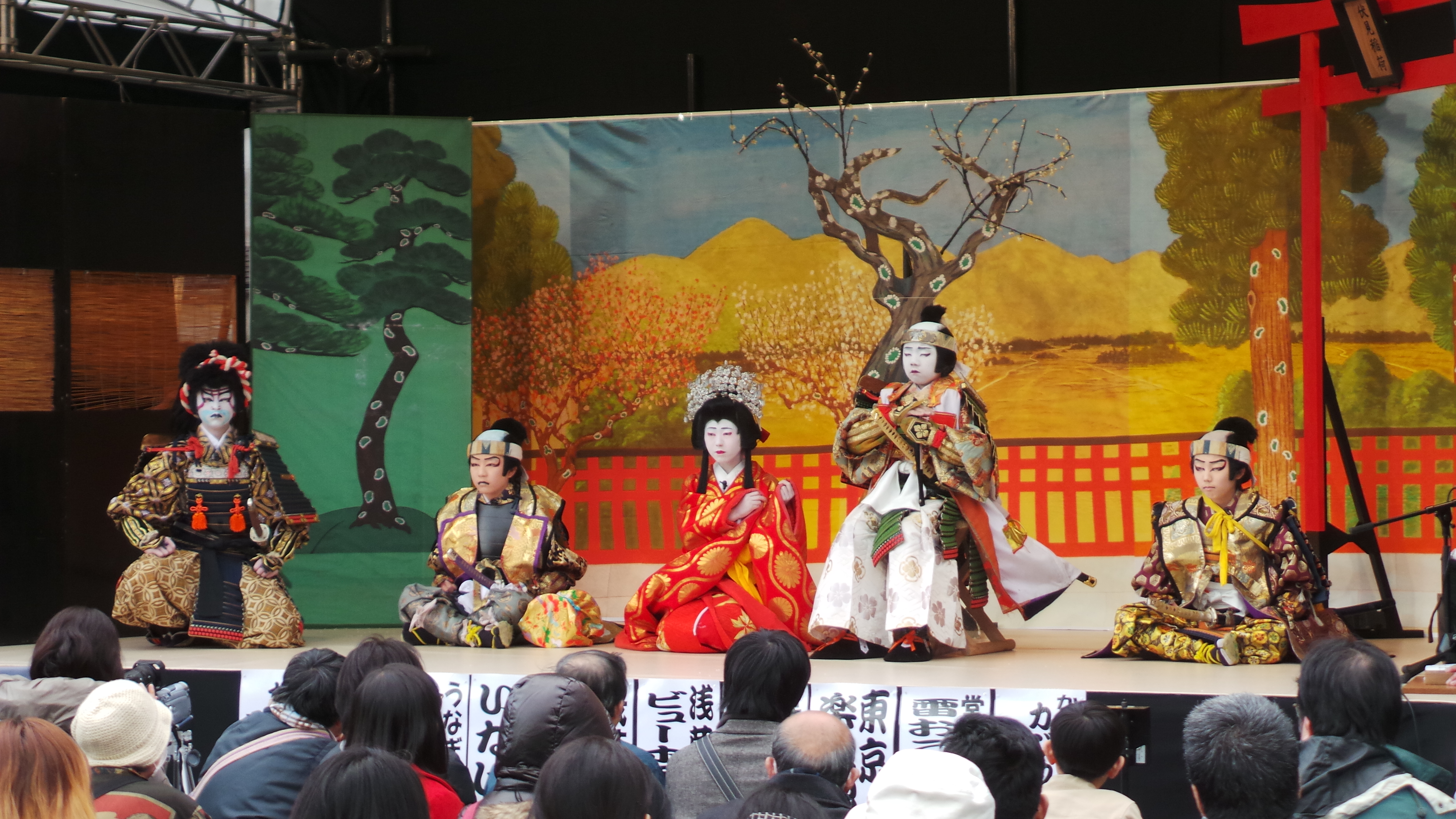
Back in Asakusa, we go our separate ways. I decide to head over to Senso-ji Temple to see my first-ever performance of kabuki. Kabuki is a style of theatre that combines music, dance, elaborate costumes, and elaborate masks. Today the show is performed by children, in a style known as Ogano Kabuki. This style boasts two hundred years of tradition, and these days it is the children of Saitama that keep the tradition alive. It is nice to see young people taking an interest in this art form, despite living in a country where the young are obsessed with video games, animated movies, and comic books.

The event starts with an announcer speaking in Japanese for ten minutes before two girls dressed as geisha take to the stage and talk for a further ten minutes. The curtains close, and the announcer speaks about foxes and cherry blossoms; another ten minutes pass, and the introduction is over. All the while, rude people push and shove through the crowds to take a closer look. A rude woman stands on my foot and offers no apology. Eventually, the show starts with a parade of costume-wearing kids.

kidskabuki

Traditional music plays, characters kneel down, and dialogue is exchanged with very little movement for what seems like forever. The costumes are fantastic, mesmerising, the music is beautiful, and the characters’ words are almost poetic. If I didn’t know in advance that these were child performers, I would have mistaken the show for a professional production. Despite the professionalism, I get a little bored. The language used isn’t only Japanese, but old Japanese that perhaps nobody has used for hundreds of years. I decide after forty minutes to go and do something else.

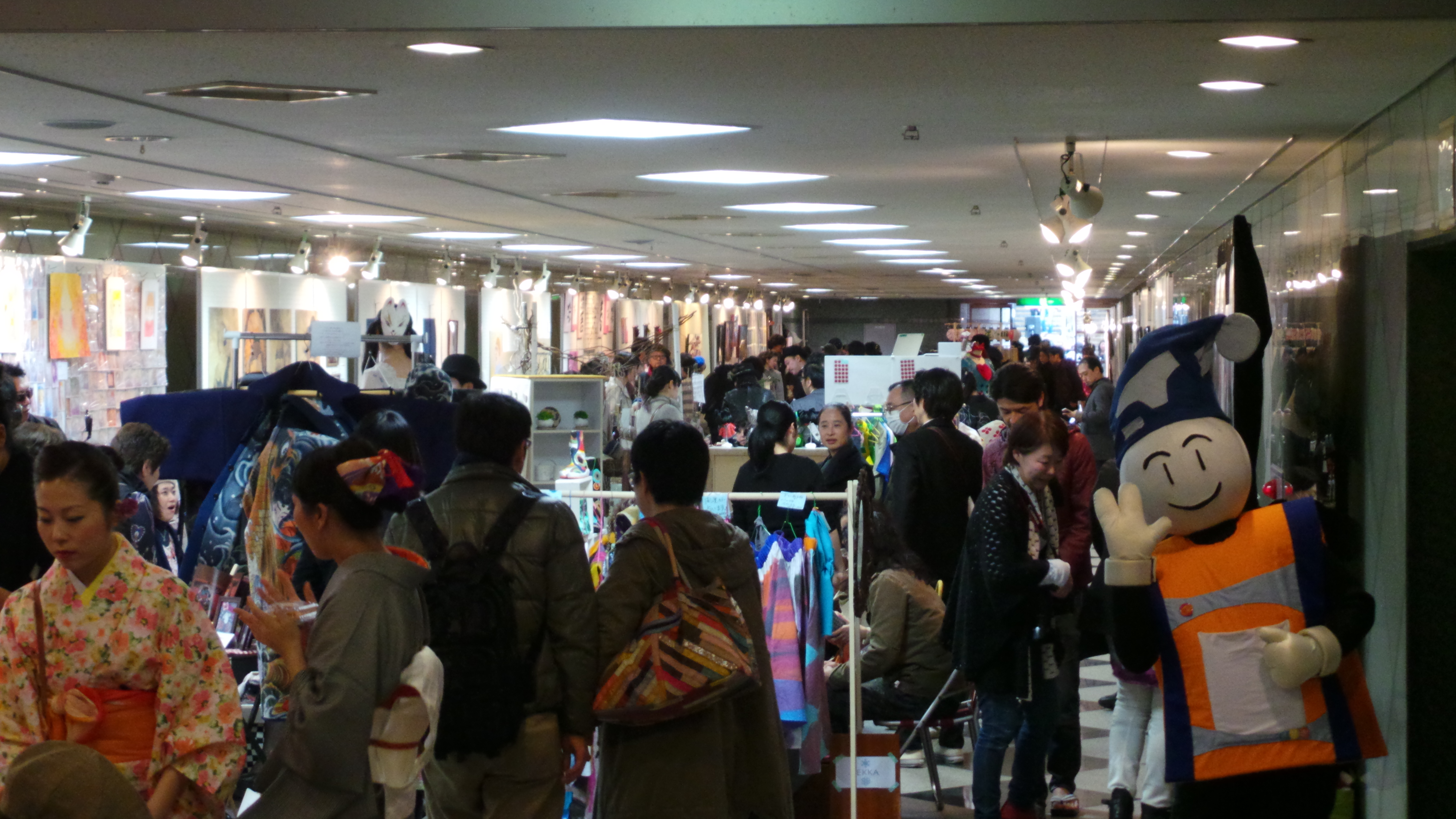
Also in Asakusa today, a fashion and art show known as The Asakusa Collection is taking place, so I take to the Sumida River and enter the Riverside Gallery.

collect1

Inside the Riverside Gallery, my photograph is hijacked by a wizard wearing high-visibility clothing. I have no idea who he is or what he wants, but after ignoring him for a while, he disappears to ruin the photographs of others. The Asakusa Collection is a free fashion festival that apparently embodies amazing crazy and chaos culture in Tokyo. The show also has a heavy emphasis on innovative fashion without a distinction between Western and Japanese Styles. Amongst the fashion, there is a nice mix of local artists from this area, all hoping to showcase, promote, and sell their work.

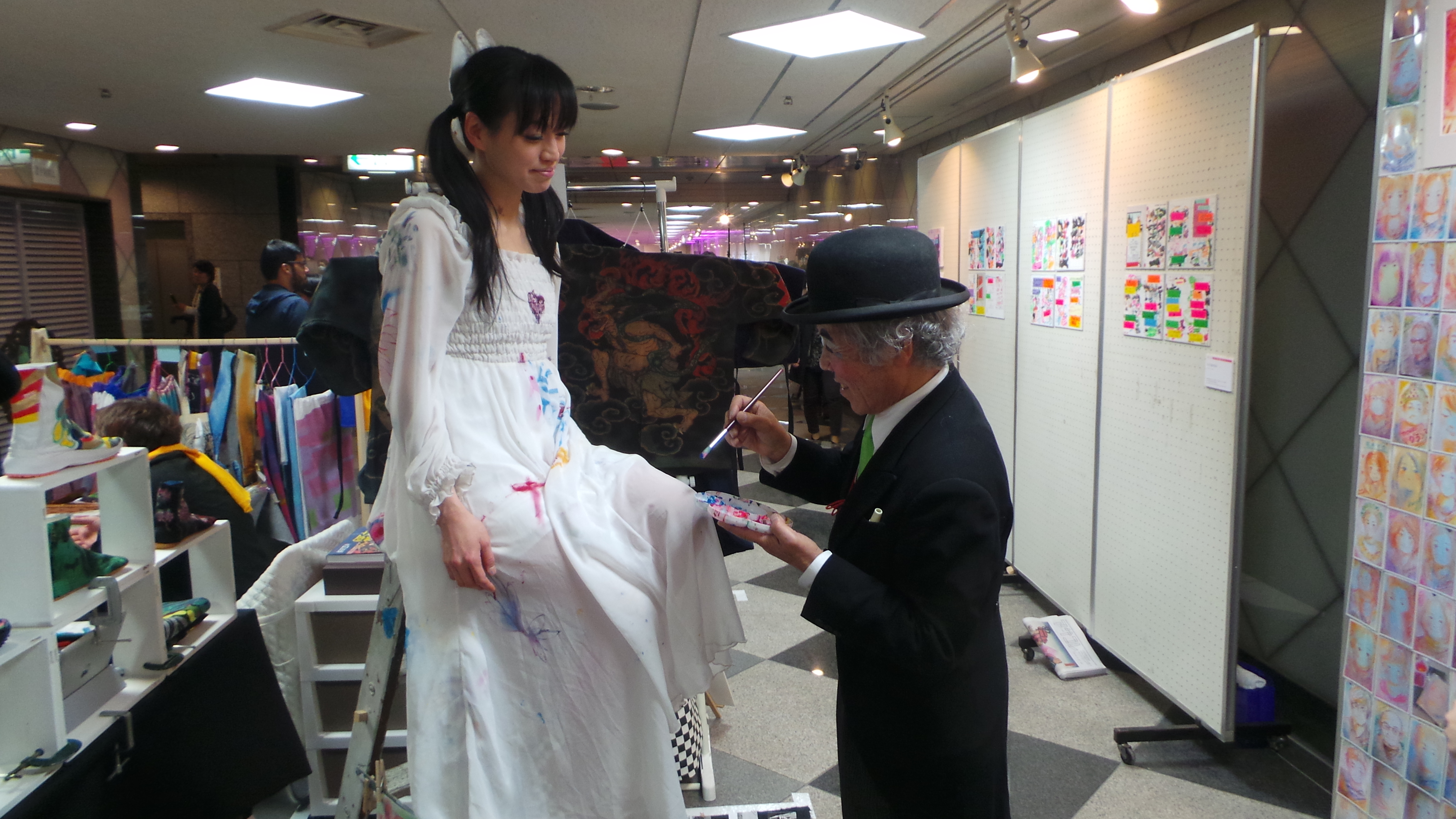
Forty-two artists are here, and a mix of photographs, illustrations, ceramics, dolls, bags, jewellery, traditional clothing, accessories, and sheep-shaped flower pots are on display. I stop off to watch a bit of live painting before heading out in search of my favourite artists.

collect3

Seeing local works of art is always a treat for me, and I would love to feature the works of each of the forty-two artists here, but I don’t really have time for that. The first display I thoroughly enjoy is the work of Kanbayashi Yukikazu. He creates collage and three-dimensional landscape paintings using a mixture of sand and plaster, finished with oil. His work depicts scenes in Japan, from Mount Fuji to Senso-ji Temple, and was once presented at The Museum of Modern Art in his hometown of Kamakura.

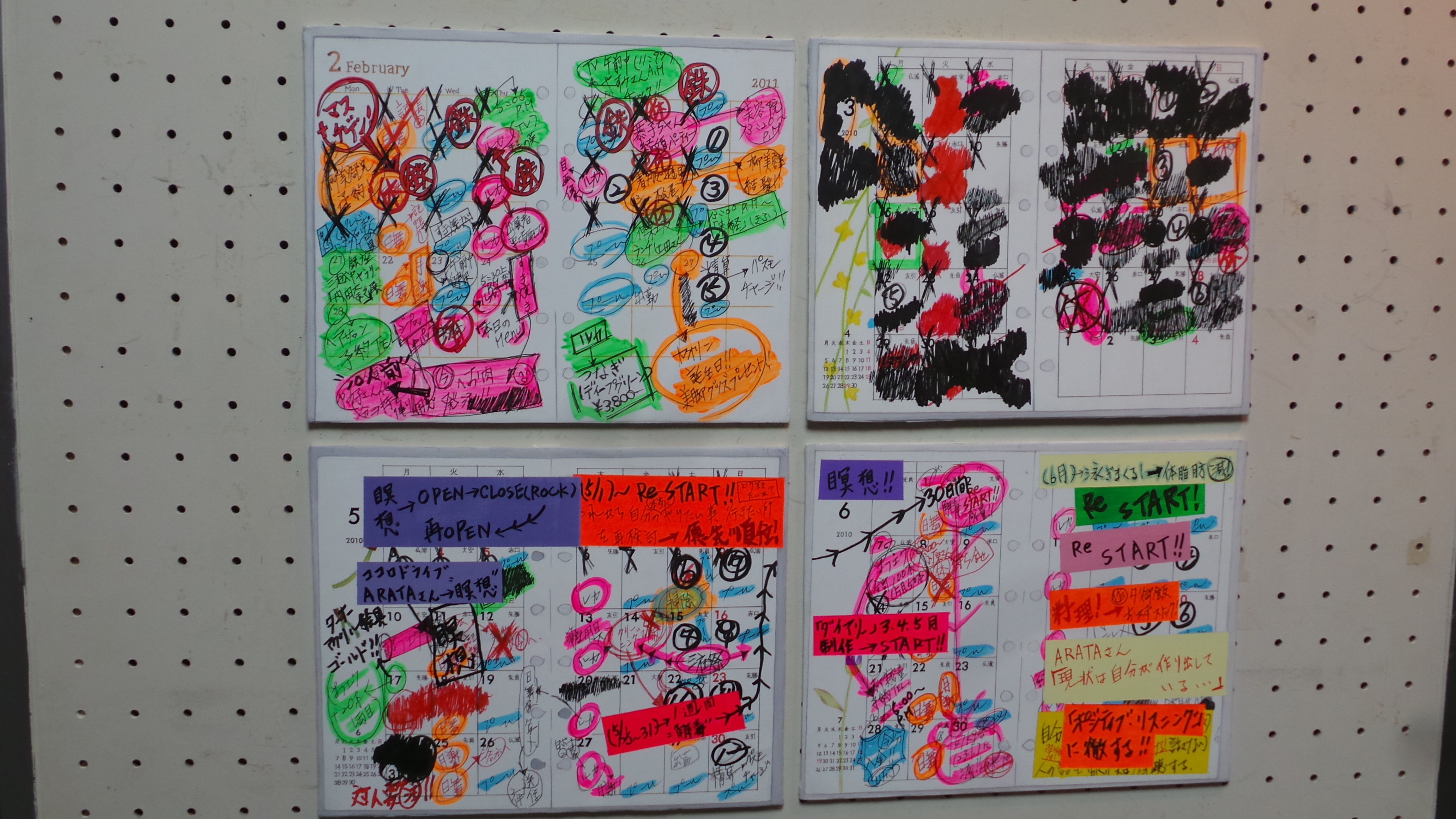
The second artist I enjoy is Ayumi Ogawa. Her work is called ‘Diary,’ and it is contemporary artwork based on calendars and real notebooks. Sadly for Ayumi, the link to her Facebook page reveals absolutely no information about the inspiration or message behind her pieces, yet I am somehow drawn to her abstract modern style.

collect2

At home, I realise that I have spent a lot of time writing in great length about topics that are probably of no interest to anyone else; a theme that might continue into my next post, which will be exclusively about anime.