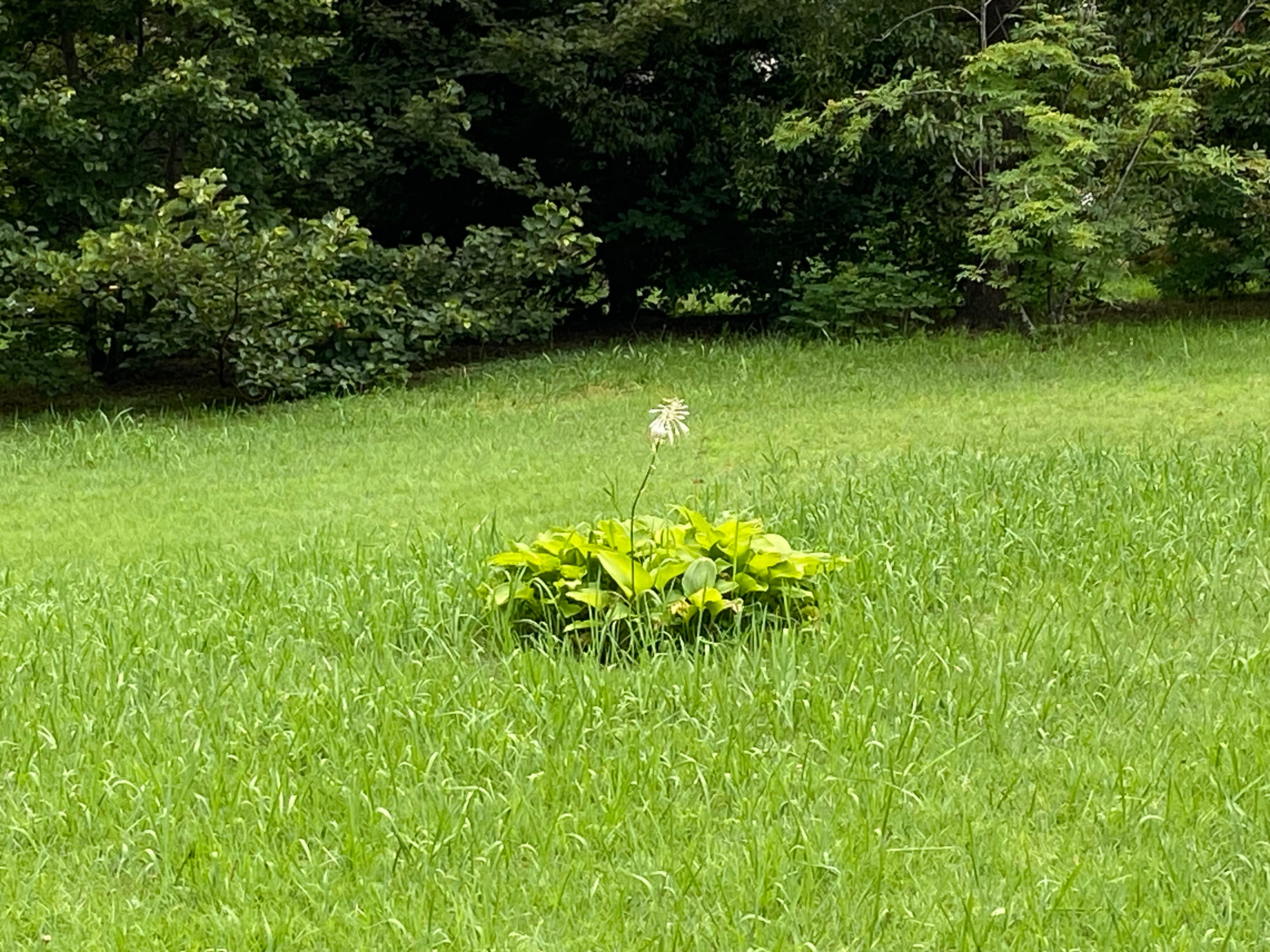
Today I’m travelling back in time, specifically, 20,000 years in time. I’m in Miyagi Prefecture to see the Museum of the Forest of Depths of the Earth. I don’t really know what to expect. When I arrive, there’s a small outdoor garden of evergreens and summergreens. There’s a single flower in the middle of the lawn, with a sign before it stating: Be careful not to step on the flowers. The sign uses the plural form flowers, and it bothers me slightly.
I believe the single flower is a panicled hydrangea. The garden has been recreated. “Let’s go into the grass and observe,” says another sign. The whole point of the place is to compare the vegetation of the Ice Age with that of present-day Sendai.
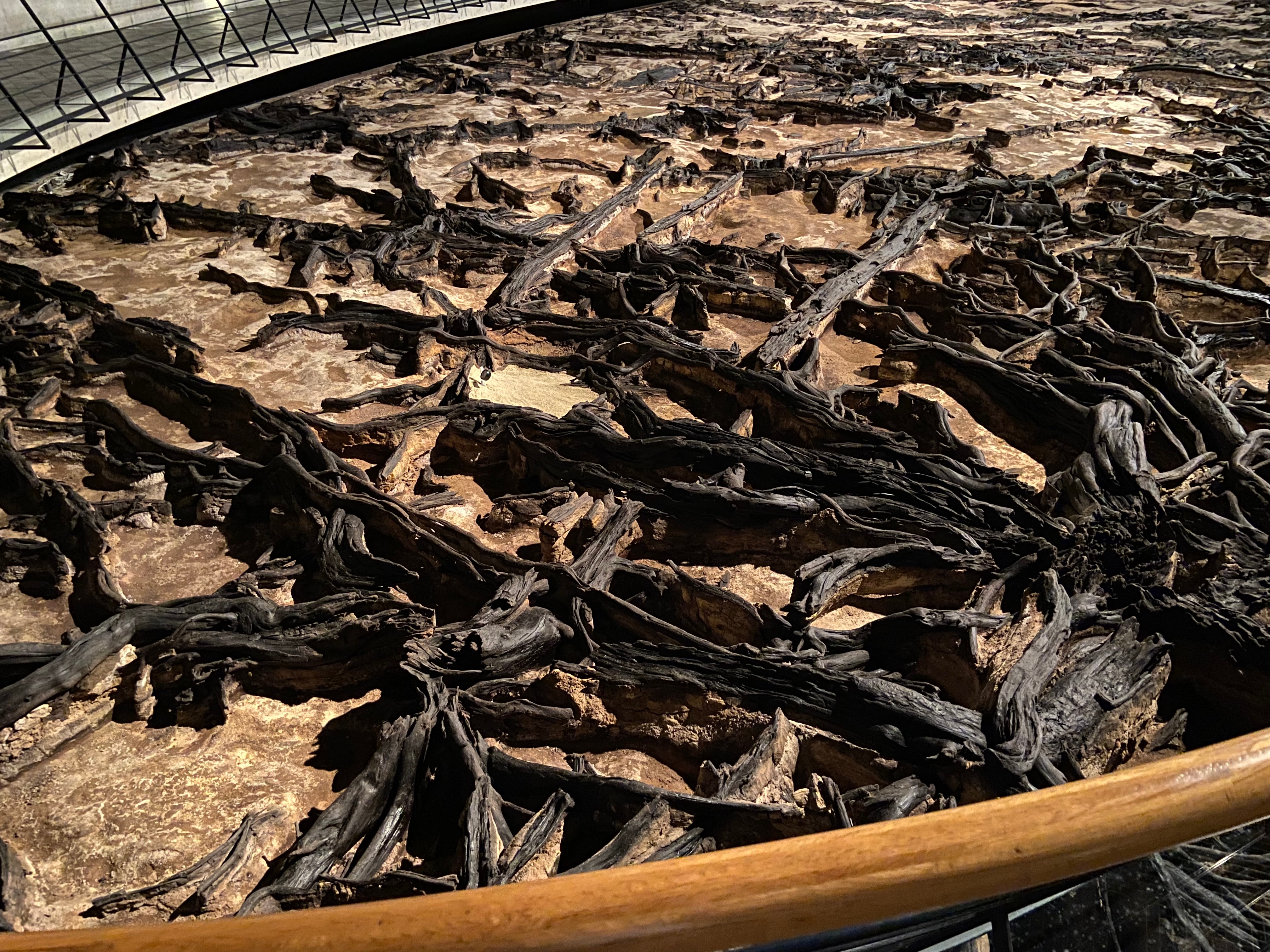
There’s an architecturally stunning structure in the gardens. It’s the only one of its kind in the world. Inside are the 20,000-year-old remains of a wetland coniferous forest. It might not sound very impressive, but when I walk through the doors of the museum and see the sheer size of the trees, it causes me to stagger.
The museum is fascinating. In 1987, an archæological dig found, just five metres below the ground, the preserved remains of fossilised trees, along with artefacts from the same era. There’s a separate tree root I’m encouraged to touch and smell, and it carries some weight.
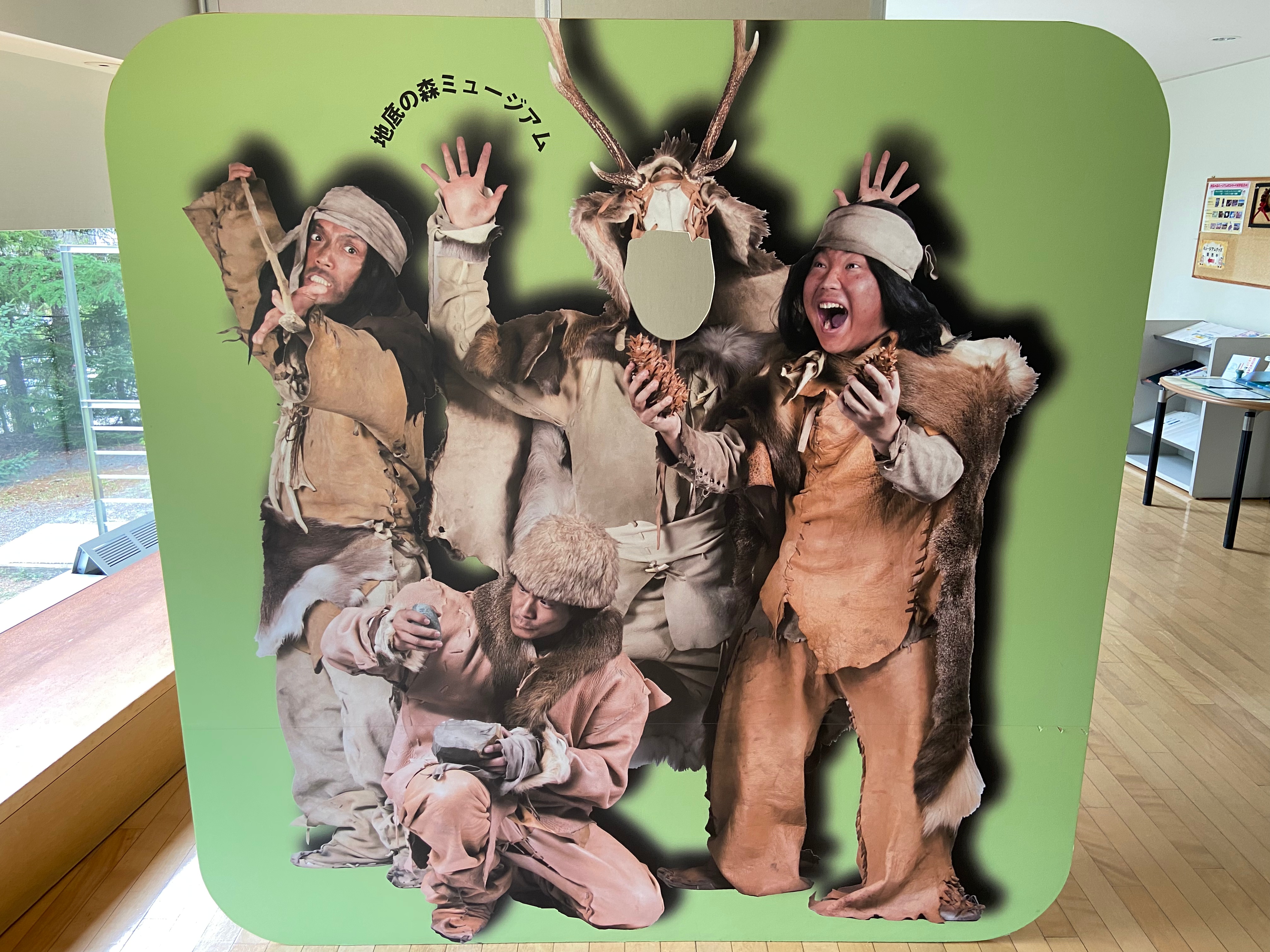
Aside from the trees, I can also learn about the Paleolithic Age. There are the remains of a campfire that was excavated here. Bits of broken pottery. Deer fæces. Arrowheads. Glass boxes of skulls. Carnival Cutouts: the breath of ancient times.
Having touched a 20,000-year-old tree root, the only thing left to do later is visit a mountain, so I decide to walk to the coastline. Along the way, I pass a tsunami evacuation tower made from steel. It can safely evacuate 300 people to a height of at least six metres.
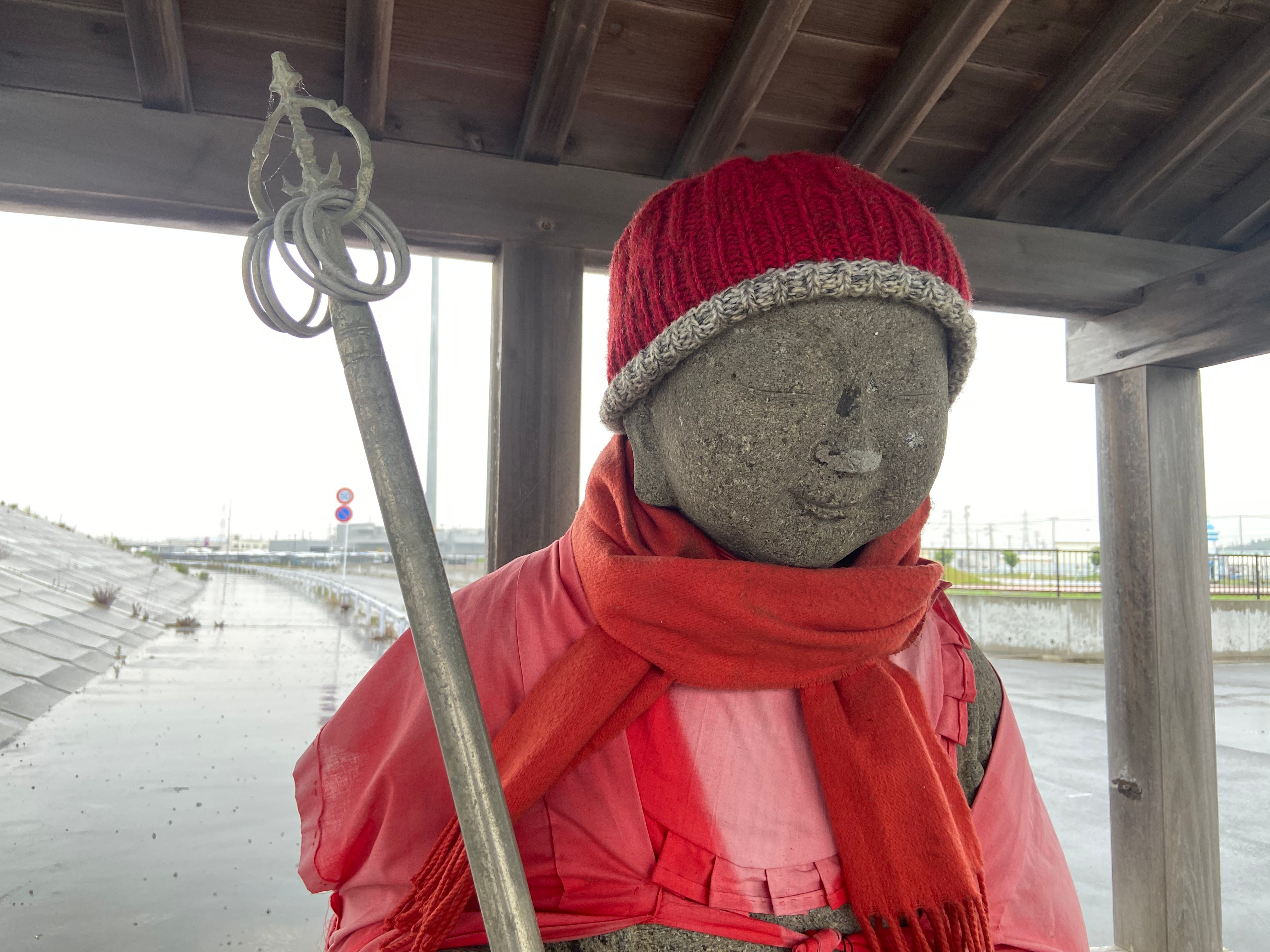
As I stare at the tower, the sky suddenly fills with grey cloud, and it begins to pour. I run into a nearby park but find nowhere to hide, eventually sheltering beneath a small Jizo statue. The smug Jizo is smiling and holding a rain wand.
Behind the statue is an embankment highway that runs along the Nanakita River and Sendai Bay, designed to help prevent tsunami waves. The tides must get pretty high here anyway, as on my side of the barrier are dozens of dead crabs, seemingly washed over the wall and cracked open on the concrete below. The Jizo shares his little shelter with the stench from the Sendai Gamo Biomass Power Plant. It stinks.
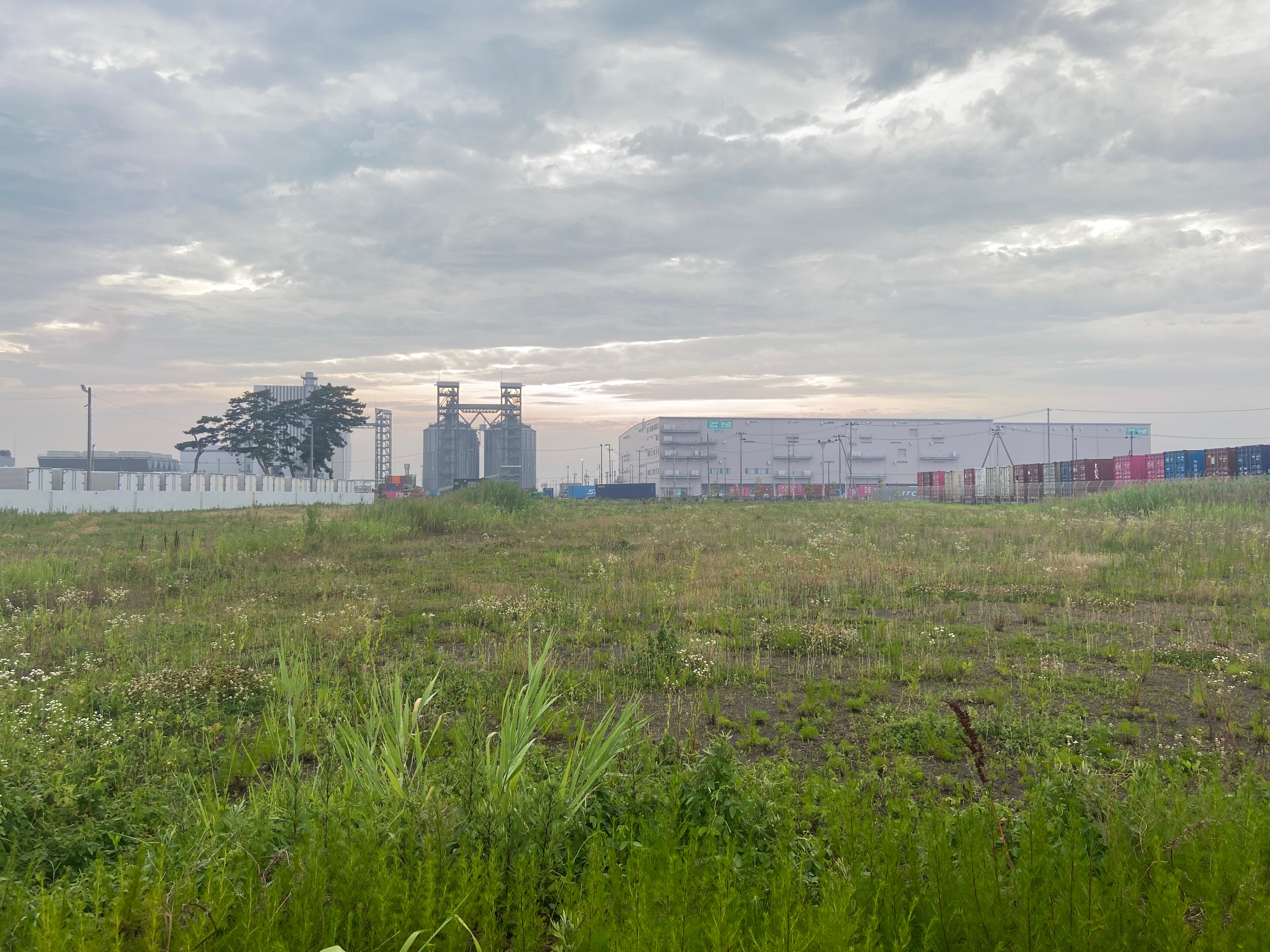
A little further up the coastline, I try to find what I’m really looking for. Usually, it’s pretty easy to find a mountain. But when you’re searching for what’s recognised as the smallest mountain in Japan, it gets trickier. I eventually do find it, half-hidden behind a factory car park.
I climb Mount Hiyori, Japan’s smallest mountain. Well, I don’t actually climb it. I just stand next to it. It looms at three metres now. Smaller than it once was. The 2011 Tohoku earthquake and tsunami took most of it. But still, someone left a summit marker. Still, it has a name. And I’m glad for that.
Around me, the wind starts to rise. I think about the ancient forest floor, perfectly preserved in silence. The looming shadow of a tree long gone. I think about how we keep naming things, even after they’ve almost disappeared. I think about how some things vanish slowly, and some things vanish all at once.
I walk away, back into the storm, careful not to step on the mountains.
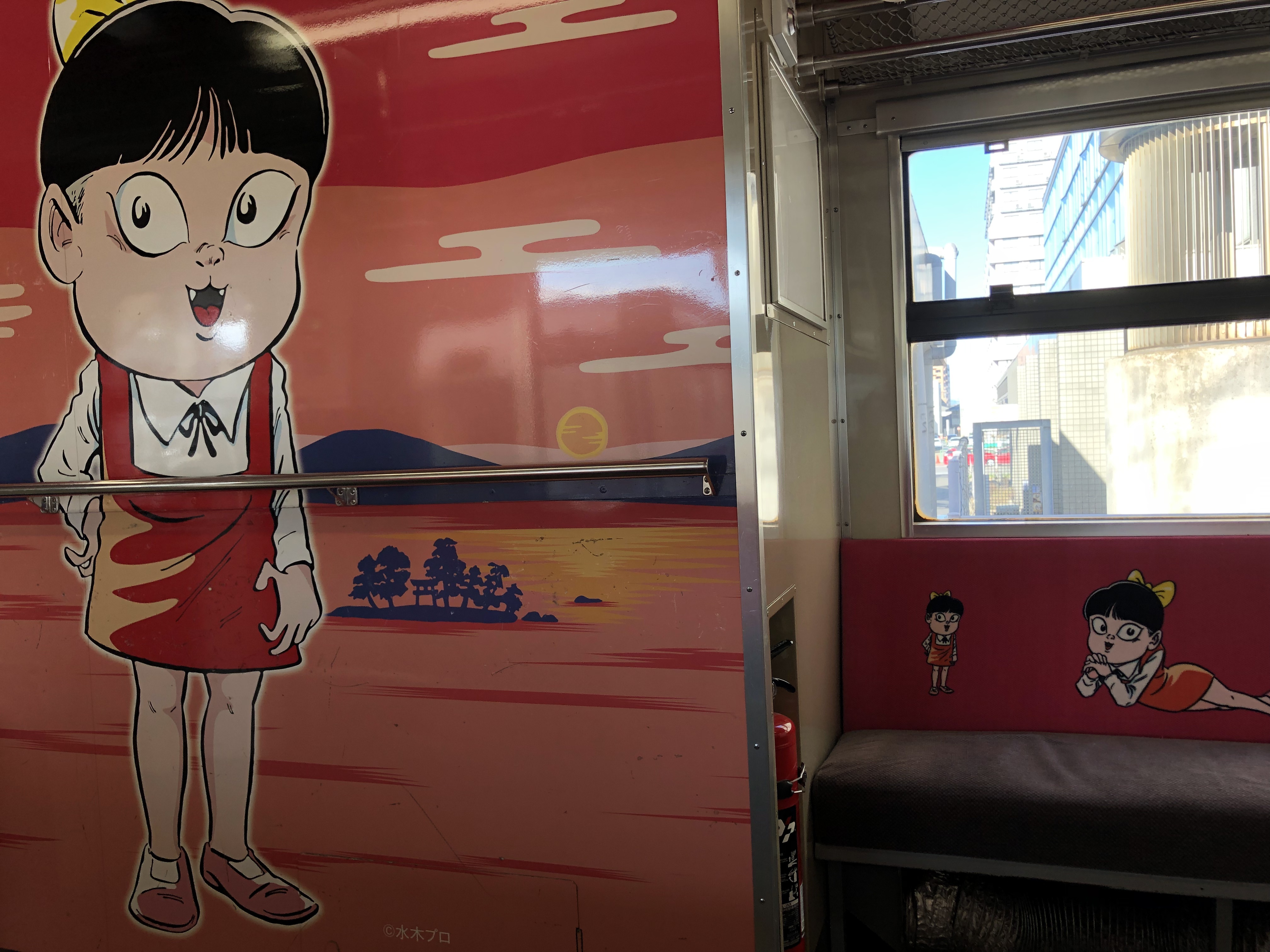
I stand at Yonago Station, my eyes fixed on the tracks as I await the arrival of my train from Track 0. This station, also known as Ratman Station, is located in Tottori Prefecture near the border of Shimane. The stations on the Sakai Line all have an alternative name, and this one is no exception. As my train arrives, I can’t help but notice the lively characters from the popular anime, GeGeGe no Kitaro, decorating its exterior. The walls are adorned with illustrations of Nekomusume, a supernatural cat known as “Cat Girl,” who, to my surprise, also serves as one of the train’s announcers.
As the train chugs along, it gently rocks back and forth, the sensation akin to being on a ship at sea. Nekomusume is normally a reserved yokai girl, however she is known to shapeshift into a fearsome catlike monster with razor-sharp fangs and piercing eyes, particularly when she is angry or hungry for fish.
Finally, I arrive at the port town of Sakaiminato and get off the train at Babasakicho Station, nicknamed ‘Kijimuna’ meaning Okinawan wood spirits. As I exit the station, I feel lost and consider whether I have made a mistake. But after a short walk, I see a sign pointing me to my destination: “Welcome to the World of Mizuki Shigeru.”
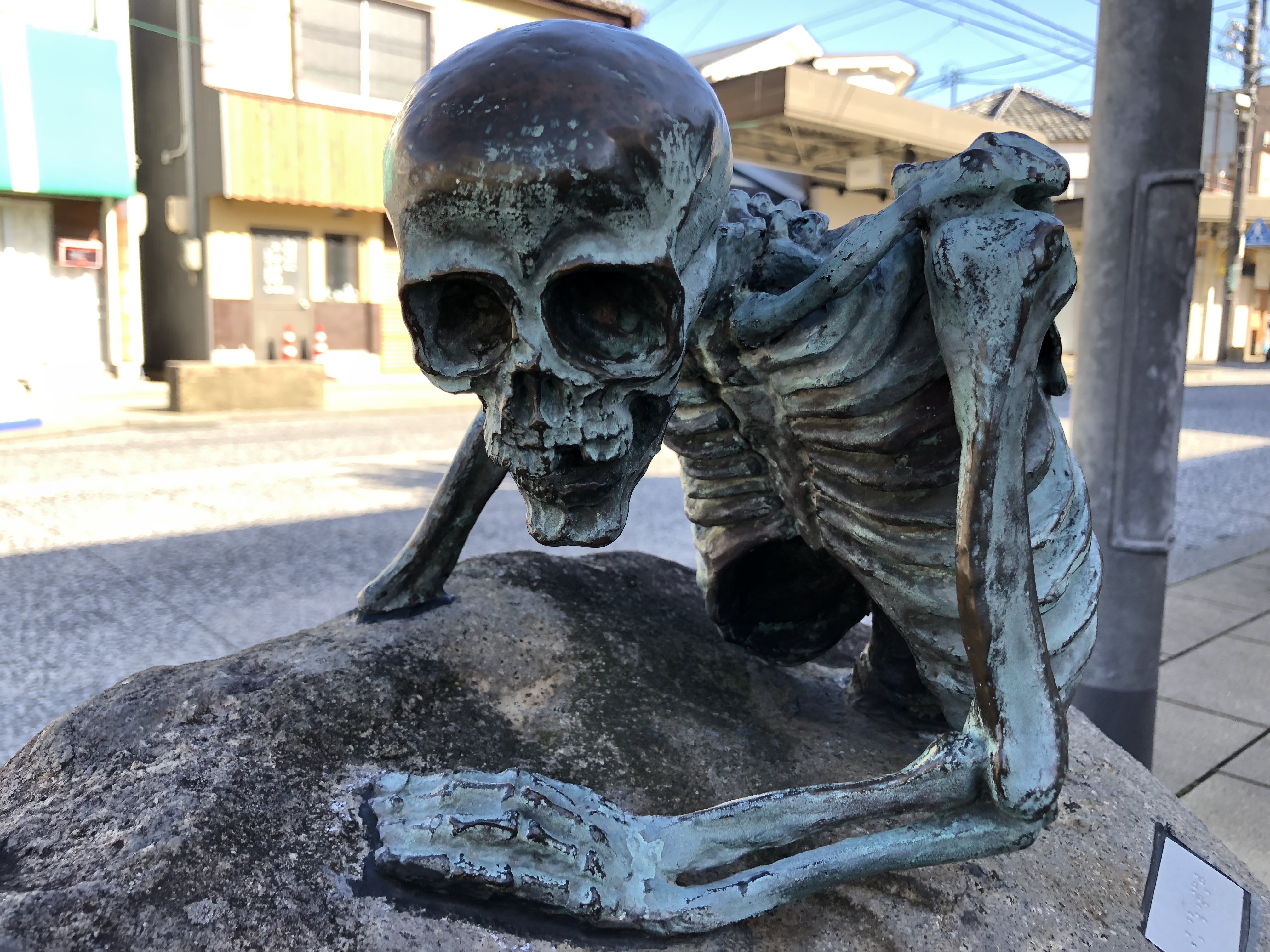
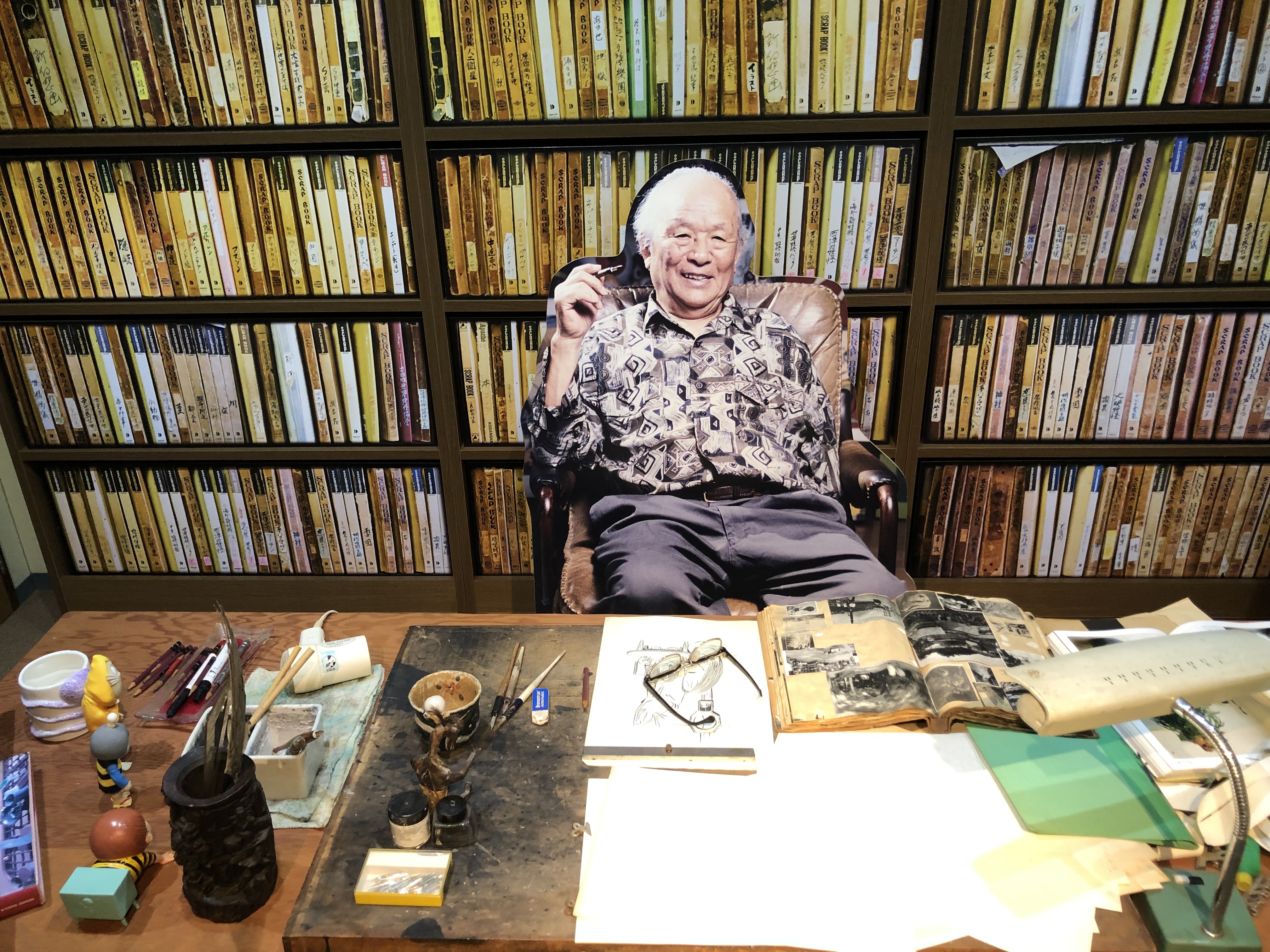
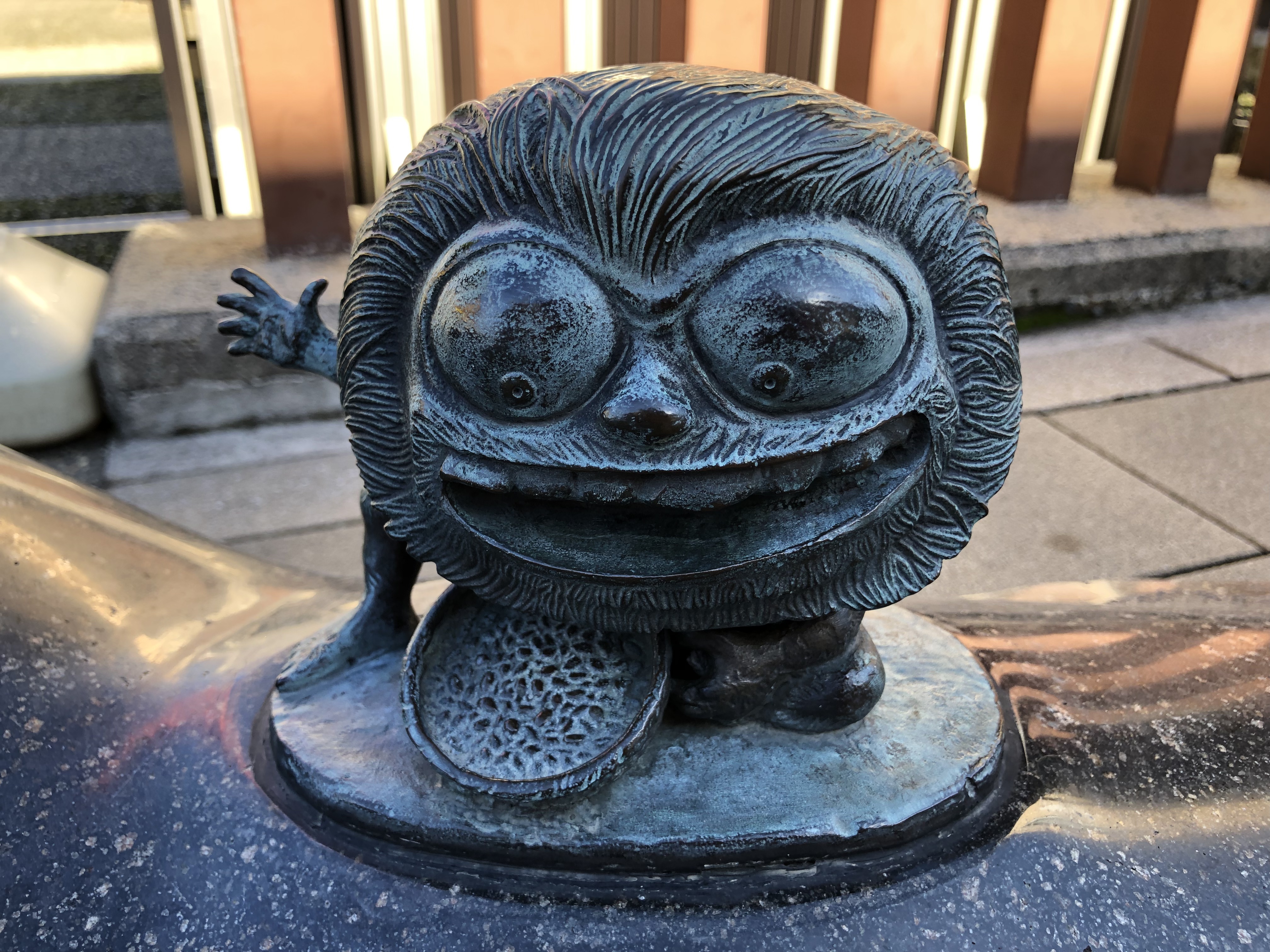
Mizuki Shigeru was a Japanese manga artist, born in 1922 and raised in the town of Sakaiminato. Upon arriving at Mizuki Shigeru Street, I am immediately struck by the abundance of weird statues that line the road. A total of 177 bronze yokai statues, each depicting a different supernatural entity from Japanese folklore, have been placed along the 800-metre street. Mizuki Shigeru made his name by portraying such entities in his work and the area here is dedicated to his legacy.
The street is filled with souvenir shops selling official Mizuki Shigeru goods, and the entire road is dedicated to the artist. It’s clear that even in death, Mizuki Shigeru has become immortalised with not only a statue, but an entire street and a train line. The vending machines are adorned with illustrations of monsters, there are photo booths where you can take a picture with yokai, there is a large museum, and even a place called Yokai Shrine.
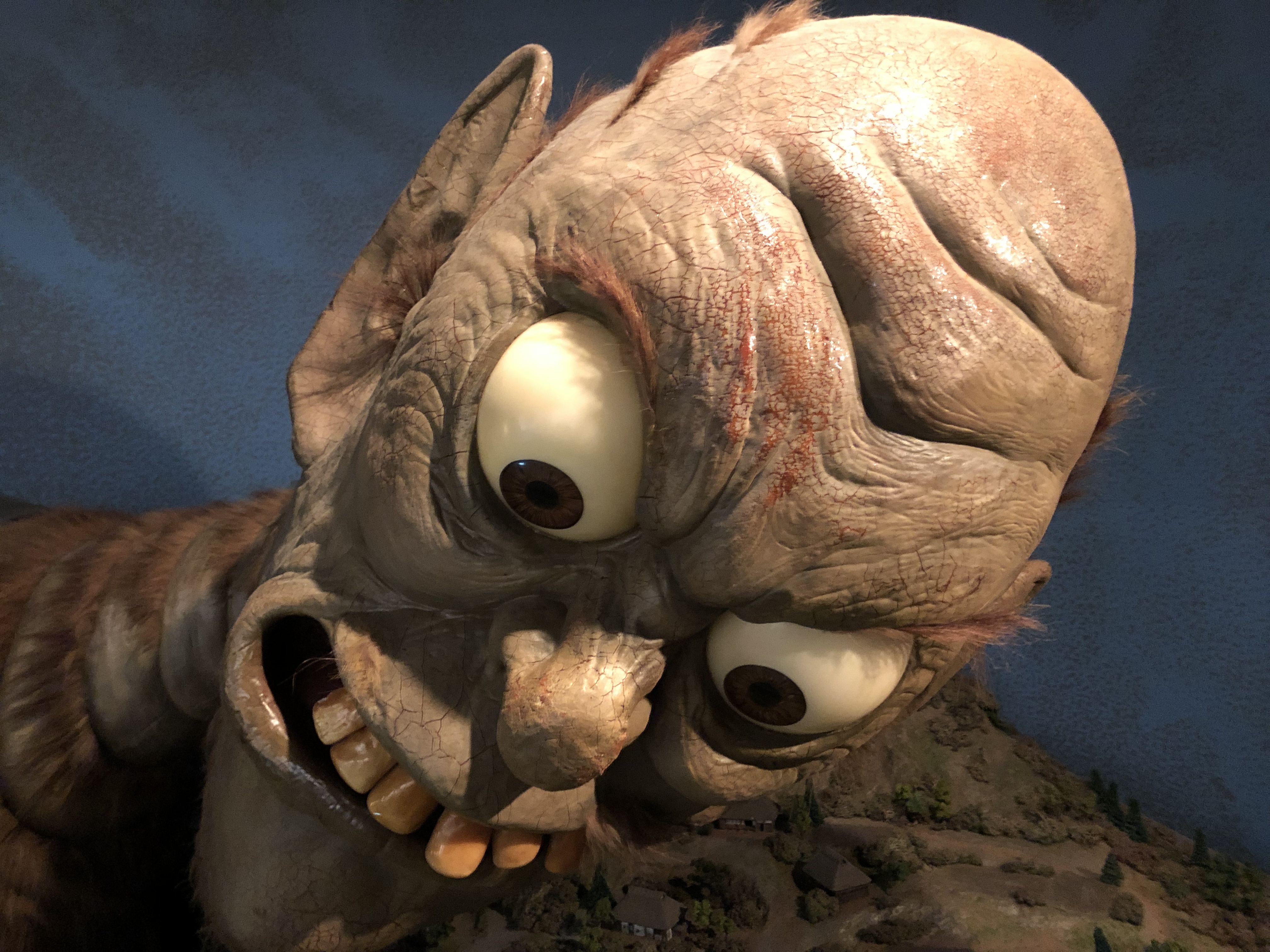
The renowned Mizuki Shigeru Museum showcases many of Mizuki’s works, including manga books from his “only-for-rent-manga-period” and other masterpieces about yokai. The museum also displays numerous photographs and materials about the writer’s trips and his research of the yokai world. Visitors can even find yokai that lived in ancient times in Japanese households. The museum truly immerses visitors in the world of yokai and the brilliance and wonder of Mizuki Shigeru’s work.
The museum’s flyer sums it up best, “You will meet a lot of yokai. Hope you will become friends with them.”
Continuing my exploration of the museum, I pass books and board games, and a lot of comics, most of which feature imagery that depicts death. The museum spans a massive ten rooms and includes original cells, drawings, a bronze engraving of Mizuki’s palm print, his passport, and a complete timeline of his life.
Weird, creepy music plays as I pass through a haunted house. I learn in the museum of an interesting temple over in Matsue Prefecture, three hours from here by train. The temple is very much related to the story of Mizuki Shigeru’s life. As I leave the museum I pass a terrifying wall of heads in the Yokai Cave, and finally outside I discover a traditional Japanese garden littered with macabre images.
After a few hours on the train, I arrive at Ichibata-Guchi Station. The train station features a small statue of yokai. As I exit the station, a really old woman approaches me and starts chatting in Japanese. She is surprised to hear that I am planning to walk to the temple, as it is about five kilometres away and up a mountain. The walk is quite difficult, she warns me.
As I begin my hike, I walk down a conveniently straight stretch of road. The first car I see since leaving the station is driven by a Japanese man who, for no apparent reason, smiles and bows his head at me. A short distance later, I come across two stone lanterns that mark the beginning of the route, which will start to incline steeply. From this point, the footpath vanishes leaving two lanes of an empty road devoid of traffic or vehicles. As the path becomes steeper still, it meanders and curves up the mountain and I find that the further and higher I climb, the better the view becomes. At one point I can make out Lake Shinji in the distance.
As I near the top, I realise how hot it is, and it doesn’t help that I am wearing a thick winter coat. It must be 20 degrees. The breath of winter now a fiery gasp, as the planet scorches in its rage.
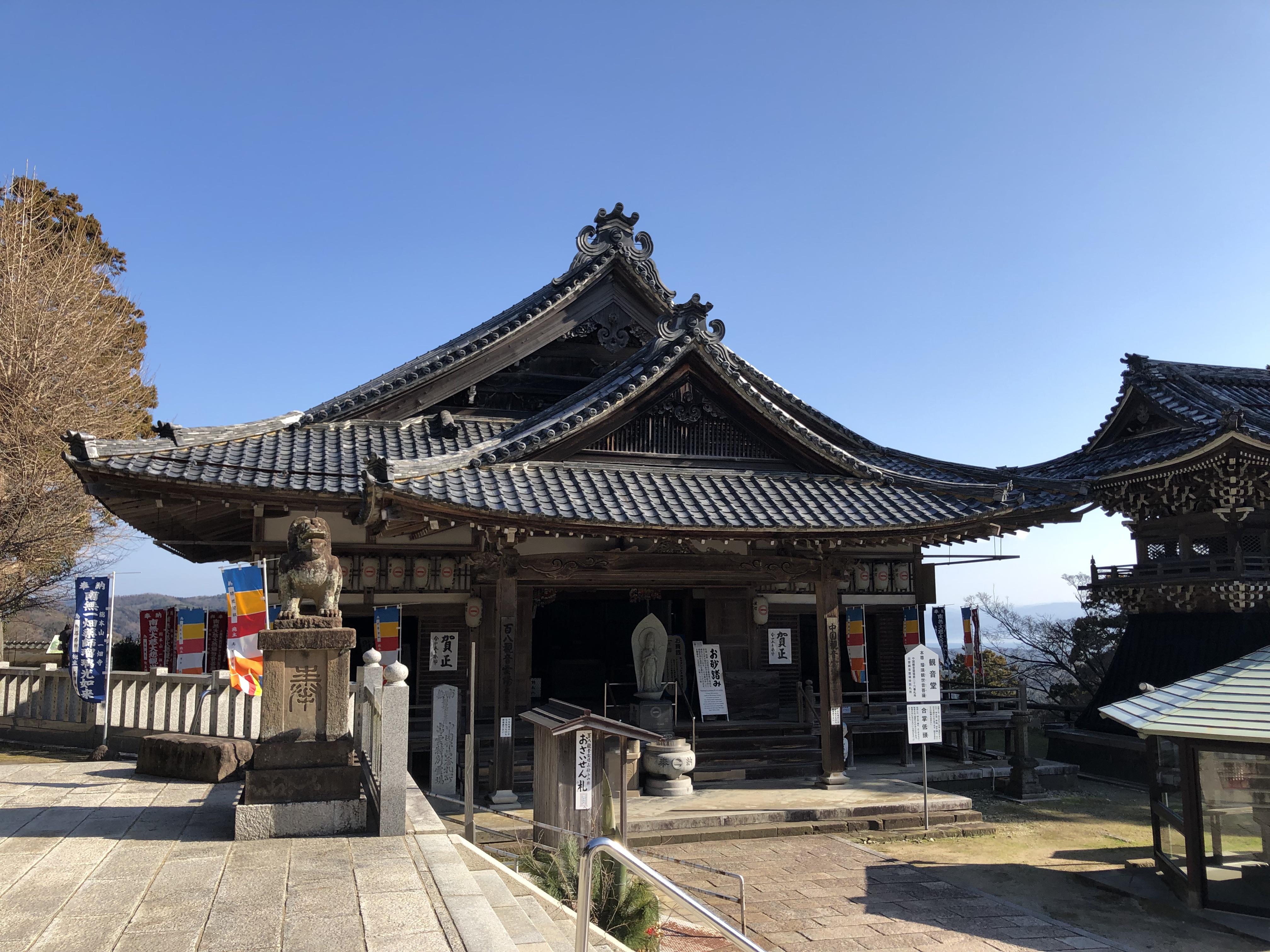
After a challenging hike I reach Ichibata Yakushi, a Zen Buddhist temple, and part of multiple pilgrimages, one of which includes visiting 108 Kannon temples in Japan. The temple was said to be founded after a monk named Yoishi followed three white foxes up this mountain, and decided to build a temple at the site where the foxes led him.
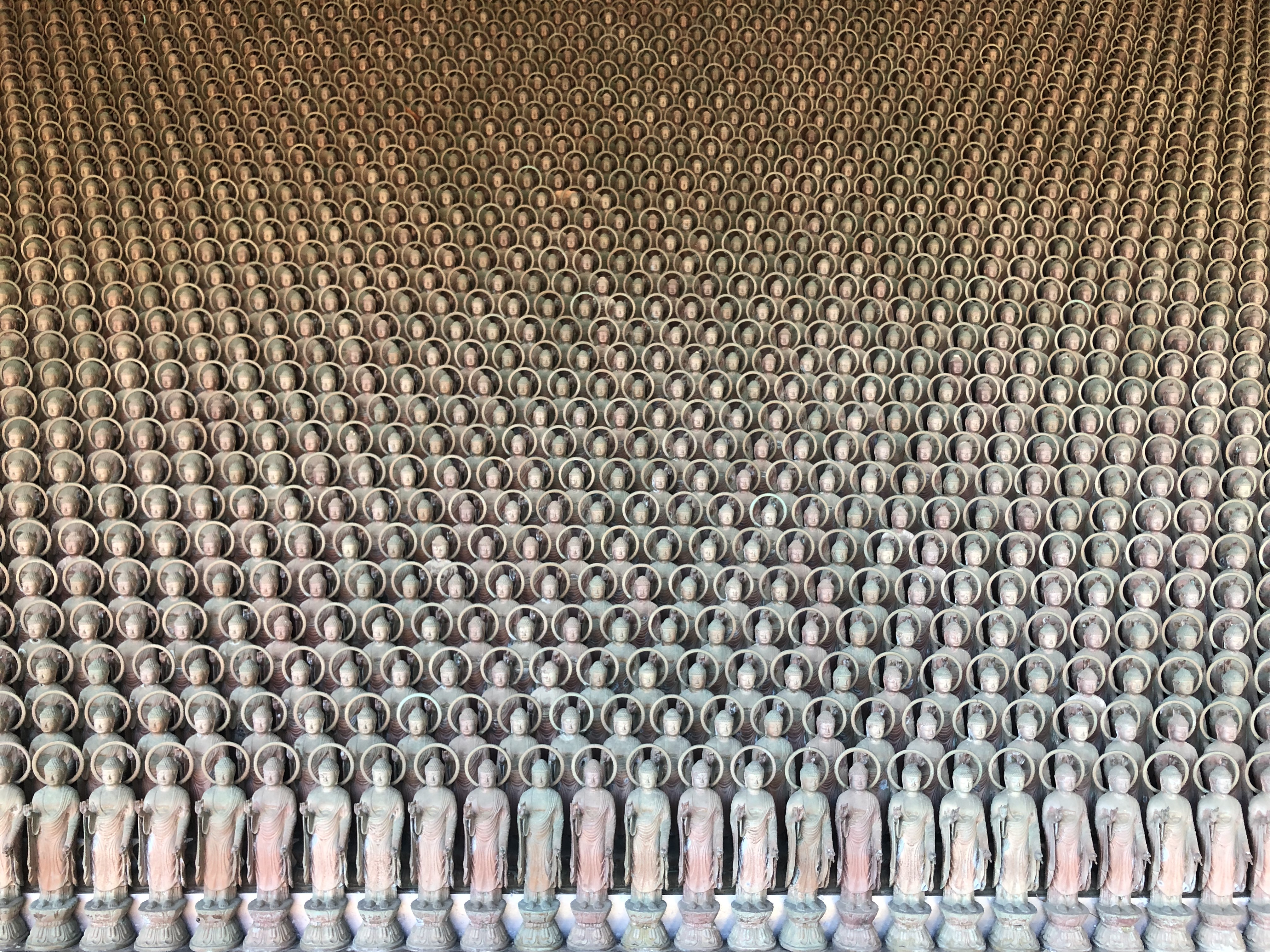
The reason for visiting this temple today is that the story goes that Shigeru Mizuki used to visit here a lot, and that a ghost of a really old woman would meet him here, whispering to him all the legends and stories he used in his creations. I explore the temple grounds, and get a feeling that someone ordered a few too many statues. It is said that there are 84,000 statues here, however, I count just 30,780.
As I continue to explore, I decide that it’s really quite beautiful up here. The area also features mountain cottages to rent for a night for as little as ¥10,000, offers stunning views of the landscape below, and for some reason, appears to be really popular with dog owners, as I count five dogs within the temple grounds.
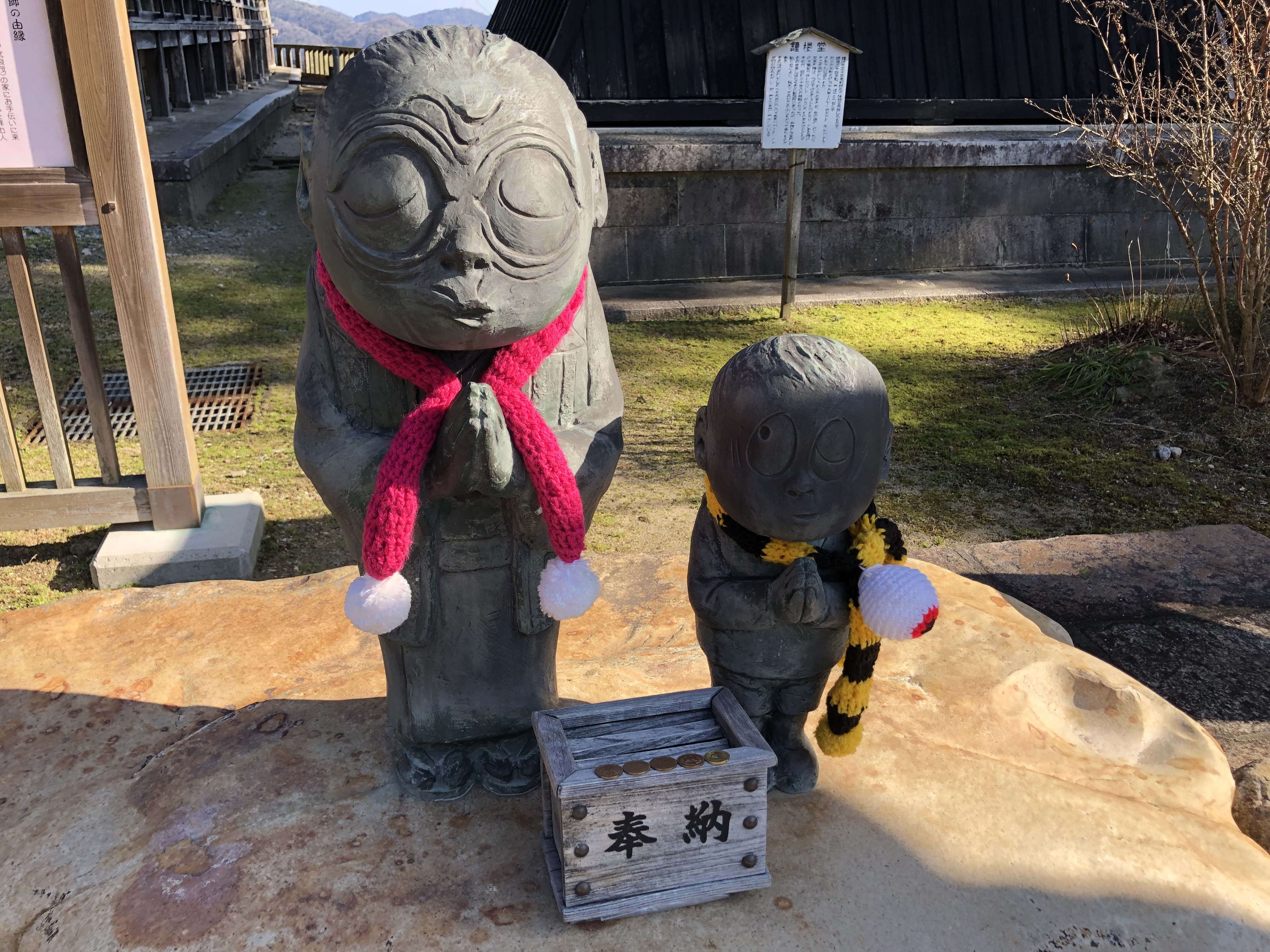
I place some coins in the box next to some statues of yokai, and decide that this is the nicest temple I’ve visited. In the future, I wouldn’t mind visiting more temples on a pilgrimage trail, but for today, I decide it’s getting late, and I head back down the mountain passing a small mountain village, before stumbling across another yokai statute, sitting unassumingly at the bottom of some stone steps.
After climbing up the 1,270 moss covered steps, I arrive back at my favourite temple, exhausted and realising this was just an alternate route. I carefully climb back down the steps to leave. The really old woman I saw at Ichibata-Guchi Station smiles at me as I pass her on the steps, and I can’t help but wonder if she might be Shigeru Mizuki’s whispering ghost.
To celebrate the 150-year anniversary of railways in Japan, and my own personal achievement of having finally explored and written about all 23 wards of Tokyo, I decide to pay tribute to the city in a meaningful way. I choose to do so by embarking on a journey to walk the entire length of the Yamanote Line, a challenge that will allow me to experience Tokyo in a way that I never have before.
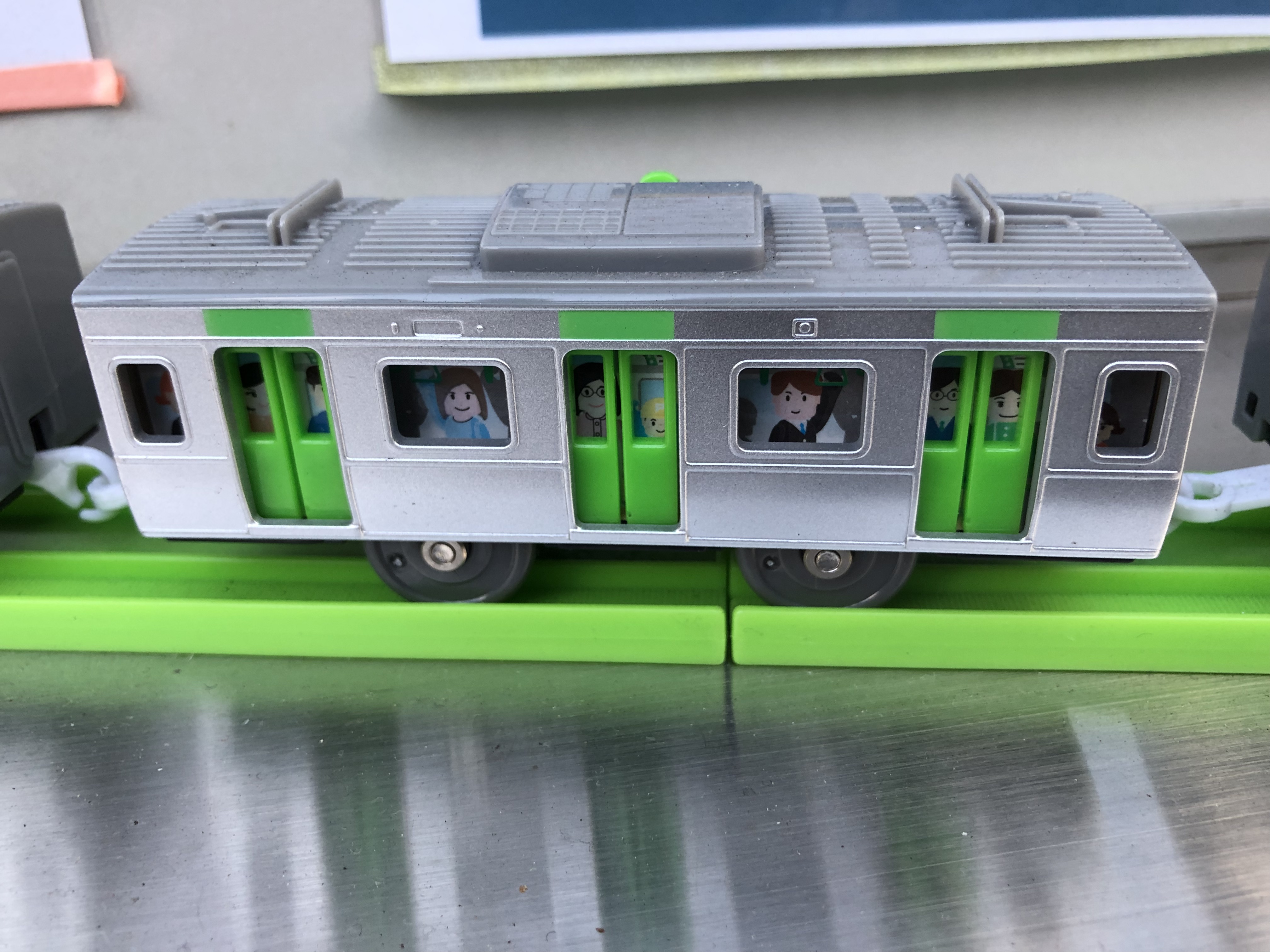
As the early morning sun blazes brightly between the gaps in the skyscrapers, I set out to meet my friend Maki. Though not typically a fan of early starts, today will be a long day that calls for an exception to be made. The Yamanote Line, a loop line encircling central Tokyo, is approximately 34.5 kilometres in length. But on foot, without walking on the tracks, the journey becomes a formidable 44 kilometres – just a little over a marathon’s distance. Thus, the route earns itself a playful portmanteau: the Yamathon.
I meet Maki outside a small cafe in Sumida, and we cross the bridge over into Asakusa. She asks me if she can give up, to which I jokingly reply that it’s a bit early to be considering such a thing. After all, with the Yamanote Line constantly circling the city, it’s always possible to find a train station nearby in case the need to give up arises. We set off from Ueno, the start and end point of our journey. Our first decision is whether to walk clockwise or anti-clockwise. After some deliberation, we opt for the latter, as the prospect of navigating through the eerie streets of Uguisudani at night seems daunting. And so, we set off in the direction of Ikebukuro.
As we approach Nippori, the road runs out and we are forced to venture into the familiar territory of Yanaka Cemetery (still no sign of the ‘snow-protective lifting tool’). While meandering amongst the empty graves, we become momentarily lost, but the distant rumble of a Yamanote Line train eventually guides us back to the tracks. We continue on, making our way through Tabata and eventually reaching Otsuka Station. It is here, three hours into our quest, that our journey takes an unexpected detour in the form of an interesting discovery: the first and only Green Lawson in Tokyo.
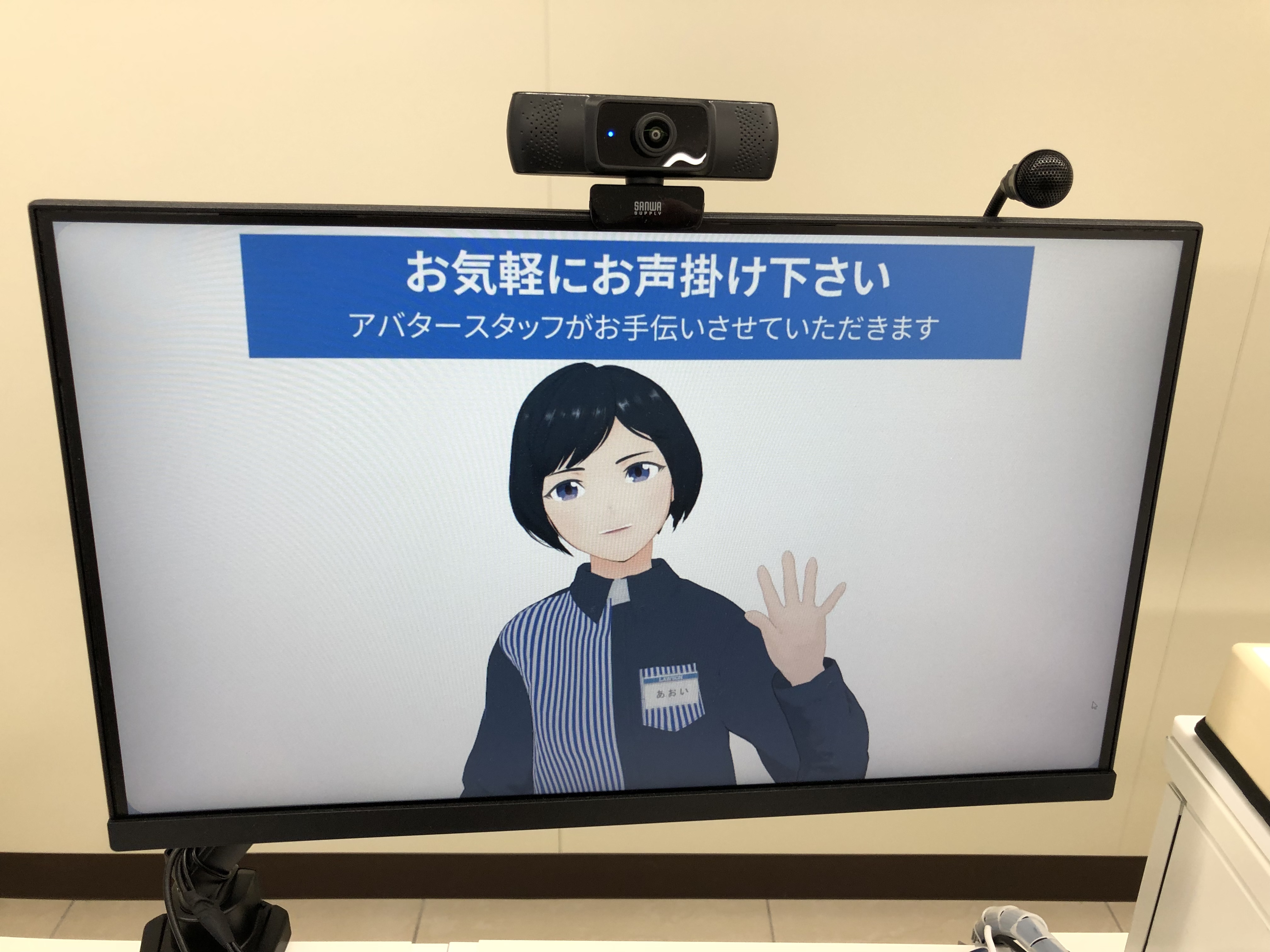
The thing that makes this store so unique is that it is fully staffed by digital avatars of Lawson employees, rather than human staff members. As we wander into the store, intrigued by the novelty of it all, we decide to explore further. As we pass by one of the avatars, she greets us with a cheerful “Happy New Year” in Japanese. As Maki chats with the AI about our epic journey along the Yamanote Line and my documenting it in a blog, the clever machine quips that it would be happy to strike a pose for a photograph. It suggests three options: a cheerful “wave,” a universal “peace” sign, or a self-deprecating “loser” sign.
Eager to learn more, I take the opportunity to ask the AI about the philosophy behind Green Lawson. To my surprise, the machine responds in fluent English, explaining that the store aims to reduce food waste, support the local economy, and contribute to world peace.
As we resume our walk, the towering buildings along the route create pockets of shade on the pavement. It’s cold in the shadows, but warm in the sun. Maki explains that there are two words in Japanese that both describe these respective conditions, but I find myself struggling to come up with the antonym for “shade.” This lack of an opposing word begins to bother me, and I consider the possibility that it might be a failing of my memory.
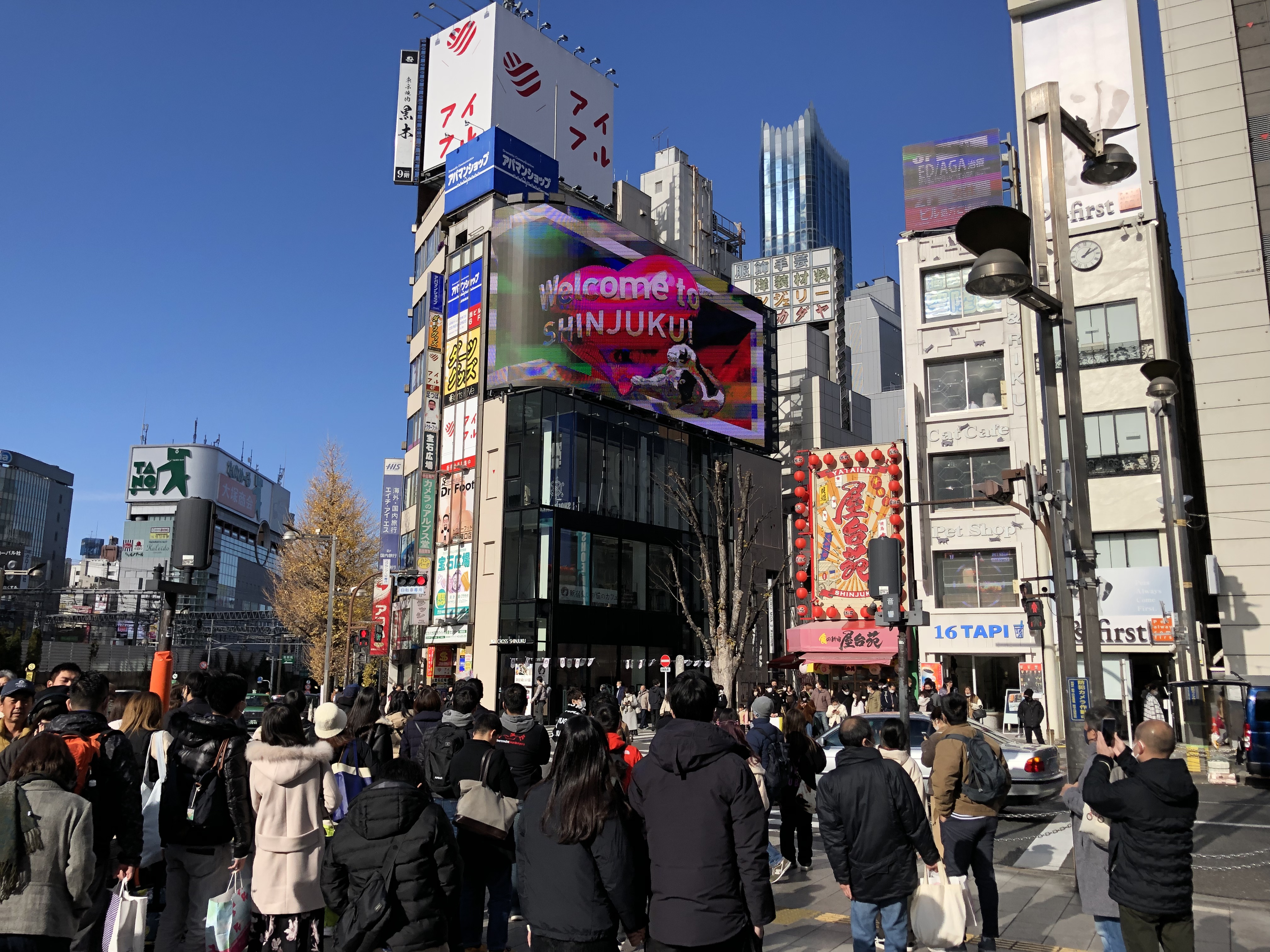
We continue on, passing a large group of people running along the street dressed as rabbits, a nod to the Chinese New Year’s chosen animal. At Ikebukuro, we are treated to the sight of sculptures that litter the streets. As we enter Shin-Okubo, we find ourselves wandering through the bustling streets of Korean Town. And at Shinjuku Station, we are greeted by a television screen that displays words in a mesmerising three-dimensional phenomenon.
Almost five hours into our walk, we arrive at the halfway point of our journey: Harajuku Station. Here, people stand in line, eagerly waiting to purchase tapioca from a street vendor. A little further up the street, we see a similar scene, but with people queueing up along the entire length of a road to buy shoes. In Shibuya, we encounter yet another line, this time composed of people waiting to take a photograph of Hachiko the dog, adorned with a special wreath to mark the New Year.
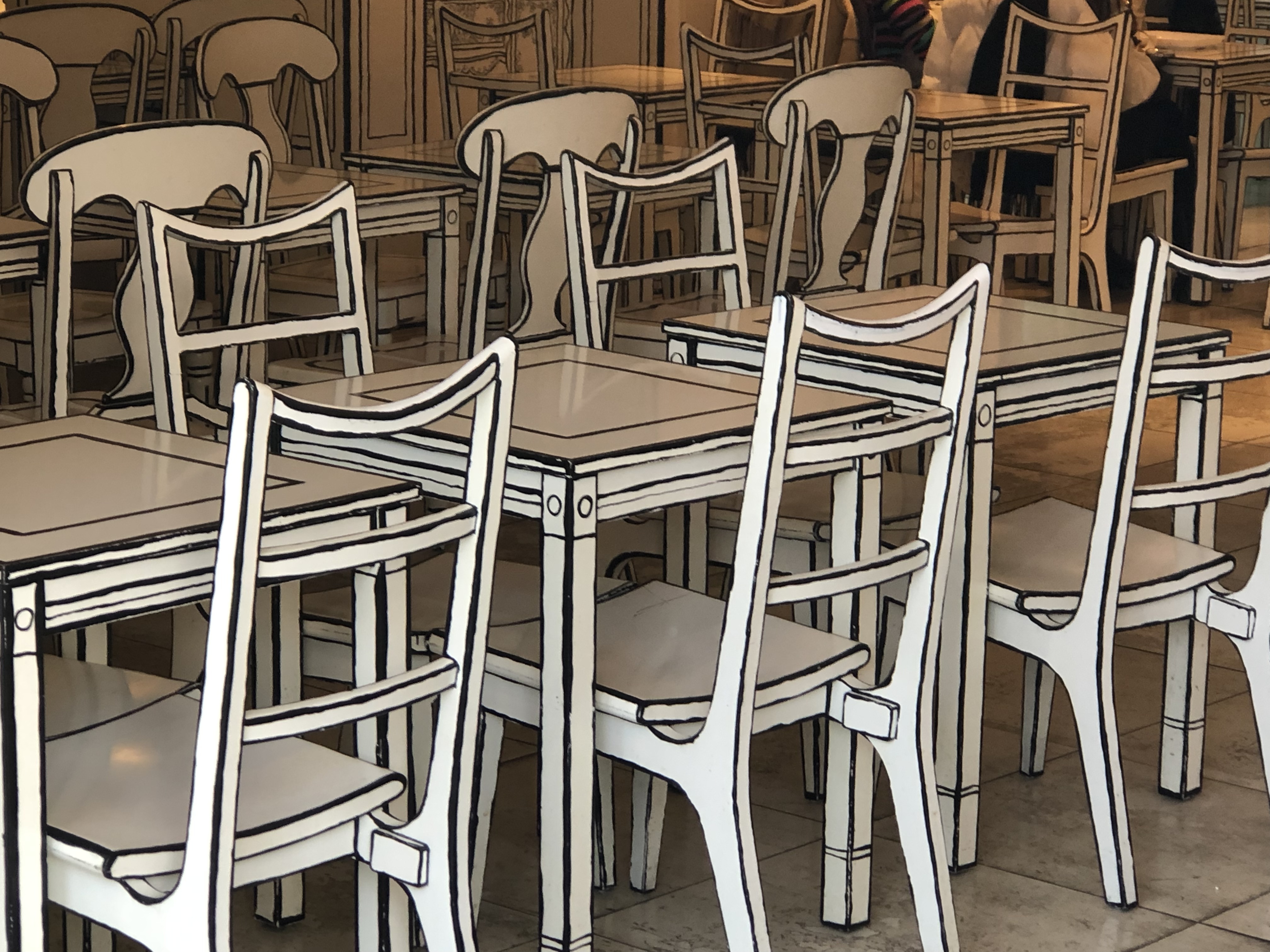
After hours of constant walking, our legs begin to feel sore. We decide to take a well-deserved break at a small, charming cafe. In contrast to the bustling, three-dimensional imagery of Shinjuku Station, the atmosphere at the cafe is a tranquil, two-dimensional one.
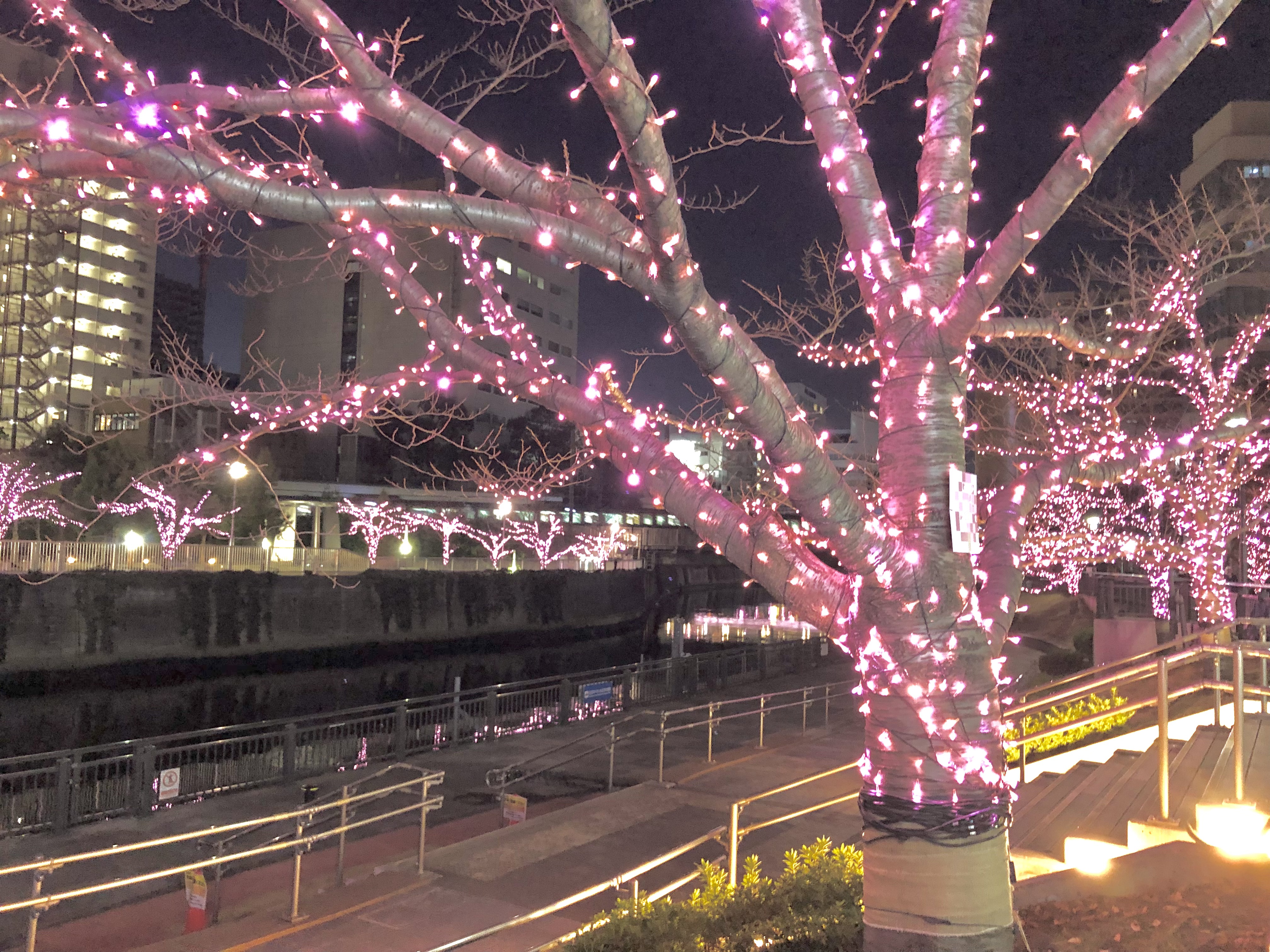
With the night falling and the wind picking up, a chill fills the air as we resume our journey through the darkening city. Despite the challenges presented by the fading light and the increasing cold, we persevere, striding forward on our journey. Close to Meguro Station, we are treated to a beautiful distraction in the form of the Meguro River Cherry Blossoms Promenade, a scenic riverside path lined with cherry trees that are illuminated by beautiful pink lights.
The tranquil scene is a welcome respite from the pain in my calves, and Maki and I take a moment to simply savour the beauty around us.
With weariness setting in, we consider the possibility of giving up, but in the end, we decide that we cannot allow ourselves to quit, for the fear of regret is too great. If we can push through and complete this challenge, we tell ourselves, then we can conquer anything. And so, we push on, determined to see our journey through to the end.
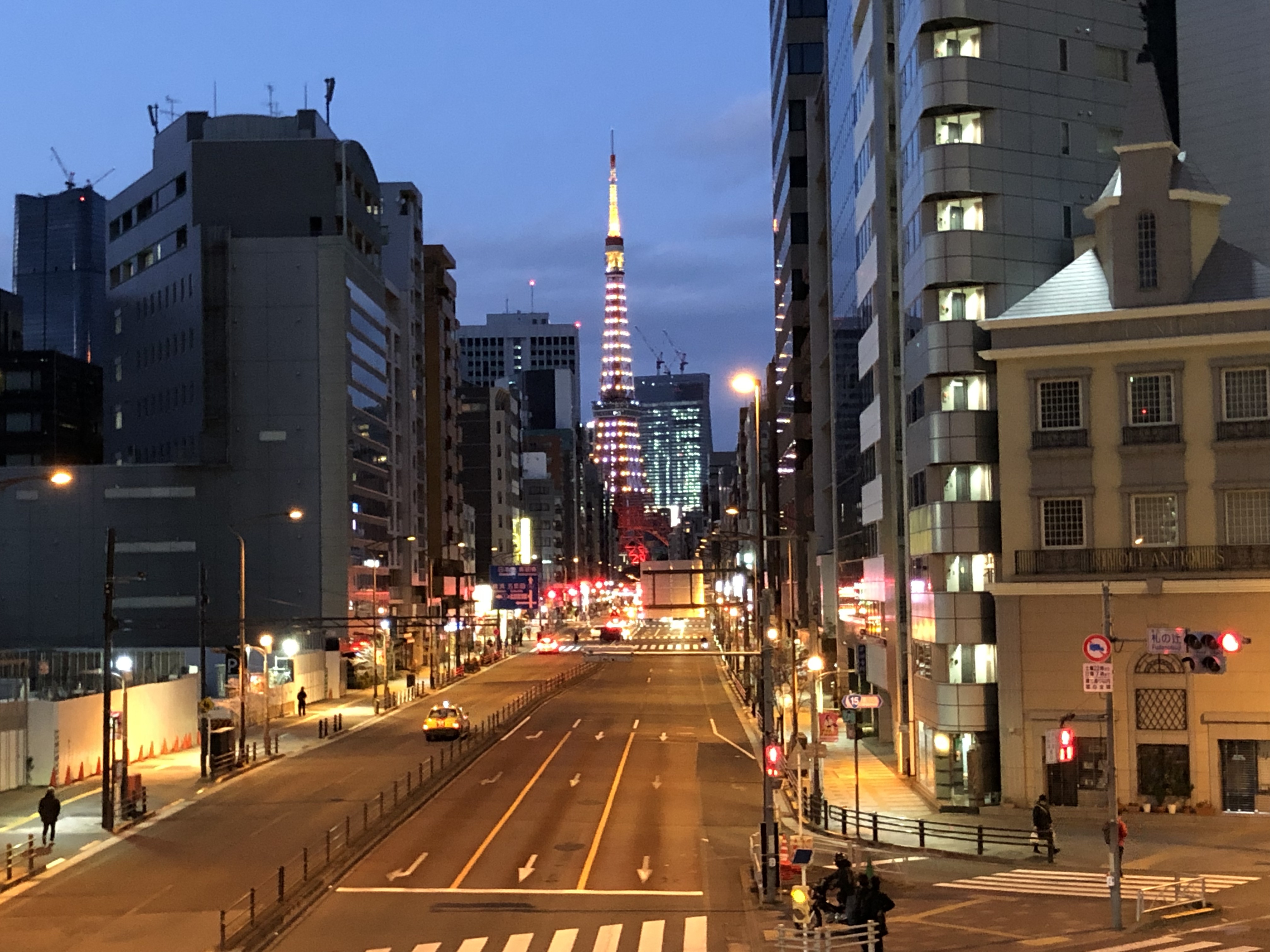
We pass through Shinagawa and the newly built Takanawa Gateway Station, the most recent addition to the Yamanote Line. At 5 p.m., the “Yuyake Koyake” bells ring out from speakers at every intersection, beckoning us to return home. But we do not heed their call, for the end of our journey is nearly in sight. In the distance, I am heartened by the sight of the bright illuminations of Tokyo Tower.
Built from the remains of United States military tanks damaged in the Korean War, Tokyo Tower was designed to mirror the iconic Eiffel Tower in France. However, in a show of competitive spirit, Japan deliberately made its tower 2.6 metres taller, earning it the title of the tallest freestanding tower in the world (a title now held by Tokyo Skytree).
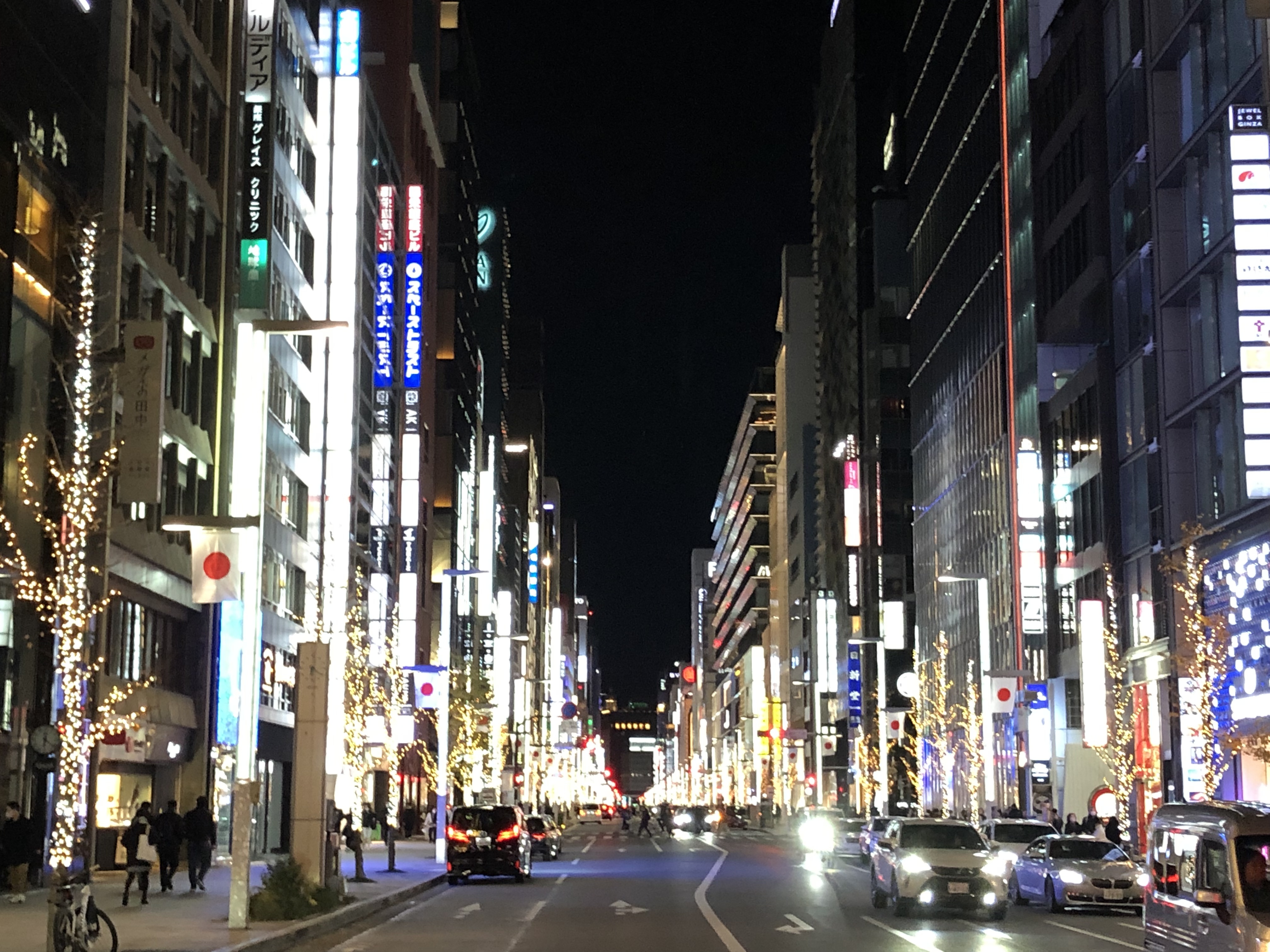
As we near the end of our journey, we are mesmerised by the bright lights of Ginza, Tokyo, Kanda, and Akihabara, all of which are transformed into a neon nirvana at night. It is at this moment that I am struck by the realisation that Japan has not just four, but five seasons – one that is marked not by the changing colours of nature, but by the way in which the country’s cities and towns are transformed by the darkness of night.
After a grueling nine-hour journey that saw us take a total of 55,454 steps, we finally arrive at Ueno Station, exhausted but triumphant. Our legs ache and our feet throb with pain, but the sense of accomplishment helps to outweigh the discomfort. Upon returning to Asakusa, I allow myself the indulgence of an ice-cold beer – the best I’ve ever tasted – as a way to celebrate and relax after our achievement. As Maki and I bask in the afterglow of our journey, the fatigue slowly starts to fade away.
I aimlessly wander through Tokyo’s Adachi Ward on a cold, grey day, feeling a little bored. As I walk through a park I notice a small building that seems out of place amongst the trees and grass. As I walk up to the building, I can’t help but notice its bleak appearance. The grey concrete seems to blend in with the overcast sky, giving the place a depressing vibe. But despite my lack of enthusiasm, I decide to check it out.
As I walk through what turns out to be an animal exhibit, I can’t help but notice the perceived lack of space and variety in some of the enclosures. The Sulcata Tortoise appears to be trying to escape, possibly because it seemingly lacks access to direct sunlight, a necessity for this type of animal. It repeatedly smashes its face against the glass enclosure in frustration.
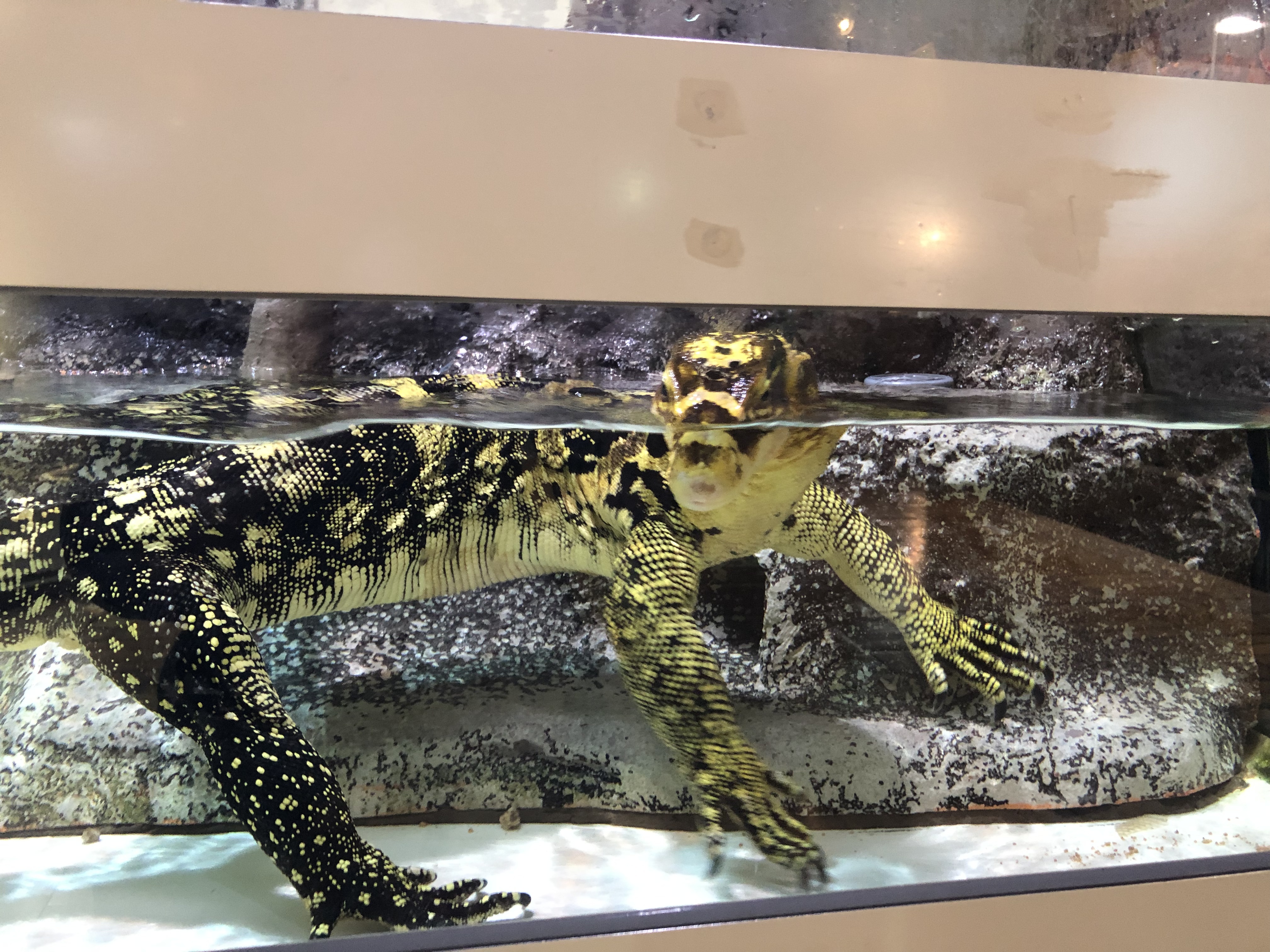
The Yellow-headed Water Monitor is a large, semi-aquatic reptile native to Africa. In my view, in this enclosure, it swims absently in a small tank that also offers a section of land. These animals are known for their powerful legs and sharp claws, which they use to climb trees and dig burrows in the wild. However, in this relatively confined space, the Yellow-headed Water Monitor seems unable to fully utilise its natural abilities, as far as I can tell.
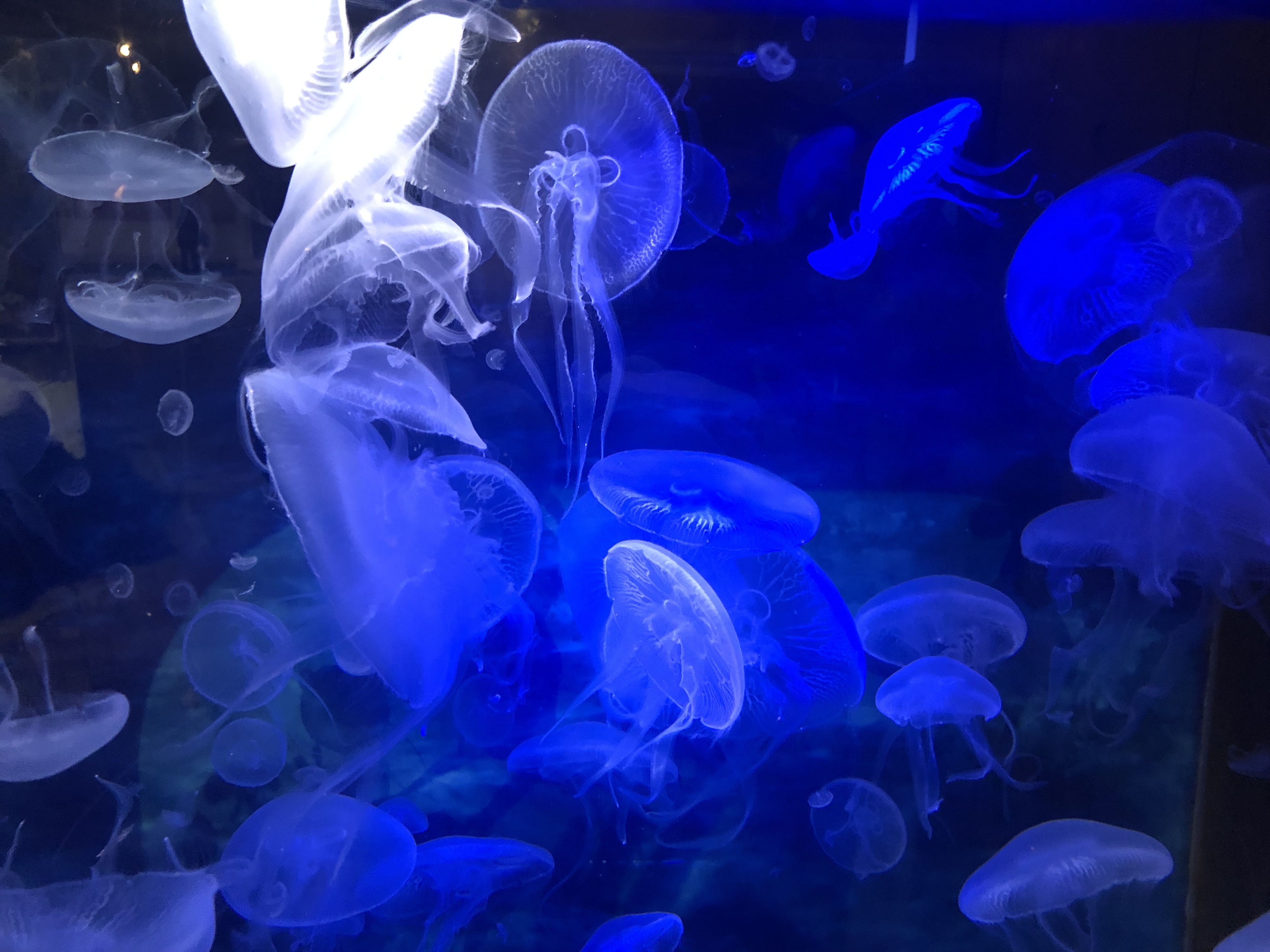
I also observe some Clownfish and Moon Jellyfish, but they seem to be lacking the vibrancy and liveliness that I would expect from these species. Clownfish, also known as anemonefish, are typically colourful and active, but these individuals seem dull and listless. Moon Jellyfish, with their translucent bells and delicate tentacles, are usually mesmerising, but in this small and crowded tank, their movement looks slow and somewhat lifeless.
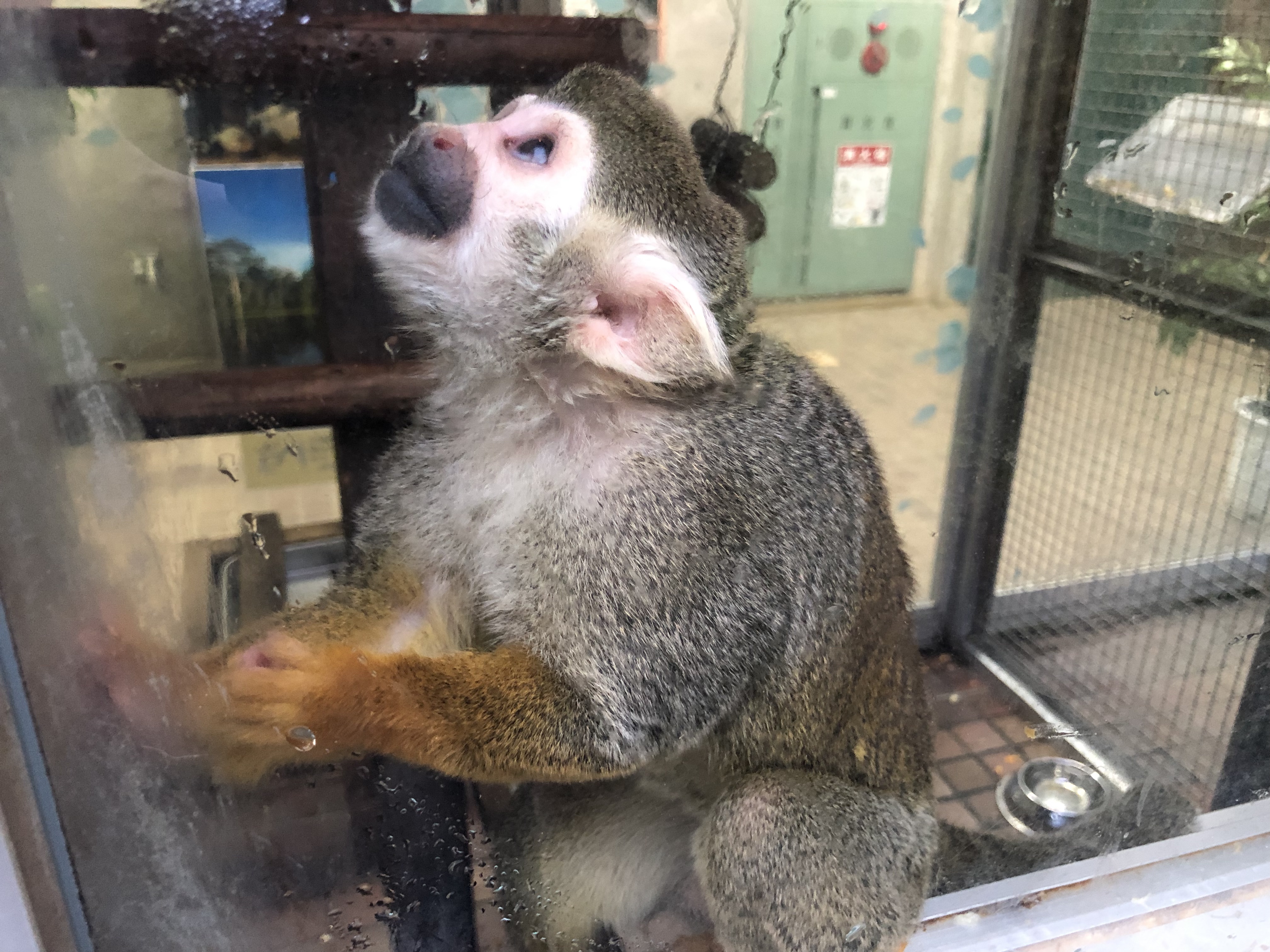
As I walk through the animal exhibit, I am startled by a group of common squirrel monkeys in cages. Seeing these animals in such small enclosures fills me with a surge of sadness, and I feel empathy for all of the animals here, even the fish, who seem to be exhibiting signs of depression.
Squirrel monkeys are social animals that live in large groups in the wild, and they are adapted to living in the rainforests of Central and South America. Because of their natural climbing abilities and long tails, squirrel monkeys are well-equipped to move through the trees in their rainforest habitat. However, one common squirrel monkey, oddly named Ryan, seems particularly drawn to me, pleading with me through its body language to let it out.
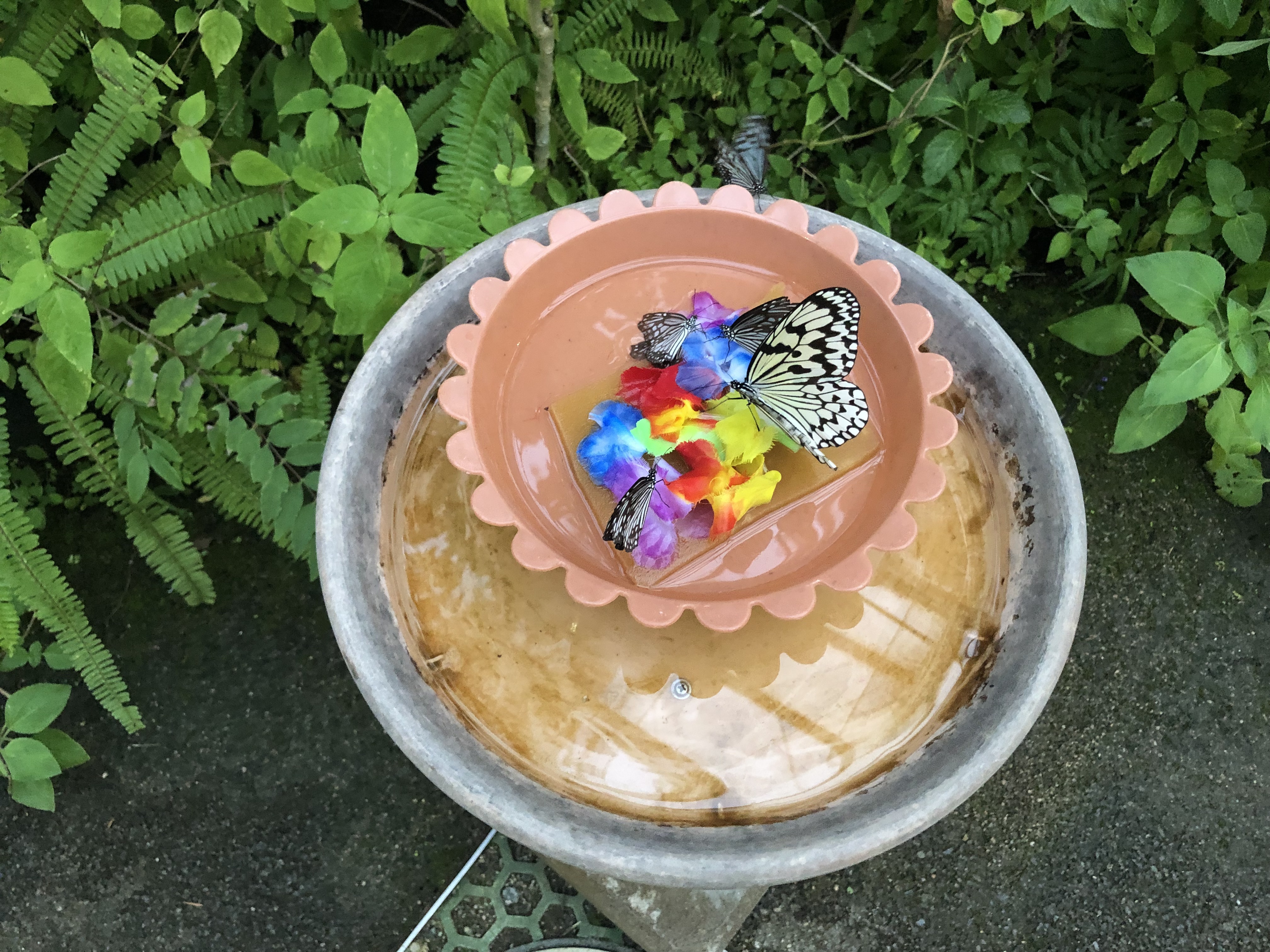
As I make my way into the butterfly enclosure, I am immediately struck by the contrast in conditions compared to the rest of the animal exhibit. Here, a lush, indoor paradise filled with plants and foliage greets me, and I am awed by the sight of Monarch butterflies, swallowtail butterflies, and red admiral butterflies fluttering freely about, their beauty on full display.
The beauty and vitality of the butterflies serves as a poignant reminder of what can be achieved when animals are given the proper care and space to thrive, in their spacious and well-maintained enclosure.
A sign reminds me to be careful not to step on any of the butterflies as I move through the space, and small dishes of honey, adorned with multi-coloured cloth, are scattered throughout the enclosure, serving as a natural attractant for the butterflies and allowing me to get a close-up view of these graceful creatures.
As I leave the park, a gnawing hunger overtakes me, one that I haven’t felt in a while. I head to the nearest train station in search of a restaurant. Inside, I am surprised to see that there are no waiting staff in sight, so I take a seat at a table and peruse the touchpad menu, eventually settling on a hearty gratin dish. As I wait for my order to arrive, I am intrigued by the sight of a robot with a digital cat face advancing towards me, carrying my steaming plate of gratin. I take the meal from the robot, which makes a beeping sound before gliding away with nonchalance back to the kitchen.
I briefly wonder about the impact of technology on the service industry. Despite my curiosity, I am too ravenous to dwell on these thoughts for long, and I dive into my meal with relish.
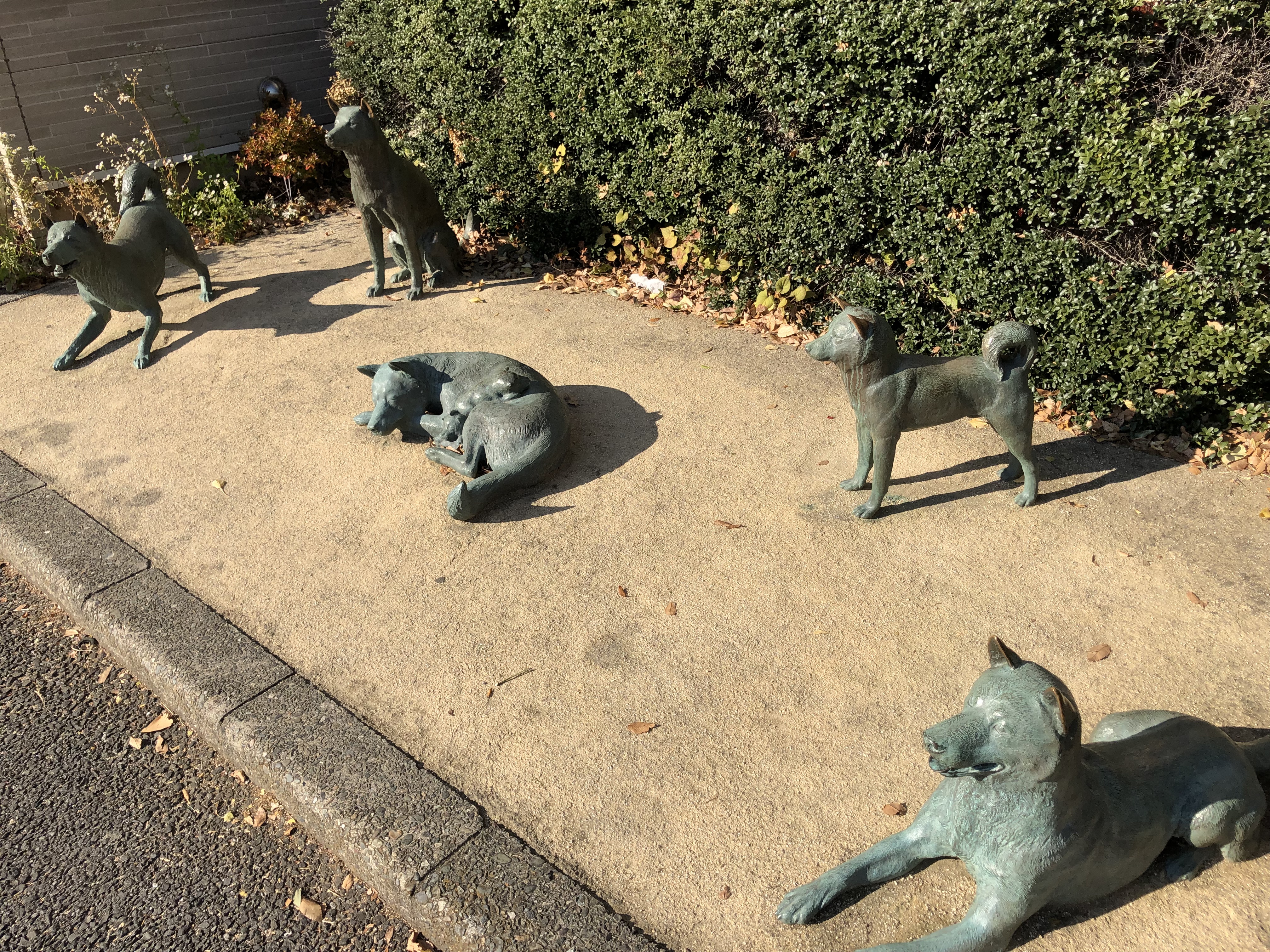
During the reign of Tokugawa Tsunayoshi, the fifth shogun of the Tokugawa shogunate, a ban on the eating of meat and the killing of animals was enacted in Japan. This ban was part of a series of laws and regulations related to animal welfare that were put in place during Tsunayoshi’s reign. Tsunayoshi was known for his strong interest in animals, particularly dogs, and is often referred to as the “Dog Shogun” due to his efforts to protect and care for dogs during his time as shogun.
One aspect of Tsunayoshi’s efforts to protect dogs was the creation of a large sanctuary for them in the area where Nakano Station now stands. It is here that I find many statues of dogs. The ban on eating meat and killing animals was likely intended to protect and care for dogs specifically, as they were considered sacred animals in Japan at the time. Strangely, the ban did not apply to birds.
This interpretation of the ban led Buddhists in Japan to argue that rabbits, which are not birds, should be considered a type of flightless bird and therefore be eligible for consumption. This argument was granted, much to the delight of the Buddhists. This is why the system for counting rabbits and birds in Japanese is the same, and is only used for these animals.
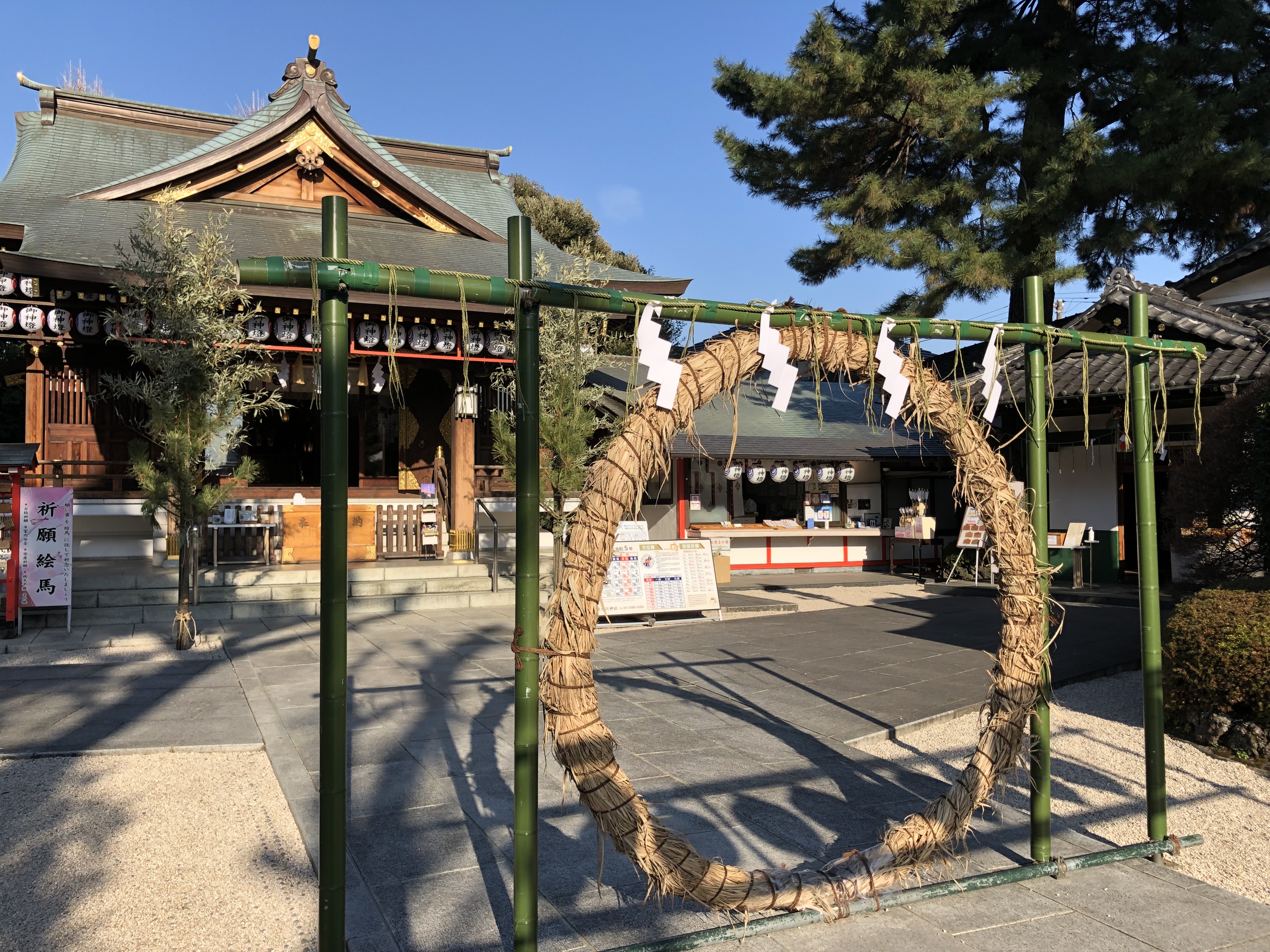
As I continue on my journey, I walk through the bustling shopping and entertainment district of Nakano Broadway. My next destination proves to be a bit more challenging to find, as it is allegedly located somewhere between the Kirin Lemon Sports Centre and Heiwanomori Park. Despite my best efforts, I am unable to locate the Nakano Prison Main Gate “Peace Gate.” It seems that it is either hidden behind a construction site or has been erased from history and replaced by a grassy meadow and a running track. After my search for the old prison proves unsuccessful, I am drawn towards the melodic sounds of a shamisen. As I follow the music, I come upon a peaceful-looking shrine.
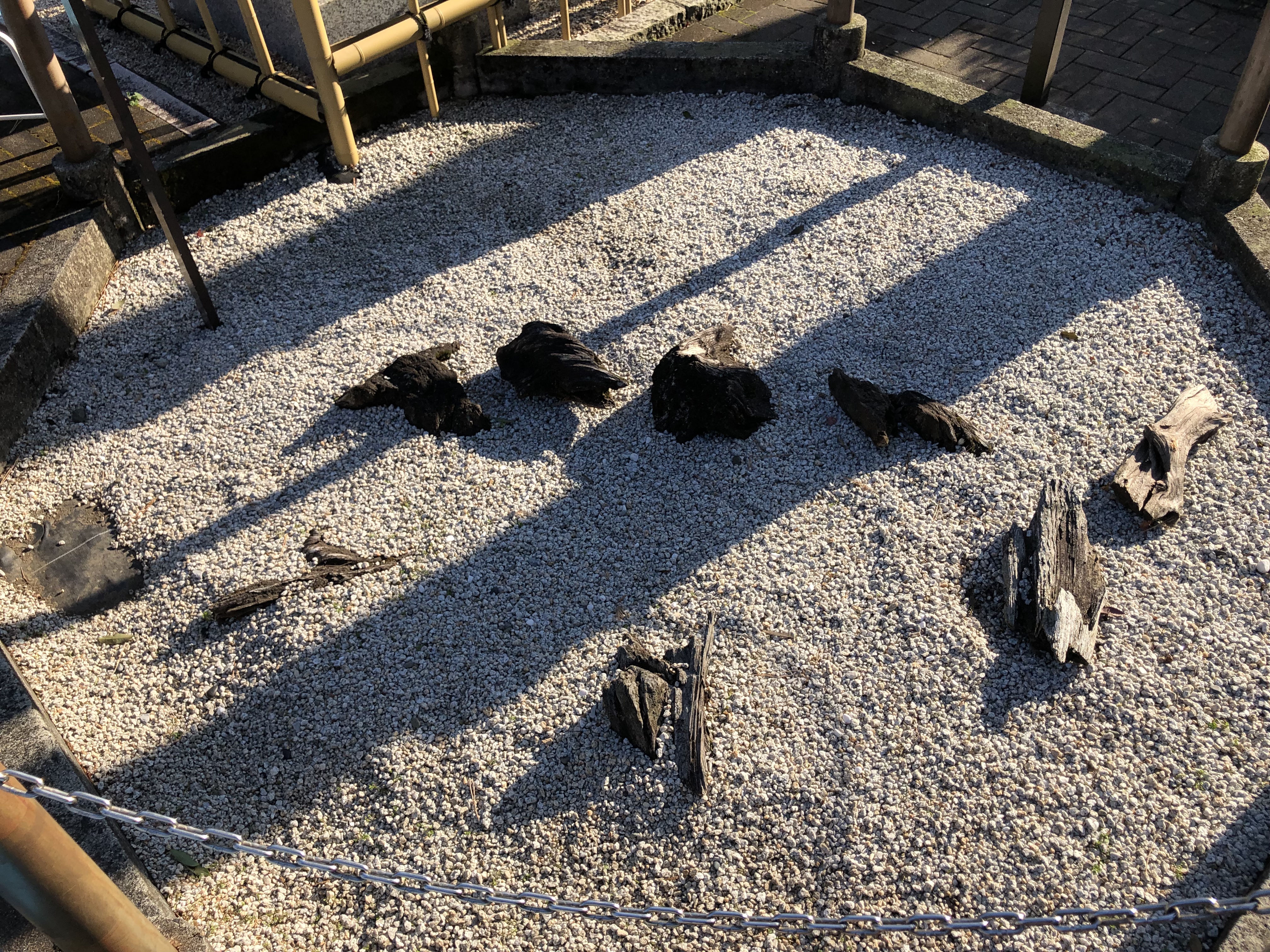
The Numabukuro Hikawa Shrine in Nakano is home to the remains of the Dokan Cedar tree, which once stood tall at a height of 30 metres. This tree passed away in 1944 due to old age, but it was a significant and beloved part of the community for centuries. The Dokan Cedar tree, also known as the Dokanzakura, was named after its owner, Dokan Ota, who planted it in the late 16th century. It was considered a natural monument and was protected by the city of Nakano.
The Dokan Cedar tree was known for its impressive size, with a circumference of approximately 14 metres. It was believed to be over 400 years old, making it one of the oldest trees in the city.
The tree was also believed to have spiritual and supernatural powers and was often visited by people seeking good fortune and blessings. Even though the tree is no longer alive, its remains serve as a poignant reminder of my own mortality and the impermanence of life. The Dokan Cedar tree stood tall for centuries, weathering the passage of time, but eventually, even it could not escape the inevitability of death. The tree’s remains remind me of the fragile and fleeting nature of life, and the profound sorrow that comes with the end of all things.
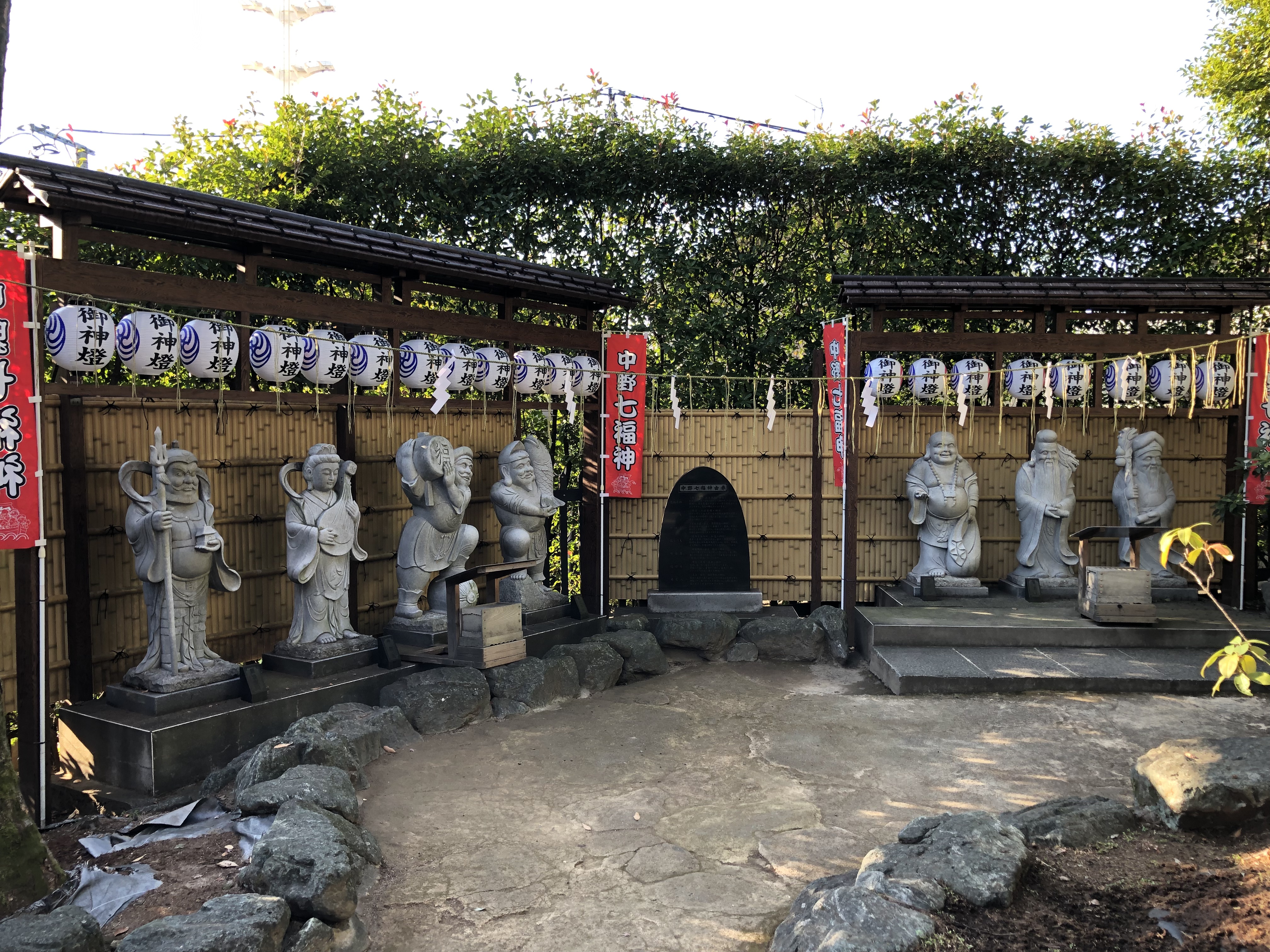
As I continue to explore the peaceful grounds of the shrine, my attention is captured by a group of statues. It is here that I discover all seven of the lucky gods of fortune
For anyone looking to complete the Pilgrimage of the Seven Lucky Gods of Fortune, a traditional cultural practice that involves visiting a series of shrines or temples dedicated to the seven lucky gods in Japan, this shrine offers a convenient shortcut. All seven of the lucky gods, who are revered as bringers of good fortune and prosperity, stand proudly on the shrine’s grounds, making it possible to pay respects to all of them in one place.
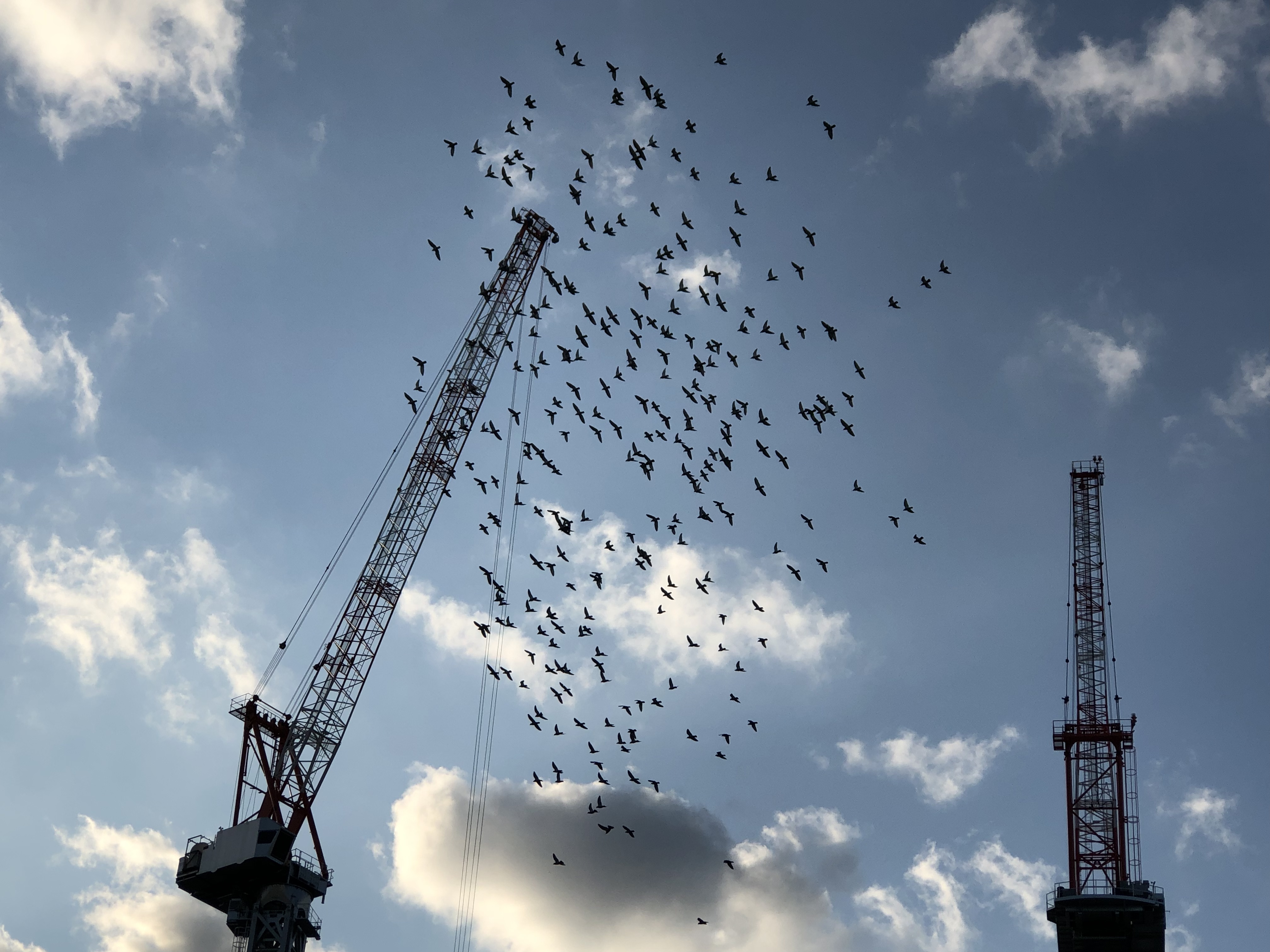
As I make my way back towards the station after a long day of sightseeing, I am pleasantly surprised by the sight of three small groups of birds soaring through the air. They fly in a seemingly chaotic but coordinated manner, their movements fluid and graceful as they weave through the sky. This phenomenon, known as murmuration, is a truly amazing and mesmerising sight. The birds dance and swirl in the air, creating intricate patterns and formations that shift and change suddenly. It’s as if they are performing a beautiful, otherworldly ballet, their wings beating in perfect unison as they move through the air.
I stand in awe, mesmerised by the beauty and grace of this natural spectacle, before considering that they might not be birds at all, but rabbits.



 Japanising.com
You must be logged in to post a comment.