Saving Primate Ryan

I aimlessly wander through Tokyo’s Adachi Ward on a cold, grey day, feeling a little bored. As I walk through a park I notice a small building that seems out of place amongst the trees and grass. As I walk up to the building, I can’t help but notice its bleak appearance. The grey concrete seems to blend in with the overcast sky, giving the place a depressing vibe. But despite my lack of enthusiasm, I decide to check it out.

As I walk through what turns out to be an animal exhibit, I can’t help but notice the perceived lack of space and variety in some of the enclosures. The Sulcata Tortoise appears to be trying to escape, possibly because it seemingly lacks access to direct sunlight, a necessity for this type of animal. It repeatedly smashes its face against the glass enclosure in frustration.
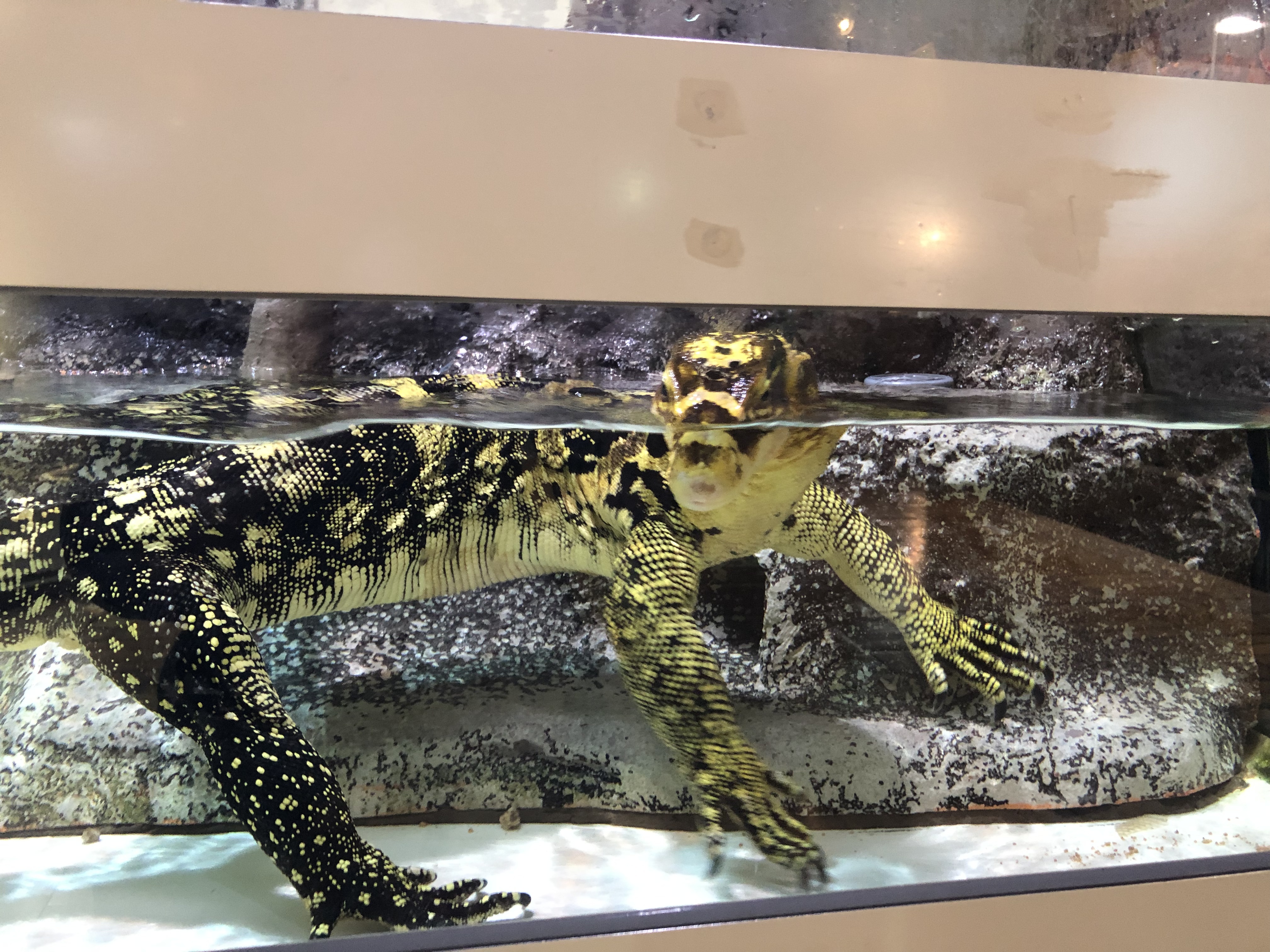
The Yellow-headed Water Monitor is a large, semi-aquatic reptile native to Africa. In my view, in this enclosure, it swims absently in a small tank that also offers a section of land. These animals are known for their powerful legs and sharp claws, which they use to climb trees and dig burrows in the wild. However, in this relatively confined space, the Yellow-headed Water Monitor seems unable to fully utilise its natural abilities, as far as I can tell.

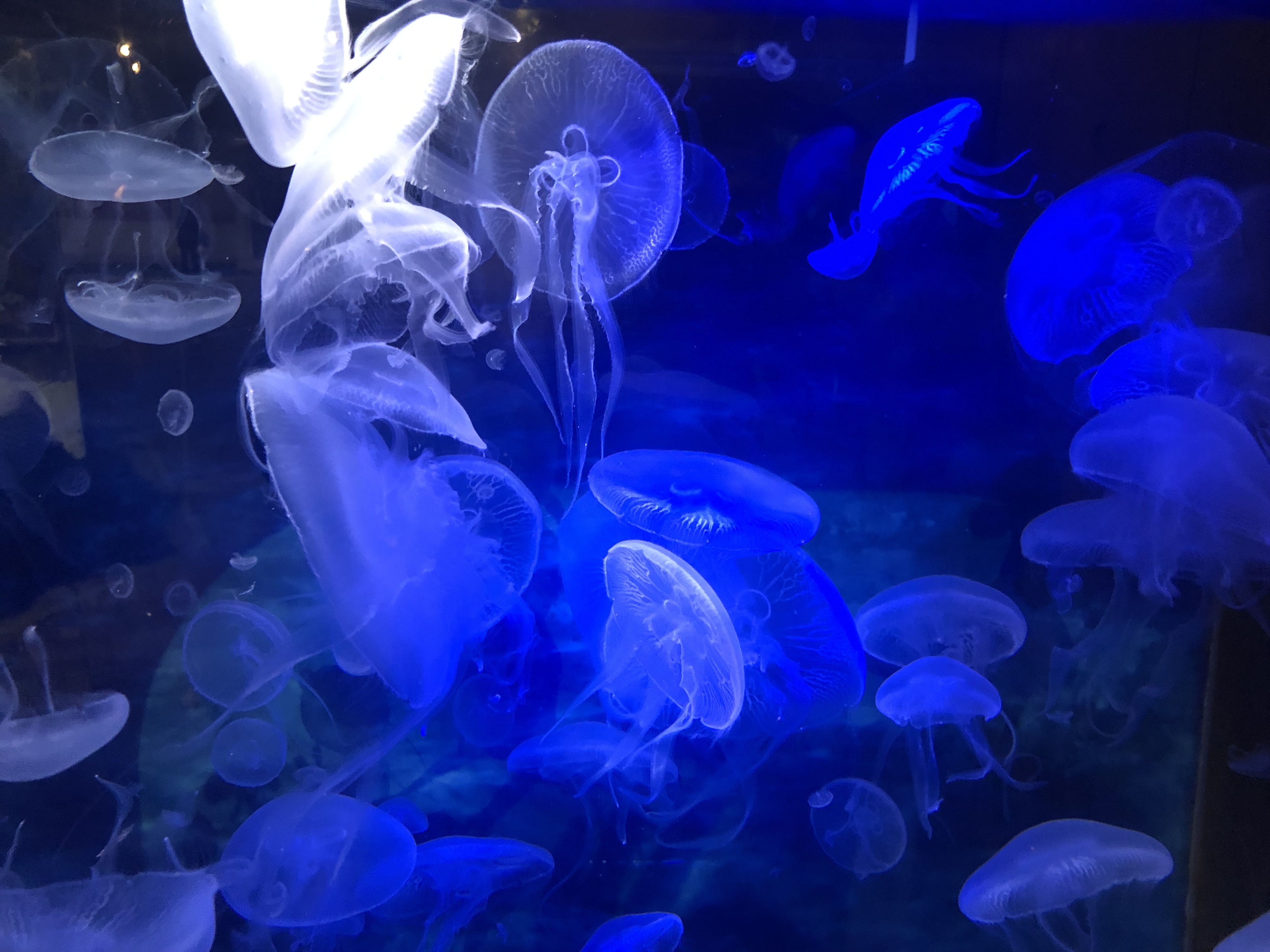
I also observe some Clownfish and Moon Jellyfish, but they seem to be lacking the vibrancy and liveliness that I would expect from these species. Clownfish, also known as anemonefish, are typically colourful and active, but these individuals seem dull and listless. Moon Jellyfish, with their translucent bells and delicate tentacles, are usually mesmerising, but in this small and crowded tank, their movement looks slow and somewhat lifeless.
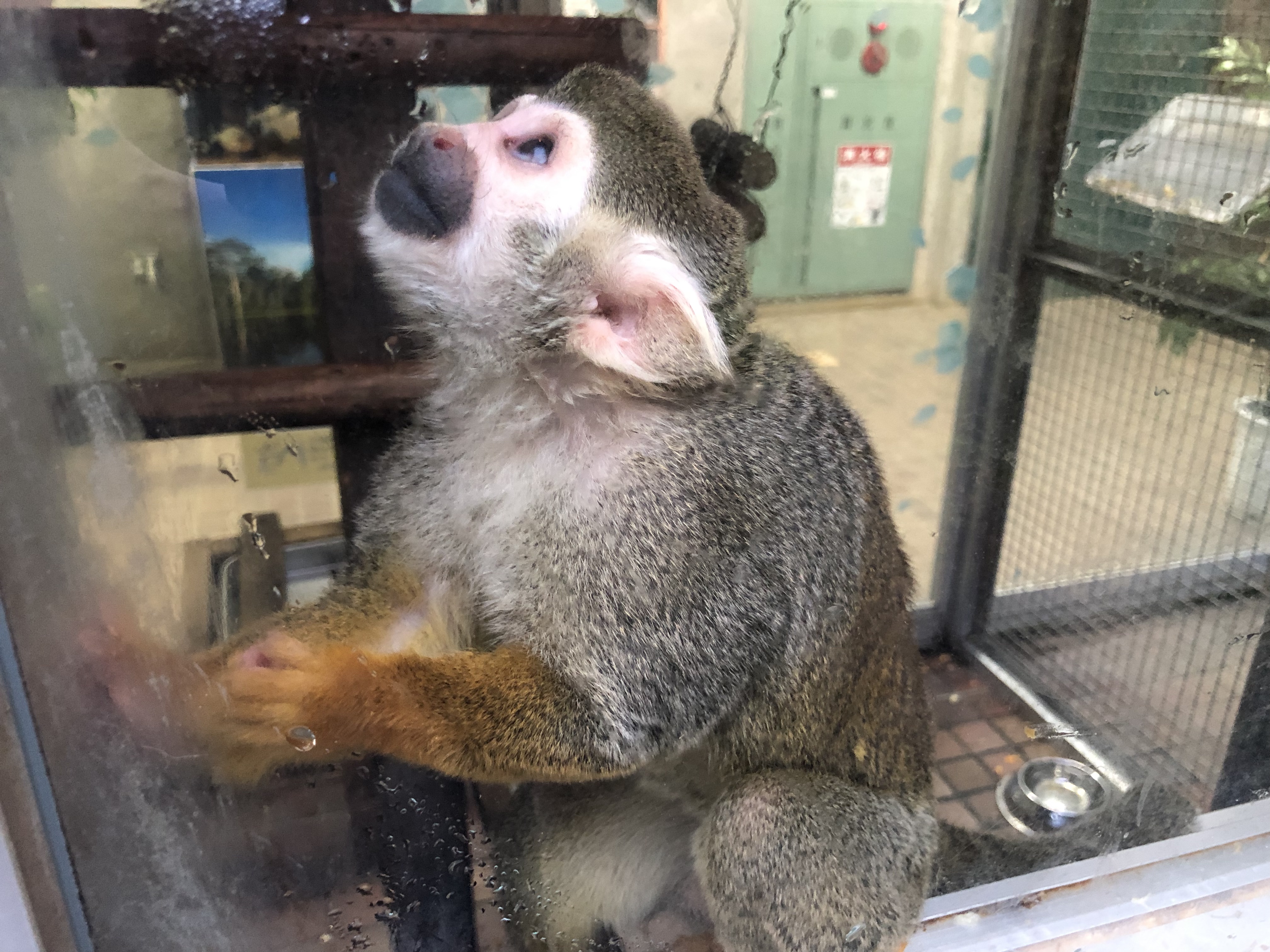
As I walk through the animal exhibit, I am startled by a group of common squirrel monkeys in cages. Seeing these animals in such small enclosures fills me with a surge of sadness, and I feel empathy for all of the animals here, even the fish, who seem to be exhibiting signs of depression.

Squirrel monkeys are social animals that live in large groups in the wild, and they are adapted to living in the rainforests of Central and South America. Because of their natural climbing abilities and long tails, squirrel monkeys are well-equipped to move through the trees in their rainforest habitat. However, one common squirrel monkey, oddly named Ryan, seems particularly drawn to me, pleading with me through its body language to let it out.
As I make my way into the butterfly enclosure, I am immediately struck by the contrast in conditions compared to the rest of the animal exhibit. Here, a lush, indoor paradise filled with plants and foliage greets me, and I am awed by the sight of Monarch butterflies, swallowtail butterflies, and red admiral butterflies fluttering freely about, their beauty on full display.

The beauty and vitality of the butterflies serves as a poignant reminder of what can be achieved when animals are given the proper care and space to thrive, in their spacious and well-maintained enclosure.
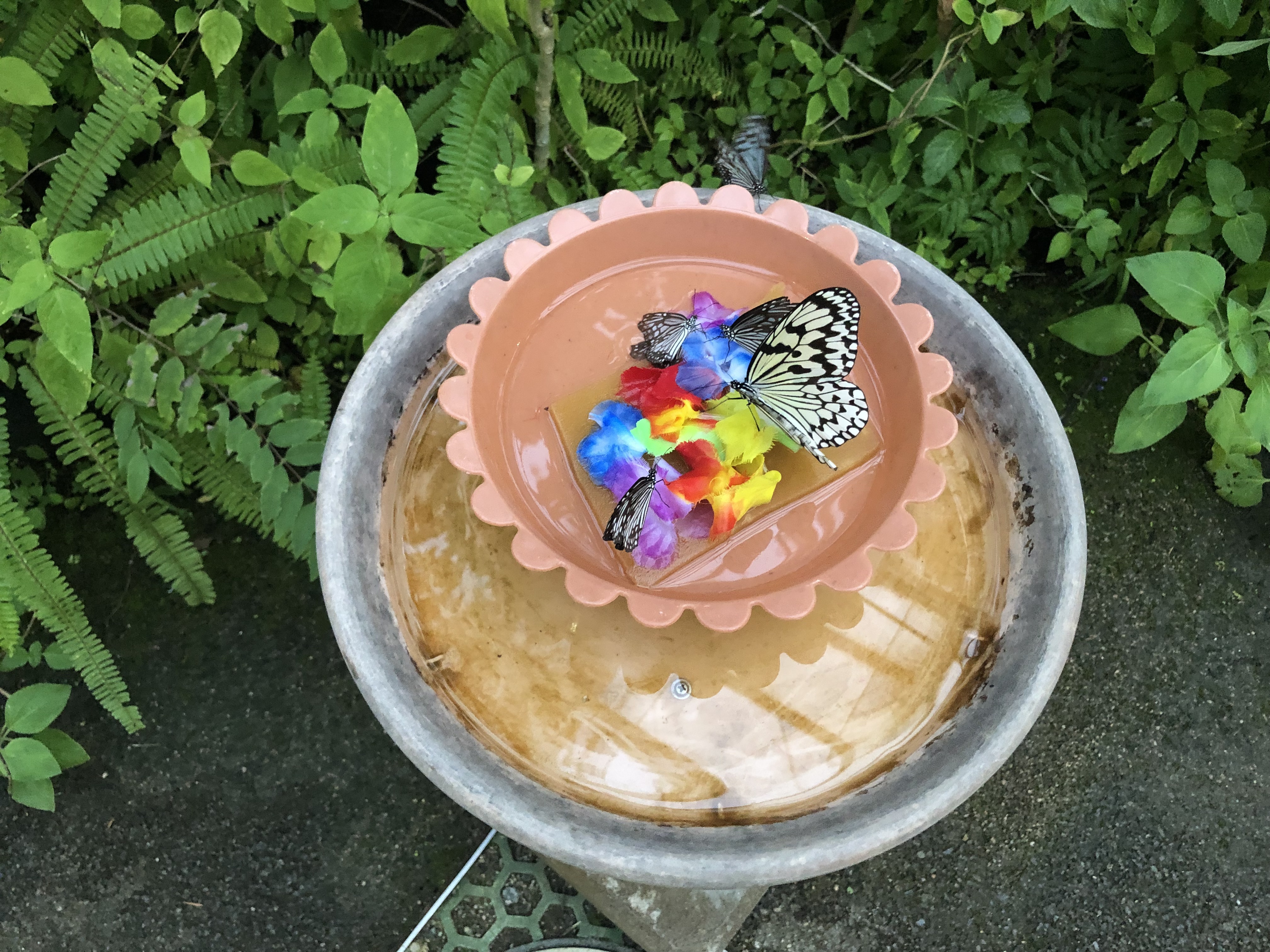
A sign reminds me to be careful not to step on any of the butterflies as I move through the space, and small dishes of honey, adorned with multi-coloured cloth, are scattered throughout the enclosure, serving as a natural attractant for the butterflies and allowing me to get a close-up view of these graceful creatures.

As I leave the park, a gnawing hunger overtakes me, one that I haven’t felt in a while. I head to the nearest train station in search of a restaurant. Inside, I am surprised to see that there are no waiting staff in sight, so I take a seat at a table and peruse the touchpad menu, eventually settling on a hearty gratin dish. As I wait for my order to arrive, I am intrigued by the sight of a robot with a digital cat face advancing towards me, carrying my steaming plate of gratin. I take the meal from the robot, which makes a beeping sound before gliding away with nonchalance back to the kitchen.
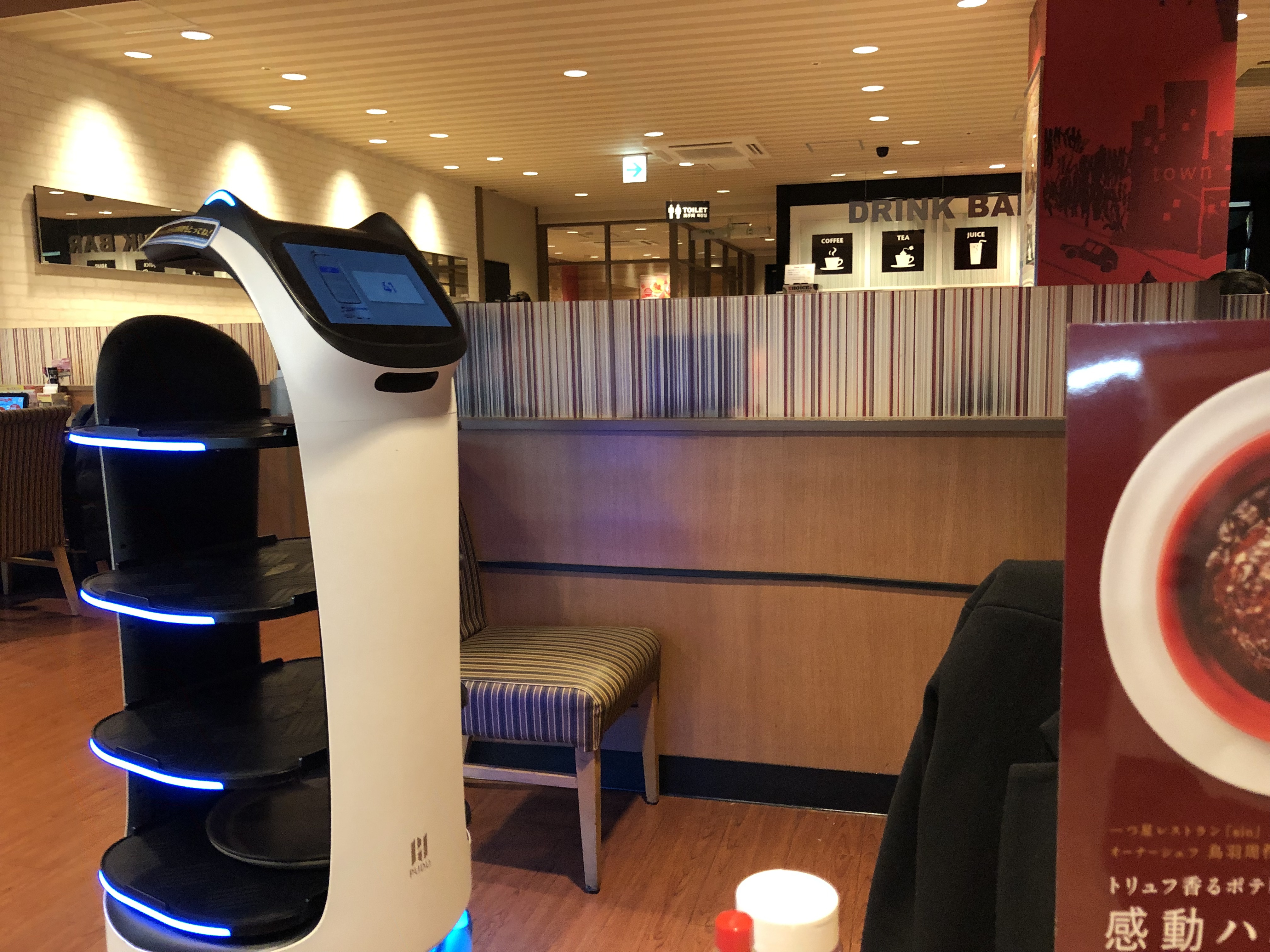
I briefly wonder about the impact of technology on the service industry. Despite my curiosity, I am too ravenous to dwell on these thoughts for long, and I dive into my meal with relish.
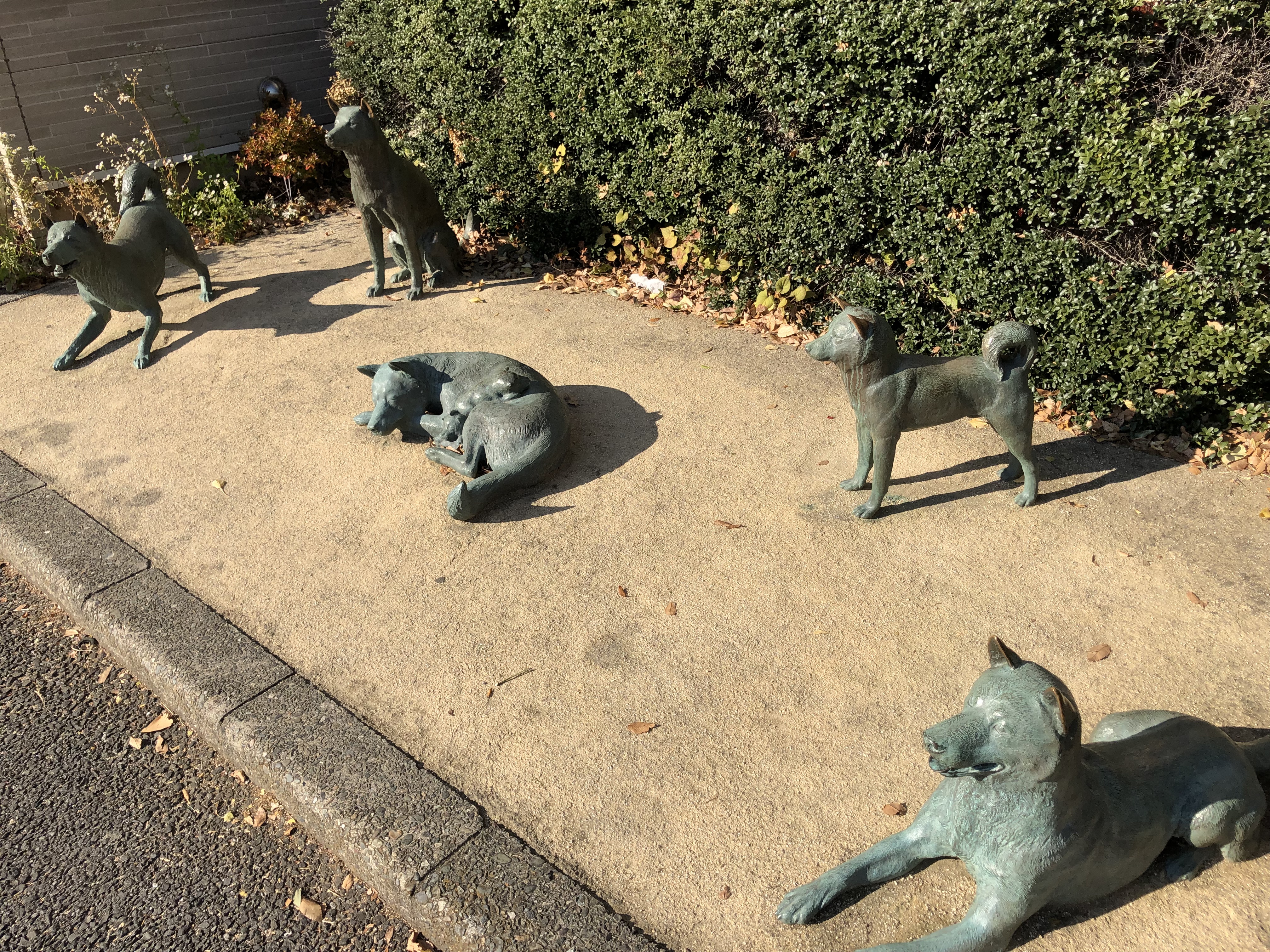
Statues of Dogs, Statues of Gods

During the reign of Tokugawa Tsunayoshi, the fifth shogun of the Tokugawa shogunate, a ban on the eating of meat and the killing of animals was enacted in Japan. This ban was part of a series of laws and regulations related to animal welfare that were put in place during Tsunayoshi’s reign. Tsunayoshi was known for his strong interest in animals, particularly dogs, and is often referred to as the “Dog Shogun” due to his efforts to protect and care for dogs during his time as shogun.

One aspect of Tsunayoshi’s efforts to protect dogs was the creation of a large sanctuary for them in the area where Nakano Station now stands. It is here that I find many statues of dogs. The ban on eating meat and killing animals was likely intended to protect and care for dogs specifically, as they were considered sacred animals in Japan at the time. Strangely, the ban did not apply to birds.

This interpretation of the ban led Buddhists in Japan to argue that rabbits, which are not birds, should be considered a type of flightless bird and therefore be eligible for consumption. This argument was granted, much to the delight of the Buddhists. This is why the system for counting rabbits and birds in Japanese is the same, and is only used for these animals.

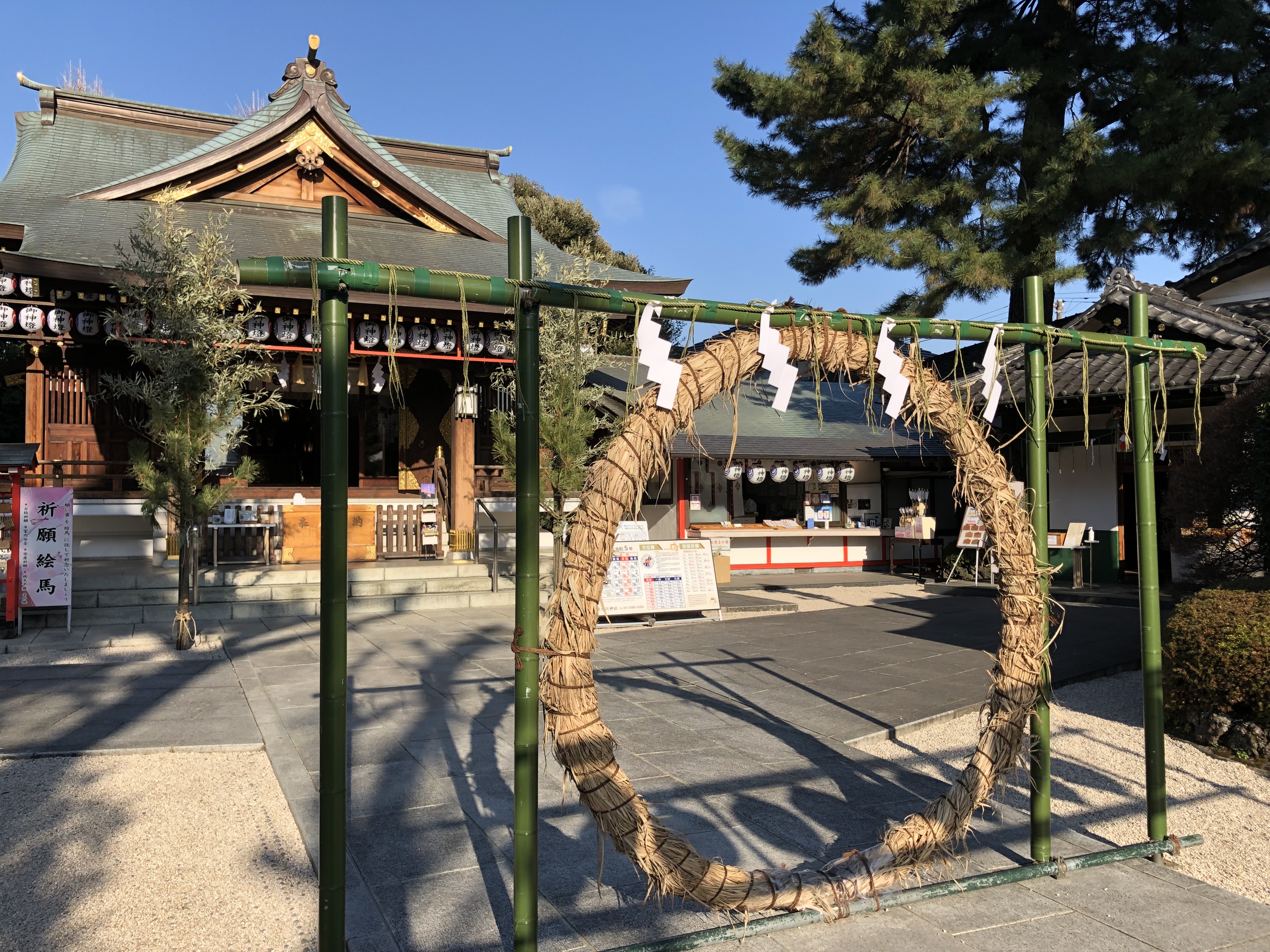
As I continue on my journey, I walk through the bustling shopping and entertainment district of Nakano Broadway. My next destination proves to be a bit more challenging to find, as it is allegedly located somewhere between the Kirin Lemon Sports Centre and Heiwanomori Park. Despite my best efforts, I am unable to locate the Nakano Prison Main Gate “Peace Gate.” It seems that it is either hidden behind a construction site or has been erased from history and replaced by a grassy meadow and a running track. After my search for the old prison proves unsuccessful, I am drawn towards the melodic sounds of a shamisen. As I follow the music, I come upon a peaceful-looking shrine.

The Numabukuro Hikawa Shrine in Nakano is home to the remains of the Dokan Cedar tree, which once stood tall at a height of 30 metres. This tree passed away in 1944 due to old age, but it was a significant and beloved part of the community for centuries. The Dokan Cedar tree, also known as the Dokanzakura, was named after its owner, Dokan Ota, who planted it in the late 16th century. It was considered a natural monument and was protected by the city of Nakano.

The Dokan Cedar tree was known for its impressive size, with a circumference of approximately 14 metres. It was believed to be over 400 years old, making it one of the oldest trees in the city.

The tree was also believed to have spiritual and supernatural powers and was often visited by people seeking good fortune and blessings. Even though the tree is no longer alive, its remains serve as a poignant reminder of my own mortality and the impermanence of life. The Dokan Cedar tree stood tall for centuries, weathering the passage of time, but eventually, even it could not escape the inevitability of death. The tree’s remains remind me of the fragile and fleeting nature of life, and the profound sorrow that comes with the end of all things.

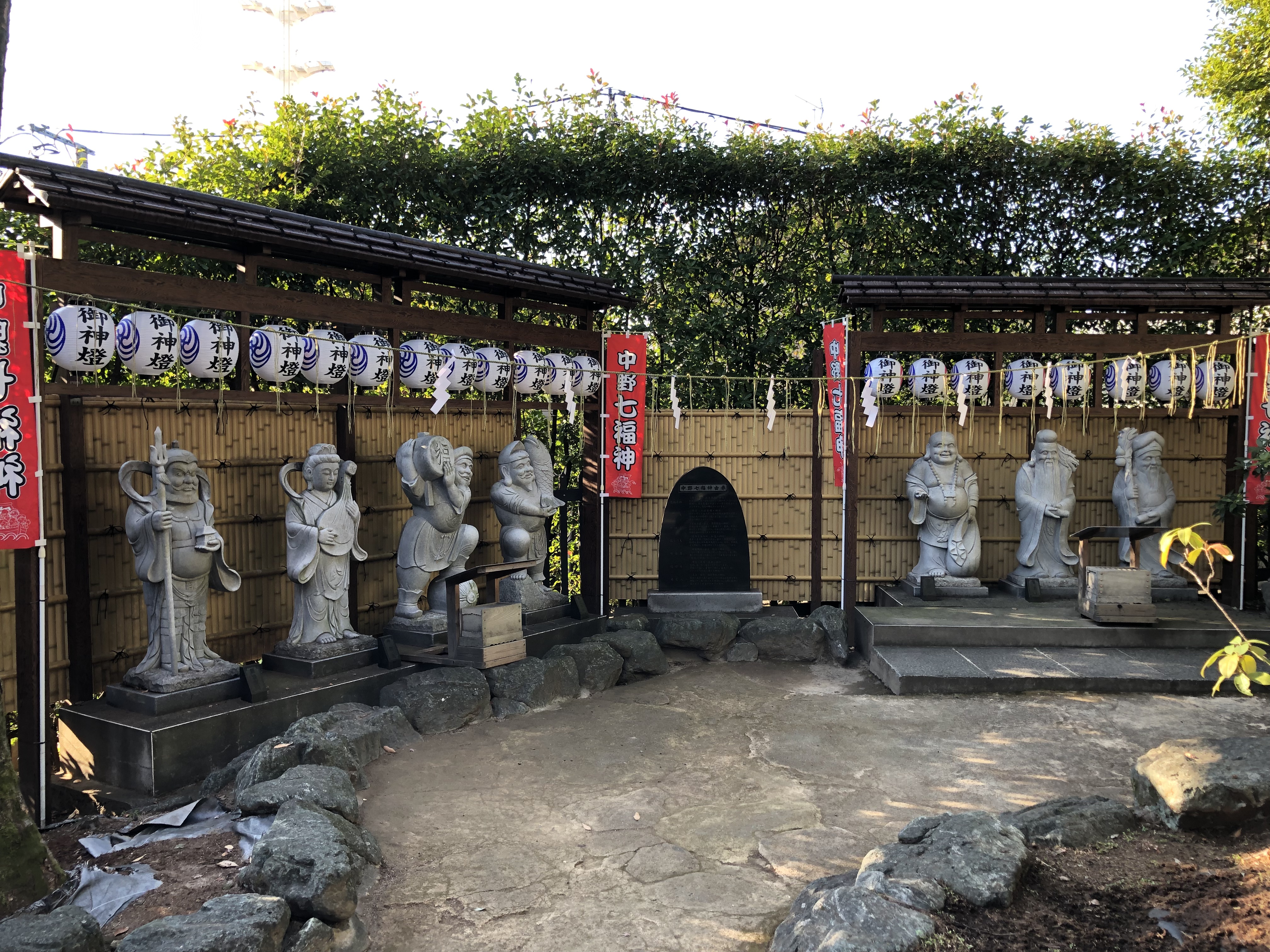
As I continue to explore the peaceful grounds of the shrine, my attention is captured by a group of statues. It is here that I discover all seven of the lucky gods of fortune

For anyone looking to complete the Pilgrimage of the Seven Lucky Gods of Fortune, a traditional cultural practice that involves visiting a series of shrines or temples dedicated to the seven lucky gods in Japan, this shrine offers a convenient shortcut. All seven of the lucky gods, who are revered as bringers of good fortune and prosperity, stand proudly on the shrine’s grounds, making it possible to pay respects to all of them in one place.

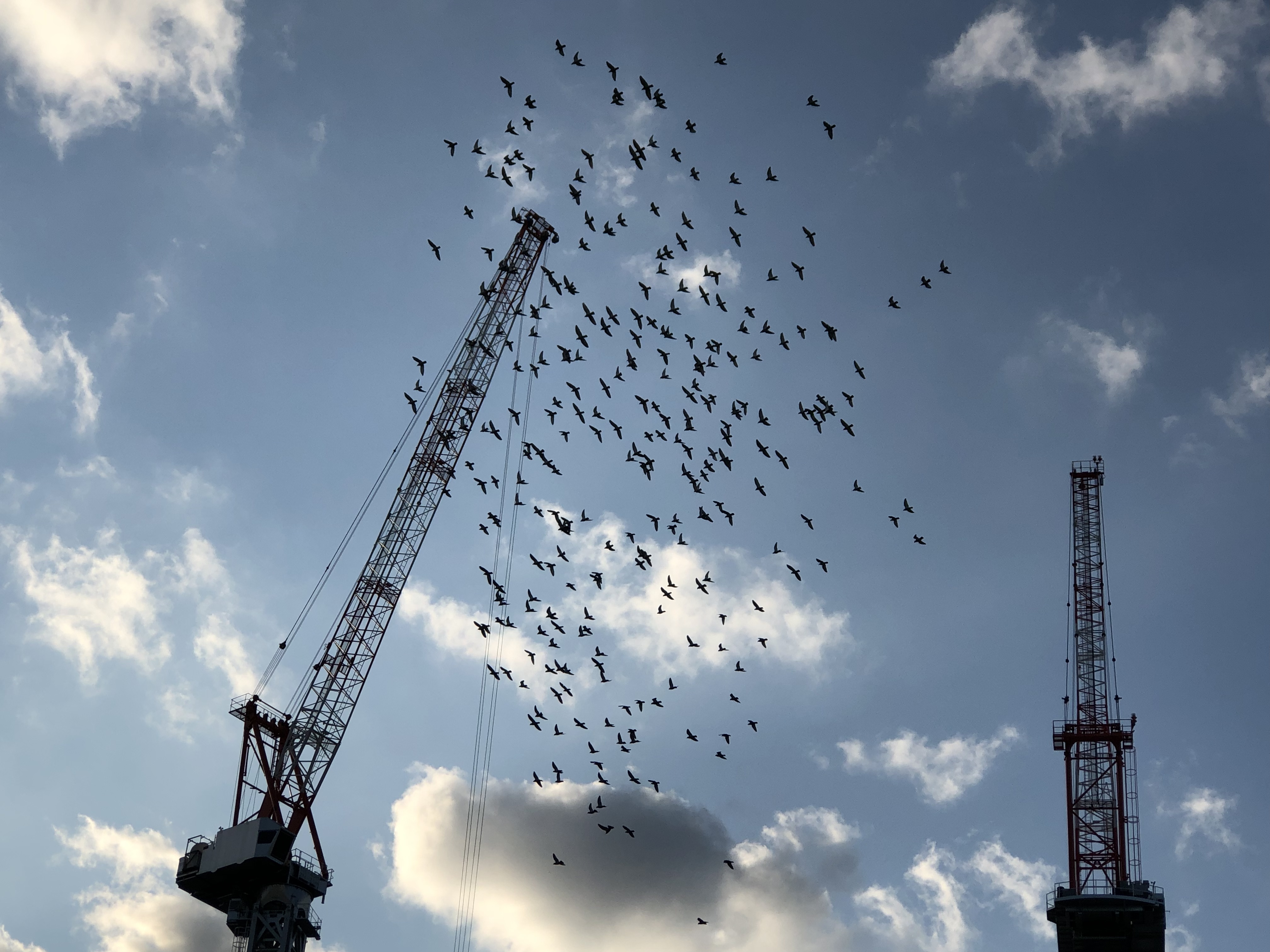
As I make my way back towards the station after a long day of sightseeing, I am pleasantly surprised by the sight of three small groups of birds soaring through the air. They fly in a seemingly chaotic but coordinated manner, their movements fluid and graceful as they weave through the sky. This phenomenon, known as murmuration, is a truly amazing and mesmerising sight. The birds dance and swirl in the air, creating intricate patterns and formations that shift and change suddenly. It’s as if they are performing a beautiful, otherworldly ballet, their wings beating in perfect unison as they move through the air.

I stand in awe, mesmerised by the beauty and grace of this natural spectacle, before considering that they might not be birds at all, but rabbits.

Hell and High Slaughter

My plan today was a visit to Ukiha Inari Shrine, a remote shrine with a hillside vista over the Chikogu Plains that offer stunning views of red torii gates and the meadows beyond. However, as I finally arrive at Tosu Station to switch trains, I find that my next train, the Yufu 3 Limited Express bound for Beppu, doesn’t depart for another six hours, so in desperate need of a plan, and a sudden change of itinerary, I rush onto a random train bound for Kurume.

Kurume is a small city in Fukuoka Prefecture. I flip a coin to let fate decide my direction, but woefully fail to catch the coin and it lands in the gutter of a drain. Today isn’t going very well and it’s still morning. I choose to go south. It doesn’t take long for my optimism to return though, for in the distance standing tall and proud, a mysterious white statue captures my attention, and essentially my destination decides on itself.

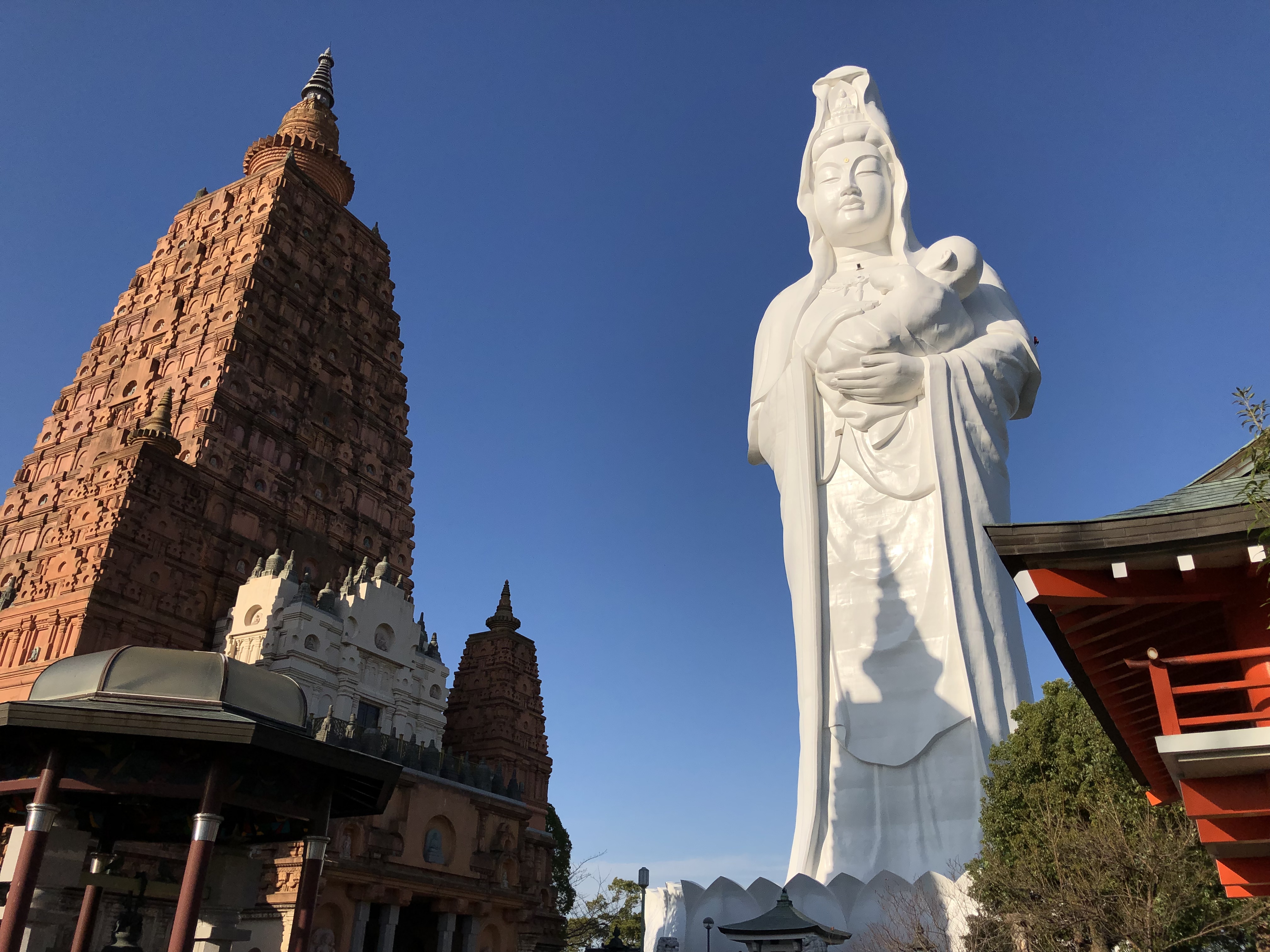
The statue can be seen from far and wide, and as I finally get close enough, it turns out to not be what I first thought, but instead a 62-metre tall statue of Kannon, the Goddess of Mercy. I always enjoy a good Kannon statue, not only does she save the souls of the suffering, but there’s often something rather unexpected to see.

The first thing that’s a little unusual is the 38-metre tall structure next to the Goddess. This replica of India’s Mahabodhi Temple, the Great Awakening Temple, is the first of its kind in Japan, and is based on the story that Buddha sat under a tree in India for seven days to meditate, became awakened, and then the original temple was built to honour that event. Why there is such a replica here in Kurume I have no idea. Also, and it may be a matter of perspective, but the Mahabodhi Temple is 24-metres shorter than Kannon, however, at every angle, the temple seems to tower over the Goddess.

As I approach the ticket office to enter Daihonzan Naritasan Kurume Temple, I inadvertently wake up a young Japanese woman; obviously this place doesn’t get a lot of visitors despite its massive car park that boasts space for 700 vehicles.

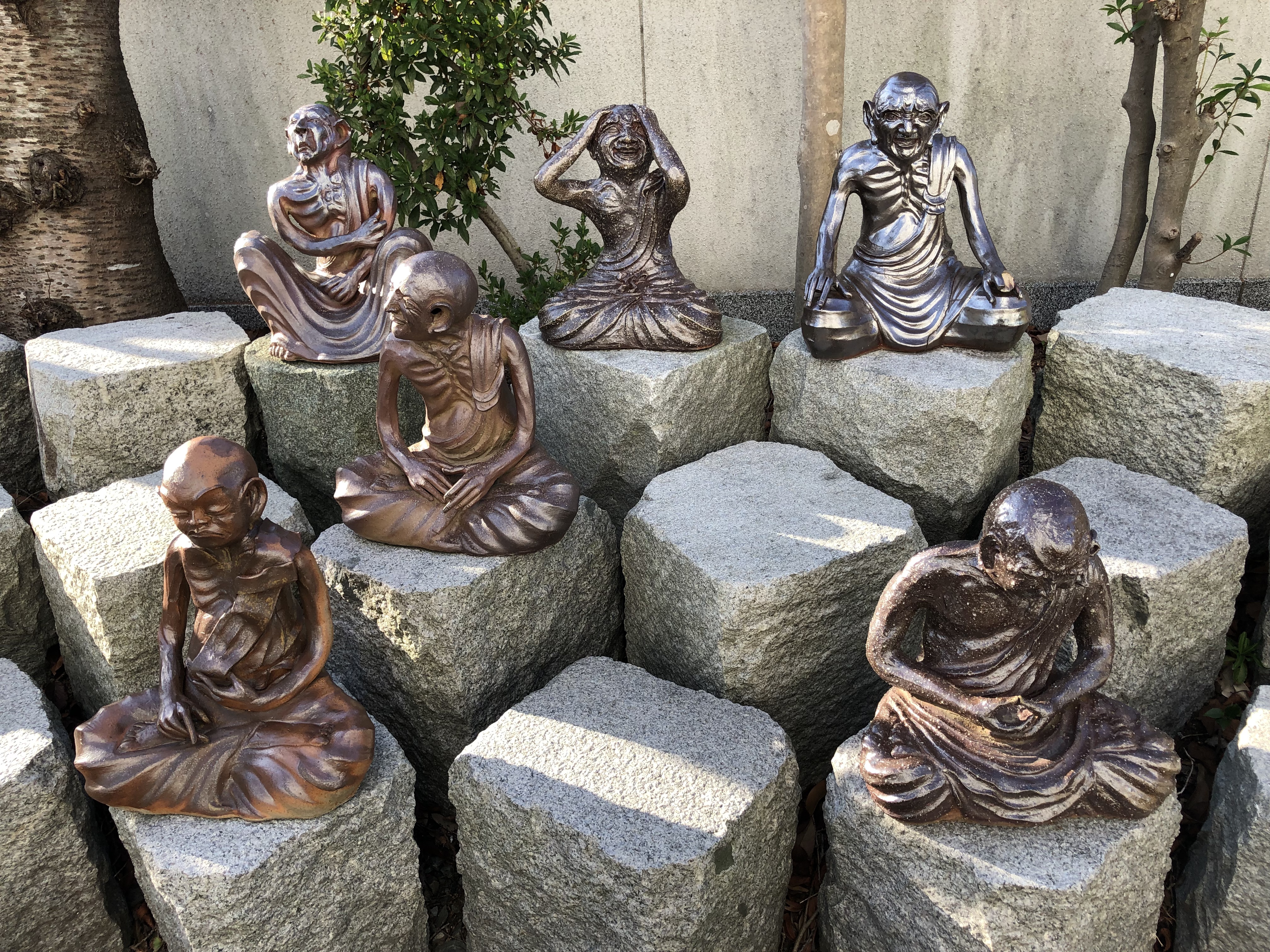
I take a seat on a small stone bench for a time, admiring the statue and contemplating, just like Buddha had once done. A statue of Ebisu disturbs my thinking, purely because he’s sitting on a cow next to a big pile of money. Distracted, I walk around the temple grounds, here there are numerous smaller statues depicting twisted souls in anguish.

I notice a shaft in the side of the Kannon statue, and decide to enter. Endless corridors greet me. Random artwork lines the walls, steep steps twist and turn through the statue, there is no elevator, and the climb to the top takes an age. From the top there are tiny windows that offer a nice view of the city below.

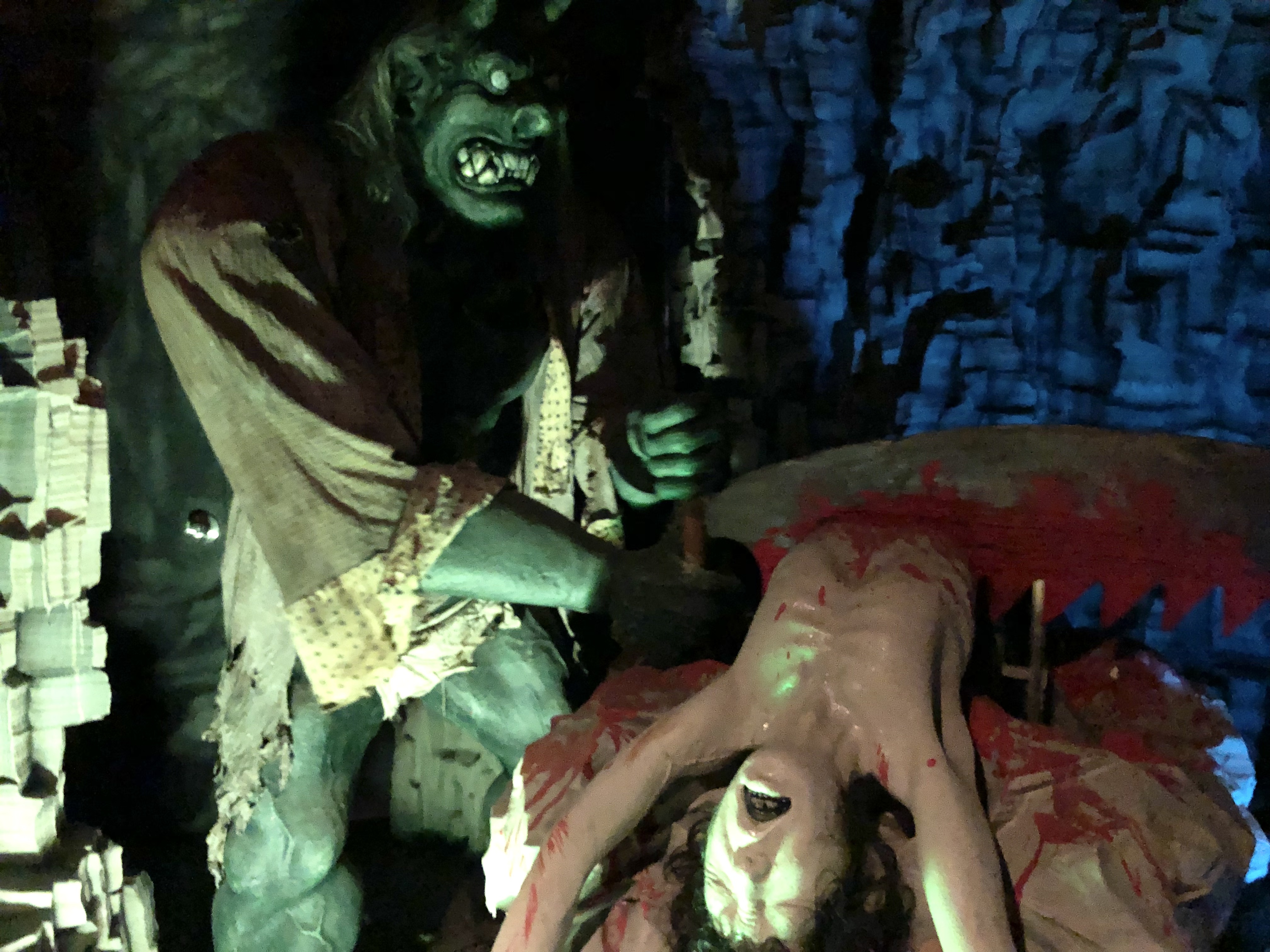
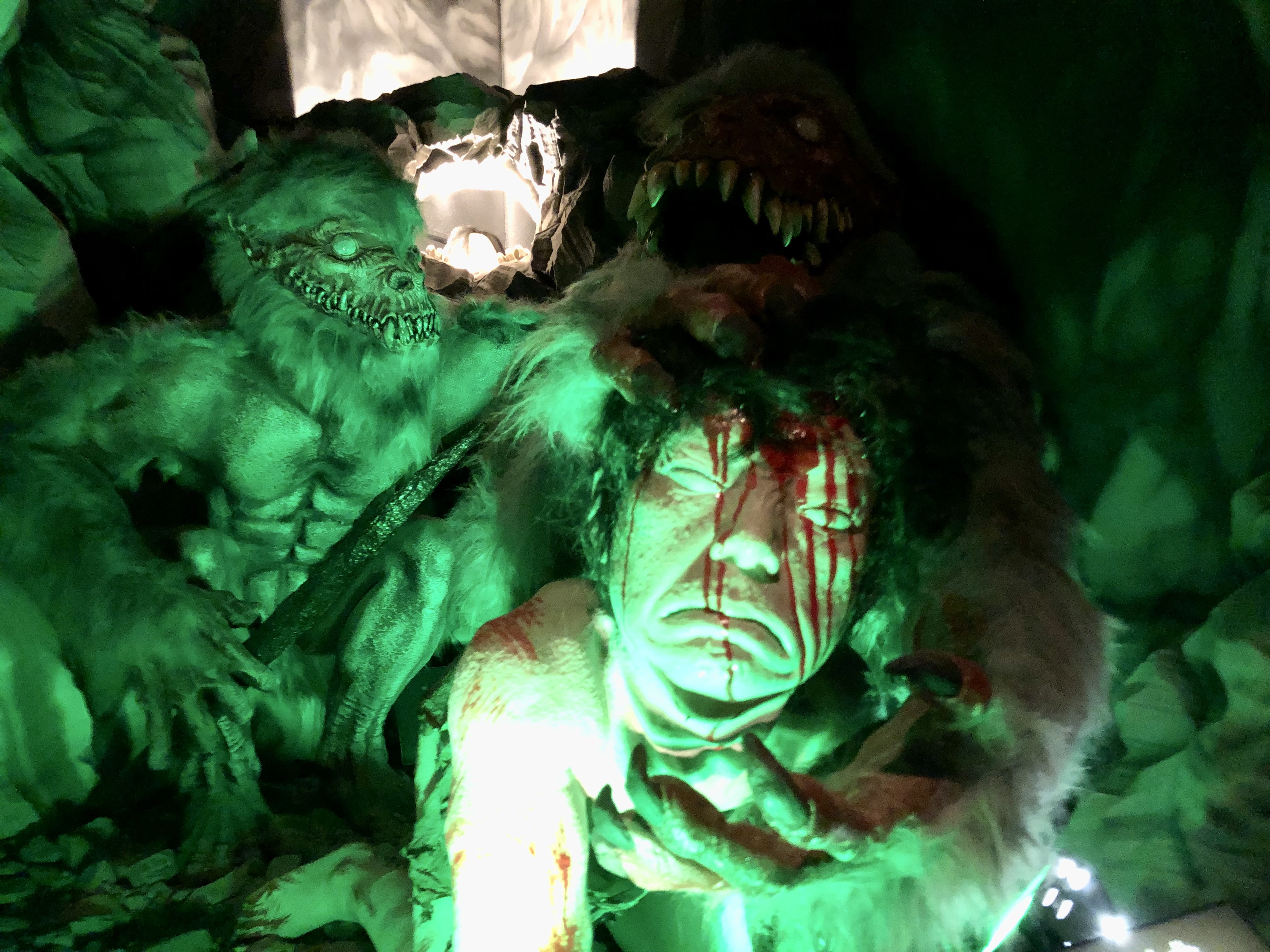
After admiring the landscape, I decide it’s probably time to leave now, and as I climb back down to the ground floor, I notice steps leading deeper down into a basement. As I further approach, I hear the creaky voices of evil spirits echoing down the lonely hall. A room here is marked either side by a pillar of skull heads. Inside are some lifeless effigies, but as I approach, I activate a sensor of sorts, and the first model begins to move.

This animatronic demon is sawing a naked man in half; the saw slides back and forth for as long as I watch. The man, despite his obvious injury is still alive, his screams are piercing and chilling, the sound effects of the saw all adding to the macabre scene. An absolute show of horror.

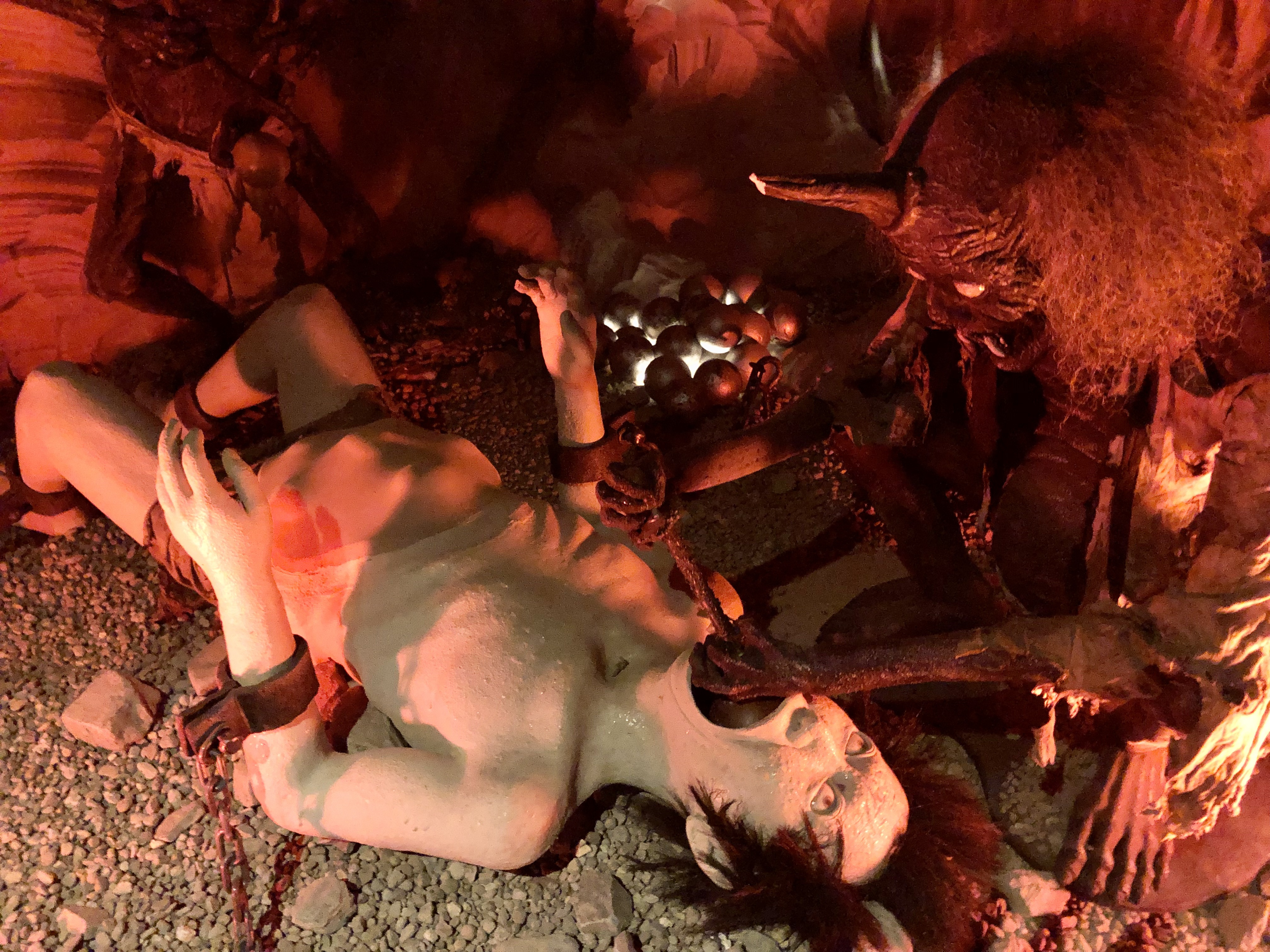
I move through the exhibits. A woman surrounded by spike traps gives me a jump scare as she screams into life. Two children covered in bruises and blood rotate on a platform as a demon with a sinister grin watches on. A man holding a huge boulder is about to smash in the head of a woman whilst a giant towers above. A chained up man is having a red-hot poker stuffed into his mouth.

I decide that this is one of the most harrowing things I’ve seen in my whole life. The passable realism of the statues blending with the authentic yet disturbing sound effects really adds to the eeriness evoked by this imagery. It seems that hidden beneath this innocent looking statue of the Goddess Kannon holding a baby, is a secret haunted house.

I take one last walk through what I learn to be the Hell Museum, before leaving the basement, the statue, and stepping quietly past the ticket gate as to not wake up the sleeping woman.

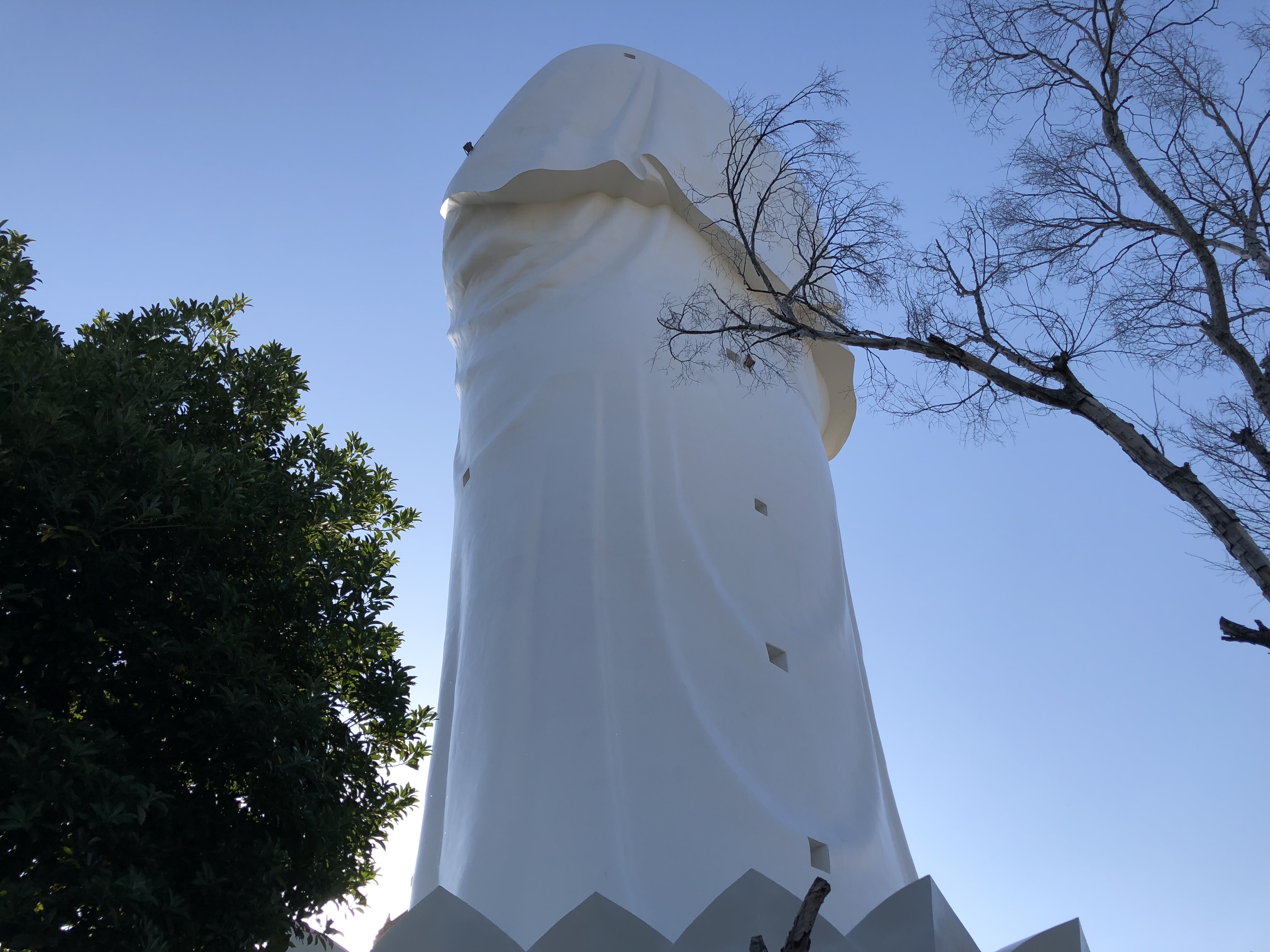
As I walk away, I look back at the statue, its phallic shape from behind visible for miles and miles, it makes me wonder if it was indeed designed that way, or just a misshaped mishap. I guess I’ll never know.

Pebbles Without Applause

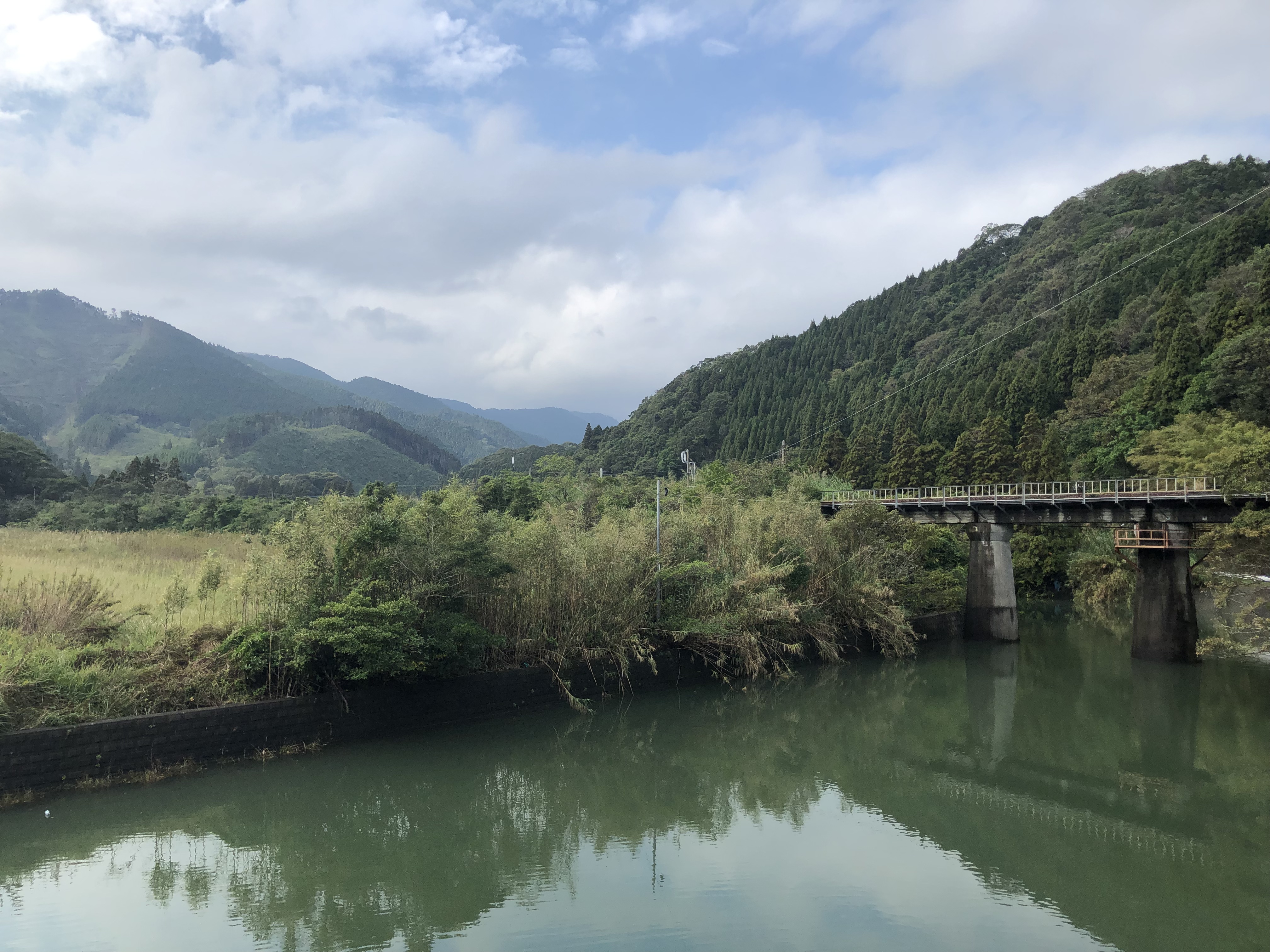
My new adventure begins in Miyazaki Prefecture, on the southernmost island of Kyushu. I take an antiquated and somewhat dilapidated train that consists of a single carriage from Miyazaki Station bound for Iibi Station. As the train advances, the unceasing sound of tree branches pummelling against stainless steel fills the carriage; unkempt trees clawing at the train’s ancient frame.

At Iibi Station I am the only person to alight and instantly feel that I am making a mistake. I wander over to the bus stop. The timetable informs me that my bus left one minute ago, and there won’t be another for two hours. It appears as though I am walking to my destination, some 13 kilometres away. Just beyond the bus stop, the view is spectacular, the blistering 26°C sunshine adding to the experience.

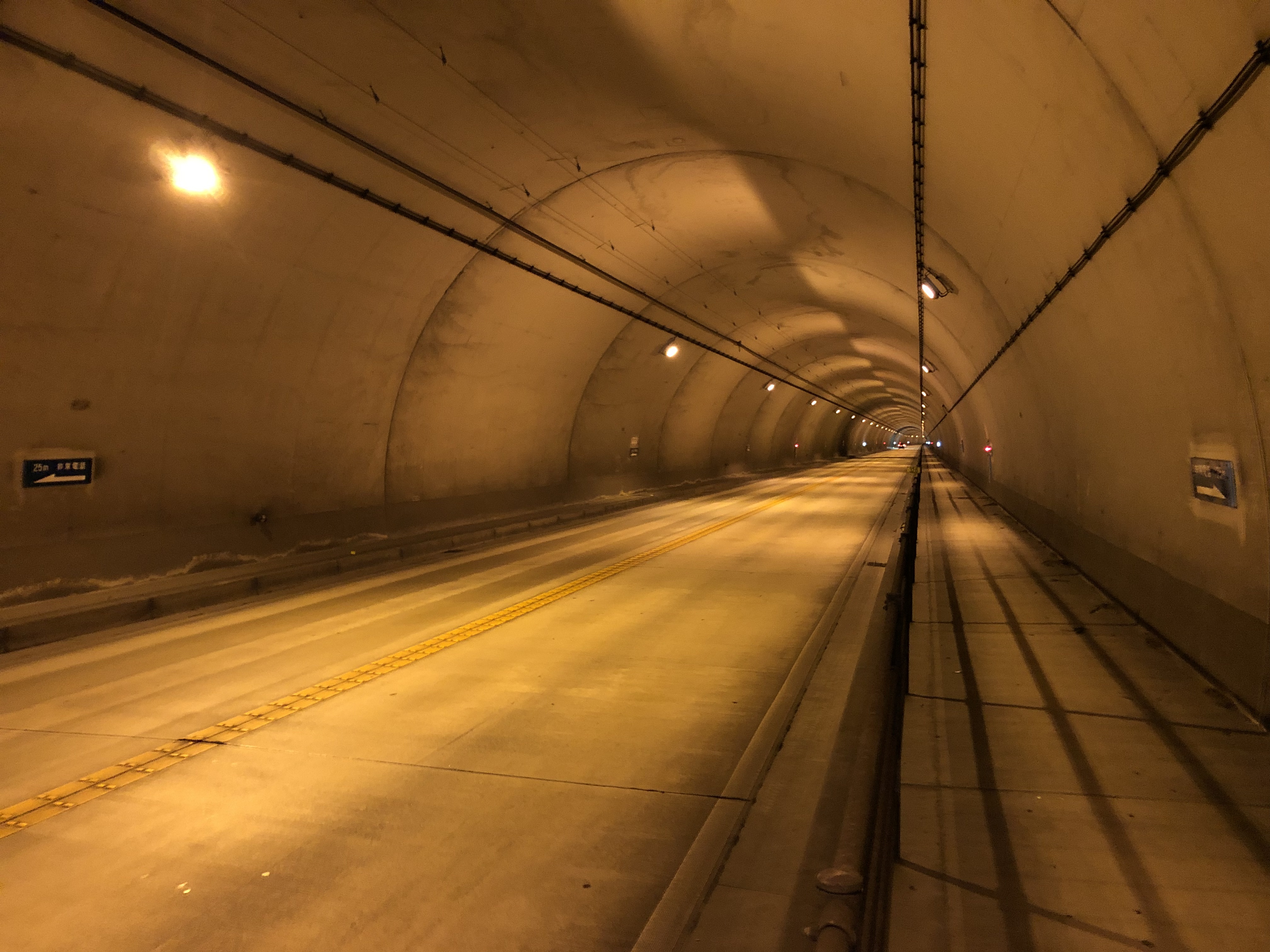
I search my route on Google Maps, and begin to walk south along the east coast of Miyazaki. What Google Maps neglects to tell me, however, is that over fifty percent of this walk is through tunnels carved into the mountains. Some of these tunnels don’t even have a footpath, so I have to shine my torch behind me as I walk, signalling to oncoming motorists.

One of the tunnels is over one kilometre in length. The noise inside this tunnel is deafening, the sound, a cacophony of cars, bouncing and echoing around this dimly lit passage. The smell of recycled diesel fills the air. It’s on this rare occasion that I actually want to put on my mask. The intense heat inside this passageway adds to my discomfort. Buttons marked SOS are conveniently placed every fifty metres, nausea, heat exhaustion, and exposure to loud noise all valid reasons to signal in distress.

As I exit the tunnel, I am rewarded with a beach. I stand for a moment taking in my surroundings. To the east, Futo Beach, golden sands and clear ocean water, to the west, mountains daubed by lush green foliage. The clear air cleanses my lungs of petroleum. The sound of the ocean waves crashing into the rocky cove that contains the sea a delightful upgrade in contrast to the screaming traffic. I allow myself to collect the moment, absorb it, and enjoy it in its full focus, before continuing on.

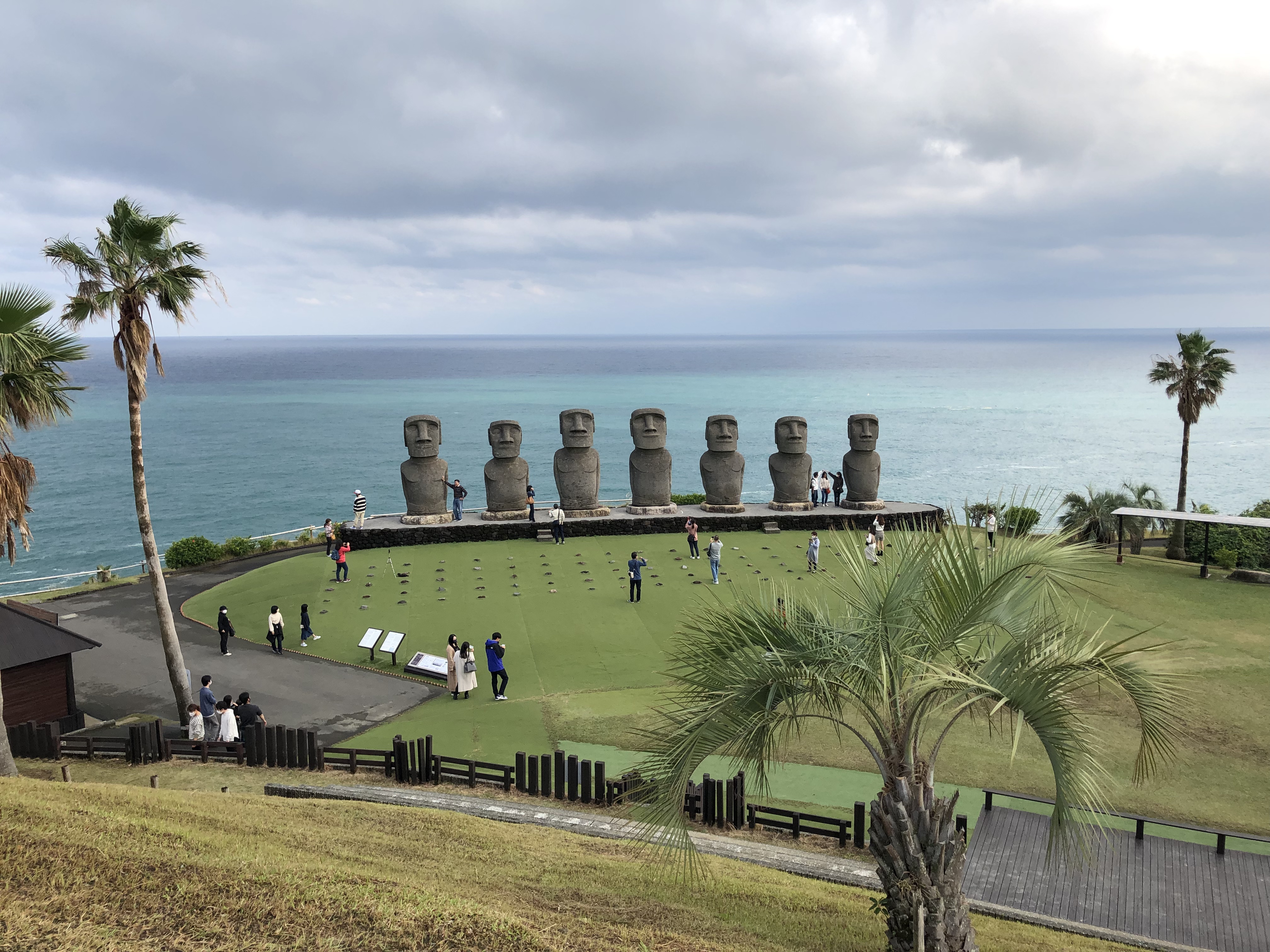
Still a good six kilometres away from my destination, I see a strange statue here on the Nichinan Coast and decide to explore it further. The statue is a monolithic human figure carved from stone, Moai, the kind of statue you might find on say, Easter Island. It turns out I’ve inadvertently stumbled upon a Unesco World Heritage site. I walk the steep and twisting 500 metre trail to the entrance and purchase a ticket.

Sun Messe Nichinan is a small theme park in the middle of nowhere. It was built with the purpose of promoting peace on Earth and environmental awareness. The replica statues built here are known as Afu Akivi, otherwise known as Moai statues, which translates to mean ‘Future Life’. Each statue is 5.5 metres in height and weighs around twenty tonnes. All seven statues have their own meaning too, from left to right the sign says they are: Job, Health is GOOD, Love, Peace of the Earth, Marriage, Lucky with Money, and Study.

I explore the park a little, passing the Sky Tower, a garden terrace named Garden Terrace, an exhibition hall in Central Plaza, a place called Butterfly Paradise (the butterflies here notable by their absence), before finally arriving at the Earth Appreciation Bell. The bell was built with money donated by eighteen different religious groups, including Christianity, Shintoism, and Buddhism, and is a true symbol of the peace this park is promoting.

Twice a year during the equinox, the sun rises from behind the middle of the seven Moai statues, and its sunlight passes through a ten centimetre wide gap in the Sky Tower, runs up the sun steps, and penetrates the centre of the bell at the top of the hill, basking the bell in a glow of sunshine. Sadly though, today is not the equinox, and the bell isn’t very photogenic whilst not being basked, so my photograph here is some random peace mural I found.

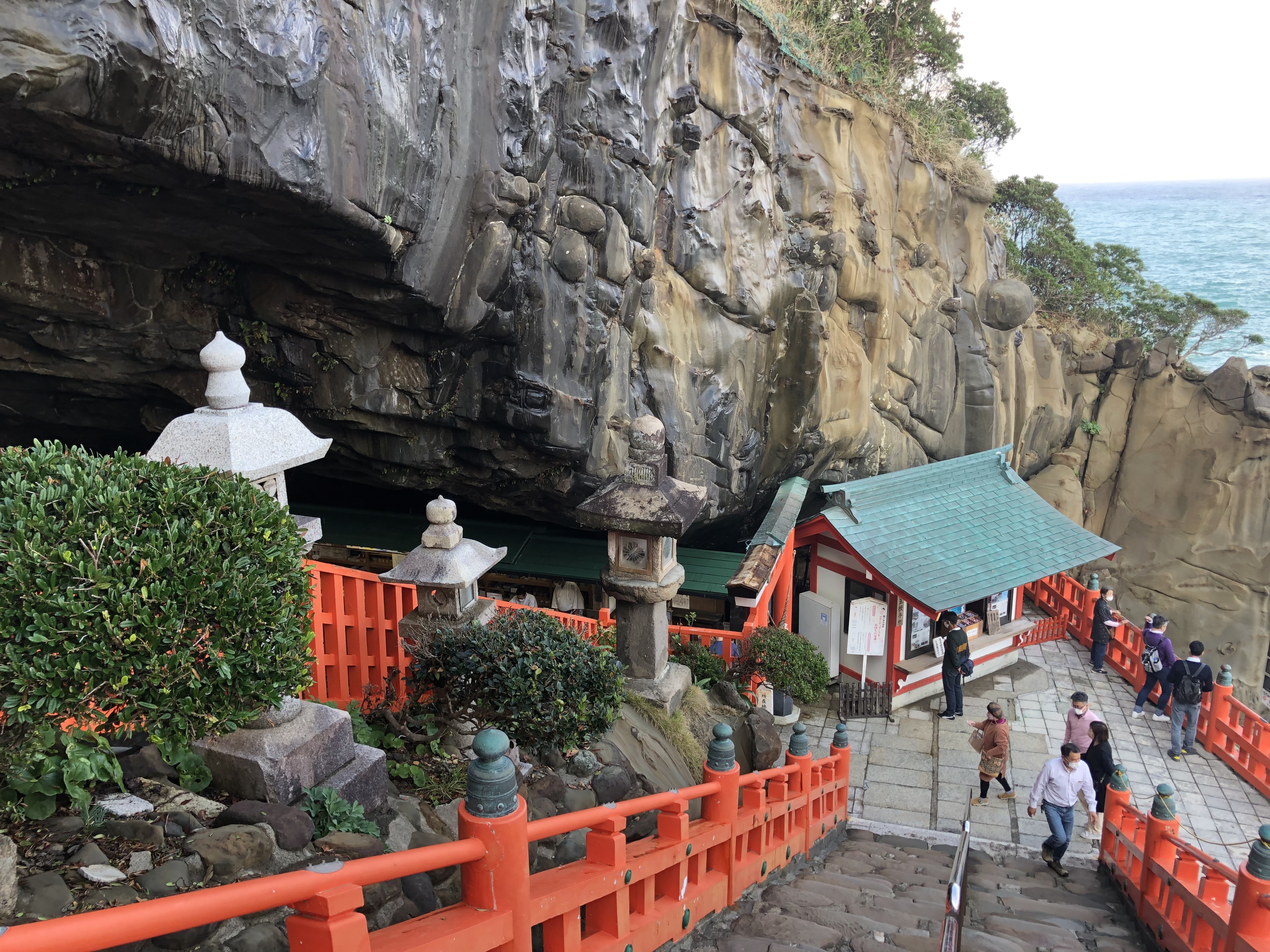
I leave Sun Messe Nichinan and continue my walk along the coast. The rocky coastline here twists around the mountains, the ocean crashing into the cliffs below, my destination in sight. After another tunnel and what feels like an eternity of walking, I finally reach Udo Shrine. The shrine is set in a cave carved into the rocks of a mountain, and it requires a climb down steep stone steps to reach its entrance.

Udo Shrine is primarily a fertility shrine. The gods enshrined here are all about safe delivery during childbirth, matchmaking for couples, and safety at sea. The mythology here is that Toyatama-hime, otherwise known as Luxuriant Jewel Princess, daughter of the Goddess of the Sea, decided to attach her breasts to the rocks. It is said drinking the water that trickles down from her cold stone bosom will bring fortune in pregnancy.

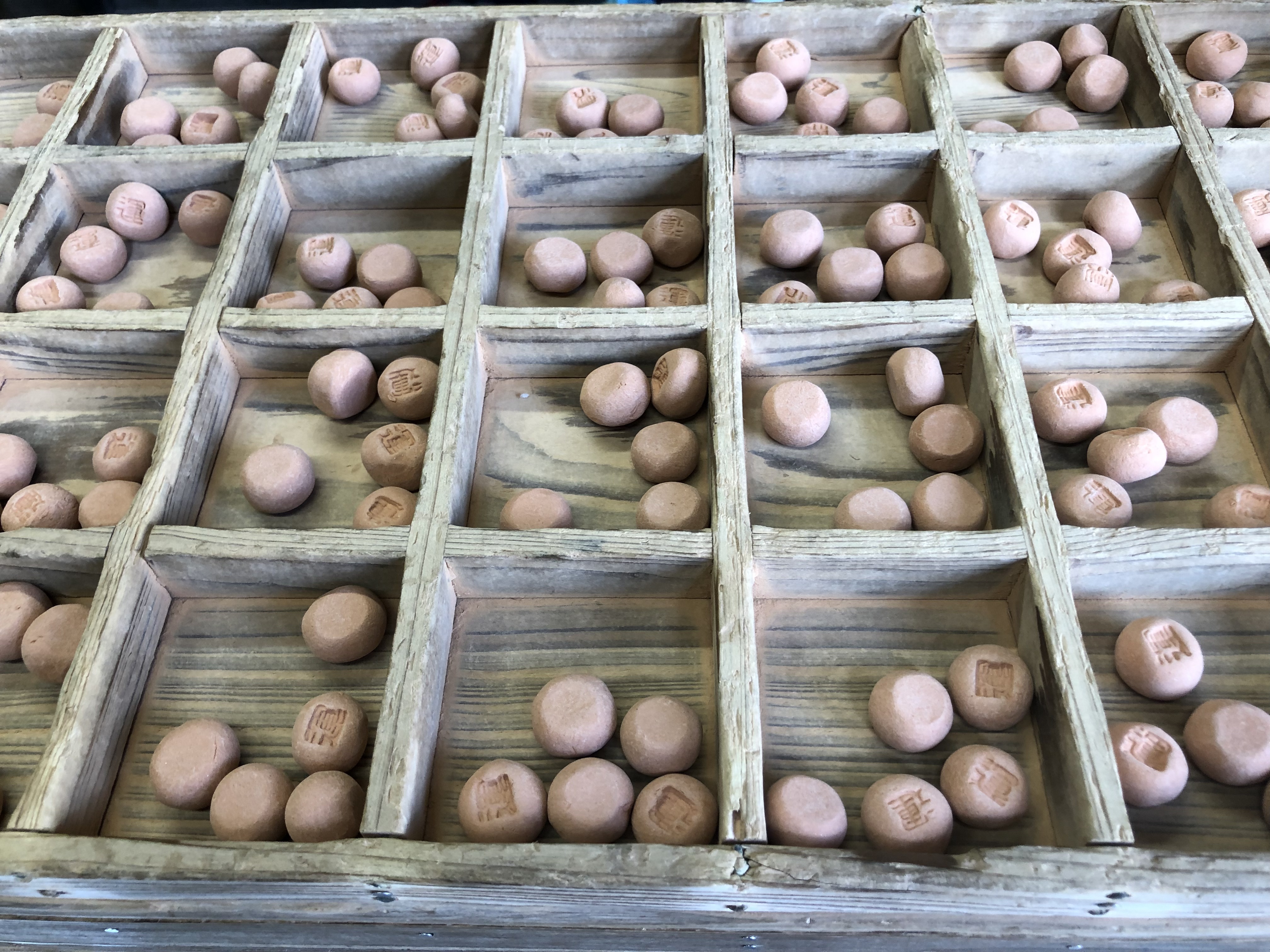
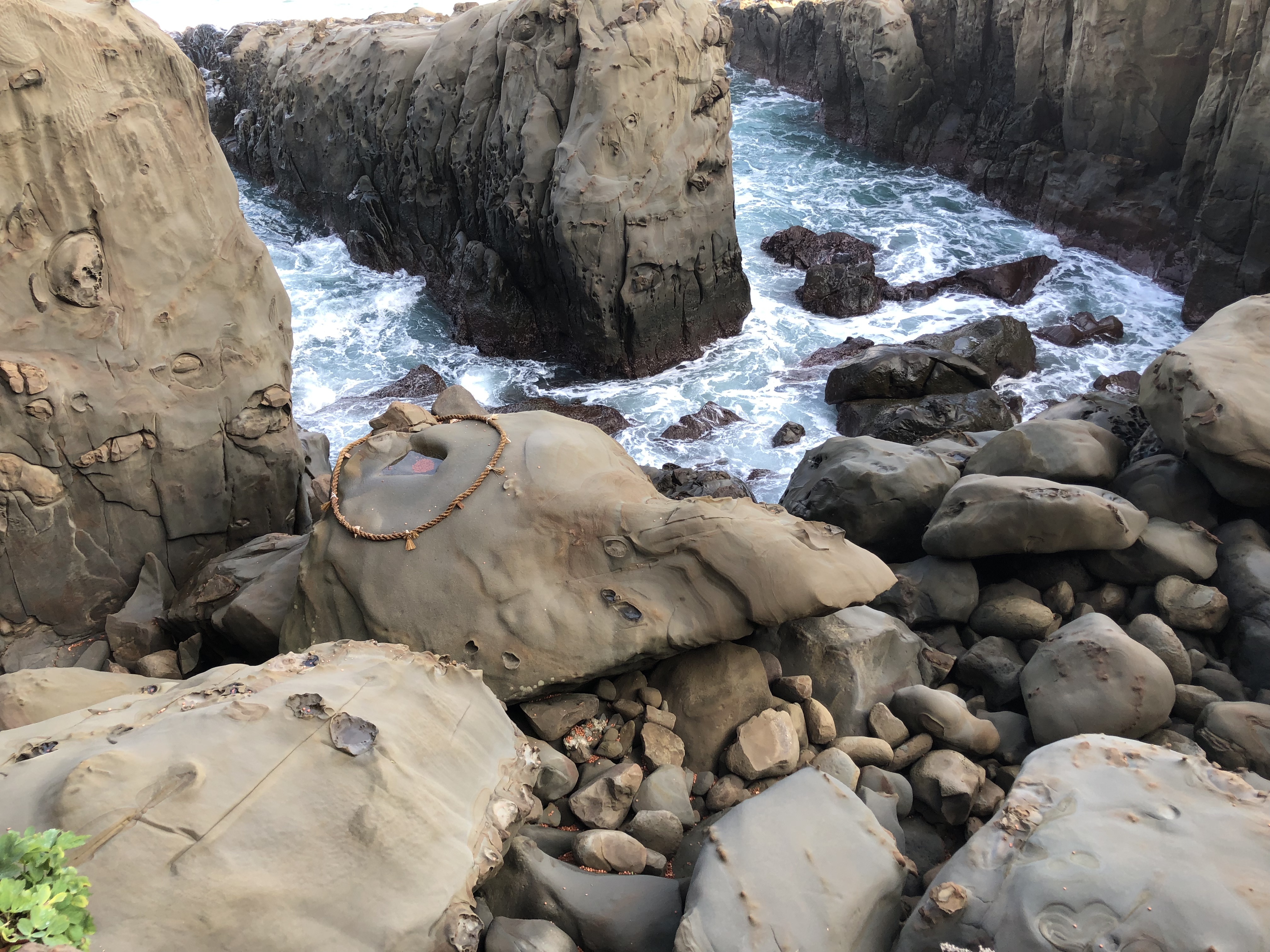
The second attraction here is the custom of throwing small clay balls known as ‘Undama’ into a pool located on one of the rocks below the main shrine. The sign reads, “Men throw the clay pebble with left hand. Women throw with right hand. If the ball lands in the rope circle, you will have a good luck.” It costs just ¥200 for five pebbles.

A Japanese man wanders over and throws his first pebble, landing it in the pool first time, everyone around him applauds. His good luck however instantly wears off as he proceeds to miss his next four throws. All five of my pebbles are tossed into the ocean. Nobody claps. There doesn’t appear to be any limit to the number of Undama I can purchase, therefore, I could continuously buy more pebbles and keep trying until I finally land one in the pool, thus guaranteeing myself a chance to have a good luck, but I decide against it.

Originally, the rules for the Undama were that both the man and woman in a relationship would each throw five stones, and the total amount from ten that landed in the small pool would equal the total number of children that the couple would have. However, problems arose and arguments were had, especially when a couple wanting a child would miss all ten throws, so the shrine decided to change the outcome to become about good fortune instead.

As I leave Udo Shrine, I find my timing to be just about perfect as the last bus pulls up. I get on the bus bound for Miyazaki Station. At Aoshima Station, a Japanese couple board the bus with their ten children.

Death Becomes Here

Today is warm again, and I have arranged to go on a bicycle tour with three very close friends. We meet up at half-past one and cycle in the direction of Yanaka Cemetery. It might sound a little morbid, heading once again to this huge cemetery, but the reason we have settled on this location is that it is quiet, out of the way, and not packed full of tourists. Today might well be the last day we can view sakura, and I can’t think of a better way to enjoy the flowers than with my friends in an area that is free from the usual crowds.

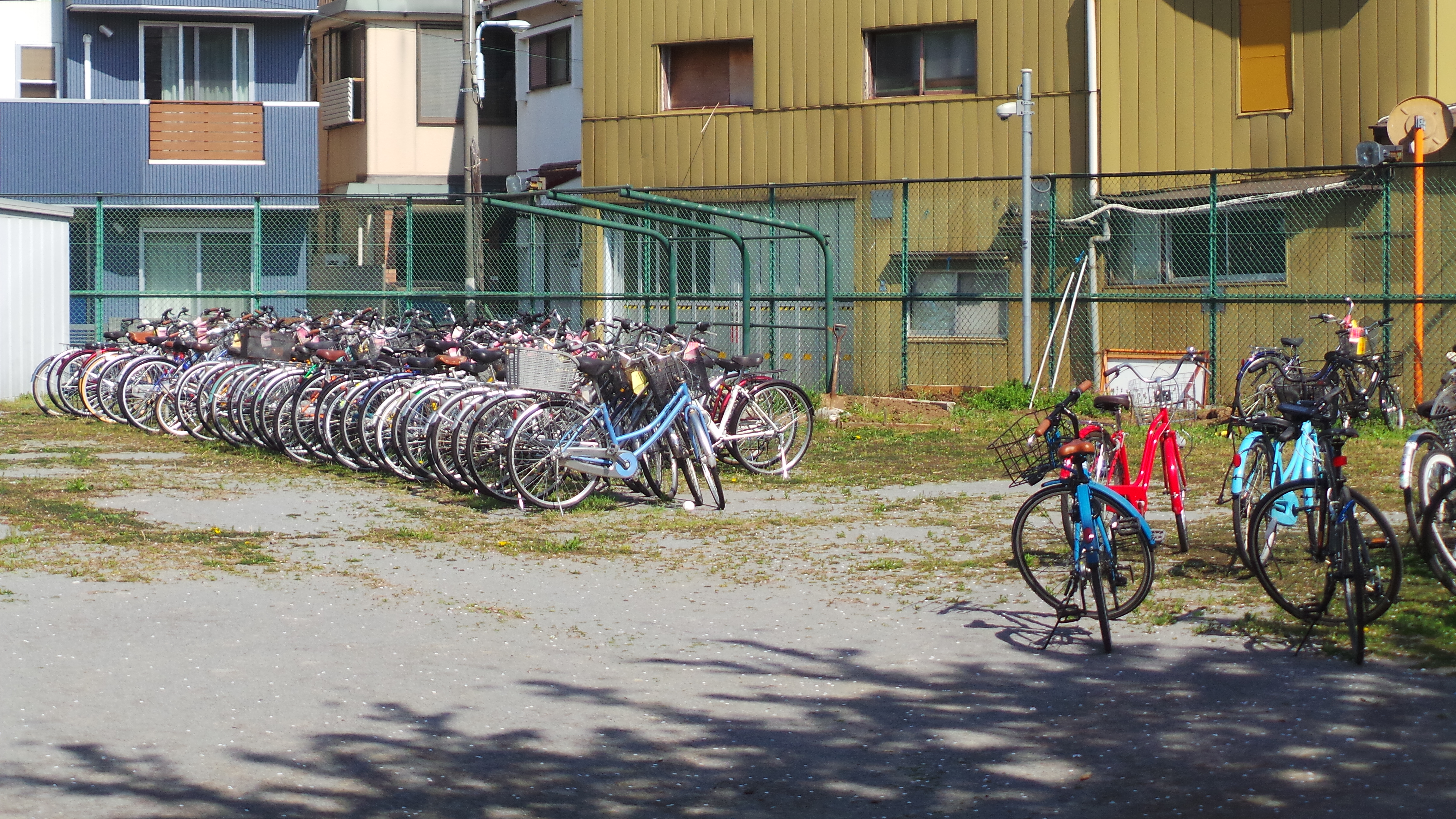
We decide, for whatever reason, to park our bikes in a zone where abandoned bicycles are collected and locked away. This fenced-off area charges a fine of ¥5000 to people who have left their bicycles illegally parked. After impounding our own bicycles, I worry that something might go wrong, and we too will have to pay the hefty fine when we return here later this afternoon. “Don’t worry about it,” says one of my friends, “we can just pretend that we don’t speak any Japanese, it’s no problem.”

illegalparking

We head through the cemetery, getting very lost in the process. The interesting thing about Yanaka Cemetery is that there are no bodies in the ground. Every grave here features a cremated corpse in an urn. Something about the blend of cherry blossom trees mixed in with the gravestones soothes me in a way that I can’t really describe. I really like this cemetery, and today is perhaps my tenth visit to this area since arriving in Japan.

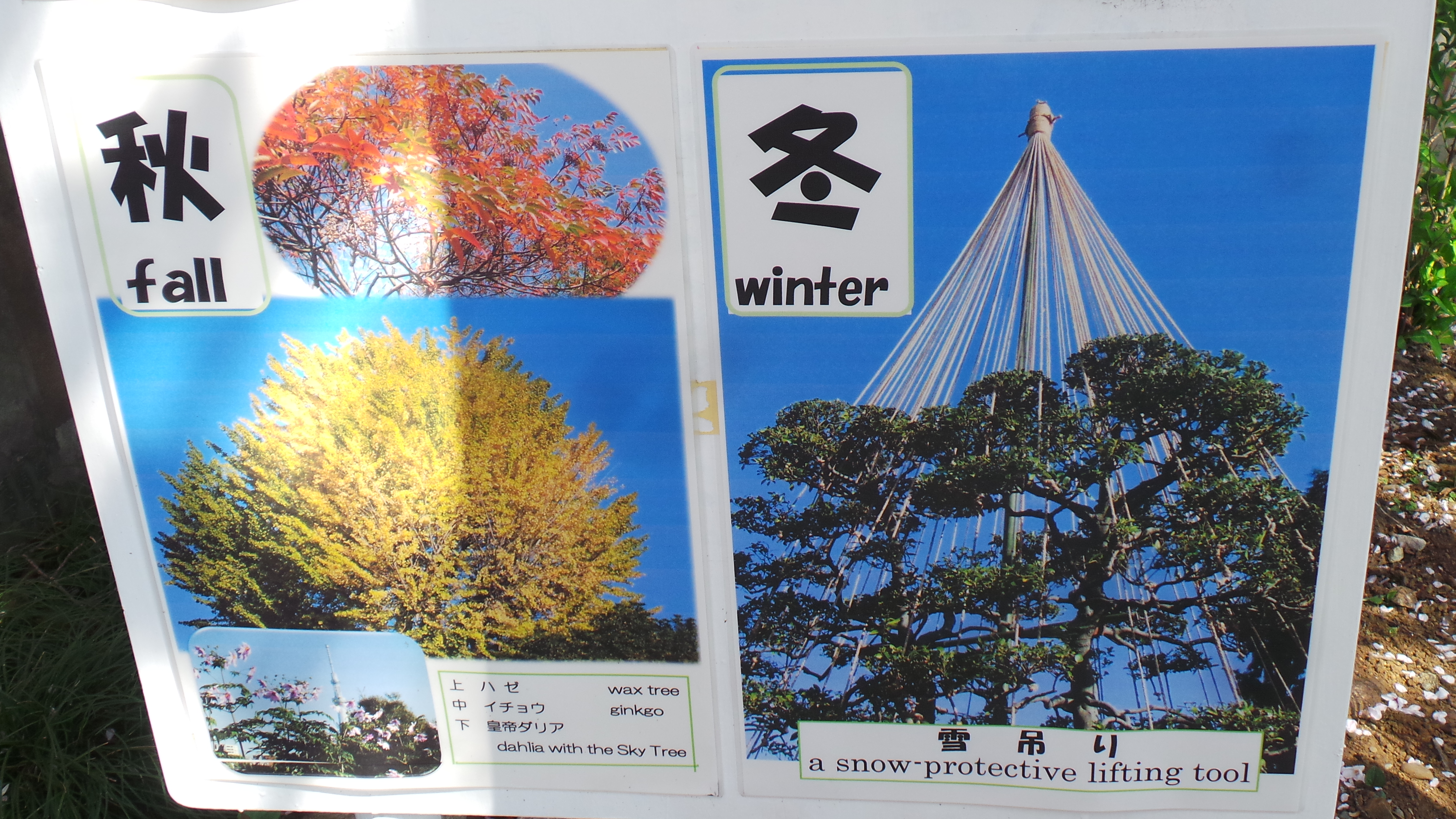
On the other side of the dead, there are some old houses and a street known as Cherry-blossom Avenue. I noticed a sign here a few months ago that displayed the four seasons of Yanaka Cemetery and various flowers. The section for winter was incomplete, but now, finding the sign, I can see that whoever is in charge here has finally updated the winter information, and it was worth the wait: a snow-protective lifting tool.

signcompleted

The photograph shows nothing resembling winter, and the sign is meant to depict the different flowers of each season (it doesn’t). I’m not certain if a snow-protective lifting tool is a genus of flowering plants or perhaps something more obscure; nevertheless, I am intrigued enough to make plans to return here next winter and investigate this peculiar seasonal tool.

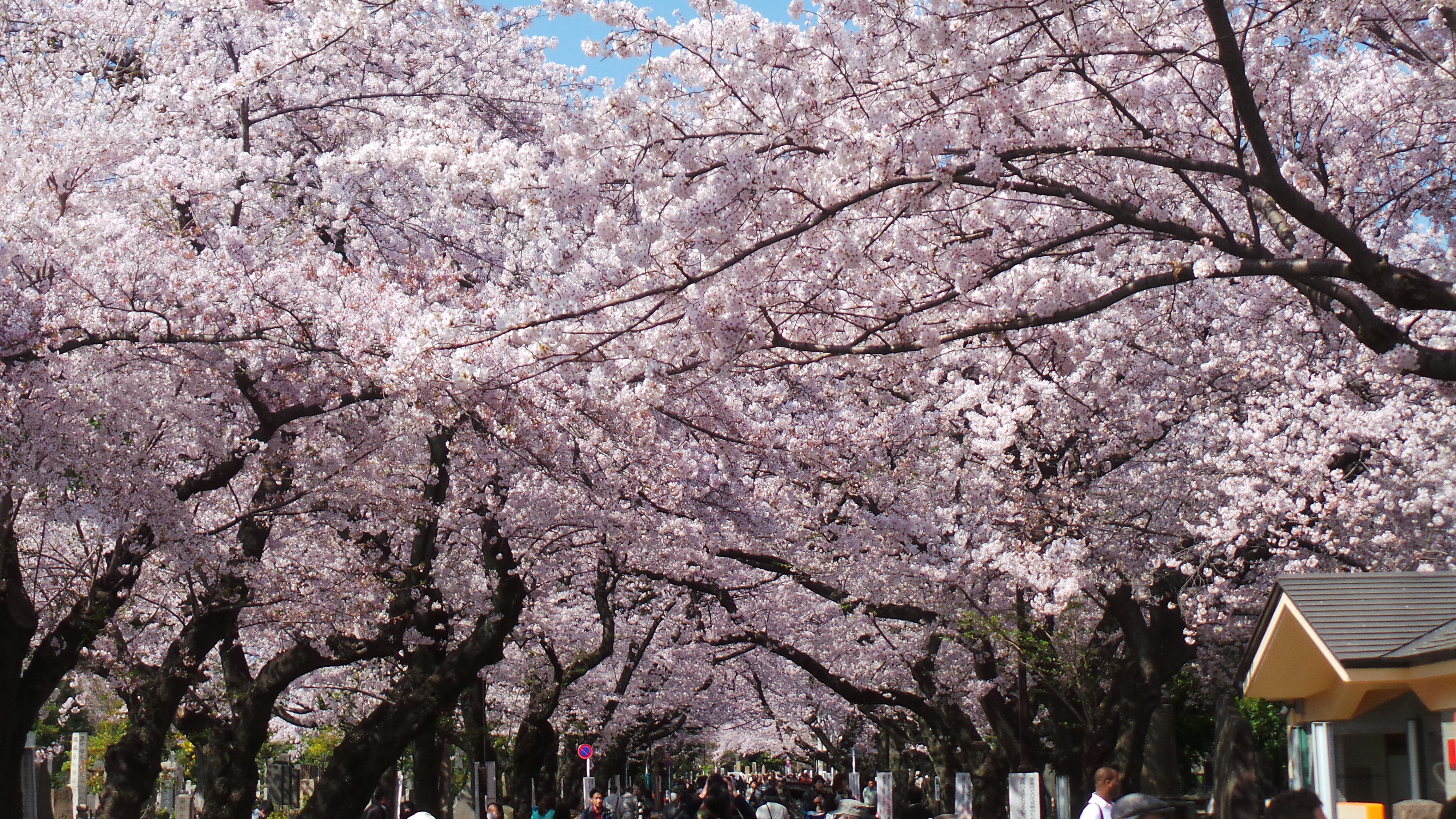
On Cherry-blossom Avenue, it is slightly more crowded than we had anticipated. Dozens of people meander the street, each side adorned with a wall of pink flowers arching over the tunnel-like path, creating an incredible sight. It’s unquestionably worth the visit, offering the most serene view of sakura I have seen so far. We continue our stroll on this lovely spring afternoon, relishing views under the canopy of blossoms.

sakuratunnel

On the other side of the street, we enter a very large temple. Tennoji Temple boasts a massive statue of Buddha and an ancient well that still functions today. One of my friends appears excessively excited about the well and immediately starts pumping water from the ground below. Apparently, the water has a metallic taste.

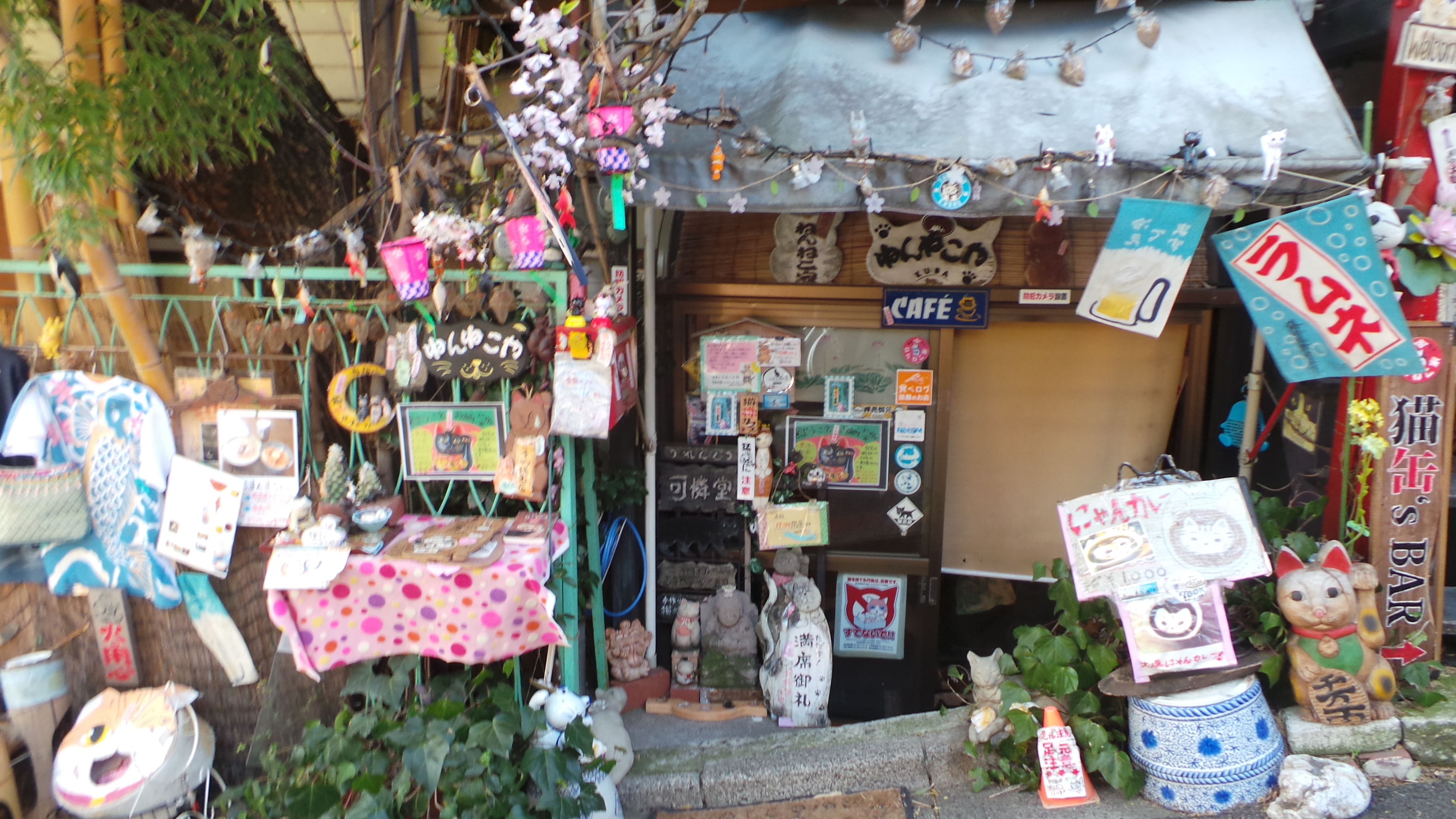
We leave the temple and the cherry blossoms behind us, heading down Yanaka Ginza Street. The market is an unusual bustle of crowds and tourists, drawn to the area for flower viewing and now wandering along this ancient street. Although tea houses, locally sourced products, and hand-made items are on sale, none of them capture our interest. In our quest for food, we stumble upon the knowledge that there’s a cat cafe nearby, and given our shared love for cats, we eagerly turn a corner and walk for ten minutes in a vague direction before finding a cafe adorned with cat paraphernalia. “Maybe this is the place?” I am told, with transparent obviousness.

catcafeagain

We wander into the deceptively small cafe and take a seat on the floor around a small table. Unlike the other cat cafe I have visited, this one doesn’t require us to pay any additional fee to eat with the cats. It feels more like someone’s living room than an actual cafe. Although the place is slightly pricey, perhaps the extra charge is used to subsidise the cost of cat food, care, and maintenance.

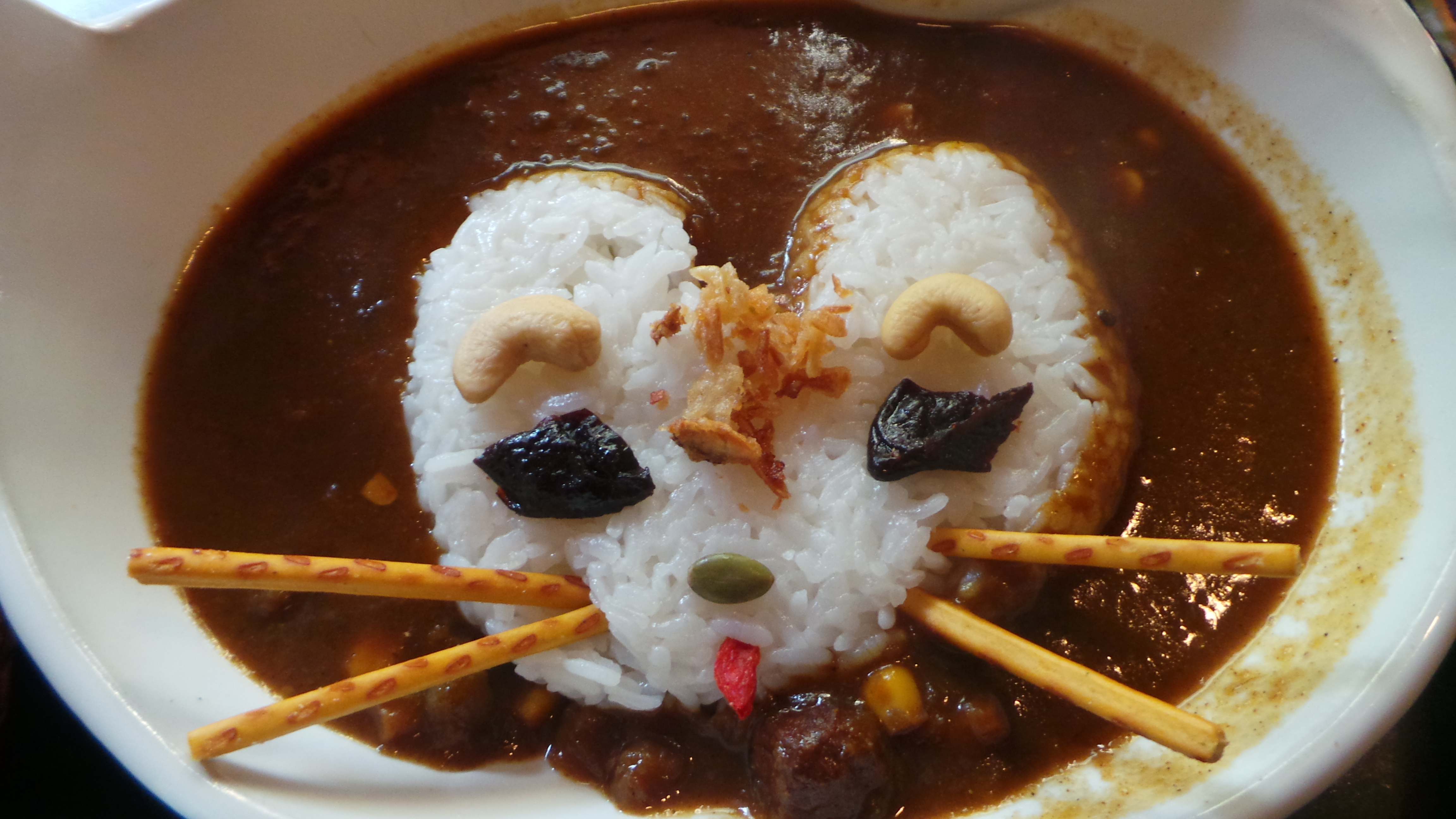
I order a vegetarian curry and wait. My friends, seemingly uninterested in real food, opt for a selection of cakes and sweets. As we sit and talk for a while, I completely forget that I am in the company of cats; perhaps the reason for this is that there is just a single cat here. Only one. Sleeping quietly under a heated table. Eventually, my food arrives, and a second cat appears from seemingly nowhere. Much to my surprise, my food looks nothing like any curry I have had before. Something is very different about it, and it takes me a while to realise exactly what it is.

catfoxcurry

As I dine on curry and rice shaped like a feline, or perhaps a fox, I begin to wonder if this is okay. Eating food in the shape of a cat, while surrounded by two actual cats, makes me feel very strange indeed. What would a cat think if it saw me eating one of its friends? Perhaps it would get angry, maybe even scratch at me. After finishing my curry, I attempt to pet the awake cat, but it runs away in fear, confirming my suspicions about eating cat-shaped food. The owner informs us that the manager of the cafe is, in fact, the sleeping cat. It makes me wonder if the cat even knows how to operate the antiquated till system (it doesn’t).

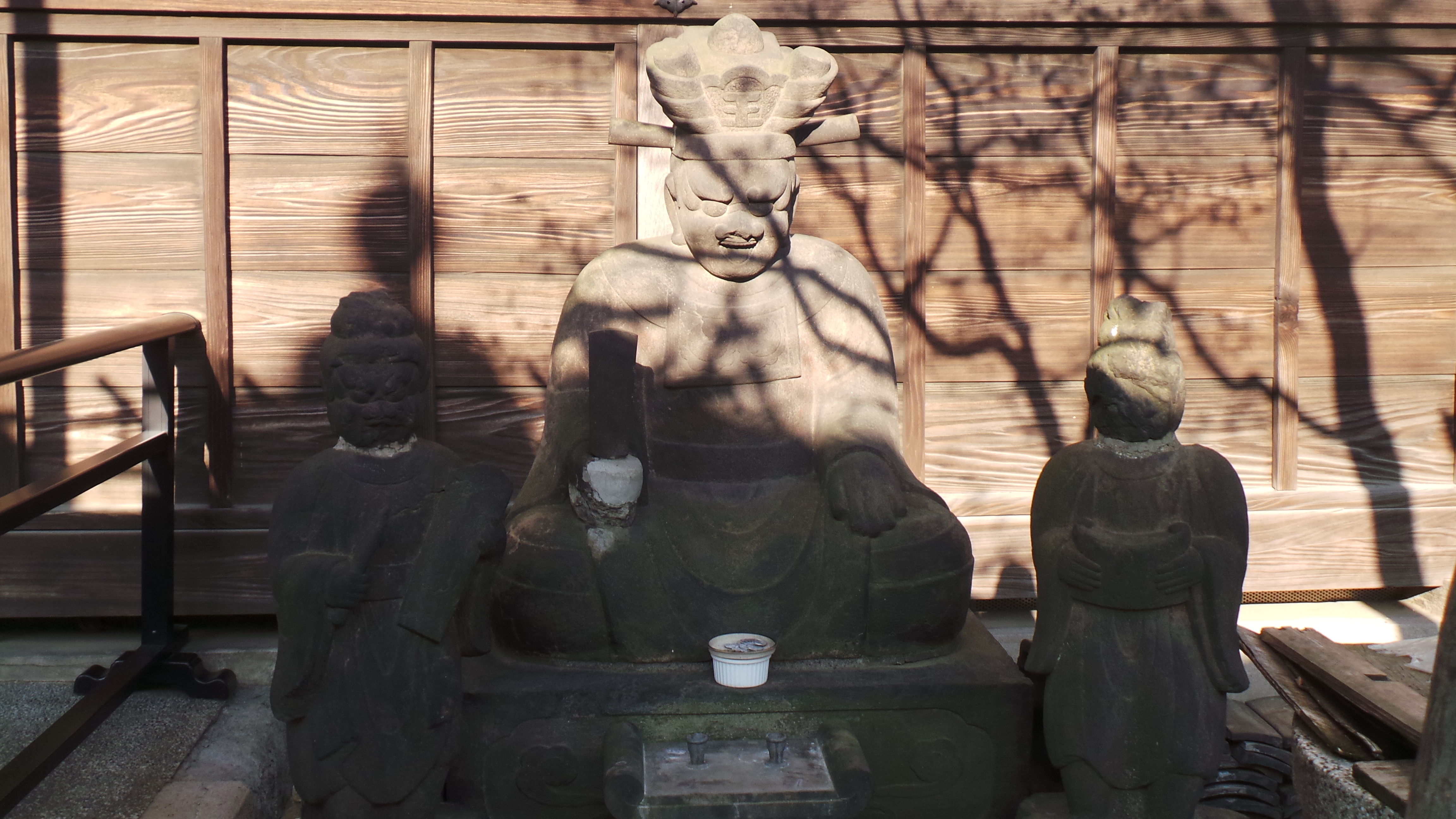
We set off in the direction of our bicycles, and along the way, we once again inadvertently stumble upon a temple. This particular temple houses the King of Hell, Enma-raja. The statue, carved from stone, depicts him with his servants sitting on either side. His servants are Shimyo and Shiroku, tasked with delivering the King’s judgment and recording it, respectively.

enma

It is believed that Enma-raja judges the conduct of the living and determines their destination after death. Rumour has it that if you tell a lie in front of the statue, the King of Hell will remove your tongue. Intrigued, I decide to test this out with a paradoxical statement, “You will cut out my tongue.” Nothing happens, indicating that I have told a lie, meaning the statue should cut out my tongue. But if it does, then I can’t have told a lie, and this creates a paradoxical loop. The logical conundrum continues endlessly. Eventually, the statue disintegrates in a quarrel of logic (it doesn’t).

It is quite fitting to find such a statue here, as the area of Yanaka is in the direction of the Ox Tiger, depicted with horns, sharp claws, and an evil demeanour. Because of this, it is considered an unlucky direction, and Yanaka shares the unfortunate possibility that it contains a demon gate—an invisible gate that leads directly to hell, known as a Kimon. Often, temples in Japan face the same direction as this Chinese zodiac symbol. This might explain why there are over thirty temples and shrines here, helping to purify the area and prevent an oni demon from showing up and killing everyone.

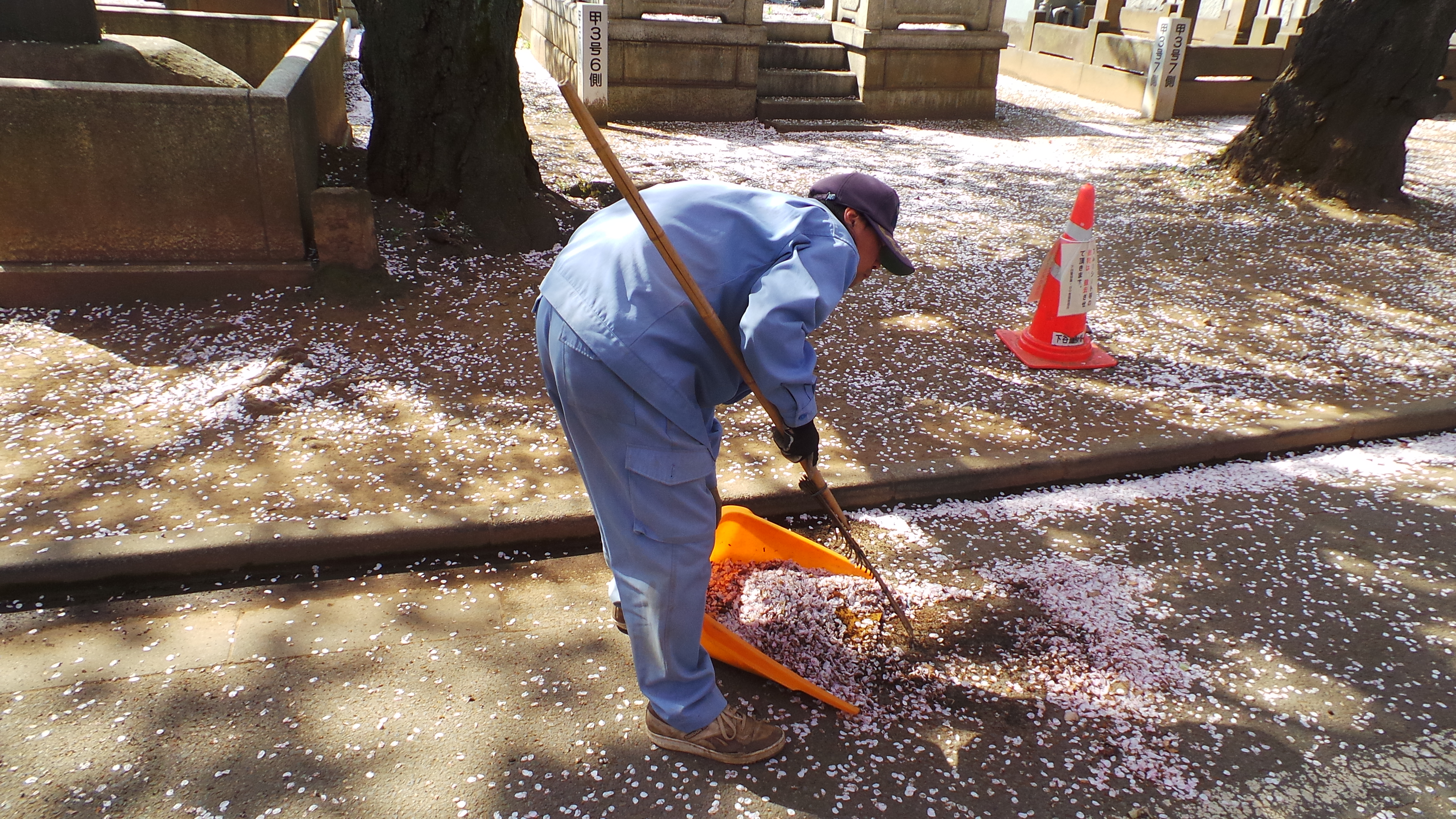
With death surrounding us, it is a pleasure to encounter something that brings a wry smile to my face. A man quietly sweeps up the fallen, dead petals of cherry blossom flowers that litter the floor. I watch eagerly as he sweeps. The area he cleans is instantly covered with petals within a minute of him finishing, and I fear for him; his job might be unavailing and endless.

foreversweeping

We eventually return to our bicycles, relieved to find them unharmed. However, a man looks confused as we stroll into the compound, unlock our bikes, and race toward the exit. Speaking in Japanese to one of my friends, he seems suspicious about our actions. “Next time, you should kindly ask for permission first,” is all he says. Fortunately, he doesn’t impose any penalties or cause any problems. As we cycle away from the cemetery towards Asakusa, it appears I had nothing to worry about, except perhaps for the sudden sharp pain that starts to shoot through my tongue.