Wig Trouble in Little Chinatown

I am a little way outside of Tokyo, in Yokohama. The area was once a quaint fishing town where nothing much really happened. After the Americans came with their ships, Yokohama opened Japan up to the world of foreign trade, and these days, Yokohama has become one of the major ports for trade in Japan.

My first stop is the site where the Japan-America Treaty of Amity and Friendship was concluded. The treaty, also known as The Treaty of Kanagawa, was signed in 1854 on this very piece of ground and effectively changed the way Japan dealt with people from other countries. The signing also gave birth to the flourishing city of Yokohama. A memorial made up mostly of mirrors is here now, and uneven ground at the centre of this historic spot has become the ideal place for rainwater to collect.

treaty[1]

With so much history in the area, Yokohama features many foreign buildings and places and is heavily influenced by various different cultures. It is one such culture that brings me here today – the Chinese. Today is, of course, Chinese New Year, so I thought the ideal place to celebrate would be in a city with its very own Chinatown.

Marking the entrance to Chinatown hangs a brightly coloured gate. The first thing I notice is that beyond the gate, the rows of Chinese restaurants and shops no longer resemble Japan. Tucked between two such restaurants sits a branch of Starbucks Coffee, instantly shattering the illusion that I might actually be in China. I make my way through the crowds and arrive at a temple.

chinatown2[1]

Yokohama Kanteibyo is a Taoist temple dedicated to the Chinese general Guan Yu, now recognised as the god of war and victory. Built in 1871 by Chinese migrants, the temple has been destroyed four times but always rebuilt, a common theme in Japan regarding temples. These days, the temple symbolises good luck and good fortune in business, attracting a crowd of Chinese residents and tourists celebrating the Chinese New Year.

Inside the temple, people queue up to pay ¥1000 for a piece of scented wood. The lit incense is then placed into a pot. Burning the first incense of the New Year is considered especially important in Chinese culture, with participants believed to invite prosperity for the upcoming year.

chinatown1[1]

After the incense, people retrieve their fortune, following a tradition similar to that of Japanese temples and shrines. Common themes emerge between the two cultures, such as celebrating the New Year by visiting a temple or shrine, offering the first prayer or burning incense, and enjoying traditional food. The notable distinction today is the upcoming Lion Dance.

I exit Yokohama Kanteibyo and step into the lantern-lined streets. Drawing in twenty-one million visitors annually, Yokohama Chinatown is the largest in Japan, boasting over six hundred shops and restaurants crammed into this compact area. Today, it seems like all twenty-one million have converged here, as both sides of the streets are teeming with people. The congestion makes it challenging for me to move freely.

chinatown6[1]

I find a decent spot in the crowd and wait. Despite the imminent Lion Dance parade, the road remains open for vehicles, creating a potentially dangerous situation. A traditional Chinese vehicle labelled ‘Family Mart’ manoeuvres through the throng, coming perilously close to running over someone. Each time a vehicle passes, a man with a megaphone urgently urges everyone to step back, causing chaos. Additional delays occur due to a problem with the head of the lion costume, pushing the Lion Dance to start an hour later than scheduled, finally commencing at half-past four.

Firecrackers, louder than the Big Bang, shatter the silence. The abrupt explosion of sound startles me, eliciting frightened cries from children in the vicinity. Soon after, a man adorned in a lion costume emerges, prompting cheers from the crowd. Accompanied by the rhythmic beats of drums, the lion commences its dance. I manage to observe the lion’s performance for approximately four seconds before it vanishes into a Chinese restaurant, presumably continuing to dance around inside.

chinatown3[1]

As the lion re-emerges from the restaurant, its head is removed, and the drumming ceases. This anticlimactic moment leaves me wondering if there’s more to come. I linger for a while, hoping for additional excitement, but the crowd has largely dissipated. The firecrackers echo once more, leaving the air tinged with a gloomy white smoke, and the lion resumes its dance into the next Chinese restaurant. Bored with the spectacle, I decide to bid farewell to Chinatown in search of something more intriguing.

Strolling around for approximately an hour, I stumble upon something of historical significance. In 1871, shortly after the signing of The Treaty of Kanagawa, a street named Nihon-O-dori was constructed. This street holds historical importance as the first modern street ever built in Japan. Originally, it was established as a division between the settlement of overseas migrants and the Japanese population.

justaroad[1]

The signboard reads, “This street presents the best opportunity to enjoy glimpses of Yokohama’s past.” I stroll along the entire thirty-six metres of the concrete street, attempting to savour glimpses of the past. However, my usual lack of enthusiasm is once again disrupted by the sight of a giant Ferris wheel looming in the sky above.
From Rush Hour With Love

Today is Valentine’s Day in Japan. What would normally be a day of loneliness and misery is dissolved by chocolate. Unlike in England, where you are expected to buy flowers, chocolates, and take your partner for a meal, Valentine’s Day is remarkably different here. It is on this day that women buy chocolates for men. I have become very used to not receiving even a card on this day, so when I found myself unable to leave my house because of the vast quantities of chocolate blocking my path, it was a pleasant surprise. Even my dentist gave me chocolates, which is rather odd considering the high sugar content and the effect it will have on my teeth.

In Japan, one month after Valentine’s Day is White Day. On White Day, the man returns the gesture to those who gifted him by buying the women sweets. As much as I appreciate the abundance of chocolate that I received today, it becomes apparent that White Day will be extremely expensive for me.

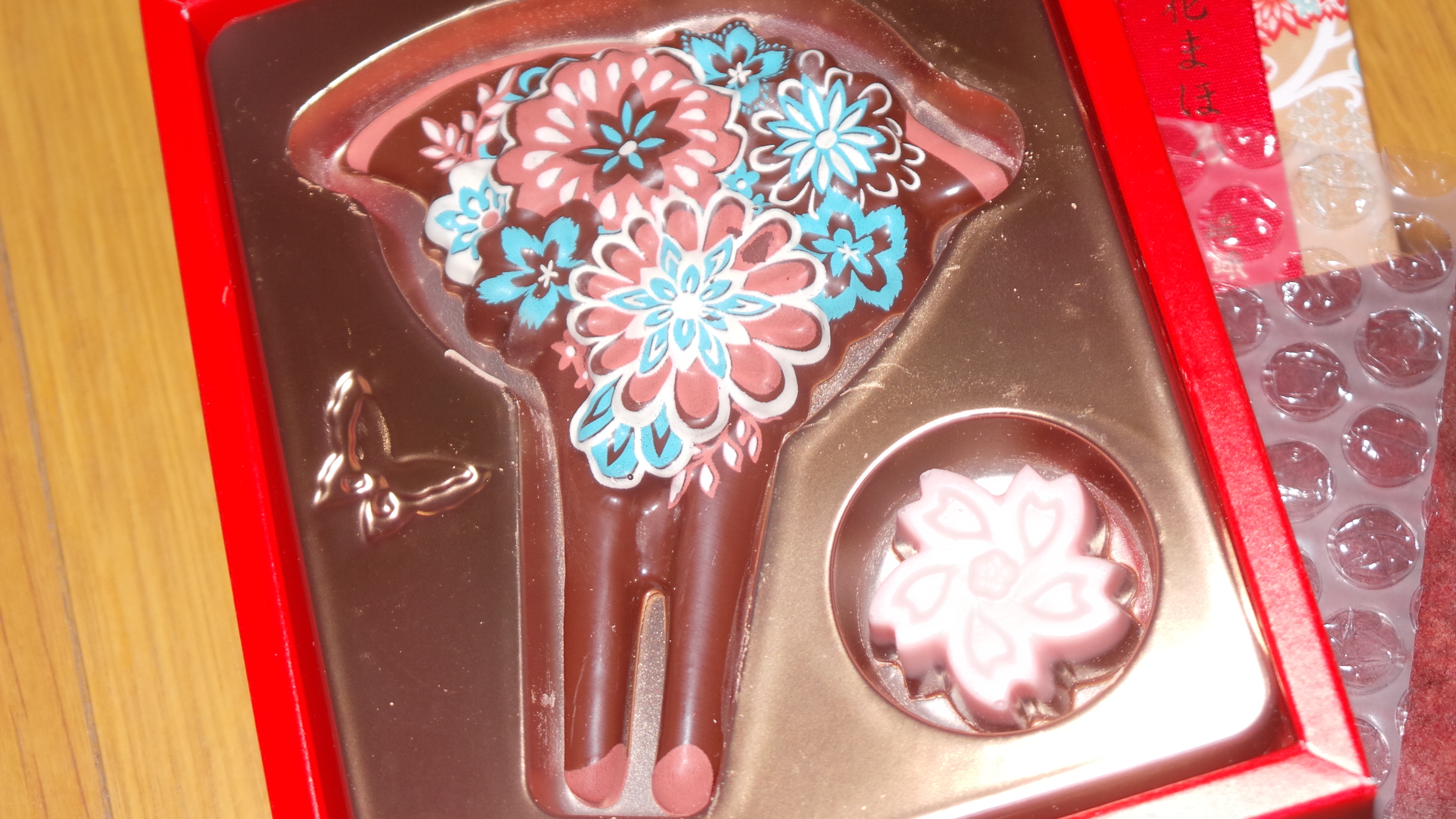
valchocs

It is perhaps a sad part of Japanese culture that on Valentine’s Day, a man will wait with anticipation to receive chocolates from a woman that he might like, if only for the opportunity to return the gesture a month later. It is this style of gift-giving that makes the shy Japanese male miserable when no chocolate is received. I suppose that this theme remains common among all other cultures; Valentine’s Day and the misery attached to it. I can hardly complain, though. I received many gifts, despite the fact that I don’t really like the taste of chocolate. I actually preferred playing with the bubble wrap, after a nine-month absence of popping pockets of air-filled plastic.

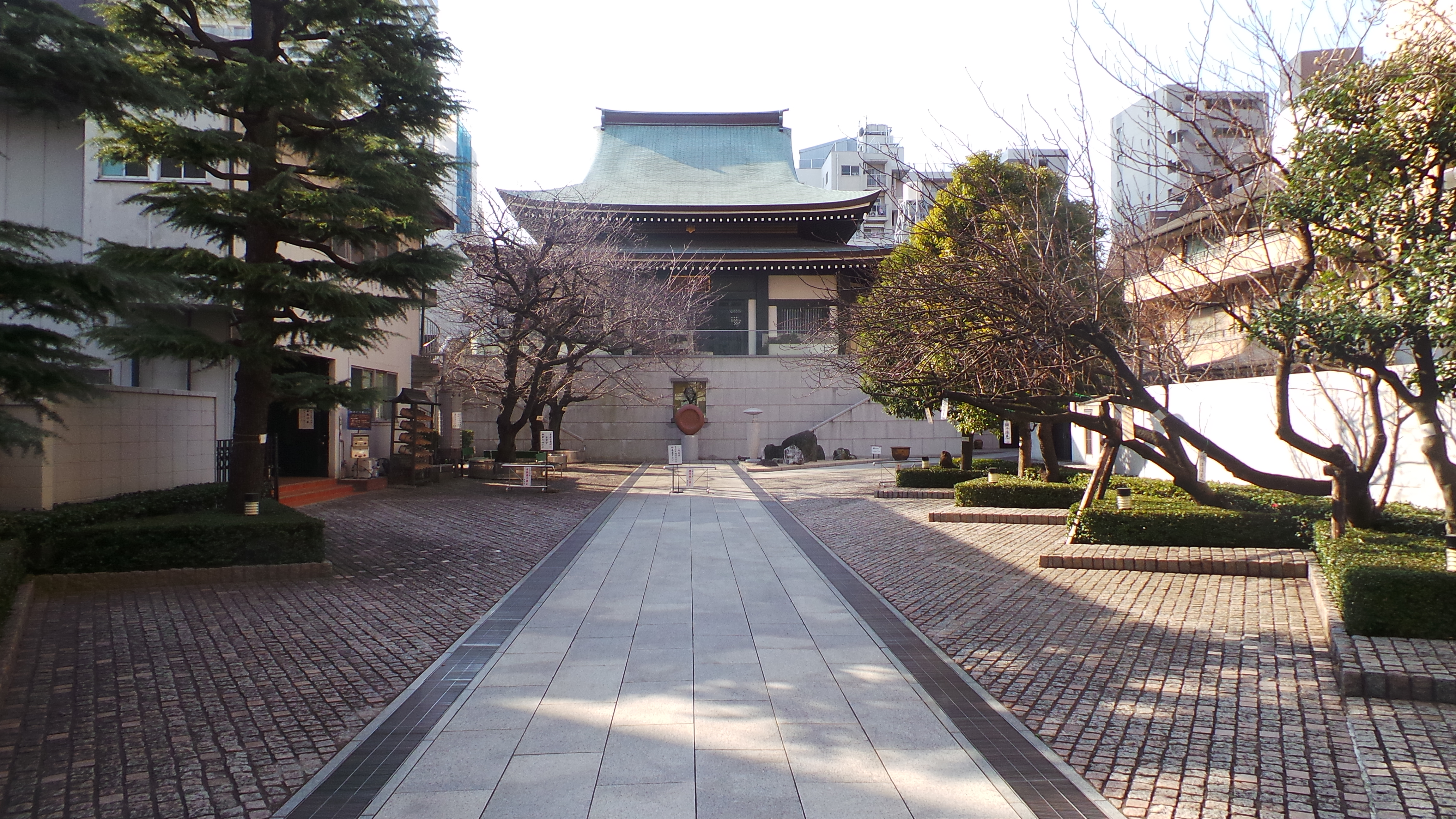
After consuming the equivalent of my weight in confectionery, I head into Asakusa. Today, I have decided to finally visit a temple that I walk past every single day but never visit. It is a temple that is always absent of people, possibly cursed, and is surrounded by some strange energy that I have previously been unable to bring myself to ingress.

dailytemple

The temple offers very little description about itself; not even a name. Before the temple sits a small rock garden where it is impossible to view all of the rocks from any one angle. It is said that if you are truly enlightened, then you are able to see the eighth rock. Despite the various viewing angles I deploy, I find it impossible to see every rock at the same time, and consider that even those that surpass the normal level of human consciousness would still find it difficult to see all of the stones at the same time. Other than a cemetery for the wealthy tucked behind the temple, nothing much else is on offer here.

I leave the temple and head over to Akihabara. Today, there is an art exhibition taking place at 3331 Arts Chiyoda, a former high school converted into an art gallery. The exhibition features students who will graduate next month from the Takarazuka University of Art and Design. A friend of mine works for the university and has invited me along to sample the artwork of his students.

artscyd

There are seventeen displays here from seventeen students, all twenty-two-year-old women. The first thing that strikes me is that a lot of the pieces have some form of macabre imagery. Paintings depict homosexual angels, others heavily feature corpses, and some are simply storyboards for books about clowns for children; obviously, the clowns look deliberately menacing and have been painted just to scare me.

Other pieces here are heavily influenced by famous stories. One piece is based on Ryunosuke Akutagawa’s ‘The Spider’s Thread,’ a story about too many people in hell (known in the story as the Pool of Blood) as they try to escape and reach the paradise above. One man walking through a forest didn’t kill a spider one day, so the silk of a spider’s web is dropped down to hell from paradise in an attempt to rescue him. Everyone reaches for the web in an attempt to climb to safety. Obviously, the weight of everyone in hell is far too heavy for the silk, and the web snaps, committing everyone to the Pool of Blood for eternity.

morearts

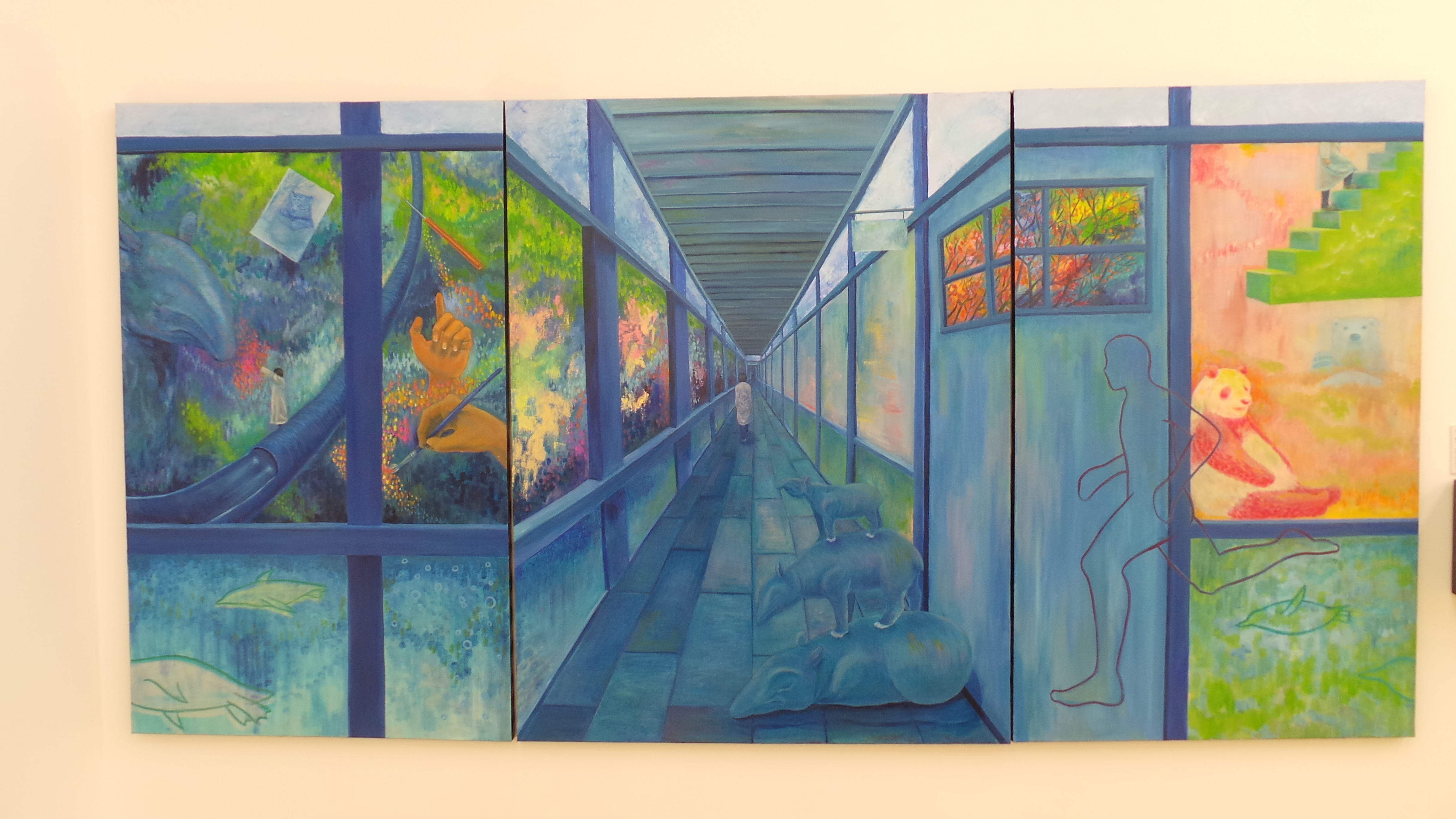
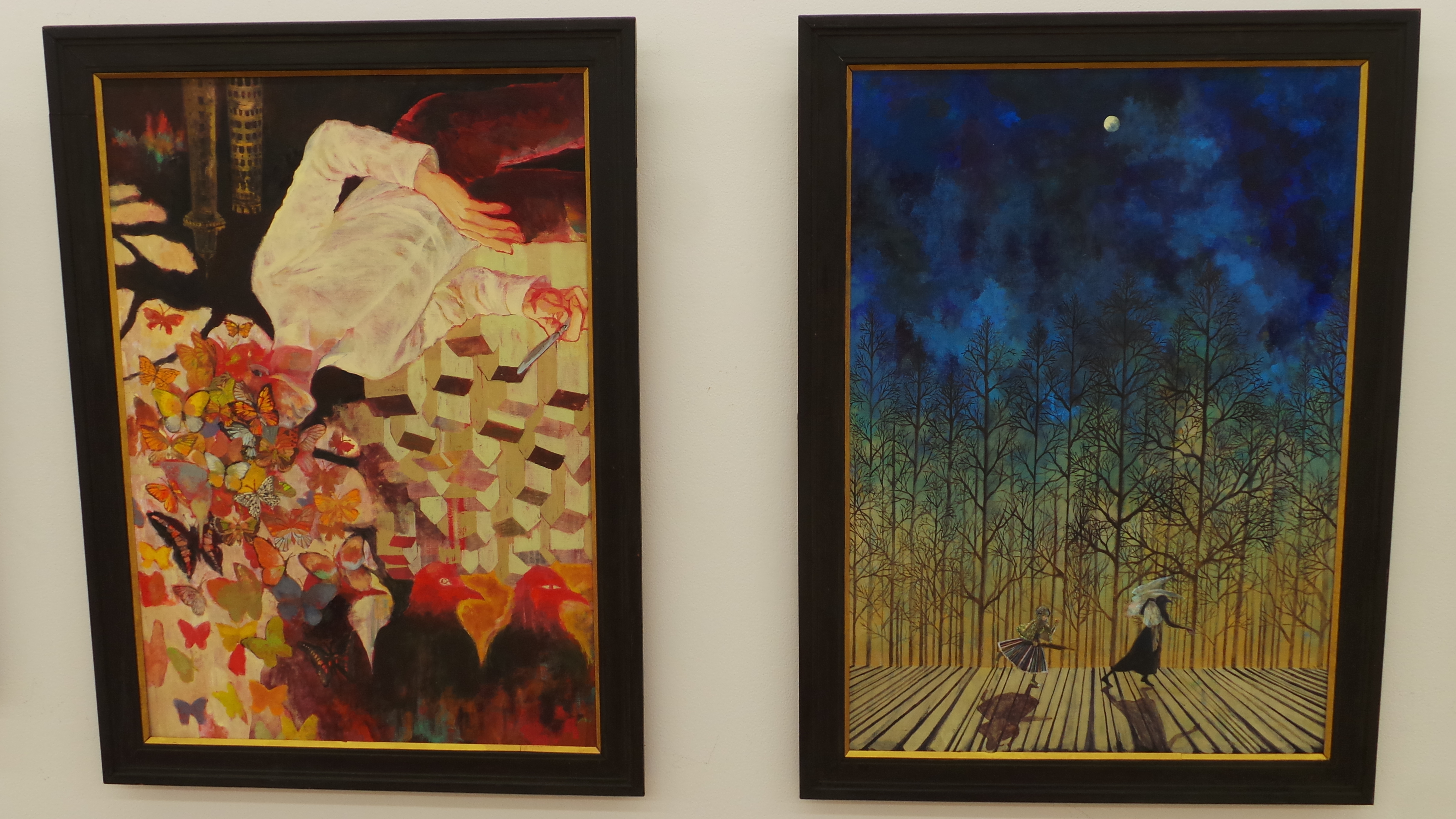
The highlight of the exhibition is a piece by Ozawa Yuki. Her painting depicts a dream, more specifically, the moment when you become fully awake and are only able to remember fragments of what was left behind. Another artist that I enjoy is Ogawa Sayako. These two pieces offer less of a description but are once again based on dreams. Something about places in dreams never existing anywhere in real life. I suppose these pieces are my favourite due to their abstruse and rather abstract style. After the art, I take the packed rush-hour train back to Asakusa, somewhat confused by the imagery I have just viewed.

There are certain things that become written about more often than others in Japan: signs with bad English and vending machines. I am guilty of writing about both of these things, and perhaps they aren’t the most interesting to mention. But when I saw another strange vending machine, I got a little excited, so I decided to include it here.

batteriesvending

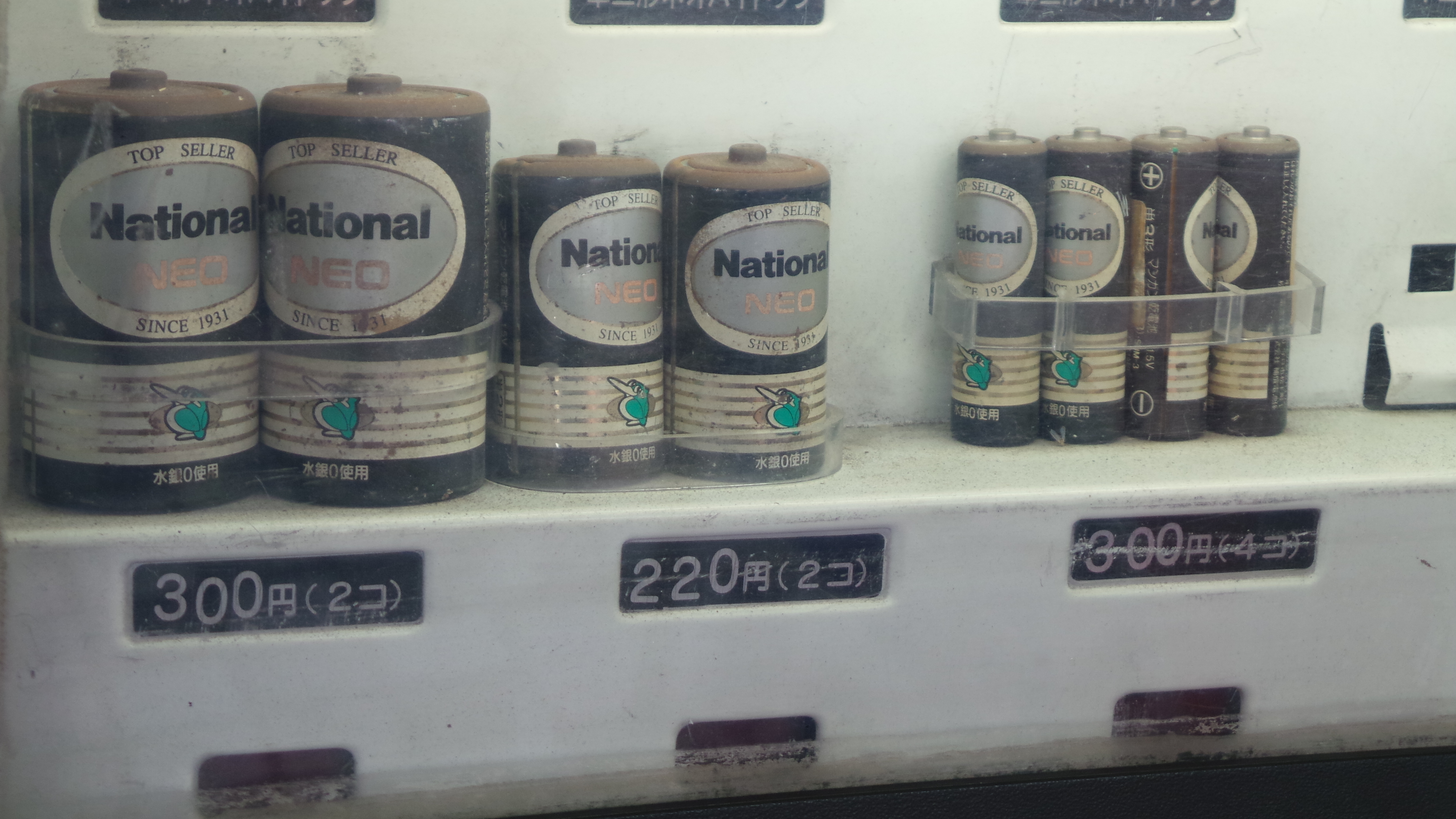
This machine, covered in dust, sells batteries from 1931. These batteries, made by Panasonic, are no longer in production. Yet, this machine sells them for around ¥300 a pair. Even though they do claim to be a ‘Top Seller,’ batteries are the very last thing I need in my life right now. The machine doesn’t actually work and seems absent of any power. Somewhat ironically, what the machine could really do with is some new batteries.

Befall Upon The Watchtower

For whatever reason, someone has suggested to me that I check out the area where the Arakawa River and the Sumida River flow into one. As I head out into what feels like a spring afternoon, I realise that my destination today might offer little excitement to anyone, including myself. Somehow, I feel drawn in the direction of Arakawa, the shackles of free will severed from my legs. Part of me feels like there is a demon possessing my very soul, controlling my destiny as I cycle at rapid speeds in the direction of Arakawa.

I see the remnants of a temple or shrine, but it looks as though perhaps it is trapped within the confines of an industrial site. Not letting that stop me for one moment, I park my bicycle and wander in. Seconds later, I am cornered by a security guard. He shouts angrily in Japanese as he waves his hand in the direction of the street. A strong urge to not give up consumes me, and I quickly find myself on the other side of the complex.

sewertemple[1]

It is a strange sight. I am standing along the Sumida River, and there is nothing but tall yellow grass stretching off in every direction. No cars pass along the road in front of the shrine. No people are walking. It is silent, yet only ten minutes away are the tall residential buildings that make up my neighbourhood. Looming over the Shinto shrine are three huge green balls, presumably part of a sewerage station. Perhaps the god of water treatment resides here.

I carry on my journey, not wanting to disturb the sewer gods, and eventually find a map. Sure enough, the place I had just visited is marked as ‘Sewer Station Shirahige Nishi Pump Place.’ However, there is no mention of any temple or shrine on the map. There is, however, one other interesting point of interest labelled as ‘Ballpark for boy Ground of using combinedly.’ I excuse the terrible English and carry on along the river.

Ten minutes later, my fanciful difficulty fades away, offering me some karmic resolve.

thewatchtower[1]

A watchtower. The best thing that has happened to me all week. It somehow feels like I am stumbling through an episode of the television drama ‘Lost’. For no apparent reason, there is a massive wooden watchtower sitting guard at the entrance to one of the bridges that traverses the Sumida River. What is it doing here? Who built it? Is this real? My mind floods with questions and possibilities, as if somehow collecting fragmented pieces of information and forming them into ideas in my head.

I park my bicycle, and ignoring the sign that tells me to stay away, I enter the wooden doorway. My body filled with an emotion that is yet to be given a name. As I climb the watchtower, I begin to wonder if all of this is just some giant metaphor for something else, something that can’t be explained with words. Each step toward the top tests me, as if life is testing me at this very moment. Eventually, as I near the top, the cracks in the surface become wider, making way for sunbeams.

insidetower[1]

The view from the top is of nothing of note. Tokyo Skytree hangs in the distance, slightly masked by concrete surroundings. In the direction I came from, I can see the water treatment plant and the barren riverbed. I stand at the top of the tower in silence for a while, watching the blue hue of the river for a time, before the sound of footsteps echo from below. A man appears. He looks devious, something very odd about him; like he means to cause trouble. He stands atop the watchtower with me, blissfully staring out into a void. The man doesn’t speak to me, and something about him makes me incredibly uneasy. I decide that I can’t stand here any longer, so I head back down the steps to my bicycle below.

I cross the river as fast as I can, somewhat unnerved. On the other side of the river, I take a right, following its path back toward what looks like civilisation. After twenty minutes of cycling, I realise I am slightly at a loss. I don’t really know where I am, and I’m not sure if the river I crossed was the Arakawa River or the Sumida River. Perhaps I have already cycled beyond the confluence.

deserted[1]

I try to check the map on my camera, but nothing appears to work. I stop for a moment, take a deep breath, and take in my surroundings. Desolate. Empty. Nothing. Everything here looks abandoned, and it begins to reflect on me. Right now, even I feel completely abandoned; which is the strangest feeling I have suffered in a while. As I stand here, lost in the middle of something that might or might not be nothingness, a certain fear destroys my usual calm demeanour, and I begin to panic.

Everything will be fine, though. As if saved, I can just make out the silhouette of Tokyo Skytree on the horizon; so I point my bicycle in the direction of the structure. After what seems like an hour of following the river, I reach a bridge and am finally free to cross. This bridge takes me over the Arakawa River, so it appears that I never reached my destination, never found what I sought out to find. Regardless, I am finally back within familiar territory, heading back toward life. I stop to photograph a sign that probably has no relevance here, but perhaps it does. The sign appears to have been written by Yoda from Star Wars.

closedsorryweare[1]

As the day continues to distract me, I inadvertently end up in Akihabara. Tired from three or four hours of intemperate exploration, I decide to leave my bicycle at the train station. Inside, I stand at the platform, waiting for the train to take me back to Minowa. It is here that I see yet another strange vending machine.

The machine offers four shelves of items, two of which are toys for children: two sets from the Nature in Japan series. Small models of various different animals native to the country. It is what is contained within the other two shelves that I find strange. At a bargain price of ¥200 per purchase, I can buy office ladies that sit on the edge of my coffee cup; legs open, underwear exposed.

noupskirting[1]

Akihabara Station famously has signs at each escalator, warning women to watch out for ‘upskirting.’ Apparently, it is a law in Japan that all cameras must make a sound when a photograph is taken. With Akihabara being the home of electronics and comic books, lonely men have often been known to pry on women as they ride the escalator, sneakily taking photographs from below.

This vending machine perhaps tries to solve that problem. These coffee cup women are clearly exposing their undergarments, with no shame. The only shame is possibly when your co-workers see you with a decorated coffee cup featuring this type of imagery. ‘Make your office fun!’ ‘Happiness in your cup!’ are just some of the explanations on offer, scrawled in Japanese across the machine.

There are certain times in my life when my mind is simply not capable of understanding something, and this is certainly one of them.

The Age of the Gods

Today is National Foundation Day, the day that Emperor Jimmu was declared the very first Emperor of Japan, 2675 years ago. This marked a transitional period in the country’s history, ending what was known then as the Age of the Gods. It is often believed that before the accession of Emperor Jimmu, Japan was founded in an entirely different way.

It was once widely believed that the universe was engulfed in a chaos of sorts. The sound of particles moving around in a ball of confusion somehow created light. This light sat above the universe for a long time. Eventually, the particles began to fall, creating a blanket of clouds. From the clouds, five gods known collectively by the name Kotoamatsukami appeared from seemingly nowhere.

sunshinesumida

The five gods decided to cast four single droplets of water onto the oceans that formed on the planet below. Miraculously, these four drops materialised into huge land masses that are recognised today as the four main islands of the archipelago known as Japan.

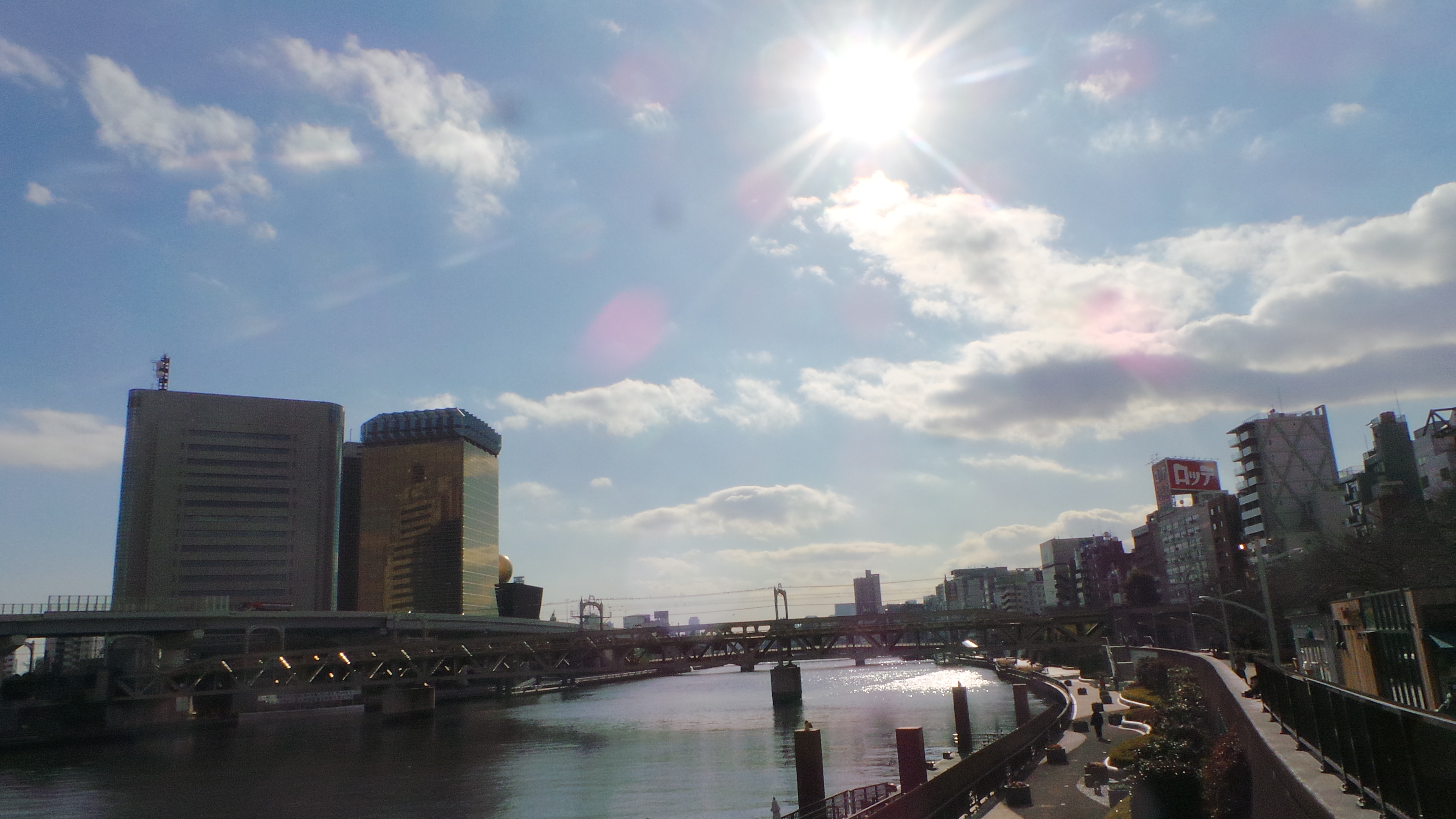
I take to the Sumida River to look at the sunshine and the clouds and think about the formation of the universe. The story of Japanese creation seems to completely exclude the genesis of all the other landmasses on the planet, but oddly, the theory is still believed today by some Japanese people. With no celebrations at all taking place, I decide to follow the path of the river in a new direction and end up in the area of Hashiba.

hashibagraff

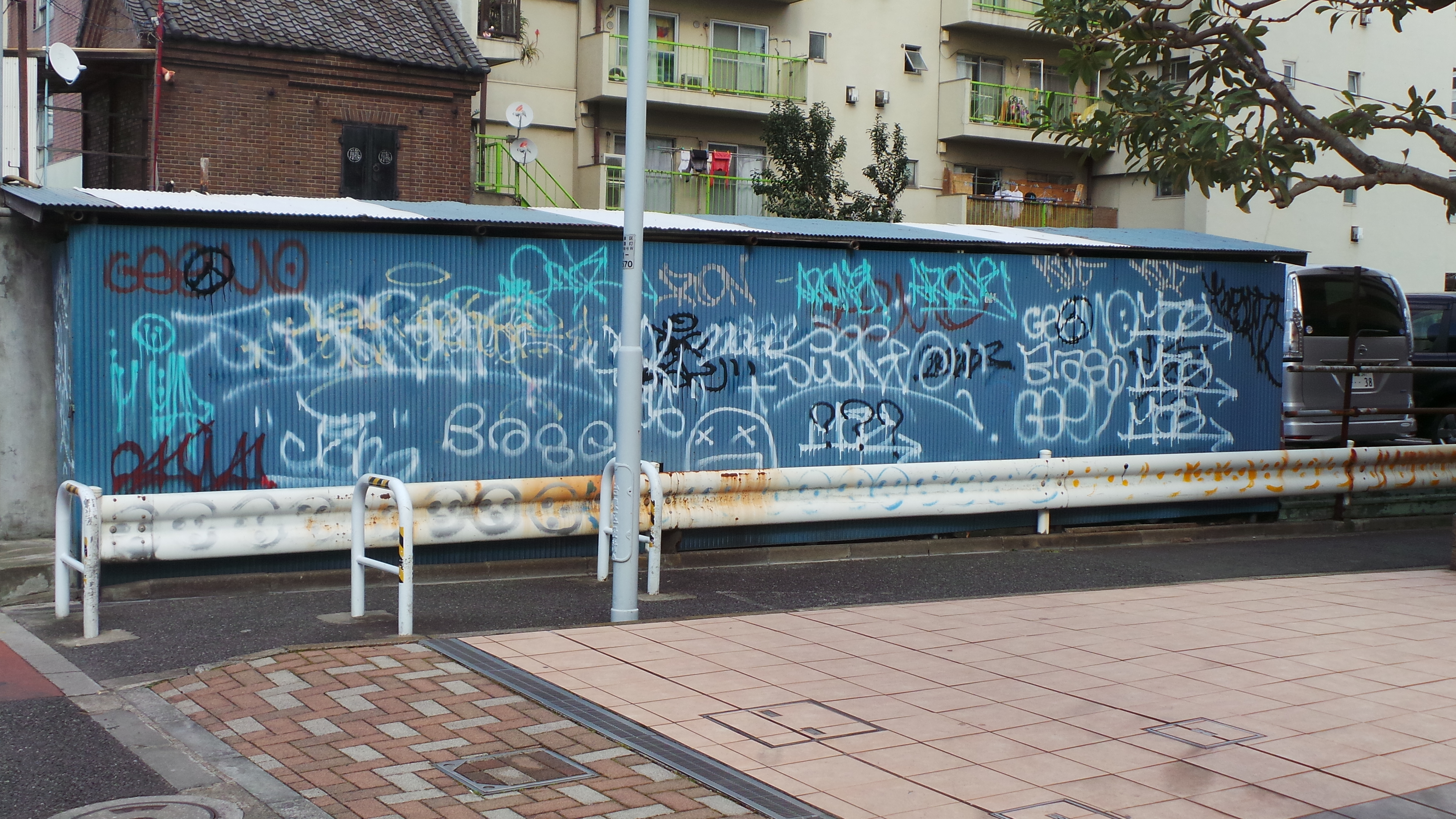
Hashiba is somewhat unusual. The first thing that strikes me is that there are no maps, no places of interest, and no tourists. Just plenty of graffiti. It always surprises me to see graffiti in Japan, something I had almost forgotten existed until today. The Hashiba area is connected to the river and was once used as a ferry terminal. A floating bridge existed here too, some time ago. Before that, this area was covered in overgrown fields.

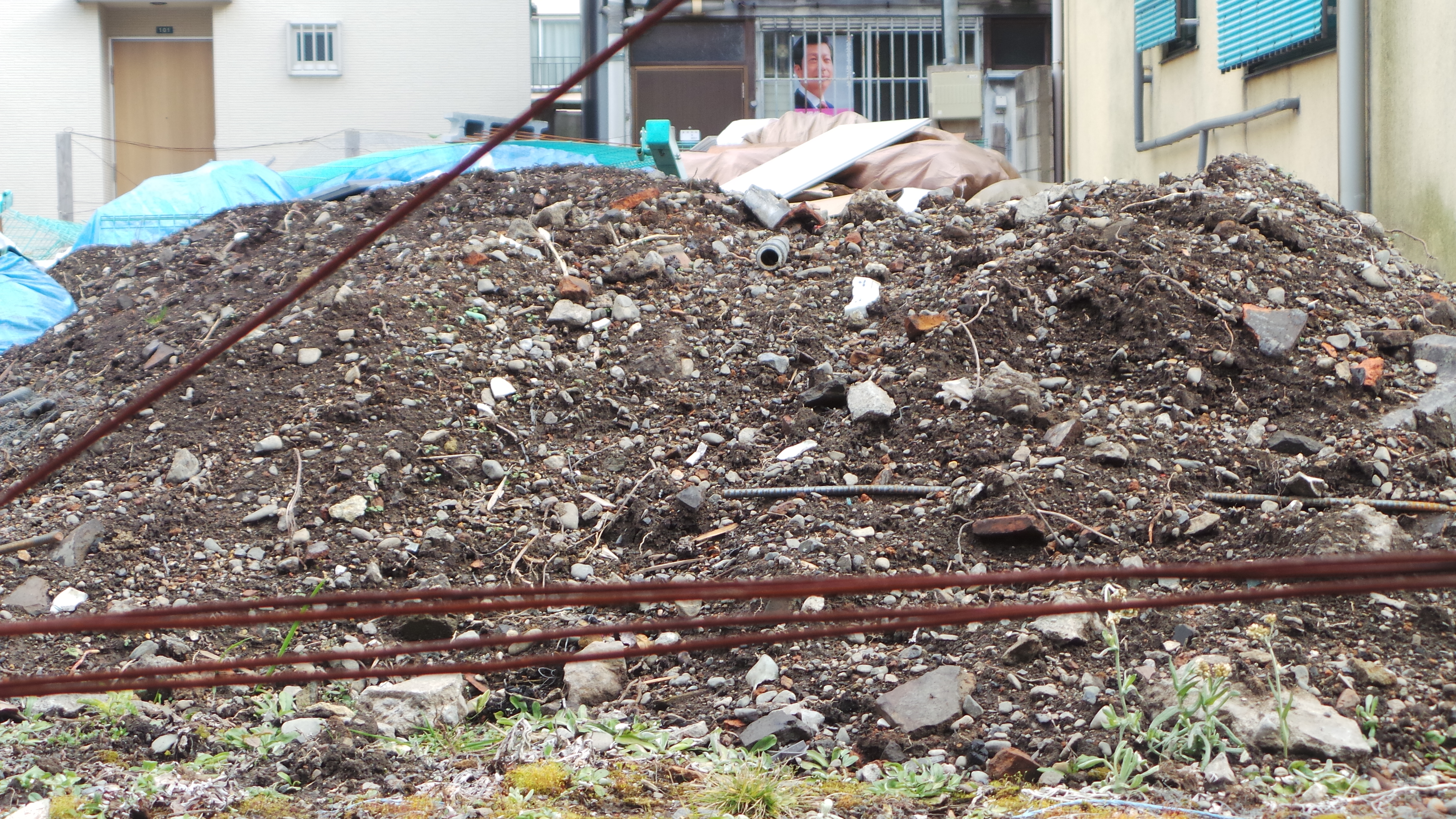
An older Japanese person I met with told me that he remembers coming here as a child to catch dragonflies and play in the long grass. The only sense of nature here now is the piles of dirt mixed with rubble, forgotten about and never removed.

nichirentrash

In this area, watching over the mounds of trash and the graffiti, sit election posters for the Komeito Political Party. The party was founded by members of the Nichiren sect of Buddhism and therefore does the unpopular act of mixing both politics with religion. I am not sure anyone is here to help Hashiba, though—a place that seems incredibly run down and feels almost absent of potential change.

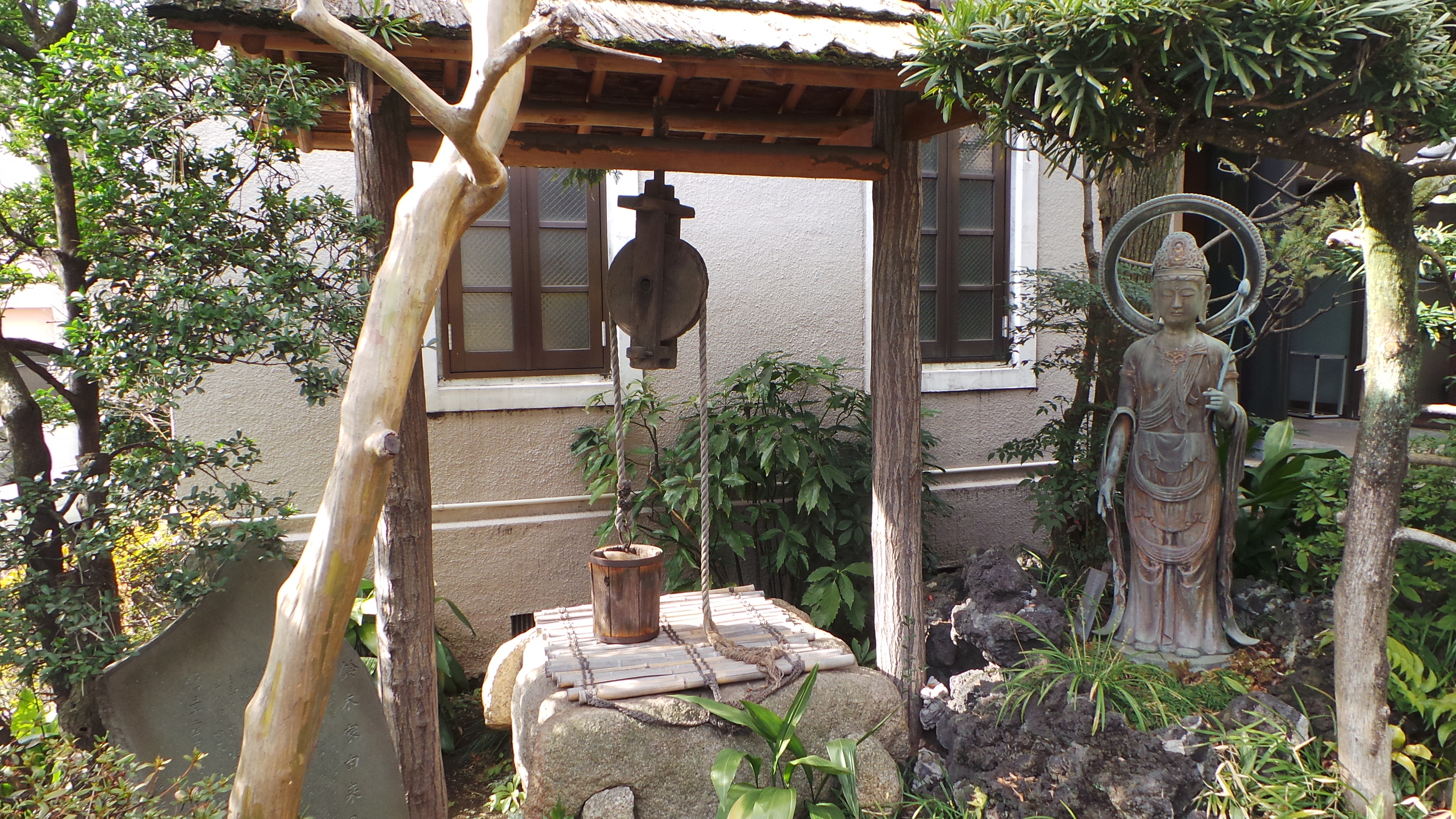
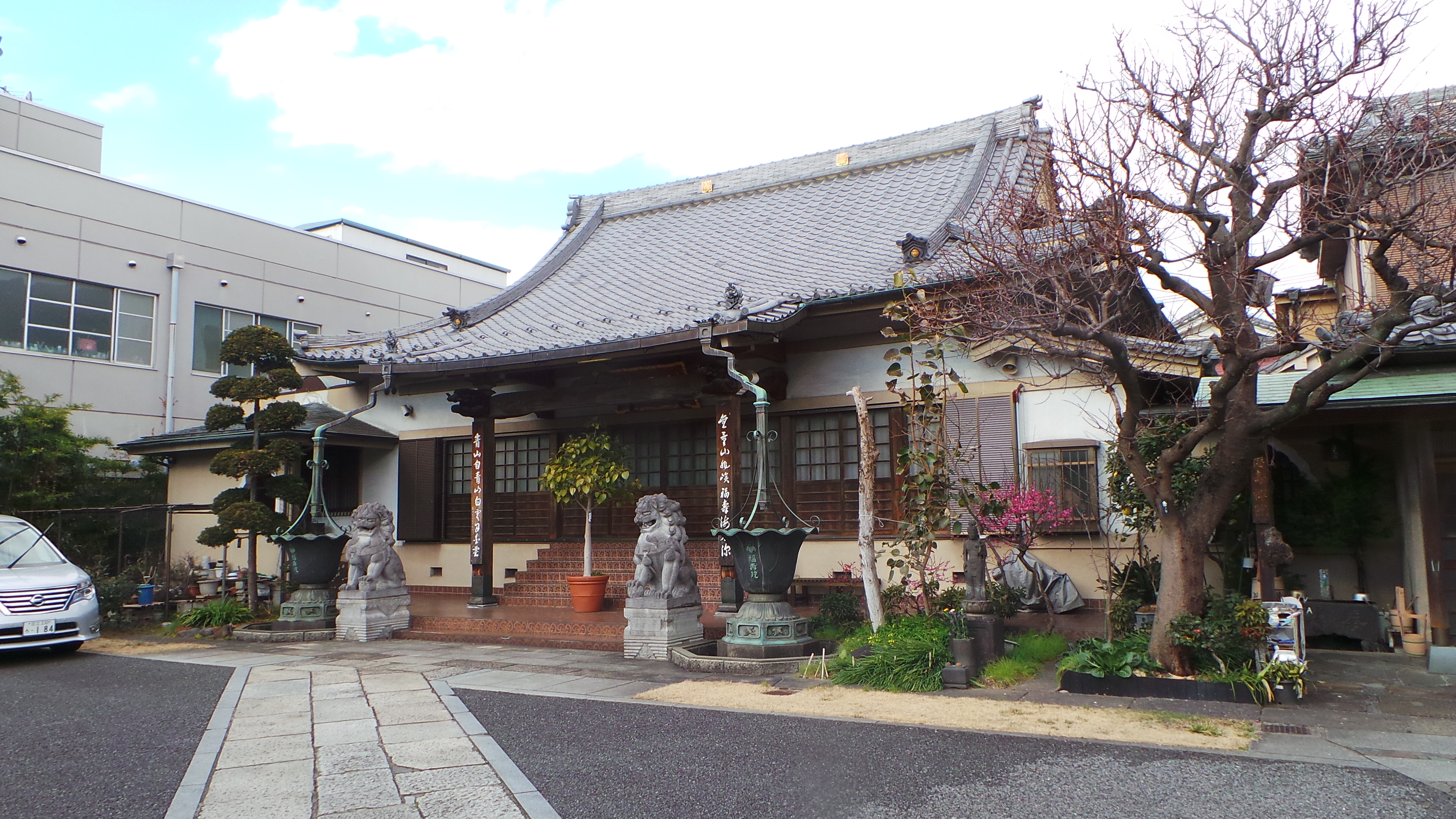
I decide to remain positive, to try to discover the good things about the area. Mixed amongst the negativity sits Hogenji Temple—a rather beautiful place with an old well, many stone statues, and a cemetery. For whatever reason, the grounds of the temple are filled with the sound of a loud chainsaw, disturbing the silence and further adding to my gloom-ridden impression of the area.

wellwell

Desperately trying to find a redeeming factor, I continue to explore. I wander around for a while until I eventually find a sign written in English. The sign is provided by the Tokyo Metropolitan Board of Education, which is usually a good indication that something important might be here. Finally, a point of interest. Finally, something to see.

What looks like another temple turns out to be a tomb. The tomb comes complete with its own nature in the form of beautiful trees and a huge aviary. As if deliberately trying to add to the contrast, the tomb also includes a basketball court.

andotoya

I discover that this is the final resting place of Ando Toya, a famous Confucian scholar. He was known for his time spent studying the Chinese language and teaching it to the people of Japan. He once said about the Chinese language, “It sounds like the chirping of birds. I can write, but when I open my mouth, I truly cannot speak.” This doesn’t quite explain the need for a basketball court here, but it does perhaps explain the aviary.

I stand in the grounds of Ando Toya’s tomb, staring in silence at the birds for almost a full hour.

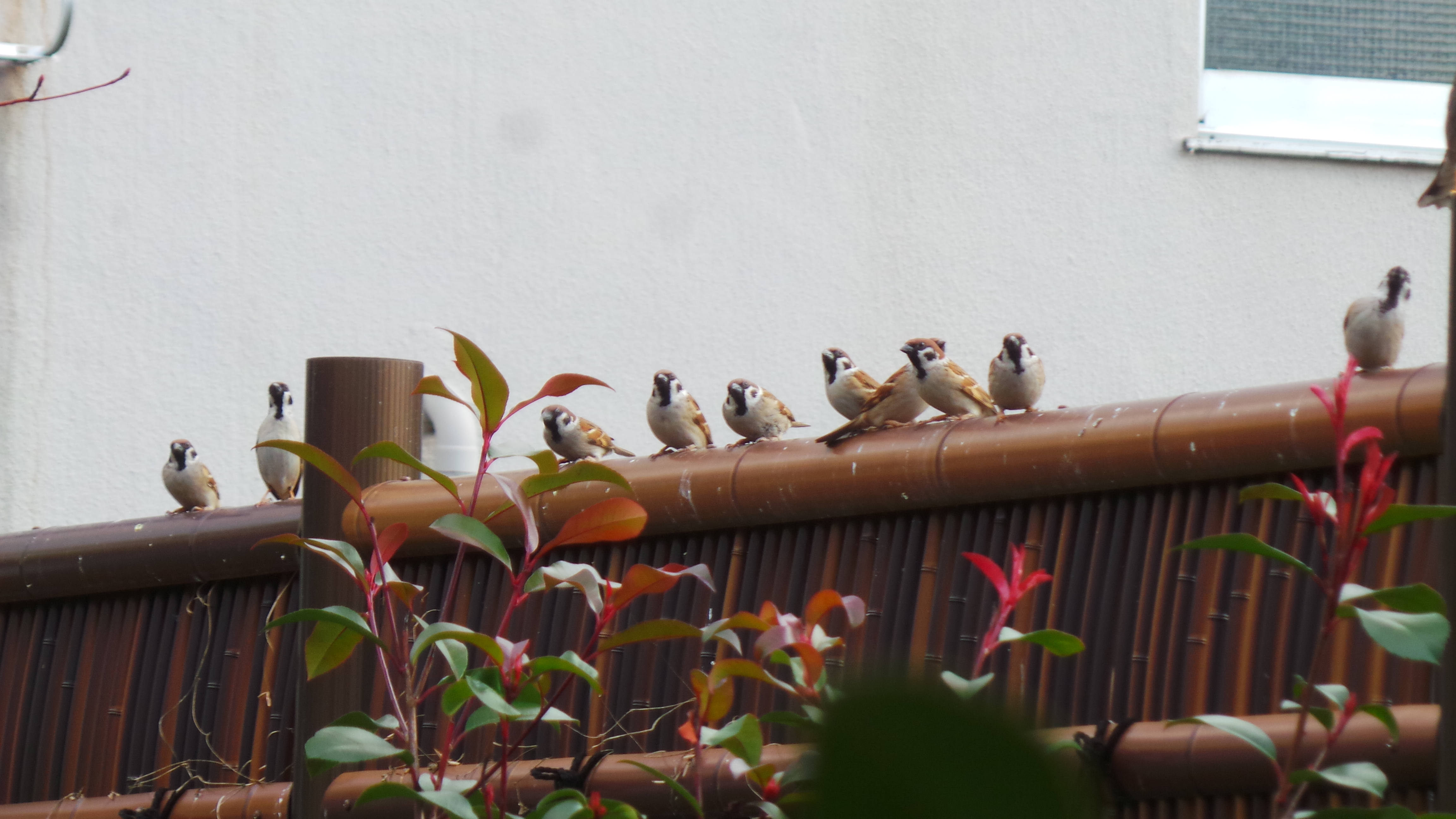
sparrows

The beautiful sparrows chirp in their hundreds. The echoing of those words spoken by Ando Toya flows around my head. It makes me wonder if the birds are secretly trying to communicate with me in Chinese. Maybe they are.

Roasting the Masu-Bean

Another day, another post about the endless goings-on in the Asakusa area of Tokyo. I wander aimlessly toward Senso-ji Temple, walking with my head in the clouds as I follow the distant bellow of a beating drum. It somehow slipped my mind that today was the official festival of Setsubun, but here I am now, standing in the cold amongst the eager crowd.

Thousands of people wait in front of a wooden stage constructed specifically for the event. Poor carpentry makes the stage look out of place, perhaps even unfinished. I hadn’t planned on attending today, but with nothing else to do on this gloomy afternoon, and finding myself standing here, I decide it might be best to stick around and enjoy the spirit of this age-old festival.

setcrowds[2]

The television people are here, filming every second of the action. But sadly for me, and unfortunately for the television crew, the action is a little muted. First, an announcer takes to the stage and begins reading out names. Some get no reaction at all; other names cause the crowd to cheer with excitement. One name gets a huge reaction, but I was barely listening to a word the announcer was saying because I allowed myself to become distracted by a pigeon.

Eventually, the twelve celebrities waltz onto the stage. They each carry a large wooden masu box, usually reserved for large quantities of sake. At the announcer’s count, they all start throwing pouches of roasted beans into the crowd. Following the bean-throwing, each of the twelve ‘celebrities’ is given a chance to speak with the microphone, seemingly using the opportunity for self-promotion before thanking the crowds for attending.

animal[1]

The last person to speak on the badly erected wooden stage is Animal Hamaguchi, a famous Japanese wrestler who coached his own daughter, Kyoko. She went on to win two Olympic medals in wrestling. Kyoko was born in this area too, so it is no surprise that she was chosen to take part in the event.

After Animal has finished speaking, a man sings ‘When You’re Smiling’ by Louis Armstrong; he sings in very clear English. Some of the other guests join in too. Animal Hamaguchi decides to start shouting in Japanese and laughs deeply, much to the enjoyment of the people around me. Pigeons fly away in fear as his laughter echoes around the grounds of the temple. “Mwahahaha!”

The festival ends, and the crowds disperse. I decide to do a little exploring in the area close to my house. I walk to a small park and am surprised to see that there is another festival taking place, albeit a little stranger than one that encourages the throwing of roasted plant seeds.

crazycostumes[1]

The festival offers no explanation behind its meaning. The only clue here is an array of masked men and women. They march around the park, passing the swings and the slide before heading off toward the red-light district. I am completely oblivious as to what this festival is here to represent; my confusion further added to by all kinds of different Japanese costumes, including dragons, ghosts, foxes, demons, and flute-playing elephants.

After the festival, I decide to explore a little further. I stumble upon Tozenji Temple, said to house one of the six jizos of Tokyo. A jizo is a Buddhist saint in search of truth and enlightenment; they are also guardians of children. It appears that the statue of this saint has been stolen or is simply missing. The only thing of interest here is another large statue of Buddha.

zozenji[1]

After walking in almost a full circle, I arrive back in Asakusa and head over to the Sumida River. I stare into the glistening waters for far too long, looking directly at the reflection of Tokyo Skytree. The way the river shakes and shimmers distorts the image of the tower, and it does begin to take the form of a tree. After a while, I forget where I am, lost to the flow of time. It is only when my hands begin to feel frozen that I snap out of the trancelike state that I have allowed my mind to enter.

My head returns to the clouds, and I wander around like a lost child, looking for excitement. There isn’t even a jizo around to guide me. Eventually, I find a clothing store that displays a wonderful sign. I believe the sign is trying to tell people not to consume food or drink inside their establishment.

teat[1]

Unfortunately for the shop, a translation blunder instead suggests that lactation is forbidden, much to my amazement.