Once Upon a Timeline

Today, I’m in Yoro, a town in Gifu Prefecture.
I’m here to change my destiny.
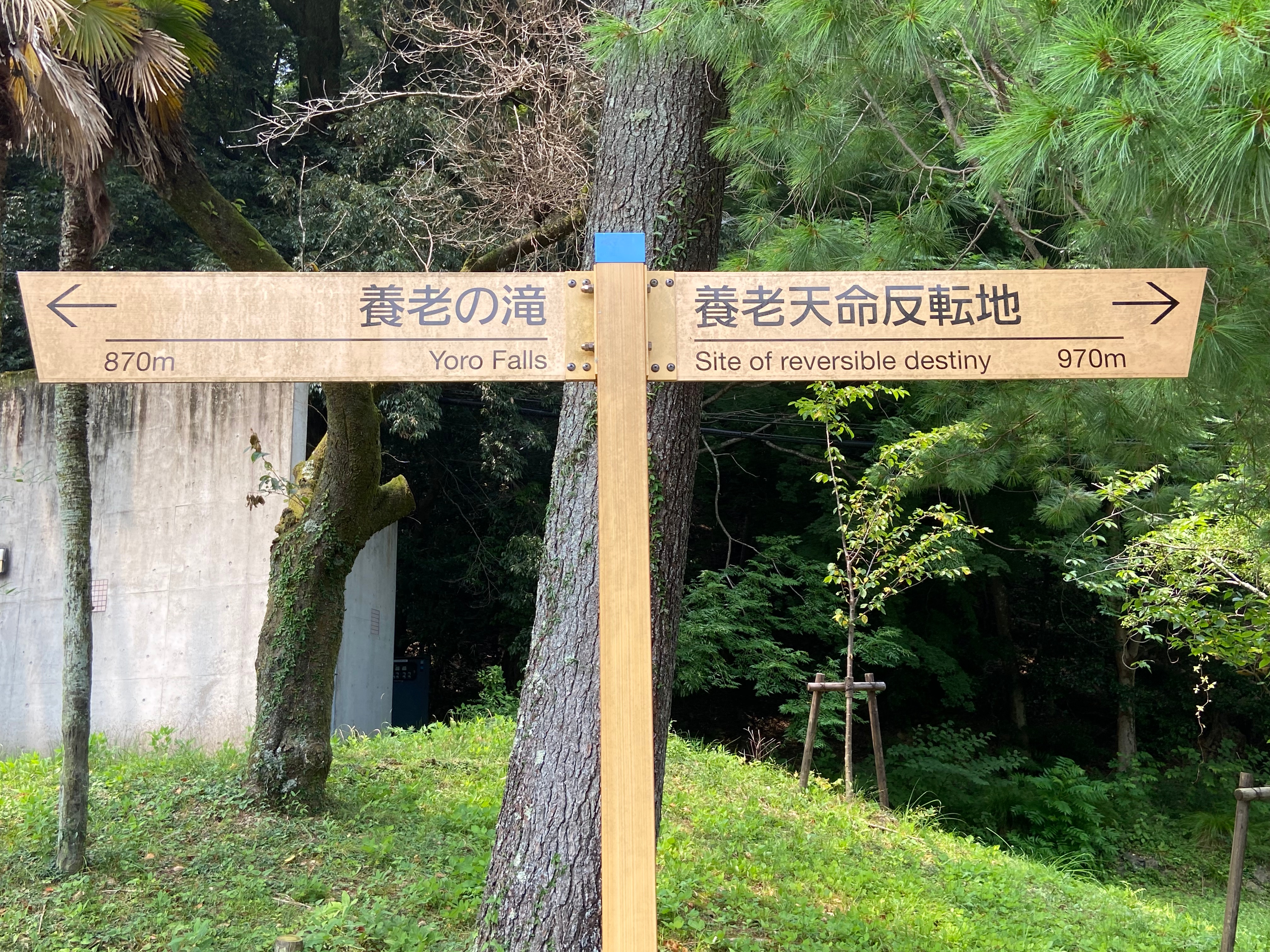
First, I decide to take a thirty-minute stroll along the edge of a cliff to visit a famous waterfall. This waterfall is said to be made entirely of flowing alcohol, specifically Japanese sake.

The story goes that there was once a poor lumberjack with a very old, ill father. On his deathbed, the father requested his favourite Japanese sake, but the lumberjack couldn’t afford it on his meagre income. One day, the son walked the treacherous path near the waterfall.
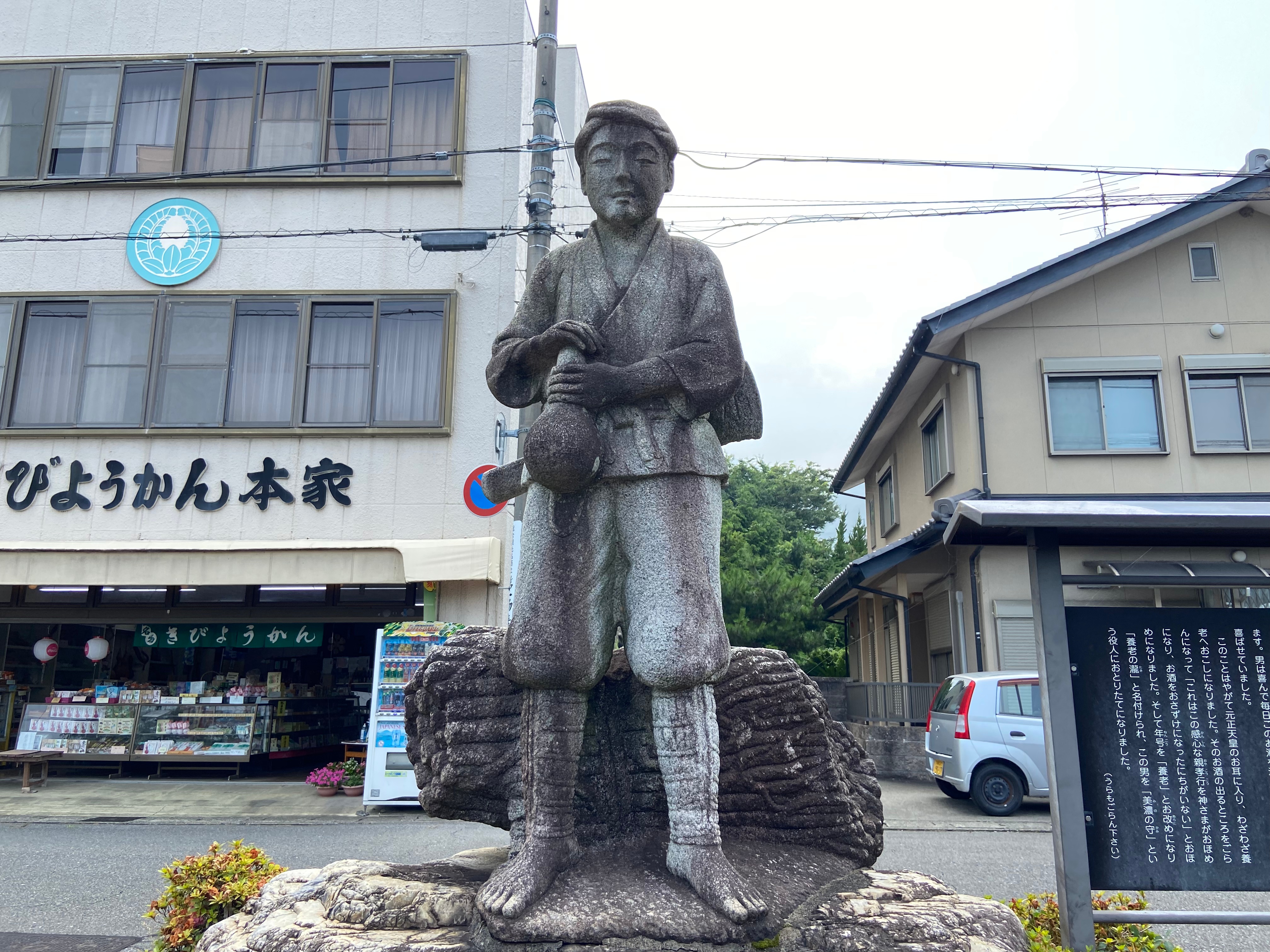
Some say he was out looking for wood for a fire, but he was a woodcutter, so any tree would have sufficed. Others say he was simply thirsty. Regardless, he fell in the woods and definitely made a sound, and after falling and lying on the dirty ground, the poor lumberjack could smell the sweet scent of sake.

It was here that he discovered the water from the waterfall was not water at all.

He returned home with a gourd full of sake, and his father drank it. The transformation was instant, and he miraculously became younger and healthier.

News of this reached the ancient capital of Nara, and Empress Gensho visited the waterfall herself. She was so impressed by the beauty of the area and the magical water that she declared it a sacred site and renamed the area Yoro, meaning elderly care.
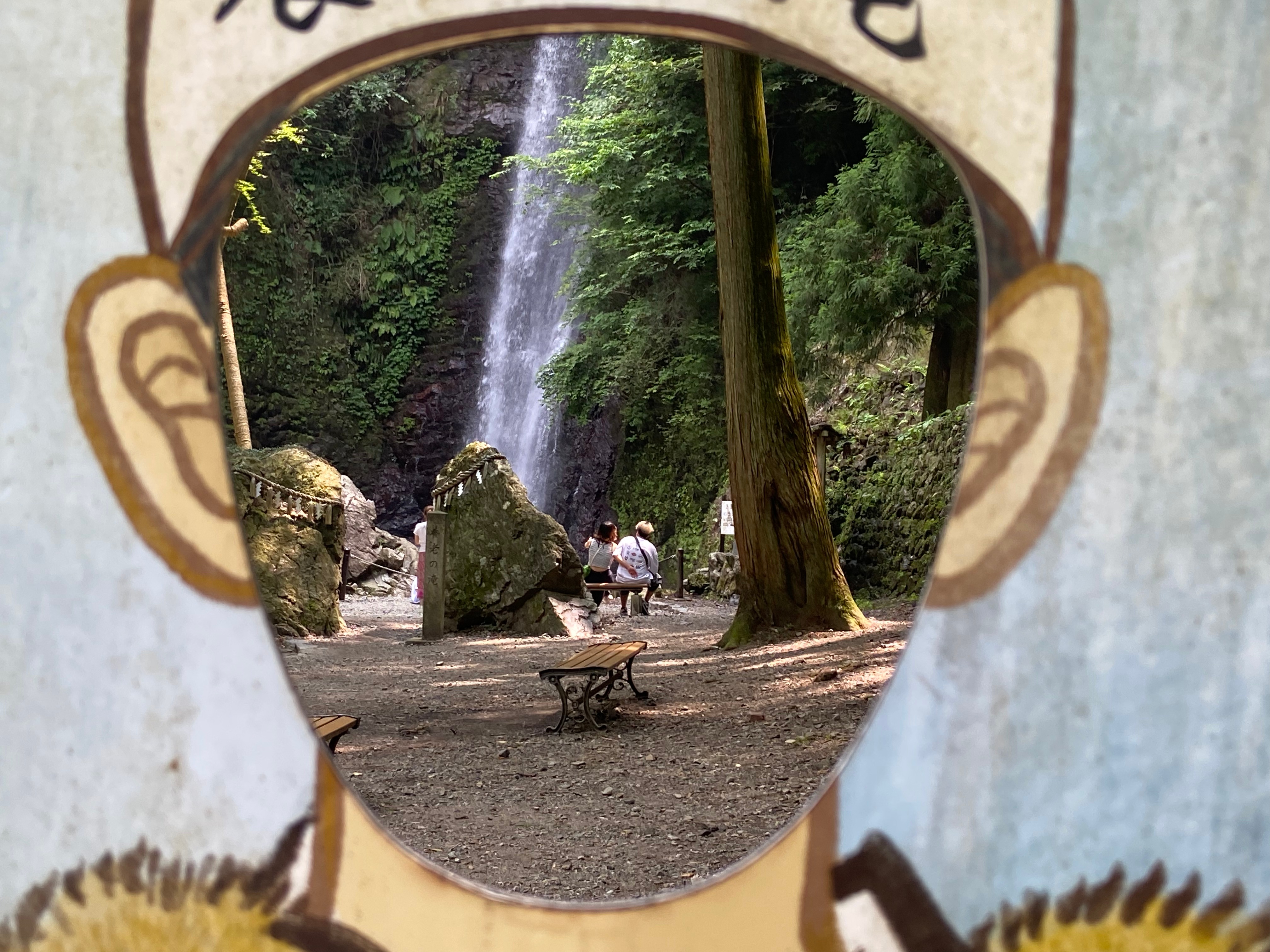
It takes me about an hour to reach the waterfall despite it being advertised as a thirty-minute stroll. It’s a tough hike too, up a mountain. It’s humid; it feels like 40 degrees. I’ve probably sweated more water than I’ve seen flow down the falls. I can only imagine how hard it must have been for the lumberjack, carrying that gourd and heavy axe to the top.

Next to the waterfall, a faded poem engraved on stone in Japanese reads:

“Listening to the flow of Yoro Falls,
One’s heart is healed and refreshed,
Like the pure sake that rejuvenated the old man,
Flowing eternally, blessing those who visit.”
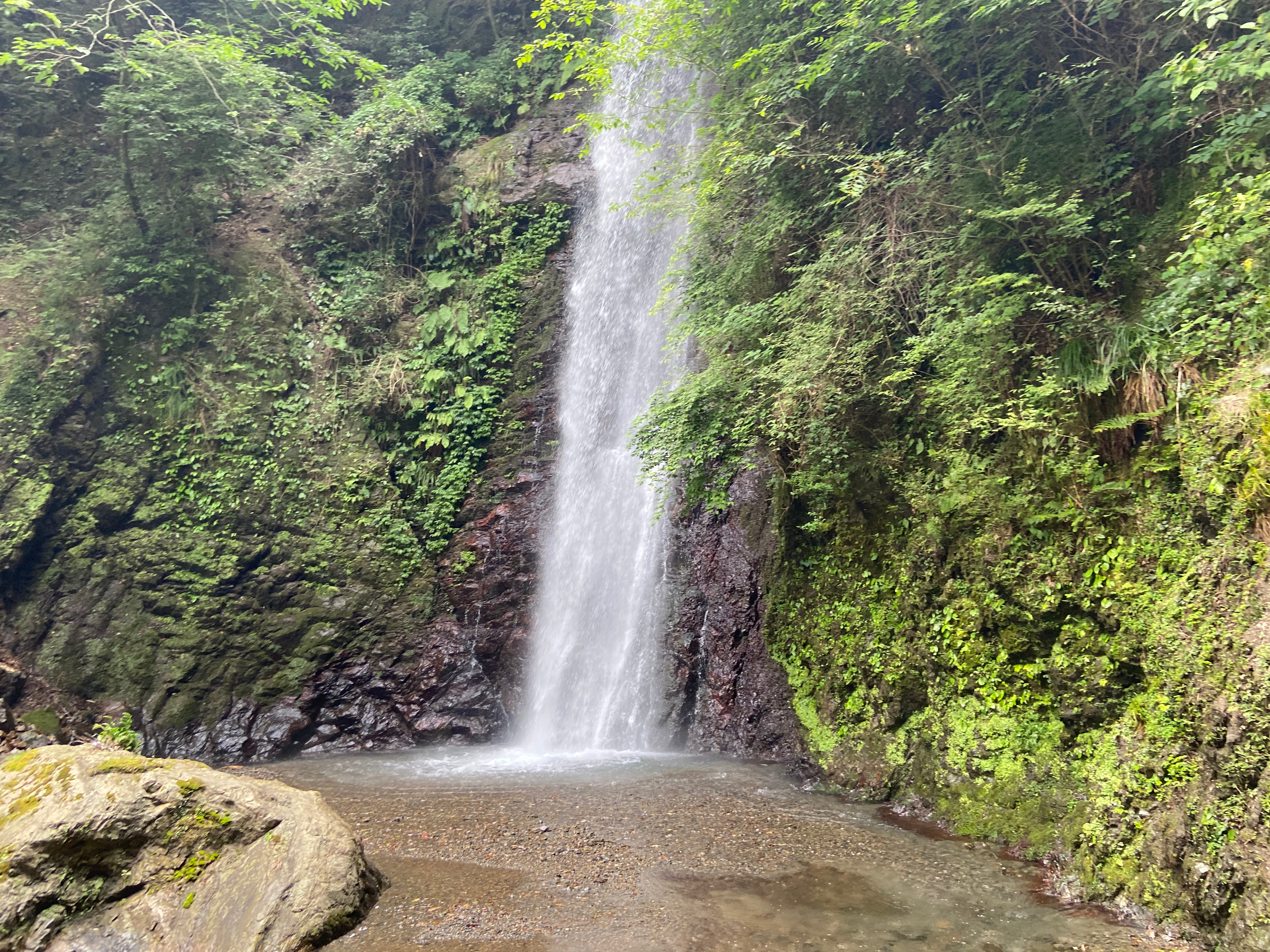
I stand looking at the waterfall for a time, enveloped in tranquillity. I think about water flowing down a river, following a predestined path. It cascades over the falls, flows further south, and meets a tributary, where its path diverges and its destination shifts, a choice not made but followed.

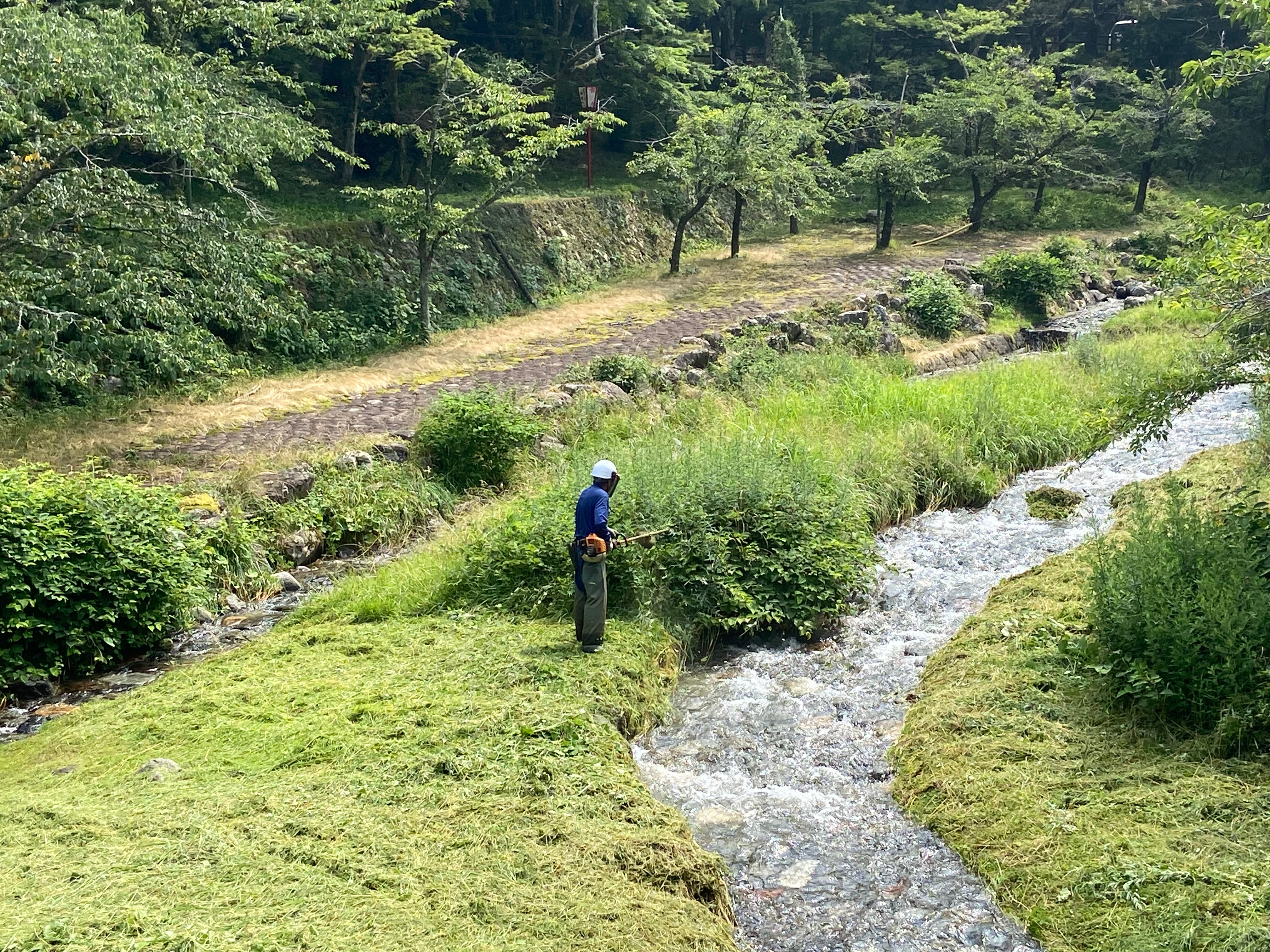
Somewhere, after leaving Yoro Falls, a butterfly shivers against the wind. At the bottom of the waterfall, the tranquillity ends and is swamped by the sound of a man with a grass strimmer.
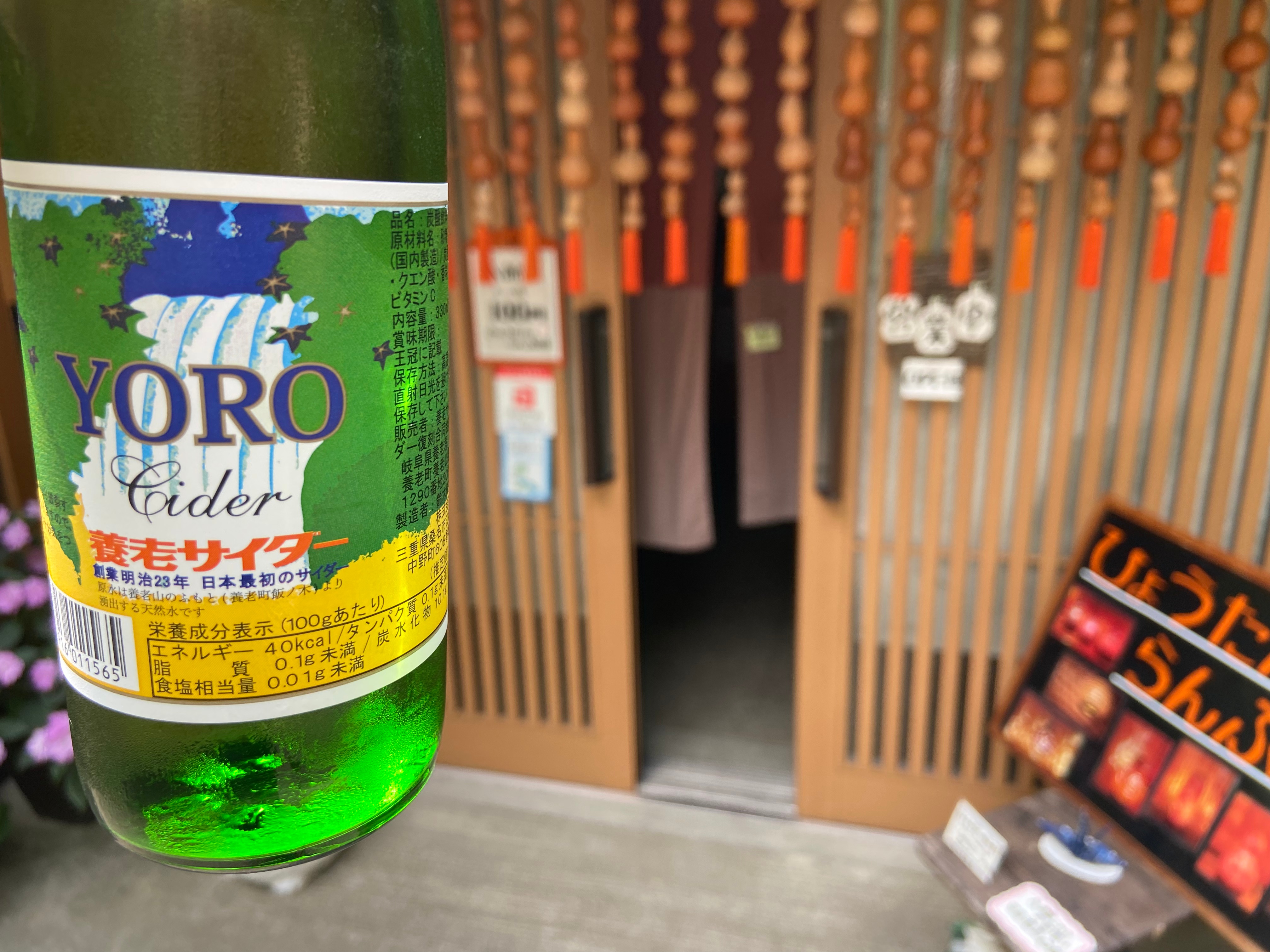
I stumble upon a small souvenir shop selling bottles of carbonated cider made with the magical sake water. The cider tastes delicious. Unlike in England, cider in Japan is a soft drink, so despite the falls apparently being made of alcohol, this drink somehow contains none.

I leave with a healed heart, feeling blessed. Eternally refreshed. Next to the small shop is the Yoro Gourd Museum. I look at a few gourds made into artwork and lamps before moving on.
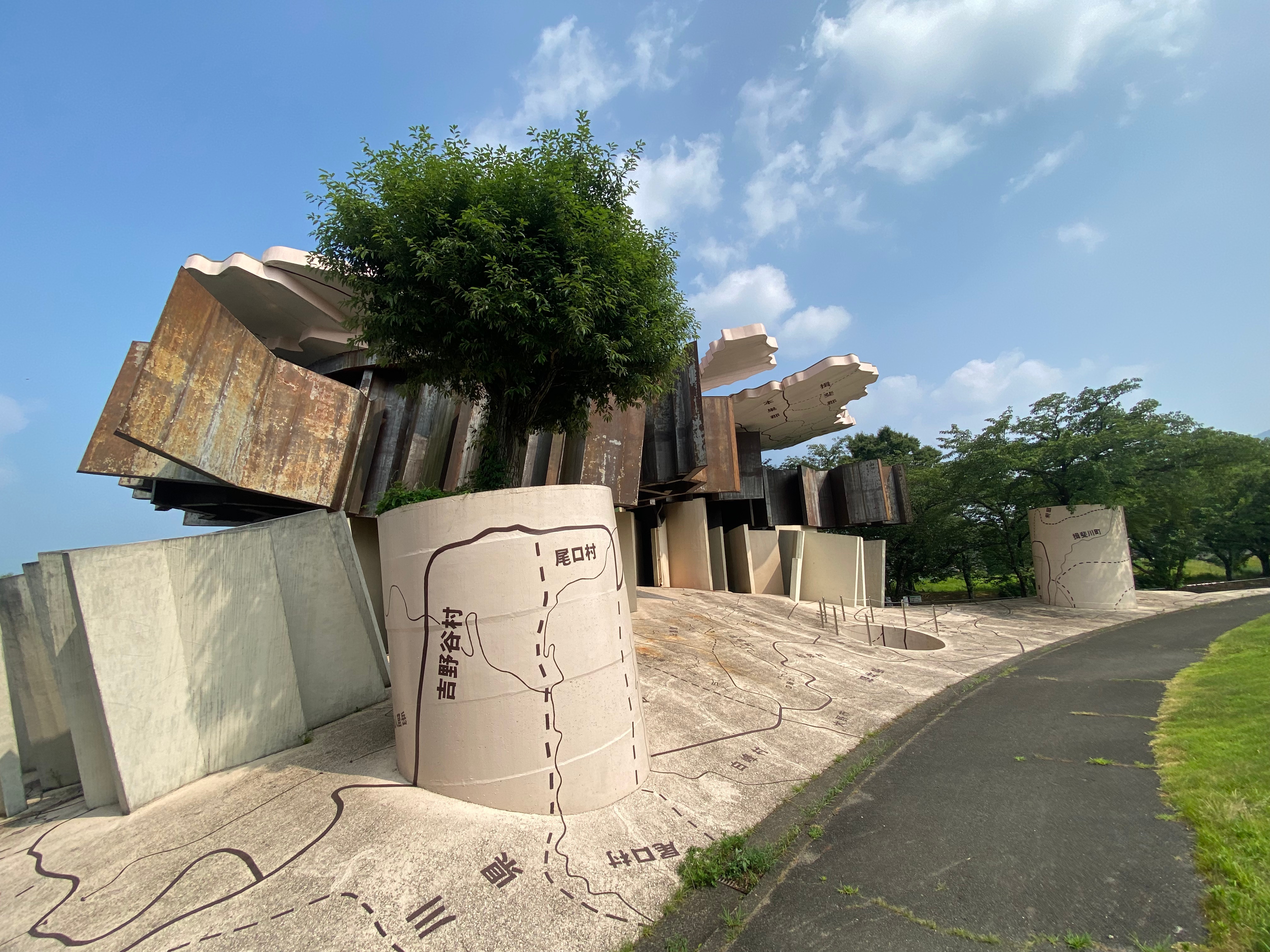
My final stop today is within Yoro Park, a place known as the Site of Reversible Destiny. A massive outdoor interactive art park dreamed up by Shusaku Arakawa.

It’s quite bizarre, funny, and downright unusual. There’s a house that is a road and a road that is a house. There’s a nostalgia generator, a few mazes, and some piles of things that I don’t even understand.
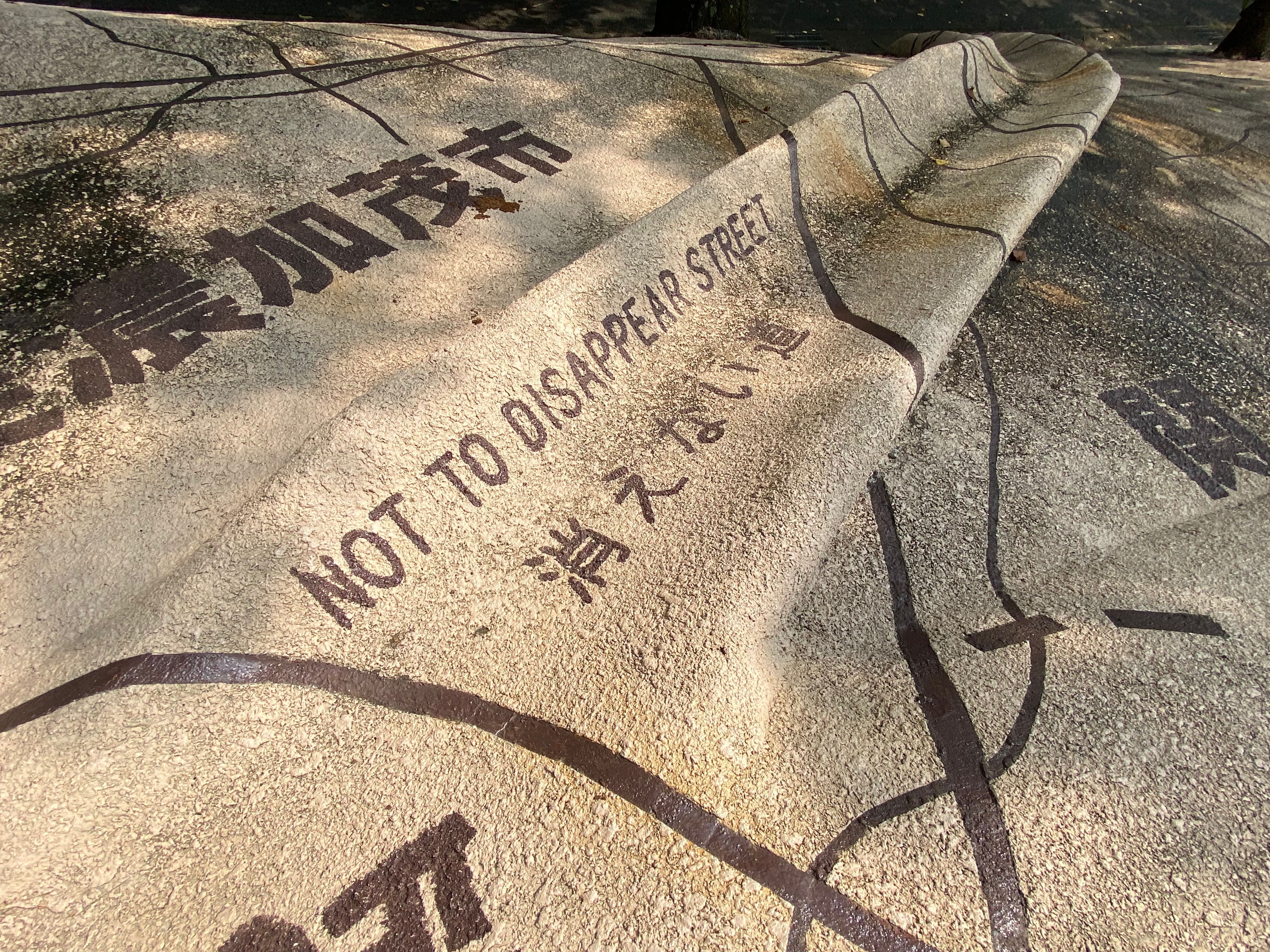
I pass Not To Disappear Street, the Gate of Non-Dying, and an area known as Geographic Ghost. I climb over the Zone of Clearest Confusion, leave through the Trajectory Membrane Gate, before getting lost in the multicolour of Destiny House.

Shusaku Arakawa was obsessed with the idea of death and destiny. He built this site with his wife, Madeline Gins, as a challenge to mortality itself. That’s the point of the Site of Reversible Destiny: to confuse your soul and reroute your path. When Arakawa died in 2010, his wife said, “This mortality thing is bad news.”
With fate as mutable as the weather, or the seeds of a dandelion, you blow away, only to take root in unexpected soil. My destiny begins to unravel. The sun still rises in the morning and sets in the west, but the days no longer feel the same. Each moment becomes a whispered echo of a choice that altered everything, carried on a timeless breeze.

The concept of a multiverse unfolds like a kaleidoscope of infinite reflections, where certainty and uncertainty intertwine like vines in an ancient forest, tangling into something that resembles fate.

Yet, if every possible outcome and path exists, there must also be a universe where the notion of such multiverses is impossible. It is here that we find ourselves staring into the paradoxical abyss.

Sweeping aside the contradiction of parallel worlds, it is on the train that I ponder the existence of a universe where I do not exist. As the train changes track to a branching line, the landscape blurs past, indifferent to my absence. My reflection in the window shimmers, quantum-thin.

For a moment, I am here and not here, observed and unobserved, a wave function waiting to collapse. I step off the train. I step into the world. And the world, impossibly, steps into me.
A Flood Day to Dry Hard

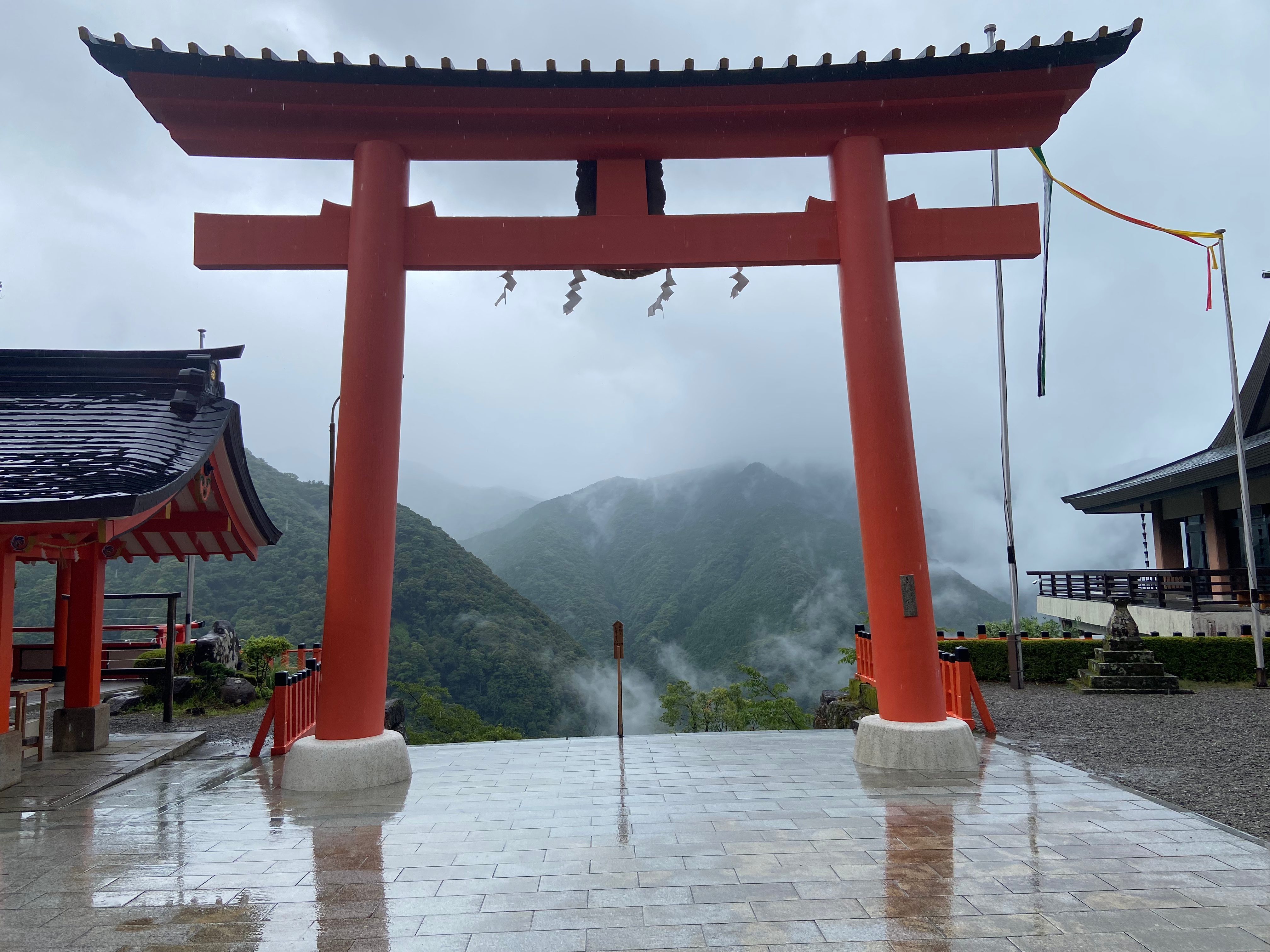
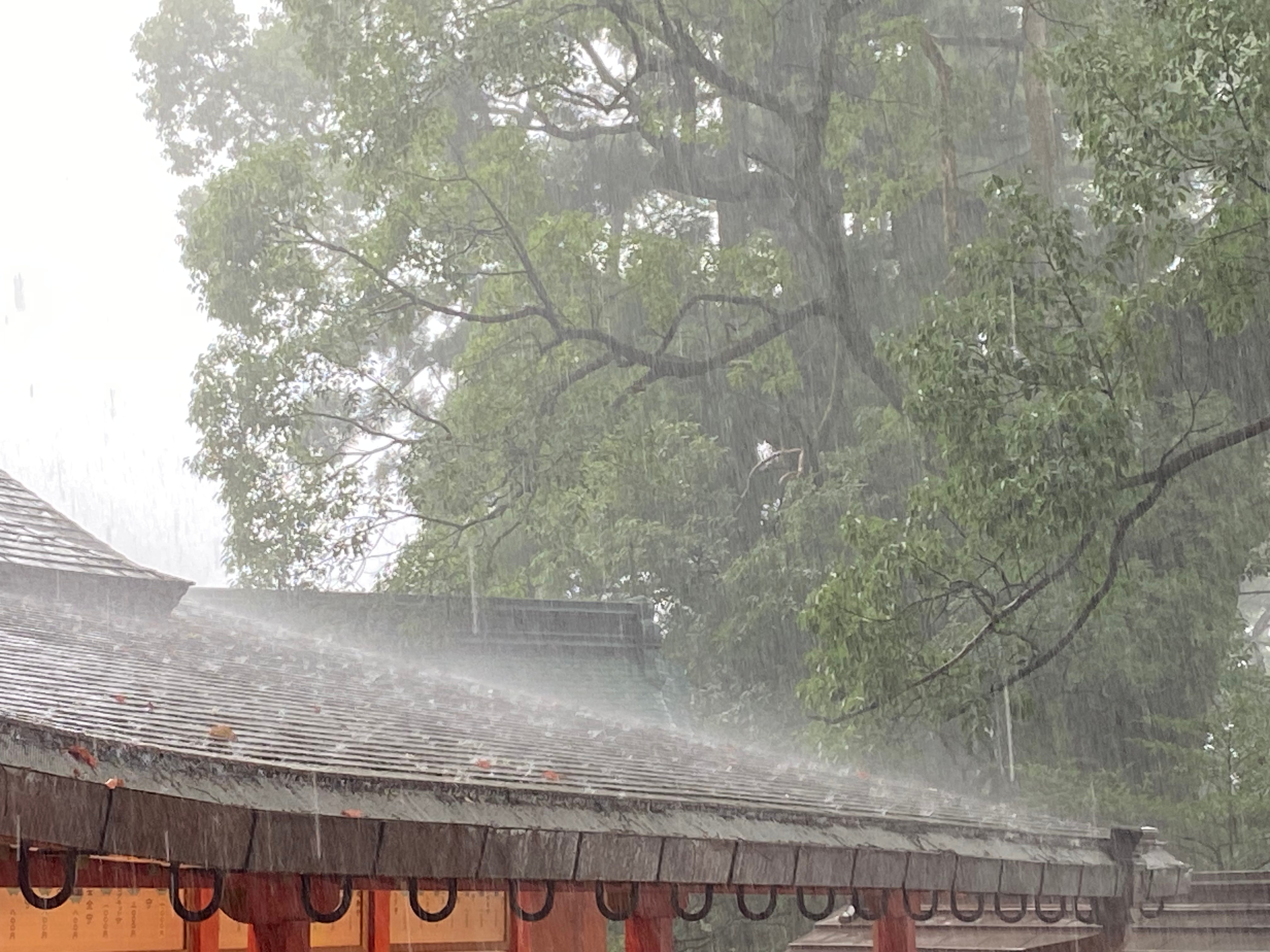
The news tells me that today there is an excessive heat warning in place in Wakayama. My oh-so-reliable weather application tells me that it will be cloudy all day. The gods split the difference. As I exit the bus unprepared for anything other than heat or cloud, the heavens split open in a thunderous rage of fury.

I am at Kumano-Nachi Taisha. As the thunder rolls over the sky I manage to take just one photograph of a torii gate and the mountains beyond, right then, before the rain catches up with the thunder. Luckily for me, there is a shop, so I enter, purchase, then poncho up.

I duck inside the Treasure Hall. No photos allowed, but I explore freely. I wrote about the Nachi Pilgrimage Mandala yesterday, but seeing the real thing up close is something else. I enjoy the other art, artefacts, simple objects from a time lost in the past. Most of the treasures here were discovered in 1918, but are from around the 10th century, with the shrine itself being 1,700 years old.

Stepping out of the Treasure Hall, the rain has intensified fivefold, and some of the ground has already flooded. People cower with umbrellas.

The rainwater crashes down and smashes into the roof of the shrine like a torrent of broken glass, slicing through the air with a merciless, unyielding force. I have never experienced rain like it. The raindrops actually hurt.

I came for the waterfall. Or so I believed. Right now, I feel like I’m inside one. I struggle to see where the waterfall could even be in comparison to the falling water. A monk passes me, dressed in dark blue. He carries an umbrella and seamlessly manoeuvres the flooding and the puddles, calm as you like.

Legend has it that the first emperor of Japan, Emperor Jinmu, found the waterfalls when his boat landed on the Kii Peninsula and he saw something shining in the mountains. At the time, he had been following a Yatagarasu (a mythical three-legged crow sent by the gods as a guide).

I follow the path down the mountain toward Nachi Falls. The sky bellows with more thunder, the road is full of water. Am I walking in the rain? Or am I swimming in a river? At points the water is knee-high. The drains can’t handle it. I can barely handle it, but I persevere.

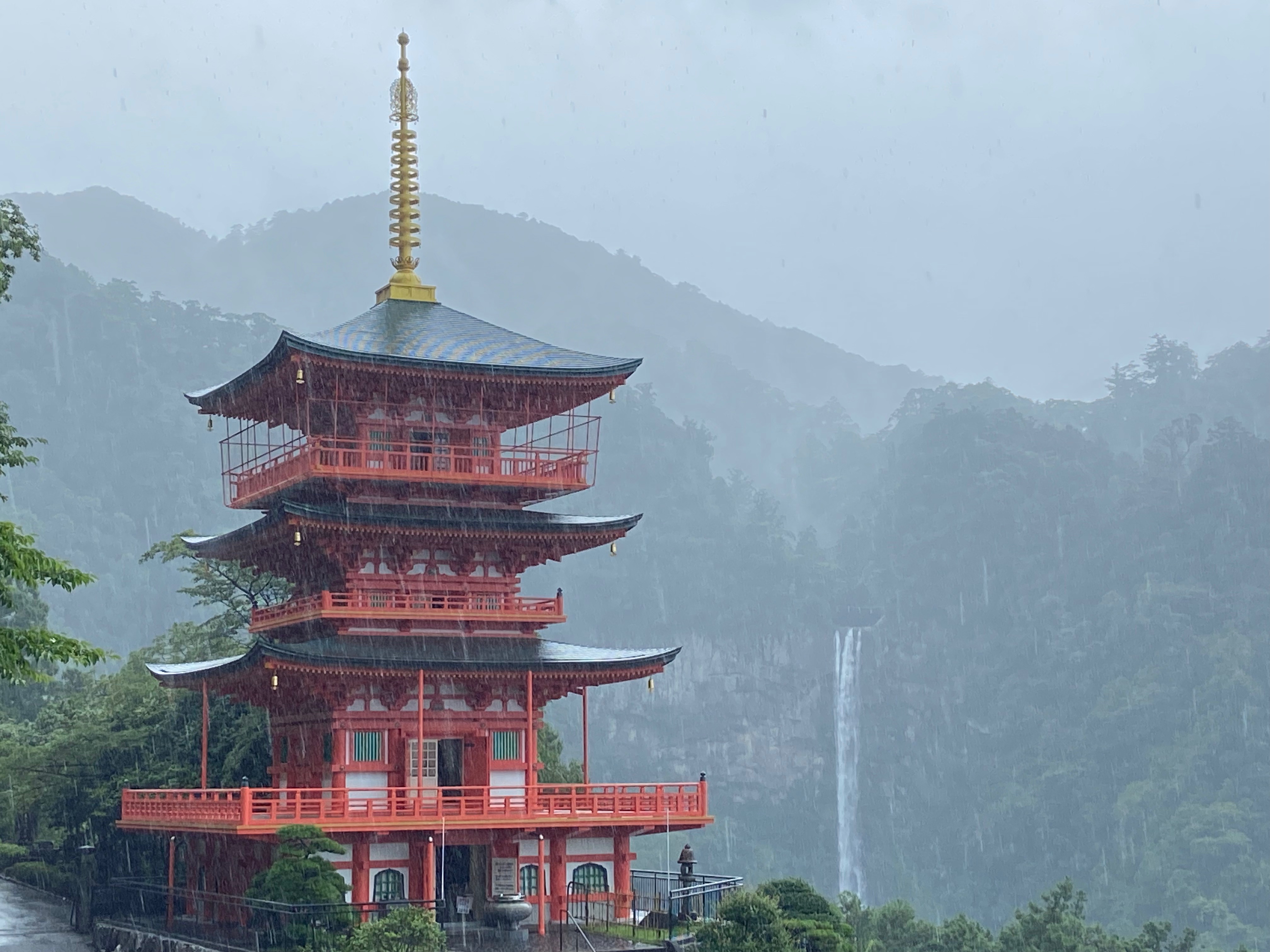
I make it to the pagoda view, the one that’s often featured on the cover of a largely poorly written guidebook. They’ve never featured it in the rain. I enjoy my photograph very much.

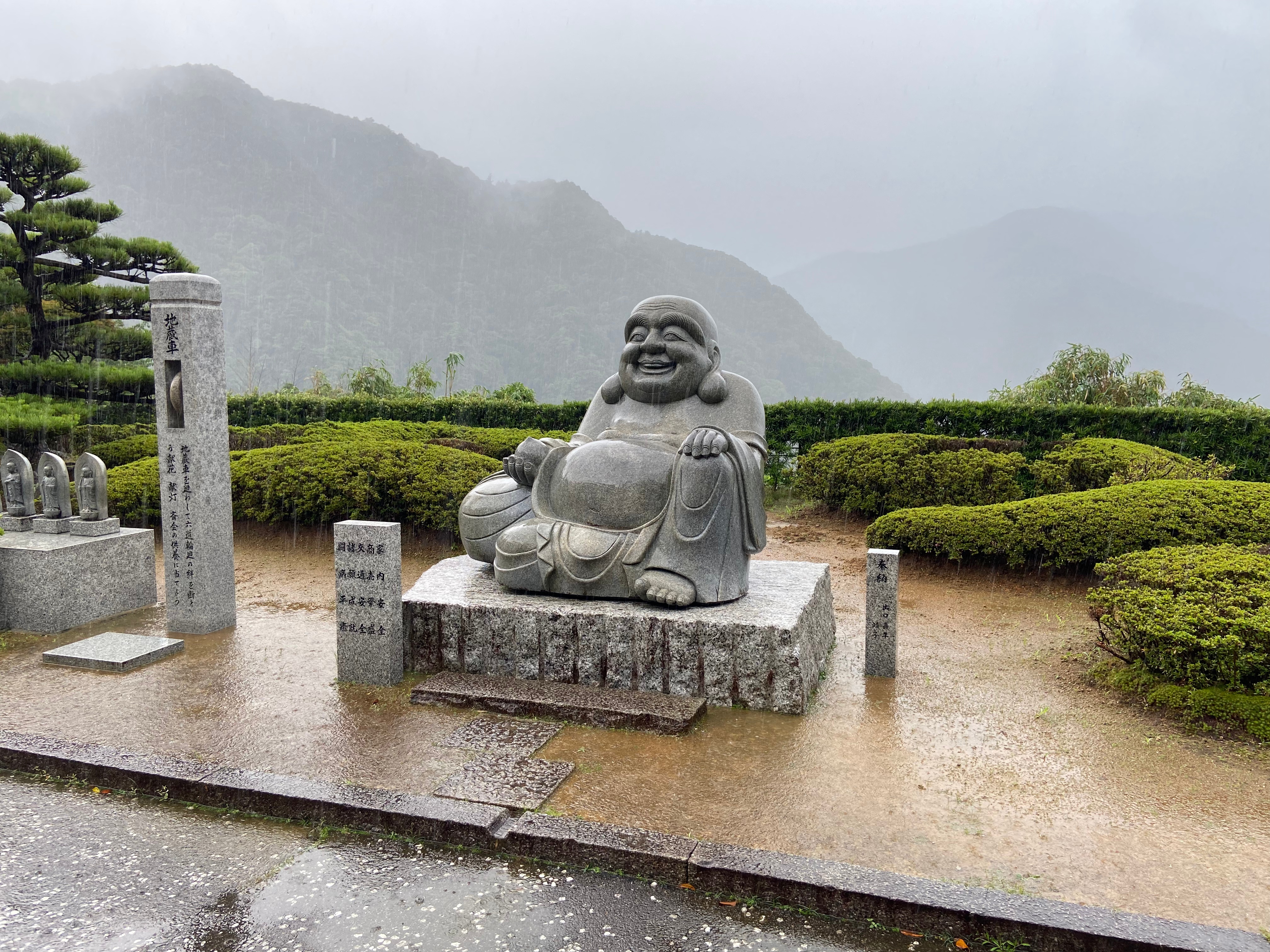
Beside the pagoda sits a big statue of Hotei. God of fortune. The Laughing Buddha. Naturally, despite my soaking wet legs and shoes and inability to understand the point of it all, I rub his massive belly. Good luck and prosperity coming my way, again.

I venture on, down flooded sloped paths and dangerous steps, and eventually, I do arrive at Nachi Falls. The heavier rain drowns out the sound of the waterfall. There’s a story of some star-crossed lovers that leapt from the top of the waterfall in the belief that they would be reborn into Kannon’s paradise. I also know that this is one of the Top Three Waterfalls in Japan, a UNESCO World Heritage Site, and also plummets 133 metres, making it the tallest in Japan.

I head down some slippery steps, careful to hold the handrail. Below, the waterfall itself. Having already taken a spectacular photograph of the rain-soaked pagoda pavilion with Nachi Falls as a backdrop, I find it to be immensely difficult to capture the waterfall from up close, due to the intense rain and heavy flooding.

I stumble back up stone steps to a bus stop. Typically, upon arriving back at Kii-Katsuura Station, the rain suddenly stops. At the Turtle Boat back to my hotel, I stand at the dock. A Japanese salaryman stands beside me, perfectly dry. He glances at my poncho and then at the sky.

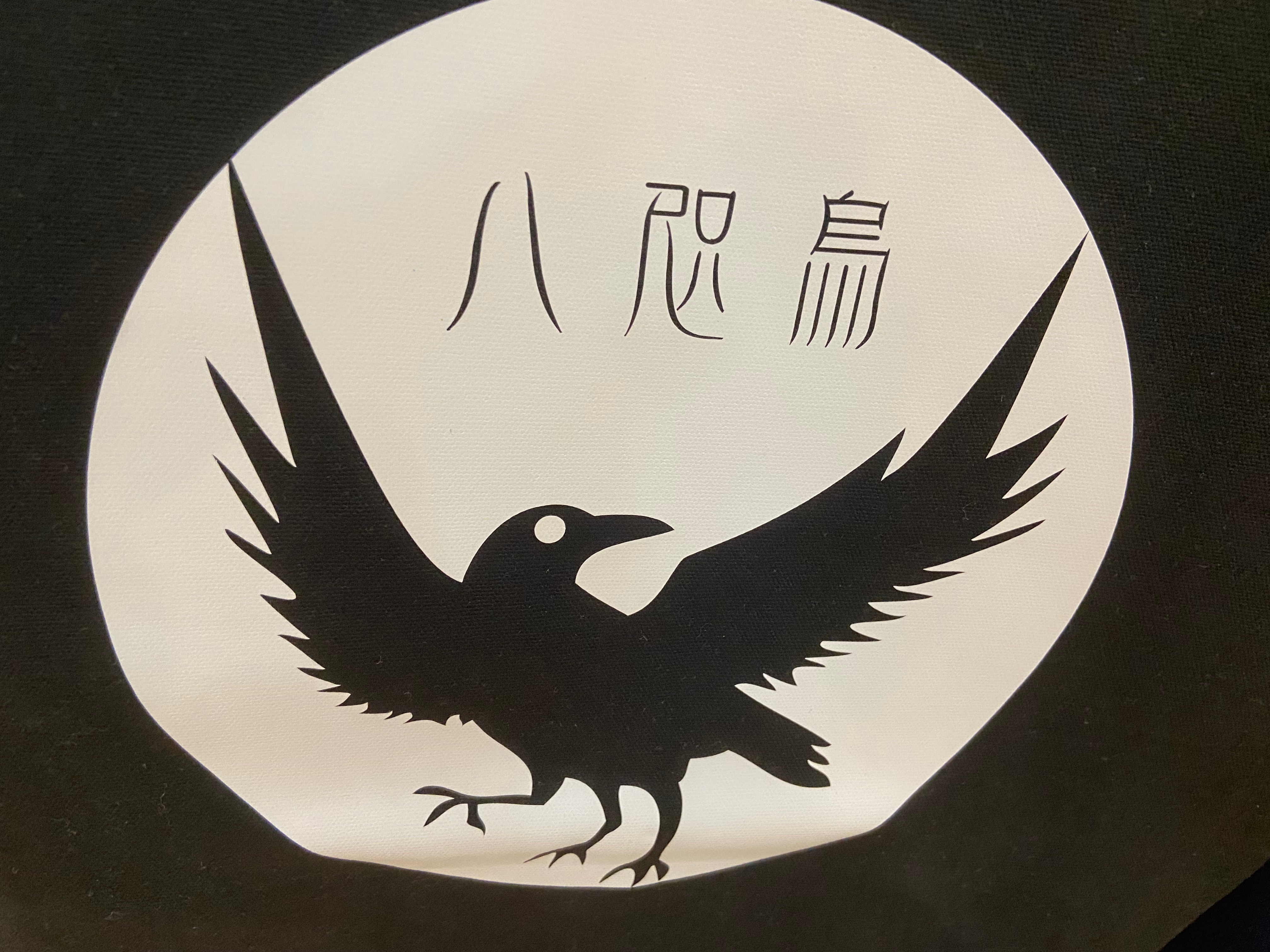
From the boat, I see a crow in the air. It looks as though it has three legs, but it’s just the tail feathers, fanned out in silhouette against the sky. Something that could easily be mistaken for three legs.

Back at the hotel, I hairdryer my shoes for two hours whilst waiting for my laundry to wash and dry, before heading out in search of a crow to photograph. In the end, all I find is this lousy t-shirt.

Quivering Heights

I’ve come to Mount Hoju in Yamagata Prefecture to experience one of the best views in Japan. At the base of the mountain is the usual buzzing of tourist-targeted shops selling shaved ice, overpriced noodles, and fish-shaped waffles. Beyond that is the oldest beech wood building in Japan, home to a massive wooden statue of Buddha.

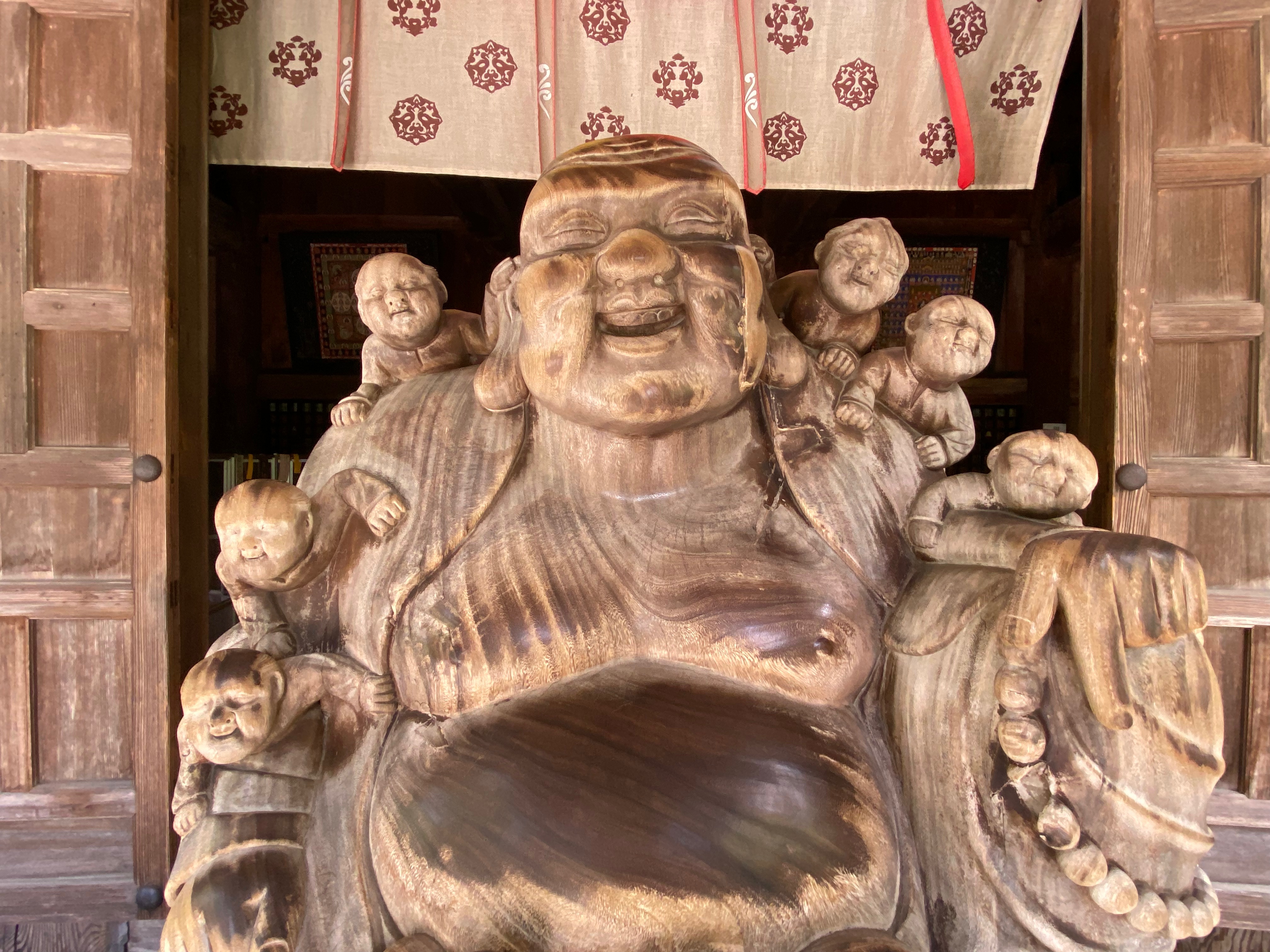
The statue is Yakushi Nyorai, the Buddha of healing. They say that if you have an illness or ailment, something you want cured, you rub that part of the Buddha, then climb to the top of the mountain and you will be miraculously healed. Naturally, I rub the Buddha on the neck and hope my scars fade.

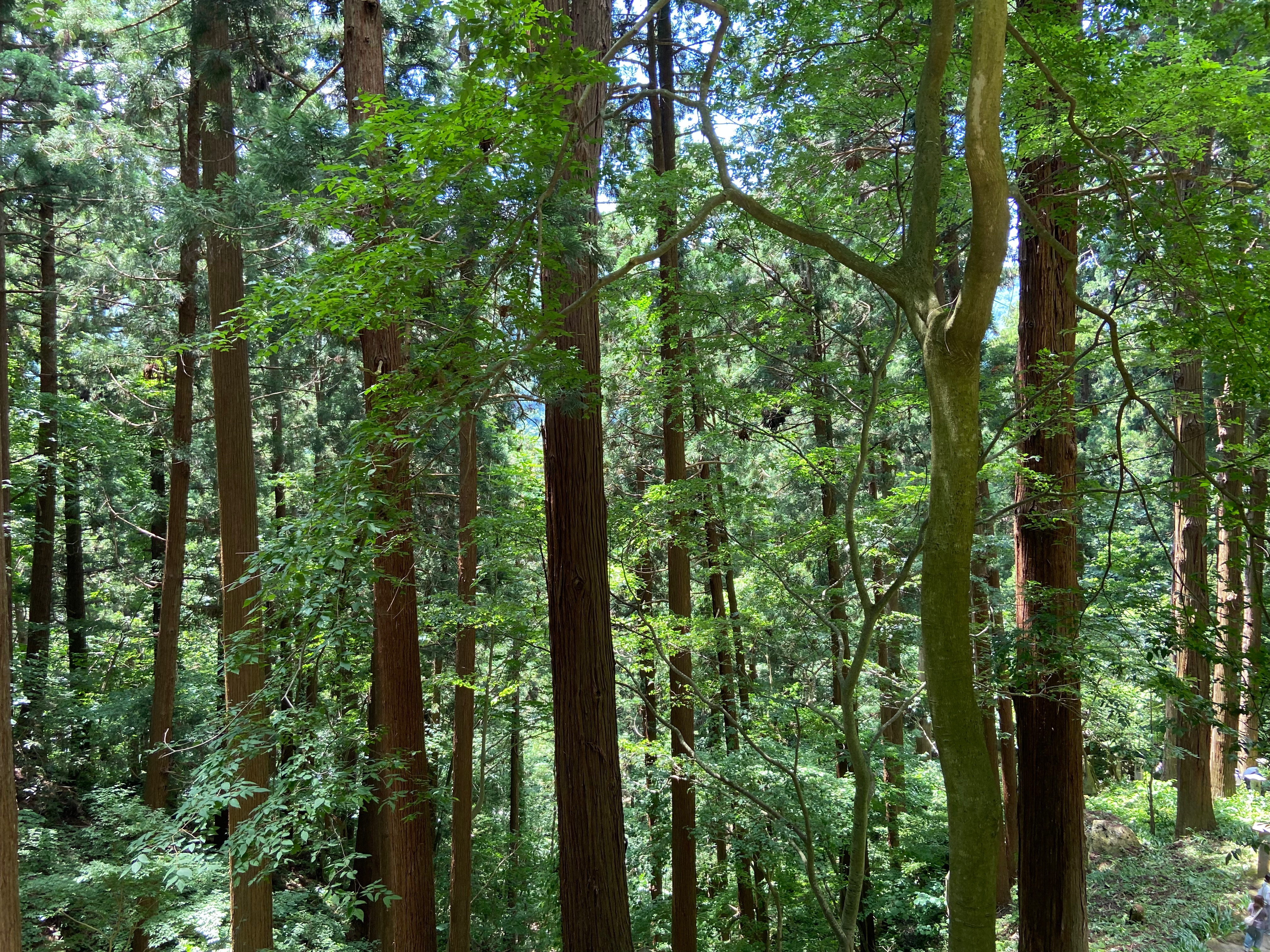
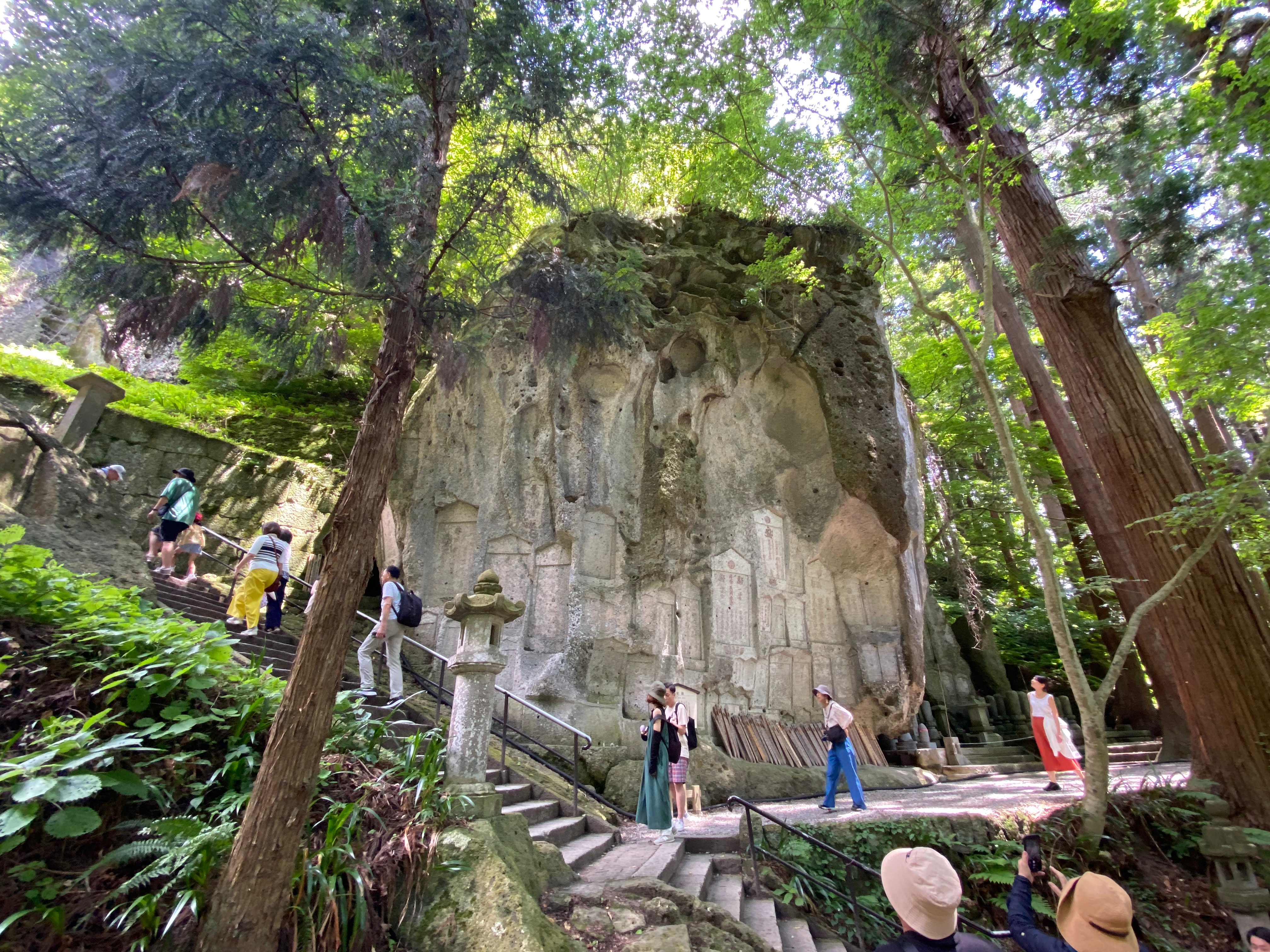
Next, it’s time to climb the mountain. The road to the temple is 1,015 stone steps surrounded by thick woods and strangely shaped rocks. Cedar trees make up the mountain forest. The Risshakuji Temple at the top of the mountain means “Mountain Temple,” which is the perfect name for it, considering it is atop a mountain.

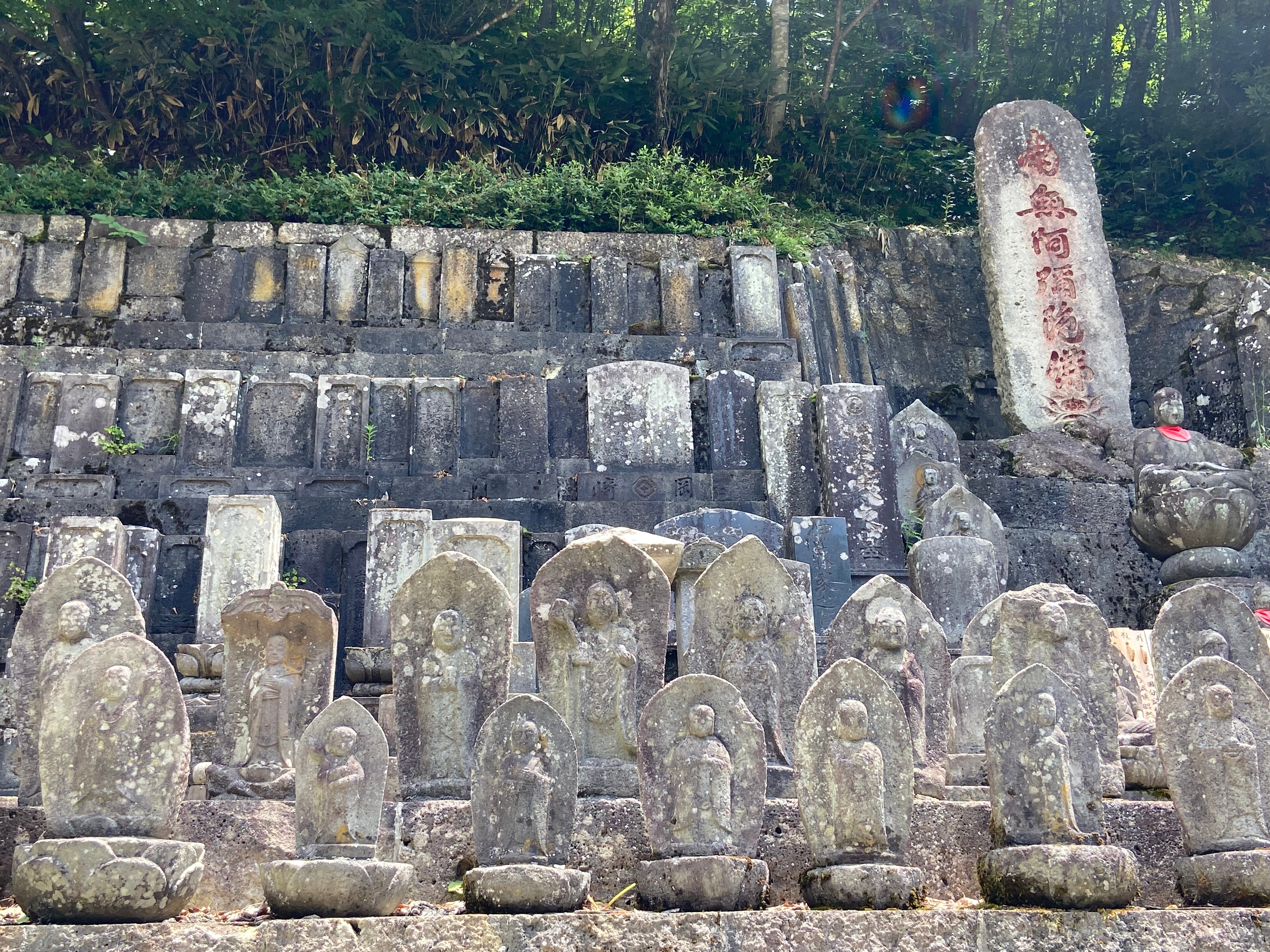
Some of the steps are in sections of 108, to represent the 108 Buddhist sins. There are Jizo statues scattered throughout the ascent adorned with coins. There’s a monument engraved with another poem by Basho, and it’s a famous one:

Such stillness,
the cicadas’ cries,
sink into the rocks.

After the second set of 108 steps I’m already worn out. Half a million steps last month, I now find myself humbled by a mere 216. I’m already close to spiritual defeat. The day is hot, the air quality poor, and it’s very humid. It has a way of wearing me out, I suppose.

It’s so hot that every now and again there will be an ever-so-slight breeze, and every time there is, I notice it. A lot of the Japanese people are carrying these little portable electric handheld fans. A country famous for fans, so it makes sense. At about 550 steps there’s a massive rock that everyone is photographing.

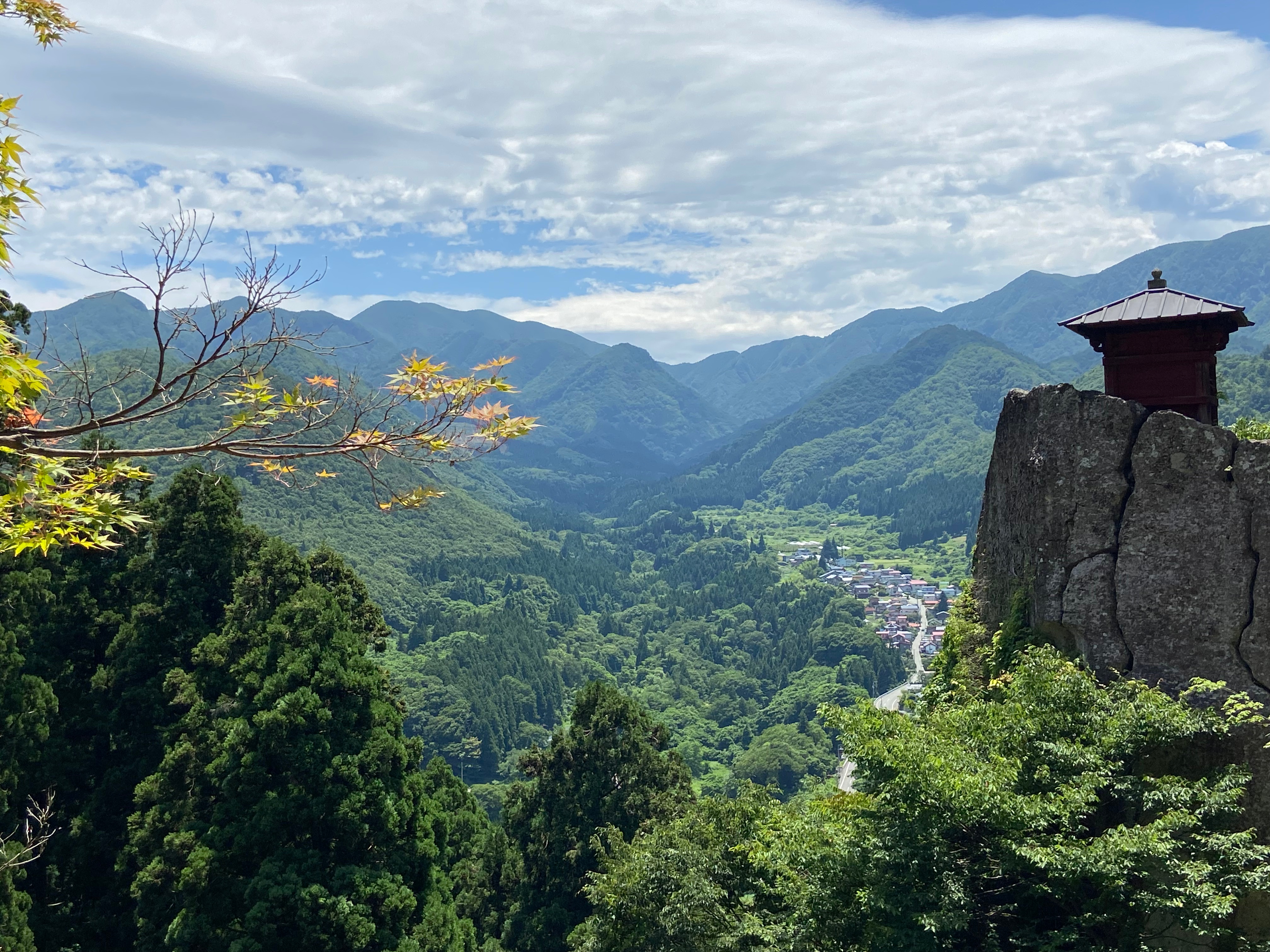
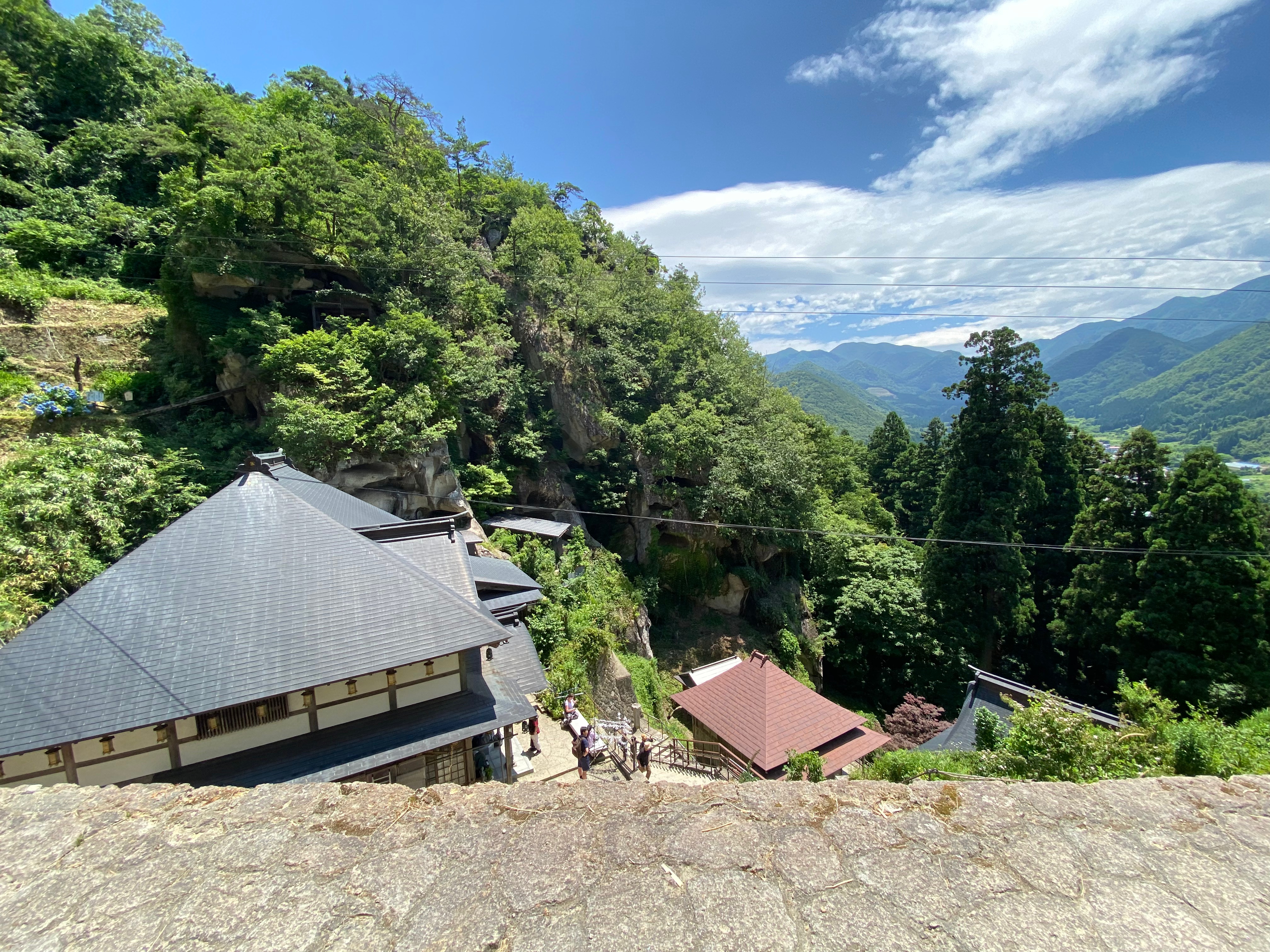
Further up, there’s Risshakuji, founded in 860 AD, a small temple of minimalist qualities. From here I realise just how high up I am, that I can make out the city below. The thing that’s unusual is there is no barrier here. I could fall off the mountain in an earthquake, and that’s exactly what almost happens.

The mountain shakes, ever so slightly. A shift. Nobody else seems to react or notice. It’s just the subtle shift. The whole thing took a tiny step to the side. The mountain itself… adjusts. It’s not dramatic. Nothing tumbles. There’s no sound. But I feel it. And for a moment I am filled with dread. Then it stops. I wonder if being on a mountain is the worst place to be during an earthquake.

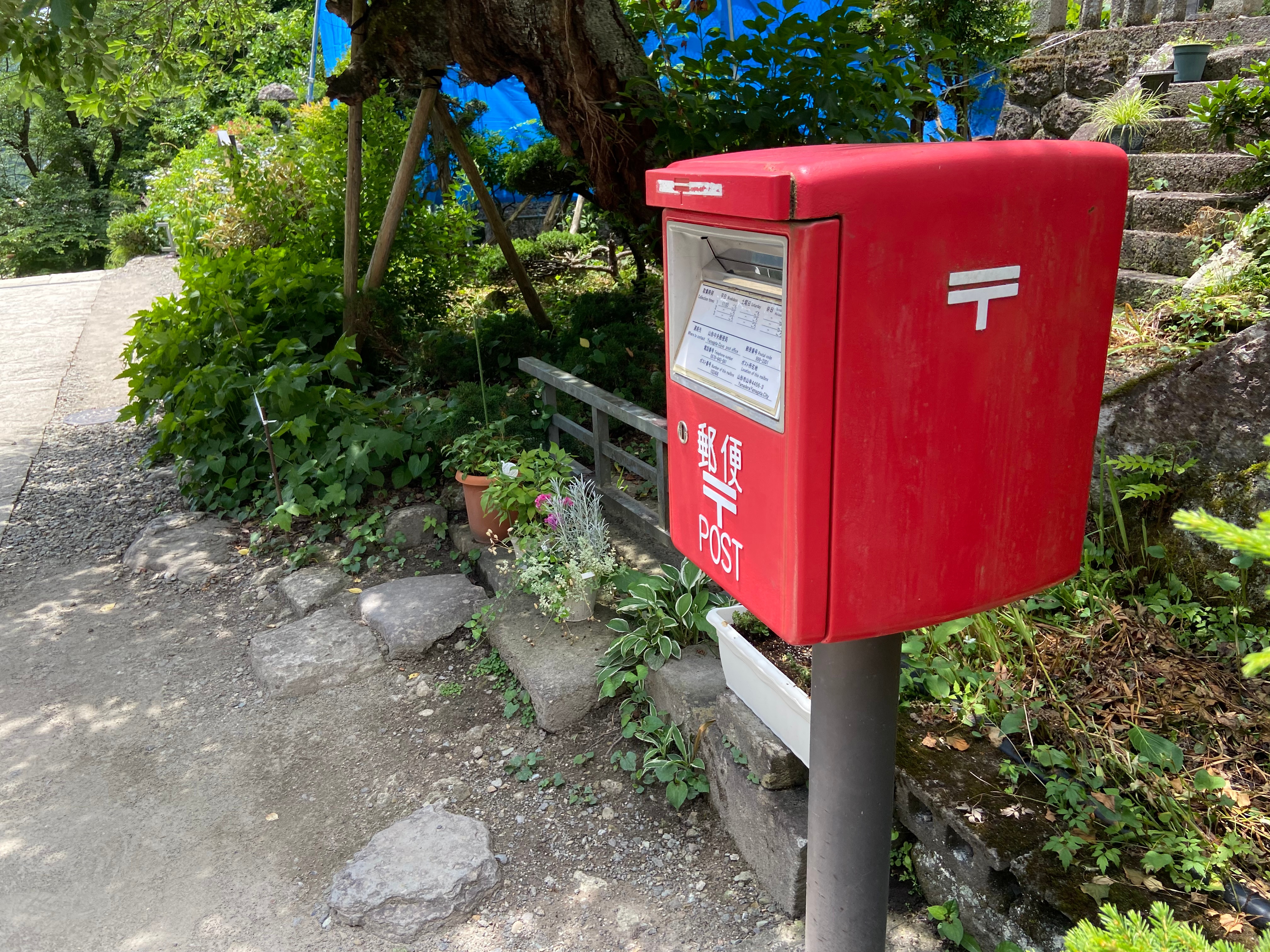
Very close to the top of the mountain is a post box. At the bottom of the mountain there is a post office, a mere 940 steps away. I naturally feel sorry for the postman whose job it is to walk up and down a mountain every day to collect what is likely just the odd piece of mail.

1,015 steps. I reach the top. The cicadas’ song fills the humid afternoon here, sharp and piercing, like needles being driven into a heart. Their cries echo, sinking into the ancient rock.

A cemetery at the top concludes the climb. Crooked gravestones pushing through moss. Everything here is slanted, aged, dignified in its entropy. I sit beside the tombs, trying not to melt into them. The mountain temple echoes these themes of death, decay, and transcendence as it climbs through cemetery terraces and silence.

I stand to rest, to catch my breath, to take it in. My shirt clinging to me like skin, thirst calling me to a vending machine back at the base of the mountain. But I linger. Amongst the graves, everything feels tilted. Stones, time, even thought.

Walking down is the reward as I can see it all. All the views, all the way down. There’s something about a good vista. I say goodbye to the top of the mountain, and goodbye to the vista. Hasta la vista. Until I see the view again, opening like lungs exhaling. I can see the whole valley now, softened by haze.

Back at my capsule hotel, I voluntarily entomb myself in a plastic drawer like a very polite corpse.

Boatman Begins

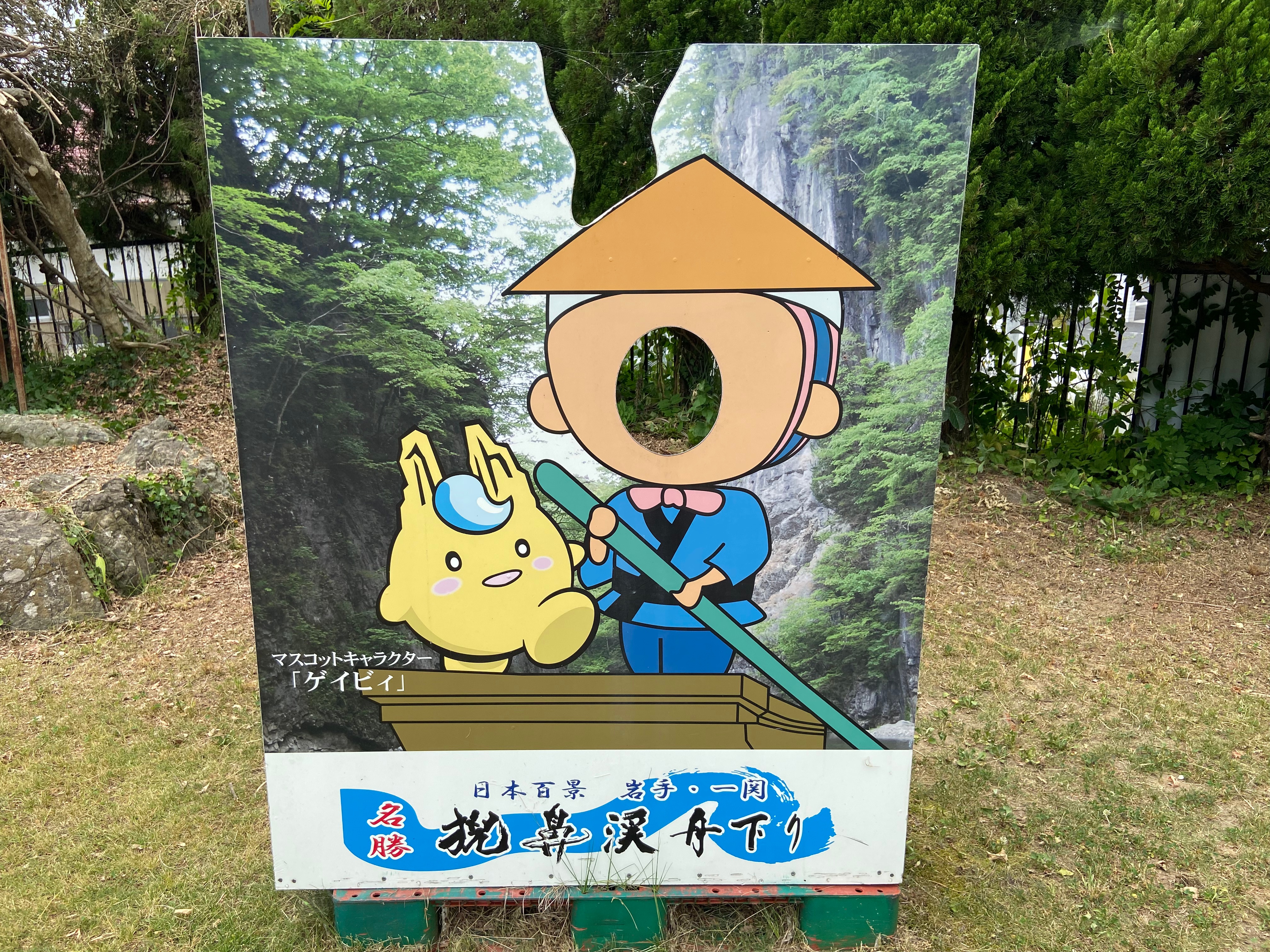
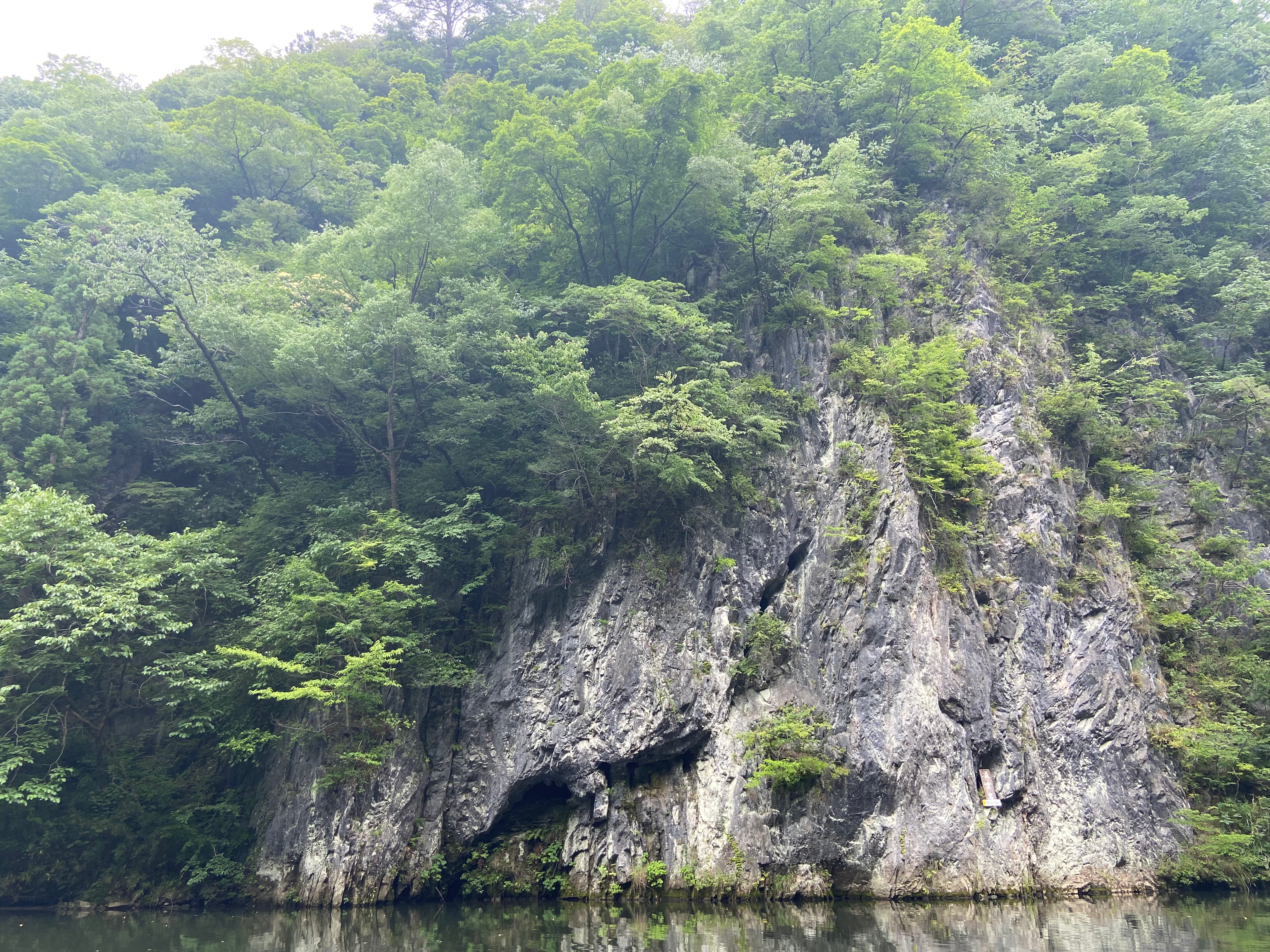
Somewhere between October 23, 1868 and July 30, 1912, a discovery was made. What had previously been regarded as dangerous wilderness turned out to be one of the most beautiful places on Earth: Geibikei Gorge.

In Japan, they love a good top three. Night views, bridges, and today, gorges. Nobody explicitly states which of the top three is actually the best. Politeness says: make a top three list, and leave it at that. Geibikei Gorge is one of the top three gorges in Japan.

As well as being one of the top three gorges in Japan, Geibikei has also been designated a National Place of Scenic Beauty, a Natural Monument, and one of the 100 Landscapes of Japan. It certainly is one of the landscapes.

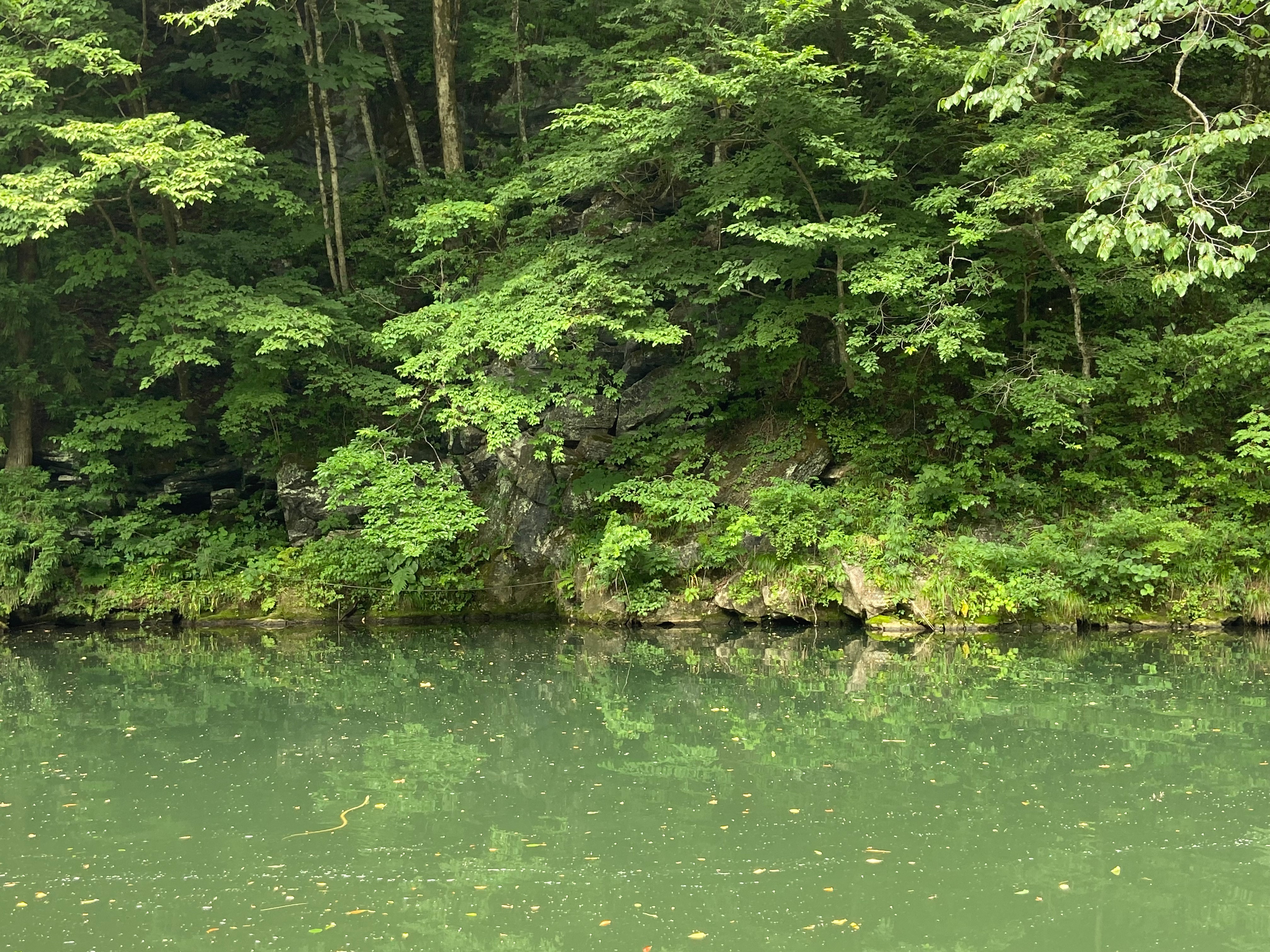
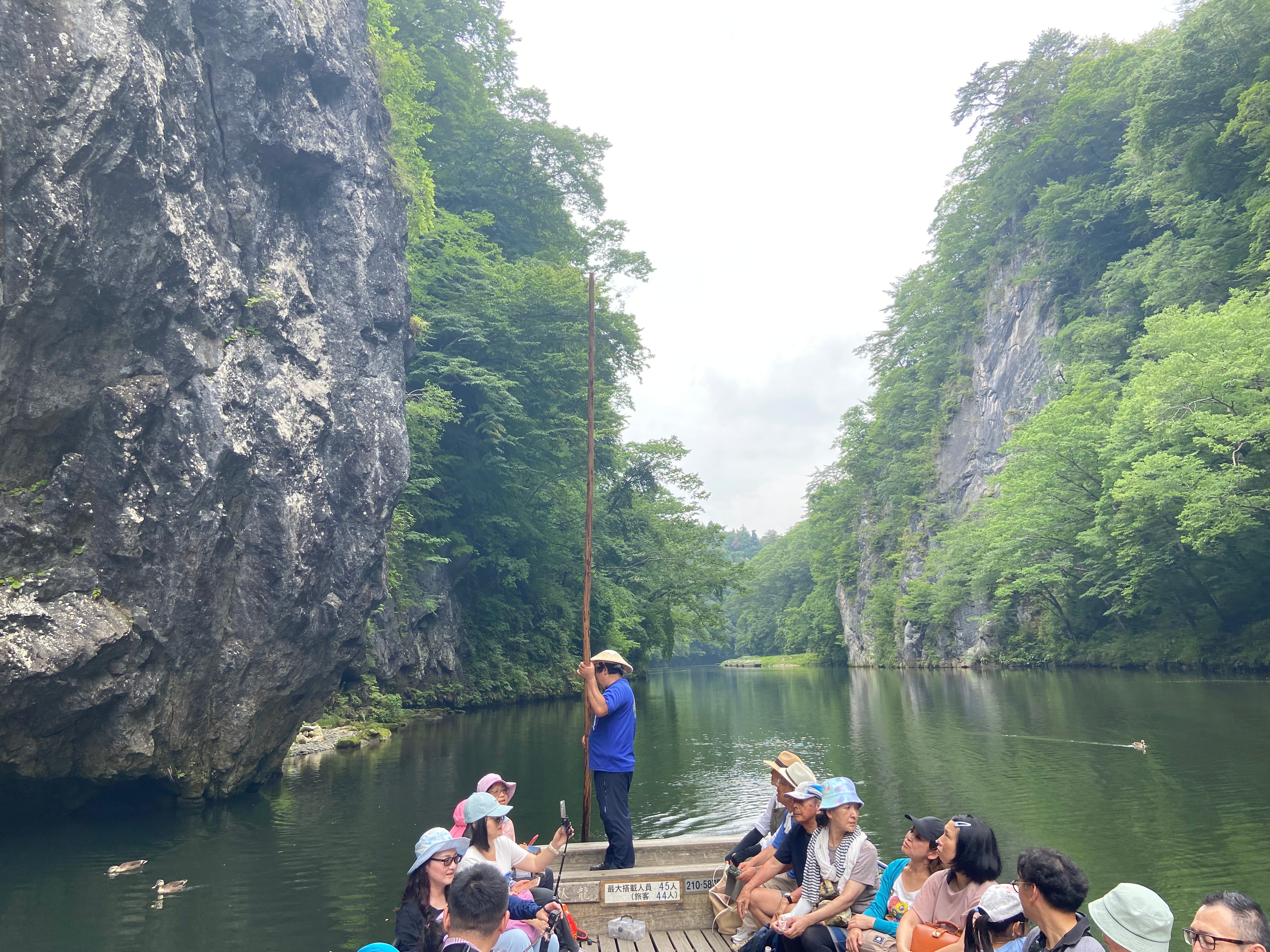
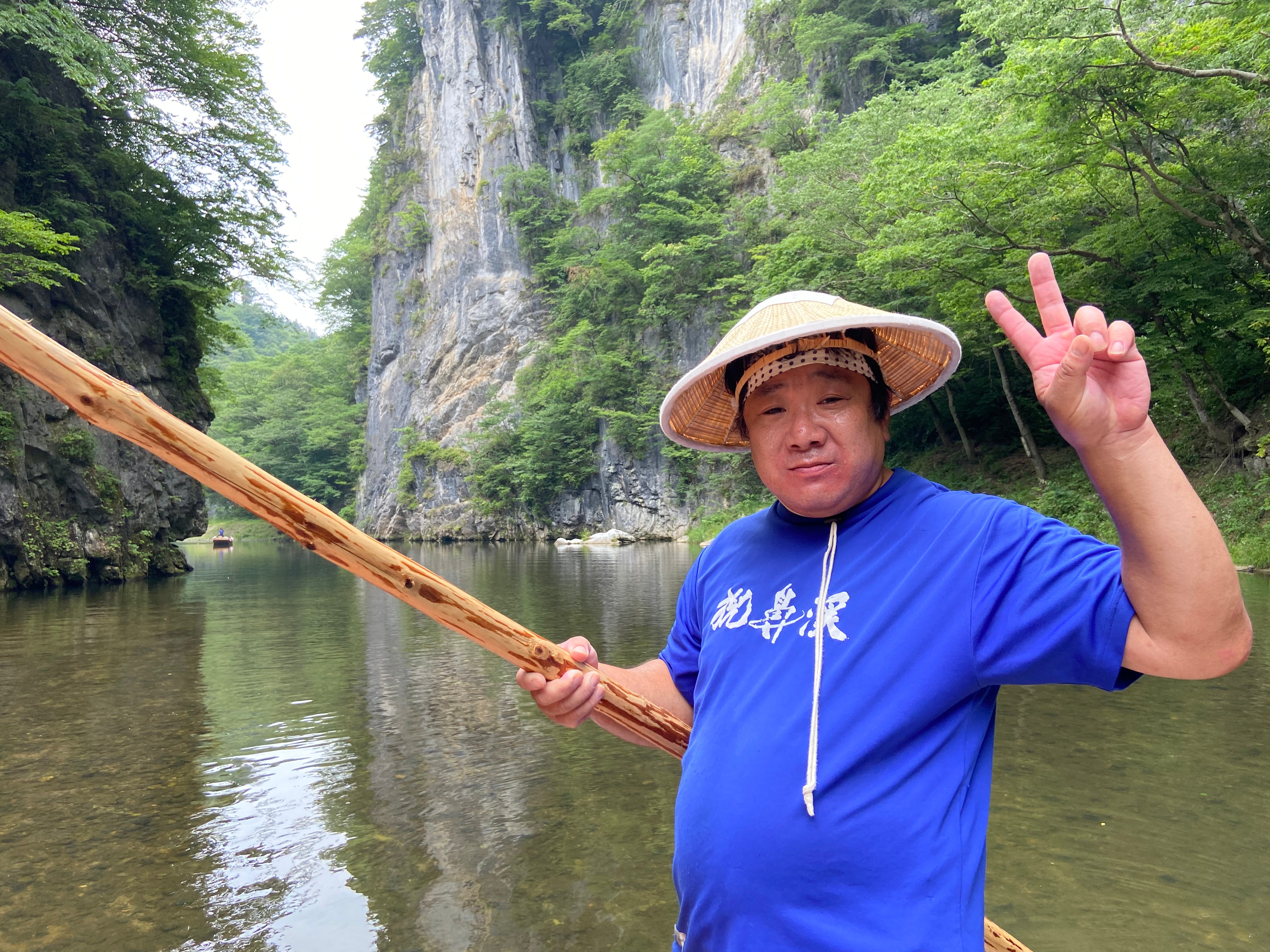
Geibikei Gorge (not to be confused with the similarly named Genbikei Gorge) is a 2-kilometre stretch surrounded by limestone cliffs. A river runs through it, so boats are required to fully explore it. The Satetsu River is a liminal, stillwater river. It flows neither up nor down. It just sits there like an ancient swamp. The only thing that interrupts the water is a boatman’s pole, or such nature as a falling leaf, the lapping of summer sweetfish, or the arrival of snakes.

We buy some fish food in a little plastic bag, then sit on the boat, all 44 of us. The boatman introduces himself.
“Hello, I am Sato. Nice to meet you.”
Everyone applauds. Sato-san notices me.
“Hey foreigner, where you from?”
I tell him England. He just laughs and begins rowing, merrily. The snake swims away, frightened by the ripples of the boat. I realise that, after all the years living in Japan, I’d never seen a snake. This is now the second day in a row I’ve seen one, and I actually manage to photograph it.

I sit, gazing out. Sato-san interrupts the serenity.
“Hey foreigner, if you have a hat, glasses, camera …” he pauses for comedic effect, then mimes dropping the items overboard. “Oh no!” he exclaims.
He then repeats the same actions in Japanese before pointing and shouting, “The next rock!” Which is of course Kyomei-Gan (Mirror Rock), reflecting the sparkle of water off its surface like a giant mirror.

There’s a phrase I can’t quite remember. Something about the memory of a fish. I remember seeing fish, so that’s probably it. They’re clever and know we have food, and they gnaw at the side of the boat, almost jumping from the water. They follow us as we disturb the stagnant river.

It’s said the sweetfish leap in early summer, and the carp in autumn. One of the carp didn’t get the memo and shows up the moment I throw my stash of food into the river. The carp makes one giant leap, eats it all, and swims away. The sight of the fish is reminiscent of the Chinese legend, known in Japan as toryumon, in which carp become dragons after successfully leaping up a waterfall.

We carry on along the river. Sato-san is very enthusiastic. He slowly pushes the boat along with the wooden pole, but does so effortlessly. We aren’t rowing. We aren’t sailing. He just pushes the pole into the riverbed, presses ever so slightly, and propels us forward. The boat drifts for a moment, carried by the newly made current, then slows to a stop. He pushes again.

He points out various rocks along the gorge, makes jokes in both Japanese and English, and treats the 44 of us as an audience in his comedy routine. His confidence shines through, lightly heckling us, answering questions, entertaining us. The entertainment is so good that I almost forget about the view.

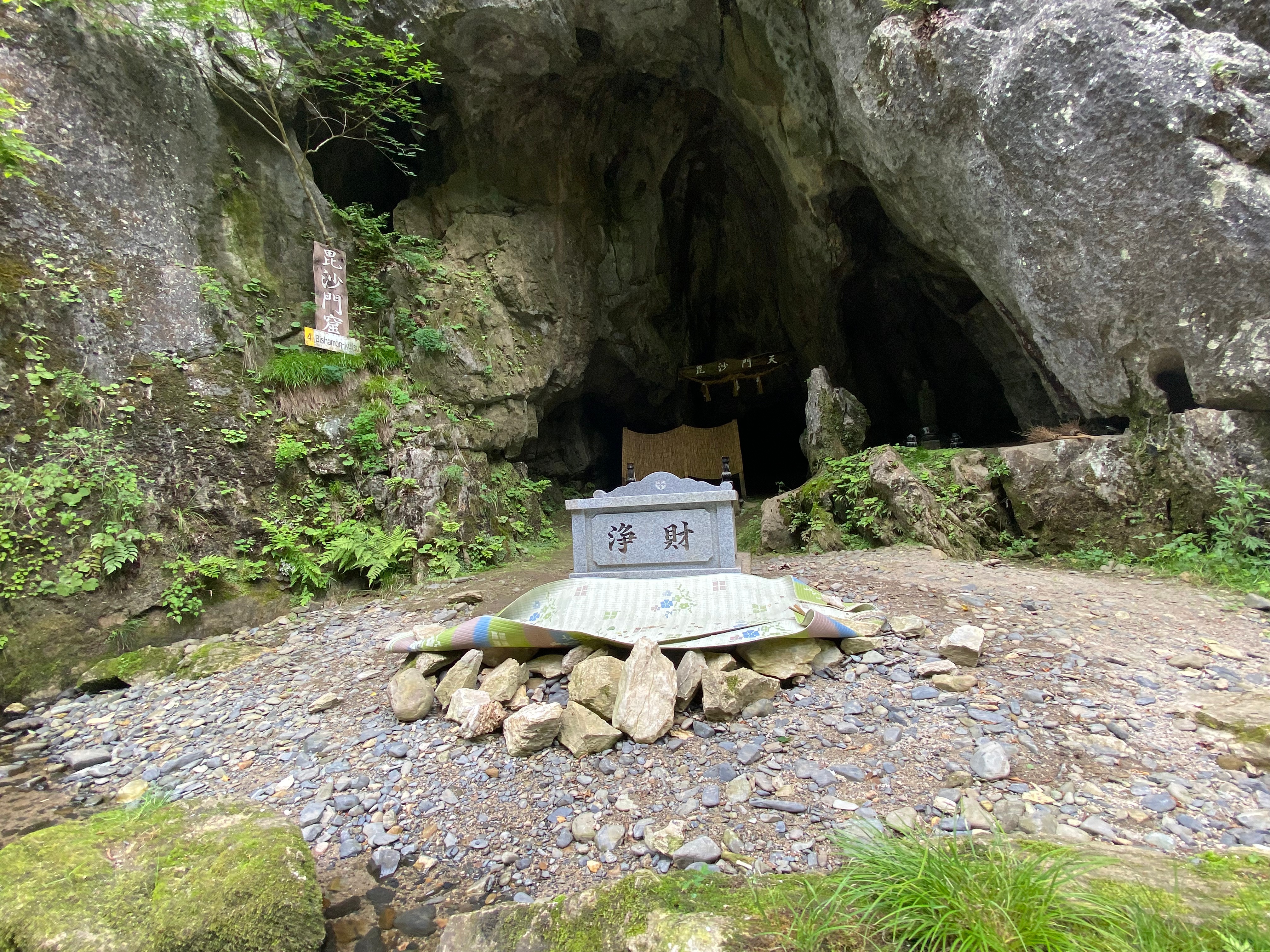
Further in, the sun splits open the sky directly above and the heat becomes immense. Some ducks appear, looking for food, and the fish still follow. We pass a small shrine in a cave dedicated to Bishamonten, the god of treasure. Everyone stands and throws their coins across the water to the shrine. Thousands of coins surround it. More gleam beneath the surface. It must be pretty easy being the god of treasure when people just hurl money at you.

We pass a man in a watchtower holding a Nikon camera. He shouts for us to say “cheese” before taking our photo. We pass another boat heading in the opposite direction and everyone waves at everyone else, like we’re in this together. I guess we are. So we continue on. It really is indescribably beautiful.

I take a moment to think, to contemplate, to evoke. Then I take some boatographs.

Thirty minutes into the boat ride, it’s time to make land and take a break. We glide over to a pebbled beach. Sato-san says something in Japanese, then turns to me.
“Hey foreigner, twenty minutes walking come back.”
I reply that I understand, in Japanese. The other 43 people laugh.

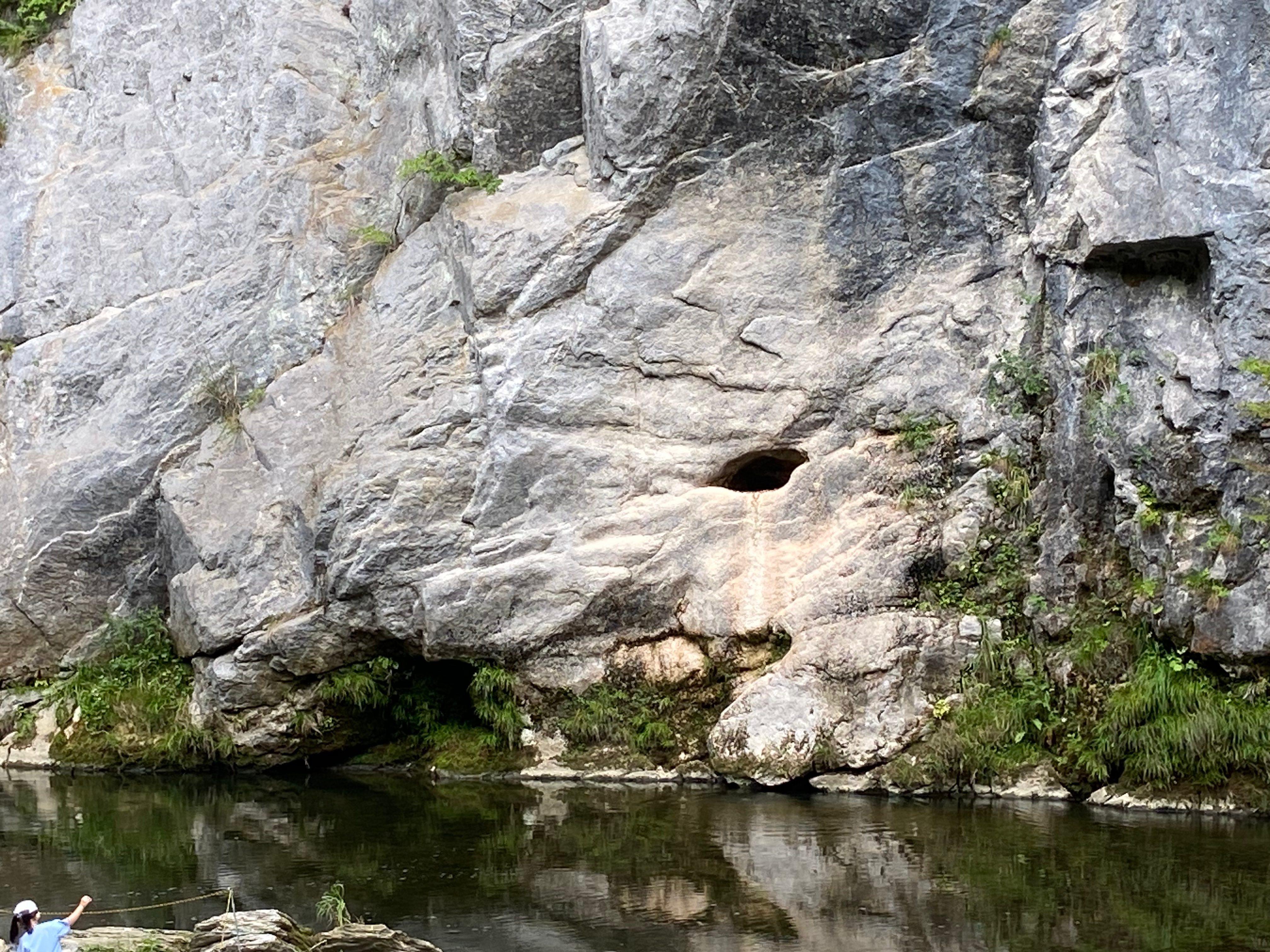
I see somewhere on the map labelled “Ninja Rock ??” but realise, when I can’t find it, that it’s a clever joke. I pass a rock shaped like a horse’s head, and at the very end of the expanse is Senryutan (Lurking Dragon Depths). A dragon is lying in wait for its chance to rise from being a Geibi carp, apparently. If you manage to throw an undama (pebble) into the hole, you’ll be rewarded with good luck. Apparently.

I walk around for a while before boarding the boat again. Eventually, everyone returns and sits in their original seat. There’s one seat empty that wasn’t on the way down. Someone has gone missing, but Sato-san makes light of it, then pushes the boat out once more. This time, instead of taking photographs, we just take it in. And instead of narrating or pointing at rocks, Sato-san begins to sing.
“Song time,” he says. “Very old time song. I do five or six minutes… maybe.”
He sings for twenty.

His voice transforms into something ancient, filling the gorge, lingering among the cliffs:

As I pole my boat,
on the clear waters of the Satetsu River,
the clouds,
that dull my heavy heart,
are dispelled,
by the Lion’s Snout.

His voice echoes long after the last note fades.

After singing, he looks exhausted, yet continues to carry us through the gorge in reflective silence. Nobody speaks. Even the water has quietened. I’m glad that of the multiple boatmen working today, that we were lucky enough to have Sato-san as our guide. His personality and comedic timing were a highlight, one of the most memorable experiences I’ve had in Japan.

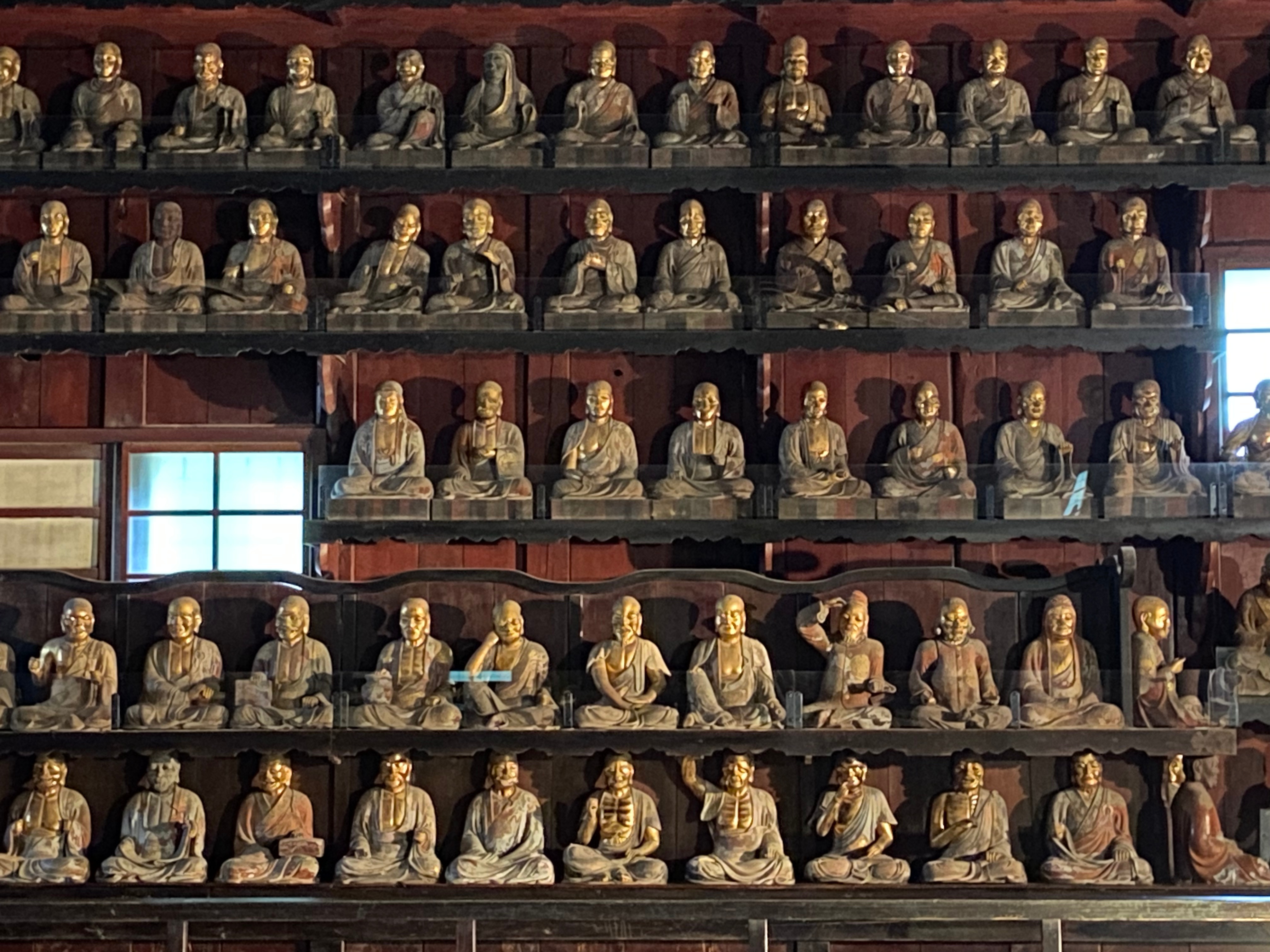
After the boat ride ends, we drift back into the real world. The gift shop waits patiently. A vending machine hums to the tune of overpriced green tea. I leave and take a train back to Morioka, walking the quiet streets until I reach Hoonji Temple. I take off my shoes and enter the silence. Inside the main hall, 499 rakan statues sit frozen in time.

They were hand-carved three centuries ago by nine monks. Each statue is lacquered, lifelike, and unmistakably human. Some laugh. Some grimace. A few seem lost in conversation. It’s almost as though I can hear them talking to one another. One of them is definitely Tom Waits. Others are said to resemble Marco Polo or Genghis Khan. There’s an expression to match everyone.

My eyes, for whatever reason, are drawn to a rakan sitting quietly in the corner, with a face I know well. It’s not me. It’s Sato-san. The boatman. Same smile. Same humour behind the eyes.
I blink, but he’s still there.
I never did find the one that looked like me.


Maybe I’m still being carved.

Castaways and Cutouts

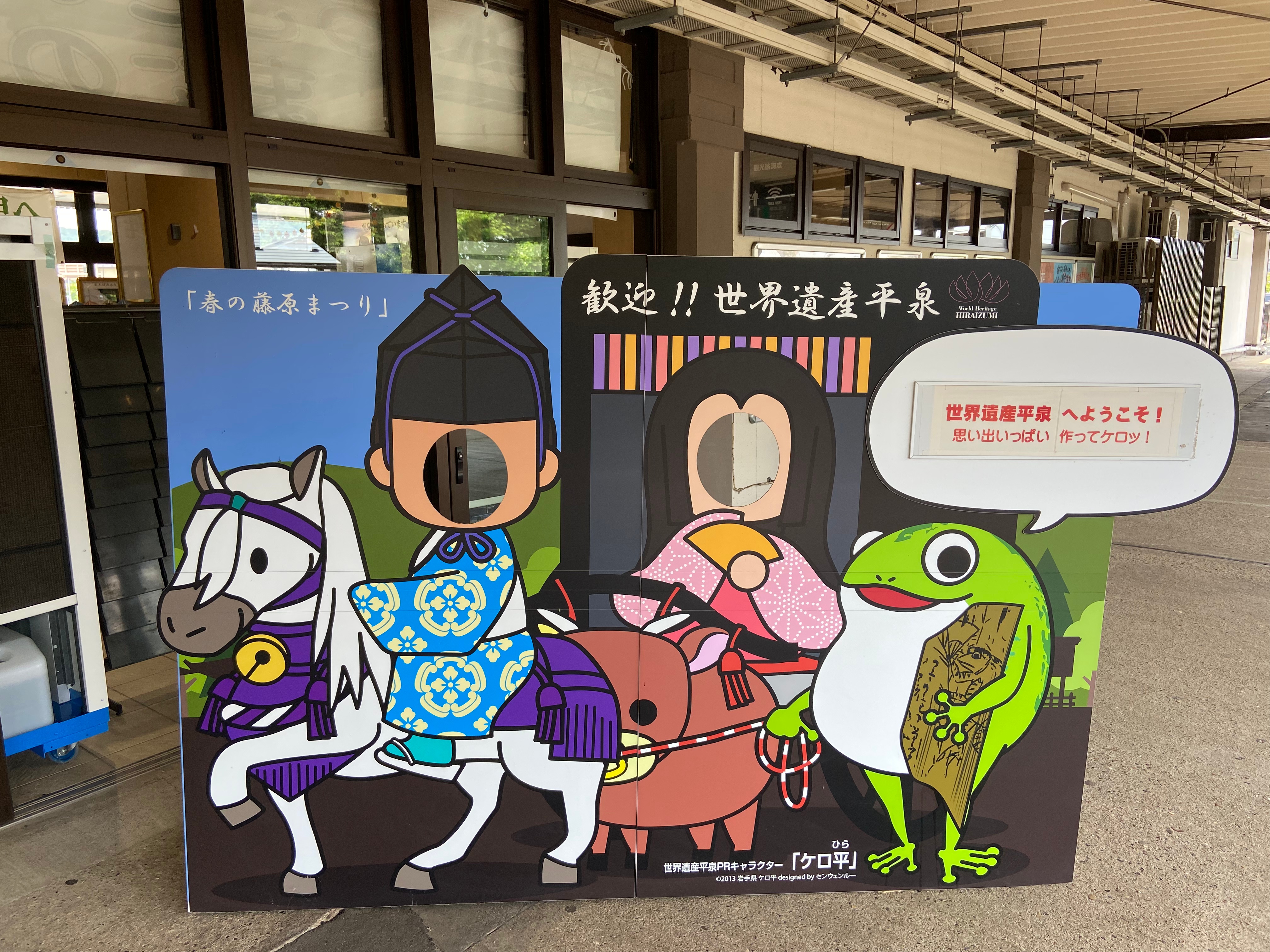
There’s a frog at Hiraizumi Station with the title of World Heritage Advertising Manager. His name is Kero-Hira. A speech bubble on the Carnival Cutouts cheerfully instructs, “Make lots of memories and relax!” He stands beside what appears to be a member of the Fujiwara clan riding a horse next to a woman riding a pig.

Today I’ve travelled a little further south, to Iwate Prefecture, in search of old ghosts and even older gold. I’m here to visit Chuson-ji Temple. Stepping past the frog and out of the station, the first thing I notice is the view of rice fields stretching out toward the distant mountains. The second thing I notice is the rack of travel pamphlets for Iwate Prefecture. One of them is familiar. Too familiar. It’s the same pamphlet I wrote ten years ago for a travel company I was working for at that time.

Having never set foot in Iwate Prefecture until now, it feels strange having already written about it in the past. That’s unfortunately how those travel companies operate, stock photographs and regurgitated information. I’m just fortunate enough to be able to visit these places as I am now, and use my own words and my own photographs.

It’s a twenty-minute walk to Chuson-ji Temple but I don’t mind it. The scorching summer sunshine is brutal and the humidity is high. Chuson-ji is a UNESCO World Heritage site that boasts two car parks, so I expect it to be busy. To enter, I must hike about ten minutes up a shaded forest path, lined with lush verdant trees of the cryptomeria variety. If I’m honest, I’m just pleased to be in the shade.

Before the main temple hall, there is Jizo-in, a smaller sub-temple. This temple features a picturesque Japanese garden. However, and as is often the case in life, the moment can’t be truly enjoyed. A man and a woman with leaf blowers fill the splendour of the garden with mechanical shrieking. The serenity is soundtracked by smug futility.

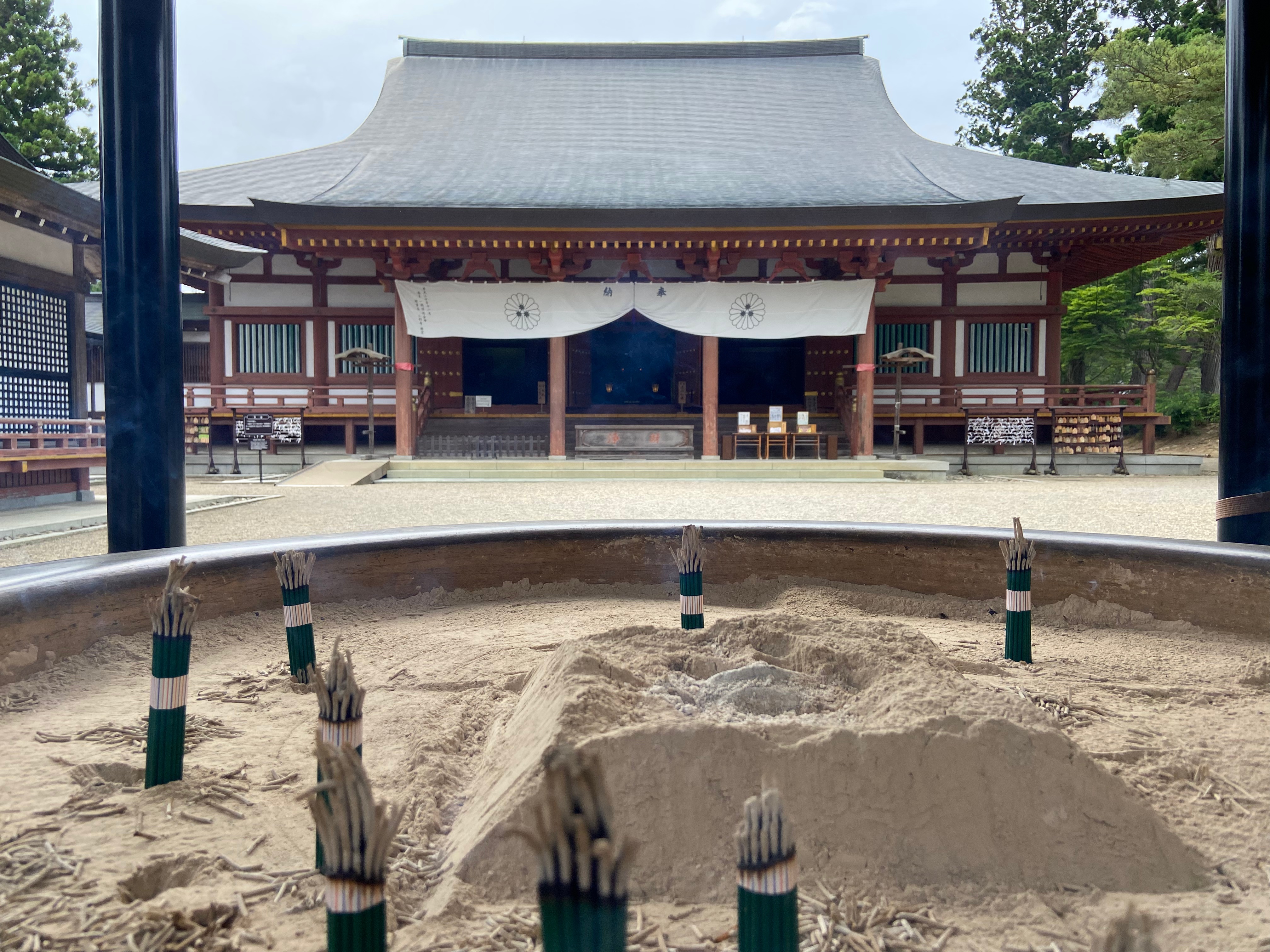
Entry to the Konjikido, or “Golden Hall,” costs ¥1000. It’s unassuming from the outside, just a rectangular building in weathered wood, but inside it’s another world entirely. No photos are allowed. Inside the hall is gilded in gold leaf, with three golden statues of Amida Nyorai flanked by bodhisattvas, all encased in a protective hall to preserve the original 12th-century architecture. The Golden Hall sits inside a larger protective concrete building, almost like a shrine within a shrine, carefully sealed off from time.

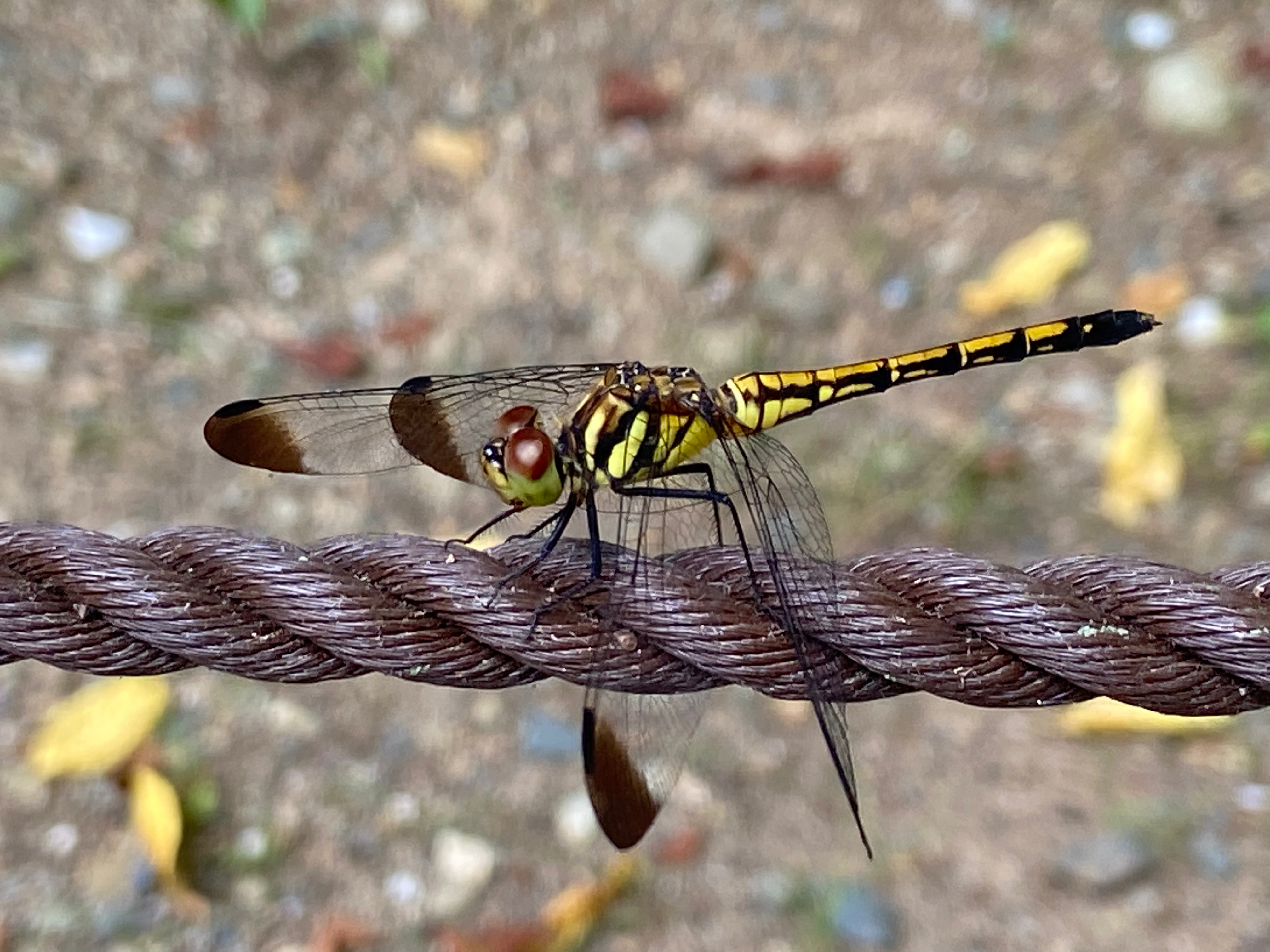
Because I couldn’t take any photographs of anything inside the Golden Hall, here is a photograph I took outside the hall, of a golden dragonfly:

On the way out, I draw an omikuji fortune slip. Once again, I pull “Excellent Luck.” I always seem to get the best one. It comes with a small Fortune Arrow trinket that is said to invite happiness and fulfilment of my wish, because an arrow hits the target. I tuck the trinket into my wallet for prosperity and fulfilment, a wish taking aim, and keep reading. It says that on travel, I will have an impactful journey, and that my lucky item is still dried flowers.

As I stand reading my fortune, I hear a voice. “Hey you! Come here,” shouts a Japanese man. I wander over to the man. He appears to be pointing at a large tree. It’s not until he speaks again that I realise what he is pointing at. “Look, a snake,” he says. “Very dangerous.”

After failing to take a decent photograph of a snake crawling into a tree, I wander to the final part of the complex, where the dead have clearly been hard at work. More stacked pebbles. Castaways from another world, trying to build their way back. The resemblance to Osorezan is uncanny. It turns out this temple was founded by Ennin, the same monk.

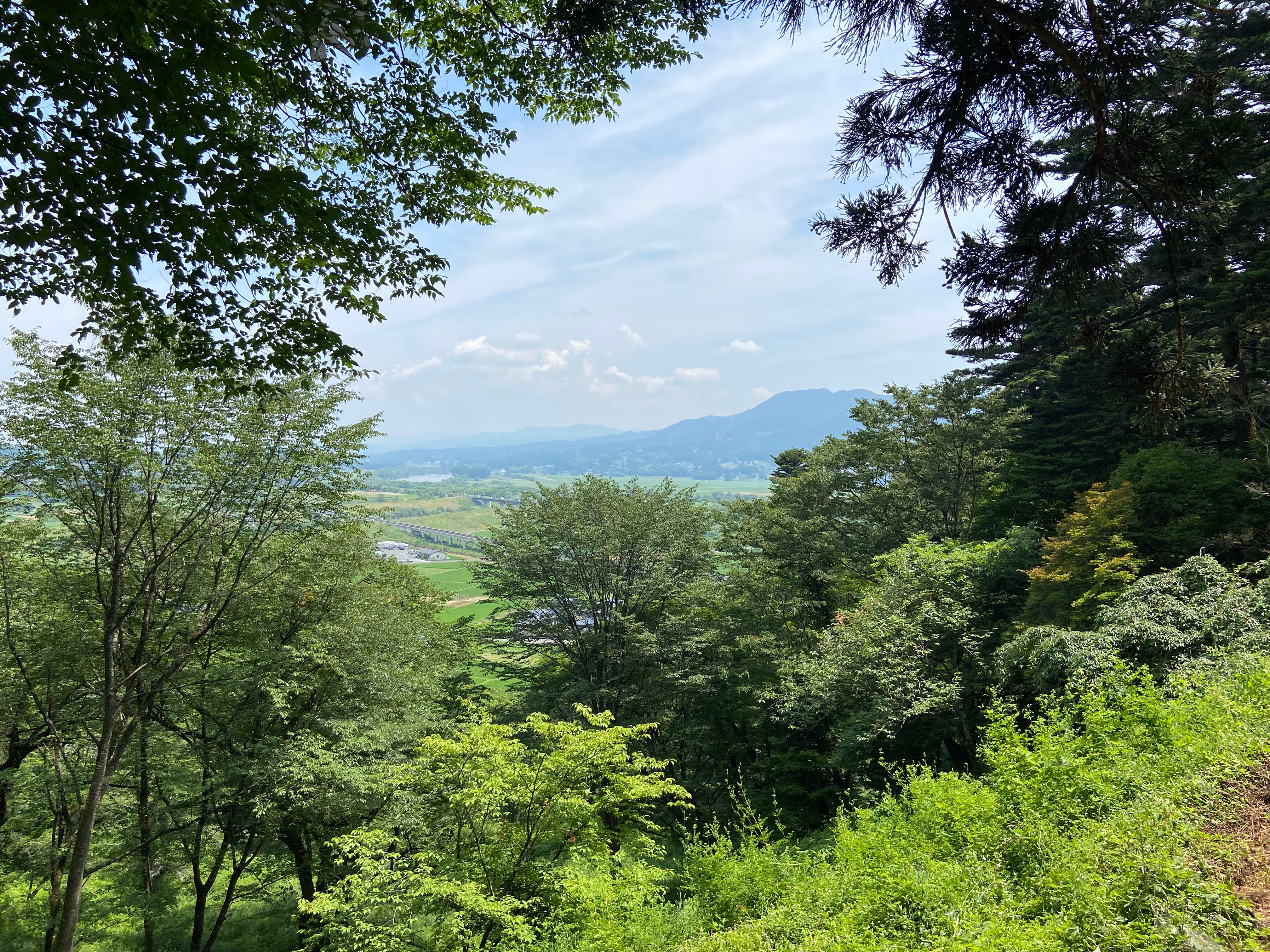
On the way down, the view opens up to a sweeping panorama of green hills and sky. It is simply stunning.

Leaving Chuson-ji, I walk another twenty minutes through thick heat and dense sunlight to reach Motsu-ji, another World Heritage Site. This will be the third temple this week founded by Ennin, and I have a fourth planned for later this week.

The famous haiku poet Basho visited this temple and left behind a haiku carved into stone:

Summer grasses—
all that remain of
warriors’ dreams.

Motsu-ji was mostly destroyed by fire, and the poem mourns the fallen glory of the Fujiwara clan and the entropy of all things. Since then, some of the buildings have been restored, like the main hall, but many of the structures are just rocks or sticks marking what used to occupy the now empty spaces.

Motsu-ji’s most enduring feature is its Jodo Garden, a symbolic recreation of the Buddhist paradise. It stands in quiet contrast to the ruins around it. The lake, said to evoke the Pure Land, now feels more like a mirror for dreams long since cast away.

I wander into the gardens. Aside from the lake, they are vast yet empty. There’s a small lily garden, the remains of what once was, and some immaculately cut grass. A single lawnmower sits abandoned atop summer grass, having half completed its job. It now lies idle in the heat.

I leave the gardens and return to the station, waving a silent goodbye to Kero-Hira, who is still smiling. I take the train north to Morioka. On the way to my hotel, I spot a sign for “Demon’s Hand Prints in the Rocks.” I decide to check it out.

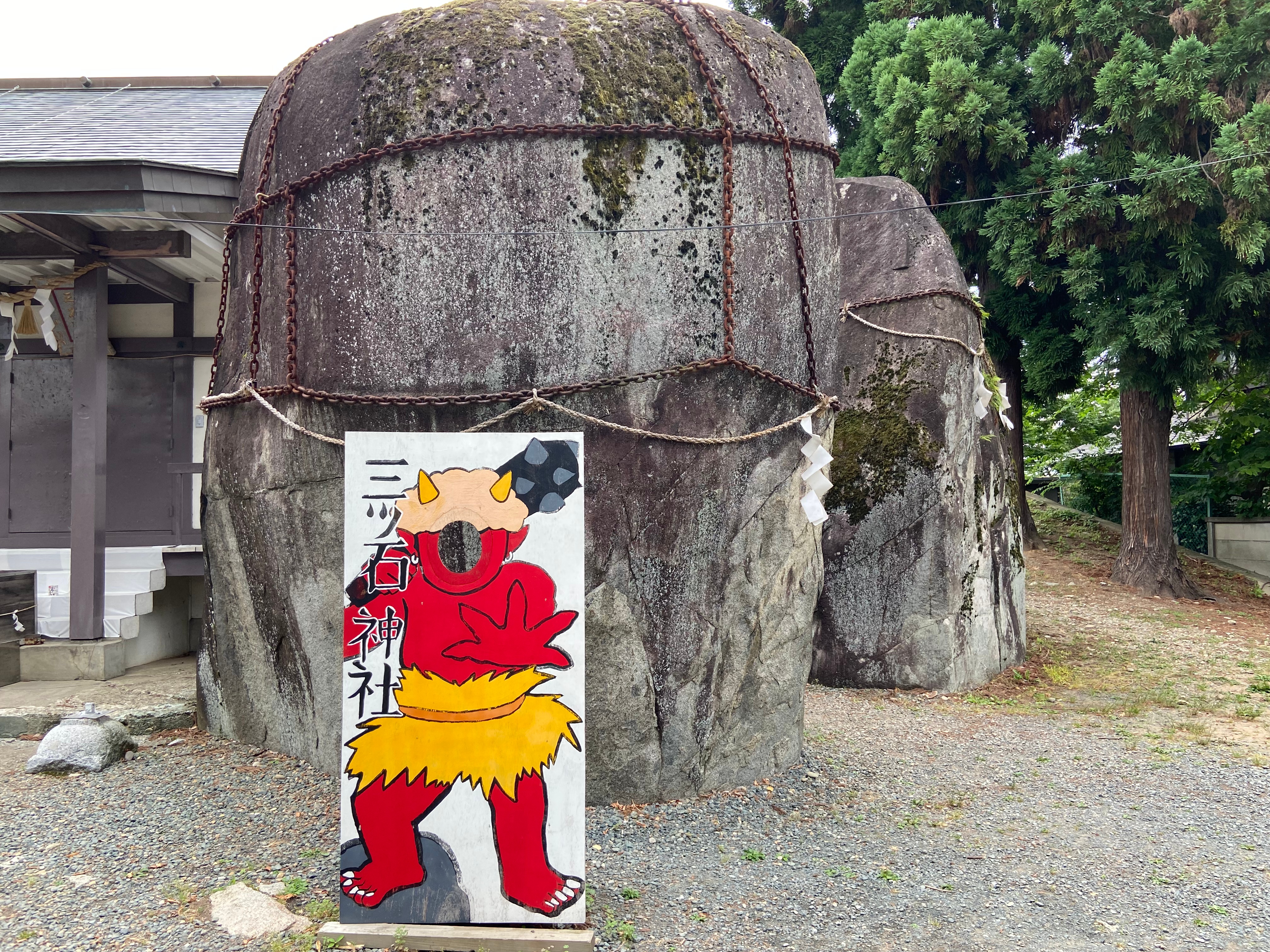
At the small temple sit three massive boulders, wrapped in rope and chain, said to have been thrown down when Mount Iwate erupted in a fit of rage. Locals once lived in fear of a demon who tormented the area, and they prayed each day for protection. One morning, the demon was discovered bound to these very stones, condemned to cause harm no more. Before his power faded, he struck one of the rocks with his hand, leaving behind a print that remains sealed in stone to this day.

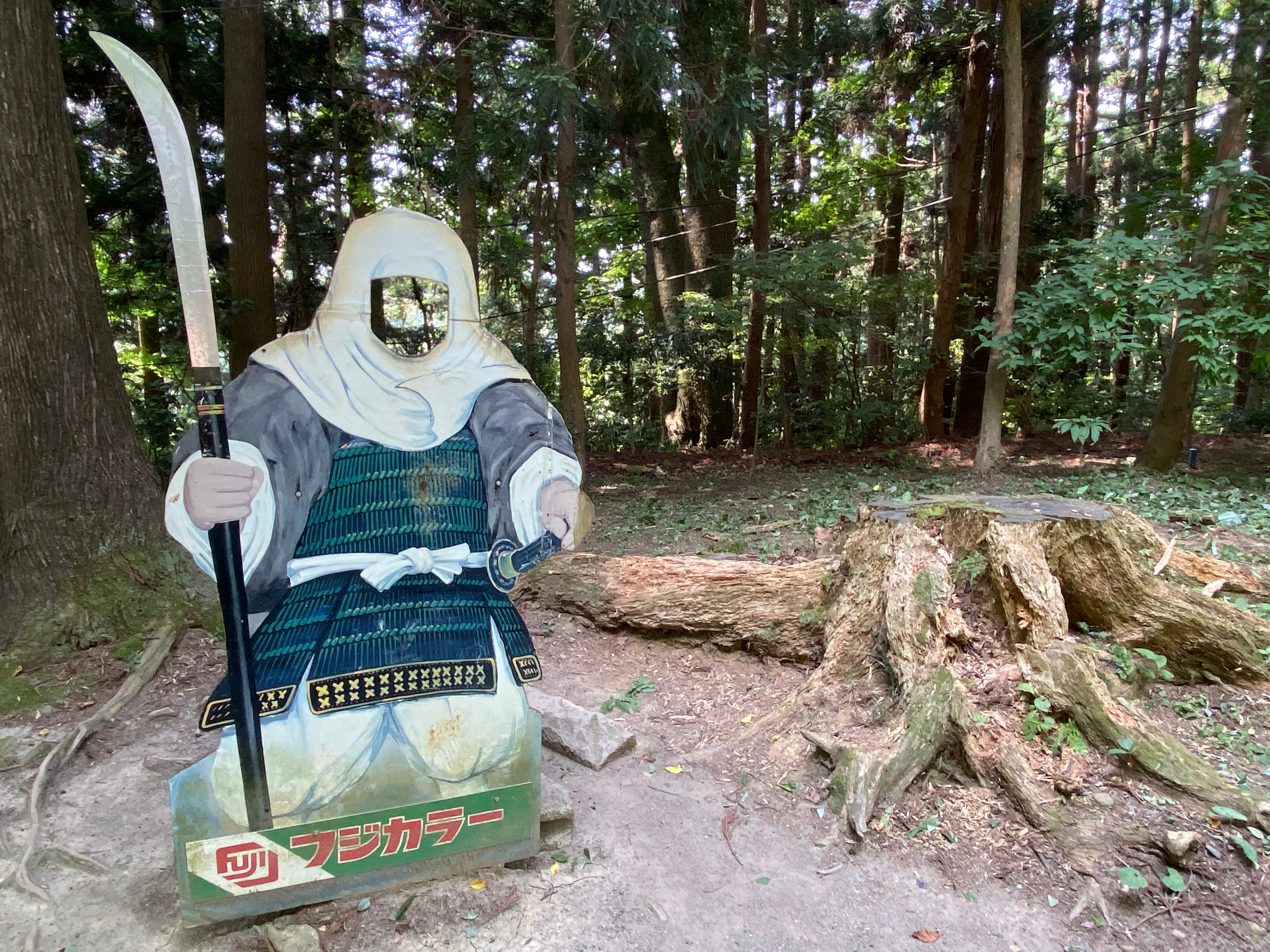
I look at the rocks but don’t find any handprints. I do, to nobody’s surprise, find the customary Carnival Cutouts.