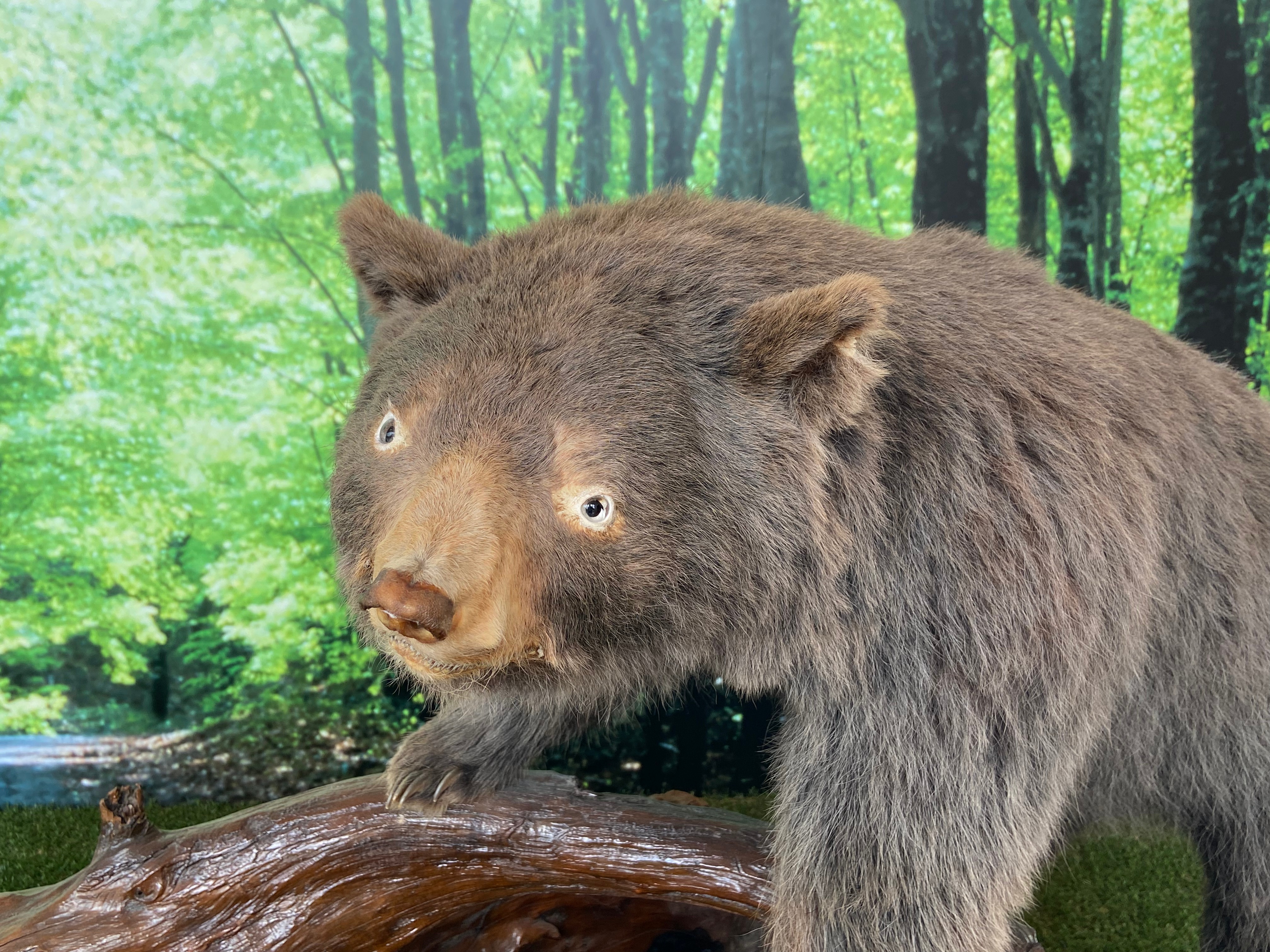
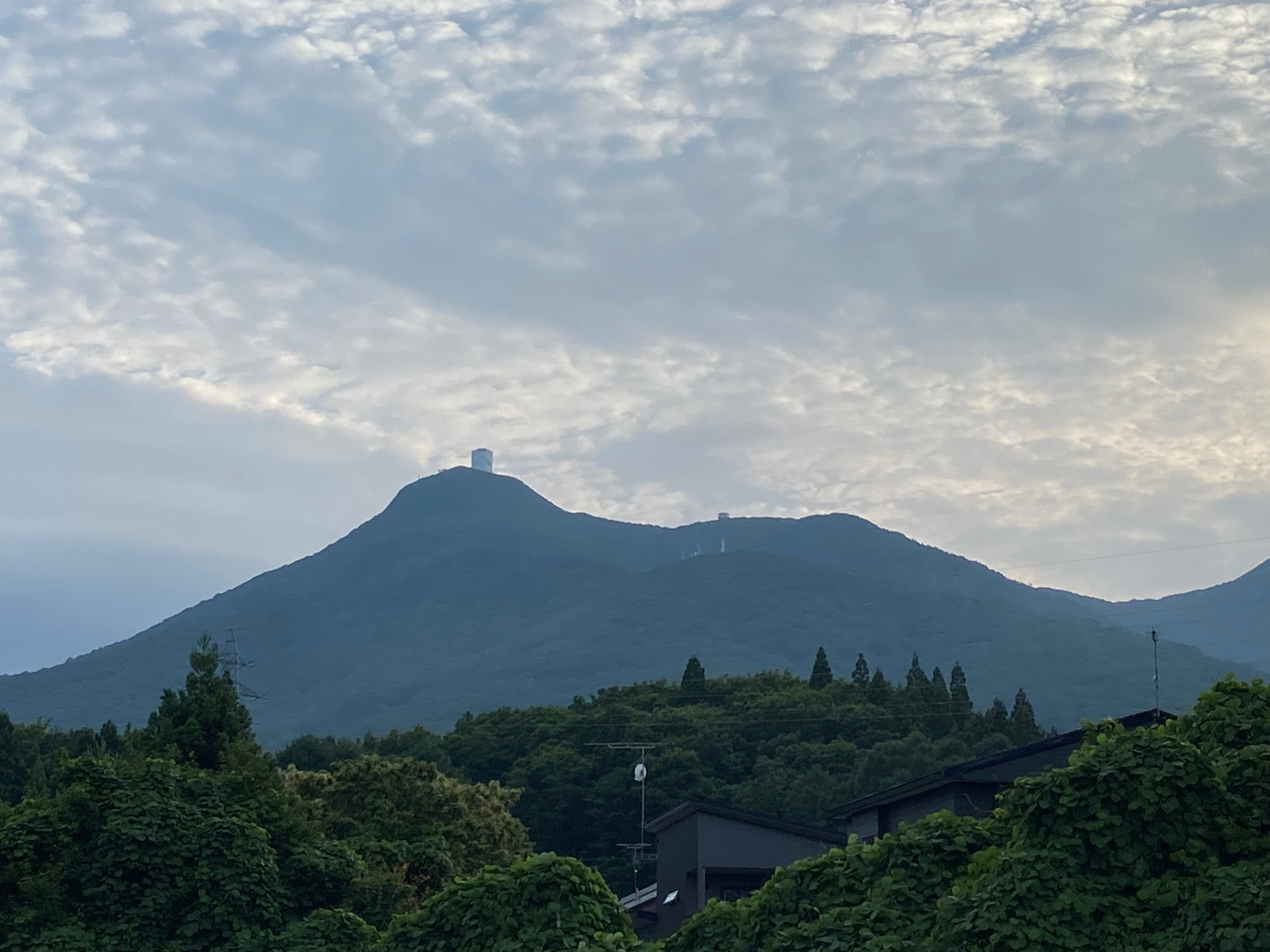
As I exit the train into Akita Prefecture, my arrival is announced by the lonely trill of a traditional Japanese flute. Inside the station, a taxidermied Asian black bear greets me. I remember that Akita has the largest bear population in all of Japan. Outside, the mountains are lush with greenery and the sky is an æstival blue.
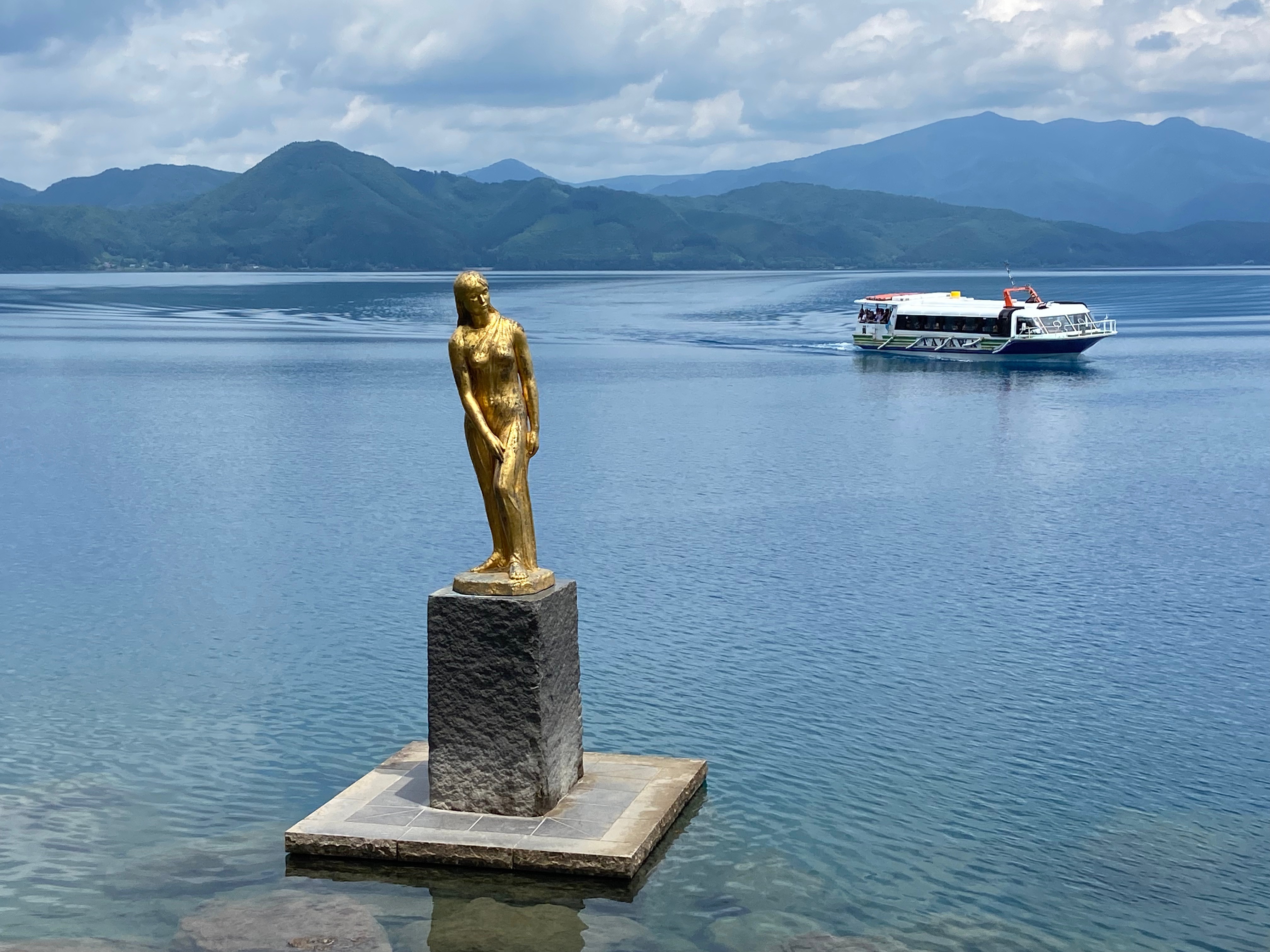
Today I’m up in the hills of Semboku because I heard a story about a girl, Tatsuko; a beautiful young woman who once glimpsed her own reflection in a mirror-like rock. Fearing her beauty was fleeting, she prayed night after night to Kannon, the goddess of mercy, for eternal youth. One day, she was told her wish would be granted if she simply drank from a sacred spring hidden in the mountains.
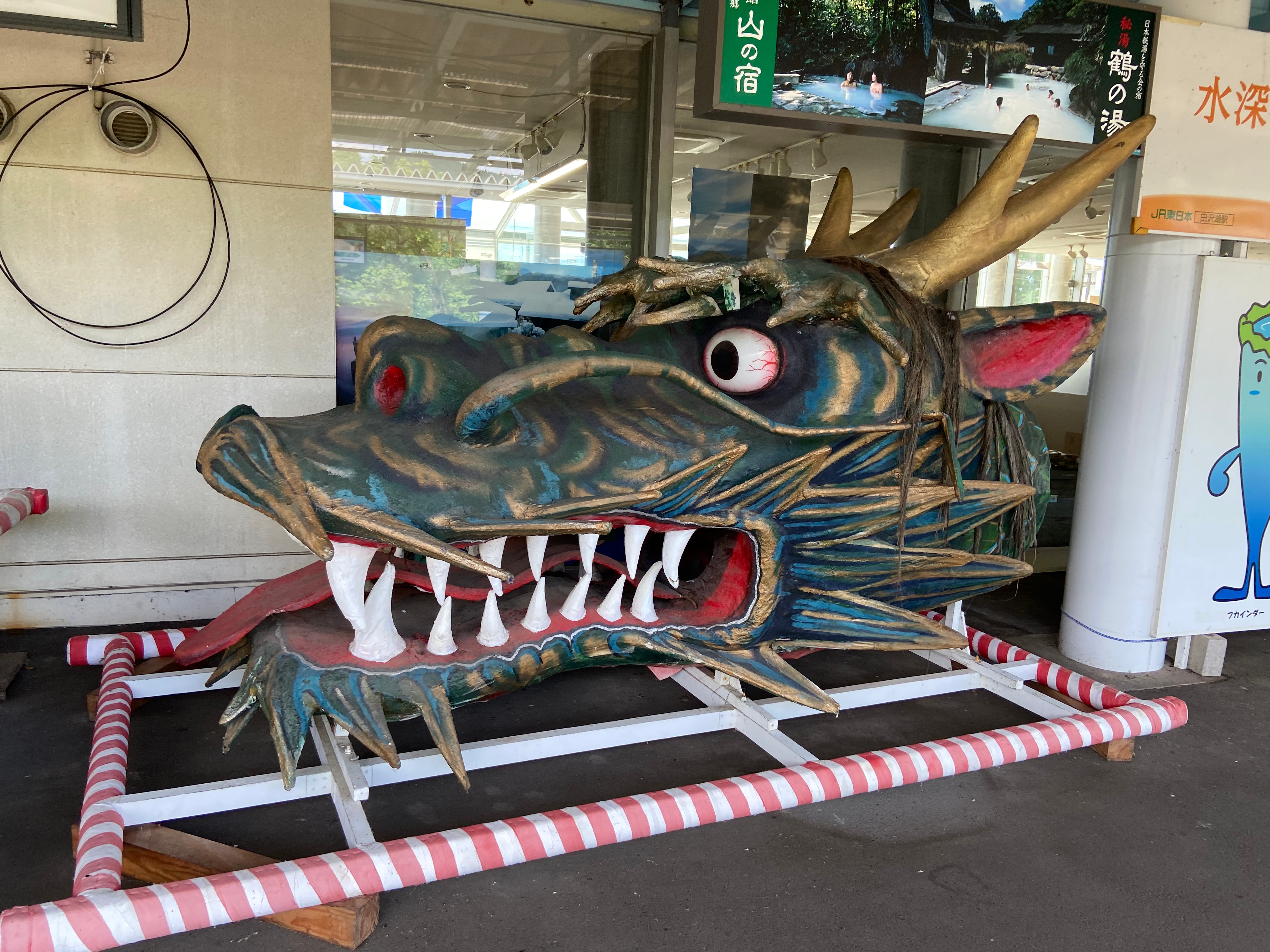
Tatsuko found the spring with relative ease, drank from it eagerly, and couldn’t stop. The more she drank, the thirstier she became, until finally she emptied the spring and, in the process, emptied her humanity. She had turned into a dragon. Horrified by her transformation, Tatsuko threw herself into the lake, where she remains as its guardian spirit. I don’t know too much about dragons, but I’m pretty sure they can’t breathe underwater. So sadly, I think whether in human form or dragon form, Tatsuko may have simply drowned.
The tale doesn’t end there though. Tatsuko’s mother apparently searched the hills for days, calling her name until her voice broke. Eventually, in despair, she hurled the burnt remains of her wooden torch into the lake, which, for reasons only folklore and grief can explain, turned into a fish. Specifically, the first black kokanee salmon. Sadly, they became extinct in the 1940s after a hydroelectric plant acidified the lake.
Lake Tazawako is the deepest lake in Japan, which makes it an excellent place to hide a dragon. These days, Japanese trout live here instead of the kokanee salmon, and the waters are thick with them. I’ve never been fishing, but I’m quite confident I could catch one of these with my bare hands. They’re basically queuing at the shoreline.
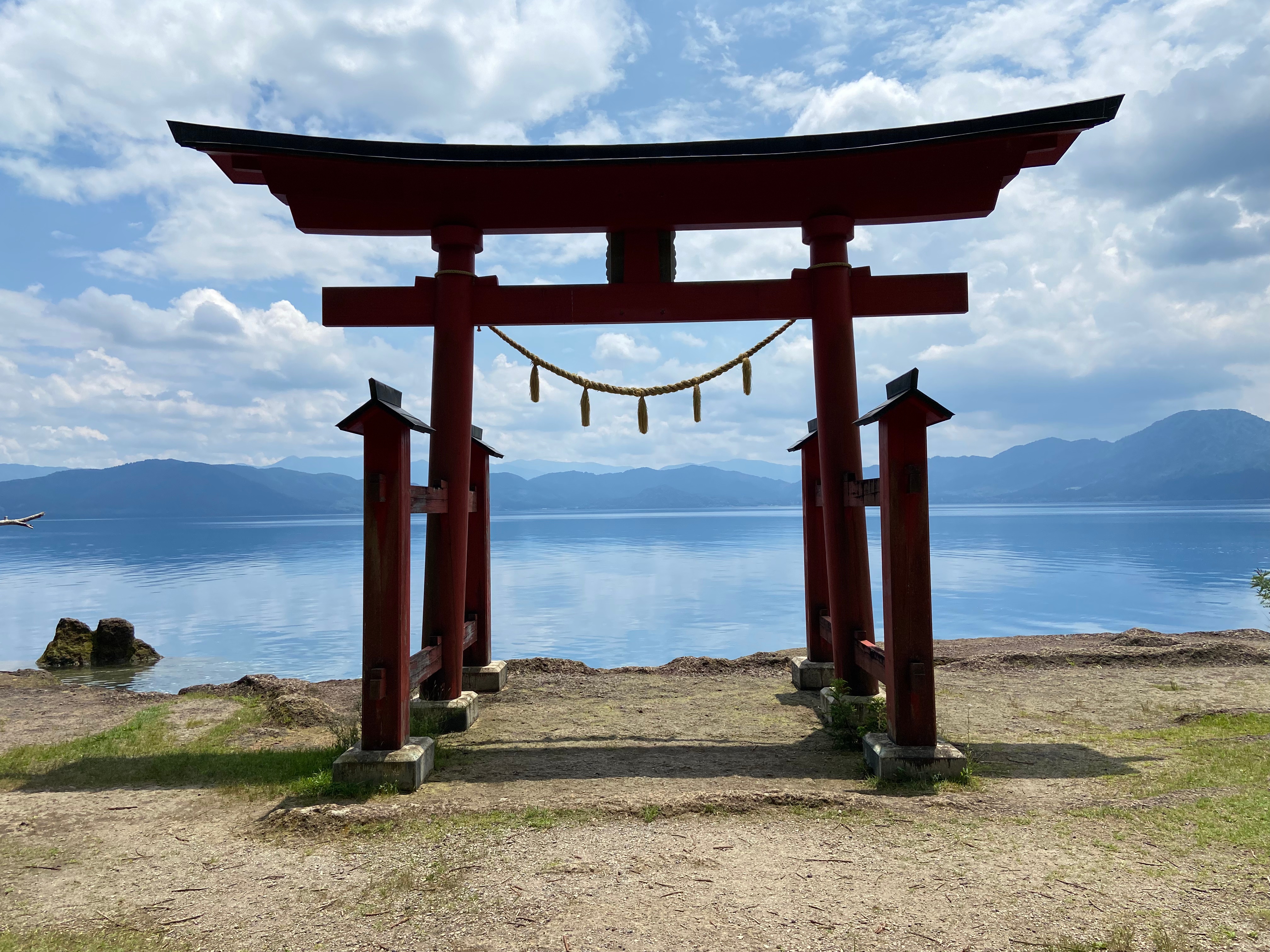
I check Google Maps to see if there’s anything else nearby, but my GPS insists I’m floating somewhere in the middle of the lake, which feels a little prophetic. I take the hint and wander into the forest instead, all the while being careful to avoid the many bears. Eventually the quiet path leads me to Gozanoishi Shrine.
I stand for a while beneath the torii gate of the shrine, looking out on the lake, looking for any sign of a dragon. The shrine itself is dedicated to Tatsuko and also features a stone statue of her. I wander up the shrine’s steps and pray that her beauty remains.
Back at the station, I find an old Kawai piano and sit playing for a while. A Japanese woman keeps glancing over as I play. I’m either performing surprisingly well on a badly out-of-tune piano, or badly out-of-tune on a perfectly tuned piano.
As I step onto the train, I notice a massive dragon across the tracks. When the train begins to move, I sit staring at my water bottle, trying to translate the label. A wave of panicked horror hits me when I realise it says: “Bottled at source: Lake Tazawako Spring.”
I wonder just how long it will be before I transform into a dragon.
In the far north of Japan, where the land is as silent as the dead, there is a mountain where nothing grows. A place where souls hesitate. Osorezan, one of the three most sacred sites in Japan, is known by another name: the Jaws of Hell.
I often find myself drawn to stories of mortality and the afterworld. Today, I will glimpse into the hellscape of a Buddhist afterlife.
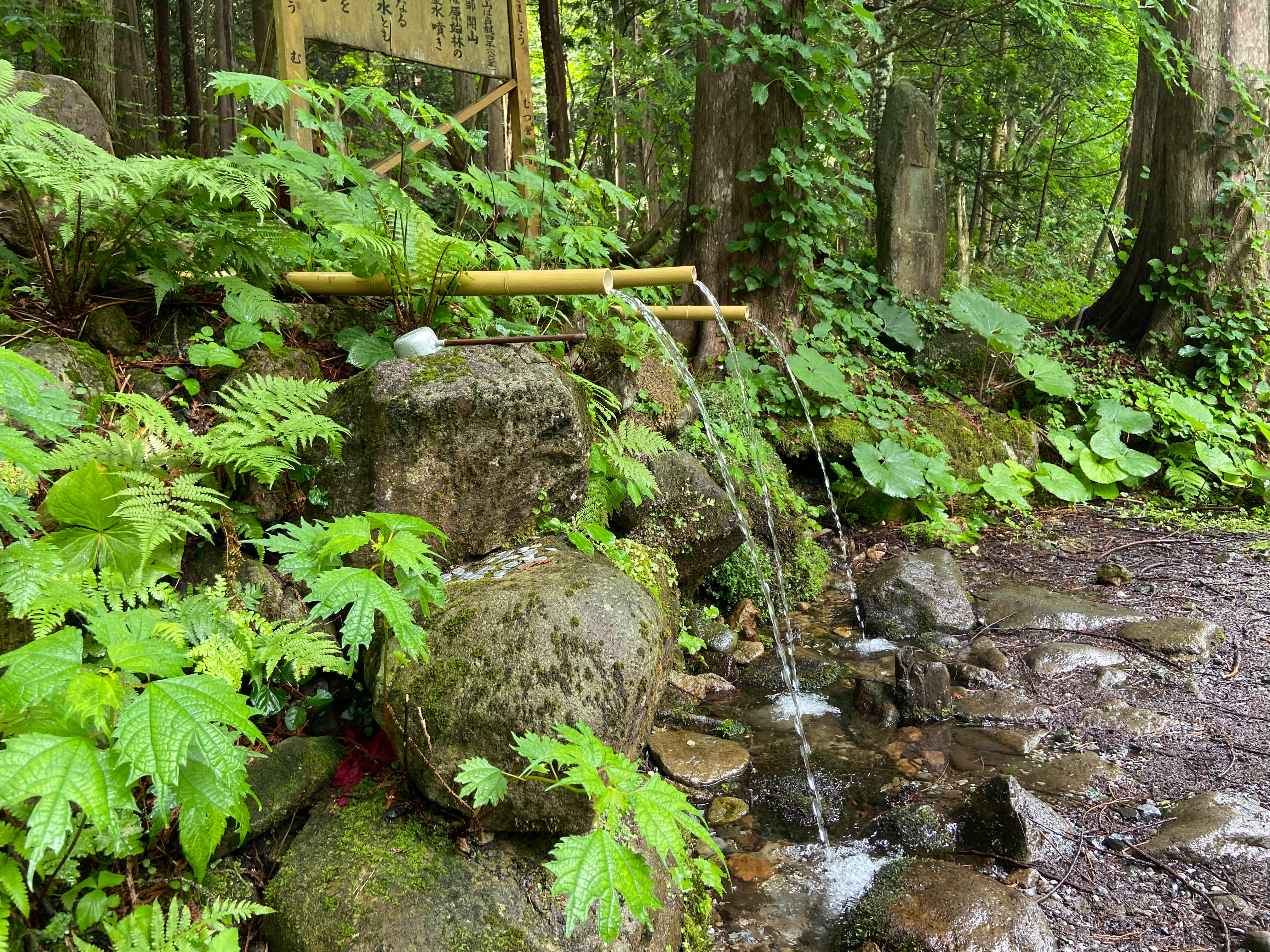
Before I reach the summit, I come across Osorezan Reisui, a fountain flowing with cold, clear water. It looks like a typical purification site, but legend has it that drinking the water from this spring will make you ten years younger.
Desperate to claw back lost time, I reach for the water, drink from its flow, and fill up my water bottle before continuing the climb.
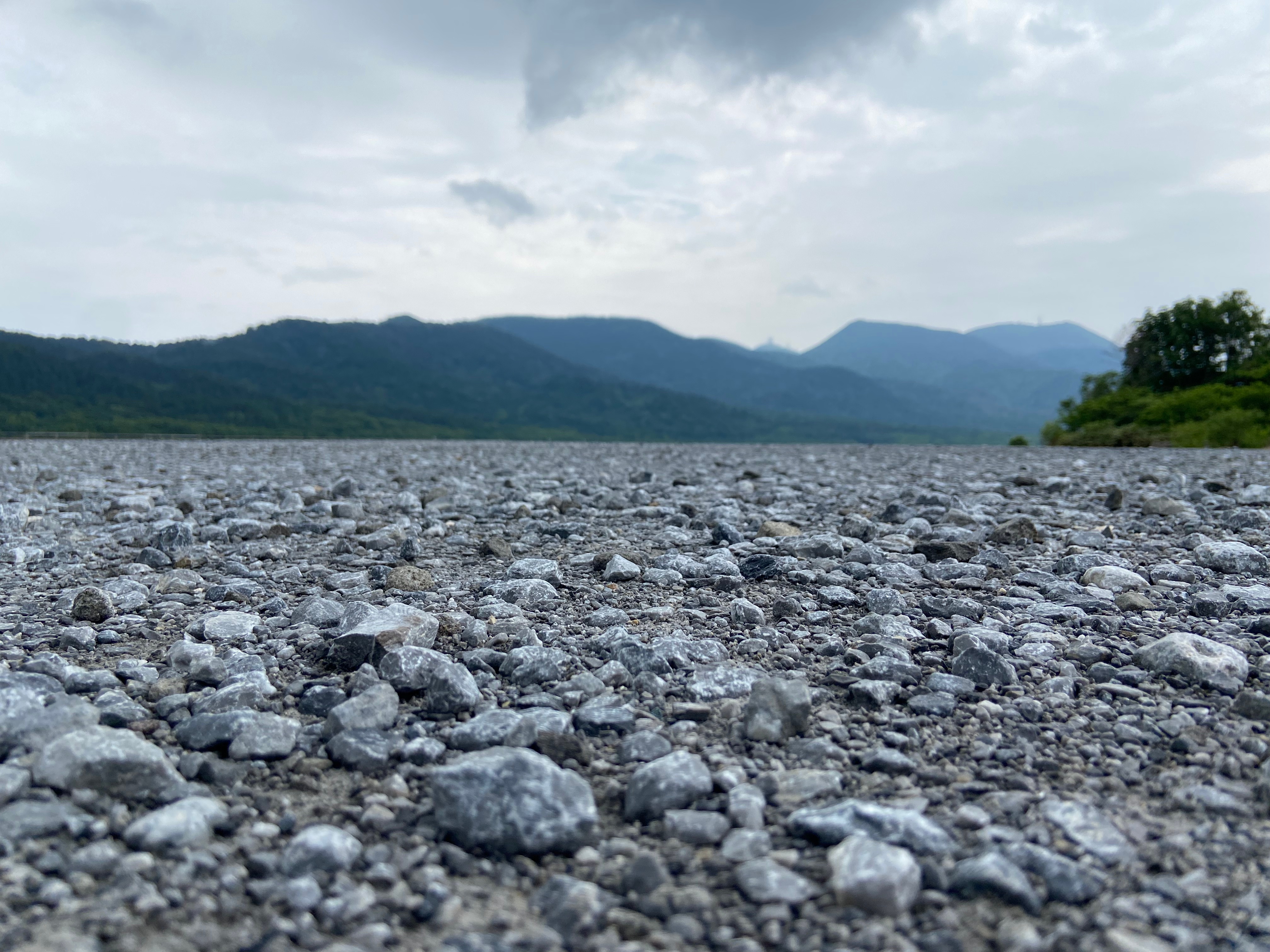
Further up, the trees and grass make way for shale and volcanic glass, and it is dry. There has been no rain of late to keep the dust down, so with every step the sulphurous ash creates clouds under my feet. Some gets into my mouth, and I choke. Luckily, I still have water from the fountain of youth, so I wash away the bitterness and the years before carrying on.
Higher up, the mountain opens its mouth wide. Nothing moves. There are no roots. There are no birds. Just the crunch of my footsteps echoes through the wasteland. Everything else is… still.
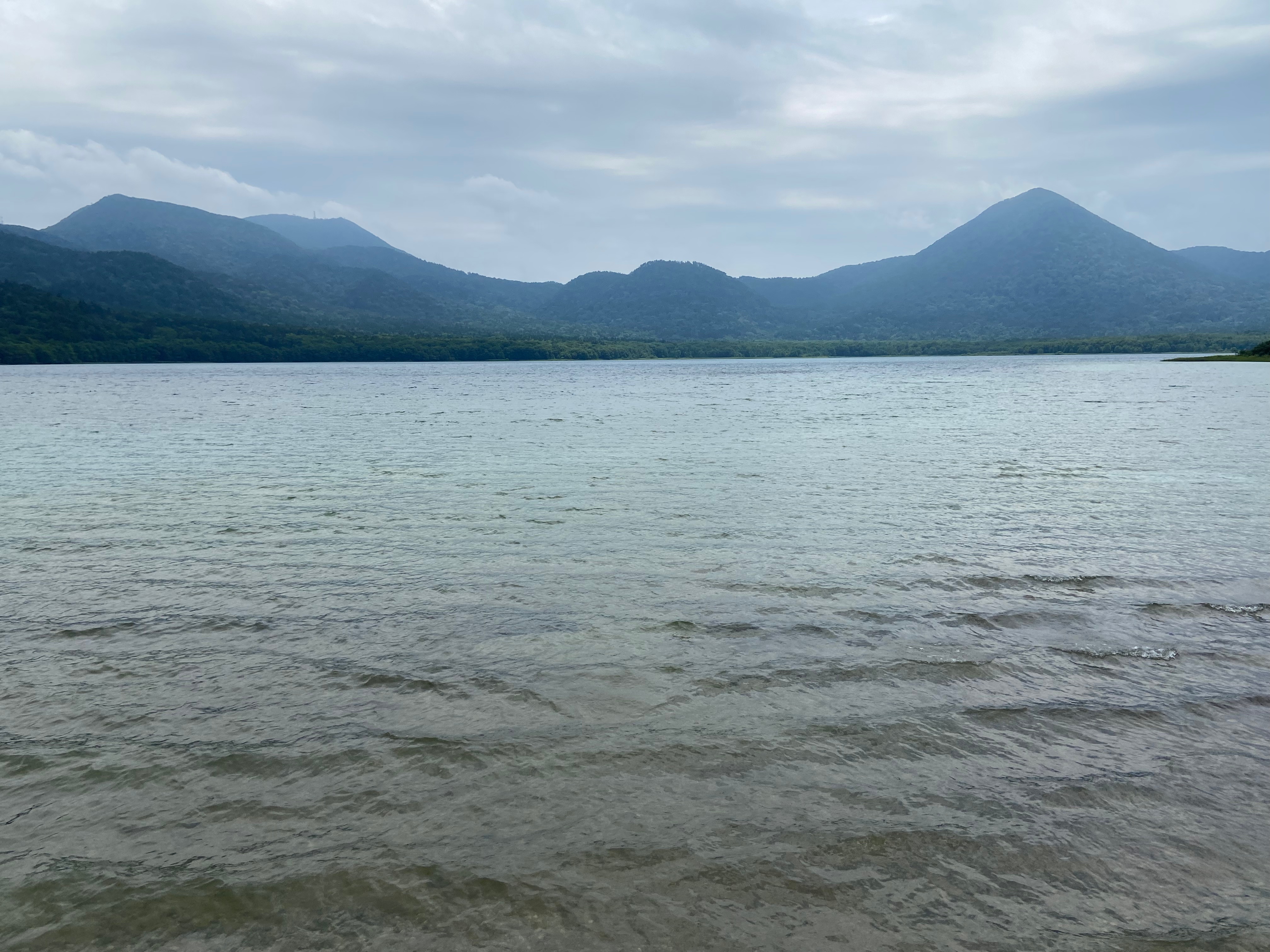
In the distance, Lake Usori lies in eerie repose, a lake of poison. The acidity is so high that nothing can live here. Even the wind seems unwilling to touch the surface, but I am.
Kneeling, I dip my hand into the water. A freezing chill shoots up my arm. For a moment, the water feels alive, tightening impossibly around my fingers. Not liquid, but something with intent. I wrench my hand away, breath unsteady, as if something almost followed me out.
I remain kneeling a while longer, lost terribly in thought. I watch as the ripples in the lake distort my own reflection. I see not just my face, but the faces of every version of myself I’ve left behind. I watch them shifting, like a shimmer of sorts. I take a deep breath, stand up, and walk away, before something walks away with me.
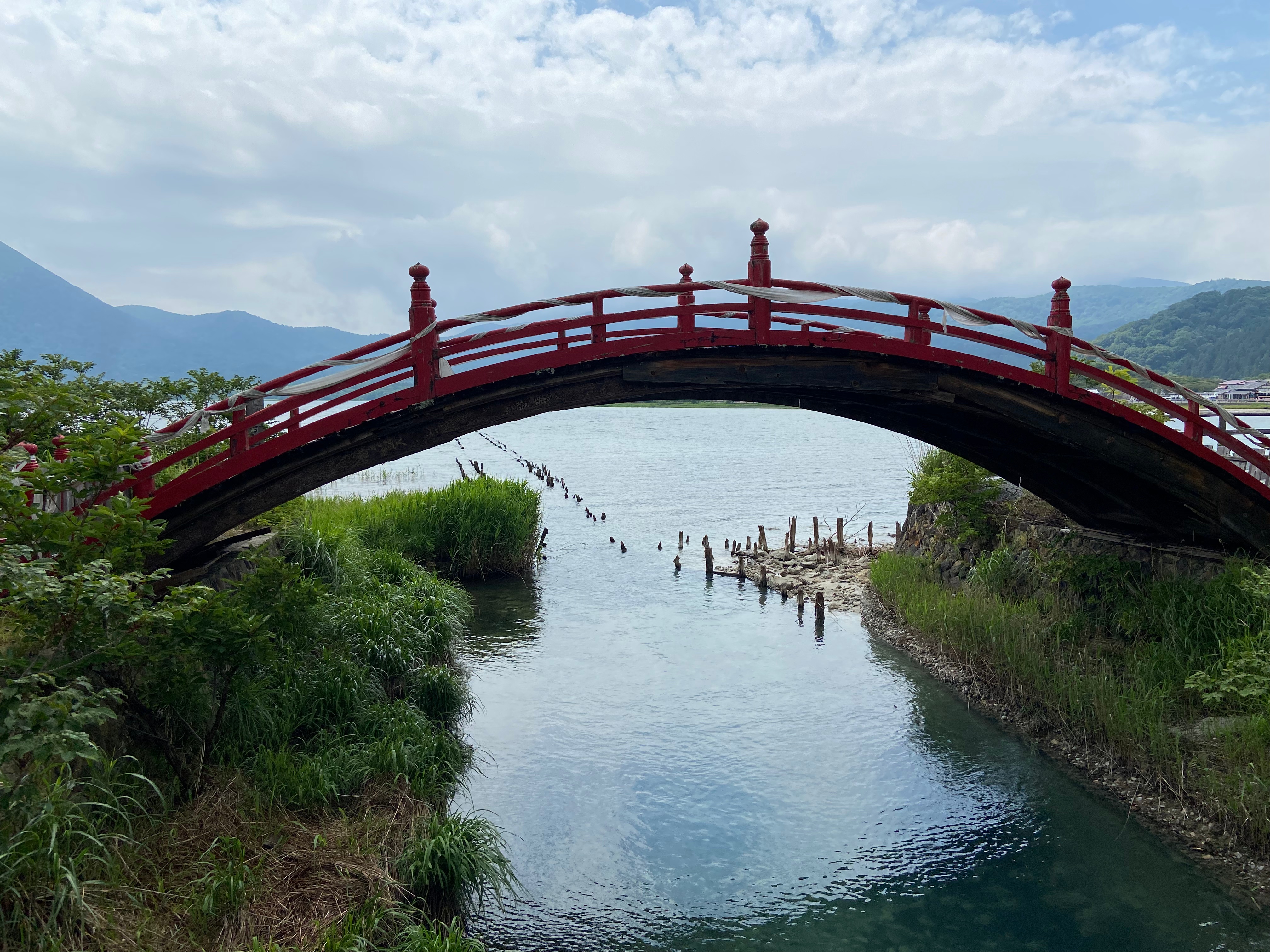
Draining from Lake Usori is the Sanzu River; its waters flowing silently, black and sluggish, like blood oozing from a wound that will never heal. It is at this river the dead must cross to move into the next world. The journey across this river reflects the life one has led: the good cross by bridge, the average wade through the shallows, and the bad must swim amongst the river’s monsters.
I watch the river for a time, wondering which path I would take. I approach the bridge, its red painted wood the only colour I’ve seen up on this mountain. I take a step toward it, but something inside me pulls back. Not fear or superstition; just a quiet, sinking knowledge that maybe I was here before, and I don’t think I should be here again.
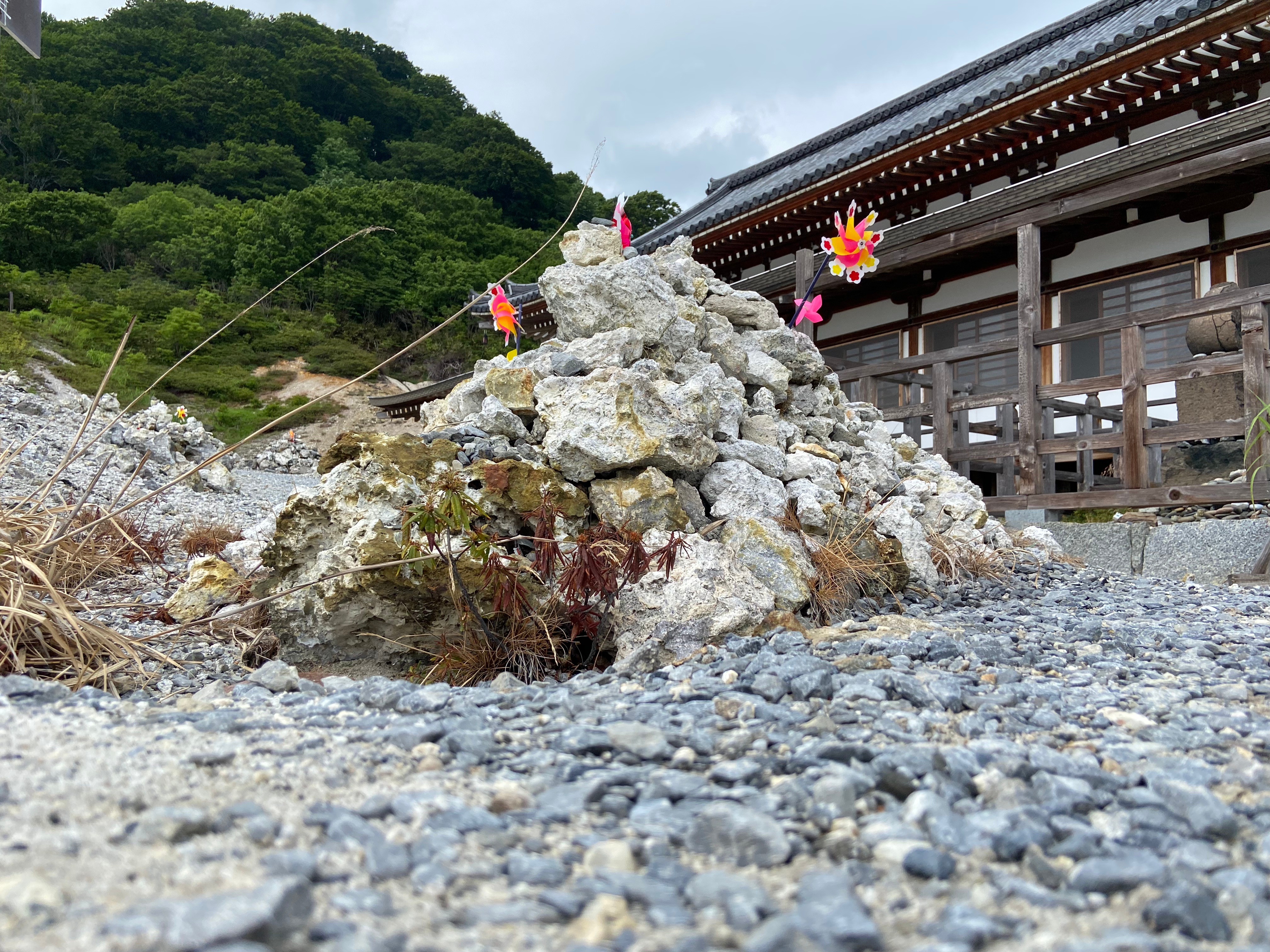
Along the riverbed, piles of pebbles litter the landscape, said to have been stacked by the spirits of unborn children or those who died young. These children build piles of rocks as an offering to Buddha, only to have demons knock them down, condemning the children to rebuild over and over, for eternity; forever trapped in the netherworld, unable to transcend.
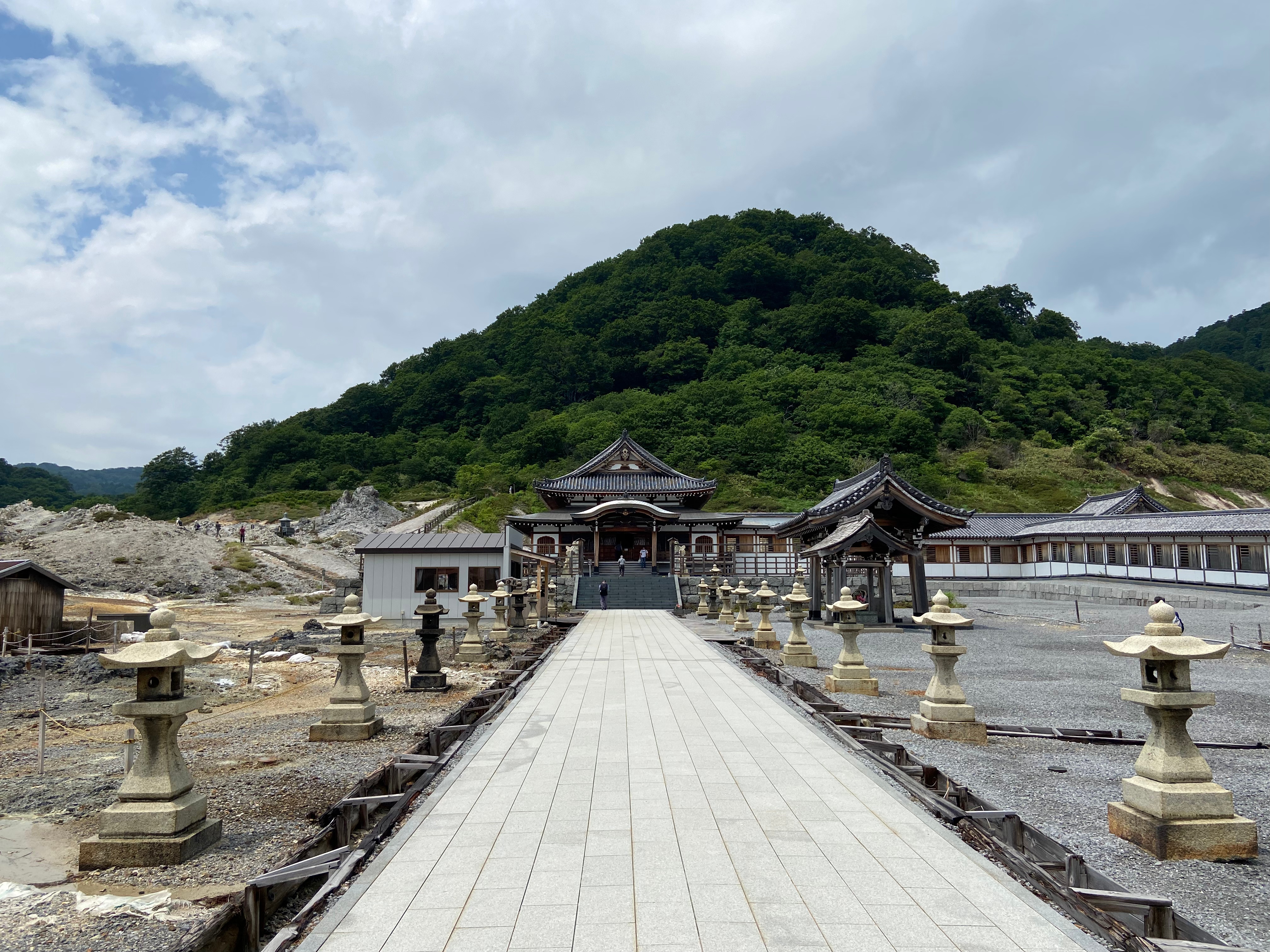
Not far from the river stands Bodaiji Temple, where monks pray for the lost souls who wander Osorezan. After all the stories of sorrow, the temple stands as the only promise of mercy.
Inside, the air hums with low chants. The scent of incense curls through the dim light, thick as fog, as if the prayers themselves are rising. The monks recite sutras; their voices steady. For all the suffering that lingers in the air, this place feels… still.
As the sky darkens, bruised and swollen with the weight of a coming storm, I take one last look at Osorezan. The myths here aren’t just stories. They are things we carry. Things we live. The demons at the river are the silent battles fought in hospital beds. The pebbles are the burdens we carry and rebuild, again and again. And the river, the slow, black current, is the harrowing divide between despair and hope; a crossing that everyone must face.
I turn away and begin my descent.
Back at my hotel, an old building stitched together with crumbling wallpaper and tired walls, I try to relax, but the lights buzz like a wasp in a lampshade, and the floorboards creak even when I’m not moving, as if something beneath them is shifting.
I turn on the television. The screen blinks to life; the world rushes back in, bright, absurd, relentless. A puppet show flickers on, but the puppets are just human hands wearing tiny masks. They bow, expressionless. The audience laughs. I change the channel. Static hums for a second too long. An old woman in a blindfold stumbles through a collapsing obstacle course. Laughter again, louder this time. The world keeps moving. Always moving. And I am here… still.
I change one last time. A man in a bear costume is balancing ramen bowls on his head whilst a studio audience screams. I turn the TV off. Hell can wait.
Outside my window, the mountain holds its breath. Somewhere, beneath the floorboards, the dead keep stacking stones.
My breath rises in a twisting vortex of white as I stand at the platform of Matsue Station. The temperature hovers at zero on this early winter morning, and condensation drips from the pipes overhead. The chill in the air is palpable, and I can feel it seeping into my bones.
In Japan, no matter where I travel, I can be certain that I will come across iconic landmarks, picturesque bridges, majestic mountains, and ancient shrines. Today, my journey begins with a visit to the oldest shrine in the country, a place rich in history and tradition.
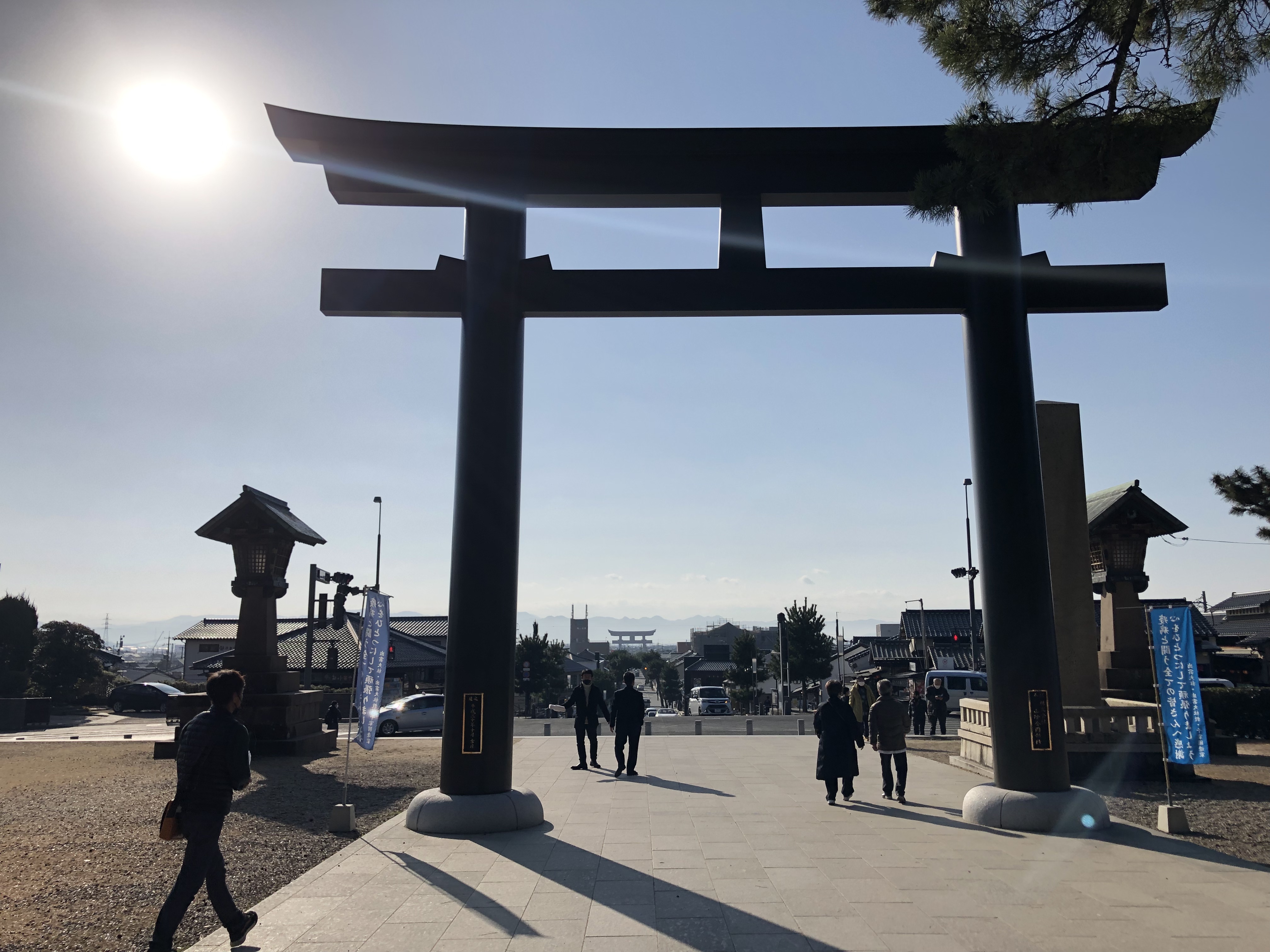
Izumo-taisha, also known as Izumo Grand Shrine, has a history dating back over 2,000 years. As I pass through a large torii gate the sun comes out, and despite the chill still lingering in the air, it begins to warm up, much to my delight.
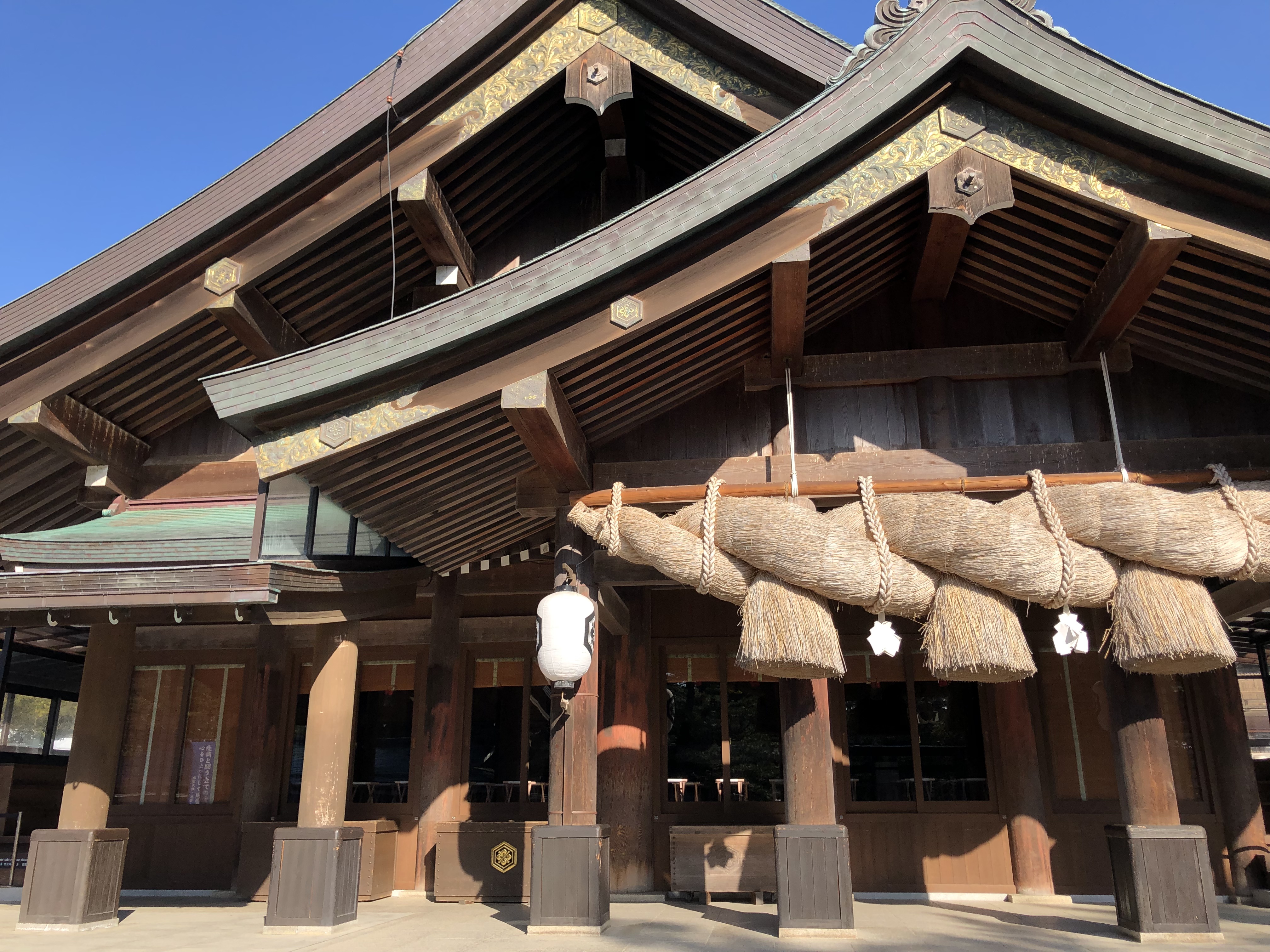
The main shrine is located in the city of Izumo in Shimane Prefecture and it is dedicated to the god Okuninushi, who is the god of marriage and prosperity in Japanese mythology. The shrine’s main hall, known as the “Taisha”, is made of cypress wood and is one of the oldest structures in Japan. The shrine is so sacred that it’s said that all the other gods from all the other shrines from all over Japan meet up here every year for the entirety of October to hang out. This month is known across the country as the month without gods.
After wandering the shrine complex for a while, I return to the main road where I find small local shops selling ice cream, fish-shaped waffles, and powdered green tea rice cakes. The atmosphere is peaceful, and I decide to walk the length of the street, taking in the many stores and restaurants. After that, I arrive at the nearest train station. I need to travel three hours now to see a bridge.
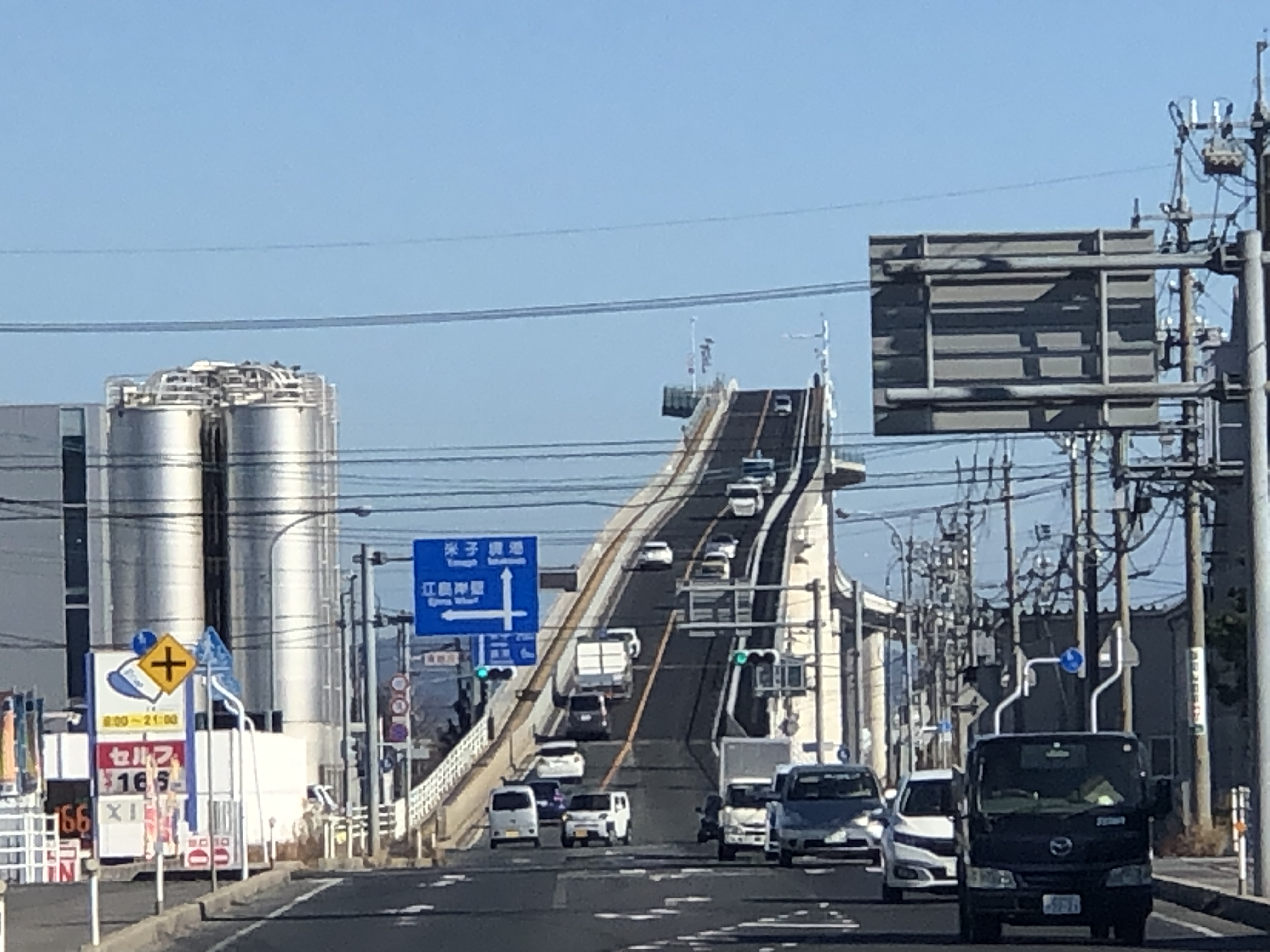
The morning chill is now long gone, as I begin my walk to Eshima Ohashi Bridge, the weather is completely different from my cold start, 16 degrees and a clear blue sky greet me. As I reach the bridge I’m taken aback, much like the weather today, this bridge also defies reality, its unusual shape creates an optical illusion, like a twisted mirage, and it makes it seem as though the cars could quite easily fall off the road.
I cross the Eshima Ohashi Bridge over Lake Nakaumi. The bridge took seven years to build, and it is the largest rigid-frame bridge in Japan. It connects Shimane Prefecture to Tottori Prefecture, and as I traverse its frame, the clear sky allows for a great view of Mount Daisen, a dormant stratovolcano. At 1,709 metres tall, it is the highest mountain in this region of Japan.
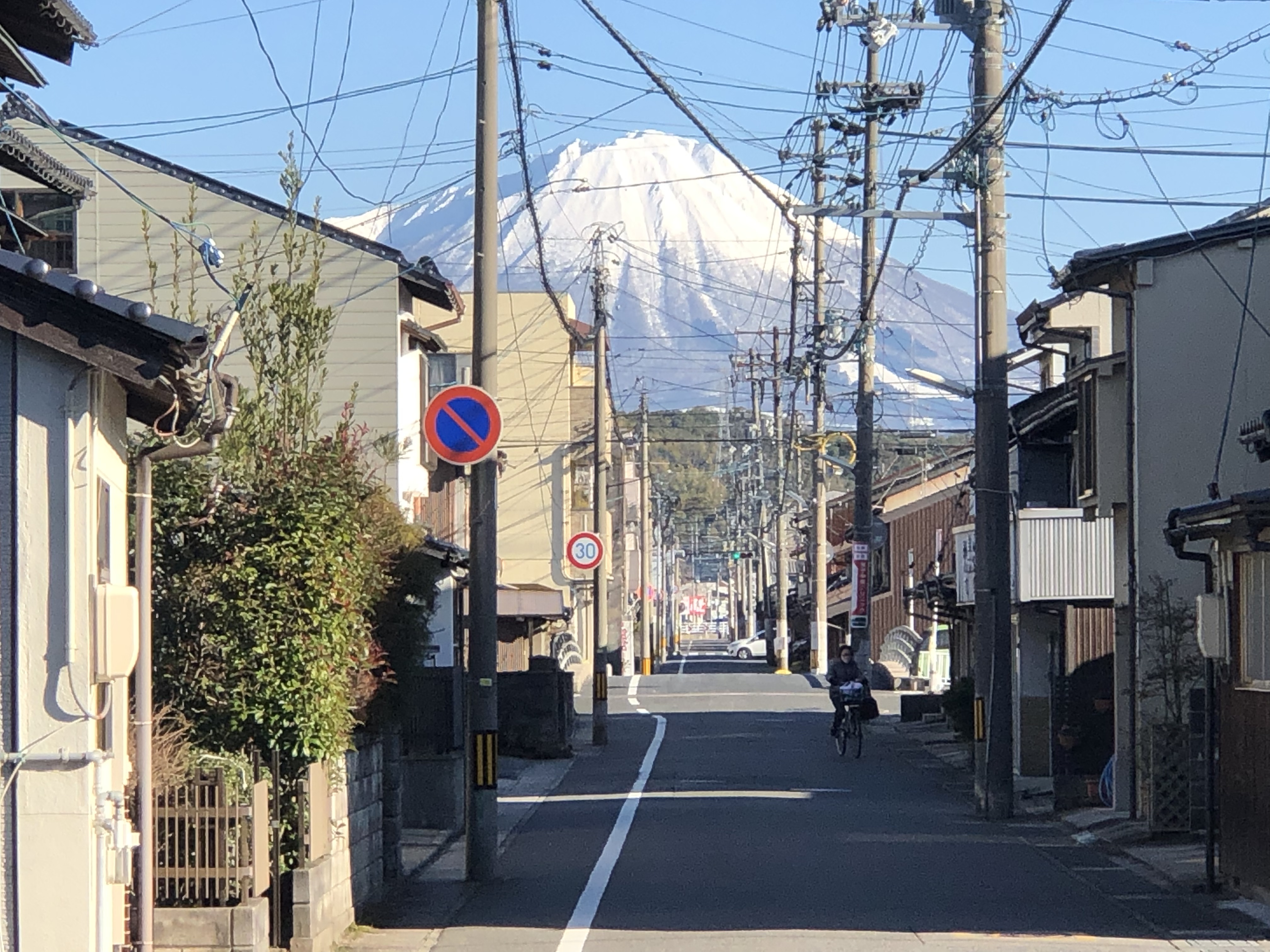
The mountain is an impressive sight, so I cross into Tottori, walk to the nearest train station, then take a train towards Mount Daisen for a better view, hoping to get a rare shot of it from the streets below. I do just that. The mountain is breathtaking from here, its snow-capped peak resembles Mount Fuji.
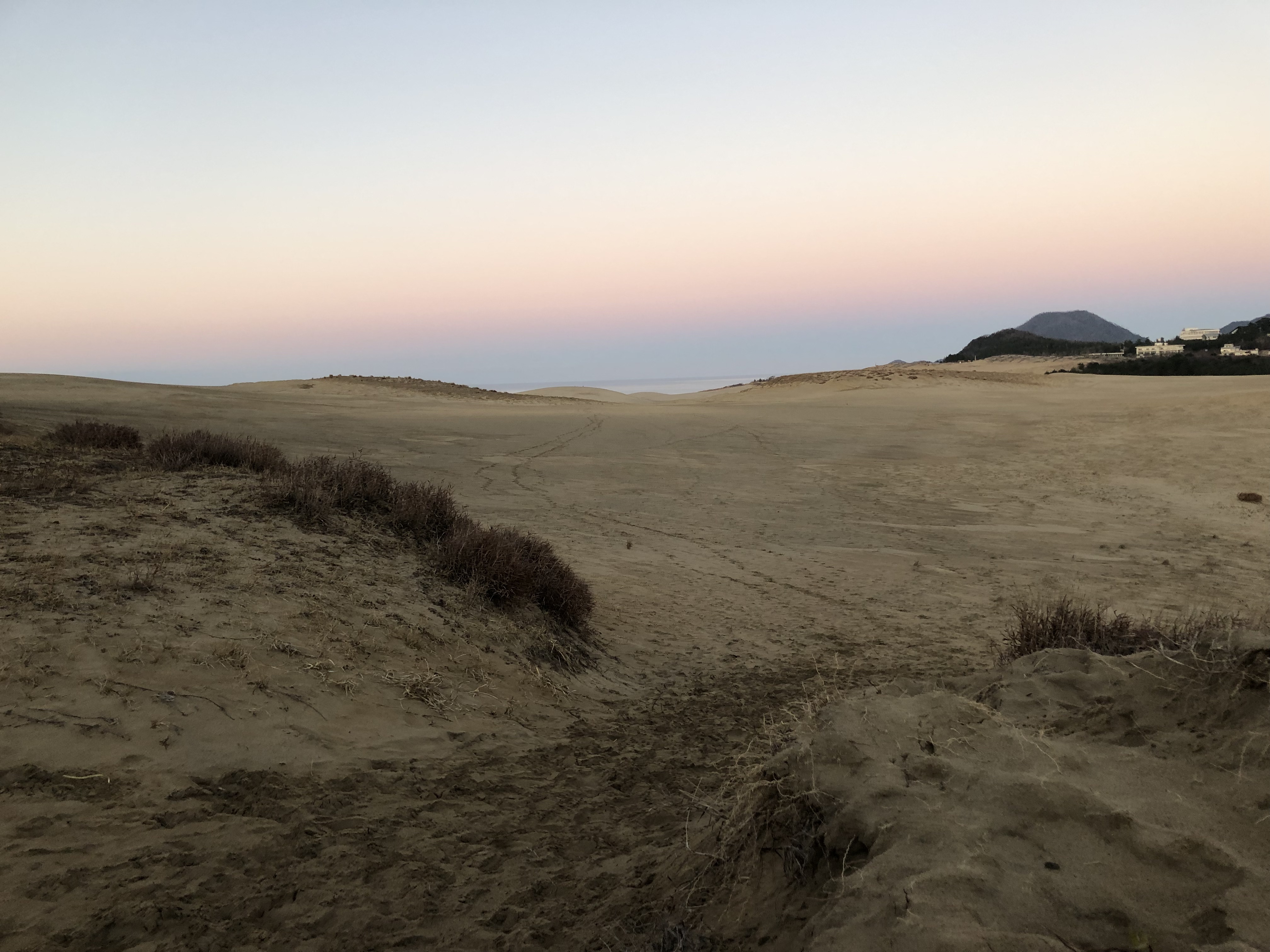
Having now visited a mountain, bridge, and shrine, I decide to find out what else Tottori has to offer. It turns out that Tottori is home to the only large desert in Japan. From Tottori Station, I have to walk for a little under six kilometres. Having wasted a lot of my day taking trains around the country, I have two pressing concerns. The first being that my phone battery is almost dead – I took far too many photographs of the bridge and mountain. The second concern is that it will be dark soon, and a desert at night, I imagine, isn’t going to be very photogenic.
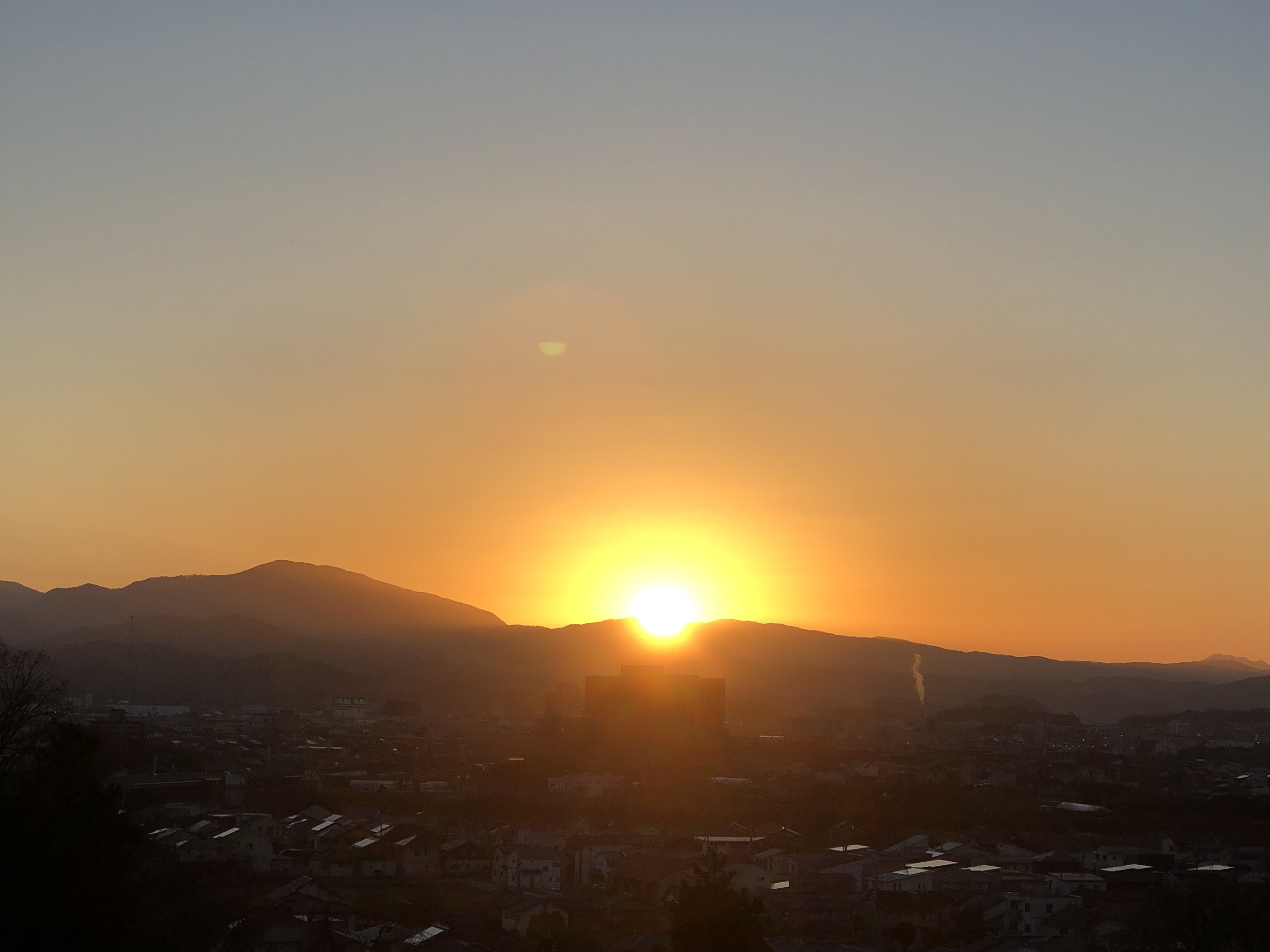
As I cross the Fukuro River, one of my concerns is confirmed, as I watch the sun begin to set above Lake Koyama, and darkness begins to engulf the sky. I have to pass through a tunnelled underpass for vehicles, dimly lit and without a footpath.
Eventually, I see a sign for Tottori Sand Dunes, and check my phone to find that I’m at one percent battery. The desert here is home to the largest sand dunes in Japan, stretching for 16 kilometres along the coast of the Japan Sea. The dunes are a unique geological formation, created by sediment being transported by the nearby Sendai River and deposited on the coast over thousands of years. The dunes are constantly changing shape due to the wind and weather. In the summer, there are even camels here to ride.
As I take out my camera to snap a photograph of the desert, my phone turns off. I’m not sure if I even captured the single photograph, and feel I might have made a wasted journey. Further darkness begins to cloud the air, and after walking on sand for a time, the chill from earlier returns, and at some point it begins to snow. I decide it’s probably a good time to head back to where I’m staying tonight in Matsue.
I pass back through the dimly lit underpass and try to retrace my steps back to the station, I look for street signs, but it seems as though they’ve deserted me, all maps and directions to Tottori Station seemingly removed at night, leaving me lost in the dark, and freezing in the snow, and experiencing yet another season on an unpredictable day. I see a man on his bicycle and ask him for directions. He takes out his phone, brings up a map, and tells me to go straight. So I go straight.
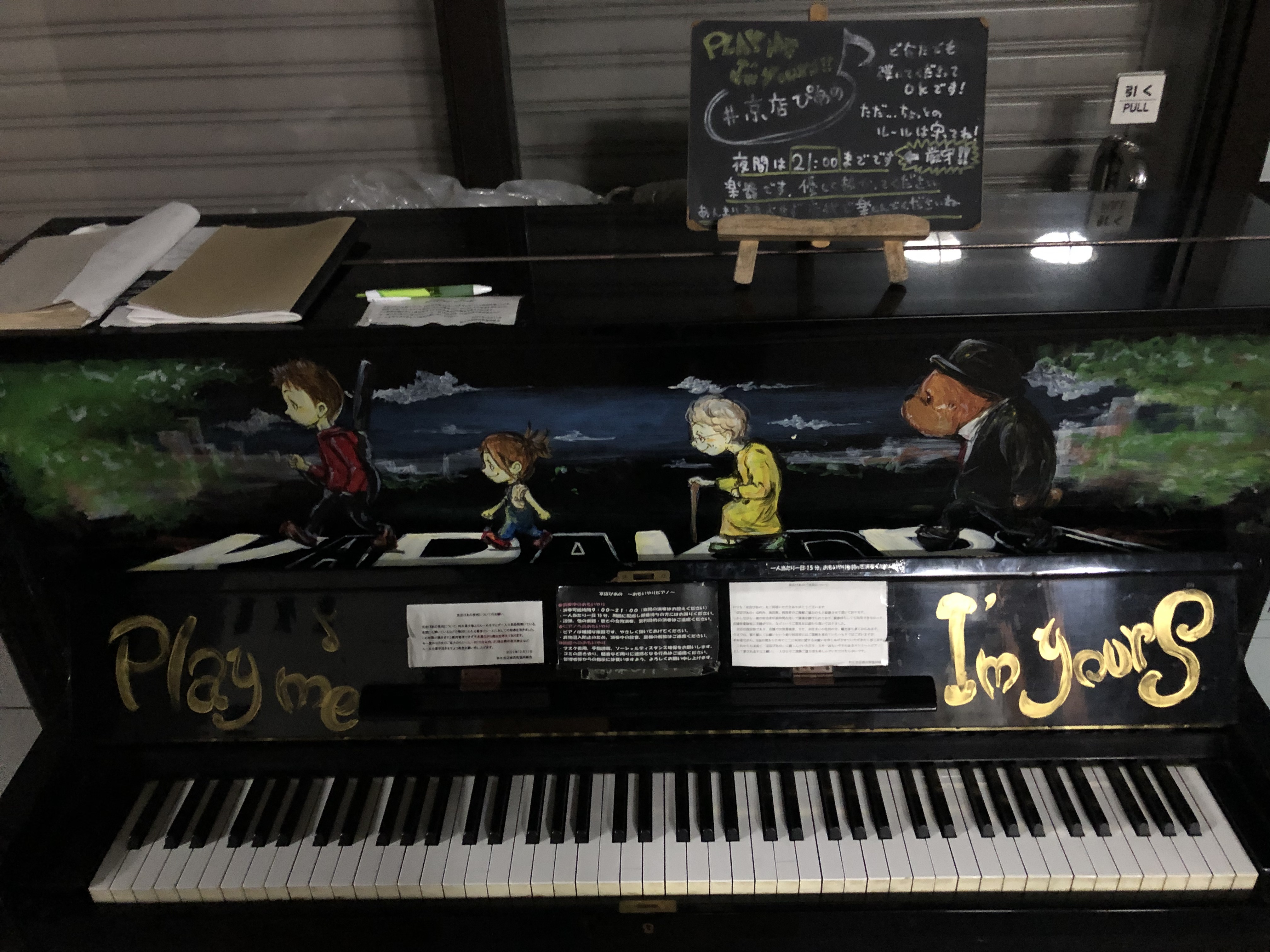
Eventually, I arrive back at Tottori Station and get the train to Matsue. I’ve completely lost count as to how many trains I’ve taken today, I think it’s twelve. At Matsue Station, there is no sign of any snow. Relieved, I return to my hotel to charge my phone before heading out for some food. On the way, I pass a piano on the street and decide to have a play.
As my fingers grace the keys of the piano, I am enveloped in a symphony of sound. The notes swirl around me like a gentle snowfall. I play on until my hands are numb with cold.
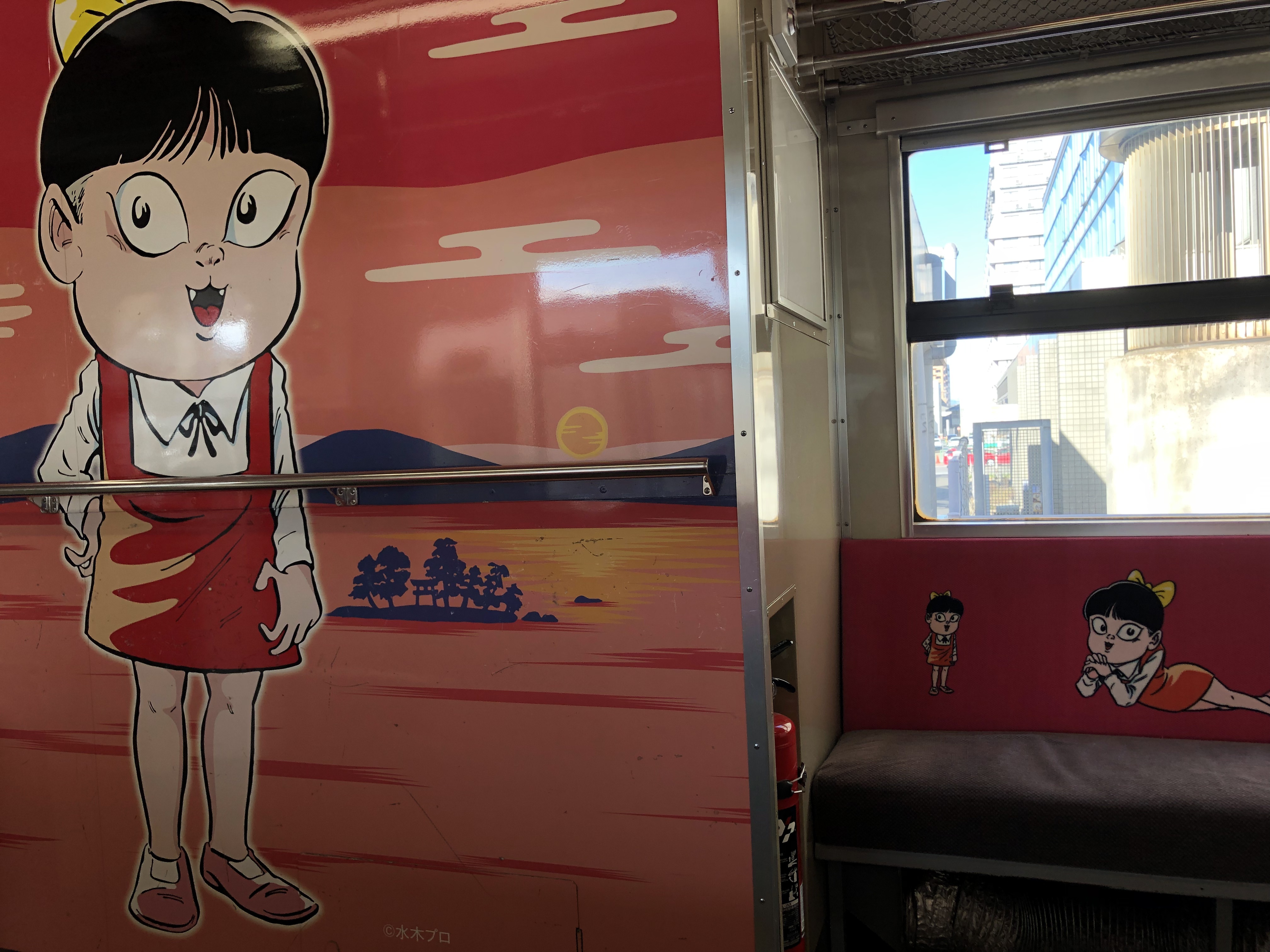
I stand at Yonago Station, my eyes fixed on the tracks as I await the arrival of my train from Track 0. This station, also known as Ratman Station, is located in Tottori Prefecture near the border of Shimane. The stations on the Sakai Line all have an alternative name, and this one is no exception. As my train arrives, I can’t help but notice the lively characters from the popular anime, GeGeGe no Kitaro, decorating its exterior. The walls are adorned with illustrations of Nekomusume, a supernatural cat known as “Cat Girl,” who, to my surprise, also serves as one of the train’s announcers.
As the train chugs along, it gently rocks back and forth, the sensation akin to being on a ship at sea. Nekomusume is normally a reserved yokai girl, however she is known to shapeshift into a fearsome catlike monster with razor-sharp fangs and piercing eyes, particularly when she is angry or hungry for fish.
Finally, I arrive at the port town of Sakaiminato and get off the train at Babasakicho Station, nicknamed ‘Kijimuna’ meaning Okinawan wood spirits. As I exit the station, I feel lost and consider whether I have made a mistake. But after a short walk, I see a sign pointing me to my destination: “Welcome to the World of Mizuki Shigeru.”
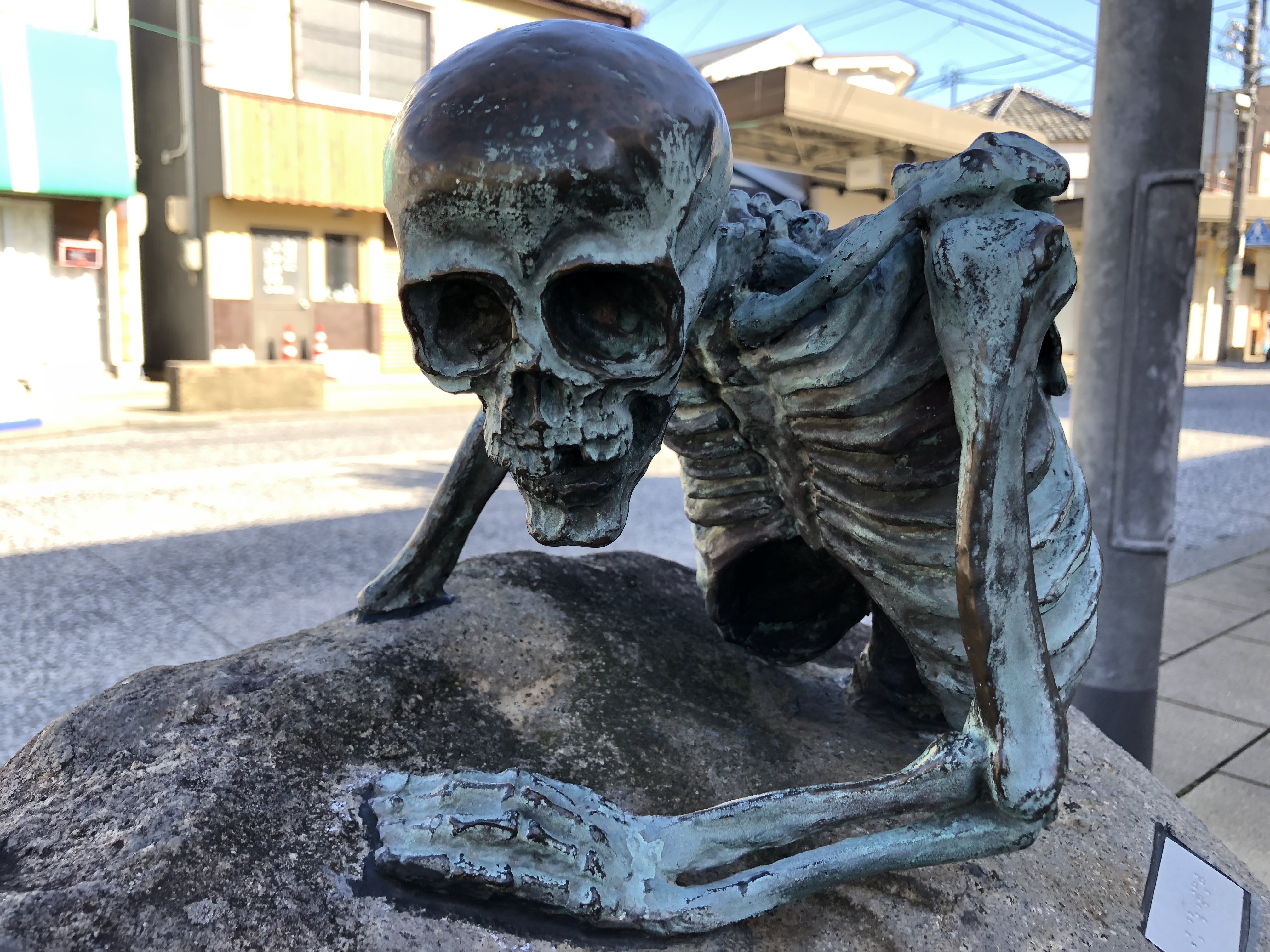
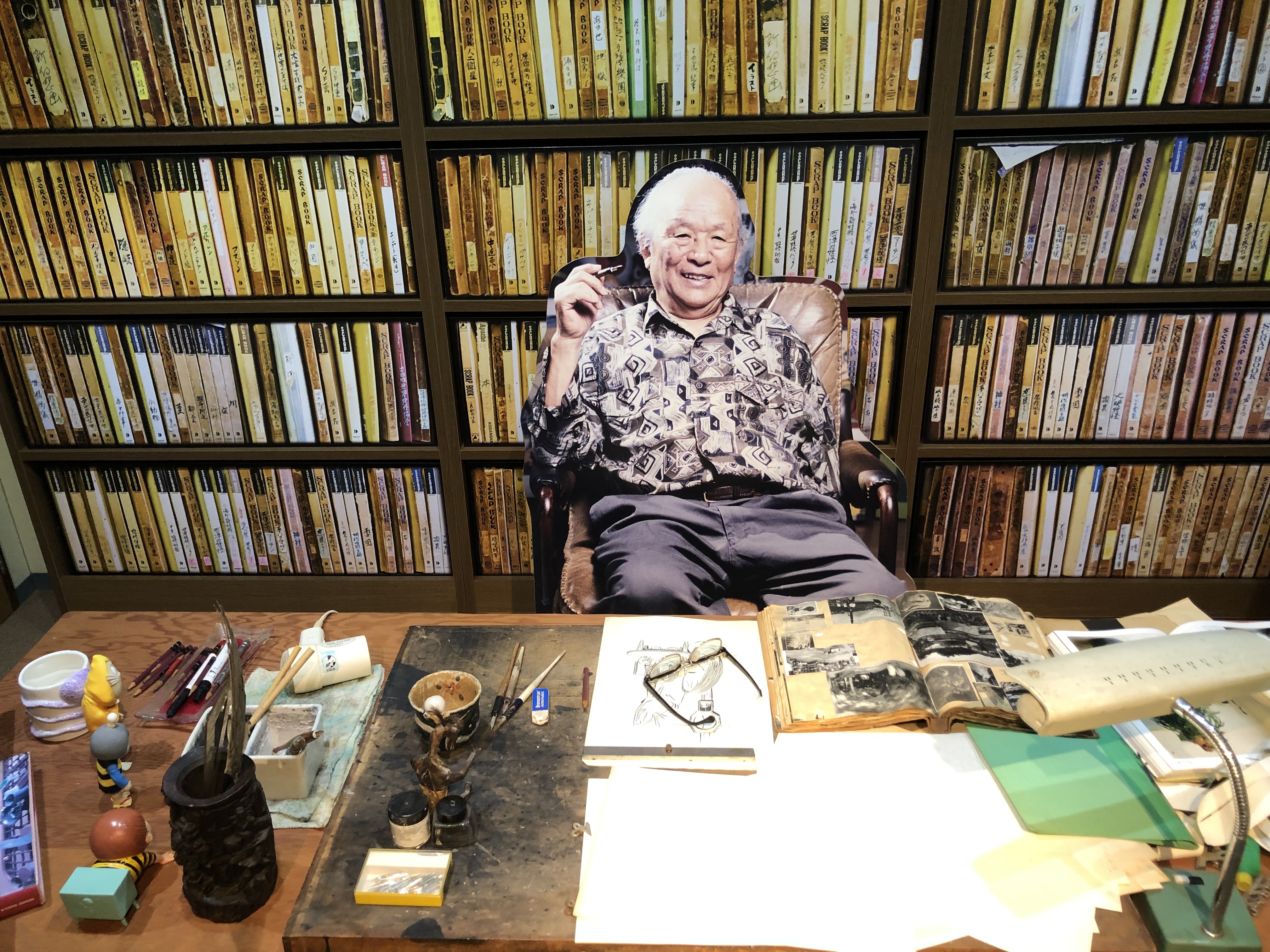
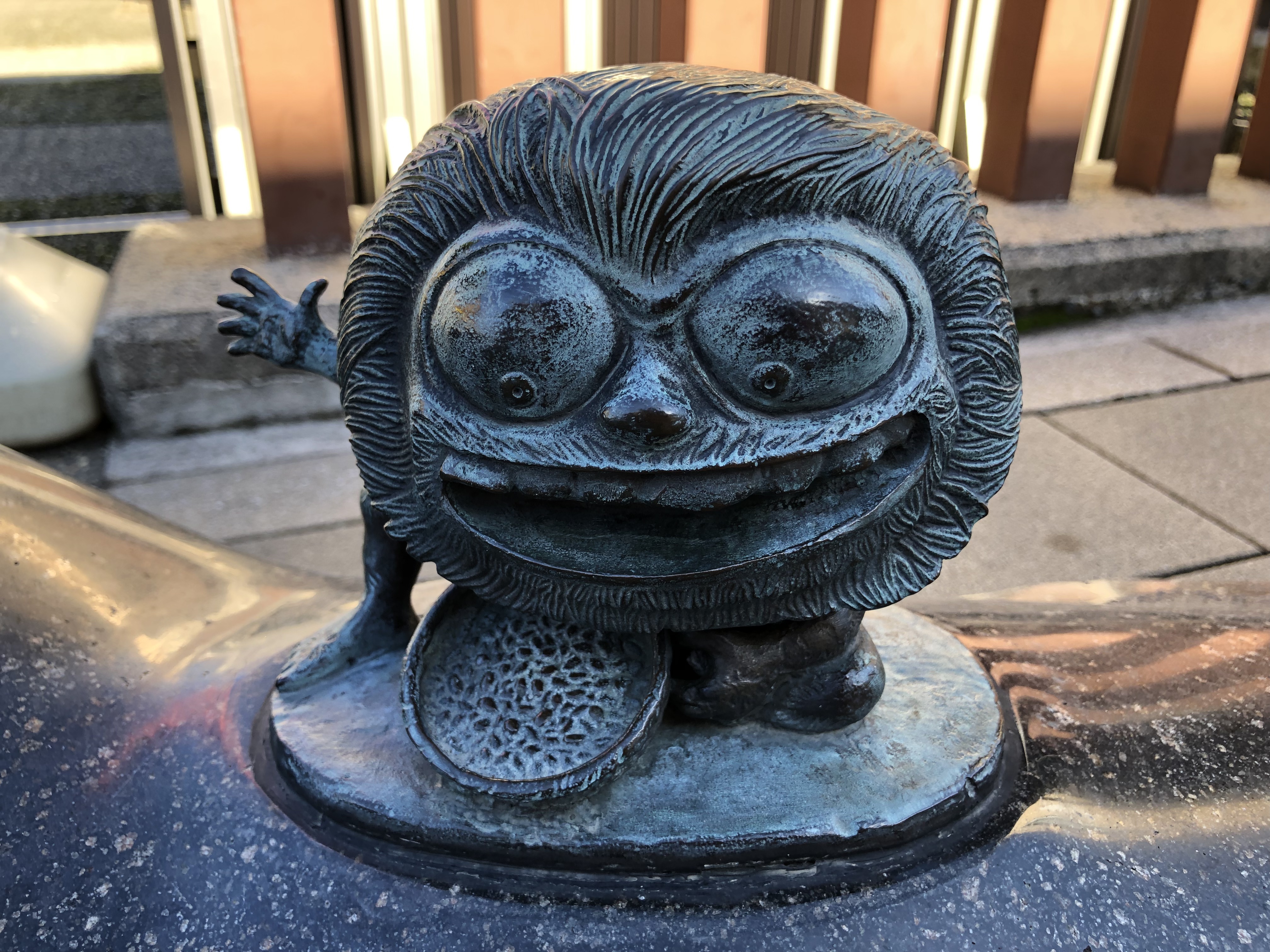
Mizuki Shigeru was a Japanese manga artist, born in 1922 and raised in the town of Sakaiminato. Upon arriving at Mizuki Shigeru Street, I am immediately struck by the abundance of weird statues that line the road. A total of 177 bronze yokai statues, each depicting a different supernatural entity from Japanese folklore, have been placed along the 800-metre street. Mizuki Shigeru made his name by portraying such entities in his work and the area here is dedicated to his legacy.
The street is filled with souvenir shops selling official Mizuki Shigeru goods, and the entire road is dedicated to the artist. It’s clear that even in death, Mizuki Shigeru has become immortalised with not only a statue, but an entire street and a train line. The vending machines are adorned with illustrations of monsters, there are photo booths where you can take a picture with yokai, there is a large museum, and even a place called Yokai Shrine.
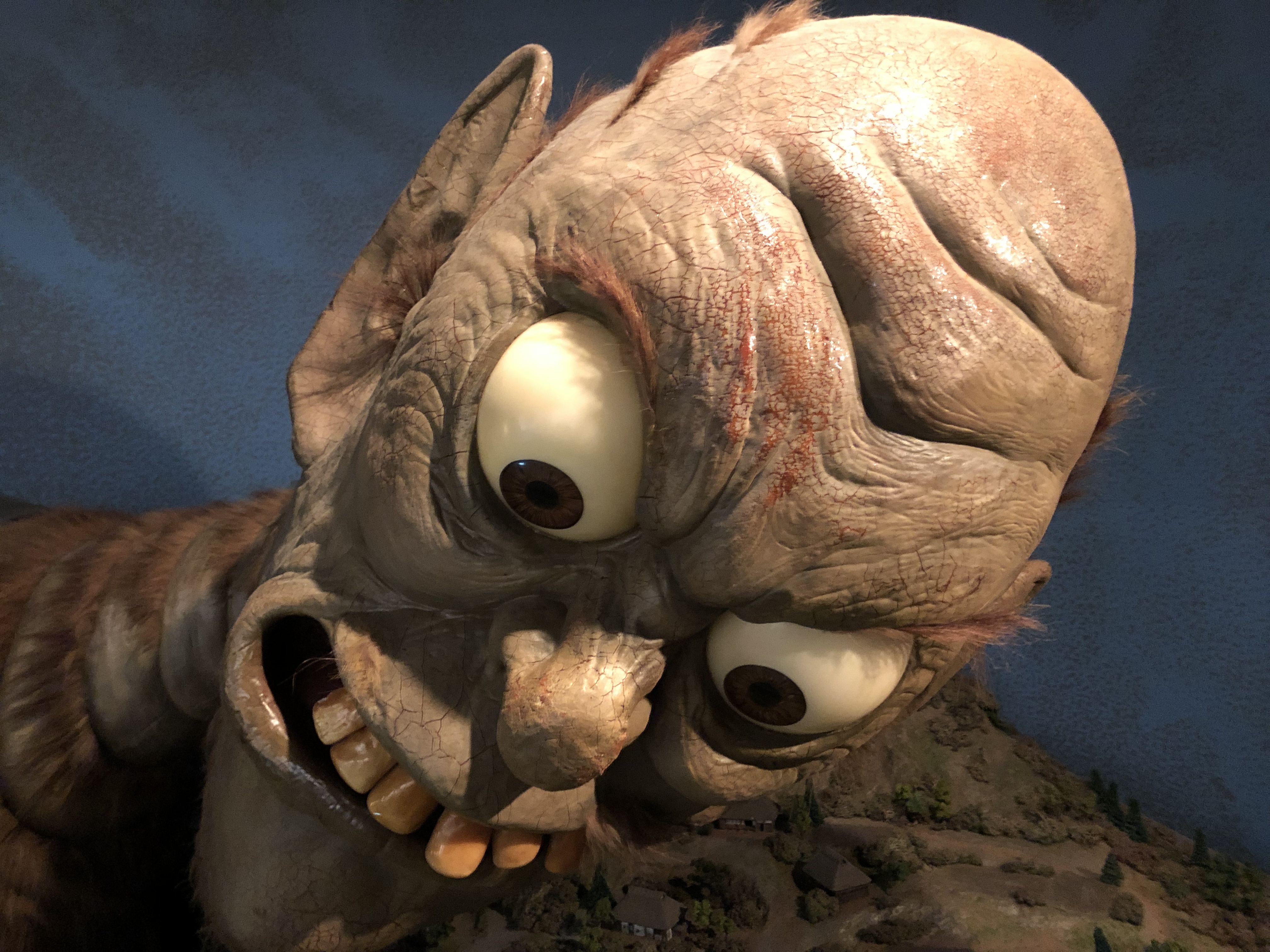
The renowned Mizuki Shigeru Museum showcases many of Mizuki’s works, including manga books from his “only-for-rent-manga-period” and other masterpieces about yokai. The museum also displays numerous photographs and materials about the writer’s trips and his research of the yokai world. Visitors can even find yokai that lived in ancient times in Japanese households. The museum truly immerses visitors in the world of yokai and the brilliance and wonder of Mizuki Shigeru’s work.
The museum’s flyer sums it up best, “You will meet a lot of yokai. Hope you will become friends with them.”
Continuing my exploration of the museum, I pass books and board games, and a lot of comics, most of which feature imagery that depicts death. The museum spans a massive ten rooms and includes original cells, drawings, a bronze engraving of Mizuki’s palm print, his passport, and a complete timeline of his life.
Weird, creepy music plays as I pass through a haunted house. I learn in the museum of an interesting temple over in Matsue Prefecture, three hours from here by train. The temple is very much related to the story of Mizuki Shigeru’s life. As I leave the museum I pass a terrifying wall of heads in the Yokai Cave, and finally outside I discover a traditional Japanese garden littered with macabre images.
After a few hours on the train, I arrive at Ichibata-Guchi Station. The train station features a small statue of yokai. As I exit the station, a really old woman approaches me and starts chatting in Japanese. She is surprised to hear that I am planning to walk to the temple, as it is about five kilometres away and up a mountain. The walk is quite difficult, she warns me.
As I begin my hike, I walk down a conveniently straight stretch of road. The first car I see since leaving the station is driven by a Japanese man who, for no apparent reason, smiles and bows his head at me. A short distance later, I come across two stone lanterns that mark the beginning of the route, which will start to incline steeply. From this point, the footpath vanishes leaving two lanes of an empty road devoid of traffic or vehicles. As the path becomes steeper still, it meanders and curves up the mountain and I find that the further and higher I climb, the better the view becomes. At one point I can make out Lake Shinji in the distance.
As I near the top, I realise how hot it is, and it doesn’t help that I am wearing a thick winter coat. It must be 20 degrees. The breath of winter now a fiery gasp, as the planet scorches in its rage.
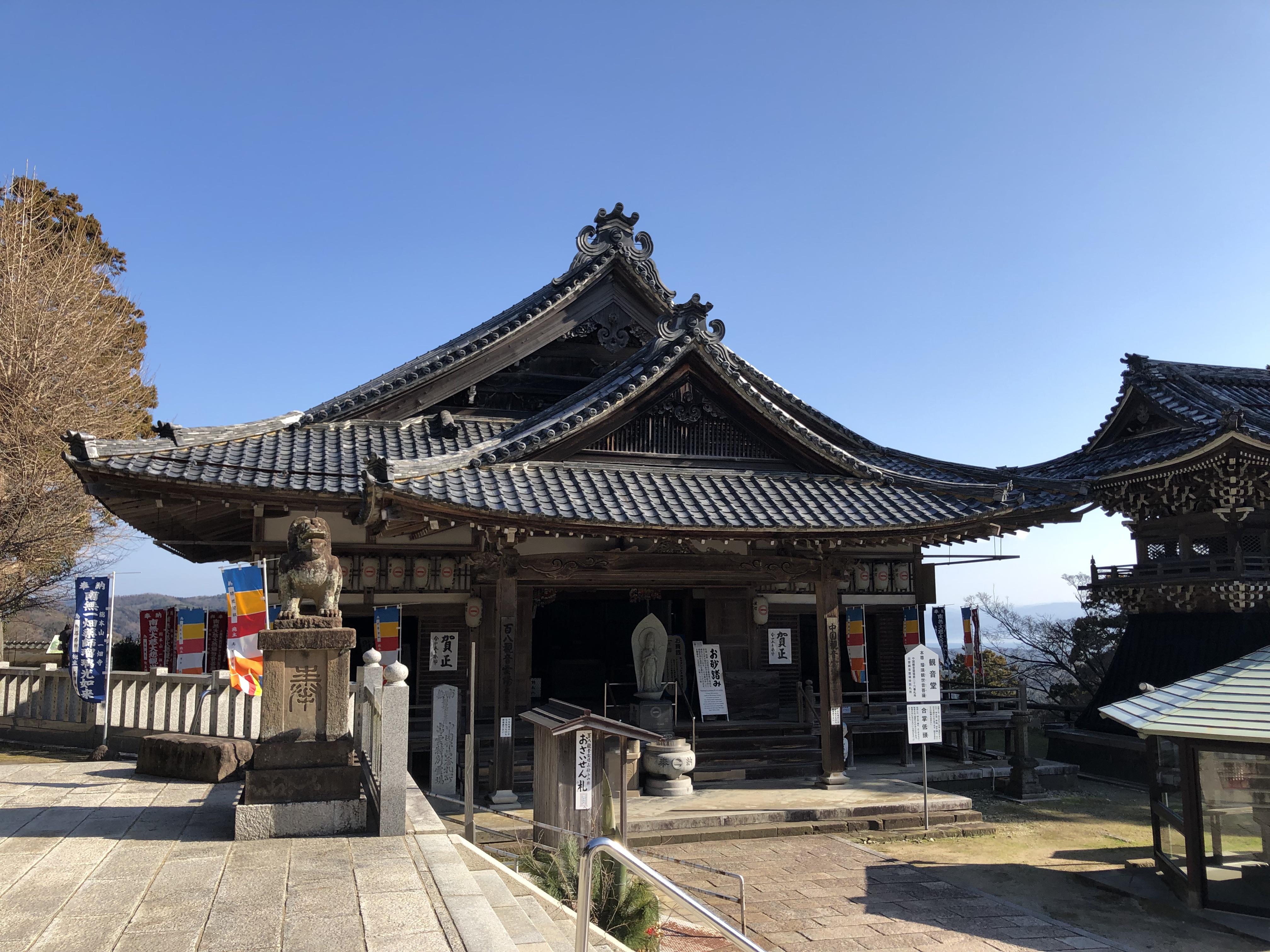
After a challenging hike I reach Ichibata Yakushi, a Zen Buddhist temple, and part of multiple pilgrimages, one of which includes visiting 108 Kannon temples in Japan. The temple was said to be founded after a monk named Yoishi followed three white foxes up this mountain, and decided to build a temple at the site where the foxes led him.
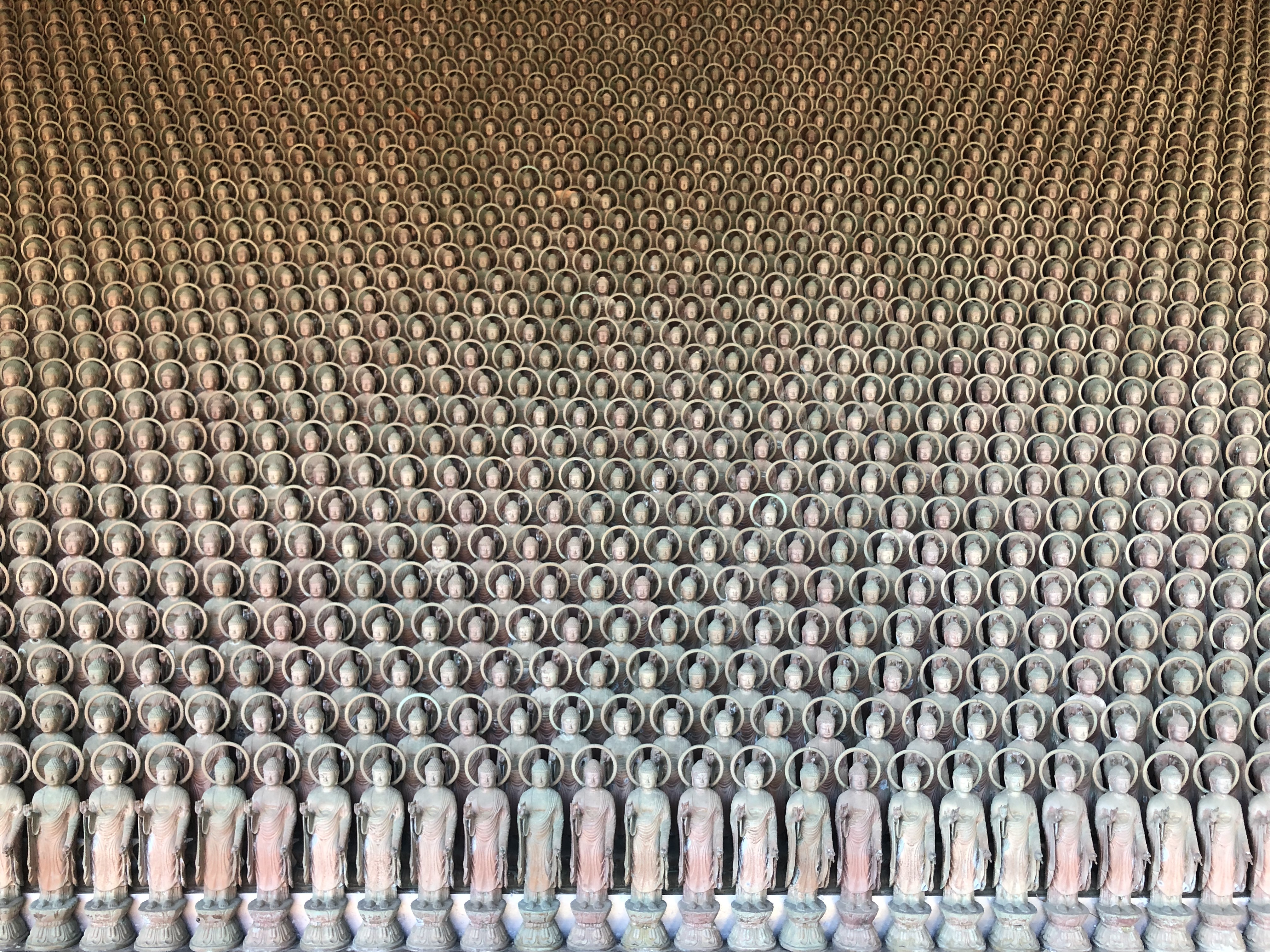
The reason for visiting this temple today is that the story goes that Shigeru Mizuki used to visit here a lot, and that a ghost of a really old woman would meet him here, whispering to him all the legends and stories he used in his creations. I explore the temple grounds, and get a feeling that someone ordered a few too many statues. It is said that there are 84,000 statues here, however, I count just 30,780.
As I continue to explore, I decide that it’s really quite beautiful up here. The area also features mountain cottages to rent for a night for as little as ¥10,000, offers stunning views of the landscape below, and for some reason, appears to be really popular with dog owners, as I count five dogs within the temple grounds.
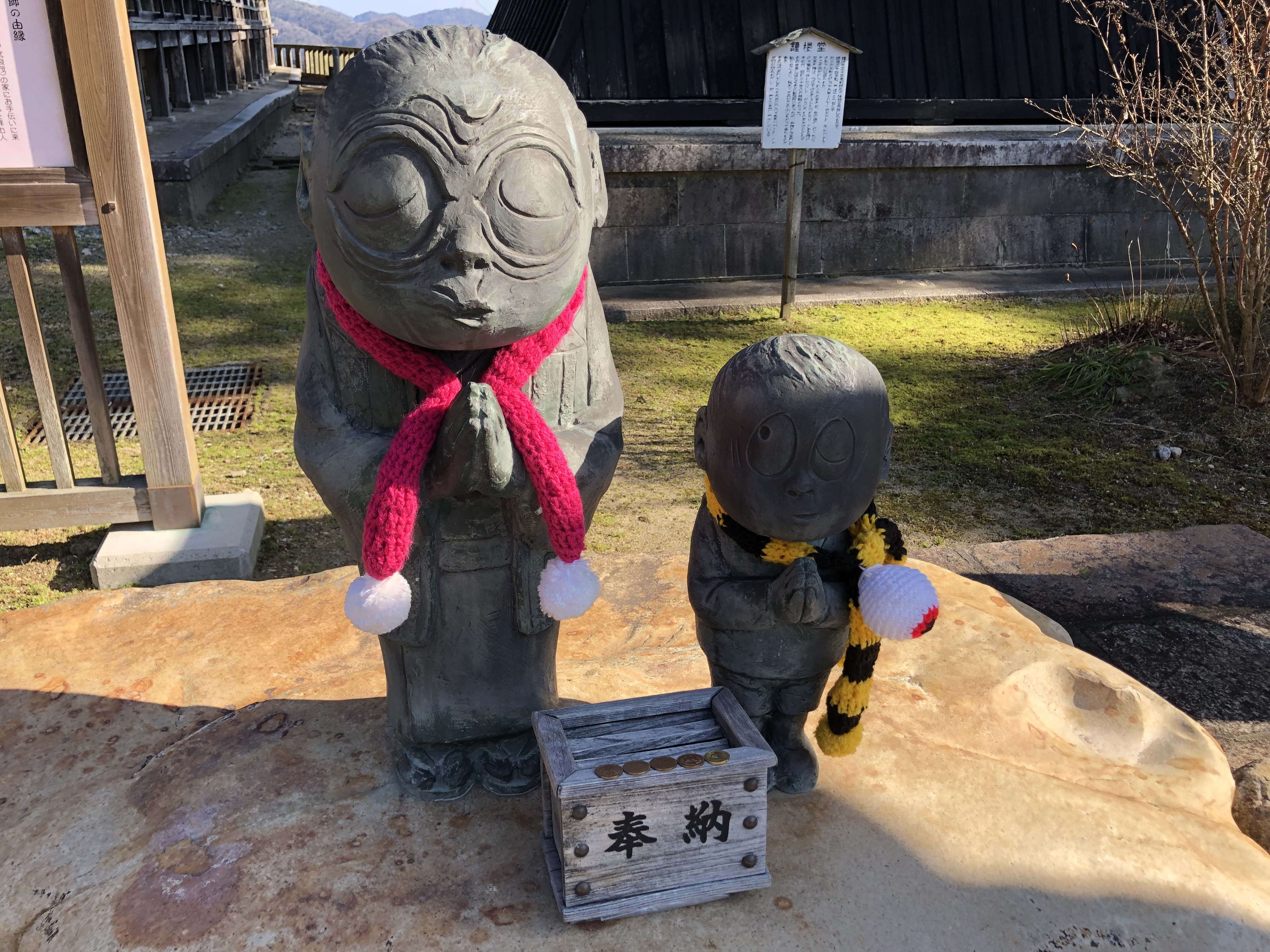
I place some coins in the box next to some statues of yokai, and decide that this is the nicest temple I’ve visited. In the future, I wouldn’t mind visiting more temples on a pilgrimage trail, but for today, I decide it’s getting late, and I head back down the mountain passing a small mountain village, before stumbling across another yokai statute, sitting unassumingly at the bottom of some stone steps.
After climbing up the 1,270 moss covered steps, I arrive back at my favourite temple, exhausted and realising this was just an alternate route. I carefully climb back down the steps to leave. The really old woman I saw at Ichibata-Guchi Station smiles at me as I pass her on the steps, and I can’t help but wonder if she might be Shigeru Mizuki’s whispering ghost.
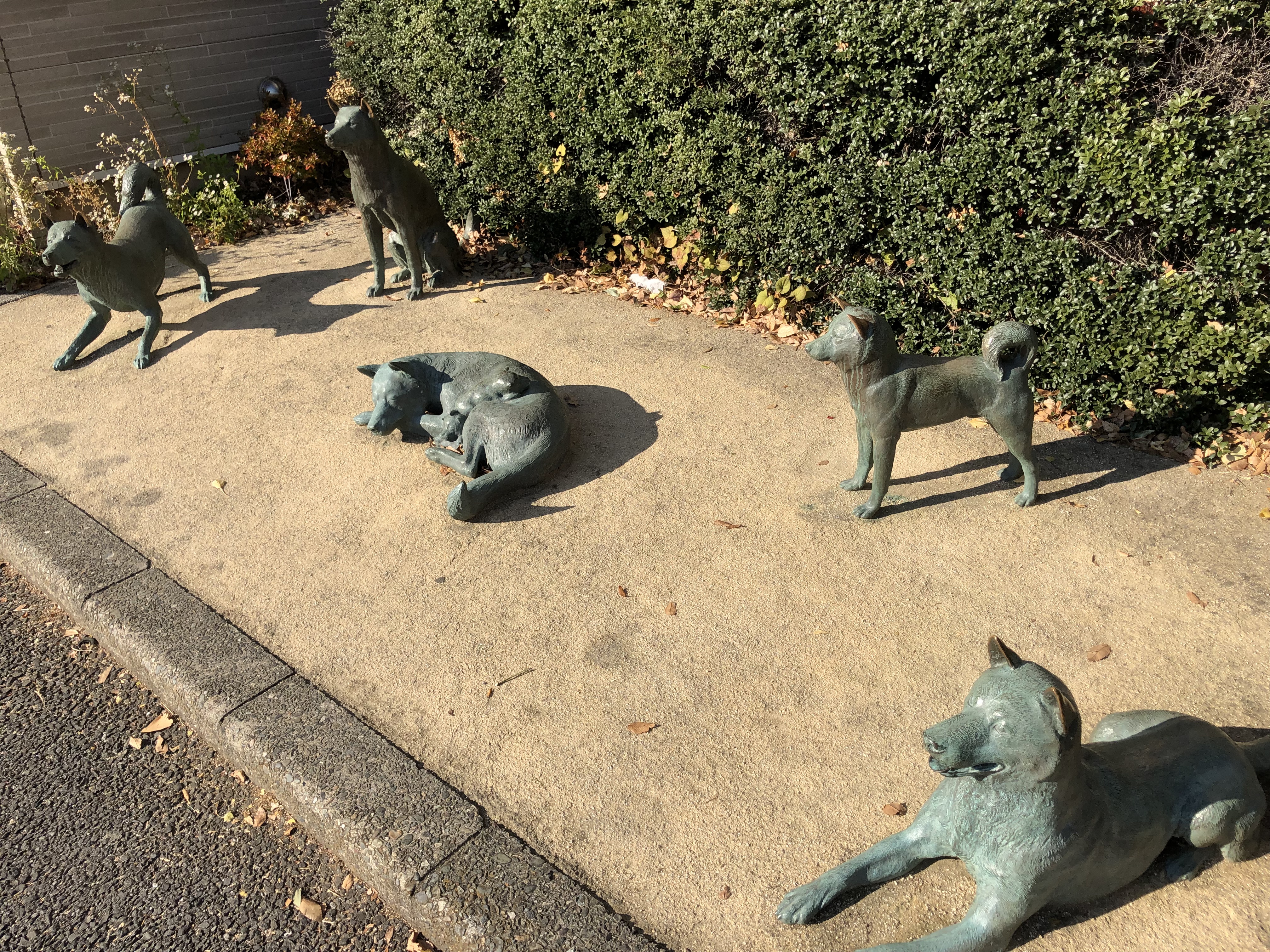
During the reign of Tokugawa Tsunayoshi, the fifth shogun of the Tokugawa shogunate, a ban on the eating of meat and the killing of animals was enacted in Japan. This ban was part of a series of laws and regulations related to animal welfare that were put in place during Tsunayoshi’s reign. Tsunayoshi was known for his strong interest in animals, particularly dogs, and is often referred to as the “Dog Shogun” due to his efforts to protect and care for dogs during his time as shogun.
One aspect of Tsunayoshi’s efforts to protect dogs was the creation of a large sanctuary for them in the area where Nakano Station now stands. It is here that I find many statues of dogs. The ban on eating meat and killing animals was likely intended to protect and care for dogs specifically, as they were considered sacred animals in Japan at the time. Strangely, the ban did not apply to birds.
This interpretation of the ban led Buddhists in Japan to argue that rabbits, which are not birds, should be considered a type of flightless bird and therefore be eligible for consumption. This argument was granted, much to the delight of the Buddhists. This is why the system for counting rabbits and birds in Japanese is the same, and is only used for these animals.
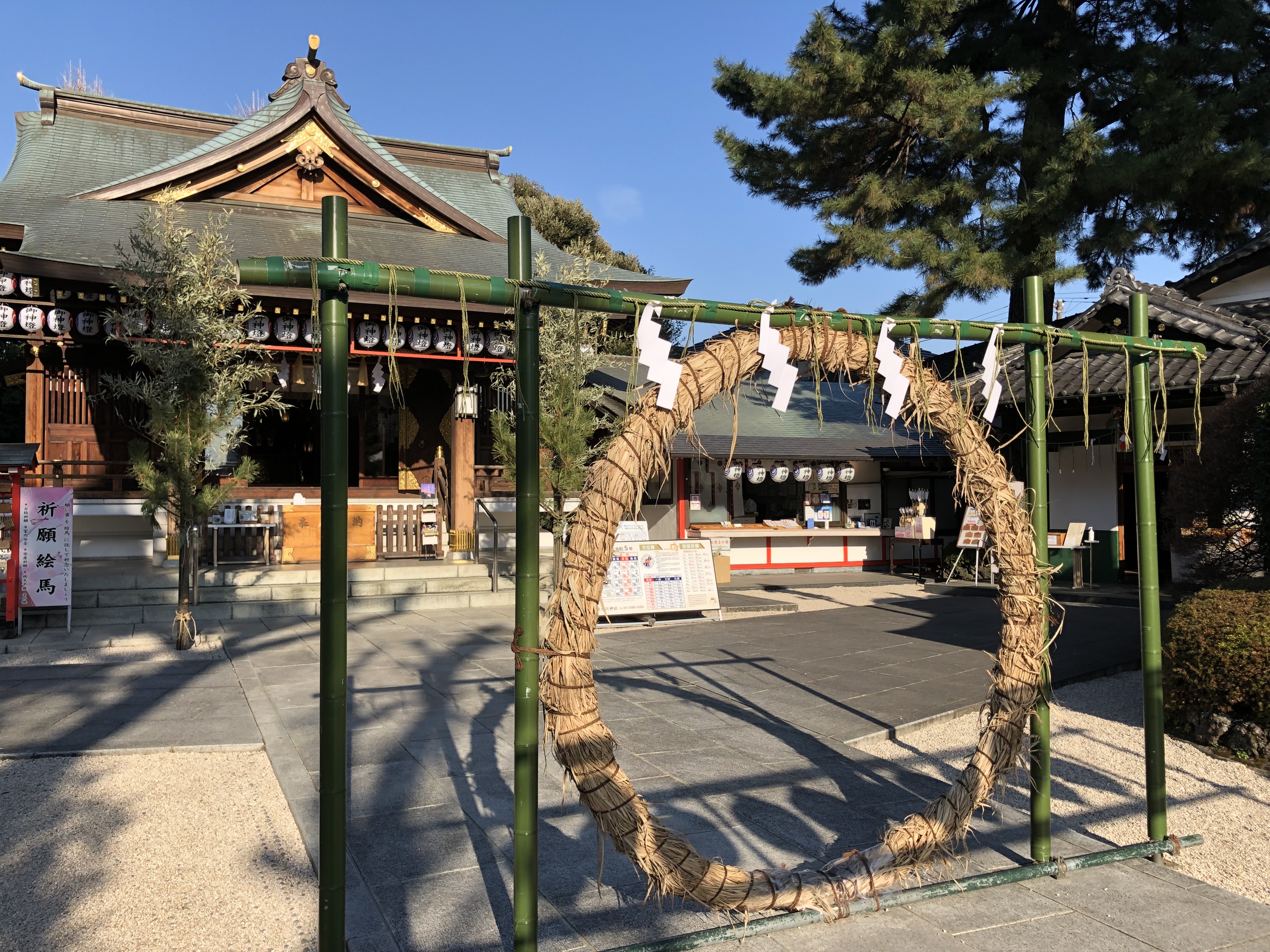
As I continue on my journey, I walk through the bustling shopping and entertainment district of Nakano Broadway. My next destination proves to be a bit more challenging to find, as it is allegedly located somewhere between the Kirin Lemon Sports Centre and Heiwanomori Park. Despite my best efforts, I am unable to locate the Nakano Prison Main Gate “Peace Gate.” It seems that it is either hidden behind a construction site or has been erased from history and replaced by a grassy meadow and a running track. After my search for the old prison proves unsuccessful, I am drawn towards the melodic sounds of a shamisen. As I follow the music, I come upon a peaceful-looking shrine.
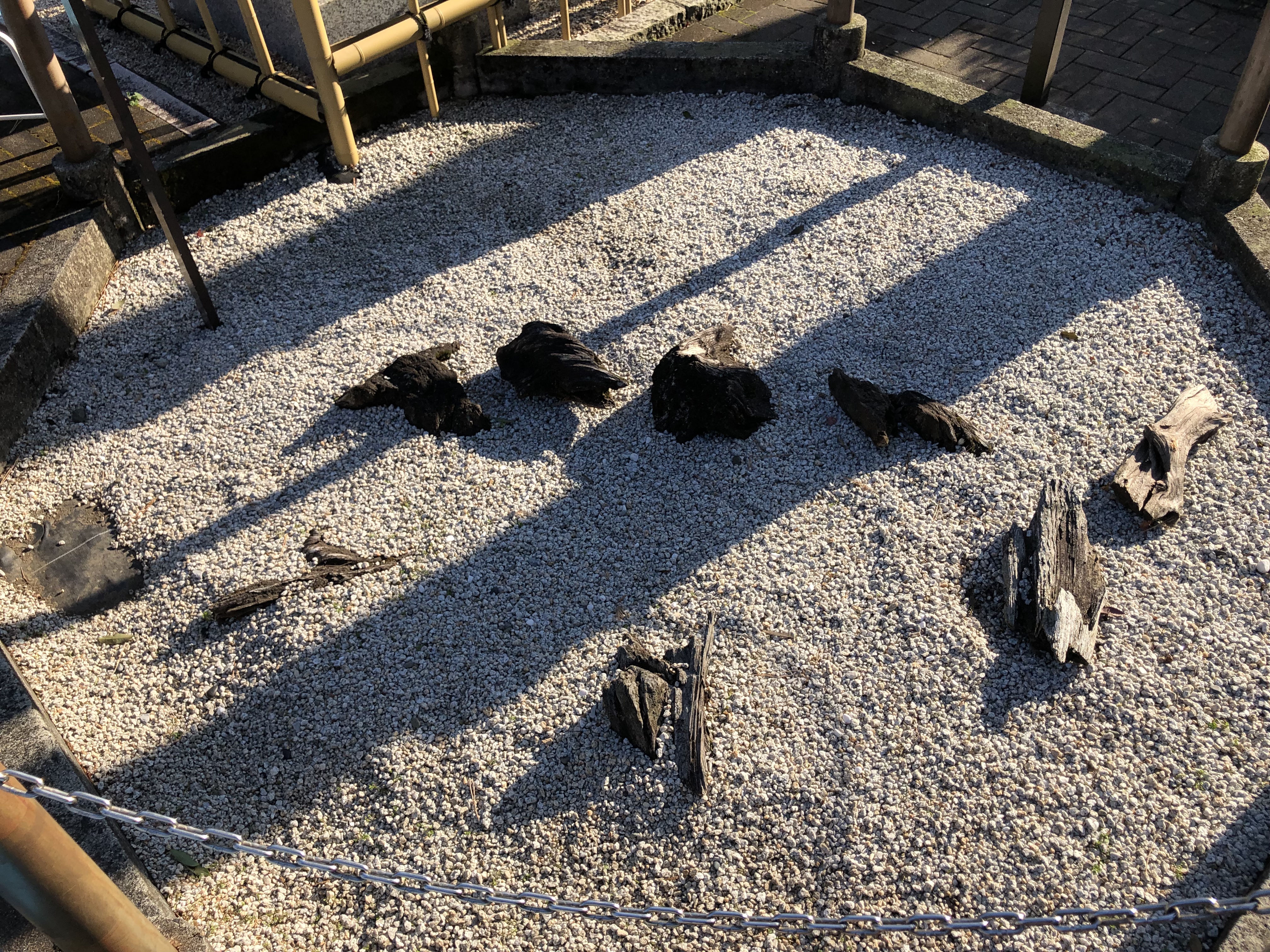
The Numabukuro Hikawa Shrine in Nakano is home to the remains of the Dokan Cedar tree, which once stood tall at a height of 30 metres. This tree passed away in 1944 due to old age, but it was a significant and beloved part of the community for centuries. The Dokan Cedar tree, also known as the Dokanzakura, was named after its owner, Dokan Ota, who planted it in the late 16th century. It was considered a natural monument and was protected by the city of Nakano.
The Dokan Cedar tree was known for its impressive size, with a circumference of approximately 14 metres. It was believed to be over 400 years old, making it one of the oldest trees in the city.
The tree was also believed to have spiritual and supernatural powers and was often visited by people seeking good fortune and blessings. Even though the tree is no longer alive, its remains serve as a poignant reminder of my own mortality and the impermanence of life. The Dokan Cedar tree stood tall for centuries, weathering the passage of time, but eventually, even it could not escape the inevitability of death. The tree’s remains remind me of the fragile and fleeting nature of life, and the profound sorrow that comes with the end of all things.
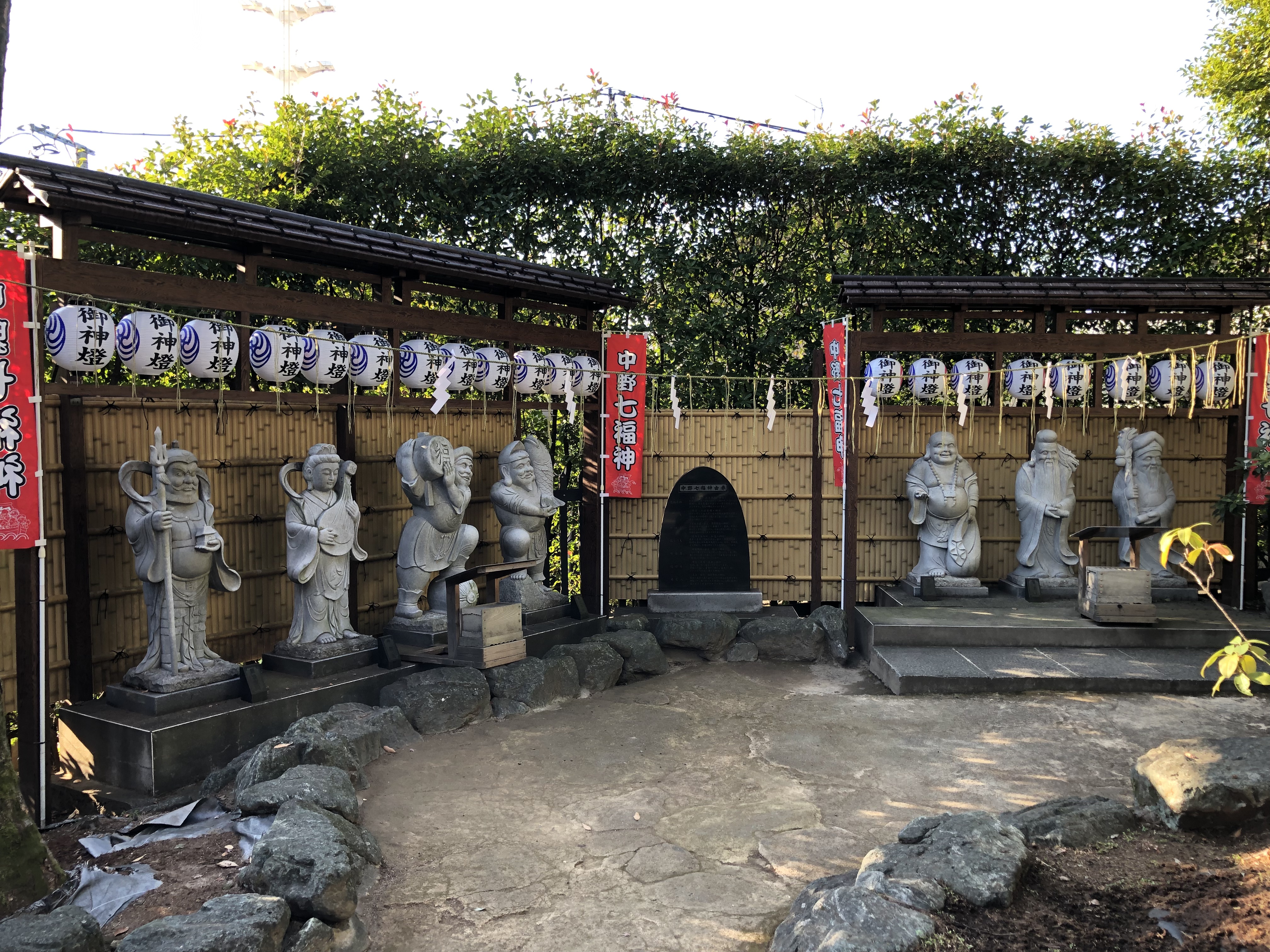
As I continue to explore the peaceful grounds of the shrine, my attention is captured by a group of statues. It is here that I discover all seven of the lucky gods of fortune
For anyone looking to complete the Pilgrimage of the Seven Lucky Gods of Fortune, a traditional cultural practice that involves visiting a series of shrines or temples dedicated to the seven lucky gods in Japan, this shrine offers a convenient shortcut. All seven of the lucky gods, who are revered as bringers of good fortune and prosperity, stand proudly on the shrine’s grounds, making it possible to pay respects to all of them in one place.
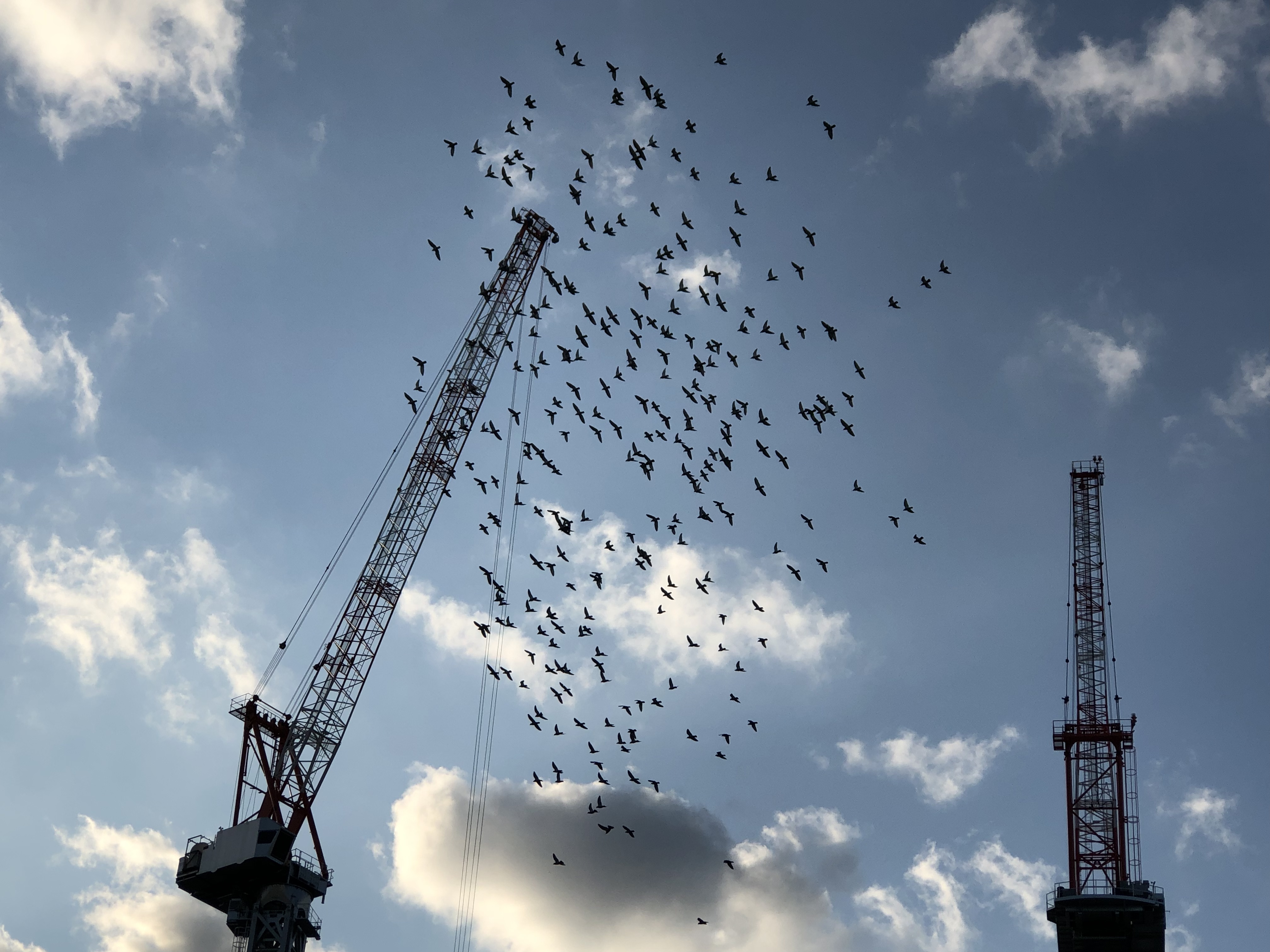
As I make my way back towards the station after a long day of sightseeing, I am pleasantly surprised by the sight of three small groups of birds soaring through the air. They fly in a seemingly chaotic but coordinated manner, their movements fluid and graceful as they weave through the sky. This phenomenon, known as murmuration, is a truly amazing and mesmerising sight. The birds dance and swirl in the air, creating intricate patterns and formations that shift and change suddenly. It’s as if they are performing a beautiful, otherworldly ballet, their wings beating in perfect unison as they move through the air.
I stand in awe, mesmerised by the beauty and grace of this natural spectacle, before considering that they might not be birds at all, but rabbits.

 Japanising.com
You must be logged in to post a comment.