Statues of Dogs, Statues of Gods

During the reign of Tokugawa Tsunayoshi, the fifth shogun of the Tokugawa shogunate, a ban on the eating of meat and the killing of animals was enacted in Japan. This ban was part of a series of laws and regulations related to animal welfare that were put in place during Tsunayoshi’s reign. Tsunayoshi was known for his strong interest in animals, particularly dogs, and is often referred to as the “Dog Shogun” due to his efforts to protect and care for dogs during his time as shogun.

One aspect of Tsunayoshi’s efforts to protect dogs was the creation of a large sanctuary for them in the area where Nakano Station now stands. It is here that I find many statues of dogs. The ban on eating meat and killing animals was likely intended to protect and care for dogs specifically, as they were considered sacred animals in Japan at the time. Strangely, the ban did not apply to birds.
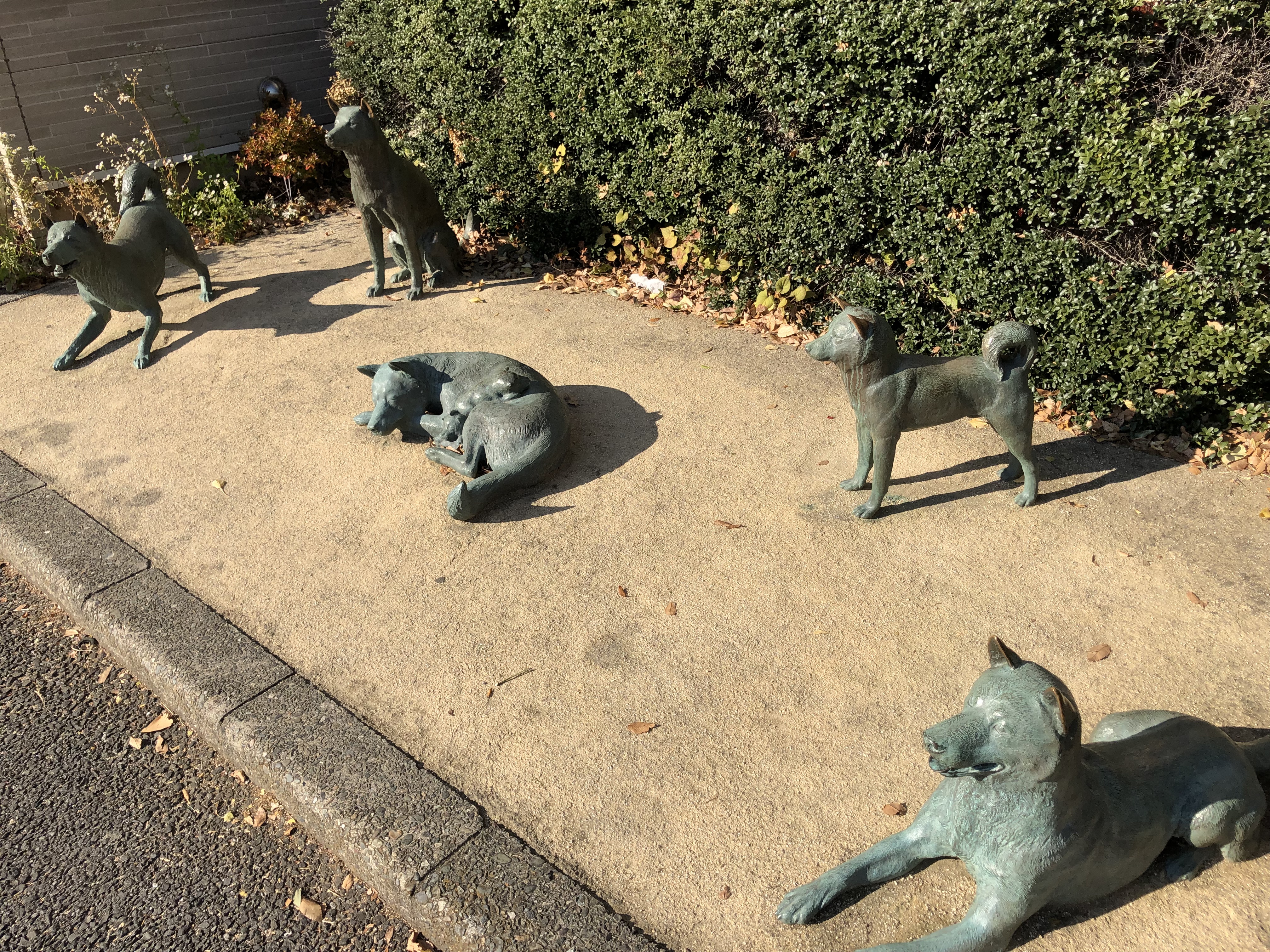
This interpretation of the ban led Buddhists in Japan to argue that rabbits, which are not birds, should be considered a type of flightless bird and therefore be eligible for consumption. This argument was granted, much to the delight of the Buddhists. This is why the system for counting rabbits and birds in Japanese is the same, and is only used for these animals.

As I continue on my journey, I walk through the bustling shopping and entertainment district of Nakano Broadway. My next destination proves to be a bit more challenging to find, as it is allegedly located somewhere between the Kirin Lemon Sports Centre and Heiwanomori Park. Despite my best efforts, I am unable to locate the Nakano Prison Main Gate “Peace Gate.” It seems that it is either hidden behind a construction site or has been erased from history and replaced by a grassy meadow and a running track. After my search for the old prison proves unsuccessful, I am drawn towards the melodic sounds of a shamisen. As I follow the music, I come upon a peaceful-looking shrine.
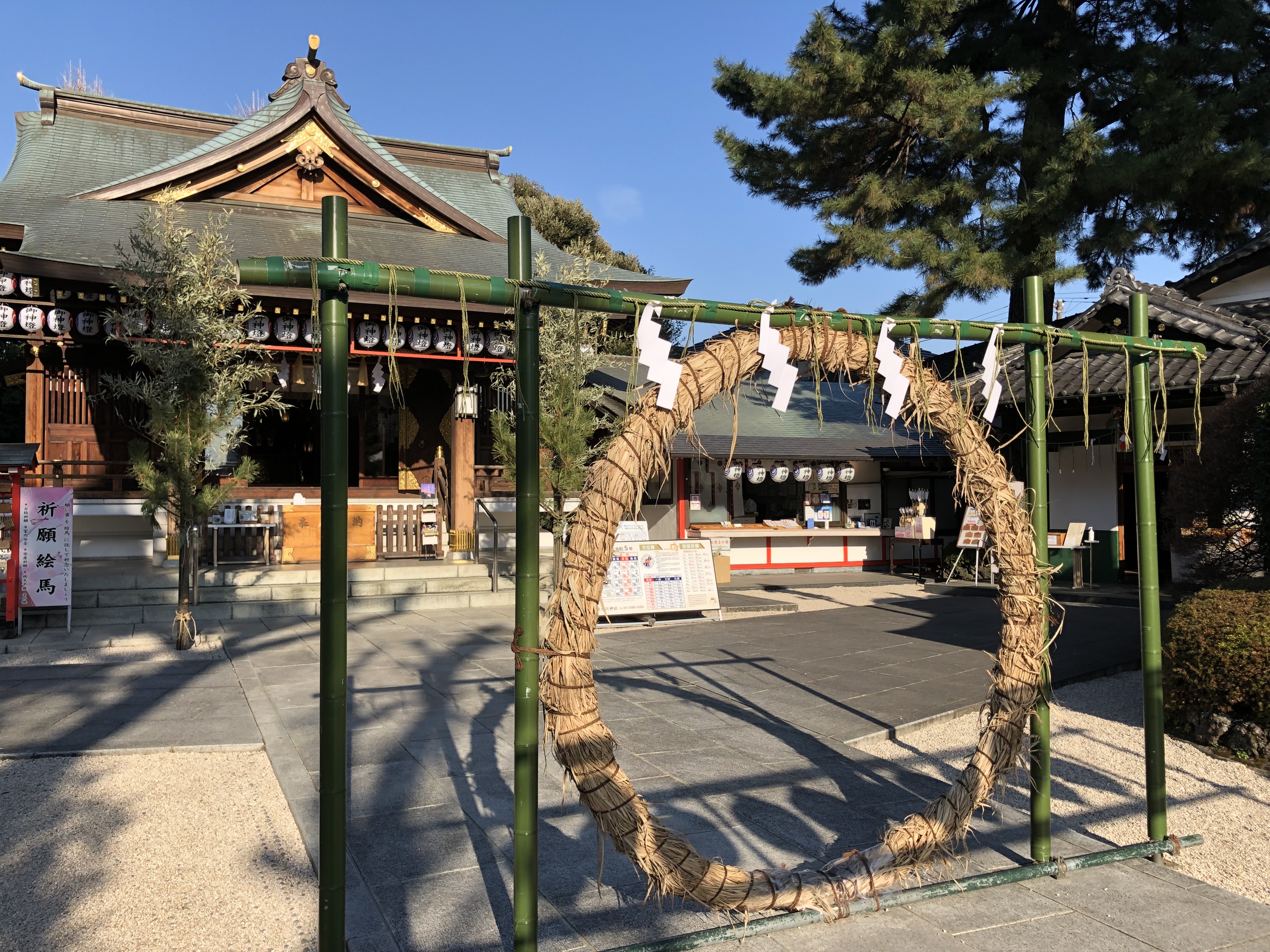
The Numabukuro Hikawa Shrine in Nakano is home to the remains of the Dokan Cedar tree, which once stood tall at a height of 30 metres. This tree passed away in 1944 due to old age, but it was a significant and beloved part of the community for centuries. The Dokan Cedar tree, also known as the Dokanzakura, was named after its owner, Dokan Ota, who planted it in the late 16th century. It was considered a natural monument and was protected by the city of Nakano.

The Dokan Cedar tree was known for its impressive size, with a circumference of approximately 14 metres. It was believed to be over 400 years old, making it one of the oldest trees in the city.
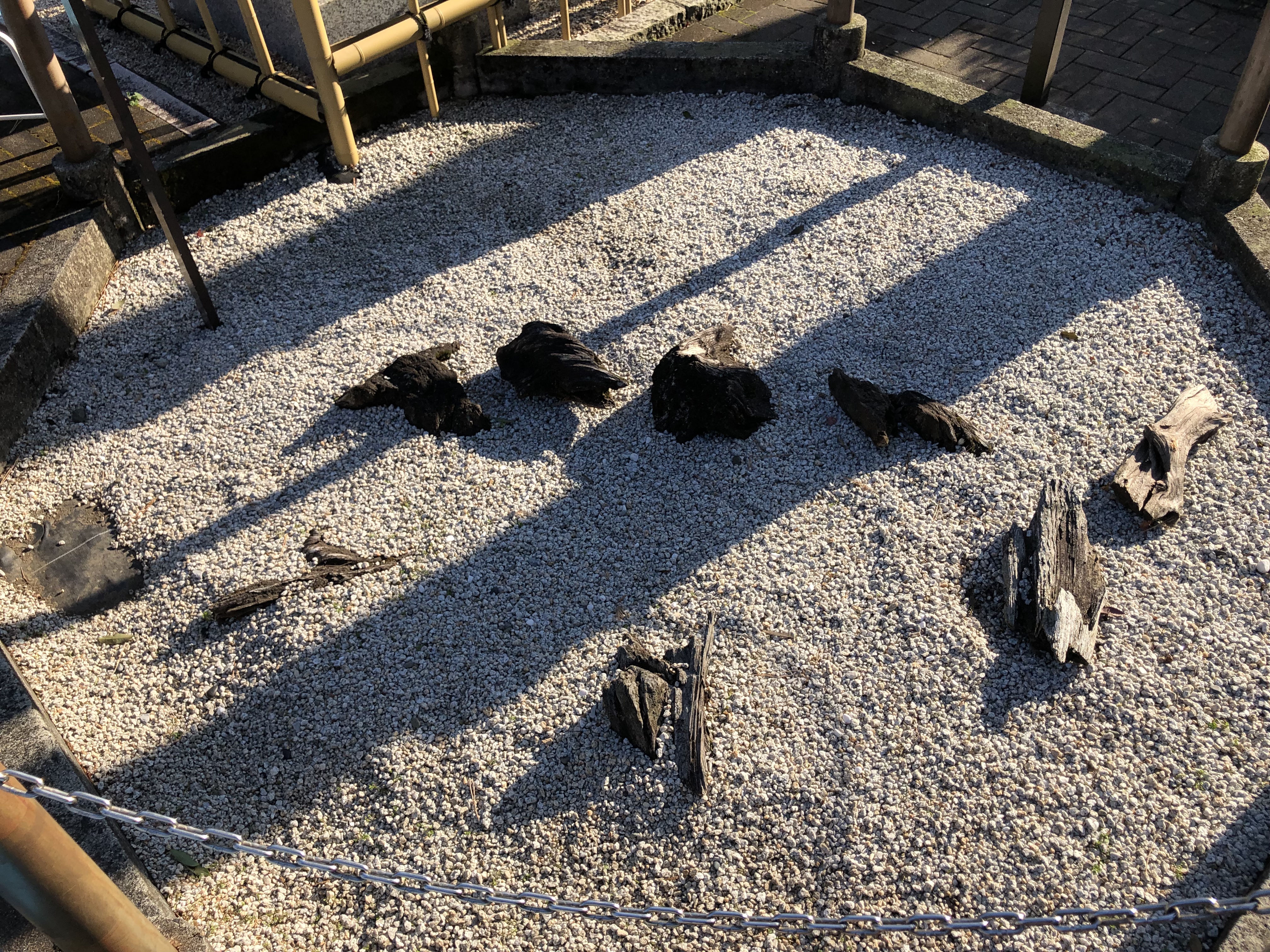
The tree was also believed to have spiritual and supernatural powers and was often visited by people seeking good fortune and blessings. Even though the tree is no longer alive, its remains serve as a poignant reminder of my own mortality and the impermanence of life. The Dokan Cedar tree stood tall for centuries, weathering the passage of time, but eventually, even it could not escape the inevitability of death. The tree’s remains remind me of the fragile and fleeting nature of life, and the profound sorrow that comes with the end of all things.

As I continue to explore the peaceful grounds of the shrine, my attention is captured by a group of statues. It is here that I discover all seven of the lucky gods of fortune
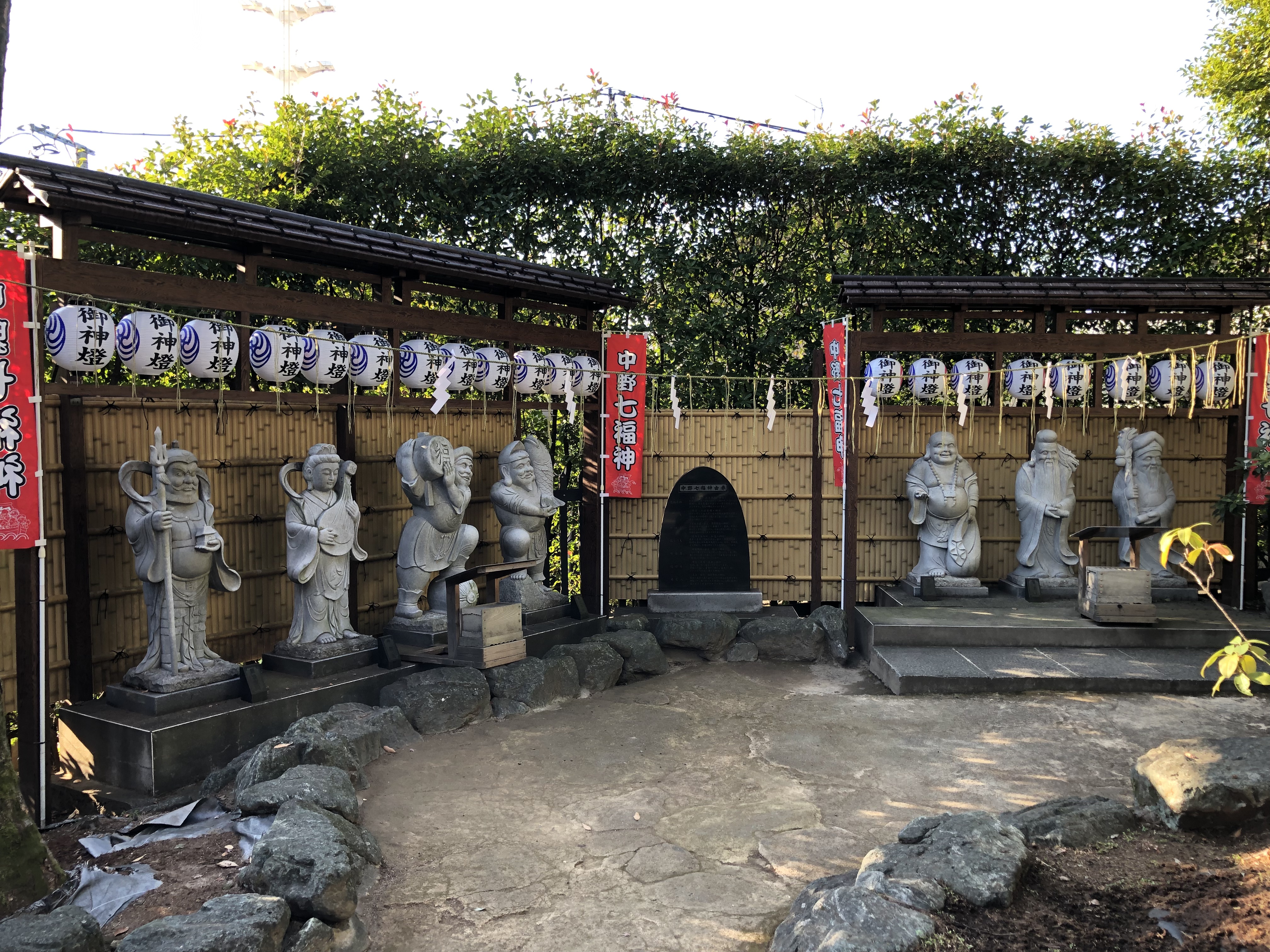
For anyone looking to complete the Pilgrimage of the Seven Lucky Gods of Fortune, a traditional cultural practice that involves visiting a series of shrines or temples dedicated to the seven lucky gods in Japan, this shrine offers a convenient shortcut. All seven of the lucky gods, who are revered as bringers of good fortune and prosperity, stand proudly on the shrine’s grounds, making it possible to pay respects to all of them in one place.

As I make my way back towards the station after a long day of sightseeing, I am pleasantly surprised by the sight of three small groups of birds soaring through the air. They fly in a seemingly chaotic but coordinated manner, their movements fluid and graceful as they weave through the sky. This phenomenon, known as murmuration, is a truly amazing and mesmerising sight. The birds dance and swirl in the air, creating intricate patterns and formations that shift and change suddenly. It’s as if they are performing a beautiful, otherworldly ballet, their wings beating in perfect unison as they move through the air.
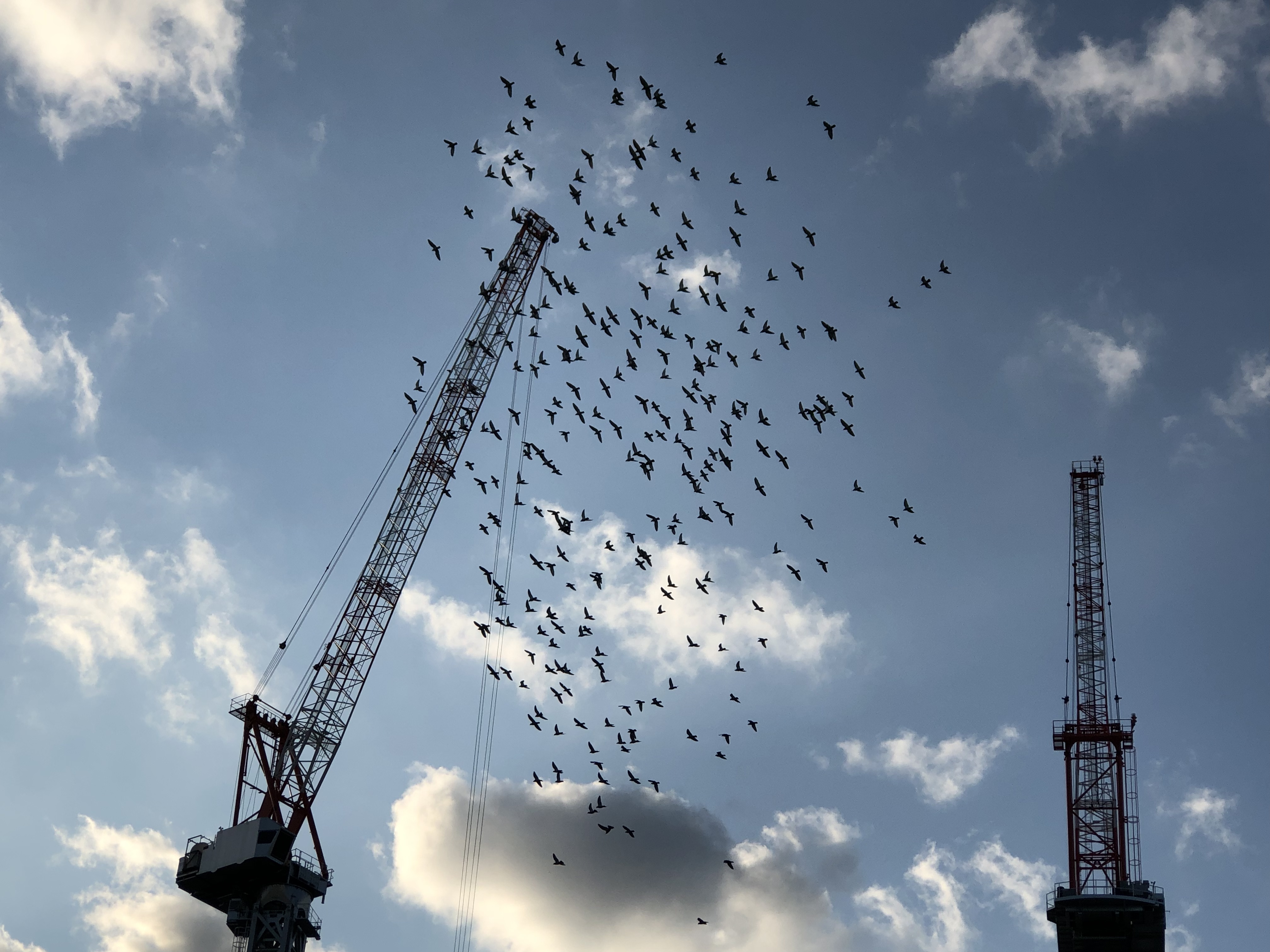
I stand in awe, mesmerised by the beauty and grace of this natural spectacle, before considering that they might not be birds at all, but rabbits.
Thoughtful Rain, Equal Moisture

As part of Hatsumode, it is a longstanding tradition in Japan to visit a temple or shrine during the first three days of the New Year. This involves returning and cremating old amulets, purchasing new ones, having a fortune taken, and making the first prayer of the year. To avoid the crowds, I have chosen to visit a peaceful temple in Shibamata, located in Katsushika Ward. I awake early, the air still cool and filled with the moisture of the early morning dew, and make my way to the temple to begin the new year with a sense of serenity and reverence.

As I approach the temple, I am welcomed by Taishakuten-Sando, a row of traditional Japanese shops flanking a narrow street that leads to the temple. This street and temple survived the bombing of World War II, offering a glimpse into Japan’s history. As I stroll along the 200-metre stretch, the aroma of simmering oden fills the air and I pass shops selling mochi, pancakes, and rice crackers. Taishakuten-Sando serves as the main shopping street for the quaint town of Shibamata.

Upon arriving at Shibamata Taishakuten, I join the short queue of people making their first wish of the New Year. To make a play on words, I have carefully prepared four ten-yen coins and one five-yen coin (totalling ¥45, which is pronounced Shiju-Goen in Japanese, meaning “always lucky”). As I reach the front of the line, I throw in my coins, ring one of the large bells, and follow the customary ritual of bowing twice, clapping twice, and bowing again before praying for nothing at all.

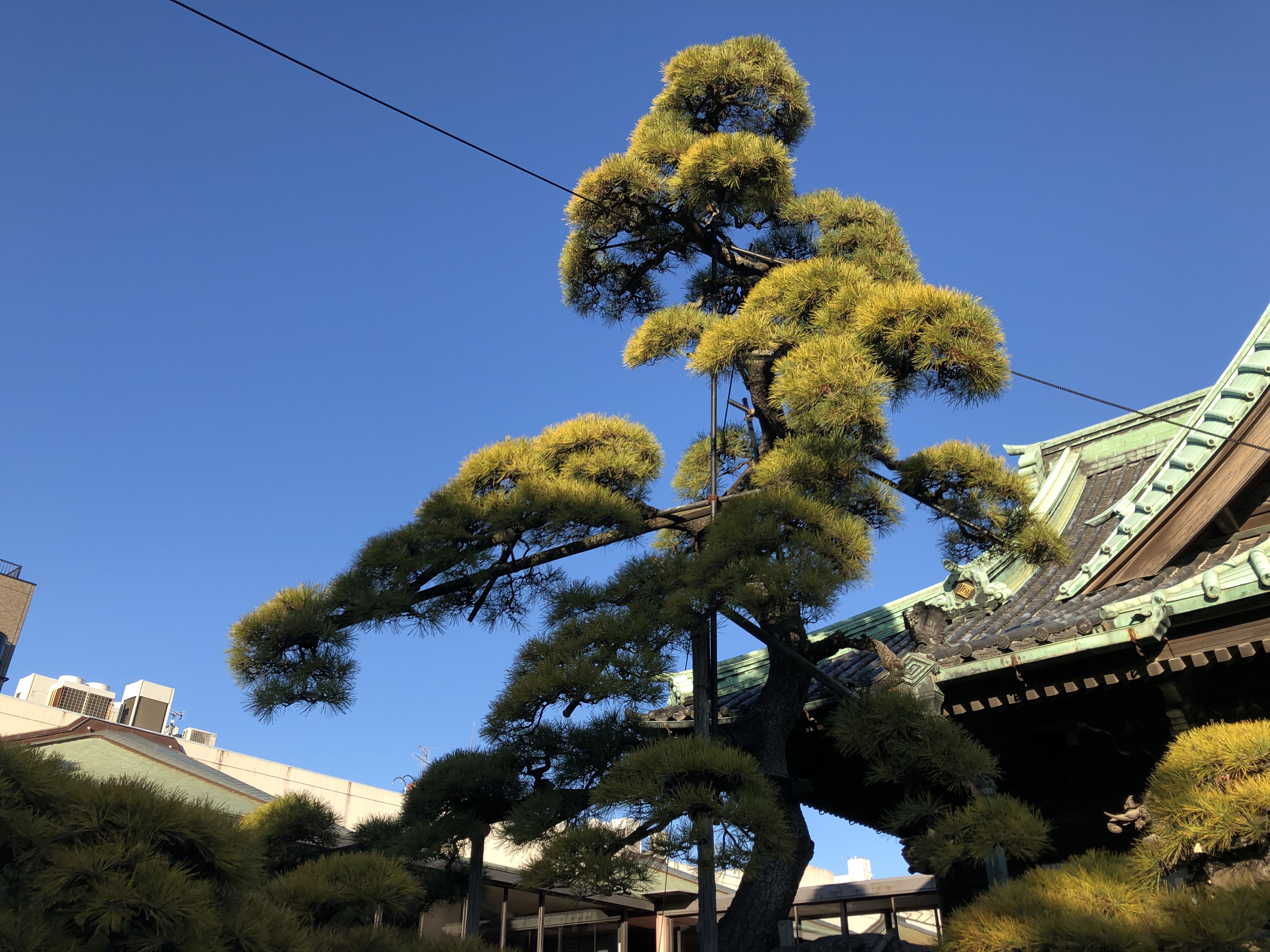
At the temple, there is a large pine tree called Zuiryu-no-Matsu, meaning “dragon of fortune pines.” It towers in front of the main hall and is shaped like a dragon. Its trunk grows straight towards the sky, and its long branches extend north, south, and west. The west branch extends as if the dragon is crawling on its belly on the stone pavement, while the north and south branches spread as if guarding the Taishaku-do Hall. The tree seems to come alive, appearing as a dragon taking flight towards the sky.

The temple was founded in 1629 by a Buddhist monk named Nichiei Shonin, who stopped in Shibamata and, upon discovering a sacred fountain under the grand pine tree, decided to build a hermitage there. The dragon of fortune pines is said to be over 500 years old, stands tall and proud. The Japanese gardens, a later addition in 1926, provide a peaceful and serene atmosphere.

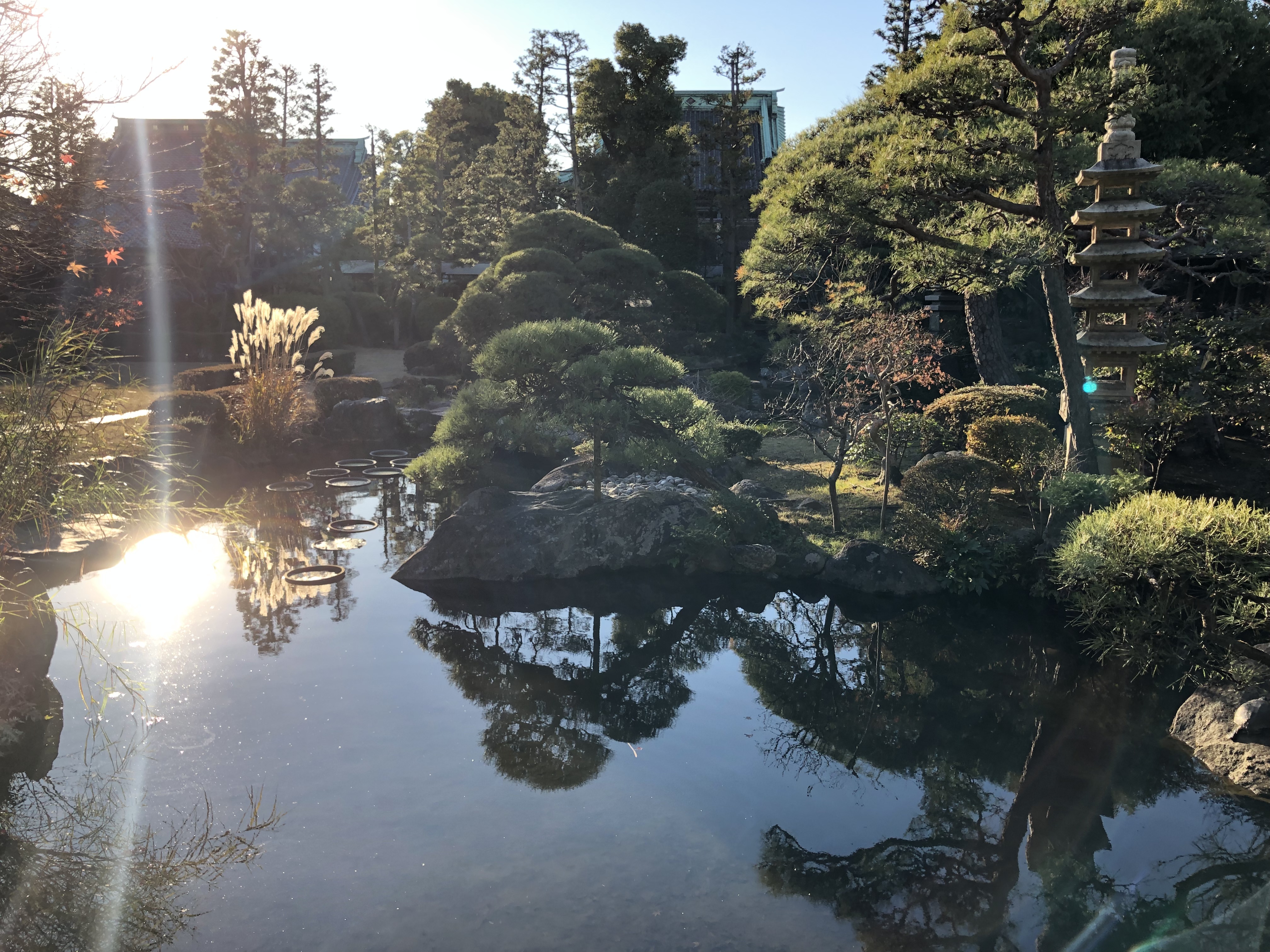
As I leave the tree behind and make my way to the rear of the temple, I come upon the opportunity to purchase a ticket for ¥400, granting access to both the museum and the picturesque Suikei-en Garden. The entrance to the garden is adorned with intricate wood carvings above each tatami mat room, inviting me to step into a peaceful outdoor paradise. The garden boasts stone bridges, flowers glistening with the hanging moisture of the early morning, a charming pagoda statue, a breathtaking lake as its centrepiece, and even a tranquil waterfall.

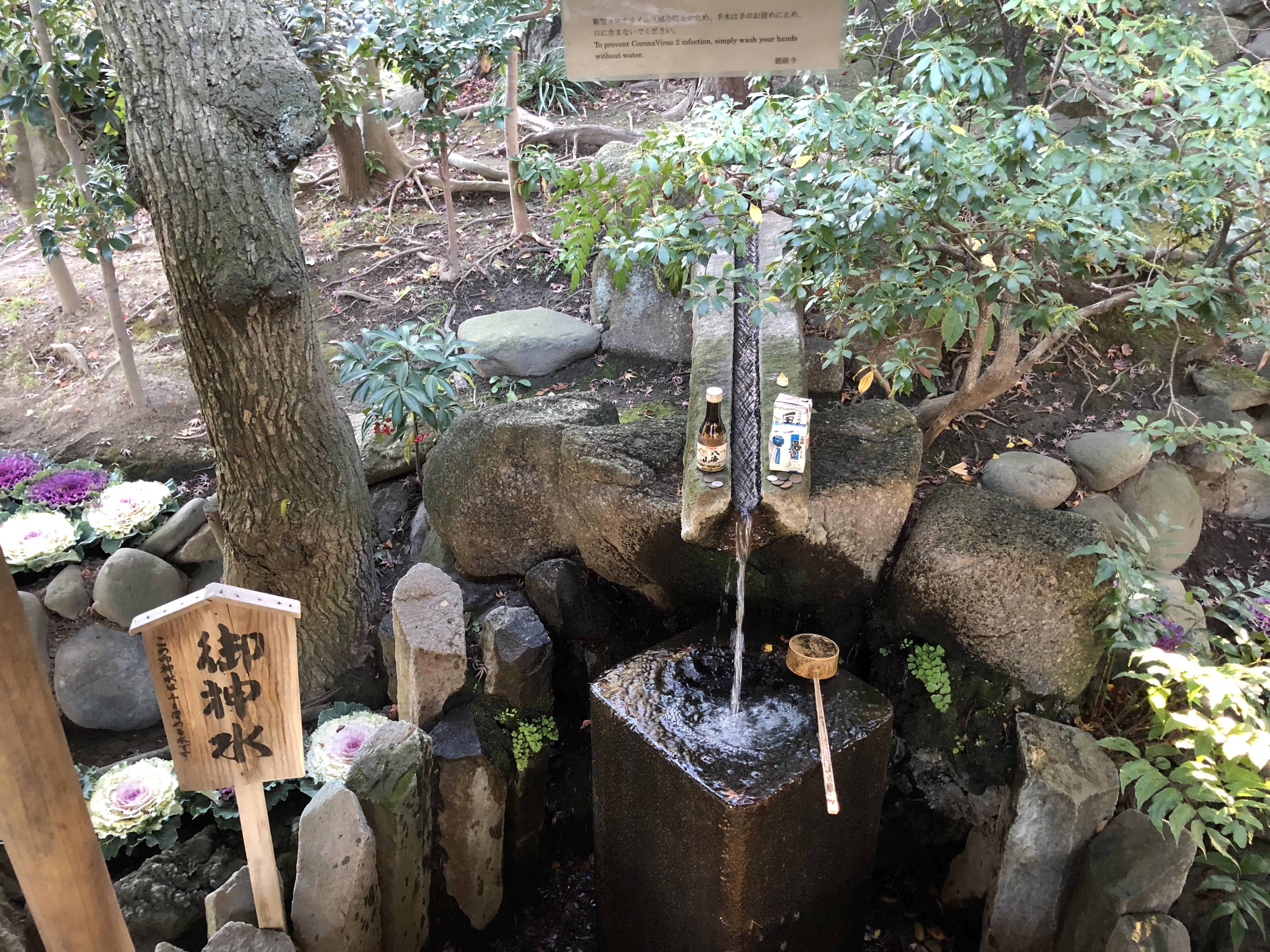
As I stand before the waterfall, I find myself trying to pinpoint the source of my unease. Could it be the way the water flows so slowly, as if in mimicry of rain? The offerings and coins at the base of the waterfall appear unremarkable, yet something about them feels off. And then I see it – the poorly translated notice above, urging me to “simply wash my hands without water” to prevent infection from the ominous Coronavirus. The absurdity of the statement only adds to the disquietude that lingers in the air.

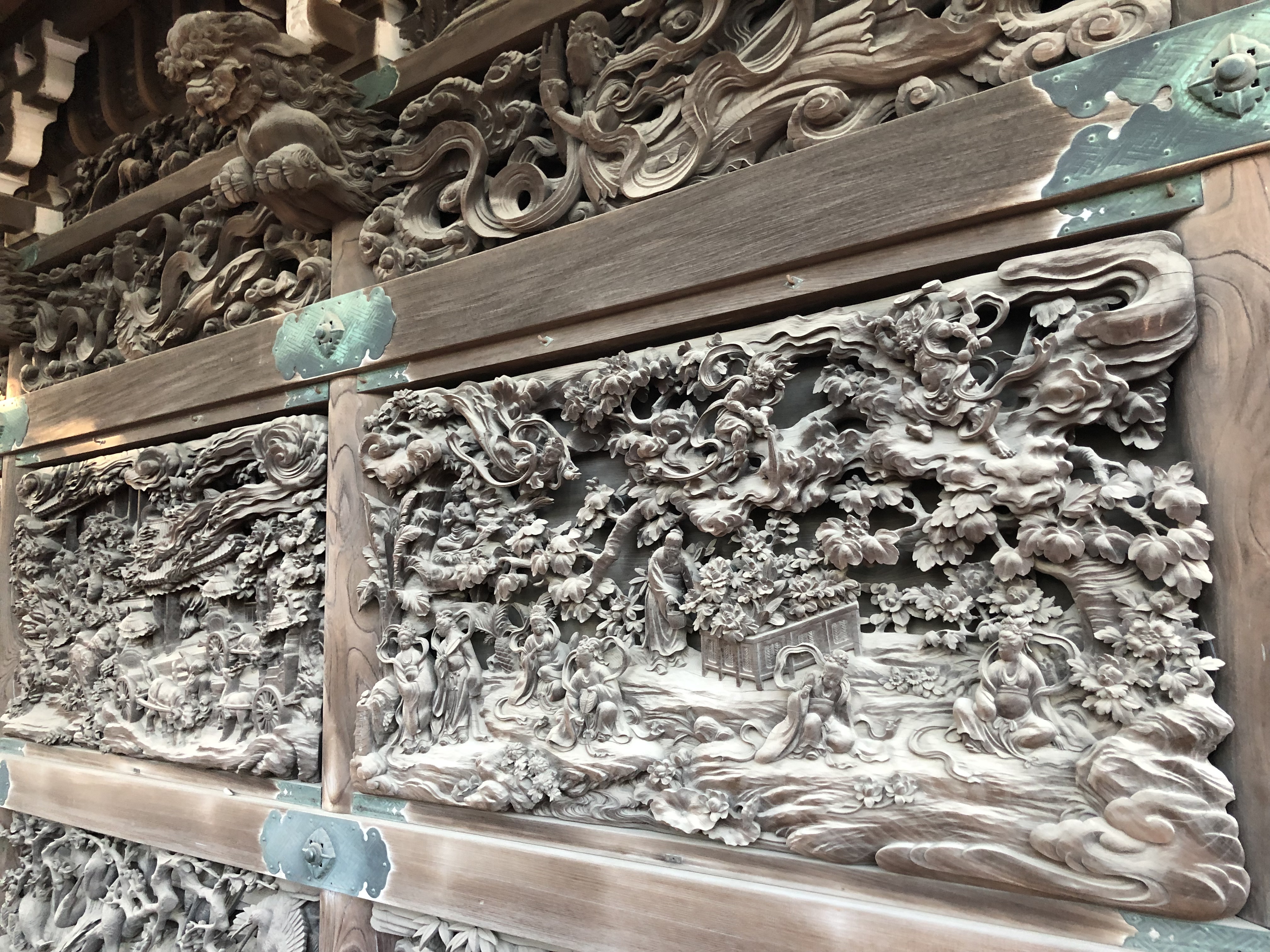
As I enter the museum, my eyes are immediately drawn to the stunning wood carvings that adorn the walls. Each one tells a part of the tale of the Lotus Sutra, with two chapters represented in each intricate, three-dimensional carving. The language used to describe the carvings is nicely written, and one line stands out to me in particular: “We people are like children busily playing in what is a burning house, without any fears.” The artistry and wisdom captured in these carvings leaves me in awe.

Chapter five, entitled “Thoughtful Rain, Equal Moisture,” was carved by Shinko Ishikawa and depicts the following: “The deeply benevolent teaching of the Buddha is similar to the gentle rain that everywhere dampens the soil. Here, the God of lightning and the God of wind appear, and together they let it rain. The great earth is then embraced with a blanket of foliage in which varieties of flowers proudly bloom. With this, the heavenly beings also joyfully dance down to the paradise below.”

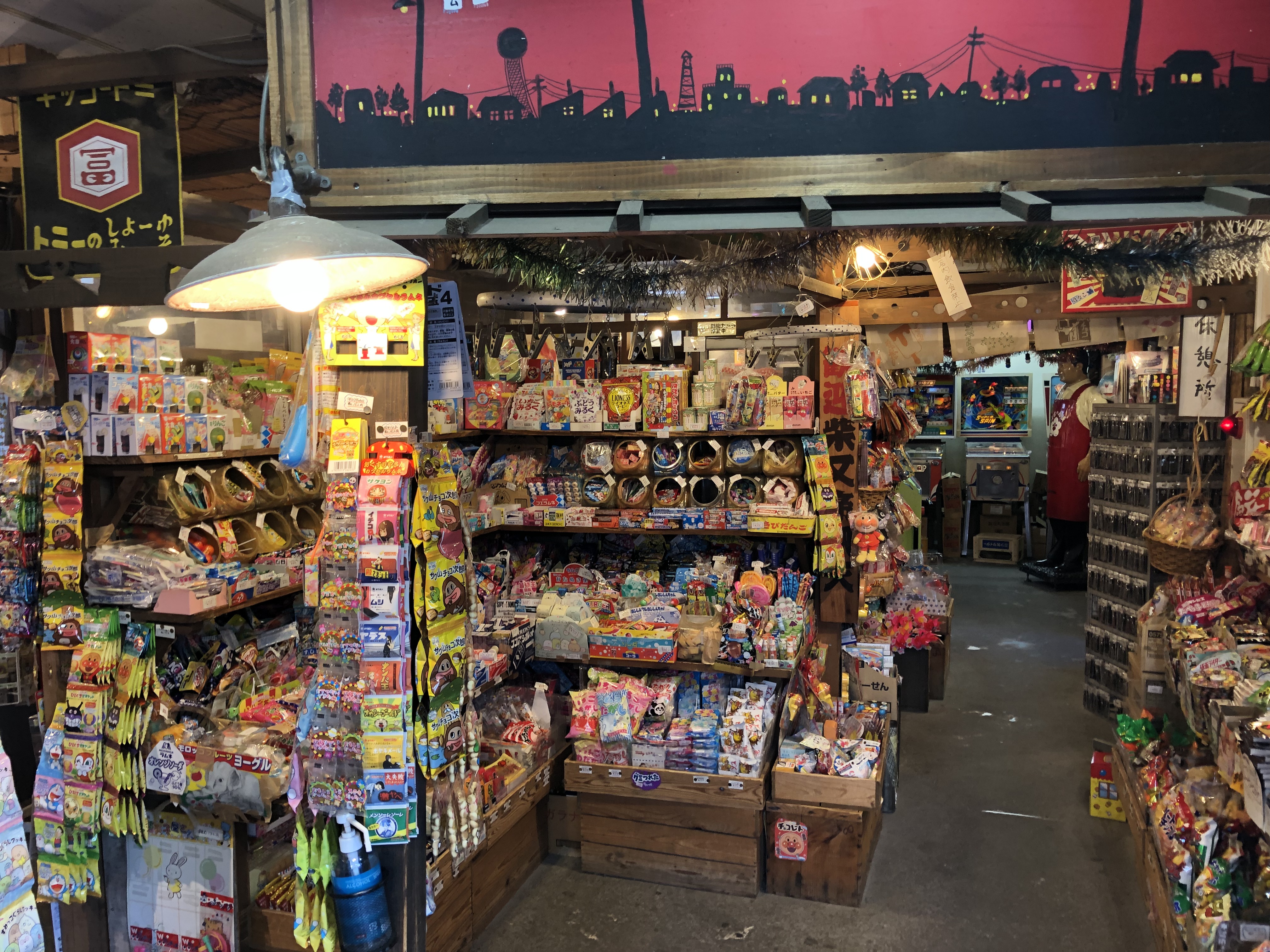
As I leave Shibamata Taishakuten, I step into a large retro sweet shop filled with rows of colourful candy in glass jars. The air is thick with the scent of sugar, and there are every type of sugary treat imaginable. I wander up and down the aisles, passing old arcade machines and pinball tables. On the second floor is the Shibamata Toy Museum, featuring games from the Showa-era. I explore the museum, including a room with a display of dolls depicting the tale of “Momotaro,” or Peach Boy. I eventually head back downstairs to purchase a bag of gummy worms at the counter, before leaving the shop.

The gummy worms turn out to be a lot stickier than I had anticipated, but I have a solution: I’ll just wash my hands without water.

Everything Was Beautiful And Nothing Hurt

With toothache and a twisted ankle, I take the Bullet Train over to Hiroshima. My first stop, a place I visited ten years ago, Hiroshima Peace Memorial Park. Immediately after the atomic bombing, it was said that no plants or trees would grow for 75 years, but as I hobble along Peace Boulevard towards the park, I notice it is lined with large trees and lush greenery. Following a tree-planting campaign in 1956, in which neighbouring municipalities in Hiroshima Prefecture were asked to donate trees to the city, Hiroshima has been transformed into a verdant paradise.

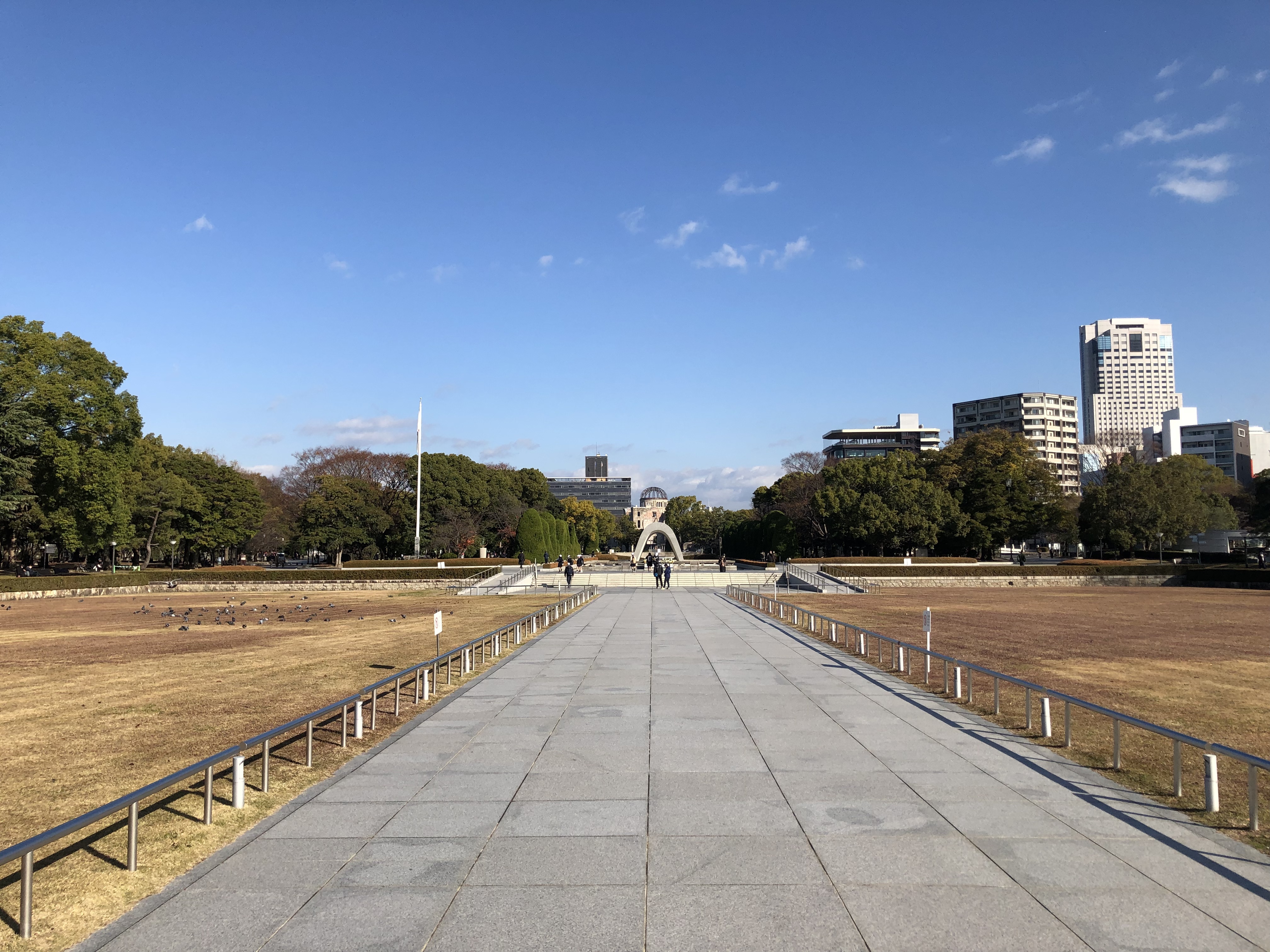
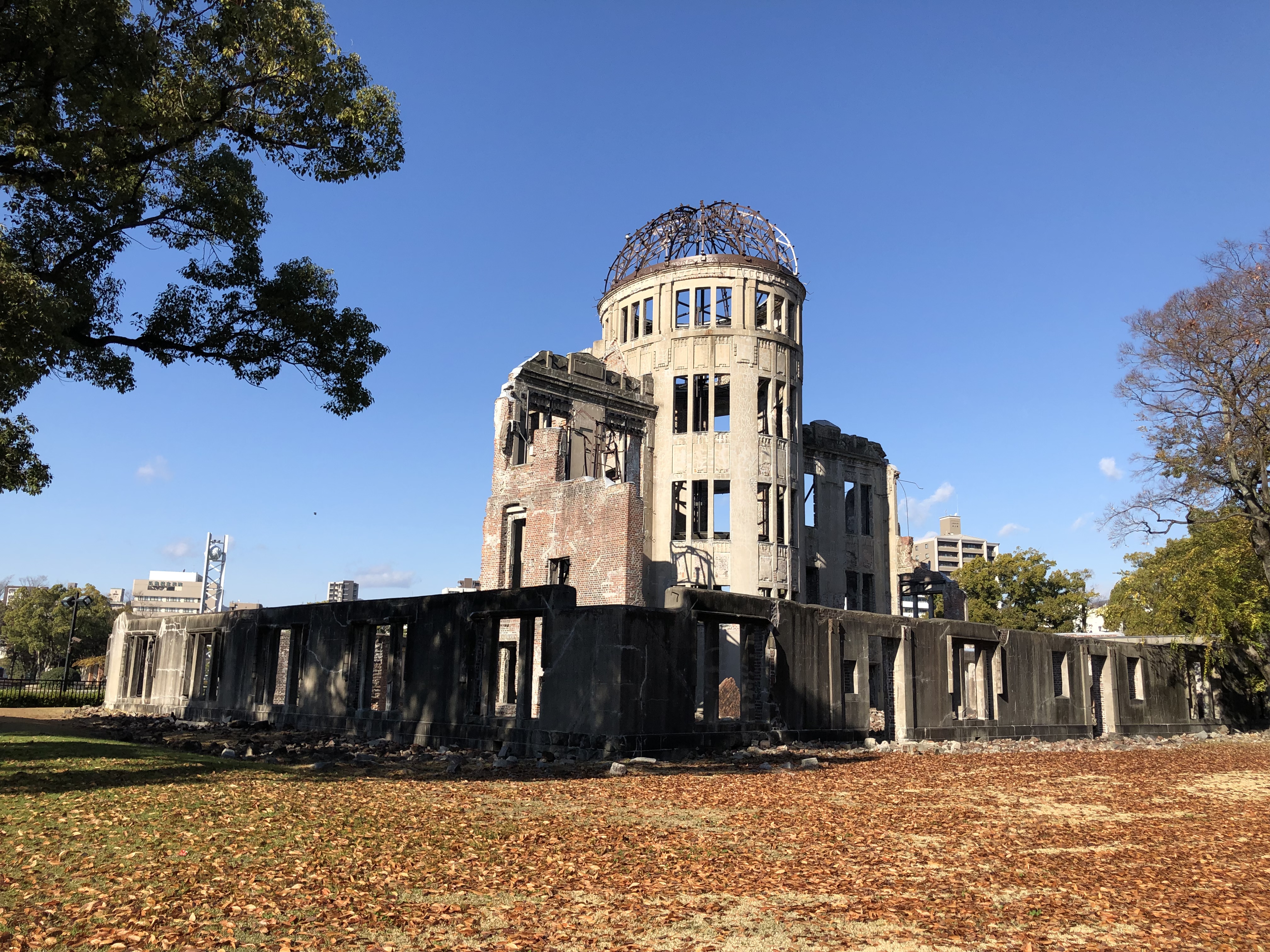
I stroll in silence through Hiroshima Peace Memorial Park. I take note of the fountains, the newly laid flowers at the cenotaph, the looming Atomic Bomb Dome in the distance; a survivor, its form so full of imperfections, its beauty an aide memoire of an aftermath of events that left it in such a state; a symbol of everything left behind, a skeletal figure of what once was, now ruins.

Seventy-seven years ago United States President Harry Truman authorised the bombing of Hiroshima. His actions, which would be considered a war crime today, resulted in the instant deaths of 80,000 people. As I further walk toward the dome in the distance, I can’t help but think about the enormous impact of these events; the devastation of an entire city in a single moment.

The building that houses the skeletal remains of the Atomic Bomb Dome is known as the Hiroshima Prefectural Industrial Promotion Hall, and in December 1996 it was added to the UNESCO World Heritage List as a reminder to the whole world of the horrors of the atomic bomb, and a symbol of global peace. As I look at this building I can’t help but become overwhelmed by sadness.

Because the bomb dropped on Hiroshima exploded from almost directly above this structure, some of the walls and the iron frame making up the dome remained standing, whereas everything else around it for miles was flattened to the ground. There has been some controversy about this building in the past, some people argued that it should be destroyed, for it’s a dangerously dilapidated building that evokes painful memories. Others argue that is should be preserved as a memorial to the bombing. Since the UNESCO status, the building is now protected and efforts are continually made to ensure that it looks identical to how it looked on that fateful day in 1945.

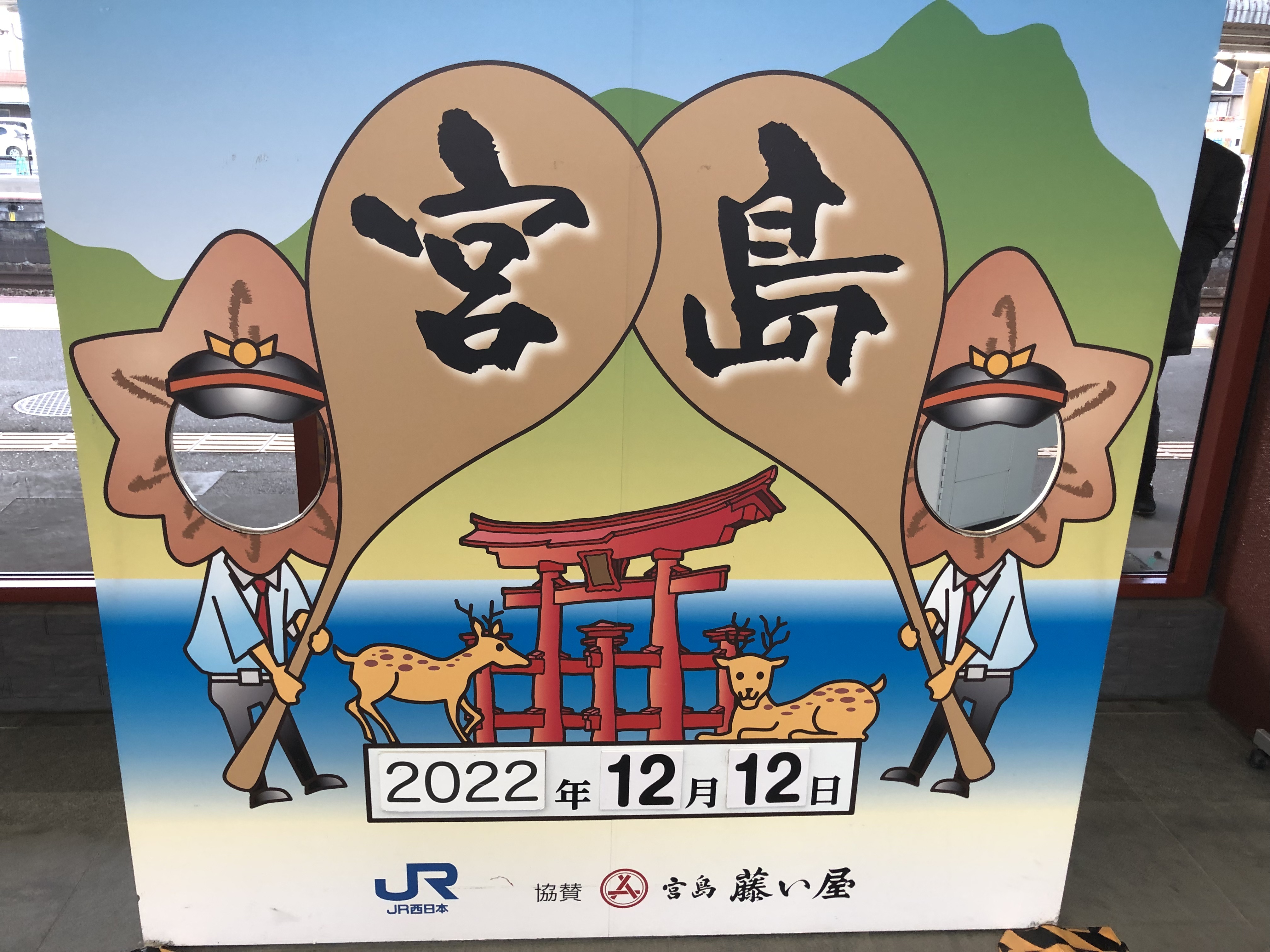
Leaving the solemn Peace Memorial Park behind, I embark on a journey by train to Miyajimaguchi Station. Located on the serene Miyajima Island, the revered Itsukushima Shrine is said to offer one of Japan’s most breathtaking views. As I enter the station, a display of the shrine and its iconic, wandering deer greets me with a festive flourish.

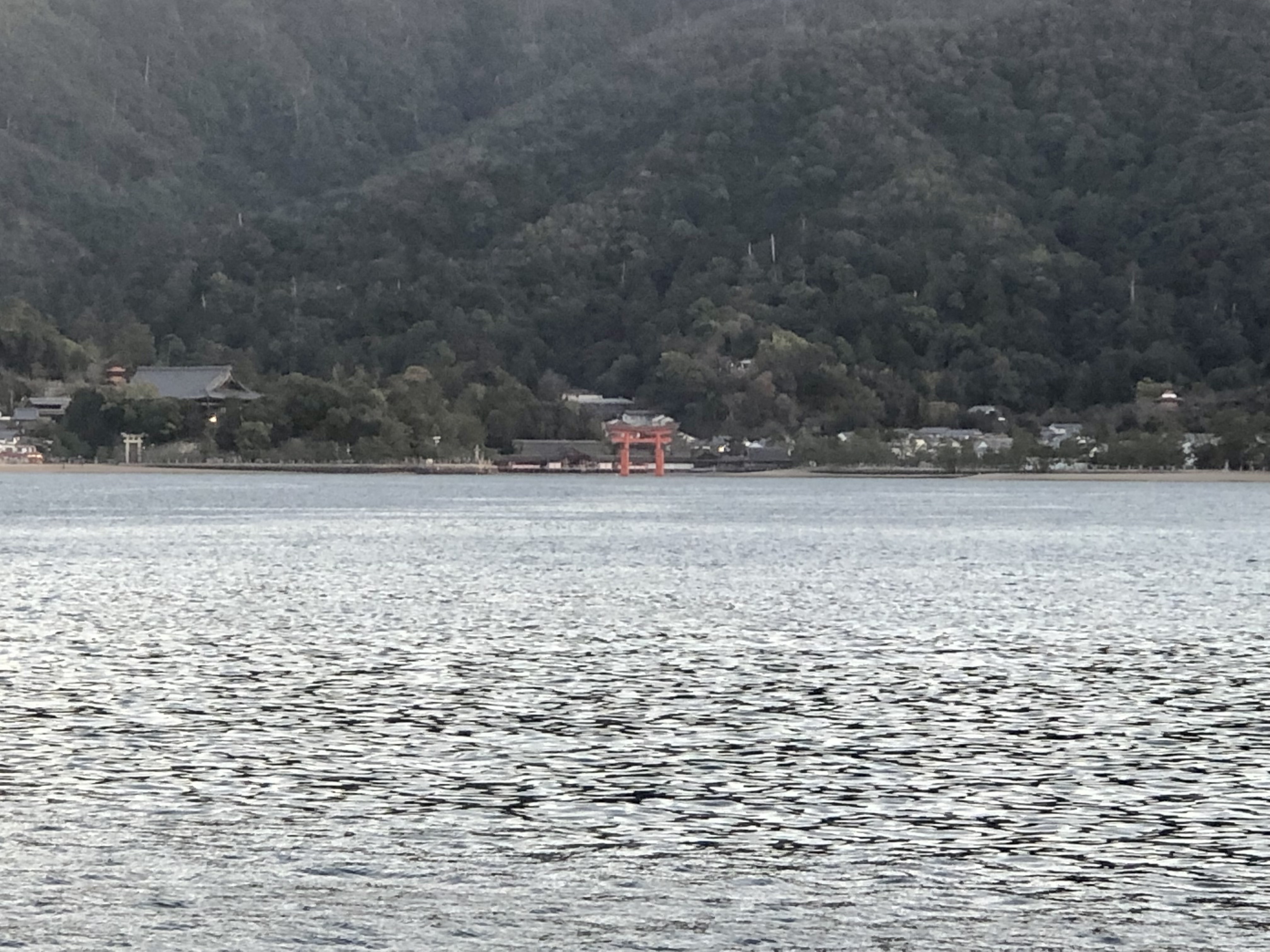
Before taking the ferry over to the island, I pause to capture a photograph of Itsukushima Shrine from the mainland. The shrine, known for its red torii gate that floats in the water during high tide, beckons me with its breathtaking beauty. I stare across at the shimmering water below, the sparkling lustre of Hiroshima Bay that stretches out before me, and with a sense of awe and wonder, I set out on the ferry towards the island, eager to explore its marvels.

The shrine is a Japanese National Treasure and a UNESCO World Cultural Heritage site. Unfortunately for me, there are none of the anticipated roaming deer hanging around today, but despite that, the shrine is amazing to look at. I can’t begin to describe how beautiful the red torii gate is up close. This landmark is one of the most photographed places in Japan, and I urge anyone visiting Japan to go and see it for themselves. My original photograph from the ferry port is the one I select here, as some things you just need to see and enjoy for yourself.

As I wander the streets of Hiroshima, I am determined to find a small standing bar that I visited 10 years ago. I remember the hotel I stayed at nearby and the bar owner’s enthusiasm for football, and I am eager to see if the owner’s guestbook is still around. However, after searching for over an hour, I discover that the bar’s location has been swallowed up by the ever-expanding Hiroshima Station, much to my disappointment. I had hoped to read the entry I made in the guestbook during my first trip to Japan back in 2012, but it seems that the bar’s memories have been lost to time.

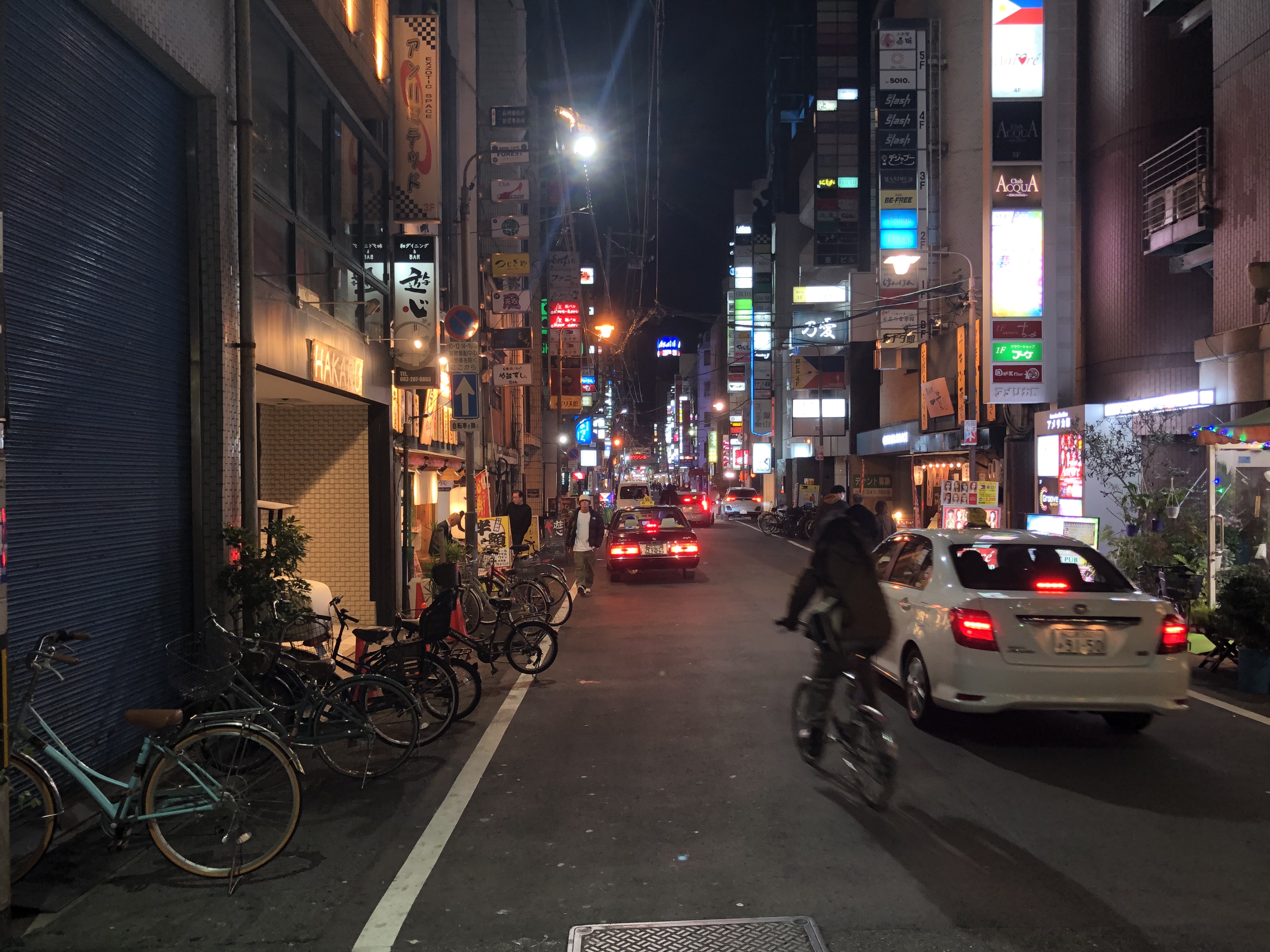
With little else to do I head over to the nightlife area. This maze of buildings containing multiple bars is huge. From one intersection I can see 300 different bars in the four directions I look. It’s common for buildings in Japan to contain loads of tiny bars, and usually I bravely enter these bars with no plan as to where my night will go. Each individual sign in my photograph represents a single bar.

The first bar I go into the owner tells me, “No foreigners.” The same thing happens in the second, third, and fourth bar I attempt to visit. I understand that maybe the bar owners had negative experiences with foreigners in the past, or may not be comfortable communicating in English, but it is never acceptable to discriminate against someone based on their nationality or ethnicity, and it leaves me feeling hurt and frustrated.

I do eventually find a small friendly bar that will accept me, and stay up until closing time drinking and singing with the foreign owner’s Japanese guests. It’s actually one of the best nights out I’ve had in a while, so much so, that by the end of the night I’ve forgotten entirely about the toothache, the twisted ankle, and the racism.

Snake Placid

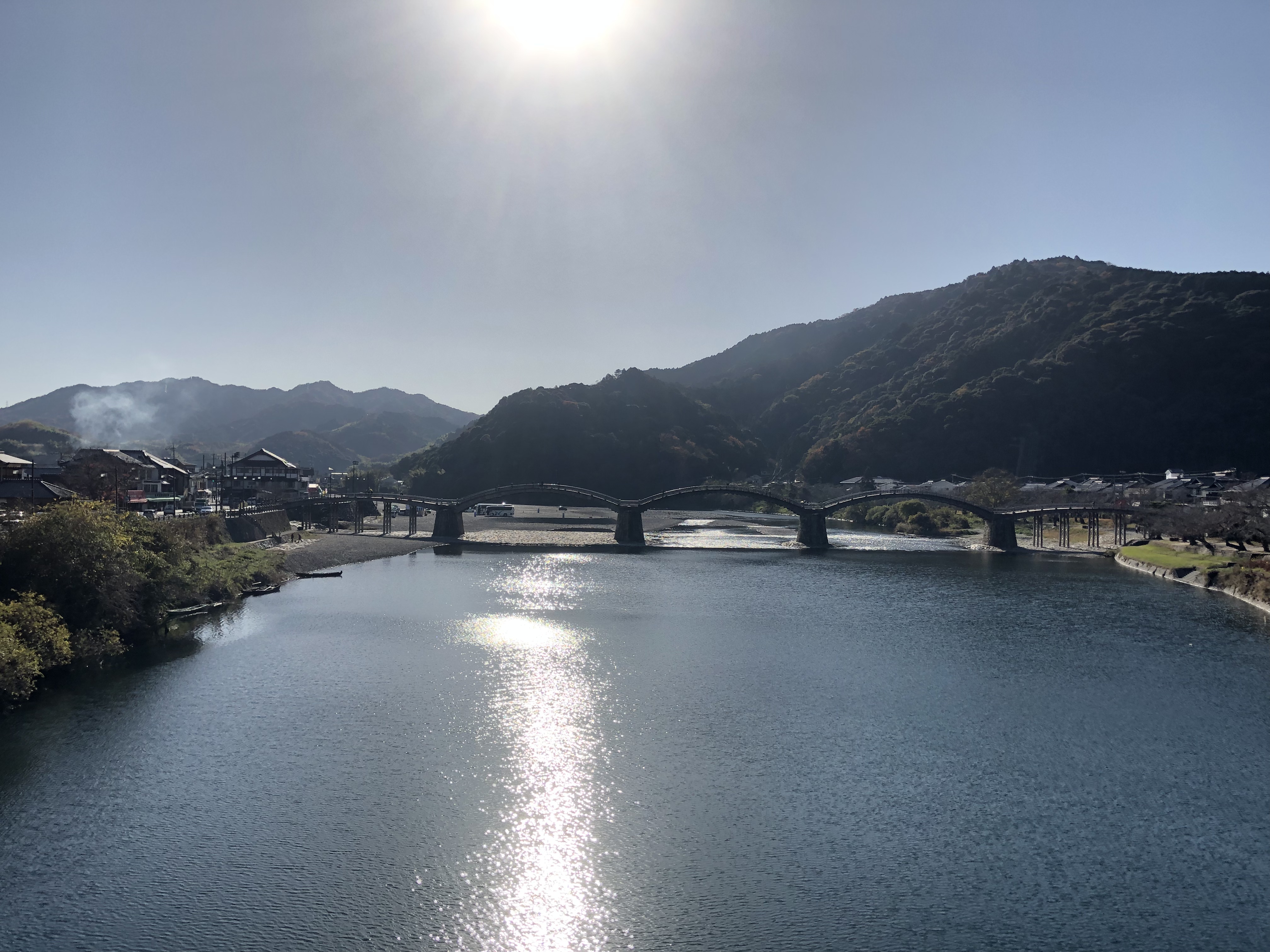
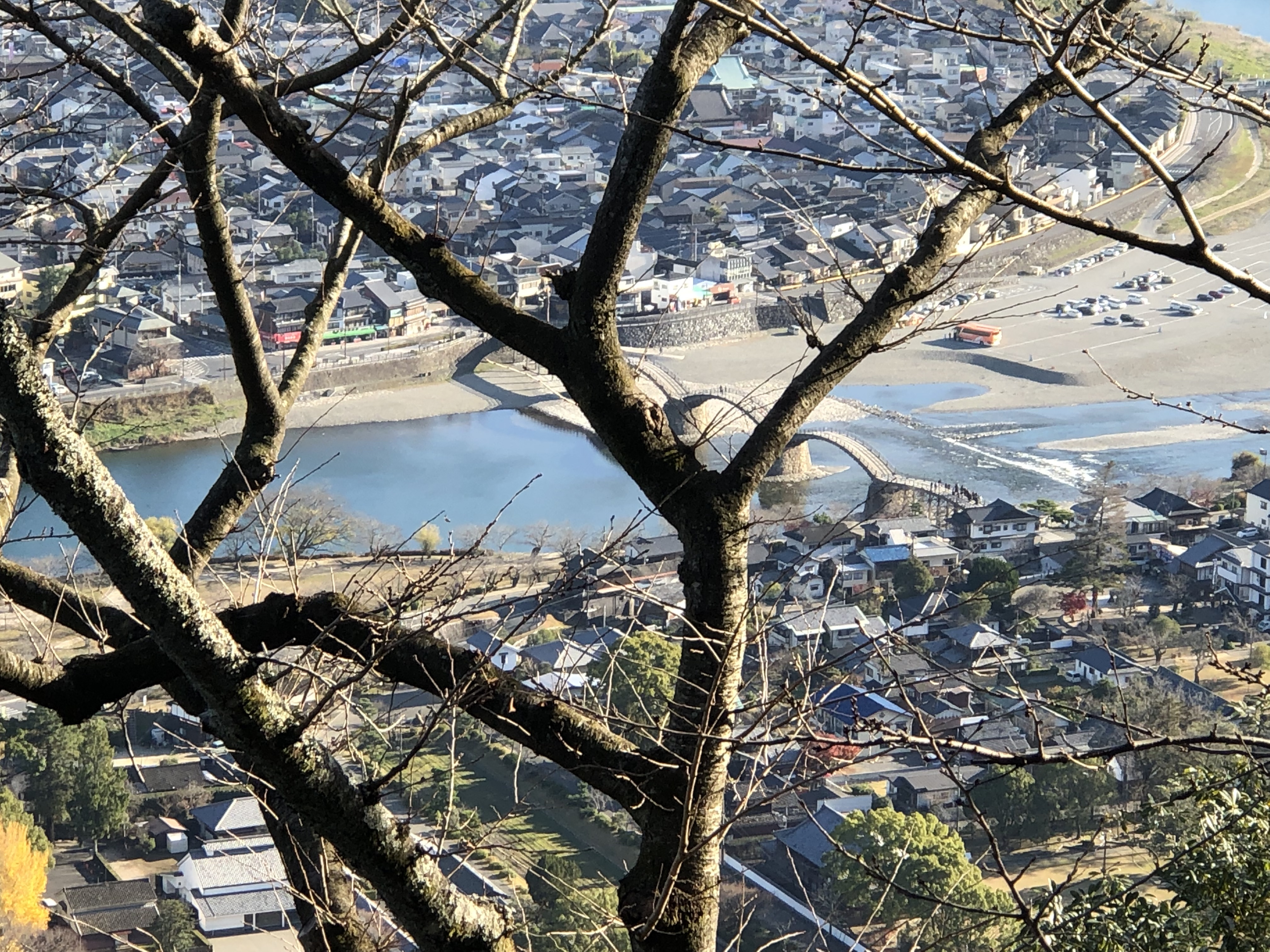
My bus drops me off on a remote mountain path, the lush green foliage surrounds me as I walk. Luckily, getting off at the completely wrong stop presents me with a great view of the Kintai Bridge, an expansive wooden bridge with five arches. Located in Iwakuni, Yamaguchi Prefecture, the Kintai Bridge is regarded as one of three best bridges in Japan, with its ornate timberwork dating back to 1673.

I stare at the bridge for a while and consider its unusual shape. I eventually come to the conclusion that it looks a bit like a snake. I glance down below at the tranquil blue water of the Nishiki River, before continuing on toward the entrance to Kintai Bridge. Here a woman in a ticket booth waves at me, distracted from the present situation, I wave back and begin to cross the bridge.

This renowned bridge is dreadful to walk across, its wooden steps curving up and down. The bright winter sun reflects off the polished woodwork and I have to focus on not toppling over. Kintai Bridge has been designated as a National Site of Scenic Beauty, the reason for this is hidden in its sophisticated construction. From the perspective of modern bridge engineering, the construction of the wooden arches are said to be so impeccable, despite their age. I think these modern engineers should try walking across the bridge in the blazing sunshine and then decide how sophisticated it is.

When I reach the other side of this 210 metre long bridge and see another ticket office, I realise the woman that waved at me was signalling for me to buy a ticket to cross the bridge. I apologise at this side and retroactively pay the ¥310 crossing fee. Slightly embarrassed, I continue on, and enter a nice looking park.

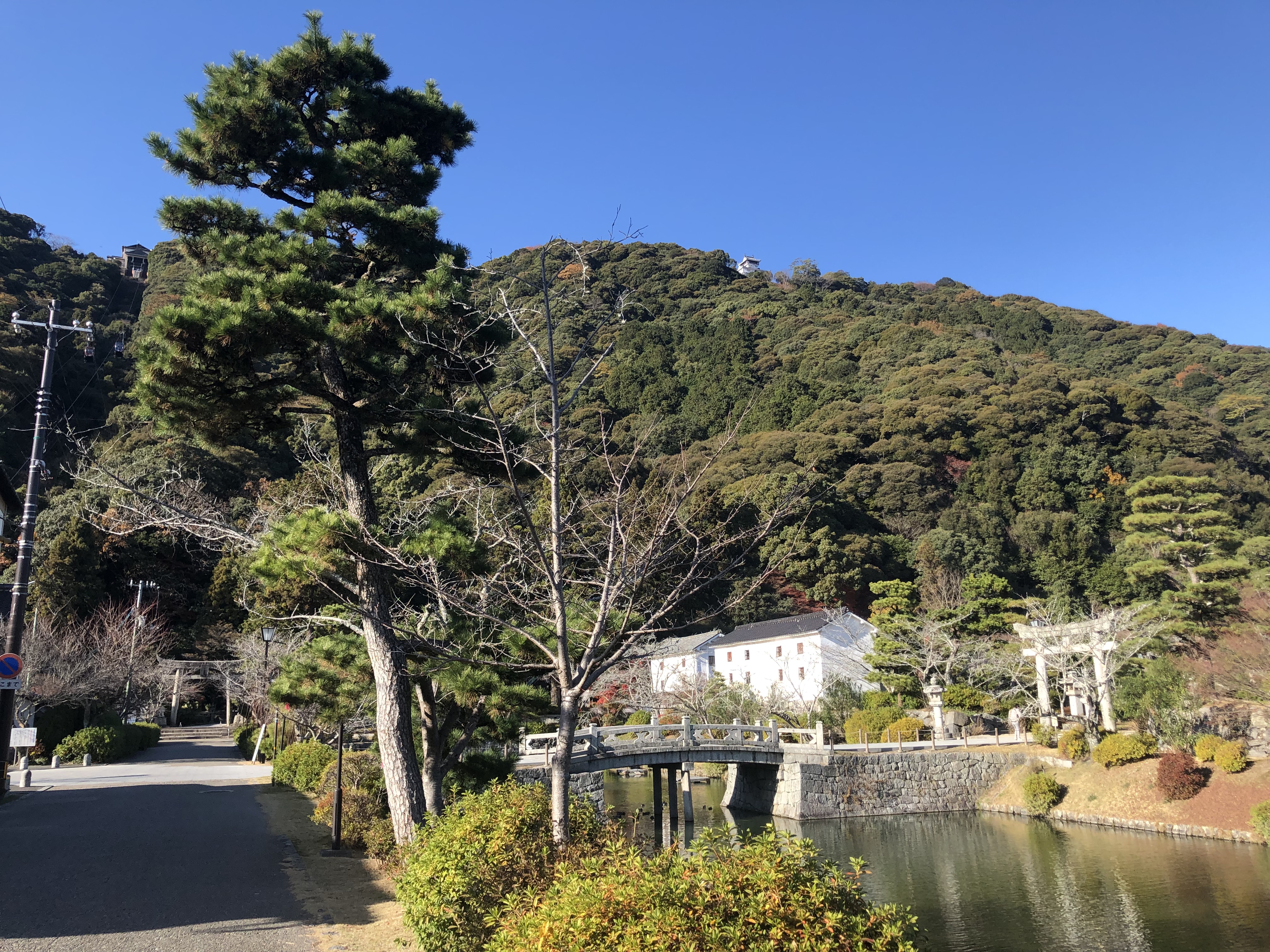
Kikko Park is a very charming leafy landscaped park. The area contains a few tasteful clothing stores, small coffee shops, and nice little restaurants. All of this is set to the backdrop of a mountain, a shrine with some nice bridges, and a few small canals. Atop the mountain, I can just make out the miniature outline of what looks to be a castle. There’s also a snake museum here.

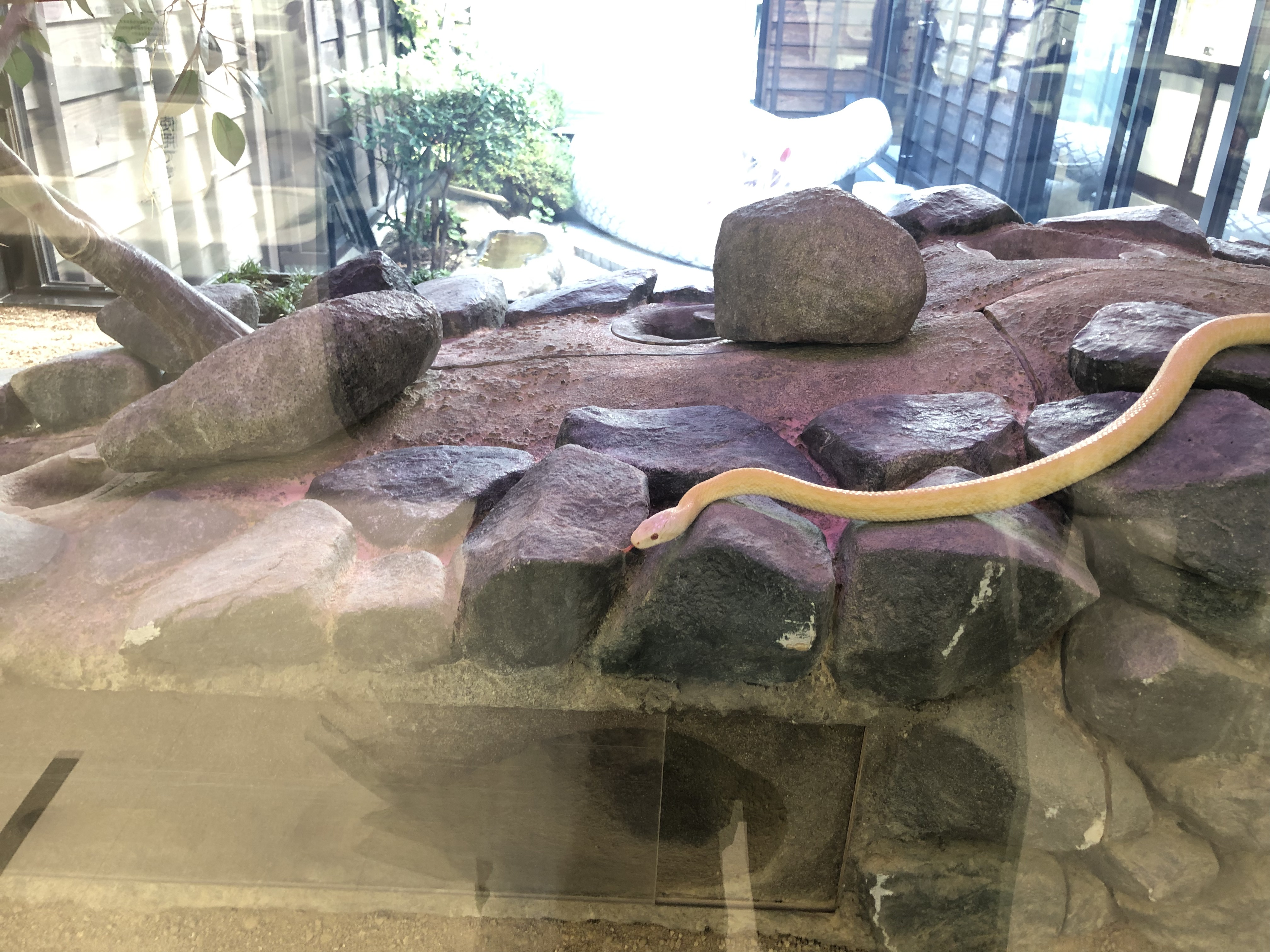
After having my temperature checked and my hands sanitised, I enter the Iwakuni White Snake Museum. Here can be found everything there is to know about this special type of snake; a breakdown of its anatomy, snake skeletons, and real samples of its shed skin are on display here. There are even live snakes that I initially mistook to be made from plastic; it wasn’t until one of these enchanting snakes began to hiss and move its tongue that I realised it was real.

This albino mutation of the Japanese rat snake is glossy white with red eyes, and has been designated as a National Treasure by the Japanese government. It is said that stories about incidents involving these white snakes have been passed down through the ages. The interesting thing about the Iwakuni white snake is that it has a mild temperament, and does not harm human beings. I stare at the snake, regard its shape. I consider that it looks a bit like the bridge I crossed earlier.

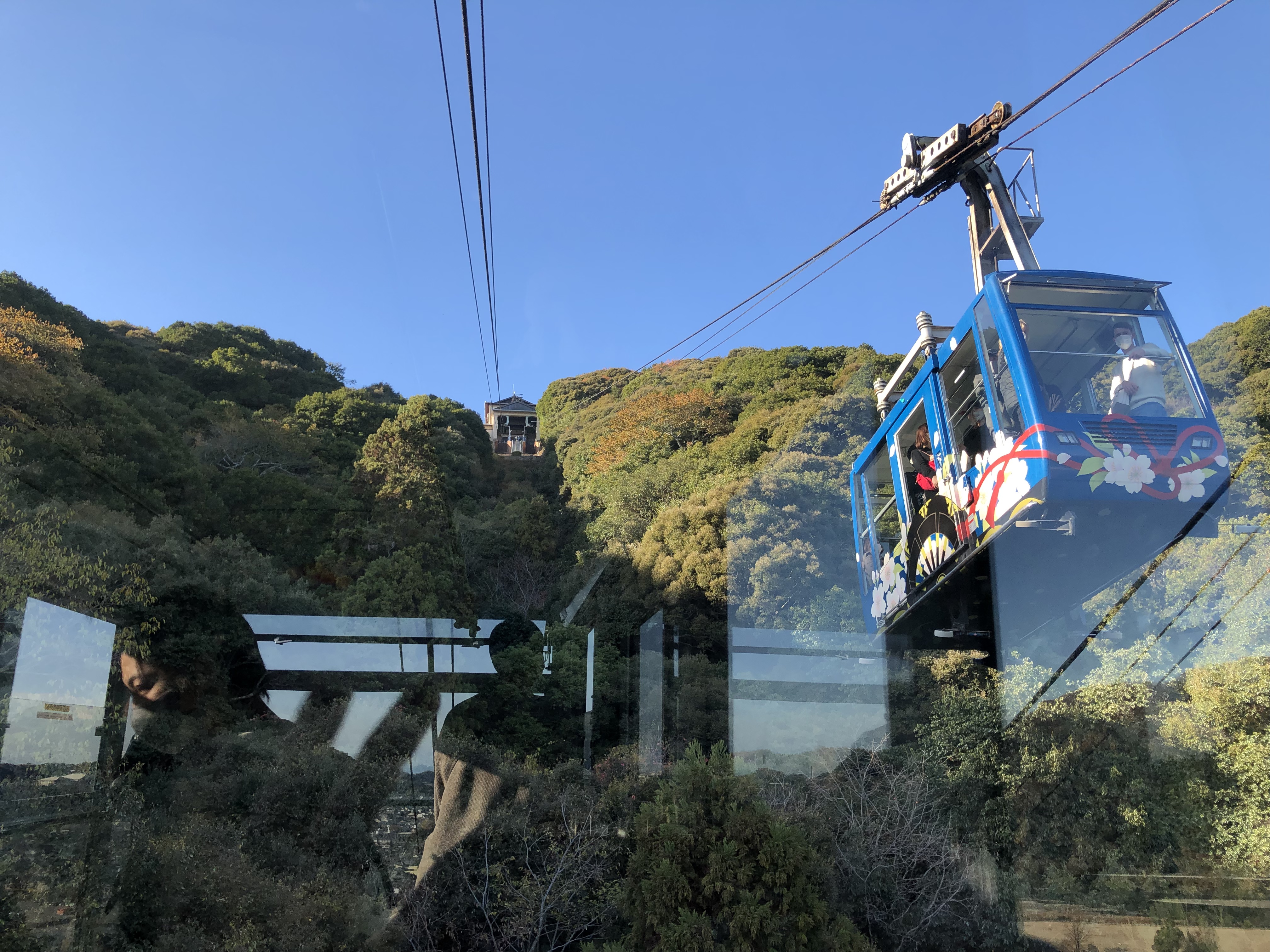
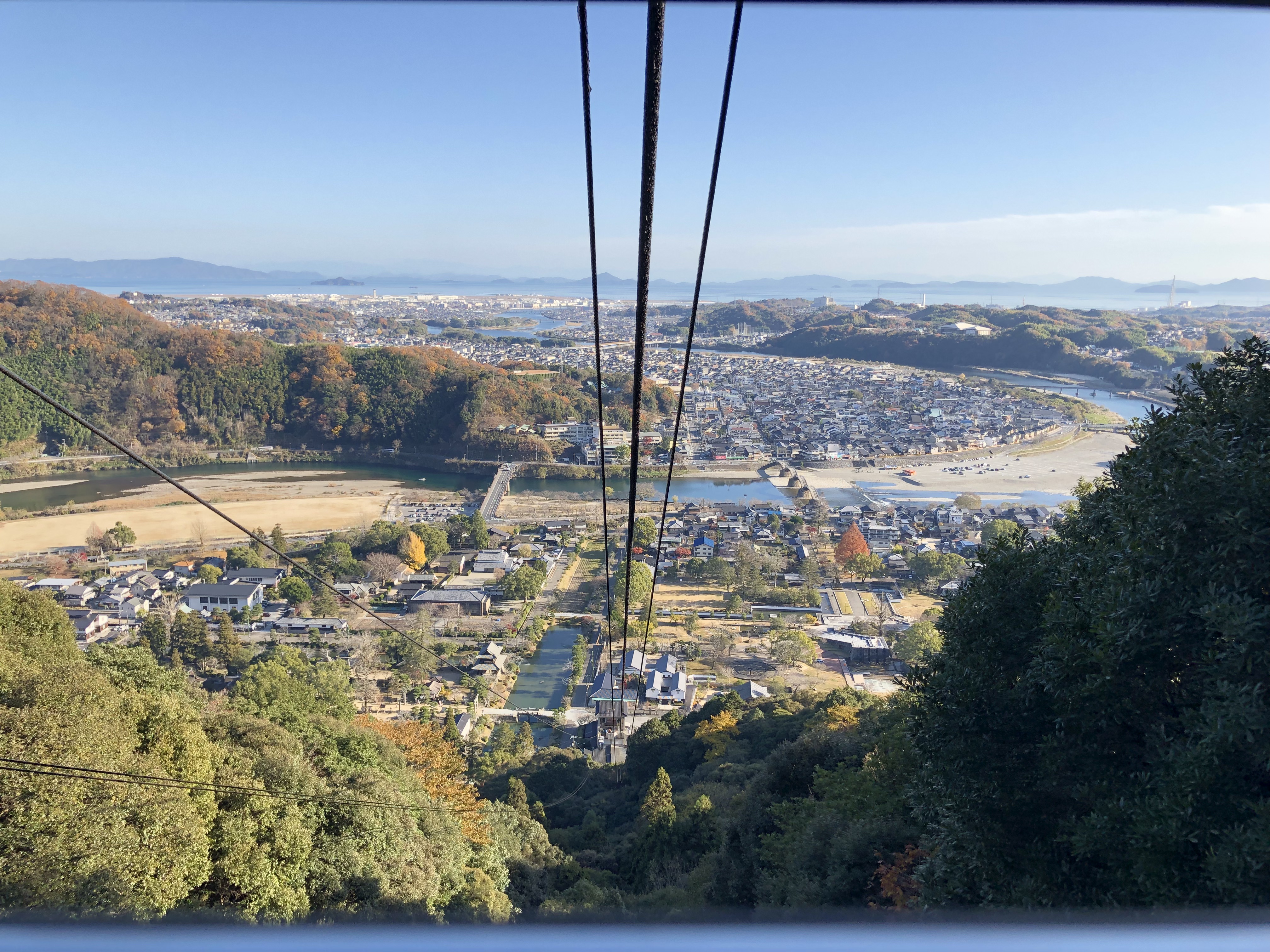
Leaving the museum, I decide to check out the castle. It’s quite high up the mountain but luckily there is a ropeway that runs every fifteen minutes. I’ve never been on a ropeway before, but having previously conquered my fear of heights, I’m prepared to give it a go. A few moments later, I arrive at the Iwakuni Castle Ropeway Mountain Foot Station.

I buy a return ticket for ¥540 then instantly regret my decision once I see the ropeway; it doesn’t look safe at all. As I wait to ride, I become anxious when I watch the man who performs the safety checks simply put his head into our carriage, take a swift look around for less than a second, before telling us we are okay to enter. The ropeway fights its way up 200 metres of cable as it climbs to the top. There is a clock here, the Shiroyama Mechanical Clock, it plays a lively melody as the cable car pulls into the station; I recognise the tune but can’t quite place it.

The view from the top is stunning. I stand here for about ten minutes, enjoying the warm weather and admiring the wonderful view. The wind periodically pushes with gentle nonchalance; the occasional hovering of a zephyr adding a cooling breeze to an afternoon encased beneath the vibrant sky. In the distance, I can see the Seto Inland Sea and even the islands of Shikoku beyond.

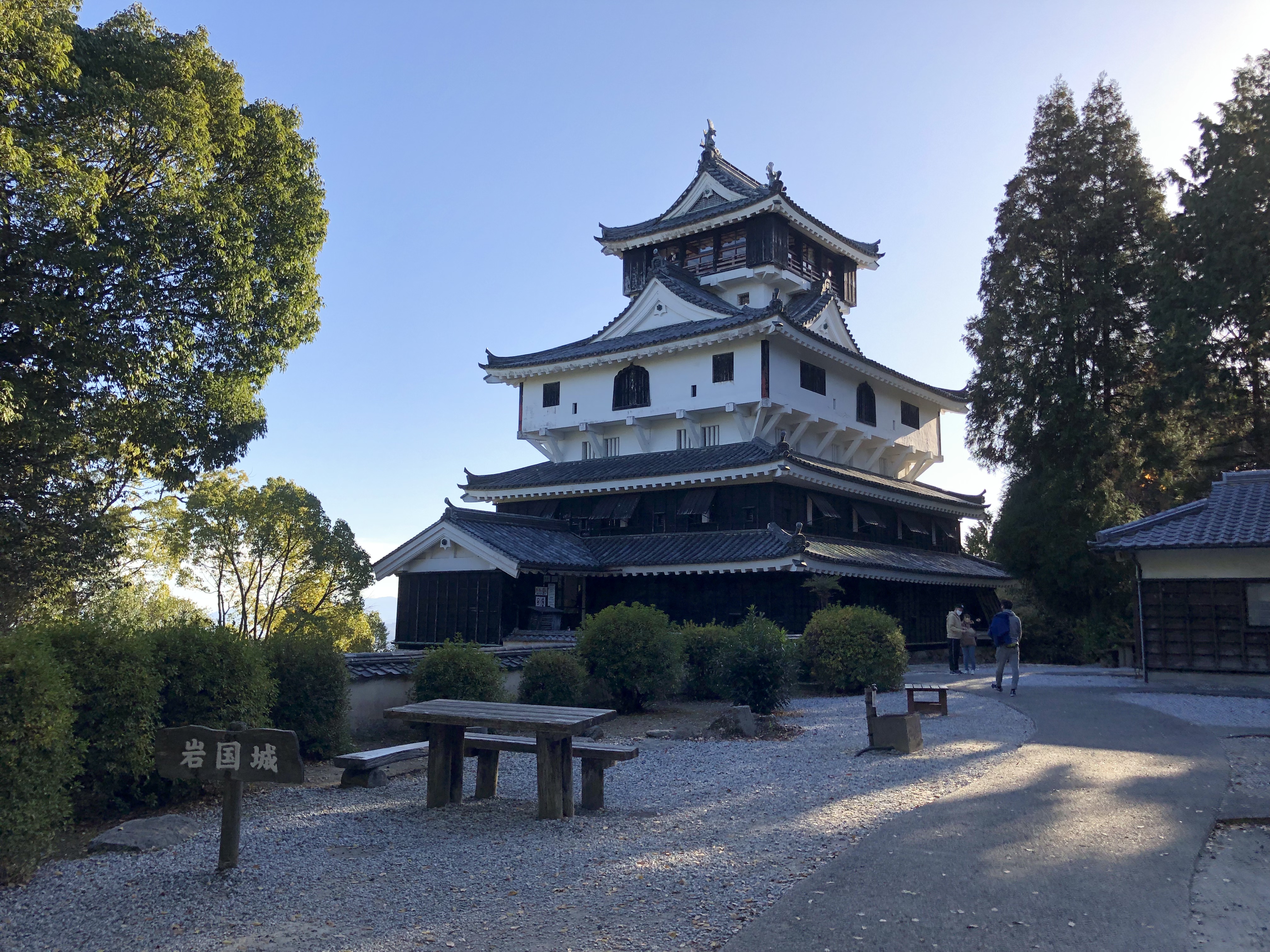
A sign says the castle is an eight minute walk away. The area is awash with vibrant colours, the maple and ginkgo leaves turning various shades of red and yellow. I pass a rather disconcerting sign telling me to, “Beware of pit viper!” — so much for the friendly snakes. I continue on, passing the largest dry moat in Japan, before after a steady twenty minute hike, I arrive at the castle.

The castle is extremely crowded with elderly Japanese people travelling with their tour groups. This particular castle is know as ‘Yamajiro’ which is a word to describe any castle built on a mountain and at least 150 metres high. I once again admire the view from this mountain castle, before turning around and heading back to the ropeway.

As I make my way back down the mountain, the forest whispers to me with the snapping of twigs beneath my feet. The sound captures my attention, and for the first time I truly take in the vast expanse of the forest surrounding Iwakuni Castle. I also realise, with a start, that there is no protective fence separating me from the dizzying drop to the valley below.

Back at the ropeway entrance, I arrive a little early. Eventually, the Japanese tour group begins to arrive in droves, and before long, a line of over thirty people snakes behind me. As we are set to depart, we manage to squeeze in twenty three of us into the tiny cable car; social distancing out of the window completely. As we slowly begin to descend the mountain, the weight of us makes the ropeway creak, squeak, and screech as we swing unnaturally from side to side.

The cable car crashes into an overgrown tree branch on the way down, the sound and shaking startles me, and much like a snake, I jump out of my skin.

Heart-Shaped Rocks

The jaunty jingle on the bullet train signals my arrival in Nagasaki. It’s freezing cold as I leave the station. I enter a world of chaos and construction, maze-like fences guiding people around roadworks and frameworks for what looks like a development for a new plaza and station building. It takes me about ten minutes to escape the labyrinth and get out onto a main road.

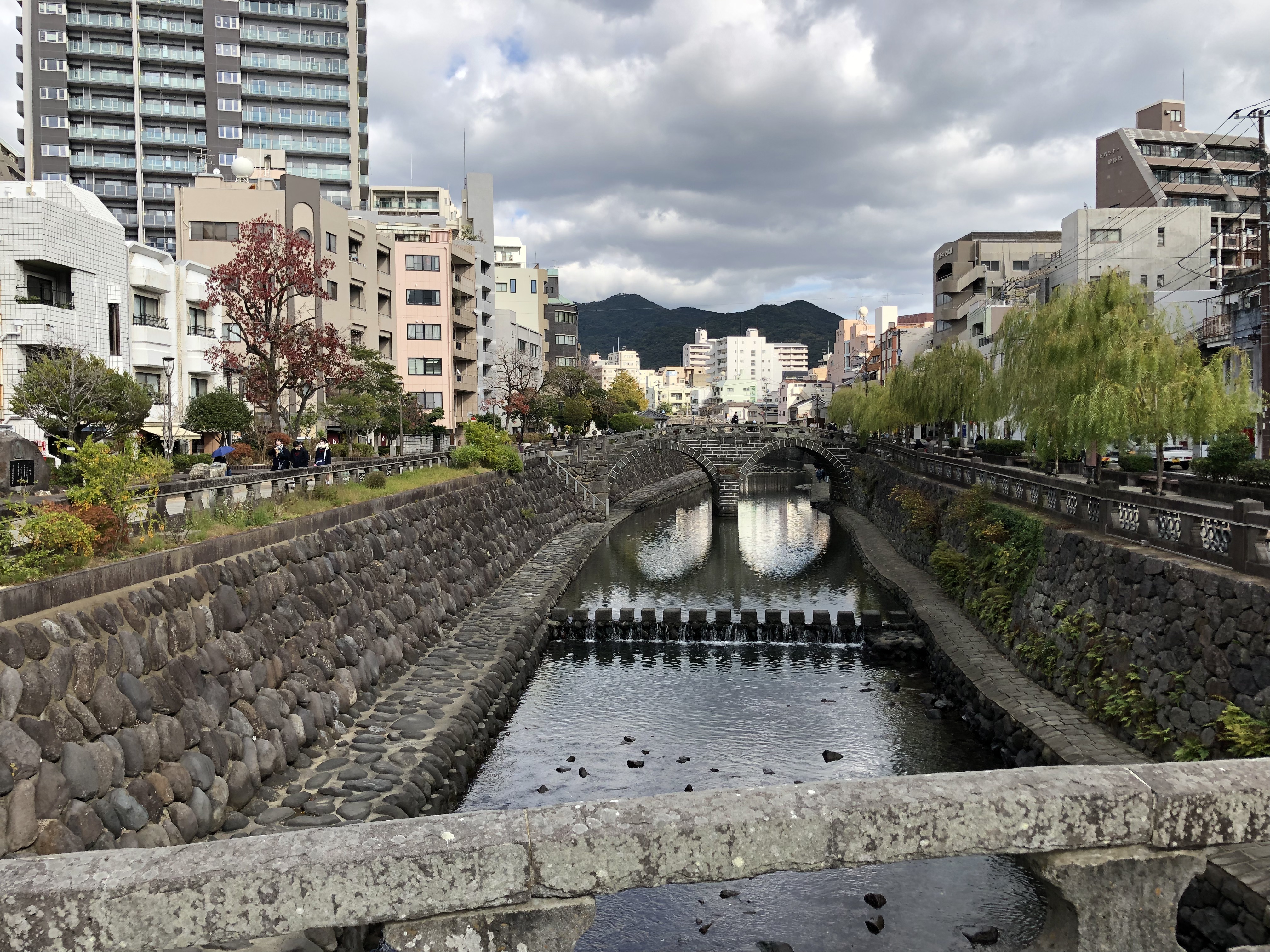
My first stop is along the Nakashima River, a river that runs through the middle of Nagasaki and divides the city into two. This river also features an abundance of historical stone bridges, including Fukuro Bridge. “It is unknown when it was built or who built it. It is said to be the second oldest stone arch bridge right after Meganebashi, but there is no evidence.”

Luckily for me, these two bridges are next to each other, so I photograph Meganebashi from Fukuro Bridge.

Built in 1634, Meganebashi Bridge is not only unique because it’s the oldest stone bridge in Japan, but also, because the reflection of the bridge on the river below makes it looks like a pair of glasses. Along with Nihonbashi Bridge in Tokyo and Kintai Bridge in Iwakuni, Yamaguchi Prefecture, this bridge is regarded as one of the three most famous bridges in Japan. It’s quite the spectacle.

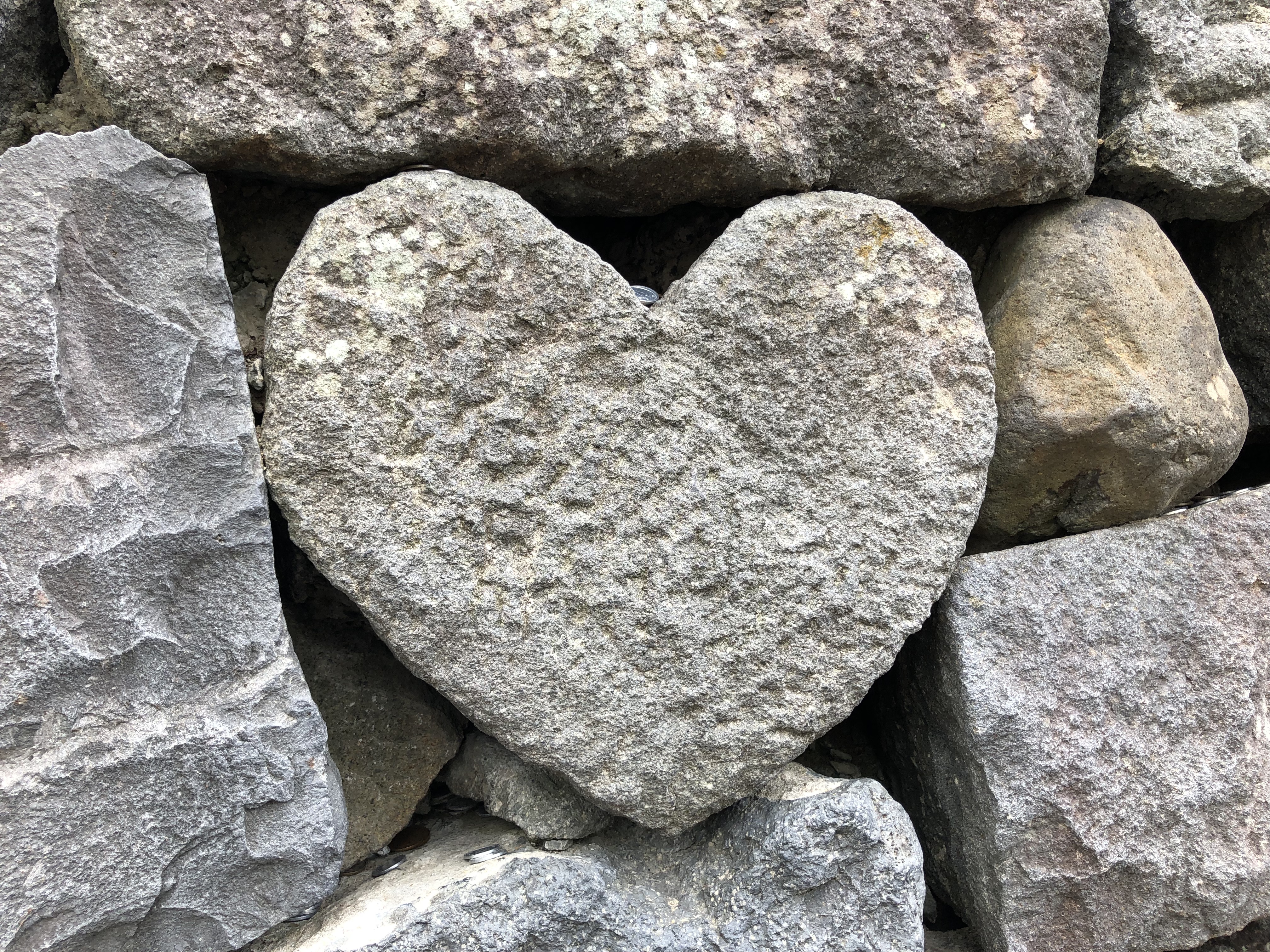
I wander further along the river and down some stone steps. Here I find four teenage girls posing in front of a wall, so I decide to see what all the fuss is about. It turns out they are making peace signs and taking photographs in front of a chunk of rock which is shaped like a heart.

I ask the girls to step aside so I can take a photograph. One of the girls says in Japanese, “That’s so cute!” Presumably because I, a man, am taking a photograph of a stone shaped like a heart, but I can’t be too sure. I find very little information on the origin of this stone, except that it’s just one of many hidden around Nagasaki.

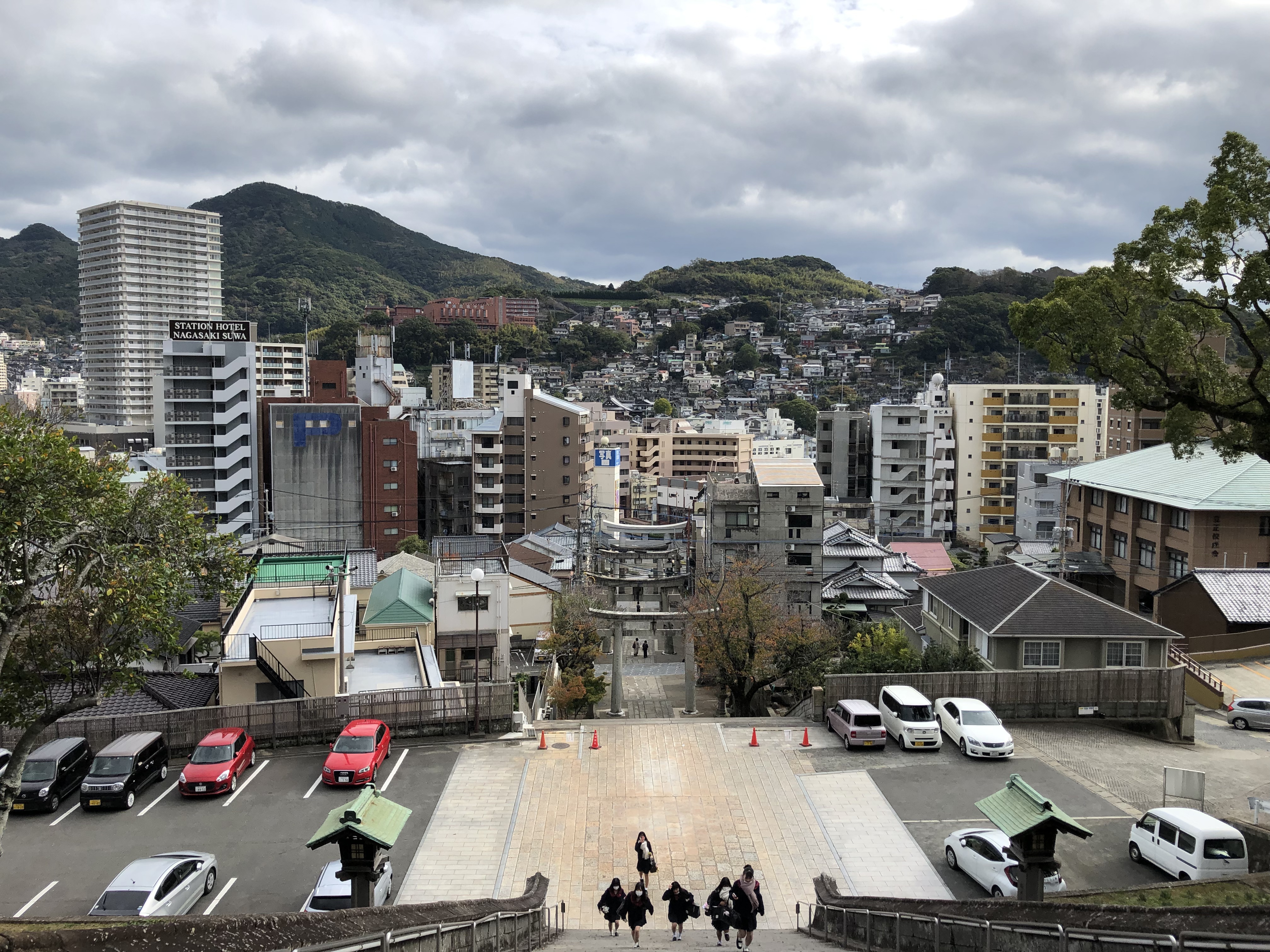
I walk back up the river to the entrance to Suwa Shrine. This shrine is one of the three most famous shrines in Nagasaki, and boasts a total of 277 steps that pass through four massive stone torii gates to reach the shrine complex. As I run up the 277 steps, in my head Bill Conti’s song ‘Gonna Fly Now’ spins around on my mind’s turntable.

Suwa Shrine doesn’t really have much to offer me, except for a one-hundred-year-old tea house, a nice little water feature, more steps, and a stunning view of the city and mountains beyond. The shrine was constructed in 1614 as a way to stop the spread of Christianity that was happening in Nagasaki at that time.

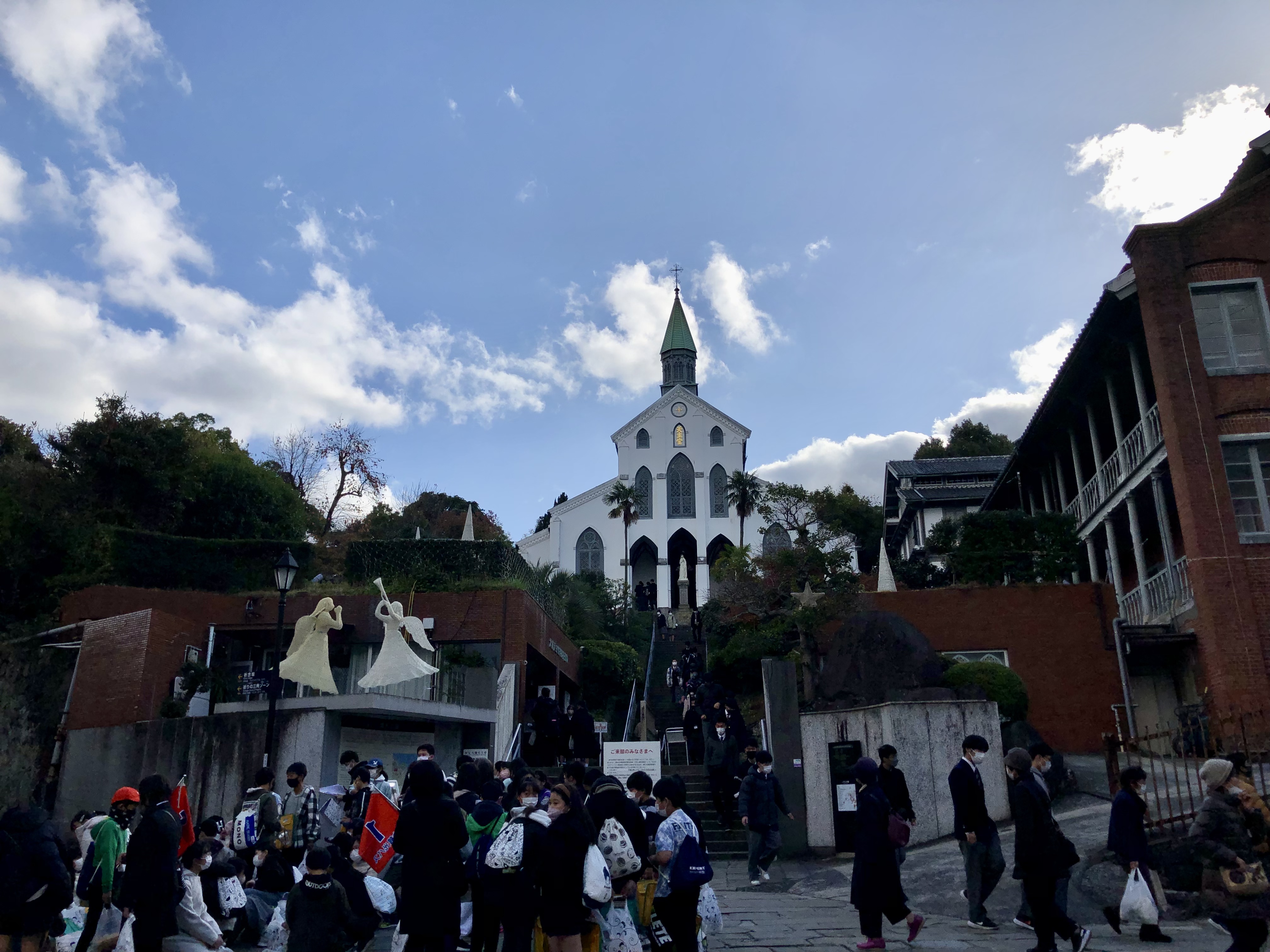
I leave the shrine down the stone steps, and wander four kilometres in the direction of Oura Catholic Church. A gothic-style church on a hill, overlooking Nagasaki Bay. I pay the steep ¥1000 entrance fee only to be greeted by signs saying no photographs. There’s a small museum, again no photographs. For whatever reason the area outside the church is extremely crowded. An extensive 28-page brochure written entirely in English is included in the ticket price, which does, in a way, make the ¥1000 cost somewhat tolerable.

Christianity first arrived on Japanese shores in 1549, but after learning that a Christian, Okamoto Daihachi, one of the trusted advisors to Shogun leader Tokugawa Ieyasu, had been secretly keeping his Christian faith hidden, Ieyasu ordered Okamoto to death by fire. This event also led to Nagasaki being the first place in Japan to ban all Christianity in 1612. Tokugawa Ieyasu later banned all Christianity across Japan two years later in 1614, the same year that Suwa Shrine was completed.

This led to an array of hidden Christians, especially in Nagasaki. Statues of the Virgin Mary were disguised as Kannon, the Goddess of Mercy; Christians posing as Buddhists to avoid execution. In 1853, Japan ended its policy of isolationism, and the borders opened for those from overseas. Foreigners residing in Japan were, at the time of this church’s construction, allowed to be Christian, but for the Japanese it remained to be illegal. Oura Catholic Church was built for those foreigners in 1864 and is the oldest surviving Catholic church in Japan.

The Japanese government finally lifted the ban on Christianity in 1873.