The Other Side of the Tracks

I say goodbye to Nagoya after spending five days there, realising that I could have used my time better, particularly during three of those days. The travel costs me ¥1950 and takes two hours. During the train ride, I manage to read over half of my new book, ‘South of the Border, West of the Sun.’ Interestingly, it is around the time I change trains at Toyohashi Station that a scene in the book unfolds in Toyohashi itself. I’ve nearly given up trying to attribute too much thought or meaning to these coincidences.

I arrive at Hamamatsu just before two. I would have arrived a bit earlier if two of my trains hadn’t been running late – not very Japanese-like. It’s unexpectedly warm outside. Sitting on a dull, air-conditioned train is quite deceptive, especially after the frankly terrible weather in Nagoya for the last few days. I immediately notice the distinct lack of tall buildings here.

I find my hotel on the map, it is probably a five minute walk. I take an unnecessary shortcut through a small shopping arcade. There are no voodoo dolls hanging here, but there might as well be. Every shop is closed or abandoned, and there’s no music playing. “Welcome to Hamamatsu,” I mutter to myself.

hama2

I notice that a significant number of signs here are in Portuguese. “Você está aqui,” says the map. Perhaps Hamamatsu has a large Portuguese-speaking population. My suspicions are somewhat confirmed as I pass a Brazilian imported goods store and a small boarded-up Portuguese restaurant.

Opposite the front door of my hotel is a construction site. However, it seems to be a day off because there are no workmen with flashing red sticks. Inside the hotel lobby, there’s a cream grand piano. It serves as a nice centrepiece for the room, but it also appears slightly lonely and seldom used.

I can’t check in for another twenty minutes, so I leave my bag and take a quick walk around the block. Behind the hotel, there are some incredibly old-looking Japanese houses. I can’t quite tell if they’re still inhabited or not; they seem to have weathered quite a bit, as if the Big Bad Wolf has paid them a visit.

brokenhomes

On this side of the train tracks, I count two Seven Elevens and one Family Mart. Every now and then, the pavement bears etchings of musical instruments; they look old and worn, as if they were made many years ago.

At 3 p.m., I check in. This is the second hotel in Japan where I’ve stayed without any wireless Internet. I can’t believe it. The building itself resembles more of a block of apartments than a hotel. I decide to rent the hotel’s laptop for both nights at ¥500 per night, which is actually not that bad.

My room provides only the basic amenities, but the hotel does have ¥180 cans of beer on the vending machine floor, although it’s only Kirin Beer. The hotel information seems quite standard, except for one exciting detail: “We offer free curry and rice from 17:00 to 20:00.” There is a neat, hand-drawn ink line through this particular piece of information. Not available today, it seems.

The laptop itself loads sluggishly, which is a common issue I’ve encountered in Japan. It’s so old that it doesn’t recognise my camera, preventing me from uploading any photographs. I search for the nearest Internet cafe and after a considerable effort, it finally locates a Popeye Media Cafe. Perfect.

I head toward the Internet cafe, taking the underpass beneath the train tracks. On the other side, I’m greeted by shrubbery and flowers; it’s like entering a different world.

hama1

The area here is bustling with shops, restaurants, and people—a lively hub of human life. I navigate using a photograph of the map and the GPS on my camera. In Japan, pedestrian crossings typically emit a loud drone or a repetitive beep-beep, beep-beep, or one of two tunes, all permanently etched into my memory. However, not in Hamamatsu. Here, classical music resonates from the loudspeakers. I cross the road to the tune of Chopin’s Nocturne in E-flat Major, Op. 9, No. 2.

After some time, I finally arrive at my destination, thanks to Google. Looking around, I realise I’m in the middle of the woods. Insects buzz loudly and mechanically around me. Surprisingly, there’s not a media cafe in sight.

I walk through the woods for a while and stumble upon a castle. There’s always a castle, it seems.

hamcastle

It’s half past five, yet the castle gate stands wide open, tempting me to wander inside. This is one of the smallest castles I’ve come across—deserted, with only the castle tower and gates standing tall.

Right next door to the castle sits the Hamamatsu Municipal Museum of Art. They’re hosting a special exhibition for the next two weeks: ‘The Genesis of Ultraman 1966-1980.’ How interesting.

To return to the main roads, I need to trek through the Sakusa Woods. Roughly five minutes into the woods, a Suntory Boss vending machine appears, offering either a welcome reward or a disruption to the tranquillity, depending on one’s perspective.

bossofthewoods

After ten more minutes, I might be lost in the woods. Endless loops of footpaths and stone stairways wind back and forth. Occasionally, I catch glimpses of the city through the trees. However, every turn I take towards it seems to carry me further away.

After twenty minutes, I find myself back at Hamamatsu Castle. From there, I retrace my initial steps and eventually discover an exit. It’s no wonder this small castle has survived for so many years. None of the advancing armies could locate it amidst the tangle of woods.

Abandoning my search for the media cafe, I make my way back to the train station. Along the way, I pass by a massive Yamaha store, the Watanabe Music Company, a shop named Viola, and three guitar shops. There’s an unmistakable musical vibe to this city.

At the station, I make my way towards what appears to be the tallest building in Hamamatsu, known as ‘Act City.’ It turns out to be a vast concert hall, but the next performance isn’t until Friday. I ascend the steps to an area named ‘Chopin Hill’.

actcity

Standing proudly atop the steps is a statue of the Polish composer Frédéric Chopin—a 1:1 scale replica of the famous bronze statue crafted by Wacław Szymanowski. Interestingly, the original statue resides in Warsaw, which happens to be Hamamatsu’s sister city.

I stroll to the open terrace and enjoy a splendid view of the train station below. The city appears lively from this side of the tracks, even quite beautiful.theothersideofthestation

I head to Seven Eleven for some food and decide to sit outside the shop for thirty minutes, making use of their free wireless Internet to upload my photographs.

Just after 7 p.m., I leave the land of the living and return to the side of the train station that contains my hotel. The atmosphere is eerily silent. On my way back to the hotel, I encounter only one other person—a young woman who, amidst the desolation, could easily be mistaken for a ghost.

There is one positive thing though, the pavement this side seems to be fairly new, and very flat. The perfect surface for running on, or for running away from ghosts.
O Browser, Where Art Thou?

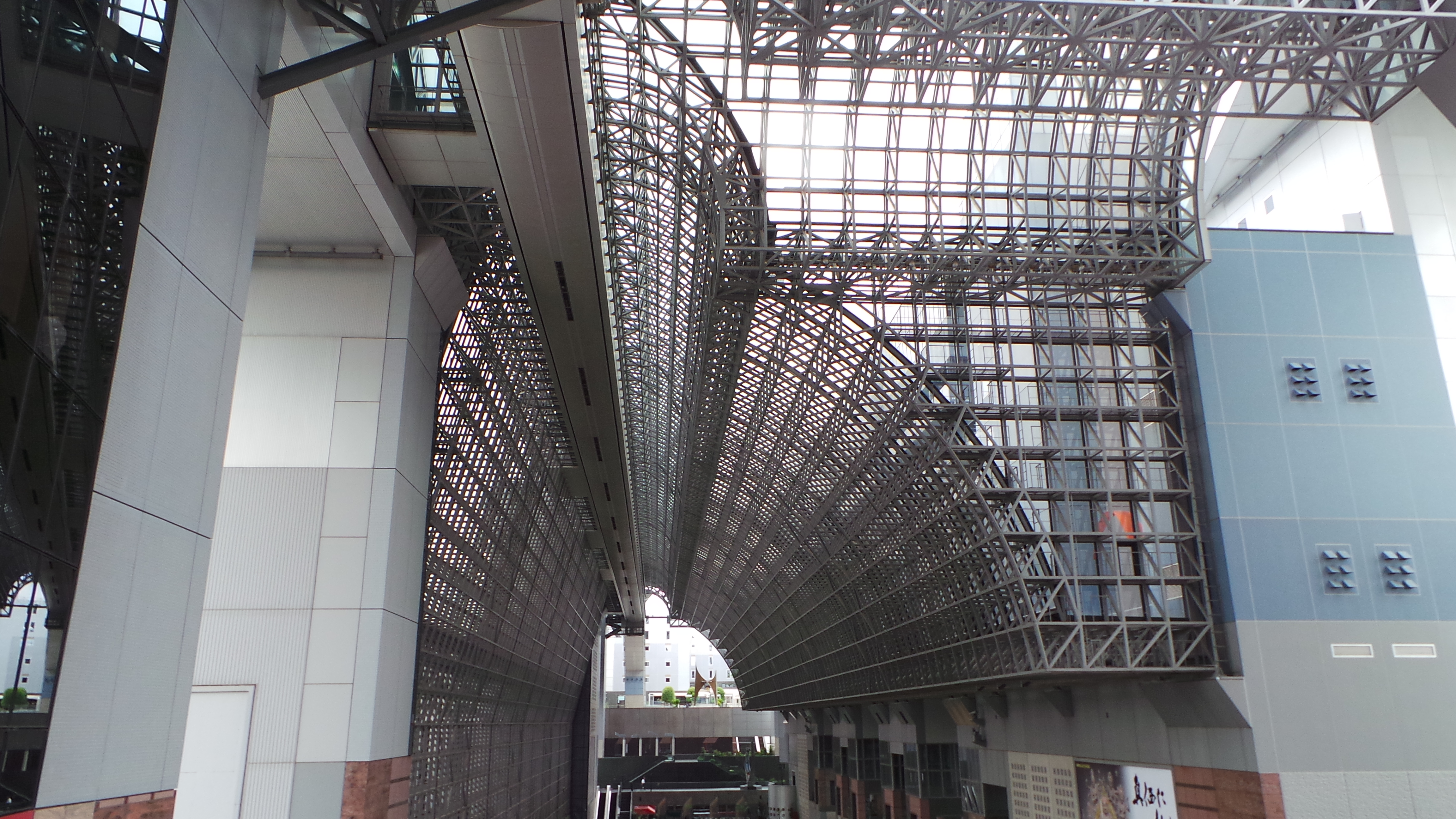
Today, I am leaving Kyoto. However, before I depart, I decide to visit the roof of Kyoto Station, specifically the sky garden known as ‘Happy Terrace.’ It requires ascending nine consecutive escalators to reach the top, where I can admire the breathtaking views of Kyoto for free. As I descend back on the endless escalators towards the train platform, I take a moment to appreciate the roof.

KyotoStnroof

At the platform, a helpful staff member asks if I need any help. I tell him I’m okay and thank him. “Where are you going? Osaka?” he inquires. I nod. He points at the train I’m waiting for, saying, “This one is faster,” seemingly checking off his good deed for the day in his mind. I thank him again and resume waiting for my train. This has happened four times this week in Kyoto—staff members or strangers offering help. I guess I should be more grateful.

At 12 p.m., I board the JR Kyoto Line to Shin-Osaka. The 23-minute train ride costs ¥560. Osaka, the capital of Osaka Prefecture, is Japan’s second-largest metropolitan area. Over one-seventh of the Japanese population lives here, ranking it as the third largest city in Japan by population. I wander around the Osaka area for a while, passing time before I can check into my hotel.

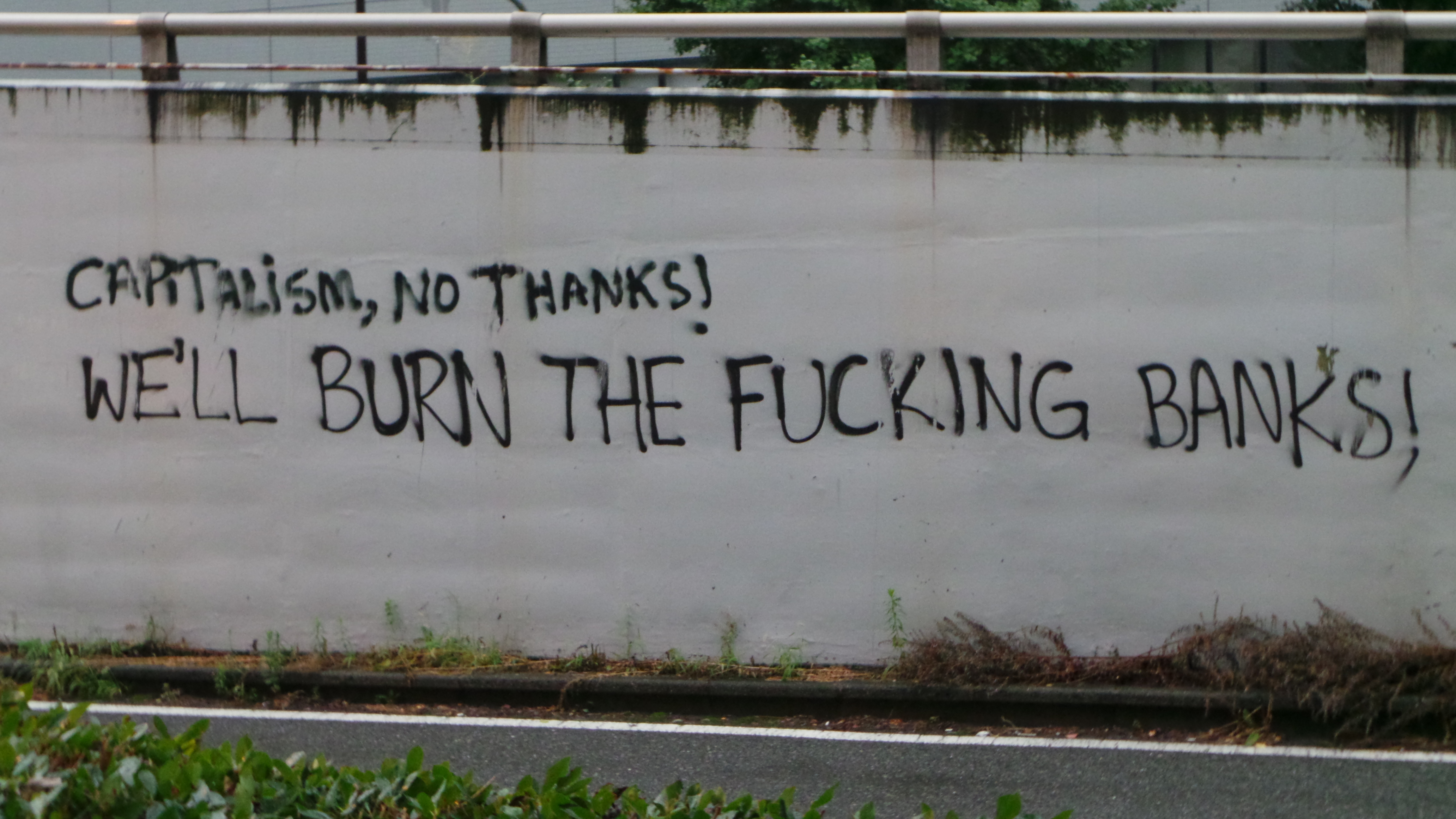
Outside Shin-Osaka Station, I see my first real piece of graffiti:

burnthebanks

At 2 p.m., I check in. I’ll be staying in Osaka for three nights. I selected this hotel based on a quote from their website: ‘For warm smiles, fastidious service, and first-class hospitality.’ Interestingly, the hotel also boasts another blatantly inauthentic motto: ‘The happiness of our guests is our happiness.’ The person checking me in hands me a breakfast ticket for a Japanese breakfast tomorrow morning. It’s odd because I don’t recall paying for any breakfast.

I am staying in Shin-Osaka, which Google says is a one-hour walk from Osaka Station. I opt to take the train to Osaka Station and walk back to my hotel, thinking it will be a pleasant way to explore the city. I stayed in Shin-Osaka two years ago, so I am familiar with the area around this station. In Osaka, people walk on the left and stand on the right side of the escalator, unlike almost everywhere else in Japan.

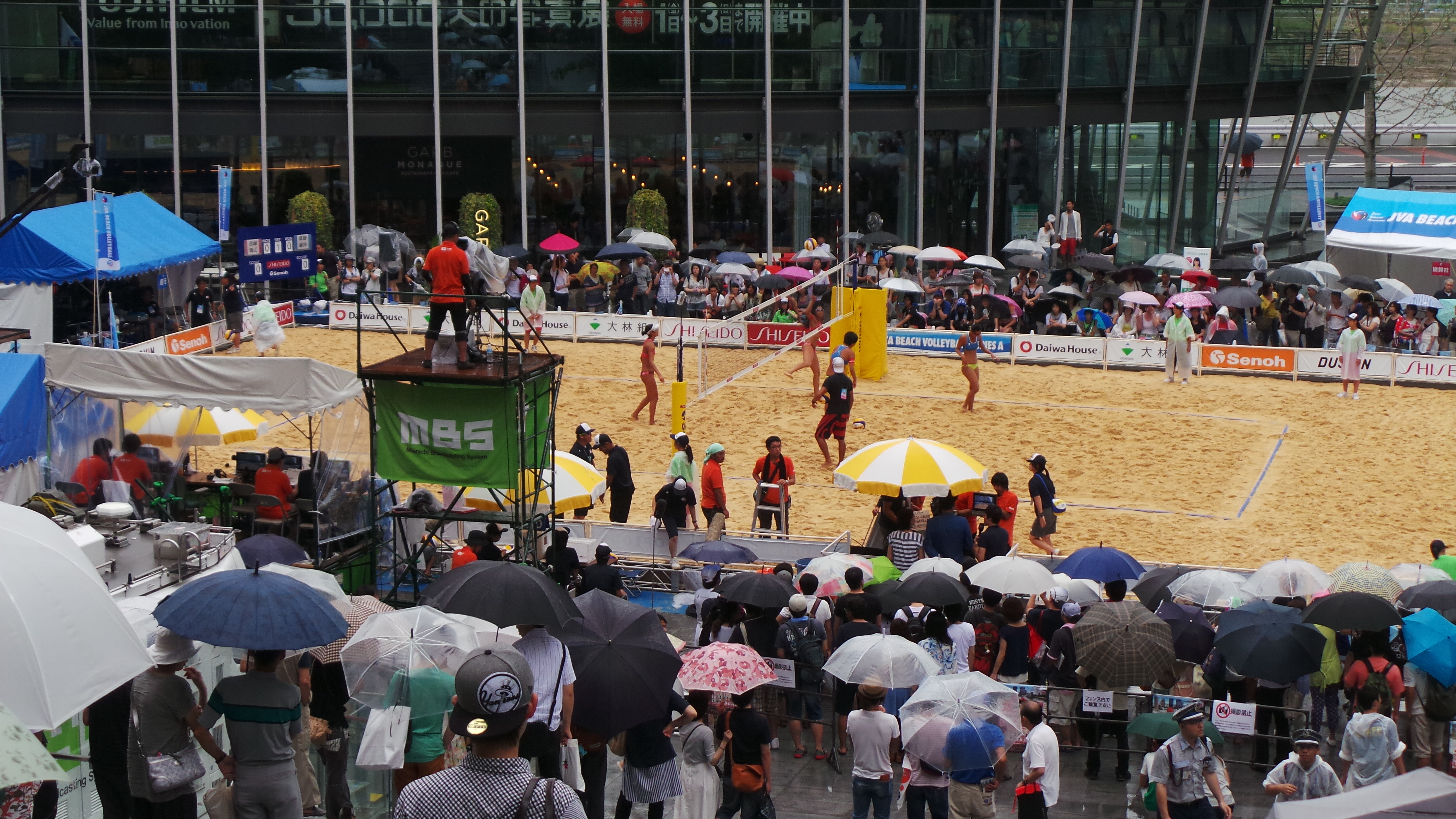
The train ride takes just six minutes with no other stops, and it costs ¥160. Exiting the station, I notice a sign indicating that cycling on the pavement is prohibited. Outside, the temperature is cool, hovering around 25°C, with a gentle rain falling—nothing to worry about, no need for an umbrella. At the foot of the station steps, there’s an outdoor beach volleyball game underway. It’s a Japan Volleyball Association match, likely being filmed, possibly for live television broadcast.

beechvolleyball

I continue my walk away from the station. To the left, there’s a massive construction site that seems to stretch for several kilometres. On the right, ‘Grand Front Osaka’ stands—a colossal building self-described as a ‘New town in a natural environment.’ Essentially a skyscraper housing numerous shops and restaurants. Adjacent to it, there’s an artificial river that spans the length of the building; it’s not exactly what I’d label a natural environment. However, concrete stepping-stones along the river add a touch of excitement.

I continue my walk through the chaotic Osaka roads. I’m accustomed to cities where streets form a grid-like pattern, always straight and easy to navigate. However, Osaka seems like someone picked it up and gave it a good shake—the city and its streets have turned into a tangled mass of concrete. The roads are chaotic, and the pavements strangely devoid of people. Suddenly, it starts raining hard—nothing to worry about, no need for an umbrella.

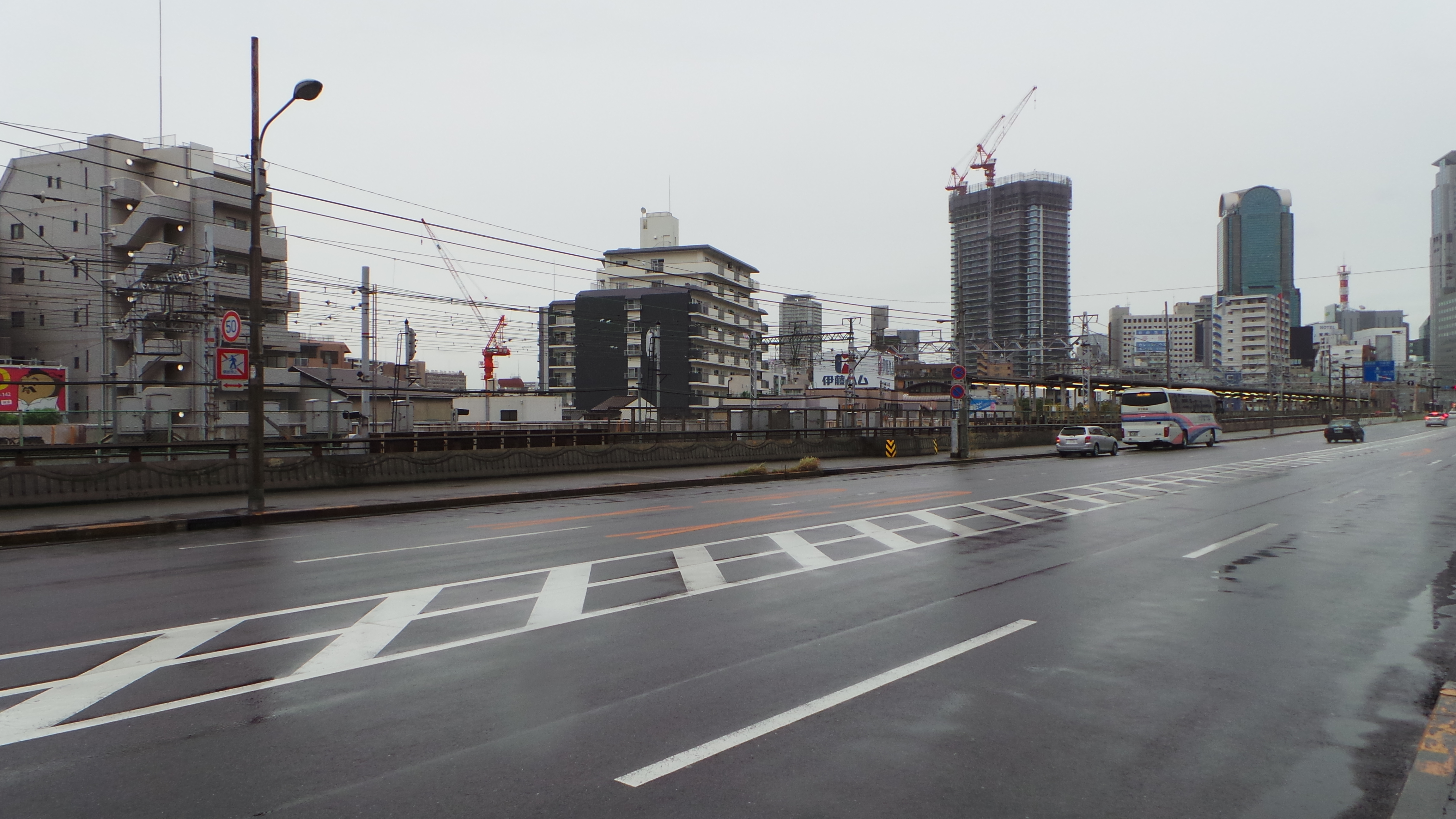
Since leaving Osaka Station, I haven’t come across a single convenience store, and I’m in desperate need of buying an umbrella. At this point, a considerable amount of time passes. I spend a good fifteen minutes attempting to reach the bridge that crosses the Yodo River, but inexplicably, an endless train platform obstructs any access. There’s no tunnel beneath it, no bridge over it.

endlessplatform

Completely soaked and frustrated, I eventually find the way to the bridge. The rain appears to be intensifying with every step, my shoes now full of water. It takes me another ten minutes to cross the Yodo River. I realise that all I’ve done since this morning is kill time. I have days like this every now and then—nothing happens at all.

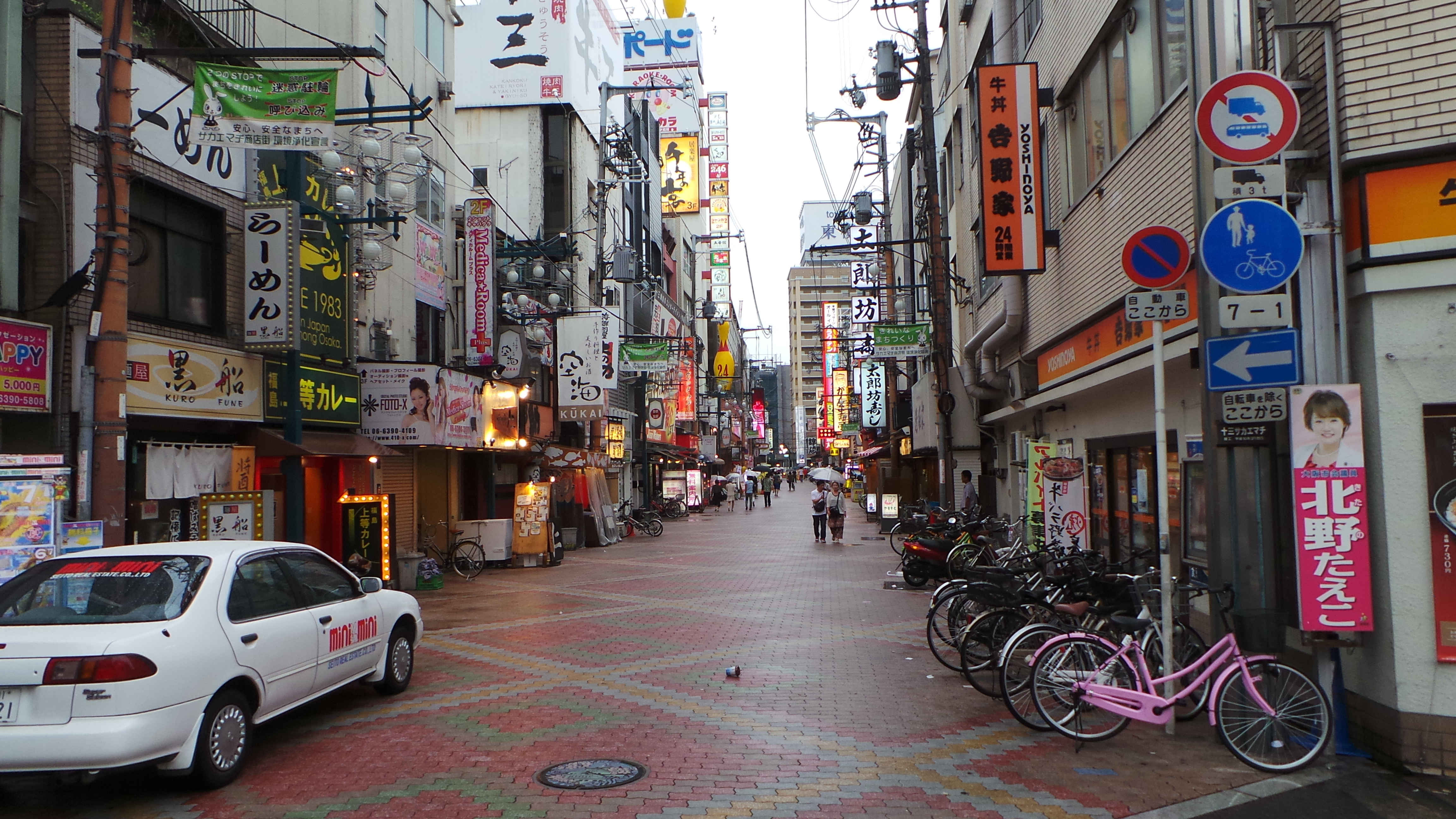
As I wander along with my wet clothes and my thoughts, I start to wonder if I’ll even have anything to write about today. Osaka Day One: Nothing Happens. I can already see the title. It’s 5 p.m. when I finally cross the bridge into Juso. A heavy sigh of relief escapes me as I spot, in the distance, the green and white lights of a Family Mart. A second sigh of relief follows at the sight of some neon. However, the path is somewhat spoiled by a single piece of rubbish on the ground.

litterandneon

I purchase an umbrella from Family Mart along with a single banana. Convenience stores appear scarce in this area, but at least I can buy just one banana. Osaka feels like a different country—people here act differently, there’s more litter on the streets, fewer bicycles around, and the locals also speak differently, using their own special dialect.

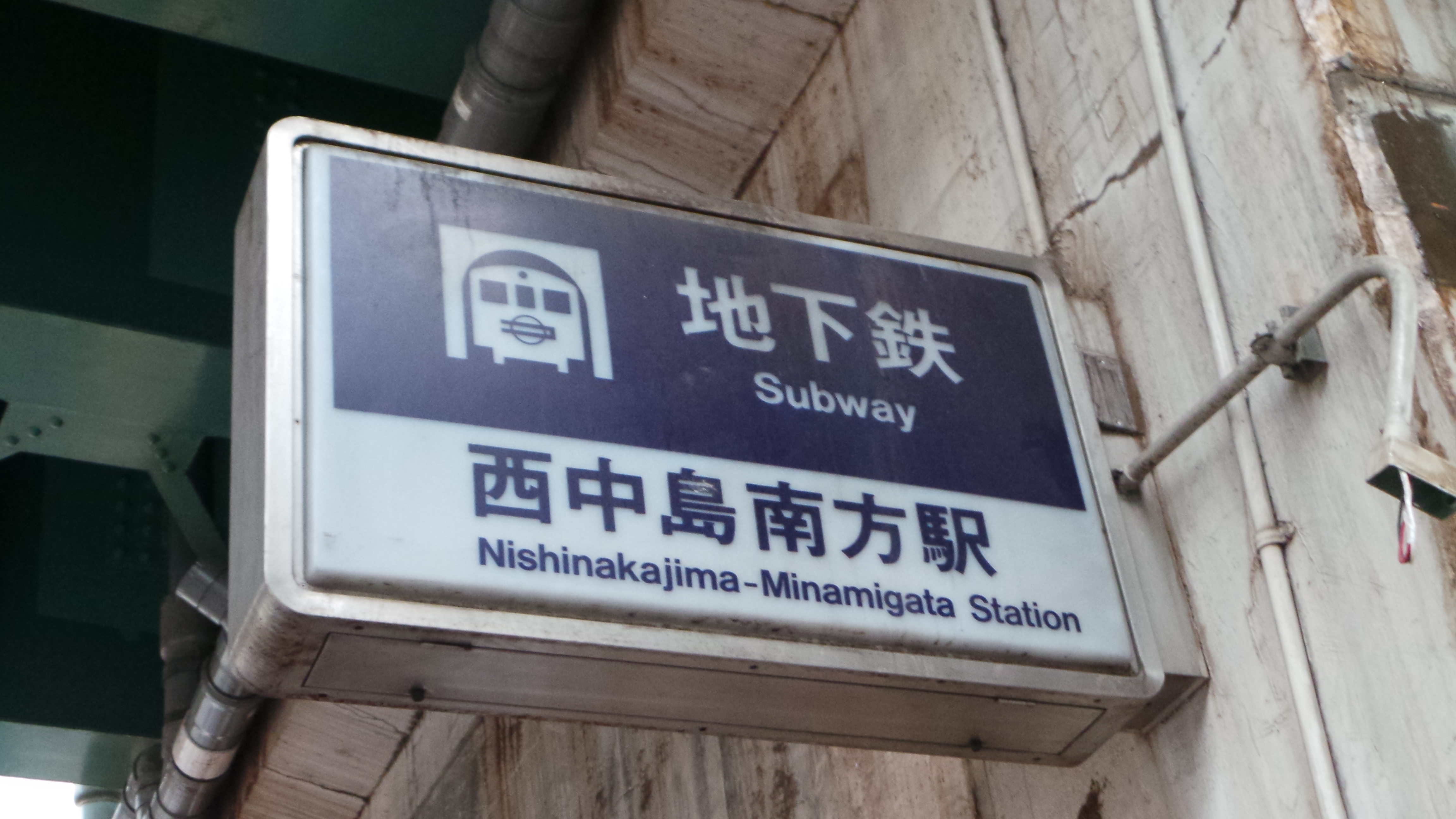
Drenched from the rain, I stroll down a street named ‘Happy Street,’ feeling as though the sign mocks me as I pass. After making a few turns, I decide to take a rest on a bus stop bench. I estimate that I’ve been walking for about two hours. Consulting the GPS on my camera, I realise I’m close to Nishinakajimaminamigata Station. It’s just one stop away from Shin-Osaka Station, so not much farther to go.

nishinakajimaminamigata

Near the station, the nightlife scene comes alive. Memories flood back as I navigate the interlocking streets filled with restaurants, bars, and neon signs. I decide to check if a bar I fondly remember, called ‘Meets,’ still exists. Finding it easily, I’m disappointed to see it closed today, or perhaps permanently shut down—I can’t discern which. It’s still early, though. Disheartened, I spot a Seven Eleven and opt to purchase a can of 5% Suntory whisky highball. Seven Eleven is the only convenience store I know that sells the 5% can; the other shops only offer the stronger 7% and 9% cans.

Upon returning to the hotel, intending to write about my day, I find that the two computers available in the hotel lobby are relics of the past. One of the machines operates on the Windows 98 operating system with an outdated Internet Explorer as the default browser, bombarding me with messages to update. It prompts for a password whenever I attempt to do anything. I try to download Google Chrome but face the same password requirement. Attempting to write becomes an exercise in patience as the machine’s slowness causes each typed letter to lag about five seconds before appearing on-screen. Frustrated, I abandon the effort and retreat to my room.

Exhausted, I fall asleep before 8 p.m.

Grandiose Encounters of the Third Class

I went without any Internet connection for a few days, so I couldn’t post anything. Here’s a summary of the last three days:

Friday – Fukuoka

Today, I met a German guy named Klaus. It’s his first day in Japan after spending a month in South Korea. He wants to stay here tomorrow night as well, but there are no available rooms in the hostel. I cancel my reservation for tomorrow night, and he takes my room. I wanted to start traveling early tomorrow anyway, as I have a fourteen-hour train journey to endure.

Klaus and I take a stroll around Hakata Station. I show him the sights, starting with the roof terrace. We then wander through the enormous indoor shopping complex, exploring various random gifts. I spot some excellent souvenir ideas. Later, we head for food—a classic dish of mixed vegetable and prawn tempura on rice, accompanied by a pint of Kirin Beer. Kirin isn’t my first choice for Japanese beer, but I don’t complain.

tenpura3[1]

Afterward, we head over to Tenjin Station because Klaus is really keen on seeing the giant cardboard train. I don’t mind showing him around as I have nothing else planned in Fukuoka. Klaus is quite funny, and his English is good, so I don’t have to speak slowly or anything. We enter the building where I thought the cardboard train was, but we can’t seem to find it. Unfortunately, I deleted the photograph, so I can’t prove to him that it was real. He starts doubting its existence altogether, and I begin to question it myself, still feeling a bit off-kilter from yesterday. We hesitate to ask anyone else about the train because it might sound absurd. “Excuse me, miss, could you point us in the direction of the giant cardboard stream locomotive, please?”

After an hour of searching, we eventually find it in a completely different building from the one I had sworn it was in.

Next, we head to an izakaya by the river. It’s the first time I’ve visited an outdoor izakaya of this style. We choose the most welcoming one. “Please, you are welcome,” the owner says with an honest smile. This place serves skewers of meat and noodle soup. Klaus and I do what Germans and Britons do best: drink.

klaus[1]

We meet a couple of Japanese people: two guys, one of whom had visited Berlin last year, so he and Klaus engage in conversation. Two girls, one of whom had spent six months studying English in Leeds, so she and I chat. As the night progresses, Klaus teaches me about South Korea, and I share my knowledge about Japan with him. We drink, joke, and before we know it, the night disappears.

Saturday – Okayama

I board my third and final train for the day at Shimionoseki Station, taking the JR Sanyo Line. The train is old, with uncomfortable seats, no toilet, and no vending machine. I wish I had more than one bottle of water. The train announcements are exclusively in Japanese. Am I even on the right train? How would I even know?

This ‘local’ train makes an astonishing 83 stops, taking a total of eight hours. Finally, at 9 p.m., I arrive in Okayama. I decided to break up my travel to Kyoto with a nice stopover in a pleasant-looking business hotel. I enjoy staying in a hotel once a month; it offers a refreshing change from the noise of a dormitory room. By using my Seishun 18 ticket, I save myself the ¥16,060 that the bullet train would have cost me. In exchange, I sacrifice 569 minutes of my life.

As I step off the train, the speakers are bellowing out the tune, ‘I’ve Been Working on the Railroad’. In fact, they play the tune every time a train pulls up here. You might go insane if you were a member of the station staff. Leaving the station, I realise just how exhausted I am from doing absolutely nothing but sitting on trains. It wears me out.

There is a really lovely fountain just outside the entrance. I believe it’s shaped to look like a dandelion.

dandy[1]

One thing I notice immediately about Okayama is the maps—they are everywhere, massive, and in English. My hotel is on the same road as the station, about halfway between here and Okayama Castle. I grab a well-deserved can of Suntory whisky highball for the walk.

The main road through Okayama is wide, with trams drifting through the middle of the lanes. Neatly pollarded trees, lit up by lamps, line both sides of the pavement, adding to the city’s charm. Finding my hotel, I notice it’s slightly more upmarket than I’m used to. The room is of average size, with a laid-out yukata on the bed and all the usual hotel amenities. Unfortunately, my view isn’t of the castle but of the train station. Oddly, the hotel exists in a time before the World Wide Web and does not offer Internet access.

After settling into the hotel, I decide to take a walk. I head into the park, passing a group of people exercising to music from a stereo in the street. The park is pitch black, but I can vaguely make out a lake in the middle. In the distance, I see the castle, illuminated by bright green lights.

okcastle[1]

Similar to the park, the castle exterior is pitch black, earning it the nickname ‘Crow Castle’. After visiting the castle, I step out of the park and into the light. Following the neon signs, I navigate interlocking side streets filled with restaurants. People stand outside, attempting to usher customers into their establishments. As I walk around with an empty can of highball, a trick I discovered, I notice that nobody wants someone with an open can of drink in their restaurant. Consequently, I am almost completely ignored by the touts.

I decide to dine at a small family-run restaurant. Surprisingly, they have Basashi (raw horse meat) curry on the menu, alongside natto curry. Opting for a fish curry, I’m asked by the owner, ‘Medium heat, medium curry, okay?’ I request it to be hot. He brings out the familiar chart with the five chili symbols. His chart looks like this:

One: For children.
Two: Mild curry.
Three: Extremely hot!
Four: Daredevil!
Five:

Five is left blank, presumably because no one orders a five. I ask for a three. ‘Three!!!’ he exclaims. His response makes me start laughing. When my curry arrives, the smell is enticing, and the heat level is just right. It costs ¥1019, including a small can of Kirin Beer. It’s a good meal, albeit with a substandard beer.

Sunday – Kyoto

After traveling for four hours on trains, I finally arrive in Kyoto. I switch to the subway line headed to Kawaramachi Station, and surprisingly, the subway train happens to be the nicest I’ve ridden all week. Remembering my station name won’t be an issue either. During my month in Tokyo, my local station was Tawaramachi Station—here, just a letter’s difference. Leaving the station, I walk directly into a massive shopping arcade that sprawls out in every direction.

I pass by a huge market where everything is produced and sourced locally. There are numerous vegan and organic restaurants here as well—my kind of place. Additionally, within the arcade, there are random temples dotted about. Seishinin Temple is sandwiched between a small shop selling calligraphy on wooden blocks and a shop selling human caricatures.

arcadetemple[1]

It is only 2 p.m. and I have one hour before I can officially check-in. I find the hostel and fill out all the necessary paperwork and pay. The hostel offers to look after my bags for an hour. As I hand over my one bag, the staff member gives me a bewildered look. “That’s it?!” He asks me with surprise in his voice.
“Yep, that’s it,” I tell him.
“Not very heavy,” he says, struggling to grasp the concept of my luggage.
“I like to travel light,” I offer as an explanation. His expression retains a sense of disbelief.

I have an hour to kill, so I decide to find some lunch. I head to a small restaurant across the road that offers natural organic food. Like most restaurants here, it has an English menu, probably due to the sheer volume of tourists. They offer free wireless Internet, and Björk’s music is coming out of the speakers. I order a salmon, mushroom, and cheese omelette over rice, served with a big salad, along with a green tea latte. Although the food doesn’t look too pretty, it tastes and smells amazing. The meal costs ¥1944. No complaints here—good food, good music, free Internet.

nomelette[1]

Kyoto was formerly the imperial capital of Japan for over a thousand years. Now, it serves as the capital of Kyoto Prefecture. It’s often referred to as the ‘City of Ten Thousand Shrines.’ I’m not certain if it actually has ten thousand shrines, but it wouldn’t surprise me one bit if it did. I’ve counted eleven already today, and they were all within the indoor shopping arcade.

I return to the hostel to retrieve my room key. The hostel is modern, featuring five floors and a roof terrace. I decide to explore the public areas. The lounge is adorned with small wooden boxes housing growing plants, adding a touch of nature. A huge glass bay window floods the dining area with natural light. The outdoor roof terrace is neatly arranged, complete with beer and cup noodle vending machines. It seems someone in the hostel has organised a weekly late-night running group, with a clear emphasis on ‘going for a beer afterwards.’ I have a feeling I’m going to enjoy my one-week stay here.

terrace[1]

The hostel also features a library, and unlike Fukuoka and Beppu, it has a lift. While I’m writing up my weekend, a Japanese guy who works here comes over and introduces himself. He seems quite a character and turns out to be one of the barmen at the hostel’s bar, which is located in the basement and stays open until midnight every evening. They also offer ¥400 beer on tap. Tonight, the hostel is hosting a monthly party, which is fantastic—another stroke of lucky timing. At the party, I discover that the other barman is my friend Shonosuke. I had no idea he was here. Brilliant!

Ainoshima Cat Island

With muscles loosened after a wonderful massage, I decide to truly test my body. My destination today is Shima Ferry Port. “You’re cycling to Shima?” asks a confused staff member. “Please make sure the bike is back before 9 p.m., okay? It has to be back before nine.” The time is now 11 a.m., and I have no intention of taking ten hours on this excursion. Little do I know.

I cycle for an hour in the direction Google suggested before realising I have no idea where I am. I spend a good half-hour navigating around an industrial estate, reaching a dead end, then turning around to eventually get back on track. None of the road signs are in my language, and there’s nobody around to ask for directions.

Ninety minutes into my journey and I arrive at a beach.

beach[1]

The beach offers a welcome rest, prompting me to park my bicycle and go for a short stroll. I stumble upon the only map in Fukuoka Prefecture and compare it to my photographed route; everything matches up. There’s still a long way to go, but at least now I know where I am. Thank you, ‘Mishima Water Area Circumference Route Map’.

At the end of the beach is what appears to be a closed amusement park called ‘Motown’

mowtown[1]

I continue cycling until the beach ends and the houses begin. I start uphill, hoping it’s the right direction toward Shima. Eventually, I find myself atop a mountain. It doesn’t seem right. Up here, I discover a stunning, random shrine and some very old houses, but not much else.

sshrine[1]

I eventually reach the downhill part of this frustrating journey, only to encounter a dead end overlooking the ocean. I have to push my bicycle back up the incredibly steep mountain roads, and it’s exhausting. Today is scorching at 35°C, and I’ve already used up a full bottle of Sun Aqua by now.

uphillstruggle[1]

At the top of the mountain, I spot a human being. I ask him in Japanese for directions to Shima. He responds in Japanese, and though I’m not entirely certain, I follow his directions. To my relief, I discover a small train station where one of the stops on the route is Shima.

I opt to follow the railway tracks, at times finding them disappear or being forced to detour due to a lack of pavement or road. After a challenging navigation, I finally spot a sign for Shima. I adhere to the instructions on the sign, and miraculously, after two hours and forty-five minutes of cycling, I arrive at Shingu Port.

“I’ve a feeling we’re not in Fukuoka anymore.” I pay ¥460 to a vending machine for a one-way ticket. After a forty-minute wait, the ferry finally arrives.

On the ferry, a television airs footage of a dirty factory in Shanghai. Staff members, their faces blurred out, are seen relabelling one-year-old rotten meat with new expiry dates. The screen shows a pile of processed meat spilling onto the floor while rats crawl below. The gloop is scooped up and pressed into another machine, which churns it into the shape of nuggets. I have no idea what this advertisement is for.

catisle1[1]

Ainoshima Island is just off the coast, a twenty-minute journey away. It boasts more cats than human inhabitants. In Japanese, the word for cat is ‘neko’, and its pronunciation rhymes with ‘echo’.

I arrive on the island to find a cluster of traditional old Japanese houses against a backdrop of mountainous terrain covered in deep forests. Despite its small size, the island takes a considerable amount of time to traverse completely. In the shade between each house, cats are scattered, peacefully asleep.

catisle2[1]

I wander around the island where the small Japanese houses provide little shade from the scorching summer sun. Today marks the hottest day of the year. I spot numerous cats, more than I care to photograph. Here are a few more:

catisle4[1]

There’s one cat that takes a shine to me. He follows me around the island as I walk, meowing or crying—I’m not sure which. I offer him some of my water, but he responds with ‘Nyaa nyaa’ (the typical cat noise here). Perhaps he’s just hungry. I assume tourists visit this island to come and feed the cats, but it’s merely a presumption.

catisle3[1]

I take the 4 p.m. ferry off the island. There are only three other people on the ferry and thirty-two empty seats. It seems like somewhat a waste of fuel, in my opinion. Sumo Wrestling is playing on the television.

There’s one last thing about Ainoshima Island not mentioned in any guidebooks: giant wasps that chase you. I managed to take a photograph of one that was idling, smaller in comparison to others. I’ll admit, though, most of my time on the island was spent either admiring the cats or running away from the wasps like a frightened rabbit.

bpwasp[1]

As the ferry pulls away, Ainoshima Island becomes nothing more than a blur.

I leave Shima at twenty past four, sticking to main roads and following the signs for Fukuoka. As I depart, a bus marked Tenjin Station mocks me as it cruises by.

Canal City, a Wedding, a Japanese Massage

Today is Marine Day, but nobody let me know. The purpose of this public holiday is to thank the ocean for all the fish. Stock markets are closed, as are some shops. The weather is nice, and everyone has taken a day off for a trip to the beach.

I spend two hours of my Marine Day celebrations cycling between closed post offices. I wonder why they are all closed? After finding the fourth post office open, I conclude my business and leave with great dissatisfaction. These three police officers on one-speed bicycles soon cheer me up as they chase after a fugitive.

policebike[1]

My legs are starting to ache after days of excessive exercise. I’ve established an eight-kilometre cycling routine that I follow every morning and evening for the past four days. I’ve managed to trim it down to about forty minutes, which is good by my standards, considering I’m on a one-speed bike and often encounter crowds of pedestrians that slow me down.

I head to Hakata on foot. Outside Hakata Station a stage has been erected and god knows what is going on. People on stage finish up singing, “We are the Bridge.” The theme song for the Asian Pacific Children’s Convention; a non-profit organisation that ‘connects dreams around the world’. I recognise the song, but I am not sure how or where from.

thebridge[1]

I head to a place called Canal City. This place is huge. 234,460 metres squared of shops, restaurants, a theatre, a Taito Station video game arcade, a cinema, two hotels, and an indoor canal running through the middle. The nickname for Canal City is, ‘the city within the city’, and it certainly lives up to its name.

There is also a water jet show. The water sprays up into the air from the fountains below. There is a mat of synthetic grass where children can get absolutely soaked as they dodge the water as it falls toward them. A woman stands with a huge water pistol, shooting at the children, a grin on her face.

If you look closely, in the window beyond the water, a bride and groom are getting married.

wedding[1]

Back at the hostel, the manager asks me if I ever eat. I was asked this question yesterday by another member of staff. It turns out none of the staff here have ever seen me eating. I try to explain to them that ten years of working nights have reduced me to just eating one meal a day, but they don’t seem to understand.

I head to the Nakagawa River. On the way, I stop and talk to Alan, the busker. He is taking a break, sipping on his Royal Milk Tea. He is from England and became homeless eight years ago. Singing with a banjo, he managed to earn enough money for a one-way ticket to Australia. For the past eight years, he has spent six months at a time in various countries. The money he makes busking every day covers the costs of his accommodation and meals.

As I walk across the river, my calf muscles are hurting. I decide to have my first Japanese massage, a type called Shiatsu, which focuses on finger pressure. I opt for a 50-minute full-body massage, emphasising my neck, back, legs, and Achilles. Afterward, I indulge in a ten-minute head and eye massage. The massage, performed fully clothed, is amazing. It costs me ¥4470.

I don’t have any photographs from the massage, as I didn’t have my camera with me. Instead, lazily, here’s a photograph I took of televisions earlier today:

televisions[1]

I leave the massage feeling great, but darkness has fallen on Fukuoka, and I don’t know where I am. I buy a bottle of green tea and walk for a while in the vague direction of Hakata Station before giving up and asking a young Japanese man which direction it is.

He says to me, ‘I am going to Hakata, come with me.’ I follow him until Japan turns into a Monty Python sketch. ‘Come along, come along,’ he tells me, ‘over here.’ I follow him for ten minutes; at each intersection, he checks to see that I am still following him. ‘This way, come on,’ he says, ‘nearly there now.’ We do indeed arrive at Hakata Station. I thank him, and we go our separate ways.

I haven’t eaten anything today, just water and green tea, and it’s 9 p.m. It’s been thirty hours without food, but I don’t feel hungry. I force down a Family Mart dinner before heading out to do my laundry.

As I open the dryer door, a voice inside greets me with, ‘Irasshaimase!’ I sit in the Coin Laundry, reading, and every now and then, I glance up to watch my clothes spinning. I’m only writing about my laundry experience because I found the orange sign above the dryer amusing. ‘Help!’ shouts the shirt, as if about to be gobbled up. After the drying cycle is finished, the machine cleverly switches to ‘Cool Down Mode.’ Five minutes later, my laundry is at room temperature—fascinating. The dryer door thanks me as it opens, ‘Arigatou gozaimasu.’

coolwashluke[1]

Back at the hostel, I strike up a conversation with an Italian girl. She left Italy without money or a job and used whatever she had to fly to South Korea. Swiftly, she found a job and established a new life for herself. As we talk, I mention Alan, the busker; his story seems to have some parallels. Surprisingly, she knows Alan—around four months ago, she met him in Seoul. ‘An Englishman with a banjo, right!’ she exclaims.

Many of the people I’ve met at this hostel are residing in South Korea and are currently here on a visa run. Their visas expire, prompting them to fly to Japan, stay for a day, then fly back out, earning another three-month tourist visa. Interestingly, as tourists, they legally trade work in hostels for free accommodation without exchanging money. This way, they can keep traveling indefinitely, and some have been doing just that.

A guy from Canada has a big carrier bag full of jet black volcanic ash. “A souvenir from Kagoshima,” he proudly tells me. It weighs a tonne.