A Bridge, Too Far

Today I’m going to walk across the sky. I leave my hotel in Miyazaki City at 8 o’clock sharp and cross the road to the bus stop opposite. My bus isn’t quite as punctual and arrives six minutes late. It’s a one hour drive to Aya Town, a place that describes itself as one of the most beautiful villages in Japan, a title that intends to enhance the added value of sightseeing and develop the regional economy, or so the flyer explains.

I arrive at Aya Bus Station, probably the smallest bus station I’ve ever seen. The town of Aya is located at the foot of the Kyushu Mountains, is incredibly rural, and over 75% of the total area is made up of forests, specifically warm-temperate evergreen broadleaf forests. Despite it being just after nine in the morning, and technically winter, a digital display screen accurately informs me that the temperature right now is 27°C.
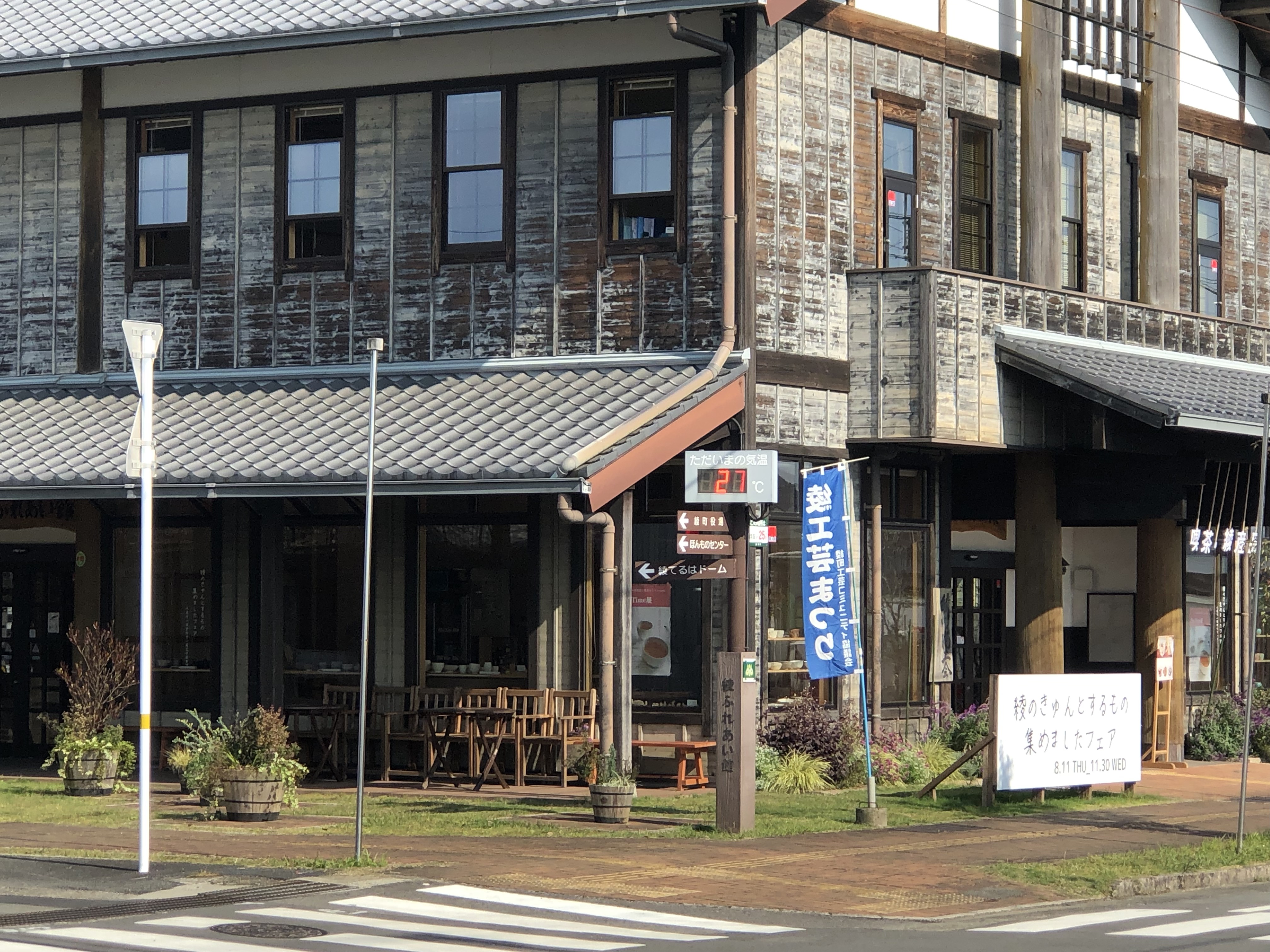
I check the bus timetable but can only see buses here that go back to Miyazaki City, so I decide to walk; my destination a mere twelve kilometres away, up a mountain. The first hour of my stroll is along a straight country road passing rice fields and old houses, before it eventually turns into the aforementioned mountain forest.

The forest is breathtaking, it meanders skywards further and higher into the mountains. Small waterfalls appear intermittently, the Hongo River below shines a cobalt blue, the track is steep but fair, and the only thing I have to complain about is the intense heat. The final kilometre becomes steeper still, but I go on, for above me, hanging majestically across the sky, sits a bridge.
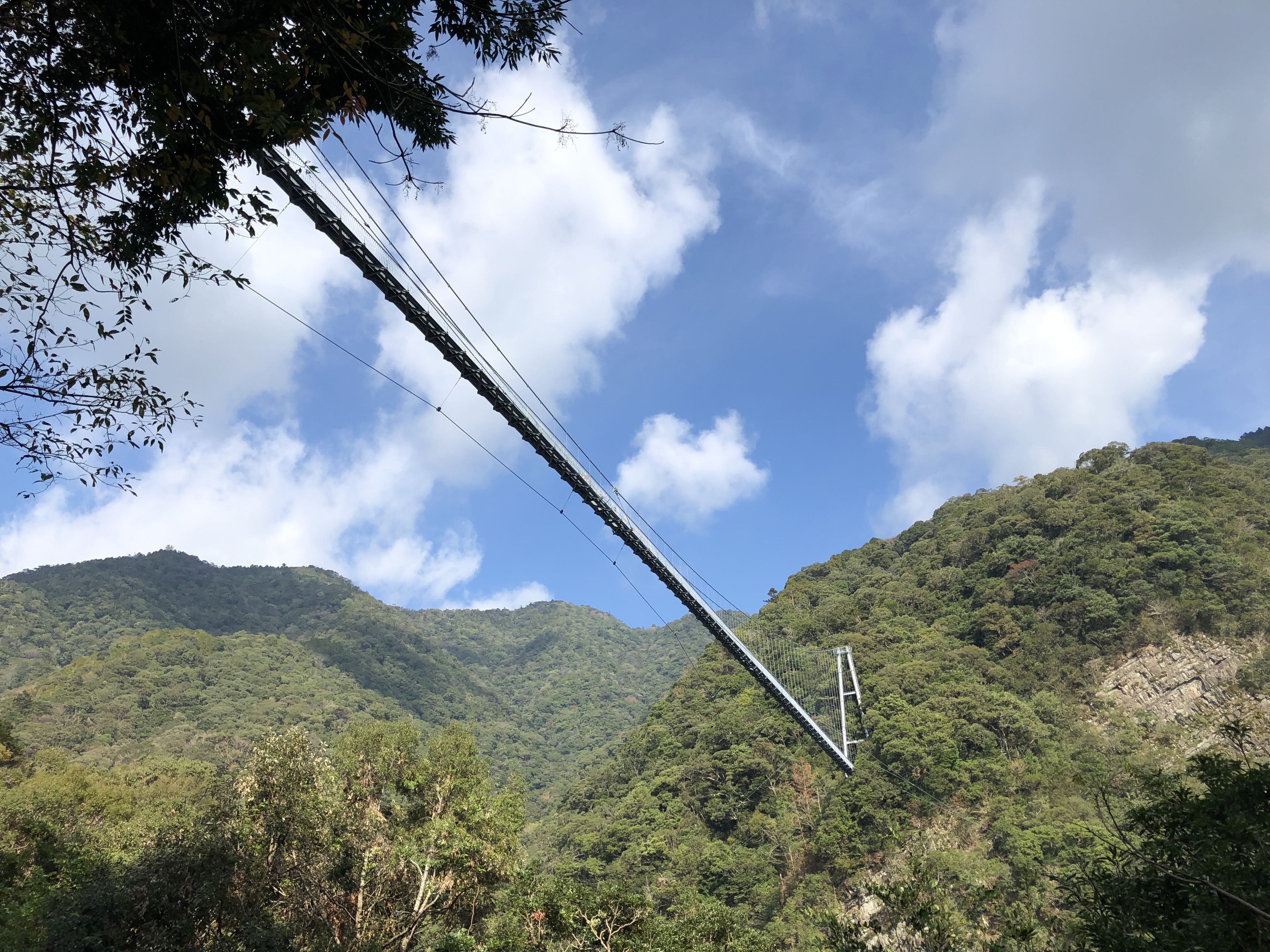
To be entirely honest, I don’t like heights. Just gazing up at the bridge from below makes me unsteady. I wasn’t expecting the bridge to be so enormous. I squint and see tiny people on the bridge, their scale in comparison to its delicate metal frame is bewildering. I look up and stare and mutter to myself, “Not a chance. Not a chance.”

I’m not out of the woods yet, I discover that I still have another four kilometres to reach the actual entrance to the bridge, the four steepest of the kilometres. Hot, thirsty, and feeling as though I have walked for hours (I have), I long for nothing more than a vending machine, and as I finally reach the entrance to the bridge, the first thing I do is reach for a bottle of Pocari Sweat.
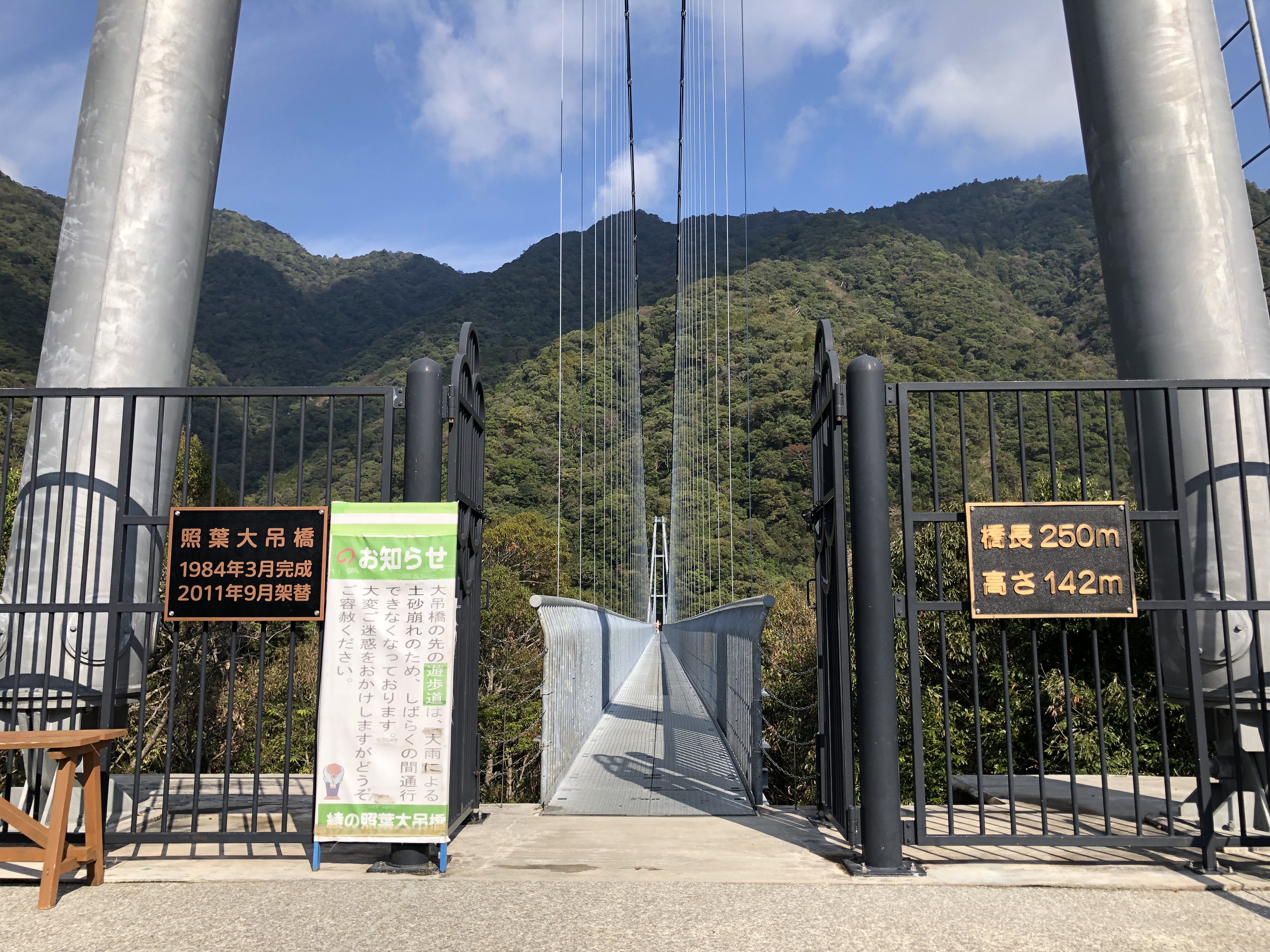
The Aya Teruha Suspension Bridge was original built in 1984, but due to safety concerns it had to be reconstructed in 2011. The bridge is a ridiculous 250 metres in length and its highest point 142 metres from the Ayaminami River below. The bridge had, up until a few years ago, held the records for being the longest bridge in the world and the highest bridge in the world.

“Not a chance,” I utter aloud once again, before stepping onto the bridge.
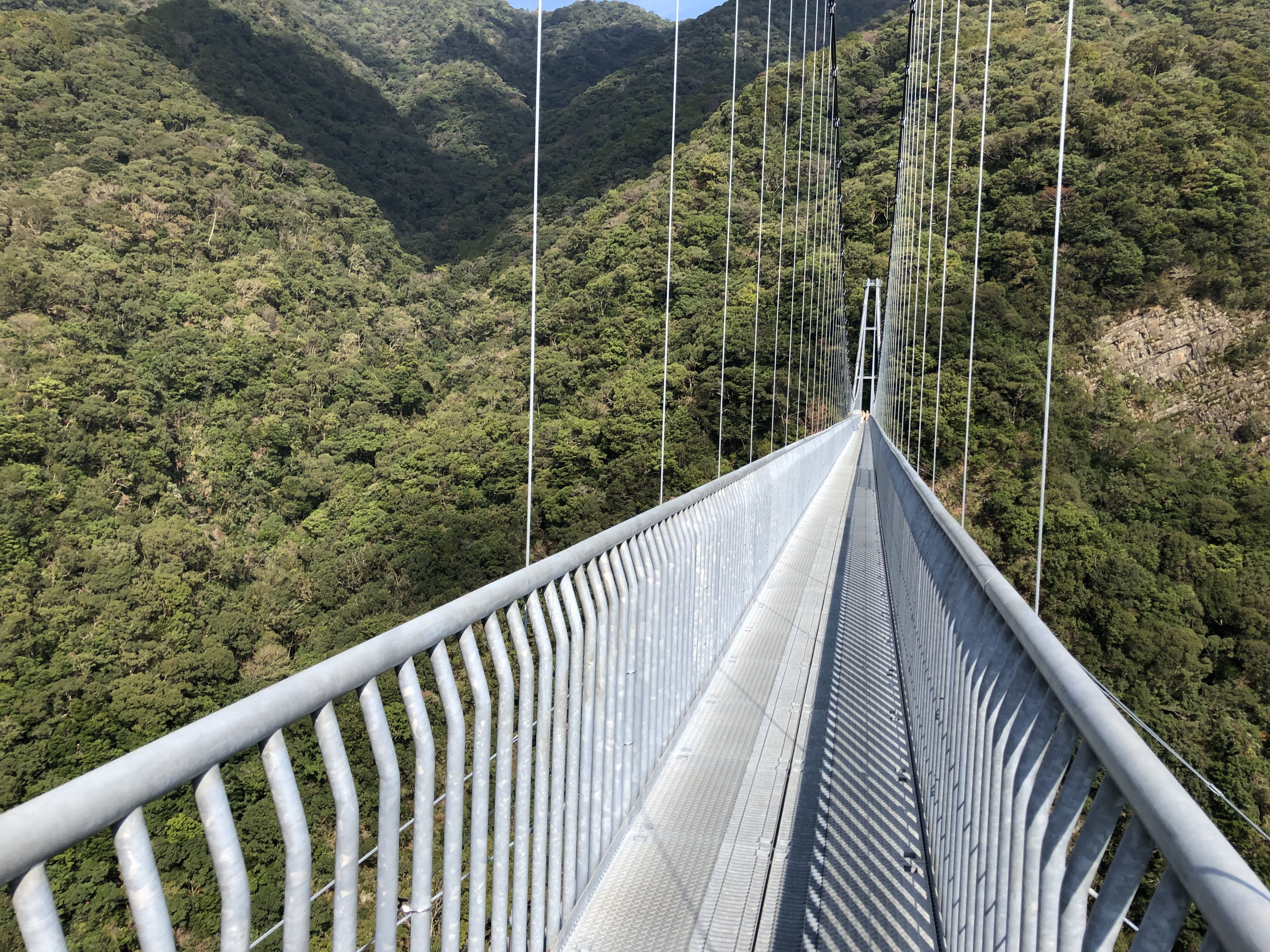
I stride along the bridge with ease. I look around and admire the view of the dark green glossy leaves that cover every inch of the mountains beyond, the hot bright sun dazzling in the blue sky above and painting the forest in its radiant glow, the bridge, with its grated walkway that spans its entire length; it makes me feel as though there is nothing beneath me, just the impending oblivion below, the anticipation of apprehension, panic washing over me, I become enveloped by the empty feeling of dread, that something here isn’t quite right. I suddenly feel lost and found in the same moment, the inevitable misery of the end, flickering in my thoughts, a cocktail of emotions swirling around, one step at a time.

I stop to let the feeling pass, it will pass, and it does. All the fear inside of me scatters away in a single moment, like a lonely sand castle collapsing on a desolate beach, suddenly, it is gone, and I return to myself.
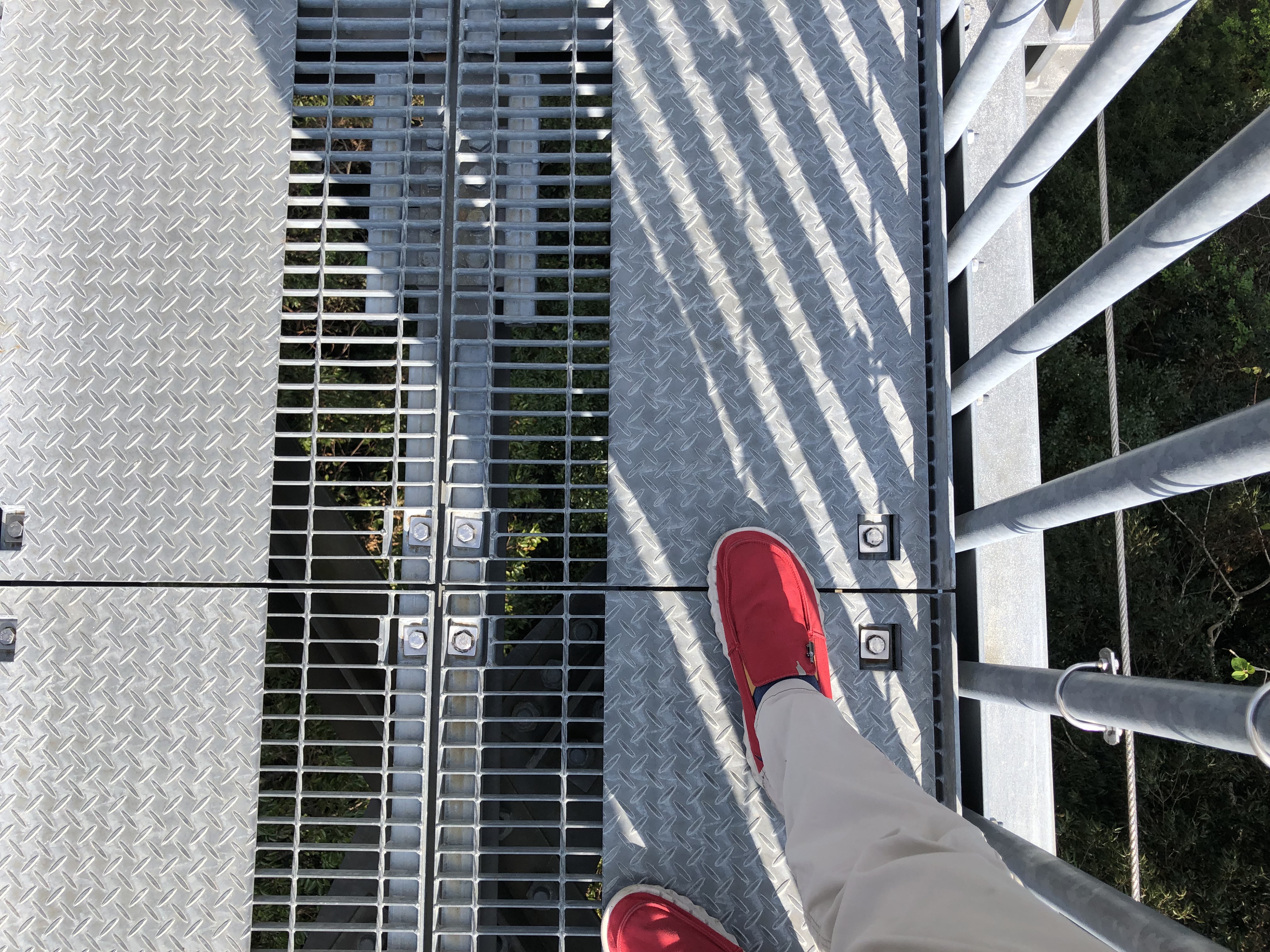
As I reach the other side, the first thing I notice is the strong smell of the lucidophyllous trees. The second thing I notice is that the path ahead twists toward a long promenade that runs along the mountain slope then loops around, before eventually returning to its starting position, the Aya Teruha Suspension Bridge. I’m rather annoyed as I have to cross the bridge for a second time.

Back down the mountain I go, and some fifteen kilometres later I arrive at the entrance to Aya Castle.
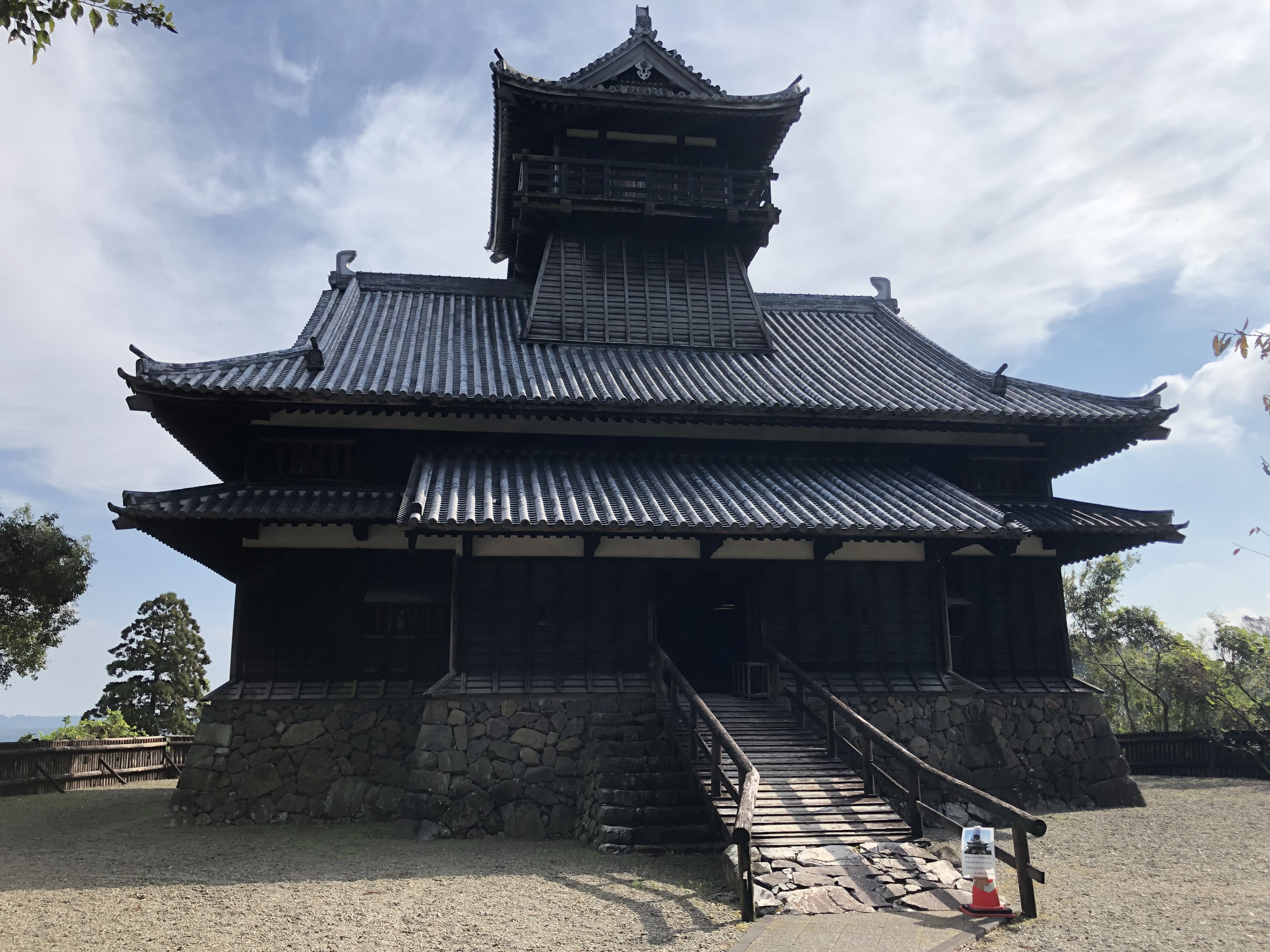
Only built in 1985, this place describes itself as Japan’s oldest mountain castle, but it’s not; it isn’t even on a mountain. This is a reconstruction of a castle that was destroyed 700 years ago. Inside this wooden castle is a small museum commemorating feudal warriors and the history of Aya Town.

Leaving Aya Castle I wander back in the direction of Aya Bus Station, however, before I can leave, for whatever reason, I have to cross over yet another suspension bridge; this one is a lot shorter, but still high enough above the ground to once again trigger my fear of heights.
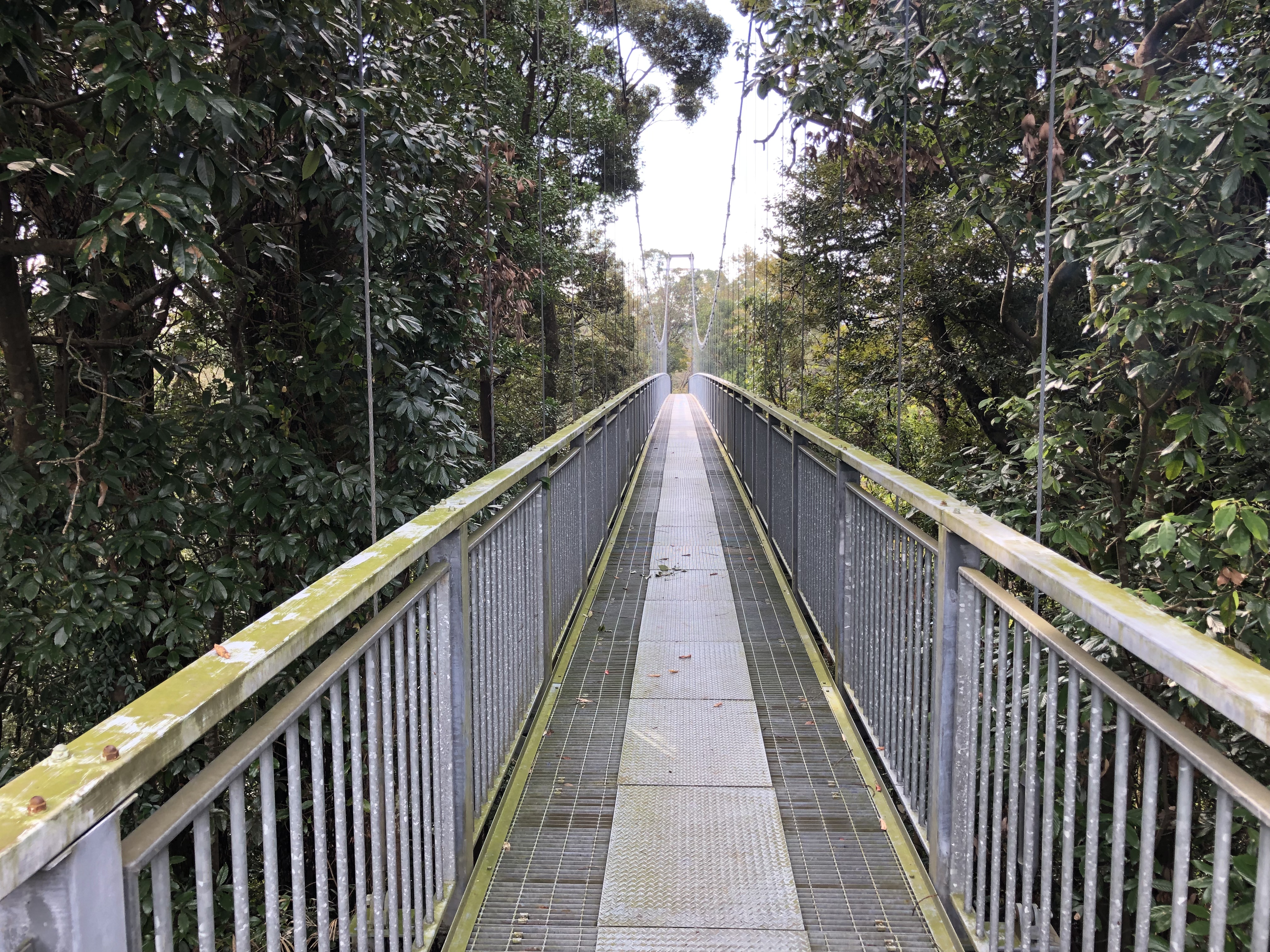
I decide that this is one bridge too many, it exceeds the limits of what is reasonable and acceptable. It literally is a bridge too far.
Pebbles Without Applause

My new adventure begins in Miyazaki Prefecture, on the southernmost island of Kyushu. I take an antiquated and somewhat dilapidated train that consists of a single carriage from Miyazaki Station bound for Iibi Station. As the train advances, the unceasing sound of tree branches pummelling against stainless steel fills the carriage; unkempt trees clawing at the train’s ancient frame.

At Iibi Station I am the only person to alight and instantly feel that I am making a mistake. I wander over to the bus stop. The timetable informs me that my bus left one minute ago, and there won’t be another for two hours. It appears as though I am walking to my destination, some 13 kilometres away. Just beyond the bus stop, the view is spectacular, the blistering 26°C sunshine adding to the experience.

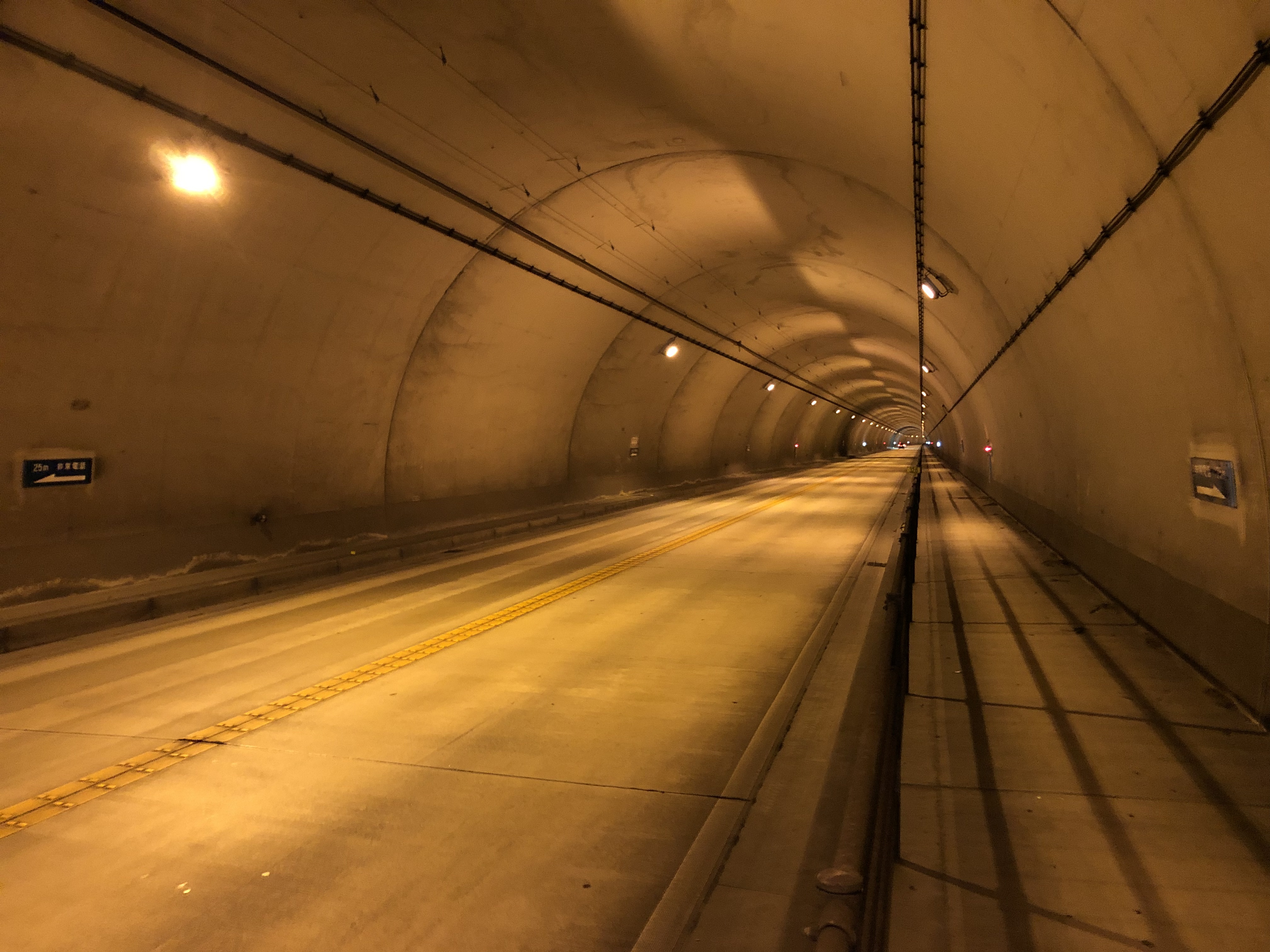
I search my route on Google Maps, and begin to walk south along the east coast of Miyazaki. What Google Maps neglects to tell me, however, is that over fifty percent of this walk is through tunnels carved into the mountains. Some of these tunnels don’t even have a footpath, so I have to shine my torch behind me as I walk, signalling to oncoming motorists.

One of the tunnels is over one kilometre in length. The noise inside this tunnel is deafening, the sound, a cacophony of cars, bouncing and echoing around this dimly lit passage. The smell of recycled diesel fills the air. It’s on this rare occasion that I actually want to put on my mask. The intense heat inside this passageway adds to my discomfort. Buttons marked SOS are conveniently placed every fifty metres, nausea, heat exhaustion, and exposure to loud noise all valid reasons to signal in distress.

As I exit the tunnel, I am rewarded with a beach. I stand for a moment taking in my surroundings. To the east, Futo Beach, golden sands and clear ocean water, to the west, mountains daubed by lush green foliage. The clear air cleanses my lungs of petroleum. The sound of the ocean waves crashing into the rocky cove that contains the sea a delightful upgrade in contrast to the screaming traffic. I allow myself to collect the moment, absorb it, and enjoy it in its full focus, before continuing on.

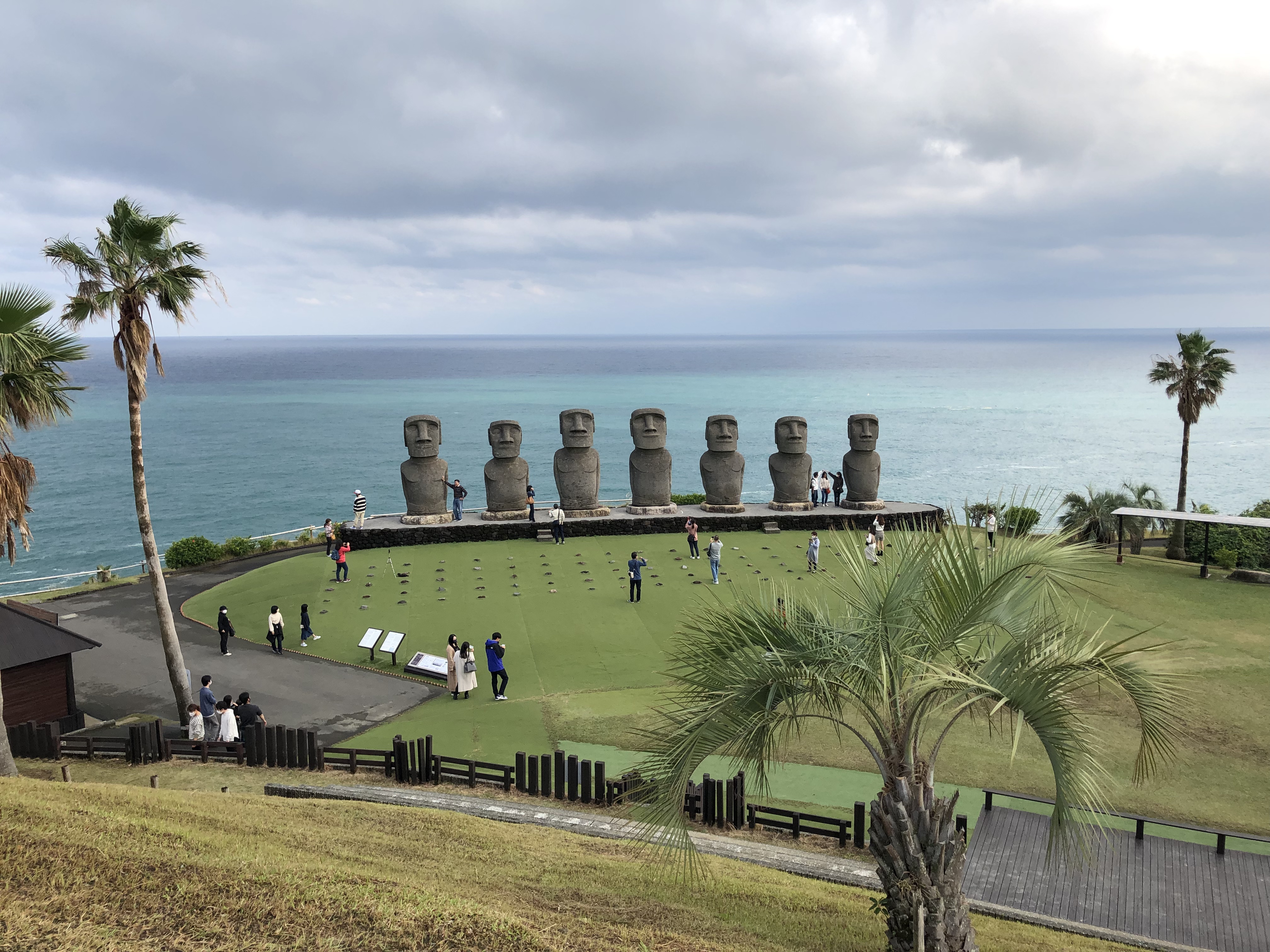
Still a good six kilometres away from my destination, I see a strange statue here on the Nichinan Coast and decide to explore it further. The statue is a monolithic human figure carved from stone, Moai, the kind of statue you might find on say, Easter Island. It turns out I’ve inadvertently stumbled upon a Unesco World Heritage site. I walk the steep and twisting 500 metre trail to the entrance and purchase a ticket.

Sun Messe Nichinan is a small theme park in the middle of nowhere. It was built with the purpose of promoting peace on Earth and environmental awareness. The replica statues built here are known as Afu Akivi, otherwise known as Moai statues, which translates to mean ‘Future Life’. Each statue is 5.5 metres in height and weighs around twenty tonnes. All seven statues have their own meaning too, from left to right the sign says they are: Job, Health is GOOD, Love, Peace of the Earth, Marriage, Lucky with Money, and Study.

I explore the park a little, passing the Sky Tower, a garden terrace named Garden Terrace, an exhibition hall in Central Plaza, a place called Butterfly Paradise (the butterflies here notable by their absence), before finally arriving at the Earth Appreciation Bell. The bell was built with money donated by eighteen different religious groups, including Christianity, Shintoism, and Buddhism, and is a true symbol of the peace this park is promoting.

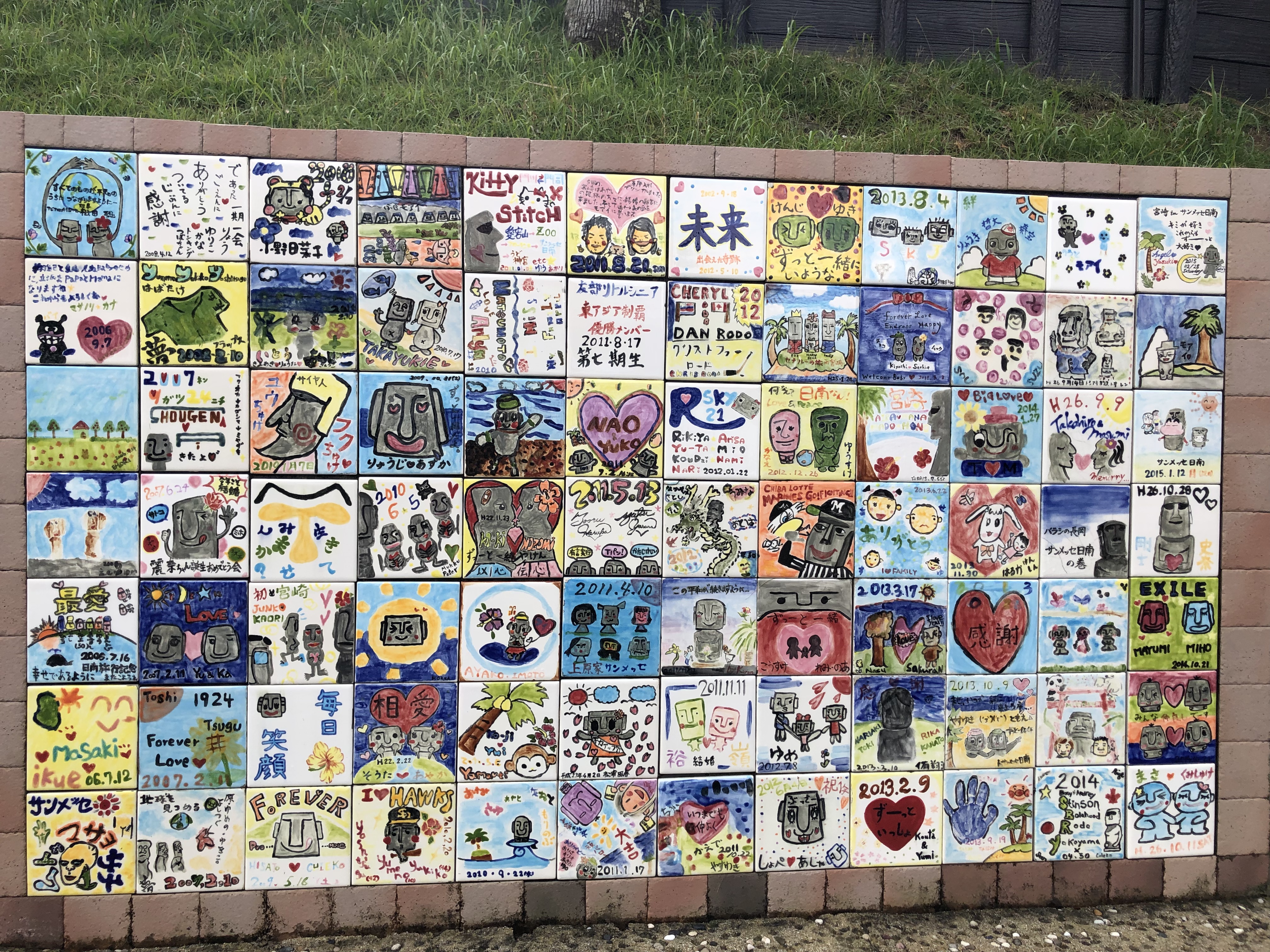
Twice a year during the equinox, the sun rises from behind the middle of the seven Moai statues, and its sunlight passes through a ten centimetre wide gap in the Sky Tower, runs up the sun steps, and penetrates the centre of the bell at the top of the hill, basking the bell in a glow of sunshine. Sadly though, today is not the equinox, and the bell isn’t very photogenic whilst not being basked, so my photograph here is some random peace mural I found.

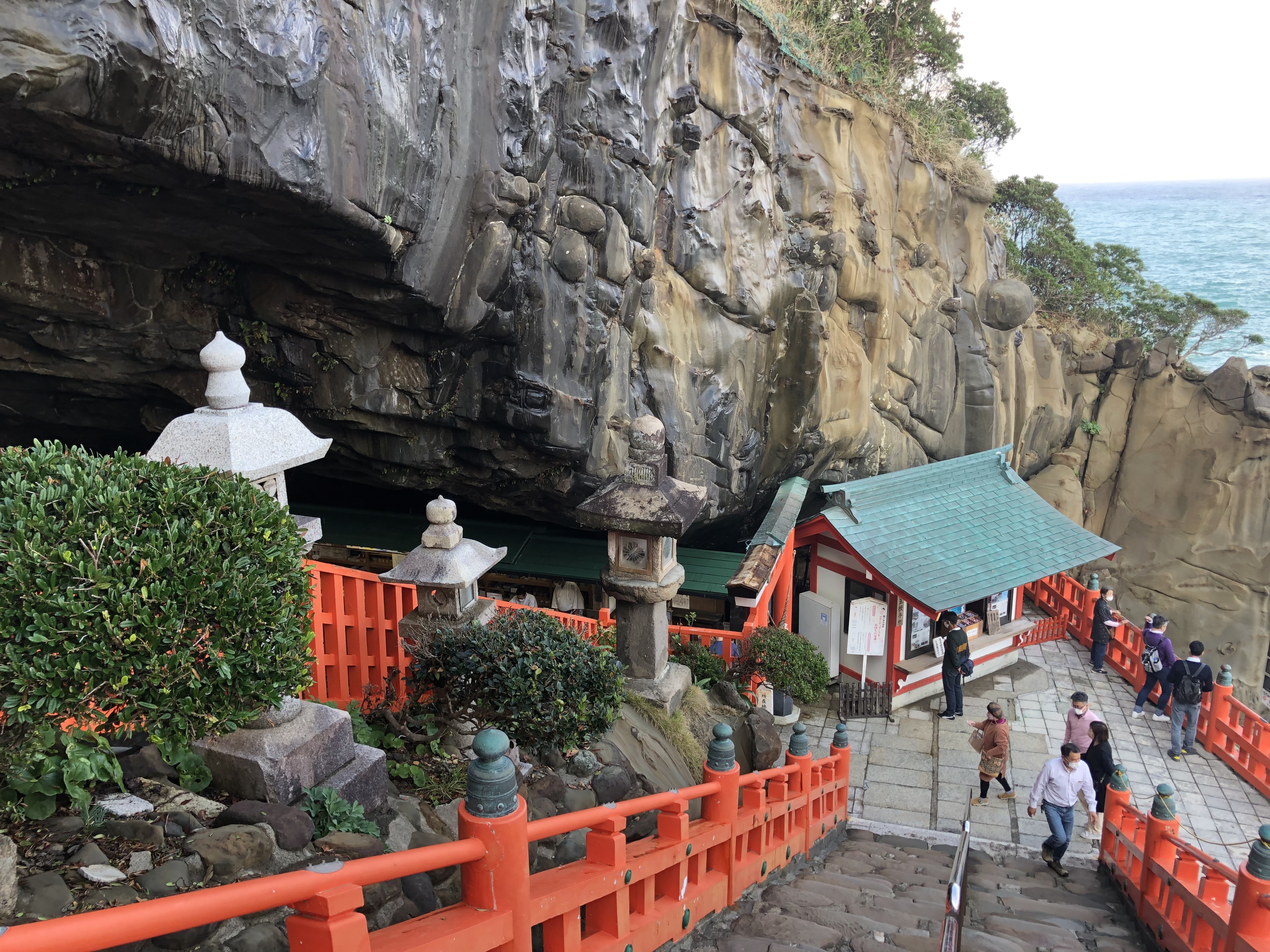
I leave Sun Messe Nichinan and continue my walk along the coast. The rocky coastline here twists around the mountains, the ocean crashing into the cliffs below, my destination in sight. After another tunnel and what feels like an eternity of walking, I finally reach Udo Shrine. The shrine is set in a cave carved into the rocks of a mountain, and it requires a climb down steep stone steps to reach its entrance.

Udo Shrine is primarily a fertility shrine. The gods enshrined here are all about safe delivery during childbirth, matchmaking for couples, and safety at sea. The mythology here is that Toyatama-hime, otherwise known as Luxuriant Jewel Princess, daughter of the Goddess of the Sea, decided to attach her breasts to the rocks. It is said drinking the water that trickles down from her cold stone bosom will bring fortune in pregnancy.

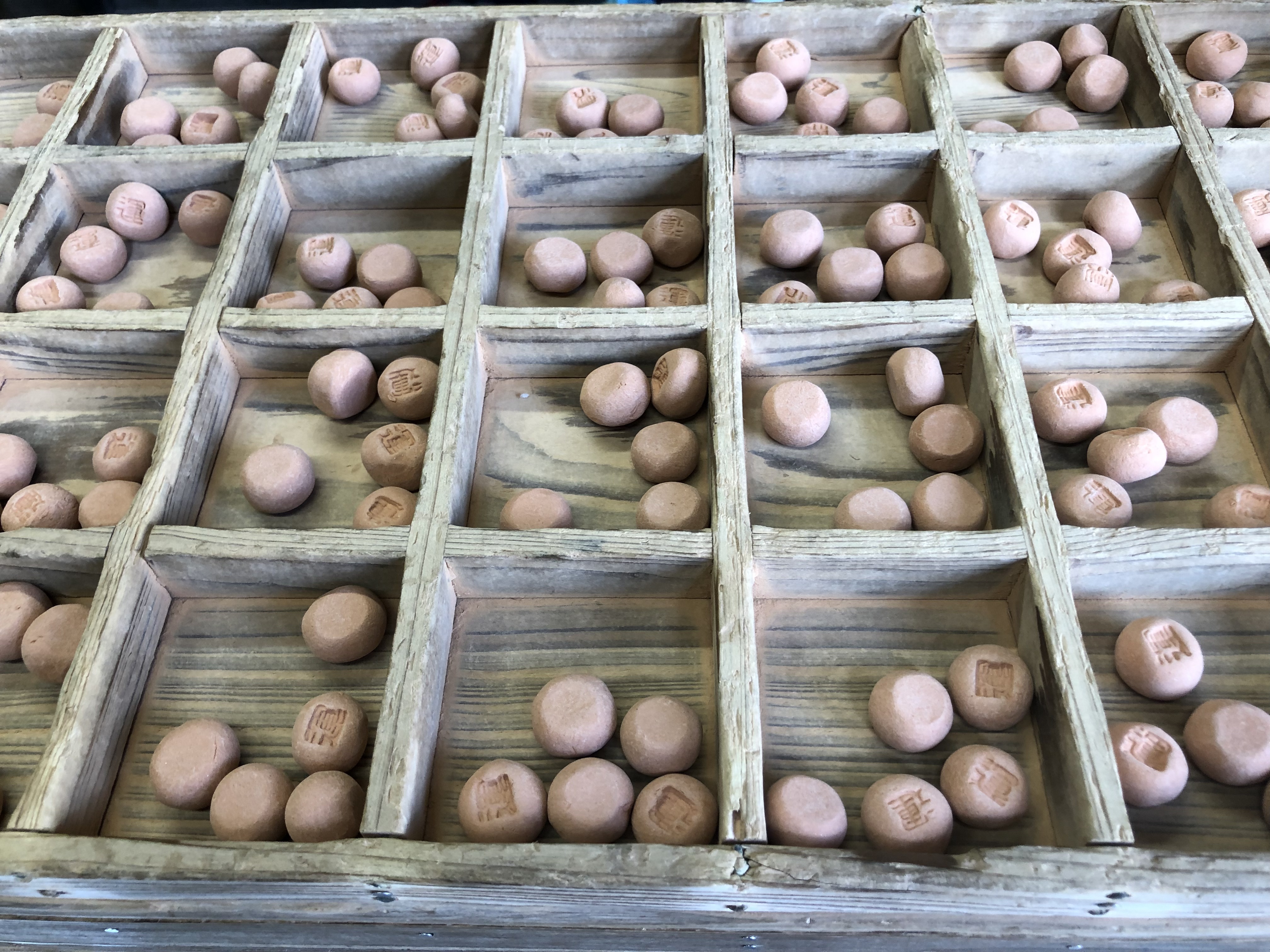
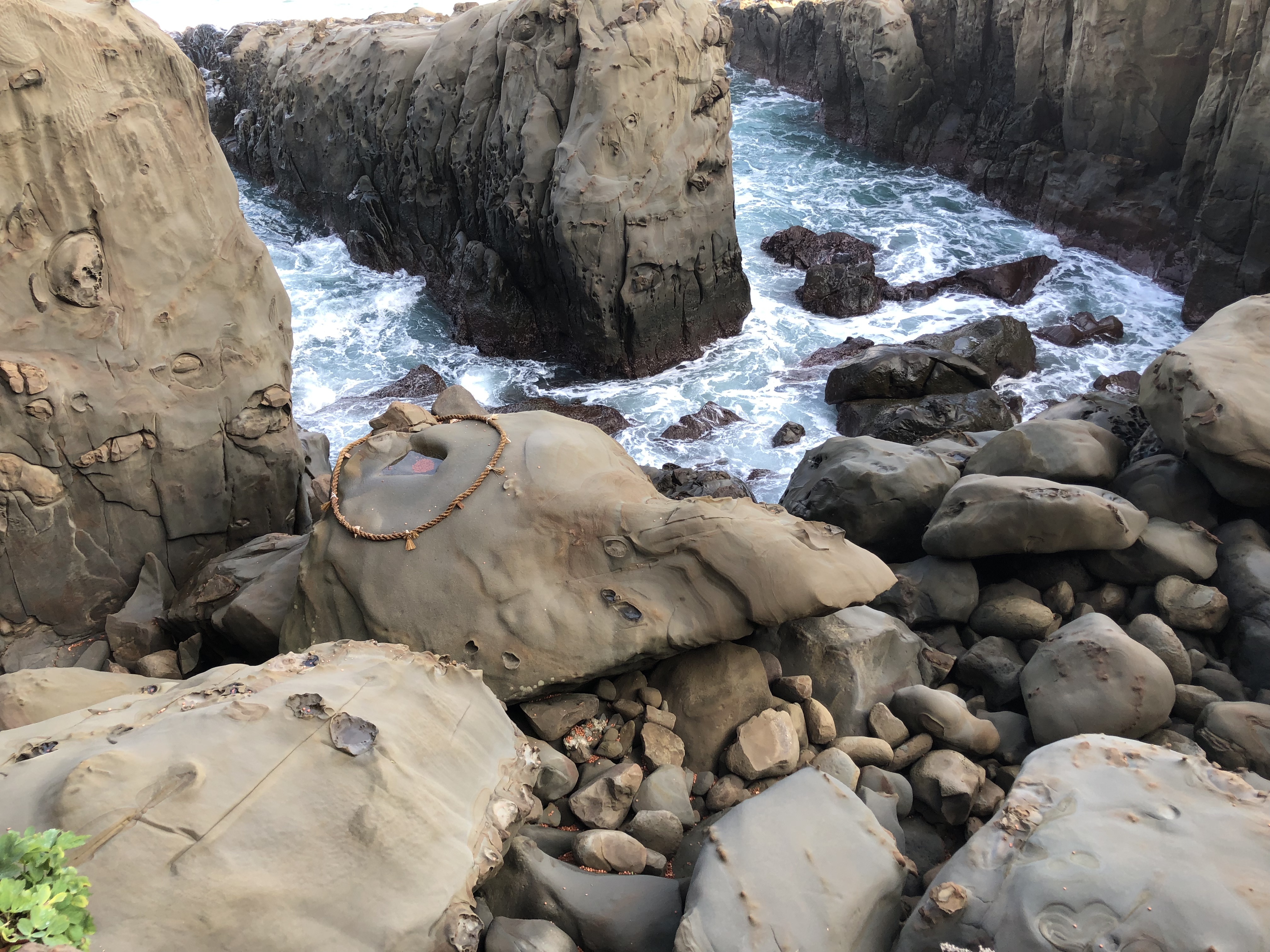
The second attraction here is the custom of throwing small clay balls known as ‘Undama’ into a pool located on one of the rocks below the main shrine. The sign reads, “Men throw the clay pebble with left hand. Women throw with right hand. If the ball lands in the rope circle, you will have a good luck.” It costs just ¥200 for five pebbles.

A Japanese man wanders over and throws his first pebble, landing it in the pool first time, everyone around him applauds. His good luck however instantly wears off as he proceeds to miss his next four throws. All five of my pebbles are tossed into the ocean. Nobody claps. There doesn’t appear to be any limit to the number of Undama I can purchase, therefore, I could continuously buy more pebbles and keep trying until I finally land one in the pool, thus guaranteeing myself a chance to have a good luck, but I decide against it.

Originally, the rules for the Undama were that both the man and woman in a relationship would each throw five stones, and the total amount from ten that landed in the small pool would equal the total number of children that the couple would have. However, problems arose and arguments were had, especially when a couple wanting a child would miss all ten throws, so the shrine decided to change the outcome to become about good fortune instead.

As I leave Udo Shrine, I find my timing to be just about perfect as the last bus pulls up. I get on the bus bound for Miyazaki Station. At Aoshima Station, a Japanese couple board the bus with their ten children.

The Fashion of the Crystal Wax

I am in Shinjuku to meet a friend. I instantly regret choosing to meet her at the West Exit of the busiest train station in the world. After ten minutes of searching, we eventually find each other before heading outside to take a free shuttle bus bound for Shinjuku Park Tower. Inside this building are many high-priced restaurants, financial institutes, and the Park Hyatt Hotel; perhaps the most expensive night’s sleep in Japan. We are not here for any of that nonsense though, as in the basement of this building, we have exclusive invitations to an event hosted by French cosmetic giant, L’Oréal.

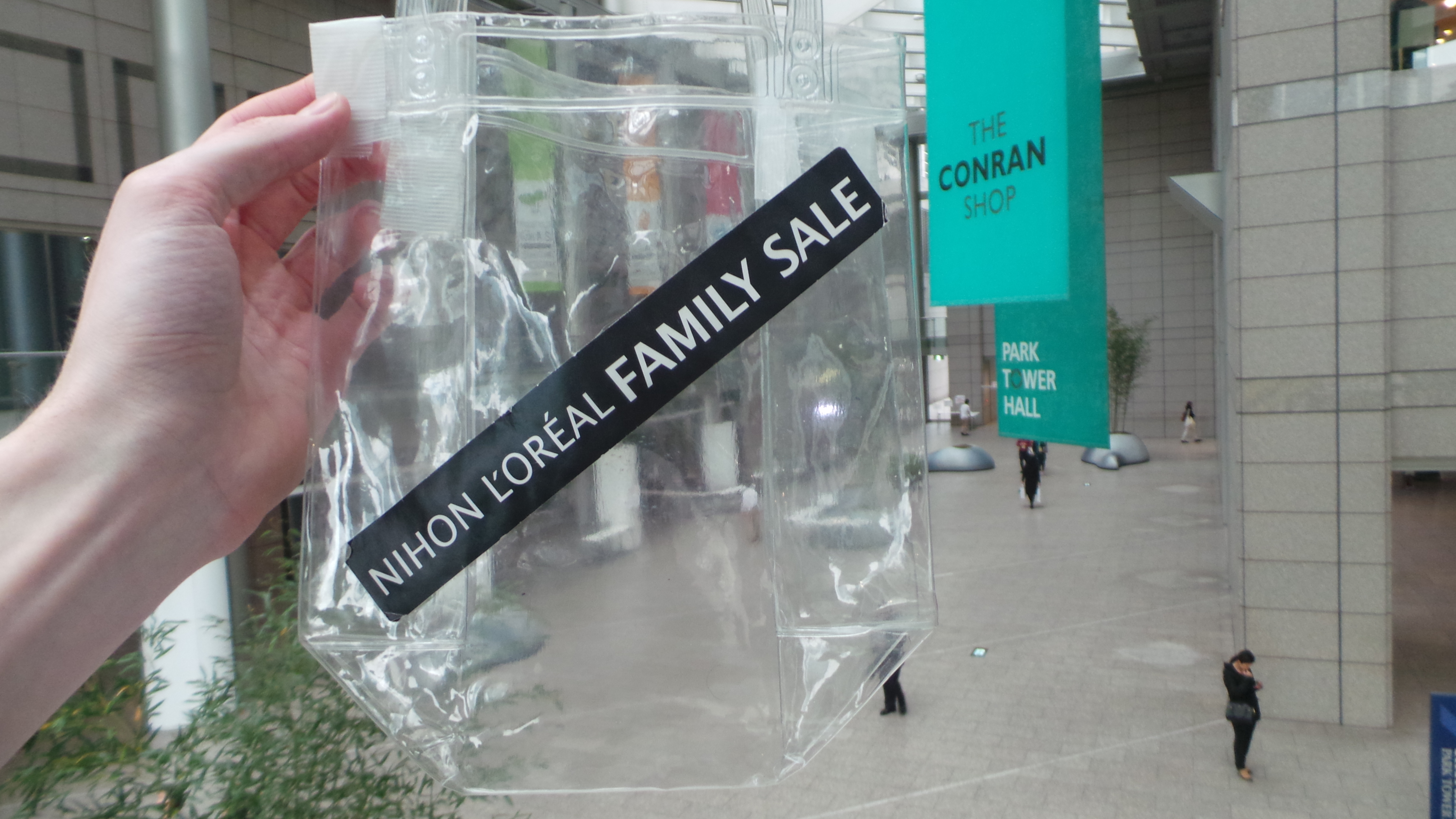
In the basement, our cards are checked, our identities confirmed, our Quick Response Codes are scanned, our identities are reconfirmed, before we are finally allowed to pass through the first checkpoint. At the second checkpoint, we are searched, our coats and bags are taken, and we are asked to place the possessions we intend to take into the event into a clear plastic bag. For a moment, I get confused and think I am at the airport.

loreal2

The reason we are here is for a Family Sale; a place to go to buy very cheap products from big-name brands. I am a little confused as to the motivation for such an event, as today, only L’Oréal and affiliated products are on sale, each with ridiculous discounts of up to ninety percent. In the past, whenever I have visited a sale offering such high discounted prices, usually only a select few products hold the high percentage of reduction, but here at the L’Oréal Family Sale, every product is perhaps seventy to ninety percent off. Price down!

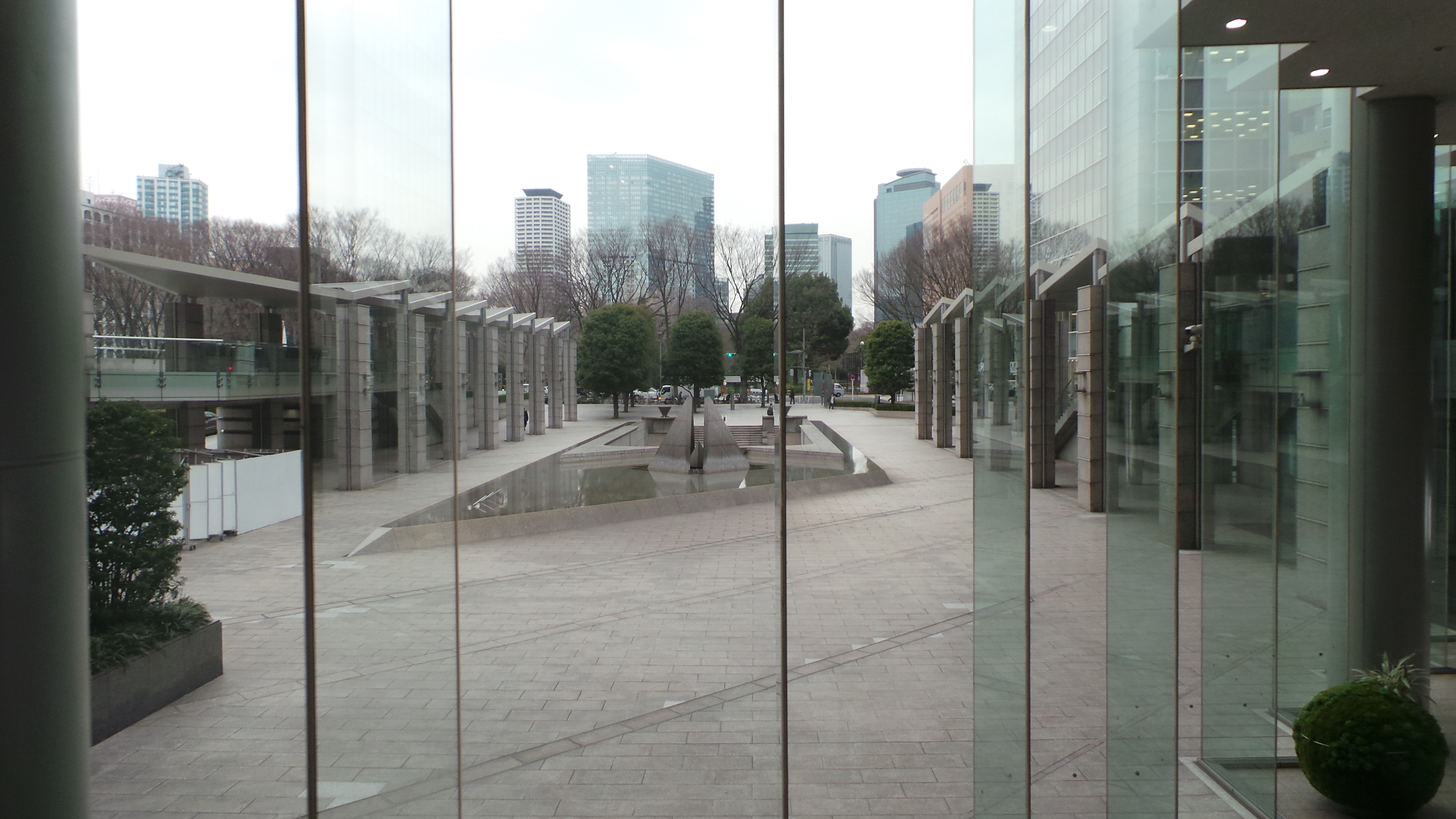
We enter the main room, somewhat smaller than I was expecting; a room populated entirely by women. No free samples are on offer, much to my dismay. Somehow, I find myself sucked in by the offers, and take some wax that has been knocked down from ¥3400 to a crazy ¥700; I don’t even use wax. I find it somewhat ironic that one of the most expensive buildings in Tokyo is the venue for discounted goods. I ask to photograph the room, but am told that strictly no photography is allowed. It makes me wonder if L’Oréal is here to promote their company brand or to just offer the rich an exclusive ‘invitation-only’ way to buy cosmetics and save large amounts of money, thus making them richer. With a lack of photography, I instead take a nice photograph from the inside of Shinjuku Park Tower.

loreal1

As I leave with my wax and head to the cashier, I am told that I can only pay with a credit card. I always thought Japan was very much a cash society, where plastic is seldom used, so this strikes me as odd. I don’t even own a credit card. Luckily, my friend assists me and away we go, back through the checkpoints and out into the chaos of Shinjuku.

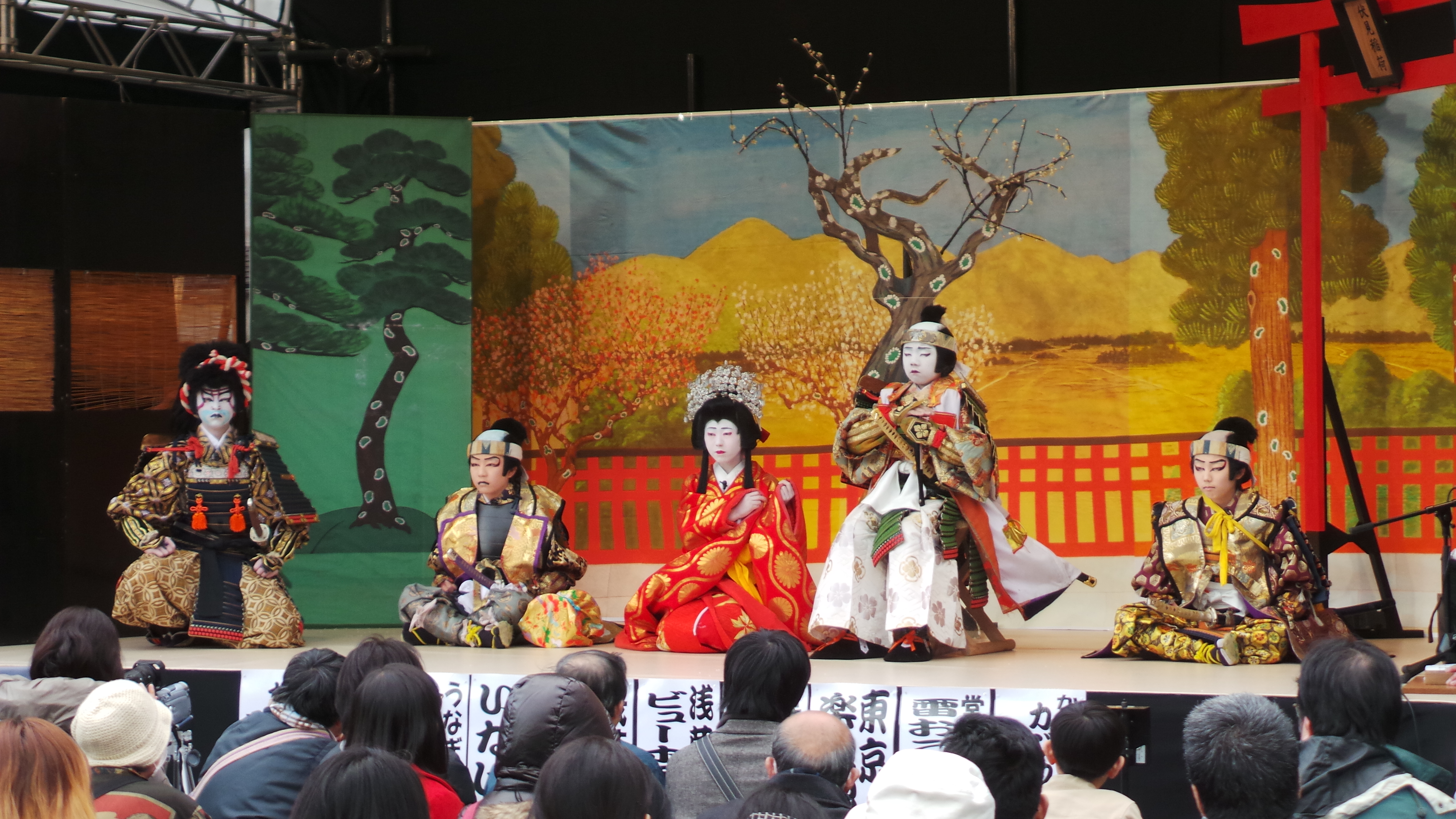
Back in Asakusa, we go our separate ways. I decide to head over to Senso-ji Temple to see my first-ever performance of kabuki. Kabuki is a style of theatre that combines music, dance, elaborate costumes, and elaborate masks. Today the show is performed by children, in a style known as Ogano Kabuki. This style boasts two hundred years of tradition, and these days it is the children of Saitama that keep the tradition alive. It is nice to see young people taking an interest in this art form, despite living in a country where the young are obsessed with video games, animated movies, and comic books.

The event starts with an announcer speaking in Japanese for ten minutes before two girls dressed as geisha take to the stage and talk for a further ten minutes. The curtains close, and the announcer speaks about foxes and cherry blossoms; another ten minutes pass, and the introduction is over. All the while, rude people push and shove through the crowds to take a closer look. A rude woman stands on my foot and offers no apology. Eventually, the show starts with a parade of costume-wearing kids.

kidskabuki

Traditional music plays, characters kneel down, and dialogue is exchanged with very little movement for what seems like forever. The costumes are fantastic, mesmerising, the music is beautiful, and the characters’ words are almost poetic. If I didn’t know in advance that these were child performers, I would have mistaken the show for a professional production. Despite the professionalism, I get a little bored. The language used isn’t only Japanese, but old Japanese that perhaps nobody has used for hundreds of years. I decide after forty minutes to go and do something else.

Also in Asakusa today, a fashion and art show known as The Asakusa Collection is taking place, so I take to the Sumida River and enter the Riverside Gallery.

collect1

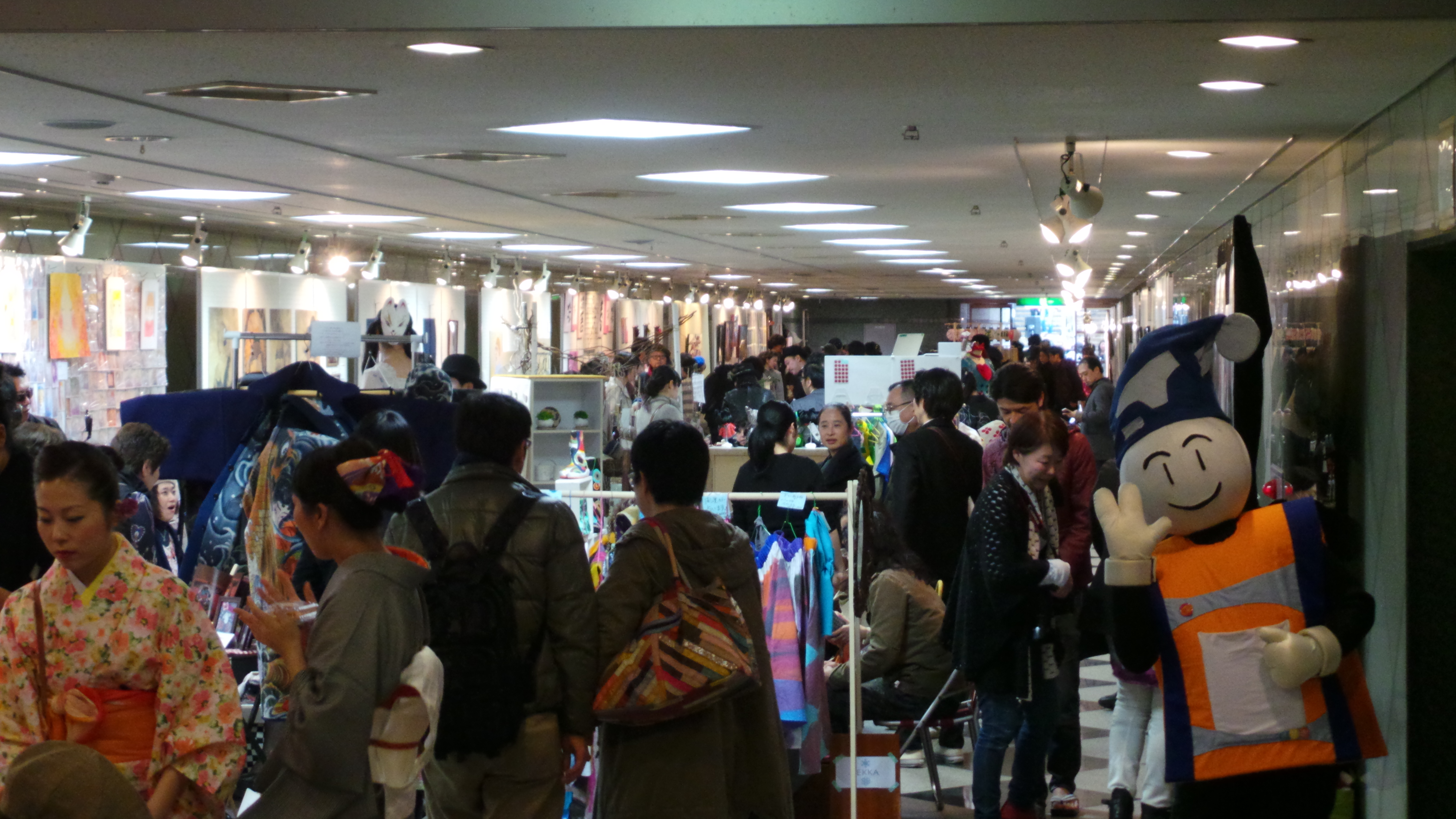
Inside the Riverside Gallery, my photograph is hijacked by a wizard wearing high-visibility clothing. I have no idea who he is or what he wants, but after ignoring him for a while, he disappears to ruin the photographs of others. The Asakusa Collection is a free fashion festival that apparently embodies amazing crazy and chaos culture in Tokyo. The show also has a heavy emphasis on innovative fashion without a distinction between Western and Japanese Styles. Amongst the fashion, there is a nice mix of local artists from this area, all hoping to showcase, promote, and sell their work.

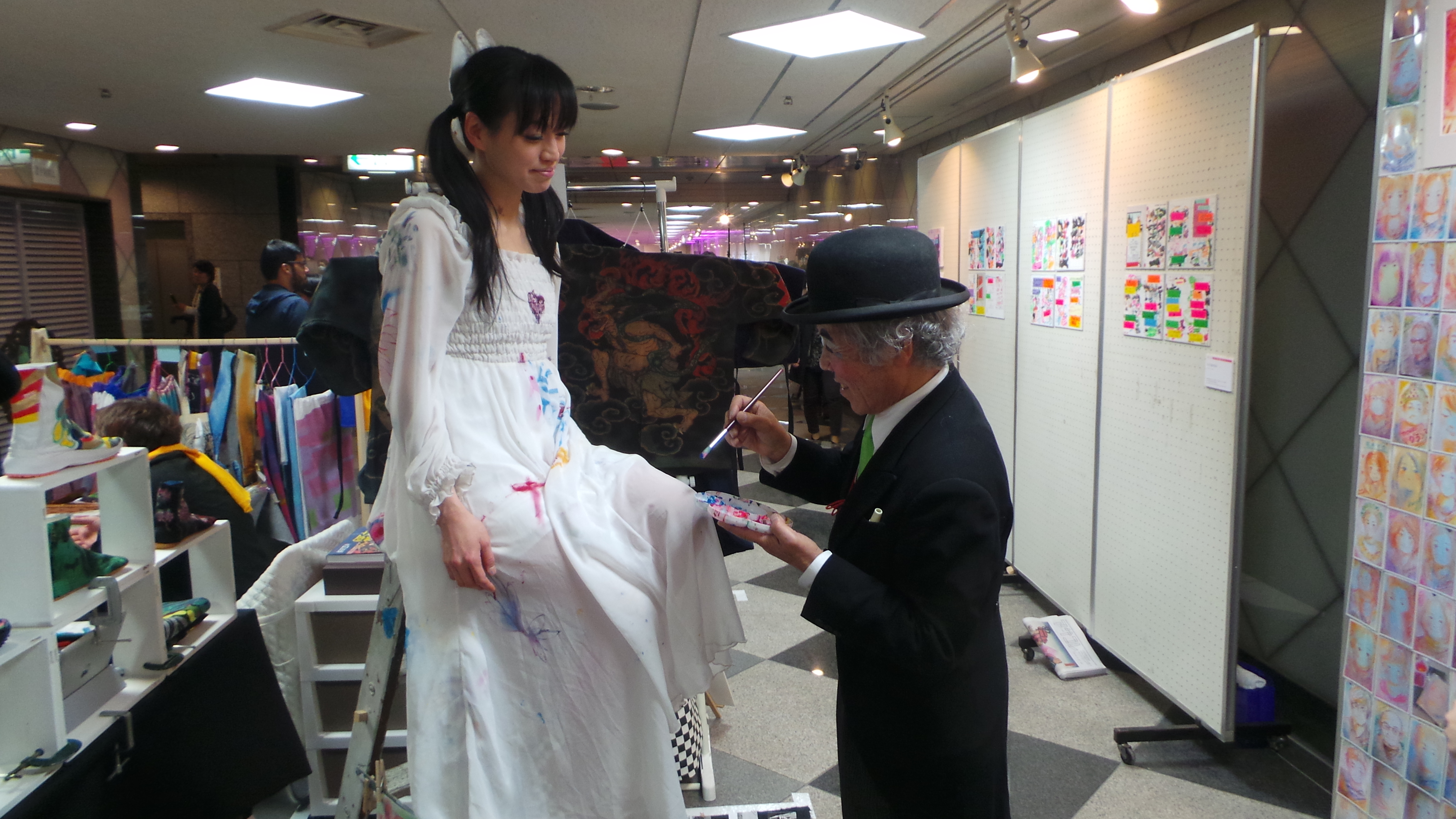
Forty-two artists are here, and a mix of photographs, illustrations, ceramics, dolls, bags, jewellery, traditional clothing, accessories, and sheep-shaped flower pots are on display. I stop off to watch a bit of live painting before heading out in search of my favourite artists.

collect3

Seeing local works of art is always a treat for me, and I would love to feature the works of each of the forty-two artists here, but I don’t really have time for that. The first display I thoroughly enjoy is the work of Kanbayashi Yukikazu. He creates collage and three-dimensional landscape paintings using a mixture of sand and plaster, finished with oil. His work depicts scenes in Japan, from Mount Fuji to Senso-ji Temple, and was once presented at The Museum of Modern Art in his hometown of Kamakura.

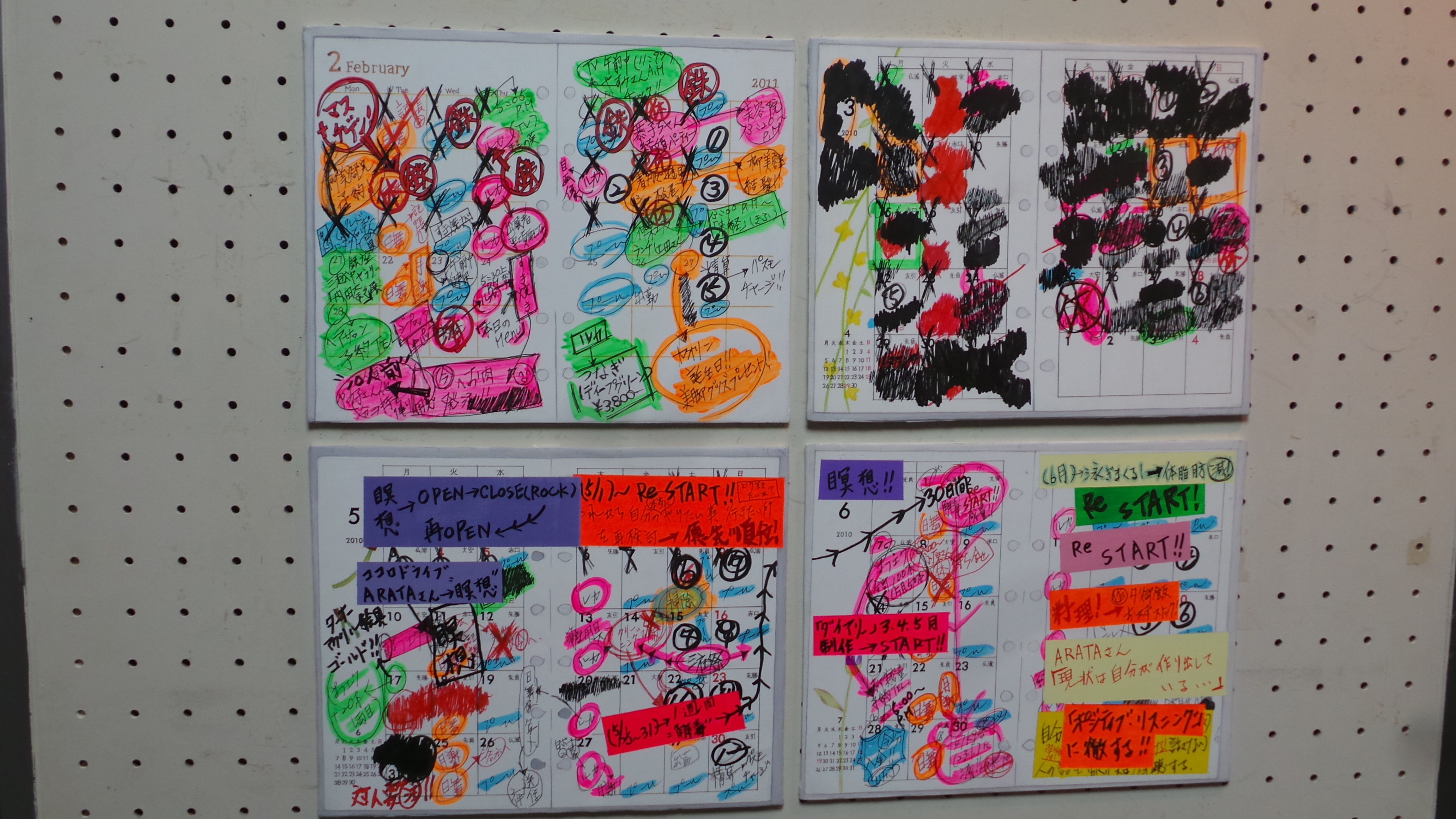
The second artist I enjoy is Ayumi Ogawa. Her work is called ‘Diary,’ and it is contemporary artwork based on calendars and real notebooks. Sadly for Ayumi, the link to her Facebook page reveals absolutely no information about the inspiration or message behind her pieces, yet I am somehow drawn to her abstract modern style.

collect2

At home, I realise that I have spent a lot of time writing in great length about topics that are probably of no interest to anyone else; a theme that might continue into my next post, which will be exclusively about anime.

The Adventures of Tin Toys

Yesterday, as I was walking around Yokohama, I noticed many interesting things on the numerous maps that adorned the streets. Having visited Yokohama only once before, I decided to stay the night and spend a second day exploring this historic city. While staring at the points of interest on the signs, one thing genuinely excited me: the Tin Toy Museum.

I begin my exploration by walking through the Yamate area. This place is characterised by interlocking stone pathways that bend and crawl at various steep degrees, reminiscent of my hometown with its steep hills and Western-style houses. Despite being a popular spot for tourists, locally known as ‘The Bluff,’ I am surprised to find that most maps in this hilly terrain are in Japanese. Needless to say, I get lost and eventually stumble upon a random Spanish-style house.

flutepiano[1]

There is no charge to enter the house, but upon entry, I am required to remove my shoes. Inside, I find a woman playing the flute, accompanied by another woman on the piano, seemingly without any apparent reason. While I recognise the melody, I struggle to put a name to it. As I wander around, I am afforded the opportunity to explore a genuine Spanish kitchen, complete with old cutlery. It surprises me to learn that the house was built by an American but designed by a British architect, adding a layer of complexity to its Spanish theme that I can’t quite comprehend. The Bluff is dotted with many houses of diverse styles, allowing visitors to freely wander and experience the architecture of different countries. From the balcony window, I catch a glimpse of what locals refer to as the ‘British House’ in the distance.

I make my way into the dining room, anticipating tables and chairs, only to be surprised by the presence of strange artwork that clearly doesn’t belong in this space.

hotair[1]

I leave the house, resuming my quest for the Tin Toy Museum. I meander through a cemetery for British soldiers and emerge on the other side. Stumbling upon the oldest wooden Christian church in Japan, I find it of little interest and continue walking for about an hour through maze-like streets. Finally, I locate a map in English. The Tin Toy Museum is on the opposite side of The Bluff, close to the house I visited earlier. I navigate steep hills and winding alleyways, and after another half-hour, I arrive at the museum, half-expecting it to be closed today.

At the entrance, I pay ¥200 and race inside.

oldrobots[1]

As I step inside the Tin Toy Museum, I’m greeted by the sound of The Beatles’ album ‘Help!’ playing from the speakers—an unexpected but delightful touch. The exhibition showcases over three thousand miniature toys produced in Japan between 1890 and 1960. Most of the toys, ranging from cars and rockets to robots, form the extensive personal collection of Teruhisa Kitahara, a man with a passionate affection for all things toy.

A sign next to some rather unsettling clowns reads, “Clown and circus toys are highly comical, perfectly capturing the lively movement of the circus. They are popular for their acrobatic flair.” Inside the museum, there’s a second exhibit called the ‘Mini-Mini Museum.’ Included in the ticket price, this small shoe-box-sized exhibit initially seems like a pointless distraction. However, as I explore, I discover it features even smaller toys than I could have imagined were possible to create.

naoko[1]

Back at the main exhibition, I find that JAXA astronaut Naoko Yamazaki has visited here too, and she appears to have forgotten a signed postcard of herself, left amongst Atomic Rockets and Space Ship X-7’s. I feel tempted to buy a remote control alligator for the price of a month’s rent, but I instead opt for a wind-up robot for ¥1242; quite expensive, but full of nostalgia, and I like robots.

I leave the museum and the Yamate area, heading for Yamashita Park. The park, situated on the waterfront, is unfortunately cast in shadow by the massive Hikawa Maru, an ocean liner that blocks the sunshine and seems unnecessarily colossal. Nowadays, it serves as another museum, overshadowing the park inconsiderately. Nevertheless, the reason for my visit to this park was sparked by a sign pointing to another point of interest that intrigued me – the Statue of the Guardian God of Water.

guardianofwater[1]

It’s no secret that I enjoy irony, so I find it incredibly amusing that the statue here stands within a construction site, placed in a small pond filled with bricks and completely devoid of any water whatsoever. I can’t imagine the statue is pleased with its surroundings.

My final stop in Yokohama is also within Yamashita Park – the Statue of the Little Girl with Red Shoes On. I didn’t have specific expectations, but the description on the sign proved accurate. The girl represents a children’s song from 1922 called ‘Akai Kutsu,’ written by Ujo Noguchi, translating to mean ‘Red Shoes.’

redshoes[1]

A young girl with red shoes, was taken away by a foreigner.
She rode on a ship from Yokohama pier, taken away by a foreigner.
I imagine right now she has become blue-eyed, living in that foreigner’s land.
Every time I see red shoes, I think of her.
And every time I meet a foreigner, I think of her.

I’m not too sure what the song is about, and the only explanation offered by the sign is that Yokohama City wants this statue to become a cherished landmark for its countless visitors. Sadly, most visitors seem to just walk along, not giving the statue a second glance.

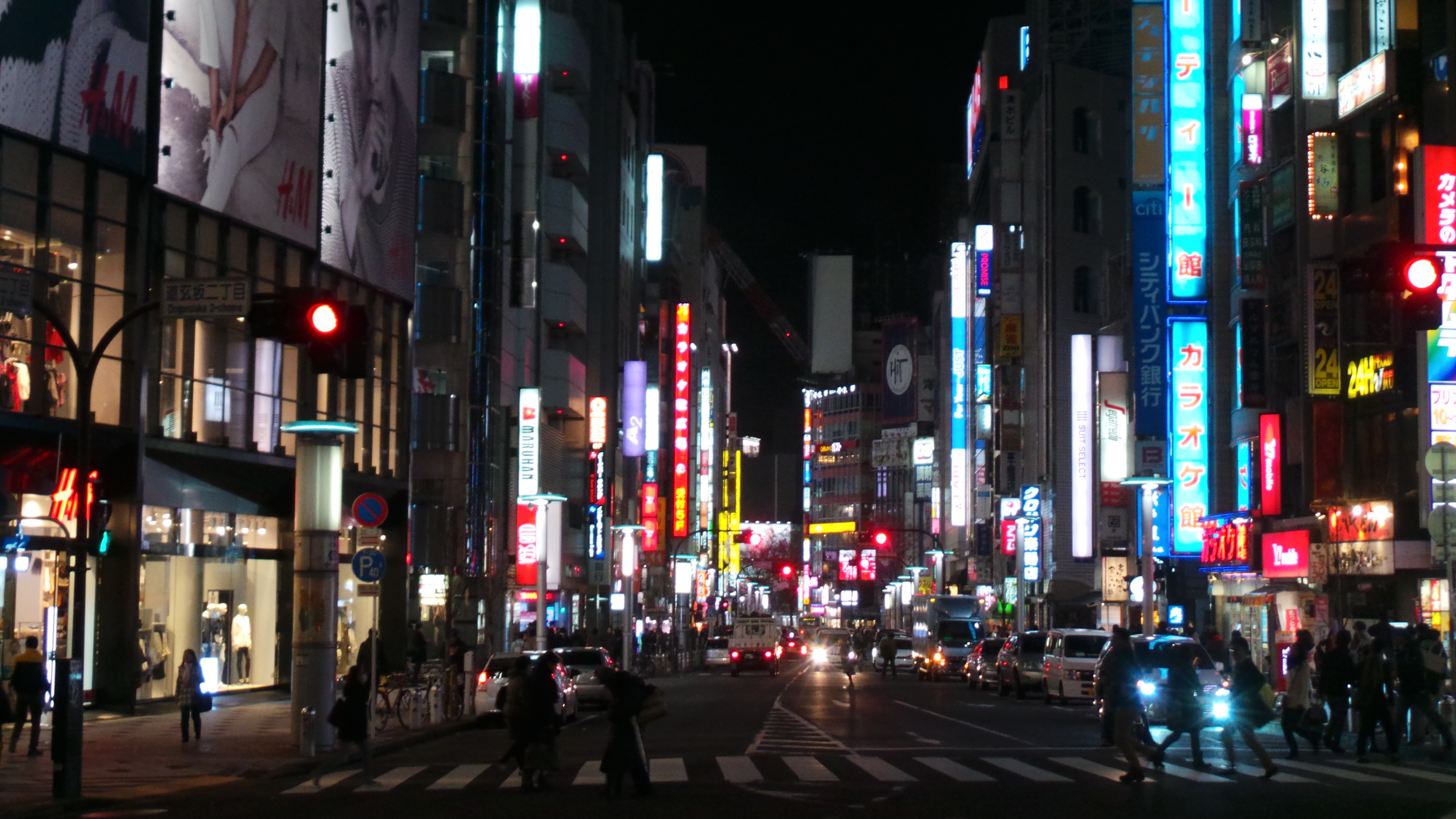
I decide that there is little else to do in Yokohama; despite having enjoyed two nice sightseeing days, it is time to head back to the reality of Tokyo. I take the train over to Shibuya. As I leave the station, I navigate through crowds of photographers capturing images of what once was and still is – just a crossing. The bright lights of Shibuya act as a neon reminder of what I was expecting Japan to look like before I arrived here nine months ago.

backtoshibuya

I wander aimlessly for a while through the busy nightlife before feeling overwhelmed by the lights and sounds, eventually making me feel dizzy. After a tiring few days, it’s time for me to go home. I buy some takeaway food for the train, taken away by a foreigner, and head back to Minowa.

Befall Upon The Watchtower

For whatever reason, someone has suggested to me that I check out the area where the Arakawa River and the Sumida River flow into one. As I head out into what feels like a spring afternoon, I realise that my destination today might offer little excitement to anyone, including myself. Somehow, I feel drawn in the direction of Arakawa, the shackles of free will severed from my legs. Part of me feels like there is a demon possessing my very soul, controlling my destiny as I cycle at rapid speeds in the direction of Arakawa.

I see the remnants of a temple or shrine, but it looks as though perhaps it is trapped within the confines of an industrial site. Not letting that stop me for one moment, I park my bicycle and wander in. Seconds later, I am cornered by a security guard. He shouts angrily in Japanese as he waves his hand in the direction of the street. A strong urge to not give up consumes me, and I quickly find myself on the other side of the complex.

sewertemple[1]

It is a strange sight. I am standing along the Sumida River, and there is nothing but tall yellow grass stretching off in every direction. No cars pass along the road in front of the shrine. No people are walking. It is silent, yet only ten minutes away are the tall residential buildings that make up my neighbourhood. Looming over the Shinto shrine are three huge green balls, presumably part of a sewerage station. Perhaps the god of water treatment resides here.

I carry on my journey, not wanting to disturb the sewer gods, and eventually find a map. Sure enough, the place I had just visited is marked as ‘Sewer Station Shirahige Nishi Pump Place.’ However, there is no mention of any temple or shrine on the map. There is, however, one other interesting point of interest labelled as ‘Ballpark for boy Ground of using combinedly.’ I excuse the terrible English and carry on along the river.

Ten minutes later, my fanciful difficulty fades away, offering me some karmic resolve.

thewatchtower[1]

A watchtower. The best thing that has happened to me all week. It somehow feels like I am stumbling through an episode of the television drama ‘Lost’. For no apparent reason, there is a massive wooden watchtower sitting guard at the entrance to one of the bridges that traverses the Sumida River. What is it doing here? Who built it? Is this real? My mind floods with questions and possibilities, as if somehow collecting fragmented pieces of information and forming them into ideas in my head.

I park my bicycle, and ignoring the sign that tells me to stay away, I enter the wooden doorway. My body filled with an emotion that is yet to be given a name. As I climb the watchtower, I begin to wonder if all of this is just some giant metaphor for something else, something that can’t be explained with words. Each step toward the top tests me, as if life is testing me at this very moment. Eventually, as I near the top, the cracks in the surface become wider, making way for sunbeams.

insidetower[1]

The view from the top is of nothing of note. Tokyo Skytree hangs in the distance, slightly masked by concrete surroundings. In the direction I came from, I can see the water treatment plant and the barren riverbed. I stand at the top of the tower in silence for a while, watching the blue hue of the river for a time, before the sound of footsteps echo from below. A man appears. He looks devious, something very odd about him; like he means to cause trouble. He stands atop the watchtower with me, blissfully staring out into a void. The man doesn’t speak to me, and something about him makes me incredibly uneasy. I decide that I can’t stand here any longer, so I head back down the steps to my bicycle below.

I cross the river as fast as I can, somewhat unnerved. On the other side of the river, I take a right, following its path back toward what looks like civilisation. After twenty minutes of cycling, I realise I am slightly at a loss. I don’t really know where I am, and I’m not sure if the river I crossed was the Arakawa River or the Sumida River. Perhaps I have already cycled beyond the confluence.

deserted[1]

I try to check the map on my camera, but nothing appears to work. I stop for a moment, take a deep breath, and take in my surroundings. Desolate. Empty. Nothing. Everything here looks abandoned, and it begins to reflect on me. Right now, even I feel completely abandoned; which is the strangest feeling I have suffered in a while. As I stand here, lost in the middle of something that might or might not be nothingness, a certain fear destroys my usual calm demeanour, and I begin to panic.

Everything will be fine, though. As if saved, I can just make out the silhouette of Tokyo Skytree on the horizon; so I point my bicycle in the direction of the structure. After what seems like an hour of following the river, I reach a bridge and am finally free to cross. This bridge takes me over the Arakawa River, so it appears that I never reached my destination, never found what I sought out to find. Regardless, I am finally back within familiar territory, heading back toward life. I stop to photograph a sign that probably has no relevance here, but perhaps it does. The sign appears to have been written by Yoda from Star Wars.

closedsorryweare[1]

As the day continues to distract me, I inadvertently end up in Akihabara. Tired from three or four hours of intemperate exploration, I decide to leave my bicycle at the train station. Inside, I stand at the platform, waiting for the train to take me back to Minowa. It is here that I see yet another strange vending machine.

The machine offers four shelves of items, two of which are toys for children: two sets from the Nature in Japan series. Small models of various different animals native to the country. It is what is contained within the other two shelves that I find strange. At a bargain price of ¥200 per purchase, I can buy office ladies that sit on the edge of my coffee cup; legs open, underwear exposed.

noupskirting[1]

Akihabara Station famously has signs at each escalator, warning women to watch out for ‘upskirting.’ Apparently, it is a law in Japan that all cameras must make a sound when a photograph is taken. With Akihabara being the home of electronics and comic books, lonely men have often been known to pry on women as they ride the escalator, sneakily taking photographs from below.

This vending machine perhaps tries to solve that problem. These coffee cup women are clearly exposing their undergarments, with no shame. The only shame is possibly when your co-workers see you with a decorated coffee cup featuring this type of imagery. ‘Make your office fun!’ ‘Happiness in your cup!’ are just some of the explanations on offer, scrawled in Japanese across the machine.

There are certain times in my life when my mind is simply not capable of understanding something, and this is certainly one of them.