A Flood Day to Dry Hard

The news tells me that today there is an excessive heat warning in place in Wakayama. My oh-so-reliable weather application tells me that it will be cloudy all day. The gods split the difference. As I exit the bus unprepared for anything other than heat or cloud, the heavens split open in a thunderous rage of fury.
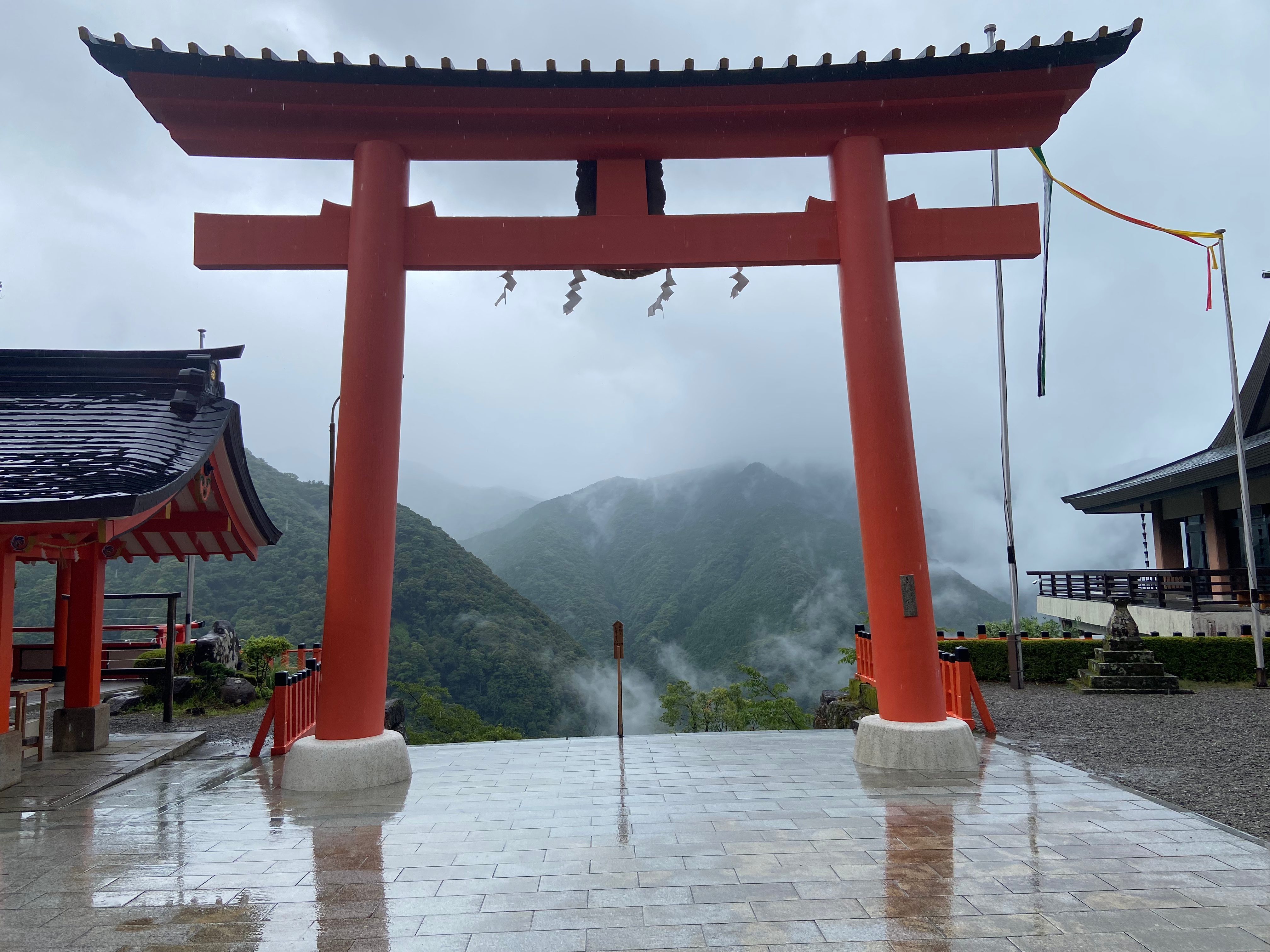
I am at Kumano-Nachi Taisha. As the thunder rolls over the sky I manage to take just one photograph of a torii gate and the mountains beyond, right then, before the rain catches up with the thunder. Luckily for me, there is a shop, so I enter, purchase, then poncho up.

I duck inside the Treasure Hall. No photos allowed, but I explore freely. I wrote about the Nachi Pilgrimage Mandala yesterday, but seeing the real thing up close is something else. I enjoy the other art, artefacts, simple objects from a time lost in the past. Most of the treasures here were discovered in 1918, but are from around the 10th century, with the shrine itself being 1,700 years old.

Stepping out of the Treasure Hall, the rain has intensified fivefold, and some of the ground has already flooded. People cower with umbrellas.
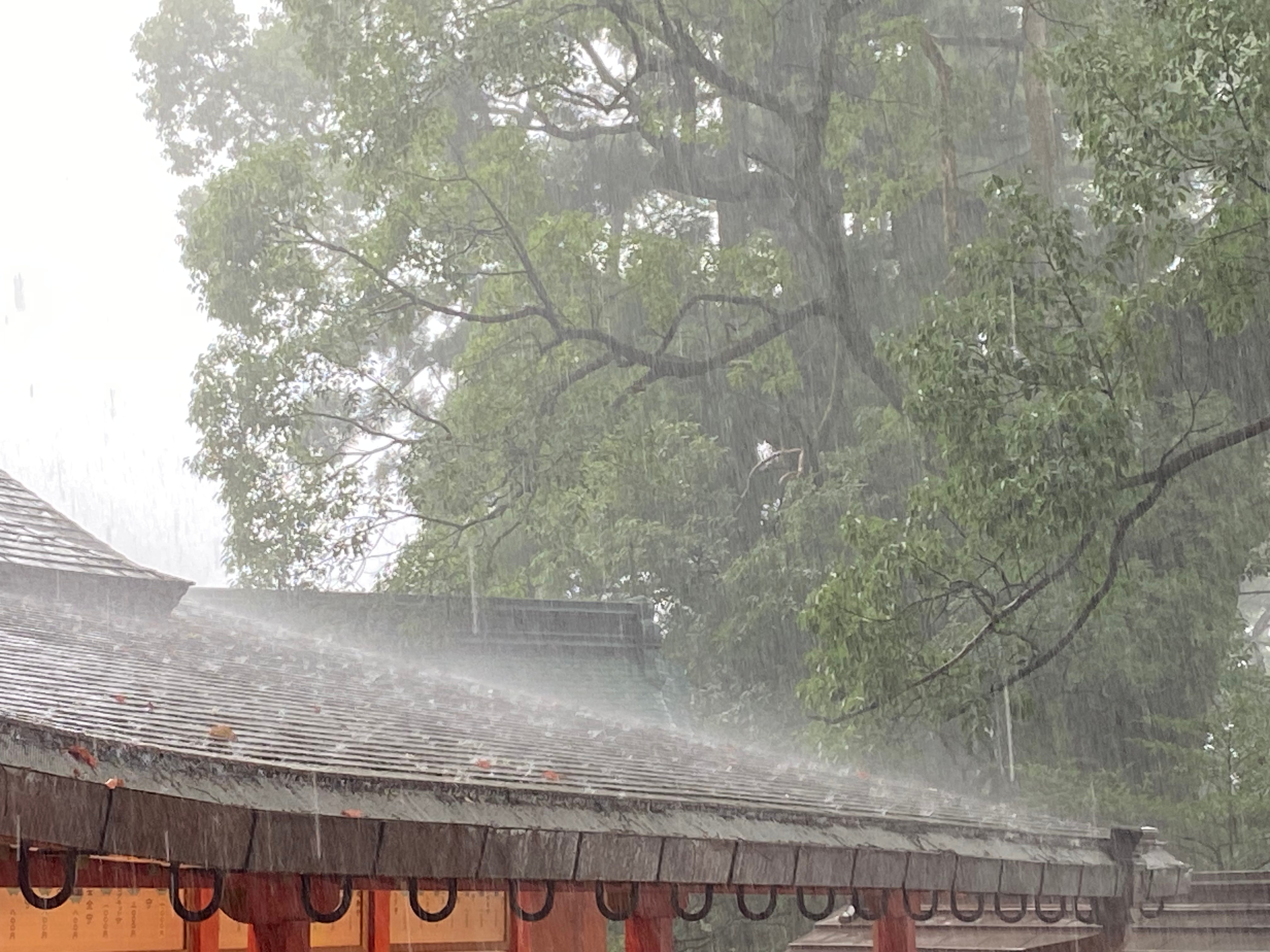
The rainwater crashes down and smashes into the roof of the shrine like a torrent of broken glass, slicing through the air with a merciless, unyielding force. I have never experienced rain like it. The raindrops actually hurt.

I came for the waterfall. Or so I believed. Right now, I feel like I’m inside one. I struggle to see where the waterfall could even be in comparison to the falling water. A monk passes me, dressed in dark blue. He carries an umbrella and seamlessly manoeuvres the flooding and the puddles, calm as you like.

Legend has it that the first emperor of Japan, Emperor Jinmu, found the waterfalls when his boat landed on the Kii Peninsula and he saw something shining in the mountains. At the time, he had been following a Yatagarasu (a mythical three-legged crow sent by the gods as a guide).

I follow the path down the mountain toward Nachi Falls. The sky bellows with more thunder, the road is full of water. Am I walking in the rain? Or am I swimming in a river? At points the water is knee-high. The drains can’t handle it. I can barely handle it, but I persevere.
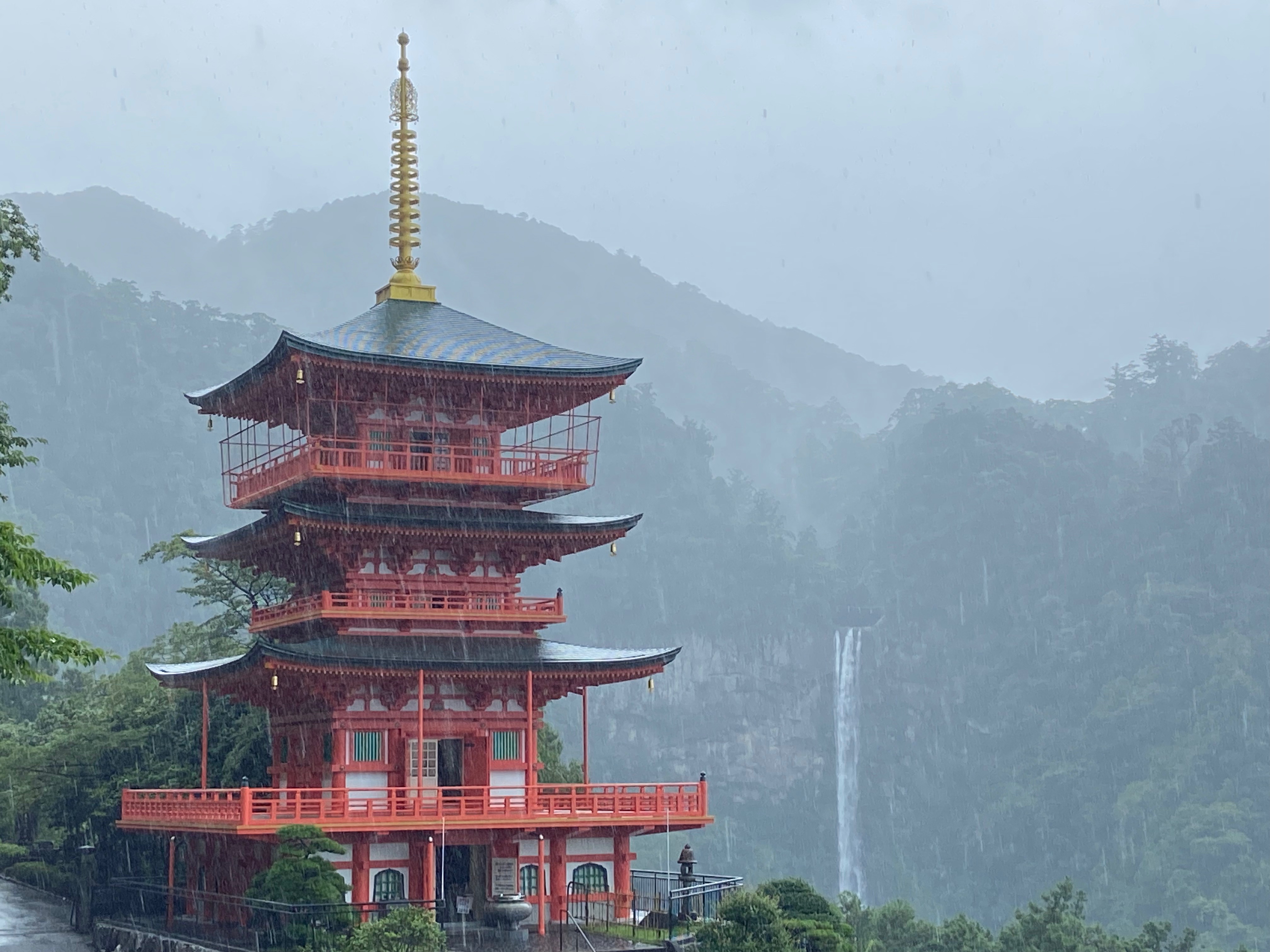
I make it to the pagoda view, the one that’s often featured on the cover of a largely poorly written guidebook. They’ve never featured it in the rain. I enjoy my photograph very much.

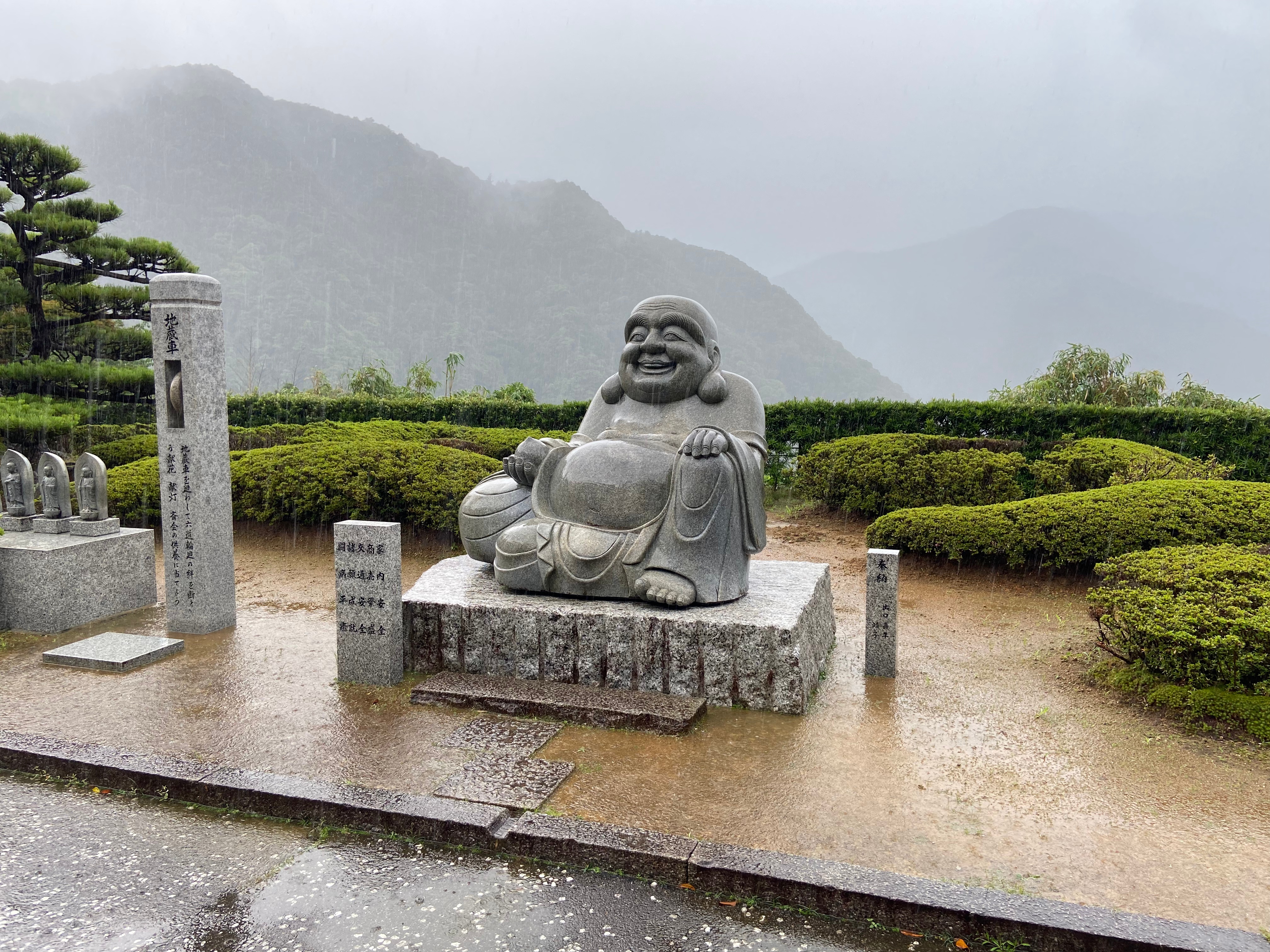
Beside the pagoda sits a big statue of Hotei. God of fortune. The Laughing Buddha. Naturally, despite my soaking wet legs and shoes and inability to understand the point of it all, I rub his massive belly. Good luck and prosperity coming my way, again.
I venture on, down flooded sloped paths and dangerous steps, and eventually, I do arrive at Nachi Falls. The heavier rain drowns out the sound of the waterfall. There’s a story of some star-crossed lovers that leapt from the top of the waterfall in the belief that they would be reborn into Kannon’s paradise. I also know that this is one of the Top Three Waterfalls in Japan, a UNESCO World Heritage Site, and also plummets 133 metres, making it the tallest in Japan.

I head down some slippery steps, careful to hold the handrail. Below, the waterfall itself. Having already taken a spectacular photograph of the rain-soaked pagoda pavilion with Nachi Falls as a backdrop, I find it to be immensely difficult to capture the waterfall from up close, due to the intense rain and heavy flooding.

I stumble back up stone steps to a bus stop. Typically, upon arriving back at Kii-Katsuura Station, the rain suddenly stops. At the Turtle Boat back to my hotel, I stand at the dock. A Japanese salaryman stands beside me, perfectly dry. He glances at my poncho and then at the sky.

From the boat, I see a crow in the air. It looks as though it has three legs, but it’s just the tail feathers, fanned out in silhouette against the sky. Something that could easily be mistaken for three legs.
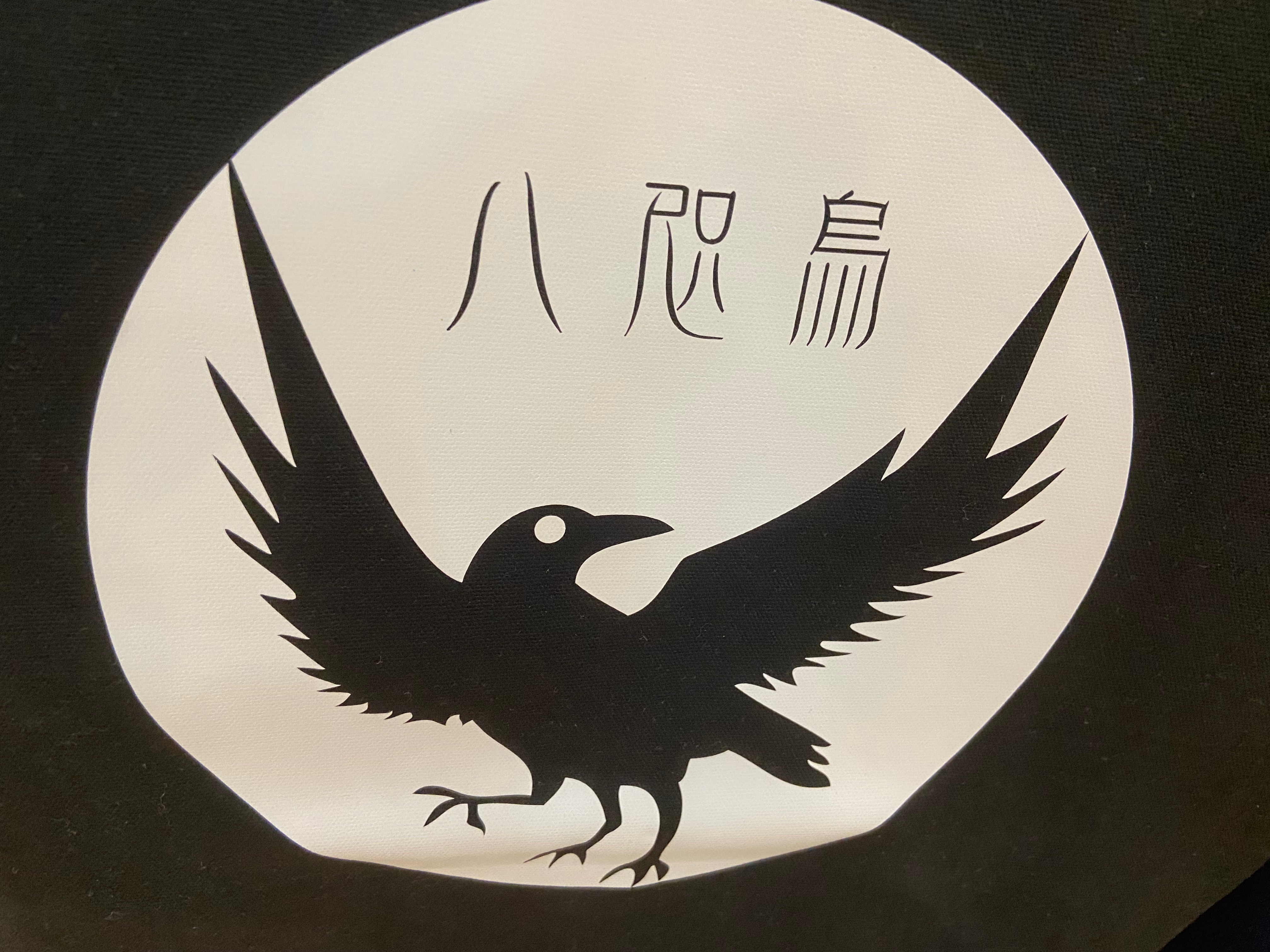
Back at the hotel, I hairdryer my shoes for two hours whilst waiting for my laundry to wash and dry, before heading out in search of a crow to photograph. In the end, all I find is this lousy t-shirt.
Unusual Occurrences in the Desert

My breath rises in a twisting vortex of white as I stand at the platform of Matsue Station. The temperature hovers at zero on this early winter morning, and condensation drips from the pipes overhead. The chill in the air is palpable, and I can feel it seeping into my bones.

In Japan, no matter where I travel, I can be certain that I will come across iconic landmarks, picturesque bridges, majestic mountains, and ancient shrines. Today, my journey begins with a visit to the oldest shrine in the country, a place rich in history and tradition.

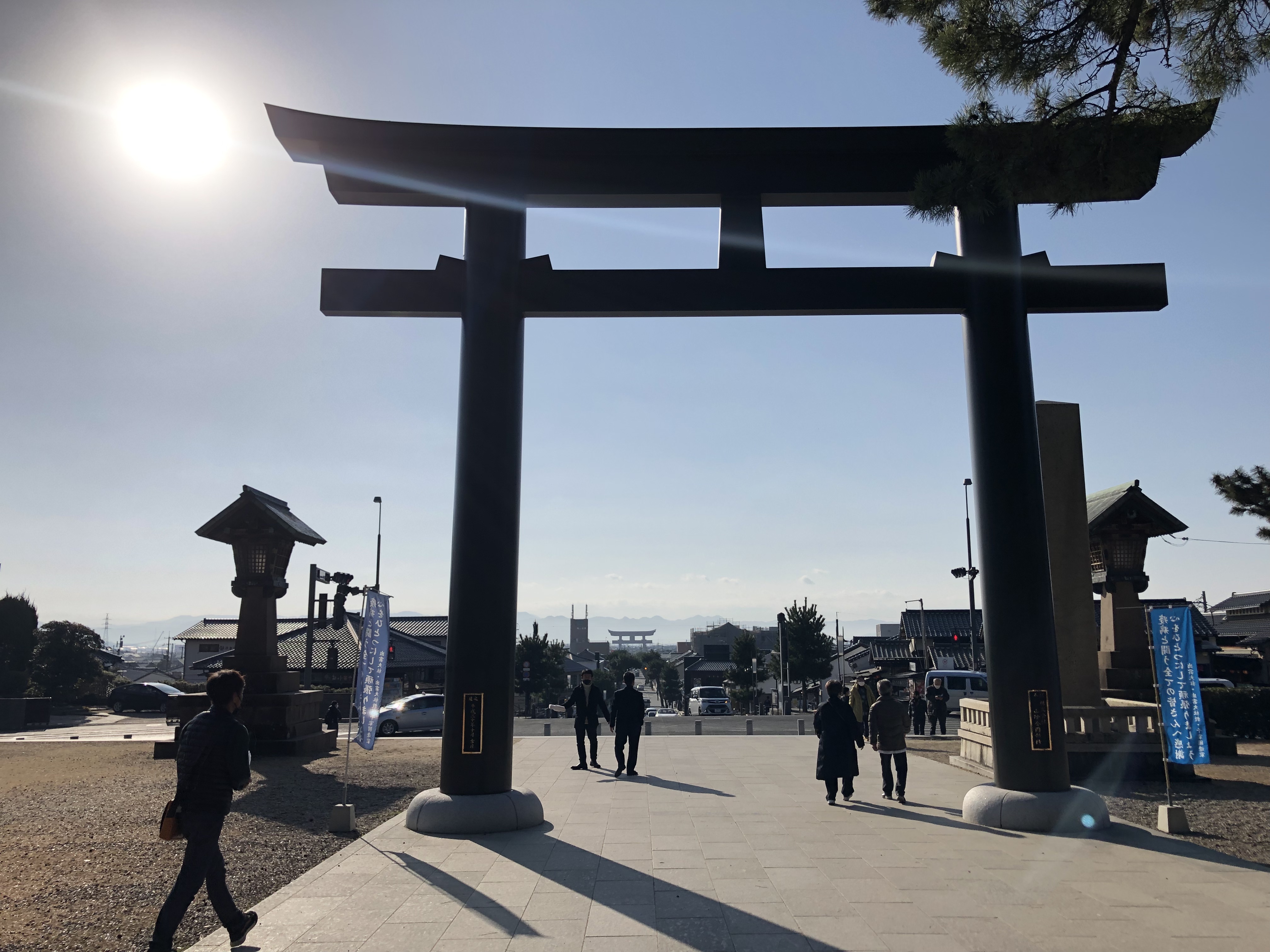
Izumo-taisha, also known as Izumo Grand Shrine, has a history dating back over 2,000 years. As I pass through a large torii gate the sun comes out, and despite the chill still lingering in the air, it begins to warm up, much to my delight.

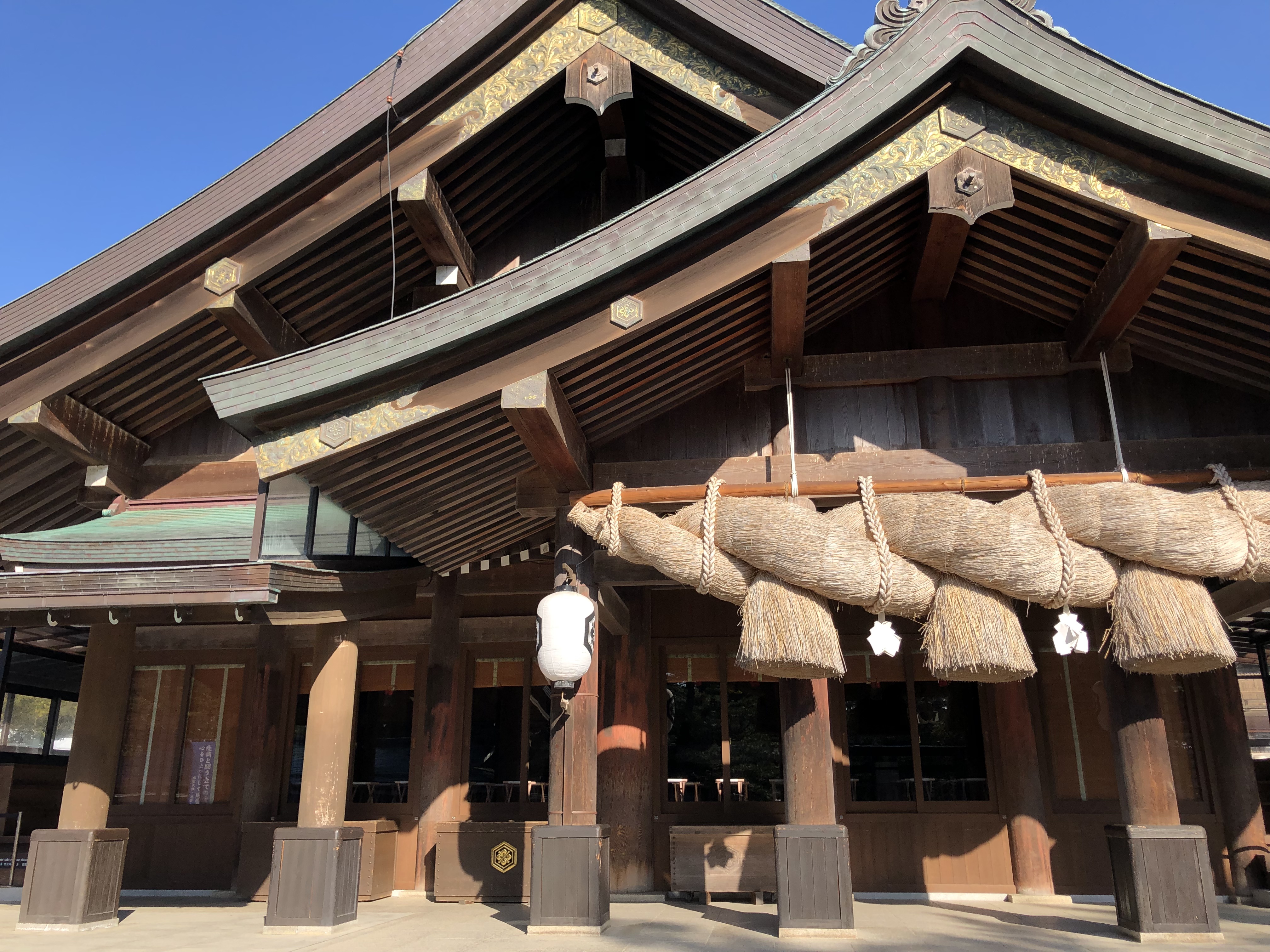
The main shrine is located in the city of Izumo in Shimane Prefecture and it is dedicated to the god Okuninushi, who is the god of marriage and prosperity in Japanese mythology. The shrine’s main hall, known as the “Taisha”, is made of cypress wood and is one of the oldest structures in Japan. The shrine is so sacred that it’s said that all the other gods from all the other shrines from all over Japan meet up here every year for the entirety of October to hang out. This month is known across the country as the month without gods.

After wandering the shrine complex for a while, I return to the main road where I find small local shops selling ice cream, fish-shaped waffles, and powdered green tea rice cakes. The atmosphere is peaceful, and I decide to walk the length of the street, taking in the many stores and restaurants. After that, I arrive at the nearest train station. I need to travel three hours now to see a bridge.

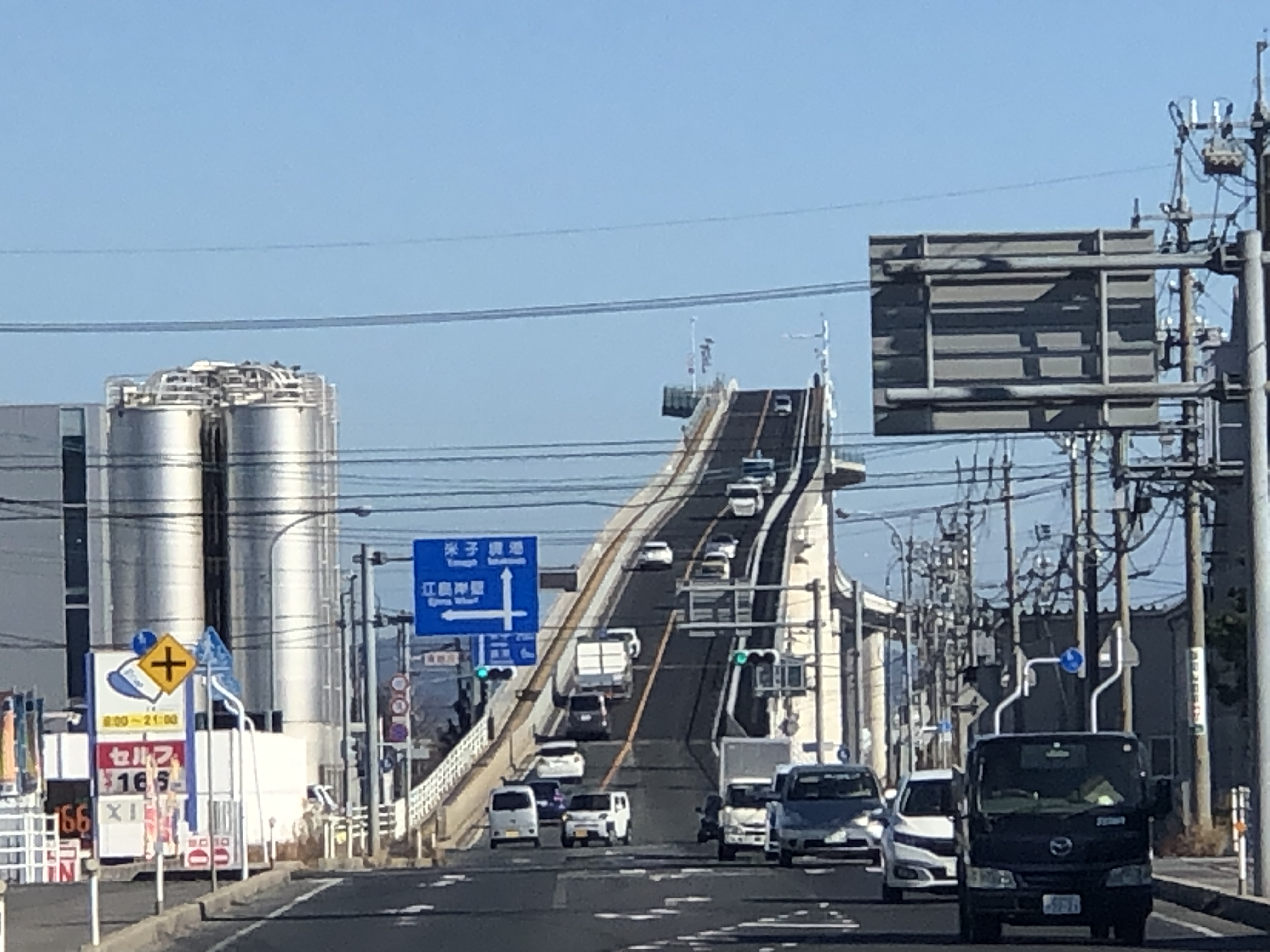
The morning chill is now long gone, as I begin my walk to Eshima Ohashi Bridge, the weather is completely different from my cold start, 16 degrees and a clear blue sky greet me. As I reach the bridge I’m taken aback, much like the weather today, this bridge also defies reality, its unusual shape creates an optical illusion, like a twisted mirage, and it makes it seem as though the cars could quite easily fall off the road.

I cross the Eshima Ohashi Bridge over Lake Nakaumi. The bridge took seven years to build, and it is the largest rigid-frame bridge in Japan. It connects Shimane Prefecture to Tottori Prefecture, and as I traverse its frame, the clear sky allows for a great view of Mount Daisen, a dormant stratovolcano. At 1,709 metres tall, it is the highest mountain in this region of Japan.

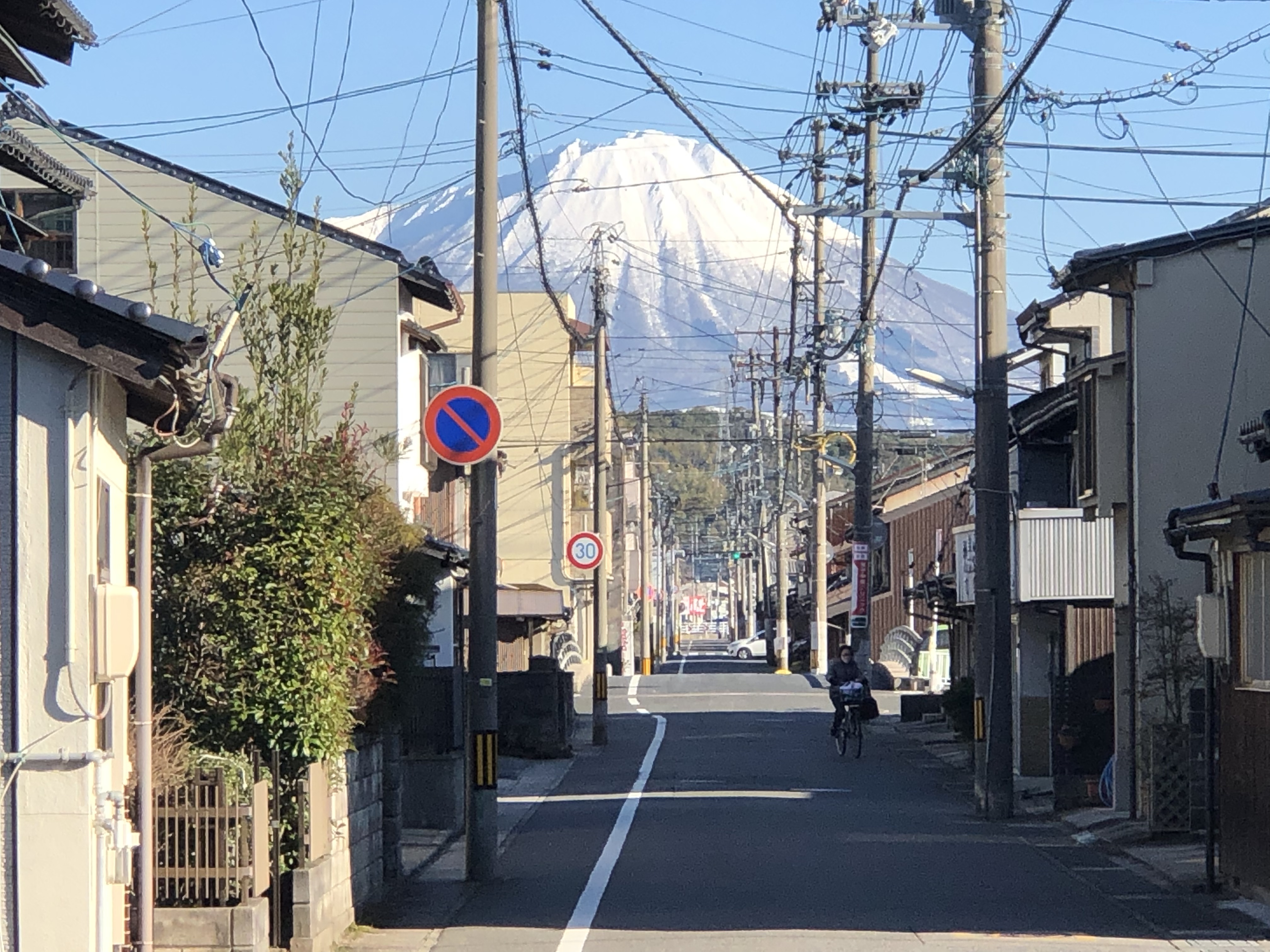
The mountain is an impressive sight, so I cross into Tottori, walk to the nearest train station, then take a train towards Mount Daisen for a better view, hoping to get a rare shot of it from the streets below. I do just that. The mountain is breathtaking from here, its snow-capped peak resembles Mount Fuji.

Having now visited a mountain, bridge, and shrine, I decide to find out what else Tottori has to offer. It turns out that Tottori is home to the only large desert in Japan. From Tottori Station, I have to walk for a little under six kilometres. Having wasted a lot of my day taking trains around the country, I have two pressing concerns. The first being that my phone battery is almost dead – I took far too many photographs of the bridge and mountain. The second concern is that it will be dark soon, and a desert at night, I imagine, isn’t going to be very photogenic.

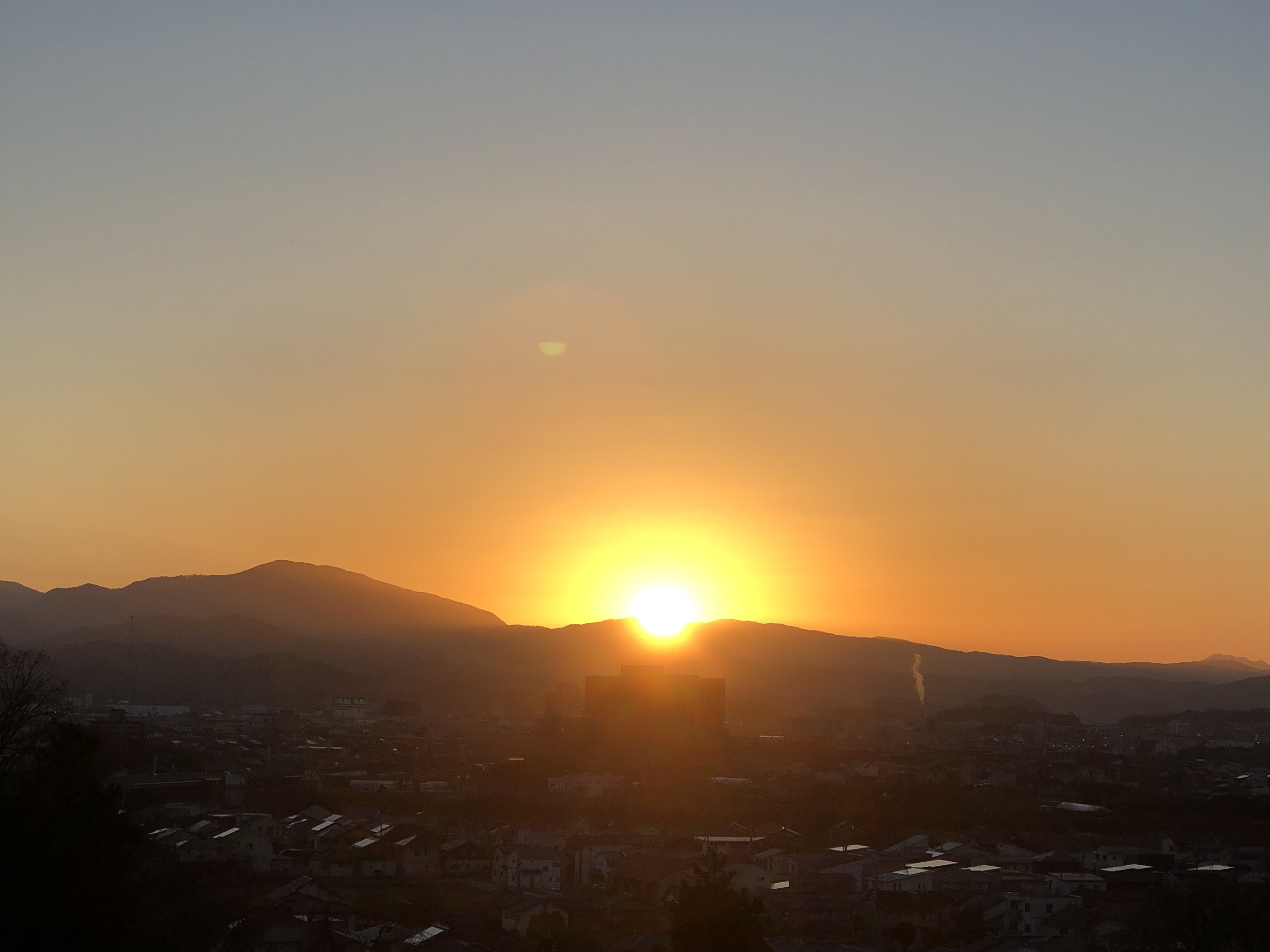
As I cross the Fukuro River, one of my concerns is confirmed, as I watch the sun begin to set above Lake Koyama, and darkness begins to engulf the sky. I have to pass through a tunnelled underpass for vehicles, dimly lit and without a footpath.

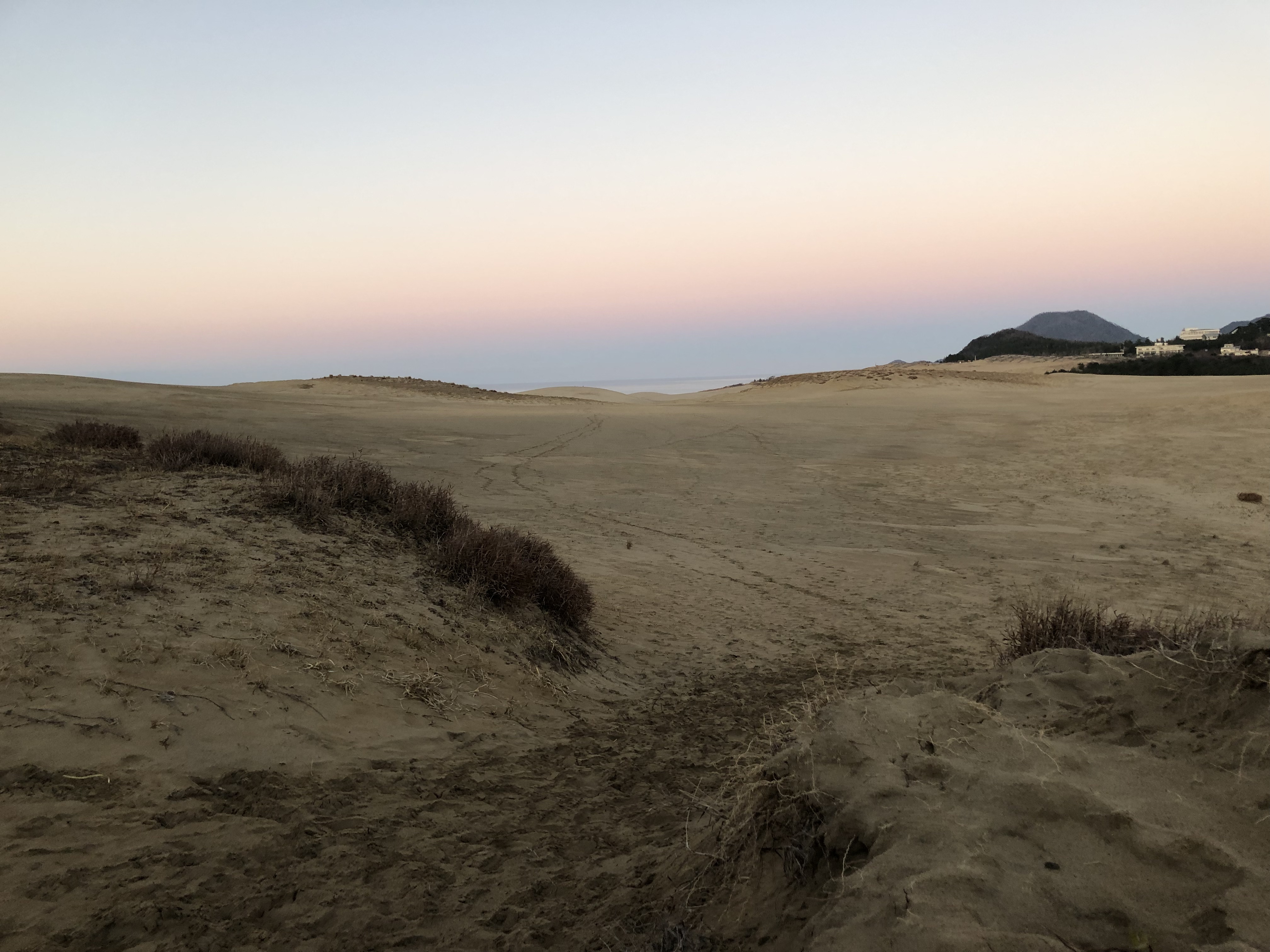
Eventually, I see a sign for Tottori Sand Dunes, and check my phone to find that I’m at one percent battery. The desert here is home to the largest sand dunes in Japan, stretching for 16 kilometres along the coast of the Japan Sea. The dunes are a unique geological formation, created by sediment being transported by the nearby Sendai River and deposited on the coast over thousands of years. The dunes are constantly changing shape due to the wind and weather. In the summer, there are even camels here to ride.

As I take out my camera to snap a photograph of the desert, my phone turns off. I’m not sure if I even captured the single photograph, and feel I might have made a wasted journey. Further darkness begins to cloud the air, and after walking on sand for a time, the chill from earlier returns, and at some point it begins to snow. I decide it’s probably a good time to head back to where I’m staying tonight in Matsue.

I pass back through the dimly lit underpass and try to retrace my steps back to the station, I look for street signs, but it seems as though they’ve deserted me, all maps and directions to Tottori Station seemingly removed at night, leaving me lost in the dark, and freezing in the snow, and experiencing yet another season on an unpredictable day. I see a man on his bicycle and ask him for directions. He takes out his phone, brings up a map, and tells me to go straight. So I go straight.

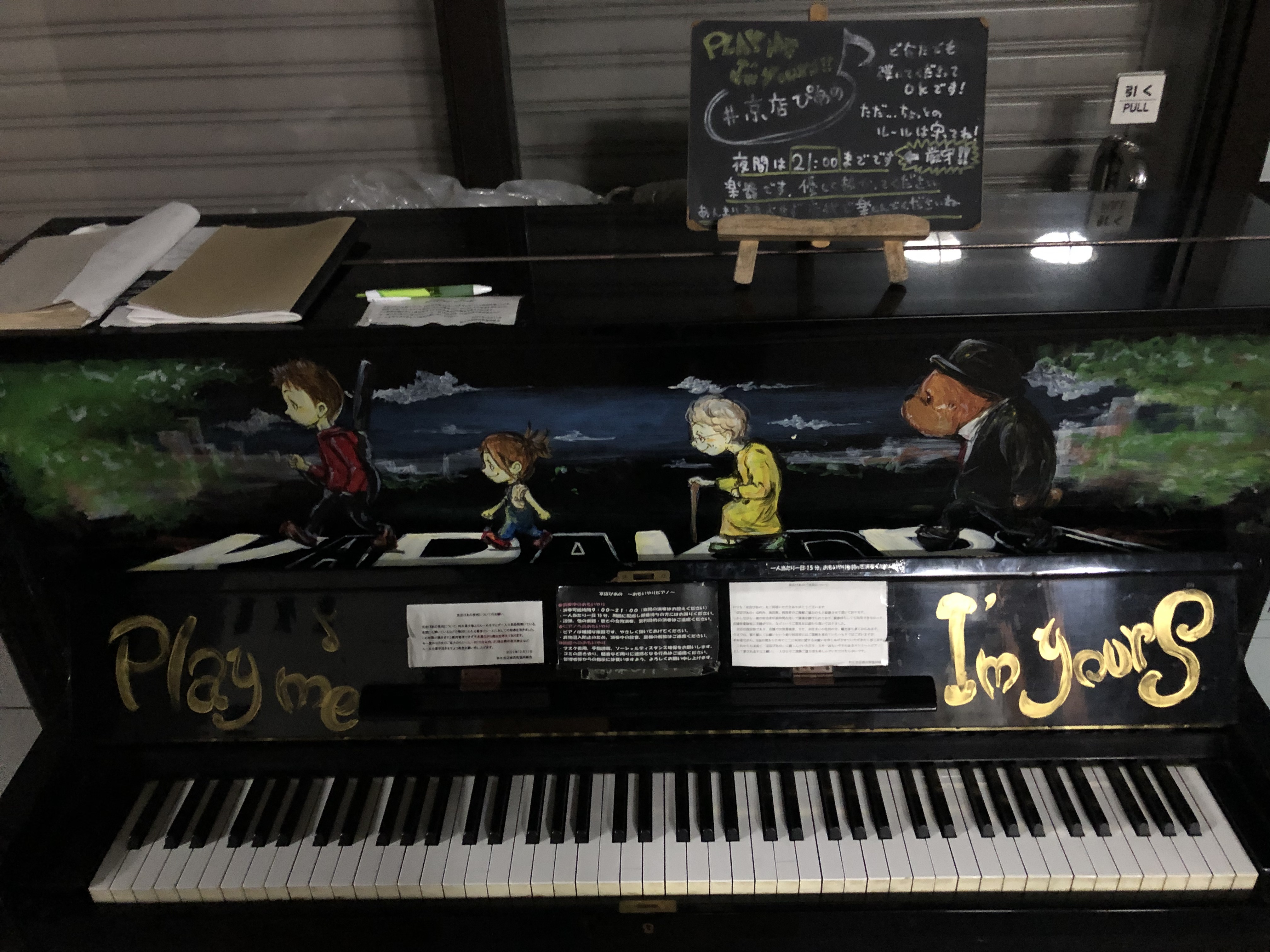
Eventually, I arrive back at Tottori Station and get the train to Matsue. I’ve completely lost count as to how many trains I’ve taken today, I think it’s twelve. At Matsue Station, there is no sign of any snow. Relieved, I return to my hotel to charge my phone before heading out for some food. On the way, I pass a piano on the street and decide to have a play.

As my fingers grace the keys of the piano, I am enveloped in a symphony of sound. The notes swirl around me like a gentle snowfall. I play on until my hands are numb with cold.

Around the Wards in Achy Days

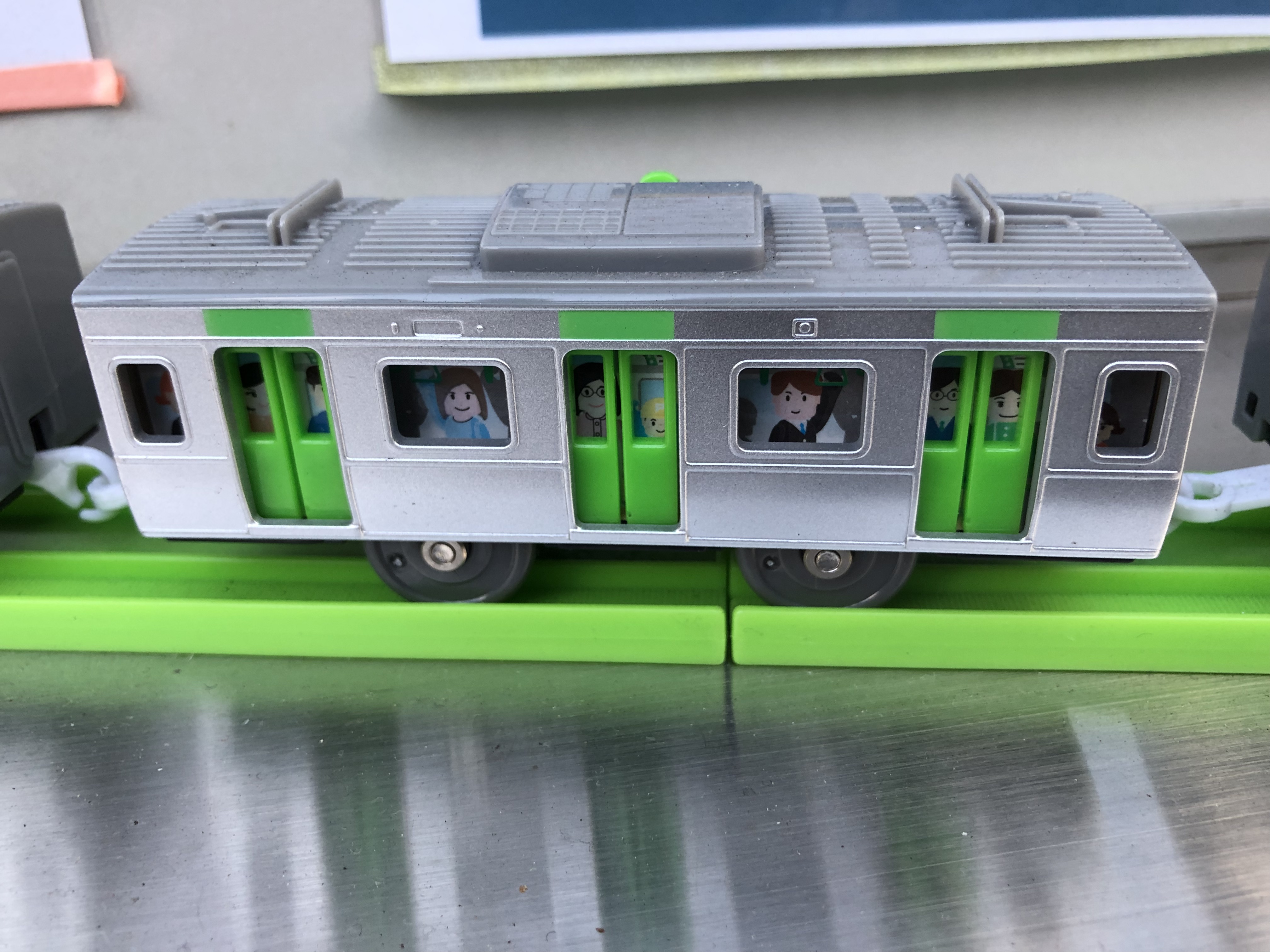
To celebrate the 150-year anniversary of railways in Japan, and my own personal achievement of having finally explored and written about all 23 wards of Tokyo, I decide to pay tribute to the city in a meaningful way. I choose to do so by embarking on a journey to walk the entire length of the Yamanote Line, a challenge that will allow me to experience Tokyo in a way that I never have before.

As the early morning sun blazes brightly between the gaps in the skyscrapers, I set out to meet my friend Maki. Though not typically a fan of early starts, today will be a long day that calls for an exception to be made. The Yamanote Line, a loop line encircling central Tokyo, is approximately 34.5 kilometres in length. But on foot, without walking on the tracks, the journey becomes a formidable 44 kilometres – just a little over a marathon’s distance. Thus, the route earns itself a playful portmanteau: the Yamathon.

I meet Maki outside a small cafe in Sumida, and we cross the bridge over into Asakusa. She asks me if she can give up, to which I jokingly reply that it’s a bit early to be considering such a thing. After all, with the Yamanote Line constantly circling the city, it’s always possible to find a train station nearby in case the need to give up arises. We set off from Ueno, the start and end point of our journey. Our first decision is whether to walk clockwise or anti-clockwise. After some deliberation, we opt for the latter, as the prospect of navigating through the eerie streets of Uguisudani at night seems daunting. And so, we set off in the direction of Ikebukuro.

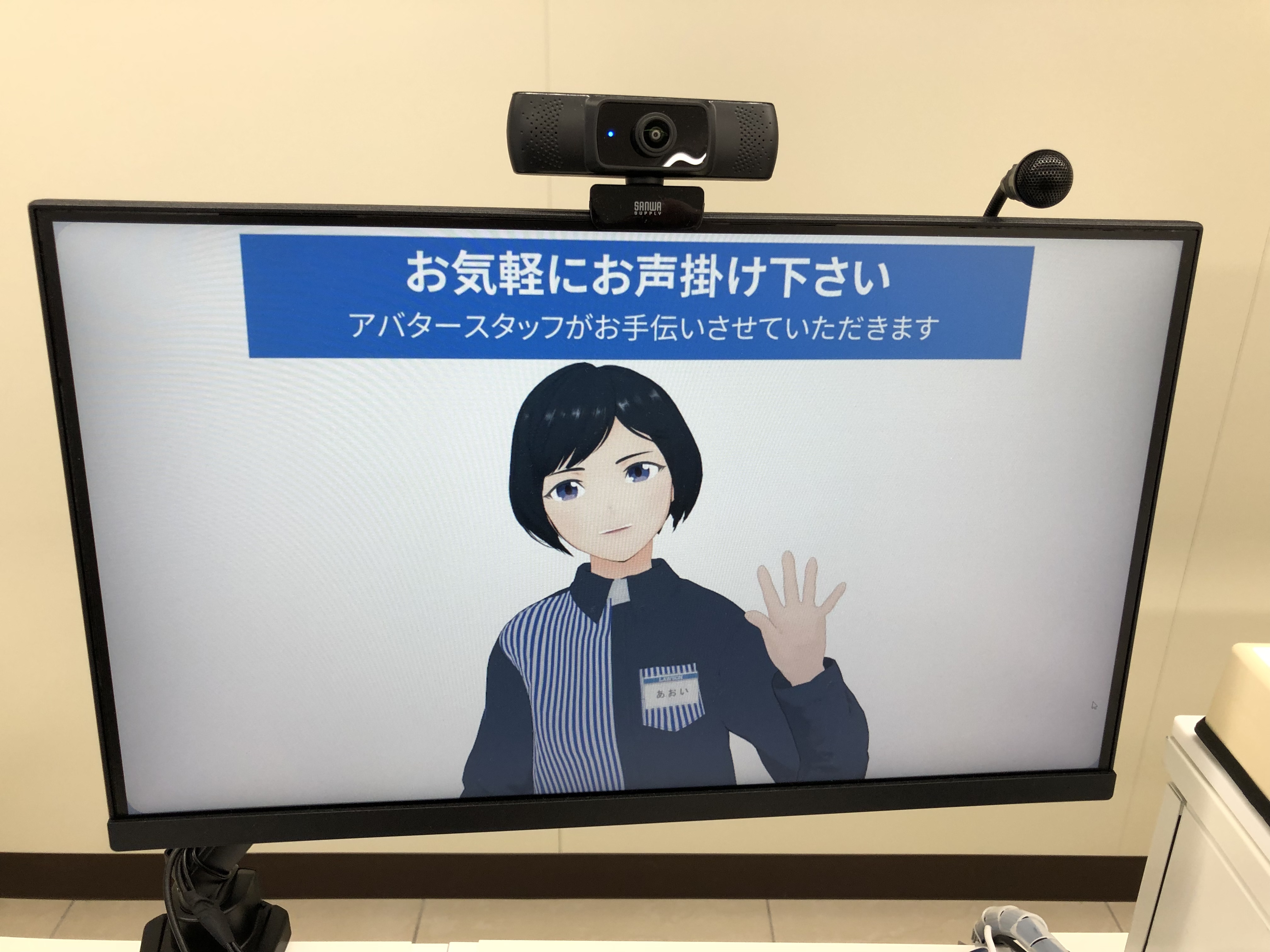
As we approach Nippori, the road runs out and we are forced to venture into the familiar territory of Yanaka Cemetery (still no sign of the ‘snow-protective lifting tool’). While meandering amongst the empty graves, we become momentarily lost, but the distant rumble of a Yamanote Line train eventually guides us back to the tracks. We continue on, making our way through Tabata and eventually reaching Otsuka Station. It is here, three hours into our quest, that our journey takes an unexpected detour in the form of an interesting discovery: the first and only Green Lawson in Tokyo.

The thing that makes this store so unique is that it is fully staffed by digital avatars of Lawson employees, rather than human staff members. As we wander into the store, intrigued by the novelty of it all, we decide to explore further. As we pass by one of the avatars, she greets us with a cheerful “Happy New Year” in Japanese. As Maki chats with the AI about our epic journey along the Yamanote Line and my documenting it in a blog, the clever machine quips that it would be happy to strike a pose for a photograph. It suggests three options: a cheerful “wave,” a universal “peace” sign, or a self-deprecating “loser” sign.

Eager to learn more, I take the opportunity to ask the AI about the philosophy behind Green Lawson. To my surprise, the machine responds in fluent English, explaining that the store aims to reduce food waste, support the local economy, and contribute to world peace.

As we resume our walk, the towering buildings along the route create pockets of shade on the pavement. It’s cold in the shadows, but warm in the sun. Maki explains that there are two words in Japanese that both describe these respective conditions, but I find myself struggling to come up with the antonym for “shade.” This lack of an opposing word begins to bother me, and I consider the possibility that it might be a failing of my memory.

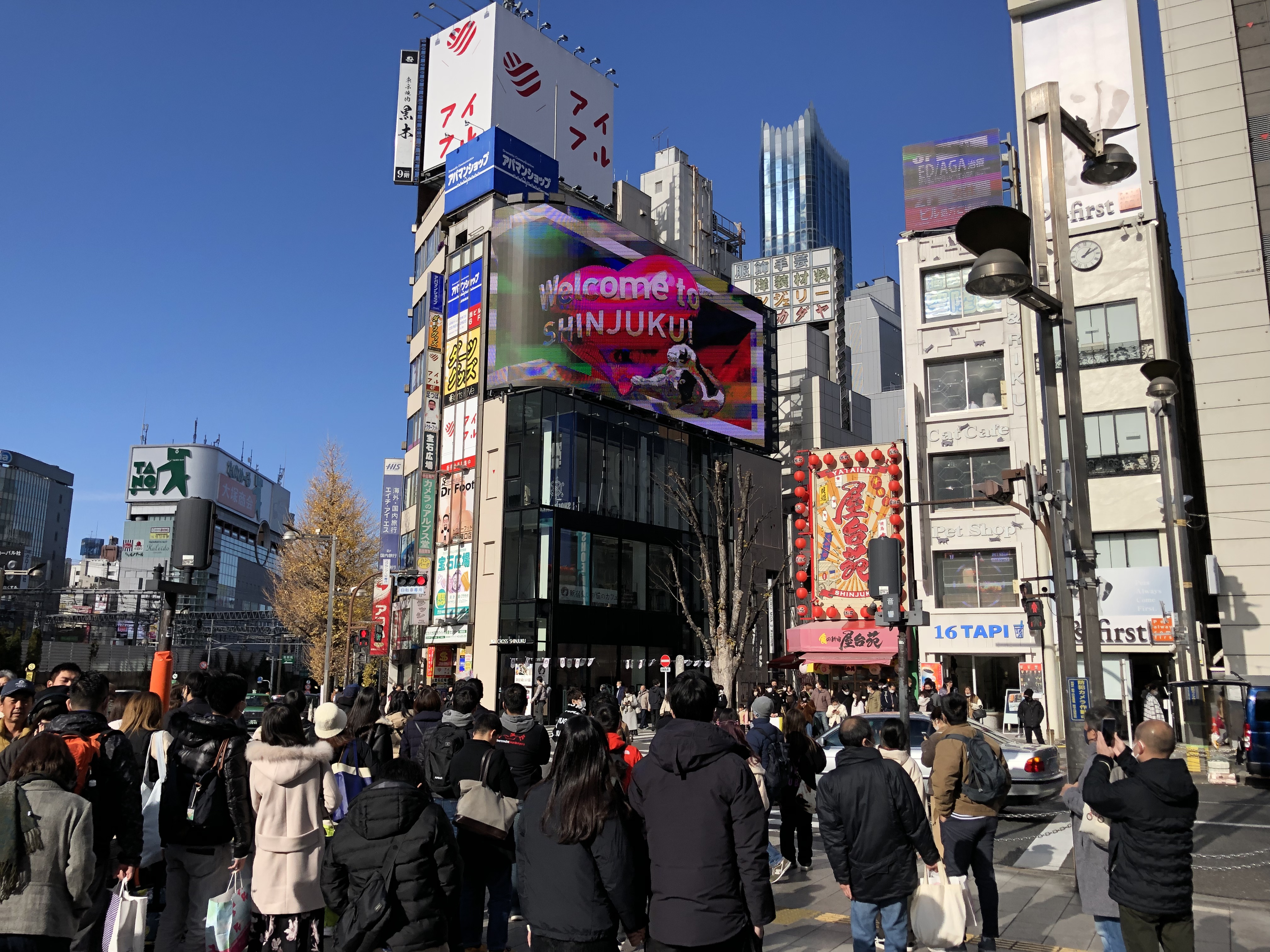
We continue on, passing a large group of people running along the street dressed as rabbits, a nod to the Chinese New Year’s chosen animal. At Ikebukuro, we are treated to the sight of sculptures that litter the streets. As we enter Shin-Okubo, we find ourselves wandering through the bustling streets of Korean Town. And at Shinjuku Station, we are greeted by a television screen that displays words in a mesmerising three-dimensional phenomenon.

Almost five hours into our walk, we arrive at the halfway point of our journey: Harajuku Station. Here, people stand in line, eagerly waiting to purchase tapioca from a street vendor. A little further up the street, we see a similar scene, but with people queueing up along the entire length of a road to buy shoes. In Shibuya, we encounter yet another line, this time composed of people waiting to take a photograph of Hachiko the dog, adorned with a special wreath to mark the New Year.

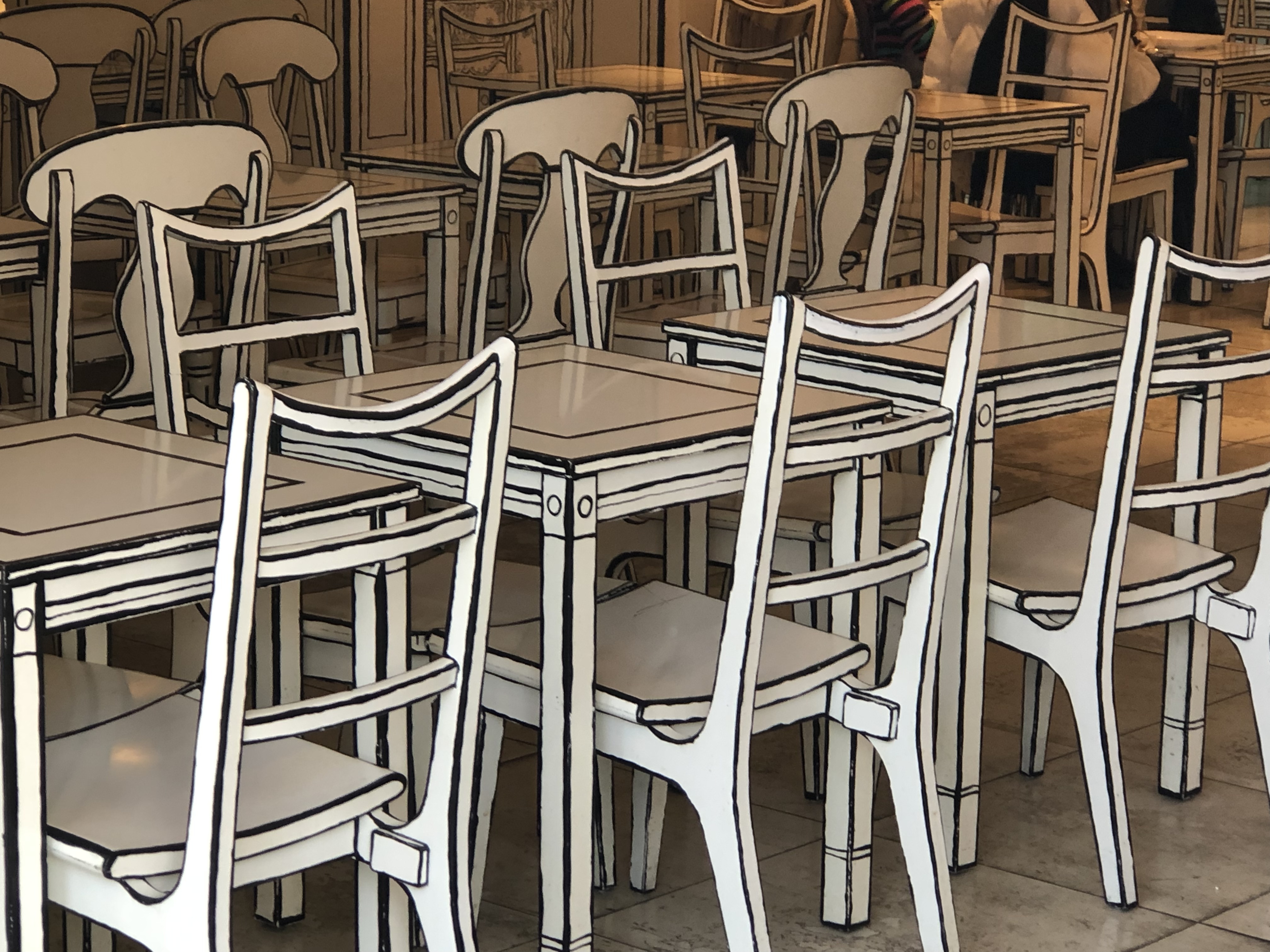
After hours of constant walking, our legs begin to feel sore. We decide to take a well-deserved break at a small, charming cafe. In contrast to the bustling, three-dimensional imagery of Shinjuku Station, the atmosphere at the cafe is a tranquil, two-dimensional one.

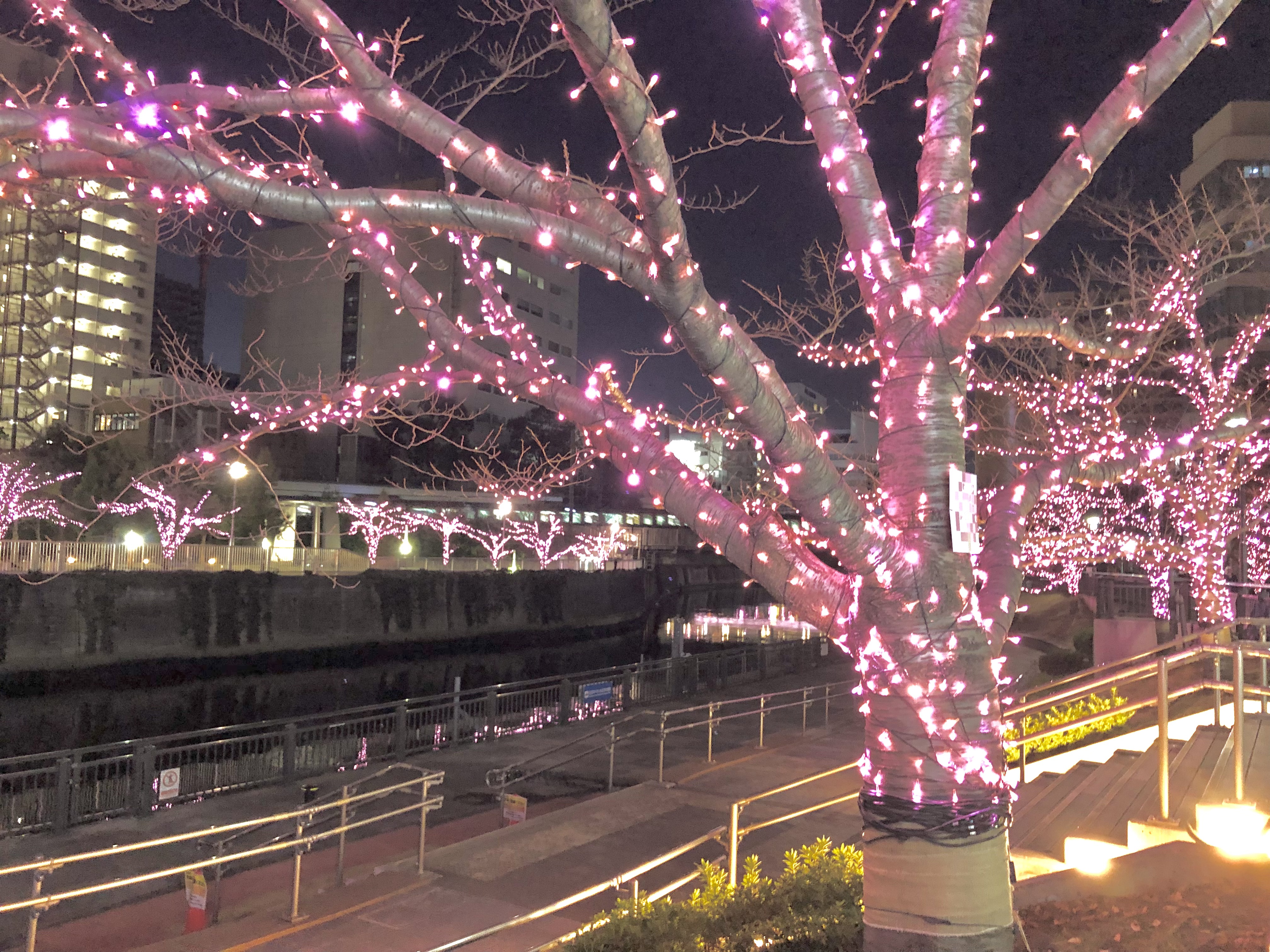
With the night falling and the wind picking up, a chill fills the air as we resume our journey through the darkening city. Despite the challenges presented by the fading light and the increasing cold, we persevere, striding forward on our journey. Close to Meguro Station, we are treated to a beautiful distraction in the form of the Meguro River Cherry Blossoms Promenade, a scenic riverside path lined with cherry trees that are illuminated by beautiful pink lights.

The tranquil scene is a welcome respite from the pain in my calves, and Maki and I take a moment to simply savour the beauty around us.

With weariness setting in, we consider the possibility of giving up, but in the end, we decide that we cannot allow ourselves to quit, for the fear of regret is too great. If we can push through and complete this challenge, we tell ourselves, then we can conquer anything. And so, we push on, determined to see our journey through to the end.

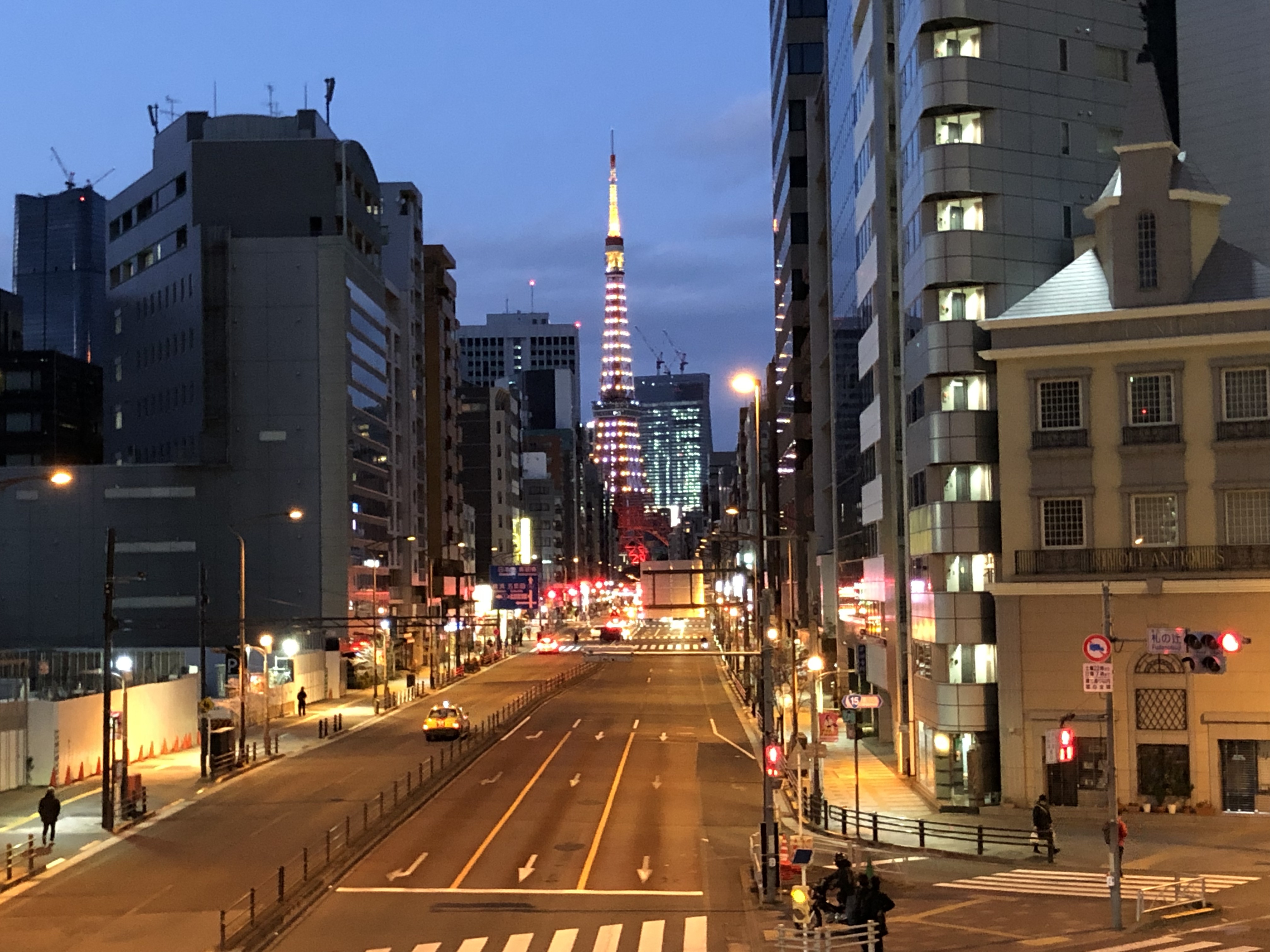
We pass through Shinagawa and the newly built Takanawa Gateway Station, the most recent addition to the Yamanote Line. At 5 p.m., the “Yuyake Koyake” bells ring out from speakers at every intersection, beckoning us to return home. But we do not heed their call, for the end of our journey is nearly in sight. In the distance, I am heartened by the sight of the bright illuminations of Tokyo Tower.

Built from the remains of United States military tanks damaged in the Korean War, Tokyo Tower was designed to mirror the iconic Eiffel Tower in France. However, in a show of competitive spirit, Japan deliberately made its tower 2.6 metres taller, earning it the title of the tallest freestanding tower in the world (a title now held by Tokyo Skytree).

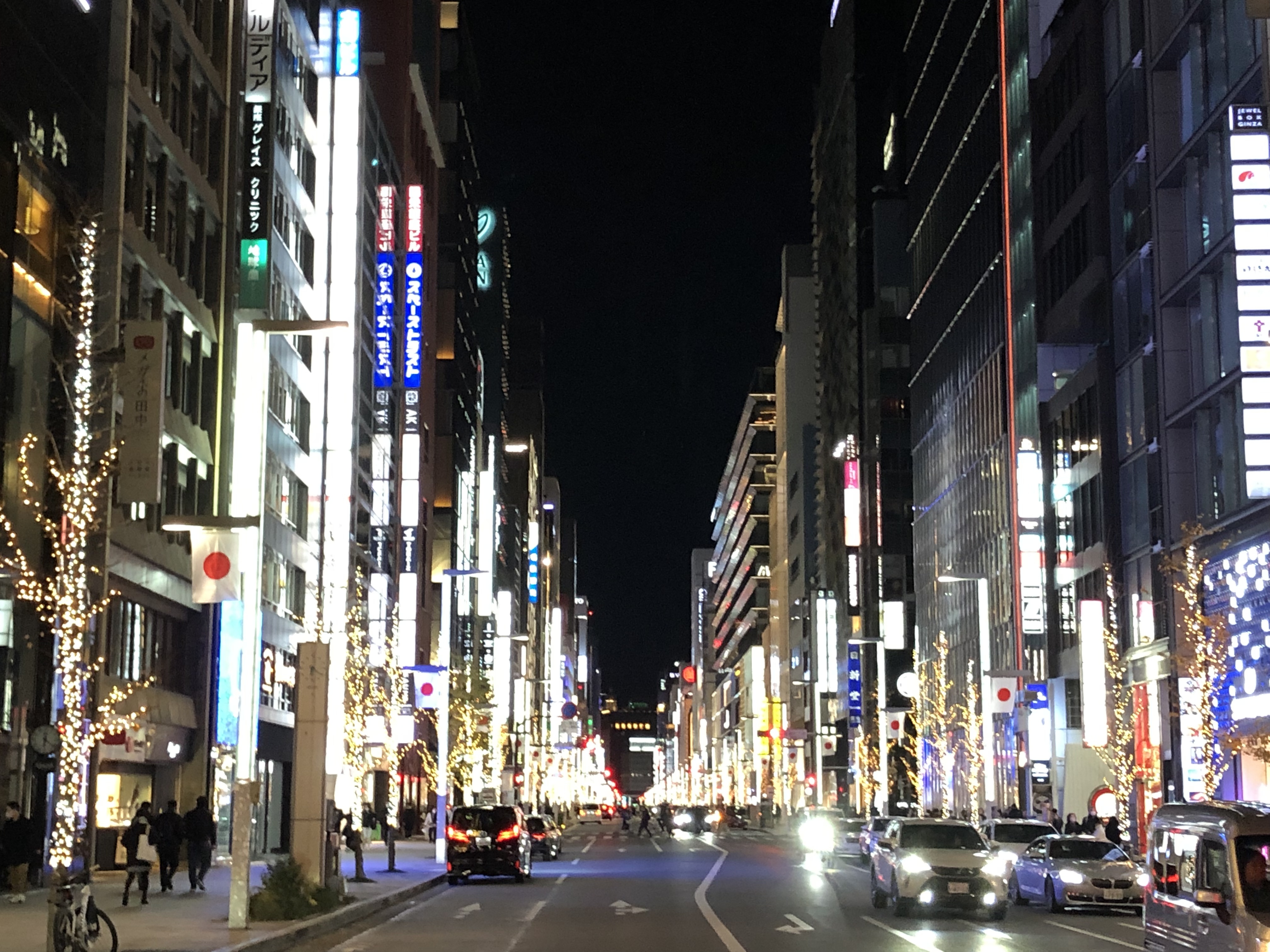
As we near the end of our journey, we are mesmerised by the bright lights of Ginza, Tokyo, Kanda, and Akihabara, all of which are transformed into a neon nirvana at night. It is at this moment that I am struck by the realisation that Japan has not just four, but five seasons – one that is marked not by the changing colours of nature, but by the way in which the country’s cities and towns are transformed by the darkness of night.

After a grueling nine-hour journey that saw us take a total of 55,454 steps, we finally arrive at Ueno Station, exhausted but triumphant. Our legs ache and our feet throb with pain, but the sense of accomplishment helps to outweigh the discomfort. Upon returning to Asakusa, I allow myself the indulgence of an ice-cold beer – the best I’ve ever tasted – as a way to celebrate and relax after our achievement. As Maki and I bask in the afterglow of our journey, the fatigue slowly starts to fade away.

A Bear Called Kumamon

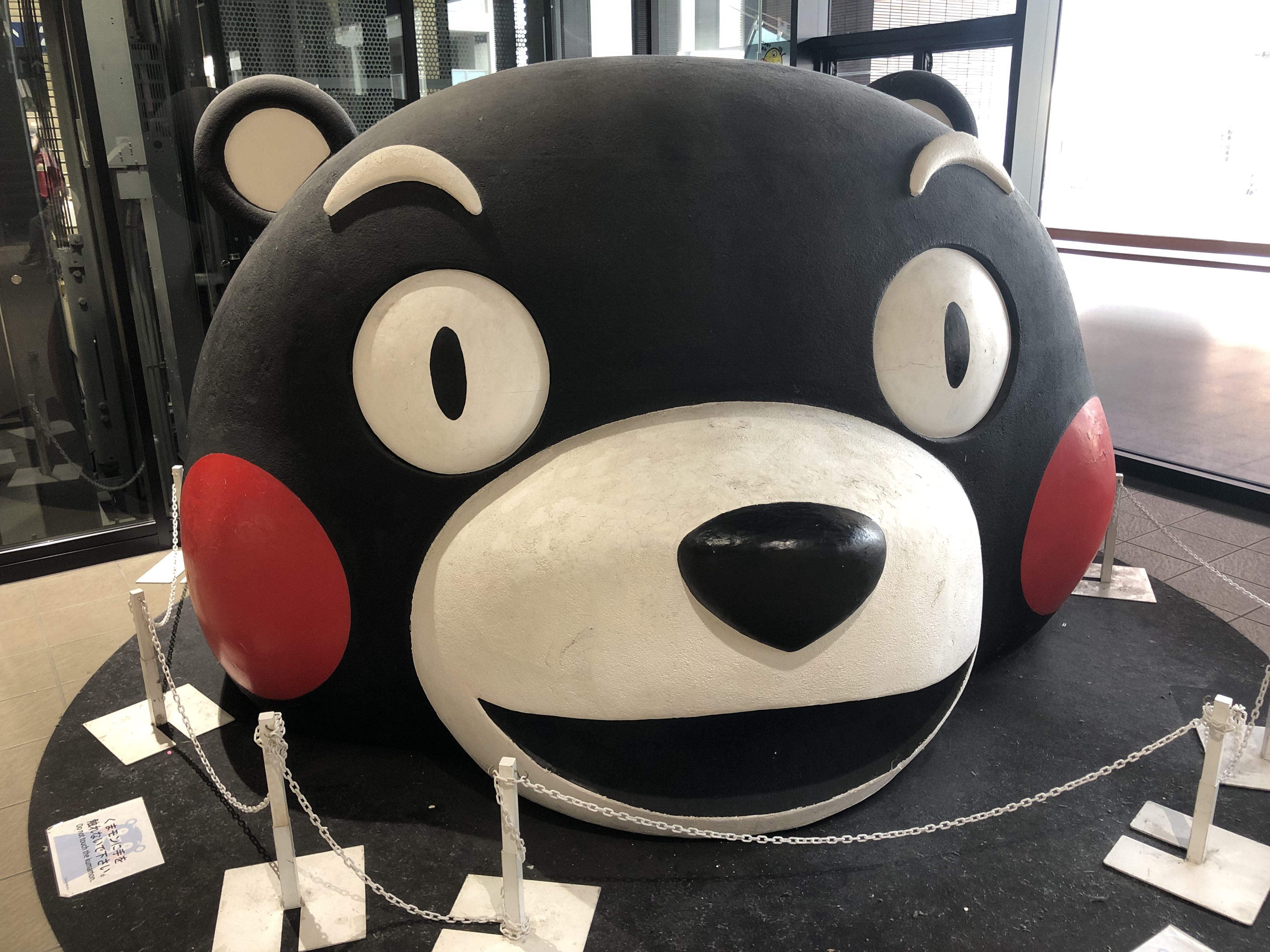
Kumamoto Prefecture is famous for mascots, and not just any mascot, the most famous mascot in all of Japan, Kumamon. In 2010, in a bid to help promote tourism in this region, Kumamon was created. His name literally means ‘Person from Kumamoto’ in the local dialect, and ‘Bear Person’ in Japanese characters. Despite Kumamon being a wide-eyed red-cheeked bear and not a person, the official website states that he is neither, and is in fact just a Kumamon.

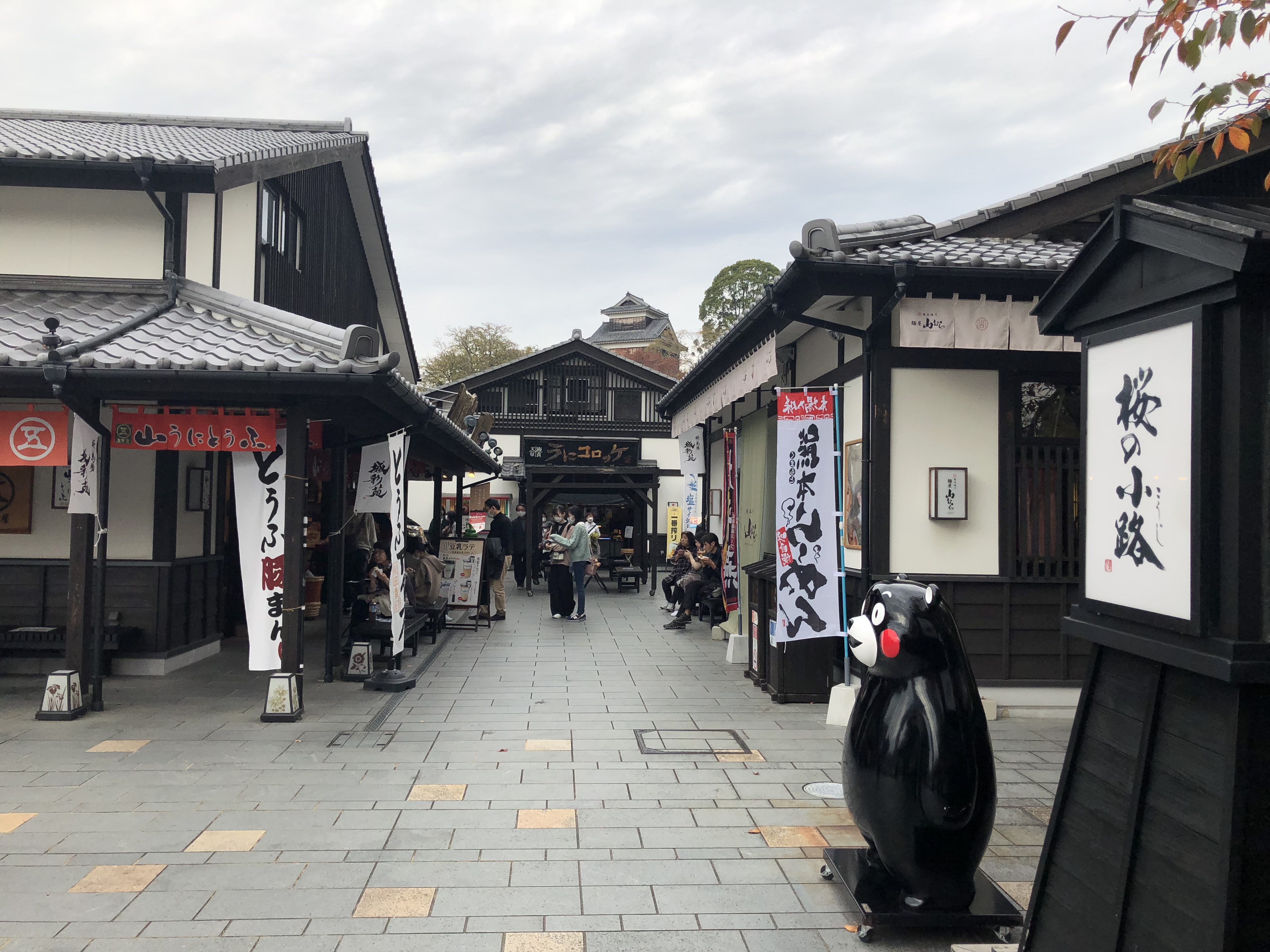
Unsurprisingly, there are countless Kumamon within the train station, even a Family Mart doubles up as a souvenir shop selling official Kumamon goods, it’s a bit much.

Exiting Kumamoto Station, I instantly notice the cold. It feels as though I’ve entered a different climate. I start by taking a walk along the Shirakawa River, before returning to the city streets, heading in the direction of Kumamoto Castle. What strikes me as I wander is the complete lack of convenience stores in this area, I’ve been walking for about thirty minutes and I’m yet to see even one.

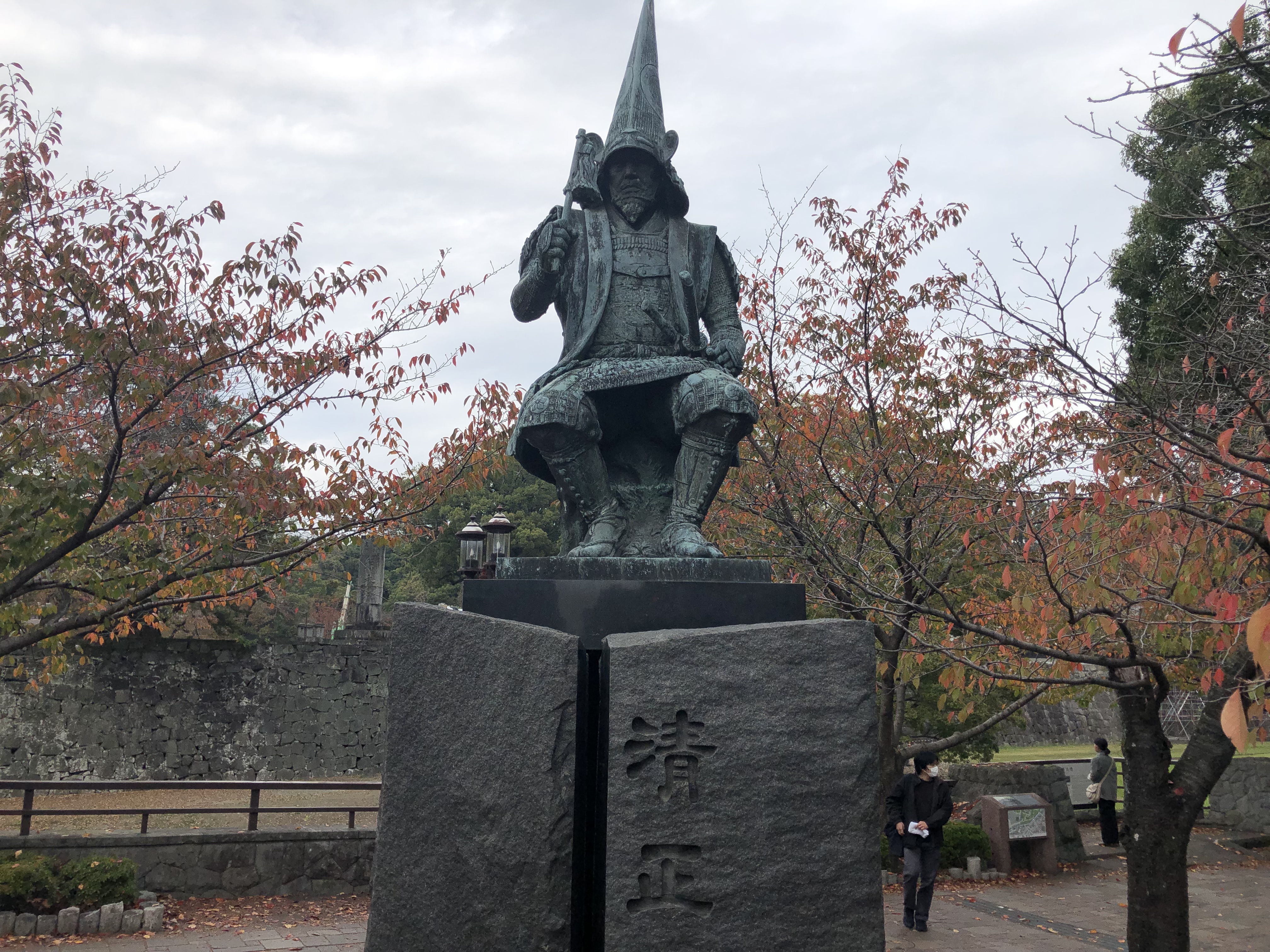
Eventually I do find a Seven Eleven, and as I enter the shop the heat hits me. It is so hot, the cold outside temperature contrasted to extremity. I’ve found this in Japan, in the summer the convivence stores are remarkably cold, with air conditioning turned down to a freezing blast. One cold day and they’ll switch to heating at full blast. Leaving Seven Eleven, I continue my walk, before spotting a giant statue of Kato Kiyomasa.

Kiyomasa was a fierce warrior, designer of castles, and was a general who led an army of 100,000 samurai into Korea. The sign next to the massive statue says, “He is wearing his trademark beard and a kind of tall black hat. The statue is slightly larger than life size.” I look back up at the Herculean statue. I look down at the tiny person next to the statue. I decide slightly larger is a huge understatement.

During the Japanese invasions of Korea (1592-1598) Kato Kiyomasa’s army were ordered to slice off the noses of those they had killed, pickle them in salt, and send them back to Japan. During the Battle of Hondo, Kiyomasa ordered his men to slice open the bellies of every pregnant Christian woman, and then to cut off their infants’ heads. Kiyomasa, it seems, was slightly barbaric. I decide to go and have a look at the castle he designed.

“Above the stone wall of the minor tower, there were iron spikes called shinobi-gaeshi, which were used to help keep out enemies, with various traps laid out in inconspicuous places. Searching for these is one of many ways to enjoy Kumamoto Castle,” states a sign at the entrance.

Kumamoto Castle was completed in 1607 by Kato Kiyamasa, and boasts its very own virtual reality technology. Here you can enjoy discovering Kumamoto Castle and its history through VR. You can even see the castle using virtual reality. I can see the virtual reality booths from the actual castle.

I leave the castle and head to the nearby Suizenji Jojuen Gardens.

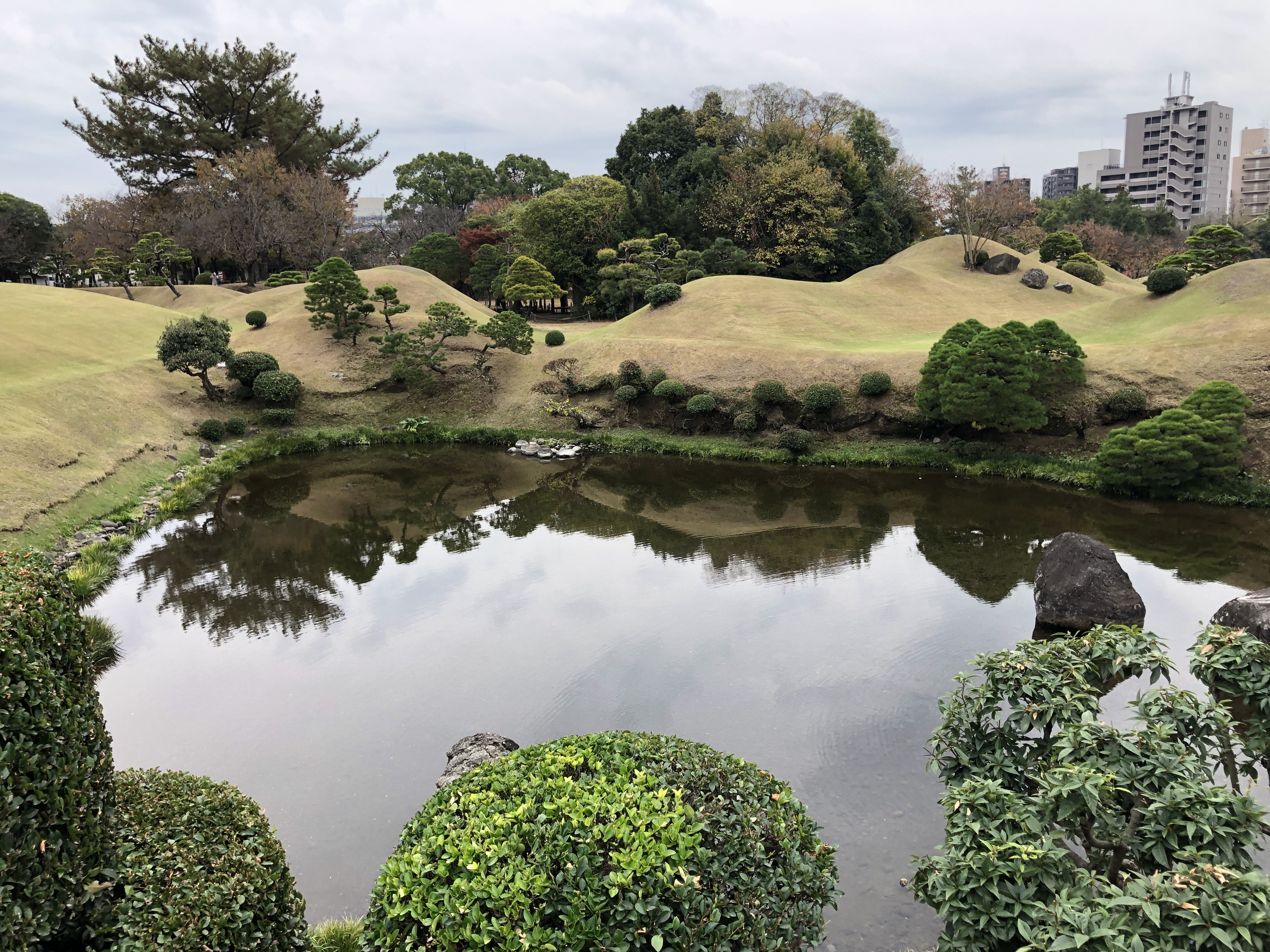
These gardens are on the southeast side of Kumamoto Castle and they are beautiful. There is a large lake in the middle, a small tea house, a Buddhist temple, and even an artificial mountain in the shape of Mount Fuji. I take a time to explore the gardens and their many attractions, lanterns, and monuments. Three old Japanese ladies stop to say hello to me as I stand reading a sign next to a tree.

Nagi, Tree of Matchmaking, regarded as an auspicious plant since ancient times, has two broad leaves that grow symmetrically like a couple at each point of the twig. The custom is for the female to keep the leaf behind her mirror; the strength of the leaf symbolising the strength of the relationship with her partner. The sign says, “A couple keeping a leaf can have a faithful married life without a two-faced relationship.”

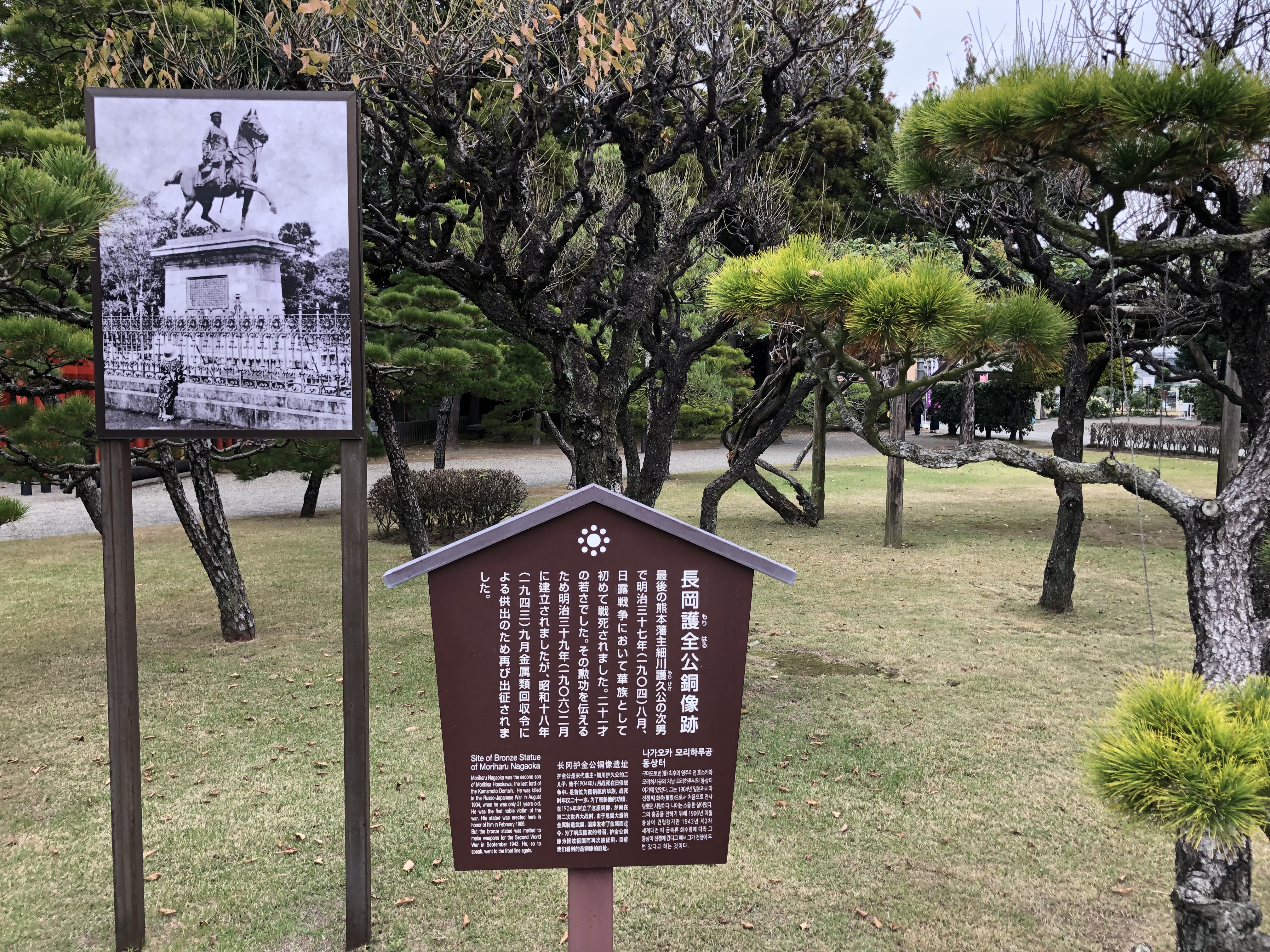
Next to the tree is the bronze statue of Moriharu Nagaoka, or at least that’s what’s supposed to be here. It seems that the enormous bronze statue has been stolen and replaced by an old photograph of the statue.

I leave the gardens and begin to walk in the direction of the Kumamoto Prefectural Government Office. I notice the pavements here are in somewhat disarray, and I keep tripping up on loose bricks. Some teenage Japanese guy approaches me and tells me he’s from Ibaraki Prefecture. He asks to take a photograph of me. I think he thinks I am somebody else.

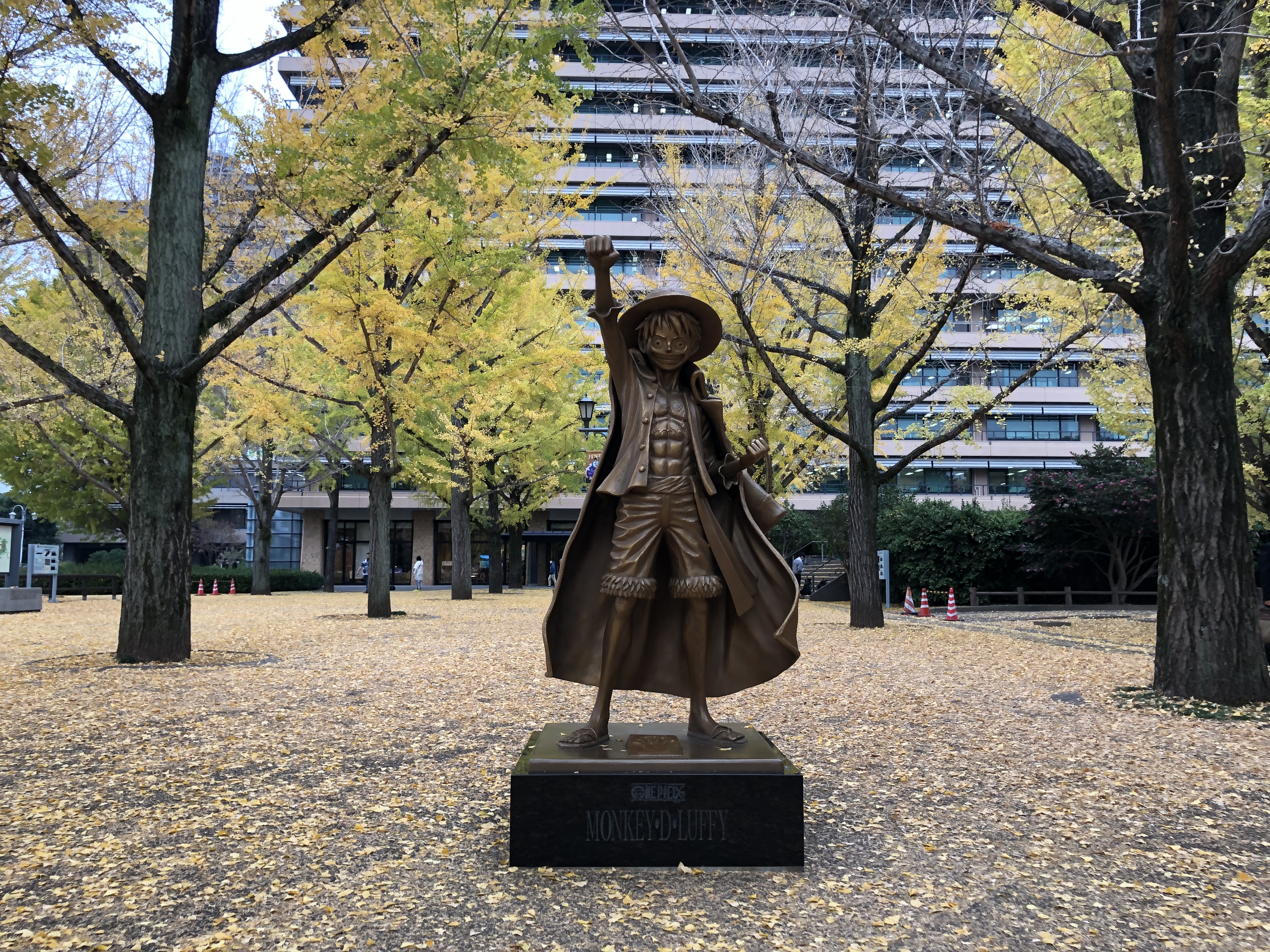
I pass police stations and car parks which are using Kumamon to advertise. I see a woman wearing a shirt that says, “Declare Bouncy Sanction,” whatever that means. I reach the grounds of the government office and wander straight over to where a crowd of people are having their photographs taken next to a statue of Monkey D. Luffy.

Luffy is the main character in One Piece, a pirate anime which first aired in 1999, and at the time of writing, there are 1,043 episodes. The show features Devil Fruits which when eaten give the characters superhuman powers. As I photograph the statue, a child approaches me and asks me how I am, “I’m very well thank you, and you?” is my reply.
“I’m happy good,” says the child.

I leave Luffy and start back in the direction of Kumamoto Station, getting a little lost in the process. My phone tells me that I have walked 40,000 steps today. My phone also tells me that I have just 3% battery remaining. After my phone dies I have no access to any maps, and it does, and I get further lost. Eventually, I do find the train station, and needless to say, I get back home in one piece.

The Lost Samurai

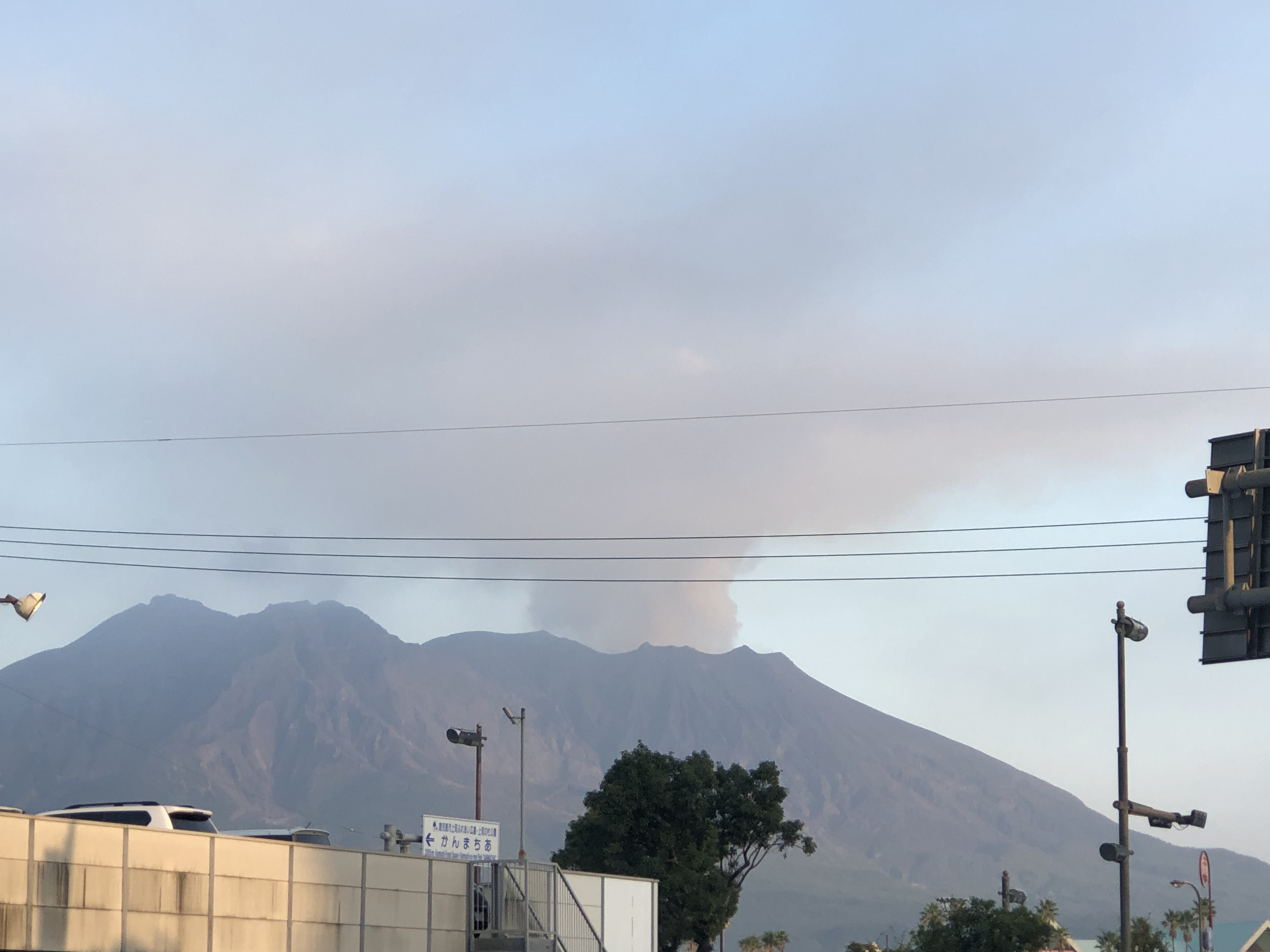
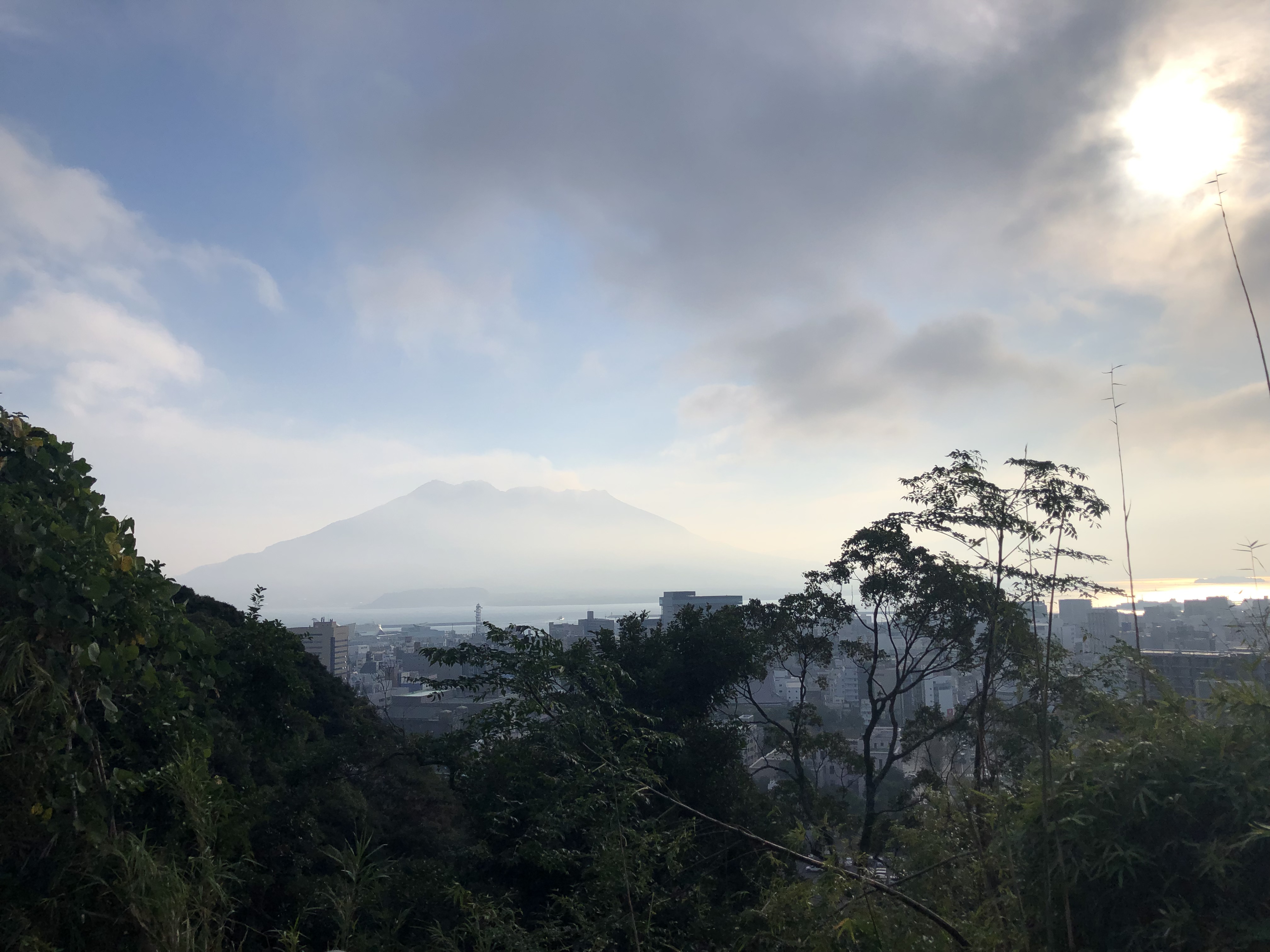
Many days fell away with nothing to show. Today, the first thing I notice as I step out of Kagoshima Station is the giant volcano that appears to be erupting in the distance. Kagoshima Prefecture is famous for Sakurajima, the most active volcano in Japan. It lurks ominously in the distance, alone, on its island surrounded by the water of Kagoshima Bay.

Sakurajima literally translates to mean Cherry Blossom Island, but don’t let the nice name fool you, this volcano is monstrous in size; standing at a colossal 1,117 metres above sea level, it can be seen from everywhere. Wherever I go in Kagoshima, the volcano seems to follow.

Today the Volcano Alert System is at level three. I am told to refrain from entering the danger zone and to pay attention to the future volcanic activity. The Volcano Alert System has five levels, they are:

5: Evacuate.
4: Evacuation of the elderly, et cætera.
3: Do not approach.
2: Do not approach the crater.
1: Caution advised around the crater.

I decide to try to get a better view, so head towards the Shiroyama Park Observation Deck. As I wander, I feel the streets here are much wider than I’m used to, the roads twice the size as usual. Tram lines criss and cross through the city streets whilst foghorns blast intermittently in the distance.

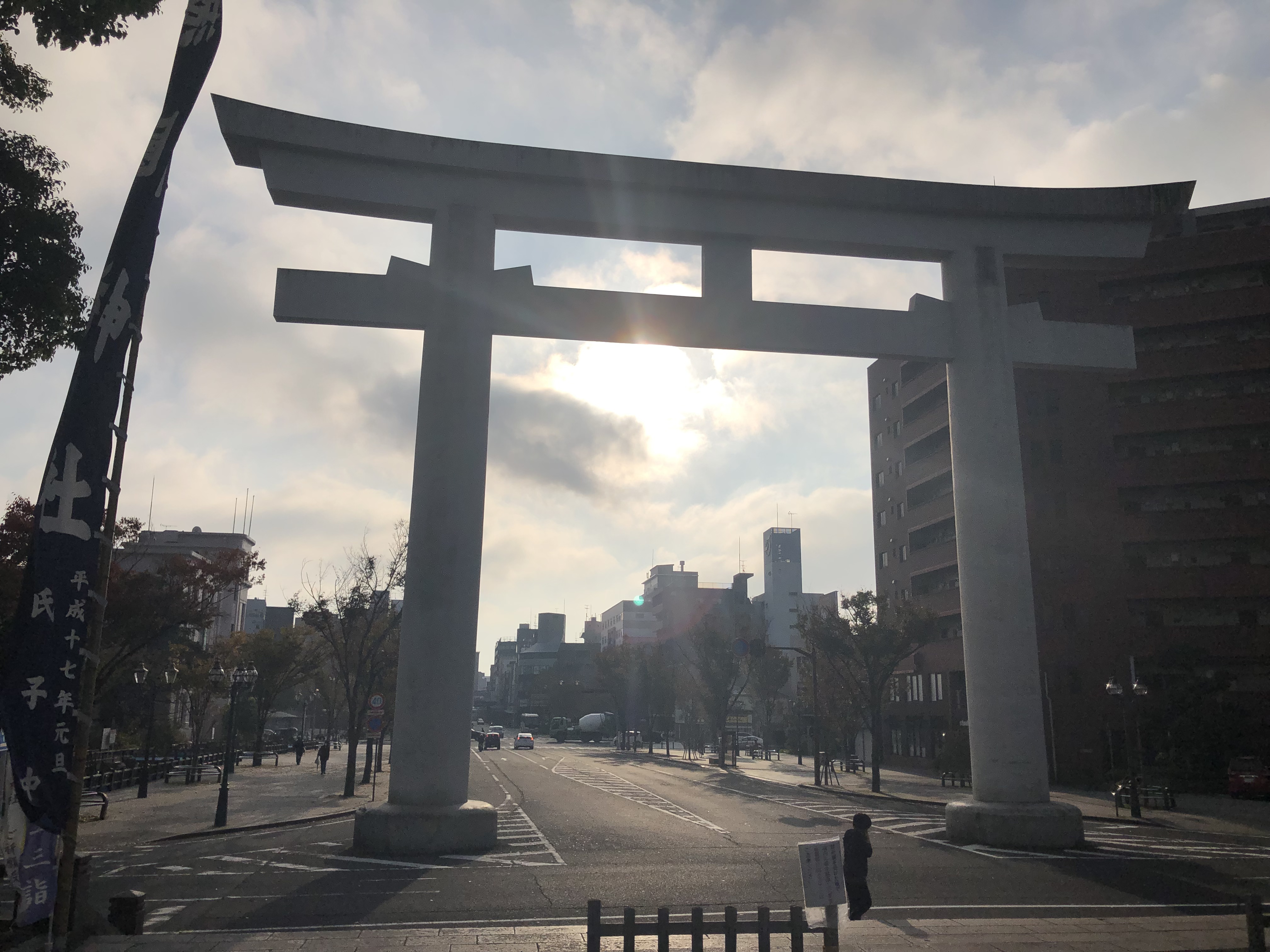
Before reaching the observation deck, I see a huge stone torii gate in the middle of one of the many large roads. I check my map to find it is simply named Big Torii. I’ve never seen such a gate before, usually torii gates are for people, it’s unusual to see traffic passing beneath.

After walking under Big Torii, I start to climb up some steep stone steps that spiral and meander, before finding myself 107-metres higher, at the top of Castle Mountain. In the distance, grey clouds roll over the hills bringing darkness from above, and I realise that I have selected the worse possible day to photograph the volcano.

I traipse back down the stone steps and into Central Park. The park isn’t that large, but somehow I can’t seem to find the statue that I’m here to see. I do another lap of the park, look for English signs, walk the park a third time only to realise that the statue isn’t even in Central Park.

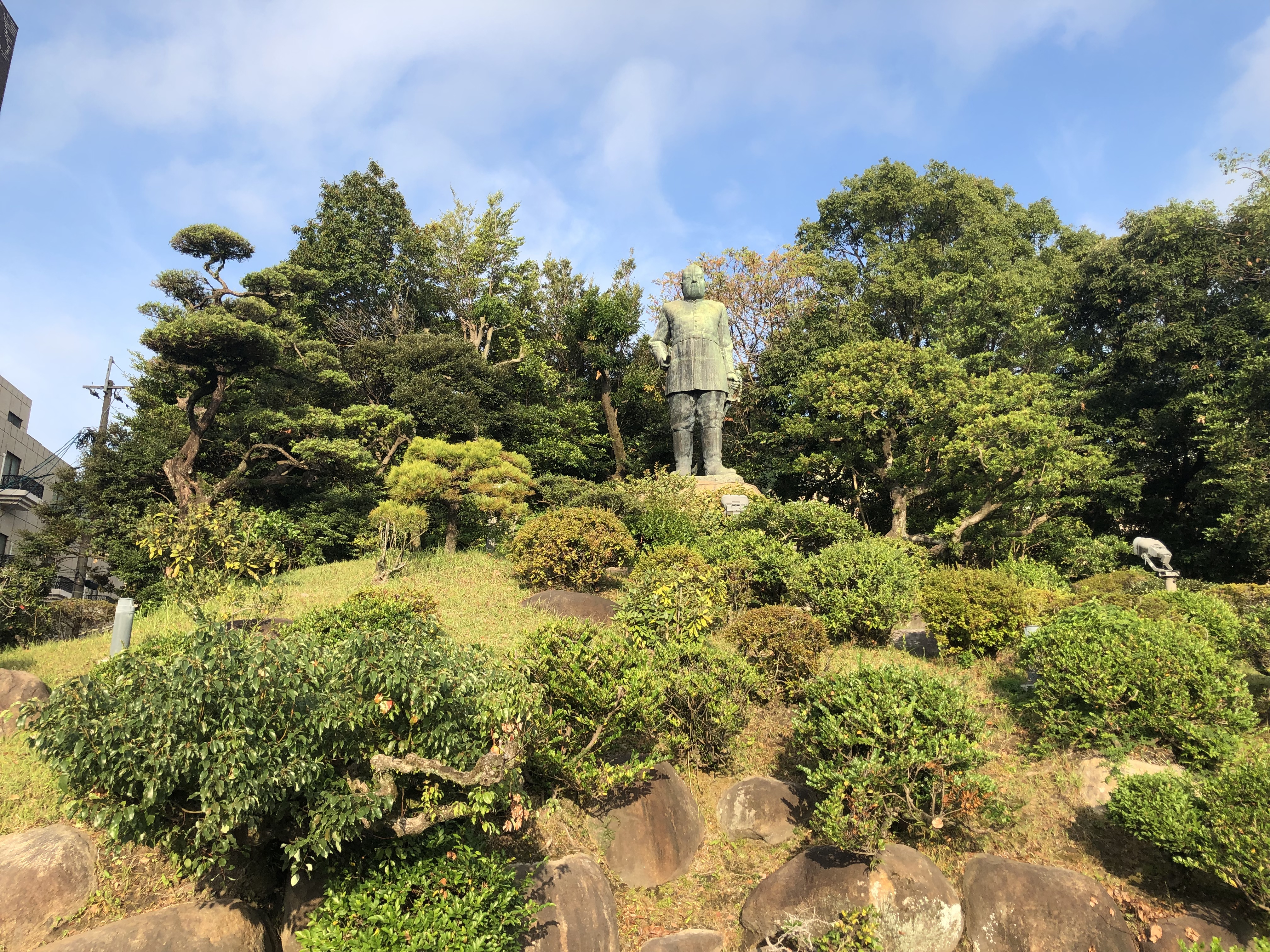
Eventually, I find the bronze statue of Saigo Takamori, betterwise known as The Last Samurai, and inspiration for the film of the same name. Saigo Takamori led the army of the Satsuma Rebellion against the Meiji government, and is one of the most influential samurai in Japanese history. The statue here is 8-metres high and took eight years to craft. There’s also a rather small statue of Hachiko the dog here, for no reason that I can ascertain.

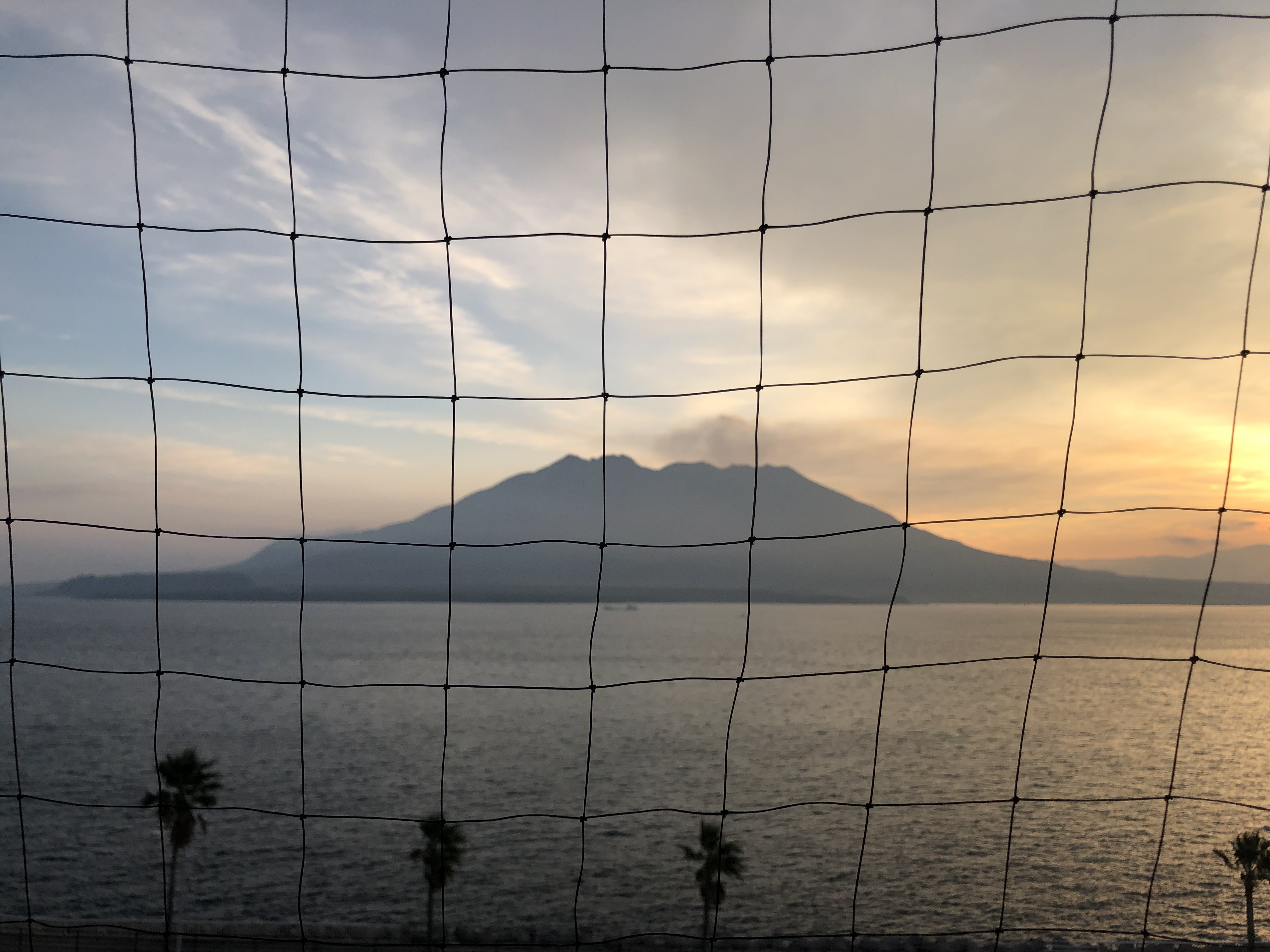
Still desperate for a better view and a decent photograph of Sakurajima, I head on down to the Amami Okinawa Ferry Terminal, the source of the foghorns I heard earlier. I find a nearby hotel with a balcony that faces out toward the volcano. The hotel room is a little pricey, but it does offer a pour-it-yourself beer server in the lobby, and it’s totally free.

The view from my balcony is slightly spoilt by a net, but good enough.

After helping myself to some lovely free beer, I end the day by walking around Kagoshima; the ubiquitous Sakurajima volcano continues to prowl in every direction, its omnipresence ever threatening, until the darkness of the night engulfs its existence.