Welcome to the World of Mizuki Shigeru

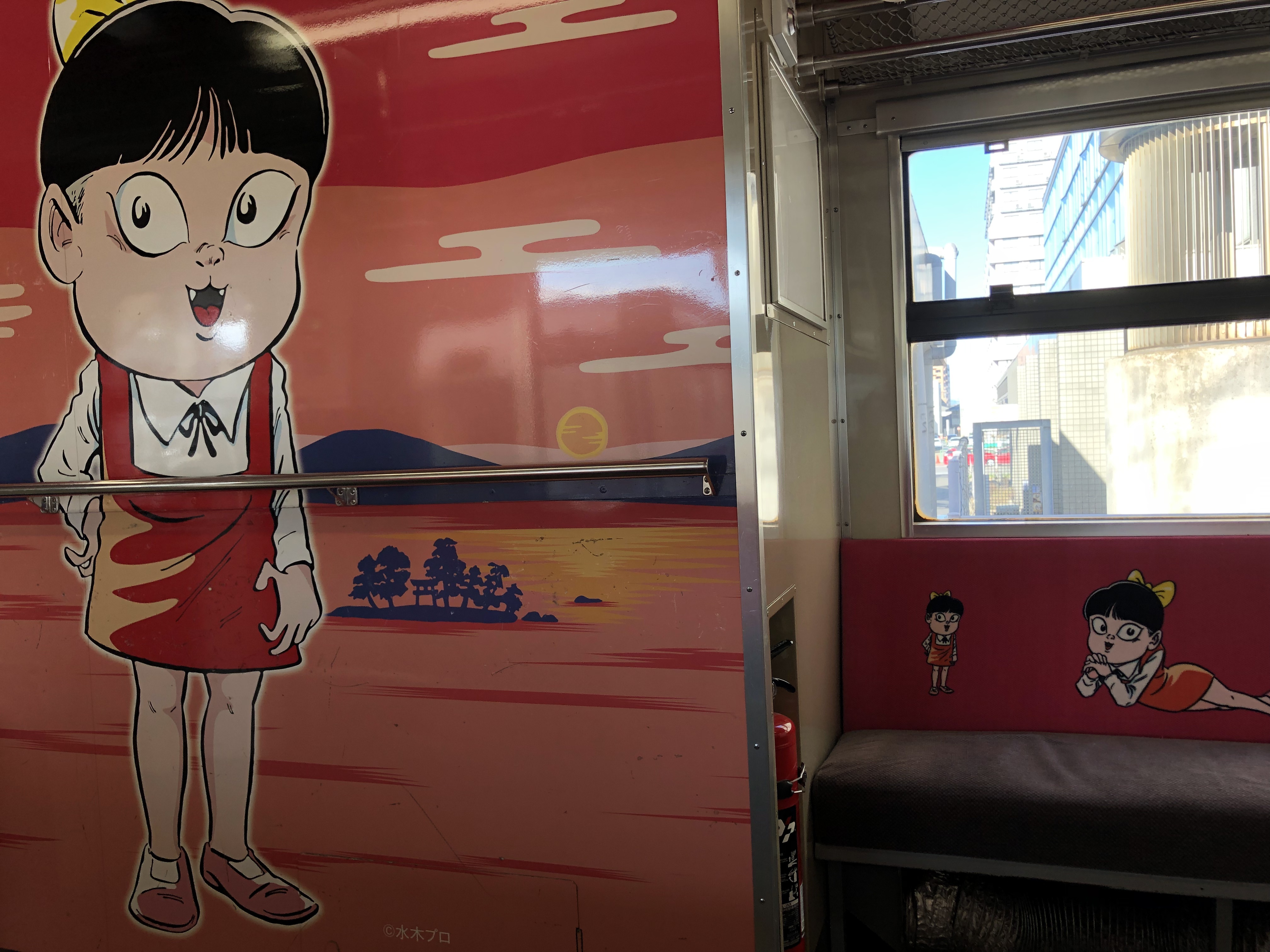
I stand at Yonago Station, my eyes fixed on the tracks as I await the arrival of my train from Track 0. This station, also known as Ratman Station, is located in Tottori Prefecture near the border of Shimane. The stations on the Sakai Line all have an alternative name, and this one is no exception. As my train arrives, I can’t help but notice the lively characters from the popular anime, GeGeGe no Kitaro, decorating its exterior. The walls are adorned with illustrations of Nekomusume, a supernatural cat known as “Cat Girl,” who, to my surprise, also serves as one of the train’s announcers.

As the train chugs along, it gently rocks back and forth, the sensation akin to being on a ship at sea. Nekomusume is normally a reserved yokai girl, however she is known to shapeshift into a fearsome catlike monster with razor-sharp fangs and piercing eyes, particularly when she is angry or hungry for fish.
Finally, I arrive at the port town of Sakaiminato and get off the train at Babasakicho Station, nicknamed ‘Kijimuna’ meaning Okinawan wood spirits. As I exit the station, I feel lost and consider whether I have made a mistake. But after a short walk, I see a sign pointing me to my destination: “Welcome to the World of Mizuki Shigeru.”

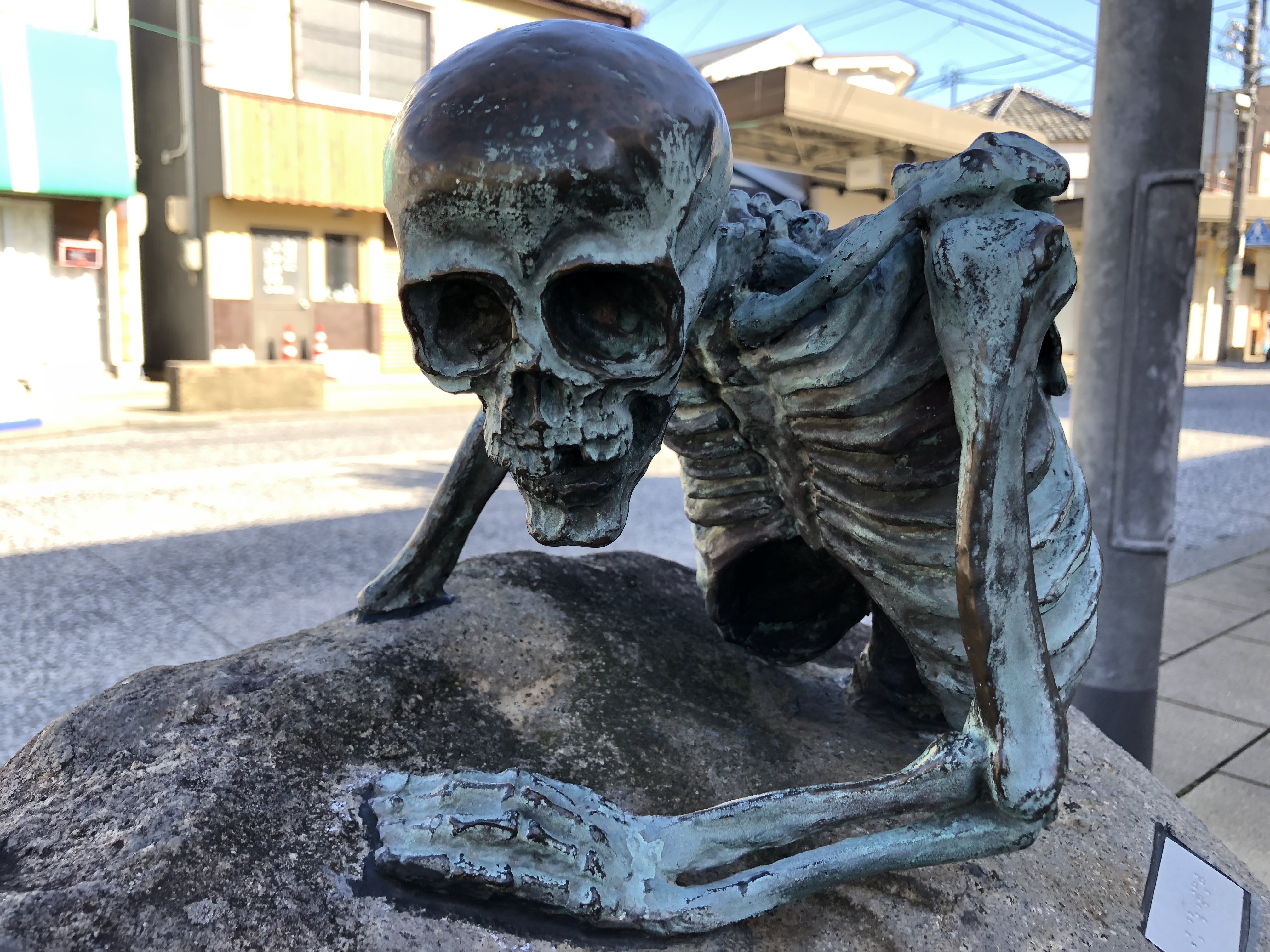
Mizuki Shigeru was a Japanese manga artist, born in 1922 and raised in the town of Sakaiminato. Upon arriving at Mizuki Shigeru Street, I am immediately struck by the abundance of weird statues that line the road. A total of 177 bronze yokai statues, each depicting a different supernatural entity from Japanese folklore, have been placed along the 800-metre street. Mizuki Shigeru made his name by portraying such entities in his work and the area here is dedicated to his legacy.
The street is filled with souvenir shops selling official Mizuki Shigeru goods, and the entire road is dedicated to the artist. It’s clear that even in death, Mizuki Shigeru has become immortalised with not only a statue, but an entire street and a train line. The vending machines are adorned with illustrations of monsters, there are photo booths where you can take a picture with yokai, there is a large museum, and even a place called Yokai Shrine.

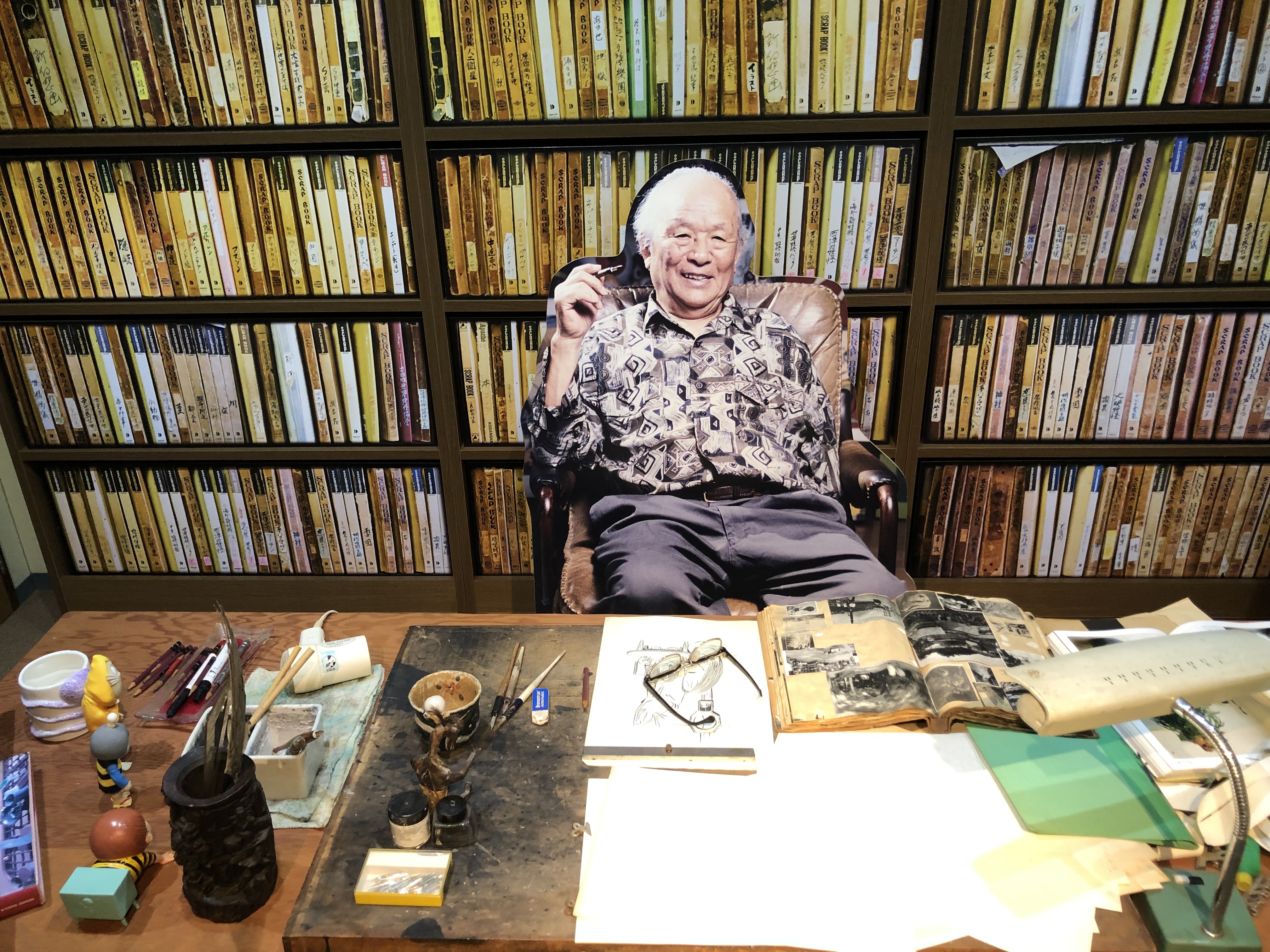
The renowned Mizuki Shigeru Museum showcases many of Mizuki’s works, including manga books from his “only-for-rent-manga-period” and other masterpieces about yokai. The museum also displays numerous photographs and materials about the writer’s trips and his research of the yokai world. Visitors can even find yokai that lived in ancient times in Japanese households. The museum truly immerses visitors in the world of yokai and the brilliance and wonder of Mizuki Shigeru’s work.

The museum’s flyer sums it up best, “You will meet a lot of yokai. Hope you will become friends with them.”

Continuing my exploration of the museum, I pass books and board games, and a lot of comics, most of which feature imagery that depicts death. The museum spans a massive ten rooms and includes original cells, drawings, a bronze engraving of Mizuki’s palm print, his passport, and a complete timeline of his life.
Weird, creepy music plays as I pass through a haunted house. I learn in the museum of an interesting temple over in Matsue Prefecture, three hours from here by train. The temple is very much related to the story of Mizuki Shigeru’s life. As I leave the museum I pass a terrifying wall of heads in the Yokai Cave, and finally outside I discover a traditional Japanese garden littered with macabre images.

After a few hours on the train, I arrive at Ichibata-Guchi Station. The train station features a small statue of yokai. As I exit the station, a really old woman approaches me and starts chatting in Japanese. She is surprised to hear that I am planning to walk to the temple, as it is about five kilometres away and up a mountain. The walk is quite difficult, she warns me.
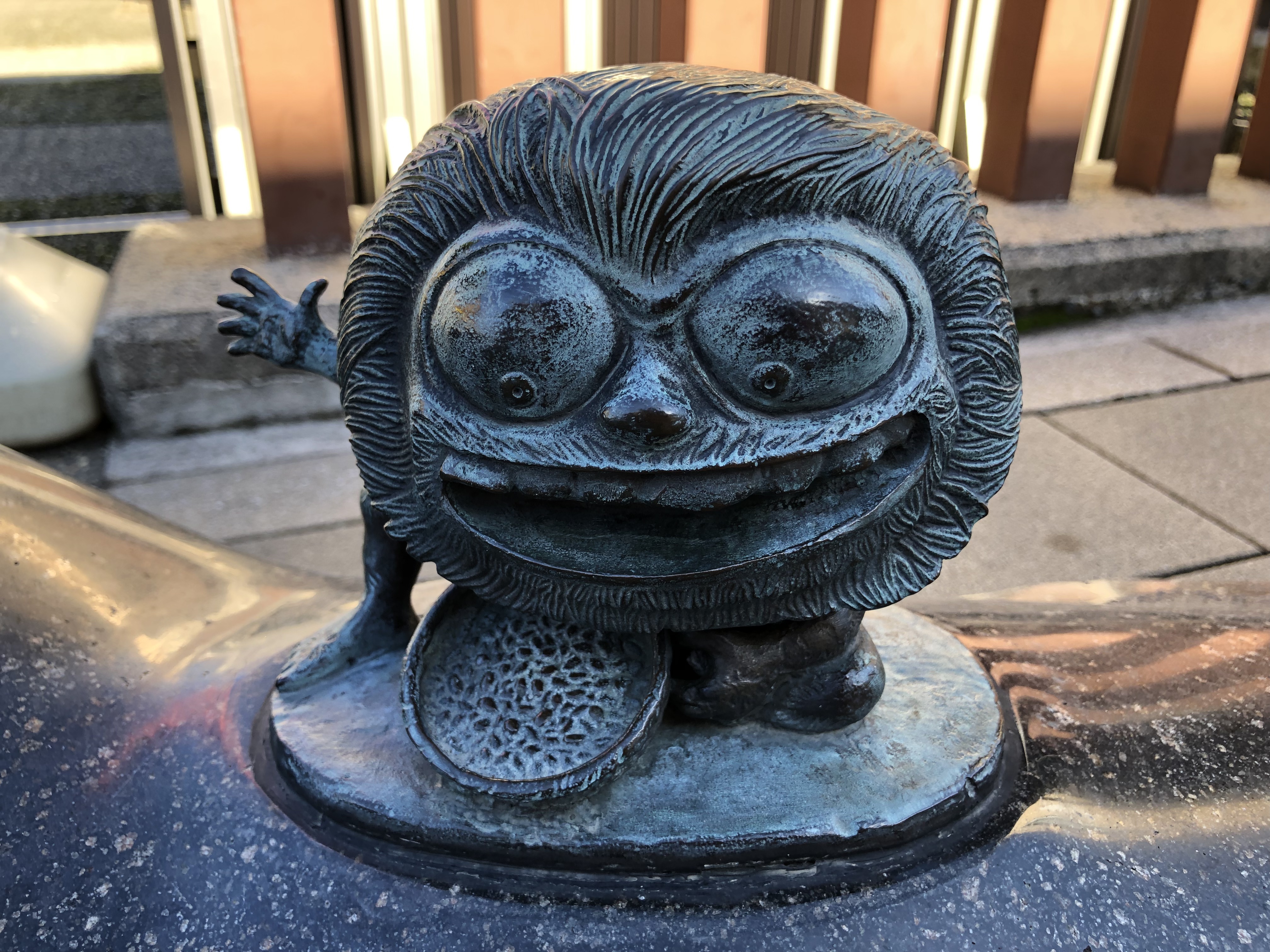
As I begin my hike, I walk down a conveniently straight stretch of road. The first car I see since leaving the station is driven by a Japanese man who, for no apparent reason, smiles and bows his head at me. A short distance later, I come across two stone lanterns that mark the beginning of the route, which will start to incline steeply. From this point, the footpath vanishes leaving two lanes of an empty road devoid of traffic or vehicles. As the path becomes steeper still, it meanders and curves up the mountain and I find that the further and higher I climb, the better the view becomes. At one point I can make out Lake Shinji in the distance.

As I near the top, I realise how hot it is, and it doesn’t help that I am wearing a thick winter coat. It must be 20 degrees. The breath of winter now a fiery gasp, as the planet scorches in its rage.
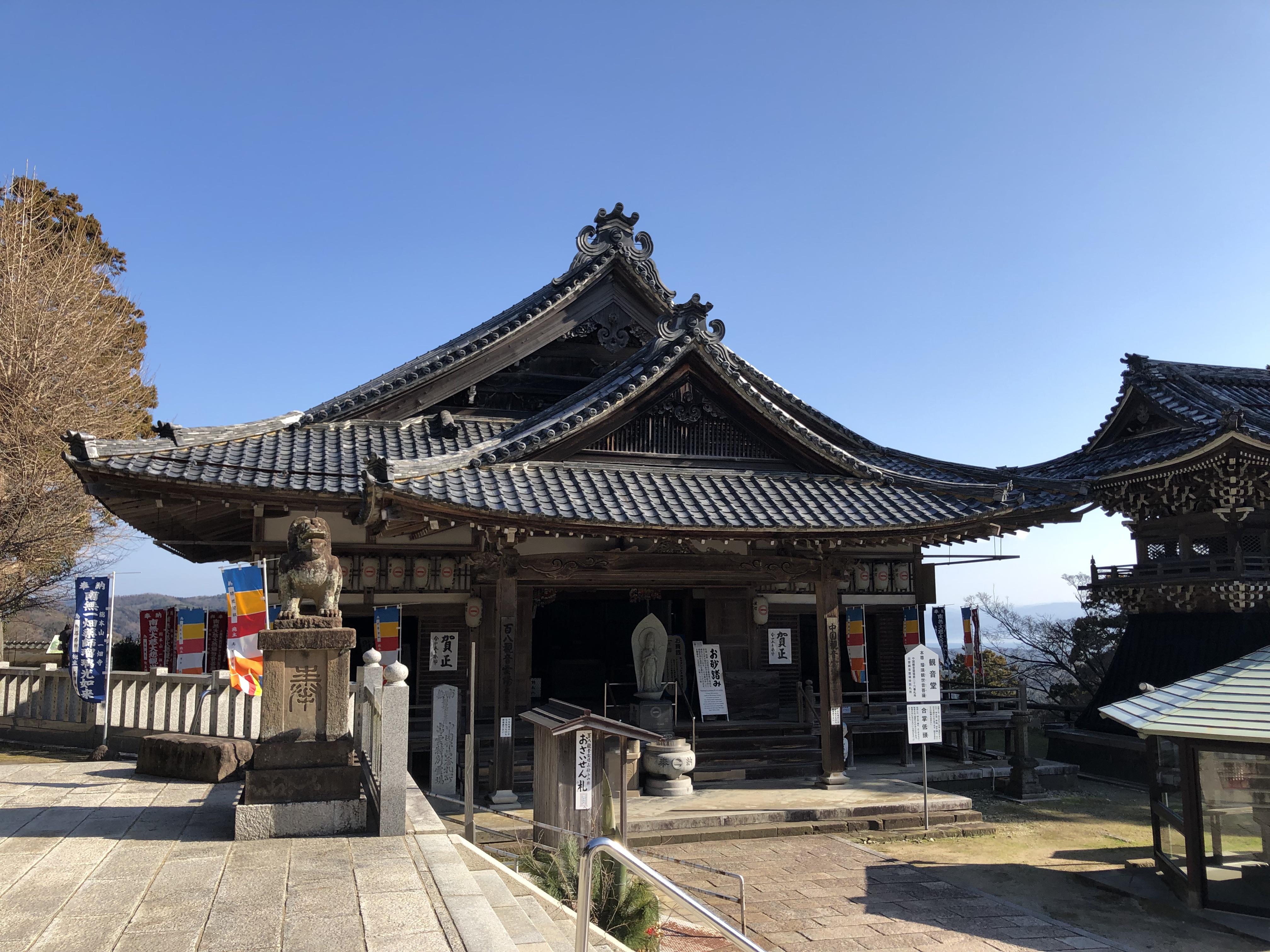
After a challenging hike I reach Ichibata Yakushi, a Zen Buddhist temple, and part of multiple pilgrimages, one of which includes visiting 108 Kannon temples in Japan. The temple was said to be founded after a monk named Yoishi followed three white foxes up this mountain, and decided to build a temple at the site where the foxes led him.

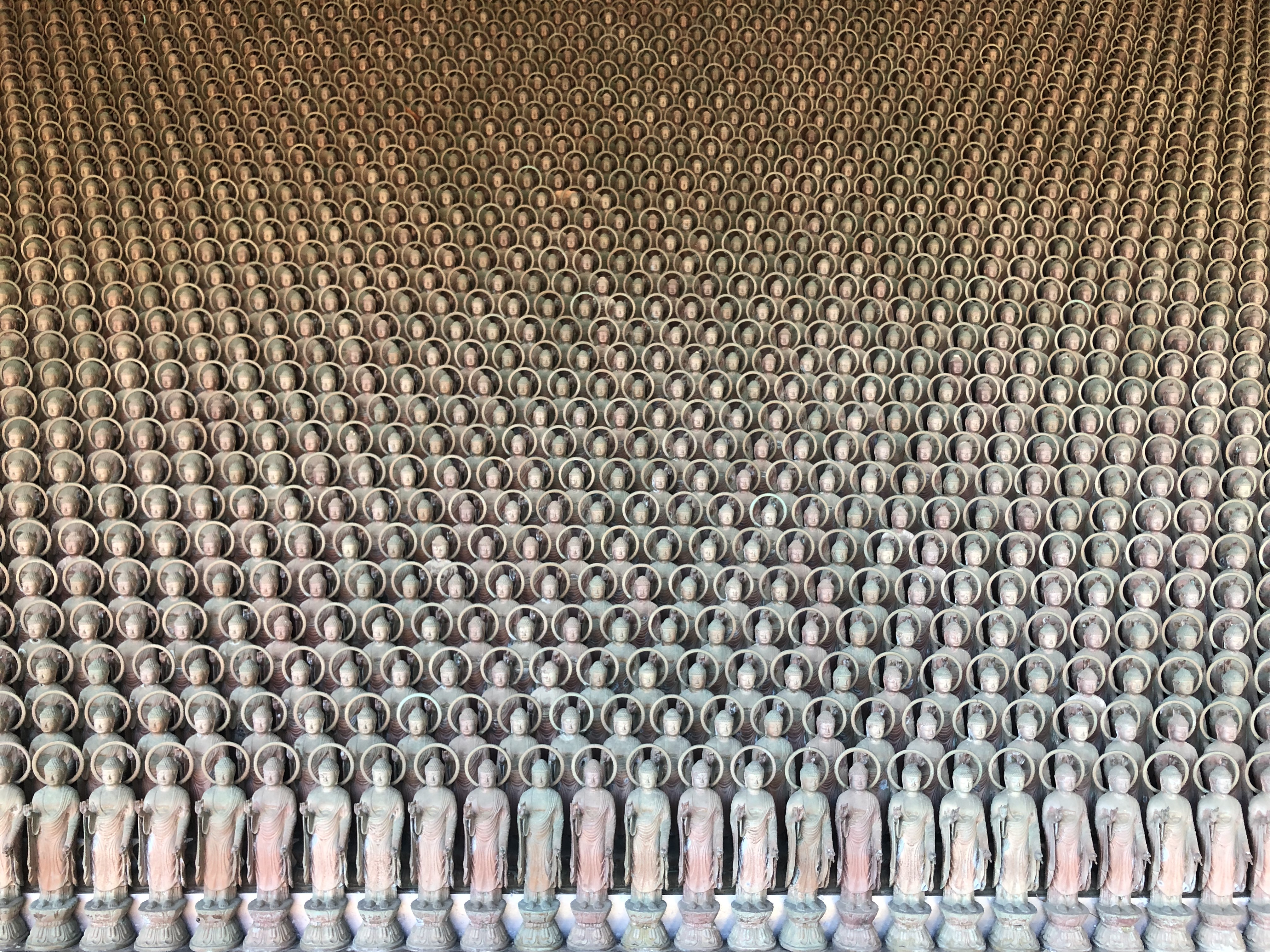
The reason for visiting this temple today is that the story goes that Shigeru Mizuki used to visit here a lot, and that a ghost of a really old woman would meet him here, whispering to him all the legends and stories he used in his creations. I explore the temple grounds, and get a feeling that someone ordered a few too many statues. It is said that there are 84,000 statues here, however, I count just 30,780.
As I continue to explore, I decide that it’s really quite beautiful up here. The area also features mountain cottages to rent for a night for as little as ¥10,000, offers stunning views of the landscape below, and for some reason, appears to be really popular with dog owners, as I count five dogs within the temple grounds.

I place some coins in the box next to some statues of yokai, and decide that this is the nicest temple I’ve visited. In the future, I wouldn’t mind visiting more temples on a pilgrimage trail, but for today, I decide it’s getting late, and I head back down the mountain passing a small mountain village, before stumbling across another yokai statute, sitting unassumingly at the bottom of some stone steps.
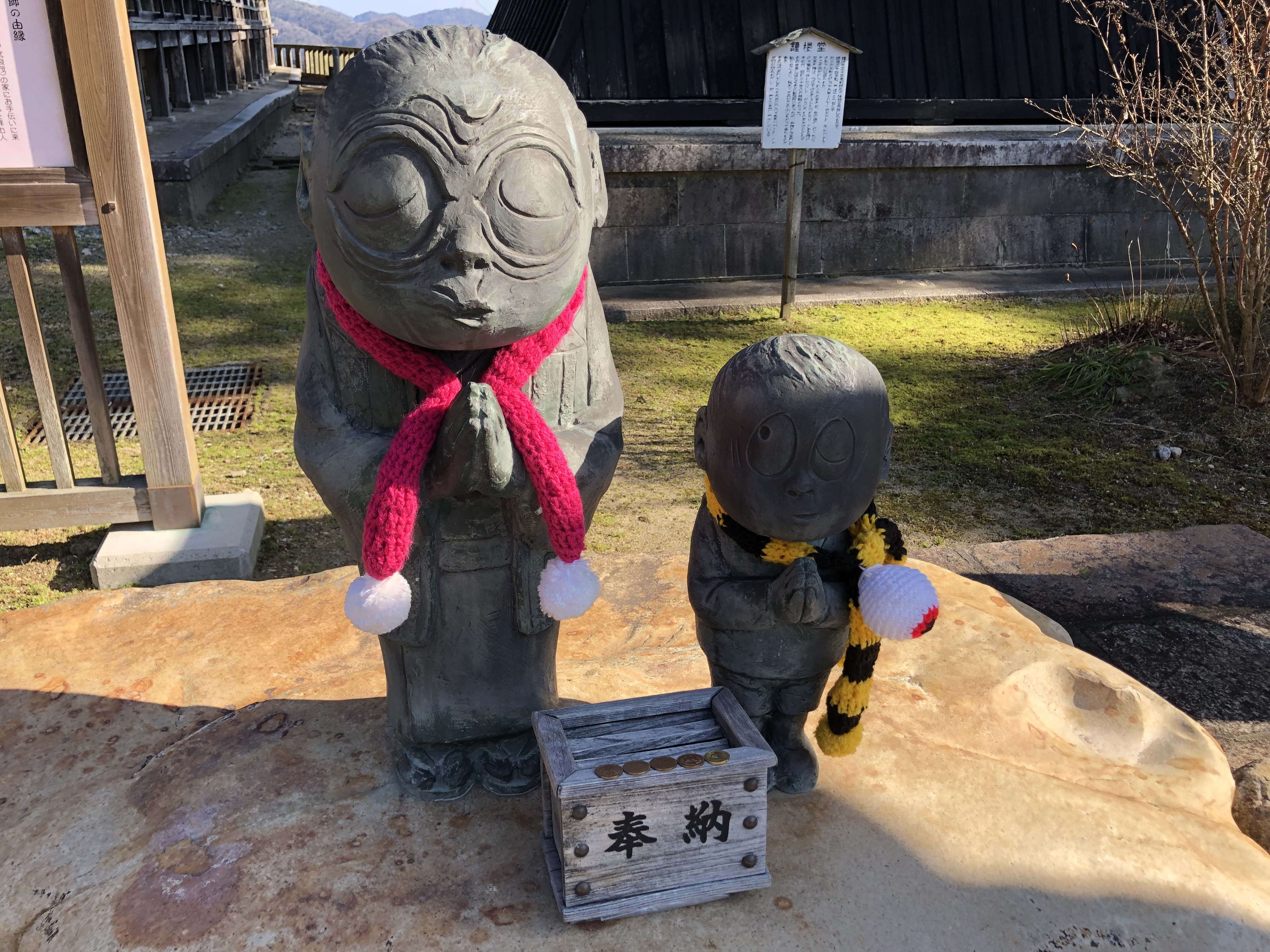
After climbing up the 1,270 moss covered steps, I arrive back at my favourite temple, exhausted and realising this was just an alternate route. I carefully climb back down the steps to leave. The really old woman I saw at Ichibata-Guchi Station smiles at me as I pass her on the steps, and I can’t help but wonder if she might be Shigeru Mizuki’s whispering ghost.
Dead Children Playing

Halfway into my eight-hour train journey to the northern region of west Japan, I decide to take a break from sitting and get off at Kurashiki, a quaint coastal town in Okayama Prefecture. Famous for its strategic location during the Edo period, which made it a popular place to store rice, Kurashiki, literally meaning “storehouse,” is also conveniently located halfway between Tokyo and my final destination. Upon arriving at the train station, I am greeted by a sign that reads, “Welcome to Okayama, the Land of Sunshine.”

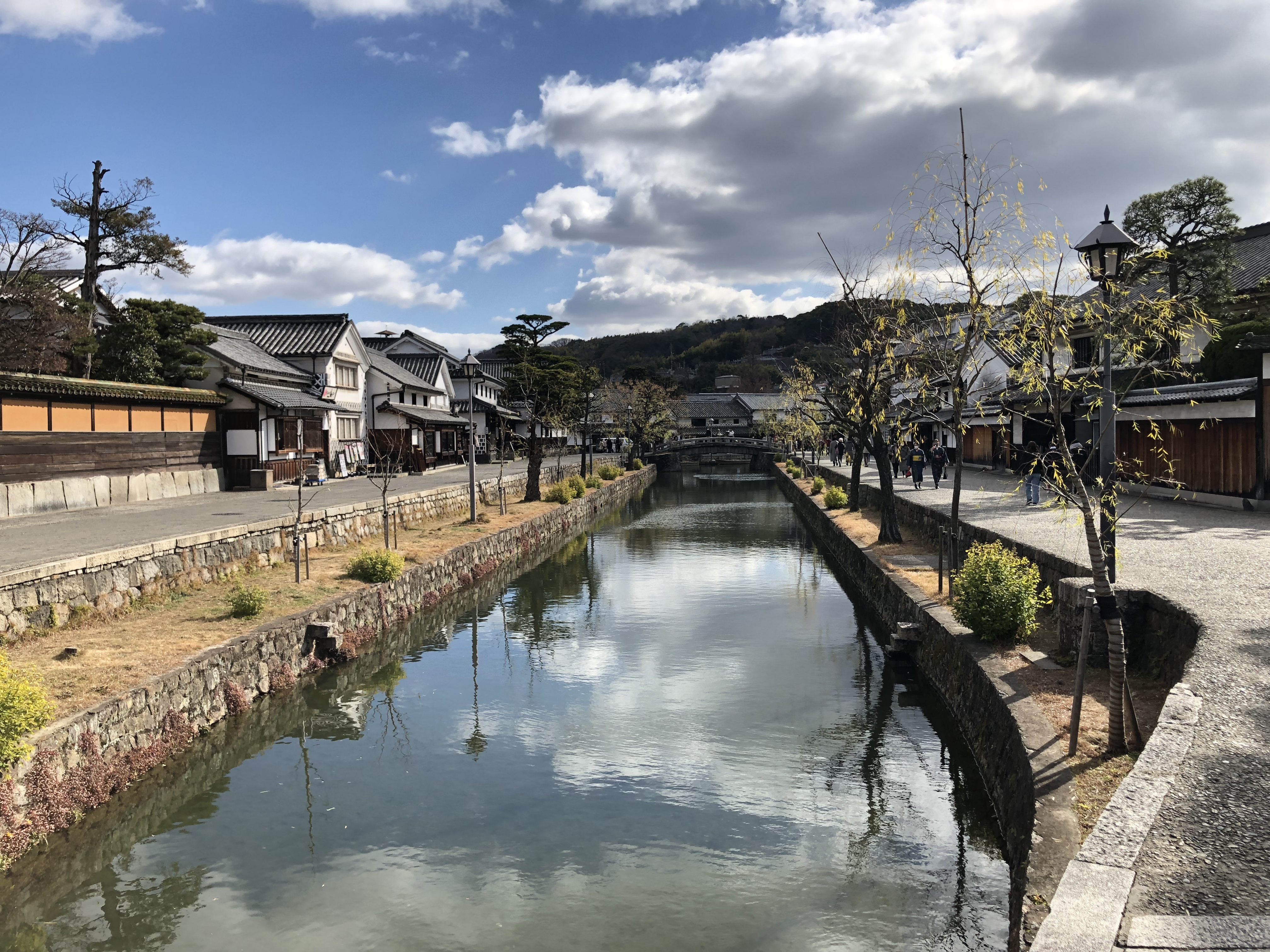
As I step out of the station, I find that the weather is not quite as sunny as the sign had promised. The sky is cloudy and grey, but that does not dampen my spirits as I begin to explore the winding streets of the Bikan Historical Quarter. Here, the buildings are old and charming, with weeping willow trees, historic godowns and canals that interconnect throughout the area. Touts eagerly await me, offering rides in their rickshaws. Just as I begin to further complain about the weather, the sun breaks through the clouds, illuminating the streets and bringing a warmth to the air.

I come across a shop called Gangukan, which has an annexed building featuring a toy museum. Intrigued, I pay the lady at the cashier, who shows me a sign in English that reads, “I will take you to the entrance.” She guides me through a maze of small alleyways to the entrance of one of the museum buildings. The door creaks as it opens, and the woman mutters something in Japanese before swanning off, leaving me to explore the museum alone.

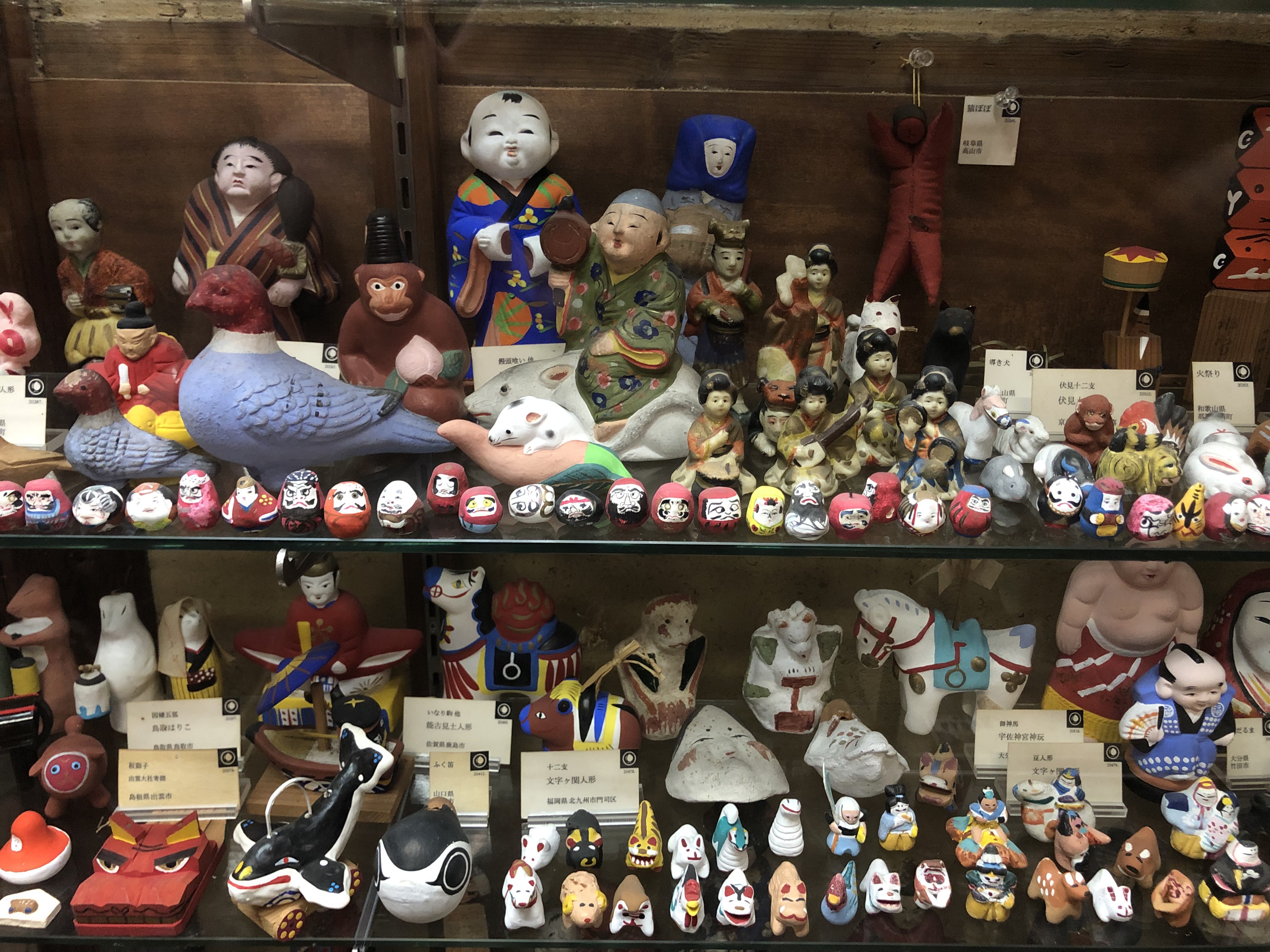
The Japan Rural Toy Museum is one-of-a-kind, housed in a beautifully renovated old rice storehouse, the museum features toys from 1600 to the 1980s. Inside the first room, I am greeted by a collection of folk-craft toys from every prefecture in Japan. In the second gallery, Daruma dolls are displayed alongside clay figures, ceramic bells, dove flutes, and wood wishing plaques.

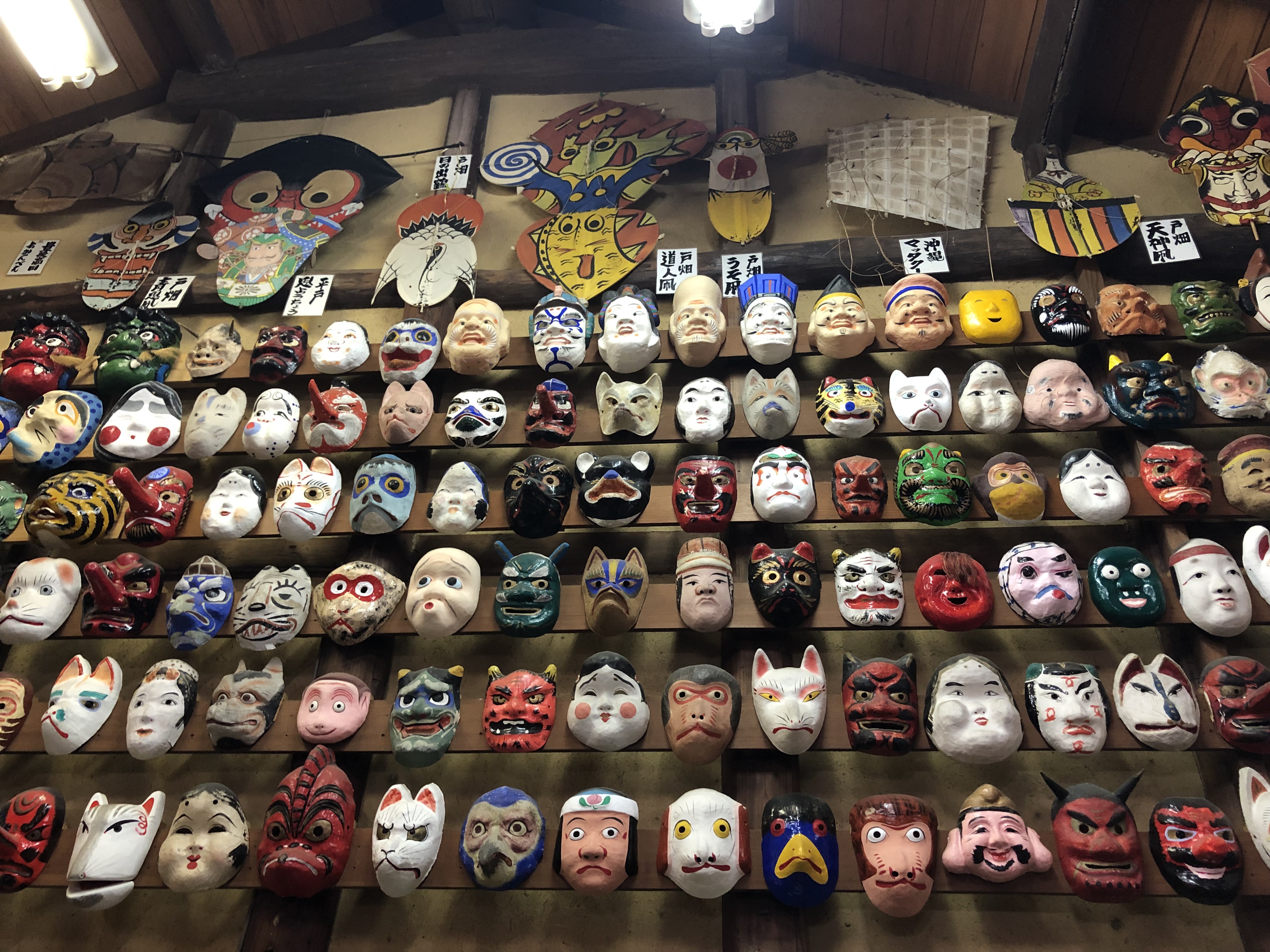
As I move to the third gallery, I am greeted by old wooden toys and spinning tops, and displays of annual New Years postage stamps from 1954 to present. In the fourth and final gallery, I see masks, a lot of masks. I’ve always wondered if masks can be classified as toys, but then again, I suppose the same question can be asked about postage stamps too. The gallery also features decorated shells, porcelain dolls, papier-mache dolls, and a large collection of old dusty books and badminton rackets.

As I step out of the museum, I find myself facing a small shrine. I can only assume that it is a tribute to the god of toys. As I think about the ancient toys, especially those dating back to the 1600s, I am struck by the enduring legacy of these simple objects of play. The children who once laughed and played with these toys, now long gone, reduced to mere memories and dust. But the toys remain, locked behind the glass walls of the museum. It’s a poignant reminder of the tragedy of death, and the beauty of the small things that outlast us. The toys, once a source of joy and laughter, now stand as silent witnesses to the fragility of existence.

As I continue my stroll through Kurashiki, I come across Denim Street, an entire street lined with shops selling the same thing. Along the way, I also pass small shops selling watercolour paintings and origami paper. The area, with its stunning canals and old shops, feels like a cross between Kyoto’s Gion district and Tokyo’s Asakusa district, but with less commercialisation. The area boasts a number of museums as well, including art, archæology, natural history, and folk-craft.

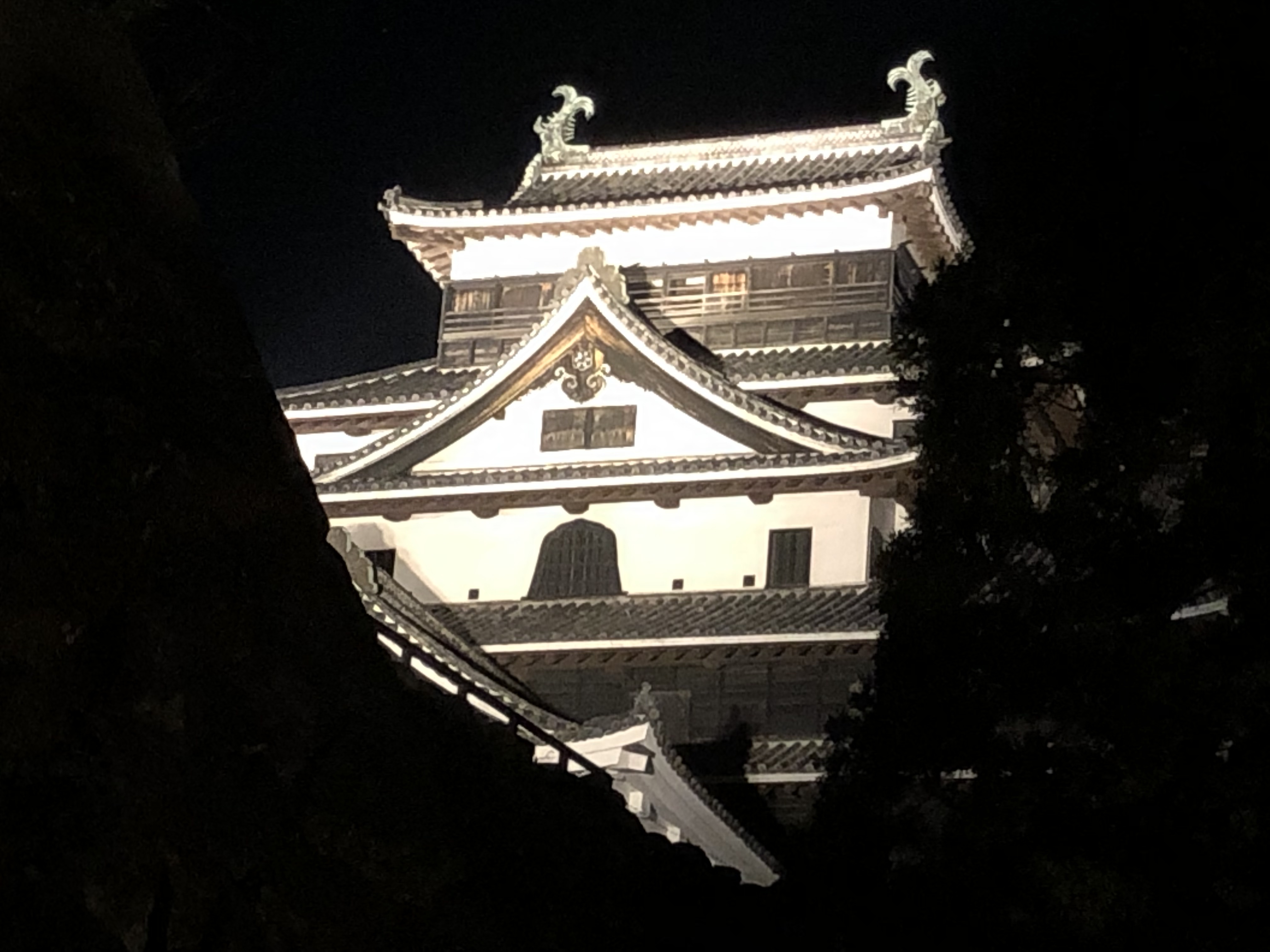
After a few hours of exploring, I leave the Land of Sunshine and embark on another four-hour train journey to the city of Matsue in Shimane Prefecture. As I arrive at dusk, I navigate the streets and make my way to Matsue Castle. Nicknamed the “black castle,” it is one of only 12 castles in Japan that have been perfectly preserved in their original state. It stands out in the darkness of the night, seeming to effortlessly float suspended in the sky. The grandeur of the castle illuminated by the moonlight, casting a mysterious and ethereal aura, making it an enchanting sight to behold.

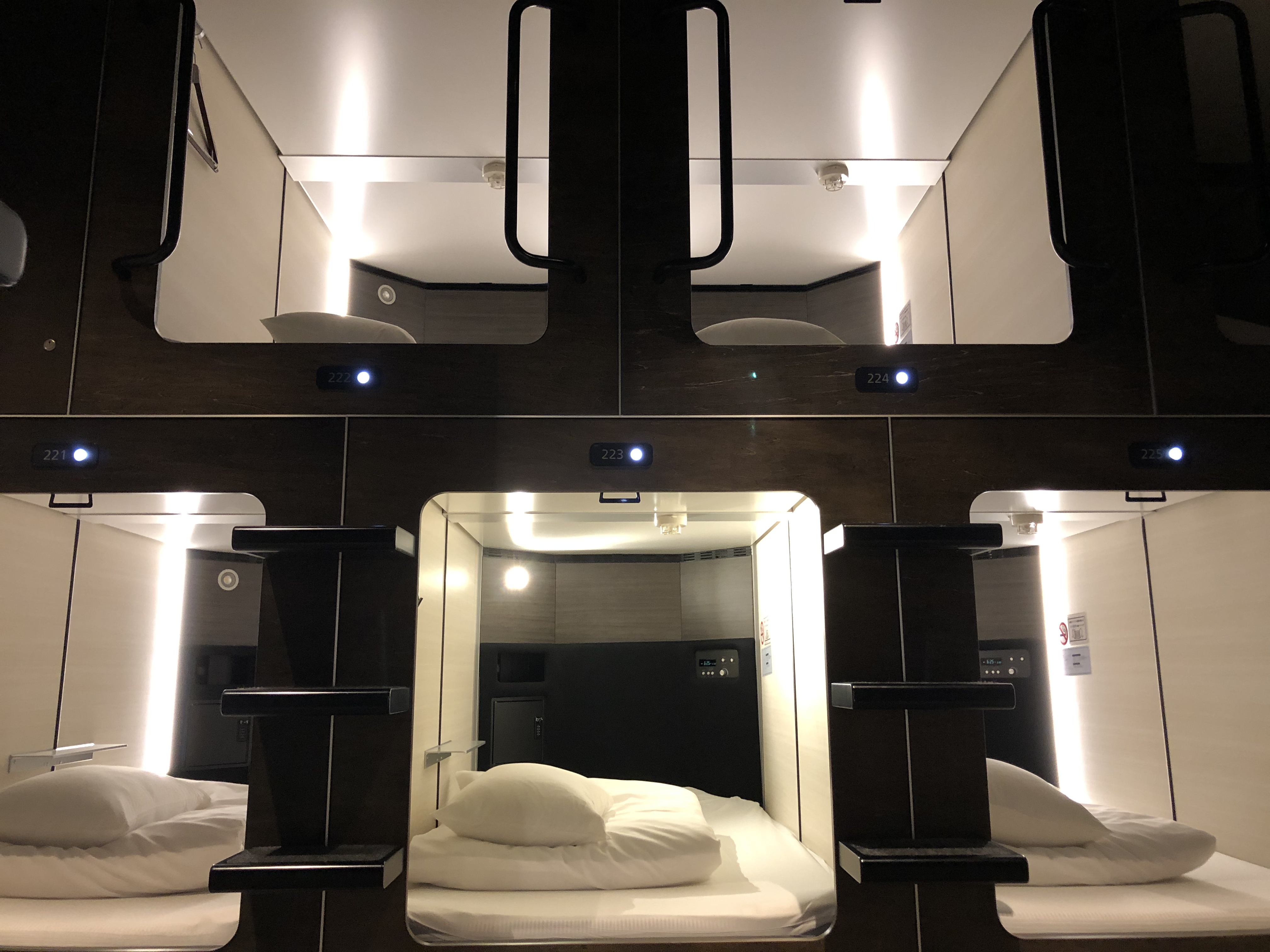
Leaving the castle, I decide to check into an iconic capsule hotel, something I’ve been meaning to do in Japan for years. After finding my “coffin” for the night, I realise that my room, if I can even call it that, is contained within a larger room with 39 other boxes stacked on top of one another. Thankfully, none of the other capsules are occupied. The hotel offers a reasonable amount of amenities, such as towels, toothbrushes, razors, earplugs, bathrobes, and nightwear. It’s also impeccably clean.

I grab some food from a nearby supermarket and head back to my hotel. Due to the limited space, it’s not possible to eat inside the room where the capsules are located. However, the hotel does offer a large common area with comfortable seating. The common area also features its own jaunty, catchy music that plays on a loop ad infinitum. It’s like being in a 1980s video game where the composer was hired on a budget. After eating my deep-fried tofu with rice and listening to the same piece of music for the twenty-third time, I retire for the evening, and crawl into bed.

As I lay in my coffin, the jaunty music swirling around my head like a relentless earworm, I think back to the toys, and thoughts on life, how we too are on a never-ending loop, chasing after fleeting moments of joy before inevitably succumbing to the silence of death.

Around the Wards in Achy Days

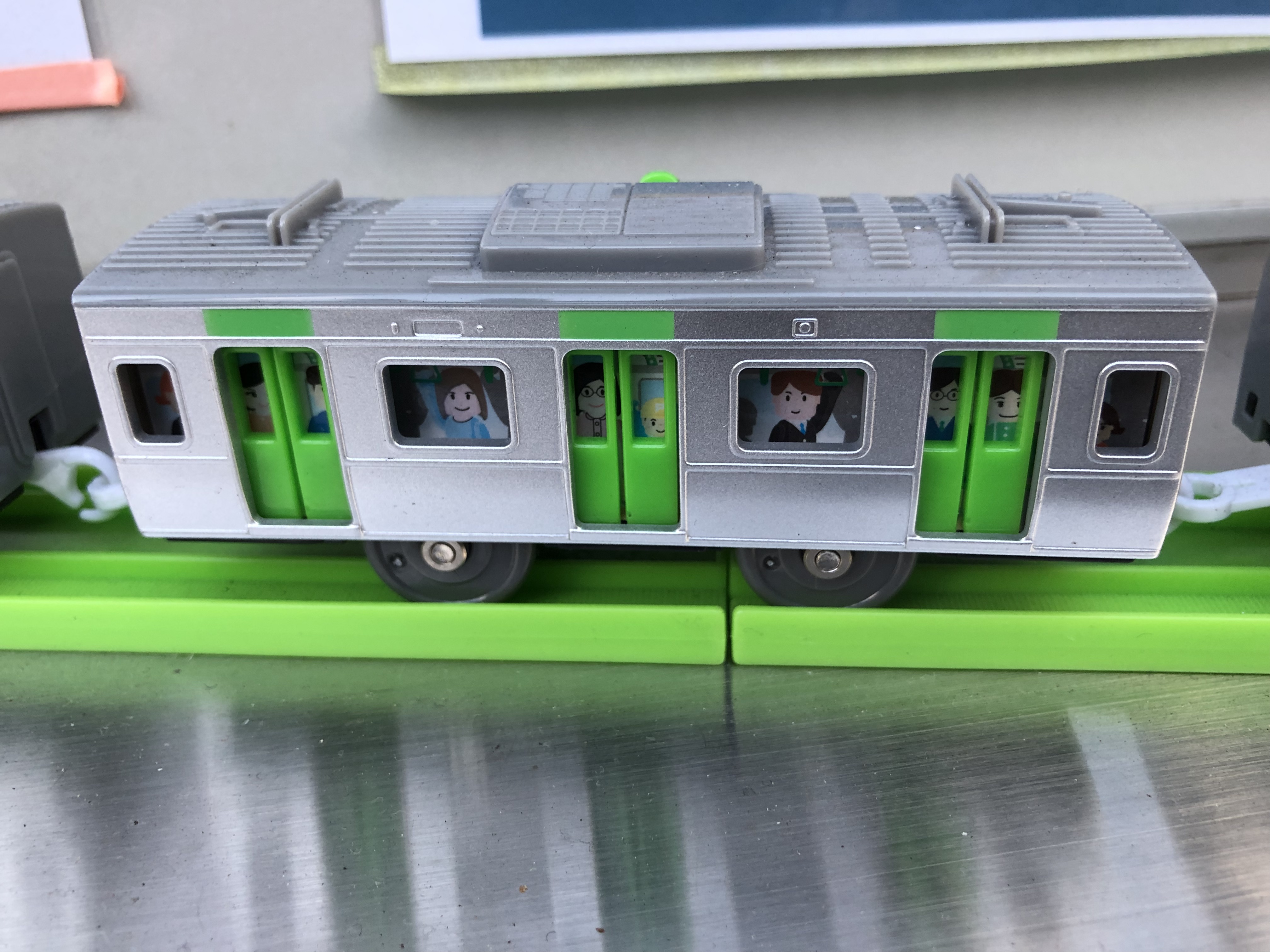
To celebrate the 150-year anniversary of railways in Japan, and my own personal achievement of having finally explored and written about all 23 wards of Tokyo, I decide to pay tribute to the city in a meaningful way. I choose to do so by embarking on a journey to walk the entire length of the Yamanote Line, a challenge that will allow me to experience Tokyo in a way that I never have before.

As the early morning sun blazes brightly between the gaps in the skyscrapers, I set out to meet my friend Maki. Though not typically a fan of early starts, today will be a long day that calls for an exception to be made. The Yamanote Line, a loop line encircling central Tokyo, is approximately 34.5 kilometres in length. But on foot, without walking on the tracks, the journey becomes a formidable 44 kilometres – just a little over a marathon’s distance. Thus, the route earns itself a playful portmanteau: the Yamathon.

I meet Maki outside a small cafe in Sumida, and we cross the bridge over into Asakusa. She asks me if she can give up, to which I jokingly reply that it’s a bit early to be considering such a thing. After all, with the Yamanote Line constantly circling the city, it’s always possible to find a train station nearby in case the need to give up arises. We set off from Ueno, the start and end point of our journey. Our first decision is whether to walk clockwise or anti-clockwise. After some deliberation, we opt for the latter, as the prospect of navigating through the eerie streets of Uguisudani at night seems daunting. And so, we set off in the direction of Ikebukuro.

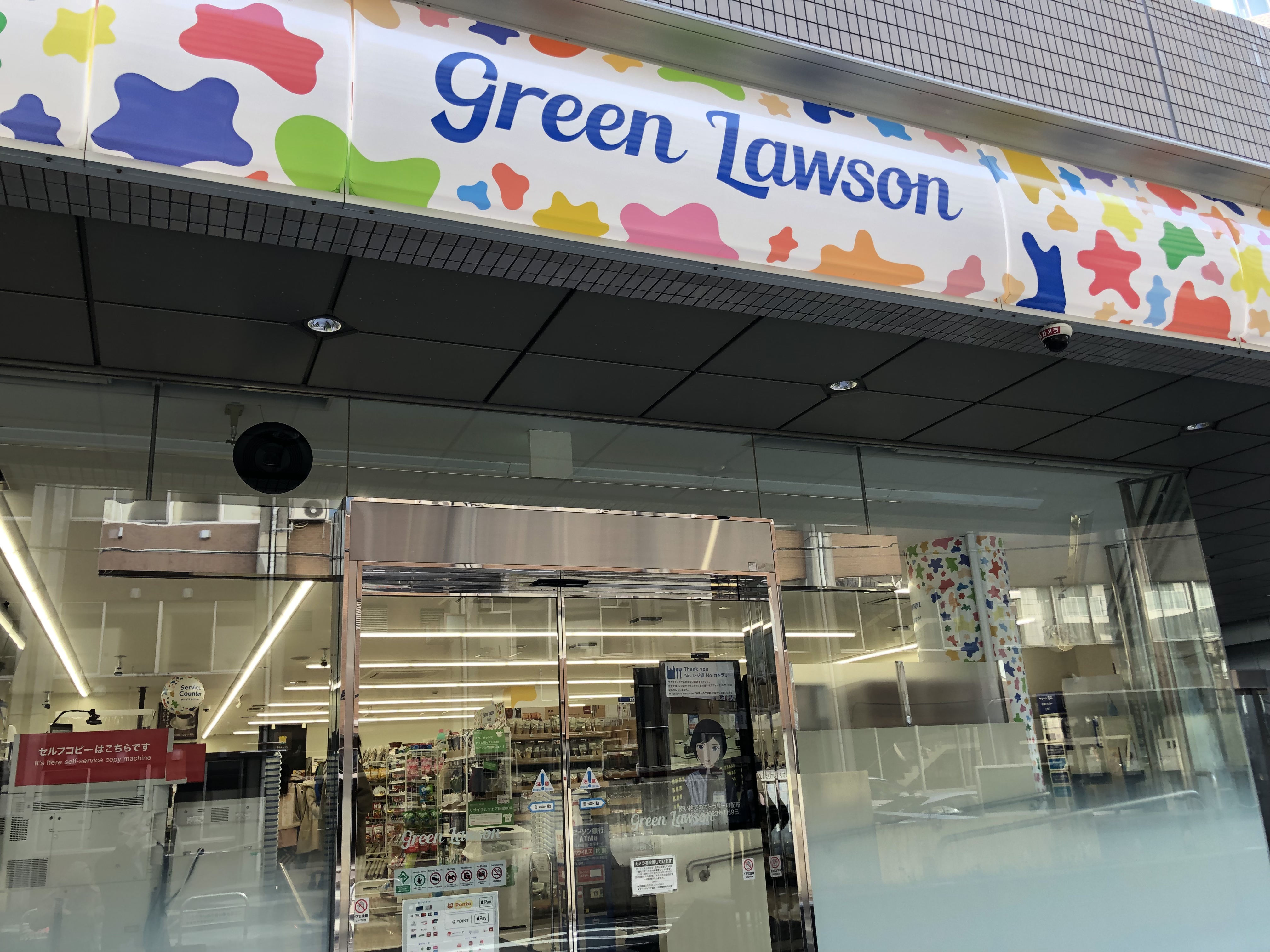
As we approach Nippori, the road runs out and we are forced to venture into the familiar territory of Yanaka Cemetery (still no sign of the ‘snow-protective lifting tool’). While meandering amongst the empty graves, we become momentarily lost, but the distant rumble of a Yamanote Line train eventually guides us back to the tracks. We continue on, making our way through Tabata and eventually reaching Otsuka Station. It is here, three hours into our quest, that our journey takes an unexpected detour in the form of an interesting discovery: the first and only Green Lawson in Tokyo.

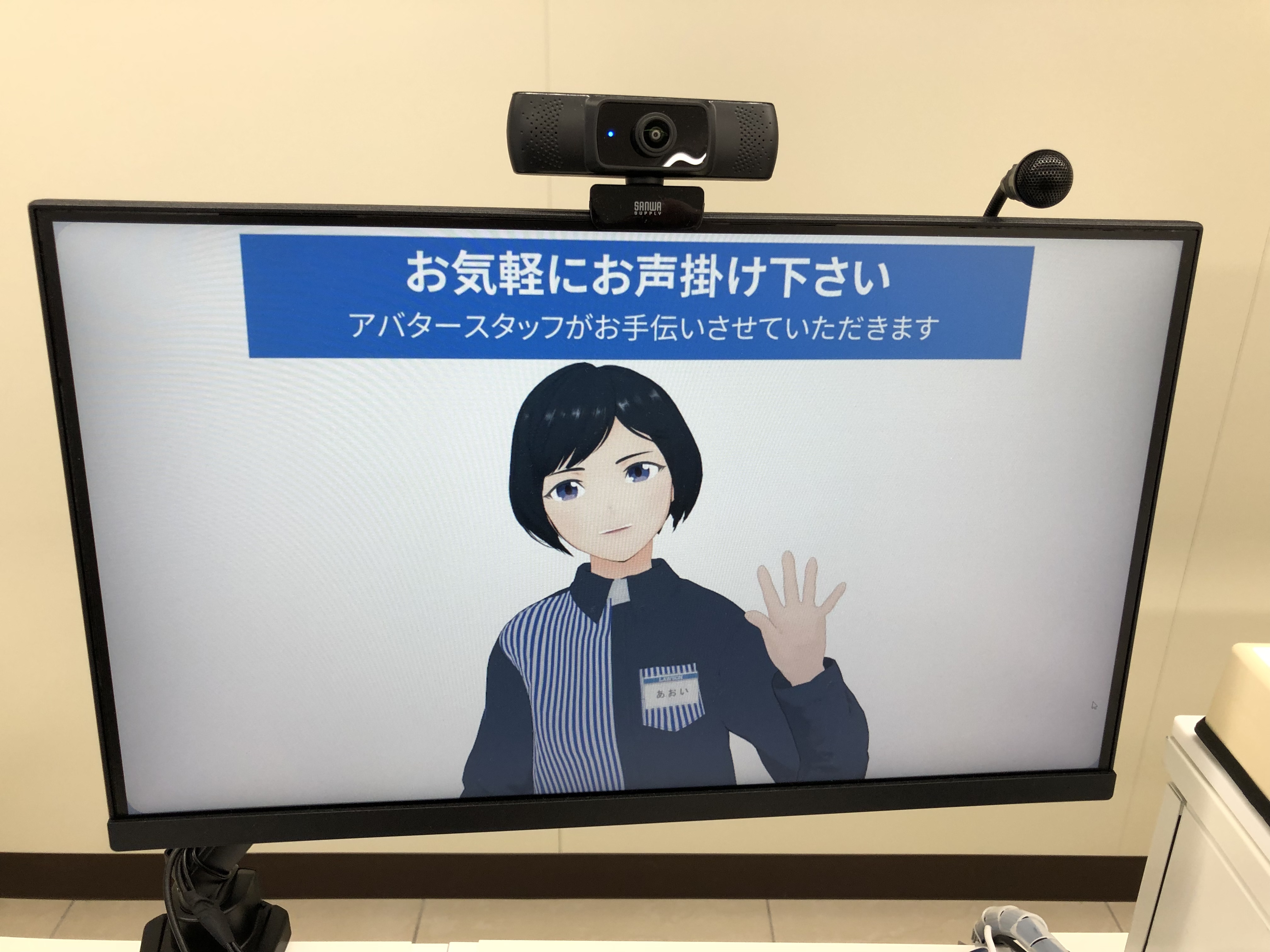
The thing that makes this store so unique is that it is fully staffed by digital avatars of Lawson employees, rather than human staff members. As we wander into the store, intrigued by the novelty of it all, we decide to explore further. As we pass by one of the avatars, she greets us with a cheerful “Happy New Year” in Japanese. As Maki chats with the AI about our epic journey along the Yamanote Line and my documenting it in a blog, the clever machine quips that it would be happy to strike a pose for a photograph. It suggests three options: a cheerful “wave,” a universal “peace” sign, or a self-deprecating “loser” sign.

Eager to learn more, I take the opportunity to ask the AI about the philosophy behind Green Lawson. To my surprise, the machine responds in fluent English, explaining that the store aims to reduce food waste, support the local economy, and contribute to world peace.

As we resume our walk, the towering buildings along the route create pockets of shade on the pavement. It’s cold in the shadows, but warm in the sun. Maki explains that there are two words in Japanese that both describe these respective conditions, but I find myself struggling to come up with the antonym for “shade.” This lack of an opposing word begins to bother me, and I consider the possibility that it might be a failing of my memory.

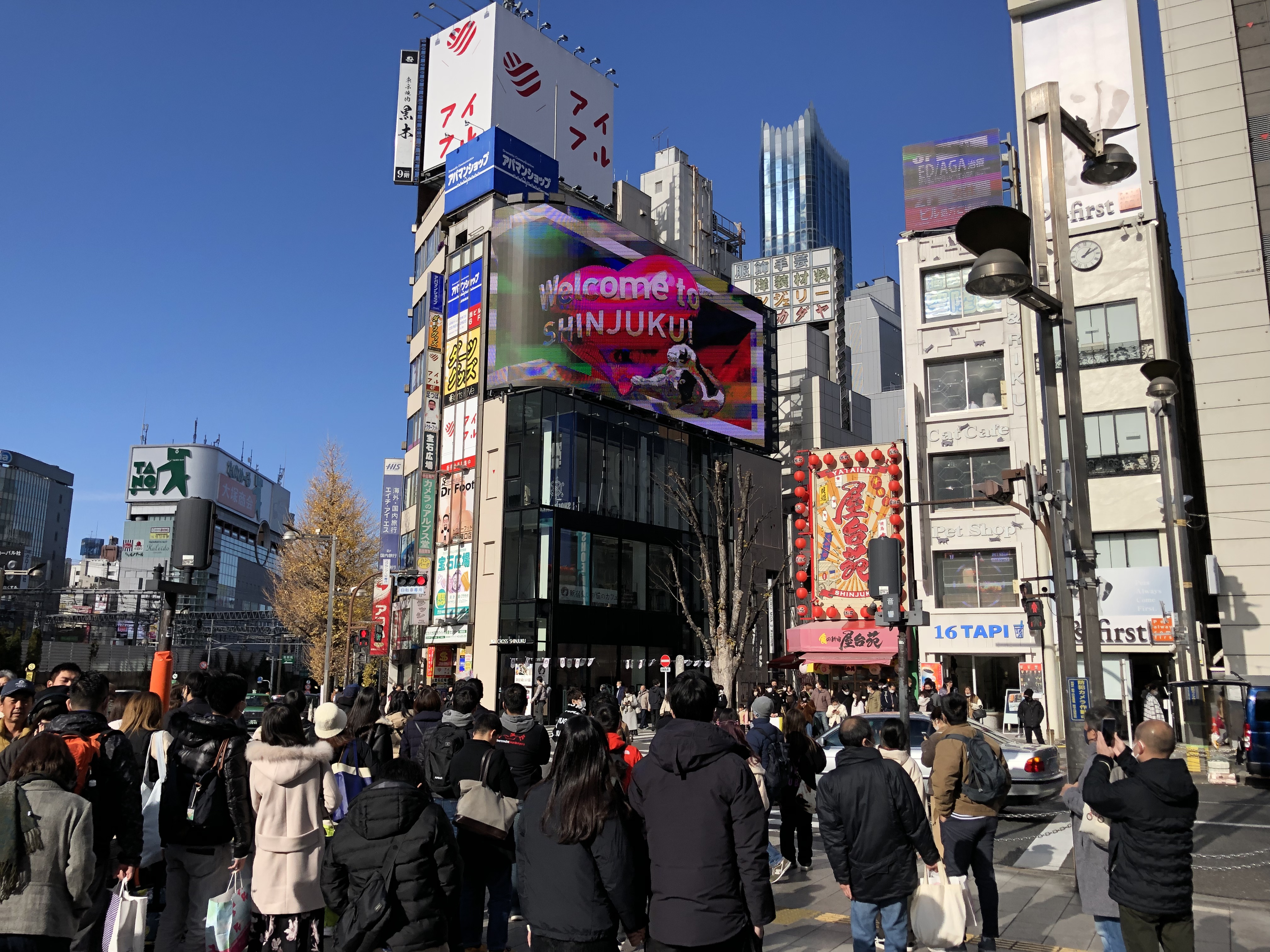
We continue on, passing a large group of people running along the street dressed as rabbits, a nod to the Chinese New Year’s chosen animal. At Ikebukuro, we are treated to the sight of sculptures that litter the streets. As we enter Shin-Okubo, we find ourselves wandering through the bustling streets of Korean Town. And at Shinjuku Station, we are greeted by a television screen that displays words in a mesmerising three-dimensional phenomenon.

Almost five hours into our walk, we arrive at the halfway point of our journey: Harajuku Station. Here, people stand in line, eagerly waiting to purchase tapioca from a street vendor. A little further up the street, we see a similar scene, but with people queueing up along the entire length of a road to buy shoes. In Shibuya, we encounter yet another line, this time composed of people waiting to take a photograph of Hachiko the dog, adorned with a special wreath to mark the New Year.

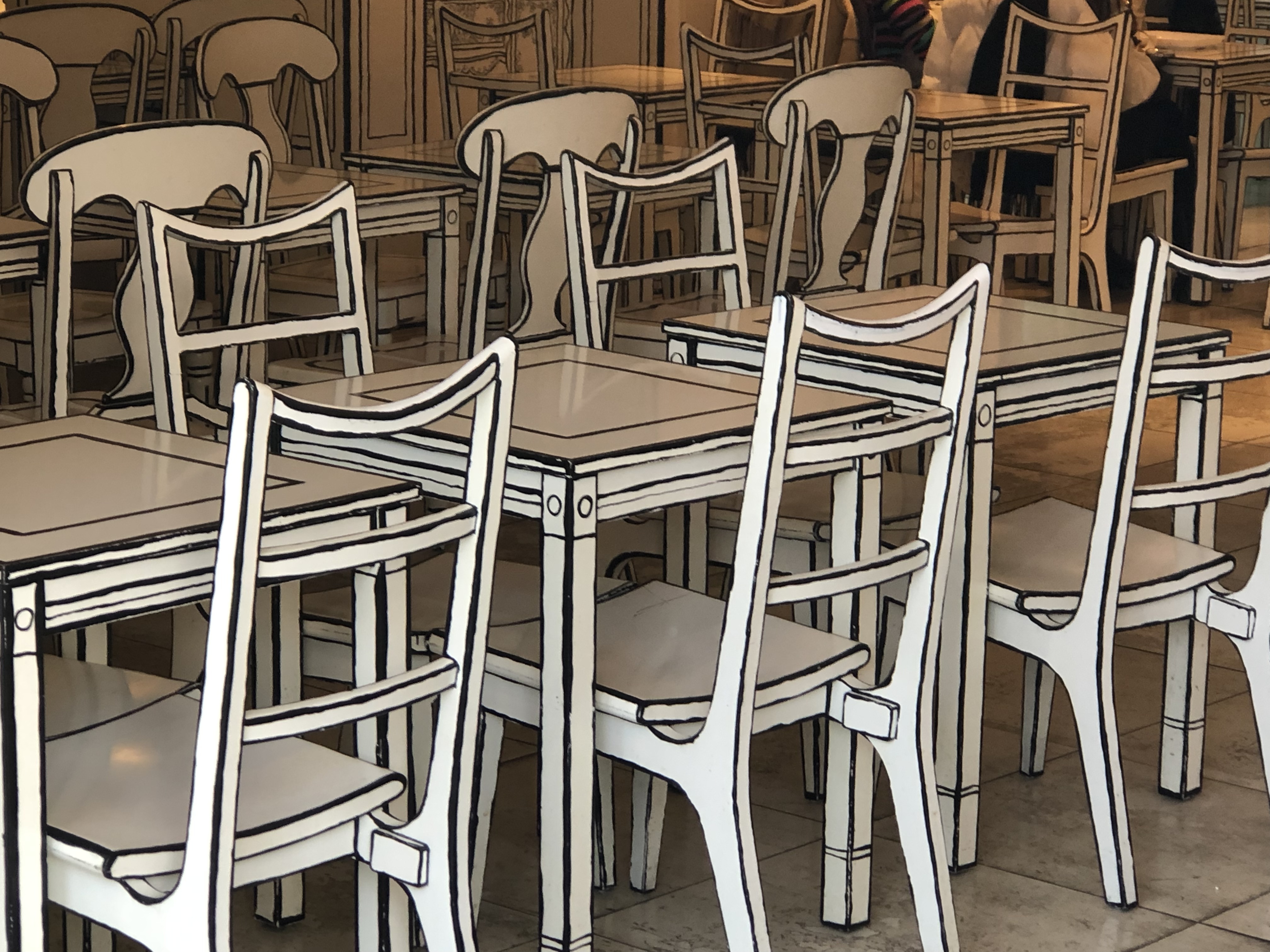
After hours of constant walking, our legs begin to feel sore. We decide to take a well-deserved break at a small, charming cafe. In contrast to the bustling, three-dimensional imagery of Shinjuku Station, the atmosphere at the cafe is a tranquil, two-dimensional one.

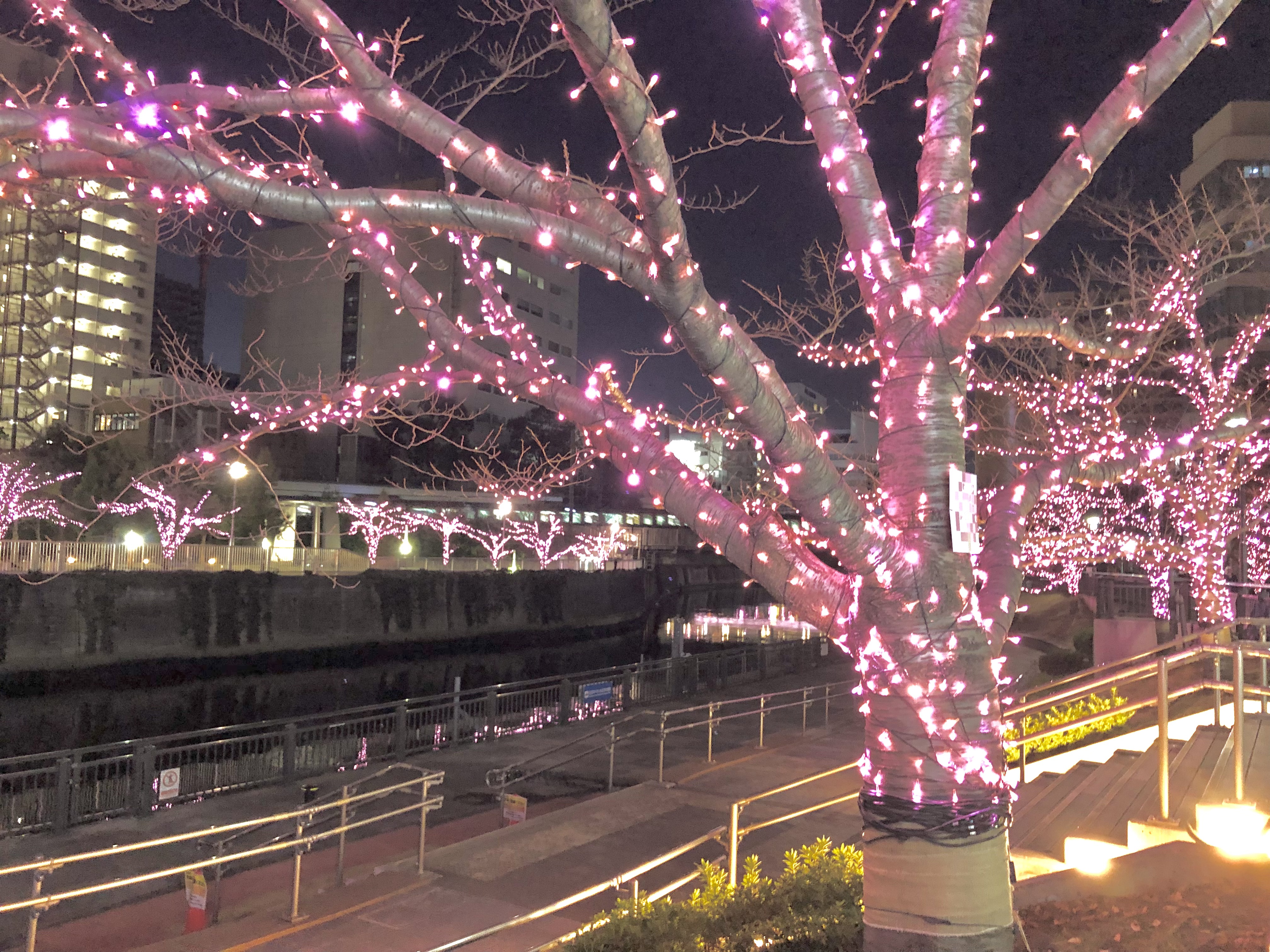
With the night falling and the wind picking up, a chill fills the air as we resume our journey through the darkening city. Despite the challenges presented by the fading light and the increasing cold, we persevere, striding forward on our journey. Close to Meguro Station, we are treated to a beautiful distraction in the form of the Meguro River Cherry Blossoms Promenade, a scenic riverside path lined with cherry trees that are illuminated by beautiful pink lights.

The tranquil scene is a welcome respite from the pain in my calves, and Maki and I take a moment to simply savour the beauty around us.

With weariness setting in, we consider the possibility of giving up, but in the end, we decide that we cannot allow ourselves to quit, for the fear of regret is too great. If we can push through and complete this challenge, we tell ourselves, then we can conquer anything. And so, we push on, determined to see our journey through to the end.

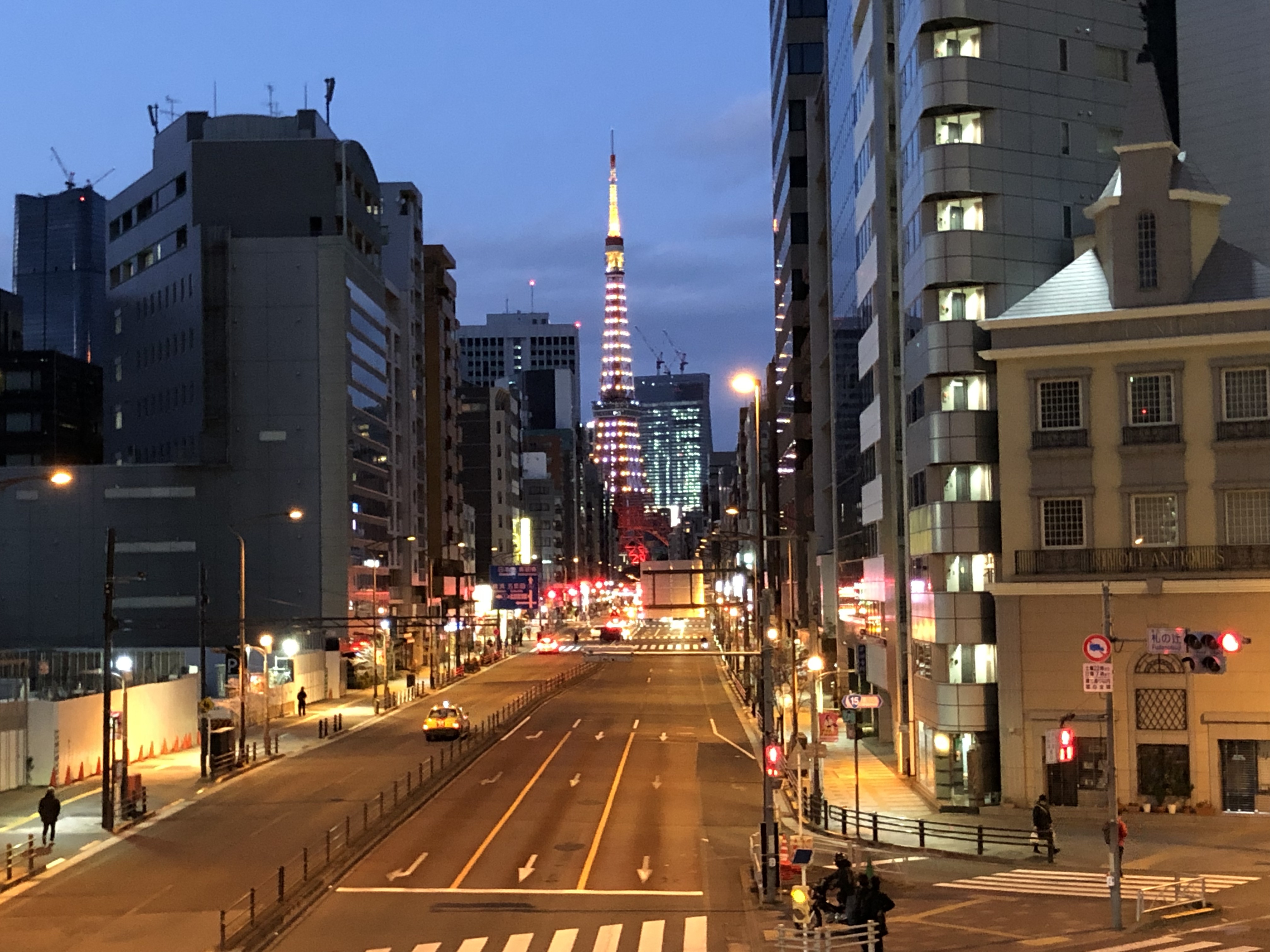
We pass through Shinagawa and the newly built Takanawa Gateway Station, the most recent addition to the Yamanote Line. At 5 p.m., the “Yuyake Koyake” bells ring out from speakers at every intersection, beckoning us to return home. But we do not heed their call, for the end of our journey is nearly in sight. In the distance, I am heartened by the sight of the bright illuminations of Tokyo Tower.

Built from the remains of United States military tanks damaged in the Korean War, Tokyo Tower was designed to mirror the iconic Eiffel Tower in France. However, in a show of competitive spirit, Japan deliberately made its tower 2.6 metres taller, earning it the title of the tallest freestanding tower in the world (a title now held by Tokyo Skytree).

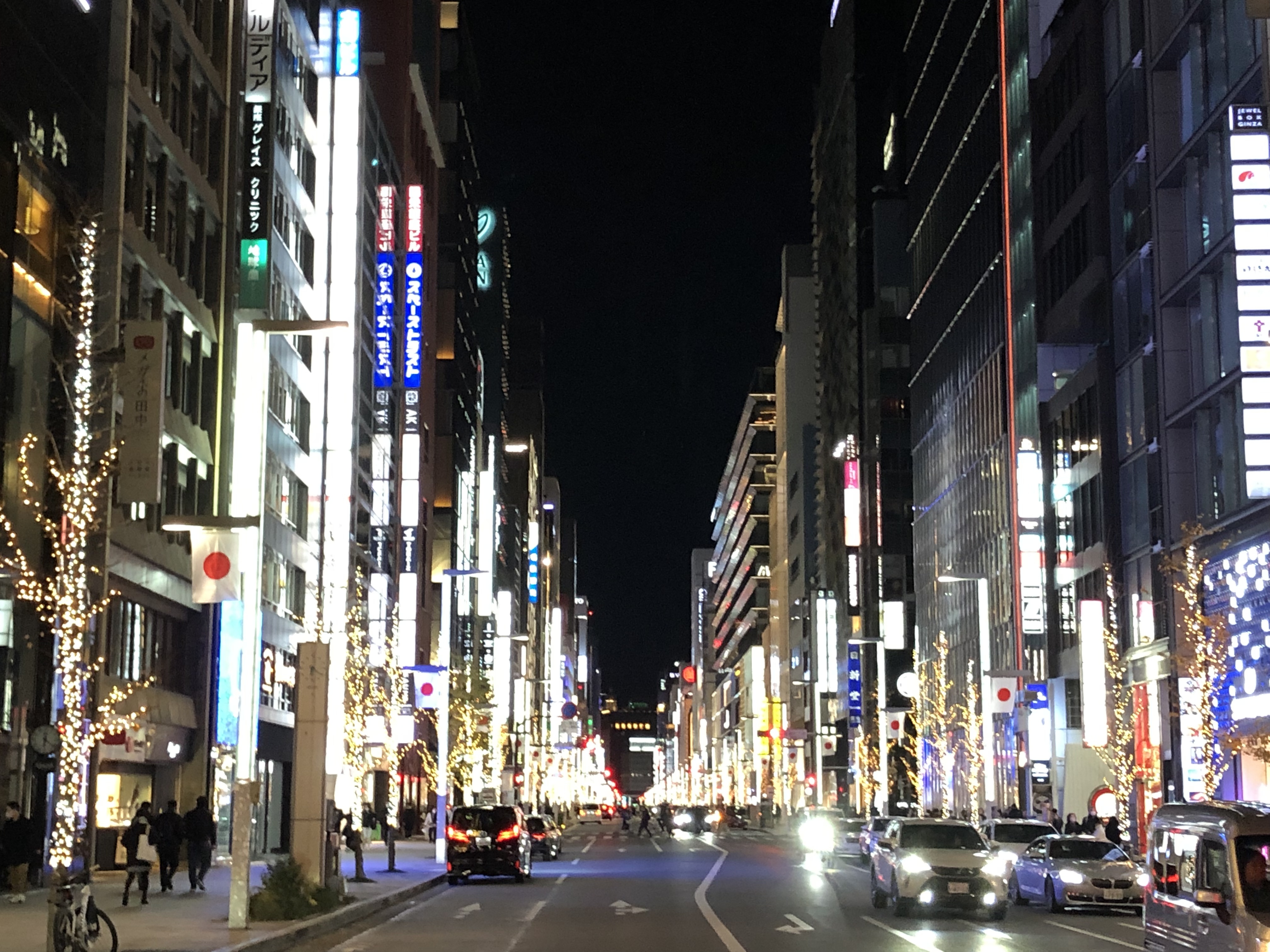
As we near the end of our journey, we are mesmerised by the bright lights of Ginza, Tokyo, Kanda, and Akihabara, all of which are transformed into a neon nirvana at night. It is at this moment that I am struck by the realisation that Japan has not just four, but five seasons – one that is marked not by the changing colours of nature, but by the way in which the country’s cities and towns are transformed by the darkness of night.

After a grueling nine-hour journey that saw us take a total of 55,454 steps, we finally arrive at Ueno Station, exhausted but triumphant. Our legs ache and our feet throb with pain, but the sense of accomplishment helps to outweigh the discomfort. Upon returning to Asakusa, I allow myself the indulgence of an ice-cold beer – the best I’ve ever tasted – as a way to celebrate and relax after our achievement. As Maki and I bask in the afterglow of our journey, the fatigue slowly starts to fade away.

Cabbage Over Untroubled Water

With just two wards of Tokyo left to write about, today is the day I will complete my tour of this great city. I start my day in Nerima, the birthplace of animation. Located in western Tokyo, Nerima is known for its residential atmosphere. Outside of its connection to animation, there isn’t much else to see here.

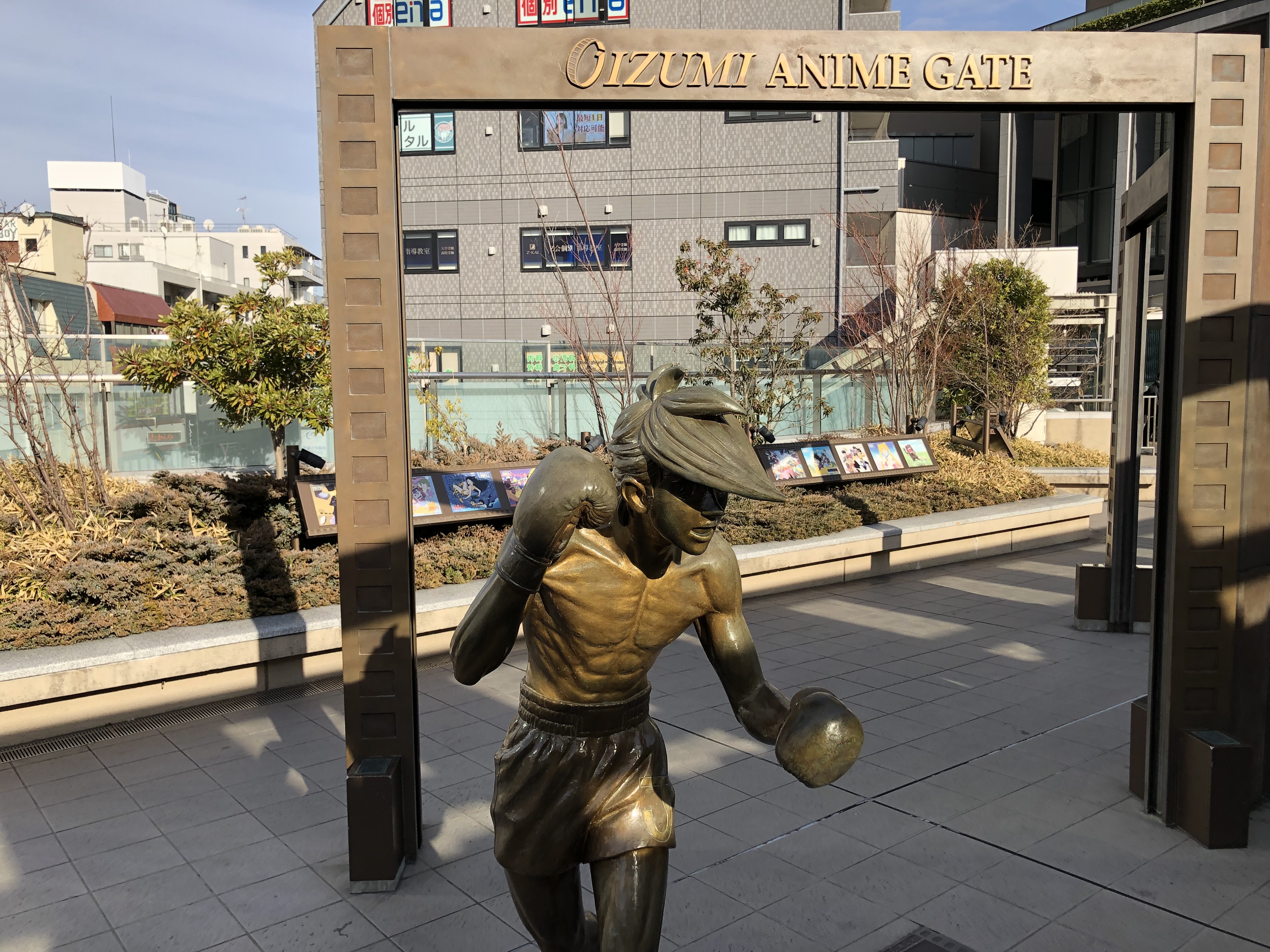
As I make my way through the streets, the presence of the anime and manga industry is strong. The ward is home to many studios and other companies involved in the production of these popular forms of entertainment. My first stop is the Oizumi Anime Gate, where I am greeted by a number of bronze statues of beloved anime characters.

As someone who is not a fan of Japanese anime, I only recognise one of the statues, probably because there once was a statue of the same character outside my old house in Taito Ward, that of Yabuki Joe, the main protagonist of the anime “Ashita no Joe.” This character is one of five depicted in statue form at this location, revered for their role in bringing Japanese anime to the world stage.

As I continue my wanderings through Nerima, I pass by a sign that reads “No more war! Stop Putin!” Eventually, I come across a map and see a sign pointing to a Cabbage Monument. Intrigued, and with little else planned for Nerima, I decide to go and check it out.

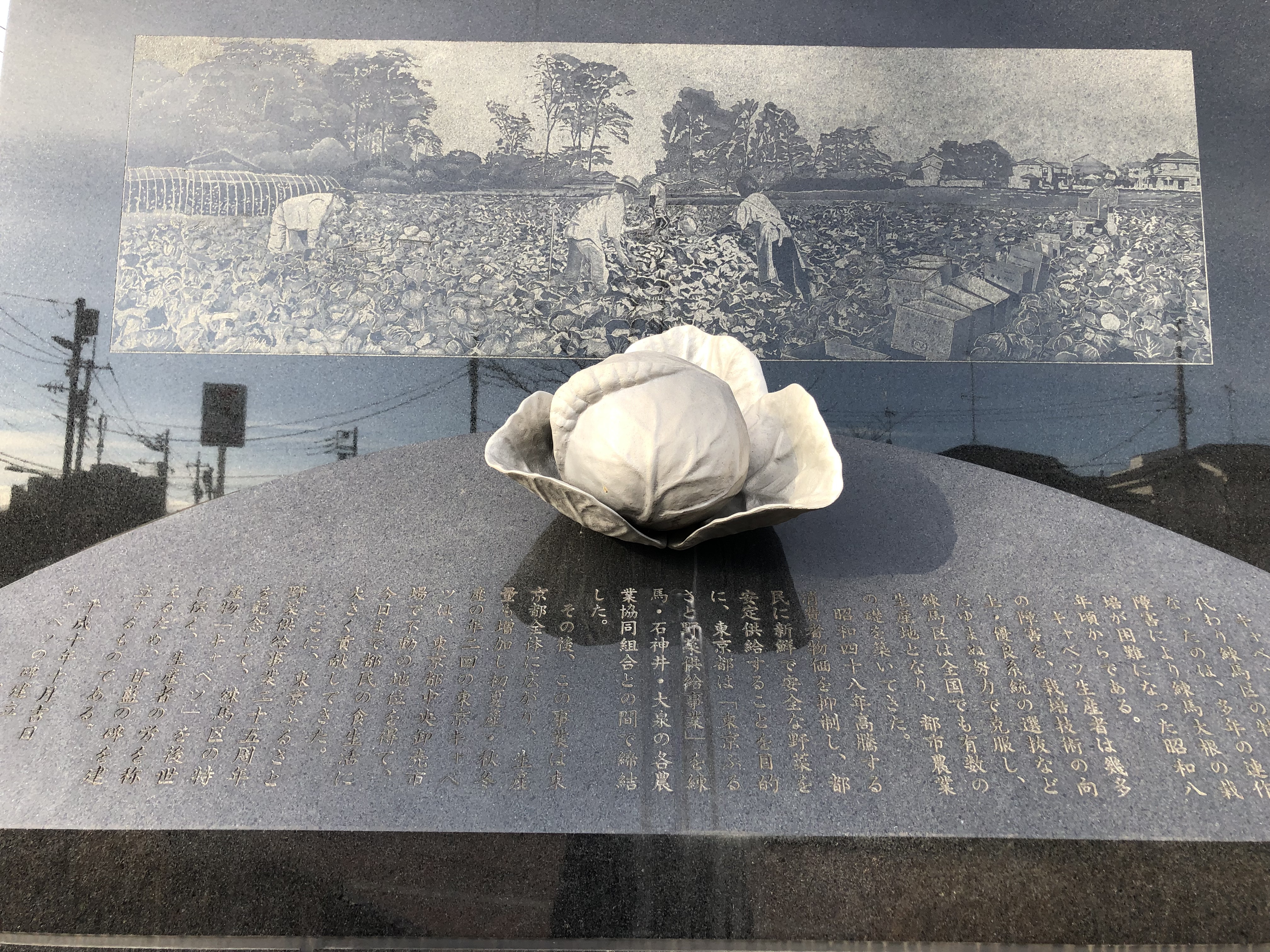
Hidden alongside the tranquil waters of the Shakujii River stands a monument of concrete adorned with an aluminium alloy sculpture of a cabbage. Erected in 1998 by the hardworking farmers of Nerima as a tribute to their resilient cabbage crops. An inscription on the monolith tells the inspiring tale of how these farmers triumphantly overcame pests and other obstacles as they transitioned from cultivating radishes to cultivating cabbage. Twice a year, these cabbages, known for their sweet and crunchy goodness, are harvested and proudly grown in Nerima to this day.

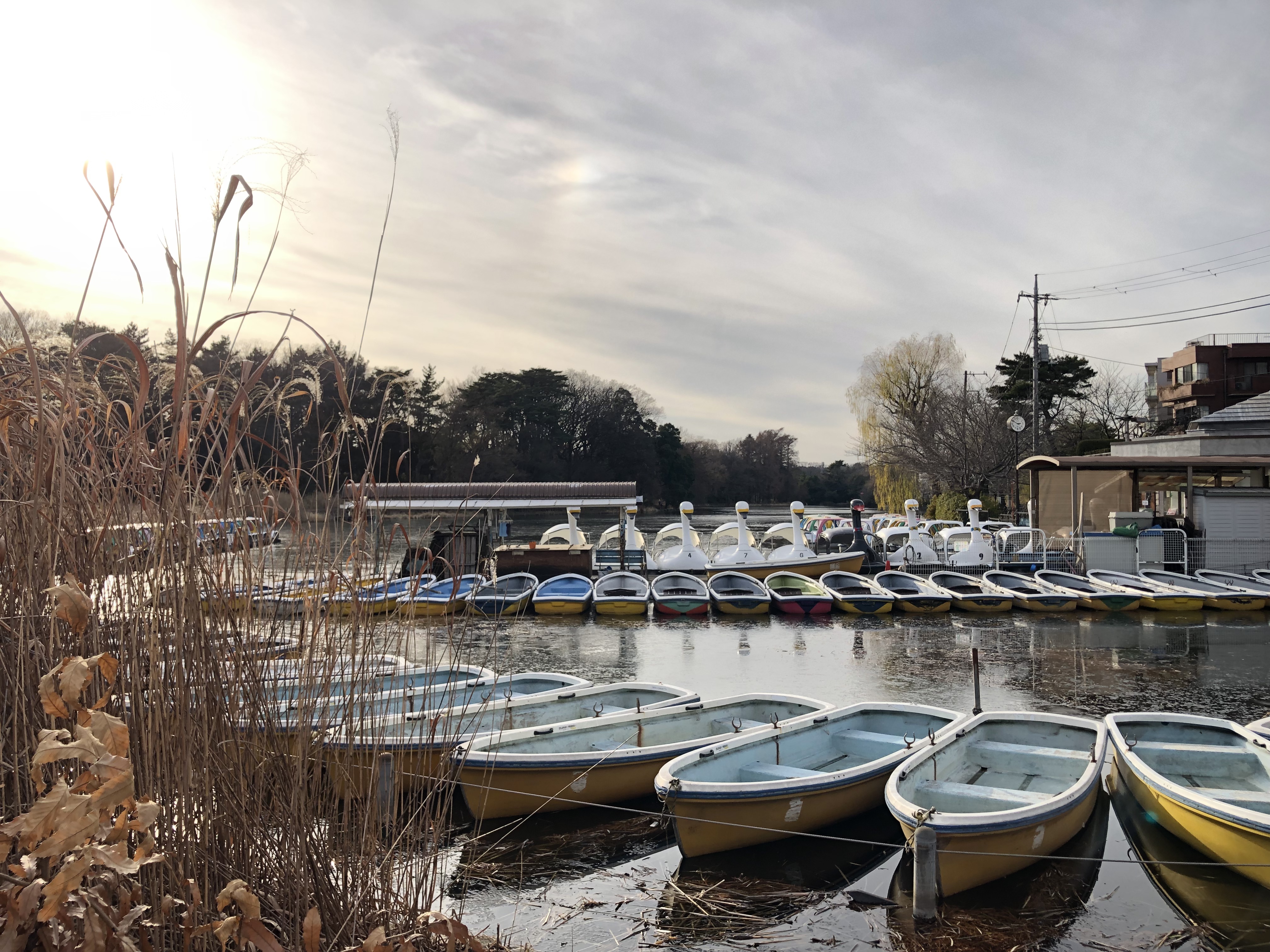
As I head towards the train station, I am struck by the delicate beauty of Shakujii Pond. This massive body of water is so still, it almost resembles a swamp. The surface of the water is completely calm and placid, not a ripple to be seen. It’s a strange, ghostly scene, made all the more surreal by the row of pagodas shaped like swans that line the pond.

With my tour of Nerima complete, it’s time to visit the final ward of Tokyo: Suginami. As I’m riding the train, my friend Marc messages me and asks what I’m doing that evening. I tell him I’m planning to visit Koenji, and he excitedly tells me that it’s his favourite place in Tokyo. He agrees to join me, and we meet halfway and get chatting on the train, accidentally missing our stop. So instead, we get off at Kichijoji, a neighbourhood that is consistently voted as the most desirable place to live in Tokyo.

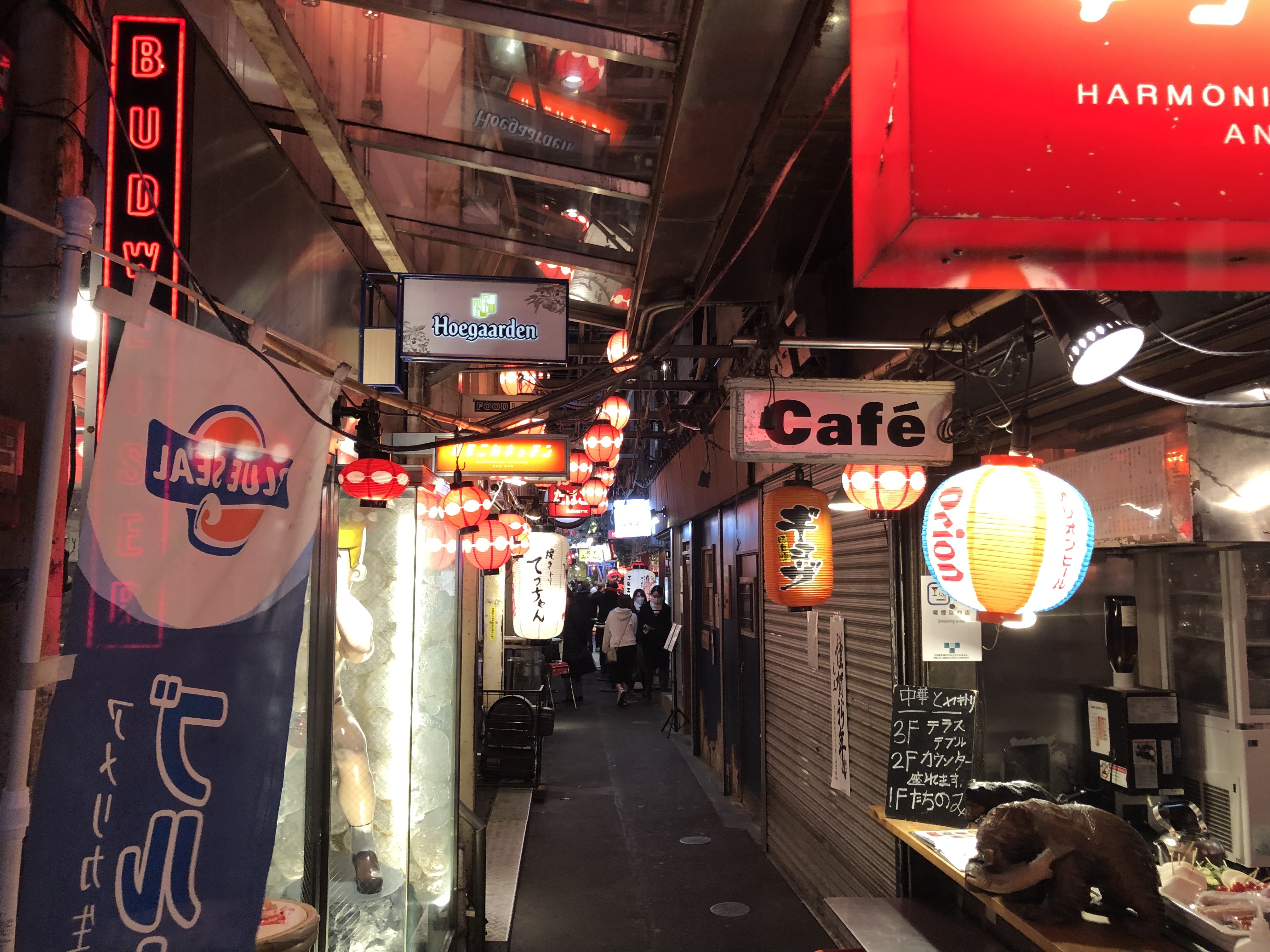
As we stand at Kichijoji Station, we decide that it would be a shame not to take a quick look around the area. Marc tells me that everyone in Kichijoji exudes the scent of capitalism. We wander from the station towards Harmonica Alley, a shopping district named after its harmonica-shaped pedestrian walkway.

This crisscross of alleyways is home to a number of small independent restaurants and bars, and as we wind our way through the cramped streets, I really enjoy the experience. Although not all of the shops are open, I get a good sense of the area – the small stalls selling food, the bright red lanterns, and the narrow streets all contribute to a Blade Runner-esque vibe. We explore the labyrinth of old-fashioned stores and soak up the atmosphere.

After immersing ourselves in the sounds and music of Harmonica Alley, we head back to the station and finally make our way to Koenji, a district known for its vibrant, youthful atmosphere.

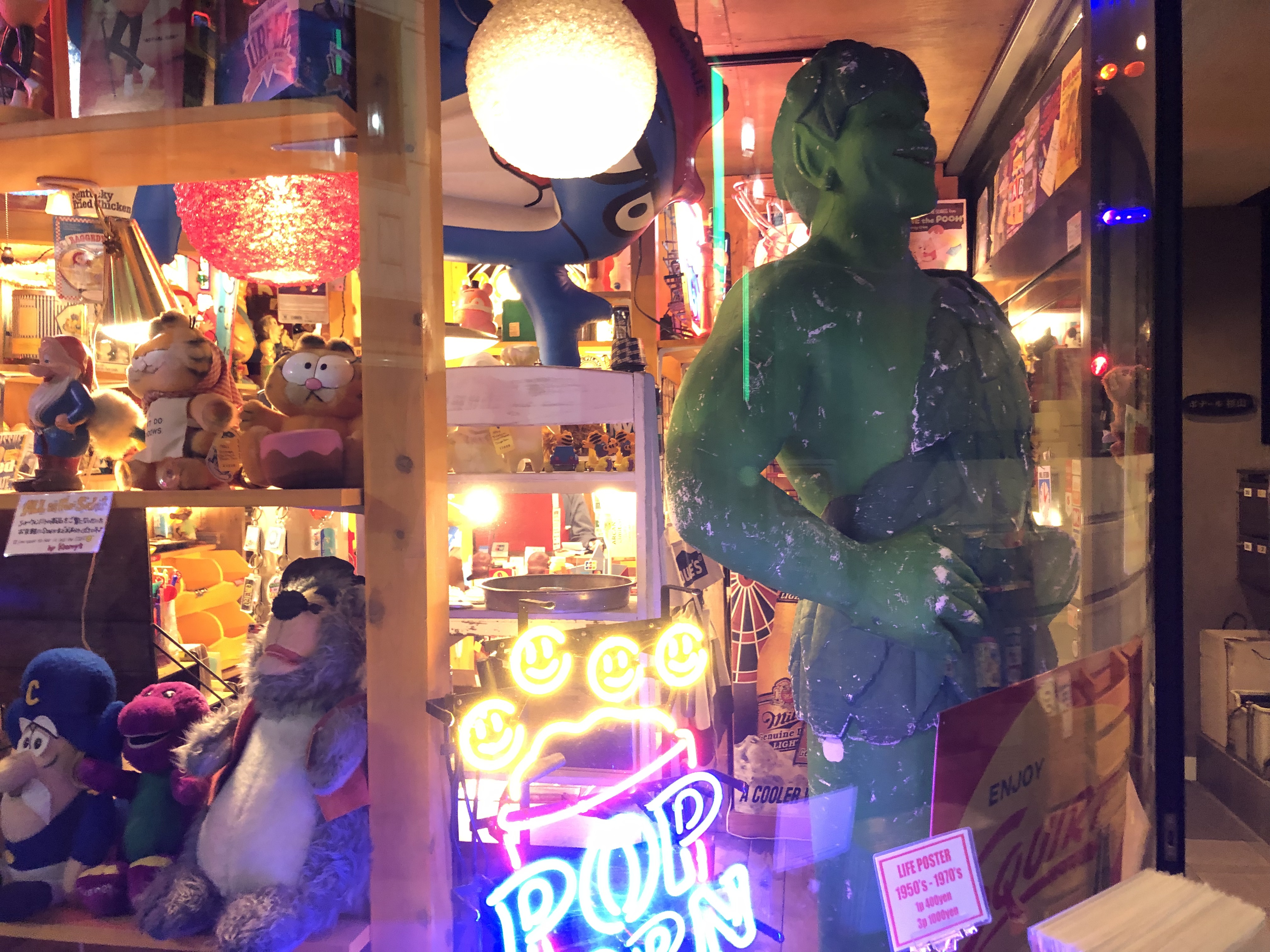
Marc takes me on a tour of the area, passing through the main shopping arcade. Despite it being early evening, I’m surprised to find many of the vintage clothing shops to be open. We pass by retro sweet shops, retro toy shops, and shops selling life posters from the 1950s. On the other side of the station, the nightlife scene in Koenji is lively, with many clubs and live music venues that attract young people from all over the city.

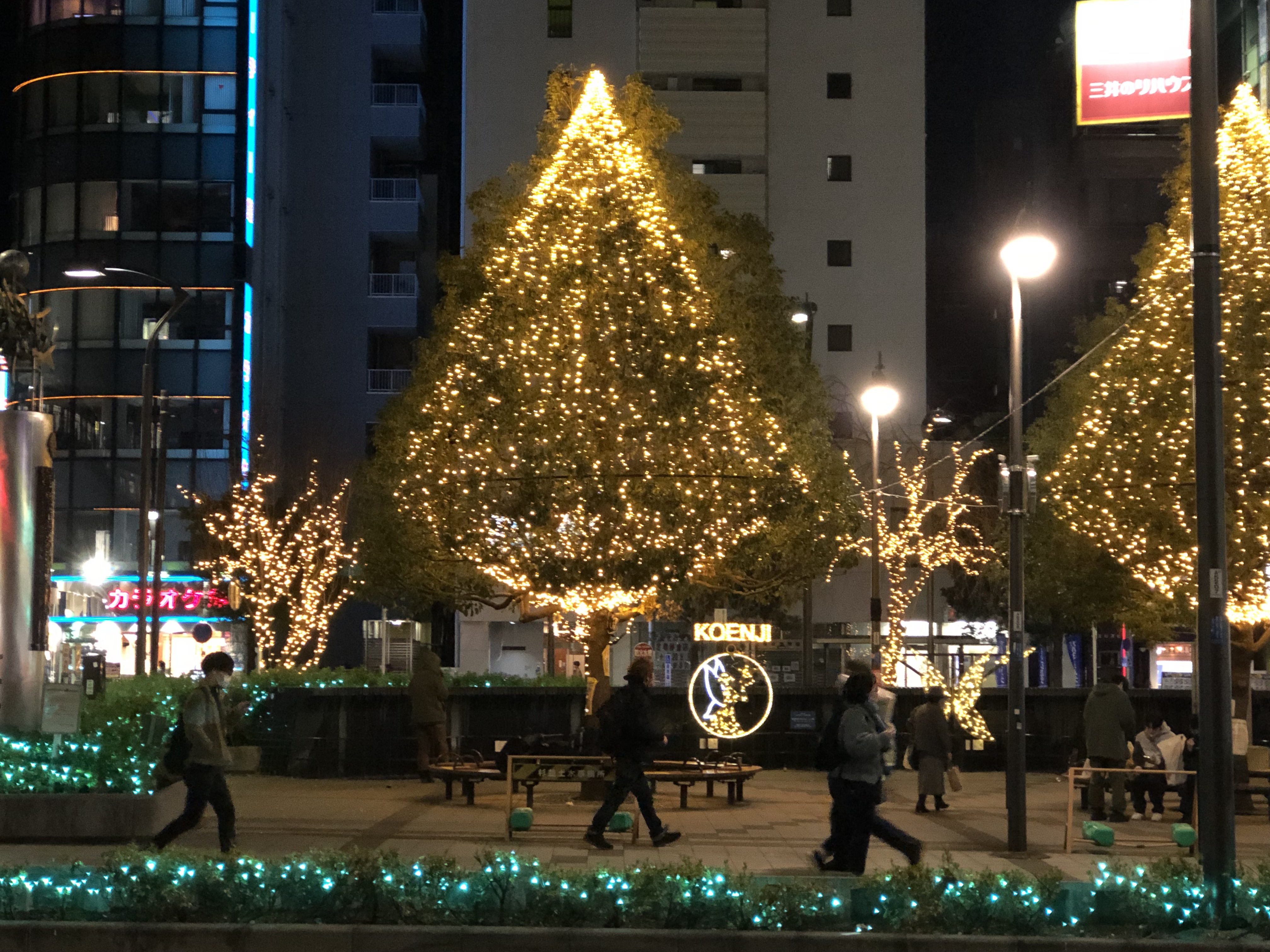
We don’t do much else of note here though, aside from trying out a few bars. As the night wears on, we move on from the trendy bars to an izakaya-style Japanese pub. We stay a while chatting, drinking Suntory whisky highballs while snacking on raw octopus, skewered meat, deep-fried tofu, and crisp, sweet cabbage from Nerima. The warm atmosphere and lively conversation make time seem to fly, and before we know it, the last train home looms near. With a sense of reluctance, we make our way back to the station, passing by out-of-season Christmas trees on the way.

As the train carries me home, a friend asks me what I’m doing on Wednesday and if I’d like to join her on a 42 kilometre walk around Tokyo. Fresh from my goal of completing the city, I am tempted by the idea of revisiting Tokyo’s streets in a different way. I agree to join her, ready to explore the city once more, entirely on foot.

Near-Death, Buy A Thousand Cats

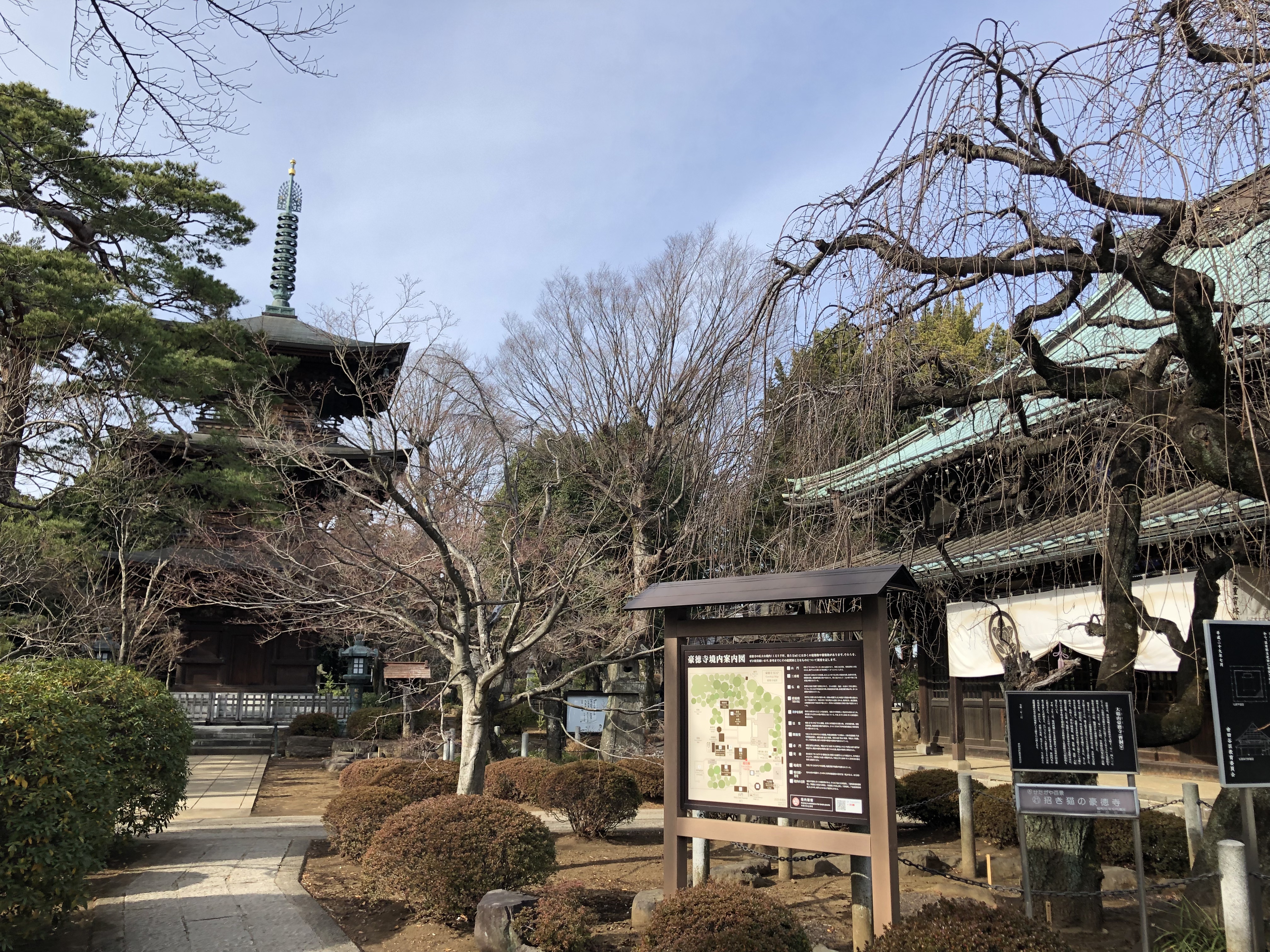
My day begins at Miyanosaka Station in Setagaya Ward, where I take a short walk to Gotokuji Temple. This temple, which covers an impressive 50,000 square metres, is home to a three-storey wooden pagoda, Shugetsuen Gardens, Jizo Hall, a Main Hall, stone lanterns, a Bell Tower, and the tomb of the Ii Naotaka family.

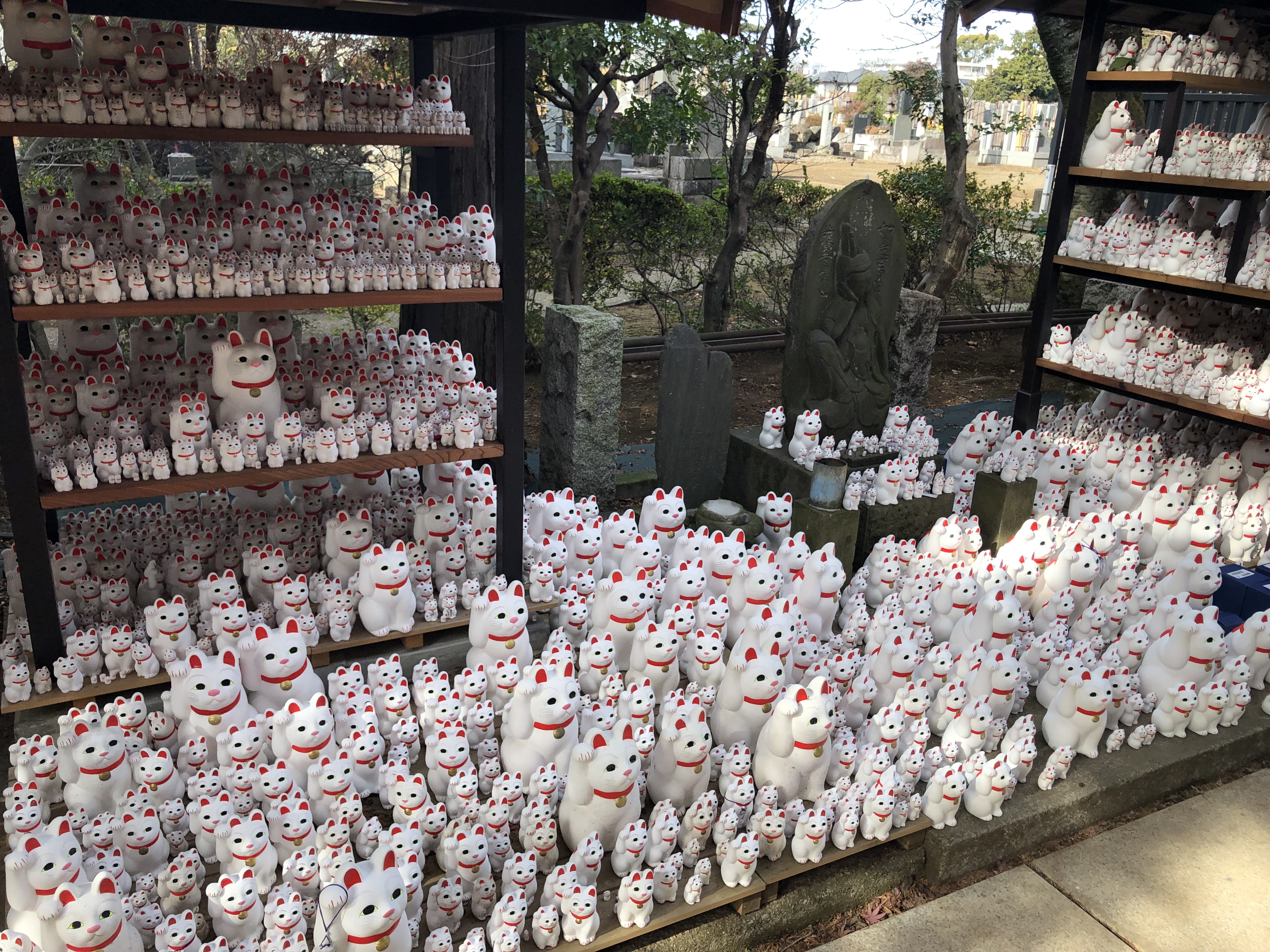
As I wander around the temple grounds, I am surprised to discover a collection of one-thousand maneki-neko statues (also known as “beckoning cats”) scattered throughout the temple. Every time I think I’ve seen them all, I turn a corner and find even more on the other side of the temple. They are truly everywhere.

According to legend, the daimyo Ii Naotaka was out hunting with falcons when he was saved from a lightning bolt by a cat named Tama. Naotaka had taken a seat on a wooden bench outside this very temple when Tama beckoned him inside. Moments later, a lightning bolt struck the wooden bench where he had been sitting. This act of kindness saved Naotaka from certain death, and in gratitude, Naotaka is said to have placed one-thousand lucky cat statues throughout Gotokuji Temple.

Maneki-neko statues are popular as charms for good fortune and are believed to bring luck in areas such as business success, home safety, and the fulfilment of prayers, and protection from lightning bolts.

I leave Gotokuji Temple and take the train over to Shimokitazawa, a neighbourhood known for its bohemian atmosphere and abundance of vintage and retro shops. As I stroll through the streets, I am surrounded by a sea of trendy fashion stores, coffee shops, and gastro pubs offering craft beers and flat whites. Even the local Seven Eleven here is enveloped in the rich, heady scent of coffee.

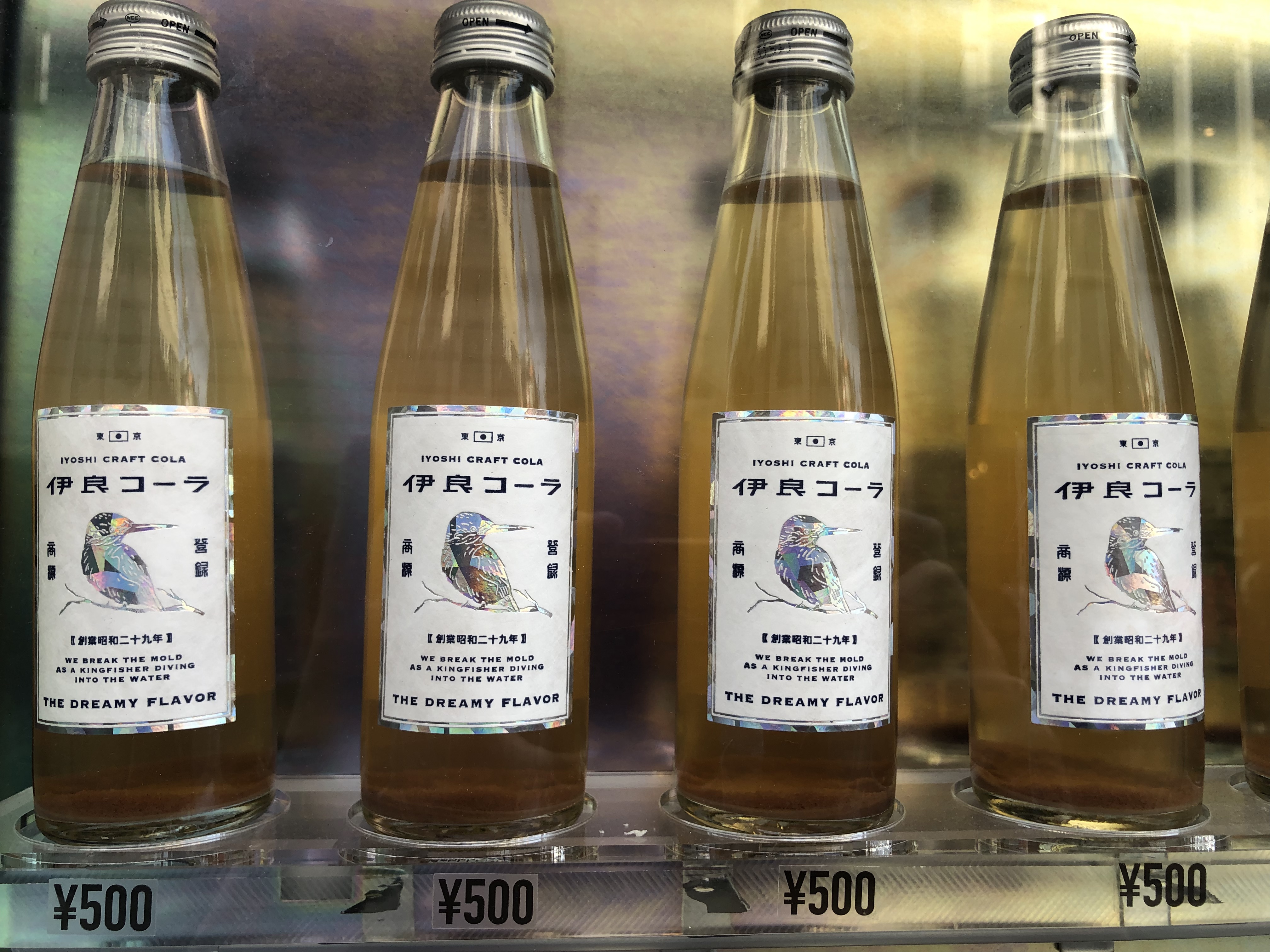
The area is also home to a vibrant music scene, with rock music blaring from every retro used clothing store. As I walk, I pass fellow foreigners who eye me up with pretentious looks. Distasteful graffiti adorns some of the vending machines, and I notice another vending machine selling what appears to be overpriced Craft Cola. The label says it is made from “natural water,” whatever that means.

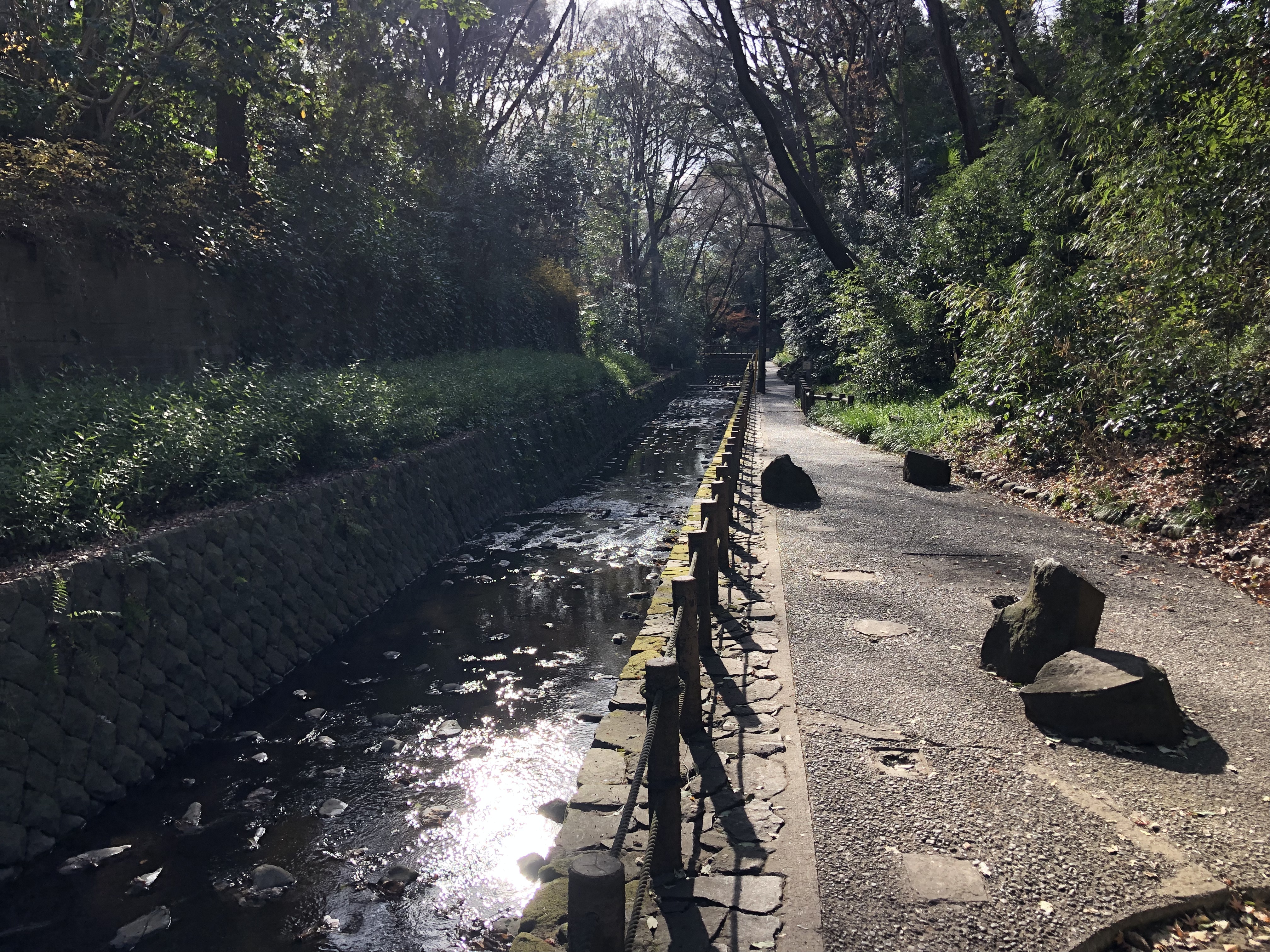
I decide to leave the bustle of Shimokitazawa behind and take a break exploring some nature. Luckily for me, Setagaya Ward also contains the only valley within the 23 wards of Tokyo: Todoroki Ravine Park. Along the Yazawa River sits the Golf-bashi Bridge, a striking red steel arch bridge named for a golf course on the other side of the river.

As I begin to wander downstream, I notice a sign warning against going near the river during heavy rain. Remarkably, I’ve been in Japan for two months and it has only rained twice. The sign states that during rainfall the valley can easily flood.

I pass trees of zelkova, bamboo-leaf oak, konara oak, and Japanese mountain cherry that line up on either side of the river, creating a scenic gorge. The air is crisp and refreshing, the water is still and calm, a peaceful contrast to the bustling city. As I walk further downstream, nature embraces me, enveloping me in its tranquillity.

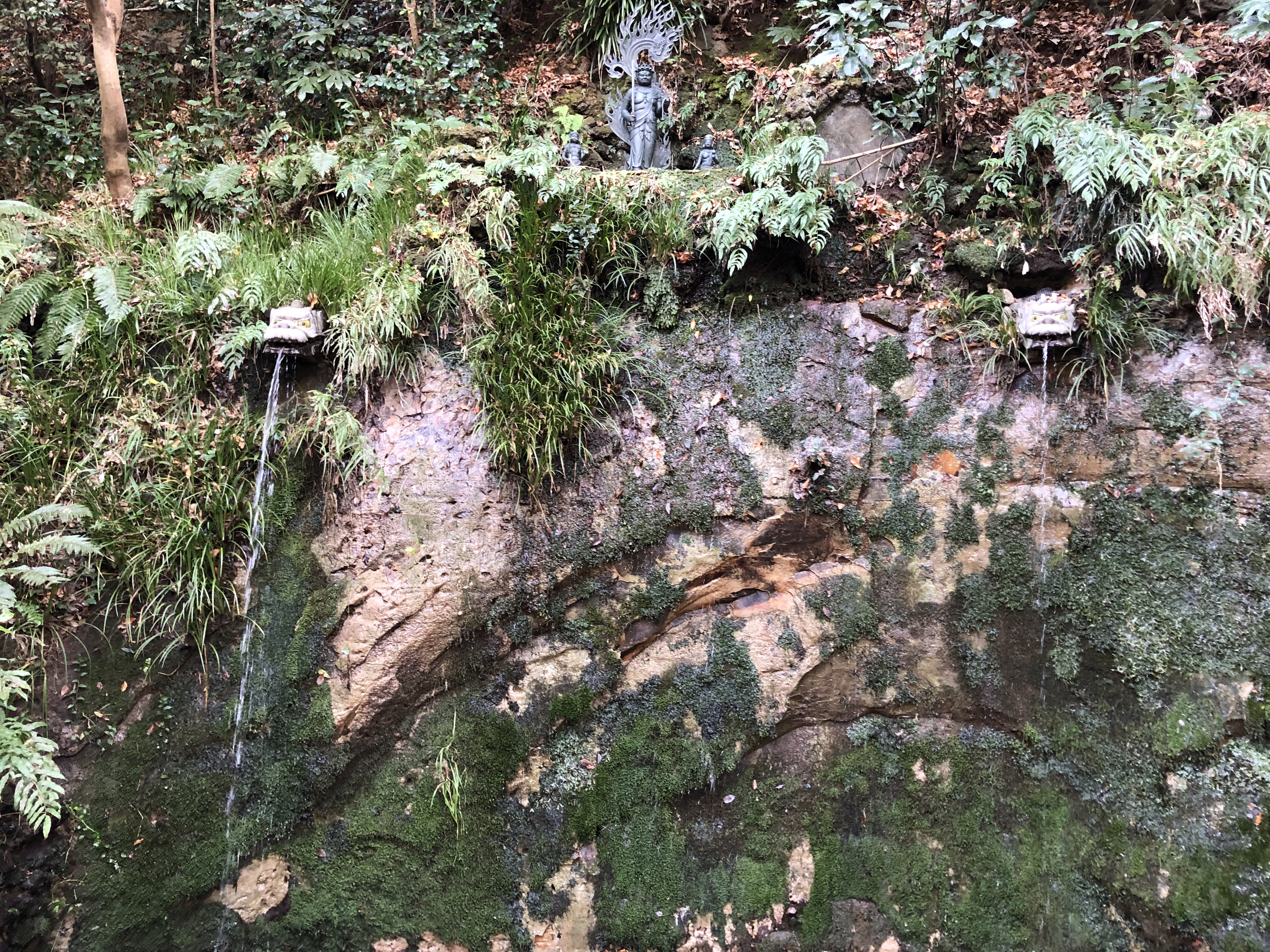
I come across Todoroki Fudo Temple, founded in the 7th century by the monk Gyoki and dedicated to Aryacalanatha. Below sits the twin waterfalls of Fudo-no-Taki, with the water spilling from the faces of yellow-eyed statues. The waterfalls are believed to have miraculous powers. Legend has it that the waterfalls at Todoroki Valley sprang up when the temple was founded, and it was once said that the water would roar like thunder when it hit the rocks, giving the valley its name. The waterfalls are a charming sight, and the old shrine adds to the peaceful atmosphere of the valley.

There are over thirty springs within Todoroki Valley, and the spring water here was designated as one of “Tokyo’s 57 Best Waters” in 2003. I presume the water from the springs is of the “natural water” variety.

As I make my way back to the train station, the sky suddenly opens up with a thunderous applause. Rain spills down into the gorge and valley, and lightning splits the sky, illuminating the landscape in a brilliant flash. Instinctively, I go in search of a cat.