Last Stop: This Town

Wednesday

Never have I been so happy to hear the monotonous drone from the speakers at Tawaramachi Station. Today I am back in Tokyo, back in Asakusa; my days of exploring are over for now. I have three nights in a hotel, before another long stay at the very first hostel I started at; the best hostel in the world. I don’t begin my stay there until Saturday, but I am eager to get back there as soon as possible.

My hotel is in a previously undiscovered part of Asakusa, away from the temple and tourists. Next door is an Indian restaurant. After checking into my hotel I decide Indian food would be a good choice. My hotel, unlike in Hamamatsu, has wireless Internet. I can access the Internet from the Indian restaurant, which is a nice bonus. The food is actually very good. Like Pacman eating those little dots, I devour every little grain of rice.
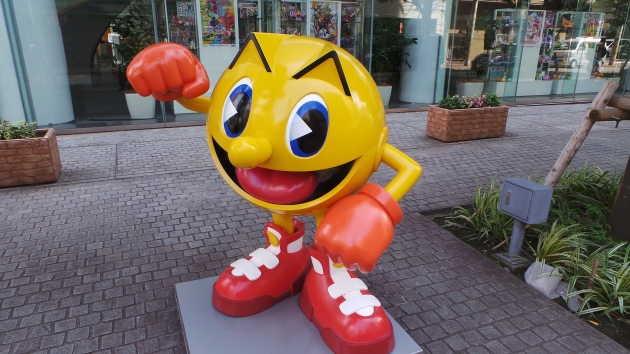
pacman

After dinner I head out to the hostel. Today is Wednesday, the bar is open for guests, and I have nowhere else to go. My friend Hiro is the barman tonight, jazz musician and comedian. I say hello to people I know, and meet a few people I don’t. It would be fair to say that since leaving Kyoto I haven’t really seen many people, or had many conversations in English. Having a chance to speak to people tonight is just great.

I get a little drunk, and leave at midnight.

Thursday

Today I have made plans to meet Paul, a Scotsman I met in Fukuoka. I go for breakfast at my favourite cafe, Byron Bay. Still number one in Taito on TripAdvisor. I drink one of the ‘as seen on TV’ green tea lattes, and eat happy eggs on local bread. The owner tells me that since being featured on Moshimo Tours, she has been really busy every night. After breakfast and a nice catch up, I meet with Paul and we grab a train to Akihabara.

Paul and I head to a department store called Yodobashi Camera, an electronics chain store. This place is huge, has nine floors, and sells just about everything. Paul is shopping for headphones and this shop has thousands to choose from; the headphone display is set up in a way that you can plug them into your device and try them out. While Paul does this, I sit and play an electric piano. A homeless man sits down at the piano next to me and bursts into an amazing classical piece. He plays well, really well. It is a shame to see someone with so much talent going to waste. A real shame.

After our headphone expedition, we take a quick trip on the Yamanote Line to Yurakucho Station. Outside the station, we venture into another massive electronics chain store, Bic Camera. Our quest here is for the fabled Casio CA53W-1, the classic Casio watch with a built-in calculator. At midnight on December 31st, 1999, this Casio calculator watch was the only electronic device in the world challenged by the famous Millennium Bug. Widespread panic ensued when everyone with this watch seemingly travelled back in time to the year one-thousand. Unfortunately, our search for the watch ends in failure. Disheartened, we give up and head back to Akihabara by train.

There was me, that is Luke, and my droog, that is Paul, and we sat in the Akihabara Milkbar trying to make up our rassoodocks what to do with the evening.
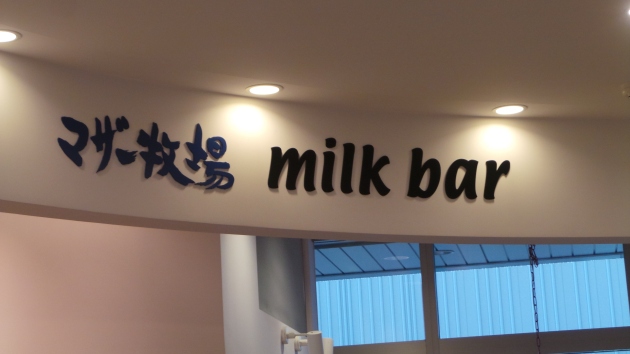
milk bar

We decide to visit a video game arcade. Paul manages to win a t-shirt on a crane claw machine and kindly gives it to me as a present. After spending a few thousand yen, we head over to play some of the classic shooting games. The game we choose is a hybrid, blending the traditional shooting-monsters-with-a-gun style with a dance game where you hit buttons according to the rhythm. Surprisingly, this game also boasts a very in-depth storyline.

The game is of course the amazing, ‘Sailor Zombie: AKB48’.

The members of the girl idol band AKB48 have been turned into zombies, and our task is to defeat them. The most amusing part is when the zombies abruptly halt their attacks and break into song and dance, triggering the rhythm game. We play through our 15 continues, maybe an hour passes, before we finally give up.
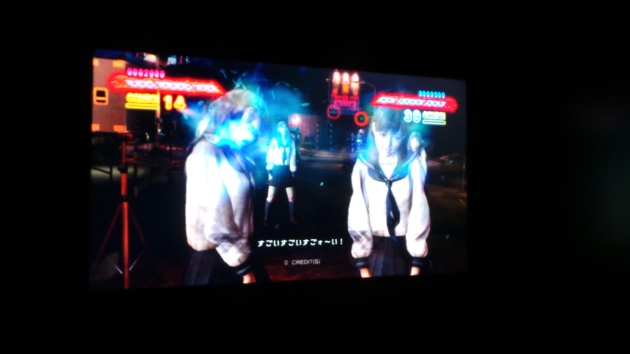
AKBzombie

After the arcade, we opt for some Japanese Italian food at a Saizeriya restaurant. Then, around half past six, it’s back to Byron Bay for a quick Laphroaig before we head to the jazz night at the hostel. There, to my surprise, I bump into Yojiro, my friend and table tennis rival from Beppu.

After the jazz session, I share a few more drinks with Paul. Soon, our group expands with the arrival of an Australian named Sam, a Japanese gentleman, an Argentine girl, and Dagmar, a German girl I met just last night. Dagmar and I engage in a delightful hour-long conversation about The Curse of Monkey Island—I boast about having the courage and skill of a master swordsman! We spend a considerable amount of time amusing ourselves with pirate insults and banter, while everyone else around us remains clueless about the ‘code’ we’re speaking.

At midnight the six of us head out to A.S.A.B. and drink there until five in the morning.

Friday

My morning kicks off as usual, starting with a strong cup of coffee at Cafe Byron Bay, followed by not much else. The entire day unfolds without any noteworthy events. I meander through the streets of Asakusa, as if searching for something inexplicable. Eventually, I station myself outside Seven Eleven to tap into their wireless Internet. Unexpectedly, one of the comedians from the Moshimo Tours television show, Udo Suzuki, strolls by with a film crew in tow. Quick to grab my camera, I encounter the familiar scenario: a man materialises seemingly out of nowhere. “No photographs!” he insists, arms forming a cross to obstruct my lens.

After a day spent doing absolutely nothing, I return to Cafe Byron Bay for the fourth time in two days to meet Klaus, my German friend from Fukuoka, along with his girlfriend, Desi. We enjoy a few drinks there before deciding to venture across town to Nui, known as the finest bar in Asakusa. Nui truly lives up to its reputation. While I’ve been here several times before, I find myself repeatedly drawn back by its impressive interior design and reasonable menu. A Suntory whisky highball costs ¥500, and any cocktail is also ¥500—a great deal.

The three of us sit and talk until half past eleven before parting ways. A certain sadness sweeps over me as I bid farewell to Klaus and Desi—a feeling of melancholy I haven’t experienced in quite some time.

skytreeasak[1]

On the walk back to my hotel, I pass the illuminated Tokyo Skytree, “May the light connect the past and future, and reach the hearts of people.”

Internet Cafes, Bullet Trains, Irish Bars

Grilled fish of the day is salmon for the third day in a row. After breakfast, I return to my room and return my room to a state that looks exactly as it did before I arrived, a hotel habit of mine. After that, I check out and head to Popeye Media Cafe to write things up.

The Internet cafe doesn’t only provide Internet access. The following items are offered at no cost (¥0): bath towel, body soap, shampoo, conditioner, hair dryer, hair iron, toothbrush, skin toner, shaving equipment (razor and shaving foam), drinks from three vending machines (offering ‘over 50 kinds of drinks!’), mobile phone charging, two plugs per person (‘you can plug in a device!’), wireless Internet, showers, and a sunbed. All of these amenities are complimentary.

They also have a ¥360 hot food vending machine, but that seems to be the only thing you need to pay for, other than time. The cafe also offers a library of comic books, better known as manga. The amount of manga on offer is insane, with bookshelves spread endlessly in every direction. Where there isn’t a private booth with a computer, there is a bookshelf. The cafe boasts an impressive 179 computers.

internetandmanga[1]

“I paid ¥980 for five hours, the day rate. I’ve actually been here twice before. Those times, I foolishly came during the evening and paid ¥805 for two hours and ¥1330 for three hours.

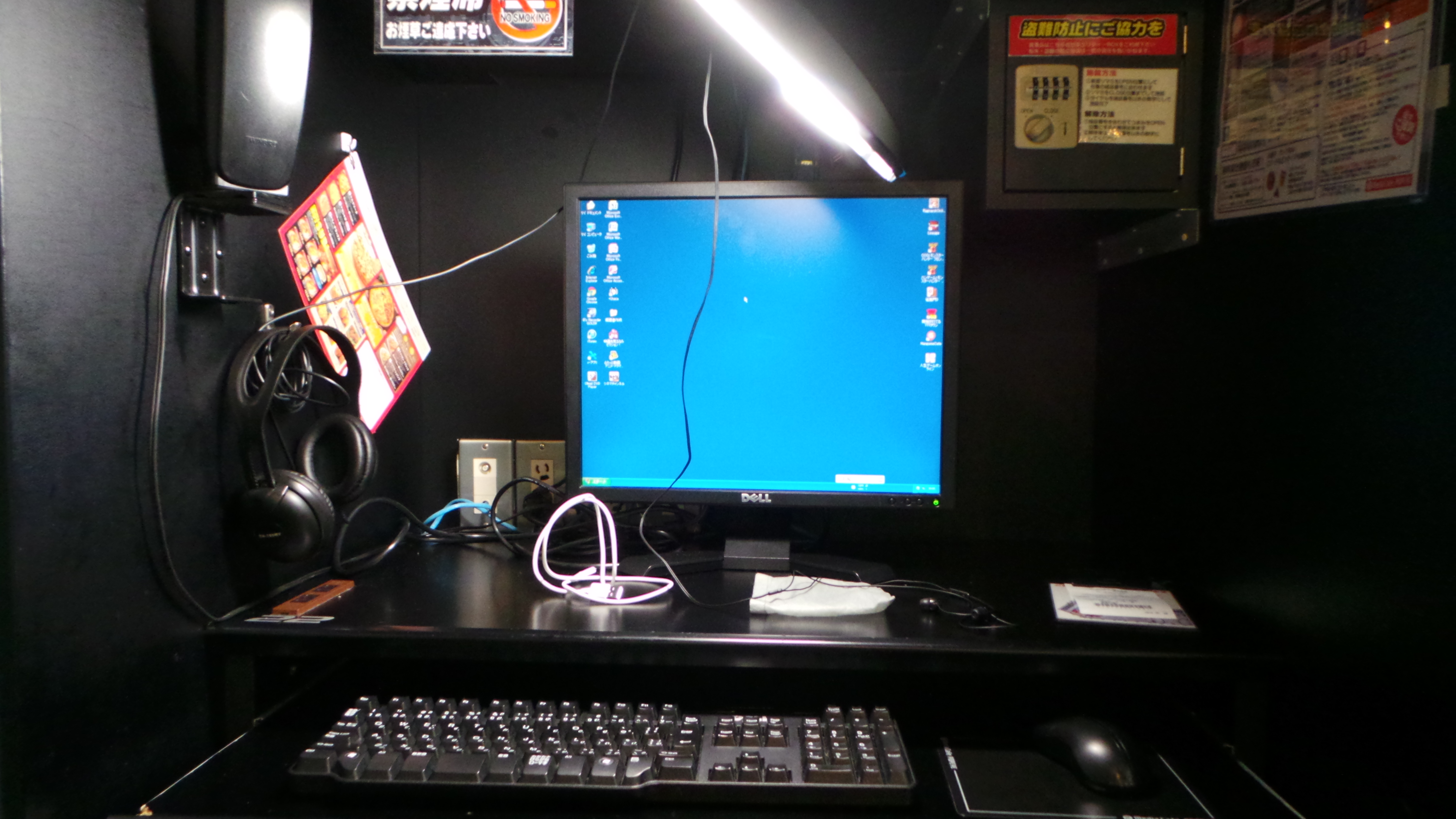
Today, I am assigned booth twenty-two. My computer runs Windows XP, and Google Chrome has already been downloaded. Next to my monitor is a menu for Domino’s Pizza. If I want, I can select a pizza from the menu, and the front desk will order it for me, handle the payment upon its arrival, and deliver it to my desk. The pizza will be added to my ‘check’ and paid for at the end.

I lounge in my reclining chair and write for five hours, all the while sipping on my free drinks. Today, I’m heading to Nagoya and can’t check into my hotel until 2 p.m. Might as well kill time by writing, that’s what I say.

20140804_200337

I like it here; dingy, comfortable chair, feels good. I can see how people can end up spending a whole night here. People actually do just that. Because of the free amenities on offer and the availability of private booths to rent for a special ‘all night’ rate, people actually sleep here. It works out cheaper than a hotel, and you can read all the comic books you desire.

When I’m done, I settle my bill and leave. Outside, the sun is far too bright, especially after sitting in the dark for five hours. At 3 p.m., I take the bullet train to Nagoya. It costs ¥6760 for a 52-minute journey. It’s twice as expensive as the local trains, but they take three times as long, and I can’t deal with that. I reserve a window seat to make use of the ‘free’ plug socket. I realise that this might well be my last ride on the bullet train for a while. It’s quite saddening, actually; the bullet train really is a treat.

I arrive in Nagoya at 4:02 p.m., precisely as stated on my ticket—efficient as always.

nagoyastation[1]

The station exits out into the heart of the city, and a beautiful city it is. Thunder sounds in the distance, threatening rain, with a few flashes of lightning in the sky, but I only have to walk for five minutes. It starts to rain ever so slightly just as I arrive at my hotel. The lift doors open as I approach, “Welcome in,” they say in a robotic female voice.

In my room, I find that I am given loads of free stuff: a comb, toothbrush, toothpaste, slippers to keep, a shower cap, razor, bottled water, cotton buds, tea, coffee, and my own individual wireless network. It feels like I am back at the Internet cafe. The complimentary toothbrush says, “Thank you for using me. Please relax slowly.”

Outside, Nagoya feels right, especially after Osaka and its indecipherable road layouts. Sometimes a place grabs you, giving an instant good feeling; Nagoya has just that. Some might think Nagoya is like everywhere else—tall buildings, concrete, and neon. They would be right. But something about the place, about my initial impression, draws me into the neon of the night.

neonnagoya[1]

I walk around for a good few hours. One of the things I enjoy about visiting a new place is thoroughly exploring the backstreets and restaurants—reconnoitering. I notice small rectangular holes cut into a wall, just the right size for a hand. On the other side of the hole is an anonymous person: a hand wrapped in a white glove, a small tray for exchanging objects or money. Worthless pachinko parlour prizes are discreetly swapped here for cash, with no one seeing anyone else’s face.

It’s 8 p.m. but feels like eleven. I step into an ‘Irish’ bar where American punk is playing, and ‘J Sports 2’ is showing a Japanese baseball game. Quite the Irish experience, indeed. I order half a Guinness and a Glenlivet 12 on the rocks; they each cost ¥600. The Guinness tastes poor at best, far from the standard I am used to from the pubs back home.

I am asked to pay up front, which is unusual here.

irishpub[1]

The music changes to the Libertines. I can’t complain. I consider the instructions on my receipt, ‘enjoy and enjoy and get dead drunk.’ After finishing my drinks, I stand up to leave. As I do, one of the barmen stops me. “It’s our eight-year anniversary. Please choose a colour,” he says.
“Okay …” I ponder the question for a moment. “Green,” I reply. The barman reaches into a box under the desk and pulls out a bright green t-shirt.
“This is free for you,” he tells me as he hands me the t-shirt. Amazing, even more free stuff. I thank him and leave.

Nagoya, the capital of Aichi Prefecture, is distinctly a business-centric hub. Everywhere I look, there are men in white shirts, black trousers, and black shoes—salarymen abound. The horizon is engulfed by a mix of black, white, and neon. Notably, Nagoya’s GDP accounts for 1% of the global economy. Toyota, too, began its journey here, in a town called Toyota, within a city, also named Toyota. It might seem like a kind gesture that the car manufacturer adopted the town’s name, but in reality, the city was initially called Koromo, only changing its name to Toyota in 1959. The town followed suit, renaming itself Toyota. Capitalism in Japan—a fascinating phenomenon.

With the Domino’s Pizza menu from earlier today lingering in my mind, I opt for another unconventional yet healthy choice for a traditional Japanese meal: Italian food. The menu is entirely in Japanese, but the waiter promptly prints off a fresh, crisp, English menu for me. I decide on a tuna pizza, which arrives with a lovely bowl of minestrone soup.

nagoyapizza[1]

As far as pizza goes, this is probably one of the greasiest I’ve ever had. But it’s good. Very good. I pay what seems like a lot and sneak a couple of the ‘free’ complimentary pieces of nutty caramel flapjack—very Italian. The bill comes to ¥2667, and I receive a delightful ¥333 in change.

Back at the hotel I fall asleep watching ‘Back to the Future’.

Grandiose Encounters of the Third Class

I went without any Internet connection for a few days, so I couldn’t post anything. Here’s a summary of the last three days:

Friday – Fukuoka

Today, I met a German guy named Klaus. It’s his first day in Japan after spending a month in South Korea. He wants to stay here tomorrow night as well, but there are no available rooms in the hostel. I cancel my reservation for tomorrow night, and he takes my room. I wanted to start traveling early tomorrow anyway, as I have a fourteen-hour train journey to endure.

Klaus and I take a stroll around Hakata Station. I show him the sights, starting with the roof terrace. We then wander through the enormous indoor shopping complex, exploring various random gifts. I spot some excellent souvenir ideas. Later, we head for food—a classic dish of mixed vegetable and prawn tempura on rice, accompanied by a pint of Kirin Beer. Kirin isn’t my first choice for Japanese beer, but I don’t complain.

tenpura3[1]

Afterward, we head over to Tenjin Station because Klaus is really keen on seeing the giant cardboard train. I don’t mind showing him around as I have nothing else planned in Fukuoka. Klaus is quite funny, and his English is good, so I don’t have to speak slowly or anything. We enter the building where I thought the cardboard train was, but we can’t seem to find it. Unfortunately, I deleted the photograph, so I can’t prove to him that it was real. He starts doubting its existence altogether, and I begin to question it myself, still feeling a bit off-kilter from yesterday. We hesitate to ask anyone else about the train because it might sound absurd. “Excuse me, miss, could you point us in the direction of the giant cardboard stream locomotive, please?”

After an hour of searching, we eventually find it in a completely different building from the one I had sworn it was in.

Next, we head to an izakaya by the river. It’s the first time I’ve visited an outdoor izakaya of this style. We choose the most welcoming one. “Please, you are welcome,” the owner says with an honest smile. This place serves skewers of meat and noodle soup. Klaus and I do what Germans and Britons do best: drink.

klaus[1]

We meet a couple of Japanese people: two guys, one of whom had visited Berlin last year, so he and Klaus engage in conversation. Two girls, one of whom had spent six months studying English in Leeds, so she and I chat. As the night progresses, Klaus teaches me about South Korea, and I share my knowledge about Japan with him. We drink, joke, and before we know it, the night disappears.

Saturday – Okayama

I board my third and final train for the day at Shimionoseki Station, taking the JR Sanyo Line. The train is old, with uncomfortable seats, no toilet, and no vending machine. I wish I had more than one bottle of water. The train announcements are exclusively in Japanese. Am I even on the right train? How would I even know?

This ‘local’ train makes an astonishing 83 stops, taking a total of eight hours. Finally, at 9 p.m., I arrive in Okayama. I decided to break up my travel to Kyoto with a nice stopover in a pleasant-looking business hotel. I enjoy staying in a hotel once a month; it offers a refreshing change from the noise of a dormitory room. By using my Seishun 18 ticket, I save myself the ¥16,060 that the bullet train would have cost me. In exchange, I sacrifice 569 minutes of my life.

As I step off the train, the speakers are bellowing out the tune, ‘I’ve Been Working on the Railroad’. In fact, they play the tune every time a train pulls up here. You might go insane if you were a member of the station staff. Leaving the station, I realise just how exhausted I am from doing absolutely nothing but sitting on trains. It wears me out.

There is a really lovely fountain just outside the entrance. I believe it’s shaped to look like a dandelion.

dandy[1]

One thing I notice immediately about Okayama is the maps—they are everywhere, massive, and in English. My hotel is on the same road as the station, about halfway between here and Okayama Castle. I grab a well-deserved can of Suntory whisky highball for the walk.

The main road through Okayama is wide, with trams drifting through the middle of the lanes. Neatly pollarded trees, lit up by lamps, line both sides of the pavement, adding to the city’s charm. Finding my hotel, I notice it’s slightly more upmarket than I’m used to. The room is of average size, with a laid-out yukata on the bed and all the usual hotel amenities. Unfortunately, my view isn’t of the castle but of the train station. Oddly, the hotel exists in a time before the World Wide Web and does not offer Internet access.

After settling into the hotel, I decide to take a walk. I head into the park, passing a group of people exercising to music from a stereo in the street. The park is pitch black, but I can vaguely make out a lake in the middle. In the distance, I see the castle, illuminated by bright green lights.

okcastle[1]

Similar to the park, the castle exterior is pitch black, earning it the nickname ‘Crow Castle’. After visiting the castle, I step out of the park and into the light. Following the neon signs, I navigate interlocking side streets filled with restaurants. People stand outside, attempting to usher customers into their establishments. As I walk around with an empty can of highball, a trick I discovered, I notice that nobody wants someone with an open can of drink in their restaurant. Consequently, I am almost completely ignored by the touts.

I decide to dine at a small family-run restaurant. Surprisingly, they have Basashi (raw horse meat) curry on the menu, alongside natto curry. Opting for a fish curry, I’m asked by the owner, ‘Medium heat, medium curry, okay?’ I request it to be hot. He brings out the familiar chart with the five chili symbols. His chart looks like this:

One: For children.
Two: Mild curry.
Three: Extremely hot!
Four: Daredevil!
Five:

Five is left blank, presumably because no one orders a five. I ask for a three. ‘Three!!!’ he exclaims. His response makes me start laughing. When my curry arrives, the smell is enticing, and the heat level is just right. It costs ¥1019, including a small can of Kirin Beer. It’s a good meal, albeit with a substandard beer.

Sunday – Kyoto

After traveling for four hours on trains, I finally arrive in Kyoto. I switch to the subway line headed to Kawaramachi Station, and surprisingly, the subway train happens to be the nicest I’ve ridden all week. Remembering my station name won’t be an issue either. During my month in Tokyo, my local station was Tawaramachi Station—here, just a letter’s difference. Leaving the station, I walk directly into a massive shopping arcade that sprawls out in every direction.

I pass by a huge market where everything is produced and sourced locally. There are numerous vegan and organic restaurants here as well—my kind of place. Additionally, within the arcade, there are random temples dotted about. Seishinin Temple is sandwiched between a small shop selling calligraphy on wooden blocks and a shop selling human caricatures.

arcadetemple[1]

It is only 2 p.m. and I have one hour before I can officially check-in. I find the hostel and fill out all the necessary paperwork and pay. The hostel offers to look after my bags for an hour. As I hand over my one bag, the staff member gives me a bewildered look. “That’s it?!” He asks me with surprise in his voice.
“Yep, that’s it,” I tell him.
“Not very heavy,” he says, struggling to grasp the concept of my luggage.
“I like to travel light,” I offer as an explanation. His expression retains a sense of disbelief.

I have an hour to kill, so I decide to find some lunch. I head to a small restaurant across the road that offers natural organic food. Like most restaurants here, it has an English menu, probably due to the sheer volume of tourists. They offer free wireless Internet, and Björk’s music is coming out of the speakers. I order a salmon, mushroom, and cheese omelette over rice, served with a big salad, along with a green tea latte. Although the food doesn’t look too pretty, it tastes and smells amazing. The meal costs ¥1944. No complaints here—good food, good music, free Internet.

nomelette[1]

Kyoto was formerly the imperial capital of Japan for over a thousand years. Now, it serves as the capital of Kyoto Prefecture. It’s often referred to as the ‘City of Ten Thousand Shrines.’ I’m not certain if it actually has ten thousand shrines, but it wouldn’t surprise me one bit if it did. I’ve counted eleven already today, and they were all within the indoor shopping arcade.

I return to the hostel to retrieve my room key. The hostel is modern, featuring five floors and a roof terrace. I decide to explore the public areas. The lounge is adorned with small wooden boxes housing growing plants, adding a touch of nature. A huge glass bay window floods the dining area with natural light. The outdoor roof terrace is neatly arranged, complete with beer and cup noodle vending machines. It seems someone in the hostel has organised a weekly late-night running group, with a clear emphasis on ‘going for a beer afterwards.’ I have a feeling I’m going to enjoy my one-week stay here.

terrace[1]

The hostel also features a library, and unlike Fukuoka and Beppu, it has a lift. While I’m writing up my weekend, a Japanese guy who works here comes over and introduces himself. He seems quite a character and turns out to be one of the barmen at the hostel’s bar, which is located in the basement and stays open until midnight every evening. They also offer ¥400 beer on tap. Tonight, the hostel is hosting a monthly party, which is fantastic—another stroke of lucky timing. At the party, I discover that the other barman is my friend Shonosuke. I had no idea he was here. Brilliant!

Canal City, a Wedding, a Japanese Massage

Today is Marine Day, but nobody let me know. The purpose of this public holiday is to thank the ocean for all the fish. Stock markets are closed, as are some shops. The weather is nice, and everyone has taken a day off for a trip to the beach.

I spend two hours of my Marine Day celebrations cycling between closed post offices. I wonder why they are all closed? After finding the fourth post office open, I conclude my business and leave with great dissatisfaction. These three police officers on one-speed bicycles soon cheer me up as they chase after a fugitive.

policebike[1]

My legs are starting to ache after days of excessive exercise. I’ve established an eight-kilometre cycling routine that I follow every morning and evening for the past four days. I’ve managed to trim it down to about forty minutes, which is good by my standards, considering I’m on a one-speed bike and often encounter crowds of pedestrians that slow me down.

I head to Hakata on foot. Outside Hakata Station a stage has been erected and god knows what is going on. People on stage finish up singing, “We are the Bridge.” The theme song for the Asian Pacific Children’s Convention; a non-profit organisation that ‘connects dreams around the world’. I recognise the song, but I am not sure how or where from.

thebridge[1]

I head to a place called Canal City. This place is huge. 234,460 metres squared of shops, restaurants, a theatre, a Taito Station video game arcade, a cinema, two hotels, and an indoor canal running through the middle. The nickname for Canal City is, ‘the city within the city’, and it certainly lives up to its name.

There is also a water jet show. The water sprays up into the air from the fountains below. There is a mat of synthetic grass where children can get absolutely soaked as they dodge the water as it falls toward them. A woman stands with a huge water pistol, shooting at the children, a grin on her face.

If you look closely, in the window beyond the water, a bride and groom are getting married.

wedding[1]

Back at the hostel, the manager asks me if I ever eat. I was asked this question yesterday by another member of staff. It turns out none of the staff here have ever seen me eating. I try to explain to them that ten years of working nights have reduced me to just eating one meal a day, but they don’t seem to understand.

I head to the Nakagawa River. On the way, I stop and talk to Alan, the busker. He is taking a break, sipping on his Royal Milk Tea. He is from England and became homeless eight years ago. Singing with a banjo, he managed to earn enough money for a one-way ticket to Australia. For the past eight years, he has spent six months at a time in various countries. The money he makes busking every day covers the costs of his accommodation and meals.

As I walk across the river, my calf muscles are hurting. I decide to have my first Japanese massage, a type called Shiatsu, which focuses on finger pressure. I opt for a 50-minute full-body massage, emphasising my neck, back, legs, and Achilles. Afterward, I indulge in a ten-minute head and eye massage. The massage, performed fully clothed, is amazing. It costs me ¥4470.

I don’t have any photographs from the massage, as I didn’t have my camera with me. Instead, lazily, here’s a photograph I took of televisions earlier today:

televisions[1]

I leave the massage feeling great, but darkness has fallen on Fukuoka, and I don’t know where I am. I buy a bottle of green tea and walk for a while in the vague direction of Hakata Station before giving up and asking a young Japanese man which direction it is.

He says to me, ‘I am going to Hakata, come with me.’ I follow him until Japan turns into a Monty Python sketch. ‘Come along, come along,’ he tells me, ‘over here.’ I follow him for ten minutes; at each intersection, he checks to see that I am still following him. ‘This way, come on,’ he says, ‘nearly there now.’ We do indeed arrive at Hakata Station. I thank him, and we go our separate ways.

I haven’t eaten anything today, just water and green tea, and it’s 9 p.m. It’s been thirty hours without food, but I don’t feel hungry. I force down a Family Mart dinner before heading out to do my laundry.

As I open the dryer door, a voice inside greets me with, ‘Irasshaimase!’ I sit in the Coin Laundry, reading, and every now and then, I glance up to watch my clothes spinning. I’m only writing about my laundry experience because I found the orange sign above the dryer amusing. ‘Help!’ shouts the shirt, as if about to be gobbled up. After the drying cycle is finished, the machine cleverly switches to ‘Cool Down Mode.’ Five minutes later, my laundry is at room temperature—fascinating. The dryer door thanks me as it opens, ‘Arigatou gozaimasu.’

coolwashluke[1]

Back at the hostel, I strike up a conversation with an Italian girl. She left Italy without money or a job and used whatever she had to fly to South Korea. Swiftly, she found a job and established a new life for herself. As we talk, I mention Alan, the busker; his story seems to have some parallels. Surprisingly, she knows Alan—around four months ago, she met him in Seoul. ‘An Englishman with a banjo, right!’ she exclaims.

Many of the people I’ve met at this hostel are residing in South Korea and are currently here on a visa run. Their visas expire, prompting them to fly to Japan, stay for a day, then fly back out, earning another three-month tourist visa. Interestingly, as tourists, they legally trade work in hostels for free accommodation without exchanging money. This way, they can keep traveling indefinitely, and some have been doing just that.

A guy from Canada has a big carrier bag full of jet black volcanic ash. “A souvenir from Kagoshima,” he proudly tells me. It weighs a tonne.

Sentient Pigs, Birthday Cake, Neon Electric Girl

Today is different. For some reason I don’t feel like myself, I cannot explain how I feel. I just don’t feel right. I decide to sell my second camera, a Nikon. Never used. My Samsung camera literally taking all of the action.

I take a bicycle. Thirty minutes later, I arrive at Reisen Park. I step into the ‘We buy and sell any camera’ shop and place my bulky Nikon on the desk. I hand the man all the wires, still locked inside opaque plastic. ‘Charger?’ he asks. Oh, I forgot the charger.

One hour later, I return to Reisen Park with the charger, and the sale concludes. In the park opposite, a stage appears to be taken down. I stop by a bookshop and use some of my camera money to purchase a book; there are so many books I need to read. I spend ¥1160 on the one I choose, ‘Kafka on the Shore’.

murakami[1]

Outside the rain drops like scattered gunfire, but you probably don’t care about the weather. I decide to grab an early lunch from the second floor of Hakata Station. I deliberately go via one of the shortest escalators in the World. Just for fun.

small_escalator[1]

Most restaurants in Japan display plastic models of their dishes outside. These models are crafted so meticulously that mistaking them for real food is easy if you didn’t know any better. The attention to detail is incredible. Taking a chance, I enter a restaurant that lacks these plastic models, leaving me clueless about what’s on the menu.

It is one of those restaurants where Japanese is the only language spoken, which is fine by me. I order a set meal of tuna on seaweed with rice, accompanied by something resembling coleslaw but with a different taste, miso soup, a spicy horseradish green condiment (the name escapes my memory), and a delicious red bean cake for dessert. Overall, it’s a nice meal.

After I leave, a woman chases me out of the restaurant with my forgotten umbrella.

epiclunch[1]

I return the bicycle to the hostel, just as the rain stops. I sit on the roof terrace and read eighty-six pages of Kafka on the Shore.

After reading, I take a stroll around at dusk. I walk toward Tenjin. I take a photograph of the city from the river, and then walk back. I was going to fill up space by talking about wasting electricity with all this neon, I will instead waste words telling you that Fukuoka is the sixth biggest city in Japan.

I realise on my walk back that I haven’t been on a train or bus for three days. Maybe I haven’t done anything but read for two. A Chinook passes over me. Ironically, I am on my way to meet a helicopter pilot.

neonriver[1]

At the bar, the manager pours me a free glass of ice cold rice wine. The helicopter pilot is with his wife. I talk to him for ten minutes, before sitting at the bar with my book. Not to disturb him as his food arrives. The helicopter pilot is Japanese, I met him last night in the same bar. His English is average. He told me to come back again today, “Not a problem,” I told him. “The bar is five minutes from my hostel.”

I sit at the bar for a while, eyeing the skewers of meat atop the glass counter. Eventually, the helicopter pilot’s daughter arrives. She’s studying English at university, and for the next two hours, we converse in English. Her eyes are a deep-set brown, strikingly profound. Her black hair has an unusual texture, reminiscent of straw to the touch.

I agree to meet her tomorrow over a bowl of Paella. She leaves. I pay for six Suntory whisky highballs and her orange juice, ¥2345. A nice clean number.

As I wander back via a Lawson Stores, I see these odd workers:

signalmen[1]

I see them everywhere, actually. They stand on roads, at entrances to car parks, and next to building sites. They wave on traffic and pedestrians with their red lightsabers. Sometimes there will be three or four, all standing on the quietest street next to a cement mixer or ladder. A very strange job.

Back at the hostel I have a craving for salt and vinegar crisps; another thing that I cannot find here. I sit in the lounge with a can of Suntory whisky highball, and talk with the Koreans. There is a Korean woman who is both the same age as me, and two years younger. East Asian age reckoning.

It becomes one of the Koreans’ birthday; an amazing cake duly arrives, bang on midnight.

birthdaycake[1]

One of the Korean guys is studying philosophy, and his sister is incredibly intelligent. We talk about philosophy, another thing I really miss doing. He quite likes my discussion on M-theory. We also talk a lot about sentient pigs.

The intelligent Korean girl tells me that my eyes look lonely.