Mushroom With A View

Today was supposed to be a day off writing, a day to myself. I wake up at 10 a.m. full of energy. I hire the hostel bicycle for two hours. Two hundred yen but I don’t mind. The bicycle is bright yellow but I don’t mind.

Fukuoka is massive, it reminds me of Tokyo; similar but of smaller scale. There are skyscrapers all over the place. Littered between the buildings, random glass boxes on street corners display ceramic artwork; poetry is written next to streams and etched into fountains. It feels like I am wandering around inside some giant outdoor art exhibition.

fukuoka_artwork[1]

As I cycle around I get a little lost. I find an area of just temples and shrines, tucked neatly away between traffic jams and chaos. After a long look around Fukuoka, I finally find a map and make my way back to the hostel, my two hour bicycle rental almost up.

After a Family Mart lunch of salmon onigiri and egg sandwiches, I do some work for a few hours, writing. I make plans to meet Amy and her friends outside Tenjin Station at half ten. At half Tenjin. I don’t know her friends, so it is nice of her to include me. The plan for this evening is ¥2000 all-you-can-drink karaoke, before going to see the festival at 4:59 a.m.

Amy also suggests a few places I should check out. With four hours to kill, I decide to follow her advice and head to Hakata Station, specifically the tenth floor. The early afternoon drizzle has cleared up, so there’s no need to carry around an umbrella all evening—a welcome bonus. As I take the lift, I notice twenty-two other people joining me; I am the tallest.

Hakata_Roof[1]

On the tenth floor there is topiary everywhere, mostly rabbits and bears. ‘Against All Odds’ by Phil Collins blares from every speaker. There is a miniature train track but the train doesn’t seem to be in operation in the evening. Planes land at the nearby Fukuoka Airport, mountains watch in the background. The view is sensational.

There are gardens, waterfalls, fish, a viewing platform, and a shrine. The beauty of the place somewhat takes me aback; I almost forget that I am on the roof of a train station. I decide to stay for the setting sun at 7:29 p.m.

set_and_setting[1]

I walk to Tenjin for food and to take in a bit of the nightlife. I forgot how much of a trek it was to get here; it takes me half an hour from Hakata. Outside a restaurant, I spot a plastic model of a bento box that looks amazing.

Inside, I sit at the bar. The fish is all set out behind glass in front of me. I order a set meal. It contains miso soup, vegetable tempura, sushi, a selection of pickles, potato salad, and a small Japanese omelette. I drink a beer and watch the chef carefully cut and prepare the fish.

The chef asks me if I am American. I tell him England and the atmosphere suddenly changes. Not that there was really a mood in the first place. It is difficult for me to explain. The chef just becomes a little more relaxed and begins to talk a little as he prepares my food.

best_tenpura[1]

I don’t drink the miso soup, it has a pork broth. I eat everything else though. The sushi is excellent, very fresh. The mushroom tempura was, hands down, the finest food I’ve ever tasted. It was truly amazing—an exceptional delight. The batter, an exquisite blend of lightness and delicacy, achieved sheer perfection in its simplicity. With a beer my meal is ¥2808. This is actually the most expensive meal I think I have had in Japan. I tell the chef the food is ‘maiuu’ a slang word meaning ‘delicious’. Everyone laughs.

I meet Amy and her friends at the North Exit of Tenji Station. Our group consists of a total of fourteen people. To karaoke! As per usual in Japan, songs are selected using a computer screen, drinks are ordered using a phone. Someone is ordering a round, I ask for a highball. A translation issue occurs and am I handed four drinks instead of one. I can’t give them away.

oh_hi_Highballs[1]

The karaoke is excellent value. You can order a drink and it arrives in under a minute. In Asakusa, the service at karaoke was incredibly slow. I first met Amy back in England at an open mic night, where she was performing; I somehow forgot just how well she can sing though. There is a really nice mix of Japanese, English, Canadian, French and American people in the group. We sing a lovely mix of Japanese and British pop classics.

After six hours of drinking (and free French fries), we walk back to Hakata for the Oiyamakasa main event of the Hakata Gion Yamakasa Festival.

The first team leaves the starting line at Kushida Shrine at 4:59 a.m. Thousands of semi-naked men wearing loincloths race through the streets carrying decorative one-tonne floats. The floats look spectacular. Spectators shout, ‘Oisa oisa,’ applaud, and splash the semi-naked men with water to keep them cool.

festival3[1]

At the festival I take far too many photographs of other people taking photographs. The turn out is amazing for so early in the morning; the streets crowded with crowds. We stay for maybe an hour.

I finally get back to my hostel at half six. Far too late a night, but absolutely worth it.

Much Beppu About Nothing

I haven’t really done any touristy things during my last two days in Beppu. Instead, I have listened to far too much Blind Pilot and filled the rest of my days reading Haruki Murakami. In the evenings I have visited bars. On Friday night I got to the semi-finals of a Table Tennis tournament, only to be beaten by Yojiro. Today I will write about general things in Japan.

Vending machines. There are far too many Coca Cola vending machines for my liking. One is too many if I am completely honest. As a non-consumer of this particular brand of misery (reasons: child labour, worker rights, pollution, murder), I often find myself cycling around looking for a machine with the Suntory Boss brand. The best vending machines offer Coffee Boss Rainbow Blend, and if I am really lucky, Boss Ice Creamy Latte.

Vendingboss[1]

Vending machine coffee in the summer is mostly cold. I have always enjoyed cold coffee anyway. In the winter, the machine changes and the can of coffee is hot. In the vending machine above, Coffee Boss Rainbow Blend is on a Price Down!

In Japan, there are far too many silly notices and signs in English; most have terrible grammar and bad spelling. Presumably these signs are mistranslated when they are put through Yahoo! BableFish. Google is surprisingly unpopular amongst the Japanese people. For news, emails, and searches, almost everyone here uses Yahoo! Here is an example of a bad sign:

Umbrellastand[1]

I like umbrellas.

Yesterday I met a vegetarian couple. They decided before coming to Japan that being a vegetarian here would be ‘too difficult’, so they have chosen to eat meat while they are here. I don’t quite understand this logic. Admittedly, vegetarianism is somewhat uncommon here. I find that simply learning to explain that you don’t eat certain foods will get you by. I have even seen people with printouts in Japanese explaining their dietary requirements. There are ways, and there are also plenty of amazing vegetarian dishes here too.

I think I have mentioned it before, but the streets here are littered with cats. Here are some cats:

Catseverywhere[1]

There are a lot of things I miss about England. Eating cheese. Crust on my sandwiches. Coleslaw. Sometimes I really wish I could sit playing the guitar for a few hours, but I don’t have a guitar here, maybe I can rent one. I also mentioned the stars before. Never visible. So strange. Maybe it is just because of the weather. When I finally see the stars I will probably write a huge post about it.

I went for a late-night walk in the ocean last night. The ocean here appears clear or blue, depending on the time of day. Sitting on the beach at midnight with a few beers, followed by a walk in the warm ocean — even at midnight, the air here stays warm. Even during heavy rain, the air remains warm. I’m uncertain about the winter; time will tell.

Here is the ocean in the day time. Very blue:

Bluebird[1]

Walking around at night with a beer and not breaking the law is also amazing. Convenience stores are everywhere, so if you cant find any nightlife, you can buy a beer from Seven Eleven, finish it by the time you get to Family Mart, buy a beer, finish it by the time you get to Lawson Stores, et cætera. Basically if you walked to every 24-hour convenience store in one area buying one beer at a time, you would get nicely drunk. I count eight stores within ten minute walking distance from my hostel.

I enjoy the lampposts and traffic lights playing happy tunes. I like being in Japan and being from England. When most Japanese people ask me where I am from, their attitude changes when I say England. It is as though I have uttered some code word that makes people more friendly. “Ah, from England! You know Sherlock Holmes?” The other night a Japanese salaryman bought me a drink in a bar, he said it was because he, “Likes England so much.”

Random things are placed on the streets here. This is inside Beppu shopping arcade. Spot the Carnival Cutouts:

Bignose[1]

There are things I don’t like. I dislike being tall. The number of times I’ve smashed my head into the top of a doorframe surprises me; I’m amazed I haven’t suffered a mild traumatic brain injury. Although, maybe I will ten years from now. I often forget the occasional English word. Whilst talking to someone, I might suddenly draw a blank on a word I should know. It’s like there’s a void in my head where the word used to reside. At other times, I unconsciously substitute a Japanese word for an English one without even realising.

I hate inconsideration, but who doesn’t. I am in a four bedroom dormitory room trying to sleep. Someone comes in, sits down on his bed and starts to eat from a bento box (a lunchbox style Japanese meal; commonly with sections for rice, pickled or cooked vegetables, and a type of meat or fish). He is eating chicken, but I don’t eat chicken. Now, my room smells of chicken, and amidst this olfactory assault, all I can hear is him chomping loudly on his food. The hostel has a dining area and a lounge area, so please refrain from eating chicken in the dormitory room. Additionally, some people insist on loudly packing their suitcase for about an hour at 7 o’clock in the morning. It shouldn’t take that long and can be done the night before.

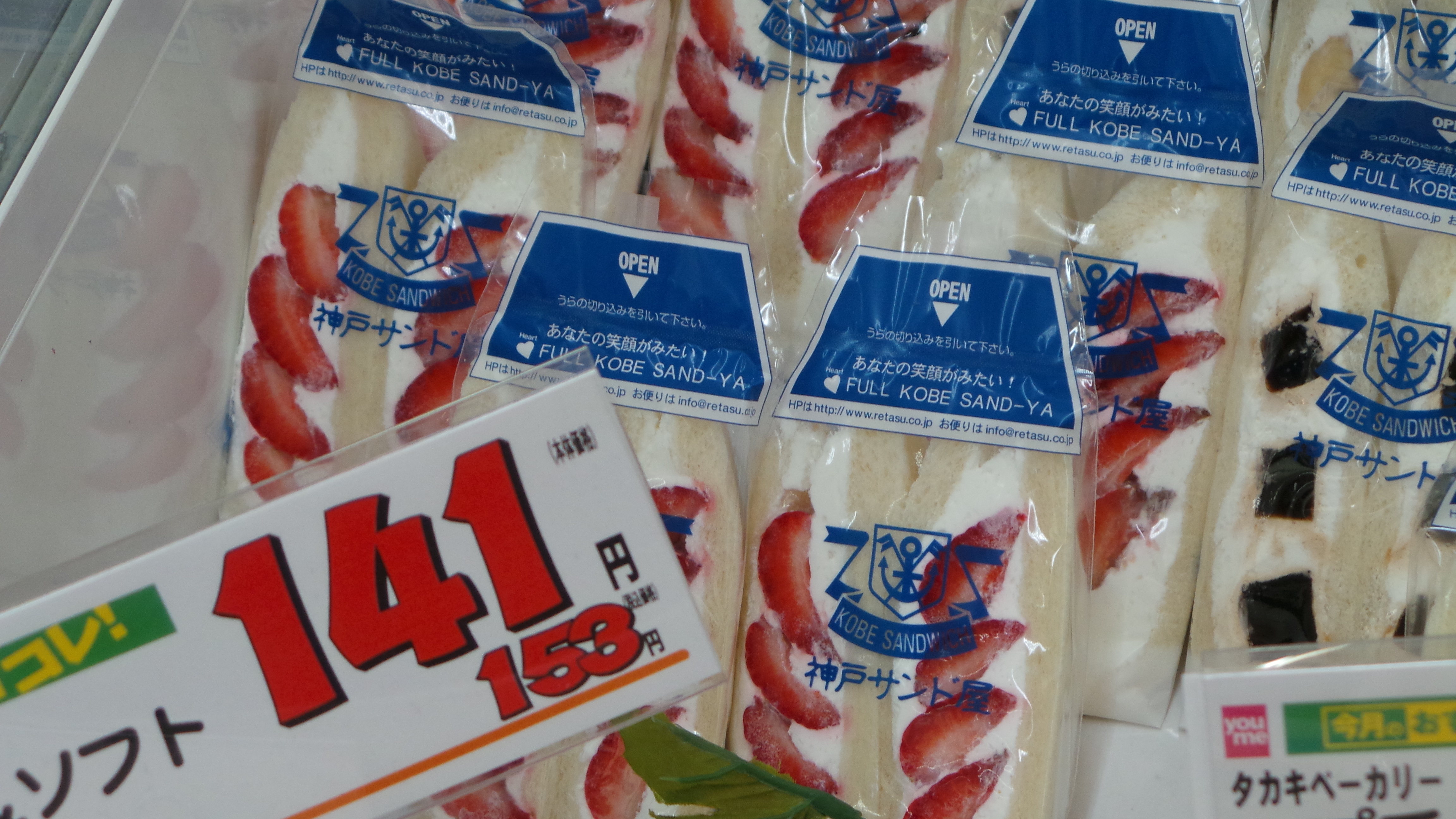
I went to the supermarket to photograph a bento box, but they had completely sold out. So instead, here is a photograph of some strawberry and cream sandwiches:

20140713_115654

Anyway, I have a bus to catch. Next stop: Fukuoka.

Drinking Bananas, Las Vegas, Going to Hell, Bananas, Drinking

Outside it is 32°C with 0% precipitation. The weather here goes from one extreme to another. The morning fog is long gone. I take a bike to the supermarket to buy a late breakfast. I buy egg sandwiches, yoghurt, a fruit drink made from real bananas, and some grapes. A normal size plastic container of grapes costs ¥1298. I opt for a small box costing me ¥198. it contains 11 grapes.

After breakfast I cycle along the coastline. I see a bright red building called, ‘Las Vegas’, so I decide to check it out. I discover why everywhere in Beppu is deserted. Everyone is here at Las Vegas, the place is packed. The noise of metal balls and the stench of cigarette smoke pours out of the door. Las Vegas is a nine story pachinko parlour. Pachinko is a recreational arcade game where players pay for balls, then fire them through a vertical pinball machine with no flippers. The balls bounce off pins and have a chance of activating in-game prizes that produce more balls.

VEGAS[1]

Gambling in Japan is illegal; although there are controversial plans to legalise it ready for the Tokyo 2020 Summer Olympics. At a pachinko parlour, players can ‘cash in’ their balls for novelty prizes. These prizes can then be taken off the premises and to a nearby ‘exchange centre’, where they are sold to the buyer for cash. The exchange centre then sells the prizes back to the pachinko parlour. This is a loophole in the law that the police know about but turn a blind eye to. Very strange. Beppu has more pachinko machines than people.

Leaving Las Vegas I see a sign for Kannawa, the area where six of the eight Hell themed hot springs are located. Having only visited Crocodile Hell, I decide to take the thirty minute uphill bicycle ride, instantly regretting it the moment my foot hits the pedal. At Kannawa I find a sign that says, “Put your good memories of Kannawa into a haiku. The selection is held four times a year; on each season, spring, summer, autumn and winter. A stone monument will be erected for the very best haiku of the year.” I scribble down a haiku and place it into the box:

Steam, one with the clouds,
my mind, drifts like the stream,
into the ocean.

I head to Kamado Jigoku, or Oven Hell. I pay my ¥400 entry fee. Inside, there is a statue of a great red demon standing on an enormous cooking pot. A long time ago they would cook using the 100°C steam. This is what the statue represents.

ovenhell[1]

Also at Oven Hell there are many different stoves heating very old metal kettles. There is also a pond that, “Changes colour a couple of times a year.” There are loads of pools of bubbling mud. If you blow something that burns and smokes into the mud, it causes the amount of steam to intensify. This is demonstrated by a staff member with an unnecessary megaphone and a cigarette. After touring the many pools I am given the opportunity to eat an egg boiled in the steam of Oven Hell.

eggssteam[1]

After Oven Hell I head for Umi Jigoku, Sea Hell. An explosion from a volcano 1,200 years ago created a pond of boiling water. For some unexplained reason, the pond is cobalt blue. This place shouldn’t really be described as a Hell. The area is full of natural beauty. There are no gimmicks here. No eggs here. No crocodiles. Just wildlife and scenery.

Cobolt_blue[1]

Sea Hell is massive. In random ponds float tropical water lilies, bananas grow inside a building labelled, “Hell emitting gas use greenhouse,” and random waterfalls and hot springs are surrounded by nature. Inside the gift shop the air conditioning is so cold. I stay here pretending to look at tacky souvenirs, while I secretly cool off from the heat of a hot summer’s day.

Bananas[1]

I decide to save the other five Hells for a rainy day. I quite enjoyed cycling here, but I enjoy the downhill cycling a lot more. On the way back to the hostel I see a sign for Beppu City Traditional Bamboo Crafts Centre. I take what I think is the correct road, but somehow end up at a baseball stadium. There are people outside hitting drums, and baseball players in full kit chanting. A very interesting warm up exercise indeed. I don’t find the museum.

Back at the hostel, Yojiro is on reception, meaning the music is good. ‘Round Here’ by Counting Crows blasts from the stereo. I work out that I have cycled 23.2 kilometres today. After a few hours relaxing and talking to other guests at the hostel, I head out to do my laundry. While I wait I buy a can of Suntory whisky highball from Seven Eleven. The staff member asks me to put my hand in a box and pull out a token. I have no idea why. I speculate that it’s because I used exact change for once. My ticket doesn’t win me anything.

I switch my laundry from washer to dryer then walk around the middle of Beppu; on the way I count four random cats. The cats here look healthy and lurk around the backstreets of Beppu at night. The lampposts are once again playing the Beatles, ‘Lucy in the Sky with Diamonds’. Back at the launderette, someone has taken out my dry laundry and folded it neatly and placed it into a basket. Thanks!

Laundry[1]

I head back out to an international bar, the owner here was the person that recommended the festival in Oita a few days ago. I chat to random people, mostly students from the nearby Asia Pacific University. They are Japanese but speak very good English. It’s actually a pretty nice bar, although quite small; and it does get a little smoky after a while. In Japan it is still okay to smoke in buildings, much to my displeasure. At some point in the night Yojiro randomly shows up at the bar and buys me a drink. Thanks Yojiro!

asahitower[1]

The night washes over me and eventually it is time to go. I leave the bar at around 3 a.m. In the distance Beppu Tower is illuminated with signs advertising Asahi. More beer is the last thing I need right now. Back at the hostel a Spanish guy is preparing to watch Brazil thrash Germany in the World Cup. I consider staying to watch the match, but instead I choose sleep.

Twelve Hundred Monkeys

Super Typhoon Neoguri is planning to slam into Kyushu in two days time. Bringing with it rain, wind, high tides, and destruction. Looking at the predicted trajectory, the eye of the storm is where I was yesterday, Nishioita Station. All of last night I was woken up by heavy thunder and flashes of lightning all around me. Since 4 p.m. yesterday afternoon it hasn’t stopped raining. Water on the pavement outside pours downhill toward the ocean. Typhoon ‘Wild Raccoon’ is coming.

eyeofthestorm[1]

On a much lighter note, I spend about half an hour drying my shoes with a hairdryer; before heading to the station. My shoes are still soaking wet. What a waste of time. At Beppu Station the rain suddenly stops and a little bit of sun comes out. I decide that I should probably go to the Monkey Park and Forest Therapy Road, while I still have the chance.

As I wait for my bus a 68-year-old Japanese woman approaches me and asks me the usual questions. “Where are you from?” “What is your age?” “Do you know Elizabeth, the Queen?” She is quite polite about it, however, and I am somewhat relieved when my bus finally arrives. The 68-year-old woman thanks me for that chat, and apologises for bothering me. I reply with my favourite Japanese phrase, “Tondemo gozaimasen.” It is a super polite expression meaning ‘no problem’. She is surprised to hear me say it.

The entrance to Mount Takasaki Monkey Land National Park is at the bottom of a mountain. The mountain is 628 metres high, and the monkeys are about halfway up. I pay my ¥510 entrance fee and begin to walk the rather easy path. There was an option to pay to take a small train to the top, but I would rather walk, immersing myself in the atmosphere of the woods.

monkey_steps[1]

I get to some stairs and there are wild monkeys wandering around all over the place. A sign tells me, “If you look into their eyes, they will perceive this as a threat and they will attack.” Not looking into their eyes is actually harder than you might think. At the Monkey Park there are Japanese monkeys everywhere. Just over 1,200 monkeys, to be almost exact. They wander around by my feet, pretending not to notice me, or just not caring about me being here.

There is a staff member speaking Japanese on a microphone. Randomly all of the monkeys in every direction scream, this occurs maybe every minute or so. The sound is deafening. It turns out I have arrived just before feeding time, and the monkeys are screaming because they know this and want their food.

feeding[1]

A crate of food is brought out and the screams get even more intense. From every direction monkeys run toward the food. The member of staff takes the makeshift wheelbarrow carrying the crate of food, and runs away from all the monkeys. They chase him, jumping into the crate to grab food before jumping out again, satisfied.

The monkeys find their own little private spots to enjoy their food. One sits down right next to my foot and munches on a miscellaneous vegetable; another monkey swings back and forth on a swing. I wander around taking photographs of monkeys before heading back down the mountain. I was hoping to go to Forest Therapy Road, but it turns out that the path up the mountain was the magical healing forest.

swing[1]

The next bus to Beppu is in forty-five minutes time. Not as lucky with the bus as I was yesterday. Through the mask of clouds in the distance I can make out Beppu Tower. It doesn’t look too far away so I begin to walk. Some 4.3 kilometres later and I arrive at the supermarket near my hostel. Inside, I head to a restaurant and have a delicious lunch of raw tuna and fried salmon on a stick.

Back at the hostel I watch the television show that aired on Fuji TV on Saturday, Moshimo Tours. I am on screen during the very opening scene of the show. I also appear in the background at the very end. I was going to share the link but it has already been removed from YouTube. Instead, here is another poor quality photograph of my computer monitor. I promise the next photograph will be better.

moshimoto[1]

After watching the show, I take a bicycle and travel for a few hours with no real destination. It suddenly becomes really foggy in Beppu. I start to head back to the hostel, just as the first few drops of rain begin to fall. I grab a snack (a cake) from Seven Eleven and retire to the hostel computer to research typhoons.

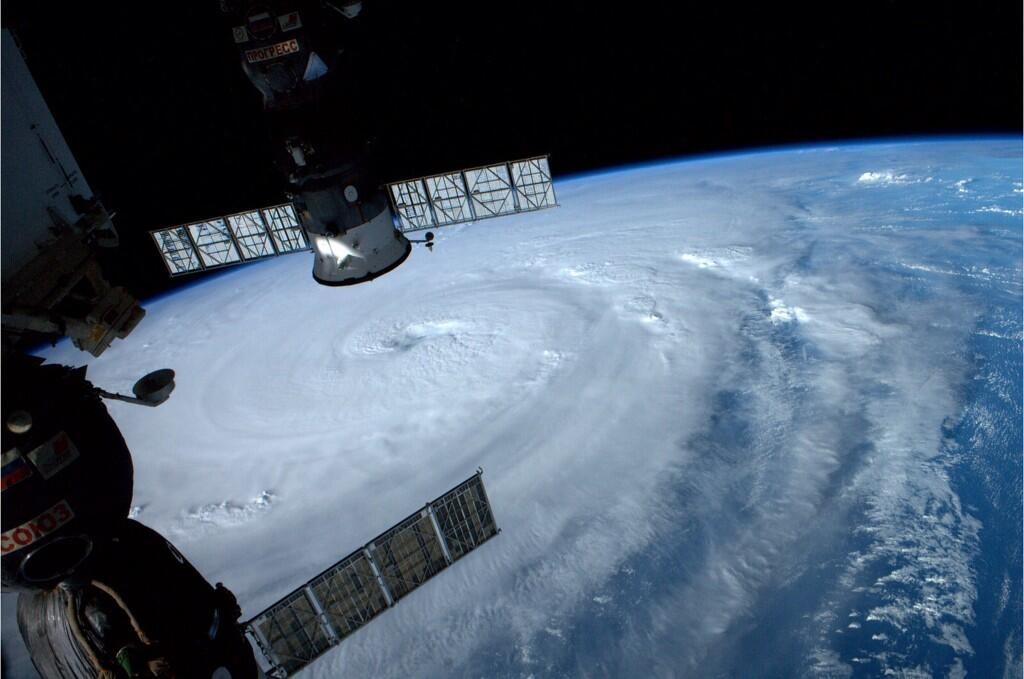
Reid Wiseman is an American astronaut living on the International Space Station. He took this photograph of Typhoon Neoguri. In a few hours it will hit the tiny island of Okinawa. Then a day after that it will come to Kyushu, the island I am on. If its course stays the same, it will pass directly through Beppu.

space

After a discussion with some of the locals, I’m undecided on whether to stay here in Beppu or take the train further north. Beppu has mountains behind it, which might act as a shield against the onslaught of wind. The exact path of the typhoon can easily change. Considering its size, most of Japan is likely to face the worst of it anyway, so attempting to escape it might have the opposite effect.

I think about the people in Okinawa. I also think about the monkeys on Mount Takasaki. Probably two of the worst places you can be during a Super Typhoon; on a tiny island, and halfway up a mountain.

So Long, Tokyo, and Thanks for All the Fish

After a month of staying at the best hostel in the world (and finally memorising all nineteen stops on the Tokyo Metro Ginza Line), it is time to move on. The anticipation of spending eight hours on two different trains is something I lack. To avoid a whole day of travel I instead book a really cheap hotel at Kokura, which is the destination of the first of two trains.

At Tokyo Station, I purchase a ticket for the bullet train, the Shinkansen Nozomi. This high-speed train reaches speeds of up to 186 mph. After handing over my ¥22,310, I receive my ticket and proceed to the platform. I wait for thirty minutes while the train is cleaned in preparation for departure. The cacophony of noise from other platforms, announcements, station staff, and random whistles and bells floods back to me; I had forgotten just how prevalent it was when catching a bullet train.

seatontrain[1]

I take my ‘reserved’ seat by the window. The perfect seat. No one sitting next to me, and a plug socket for all my charging needs. If I had booked a ‘non-reserved’ seat, it would have meant queueing outside one of the first three carriages. When the doors open, it’s basically a free-for-all—first come, first served for seat selection. With my journey lasting an exact 4 hours and 48 minutes, rushing and fighting over a seat was out of the question. If no seats are available, you’re forced to stand up. Opting for a seat in a reserved carriage is well worth the extra couple of thousand Yen.

Back at my seat I weigh up the prices. A seven-day JR Rail Pass costs ¥29,110; this allows unlimited travel on all JR Rail lines for an activated seven-day period. Considering I still have a second leg of travel tomorrow (which will cost another ¥4000), the JR Rail Pass is a necessity if you are visiting Japan and plan to travel across the country. Travelling from Tokyo to Beppu will almost cost me the same as the seven-day pass.

this_taste_any_time[1]

The food cart eventually passes and I buy a packet of crisps for breakfast (Anytime, any where; right?) and a beer. I work my way through a third of Murakami’s ‘A Wild Sheep Chase’. Three beers later and I go for a doze. I wake up with an hour to go so listen to OK Computer. OK Commuter. I arrive at Kokura. My journey is an exact 288 minutes. Not a second more. Not a second less.

Kokura is located between Honshu and Kyushu; two of the largest of the four main islands that make up Japan’s geography. Honshu is the largest island, referred to as the Japanese mainland. It is the island that I’ve just left. Kyushu is the most south-westerly island, and where I am heading. Outside Kokura Station I am surprised to see a vending machine that for ¥650 sells unusual bottles containing fish in a brown liquid. I have no idea.

fishaction[1]

I am still reeling from the fish vending machine. With no sense of direction I find that my hotel is clearly marked on the Township Guide Map. Hooray! I take an unhurried walk carrying all of my stuff on my back for the first time in a month; I am sure it is heavier than I remember. I hate this kind of travel, moving to a hotel for just a day, then on to somewhere else. Nope. Book two weeks at a time minimum in the same place, that’s how I prefer it. I can take my time and take it all in. One thing a day. I don’t like to rush about.

After checking in to the hotel, I venture out for some food. Exhausted from the hours on a train and a few too many heavy nights of drinking, I grab some quick stand up sushi and head back to the hotel. The hotel was really cheap, ¥3400 cheap; and I understand why. The room is the size of a small cupboard. I can’t get the television to work, but luckily there are instructions in Japanese. I take a photograph of the instructions and my camera translates them to English. “Press and hold Power then press 3, 1, 3.” It works! I spend the night watching game shows and talent shows before falling asleep.

The next day (which is today, unless you’re reading this on a different day) 

I wake up to find time has moved the day to Sunday. To make up for my lack of updates I will continue on with this one. I’ve been merely socialising instead of sightseeing and feel a bit bad having not wrote anything for five days. I check out of the hotel early. Not to miss an opportunity, I head for Kokura Castle. The skies are hot and clear and I feel out of place with an umbrella and a rucksack. After seeing the castle, I head back to Kokura Station.

kokuro_castle[1]

No one I have met has spoken English in Kokura. I get through the ticket booking process by nodding and saying, “Hai!” I think the first question was, ‘single or return?’ The second was probably, ‘reserved or non-reserved?’ I receive my single reserved ticket; it costs me ¥4220 for 1 hour and 8 minutes on a train. This weekend is getting expensive and I still have to hand over ¥18,000 for two weeks at the hostel. On the way back, at least my travel time will be broken up by two-week intervals as I sweep back towards Tokyo. Between now and then I have 7 weeks of semi-planned stops along the way.

Beppu-bound on the Limited Express Sonic Train, I am glad for last night’s rest; having my own space and a bathtub were quite the treat. On the train I continue to read ‘A Wild Sheep Chase’ and find myself laughing out loud at regular intervals. The train journey flies by in no time at all.

beech[1]

I leave Beppu Station in awe. Beppu is by the sea and surrounded in every direction by tall mountains covered in wildlife. At my hostel I discover that I am a one minute walk from the beach and a two minute walk from Beppu Tower. As I hand over my ¥18,000, the woman at the reception desk finds it unusual that I am staying for two weeks. “What are you going to be doing for two weeks?” Take it all in. That’s how I prefer it. I don’t like to rush about.

It is Sunday and there is a nearby section of interesting intersecting streets filled with shops, bars, and restaurants; mostly closed. I find a vending machine selling not fish, but ice cream. I also find that my Suica card works on the vending machines here, a nice surprise. These little Japanese pre-paid cards can be used at Seven Eleven stores, some vending machines, and ticket barriers. I didn’t think they would work this far from Tokyo. The Pasmo card definitely doesn’t work. If you plan on travelling around Japan, always choose the Suica card over the Pasmo card.

pizzandwine[1]

I find a pasta and pizza restaurant with no English menu. I order a glass of wine and a pizza in Japanese. This is the first time I’ve ever felt I needed to speak the native language. In Tokyo I could get by just fine. Perhaps this is for the better; I got a little too comfortable and this might just give me some motivation to actually study a bit harder. The food costs ¥842 for the lot. At least I’ll save some money on food here.

Back at the hostel for 3 o’clock chicken time! I realise that I’m going to miss the crew in Asakusa; I’ve been missing a lot recently. I remind myself that this is not for here. Moving on I find my room; it is a traditional Japanese-style room with a Tatami flooring. Four beds, so sharing with just three others. Less crowded which is good. The view from the balcony is amazing. I can see Beppu Tower, which lights up at night. I can see a horizon of skyscraper obstructed mountains. I wonder which way the sun comes up; my sense of direction very much missing too.

tatamibed[1]

I explore my local surroundings. There is an international bar called Hot Bepper, it is thirty seconds away. You might think I exaggerate with my walking distances sometimes, but I can actually see the bar from the hostel. The bar has its very own table tennis table and is hosting a tournament next week. Hot Bepper is also run by the same company that runs the hostels I’ve been staying at. I like the pun name too, considering where I am.

I swing by the nearby Family Mart. An occurrence that will never fail to make me smile occurs. Staff at a convenience store greeting me through the door, bowing, saying thank you, bowing, and saying goodbye as I leave. Back at the hostel, I drink Suntory whisky highballs and write up the two days you’ve just read. I plan now to take a hot spring bath in the hostel’s very own hot spring baths; before heading out to the Hot Bepper bar, which will most likely be closed on Sundays.