Eat Fish or Die Tryin’

I meet my friend Dagmar for breakfast at ten. At breakfast, I drink away my hangover with a bottle of a tasteless drink called ‘Delicious Water’ before heading out alone for the train. Someone told me yesterday that beneath the banks and office buildings between Mitsukoshimae Station and Otemachi Station, hidden deep underground, the Japanese government grows secret rice.

Somewhere along the Ginza Line, my train just powers down. All the lights extinguish, plunging the carriage into an abyss of darkness. The train drifts aimlessly towards Ueno Station and finally grinds to a haunting halt. The silence thickens, shrouding the dead train in an eerie stillness, an unsettling void that grips the carriage. Everyone remains silent, messing with their mobile phones, despite the obvious sorrow of the situation. It is all very worrying. About five minutes pass, and there is an announcement in Japanese, then nothing. A further five minutes, and the train starts up like nothing ever happened.

As I exit Mitsukoshimae Station, I accidentally wander into an adjacent department store.

maskmaskmask[1]

Inside the department store, there is a Mask Art Museum, and it is free. A nice but rather small exhibition. The store housing the museum is incredibly upmarket. I ask politely if I am allowed to take photographs, and lucky for me, it is fine. The exhibition actually ends today. Rather fittingly, all of the mannequins in this department store are wearing masks.

One thing I have noticed in Japan are the many strange museums. I believe I have previously mentioned the famous World Bags and Luggage Museum. A few other favourites of mine that I am yet to visit are the Gas Science Museum, the National Leprosy Museum, and the Parasite Museum.

I wander around for a while looking for the entrance to the secret underground rice bunker. It takes a while but I eventually find a huge office building that has every window on one side completely covered in plants. On the other side of the building I scare away an eagle pecking at a gold statue of Prometheus. This must be the place, I think to myself. It turns out it is.

prometheus[1]

Deeply tucked away in the second basement level of a huge skyscraper, they grow rice. I am not entirely sure why they grow rice, but people are free to come and see it. Huge natural light shines from above. Rice grows. From what I was told, this area stretches under the whole business district, although it doesn’t. The size of the area was heavily exaggerated to me. The rice isn’t really that much of a secret; it’s not too well advertised, but no one is trying to hide the fact that it grows here either. In fact, I think it’s encouraged for people to come here and learn about rice cultivation. So, another urban myth shattered then.
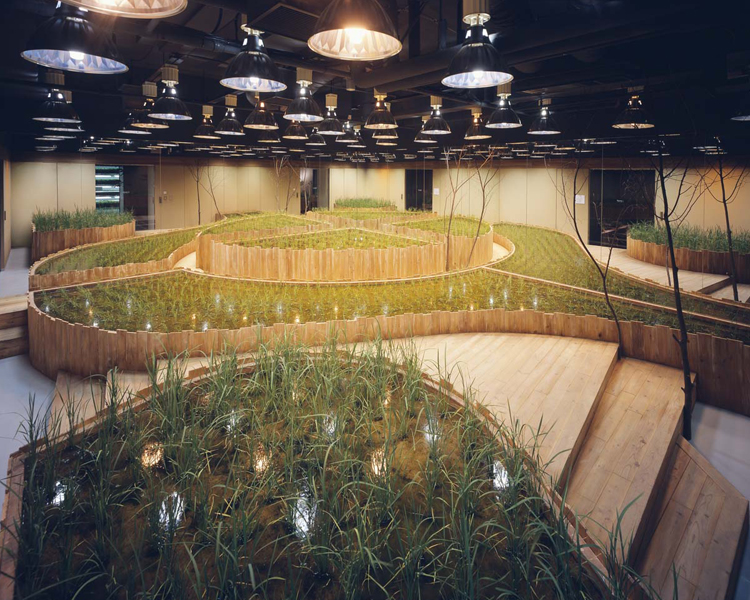
ricetomeetyou

After looking at rice for a few minutes, I decide to walk to the Imperial Palace. I’m surprised by how close the stations are to each other in this area. Tokyo, Kanda, Shinbashi, and Nihonbashi Stations are literally within a five-minute walk of each other. Outside the Imperial Palace, about thirty elderly Japanese people are sitting and painting.

The Imperial Palace is home to Emperor Akihito, the last remaining monarch in the world to go by the name of Emperor. There isn’t really much else to see at the palace. The grass outside is cut immaculately, and the water fountains spray jets of water about two metres into the air. I notice there is a great view of Tokyo Station from the Palace car park, though. I wander to the nearby Ginza Station and take the train back to Asakusa.

tokyostation[1]

I decide to inspect a potential apartment. Small apartments in Japan are ironically referred to as “mansions.” These one-room coffin apartments offer little to no space and an equal amount of comfort. Another phenomenon in Japan is the grouping of shops, whole areas dedicated to selling one type of product. The area where the apartment is housed is completely surrounded by funeral shops. One street has eight shops in a row, all selling tombstones. I decide the area doesn’t quite feel right. Chimes sound from nowhere as I head back to the hostel, chiming five times signalling 5 p.m.

At 6 p.m., Richard, Luis, Remi, and I head to a nearby restaurant that serves fugu. Jokes are made about toxicity, tetrodotoxin, paralysis, and death. In reality, fugu poison is one-thousand two-hundred times stronger than cyanide; this is no laughing matter. The most poisonous part of the fish is the liver. Outside the restaurant, we watch our dinner for a while, graciously swimming around in a tank. In a moment, this beautiful blowfish will be killed on our behalf; we sure hope it doesn’t have a taste for revenge.

blowfishing[1]

There was a time when a fugu chef would have to pass a training course of ten years before being given certification to prepare fugu. These laws changed about three years ago, and now the rules state just a two or three-year course is required. We really hope that our chef today is of the older generation.

We take a seat in a tatami room. We order fresh blowfish sashimi. We also order diced blowfish sashimi just so I can make a pun about how we diced with death. Oddly, one of the options on the menu is hot sake with dried blowfish fin floating in the liquid. “We only serve the finest live domestic tiger blowfish,” says the menu. Served live? I certainly hope not. We wait anxiously for our food to arrive.

The poisonous fish is served in elegantly arranged translucent slices; it doesn’t look very threatening.

blowfish1[1]

A taste for revenge would be an overstatement. A taste of anything would be welcome. The food is the freshest fish I have ever tasted, of course; it has been dead just minutes. The food is also the least tasty fish I have ever had. It has no flavour at all; perhaps there is a subtle hint of death. I’m just glad we went to a cheap non-certified restaurant. It costs us just ¥5480 between the four of us for two dishes and four drinks.

I tried the sacred fugu of Japan and all I got was this lousy anecdote.
Pyrotechnics and Parade

I wake up at 5 a.m. to the sound of a drunk man in our dormitory room. He spends fifteen minutes trying to open his locker before giving up and leaving the room. It’s nights like these that I wish I were in a hotel. An hour later, the same guy who doesn’t know how to open a locker comes back and spends fifteen minutes trying to climb the ladder to his bed, which, of course, is the bed above mine.

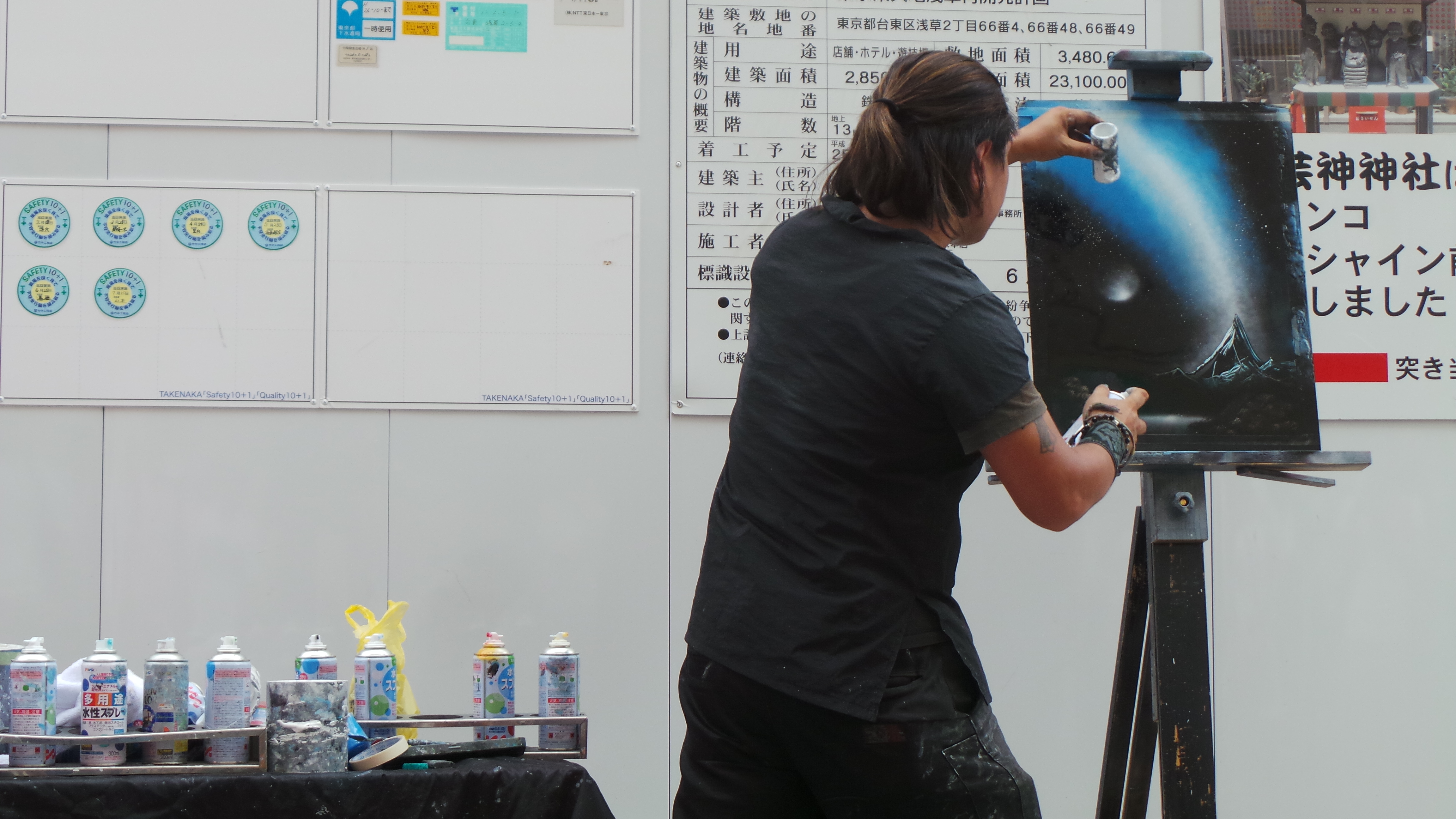
More noise at eight. Two people packing and re-packing their cases loudly, stamping around loudly. I give up on sleep and get up, tired and annoyed. I kill time, drink coffee, then go to a cafe at nine for more coffee. Despite drinking a lot of coffee, I still feel drained. The hot weather adds to my exhaustion. I lazily stroll through the mid-morning Asakusa streets. There is an artist on the street using spray paint to create science-fiction themed space art. He goes from a blank canvas to a beautiful planetscape in a matter of minutes. Incredible.

streetarts

I continue wandering. One guy raises his hand above his head as I walk past, “Woah! You are too tall!” he exclaims, much to my amusement. I head back to where the street performers gather and watch a yo-yo master skilfully Split the Atom.

Back at the hostel, I write up non-events, then kill time playing Baldur’s Gate on my camera. At 3 p.m., I still have no energy but need to get out of the hostel. I decide to head to Chofu. I take the Tokyo Metro Ginza Line to Shibuya. On the way, I hop off at Nihonbashi Station for a ¥300 smoothie (orange and ginger), then back on the next train three minutes later.

I cross Shibuya Crossing and take a shortcut through Yoyogi Park. My shortcut is somewhat obstructed by the Super Yosakoi dance festival. The entrance to Yoyogi Park’s event open space is blocked by hundreds of people dancing in the street.

yoyogistreetdance[1]

The dancing here is actually quite good, the music catchy and rhythmic; I much prefer it to the Samba music that was playing all day yesterday. The stage here is in use too, with people in traditional clothing waving flags and dancing to very similar music to that of the street dancers. I take the ten-minute walk to Harajuku Station, trying to get away from the crowds. My plan is a shortcut through the forests surrounding the peaceful Meiji Shrine.

My shortcut is somewhat obstructed by the crowds of people gathering at the entrance to the shrine. A stage has been erected here, and more people are dancing. The Super Yosakoi dance festival is everywhere. The music from the speakers here is so loud that I actually have to walk with my fingers in my ears. A one-way system through the grounds of Meiji Shrine is also in place.

Halfway through my route through the shrine grounds, a third stage is active and features more dancing and loud live music. There is a sign with a big red cross over a picture of a camera; I presume it to mean “No photography,” yet everyone seems to be taking photographs. Very odd. Perhaps I have been misinterpreting this sign all these years.

nophoto[1]

I leave Meiji Shrine and head toward Shinjuku Station. It’s another hot day, and I have another ten minutes of walking to endure in the heat. Somehow, as this realisation of the temperature comes to mind, a stranger in the street hands me a fan. At Shinjuku Station, I get a little lost but eventually find my way to the entrance to the Keio Line. A million other people have decided to take this train too. I take the second train that pulls in as there is no room on the first. As I am pushed into the carriage, I see that the crowd behind me spills up the steps and beyond. It appears the whole of Tokyo is following me to Chofu.

The Special Express train makes just one other stop between Shinjuku and Chofu, and I arrive promptly at 6 p.m. I follow the swarms of people to the Tamagawa River. Just as I arrive at the river, there is an explosion in the sky.

fireworks7[1]

Today is the annual Chofu City Fireworks Festival. It runs for an hour and includes 8,000 fireworks. I have a pretty decent spot and enjoy the spectacle. All along the river, little stores sell street food, and even Lawson Stores and Seven Eleven are getting in on the action. They have beers for sale outside floating in big ice buckets, and they have moved their hot food counters to the front of their stores.

The fireworks are impressive, although very stop and start. A lot of fireworks are launched at once, then nothing happens for twenty or so seconds, then lots of fireworks at once, et cætera. Every time a big explosion occurs, everyone around me says, “Sugoiii!” “Sugoi!” and “Oh, Sugoi!” This word means ‘amazing’ in English and seems to be the only word that the Japanese people here use to describe the fireworks. They certainly were amazing.

fireworks6[1]

At 19:11, I head back to the station; the fireworks will continue for another twenty minutes or so, but I really don’t like the idea of getting back on a packed train. It seems everyone else has had the same idea; once again, the station is packed. I am not proud of it, but when the doors finally open, I dash to grab a ‘Priority Seat.’ These seats are intended for pregnant, elderly, and disabled people. I feel somewhat less guilty when the other seven Priority Seats are taken by youths.

Back in Shinjuku, I change to the Marunuchi Line and take it as far as Ginza before switching to the Ginza Line. I arrive back in Asakusa around eight.

I meet with some friends, and we head to a nearby British pub run by actual British people. They brew their own beer here, play British music, and serve by the pint. I go for the porter; nice but expensive at ¥1000. The song ‘Empty at the End’ by my friend’s band The Electric Soft Parade comes on at some point in the evening; my mind ends up back in Brighton.

When Haricot Met Celery

I wake up at 9 a.m. and head down to the lobby for my Japanese-style breakfast. The food is almost identical to yesterday. The grilled fish of the day is once again salmon. The only change is that my cooked seasonal vegetables today are haricot beans and peppers, mixed in with natto. My side salad includes corn on the cob, celery, and red onion. I gaze out of the window whilst I struggle with my breakfast, a meal I am not used to eating.

After breakfast, I take the subway from Shin-Osaka Station to Namba Station. Getting off the train, I head toward the famous Namba Grand Kagetsu Theatre, hoping to catch some manzai comedy. Osaka actually produces most of the comedians in Japan. Manzai is a type of stand-up comedy where two comedians perform a routine together. Even if in Japanese, good manzai can be very funny to watch because a big part of the show is the timings and actions on stage. Sadly, there is no performance happening at the moment.

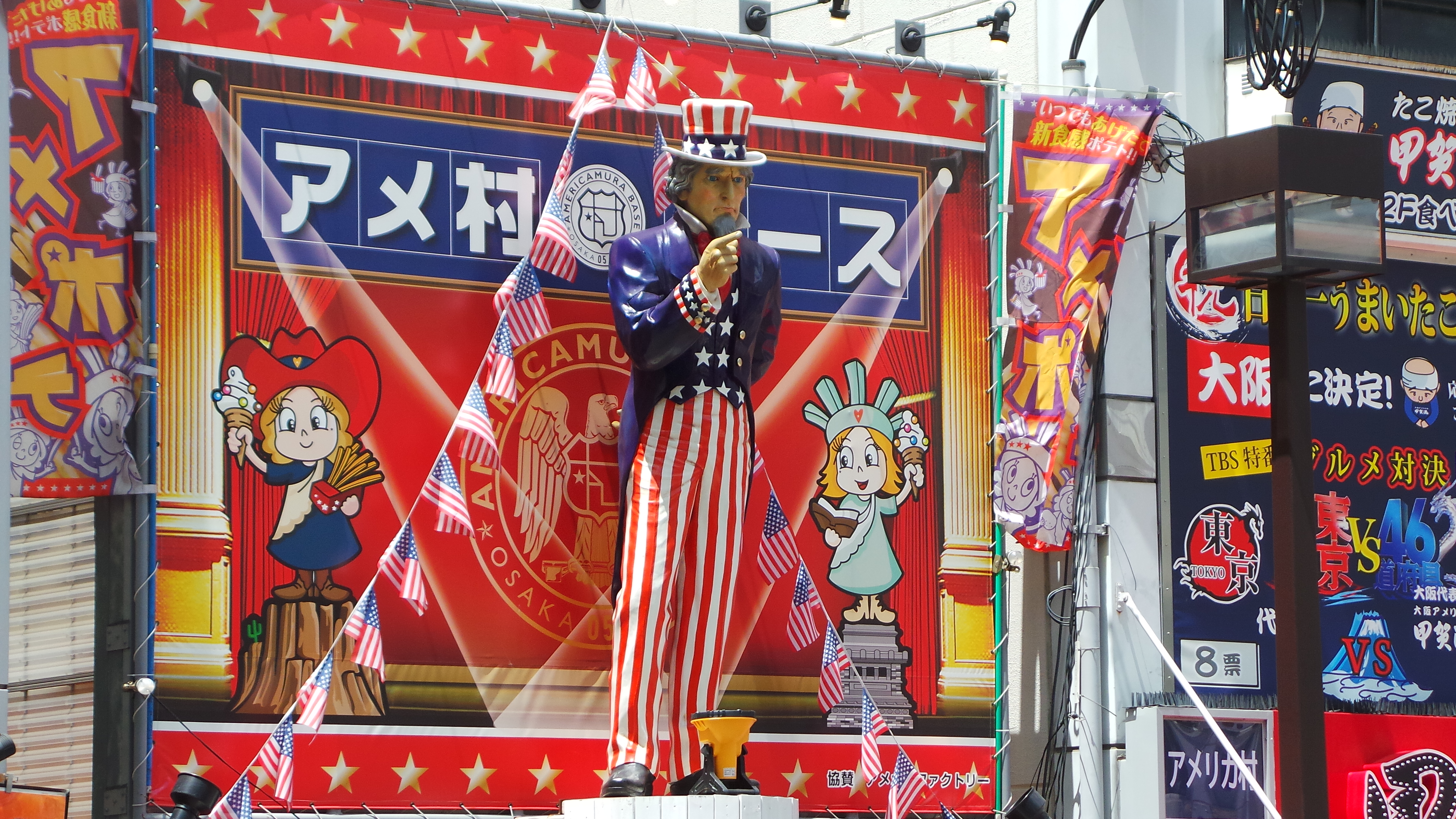
I check my map and decide to head to a place called ‘Americamura.’ I wonder what I will find there.

america

Shops here sell American clothing, some entirely dedicated to selling baseball hats or soccer jerseys. Mixed in with this madness are shops selling skate, punk, and retro clothing. I enter a bookshop that sells herbal teas, skateboards, and, of course, books.

All of the big brands have their own ‘flagship’ stores here. Mixed in with the clothing are some really cheap-looking bars selling inexpensive drinks. Surprisingly, all the tourists and shoppers here are Japanese; there isn’t an American in sight. I’m not quite sure how this place came to be. After a few blocks, I see a Tokyu Hands; the store marks for me where America ends and Japan begins again.

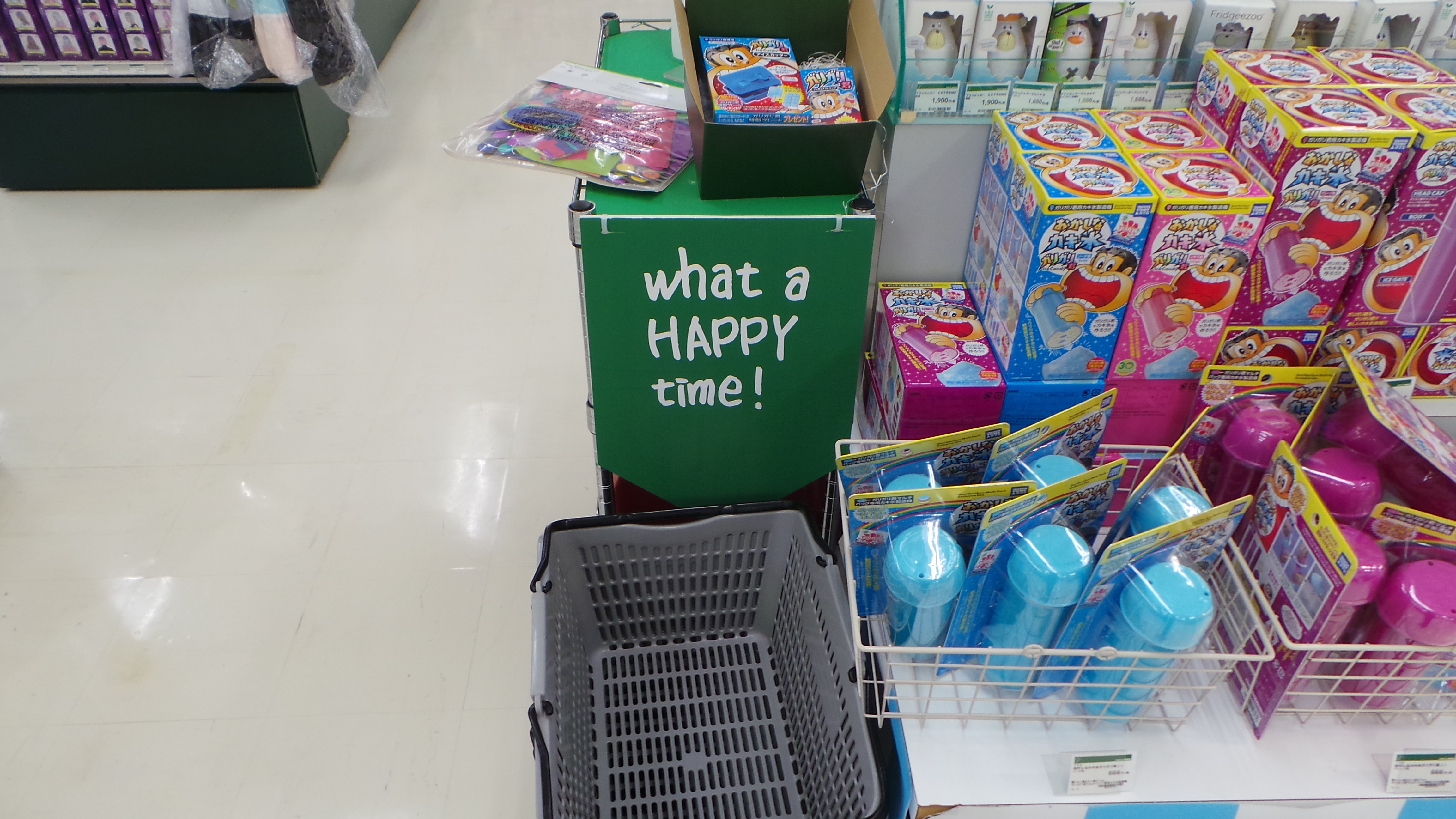
I decide to take a break from the heat and head to the fifth floor using the Tokyu Hands elevator. The shop describes itself as a ‘Creative Life Store’, offering a vast array of products. On this floor, they have party supplies, a variety of items, magician supplies, and bicycles. A song from the film ‘Frozen’ is playing, the Japanese version. I check out some of the cool gadgets, then glance at the prices of bicycles; they’re quite expensive here.

happytime

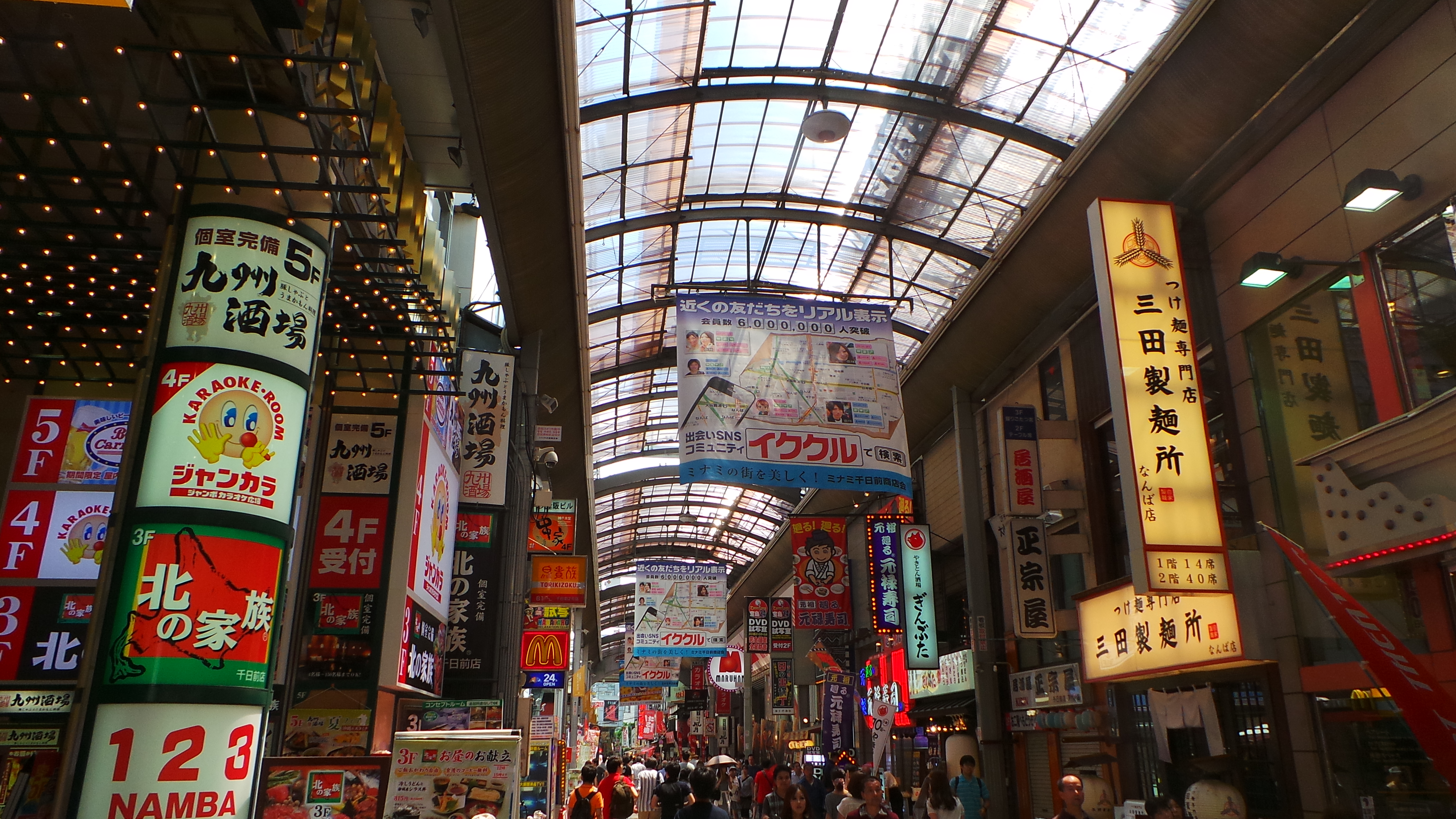
If you’re not particularly interested in shopping, today probably isn’t for you—or for me. I head into the Shin-sai-bashi shopping arcade. This is one of Osaka’s oldest and busiest shopping areas, stretching for approximately 600 metres. Everything you ever wanted is in this arcade.

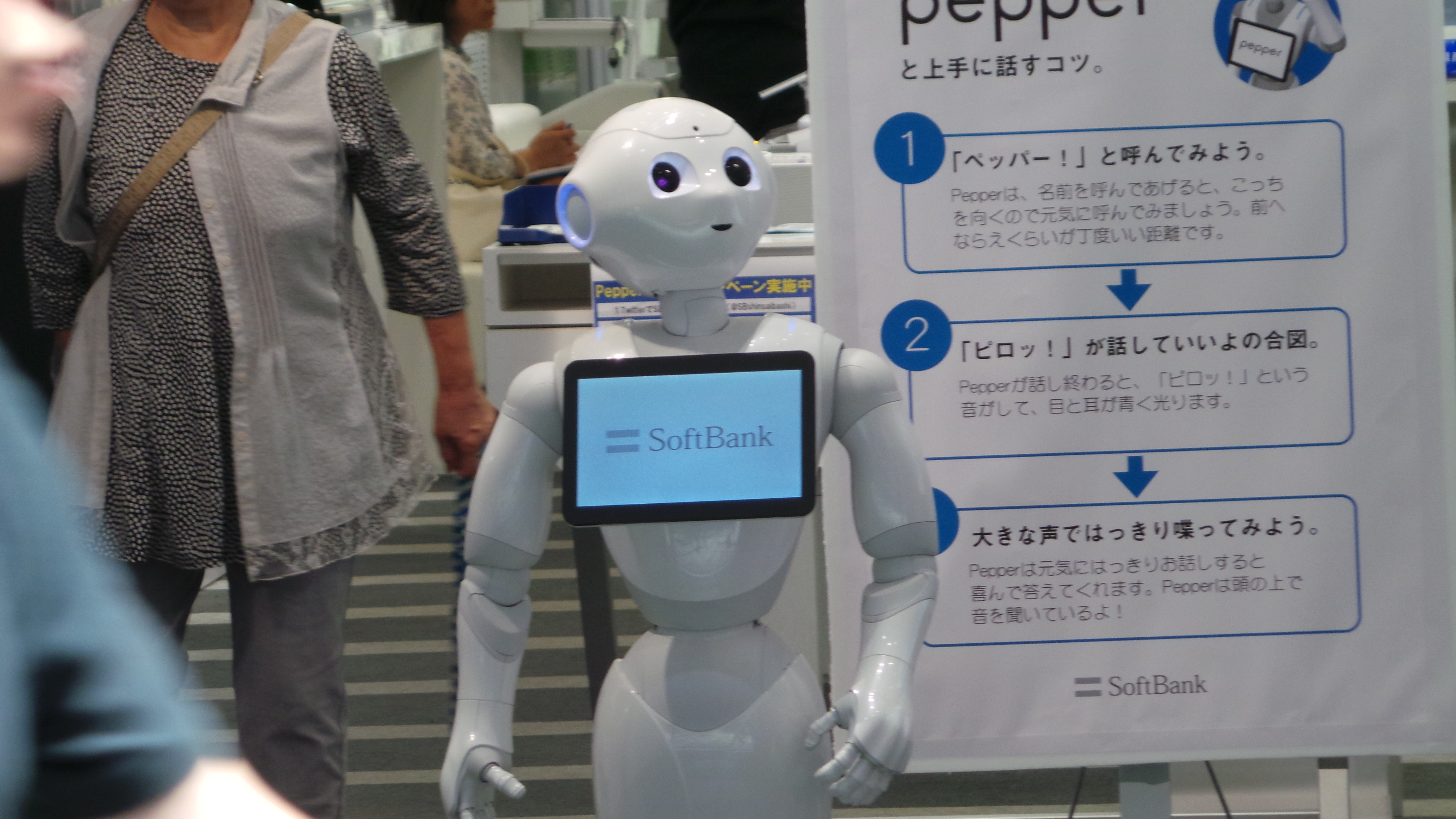
There is a shop that only sells ‘Hello Kitty’ goods, and another named ‘Pancakes, Teas, Coffee, and Happy.’ I’ve noticed that in Osaka, the word happy is used an awful lot. SoftBank, a Japanese telecommunications company, has its own robot. It moves around and engages in a conversation with me about their new products. His name is Pepper.

softbank

Also in the shopping arcade are the usual clothes shops, restaurants, and souvenir shops. I head into my second bookshop of the day, Junkudo. I’m searching for two specific books. I find one of them, ‘Pinball 1973,’ but it’s only available in the Japanese version. I’m trying to get hold of the English version printed for Japanese people to practice their English skills.

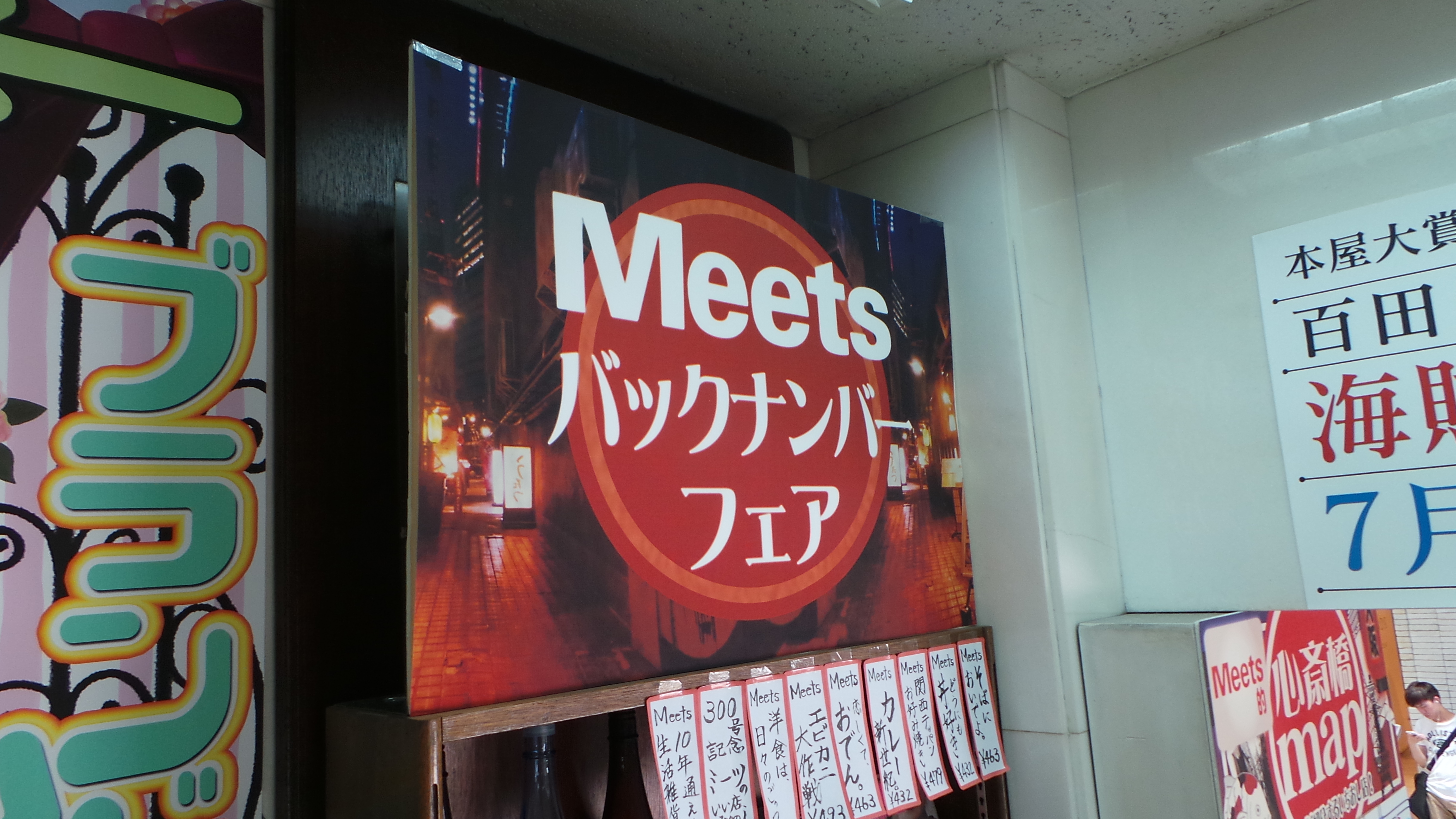
As I leave the bookshop, I’m taken slightly aback by a sign. At the bottom of the escalator, there’s an advertisement for ‘Meets,’ the bar I mentioned a few days ago. It displays a price list along with some other Japanese text. I take a photograph and add it to my folder of coincidences. Back in the arcade, that same song from the film ‘Frozen’ is playing.

arcade

Next, I visit a place called Dotonbori. The pavement here is littered with small restaurants and pachinko parlours. Each restaurant is stacked high, adorned with brightly coloured signage that becomes illuminated in the evenings. It’s the sort of street that I imagine looks just like a scene from Blade Runner at dusk, especially when it’s raining.

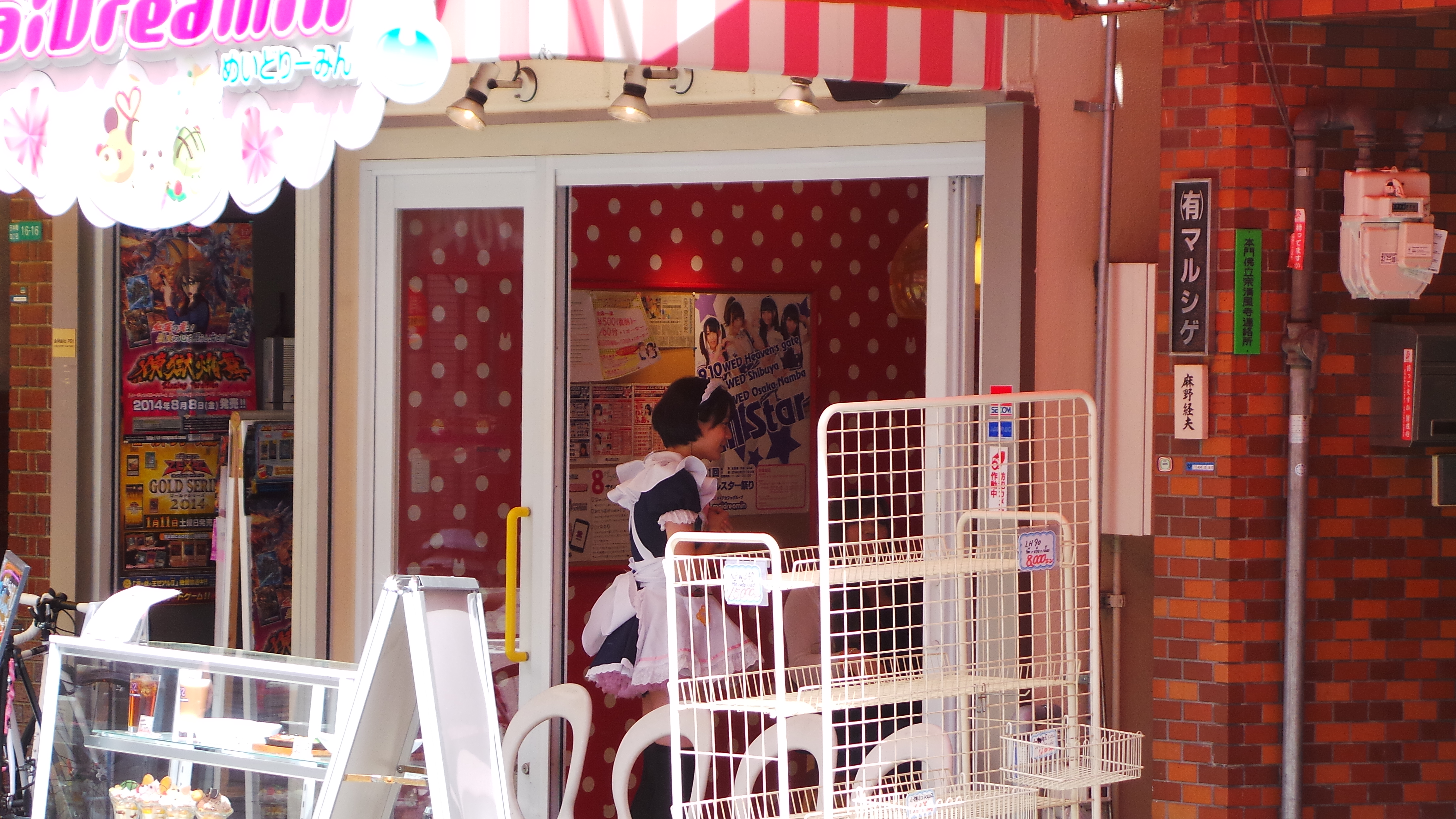
On the other side of Namba Station are shops selling manga and anime in an area known as Den Den Town. I spot two or three shops exclusively dedicated to selling Magic: The Gathering playing cards. Other shops offer model figurines and electronics. It reminds me of Akihabara, but on a much smaller scale. Girls dressed as maids stand on street corners, attempting to lure people into the many maid cafes.

maidcafe

I waste a quick ¥500 in a Sega video game arcade before heading back to the train station. At the station, I have to walk through even more shops to reach the platform. I take the Koya Line just one stop to Shin-imamiya Station. I decide to check out a place called Spa World, but it seems luck isn’t on my side as there’s a fence around it, and it appears to be closed for construction.

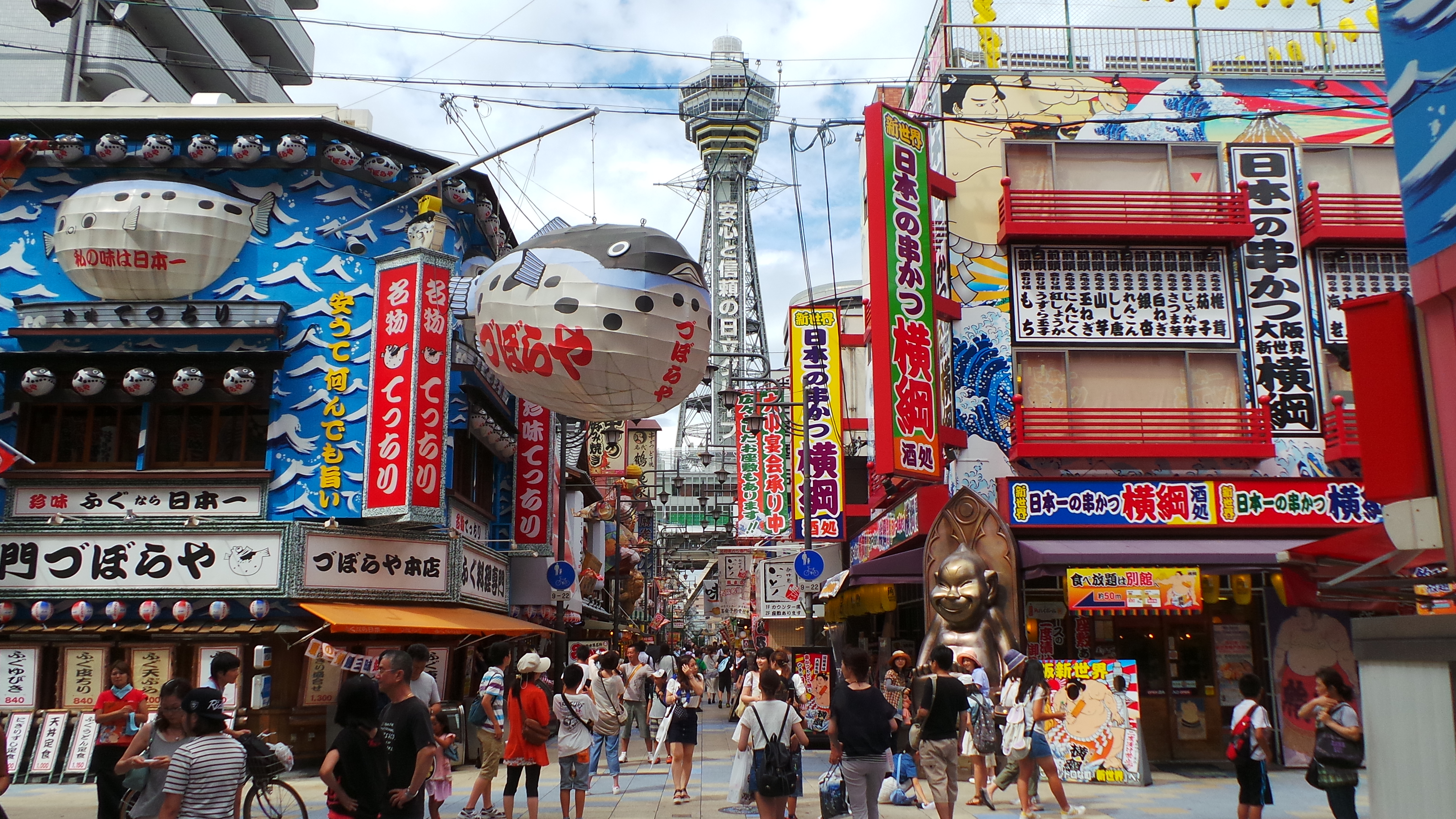
Instead, I head toward a tower in the distance. To reach the tower, I have to walk down yet another shopping street.

towerstreet

Unlike the other shopping streets, this one boasts a 103.3-metre-tall tower right in the middle—Tsutenkaku Tower, meaning ‘Tower reaching heaven.’ I also admire the Carnival Cutouts; one depicts what seems to be a sumo wrestler devouring a skewer of meat or wielding a rolling pin. It’s a bit ambiguous, but my guess would be a skewer, considering that’s all the restaurants in this area seem to be selling.

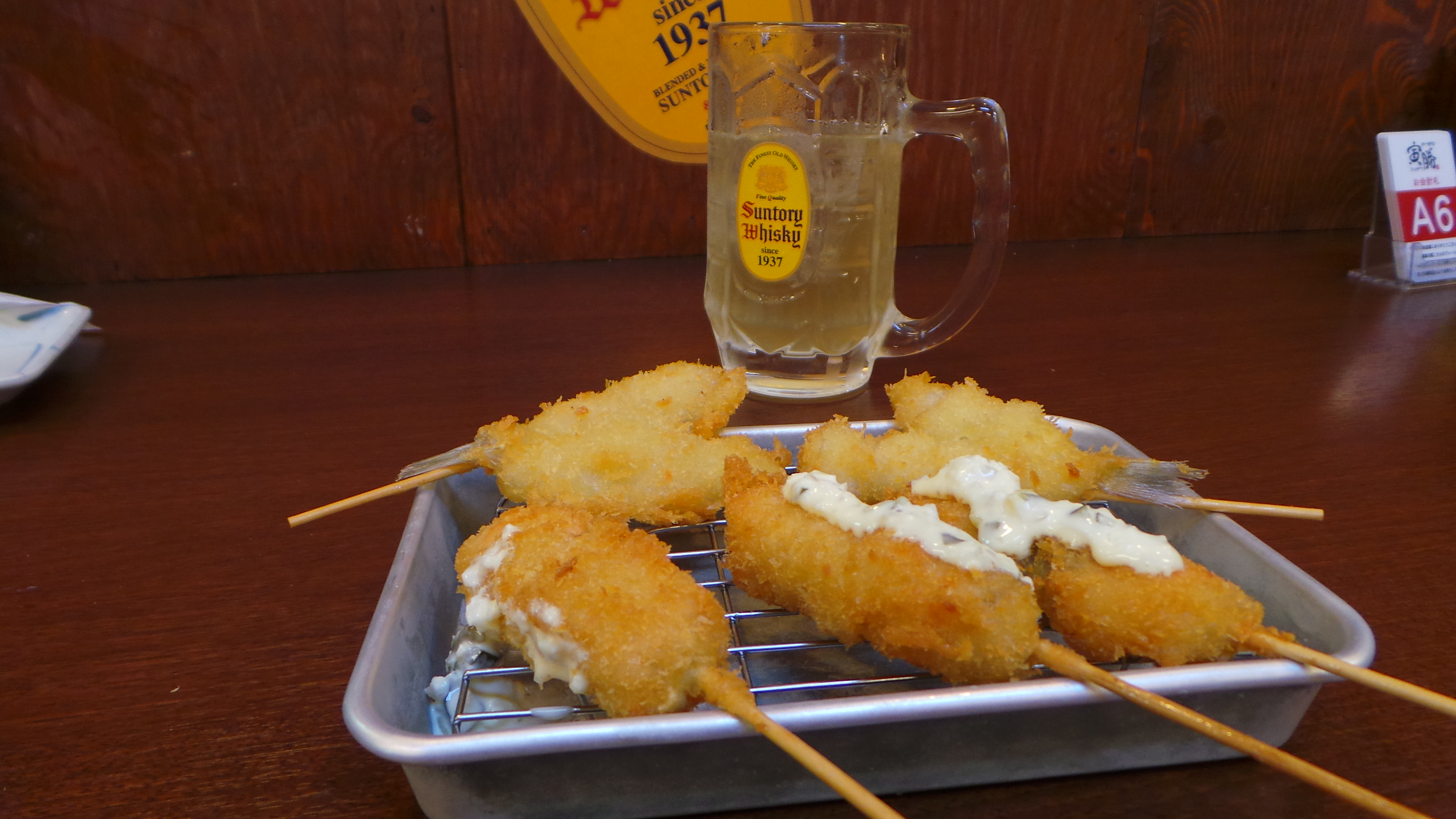
I choose a completely empty restaurant, taking a seat wherever I want, and order a Suntory whisky highball with lemon. With the number of times I’ve mentioned their whisky and coffee, I should probably get some commission money from Suntory. I opt for three salmon skewers and three white fish skewers. While I wait, I snack on the complimentary fresh lettuce and sip my highball.

skewers

The white fish turns out to be haddock, while the salmon is fresh, served with a light tartare sauce dressing. The skewered meat is already prepared on the counter; all the chef needs to do is cover each fish with flour, egg, and breadcrumbs before deep frying each stick in oil. This restaurant has all sorts of crazy ideas, but the ones that stand out are cheesecake skewers, ice cream skewers, and banana skewers. I’d eat fried fish on sticks every day if it weren’t for the fact that it would probably kill me. At ¥1050, not bad with a drink.

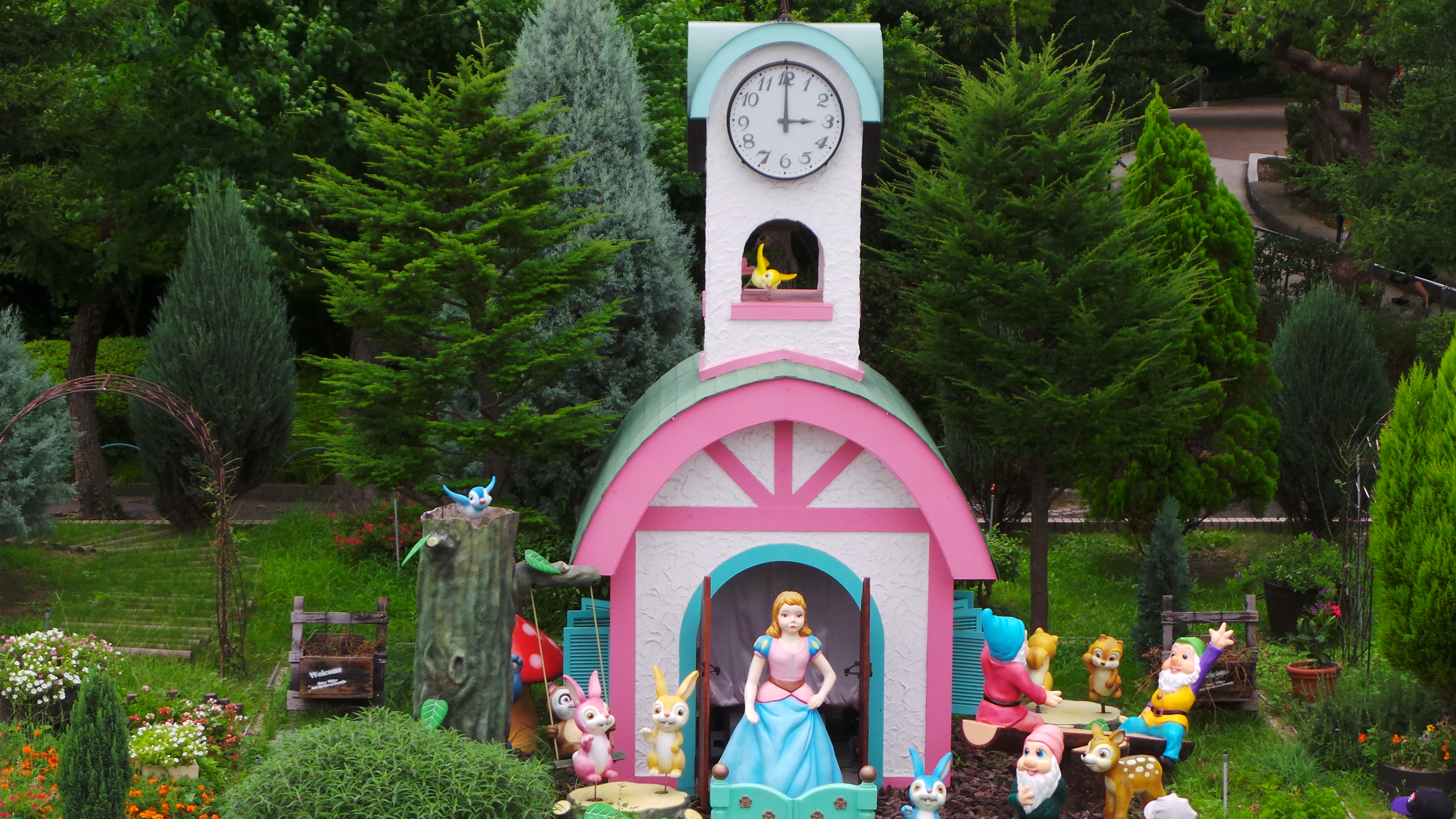
I head back out into the scorching sunshine. At the end of the shopping street is a zoo, complete with a Snow White Clock Tower. The time is now ten to three in the afternoon, so I decide to wait and see if anything happens on the hour. My life is that exciting. Sure enough, at three, everything starts moving, singing, and dancing, and then Snow White emerges from the clock. Not to be missed—the Tennoji Zoo.

snowwhite

At Tennoji Station, I board what I believe is the Osaka Loop Line. As it turns out, it isn’t. After three stops, everyone disembarks. I find myself disoriented; there are no signs indicating my location. I board the train across the platform, which indicates it’s the Rapid Service bound for Nara. Fortunately, it stops back at Tennoji Station. Returning to where I started, I board the Osaka Loop Line to Osaka. From there, I transfer trains to Shin-Osaka, before deciding that six trains in a day are plenty.

Back at the hotel, I read for a while before sorting through my photographs of the day. I stare at the sign I saw in the bookshop, advertising that same bar. I decide to head out and see if it is open tonight. I walk ten minutes to the bar and am pleased to see its shutters up.

meets2

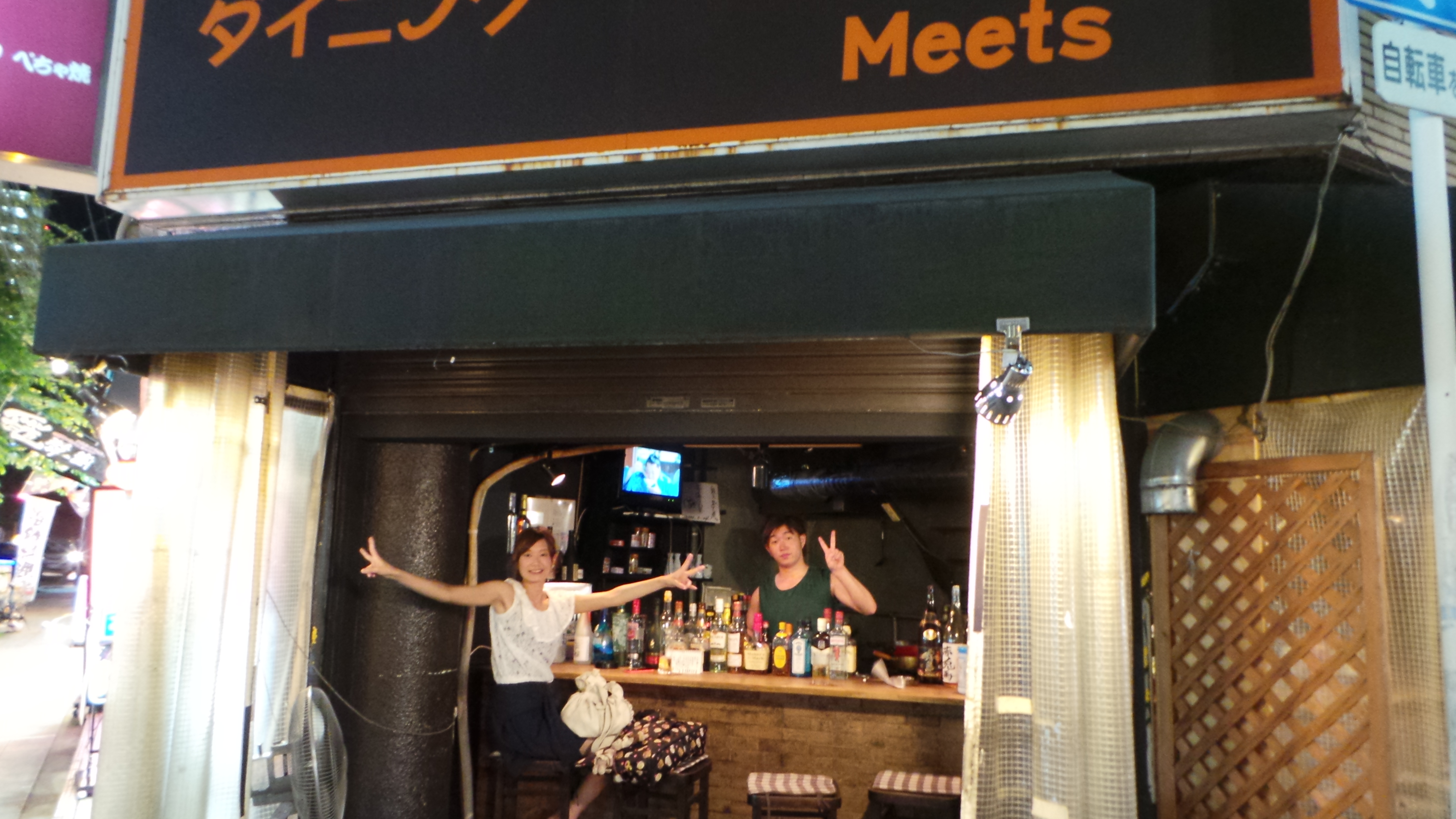
I first visited Meets when I was in Osaka in July 2012. The bar is L-shaped and has a total of seven seats. That night two years ago remains my favourite nightlife experience in Japan. Despite its small size, there were two members of staff working there: a man, and a young woman who bore a striking resemblance to Jennifer Aniston. I spent the whole evening talking to her. However, she didn’t speak a word of English, so we conversed in turns using her smartphone translation application. She would speak in Japanese, I would read the text, and then reply in English, and so on.

Anyway, back to today. Only one member of staff is working, a Japanese man called Ken. He’s the same guy who was working that night two years ago. I order a Suntory whisky highball and take a seat. I’m the only customer; a baseball game is playing on the television. At 8:50 p.m., Ken switches the television channel from baseball to the ending credits of a random show whose name I might never know. On-screen for no longer than three seconds appears Micaela Braithwaite, the woman I greeted in Fukuoka. I can’t snap a photograph fast enough.

The bar I saw advertised in a bookshop today, and he changes the channel at that exact moment. Ten seconds later, the credits stop and the adverts begin. What are the chances? Sometimes, it feels like I’m living inside my own memories. “I’ve worked here for three years now,” Ken tells me, chipping in with small talk.

Next, a girl named Mana enters the scene. She is from Taito, the same ward in Tokyo as Asakusa; we are practically neighbours, though a million miles away from home. We drink. Ken writes all of our names in kanji, while I write them in hiragana and katakana. We continue drinking. Mana and I talk about Asakusa, although our conversation is limited to basic English and basic Japanese. Unfortunately, there’s never a smartphone translation application around when you need one.

meets3

At 10 p.m., I finish my final highball, bid goodbye to Mana, and say farewell to Ken. My bill comes to ¥2500 for four singles and a double. “See you in two years,” I tell Ken, jokingly.

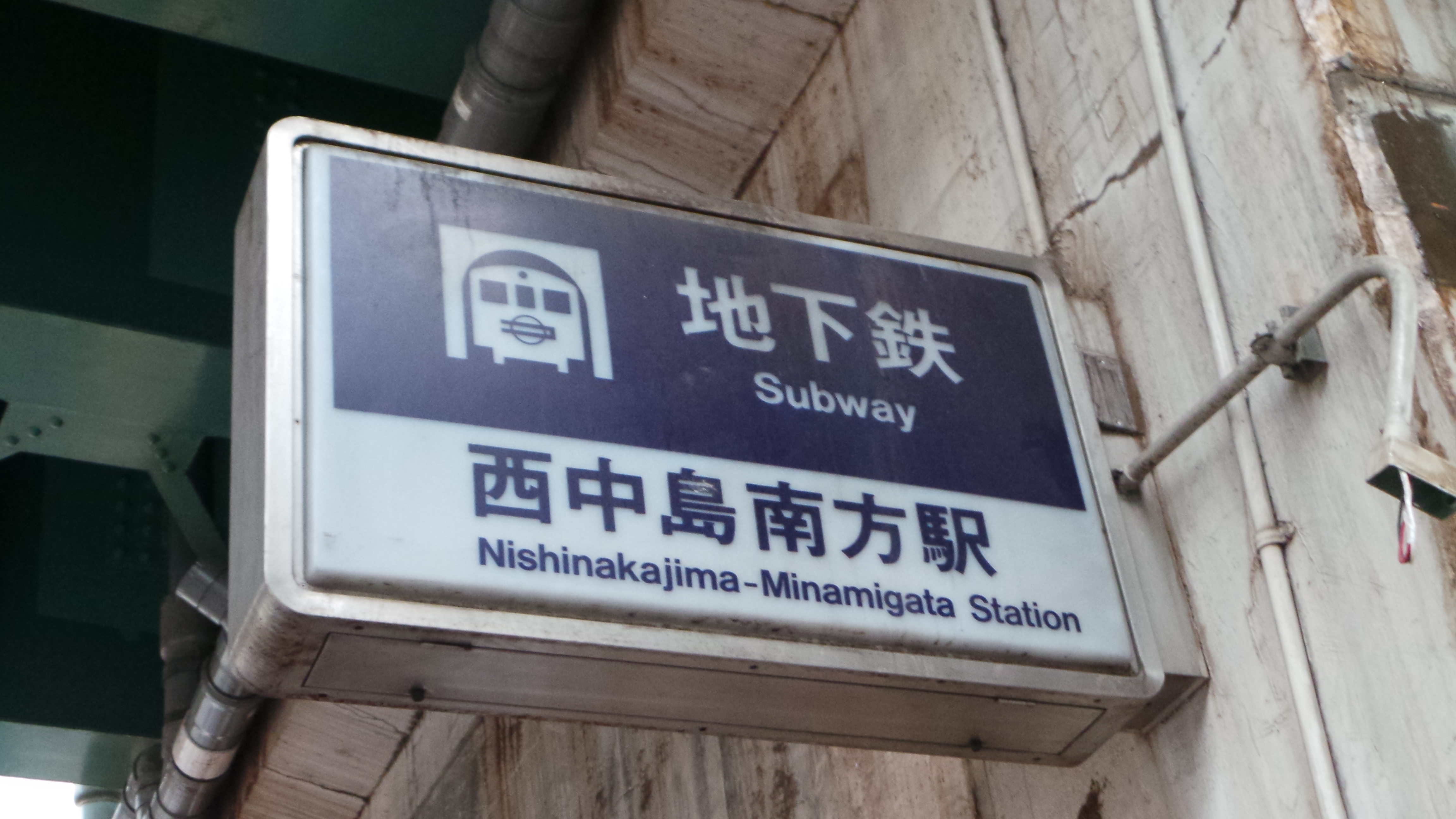
After Meets, I attempt to find some food; I haven’t eaten anything since the fish on sticks. The area around Nishinakajimaminamigata Station is littered with touts, neon lights, and shady massage parlours. I’ve been craving curry for perhaps a week. The first restaurant, simply named ‘Indian Restaurant,’ displays ‘Last Orders at 11:30 p.m.’ As I approach, the Japanese chef who’s taking in the sign informs me that they are closed.

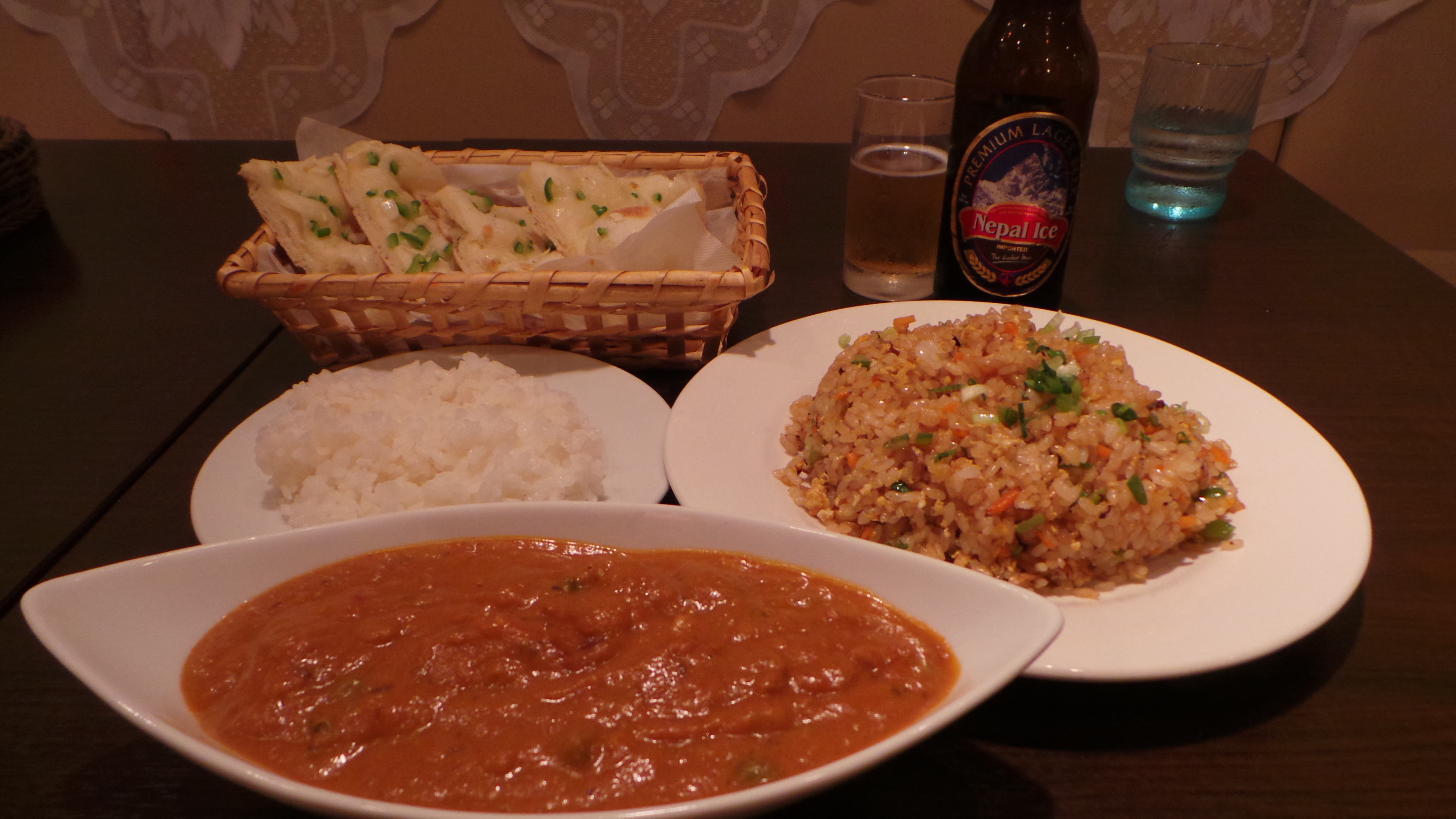
The second restaurant is owned by a Nepalese family and is open. Inside, I order a bottle of ‘Nepal Ice,’ having never tried it before; do as the Nepalese do, and all that. The beer boldly claims to be the ‘coolest beer.’ It’s pale with a slight bitterness, just like me.

I order the classic vegetable curry, egg rice, and garlic naan. The Nepalese waiter speaks English but habitually addresses me in Japanese. “Poppadom,” he says as he hands me a spicy poppadom.
“Arigatou gozaimasu,” I reply in Japanese, out of habit. The poppadom is a little stale but spicy; it will do. Hopefully, it isn’t a taste of things to come. The muskiness is slightly drowned out by the spice, and the spice itself is drowned out by the Nepal Ice.

nepalcurry

My food arrives, and I order a second bottle of beer. The spice level is almost perfect—perhaps it could be a tiny bit hotter, but I don’t mind much. I pay ¥2350 for two drinks and a really good curry.

O Browser, Where Art Thou?

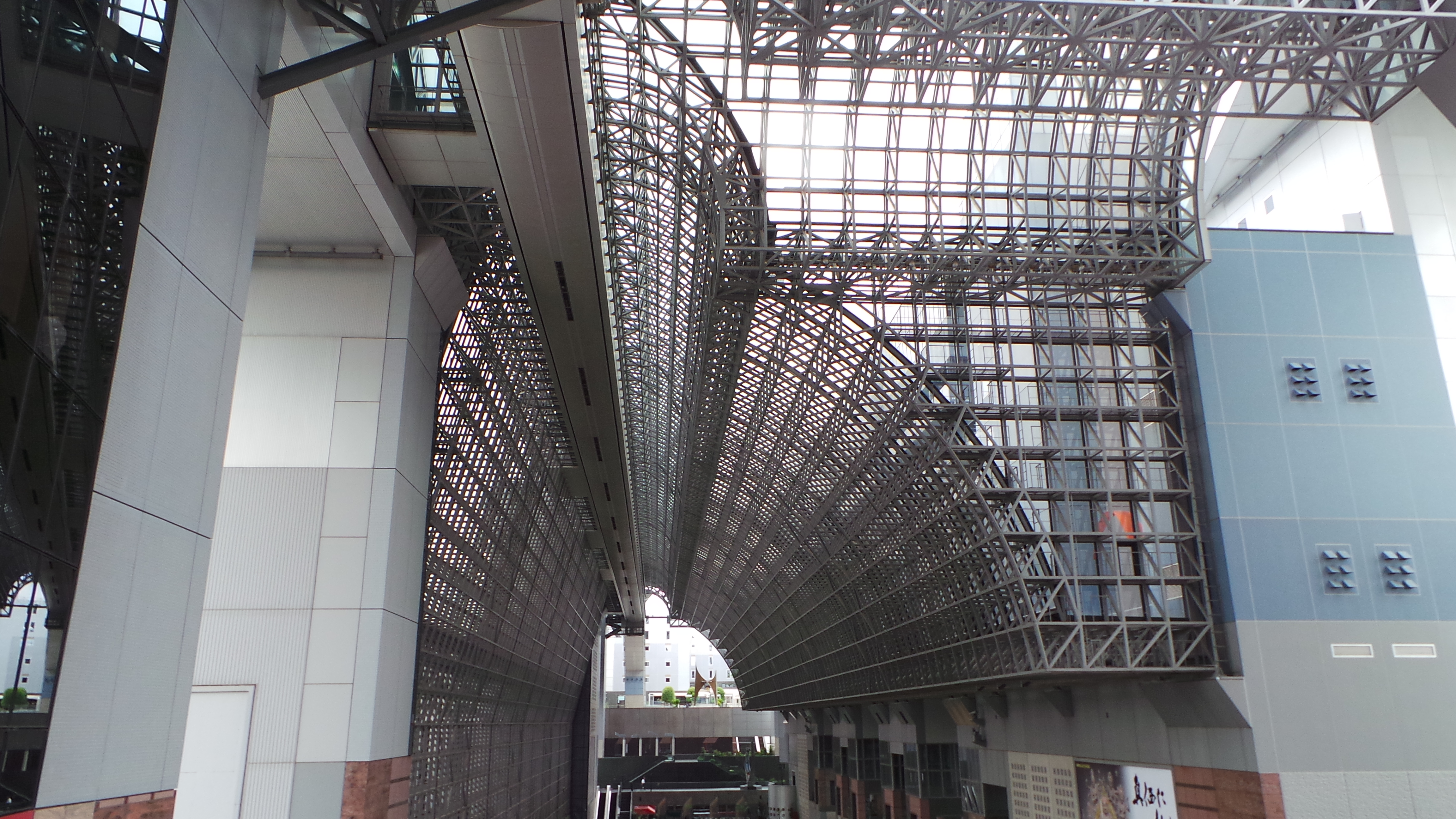
Today, I am leaving Kyoto. However, before I depart, I decide to visit the roof of Kyoto Station, specifically the sky garden known as ‘Happy Terrace.’ It requires ascending nine consecutive escalators to reach the top, where I can admire the breathtaking views of Kyoto for free. As I descend back on the endless escalators towards the train platform, I take a moment to appreciate the roof.

KyotoStnroof

At the platform, a helpful staff member asks if I need any help. I tell him I’m okay and thank him. “Where are you going? Osaka?” he inquires. I nod. He points at the train I’m waiting for, saying, “This one is faster,” seemingly checking off his good deed for the day in his mind. I thank him again and resume waiting for my train. This has happened four times this week in Kyoto—staff members or strangers offering help. I guess I should be more grateful.

At 12 p.m., I board the JR Kyoto Line to Shin-Osaka. The 23-minute train ride costs ¥560. Osaka, the capital of Osaka Prefecture, is Japan’s second-largest metropolitan area. Over one-seventh of the Japanese population lives here, ranking it as the third largest city in Japan by population. I wander around the Osaka area for a while, passing time before I can check into my hotel.

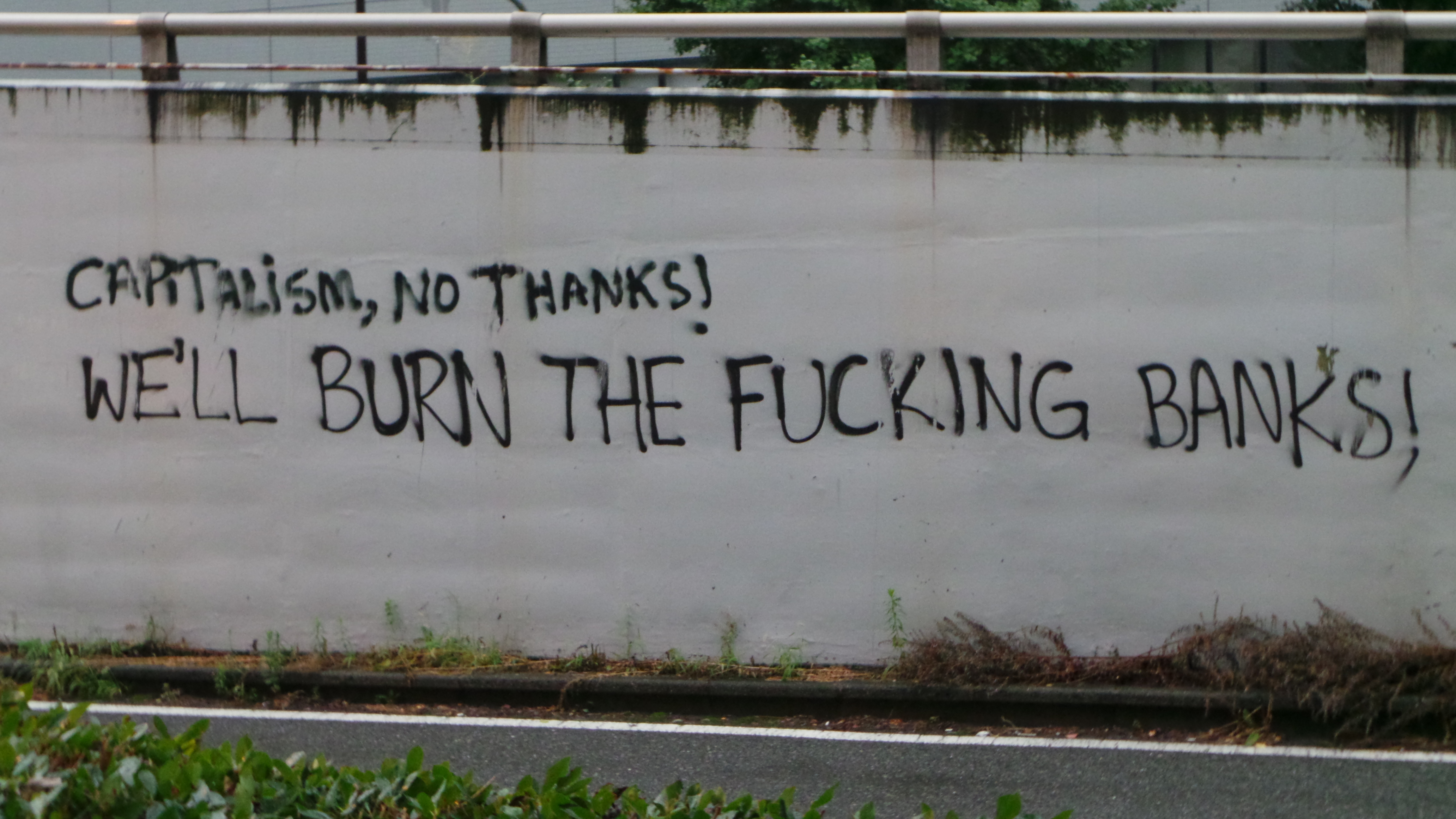
Outside Shin-Osaka Station, I see my first real piece of graffiti:

burnthebanks

At 2 p.m., I check in. I’ll be staying in Osaka for three nights. I selected this hotel based on a quote from their website: ‘For warm smiles, fastidious service, and first-class hospitality.’ Interestingly, the hotel also boasts another blatantly inauthentic motto: ‘The happiness of our guests is our happiness.’ The person checking me in hands me a breakfast ticket for a Japanese breakfast tomorrow morning. It’s odd because I don’t recall paying for any breakfast.

I am staying in Shin-Osaka, which Google says is a one-hour walk from Osaka Station. I opt to take the train to Osaka Station and walk back to my hotel, thinking it will be a pleasant way to explore the city. I stayed in Shin-Osaka two years ago, so I am familiar with the area around this station. In Osaka, people walk on the left and stand on the right side of the escalator, unlike almost everywhere else in Japan.

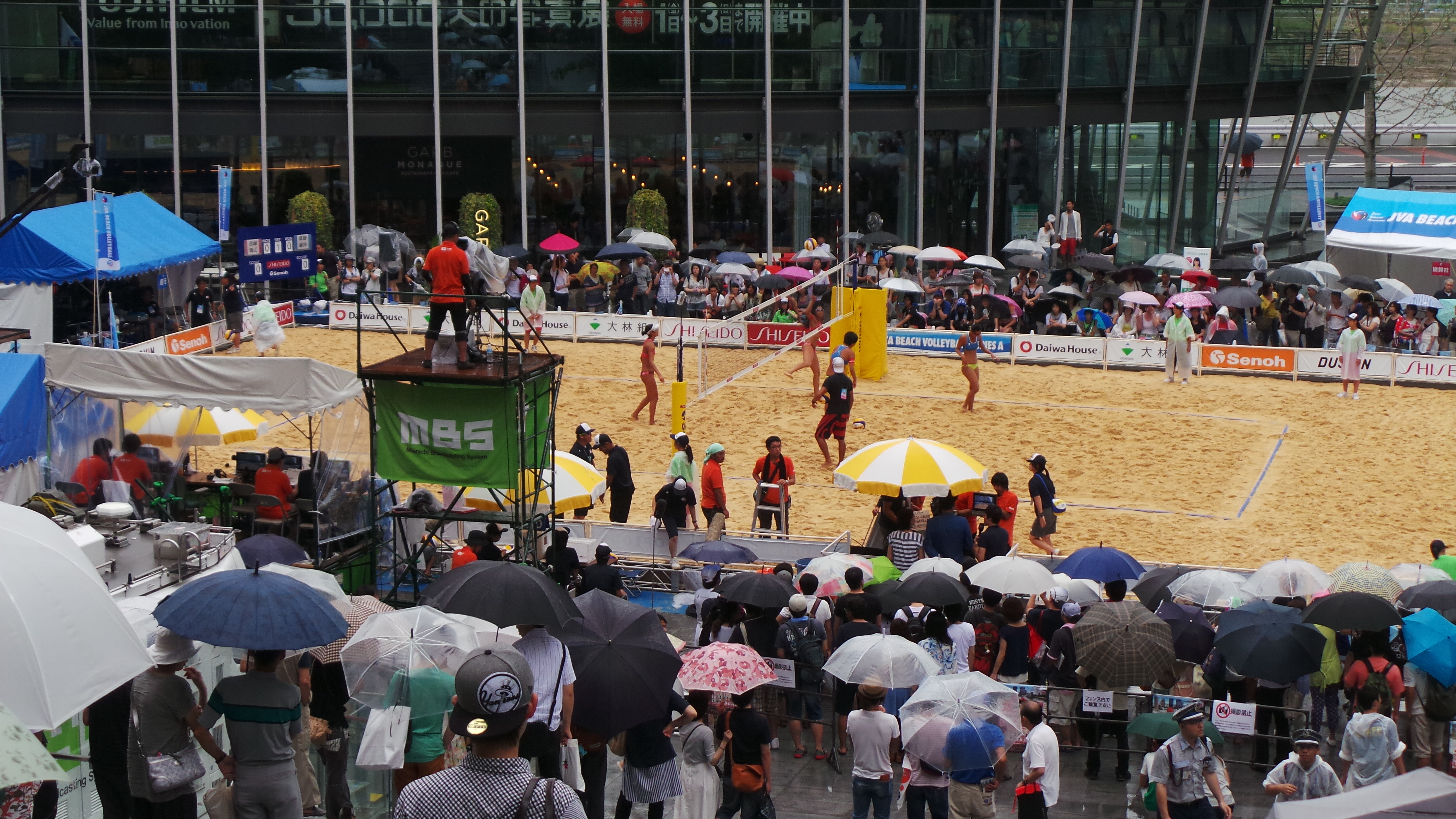
The train ride takes just six minutes with no other stops, and it costs ¥160. Exiting the station, I notice a sign indicating that cycling on the pavement is prohibited. Outside, the temperature is cool, hovering around 25°C, with a gentle rain falling—nothing to worry about, no need for an umbrella. At the foot of the station steps, there’s an outdoor beach volleyball game underway. It’s a Japan Volleyball Association match, likely being filmed, possibly for live television broadcast.

beechvolleyball

I continue my walk away from the station. To the left, there’s a massive construction site that seems to stretch for several kilometres. On the right, ‘Grand Front Osaka’ stands—a colossal building self-described as a ‘New town in a natural environment.’ Essentially a skyscraper housing numerous shops and restaurants. Adjacent to it, there’s an artificial river that spans the length of the building; it’s not exactly what I’d label a natural environment. However, concrete stepping-stones along the river add a touch of excitement.

I continue my walk through the chaotic Osaka roads. I’m accustomed to cities where streets form a grid-like pattern, always straight and easy to navigate. However, Osaka seems like someone picked it up and gave it a good shake—the city and its streets have turned into a tangled mass of concrete. The roads are chaotic, and the pavements strangely devoid of people. Suddenly, it starts raining hard—nothing to worry about, no need for an umbrella.

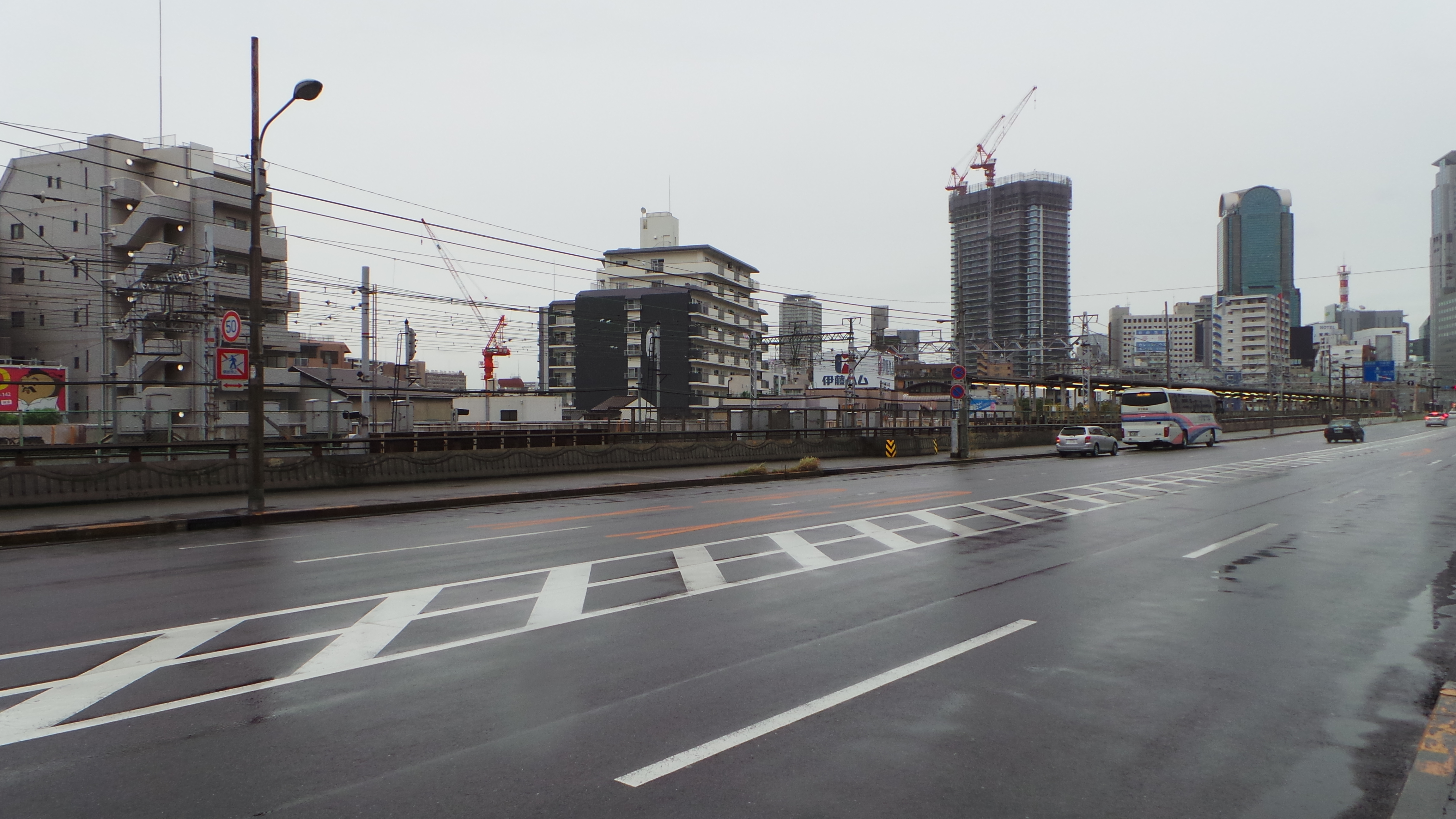
Since leaving Osaka Station, I haven’t come across a single convenience store, and I’m in desperate need of buying an umbrella. At this point, a considerable amount of time passes. I spend a good fifteen minutes attempting to reach the bridge that crosses the Yodo River, but inexplicably, an endless train platform obstructs any access. There’s no tunnel beneath it, no bridge over it.

endlessplatform

Completely soaked and frustrated, I eventually find the way to the bridge. The rain appears to be intensifying with every step, my shoes now full of water. It takes me another ten minutes to cross the Yodo River. I realise that all I’ve done since this morning is kill time. I have days like this every now and then—nothing happens at all.

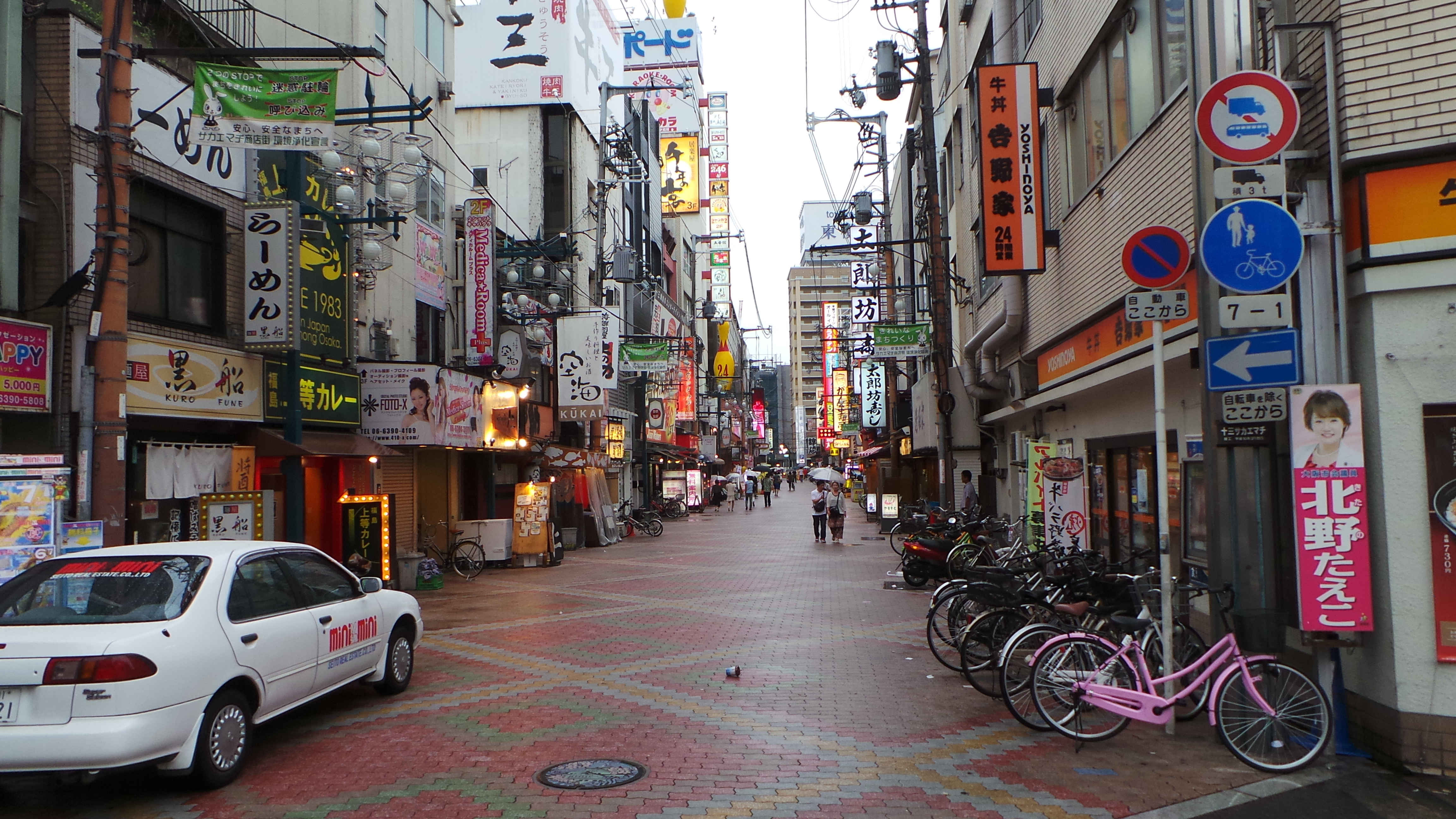
As I wander along with my wet clothes and my thoughts, I start to wonder if I’ll even have anything to write about today. Osaka Day One: Nothing Happens. I can already see the title. It’s 5 p.m. when I finally cross the bridge into Juso. A heavy sigh of relief escapes me as I spot, in the distance, the green and white lights of a Family Mart. A second sigh of relief follows at the sight of some neon. However, the path is somewhat spoiled by a single piece of rubbish on the ground.

litterandneon

I purchase an umbrella from Family Mart along with a single banana. Convenience stores appear scarce in this area, but at least I can buy just one banana. Osaka feels like a different country—people here act differently, there’s more litter on the streets, fewer bicycles around, and the locals also speak differently, using their own special dialect.

Drenched from the rain, I stroll down a street named ‘Happy Street,’ feeling as though the sign mocks me as I pass. After making a few turns, I decide to take a rest on a bus stop bench. I estimate that I’ve been walking for about two hours. Consulting the GPS on my camera, I realise I’m close to Nishinakajimaminamigata Station. It’s just one stop away from Shin-Osaka Station, so not much farther to go.

nishinakajimaminamigata

Near the station, the nightlife scene comes alive. Memories flood back as I navigate the interlocking streets filled with restaurants, bars, and neon signs. I decide to check if a bar I fondly remember, called ‘Meets,’ still exists. Finding it easily, I’m disappointed to see it closed today, or perhaps permanently shut down—I can’t discern which. It’s still early, though. Disheartened, I spot a Seven Eleven and opt to purchase a can of 5% Suntory whisky highball. Seven Eleven is the only convenience store I know that sells the 5% can; the other shops only offer the stronger 7% and 9% cans.

Upon returning to the hotel, intending to write about my day, I find that the two computers available in the hotel lobby are relics of the past. One of the machines operates on the Windows 98 operating system with an outdated Internet Explorer as the default browser, bombarding me with messages to update. It prompts for a password whenever I attempt to do anything. I try to download Google Chrome but face the same password requirement. Attempting to write becomes an exercise in patience as the machine’s slowness causes each typed letter to lag about five seconds before appearing on-screen. Frustrated, I abandon the effort and retreat to my room.

Exhausted, I fall asleep before 8 p.m.

Withdrawal & I

Today, I have a rough plan: a day trip to Nara with a stop in Uji. Last night, I arranged to meet my friend Slavek at noon. He’s planning on going to Nara anyway, so we decided to travel together. I wake up at 11 a.m. with a hangover; I shouldn’t have stayed up until 4 a.m. drinking whisky and teaching people magic tricks.

Slavek and I walk to Kyoto Station. I’m pleased to find that he is a fellow fast walker, and his pace matches mine perfectly. It takes us ten minutes at a brisk stride. On the way, I stop off at Seven Eleven to withdraw a ¥10,000 note. Seven Eleven cash machines are the only ones that accept my card in Japan, and the minimum withdrawal here is ten thousand yen. We pay ¥240 and head to Uji by train. Slavek is a very clever guy with great English skills, a keen eye for both nutrition and politics, and he’s an avid Haruki Murakami reader. We have decent conversations. In Uji, we’re off to see the temple that is depicted on every ten-yen coin.

coins[1]

I’m fond of Japanese coins. The 100% aluminium ¥1 coin floats on water and sticks to any part of your face without falling off. The copper ¥10 coin brought us to Uji to see the temple. The ¥500 coin is the most valuable everyday coin globally, and it’s also the most interesting. When tilted at a certain angle, you can spot the kanji for ‘five-hundred-yen’ hidden in the grooved lines. Additionally, the word ‘Japan’ is discreetly engraved in 0.2mm across the coin’s face.

Amidst my blathering about coinage, we end up missing the stop for Uji. Getting off the train, we cross the platform and board another train bound for Kyoto Station. It’s an easy mistake, one forgiven by the Japanese train ticketing system. Finally arriving at Uji Station, we head to Byodoin Temple, the one featured on the ten-yen coin.

Byodin[1]

Byodoin is a UNESCO World Heritage Site, marking another off my list. It’s one of the few remaining examples of Heian temple architecture in Japan, dating back to its original construction in 998 AD. Surprisingly, it doesn’t seem to attract many tourists; in fact, most of the visitors I see here are Japanese. The temple features Japan’s most beautiful Pure Land Gardens among the few that remain, alongside a small museum, both covered by the entry fee.

The museum has won four architecture awards. Inside, it houses 52 wooden Bodhisattvas, the temple bell, the south-end Phoenix, and other historically noteworthy items. Additionally, the temple bell here is recognised as a national treasure. I discover that the golden phoenix here is the same one depicted on the rear side of the ¥10,000 note. More money musings. After exploring the museum, we hop onto a packed train filled with tourists heading to Nara:

emptytrain[1]

We arrive in Nara just after 3 p.m. It’s a warm afternoon, thankfully quite cloudy. Heading to Todaiji Temple, we pass a lovely pond with turtles swimming around. We also visit a few smaller temples and a five-storey pagoda. Kohfukuji Temple, part of the Historic Monuments of Ancient Nara, is sadly closed for reconstruction. Surprisingly, it closed in October 2010 and won’t be ready until 2018. Eight years to reconstruct a temple. Just nuts.

And then there are the deer. Sika Deer roam freely through the town, with an estimated 1,200 of them in Nara. You can purchase deer snacks and feed them to these creatures. I’ve been told that the deer bow when you feed them. We witness a herd waiting patiently at a red crossing light, only crossing when the light turns green. They’re remarkably tame.

deercrossing[1]

Todaiji Temple is the second-largest wooden structure on the planet. It was built during the Nara period on the instruction of Emperor Shomu. We pay our ¥600 entry fee and stroll through the gardens toward the temple. On the temple grounds, there used to be two 100-metre-tall pagodas, but they were destroyed during an earthquake. In 751 AD, these pagodas would have been the second tallest structures in the world, after the Egyptian Pyramids.

Some interesting facts about the temple: Emperor Shomu issued a law in Japan stating that the people should directly participate in the creation of new Buddhist temples across the country. Thanks to this law, 2,600,000 people were involved in the construction of the Great Buddha Hall and the statue inside.

bigwoodentemple[1]

Another interesting fact: the Great Buddha Hall is 1/3 smaller than the original, as it burnt down in 1180 AD and again in 1567 AD. That’s what you get when you build it entirely out of wood. I’ve noticed that nearly every temple I’ve visited in Kyoto has suffered the same fate of burning down and being rebuilt. Inside the hall stands the statue of the Vairocana Buddha, also known as the ‘Buddha that shines throughout the world like a sun.’

This is the world’s largest bronze image of the Buddha, towering at 14.98 metres. The construction of this Buddha nearly bankrupted the Japanese economy at the time, as it consumed all of the available bronze in the country. Sadly, behind the statue, there are many small gift shops that seem out of place and frankly spoil the ambiance of the scene.

bigbuddha[1]

It’s just after 5 p.m., so Slavek and I decide to grab some food in Nara. We end up eating far too much sushi, spending a total of ¥6436 at the restaurant. Later, we hop on the express train back to Kyoto, mistakenly using our tickets intended for the local train. During the journey, the conductor asks us to pay an additional ¥510 as a surplus charge for the express train. The express train takes about twenty minutes, half the time of the local train. Finally, we walk back to the hostel from Kyoto Station.

In the hostel bar, I enjoy ¥500 glasses of Suntory whisky highball. It’s not until my third drink that I inquire about the price of a double, as the standard highball is a bit weak for my taste. “It’s ¥500,” explains Daiki, the barman. So, after being here for five nights, I discover that a double whisky and soda costs the same as a single. If this holds true in all Japanese bars, I’m in luck. I also order some bar snacks—¥100 for mixed nuts. Daiki places a small bowl on a tiny set of scales, pouring nuts into the bowl until they reach the specified weight. Just nuts.