Dead Children Playing

Halfway into my eight-hour train journey to the northern region of west Japan, I decide to take a break from sitting and get off at Kurashiki, a quaint coastal town in Okayama Prefecture. Famous for its strategic location during the Edo period, which made it a popular place to store rice, Kurashiki, literally meaning “storehouse,” is also conveniently located halfway between Tokyo and my final destination. Upon arriving at the train station, I am greeted by a sign that reads, “Welcome to Okayama, the Land of Sunshine.”

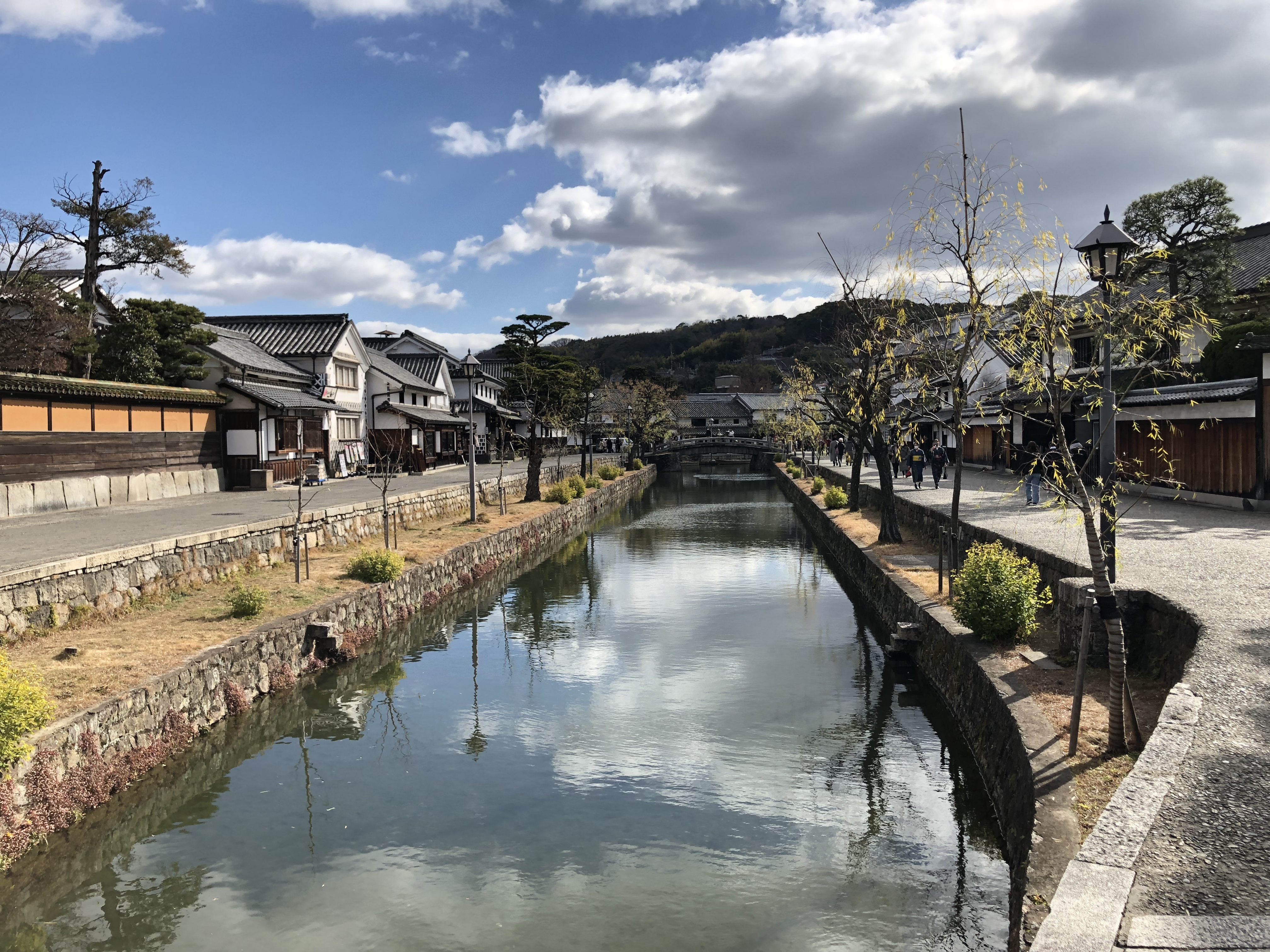
As I step out of the station, I find that the weather is not quite as sunny as the sign had promised. The sky is cloudy and grey, but that does not dampen my spirits as I begin to explore the winding streets of the Bikan Historical Quarter. Here, the buildings are old and charming, with weeping willow trees, historic godowns and canals that interconnect throughout the area. Touts eagerly await me, offering rides in their rickshaws. Just as I begin to further complain about the weather, the sun breaks through the clouds, illuminating the streets and bringing a warmth to the air.
I come across a shop called Gangukan, which has an annexed building featuring a toy museum. Intrigued, I pay the lady at the cashier, who shows me a sign in English that reads, “I will take you to the entrance.” She guides me through a maze of small alleyways to the entrance of one of the museum buildings. The door creaks as it opens, and the woman mutters something in Japanese before swanning off, leaving me to explore the museum alone.

The Japan Rural Toy Museum is one-of-a-kind, housed in a beautifully renovated old rice storehouse, the museum features toys from 1600 to the 1980s. Inside the first room, I am greeted by a collection of folk-craft toys from every prefecture in Japan. In the second gallery, Daruma dolls are displayed alongside clay figures, ceramic bells, dove flutes, and wood wishing plaques.
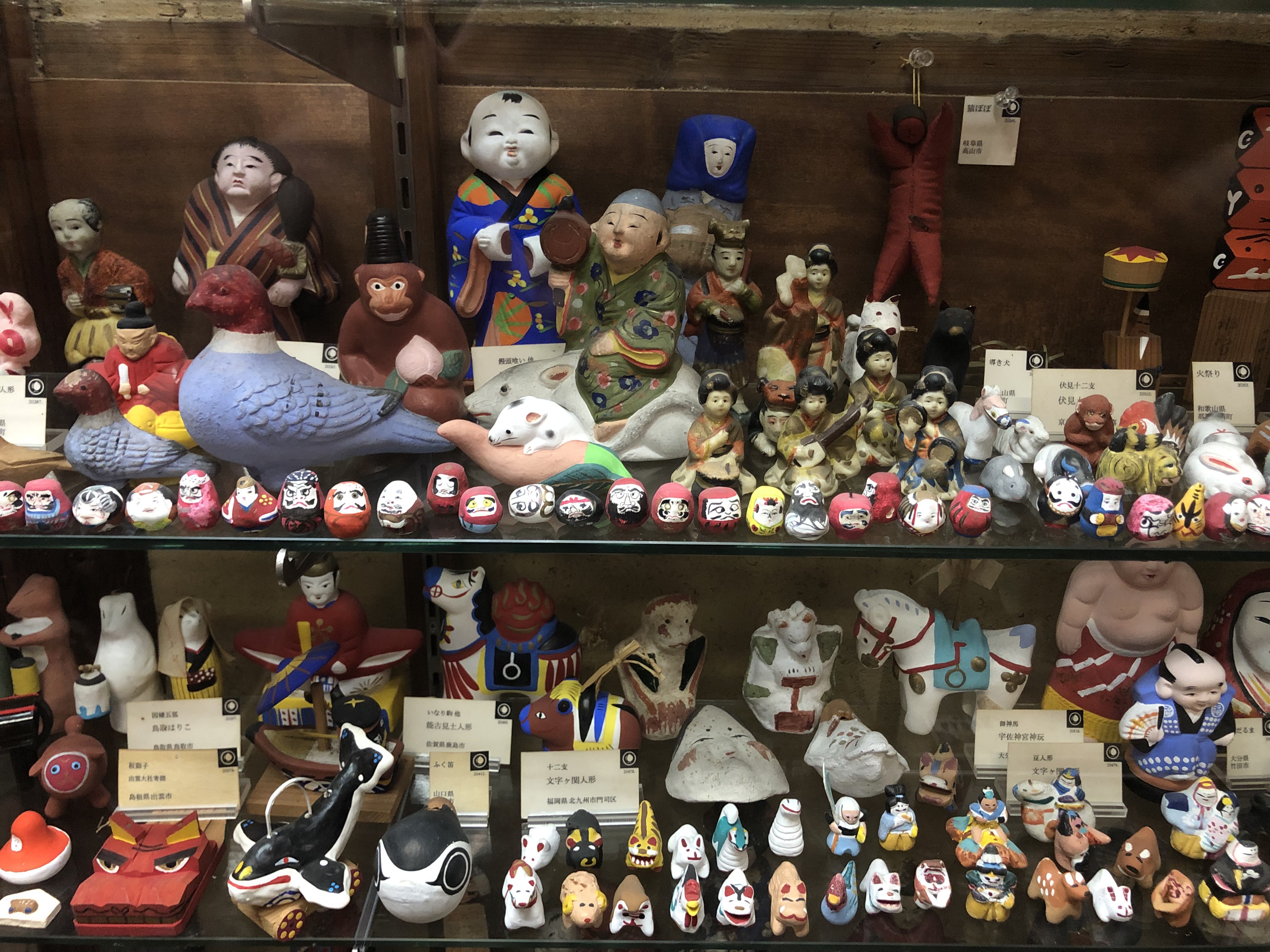
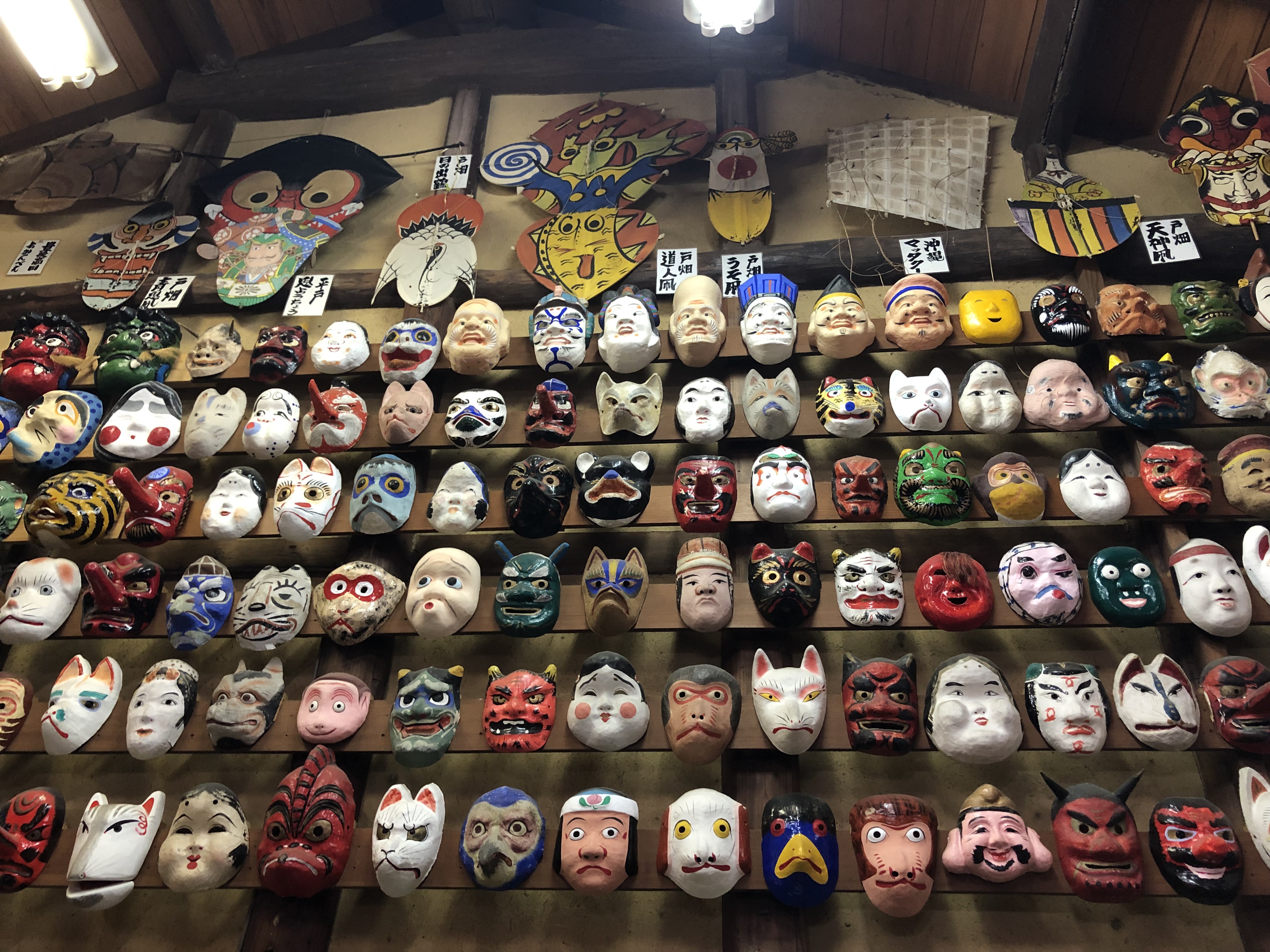
As I move to the third gallery, I am greeted by old wooden toys and spinning tops, and displays of annual New Years postage stamps from 1954 to present. In the fourth and final gallery, I see masks, a lot of masks. I’ve always wondered if masks can be classified as toys, but then again, I suppose the same question can be asked about postage stamps too. The gallery also features decorated shells, porcelain dolls, papier-mache dolls, and a large collection of old dusty books and badminton rackets.

As I step out of the museum, I find myself facing a small shrine. I can only assume that it is a tribute to the god of toys. As I think about the ancient toys, especially those dating back to the 1600s, I am struck by the enduring legacy of these simple objects of play. The children who once laughed and played with these toys, now long gone, reduced to mere memories and dust. But the toys remain, locked behind the glass walls of the museum. It’s a poignant reminder of the tragedy of death, and the beauty of the small things that outlast us. The toys, once a source of joy and laughter, now stand as silent witnesses to the fragility of existence.
As I continue my stroll through Kurashiki, I come across Denim Street, an entire street lined with shops selling the same thing. Along the way, I also pass small shops selling watercolour paintings and origami paper. The area, with its stunning canals and old shops, feels like a cross between Kyoto’s Gion district and Tokyo’s Asakusa district, but with less commercialisation. The area boasts a number of museums as well, including art, archæology, natural history, and folk-craft.

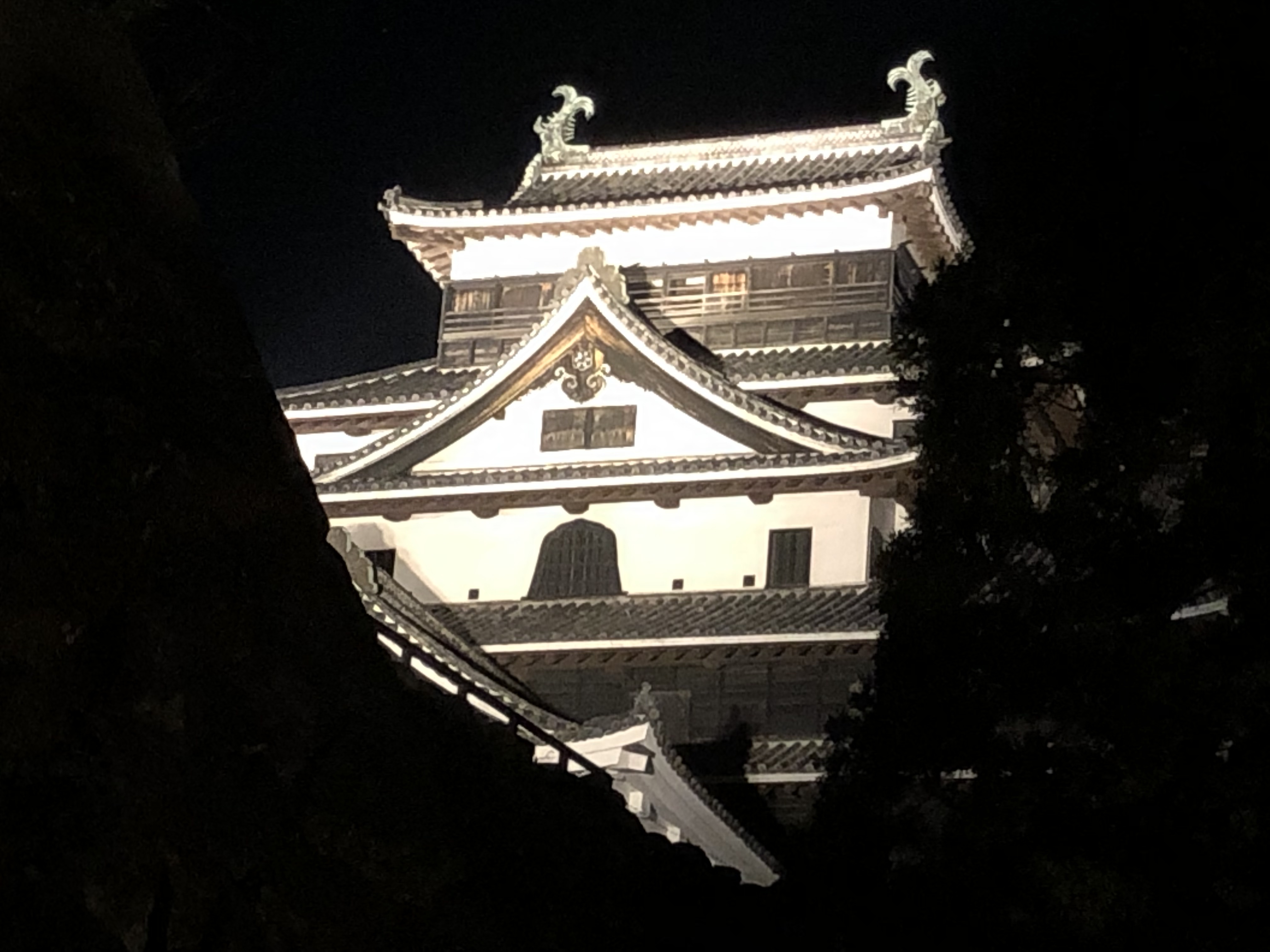
After a few hours of exploring, I leave the Land of Sunshine and embark on another four-hour train journey to the city of Matsue in Shimane Prefecture. As I arrive at dusk, I navigate the streets and make my way to Matsue Castle. Nicknamed the “black castle,” it is one of only 12 castles in Japan that have been perfectly preserved in their original state. It stands out in the darkness of the night, seeming to effortlessly float suspended in the sky. The grandeur of the castle illuminated by the moonlight, casting a mysterious and ethereal aura, making it an enchanting sight to behold.
Leaving the castle, I decide to check into an iconic capsule hotel, something I’ve been meaning to do in Japan for years. After finding my “coffin” for the night, I realise that my room, if I can even call it that, is contained within a larger room with 39 other boxes stacked on top of one another. Thankfully, none of the other capsules are occupied. The hotel offers a reasonable amount of amenities, such as towels, toothbrushes, razors, earplugs, bathrobes, and nightwear. It’s also impeccably clean.

I grab some food from a nearby supermarket and head back to my hotel. Due to the limited space, it’s not possible to eat inside the room where the capsules are located. However, the hotel does offer a large common area with comfortable seating. The common area also features its own jaunty, catchy music that plays on a loop ad infinitum. It’s like being in a 1980s video game where the composer was hired on a budget. After eating my deep-fried tofu with rice and listening to the same piece of music for the twenty-third time, I retire for the evening, and crawl into bed.
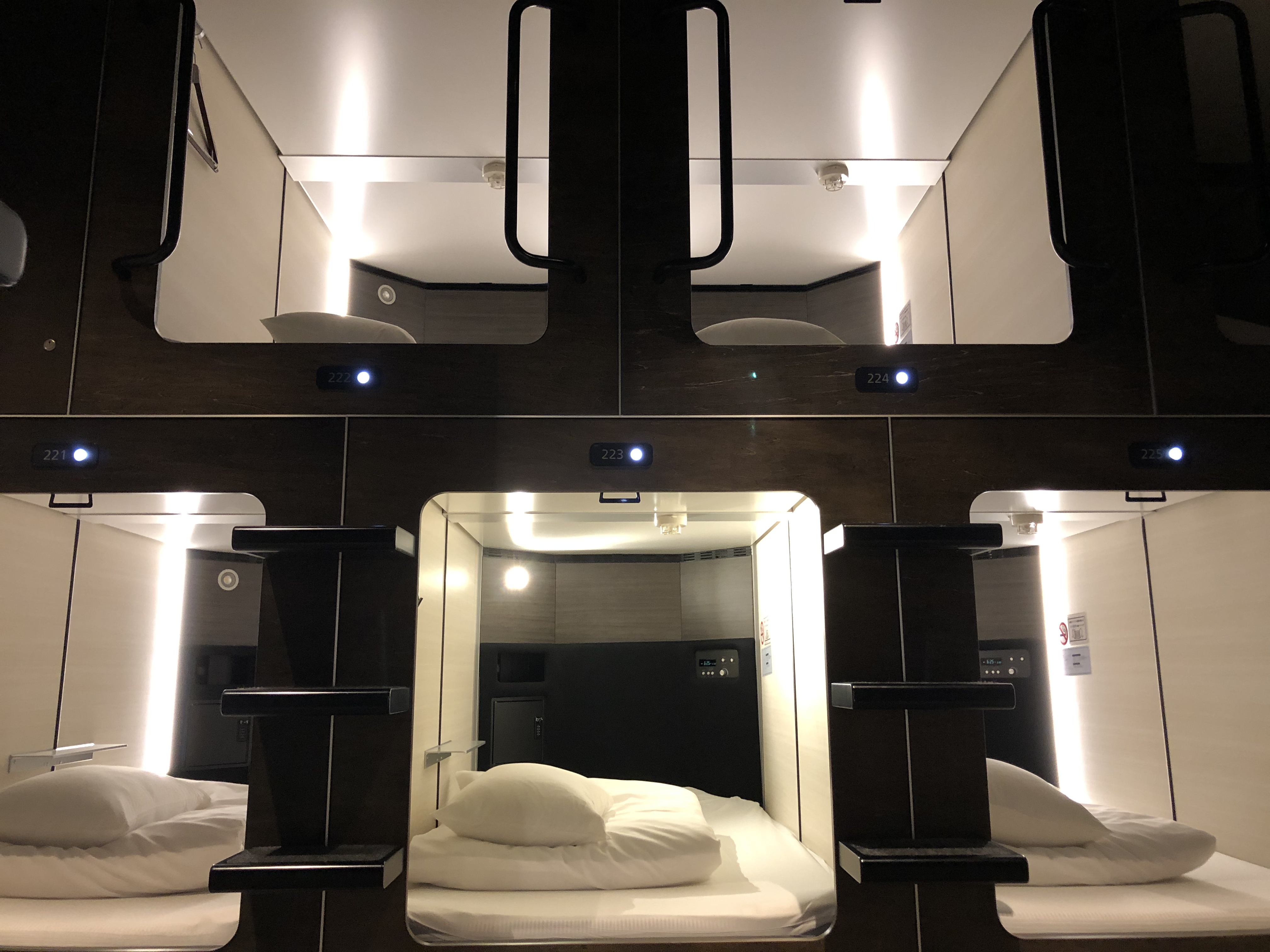
As I lay in my coffin, the jaunty music swirling around my head like a relentless earworm, I think back to the toys, and thoughts on life, how we too are on a never-ending loop, chasing after fleeting moments of joy before inevitably succumbing to the silence of death.
Thoughtful Rain, Equal Moisture

As part of Hatsumode, it is a longstanding tradition in Japan to visit a temple or shrine during the first three days of the New Year. This involves returning and cremating old amulets, purchasing new ones, having a fortune taken, and making the first prayer of the year. To avoid the crowds, I have chosen to visit a peaceful temple in Shibamata, located in Katsushika Ward. I awake early, the air still cool and filled with the moisture of the early morning dew, and make my way to the temple to begin the new year with a sense of serenity and reverence.

As I approach the temple, I am welcomed by Taishakuten-Sando, a row of traditional Japanese shops flanking a narrow street that leads to the temple. This street and temple survived the bombing of World War II, offering a glimpse into Japan’s history. As I stroll along the 200-metre stretch, the aroma of simmering oden fills the air and I pass shops selling mochi, pancakes, and rice crackers. Taishakuten-Sando serves as the main shopping street for the quaint town of Shibamata.

Upon arriving at Shibamata Taishakuten, I join the short queue of people making their first wish of the New Year. To make a play on words, I have carefully prepared four ten-yen coins and one five-yen coin (totalling ¥45, which is pronounced Shiju-Goen in Japanese, meaning “always lucky”). As I reach the front of the line, I throw in my coins, ring one of the large bells, and follow the customary ritual of bowing twice, clapping twice, and bowing again before praying for nothing at all.

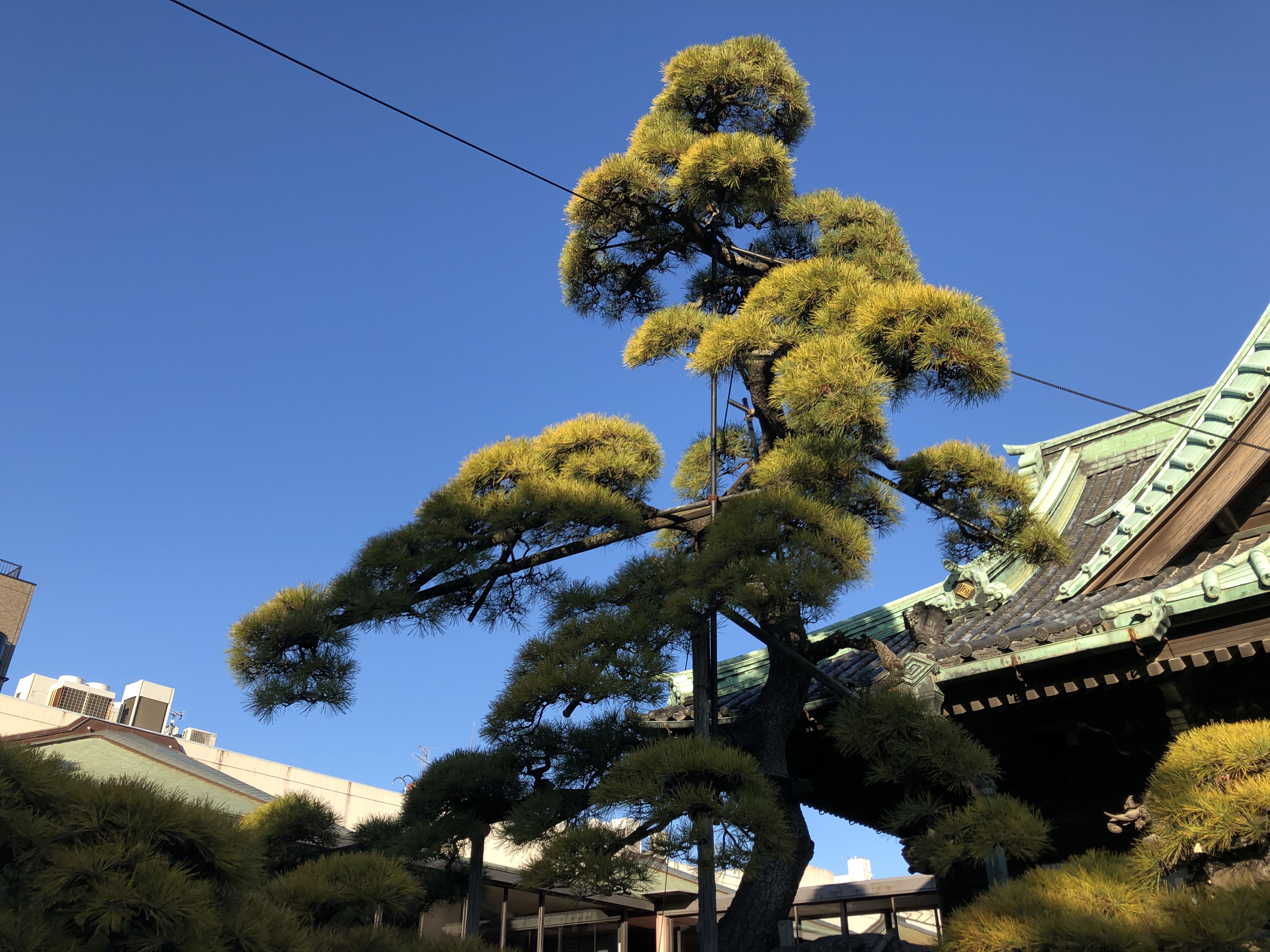
At the temple, there is a large pine tree called Zuiryu-no-Matsu, meaning “dragon of fortune pines.” It towers in front of the main hall and is shaped like a dragon. Its trunk grows straight towards the sky, and its long branches extend north, south, and west. The west branch extends as if the dragon is crawling on its belly on the stone pavement, while the north and south branches spread as if guarding the Taishaku-do Hall. The tree seems to come alive, appearing as a dragon taking flight towards the sky.

The temple was founded in 1629 by a Buddhist monk named Nichiei Shonin, who stopped in Shibamata and, upon discovering a sacred fountain under the grand pine tree, decided to build a hermitage there. The dragon of fortune pines is said to be over 500 years old, stands tall and proud. The Japanese gardens, a later addition in 1926, provide a peaceful and serene atmosphere.

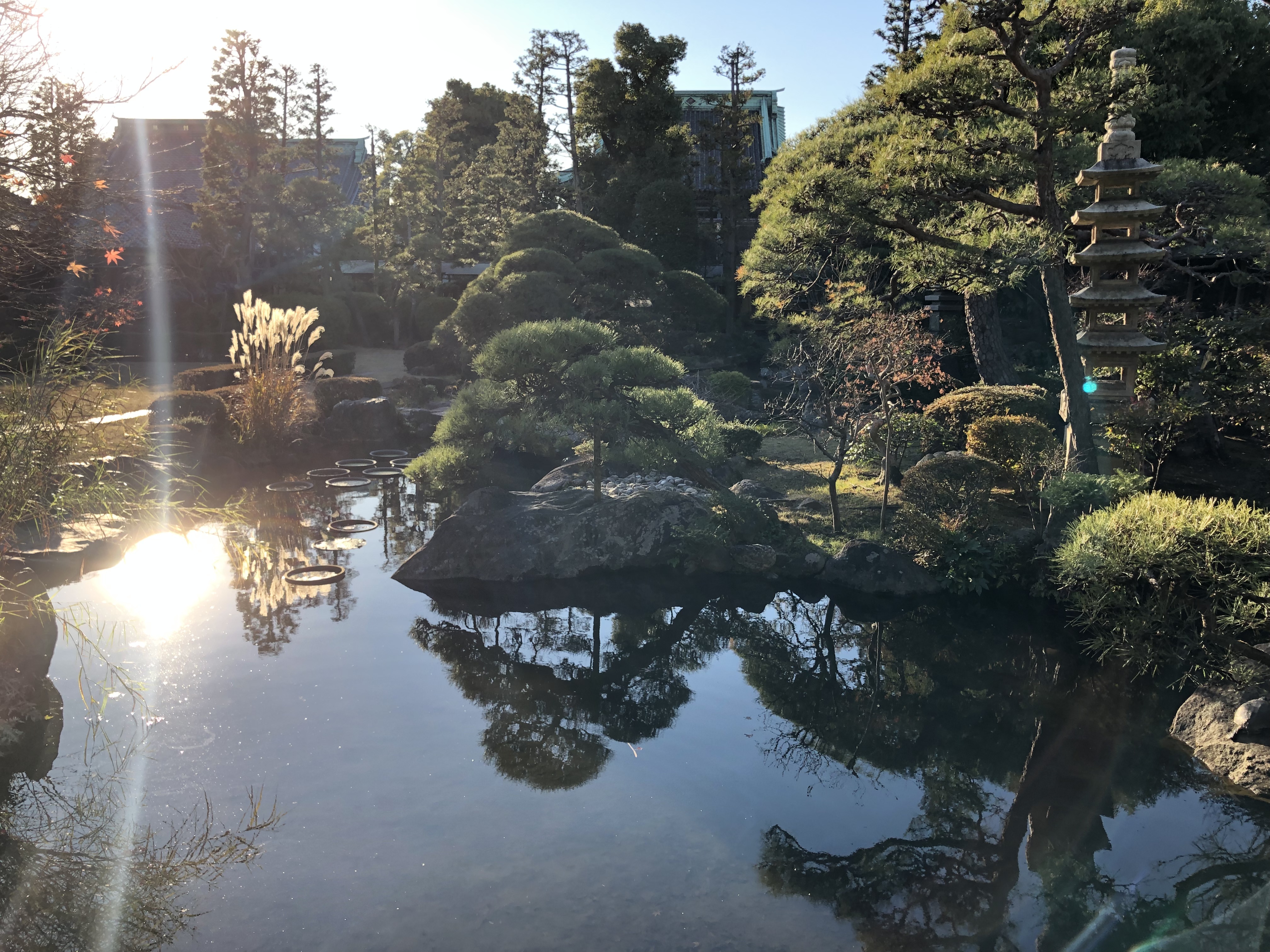
As I leave the tree behind and make my way to the rear of the temple, I come upon the opportunity to purchase a ticket for ¥400, granting access to both the museum and the picturesque Suikei-en Garden. The entrance to the garden is adorned with intricate wood carvings above each tatami mat room, inviting me to step into a peaceful outdoor paradise. The garden boasts stone bridges, flowers glistening with the hanging moisture of the early morning, a charming pagoda statue, a breathtaking lake as its centrepiece, and even a tranquil waterfall.

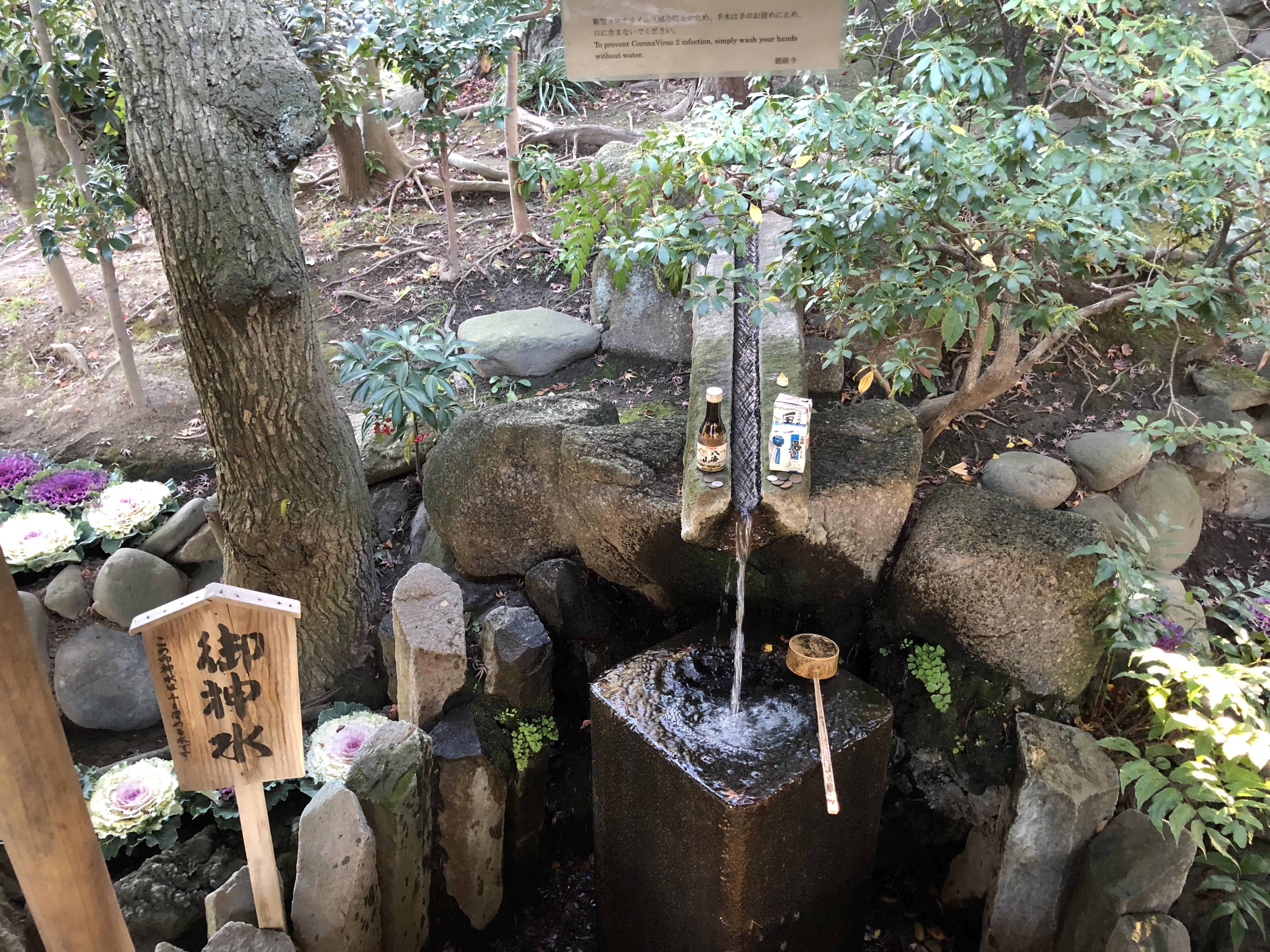
As I stand before the waterfall, I find myself trying to pinpoint the source of my unease. Could it be the way the water flows so slowly, as if in mimicry of rain? The offerings and coins at the base of the waterfall appear unremarkable, yet something about them feels off. And then I see it – the poorly translated notice above, urging me to “simply wash my hands without water” to prevent infection from the ominous Coronavirus. The absurdity of the statement only adds to the disquietude that lingers in the air.

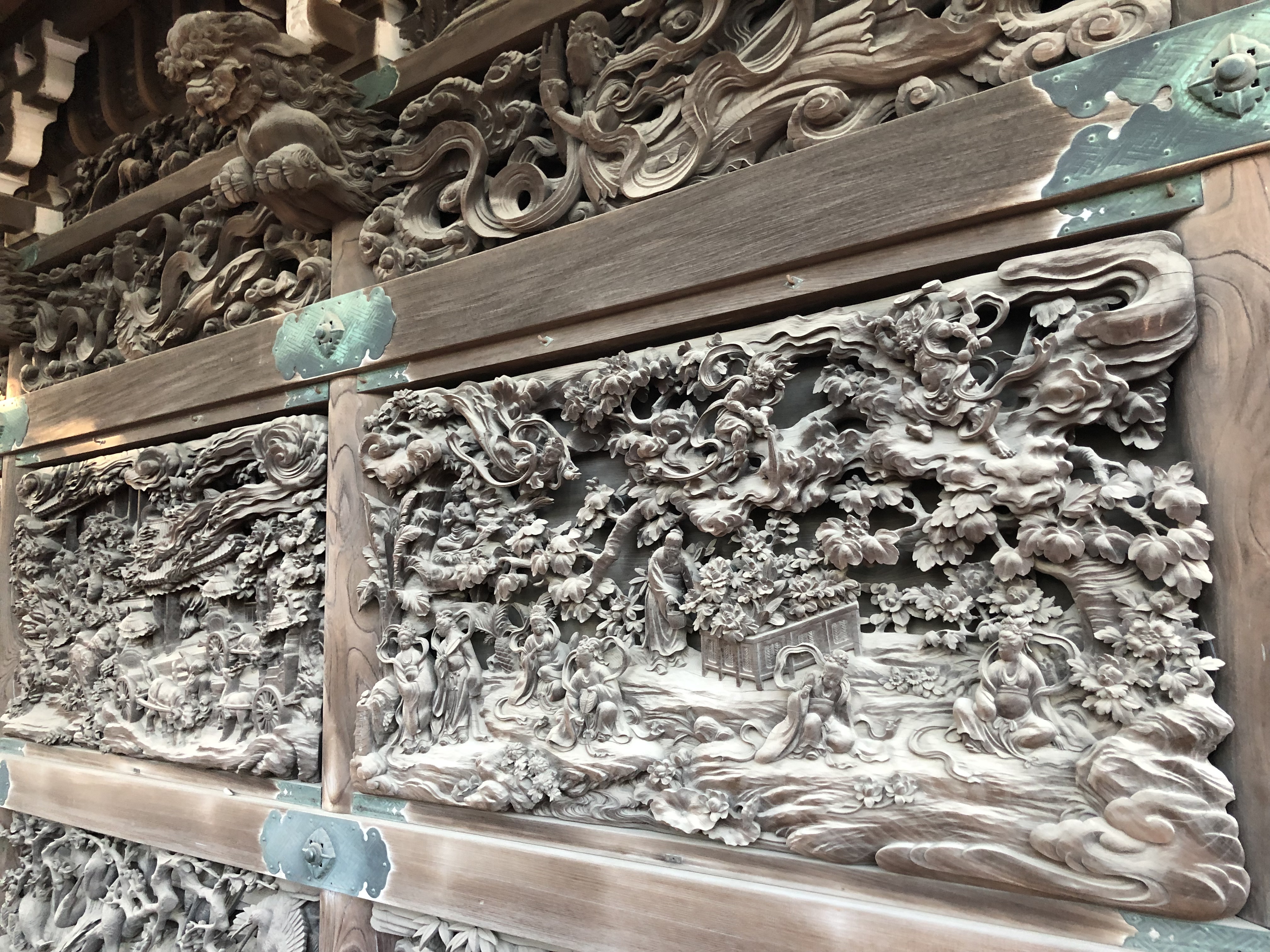
As I enter the museum, my eyes are immediately drawn to the stunning wood carvings that adorn the walls. Each one tells a part of the tale of the Lotus Sutra, with two chapters represented in each intricate, three-dimensional carving. The language used to describe the carvings is nicely written, and one line stands out to me in particular: “We people are like children busily playing in what is a burning house, without any fears.” The artistry and wisdom captured in these carvings leaves me in awe.

Chapter five, entitled “Thoughtful Rain, Equal Moisture,” was carved by Shinko Ishikawa and depicts the following: “The deeply benevolent teaching of the Buddha is similar to the gentle rain that everywhere dampens the soil. Here, the God of lightning and the God of wind appear, and together they let it rain. The great earth is then embraced with a blanket of foliage in which varieties of flowers proudly bloom. With this, the heavenly beings also joyfully dance down to the paradise below.”

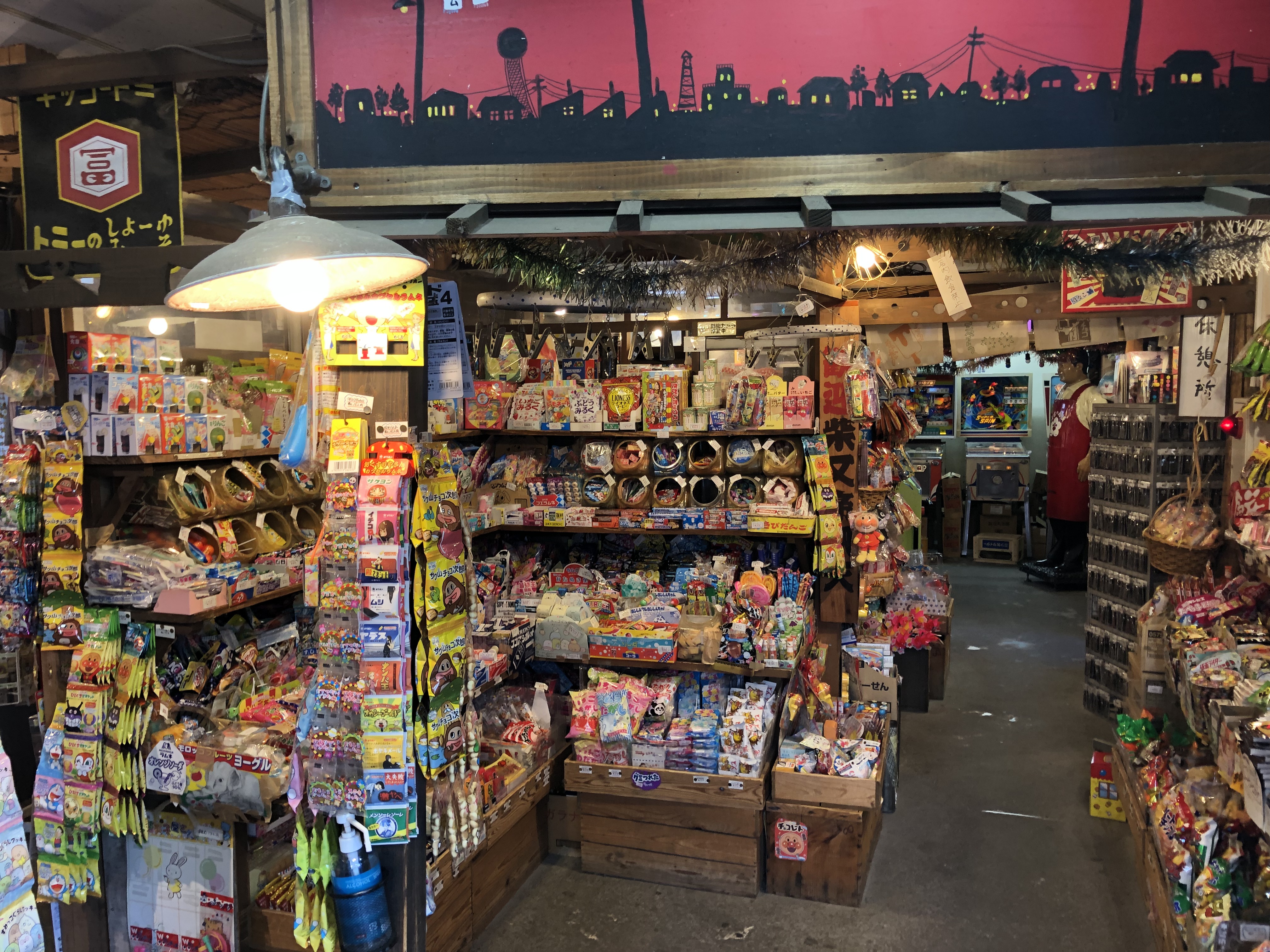
As I leave Shibamata Taishakuten, I step into a large retro sweet shop filled with rows of colourful candy in glass jars. The air is thick with the scent of sugar, and there are every type of sugary treat imaginable. I wander up and down the aisles, passing old arcade machines and pinball tables. On the second floor is the Shibamata Toy Museum, featuring games from the Showa-era. I explore the museum, including a room with a display of dolls depicting the tale of “Momotaro,” or Peach Boy. I eventually head back downstairs to purchase a bag of gummy worms at the counter, before leaving the shop.

The gummy worms turn out to be a lot stickier than I had anticipated, but I have a solution: I’ll just wash my hands without water.

Parks and Simulation

It’s humid beneath my mask. It appears that it rained slightly this morning for the first time in weeks, but now it’s hot. I can’t begin to imagine what the summer will be like. I shouldn’t complain though, the unusually warm start to the winter is set to end later this week, and Japan will become enveloped in an icy-cold ambience.

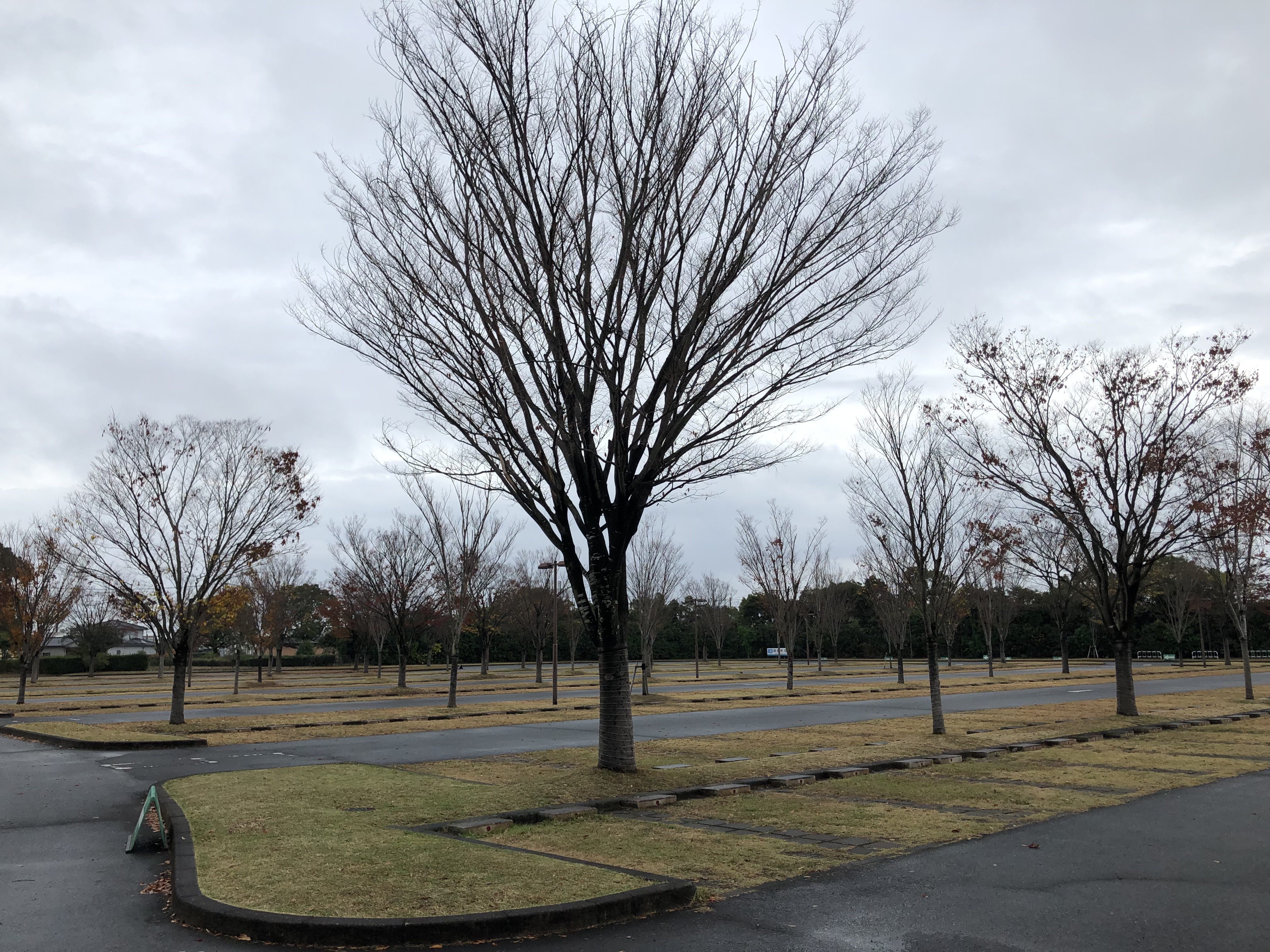
I take a train to Saga Prefecture, my first destination today, Yoshinogari Historical Park, an archæological site dating back to between the 3rd century BC and the 3rd century AD. I walk two kilometres from the nearest train station, and arrive at the entrance. The car park here is huge, empty, and covered in fallen leaves from the skeletal trees.

I arrive at the aptly named Entrance Zone. Each area of this park has a zone name. There is the Ancient Forest Zone, the Moat Encircled Village Zone, the Aztec Zone, and the Medieval Zone. I pay the ¥460 entrance fee, and note that the two day pass costs only slightly more, a reasonable ¥500.

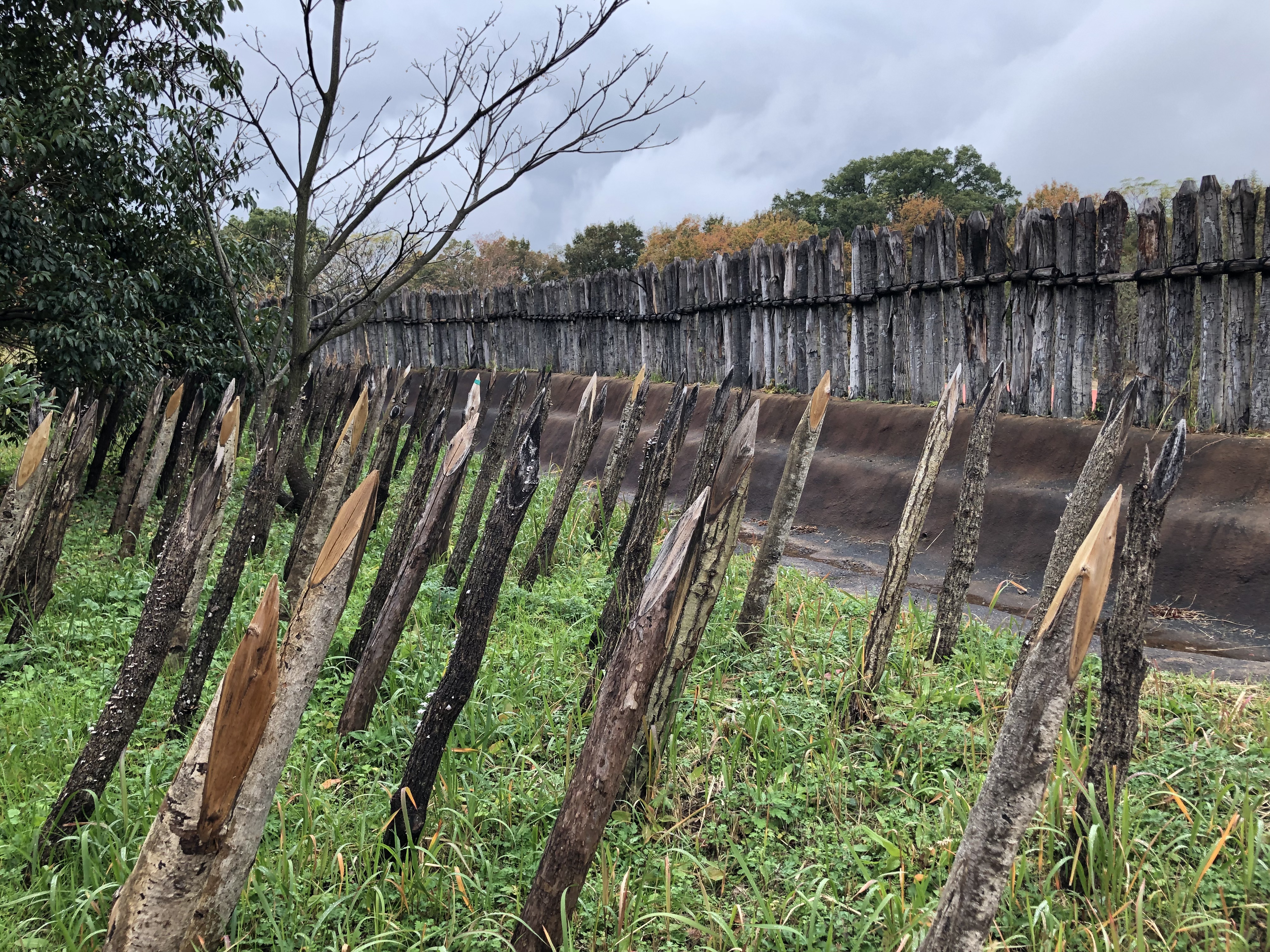
After crossing a massive red bridge, I arrive at the park. The first thing that draws my attention are what appear to be loads of large wooden spike traps.

As rice cultivation increased, more people fought one another to control the water and occupy the land. People set up barricades with sharpened posts or tree trunks, especially around strategic areas such as the entrance to the village in order to strictly protect their properties. These stakes are called sakamogi.

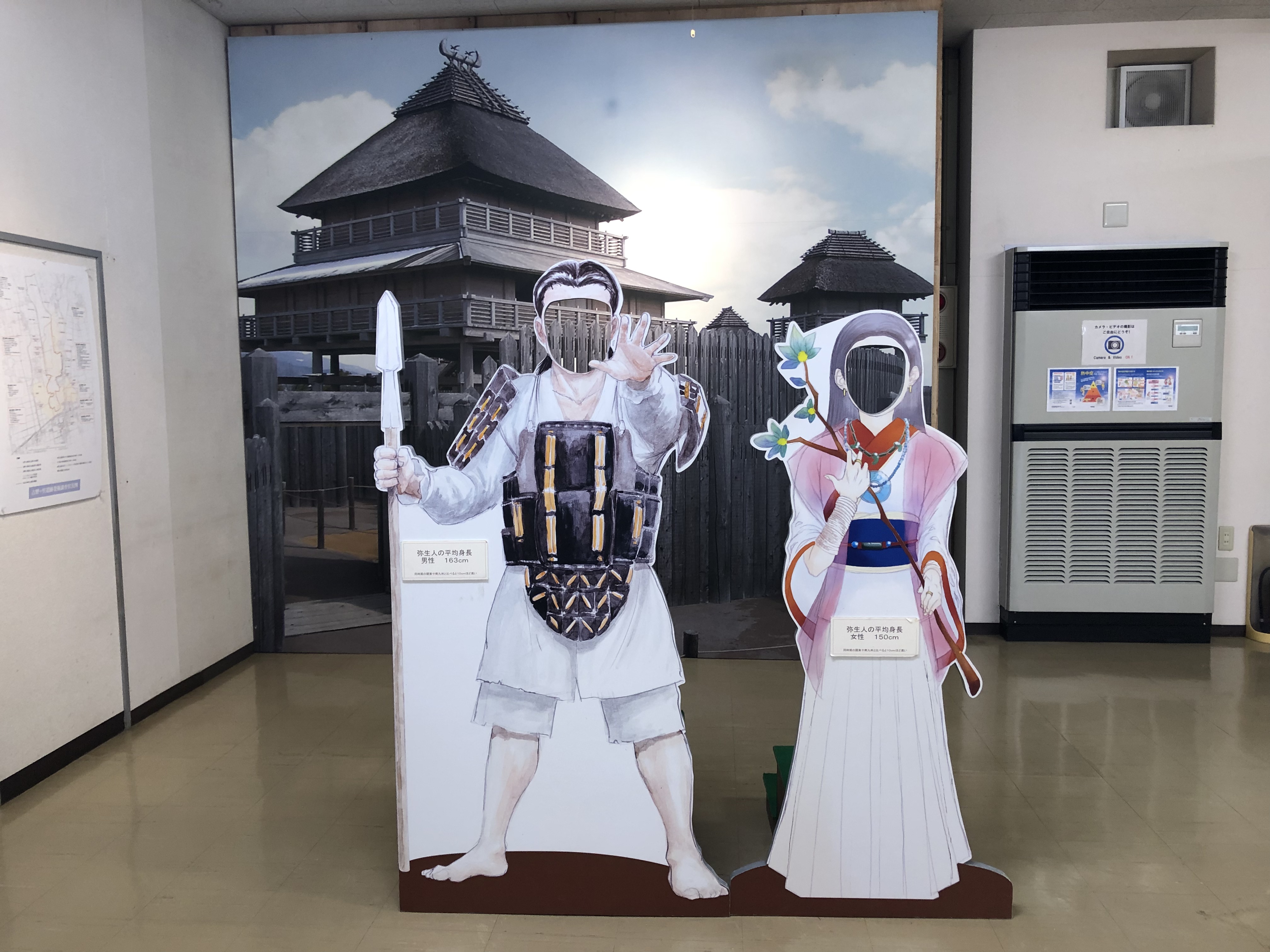
I leave the abatises and wander further along the tree-lined path, passing what looks like straw statues of wild boar, before finding a small museum. The first thing I notice when entering the museum is the eagerly awaited return of a small fascination of mine, Carnival Cutouts.

The museum itself contains loads of old pottery from the Jomon era, bronze daggers and bronze swords, the jaws of wild boar, deer skulls, hunting tools, arrowheads, stone daggers, and a 2,000-year-old human skeleton.

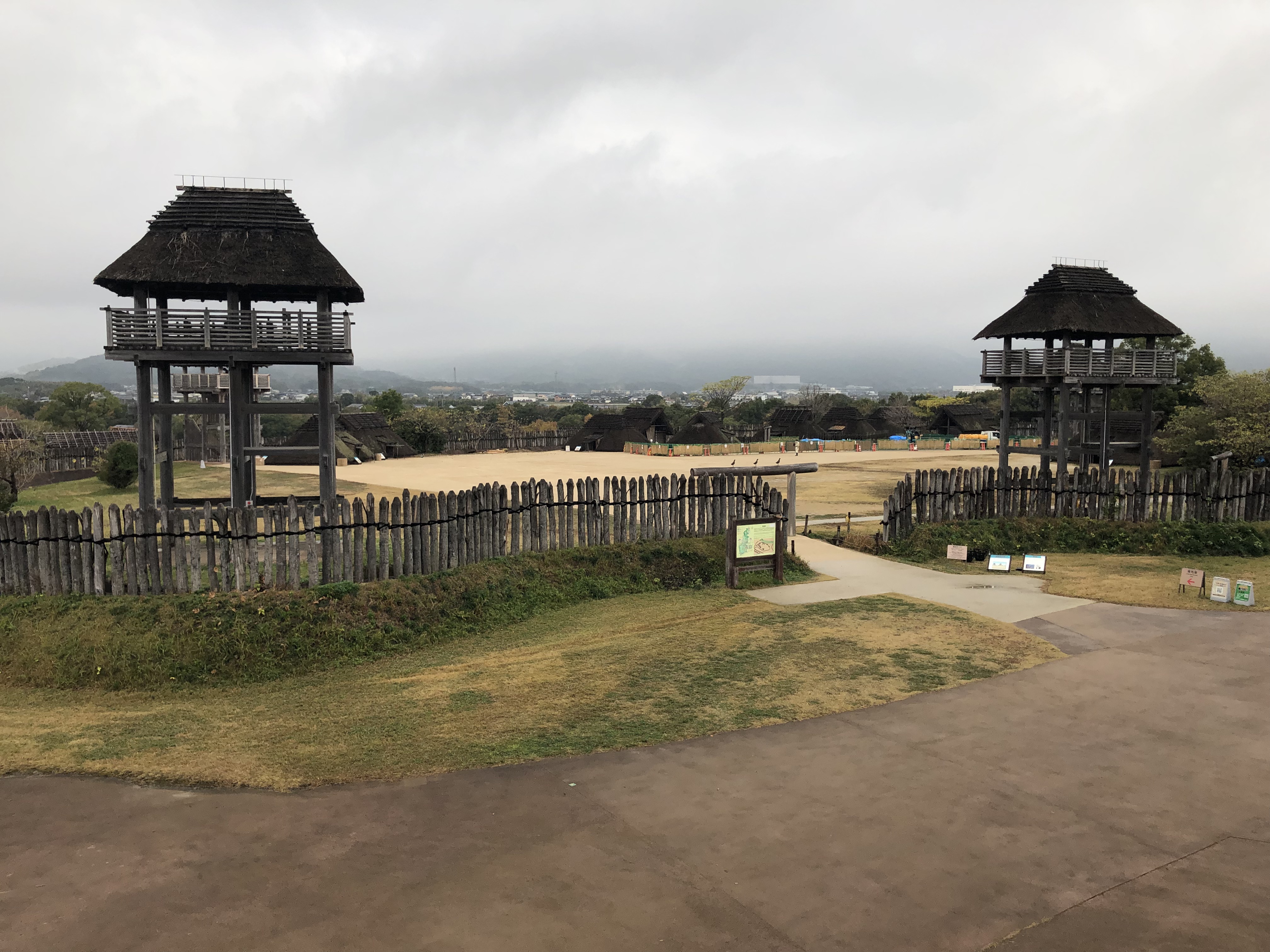
I leave the museum and in the distance I see some watchtowers. These watchtowers mark the entrance to the South Inner Palace, and were once manned by sentries.

I climb up the slippery wet wooden steps to the top of the Gate Tower, this tower had guards with shields at its four corners. The tower offers a good vantage point to watch for people entering and leaving the enclosure.

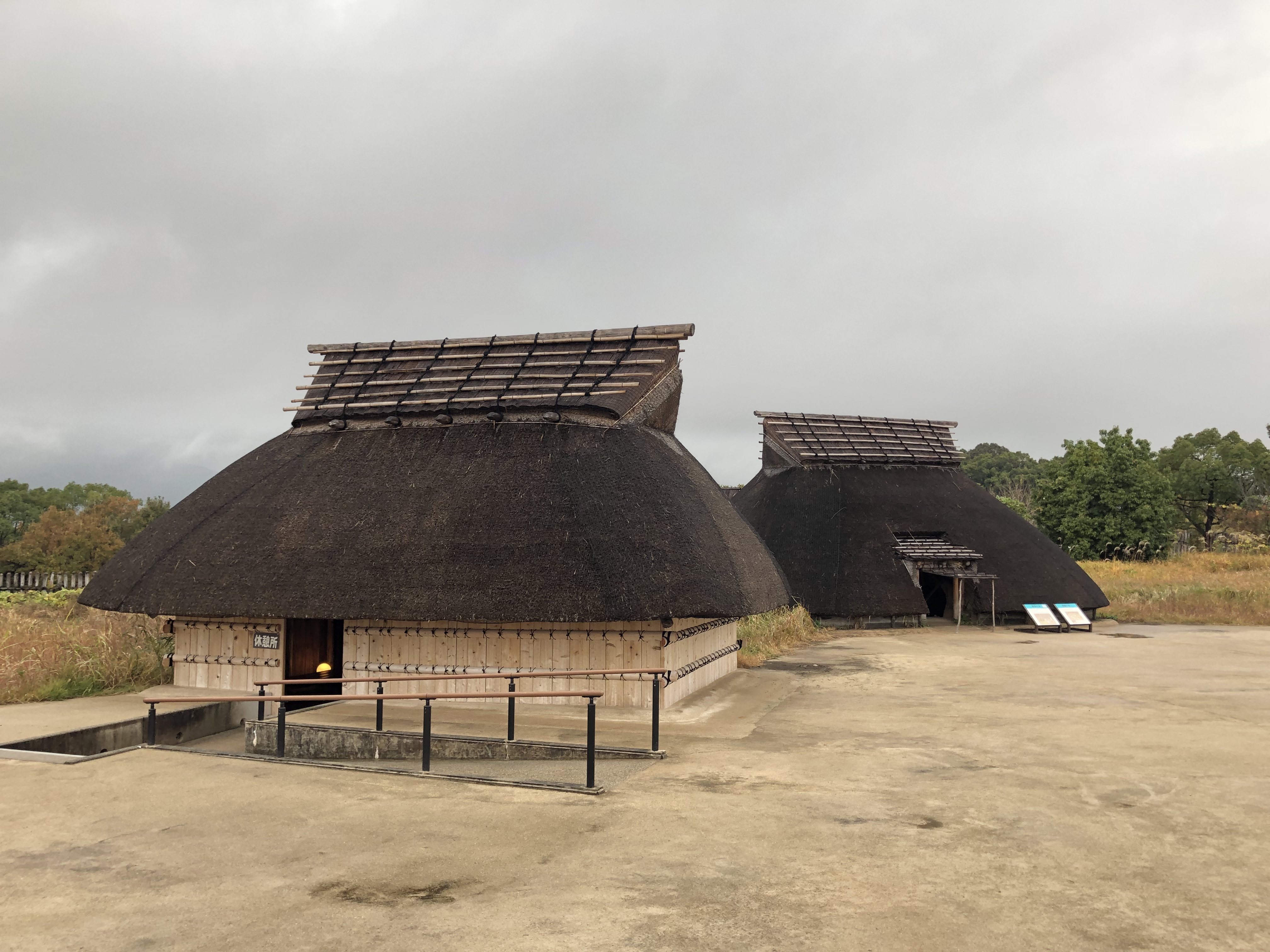
I wander further along, passing the moat and fences that guard the Palace, to the houses beyond, to the zone known as Moat Village. This area contains the village that once housed each of the residents. From the kitchens to the main assembly halls, each house can be entered and fully explored.

I visit the Brewery House, where women would brew sake for festivals and rituals by steaming rice from the years’ harvest. The Sericulture House, where precious silkworms were raised to produce silk thread to weave textiles. And finally, to the Barracks, where the soldiers who guarded the northern defences would rest.

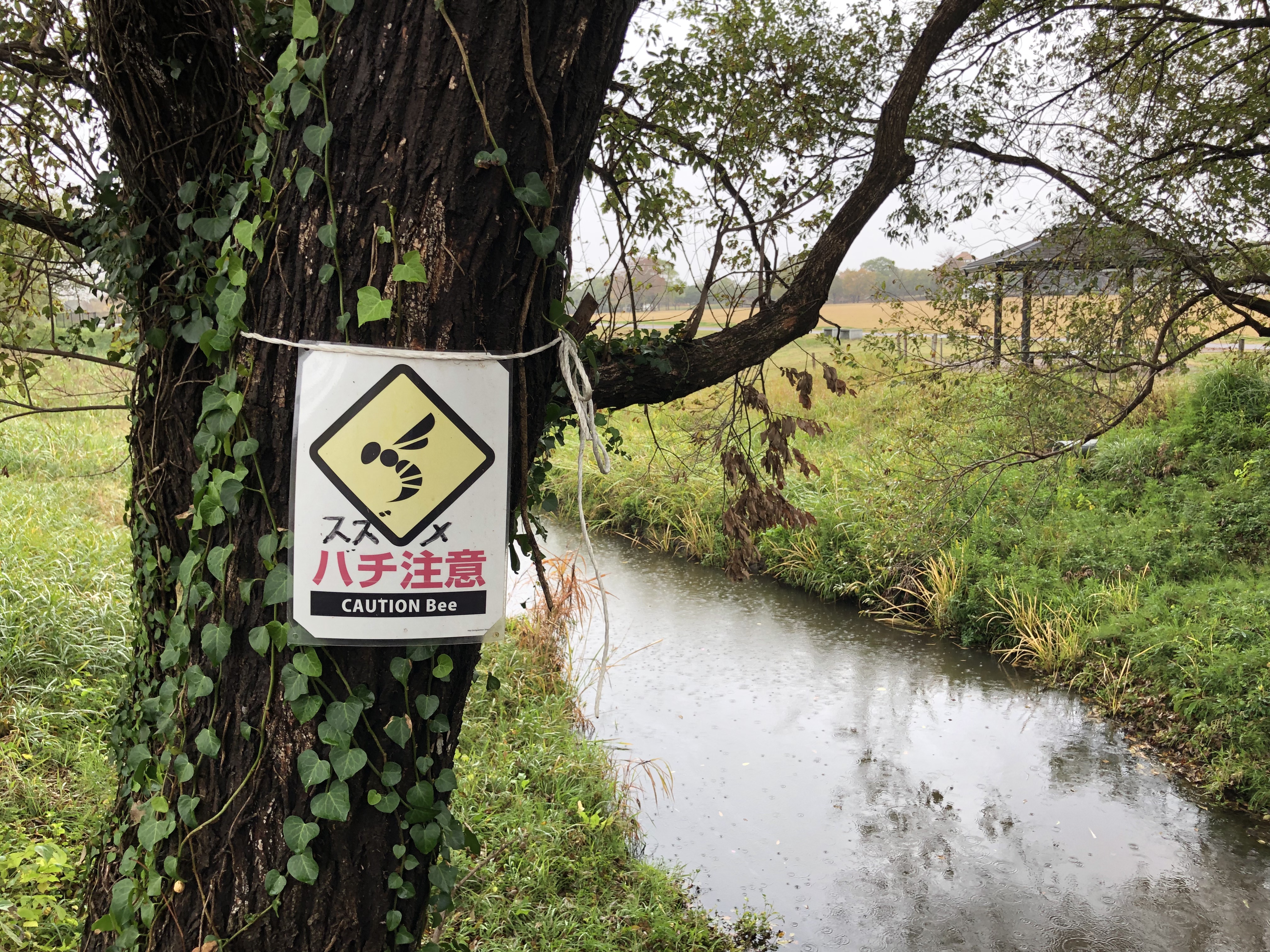
I find a map only to realise that I’ve explored just a quarter of this giant historical site. Its sheer size is quite alarming. The map also shows that the park boasts four car parks, one at each corner of the site. Some Christmas lights are dotted around for good measure; evening illuminations, but I have other places to be. I wander in search of an exit and see a sign in desperate need of pluralisation.

Suddenly the clouds burst and the unforeseen downpour leaves me completely soaked. I see a man who has been given the arduous task of sweeping up the fallen leaves, he’s equally soaked. I pass a golf course, two full sized football pitches, and a petting zoo, and wonder if these such things were here 2,000 years ago too.

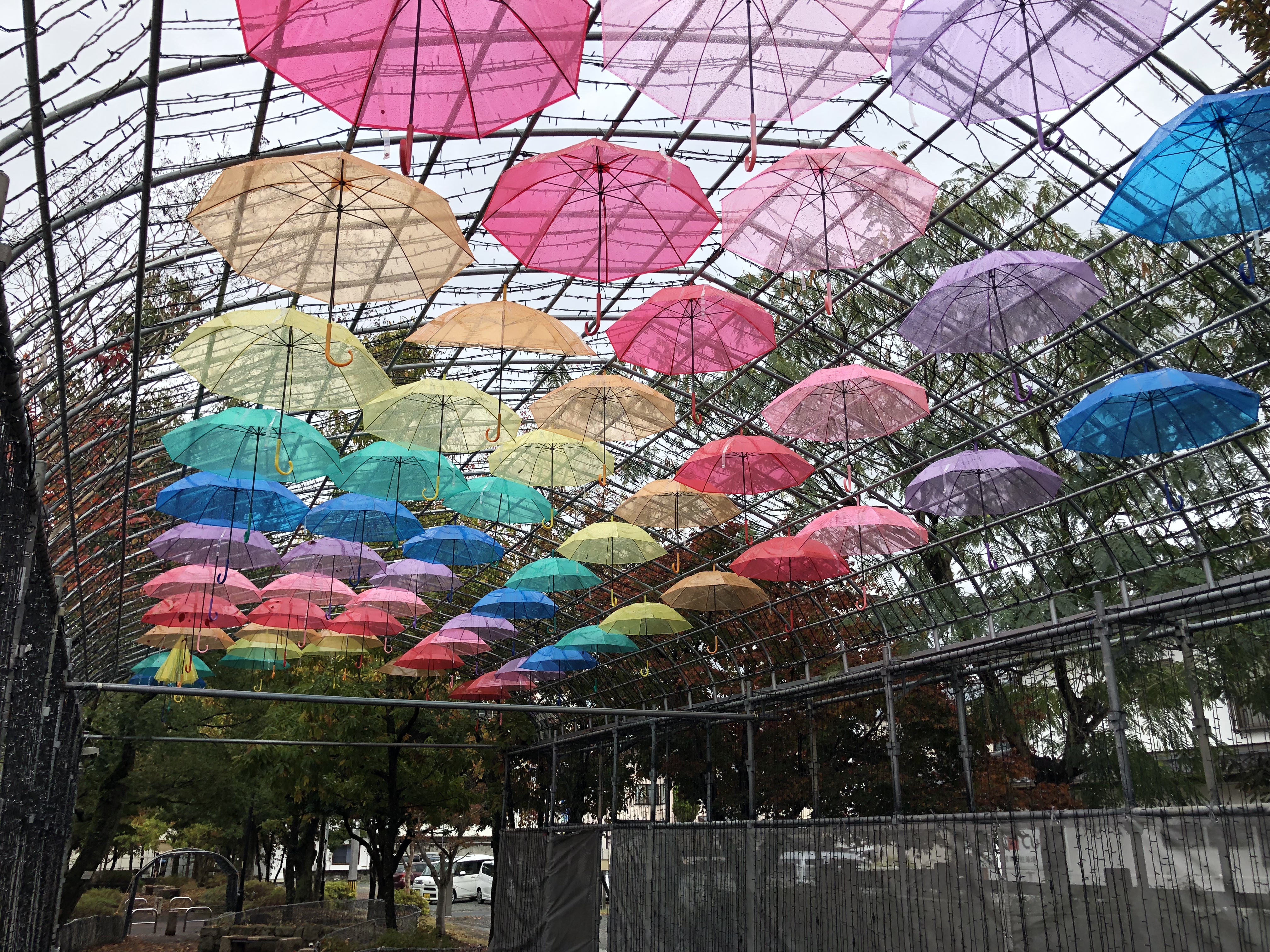
Eventually I find an exit, walk two kilometres to the nearest train station, and hop on a train bound for Saga City. At Saga, the rain has stopped. I walk twenty minutes in the direction of the Saga Balloon Museum. Before I arrive, I spot a canopy of umbrellas that might have been useful thirty minutes ago.

For some reason, Saga Prefecture is famous for hot air balloons. Inside the Saga Balloon Museum, I learn that the very first time a human being “flew in the sky like a bird” was in 1783, in Paris. In Japan, the first manned flight by a gas balloon was completed in 1877, in Kyoto, an event watched by 50,000 spectators. And in 1903, the Wright brothers flew an aeroplane, making the hot air balloon useless.

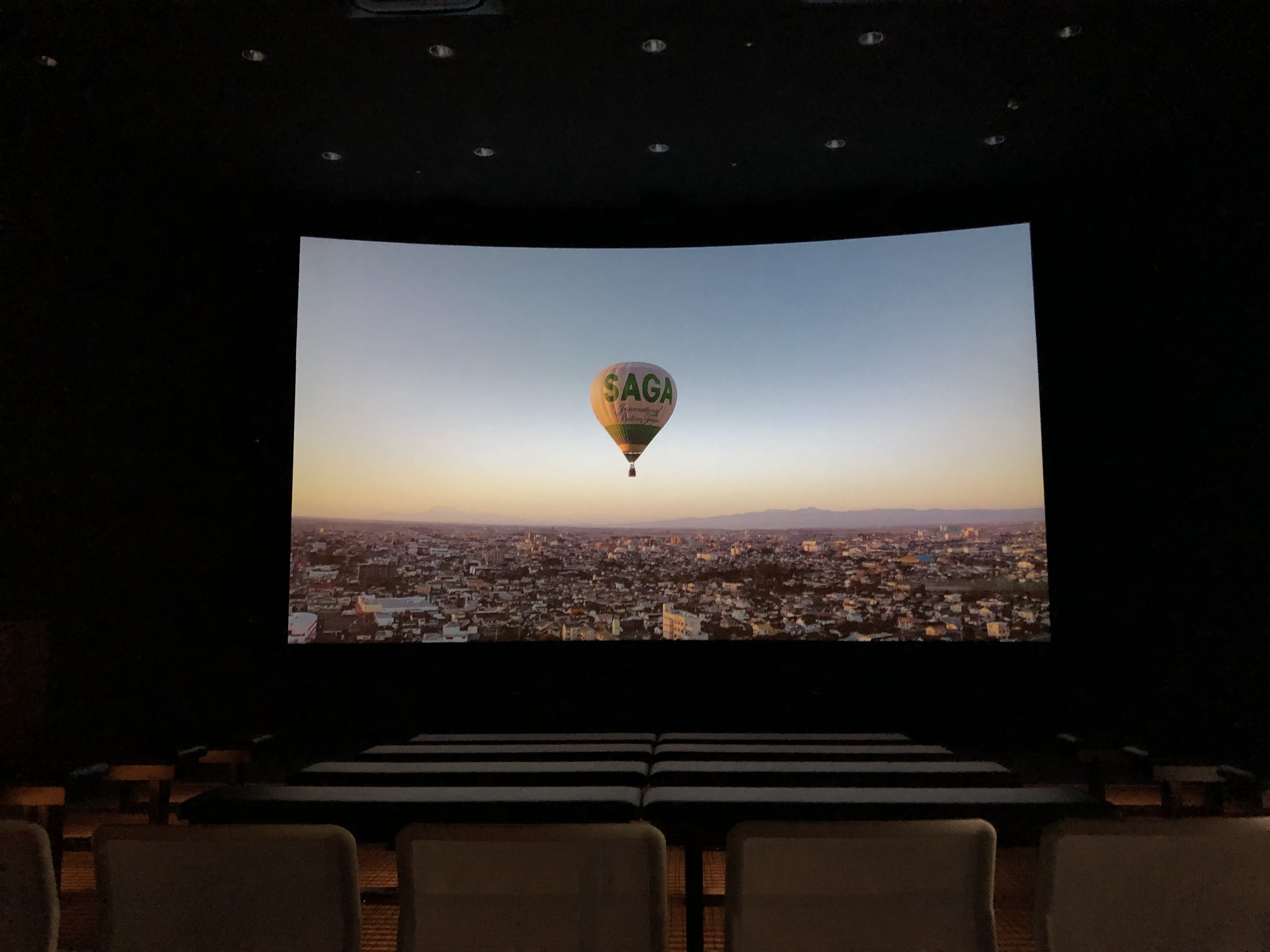
I take a seat in a small cinema describing itself as a “Super High-Vision Theatre” with a 280-inch screen. Here, I watch a film that claims to be so realistic that you will think that you’re there. I learn about balloons, what makes them fly, before leaving the cinema and heading up to the second floor. Here I get the opportunity to fly a hot air balloon myself, using the advanced simulator.

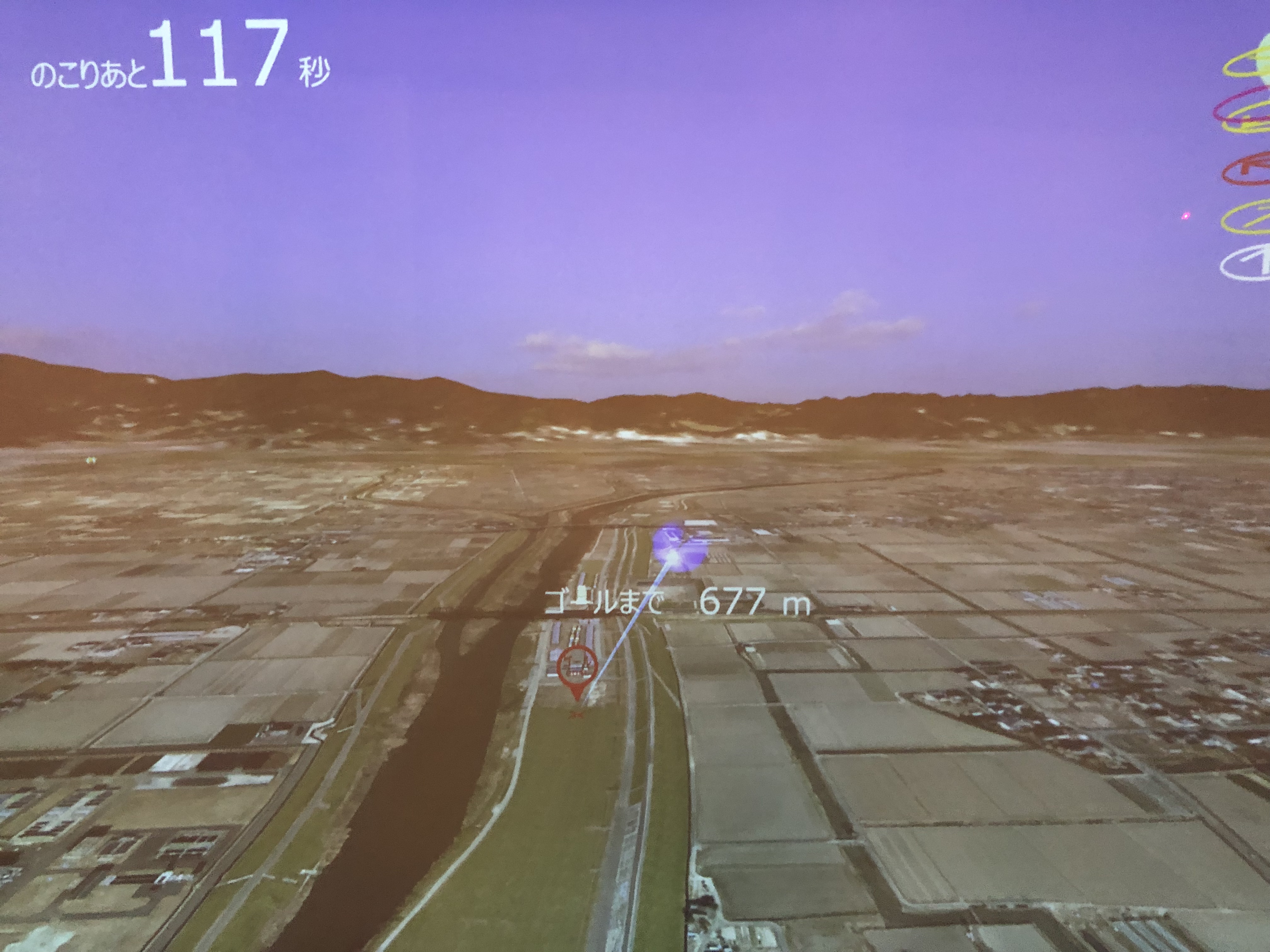
I stand inside the hot air balloon simulator and begin. I have 180-seconds to land the balloon in the target area, taking into account wind direction and wind speed, all the time sporadically pulling on a lever that releases pretend propane gas. When the lever is pressed down the balloon floats further upwards, when it’s released, the balloon slowly floats further downwards and catches in the wind. Apparently the trick is to control the lever early, anticipating the atmospheric conditions.

Landing the balloon within one metre of the target awards ‘S’ rank. The rest of the ranks rate down from ‘A’ to ‘E’ and the sign next to the machine offers the following encouragement, “Ride the wind and get a high rank!”

Obviously, I spectacularly crash the balloon into the sea.

The Fashion of the Crystal Wax

I am in Shinjuku to meet a friend. I instantly regret choosing to meet her at the West Exit of the busiest train station in the world. After ten minutes of searching, we eventually find each other before heading outside to take a free shuttle bus bound for Shinjuku Park Tower. Inside this building are many high-priced restaurants, financial institutes, and the Park Hyatt Hotel; perhaps the most expensive night’s sleep in Japan. We are not here for any of that nonsense though, as in the basement of this building, we have exclusive invitations to an event hosted by French cosmetic giant, L’Oréal.

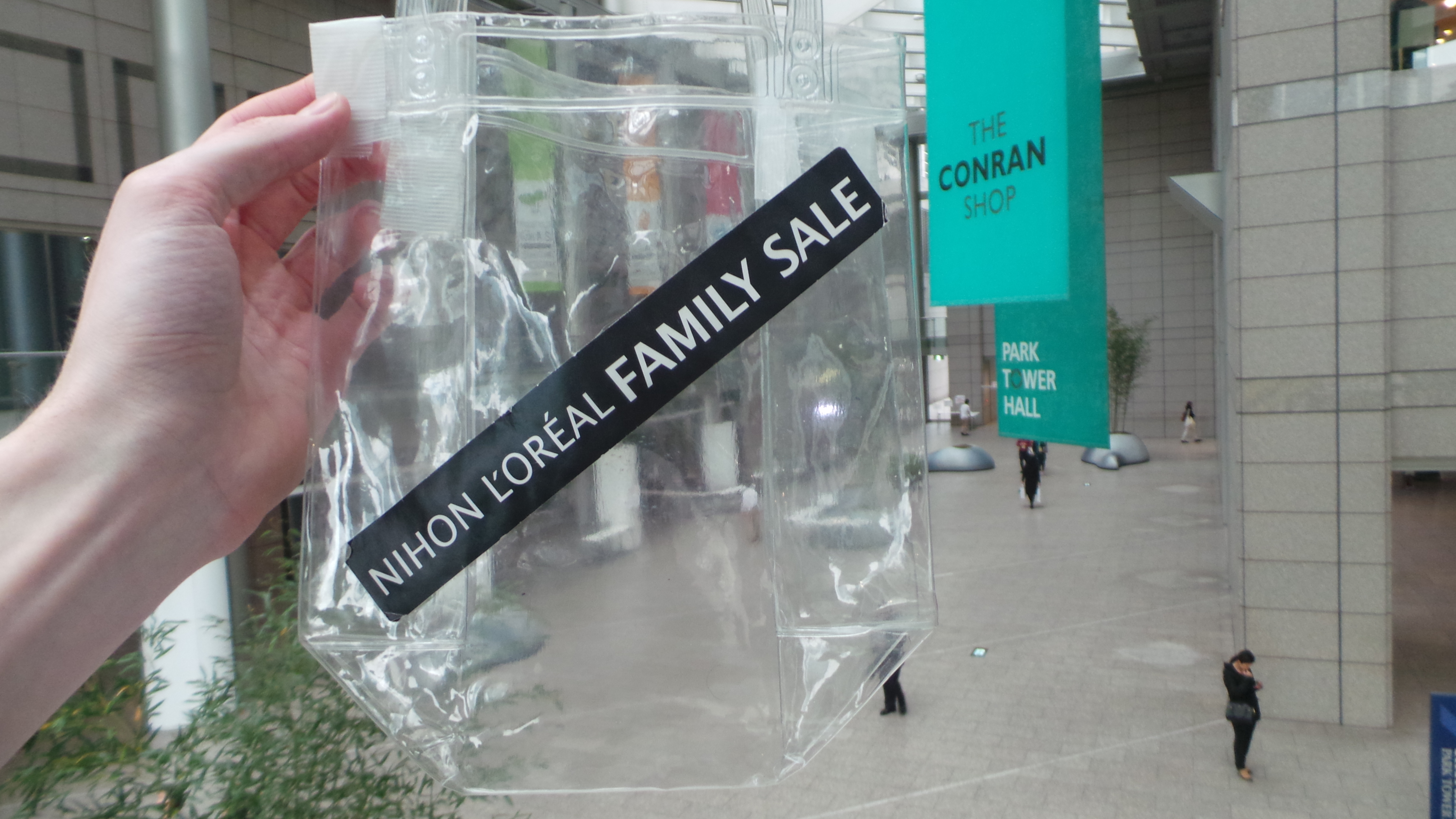
In the basement, our cards are checked, our identities confirmed, our Quick Response Codes are scanned, our identities are reconfirmed, before we are finally allowed to pass through the first checkpoint. At the second checkpoint, we are searched, our coats and bags are taken, and we are asked to place the possessions we intend to take into the event into a clear plastic bag. For a moment, I get confused and think I am at the airport.

loreal2

The reason we are here is for a Family Sale; a place to go to buy very cheap products from big-name brands. I am a little confused as to the motivation for such an event, as today, only L’Oréal and affiliated products are on sale, each with ridiculous discounts of up to ninety percent. In the past, whenever I have visited a sale offering such high discounted prices, usually only a select few products hold the high percentage of reduction, but here at the L’Oréal Family Sale, every product is perhaps seventy to ninety percent off. Price down!

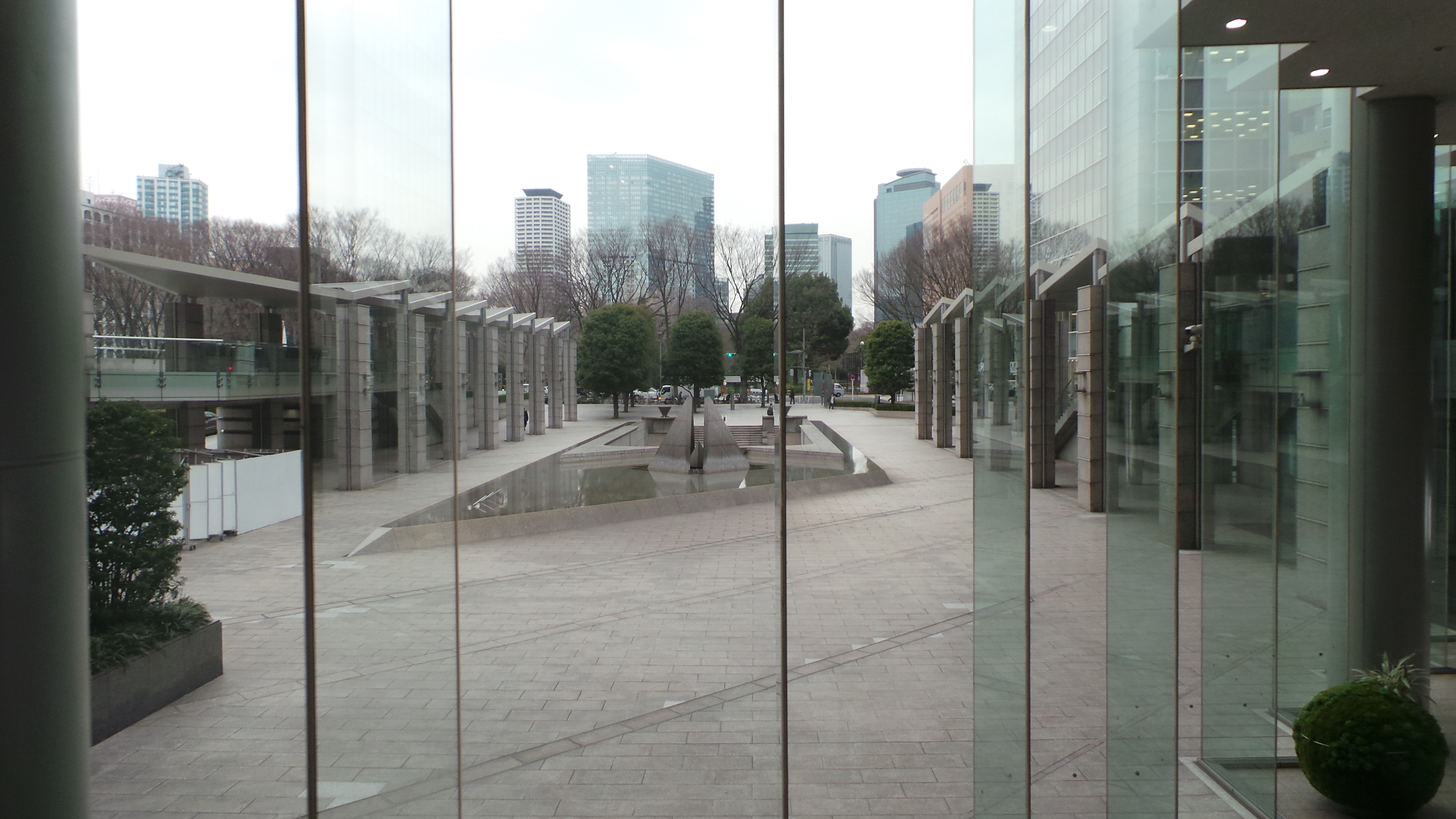
We enter the main room, somewhat smaller than I was expecting; a room populated entirely by women. No free samples are on offer, much to my dismay. Somehow, I find myself sucked in by the offers, and take some wax that has been knocked down from ¥3400 to a crazy ¥700; I don’t even use wax. I find it somewhat ironic that one of the most expensive buildings in Tokyo is the venue for discounted goods. I ask to photograph the room, but am told that strictly no photography is allowed. It makes me wonder if L’Oréal is here to promote their company brand or to just offer the rich an exclusive ‘invitation-only’ way to buy cosmetics and save large amounts of money, thus making them richer. With a lack of photography, I instead take a nice photograph from the inside of Shinjuku Park Tower.

loreal1

As I leave with my wax and head to the cashier, I am told that I can only pay with a credit card. I always thought Japan was very much a cash society, where plastic is seldom used, so this strikes me as odd. I don’t even own a credit card. Luckily, my friend assists me and away we go, back through the checkpoints and out into the chaos of Shinjuku.

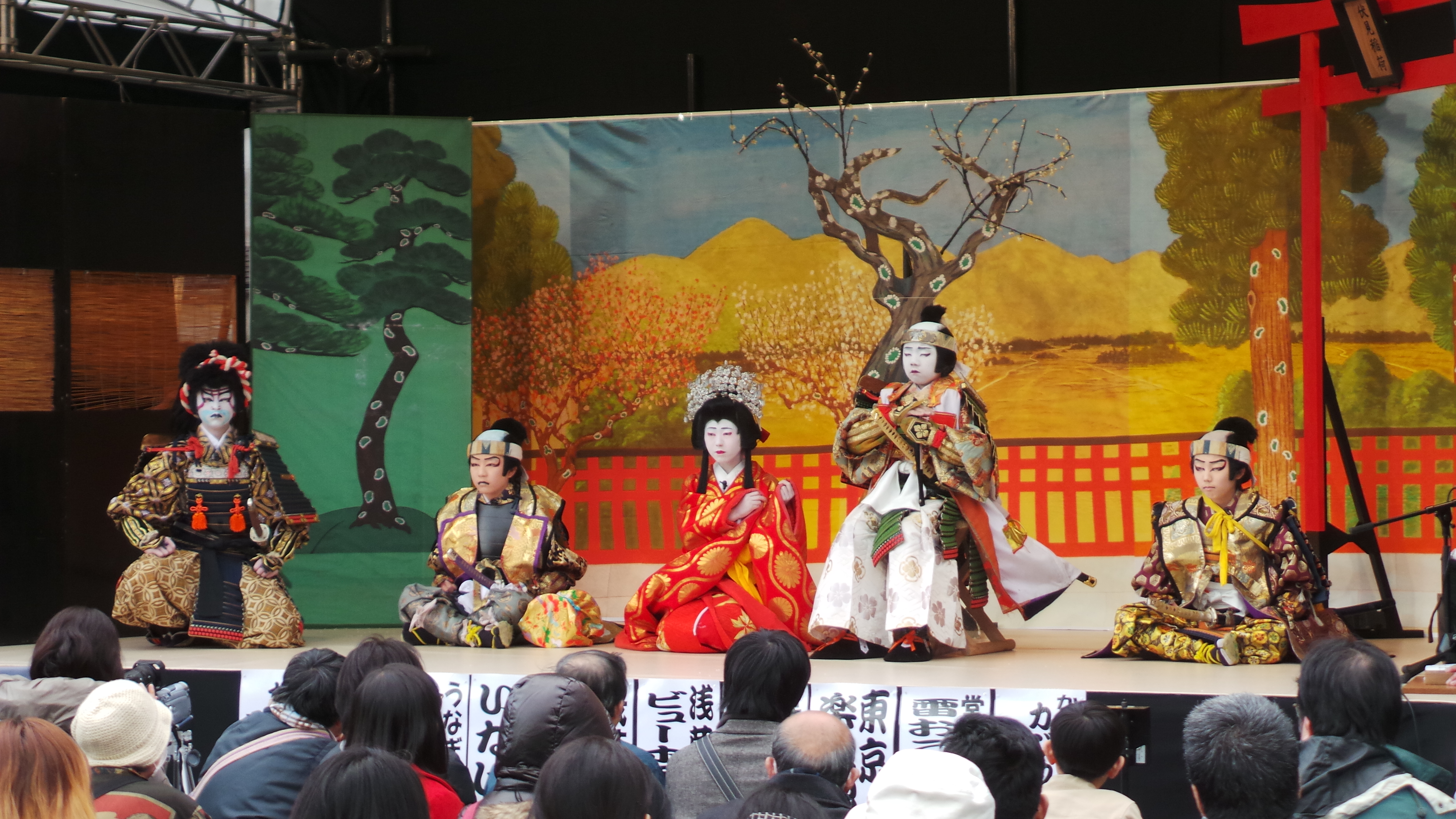
Back in Asakusa, we go our separate ways. I decide to head over to Senso-ji Temple to see my first-ever performance of kabuki. Kabuki is a style of theatre that combines music, dance, elaborate costumes, and elaborate masks. Today the show is performed by children, in a style known as Ogano Kabuki. This style boasts two hundred years of tradition, and these days it is the children of Saitama that keep the tradition alive. It is nice to see young people taking an interest in this art form, despite living in a country where the young are obsessed with video games, animated movies, and comic books.

The event starts with an announcer speaking in Japanese for ten minutes before two girls dressed as geisha take to the stage and talk for a further ten minutes. The curtains close, and the announcer speaks about foxes and cherry blossoms; another ten minutes pass, and the introduction is over. All the while, rude people push and shove through the crowds to take a closer look. A rude woman stands on my foot and offers no apology. Eventually, the show starts with a parade of costume-wearing kids.

kidskabuki

Traditional music plays, characters kneel down, and dialogue is exchanged with very little movement for what seems like forever. The costumes are fantastic, mesmerising, the music is beautiful, and the characters’ words are almost poetic. If I didn’t know in advance that these were child performers, I would have mistaken the show for a professional production. Despite the professionalism, I get a little bored. The language used isn’t only Japanese, but old Japanese that perhaps nobody has used for hundreds of years. I decide after forty minutes to go and do something else.

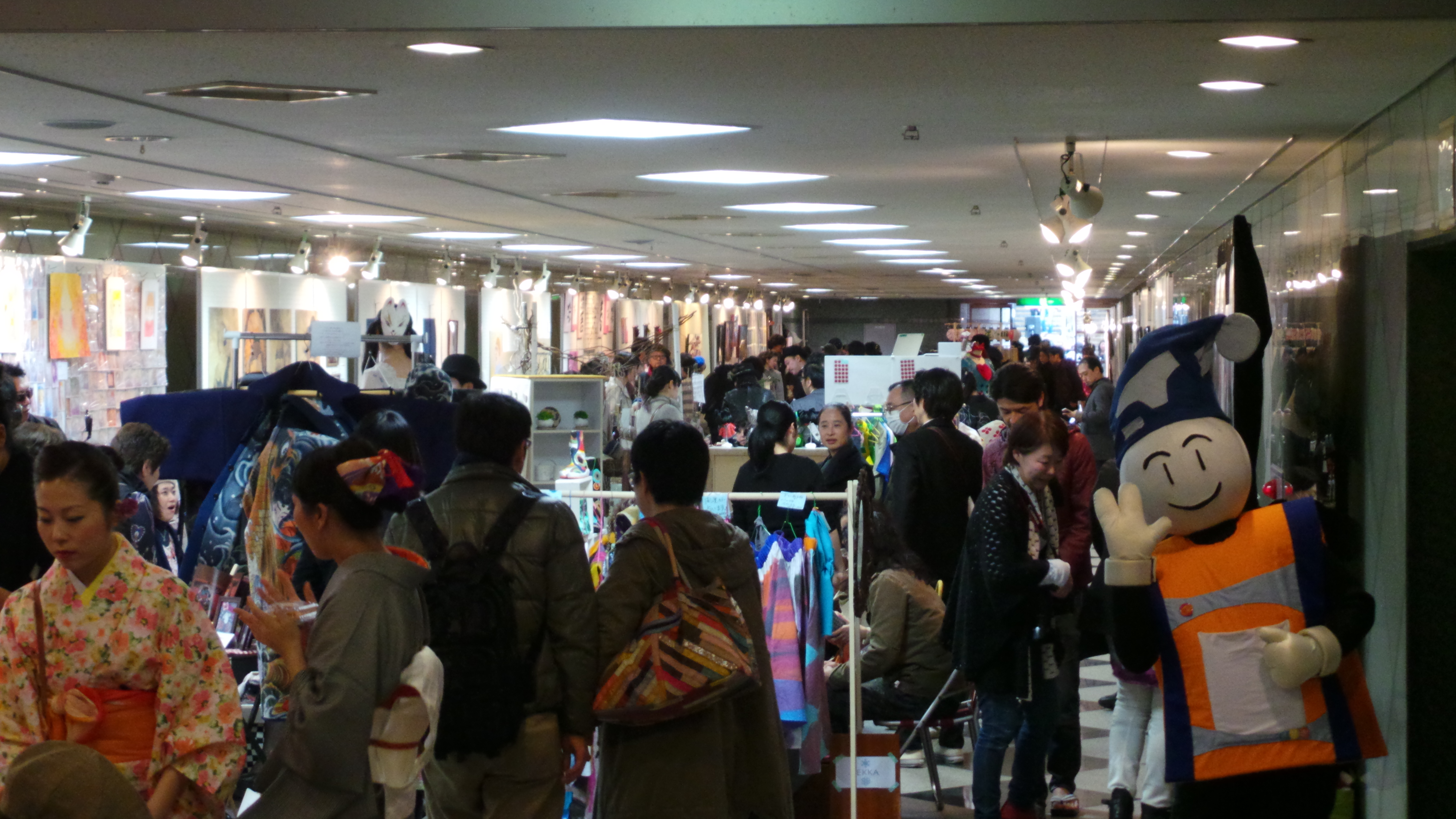
Also in Asakusa today, a fashion and art show known as The Asakusa Collection is taking place, so I take to the Sumida River and enter the Riverside Gallery.

collect1

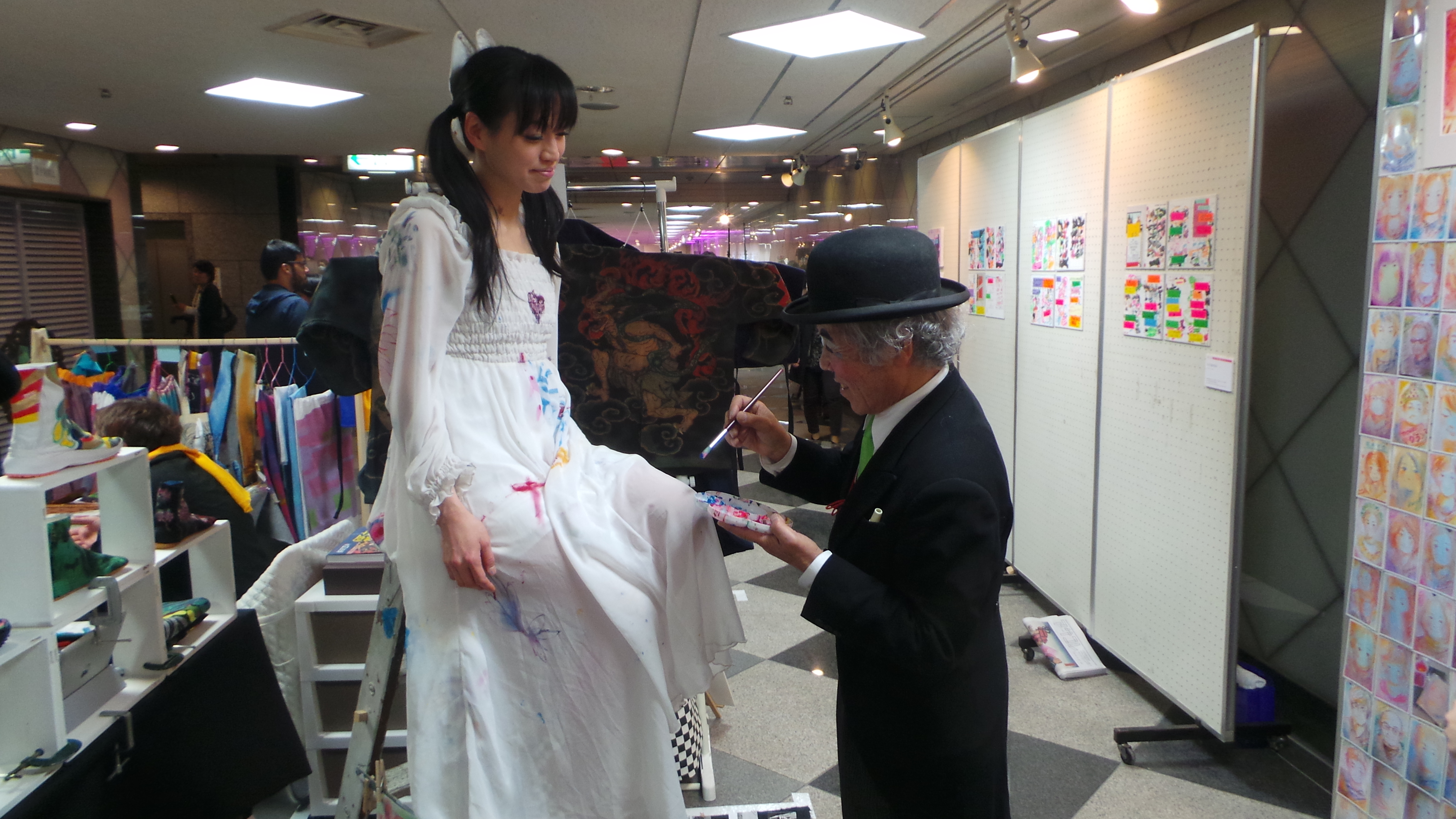
Inside the Riverside Gallery, my photograph is hijacked by a wizard wearing high-visibility clothing. I have no idea who he is or what he wants, but after ignoring him for a while, he disappears to ruin the photographs of others. The Asakusa Collection is a free fashion festival that apparently embodies amazing crazy and chaos culture in Tokyo. The show also has a heavy emphasis on innovative fashion without a distinction between Western and Japanese Styles. Amongst the fashion, there is a nice mix of local artists from this area, all hoping to showcase, promote, and sell their work.

Forty-two artists are here, and a mix of photographs, illustrations, ceramics, dolls, bags, jewellery, traditional clothing, accessories, and sheep-shaped flower pots are on display. I stop off to watch a bit of live painting before heading out in search of my favourite artists.

collect3

Seeing local works of art is always a treat for me, and I would love to feature the works of each of the forty-two artists here, but I don’t really have time for that. The first display I thoroughly enjoy is the work of Kanbayashi Yukikazu. He creates collage and three-dimensional landscape paintings using a mixture of sand and plaster, finished with oil. His work depicts scenes in Japan, from Mount Fuji to Senso-ji Temple, and was once presented at The Museum of Modern Art in his hometown of Kamakura.

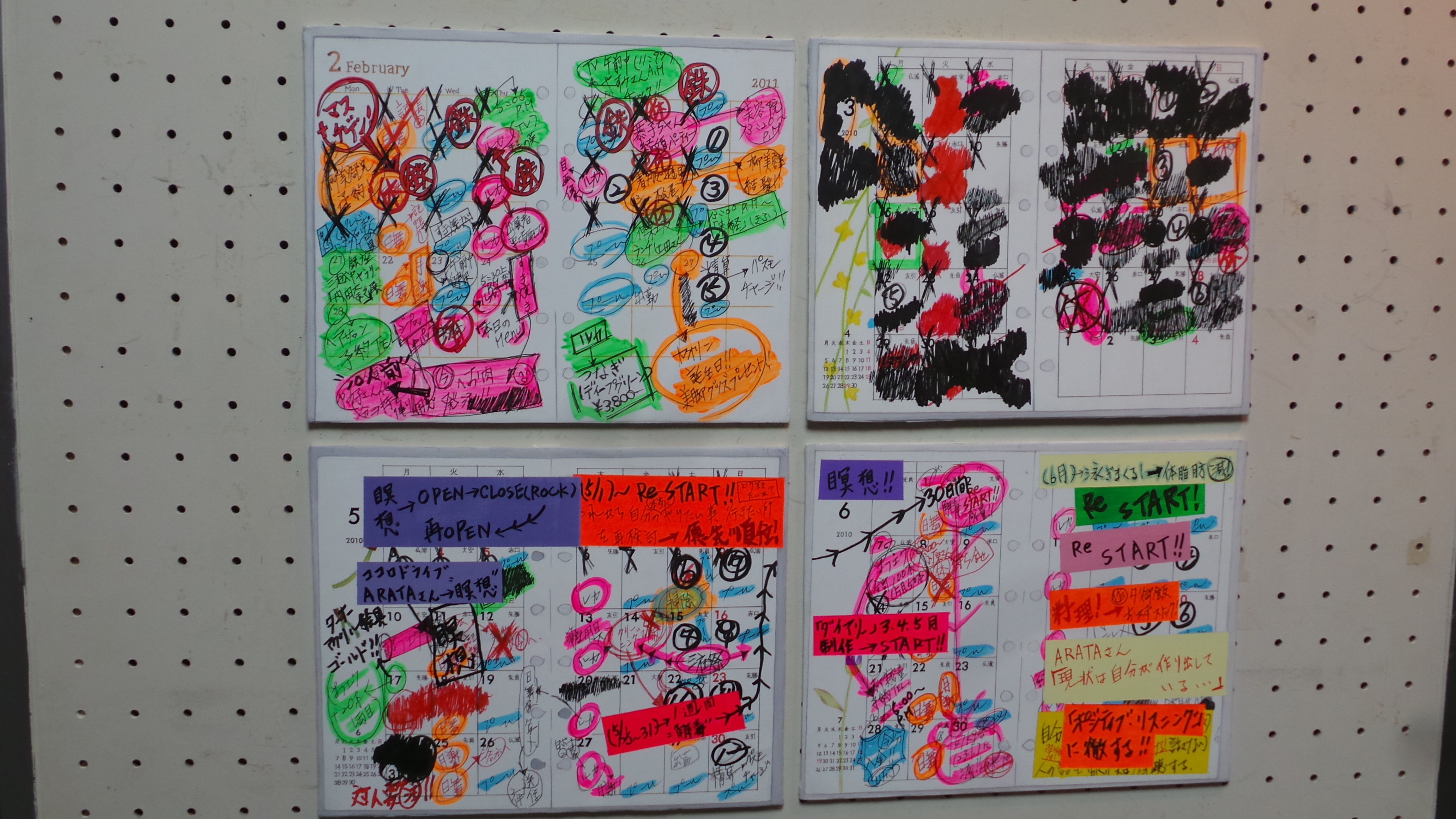
The second artist I enjoy is Ayumi Ogawa. Her work is called ‘Diary,’ and it is contemporary artwork based on calendars and real notebooks. Sadly for Ayumi, the link to her Facebook page reveals absolutely no information about the inspiration or message behind her pieces, yet I am somehow drawn to her abstract modern style.

collect2

At home, I realise that I have spent a lot of time writing in great length about topics that are probably of no interest to anyone else; a theme that might continue into my next post, which will be exclusively about anime.

Somewhere Oji We Know

The day is warm but grey. I head over to the Sumida River to take a look at a traditional Japanese festival known as Hina-matsuri. It’s a day dedicated to girls, celebrating the passing of ancient dolls from generation to generation. Originally, these dolls were floated along the river. However, due to issues with local fishermen, this practice was discontinued. Nowadays, the dolls are cast into the ocean before being collected and burnt. As is customary, the dolls are believed to contain evil spirits, and Japan utilises fire to cleanse them of the demons within.

Unfortunately, upon my arrival at the Sumida River, the event has already concluded, and the market stalls and stage are in the process of being taken down. With not much left to do for the day, I hop on my bicycle and once again head in the direction of Kita Ward, towards a quaint little place known as Oji.

oji1[1]

I find myself standing in Asukayama Park, a vast area designated in 1873 as one of Japan’s first public parks. Instead of climbing the steep steps for entry, feeling particularly lazy, I opted to ride for free on the monorail that crawls along the incline and into the park. Interestingly, the train station here runs alongside the park. As I look in one direction, I’m surrounded by lush greenery, while in the other, I see the familiar sights of billboards, buildings, railway tracks, and advertisements in the sky.

As I explore Asukayama Park, I’m pleasantly surprised to discover a unique playground for children, quite different from what I’m accustomed to seeing. The play area features old trains repurposed into climbing frames. Among them, two locomotives stand prominently, and my personal favourite is D51 853, a steam train donated to the park on August 31st, 1943. A nearby sign mentions something about coal, water, and charcoal, though I have no idea what it is referring to.

oji3[1]

D51 853 is awesome. Not only can I go inside and look at the old steam engine, but I can also climb onto the roof and pretend I am in a movie. I feel happy for the children who come here. Parks in Japan offer excellent facilities and interesting attractions. It makes me wish that I had such adventurous play areas in England when I was a child, but instead, all we had were rubbish swings. A sign says, ‘D51 853 is somewhat dangerous. Play carefully, duck down, or climb up on the high locomotive!’

I continue my exploration and discover that this park also boasts old waterfalls absent of water, beautiful foliage, and multiple statues and sculptures of varying shapes and sizes. One such sculpture is merely a small pile of rocks, while another is a giant rock enveloped in a small wooden shelter.

oji2[1]

A sign beside the massive rock mentions something about the ceremonial transfer of a divided tutelary deity to a new location, although the meaning escapes me. It also notes that the inscription is challenging to decipher in Japanese, as the letters were written using ancient kanji and rare calligraphy. Despite the protective wooden house, the words have succumbed to a weathered, entropic fate. A second sign, written in English, amuses me; it simply says, ‘Rock, please do not climb.’ Instead, I climb the protective wooden house.

As I leave the park, I pass by the Paper Museum and ponder how interesting it must be. Unfortunately, it’s closed today. I continue to walk, heading toward a bridge, where I follow some old stone steps down to Otonashi Shinsui Park.

Oji4[1]

Hidden beneath the bridge, Otonashi Shinsui Park is simply amazing. It boasts its own old wooden bridge, a small stream, an abundance of beautiful nature, and an opportunity for rock climbing practice on the many craggy stone structures that don’t appear to be dangerous at all. I stand for a while, deciding not to climb but only to observe, taking in the beauty of the scenery. After a while, I head back up the steps and across the bridge.

Beyond the bridge, there’s a huge torii gate and a massive shrine.

oji5[1]

Oji Shrine, one of Emperor Meiji’s Ten Shrines of Tokyo, is part of a pilgrimage trail consisting of ten shrines. Today, the shrine is devoid of visitors; perhaps they are all too busy enjoying the festivities with their dolls. Legend has it that the shrine was renamed by Toyoshima, a Japanese warlord. However, the most intriguing aspect here is a much smaller shrine dedicated to the god of hairdressing and wig-making. Quite peculiar.

I continue cycling around the area, searching for something of interest. Eventually, I stumble upon large castle walls with modern houses built above them. Steep stone slopes run along the castle wall, eventually leading to Oji Inari Shrine—a place where foxes seemingly guard the playground for children situated at the bottom of the hill.

The god of rice harvesting resides here, and so do the foxes. Among all the fox shrines in Tokyo, Oji Inari Shrine is considered the main one. Every year, at the end of the year, foxes reportedly visit from all over Japan to guard the god of the rice harvest, and presumably, to offer their prayers. It’s hard to believe that if I came here on New Year’s Eve, the shrine grounds would be filled with foxes, but that’s what the information here tells me, and who am I to argue with information.

oji7[1]

I leave the shrine and start cycling back toward Asakusa. I make a brief stop at the Banknote and Postage Stamp Museum, but unfortunately, it’s closed today. It’s a shame really because inside this free museum, it’s said that you can lift one billion yen. I would have loved to take one billion yen home with me, but sadly, that won’t be happening today.

Back in Asakusa, I finally get a chance to experience Hina-matsuri through traditional food. Chirashizushi (scattered sushi) is the dish that women typically eat on this day. It’s supposed to be sugar-flavoured, featuring vinegared sushi rice. While the toppings usually include raw fish, for some reason, my friend has given me a unique mix of rice topped with egg, cream cheese, and strawberries. Although three of the ingredients generally go well together, the addition of strawberries for the sugar-flavoured element is what I find a bit strange. While this might be a traditional food in Japan, strawberries with egg and rice is something I struggle to bring myself to enjoy.

As I cycle home with the taste of Chirashizushi scattered in my mouth, I decide that my next blog post will be primarily about food.