Drive My Car

Today I’m in Sasebo, Nagasaki Prefecture, and there are mountains everywhere. I walk vaguely in the direction of Sasebo Yonkacho Shotengai, a shopping arcade so big that its kilometre-long length spans across seven different towns. It is actually the longest straight and continuous shopping arcade in Japan. Sasebo Tourist Information states: “The arcade is always crowded with shoppers. Some stores accept US dollars.”

As I begin to wander through the retro shopping arcade, I notice a complete lack of not just shoppers, but shops that are open. Everything here aside from stores like Seven Eleven and Family Mart are all but closed. The arcade boasts over 160 shops, including a multitude of restaurants, souvenir shops, clothing shops, as well as daily goods stores. This morning, however, shuttered down shops with no identity fill the margins of this shopping stretch. The shopping arcade does however offer free wireless Internet, and also offers a nice break from the low winter sun on what is a relatively warm winter morning.

At the other end of the arcade, Mount Yumiharidake hovers on the distant horizon.
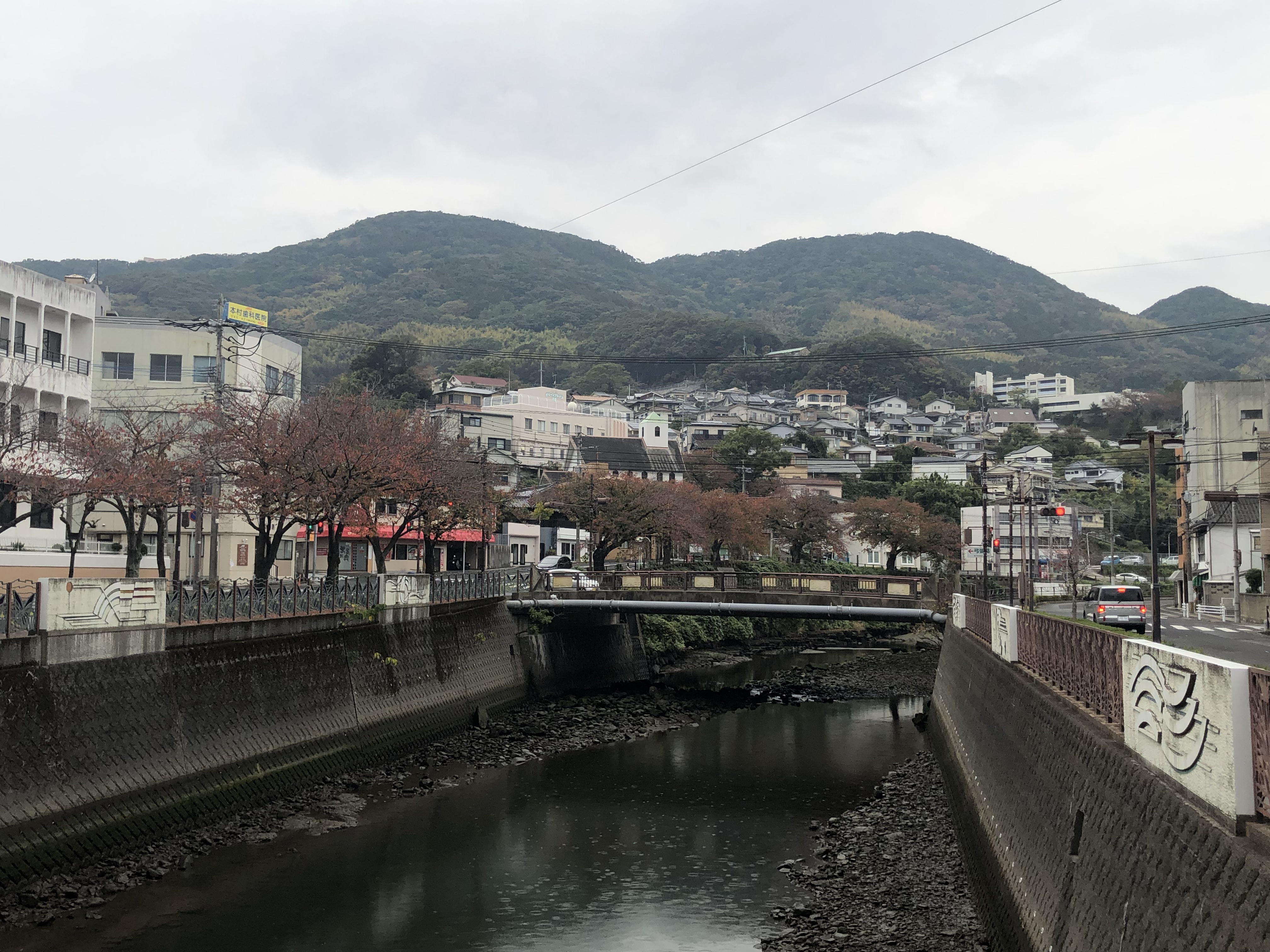
As I further approach the mountain, a sign tells me that the summit is 3.4 kilometres away. Having just walked one kilometre through a shopping street with relative ease, I decide that this could be an enjoyable hike to the top. There is said to be an observation deck at the peak which offers some of the best views of Sasebo and its surrounding nature, so, off I go.

It seems there are multiple ways up the mountain. The boring option is to hike the entire route by simply following the main road, or as I do, take some of the more interesting routes up steep steps and rocky intervals. As more and more of the paths begin to fracture and split into narrow lanes that scale upwards from the base of the mountain, interwoven homes across narrow streets littered with cats make up the first twenty minutes of the climb.
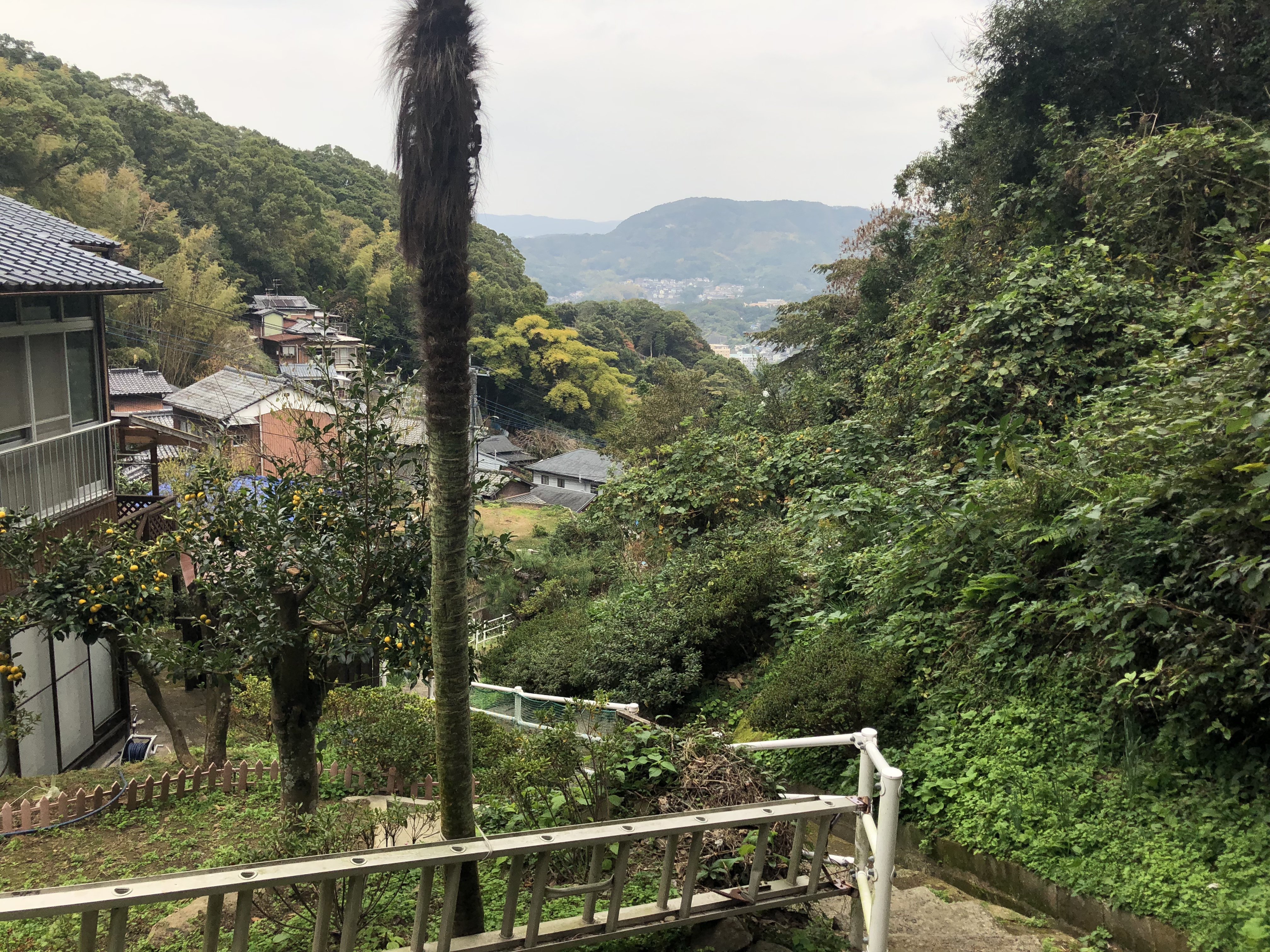
As I continue on with my ascent, the route begins to snake more and more, and light rain begins to fall. Hot from the day and the steepness of the climb I find the rain to be a welcome refreshment and decide to rest for a moment, allowing the rain to cool me down, and my heart rate to climb back down to a steady crawl.

I stop suddenly when I notice a sign telling me to watch out for snakes, but not just any snakes, mamushi, the most venomous snakes in Japan.
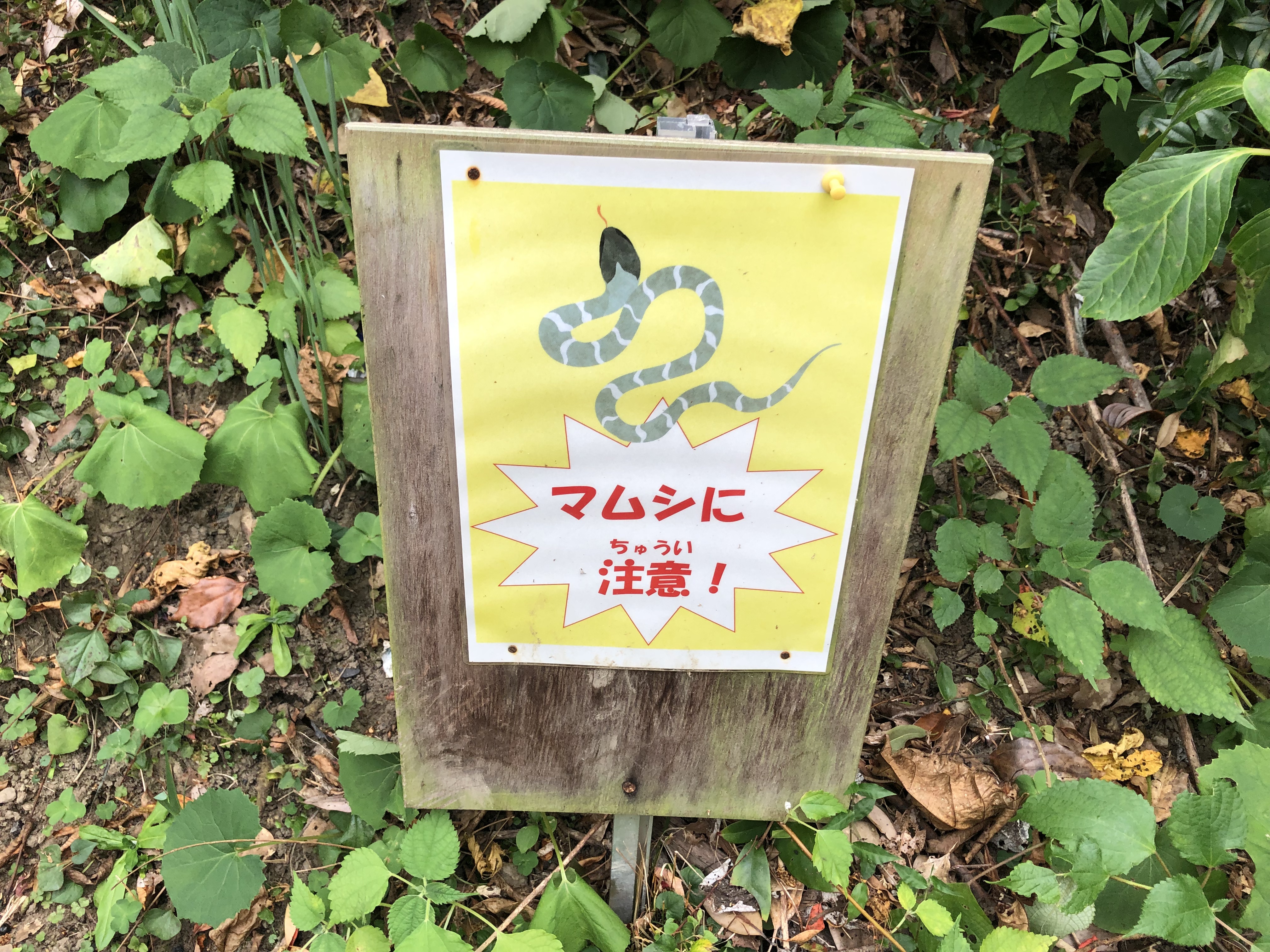
As I watch out for snakes, I pass under low hanging cobwebs that drift between trees across the many muddy paths. I don’t see any other people, and other than the cats, I don’t expect that I ever will. The track spirals around and into a clearing through the woods for a time, before becoming a path again.

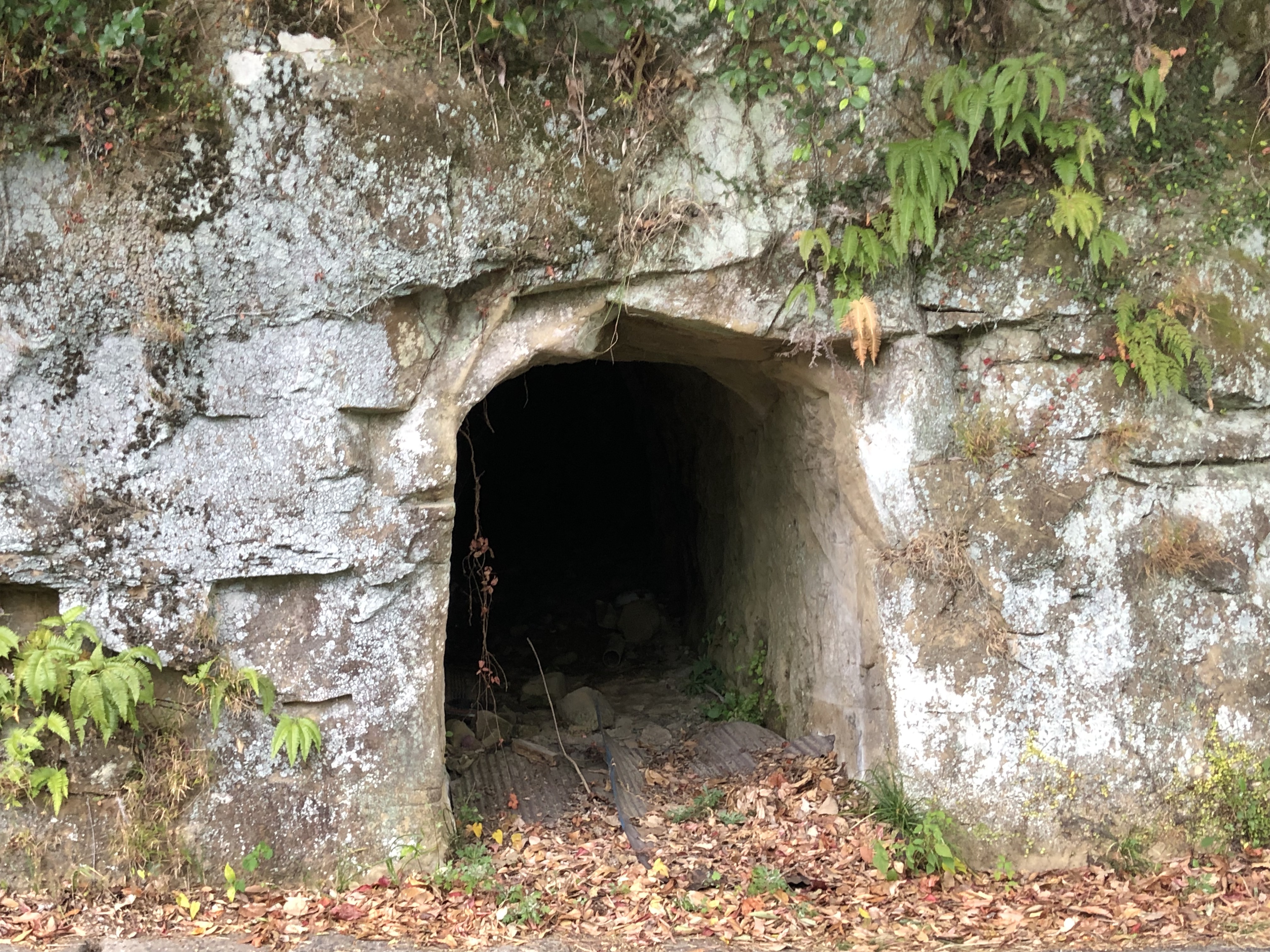
A little later, I pass a rather small cave carved into the rocks, I’m not sure if this is part of the climb or not, but it looks ominous, as if some unnamed horror is lurking inside. I take out my phone to capture the cave, before turning on my torch. As I bring the light to the entrance, I hear something inside begin to rustle around, perhaps a snake, and my heart begins to race; its beats increasing and repeating, an octave at a time, like an endlessly rising Bach canon fit for a king.
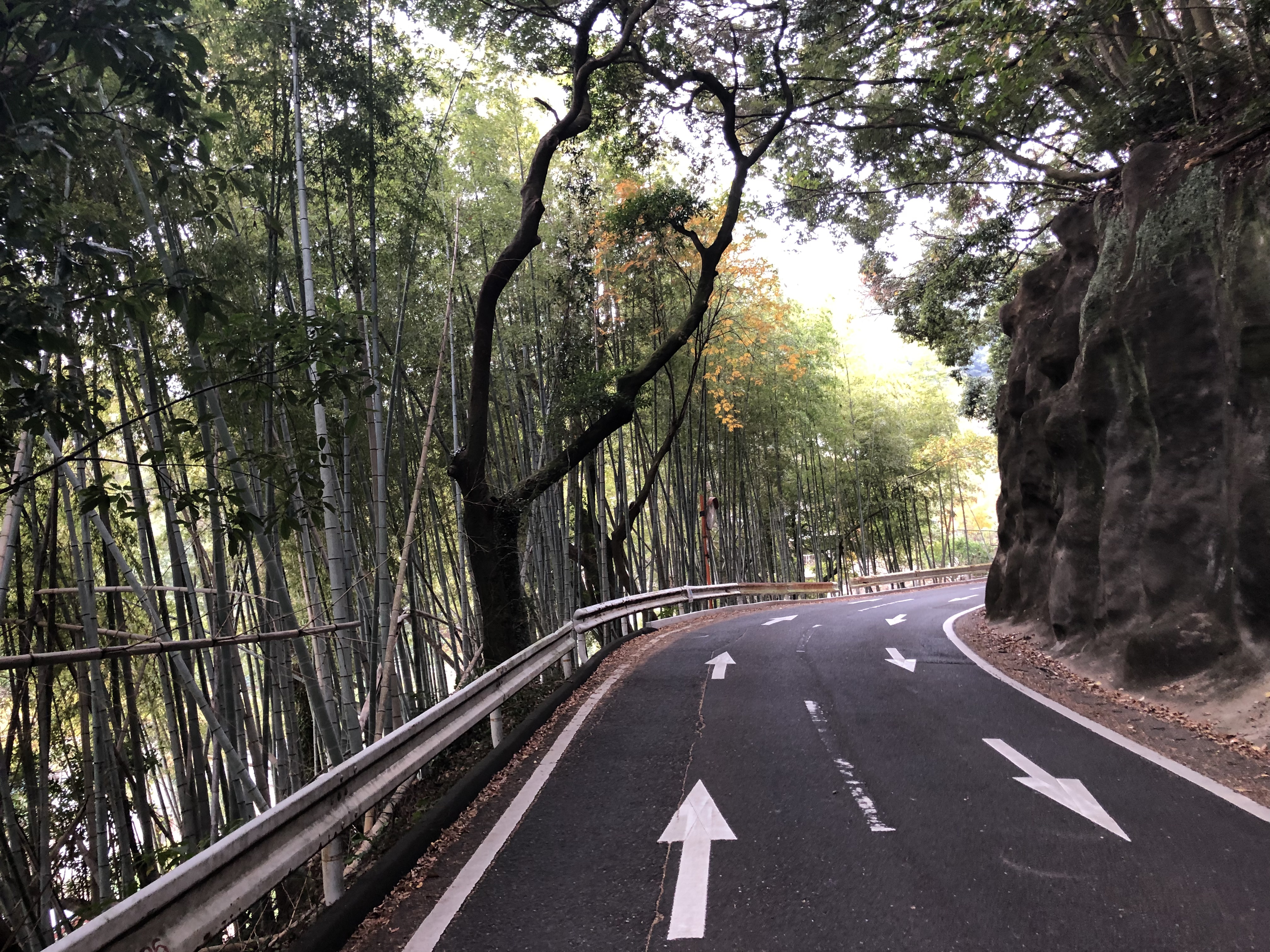
After taking an alternative route, I eventually reach a road where bamboo stretches off to the side, bamboo so tall that it descends deep below the road, stretching off into a distant obscurity.

Further along the road I see a sign telling me to, “Keep Out!” and below the sign is a huge drop, and I wonder who this sign is even for. Eventually, I see another sign for a car park, 300 metres away, and breathe a sigh of relief in knowing that I’m almost at the top. A third sign explains that gun hunting is prohibited in this area, perhaps the reason for the abundance of snakes.
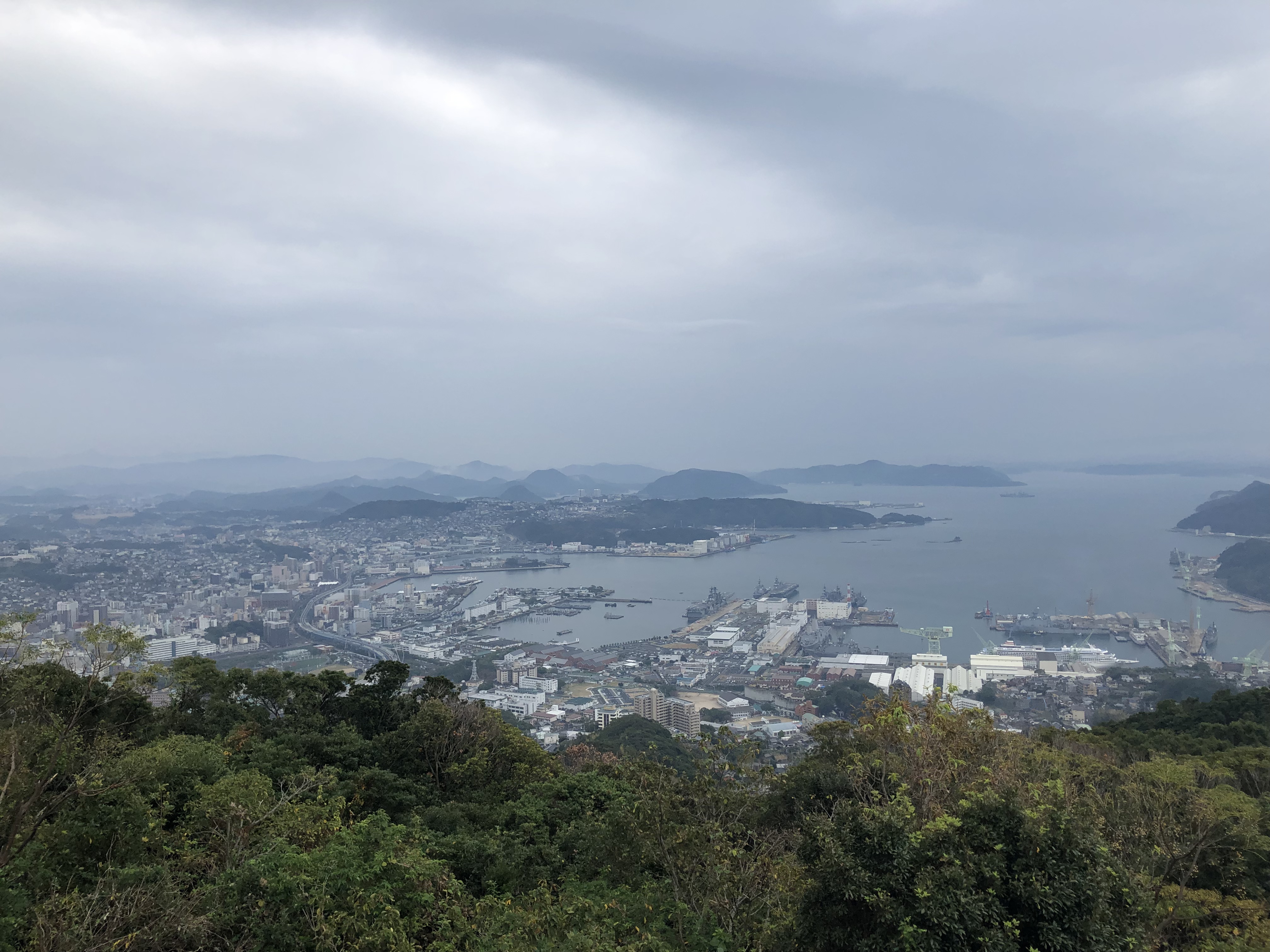
Finally the mountain path opens up, to reveal a stunning view of the city and landscapes beyond. Its US navy base below with its massive boats. Other mountains bulge up over the horizon, the view somewhat washed white by the falling rain. Over to the west, a large labyrinth of small islands, the Kujukushima Islands, its name meaning 99 islands, but also meaning too many islands to count (there are exactly 208).
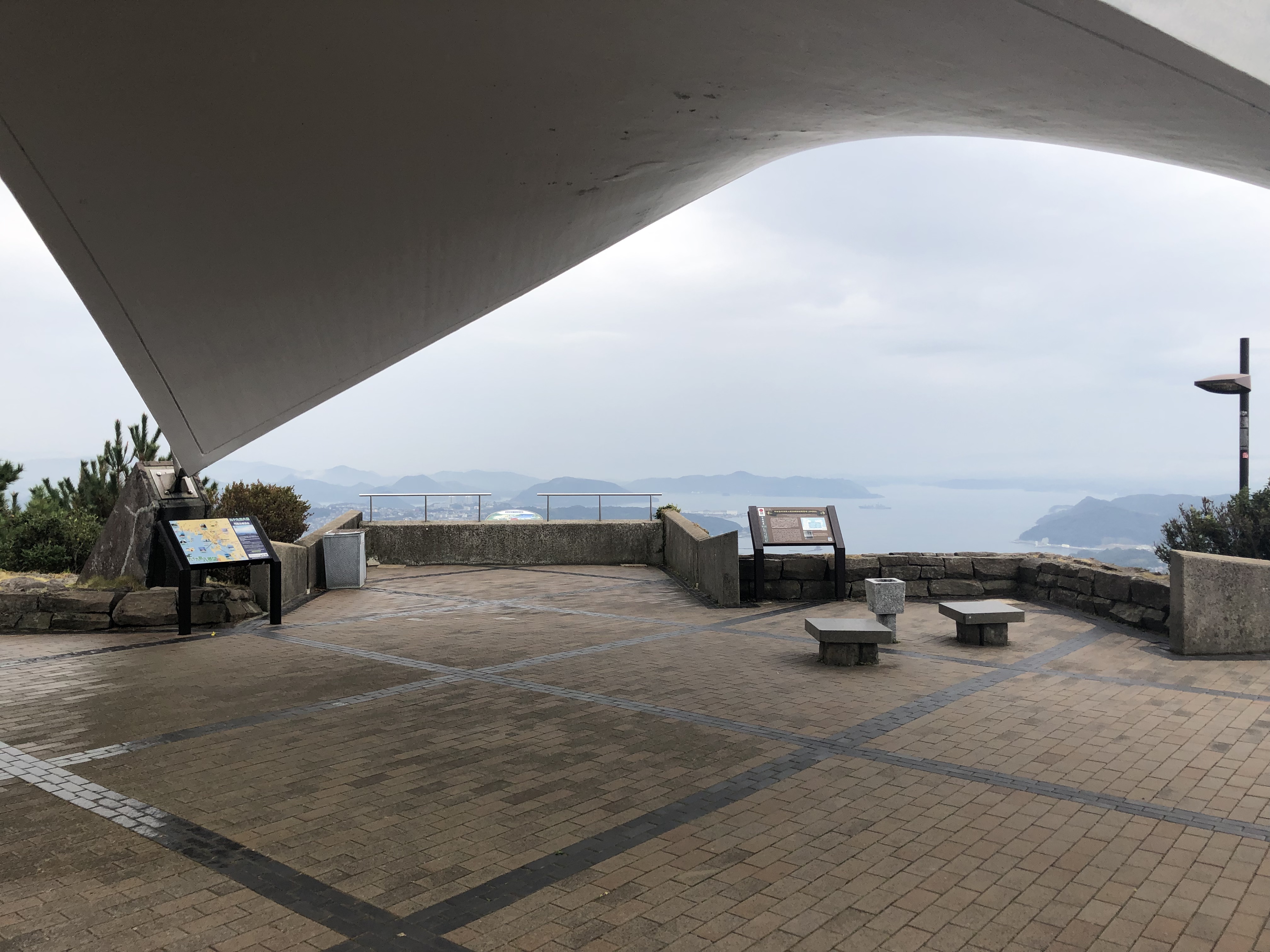
A short stroll up some stone steps, and over a small bridge, and I arrive at the Yumiharidake Observation Deck. The deck offers a nice panoramic view from atop this 364-metre tall mountain. I stand for a while, taking in the view.

A sign tells me that I can enjoy the scenery during the day as well as at night, however, I would be more fearful of climbing at night, just because it would make it especially harder to detect the snakes. The night view though is apparently amazing, and really brings out the lights of the city. There is also a free shuttle bus to the top of the mountain at regular intervals throughout the day.
I head over to the bus stop and wait. After about ten minutes, I do finally see another human being, a Japanese man pulls up beside me in his car. “No bus today,” he says. I ask him whether that’s because today is Sunday, however, he just repeats himself and says, “No bus today,” for a second time. I feel a little disappointed but before I can reply, the man points to himself and says, “Drive my car.” I tell him that I can’t drive, but this is of course not what he meant.

I sit in the back, and luckily he drives. The open window offers a refreshing breeze. After a very brief conversation in English about whether or not I know King Charles, our chat abruptly ends, so I take out my book. Men Without Women, a collection of short stories by Haruki Murakami. As we slowly descend, crawling down the mountain path, the free shuttle bus to Sasebo Station overtakes us from behind.
A Bridge, Too Far

Today I’m going to walk across the sky. I leave my hotel in Miyazaki City at 8 o’clock sharp and cross the road to the bus stop opposite. My bus isn’t quite as punctual and arrives six minutes late. It’s a one hour drive to Aya Town, a place that describes itself as one of the most beautiful villages in Japan, a title that intends to enhance the added value of sightseeing and develop the regional economy, or so the flyer explains.

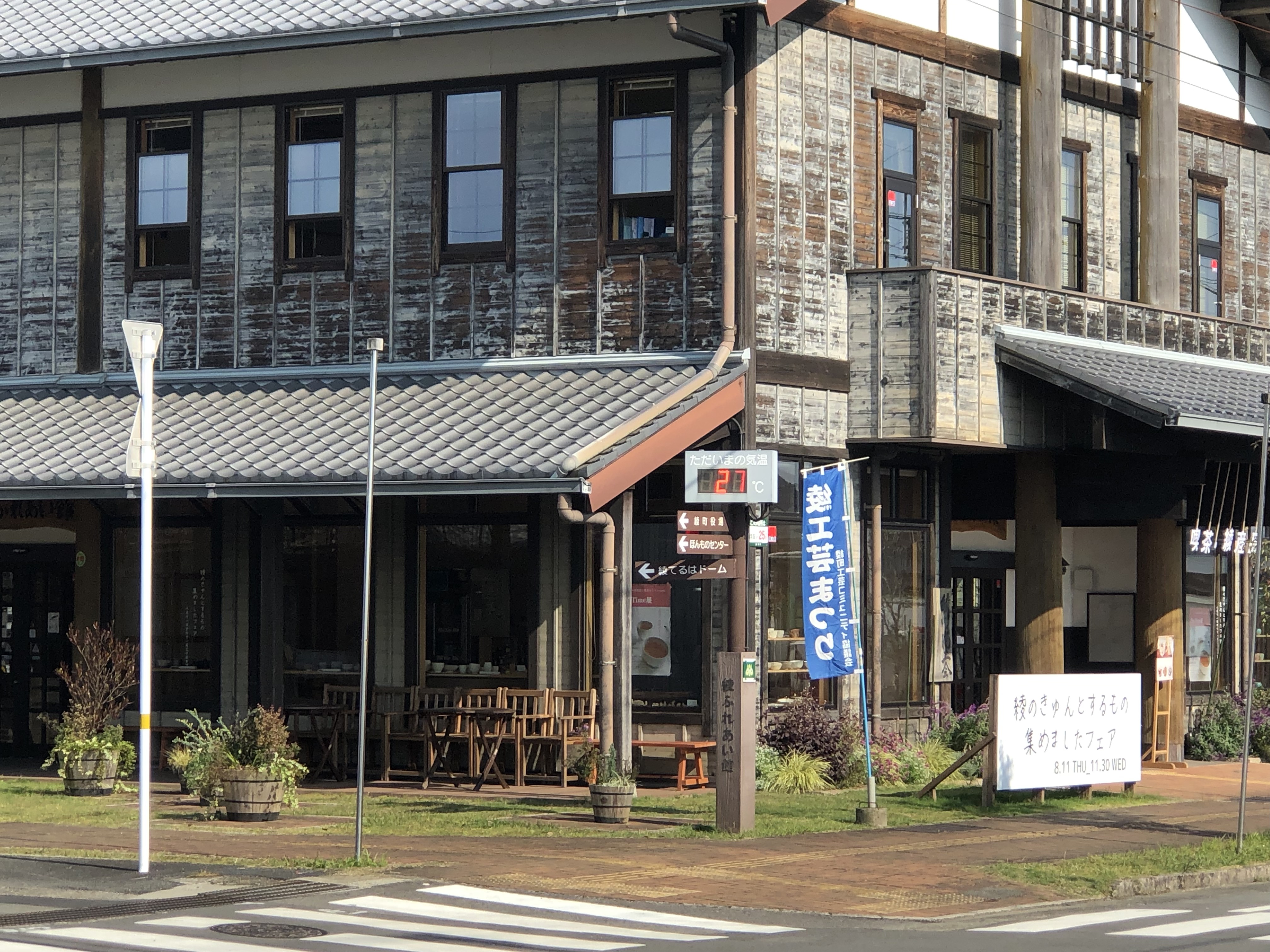
I arrive at Aya Bus Station, probably the smallest bus station I’ve ever seen. The town of Aya is located at the foot of the Kyushu Mountains, is incredibly rural, and over 75% of the total area is made up of forests, specifically warm-temperate evergreen broadleaf forests. Despite it being just after nine in the morning, and technically winter, a digital display screen accurately informs me that the temperature right now is 27°C.

I check the bus timetable but can only see buses here that go back to Miyazaki City, so I decide to walk; my destination a mere twelve kilometres away, up a mountain. The first hour of my stroll is along a straight country road passing rice fields and old houses, before it eventually turns into the aforementioned mountain forest.

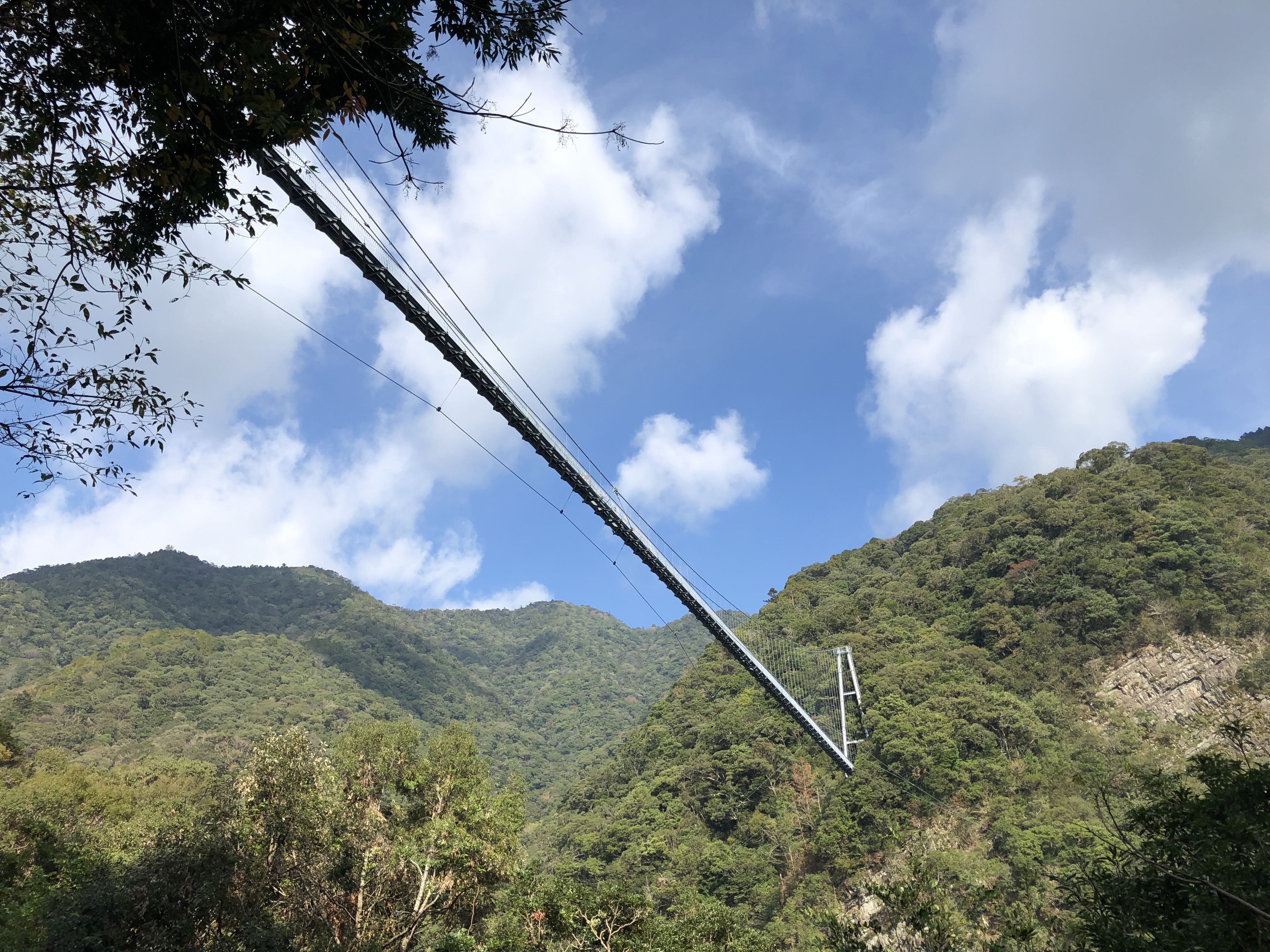
The forest is breathtaking, it meanders skywards further and higher into the mountains. Small waterfalls appear intermittently, the Hongo River below shines a cobalt blue, the track is steep but fair, and the only thing I have to complain about is the intense heat. The final kilometre becomes steeper still, but I go on, for above me, hanging majestically across the sky, sits a bridge.

To be entirely honest, I don’t like heights. Just gazing up at the bridge from below makes me unsteady. I wasn’t expecting the bridge to be so enormous. I squint and see tiny people on the bridge, their scale in comparison to its delicate metal frame is bewildering. I look up and stare and mutter to myself, “Not a chance. Not a chance.”

I’m not out of the woods yet, I discover that I still have another four kilometres to reach the actual entrance to the bridge, the four steepest of the kilometres. Hot, thirsty, and feeling as though I have walked for hours (I have), I long for nothing more than a vending machine, and as I finally reach the entrance to the bridge, the first thing I do is reach for a bottle of Pocari Sweat.

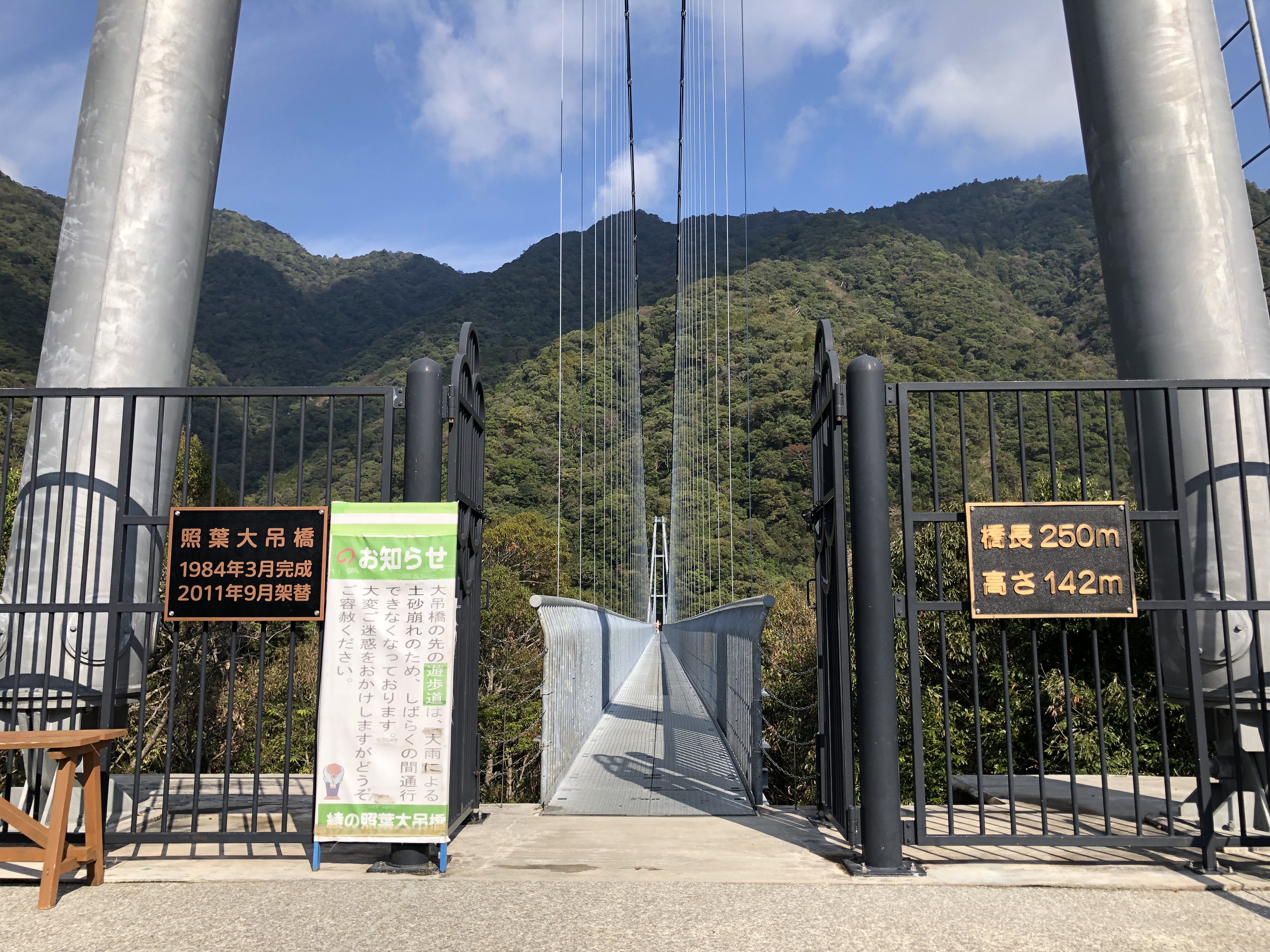
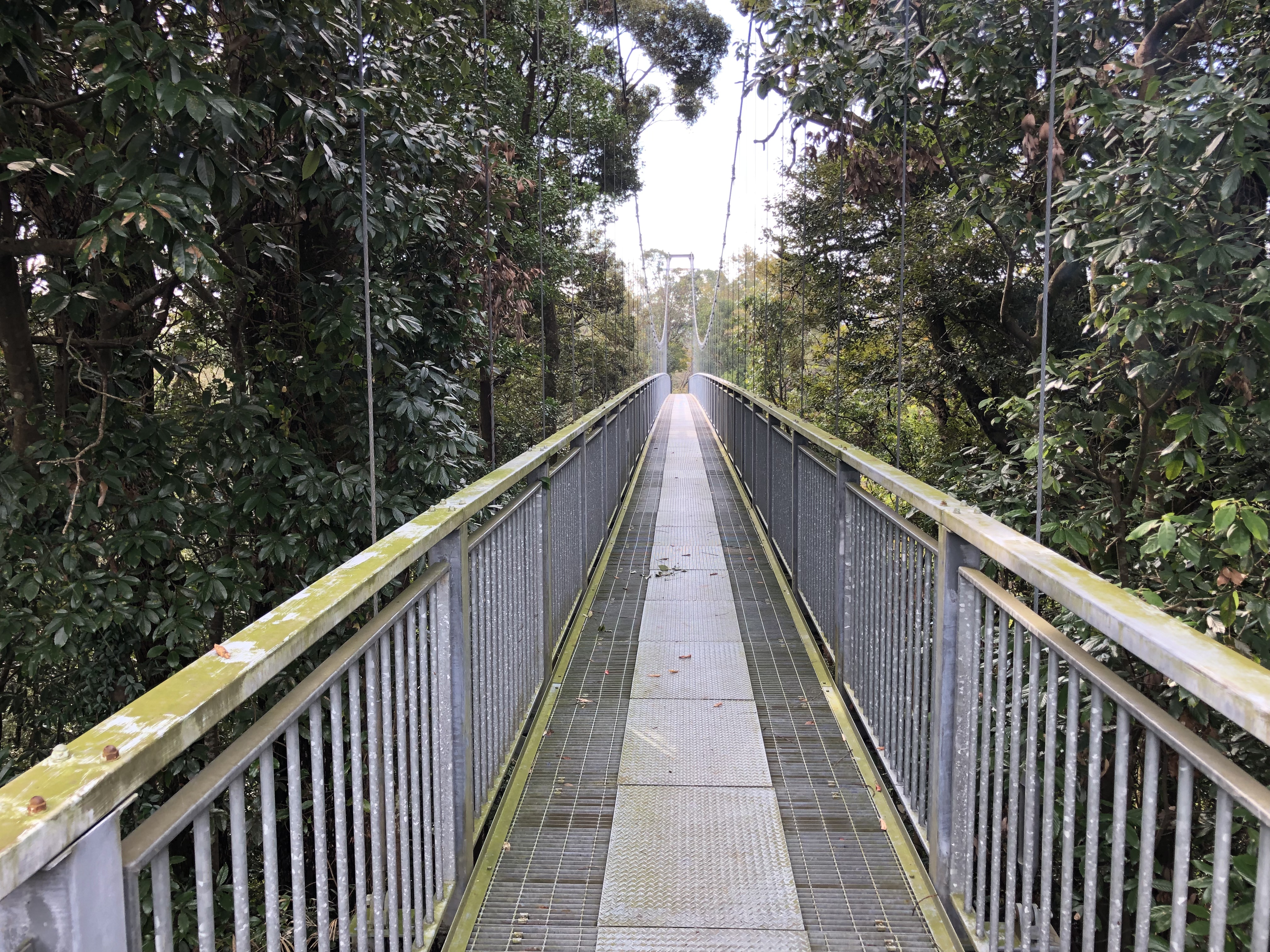
The Aya Teruha Suspension Bridge was original built in 1984, but due to safety concerns it had to be reconstructed in 2011. The bridge is a ridiculous 250 metres in length and its highest point 142 metres from the Ayaminami River below. The bridge had, up until a few years ago, held the records for being the longest bridge in the world and the highest bridge in the world.

“Not a chance,” I utter aloud once again, before stepping onto the bridge.

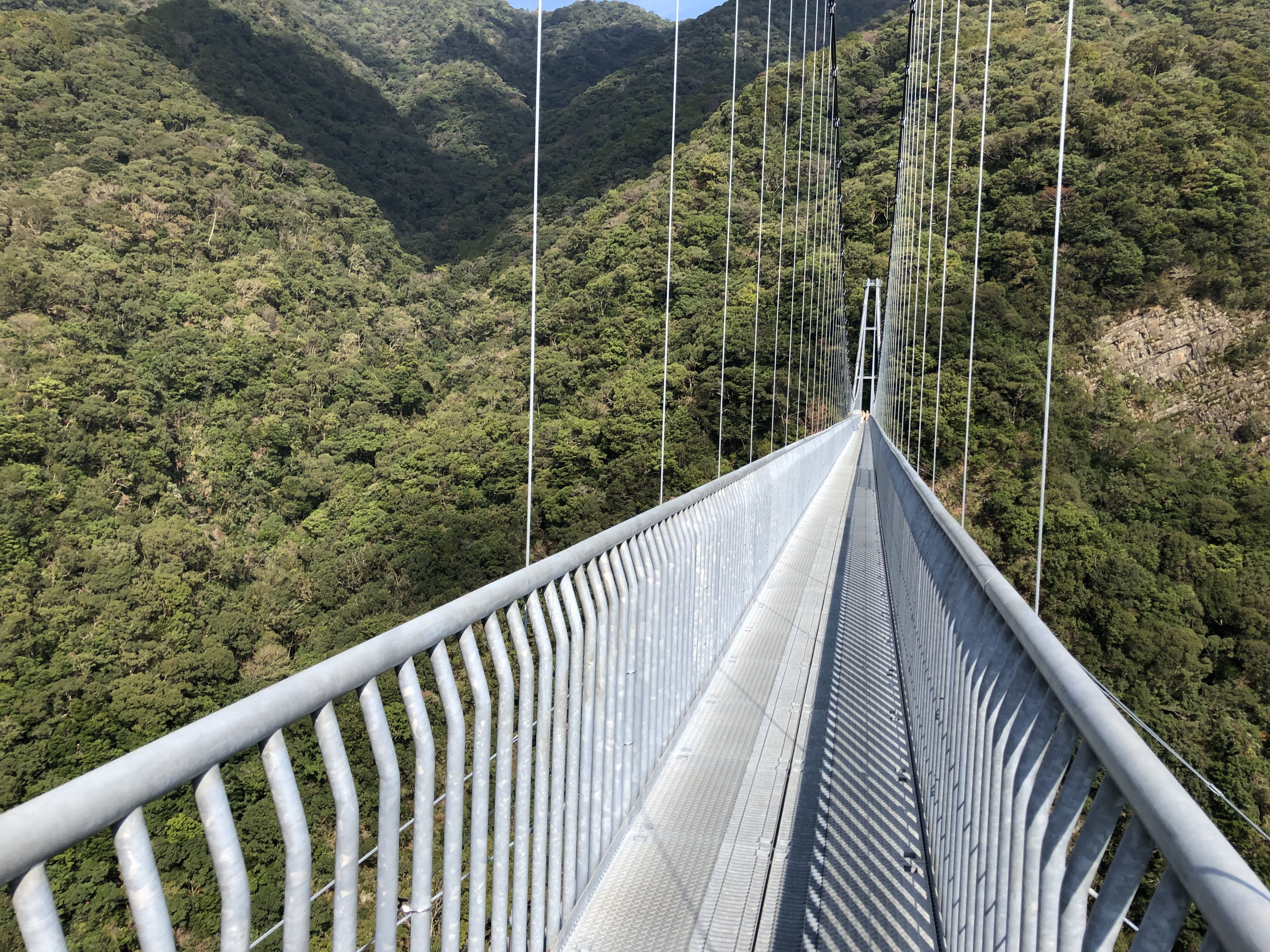
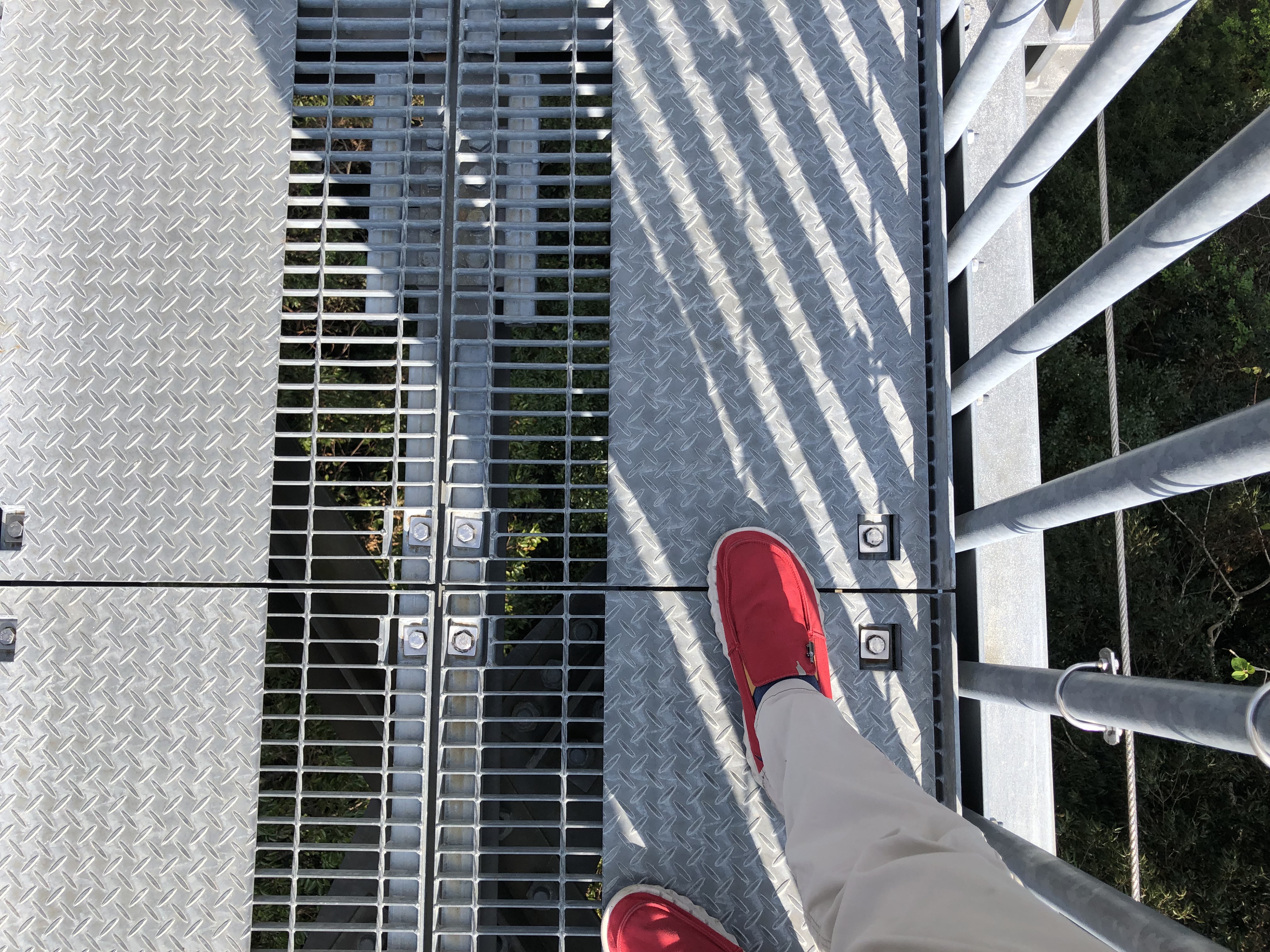
I stride along the bridge with ease. I look around and admire the view of the dark green glossy leaves that cover every inch of the mountains beyond, the hot bright sun dazzling in the blue sky above and painting the forest in its radiant glow, the bridge, with its grated walkway that spans its entire length; it makes me feel as though there is nothing beneath me, just the impending oblivion below, the anticipation of apprehension, panic washing over me, I become enveloped by the empty feeling of dread, that something here isn’t quite right. I suddenly feel lost and found in the same moment, the inevitable misery of the end, flickering in my thoughts, a cocktail of emotions swirling around, one step at a time.

I stop to let the feeling pass, it will pass, and it does. All the fear inside of me scatters away in a single moment, like a lonely sand castle collapsing on a desolate beach, suddenly, it is gone, and I return to myself.

As I reach the other side, the first thing I notice is the strong smell of the lucidophyllous trees. The second thing I notice is that the path ahead twists toward a long promenade that runs along the mountain slope then loops around, before eventually returning to its starting position, the Aya Teruha Suspension Bridge. I’m rather annoyed as I have to cross the bridge for a second time.

Back down the mountain I go, and some fifteen kilometres later I arrive at the entrance to Aya Castle.

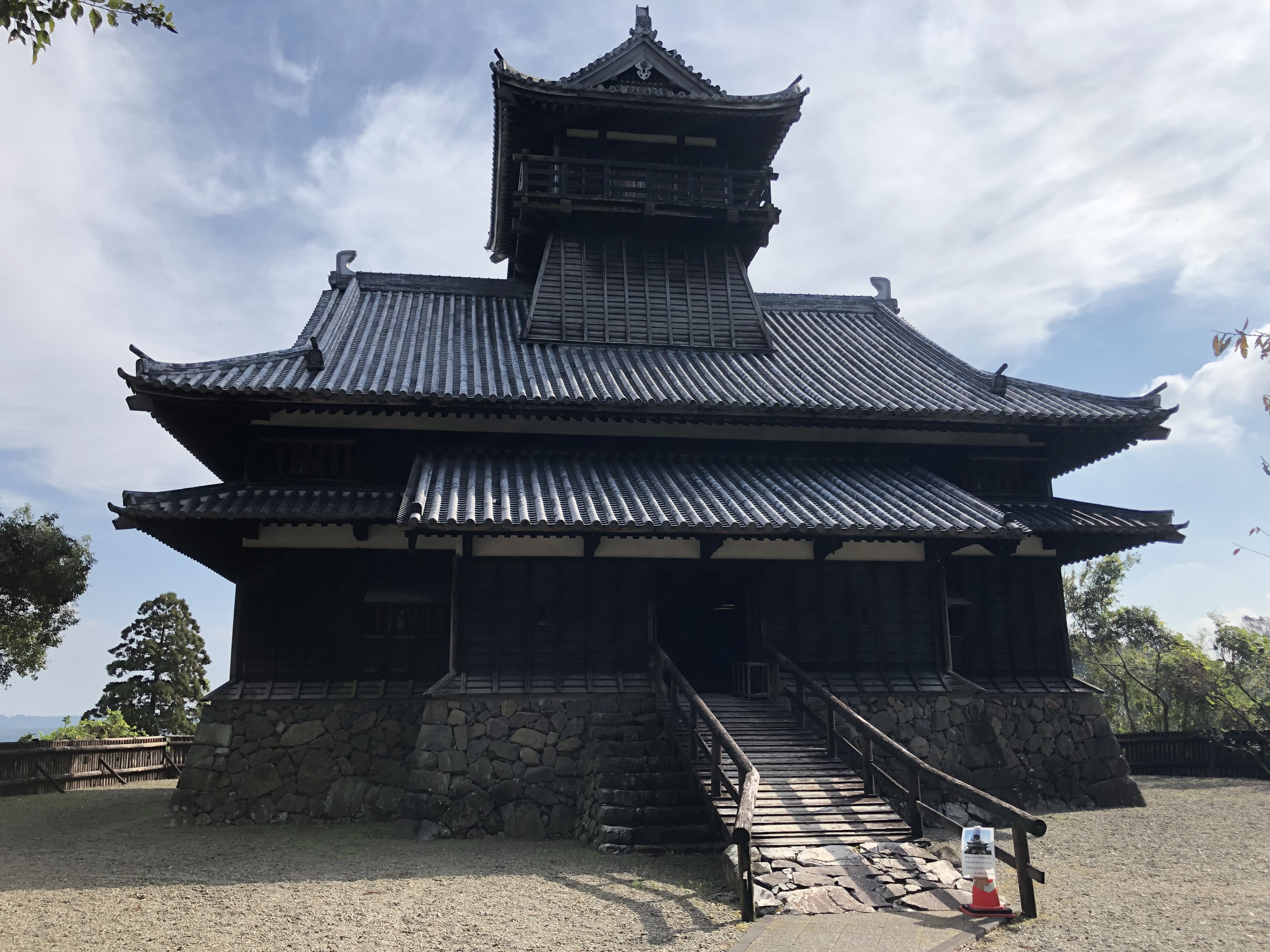
Only built in 1985, this place describes itself as Japan’s oldest mountain castle, but it’s not; it isn’t even on a mountain. This is a reconstruction of a castle that was destroyed 700 years ago. Inside this wooden castle is a small museum commemorating feudal warriors and the history of Aya Town.

Leaving Aya Castle I wander back in the direction of Aya Bus Station, however, before I can leave, for whatever reason, I have to cross over yet another suspension bridge; this one is a lot shorter, but still high enough above the ground to once again trigger my fear of heights.

I decide that this is one bridge too many, it exceeds the limits of what is reasonable and acceptable. It literally is a bridge too far.

Murder on the Tsukuba Express

Today, the weather is very warm, so I decide to take a train to Ibaraki Prefecture, to a little place called Tsukuba. At Tsukuba Station, I take a ¥720 bus that crawls for thirty minutes toward Tsukuba Mountain. Eventually, I get off the bus. The only tourists here are old Japanese women who have made the journey to this mountain to look at flowers.

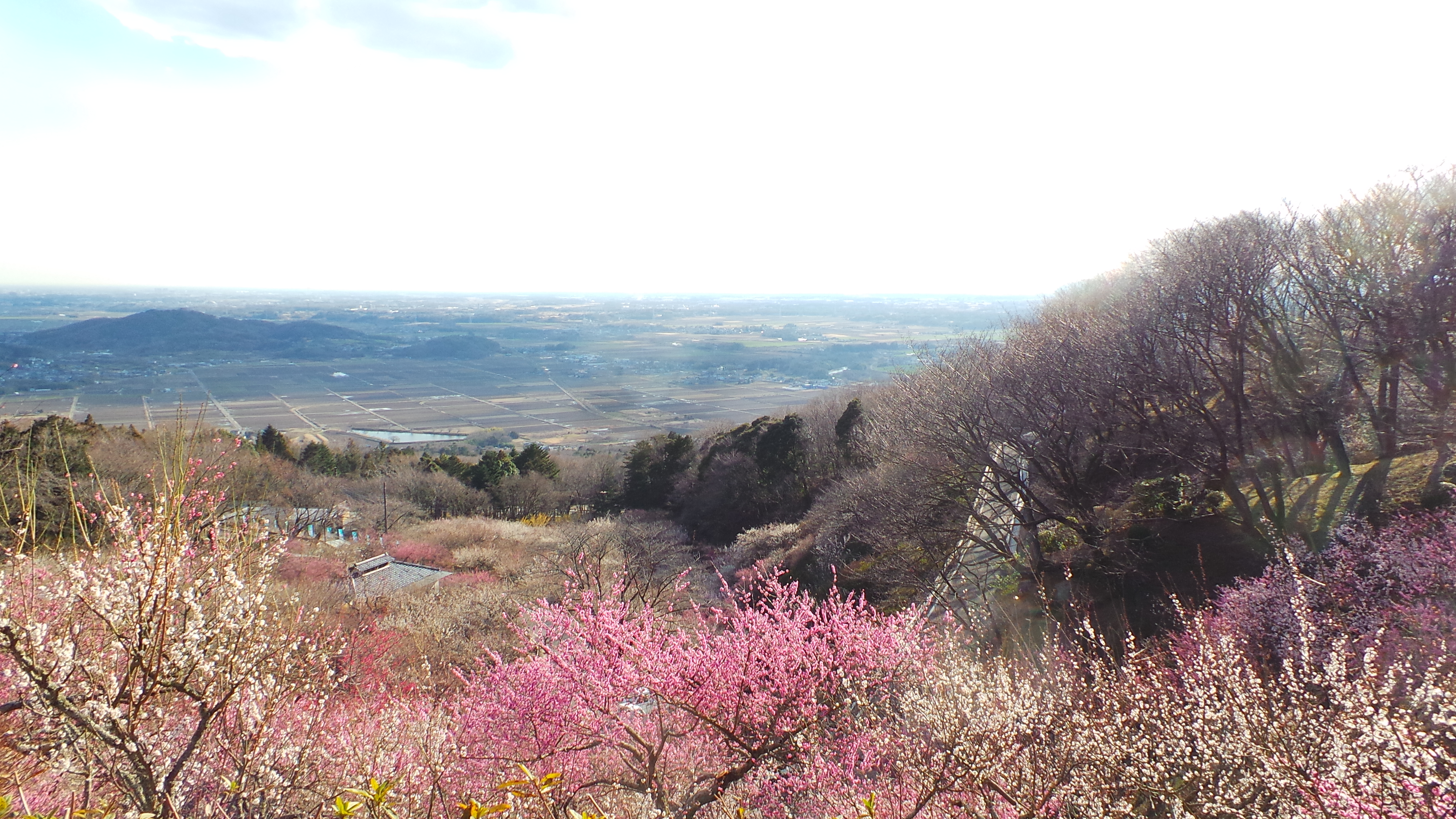
The first thing that strikes me as I stroll off the bus is the view. The day is relatively clear, and the distance is a sea of fields and countryside that seemingly spread forever before eventually blending into the whiteness of bright, sunlit clouds. One of the reasons I am here today, like the old women, is to look at flowers—flowers of beautiful pink and white. The other reason is that this steep mountain is steeped in history.

tsukuba5

In March 1864, an army was raised on this very mountain, led by a samurai named Fujita Koshiro. The army, known as Tsukubazei, opposed plans to close Yokohama Port and exclude foreign ships from entering Japan. Even the law to stop foreigners from entering Japan was considered barbaric; it was called the ‘Order to Expel Barbarians’.

The twenty-three-year-old leader led his army of samurai and farmers in what became a war against Emperor Komei. The battle was lost, and the entire army was beheaded. This event contributed to the ending of the Edo Period and the start of the Meiji Restoration.

tsukuba1

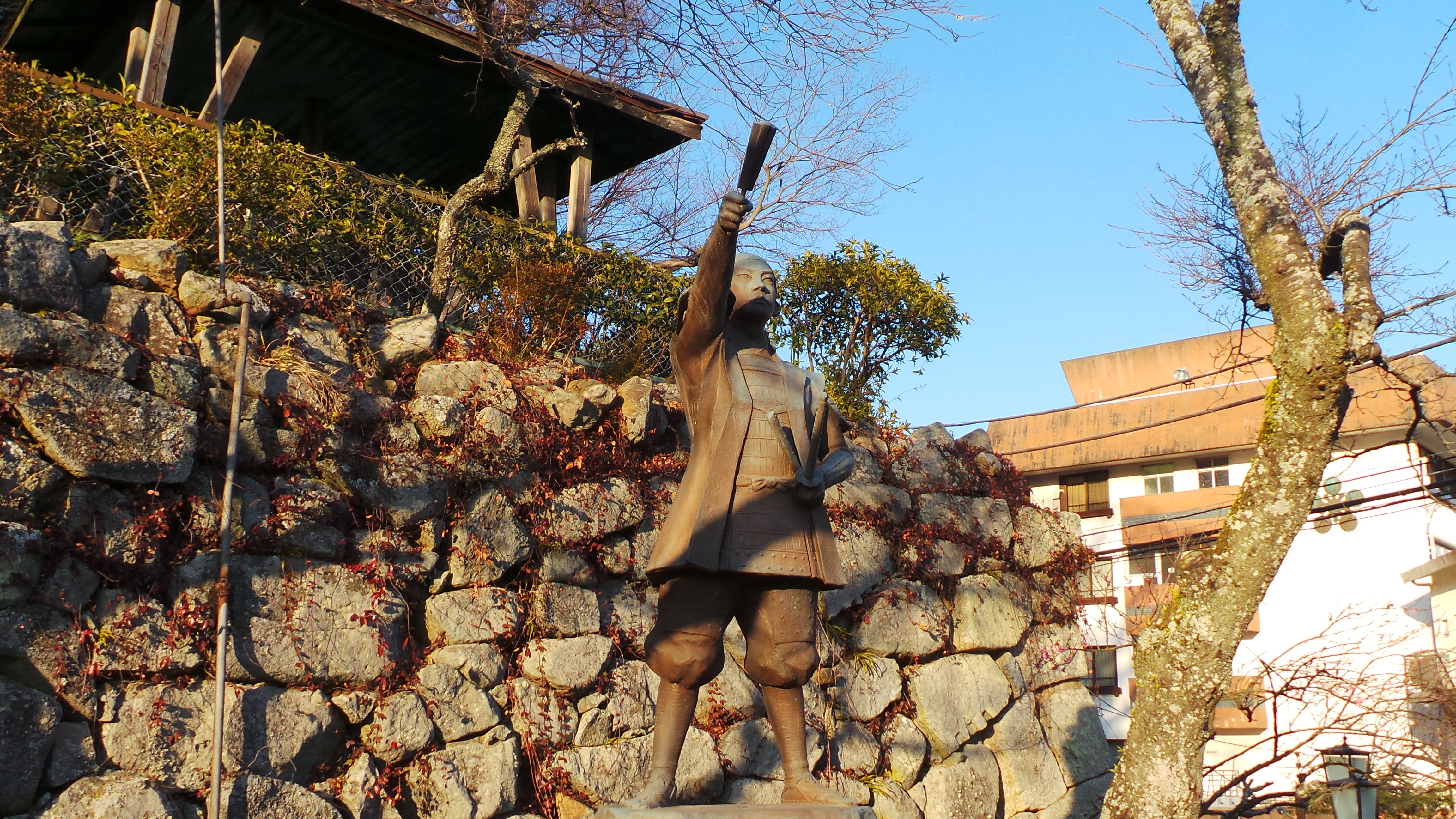
Still considered a terrorist, a statue of Fujita Koshiro stands proudly at the entrance to Tsukuba Shrine, a shrine said to house the god and goddess that protect from evil and illness. The shrine has been a place of worship for over 3000 years. I continue my walk through the mountain paths, passing a random telephone box with a huge statue of a frog on its roof, Omido Temple with its massive bell, the cable car service that isn’t running today (as usual), and a statue seemingly standing guard in a small car park.

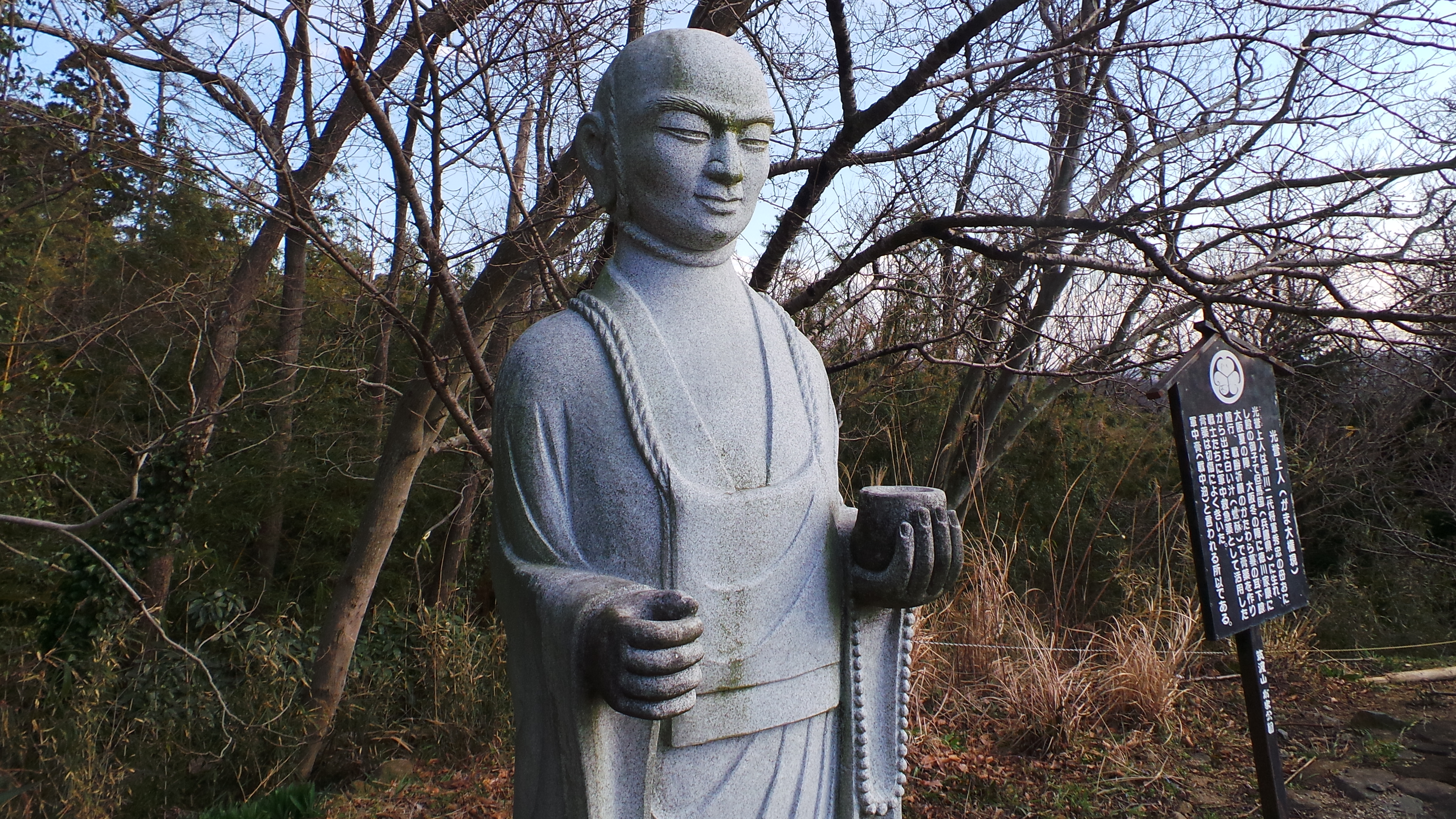
The statue is of a man carrying a cup of medicine. Using my amateur translation skills, the medicine is made from gamagairu, a giant frog said to live in this area; hence the telephone box. The medicine is taken from the ear of the frog and is said to have magical healing properties. That’s right, magical.

tsukuba9

People in England or America will be familiar with the expression ‘snake oil,’ a term used to describe health products that don’t actually work; a swindle of sorts. In Japan, a similar expression exists, and that is frog oil. Salesmen use a special sword that contains fake blood in its tip, pretend to cut their arm revealing a huge gash, then proceed to rub the frog oil on their skin. The wound disappears in an instant, and fools buy.

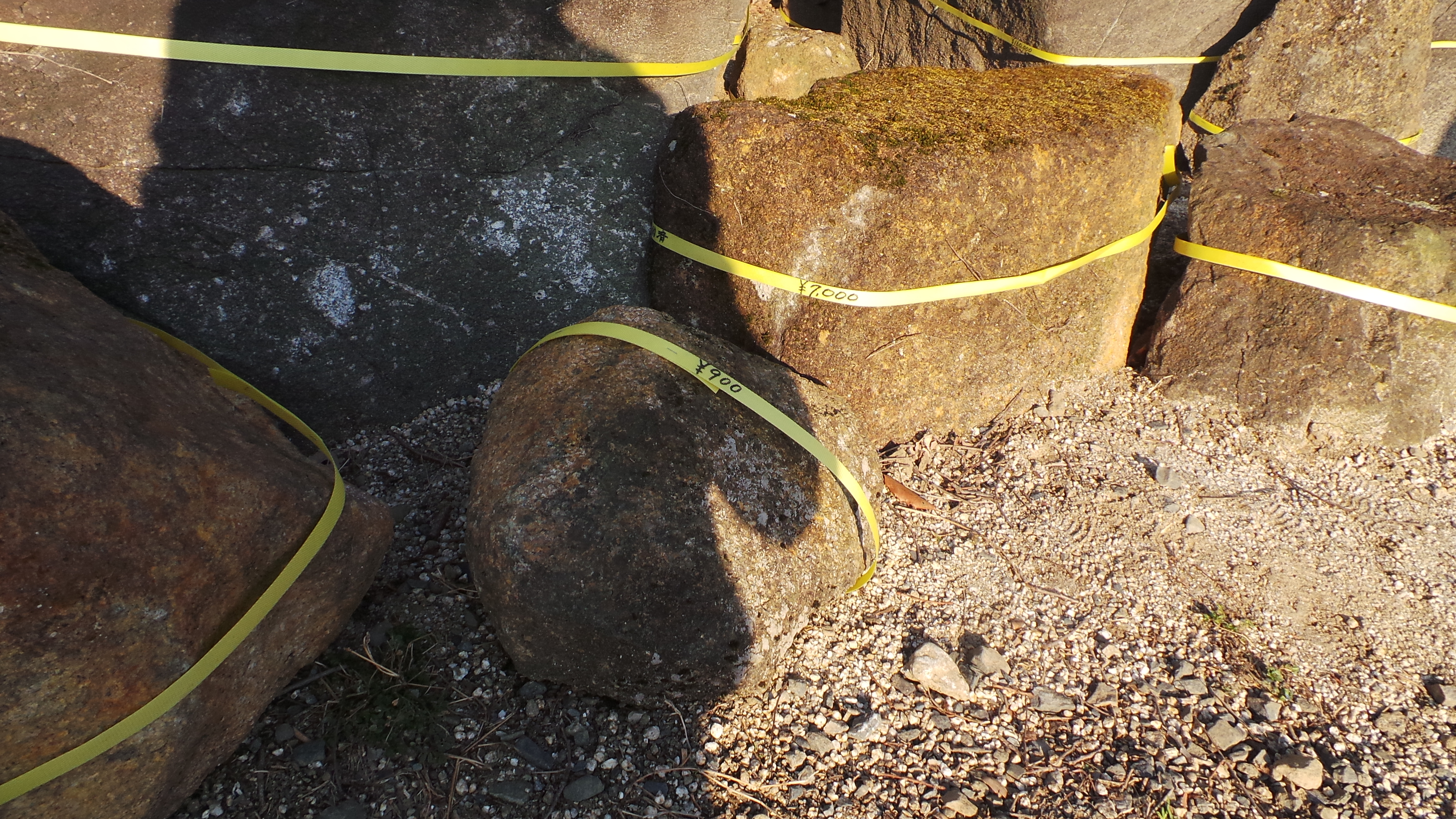
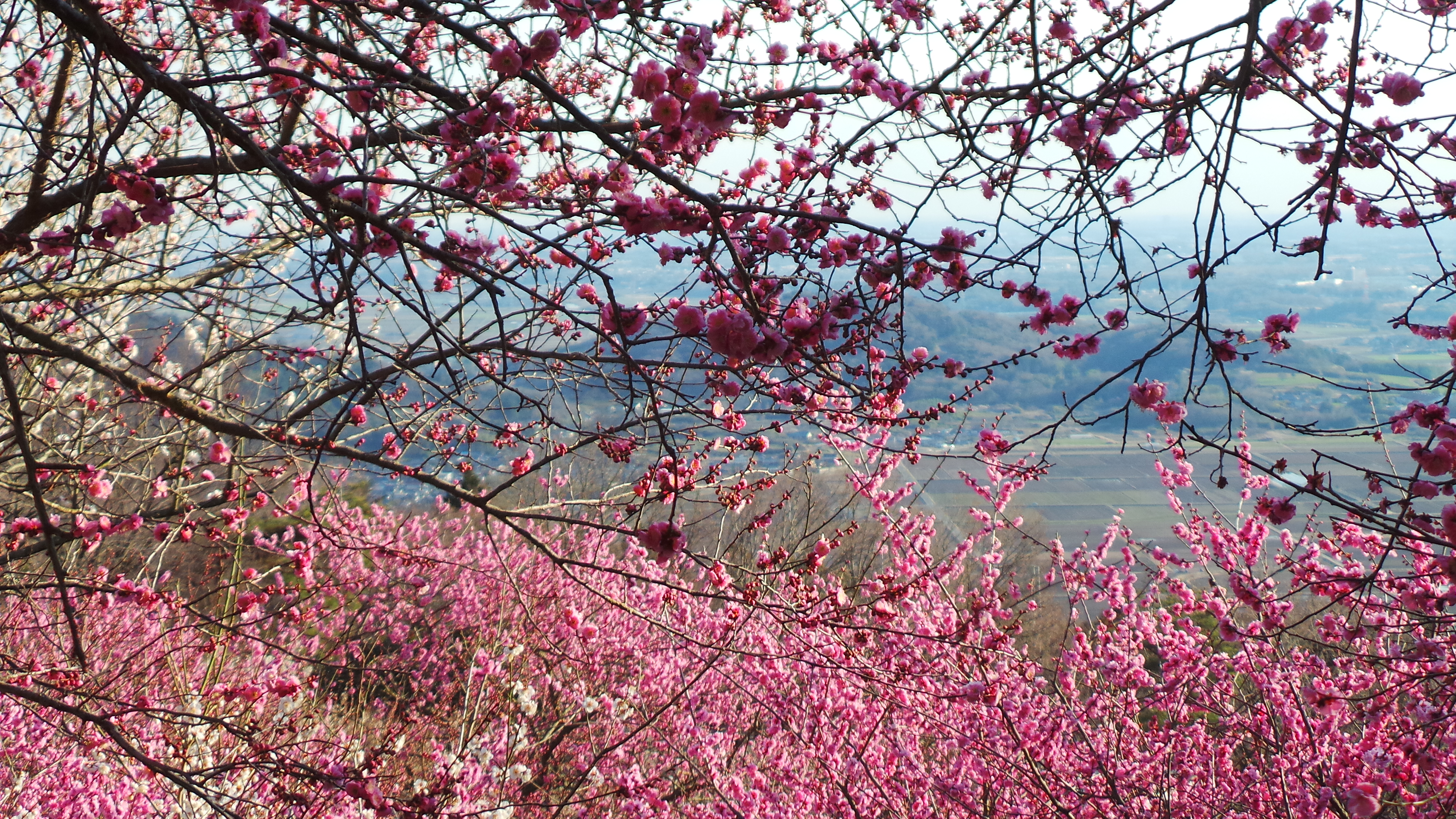
I continue my stroll and head in the direction of Mount Tsukuba Plum Blossom Gardens. These gardens are free to enter and feature over 1000 trees. Thirty kinds of flowers blossom in this area, and mixed in with the flowers are the famous rocks of Tsukuba. Rocks, I might add, that are for sale.

tsukuba2

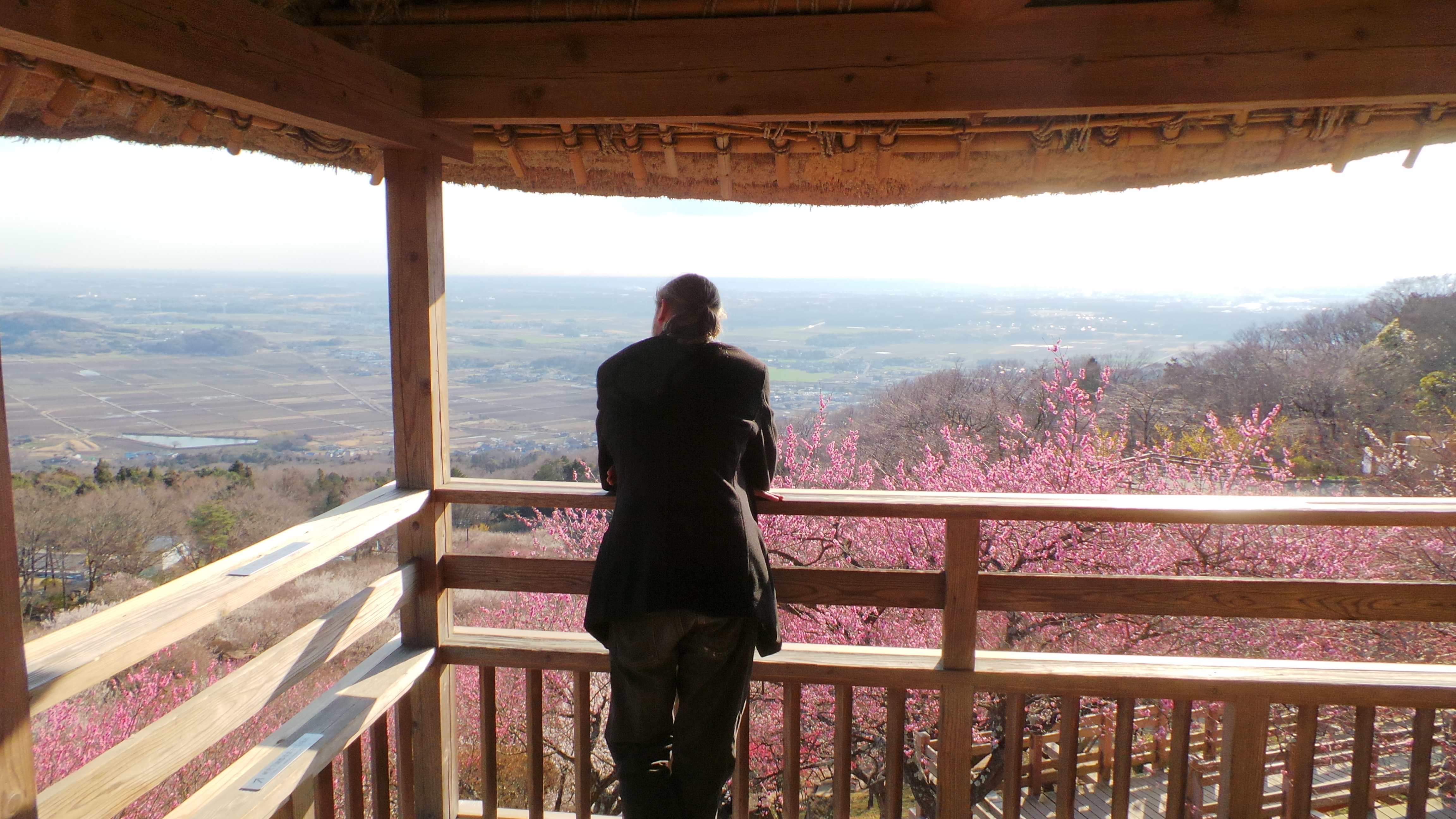
I lug my rock up the mountain path and realise that I should have probably bought it on the way down. The flowers in the mountain are beautiful to see. Red plum is in full bloom this time of year, and white plum is apparently in half bloom. I walk through sweet plum groves and fresh-smelling flowers before arriving at Lookout Point Arumaya, a small mountain hut that looks as though it was stolen from a children’s fairy tale.

I stand, gazing in the direction of Mount Fuji, 155.6 km away and visible on a clear day. Today is such a day, but for whatever reason, the mountain remains invisible, as always; forever shrouded by the white layer of clouds that blend into the distant horizon.

tsukuba4

I stand in quiet contemplation in the small hut at the top of the mountain, admiring the beauty of the flowers and the endless nature. Staring out into the distance, I begin to wonder where it all went wrong. Before the thought connects, a Japanese man taps me on the shoulder, disturbing my moment.
“We made it from bamboo and straw, squashed real hard.”
“I’m sorry?” I say, confused.
“We made it from bamboo and straw, squashed real hard,” he repeats.
“I heard you, but what are you talking about?
“The walls, here,” he points at the walls of the hut, “We made it from bamboo and straw.”
“A bit of a fire hazard,” I tell him, but he doesn’t understand. The man remains fated to repeat his set phrase, the only phrase he knows in English. Time to go, I decide.

As I walk back down the mountain, I recall a story that a friend once told me.

tsukuba3

Many years ago in Japan, people were very poor. Many families lived in one house, grandparents, parents, and children together. When times became tough, and the families couldn’t afford to feed the young children, a sacrifice was made. Children were the priority, so what happened was that the parents would carry their grandparents to Tsukuba Mountain, abandon them, and go home to their children. The grandparents would starve to death on the mountain, so that the family could continue to feed the children. A sad tale of Tsukuba Mountain, and the many poor old people that perished in its lonely grip.

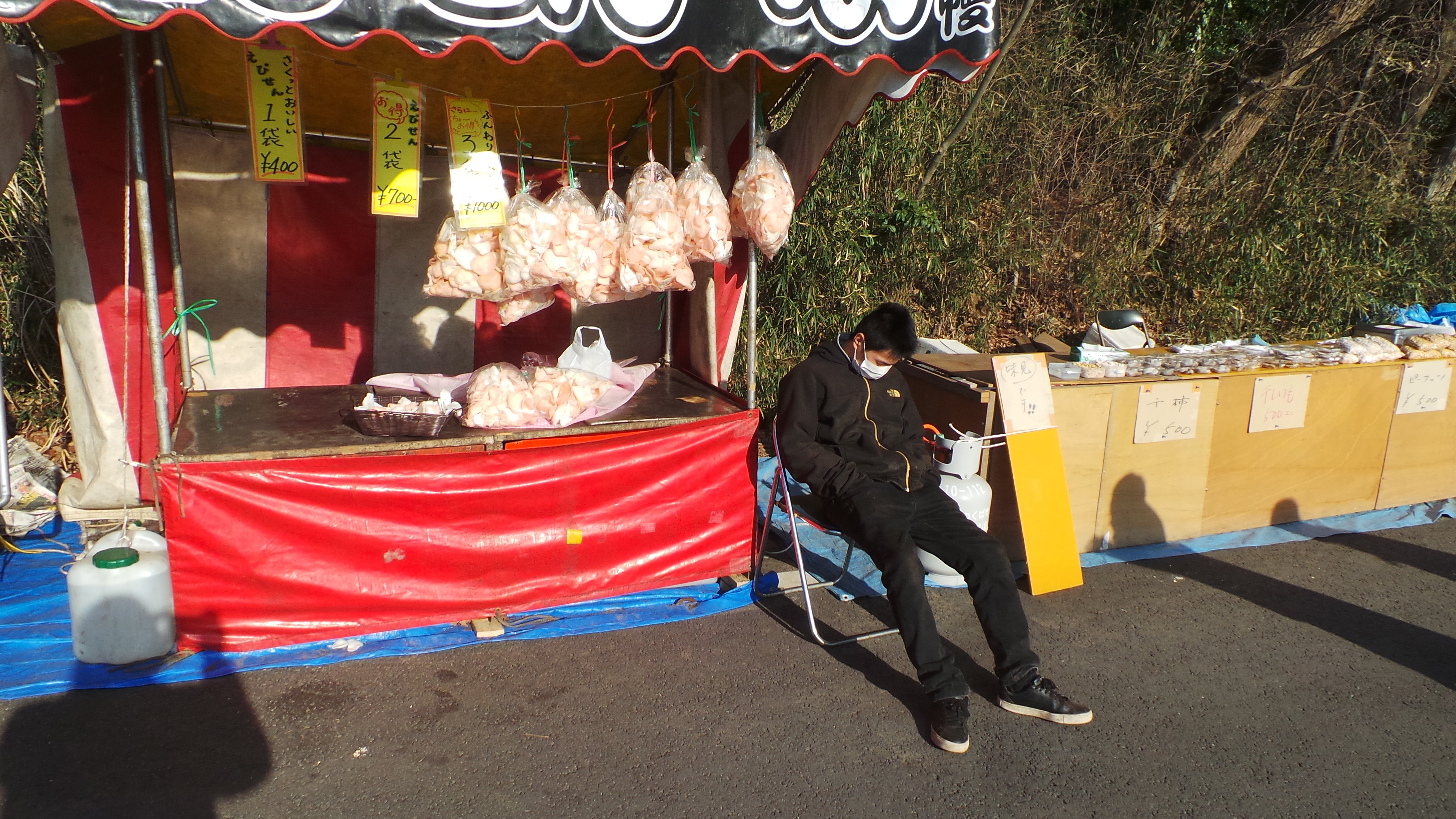
At the bottom of the mountain, most stores are closed. The men are sleeping from a hard day of selling snacks and frog oil; the only shop still selling anything is the Tsukuba Rock Shop.

tsukuba6

There are so many more sights to see on this 877-metre-tall mountain. The place is littered with things to do. Unfortunately, I wasted far too much of my limited time in the mountain hut and end up running back, rock in hand, toward the bus stop. I make the last bus with seconds to spare and head back toward Tsukuba Station.

On the Tsukuba Express train home, I read ‘The Hanging Stranger’ by Philip K. Dick and realise that this information has no relevance here, and perhaps never will.

House of Red Leaves

There is a famous phrase in Japan, ‘You haven’t seen real beauty until you’ve seen Nikko.’ So far on this trip, I haven’t really seen a thing. Only darkness. I wake up at 9 a.m., and the first thing I do is take a look at the view from the ryokan window. No skyscrapers here, only mountains and sky.

viewfromryokan[1]

Outside, the air is clean, and a reasonable 20°C, so I take one last soak in the outdoor onsen before paying for the room and leaving. I realise once I am all the way at the bus stop that I’ve forgotten to pay for my ice cream. The bus stop tells me I have half an hour before the next bus, so I decide to explore the Yumoto Onsen area.

Despite this being the highest point in these mountains that the bus chooses to stop, and at an altitude of 1,475 metres, there is a huge natural lake up here. Lake Yunoko, translating to mean, ‘Hot Water Lake.’ The lake sits almost completely still. Formed twenty thousand years ago when a nearby volcano erupted, the lake is a nesting ground for wild ducks. A sign beside the lake says that ‘fresh’ landlocked sockeye salmon and rainbow trout swim in these waters.

hotwaterlake[1]

I take a wander around the water. At the south end, a waterfall; at the north, the view is somewhat ruined by a construction team nestled at the edge of the lake. It isn’t quite clear what they are actually doing, other than making noise and ruining the otherwise peaceful scene.

My bus eventually arrives. The elderly residents use their hand on the Suica card machine instead of actually scanning their cards. Presumably, they don’t have electronic cards on the mountain, and by the looks of it, they get to travel on the route bus free of charge.

The bus swings back down the mountain, passing impressive scenery. Mountains sit quietly in the distance, the view very much different from the journey yesterday. Toward the bottom of the bus route, I see some interesting red leaves, so decide to hop off.

redleaves[1]

“Koyo” refers to the colourful autumn leaves in Japan. They spread across the country starting from the north and moving south. This process takes about two months and is known as the koyo front. Almost completely opposite to cherry blossom season, but getting equally as popular, people come to areas of nature such as Nikko to view these leaves in the autumn.

Beside the area of red leaves, I see a sign for a World Heritage Site, Toshogu Shrine. The shrine is the place where Tokugawa Shogunate founder, Tokugawa Ieyasu, is enshrined. It was built on his orders and used as his hideaway, and I can see why he chose this area. The view from the entrance to the shrine is an impressive mix of mountains and wildlife, the perfect place for a military leader to spend his free time.

nikkonature[1]

Inside the temple grounds is the origin of a Buddhist proverb about not dwelling on evil thoughts. A statue of the three wise monkeys, Mizaru, Kikazaru, and Iwazaru, sits over the shrine. The proverb is rather well-known and translates to, ‘See no evil, hear no evil, speak no evil.’

At the entrance to the temple grounds sits the five-storey Gojunoto Pagoda. A sign beside the pagoda tells me that the structure is the same height as Tokyo Skytree. I think this is a translation issue, as this pagoda is a mere 36 metres tall, whereas Tokyo Skytree is an impressive 634 metres tall.

nikkopag[1]

What I think is meant by the sign is that the elevation here is 598 metres, meaning that the roof of the pagoda is at the same elevation as Tokyo Skytree. Perhaps this is merely a coincidence, but I would guess that Tokyo Skytree was built at this specific height so that it shares the same point in the sky as this famous pagoda.

After visiting the temples, I take a wander around the Nikko area. I see a shop selling ‘Heritage Nikko Cheese Egg,’ and would be a fool to pass up on the opportunity to eat a Cheese Egg. It costs just ¥100, and completely shatters my ignorant assumption that the Cheese Egg would contain at least one of the two ingredients in its name. Instead, I find myself eating a bland, tasteless cake. The primary flavour: disappointment.

I continue my wander and spot a cigarette machine with some advertising above it that would never be allowed in England.

nicesmoking[1]

I make my way back toward Nikko Station. The area around the station has a selection of small shops all selling exactly the same things—souvenirs. Other shops sell more souvenirs, and more shops sell the same souvenirs as the other twenty shops. The stallholders here are cashing in on a popular Japanese custom, omiyage. In Japan, when you visit another region, you are expected to buy souvenirs for everyone else who couldn’t make the trip. So for me, I have to buy everyone I know a gift.

Wishing I had purchased Cheese Eggs for all, I instead opt for a relatively pricey box of Strawberry Pie. I chose this gift because I enjoyed the English text; it reads: ‘Plenty of choice of strawberry red, so happy tea time we can enjoy this strawberry pie.’ Whatever that means.

After shopping, I wave goodbye to Nikko from the train station platform; the view of Mount Nantai in the distance is simply stunning.

nikkostation[1]

From the train, I watch the mountains disappear. A thrilling two-hour journey to Ueno awaits, then it is back to the chaos of Tokyo.

On the Other Side of the Mountain

Today, I am exactly halfway through my trip. To celebrate, I have decided to take a break from city life and booked a night at a Japanese inn, known as a ryokan. It is situated in the middle of the mountains in a place called Nikko, in Tochigi Prefecture. My plan for the next few days is to experience a more traditional side of Japan.

From Asakusa, I pay ¥2390 for an express train taking 140 minutes. At Shimo-imaichi Station, I have to change to a dreaded local train. On the platform, I wear a short-sleeved shirt. A Japanese man says to his friend, “Look at that guy; he must be freezing!” I admit, it is a little cooler than Tokyo, but I only have to wait two minutes at the cold station platform. I eventually get on the local train. It sounds like a roller coaster as it claws its way up the mountainous tracks. The train’s only luxury is its heated seats; they make the whole train smell like the inside of a giant hairdryer. Five minutes later, I arrive at Tobu-Nikko Station.

I head out of the station and onto an old bus; the transport on this trip is getting progressively worse. The place I am staying tonight is at Yumoto Onsen; ninety minutes from Nikko Station and some 185 kilometres north of Tokyo. It’s just gone five, but the sun is no longer visible. The bus crawls through the darkness. A warning says, ‘Hold onto the handrail as the bus will sway from side to side as it makes its ascent.’

The bus eventually arrives at my stop, the last stop. I pay ¥1700. This is also the last bus. I am trapped up here now; no coming back. Outside, it is freezing cold—the coldest I have been since leaving England. Luckily, at the bus stop, I am greeted by warm smiles. A Japanese woman with a sign is waiting for me. We head to her car, and she drives me thirty seconds to the place I will spend the night

Inside the ryokan, she takes me to my room—the biggest room I have stayed in since being in Japan, spacious and warm. It has a massive double futon laid out, and a table of equal size. The woman starts by preparing me a hot cup of green tea before leaving to prepare my dinner. I get dressed into my yukata, carefully ensuring I cross it left over right; crossing it the other way is how the dead are dressed at funerals, and I am not dead. I also make sure to tie the bow behind me; a bow at the front is how prostitutes dress.

At 7 p.m., the woman comes back into my room to serve me dinner.

ryoklunch[1]

My food consists of buttered trout, salmon, vegetable tempura with natural salt, radish, simmered sesame tofu, lotus root, miso gratin with cabbage, yuzu pepper salad, grilled eggplant, fried tofu, boiled tofu in a soy milk pot with mushrooms, rice, a selection of vegetables, a selection of pickles, and a couple of things I can’t identify. The entire meal is pescatarian, and all the food is of the highest standard. I don’t usually like tofu, but up here, it is made from the cleanest of mountain water and tastes phenomenal.

After a while, the woman comes back into my room to clear and clean the table before bringing me dessert. In comparison to the huge dinner, my dessert is somewhat anticlimactic.

ryokdessert[1]

I help myself to a couple of the complimentary bottles of Autumn edition beer before deciding to take a dip in the hot springs. I book the outdoor onsen for forty-five minutes. Outside, there is not a single sound. The stars are out. Mountains loom in the distance. The contrast of boiling hot water mixing with the cold winter air is wonderful and relaxing. After my time is up, I head indoors to onsen number two.

The indoor onsen doesn’t offer a window, so there isn’t much of a view. It is a rather lonely experience. After I get out, I take a shower. It is etiquette in Japan to shower before and after getting into a hot spring bath, so this is actually my fourth shower this evening. I notice weighing scales in the changing room; I haven’t weighed myself since before I came to Japan. After a massive meal and a not-so-massive dessert, I am surprised to discover that I am 7kg lighter than when I arrived in this country.

ryokindoor[1]

Back in my room and with kilogrammes to gain, I decide that the perfect way to cool off is with a delicious tub of homemade cream cheese and alcohol-flavoured ice cream. Sulphur from the onsen taints the experience slightly, the smell of rotten eggs lingering in the room.

I sip quietly on complimentary beers with the window wide open, wrapped up in my traditional Japanese clothing. The clean cold air is nothing more than a fresh distraction to the silence that engulfs me. Outside, the only thing I can see is hot smoke billowing from the many hot spring baths and the dark outline of mountains in the distance.