A Tale of Sorrow and Sadness

I spend my morning shaking off a karaoke gin hangover, arguably the worst kind. At 1 p.m., Dagmar and I take the train to Ginza to meet our friend Aram. The plan is a visit to the Vanilla Gallery; the number one gallery in Tokyo for eroticism, fetishism, and sadism.

Despite having visited the Vanilla Gallery before, it remains difficult to locate. We get a little lost but eventually find it hidden away on an inconspicuous street. This month, the theme showcases artwork that tells the tale of time and sorrow—’An exhibit of illustrated stories and dolls pertaining to madness and sadness.’ The entry fee is a pleasing ¥500.

dertilgung[1]

The exhibition is called Der Tilgung. Dagmar tells me that this is German for ‘The Repayment.’ Nowhere else in Tokyo can you experience such a vortex of phenomenal imagination.

Room-A features a collection of artwork and imagery from MoriKaoru. I’m surprised to find that most of the paintings have sold out. The work focuses on desolate women surrounded by monsters depicted as men. There’s an uneasy emphasis on slavery and torture. One exhibit displays iron shackles laid to rest on a leather sofa. Another portrays a drawing of a young woman bound at the wrists, sitting in a cell surrounded by decapitated limbs, while a male figure with a menacing grin watches her through the bars.

Room-B is slightly less horrific but disturbing in other ways. Suna-mura Hiroaki is the artist. The display features half-naked corpses of women—dolls. A child lies still in a coffin, and two dolls hang from chains with beautiful flowers blossoming from their dead faces. A doll resembling a nurse has her chest cut open, held by wire, and inside reside many small, menacing demons. Trees grow from faces, and dolls scream in anguish. Some dolls are made from the skulls of unnamed animals. Despite the theme, the craftsmanship here is incredible. My favourite piece is a naked woman, half her body covered by flesh, the other completely skeletal; half her face a picture of harrowing decay.

vanilla5[1]

Most of the exhibits are for sale, with prices ranging from ¥50,000 to ¥300,000 per piece. Haunting music floods the gallery. Sadly, the Vanilla Gallery forbids photography, so my only photographs are from the entrance and the flyer. I’ll probably have nightmares for a week thanks to what I’ve seen here. We stay for maybe twenty minutes before heading to the station.

Back at the hostel, there’s yet another party. Tonight’s theme is a ‘Sake Fair.’ Here, we can witness the process of making Japanese sake, sample ‘free’ sake, and indulge in the many complimentary snacks available. A PowerPoint presentation is set up on a projector—classic. The concept behind the free sake is to promote a brewery tour scheduled for tomorrow. For tonight, there are five different bottles of sake for hostel guests to try.

sakefair[1]

Suginishiki Yamahai Junmai is my favourite; it takes twice as long to make as your regular sake and is full-bodied with plenty of flavour. Shosetsu Daiginjo is also very nice—light, mild, and clear, with a banana scent and a subtle hint of fruit. I don’t usually like sake, but the drinks on offer here are actually very nice, perhaps a bit more expensive than I’m used to.

I decide to sign up for the tour tomorrow. It will be interesting to learn about the process, and I’m pleased to find out that the tour takes place at a brewery at the base of Mount Hakone. The tour costs ¥8500, including transportation, and it’s a great opportunity for me to discover more about this traditional Japanese drink.

“What Goes Up Must Come Down.”

Today, it’s back to exploring the Toei Oedo Line. I take two trains and eventually arrive at Bunkyo. As soon as I exit the train station, I am overwhelmed. In front of me is the massive Tokyo Dome, the home of the Yomiuri Giants baseball team, but this isn’t why I am here. Outside the stadium, there is the strangest roller coaster I have ever seen, Thunder Dolphin. The seventh tallest continuous circuit roller coaster in the world; it twists and turns between the buildings and through the middle of the first Ferris wheel in the world to have a hollow centre; again, this isn’t why I am here.

rollercoaster[1]

Today, I’m in Bunkyo to see a tree.

I follow what looks like a castle wall for about ten minutes before eventually arriving at the entrance to Koishikawa Korakuen Gardens. Special Historic Site and Special Place of Scenic Beauty, the gardens are named after a poem by Chinese poet, Fan Zhongyan; the poem is Yueyang Castle.

Be the first to take the world’s trouble to heart, be the last to enjoy the world’s pleasure.

At the entrance, I pay my ¥300 and make an inquiry about the location of the tree. “That is a different garden,” says the woman as she hands me the ticket I have just paid for. She then takes out a map of Bunkyo and highlights where I am right now, then circles the place where the tree is. Not wanting to upset the apple cart by asking for my money back, I thank her for her help and enter the gardens anyway.

underthedome[1]

The first thing that strikes me is the magic of Tokyo Dome. The dome is white and provides an impressive backdrop to the many Japanese silver leaf and maple trees. The interesting thing, though, is that the dome refuses to be photographed. As I focus my camera, the roof of the dome just magically disappears as it blends into the white Autumn sky. It’s hard to explain. The roof is made of some magical material that makes it look like a living organism, perhaps a chameleon.

I continue to explore the wrong gardens; the peace and tranquillity are quite welcoming. A huge lake takes up most of the area, and there is a nice walking route around the lake. The only thing that spoils it for me is the restoration project that is currently taking place until next year. The workers here have their work cut out today as it appears that a large part of the lake has crumbled during this week’s flooding. Water is being sucked away by a huge industrial pump.

The thing that makes these gardens worth a visit though, is the scarecrows.

scarecrows[1]

I actually spent time last week trying to find rice fields in Tokyo, just so that I could see what a Japanese scarecrow looks like. Today I am not disappointed. Never mind the crows, these sinister creations scare even me.

I continue to explore the deserted gardens. I must be the only person here; presumably everyone else in Japan is in Ginza queueing up for the new iPhone. I walk all the way around the lake, and toward the exit. I am really looking forward to revisiting all nine of the Metropolitan Cultural Heritage Gardens in Tokyo during different seasons; in a month’s time, I will get to enjoy the dappled shades of autumn leaves.

I leave Koishikawa Korakuen Gardens and walk the thirty minutes to the similarly named Koishikawa Botanical Gardens. I pay the ¥400 entry fee and explore.

botany[1]

These gardens are managed by the University of Tokyo Graduate School of Science and are the birthplace of Japanese botanical research. Dating back to 1684, the garden displays a collection of over four thousand species of plants and a herbarium containing over 1.4 million specimens. With over four thousand species and a map written entirely in Japanese, my search for one specific tree is almost fruitless.

I wander through the lush garden foliage for over an hour; it is the most peaceful place I’ve been to since leaving Kyoto. Eventually, I find Mendel’s Grapevine. Next to the grapevine is the tree, Newton’s apple tree.

Newton[1]

The tree rarely grows apples. When it finally does bear fruit, the apples are instantly devoured by the many crows in the park, so many crows; maybe I should have stolen a scarecrow from the other gardens.

Sir Isaac Newton’s apple tree is not the original tree that he floated under before he invented gravity. This tree is just a sapling from the famous tree and was delivered to Japan in 1964. It was almost incinerated on arrival at Haneda International Airport because the leaves were infected, but an agreement was made so that the tree could be replanted in an isolated environment, and now it is here.

Rather ironically, I learned today that the original Newton’s apple tree is in Lincolnshire, England. My birthplace.

After I inspect the tree, it is time to head back to Asakusa. I walk fifteen minutes to Myogadani Station, before taking the Marunouchi Line to Ochanomizu Station. Here I walk ten minutes in the direction of Akihabara. I get a little lost on the way, but eventually see the familiar sign for Big Apple Pachinko and Slot, and finally know where I am. I take the train from Akihabara back to Asakusa.

Back at the hostel, I drink in the bar for a while before meeting up with Malaysia, Germany, Italy, Chicago, and Japan, and the six of us head to Nui until close. After, we head to an all-night karaoke bar with the most confusing pricing structure ever. Everyone has incredibly good music taste, and I enjoy The Smiths until the early hours. There’s music and there’s people, and they’re young and alive.

thereisalight[1]

One thing that strikes me about karaoke in Japan is the videos. They don’t have the license to show the official music videos, so instead, they show random Japanese men sitting on park benches or salarymen rushing around the crowded streets of Tokyo.

We sing and drink gin until daylight.

Bring Me the Head of Kubikiri Jizo

Today, I’m sitting at the bar of a small cafe having breakfast when a man named Yoshio notices I’m not Japanese and strikes up a conversation while I chomp on my vegetarian Eggs Benedict. “I just got back from America,” he tells me, “I got back yesterday.” His English is pretty good, and I stay for a second cup of coffee, chatting with him for about thirty minutes before he has to leave. After he departs, the cafe owner shares Yoshio’s full name with me. A quick Google search reveals his Wikipedia page, and I discover that the man I had breakfast with is a famous Japanese comedian.

After coffee, I head out to meet Luis, the Chilean guy I met during the World Cup. He is back in Asakusa for the final leg of his trip, so we arrange to meet up for 1 p.m. We take the Ginza Line to Akasaka-mitsuke Station. Akasaka is known for being quite a posh area, so we wanted to get a feel for what a rich neighbourhood looks like. No different from anywhere else, it turns out.

From Akasaka, we walk to Roppongi and head for Tokyo Midtown. Here, there is a giant 1:7 scale statue of Godzilla.

godzilla[1]

After Godzilla, Luis and I head back to Asakusa and eat at my favourite Indian restaurant. Luis has only ever had curry before one other time in his life, madness. After food, we head our separate ways.

Whilst I was exploring accommodation options for October, it was suggested to me by a 71-year-old Japanese man that I try the area known as San’ya; apparently, the apartments there are relatively cheap. San’ya is still in Taito Ward, and a forty-five minute walk from Asakusa. I head in the vague directions I am given and discover that San’ya no longer exists. All signs mentioning the word San’ya no longer exist. Every mention of the area has been removed, like a Japanese history book; all traces have been erased from memory.

The only sign that has any mention of a San’ya past is the sign for Namidabashi. The sign literally translates as ‘Tears Bridge’ and was where people came to say goodbye to loved ones before they were taken to be killed at the Kozukappara execution grounds, hence the tears. These days, the bridge has been buried under the concrete of an intersection, the execution ground painted over by a bus station.

busgrounds[1]

All that really remains, other than human remains, is Enmeiji Temple. It was this statue of Kubikiri Jizo, the decapitation Buddha, who watched over the nearby execution grounds. For those who were executed, the last image they would have seen is the Buddha. Its name literally translates to ‘neck cutting Buddha’. An estimated two hundred thousand prisoners were killed here. Ironically, during the March 2011 Tohoku earthquake, the Buddha was damaged and its head broke off. A sign details the step-by-step process of how the head was repaired.

There is also a sign here that says, ‘Nam-Myoho-Renge-Kyo,’ the all-too-familiar chant of the Nichiren Buddhist. Gravestones without names make up the backdrop.

kubikirijizo[1]

The main street here translates as ‘Bone Street’. It was on this street that the decapitated heads of the executed were put on display. The executions stopped in 1873, and after that point, the area suffered further misery. Somehow, San’ya became Japan’s biggest leather-producing area. The problem with leather is that it comes from cows, and cows in Buddhism are not to be used for leather production; this being a Buddhist country doesn’t help matters. The people here became complete outcasts, and leather production work was considered the lowest of careers. A certain stigma became attached to the already stigmatic San’ya area, and it fell into decline. It was around this time that the name San’ya was abolished. These days, the shops are all boarded up, the streets are empty, and the dead stay dead.

Today, if you live in the old San’ya area, you are still looked upon as different. You are judged for living here. The accommodation is cheap; however, I wouldn’t like to stay here. The people aren’t liked, the energy is wrong, and then there are the souls of murdered cows and headless criminals. I leave the macabre of San’ya and head to the somewhat less chilling ‘Flying God Temple’.

flyinggod[1]

The Legend of Tobi-Fudo comes from the Shobo-in Temple. It was first built in 1530. “Once upon a time, the chief priest of this temple went to the Omine Mountain in Nara Prefecture to pursue his learning; he took the principal image of Buddha with him to the mountain from his temple, but the principal image flew back to this place in Edo within one night and gave diving favours to the people.” I am not sure what ‘diving favours’ are, but this is what it said at the temple entrance. I think it is supposed to say divine.

In recent years, people visit the temple to pray for safety in air travel, praying their plane doesn’t crash. I suppose ‘diving’ is probably the wrong word to be using when talking about air accidents. There is also a sign saying a festival takes place in October on the temple grounds. I add it to my calendar and leave.

Siliconan the Ovarian

The previous three days drifted along to the tune of uneventfulness. I met old friends, went out for dinners, and had drinks. I didn’t even leave Asakusa once. Today, a sign in my hostel says, “Soba party today, come and enjoy Japanese noodles!” There is also a list of local artists that will be here to teach various arts and crafts. Free food and free crafts, excellent.

Outside, it is a blistering 36°C. I take the Tokyo Metro Ginza Line to Ginza. Ginza is a massive shopping district and fashion area. The kind of place you only drive through if you have an Aston Martin or a Bentley. If there is a Tokyo edition of the board game Monopoly, Ginza would be Mayfair. There is an array of well-dressed people, expensive fashion boutiques, and all the high-priced big brand stores.

My first stop in Ginza is the rather difficult-to-find Vanilla Gallery. Hidden away in a basement floor of a rather uninteresting building, it plays host to the Fourth Artificial Otome Expo: a Love Dolls exhibition. I shyly pay my ¥1000 entry fee to a young woman and shuffle through the gallery, trying to avoid eye contact with the other customers and the dolls. The dolls are made of silicone, are hauntingly childlike, and can be customised to the finest detail; every part of a doll can be ‘made to order’. Also in the exhibition is the mould that creates these dolls; a sign says, ‘Crystal craftsmanship to build the doll up to perfection.’

The Vanilla Gallery is small, and the exhibition is in just two little rooms. Orient Industry has been making these luxury Love Dolls for thirty-seven years, or so a video of the production process tells me. They also claim to make the most luxurious and expensive dolls; probably why they chose Ginza to showcase their creations. There is one doll that you can touch, ‘Feel her soft realistic skin,’ a sign says. I pass on the touching. I can only show the photograph of the sign, as there was a strict no-photography policy in place.

lovedolls[1]

I once saw a television interview with a Japanese man who said that he doesn’t want his wife to know about his collection of Love Dolls, so he rents a second apartment just for his dolls. I stay for no longer than five minutes. The life-size, realistic-looking dolls scare me. Their stillness makes me think of the dead.

Next in Ginza, I head to the nearby ‘Hello Kitty Toy Park.’ Here, there are so many toys, games, keyrings, plates, umbrellas—everything you can imagine featuring Hello Kitty. Five floors of toys, two floors of restaurants, a theatre, and a small theme park. I have never seen so many Hello Kitty items in one place. I don’t know which is more embarrassing, going to a Love Doll exhibition or entering a Hello Kitty store. Inside the store, I see a policeman on his break, inspecting the Hello Kitty toys.

kittytwo[1]

Next, I head in the direction of the Police Museum. On the way, I see a huge Yamaha store and decide to play on some very expensive-looking pianos for a while. I also spot the Pachinko Museum. A sign outside says, ‘We can teach you the basics about pachinko.’ It is adults only, but free. I head inside to find that they have forgotten the museum aspect. It’s just a regular pachinko parlour. ‘More enjoy more happy,’ a sign outside tells me as I leave.

The Police Museum doesn’t seem to exist. The building that houses it is under heavy construction and gated off. A shame, I was looking forward to doing something normal today. I see a sign for the nearby Kyobashi Station; lucky for me, I know this station is on the Ginza Line, so I take the train back to Asakusa.

Back at the hostel, I watch the news. A company called Shin-shin Foods has decided to stop its one-hundred-year-long pickle production and has converted its headquarters into a capsule hotel. I learn about a process called muon tomography, cosmic rays that detect radiation. Twenty-nine cats have mysteriously been found dead in Ota Ward; police think it was poison. The usual nonsense. I do some writing before heading out for a Shiatsu massage.

messageboard[1]

The place I go to was recommended to me by the owner of Cafe Byron Bay and is owned by her friend. When I enter the building, the woman at reception looks shocked to see me. I don’t think the place gets too many overseas visitors. I mention that I know her friend, and the tension in the room instantly fades away. After my thirty-minute massage, the tension in my shoulders also fades away. The man who performed the massage offers me a fifty percent discount, just ¥1500. I actually don’t think this is fair to him; the massage was good. I compromise and tell him to keep the ¥500 change, which he does. So much for not tipping in Japan. He thanks me and gives me a points card; I am nine more massages away from a free one-hour session.

Back at the hostel, the soba party is just starting. Soba are Japanese noodles made from buckwheat flour. This is actually my favourite type of noodle. There are stalls selling badges made from Instagram photographs. You can send them six of your photographs, and they’ll make them into high-quality badges or magnets. There is also a store where you can rent a kimono or a yukata. The word kimono inventively translates as ‘thing to wear’.

soba[1]

There is, of course, plenty of free food. Plates piled high with ice-cold soba noodles. Tiny plastic bowls are filled with sauce, and a selection of toppings is available. I eat my noodles with spring onion and seaweed. Delicious. There is also free rice wine to drink. When all the free sake has been consumed, I head to the hostel bar for more free drinks. The night crawls along. I eat soba noodles in the lounge and get considerably less sober at the bar. The night ends, and I crawl to my room.

Last Stop: This Town

Wednesday

Never have I been so happy to hear the monotonous drone from the speakers at Tawaramachi Station. Today I am back in Tokyo, back in Asakusa; my days of exploring are over for now. I have three nights in a hotel, before another long stay at the very first hostel I started at; the best hostel in the world. I don’t begin my stay there until Saturday, but I am eager to get back there as soon as possible.

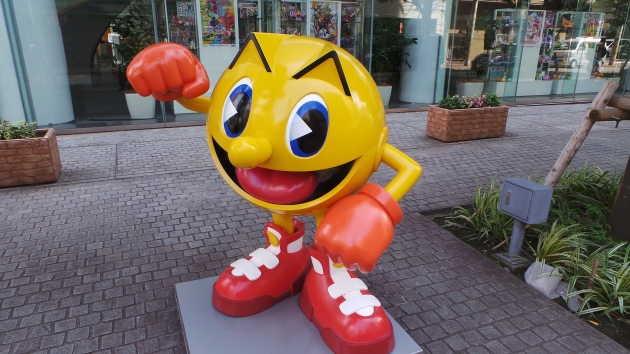
My hotel is in a previously undiscovered part of Asakusa, away from the temple and tourists. Next door is an Indian restaurant. After checking into my hotel I decide Indian food would be a good choice. My hotel, unlike in Hamamatsu, has wireless Internet. I can access the Internet from the Indian restaurant, which is a nice bonus. The food is actually very good. Like Pacman eating those little dots, I devour every little grain of rice.

pacman

After dinner I head out to the hostel. Today is Wednesday, the bar is open for guests, and I have nowhere else to go. My friend Hiro is the barman tonight, jazz musician and comedian. I say hello to people I know, and meet a few people I don’t. It would be fair to say that since leaving Kyoto I haven’t really seen many people, or had many conversations in English. Having a chance to speak to people tonight is just great.

I get a little drunk, and leave at midnight.

Thursday

Today I have made plans to meet Paul, a Scotsman I met in Fukuoka. I go for breakfast at my favourite cafe, Byron Bay. Still number one in Taito on TripAdvisor. I drink one of the ‘as seen on TV’ green tea lattes, and eat happy eggs on local bread. The owner tells me that since being featured on Moshimo Tours, she has been really busy every night. After breakfast and a nice catch up, I meet with Paul and we grab a train to Akihabara.

Paul and I head to a department store called Yodobashi Camera, an electronics chain store. This place is huge, has nine floors, and sells just about everything. Paul is shopping for headphones and this shop has thousands to choose from; the headphone display is set up in a way that you can plug them into your device and try them out. While Paul does this, I sit and play an electric piano. A homeless man sits down at the piano next to me and bursts into an amazing classical piece. He plays well, really well. It is a shame to see someone with so much talent going to waste. A real shame.

After our headphone expedition, we take a quick trip on the Yamanote Line to Yurakucho Station. Outside the station, we venture into another massive electronics chain store, Bic Camera. Our quest here is for the fabled Casio CA53W-1, the classic Casio watch with a built-in calculator. At midnight on December 31st, 1999, this Casio calculator watch was the only electronic device in the world challenged by the famous Millennium Bug. Widespread panic ensued when everyone with this watch seemingly travelled back in time to the year one-thousand. Unfortunately, our search for the watch ends in failure. Disheartened, we give up and head back to Akihabara by train.

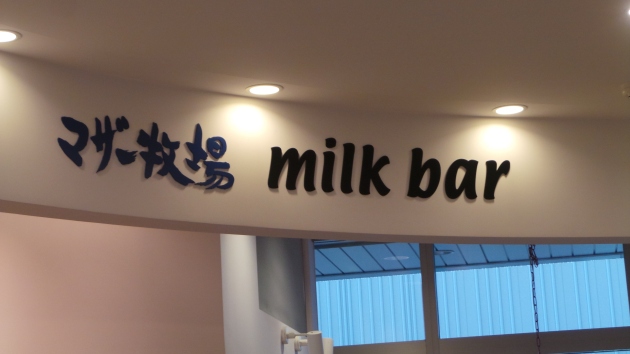
There was me, that is Luke, and my droog, that is Paul, and we sat in the Akihabara Milkbar trying to make up our rassoodocks what to do with the evening.

milk bar

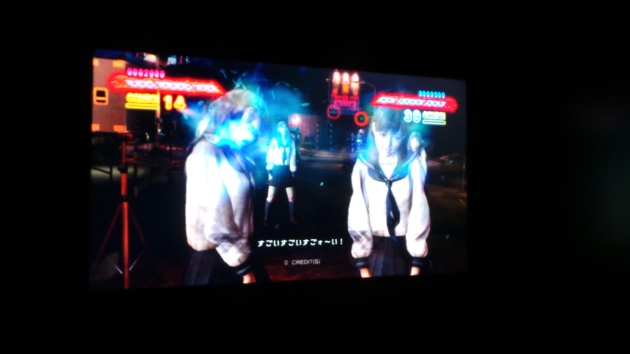
We decide to visit a video game arcade. Paul manages to win a t-shirt on a crane claw machine and kindly gives it to me as a present. After spending a few thousand yen, we head over to play some of the classic shooting games. The game we choose is a hybrid, blending the traditional shooting-monsters-with-a-gun style with a dance game where you hit buttons according to the rhythm. Surprisingly, this game also boasts a very in-depth storyline.

The game is of course the amazing, ‘Sailor Zombie: AKB48’.

The members of the girl idol band AKB48 have been turned into zombies, and our task is to defeat them. The most amusing part is when the zombies abruptly halt their attacks and break into song and dance, triggering the rhythm game. We play through our 15 continues, maybe an hour passes, before we finally give up.

AKBzombie

After the arcade, we opt for some Japanese Italian food at a Saizeriya restaurant. Then, around half past six, it’s back to Byron Bay for a quick Laphroaig before we head to the jazz night at the hostel. There, to my surprise, I bump into Yojiro, my friend and table tennis rival from Beppu.

After the jazz session, I share a few more drinks with Paul. Soon, our group expands with the arrival of an Australian named Sam, a Japanese gentleman, an Argentine girl, and Dagmar, a German girl I met just last night. Dagmar and I engage in a delightful hour-long conversation about The Curse of Monkey Island—I boast about having the courage and skill of a master swordsman! We spend a considerable amount of time amusing ourselves with pirate insults and banter, while everyone else around us remains clueless about the ‘code’ we’re speaking.

At midnight the six of us head out to A.S.A.B. and drink there until five in the morning.

Friday

My morning kicks off as usual, starting with a strong cup of coffee at Cafe Byron Bay, followed by not much else. The entire day unfolds without any noteworthy events. I meander through the streets of Asakusa, as if searching for something inexplicable. Eventually, I station myself outside Seven Eleven to tap into their wireless Internet. Unexpectedly, one of the comedians from the Moshimo Tours television show, Udo Suzuki, strolls by with a film crew in tow. Quick to grab my camera, I encounter the familiar scenario: a man materialises seemingly out of nowhere. “No photographs!” he insists, arms forming a cross to obstruct my lens.

After a day spent doing absolutely nothing, I return to Cafe Byron Bay for the fourth time in two days to meet Klaus, my German friend from Fukuoka, along with his girlfriend, Desi. We enjoy a few drinks there before deciding to venture across town to Nui, known as the finest bar in Asakusa. Nui truly lives up to its reputation. While I’ve been here several times before, I find myself repeatedly drawn back by its impressive interior design and reasonable menu. A Suntory whisky highball costs ¥500, and any cocktail is also ¥500—a great deal.

The three of us sit and talk until half past eleven before parting ways. A certain sadness sweeps over me as I bid farewell to Klaus and Desi—a feeling of melancholy I haven’t experienced in quite some time.

skytreeasak[1]

On the walk back to my hotel, I pass the illuminated Tokyo Skytree, “May the light connect the past and future, and reach the hearts of people.”