Cicadas of the Lost Park

Today, I wake up at 8 a.m. I go outside and take a short wander. It seems that Kyoto is still sleeping. I return to the hostel to steal a few more hours for myself. By 11 a.m., Kyoto still seems to be asleep; shops are closed, and nothing much is happening. I decide to do some sightseeing. I am fortunate to be staying in Downtown Kyoto; many places are within walking distance, which is very convenient as I am tired of trains. I walk from the hostel in a straight line along the same road for ten minutes, eventually arriving at Kyoto Imperial Palace Park.

The gardens here are quite impressive, featuring Omiya Palace, Sento Palace, multiple shrines, a peach grove, and, of course, the Kyoto Imperial Palace. The peach grove is odd; the peaches are within arm’s reach, so I could steal a few if I wanted to, but I don’t. The most appealing shrine is the Isukushima Shrine; it sits quietly over a lake.

giongardens[1]

There are signs in some areas of Kyoto Imperial Palace Park that say, “Not to be visited by tourists.” There are little to no other tourists here anyway; perhaps the signs have driven them all away. However, there are hordes of homeless people. Some paths are overgrown, others forgotten many years ago. I see one gardener delicately pollarding the branches of a tree. Just one gardener tending to a park 1.3 kilometres in length.

As for the Kyoto Imperial Palace, it lies behind a moat and a tall wall. The water in the moat has dried up, and the wall is too high to see the Palace beyond. Even if the wall weren’t there, it would be completely shrouded by trees anyway. I quite literally can’t see the Palace for the trees.

kyotopalace[1]

There is one thing I do like, and that’s the sound made by the cicadas. These little insects just love to sing, and the trees here are full of them. And there are a lot of trees; ten thousand trees in the Palace Park alone. The noise these insects make sounds alien to me, perhaps robotic, but calming. I spend a full hour wandering the park.

It is another hot day. Well over 30°C, as usual. A woman outside sprays water from a hosepipe around the path leading into her shop. I believe this is to keep the dust down. I cross the Kamo River; much like the Palace moat, it is dried up from the heat, the fish left behind for the birds. As I walk through the shopping arcade, I realise that there are loads of crêperies here; at least eight or nine shops selling pancakes. A sign in one of the pancake shops attempts to forecast the weather:

signwarm[1]

Back at the hostel, I sit opposite a guy as he flips through a Lonely Planet guidebook. “Where are you going today?” he asks, half for the sake of conversation, half for ideas of places to visit. He waits for me to list off all of the same places as everyone else, but I don’t.
“I’m going to a Kaleidoscope Museum,” I tell him proudly, and his expression fills with puzzlement. He desperately flicks through his guidebook, presumably the ‘Kyoto’ section, but to no avail.
“Hmmph,” he utters, suggesting that if it isn’t in his guidebook, then it doesn’t exist.

I walk halfway across the city, only to find that the Kaleidoscope Museum of Kyoto is closed on a Monday. “I’ll be back,” I say to the locked door with a shake of my head.

Kaleidoscope[1]

One thing I like about Kyoto is that on street corners, there are nice little plaques in English offering insightful history about the area—a nice touch. Feeling a little hungry, I decide to swing by a local cafe at the organic market. I pay ¥940 for a soybean croquette, a cheese croquette, and a beer. The food and drink aren’t particularly photogenic, so I skip taking a photograph.

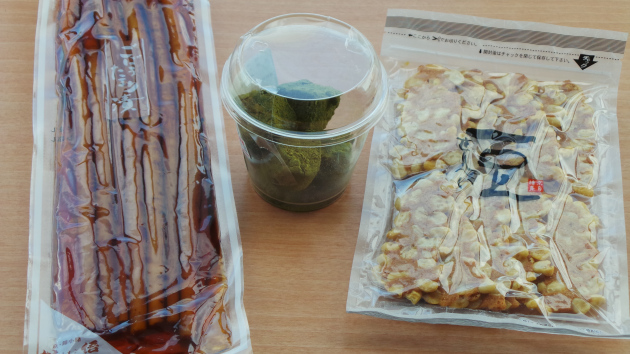
While I’m here at Nishiki Market, I decide to sample some of the local foods. With over a hundred shops and restaurants, they sell seasonal foods and Kyoto specialties like Japanese sweets, pickles, dried seafood, and sushi. I buy three different traditional Japanese snacks and take them back to the hostel.
snackssnack

On the left, I have Gobo Tamari Zuke, or pickled burdock root; marinated in sugar and soy sauce. I wish I had bought this in Okayama to go with the dandelion. In the middle, there’s some sort of matcha snack. It’s basically Turkish Delight coated in a fine green tea-flavoured powder, instead of the usual icing sugar. On the right, there’s a Japanese traditional cake with soybeans, said to have been made for approximately 150 years using the same traditional manufacturing method. According to the packaging, ‘One piece of one piece is the cracker which I baked carefully.’ The cake costs ¥400 and is my favourite of the three.

After trying my snacks and finishing my book, I head out for dinner.

I spot a gyoza restaurant, a food I am yet to try in Japan. Gyoza is a type of Japanese dumpling, usually filled with meat. This restaurant has an English menu outside, stating that one of the fillings they offer is shrimp. I order the shrimp gyoza along with a beer and a side of spiced cucumber. The cucumber dish arrives whilst I wait for my dumplings; the spices provide a good balance to what would normally be a dull snack. Three pieces of shrimp gyoza show up, although I was expecting at least five. After I finish my first three, a plate of ten fried dumplings is placed in front of me.

gyoza[1]

As I bite into the first of ten, I realise it is pork. The staff don’t speak English, but I manage to convey the message. My plate of pork gyoza is taken away, and I’m told it will take eight minutes for the shrimp. While I wait, I order a second beer. Eventually, I am handed a set of shrimp gyoza, albeit only five pieces instead of ten. Apparently, shrimp is twice as expensive as pork.

As I eat, I mishandle my chopsticks. One of the dumplings falls and lands in the saucer of soy sauce; the sauce splashes up and hits me in my left eye. It stings, and I spend the rest of my meal with tears rolling down one side of my face. After finishing my meal, I offer to pay for the wasted pork gyoza, unsure if it was my mistake or theirs. Admittedly, the restaurant is rather cheap. We compromise, and I pay a total of ¥1570 for eight pieces of shrimp gyoza and two pints of Asahi Beer.

I head back to the hostel’s bar and notice a guy reading ‘Women’ by Charles Bukowski. I share that I’m not a fan of Bukowski, only to find out that the guy is from Surrey. I end up spending the rest of the evening in the bar, discussing literature and politics.

Grandiose Encounters of the Third Class

I went without any Internet connection for a few days, so I couldn’t post anything. Here’s a summary of the last three days:

Friday – Fukuoka

Today, I met a German guy named Klaus. It’s his first day in Japan after spending a month in South Korea. He wants to stay here tomorrow night as well, but there are no available rooms in the hostel. I cancel my reservation for tomorrow night, and he takes my room. I wanted to start traveling early tomorrow anyway, as I have a fourteen-hour train journey to endure.

Klaus and I take a stroll around Hakata Station. I show him the sights, starting with the roof terrace. We then wander through the enormous indoor shopping complex, exploring various random gifts. I spot some excellent souvenir ideas. Later, we head for food—a classic dish of mixed vegetable and prawn tempura on rice, accompanied by a pint of Kirin Beer. Kirin isn’t my first choice for Japanese beer, but I don’t complain.

tenpura3[1]

Afterward, we head over to Tenjin Station because Klaus is really keen on seeing the giant cardboard train. I don’t mind showing him around as I have nothing else planned in Fukuoka. Klaus is quite funny, and his English is good, so I don’t have to speak slowly or anything. We enter the building where I thought the cardboard train was, but we can’t seem to find it. Unfortunately, I deleted the photograph, so I can’t prove to him that it was real. He starts doubting its existence altogether, and I begin to question it myself, still feeling a bit off-kilter from yesterday. We hesitate to ask anyone else about the train because it might sound absurd. “Excuse me, miss, could you point us in the direction of the giant cardboard stream locomotive, please?”

After an hour of searching, we eventually find it in a completely different building from the one I had sworn it was in.

Next, we head to an izakaya by the river. It’s the first time I’ve visited an outdoor izakaya of this style. We choose the most welcoming one. “Please, you are welcome,” the owner says with an honest smile. This place serves skewers of meat and noodle soup. Klaus and I do what Germans and Britons do best: drink.

klaus[1]

We meet a couple of Japanese people: two guys, one of whom had visited Berlin last year, so he and Klaus engage in conversation. Two girls, one of whom had spent six months studying English in Leeds, so she and I chat. As the night progresses, Klaus teaches me about South Korea, and I share my knowledge about Japan with him. We drink, joke, and before we know it, the night disappears.

Saturday – Okayama

I board my third and final train for the day at Shimionoseki Station, taking the JR Sanyo Line. The train is old, with uncomfortable seats, no toilet, and no vending machine. I wish I had more than one bottle of water. The train announcements are exclusively in Japanese. Am I even on the right train? How would I even know?

This ‘local’ train makes an astonishing 83 stops, taking a total of eight hours. Finally, at 9 p.m., I arrive in Okayama. I decided to break up my travel to Kyoto with a nice stopover in a pleasant-looking business hotel. I enjoy staying in a hotel once a month; it offers a refreshing change from the noise of a dormitory room. By using my Seishun 18 ticket, I save myself the ¥16,060 that the bullet train would have cost me. In exchange, I sacrifice 569 minutes of my life.

As I step off the train, the speakers are bellowing out the tune, ‘I’ve Been Working on the Railroad’. In fact, they play the tune every time a train pulls up here. You might go insane if you were a member of the station staff. Leaving the station, I realise just how exhausted I am from doing absolutely nothing but sitting on trains. It wears me out.

There is a really lovely fountain just outside the entrance. I believe it’s shaped to look like a dandelion.

dandy[1]

One thing I notice immediately about Okayama is the maps—they are everywhere, massive, and in English. My hotel is on the same road as the station, about halfway between here and Okayama Castle. I grab a well-deserved can of Suntory whisky highball for the walk.

The main road through Okayama is wide, with trams drifting through the middle of the lanes. Neatly pollarded trees, lit up by lamps, line both sides of the pavement, adding to the city’s charm. Finding my hotel, I notice it’s slightly more upmarket than I’m used to. The room is of average size, with a laid-out yukata on the bed and all the usual hotel amenities. Unfortunately, my view isn’t of the castle but of the train station. Oddly, the hotel exists in a time before the World Wide Web and does not offer Internet access.

After settling into the hotel, I decide to take a walk. I head into the park, passing a group of people exercising to music from a stereo in the street. The park is pitch black, but I can vaguely make out a lake in the middle. In the distance, I see the castle, illuminated by bright green lights.

okcastle[1]

Similar to the park, the castle exterior is pitch black, earning it the nickname ‘Crow Castle’. After visiting the castle, I step out of the park and into the light. Following the neon signs, I navigate interlocking side streets filled with restaurants. People stand outside, attempting to usher customers into their establishments. As I walk around with an empty can of highball, a trick I discovered, I notice that nobody wants someone with an open can of drink in their restaurant. Consequently, I am almost completely ignored by the touts.

I decide to dine at a small family-run restaurant. Surprisingly, they have Basashi (raw horse meat) curry on the menu, alongside natto curry. Opting for a fish curry, I’m asked by the owner, ‘Medium heat, medium curry, okay?’ I request it to be hot. He brings out the familiar chart with the five chili symbols. His chart looks like this:

One: For children.
Two: Mild curry.
Three: Extremely hot!
Four: Daredevil!
Five:

Five is left blank, presumably because no one orders a five. I ask for a three. ‘Three!!!’ he exclaims. His response makes me start laughing. When my curry arrives, the smell is enticing, and the heat level is just right. It costs ¥1019, including a small can of Kirin Beer. It’s a good meal, albeit with a substandard beer.

Sunday – Kyoto

After traveling for four hours on trains, I finally arrive in Kyoto. I switch to the subway line headed to Kawaramachi Station, and surprisingly, the subway train happens to be the nicest I’ve ridden all week. Remembering my station name won’t be an issue either. During my month in Tokyo, my local station was Tawaramachi Station—here, just a letter’s difference. Leaving the station, I walk directly into a massive shopping arcade that sprawls out in every direction.

I pass by a huge market where everything is produced and sourced locally. There are numerous vegan and organic restaurants here as well—my kind of place. Additionally, within the arcade, there are random temples dotted about. Seishinin Temple is sandwiched between a small shop selling calligraphy on wooden blocks and a shop selling human caricatures.

arcadetemple[1]

It is only 2 p.m. and I have one hour before I can officially check-in. I find the hostel and fill out all the necessary paperwork and pay. The hostel offers to look after my bags for an hour. As I hand over my one bag, the staff member gives me a bewildered look. “That’s it?!” He asks me with surprise in his voice.
“Yep, that’s it,” I tell him.
“Not very heavy,” he says, struggling to grasp the concept of my luggage.
“I like to travel light,” I offer as an explanation. His expression retains a sense of disbelief.

I have an hour to kill, so I decide to find some lunch. I head to a small restaurant across the road that offers natural organic food. Like most restaurants here, it has an English menu, probably due to the sheer volume of tourists. They offer free wireless Internet, and Björk’s music is coming out of the speakers. I order a salmon, mushroom, and cheese omelette over rice, served with a big salad, along with a green tea latte. Although the food doesn’t look too pretty, it tastes and smells amazing. The meal costs ¥1944. No complaints here—good food, good music, free Internet.

nomelette[1]

Kyoto was formerly the imperial capital of Japan for over a thousand years. Now, it serves as the capital of Kyoto Prefecture. It’s often referred to as the ‘City of Ten Thousand Shrines.’ I’m not certain if it actually has ten thousand shrines, but it wouldn’t surprise me one bit if it did. I’ve counted eleven already today, and they were all within the indoor shopping arcade.

I return to the hostel to retrieve my room key. The hostel is modern, featuring five floors and a roof terrace. I decide to explore the public areas. The lounge is adorned with small wooden boxes housing growing plants, adding a touch of nature. A huge glass bay window floods the dining area with natural light. The outdoor roof terrace is neatly arranged, complete with beer and cup noodle vending machines. It seems someone in the hostel has organised a weekly late-night running group, with a clear emphasis on ‘going for a beer afterwards.’ I have a feeling I’m going to enjoy my one-week stay here.

terrace[1]

The hostel also features a library, and unlike Fukuoka and Beppu, it has a lift. While I’m writing up my weekend, a Japanese guy who works here comes over and introduces himself. He seems quite a character and turns out to be one of the barmen at the hostel’s bar, which is located in the basement and stays open until midnight every evening. They also offer ¥400 beer on tap. Tonight, the hostel is hosting a monthly party, which is fantastic—another stroke of lucky timing. At the party, I discover that the other barman is my friend Shonosuke. I had no idea he was here. Brilliant!

Udon in (three-hundred and) Sixty Seconds

With the sun directly above me, there’s nowhere to hide from the heat. I anticipated the scorching conditions; the seat on my bright yellow bicycle was already burning when I first set off. I had to pour a bottle of water over it to cool it down; the water began to boil on the pavement. The tarmac here blisters and broils.

As I head toward Tenjin, I realise I’ve inadvertently chosen to wear a bright yellow shirt. I must look rather peculiar: a foreigner on a yellow bike, clad in yellow. Fortunately, I find a nice cycle path with newly laid tarmac, and my destination seems to have chosen itself.

yellowbicycle[1]

Inconsiderate pedestrians often walk on the cycle path, obstructing me without a care. I make a stop to let a taxi pass, as I usually do, and the driver nods in acknowledgement, as they typically do. Interestingly, here, even when the crossing light is on a pedestrian green, motorists can still turn left, but they must yield to pedestrians first. I’ve made it a habit to let taxis turn before me, especially when they have a passenger. I like to think I’m doing everyone a favour.

I cycle for what feels like an eternity until I reach a place called Ohahsi. Not much happening in Ohashi, so I spot a sign for Hakata Station and decide to head back. On my way, I come across a woman holding a sign that says, ‘Time Sale.’ I humorously decide to ‘buy’ five minutes. Additionally, I encounter an army of crossing guards—three people directing one vehicle. Absolutely insane.

triplesaber[1]

Attempting to find some eccentric Japanese electronics to write about, I discover that everything seems rather ordinary. Instead, I end up in a music shop on the seventh floor of Hakata Station. I spend about ten minutes practicing the piano, drifting away as I try to recall how to play the only song I can fully remember: ‘To Zanarkand’ by Nobuo Uematsu. It eventually comes back to me, but it was mentally challenging. The thought crosses my mind that I might have forgotten how to play the guitar by now.

I spend a while restaurant window shopping, stopping to admire the models of plastic food. A sign outside a Chinese restaurant catches my eye.

delicious[1]

Instead of dining in Hakata, I opt for Tenjin, thinking it would be a better choice. With tired legs, I decide to hop on a subway train for the first time in nearly a month. I’m surprised by how soft and springy the seats on the train are, probably because the bicycle seat is hard and uncomfortable.

I disembark at the last stop, Fukuoka Airport, realising I’ve taken the wrong train. Not to worry, it was just a two-stop ride, and I won’t be charged for my mistake. As everyone exits the train, I wait a moment while it’s cleaned, and then I board the same train heading back to Tenjin. Surprisingly, many others do the same, presumably having made the same mistake as me. One of the things I enjoy about subway trains here is that since the tracks are separate from the ticket gates, you can effectively ride the train all day, getting on and off as many times as you like. There’s not much purpose in doing so except to rectify errors.

Ultimately, I spend a full thirty minutes on the train, the same amount of time it would have taken me to walk. The fare for this brief trip amounts to ¥200.

In Tenjin Station, there is a train made out of cardboard. The detail incredible. The photograph doesn’t do the quality of this cardboard art justice though:

cardboardtrai[1]

I explore the thirteen floors of the train station, the overwhelming feeling I experienced on my first day in Fukuoka now just a fleeting thought.

I leave the train station and make my way to an indoor shopping arcade near the much-loved Reisen Park. There, I spot an udon restaurant—a Japanese dish I’ve yet to try. I opt for a mix of healthy and slightly indulgent choices by ordering a big set meal of udon served with vegetable and seafood tempura, on rice.

After placing my order, I notice I’m not offered a towel, something I’ve grown accustomed to in Japan. Typically, when dining at a restaurant, you’re almost always handed an ‘o-shibori,’ a wet hand towel to clean your hands before eating. Surprisingly, I’m also not given any water, and I sit waiting, feeling quite thirsty.

The drink I order takes five minutes to arrive, the food takes six.

udon[1]

The food turns out to be a bit of a puzzle; I have to assemble it myself. I pour the jug of sauce onto the tempura and then crack the egg on top, just for good measure. As I start sprinkling sesame seeds over the lightly battered vegetables and seafood, a Japanese man eating nearby tells me to stop.

He lifts the tray of sesame and wasabi to reveal a dip hidden underneath. ‘This,’ he points out, ‘is for udon.’ I express my gratitude for his guidance. Hopefully, I managed the tempura correctly. Once I finish my cold tempura served on warm rice, I move on to the ice-cold udon. Interestingly, the dip meant for the udon is warm, making everything seem quite backwards.

I find these thick wheat flour noodles a bit dull. I dip them, slurping and chewing at the seemingly endless strands. As I eat, my reflection stares back at me from the sauce. Hoping for a change, I mix some wasabi into the dipping sauce for a kick, but it doesn’t seem to make much difference to the dullness.

The food didn’t quite meet the usual standards I’ve come to expect in Japan. Perhaps my expectations were too high. The total cost of ¥1060, including a drink, offers good value for what was an average meal.

As I step outside the shopping arcade, the evening has settled in, casting a dark, starless sky. Walking along the river, I’m surrounded by crowds and vibrant bars. I pause to admire the numerous izakayas lining the riverbanks, each offering its own specialty food. It seems like an ideal place to unwind after a hectic workday or a leisurely Sunday afternoon spent in the sun.

izakayas[1]

Returning to Hakata Station to retrieve my bicycle, I encounter the same busker for the third consecutive day, stationed along my familiar path. Today, we exchange pleasantries. Judging by his accent, he’s a fellow Englishman. Our interaction has been evolving: yesterday, we greeted each other with a ‘hello,’ and the day before, it was a mere nod.

Back at the hostel, I make new friends. An Australian guy tells me that he went for a walk on the beach today and the sand was so hot that it burnt the soles of his feet. Blisters and broils.

Sentient Pigs, Birthday Cake, Neon Electric Girl

Today is different. For some reason I don’t feel like myself, I cannot explain how I feel. I just don’t feel right. I decide to sell my second camera, a Nikon. Never used. My Samsung camera literally taking all of the action.

I take a bicycle. Thirty minutes later, I arrive at Reisen Park. I step into the ‘We buy and sell any camera’ shop and place my bulky Nikon on the desk. I hand the man all the wires, still locked inside opaque plastic. ‘Charger?’ he asks. Oh, I forgot the charger.

One hour later, I return to Reisen Park with the charger, and the sale concludes. In the park opposite, a stage appears to be taken down. I stop by a bookshop and use some of my camera money to purchase a book; there are so many books I need to read. I spend ¥1160 on the one I choose, ‘Kafka on the Shore’.

murakami[1]

Outside the rain drops like scattered gunfire, but you probably don’t care about the weather. I decide to grab an early lunch from the second floor of Hakata Station. I deliberately go via one of the shortest escalators in the World. Just for fun.

small_escalator[1]

Most restaurants in Japan display plastic models of their dishes outside. These models are crafted so meticulously that mistaking them for real food is easy if you didn’t know any better. The attention to detail is incredible. Taking a chance, I enter a restaurant that lacks these plastic models, leaving me clueless about what’s on the menu.

It is one of those restaurants where Japanese is the only language spoken, which is fine by me. I order a set meal of tuna on seaweed with rice, accompanied by something resembling coleslaw but with a different taste, miso soup, a spicy horseradish green condiment (the name escapes my memory), and a delicious red bean cake for dessert. Overall, it’s a nice meal.

After I leave, a woman chases me out of the restaurant with my forgotten umbrella.

epiclunch[1]

I return the bicycle to the hostel, just as the rain stops. I sit on the roof terrace and read eighty-six pages of Kafka on the Shore.

After reading, I take a stroll around at dusk. I walk toward Tenjin. I take a photograph of the city from the river, and then walk back. I was going to fill up space by talking about wasting electricity with all this neon, I will instead waste words telling you that Fukuoka is the sixth biggest city in Japan.

I realise on my walk back that I haven’t been on a train or bus for three days. Maybe I haven’t done anything but read for two. A Chinook passes over me. Ironically, I am on my way to meet a helicopter pilot.

neonriver[1]

At the bar, the manager pours me a free glass of ice cold rice wine. The helicopter pilot is with his wife. I talk to him for ten minutes, before sitting at the bar with my book. Not to disturb him as his food arrives. The helicopter pilot is Japanese, I met him last night in the same bar. His English is average. He told me to come back again today, “Not a problem,” I told him. “The bar is five minutes from my hostel.”

I sit at the bar for a while, eyeing the skewers of meat atop the glass counter. Eventually, the helicopter pilot’s daughter arrives. She’s studying English at university, and for the next two hours, we converse in English. Her eyes are a deep-set brown, strikingly profound. Her black hair has an unusual texture, reminiscent of straw to the touch.

I agree to meet her tomorrow over a bowl of Paella. She leaves. I pay for six Suntory whisky highballs and her orange juice, ¥2345. A nice clean number.

As I wander back via a Lawson Stores, I see these odd workers:

signalmen[1]

I see them everywhere, actually. They stand on roads, at entrances to car parks, and next to building sites. They wave on traffic and pedestrians with their red lightsabers. Sometimes there will be three or four, all standing on the quietest street next to a cement mixer or ladder. A very strange job.

Back at the hostel I have a craving for salt and vinegar crisps; another thing that I cannot find here. I sit in the lounge with a can of Suntory whisky highball, and talk with the Koreans. There is a Korean woman who is both the same age as me, and two years younger. East Asian age reckoning.

It becomes one of the Koreans’ birthday; an amazing cake duly arrives, bang on midnight.

birthdaycake[1]

One of the Korean guys is studying philosophy, and his sister is incredibly intelligent. We talk about philosophy, another thing I really miss doing. He quite likes my discussion on M-theory. We also talk a lot about sentient pigs.

The intelligent Korean girl tells me that my eyes look lonely.

Mushroom With A View

Today was supposed to be a day off writing, a day to myself. I wake up at 10 a.m. full of energy. I hire the hostel bicycle for two hours. Two hundred yen but I don’t mind. The bicycle is bright yellow but I don’t mind.

Fukuoka is massive, it reminds me of Tokyo; similar but of smaller scale. There are skyscrapers all over the place. Littered between the buildings, random glass boxes on street corners display ceramic artwork; poetry is written next to streams and etched into fountains. It feels like I am wandering around inside some giant outdoor art exhibition.

fukuoka_artwork[1]

As I cycle around I get a little lost. I find an area of just temples and shrines, tucked neatly away between traffic jams and chaos. After a long look around Fukuoka, I finally find a map and make my way back to the hostel, my two hour bicycle rental almost up.

After a Family Mart lunch of salmon onigiri and egg sandwiches, I do some work for a few hours, writing. I make plans to meet Amy and her friends outside Tenjin Station at half ten. At half Tenjin. I don’t know her friends, so it is nice of her to include me. The plan for this evening is ¥2000 all-you-can-drink karaoke, before going to see the festival at 4:59 a.m.

Amy also suggests a few places I should check out. With four hours to kill, I decide to follow her advice and head to Hakata Station, specifically the tenth floor. The early afternoon drizzle has cleared up, so there’s no need to carry around an umbrella all evening—a welcome bonus. As I take the lift, I notice twenty-two other people joining me; I am the tallest.

Hakata_Roof[1]

On the tenth floor there is topiary everywhere, mostly rabbits and bears. ‘Against All Odds’ by Phil Collins blares from every speaker. There is a miniature train track but the train doesn’t seem to be in operation in the evening. Planes land at the nearby Fukuoka Airport, mountains watch in the background. The view is sensational.

There are gardens, waterfalls, fish, a viewing platform, and a shrine. The beauty of the place somewhat takes me aback; I almost forget that I am on the roof of a train station. I decide to stay for the setting sun at 7:29 p.m.

set_and_setting[1]

I walk to Tenjin for food and to take in a bit of the nightlife. I forgot how much of a trek it was to get here; it takes me half an hour from Hakata. Outside a restaurant, I spot a plastic model of a bento box that looks amazing.

Inside, I sit at the bar. The fish is all set out behind glass in front of me. I order a set meal. It contains miso soup, vegetable tempura, sushi, a selection of pickles, potato salad, and a small Japanese omelette. I drink a beer and watch the chef carefully cut and prepare the fish.

The chef asks me if I am American. I tell him England and the atmosphere suddenly changes. Not that there was really a mood in the first place. It is difficult for me to explain. The chef just becomes a little more relaxed and begins to talk a little as he prepares my food.

best_tenpura[1]

I don’t drink the miso soup, it has a pork broth. I eat everything else though. The sushi is excellent, very fresh. The mushroom tempura was, hands down, the finest food I’ve ever tasted. It was truly amazing—an exceptional delight. The batter, an exquisite blend of lightness and delicacy, achieved sheer perfection in its simplicity. With a beer my meal is ¥2808. This is actually the most expensive meal I think I have had in Japan. I tell the chef the food is ‘maiuu’ a slang word meaning ‘delicious’. Everyone laughs.

I meet Amy and her friends at the North Exit of Tenji Station. Our group consists of a total of fourteen people. To karaoke! As per usual in Japan, songs are selected using a computer screen, drinks are ordered using a phone. Someone is ordering a round, I ask for a highball. A translation issue occurs and am I handed four drinks instead of one. I can’t give them away.

oh_hi_Highballs[1]

The karaoke is excellent value. You can order a drink and it arrives in under a minute. In Asakusa, the service at karaoke was incredibly slow. I first met Amy back in England at an open mic night, where she was performing; I somehow forgot just how well she can sing though. There is a really nice mix of Japanese, English, Canadian, French and American people in the group. We sing a lovely mix of Japanese and British pop classics.

After six hours of drinking (and free French fries), we walk back to Hakata for the Oiyamakasa main event of the Hakata Gion Yamakasa Festival.

The first team leaves the starting line at Kushida Shrine at 4:59 a.m. Thousands of semi-naked men wearing loincloths race through the streets carrying decorative one-tonne floats. The floats look spectacular. Spectators shout, ‘Oisa oisa,’ applaud, and splash the semi-naked men with water to keep them cool.

festival3[1]

At the festival I take far too many photographs of other people taking photographs. The turn out is amazing for so early in the morning; the streets crowded with crowds. We stay for maybe an hour.

I finally get back to my hostel at half six. Far too late a night, but absolutely worth it.