Near-Death, Buy A Thousand Cats

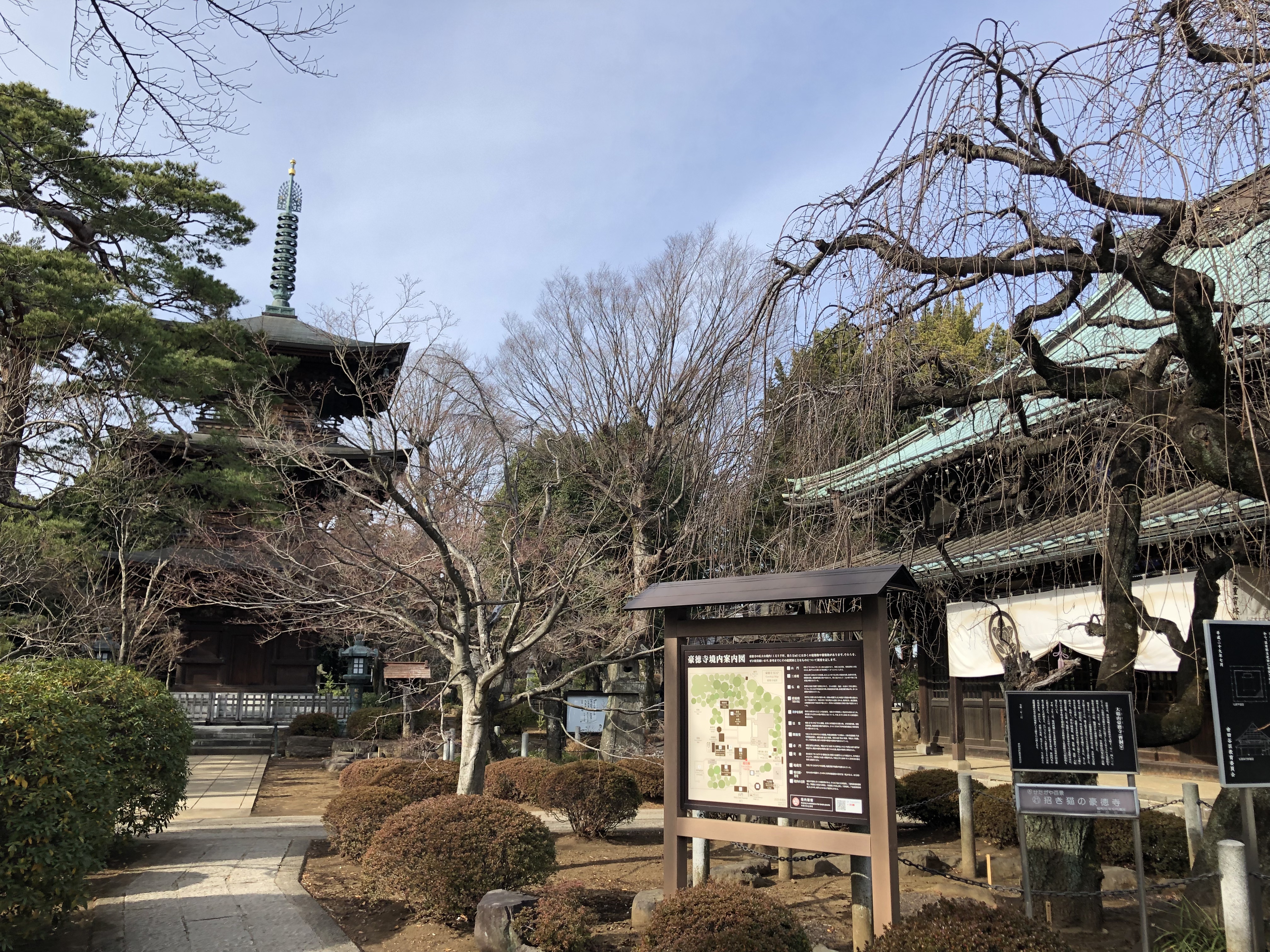
My day begins at Miyanosaka Station in Setagaya Ward, where I take a short walk to Gotokuji Temple. This temple, which covers an impressive 50,000 square metres, is home to a three-storey wooden pagoda, Shugetsuen Gardens, Jizo Hall, a Main Hall, stone lanterns, a Bell Tower, and the tomb of the Ii Naotaka family.

As I wander around the temple grounds, I am surprised to discover a collection of one-thousand maneki-neko statues (also known as “beckoning cats”) scattered throughout the temple. Every time I think I’ve seen them all, I turn a corner and find even more on the other side of the temple. They are truly everywhere.
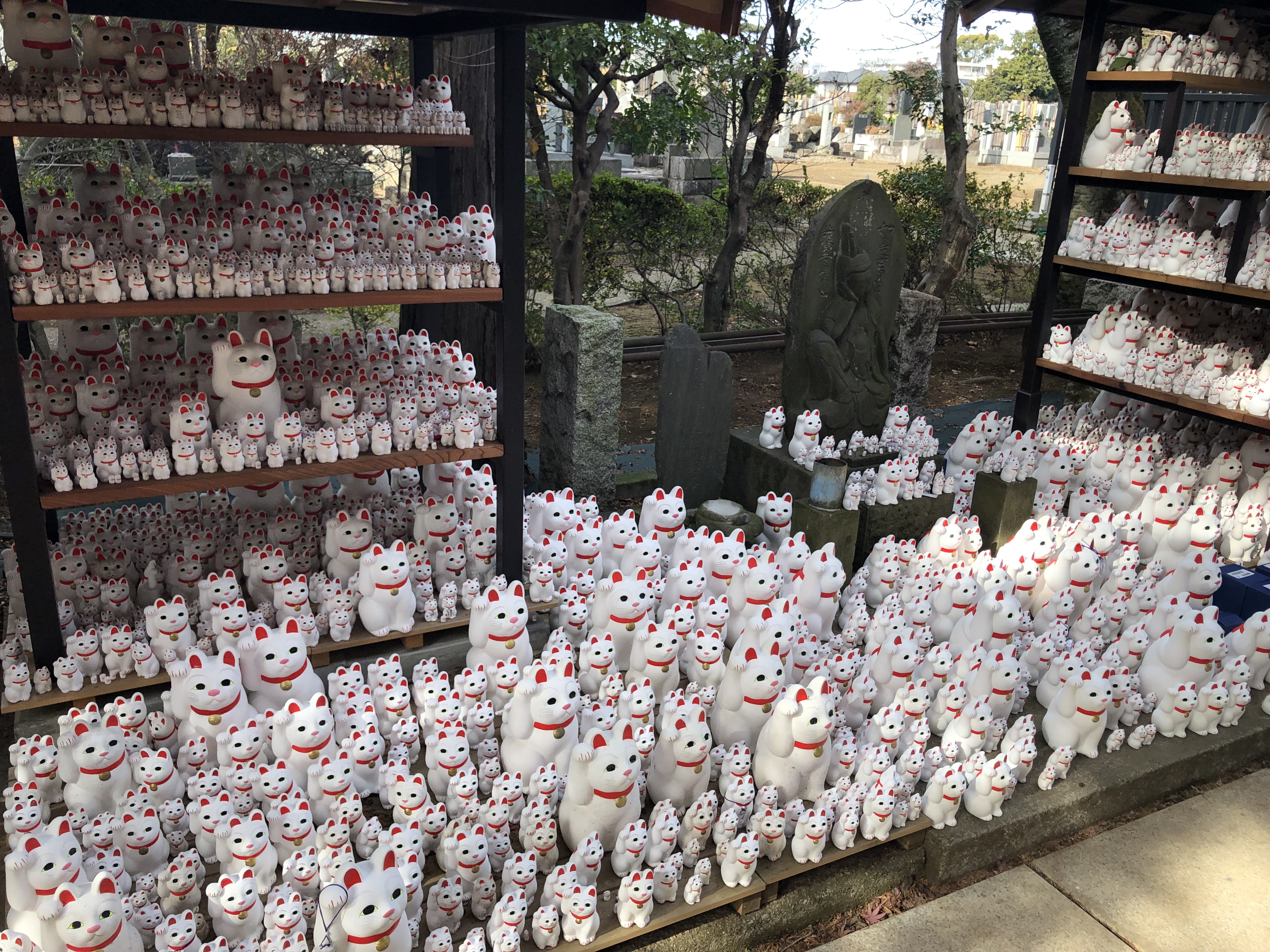
According to legend, the daimyo Ii Naotaka was out hunting with falcons when he was saved from a lightning bolt by a cat named Tama. Naotaka had taken a seat on a wooden bench outside this very temple when Tama beckoned him inside. Moments later, a lightning bolt struck the wooden bench where he had been sitting. This act of kindness saved Naotaka from certain death, and in gratitude, Naotaka is said to have placed one-thousand lucky cat statues throughout Gotokuji Temple.

Maneki-neko statues are popular as charms for good fortune and are believed to bring luck in areas such as business success, home safety, and the fulfilment of prayers, and protection from lightning bolts.
I leave Gotokuji Temple and take the train over to Shimokitazawa, a neighbourhood known for its bohemian atmosphere and abundance of vintage and retro shops. As I stroll through the streets, I am surrounded by a sea of trendy fashion stores, coffee shops, and gastro pubs offering craft beers and flat whites. Even the local Seven Eleven here is enveloped in the rich, heady scent of coffee.

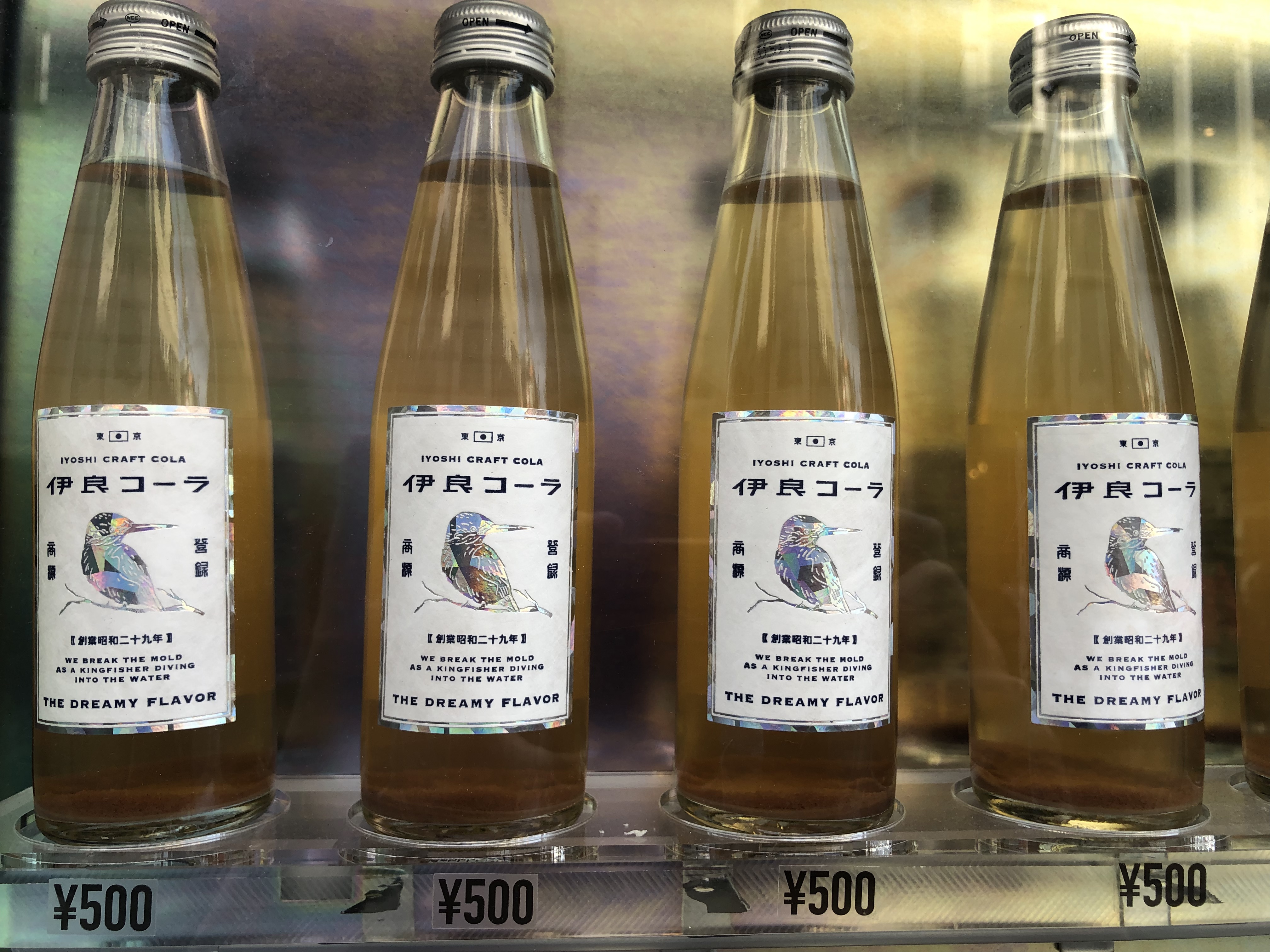
The area is also home to a vibrant music scene, with rock music blaring from every retro used clothing store. As I walk, I pass fellow foreigners who eye me up with pretentious looks. Distasteful graffiti adorns some of the vending machines, and I notice another vending machine selling what appears to be overpriced Craft Cola. The label says it is made from “natural water,” whatever that means.
I decide to leave the bustle of Shimokitazawa behind and take a break exploring some nature. Luckily for me, Setagaya Ward also contains the only valley within the 23 wards of Tokyo: Todoroki Ravine Park. Along the Yazawa River sits the Golf-bashi Bridge, a striking red steel arch bridge named for a golf course on the other side of the river.

As I begin to wander downstream, I notice a sign warning against going near the river during heavy rain. Remarkably, I’ve been in Japan for two months and it has only rained twice. The sign states that during rainfall the valley can easily flood.
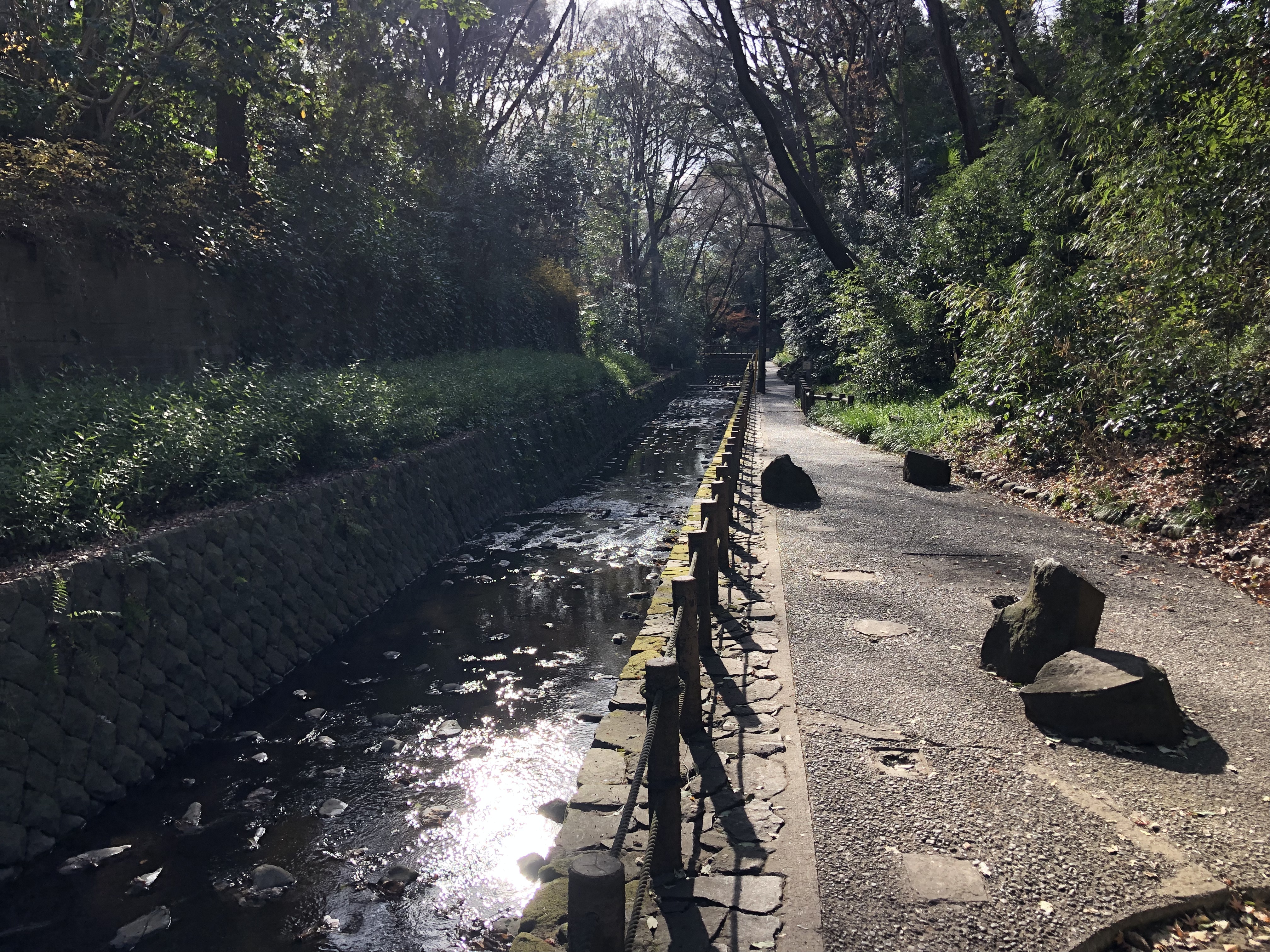
I pass trees of zelkova, bamboo-leaf oak, konara oak, and Japanese mountain cherry that line up on either side of the river, creating a scenic gorge. The air is crisp and refreshing, the water is still and calm, a peaceful contrast to the bustling city. As I walk further downstream, nature embraces me, enveloping me in its tranquillity.

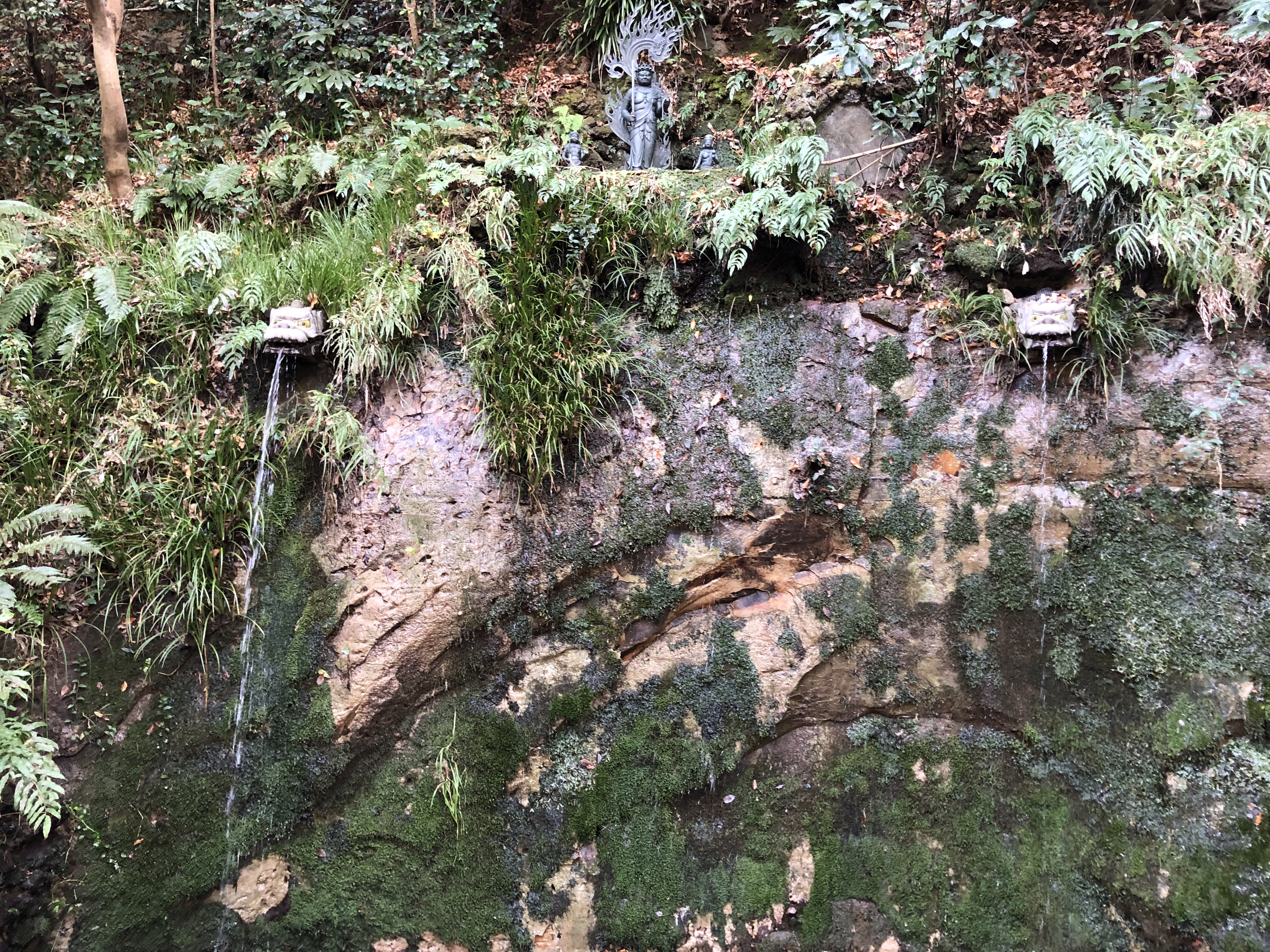
I come across Todoroki Fudo Temple, founded in the 7th century by the monk Gyoki and dedicated to Aryacalanatha. Below sits the twin waterfalls of Fudo-no-Taki, with the water spilling from the faces of yellow-eyed statues. The waterfalls are believed to have miraculous powers. Legend has it that the waterfalls at Todoroki Valley sprang up when the temple was founded, and it was once said that the water would roar like thunder when it hit the rocks, giving the valley its name. The waterfalls are a charming sight, and the old shrine adds to the peaceful atmosphere of the valley.

There are over thirty springs within Todoroki Valley, and the spring water here was designated as one of “Tokyo’s 57 Best Waters” in 2003. I presume the water from the springs is of the “natural water” variety.
As I make my way back to the train station, the sky suddenly opens up with a thunderous applause. Rain spills down into the gorge and valley, and lightning splits the sky, illuminating the landscape in a brilliant flash. Instinctively, I go in search of a cat.
Saving Primate Ryan

I aimlessly wander through Tokyo’s Adachi Ward on a cold, grey day, feeling a little bored. As I walk through a park I notice a small building that seems out of place amongst the trees and grass. As I walk up to the building, I can’t help but notice its bleak appearance. The grey concrete seems to blend in with the overcast sky, giving the place a depressing vibe. But despite my lack of enthusiasm, I decide to check it out.

As I walk through what turns out to be an animal exhibit, I can’t help but notice the perceived lack of space and variety in some of the enclosures. The Sulcata Tortoise appears to be trying to escape, possibly because it seemingly lacks access to direct sunlight, a necessity for this type of animal. It repeatedly smashes its face against the glass enclosure in frustration.

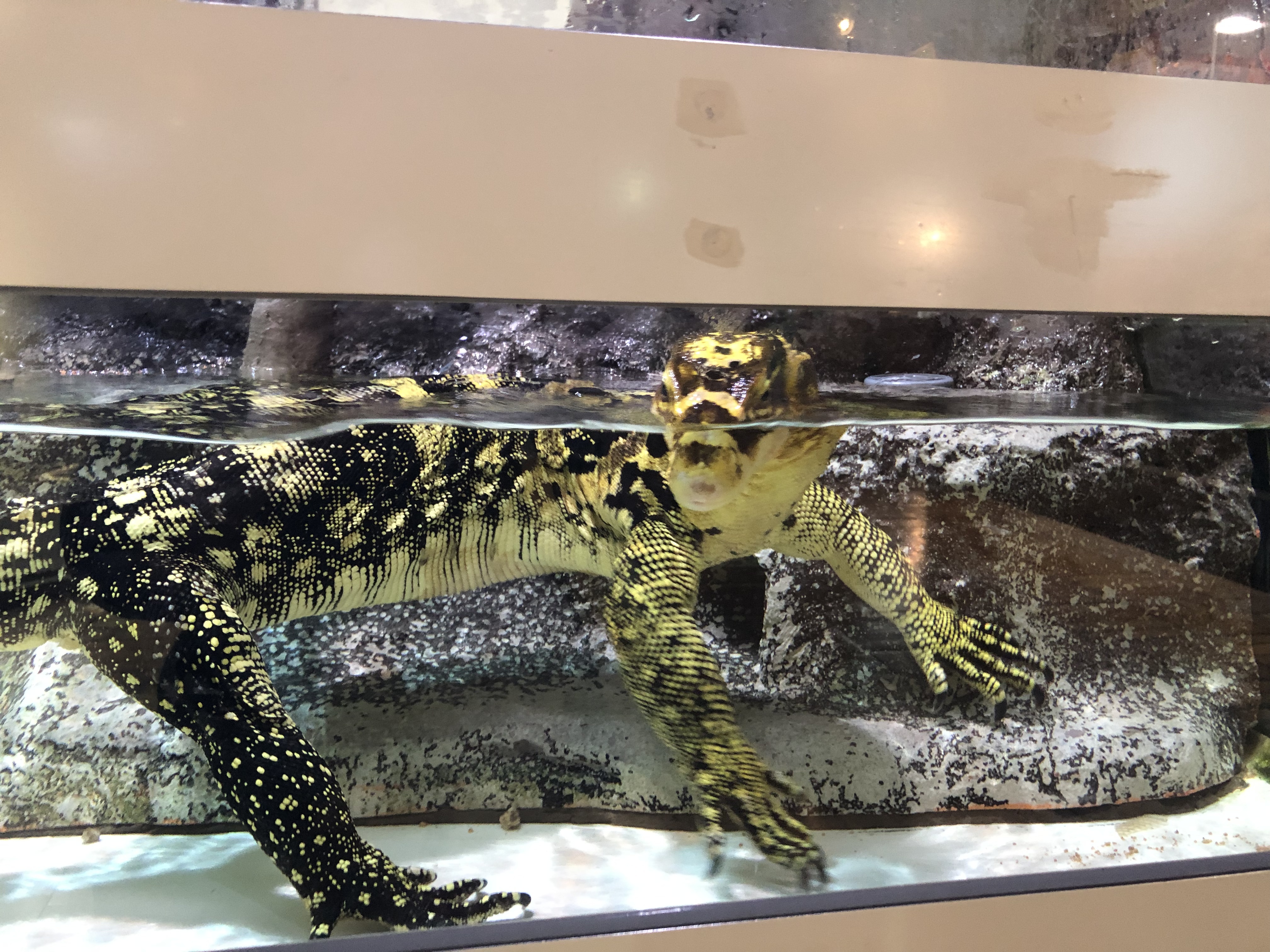
The Yellow-headed Water Monitor is a large, semi-aquatic reptile native to Africa. In my view, in this enclosure, it swims absently in a small tank that also offers a section of land. These animals are known for their powerful legs and sharp claws, which they use to climb trees and dig burrows in the wild. However, in this relatively confined space, the Yellow-headed Water Monitor seems unable to fully utilise its natural abilities, as far as I can tell.

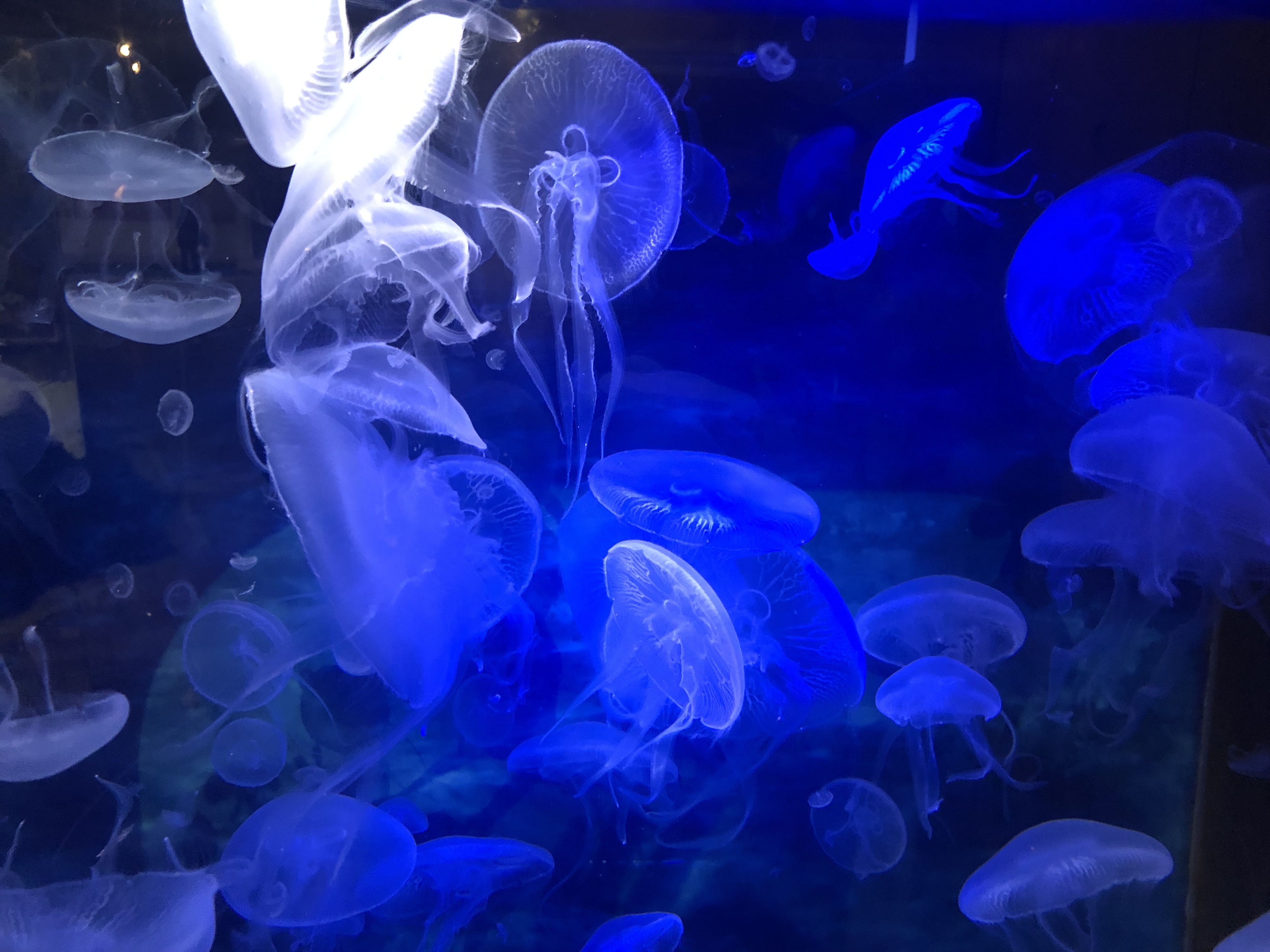
I also observe some Clownfish and Moon Jellyfish, but they seem to be lacking the vibrancy and liveliness that I would expect from these species. Clownfish, also known as anemonefish, are typically colourful and active, but these individuals seem dull and listless. Moon Jellyfish, with their translucent bells and delicate tentacles, are usually mesmerising, but in this small and crowded tank, their movement looks slow and somewhat lifeless.

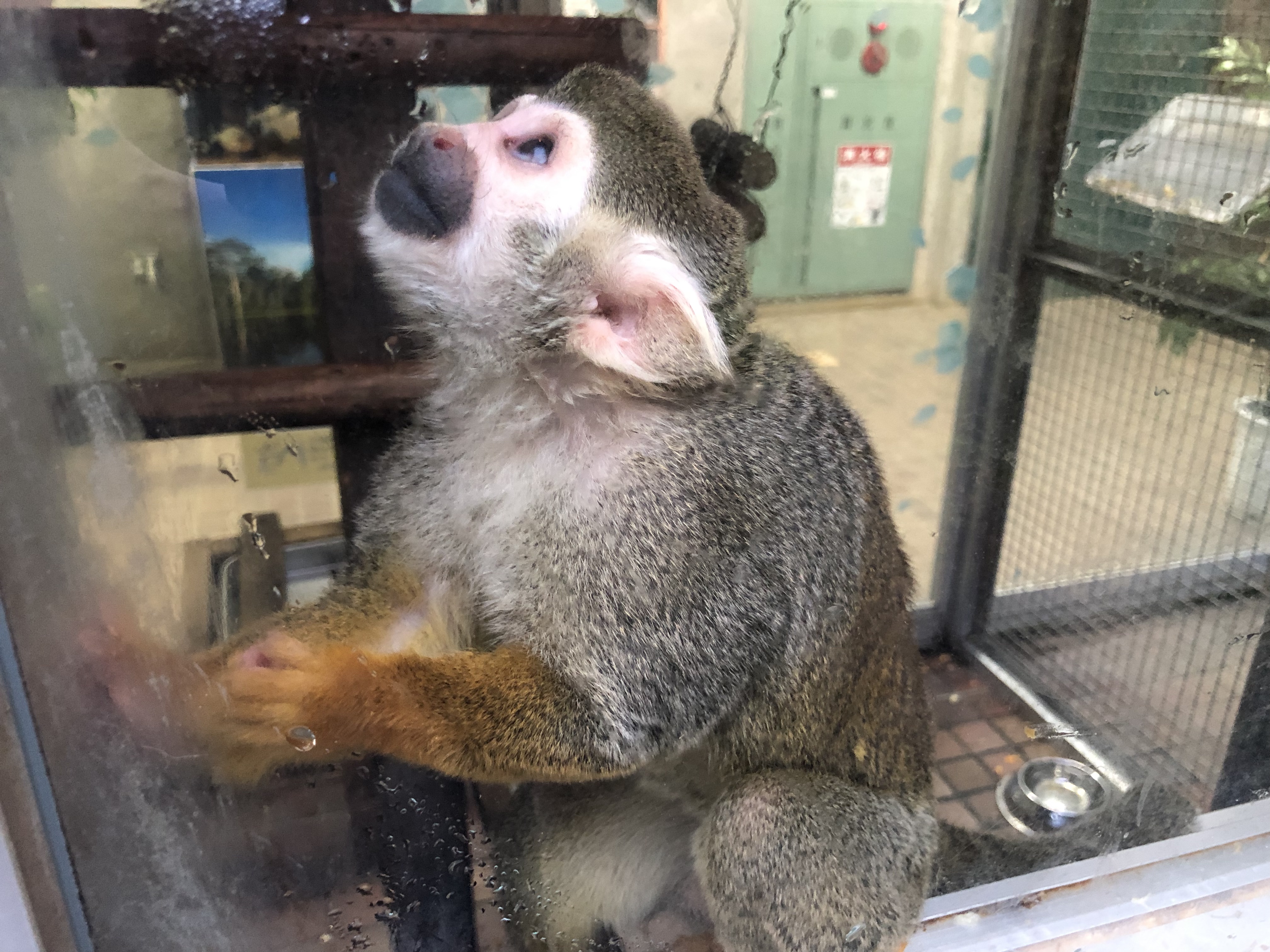
As I walk through the animal exhibit, I am startled by a group of common squirrel monkeys in cages. Seeing these animals in such small enclosures fills me with a surge of sadness, and I feel empathy for all of the animals here, even the fish, who seem to be exhibiting signs of depression.

Squirrel monkeys are social animals that live in large groups in the wild, and they are adapted to living in the rainforests of Central and South America. Because of their natural climbing abilities and long tails, squirrel monkeys are well-equipped to move through the trees in their rainforest habitat. However, one common squirrel monkey, oddly named Ryan, seems particularly drawn to me, pleading with me through its body language to let it out.

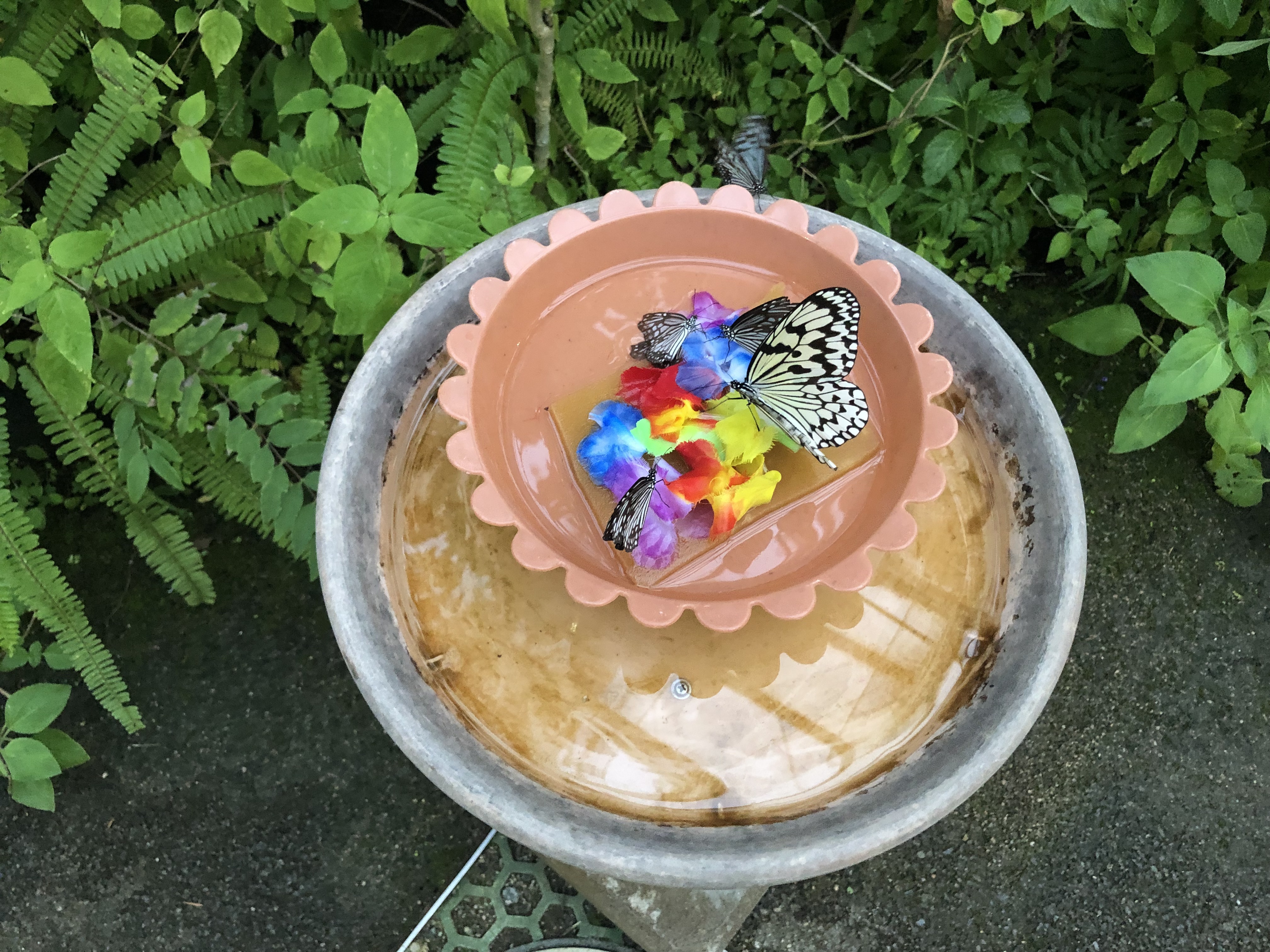
As I make my way into the butterfly enclosure, I am immediately struck by the contrast in conditions compared to the rest of the animal exhibit. Here, a lush, indoor paradise filled with plants and foliage greets me, and I am awed by the sight of Monarch butterflies, swallowtail butterflies, and red admiral butterflies fluttering freely about, their beauty on full display.

The beauty and vitality of the butterflies serves as a poignant reminder of what can be achieved when animals are given the proper care and space to thrive, in their spacious and well-maintained enclosure.

A sign reminds me to be careful not to step on any of the butterflies as I move through the space, and small dishes of honey, adorned with multi-coloured cloth, are scattered throughout the enclosure, serving as a natural attractant for the butterflies and allowing me to get a close-up view of these graceful creatures.

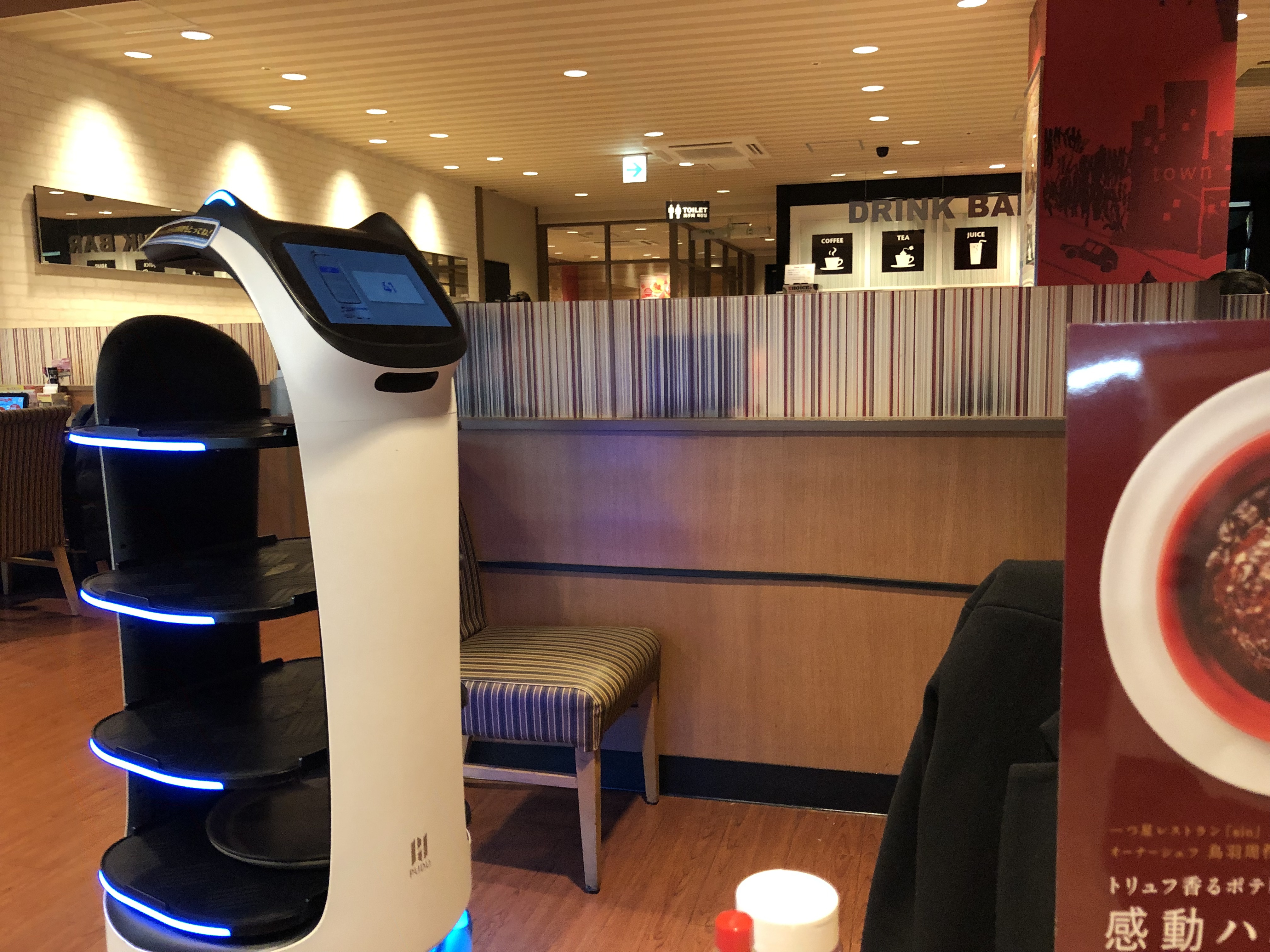
As I leave the park, a gnawing hunger overtakes me, one that I haven’t felt in a while. I head to the nearest train station in search of a restaurant. Inside, I am surprised to see that there are no waiting staff in sight, so I take a seat at a table and peruse the touchpad menu, eventually settling on a hearty gratin dish. As I wait for my order to arrive, I am intrigued by the sight of a robot with a digital cat face advancing towards me, carrying my steaming plate of gratin. I take the meal from the robot, which makes a beeping sound before gliding away with nonchalance back to the kitchen.

I briefly wonder about the impact of technology on the service industry. Despite my curiosity, I am too ravenous to dwell on these thoughts for long, and I dive into my meal with relish.

Snake Placid

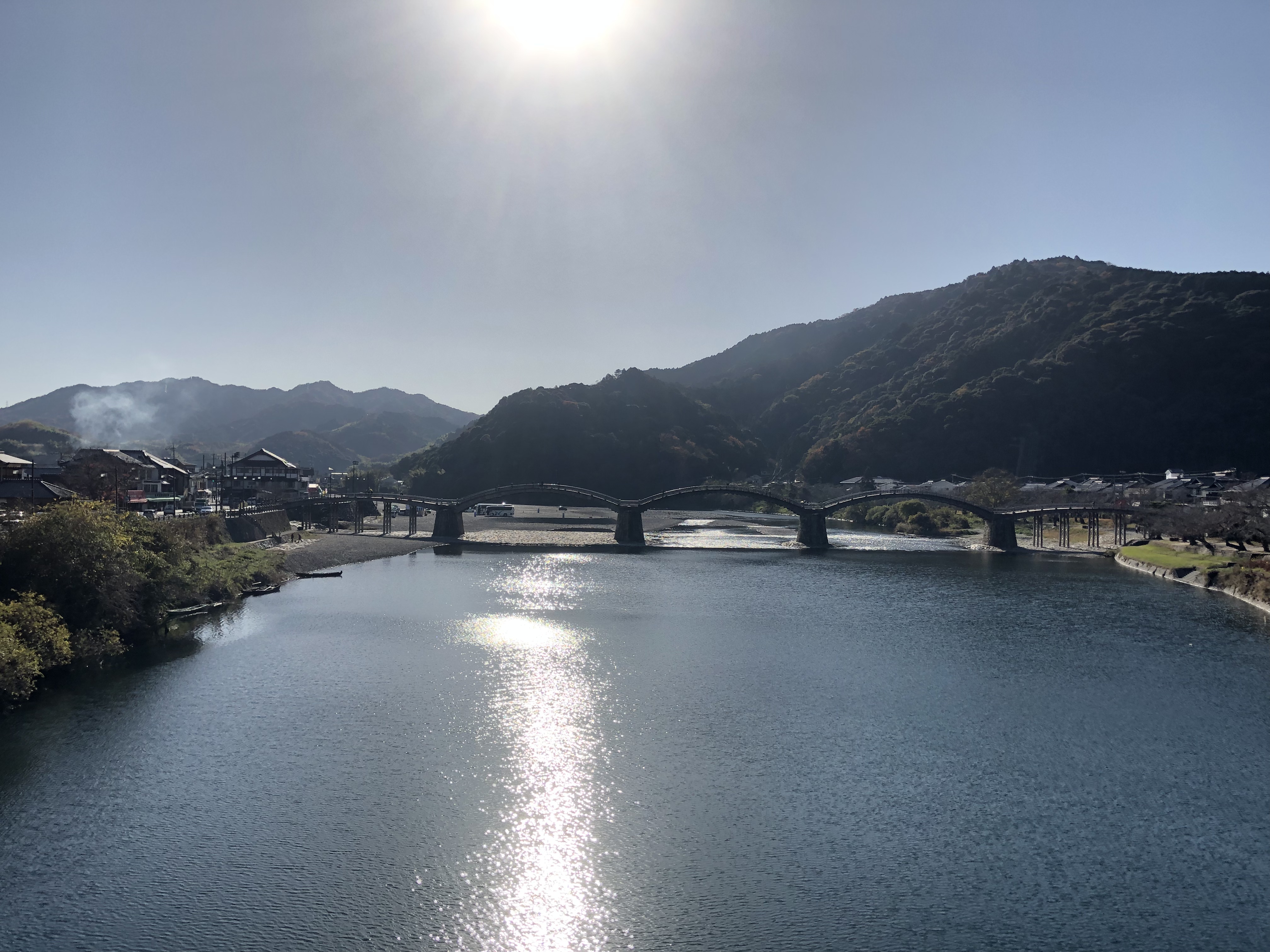
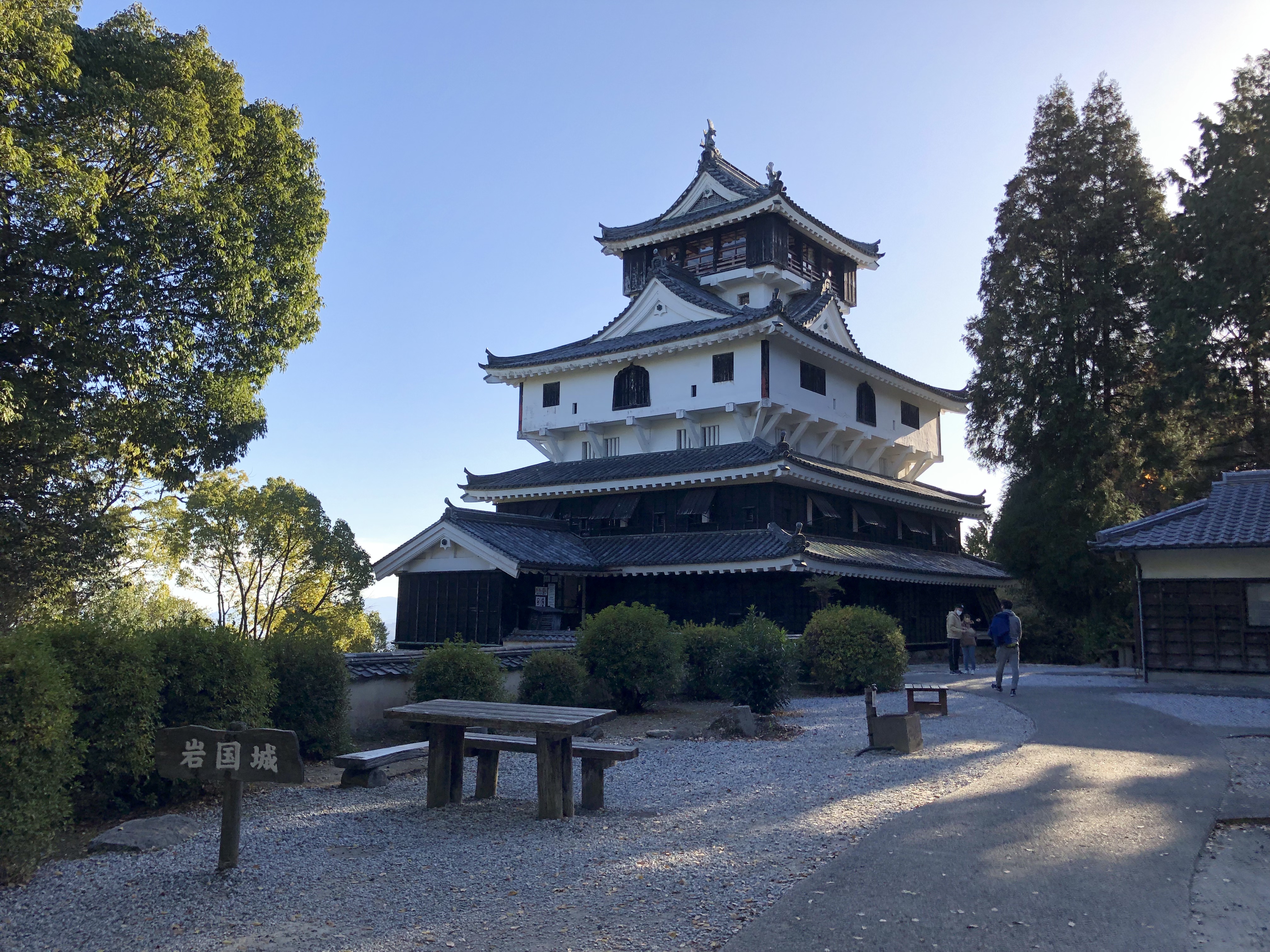
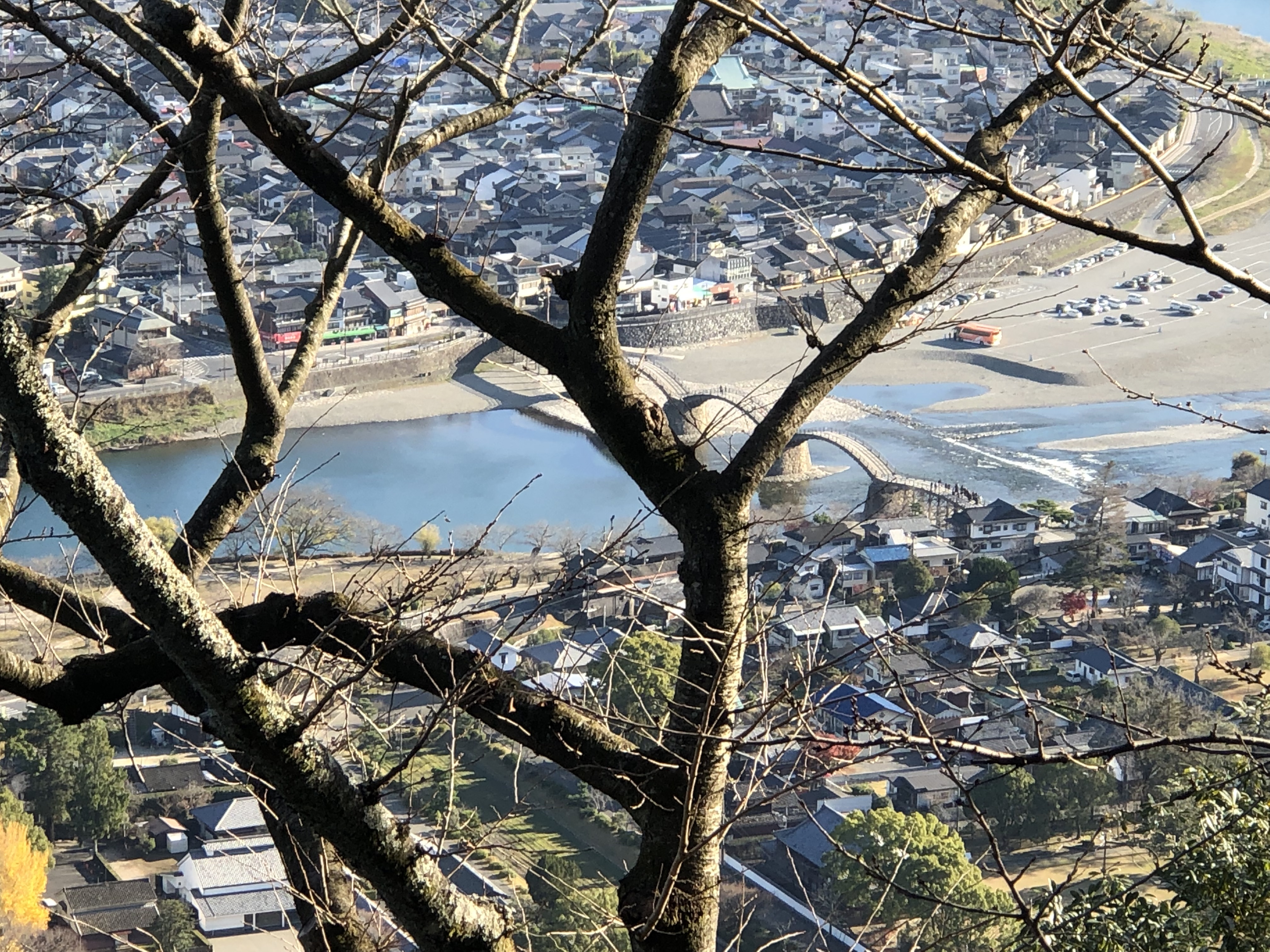
My bus drops me off on a remote mountain path, the lush green foliage surrounds me as I walk. Luckily, getting off at the completely wrong stop presents me with a great view of the Kintai Bridge, an expansive wooden bridge with five arches. Located in Iwakuni, Yamaguchi Prefecture, the Kintai Bridge is regarded as one of three best bridges in Japan, with its ornate timberwork dating back to 1673.

I stare at the bridge for a while and consider its unusual shape. I eventually come to the conclusion that it looks a bit like a snake. I glance down below at the tranquil blue water of the Nishiki River, before continuing on toward the entrance to Kintai Bridge. Here a woman in a ticket booth waves at me, distracted from the present situation, I wave back and begin to cross the bridge.

This renowned bridge is dreadful to walk across, its wooden steps curving up and down. The bright winter sun reflects off the polished woodwork and I have to focus on not toppling over. Kintai Bridge has been designated as a National Site of Scenic Beauty, the reason for this is hidden in its sophisticated construction. From the perspective of modern bridge engineering, the construction of the wooden arches are said to be so impeccable, despite their age. I think these modern engineers should try walking across the bridge in the blazing sunshine and then decide how sophisticated it is.

When I reach the other side of this 210 metre long bridge and see another ticket office, I realise the woman that waved at me was signalling for me to buy a ticket to cross the bridge. I apologise at this side and retroactively pay the ¥310 crossing fee. Slightly embarrassed, I continue on, and enter a nice looking park.

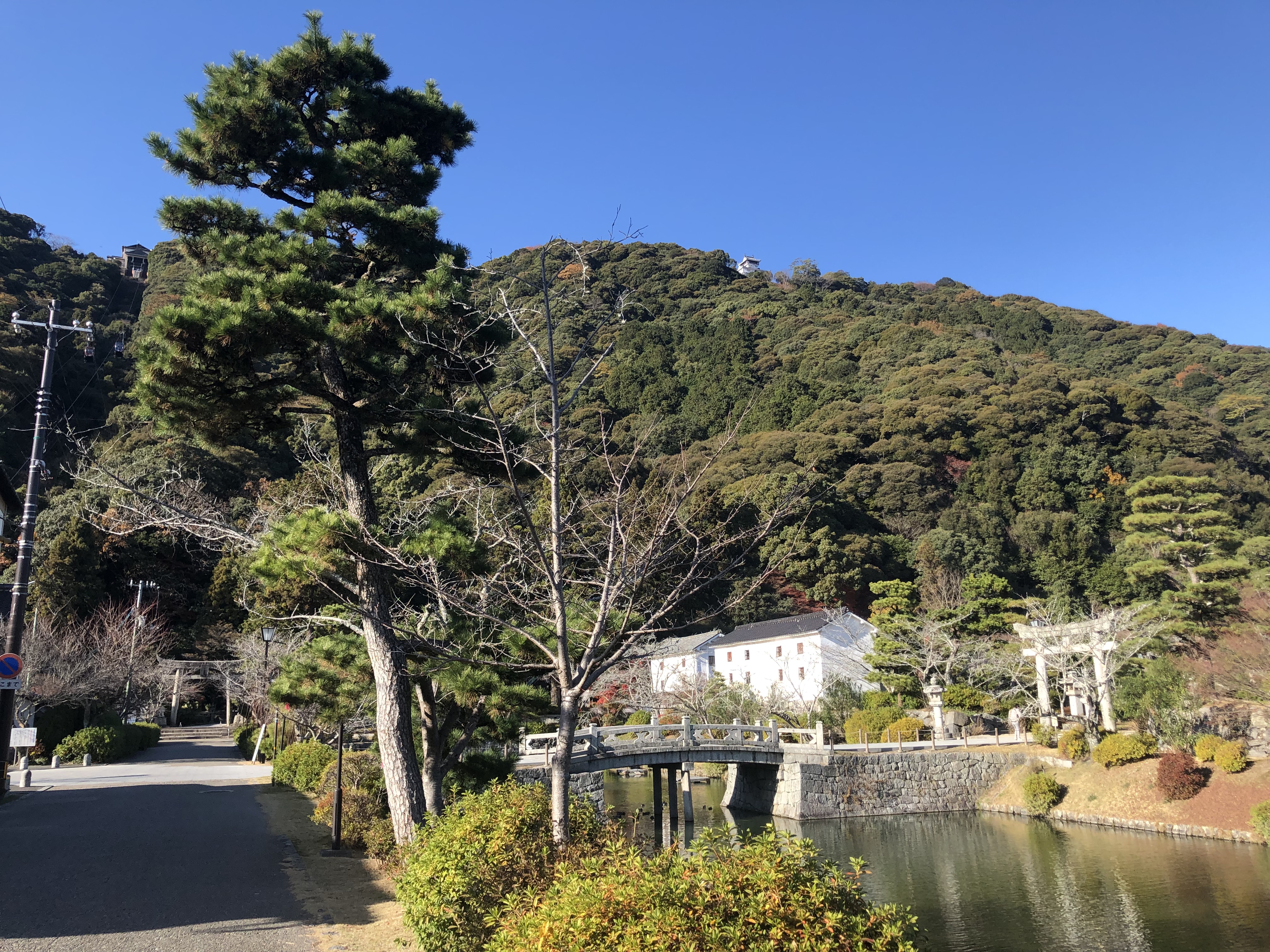
Kikko Park is a very charming leafy landscaped park. The area contains a few tasteful clothing stores, small coffee shops, and nice little restaurants. All of this is set to the backdrop of a mountain, a shrine with some nice bridges, and a few small canals. Atop the mountain, I can just make out the miniature outline of what looks to be a castle. There’s also a snake museum here.

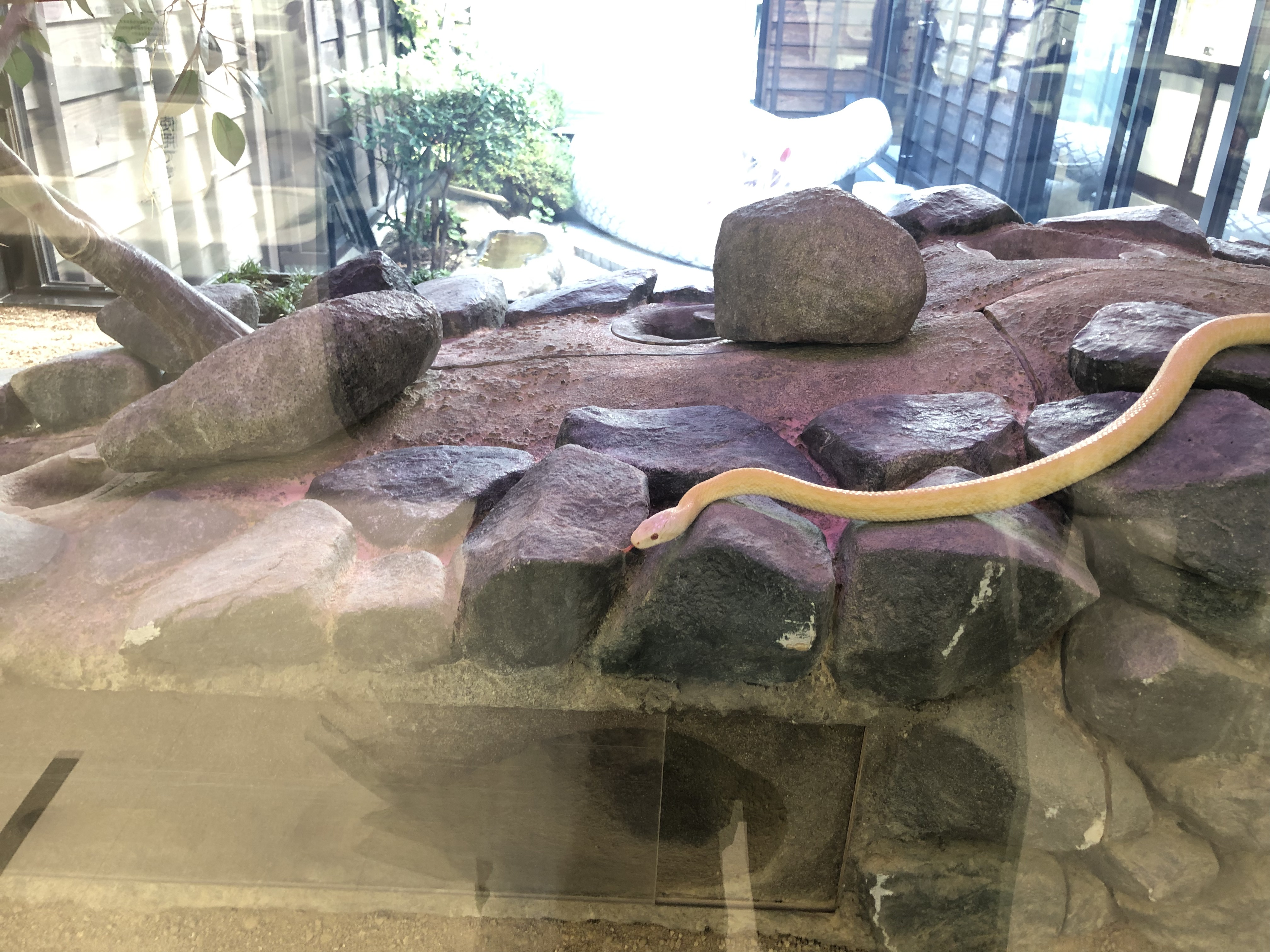
After having my temperature checked and my hands sanitised, I enter the Iwakuni White Snake Museum. Here can be found everything there is to know about this special type of snake; a breakdown of its anatomy, snake skeletons, and real samples of its shed skin are on display here. There are even live snakes that I initially mistook to be made from plastic; it wasn’t until one of these enchanting snakes began to hiss and move its tongue that I realised it was real.

This albino mutation of the Japanese rat snake is glossy white with red eyes, and has been designated as a National Treasure by the Japanese government. It is said that stories about incidents involving these white snakes have been passed down through the ages. The interesting thing about the Iwakuni white snake is that it has a mild temperament, and does not harm human beings. I stare at the snake, regard its shape. I consider that it looks a bit like the bridge I crossed earlier.

Leaving the museum, I decide to check out the castle. It’s quite high up the mountain but luckily there is a ropeway that runs every fifteen minutes. I’ve never been on a ropeway before, but having previously conquered my fear of heights, I’m prepared to give it a go. A few moments later, I arrive at the Iwakuni Castle Ropeway Mountain Foot Station.

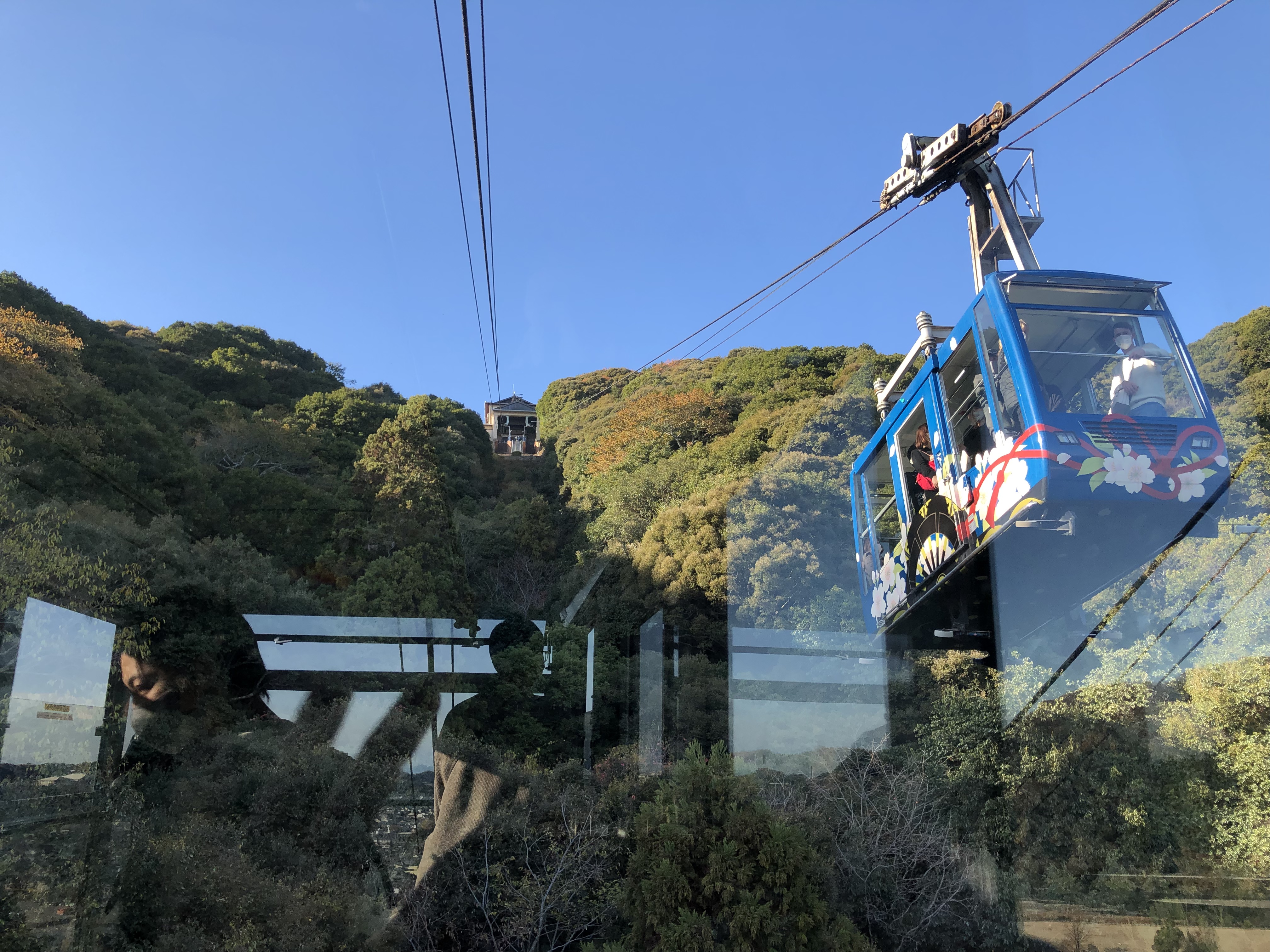
I buy a return ticket for ¥540 then instantly regret my decision once I see the ropeway; it doesn’t look safe at all. As I wait to ride, I become anxious when I watch the man who performs the safety checks simply put his head into our carriage, take a swift look around for less than a second, before telling us we are okay to enter. The ropeway fights its way up 200 metres of cable as it climbs to the top. There is a clock here, the Shiroyama Mechanical Clock, it plays a lively melody as the cable car pulls into the station; I recognise the tune but can’t quite place it.

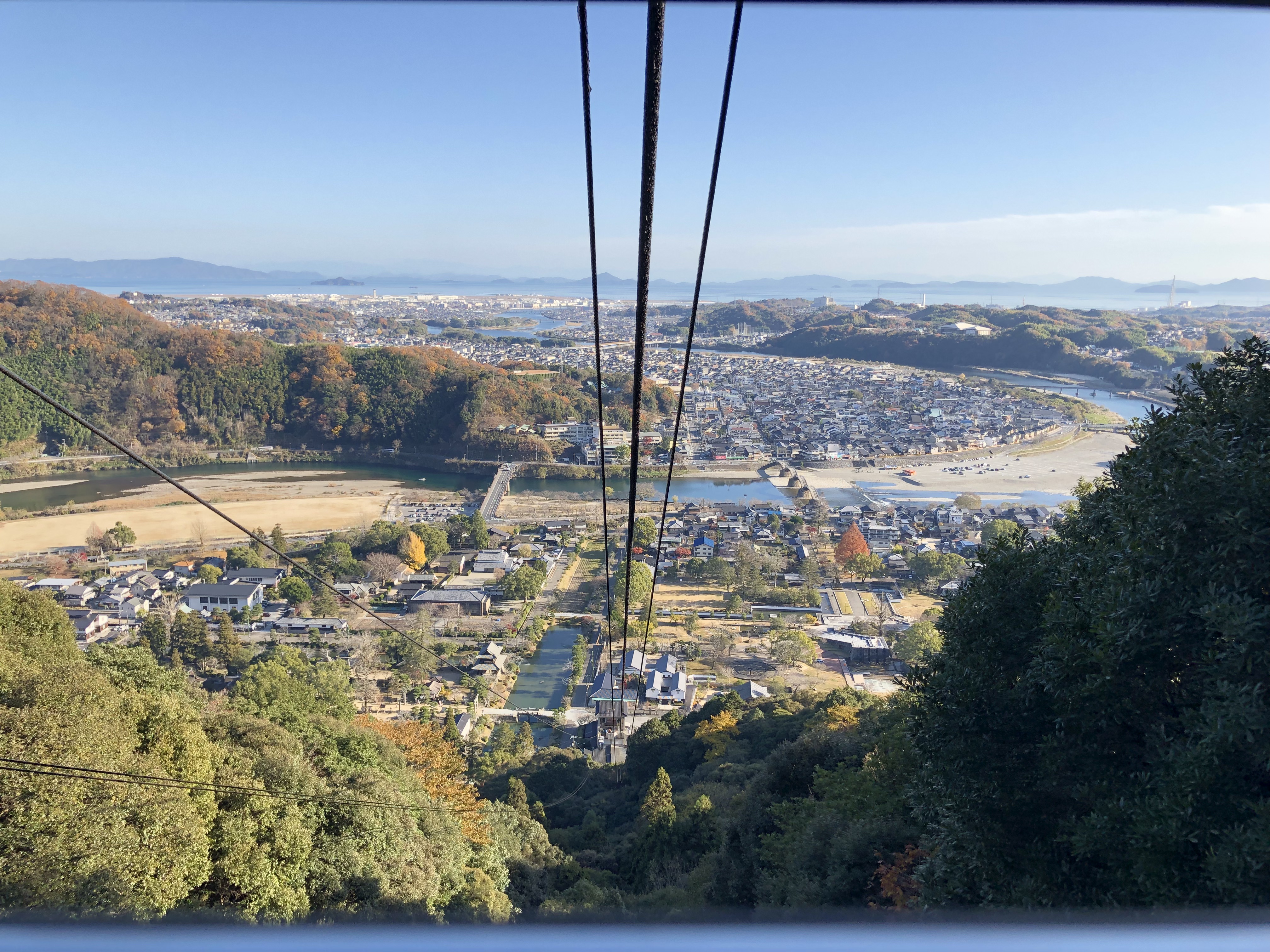
The view from the top is stunning. I stand here for about ten minutes, enjoying the warm weather and admiring the wonderful view. The wind periodically pushes with gentle nonchalance; the occasional hovering of a zephyr adding a cooling breeze to an afternoon encased beneath the vibrant sky. In the distance, I can see the Seto Inland Sea and even the islands of Shikoku beyond.

A sign says the castle is an eight minute walk away. The area is awash with vibrant colours, the maple and ginkgo leaves turning various shades of red and yellow. I pass a rather disconcerting sign telling me to, “Beware of pit viper!” — so much for the friendly snakes. I continue on, passing the largest dry moat in Japan, before after a steady twenty minute hike, I arrive at the castle.

The castle is extremely crowded with elderly Japanese people travelling with their tour groups. This particular castle is know as ‘Yamajiro’ which is a word to describe any castle built on a mountain and at least 150 metres high. I once again admire the view from this mountain castle, before turning around and heading back to the ropeway.

As I make my way back down the mountain, the forest whispers to me with the snapping of twigs beneath my feet. The sound captures my attention, and for the first time I truly take in the vast expanse of the forest surrounding Iwakuni Castle. I also realise, with a start, that there is no protective fence separating me from the dizzying drop to the valley below.

Back at the ropeway entrance, I arrive a little early. Eventually, the Japanese tour group begins to arrive in droves, and before long, a line of over thirty people snakes behind me. As we are set to depart, we manage to squeeze in twenty three of us into the tiny cable car; social distancing out of the window completely. As we slowly begin to descend the mountain, the weight of us makes the ropeway creak, squeak, and screech as we swing unnaturally from side to side.

The cable car crashes into an overgrown tree branch on the way down, the sound and shaking startles me, and much like a snake, I jump out of my skin.

Death Becomes Here

Today is warm again, and I have arranged to go on a bicycle tour with three very close friends. We meet up at half-past one and cycle in the direction of Yanaka Cemetery. It might sound a little morbid, heading once again to this huge cemetery, but the reason we have settled on this location is that it is quiet, out of the way, and not packed full of tourists. Today might well be the last day we can view sakura, and I can’t think of a better way to enjoy the flowers than with my friends in an area that is free from the usual crowds.

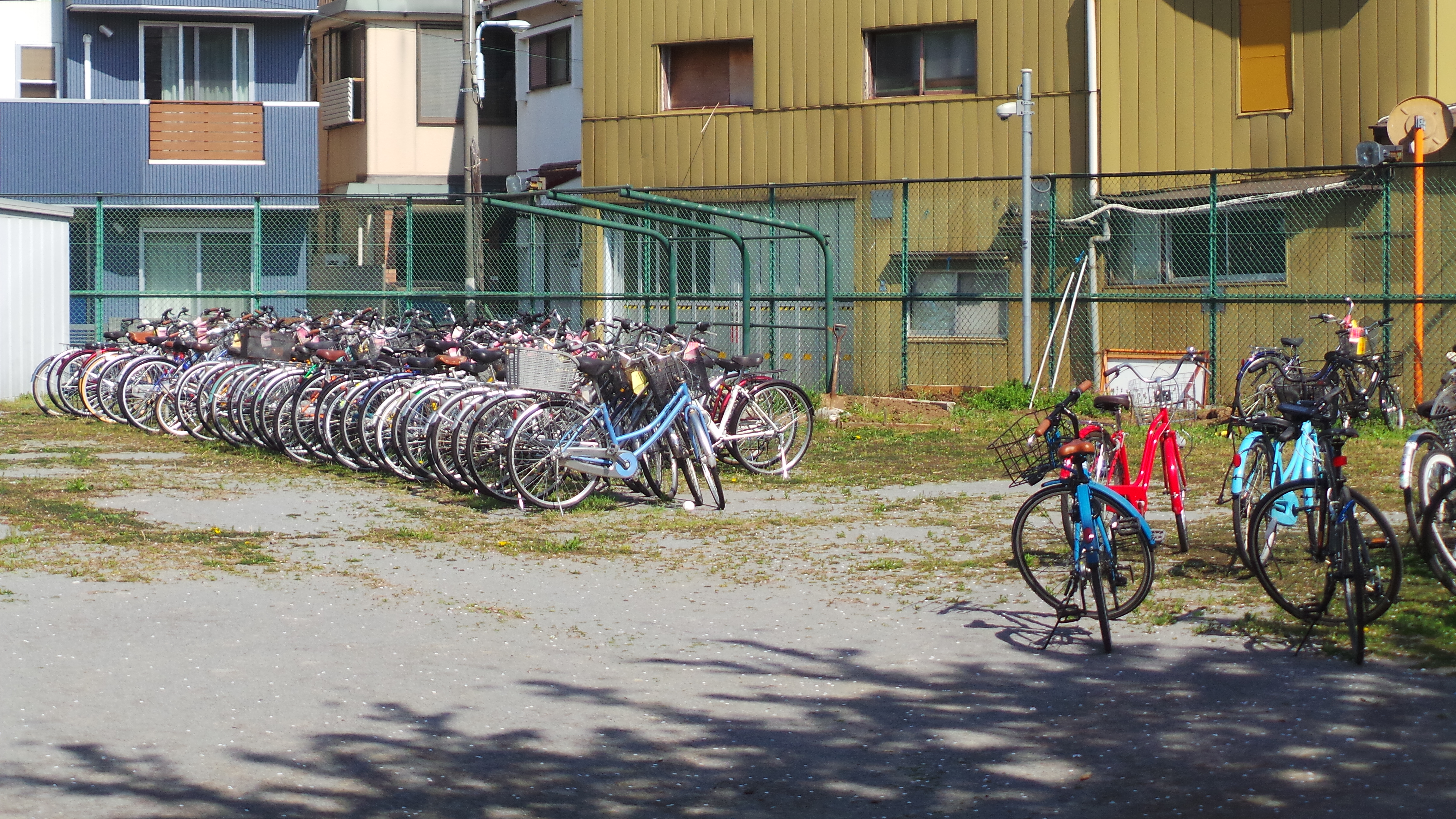
We decide, for whatever reason, to park our bikes in a zone where abandoned bicycles are collected and locked away. This fenced-off area charges a fine of ¥5000 to people who have left their bicycles illegally parked. After impounding our own bicycles, I worry that something might go wrong, and we too will have to pay the hefty fine when we return here later this afternoon. “Don’t worry about it,” says one of my friends, “we can just pretend that we don’t speak any Japanese, it’s no problem.”

illegalparking

We head through the cemetery, getting very lost in the process. The interesting thing about Yanaka Cemetery is that there are no bodies in the ground. Every grave here features a cremated corpse in an urn. Something about the blend of cherry blossom trees mixed in with the gravestones soothes me in a way that I can’t really describe. I really like this cemetery, and today is perhaps my tenth visit to this area since arriving in Japan.

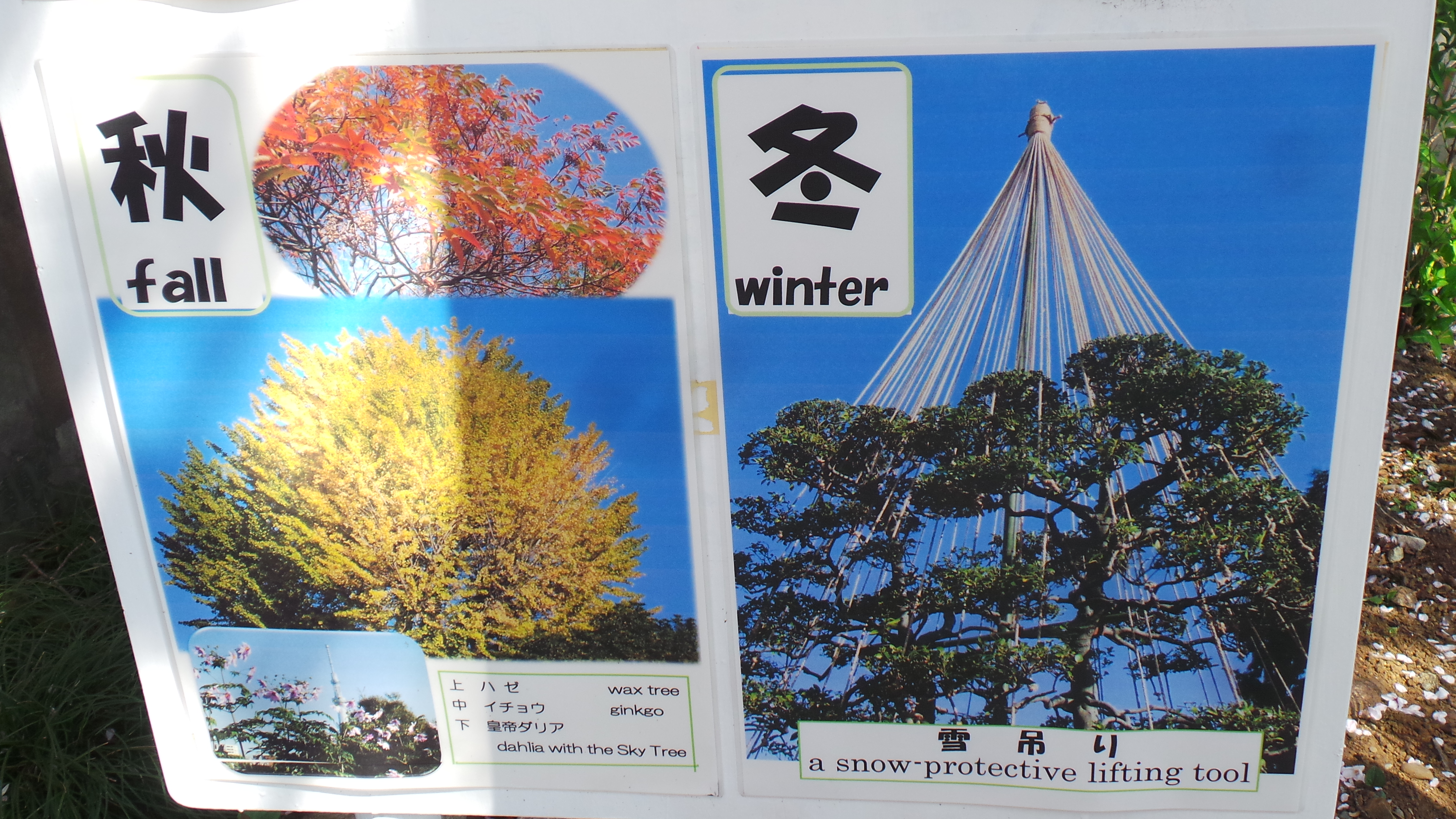
On the other side of the dead, there are some old houses and a street known as Cherry-blossom Avenue. I noticed a sign here a few months ago that displayed the four seasons of Yanaka Cemetery and various flowers. The section for winter was incomplete, but now, finding the sign, I can see that whoever is in charge here has finally updated the winter information, and it was worth the wait: a snow-protective lifting tool.

signcompleted

The photograph shows nothing resembling winter, and the sign is meant to depict the different flowers of each season (it doesn’t). I’m not certain if a snow-protective lifting tool is a genus of flowering plants or perhaps something more obscure; nevertheless, I am intrigued enough to make plans to return here next winter and investigate this peculiar seasonal tool.

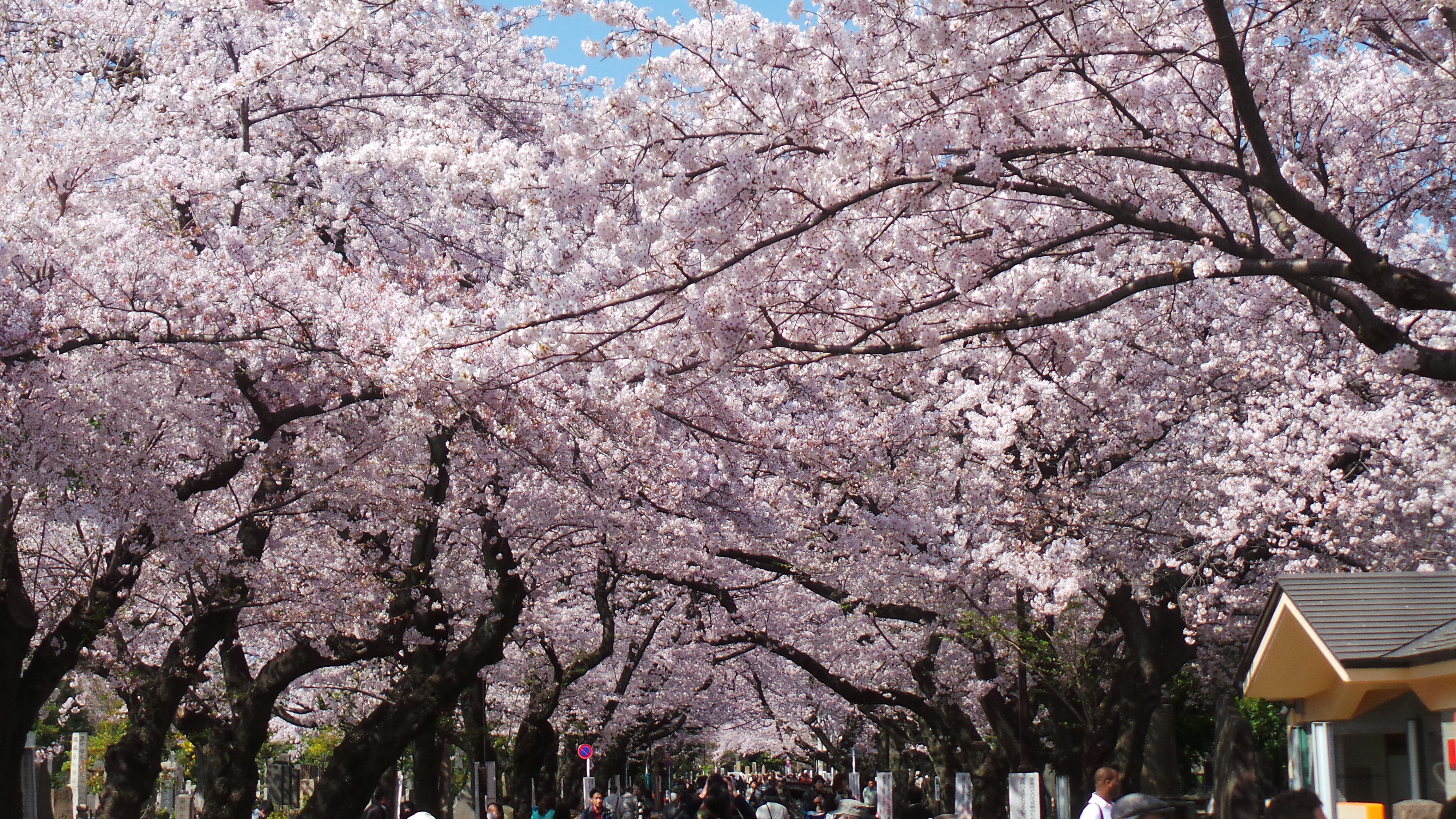
On Cherry-blossom Avenue, it is slightly more crowded than we had anticipated. Dozens of people meander the street, each side adorned with a wall of pink flowers arching over the tunnel-like path, creating an incredible sight. It’s unquestionably worth the visit, offering the most serene view of sakura I have seen so far. We continue our stroll on this lovely spring afternoon, relishing views under the canopy of blossoms.

sakuratunnel

On the other side of the street, we enter a very large temple. Tennoji Temple boasts a massive statue of Buddha and an ancient well that still functions today. One of my friends appears excessively excited about the well and immediately starts pumping water from the ground below. Apparently, the water has a metallic taste.

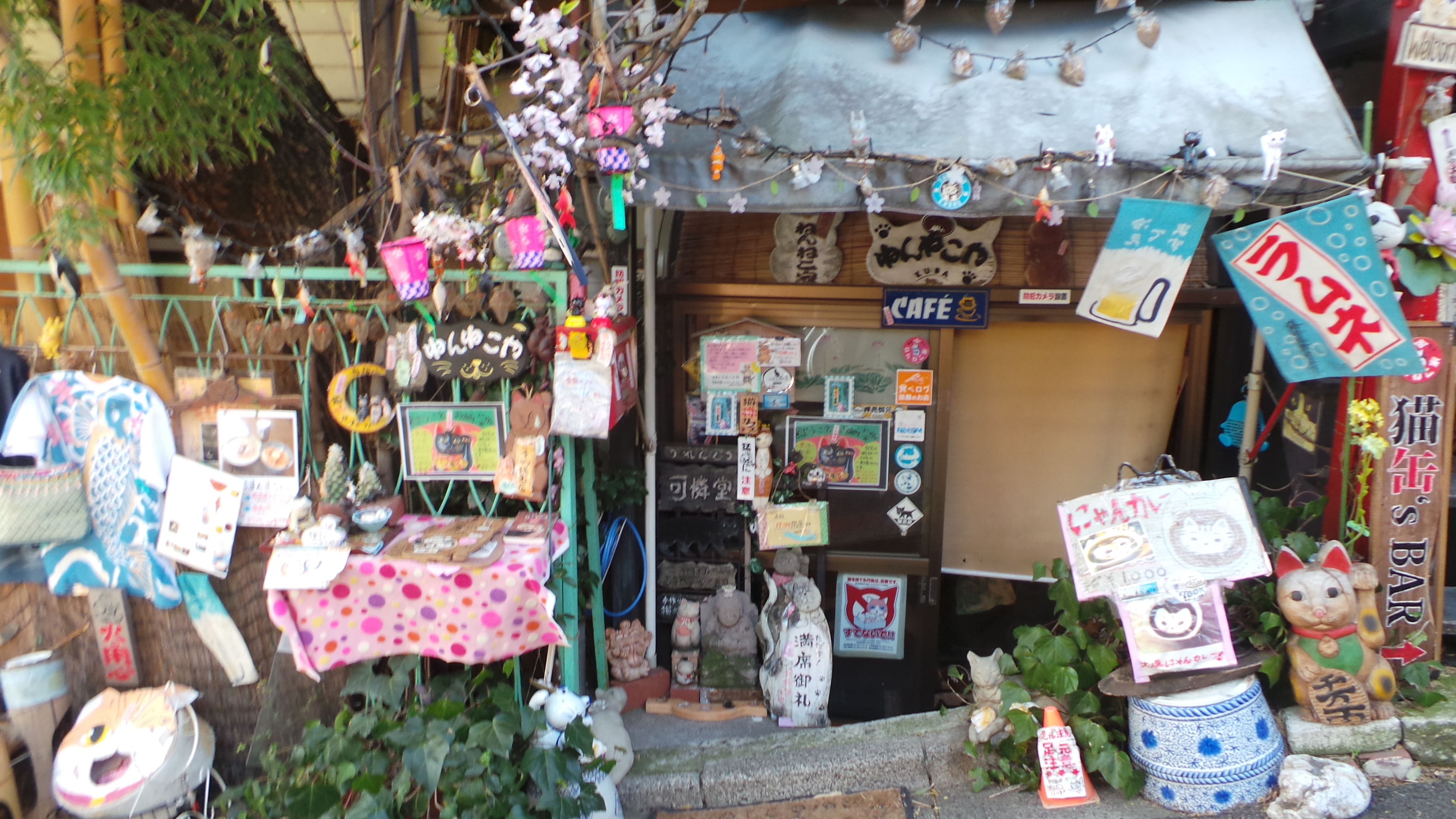
We leave the temple and the cherry blossoms behind us, heading down Yanaka Ginza Street. The market is an unusual bustle of crowds and tourists, drawn to the area for flower viewing and now wandering along this ancient street. Although tea houses, locally sourced products, and hand-made items are on sale, none of them capture our interest. In our quest for food, we stumble upon the knowledge that there’s a cat cafe nearby, and given our shared love for cats, we eagerly turn a corner and walk for ten minutes in a vague direction before finding a cafe adorned with cat paraphernalia. “Maybe this is the place?” I am told, with transparent obviousness.

catcafeagain

We wander into the deceptively small cafe and take a seat on the floor around a small table. Unlike the other cat cafe I have visited, this one doesn’t require us to pay any additional fee to eat with the cats. It feels more like someone’s living room than an actual cafe. Although the place is slightly pricey, perhaps the extra charge is used to subsidise the cost of cat food, care, and maintenance.

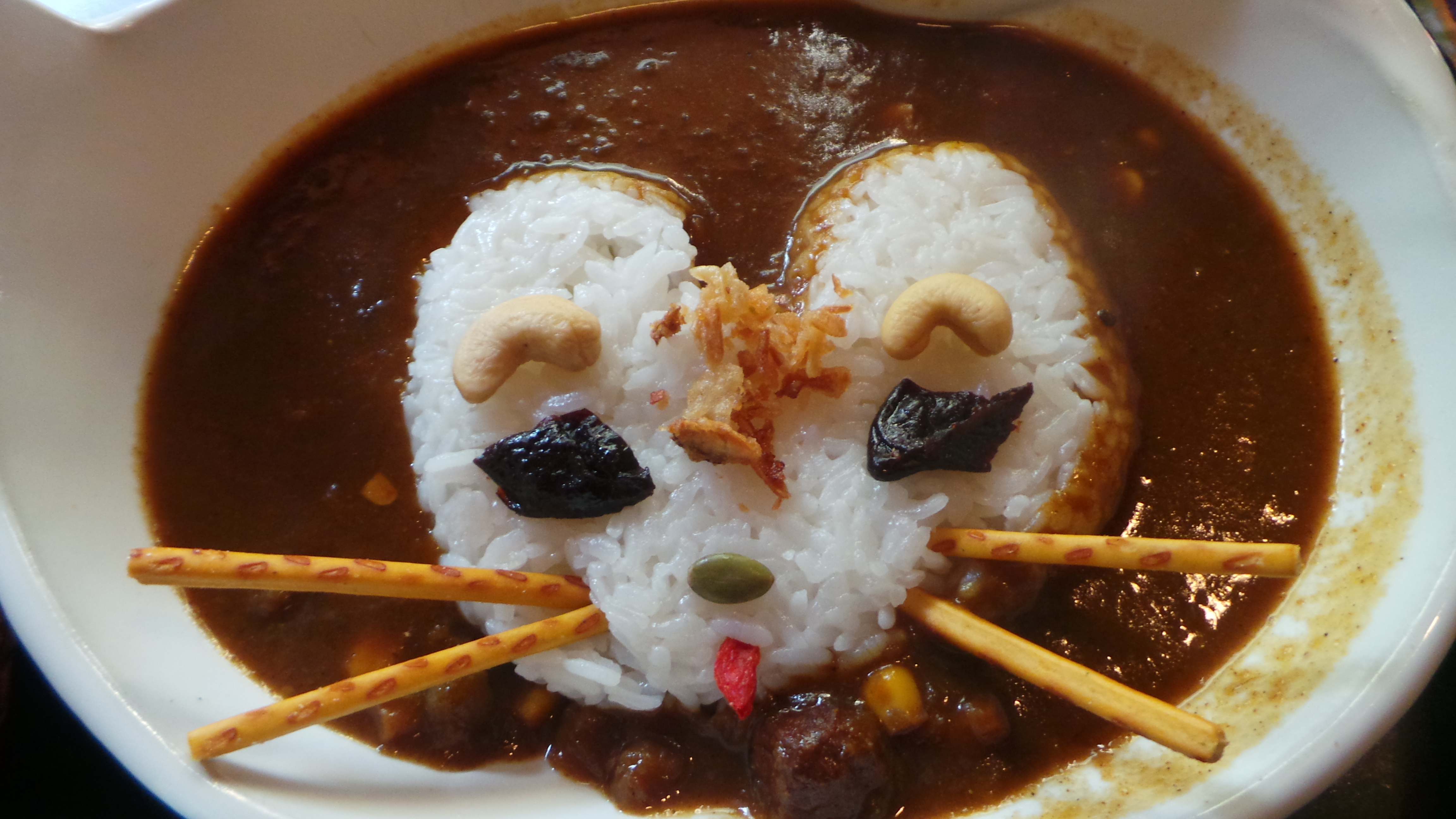
I order a vegetarian curry and wait. My friends, seemingly uninterested in real food, opt for a selection of cakes and sweets. As we sit and talk for a while, I completely forget that I am in the company of cats; perhaps the reason for this is that there is just a single cat here. Only one. Sleeping quietly under a heated table. Eventually, my food arrives, and a second cat appears from seemingly nowhere. Much to my surprise, my food looks nothing like any curry I have had before. Something is very different about it, and it takes me a while to realise exactly what it is.

catfoxcurry

As I dine on curry and rice shaped like a feline, or perhaps a fox, I begin to wonder if this is okay. Eating food in the shape of a cat, while surrounded by two actual cats, makes me feel very strange indeed. What would a cat think if it saw me eating one of its friends? Perhaps it would get angry, maybe even scratch at me. After finishing my curry, I attempt to pet the awake cat, but it runs away in fear, confirming my suspicions about eating cat-shaped food. The owner informs us that the manager of the cafe is, in fact, the sleeping cat. It makes me wonder if the cat even knows how to operate the antiquated till system (it doesn’t).

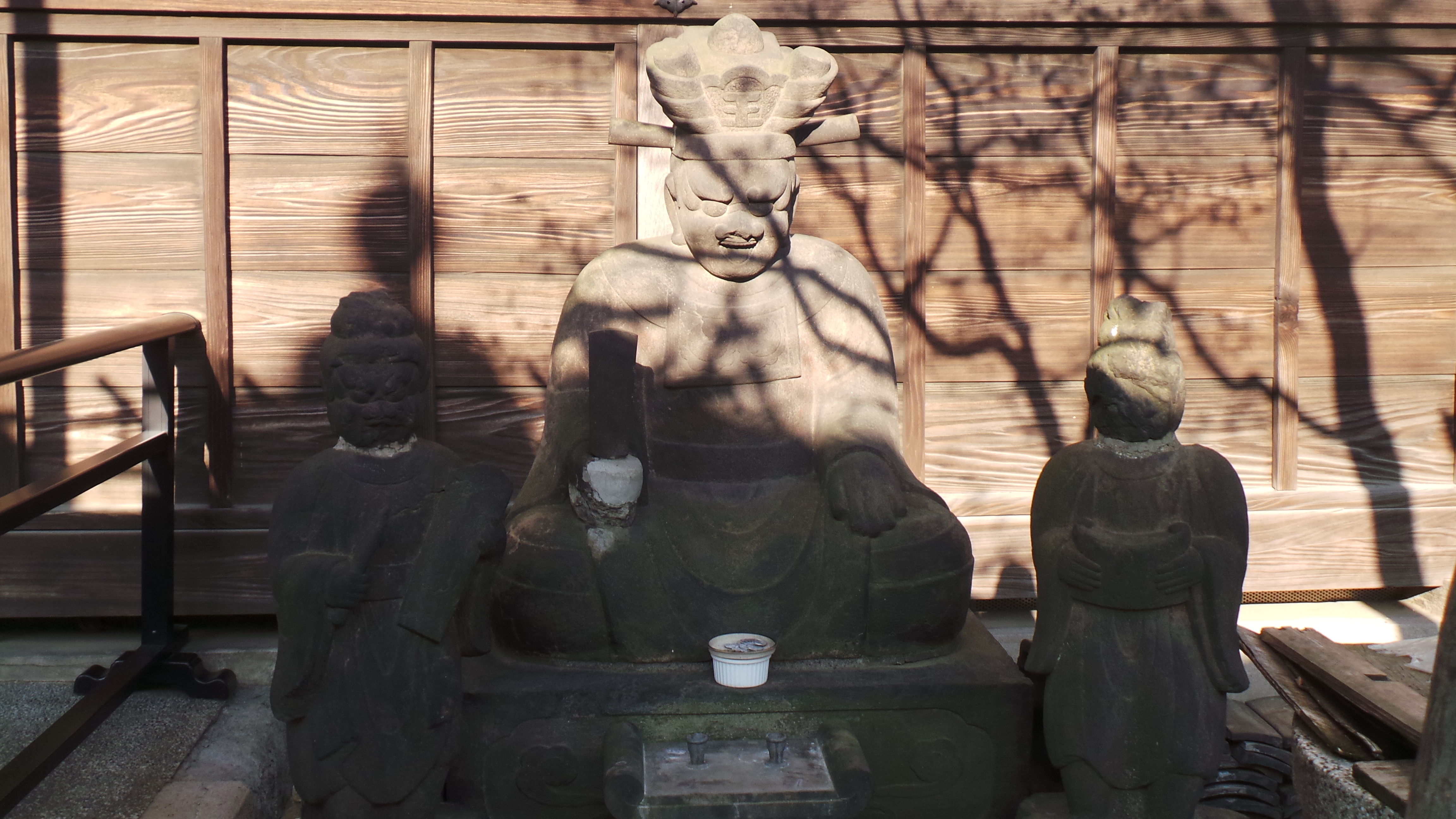
We set off in the direction of our bicycles, and along the way, we once again inadvertently stumble upon a temple. This particular temple houses the King of Hell, Enma-raja. The statue, carved from stone, depicts him with his servants sitting on either side. His servants are Shimyo and Shiroku, tasked with delivering the King’s judgment and recording it, respectively.

enma

It is believed that Enma-raja judges the conduct of the living and determines their destination after death. Rumour has it that if you tell a lie in front of the statue, the King of Hell will remove your tongue. Intrigued, I decide to test this out with a paradoxical statement, “You will cut out my tongue.” Nothing happens, indicating that I have told a lie, meaning the statue should cut out my tongue. But if it does, then I can’t have told a lie, and this creates a paradoxical loop. The logical conundrum continues endlessly. Eventually, the statue disintegrates in a quarrel of logic (it doesn’t).

It is quite fitting to find such a statue here, as the area of Yanaka is in the direction of the Ox Tiger, depicted with horns, sharp claws, and an evil demeanour. Because of this, it is considered an unlucky direction, and Yanaka shares the unfortunate possibility that it contains a demon gate—an invisible gate that leads directly to hell, known as a Kimon. Often, temples in Japan face the same direction as this Chinese zodiac symbol. This might explain why there are over thirty temples and shrines here, helping to purify the area and prevent an oni demon from showing up and killing everyone.

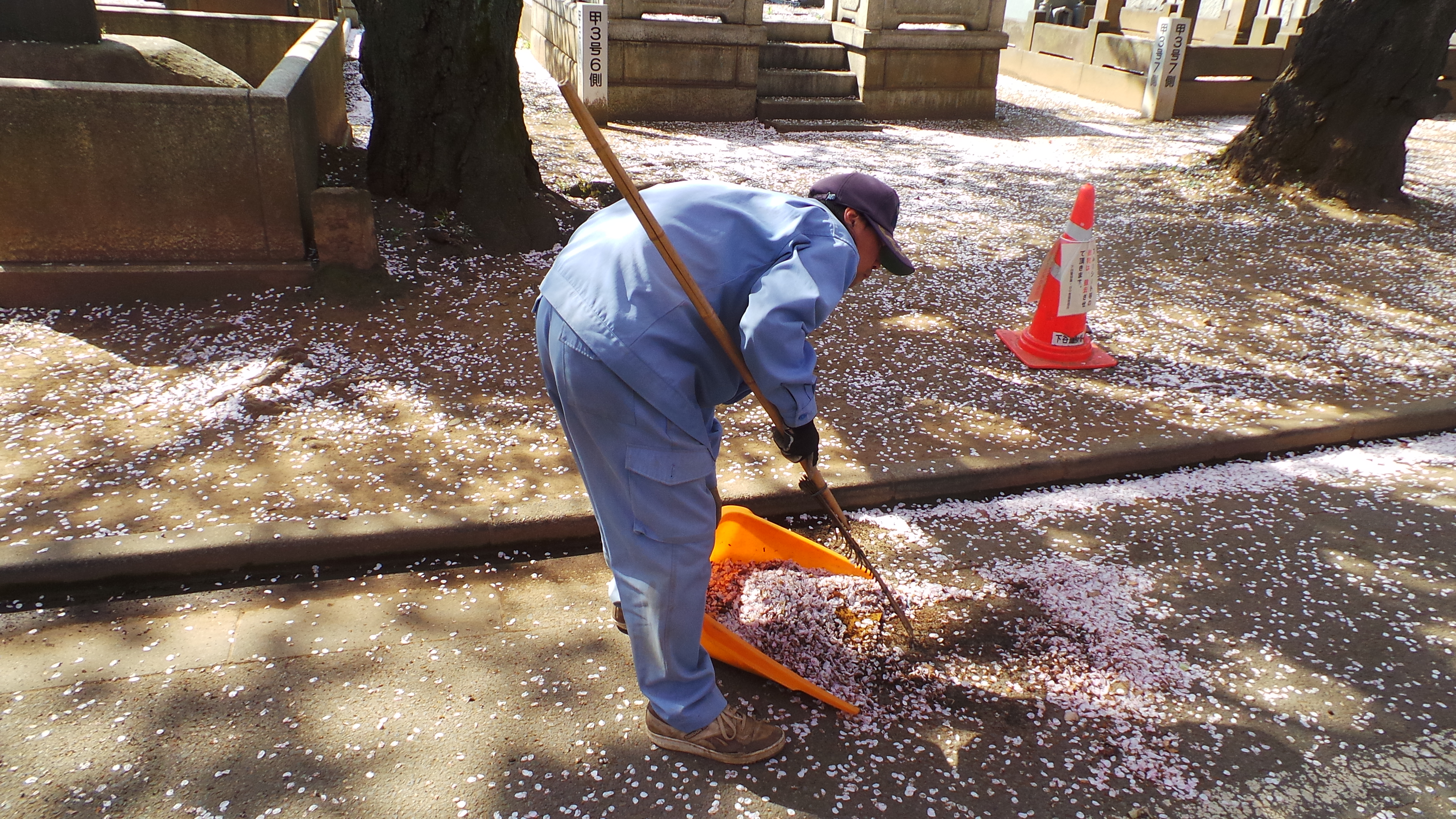
With death surrounding us, it is a pleasure to encounter something that brings a wry smile to my face. A man quietly sweeps up the fallen, dead petals of cherry blossom flowers that litter the floor. I watch eagerly as he sweeps. The area he cleans is instantly covered with petals within a minute of him finishing, and I fear for him; his job might be unavailing and endless.

foreversweeping

We eventually return to our bicycles, relieved to find them unharmed. However, a man looks confused as we stroll into the compound, unlock our bikes, and race toward the exit. Speaking in Japanese to one of my friends, he seems suspicious about our actions. “Next time, you should kindly ask for permission first,” is all he says. Fortunately, he doesn’t impose any penalties or cause any problems. As we cycle away from the cemetery towards Asakusa, it appears I had nothing to worry about, except perhaps for the sudden sharp pain that starts to shoot through my tongue.

A Wild Frog Chase

My morning starts with an unexpected knock at my bedroom door. Upon opening it, I find one of the Japanese men who live in my house standing there with a white carrier bag full of bread. Normally, I would find this unusual – a man at my door, giving me bread at 10 a.m. when I should be sound asleep. However, nothing is usual in my apartment. This same man, two weeks ago, gave me a box of laundry powder for no particular reason. Moreover, he believes I am fluent in Japanese. Not once has he engaged in a conversation with me in English. I simply nod, mutter some of my limited Japanese in his direction, and accept the loaf of bread.

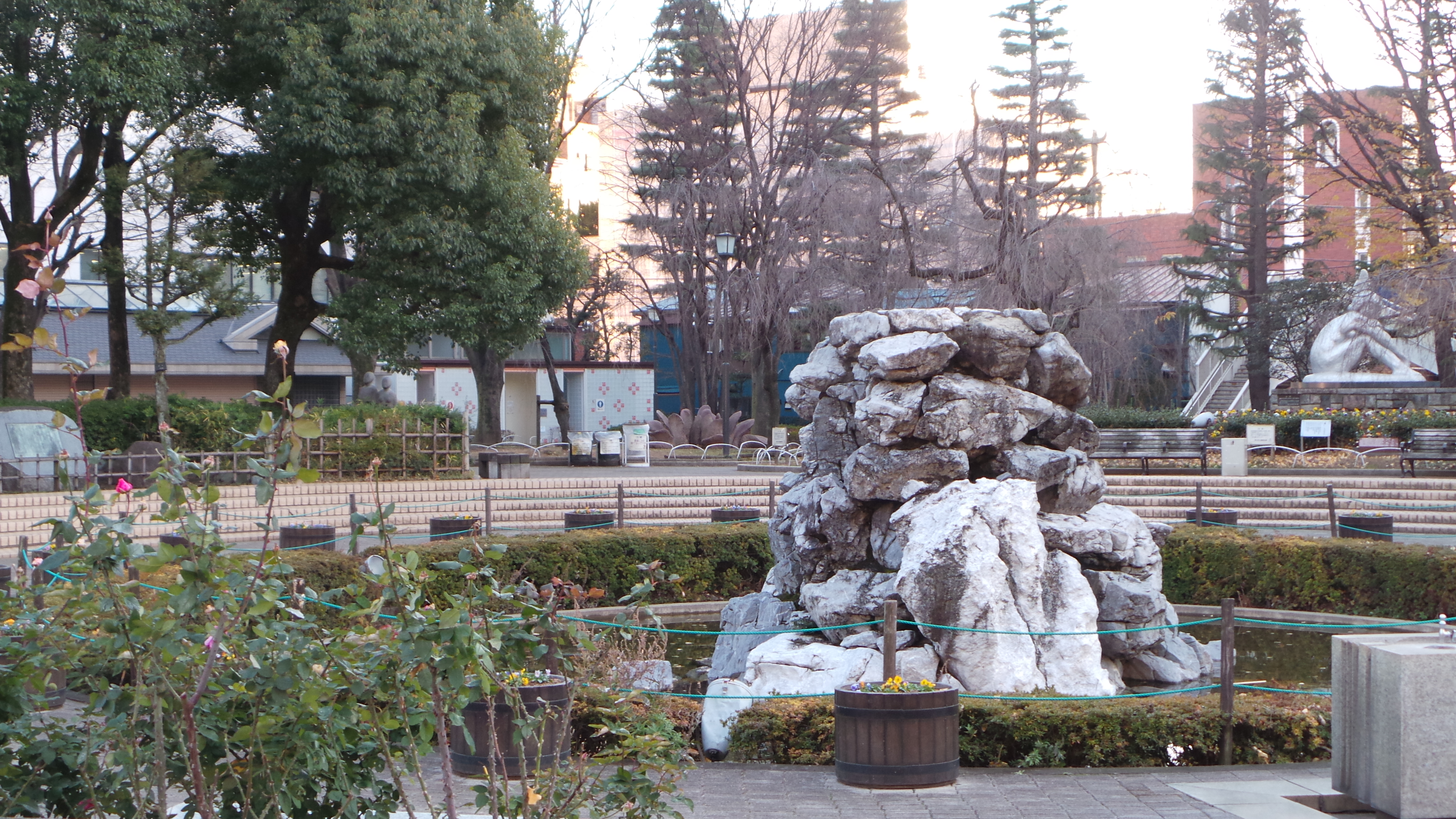
With the thought of the donated bread weighing on my mind, I decide to hop on my bicycle and head to the nearby Arakawa Park, a place I haven’t visited before.

Arakawapark

This park seems to have somehow partially escaped the shedding of its leaves. On one side, it is skeletally bare; on the other side, it flourishes with nature. Laundry powder and bread. It is no secret that since being in Japan, I have lost an extreme amount of weight. Week by week, I find myself becoming skinnier, although previously, I didn’t think such a possibility could even exist. Perhaps that offers an explanation for the bread. However, my clothes are in no way dirty and in need of additional laundry powder.

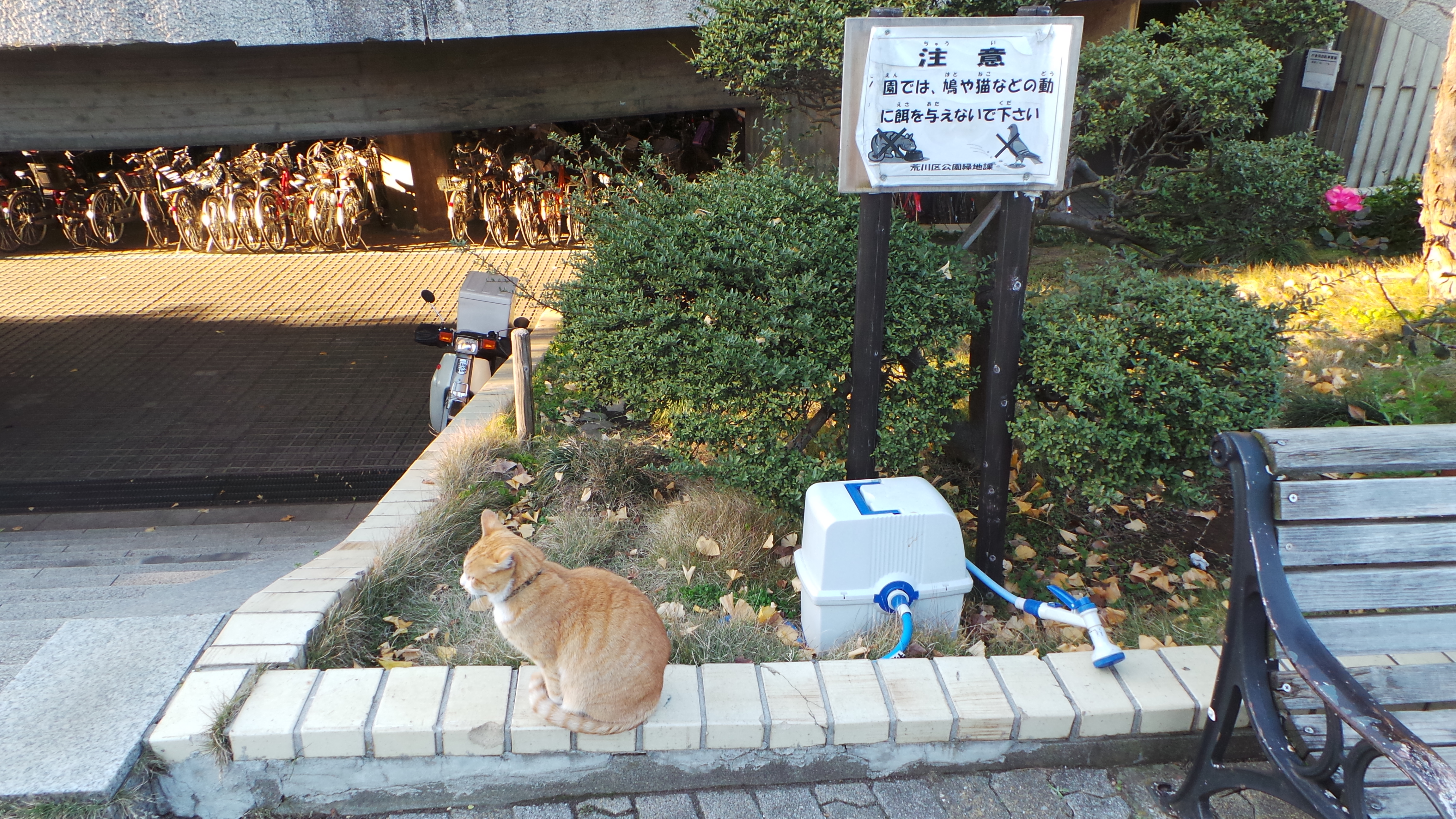
I park my bicycle and take a seat on a bench to read my book: Murakami’s ‘Super-Frog Saves Tokyo.’ After consuming the book from start to finish, I take a little wander around the park. I come across a sign that says, ‘Do not feed the cats or pigeons.’ Oddly enough, I’ve seen multiple signs about feeding pigeons, often adorned with amusing text in speech bubbles, such as, ‘Don’t feed me; I can get my own foods.’ However, this is the first time I’ve seen a sign specifically addressing not feeding felines. With perfect timing, a cat appears from nowhere and takes a seat directly in front of the sign.

dontfeedthecat

The ginger cat decides to follow me around the park, meowing at me for food. Cats of this colour seem to have a habit of trailing behind me. I wander amongst the threadbare trees and reach a stone gazebo. Beneath the shelter, the homeless roam – about ten in total, walking around seemingly without purpose, wearing threadbare clothing to match the trees. They resemble characters in the starting area of an online role-playing game: lost, confused, and not knowing where they’re supposed to go. It strikes me that these people, much like the poor cat, actually don’t have anywhere to go.

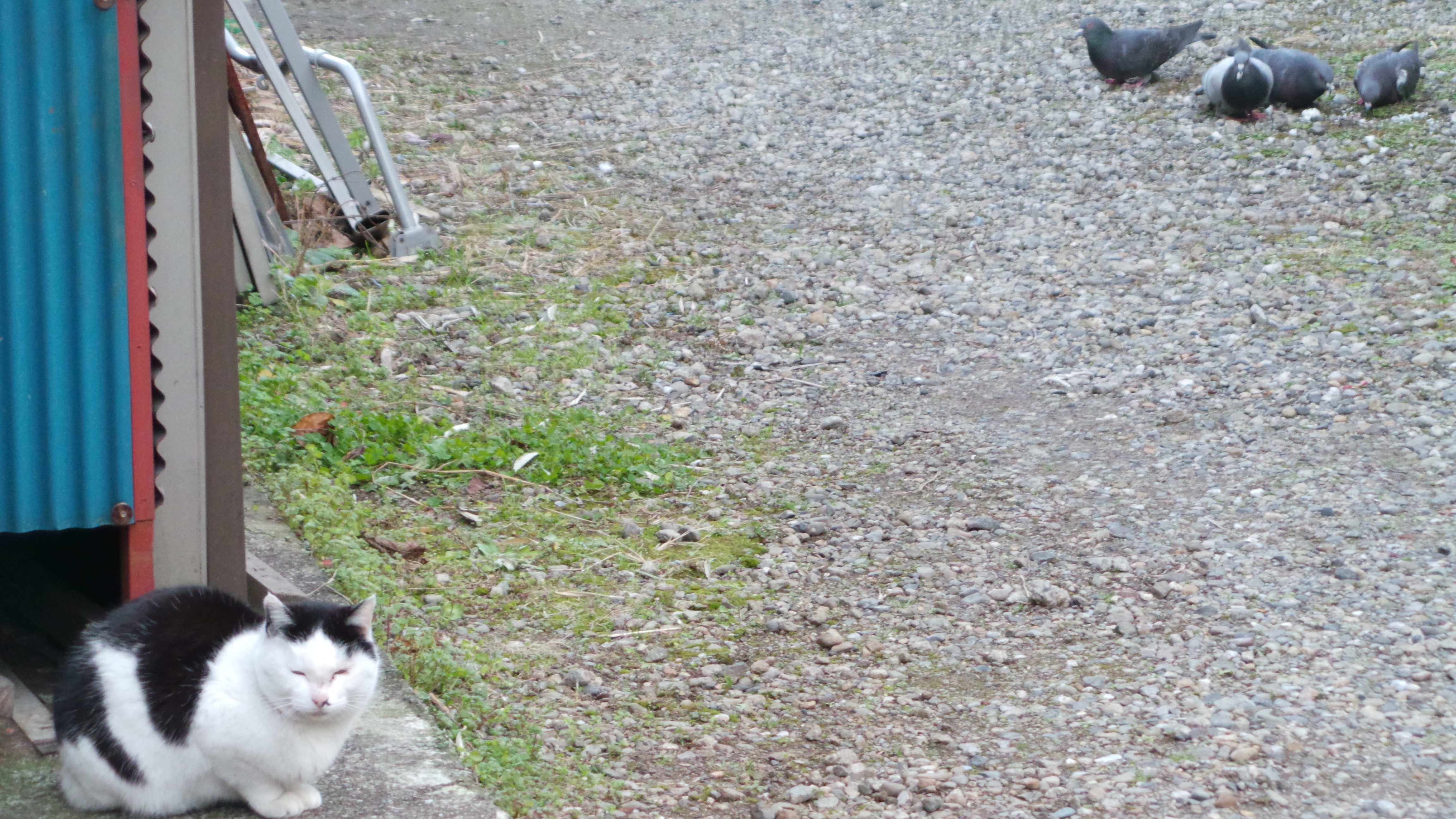
I leave the park and stop off at a nearby shrine, only to be chased away by two massive guard dogs on leashes. Clearly, this shrine doesn’t welcome tourists. A little further up the road, I realise that as this day becomes more about animals, a better choice of reading material today would have been Agatha Christie’s ‘Cat Among the Pigeons’ because, for a second time in an hour, that’s exactly what I see.

catsandpigeons

Leaving the stray cats behind, I cycle toward Nippori. One of my favourite things to do to keep myself occupied in Tokyo is cycling on warm days and exploring new areas. Without any real destination, I often pedal along, discovering random things that interest me. Today, the low winter sun provides the heat, and the opportunity to explore is seized.

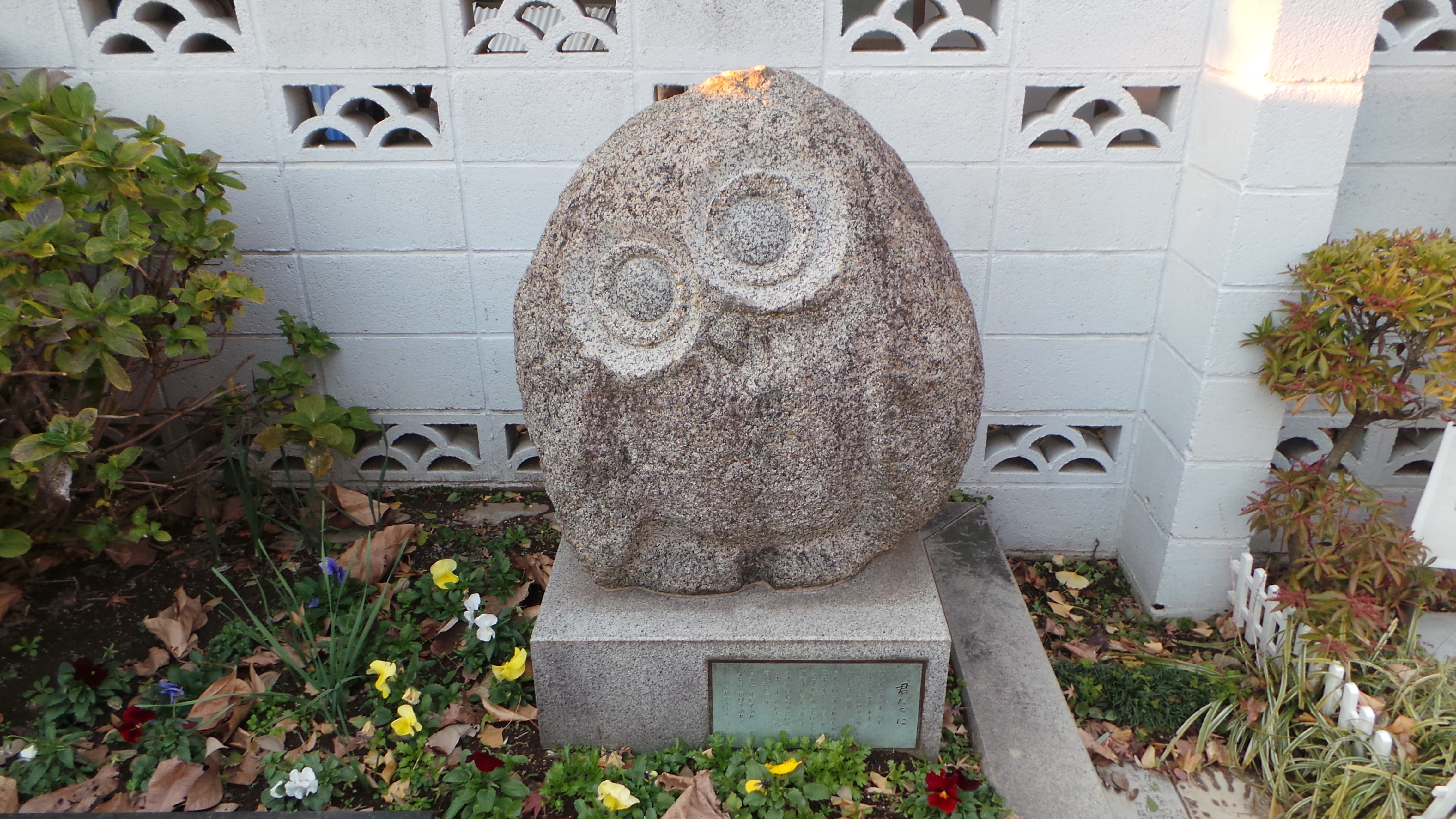
I cycle through Fabric Town, passing a couple of interesting shops along the way. Highlights include a leather shop called ‘Touch of Fleather,’ a shoe store named ‘And Shoes,’ and a textile shop simply called ‘Tomato.’ After arriving at Nippori Station, I carry my bicycle up some steps and over the tracks. On the other side of the tracks, I am greeted by another bird in the form of a giant stone owl.

owlmonument

The owl describes itself as a ‘Memorial Monument for Takamura Kotaro,’ a famous Japanese poet and sculptor. Why they chose to honour his life with a statue of an owl is beyond me, but it looks nice, so I thought I would include it. The owl sits on Suwadai Street, a peculiar street that is at an elevation higher than the skyscrapers beyond. Additionally, the street boasts fifteen different temples and shrines.

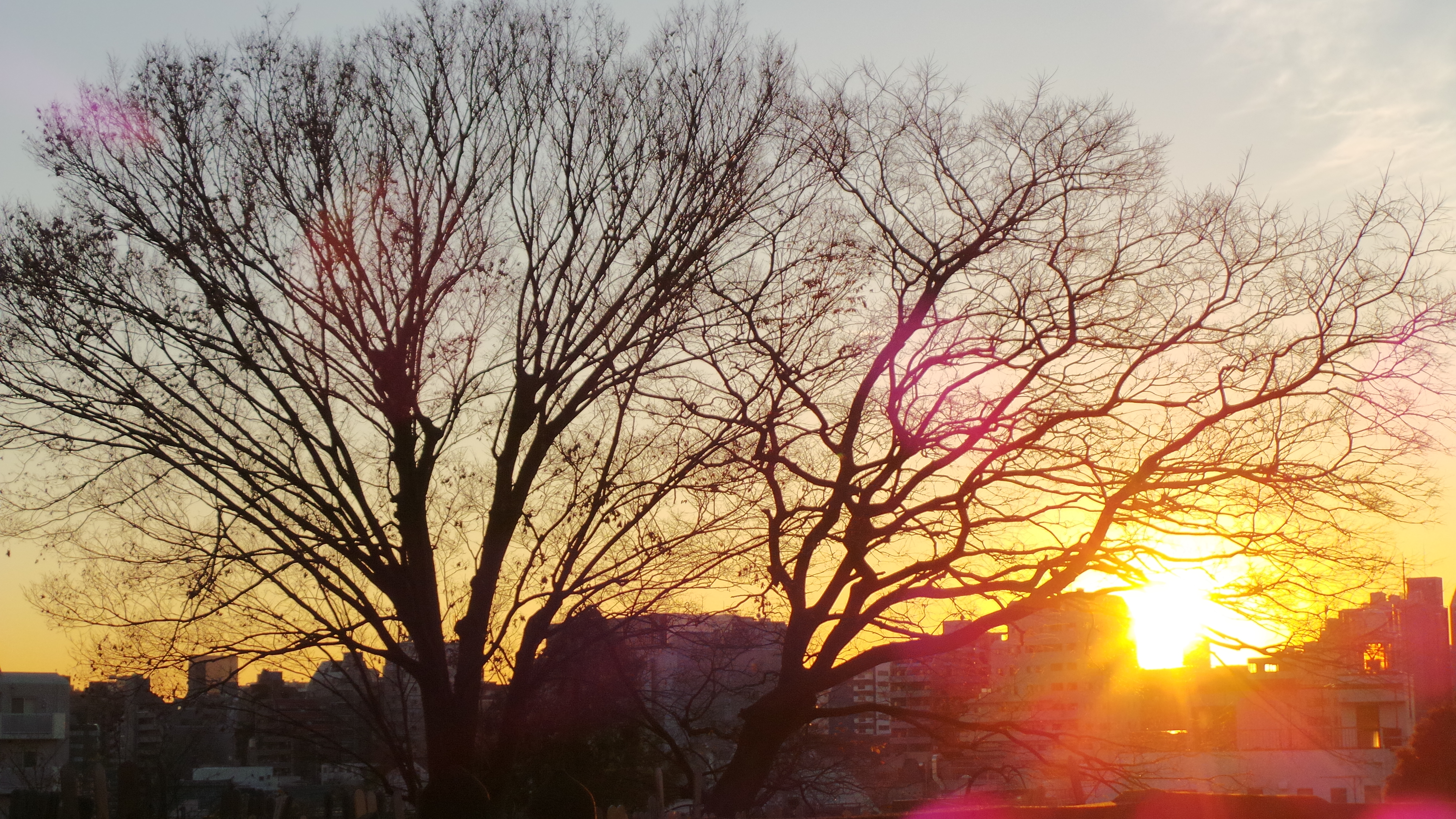
I check the GPS on my camera to make sure that I’m still in Tokyo. Up here, even though I am just twenty minutes from my house, it feels like I am in the middle of the countryside. The nature in this area is simply stunning. I see a few signs with directions to a viewing point. On a clear day, I can witness the spectacle of a Mount Fuji sunset, where the sun and the mountain share the horizon. Unfortunately, I can’t see Mount Fuji — the story of my life. Nevertheless, I do get to witness the setting sun over a distant Tokyo skyline.

Nipporisunset

I cycle away from the temples, shrines, and stunning views, heading into Yanaka. The area is still uphill and features many old houses surrounded by leafless trees. I end up at a small market along some narrow streets: Yanaka Ginza Street. Conveniently downhill, the opportunity to cruise along, engaging in window shopping, controlling the flow of bicycle wheels with intermittent braking, is an enjoyment in itself. Navigating between the crowds of people, I narrowly miss shoppers who are presumably there to buy things they don’t need to impress people they don’t care about. As I try to remember a quote from Palahniuk’s ‘Fight Club,’ I get distracted and almost crash into a woman carrying a baby. Naturally, the baby starts screaming in fits of hysteria, so naturally, I cycle away as fast as I can.

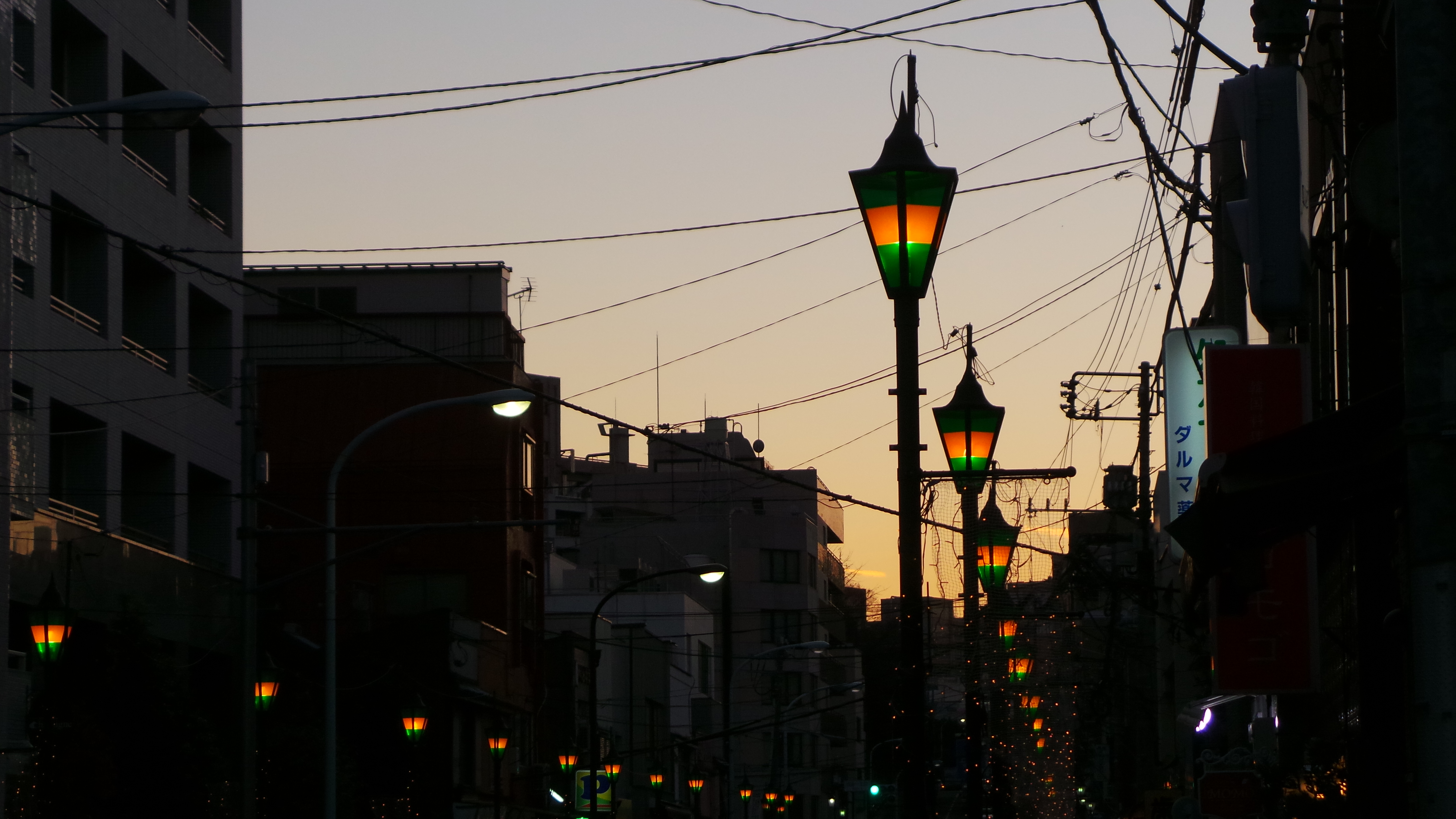
I continue cycling until I arrive at another new place, Nezu. The streets here are adorned with beautifully crafted old lampposts and festive Christmas lanterns.

Nezu

Apart from a full-size train carriage parked randomly on the footpath, there isn’t much else to see in Nezu, so I head back toward familiarity. Outside Ueno Park, I study the map, desperately looking for something of interest. Four museums, but all presumably closed today; that’s how these things usually go. Then, something on the sign catches my eye. Perhaps it’s because I read about a character called ‘Frog’ today, or maybe some other intuition takes over, but the moment I spot a tiny dot on the huge map of Ueno Park below a caption saying ‘Fountain of Frog,’ I know that this will be my final destination today.

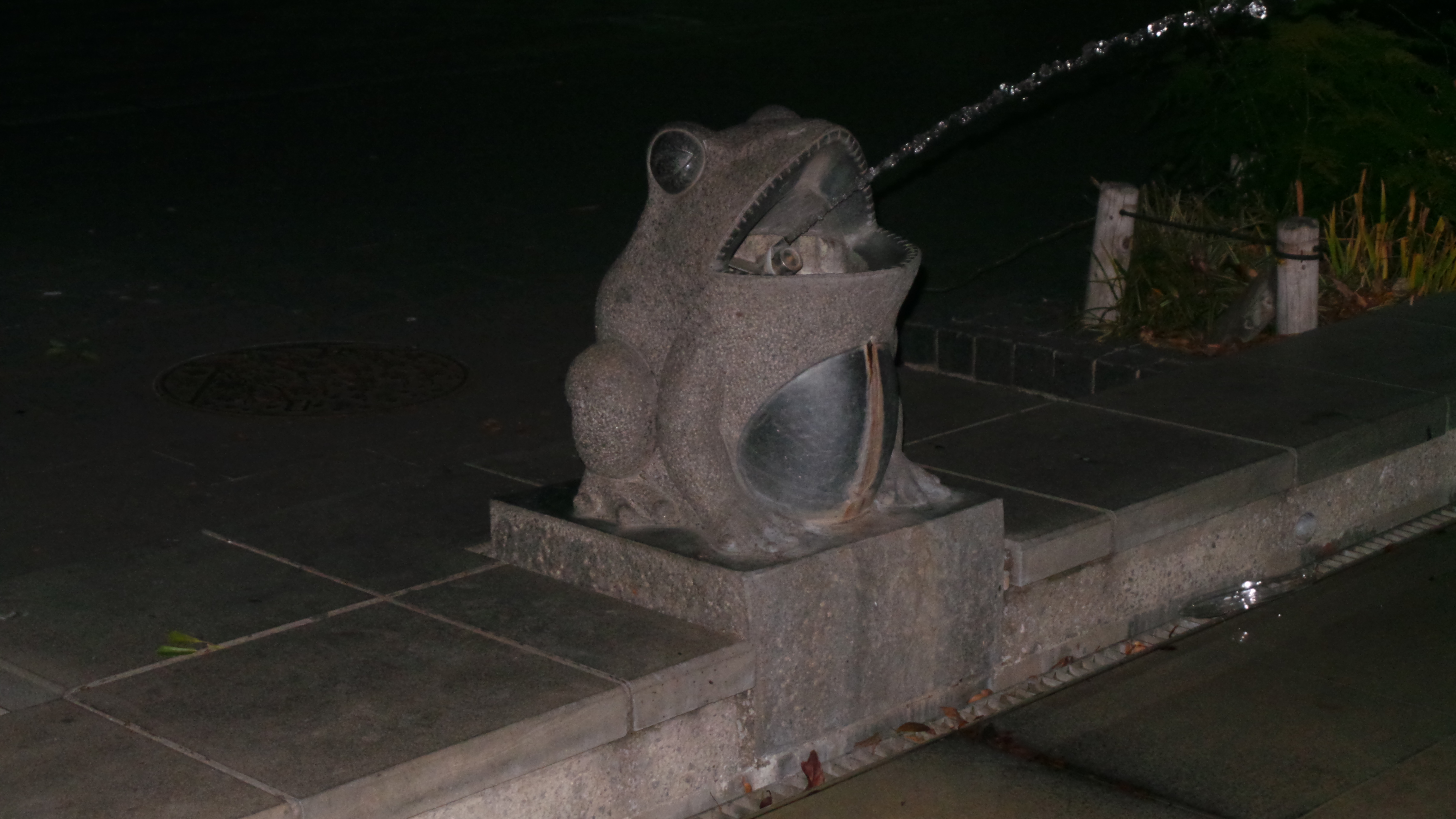
I search the park, passing dying crops and concrete views. After thirty minutes, the sun has completely set, and the weather has turned cold. Fierce winds chill the air but aren’t strong enough to dissuade my search. I cycle around the park, and each time I spot a map, I stop to double-check the location of the fountain. I often find that the fountain has changed its location from one map to the next, and on other maps, it has disappeared completely. Not one to give up on a personal challenge, I persist in my search for the elusive Fountain of Frog. Eventually, after forty-five minutes of cycling around Ueno Park, I find what I’ve been looking for.

frog

As it turns out, the Fountain of Frog is exactly what it sounds like: a small statue of a frog spitting water into an even smaller fountain. I head home, my mind filled with a sense of disenchantment. It’s a rather disappointing end to the day, but at least I have bread.