Where I End And You Begin

I decide to do some sightseeing for the final time in a while. After taking three different trains, I arrive at Mitsumineguchi Station, the last stop. It’s almost three hours from Tokyo, and at times I wonder why I have made this journey into the middle of nowhere. Stepping off the empty train, I find the station is completely unmanned, so I place my ticket into a wooden box. I notice that the ticket machine doesn’t appear to be working either, so there is no way for me to purchase a ticket for the way back. I wonder if that’s to stop anyone else from leaving.

Stepping out into the cold, the fog casts a haunting shadow over the hills and village below, a thick, dense mist that seems to swallow everything in its path. The kind of ghostly white fog you would expect to find in a horror movie; a sign of things to come. As I wander across a bridge, I stop for a moment to take in the breathtaking yet unsettling scenery.
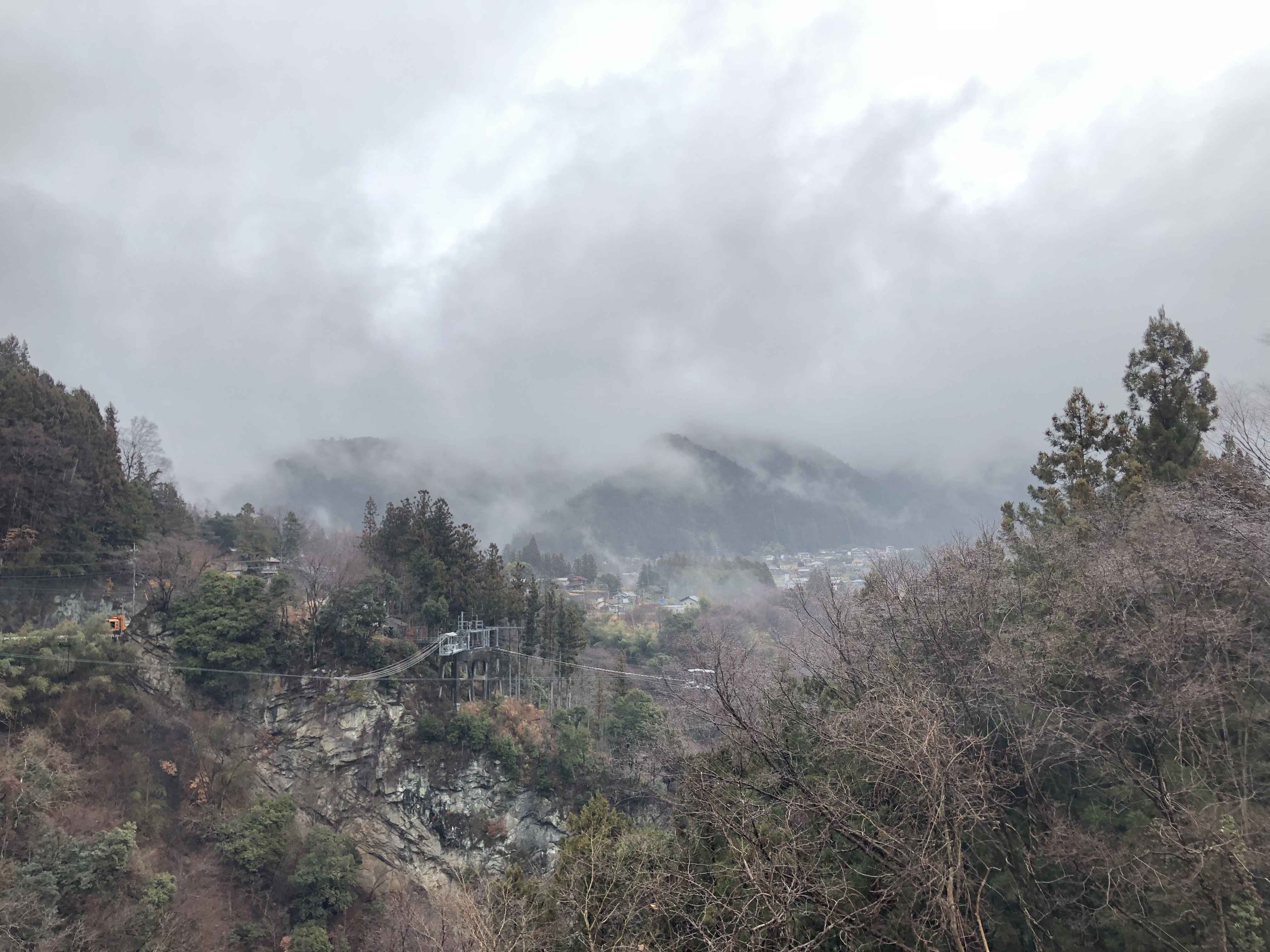
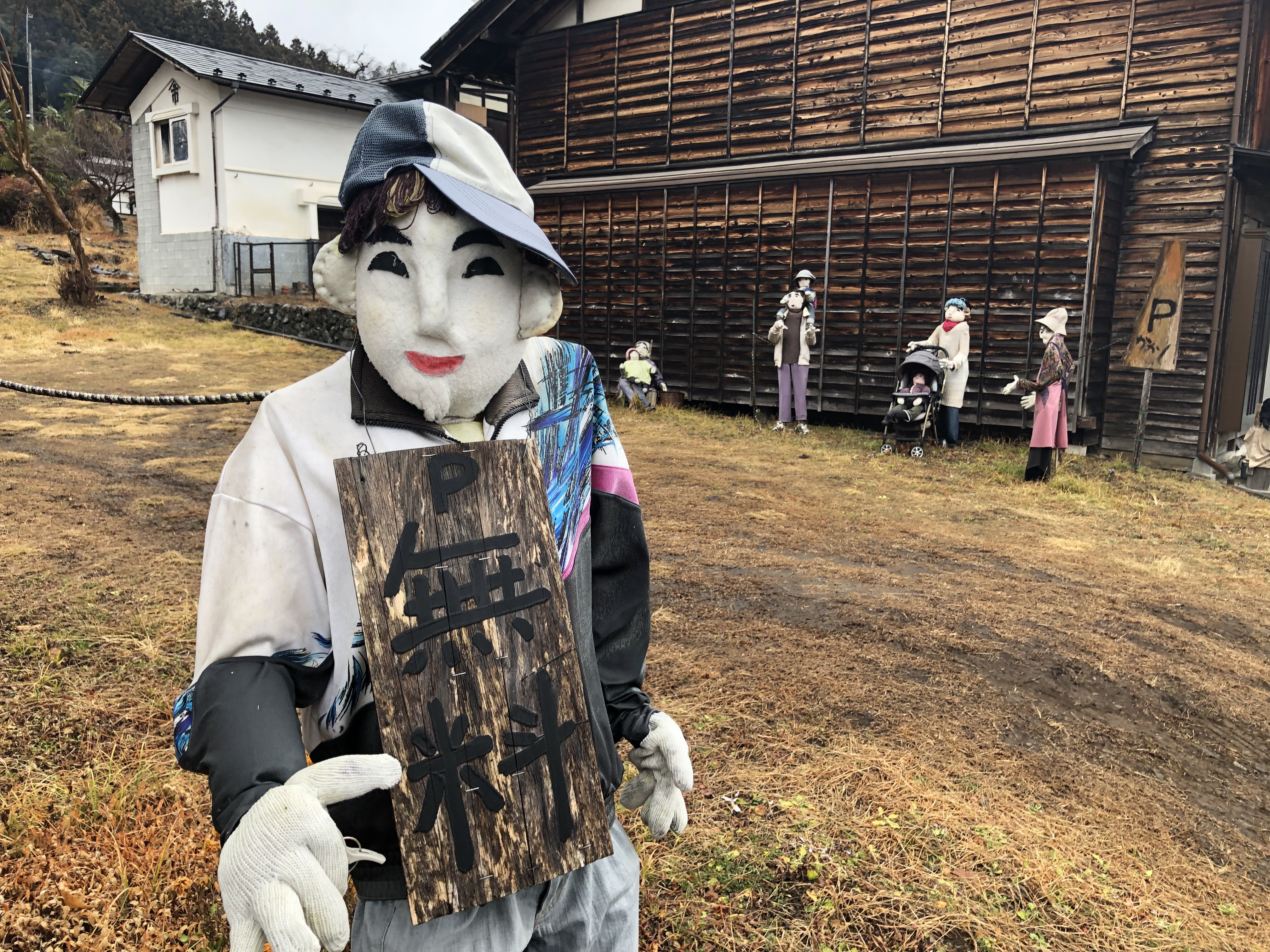
As I continue my stroll from the bridge, I am enveloped by an eerie silence. The only thing that breaks the stillness is the soft whisper of the wind blowing through the fields. A village stretches out before me, a ghost town. Scarecrows line the streets, their lifeless eyes following my every move. They stand outside almost every house, yet the village is deserted, there’s not a soul in sight.

I feel a shiver run down my spine as I realise that I haven’t seen a single person since five stops ago on the train. I can’t shake off the feeling that I am being watched, that these scarecrows are somehow alive. I wonder what kind of village I have stumbled upon. As I wander deeper into the village, I eventually find a sign with a scarecrow standing proudly beside it, ‘Niegawajuku.’
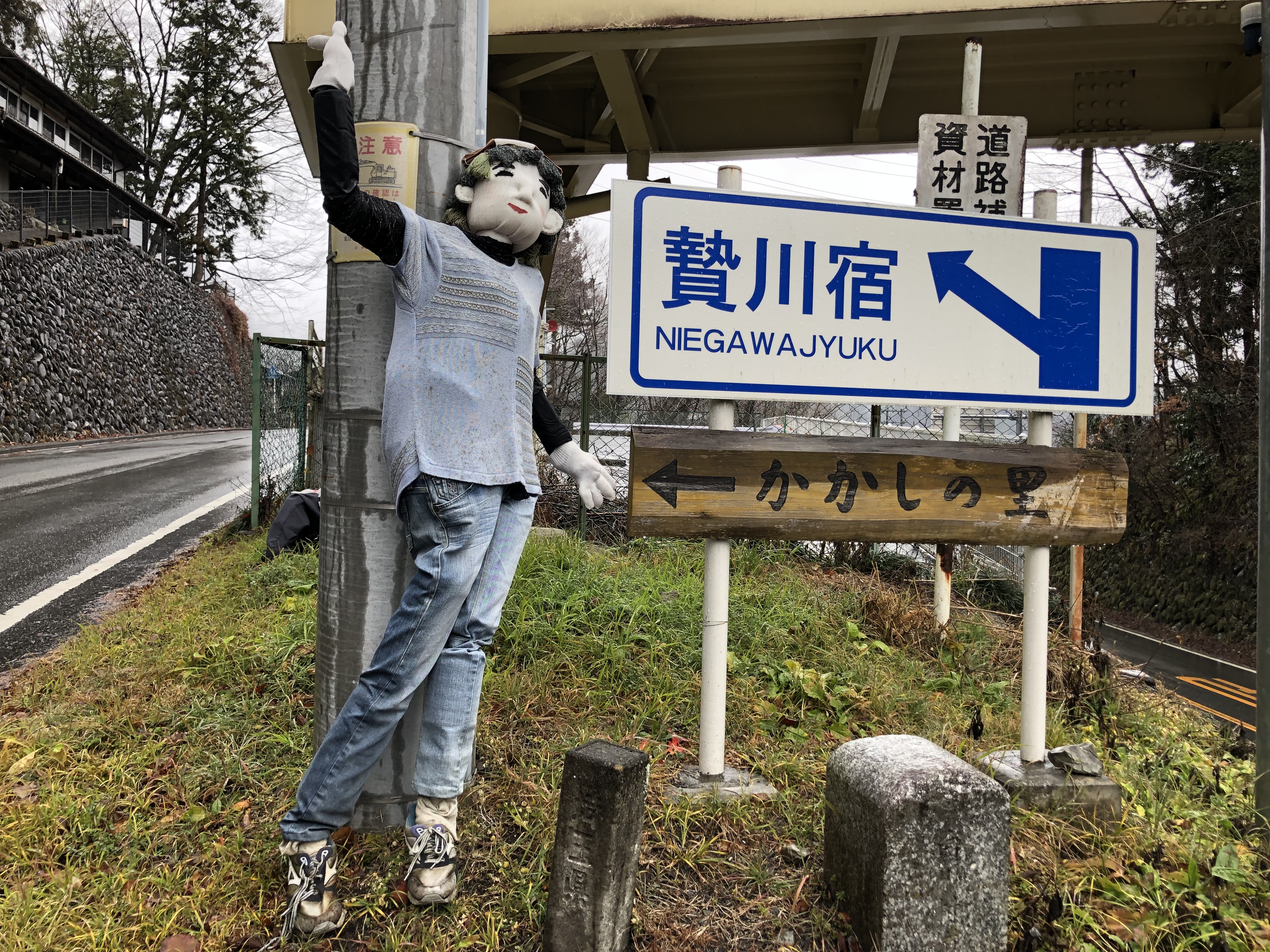
Scarecrow villages are rural communities in Japan that create mannequins in the likeness of their residents as a form of folk art. These scarecrows are often dressed in traditional clothing and placed throughout the village. Specifically, the population of Niegawajuku Scarecrow Village has been decreasing over the years, as many residents have moved to Tokyo and other urban areas in search of better job opportunities and a higher standard of living.

To address this problem, a group of local farmers came up with the idea of creating scarecrows in the likeness of the villagers who had left, in order to remember and honour them, and to attract tourists like me to the village. Niegawajuku Scarecrow Village, once a lively and bustling community, now stands like a twisted fairy tale, where the villagers have been replaced by their eerie replicas. The scarecrows, with their lifeless eyes and frozen grins, seem like twisted versions of the villagers they represent.
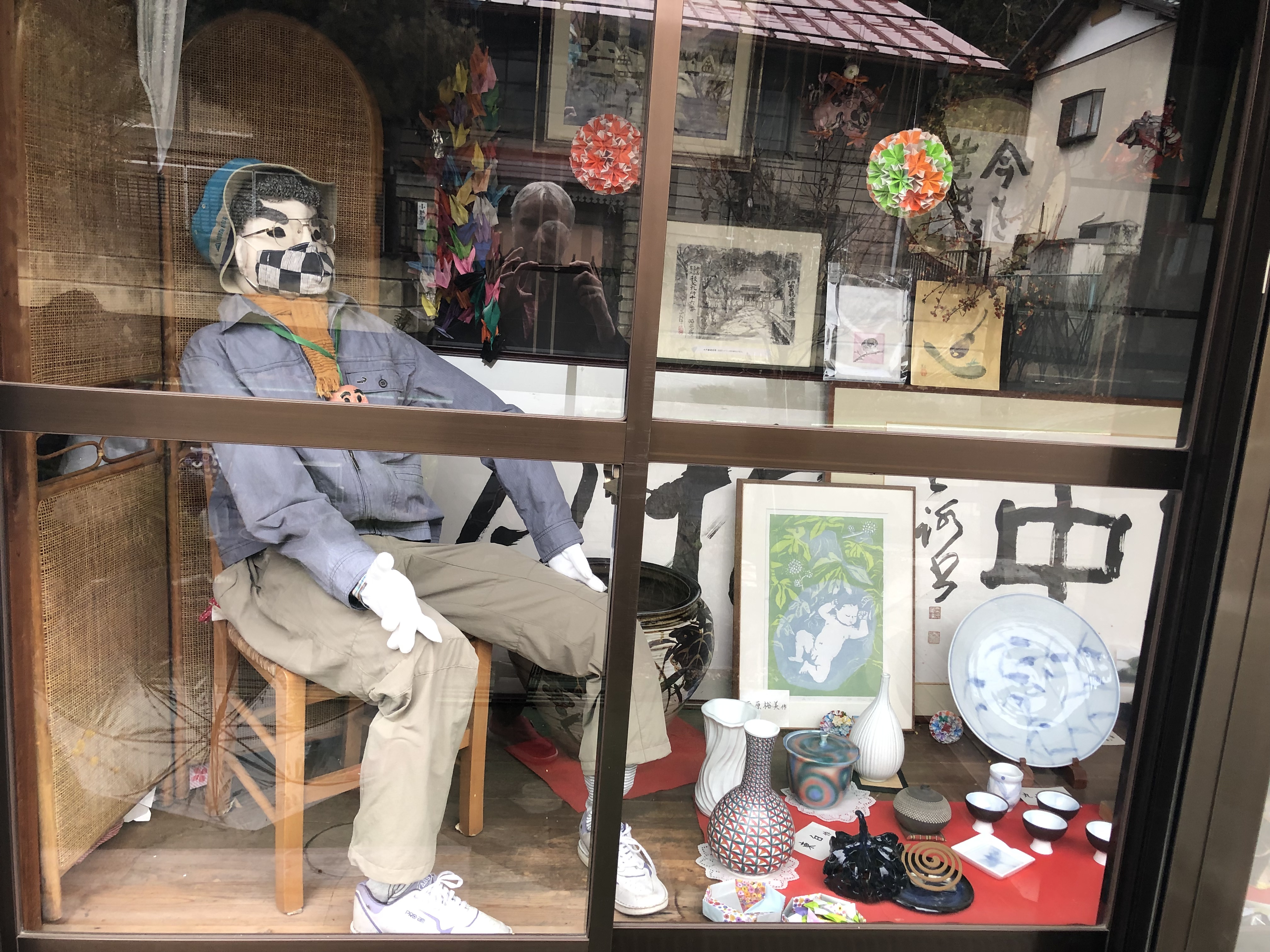
Once teeming with the laughter of children and the chatter of adults, the village now stands abandoned. The only sounds are the soft rustling of leaves and the creaking of the scarecrows. The place feels like a forgotten graveyard, lost to the passage of time. The village is a mere relic of a bygone era, and the scarecrows, with their blank, lifeless eyes, serve only to emphasise the emptiness of this place.

I inspect the scarecrows, their faces weathered and their garments tattered. At times, they are grouped together, yet they remain so alone, like guardians of a lost world, preserving the memories of the village and its people, frozen in time. As I continue to wander through the streets of Niegawajuku, I feel as though I am traversing a dreamlike realm. The village is a labyrinth of memories, where each scarecrow holds a piece of the past, and each step I take draws me deeper into the mystery.
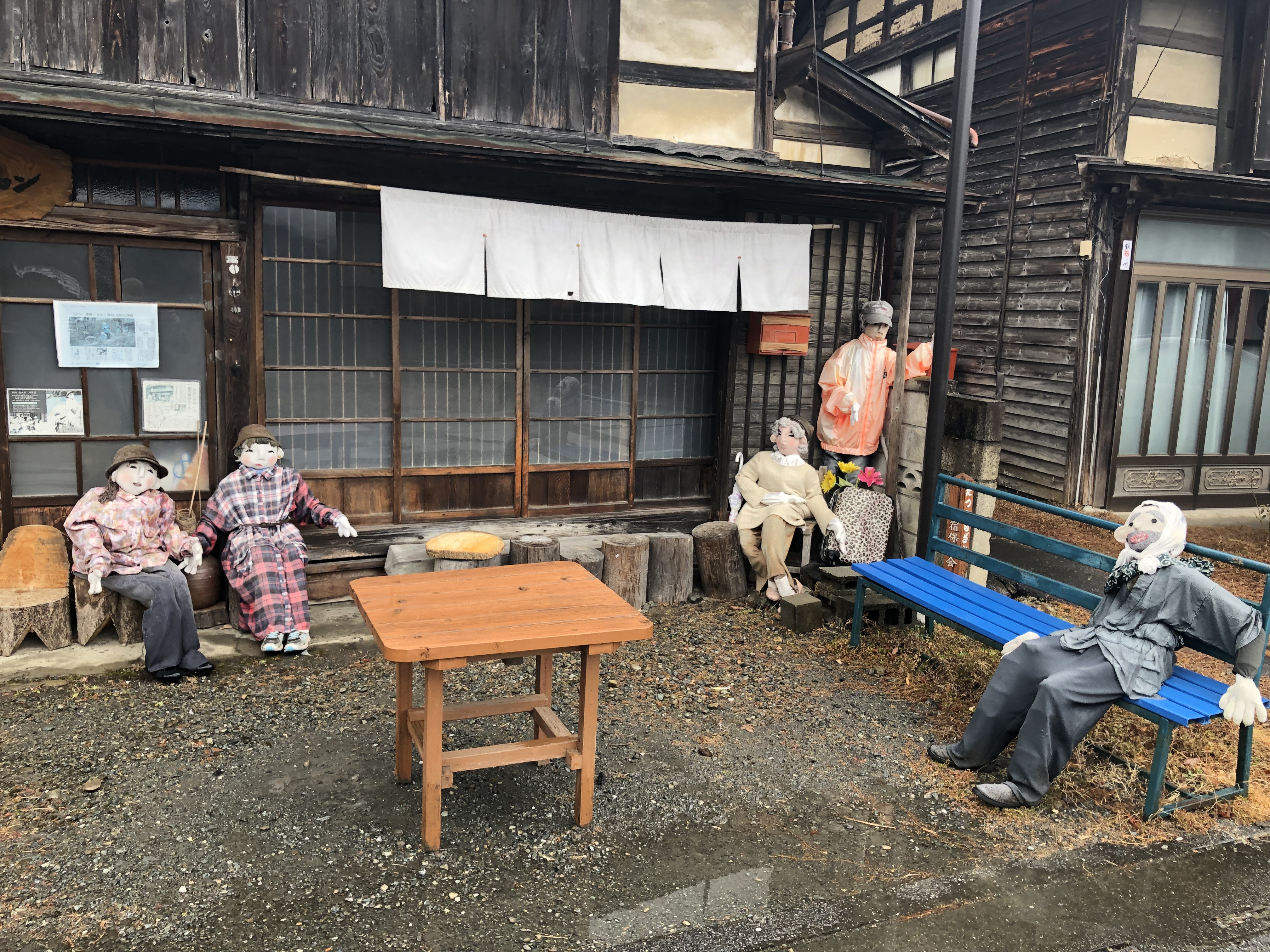
The only thing left here is the echo of bittersweet memories, of what once was and what will never be again. Time passes, and the sun begins to sink behind the skyline, painting the sky in hues of orange, pink, and purple, casting an eerie glow over the village. In the dying light, the scarecrows seem to come alive, their shadows stretching out, reaching toward me.

I leave the village with a sense of longing and loss, the memories of Niegawajuku etched in my mind like a faded photograph.
As I board the train, I ponder whether my transient form will one day be forever immortalised as a scarecrow, or fade into the annals of time like the villagers before me.

Befall Upon The Watchtower

For whatever reason, someone has suggested to me that I check out the area where the Arakawa River and the Sumida River flow into one. As I head out into what feels like a spring afternoon, I realise that my destination today might offer little excitement to anyone, including myself. Somehow, I feel drawn in the direction of Arakawa, the shackles of free will severed from my legs. Part of me feels like there is a demon possessing my very soul, controlling my destiny as I cycle at rapid speeds in the direction of Arakawa.

I see the remnants of a temple or shrine, but it looks as though perhaps it is trapped within the confines of an industrial site. Not letting that stop me for one moment, I park my bicycle and wander in. Seconds later, I am cornered by a security guard. He shouts angrily in Japanese as he waves his hand in the direction of the street. A strong urge to not give up consumes me, and I quickly find myself on the other side of the complex.

sewertemple[1]

It is a strange sight. I am standing along the Sumida River, and there is nothing but tall yellow grass stretching off in every direction. No cars pass along the road in front of the shrine. No people are walking. It is silent, yet only ten minutes away are the tall residential buildings that make up my neighbourhood. Looming over the Shinto shrine are three huge green balls, presumably part of a sewerage station. Perhaps the god of water treatment resides here.

I carry on my journey, not wanting to disturb the sewer gods, and eventually find a map. Sure enough, the place I had just visited is marked as ‘Sewer Station Shirahige Nishi Pump Place.’ However, there is no mention of any temple or shrine on the map. There is, however, one other interesting point of interest labelled as ‘Ballpark for boy Ground of using combinedly.’ I excuse the terrible English and carry on along the river.

Ten minutes later, my fanciful difficulty fades away, offering me some karmic resolve.

thewatchtower[1]

A watchtower. The best thing that has happened to me all week. It somehow feels like I am stumbling through an episode of the television drama ‘Lost’. For no apparent reason, there is a massive wooden watchtower sitting guard at the entrance to one of the bridges that traverses the Sumida River. What is it doing here? Who built it? Is this real? My mind floods with questions and possibilities, as if somehow collecting fragmented pieces of information and forming them into ideas in my head.

I park my bicycle, and ignoring the sign that tells me to stay away, I enter the wooden doorway. My body filled with an emotion that is yet to be given a name. As I climb the watchtower, I begin to wonder if all of this is just some giant metaphor for something else, something that can’t be explained with words. Each step toward the top tests me, as if life is testing me at this very moment. Eventually, as I near the top, the cracks in the surface become wider, making way for sunbeams.

insidetower[1]

The view from the top is of nothing of note. Tokyo Skytree hangs in the distance, slightly masked by concrete surroundings. In the direction I came from, I can see the water treatment plant and the barren riverbed. I stand at the top of the tower in silence for a while, watching the blue hue of the river for a time, before the sound of footsteps echo from below. A man appears. He looks devious, something very odd about him; like he means to cause trouble. He stands atop the watchtower with me, blissfully staring out into a void. The man doesn’t speak to me, and something about him makes me incredibly uneasy. I decide that I can’t stand here any longer, so I head back down the steps to my bicycle below.

I cross the river as fast as I can, somewhat unnerved. On the other side of the river, I take a right, following its path back toward what looks like civilisation. After twenty minutes of cycling, I realise I am slightly at a loss. I don’t really know where I am, and I’m not sure if the river I crossed was the Arakawa River or the Sumida River. Perhaps I have already cycled beyond the confluence.

deserted[1]

I try to check the map on my camera, but nothing appears to work. I stop for a moment, take a deep breath, and take in my surroundings. Desolate. Empty. Nothing. Everything here looks abandoned, and it begins to reflect on me. Right now, even I feel completely abandoned; which is the strangest feeling I have suffered in a while. As I stand here, lost in the middle of something that might or might not be nothingness, a certain fear destroys my usual calm demeanour, and I begin to panic.

Everything will be fine, though. As if saved, I can just make out the silhouette of Tokyo Skytree on the horizon; so I point my bicycle in the direction of the structure. After what seems like an hour of following the river, I reach a bridge and am finally free to cross. This bridge takes me over the Arakawa River, so it appears that I never reached my destination, never found what I sought out to find. Regardless, I am finally back within familiar territory, heading back toward life. I stop to photograph a sign that probably has no relevance here, but perhaps it does. The sign appears to have been written by Yoda from Star Wars.

closedsorryweare[1]

As the day continues to distract me, I inadvertently end up in Akihabara. Tired from three or four hours of intemperate exploration, I decide to leave my bicycle at the train station. Inside, I stand at the platform, waiting for the train to take me back to Minowa. It is here that I see yet another strange vending machine.

The machine offers four shelves of items, two of which are toys for children: two sets from the Nature in Japan series. Small models of various different animals native to the country. It is what is contained within the other two shelves that I find strange. At a bargain price of ¥200 per purchase, I can buy office ladies that sit on the edge of my coffee cup; legs open, underwear exposed.

noupskirting[1]

Akihabara Station famously has signs at each escalator, warning women to watch out for ‘upskirting.’ Apparently, it is a law in Japan that all cameras must make a sound when a photograph is taken. With Akihabara being the home of electronics and comic books, lonely men have often been known to pry on women as they ride the escalator, sneakily taking photographs from below.

This vending machine perhaps tries to solve that problem. These coffee cup women are clearly exposing their undergarments, with no shame. The only shame is possibly when your co-workers see you with a decorated coffee cup featuring this type of imagery. ‘Make your office fun!’ ‘Happiness in your cup!’ are just some of the explanations on offer, scrawled in Japanese across the machine.

There are certain times in my life when my mind is simply not capable of understanding something, and this is certainly one of them.

The Other Side of the Tracks

I say goodbye to Nagoya after spending five days there, realising that I could have used my time better, particularly during three of those days. The travel costs me ¥1950 and takes two hours. During the train ride, I manage to read over half of my new book, ‘South of the Border, West of the Sun.’ Interestingly, it is around the time I change trains at Toyohashi Station that a scene in the book unfolds in Toyohashi itself. I’ve nearly given up trying to attribute too much thought or meaning to these coincidences.

I arrive at Hamamatsu just before two. I would have arrived a bit earlier if two of my trains hadn’t been running late – not very Japanese-like. It’s unexpectedly warm outside. Sitting on a dull, air-conditioned train is quite deceptive, especially after the frankly terrible weather in Nagoya for the last few days. I immediately notice the distinct lack of tall buildings here.

I find my hotel on the map, it is probably a five minute walk. I take an unnecessary shortcut through a small shopping arcade. There are no voodoo dolls hanging here, but there might as well be. Every shop is closed or abandoned, and there’s no music playing. “Welcome to Hamamatsu,” I mutter to myself.

hama2

I notice that a significant number of signs here are in Portuguese. “Você está aqui,” says the map. Perhaps Hamamatsu has a large Portuguese-speaking population. My suspicions are somewhat confirmed as I pass a Brazilian imported goods store and a small boarded-up Portuguese restaurant.

Opposite the front door of my hotel is a construction site. However, it seems to be a day off because there are no workmen with flashing red sticks. Inside the hotel lobby, there’s a cream grand piano. It serves as a nice centrepiece for the room, but it also appears slightly lonely and seldom used.

I can’t check in for another twenty minutes, so I leave my bag and take a quick walk around the block. Behind the hotel, there are some incredibly old-looking Japanese houses. I can’t quite tell if they’re still inhabited or not; they seem to have weathered quite a bit, as if the Big Bad Wolf has paid them a visit.

brokenhomes

On this side of the train tracks, I count two Seven Elevens and one Family Mart. Every now and then, the pavement bears etchings of musical instruments; they look old and worn, as if they were made many years ago.

At 3 p.m., I check in. This is the second hotel in Japan where I’ve stayed without any wireless Internet. I can’t believe it. The building itself resembles more of a block of apartments than a hotel. I decide to rent the hotel’s laptop for both nights at ¥500 per night, which is actually not that bad.

My room provides only the basic amenities, but the hotel does have ¥180 cans of beer on the vending machine floor, although it’s only Kirin Beer. The hotel information seems quite standard, except for one exciting detail: “We offer free curry and rice from 17:00 to 20:00.” There is a neat, hand-drawn ink line through this particular piece of information. Not available today, it seems.

The laptop itself loads sluggishly, which is a common issue I’ve encountered in Japan. It’s so old that it doesn’t recognise my camera, preventing me from uploading any photographs. I search for the nearest Internet cafe and after a considerable effort, it finally locates a Popeye Media Cafe. Perfect.

I head toward the Internet cafe, taking the underpass beneath the train tracks. On the other side, I’m greeted by shrubbery and flowers; it’s like entering a different world.

hama1

The area here is bustling with shops, restaurants, and people—a lively hub of human life. I navigate using a photograph of the map and the GPS on my camera. In Japan, pedestrian crossings typically emit a loud drone or a repetitive beep-beep, beep-beep, or one of two tunes, all permanently etched into my memory. However, not in Hamamatsu. Here, classical music resonates from the loudspeakers. I cross the road to the tune of Chopin’s Nocturne in E-flat Major, Op. 9, No. 2.

After some time, I finally arrive at my destination, thanks to Google. Looking around, I realise I’m in the middle of the woods. Insects buzz loudly and mechanically around me. Surprisingly, there’s not a media cafe in sight.

I walk through the woods for a while and stumble upon a castle. There’s always a castle, it seems.

hamcastle

It’s half past five, yet the castle gate stands wide open, tempting me to wander inside. This is one of the smallest castles I’ve come across—deserted, with only the castle tower and gates standing tall.

Right next door to the castle sits the Hamamatsu Municipal Museum of Art. They’re hosting a special exhibition for the next two weeks: ‘The Genesis of Ultraman 1966-1980.’ How interesting.

To return to the main roads, I need to trek through the Sakusa Woods. Roughly five minutes into the woods, a Suntory Boss vending machine appears, offering either a welcome reward or a disruption to the tranquillity, depending on one’s perspective.

bossofthewoods

After ten more minutes, I might be lost in the woods. Endless loops of footpaths and stone stairways wind back and forth. Occasionally, I catch glimpses of the city through the trees. However, every turn I take towards it seems to carry me further away.

After twenty minutes, I find myself back at Hamamatsu Castle. From there, I retrace my initial steps and eventually discover an exit. It’s no wonder this small castle has survived for so many years. None of the advancing armies could locate it amidst the tangle of woods.

Abandoning my search for the media cafe, I make my way back to the train station. Along the way, I pass by a massive Yamaha store, the Watanabe Music Company, a shop named Viola, and three guitar shops. There’s an unmistakable musical vibe to this city.

At the station, I make my way towards what appears to be the tallest building in Hamamatsu, known as ‘Act City.’ It turns out to be a vast concert hall, but the next performance isn’t until Friday. I ascend the steps to an area named ‘Chopin Hill’.

actcity

Standing proudly atop the steps is a statue of the Polish composer Frédéric Chopin—a 1:1 scale replica of the famous bronze statue crafted by Wacław Szymanowski. Interestingly, the original statue resides in Warsaw, which happens to be Hamamatsu’s sister city.

I stroll to the open terrace and enjoy a splendid view of the train station below. The city appears lively from this side of the tracks, even quite beautiful.theothersideofthestation

I head to Seven Eleven for some food and decide to sit outside the shop for thirty minutes, making use of their free wireless Internet to upload my photographs.

Just after 7 p.m., I leave the land of the living and return to the side of the train station that contains my hotel. The atmosphere is eerily silent. On my way back to the hotel, I encounter only one other person—a young woman who, amidst the desolation, could easily be mistaken for a ghost.

There is one positive thing though, the pavement this side seems to be fairly new, and very flat. The perfect surface for running on, or for running away from ghosts.