The Northern Wind, the Sun and Me

Spring is coming, and the weather has gotten nice and warm. I head over to Asakusa, to my usual haunt for breakfast. As I leave, I hold the door open for five ravenous tourists. It turns out they are the American rock band Incubus, here in Tokyo for their current tour of Asia. With very little interest in Incubus’s music, I pass up on the opportunity to be obsequious and instead take a train over to Shinjuku.

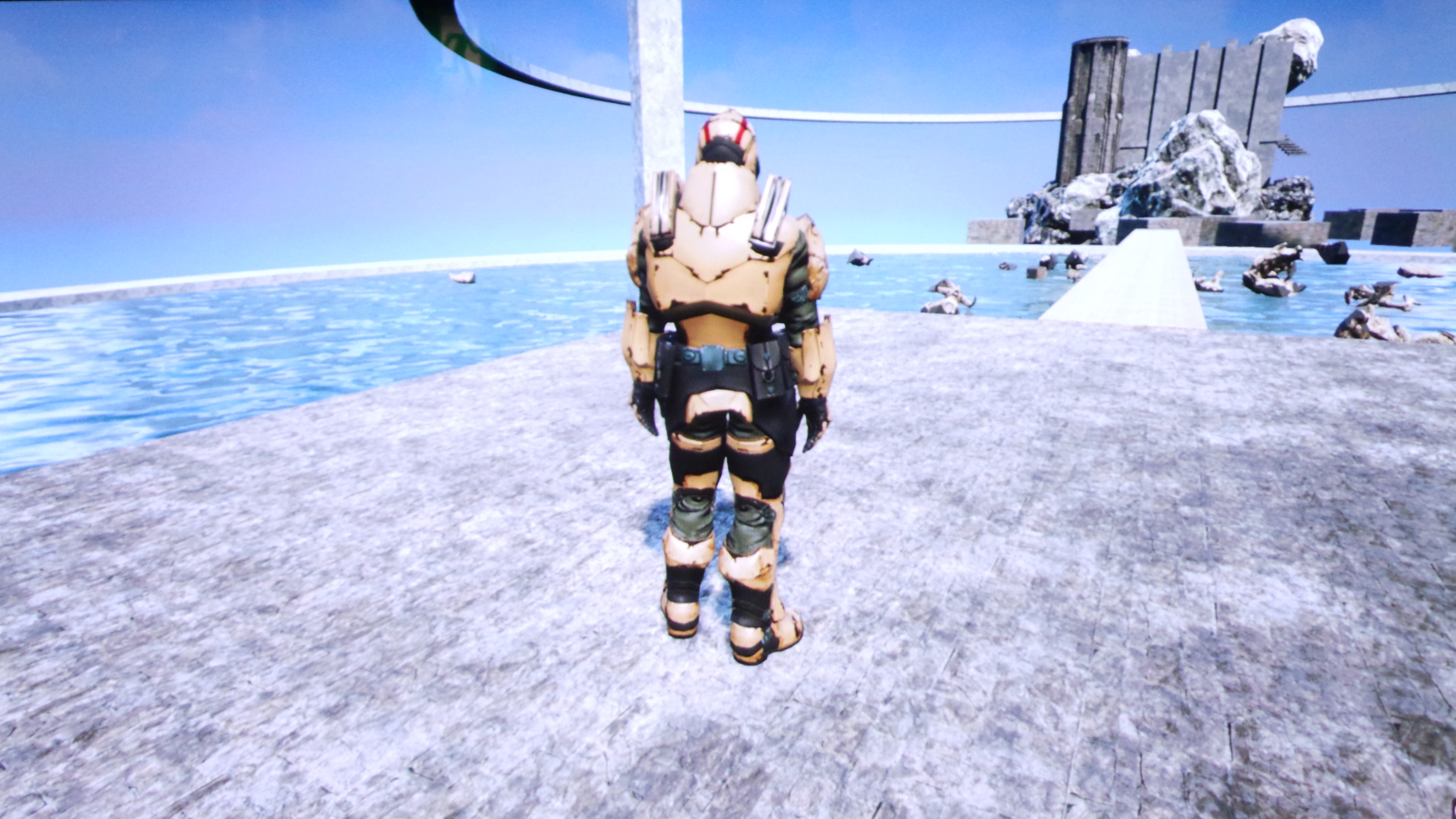
Today, I am visiting Takarazuka University of Art and Design to see an exhibition related to video games. After four years of study, the final projects of each student are showcased inside the university, providing visitors and potential new students with a glimpse of what the campus has to offer. I head straight for the 8th-floor office area and persuade my friend to give me a guided tour. Our first stop: a look at the Unreal Engine 4.
unrealengine

The game here, actually created by one of the teachers, is a simple platformer set on what appears to be a distant planet. The controls offer only movement and jumping, and while the game is somewhat basic, its main purpose is to showcase the graphics and textures that can be created with this engine. I enjoy jumping around for a while, admiring the water and landscape, before accidentally hitting a button on the controller that causes the game to stop working.

Next, we enter a room filled with iPads where we can try out actual games made by the students. Some of these delights include ‘Dancing Brain,’ ‘Fruits Panic!,’ and my favourite title, ‘Fable Sour Face.’ Apparently based on a novel, ‘Fable Sour Face’ was challenging to create as the student had to do it all alone—from scratch to the finished product. This tactical espionage operations adventure looks to me like a Doom/Quake clone. The tagline reads, ‘You get a lot of looks and can you tear it off.’

gamecrashed

I pick up the iPad to play, press the start button, but I am instantly greeted by an error message. For the second time today, I’ve managed to break something.

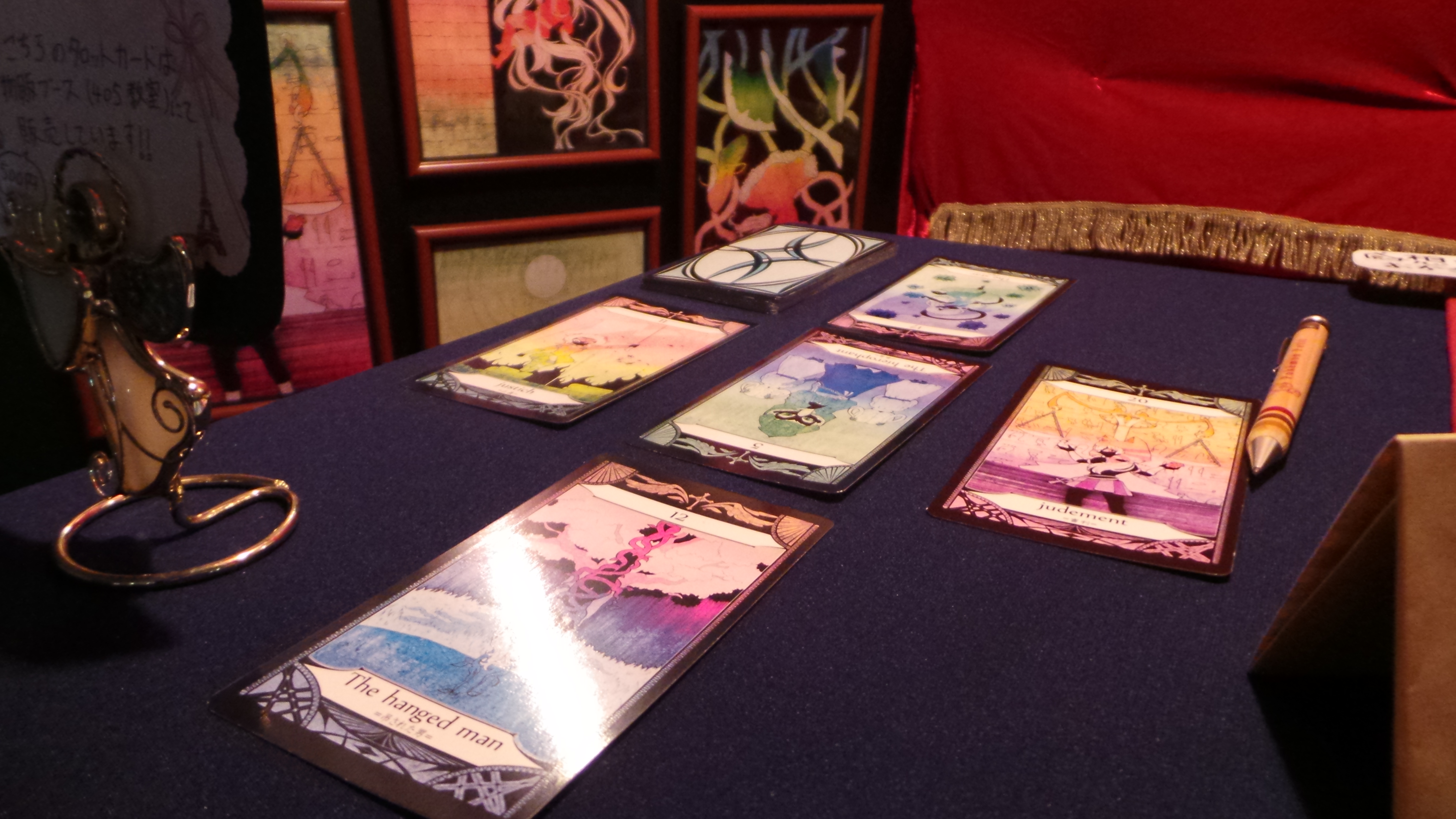
We continue to explore the various games—some very basic, others quite advanced. Interestingly, the video games room also features a collection of beautifully illustrated tarot cards based on German folktales, including the Pied Piper of Hamelin and the story of Rapunzel.
tarot

It makes me wonder, if anyone can simply make a set of tarot cards by themselves, how can they possibly be guided by a spiritual force during tarot readings? I start to think about things too much, pondering what might give the cards their mystical power, their divinatory aspect. Realising that I am being overly sceptical, I decide to instead check out the next room for more video games.

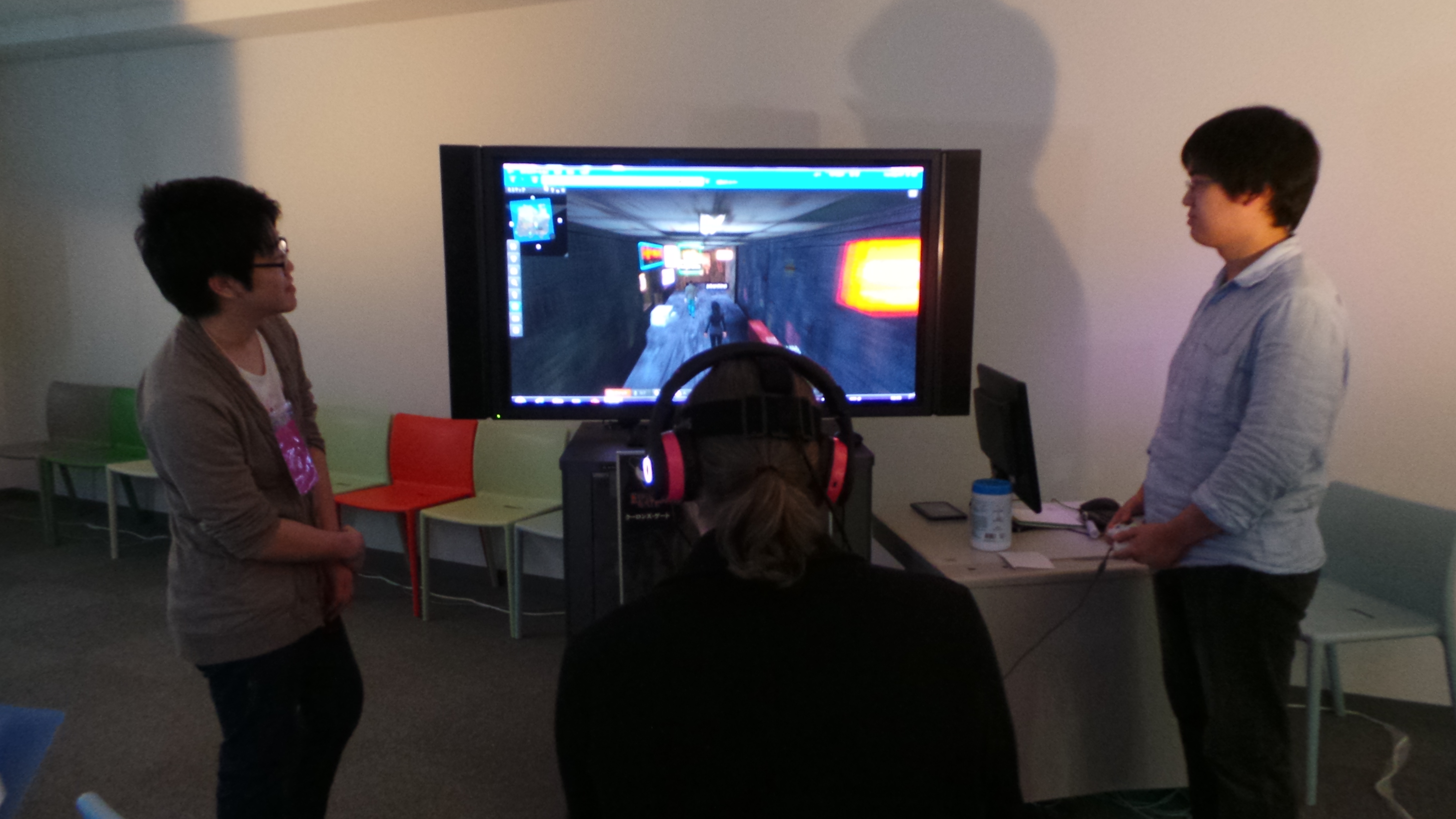
Kowloon’s Gate, a hugely popular adventure game released for the PlayStation in 1997, developed a massive cult following under the banner of the company ‘Zeque.’ Interestingly, one of the designers of the game is now a teacher at this university. He utilises the game to showcase the incredible power of the Oculus Rift.
occuluskowloon

This is my first time trying Oculus, and it’s an absolutely delightful experience. Strangely, when wearing the headset, it truly feels like I am living in another world — in this case, the world of Kowloon, Hong Kong. The Oculus Rift allows me to see everything through the eyes of the protagonist. Massive headphones block out all other sounds, except that of the game, enabling me to become fully immersed. Motion sensors determine where the character is looking. I sit for about five minutes, moving my head around, in awe of the apparent realism I am experiencing. After leaving Kowloon, my head feels a little dizzy, as if I am suffering from serious motion sickness. I bid goodbye to my friend as he returns to work and leave the university.

With a head full of pixels and my thoughts lost to video games, I head over to the only place that makes any sense: Akihabara. I make a stop at Planet Sega, taking the lift to the third floor, where I play some arcade-style video games. After twenty minutes of playing BlazBlue and not doing so well, I need to use the restroom. Above the urinal is a very strange computer screen displaying a different kind of video game.
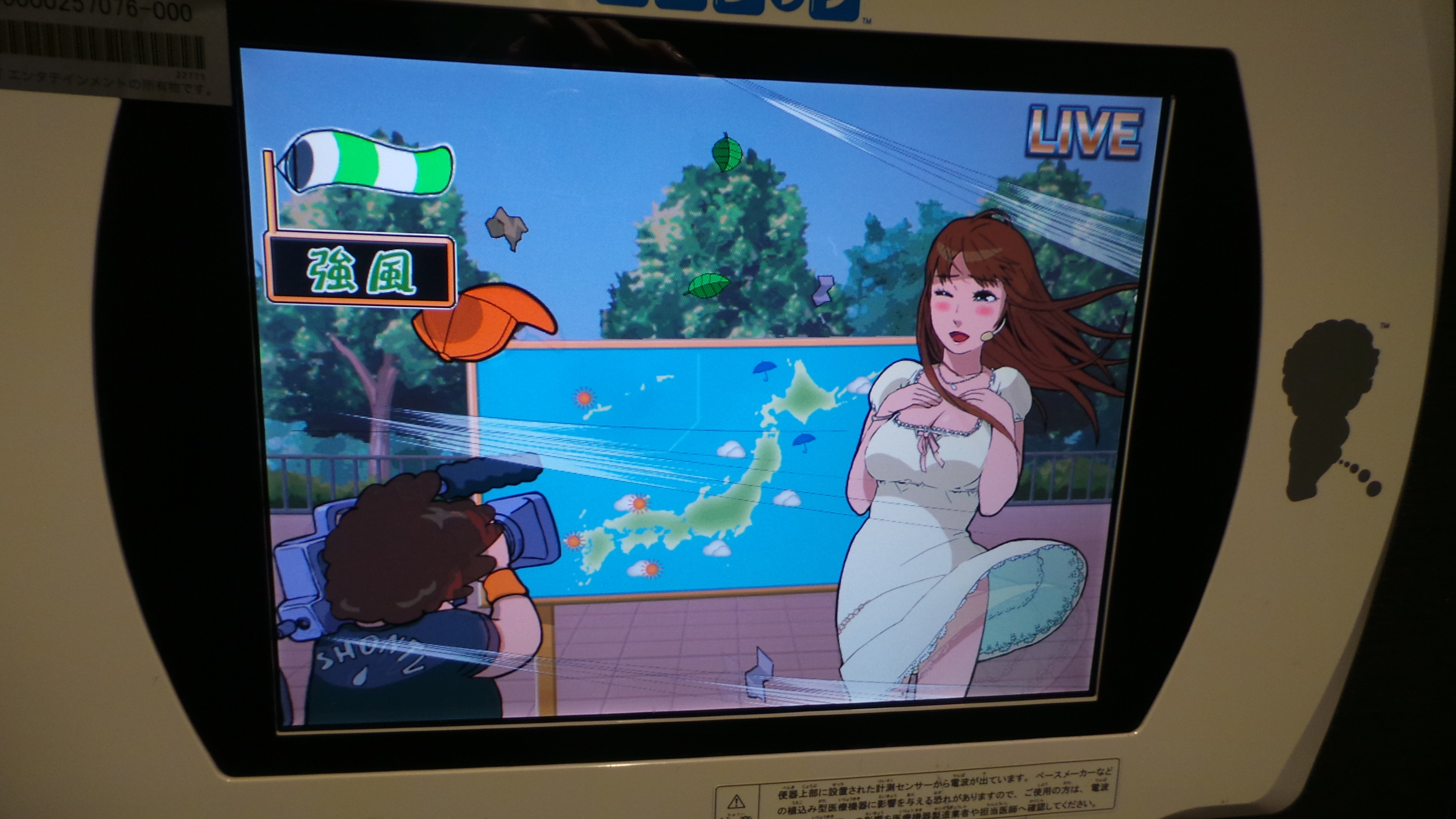
skirtup

The game is oddly titled ‘The Northern Wind, the Sun and Me’ and features a young woman presenting the weather. The urinal is fitted with a target and sensor, and the harder I urinate, the stronger the wind blows. The aim of the game is to make the wind so strong that the skirt of the young lady gets high enough to reveal her underwear. It makes me wonder what the ladies’ restroom offers for entertainment. Unfortunately, the video game arcade is populated entirely by men, so I have nobody to ask. Somewhat confused about what I have just experienced, I decide that I have had enough video games for one day and need to go home.

Somewhere Oji We Know

The day is warm but grey. I head over to the Sumida River to take a look at a traditional Japanese festival known as Hina-matsuri. It’s a day dedicated to girls, celebrating the passing of ancient dolls from generation to generation. Originally, these dolls were floated along the river. However, due to issues with local fishermen, this practice was discontinued. Nowadays, the dolls are cast into the ocean before being collected and burnt. As is customary, the dolls are believed to contain evil spirits, and Japan utilises fire to cleanse them of the demons within.

Unfortunately, upon my arrival at the Sumida River, the event has already concluded, and the market stalls and stage are in the process of being taken down. With not much left to do for the day, I hop on my bicycle and once again head in the direction of Kita Ward, towards a quaint little place known as Oji.

oji1[1]

I find myself standing in Asukayama Park, a vast area designated in 1873 as one of Japan’s first public parks. Instead of climbing the steep steps for entry, feeling particularly lazy, I opted to ride for free on the monorail that crawls along the incline and into the park. Interestingly, the train station here runs alongside the park. As I look in one direction, I’m surrounded by lush greenery, while in the other, I see the familiar sights of billboards, buildings, railway tracks, and advertisements in the sky.

As I explore Asukayama Park, I’m pleasantly surprised to discover a unique playground for children, quite different from what I’m accustomed to seeing. The play area features old trains repurposed into climbing frames. Among them, two locomotives stand prominently, and my personal favourite is D51 853, a steam train donated to the park on August 31st, 1943. A nearby sign mentions something about coal, water, and charcoal, though I have no idea what it is referring to.

oji3[1]

D51 853 is awesome. Not only can I go inside and look at the old steam engine, but I can also climb onto the roof and pretend I am in a movie. I feel happy for the children who come here. Parks in Japan offer excellent facilities and interesting attractions. It makes me wish that I had such adventurous play areas in England when I was a child, but instead, all we had were rubbish swings. A sign says, ‘D51 853 is somewhat dangerous. Play carefully, duck down, or climb up on the high locomotive!’

I continue my exploration and discover that this park also boasts old waterfalls absent of water, beautiful foliage, and multiple statues and sculptures of varying shapes and sizes. One such sculpture is merely a small pile of rocks, while another is a giant rock enveloped in a small wooden shelter.

oji2[1]

A sign beside the massive rock mentions something about the ceremonial transfer of a divided tutelary deity to a new location, although the meaning escapes me. It also notes that the inscription is challenging to decipher in Japanese, as the letters were written using ancient kanji and rare calligraphy. Despite the protective wooden house, the words have succumbed to a weathered, entropic fate. A second sign, written in English, amuses me; it simply says, ‘Rock, please do not climb.’ Instead, I climb the protective wooden house.

As I leave the park, I pass by the Paper Museum and ponder how interesting it must be. Unfortunately, it’s closed today. I continue to walk, heading toward a bridge, where I follow some old stone steps down to Otonashi Shinsui Park.

Oji4[1]

Hidden beneath the bridge, Otonashi Shinsui Park is simply amazing. It boasts its own old wooden bridge, a small stream, an abundance of beautiful nature, and an opportunity for rock climbing practice on the many craggy stone structures that don’t appear to be dangerous at all. I stand for a while, deciding not to climb but only to observe, taking in the beauty of the scenery. After a while, I head back up the steps and across the bridge.

Beyond the bridge, there’s a huge torii gate and a massive shrine.

oji5[1]

Oji Shrine, one of Emperor Meiji’s Ten Shrines of Tokyo, is part of a pilgrimage trail consisting of ten shrines. Today, the shrine is devoid of visitors; perhaps they are all too busy enjoying the festivities with their dolls. Legend has it that the shrine was renamed by Toyoshima, a Japanese warlord. However, the most intriguing aspect here is a much smaller shrine dedicated to the god of hairdressing and wig-making. Quite peculiar.

I continue cycling around the area, searching for something of interest. Eventually, I stumble upon large castle walls with modern houses built above them. Steep stone slopes run along the castle wall, eventually leading to Oji Inari Shrine—a place where foxes seemingly guard the playground for children situated at the bottom of the hill.

The god of rice harvesting resides here, and so do the foxes. Among all the fox shrines in Tokyo, Oji Inari Shrine is considered the main one. Every year, at the end of the year, foxes reportedly visit from all over Japan to guard the god of the rice harvest, and presumably, to offer their prayers. It’s hard to believe that if I came here on New Year’s Eve, the shrine grounds would be filled with foxes, but that’s what the information here tells me, and who am I to argue with information.

oji7[1]

I leave the shrine and start cycling back toward Asakusa. I make a brief stop at the Banknote and Postage Stamp Museum, but unfortunately, it’s closed today. It’s a shame really because inside this free museum, it’s said that you can lift one billion yen. I would have loved to take one billion yen home with me, but sadly, that won’t be happening today.

Back in Asakusa, I finally get a chance to experience Hina-matsuri through traditional food. Chirashizushi (scattered sushi) is the dish that women typically eat on this day. It’s supposed to be sugar-flavoured, featuring vinegared sushi rice. While the toppings usually include raw fish, for some reason, my friend has given me a unique mix of rice topped with egg, cream cheese, and strawberries. Although three of the ingredients generally go well together, the addition of strawberries for the sugar-flavoured element is what I find a bit strange. While this might be a traditional food in Japan, strawberries with egg and rice is something I struggle to bring myself to enjoy.

As I cycle home with the taste of Chirashizushi scattered in my mouth, I decide that my next blog post will be primarily about food.

Pot Without Season

The local elections are approaching, and this can only mean one thing: megaphones. It seems that in Japan, the person who can shout the loudest and for the longest time is most likely to receive the most votes during a successful election campaign. I’ve come to know this because, for the past three days, I have been rudely awakened by the sound of a man shouting ‘hello’ and repeating his own name over and over again.

Today, the man has decided to park his election truck outside my apartment. For ten minutes, he offers no information regarding his policy, no broken promises, or any reason to vote for him, other than his own name. Someone once told me that the reason for this shouting is to annoy younger voters, causing them to hate politics. Japan, with a larger number of elderly voters than young ones, makes me think that there might be some truth in these words.

electvan[1]

With a splitting headache, I decide the best thing to do today is to head to a park and relax, away from the shouting and the megaphones. I take my bicycle and cycle through Asakusa toward Ueno Park. Somehow, on Kappabashi Street, the man who was outside my house just twenty minutes previously has decided to park directly on my route to Ueno. It’s as though he’s following me, tormenting me. I need to escape this noise.

Japan is often described as a country of four definite seasons, or so a popular guidebook tells me. However, this doesn’t seem to be the case. This week has seen a day of snow, a day so full of rain that even an umbrella couldn’t protect me, and today, a day that is unusually warm. So warm, in fact, that as I enter Ueno Park, a wash of green leaves surrounds me, and standing out among the sea of green is a single tree adorned with white and pink blossoms.

sakura[1]

Cherry blossom season isn’t scheduled to begin for another month, yet one tree seems to have been confused by the recent strange weather, blossoming a month early. When I was told that every year, Japanese people go to the park or the river and take part in a festival known as ‘hanami’ (literally translating to mean ‘flower viewing’), I couldn’t really understand the appeal. Now, I am beginning to recognise the evanescent beauty of these flowers and the reasoning behind this spring festival.

I stand admiring the cherry blossom tree for a while before deciding that it’s warm enough for me to do one of my favourite things—exploring. I head in the direction of Kita Ward, a Tokyo ward without the annoying election campaign. Nishigahara is the area in this city that stands out for me. I spot a huge torii gate and a distant shrine, so I decide to investigate.

nanashashrine[1]

Nanasha Shrine was constructed to safeguard crucial documents related to the Age of Gods, recounting the mythology of how Japan was formed. Regrettably, in 1793, a fire engulfed these documents, conveniently erasing all evidence suggesting that Japan was created by mystical deities. Even a sign written in Japanese at the shrine’s entrance acknowledges the uncertainty, stating, ‘We can’t even be certain if the mythology is true, as the most important documents ever written were lost to fire.’

I continue exploring the Nishigahara area and stumble upon a vast park. Takinogawa Park boasts rock climbing facilities, an abundance of children playing football, and a dried-up pond that supposedly features a waterfall; the only element missing is the water. The park also showcases a very intriguing statue at its entrance, which, at first, I mistook for a misshaped tree.

stickman[1]

Hidden on a side path, there’s an ornamental display containing a rather old-looking piece of pottery. The pot is from the Yayoi period—an Iron Age era that began around 300 BC and lasted approximately six hundred years. These lightly decorated pots were the first in Japan to be made using a potter’s wheel; before this, all pots in Japan were crafted by hand.

I’m not sure why such a pot is on display in this small park in Nishigahara, or why it isn’t resting somewhere in a museum—protected from rain, theft, and stray footballs. Regardless, it does look rather nice. Even though it serves as an overlooked reminder of Yayoi Pottery and a memory of a distant past, I somehow enjoy its presence.

potterystatue[1]

A nearby sign states, ‘It may suggest that there was a place of ancient life in you,’ albeit, the sign is nowhere near the pot. Presumably, the sign is referring to the pottery, although this is simply my guess; I can see nothing else near the sign that could possibly relate to an ancient life in me. I note down the text on the sign before deciding that I’ve had enough of parks for one day. I turn around and cycle back in the direction of Asakusa.

On my way home, I make a brief stop for a sandwich outside Oku Station. Across from the station, I notice the strangest named hair salon I’ve seen in a while. Presumably, for the low cost of ¥1500, I can have my brains cut out. Even with my terrific megaphonic headache, the thought of my brains being severed by scissors is far too much to deal with right now.

cutbrains[1]

Brains intact, I arrive in Asakusa and find myself cycling down Orange Street. Despite taking this route many times this month, I hadn’t previously noticed that this street is lined on either side with bright, colorful Christmas trees. Perhaps they are a recent addition to Orange Street, but I will never know for sure. It feels to me that in Tokyo, all of the seasons have become blurred into one giant mess of time. I don’t even know whether today is Christmas Day, the middle of spring, or 300 BC.

From Rush Hour With Love

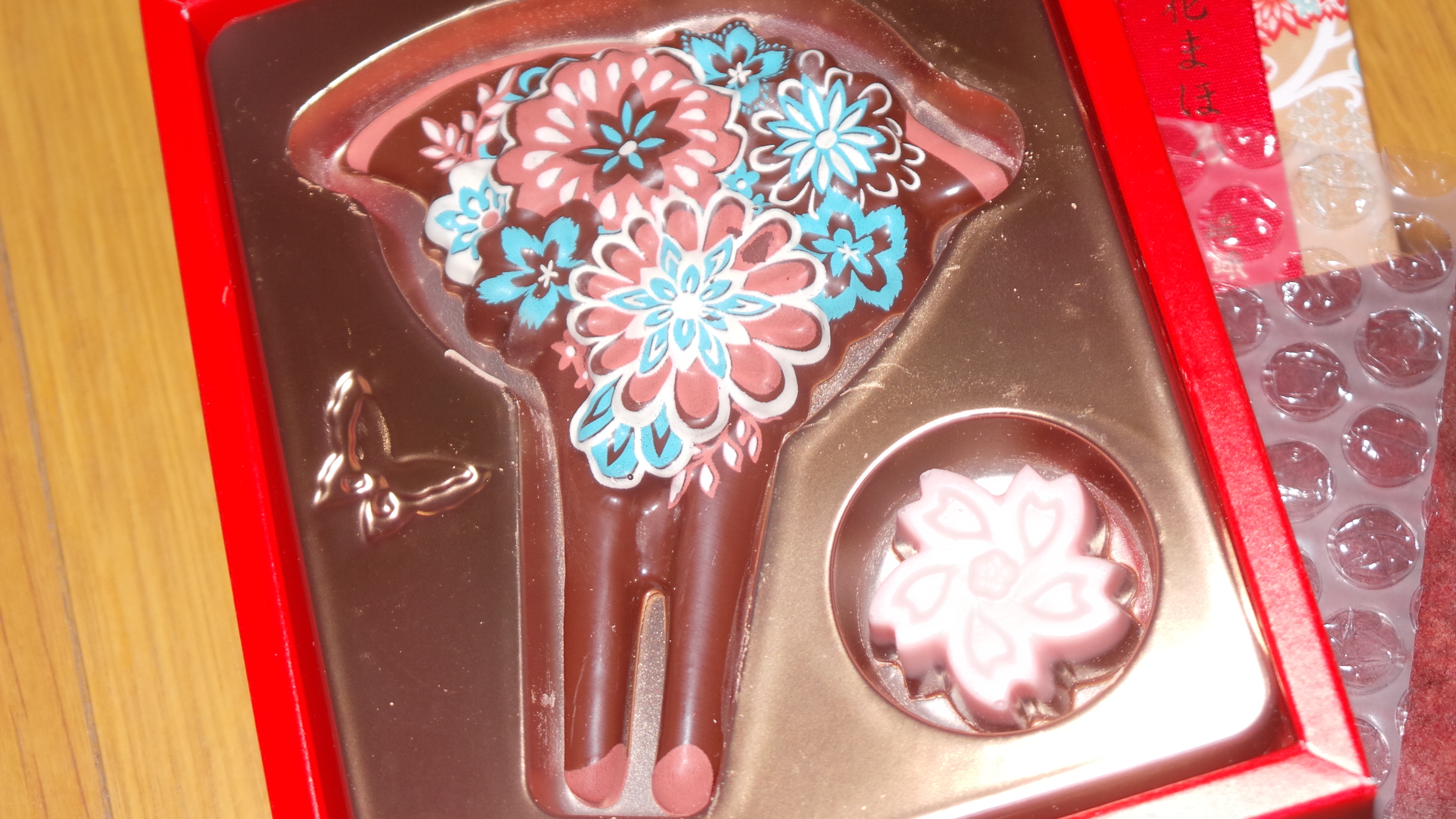
Today is Valentine’s Day in Japan. What would normally be a day of loneliness and misery is dissolved by chocolate. Unlike in England, where you are expected to buy flowers, chocolates, and take your partner for a meal, Valentine’s Day is remarkably different here. It is on this day that women buy chocolates for men. I have become very used to not receiving even a card on this day, so when I found myself unable to leave my house because of the vast quantities of chocolate blocking my path, it was a pleasant surprise. Even my dentist gave me chocolates, which is rather odd considering the high sugar content and the effect it will have on my teeth.

In Japan, one month after Valentine’s Day is White Day. On White Day, the man returns the gesture to those who gifted him by buying the women sweets. As much as I appreciate the abundance of chocolate that I received today, it becomes apparent that White Day will be extremely expensive for me.

valchocs

It is perhaps a sad part of Japanese culture that on Valentine’s Day, a man will wait with anticipation to receive chocolates from a woman that he might like, if only for the opportunity to return the gesture a month later. It is this style of gift-giving that makes the shy Japanese male miserable when no chocolate is received. I suppose that this theme remains common among all other cultures; Valentine’s Day and the misery attached to it. I can hardly complain, though. I received many gifts, despite the fact that I don’t really like the taste of chocolate. I actually preferred playing with the bubble wrap, after a nine-month absence of popping pockets of air-filled plastic.

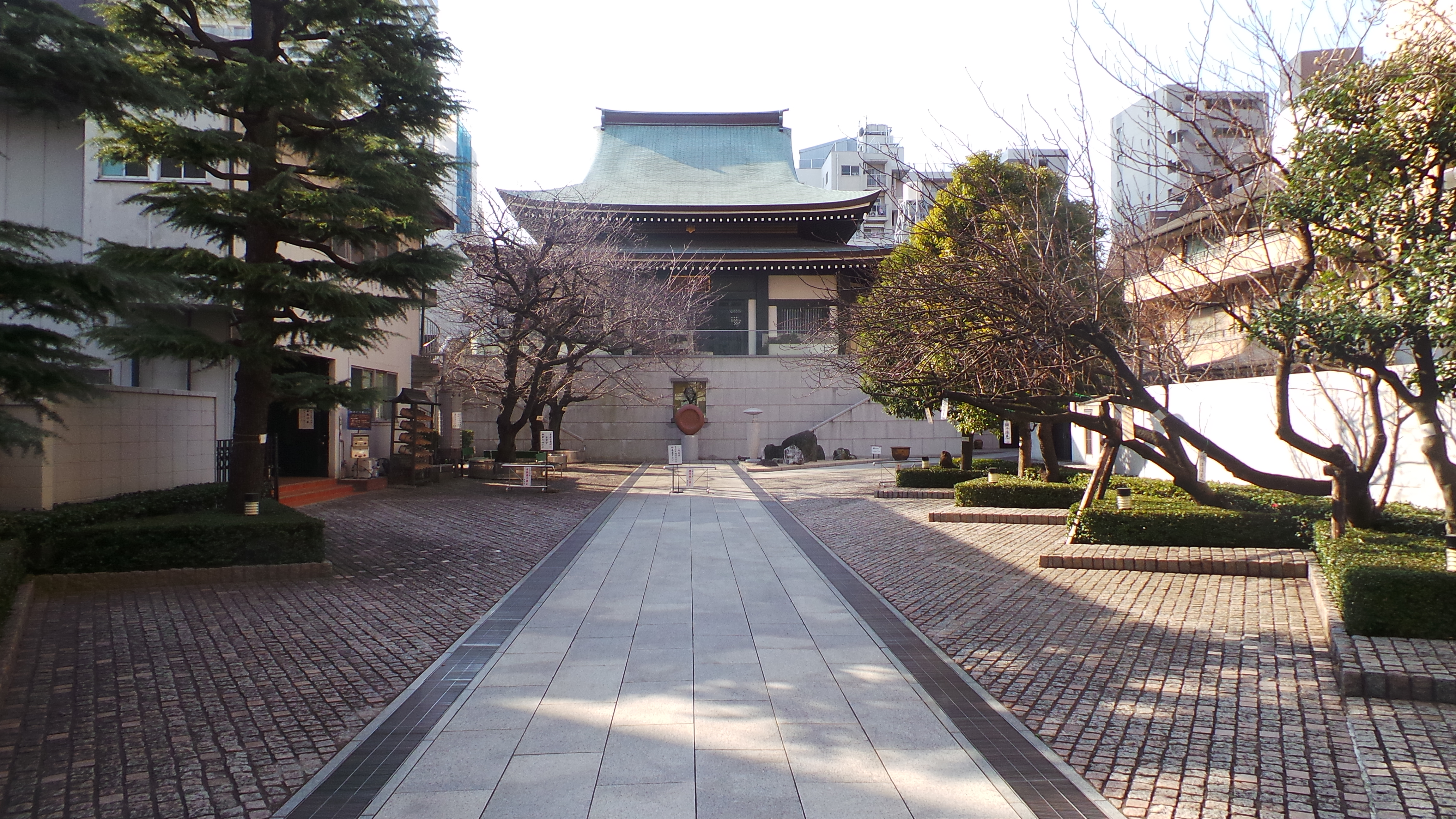
After consuming the equivalent of my weight in confectionery, I head into Asakusa. Today, I have decided to finally visit a temple that I walk past every single day but never visit. It is a temple that is always absent of people, possibly cursed, and is surrounded by some strange energy that I have previously been unable to bring myself to ingress.

dailytemple

The temple offers very little description about itself; not even a name. Before the temple sits a small rock garden where it is impossible to view all of the rocks from any one angle. It is said that if you are truly enlightened, then you are able to see the eighth rock. Despite the various viewing angles I deploy, I find it impossible to see every rock at the same time, and consider that even those that surpass the normal level of human consciousness would still find it difficult to see all of the stones at the same time. Other than a cemetery for the wealthy tucked behind the temple, nothing much else is on offer here.

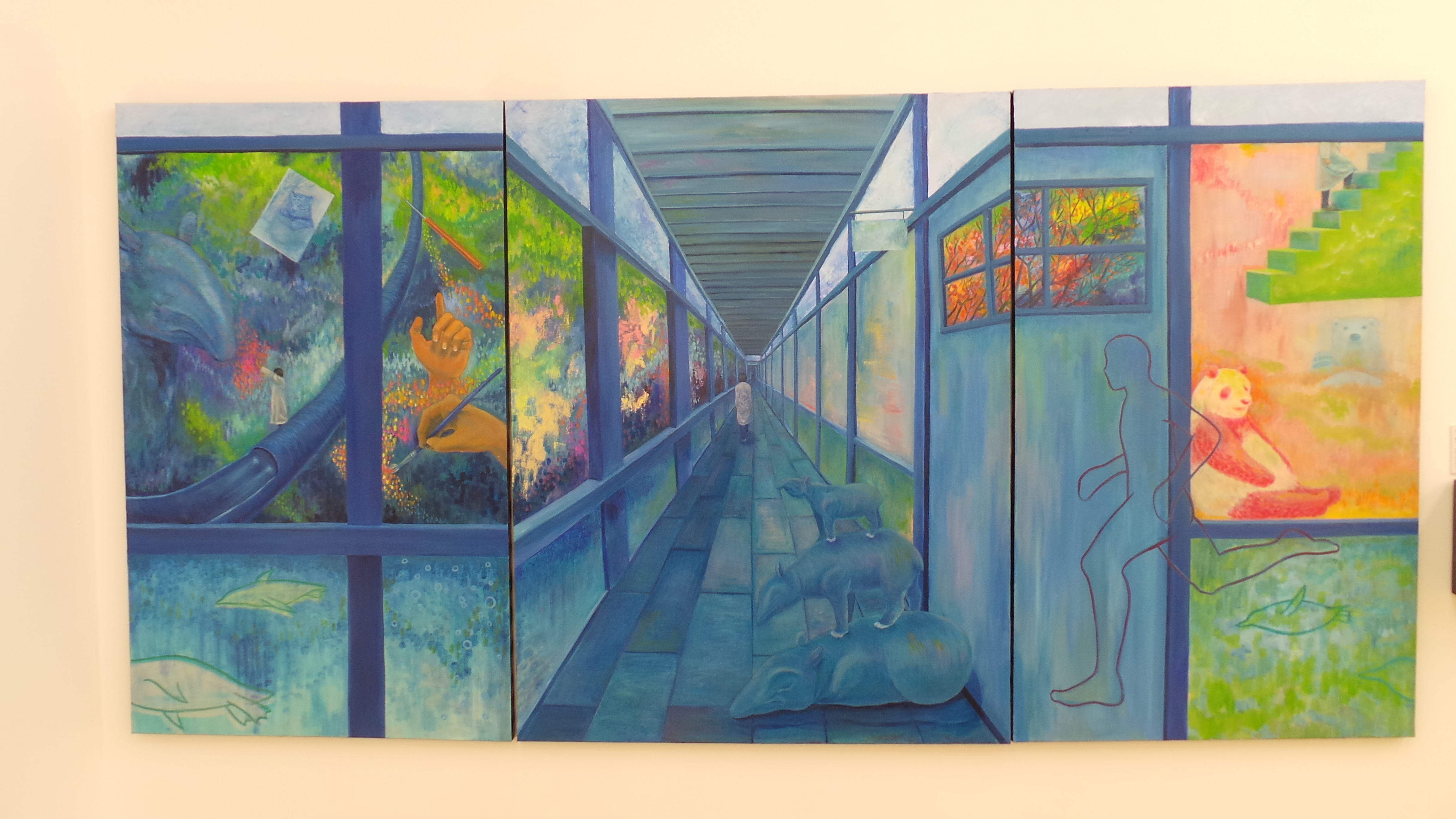
I leave the temple and head over to Akihabara. Today, there is an art exhibition taking place at 3331 Arts Chiyoda, a former high school converted into an art gallery. The exhibition features students who will graduate next month from the Takarazuka University of Art and Design. A friend of mine works for the university and has invited me along to sample the artwork of his students.

artscyd

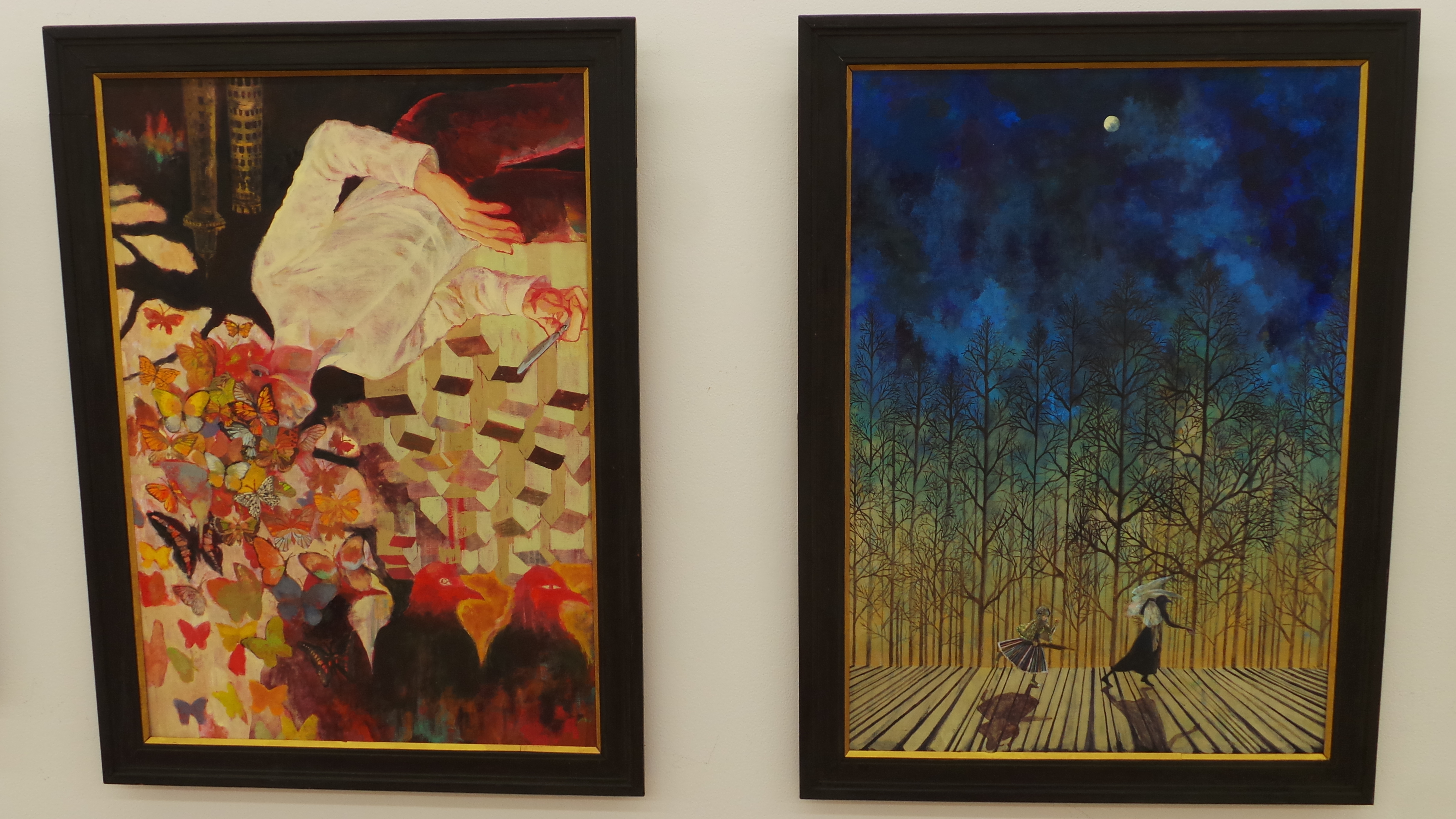
There are seventeen displays here from seventeen students, all twenty-two-year-old women. The first thing that strikes me is that a lot of the pieces have some form of macabre imagery. Paintings depict homosexual angels, others heavily feature corpses, and some are simply storyboards for books about clowns for children; obviously, the clowns look deliberately menacing and have been painted just to scare me.

Other pieces here are heavily influenced by famous stories. One piece is based on Ryunosuke Akutagawa’s ‘The Spider’s Thread,’ a story about too many people in hell (known in the story as the Pool of Blood) as they try to escape and reach the paradise above. One man walking through a forest didn’t kill a spider one day, so the silk of a spider’s web is dropped down to hell from paradise in an attempt to rescue him. Everyone reaches for the web in an attempt to climb to safety. Obviously, the weight of everyone in hell is far too heavy for the silk, and the web snaps, committing everyone to the Pool of Blood for eternity.

morearts

The highlight of the exhibition is a piece by Ozawa Yuki. Her painting depicts a dream, more specifically, the moment when you become fully awake and are only able to remember fragments of what was left behind. Another artist that I enjoy is Ogawa Sayako. These two pieces offer less of a description but are once again based on dreams. Something about places in dreams never existing anywhere in real life. I suppose these pieces are my favourite due to their abstruse and rather abstract style. After the art, I take the packed rush-hour train back to Asakusa, somewhat confused by the imagery I have just viewed.

There are certain things that become written about more often than others in Japan: signs with bad English and vending machines. I am guilty of writing about both of these things, and perhaps they aren’t the most interesting to mention. But when I saw another strange vending machine, I got a little excited, so I decided to include it here.

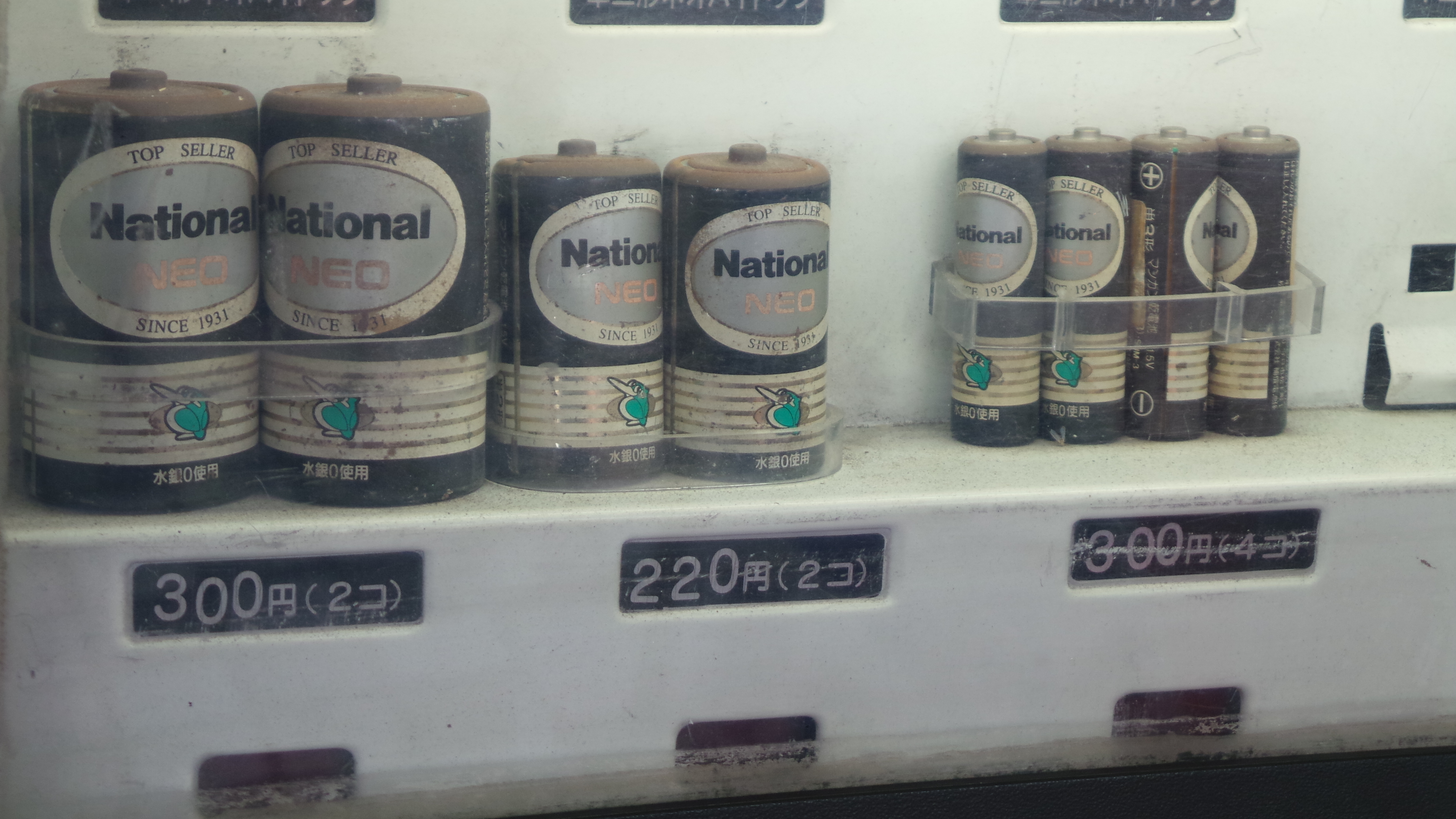
batteriesvending

This machine, covered in dust, sells batteries from 1931. These batteries, made by Panasonic, are no longer in production. Yet, this machine sells them for around ¥300 a pair. Even though they do claim to be a ‘Top Seller,’ batteries are the very last thing I need in my life right now. The machine doesn’t actually work and seems absent of any power. Somewhat ironically, what the machine could really do with is some new batteries.

Befall Upon The Watchtower

For whatever reason, someone has suggested to me that I check out the area where the Arakawa River and the Sumida River flow into one. As I head out into what feels like a spring afternoon, I realise that my destination today might offer little excitement to anyone, including myself. Somehow, I feel drawn in the direction of Arakawa, the shackles of free will severed from my legs. Part of me feels like there is a demon possessing my very soul, controlling my destiny as I cycle at rapid speeds in the direction of Arakawa.

I see the remnants of a temple or shrine, but it looks as though perhaps it is trapped within the confines of an industrial site. Not letting that stop me for one moment, I park my bicycle and wander in. Seconds later, I am cornered by a security guard. He shouts angrily in Japanese as he waves his hand in the direction of the street. A strong urge to not give up consumes me, and I quickly find myself on the other side of the complex.

sewertemple[1]

It is a strange sight. I am standing along the Sumida River, and there is nothing but tall yellow grass stretching off in every direction. No cars pass along the road in front of the shrine. No people are walking. It is silent, yet only ten minutes away are the tall residential buildings that make up my neighbourhood. Looming over the Shinto shrine are three huge green balls, presumably part of a sewerage station. Perhaps the god of water treatment resides here.

I carry on my journey, not wanting to disturb the sewer gods, and eventually find a map. Sure enough, the place I had just visited is marked as ‘Sewer Station Shirahige Nishi Pump Place.’ However, there is no mention of any temple or shrine on the map. There is, however, one other interesting point of interest labelled as ‘Ballpark for boy Ground of using combinedly.’ I excuse the terrible English and carry on along the river.

Ten minutes later, my fanciful difficulty fades away, offering me some karmic resolve.

thewatchtower[1]

A watchtower. The best thing that has happened to me all week. It somehow feels like I am stumbling through an episode of the television drama ‘Lost’. For no apparent reason, there is a massive wooden watchtower sitting guard at the entrance to one of the bridges that traverses the Sumida River. What is it doing here? Who built it? Is this real? My mind floods with questions and possibilities, as if somehow collecting fragmented pieces of information and forming them into ideas in my head.

I park my bicycle, and ignoring the sign that tells me to stay away, I enter the wooden doorway. My body filled with an emotion that is yet to be given a name. As I climb the watchtower, I begin to wonder if all of this is just some giant metaphor for something else, something that can’t be explained with words. Each step toward the top tests me, as if life is testing me at this very moment. Eventually, as I near the top, the cracks in the surface become wider, making way for sunbeams.

insidetower[1]

The view from the top is of nothing of note. Tokyo Skytree hangs in the distance, slightly masked by concrete surroundings. In the direction I came from, I can see the water treatment plant and the barren riverbed. I stand at the top of the tower in silence for a while, watching the blue hue of the river for a time, before the sound of footsteps echo from below. A man appears. He looks devious, something very odd about him; like he means to cause trouble. He stands atop the watchtower with me, blissfully staring out into a void. The man doesn’t speak to me, and something about him makes me incredibly uneasy. I decide that I can’t stand here any longer, so I head back down the steps to my bicycle below.

I cross the river as fast as I can, somewhat unnerved. On the other side of the river, I take a right, following its path back toward what looks like civilisation. After twenty minutes of cycling, I realise I am slightly at a loss. I don’t really know where I am, and I’m not sure if the river I crossed was the Arakawa River or the Sumida River. Perhaps I have already cycled beyond the confluence.

deserted[1]

I try to check the map on my camera, but nothing appears to work. I stop for a moment, take a deep breath, and take in my surroundings. Desolate. Empty. Nothing. Everything here looks abandoned, and it begins to reflect on me. Right now, even I feel completely abandoned; which is the strangest feeling I have suffered in a while. As I stand here, lost in the middle of something that might or might not be nothingness, a certain fear destroys my usual calm demeanour, and I begin to panic.

Everything will be fine, though. As if saved, I can just make out the silhouette of Tokyo Skytree on the horizon; so I point my bicycle in the direction of the structure. After what seems like an hour of following the river, I reach a bridge and am finally free to cross. This bridge takes me over the Arakawa River, so it appears that I never reached my destination, never found what I sought out to find. Regardless, I am finally back within familiar territory, heading back toward life. I stop to photograph a sign that probably has no relevance here, but perhaps it does. The sign appears to have been written by Yoda from Star Wars.

closedsorryweare[1]

As the day continues to distract me, I inadvertently end up in Akihabara. Tired from three or four hours of intemperate exploration, I decide to leave my bicycle at the train station. Inside, I stand at the platform, waiting for the train to take me back to Minowa. It is here that I see yet another strange vending machine.

The machine offers four shelves of items, two of which are toys for children: two sets from the Nature in Japan series. Small models of various different animals native to the country. It is what is contained within the other two shelves that I find strange. At a bargain price of ¥200 per purchase, I can buy office ladies that sit on the edge of my coffee cup; legs open, underwear exposed.

noupskirting[1]

Akihabara Station famously has signs at each escalator, warning women to watch out for ‘upskirting.’ Apparently, it is a law in Japan that all cameras must make a sound when a photograph is taken. With Akihabara being the home of electronics and comic books, lonely men have often been known to pry on women as they ride the escalator, sneakily taking photographs from below.

This vending machine perhaps tries to solve that problem. These coffee cup women are clearly exposing their undergarments, with no shame. The only shame is possibly when your co-workers see you with a decorated coffee cup featuring this type of imagery. ‘Make your office fun!’ ‘Happiness in your cup!’ are just some of the explanations on offer, scrawled in Japanese across the machine.

There are certain times in my life when my mind is simply not capable of understanding something, and this is certainly one of them.