Murder on the Tsukuba Express

Today, the weather is very warm, so I decide to take a train to Ibaraki Prefecture, to a little place called Tsukuba. At Tsukuba Station, I take a ¥720 bus that crawls for thirty minutes toward Tsukuba Mountain. Eventually, I get off the bus. The only tourists here are old Japanese women who have made the journey to this mountain to look at flowers.

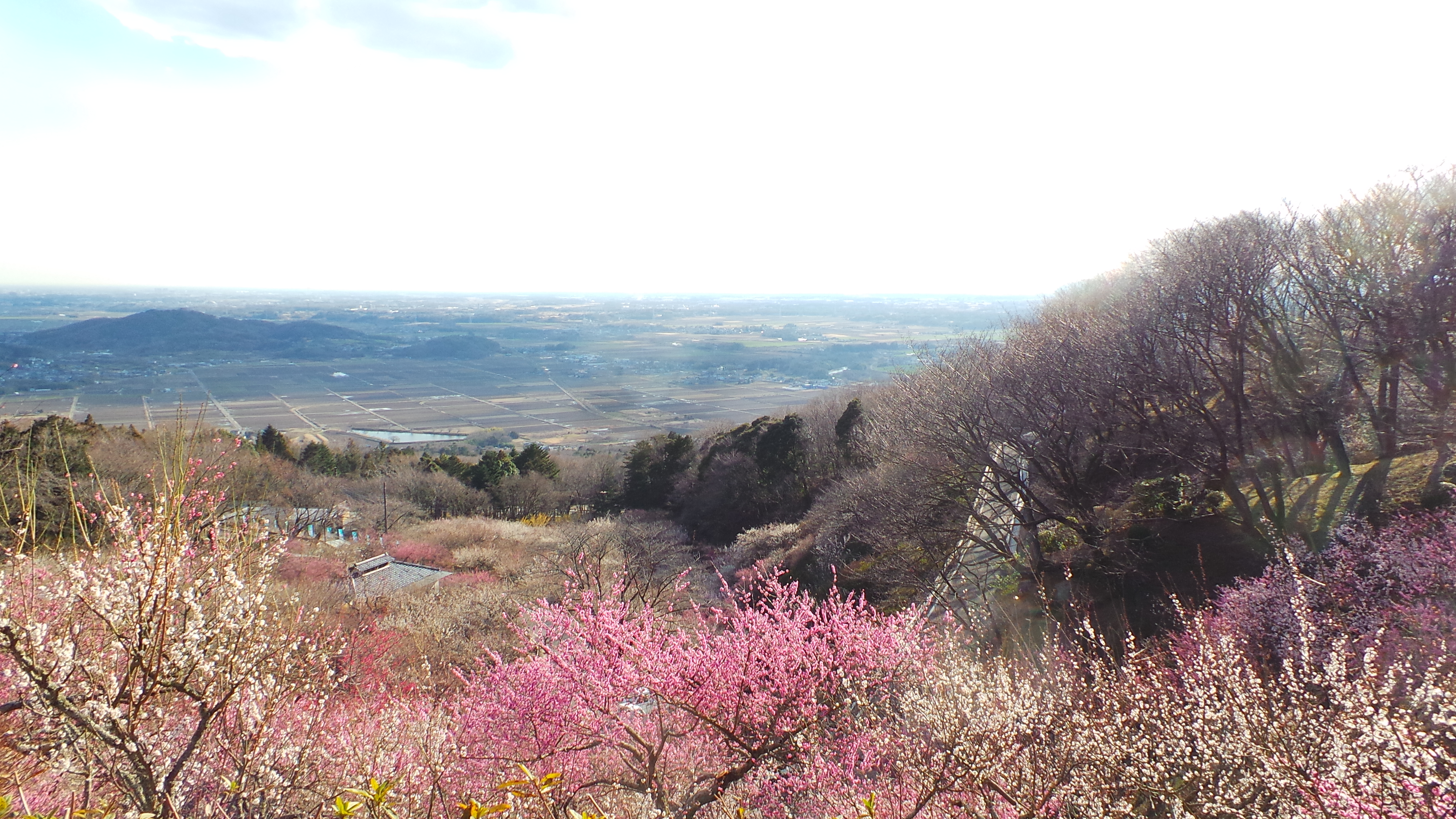
The first thing that strikes me as I stroll off the bus is the view. The day is relatively clear, and the distance is a sea of fields and countryside that seemingly spread forever before eventually blending into the whiteness of bright, sunlit clouds. One of the reasons I am here today, like the old women, is to look at flowers—flowers of beautiful pink and white. The other reason is that this steep mountain is steeped in history.
tsukuba5

In March 1864, an army was raised on this very mountain, led by a samurai named Fujita Koshiro. The army, known as Tsukubazei, opposed plans to close Yokohama Port and exclude foreign ships from entering Japan. Even the law to stop foreigners from entering Japan was considered barbaric; it was called the ‘Order to Expel Barbarians’.

The twenty-three-year-old leader led his army of samurai and farmers in what became a war against Emperor Komei. The battle was lost, and the entire army was beheaded. This event contributed to the ending of the Edo Period and the start of the Meiji Restoration.
tsukuba1

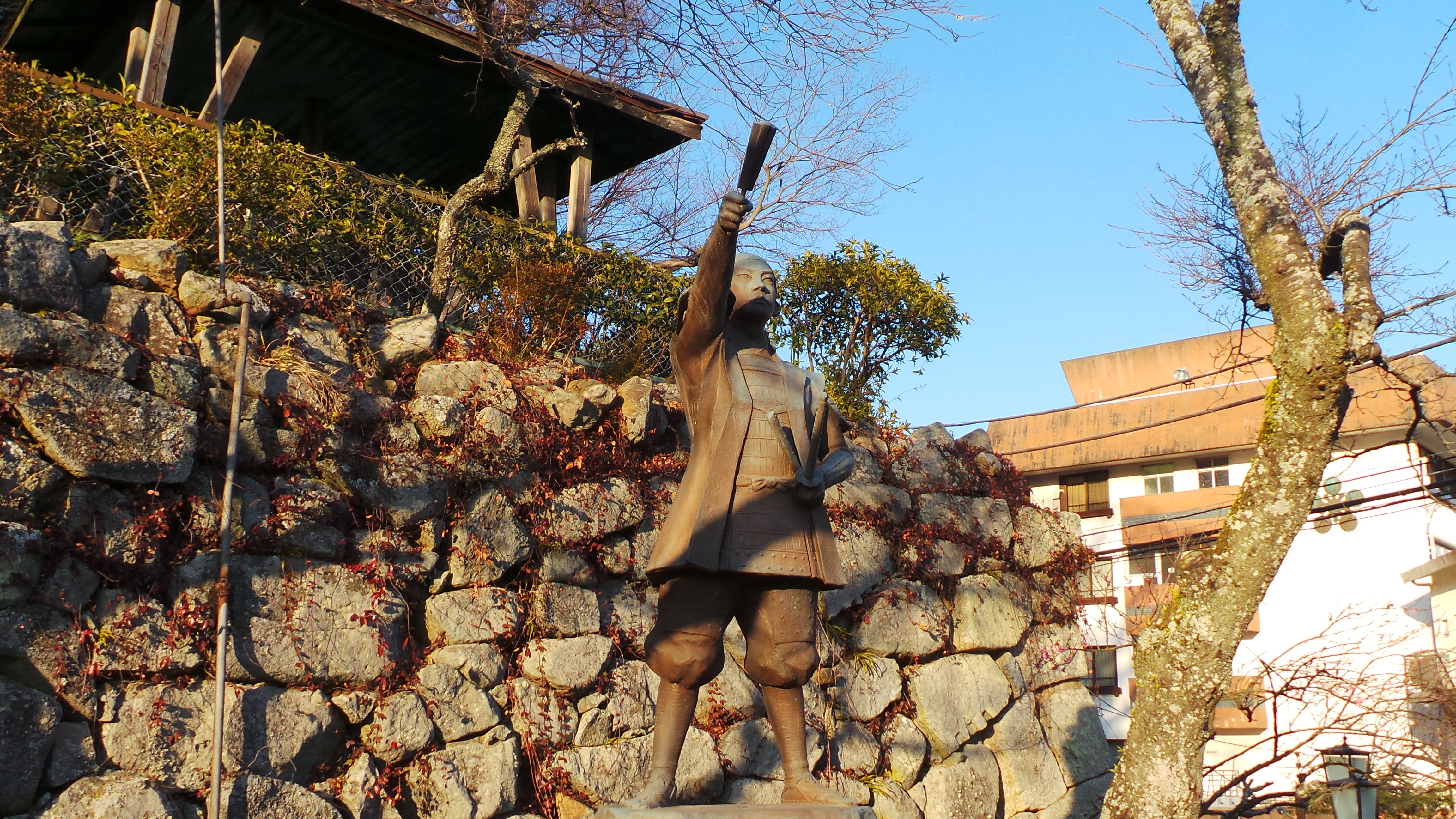
Still considered a terrorist, a statue of Fujita Koshiro stands proudly at the entrance to Tsukuba Shrine, a shrine said to house the god and goddess that protect from evil and illness. The shrine has been a place of worship for over 3000 years. I continue my walk through the mountain paths, passing a random telephone box with a huge statue of a frog on its roof, Omido Temple with its massive bell, the cable car service that isn’t running today (as usual), and a statue seemingly standing guard in a small car park.

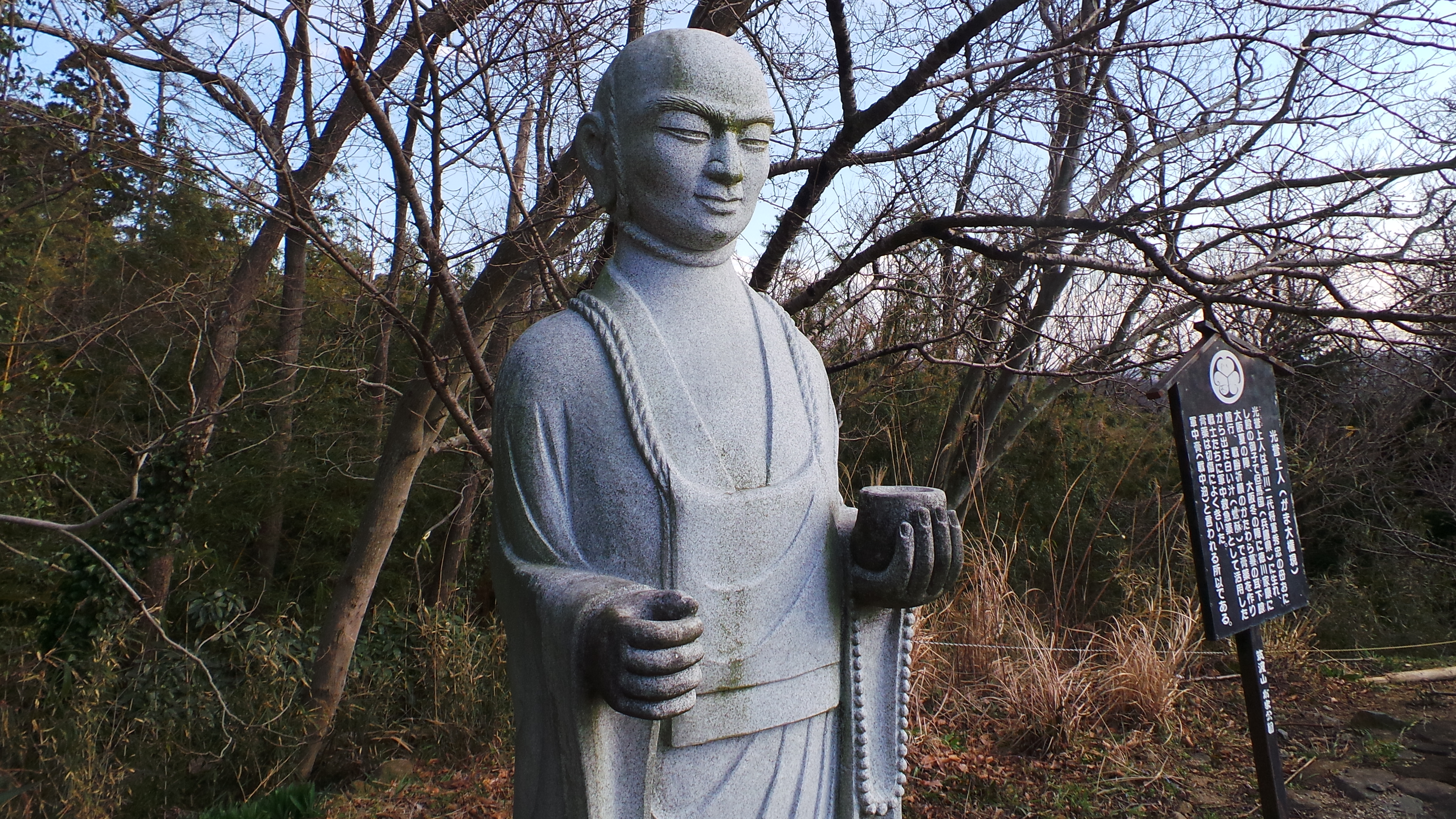
The statue is of a man carrying a cup of medicine. Using my amateur translation skills, the medicine is made from gamagairu, a giant frog said to live in this area; hence the telephone box. The medicine is taken from the ear of the frog and is said to have magical healing properties. That’s right, magical.
tsukuba9

People in England or America will be familiar with the expression ‘snake oil,’ a term used to describe health products that don’t actually work; a swindle of sorts. In Japan, a similar expression exists, and that is frog oil. Salesmen use a special sword that contains fake blood in its tip, pretend to cut their arm revealing a huge gash, then proceed to rub the frog oil on their skin. The wound disappears in an instant, and fools buy.

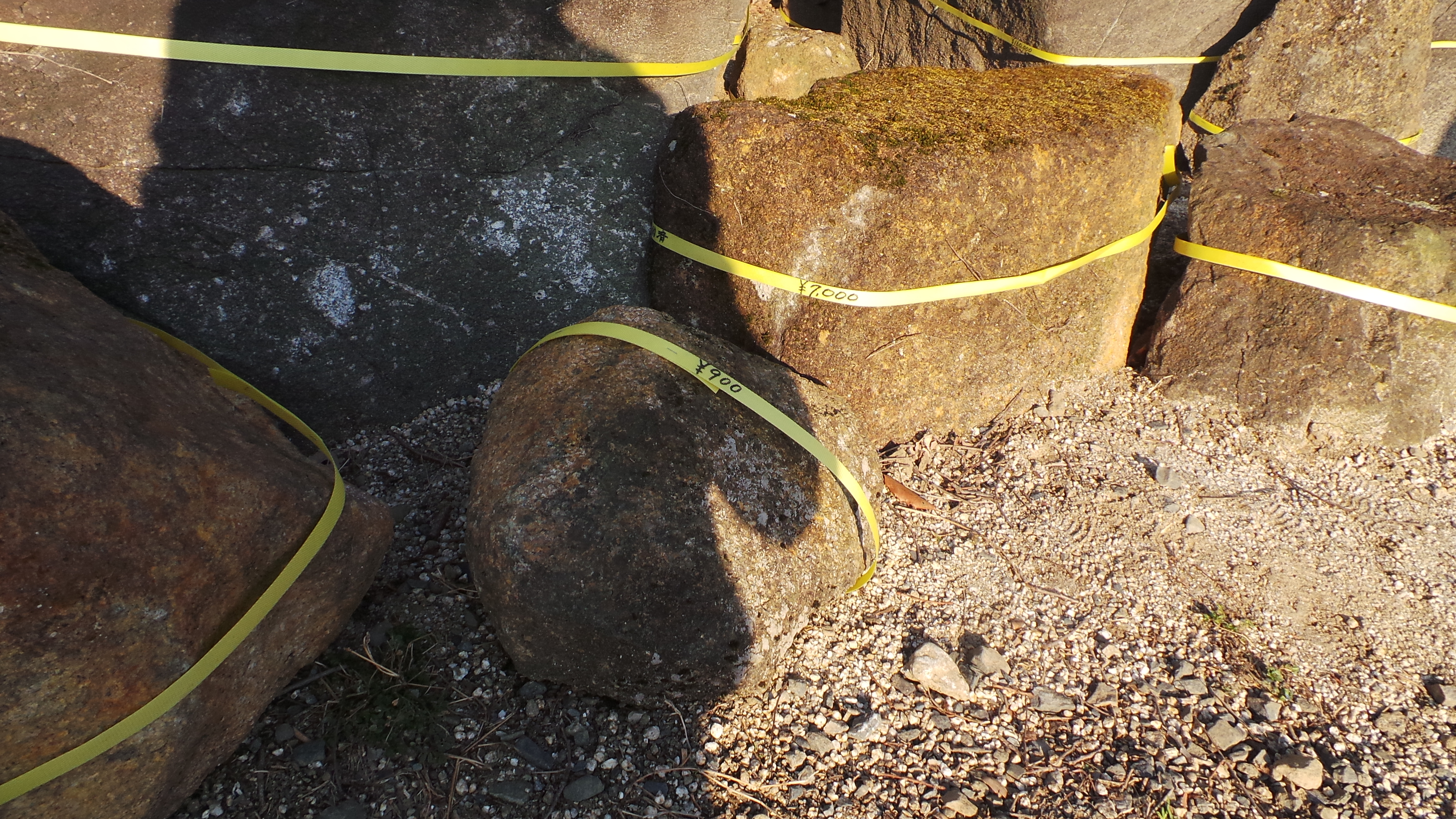
I continue my stroll and head in the direction of Mount Tsukuba Plum Blossom Gardens. These gardens are free to enter and feature over 1000 trees. Thirty kinds of flowers blossom in this area, and mixed in with the flowers are the famous rocks of Tsukuba. Rocks, I might add, that are for sale.
tsukuba2

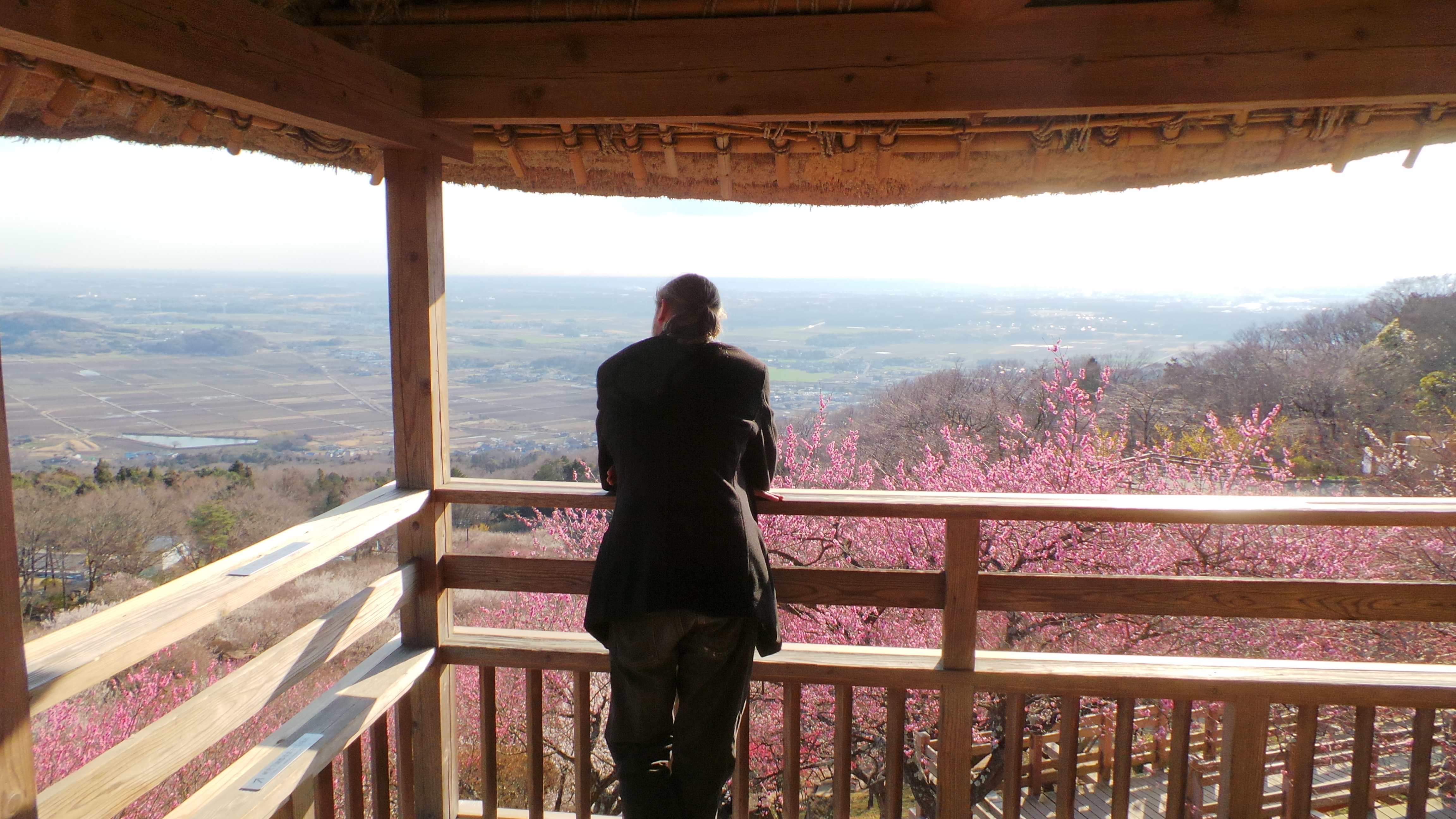
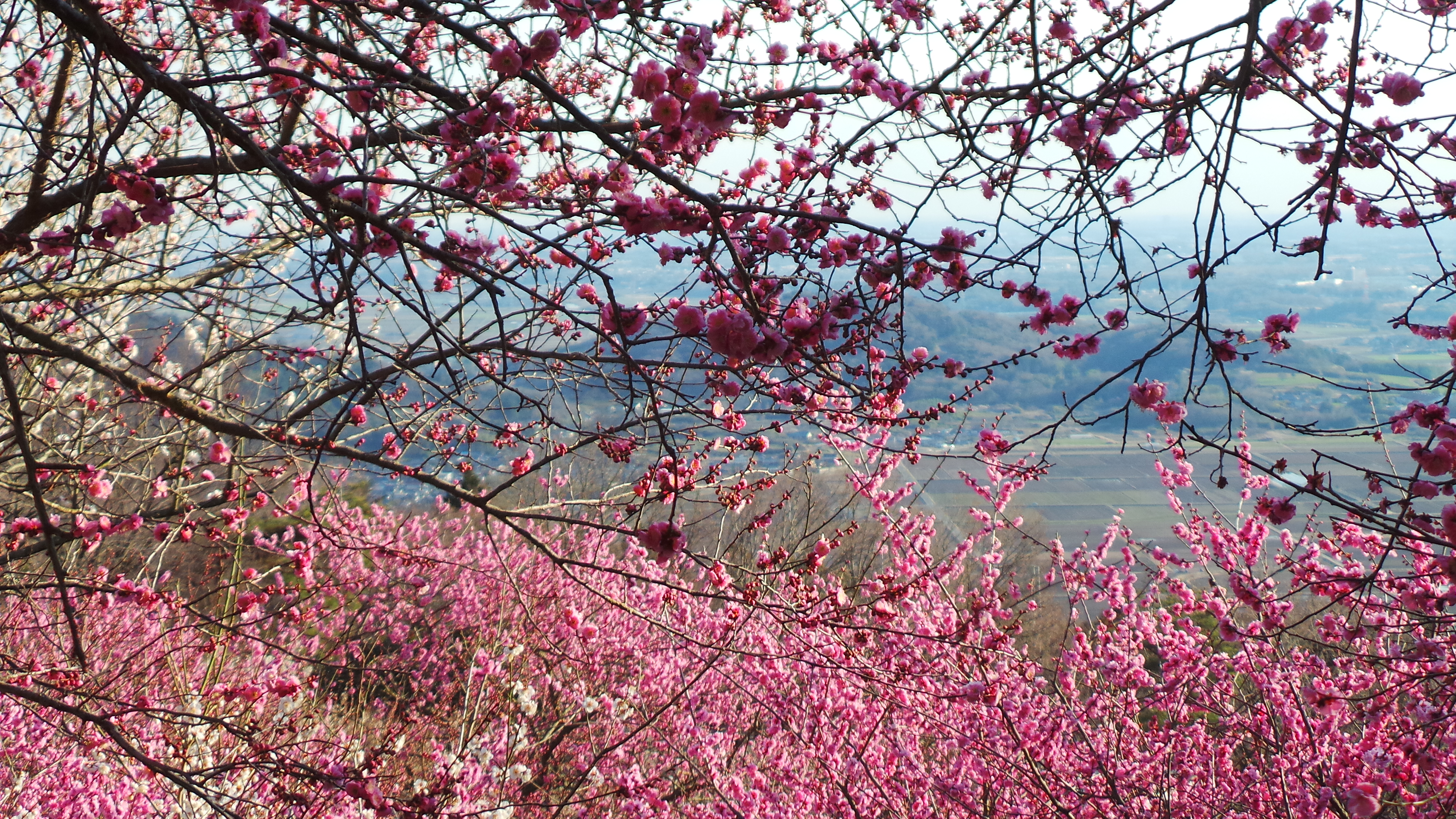
I lug my rock up the mountain path and realise that I should have probably bought it on the way down. The flowers in the mountain are beautiful to see. Red plum is in full bloom this time of year, and white plum is apparently in half bloom. I walk through sweet plum groves and fresh-smelling flowers before arriving at Lookout Point Arumaya, a small mountain hut that looks as though it was stolen from a children’s fairy tale.

I stand, gazing in the direction of Mount Fuji, 155.6 km away and visible on a clear day. Today is such a day, but for whatever reason, the mountain remains invisible, as always; forever shrouded by the white layer of clouds that blend into the distant horizon.
tsukuba4

I stand in quiet contemplation in the small hut at the top of the mountain, admiring the beauty of the flowers and the endless nature. Staring out into the distance, I begin to wonder where it all went wrong. Before the thought connects, a Japanese man taps me on the shoulder, disturbing my moment.
“We made it from bamboo and straw, squashed real hard.”
“I’m sorry?” I say, confused.
“We made it from bamboo and straw, squashed real hard,” he repeats.
“I heard you, but what are you talking about?
“The walls, here,” he points at the walls of the hut, “We made it from bamboo and straw.”
“A bit of a fire hazard,” I tell him, but he doesn’t understand. The man remains fated to repeat his set phrase, the only phrase he knows in English. Time to go, I decide.

As I walk back down the mountain, I recall a story that a friend once told me.
tsukuba3

Many years ago in Japan, people were very poor. Many families lived in one house, grandparents, parents, and children together. When times became tough, and the families couldn’t afford to feed the young children, a sacrifice was made. Children were the priority, so what happened was that the parents would carry their grandparents to Tsukuba Mountain, abandon them, and go home to their children. The grandparents would starve to death on the mountain, so that the family could continue to feed the children. A sad tale of Tsukuba Mountain, and the many poor old people that perished in its lonely grip.

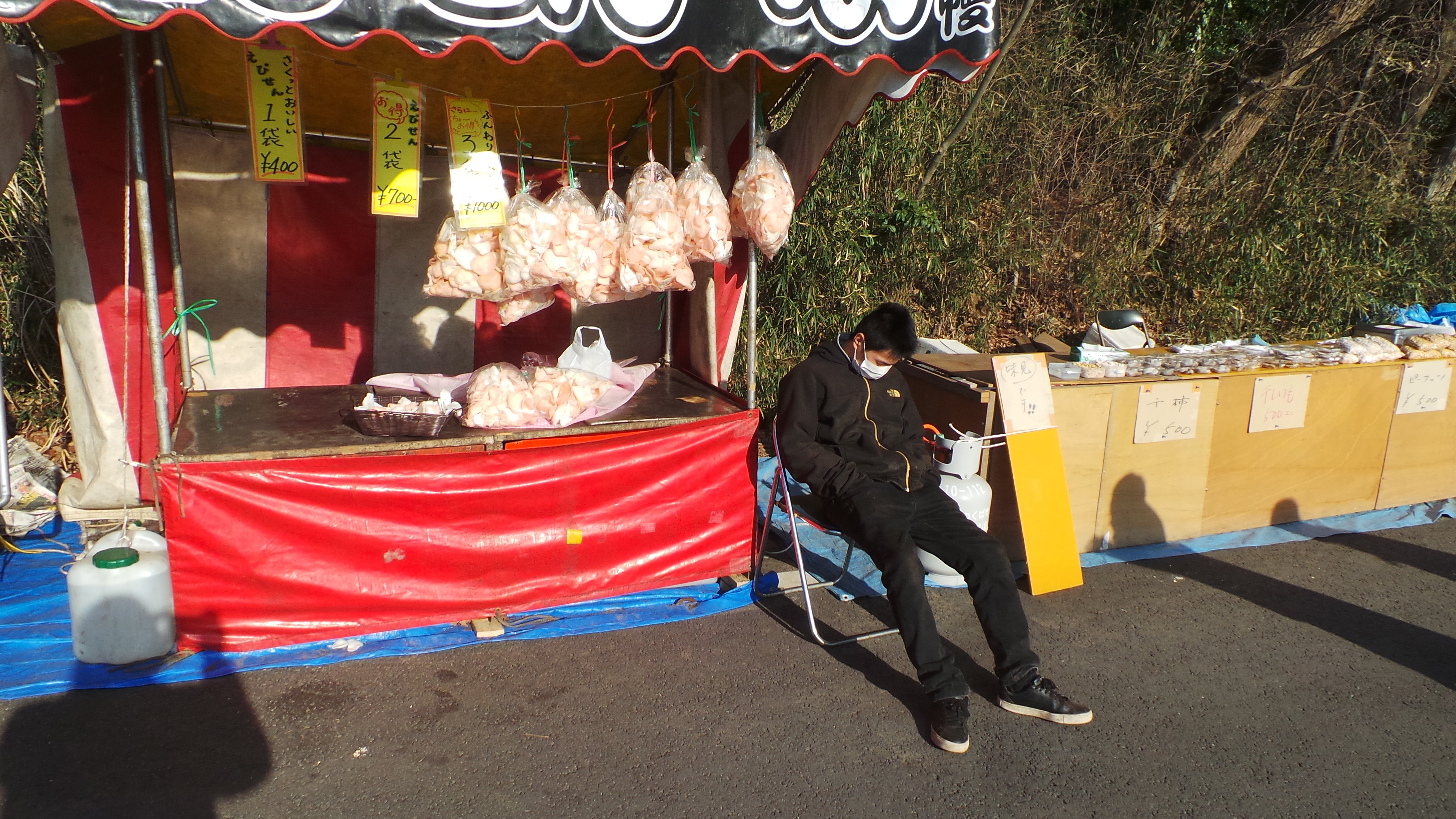
At the bottom of the mountain, most stores are closed. The men are sleeping from a hard day of selling snacks and frog oil; the only shop still selling anything is the Tsukuba Rock Shop.
tsukuba6

There are so many more sights to see on this 877-metre-tall mountain. The place is littered with things to do. Unfortunately, I wasted far too much of my limited time in the mountain hut and end up running back, rock in hand, toward the bus stop. I make the last bus with seconds to spare and head back toward Tsukuba Station.

On the Tsukuba Express train home, I read ‘The Hanging Stranger’ by Philip K. Dick and realise that this information has no relevance here, and perhaps never will.
The Northern Wind, the Sun and Me

Spring is coming, and the weather has gotten nice and warm. I head over to Asakusa, to my usual haunt for breakfast. As I leave, I hold the door open for five ravenous tourists. It turns out they are the American rock band Incubus, here in Tokyo for their current tour of Asia. With very little interest in Incubus’s music, I pass up on the opportunity to be obsequious and instead take a train over to Shinjuku.

Today, I am visiting Takarazuka University of Art and Design to see an exhibition related to video games. After four years of study, the final projects of each student are showcased inside the university, providing visitors and potential new students with a glimpse of what the campus has to offer. I head straight for the 8th-floor office area and persuade my friend to give me a guided tour. Our first stop: a look at the Unreal Engine 4.

unrealengine

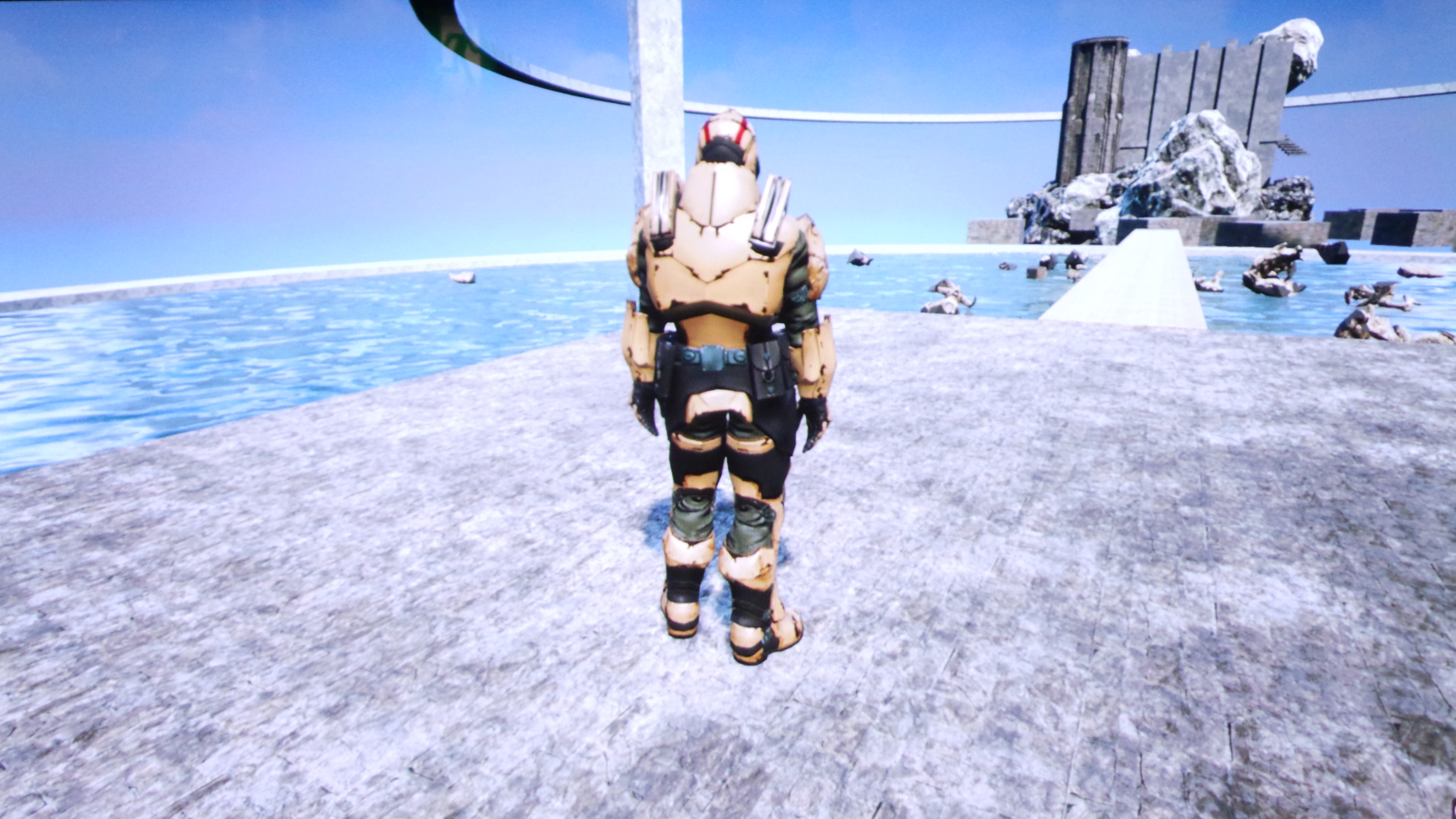
The game here, actually created by one of the teachers, is a simple platformer set on what appears to be a distant planet. The controls offer only movement and jumping, and while the game is somewhat basic, its main purpose is to showcase the graphics and textures that can be created with this engine. I enjoy jumping around for a while, admiring the water and landscape, before accidentally hitting a button on the controller that causes the game to stop working.

Next, we enter a room filled with iPads where we can try out actual games made by the students. Some of these delights include ‘Dancing Brain,’ ‘Fruits Panic!,’ and my favourite title, ‘Fable Sour Face.’ Apparently based on a novel, ‘Fable Sour Face’ was challenging to create as the student had to do it all alone—from scratch to the finished product. This tactical espionage operations adventure looks to me like a Doom/Quake clone. The tagline reads, ‘You get a lot of looks and can you tear it off.’

gamecrashed

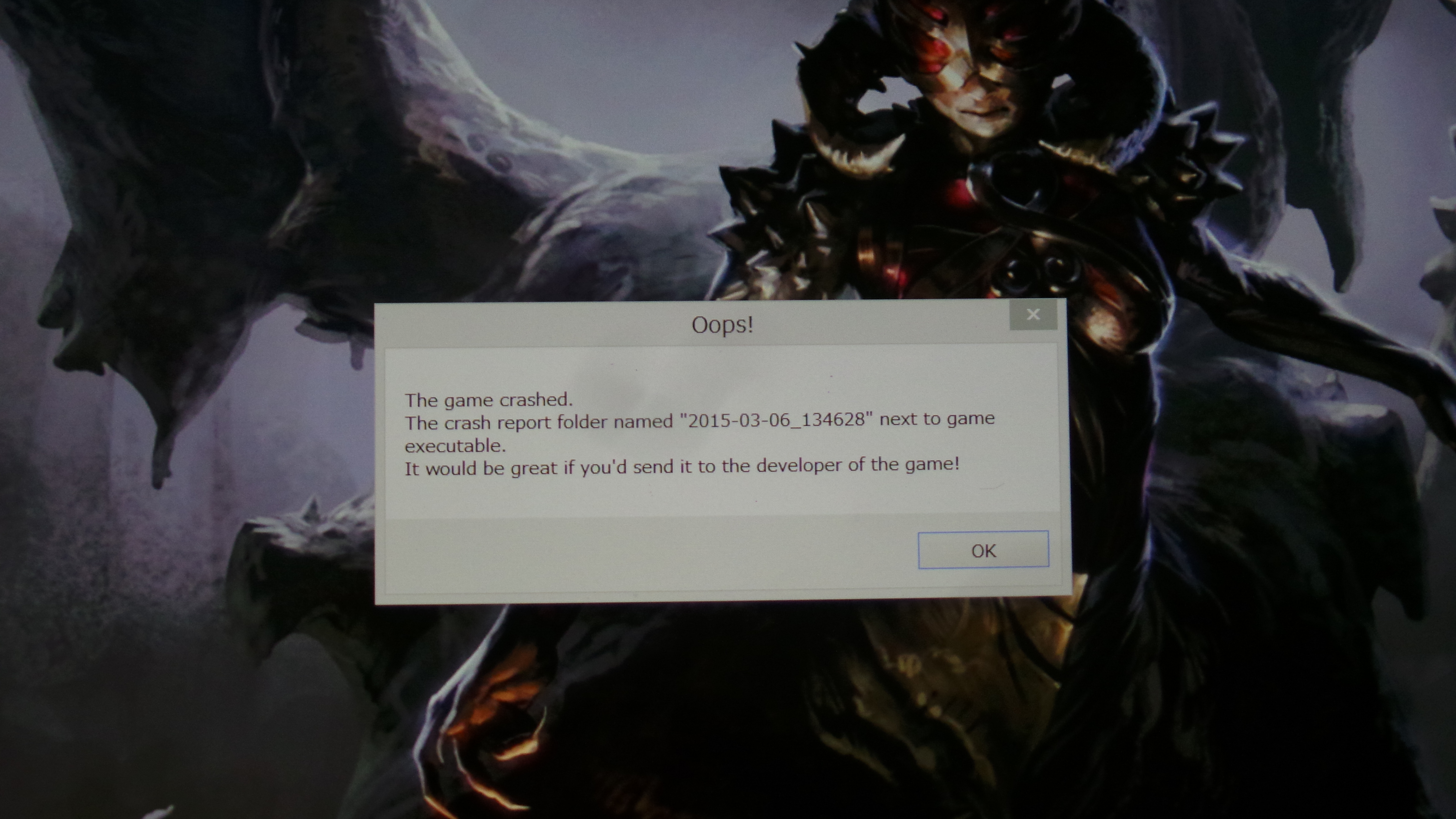
I pick up the iPad to play, press the start button, but I am instantly greeted by an error message. For the second time today, I’ve managed to break something.

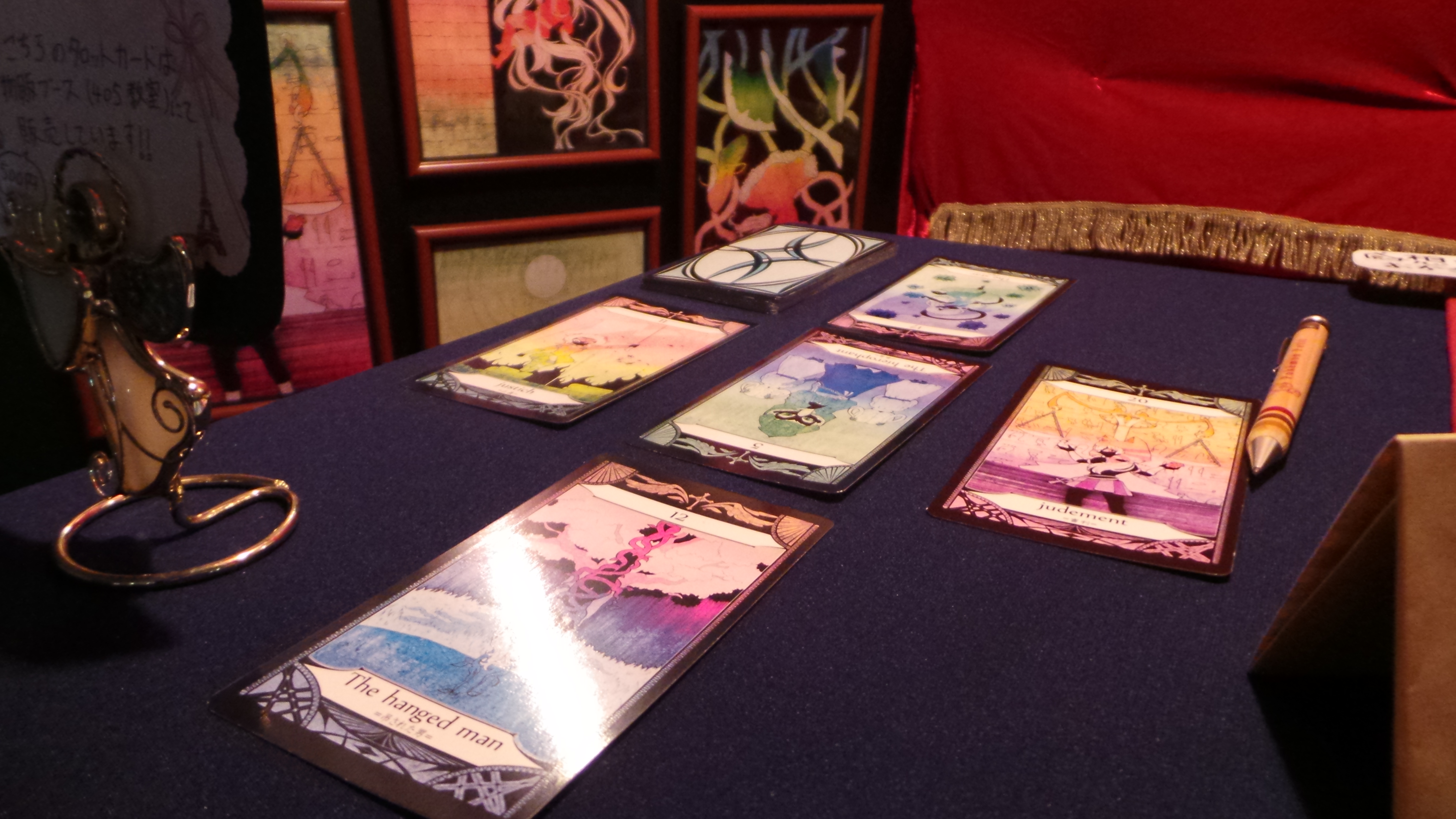
We continue to explore the various games—some very basic, others quite advanced. Interestingly, the video games room also features a collection of beautifully illustrated tarot cards based on German folktales, including the Pied Piper of Hamelin and the story of Rapunzel.

tarot

It makes me wonder, if anyone can simply make a set of tarot cards by themselves, how can they possibly be guided by a spiritual force during tarot readings? I start to think about things too much, pondering what might give the cards their mystical power, their divinatory aspect. Realising that I am being overly sceptical, I decide to instead check out the next room for more video games.

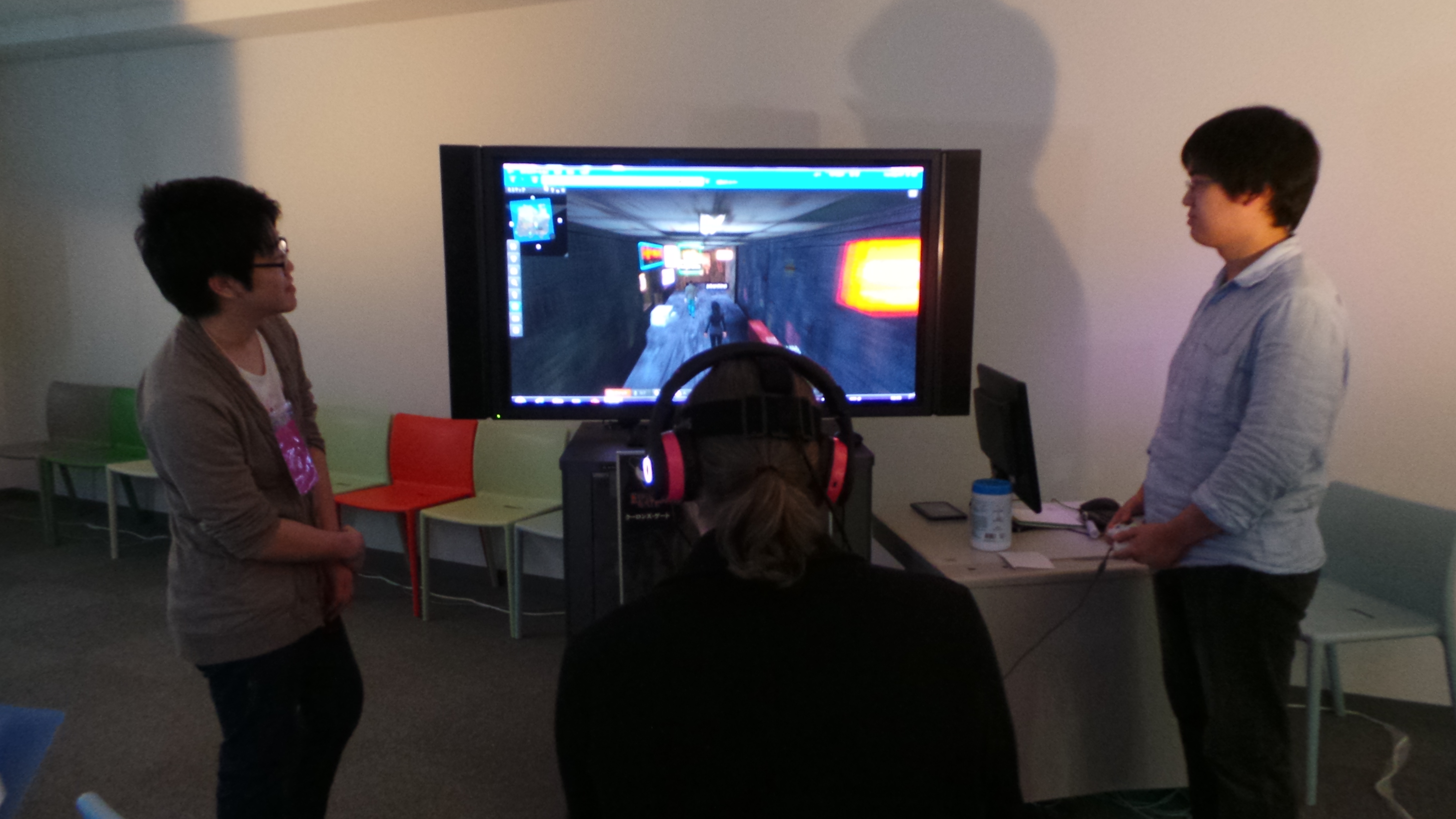
Kowloon’s Gate, a hugely popular adventure game released for the PlayStation in 1997, developed a massive cult following under the banner of the company ‘Zeque.’ Interestingly, one of the designers of the game is now a teacher at this university. He utilises the game to showcase the incredible power of the Oculus Rift.

occuluskowloon

This is my first time trying Oculus, and it’s an absolutely delightful experience. Strangely, when wearing the headset, it truly feels like I am living in another world — in this case, the world of Kowloon, Hong Kong. The Oculus Rift allows me to see everything through the eyes of the protagonist. Massive headphones block out all other sounds, except that of the game, enabling me to become fully immersed. Motion sensors determine where the character is looking. I sit for about five minutes, moving my head around, in awe of the apparent realism I am experiencing. After leaving Kowloon, my head feels a little dizzy, as if I am suffering from serious motion sickness. I bid goodbye to my friend as he returns to work and leave the university.

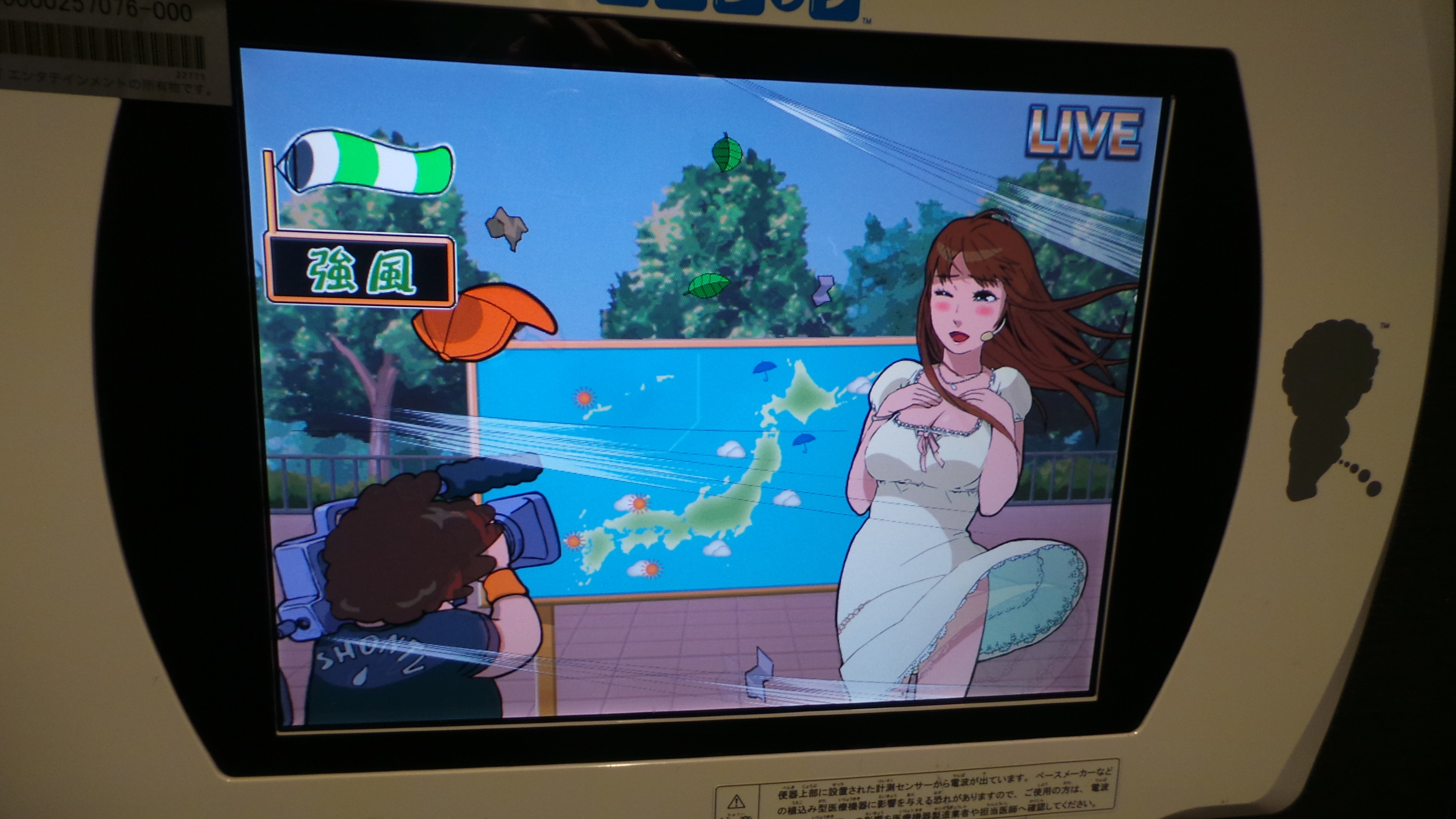
With a head full of pixels and my thoughts lost to video games, I head over to the only place that makes any sense: Akihabara. I make a stop at Planet Sega, taking the lift to the third floor, where I play some arcade-style video games. After twenty minutes of playing BlazBlue and not doing so well, I need to use the restroom. Above the urinal is a very strange computer screen displaying a different kind of video game.

skirtup

The game is oddly titled ‘The Northern Wind, the Sun and Me’ and features a young woman presenting the weather. The urinal is fitted with a target and sensor, and the harder I urinate, the stronger the wind blows. The aim of the game is to make the wind so strong that the skirt of the young lady gets high enough to reveal her underwear. It makes me wonder what the ladies’ restroom offers for entertainment. Unfortunately, the video game arcade is populated entirely by men, so I have nobody to ask. Somewhat confused about what I have just experienced, I decide that I have had enough video games for one day and need to go home.

International Food and Beverage Exhibition

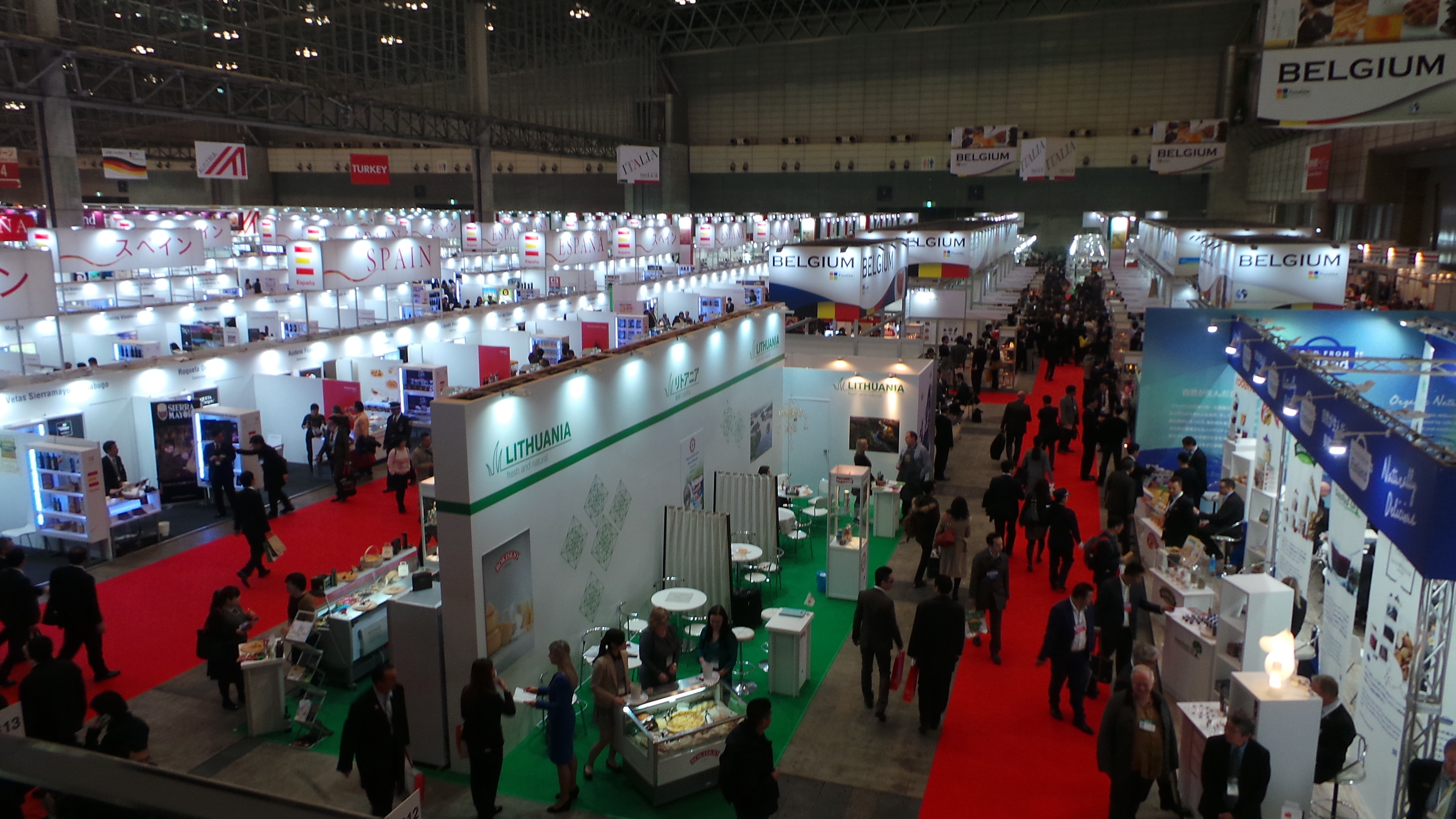
Today, I am at Makuhari Messe Convention Centre for Foodex Japan. In its 40th year, the event stands as the biggest trade show for food and beverage in Asia, featuring three thousand exhibitors from seventy-nine different countries. I received a private invitation, allowing me to hand over a business card at the entrance and receive my journalist pass, thus saving me the ¥5000 public entry fee. The first challenge I encounter at the event is their strict no-photography policy. They even threaten ejection from the event for anyone caught taking photographs, sneaking in animals, or attending solely for free food and drink.

Naturally, I adhere strictly to the rules, refraining from releasing any concealed animals into the exhibition halls or taking sneaky snaps of the event from a balcony above.  And, of course, my primary purpose for attending is certainly not to indulge in the free samples of food and drink offered by the three thousand exhibitors. Today, all food and drink are complimentary, with stallholders actively encouraging me to sample their offerings.

foodex5

I start with cheese. I seldom eat cheese in Japan, so when given the opportunity to be an official judge in a packaging and taste competition, I seize the chance. The competition involves comparing thirty-one cheeses from Japan. Just as I’m about to get serious about my judging responsibilities, the comedian in charge reminds me to take it seriously before asking me to select a wooden stick from a box. “Careful for electric shocks,” the man says, “this is high technology, like a supercomputer.” So much for taking things too seriously.

The cheese I have randomly selected is a Brazilian cream cheese made in Japan. I assess the packaging (somewhat basic) and evaluate the unique selling point of the product (non-existent). Next, I can choose any two other cheeses to rate in comparison. I opt for two cheeses that I’m eager to try. Following the rating, a taste test ensues, providing me with the opportunity to score the flavour and determine the likelihood of a future purchase. Interestingly, the cheese I selected, which appears to be the most expensive among the thirty-one, turns out to be the worst cheese I have ever tried.

After savouring the cheese, I crave a drink, prompting me to head for a cup of tea.

foodex3

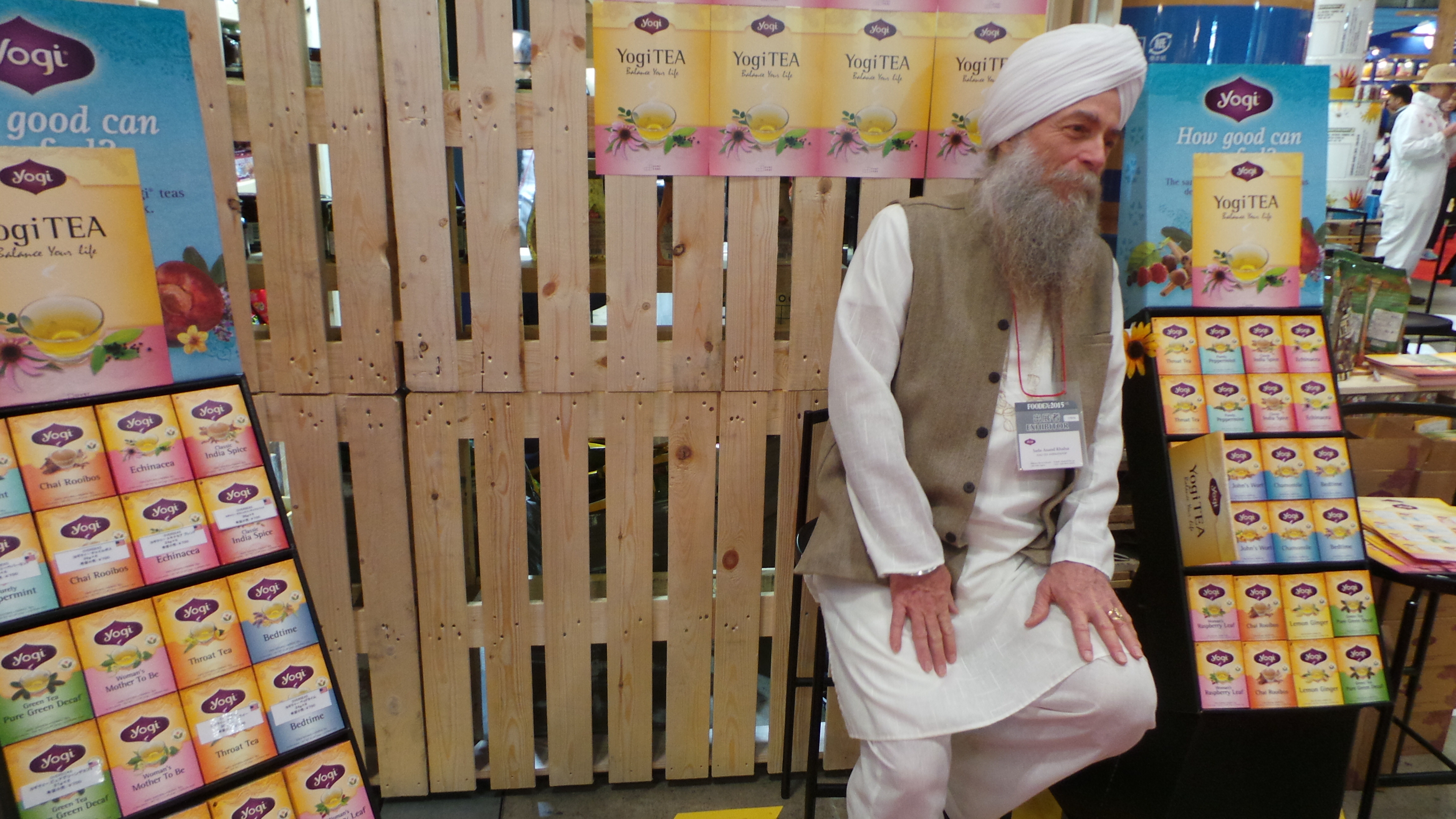
Unfortunately, the Yogi Tea stand offers their sample in the form of a tea bag. No hot water here. I have a chat with Sada-Anand Khalsa, a self proclaimed Yogi Tea Ambassador. His beard is better than mine, and his tea is apparently very wonderful. As I talk to him, he appears distracted, distant, and looks like he is about to fall off his stool. He’s probably had a few too many cups of his bedtime organic tea product, no doubt.

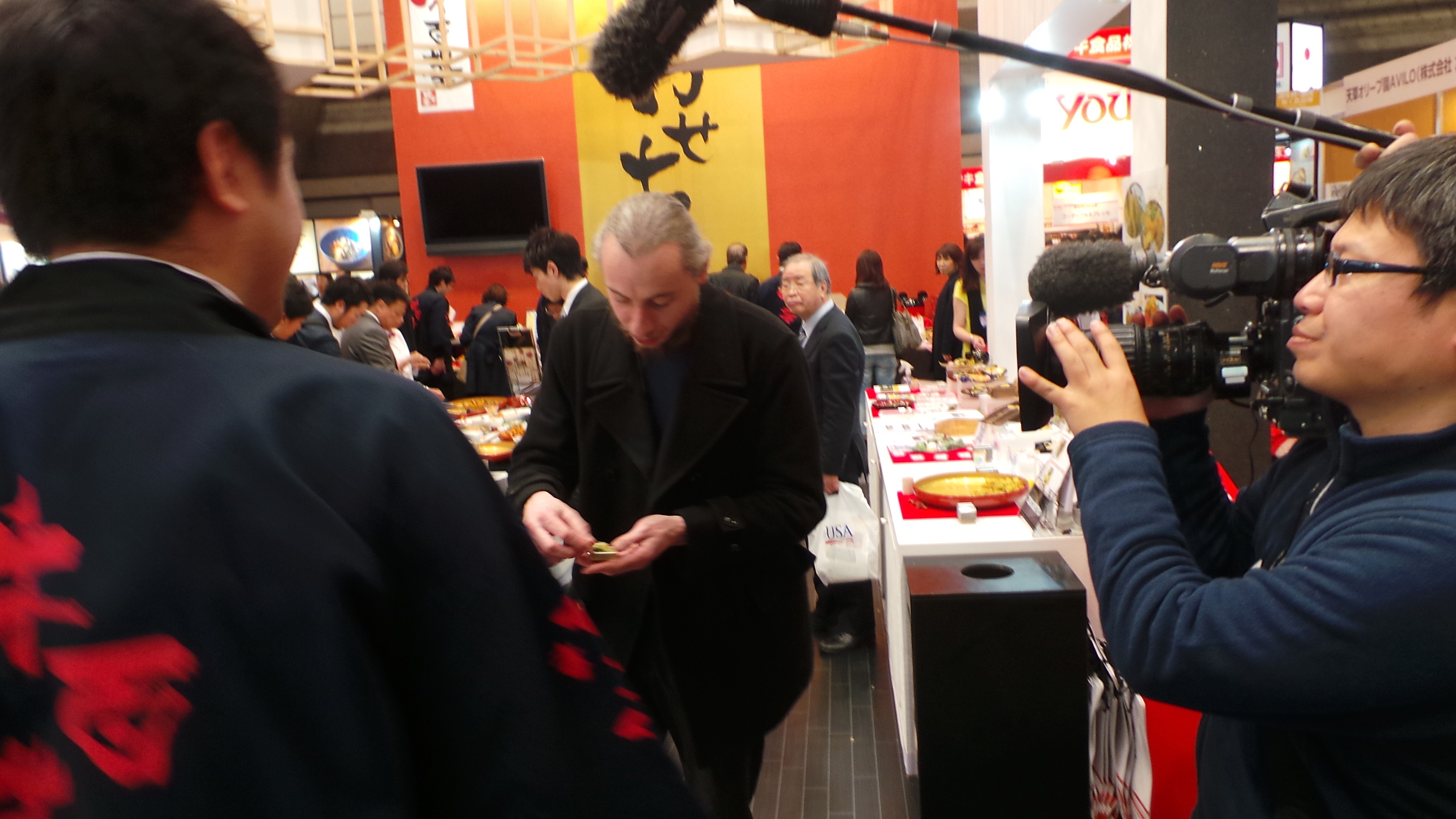
I continue exploring the red-carpeted route, treating myself to devil fruits and açaí berry smoothies. In Pakistan, I’m given the chance to try six-billion-year-old sea salt, and in Egypt, I indulge in some tasty salted peanuts. Upon reaching Japan, I find myself surrounded by microphones and cameras, as I become the subject of a television show—quite ironic, considering the event’s no photography or recording equipment policy. During the interview, I’m asked to sample Japanese food to capture my authentic reaction. However, they choose edamame, a dish I consume almost weekly, making it challenging for me to convey a genuine response to the familiar taste of beans.

foodex2

After the interview, I head to England to enjoy a scone. However, I notice that the stalls here are manned by individuals with uninviting expressions and disappointed faces. Unlike everywhere else I’ve stopped, where warm smiles and polite conversation welcomed me, it’s a different experience in England. Disheartened, I make the decision to leave and never return. Instead, I choose to visit the friendly land of Scotland for some delectable scallops. Later, I make my way to the welcoming Wales to enjoy a sample of a beer I’m already familiar with—Dark Side of the Moose.

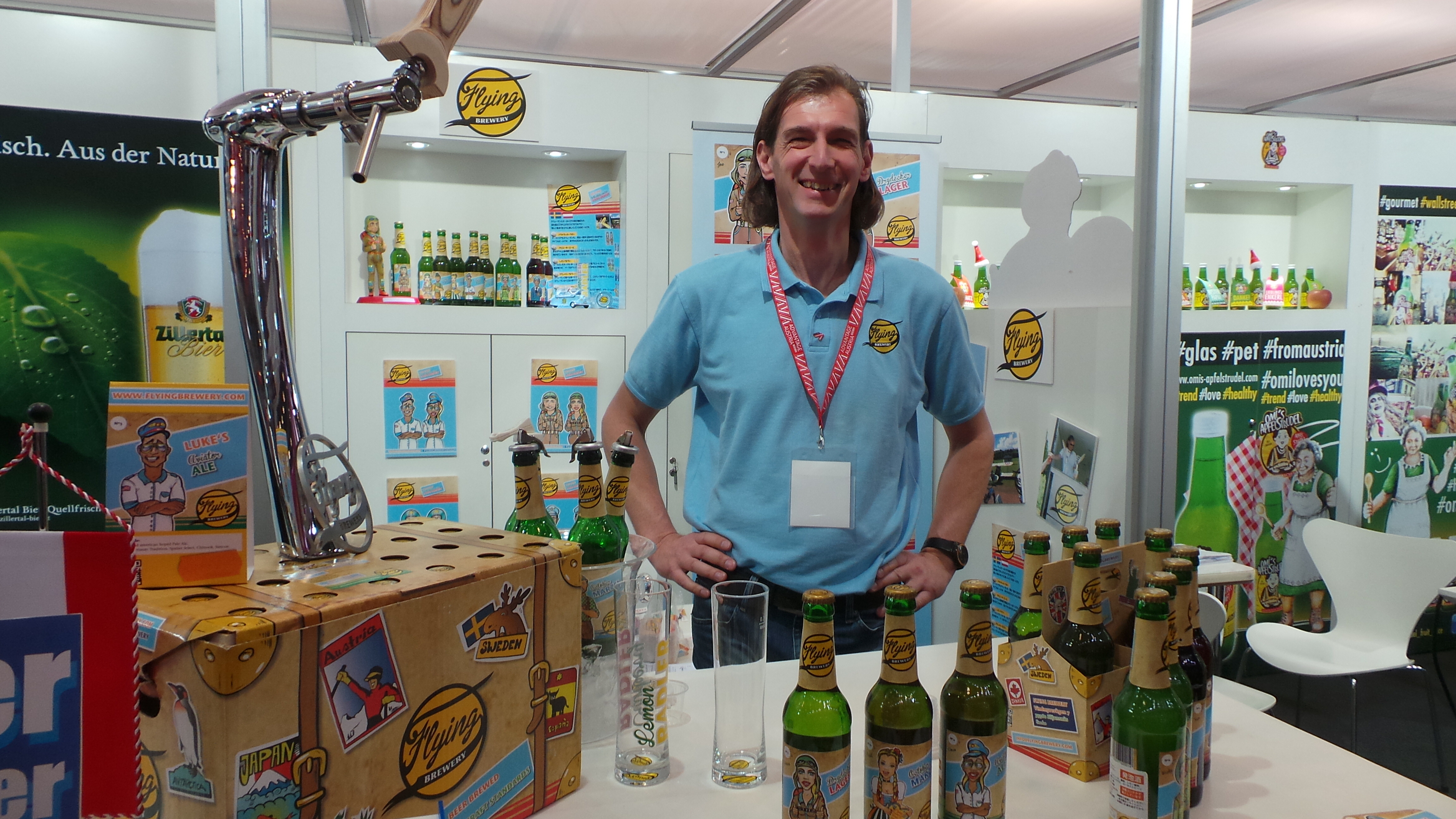
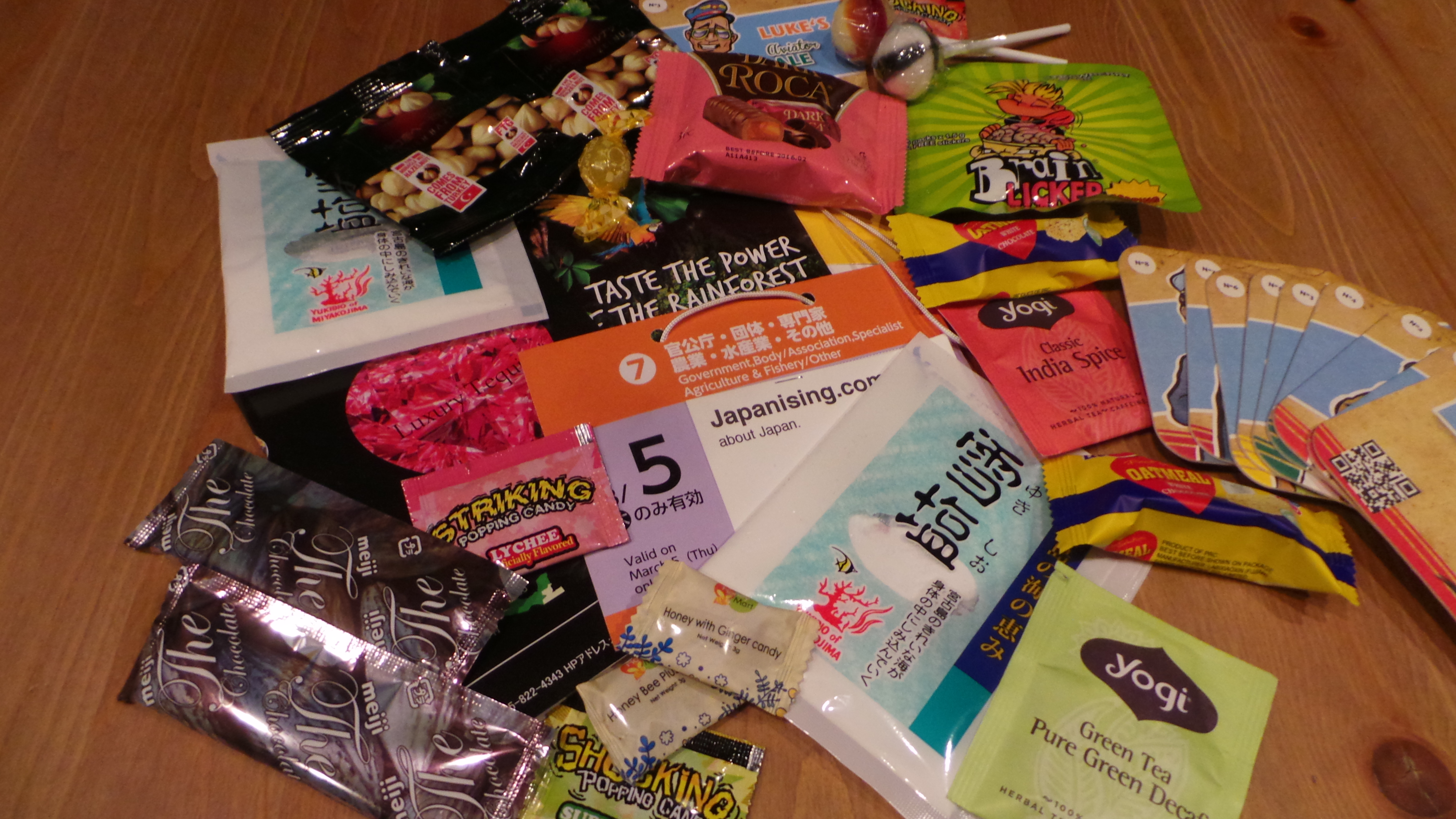
In Austria, I take a moment to chat with a friendly man about beer. The Flying Brewery proves to be wonderful and charming. After expressing a clear interest in sampling copious amounts of their free alcohol, the amiable man turns to his colleague and exclaims, “He wants to try them all!” This marks perhaps the turning point in my day, leading me into the delightful world of free alcohol. The beers here are fantastic, and I relish each and every one. The brewery even gifts me a set of twelve coasters and poses for a photograph. While a part of me considers that the journalist pass around my neck might have influenced their hospitality, another part of me believes that they are genuinely kind and passionate about their craft.

foodex4

With an ever-increasing thirst for beer, I head over to the only place that can satisfy my taste: Belgium. After wandering around in beer heaven for about an hour and sampling familiar delights such as Stella Artois and Hoegaarden, I move on to some of my favourite drinks—Delirium Tremens, Kriek, and Chimay.
“One more glass, sir?” says the man at the Chimay stand.
“Why, thank you, sir,” I reply, feeling very humbled and slightly drunk.

I continue to explore, observing snakes in bottles of miscellaneous liquid and engaging with companies solely present at the event to secure a Japanese distributor. After a bit of stumbling, I find myself in Mexico, enticed by amusingly shaped bottles of expensive tequila.

foodex1

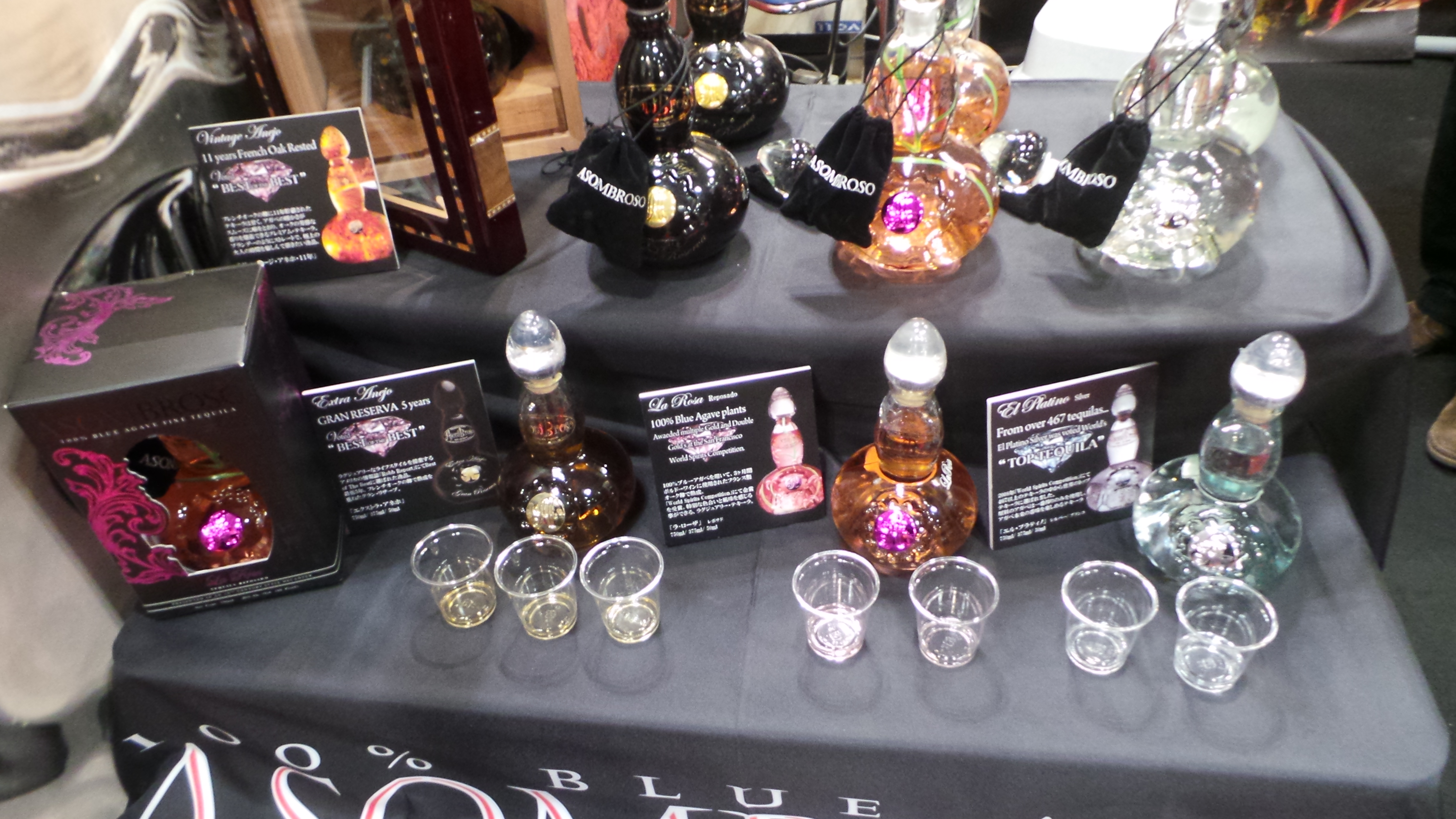
AsomBroso is a luxury tequila from Tequila, Mexico, and one bottle costs around ¥7000. After sampling a small glass, I strike up a conversation with the friendly man manning the booth. A simple mention of the word ‘journalist’ earns me a second glass and an invitation to take a photograph of his display. The tequila is, in fact, the best I have ever tasted—good quality stuff.

In Finland, I chat with a nice lady about the health benefits of bilberry. In Indonesia, I indulge in fresh tuna sashimi. Thailand offers me samples of multiple hot sauces served with various delicious canapés. However, my favourite dish of the day comes from Malaysia—shrimp noodles in a spicy sauce broth that comes with a strong warning: ‘Extremely hot, eat carefully and very slowly.’ As I wander through multiple stores offering sweets, dried fruits, organic chocolate, and health products, I somehow take a wrong turn and end up in Australia. Unfortunately, there’s no attention from the yawning people here, no free samples, only misery.

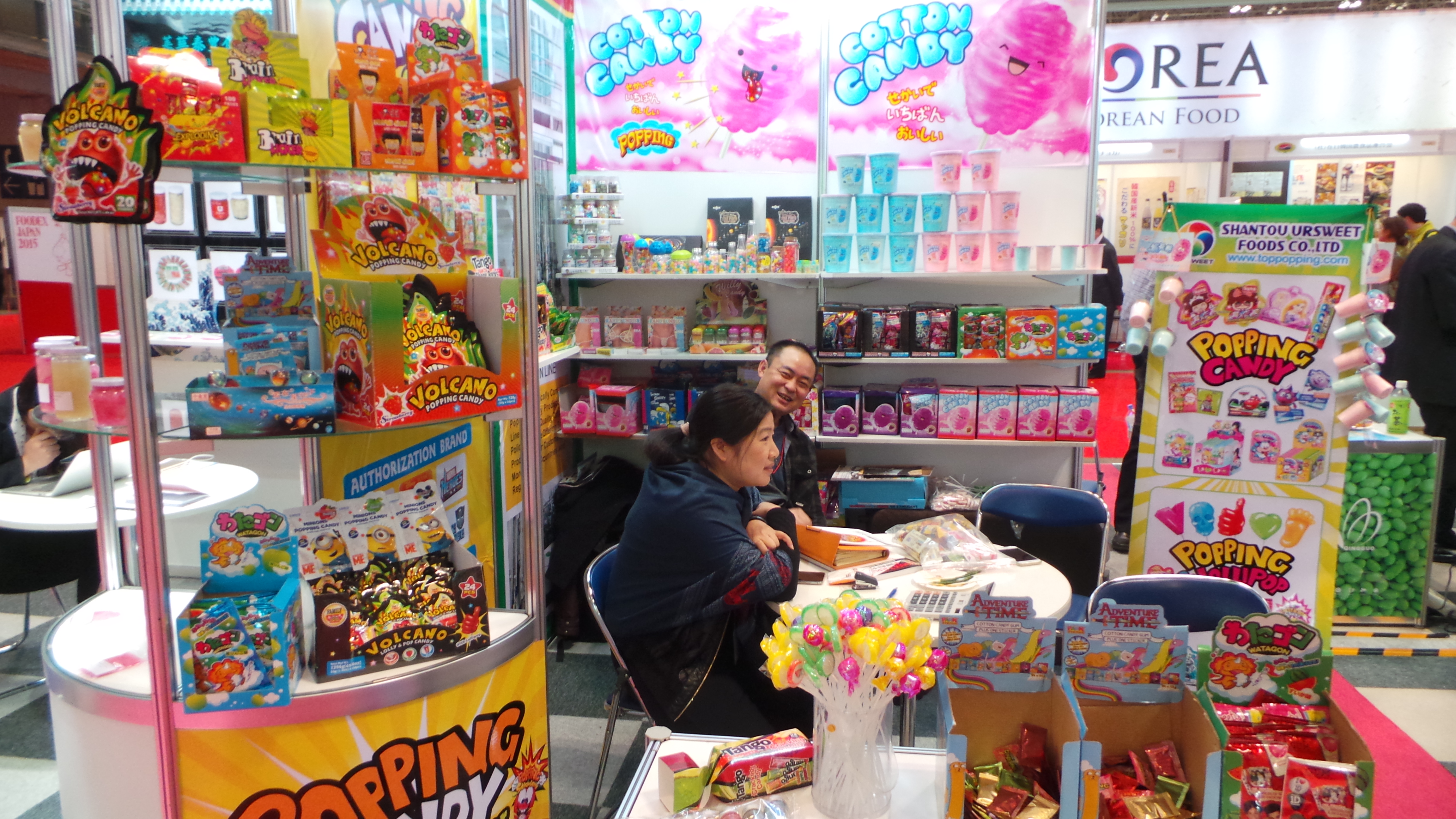
Finally, I explore what China has to offer. I am surprised by the contrast between China and Australia; the politeness expressed by the people here at such a late time in the day, and the complete lack of yawning and misery is a big surprise to me. Everyone wants to speak to me, everyone is friendly, and of course, everyone wants me to try their products. One store I particularly enjoyed was Shantou Sweet House Foodstuff.

foodex6

This Chinese confectioner offers many interestingly named products, such as Brain Licker, Nipple Lipstick Tooth Candy, and Plastic Fruity Sour Sour Stick. “Wait here for a moment,” says the stallholder, following our long conversation about sugar. He returns with a huge bag of sweets, including strawberry-flavoured popping candy that comes with two free stickers.

Leaving China, it feels like I’ve just been on a six-hour tour around the whole world. I exit the event and take the free shuttle bus over to Kaihin-Makuhari Station. For some reason, a woman in the train station hands me a free sample of a doughnut. Free samples are the last thing I can enjoy right now; food is the very last thing on my mind.

foodex7

Back at home, as I empty out my full pockets of the many free gifts and brochures, it reminds me of a lost childhood memory of Halloween. I still have an awful lot more food to eat, but I can’t really complain. I enjoyed the event, the food, the beverages, on what has been quite a wonderful day in Chiba.

Somewhere Oji We Know

The day is warm but grey. I head over to the Sumida River to take a look at a traditional Japanese festival known as Hina-matsuri. It’s a day dedicated to girls, celebrating the passing of ancient dolls from generation to generation. Originally, these dolls were floated along the river. However, due to issues with local fishermen, this practice was discontinued. Nowadays, the dolls are cast into the ocean before being collected and burnt. As is customary, the dolls are believed to contain evil spirits, and Japan utilises fire to cleanse them of the demons within.

Unfortunately, upon my arrival at the Sumida River, the event has already concluded, and the market stalls and stage are in the process of being taken down. With not much left to do for the day, I hop on my bicycle and once again head in the direction of Kita Ward, towards a quaint little place known as Oji.

oji1[1]

I find myself standing in Asukayama Park, a vast area designated in 1873 as one of Japan’s first public parks. Instead of climbing the steep steps for entry, feeling particularly lazy, I opted to ride for free on the monorail that crawls along the incline and into the park. Interestingly, the train station here runs alongside the park. As I look in one direction, I’m surrounded by lush greenery, while in the other, I see the familiar sights of billboards, buildings, railway tracks, and advertisements in the sky.

As I explore Asukayama Park, I’m pleasantly surprised to discover a unique playground for children, quite different from what I’m accustomed to seeing. The play area features old trains repurposed into climbing frames. Among them, two locomotives stand prominently, and my personal favourite is D51 853, a steam train donated to the park on August 31st, 1943. A nearby sign mentions something about coal, water, and charcoal, though I have no idea what it is referring to.

oji3[1]

D51 853 is awesome. Not only can I go inside and look at the old steam engine, but I can also climb onto the roof and pretend I am in a movie. I feel happy for the children who come here. Parks in Japan offer excellent facilities and interesting attractions. It makes me wish that I had such adventurous play areas in England when I was a child, but instead, all we had were rubbish swings. A sign says, ‘D51 853 is somewhat dangerous. Play carefully, duck down, or climb up on the high locomotive!’

I continue my exploration and discover that this park also boasts old waterfalls absent of water, beautiful foliage, and multiple statues and sculptures of varying shapes and sizes. One such sculpture is merely a small pile of rocks, while another is a giant rock enveloped in a small wooden shelter.

oji2[1]

A sign beside the massive rock mentions something about the ceremonial transfer of a divided tutelary deity to a new location, although the meaning escapes me. It also notes that the inscription is challenging to decipher in Japanese, as the letters were written using ancient kanji and rare calligraphy. Despite the protective wooden house, the words have succumbed to a weathered, entropic fate. A second sign, written in English, amuses me; it simply says, ‘Rock, please do not climb.’ Instead, I climb the protective wooden house.

As I leave the park, I pass by the Paper Museum and ponder how interesting it must be. Unfortunately, it’s closed today. I continue to walk, heading toward a bridge, where I follow some old stone steps down to Otonashi Shinsui Park.

Oji4[1]

Hidden beneath the bridge, Otonashi Shinsui Park is simply amazing. It boasts its own old wooden bridge, a small stream, an abundance of beautiful nature, and an opportunity for rock climbing practice on the many craggy stone structures that don’t appear to be dangerous at all. I stand for a while, deciding not to climb but only to observe, taking in the beauty of the scenery. After a while, I head back up the steps and across the bridge.

Beyond the bridge, there’s a huge torii gate and a massive shrine.

oji5[1]

Oji Shrine, one of Emperor Meiji’s Ten Shrines of Tokyo, is part of a pilgrimage trail consisting of ten shrines. Today, the shrine is devoid of visitors; perhaps they are all too busy enjoying the festivities with their dolls. Legend has it that the shrine was renamed by Toyoshima, a Japanese warlord. However, the most intriguing aspect here is a much smaller shrine dedicated to the god of hairdressing and wig-making. Quite peculiar.

I continue cycling around the area, searching for something of interest. Eventually, I stumble upon large castle walls with modern houses built above them. Steep stone slopes run along the castle wall, eventually leading to Oji Inari Shrine—a place where foxes seemingly guard the playground for children situated at the bottom of the hill.

The god of rice harvesting resides here, and so do the foxes. Among all the fox shrines in Tokyo, Oji Inari Shrine is considered the main one. Every year, at the end of the year, foxes reportedly visit from all over Japan to guard the god of the rice harvest, and presumably, to offer their prayers. It’s hard to believe that if I came here on New Year’s Eve, the shrine grounds would be filled with foxes, but that’s what the information here tells me, and who am I to argue with information.

oji7[1]

I leave the shrine and start cycling back toward Asakusa. I make a brief stop at the Banknote and Postage Stamp Museum, but unfortunately, it’s closed today. It’s a shame really because inside this free museum, it’s said that you can lift one billion yen. I would have loved to take one billion yen home with me, but sadly, that won’t be happening today.

Back in Asakusa, I finally get a chance to experience Hina-matsuri through traditional food. Chirashizushi (scattered sushi) is the dish that women typically eat on this day. It’s supposed to be sugar-flavoured, featuring vinegared sushi rice. While the toppings usually include raw fish, for some reason, my friend has given me a unique mix of rice topped with egg, cream cheese, and strawberries. Although three of the ingredients generally go well together, the addition of strawberries for the sugar-flavoured element is what I find a bit strange. While this might be a traditional food in Japan, strawberries with egg and rice is something I struggle to bring myself to enjoy.

As I cycle home with the taste of Chirashizushi scattered in my mouth, I decide that my next blog post will be primarily about food.

Pot Without Season

The local elections are approaching, and this can only mean one thing: megaphones. It seems that in Japan, the person who can shout the loudest and for the longest time is most likely to receive the most votes during a successful election campaign. I’ve come to know this because, for the past three days, I have been rudely awakened by the sound of a man shouting ‘hello’ and repeating his own name over and over again.

Today, the man has decided to park his election truck outside my apartment. For ten minutes, he offers no information regarding his policy, no broken promises, or any reason to vote for him, other than his own name. Someone once told me that the reason for this shouting is to annoy younger voters, causing them to hate politics. Japan, with a larger number of elderly voters than young ones, makes me think that there might be some truth in these words.

electvan[1]

With a splitting headache, I decide the best thing to do today is to head to a park and relax, away from the shouting and the megaphones. I take my bicycle and cycle through Asakusa toward Ueno Park. Somehow, on Kappabashi Street, the man who was outside my house just twenty minutes previously has decided to park directly on my route to Ueno. It’s as though he’s following me, tormenting me. I need to escape this noise.

Japan is often described as a country of four definite seasons, or so a popular guidebook tells me. However, this doesn’t seem to be the case. This week has seen a day of snow, a day so full of rain that even an umbrella couldn’t protect me, and today, a day that is unusually warm. So warm, in fact, that as I enter Ueno Park, a wash of green leaves surrounds me, and standing out among the sea of green is a single tree adorned with white and pink blossoms.

sakura[1]

Cherry blossom season isn’t scheduled to begin for another month, yet one tree seems to have been confused by the recent strange weather, blossoming a month early. When I was told that every year, Japanese people go to the park or the river and take part in a festival known as ‘hanami’ (literally translating to mean ‘flower viewing’), I couldn’t really understand the appeal. Now, I am beginning to recognise the evanescent beauty of these flowers and the reasoning behind this spring festival.

I stand admiring the cherry blossom tree for a while before deciding that it’s warm enough for me to do one of my favourite things—exploring. I head in the direction of Kita Ward, a Tokyo ward without the annoying election campaign. Nishigahara is the area in this city that stands out for me. I spot a huge torii gate and a distant shrine, so I decide to investigate.

nanashashrine[1]

Nanasha Shrine was constructed to safeguard crucial documents related to the Age of Gods, recounting the mythology of how Japan was formed. Regrettably, in 1793, a fire engulfed these documents, conveniently erasing all evidence suggesting that Japan was created by mystical deities. Even a sign written in Japanese at the shrine’s entrance acknowledges the uncertainty, stating, ‘We can’t even be certain if the mythology is true, as the most important documents ever written were lost to fire.’

I continue exploring the Nishigahara area and stumble upon a vast park. Takinogawa Park boasts rock climbing facilities, an abundance of children playing football, and a dried-up pond that supposedly features a waterfall; the only element missing is the water. The park also showcases a very intriguing statue at its entrance, which, at first, I mistook for a misshaped tree.

stickman[1]

Hidden on a side path, there’s an ornamental display containing a rather old-looking piece of pottery. The pot is from the Yayoi period—an Iron Age era that began around 300 BC and lasted approximately six hundred years. These lightly decorated pots were the first in Japan to be made using a potter’s wheel; before this, all pots in Japan were crafted by hand.

I’m not sure why such a pot is on display in this small park in Nishigahara, or why it isn’t resting somewhere in a museum—protected from rain, theft, and stray footballs. Regardless, it does look rather nice. Even though it serves as an overlooked reminder of Yayoi Pottery and a memory of a distant past, I somehow enjoy its presence.

potterystatue[1]

A nearby sign states, ‘It may suggest that there was a place of ancient life in you,’ albeit, the sign is nowhere near the pot. Presumably, the sign is referring to the pottery, although this is simply my guess; I can see nothing else near the sign that could possibly relate to an ancient life in me. I note down the text on the sign before deciding that I’ve had enough of parks for one day. I turn around and cycle back in the direction of Asakusa.

On my way home, I make a brief stop for a sandwich outside Oku Station. Across from the station, I notice the strangest named hair salon I’ve seen in a while. Presumably, for the low cost of ¥1500, I can have my brains cut out. Even with my terrific megaphonic headache, the thought of my brains being severed by scissors is far too much to deal with right now.

cutbrains[1]

Brains intact, I arrive in Asakusa and find myself cycling down Orange Street. Despite taking this route many times this month, I hadn’t previously noticed that this street is lined on either side with bright, colorful Christmas trees. Perhaps they are a recent addition to Orange Street, but I will never know for sure. It feels to me that in Tokyo, all of the seasons have become blurred into one giant mess of time. I don’t even know whether today is Christmas Day, the middle of spring, or 300 BC.