Drive My Car

Today I’m in Sasebo, Nagasaki Prefecture, and there are mountains everywhere. I walk vaguely in the direction of Sasebo Yonkacho Shotengai, a shopping arcade so big that its kilometre-long length spans across seven different towns. It is actually the longest straight and continuous shopping arcade in Japan. Sasebo Tourist Information states: “The arcade is always crowded with shoppers. Some stores accept US dollars.”

As I begin to wander through the retro shopping arcade, I notice a complete lack of not just shoppers, but shops that are open. Everything here aside from stores like Seven Eleven and Family Mart are all but closed. The arcade boasts over 160 shops, including a multitude of restaurants, souvenir shops, clothing shops, as well as daily goods stores. This morning, however, shuttered down shops with no identity fill the margins of this shopping stretch. The shopping arcade does however offer free wireless Internet, and also offers a nice break from the low winter sun on what is a relatively warm winter morning.

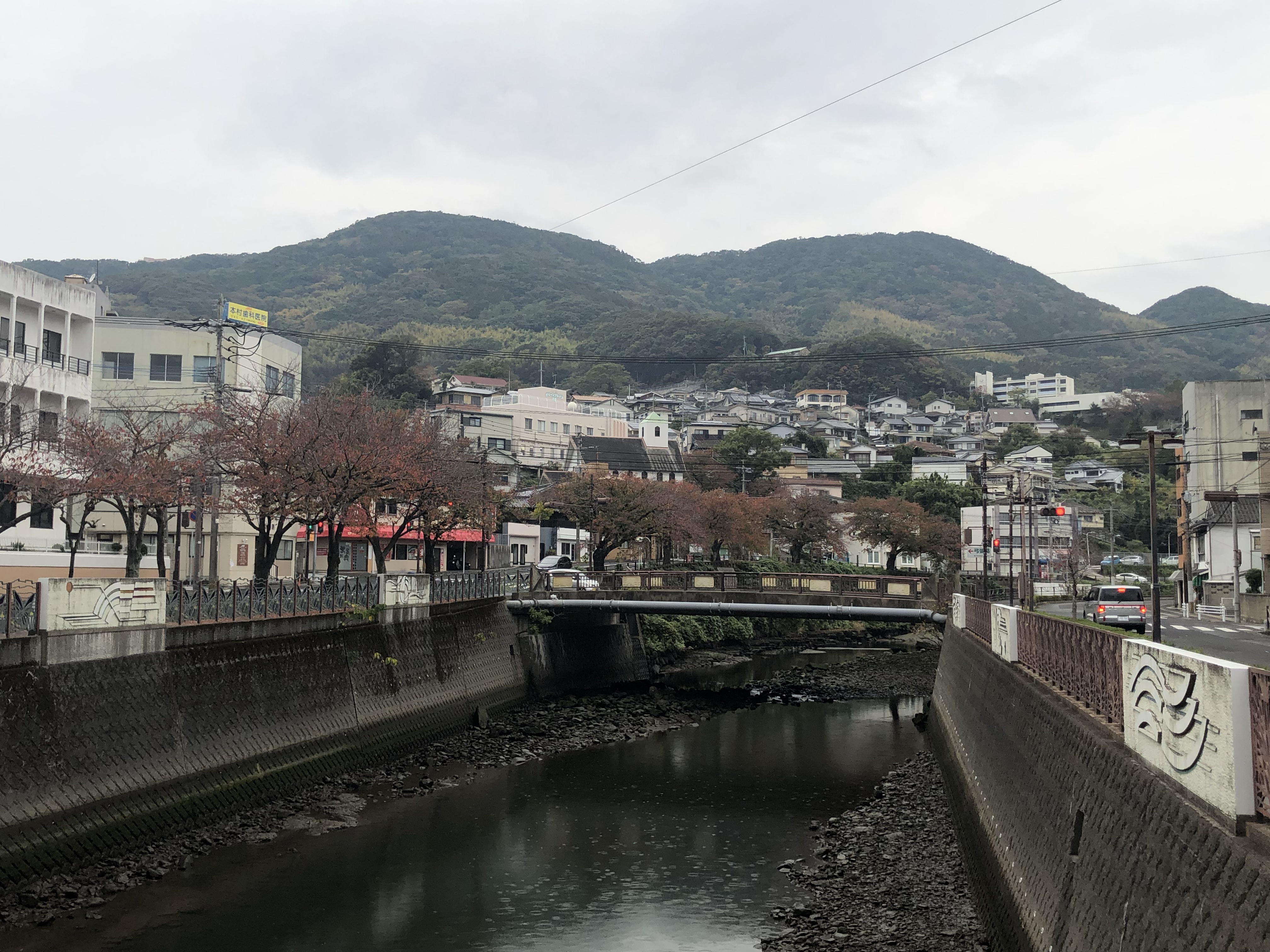
At the other end of the arcade, Mount Yumiharidake hovers on the distant horizon.
As I further approach the mountain, a sign tells me that the summit is 3.4 kilometres away. Having just walked one kilometre through a shopping street with relative ease, I decide that this could be an enjoyable hike to the top. There is said to be an observation deck at the peak which offers some of the best views of Sasebo and its surrounding nature, so, off I go.

It seems there are multiple ways up the mountain. The boring option is to hike the entire route by simply following the main road, or as I do, take some of the more interesting routes up steep steps and rocky intervals. As more and more of the paths begin to fracture and split into narrow lanes that scale upwards from the base of the mountain, interwoven homes across narrow streets littered with cats make up the first twenty minutes of the climb.
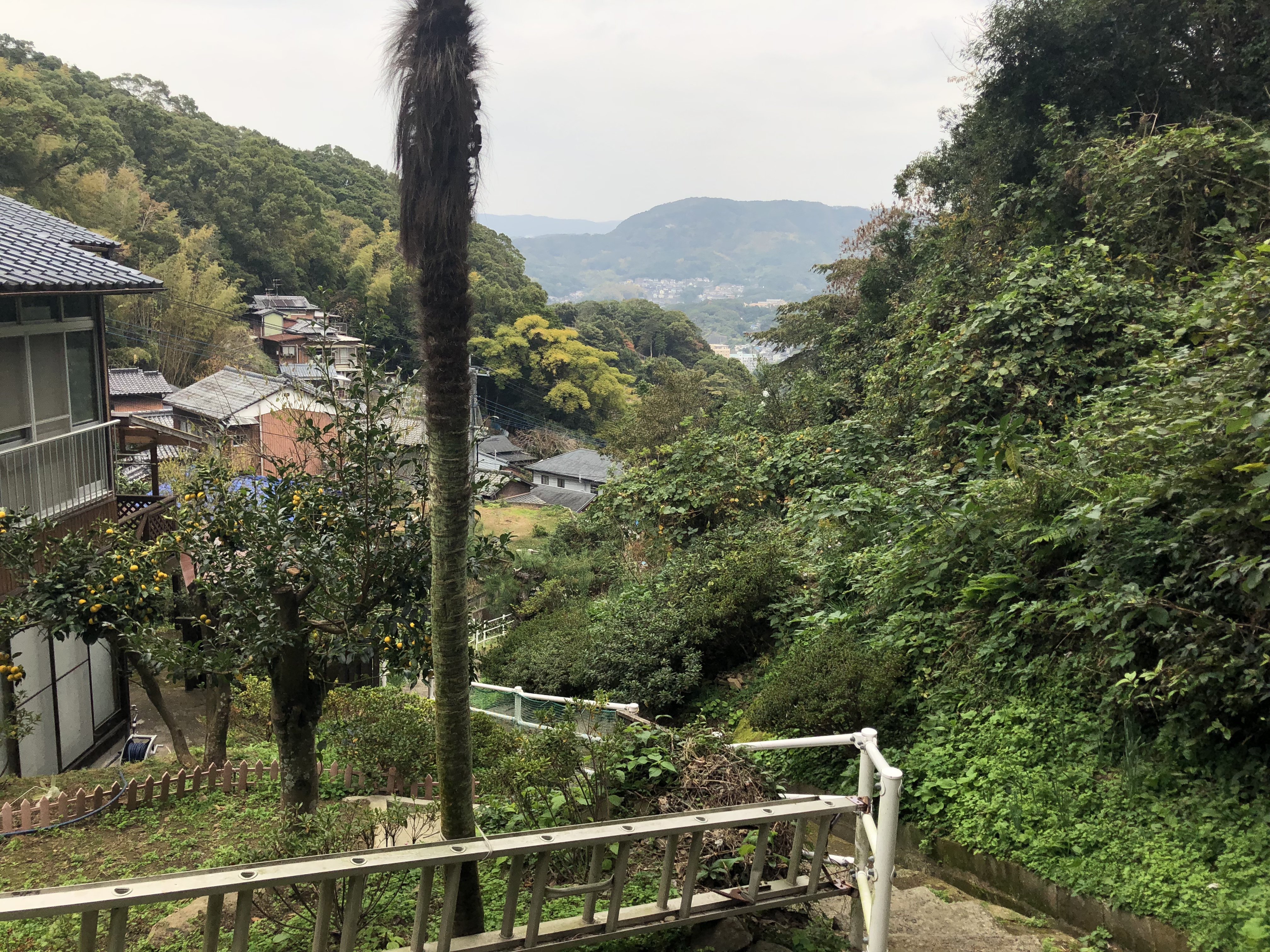
As I continue on with my ascent, the route begins to snake more and more, and light rain begins to fall. Hot from the day and the steepness of the climb I find the rain to be a welcome refreshment and decide to rest for a moment, allowing the rain to cool me down, and my heart rate to climb back down to a steady crawl.

I stop suddenly when I notice a sign telling me to watch out for snakes, but not just any snakes, mamushi, the most venomous snakes in Japan.
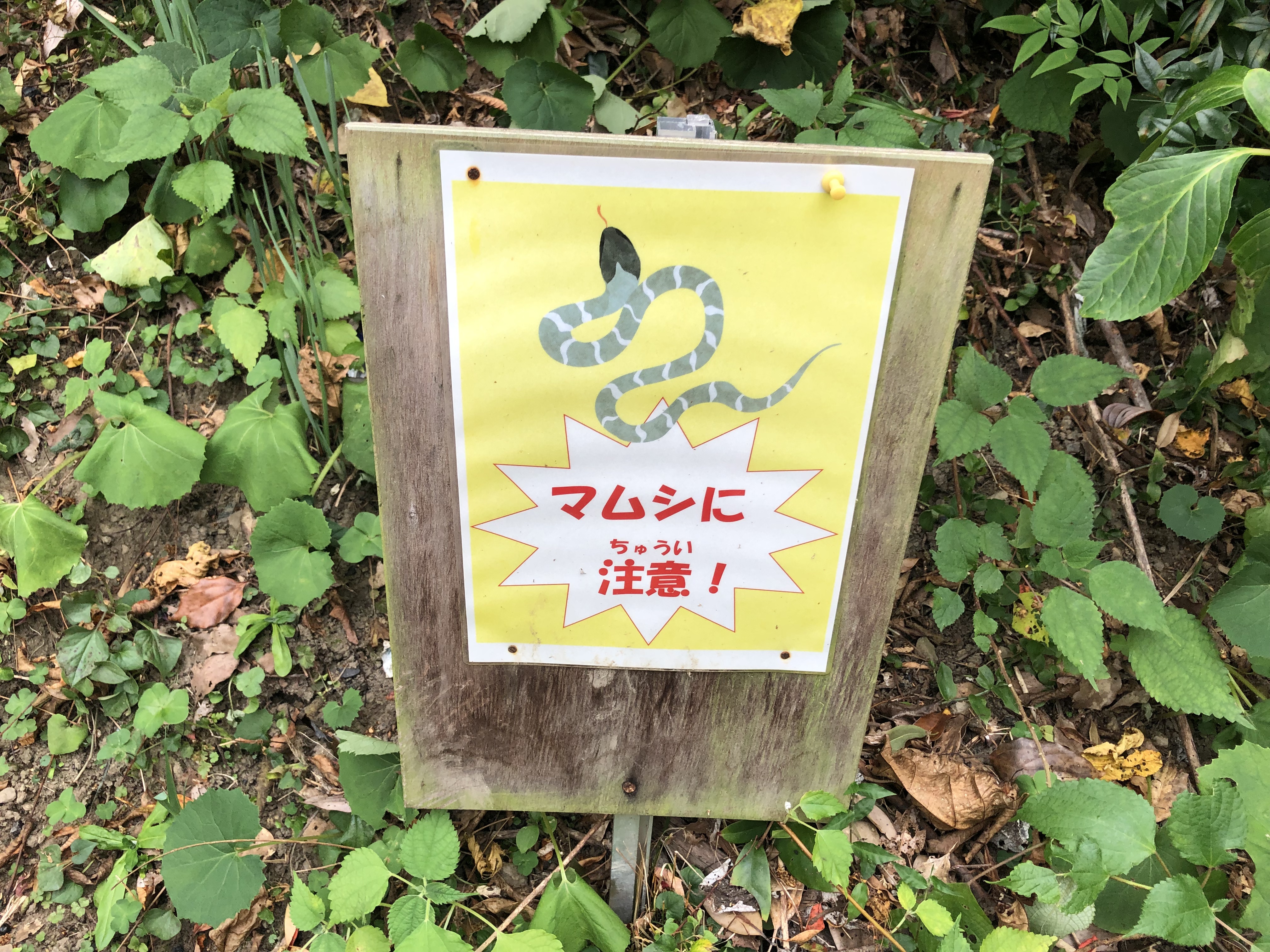
As I watch out for snakes, I pass under low hanging cobwebs that drift between trees across the many muddy paths. I don’t see any other people, and other than the cats, I don’t expect that I ever will. The track spirals around and into a clearing through the woods for a time, before becoming a path again.

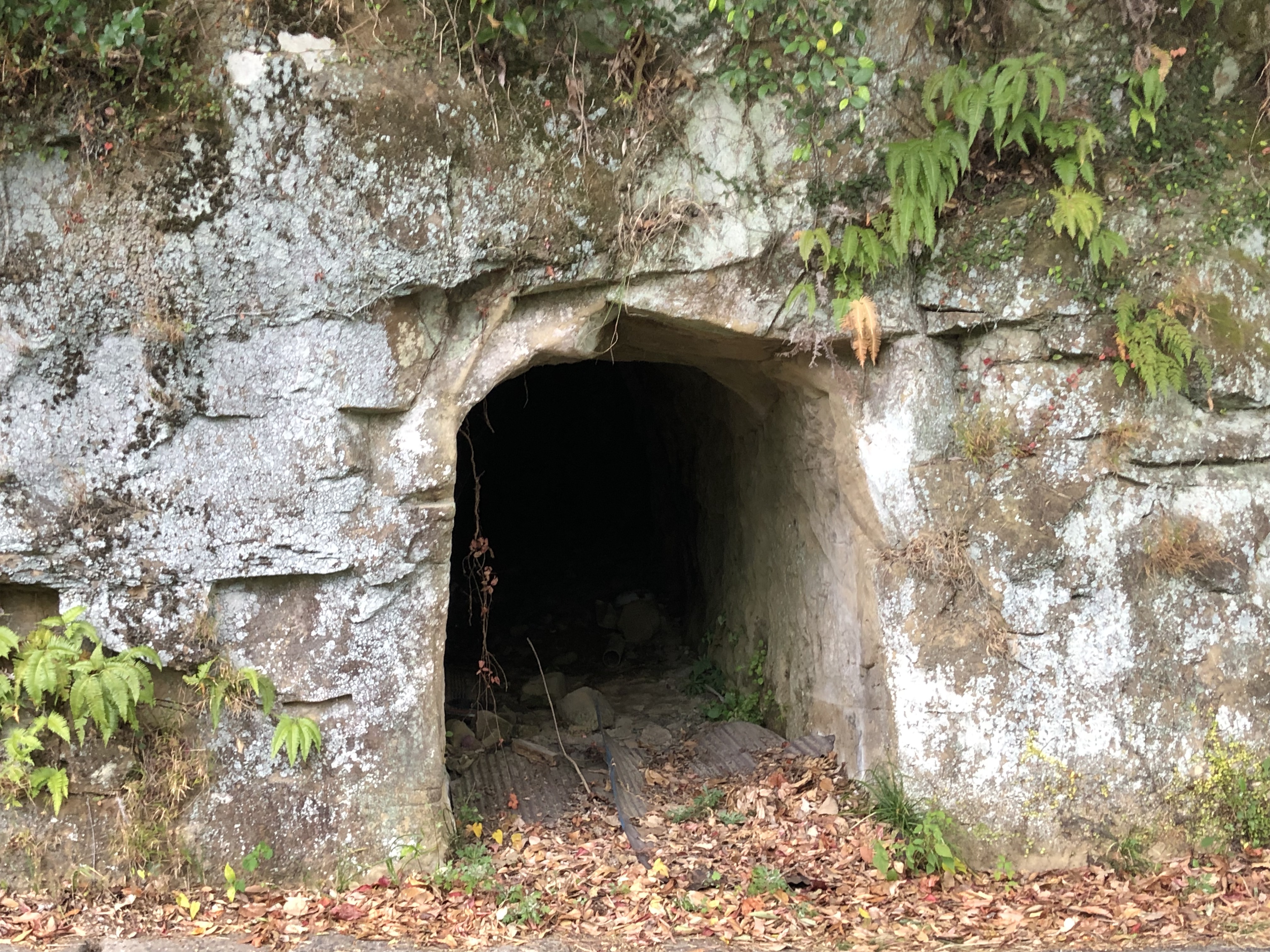
A little later, I pass a rather small cave carved into the rocks, I’m not sure if this is part of the climb or not, but it looks ominous, as if some unnamed horror is lurking inside. I take out my phone to capture the cave, before turning on my torch. As I bring the light to the entrance, I hear something inside begin to rustle around, perhaps a snake, and my heart begins to race; its beats increasing and repeating, an octave at a time, like an endlessly rising Bach canon fit for a king.
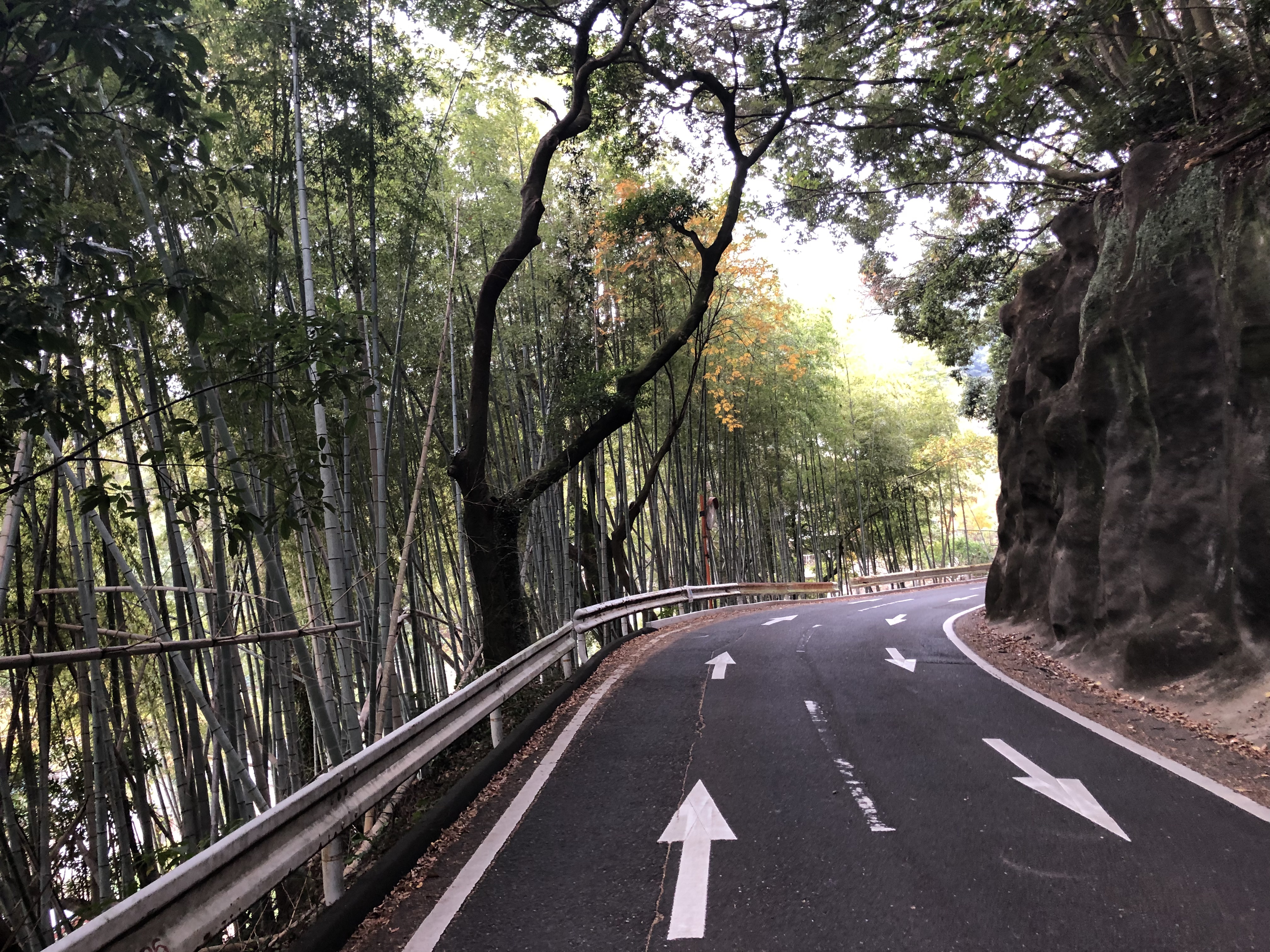
After taking an alternative route, I eventually reach a road where bamboo stretches off to the side, bamboo so tall that it descends deep below the road, stretching off into a distant obscurity.

Further along the road I see a sign telling me to, “Keep Out!” and below the sign is a huge drop, and I wonder who this sign is even for. Eventually, I see another sign for a car park, 300 metres away, and breathe a sigh of relief in knowing that I’m almost at the top. A third sign explains that gun hunting is prohibited in this area, perhaps the reason for the abundance of snakes.
Finally the mountain path opens up, to reveal a stunning view of the city and landscapes beyond. Its US navy base below with its massive boats. Other mountains bulge up over the horizon, the view somewhat washed white by the falling rain. Over to the west, a large labyrinth of small islands, the Kujukushima Islands, its name meaning 99 islands, but also meaning too many islands to count (there are exactly 208).
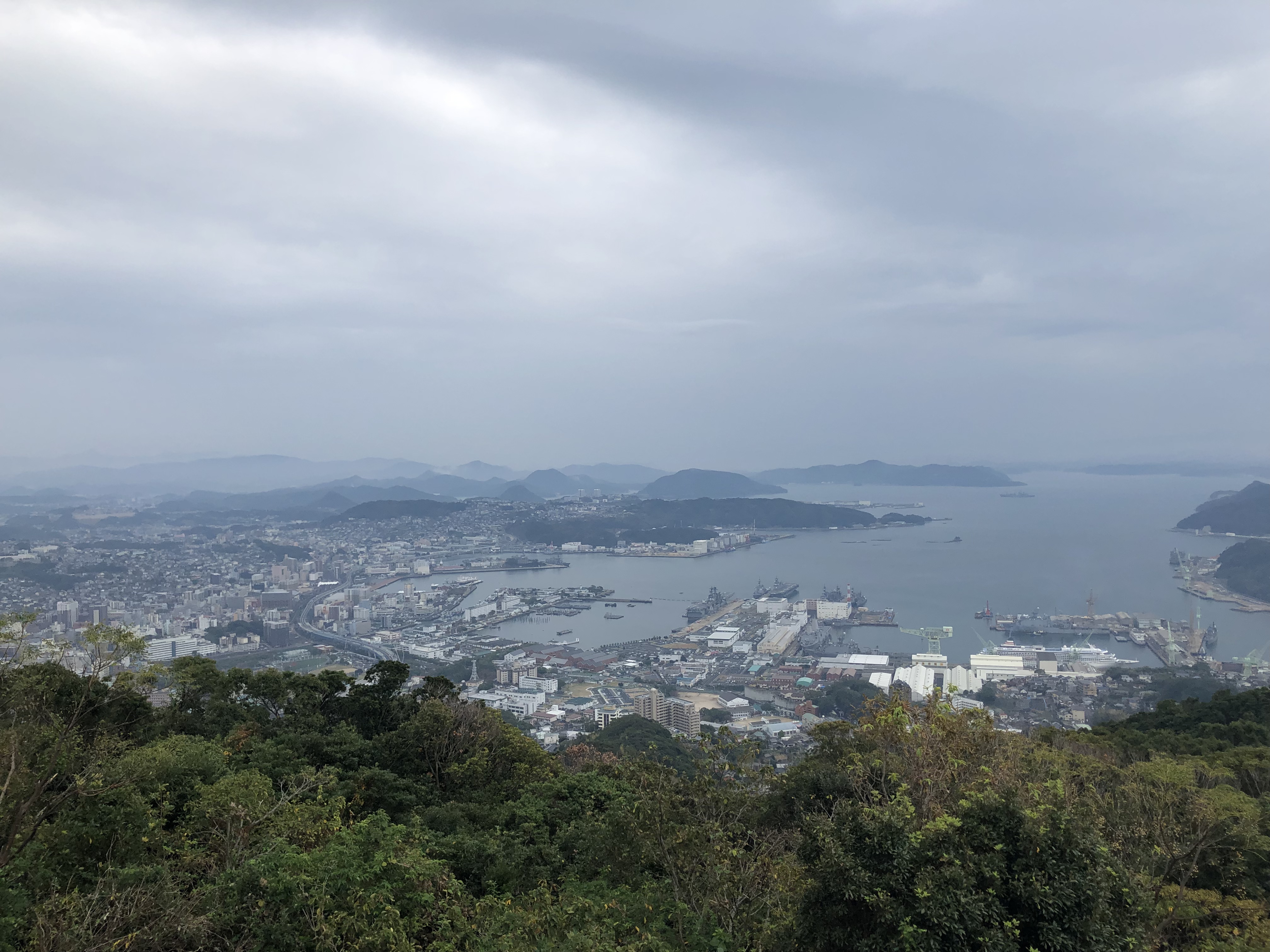
A short stroll up some stone steps, and over a small bridge, and I arrive at the Yumiharidake Observation Deck. The deck offers a nice panoramic view from atop this 364-metre tall mountain. I stand for a while, taking in the view.

A sign tells me that I can enjoy the scenery during the day as well as at night, however, I would be more fearful of climbing at night, just because it would make it especially harder to detect the snakes. The night view though is apparently amazing, and really brings out the lights of the city. There is also a free shuttle bus to the top of the mountain at regular intervals throughout the day.
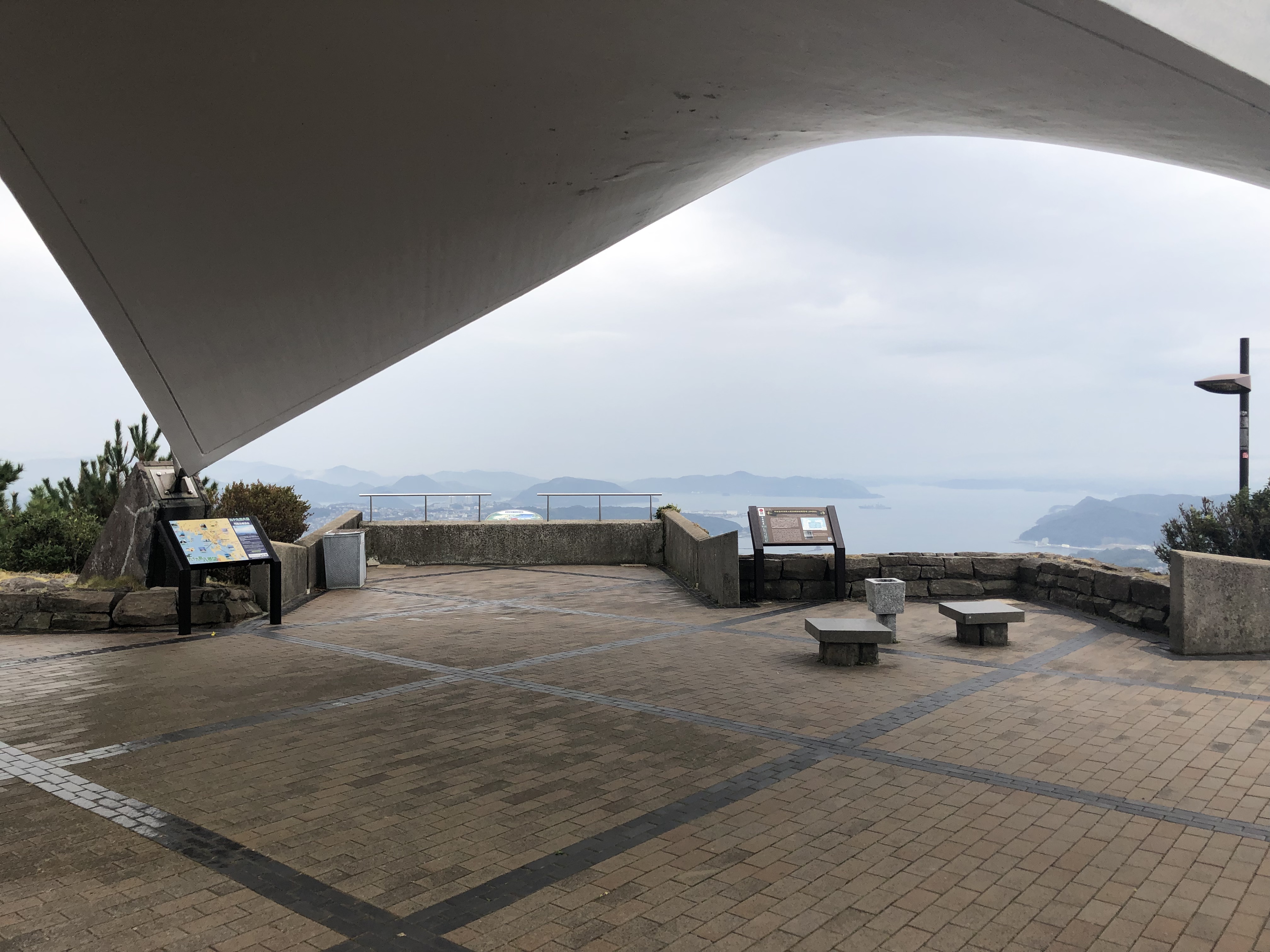
I head over to the bus stop and wait. After about ten minutes, I do finally see another human being, a Japanese man pulls up beside me in his car. “No bus today,” he says. I ask him whether that’s because today is Sunday, however, he just repeats himself and says, “No bus today,” for a second time. I feel a little disappointed but before I can reply, the man points to himself and says, “Drive my car.” I tell him that I can’t drive, but this is of course not what he meant.

I sit in the back, and luckily he drives. The open window offers a refreshing breeze. After a very brief conversation in English about whether or not I know King Charles, our chat abruptly ends, so I take out my book. Men Without Women, a collection of short stories by Haruki Murakami. As we slowly descend, crawling down the mountain path, the free shuttle bus to Sasebo Station overtakes us from behind.
Hell and High Slaughter

My plan today was a visit to Ukiha Inari Shrine, a remote shrine with a hillside vista over the Chikogu Plains that offer stunning views of red torii gates and the meadows beyond. However, as I finally arrive at Tosu Station to switch trains, I find that my next train, the Yufu 3 Limited Express bound for Beppu, doesn’t depart for another six hours, so in desperate need of a plan, and a sudden change of itinerary, I rush onto a random train bound for Kurume.

Kurume is a small city in Fukuoka Prefecture. I flip a coin to let fate decide my direction, but woefully fail to catch the coin and it lands in the gutter of a drain. Today isn’t going very well and it’s still morning. I choose to go south. It doesn’t take long for my optimism to return though, for in the distance standing tall and proud, a mysterious white statue captures my attention, and essentially my destination decides on itself.

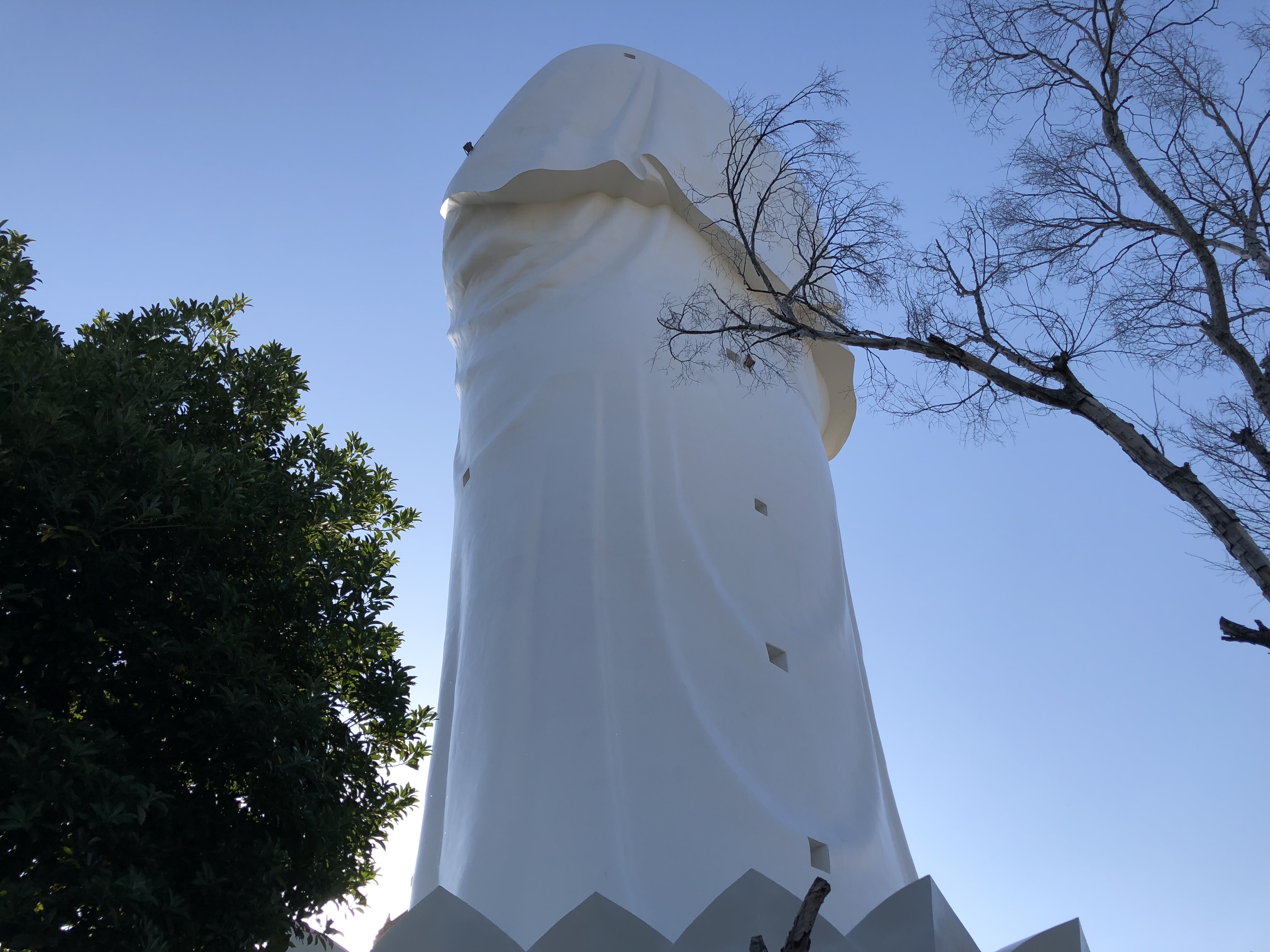
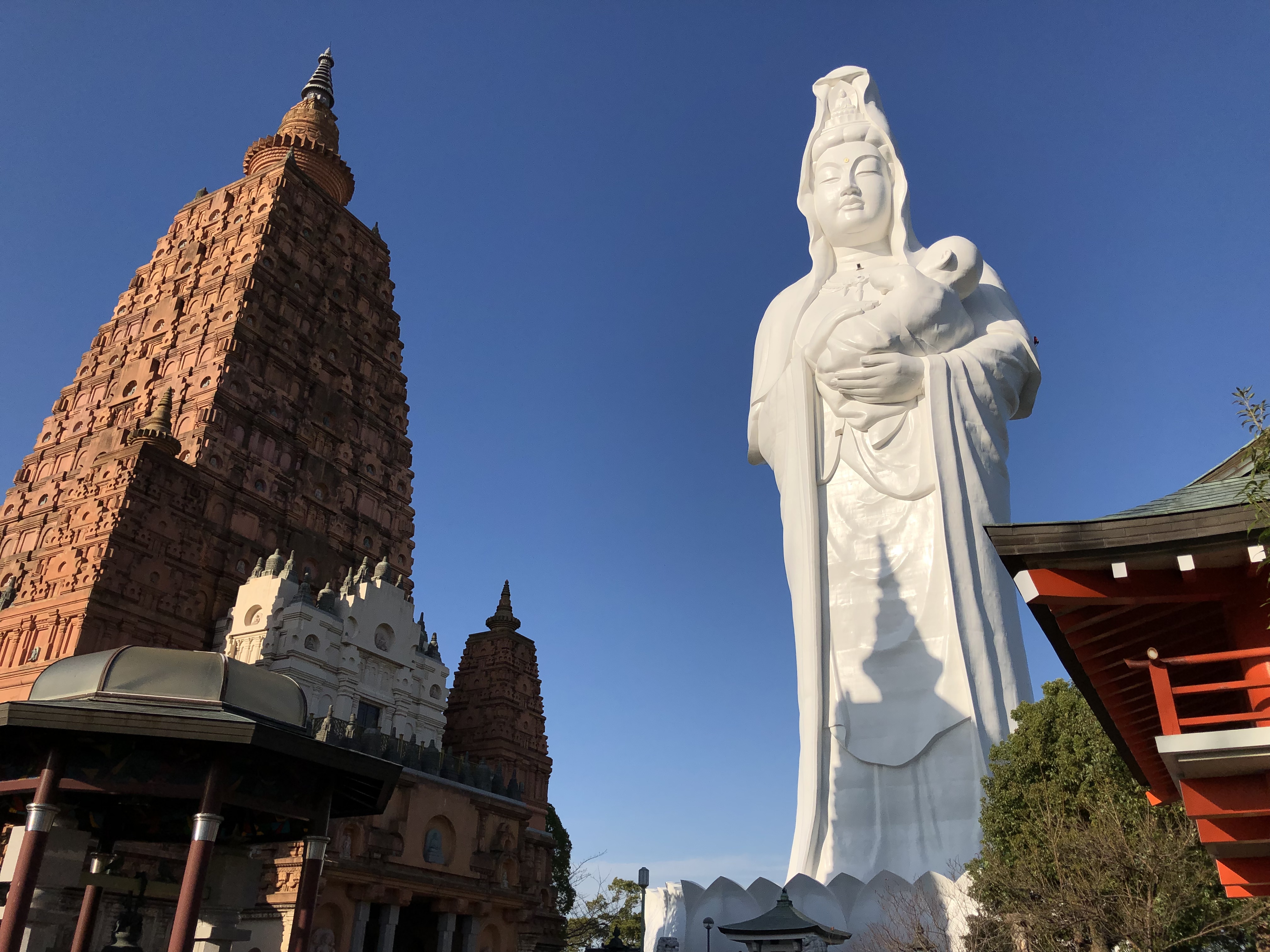
The statue can be seen from far and wide, and as I finally get close enough, it turns out to not be what I first thought, but instead a 62-metre tall statue of Kannon, the Goddess of Mercy. I always enjoy a good Kannon statue, not only does she save the souls of the suffering, but there’s often something rather unexpected to see.

The first thing that’s a little unusual is the 38-metre tall structure next to the Goddess. This replica of India’s Mahabodhi Temple, the Great Awakening Temple, is the first of its kind in Japan, and is based on the story that Buddha sat under a tree in India for seven days to meditate, became awakened, and then the original temple was built to honour that event. Why there is such a replica here in Kurume I have no idea. Also, and it may be a matter of perspective, but the Mahabodhi Temple is 24-metres shorter than Kannon, however, at every angle, the temple seems to tower over the Goddess.

As I approach the ticket office to enter Daihonzan Naritasan Kurume Temple, I inadvertently wake up a young Japanese woman; obviously this place doesn’t get a lot of visitors despite its massive car park that boasts space for 700 vehicles.

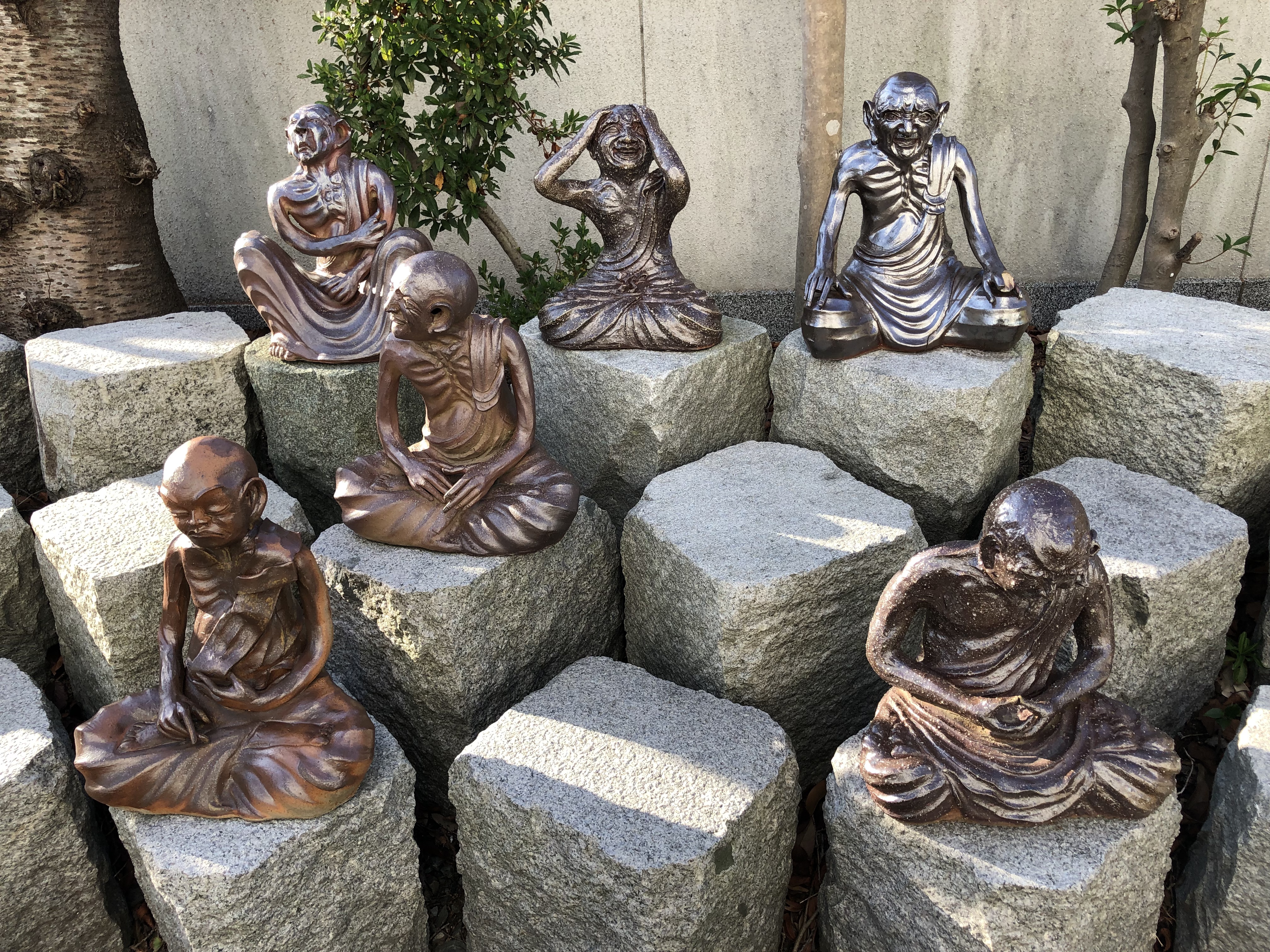
I take a seat on a small stone bench for a time, admiring the statue and contemplating, just like Buddha had once done. A statue of Ebisu disturbs my thinking, purely because he’s sitting on a cow next to a big pile of money. Distracted, I walk around the temple grounds, here there are numerous smaller statues depicting twisted souls in anguish.

I notice a shaft in the side of the Kannon statue, and decide to enter. Endless corridors greet me. Random artwork lines the walls, steep steps twist and turn through the statue, there is no elevator, and the climb to the top takes an age. From the top there are tiny windows that offer a nice view of the city below.

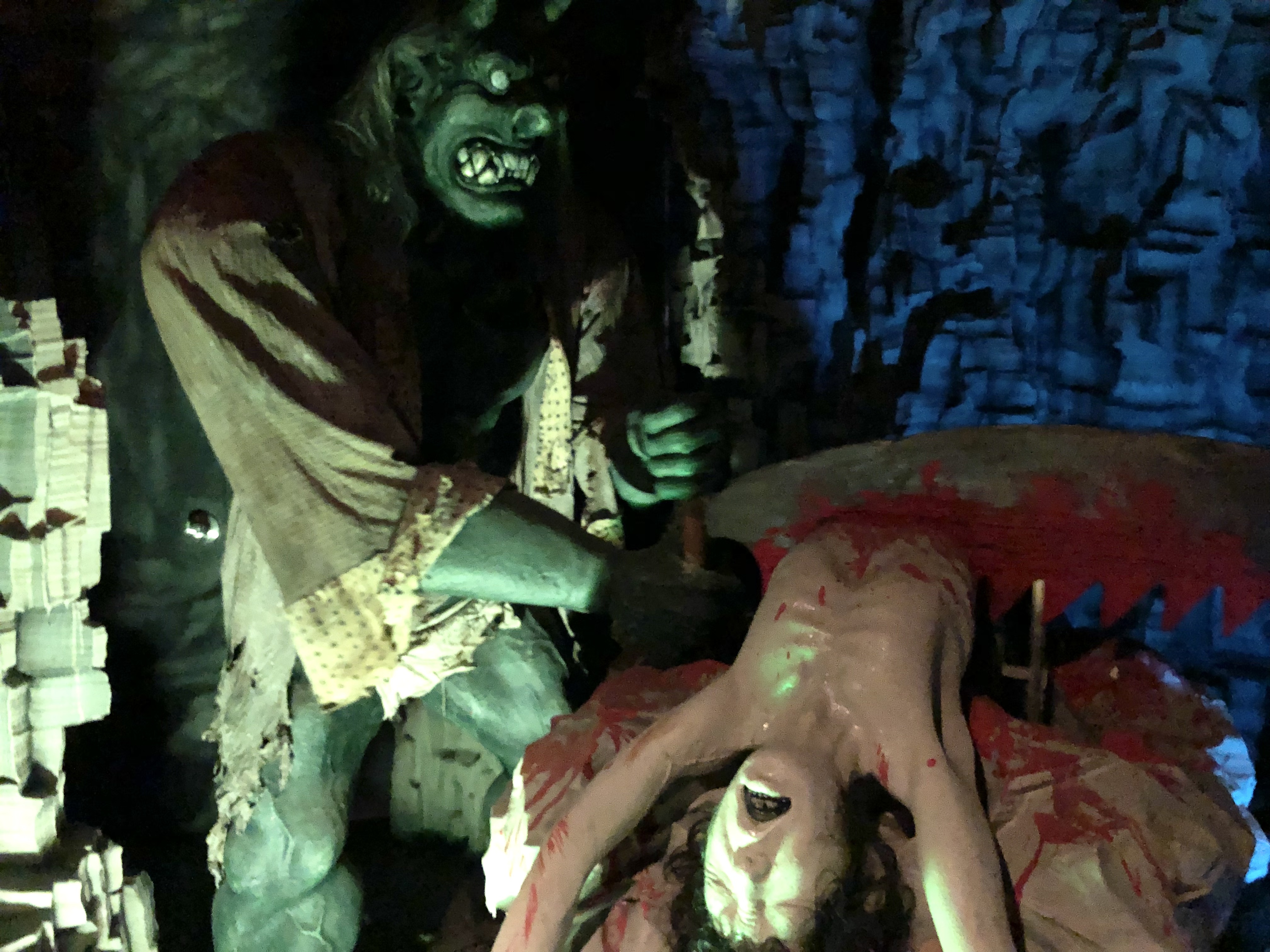
After admiring the landscape, I decide it’s probably time to leave now, and as I climb back down to the ground floor, I notice steps leading deeper down into a basement. As I further approach, I hear the creaky voices of evil spirits echoing down the lonely hall. A room here is marked either side by a pillar of skull heads. Inside are some lifeless effigies, but as I approach, I activate a sensor of sorts, and the first model begins to move.

This animatronic demon is sawing a naked man in half; the saw slides back and forth for as long as I watch. The man, despite his obvious injury is still alive, his screams are piercing and chilling, the sound effects of the saw all adding to the macabre scene. An absolute show of horror.

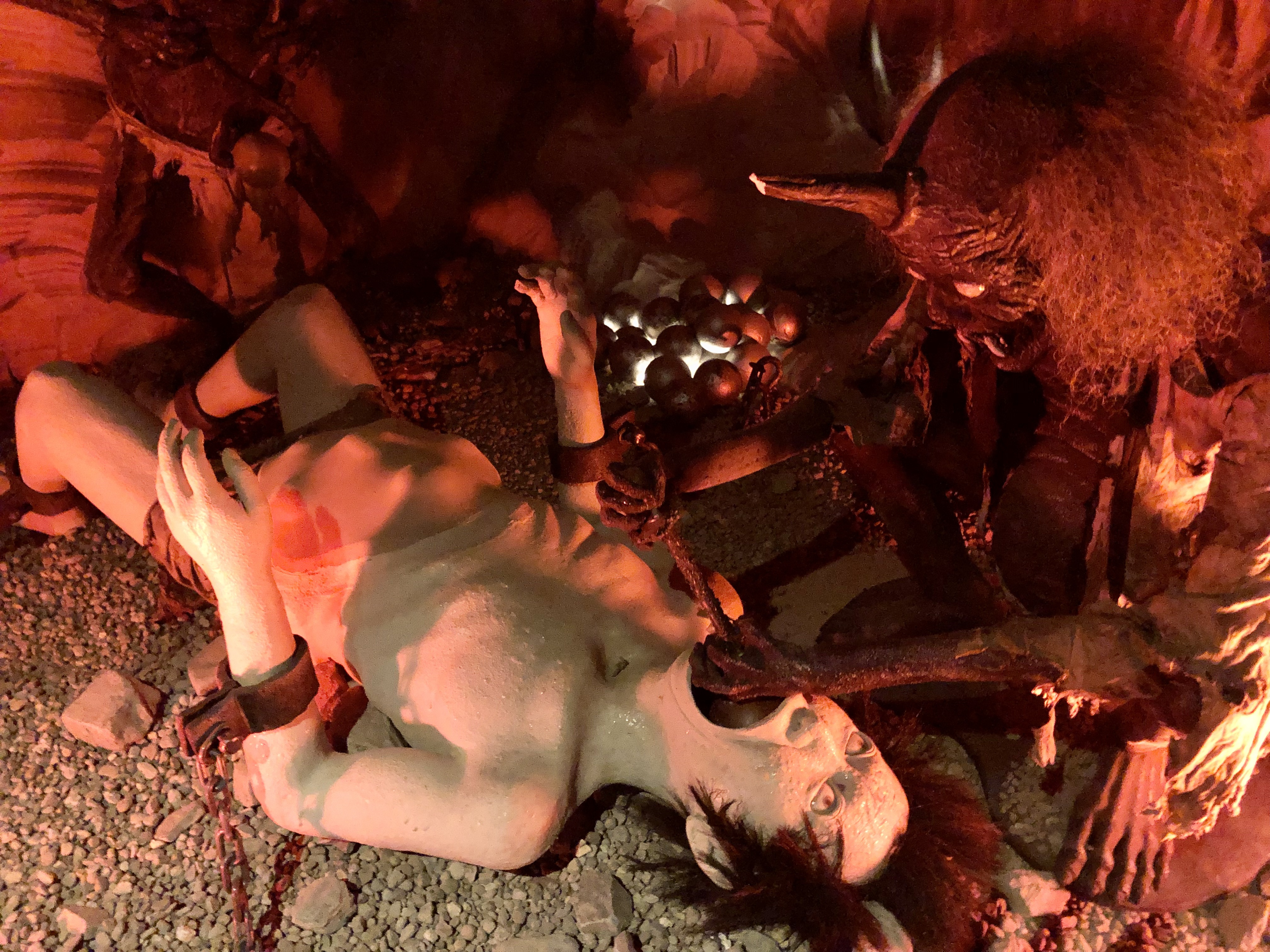
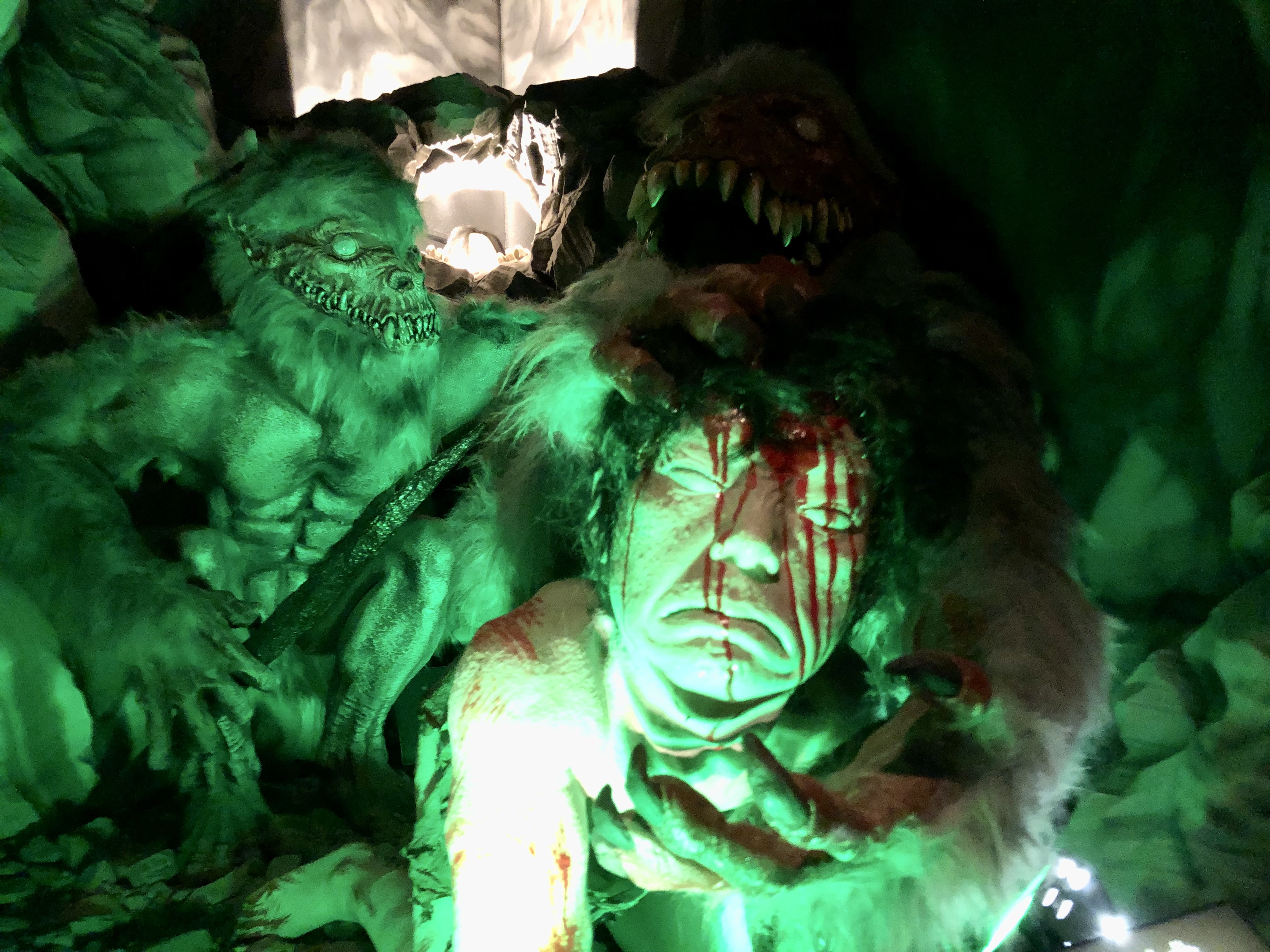
I move through the exhibits. A woman surrounded by spike traps gives me a jump scare as she screams into life. Two children covered in bruises and blood rotate on a platform as a demon with a sinister grin watches on. A man holding a huge boulder is about to smash in the head of a woman whilst a giant towers above. A chained up man is having a red-hot poker stuffed into his mouth.

I decide that this is one of the most harrowing things I’ve seen in my whole life. The passable realism of the statues blending with the authentic yet disturbing sound effects really adds to the eeriness evoked by this imagery. It seems that hidden beneath this innocent looking statue of the Goddess Kannon holding a baby, is a secret haunted house.

I take one last walk through what I learn to be the Hell Museum, before leaving the basement, the statue, and stepping quietly past the ticket gate as to not wake up the sleeping woman.

As I walk away, I look back at the statue, its phallic shape from behind visible for miles and miles, it makes me wonder if it was indeed designed that way, or just a misshaped mishap. I guess I’ll never know.

Pebbles Without Applause

My new adventure begins in Miyazaki Prefecture, on the southernmost island of Kyushu. I take an antiquated and somewhat dilapidated train that consists of a single carriage from Miyazaki Station bound for Iibi Station. As the train advances, the unceasing sound of tree branches pummelling against stainless steel fills the carriage; unkempt trees clawing at the train’s ancient frame.

At Iibi Station I am the only person to alight and instantly feel that I am making a mistake. I wander over to the bus stop. The timetable informs me that my bus left one minute ago, and there won’t be another for two hours. It appears as though I am walking to my destination, some 13 kilometres away. Just beyond the bus stop, the view is spectacular, the blistering 26°C sunshine adding to the experience.

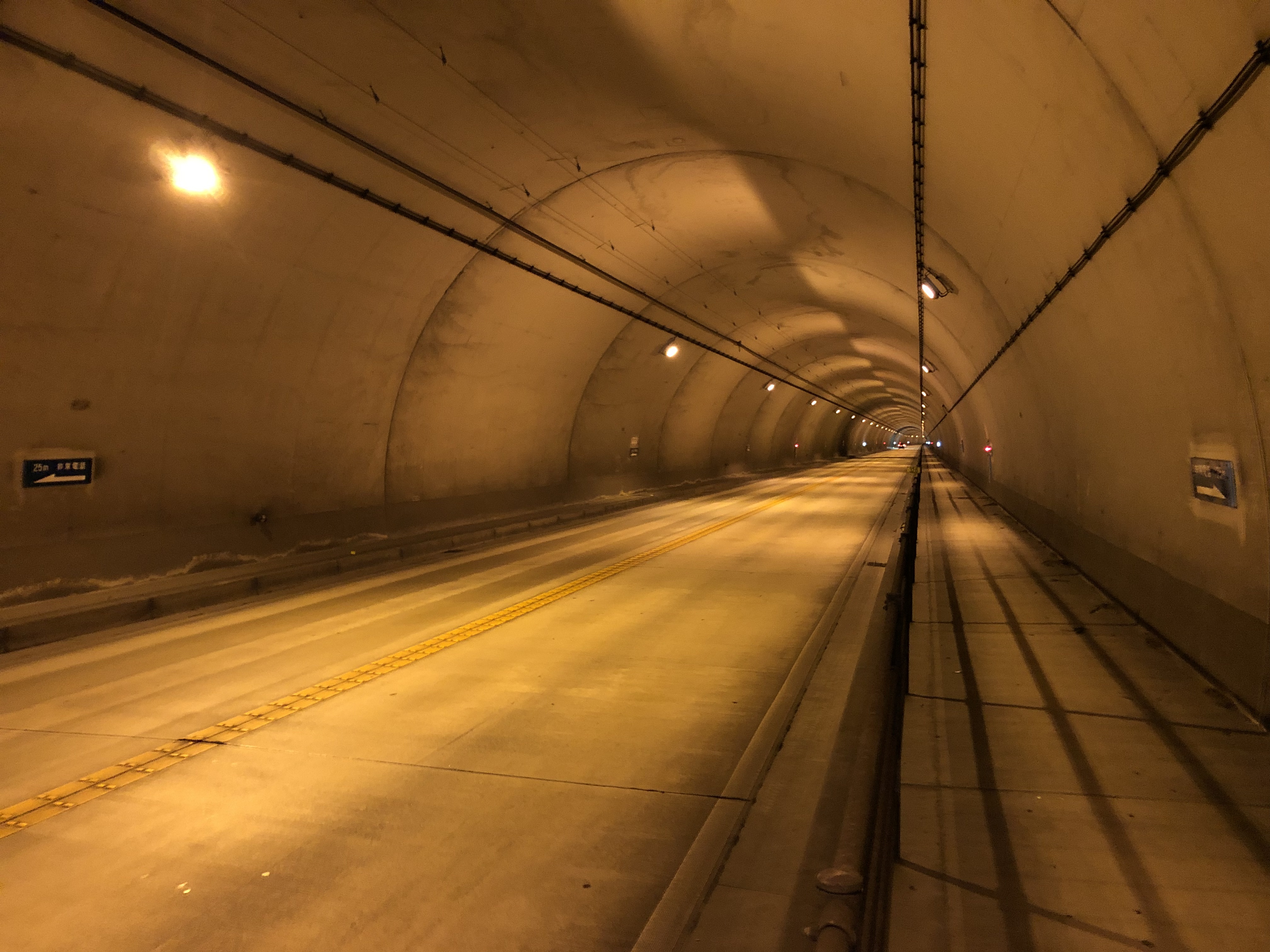
I search my route on Google Maps, and begin to walk south along the east coast of Miyazaki. What Google Maps neglects to tell me, however, is that over fifty percent of this walk is through tunnels carved into the mountains. Some of these tunnels don’t even have a footpath, so I have to shine my torch behind me as I walk, signalling to oncoming motorists.

One of the tunnels is over one kilometre in length. The noise inside this tunnel is deafening, the sound, a cacophony of cars, bouncing and echoing around this dimly lit passage. The smell of recycled diesel fills the air. It’s on this rare occasion that I actually want to put on my mask. The intense heat inside this passageway adds to my discomfort. Buttons marked SOS are conveniently placed every fifty metres, nausea, heat exhaustion, and exposure to loud noise all valid reasons to signal in distress.

As I exit the tunnel, I am rewarded with a beach. I stand for a moment taking in my surroundings. To the east, Futo Beach, golden sands and clear ocean water, to the west, mountains daubed by lush green foliage. The clear air cleanses my lungs of petroleum. The sound of the ocean waves crashing into the rocky cove that contains the sea a delightful upgrade in contrast to the screaming traffic. I allow myself to collect the moment, absorb it, and enjoy it in its full focus, before continuing on.

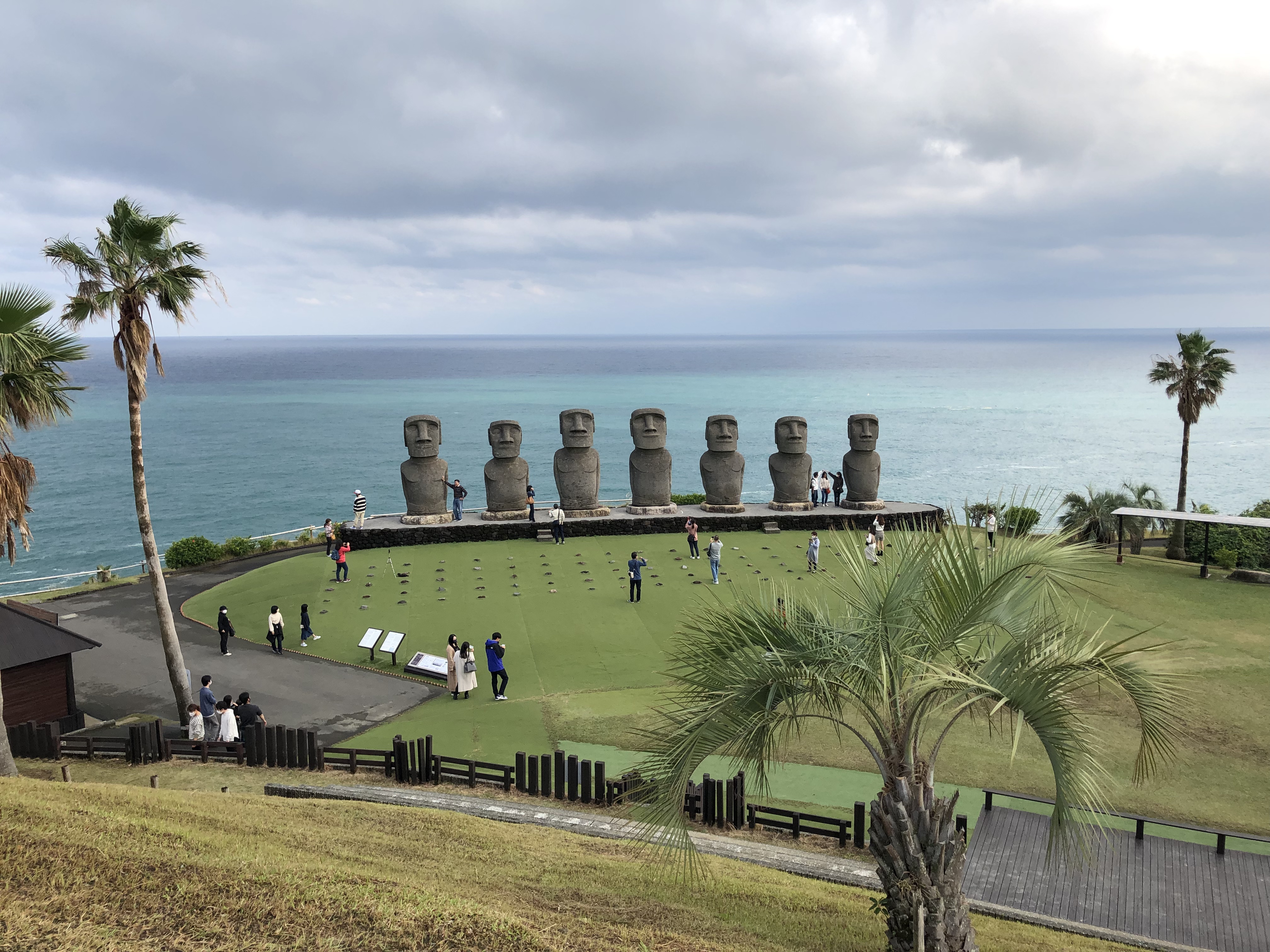
Still a good six kilometres away from my destination, I see a strange statue here on the Nichinan Coast and decide to explore it further. The statue is a monolithic human figure carved from stone, Moai, the kind of statue you might find on say, Easter Island. It turns out I’ve inadvertently stumbled upon a Unesco World Heritage site. I walk the steep and twisting 500 metre trail to the entrance and purchase a ticket.

Sun Messe Nichinan is a small theme park in the middle of nowhere. It was built with the purpose of promoting peace on Earth and environmental awareness. The replica statues built here are known as Afu Akivi, otherwise known as Moai statues, which translates to mean ‘Future Life’. Each statue is 5.5 metres in height and weighs around twenty tonnes. All seven statues have their own meaning too, from left to right the sign says they are: Job, Health is GOOD, Love, Peace of the Earth, Marriage, Lucky with Money, and Study.

I explore the park a little, passing the Sky Tower, a garden terrace named Garden Terrace, an exhibition hall in Central Plaza, a place called Butterfly Paradise (the butterflies here notable by their absence), before finally arriving at the Earth Appreciation Bell. The bell was built with money donated by eighteen different religious groups, including Christianity, Shintoism, and Buddhism, and is a true symbol of the peace this park is promoting.

Twice a year during the equinox, the sun rises from behind the middle of the seven Moai statues, and its sunlight passes through a ten centimetre wide gap in the Sky Tower, runs up the sun steps, and penetrates the centre of the bell at the top of the hill, basking the bell in a glow of sunshine. Sadly though, today is not the equinox, and the bell isn’t very photogenic whilst not being basked, so my photograph here is some random peace mural I found.

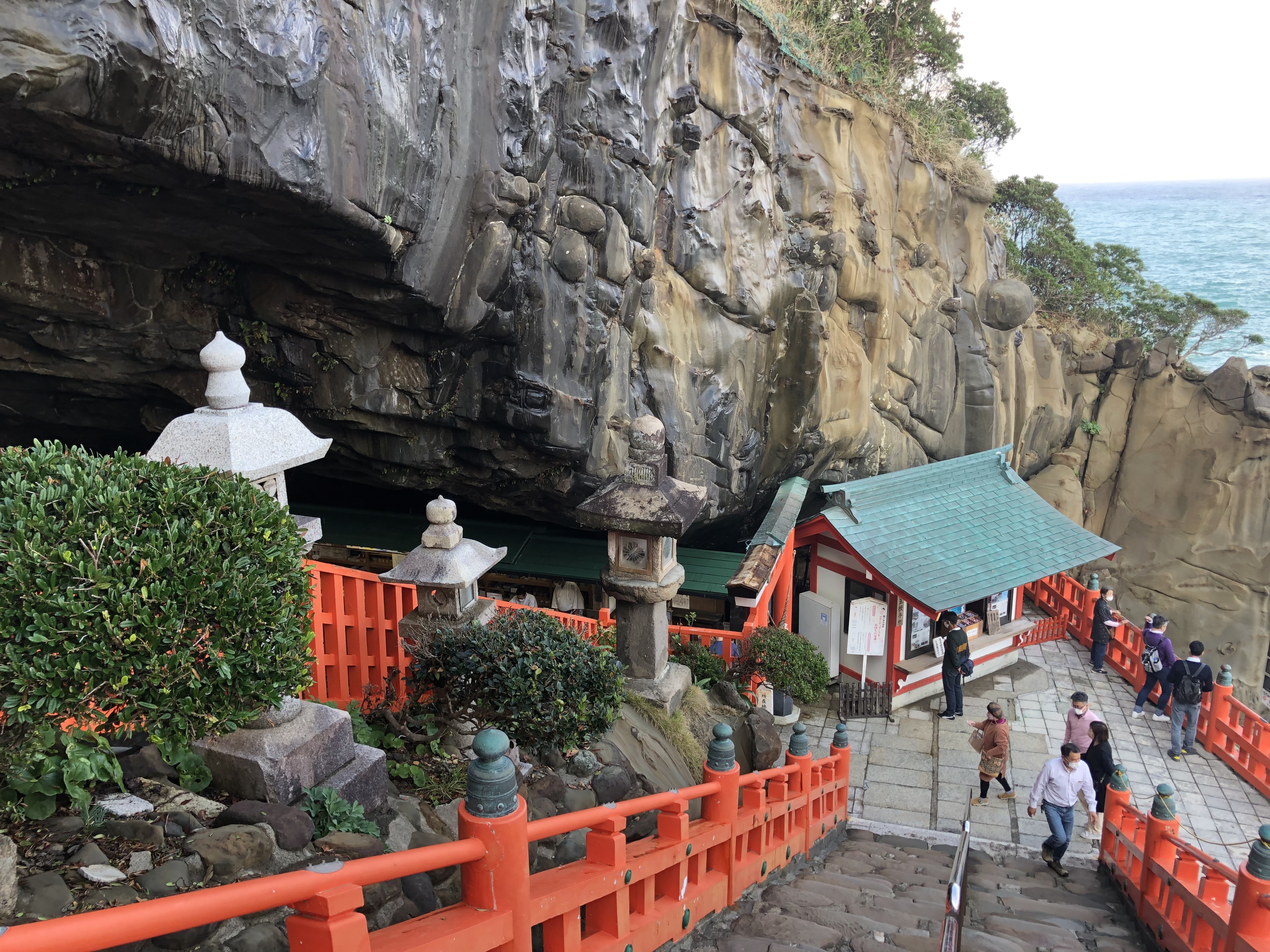
I leave Sun Messe Nichinan and continue my walk along the coast. The rocky coastline here twists around the mountains, the ocean crashing into the cliffs below, my destination in sight. After another tunnel and what feels like an eternity of walking, I finally reach Udo Shrine. The shrine is set in a cave carved into the rocks of a mountain, and it requires a climb down steep stone steps to reach its entrance.

Udo Shrine is primarily a fertility shrine. The gods enshrined here are all about safe delivery during childbirth, matchmaking for couples, and safety at sea. The mythology here is that Toyatama-hime, otherwise known as Luxuriant Jewel Princess, daughter of the Goddess of the Sea, decided to attach her breasts to the rocks. It is said drinking the water that trickles down from her cold stone bosom will bring fortune in pregnancy.

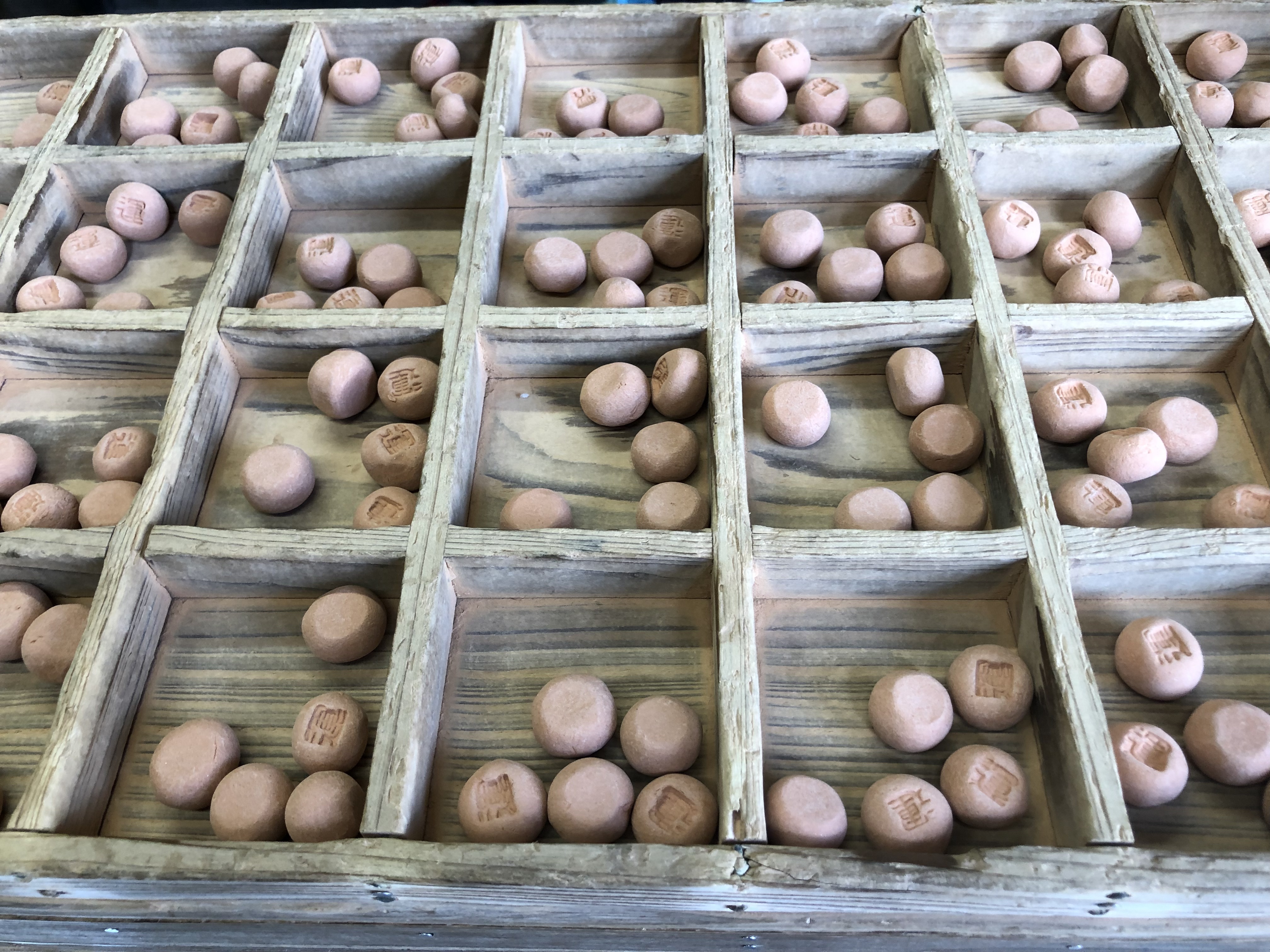
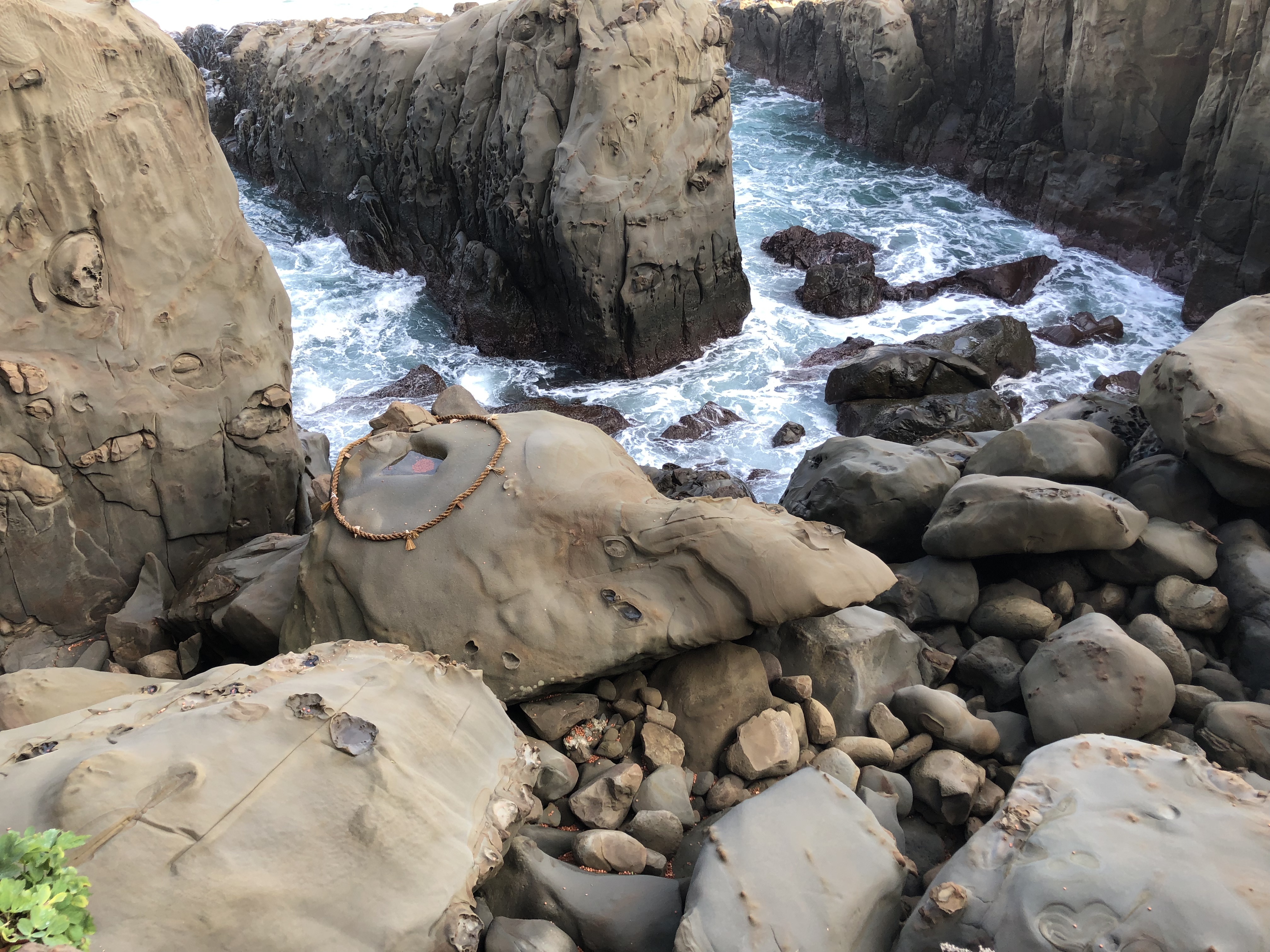
The second attraction here is the custom of throwing small clay balls known as ‘Undama’ into a pool located on one of the rocks below the main shrine. The sign reads, “Men throw the clay pebble with left hand. Women throw with right hand. If the ball lands in the rope circle, you will have a good luck.” It costs just ¥200 for five pebbles.

A Japanese man wanders over and throws his first pebble, landing it in the pool first time, everyone around him applauds. His good luck however instantly wears off as he proceeds to miss his next four throws. All five of my pebbles are tossed into the ocean. Nobody claps. There doesn’t appear to be any limit to the number of Undama I can purchase, therefore, I could continuously buy more pebbles and keep trying until I finally land one in the pool, thus guaranteeing myself a chance to have a good luck, but I decide against it.

Originally, the rules for the Undama were that both the man and woman in a relationship would each throw five stones, and the total amount from ten that landed in the small pool would equal the total number of children that the couple would have. However, problems arose and arguments were had, especially when a couple wanting a child would miss all ten throws, so the shrine decided to change the outcome to become about good fortune instead.

As I leave Udo Shrine, I find my timing to be just about perfect as the last bus pulls up. I get on the bus bound for Miyazaki Station. At Aoshima Station, a Japanese couple board the bus with their ten children.

The Time Traveler’s Strife

Today, I decide to explore the Asakusa area once again. Recently, I engaged in a conversation with friends about Denbou-in Gardens, the secret gardens I visited, hidden in the grounds of Senso-ji Temple. Intrigued to discover more about this area and its hidden gems, I then heard a mention of the interestingly named Drawing Light Temple. Obviously, I wanted to find out more. In the blazing sunshine, I head to Asakusa once again and search for the temple.

It takes me about thirty minutes to wander through the huge complex of temples and shrines that make up the Senso-ji compound before I eventually find a rather obscure-looking tunnel with overhanging plants and nondescript flowers. Oddly, I have never seen this tunnel before, so for the second time in just over a fortnight, I have stumbled upon a new place in Tokyo, a city I have lived in for eight months now. Hidden beyond the foliage, on the other side of the tunnel, sits the impressive Drawing Light Temple.

lightdrawing

Built in 1609, this temple houses the goddess of protection from drawing light images. Fortunately, an English sign serves to remove any confusion and informs me that, “The Goddess in this temple protects against photography, portraits, and reflections.” Ironically, photography is allowed here. As I read the signboards about the history of this place, it becomes instantly apparent that if this temple was built in 1609, as the sign states, then it precedes the very first photograph, making it impossible for the goddess that resides here to know what she would be protecting against. It reminds me of the Flying God Temple, where people go to pray before they fly on an aircraft. The god there existed before aircraft were even invented. Even the story about the origin of Senso-ji, concerning the golden statue of Kannon fished from a lake, is riddled with confusion; the statue is no longer housed in Senso-ji Temple, and has never actually been seen by anyone who can prove it existed in the first place.

The inconsistencies and inaccuracies in religious narratives make me increasingly sceptical. Considering the possibility that religious stories and certain deities might be nothing more than fabrications is a notion I had never entertained before, but it now begins to take shape in my mind. What if it’s all untrue? I ponder this for a moment, and then, quite unexpectedly, I spot a magical cow.

magcow

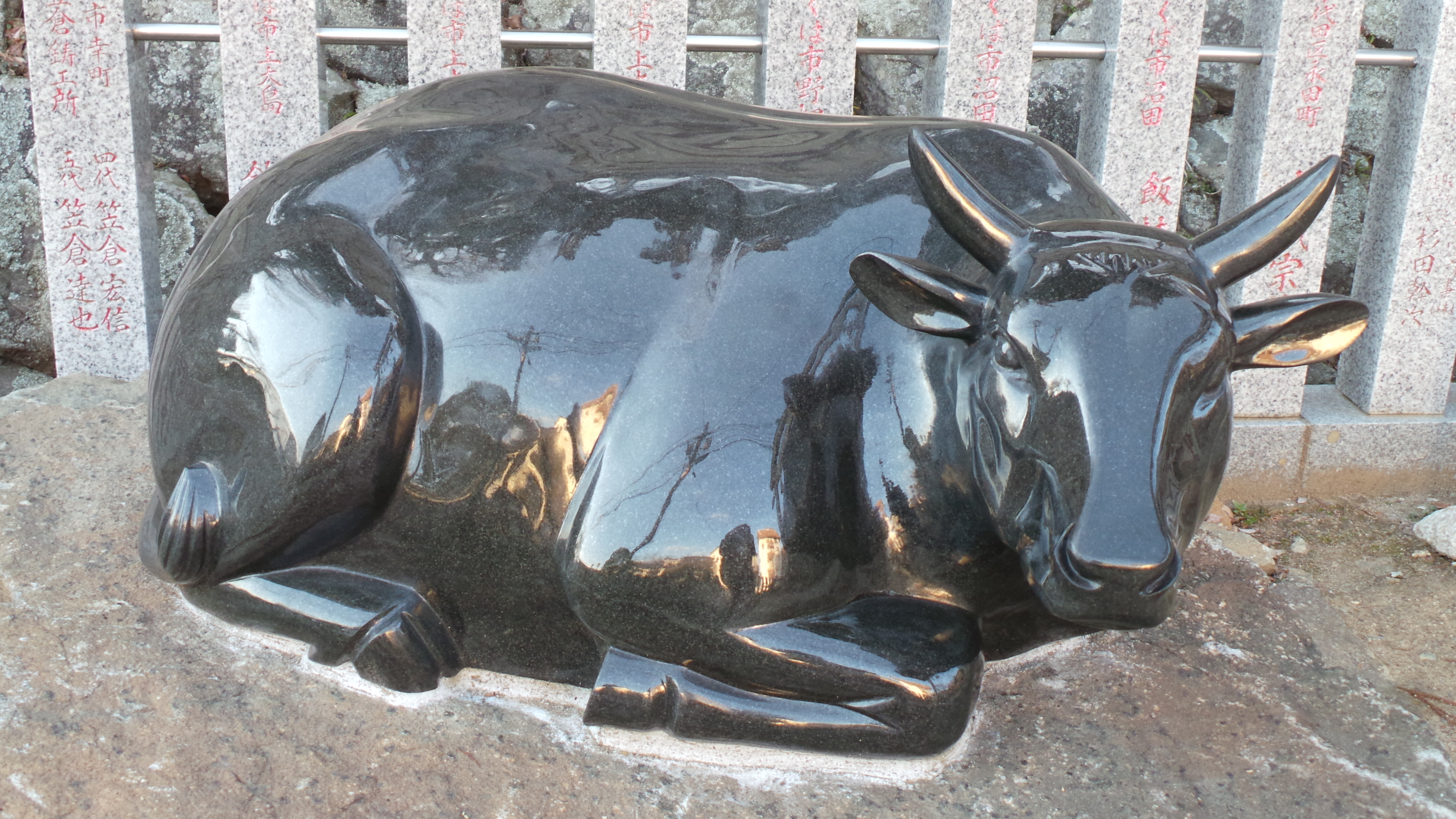
“Look closely,” says a sign next to the cow. I stare at the cow, not really sure what I am supposed to be seeing. Everything here looks perfectly normal – just a statue of a cow. Below the sign, there is a description in Japanese, which later translates to read, “As a way to protect the stolen soul, in the cow, your image will be hidden from the drawing of light.” I take a photograph of the cow, and oddly, my image isn’t present. Very strange. I take seven more photographs from various angles, yet each time, the scenery behind me is visible, but my own reflection is mysteriously erased.

Why a cow has been chosen to symbolise the absence of reflection is beyond me, but some sort of wizardry is at hand here – a trick of light, perhaps. Continuing my exploration of this hidden temple, I discover that it holds the origin of the story that a photograph can steal your soul. It was said that when this temple was built before photographs were invented, the thought of an image of a person being taken was a direct link to the spiritual world. This history has also spread to the rest of the Senso-ji area, where no mirrors can be seen at any of the temples or shrines. It makes me wonder if the Edo period in Japan was populated by time travellers, building temples everywhere that predict future inventions.

As I leave the Drawing Light Temple, I continue my exploration of the nearby area and discover another display of inconsistent historical information.

stonelantern

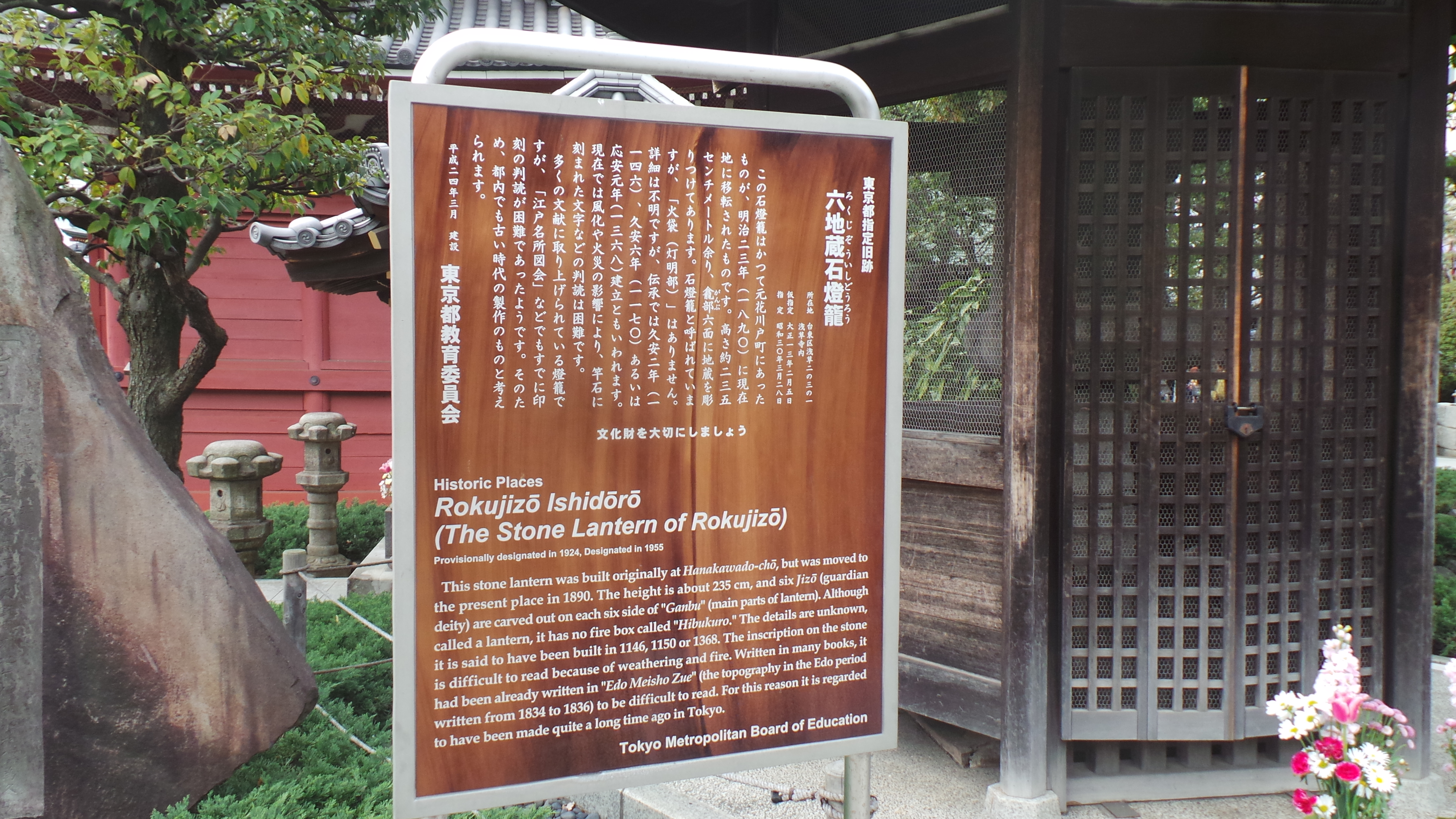
The Stone Lantern of Rokujizo was built in either 1146, 1150, or 1368, and already I find that there are too many contradictions. The sign even states that the details are unknown. Yet, the lantern itself features topography that wasn’t used until 1834. So somehow, the lantern features Japanese text that was first used 688 years, 684 years, or 466 years after it was originally built. My suspicions surrounding the history behind Senso-ji Temple are once again confirmed here.

I continue my tour and find a monument to Kume no Heinai. He was a samurai in the Edo period and a master of sword fighting. Over the years, he killed many people before eventually turning to a life of virtue. Heinai began to live in Kongo-in Temple, inside Senso-ji Temple, and devoted himself to Zen Buddhism. He held religious services in honour of the souls of the people he killed. One day, he ordered his followers to carve his figure in stone and bury it in a busy district of Asakusa, so that forever, people would step on him—presumably what he thought he deserved after years of killing. Oddly, Heinai was in good health the day the statue was ordered to be built; however, the next day, he died suddenly, as if his fate was already known.

My final stop is the peculiarly named, Bell of Time.

belloftime

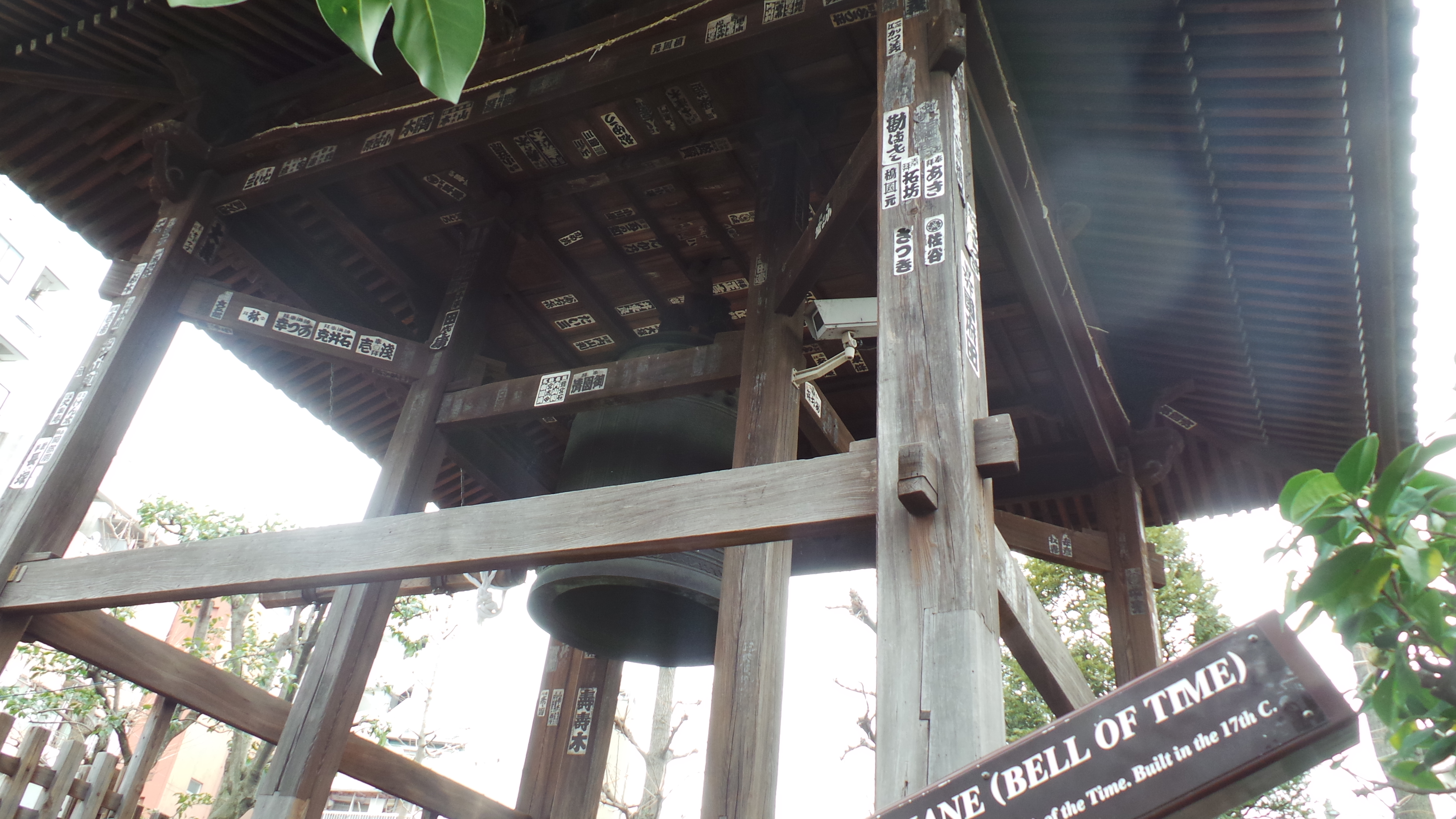
This innocent looking bell housed in a wooden structure, to the untrained eye, wouldn’t be significant. To my overactive imagination, this confirms my earlier suspicions that religion, or at least the area around Senso-ji Temple, was built by time travellers, and this bell was their time machine. Obviously, time travellers building temples sounds ridiculous, although the evidence is definitely here. If this isn’t the case though, then perhaps instead, religion is being used to make money here; exploiting the beliefs of innocent people, and making this area more attractive to tourists. It does seem from my brief attempt at investigating the area, that most of the information I have discovered is based entirely on lies.

Somewhere Oji We Know

The day is warm but grey. I head over to the Sumida River to take a look at a traditional Japanese festival known as Hina-matsuri. It’s a day dedicated to girls, celebrating the passing of ancient dolls from generation to generation. Originally, these dolls were floated along the river. However, due to issues with local fishermen, this practice was discontinued. Nowadays, the dolls are cast into the ocean before being collected and burnt. As is customary, the dolls are believed to contain evil spirits, and Japan utilises fire to cleanse them of the demons within.

Unfortunately, upon my arrival at the Sumida River, the event has already concluded, and the market stalls and stage are in the process of being taken down. With not much left to do for the day, I hop on my bicycle and once again head in the direction of Kita Ward, towards a quaint little place known as Oji.

oji1[1]

I find myself standing in Asukayama Park, a vast area designated in 1873 as one of Japan’s first public parks. Instead of climbing the steep steps for entry, feeling particularly lazy, I opted to ride for free on the monorail that crawls along the incline and into the park. Interestingly, the train station here runs alongside the park. As I look in one direction, I’m surrounded by lush greenery, while in the other, I see the familiar sights of billboards, buildings, railway tracks, and advertisements in the sky.

As I explore Asukayama Park, I’m pleasantly surprised to discover a unique playground for children, quite different from what I’m accustomed to seeing. The play area features old trains repurposed into climbing frames. Among them, two locomotives stand prominently, and my personal favourite is D51 853, a steam train donated to the park on August 31st, 1943. A nearby sign mentions something about coal, water, and charcoal, though I have no idea what it is referring to.

oji3[1]

D51 853 is awesome. Not only can I go inside and look at the old steam engine, but I can also climb onto the roof and pretend I am in a movie. I feel happy for the children who come here. Parks in Japan offer excellent facilities and interesting attractions. It makes me wish that I had such adventurous play areas in England when I was a child, but instead, all we had were rubbish swings. A sign says, ‘D51 853 is somewhat dangerous. Play carefully, duck down, or climb up on the high locomotive!’

I continue my exploration and discover that this park also boasts old waterfalls absent of water, beautiful foliage, and multiple statues and sculptures of varying shapes and sizes. One such sculpture is merely a small pile of rocks, while another is a giant rock enveloped in a small wooden shelter.

oji2[1]

A sign beside the massive rock mentions something about the ceremonial transfer of a divided tutelary deity to a new location, although the meaning escapes me. It also notes that the inscription is challenging to decipher in Japanese, as the letters were written using ancient kanji and rare calligraphy. Despite the protective wooden house, the words have succumbed to a weathered, entropic fate. A second sign, written in English, amuses me; it simply says, ‘Rock, please do not climb.’ Instead, I climb the protective wooden house.

As I leave the park, I pass by the Paper Museum and ponder how interesting it must be. Unfortunately, it’s closed today. I continue to walk, heading toward a bridge, where I follow some old stone steps down to Otonashi Shinsui Park.

Oji4[1]

Hidden beneath the bridge, Otonashi Shinsui Park is simply amazing. It boasts its own old wooden bridge, a small stream, an abundance of beautiful nature, and an opportunity for rock climbing practice on the many craggy stone structures that don’t appear to be dangerous at all. I stand for a while, deciding not to climb but only to observe, taking in the beauty of the scenery. After a while, I head back up the steps and across the bridge.

Beyond the bridge, there’s a huge torii gate and a massive shrine.

oji5[1]

Oji Shrine, one of Emperor Meiji’s Ten Shrines of Tokyo, is part of a pilgrimage trail consisting of ten shrines. Today, the shrine is devoid of visitors; perhaps they are all too busy enjoying the festivities with their dolls. Legend has it that the shrine was renamed by Toyoshima, a Japanese warlord. However, the most intriguing aspect here is a much smaller shrine dedicated to the god of hairdressing and wig-making. Quite peculiar.

I continue cycling around the area, searching for something of interest. Eventually, I stumble upon large castle walls with modern houses built above them. Steep stone slopes run along the castle wall, eventually leading to Oji Inari Shrine—a place where foxes seemingly guard the playground for children situated at the bottom of the hill.

The god of rice harvesting resides here, and so do the foxes. Among all the fox shrines in Tokyo, Oji Inari Shrine is considered the main one. Every year, at the end of the year, foxes reportedly visit from all over Japan to guard the god of the rice harvest, and presumably, to offer their prayers. It’s hard to believe that if I came here on New Year’s Eve, the shrine grounds would be filled with foxes, but that’s what the information here tells me, and who am I to argue with information.

oji7[1]

I leave the shrine and start cycling back toward Asakusa. I make a brief stop at the Banknote and Postage Stamp Museum, but unfortunately, it’s closed today. It’s a shame really because inside this free museum, it’s said that you can lift one billion yen. I would have loved to take one billion yen home with me, but sadly, that won’t be happening today.

Back in Asakusa, I finally get a chance to experience Hina-matsuri through traditional food. Chirashizushi (scattered sushi) is the dish that women typically eat on this day. It’s supposed to be sugar-flavoured, featuring vinegared sushi rice. While the toppings usually include raw fish, for some reason, my friend has given me a unique mix of rice topped with egg, cream cheese, and strawberries. Although three of the ingredients generally go well together, the addition of strawberries for the sugar-flavoured element is what I find a bit strange. While this might be a traditional food in Japan, strawberries with egg and rice is something I struggle to bring myself to enjoy.

As I cycle home with the taste of Chirashizushi scattered in my mouth, I decide that my next blog post will be primarily about food.