Pebbles Without Applause

My new adventure begins in Miyazaki Prefecture, on the southernmost island of Kyushu. I take an antiquated and somewhat dilapidated train that consists of a single carriage from Miyazaki Station bound for Iibi Station. As the train advances, the unceasing sound of tree branches pummelling against stainless steel fills the carriage; unkempt trees clawing at the train’s ancient frame.

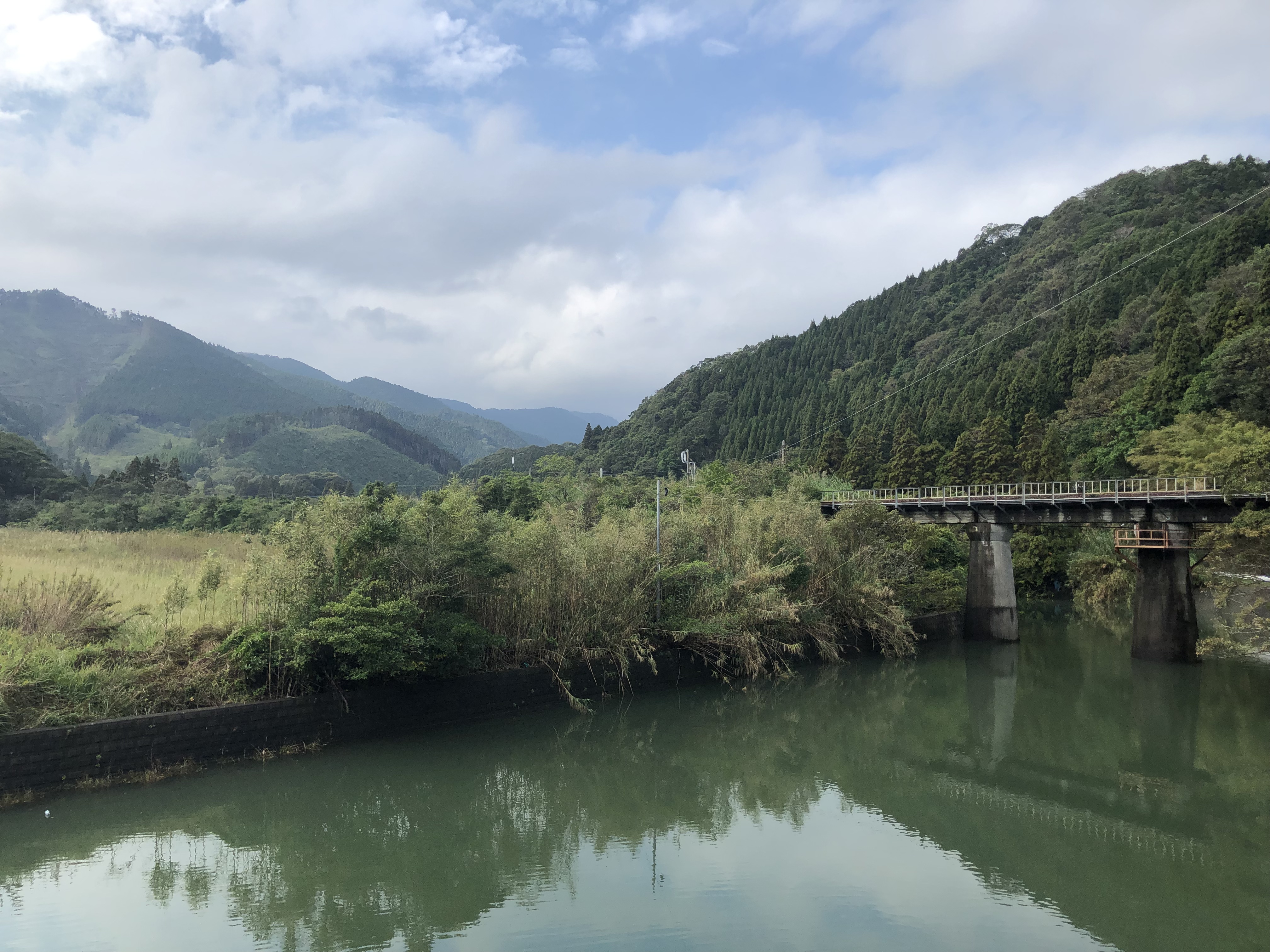
At Iibi Station I am the only person to alight and instantly feel that I am making a mistake. I wander over to the bus stop. The timetable informs me that my bus left one minute ago, and there won’t be another for two hours. It appears as though I am walking to my destination, some 13 kilometres away. Just beyond the bus stop, the view is spectacular, the blistering 26°C sunshine adding to the experience.
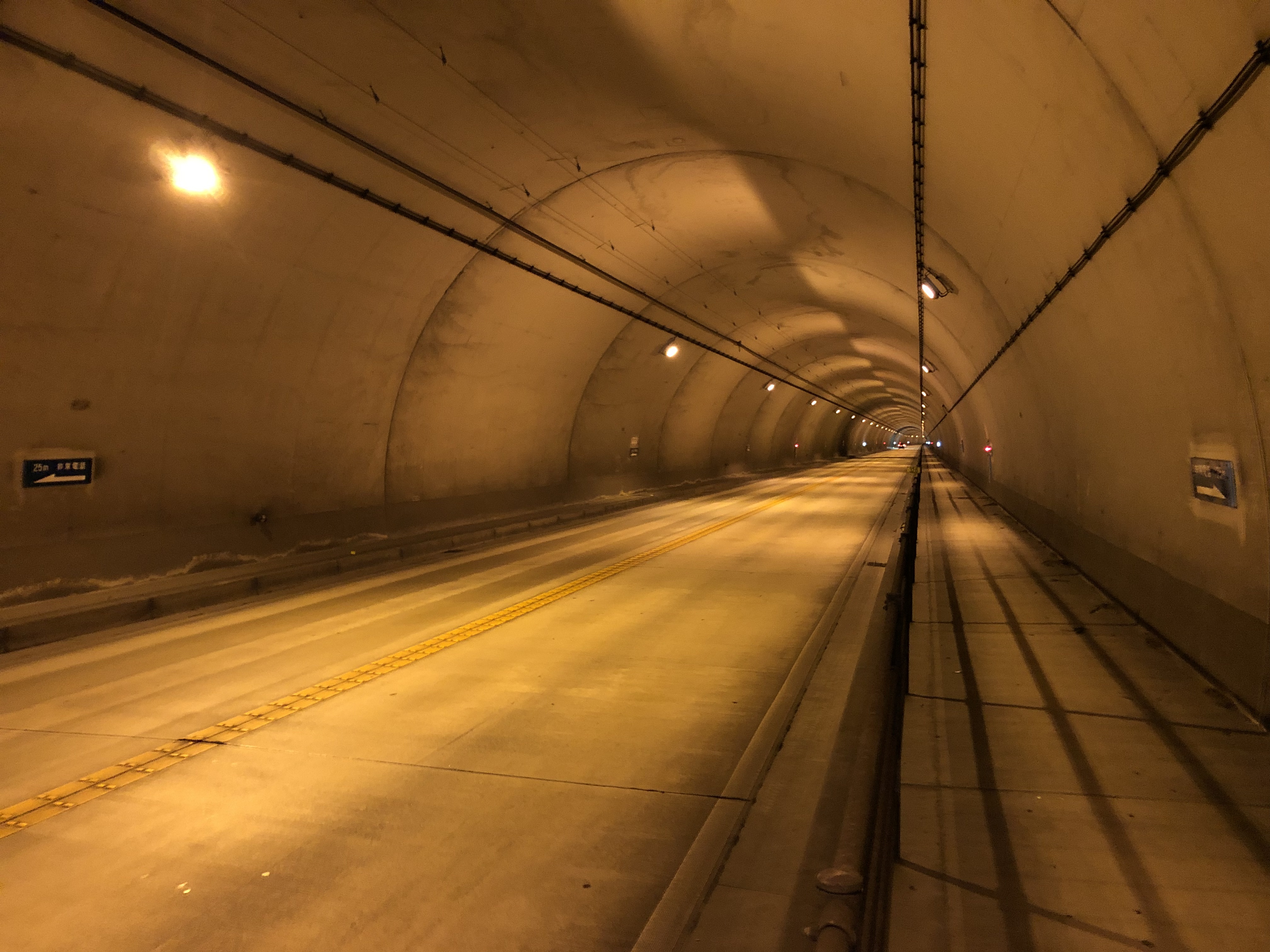
I search my route on Google Maps, and begin to walk south along the east coast of Miyazaki. What Google Maps neglects to tell me, however, is that over fifty percent of this walk is through tunnels carved into the mountains. Some of these tunnels don’t even have a footpath, so I have to shine my torch behind me as I walk, signalling to oncoming motorists.

One of the tunnels is over one kilometre in length. The noise inside this tunnel is deafening, the sound, a cacophony of cars, bouncing and echoing around this dimly lit passage. The smell of recycled diesel fills the air. It’s on this rare occasion that I actually want to put on my mask. The intense heat inside this passageway adds to my discomfort. Buttons marked SOS are conveniently placed every fifty metres, nausea, heat exhaustion, and exposure to loud noise all valid reasons to signal in distress.
As I exit the tunnel, I am rewarded with a beach. I stand for a moment taking in my surroundings. To the east, Futo Beach, golden sands and clear ocean water, to the west, mountains daubed by lush green foliage. The clear air cleanses my lungs of petroleum. The sound of the ocean waves crashing into the rocky cove that contains the sea a delightful upgrade in contrast to the screaming traffic. I allow myself to collect the moment, absorb it, and enjoy it in its full focus, before continuing on.

Still a good six kilometres away from my destination, I see a strange statue here on the Nichinan Coast and decide to explore it further. The statue is a monolithic human figure carved from stone, Moai, the kind of statue you might find on say, Easter Island. It turns out I’ve inadvertently stumbled upon a Unesco World Heritage site. I walk the steep and twisting 500 metre trail to the entrance and purchase a ticket.
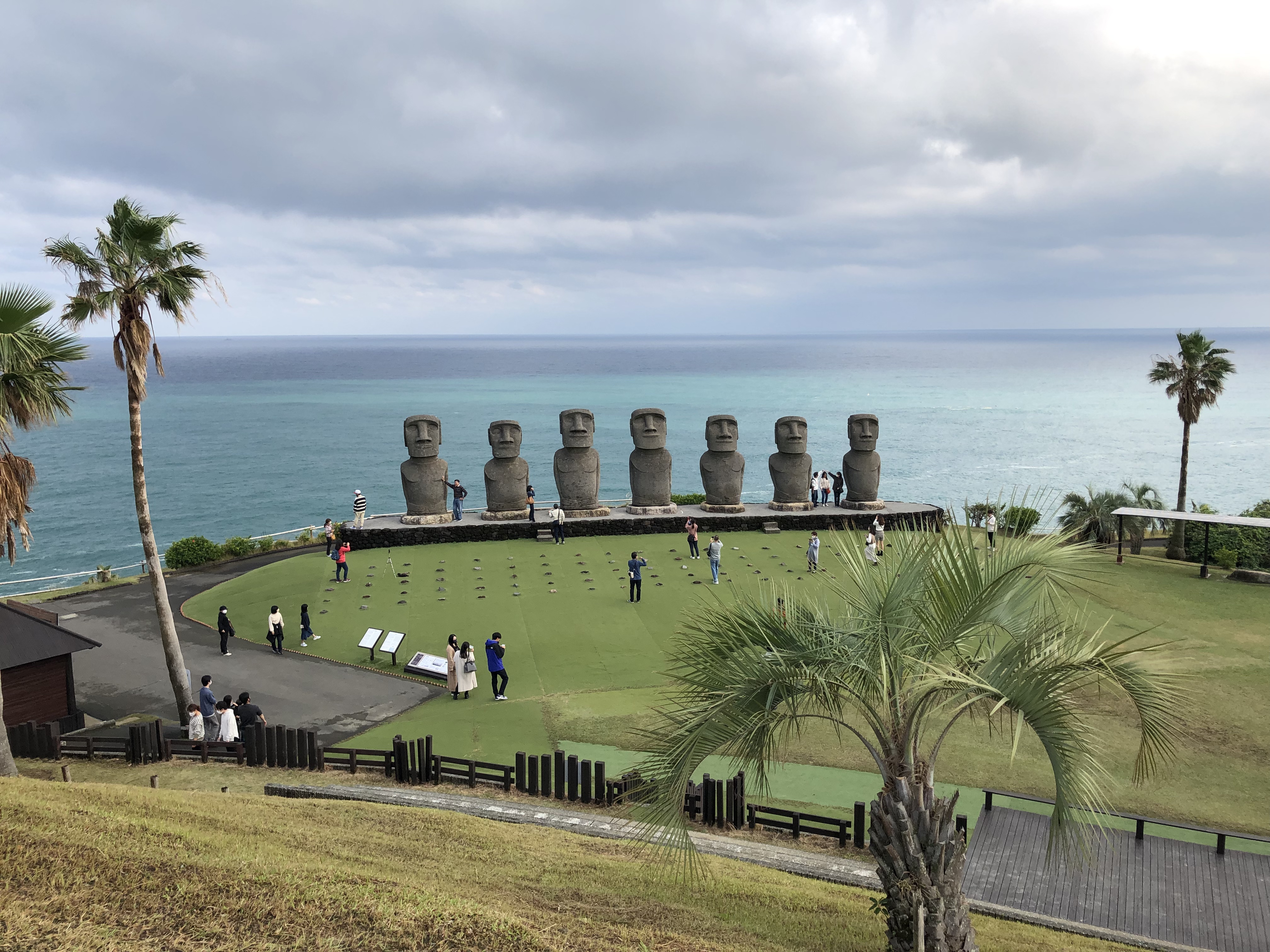
Sun Messe Nichinan is a small theme park in the middle of nowhere. It was built with the purpose of promoting peace on Earth and environmental awareness. The replica statues built here are known as Afu Akivi, otherwise known as Moai statues, which translates to mean ‘Future Life’. Each statue is 5.5 metres in height and weighs around twenty tonnes. All seven statues have their own meaning too, from left to right the sign says they are: Job, Health is GOOD, Love, Peace of the Earth, Marriage, Lucky with Money, and Study.

I explore the park a little, passing the Sky Tower, a garden terrace named Garden Terrace, an exhibition hall in Central Plaza, a place called Butterfly Paradise (the butterflies here notable by their absence), before finally arriving at the Earth Appreciation Bell. The bell was built with money donated by eighteen different religious groups, including Christianity, Shintoism, and Buddhism, and is a true symbol of the peace this park is promoting.
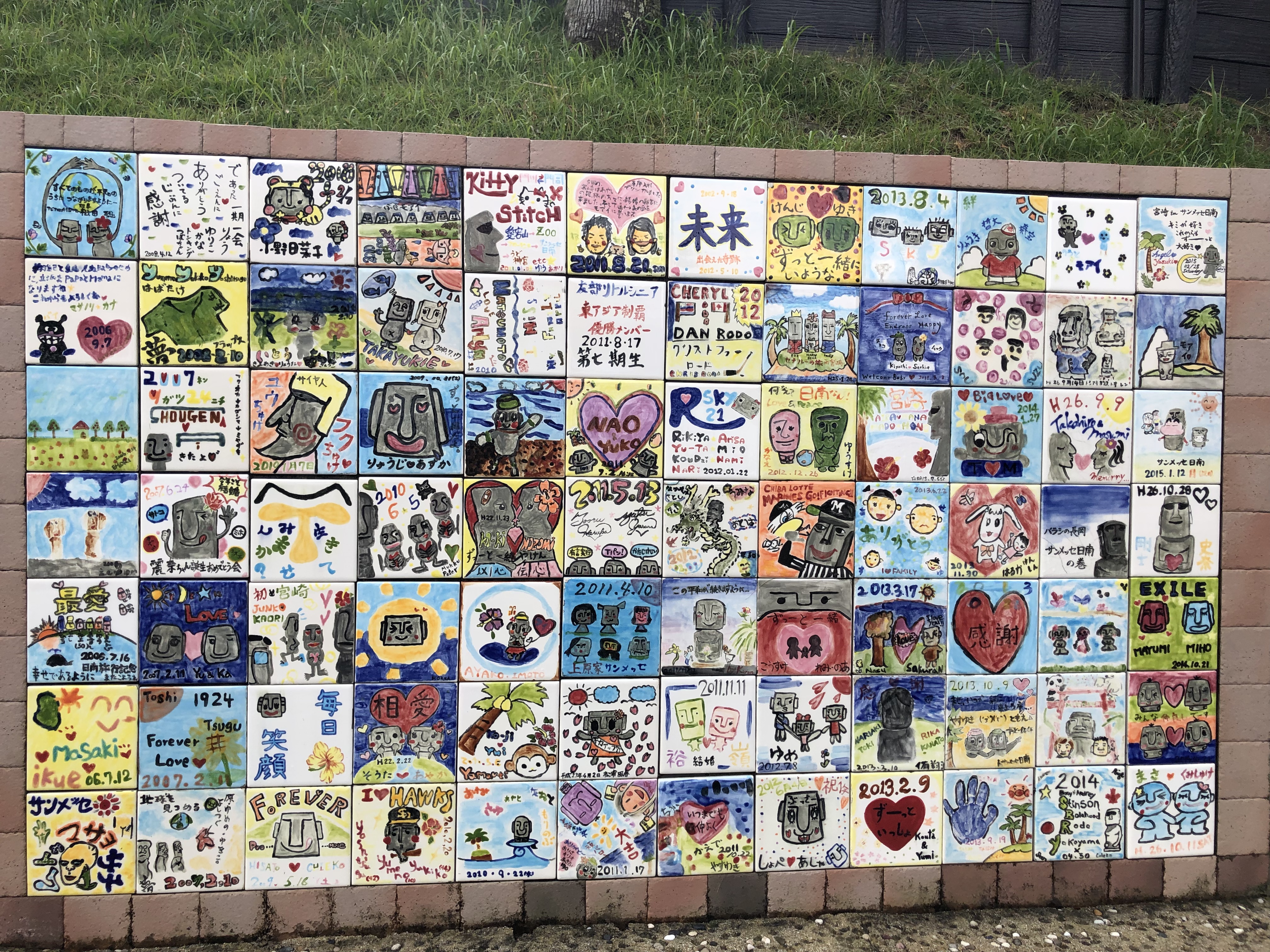
Twice a year during the equinox, the sun rises from behind the middle of the seven Moai statues, and its sunlight passes through a ten centimetre wide gap in the Sky Tower, runs up the sun steps, and penetrates the centre of the bell at the top of the hill, basking the bell in a glow of sunshine. Sadly though, today is not the equinox, and the bell isn’t very photogenic whilst not being basked, so my photograph here is some random peace mural I found.

I leave Sun Messe Nichinan and continue my walk along the coast. The rocky coastline here twists around the mountains, the ocean crashing into the cliffs below, my destination in sight. After another tunnel and what feels like an eternity of walking, I finally reach Udo Shrine. The shrine is set in a cave carved into the rocks of a mountain, and it requires a climb down steep stone steps to reach its entrance.
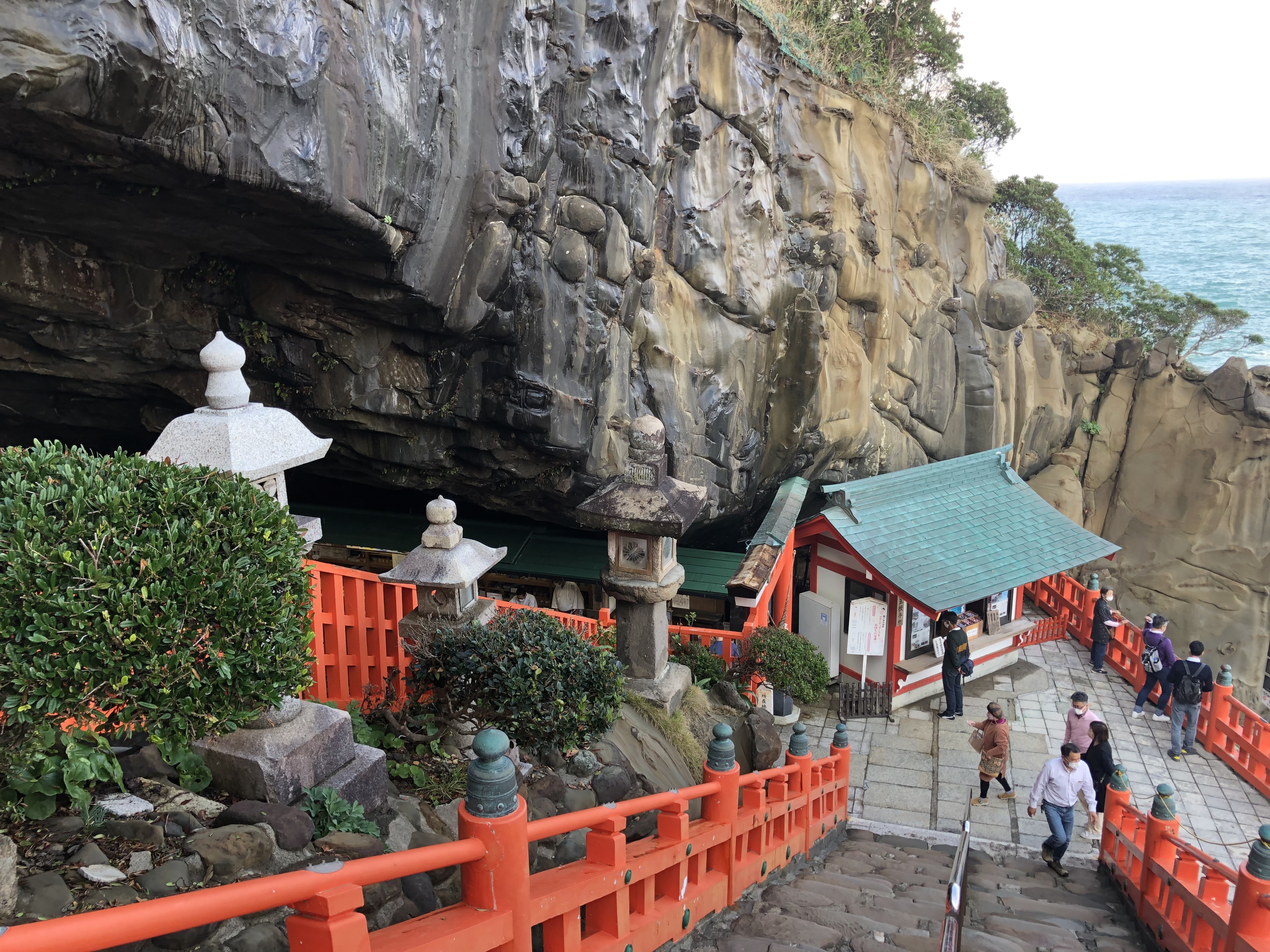
Udo Shrine is primarily a fertility shrine. The gods enshrined here are all about safe delivery during childbirth, matchmaking for couples, and safety at sea. The mythology here is that Toyatama-hime, otherwise known as Luxuriant Jewel Princess, daughter of the Goddess of the Sea, decided to attach her breasts to the rocks. It is said drinking the water that trickles down from her cold stone bosom will bring fortune in pregnancy.

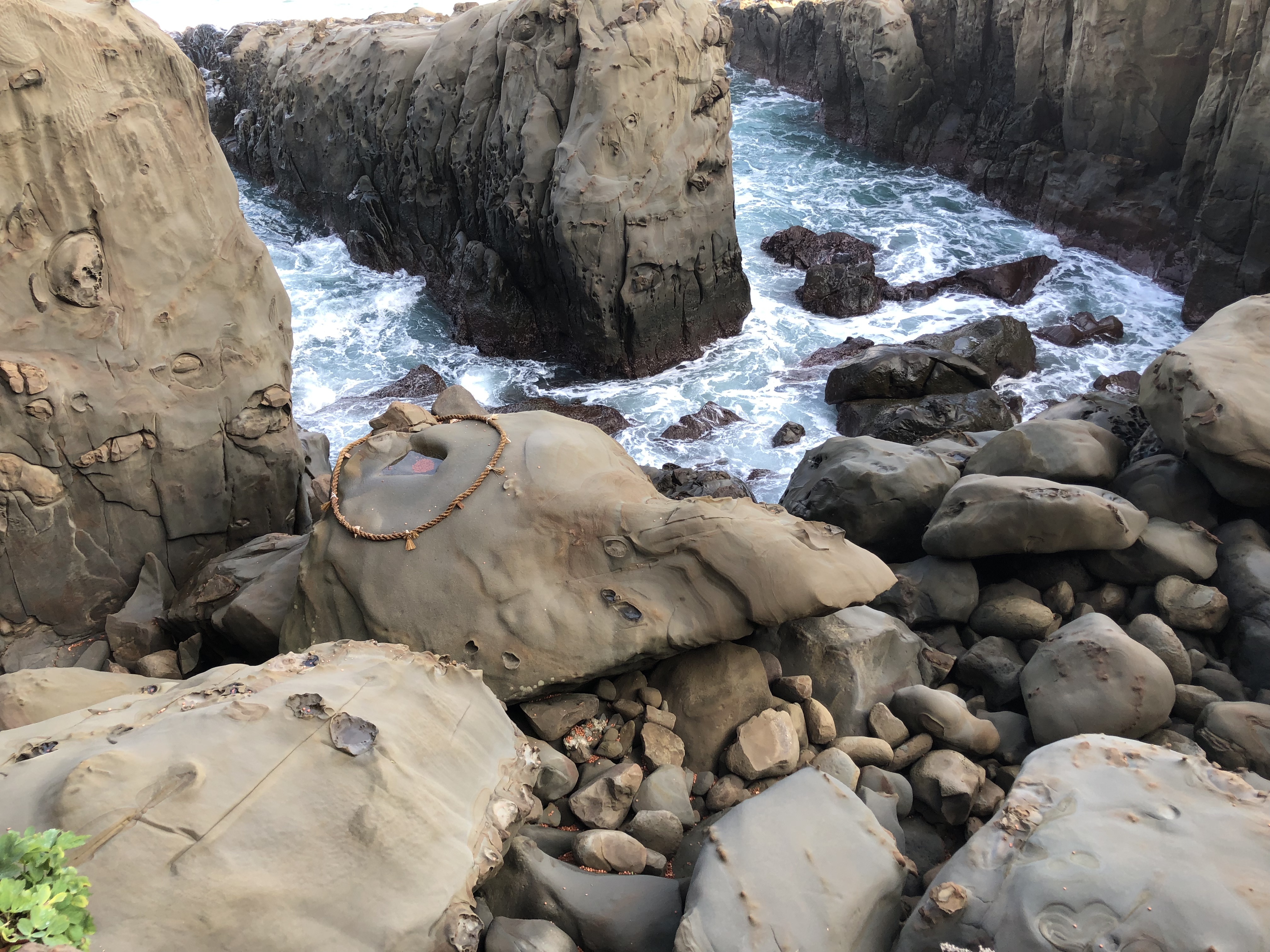
The second attraction here is the custom of throwing small clay balls known as ‘Undama’ into a pool located on one of the rocks below the main shrine. The sign reads, “Men throw the clay pebble with left hand. Women throw with right hand. If the ball lands in the rope circle, you will have a good luck.” It costs just ¥200 for five pebbles.
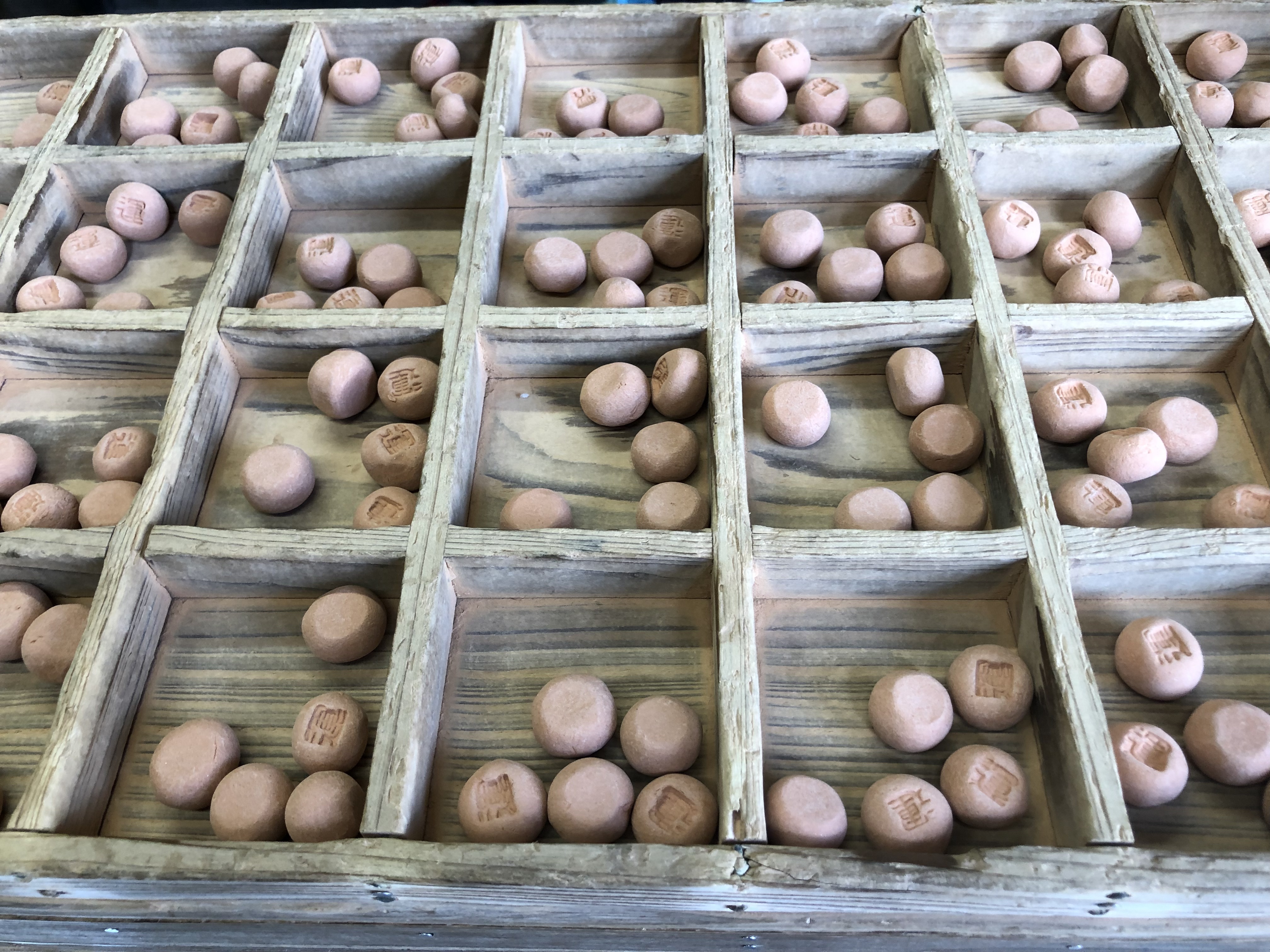
A Japanese man wanders over and throws his first pebble, landing it in the pool first time, everyone around him applauds. His good luck however instantly wears off as he proceeds to miss his next four throws. All five of my pebbles are tossed into the ocean. Nobody claps. There doesn’t appear to be any limit to the number of Undama I can purchase, therefore, I could continuously buy more pebbles and keep trying until I finally land one in the pool, thus guaranteeing myself a chance to have a good luck, but I decide against it.

Originally, the rules for the Undama were that both the man and woman in a relationship would each throw five stones, and the total amount from ten that landed in the small pool would equal the total number of children that the couple would have. However, problems arose and arguments were had, especially when a couple wanting a child would miss all ten throws, so the shrine decided to change the outcome to become about good fortune instead.
As I leave Udo Shrine, I find my timing to be just about perfect as the last bus pulls up. I get on the bus bound for Miyazaki Station. At Aoshima Station, a Japanese couple board the bus with their ten children.
The Time Traveler’s Strife

Today, I decide to explore the Asakusa area once again. Recently, I engaged in a conversation with friends about Denbou-in Gardens, the secret gardens I visited, hidden in the grounds of Senso-ji Temple. Intrigued to discover more about this area and its hidden gems, I then heard a mention of the interestingly named Drawing Light Temple. Obviously, I wanted to find out more. In the blazing sunshine, I head to Asakusa once again and search for the temple.

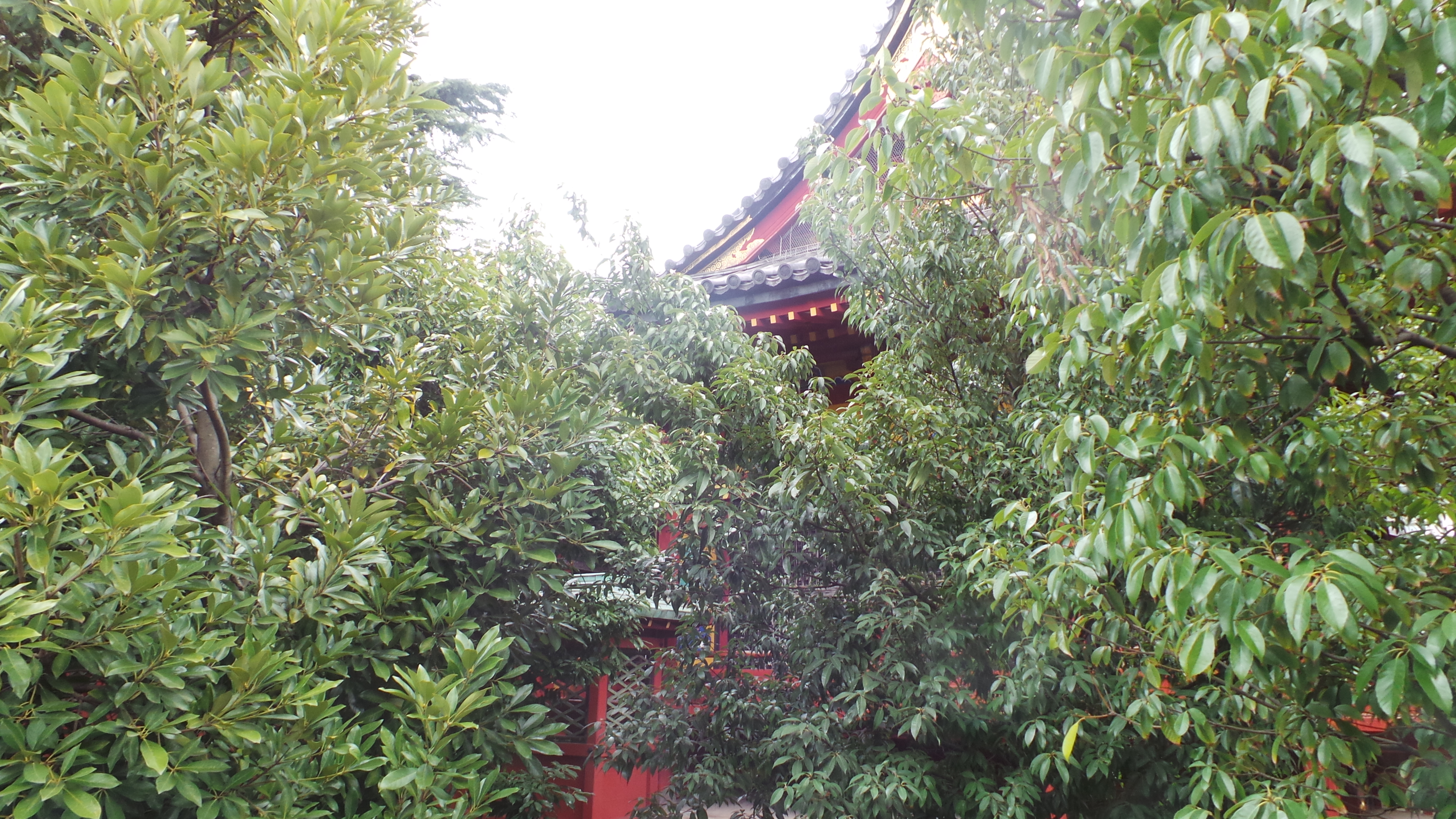
It takes me about thirty minutes to wander through the huge complex of temples and shrines that make up the Senso-ji compound before I eventually find a rather obscure-looking tunnel with overhanging plants and nondescript flowers. Oddly, I have never seen this tunnel before, so for the second time in just over a fortnight, I have stumbled upon a new place in Tokyo, a city I have lived in for eight months now. Hidden beyond the foliage, on the other side of the tunnel, sits the impressive Drawing Light Temple.

lightdrawing

Built in 1609, this temple houses the goddess of protection from drawing light images. Fortunately, an English sign serves to remove any confusion and informs me that, “The Goddess in this temple protects against photography, portraits, and reflections.” Ironically, photography is allowed here. As I read the signboards about the history of this place, it becomes instantly apparent that if this temple was built in 1609, as the sign states, then it precedes the very first photograph, making it impossible for the goddess that resides here to know what she would be protecting against. It reminds me of the Flying God Temple, where people go to pray before they fly on an aircraft. The god there existed before aircraft were even invented. Even the story about the origin of Senso-ji, concerning the golden statue of Kannon fished from a lake, is riddled with confusion; the statue is no longer housed in Senso-ji Temple, and has never actually been seen by anyone who can prove it existed in the first place.

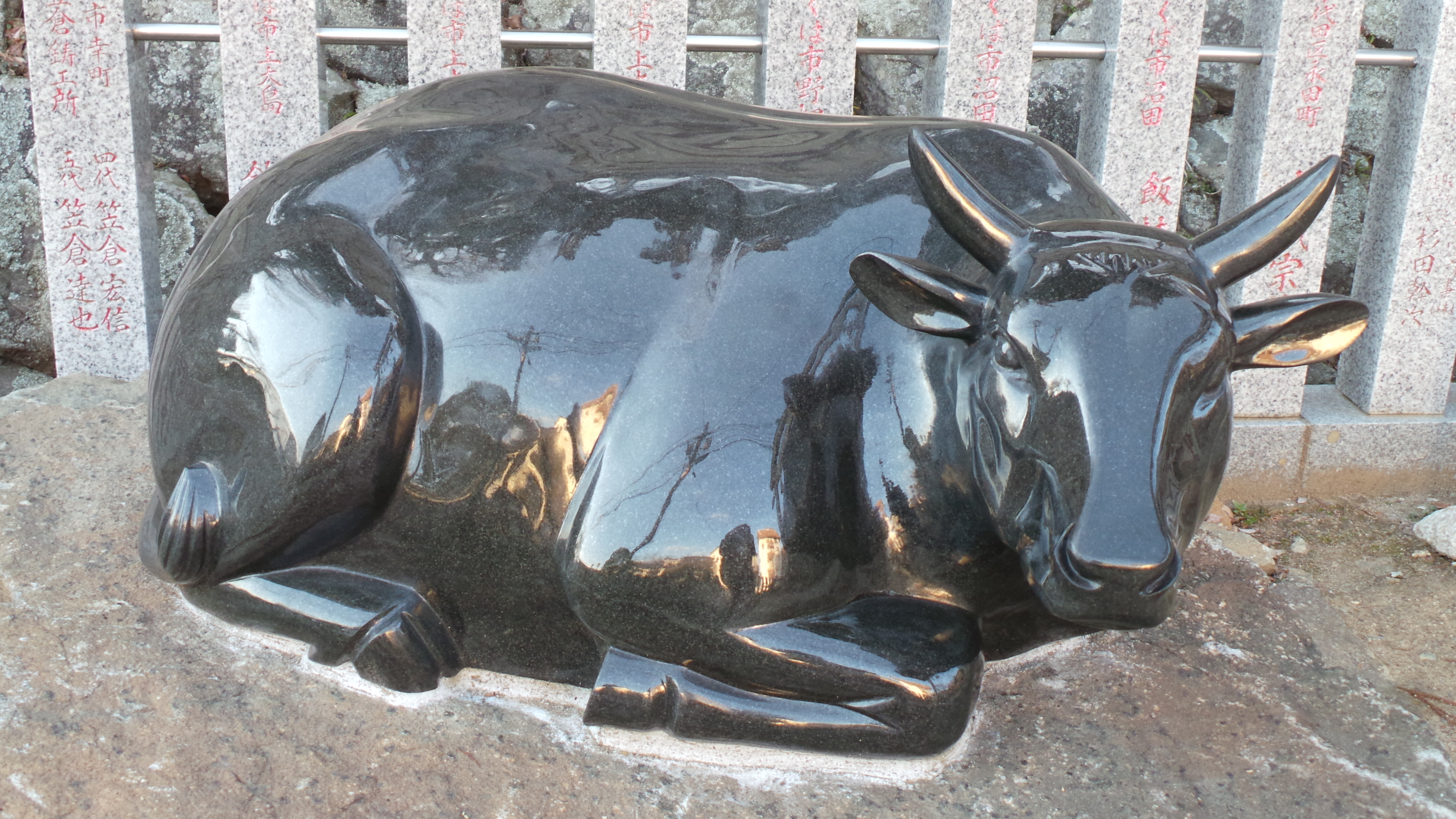
The inconsistencies and inaccuracies in religious narratives make me increasingly sceptical. Considering the possibility that religious stories and certain deities might be nothing more than fabrications is a notion I had never entertained before, but it now begins to take shape in my mind. What if it’s all untrue? I ponder this for a moment, and then, quite unexpectedly, I spot a magical cow.

magcow

“Look closely,” says a sign next to the cow. I stare at the cow, not really sure what I am supposed to be seeing. Everything here looks perfectly normal – just a statue of a cow. Below the sign, there is a description in Japanese, which later translates to read, “As a way to protect the stolen soul, in the cow, your image will be hidden from the drawing of light.” I take a photograph of the cow, and oddly, my image isn’t present. Very strange. I take seven more photographs from various angles, yet each time, the scenery behind me is visible, but my own reflection is mysteriously erased.

Why a cow has been chosen to symbolise the absence of reflection is beyond me, but some sort of wizardry is at hand here – a trick of light, perhaps. Continuing my exploration of this hidden temple, I discover that it holds the origin of the story that a photograph can steal your soul. It was said that when this temple was built before photographs were invented, the thought of an image of a person being taken was a direct link to the spiritual world. This history has also spread to the rest of the Senso-ji area, where no mirrors can be seen at any of the temples or shrines. It makes me wonder if the Edo Period in Japan was populated by time travellers, building temples everywhere that predict future inventions.

As I leave the Drawing Light Temple, I continue my exploration of the nearby area and discover another display of inconsistent historical information.

stonelantern

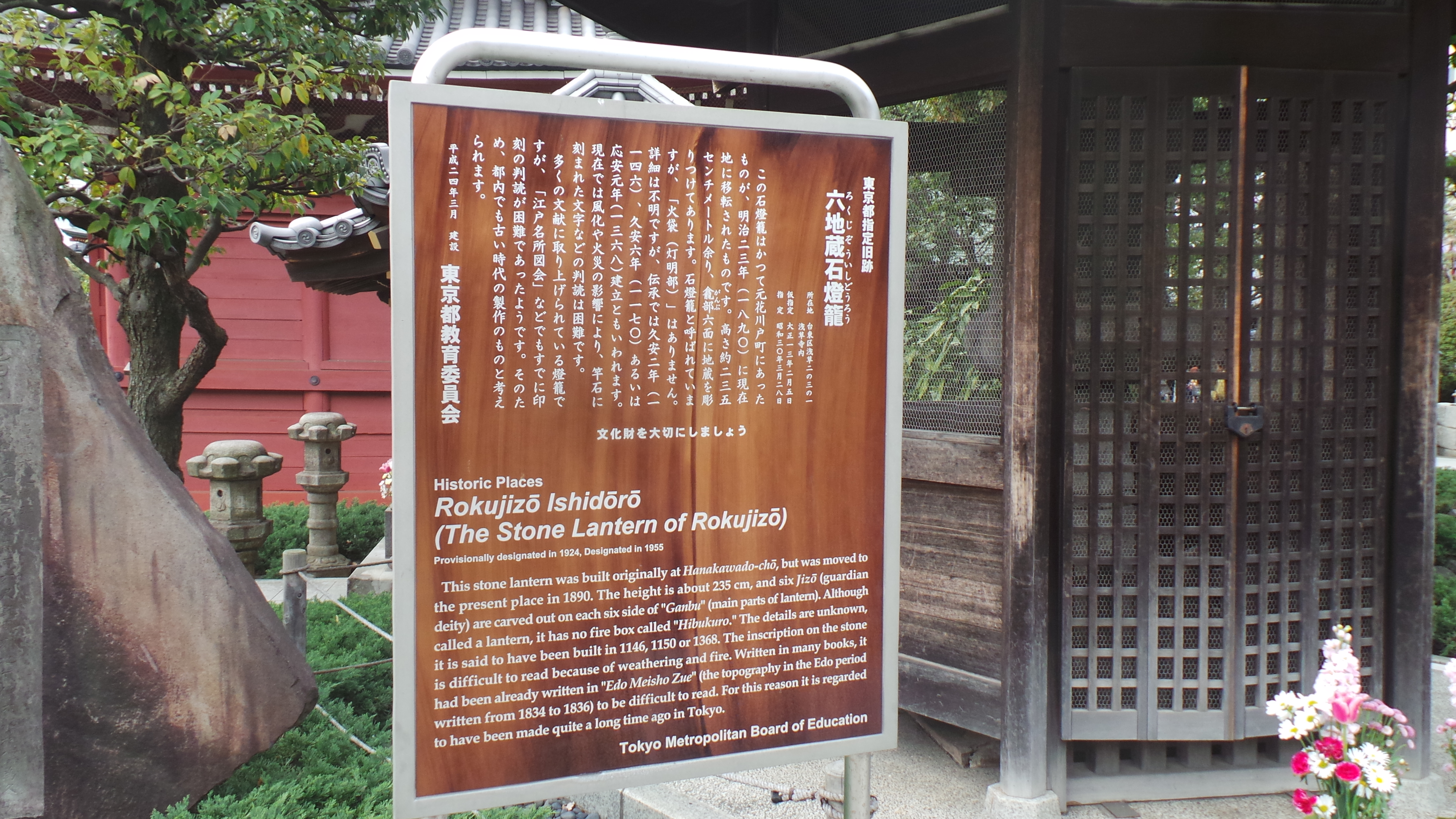
The Stone Lantern of Rokujizo was built in either 1146, 1150, or 1368, and already I find that there are too many contradictions. The sign even states that the details are unknown. Yet, the lantern itself features topography that wasn’t used until 1834. So somehow, the lantern features Japanese text that was first used 688 years, 684 years, or 466 years after it was originally built. My suspicions surrounding the history behind Senso-ji Temple are once again confirmed here.

I continue my tour and find a monument to Kume no Heinai. He was a samurai in the Edo Period and a master of sword fighting. Over the years, he killed many people before eventually turning to a life of virtue. Heinai began to live in Kongo-in Temple, inside Senso-ji Temple, and devoted himself to Zen Buddhism. He held religious services in honour of the souls of the people he killed. One day, he ordered his followers to carve his figure in stone and bury it in a busy district of Asakusa, so that forever, people would step on him—presumably what he thought he deserved after years of killing. Oddly, Heinai was in good health the day the statue was ordered to be built; however, the next day, he died suddenly, as if his fate was already known.

My final stop is the peculiarly named, Bell of Time.

belloftime

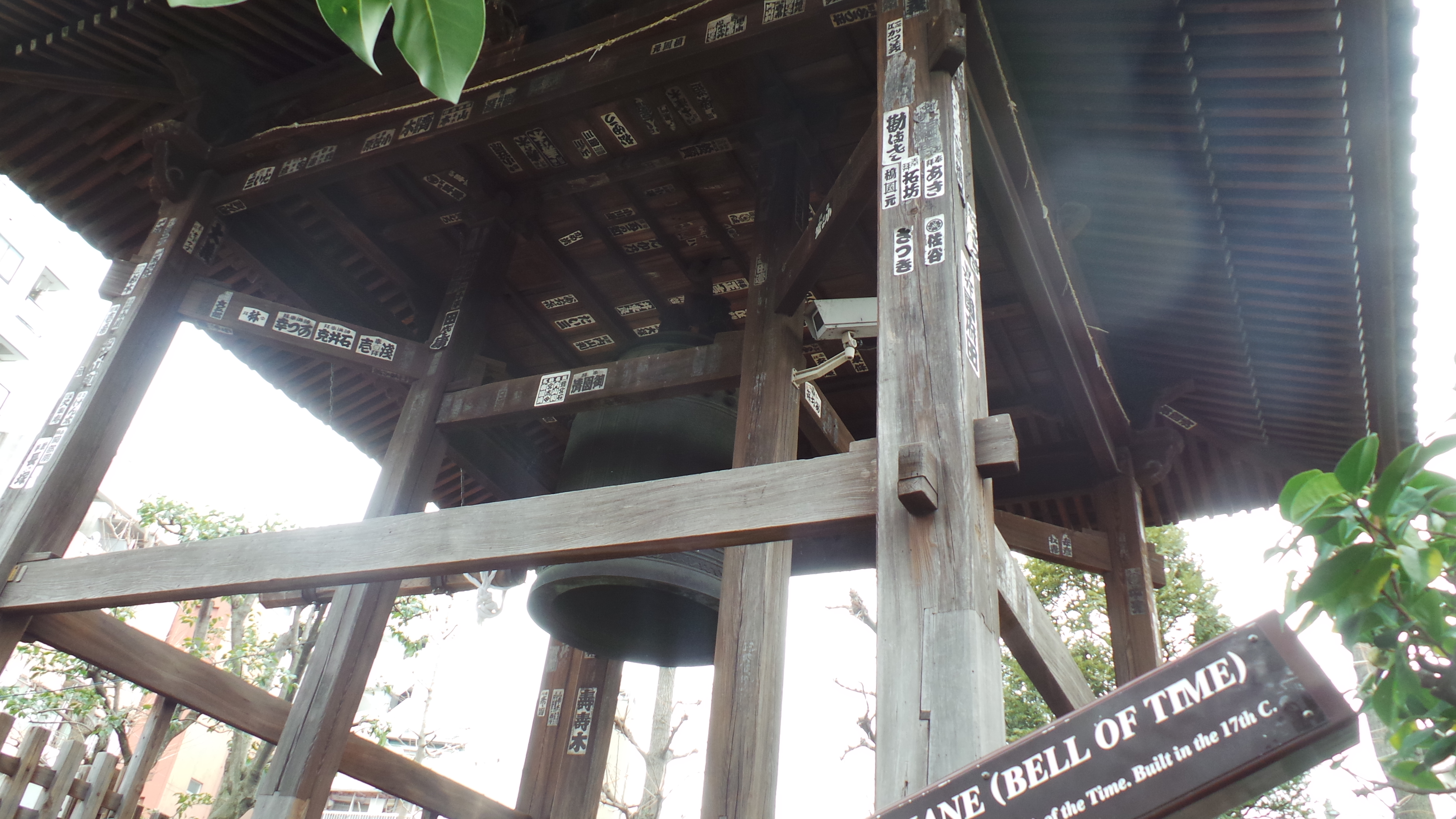
This innocent looking bell housed in a wooden structure, to the untrained eye, wouldn’t be significant. To my overactive imagination, this confirms my earlier suspicions that religion, or at least the area around Senso-ji Temple, was built by time travellers, and this bell was their time machine. Obviously, time travellers building temples sounds ridiculous, although the evidence is definitely here. If this isn’t the case though, then perhaps instead, religion is being used to make money here; exploiting the beliefs of innocent people, and making this area more attractive to tourists. It does seem from my brief attempt at investigating the area, that most of the information I have discovered is based entirely on lies.

Somewhere Oji We Know

The day is warm but grey. I head over to the Sumida River to take a look at a traditional Japanese festival known as Hina-matsuri. It’s a day dedicated to girls, celebrating the passing of ancient dolls from generation to generation. Originally, these dolls were floated along the river. However, due to issues with local fishermen, this practice was discontinued. Nowadays, the dolls are cast into the ocean before being collected and burnt. As is customary, the dolls are believed to contain evil spirits, and Japan utilises fire to cleanse them of the demons within.

Unfortunately, upon my arrival at the Sumida River, the event has already concluded, and the market stalls and stage are in the process of being taken down. With not much left to do for the day, I hop on my bicycle and once again head in the direction of Kita Ward, towards a quaint little place known as Oji.

oji1[1]

I find myself standing in Asukayama Park, a vast area designated in 1873 as one of Japan’s first public parks. Instead of climbing the steep steps for entry, feeling particularly lazy, I opted to ride for free on the monorail that crawls along the incline and into the park. Interestingly, the train station here runs alongside the park. As I look in one direction, I’m surrounded by lush greenery, while in the other, I see the familiar sights of billboards, buildings, railway tracks, and advertisements in the sky.

As I explore Asukayama Park, I’m pleasantly surprised to discover a unique playground for children, quite different from what I’m accustomed to seeing. The play area features old trains repurposed into climbing frames. Among them, two locomotives stand prominently, and my personal favourite is D51 853, a steam train donated to the park on August 31st, 1943. A nearby sign mentions something about coal, water, and charcoal, though I have no idea what it is referring to.

oji3[1]

D51 853 is awesome. Not only can I go inside and look at the old steam engine, but I can also climb onto the roof and pretend I am in a movie. I feel happy for the children who come here. Parks in Japan offer excellent facilities and interesting attractions. It makes me wish that I had such adventurous play areas in England when I was a child, but instead, all we had were rubbish swings. A sign says, ‘D51 853 is somewhat dangerous. Play carefully, duck down, or climb up on the high locomotive!’

I continue my exploration and discover that this park also boasts old waterfalls absent of water, beautiful foliage, and multiple statues and sculptures of varying shapes and sizes. One such sculpture is merely a small pile of rocks, while another is a giant rock enveloped in a small wooden shelter.

oji2[1]

A sign beside the massive rock mentions something about the ceremonial transfer of a divided tutelary deity to a new location, although the meaning escapes me. It also notes that the inscription is challenging to decipher in Japanese, as the letters were written using ancient kanji and rare calligraphy. Despite the protective wooden house, the words have succumbed to a weathered, entropic fate. A second sign, written in English, amuses me; it simply says, ‘Rock, please do not climb.’ Instead, I climb the protective wooden house.

As I leave the park, I pass by the Paper Museum and ponder how interesting it must be. Unfortunately, it’s closed today. I continue to walk, heading toward a bridge, where I follow some old stone steps down to Otonashi Shinsui Park.

Oji4[1]

Hidden beneath the bridge, Otonashi Shinsui Park is simply amazing. It boasts its own old wooden bridge, a small stream, an abundance of beautiful nature, and an opportunity for rock climbing practice on the many craggy stone structures that don’t appear to be dangerous at all. I stand for a while, deciding not to climb but only to observe, taking in the beauty of the scenery. After a while, I head back up the steps and across the bridge.

Beyond the bridge, there’s a huge torii gate and a massive shrine.

oji5[1]

Oji Shrine, one of Emperor Meiji’s Ten Shrines of Tokyo, is part of a pilgrimage trail consisting of ten shrines. Today, the shrine is devoid of visitors; perhaps they are all too busy enjoying the festivities with their dolls. Legend has it that the shrine was renamed by Toyoshima, a Japanese warlord. However, the most intriguing aspect here is a much smaller shrine dedicated to the god of hairdressing and wig-making. Quite peculiar.

I continue cycling around the area, searching for something of interest. Eventually, I stumble upon large castle walls with modern houses built above them. Steep stone slopes run along the castle wall, eventually leading to Oji Inari Shrine—a place where foxes seemingly guard the playground for children situated at the bottom of the hill.

The god of rice harvesting resides here, and so do the foxes. Among all the fox shrines in Tokyo, Oji Inari Shrine is considered the main one. Every year, at the end of the year, foxes reportedly visit from all over Japan to guard the god of the rice harvest, and presumably, to offer their prayers. It’s hard to believe that if I came here on New Year’s Eve, the shrine grounds would be filled with foxes, but that’s what the information here tells me, and who am I to argue with information.

oji7[1]

I leave the shrine and start cycling back toward Asakusa. I make a brief stop at the Banknote and Postage Stamp Museum, but unfortunately, it’s closed today. It’s a shame really because inside this free museum, it’s said that you can lift one billion yen. I would have loved to take one billion yen home with me, but sadly, that won’t be happening today.

Back in Asakusa, I finally get a chance to experience Hina-matsuri through traditional food. Chirashizushi (scattered sushi) is the dish that women typically eat on this day. It’s supposed to be sugar-flavoured, featuring vinegared sushi rice. While the toppings usually include raw fish, for some reason, my friend has given me a unique mix of rice topped with egg, cream cheese, and strawberries. Although three of the ingredients generally go well together, the addition of strawberries for the sugar-flavoured element is what I find a bit strange. While this might be a traditional food in Japan, strawberries with egg and rice is something I struggle to bring myself to enjoy.

As I cycle home with the taste of Chirashizushi scattered in my mouth, I decide that my next blog post will be primarily about food.

After the Form

Bang, bang-bang. Bang, bang-bang. Bang, bang-bang.

The repetitive yet timely sound of drumsticks hitting against stretched animal hide stirs me from peaceful dreams. Not one to miss out on an opportunity to write about whatever is parading by my house, emitting this loud but perfectly rhythmic noise, I decide that I will follow the source of the sound right after I wake up with a coffee.

I haven’t written for a while as I’ve been extremely busy researching and organising paperwork, the details of which will become apparent later in this post. But for now, drums. I head outside to find that whatever was causing the loud banging appears to move at astonishing speeds; either that, or I drink coffee a little too slowly. I jump on my bicycle and follow the distant echo of drums before eventually locating the source to a small shrine in Imado.

monksfuneral[1]

It seems that I have inadvertently started my day with a funeral. The five monks stand within the shrine grounds, chanting and maintaining a steady balance of drums. I head back home to pick up some paperwork before cycling over to Asakusa. Outside the train station, the same five monks pass me again. This is quite a walk from Imado, which adds confirmation to the pace of these speeding monks. I take a train over to Ueno Station. The usual random mascots are here, serving no clear purpose but to frighten me.

statuenomasc[1]

I change to the Yamanote Line and head to Shinagawa, a place I have only visited once before when I felt the need to stand inside the belly of a whale. This time, I am here to visit the Tokyo Immigration Information Centre. A note on their website claims that, ‘This is where all inquiries should first be made concerning immigration issues, wherever you are in Japan.’ Luckily for me, I am already in Tokyo; otherwise, this would have been quite the journey. Also, seeing as I am in need of information pertaining to immigration issues, it looks like I am heading to the right place; the so-called ‘centre of information.’

Much to my delight, as I leave the train, I find that a bus service regularly runs to the offices I am here to visit. Everything is running a little too smoothly.

busstopaliens[1]

I am greeted outside of the immigration office by hordes of people giving out paraphernalia advertising their respective companies or cults. A woman is spreading the joy of Christianity, a man hands me a document offering ‘Legal Support for Aliens,’ and another man is holding a sign demanding China stop the act of organ harvesting.

Inside the Immigration Centre, I head over to the Advice and Information Counter, take a ticket (147), and then find a seat. The woman at the counter is talking to a young French couple in broken English. Every few seconds, she lets out a yawn or scratches her head, illustrating her apparent boredom.

Eventually, the French couple leave. The woman at the counter presses a button, and the bright red display shows the number 145. She waits less than three seconds before pressing the button again, displaying 146. Without much delay, she presses it again, showing 147—my number. As I approach the counter, her finger hovers over the button to call the next number, her eyes filled with resentment that I might sit down before her within my three-second window. I take a seat just as she sighs. I understand that maybe I am the one hundred and forty-seventh person she has seen today, not counting the people she frantically skipped, but this is her job. To counter her obvious state of disregard, I greet her in an overly cheerful manner, smiling as I sit.

The woman I talk to speaks limited English, looks bored, and probably hates her job. I inquire about the application form that I should take in reference to the activities I want to pursue in Japan. My questions are generally ignored, and at one point, the woman randomly asks, “So you want to stay in Japan to study Judo?”
“No, I didn’t say anything about Judo.”
“Okay, but if you are studying Judo, you need to go to End Counter B, second floor.”
“Okay, I actually …” She cuts away my words with metaphorical scissors of despair.
“End Counter B,” she reiterates, “second floor.”

So much for the best place to visit for information and advice.

I head to the second floor, to End Counter B. As I approach, the woman, slightly more miserable than the last, looks me up and down and says, without any hint of emotion or benevolence, “Passport.” Just one word is all she spares me. I hand her my passport. She adds rather sternly, “What do you want?” I explain that I want to collect an application form for … Before I have a chance to finish my sentence, she says, “Application, go queue over there,” pointing to a line of about thirty people.

aliens[1]

I join the queue, wait thirty minutes, and then find out that I am in the queue for application checking. I am not here to have applications checked; I am here to collect application forms and ask for advice. So far, neither of these two things has transpired.

My third and final stop is back on the first floor. I wander over to the desk marked simply as ‘Information.’
“What?” asks the woman behind the counter.
“Excuse me, where can I collect an application form?”
“Here,” she says, as if wanting to add the word ‘obviously,’ but she conveys it only with her tone of voice. Eventually, she begrudgingly hands me an application form.
“Thank you,” I say. No response. My politeness falls on deaf ears. The woman just flashes me a frown that contains the absence of all the hope in the universe before trudging off into a sea of misery.

Three counts of rudeness in one hour. It is no surprise that the hundreds of people here, waiting with folders or loose paperwork, look so dejected. Of all my time in Japan, a country that prides itself on politeness and good customer service, this is the rudest I have been treated and the smallest I have felt. The service here is disgraceful, not helpful, and has filled me with no confidence at all going forward. Perhaps this is the hidden agenda: make everyone feel unwelcome so they never come back to complete their applications. Regardless, I have to come back, most likely next week.

Outside, I am handed more leaflets for various different things. A woman tries to give me a newspaper. I say I am fine. She asks me where in Canada I am from. I say I am not from Canada but England. She mutters something about Elton John and then walks off. After wasting what was effectively a whole day, I leave with none of the much sought-after advice I had taken the trip here to receive. Instead, just an application form that I could have quite easily downloaded online and printed out myself.

I head over to Asakusa in need of a drink. On the main road, a protest is taking place about atrocities caused by North Korea. The people here have megaphones and sound extremely angry as they shout in Japanese.

protesting[1]

Trying to take in their words, I can’t help but be distracted by the late January Christmas decorations that loom over the protest.

As I walk toward one of my favourite bars, an elderly woman on a bicycle drops her handbag but doesn’t realise it. “Excuse me!” I shout in Japanese before she has the chance to ride away. She stops her bicycle and looks back. I scoop up her bag and walk over to her, promptly passing her the handbag. She apologises and thanks me, nodding her head more times than I can actually count in Japanese. She is so thankful, so happy that I helped her, and at this moment, just a slight bit of the decency and politeness of this culture finally returns—the kind of decency that has made me love Japan but has almost been entirely washed away by the events and abhorrent treatment I had experienced this afternoon.

The Amazing Kanda Adventure

I exit Kanda station and walk toward the area known as Jinbocho. On the way, I stroll along a street featuring thirty-six sports shops, all lined up next to each other. There is also a small festival taking place here, the 20th Kanda Sports Festival. I continue walking until I see a sign that suggests pluralisation came as an afterthought.

book[1]

Jinbocho is named after Nagaharu Jinbo, a samurai who used to live here in days gone by. Although they took his name, there is little to no information about him on the Internet. Perhaps I can find something about him in one of the many history books on sale here today.

Book Town is great. One side of the street is exclusively used book shops. Little lanterns line the length of the street, and outside the usual stores, a massive corridor of small bookcases stretches the length of the event. On a typical day of book shopping, you would be spoiled for choice, but today, at the 55th Kanda Used Book Festival, the sheer number of used books in one area surpasses that of anywhere else in the world.

bookstreet[1]

There is a shop specialising in only fashion books, another selling just manga comics, and another selling rare history books; they even have one book for sale for ¥350,000. There is something I find calming about walking the aisles of a bookshop. Nobody is here trying to lure me into their shop, nobody asks me to enter when I am already inside, and nobody inside is speaking. The squeaking sound of my wet shoes is the only thing disturbing the silence.

The bookshops seem to stretch endlessly. I notice some arrows painted on the floor, so I follow them to a small charity-run street festival. Rows of stalls offer various foods. One man sits at a table, seemingly designated for people to leave their used plates and cutlery. I glance at the man, and he just shrugs his shoulders; he doesn’t know why he’s sitting there either.

charityfest[1]

At the other end of the festival, more bookshops await. I browse a little longer before heading in the direction of Ogawa Square for my fourth street festival of the day. Today’s event is the Kanda Curry Grand Prix, where twenty different shops are all selling ¥500 curry in the hopes of attaining the grand prize. A polling station with an honesty policy is in place; if I wanted, I could continuously vote for the same shop over and over.

Kanda boasts over two hundred curry restaurants, making it the perfect choice of location for this competition. Outside every stall, a tout shouts at me to go buy their food. A woman in a maid outfit gives me a smile and points in the direction of the store she is here to promote. Soaking wet mascots wander around, and there is a stage featuring live music. Three young women are signing autographs for middle-aged men. The enticing smell of curry keeps me at Ogawa Square for half an hour before it is time to go.

toutskanda[1]

I walk back to Akihabara and take the Hibiya Line to Minowa. Every piece of advertising space on the train is for the same company. On Japanese trains, there are usually about thirty to forty adverts in each carriage; however, on this train, all signs exclusively advertise an urban park town. Very strange.

I grab some things from home before cycling over to Asakusa, specifically to Cafe Byron Bay for a Halloween party. At the cafe, I put on makeup in the hope of looking like a zombie. Friends come and go, some with costumes and others without. Free Halloween-themed sweets are on offer, and glowing plastic pumpkins litter the cafe.

pumpkin1[1]

At one point, I am asked to fetch a forgotten cake from a local bakery. While waiting at the traffic lights, I notice a little child with her mother also waiting to cross the road. They are looking at me, so I make zombie noises at the child; the child screams and hides behind her mother’s leg. All in the good spirit of Halloween.

Back at the cafe, two French chefs are here to cook for everybody, and they are excellent chefs. Canapés, crêpes, and tuna gratin are the highlights. We are then treated to some live music from a local act and enjoy some delicious cake.

cakehal[1]

As the party draws to a close, a Japanese friend of mine hands me a signed copy of his book. It is my favourite book of his, albeit the only one I have ever read; the others are written in Japanese. I find it difficult to show feelings of genuine gratitude dressed as a zombie, but I will absolutely treasure his gift.

After the party, we head out to another bar for an event known as ‘Trick or Drink!’ I try to stay in character at the bar, bumping into walls, mumbling, and dragging one leg as I walk. Homer Simpson is the disc jockey, and his music choice is better than I would have imagined. My sumo wrestler friend is here too, still taller than me but a lot less drunk than the last time we met.

sumohalloween[1]

After getting photographed with a sumo wrestler while dressed in zombie makeup, I decide there isn’t really much else left to do in the world, so I head home to sleep.