A Flood Day to Dry Hard

The news tells me that today there is an excessive heat warning in place in Wakayama. My oh-so-reliable weather application tells me that it will be cloudy all day. The gods split the difference. As I exit the bus unprepared for anything other than heat or cloud, the heavens split open in a thunderous rage of fury.
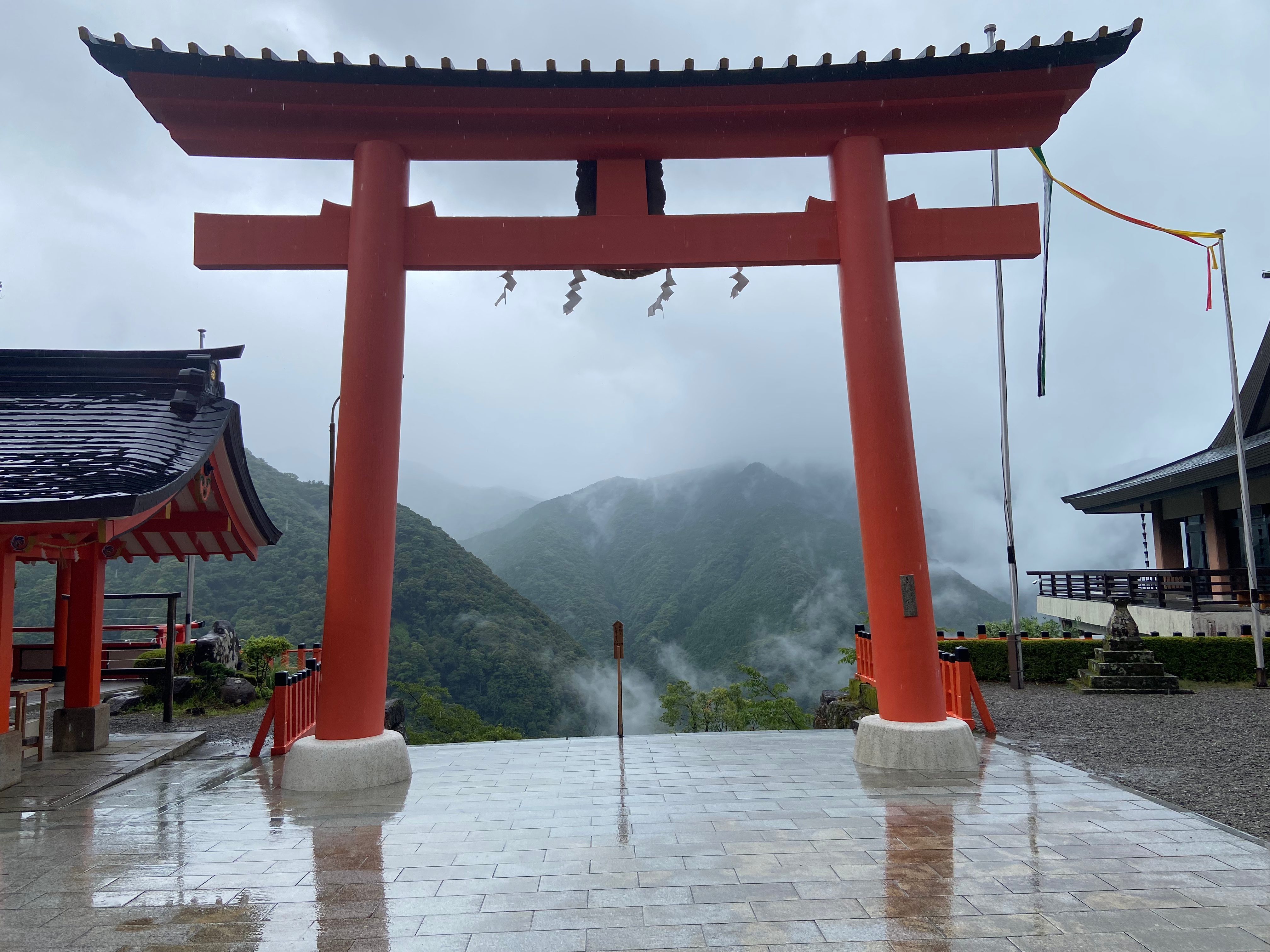
I am at Kumano-Nachi Taisha. As the thunder rolls over the sky I manage to take just one photograph of a torii gate and the mountains beyond, right then, before the rain catches up with the thunder. Luckily for me, there is a shop, so I enter, purchase, then poncho up.

I duck inside the Treasure Hall. No photos allowed, but I explore freely. I wrote about the Nachi Pilgrimage Mandala yesterday, but seeing the real thing up close is something else. I enjoy the other art, artefacts, simple objects from a time lost in the past. Most of the treasures here were discovered in 1918, but are from around the 10th century, with the shrine itself being 1,700 years old.

Stepping out of the Treasure Hall, the rain has intensified fivefold, and some of the ground has already flooded. People cower with umbrellas.
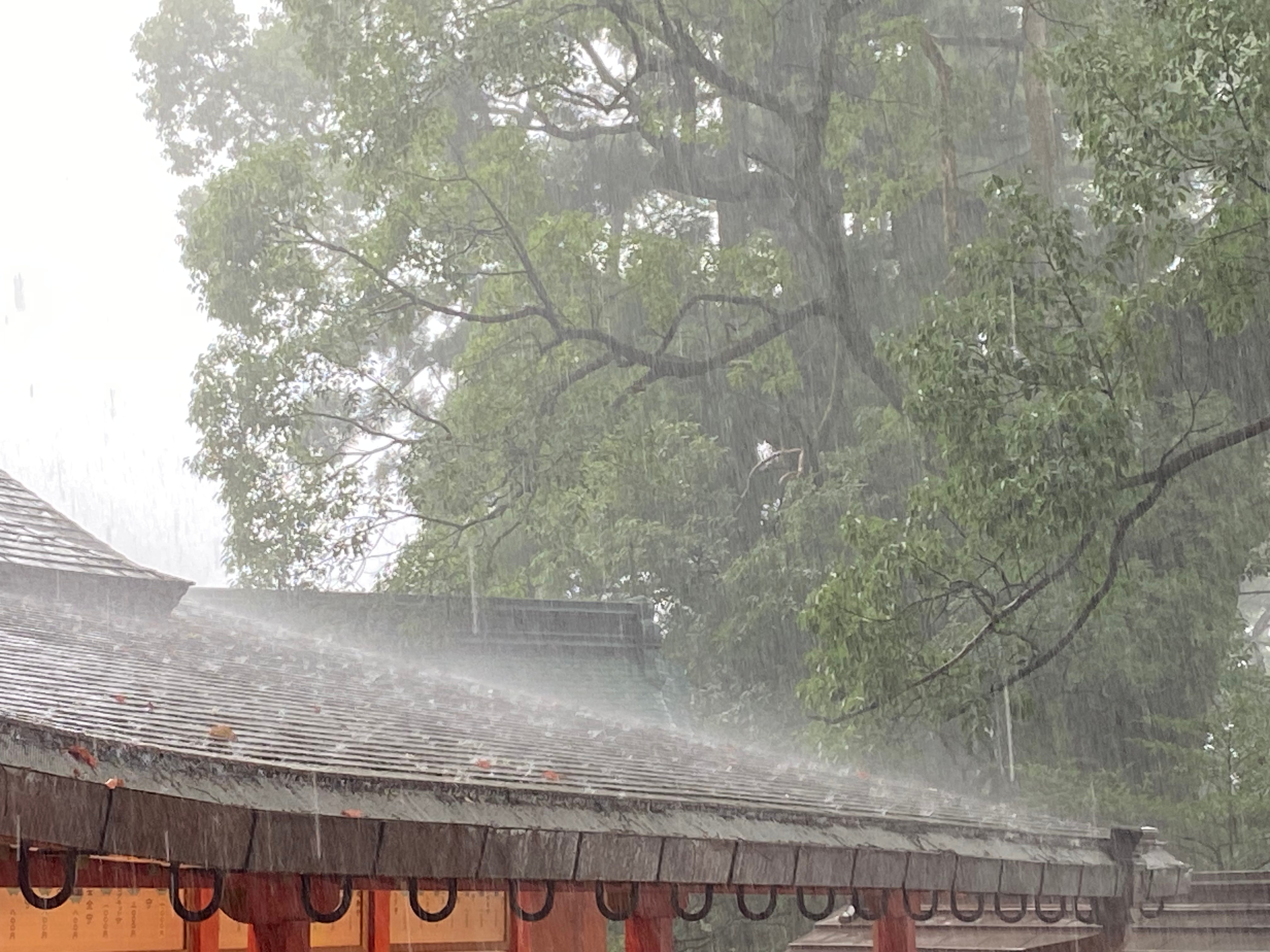
The rainwater crashes down and smashes into the roof of the shrine like a torrent of broken glass, slicing through the air with a merciless, unyielding force. I have never experienced rain like it. The raindrops actually hurt.

I came for the waterfall. Or so I believed. Right now, I feel like I’m inside one. I struggle to see where the waterfall could even be in comparison to the falling water. A monk passes me, dressed in dark blue. He carries an umbrella and seamlessly manoeuvres the flooding and the puddles, calm as you like.

Legend has it that the first emperor of Japan, Emperor Jinmu, found the waterfalls when his boat landed on the Kii Peninsula and he saw something shining in the mountains. At the time, he had been following a Yatagarasu (a mythical three-legged crow sent by the gods as a guide).

I follow the path down the mountain toward Nachi Falls. The sky bellows with more thunder, the road is full of water. Am I walking in the rain? Or am I swimming in a river? At points the water is knee-high. The drains can’t handle it. I can barely handle it, but I persevere.
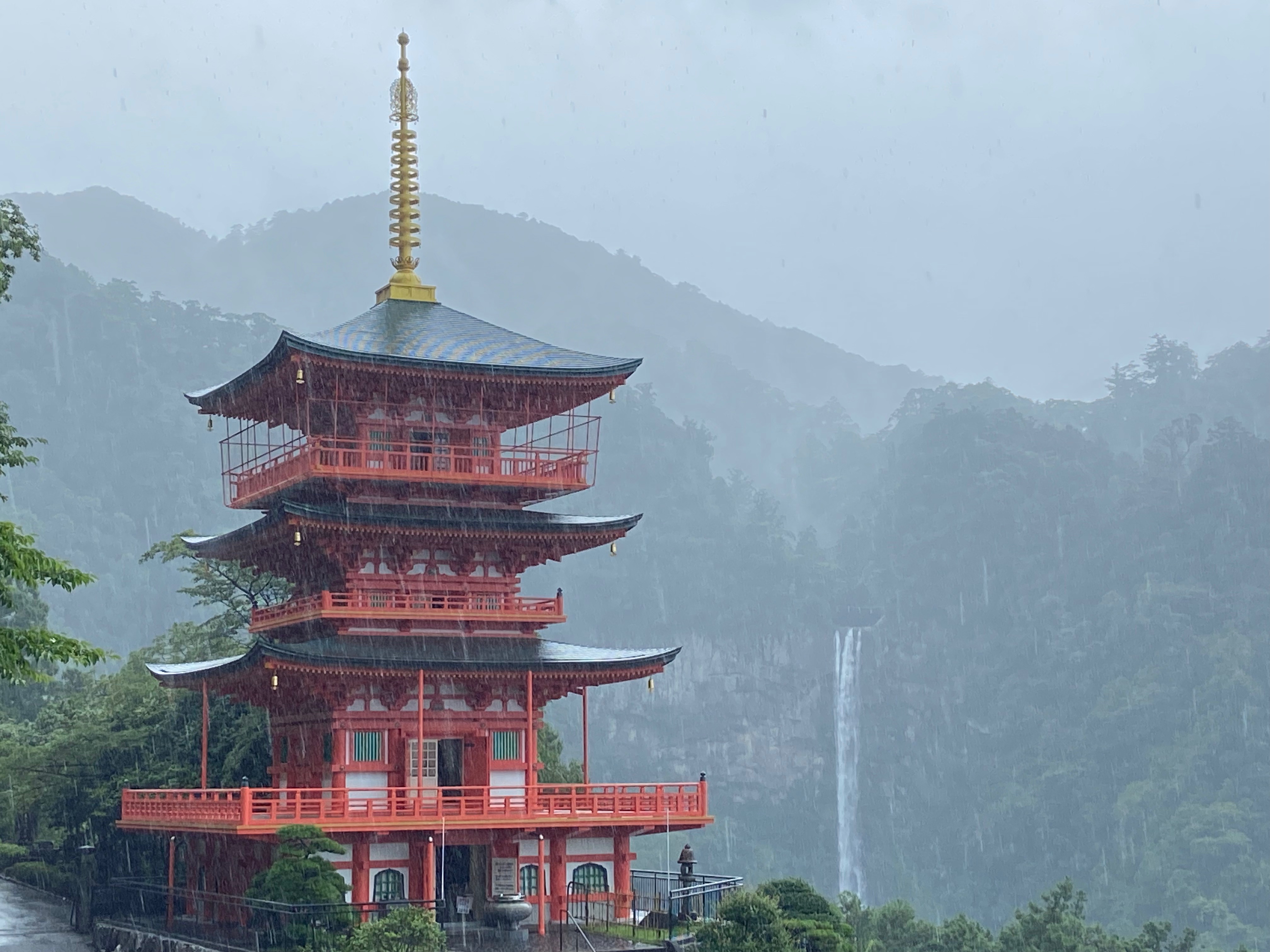
I make it to the pagoda view, the one that’s often featured on the cover of a largely poorly written guidebook. They’ve never featured it in the rain. I enjoy my photograph very much.

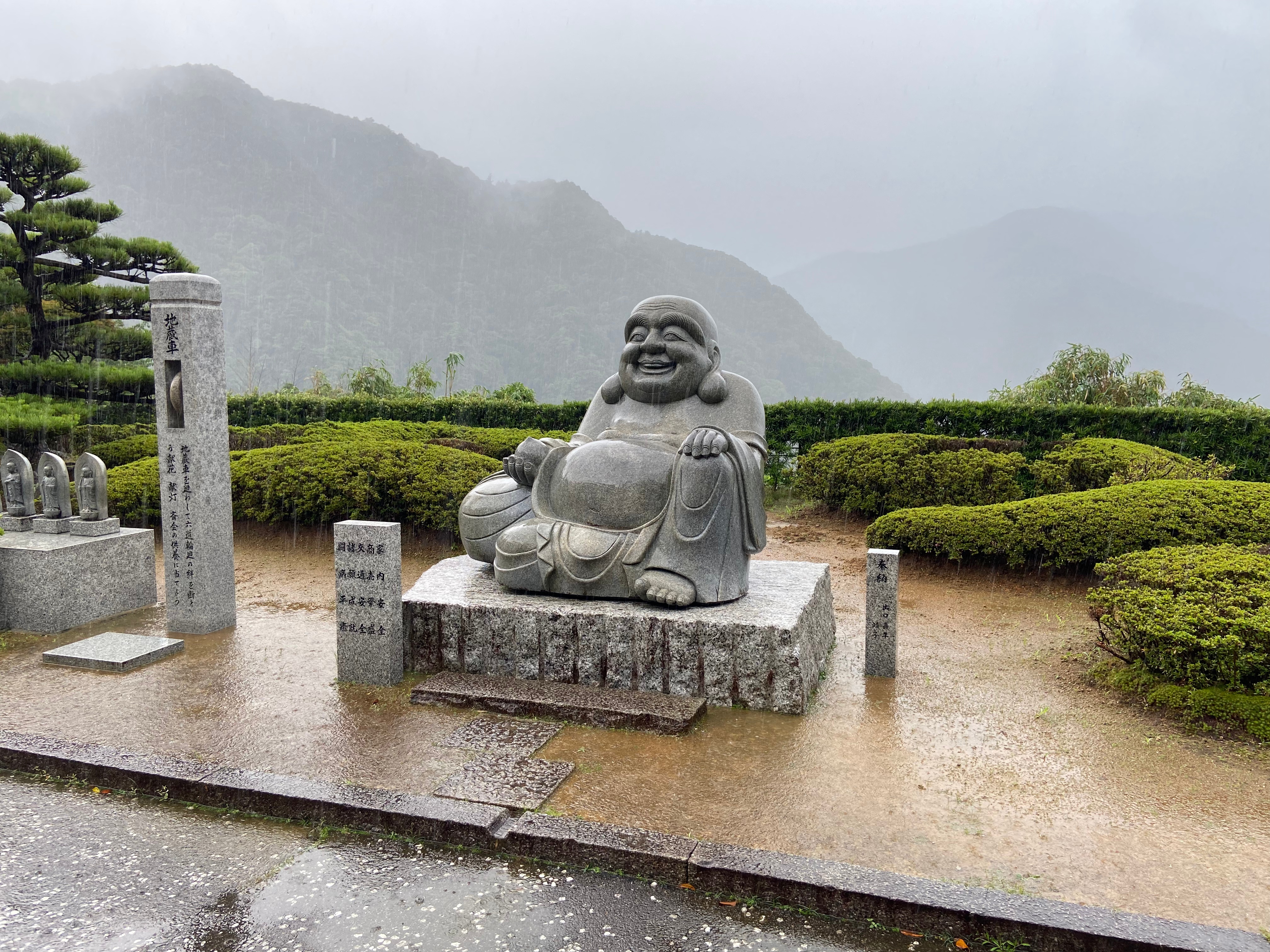
Beside the pagoda sits a big statue of Hotei. God of fortune. The Laughing Buddha. Naturally, despite my soaking wet legs and shoes and inability to understand the point of it all, I rub his massive belly. Good luck and prosperity coming my way, again.
I venture on, down flooded sloped paths and dangerous steps, and eventually, I do arrive at Nachi Falls. The heavier rain drowns out the sound of the waterfall. There’s a story of some star-crossed lovers that leapt from the top of the waterfall in the belief that they would be reborn into Kannon’s paradise. I also know that this is one of the Top Three Waterfalls in Japan, a UNESCO World Heritage Site, and also plummets 133 metres, making it the tallest in Japan.

I head down some slippery steps, careful to hold the handrail. Below, the waterfall itself. Having already taken a spectacular photograph of the rain-soaked pagoda pavilion with Nachi Falls as a backdrop, I find it to be immensely difficult to capture the waterfall from up close, due to the intense rain and heavy flooding.

I stumble back up stone steps to a bus stop. Typically, upon arriving back at Kii-Katsuura Station, the rain suddenly stops. At the Turtle Boat back to my hotel, I stand at the dock. A Japanese salaryman stands beside me, perfectly dry. He glances at my poncho and then at the sky.

From the boat, I see a crow in the air. It looks as though it has three legs, but it’s just the tail feathers, fanned out in silhouette against the sky. Something that could easily be mistaken for three legs.
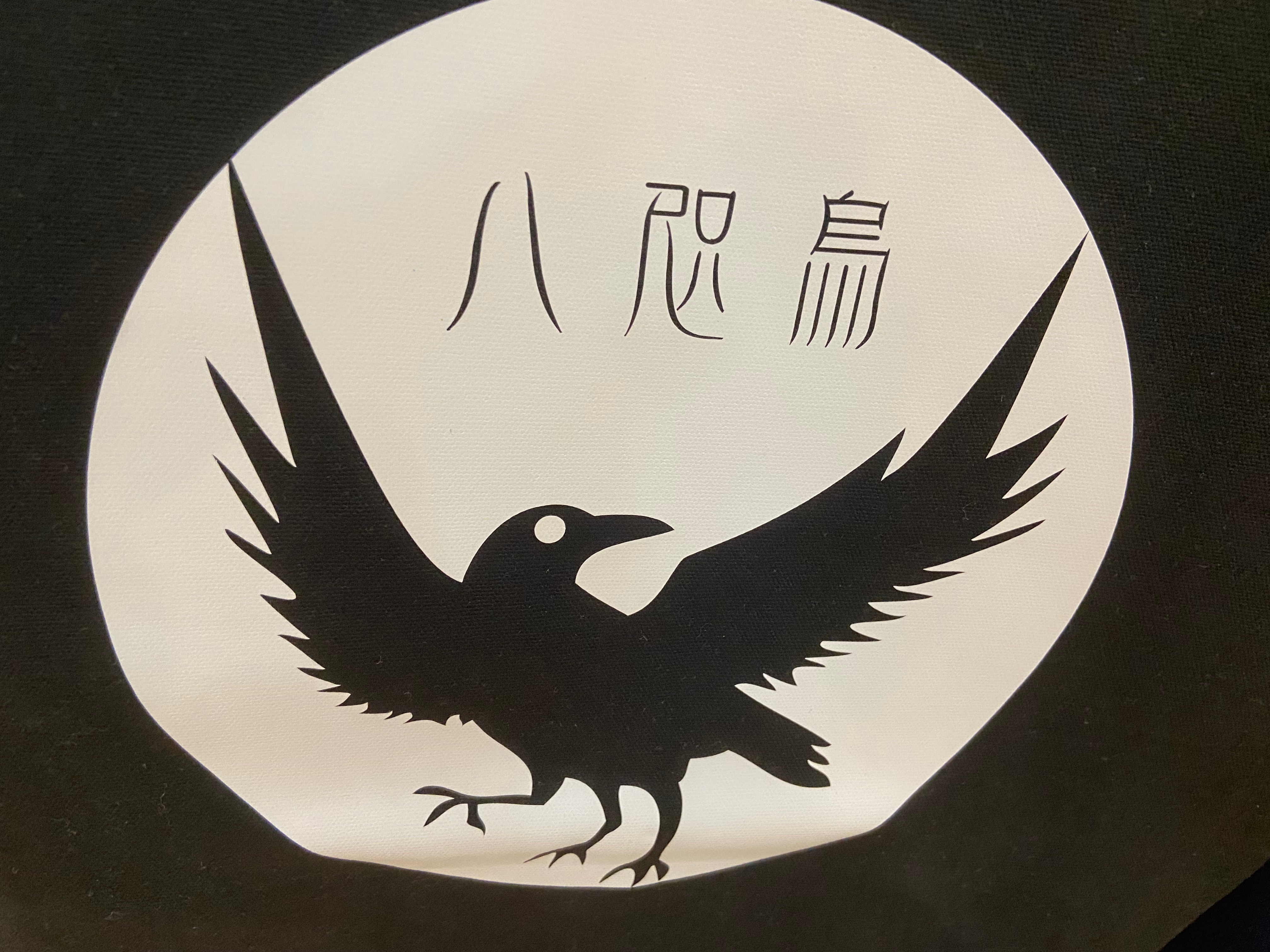
Back at the hotel, I hairdryer my shoes for two hours whilst waiting for my laundry to wash and dry, before heading out in search of a crow to photograph. In the end, all I find is this lousy t-shirt.
Before the Wind Blows It All Away

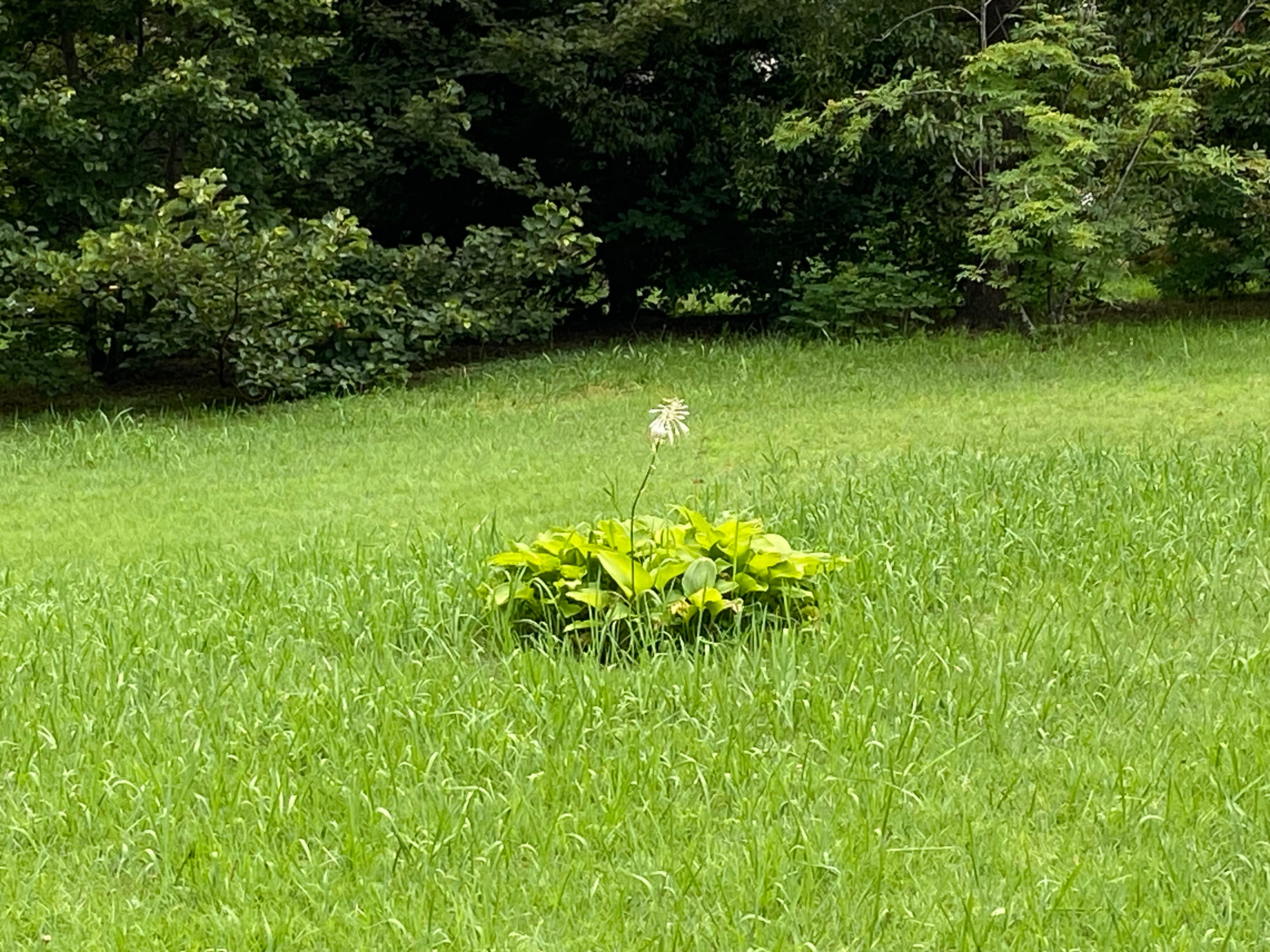
Today I’m travelling back in time, specifically, 20,000 years in time. I’m in Miyagi Prefecture to see the Museum of the Forest of Depths of the Earth. I don’t really know what to expect. When I arrive, there’s a small outdoor garden of evergreens and summergreens. There’s a single flower in the middle of the lawn, with a sign before it stating: Be careful not to step on the flowers. The sign uses the plural form flowers, and it bothers me slightly.

I believe the single flower is a panicled hydrangea. The garden has been recreated. “Let’s go into the grass and observe,” says another sign. The whole point of the place is to compare the vegetation of the Ice Age with that of present-day Sendai.

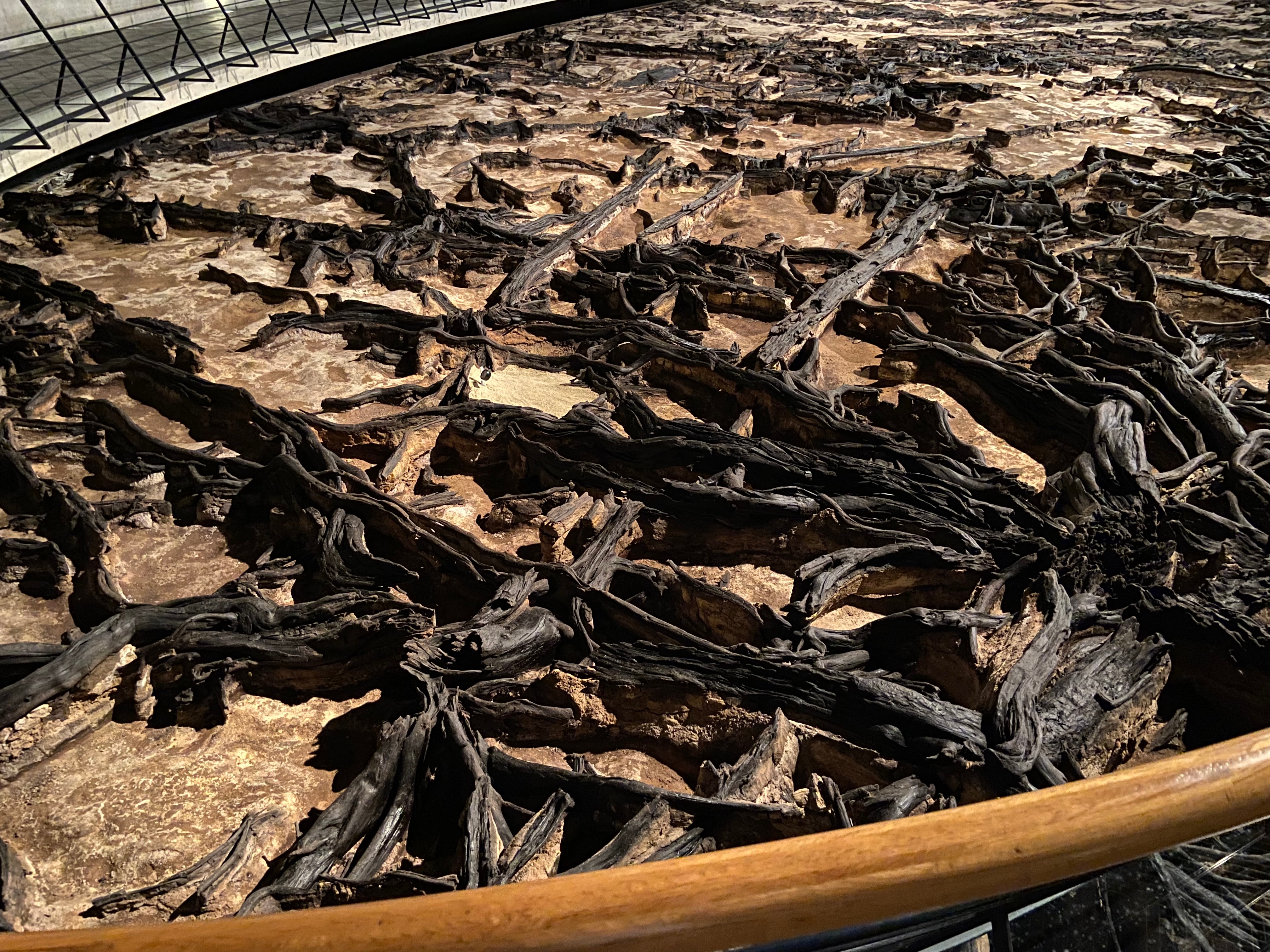
There’s an architecturally stunning structure in the gardens. It’s the only one of its kind in the world. Inside are the 20,000-year-old remains of a wetland coniferous forest. It might not sound very impressive, but when I walk through the doors of the museum and see the sheer size of the trees, it causes me to stagger.

The museum is fascinating. In 1987, an archæological dig found, just five metres below the ground, the preserved remains of fossilised trees, along with artefacts from the same era. There’s a separate tree root I’m encouraged to touch and smell, and it carries some weight.

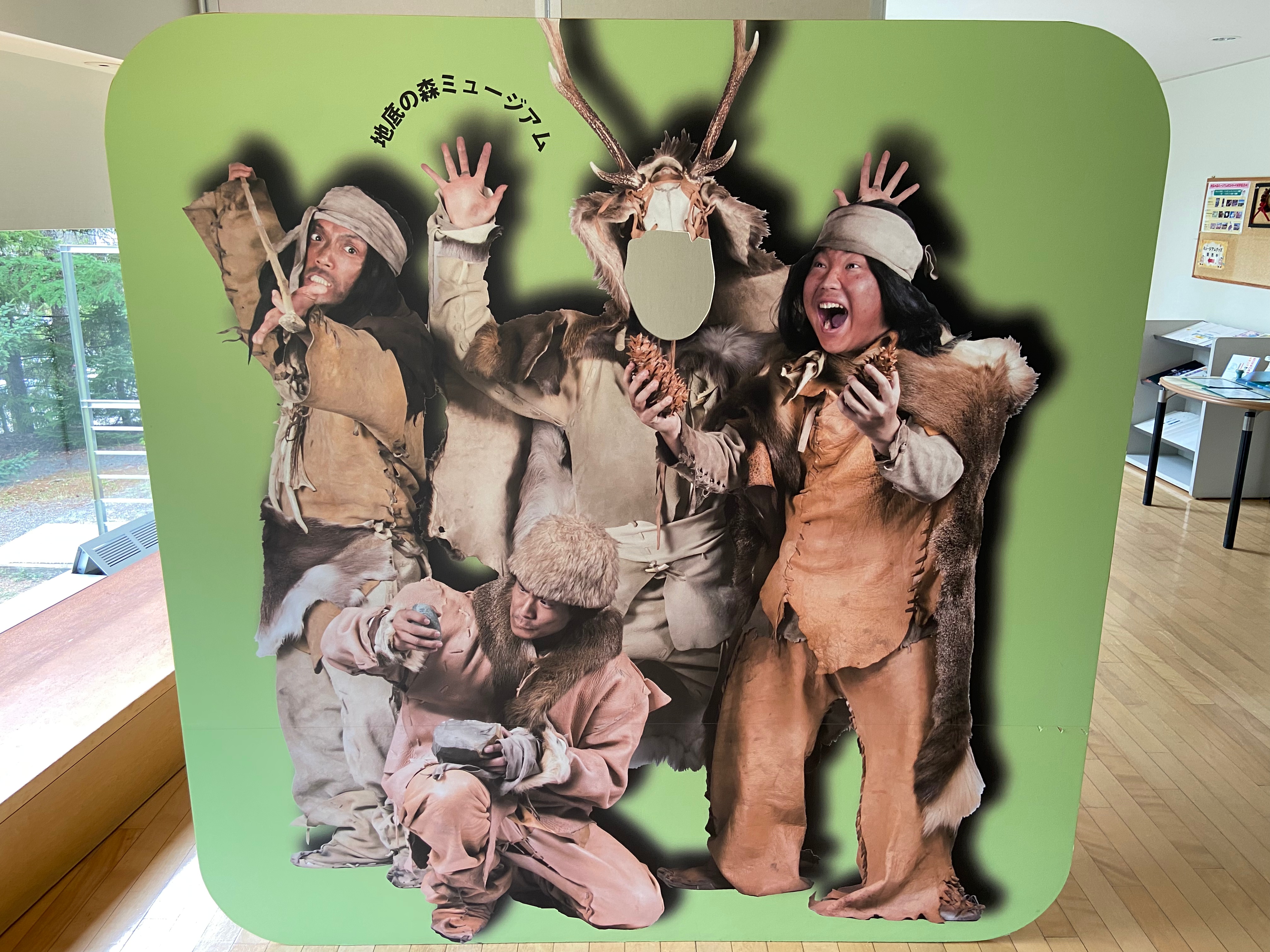
Aside from the trees, I can also learn about the Paleolithic Age. There are the remains of a campfire that was excavated here. Bits of broken pottery. Deer fæces. Arrowheads. Glass boxes of skulls. Carnival Cutouts: the breath of ancient times.

Having touched a 20,000-year-old tree root, the only thing left to do later is visit a mountain, so I decide to walk to the coastline. Along the way, I pass a tsunami evacuation tower made from steel. It can safely evacuate 300 people to a height of at least six metres.

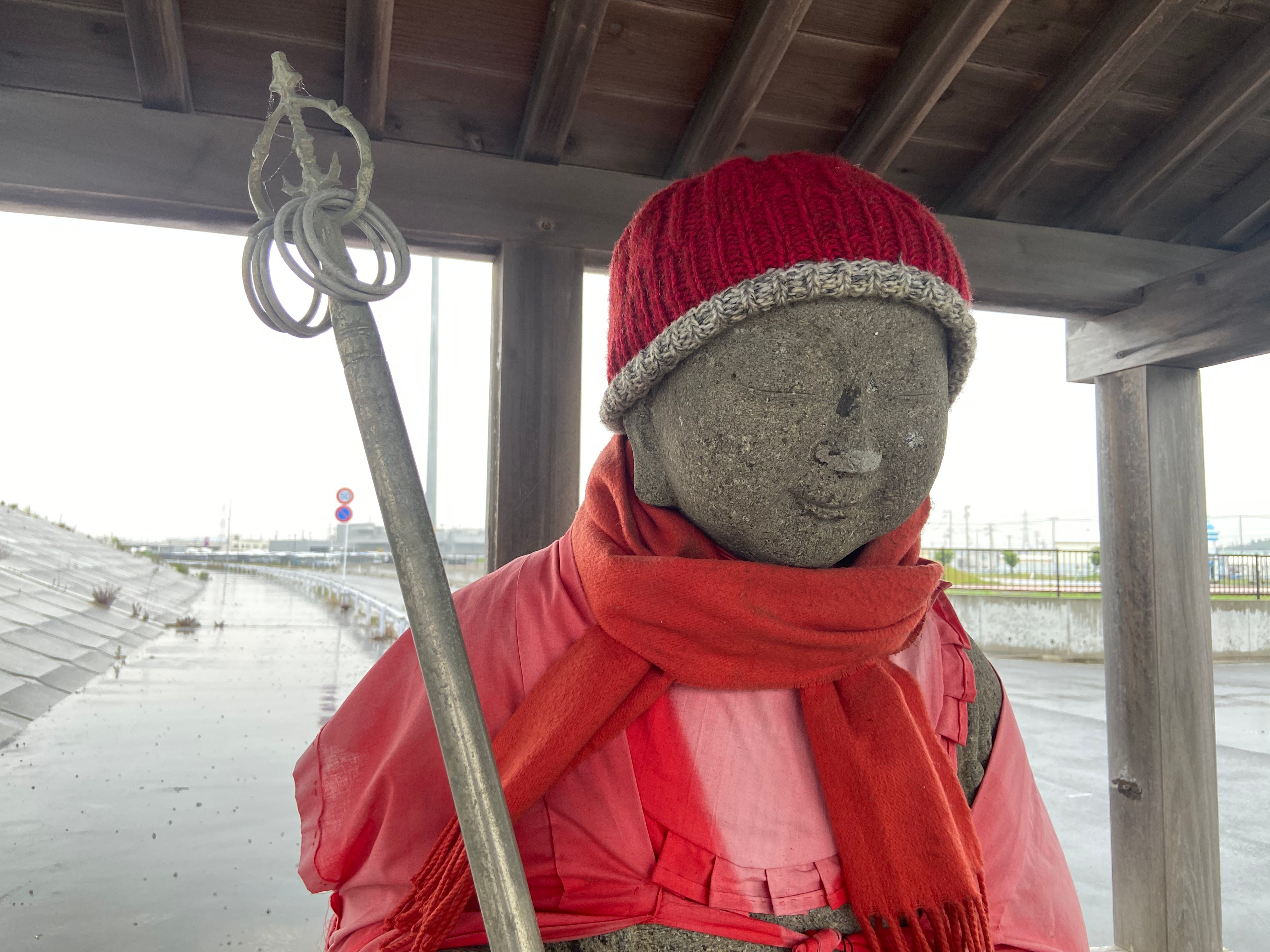
As I stare at the tower, the sky suddenly fills with grey cloud, and it begins to pour. I run into a nearby park but find nowhere to hide, eventually sheltering beneath a small Jizo statue. The smug Jizo is smiling and holding a rain wand.

Behind the statue is an embankment highway that runs along the Nanakita River and Sendai Bay, designed to help prevent tsunami waves. The tides must get pretty high here anyway, as on my side of the barrier are dozens of dead crabs, seemingly washed over the wall and cracked open on the concrete below. The Jizo shares his little shelter with the stench from the Sendai Gamo Biomass Power Plant. It stinks.

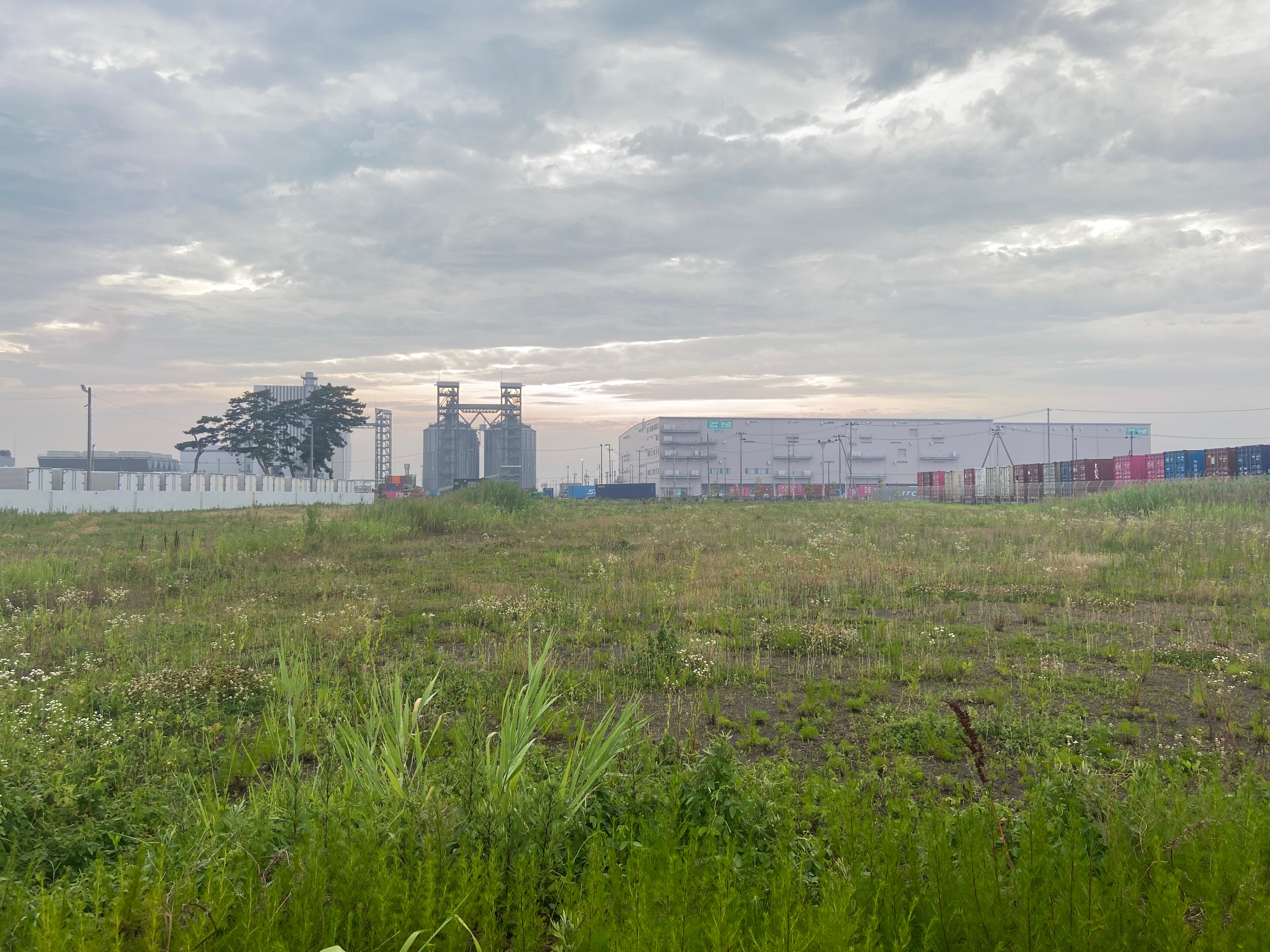
A little further up the coastline, I try to find what I’m really looking for. Usually, it’s pretty easy to find a mountain. But when you’re searching for what’s recognised as the smallest mountain in Japan, it gets trickier. I eventually do find it, half-hidden behind a factory car park.

I climb Mount Hiyori, Japan’s smallest mountain. Well, I don’t actually climb it. I just stand next to it. It looms at three metres now. Smaller than it once was. The 2011 Tohoku earthquake and tsunami took most of it. But still, someone left a summit marker. Still, it has a name. And I’m glad for that.

Around me, the wind starts to rise. I think about the ancient forest floor, perfectly preserved in silence. The looming shadow of a tree long gone. I think about how we keep naming things, even after they’ve almost disappeared. I think about how some things vanish slowly, and some things vanish all at once.

I walk away, back into the storm, careful not to step on the mountains.

Parks and Simulation

It’s humid beneath my mask. It appears that it rained slightly this morning for the first time in weeks, but now it’s hot. I can’t begin to imagine what the summer will be like. I shouldn’t complain though, the unusually warm start to the winter is set to end later this week, and Japan will become enveloped in an icy-cold ambience.

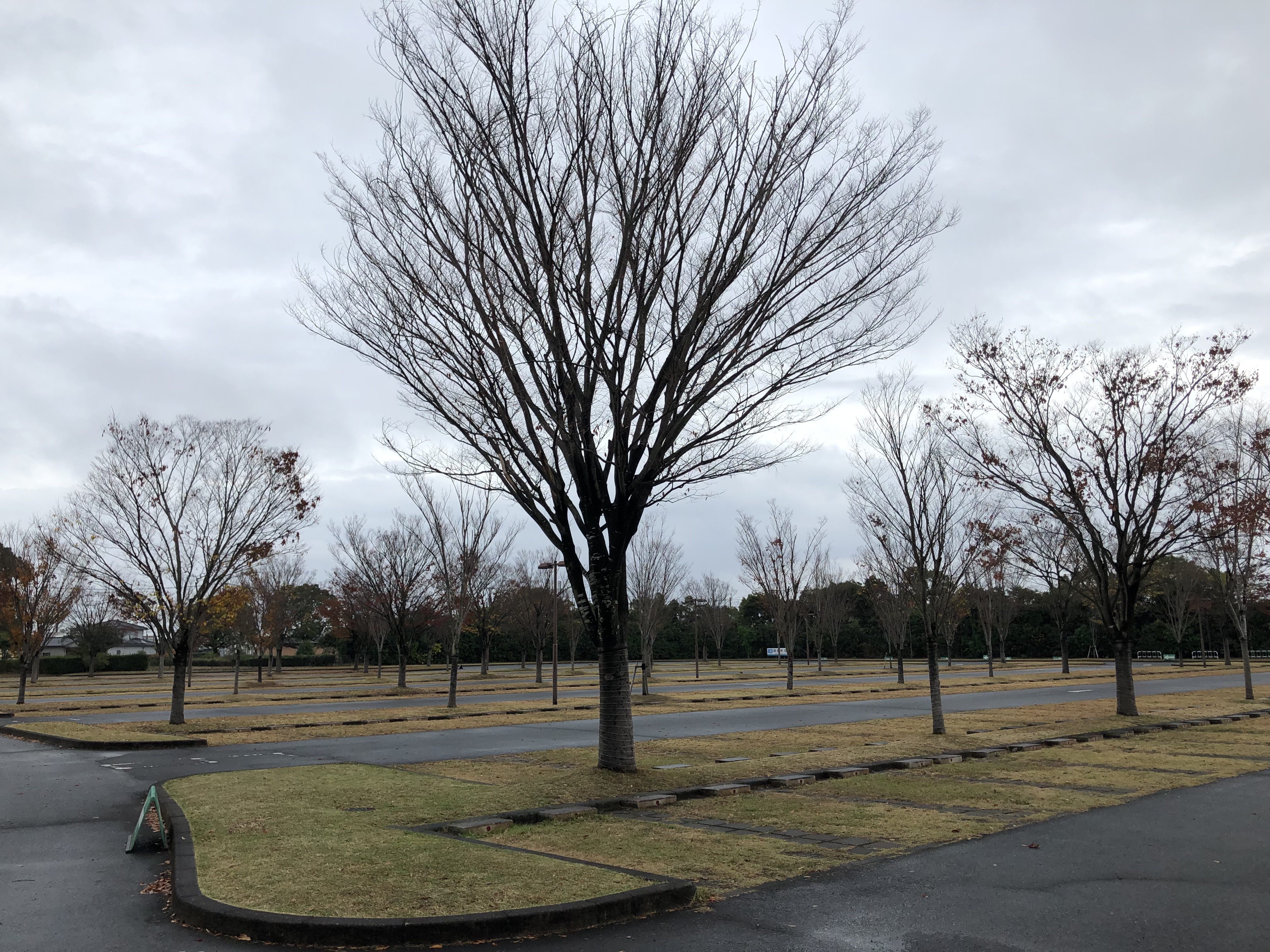
I take a train to Saga Prefecture, my first destination today, Yoshinogari Historical Park, an archæological site dating back to between the 3rd century BC and the 3rd century AD. I walk two kilometres from the nearest train station, and arrive at the entrance. The car park here is huge, empty, and covered in fallen leaves from the skeletal trees.

I arrive at the aptly named Entrance Zone. Each area of this park has a zone name. There is the Ancient Forest Zone, the Moat Encircled Village Zone, the Aztec Zone, and the Medieval Zone. I pay the ¥460 entrance fee, and note that the two day pass costs only slightly more, a reasonable ¥500.

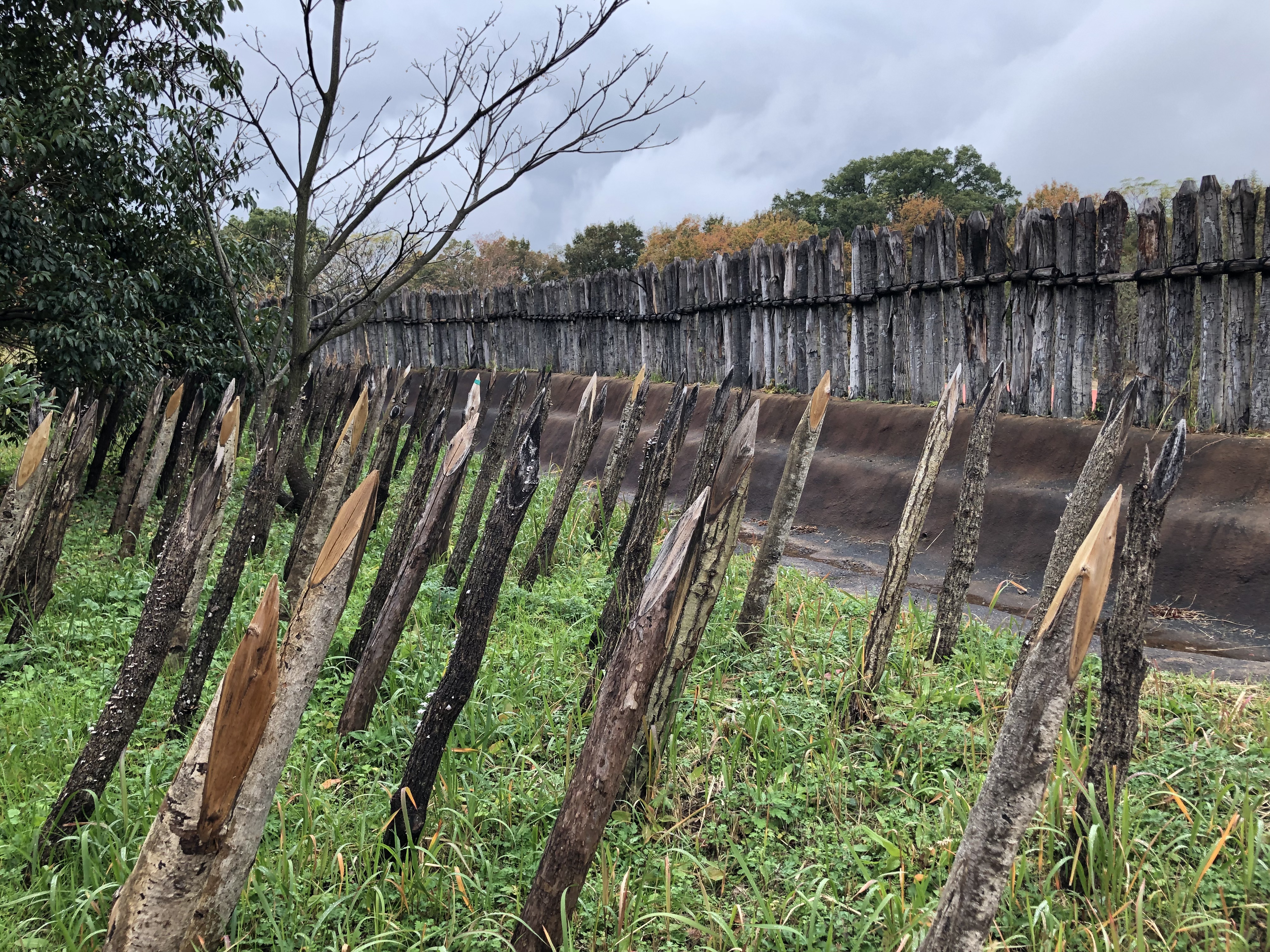
After crossing a massive red bridge, I arrive at the park. The first thing that draws my attention are what appear to be loads of large wooden spike traps.

As rice cultivation increased, more people fought one another to control the water and occupy the land. People set up barricades with sharpened posts or tree trunks, especially around strategic areas such as the entrance to the village in order to strictly protect their properties. These stakes are called sakamogi.

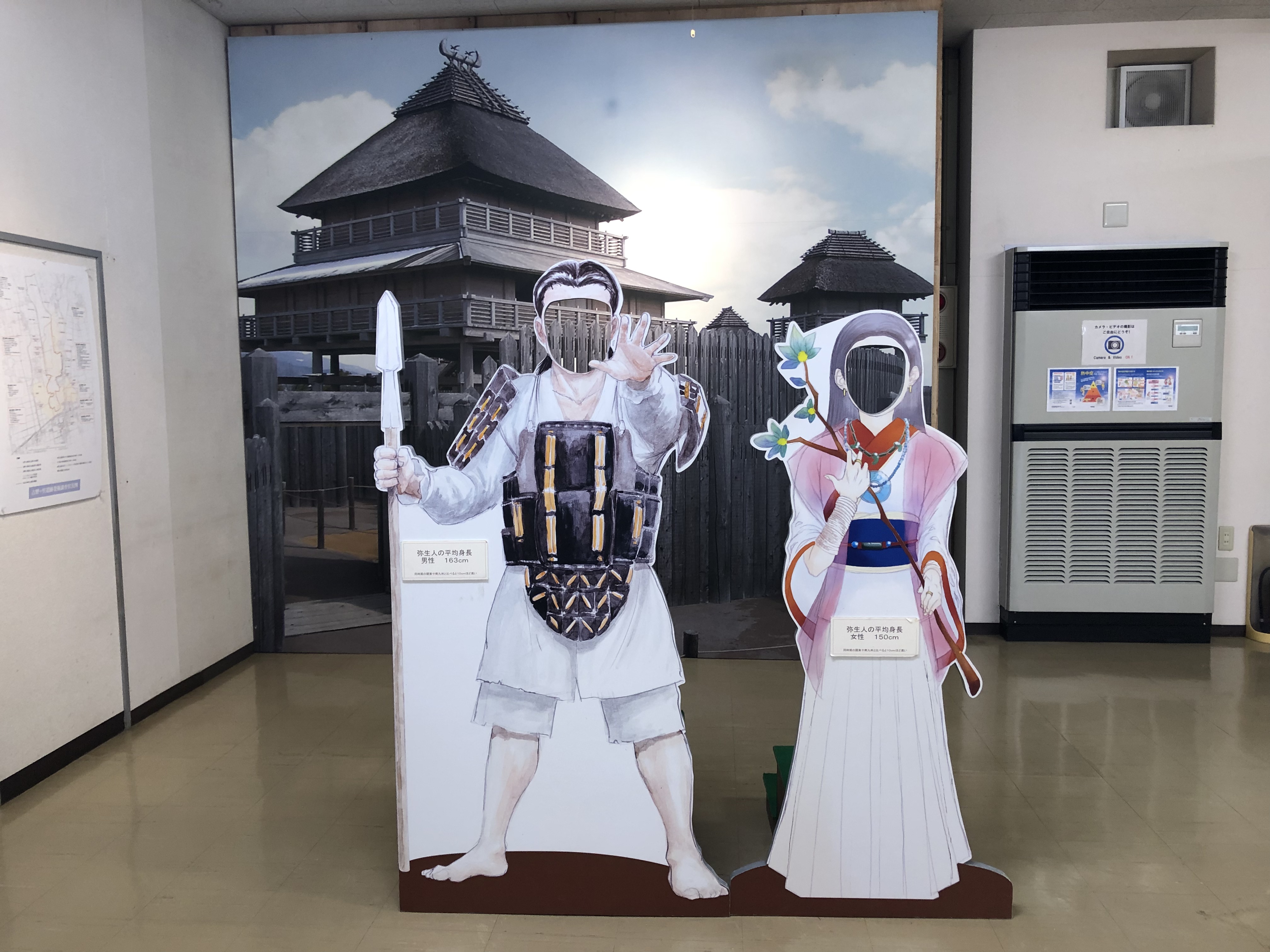
I leave the abatises and wander further along the tree-lined path, passing what looks like straw statues of wild boar, before finding a small museum. The first thing I notice when entering the museum is the eagerly awaited return of a small fascination of mine, Carnival Cutouts.

The museum itself contains loads of old pottery from the Jomon era, bronze daggers and bronze swords, the jaws of wild boar, deer skulls, hunting tools, arrowheads, stone daggers, and a 2,000-year-old human skeleton.

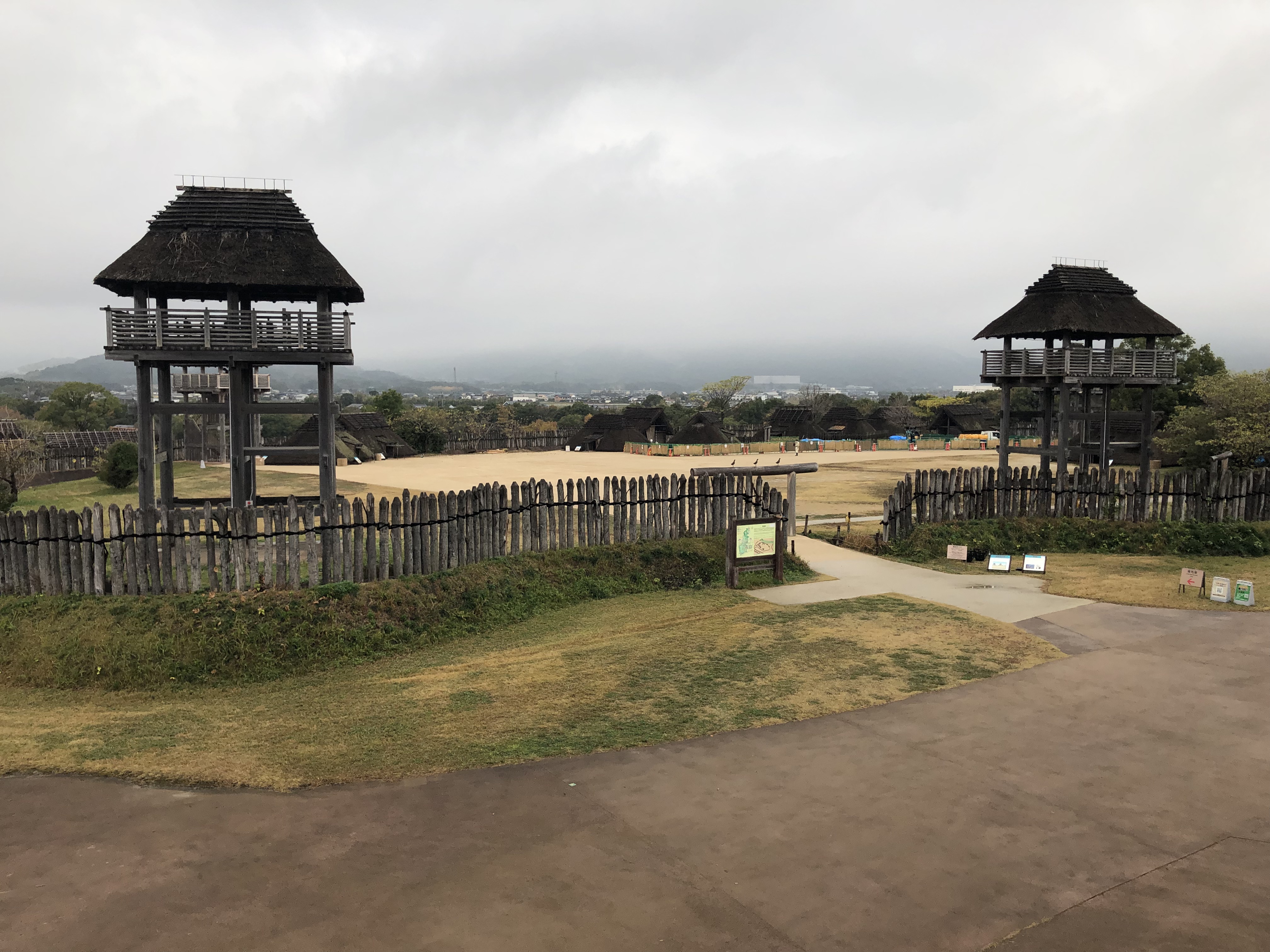
I leave the museum and in the distance I see some watchtowers. These watchtowers mark the entrance to the South Inner Palace, and were once manned by sentries.

I climb up the slippery wet wooden steps to the top of the Gate Tower, this tower had guards with shields at its four corners. The tower offers a good vantage point to watch for people entering and leaving the enclosure.

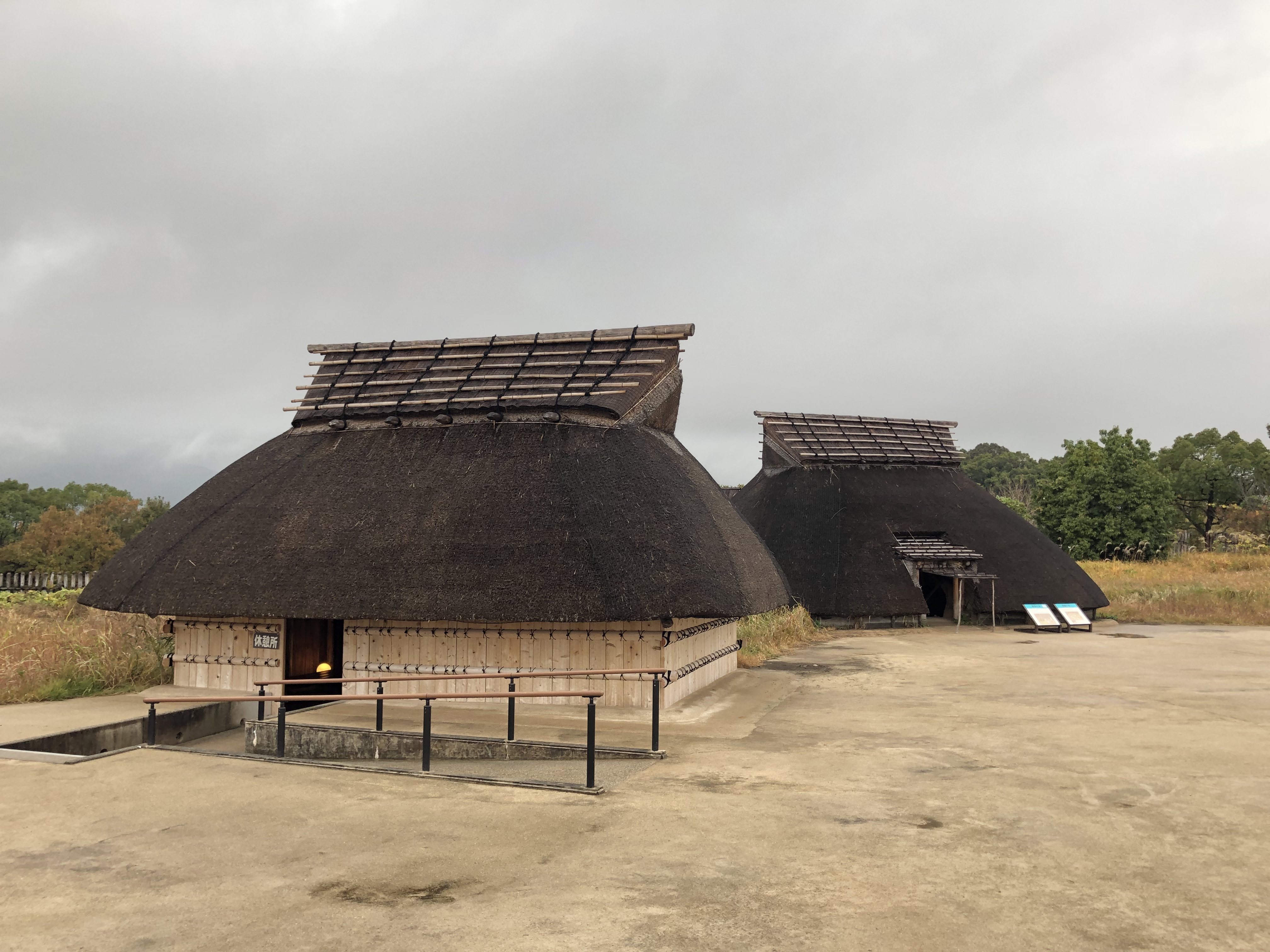
I wander further along, passing the moat and fences that guard the Palace, to the houses beyond, to the zone known as Moat Village. This area contains the village that once housed each of the residents. From the kitchens to the main assembly halls, each house can be entered and fully explored.

I visit the Brewery House, where women would brew sake for festivals and rituals by steaming rice from the years’ harvest. The Sericulture House, where precious silkworms were raised to produce silk thread to weave textiles. And finally, to the Barracks, where the soldiers who guarded the northern defences would rest.

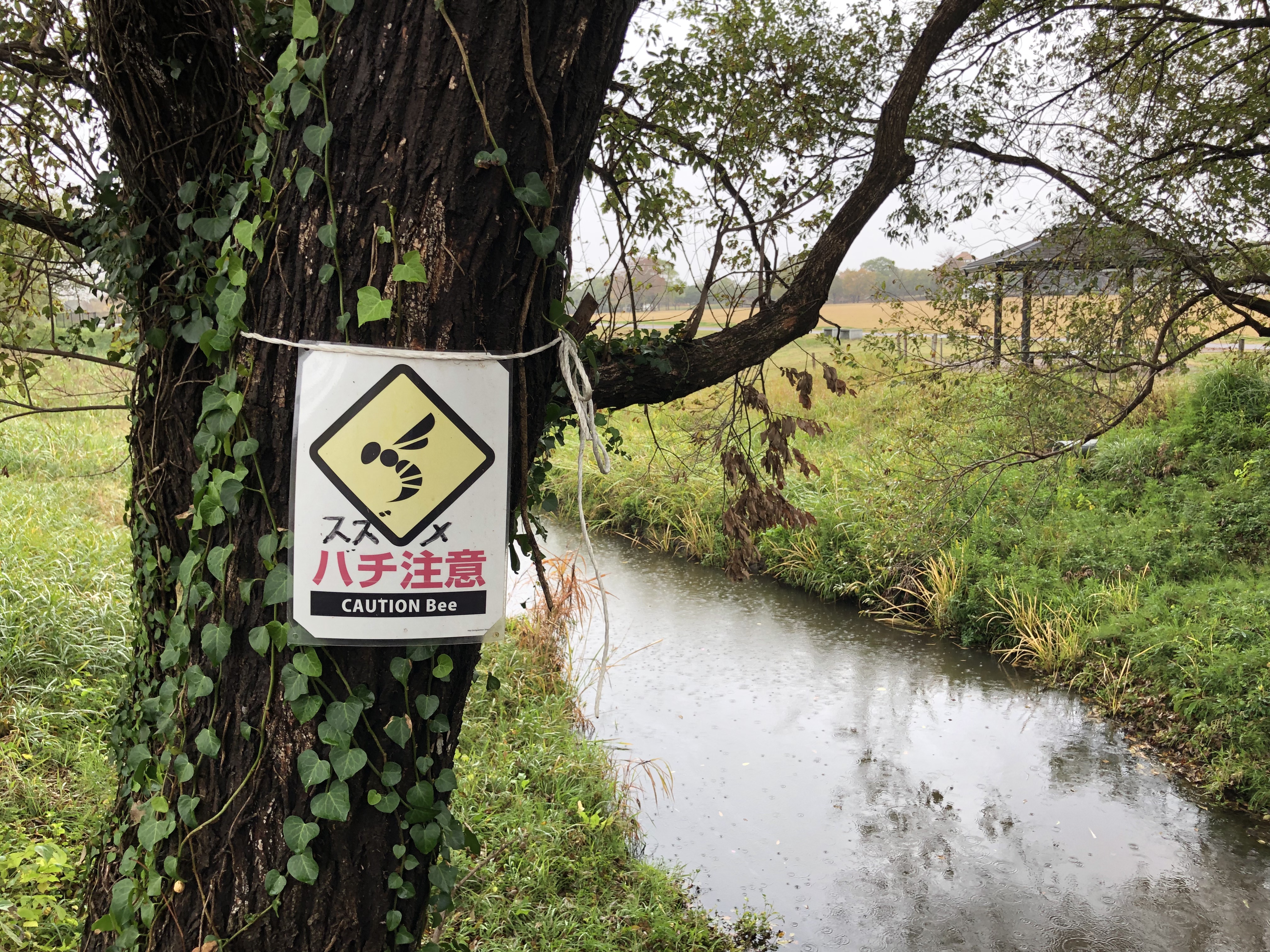
I find a map only to realise that I’ve explored just a quarter of this giant historical site. Its sheer size is quite alarming. The map also shows that the park boasts four car parks, one at each corner of the site. Some Christmas lights are dotted around for good measure; evening illuminations, but I have other places to be. I wander in search of an exit and see a sign in desperate need of pluralisation.

Suddenly the clouds burst and the unforeseen downpour leaves me completely soaked. I see a man who has been given the arduous task of sweeping up the fallen leaves, he’s equally soaked. I pass a golf course, two full sized football pitches, and a petting zoo, and wonder if these such things were here 2,000 years ago too.

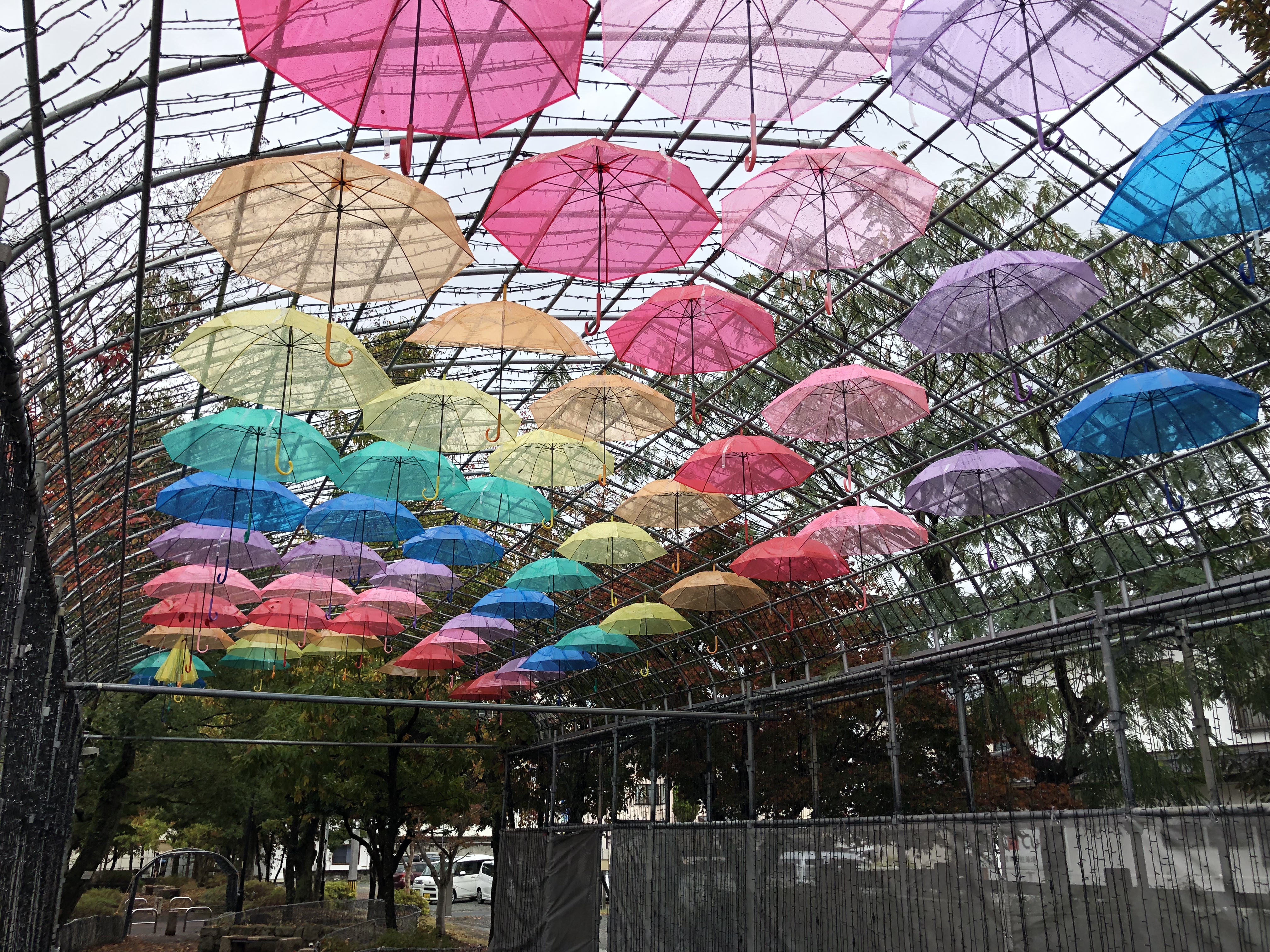
Eventually I find an exit, walk two kilometres to the nearest train station, and hop on a train bound for Saga City. At Saga, the rain has stopped. I walk twenty minutes in the direction of the Saga Balloon Museum. Before I arrive, I spot a canopy of umbrellas that might have been useful thirty minutes ago.

For some reason, Saga Prefecture is famous for hot air balloons. Inside the Saga Balloon Museum, I learn that the very first time a human being “flew in the sky like a bird” was in 1783, in Paris. In Japan, the first manned flight by a gas balloon was completed in 1877, in Kyoto, an event watched by 50,000 spectators. And in 1903, the Wright brothers flew an aeroplane, making the hot air balloon useless.

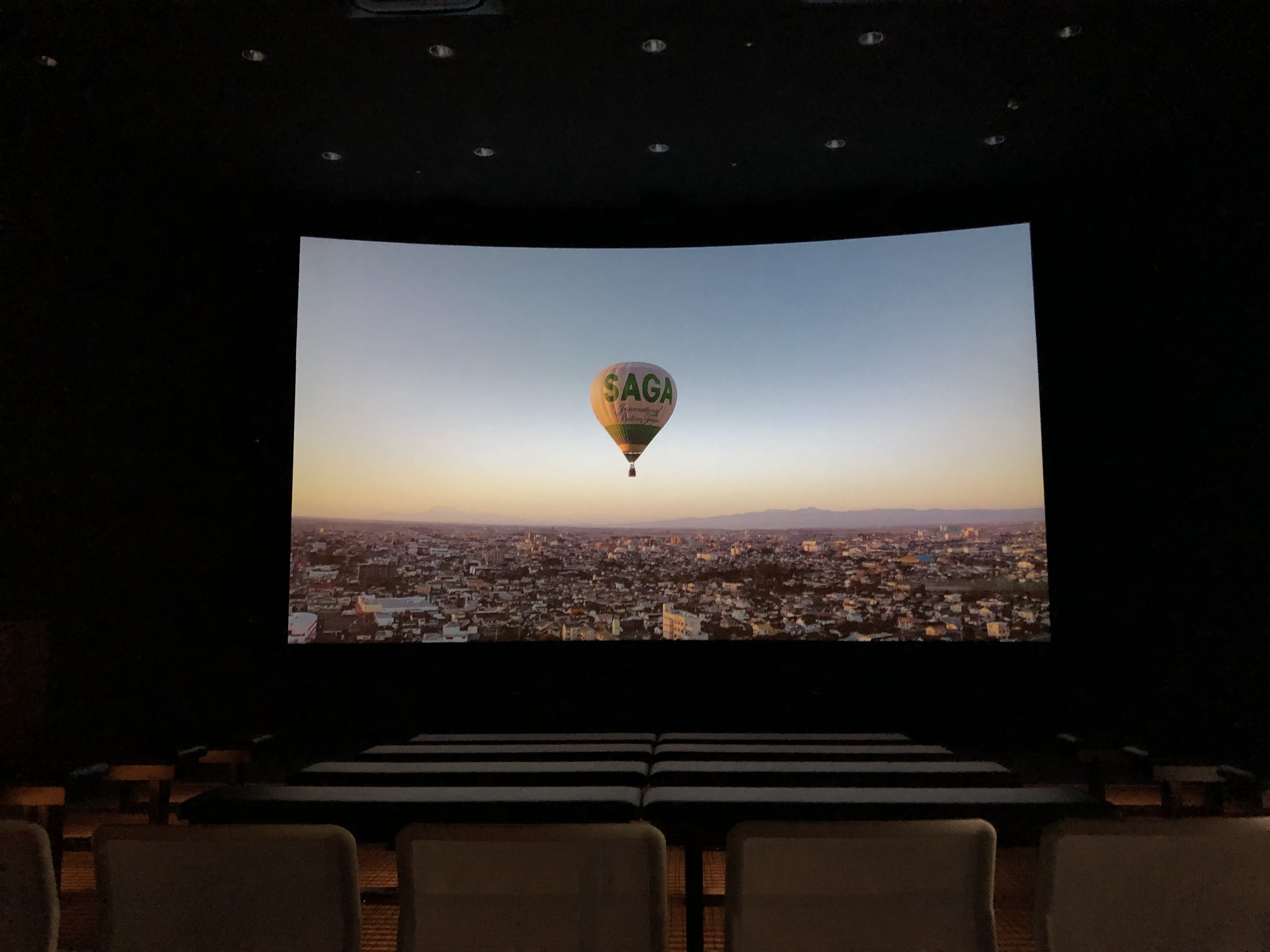
I take a seat in a small cinema describing itself as a “Super High-Vision Theatre” with a 280-inch screen. Here, I watch a film that claims to be so realistic that you will think that you’re there. I learn about balloons, what makes them fly, before leaving the cinema and heading up to the second floor. Here I get the opportunity to fly a hot air balloon myself, using the advanced simulator.

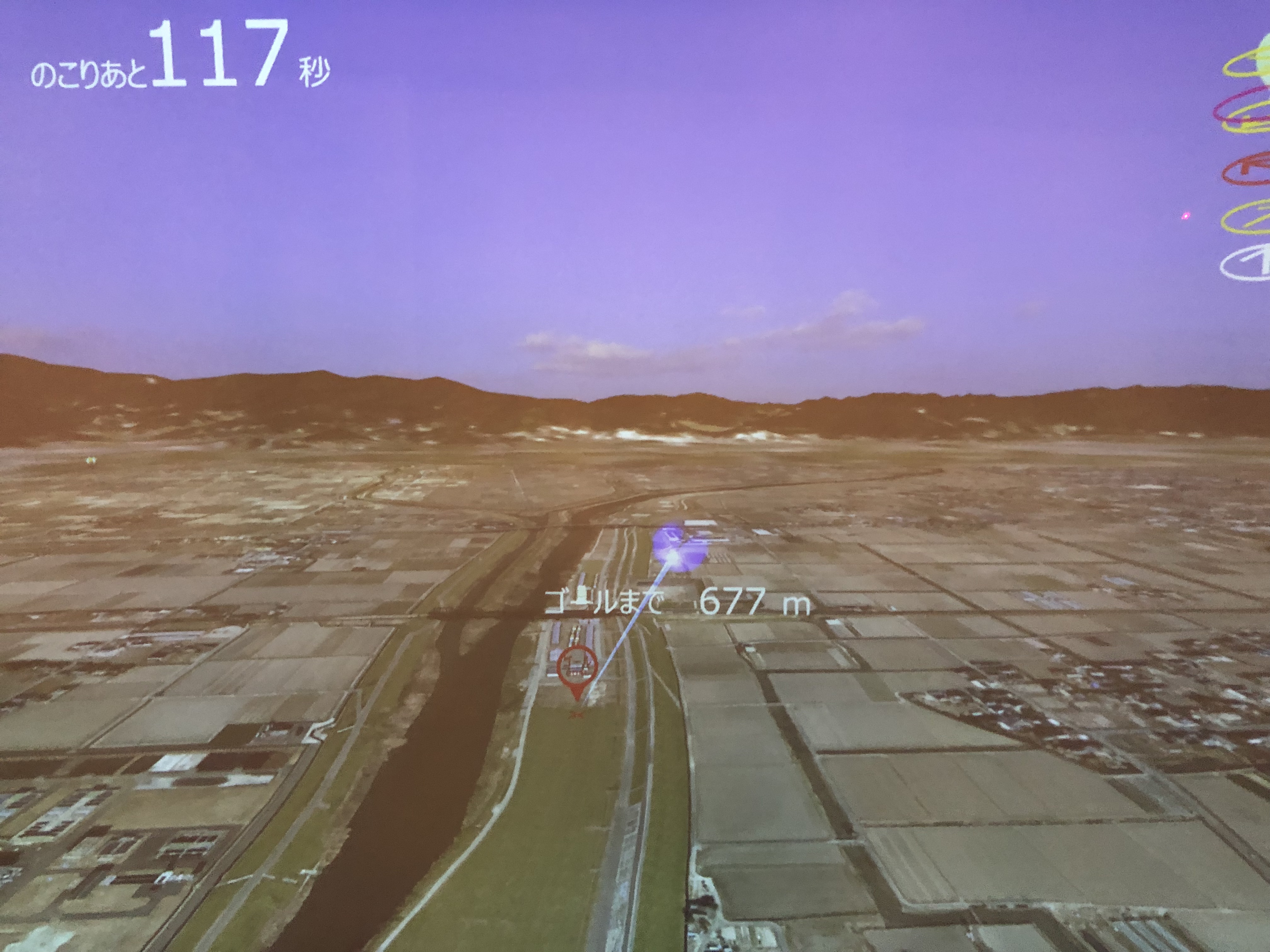
I stand inside the hot air balloon simulator and begin. I have 180-seconds to land the balloon in the target area, taking into account wind direction and wind speed, all the time sporadically pulling on a lever that releases pretend propane gas. When the lever is pressed down the balloon floats further upwards, when it’s released, the balloon slowly floats further downwards and catches in the wind. Apparently the trick is to control the lever early, anticipating the atmospheric conditions.

Landing the balloon within one metre of the target awards ‘S’ rank. The rest of the ranks rate down from ‘A’ to ‘E’ and the sign next to the machine offers the following encouragement, “Ride the wind and get a high rank!”

Obviously, I spectacularly crash the balloon into the sea.

Conspirators of Treasure

The ¥130 sake cup vending machine near my house doesn’t require age verification. Additionally, there’s a vending machine selling lead pipes at the Asakusa View Hotel and another one offering plastic toy animals on the platform as you disembark from the Sobu Line at Akihabara Station. The latter is quite an unexpected sight, as plastic toy animals are the last thing on my mind when I exit a train. However, this is Japan, the land of the prizing sun, and today’s prize is tucked away inside a different kind of vending machine—the King’s Treasure Box.

kingstreasurebox[1]

A sticker on the front of the machine displays the English text, ‘Let it get.’ Unable to contain my curiosity any longer, I insert my ¥1000 note into the treasure box. Above the note slot, there’s an encouraging message, ‘One dream, One note!’ Among the potential prizes are a Nintendo Duel Screen, a PlayStation Vita, and even a product vaguely labelled as ‘Famous car.’

Following the instructions, I press any button, and the machine responds with an exciting clunk. I eagerly reach into the lower chamber to retrieve my prize.

My treasure quietly awaits me on the machine’s inner fake grass—Disco Glasses, proudly labelled ‘Made in China.’ These glasses, devoid of lenses and made from cheap plastic, boast voice-activated flashing red lights. Not exactly what I’d typically consider treasure. With no way of knowing if the machine stocks any ‘good’ prizes, it’s conceivable that it’s 100% Disco Glasses.

discoglasses[1]

Bitter and disappointed, I scrutinise the machine for refund information. Despite my limited Japanese ability, I discern that I can follow the ‘King’s Blog’ for more information. However, details about a refund aren’t quite as forthcoming.

Disheartened by my less-than-thrilling prize, I decide to escape my disappointment by taking trains. I make my way to Aoyama-itchome Station, where my friend Genmei is hosting an art exhibition in the basement of Club Edition. Titled ‘Colourful is Power,’ her display lives up to its name, boasting vibrant hues that captivate the eye.

The venue itself exudes a more bar-like ambiance than a conventional art gallery, contributing to its unique atmosphere. I engage in a brief conversation with Genmei, a talented live painter. Having witnessed some of her live art firsthand, I can confidently say that she is an amazing artist. Her creative endeavours predominantly unfold at trance parties or raves, drawing inspiration from the mood and music of the events.

In a friendly gesture, I offer her my Disco Glasses, but she gracefully declines.

genmei[1]

After leaving the gallery/bar, I step outside to find heavy rain pouring down. I navigate the rain-swept streets to reach the station and catch a train to Komagome. Today marks the opening ceremony for an event at Rikugien Gardens—an evening of autumn illuminations. I pay my ¥300 entry fee and enter the darkness.

These three-hundred-year-old landscape gardens have inspired countless poems. It’s been a while since I wrote a haiku, so here goes:

Hollow darkness welcomes me,
To black rain singing,
And decaying leaves screaming.

Stumbling through the woods, I eventually spot maple trees adorned with red and green lights. The path beneath my feet is sodden, my shoes squelching as they tread over the thick, wet mud. Small lanterns mark the way, guiding me through the enchanting scene. I follow the illuminated path, captivated by the beauty around me despite the biting cold. In the distance, ducks play in the lake, trees sway gently in the wind, and steam billows from spotlights, creating a stark contrast to the crisp winter air.

lanternsinthedark[1]

After walking around for about an hour, I realise I am lost in a maze of trees illuminated by scattered lights. At times, I find myself stumbling through the silent darkness. Eventually, I spot a steward; he lacks an umbrella and is soaked to the bone. As I approach, he remains silent, lifting his arm to point toward a small gap between some trees that appears to lead into a void. Quietly following his unspoken guidance, I venture through.

Ten minutes later, I emerge into a scene that resembles a different planet.

Soft blue light gently bathes the fallen autumn leaves, casting a mysterious glow over the tremendous yet somewhat spooky sight. The surroundings are shrouded in mystery and framed by towering trees. A small speaker nearby plays calming music, the falling rain inadvertently adding to the soothing chorus. Mesmerised, I watch the patterns of blue smoke, finally able to enjoy some illuminations.

blueleaves[1]

Having witnessed this captivating spectacle, I embark on a ten-minute journey through quicksand-like mud, eventually finding my way to the exit.

Back in Asakusa, I indulge in drinks until midnight before heading to Tori-no-Ichi part two—the second day of the rooster this month. Once again, the streets are filled with people wielding massive rakes, partaking in the festivities. While the crowd revels in the celebration, I have a singular focus—the street food market.

I opt for Korean-style yakisoba, a generous serving of vegetables and noodles topped with kimchi. Satisfied, I join a relatively short queue for a ¥300 bag of hot baked kasutera. As I relish each bite of my favourite snack, I savour the moment. It’s precisely at this juncture that I discover the batteries in my Disco Glasses have died.

Necks, Lights, and Video Ape

Culture Day is held on the 3rd of November every year. It is an event to promote the arts and Japanese culture. Introduced in 1948, Culture Day is a public holiday. On this day, the people of Japan have a day off from work, and events will take place throughout Tokyo. An interesting fact I have learned is that it never rains on Culture Day; statistically, it is the clearest day of the year.

Outside, it is raining. I decide to head to Seven Eleven to buy a coffee. At the checkout, I am asked to place my hand in a box. I pull out a small piece of paper with a picture of a banana on it. Great! I’ve won a banana. This is quite possibly the best thing that will happen to me all day. I take my bicycle and head over to Asakusa, to Senso-ji. Today, I am here to satisfy my heron addiction. At the temple, the rain has all but stopped, and the crowds are slightly larger than usual. People on holiday have flocked to the temple to see the festival.

sensocrowds[1]

Today marks the White Heron Dance festival, a one-thousand-year-old tradition. The event features eight women dressed as herons, gracefully making their way through Kaminarimon Gate toward the main temple. Following closely behind them is a small wooden cart, accompanied by drummers, a man carrying a huge umbrella, three percussionists, and another man with a baton. Additionally, a woman carries a box full of confetti.

The procession sets up just beside the temple, and a huge crowd of people forms a circle, watching attentively. The music starts, and the heron dance begins. The women move with elegance, their dance slow and precise. Wings expand and contract, and heron heads bob gracefully. The woman with the confetti tosses it to the birds, and they pretend to be fed. As the dance draws to a close, its cleansing ability purifies the souls of the deceased.

dancingbirds[1]

After the event, I decide to explore a little. At the small nearby Awashi-do Temple, a monk sits chanting and hitting a drum every second. He maintains a steady, practiced rhythm and doesn’t appear to blink. Just outside, at a market stall, a man sits in a chair, waving his hands from side to side and singing, “Nice to meet you, where are you from?” I tell him England. “Aaaaah, Englandooo, Englandooo!” he joyfully sings.

As I wander around to see if any other Culture Day events are taking place, I stumble upon a small stage hidden away in one corner of the temple grounds—and a monkey.

stiltmonkey[1]

As I explore further, I discover not just one, but two monkeys. The first, accompanied by a man, showcases its natural ability to dive through hoops. The second monkey, with a woman, possesses impressive skills — it can jump really far, leap over hurdles whilst wearing stilts, and even walk on its hands. I applaud the performance, though I can’t help but question the potential cruelty involved. In an attempt to pay it forward, I give away the banana I won earlier.

I leave Asakusa and head over to Ueno Park to enjoy some light art. Today, the park is adorned with illuminations created by Ishii Motoko, the woman behind the lighting designs for Tokyo Tower, the Rainbow Bridge to Odaiba, and many other projects throughout Japan.

waterlighting[1]

The water fountains are lit up, and the sky is filled with colours from lasers projected from a small lighting booth. The Tokyo National Museum has transformed into a whiteboard for projected images; arts, antiques, and artefacts housed in the museum are displayed in full colour across one of its walls. Lanterns line the paths, and small stalls are set up, selling meat, sweets, fruits, and assorted Japanese snacks.

Similar to the other events today, this festival also showcases animals. Scattered throughout the park are many animals from Ueno Zoo, adorned with fairy lights. A significant effort has been put into this, making the festival a lot of fun. However, at times, it does feel like I am at a premature Christmas market.

christmasanimals[1]

I learn that in the past, this day was a public holiday celebrating the birthday of the Meiji Emperor, who was the first person to eat meat in Japan back in 1872. After his death in 1912, the day ceased to be a public holiday until it was reinstated in 1948 as Culture Day. Interestingly, a significant aspect of Japanese culture today involves the consumption of animals, which might explain why every event I have visited today has some sort of animal theme.

I head back toward the water fountains, where a stage has been erected. It’s only quarter to six, and the park is bustling with parents and young children. On stage, a woman is dancing with a pole. The pole dancing eventually concludes, and a drum kit is set up. The band is scheduled to perform at 6 p.m., but at five minutes past, there is still no sign of a performance.

wishuponastar[1]

Ten minutes pass, making the performance fifteen minutes late. Finally, the flowers begin to light up, water fountains dance once more, and a band takes the stage. Comprising a saxophonist, a hornist, two trumpet players, and a drummer, they kick off with a musical rendition of ‘When You Wish Upon a Star.’ As they consider playing their second piece, I notice some tempting lights in the distance.

The wall of the National Museum of Nature and Science is also lit up, featuring a dazzling light show depicting the story of evolution. The lights showcase the earliest eukaryotes to the animals of today. Volcanoes erupt, and monkeys transform into men. I stay for the entire show, enthusiastically applauding with the rest of the crowd at the end.

volcanolight[1]

After the illuminations, I meet my friend Khin, and we head to one of my favourite bars, Nui. At the bar, we join a group of Australians. One of the women, Claudia, grew up in Perth, the same place as Khin — quite the coincidence, maybe. When I mention where I’m from in England, I’m surprised to find that she has heard of it; most people haven’t. My surprise deepens when she takes out her passport and shows me the section displaying her birthplace. Oddly, it is my hometown — the same city, the same hospital, but more remarkably, we were born on the very same day. Such a small world. Our paths crossing in a Tokyo bar, woven together by the cosmic dance of a shared day.