Thoughtful Rain, Equal Moisture

As part of Hatsumode, it is a longstanding tradition in Japan to visit a temple or shrine during the first three days of the New Year. This involves returning and cremating old amulets, purchasing new ones, having a fortune taken, and making the first prayer of the year. To avoid the crowds, I have chosen to visit a peaceful temple in Shibamata, located in Katsushika Ward. I awake early, the air still cool and filled with the moisture of the early morning dew, and make my way to the temple to begin the new year with a sense of serenity and reverence.

As I approach the temple, I am welcomed by Taishakuten-Sando, a row of traditional Japanese shops flanking a narrow street that leads to the temple. This street and temple survived the bombing of World War II, offering a glimpse into Japan’s history. As I stroll along the 200-metre stretch, the aroma of simmering oden fills the air and I pass shops selling mochi, pancakes, and rice crackers. Taishakuten-Sando serves as the main shopping street for the quaint town of Shibamata.
Upon arriving at Shibamata Taishakuten, I join the short queue of people making their first wish of the New Year. To make a play on words, I have carefully prepared four ten-yen coins and one five-yen coin (totalling ¥45, which is pronounced Shiju-Goen in Japanese, meaning “always lucky”). As I reach the front of the line, I throw in my coins, ring one of the large bells, and follow the customary ritual of bowing twice, clapping twice, and bowing again before praying for nothing at all.

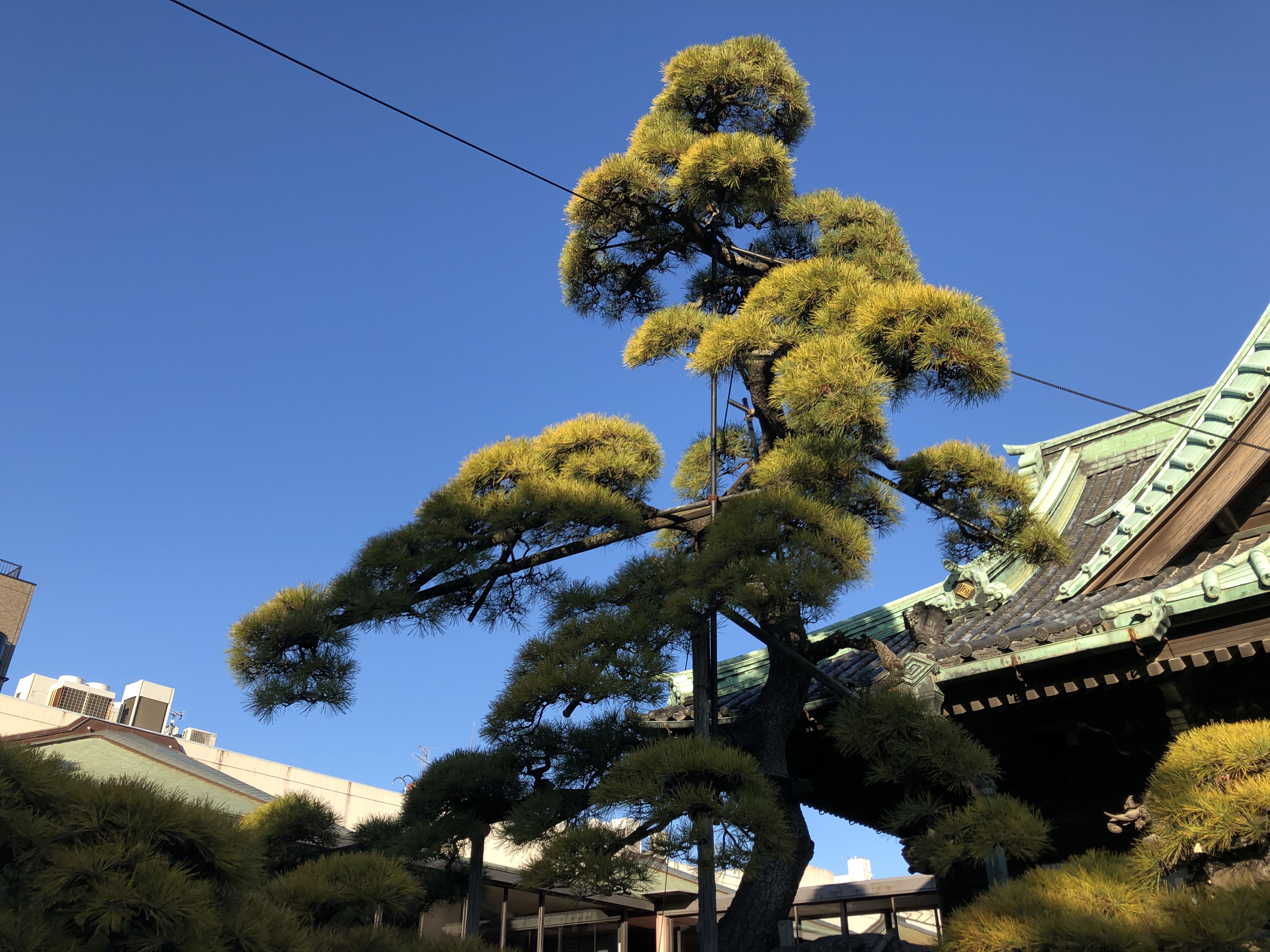
At the temple, there is a large pine tree called Zuiryu-no-Matsu, meaning “dragon of fortune pines.” It towers in front of the main hall and is shaped like a dragon. Its trunk grows straight towards the sky, and its long branches extend north, south, and west. The west branch extends as if the dragon is crawling on its belly on the stone pavement, while the north and south branches spread as if guarding the Taishaku-do Hall. The tree seems to come alive, appearing as a dragon taking flight towards the sky.
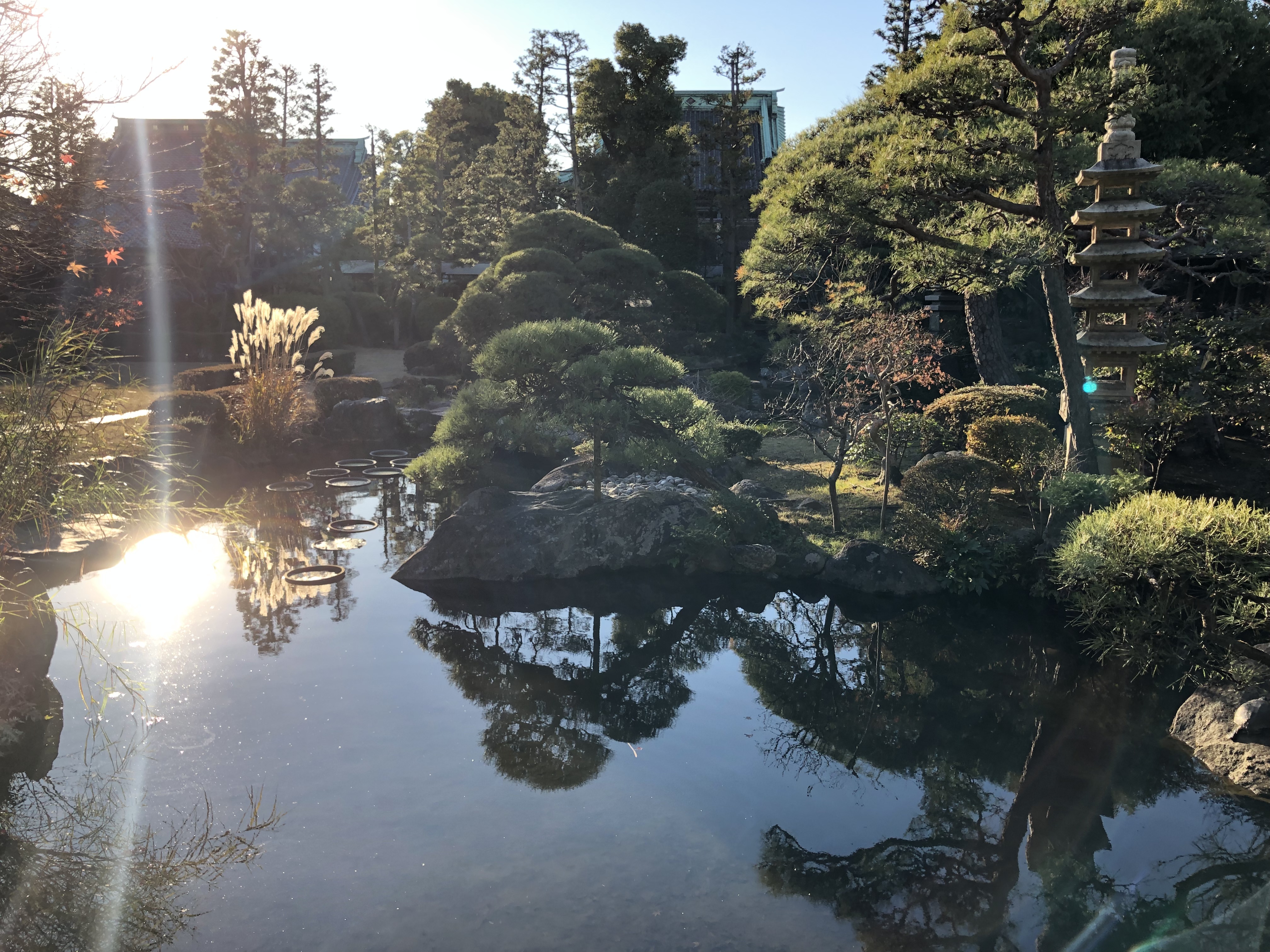
The temple was founded in 1629 by a Buddhist monk named Nichiei Shonin, who stopped in Shibamata and, upon discovering a sacred fountain under the grand pine tree, decided to build a hermitage there. The dragon of fortune pines is said to be over 500 years old, stands tall and proud. The Japanese gardens, a later addition in 1926, provide a peaceful and serene atmosphere.

As I leave the tree behind and make my way to the rear of the temple, I come upon the opportunity to purchase a ticket for ¥400, granting access to both the museum and the picturesque Suikei-en Garden. The entrance to the garden is adorned with intricate wood carvings above each tatami mat room, inviting me to step into a peaceful outdoor paradise. The garden boasts stone bridges, flowers glistening with the hanging moisture of the early morning, a charming pagoda statue, a breathtaking lake as its centrepiece, and even a tranquil waterfall.
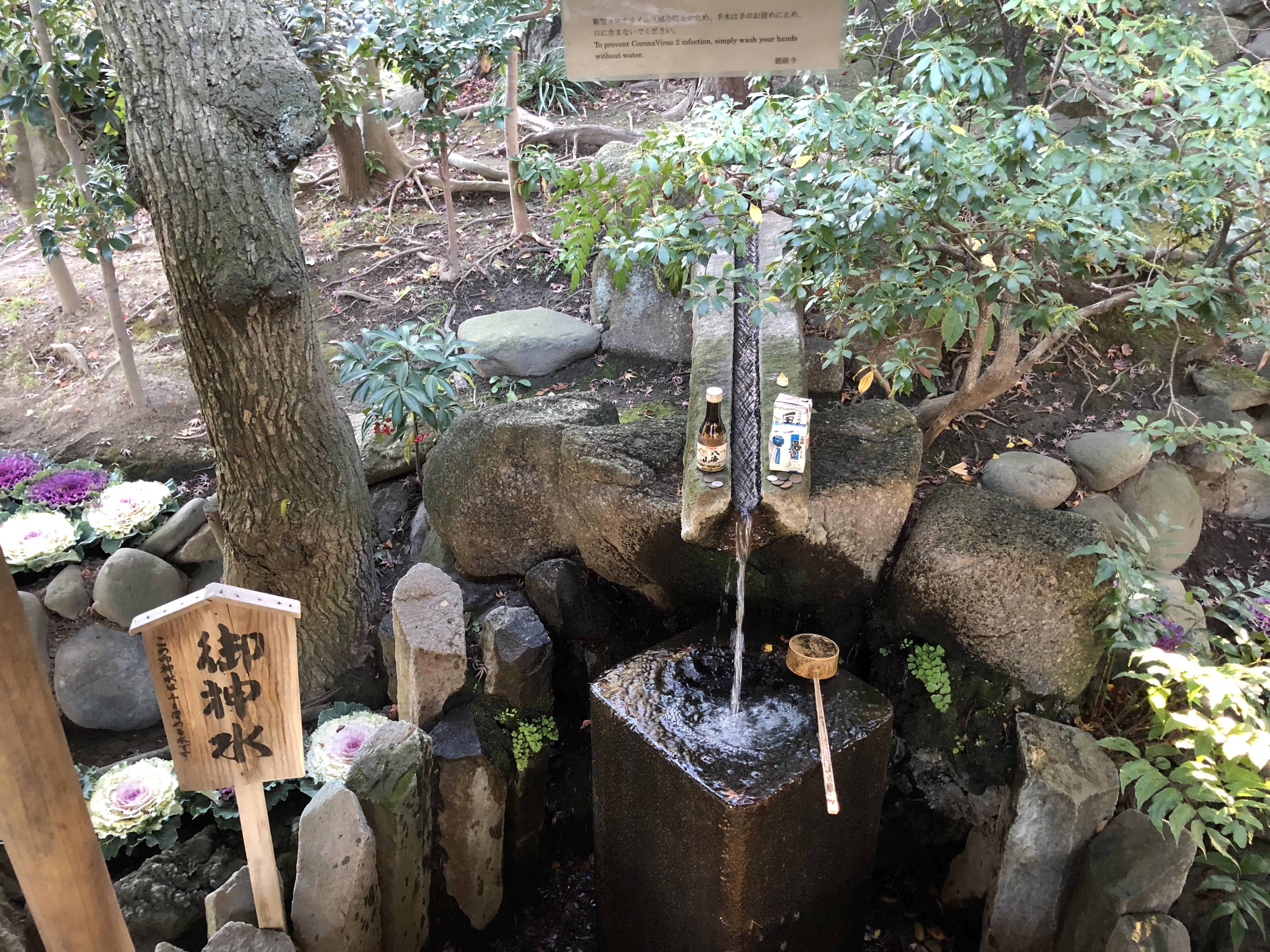
As I stand before the waterfall, I find myself trying to pinpoint the source of my unease. Could it be the way the water flows so slowly, as if in mimicry of rain? The offerings and coins at the base of the waterfall appear unremarkable, yet something about them feels off. And then I see it – the poorly translated notice above, urging me to “simply wash my hands without water” to prevent infection from the ominous Coronavirus. The absurdity of the statement only adds to the disquietude that lingers in the air.

As I enter the museum, my eyes are immediately drawn to the stunning wood carvings that adorn the walls. Each one tells a part of the tale of the Lotus Sutra, with two chapters represented in each intricate, three-dimensional carving. The language used to describe the carvings is nicely written, and one line stands out to me in particular: “We people are like children busily playing in what is a burning house, without any fears.” The artistry and wisdom captured in these carvings leaves me in awe.
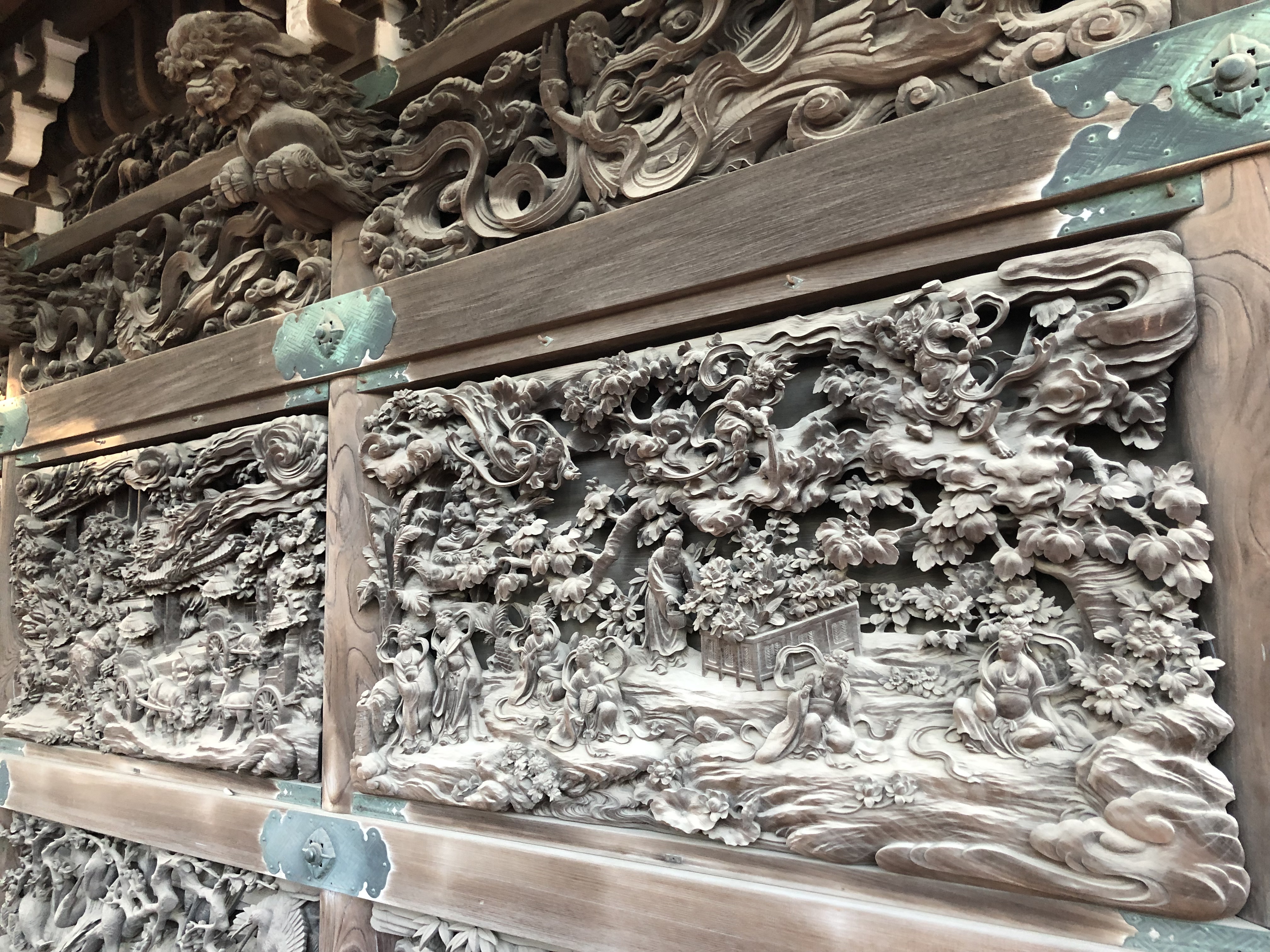
Chapter five, entitled “Thoughtful Rain, Equal Moisture,” was carved by Shinko Ishikawa and depicts the following: “The deeply benevolent teaching of the Buddha is similar to the gentle rain that everywhere dampens the soil. Here, the God of lightning and the God of wind appear, and together they let it rain. The great earth is then embraced with a blanket of foliage in which varieties of flowers proudly bloom. With this, the heavenly beings also joyfully dance down to the paradise below.”

As I leave Shibamata Taishakuten, I step into a large retro sweet shop filled with rows of colourful candy in glass jars. The air is thick with the scent of sugar, and there are every type of sugary treat imaginable. I wander up and down the aisles, passing old arcade machines and pinball tables. On the second floor is the Shibamata Toy Museum, featuring games from the Showa-era. I explore the museum, including a room with a display of dolls depicting the tale of “Momotaro,” or Peach Boy. I eventually head back downstairs to purchase a bag of gummy worms at the counter, before leaving the shop.
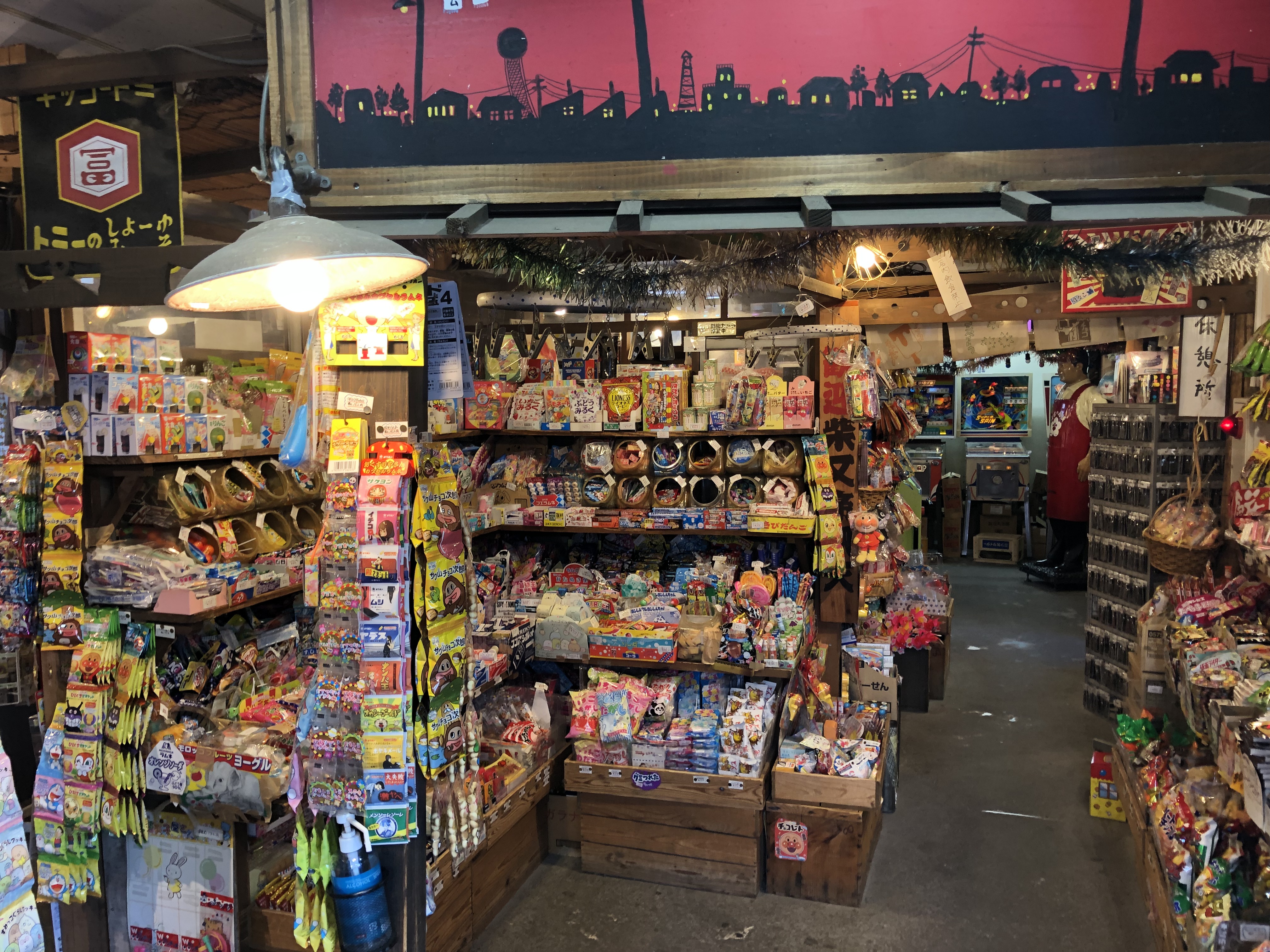
The gummy worms turn out to be a lot stickier than I had anticipated, but I have a solution: I’ll just wash my hands without water.
Snake Placid

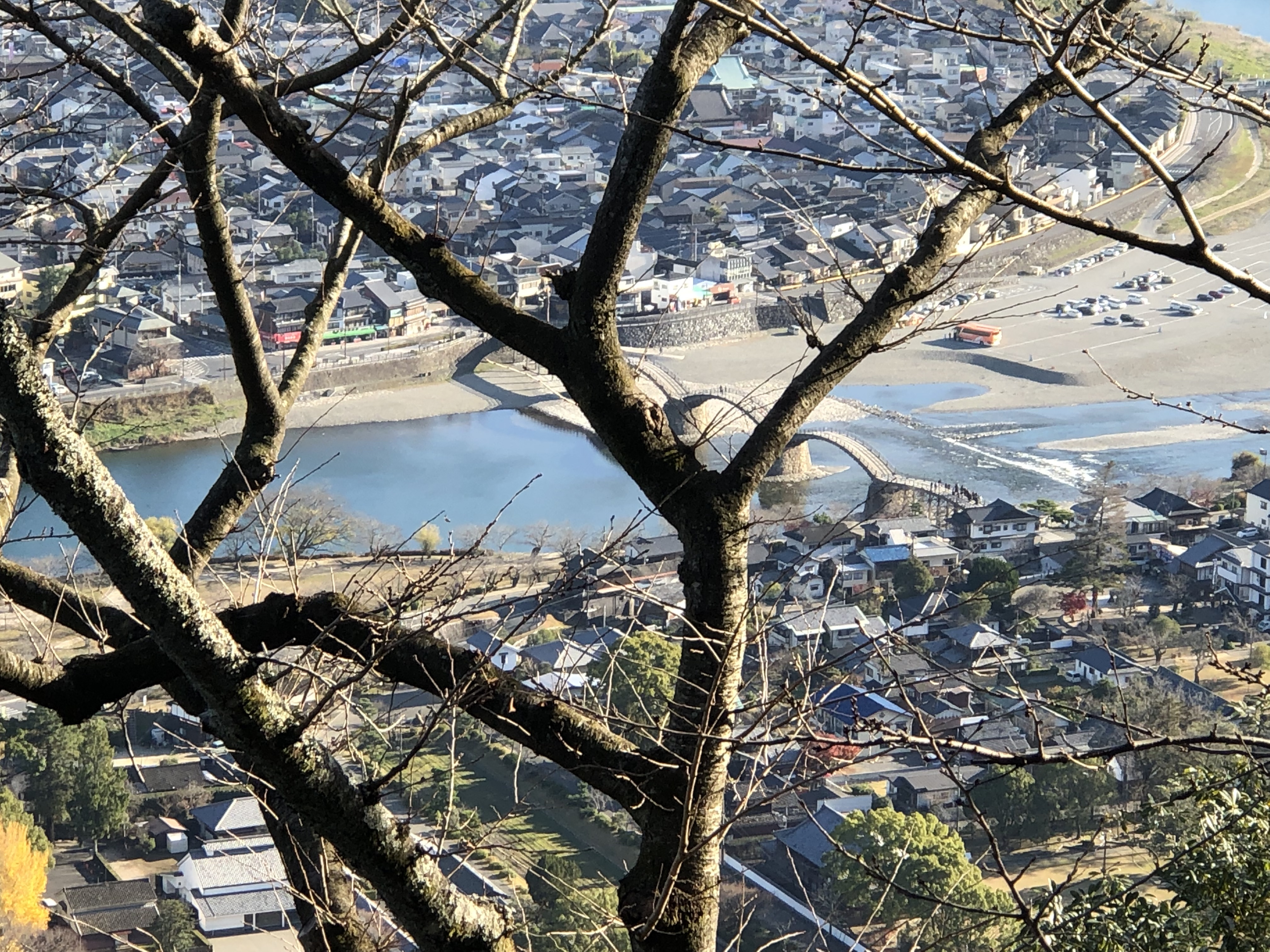
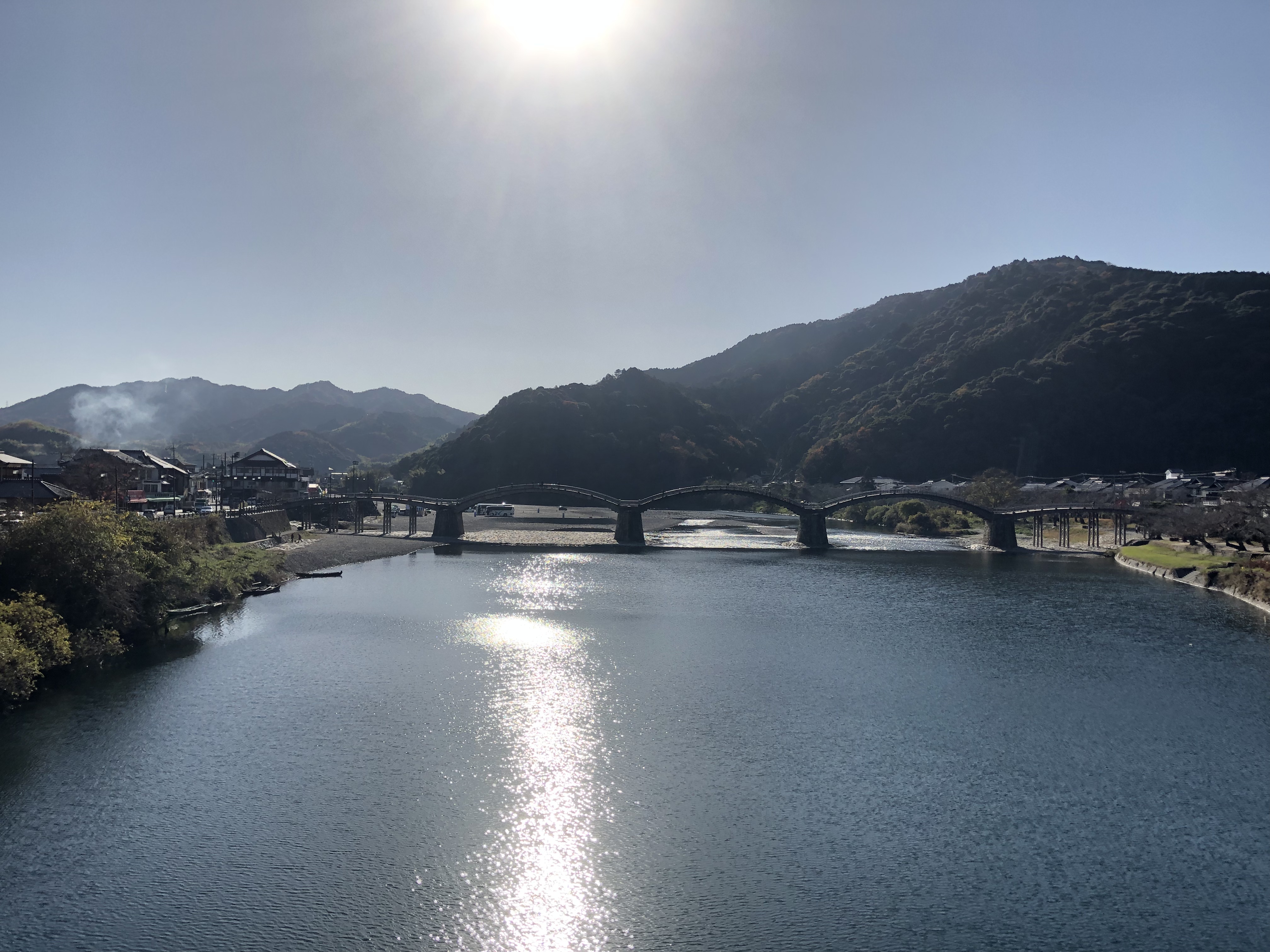
My bus drops me off on a remote mountain path, the lush green foliage surrounds me as I walk. Luckily, getting off at the completely wrong stop presents me with a great view of the Kintai Bridge, an expansive wooden bridge with five arches. Located in Iwakuni, Yamaguchi Prefecture, the Kintai Bridge is regarded as one of three best bridges in Japan, with its ornate timberwork dating back to 1673.

I stare at the bridge for a while and consider its unusual shape. I eventually come to the conclusion that it looks a bit like a snake. I glance down below at the tranquil blue water of the Nishiki River, before continuing on toward the entrance to Kintai Bridge. Here a woman in a ticket booth waves at me, distracted from the present situation, I wave back and begin to cross the bridge.

This renowned bridge is dreadful to walk across, its wooden steps curving up and down. The bright winter sun reflects off the polished woodwork and I have to focus on not toppling over. Kintai Bridge has been designated as a National Site of Scenic Beauty, the reason for this is hidden in its sophisticated construction. From the perspective of modern bridge engineering, the construction of the wooden arches are said to be so impeccable, despite their age. I think these modern engineers should try walking across the bridge in the blazing sunshine and then decide how sophisticated it is.

When I reach the other side of this 210 metre long bridge and see another ticket office, I realise the woman that waved at me was signalling for me to buy a ticket to cross the bridge. I apologise at this side and retroactively pay the ¥310 crossing fee. Slightly embarrassed, I continue on, and enter a nice looking park.

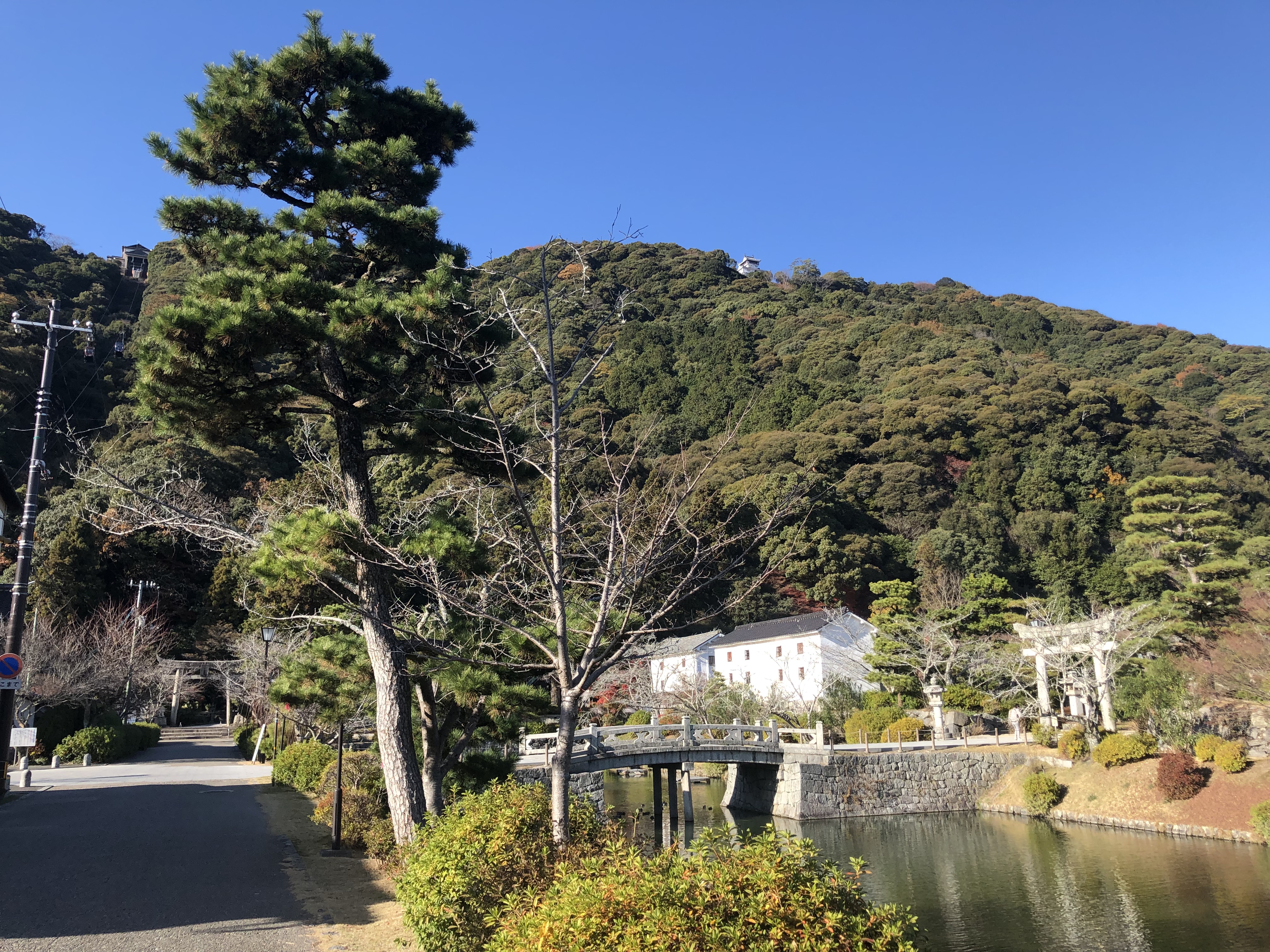
Kikko Park is a very charming leafy landscaped park. The area contains a few tasteful clothing stores, small coffee shops, and nice little restaurants. All of this is set to the backdrop of a mountain, a shrine with some nice bridges, and a few small canals. Atop the mountain, I can just make out the miniature outline of what looks to be a castle. There’s also a snake museum here.

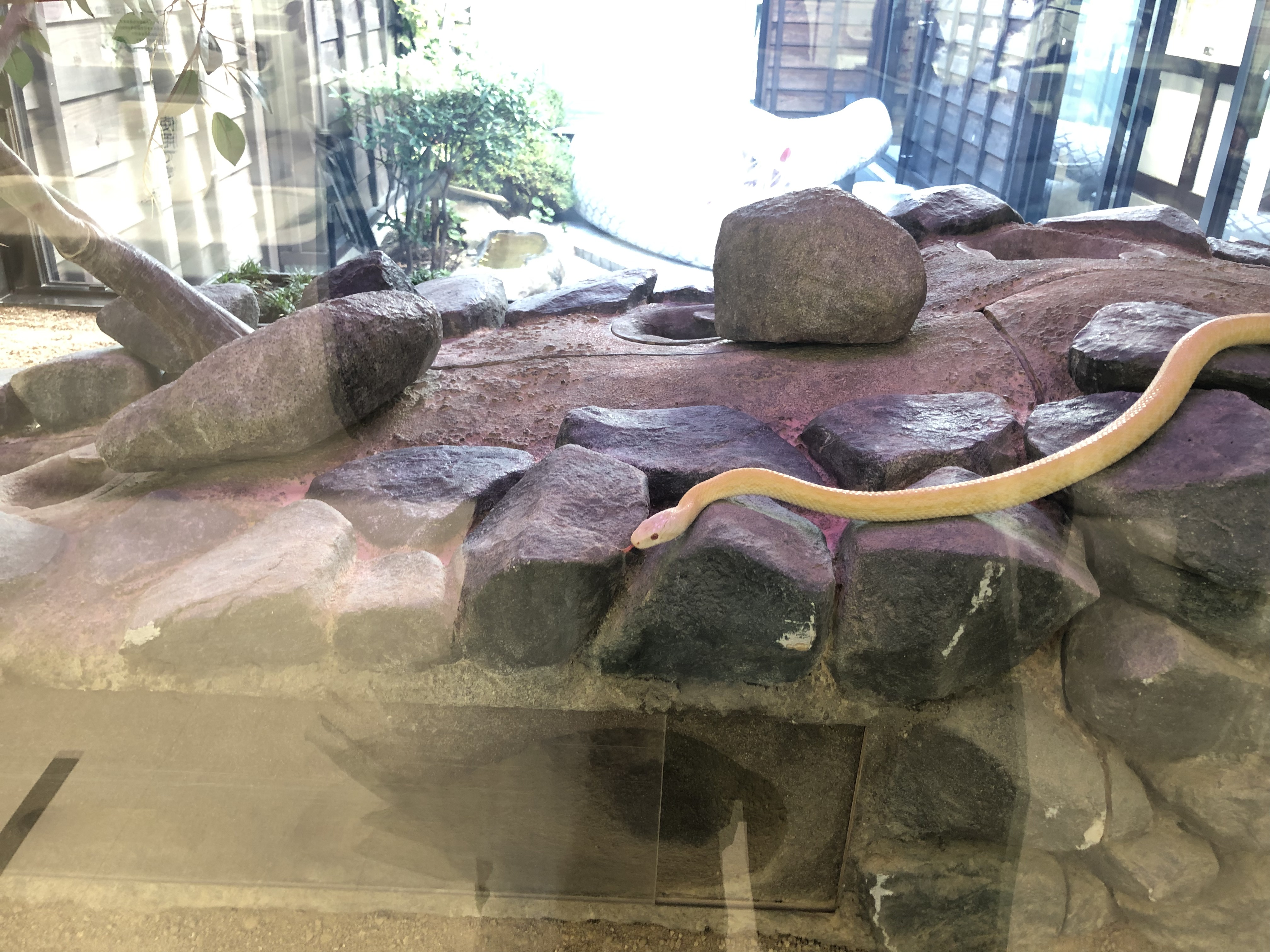
After having my temperature checked and my hands sanitised, I enter the Iwakuni White Snake Museum. Here can be found everything there is to know about this special type of snake; a breakdown of its anatomy, snake skeletons, and real samples of its shed skin are on display here. There are even live snakes that I initially mistook to be made from plastic; it wasn’t until one of these enchanting snakes began to hiss and move its tongue that I realised it was real.

This albino mutation of the Japanese rat snake is glossy white with red eyes, and has been designated as a National Treasure by the Japanese government. It is said that stories about incidents involving these white snakes have been passed down through the ages. The interesting thing about the Iwakuni white snake is that it has a mild temperament, and does not harm human beings. I stare at the snake, regard its shape. I consider that it looks a bit like the bridge I crossed earlier.

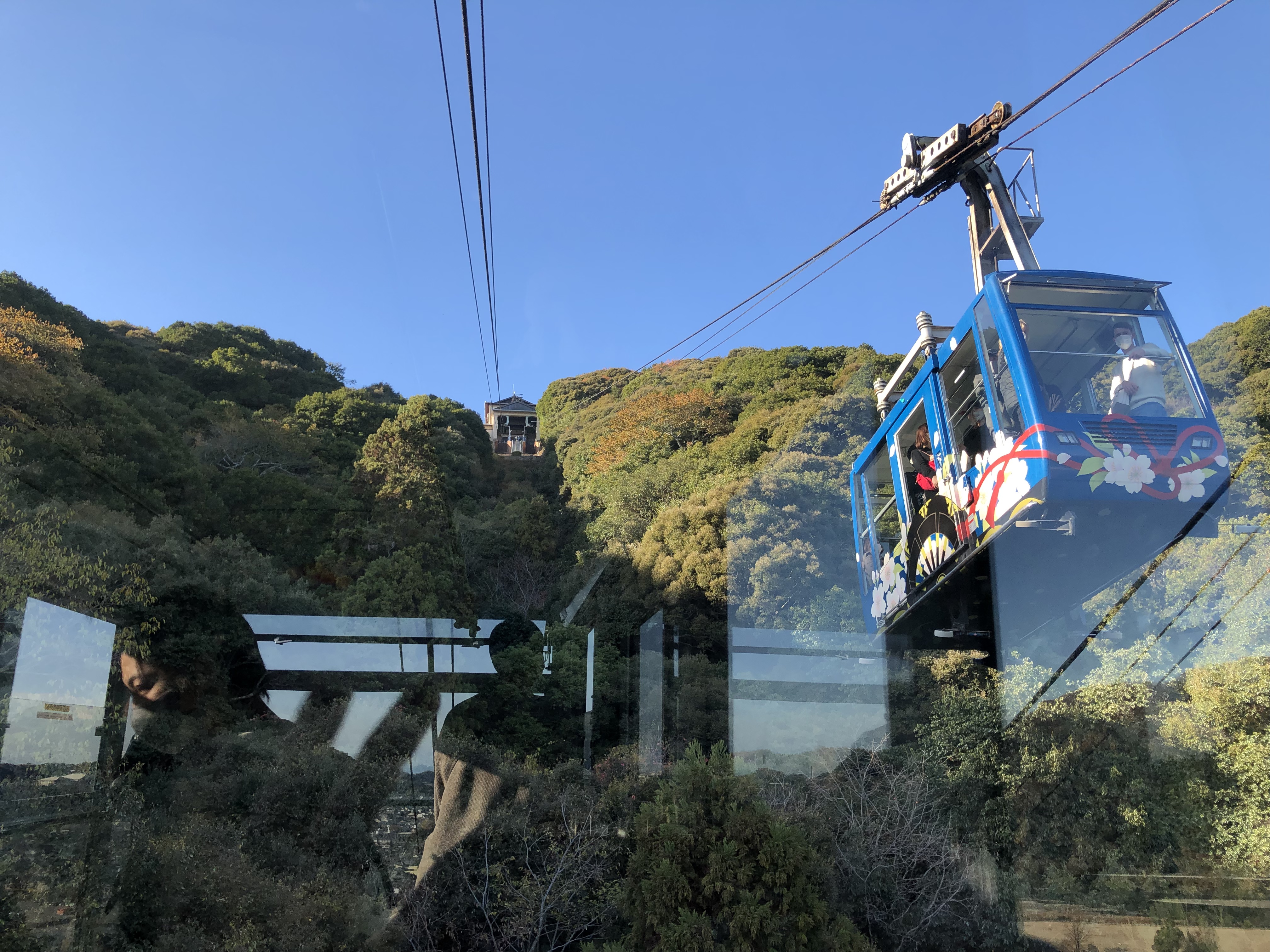
Leaving the museum, I decide to check out the castle. It’s quite high up the mountain but luckily there is a ropeway that runs every fifteen minutes. I’ve never been on a ropeway before, but having previously conquered my fear of heights, I’m prepared to give it a go. A few moments later, I arrive at the Iwakuni Castle Ropeway Mountain Foot Station.

I buy a return ticket for ¥540 then instantly regret my decision once I see the ropeway; it doesn’t look safe at all. As I wait to ride, I become anxious when I watch the man who performs the safety checks simply put his head into our carriage, take a swift look around for less than a second, before telling us we are okay to enter. The ropeway fights its way up 200 metres of cable as it climbs to the top. There is a clock here, the Shiroyama Mechanical Clock, it plays a lively melody as the cable car pulls into the station; I recognise the tune but can’t quite place it.

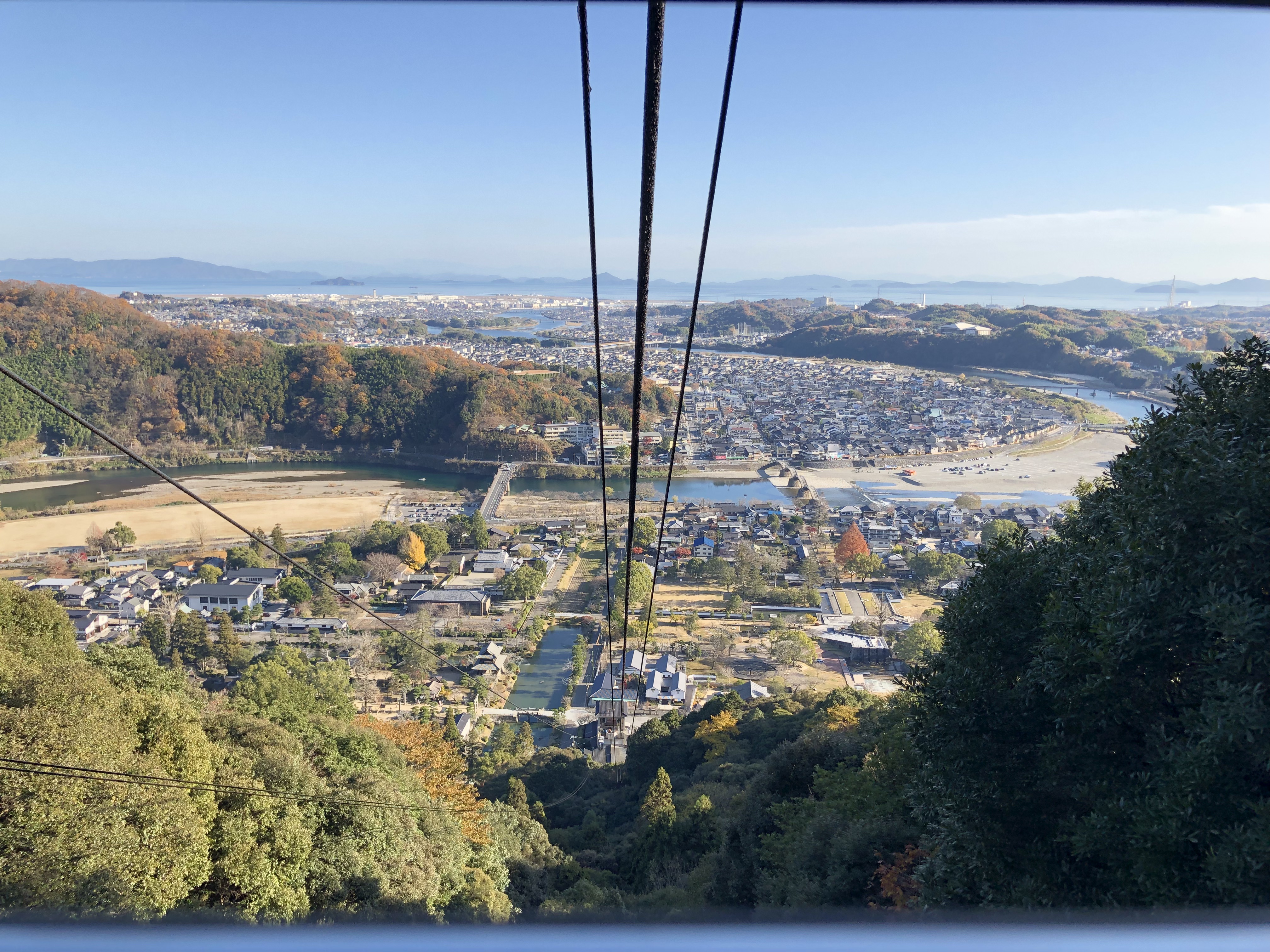
The view from the top is stunning. I stand here for about ten minutes, enjoying the warm weather and admiring the wonderful view. The wind periodically pushes with gentle nonchalance; the occasional hovering of a zephyr adding a cooling breeze to an afternoon encased beneath the vibrant sky. In the distance, I can see the Seto Inland Sea and even the islands of Shikoku beyond.

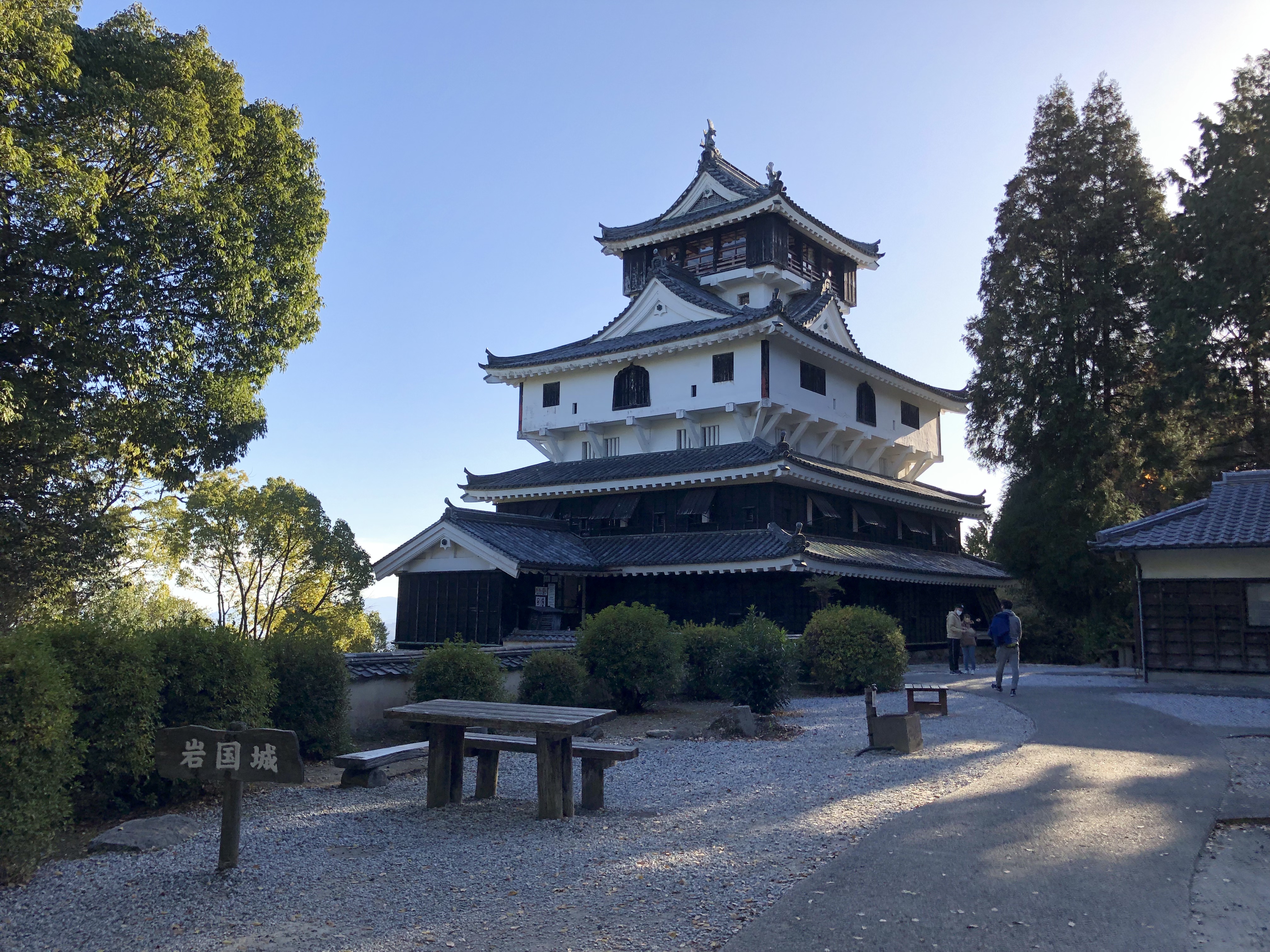
A sign says the castle is an eight minute walk away. The area is awash with vibrant colours, the maple and ginkgo leaves turning various shades of red and yellow. I pass a rather disconcerting sign telling me to, “Beware of pit viper!” — so much for the friendly snakes. I continue on, passing the largest dry moat in Japan, before after a steady twenty minute hike, I arrive at the castle.

The castle is extremely crowded with elderly Japanese people travelling with their tour groups. This particular castle is know as ‘Yamajiro’ which is a word to describe any castle built on a mountain and at least 150 metres high. I once again admire the view from this mountain castle, before turning around and heading back to the ropeway.

As I make my way back down the mountain, the forest whispers to me with the snapping of twigs beneath my feet. The sound captures my attention, and for the first time I truly take in the vast expanse of the forest surrounding Iwakuni Castle. I also realise, with a start, that there is no protective fence separating me from the dizzying drop to the valley below.

Back at the ropeway entrance, I arrive a little early. Eventually, the Japanese tour group begins to arrive in droves, and before long, a line of over thirty people snakes behind me. As we are set to depart, we manage to squeeze in twenty three of us into the tiny cable car; social distancing out of the window completely. As we slowly begin to descend the mountain, the weight of us makes the ropeway creak, squeak, and screech as we swing unnaturally from side to side.

The cable car crashes into an overgrown tree branch on the way down, the sound and shaking startles me, and much like a snake, I jump out of my skin.

Hell and High Slaughter

My plan today was a visit to Ukiha Inari Shrine, a remote shrine with a hillside vista over the Chikogu Plains that offer stunning views of red torii gates and the meadows beyond. However, as I finally arrive at Tosu Station to switch trains, I find that my next train, the Yufu 3 Limited Express bound for Beppu, doesn’t depart for another six hours, so in desperate need of a plan, and a sudden change of itinerary, I rush onto a random train bound for Kurume.

Kurume is a small city in Fukuoka Prefecture. I flip a coin to let fate decide my direction, but woefully fail to catch the coin and it lands in the gutter of a drain. Today isn’t going very well and it’s still morning. I choose to go south. It doesn’t take long for my optimism to return though, for in the distance standing tall and proud, a mysterious white statue captures my attention, and essentially my destination decides on itself.

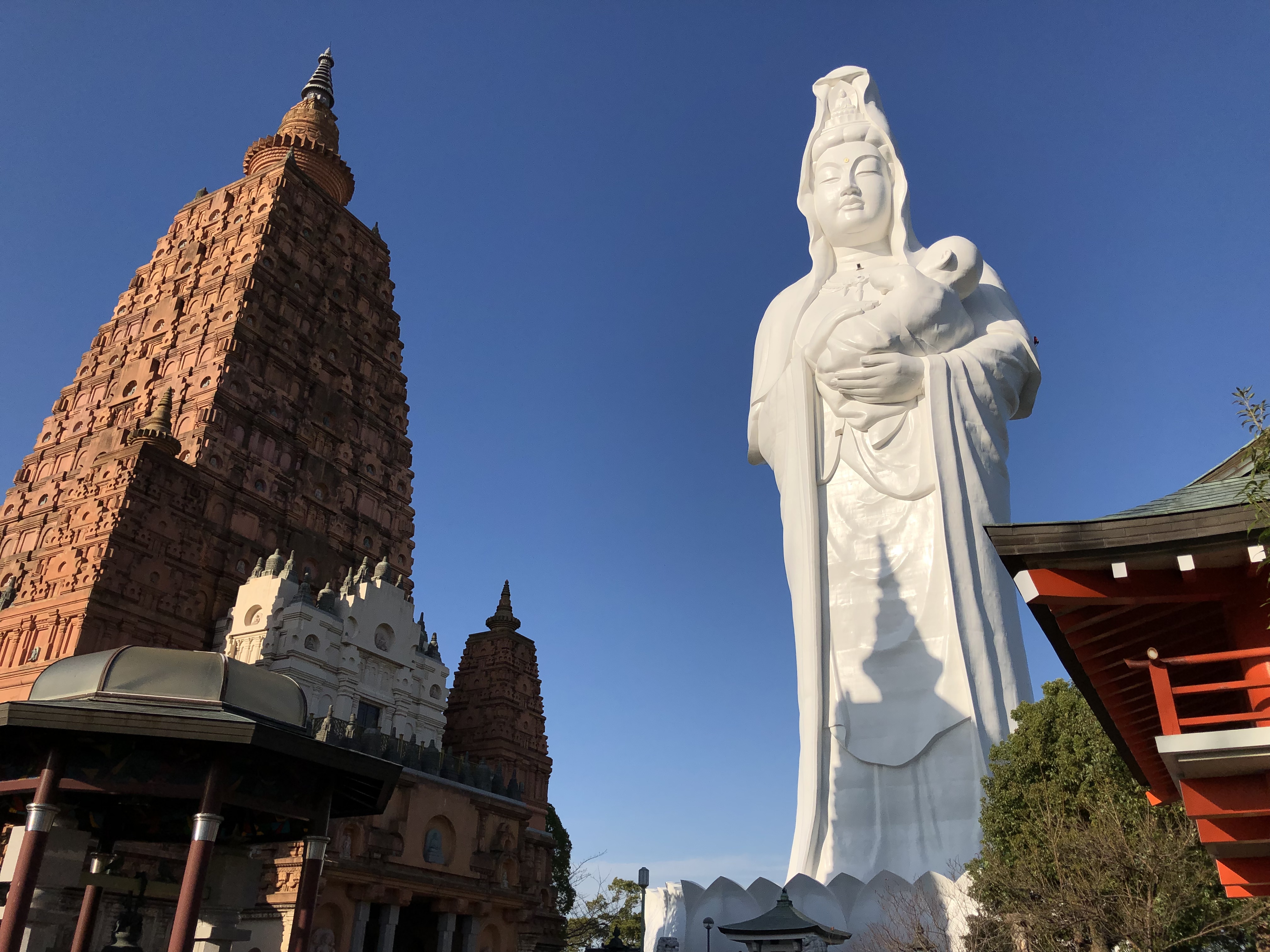
The statue can be seen from far and wide, and as I finally get close enough, it turns out to not be what I first thought, but instead a 62-metre tall statue of Kannon, the Goddess of Mercy. I always enjoy a good Kannon statue, not only does she save the souls of the suffering, but there’s often something rather unexpected to see.

The first thing that’s a little unusual is the 38-metre tall structure next to the Goddess. This replica of India’s Mahabodhi Temple, the Great Awakening Temple, is the first of its kind in Japan, and is based on the story that Buddha sat under a tree in India for seven days to meditate, became awakened, and then the original temple was built to honour that event. Why there is such a replica here in Kurume I have no idea. Also, and it may be a matter of perspective, but the Mahabodhi Temple is 24-metres shorter than Kannon, however, at every angle, the temple seems to tower over the Goddess.

As I approach the ticket office to enter Daihonzan Naritasan Kurume Temple, I inadvertently wake up a young Japanese woman; obviously this place doesn’t get a lot of visitors despite its massive car park that boasts space for 700 vehicles.

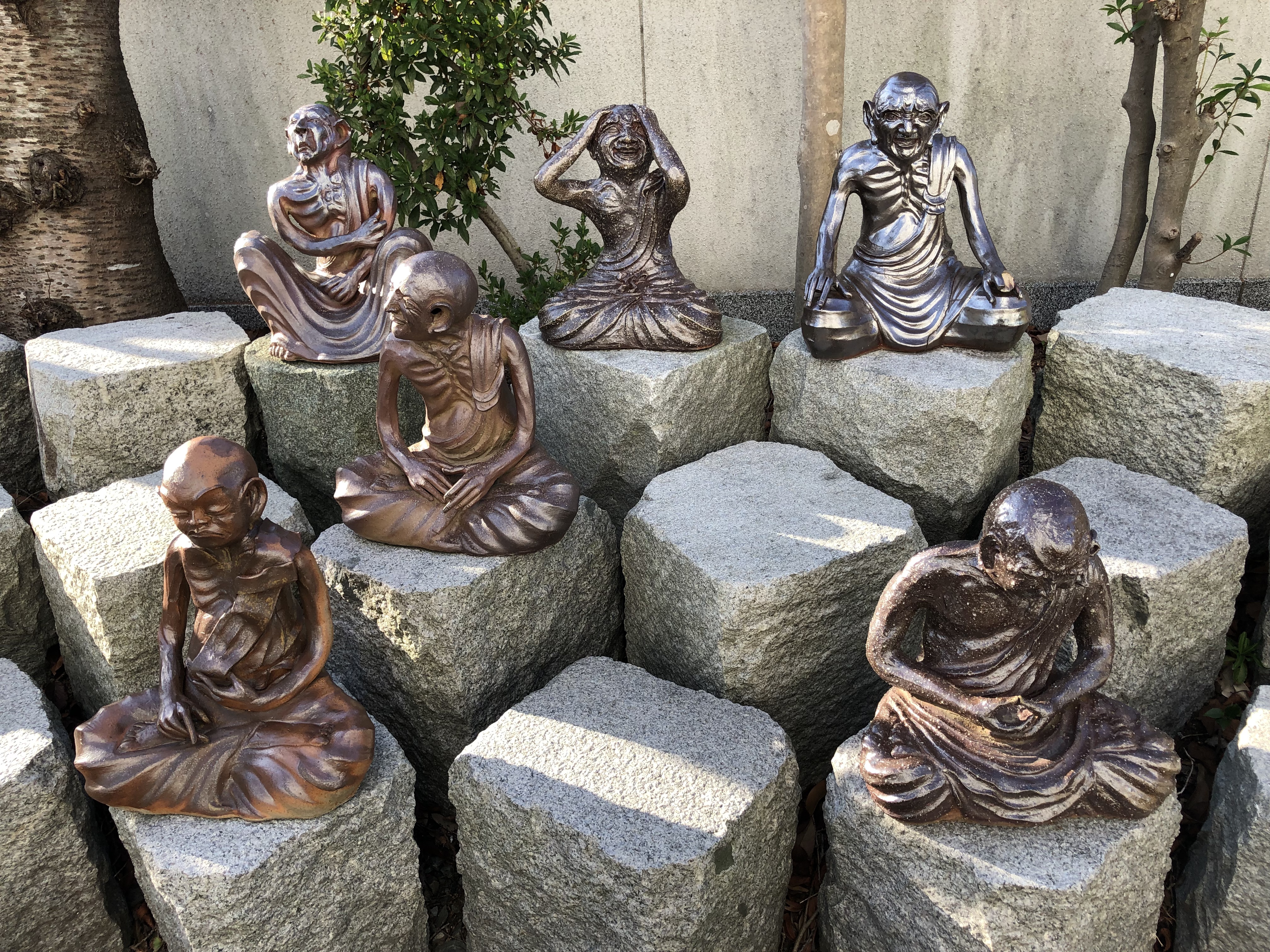
I take a seat on a small stone bench for a time, admiring the statue and contemplating, just like Buddha had once done. A statue of Ebisu disturbs my thinking, purely because he’s sitting on a cow next to a big pile of money. Distracted, I walk around the temple grounds, here there are numerous smaller statues depicting twisted souls in anguish.

I notice a shaft in the side of the Kannon statue, and decide to enter. Endless corridors greet me. Random artwork lines the walls, steep steps twist and turn through the statue, there is no elevator, and the climb to the top takes an age. From the top there are tiny windows that offer a nice view of the city below.

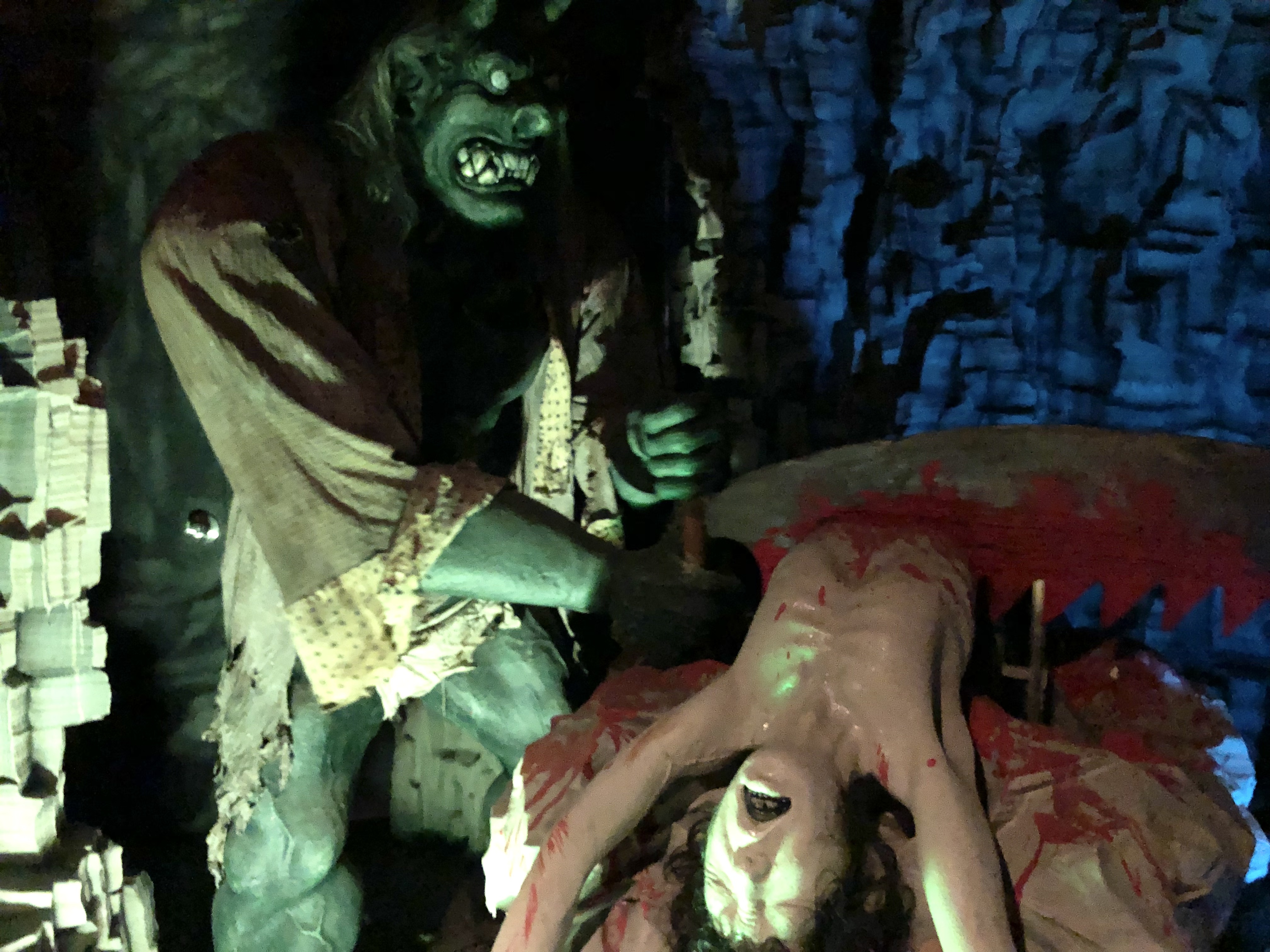
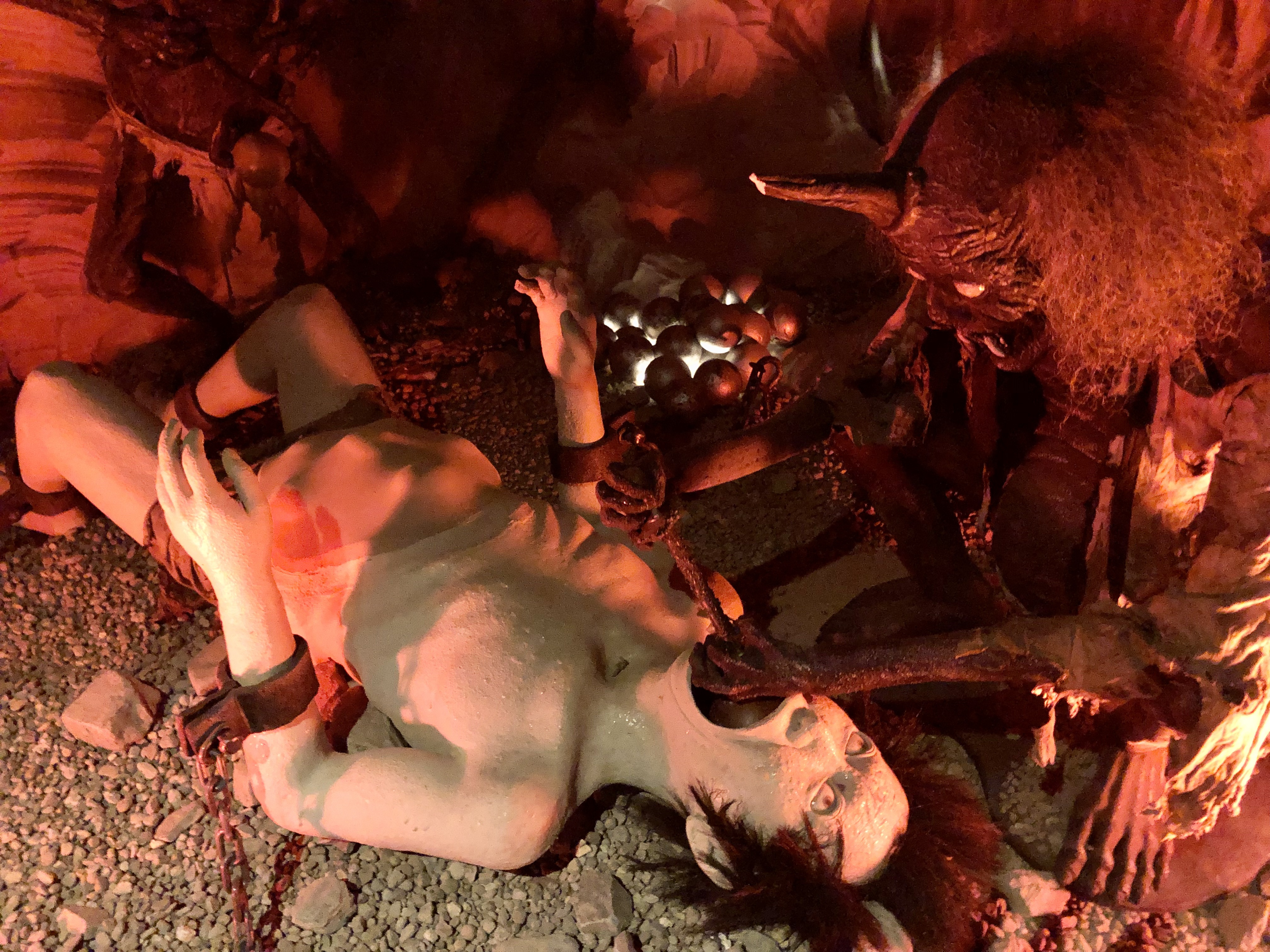
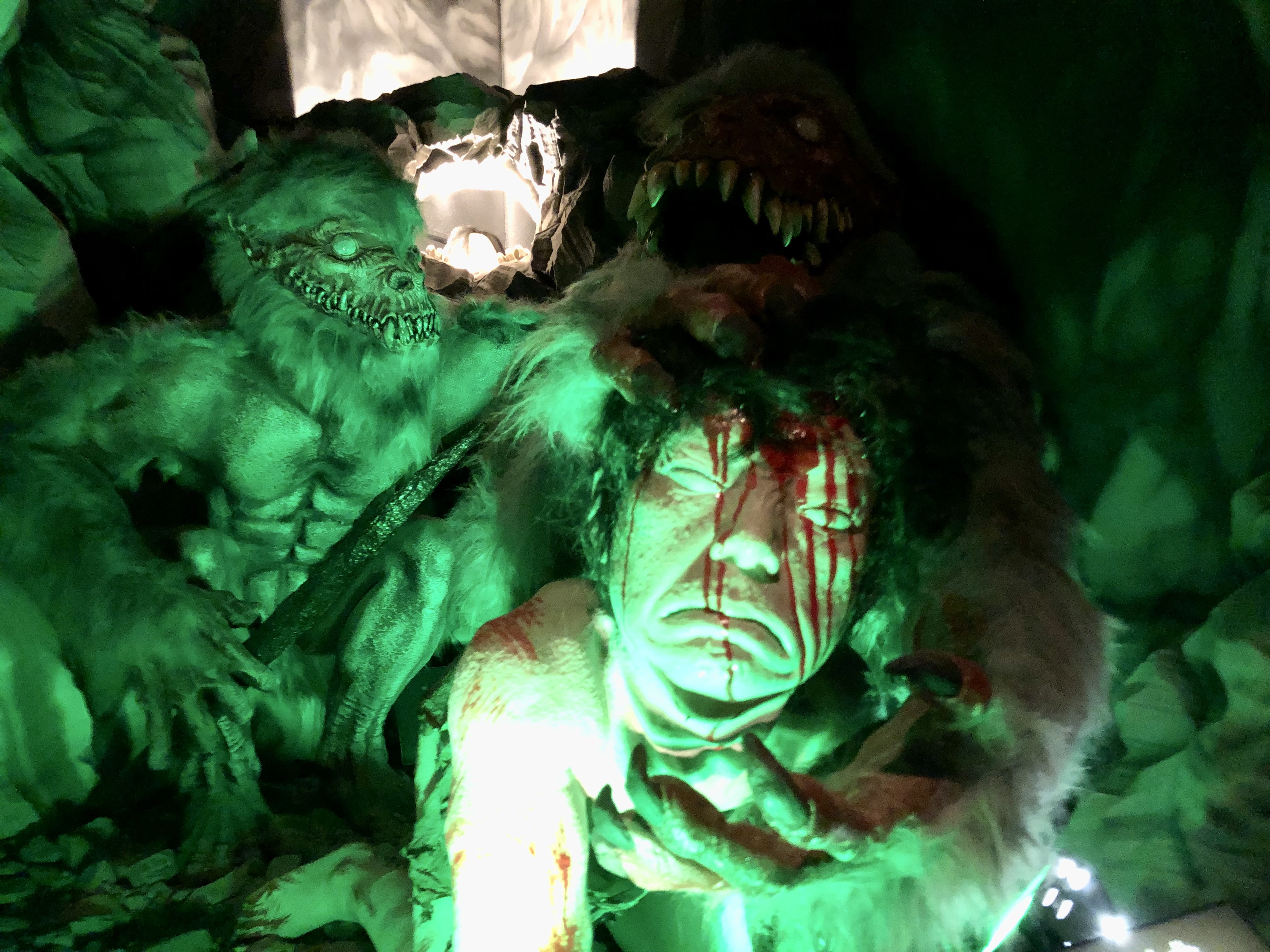
After admiring the landscape, I decide it’s probably time to leave now, and as I climb back down to the ground floor, I notice steps leading deeper down into a basement. As I further approach, I hear the creaky voices of evil spirits echoing down the lonely hall. A room here is marked either side by a pillar of skull heads. Inside are some lifeless effigies, but as I approach, I activate a sensor of sorts, and the first model begins to move.

This animatronic demon is sawing a naked man in half; the saw slides back and forth for as long as I watch. The man, despite his obvious injury is still alive, his screams are piercing and chilling, the sound effects of the saw all adding to the macabre scene. An absolute show of horror.

I move through the exhibits. A woman surrounded by spike traps gives me a jump scare as she screams into life. Two children covered in bruises and blood rotate on a platform as a demon with a sinister grin watches on. A man holding a huge boulder is about to smash in the head of a woman whilst a giant towers above. A chained up man is having a red-hot poker stuffed into his mouth.

I decide that this is one of the most harrowing things I’ve seen in my whole life. The passable realism of the statues blending with the authentic yet disturbing sound effects really adds to the eeriness evoked by this imagery. It seems that hidden beneath this innocent looking statue of the Goddess Kannon holding a baby, is a secret haunted house.

I take one last walk through what I learn to be the Hell Museum, before leaving the basement, the statue, and stepping quietly past the ticket gate as to not wake up the sleeping woman.

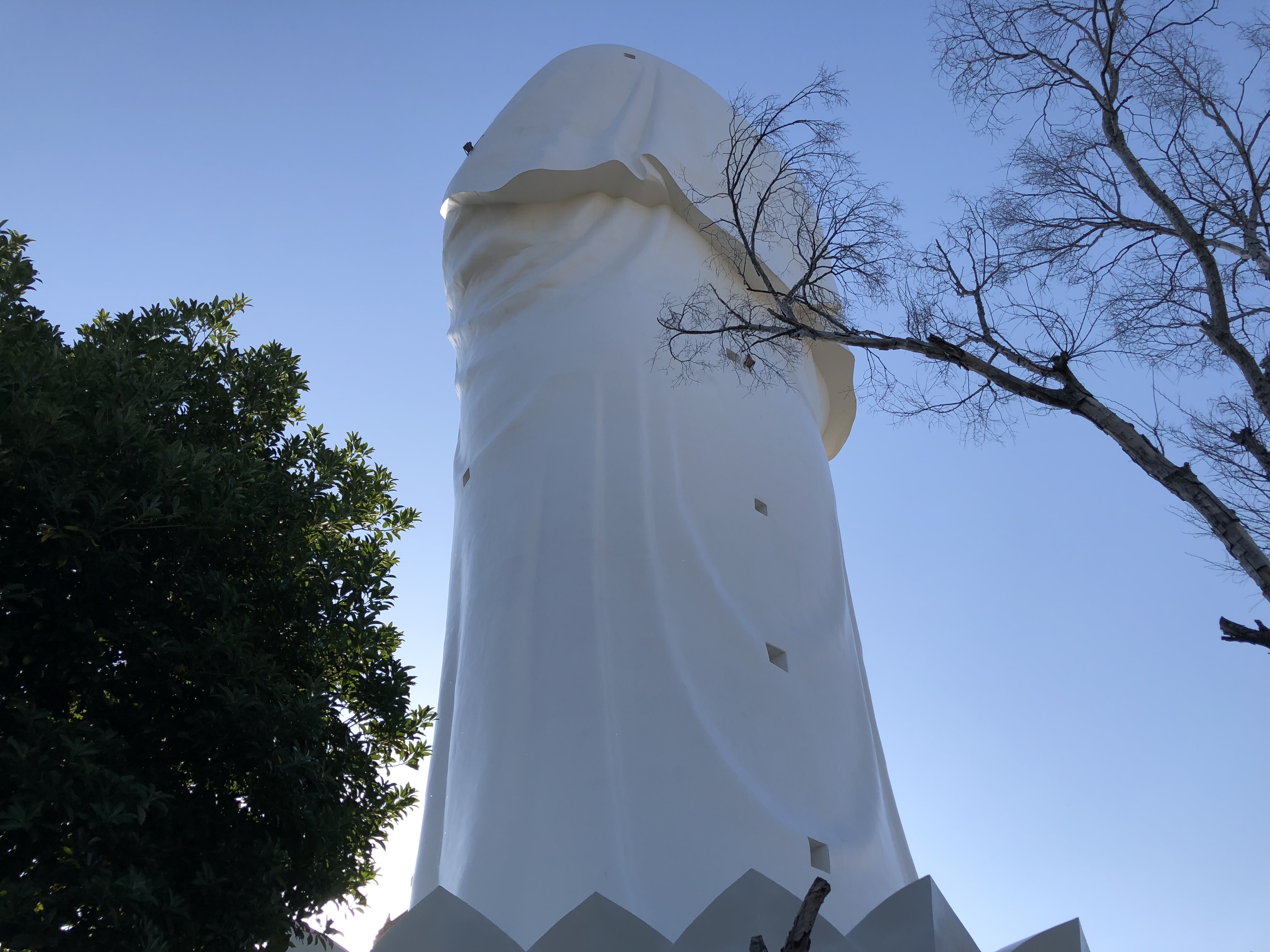
As I walk away, I look back at the statue, its phallic shape from behind visible for miles and miles, it makes me wonder if it was indeed designed that way, or just a misshaped mishap. I guess I’ll never know.

The Adventures of Tin Toys

Yesterday, as I was walking around Yokohama, I noticed many interesting things on the numerous maps that adorned the streets. Having visited Yokohama only once before, I decided to stay the night and spend a second day exploring this historic city. While staring at the points of interest on the signs, one thing genuinely excited me: the Tin Toy Museum.

I begin my exploration by walking through the Yamate area. This place is characterised by interlocking stone pathways that bend and crawl at various steep degrees, reminiscent of my hometown with its steep hills and Western-style houses. Despite being a popular spot for tourists, locally known as ‘The Bluff,’ I am surprised to find that most maps in this hilly terrain are in Japanese. Needless to say, I get lost and eventually stumble upon a random Spanish-style house.

flutepiano[1]

There is no charge to enter the house, but upon entry, I am required to remove my shoes. Inside, I find a woman playing the flute, accompanied by another woman on the piano, seemingly without any apparent reason. While I recognise the melody, I struggle to put a name to it. As I wander around, I am afforded the opportunity to explore a genuine Spanish kitchen, complete with old cutlery. It surprises me to learn that the house was built by an American but designed by a British architect, adding a layer of complexity to its Spanish theme that I can’t quite comprehend. The Bluff is dotted with many houses of diverse styles, allowing visitors to freely wander and experience the architecture of different countries. From the balcony window, I catch a glimpse of what locals refer to as the ‘British House’ in the distance.

I make my way into the dining room, anticipating tables and chairs, only to be surprised by the presence of strange artwork that clearly doesn’t belong in this space.

hotair[1]

I leave the house, resuming my quest for the Tin Toy Museum. I meander through a cemetery for British soldiers and emerge on the other side. Stumbling upon the oldest wooden Christian church in Japan, I find it of little interest and continue walking for about an hour through maze-like streets. Finally, I locate a map in English. The Tin Toy Museum is on the opposite side of The Bluff, close to the house I visited earlier. I navigate steep hills and winding alleyways, and after another half-hour, I arrive at the museum, half-expecting it to be closed today.

At the entrance, I pay ¥200 and race inside.

oldrobots[1]

As I step inside the Tin Toy Museum, I’m greeted by the sound of The Beatles’ album ‘Help!’ playing from the speakers—an unexpected but delightful touch. The exhibition showcases over three thousand miniature toys produced in Japan between 1890 and 1960. Most of the toys, ranging from cars and rockets to robots, form the extensive personal collection of Teruhisa Kitahara, a man with a passionate affection for all things toy.

A sign next to some rather unsettling clowns reads, “Clown and circus toys are highly comical, perfectly capturing the lively movement of the circus. They are popular for their acrobatic flair.” Inside the museum, there’s a second exhibit called the ‘Mini-Mini Museum.’ Included in the ticket price, this small shoe-box-sized exhibit initially seems like a pointless distraction. However, as I explore, I discover it features even smaller toys than I could have imagined were possible to create.

naoko[1]

Back at the main exhibition, I find that JAXA astronaut Naoko Yamazaki has visited here too, and she appears to have forgotten a signed postcard of herself, left amongst Atomic Rockets and Space Ship X-7’s. I feel tempted to buy a remote control alligator for the price of a month’s rent, but I instead opt for a wind-up robot for ¥1242; quite expensive, but full of nostalgia, and I like robots.

I leave the museum and the Yamate area, heading for Yamashita Park. The park, situated on the waterfront, is unfortunately cast in shadow by the massive Hikawa Maru, an ocean liner that blocks the sunshine and seems unnecessarily colossal. Nowadays, it serves as another museum, overshadowing the park inconsiderately. Nevertheless, the reason for my visit to this park was sparked by a sign pointing to another point of interest that intrigued me – the Statue of the Guardian God of Water.

guardianofwater[1]

It’s no secret that I enjoy irony, so I find it incredibly amusing that the statue here stands within a construction site, placed in a small pond filled with bricks and completely devoid of any water whatsoever. I can’t imagine the statue is pleased with its surroundings.

My final stop in Yokohama is also within Yamashita Park – the Statue of the Little Girl with Red Shoes On. I didn’t have specific expectations, but the description on the sign proved accurate. The girl represents a children’s song from 1922 called ‘Akai Kutsu,’ written by Ujo Noguchi, translating to mean ‘Red Shoes.’

redshoes[1]

A young girl with red shoes, was taken away by a foreigner.
She rode on a ship from Yokohama pier, taken away by a foreigner.
I imagine right now she has become blue-eyed, living in that foreigner’s land.
Every time I see red shoes, I think of her.
And every time I meet a foreigner, I think of her.

I’m not too sure what the song is about, and the only explanation offered by the sign is that Yokohama City wants this statue to become a cherished landmark for its countless visitors. Sadly, most visitors seem to just walk along, not giving the statue a second glance.

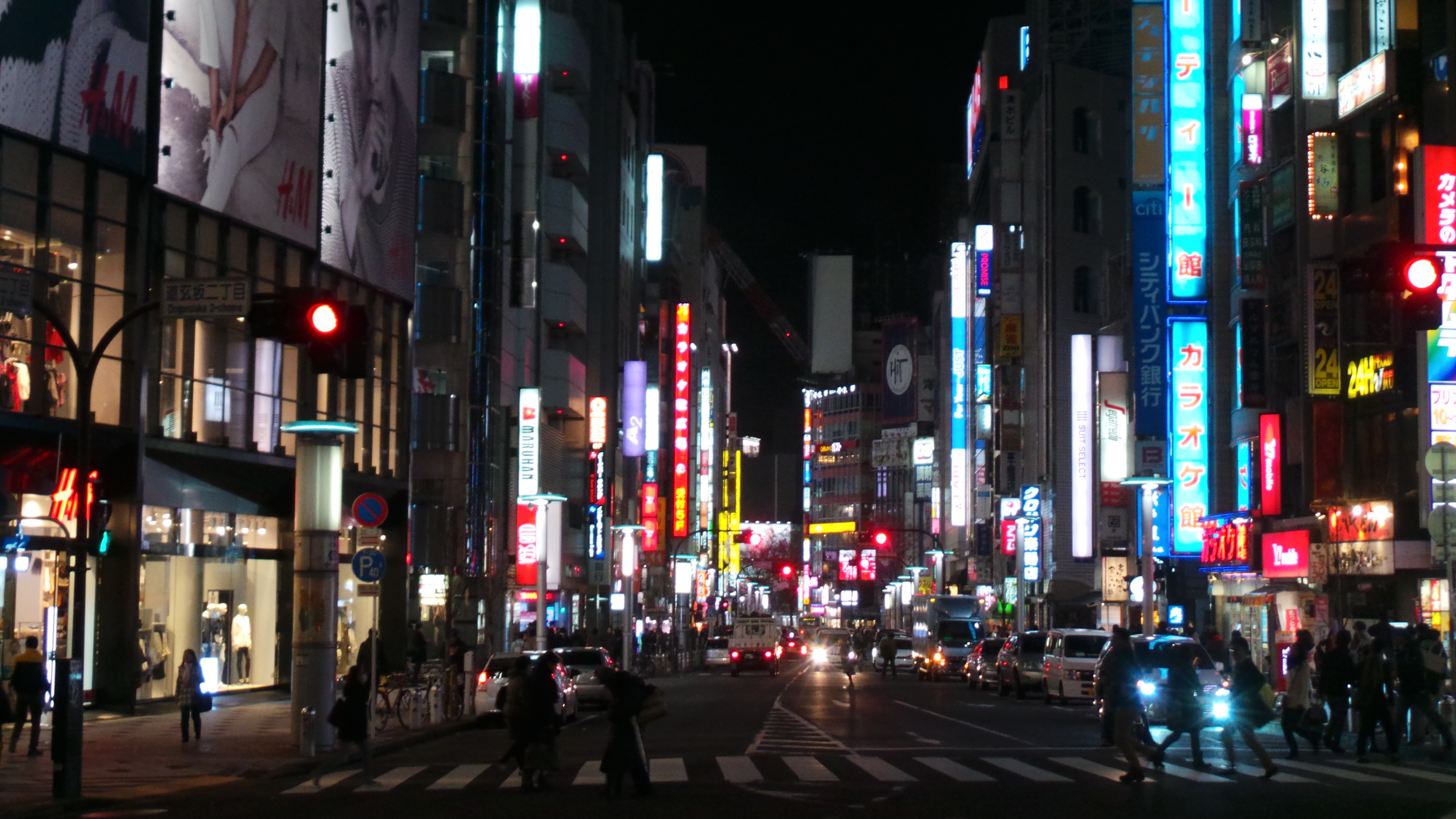
I decide that there is little else to do in Yokohama; despite having enjoyed two nice sightseeing days, it is time to head back to the reality of Tokyo. I take the train over to Shibuya. As I leave the station, I navigate through crowds of photographers capturing images of what once was and still is – just a crossing. The bright lights of Shibuya act as a neon reminder of what I was expecting Japan to look like before I arrived here nine months ago.

backtoshibuya

I wander aimlessly for a while through the busy nightlife before feeling overwhelmed by the lights and sounds, eventually making me feel dizzy. After a tiring few days, it’s time for me to go home. I buy some takeaway food for the train, taken away by a foreigner, and head back to Minowa.

Fins Can Only Get Batter

Today, Christine and I head over to Tsukiji to visit a fish market. Outside the train station, the outer market is crowded with mostly tourists. It is fair to say that along the small streets lining the market, we are literally packed like sardines. Many small food stores sell fish caught fresh this morning, and the smell of fish is pleasant and anything but overpowering. The freshness of the food here can really be noted.

Buckets of huge tuna sit soaked in blood and ice. Live crabs try to escape their fate by crawling from weighing scales, and the hustle and bustle of the market is present at every turn.

bloodfish[1]

We wander the outer market and into what looks like a giant warehouse. This is the wholesale section of the market, and the biggest wholesale fish and seafood market in the world. People carrying huge white polystyrene boxes of frozen fish cruise past on electric bikes. Tuna that costs more than a house is on sale and on display. People are rushing. Market traders are yelling. It is all a bit overwhelming.

We wander the entire length of the wholesale market, which takes about twenty minutes at a hurried pace. At the other side of the market, we wander into a shrine to receive our fortune in the form of a sacred lot. One of the traditional cultures in Japan that you can experience at Japanese shrines and temples. We both pay ¥200 and both receive a ‘Very lucky’ fortune. We wonder if they are all the same.

After Tsukiji, we take the train over to Tokyo Big Sight. Outside Tokyo International Exhibition Centre, there are about one thousand people in cosplay, dressed as their favourite comic book characters.

comiket1[1]

Men dressed as women pose for photographs for a queue of excited otaku. A guy in a schoolgirl outfit follows us as we enter the main building. Today is Winter Comiket, a comic market event with a focus on independent manga artists. Ninety percent of the people here are men wearing glasses and conform seamlessly to the stereotype of a comic book fan.

Entry is free. Inside the West Halls, there are rows upon rows of small stands, each selling individual comic books. There is no stage. No other entertainment. Only comic books. I can understand the appeal to those who read manga, but for me, the event gives me very little satisfaction. In fact, Christine and I agree that it is all a little too much. The crowds are insane, and oddly, most of the comic books seem to feature covers that can only be described as pornography.

comiket2[1]

After ten minutes of wandering along endless rows of comics, we decide to leave. On the way out, we bump into Jeff. He is standing around playing with his ‘selfie stick’ with a disappointed look on his face. He only bought the stick today, but already, it has broken; perhaps through overuse, perhaps it was cheaply made.

We leave Tokyo Big Sight and walk across the Dream Bridge and the Teleport Bridge before arriving at Decks, Odaiba. We grab some cheap food at Yoshinoya, one of my favourite chain restaurants because it sells grilled eel with a bottle of beer at an extremely low price. After food, Jeff heads off, and Christine and I explore the area.

We are handed a flyer for the Tokyo Trick Art Museum. It looks interesting enough and is only ¥900, so we decide to take a look.

catflap[1]

The flyer says, ‘Do you want to play with Japanese ghosts and monsters? You can take funny photos. Don’t be scared. It is fun.’ The queue is mostly populated by families with children. Perhaps this isn’t for adults at all. Trapped in the queueing system, there is no going back, and eventually, we’re inside and being given a guided group tour of the museum, in Japanese.

We wander through the Edo area and the ninja house. At one point, we have to find a secret door; perhaps the most interesting thing in the museum. We take photographs in various positions, but they all turn out looking poor. We solve optical illusions, look at drawings from different angles, and get eaten by a whale. The best illusion is one of a vampire with a wine glass.

wineglass[1]

After the Tokyo Trick Art Museum, we head back to Asakusa, to Cafe Byron Bay, to drink wine. We opt for a relatively early night, tired from five days of constant walking around and sightseeing. Tomorrow, an eagerly anticipated trip to Tokyo Disneyland awaits.